https://paint.net is now the website for Paint.NET! Well, once I get content migrated and redirects set up, etc. For the moment it’s just a “hey go over here to getpaint.net” redirect page.
It has been a few days since the last DLC was released, so it is time for us to begin looking ahead in American Truck Simulator. While today is not quite the official reveal, we do have a small teaser from a brand-new destination currently in development for ATS, and we think some of you may already be able to guess where our journey will lead next.
Development on this project is still in its early stages, so we are not ready to share all the details just yet, including any release timeline. However, we couldn’t resist giving the #BestCommunityEver a tiny glimpse of what our teams have been working on behind the scenes.
From iconic roadside landmarks to stretches of highway surrounded by lush countryside, this upcoming map expansion will offer truckers a brand-new region of the United States to explore, haul through, and discover. Whether you enjoy cruising through bustling urban areas, navigating industrial hubs, or taking in scenic rural drives, there will be plenty waiting for you down the road.
Still unsure? Don’t worry, we have a screenshot for you to examine closely. We know our community is filled with expert detectives, and we are excited to see your guesses rolling in across the comments and social media.
As development continues, our map, asset, and research teams are hard at work recreating the atmosphere, industries, road networks, and landmarks that make this part of the United States unique. There is still a road ahead before we are ready to fully unveil this DLC, but we are already looking forward to sharing more about this journey soon.
We cannot wait to show you more when the time is right. Until then, stay up to date with the latest news, don’t forget to follow our blog, subscribe to our newsletter, and follow us on X/Twitter, Facebook, BlueSky, and Instagram. Until next time, keep on truckin’!
In September 2025, I attended the annual LibreOffice conference in Budapest, Hungary. This gave me an opportunity to explore the city, which I will cover in this post.
Let’s start with the currency. Although Hungary is a part of the European Union (EU), it doesn’t use the euro as its currency. Instead, it uses Hungarian forints (denoted by “Ft”). During my time in Hungary, 1 Indian rupee was equal to 4 Hungarian forints.
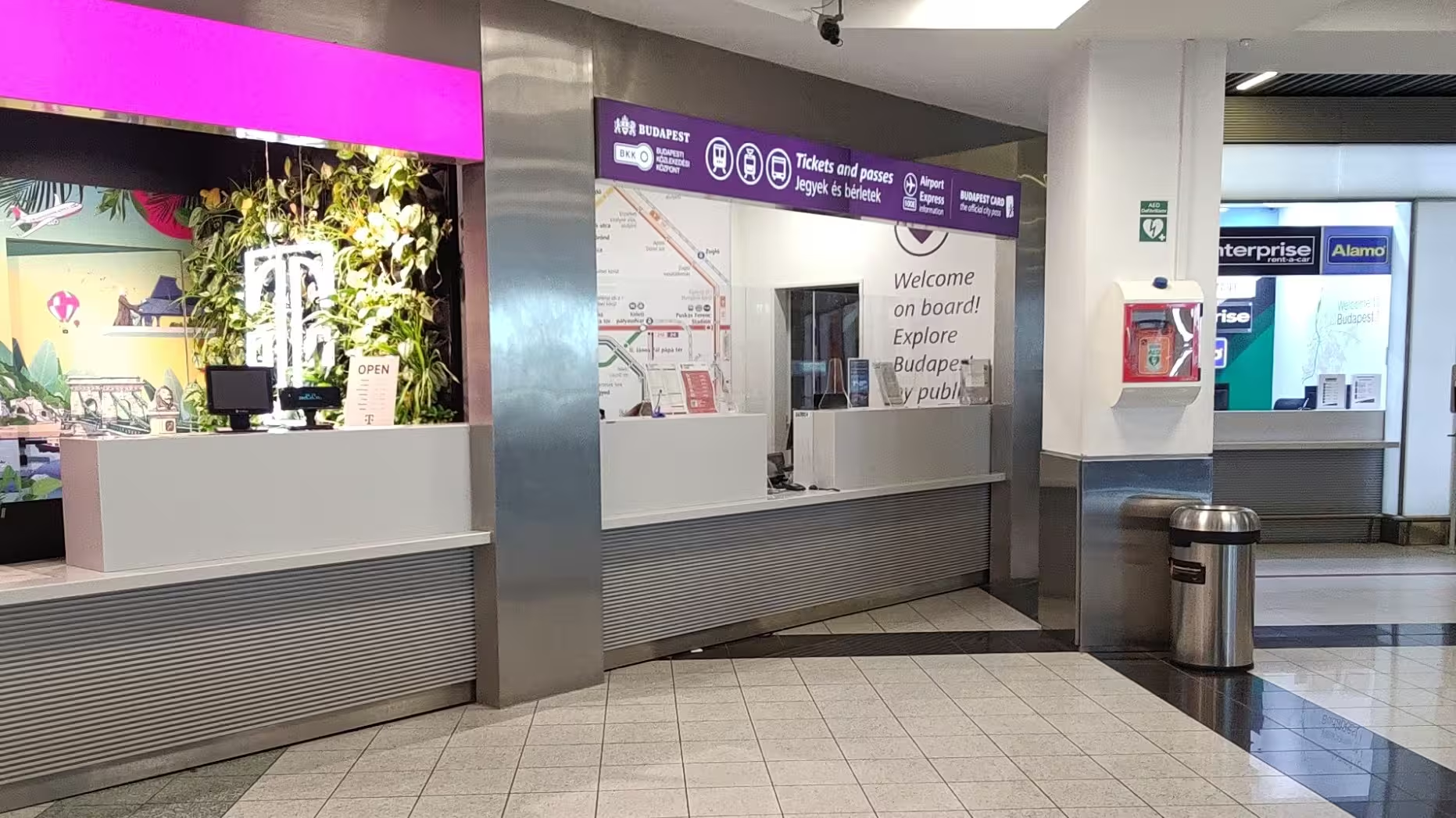
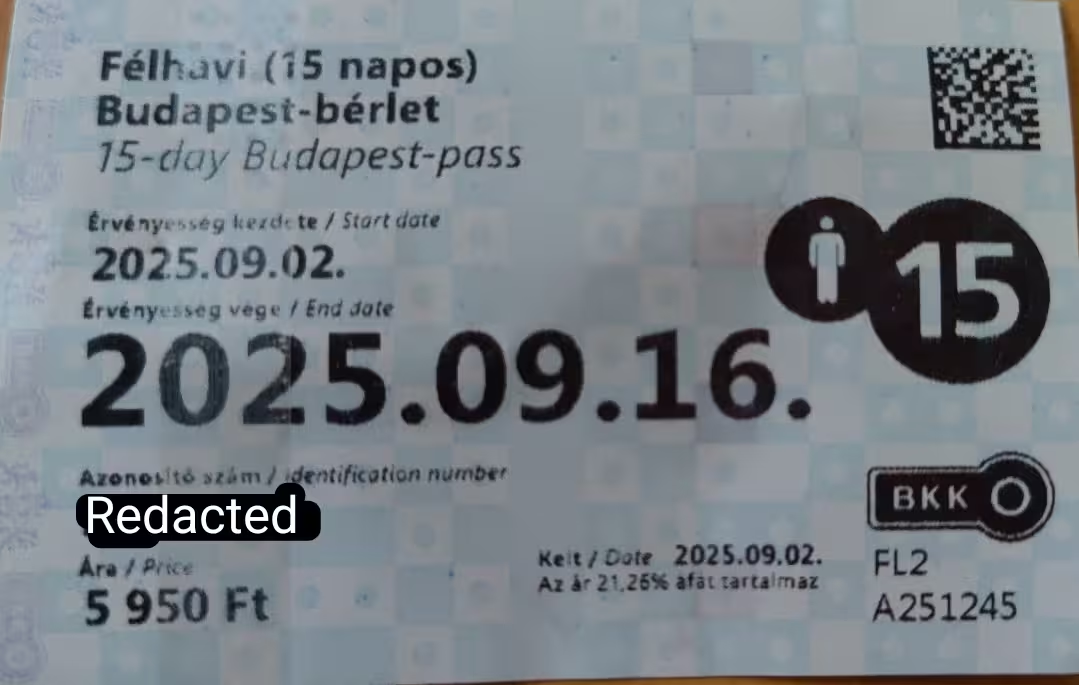
After reaching the Budapest airport, I bought a 15-day public transport pass. The public transport counter is after you pass customs and immigration. The pass allows unlimited use of public transport in the city. I had to show my passport and pay 5950 Ft to get the pass. The pass had my passport number mentioned on it. The public transport passes can also be bought at any of the tram stations as well.
This is the counter from where I bought my public transport pass.
My unlimited public transport pass for Budapest. I have redacted my passport number from it.
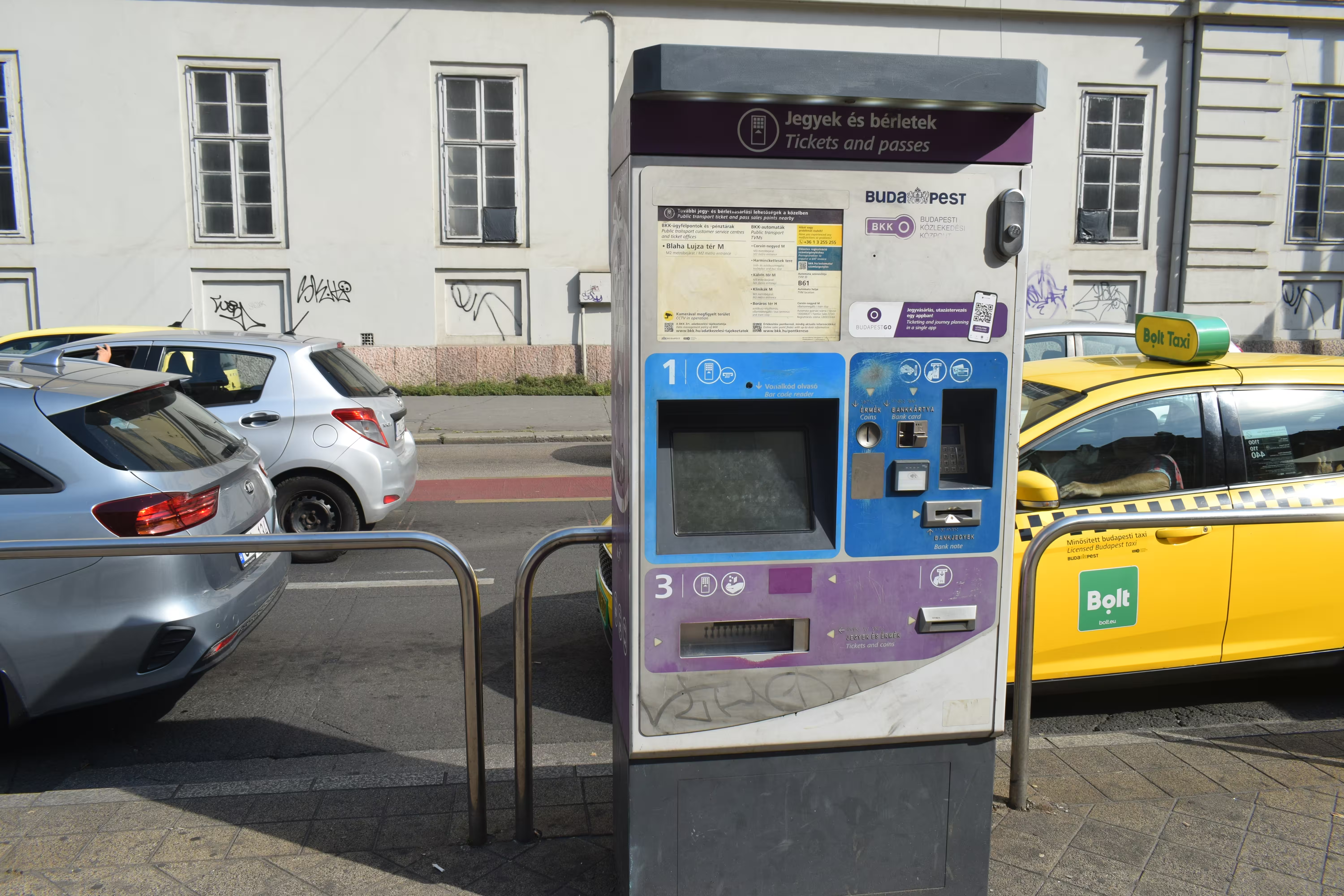
An automatic ticket machine at a tram station in Budapest.
Budapest is a union of two cities—Buda and Pest—lying on opposite sides of the Danube River. My hotel—Corvin Hotel—was on the Pest side.
Budapest had good public transport. The buses, metros, and trams complemented each other. For example, the airport didn’t have metro or tram connectivity, but it was served by the bus. Most of the metro was on the Pest side, with only a couple of stations falling in Buda. However, both sides had an extensive network of trams.
Furthermore, the information about the public transport was easily accessible. For instance, the map of tram stops inside the trams also included the bus routes one could get after alighting at those stops.
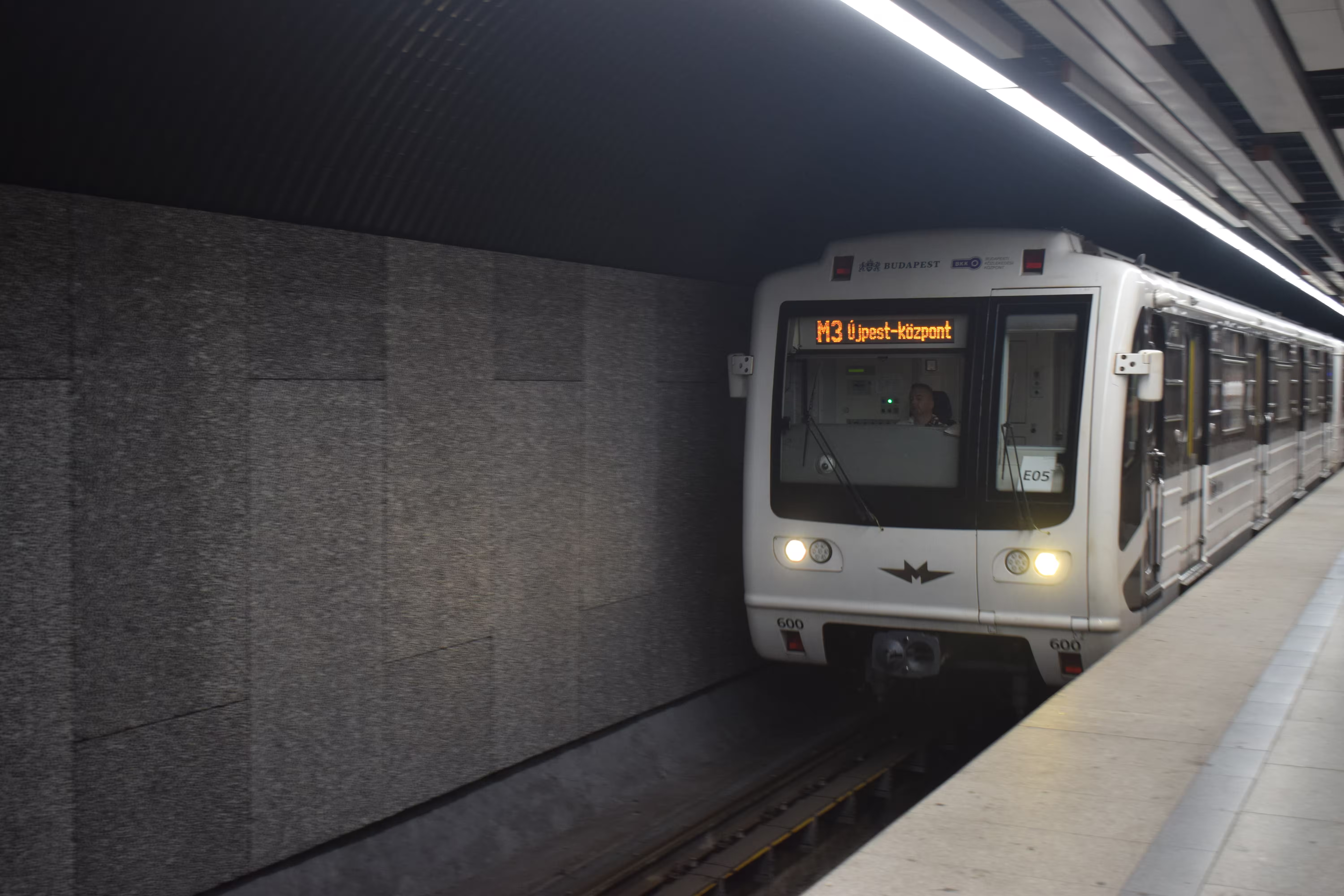
From the airport, I took a bus followed by taking a metro on the M3 line to reach within walking distance of my hotel.
An M3 line metro in Budapest.
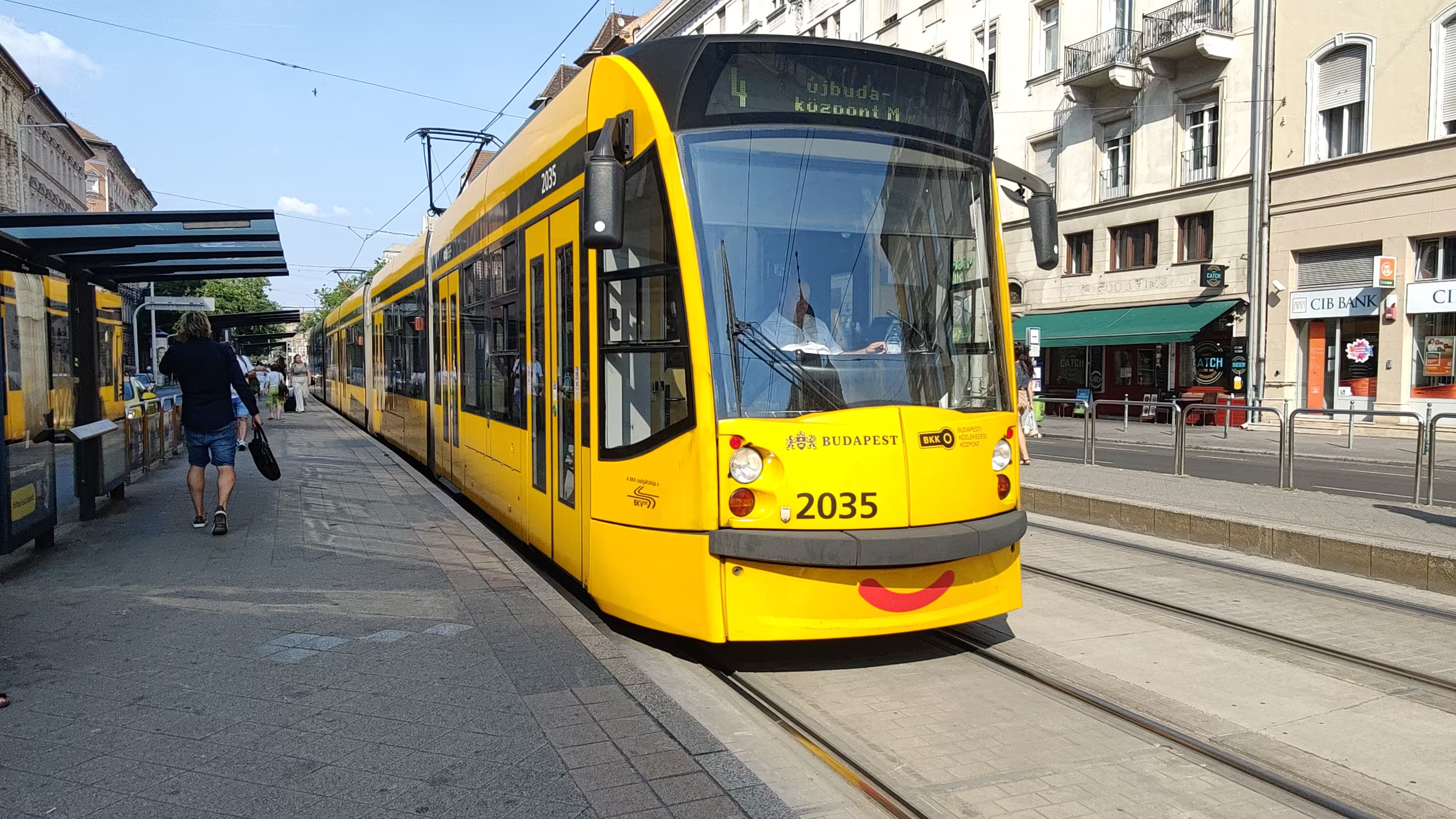
During the conference I would take the tram to the conference venue. The trams were modern and fast. They also had a smiley face at the front, which gave them a friendly look. It seemed like the trams were happily doing their job. The city also had a good pedestrian infrastructure along with separate cycling tracks.
A tram in Budapest having a smiley face at the front.
Budapest’s tap water is officially safe to drink, which was mentioned on a sticker posted on the wall of the bathroom of my hotel room. So, I did not need to buy any water bottles while I was there.
On the 6th of September, I went on a sightseeing tour of Budapest with my Dione. Our friend Attila, who was a local (from Hungary), joined us. We went to the central market from our hotel by metro.
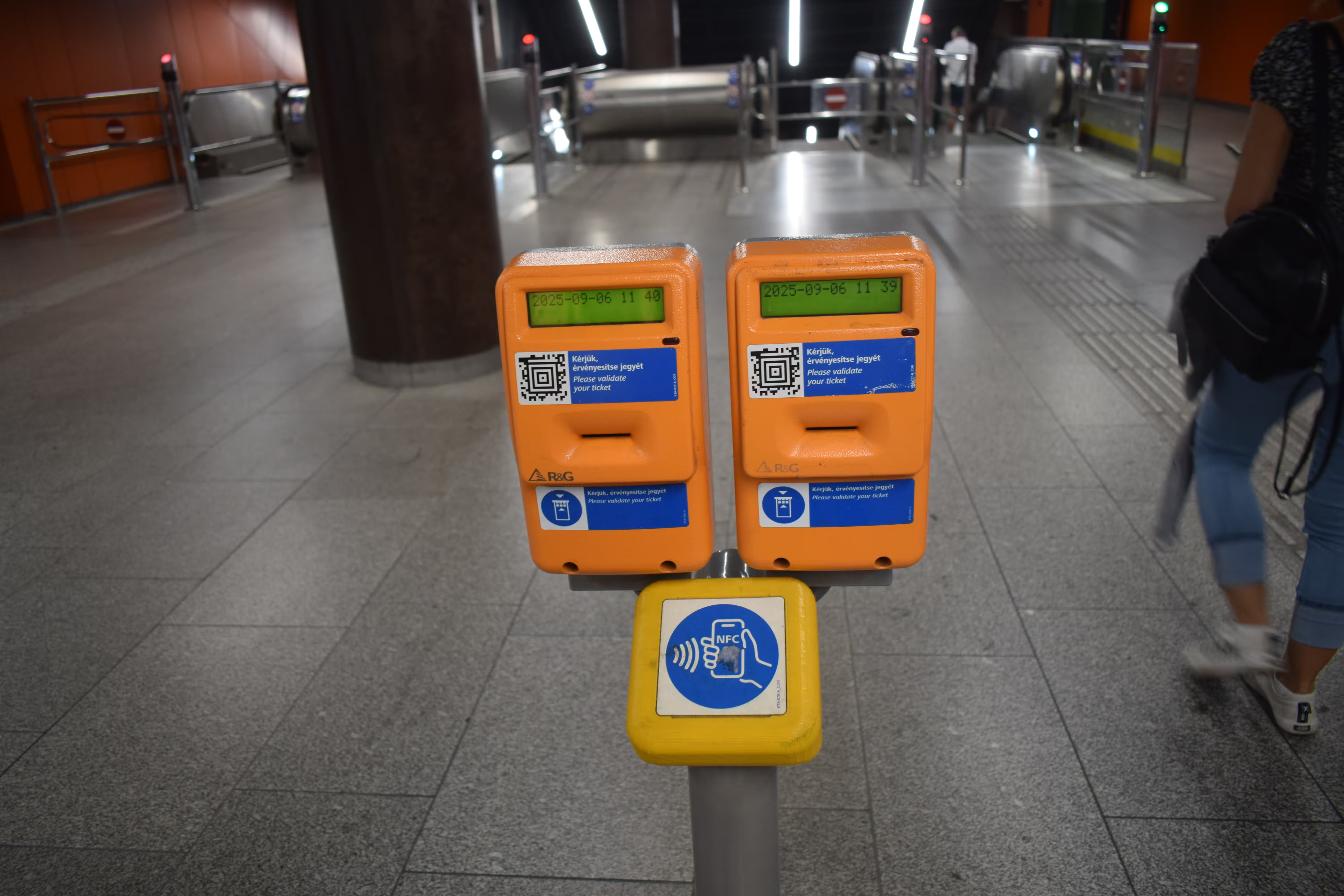
If you read my post on Vienna, I mentioned that the metro stations don’t have AFC gates but ticket validators instead. Budapest’s metro also has the same system. If you buy individual tickets, you need to validate them using the validators on the station before boarding the metro. If you are using a public transport pass like I was, then you do not need to validate, and you can board the metro directly.
A ticket validator at a metro station in Budapest.
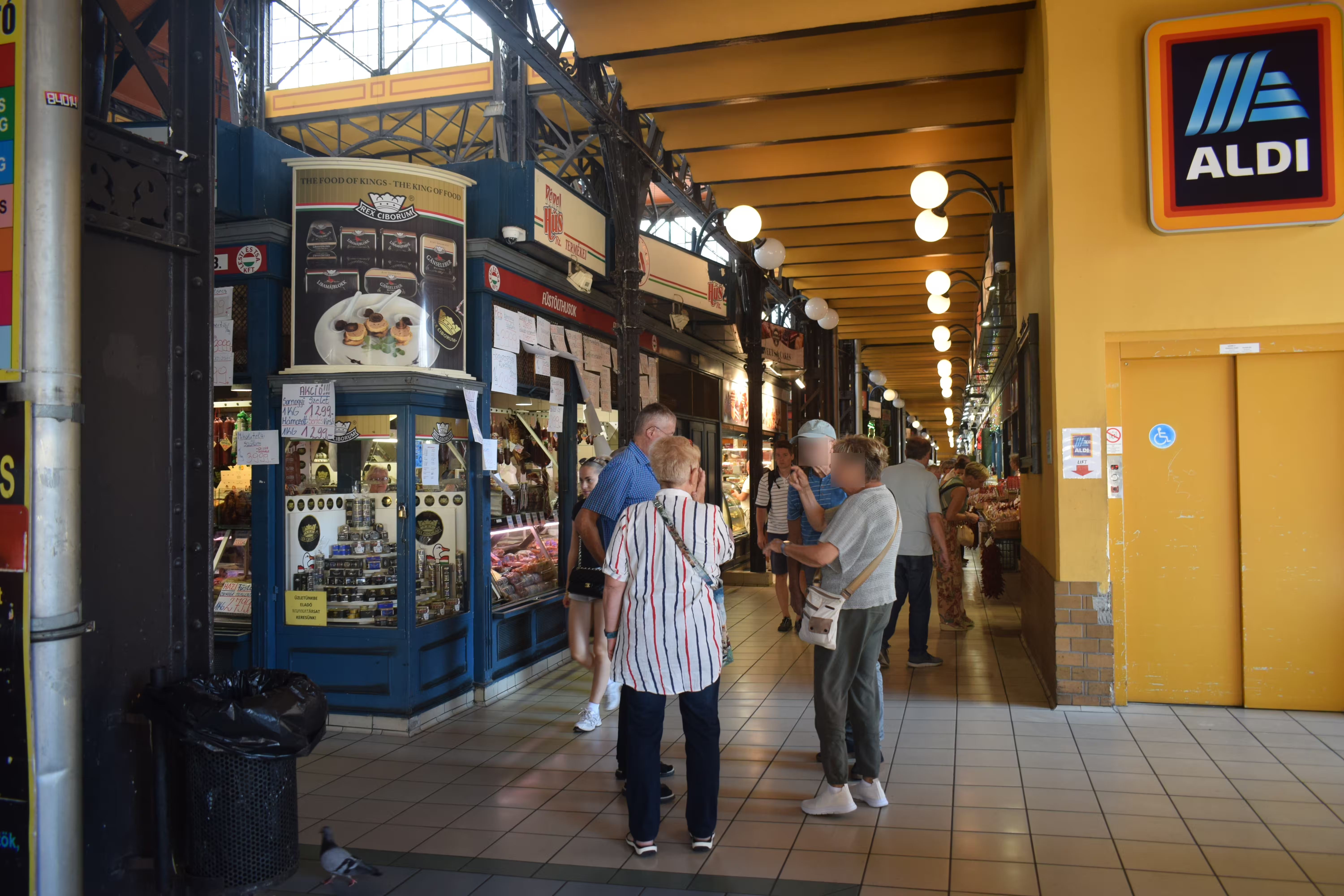
In 10-15 minutes, we reached the central market. Attila showed us around. I bought a fridge magnet and paprika powder as souvenirs. Paprika powder is a signature spice of Hungary. It is mainly available in two forms—one is sweet and the other being spicy. I wanted the spicy one, but I didn’t get that in that market. Therefore, I had to contend with buying the sweet version. The sweet version isn’t sweet though, it is just not spicy. After bringing that paprika powder home, it is mainly used for food coloring. I like it though and use it frequently in my omelets and other dishes.
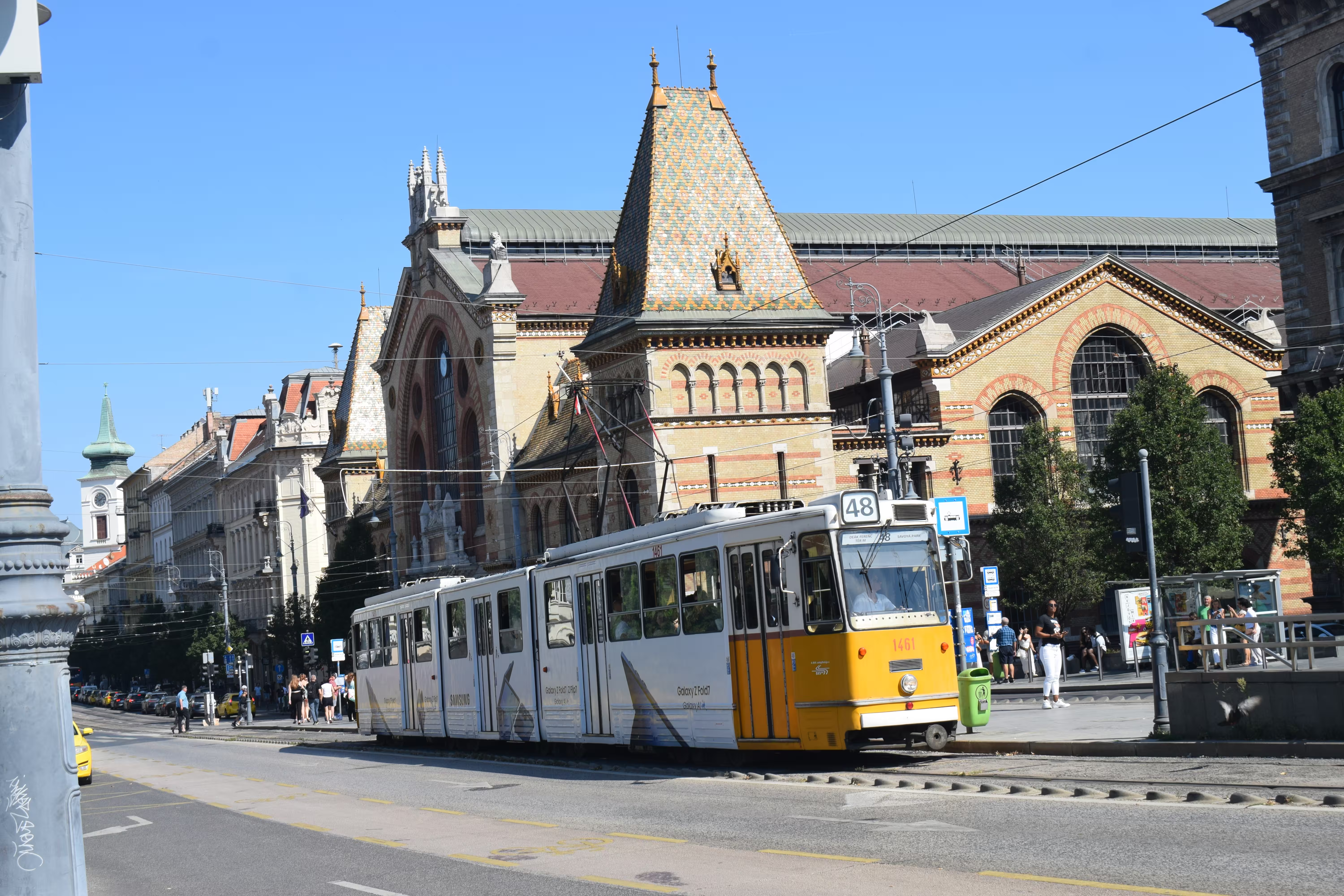
Central market.
The building right behind the tram is the central market building.
At some point, Atilla had to join the The Document Foundation (TDF) sightseeing group, so we parted ways at the central market. Dione and I continued our sightseeing and decided to start with visiting the Hungarian parliament, which is a tourist attraction. It was because we were on the Pest side and the parliament was also on the same side, while other tourist attractions were on the Buda side.
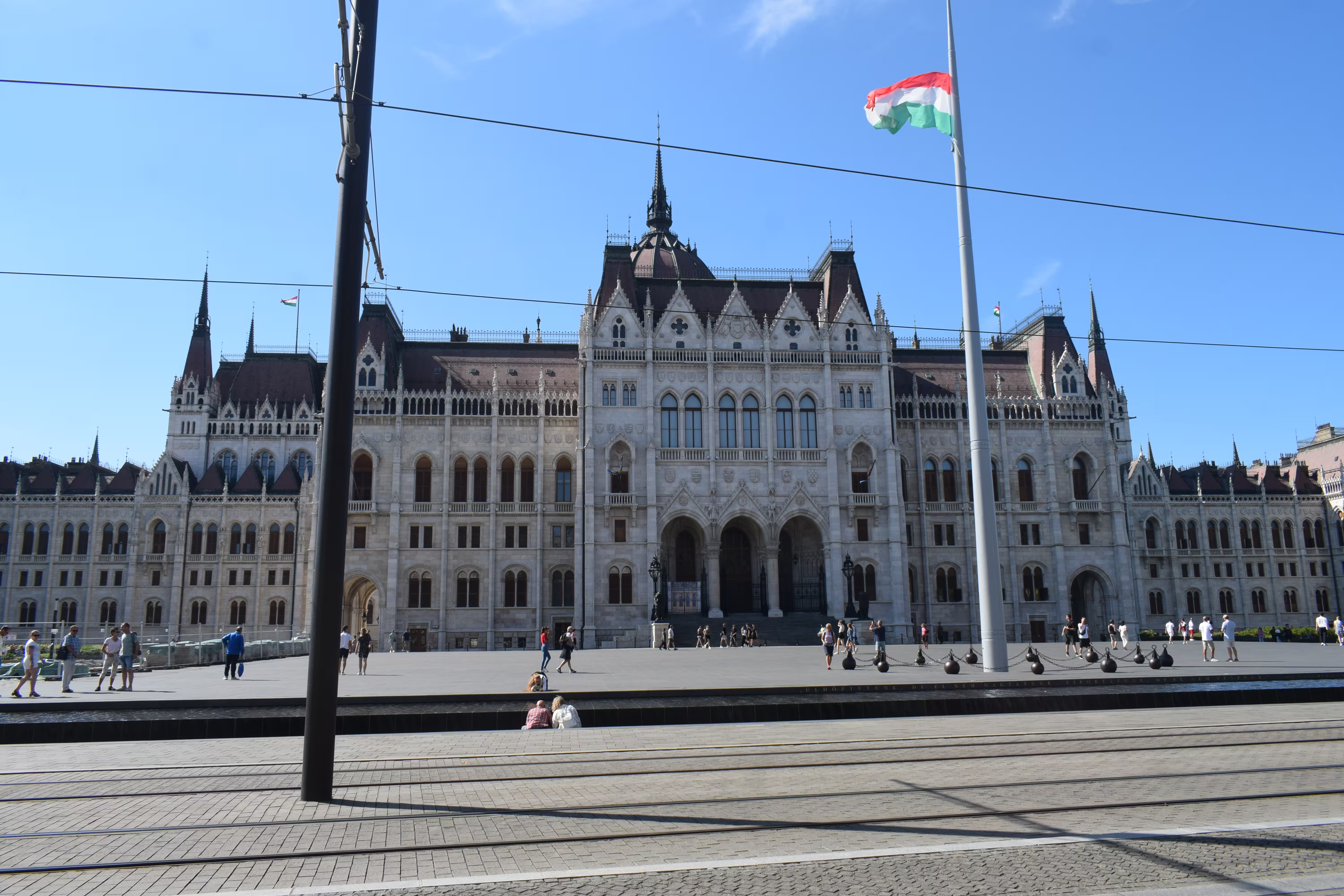
So, Dione and I hopped on a tram and went to the parliament. We got off at a tram station just outside the parliament. The parliament is the icon of Budapest. The building has a gothic architecture and colored brown and white. One can buy tickets and take an inside tour. However, we didn’t have a lot of time, so we stayed outside the building.
Hungarian Parliament building.
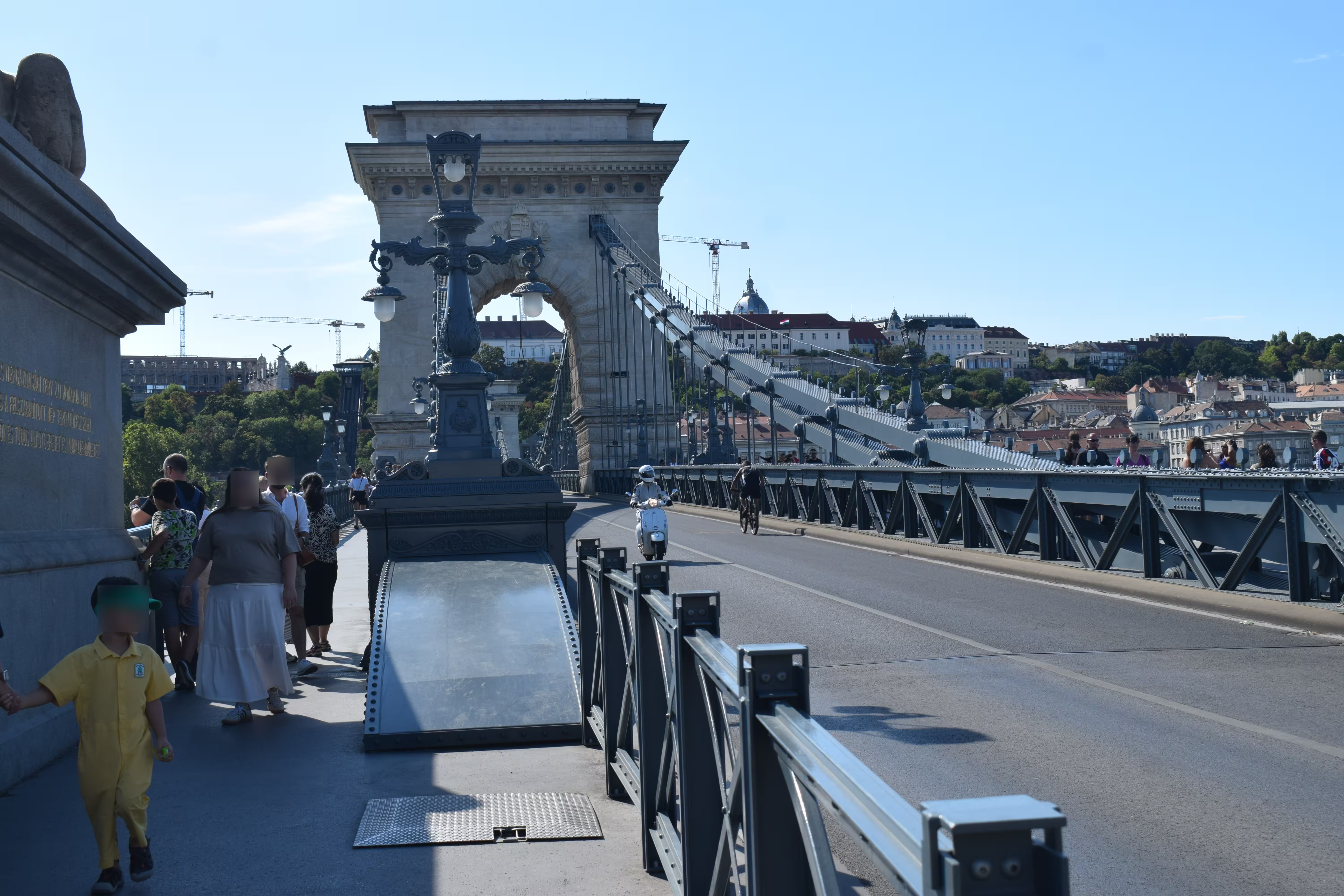
After spending some time outside the parliament building, we took a tram to the Chain Bridge. As I mentioned earlier, Budapest has two parts—Buda and Pest—separated by the Danube River. To go from one of the sides to the other requires crossing a bridge. Although Budapest has many bridges linking the two sides, the main one is the Chain Bridge.
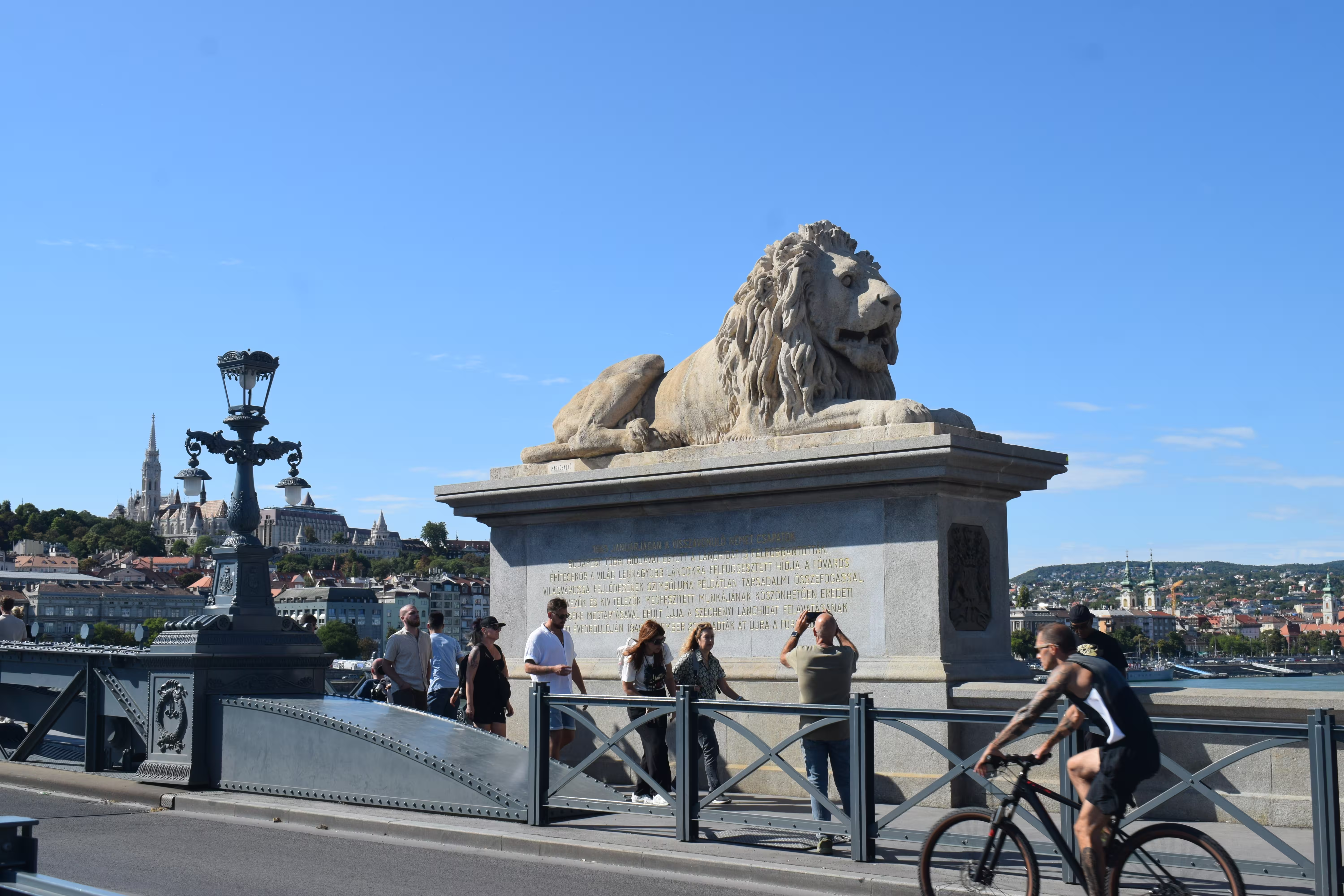
We walked on the chain bridge to get to the other side. The bridge gave a good view of the Danube River. It also had a statue of a lion. The Buda Castle (another major landmark of Budapest) was visible from the bridge.
A shot of Chain Bridge.
The lion statue on the Chain Bridge.
After reaching the other side of the bridge (the Buda side), we sat on a bench for some time and then planned on where to go next. We decided to go to Fisherman’s Bastion, which is another tourist attraction.
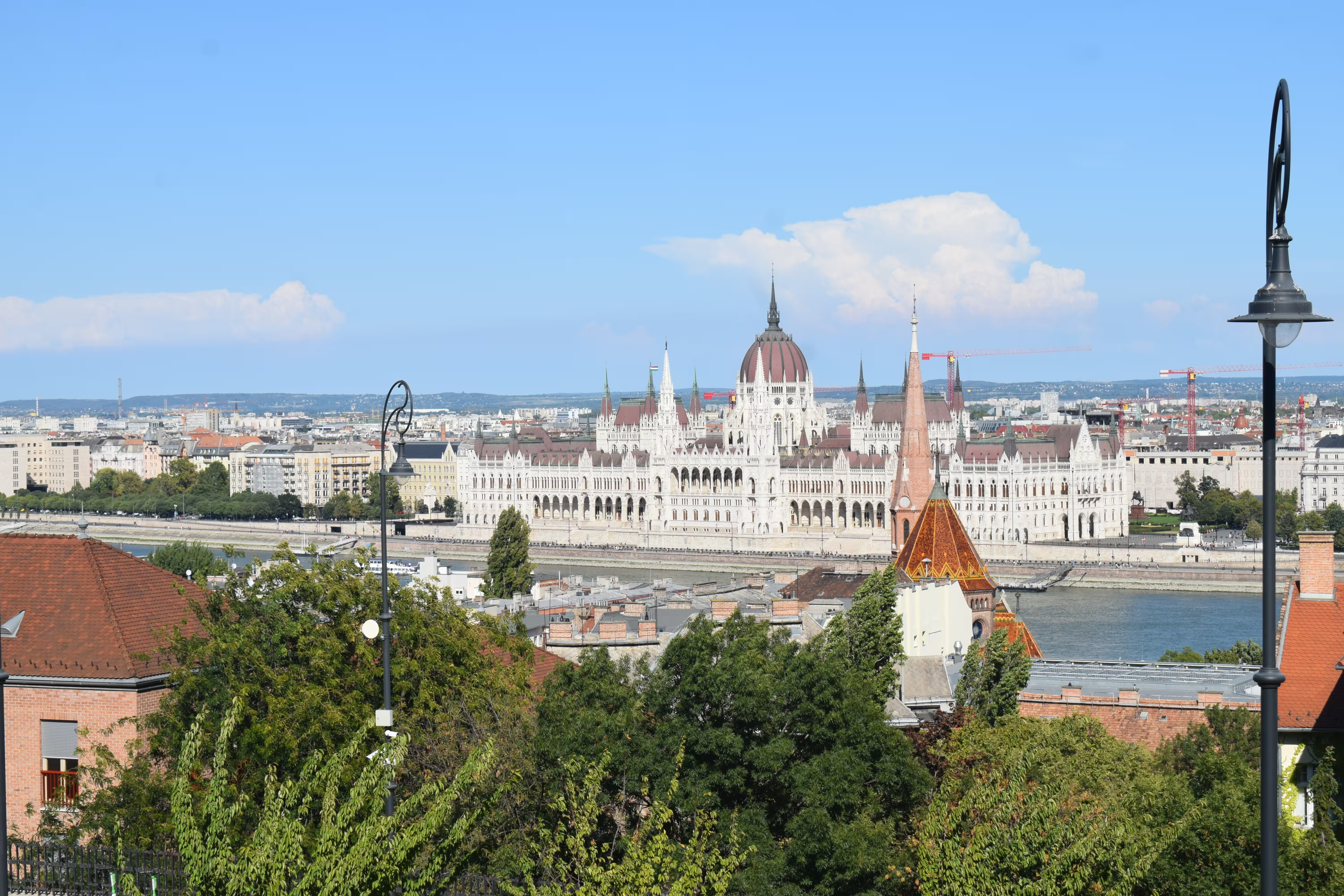
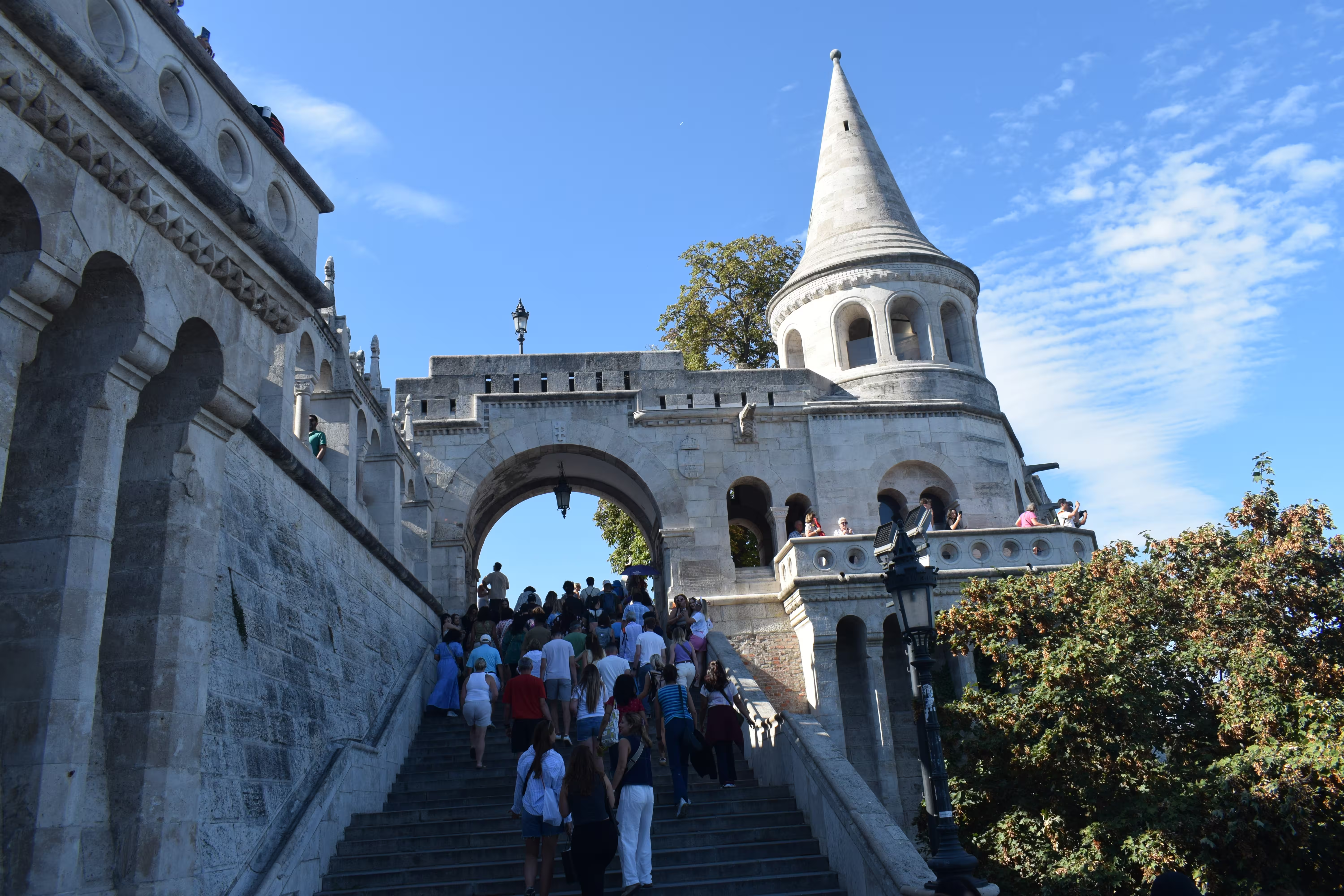
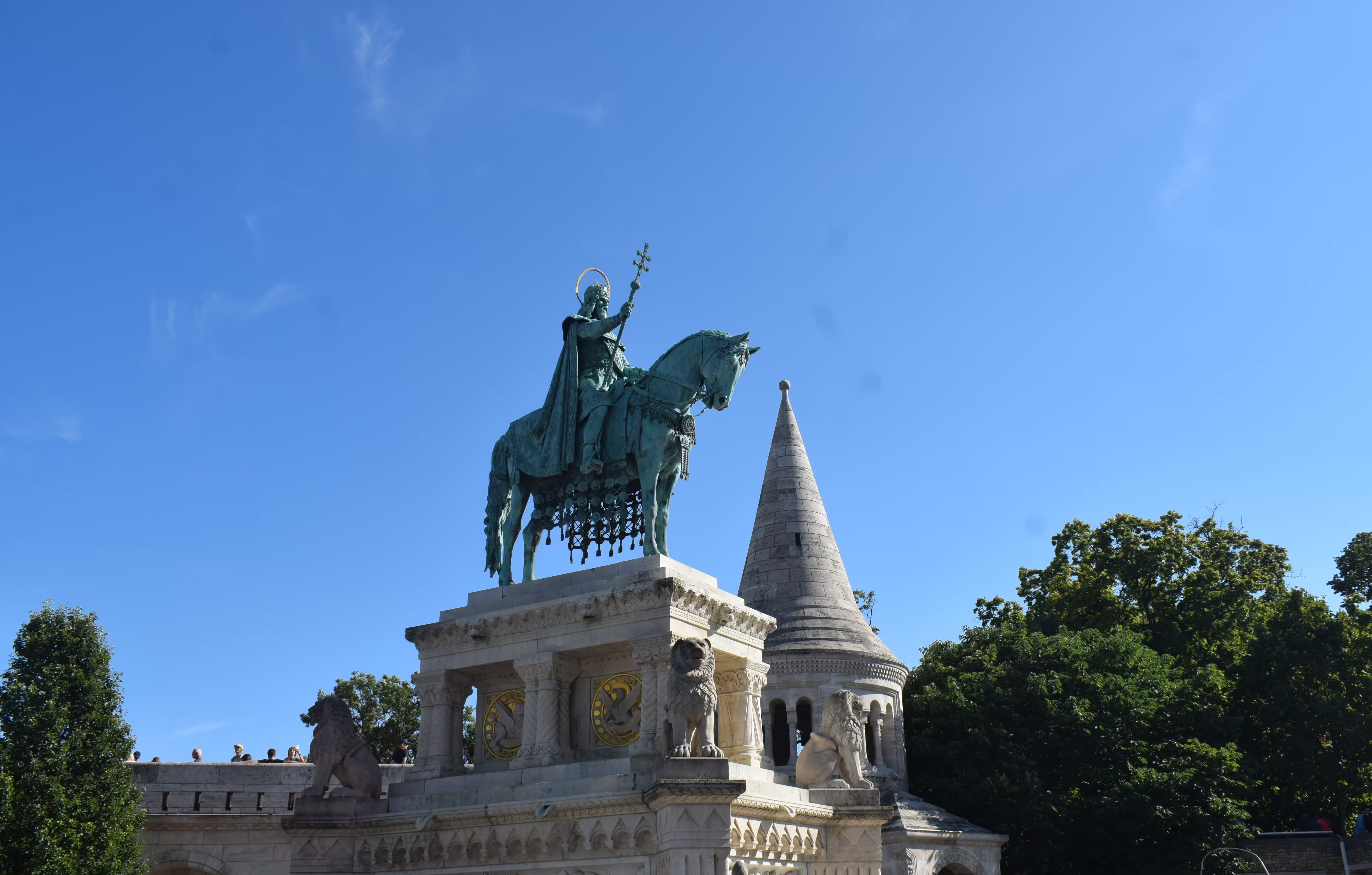
We used the OSMAnd~ app to figure out which bus to take and hopped on one. Soon we reached Fisherman’s Bastion, where we found a flight of stairs that led upwards. Upon climbing the stairs, we got a panoramic view of the city. It also gave us a good view of the Hungarian parliament across the river. Going further upstairs, we found a statue of Stephen I of Hungary. He was the first king of Hungary, getting the crown in the year 1900.
A view of Hungarian parliament from Fisherman’s bastion.
I found Fisherman’s Bastion to be the best tourist attraction in the city. As mentioned earlier, it offers a panoramic view of the city, which I liked. I liked the arhitecture and open space there. If you find yourself in Budapest, I would highly recommend that you visit Fisherman’s Bastion.
Fisherman’s Bastion.
Statue of Stephen I of Hungary at Fisherman’s Bastion.
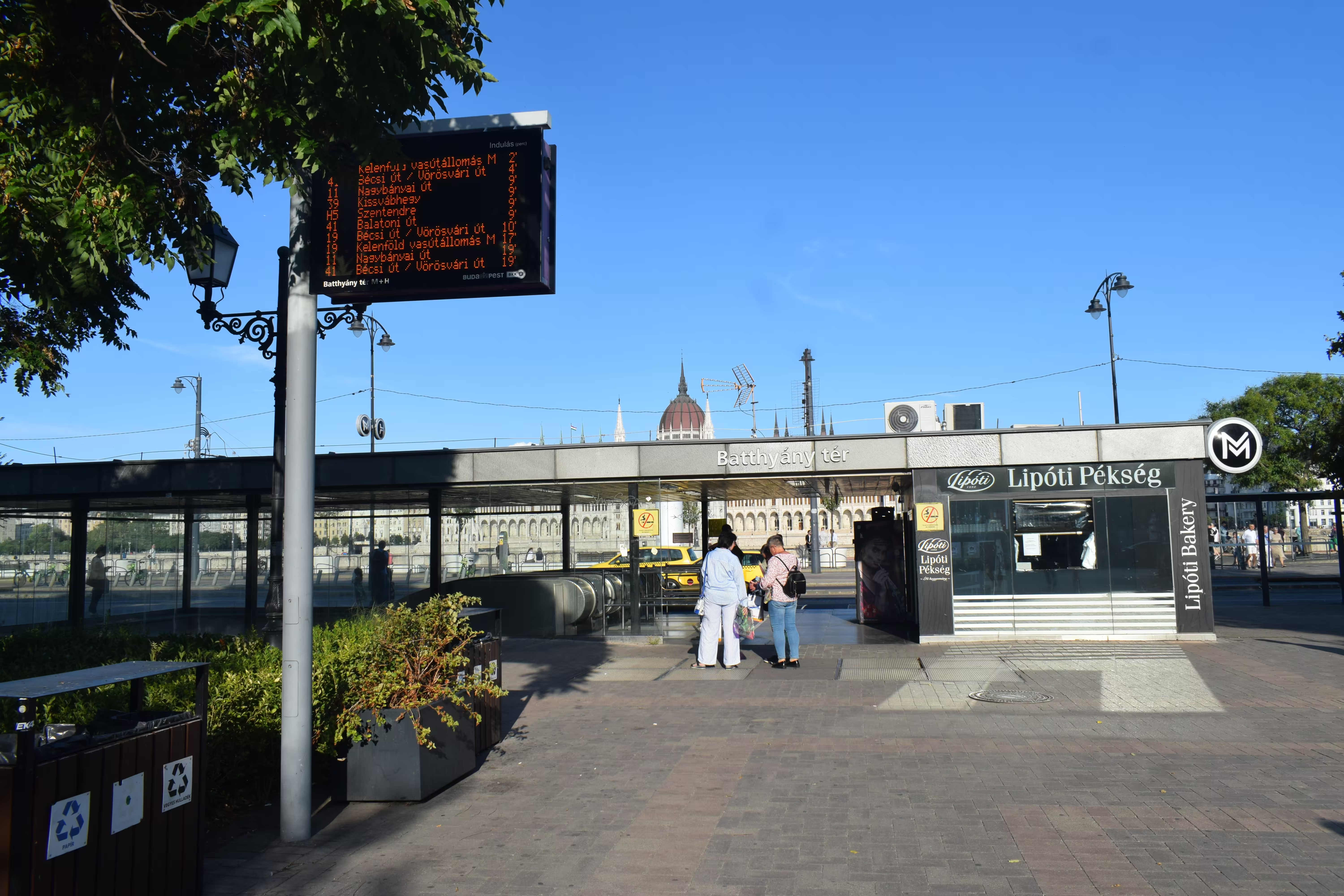
Next, we went downstairs and returned to where the bus dropped us. From here on, we walked in random streets to see the residential and non-touristy side of Budapest. It was not so random as we walked towards Batthyány tér metro station. Upon reaching the metro station, we found a café where we stopped for a while for some coffee. After injecting some caffeine into our blood, we proceeded to find a place to have lunch.
Batthyány tér metro station.
For lunch, we decided to go to Rákóczi tér metro station after reading on the internet about the food options there. Upon exiting the metro station, we found a market inside a building that had a lot of shops, but most of them were closed.
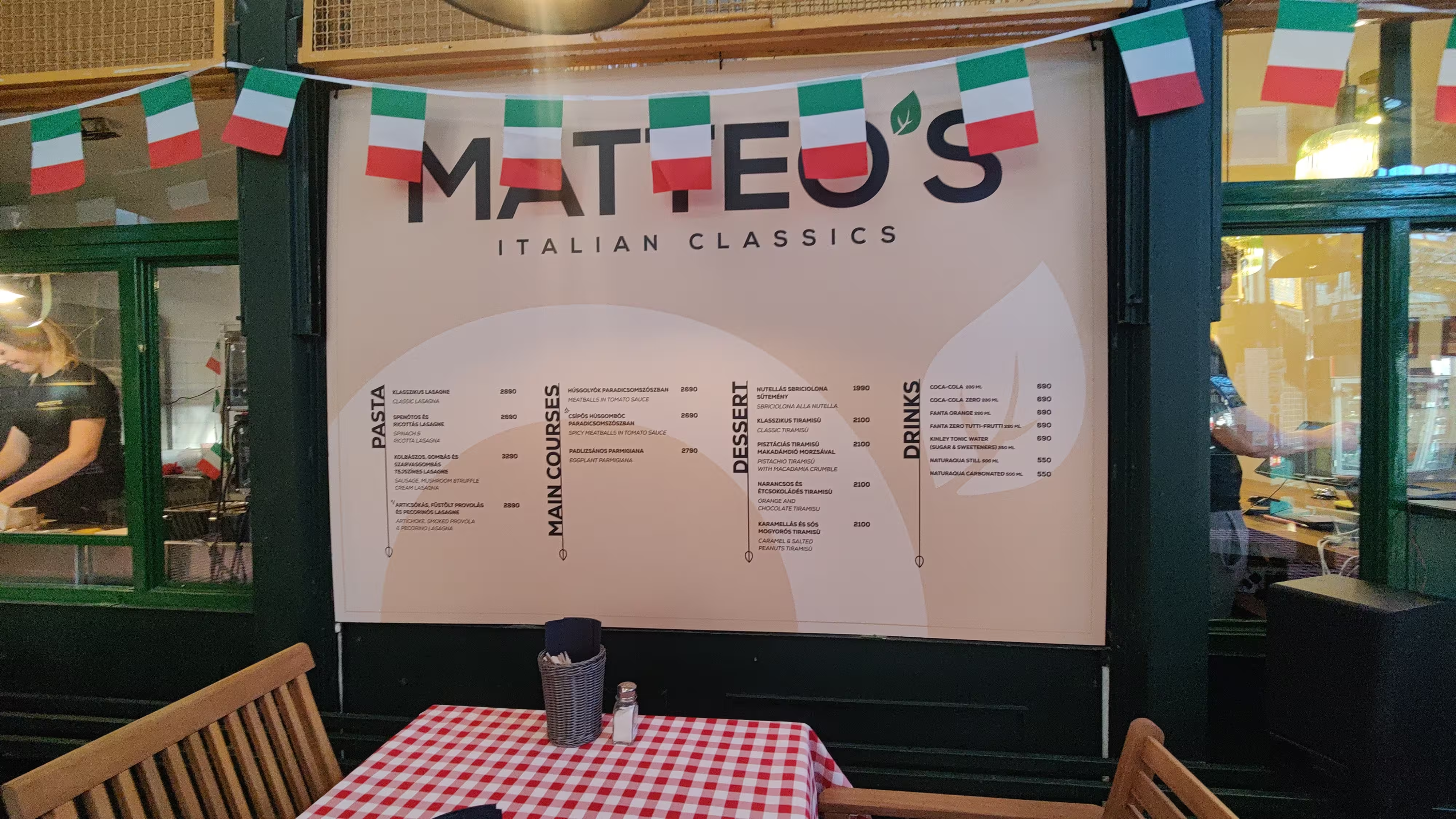
After roaming around inside a bit, we found an Italian place open and decided to eat there. The name of this place was Matteos. We ordered an eggplant parmigiana, a lasagna artichoke, and a classic tiramisu. It wasn’t very tasty but filled us up for the day.
A picture of Matteos, where we had our lunch.
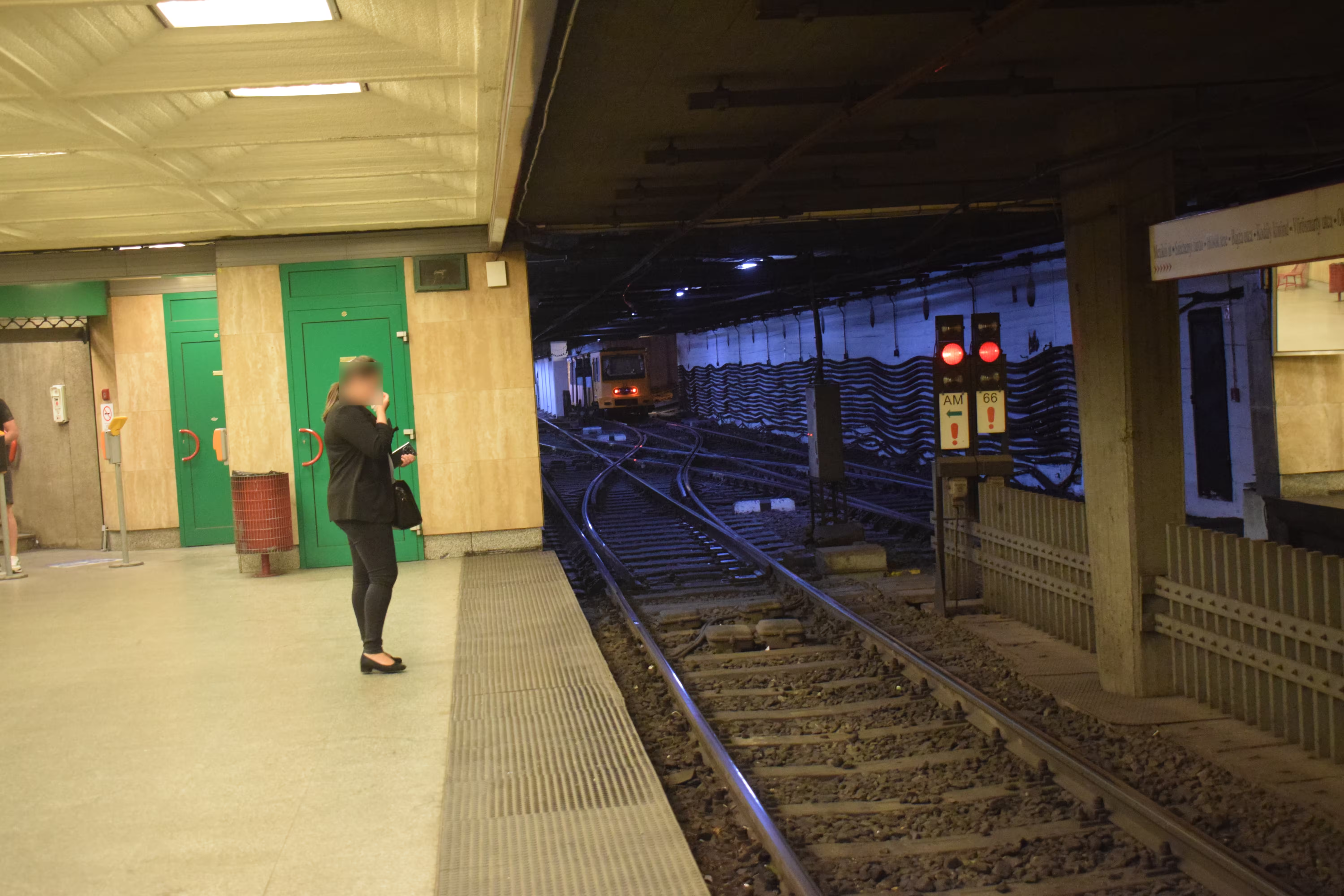
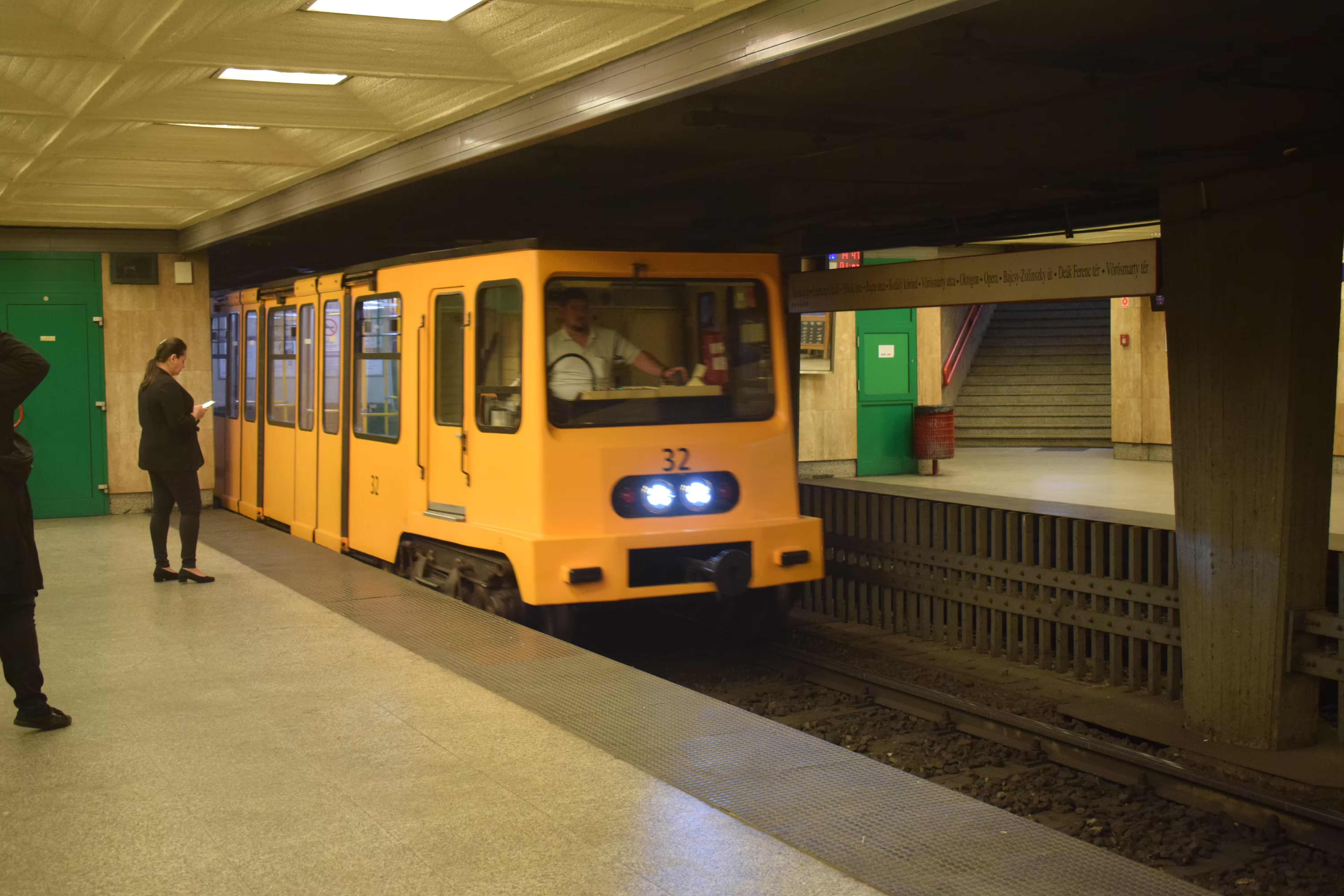
Budapest has four metro lines, and we had been to three of them, so we decided to try the remaining line, which was the M1 line. It is the oldest line in the city and has a different vibe than the modern lines. This line was opened in 1896, one of the oldest subway systems in the world.
The coaches were much smaller than the other metro lines, and the seating arrangement was something you would expect from a bus than a typical metro train. We rode all the way to the last stop, Mexikói út. Upon going outside, we found out there wasn’t much to do here.
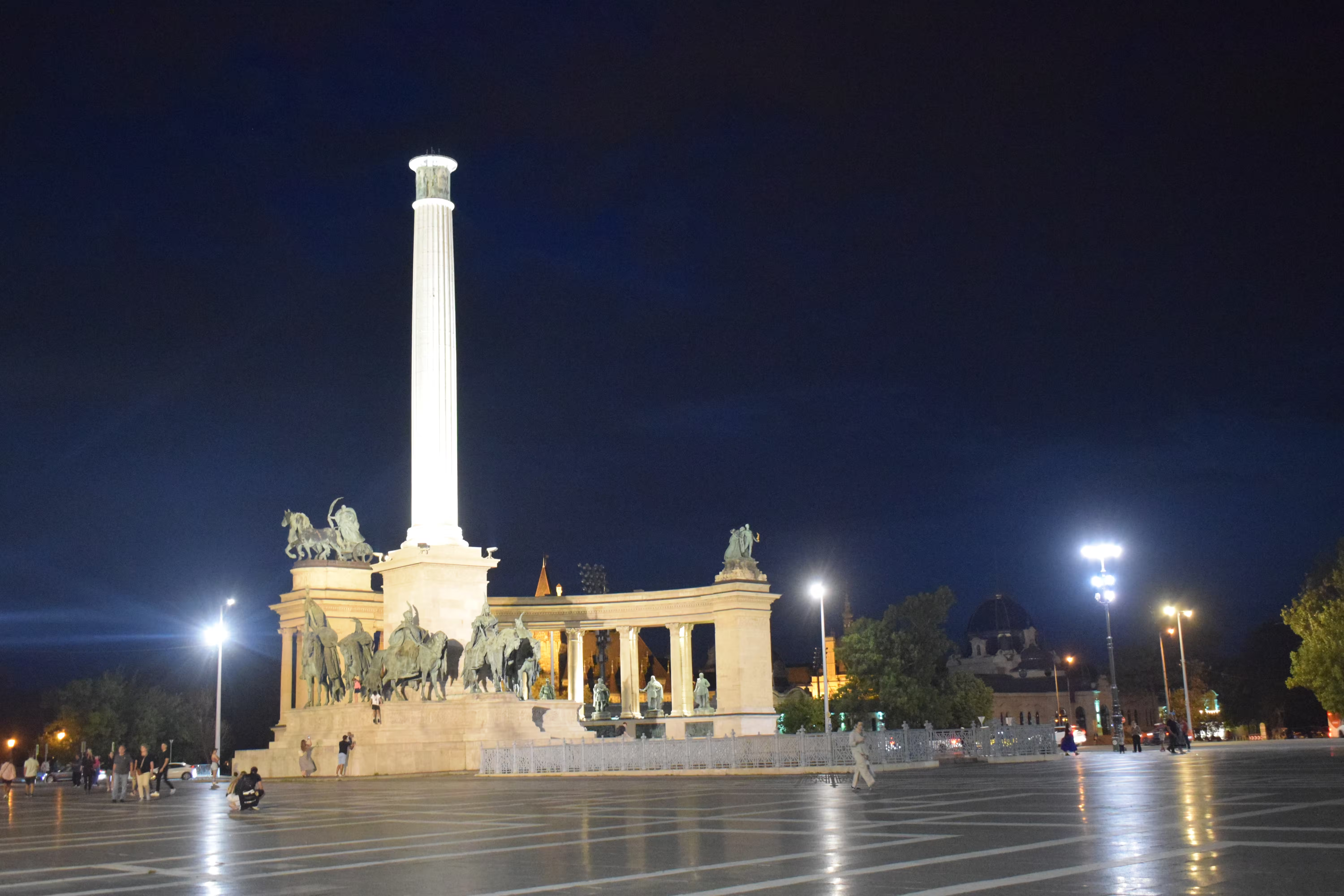
At this point, I checked the map and realized that Heroes’ Square is just a couple of metro stations away. Heroes’ Square is a tourist attraction in Budapest. It is located in Zuglóa and is a historically significant place in Budapest. It has a monument which features the Seven chieftains of the Magyars.
M1 line station and tracks. It is the oldest metro transit of Budapest and one of the oldest in the world. It started operations in 1896.
Here, our unlimited public transport pass was handy because if it was paid per trip, we would think of the stop as a “wasted” one because we would have to buy a ticket again, but in this case we could just hop on again without any regrets.
An M1 line metro train entering the station.
So we took the M1 line again and deboarded at Hősök tere station, followed by walking to the square. After roaming around for a while, we saw a trolleybus and decided to ride on that.
Heroes’ Square.
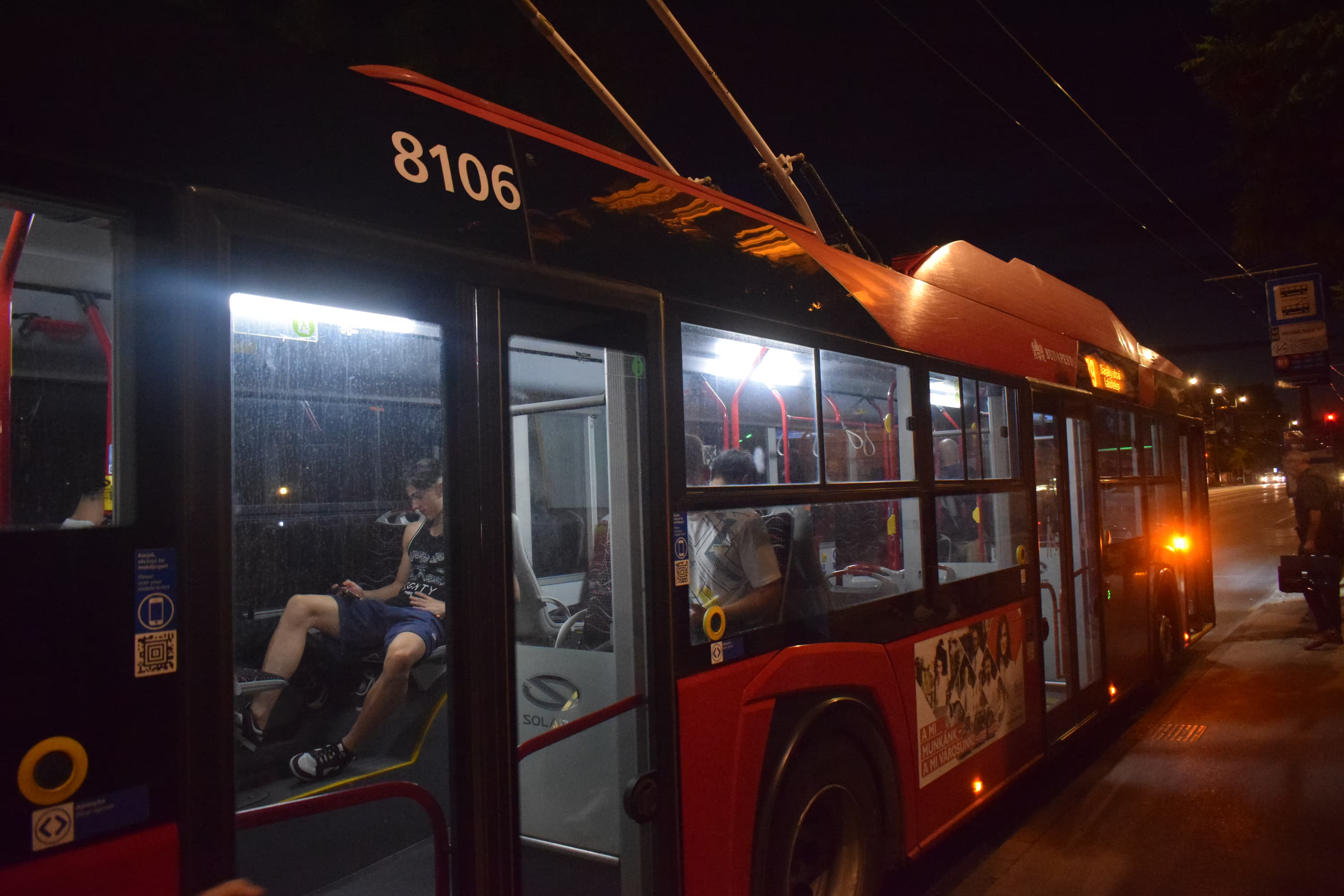
This is the trolleybus we took in Budapest.
A trolleybus is an electric bus that is powered by overhead electric cables. It is like a tram but runs on roads instead of tracks. We got down at Dózsa György út metro station. Then we took a metro to our hotel.
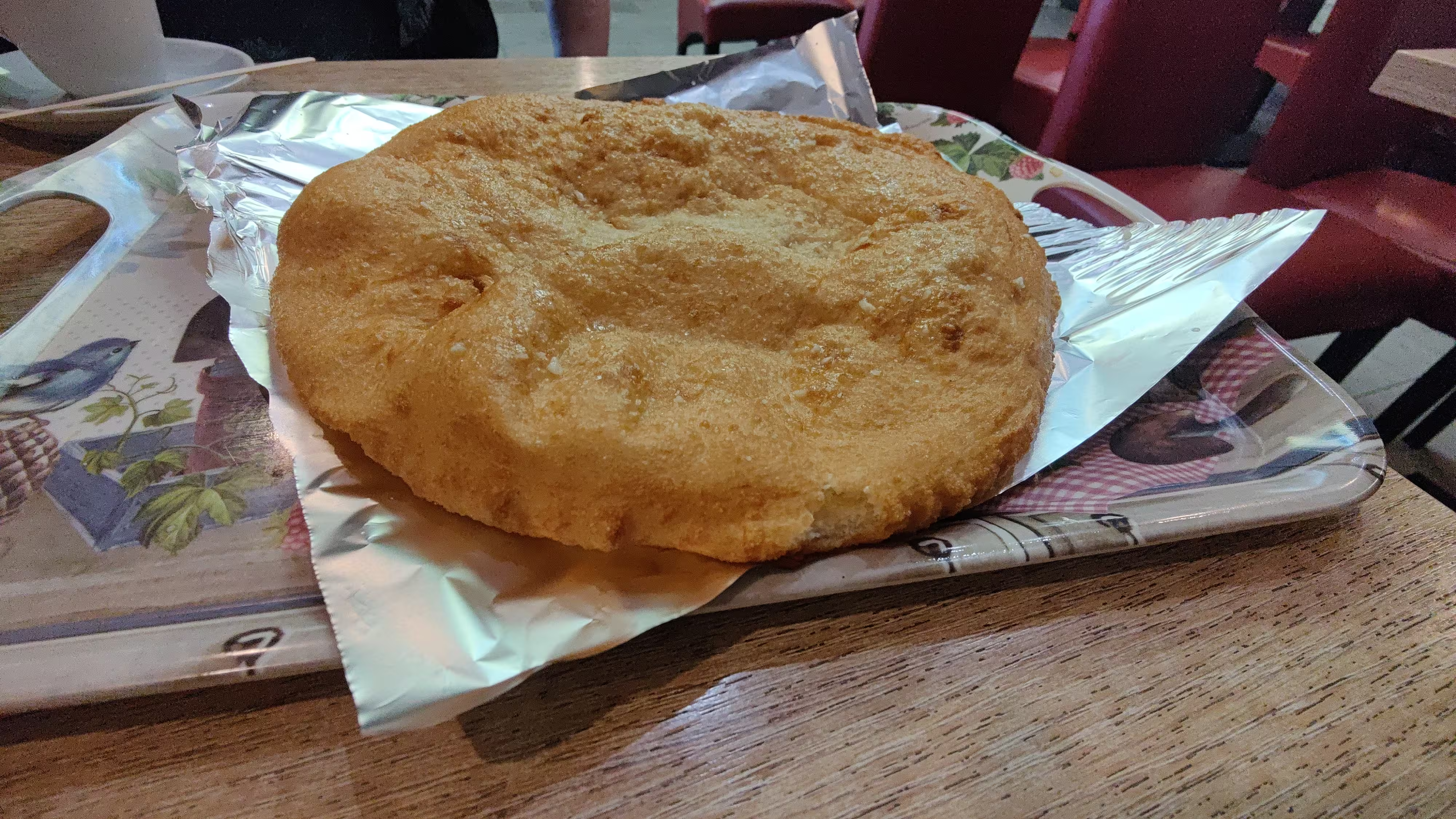
Before going to the hotel, we went to a place to eat something. We had coffee and lángos. Lángos is a deep-fried Hungarian dish, which looks exactly like the Indian flatbread bhatura. I found it tasty, but since it was deep-fried, that was almost a given.
Lángos — a dish which looks like the Indian flatbread bhatura.
The next day we went to Vienna—the capital of Austria—which I have already posted about. Check it out here.
I had a good time in Budapest, and it is a beautiful city with good public transport and some amazing sites to visit.
That’s it for now, and see you next time!
Introduced VERSION_KEY_ constants and renamed main to published @alvarosabu (#27397)*
Backward Compatibility: You can now use ?version=published to resolve versions of the main item(s) via the version query parameter. For backward compatibility, ?version=main will continue to work.
Replaced status field with archived boolean in collection settings @alvarosabu (#27397)
Backward Compatibility: Existing collections with string-based status fields continue to work unchanged; newly created collections now default to a boolean "Archived" field instead of the string "Status" field
Deprecation for extensions: The globally registered VResizeable component has been deprecated. Extension authors using <v-resizeable> should migrate to @directus/vue-split-panel or their own implementation.
Updated type system, borders, and theme variables @formfcw (#27437)
Potential breaking change for theme extensions: headerShadow and sidebarShadow removed from LayoutConfig interface
Potential breaking change for theme extensions: boxShadow removed from header theme rules schema
Potential breaking change for theme extensions: sidebarShadow no longer exposed in layout wrapper state
Updated module navigation bar spacing and styling @HZooly (#27437)
Potential breaking change in theme extensions: Removed navigation.project.borderColor / navigation.project.borderWidth / navigation.project.background from theming. No action is required — these props will simply no longer have any effect.
Locked published items in versioned collections from editing and added a header action button to edit in the draft version @alvarosabu (#27397)
Breaking change — new behavior for versioned collections Published items in versioned collections are now locked. Edits must be made through the draft version.
Removed rounded buttons and adopted shared header action button across all views @formfcw (#27437)
Potential breaking change for extensions: The rounded prop has been removed from v-button. Extensions using rounded will still render correctly but buttons will appear as rounded rectangles instead of circles. No functional impact.
Breaking Change: Relicensed from BUSL-1.1 to MSCL-1.0-GPL (Monospace Sustainable Core License, Version 1.0).
Updated header and navigation bar base design and merged their theme properties into a new shell scope @formfcw (#27437)
Potential breaking change for theme extensions: The theme properties navigation.background, navigation.backgroundAccent, navigation.borderWidth, navigation.borderColor, header.background, header.borderWidth, and header.borderColor have been removed and replaced by shell.background, shell.backgroundAccent, shell.borderWidth, and shell.borderColor.
Potential breaking change for theme extensions: Custom themes overriding any of these removed properties must migrate to the new shell scope. The corresponding CSS variables change from --theme--navigation--background, --theme--navigation--background-accent, --theme--navigation--border-*, --theme--header--background, and --theme--header--border-* to --theme--shell--background, --theme--shell--background-accent, and --theme--shell--border-*.
Removed the extra confirmation step from the publish flow @alvarosabu (#27487)
Breaking change — new publish flow: Publishing a version no longer shows an additional confirmation dialog after confirming changes in the comparison modal. The item is published directly once the changes are confirmed.
Potential breaking change for theme extensions: Removed section.toggle.borderWidth / section.toggle.borderColor in favor of section-level border tokens. No action is required — these props will simply no longer have any effect.
Potential breaking change for theme extensions: Removed sidebarShadow and headerShadow from defineLayout(). No action is required — these props will simply no longer have any effect.
Refactored focus ring from border/box-shadow to outline @formfcw (#27437)
Potential breaking change for theme extensions: borderColorFocus, boxShadowHover, and boxShadowFocus are removed from the theme schema — custom themes referencing these will lose their focus overrides silently
Potential breaking change for interface extensions that relied on --theme--form--field--input--border-color-focus or --theme--form--field--input--box-shadow-focus CSS variables will need to migrate to --theme--form--field--input--focus-ring-color
Updated header bar elements and deprecated the headline slot @formfcw (#27437)
Deprecation for extensions: The headline slot on the private view header bar has been deprecated. Existing content keeps rendering, but consumers using <template #headline> will now see a deprecation hint from Volar.
Changed the default of IP_TRUST_PROXY from true to false to harden the default deployment against IP spoofing. (#27607)
The IP_TRUST_PROXY default was changed from true to false. If you run Directus behind a reverse proxy and rely on X-Forwarded-For (or similar) headers for client IP resolution, you must now explicitly set IP_TRUST_PROXY to true or a more specific trust configuration.
@directus/app
Locked published items in versioned collections from editing and added a header action button to edit in the draft version @alvarosabu (#27397 by @formfcw)
Removed rounded buttons and adopted shared header action button across all views @formfcw (#27437 by @formfcw)
Refactored drawer header layout and simplified v-drawer API @formfcw (#27437 by @formfcw)
:::notice
Deprecation for extensions: The globally registered v-breadcrumb component has been deprecated. Extensions using <v-breadcrumb> keep rendering but will see a deprecation hint from Volar.
Deprecation for extensions: On v-drawer, the subtitle prop (use the title prop instead), the subtitle slot, the header:append slot, and the actions:append slot have been deprecated. Existing usage keeps rendering — actions:append content lands in the secondary-actions zone, and for primary CTAs in the drawer header use the new actions:primary slot. Consumers will see deprecation hints from Volar.
Potential Breaking change for theme extensions: The theme properties header.headline.foreground and header.headline.fontFamily have been removed. Custom themes overriding these properties should remove them. The corresponding CSS variables --theme--header--headline--foreground and --theme--header--headline--font-family no longer exist.
Refactored drawer header layout and simplified v-drawer API @formfcw (#27437 by @formfcw)
:::notice
Deprecation for extensions: The globally registered v-breadcrumb component has been deprecated. Extensions using <v-breadcrumb> keep rendering but will see a deprecation hint from Volar.
Deprecation for extensions: On v-drawer, the subtitle prop (use the title prop instead), the subtitle slot, the header:append slot, and the actions:append slot have been deprecated. Existing usage keeps rendering — actions:append content lands in the secondary-actions zone, and for primary CTAs in the drawer header use the new actions:primary slot. Consumers will see deprecation hints from Volar.
Potential Breaking change for theme extensions: The theme properties header.headline.foreground and header.headline.fontFamily have been removed. Custom themes overriding these properties should remove them. The corresponding CSS variables --theme--header--headline--foreground and --theme--header--headline--font-family no longer exist.
Added split-menu slot to v-button and migrate primary header actions @formfcw (#27437 by @formfcw)
Added AI-powered translations to the translations interface, including glossary, style guide, and configurable default model settings derived from the enabled providers and allowed models. (#26940 by @bryantgillespie)
Added version support to getItemRoute and update all callers to preserve version context when navigating to items from layouts and interfaces @alvarosabu (#27397 by @formfcw)
Added behavior to auto-switch to the draft version on the first edit of published item @alvarosabu (#27507 by @alvarosabu)
Updated VChip component to appear as a pill in form field label, group accordion, group tabs, kanban, deployment status, extension item, marketplace extension list item, marketplace extension banner, and user popover @formfcw (#27462 by @formfcw)
Added MCP OAuth 2.1 authorization server. MCP clients (like Claude, Codex) can now authenticate via standard OAuth flow with PKCE instead of requiring a manually provisioned static token. Enable with MCP_OAUTH_ENABLED=true. Dynamic and client ID metadata registration were kept separately opt-in with MCP_OAUTH_DCR_ENABLED=true and MCP_OAUTH_CIMD_ENABLED=true. (#27069 by @hanneskuettner)
Deprecation for extensions: The actions:append slot in the header bar has been deprecated in favor of the new actions:primary slot for primary CTAs. Existing actions:append usage keeps rendering in the secondary-actions zone, but consumers will now see a deprecation hint from Volar.
Renamed "Promote" to "Publish" in version menu and disabled create version and published selection for item-less versions @alvarosabu (#27397 by @formfcw)
Refactored drawer header layout and simplified v-drawer API @formfcw (#27437 by @formfcw)
:::notice
Deprecation for extensions: The globally registered v-breadcrumb component has been deprecated. Extensions using <v-breadcrumb> keep rendering but will see a deprecation hint from Volar.
Deprecation for extensions: On v-drawer, the subtitle prop (use the title prop instead), the subtitle slot, the header:append slot, and the actions:append slot have been deprecated. Existing usage keeps rendering — actions:append content lands in the secondary-actions zone, and for primary CTAs in the drawer header use the new actions:primary slot. Consumers will see deprecation hints from Volar.
Potential Breaking change for theme extensions: The theme properties header.headline.foreground and header.headline.fontFamily have been removed. Custom themes overriding these properties should remove them. The corresponding CSS variables --theme--header--headline--foreground and --theme--header--headline--font-family no longer exist.
:::
Updated header bar elements and deprecated the headline slot @formfcw (#27437 by @formfcw)
Ensured to switch to the draft version when visually editing an item of a versioned collection @formfcw (#27595 by @formfcw)
Added AI-powered translations to the translations interface, including glossary, style guide, and configurable default model settings derived from the enabled providers and allowed models. (#26940 by @bryantgillespie)
Added MCP OAuth 2.1 authorization server. MCP clients (like Claude, Codex) can now authenticate via standard OAuth flow with PKCE instead of requiring a manually provisioned static token. Enable with MCP_OAUTH_ENABLED=true. Dynamic and client ID metadata registration were kept separately opt-in with MCP_OAUTH_DCR_ENABLED=true and MCP_OAUTH_CIMD_ENABLED=true. (#27069 by @hanneskuettner)
Added JSON filtering, alias and sorting support (#26981 by @br41nslug)
Added MCP OAuth 2.1 authorization server. MCP clients (like Claude, Codex) can now authenticate via standard OAuth flow with PKCE instead of requiring a manually provisioned static token. Enable with MCP_OAUTH_ENABLED=true. Dynamic and client ID metadata registration were kept separately opt-in with MCP_OAUTH_DCR_ENABLED=true and MCP_OAUTH_CIMD_ENABLED=true. (#27069 by @hanneskuettner)
Added MCP OAuth 2.1 authorization server. MCP clients (like Claude, Codex) can now authenticate via standard OAuth flow with PKCE instead of requiring a manually provisioned static token. Enable with MCP_OAUTH_ENABLED=true. Dynamic and client ID metadata registration were kept separately opt-in with MCP_OAUTH_DCR_ENABLED=true and MCP_OAUTH_CIMD_ENABLED=true. (#27069 by @hanneskuettner)
Added MCP OAuth 2.1 authorization server. MCP clients (like Claude, Codex) can now authenticate via standard OAuth flow with PKCE instead of requiring a manually provisioned static token. Enable with MCP_OAUTH_ENABLED=true. Dynamic and client ID metadata registration were kept separately opt-in with MCP_OAUTH_DCR_ENABLED=true and MCP_OAUTH_CIMD_ENABLED=true. (#27069 by @hanneskuettner)
Updated header bar elements and deprecated the headline slot @formfcw (#27437 by @formfcw)
@directus/utils
Added MCP OAuth 2.1 authorization server. MCP clients (like Claude, Codex) can now authenticate via standard OAuth flow with PKCE instead of requiring a manually provisioned static token. Enable with MCP_OAUTH_ENABLED=true. Dynamic and client ID metadata registration were kept separately opt-in with MCP_OAUTH_DCR_ENABLED=true and MCP_OAUTH_CIMD_ENABLED=true. (#27069 by @hanneskuettner)
@directus/sdk
Added JSON filtering, alias and sorting support (#26981 by @br41nslug)
Changed back button behavior, always navigates one level up @HZooly (#27437 by @formfcw)
Fixed repeater interface ignoring per-field translations and $t: keys on sub-field labels, and added a "Field Name Translations" section to the sub-field configuration UI (#27374 by @khanahmad4527)
Fixed items not being selectable in the collection drawer when the Kanban layout is used while the parent item is opened in a version context @alvarosabu (#27427 by @alvarosabu)
Updated the built-in OpenAI and Anthropic AI model lists to use the latest available API models. (#27602 by @hanneskuettner)
@directus/constants
Added DIRECTUS_DOMAIN constant and replaced hardcoded directus.io to directus.com using the new constant (#27417 by @ComfortablyCoding)
@directus/system-data
Added AI-powered translations to the translations interface, including glossary, style guide, and configurable default model settings derived from the enabled providers and allowed models. (#26940 by @bryantgillespie)
Updated the built-in OpenAI and Anthropic AI model lists to use the latest available API models. (#27602 by @hanneskuettner)
@directus/types
Added AI-powered translations to the translations interface, including glossary, style guide, and configurable default model settings derived from the enabled providers and allowed models. (#26940 by @bryantgillespie)
Added JSON filtering, alias and sorting support (#26981 by @br41nslug)
@directus/utils
Added JSON filtering, alias and sorting support (#26981 by @br41nslug)
@directus/ai
Updated the built-in OpenAI and Anthropic AI model lists to use the latest available API models. (#27602 by @hanneskuettner)
@directus/release-notes-generator
Ignored private workspace packages when generating release notes (#27637 by @licitdev)
Last year I blogged about using Zram for VMs [1]. That setup is still working well for VMs and for phones and laptops with no swap device.
I have just read Chris Down’s insightful blog post about Zswap vs Zram [2] which convinced me to setup Zswap on some systems. I have had some of the problems that were described in his blog post when trying to run Zram on workstation and server systems.
One limitation of zswap is that it doesn’t allow specifying the compression level. For zram I can put the following in /etc/systemd/zram-generator.conf to set the zstd compression level (this works well on my Thinkpad X1 Carbon Gen6):
[zram0]
compression-algorithm=zstd(level=10)
For the BTRFS filesystem I can put “compress=zstd:13” in the mount options to specify the compression level. They really should support different compression levels in zswap. The ideal compression level depends on the speed of the CPU and new CPUs keep getting faster.
Setup
The documentation says to use something like the following on the kernel command-line to enable zswap:
The max_pool_percent=20 setting is the default which means to use up to 20% of system RAM for compressed data. I’ve seen documentation sugesting up to 50% which seems a little excessive.
There is documentation about changing the compression algorithm via command line parameters, on Debian only lzo is linked in to the kernel and zstd (my preferred option) is a module so the kernel command line can’t be used to set zstd, but the following command works:
The shrinker_enabled option is to allow the kernel to evict cold pages without waiting for memory pressure.
You can enable zswap without rebooting by running commands like the following. You could even put them in /etc/rc.local or something, but I think putting it in the kernel command line is a good idea as it makes it obvious to the next sysadmin what is happening.
This table documents my current understanding of the debug values. The difference between reject_compress_fail and reject_compress_poor isn’t clear in a lot of the documentation, even reading the source didn’t make it easy to understand.
File
Meaning (LC is lifetime count)
pool_limit_hit
LC pool limit hit and pages are forced to the swap partition
pool_total_size
RAM used for zswap data
reject_alloc_fail
LC can’t allocate memory because max_pool_percent has been reached
reject_compress_fail
LC of pages with a compression algorithm failure so go straight to swap partition
reject_compress_poor
LC of pages that can’t compress so go straight to swap partition
reject_kmemcache_fail
LC kernel malloc failure (serious problem?)
reject_reclaim_fail
LC failure to move a page from compressed RAM to disk – serious problem!
stored_pages
Swapped pages stored by zswap
written_back_pages
LC of pages written back to swap partition from zswap
All of this is not nearly as easy to understand as the following command for zram:
# zramctl
NAME       ALGORITHM DISKSIZE  DATA COMPR TOTAL STREAMS MOUNTPOINT
/dev/zram0 zstd          7.7G  2.1G  375M  386M       4 [SWAP]
Debian Wiki
The Debian Wiki page about Zswap is very brief [4] and needs more description about this, I think a lot of Debian users will use zram instead of zswap because setting up zram is just a single apt command. I’m not planning to immediately add to that wiki page because I’m not an expert on this, I would appreciate comments on this blog post from others who have got zswap working. I will update the wiki if others report matching experiences to mine.
Conclusion
I’m now using zswap on a few systems including my main home workstation which had performed poorly with zram and a swap device in the past. If that goes well I’ll put it on other systems.
I wrote the following shell script to display zswap stats, consider it GPL if you want to use it:
#!/bin/bash

if [ ! -f /sys/kernel/debug/zswap/stored_pages ]; then
  echo "ZSwap not enabled"
  exit 0
fi
PAGES=$(</sys/kernel/debug/zswap/stored_pages)
PAGESIZE=$(getconf PAGESIZE)
RAM=$(echo "$PAGESIZE * " $(getconf _PHYS_PAGES) | bc)
POOL=$(</sys/kernel/debug/zswap/pool_total_size)
if [ "$POOL" == "0" ]; then
  echo "ZSwap not used yet"
  exit 0
fi
COMP=$(</sys/module/zswap/parameters/compressor)
echo -n "$COMP compression ratio: "
echo "scale=2; $PAGES * $PAGESIZE / $POOL" | bc
echo -n "RAM%: "
echo "100 * $POOL / $RAM" | bc
The DistroWatch news feed is brought to you by TUXEDO COMPUTERS. Andreas Mueller has announced the release of Gnoppix Linux 26_6, the latest version of the project's privacy-focused and AI-optimised Linux distribution. This version is based on Debian's "Testing" branch and showcases the latest Xfce desktop: "We are excited to announce the release of Gnoppix Linux 26.6. This release....

 Log in