Lees weergave

Distribution Release: TileOS 2.0

The DistroWatch news feed is brought to you by TUXEDO COMPUTERS. Aleksey Samoilov has announced the release of TileOS 2.0, a major update of the project's Debian-based Linux distribution featuring several popular Wayland tiling compositors, including Sway and River, as well as the newly-added Qtile, niri and miracle-wm: "Final stable release of TileOS 2.0 'Sauropod'. What's new? The package....
  •  

Development Release: Mageia 10 RC1

The DistroWatch news feed is brought to you by TUXEDO COMPUTERS. Marja Van Waes has announced the availability of the first release candidate for Mageia 10, the upcoming major update of the project's general-purpose desktop Linux distribution: "You may have noticed that Mageia 10 RC1 was released a few days ago. It contains the new Mageia 10 artwork, like....
  •  

South Dakota: Hot Springs

Looking for a mix of nature, history, and relaxation all in one spot? Hot Springs, South Dakota, is calling your name! Located at the southern end of the beautiful Black Hills, this historic town is one of the many destinations you’ll discover in our upcoming South Dakota DLC for American Truck Simulator. Scroll on down to take a closer look at our recreation of this unique getaway destination!


Known for its naturally warm mineral waters, historic architecture, and outdoor activities, this charming town offers drivers a relaxing yet memorable stop on their journey through the Mount Rushmore State. Our team has been busy at work recreating its virtual counterpart in this upcoming DLC, including several landmarks.


However, the warm water isn’t the only thing producing steam in Hot Springs! The town also holds a unique place in railroad history, once home to what was considered the world’s smallest Union Station. Built in 1891 from locally quarried pink sandstone, this tiny depot became an iconic landmark of the region. While passenger trains no longer run directly into town, the railway heritage of Hot Springs still lives on today, and you’ll even find a representation of it in-game! The beautifully preserved building now serves as the local visitor information center.


Speaking of history, this next landmark goes back a little further.. way further! Hot Springs is home to a Mammoth Site, an active paleontological dig site and museum where the remains of 61 mammoths have been discovered, including Columbian and woolly mammoths. Since the first bones were uncovered in 1974, the site has become one of South Dakota’s most fascinating attractions, featuring an extensive collection of prehistoric remains.


If you’re looking to learn even more about the local area, be sure to take a look at the Pioneer Museum. Originally built in 1893 as a schoolhouse, it later became a museum dedicated to preserving the history of Hot Springs and the surrounding Black Hills region, featuring exhibits on pioneer life, Native American artifacts, and early settlers.


The town’s historic charm is reflected in its distinctive Neo-Romanesque architecture, a style rarely seen in many parts of the United States. Several buildings around Hot Springs almost resemble small castles, giving the downtown area a unique look.


Drivers passing through town can also spot the picturesque Hot Springs Waterfall, located right in the heart of downtown. Nearby, you’ll find shops, restaurants, walking trails, parks, and the Kidney Springs Gazebo. Other local landmarks include the historic public library, the Evans building, the old wooden 1888 jail, and numerous art murals!


We think you’ll enjoy the laid back charm of Hot Springs, but don’t stay too long, there’s still plenty more to discover across South Dakota! If you’re excited to hit the road in this upcoming map expansion for American Truck Simulator, be sure to add it to your Steam Wishlist using the widget below. 

We look forward to sharing more development previews here on our blog and across our social media channels on X, Instagram, Facebook, and BlueSky, where you can also catch exclusive video content. Until next time, keep on truckin’!


  •  

BSD Release: OpenBSD 7.9

The DistroWatch news feed is brought to you by TUXEDO COMPUTERS. The OpenBSD project, which developes a famously security-oriented operating system, has published OpenBSD 7.9. The new version features several improvements to scheduling, LibreSSL 4.3.0, and many fixes for tmux. The project has also introduced new features and fixes for the OpenSSH utilities: "ssh(1): validation of shell metacharacters in....
  •  

Firefox

New

  • Firefox Home (New Tab) has a fresh, new look and feel. The layout and design will enable upcoming features, from widgets to shortcuts improvements, launching between 151 and 152. Included are some new and exciting Wallpapers, such as the one below. Use the pencil icon in the lower right to check them out.

    image for new tab

    image for new tab showing a new wallpaper

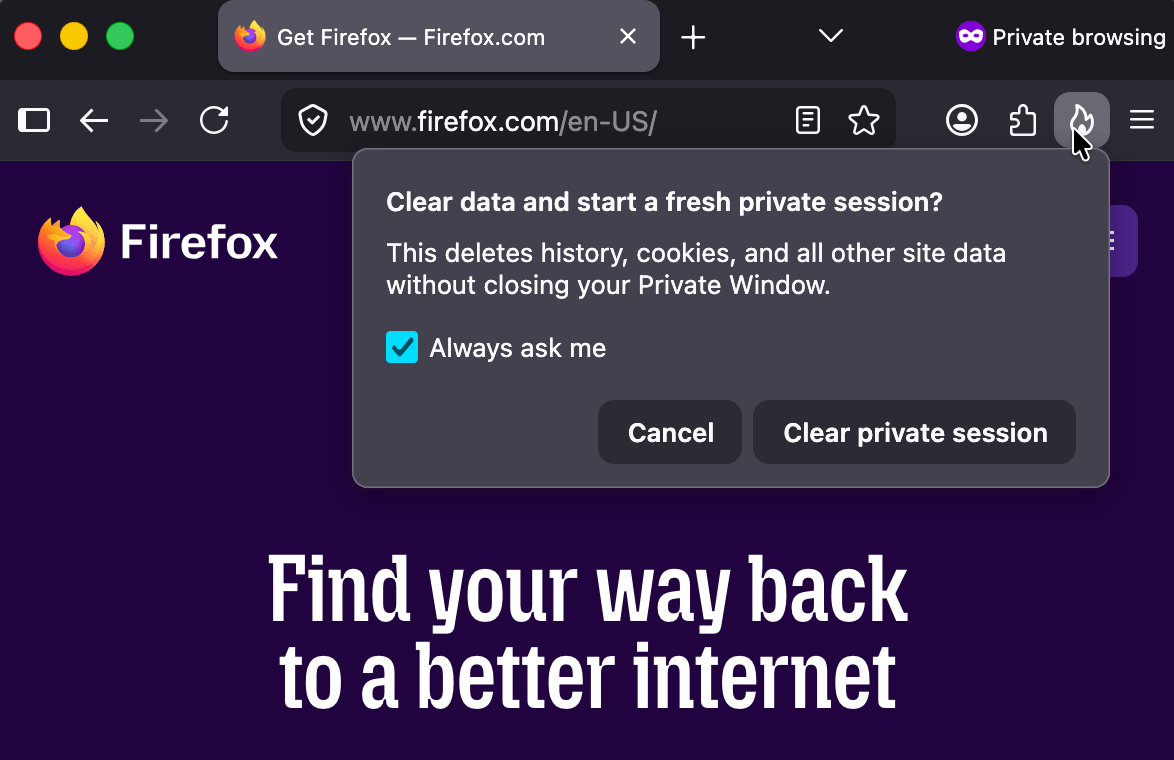
  • Private Browsing Mode now allows you to instantly clear all data from your current session without closing the entire window. When you select the End Private Session button (the fire icon) to the right of the URL bar, Firefox will ask you to confirm to clear your session. Once confirmed, it will wipe all of your private browsing data and open a fresh new Private Browsing Mode session for you.

    image showing the clear data in Private Browsing Mode

  • Firefox now strengthens protection against fingerprinting in Standard Enhanced Tracking Protection, making it harder for websites to track you across sites by limiting the amount of information revealed about your device and browser. This reduces the number of users uniquely identifiable by common fingerprinting techniques by an average of ~14%, and by ~49% on macOS.

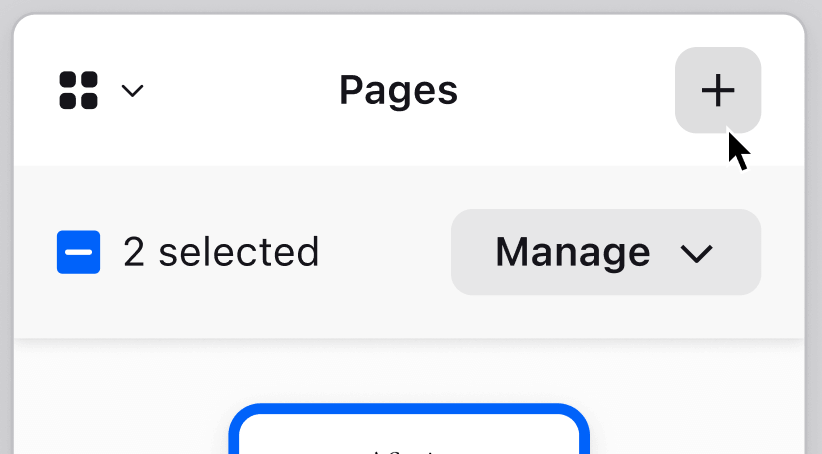
  • You can now merge multiple PDFs directly in Firefox PDF. Combine separate PDF files into a single document without ever leaving Firefox or relying on third-party tools.

    image showing the UI to merge PDFs

  • The Translations page (about:translations) is now accessible through the More Tools section of the Application Menu.

  • Local Firefox profile backups are now available on Linux in addition to Windows, and you can restore them across platforms.

  • On macOS, URLs copied from iOS devices using Apple’s Universal Clipboard now paste correctly in Firefox.

  • On macOS, dropdown menus on web pages now use the native macOS menu style, matching the look and behavior of the rest of the system.

  • Address Autofill is enabled for users in the Netherlands.

  • Firefox’s built-in VPN now lets you choose your browsing location, giving you more control over how and where your traffic appears online. You can select from available countries or use Recommended to automatically choose the best connection for your network.

    This feature is part of a progressive roll out.

    What is a progressive roll out?

    Certain new Firefox features are released gradually. This means some users will see the feature before everyone does. This approach helps to get early feedback to catch bugs and improve behavior quickly, meaning more Firefox users overall have a better experience.

Fixed

  • Fixed incorrect screen resolution reporting to websites in multi-monitor setups.

  • Fixed an issue on macOS where maximized Firefox windows could reopen on the wrong monitor after relaunching in multi-monitor setups.

  • Improved color management for copied and pasted images on macOS.

  • Various security fixes.

Changed

  • The search bar in Firefox Settings (about:preferences) is now larger and spans the full width of the settings content area, making it easier to find options.

  • Extensions and Themes installed in a Firefox Desktop profile directory will be restored successfully after the profile directory is moved or restored to a different location or a different operating system.

  • Geolocation on Windows now respects the user's Windows location permission setting, instead of overriding it, when the user grants location permission to a page. Firefox will ask users to enable the Windows permission if it is needed.

Enterprise

Web Platform

  • You can now manage microcontrollers that support serial communications in Firefox via the Web Serial API. This lets you program microcontrollers and development boards, such as ESP devices, Raspberry Pi Picos, 3D printers, CNC machines, and other devices. Web Serial can be used in Extensions, but not from moz-extension contexts at this time.

  • Local network access restrictions are now rolling out to all users. Firefox requires websites to request permission before connecting to devices on your local network or to apps and services on your device. Previously, this protection was limited to users with Enhanced Tracking Protection set to Strict.

    This feature is part of a progressive roll out.

    What is a progressive roll out?

    Certain new Firefox features are released gradually. This means some users will see the feature before everyone does. This approach helps to get early feedback to catch bugs and improve behavior quickly, meaning more Firefox users overall have a better experience.

  • The new Fullscreen Keyboard Lock API adds an optional argument to requestFullscreen that allows websites to request that while fullscreen, pressing the Escape key will no longer exit fullscreen (instead, a long-press is required), and certain formerly-reserved browser hotkeys are allowed to be default-prevented.

  • Firefox improves the rendering of absolutely positioned elements across multi-column containers and when printing, producing more accurate positioning and fragmentation.

  • @container rules now allow specifying a list of container query conditions rather than a single condition.

  • Firefox now supports container style queries, allowing styles to be applied to an element based on the computed values of its container's custom properties. This can be done by using one or more style() functions inside @container rules.

  • A new CSSContainerRule.conditions property was introduced, holding an array of all container query conditions. This new property is intended to replace CSSContainerRule.containerName and CSSContainerRule.containerQuery, which only supported a single name and query, making them deprecated.

  • Updated the behavior of implicit anchors in CSS Anchor Positioning. The position-anchor property now defaults to normal. When using position-area, implicit anchors are applied automatically, while popovers using anchor() or anchor-center now require position-anchor: auto to opt in.

  • Firefox now supports the Document Picture-in-Picture API, which allows web pages to place content in an always-on-top popup.

  • Temporary site permissions are now correctly reflected in the Permissions API.

  • Firefox now supports the declarative definition of slot assignment behavior for shadow roots.

Community Contributions

  •  

Jonathan Dowland: HMS Blueberry

HMS Blueberry

HMS Blueberry

Royals are my favourite ships in No Man's Sky. The HMS Blueberry is not my first Exotic/Royal ship (that was the Gravity Hirakao XVI, and a story for another time).

After years of on-off playing, I recently found my first Royal multitool: Blue, with gold detailing. I have a Royal-style jetpack (I don't remember where I got that). I thought I'd try and colour-match my multitool, ship, jetpack and outfit. Since I only had one multitool, I matched the others to it. And the HMS Blueberry (credit for the name goes to Beatrice) was the Exotic in my collection which matched.

The HMS Blueberry is in viewable in my showroom, Honest Jon's Lightly-Used Starships.

  •  

zunzunbee joins Works with Home Assistant

zunzunbee joins Works with Home Assistant

We are often asked if we prioritize “Big Tech” firms in the Works with program, but we’ve always been clear that newer companies are just as important to our certification as household names. Start-ups are innovators, and have their fingers on the pulse of community needs much more than brands that are only at the mercy of their investors.

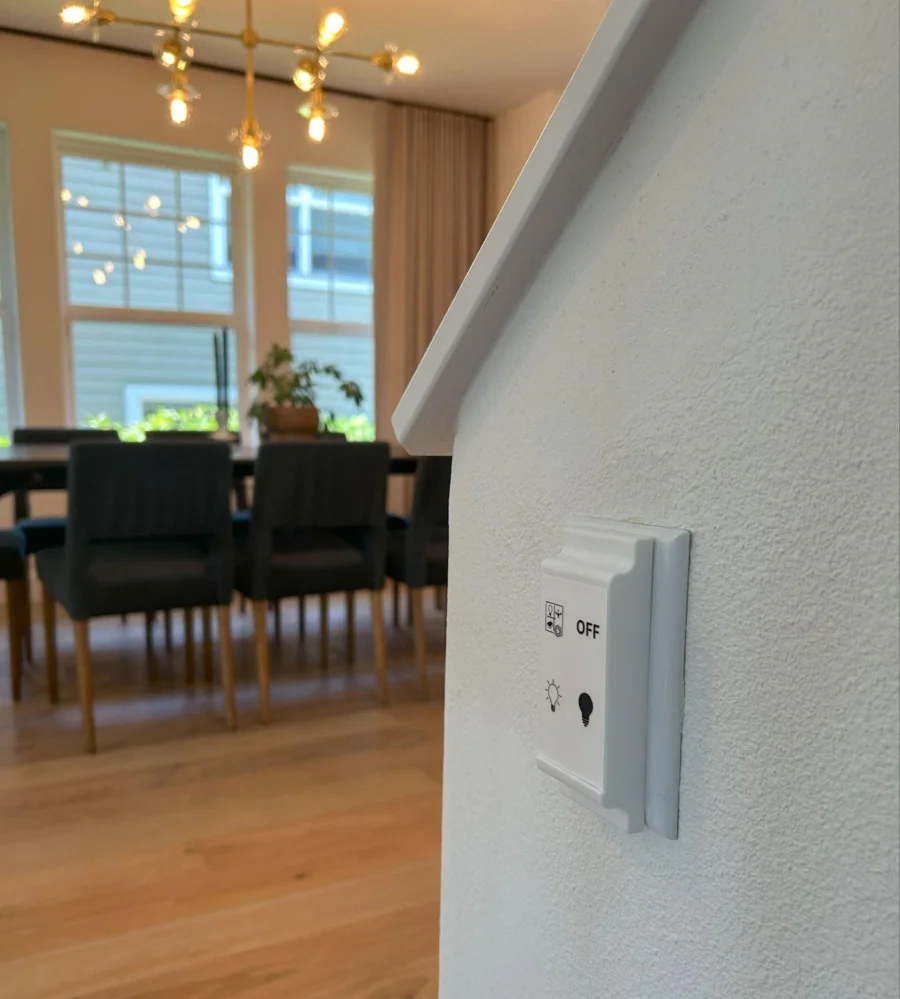
That’s just one reason we’re thrilled to welcome zunzunbee to the program! They really stood out from the crowd at CES 2026 this January with their new product, the Slate Switch. This battery-powered smart scene controller simply snaps over existing switches – ideal if you rent your home, or don’t fancy working with wiring. We’re always on the lookout for devices that make setting up your smart home easier, so we’re delighted to have zunzunbee on board!

A clean slate for switches

While zunzunbee are newcomers to the market, founder Harish Raman has more than 18 years’ experience in lighting and connected systems – including senior engineering roles at Leviton and Philips. Harish designed the Slate Switch to cut the complexity sometimes found in smart homes, by bringing back simple, tactile control without any installation headaches. And because it builds on top of your existing switches rather than replacing them, it means less waste and more value from the things you already own.

"At zunzunbee, we believe smart home control should feel natural, reliable, and stay under the user's control. The Home Assistant community shares that same philosophy, with a focus on local control, flexibility, and deep customization.

Slate Switch was designed to solve everyday friction in smart homes, and we are excited to bring it to a community that values thoughtful automation and truly understands how homes should work."

- Harish Raman, Founder

Not just for newbies

The Slate Switch isn’t just a low-barrier entry point for beginners. It also tackles an issue that can crop up in more complex smart home setups: someone flipping a wall switch that controls your smart bulbs so all your carefully configured automations stop working 😩. Slate Switch keeps those bulbs permanently powered, while giving everyone in the household a familiar, physical button right where they expect it. If you prefer, you can also make use of the snap-on snap-off magnetic function to pick up the switch and take it with you. You can use it as a remote, and each of the zones can support both a tap or long-press action, making it a perfect partner to have in a pocket.

A cost-effective device is also a low-risk way to experiment, with plenty of possibilities to explore without a big outlay. And once you’re hooked, multipacks of two or four are available so you can roll them out across your home.

The right buzz

Two bs and a lot of zs: it’s no coincidence that zunzunbee uses Zigbee for the Slate Switch. If you’ve not heard of Zigbee before, it’s an open wireless standard built for low-power smart home devices – which describes the Slate Switch to a tee, since it runs on a single CR2450 coin cell with up to two years of battery life.

Zigbee works entirely locally with no dependency on the cloud, so your smart home stays in your hands and the Slate Switch keeps working even if you lose internet connection. If you want that same security and control when you’re away, Home Assistant Cloud offers fully encrypted remote access – and as an added bonus 😉 subscribing directly funds the Open Home Foundation’s fight for privacy, choice and sustainability for smart homes (and this very program too!).

By choosing Zigbee, zunzunbee support that fight… and they’ve been proactive contributors to our community as well. They’ve published official Home Assistant blueprints to make setup as smooth as possible, and contributed code to Zigbee2MQTT (another popular community-maintained open source project) on GitHub. It’s exactly what we love to see from our partners!

The Slate Switch simply snaps over your existing wall switches. The Slate Switch simply snaps over your existing wall switches.

Devices

As with every device in the Works with Home Assistant program, the Slate Switch has been through our full certification process: tested for performance, reliability, and compatibility with our principles. By joining the program, zunzunbee also commits to providing long-term support and firmware updates, so you can purchase with confidence.

It may be just one small device, but it gives you mighty choice! 💪The Slate Switch arrives as a blank canvas, with two sheets of stickers so you can label and arrange up to eight tappable zones exactly how you want them, and reconfigure just as easily if your needs change. And it’s not only about switching scenes or triggers: there’s a built-in ambient temperature sensor in the switch too, opening up even more automation possibilities straight out of the box.

Jimmy over at the Automated House YouTube channel has a great hands-on walkthrough if you want to see it all in action.

Ready to make the switch?

We love it when a fresh idea from a new face lands in our orbit (and passes muster!) – and we have a feeling the Home Assistant community is going to have a lot of fun with this one. Whether you’re just dipping your toe into smart home control, or looking for new ways to push your existing setup further, the Slate Switch has you covered. Check out our certified device list to see what else is out there!

FAQs

Q: If I have a device that is not listed under “Works with Home Assistant” does this mean it’s not supported?

A: No! It just means that it hasn’t gone through a testing schedule with our team or doesn’t fit the requirements of the program. It might function perfectly well but be added to the testing schedule later down the road, or it might work under a different connectivity type that we don’t currently test under the program.

Q: OK, so what’s the point of the Works with program?

A: It highlights the devices we know work well with Home Assistant and the brands that make a long-term commitment to keeping support for these devices going. The certification agreement specifies that the devices must have the functionality you would expect within Home Assistant, operate locally without the need for cloud, and that they will continue to do so long-term.

Q: How were these devices tested?

A: All devices in this list were tested using a standard Home Assistant Green as a hub with the Home Assistant Connect ZBT-2, and with ZHA, our Zigbee integration. If you have another hub/adapter set-up/integration that’s not a problem, but we test against these as they are the most effective way for our team to certify within our ecosystem.

Q: Will you be adding more zunzunbee devices to the program?

A: Why not! We’re thrilled to foster a close relationship with the team at zunzunbee and we’re excited to see how they grow their product line in the future. We’re looking forward to working together on any upcoming releases or adding in further products that are not yet listed here.

  •  

Freexian Collaborators: Monthly report about Debian Long Term Support, April 2026 (by Thorsten Alteholz)

The Debian LTS Team, funded by Freexian’s Debian LTS offering, is pleased to report its activities for April.

Activity summary

During the month of April, 21 contributors have been paid to work on Debian LTS (links to individual contributor reports are located below).

The team released 37 DLAs fixing 145 CVEs.

The team continued preparing security updates in its usual rhythm. Beyond the updates targeting Debian 11 (“bullseye”), which is the current release under LTS, the team also proposed updates for more recent releases (Debian 12 (“bookworm”) and Debian 13 (“trixie”)), including Debian unstable. We highlight several notable security updates here below.

  • Andrej Shadura prepared DLA 4525-1 for libyaml-syck-perl to fix a vulnerability related to a memory leak.
  • Andrej also prepared DLA 4551-1 for mbedtls to fix a leak of secrets.
  • Arnaud Rebillout prepared DLA 4532-1 for python3.9 to fix a use-after-free issue in several decompressors.
  • Arnaud also prepared DLA 4533-1 for systemd to fix multiple vulnerabilities, which might be also used to execute arbitrary code.
  • Bastien Roucariès prepared DLA 4529-1 for bind9 to fix a DNSSEC issues, which can cause the resolver to consume excessive CPU.
  • Bastien also prepared DLA 4539-1 for imagemagick to fix 21 vulnerabilities.
  • Emilio Pozuelo Monfort prepared DLA 4535-1 for openssh to fix a potentially execution of arbitrary code.
  • Emilio also Monfort prepared DLA 4526-1, DLA 4546-1 and DLA 4555-1 for firefox-esr to fix 31 vulnerabilities.
  • Jochen Sprickerhof prepared DLA 4524-1 for postgresql-13 to fix multiple vulnerabilities, which might be also used to execute arbitrary code.
  • Sylvain Beucler prepared DLA 4538-1 for perl to fix unauthorized access to data or arbitrary code execution.
  • Thorsten Alteholz prepared DLA 4545-1 for packagekit to fix a local privilege escalation.
  • Thorsten also prepared DLA 4544-1 for ntfs-3g to fix a local privilege escalation.
  • Tobias Frost prepared DLA 4521-1 for libpng1 to fix multiple vulnerabilities, which might be also used to execute arbitrary code.

Contributions from outside the LTS Team:

  • As usual, the thunderbird updates, released as DLA 4534-1 and DLA 4549-1, were prepared by its maintainer Christoph Goehre. This month 28 CVEs has been fixed. Thanks a lot for his continuous contributions. The DLAs have been sent by Emilio.
  • Thanks alot as well to Mathias Behrle for providing DLA 4543-1 for package simpleeval. The DLA has been sent by Santiago.

The LTS Team has also contributed with updates to the latest Debian releases:

  • Andreas Henriksson completed the upload of gvfs for trixie and bookworm
  • Ben Hutchings did uploads of several kernel packages to unstable and the corresponding backports repositories.
  • Sylvain took care of uploads of awstats to trixie and bookworm. He also did the same for 7zip-rar with an upload to bookworm-backports).

Some milestones in the lifecycle of two Debian releases are just around the corner. The support of Debian 12 will be handed over to the LTS team on June 11th 2026. After August 31st, support for Debian 11 will move from Debian LTS to ELTS managed by Freexian.

Individual Debian LTS contributor reports

Thanks to our sponsors

Sponsors that joined recently are in bold.

  •  

Tollef Fog Heen: Signing UEFI submissions using osslsigncode

Back when we started with a signed shim in Debian, the tooling was Windows-only and required me to do a reboot dance and it was all quite tedious. Over time, more and more of the tooling has migrated to Linux and it all works quite well.

The signing is done with an EV code signing cert from SSL.com and stored on a Yubikey. Getting the certificate onto the key is a bit tedious, but reasonably well-explained in the ssl.com docs.

Microsoft wants the shim binaries uploaded to their partner portal wrapped in a .cab file, which should be signed.

The wrapping in a .cab file is easy enough: lcab shim.efi shim-unsigned.cab. It’s fine to put shims for multiple architectures in the same .cab file.

Signing of the file is a little bit of a rune:

osslsigncode sign -pkcs11module /usr/lib/x86_64-linux-gnu/libykcs11.so -key "pkcs11:serial=XXX" -askpass -certs chain.crt -h sha256 -ts http://ts.ssl.com shim-unsigned.cab shim-unsigned.signed.cab

chain.crt contains first our EV code signing cert, then the ssl.com intermediate EV code signing cert, then the ssl.com EV root cert. The naming of the packages is a tiny bit confusing, but it’s because the package name in Debian is shim-unsigned.

Occasionally, processing of uploaded binaries just stops in the validation stage in the portal, but I’ve so far been able to unstuck them by re-signing and uploading again, and I saw the same with the MS/Windows toolchain, so I suspect it’s just flakiness on the portal side.

  •  

Counter-Strike 2 Update

[p]\[ SPECTATING ][/p]
  • [p]Fixed a case of post-processing glitch when switching spectator targets on maps with different post-processing volumes.[/p][/*]
  • [p]Fixed a case of stuck x-ray silhouettes when switching spectator targets.[/p][/*]
  • [p]Fixed spectator damage overlay effect.[/p][/*]
[p][/p][p]\[ MISC ][/p]
  • [p]Added weapon_accuracy_stack_boost_limit (default value "2") to apply ladder inaccuracy to players boosted by a stack of this many or more players.[/p][/*]
  • [p]Adjustments to AWP draw to idle animation transition.[/p][/*]
  • [p]Improved consistency of grenade jump throws and the accuracy of the jump throw preview camera.[/p][/*]
[p][/p][p]\[ MAPS ][/p][p]Cache[/p]
  • [p]Adjusted model for window covers to show collision / decals when shot.[/p][/*]
  • [p]Adjustments to player clipping and grenade clipping around windows, window covers, and vent entrance.[/p][/*]
[p][/p][p]\[ MAP SCRIPTING ][/p]
  • [p]Added Instance.RegisterCheatCommand[/p][/*]
  • [p]Added Instance.GetAllPlayerControllers[/p][/*]
  • [p]Added Instance.OnBeginRoundRestart[/p][/*]
  • [p]Added Instance.SetRoundRemainingTime[/p][/*]
  • [p]Added CSPlayerController.AddMoneySpendableNow[/p][/*]
  • [p]Added CSPlayerController.GetMoneySpendableNow[/p][/*]
  • [p]Added CSPlayerController.AddMoneyEarnedForNextRound[/p][/*]
  • [p]Added CSPlayerController.GetMoneyEarnedForNextRound[/p][/*]
  • [p]Added CSPlayerPawn.HasHelmet[/p][/*]
  • [p]Added CSPlayerPawn.SetHasHelmet[/p][/*]
  • [p]Added CSPlayerPawn.IsScoped[/p][/*]
  • [p]Added CSWeaponBase.IsSilencerOn[/p][/*]
  • [p]Changed the activator for OnPlayerUse to always be the player[/p][/*]
  • [p]Changed the caller for OnPlayerUse to always be the used entity[/p][/*]
  • [p]Fixed the value of CSInputs.LOOK_AT_WEAPON[/p][/*]
  • [p]Fixed a potential crash in exception handling[/p][/*]
  •  

Distribution Release: Zenclora OS 3.0

The DistroWatch news feed is brought to you by TUXEDO COMPUTERS. Nixovena Linux & AI Labs has announced the release of Zenclora OS 3.0, the latest version of the project's desktop Linux distribution based on Debian's "Stable" branch and featuring a unified package management system called Zen Package Manager (ZPM). This release offers two desktop variants - GNOME and....
  •  

Distribution Release: NetHydra 2026.2

The DistroWatch news feed is brought to you by TUXEDO COMPUTERS. The NetHydra team has announced the release of NetHydra 2026.2. Formerly knowns as HydraPWK GNU/Linux, NetHydra is a Debian-based Linux distribution with a collection of penetration-testing tools, including tools for information gathering, scanning, stress testing, exploitation, cracking, reversing engineering and forensics. Besides the standard edition called NetHydra "Express",....
  •  

v4.1.0

Features

  • Added Railpack as a beta build pack option with build-time environment support, config merging, examples, and deployment smoke coverage (#9117, resolves #5282).
  • Added configurable application stop grace periods for manual stops, previews, and deployments (#9746, fixes #5620).
  • Added structured audit logging for API mutations, webhook events, authentication, and authorization outcomes (#9842).
  • Added per-server configurable SSH connection timeouts and exposed the setting through the API and UI (#9844).
  • Added deployment skipping for webhook commits and PR/MR titles containing [skip ci] or [skip cd] (#9861).
  • Added instance-level MCP support with read-only tools for Coolify resources and API/UI enablement controls (#9862).
  • Added application deployment configuration diff tracking so pending changes and build-impacting changes are surfaced before redeploy (#10183, fixes #8357).
  • Added a collapsible sidebar with persisted state, tooltips, and a compact team menu (#9945).
  • Added a Gitea runner service template (#9961).

Fixes

  • Fixed OAuth user matching by normalizing email addresses before lookup (#9488, fixes #9487).
  • Fixed SMTP notification validation by setting a default encryption value (#9543).
  • Fixed database backup max storage validation to allow decimal values (#9801, fixes #9794).
  • Fixed Dockerfile build pack builds by using BuildKit-supported host networking (#9811, fixes #9804).
  • Fixed generated HEX magic environment secrets so encoded values have the expected length (#9820).
  • Fixed server reachability notifications by dispatching them through an event path without blocking retry loops (#9843, fixes #9830).
  • Fixed large file-volume editing in the UI by blocking editable payloads over 5 MiB (#9851, fixes #4701).
  • Fixed deployment commit resolution to use the application git_commit_sha when no commit is explicitly provided (#9865, closes #9204).
  • Fixed database imports to allow .dmp files (#9869).
  • Fixed invalid or undecryptable Sentinel tokens by regenerating them automatically (#9874).
  • Fixed scheduled task server resolution when relationships are missing (#9922, fixes #9916).
  • Fixed preview image tags so different commits on the same PR do not reuse shared tags (#10066, fixes #5538).
  • Fixed custom nginx configuration updates from the API by correctly decoding payloads and supporting clearing the value (#10067, fixes #9975).
  • Fixed API token expiration warnings so sent-warning state persists and failed notifications can retry (#10184).
  • Fixed terminal reliability with heartbeat handling, idle timeouts, reconnect replay, and preserved scrollback.
  • Fixed deployment and log views so auto-scroll pauses when users scroll up and resumes at the bottom.
  • Fixed realtime server dependencies by replacing Axios with the native HTTP client (#10065).
  • Fixed nginx Docker images to use patched official packages and HTTPS package repositories (#10026).
  • Fixed Docmost templates to require a mail driver before startup.

Improvements

  • Improved Railpack behavior with Docker buildx validation, safer shell argument handling, scoped build-time variables, better port handling, and updated helper versions (#9117, resolves #5282).
  • Improved MCP resource listing performance and changed enable/disable routes to POST for state-changing actions (#9862).
  • Improved standalone database lookup coverage for KeyDB, Dragonfly, and ClickHouse (#9862).
  • Suppressed noisy Horizon failed-job entries for expected deployment and timeout failures on cloud instances (#9871).
  • Synced service templates from next and disabled the stale LiteQueen template (#9884, #10006).
  • Bumped follow-redirects in the realtime Docker package to 1.16.0 (#9690).
  • Bumped phpseclib/phpseclib to 3.0.52 (#9952).
  • Improved Vite dev-server host, port, and CORS configuration for local development.
  • Improved collapsed sidebar spacing, deployment indicator alignment, and environment-variable dirty indicators.

Breaking Changes

  • Removed the deprecated Docker Compose application API endpoint; service creation should use POST /api/v1/services instead.
  • Changed MCP enable/disable endpoints from GET to POST (#9862).

What's Changed

New Contributors

Full Changelog: v4.0.0...v4.1.0

  •  

v1.19.4

Bug fixes

Other

Full Changelog: v1.19.3...v1.19.4

  •  

DistroWatch Weekly, Issue 1173

The DistroWatch news feed is brought to you by TUXEDO COMPUTERS. This week in DistroWatch Weekly:
Review: Sylve on FreeBSD
News: Debian commits to reproducible builds, Debian publishes updated install media, Haiku introduces SMP support on ARM64 processors, Rocky Linux creates opt-in security repository, Fedora reconsiders AI tools, KDE receives generous donation
Questions and answers: The benefit of BleachBit
Released last week:....
  •  

v1.6.7 - Master-User Impersonation, vCard 4.0 Contact Support, and Multi-Account Push

1.6.7 (2026-05-17)

Features

  • Contacts: vCard 4.0 parsing and generation support
  • Admin: Master-user impersonation route with app-top-banner plugin slot rendered on every authenticated page
  • Admin: Allow admin password overwrite during setup recovery
  • Setup: HTTPS requirement warning in the setup wizard
  • Mobile: Show details toggle and expandable panel for sender info

Performance

  • Calendar: Speed up calendar invitation banner load

Security

  • Mail: Sandbox thread email HTML in srcDoc iframe with a CSP <meta> tag
  • Admin: Redact sensitive config secrets from the admin API response
  • Admin: Make impersonation cookies session-only

Fixes

  • Auth: Read OAUTH_SCOPES at runtime instead of build time
  • Auth: Use a relative Location header in redirects
  • Auth: Adopt orphan session cookie on first SPA load
  • Mail: Per-account push subscriptions so multi-account notifications work (#298)
  • Mail: Close attachment preview when clicking outside the content area
  • Mail: Pin quick reply to the bottom for short emails
  • Mail: Show "no body content" instead of an infinite skeleton for bodyless emails
  • Mail: Show contact popup when clicking the sender name in the email header
  • Mail: Prevent long addresses from overflowing email details columns (#297)
  • Mobile: Align quick reply with the mobile bottom toolbar
  • Mobile: Respect safe-area insets on mobile bottom bars
  • Mobile: Pad safe-area-inset-top
  • UI: Apply dark background to the email content wrapper in dark mode
  • UI: Improve dark mode background colors in the email viewer
  • UI: Add viewport export with initialScale: 1
  • UI: Strip the Stalwart master-user % suffix from the displayed account
  • Plugins: Warn and block install when the app version is below the plugin's minAppVersion
  • Plugins: Register app-top-banner in plugin-store SLOT_NAMES
  • Plugins: Carry configSchema + settingsSchema through marketplace install
  • Build: Add outputFileTracingExcludes to reduce Turbopack memory tracing

i18n

  • Add missing translation keys across 16 locales

  •  

v0.5.1 - “Swamp Castle”

0.5.1 (2026-05-17)

  • Feature: [#24242] [Plugin] Add ride-breakdown hooktype.
  • Feature: [#24879] [Plugin] Add methods for showing and hiding gridlines.
  • Feature: [#26327] Add ‘guests entertained’ statistic to entertainers.
  • Improved: [#26374] Add higher resolution app icons for Android.
  • Improved: [#26386] Initial window scale and toolbar options on fresh Android installations.
  • Change: [#26476] Limit creation of new station styles to prepare for more flexibility with ride stations and entrances.
  • Fix: [#25581] Chart drawing issue on some platforms due to compiler optimisation.
  • Fix: [#26019] Inverted and Inverted Flying Roller Coaster large half loops glitch with the train and don‘t draw in tunnels at some angles (original bug).
  • Fix: [#26183] The ride stat graph placeholder text is not drawn in the expected position.
  • Fix: [#26287] Game crashes upon connect/disconnect of physical keyboard.
  • Fix: [#26299] Single Rail S-Bend sprites don’t fully connect to the next track piece at certain angles.
  • Fix: [#26352] Large scenery items are incorrectly labelled as ‘banners’ in the tile inspector.
  • Fix: [#26352] The label for path additions is using the wrong text colour in the tile inspector.
  • Fix: [#26360] Inverted Lay-down Roller Coaster helices are invisible when loading old saves.
  • Fix: [#26396] [Plugin] Socket interfaces were not closing properly and firing up correctly in parallel.
  • Fix: [#26410] Tiles with water can draw incorrectly when there is something underwater and nothing above water.
  • Fix: [#26418] Game crashes when a stack overflow occurs in plugin code.
  • Fix: [#26419] Drop count & negative g’s stat requirements for Flying Roller Coaster don’t get nullified by having an inversion.
  • Fix: [#26421] Wrong scenery tab highlighted when more than 64 scenery groups are selected.
  • Fix: [#26425] Benches don’t reduce watching spots from 4 to 2 while other path additions do (should be reversed).
  • Fix: [#26432] Guests choose to head for rides they have already ridden if they don’t have a map.
  • Fix: [#26492] Drag tool shows per-tile error instead of total cost when running out of money midway through placement.
  • Fix: [#26510] Displayed air time overflows after 655.35 seconds instead of the internal maximum of 1966.05 seconds.

Release created in https://github.com/OpenRCT2/OpenRCT2/actions/runs/25987971355

SHA256 checksums:

61cd955dc5820787de844f7b523d56ff5329a908961c4fc48ce4a84584730fb7  ./OpenRCT2-v0.5.1-windows-installer-arm64.exe
4614029327c61247000d1a6a7a249b1e5fe93dfc841ad164e2905196b72aa098  ./OpenRCT2-v0.5.1-windows-portable-x64.zip
5681e8a7d6cf409381c35e6035a91638e39027757f77c5437957b3a9ab478444  ./OpenRCT2-v0.5.1-windows-symbols-arm64.zip
11a7accb196d9dd71e4b76ac50965841f9a0f1ad89866cd2b07a62c9e0ee218e  ./OpenRCT2-v0.5.1-sha256sums.txt
16232c44ca0890b07679a7e37ad0e683e17826f61868ad6363f2fc192fd6f2fa  ./OpenRCT2-v0.5.1-windows-symbols-win32.zip
287a8fa5944b71d41c5a0e77750a6f734eaeb27d9686420d585088d176e3c0b7  ./OpenRCT2-v0.5.1-android.apk
bebe142a2f0148d82c2a941f8d06fd5c12540c59479b8f26d170944ebce44475  ./OpenRCT2-v0.5.1-Linux-resolute-x86_64.tar.gz
91729c3804e165ab1dd1ca0875554970fc013aa8368fe2e41e3894f718eb83ca  ./OpenRCT2-v0.5.1-windows-portable-arm64.zip
dfecc57d87b18ffb78780cac233bebe2eaa8ff1de7e915bfcdfe00e08dd02f2f  ./OpenRCT2-v0.5.1-macos-universal.zip
a4e6450ec12db77fb4663afa1a393bb0d03a46e9c47b1d4b29a603cc8145b512  ./OpenRCT2-v0.5.1-linux-x86_64.AppImage
fdd1846a2f21062f5716204b8de9626892b87c95c6ebbb2f7385e49a150092d0  ./OpenRCT2-v0.5.1-windows-installer-win32.exe
8d0e1dc4fa2ed5ecc76fcaafdec8a198048a953cce90314590961dda53a04da2  ./OpenRCT2-v0.5.1-windows-symbols-x64.zip
6ba42ab9ffcd21ea10eb27880e6ed51bad1663e7e235203db2c4fc4bf73200c5  ./OpenRCT2-v0.5.1-windows-installer-x64.exe
226840077ff14851bc817ddb80bc8b0cf432f141481516e66bf5e05339143195  ./OpenRCT2-v0.5.1-Linux-trixie-x86_64.tar.gz
0976a7d610fa94f6a298133d0293d60f007d92d0cd7f2c971776636a27e2ac3c  ./OpenRCT2-v0.5.1-windows-portable-win32.zip
a53e5a6ec08f792bcc488a04d465d4eb27bf87e25311e644700b14ea79be33d1  ./OpenRCT2-v0.5.1-Linux-noble-x86_64.tar.gz
05ed8d31e04c1f9cd17d5998442d12e4050a56b7f8225f3e5b66478408bad2cd  ./OpenRCT2-v0.5.1-Linux-bookworm-x86_64.tar.gz

  •  

Otto Kekäläinen: Balancing persistence vs pivoting – is grit a virtue or wasteful?

Featured image of post Balancing persistence vs pivoting – is grit a virtue or wasteful?

Being persistent, sticking to a plan and showing up to work every day is generally valued highly across all cultures as virtuous behavior. It is obvious that anything of value and worth achieving is also not easy, but requires significant and recurring effort. Learning a new language, winning a sports competition or building a successful business are all typical scenarios where grit plays a central role above everything else. However, sometimes the virtue of tenacity can result in just a waste of energy.

The question is then: how does one recognize that true progress is being blocked by stubbornness and a pivot would be the correct decision, as opposed to being close to breakthrough where doing more of the same would actually be the right choice?

What is persistence actually?

To think clearly about this topic, one must first grasp the concept of “grit” and what it looks like in practice. Research by psychologist Angela Duckworth on “grit” shows that sustained effort in the face of setbacks separates high achievers from those who quit too soon. Entrepreneurs who iterated through dozens of failed prototypes or writers who revised manuscripts for years understand this truth. Persistence builds resilience, deep expertise, and the kind of compounding results that shortcuts cannot deliver. It also protects against the distraction of shiny new ideas that pull focus from what actually works.

Persistence is about:

  1. Believing in an outcome and working towards it despite people around you not sharing the belief, and despite your own work and experiments not being successful.
  2. Continuing to hold the belief and sticking to the decision despite other ideas, solutions and competing alternatives surfacing.
  3. The more time passes, the firmer the conviction becomes. Time, money, and emotional energy invested in a failing direction create psychological pressure to continue (sunk-cost fallacy).

Simply following through on a plan or upholding a contract is not true persistence. Grit is a personal trait one can cultivate to actually become more energized to do something precisely because it turns out to be harder than expected.

Pivoting: a calculated choice

The opposite of being persistent is giving up. Pivoting is not about giving up, but about redirecting the energy and momentum towards a new goal. Pivoting requires coming to the realization that you were wrong, and going through the painful process of discovering a new truth.

Ideas tend to be abundant, and doing something new isn’t hard as such. The hard part is to abandon a previously held belief and adopt a new one with equal conviction. To have that conviction you need to have data and metrics. This is also the key to how to decide between persisting vs pivoting at any moment in time.

Key metrics of success

Any decision is only as good as the information available at the time it was made. To be set up for success one needs to start by deciding on what the actual goal is, what one values and how progress is measured.

Key metrics are usually easiest to discover by working backwards from the goal. If you want to build an electric car, you might decide that the goal is to have a car that costs 30,000 euros and can drive 300 km on one charge. From that goal you can break down what the cost structure should be, what volume of production is needed to break even, what raw materials are needed and what the battery chemistry needs to achieve to meet the goal. That can further be broken down into a rate of progress. Suppose the plan requires battery energy density to reach 150 Wh/kg to be viable. If the state of the art starts at 100 Wh/kg and funding lasts a maximum of five years, the team needs at least an 8% improvement every year (1.08^5 × 100 Wh/kg ≈ 150 Wh/kg). This can then be used as a guideline. Sometimes progress is not steady, but happens in jumps. Even in those cases there should be a trajectory to benchmark the jumps against.

In an online business, the key metric could, for example, be one of these:

  • 7- or 30-day retention rate: Do new users who try the service actually like it?
  • Weekly or monthly active users: Is usage trending up?
  • Feature adoption rate: In an existing service, how many users are using the new feature?
  • Product-Market Fit Score (from Sean Ellis test): Percentage of users who say they would be “very disappointed” if the product disappeared. Above 40% is a strong early indicator. A number below that (after multiple iterations) is a good data point to pivot.
  • Revenue run rate or burn rate: The most generic metric everything eventually boils down to. Healthy markets reward good products.

Weekly metrics are better than monthly, as they make the feedback loop faster and allow you to get validation quickly and do minor course corrections along the way. A complete pivot should, however, be based on long-term data, driven by the key metric and supported by additional data points.

Metrics are also needed because they can’t be bribed or convinced to be anything other than what they are. Listening to other people is good, but just relying on the opinion of others is extremely dangerous because people are biased—either for you or against you—depending on whether they see you as a trusted leader or an outcast.

Key metrics are of course domain-specific and everyone needs to come up with their own. However, you must have some key metric. You can’t have the excuse that what you are doing can’t be measured. If you are part of a larger organization and you need to advocate for a difficult decision—for example, to “kill your darlings” when facing a pivot—you need to have the metrics to back up your views, and those metrics need to have been established way before as something the organization values, and not cherry-picked just for this one decision.

It does not matter if you are on a personal improvement journey, running a political campaign, inventing a new product, or growing a business – you need to have some metric you can check at any given time to see if things are improving fast enough to predict success. Metrics can and should also be used in daily work to validate that you are on the correct path, and to optimize execution.

Famous examples of persistence and pivoting that led to breakthroughs

In all of the cases below it is of course in hindsight easy to say they made the right decision. However, take a minute to try to imagine yourself in their shoes at the time of the decision. What metrics might they have had available to support their decision? What would you have wanted to measure or find out if you were in the same situation?

  • Frustrated that his vacuum lost suction, James Dyson spent five years and built thousands of failed prototypes in a backyard shed. He remortgaged his home, lived on savings, and faced rejection from every major manufacturer who wanted to protect their bag-replacement business. The 5,127th prototype based on an idea from a sawmill with a cyclone finally worked. Launched in 1993, the Dyson DC01 became Britain’s best-selling vacuum within two years.
  • As a single mother on welfare in the mid-1990s, J.K. Rowling finished her manuscript for Harry Potter and the Philosopher’s Stone while battling depression and poverty. She hand-typed copies and mailed them to publishers. Twelve rejected it outright, with comments like “children’s books about magic don’t sell.” She nearly quit multiple times but kept revising and submitting. Bloomsbury finally accepted it after the CEO’s eight-year-old daughter read the first chapter and demanded the rest. The series has since sold hundreds of millions of copies worldwide.
  • Founded in 1997 as a mail-order DVD rental service, Netflix added unlimited subscriptions in 1999 to compete with Blockbuster. By 2007, broadband growth and declining DVD sales signaled a shift. CEO Reed Hastings pivoted aggressively toward streaming, investing in bandwidth deals and original content while de-emphasizing physical media. The move faced skepticism, but eventually changed the whole culture of how entertainment is consumed.
  • YouTube launched in 2005 as a video-dating site. Founders offered money to women who uploaded dating videos, but almost no one did. Meanwhile, users uploaded random clips. The team recognized the mismatch and pivoted within months to a general-purpose video-sharing platform with easy uploading. Google bought it just 18 months later.
  • Instagram began in 2010 as Burbn, a location-based check-in app that let users post plans, earn points, and share photos. Co-founders Kevin Systrom and Mike Krieger quickly noticed users ignored most features and mainly used it for photo-sharing. They made the tough call: scrap everything else. Within weeks, they rebuilt the app around clean, simple photography with filters. The pivot launched as Instagram in October 2010. It gained 1 million users in two months and was acquired by Facebook just 18 months later.

Insanity or conviction?

English has several proverbs that warn against excessive persistence, such as “banging your head against the wall”. Insanity is commonly defined as “Doing the same thing over and over again and expecting different results.”

In Finland, the national identity is practically built on the concept of “sisu”. It means much more than just “grit”. The word is derived from the word for “inside” or “guts” and represents an unexplained, almost superhuman force that makes one stoically take action despite seemingly impossible odds and somehow succeed anyway. It became a defining national mythos during the Winter War (1939–1940), where a force 10 times larger than the Finnish army tried to invade the country but was stopped and Finland just barely managed to keep its independence. The word “sisu” transitioned from a character trait to a pillar of national survival.

I think Finns survived because the more you believe in persistence, the more likely you are to persist. I view persistence as a religion that requires faith, while pivoting is a science where you derive the truth from the numbers.

When in doubt, I would always choose persistence over pivoting. Perhaps it is because of my genetic tendency towards having “sisu”, but I would also rather keep on going a bit more and try one more time before giving up and pivoting in order to get more data, so that when I pivot, I know it is absolutely the right thing to do at that point.

Depending on the situation, the costs of postponing the pivot vary. Of course, if the main metric is the burn rate and a company is running out of money, a pivot must be done early enough that the remaining runway is enough to execute the pivot, and then some more.

In some situations a business idea might simply be ahead of its time. If that is the conviction and the key metrics support it, the best way to navigate the situation is to cut down on costs and wait for competitors to appear, help build general awareness, and then ramp up again to ride the wave. Remember that success does not come from grit alone – there is always an element of timing and luck as well. But if you are not persistent and stop showing up every day, you won’t be able to seize the opportunities if and when they arise.

Failure is the likely outcome – you have to avoid it at any cost

One must also realize that most attempts end in failure. Failure is the baseline, and success is the exception. To reach a breakthrough, one must be stubbornly persistent. In particular, if you are a leader, you need to be so high in conviction that it almost becomes an aura that radiates to those around you.

Postponing the decision to pivot allows you to get a bit more data for the decision, so that once you pivot, you have full belief in the new direction. Once you pivot, there is no looking back, otherwise you will undermine morale and most certainly fail with the new thing as people will execute it with hesitation.

Failure is statistically always the more likely outcome. Most things end in failure and we never hear about them. If someone on your team does not believe in what you are doing, it is very easy for them to “prove” that something is a failure by spreading negativity, putting in less effort (perhaps unconsciously due to lack of conviction) and thus actually contributing to a self-fulfilling failure.

In most areas of life, ideas are cheap and the only thing that matters is execution. To be good at executing, you need to be good at making decisions. When drafting plans it is good to have alternatives and a lot of consideration. However, when execution starts, there is no room for doubt, otherwise the chances of success decrease.

Therefore, the best way of balancing persistence vs pivoting is to

  1. plan well ahead,
  2. establish the key metrics,
  3. have thresholds established for what would trigger a pivot, and
  4. do everything you can to move the metrics in the direction you want them to go.

Finally, if you decide to pivot, you must do so only with very high conviction, as you can’t undo a pivot, and you should not be doing multiple pivots in a row either. If you are fully convinced yourself about the pivot, you will also be able to convince others about it, and carry the momentum.

  •  
❌