❌

Lees weergave

Ian Jackson: Open Letter to the Wikimedia Foundation Board

I have just sent an open letter to the Board of the Wikimedia Foundation, the umbrella organisation for Wikipedia (and a number of other projects), expressing my support for Wiki Workers United and the unionisation effort by WMF staff.

Here is the letter:

To: Board of Trustees, Wikimedia Foundation

via Wikimedia_Foundation_Board_noticeboard and WWU
published at https://diziet.dreamwidth.org/21442.html

Re: My support for Wiki Workers United

Dear Trustees

Wikipedia has become one of the pillars of the free and open Internet. Across the world, reliable sources of information are under attack.

I'm proud to have played my very small part in the community of editors of English Wikipedia for the last 20 years. I am also proud of my contributions to the Free Software movement, including especially Debian. Debian, whose constitution and package installer I originally wrote, has become one of the technological foundations of the open Internet.

Unfortunately, there are signs that the Wikimedia Foundation is not performing its proper role as bulwark against attacks on democracy, including from moneyed interests. Recent events at WMF have been very alarming to me, and seem to form part of a disturbing trend.

As a Trustee Director of a UK charity myself, I understand that WMF Trustees must defend the interests of the Foundation. But that cannot mean taking actions that undermine the Foundation's mission. Nor can it mean the deplorable, and even dishonest, practices, that WMF appears to have been engaging in.

As a Wikipedian, as a Free Software activist, and as a citizen of the planet, I stand in solidarity with Wiki Workers United. Union- busting must stop immediately. The Foundation should immediately formally recognise the unions in the UK and the US.

Further, WMF is an international organisation. Collective decisionmaking needs to be transnational too. WMF should recognise WWU as a negotiating partner worldwide, even if thresholds for formal legal recognition are not met in individual national jurisdictions.

Wiki Workers are not the WMF's enemy. WMF needs capable and ideologically committed staff to maintain and operate its highly complex systems, in the face of constant attacks. Staff with principles and a mission are WMF's biggest asset.

Dr Ian Jackson
Cambridge, UK
20th August 2026


comment count unavailable comments
  •  

Jonathan Dowland: Bauer X4 inline skates

I’m really enjoying getting back into ice skating, but I can only get to the rink once a week (at least over the summer -- I'm aiming for twice weekly once Schools re-open) and I have the itch to do more skating than that.

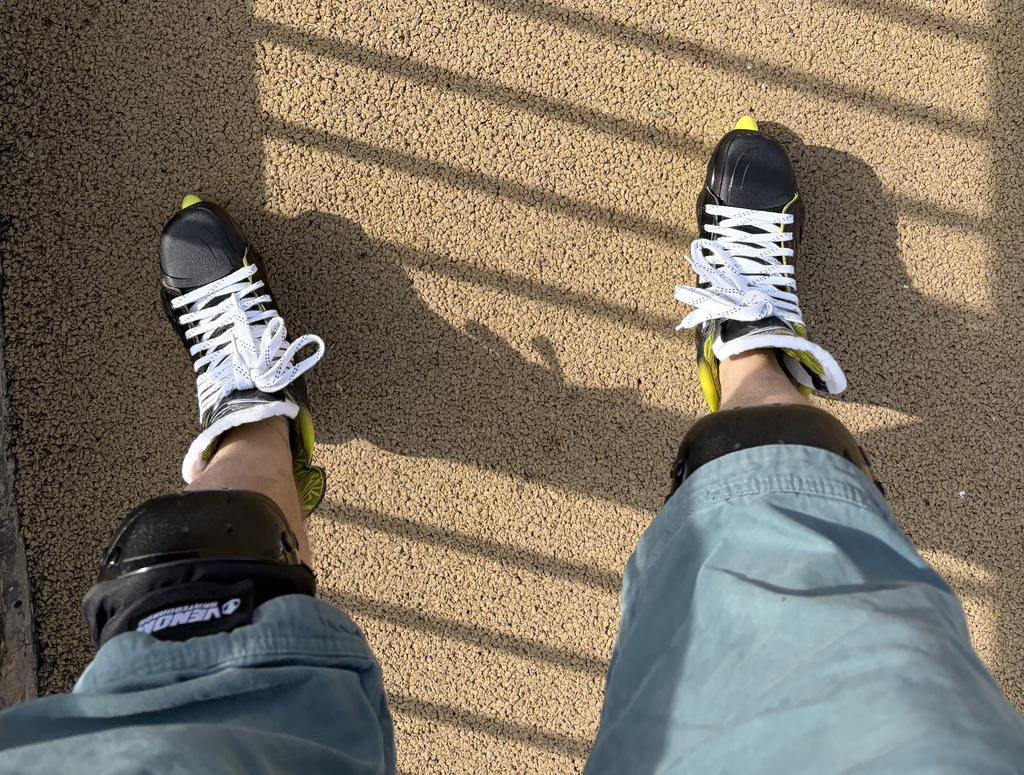
photo of me wearing inline skates, from above

Where I live we’re blessed with a seaside park with lots of smooth paths, a recently resurfaced beachside promenade, and a newly-built pedestrian/cycle path stretching up and down the coast: all great surfaces for roller skates. I convinced myself to buy some inline skates whilst the weather is good.

group shot of my skates

I wanted something as close to my ice skating experience as possible. Bauer actually make an inline version of my ice boot, but the chassis is an unusual composite plastic thing which put me off. (here's a great video of a fantastic inline skater trying out the chassis). CCM have a new inline range for 2026, but sadly (much like their Jetspeed ice range) the fit wasn't good for me.

I found a clearance pair of Bauer vapors from the previous generation: the Bauer Vapor x4. Very similar to my Fly30, but the difference in quality between the tiers is very apparent: boot stiffness, the comfort and quality of the liner. They fit well (possibly better), the rolling motion is really smooth (I think that's the bearings) and they looked pretty good to me: yellow highlights instead of the red used across the ice range.

I've done a couple of miles in them so far. Time will tell if they prove useful for off-ice training! Many inline hockey players buy ice skates and convert them to inline. If I end up not using them enough I could consider doing the opposite.

  •  

Sergio Cipriano: My experience at DebConf 2026 in Santa FΓ©

My experience at DebConf 2026 in Santa FΓ©

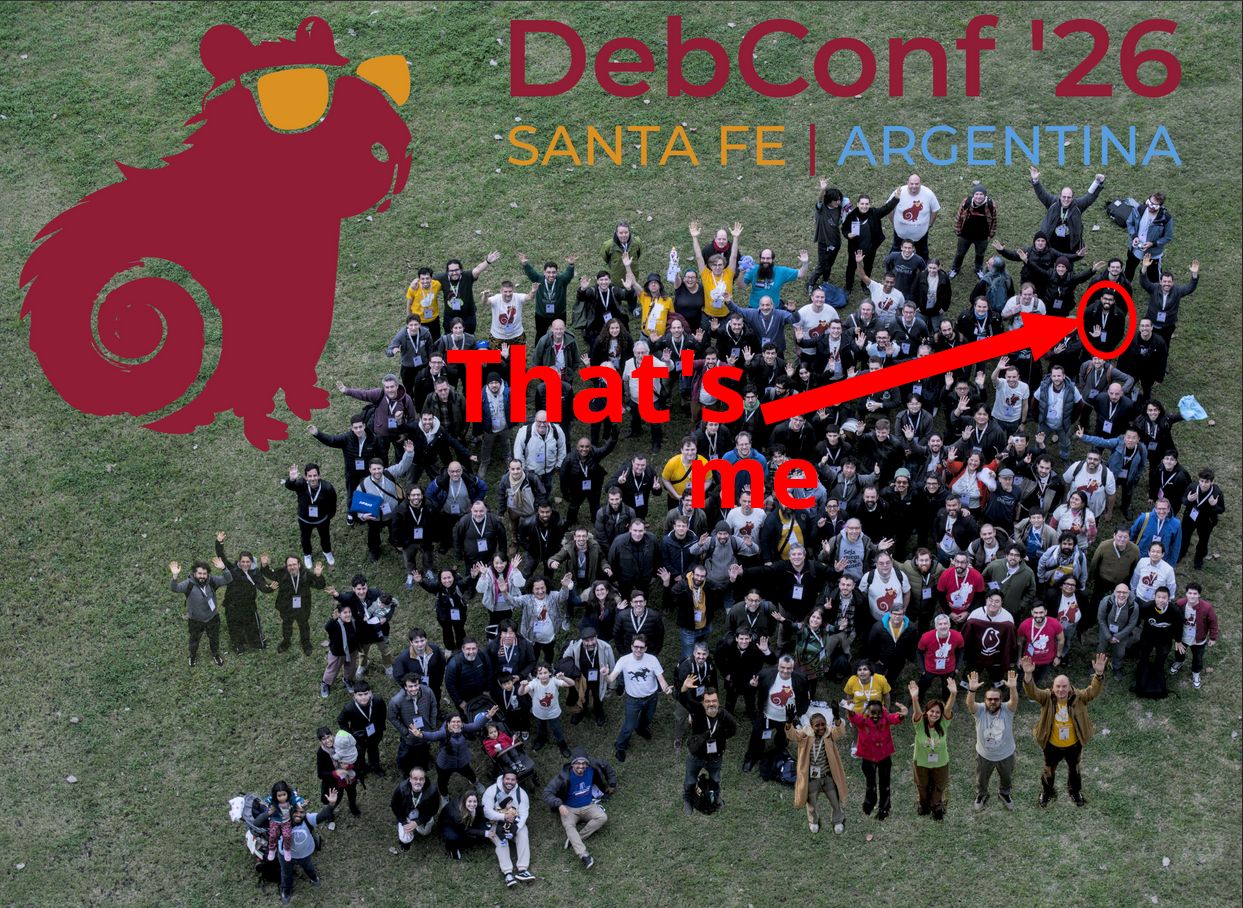
The Official DebConf26 Group Photo

Last month, I attended DebConf 2026 in Santa FΓ©, which was my 5th DebConf. As always, it was an amazing experience, and I met a lot of great people there.

For those unfamiliar with the event, it takes place over the course of two weeks. The first week is called DebCamp and is geared more towards hacking and organizing the event itself, while also offering a great opportunity to discuss ideas with others. The second week is the DebConf. We still have the hacklabs, but the talks and workshops are the main focus.

My Activities during DebCamp

My main activity was working on the python-click transition that I started in May. There were only a few packages left, and with the help of Guilherme Puida, we managed to work through all the remaining bugs.

I plan to talk in details about this transition in another blog post, where I will focus on the tools I used and my experience with mass rebuilds and mass bug filing.

I also helped with de Golang Sprint. I worked on a few packages and experimented with the dak API to generate a list of packages that needed manual action.

There was a lot of manual, repetitive work and false positives, so I eventually moved on to some other, more fun stuff.

I also learned a few thinks about kernel live patching while talking to David Tadokoro. I had to work on the Ubuntu Kernel package recently as part of my job, so we exchanged some ideas, and the conversation was really helpful.

He also taught me two commands that I wasn't familiar with, since I'm a newbie in kernel development. Here are the commands:

$ b4 am https://lore.kernel.org/lkml/20240730071904.1047-1-sergiosacj@riseup.net/
$ b4 diff *mbox

By the way, this is the first and only patch I have submitted to the Linux Kernel. I worked on it during DebConf 2024, when I attended the workshop Helen Koike runs to help newcomers submit their first patch to the Linux Kernel.

Another great interaction was with Marcos Talau. He showed me his remote access setup, which he is using to help students make contributions to Debian without the struggle of setting up the development environment.

Another cool thing is that Puida showed me the command:

$ gbp clone vcs-git:typer

After that, I decided to read the gbp manpage because these little details really improve the overall experience.

I also had many other amazing interactions. I just decided to write down the ones that I felt made the most sense for this kind of "blog report" post.

My Activities during DebConf

I gave a talk about dh-make-vim, a tool I have been working on sporadically. An interesting detail is that one of the video team volunteers for the talk, Piotr, spoke to me about his tool, pypi2deb, which is similar but aimed at the Python ecosystem. There are many tools of this kind in Debian, and they are all interesting pieces of software. I plan to write more about them in the future.

I attended several talks and participated in a few BoF sessions, and they were all great. But something that really stood out to me was the workshop on the Debian Installer, led by Alper Nebi Yasak. I didn't know anything about the Debian Installer, and I liked the way he approached the subject and showed the specific details.

I'll take some time to read the Debian Installer internals documentation. I was not familiar with udebs or with the fact that the Debian Installer uses debconf under the hood.

Wrap up

It was an amazing event. Unfortunatly, a lot of people I know were not able to attend for different reasons, and they were missed.

There were many other things that I enjoyed during this trip. Here are a few more highlights:

  • World Cup matches
  • A day trip around Santa FΓ©
  • The Cheese & Wine party
  • Empanadas!!
  •  
❌