Lees weergave

Mike Gabriel: Ubuntu Touch development - 24.04-2.0 Beta and Meaning of Branching-Off

The next Ubuntu Touch major release is approaching rapidly, yesterday we reached a major step in the preparation of the upcoming Ubuntu Touch 24.04-2.0 release: The branching-off (see below on what that is).

Ubuntu Touch 24.04-2.0 Beta is Now Available

Part of this development release step is the publication of the 24.04-2.0 Beta release images, for more details and information see:
https://ubports.com/blog/ubports-news-1/ubuntu-touch-24-04-2-0-beta-is-n...

And additionally, find below some background information on how we maintain various Ubuntu Touch releases in parallel via Git(Lab). In fact, the release model of Ubuntu Touch has partially been adopted from how we in Debian maintains our various Debian versions in parallel, only that in Ubuntu Touch we use Git(Lab) for maintaining the different package versions and not, like in Debian, the APT archive itself.

What does 'Branching-Off' Mean?

Last Saturday, in the UBports Q&A, I explained Ubuntu Touch's "branching-off", an aspect of the Ubuntu Touch release workflow based on Git(Lab). To make this accessible to even more people, here it comes as a write-up:

We host many Git repositories on GitLab, and our primary work is done on the main branches, which contain the bleeding-edge code. When a merge request is deemed critical for stable versions of Ubuntu Touch, we cherry-pick it into a release series branch.

Currently, we land our changes in the main branches and then cherry-pick them to the ubports/24.04.1.x branches. The 'branching off' process for the upcoming 24.04-2.x release means that our current main branches will be copied over to create new branches for this release cycle, namely ubports/24.04-2.x.

This has two major implications. First, any item that hasn't been translated by the time of the branch-off will not receive any more translation updates during the 24.04-2.x cycle. This is why it is crucial that translation work is completed before the branching-off.

Warning of Breaking Changes arriving soon in 26.04-1.x Daily Development UT Images

Second, looking ahead to the release after 24.04-2.x, we will be approaching 26.04-1.x. The OS base will change to Ubuntu 26.04 LTS, hopefully being ready for release to Ubuntu Touch users before the end of the year. We already have a list of features we want to land there. Because we plan to include various major changes, such as the switch from Mir 1 to Mir 2, new calendar and contacts backends, Qt6-based core apps and service components, etc., the likelihood of breaking changes at the beginning of the 26.04-1.x release cycle (which will become the next main branches' target) is very high.

The Ubuntu Touch 24.04-2.0 Release Schedule

The current release schedule is estimated to be:

25 May 2026 [done]
Platform stability freeze 24.04-2.x

25 May 2026 [done]
String freeze 24.04-2.x

15 June 2026 [done]
Branching-off (and unfreeze 26.04-1.x development), UT image release: 24.04-2.0 Beta

22 or 29 June 2026 [coming]
Final freeze for 24.04-2.x, UT image release: 24.04-2.0 RC

6 or 13 July 2026 [coming]
Release version 24.04-2.0

  •  

Vincent Bernat: Building a Soviet Nail Factory: how KPIs killed efficiency

In 2008, I landed my second job, in the network team at Orange Portails1, the division behind the websites and search engine of the French telecom operator Orange. The place ran like clockwork: a comprehensive technical setup, a dedicated team for every part of the business, and room to focus on what I do best. A few years later, none of that mattered: thanks to an obsession with the numbers, we could no longer deliver new services on time.

Disclaimer

This is a story I like to tell to warn people about Goodhart’s law.2 As these events happened almost 15 years ago, my recollection is a bit fuzzy. I left in 2012.

The first years

During my first years, the department operated like a startup. Its cradle was the French company Echo. They built a search engine. France Télécom bought it and renamed it Voila. It was the most visited search engine in France in the early 2000s. France Télécom consolidated the portal activities into the Wanadoo Portails division, later renamed Orange Portails.

The technical environment was excellent. We had many internal tools:3 a ticket system, an RRD-based graphing tool, an IPAM, a reporting tool, and an SNMP-based alerting tool.4 We deployed our Linux servers with CFEngine. We installed systems and applications from internal Debian repositories. We documented everything in a private MediaWiki instance. Supervision was performed with an ancestor of Xymon. The network architecture was clean and scalable with little legacy. We onboarded new people in a day.

It was a nurturing environment for me. I developed several tools: lldpd, an 802.1AB implementation, Snimpy, a pythonic binding for Net-SNMP, Wiremaps, a layer-2 discovery tool with a time machine to know which device is connected where, Kitérő, a tool to simulate network conditions, QCSS-3, a controller for load-balancers, and ipoo, a service available through a Jabber chatbot and a Greasemonkey script to expose IP-related information. I added SNMP support for Keepalived and Quagga. I also started this blog, with articles like “Anycast DNS,” TLS-related articles like “TLS computational DoS mitigation,” SNMP-related articles like “Integration of Net-SNMP into an event loop,” Linux-related articles like “Tuning Linux IPv4 route cache,” and an article about VXLAN long before it was cool.

The collapse

When we needed new servers, the on-site team would take a set from the inventory, install our base Linux distribution on them, put them in the datacenter, and cable them to the top-of-the-rack switches. We opened a ticket describing the servers we needed, and one week later, our servers were available. 💫

Orange wanted to know if this team was performing well, so they asked for KPIs. They decided to use the number of tickets completed in a year. They asked to double this number. So instead of one ticket for a new service, we would open six tickets—one per server. By the end of the year, the KPIs had more than doubled.

Everybody saw it as a success for performance management. So, they asked to do the same for the next year. Now, we needed to open a ticket per server and per step. Again, the KPIs doubled. Behind the scenes, the tickets went to different people and were no longer handled in order. So, for the next year, it was decided to have meta-tickets and meetings to follow the progress of these tickets. Of course, all these extra steps pushed the KPI even higher.

This performance management method spread to the other teams.5 Everything became slower. Instead of a couple of weeks, a new service now took six months. We built a Soviet nail factory. But the KPIs were good, and we stopped caring.

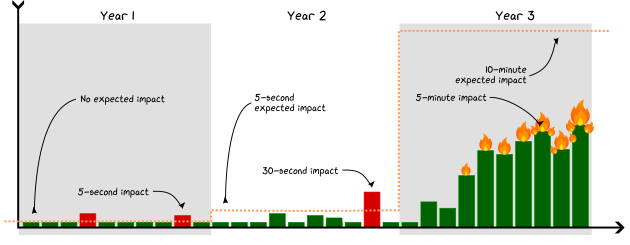
Let me give you another example. We had to estimate the impact of each night operation. We weren’t half bad: we declared most operations “without any expected impact.” Most of the time, there was no impact. One time out of five, there was a 5-second impact. We were told to try harder to meet our expected impact. What did we do? We started declaring a 5-second expected impact. One day, we got a 30-second impact and were told we failed to match the expected impact. In the end, we declared most operations with a 10-minute expected impact, and we stopped caring: instead of carefully shifting traffic around, we allowed ourselves a 5-minute impact. And our KPIs were never better.

Graph showing the impact of night operations. Year after year, the impact tolerance has been increased. In the final year, the expected impact is 10 minutes, and all operations remain under this threshold. However, the impacts are much more significant than they were in the first year.
An artist's rendering of the evolution of impacts over the years.

KPIs are not bad, but they are easy to break. Use them carefully: let the people doing the work help choose the metrics, and tie those metrics to the quality of the service—for example, with service level objectives. Otherwise, even dedicated people stop caring, game the system, and eventually quit. 📊


  1. Internally, this division was named “Hebex.” It was located in Bagnolet (next to Paris) and Sophia-Antipolis (near Nice). 

  2. Goodhart’s law often gets the credit, but Campbell’s law describes my experience even better: the more you lean on a number to make decisions, the faster people corrupt it. 

  3. At the time, SaaS was not really a thing. I remember we considered, with a couple of colleagues, selling Wiremaps as a SaaS, with homomorphic encryption for the database. But who would outsource their observability stack? 

  4. Snalert was a metacircular alerting tool in Perl. It was able to poll a very large number of SNMP targets in a short timespan. All our monitoring was SNMP-based, including system monitoring. 

  5. My team also managed the rules of many Linux-based firewalls. To increase our KPIs, we used the same method: rather than accepting one ticket with a flow matrix, we requested one ticket per flow. 

  •  

Tim Retout: In memoriam commit-email.py

I have proposed the deletion of an obsolete script, but it makes me feel complicated feelings so I’m going to try and express those. This particular script was written in 2014, but the concept goes back much further – before git was invented.

When I started university in 2003, I seem to remember the computing society used to run tutorials for first-year students on how to use Apache Subversion for your group project – a vast upgrade on CVS (or worse, no version control at all). Back then, the idea of viewing your changesets in a web browser was relatively new – while it was possible to look at an SVN repository through a web UI, features were limited unless you installed something compicated like Trac.

Data flow when distributing commits via a mailing list Figure 1: Data flow when distributing commits via a mailing list

Perhaps because reading email on your desktop computer (I don’t think I could afford an IBM ThinkPad?) was the only vaguely real-time notification system available at the time (except I guess SMS, which cost 10p per text), a common pattern seemed to be to use a post-commit hook to send every single commit to a mailing list, named something like ‘foo-commits’. Indeed, for a long time Fedora had an scm-commits list which appears to be a topic of recent discussion.

I can’t really explain why people wanted to have every commit sent to a mailing list except as a way of getting notified of activity – I can’t believe people would import raw patches from those lists, ala LKML, rather than run actual version control commands to fetch the new source directly. Maybe you’d have to go back to NNTP for this.

I do like the vendor-neutrality of the “everything-as-text” approach, building on the open ecosystem of SMTP. But I doubt we’d see a widespread resurgence of commit lists now – most code hosting must allow anyone to subscribe to email notifications, I assume, and I don’t see a huge benefit in a mailing list archive of commit messages.

In the case of seL4, I’m even more confused about why this script was committed in 2014, shortly after the kernel was put on GitHub. I can only assume it was imported from previous infrastructure. I do know that the implementation is quite Python 2 heavy, with the conversion between unicode and bytes featuring heavily. So rather than risk breaking its logic with patching, I think it’s time to “thank it for its service” and let go.

  •  

Freexian Collaborators: Debian Contributions: Go default compatibility, Trimming build-essential, Python upstream engagement and more! (by Anupa Ann Joseph)

Debian Contributions: 2026-05

Contributing to Debian is part of Freexian’s mission. This article covers the latest achievements of Freexian and their collaborators. All of this is made possible by organizations subscribing to our Long Term Support contracts and consulting services.

Go default compatibility, by Helmut Grohne

At the MiniDebConf Hamburg, Andrew Lee had prepared a talk on how Debian accidentally chooses Go compatibility. Helmut joined Tobias Quathammer and Andrew Lee in looking into the problem. Go has a compatibility system where modules declare a desired Go version to be compatible with. This influences various features such as whether RSA keys smaller than 1024 bits are accepted. Unfortunately, Debian’s way of building Go packages is unique in setting GO111MODULE=off, which practically implies a very old compatibility version that enables a number of insecure settings. Most Linux distributions use the default GO111MODULE=on and therefore consult a go.mod file that often declares a sensible version. While doing so is the way for Debian longer term, getting there involves major changes so we also sought a more short term workaround. We developed a patch to the Go compiler that would enable it to pick up a compatibility version from the environment. Tobias uploaded it to unstable. The next step is communicating the declared compatibility version from go.mod to the compiler via the new variable. Then, rebuilding the archive resolves the immediate symptoms. This does not save us from having to perform the larger transition to GO111MODULE=on, but this shortcut can be backported to trixie.

Trimming build-essential, by Helmut Grohne

One of the harder problems of the architecture cross bootstrap is correctly expressing the Build-Depends of glib during the toolchain bootstrap. It implicitly depends on build-essential, which happens to depend on libc6-dev. This poses a cycle. It applies even for cross building, because it is interpreted for the host architecture and that there is no way of satisfying this dependency during the toolchain bootstrap.

Given discussions at MiniDebConf Hamburg with Jochen Sprickerhof and others, a seemingly stupid idea evolved: Let’s delete build-essential. What looks insane on the surface might deserve a second look. Given how we moved away from C, C++ and autotools, what is in build-essential no longer is required by much of the archive. With the rise of debputy, debian/rules no longer has to be a makefile. While the task would be huge, those packages relevant to architecture bootstrap could explicitly support building without the implied dependency making their dependencies explicit. In a number of cases, this amounts to issuing a dependency on g++-for-host. This dependency requires the use of architecture-prefixed tools. Therefore, Helmut wrote a debhelper change that makes it always pass build tools to various build systems. This also enables more packages to honour environment variables such as CC and CXX.

Python upstream engagement, by Stefano Rivera

Stefano attended PyCon US (at personal expense) to improve upstream relations and ensure Debian’s voice is heard where it needs to be. On Friday there was a packaging summit (notes) with good discussion on the future of the wheel format, and some discussion of the new abi3t shared library format for free-threaded python.

In preparation for the event, Stefano did a complete review of the current patch stack.

Stefano’s primary goal was to get some of Debian’s patches merged during the sprints, and results were mixed. Some trivial patches (e.g. GH-150098, made progress and merged, but the most consequential patch Debian is carrying is still blocked. Stefano will continue to try to drive progress on this.

Miscellaneous contributions

  • Carles worked on po-debconf-manager: Reviewed Catalan translations for 6 packages, submitted 10 packages to maintainers, and removed 3 packages from po-debconf-manager.
  • Carles worked on check-relations: Continued improving the backend, including importing source package build dependencies to better support analysis of Debian blends. Added support for ignoring packages using regular expressions and source package names in response to user feedback. Used the tool to report 5 new bugs and followed up on previously reported issues.
  • Helmut sent a cross build patch on behalf of a customer.
  • Helmut uploaded debvm and guess_concurrency both featuring improved reproducibility and documentation.
  • Helmut continued maintaining rebootstrap and made it correctly handle binNMUs of gcc-defaults. Additionally, he poked at existing gcc patches giving answers, rebasing or closing them.
  • Helmut supported the video team in Hamburg mixing audio.
  • Helmut continued to report undeclared file conflicts of various kinds and corresponded with maintainers about them.
  • Antonio attended a debate during the Brazil Internet Forum about the impacts of the child protection regulation (ECA Digital) on free software operating systems.
  • Antonio worked on Debian CI to improve the system transparency for users. This included listing any pending jobs explicitly in the job lists for each package/architecture/suite page, as well as adding a queue status page that users can check for an estimate of test latency.
  • Antonio worked on several Debian CI maintenance tasks, including but not limited to some monitoring improvements, replacing usage of fonts-font-awesome with fonts-fork-awesome, and adding the ability in debci to configure a global notice (which is being used in Debian CI to point to the system status pages).
  • Antonio started doing some tests related to the change of default Debian CI backend from lxc to incus-lxc. This helped identify an omission in the creation of incus-lxc images. It was missing dpkg-dev, which caused a few packages that assumed its presence to fail. In the end, the incus-lxc backend will be fixed to include dpkg-dev by default in the image, but that uncovered an undeclared dependency in gem2deb (Ruby packaging helper) and in ruby-byebug, both already fixed in unstable.
  • Stefano did some minimal work on debian-reimbursements to get it working with current versions of django-allauth.
  • May included the discovery of several high-severity Linux kernel root exploits. Stefano updated kernels and rebooted debian.social infrastructure several times.
  • Stefano supported the Hamburg miniDebConf’s wafer website during the event, and set up an instance for the 2027 edition too.
  • Stefano supported the bursary team issuing bursaries for DebConf 26.
  • Stefano uploaded routine updates of python-pip, pystemmer, snowball-data, snowball (making up a mini, uncoordinated snowball transition), python-authlib, python-discovery, python-installer, python-mitogen, python-pipx, python-cachecontrol, platformdirs, and python-virtualenv.
  • Stefano fixed a small number of bugs in dh-python, culminating in the 7.20260524 upload.
  • Thorsten finally managed to upload a new upstream version of hplip. He also uploaded a new upstream version of epson-inkjet-printer-escpr. Last but not least with the help of other contributors he could fix bugs in lprng.
  • Lucas and Santiago contributed significantly to the DebConf 26 Content team; helping to organize the team, review and rate talk proposals.
  • Lucas also supported a packaging sprint held in India by rebuilding and publishing the latest results of the Ruby 3.4 transition effort.
  • Santiago continued contributing to the efforts to organize DebConf 26, especially supporting the local team with different tasks.
  • In collaboration with Emmanuel Arias, Santiago is mentoring Aryan Karamtoth, a GSoC participant that is working to introduce linux live-patching support in Debian. The GSoC project started in May, with community bonding and coding. Santiago reviewed a merge request to prepare the clang-extract package for debian. clang-extract is one of the building blocks that will help to extract specific functions from large C code, so only relevant code can be patched, without recompiling the whole original basecode.
  • Anupa assisted Jean-Pierre Giraud with the point release announcements for Debian 13.5 and Debian 12.14.
  • Colin backported various security fixes from OpenSSH 10.3 to all supported releases (including LTS and ELTS).
  • Colin backported IP quality-of-service fixes to OpenSSH in trixie. The situation there had been unsatisfactory for some time, and upstream reworked their QoS support in OpenSSH 10.1 in a way that typically produces much better results.
  • Colin imported new upstream versions of 26 Python packages, and fixed around 25 RC bugs for the Python team.
  •  

Dirk Eddelbuettel: rbenchmark 1.0.1 on CRAN: New(ly Adopted) Package!

Quick note to share that rbenchmark is back on CRAN! The rbenchmark package makes it easy to benchmark (and compare) simple R expressions.

This package has been on CRAN for many years. At one point fourteen years ago it appeared to be rudderless so I offered help but things realigned. Now it was just tossed off CRAN, taking a number of packages depending on it with it (as shown in this CRANberries skeet listing a set of removed packages) so I offered again to help, and CRAN agreed. So here we are.

So far I just made a number of small ‘editing’ changes, added CI support, and enable dbsr-universe coverage . I do not expect to change the package materially. So far the package has no NEWS file either so maybe glance at the ChangeLog at the git repo.

This post by Dirk Eddelbuettel originated on his Thinking inside the box blog. If you like this or other open-source work I do, you can sponsor me at GitHub. You can also sponsor my Tour de Shore 2026 ride in support of the Maywood Fine Arts Center.

  •  

Gunnar Wolf: Rey Ubu - Carro de Comedias, UNAM

Today we went to see a theater play in UNAM’s Cultural Center, very near our home. No, not inside any of the theaters — in the square just between Sala Nezahualcóyotl, Foro Sor Juana and Sala Carlos Chávez.. So, yes, not only we had fun, but we had fun for free!

Announcement

UNAM’s El Carro de Comedias is an itinerant theater company that often presents in this same spot (but you can see the stage is foldable, and they do have presentations elsewhere, of this same play even). I went with my family, and we enjoyed a very fun adaptation of this great play (written by teenager Alfred Jarry in 1894). One of those plays that could be inspired any day by current geopolitical events…

I know most of the people that happen to stumble upon my blog are not in Mexico City. But if you happen to be here, do consider going to their function. Check their schedule; being it an itinerating show, they can also be found at other places, but they are scheduled at the same place we saw them, every Saturday and Sunday until June 28, 11:00AM. They mentioned they will likely continue during August, but AFAICT it is not confirmed (or, at least, announced) yet.

Some pics, shot randomly by me throughout the play:

Announcement

First_call

Accordion

Mom

Announce

Plotting

Audience

Wenceslao

Attack

Grumpy

Ministers

Council

Message

Russian

Soldiers

All

End

  •  

Jonathan Dowland: HeroQuest

_First Light_ box

First Light box

My youngest daughter and I recently started playing the tabletop game HeroQuest. Specifically, the recently-issued, cut-down variant HeroQuest: First Light. This is quite advanced for her age, and I'm a little surprised she's taken to it, but she's really loving it, It's pushed her to read bits of lore on cards and quest books that is way above her expected reading level, and we've been exercising her maths by adding up the gold we find on our quests and calculating what the heroes can buy with it in the store afterwards.

Originally from 1989, Hasbro re-issued HeroQuest in 2020. I read about it at the time but didn't buy it. I wasn't sure who I would play it with. It also seemed expensive to me. It probably wasn't unusually expensive in 2020, nor now, for the sheer volume of finely-sculpted miniatures included. I also knew I had the original game in the loft, and I wasn't that keen on buying something I already had, although untangling the contents from several similar boxed games would take me many hours, and I wasn't sure how much of the game I would find.

mix of old and new

mix of old and new

First Light was compelling because it is much, much cheaper than the full remake, so I was happy to take a punt. It's cheaper because it doesn't have any plastic monsters or furniture: instead cardboard cut-outs that stand up on plastic stands. For us, that is a significant drawback: 3D miniatures are much more immersive, But I can re-use the plastic miniatures I can find from the original game. First Light has a newly written adventure, better suited to beginners than the original game.

The re-issue(s) have new art and new model sculpts that look fantastic. They've changed anything which tied into Games Workshop's IP and I'm really happy about that. They've made an effort to add women, almost entirely absent from the original. I'm certain my daughter wouldn't have tried it otherwise.

  •  

Matthias Klumpp: Introducing pkgcli: A nicer command-line interface for PackageKit

For almost two decades, the PackageKit package management abstraction layer has shipped with pkcon as its command-line client. pkcon does its job, but it was always kind of a “testing” front-end for the PackageKit daemon rather than a tool designed for everyday use. The focus has instead been on the GUI tools, automatic system updates, GUI application managers and other front-ends. Its command names mirror the D-Bus API almost one-to-one (get-details, get-updates, get-depends), output is very plain, and there is no machine-readable mode for scripting. Most importantly though, there has been no development on it at all for almost a decade, so pkcon was stuck in its rudimentary state from that era.

Since a lot of changes will be coming to PackageKit, and testing the daemon and working with it from the command-line was not very pleasant anymore in 2025/2026, I decided to modernize the tool as part of my work as fellow for the Sovereign Tech Agency last year. pkgcli is the new command-line client for PackageKit. It is built from the ground up to be pleasant to use interactively and easy to drive from scripts.

Why a new tool?

Of course, instead of introducing a new tool, I could have just expanded pkcon instead. The problem with that approach is that the pkcon utility has been around for so long and its command-line API had ossified so much, that rather than changing it and potentially breaking a lot of scripts relying on its quirks, I decided to introduce a new tool instead. pkcon can still be optionally compiled for people who need it in their scripts and workflows.

The goals for pkgcli, and the features it now has are:

  • Human-friendly command names. Verbs that read the way you’d describe the task, instead of mirroring the D-Bus API 1:1: show, search, list-updates, what-provides, instead of get-details and friends.
  • Readable, colored output by default (still respecting NO_COLOR and degrading gracefully).
  • A real scripting mode. A global --json flag emits JSONL instead of fully human-readable output when possible, to make it easier to use the tool for scripting purposes.
  • Sensible defaults. A few defaults have been changed, such as the metadata cache-age, or automatic cleanup of unused dependencies being enabled by default. This is more in line with current defaults by other tools and frontends. We also print package information in a slightly different, more readable way.
  • Better handling of internationalized text. Text should now align properly in the terminal window, and we should no longer have completely chaotic text output on non-English locales (especially Chinese/Japanese).

Why not pkgctl?

Originally, this tool was called pkgctl, to match other common cross-distro tool names. However, that name was already taken by an Arch-specific distro development tool. When this issue was raised, we decided to just rename our tool to pkgcli with the next release, to avoid the name clash on Arch Linux.

Examples!

Here are some examples on how to use the new tool (some of which include the abridged output pkgcli prints).

Search for anything containing the string “editor” in name or description, then look at the details of one result:

$ pkgcli search editor
Querying                  [████████████████████████████████████████] 100%
 ace-of-penguins 1.5~rc2-7.amd64 [debian-testing-main]
 acorn-fdisk 3.0.6-14.amd64 [debian-testing-main]
 ardour 1:9.2.0+ds-1.amd64 [debian-testing-main]
 audacity 3.7.7+dfsg-1.amd64 [manual:debian-testing-main]
 audacity-data 3.7.7+dfsg-1.all [auto:debian-testing-main]
 augeas-tools 1.14.1-1.1.amd64 [debian-testing-main]
 emacs 1:30.2+1-3.all [debian-testing-main]
 gedit 48.1-9+b1.amd64 [debian-testing-main]
 gedit-common 48.1-9.all [debian-testing-main]
 gedit-dev 48.1-9+b1.amd64 [debian-testing-main]
[...]

$ pkgcli show nano
Package: nano
Version: 9.0-1
Summary: small, friendly text editor inspired by Pico
Description: GNU nano is an easy-to-use text editor originally designed as
 a replacement for Pico, the ncurses-based editor from the non-free mailer
 package Pine.
[...]
URL: https://www.nano-editor.org/
Group: publishing
Installed Size: 2.9 MB
Download Size: 646.0 KB

Search only within package names rather than descriptions:

$ pkgcli search name python3

Check for updates. refresh updates the metadata, then list-updates reports what’s available:

$ pkgcli refresh && pkgcli list-updates
Loading cache            [████████████████████████████████████████] 100%
 cme 1.048-1.all [debian-testing-main]
 gir1.2-gdm-1.0 50.1-2.amd64 [debian-testing-main]
 imagemagick 8:7.1.2.24+dfsg1-1.amd64 [debian-testing-main]
 imagemagick-7-common 8:7.1.2.24+dfsg1-1.all [debian-testing-main]
 imagemagick-7.q16 8:7.1.2.24+dfsg1-1.amd64 [debian-testing-main]
 libdlrestrictions1 0.22.0.amd64 [debian-testing-main]
 libfftw3-bin 3.3.11-1.amd64 [debian-testing-main]
 libfftw3-dev 3.3.11-1.amd64 [debian-testing-main]

Explore relationships between packages:

$ pkgcli list-depends inkscape  # list what inkscape depends on
$ pkgcli list-requiring libappstream5  # list what requires libappstream5

Find the package that provides a capability, here the AV1 GStreamer decoder:

$ pkgcli what-provides "gstreamer1(decoder-video/x-av1)"
 gstreamer1.0-plugins-bad 1.28.3-1.amd64 [auto:debian-testing-main]

You can also have JSON output for most commands! Attach --json to any query and pipe the result straight into jq. Each line is a self-contained JSON object:

$ pkgcli --json list-updates | jq -r '.name'
cme
gir1.2-gdm-1.0
imagemagick
imagemagick-7-common
imagemagick-7.q16
libdlrestrictions1
libfftw3-bin
libfftw3-dev
libfftw3-double3

Try it

pkgcli is built by default alongside the rest of PackageKit since PackageKit 1.3.4. If your distribution ships a recent enough PackageKit, it should already be on your PATH. You can read its man page man pkgcli for more information. Feedback, bug reports, and patches are very welcome.

  •  

Mike Gabriel: Ayatana Indicators: Call for Translations

In the process of preparing a major Ubuntu Touch release (v24.04-2.0, coming soon...) we will also update Ayatana Indicators in Ubuntu Touch.

Last week various new features have been added to some of the indicators (toggle switch to keep the display switched on permanently, blue tooth pairing agent, redesign of the keyboard indicator, etc.) and those changes require translation updates.

If you can, please visit [1] this weekend and help translating Ayatana Indicators into your native language. Thanks so much!!!

light+love
Mike

[1] https://hosted.weblate.org/projects/ayatana-indicators/

  •  

Tim Retout: seL4 clock magic

I have been looking at seL4 some more recently, and had a small patch merged today to remove a legacy Python module from a helper script. (I was trying to run the script on a system without that module installed, and it was almost easier to patch it out.)

However, the more I think about this code and how it’s used, the more it seems wrong on at least five other levels.

The patch itself is quite uninteresting; this script was importing the past module (part of future?) to use the xrange function. Python 2 used to have separate xrange and range functions, where range returned a list in memory while xrange generated an iterator. Because this seL4 script is iterating over a large range of values, it’s important the list is not generated in-memory. But Python 3 removed the xrange function and just has range return an object, so it’s trivial to avoid the module import.

Having thought carefully some more about the specific line, there’s surely an off-by-one error in it - range iterates over 0 to n-1, so this line shouldn’t be subtracting one if it’s looking to test all 32-bit values:

    for i in range(2**32-1):

But then again, this is being used for a ‘sanity check’ of a magic bit shift algorithm that speeds up division operations to convert CPU ticks to microseconds on 32-bit arm platforms. Surely if the algorithm’s good, it shouldn’t be necessary to validate it exhaustively against every possible 32-bit value?

Also, 32 bits isn’t enough, because this is 64-bit division. include/api/types.h shows that ticks_t is always a uint64_t, so if this were a proof by exhaustion it should run to 2**64 (though that would take infeasibly long).

As discussed in issue #1352, lots of people have been running this code with the wrong divisor anyway. But because the bit shift path is only used on 32-bit platforms, it’s not clear to me that there’s even any point in specifying CLK_SHIFT/MAGIC on platforms which are 64-bit only (e.g. the tx2 port).

And to follow this rabbit hole to the very end, in comments on PR #1435 and issue #1509 it’s clear that the future of this code is to remove it, as it’s 1. unnecessarily clever (on 64-bit platforms the equivalent code just uses a division, so performance can’t be that important), and 2. the entire concept of converting to microseconds breaks the seL4 principle of not abstracting away details of the hardware.

So this has left me unclear on whether my small patch was a good thing or not, but I certainly learnt something about this corner of seL4 timer handling. And I’ve ordered a copy of “Hacker’s Delight” on the recommendation of a code comment.

  •  

Michael Ablassmeier: vmsync

I’ve been asked a few times if it would be possible to use virtnbdbackup as some kind of “replication” utility, to keep cold standby virtual machines on other libvirt hosts.

Usually i would tell to use underlying filesystem features (such as zfs send/recv, with incremental snapshots) to keep cold, standby copies on other hosts.

As for qcow based virtual machines, using the dirty bitmaps is not only a valid feature to create backups, but to (incrementally) replicate virtual machines, too.

I’ve released vmsync. A small golang utility that implements a simple replication tool using the NBD protocol to sync virtual machines to other hosts.

  •  

Mike Gabriel: Future of libayatana-appindicator (v0.6.0 released today)

Some of you might have noticed that the recent (or rather: previous) version of libayatana-appindicator (v0.5.94) notified users and developers of the library being deprecated.

This short post is to notify you, that with today's libayatana-appindicator v0.6.0 release [1] this deprecation warning has now been removed again. Another new feature (added to AppIndicator without ABI breakage) is tooltip support. The new package version has just been uploaded to Debian experimental. Please test if your application (if it gets linked against libayatana-appindicator) continues to work flawlessly. Thanks!

libayatana-appindicator will receive continued support until GTK-3 becomes end-of-life (because libayatana-appindicator has a baked-in GTK-3 dependency which should not be ported to GTK-4 imho). That said, in the future, GTK-3 applications can continue using libayatana-appindicator for sending AppIndicator-like icons and menus over DBus to KStatusNotifierItem-based system tray renderers.

If you are looking for an AppIndicator implementation for GTK-4 applications (or other), I'd like to encourage you to help making libayatana-appindicator-glib [2] a new standard (can be used in GTK and Qt applications alike, implementation is using pure Glib-2.0). Currently, there is only one renderer (ayatana-indicator-application), so more work needs to be done on the renderers' side. (One of the next work items here is to get AppIndicator-Glib support working in Lomiri's desktop/windowed mode).

[1] https://github.com/AyatanaIndicators/libayatana-appindicator/releases/ta...
[2] https://github.com/AyatanaIndicators/libayatana-appindicator-glib/

  •  

Colin Watson: Free software activity in May 2026

My Debian contributions this month were all sponsored by Freexian.

You can also support my work directly via Liberapay or GitHub Sponsors.

OpenSSH

I backported various security fixes from 10.3 to trixie, bookworm, bullseye, buster, and stretch. For trixie, I also backported several IPQoS fixes to line up with upstream’s traffic management settings and drop a rather hacky Debian-specific patch; this needed a quick follow-up fix.

I upgraded trixie-backports to 10.3.

I fixed openssh uses pidof but does not depend on procps.

PuTTY

I upgraded from 0.83 to 0.84.

Python packaging

New upstream versions:

  • bitstruct
  • ormar
  • pdm (fixing a build failure)
  • pydantic
  • pydantic-core
  • pydantic-settings
  • pyglet (fixing a build failure)
  • python-asyncssh
  • python-bitarray
  • python-btrees
  • python-build
  • python-certifi
  • python-charset-normalizer (fixing a build failure)
  • python-fakeredis (contributed supporting fix upstream)
  • python-holidays
  • python-jsonschema-path
  • python-memray (fixing a build failure and CVE-2026-32722)
  • python-openapi-schema-validator
  • python-pathable
  • python-persistent
  • python-pyftpdlib
  • python-pytest-run-parallel
  • sorl-thumbnail
  • twisted
  • zope.interface
  • zope.proxy

Other build/test failures:

Other bugs:

I updated python-treq upstream to stop vendoring multipart, now that the packaging issues with that have been sorted out.

Code reviews

Other bits and pieces

I contributed a debian-policy patch to fix several links related to build profiles.

  •  

Vincent Bernat: Blogging with LLMs as a non-native speaker

AI slop is invading the web. A recent story about disallowing LLM-generated submissions on Lobsters triggered a lot of debate. My personal worst offenders are LinkedIn articles with AI-generated images and uninspired articles filled with emojis from people trying to masquerade as experts on a subject they don’t care enough to write themselves. While I am unhappy about this situation, I rely on LLMs for grammar, copyediting, and translation. I don’t see this as a contradiction.

I am a native French speaker, but I blog in both English and French. When I started writing this blog in 2011, I was composing in French and translating to English, but I found it was better to work in the reverse order to avoid unnatural and non-idiomatic constructions. One of my goals is to write “good” English but I never felt it was my strong point.1 For example, verb tenses are often an issue, even if I mostly stick with the present tense. I learn the rules and forget them right away. I also don’t feel like hiring an editor for something I see as a hobby.

As an example, I have kept the history of the successive iterations when writing “Scaling Akvorado BMP RIB with sharding”:

  1. the first draft, authored with the help of a thesaurus,2
  2. the edited copy revised by the copyediting skill,
  3. the translation to French generated with the translation skill, and
  4. the human proofread of the French translation, with minor edits to the English version.

I know that LLMs may alter the author’s voice when editing, but the corrections in the second step are minor. The prompt asks to “apply light stylistic edits,” with some guidance around avoiding passive voice, long sentences, bland verbs, and filler words. It also defines the target audience: technical with a B2 level in English.

In the following excerpt, I used “long time” instead of “long-standing.” The former is missing a hyphen and applies to people—a long-time friend, while the later relates to a situation—a long-standing agreement. I had a hard time understanding the reason of the second change: the LLM prefers a defining relative clause to provide the definition of “RIB sharding.”

As the Internet routing table contains more than 1 million routes, Akvorado needs to scale to tens of millions of routes. This has been a long time long-standing challenge, but I expect this issue is now fixed by using RIB sharding, a method to split that splits the routing database into several parts to enable concurrent updates.

In the next modification, the LLM puts “device” instead of “equipment.” This is correct as “equipment” is an uncountable noun. I know that, but I still fall into this trap.

When Akvorado does not find a route from a specific device, it falls back to a route sent by another equipment device.

I ask the LLM to use “descriptive verbs” and it complies by replacing a multi-word predicate with a lexically rich verb:

The benchmarks demonstrate it has better performance than outperforms other packages, both packages for lookups, insertions, and memory usage.

It also fixes grammar errors. In the next excerpt, a “list of routes” is a singular expression. Moreover, “stored” is a state and I should not use “into” as it expresses a change.

The list of routes for each prefix are is not stored directly into in the prefix tree.

As a last example, consider the following snippet. The “require” verb accepts a noun or an object followed by a to-infinitive. I can’t use it with just a to-infinitive.

An alternative would be to have one prefix tree for each peer but it would require to configure configuring all routers to export their routes.

As someone who didn’t grow up speaking English, I struggle with these grammar rules despite reading a lot of English material.3 French is more complex to get started but more systematic. English is full of irregularities.


On each page, I disclose in the footer whether an AI modified the content. There are three levels:

  • 🧠: no AI or almost no AI (e.g., grammar corrections)
  • ✨: enhanced (e.g., copyediting)
  • 🤖: generated (e.g., translated from another language, even if human-edited)

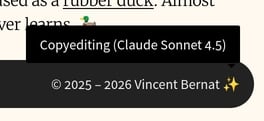
Hover or tap the icon to reveal the AI’s name and its role in the document.

Screenshot of the footer containing the "sparkles" emoji
Example of AI usage disclosure: Claude Sonnet 4.5 edited this article.

The graph below shows which tool altered each post, year by year. Recently, I applied the grammar skill to past articles. Since 2018, French articles have been translated with the help of DeepL first, then of an LLM. Since 2024, English articles are copyedited.

🖼 Graph showing the AI usage over the years. Each level get its own color.
AI usage over the years. Hover or tap a band for the details.

If you are strongly against any usage of LLMs specifically for writing, I hope you accept my more nuanced position on the usage of these tools as a trade-off to provide clearer and more engaging articles. Years of literature on improving English told us it is important to choose the right word to keep the reader engaged.

[…] Good writing consists of mastering the fundamentals (vocabulary, grammar, the elements of style) and then filling the third level of your toolbox with the right instruments.

Stephen King, On Writing

Note

Unlike other recent articles, I did not use an LLM to edit this post: an unnamed person kindly accepted to proofread it. I translated it to French without using an LLM either.

Update (2026-06)

See the story associated to this post on Lobsters, as well as the article “How developers react to AI-scented blog posts” by Cynthia Dunlop, one of the coauthor of “Writing for Developers.”


  1. I recently read cover to cover “Writing for Developers” and I found it stimulating. Michael Lynch is currently writing “Refactoring English” on the same topic and I have subscribed to the early access. 

  2. I am quite happy with the writing tools provided by Kagi. Both the translate tool and the dictionary are a valuable help to find different wordings. I also lean on Kagi’s research assistant when researching a topic. 

  3. When I was ten, I played Monkey Island 2 in English without having taken any classes. I used a dictionary to translate word by word and I found the irregular verbs confusing—and not in the dictionary. 

  •  

Mike Gabriel: Voxit 1.0 has been released

Official announcement

European Voxit community strengthens digital sovereignty: shared codebase completed.

Read the official announcement at:
https://www.voxit.org/european-voxit-community-strengthens-digital-sover...

The Voxit community and platform development

The Voxit participation platform is originally based on the open source Polis platform developed by The Computational Democracy Project in the United States, but since its establishment in autumn 2025, the European Voxit community has been developing an independent solution, adapted to European needs.

The aim is to create an open source, interoperable and scalable participation infrastructure suited to Europe’s regulatory environment and aligned with democratic values. Through this development work, Voxit is becoming a clearly distinct fork of the original Polis platform – allowing Europe to develop participatory infrastructure at its own pace and according to its own governance needs, while the original Polis project continues to break new ground. This enables Europe to build its own open and trustworthy digital democracy tools, rooted in public governance and European democratic traditions.

Voxit 1.0 source code is now available

The source code for version 1.0 of the European community edition of the Voxit platform has now been published and is openly maintained on GitLab.com at: https://gitlab.com/voxit/voxit#

  •  

Otto Kekäläinen: SpacemiT K3 is a compelling RISC-V AI CPU, but difficult to buy

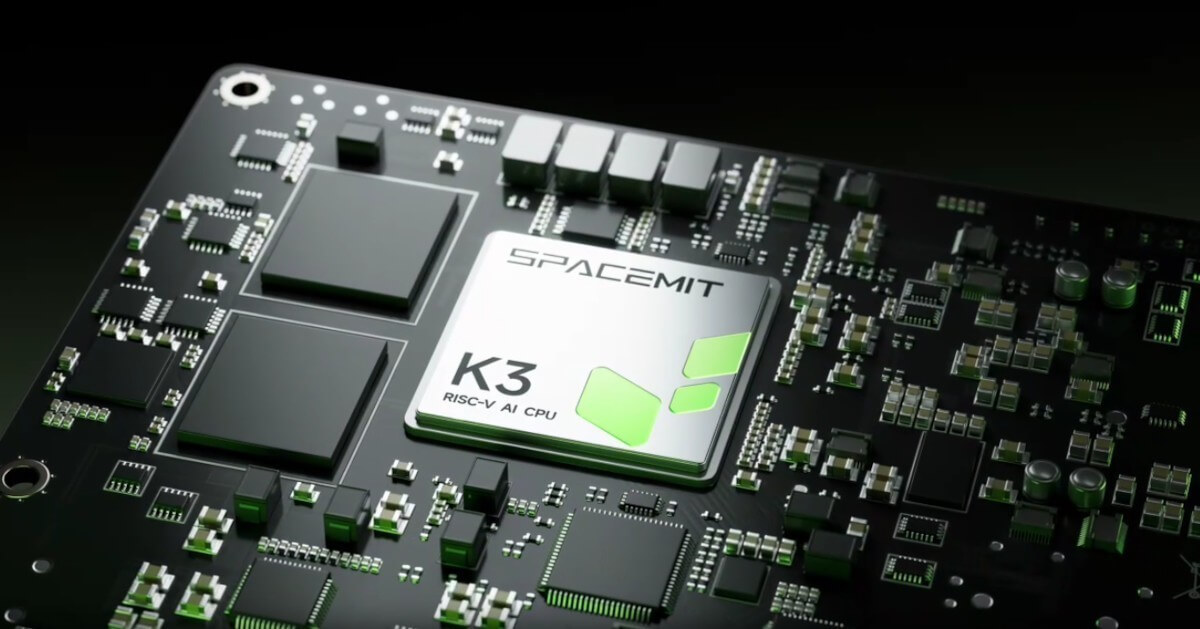
Featured image of post SpacemiT K3 is a compelling RISC-V AI CPU, but difficult to buy

The RISC-V CPU architecture has been gaining a lot of popularity since it launched in 2014, and now that the industry is standardizing on the RVA23 level that includes vector support as a mandatory extension, we are likely to see a lot more edge- and IoT devices with the ability to run local LLMs at reasonable speed, and most importantly at very compelling prices.

SpacemiT is a Chinese RISC-V CPU manufacturer that launched on May 11th, 2026, their long-anticipated next-gen RISC-V AI chip K3. It is among the earliest RISC-V CPUs that adhere to the RVA23 standard and performance-wise it is quite capable, providing 130 KDMIPS general computing power, 60 TOPS on INT4 which translates to about 15 tokens per second when running a 30 billion parameter large language model.

The aspect that really makes it stand out is:

  • the RISC-V CPU architecture is open source,
  • the price point is within reach of home and small business users and
  • the overall feature set makes it an ideal platform to build local and offline AI systems.

SpacemiT also develops their own Debian-based Linux distribution Bianbu OS, and seems to have collaboration going on with the wider community. Their community site seems active, and they also have a dedicated X account @spacemit_riscv and Reddit account r/spacemit_riscv posting relevant progress info on Linux kernel upstreaming activities. The X account is also responsive, as evidenced by its replies to my questions.

Canonical lists the SpacemiT K3 pico-ITX and K3 CoM260 Kit on its official Ubuntu for RISC-V partner-built hardware page, which strengthens the perception that upstream Linux support is being taken seriously. The SpacemiT folks also gave an interesting talk at the 2026 Ubuntu Summit that includes a peek into their roadmap with future K3, K7 and K9 models.

For technical details, see SpacemiT’s K3 pico-ITX documentation, the Jetson Orin Nano-compatible K3 CoM260 board documentation and documentation of the K3 processor itself.
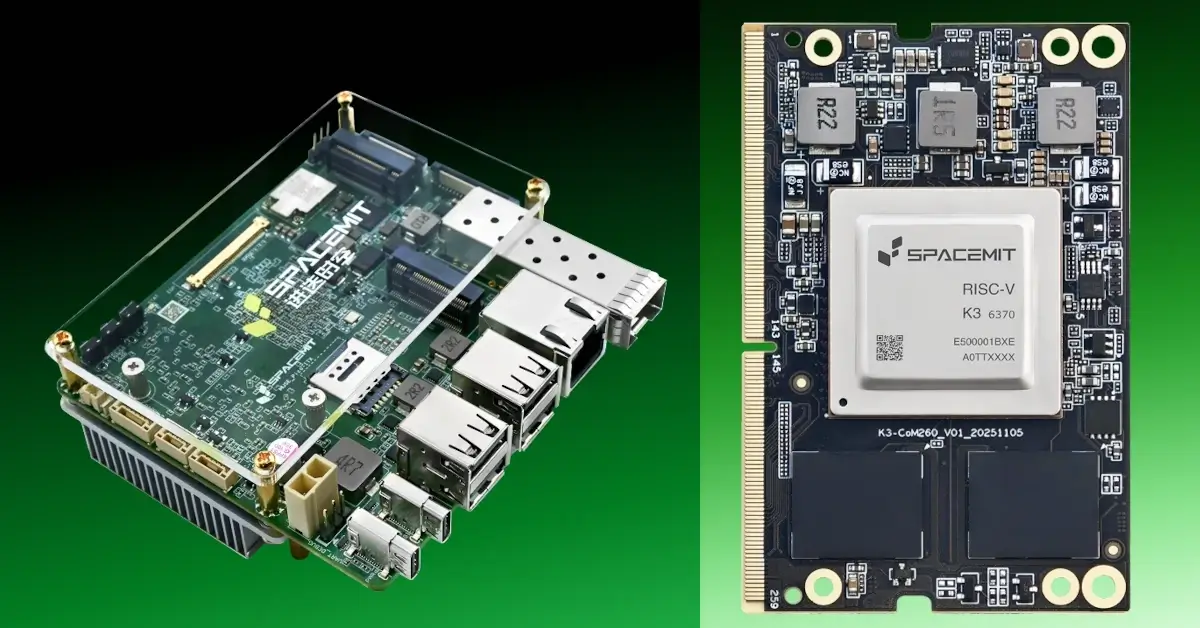
The SpacemiT K3 pico-ITX board and the K3 CoM260 board side-by-side (not to scale)

Comparing the resellers

SpacemiT does not sell anything directly to consumers. Instead you need to buy a board that includes the K3 chip from an integrator. Currently the main resellers are:

All of the above are Chinese companies that ship to customers both inside and outside China. DeepComputing stands out as the only one that actually has done real integration and ships the K3 on a custom board, while the others simply resell the SpacemiT-produced K3 pico-ITX and K3 CoM260 Kit.

Milk-V

Milk-V is a RISC-V specialized integrator, as the name already implies. They sell the K3 under the name Jupiter2. Of all the K3 pico-ITX reseller product pages, the Jupiter2 presentation is the nicest and most detailed. Unfortunately their order page at arace.tech only states that it is a “pre-order” with no information about shipping schedule, taxes, or other details like what SSD is included (if any). Based on the pictures it does ship with a Milk-V branded case. The 32 GB RAM lists at 504 EUR, which is a very reasonable price. The @MilkV_Official account on X recently promoted the K3.

Documentation and support

As of this writing, the Milk-V Jupiter2 documentation site is just a stub and has no actual content, and only two links to the SpacemiT K3 documentation site. For support there is a web forum with a dedicated Jupiter2 section. There is also a Matrix space, but unlike their other products, there is no dedicated Jupiter (neither v1 nor v2) channel.

Community size and open source involvement

At least one prior Milk-V product was certified by Canonical, which indicates there is some collaboration in progress. Canonical also lists the Milk-V Titan on its official Ubuntu for RISC-V partner-built hardware page.

Sipeed

The Sipeed K3 announcement is well written (in English) with all the relevant details and links to additional PDF manuals. However, their main page at sipeed.com says nothing about the K3, so one must know the subpage URL to access it. They offer both the K3 CoM260 kit compatible with Jetson Orin Nano carrier boards, and the stand-alone K3 pico-ITX-sized motherboard. The CoM260 kit is only 10 USD cheaper than the full pico-ITX motherboard, so choosing the latter is a no-brainer if starting from scratch. The pico-ITX model with 32 GB DDR5 RAM sells for 639 USD. The product page does not mention anything about hard disk size, so you don’t really know exactly what you will be getting if placing an order. There is no indication about case, Wi-Fi antennas or power supply either, so most likely they are not included.

Their store.sipeed.com website does not work at all, and their Taobao and AliExpress stores are not public and only accessible to registered users. The order page also says nothing about shipping time, delivery time, or taxes. The X account @SipeedIO is active and recently posted pictures of shipments in progress.

Documentation and support

The main documentation wiki does not yet have any K3 content at the time of writing. There is a Discord channel for general RISC-V discussion, and their MaixHub also has a discussion board, but I didn’t find anything K3-specific.

Community size and open source involvement

Sipeed has had at least one of their previous devices certified by Canonical, which indicates they are active in the community.

Note that the other RISC-V company SiFive that also has had hardware certified and officially supported by Canonical is a different company, despite the very similar name.

Banana Pi

Banana Pi announced that they offer both the K3 CoM260 kit and the K3 pico-ITX motherboard version. Their product page for the K3 confusingly shows a MediaTek product in the page banner rather than the SpacemiT K3. Based on the product description and the fact they renamed the product as BPI-SM10, it seems to ship with some carrier board. The product pictures look identical to the SpacemiT documentation and there is no picture of the carrier board, and details are very sparse. The pico-ITX version with 8 GB RAM and 128 GB SSD sells for 293 USD and the CoM260 developer kit with the same specs sells for 287 USD and the 32 GB RAM with 128 GB SSD model sells for 595 USD. The shop page shows only five orders so far and items are currently out of stock. As there was no 32 GB RAM version of the pico-ITX available at all, this isn’t an option for me as I want to run 30B parameter models that need the larger memory version.

Of all of these resellers, the Banana Pi website seems the most outdated. It does not have a search feature, it is not mobile-friendly, pictures can’t be pinched to zoom in and so forth. Product names are also almost all identical, and as the product listings only show the beginning of the product name, figuring out what product is what requires extra effort that just makes the online purchase experience plain bad.

Documentation and support

I was only able to find the documentation page for the CoM260 kit, but none for the pico-ITX version. For support there is a forum, but the category list does not show any section for K3, and the forum search prohibits using the search term “k3” as too short.

Community size and open source involvement

Banana Pi has a long history in the ARM single-board computer market, but their presence in the RISC-V ecosystem is still growing. Their X account @sinovoip has posted only once about the K3 and otherwise promotes their ARM boards. However, their community culture page does express a commitment to open hardware in general, but there is no visible K3-specific community activity.

Firefly

Firefly’s K3 product page is comprehensive. Based on the details, they do not offer the K3 pico-ITX variant at all, but only the K3 CoM260 board inside the AIBOX-K3 Firefly RISC-V Edge Mini PC product. This is a feature-complete offering with a Jetson Orin Nano carrier board and case. The AIBOX-K3 with 32 GB RAM and 128 GB SSD in a case sells for 689 USD in their own Firefly.store. Unfortunately it only has HDMI and there is no USB-C with DisplayPort support, which is a deal-breaker for me personally.

Interestingly, Firefly also offers rack-mounted servers with K3 as the CPU.

Documentation and support

The wiki link on the product page is broken. The Firefly wiki does have a section for the AIBOX-K3, but it too has a broken link. It seems that as of the time of writing, there is no wiki section for this product yet.

For support there is a web forum, which does have at least one K3 thread covering guides such as Hermes Agent installation, though broader K3-specific sections are still sparse.

Community size and open source involvement

Firefly’s X account @TeeFirefly has had no posts since 2024, and their GitLab/T-Firefly shows mostly 2024 activity, with only one repository updated in 2025 and nothing in 2026. Historically they have built a moderate community around their ARM-based Rockchip boards, with active forums and wiki contributions for those product lines. Their RISC-V K3 offerings are newer, and likely need a lot more polish to be attractive products overall.

DeepComputing

Last, but certainly not least, is the laptop manufacturer DeepComputing that offers a Framework laptop compatible motherboard with the SpacemiT K3 chip. They also sell the plain motherboard, or with the Cooler Master case, which allows one to easily connect it to an external monitor and keyboard and use it as a desktop computer. The plain board with 32 GB RAM and no SSD sells for about 882 EUR. Shipping of the first batch is expected to start by end of June 2026. Their X account @DeepComputingio promotes this DC-ROMA RISC-V Mainboard III as their flagship product, so they seem to put a lot of effort into it.

The overall product design and packaging seems good. Of all the K3 resellers and integrators that I was able to find, DeepComputing is the only one that actually designs their own boards with the K3 processor, while all the other vendors above are simply reselling the vanilla K3 boards with or without a case.

After reviewing all these options I decided to buy the DC-ROMA RISC-V Mainboard III for Framework Laptop 13 with 32 GB RAM, 1 TB SSD and the Cooler Master case, totalling about 1100 EUR.

Documentation and support

DeepComputing maintains product information for their RISC-V hardware at github.com/DC-DeepComputing/Framework, with documentation of the newest Mainboard III (FML13V05) still being finalized ahead of the first batch shipment. They provide community support through Discord and web forum, although the latter has very little activity.

Community size and open source involvement

DeepComputing has established itself as a pioneer in RISC-V laptops, beginning with the DC-ROMA. I have seen their stand at FOSDEM, which shows they are genuinely active in the open source community. Canonical lists DeepComputing’s first mainboard / FML13V01 on its official Ubuntu for RISC-V partner-built hardware page, and it seems likely that they will continue to collaborate with Canonical with the new model once it ships. While the underlying Linux enablement depends on SpacemiT’s upstream efforts, DeepComputing’s involvement helps bridge the gap between reference hardware and consumer-ready products.
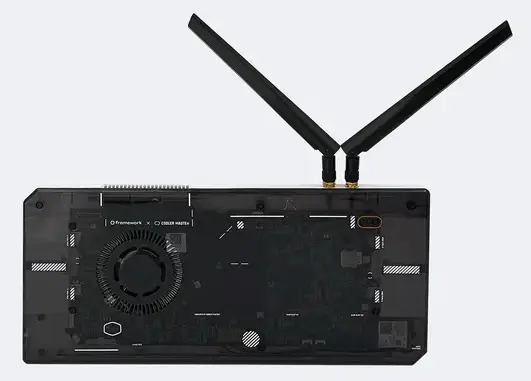
DeepComputing K3 board in the Cooler Master case

Conclusion

After weighing all the options, I ended up placing an order with DeepComputing for their custom K3 board with the Cooler Master case. Despite the premium price, the active community support and the properly documented promise of a complete, working system made it easy to place an order with confidence.

The SpacemiT K3 is poised to be one of the most significant RISC-V chips for local AI workloads, thanks to its RVA23 compliance and high tokens per second potential. Yet the buying experience in mid-2026 remains fragmented and incomplete. Hopefully this is just because the product is new, and they will get the purchase experience polished soon.

What struck me most during this process was how poor the customer experience is across nearly all of these vendor websites: broken links, missing search functions, outdated product banners, pages that show the wrong product entirely, and no information about shipping times, stock levels, taxes, and so on. One wonders why these companies don’t fully invest in their web presence.

Personally I would assume they likely have enough customers already, primarily through domestic channels like Taobao and JD.com, that they do not feel any pressure to improve their international-facing sites. However, I did also review what was offered on Taobao, and the product details were very incomplete there too. Taobao, however, has a built-in live chat with almost all sellers, which can be used to ask questions and thus compensate for missing product details.

I don’t fully understand why the sales process seems unpolished. The websites feel almost like an afterthought – a checkbox to claim global reach while the real business apparently happens elsewhere via closed platforms or via inaccessible reseller channels. It is a frustrating reminder that in the RISC-V hardware world, the technology may be open and global, but the purchase experience is less so.

  •  

Dirk Eddelbuettel: RQuantLib 0.4.27 on CRAN: Small Extension

A new minor release 0.4.27 of RQuantLib, the first in over a year, arrived on CRAN a couple of minutes ago, has just now been uploaded to Debian, and is being built for r2u as well.

QuantLib is a rather comprehensice free/open-source library for quantitative finance. RQuantLib connects (some parts of) it to the R environment and language, and has been part of CRAN for nearly twenty-three years (!!) as it was one of the first packages I uploaded to CRAN.

This release of RQuantLib brings an update to the interface for all equity options, vanilla and exotics as well as implied volatilities. We now support the option maturity via either an actual maturity date, or the (fractional business-day years) numeric. This uses a clever little Rcpp trick I should discuss in a separate blog post. We also re-ran compileAttributes() to re-create the RcppExports.cpp file now using a slightly improved way of calling Rf_error for an ongoing Rcpp transition, and did some more standard maintenance. The details from the NEWS file follow as usual.

Changes in RQuantLib version 0.4.27 (2026-06-07)

  • All equity option functions can now take either a (fractional) time span to expiry or a given date, and accept a daycounter setter.

  • Two very old schedule helpers had a superfluous try/catch removed.

  • The continuous integration setup received a minor update.

  • The RcppExports.cpp file was updated to aid a Rcpp transition.

Courtesy of my CRANberries, there is also a diffstat report for the this release. As always, more detailed information is on the RQuantLib page. Questions, comments etc should go to the rquantlib-devel mailing list. Issue tickets can be filed at the GitHub repo.

This post by Dirk Eddelbuettel originated on his Thinking inside the box blog. If you like this or other open-source work I do, you can now sponsor me at GitHub.

  •  

Vasudev Kamath: debsecan-mcp v0.1.2 released to PyPI

I finally carved out some time today to prepare and release debsecan-mcp v0.1.2 to PyPI. During this release, I integrated PyPI's trusted publisher mechanism, which authenticates directly via GitHub Actions and eliminates the need for manual uploads or static API tokens.

What is New?

There are no feature updates in this release; the changes are strictly focused on PyPI publishing requirements. This was handled entirely within the Antigravity IDE.

The primary change replaces the python-apt dependency with python-debian for version comparison. PyPI rejects packages that reference external Git repositories, and python-apt lacks an official PyPI release. The original python-apt logic remains intact: if the system has python-apt installed, the server defaults to it. Otherwise, it falls back to the comparison logic implemented via the python-debian NativeVersion class.

What Next?

The next release will introduce a standalone CLI utility called debvulns. It mirrors debsecan functionality but surfaces the cleaner, richer vulnerability data already implemented in debsecan-mcp. The code is written, and I will release it once testing is complete.

I also owe a post explaining my rationale for designing a CLI utility alongside the MCP server, and my broader thoughts on CLI vs. MCP workflows. I aim to publish that next week.

  •  

Steinar H. Gunderson: Hyperpersonal open source

A while back, I got my first subwoofer (a surprisingly nice addition to the movie experience, just like rear speakers were). But I live in an apartment, and I don't want to annoy my neighbors at night (the speaker cone points literally down into the floor, and I have no idea how much my neighbors get to share in my enjoyment). So, what to do?

It turns out my receiver supports a sort-of documented serial protocol; it doesn't have an actual serial port, but you can telnet into it (only one session at a time!) and get the same two-way stream. (It also has a HTTP version which I find less useful.) So this allows me to impose my own policy, and of course, doing it via an existing Home Assistant adapter or something was no fun and also thoroughly frustrating, so I saw it as an opportunity to keep maintaining my low-key Rust skills. (No, no LLM code generation. If I'm going to spend time on this, at least I can learn something myself. I think I asked one for code critique at some point, but I can't remember.)

The policy is roughly: If I'm watching TV after 22:00, then the subwoofer is either turned off (if possible) or turned down -12 dB (the maximum). But if I'm watching a Blu-ray or another input like that, that's presumably a conscious tradeoff I've made and things are left at normal. Everything gets a bit more complicated by the fact that the receiver tends to lose state when doing certain switches, and when it boots, it takes a minute or two before Telnet responds, and when it shuts down, it goes into this weird limbo state where it doesn't respond to anything but the TCP connection seems still up.

And then I figured out I also wanted to dim the display when watching movies (again, only certain inputs), but not for a couple of seconds after making any adjustments. And after doing that, I figured that my access point LED should also be turned off, which happens to be some SNMP writable stuff against the Cisco wireless controller it hangs on.

So, if you have a Denon or Marantz AVR, a Cisco access point on a controller, and my exact preferences about what to do about the subwoofer, then you are free to download and use my software to impose that policy. It is “is distributed in the hope that it will be useful”, as one says. If you have IPv6.

  •  

Thorsten Alteholz: My Debian Activities in May 2026

Debian LTS/ELTS

This was my hundred-forty-third month that I did some work for the Debian LTS initiative, started by Raphael Hertzog at Freexian.

During my allocated time I uploaded or worked on:

  • [DLA 4580-1] exim4 security update to fix one CVE related to remote code execution.
  • [DLA 4591-1] rsync security update to fix five CVEs related to local root privilege escalation.
  • [#1134340] trixie-pu bug for libcoap3 to fix two CVEs in Trixie; the debdiff was confirmed and the upload was accepted to the proposed update queue.
  • [#1126167] bookworm-pu upload of zvbi has been flagged for acceptance
  • [#1126273] bookworm-pu upload of taglib has been flagged for acceptance
  • [#1126370] bookworm-pu upload of libuev has been flagged for acceptance
  • [hplip] upload to sid to fix two CVEs.

This was a rather strange month. The details about the embargoed exim4 issue arrived only after I already went to bed and the embargo lift was 18 hours later. Luckily Stretch was not really affected and the uploads for Bullseye and Buster went out on time.

Something similar happened with the embargoed issue of rsync. The info arrived at 8:00 in the morning and the embargo lift was on 2:00 next morning. From an Europeans point of view, the Australians do have strange time zones. But there is more to this than that. Upstream sent more than 50(!) patches for these five CVEs that needed a backport to Bullseye. As things turned out, there is a regression in the upload to Unstable and investigations are ongoing whether this regression is also available in the backported patches for Trixie, Bookworm and Bullseye. So rsync-updates for Buster and Stretch is in the works, but I am afraid they need some more time.

All good things come by threes. Two critical CVEs of hplip appeared and a new upstream version was released by HP. HP is no longer interested in working with distributions and over time more than 80 patches have been accumulated that need a rebase for a new upstream version. For that reason I avoid this package as much as I can, but two critical CVEs did apply some kind of pressure on the maintainer. So I finally managed to do this update and the latest version of hplip is now in Debian. Nevertheless, this feels good :-). Anyway, it is not over yet. HP does not have a public repository nor do they publish patches for these CVEs. So I am still searching for the correct fixes to backport them to Bullseye, Buster and Stretch. The other distributions have the same problem and a silver lining appears on the horizon.

I also prepared an update of gimp for Buster and Stretch, but due to an accident I only managed to release the corresponing ELA in June. The accident was also the reason for only half a week of FD. Thanks to Daniel who took over.

Debian Printing

This month I uploaded a new upstream versions:

This work is generously funded by Freexian!

Debian Lomiri

This month I continued to work on unifying packaging on Debian and Ubuntu. This makes it easier to work on those packages independent of the used platform.

This work is generously funded by Fre(i)e Software GmbH!

Debian Astro

This month I uploaded a new upstream version or a bugfix version of:

Debian IoT

This month I uploaded a new upstream version or a bugfix version of:

misc

This month I uploaded a new upstream version or a bugfix version of:

I also got rid of gypsy, which no longer makes sense to maintain in Debian, as gpsd is way better.

  •  

Steve McIntyre: Secure Boot and Microsoft CA Rollover - user-facing documentation

I previously wrote some advice for developers and distributions about the upcoming Microsoft CA Rollover, and I hope that was useful for people.

I've now also added some user-facing documentation about the CA rollover in the Debian wiki at https://wiki.debian.org/SecureBoot/CAChanges. I've added guidance on managing certificate updates on Debian systems: how to check if a system needs those updates and various ways to make them happen. If you're running Secure Boot systems, this may be important for you.

While the same event is the primary cause for these docs, they're designed for different people. Again, I hope this new doc is helpful!

  •  

Russell Coker: CPUs and Debian Package Building

Introduction

I have just bought a HP Z4 G4 with W-2125 CPU for $320 and I decided it was a good time to do some benchmarks on Debian package building to see which system I should use for that.

The W-2125 CPU scores only 9,954 on the passmark multithread test but scores 2,546 on single thread [1]. Passmark seems to have some limitations as the only DDR3 system that’s important to me at the moment (the HP Z420 workstation my parents use which cost me $750 in 2021) with a E5-2620 CPU scoring 5,325 for multithread and 1,113 for single thread [2]. From the passmark results one would expect that the system is slightly more than twice as fast as the Z420 for operations that involve less than 4 CPU cores.

For the initial tests of the Z4 G4 I ran them with hyper-threading enabled as 4 cores isn’t much by today’s standards and also the machine in question is going to be less exposed to hostile data and contain less secret data than most of my systems so the security risks of hyper-threading are less of a concern.

I did some tests with a couple of tasks that are very important to me, building SE Linux policy packages (something I may do a dozen times in a day) and building Warzone 2100 (which I do less often but is the most intensive build process I regularly run). At the bottom of this post there are tables with the results from building these packages on my Z640 workstation with a E5-2696 v4 CPU [3], the Z420, and the new machine.

For the Warzone 2100 package I tested building on my Z840 dual CPU system [4]. I didn’t test building the SE Linux policy on the Z840 this time because that package can’t take advantage of even 22 cores. When I initially got the Z840 running it built the policy packages faster because the Z640 had an older CPU that was slower for single core operations than the CPUs in the Z840.

BTRFS Compression

For some time I have noticed significant differences in compile time on my workstation, a factor of more than 2. I did more tests and noticed that “top” showed something like the following, those kernel threads are all BTRFS related, except for “gfx” which is probably something graphical caused by running Chrome with about 300 tabs open.

2144316 root      20   0       0      0      0 I  26.6   0.0   0:36.76 kworker/u88:20-btrfs-endio-write                                                                                                                                                                             
2221470 root      20   0       0      0      0 I  23.7   0.0   0:01.85 kworker/u88:12-gfx                                                                                                                                                                                           
2221436 root      20   0       0      0      0 I  15.1   0.0   0:07.48 kworker/u88:8-btrfs-compressed-write                                                                                                                                                                         
2166191 root      20   0       0      0      0 I  12.8   0.0   0:15.80 kworker/u88:23-btrfs-compressed-write                                                                                                                                                                        
2126387 root      20   0       0      0      0 I  10.2   0.0   1:29.11 kworker/u88:4-events_unbound 

I had been running BTRFS with the mount option “compress=zstd:15” which caused much of the performance problems when building. It was also a random performance issue which I think happened due to the BTRFS 30 second write-back sometimes taking more than 30 seconds during the build process which then caused a second write-back.

I did tests on ZSTD compression levels 5, 8, 10, and 15. 15 was never good and often really bad. 10 was not unbearable but consistently slower. 8 was sometimes as fast as 5 and sometimes quite a bit slower. I didn’t test levels below 5 because I need to have some compression and it seemed that the benefits of reducing compression were dropping off below 8.

I found that the BTRFS compression delay is not counted in system time for the process. I think it’s the fsync() system calls in the semodule and dpkg-deb programs that cause the delays related to BTRFS compression waiting for kernel threads.

BOINC

I have all my systems other than laptops running BOINC in the background so that CPU power is used for scientific research when I don’t have any personal use for it [5]. I believe that it’s immoral to waste CPU power when it could be used for research.

In the below table which has test results from building the package with and without BOINC, and with different ZSTD compression levels in BTRFS all the worst entries were from when BOINC was running apart from one where ZSTD level 15 compression was used. The really poor performance with ZSTD level 15 was an outlier, but it wasn’t an uncommon outlier so I left it in.

Running BOINC in the background configured to use all CPU cores caused a significant increase in “user CPU time” (the time a CPU core spent actually running the program). My initial thought was that it’s partly related to “turbo boost”.

The Intel ARK page for the CPU in the Z420 shows that it’s main clock speed is 2.0GHz with a 2.5GHz “turbo boost” [6]. The “turbo boost” is apparently largely based on temperature and apparently limited to one core, so if the other CPU cores are all being used then the CPU will probably be too hot to have the turbo boost and if it happens it might not happen for my compile processes.

The ARK page for the E5-2699 v4 (which is a similar CPU to the E5-2696 v4 that I’m using but is officially documented by Intel) [7] shows that it has a base clock speed of 2.2GHz and a turbo boost speed of 3.6 GHz. 322 vs 244 seconds of user CPU time means running 32% slower which can plausibly be explained by the lack of a 64% turbo boost with a bit of help from the 55MB L3 cache being thrashed.

Turbo boost would only be a noticeable issue for building packages like the SE Linux policy packages which doesn’t take much advantage of multi-core CPUs. For a build process to average at best 362% CPU use there has to be large parts of the process that are limited to one or two cores which can potentially give a benefit from turbo-boost.

When building the Warzone 2100 packages most of the build time is running basis-universal which is a multi-threaded program to compress GPU texture data. This usually causes a load average of 300+ on the Z640 or 600+ on the Z840. But the build time is still increased by more than 50% on both the Z640 and the Z840 when BOINC is running in the background, which seems to be an indication that it’s not related to turbo boost. I verified that BOINC is running at IDLE schedule priority with the following command:

# chrt -p $(pidof -s einstein_O4MD_2.01_x86_64-pc-linux-gnu)
pid 2974874's current scheduling policy: SCHED_IDLE
pid 2974874's current scheduling priority: 0

In theory this means that BOINC won’t affect foreground processes.

Hyper Threading on the W-2125

The best claims I’ve seen about HT are 15% to 30% performance boost. The best I’ve actually seen in the past is about 18%. Seeing a 10% benefit for building Warzone 2100 is at the low end of the range I expected. 8 virtual cores is not many for a build process that causes a load average of 600+ when running on a system with 44 real cores.

I was surprised to see a 6% performance benefit in hyper-threading for building the SE Linux policy as I didn’t think there was enough use of threading or multiple processes to allow that.

Many build scripts use a number of processes that match the number of apparent CPU cores. While “make -j 88” might give a theoretical performance benefit on a 44 core system it will also take a lot of RAM and any paging will outweigh the benefits of hyper-threading. On a system with only 4 real cores there’s less potential for using too much RAM and as security isn’t so important on that system I will leave it on.

Comparing the CPUs

The best results of the Z640 and Z4G4 are only 50% faster than the best results of the Z420.

The Z420 has a E5-2620 CPU which is far from the fastest CPU available for that system – the E5-2687W has 8 cores and rates 10,021/1,669 on passmark [8] which is far better than the 5,331/1,114 the E5-2620. The E5-2687W is the fastest CPU that HP lists as supported by the Z420 and it supports DDR3-1666 RAM as opposed to the DDR3-1333 that is the fastest that the E5-2620 supports. With suitable hardware upgrades the Z420 would probably only take about 20% longer to do builds of the SE Linux policy and other packages that can’t take advantage of more than 8 CPU cores.

The Z4G4 system has 4 RAM channels which means that you should get some performance benefits from having 4 DIMMs, my system currently has 2 and I haven’t yet managed to get more DDR4-2666 DIMMs. But I’d still expected a W-2125 CPU with 2*DDR4-2666 DIMMs outperform any E5-26xx CPU with 4*DDR4-DDR-2400 DIMMs for tasks that average less than 4 CPU cores.

In retrospect I would have been better off getting a HP Z820 (two socket server with DDR3 RAM) than the first DDR4 systems I got. It seems that for reasonable size builds a two socket system comes close to twice the speed of a single socket system. I did briefly own a HP ML350 two CPU system with DDR3 RAM but it was too noisy for my intended use as a deskside workstation so I sold it.

Things to Investigate

I plan to do more investigation on BTRFS compression, how to get the best compression without excessive delays and how to recognise when delays are happening. I have some SSDs that have sustained write speeds as low as 15MB/s (Crucial P1 series) so for those I could probably have very high compression levels without slowing the system down.

The fact that BIONC slows things down so much seems to be a bug. When processes are running with the IDLE scheduling class there shouldn’t be such significant delays. Is it due to cache thrashing? How can I best get BOINC suitably throttled when I’m sitting at my workstation, I don’t want BOINC connecting to the local X server (which it repeatedly tries to do). Do I need to tune my kernel for better handling of IDLE scheduling?

When I get more DIMMs in the Z4G4 I need to do more tests to see if it gives an overall performance boost.

Also the Z4G4 system has a BIOS option for “sub NUMA” which basically means treating the different RAM channels on a single CPU as NUMA zones, I enabled that option which does nothing presumably because I only have 2 DIMMs, the results when I have 4 DIMMs will be interesting. I will also do some NUMA tests on the Z840 to see what benefits it gives.

I have a selection of RAM speeds that will work in the Z4G4, if I have enough spare time I’ll test what difference that makes for CPU bound tasks that matter to me.

For package building fsync() is not helpful, if the system crashes before it’s done then I will just do the build again. For a build cluster it is probably a good feature and probably doesn’t affect aggregate performance when multiple packages are built at the same time, but for the single user case probably not. I will investigate libeatmydata for package building [9].

Conclusion

The progress in CPUs seems to have slowed down a lot recently. The main benefits seem to be in more CPU cores and for newer sockets with more RAM channels.

The CPUs that do have improvements in single core performance are the i9 series (which mostly doesn’t come with motherboards supporting ECC) and AMD CPUs (which is rare in enterprise class hardware). Maybe I should get a server with an i9 or AMD CPU for tasks that need a fast turn around with a small number of cores. That would probably outperform any CPU designed for large core counts for things like building the policy and setting up test VMs (which depends on package installation speed that is single core bottlenecked).

The W-21xx CPUs seem to offer little benefit over the E5-26xxv4 CPUs and not a lot of benefit over E5-26xx CPUs (with DDR3). Even the W-22xx CPUs look like they aren’t going to offer a lot as they are only an incremental improvement over the W-21xx series. I had considered making the Z4G4 my main desktop workstation after the high end W CPUs become affordable, but it looks like that won’t be worth it until such CPUs drop from the current ebay price of $900 to $100.

I think I’ll keep waiting for a decent socket LGA3647 or DDR5 based server [10] for my next significant upgrade.

Tables

Building SE Linux Refpolicy

System BOINC Compression CPU Time Elapsed CPU%
Z640 no 8 248.82user 55.58system 1:23.88elapsed 362%CPU
Z4G4 no 5 245.15user 34.63system 1:24.93elapsed 329%CPU
Z640 no 5 244.75user 34.87system 1:25.98elapsed 325%CPU
Z4G4 no 10 245.21user 35.64system 1:29.63elapsed 313%CPU
Z640 no 8 248.71user 55.90system 1:33.01elapsed 327%CPU
Z640 no 10 250.90user 55.78system 1:42.12elapsed 300%CPU
Z640 yes 8 298.19user 69.30system 1:59.77elapsed 306%CPU
Z640 yes 10 300.58user 68.90system 2:01.53elapsed 304%CPU
Z420 no 5 359.01user 44.95system 2:07.33elapsed 317%CPU
Z640 yes 5 322.40user 71.82system 2:34.66elapsed 254%CPU
Z420 yes 5 372.03user 42.95system 2:42.15elapsed 255%CPU
Z640 yes 15 299.26user 67.18system 2:59.77elapsed 203%CPU
Z640 no 15 250.05user 54.60system 3:07.61elapsed 162%CPU

Building Warzone 2100

System BOINC Compression CPU Time Elapsed CPU%
Z840 no 10 6549.21user 89.46system 4:18.90elapsed 2564%CPU
Z840 no 5 6533.81user 90.50system 4:19.24elapsed 2555%CPU
Z640 no 5 7040.87user 183.12system 7:13.50elapsed 1666%CPU
Z840 yes 5 8039.52user 169.62system 8:02.86elapsed 1700%CPU
Z640 yes 5 7486.44user 205.03system 11:09.97elapsed 1148%CPU
Z4G4 no 5 7891.32user 74.45system 17:48.03elapsed 745%CPU
Z4G4 no 10 7942.10user 77.43system 17:58.72elapsed 743%CPU

Hyper-Threading

Build HT Compression CPU Time Elapsed CPU%
Warzone yes 5 7891.32user 74.45system 17:48.03elapsed 745%CPU
Warzone yes 10 7942.10user 77.43system 17:58.72elapsed 743%CPU
Warzone no 5 4492.45user 59.09system 19:59.01elapsed 379%CPU
Warzone no 10 4497.28user 59.46system 20:07.15elapsed 377%CPU
Refpolicy yes 5 245.15user 34.63system 1:24.93elapsed 329%CPU
Refpolicy yes 10 245.21user 35.64system 1:29.63elapsed 313%CPU
Refpolicy no 5 180.84user 29.74system 1:32.30elapsed 228%CPU
Refpolicy no 10 180.29user 30.07system 1:35.01elapsed 221%CPU

Related posts:

  1. HP z840 Many PCs with DDR4 RAM have started going cheap on...
  2. Firebuild After reading Bálint’s blog post about Firebuild (a compile cache)...
  3. Matching Intel CPUs To run a SMP system with multiple CPUs you need...
  •  

Birger Schacht: Status update, May 2026

Debian Related Work

  • Uploaded labwc 0.9.7-1 to unstable; labwc 0.20 was released upstream since then, but it requires wlroots 0.20.1 which has not landed in Debian yet
  • Uploaded usbguard 1.1.4+ds-3 & 1.1.4+ds-4: cleaned up the packaging and fixed some long standing issues with the configuration; the legacy permission system isn’t the default anymore
  • Uploaded foot 1.27.0-1 to unstable
  • Uploaded scdoc 1.11.4-2 to unstable
  • Uploaded cage 0.3.0-2 to unstable
  • Uploaded sway 1.12~rc3-2 to unstable; on the same day sway 1.12 was released and I uploaded 1.12-1 to unstable
  • Uploaded swayimg 5.2-1 to unstable
  • Uploaded git-quick-stats 2.11.0-1 to unstable
  • Uploaded grim 1.5.0+ds-1 to unstable

DH Related Work

A big chunk of my DH related work went into designing & implementing a search app for the APIS framework. Our goal is to have a way of searching over various types of Django models. The app introduces a search model that indexes all registered models. We use a combination of PostgreSQLs full text search and Trigram Similarity to find the search results. Using a SearchVectorField and GinIndices for the trigram indexed fields we can reach a somewhat acceptable performance.

We released versions 0.63 and 0.64 of the APIS framework. The 0.63 release introduced the new entities app, which will soon hopefully replace the legacy apis_entities & apis_metainfo modules. Version 0.64 moved some logic from the legacy modules the entities module.

We made some progress in defining the endpoints for the PFP API.

  •  

Reproducible Builds: Reproducible Builds in May 2026

Welcome to the May 2026 report from the Reproducible Builds project.

These reports outline what we’ve been up to over the past month, highlighting items of news from elsewhere in the increasingly-important area of software supply-chain security. As ever, if you are interested in contributing to the Reproducible Builds project, please see the Contribute page on our website.

In this month’s report, we cover:

  1. Debian to ship reproducible packages in forky and beyond
  2. Holger Levsen on reproducing official Debian packages
  3. Reproducible Builds 2026 summit to be held in Gothenburg, Sweden
  4. Kettle: Attested Builds for Verifiable Software
  5. New rebuilderd version announced
  6. Reproducible open source messengers
  7. Distribution work
  8. Misc news
  9. Patches
  10. Documentation updates


Debian to ship reproducible packages in forky and beyond

In a huge change in Debian’s reproducibility policy, the Debian Release Team announced that:

… we’ve decided it’s time to say that Debian must ship reproducible packages. Since yesterday, we have enabled our migration software to block migration of new packages that can’t be reproduced [on reproduce.debian.net] or existing packages in testing that regress in reproducibility.

That is to say, if newly-uploaded packages are not reproducible, they won’t be considered candidates for inclusion in the next stable release of Debian codenamed forky. (Some exceptions may be granted.)

This news generated a number of articles and comments in various news outlets:


Holger Levsen on reproducing official Debian packages

Reproducible Builds developer Holger Levsen gave a talk at the 2026 Hamburg MiniDebconf this year on the topic of reproduce.debian.net - reproducing what is distributed from ftp.d.o.

Holger’s talk announced that Debian intends to ship only reproducible packages in forky and beyond (see above), but also talked more broadly about reproducible builds, our testing framework and the Debian archive. That is to say, moving away from testing whether a package is reproducible in a theoretical sense (eg. whether we can build it twice in different environments and achieve the same result in our test system), and attempting to reproduce the same .deb files in the official Debian archive itself. This small-sounding distinction is actually essential, as this is the only means through which the reproducible builds technique can determine whether build systems are compromised are not.

A video (32m37s) of the talk is available, as are Holger’s slides.


Reproducible Builds 2026 summit to be held in Gothenburg, Sweden

As initially announced in March 2026, we will be having our yearly Reproducible Builds summit 2026 in Gothenburg Sweden, from September 22 until 24, followed by two days of hacking!

Further information will be provided on our website and on the rb-general mailing list very soon.


Kettle: Attested Builds for Verifiable Software

André Arko and Amean Asad published a paper this month on Kettle, a build system that “produces cryptographically verifiable provenance for software built inside Trusted Execution Environments”:

A Kettle build records the source commit, dependency set, toolchain, build environment and output artifact digests in a provenance document produced inside a measured confidential VM. The SHA-256 digest of that document is committed to the TEE platform’s attestation report-data field, so the hardware-signed attestation report is itself the signature on the provenance, with the signing identity chaining to the TEE manufacturer’s root of trust rather than to the build infrastructure operator. Because the CVM image is itself reproducible, its launch measurement is public and stable, which lets a build requester pre-attest the CVM before submitting any input and optionally deliver source over a TLS channel terminated inside it, so the build runs end-to-end confidentially without the host ever seeing source code in plaintext.

A PDF of the paper is available online.


New rebuilderd version announced

rebuilderd, our server designed for monitoring the official package repositories of Linux distributions and attempt to reproduce the observed results there; it powers, amongst other things, reproduce.debian.net.

A new version, 0.27.0, was released this month, with the following headline changes:

  • Improved .udeb support
  • Breaking changes in pkg sync configuration
  • Manual cleanup needed for Arch Linux instances

As kpcyrd’s announcement mentions:

The new rebuilderd package is currently available in the extra-testing repository. Note the Arch Linux package is upgraded from v0.25.0 from v0.27.0; please be patient with the database migrations on first restart, and make yourself familiar with the breaking changes in v0.26.0 too.


Reproducible open source messengers

GitHub developer BarbossHack is maintaining an repository/page on GitHub to “track reproducibility status of open source messengers”.


Distribution work

In Debian this month, the loong64 architecture was added to reproduce.debian.net. This is a 64-bit Reduced Instruction Set Computer (RISC) instruction set architecture developed by Loongson.

Vagrant Cascadian performed Non-Maintainer Uploads (NMUs) in Debian for several packages with outstanding patches over a year old. These included rocdbgapi, onevpl-intel-gpu, python-pytest-shell-utilities, python-mt-940 and pympress.

On tests.reproducible-builds.org, Vagrant Cascadian fixed the huge spike in build failures by adding passwd to the base tarballs, and re-enabled building gcc and binutils packages with PGO (Profile Guided Optimization) and LTO (Link Time Optimization) to avoid giving a false sense of reproducibility.

Inconsistencies on the reproducibility of the condor package were brought up on the Debian reproducible-builds mailing list. Following a hunch, Vagrant Cascadian eventually identified the issue was related to embedded kernel versions which was then fixed upstream and fixed in Debian as well.

Lastly, 40 reviews of Debian packages were added, 68 were updated and 75 were removed this month adding to our knowledge about identified issues. A number of issue types were updated, such as the addition of a new sphinx_reading_durations toolchain issue [], a golang_mango_generates_manpages_with_build_date issue [] and a random_offset_id_in_cython_linetrace []. In addition, the timestamps_in_qhc issue was “refocused” to timestamps_in_qhc [].


In Fedora, Jelle van der Waa submitted a request for an official Fedora rebuilderd package which was reviewed by Neal Gompa.


Lastly, Bernhard M. Wiedemann posted another openSUSE monthly update for their reproducibility work there.


Misc news

On our mailing list this month:


Patches

The Reproducible Builds project detects, dissects and attempts to fix as many currently-unreproducible packages as possible. We endeavour to send all of our patches upstream where applicable or possible. This month, we wrote a large number of such patches, including:


Documentation updates


Finally, if you are interested in contributing to the Reproducible Builds project, please visit our Contribute page on our website. However, you can get in touch with us via:

  •  

Jonathan Dowland: mount namespace for backup jobs (by hand)

It's been ten years since I configured mount on demand backups to reduce the risk of my backups being zapped by mistake. Way back then I wanted to go one step further and use dedicated mount namespaces for backup jobs, but systemd didn't provide the necessary support (and still doesn't, despite the promisingly-named JoinsNameSpaceOf= configuration option.)

I recently updated my setup to achieve this by hand. All backup jobs now have an extra pre-start instruction ExecStartPre=mkbackupns which runs a shell script to either set up a persistent mount namespace, or exit quietly if it already exists.

#!/bin/bash
set -euo pipefail

nsdir=/var/namespaces
nsfile=$nsdir/backup
nsfilex="$(echo $nsfile | sed 's#/#\\/#'g)"

private_propagation() {
    findmnt -o+PROPAGATION "$nsdir" | grep -q private
}
nsfs_is_mounted() {
    test "nsfs" = "$(awk "/$nsfilex/ { print \$3 }" /proc/mounts)"
}

if ! nsfs_is_mounted; then

    if ! private_propagation; then
        mkdir -p "$nsdir"
        mount --bind --make-private "$nsdir" "$nsdir"
    fi

    touch "$nsfile"
    unshare --mount="$nsfile" true

    nsenter --mount=/var/namespaces/backup mount /dev/phobos_backup/backup /backup
fi

I should note that I don't have the backup filesystem described in /etc/fstab to reduce the risk of it being mounted errantly in the main namespace.

The other change is to prefix an invocation of nsenter for every backup job command. E.g.:

ExecStart=/usr/bin/nsenter \
        --mount=/var/namespaces/backup \
        borgmatic -v 1 prune create

next steps

My backup scheme has lasted a decade with few tweaks (I moved it to Borg in 2020) which I am very grateful for. I want reliable, boring and robust.

Persistent mount namespaces are a lot less convoluted if you have a persistent process to associate them with. I didn't, but a subsequent improvement I am making is introducing one, so I will likely simplify the above accordingly.

  •  

Ben Hutchings: FOSS activity in May 2026

This was a particularly busy month for me in terms of Debian contributions.

It started with a week in Hamburg for the MiniDebConf. I talked to many colleagues face-to-face and worked on various bugs and maintenance tasks. I’m pleased to have finally found the time to reproduce and fix the boot-time crashes in the parallel port subsystem that have been reported many times recently.

A series of easily exploited kernel LPE (local privilege execution) issues were published this month, mostly with very little coordination with distributions. Salvatore and I had to upload fixes for these at roughly weekly intervals. All of these fixes needed to be applied to 4 different upstream branches (currently 5.10, 6.1, 6.12, and 7.0) and 7 Debian branches (including backports).

  •  

Emmanuel Kasper: Running Linux i386 binary (steamcmd) via debootstrap foreign chroot

The Steam command line client, which I need to download the game data for the Doom3 BFG shooter, is only available as an Linux i386 binary. As my main home computer is an arm64 box, this could be an issue, but today we have no less than three different ways to run a Linux i386 binary on arm64: Fex, Box32/64 and the older qemu-user mode. According to the Box64 benchmarks, qemu-user is the slowest of the three. But since this is only to run a command line tool downloader, where network speed is the bottleneck, this doesn’t matter a lot.

Running steamcmd outside of a chroot via qemu-user and dpkg multiarch support was failing me with the error i386-binfmt-P: Could not open '/lib/ld-linux.so.2': No such file or directory even after installing the i386 libc. So I went the way of qemu-user and a chroot environment, a bit more convoluted but I can run any i386 binaries there in the future.

Create a debian-i386 chroot environment via deboostrap:

$ sudo apt install qemu-user qemu-user-binfmt debootstrap
$ fakeroot debootstrap --foreign --arch=i386 debian-i386
$ sudo chroot debian-i386
# inside the chroot 
# /debootstrap/debootstrap --second-stage 
# exit

Add needed mounts to run binaries inside the chroot:

$ sudo mount --bind /dev/ debian-i386/dev/
$ sudo mount --bind /dev/pts debian-i386/dev/pts
$ sudo mount -t proc none  debian-i386/proc/

Install steamcmd in the chroot client:

$ sudo chroot debian-i386

# export LANG=C
# cat /etc/apt/sources.list
deb http://deb.debian.org/debian stable main contrib non-free
# apt update && apt install --yes steamcmd 
# useradd --create-home --shell /bin/bash steam
# su - steam
$ steamcmd 
... will download an updated version of the tool, and print a lot of tracing information

Steam> quit

From now on you can follow the Doom3 BFG instructions to download the game data.

Once you exit the chroot, the game data will be available at debian-i386/home/steam/

  •  

Ben Hutchings: FOSS activity in 2025

This was a particularly busy month for me in terms of Debian contributions.

It started with a week in Hamburg for the MiniDebConf. I talked to many colleagues face-to-face and worked on various bugs and maintenance tasks. I’m pleased to have finally found the time to reproduce and fix the boot-time crashes in the parallel port subsystem that have been reported many times recently.

A series of easily exploited kernel LPE (local privilege execution) issues were published this month, mostly with very little coordination with distributions. Salvatore and I had to upload fixes for these at roughly weekly intervals. All of these fixes needed to be applied to 4 different upstream branches (currently 5.10, 6.1, 6.12, and 7.0) and 7 Debian branches (including backports).

  •  

Amin Bandali: Free software activities in May 2026

Hello and welcome to my May 2026 free software activities report. A lot's been going on in my life offline so I took a bit of a hiatus from doing these reports, but I've had a fairly productive month of May so I thought it'd be nice to do another one for this month.

GNU & FSF

  • GNU Emacs:
    • ffs-0.2.2: I finally polished and published my ffs package for GNU Emacs on GNU ELPA. Many thanks to Protesilaos for rounds of code review and feedback for improving and polishing the package in preparation for submission to GNU ELPA.
    • bug#81101: Trying to visit https://www.emacswiki.org in EWW I noticed it fails with a Somebody wants you to give them money error due to the anti-bot challenge being served with a HTTP 402 (Payment Required) response. So I landed a patch 12eec781ed6 to no longer do that. Thanks to Emacs comaintainer Sean Whitton for reviewing and approving my proposed patch.
    • bug#81107: I noticed that in EWW, unlike <input type="submit"> HTML buttons, <button> elements were not tab-stoppable, leading to poorer usability and accessibility. So I landed a patch ec3d662de0b to fix that. Thanks to Emacs comaintainer Eli Zaretskii for reviewing, providing feedback, and accepting my proposed change.
    • Emacs Chat with Sacha Chua: I joined Sacha for a new episode of her Emacs Chat podcast, where we talked about Emacs and life. I gave a quick tour of my Emacs configuration, discussing at length my configurations for EXWM (Emacs X Window Manager) among other topics like Emacs's facility for visually indicating buffer boundaries in the fringe by setting indicate-buffer-boundaries and my convenience configuration macros.
  • maintainers@: I started the next long-overdue round of emails to GNU package maintainers to confirm the contact information we have on file for them and get a brief status update about their packages. Emails are sent in small batches to keep the workload of handling the responses manageable for assistant GNUisances.
  • GNU Spotlight: I prepared and sent the May GNU Spotlight to the FSF campaigns team for publication on the FSF's community blog and the monthly Free Software Supporter newsletter.

Debian

I've begun the work toward updating the Jami package in Debian unstable again, which means I need to package new releases of its direct and indirect dependencies. For OpenDHT, I need to update RESTinio, and to do that I first need to package expected-lite and sobjectizer for Debian:

  • #1120837: ITP: expected-lite – expected objects for C++11 and later
  • #1137609: ITP: sobjectizer – C++ implementation of Actor, Publish-Subscribe, and CSP models

I've been working on packaging both and hope to have them uploaded to the archive in the next days and weeks.

That's it for this month's report.

Take care, and so long for now.

  •  
❌