❌

Lees weergave

HomeView Can Dim to Apple's Lowest-Ever Display Brightness

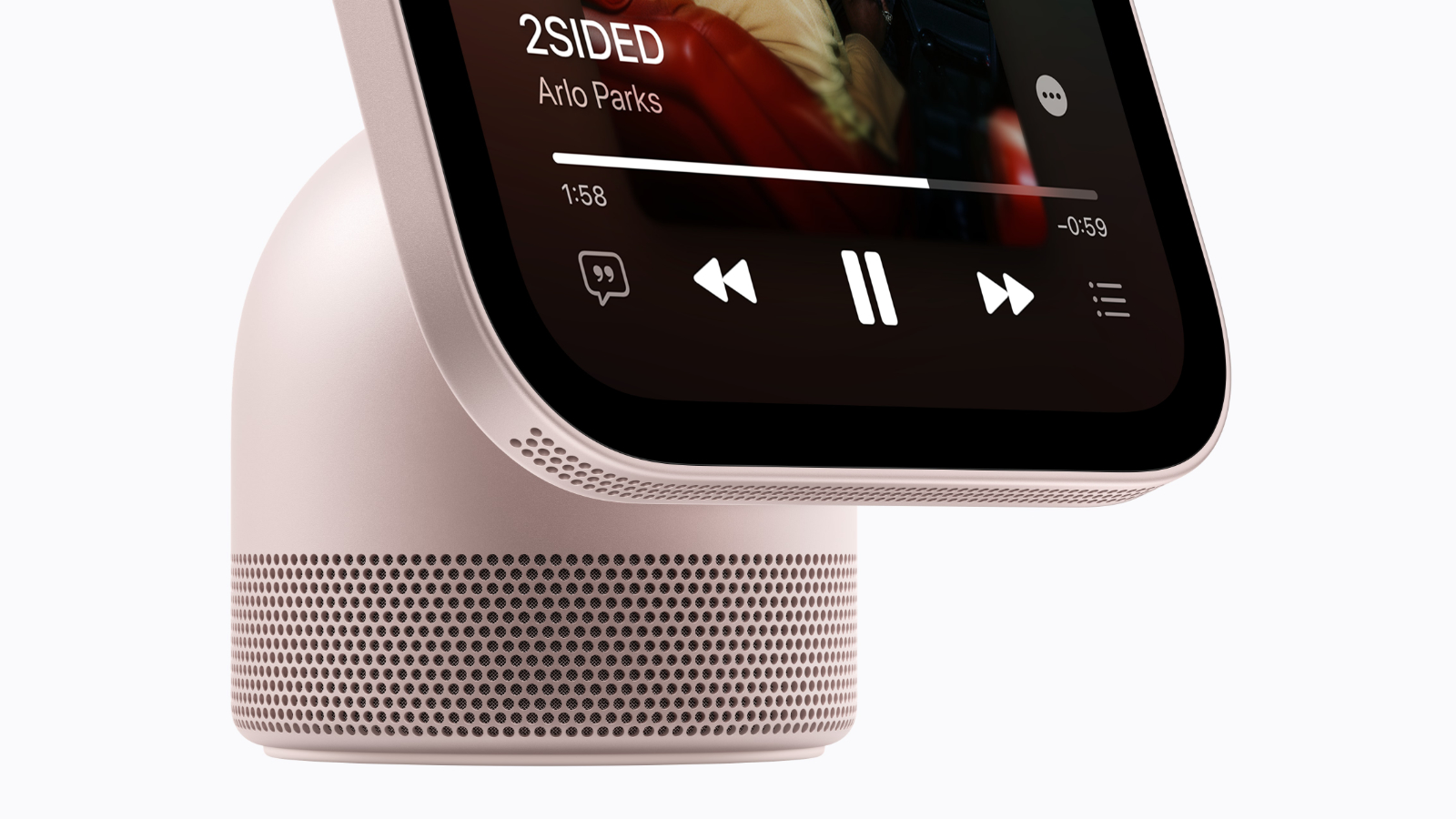
The HomeView can dim its display to just 0.3 nits for use on a nightstand or in dark environments, making it Apple's lowest-ever display brightness.
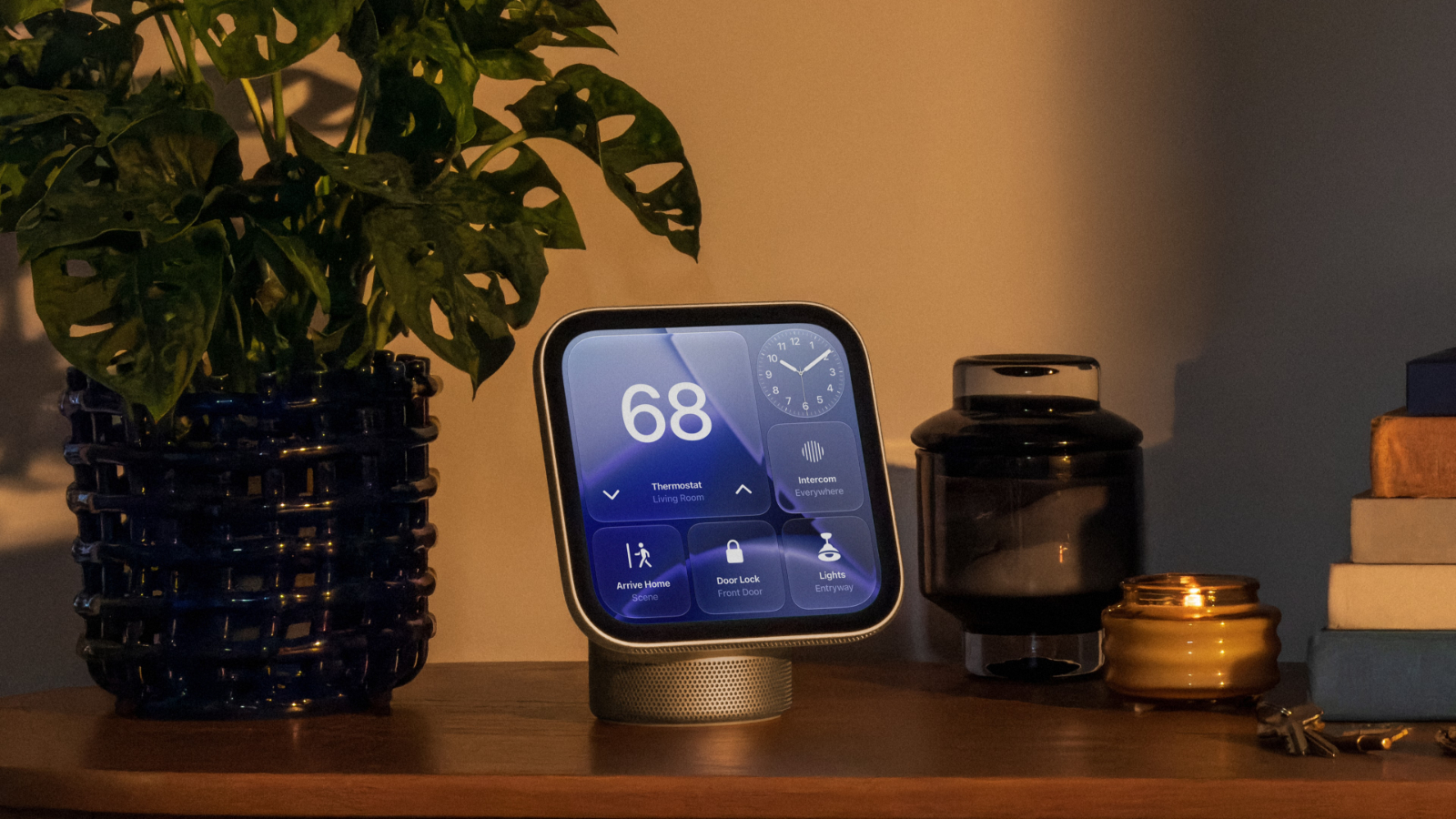

The 7-inch Liquid Retina display automatically adjusts its brightness as lighting conditions change, reaching up to 500 nits in bright rooms. Its 0.3-nit minimum allows it to dim substantially at night. True Tone also helps the screen adapt to changing ambient light.

Previously, Apple's dimmest display technology went down to just 1 nit. This feature debuted on the Apple Watch Series 9 and Ultra 2, and subsequently came to the iPhone.

The tabletop HomeView model features a stainless steel hinge that lets users tilt the display as required. Its interface responds to distance, showing simpler information from across the room and more detail as users move closer.

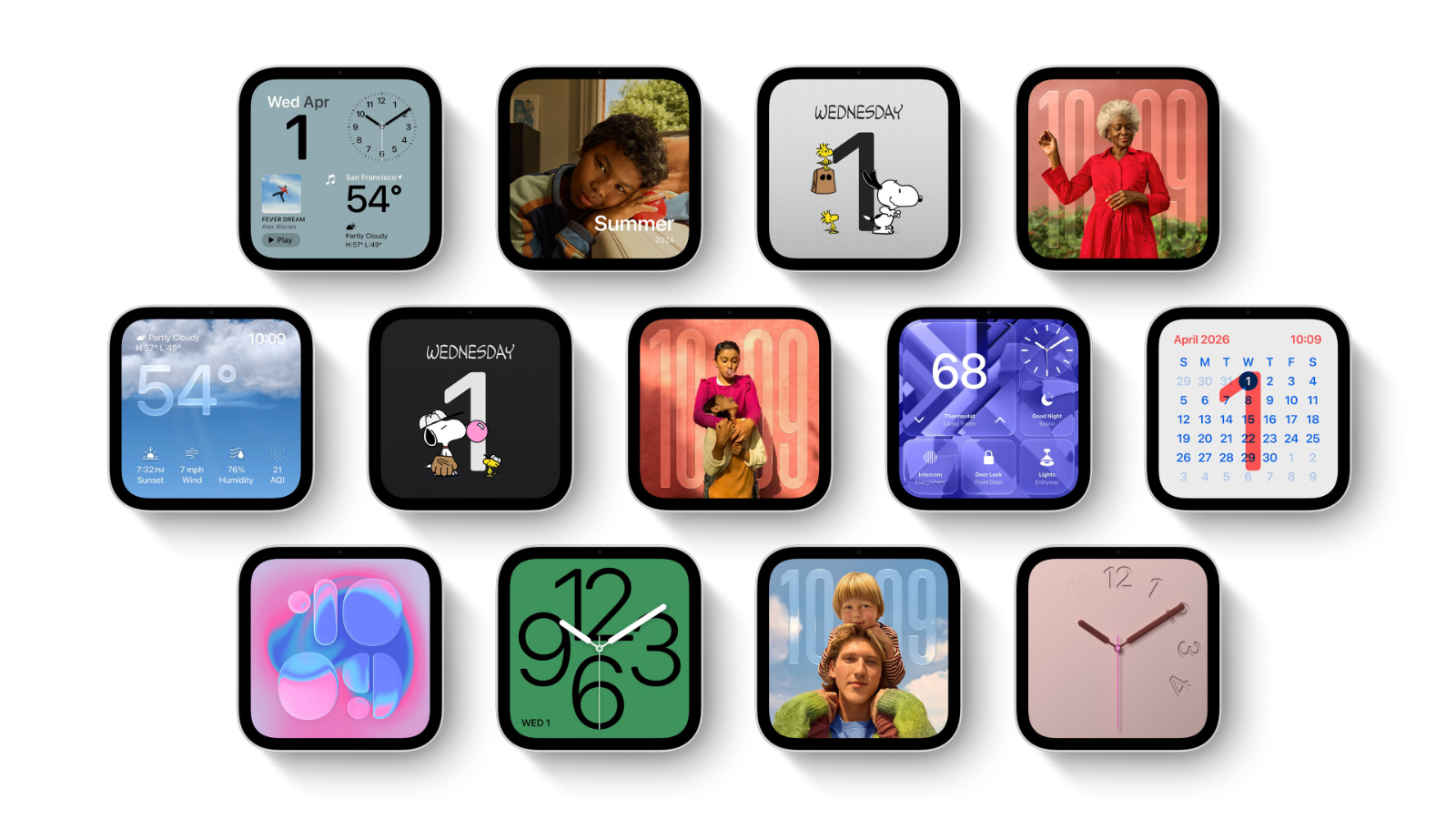
The HomeView also offers customizable faces, including weather information, photos, and animated designs. Apple says selected faces change throughout the day, adapting their appearance for mornings and evenings.

Apple's HomeView models launch on November 13 and cost $299 in the United States.
Related Roundup: Apple HomeView
Buyer's Guide: HomeView (Buy Now)

This article, "HomeView Can Dim to Apple's Lowest-Ever Display Brightness" first appeared on MacRumors.com

Discuss this article in our forums
  •  

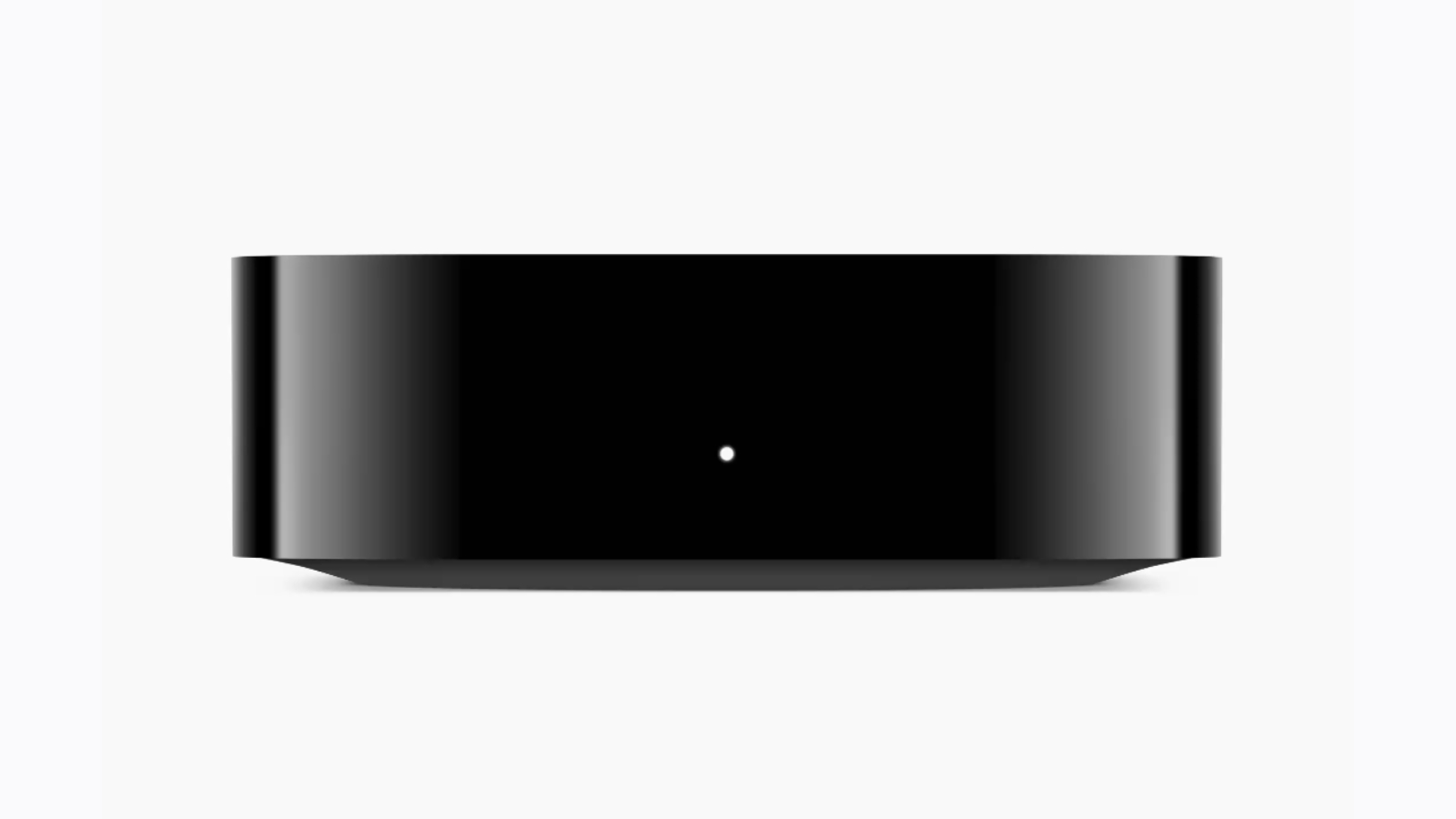
New Apple TV 4K Adds Far-Field Microphones for Hands-Free Siri

Apple's new fourth-generation Apple TV 4K includes three built-in far-field microphones, allowing users to find something to watch and control playback without picking up the Siri Remote.


Users can activate the voice assistant by saying "Hey ‌Siri‌" or "‌Siri‌," including while a movie or TV show is playing. Apple says advanced echo cancellation separates the user's voice from background sound, helping the device recognize requests over the TV's audio.

The microphones also enable hands-free control of compatible smart home accessories and scenes. With ‌Siri‌ AI, users can search for entertainment conversationally and ask follow-up questions about what they are watching, with answers appearing in a compact overlay over the video.

Apple says the new Apple TV 4K and its A19 chip include Secure Exclaves, which are protected processing environments that handle microphone data separately from the rest of the system. According to Apple, data processed and analyzed inside these environments cannot be accessed by tvOS, apps, users, or Apple itself.

Far-field ‌Siri‌ support varies by region and language. The feature is supported when the primary tvOS language is set to English, Mandarin Chinese, Dutch, Finnish, French, German, Hebrew, Norwegian, or Swedish.

The new ‌Apple TV‌ 4K is available to preorder today for $299 in the United States, with availability beginning November 13.
Related Roundup: Apple TV
Tag: Siri
Buyer's Guide: Apple TV (Buy Now)

This article, "New Apple TV 4K Adds Far-Field Microphones for Hands-Free Siri" first appeared on MacRumors.com

Discuss this article in our forums
  •  

Apple Details HomeView's Audio Hardware

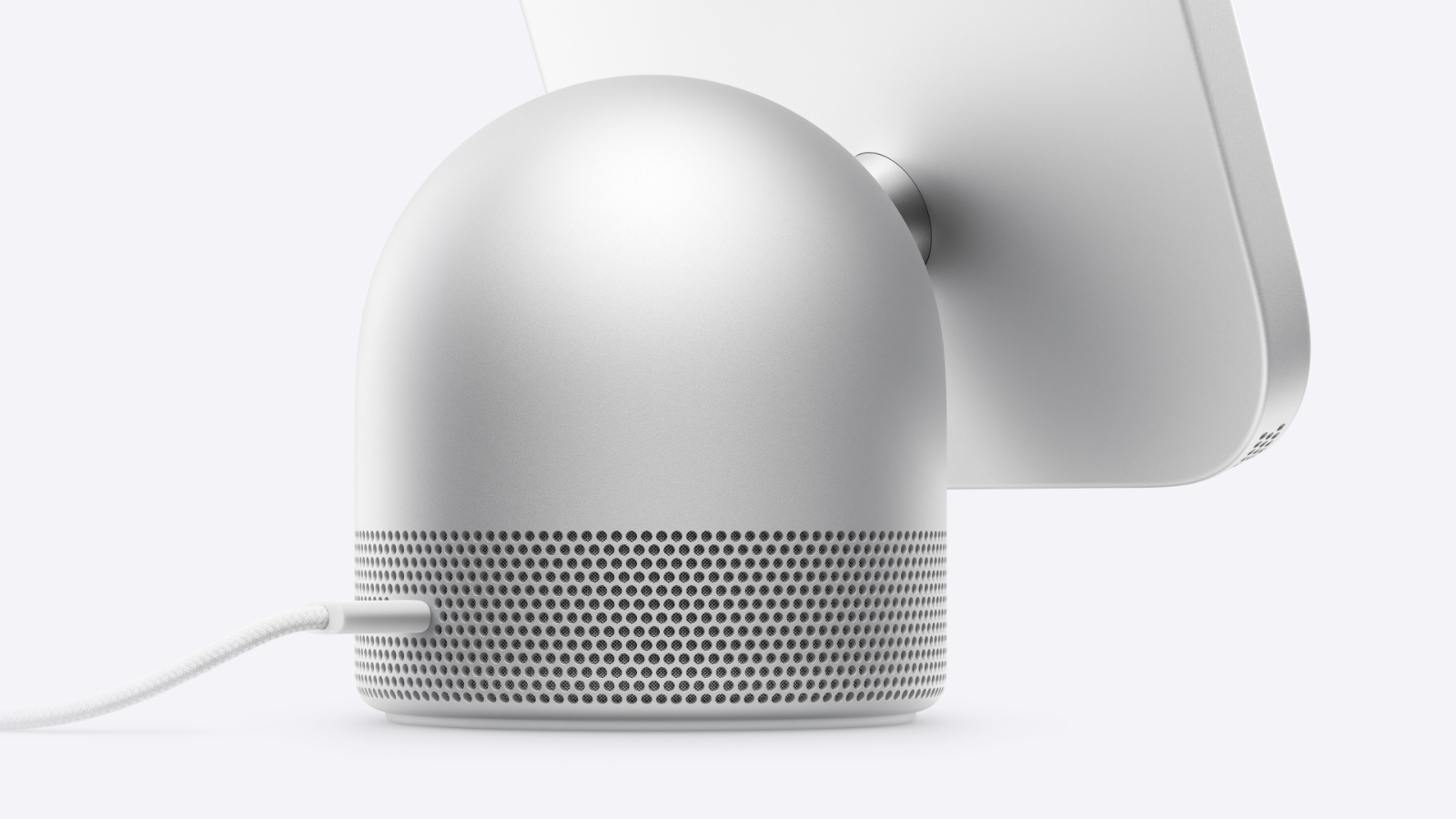
Apple's new HomeView supports Spatial Audio, with different speaker systems for its tabletop and wall-mounted models.


The tabletop model features two custom full-range drivers in its display, with a down-firing woofer and two force-canceling passive radiators housed in the domed base. Apple says this arrangement delivers clear sound with extended bass, distributing the audio hardware between the screen and its stand.

The HomeView's A18 chip and built-in sensors power computational audio that continuously adjust loudness and bass response. According to Apple, this processing helps maintain consistent, balanced sound at different volume levels.

The wall-mounted HomeView uses two custom drivers and computational audio tuned specifically for placement on a wall, but lacks the added speaker hardware in the tabletop models' base. It still supports Spatial Audio.


For music playback, HomeView supports multiroom audio alongside other HomeView devices, HomePod, HomePod mini, and AirPlay-compatible speakers. Handoff lets users transfer music from an iPhone by placing it in front of the HomeView's display. Apple Music displays animated album artwork and lyrics, while Apple Podcasts and compatible third-party audio apps can provide additional content.

The HomeView also features four beamforming microphones for Siri requests and FaceTime calls. Apple says the microphone array can pick up voices from across the room while reducing background noise.

Both HomeView models launch on November 13 and cost $299 in the U.S.
Related Roundup: Apple HomeView
Buyer's Guide: HomeView (Buy Now)

This article, "Apple Details HomeView's Audio Hardware" first appeared on MacRumors.com

Discuss this article in our forums
  •  

Apple Shares Videos for HomeView, Apple TV 4K, and HomePod Mini 2

Apple today shared four new videos on its YouTube channel highlighting the newly announced HomeView smart home hub, fourth-generation Apple TV 4K, and HomePod mini 2.


The longest video, "Welcome Apple HomeView: Designed for life at home," follows a family through a busy morning. It shows Siri helping retrieve a French toast recipe sent in Messages, locate misplaced keys, and check evening plans, alongside a FaceTime call with grandparents.


A second, shorter HomeView video provides an overview of the device's features, including personalized experiences for up to six users, ‌FaceTime‌ calls, Spatial Audio, and smart home controls. It also highlights the 7-inch Liquid Retina display and its customizable collection of display faces.


The HomePod mini 2 video focuses on the speaker's sound and compact design, showing its green, pink, blue, midnight, and white finishes. It also promotes multiroom audio and ‌Siri‌ AI, which Apple says will arrive on ‌HomePod mini‌ 2 in a future software update.


The Apple TV 4K video highlights Dolby Vision and HDR10+ playback, hands-free ‌Siri‌ control using built-in microphones, and the ability to play a sound to locate the updated ‌Siri‌ Remote. Apple also promotes the new four-speaker surround sound setup, which supports ‌HomePod mini‌ 2 and second-generation HomePod speakers in matching front and rear pairs.

Today's announcements also included the Apple Home Collection, a lineup of cameras, a door lock, thermostats, and sensors developed with LG and Schneider.

The HomeView, new ‌Apple TV‌ 4K, and ‌HomePod mini‌ 2 are available to pre-order today. The ‌HomePod mini‌ 2 launches on October 30, while the HomeView and new ‌Apple TV‌ 4K launch on November 13.

This article, "Apple Shares Videos for HomeView, Apple TV 4K, and HomePod Mini 2" first appeared on MacRumors.com

Discuss this article in our forums
  •  

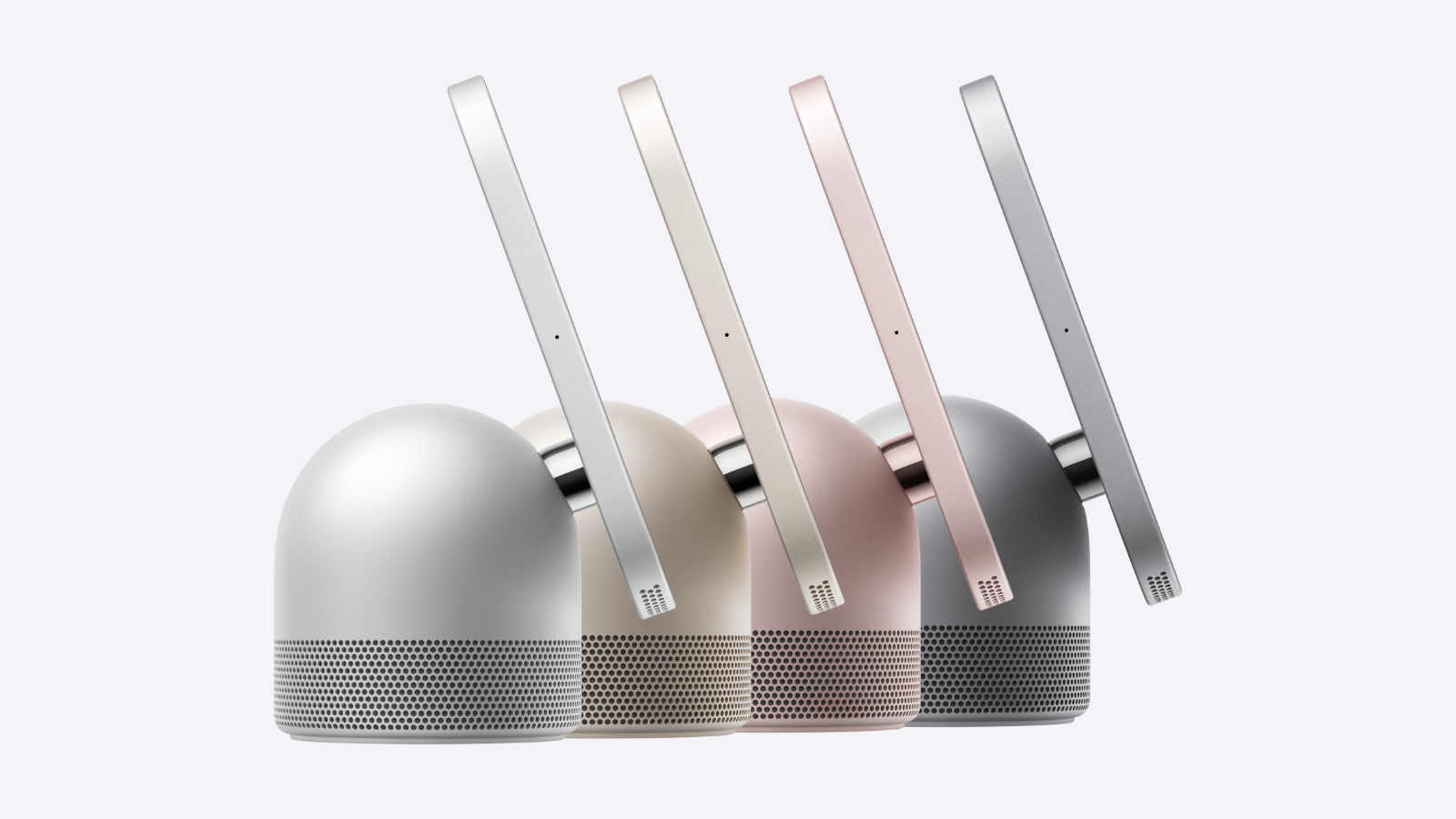
HomeView Comes in Four Colors, but Wall-Mounted Model Gets Just Two

Apple's new HomeView smart home hub comes in four colors, but the wall-mounted model offers only two finishes.


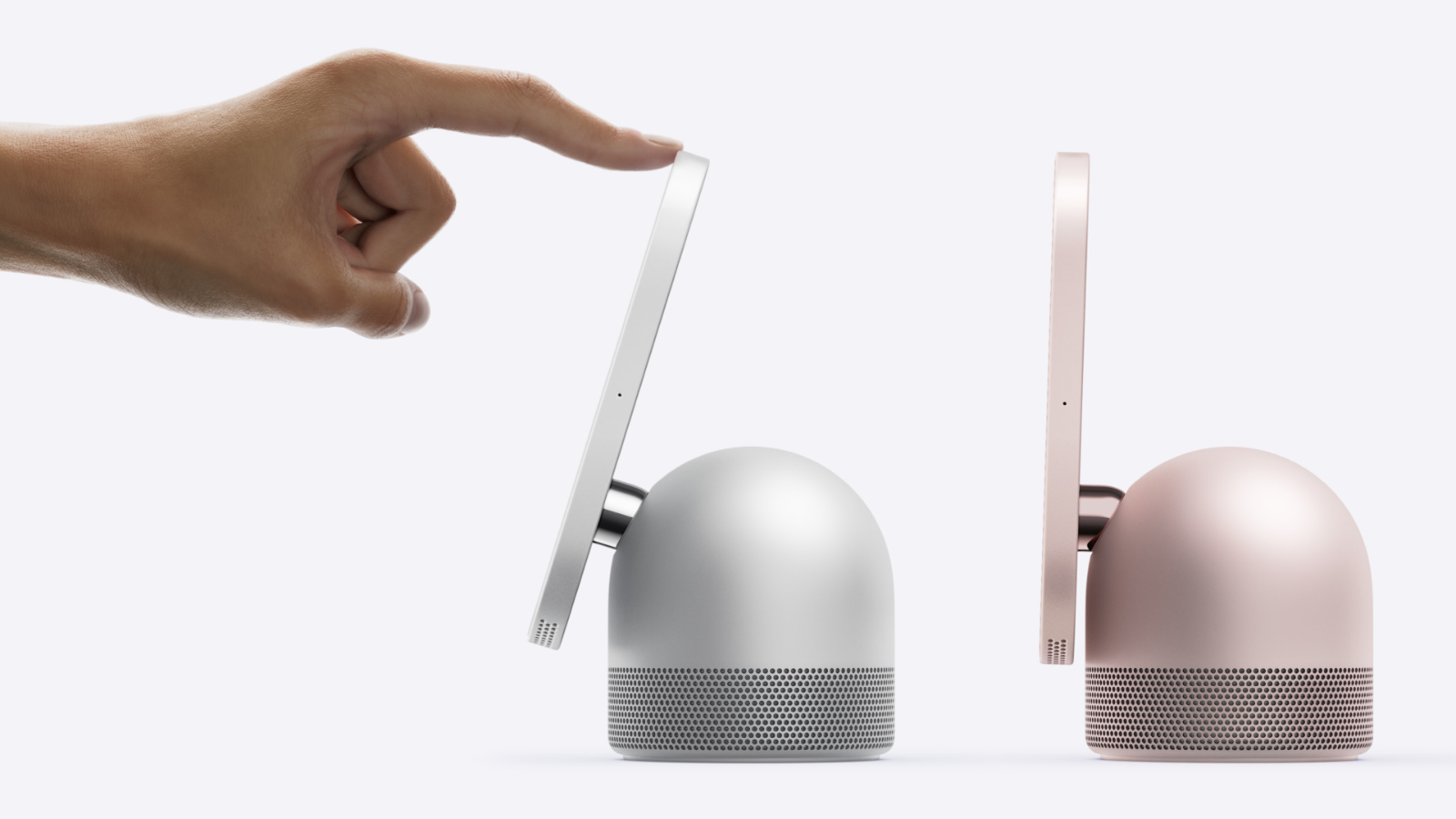
The tabletop HomeView is available in silver, starlight, rose pink, and space gray. Each finish comes with a matching USB-C cable.

The device features an anodized aluminum design, with a 7-inch Liquid Retina display attached to a domed speaker base. A stainless steel hinge allows the screen to tilt for viewing on a countertop, nightstand, or side table.

The wall-mounted HomeView is limited to silver and space gray, leaving starlight and rose pink exclusive to the tabletop version. It features the same 7-inch display and attaches to a wall using mounts from Schneider Home.

Both HomeView models launch on November 13 and cost $299 in the U.S.
Related Roundup: Apple HomeView
Buyer's Guide: HomeView (Buy Now)

This article, "HomeView Comes in Four Colors, but Wall-Mounted Model Gets Just Two" first appeared on MacRumors.com

Discuss this article in our forums
  •  

Older Apple TV 4K Models to Gain Apple Intelligence and Siri AI Support

Apple today said that second- and third-generation Apple TV 4K models will gain Siri AI in beta with tvOS 27.2.

‌Siri‌ AI on the ‌Apple TV‌ adds conversational entertainment searches, follow-up questions, and personal context through a paired compatible device. Setup requires the Home app's home owner to have an Apple Intelligence-enabled iPhone or iPad running the latest software, with ‌Siri‌ AI enabled and set to a supported language. At launch, ‌Siri‌ AI will support English in the United States, Australia, Canada, India, New Zealand, Singapore, South Africa, and the United Kingdom.
Related Roundup: Apple TV
Buyer's Guide: Apple TV (Buy Now)

This article, "Older Apple TV 4K Models to Gain Apple Intelligence and Siri AI Support" first appeared on MacRumors.com

Discuss this article in our forums

  •  

HomeView Brings Guided Recipes and Hands-Free Timers to the Kitchen

Apple's HomeView can turn web recipes into step-by-step cooking instructions with hands-free timers.


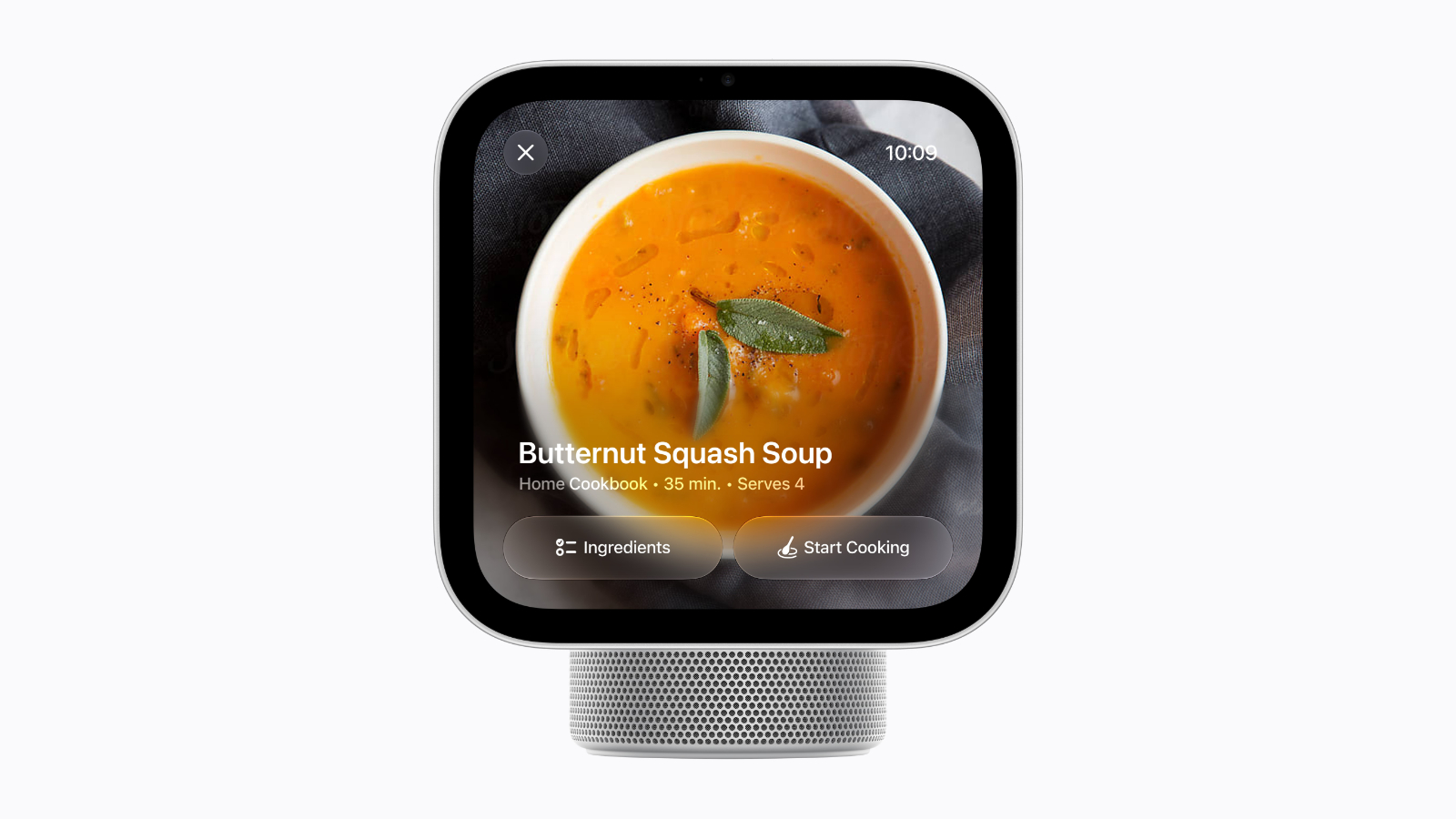
When viewing a recipe in Safari, users can tap the "Start Cooking" button to switch to a streamlined recipe layout. Apple also says HomeView offers help with ingredient tracking alongside the guided instructions.

Timers can be controlled hands-free, allowing users to manage cooking times without touching the display. HomeView supports multiple timers, with Live Activities keeping them visible while other apps are in use.

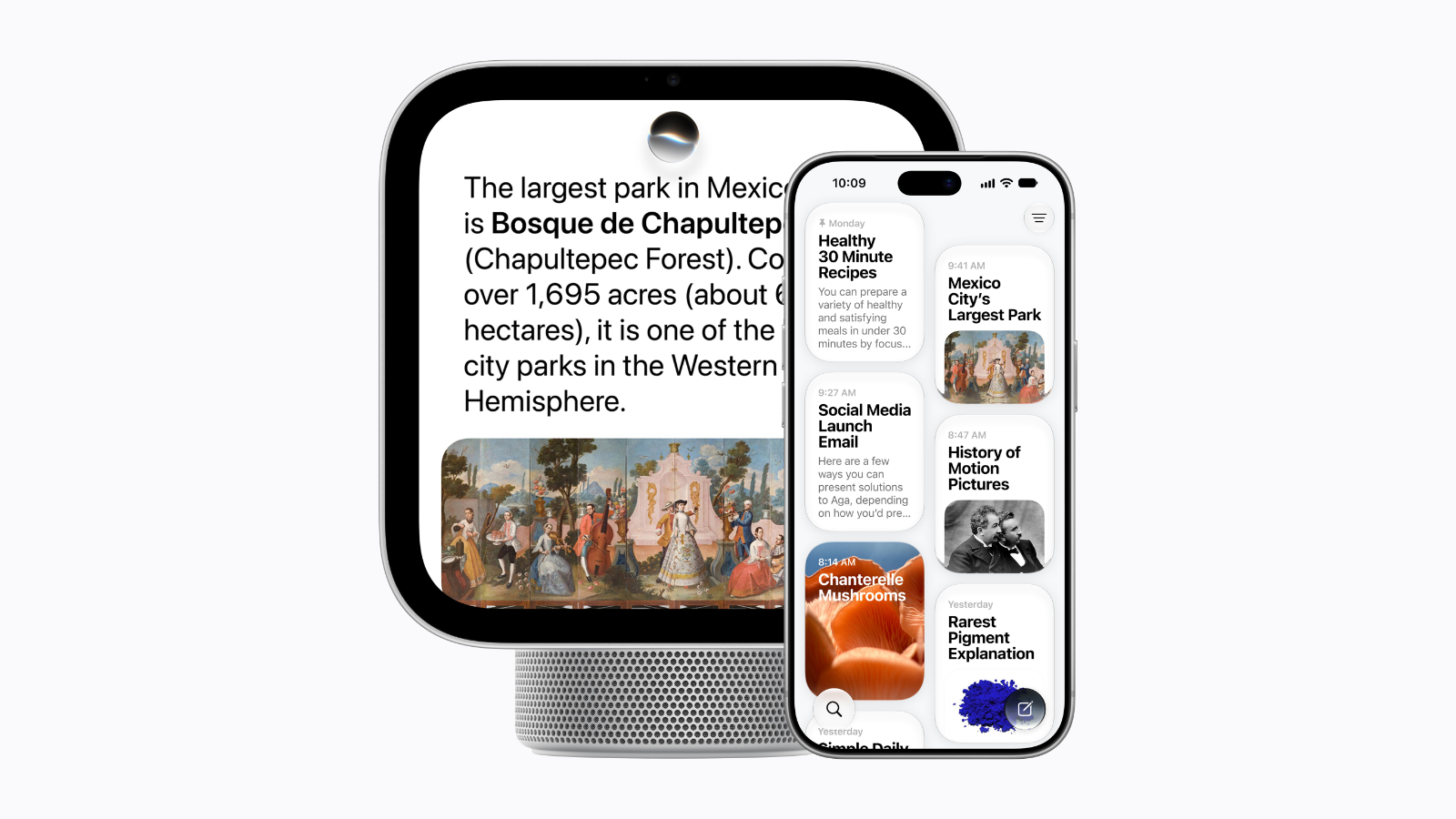
Handoff also supports recipes, so users can start browsing a recipe on their iPhone and continue on the HomeView when they reach the kitchen. The same feature supports transferring songs, podcasts, calls, and videos between the devices.


The tabletop model features a 7-inch Liquid Retina display attached to a domed speaker base, with a hinge that lets users adjust the screen's angle on a countertop.

Users can also listen to music or podcasts while cooking, or use Intercom to call family members for dinner through other HomeView and HomePod speakers.

The HomeView launches on November 13, with both the tabletop and wall-mounted models priced at $299 in the U.S.

Related Roundup: Apple HomeView
Buyer's Guide: HomeView (Buy Now)

This article, "HomeView Brings Guided Recipes and Hands-Free Timers to the Kitchen" first appeared on MacRumors.com

Discuss this article in our forums

  •  

Apple's HomeView Touts These 5 Privacy Features

Apple uses a number of methods to keep HomeView users' personal information private, even when a whole household shares the device.


The device recognizes up to six people, giving each their own Home Screen with personalized apps and widgets. Apple says personal content stays private to each user, while shared photo albums and music can remain available to everyone in the household, including guests.

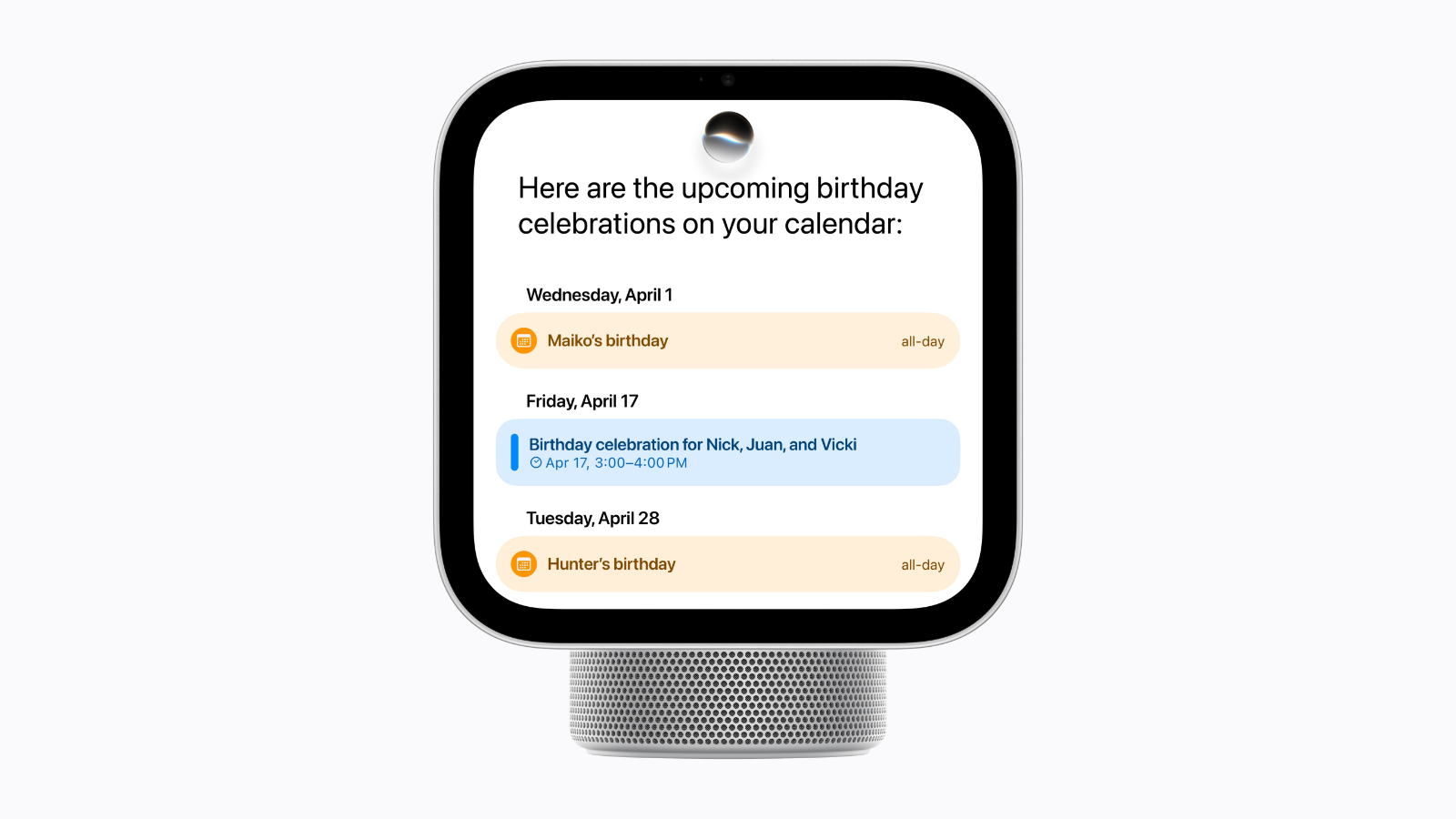
For content from apps such as Messages and Calendar to appear, HomeView must recognize the enrolled user's face, and their paired iPhone or iPad normally needs to be present and recently unlocked.

There is an exception when the paired iPhone or iPad disconnects from Wi-Fi. Personal information may remain accessible if the HomeView still recognizes the user and the paired device was recently connected to the same Wi-Fi network, has an active cellular connection, remains in the same location, and has been recently unlocked.

The HomeView's A18 chip includes Secure Exclaves, which is a protected processing environment that handles camera and microphone data separately from the rest of the system. Apple says isolation features across the chip prevent other components from accessing these environments. According to the company, data processed and analyzed within the Secure Exclaves cannot be accessed by HomeView's software, apps, users, or Apple itself.

Siri requests have their own privacy protections. The HomeView can handle requests on the device or use Private Cloud Compute, Apple's system for processing requests in the cloud. Apple says data processed through Private Cloud Compute is neither stored nor made accessible to Apple or anyone else.

The HomeView also works with compatible smart home cameras to provide end-to-end encrypted recognition of people, familiar faces, pets, packages, and vehicles with a supported iCloud+ subscription.
Related Roundup: Apple HomeView
Buyer's Guide: HomeView (Buy Now)

This article, "Apple's HomeView Touts These 5 Privacy Features" first appeared on MacRumors.com

Discuss this article in our forums

  •  

Apple TV Finally Gaining Apple Intelligence and Siri AI

Apple today announced Apple Intelligence features for the Apple TV, bringing a more conversational Siri, personalized entertainment search, and summaries of smart home camera activity to the living room.


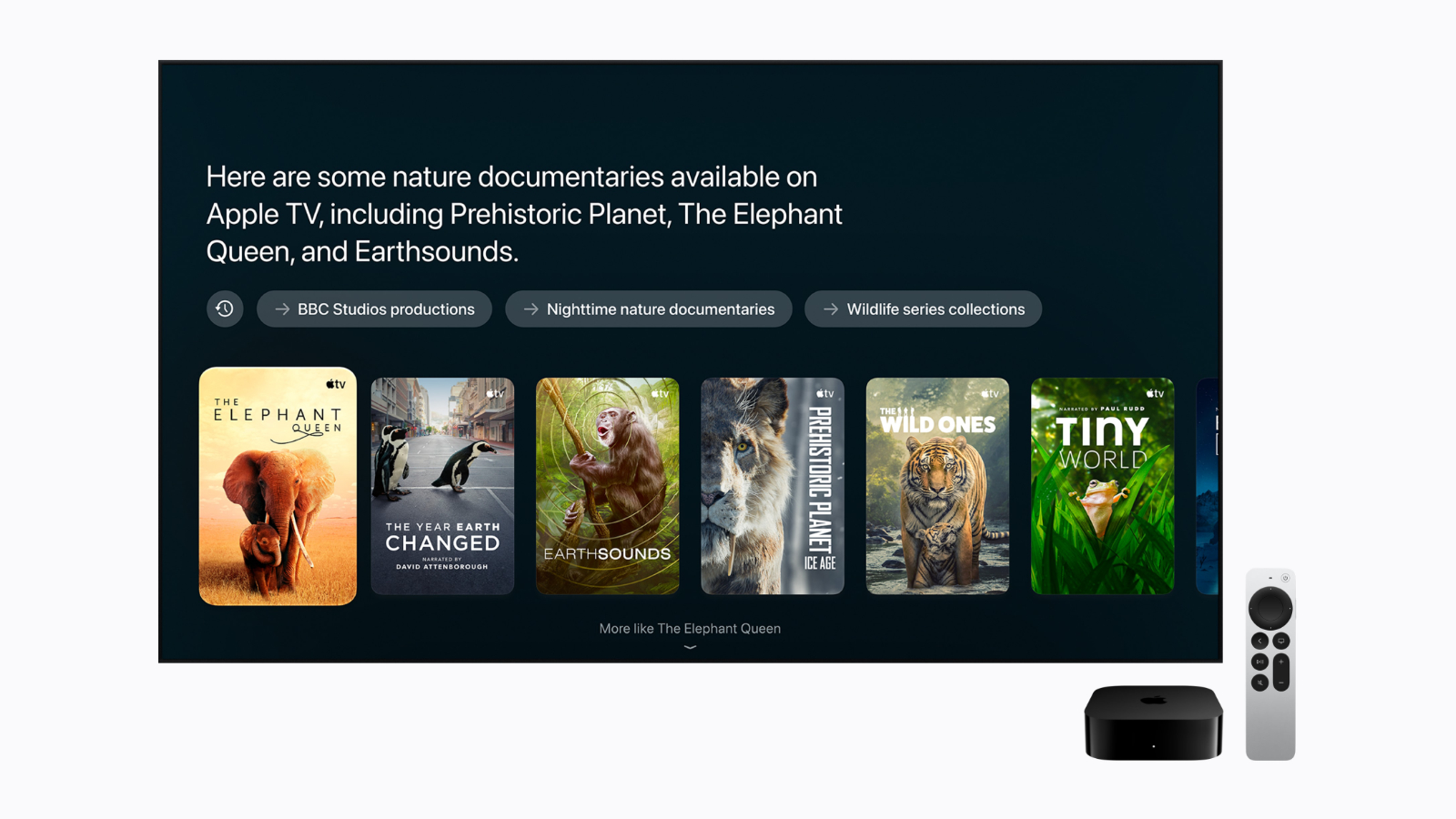
‌Siri‌ AI introduces a full-screen interface for finding movies and TV shows, with results featuring poster artwork from the ‌Apple TV‌ app and suggestions for related content. Users can ask which ‌Apple TV‌ shows won Emmy Awards this year, for example, and then explore recommendations for other award-winning shows.

While watching, viewers can ask follow-up questions about filming locations or whether a show is appropriate for a particular age. Answers appear in a small overlay over the video. Apple says the assistant also offers broader general knowledge and can perform more actions across apps.

Personal context support lets ‌Siri‌ AI find something to watch based on information from a paired Apple Intelligence-enabled device. Apple gives the example of asking ‌Siri‌ to "Play the show Alinda recommended," allowing the assistant to identify a recommendation without the user having to remember the title.

‌Apple Intelligence‌ also expands the ‌Apple TV‌'s capabilities as a home hub, adding descriptions of activity in HomeKit Secure Video recordings and summarized notifications in the Home app. ‌Siri‌ AI can also control compatible smart home accessories and turn scenes on or off.

‌Siri‌ AI will be available in beta with tvOS 27.2 on the second-generation ‌Apple TV‌ 4K and later, meaning owners of existing compatible models can also access the assistant. The fourth-generation Apple TV 4K is available to preorder today for $299 in the United States, with availability beginning November 13.
Related Roundup: Apple TV
Buyer's Guide: Apple TV (Buy Now)

This article, "Apple TV Finally Gaining Apple Intelligence and Siri AI" first appeared on MacRumors.com

Discuss this article in our forums

  •  

HomeView Needs an iPhone or iPad for Some AI Features

Despite featuring an A18 chip and built-in Apple Intelligence support, Apple's new HomeView still depends on a paired Apple Intelligence-enabled iPhone or iPad for several features.


According to Apple's announcement, Siri requests involving personal context require a paired Apple Intelligence-enabled iPhone or ‌iPad‌ running the latest software, with ‌Siri‌ AI enabled and set to a supported language. These capabilities include retrieving relevant information from Messages and Calendar, as well as taking action across apps using the user's personal context.

HomeView will still offer several ‌Siri‌ AI capabilities to users whose iPhone or ‌iPad‌ does not support ‌Apple Intelligence‌. Apple says these users can ask general-knowledge questions, hold natural conversations with ‌Siri‌, and benefit from improved music discovery. ‌Siri‌ requests on the HomeView can be processed on the device or through Private Cloud Compute.

Customizable ‌Siri‌ voices have more restrictive hardware requirements. Users can only adjust ‌Siri‌'s expressiveness and speaking pace on their paired device, with those preferences then carrying over to HomeView. This requires an iPhone Duo, iPhone 18 Pro, iPhone Air, iPhone 17 Pro, or an ‌iPad‌ with an M4 chip or later and at least 12GB of unified memory. The feature is available in English only.

Some of the HomeView's intelligent camera features also depend on another Apple device. Video summaries and natural language searches of HomeKit Secure Video recordings require setup using an Apple Intelligence-enabled iPhone or ‌iPad‌, along with an eligible iCloud+ subscription.

The HomeView launches on November 13, with both the tabletop and wall-mounted models priced at $299 in the U.S.
Related Roundup: Apple HomeView
Buyer's Guide: HomeView (Buy Now)

This article, "HomeView Needs an iPhone or iPad for Some AI Features" first appeared on MacRumors.com

Discuss this article in our forums

  •  

Apple HomeView Won't Be Available in the European Union

Apple's new HomeView smart home hub will not be available in the European Union because Siri AI is currently unavailable on iOS in the region, the company said today. Apple said it is "working constructively with the EU in an attempt to find a path forward," but provided no timeline for EU availability. It costs $299 in the U.S. and launches on November 13 in eight countries around the world.
Related Roundup: Apple HomeView
Buyer's Guide: HomeView (Buy Now)

This article, "Apple HomeView Won't Be Available in the European Union" first appeared on MacRumors.com

Discuss this article in our forums

  •  

Apple Announces 'HomeView' Smart Home Hub

Apple today announced the "HomeView," an all-new kind of smart home hub featuring a 7-inch Liquid Retina display and Siri AI.


Apple's senior vice president of Worldwide Marketing Greg Joswiak said:

Apple HomeView is designed to be shared by everyone in the home yet feel completely personal to each user. It recognizes your face to shift from a household screen to your own experience, fills the room with incredible sound, keeps you connected to the people who matter most with FaceTime, and makes it easy to control your smart home. And it's powered by Apple Intelligence with Siri AI at its core, drawing on personal context from your iPhone to help you find what you need and get more done, all while keeping everyone's information private and secure.


The HomeView features an aluminum design, with the display connected to a domed speaker base by a stainless steel tilting hinge. Apple says it is ideal for a kitchen counter, nightstand, or side table. The 7-inch Liquid Retina display features True Tone and automatic brightness between 0.3 nits and 500 nits, making it ideal for low-light environments.


A custom-engineered acoustic system with two full-range drivers delivers "room-filling" Spatial Audio. A down-firing woofer and two force-cancelling passive radiators are built directly into the base. With Handoff, users can continue listening to audio from their iPhone by placing it in front of the HomeView. It also supports multiroom audio.


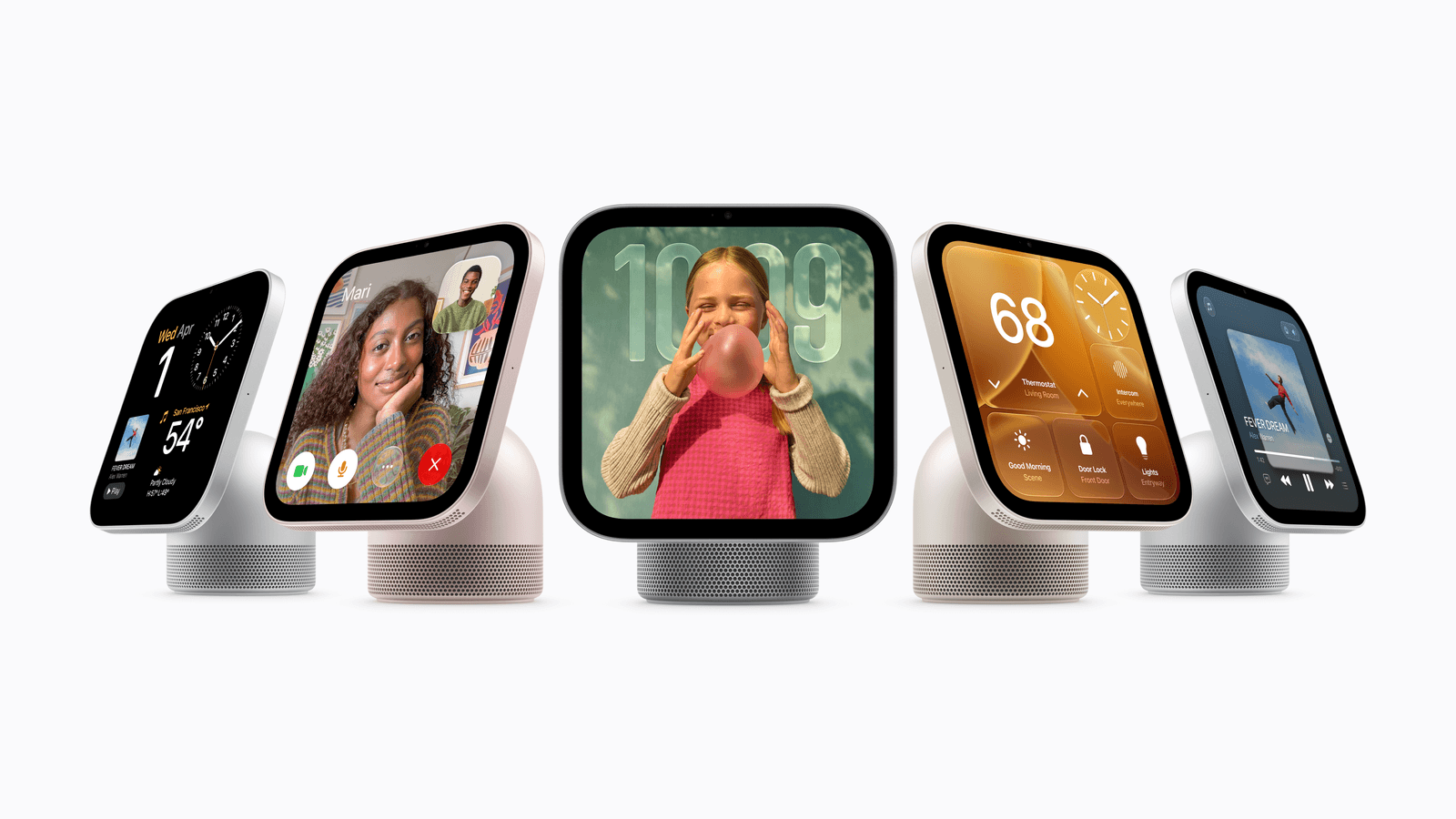
The HomeView features faces that display information at a glance, including a Photos face, a "Flow" face that dynamically responds to movement, a Snoopy face that reflects context like the time of day and weather, a Home Modular face that offers instant access to smart home accessories, a Home Camera face that can livestream up to nine video feeds simultaneously, and more.


The HomeView's interface adjusts based on a user's distance, showing larger, simpler information from across a room and richer detail as a user steps closer. The device recognizes up to six people and delivers a personalized experience. Each user has their own Home Screen with apps and widgets. Apple says that personal content remains private, while shared photo albums and music can be enjoyed by all users, including guests.


The device features ‌Siri‌ AI, and used with an Apple Intelligence-compatible iPhone or iPad, ‌Siri‌ AI can take action across apps and surface relevant information from Messages and Calendar, Apple Music playlists, and more. Users can also customize the expressiveness and pace of ‌Siri‌'s voice on their paired and compatible device. ‌Siri‌ AI conversations sync across devices.


Apple also said that "HomeView is the perfect sous chef," with the ability to convert recipes from the web into step-by-step instructions with hands-free timer controls and ingredient tracking. Moreover, the HomeView offers FaceTime and Center Stage, as well as Intercom for sending a quick message in the household.


The tabletop version is available in silver, starlight, rose pink, and space gray, including matching cables. A wall-mounted version is available in silver and space gray only. It can be attached using three mount options from Schneider Home. The wall-mounted version delivers "rich sound" with two custom drivers and computational audio tuned specifically for on-wall placement.


The HomeView costs $299. Pre-orders start today, with launch on November 13. It is not available in the EU.
This article, "Apple Announces 'HomeView' Smart Home Hub" first appeared on MacRumors.com

Discuss this article in our forums

  •  

BOE's Cracking Glass Problem Threatens OLED iPad Supply Plans

Repeated glass breakages at BOE's new OLED factory have persisted for roughly six months, potentially hindering its attempt to win iPad display orders from Apple, The Elec reports.


The Chinese display maker apparently only recently begun Apple's panel qualification process. According to the report, the manufacturing difficulties could either postpone orders or prevent BOE from securing them.

A broken sheet of glass can leave production equipment unavailable for between half a day and a full day as workers remove fragments and check the machinery. That makes the issue disruptive even when most substrates pass through the line without breaking.

Sources cited by the publication warned that two or three breakages among 1,000 substrates could still interfere with mass production. The impact extends beyond the loss of the damaged sheet, because other production cannot proceed through the affected equipment during recovery. Sources said these incidents need to be almost entirely eliminated for continuous operation.

The affected facility is B16 in Chengdu, which houses BOE's 8.6-generation ‌OLED‌ production line. BOE continues to operate two lines there, but has yet to identify what causes the glass to fail.

Earlier reports linked BOE's iPad Air plans to its separate B12 facility in Chongqing, while B16 was associated with its effort to supply ‌OLED‌ MacBook Pro panels. The report from August anticipated the launch of new iPad Air models featuring ‌OLED‌ displays in the first half of 2027, with Samsung Display as the primary panel supplier.

BOE's previous work for Apple has also been interrupted by manufacturing and approval problems. In 2022, Apple reportedly halted production of BOE's iPhone 13 displays after discovering unauthorized changes to their design. Reports in 2023 described light leakage around the Dynamic Island cutouts that constrained supply of iPhone 15 panels. In January, a report said Apple had shifted millions of ‌OLED‌ panel orders for the iPhone to Samsung Display after BOE again encountered production difficulties.
Tags: BOE, OLED

This article, "BOE's Cracking Glass Problem Threatens OLED iPad Supply Plans" first appeared on MacRumors.com

Discuss this article in our forums

  •  

iPhone Takes Bigger Slice of a Shrinking Smartphone Market

Apple's share of worldwide smartphone shipments rose to a third-quarter record of 22% in the third quarter of 2026, despite a decline in its own iPhone shipments, according to preliminary figures from Counterpoint Research.


Apple finished the quarter just behind Samsung, which accounted for 23% of shipments. Across the industry, manufacturers shipped 20% fewer smartphones than a year earlier, taking the July-to-September total to its lowest level since 2012.

Apple's launch plan was a significant factor in its lower shipment volume this year. With no standard iPhone 18 arriving alongside the iPhone 18 Pro models in September, Counterpoint said Apple supplied fewer new devices to retail channels than during last year's iPhone 17 lineup launch.

The research firm nevertheless reported a better debut for the ‌iPhone 18 Pro‌ models than for the previous Pro generation, with sales in China and India standing out. Demand for the ‌iPhone 17‌ also continued to support shipments.

Apple also outperformed the wider market in China. Separate IDC figures reported by Reuters put Apple's shipment decline at 4.3%, compared with a 15.4% contraction for the country as a whole. China's total of 57.9 million units marked its sixth consecutive quarter of annual declines.

Apple took second place in China with a 17.8% share, behind Huawei at 21%. IDC said Apple's newly released iPhones exceeded sales expectations, although the smaller selection of new models reduced its overall shipments.

Counterpoint linked the global downturn to shortages and rising prices for memory chips, which have made phones more expensive to produce. It estimates that smartphone retail prices have risen 20% globally so far this year, with demand for premium smartphones proving to be more resilient than budget devices.
This article, "iPhone Takes Bigger Slice of a Shrinking Smartphone Market" first appeared on MacRumors.com

Discuss this article in our forums

  •  
❌