
❌

Lees weergave

Google Search Now Connects to Instacart, Canva and YouTube Music

Google is expanding AI Mode in Search, allowing users to connect apps to improve search results and "get more done."
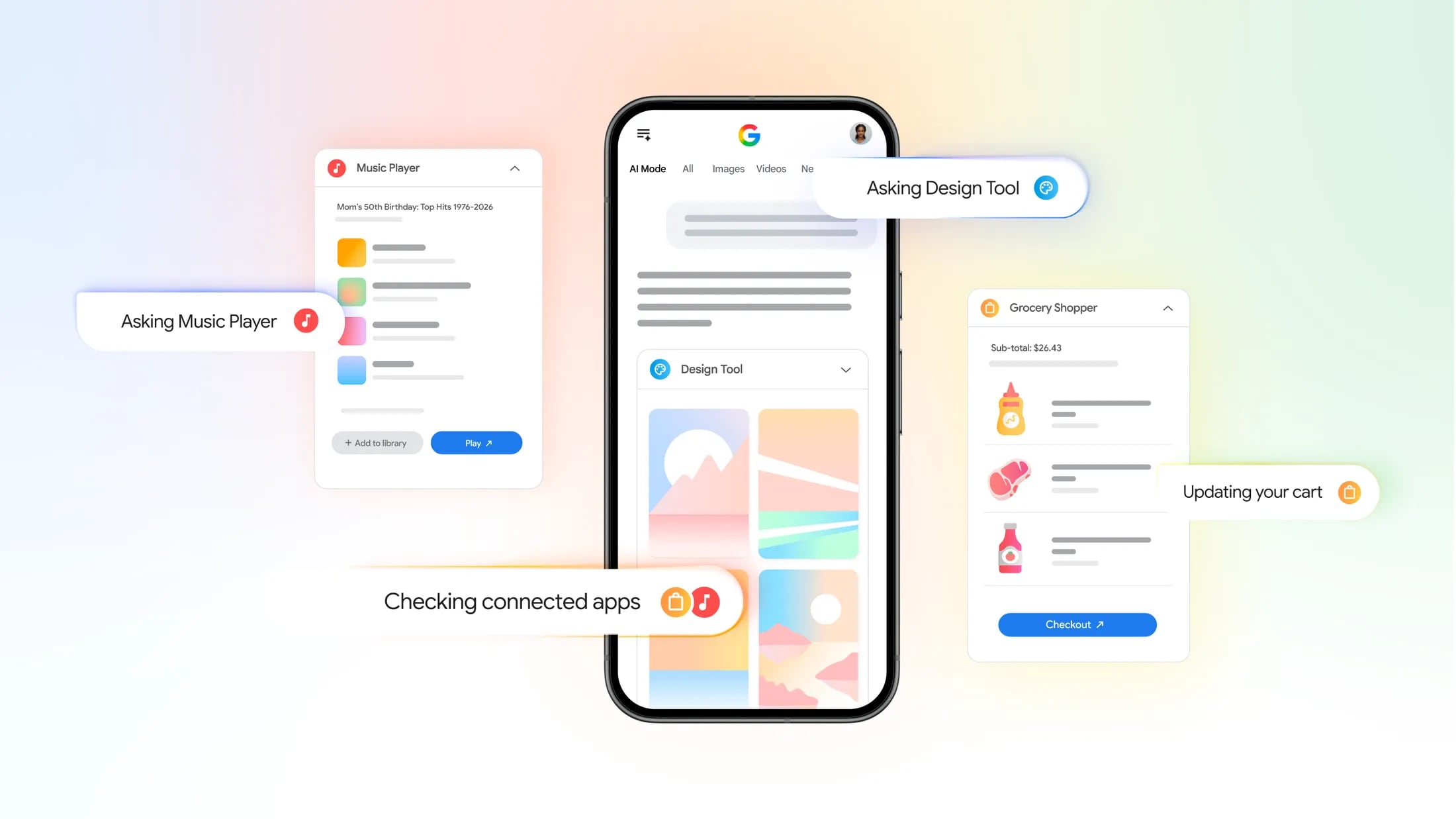

Instacart, YouTube Music, and Canva can be connected, and Google explains how the integrations can be useful:

  • Instacart - If you're using AI Mode to help you plan a grocery list, ingredients can be added right to an Instacart shopping cart for quick ordering.

  • Canva - If you're creating a flyer, you can get template options from Canva.

  • YouTube Music - You can use AI Mode to curate a playlist and save it to YouTube Music.


Instacart, Canva, and YouTube Music are the only apps that can be connected right now, but Google may add more in the future. Connected apps were previously available in Gemini, but the feature set is now being expanded to Search.

Connecting apps is limited to AI Mode in the United States, in English. Once an app is connected, users are able to access new features when making a request in Google Search AI Mode. Connected apps can be used in Search both on the desktop and through the Google Search iOS app.

Google suggests users turn on history and personalized recommendations to improve the Google Search experience. Google says it uses people's interactions with Search and the new AI features to develop and improve generative AI experiences.
Tag: Google

This article, "Google Search Now Connects to Instacart, Canva and YouTube Music" first appeared on MacRumors.com

Discuss this article in our forums
  •  

Roblox is Adding AI Game Creation to iPhone and iPad

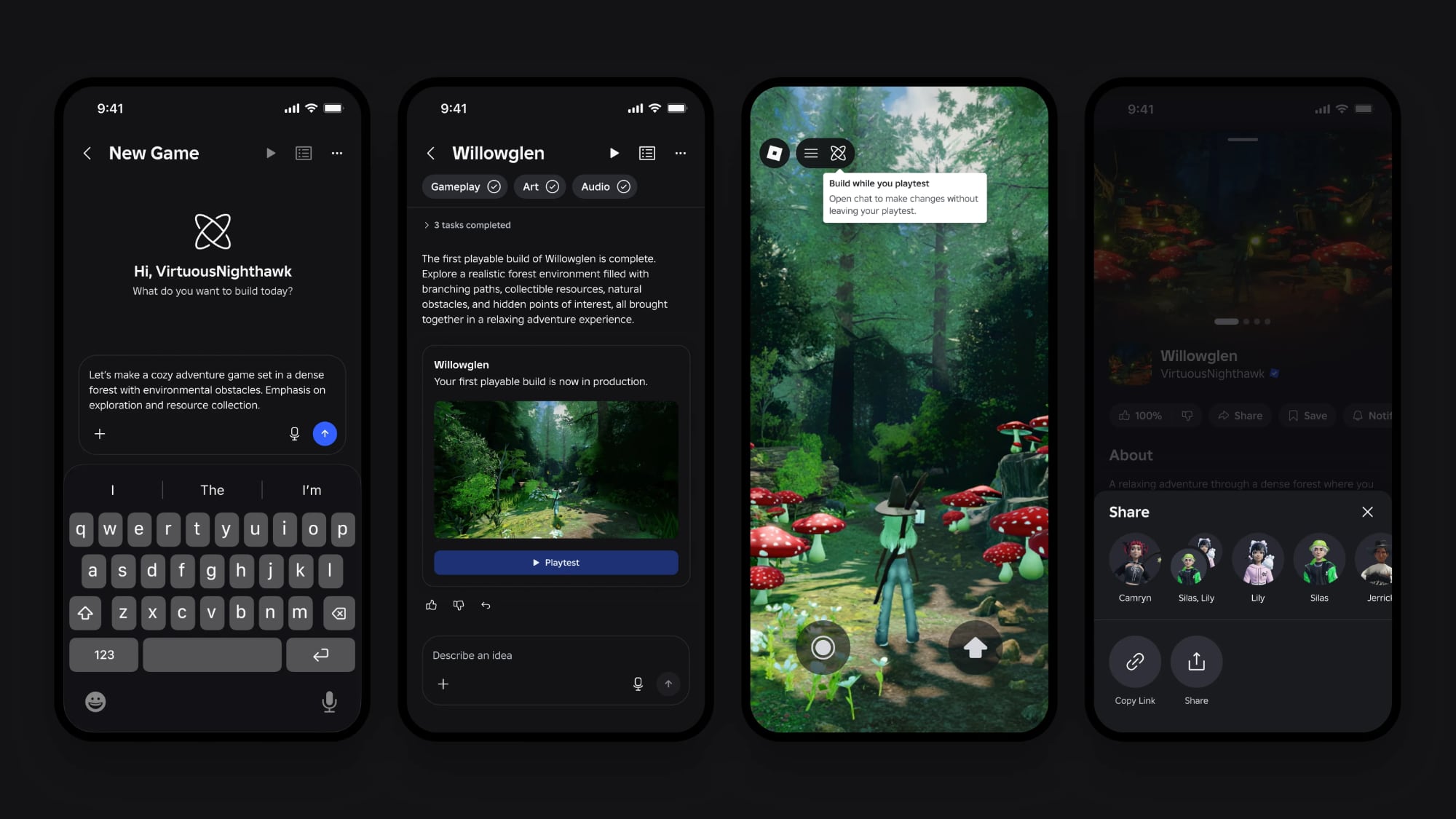
Online game platform Roblox today said it is adding a new Build tool that will let iPhone and iPad users create games using AI.


With the mobile-first Build option, Roblox users can write a text-based prompt and have AI turn it into a basic game. A single prompt will create a starting point that can be expanded with playtesting and further commands. The entire game-making process, from creation to uploading on the Roblox platform, can be done on a mobile device.

Right now, creating a game in Roblox requires a Mac or PC app, but Build will extend game creation to mobile users too. Roblox is also adding new AI creation tools to Roblox Studio, its desktop game creation software. Content created using the Build tool can be iterated on with Studio.

Roblox Build is set to roll out to the Roblox mobile app on July 28, beginning with a public alpha test for users in New Zealand. Build will roll out to additional regions in the coming months as Roblox improves the experience.

Roblox has 132 million daily active users, and user-created games like Brookhaven RP, Adopt Me, and Dress to Impress have been wildly popular.
Tag: Roblox

This article, "Roblox is Adding AI Game Creation to iPhone and iPad" first appeared on MacRumors.com

Discuss this article in our forums
  •  

1Password for Claude Lets AI Log In Without Seeing Your Passwords

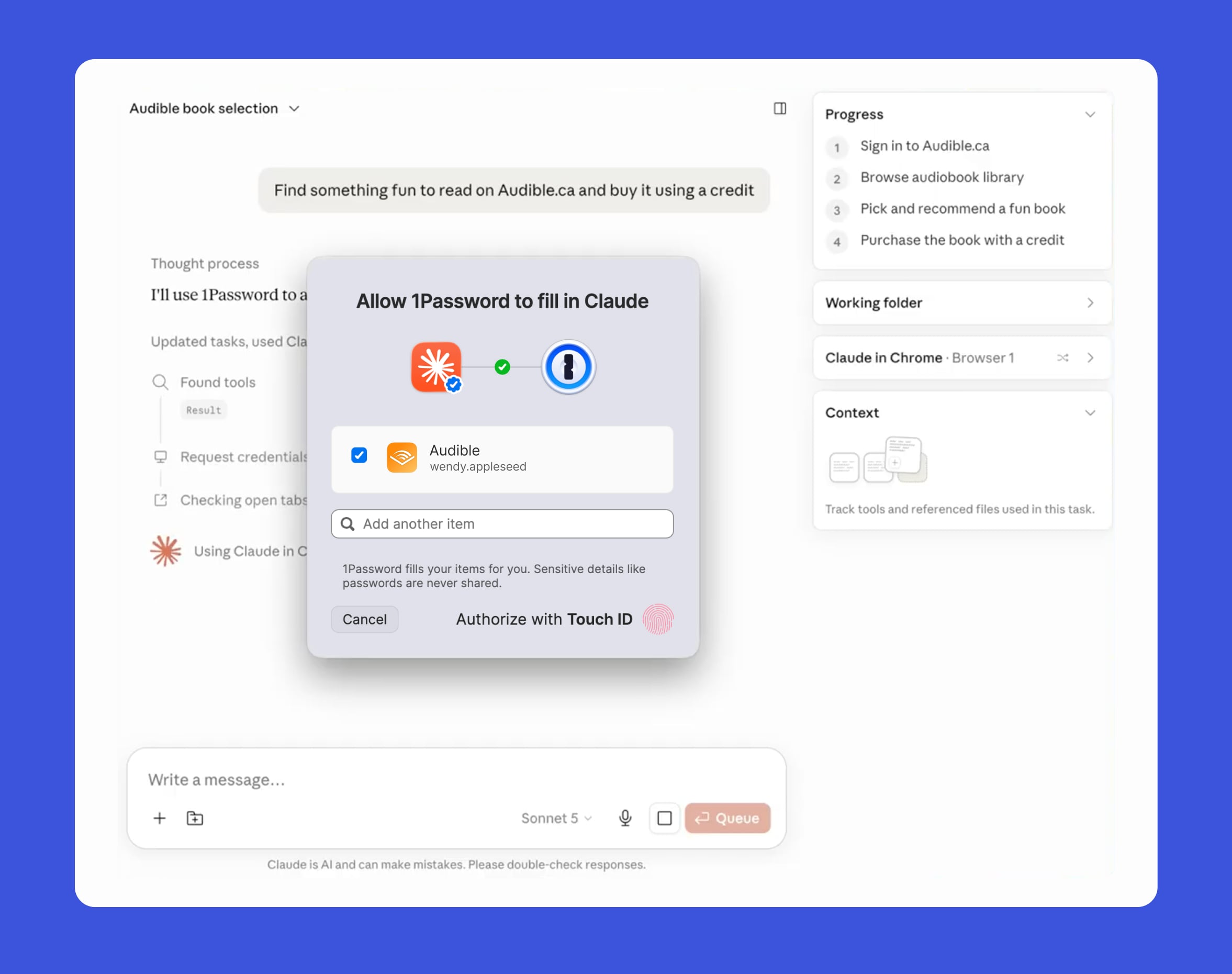
Popular password management app 1Password today added Claude support, which means AI service Claude can access credentials stored in 1Password for completing browser tasks.


With the integration, Claude can use 1Password logins and one-time codes without the actual password being exposed to Claude. Passwords never reach Claude's context, memory, or Anthropic's systems.

When Claude wants to sign in to a website, 1Password shows the user which credential Claude wants access to and why. After the user approves the request, 1Password adds the credential directly to the page. Access is limited to the current task and ends when the task has been completed. The 1Password team says that after a password is autofilled, the app checks to make sure secrets were not exposed on the page.


Credit cards and identities in 1Password are not supported at the current time, so Claude's access is limited to logins and one-time codes.

The 1Password browser extension is also being updated with Agentic Mode, which gives users control over browser-based AI agents. When an AI agent takes over, the 1Password extension locks down so passwords are not exposed. The password interface is hidden, and the agent can use logins and one-time codes only when the user gives approval. Agentic Mode works to protect passwords from AI agents even if the integration is not set up.

1Password for Claude is available for Mac, and 1Password business, family, and individual plan subscribers can use it. A Pro, Max, Team, or Enterprise Claude plan is required. 1Password has a help document with detailed information on how to set it up.

Claude can use 1Password logins across sites where Claude in Chrome can complete actions. The 1Password desktop app and browser extension are required, as are the Claude desktop app and the Claude in Chrome browser extension.
This article, "1Password for Claude Lets AI Log In Without Seeing Your Passwords" first appeared on MacRumors.com

Discuss this article in our forums
  •  

Google and Epic Abandon Injunction Modification Request, Clearing the Way for Rival Android App Stores

Google and Epic Games this week withdrew their joint motion to modify an injunction requiring Google to support third-party app stores in Google Play. The two companies abandoned the request after it became clear the court was unlikely to allow it.


Google is now bound by a permanent injunction issued in October 2024 requiring it to allow alternative app stores on Android devices. In a court filing [PDF], Google said that it plans to begin supporting alternative app stores on July 22. In a statement to The Verge, Google said it decided to withdraw the motion to avoid a prolonged legal fight.
We've agreed with Epic to withdraw our motion to modify the US Court's injunction rather than prolonging this process which creates uncertainty for the ecosystem. This allows us to focus on executing our recently announced global business model evolution to deliver greater app store choice, lower prices, and more opportunities for developers and users. We remain committed to maintaining Android's industry-leading security and fostering a competitive ecosystem where every app store and developer has the freedom to compete. In parallel, we continue to comply with the US Court's injunction.

β€ŒEpic Gamesβ€Œ sued Google at the same time that it sued Apple, but the cases had different judges and different outcomes. The lawsuit largely went in Apple's favor, but β€ŒEpic Gamesβ€Œ came out ahead in the Google case after a jury found Google abused its power by operating an app store monopoly and charging developers fees that were too high.

Third-party U.S. app stores will now be able to distribute the Google Play catalog of apps, and Google has published a guide on the process. The app stores will be available through the Google Play Store, and Google will charge alternative marketplaces a $5,000 annual access fee. Apps downloaded through alternative stores will still use the Google Play system, and Google will collect its service fee on those transactions.

Google's agreement with Epic Games to lower fees for apps and accept alternative payment options is separate from the injunction requiring it to support third-party marketplaces in the Play Store, and it remains in place. Google is still adding support for outside payment methods and lowering its fees.

The injunction forcing Google to support third-party app stores doesn't have a direct impact on Apple, but it is a legal outcome Apple has been fighting worldwide. The European Union's Digital Markets Act requires Apple to support alternative app marketplaces and app sideloading in the EU, and Apple has repeatedly said the requirement weakens user privacy and protections. Google adding support for third-party app stores through the Android Play Store could eventually impact Apple's own Epic fight or future regulatory changes.

Though Apple largely won its legal fight against β€ŒEpic Gamesβ€Œ, the case is ongoing. Apple was ordered to allow link-outs and alternative payment options in the U.S. in 2021, and compliance problems later led to a contempt ruling. Apple has now appealed to the Supreme Court, and the court will hear Apple's argument in late 2026 or early 2027.

Update: This article was updated to clarify that Google and β€ŒEpic Gamesβ€Œ have not abandoned their settlement, but have withdrawn their joint motion to modify the injunction requiring Google to support third-party app stores on its Android platform.

Google asked the court to allow it to distribute third-party app stores on Google Play through the Registered App Stores program that it plans to roll out worldwide later this year, but Google will now support one program in the U.S. and one program in other countries.

The β€ŒEpic Gamesβ€Œ and Google settlement is intact and will see Google lowering fees. The agreement addresses litigation in Australia and the UK as well as the U.S.
This article, "Google and Epic Abandon Injunction Modification Request, Clearing the Way for Rival Android App Stores" first appeared on MacRumors.com

Discuss this article in our forums

  •  

CrashStealer Malware Impersonates Apple Tool to Steal Mac Passwords and Crypto

Mac users should watch out for macOS malware called CrashStealer, according to Jamf Threat Labs. The malware impersonates Apple's crash reporting framework, and it's meant to steal all kinds of sensitive information.


CrashStealer collects browser data, password manager data, cryptocurrency wallet extensions, and keychain data, and Jamf first noticed it circulating in a fake Apple-notarized app called Werkbit. With notarization, the malware is not stopped by Gatekeeper, which is part of the macOS security system.

It targets more than 80 cryptocurrency wallet extensions, and 14 password managers like 1Password, LastPass, and Dashlane. It searches through the Document and Downloads folders to look for information worth collecting.

The app looks legitimate and uses a typical macOS install procedure for software downloaded through the web, with the process detailed on Jamf's website. A fake CrashReporter.app is downloaded through Werkbit, and it's meant to impersonate Apple's own crash reporter. A user clicking on the app would likely see it as a legitimate Apple utility.

It requests full disk access "for system administration," and uses a native password prompt that looks like a genuine macOS authorization request. The password entered is used to access the login keychain. Data collected is encrypted with AES–256-GCM through Apple's CommonCrypto and sent to the attacker's IP address.

Jamf says the way CrashStealer was implemented "shows real care," with the concealment steps setting it apart from standard infostealers. The malware was reported to Apple after first being spotted in May and found actively in use in July.

Apple revoked the Werkbit app's signing credentials, so the specific attack vector outlined by Jamf has been disabled, but the malware could surface again. The original version was gated behind a PIN required for installation, suggesting it was aimed at specific people.

Apple's notarization system is meant to protect Mac users from malware, and Apple says that notarized apps are checked for malicious components. CrashStealer makes it clear there are methods for hiding malware from Apple's security process.

When downloading software, users can protect themselves from CrashStealer by being aware that Apple's crash reporter is built-in. Any download that uses CrashReporter is a red flag, as is an app that asks for a system password right when it's launched.
Tag: Malware

This article, "CrashStealer Malware Impersonates Apple Tool to Steal Mac Passwords and Crypto" first appeared on MacRumors.com

Discuss this article in our forums

  •  

Apple Closes Unlocked iPhone Loophole for T-Mobile and Verizon Financing

Carrier-financed iPhones purchased from Apple will soon be locked to the carrier, ending a workaround customers used to purchase an unlocked iPhone on a payment plan.


Until the rule change, buying an iPhone from Apple and opting for financing through Verizon or T-Mobile meant you would get an iPhone not locked to either carrier's network. That's no longer the case, and now iPhones financed through Verizon or T-Mobile will not be able to be used with a different network. AT&T-financed smartphones were always locked to the AT&T network.

Apple's new policy was highlighted on Reddit after a user saw a new "Will my iPhone be unlocked?" FAQ item.
In most cases, yes. An iPhone purchased from Apple is unlocked. Once your new iPhone is activated, it remains unlocked, which means you can use it with any carrier that provides service for iPhone. However, if you choose to finance an iPhone through the AT&T Installment Plan, T-Mobile Equipment Installment Plan, or Verizon Device Payment Program, your iPhone will be locked to the carrier until paid in full.

An unlocked smartphone means it can be used with any carrier, while a locked smartphone is limited to the carrier it was purchased through. Locked smartphones can be problematic when traveling internationally, because activating a second eSIM for another network is blocked.

Apple hasn't said why it's making the change, but buyers were able to use carrier trade-ins and promotional discounts to get an unlocked iPhone. Some buyers may have purchased iPhones and sold them off without making the carrier payments, and carrier locking is a standard practice to prevent unpaid devices from being resold.

Apple's checkout process still says iPhones financed through T-Mobile and Verizon are unlocked, so the new policy may not have gone into effect yet.

iPhones purchased outright or with Apple Card Monthly Installments remain unlocked from the time of purchase. When iPhones purchased through carrier plans are paid off, they are unlocked.
This article, "Apple Closes Unlocked iPhone Loophole for T-Mobile and Verizon Financing" first appeared on MacRumors.com

Discuss this article in our forums
  •  

AppleCare+ for Macs and iPads Just Got More Expensive

Apple is increasing the price of some AppleCare+ subscription plans, reports Bloomberg. Monthly β€ŒAppleCareβ€Œ+ subscription plans for Macs and iPads are now $0.50 more expensive in the U.S., while annual plans are $5 more.


The price increases apply to new subscriptions, so customers who already have an β€ŒAppleCareβ€Œ+ subscription for a device will keep their current prices.

The β€ŒAppleCareβ€Œ+ pricing change follows price hikes on all iPads and Macs due to global memory shortages and increasing component costs. Price increases range from $100 to $1,300.

Apple has not raised the price of its β€ŒAppleCareβ€Œ One subscription plan that rolled out last year. β€ŒAppleCareβ€Œ One covers up to three Apple devices with a $19.99 per month fee. Additional products can be added to β€ŒAppleCareβ€Œ One for $5.99 per month.

Apple previously increased iPhone β€ŒAppleCareβ€Œ+ plans by 50 cents in early 2025, and prices could go up again when the new iPhones launch this September.
This article, "AppleCare+ for Macs and iPads Just Got More Expensive" first appeared on MacRumors.com

Discuss this article in our forums
  •  

Apple Won't Allow These Ad Categories in the Maps App

Apple this week shared a new Advertising Services policy outlining the kinds of ads that won't be allowed in the Maps app.


As noted by TechCrunch, Apple has a list of ad categories that are not permitted in Apple Maps.

  • Home services - Ads that directly or indirectly promote home services are not allowed. That includes but is not limited to plumbing, electrical, locksmith, HVAC, pest control, roofing, and general contracting services.

  • Bail bonds - Ad content that directly or indirectly promotes bail bond services or surety bond services related to criminal pretrial release is not allowed.

  • Cryptocurrency ATMs - Ad content that directly or indirectly promotes ATMs for cryptocurrencies is prohibited.


Apple says ads that promote or reference medical services may be allowed, and will be evaluated on a case-by-case basis.

Google allows home services ads, and it's one of the largest local ad categories, so Apple's restrictions will set it apart. Apple seems to be limiting ads to businesses with a physical location that customers can visit.

In addition to these rules, Maps ads have to adhere to Apple's other advertising rules. Apple does not allow ads for controlled or intoxicating substances like marijuana or tobacco, and it has a long list of rules for alcohol-related ads, dietary supplement ads, financial product ads, religious ads, gambling ads, prescription drug ads, and contest ads. Ad content for weapons or ammunition isn't allowed, and ad content that contains or promotes violence, harm, or antisocial behavior is prohibited.

Ads that promote false, fraudulent, or deceptive claims are not allowed, nor are ads that include defamatory or profane content, discriminatory content, illegal or criminal content, or intellectual property violations.

Anti-Apple ads are prohibited, as are ads that promote or facilitate the sale of products or services that compete with Apple hardware products. Apple also does not allow political ads, ads with unproven health-related products and services, or ads with offensive, controversial, or inappropriate content.

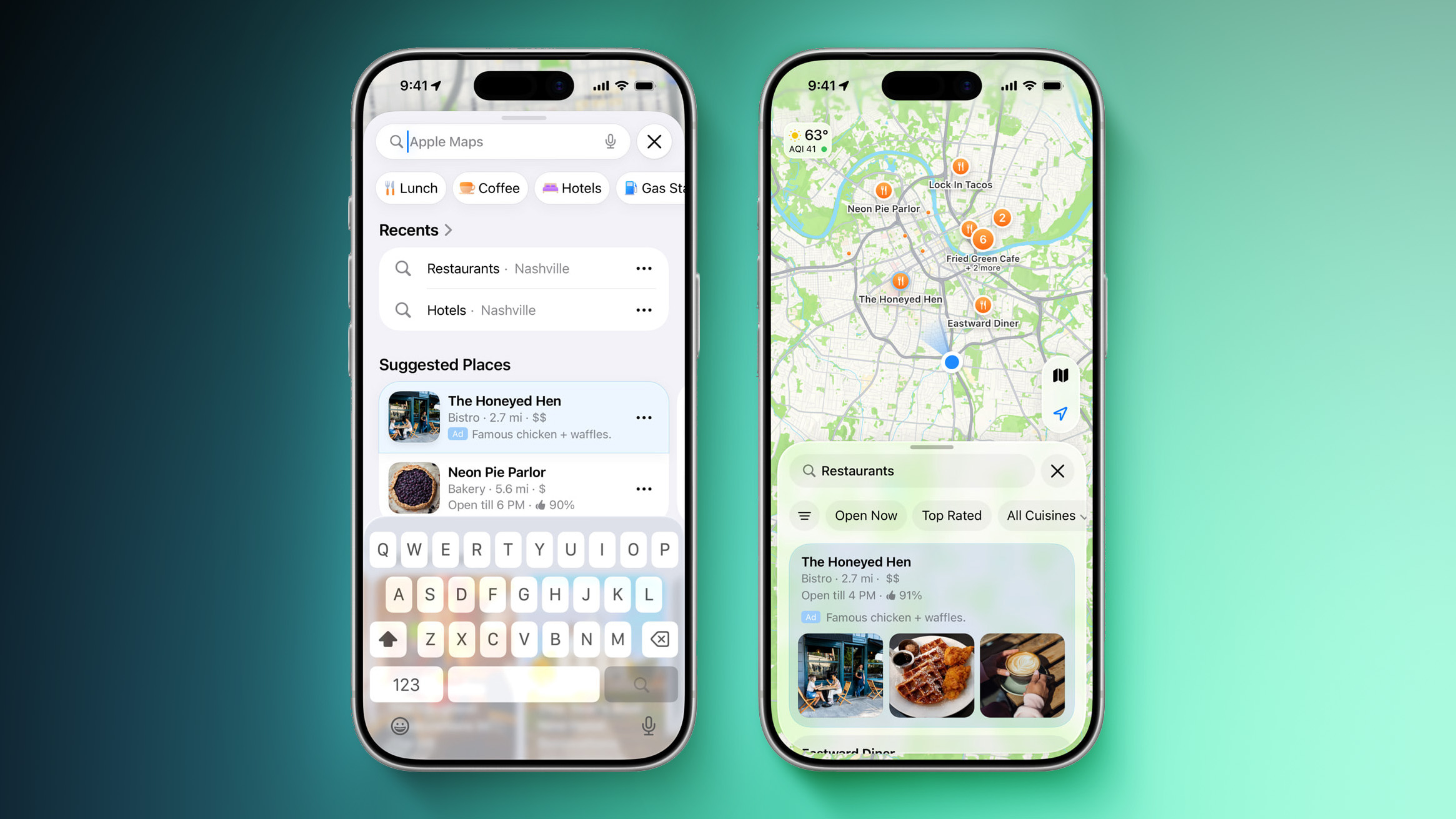
Apple plans to start showing ads in the Maps app in the United States and Canada this summer. Ads will show up in search results and in the Suggested Places section of the app.

Ads will have a clear "Ad" label, and a user's location and the ads they see and interact with in β€ŒApple Mapsβ€Œ are not associated with their Apple account. Apple also does not collect ad data or share it with third parties.
This article, "Apple Won't Allow These Ad Categories in the Maps App" first appeared on MacRumors.com

Discuss this article in our forums
  •  
❌