
Lees weergave

Apple to Launch New iPad Pro in Spring 2027

Apple is planning to release new 11-inch and 13-inch iPad Pro models in spring 2027, reports Bloomberg. No major design changes are expected, with Apple focusing on internal upgrades.
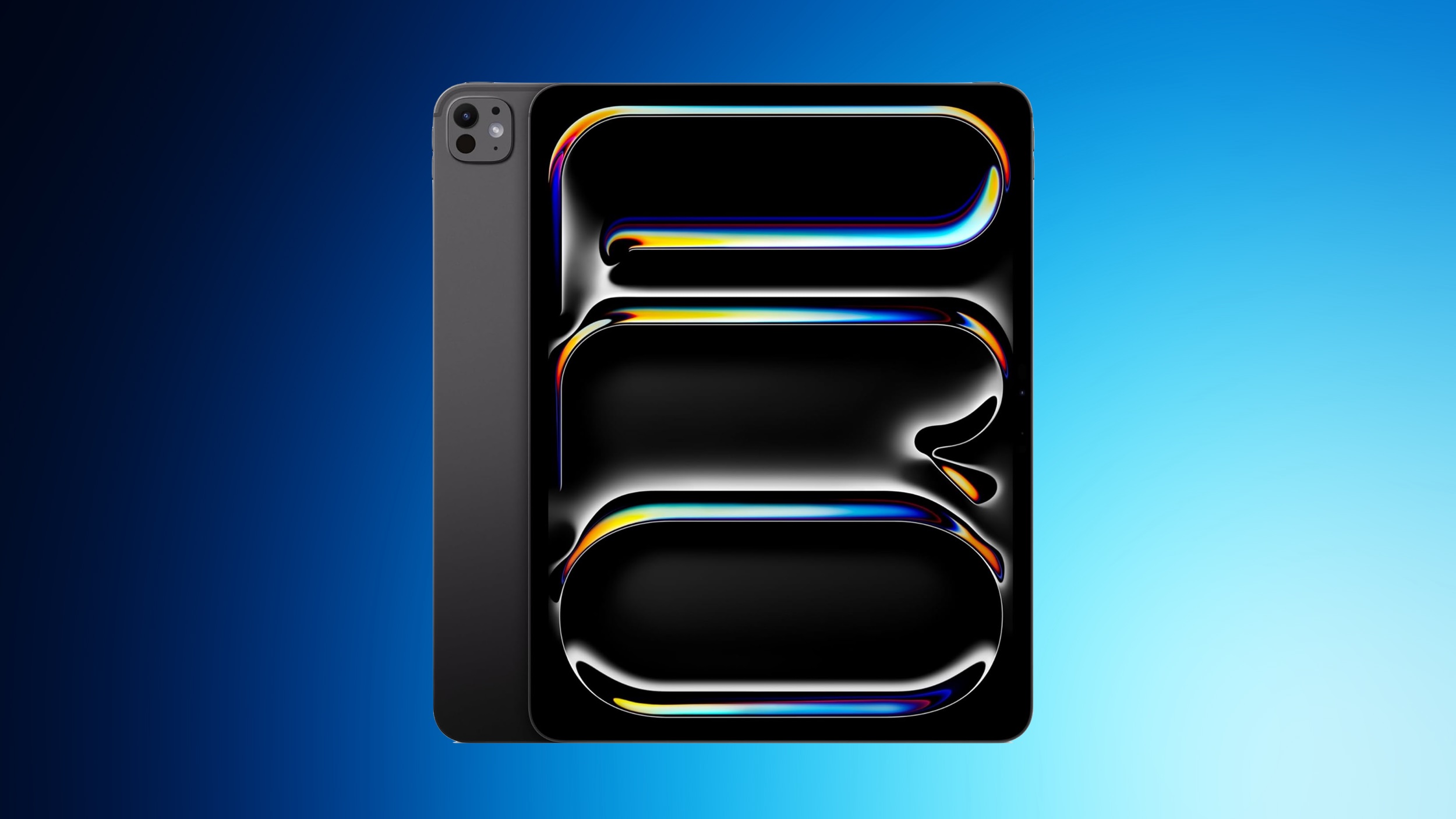

The ‌iPad Pro‌ models could use either M6 chips or M7 chips. Apple will introduce the M6 chip as soon as this year in an updated 14-inch MacBook Pro model, but it is aiming to release the M7 chip in the first half of 2027.

Bloomberg does not specify which chip Apple will put in the ‌iPad Pro‌, but if the M7 chip is ready by spring 2027, the new iPads could have the upgraded chip. If it's not ready, they'll use the M6. Both chips will be built on Apple's new 2-nanometer process, but the M7 has AI optimizations that the M6 doesn't have.

Apple has also tested a vapor chamber cooling system that could improve performance.

Little else is known about the new ‌iPad Pro‌ models, but if they come out in spring 2027, Apple could introduce them alongside the iPhone 18e, iPhone 18, and iPhone Air 2, devices that are also slated for spring 2027.
Related Roundup: iPad Pro
Buyer's Guide: iPad Pro (Neutral)

This article, "Apple to Launch New iPad Pro in Spring 2027" first appeared on MacRumors.com

Discuss this article in our forums
  •  

M6 MacBook Pro Coming in Late 2026, Redesigned M7 Model Launching in 1H 2027

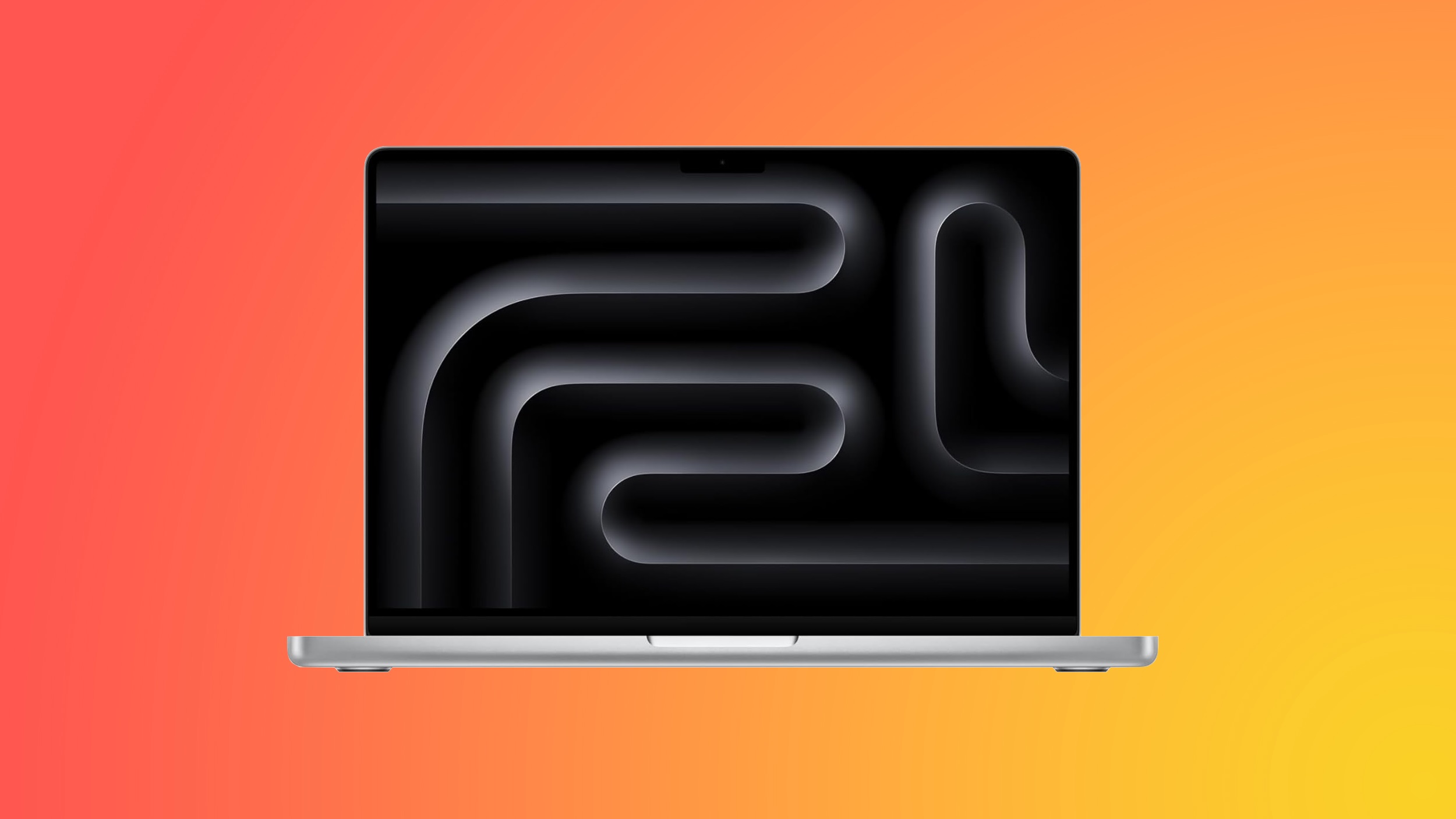
Apple plans to release an updated 14-inch MacBook Pro with an M6 chip in late 2026, and then follow it with a revamped M7 model in the first half of 2027, reports Bloomberg.


Apple apparently finished work on a 14-inch ‌MacBook Pro‌ with an M6 chip "months ago," and the device is expected to launch before the end of the year. Apple's M6 chip cycle will be shorter than prior chip cycles because it is not planning for M6 Pro and M6 Max chips. Apple is aiming to have a quick transition between M6 and M7 because its M7 chips have optimizations for AI workloads.

The M7 ‌MacBook Pro‌ coming in 2027 will have a new design that's "in line" with the design that Apple plans to use for its rumored high-end OLED touchscreen ‌MacBook Pro‌ models. Prior rumors have suggested the high-end ‌OLED‌ ‌MacBook Pro‌ models could get a slimmed down design.

It's still unclear when the ‌OLED‌ ‌MacBook Pro‌ models will come out, but Bloomberg believes a launch is slated for the end of 2026 or early 2027.

Apple's release timelines are uncertain because of the ongoing memory chip shortages and increased costs that it's dealing with.

Apple has a long list of products that could come in the first half of 2027, including new iPad Pro models, the iPhone Air 2 with a second camera, the iPhone 18, and the iPhone 18e.
Related Roundup: MacBook Pro
Buyer's Guide: MacBook Pro (Buy Now)
Related Forum: MacBook Pro

This article, "M6 MacBook Pro Coming in Late 2026, Redesigned M7 Model Launching in 1H 2027" first appeared on MacRumors.com

Discuss this article in our forums
  •  

Apple in Talks to Buy Memory Chips From Chinese Makers CXMT and YMTC

Apple is in talks to buy memory from Chinese semiconductor companies ChangXin Memory Technologies Co. (CXMT) and Yangtze Memory Technologies Co. (YMTC), reports Bloomberg, citing sources with knowledge of the talks. Discussions between Apple and the chipmakers are ongoing, and no deal has been finalized yet.


Financial Times previously reported Apple was looking into working with CXMT and YMTC to get RAM at a lower cost, and there were also several reports from South Korean sites on the possibility. Apple recently raised the prices of Macs, iPads, and other devices, and consumers are now forced to pay more for many Apple products.

Apple increased its prices because of an ongoing global memory shortage that has driven costs up. Chipmakers are focusing on chips for AI servers, leaving less supply for consumer devices. With demand outpacing supply, memory manufacturers can charge higher prices.

Both CXMT and YMTC are on the Defense Department's 1260H list of Chinese companies that the U.S. suspects have ties to the People's Liberation Army. YMTC is also on a U.S. Commerce Department blacklist that prevents U.S. companies from selling to companies on the list without an export license.

Apple is not required to get U.S. approval before buying chips from the Chinese companies, but working with the Trump administration would prevent political upset. Apple is hoping to get a green light on the deal, and it wants to keep CXMT off the Commerce Department's Entity List, which would prevent it from using CXMT as a supplier.

Bloomberg says Apple CEO Tim Cook has spoken with Trump administration officials, including Treasury Secretary Scott Bessent. Apple has proposed using the chips sourced from the companies in devices meant for the Chinese market, freeing up chips from other suppliers for the U.S.

Some Trump administration officials are reportedly against letting Apple source chips from CXMT and YMTC, so it's not clear if the talks will lead to an agreement. Apple previously tried to source memory from YMTC in 2022, but the talks ended after congressional backlash.
Tag: China

This article, "Apple in Talks to Buy Memory Chips From Chinese Makers CXMT and YMTC" first appeared on MacRumors.com

Discuss this article in our forums

  •  

Elon Musk's SpaceX Showed Off Prototype AI Device

Elon Musk's SpaceX may be aiming to compete with Apple in the future. The company showed investors a prototype for a "handset-like device designed to reshape how humans interact with artificial intelligence," according to The Wall Street Journal.


The device is described as being slimmer than an iPhone, with a "sleek design." It runs a proprietary operating system, has a Qualcomm chipset, and integrates AI tech from SpaceX subsidiary xAI. In the past, Musk has talked about an "everything app" like China's WeChat, and the device investors were shown apparently drew on that concept.

SpaceX was showing the prototype to investors and stakeholders ahead of its IPO, and said the project was in the early stages of development. The final design could change, and it is not known if it will actually come to market.

Musk has talked about designing a smartphone in the past. He said he would develop one if X (formerly Twitter) was removed from the App Store by Apple. In November 2025, he said he didn't want to make a phone, but he would if Apple and Google did "really bad things" like censorship. In a town hall meeting, Musk said the idea of making a phone "makes me want to die," but one of his companies would make a phone if needed.

Earlier this year, Musk said explicitly that SpaceX is not developing a phone, but The Wall Street Journal says some SpaceX and Tesla investors were told Musk "has long envisioned" a device that would be a platform for Tesla, SpaceX, and xAI technologies. Musk has denied the report, calling it "utterly false."
This article, "Elon Musk's SpaceX Showed Off Prototype AI Device" first appeared on MacRumors.com

Discuss this article in our forums

  •  

MacBook Ultra: Everything We Know About Apple's OLED Touchscreen Mac

Apple is working on a high-end MacBook Pro that could be called the "MacBook Ultra." The device will have several firsts in a Mac, including an OLED display and a touchscreen.


The "Ultra" name isn't a sure thing, and Apple could also continue to call the device the ‌MacBook Pro‌. It will be a "Pro" device in the ‌MacBook Pro‌ line.

Design


Apple hasn't redesigned the ‌MacBook Pro‌ since it added Apple silicon chips in 2021, so the device is due for a new look. The MacBook Ultra could feature some design changes, including a thinner chassis.

Apple could get rid of the notch on the MacBook Ultra, replacing it with an iPhone-style Dynamic Island. A ‌Dynamic Island‌ would unify the way Siri AI behaves across the iPhone and the Mac with iOS 27 and macOS Golden Gate.

Size Options


The MacBook Ultra will be available in both 14-inch and 16-inch size options.

Display


Apple's upcoming MacBook will be the first with an OLED display. OLED display technology is already used for the iPhone, Apple Watch, and iPad Pro, but it has taken time for larger-sized OLED screens to come down in price.

OLED will be an upgrade over the current mini-LED display technology in most cases, bringing deeper colors and a higher contrast ratio with true blacks. In an OLED display, individual pixels turn off instead of dim when not activated, so there's less light leakage. OLED displays tend to have better HDR than mini-LED, but sometimes don't match the overall mini-LED brightness levels.

Along with OLED technology, the MacBook Ultra is expected to have the first touchscreen display on a Mac. Users will be able to use their fingers for tapping and interacting with items on the Mac's display, similar to an iPad.

Touchscreen capabilities will be used alongside the trackpad and keyboard, and so Apple may be viewing them as more supplementary than a main control method. Apple is rumored to be adapting ‌macOS Golden Gate‌ for touch input.

Apple plans to add a reinforced hinge to the MacBook Ultra's display so that it doesn't wobble when it's tapped.

M5 Pro and M5 Max Chips


The current ‌MacBook Pro‌ models are equipped with M5 Pro and M5 Max chips, and Apple plans to use the same chips for the rumored MacBook Ultra.

Apple is planning to introduce the M6 chip as soon as late 2026, but Bloomberg says Apple isn't going to release any other chips in the M6 series. Apple's chip plans have changed in recent months, and there won't be an M6 Pro or an M6 Max. With no M6 Pro or M6 Max, Apple will need to use the M5 Pro and M5 Max so it doesn't have to wait for the M7 series.

A second-generation MacBook Ultra will use the M7 Pro and M7 Max chips.

With the MacBook Ultra set to use the same chips that are in the existing ‌MacBook Pro‌, it's unclear if it will replace the existing 14-inch and 16-inch ‌MacBook Pro‌ models or be sold alongside them as a higher-end option.

MacBook Ultra Hints


There are features in ‌macOS Golden Gate‌ that hint at a future touchscreen Mac. Apple added direct touch input to Sidecar so users can tap and interact with macOS elements when using the ‌iPad‌ as a Mac display.

‌macOS Golden Gate‌ supports an iPhone-style pull-to-refresh option, and it can be used across apps like Safari, Mail, News, Podcasts, and Calendar. A pull-to-refresh option makes the most sense on a touch display.

Pricing


Apple's OLED MacBook is expected to be a premium product, with a price tag higher than current ‌MacBook Pro‌ models. Apple raised the prices of all Macs in June, and so the MacBook Ultra will likely be even more expensive than expected.

The higher-end 14-inch ‌MacBook Pro‌ with M5 Pro chip starts at $2,499, while the 16-inch ‌MacBook Pro‌ starts at $2,999. The OLED MacBook will be priced even higher.

Launch Date


Rumors suggest the MacBook Ultra will launch in late 2026 or early 2027, with mass production to start in late 2026. If the MacBook Ultra comes in 2026, it could be released sometime between October and December, but it won't be unveiled at Apple's September iPhone event.

If it launches in 2027, it could come early in the year at Apple's first 2027 event.
This article, "MacBook Ultra: Everything We Know About Apple's OLED Touchscreen Mac" first appeared on MacRumors.com

Discuss this article in our forums

  •  

Nanoleaf's New $80 Smart Ceiling Light Works With Matter and HomeKit

Nanoleaf today launched the Smart Multicolor Ceiling Light, an affordable Matter-compatible lighting product. With a dual-sided design, there's a main downlight and an upward backlight for a layered lighting glow. Each side can be controlled individually for bright light or an ambient lighting option.


The light has 196 LEDs inside, with up to 2600 lumens. White light ranges from 2200K to 6500K, supporting tones that change throughout the day to match natural light. Nanoleaf says it was built with RG0 Low Blue Light technology to reduce blue light hazard and eye strain.

There are 28 color zones, and millions of colors are supported for gradients. According to Nanoleaf, the Multicolor Ceiling Light has a Color Rendering Index of 95, offering "vivid-natural looking colors."

The light measures 13.8 inches, and it is 1.18 inches thick. It is a hard-wired light that's meant to be installed with a standard light switch, though it also works with the Nanoleaf Sense+ Wireless Smart Switch.

Nanoleaf's new light supports Matter over Wi-Fi, so it can connect to a HomeKit setup for use with Siri and the Home app. It also works with the Nanoleaf app, which offers hundreds of color scenes and support for music pairing. For multi-color lighting scenes with gradients, the Nanoleaf app is required because ‌HomeKit‌ doesn't support that.

The Nanoleaf Smart Multicolor Ceiling Light can be purchased from Amazon.com or the Nanoleaf website for $80.
This article, "Nanoleaf's New $80 Smart Ceiling Light Works With Matter and HomeKit" first appeared on MacRumors.com

Discuss this article in our forums

  •  
❌