Lees weergave

Apple's Most Powerful On-Device AI Now Requires iPhone 17 Pro or iPhone Air

Apple's most advanced on-device AI model in iOS 27 requires a minimum of 12GB of unified memory, meaning the standard iPhone 17 is excluded.


The next generation of Apple Intelligence introduces a new on-device model more powerful than anything Apple has shipped before. While most ‌iOS 27‌ AI features run on the same hardware supported today, including iPhone 15 Pro, the most capable model carries stricter requirements. To run Apple's most powerful on-device model, users will need one of the following devices:


  • iPhone: iPhone Air, iPhone 17 Pro, or ‌iPhone 17 Pro‌ Max

  • iPad: iPad with M4 or later with at least 12GB of unified memory

  • Mac: Mac with M3 or later with at least 12GB of unified memory

  • Vision Pro: Apple Vision Pro with M5


The base ‌iPhone 17‌ is excluded because it ships with 8GB of memory, falling short of the 12GB threshold. The standard memory requirement for ‌Apple Intelligence‌ has been 8GB since its introduction, so this marks the first time Apple has raised the bar for its most capable on-device features.

According to Apple's press release, the new model specifically enables features including expressive voices and more advanced dictation.
Related Roundups: iPhone 17 Pro, iPhone Air
Related Forum: iPhone

This article, "Apple's Most Powerful On-Device AI Now Requires iPhone 17 Pro or iPhone Air" first appeared on MacRumors.com

Discuss this article in our forums
  •  

Siri AI Gains Customizable Voice Expressiveness and Pace

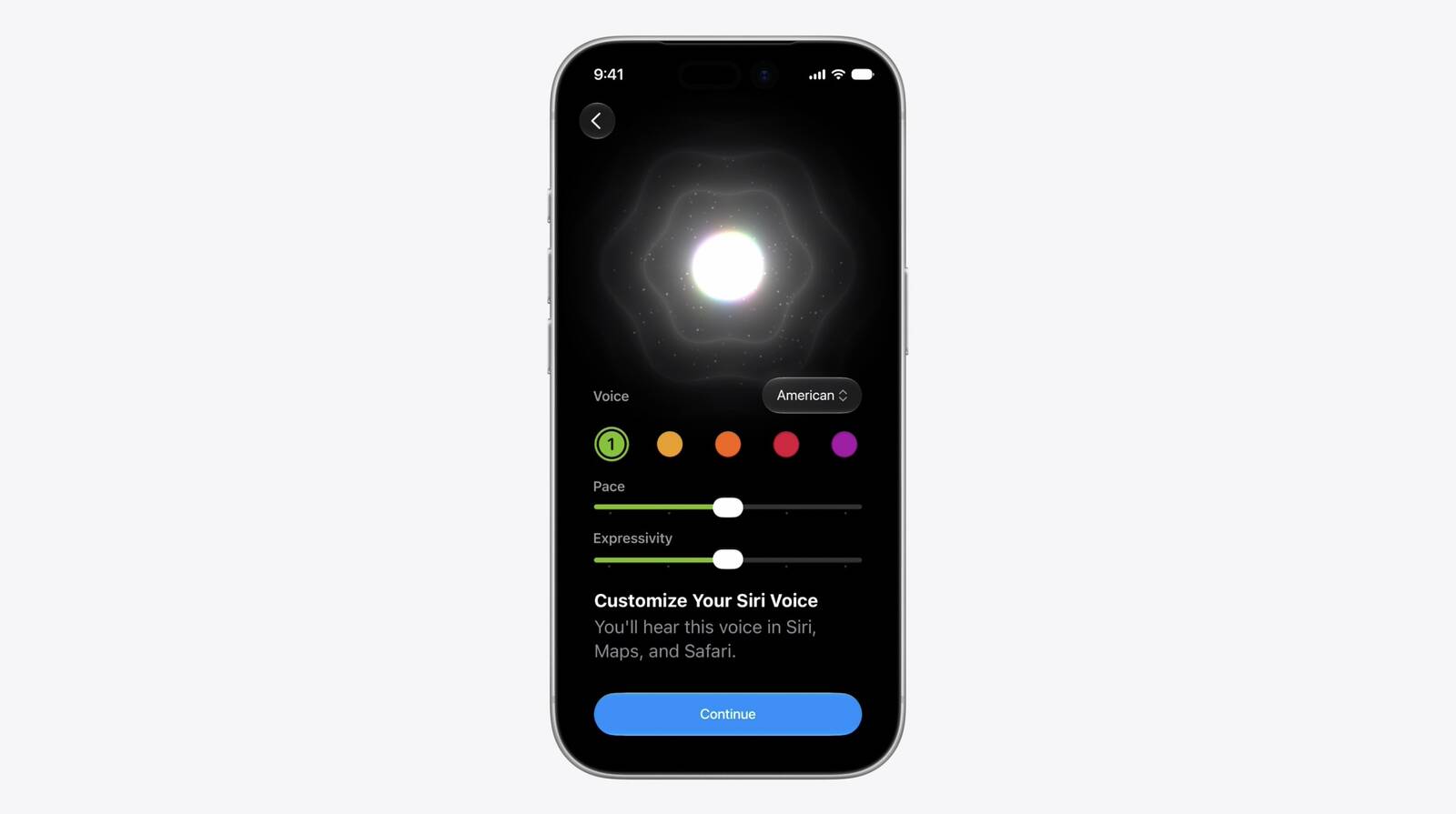
Apple today announced that Siri AI will offer a "brand new voice experience," giving users the ability to customize how the voice assistant sounds.


On devices that support Apple's most advanced on-device model, ‌Siri‌ AI will deliver more expressive voices alongside a significant improvement to systemwide dictation accuracy. Users will be able to adjust both the expressiveness and pace of ‌Siri‌'s voice to their preference via a new UI with sliders. As of developer beta 1, American is the sole voice option.

The updated dictation engine will capture speech as polished text, automatically handling capitalization, punctuation, and formatting in real time. Apple says improved speech understanding means users can speak naturally and trust that their words will appear accurately and as intended.
Tags: Siri, Siri AI

This article, "Siri AI Gains Customizable Voice Expressiveness and Pace" first appeared on MacRumors.com

Discuss this article in our forums
  •  

Apple Intelligence Gains Smarter Writing Tools in iOS 27

Apple today announced a series of Apple Intelligence improvements coming to Mail, Messages, Files, and system-wide text input as part of iOS 27 and its other major platform updates.


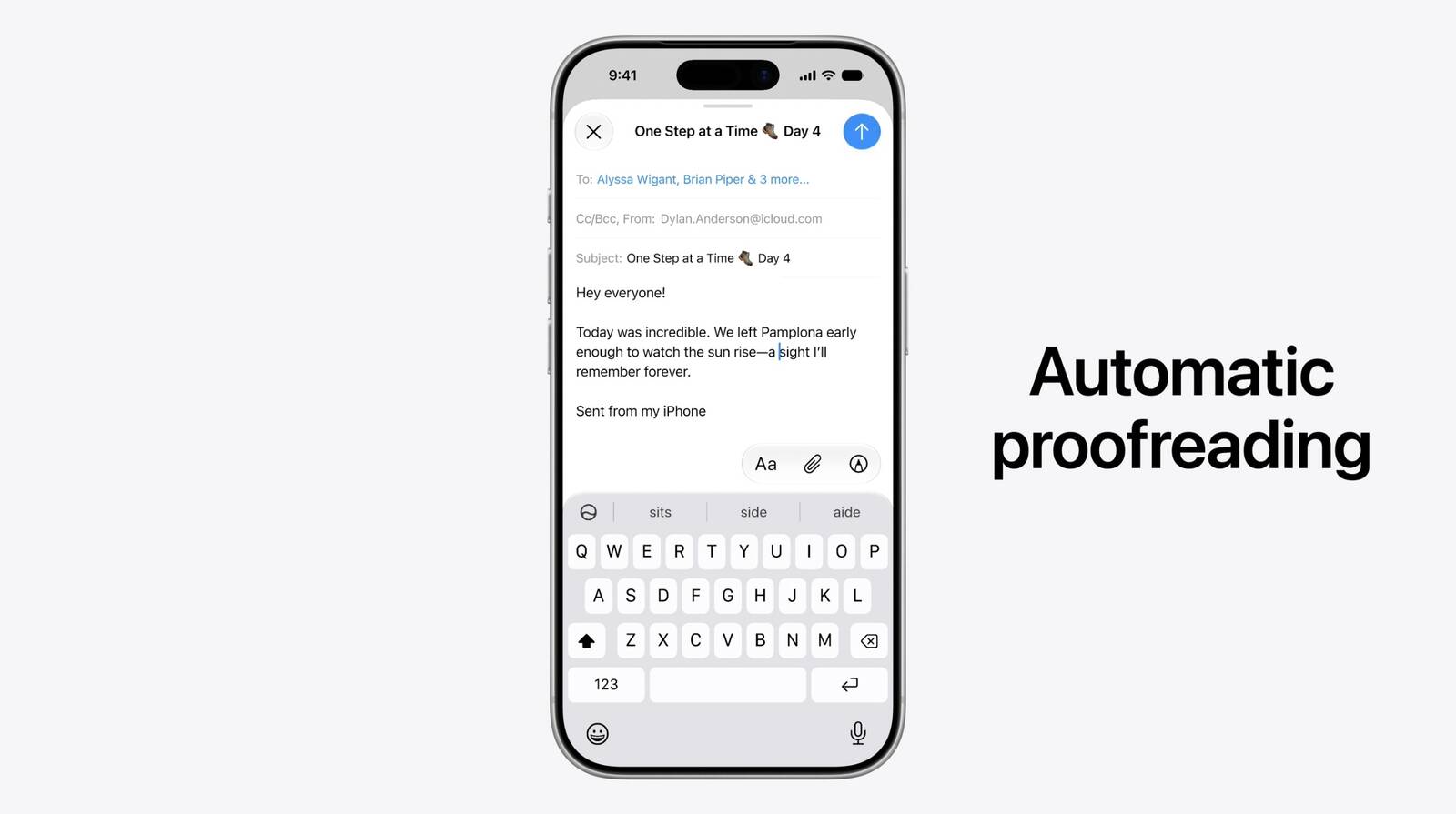
The updates include automatic proofreading, which surfaces spelling and grammar suggestions as users type across the system. Apple is also introducing intelligent file and folder naming suggestions based on content.

Two enhancements come specifically to Mail and Messages. Apple's composition assistant will now adapt to how a user typically communicates with different contacts, tailoring its suggestions to match individual conversational styles. Smart Reply, which proposes quick responses to incoming messages, has also been updated to draw on a user's personalized writing style rather than offering generic reply options.
Related Roundup: iOS 27

This article, "Apple Intelligence Gains Smarter Writing Tools in iOS 27" first appeared on MacRumors.com

Discuss this article in our forums
  •  

Apple Brings AI Tab Organization and AI-Generated Extensions to Safari

Apple today unveiled a raft of Safari upgrades powered by Apple Intelligence, including automatic tab organization, AI-generated custom extensions, and new privacy-first browsing tools.


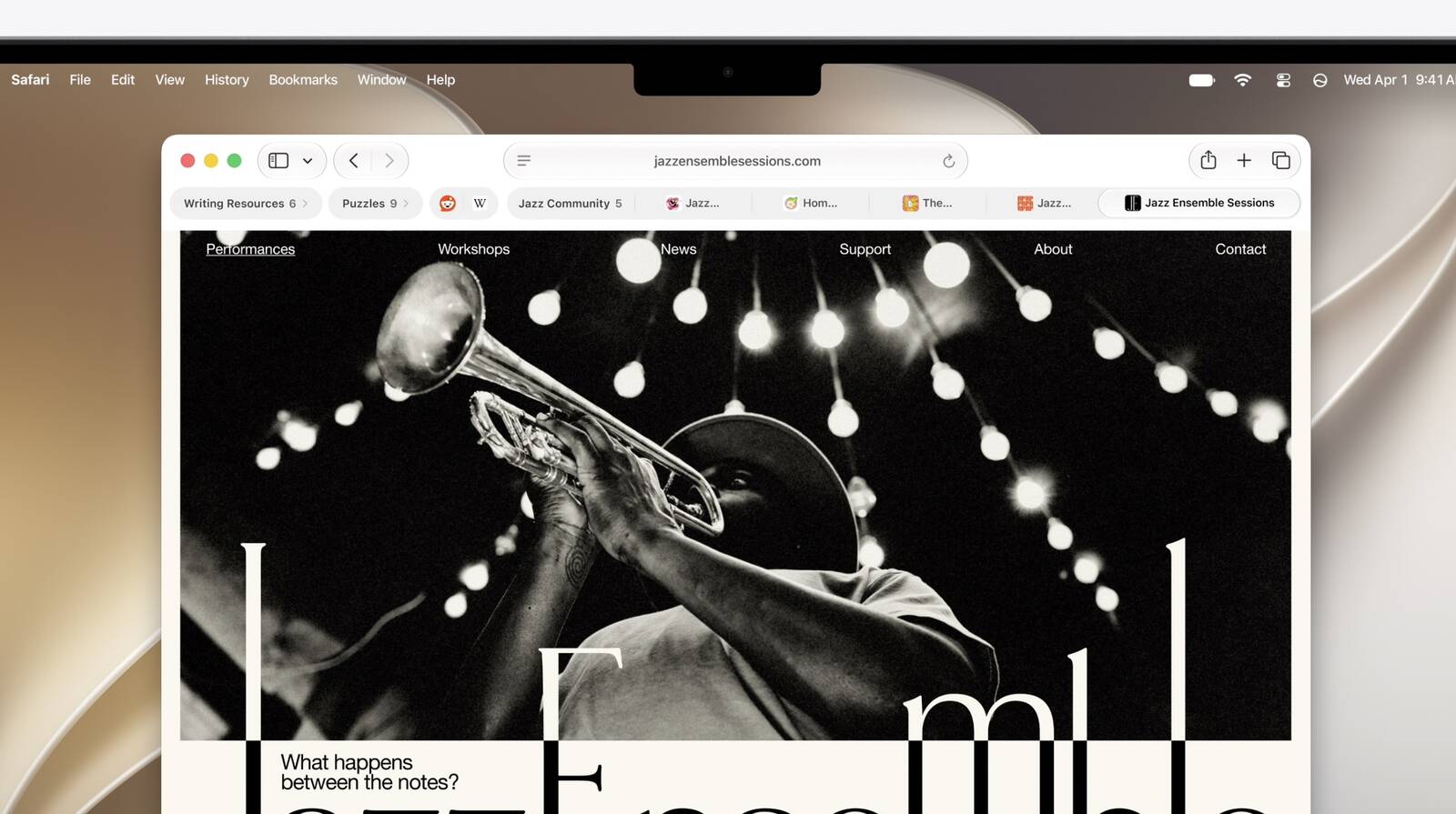
The centerpiece feature is automatic tab organization, which uses ‌Apple Intelligence‌ to group a user's open tabs into relevant topics without any manual intervention. If someone is planning a weekend trip, for example, Safari can pull all of their travel-related tabs into a single topic. As browsing continues, Safari will slot new tabs into existing topics or create fresh ones as needed.

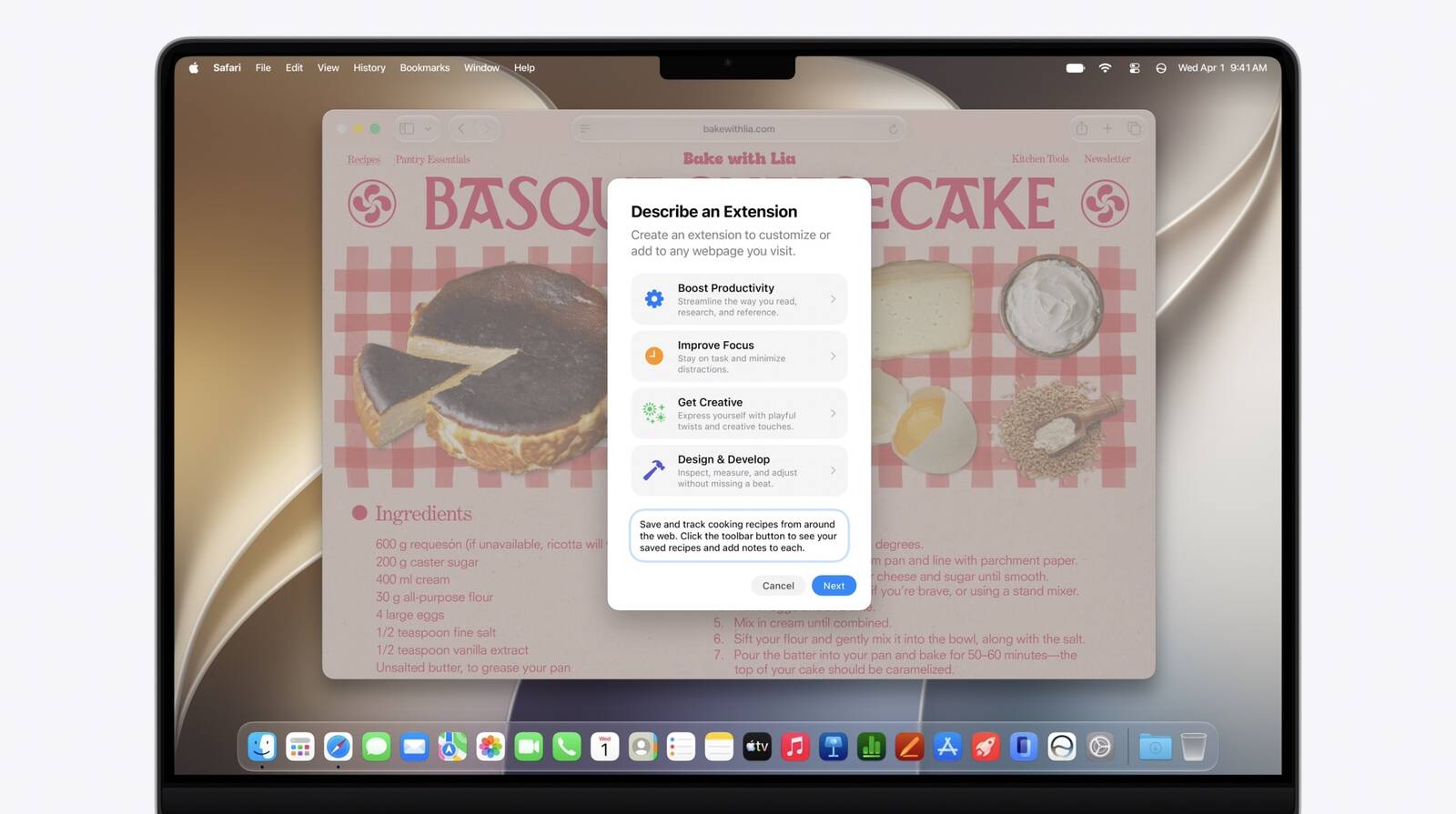
Apple is also introducing a way for users to create custom Safari extensions using natural language. The company described the feature as "describe an extension," letting users specify what they want in plain English and having Safari generate an extension that adapts web pages accordingly. Apple's example was adding a toolbar button that saves and rates recipes from cooking sites.


A new "Notify Me" feature lets users ask Safari to watch a specific web page for changes and alert them when something relevant happens, such as a product restocking or a price drop. Users tell Safari in natural language what they are looking for, and Safari sends a notification when it detects a matching change on that page.

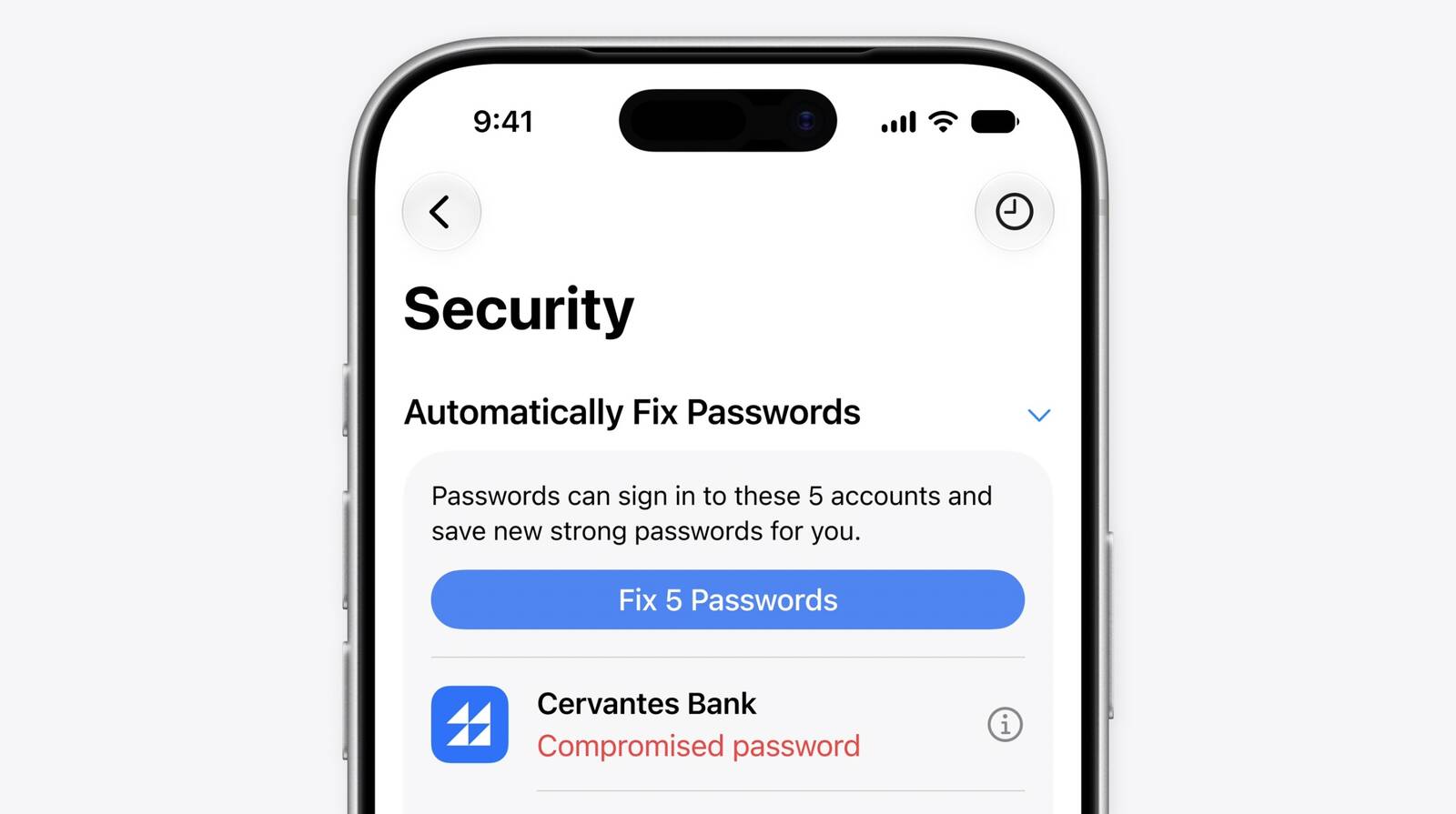
Apple is bringing a background agentic password-updating tool to the browser. Working alongside the Passwords app, ‌Apple Intelligence‌ can automatically navigate to eligible websites, sign in, and update weak or compromised passwords to strong ones with a single tap.

Apple says all of these capabilities are built with privacy in mind, and that no personal browsing data is exposed to Apple or anyone else in the process.
This article, "Apple Brings AI Tab Organization and AI-Generated Extensions to Safari" first appeared on MacRumors.com

Discuss this article in our forums
  •  

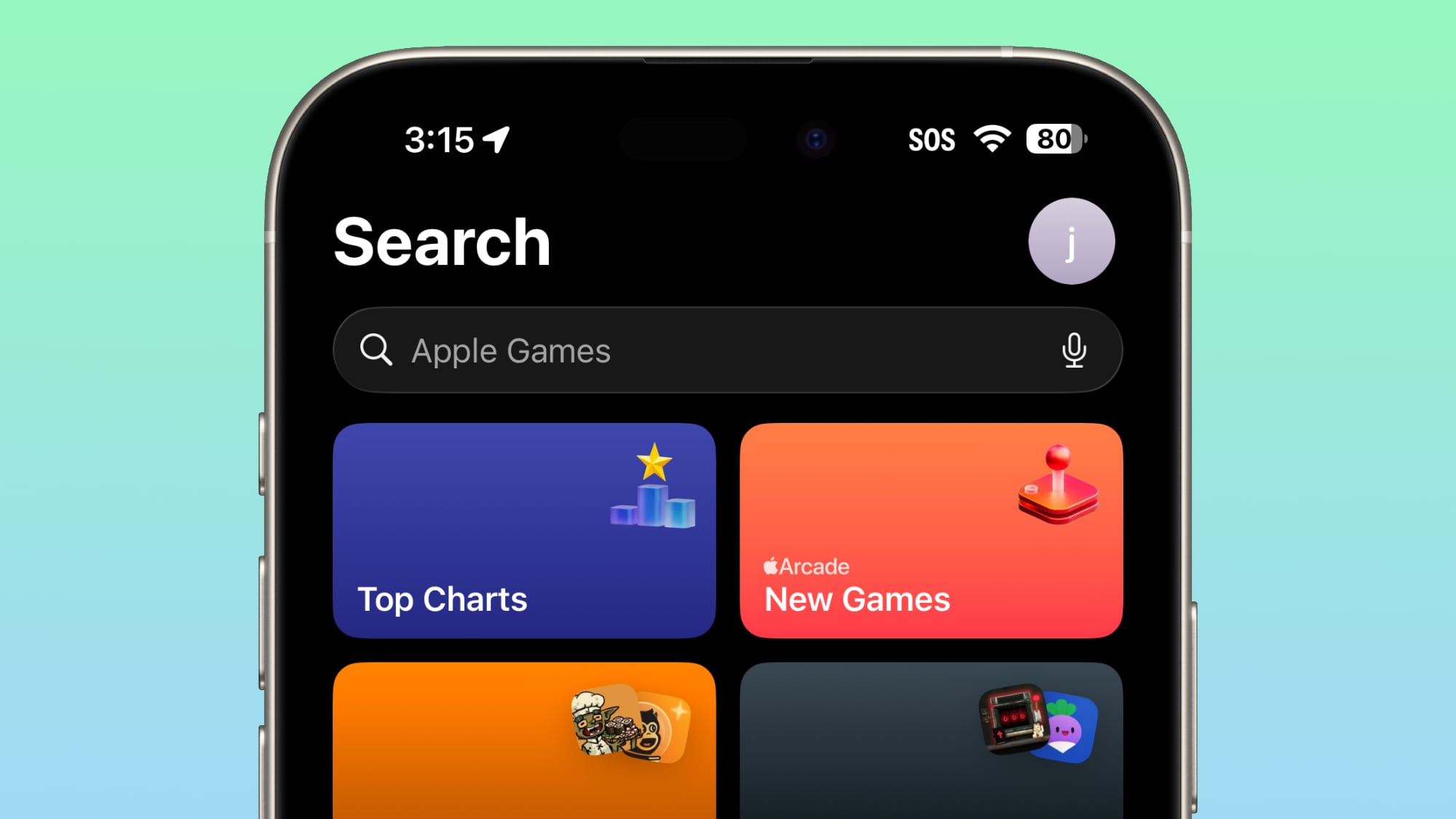
Apple Passwords Can Now Automatically Fix Weak and Compromised Passwords With Agentic AI

Apple today announced that the Passwords app can now automatically update weak and compromised passwords using Apple Intelligence and Safari to take action on a user's behalf.


The feature builds on Passwords' existing ability to flag weak or compromised credentials. While the app has long been able to alert users to security issues, acting on those alerts required manually visiting each site and changing passwords individually. The new capability removes that friction by automating the process end-to-end in the background.

Apple describes the system as agentic, with ‌Apple Intelligence‌ and Safari securely navigating through websites, signing in, and upgrading accounts to strong passwords without the user needing to intervene beyond an initial tap. The feature displays as a Live Activity when active.
This article, "Apple Passwords Can Now Automatically Fix Weak and Compromised Passwords With Agentic AI" first appeared on MacRumors.com

Discuss this article in our forums
  •  

Apple Intelligence Introduces Contextual Call and Messages Features

Apple today announced a set of new communication-focused Apple Intelligence features, including contextual suggestions in Messages and a Call Context tool that surfaces relevant information from Mail when a user phones a business.


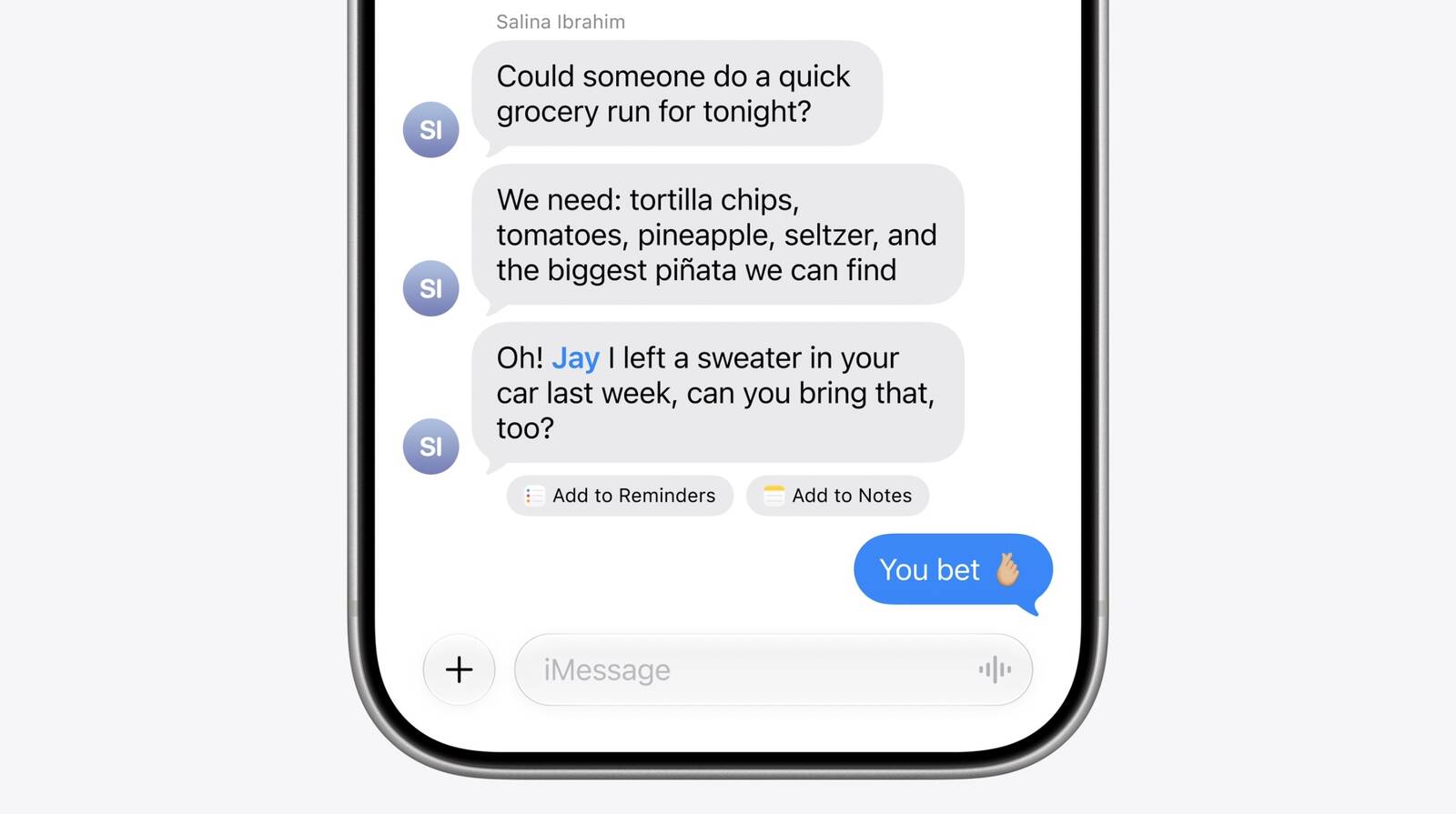
The new Messages features offer one-tap suggestions based on the content of a conversation. If a contact asks for photos, Messages can surface a suggestion to search the library, recognizing keywords, locations, and people to find the best matches. Messages can also prompt users to create a reminder or a note directly from the conversation thread. Smart Reply in both Messages and Mail can now draw on a user's personalized writing style, and suggestions in Mail gain the ability to take action with third-party apps.


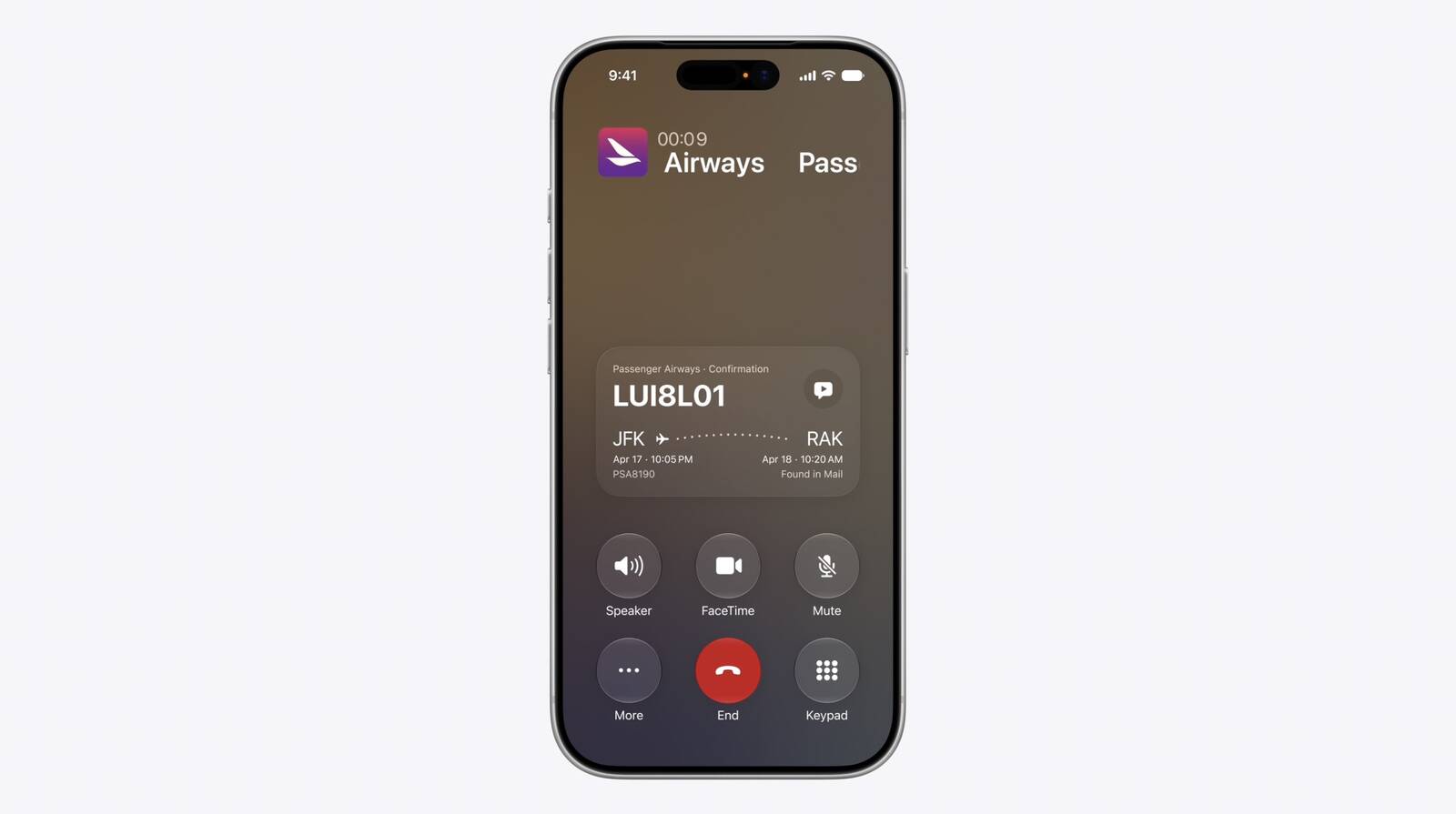
The other headline feature is Call Context, which proactively surfaces relevant information when a user places a call to a business. If someone calls an airline to change a flight, for example, the Phone app can automatically find the relevant confirmation code or reservation number from Mail and display it during the call. Apple says Call Context looks only at who the user is calling and not at the call audio itself. The feature runs entirely on device, meaning no data is shared with Apple or any third party.
This article, "Apple Intelligence Introduces Contextual Call and Messages Features" first appeared on MacRumors.com

Discuss this article in our forums
  •  

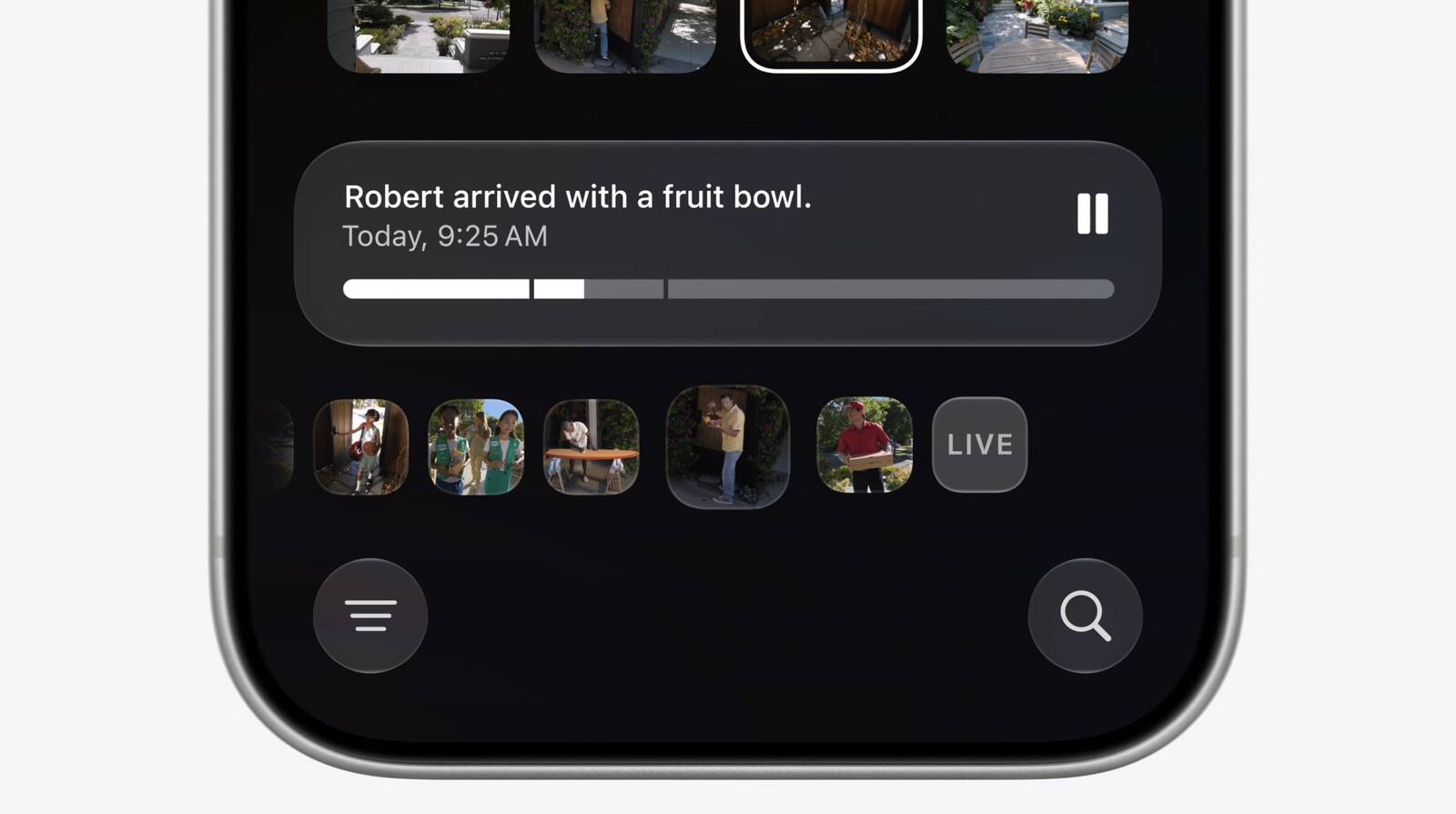
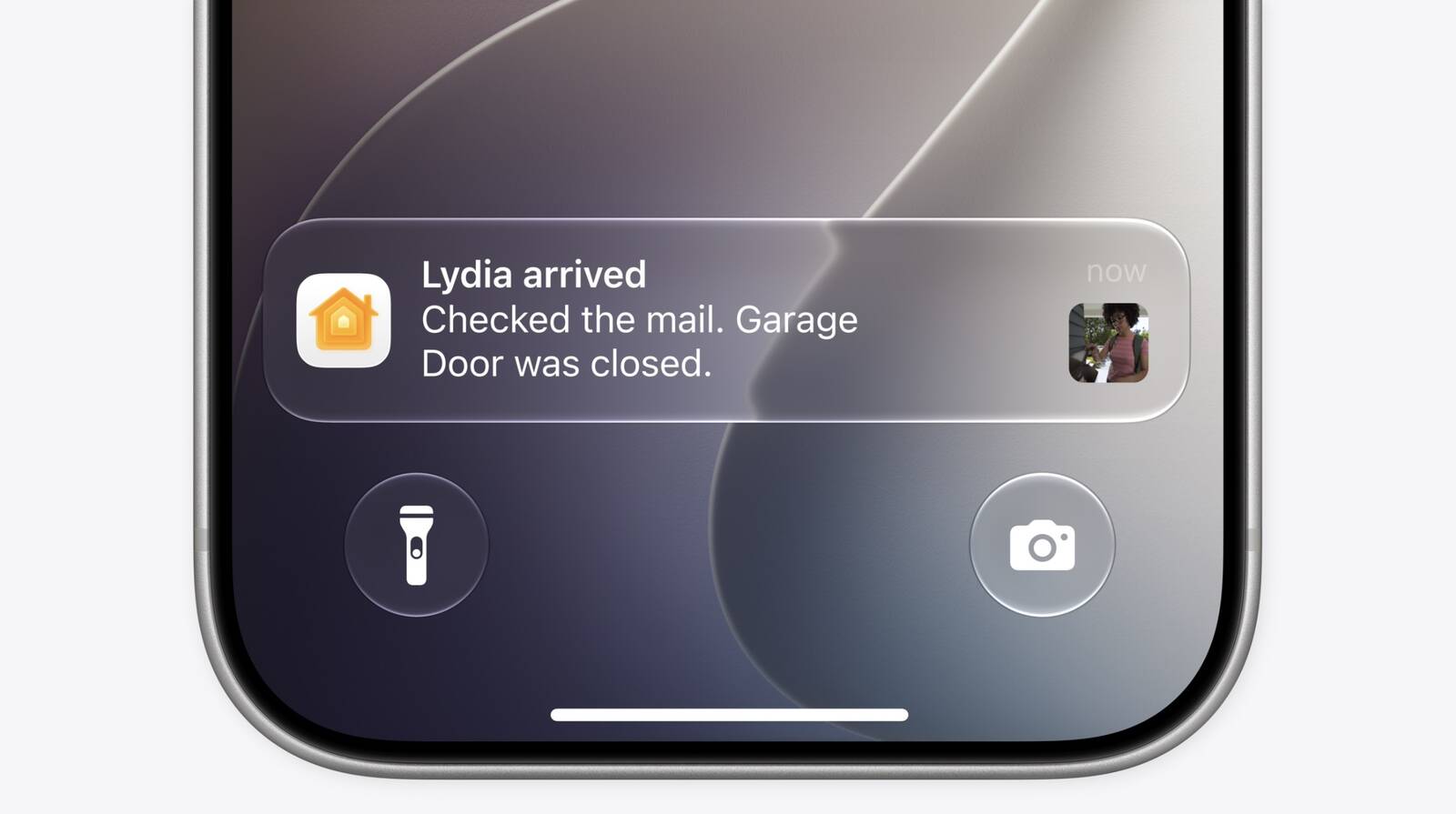
Apple to Add AI Video Descriptions and Smarter Notifications to Home App

Apple today announced new Apple Intelligence features for the Home app, including AI-generated descriptions of HomeKit Secure Video camera clips and smarter grouping of accessory notifications.


The Home app will use ‌Apple Intelligence‌ to analyze recorded clips from compatible cameras and generate text descriptions summarizing what happened in them. Users can search through footage to find specific events, such as a package delivery, without needing to watch each clip individually.

The app will also surface noteworthy clips at the top of the Search page, so users can quickly identify important moments. When playing a clip, the Home app can pull together footage from multiple cameras to provide a more complete picture of an event.


‌Apple Intelligence‌ will also make accessory notifications smarter. Rather than receiving a separate alert for every triggered accessory, the Home app will understand related notifications as a single ongoing activity and deliver one notification that continues to update as the activity unfolds.
This article, "Apple to Add AI Video Descriptions and Smarter Notifications to Home App" first appeared on MacRumors.com

Discuss this article in our forums
  •  

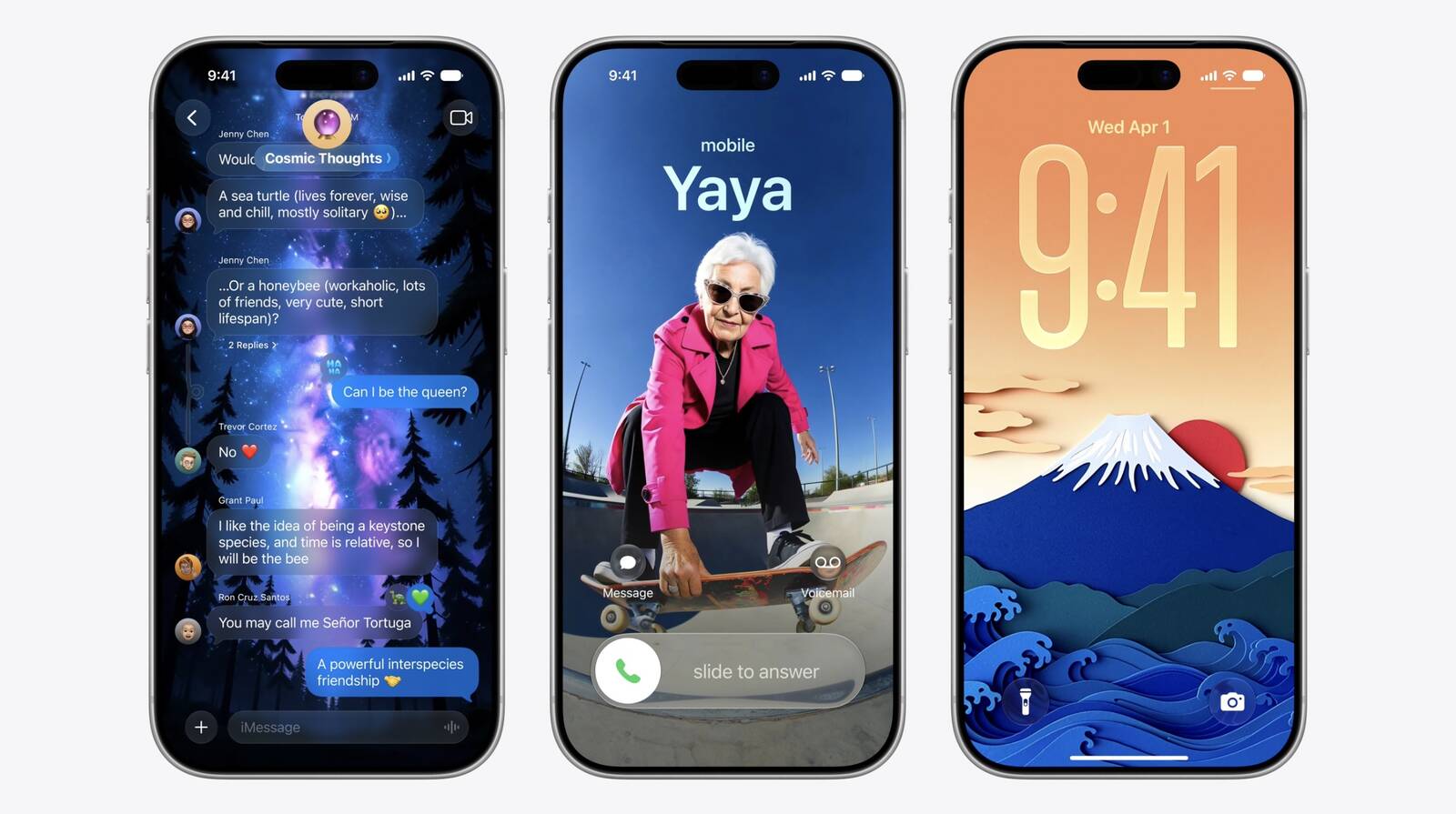
Apple Revamps Image Playground With Photorealistic Generation and New Editing Tools

Apple has announced a major overhaul of Image Playground, introducing a new generative model capable of photorealistic image creation alongside expanded editing and sharing capabilities.


The updated app is powered by a new generative model that runs on Private Cloud Compute, enabling it to produce high-quality images in virtually any style, including photorealistic output for the first time. All generated images will automatically carry a hidden SynthID watermark to identify them as AI-generated.

‌Image Playground‌ now supports photo-based editing in addition to creation. Users can describe changes they want to make to an existing image, or use touch gestures such as tapping, circling, or brushing to highlight specific objects and move or resize them. Photos can also be transformed into different styles using a text description, and people from a user's photo library can be included in generated images.


The experience extends further into iOS with new output destinations. In addition to Messages, generated images can now be used as Lock Screen wallpapers and Contact Posters. Users can also choose an aspect ratio when creating images, such as landscape for a website header or portrait for a flyer.

Developers will have access to the new capabilities through the ‌Image Playground‌ API, allowing third-party apps to integrate photorealistic generation and editing features directly.
This article, "Apple Revamps Image Playground With Photorealistic Generation and New Editing Tools" first appeared on MacRumors.com

Discuss this article in our forums
  •  

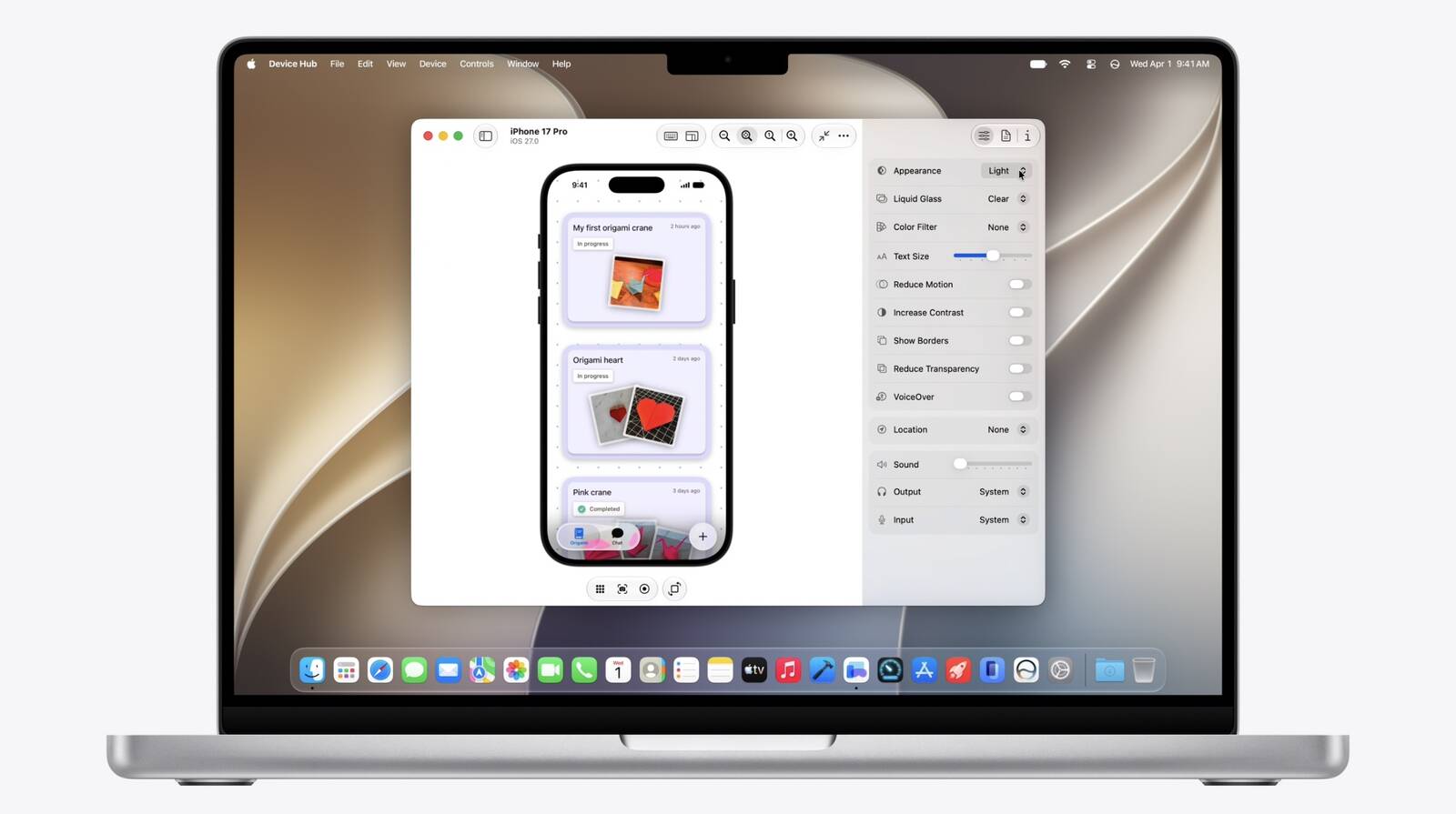
Apple Unveils Xcode and Foundation Models Framework Improvements

Apple today announced a new Foundation Models framework for developers alongside a set of Xcode enhancements aimed at agentic coding workflows.


The Foundation Models framework gains image input support, allowing developers to pass images alongside text into on-device models. Apple also introduced custom skills and server-side model execution as part of the framework, giving developers more flexibility in how they integrate AI capabilities into their apps. Apple also announced a new Core AI framework alongside the Foundation Models changes.

Xcode's coding assistant has been expanded to handle app localization and can now interact with simulated devices, with the ability to extend its capabilities further via custom skills. Apple also said developers will be able to more easily resize and interact with app previews, with additional details to follow in upcoming sessions and the State of the Union presentation. Apple SVP of Software Engineering Craig Federighi said Xcode is now the "best place" to build apps using agentic coding.

Apple also highlighted expanded App Intents support, with Apple citing third-party apps such as Line as examples of how developers can allow users to ask Siri to perform actions within their apps on their behalf.
Tag: Xcode

This article, "Apple Unveils Xcode and Foundation Models Framework Improvements" first appeared on MacRumors.com

Discuss this article in our forums
  •  

iPadOS 27 Drops Support for a Wave of iPads

iPadOS 27 cuts support for more iPad models than last year's iPadOS 26 did, with older iPad Pro, iPad Air, ‌iPad‌, and iPad mini models all losing compatibility.


‌iPadOS 26‌ supported ‌iPad Air‌ models from the 3rd generation onward. iPadOS 27 raises the floor to A14, M1, or later, cutting the 3rd generation ‌iPad Air‌ model from the compatibility list entirely.

The ‌iPad Pro‌ also sees cuts. ‌iPadOS 26‌ retained support for ‌iPad Pro‌ 12.9-inch from the 3rd generation onward and ‌iPad Pro‌ 11-inch from the 1st generation onward. iPadOS 27 raises those floors to the 4th generation 12.9-inch and the 2nd generation 11-inch, dropping two older Pro models that were still supported just a year ago.

For the standard ‌iPad‌ lineup, ‌iPadOS 26‌ drew the line at the 8th generation, having already dropped the 7th generation last year. iPadOS 27 cuts the 8th generation as well, leaving only the 9th generation, 10th generation, and the current A16 model as compatible.

The ‌iPad mini‌ sees its oldest supported model bumped from the 5th generation to the 6th generation, with the A17 Pro-equipped mini 7 also included. The 5th generation mini, which ran ‌iPadOS 26‌, will not receive the update.

By contrast, ‌iPadOS 26‌ was a relatively conservative cull; it dropped only the 7th generation ‌iPad‌ from the iPadOS 18 compatibility list. iPadOS 27 represents a considerably more aggressive pruning across the entire ‌iPad‌ lineup.
Related Roundup: iOS 27

This article, "iPadOS 27 Drops Support for a Wave of iPads" first appeared on MacRumors.com

Discuss this article in our forums
  •  

watchOS 27 Drops Support for Apple Watch Series 9, Ultra 1, SE 2, and Older

Apple today confirmed that watchOS 27 will not support the Apple Watch Series 9, Apple Watch Ultra (first generation), or Apple Watch SE (second generation), effectively drawing a line at devices equipped with the S9 or S10 chip.


The only Apple Watch models compatible with watchOS 27 are the Apple Watch Series 10, Series 11, Ultra 2, Ultra 3, and SE 3. Despite the fact that the Apple Watch Ultra 2 contains the S9 chip, the Series 9 which contains the same chip will no longer be supported.

The cuts are the biggest loss of latest generation software support for the Apple Watch to date. watchOS 26 supported exactly the same devices as watchOS 11 before it: the Apple Watch Series 6 and later, Apple Watch SE (2nd generation) and later, and all Apple Watch Ultra models. With watchOS 27, Apple is effectively dropping four years' worth of device support in a single software update.
Related Roundups: Apple Watch 11, watchOS 26
Buyer's Guide: Apple Watch (Caution)
Related Forum: Apple Watch

This article, "watchOS 27 Drops Support for Apple Watch Series 9, Ultra 1, SE 2, and Older" first appeared on MacRumors.com

Discuss this article in our forums

  •  

Apple to Bring AI Reframing and Editing Tools to Photos App

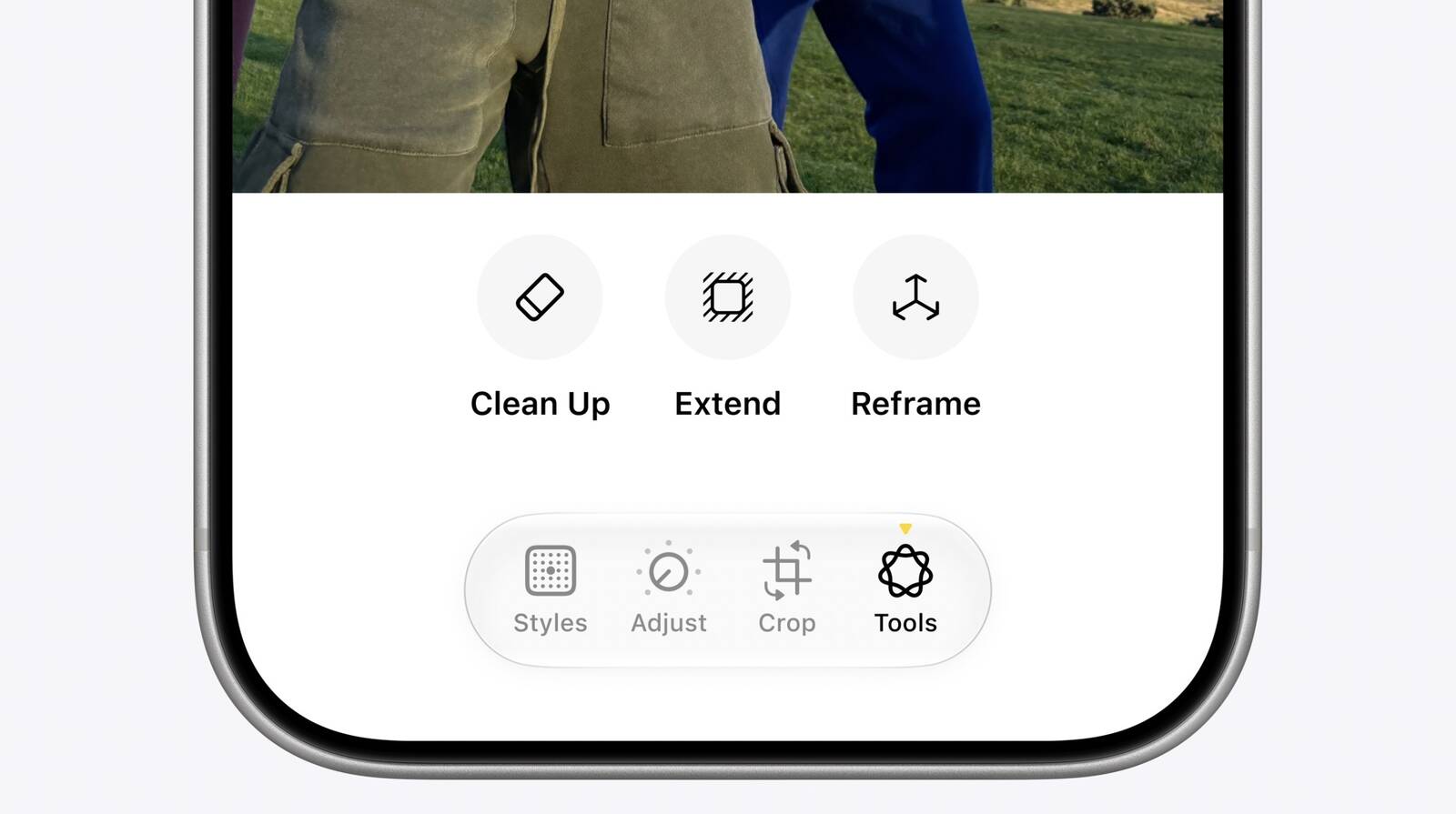
Apple today announced new AI-powered photo editing tools coming to the Photos app as part of Apple Intelligence, including an upgraded Cleanup tool, a new Extend tool, and a new Spatial Reframing feature.


Spatial Reframing allows users to reposition the virtual camera angle of a photo after it has already been taken. By touching and dragging, users can adjust the framing and perspective of a shot, with ‌Apple Intelligence‌ generating new content only to fill in the gaps created by the shift in angle. It only generates new content to fill in the gaps where the perspective has shifted, ensuring the reframed photo stays consistent with the original scene.

The Cleanup tool is also receiving what Apple calls a "big upgrade," with improved ability to remove distractions from images and more realistic infill "even when the scene is complex." A new Extend tool rounds out the trio, letting users add more background space to a photo or adjust its aspect ratio.

Apple said the new tools help photographers "enhance their images in ways that respect the original moment." All three features are processed using Apple's Private Cloud Compute infrastructure, meaning the edits are handled in the cloud while Apple says user data remains protected. The new tools will work on older photos as well as images taken with non-Apple cameras.
This article, "Apple to Bring AI Reframing and Editing Tools to Photos App" first appeared on MacRumors.com

Discuss this article in our forums
  •  

Apple Brings Natural Language Creation to Shortcuts App

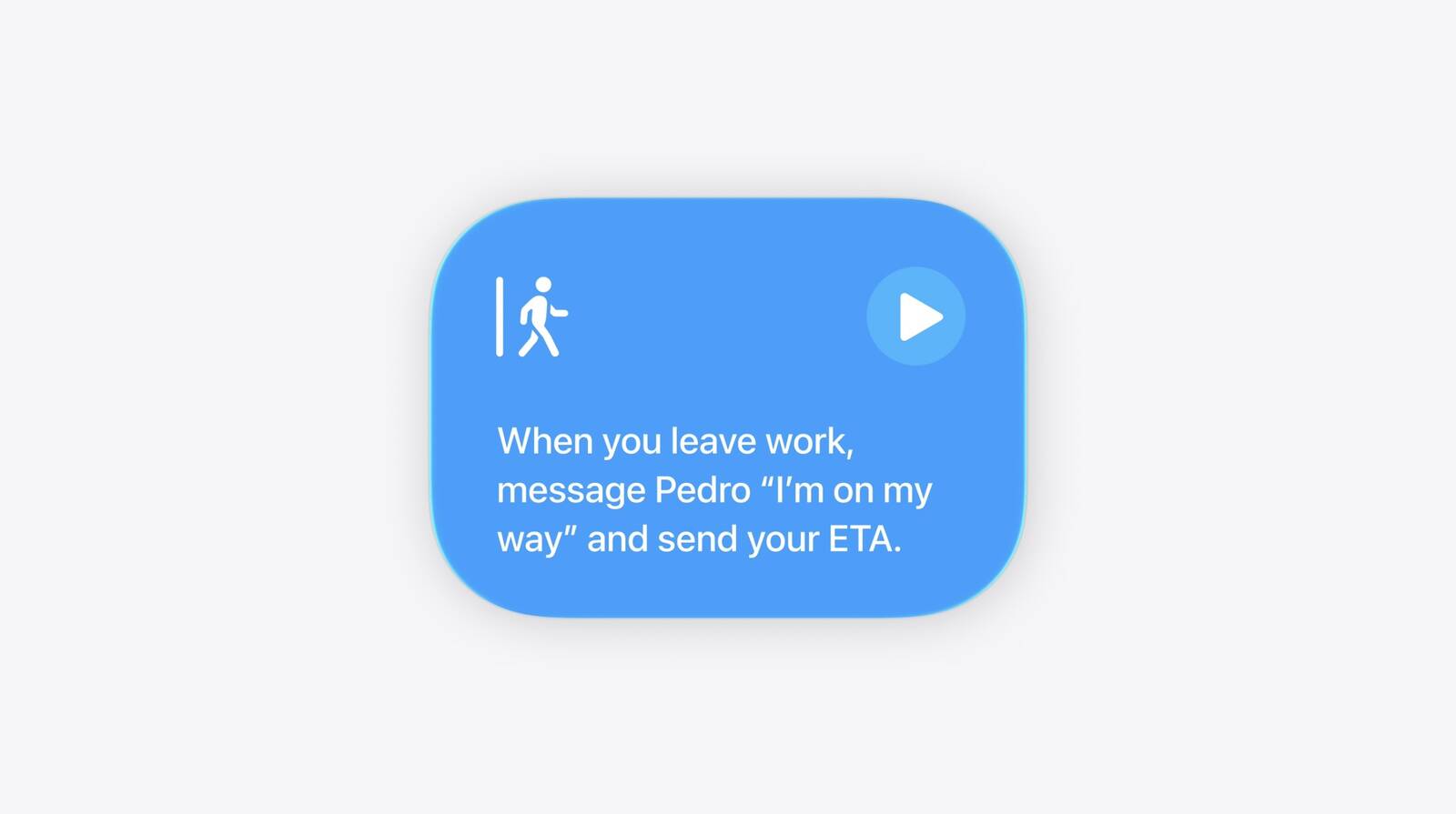
Apple today announced that users can now describe a shortcut in natural language, with Apple Intelligence automatically building the automation in the background.


Previously, creating a Shortcuts automation required users to manually build workflows step by step, making the feature largely the preserve of more technically minded users. With the upcoming update, users can simply describe what they want a shortcut to do in plain English text, and ‌Apple Intelligence‌ then handles the construction.

Apple demonstrated the feature with a practical example: A user asking the Shortcuts app to automatically send their estimated time of arrival to a designated recipient whenever they leave home. ‌Apple Intelligence‌ calculates the ETA based on the user's location and sends the correct time without any manual configuration.
This article, "Apple Brings Natural Language Creation to Shortcuts App" first appeared on MacRumors.com

Discuss this article in our forums
  •  

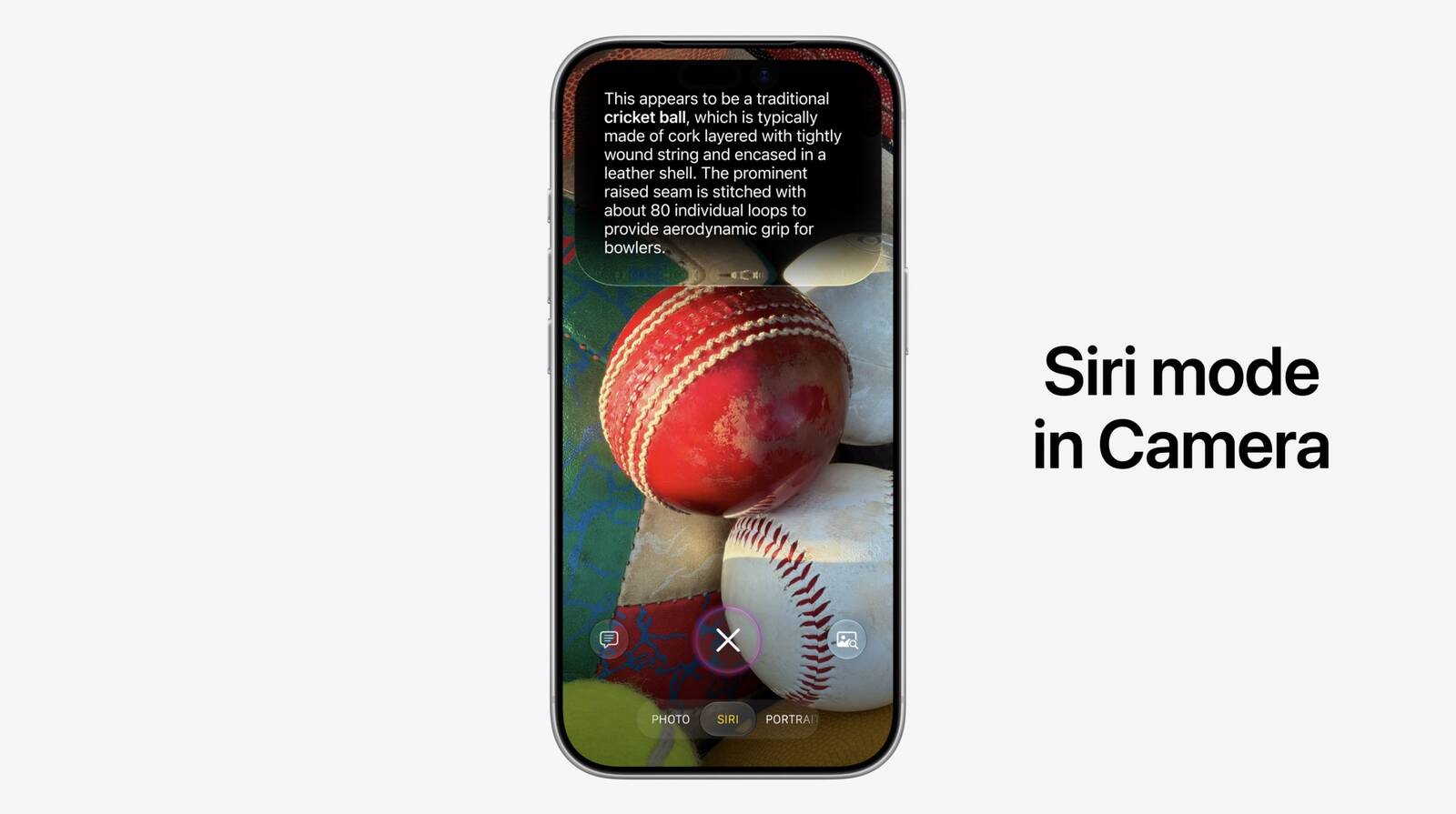
Apple Expands Visual Intelligence With Bill Splitting, Nutrition Insights, and visionOS Support

Apple today unveiled significant upgrades to Visual Intelligence, including a new Siri mode in the Camera app that can analyze real-world objects and take actions directly from what the iPhone sees.


Apple's vice president of software engineering Sebastien Marineau-Mes detailed the enhancements during today's WWDC keynote, explaining that the new ‌Siri‌ mode in Camera uses image understanding powered by Apple's foundational models to interpret what the camera is pointed at and surface contextually relevant actions.

One of the headline use cases is bill splitting. Users can aim their iPhone camera at a restaurant check and immediately divide the total between friends, with Apple Cash integration allowing payments to be sent on the spot. Apple also demoed pointing the camera at a plate of food to receive nutritional insights.

‌Visual Intelligence‌ is also coming to visionOS, bringing the same capability to Apple's spatial computing platform. ‌Siri‌ can recognize real-world objects in a user's environment and surface relevant information about them on demand.
Related Roundup: Apple Vision Pro
Buyer's Guide: Vision Pro (Neutral)
Related Forum: Apple Vision Pro

This article, "Apple Expands Visual Intelligence With Bill Splitting, Nutrition Insights, and visionOS Support" first appeared on MacRumors.com

Discuss this article in our forums
  •  

Apple Announces 'Siri AI' at WWDC 2026

Apple today announced a significantly revamped Siri at WWDC 2026, rebranding it as "‌Siri‌ AI" and unveiling out a wave of new capabilities spanning conversational depth, system-wide integration, and a redesigned interface across platforms.


Apple framed the update with the acknowledgment that "there are times when you expect more from ‌Siri‌." The company is describing the redesigned assistant as "a profoundly more capable assistant" that can now hold multi-turn conversations, draw on real-time world knowledge, and interact with personal data across apps.

‌Siri‌ is now embedded directly in the Dynamic Island, accessible by swiping down from it, pressing the side button, or saying "Hey ‌Siri‌." A revamped voice engine makes the assistant sound more expressive, with micro-adjustable voice settings available during initial setup.

During Apple's keynote demo, presenters showed ‌Siri‌ handling chained, multi-step requests with apparent ease. In one sequence, a presenter asked about a Suki Waterhouse concert, was told tickets require a lottery entry, and asked ‌Siri‌ to set a reminder when the lottery opens, which it did. In another, the assistant identified a photo's landmark, pulled up navigation to that location, and surfaced photos from a recent family trip, adding a specific image to a shared family album on request.


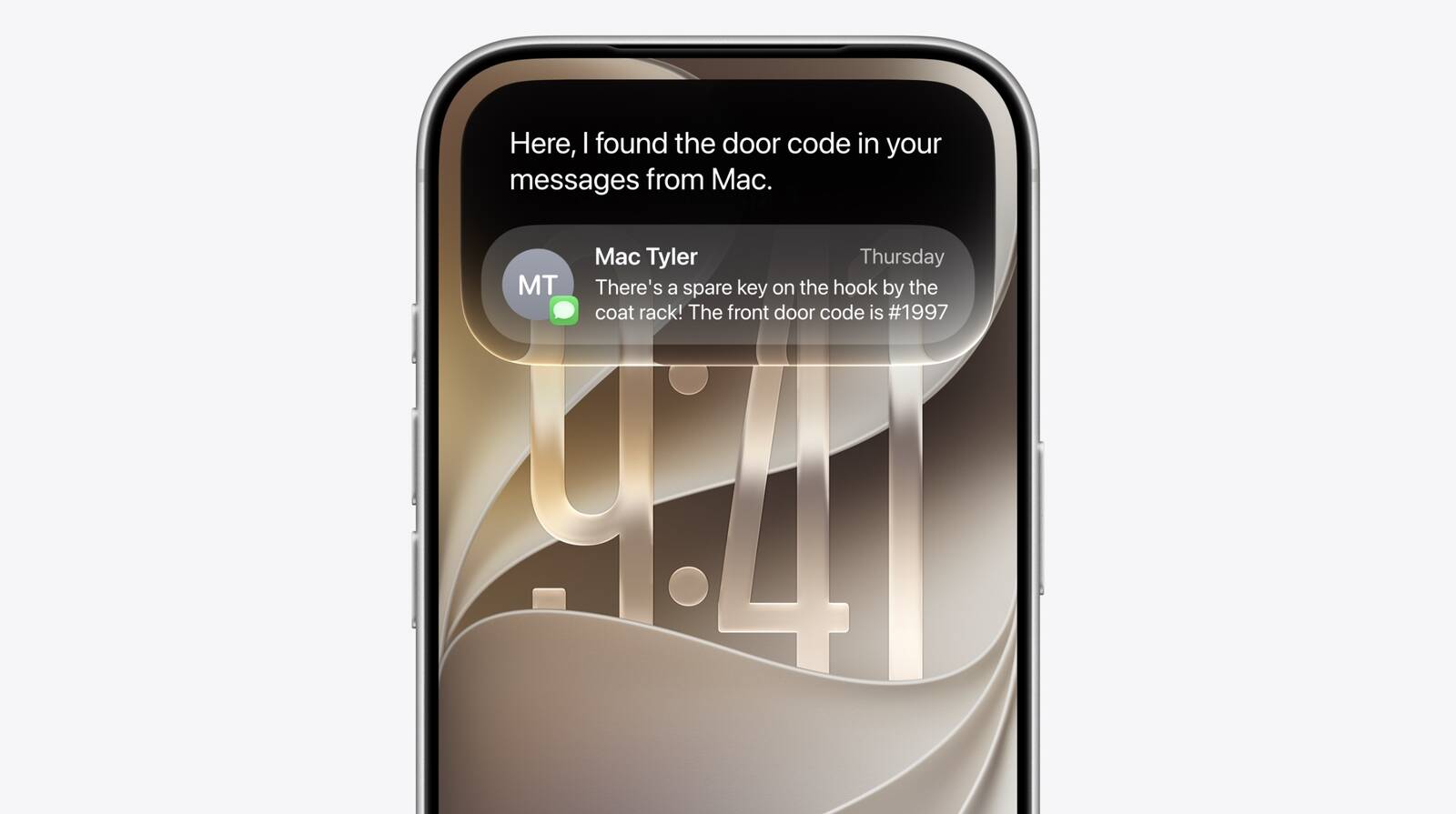
Another demo showcased ‌Siri‌'s ability to synthesize information across apps. A presenter asked about a dessert he had heard about at an event, and ‌Siri‌ located the relevant details from his Messages history. It then compiled the information into a watch-party menu, drafted a message to his contacts with the menu included, and presented send and edit options. In a further demo, a presenter asked about something his son had shared in a message and followed it up by asking ‌Siri‌ to compose an email on the subject.

A new dedicated ‌Siri‌ app lets users scroll back through prior conversations and kick off new ones, with conversation history synced via iCloud so sessions carry seamlessly between devices. The app is also coming to watchOS. On the Mac, ‌Siri‌ is now also integrated into Spotlight and available via right-click context menus on any file or window. On visionOS, ‌Siri‌ AI gains a 3D visualization that users can place anywhere in their space.


This article, "Apple Announces 'Siri AI' at WWDC 2026" first appeared on MacRumors.com

Discuss this article in our forums
  •  

Apple Reveals New AI Architecture Built Around Google Gemini Models

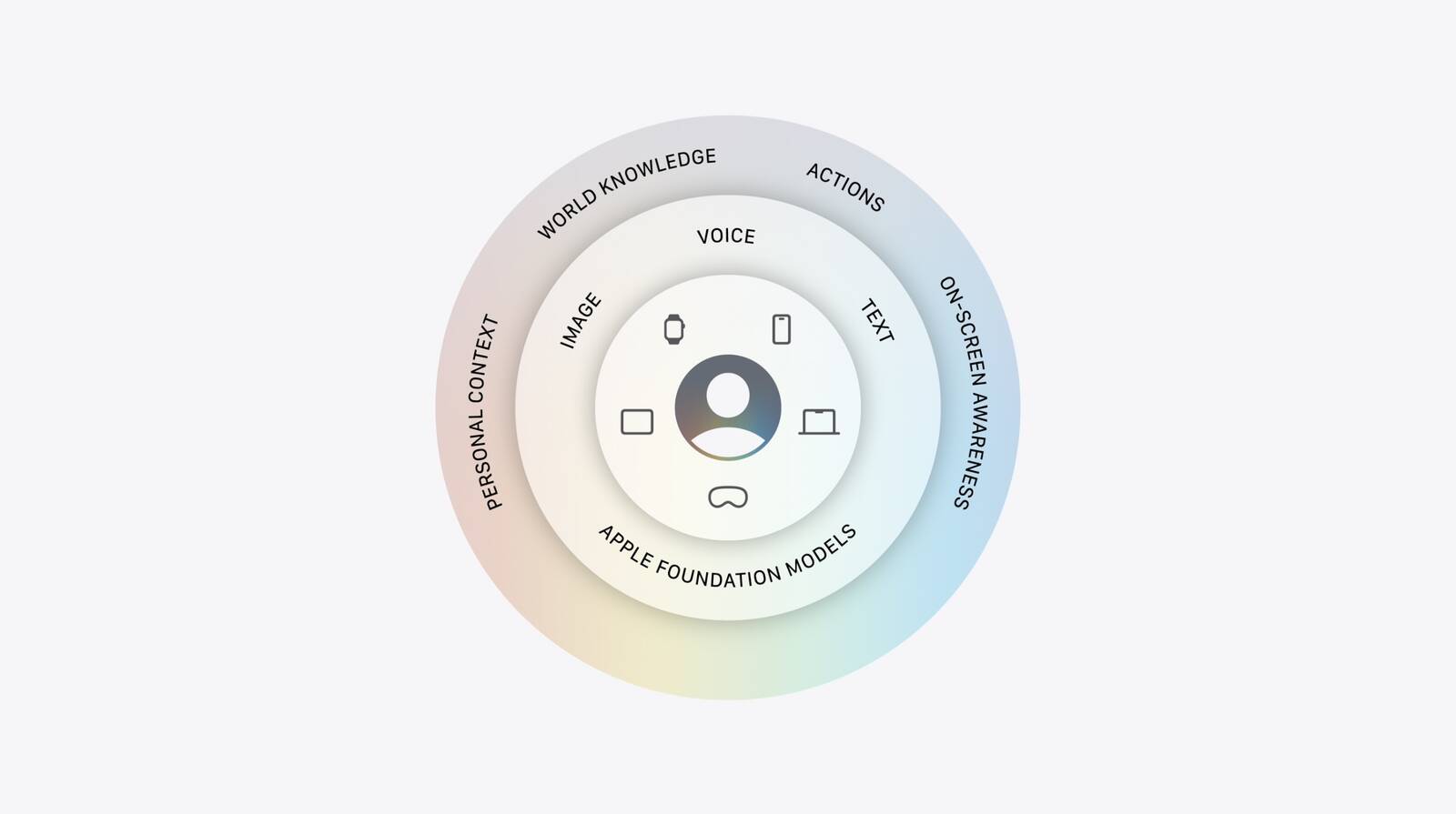
Apple today announced a major overhaul of its Apple Intelligence platform, revealing a new architecture built on foundation models developed in collaboration with Google using the technologies behind the Gemini family.


The new architecture centers on Apple Foundation Models co-developed with Google, which Apple says are adapted to run both on-device and on servers through its existing Private Cloud Compute infrastructure. Apple described the collaboration as a "deep" one that it says unlocks what it called a "huge upgrade" for ‌Apple Intelligence‌, bringing state-of-the-art understanding and reasoning capabilities as well as multimodal support including image understanding and generation.

The upgraded models support new capabilities use cases, including realistic image creation, advanced photo editing, and visual question answering. Certain devices will receive a higher-power version of the model with additional capabilities including speech generation, improved dictation accuracy, and stronger natural language understanding, though Apple did not specify which devices qualify.

A new system orchestrator sits at the center of the revised architecture, coordinating ‌Apple Intelligence‌ features securely across Apple's platforms. Apple says the orchestrator allows the system to tailor its responses based on the active app and the user's current task, enabling what the company described as truly system-wide intelligence.

Apple used the announcement to frame its approach as a contrast to competitors it characterized as "racing forward" without regard for users. The company reiterated that ‌Apple Intelligence‌ relies on on-device processing and Private Cloud Compute, with a promise that user data is only used to execute the immediate request and is not accessible to Apple or third parties. Apple added that outside experts can verify those privacy guarantees "at any time."
This article, "Apple Reveals New AI Architecture Built Around Google Gemini Models" first appeared on MacRumors.com

Discuss this article in our forums
  •  

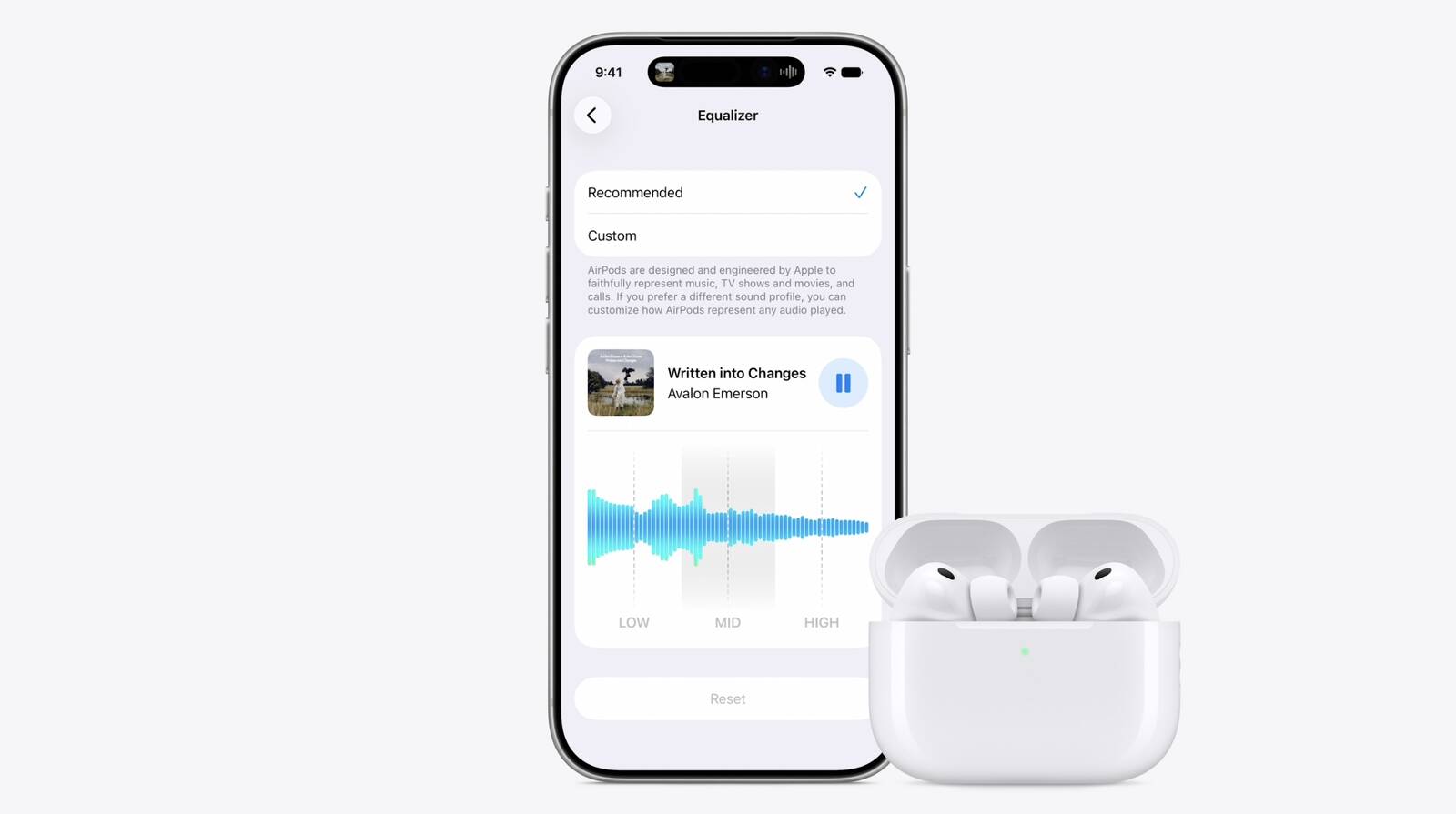
Apple to Bring Custom EQ to AirPods

Apple today announced that AirPods will gain a custom EQ (equalizer) feature, allowing users to further personalize how their AirPods sound.


The new capability is part of Apple's next-generation software platform updates, which the company unveiled today. Custom EQ lets listeners adjust audio output to match their personal preferences, going beyond the fixed audio profiles AirPods have offered previously.

Custom EQ lets you adjust the balance of different sound frequencies, including bass, mids, and treble, to tailor audio output to your personal taste. Boosting the bass makes music feel punchier, for example, while lifting the treble adds more clarity to vocals and instruments.

AirPods already support features such as Adaptive Audio, Personalized Spatial Audio, and Conversation Awareness. Custom EQ adds a further layer of tuning on top of those.
Related Forum: AirPods

This article, "Apple to Bring Custom EQ to AirPods" first appeared on MacRumors.com

Discuss this article in our forums
  •  

Apple Rebuilds Search Infrastructure Across Platforms

Apple today announced that it has rebuilt the search infrastructure that powers key features like Spotlight, Photos, and Mail across all of its major next-generation software platforms.


The company says the index has been rearchitected to be more stable, efficient, and comprehensive, covering both old and new content. After updating, the new infrastructure will begin reindexing device content automatically.

New content will be indexed "almost immediately," Apple says, meaning users' files will become searchable much faster than before. After you update, the new search infrastructure goes to work indexing the content of your device.
This article, "Apple Rebuilds Search Infrastructure Across Platforms" first appeared on MacRumors.com

Discuss this article in our forums
  •  

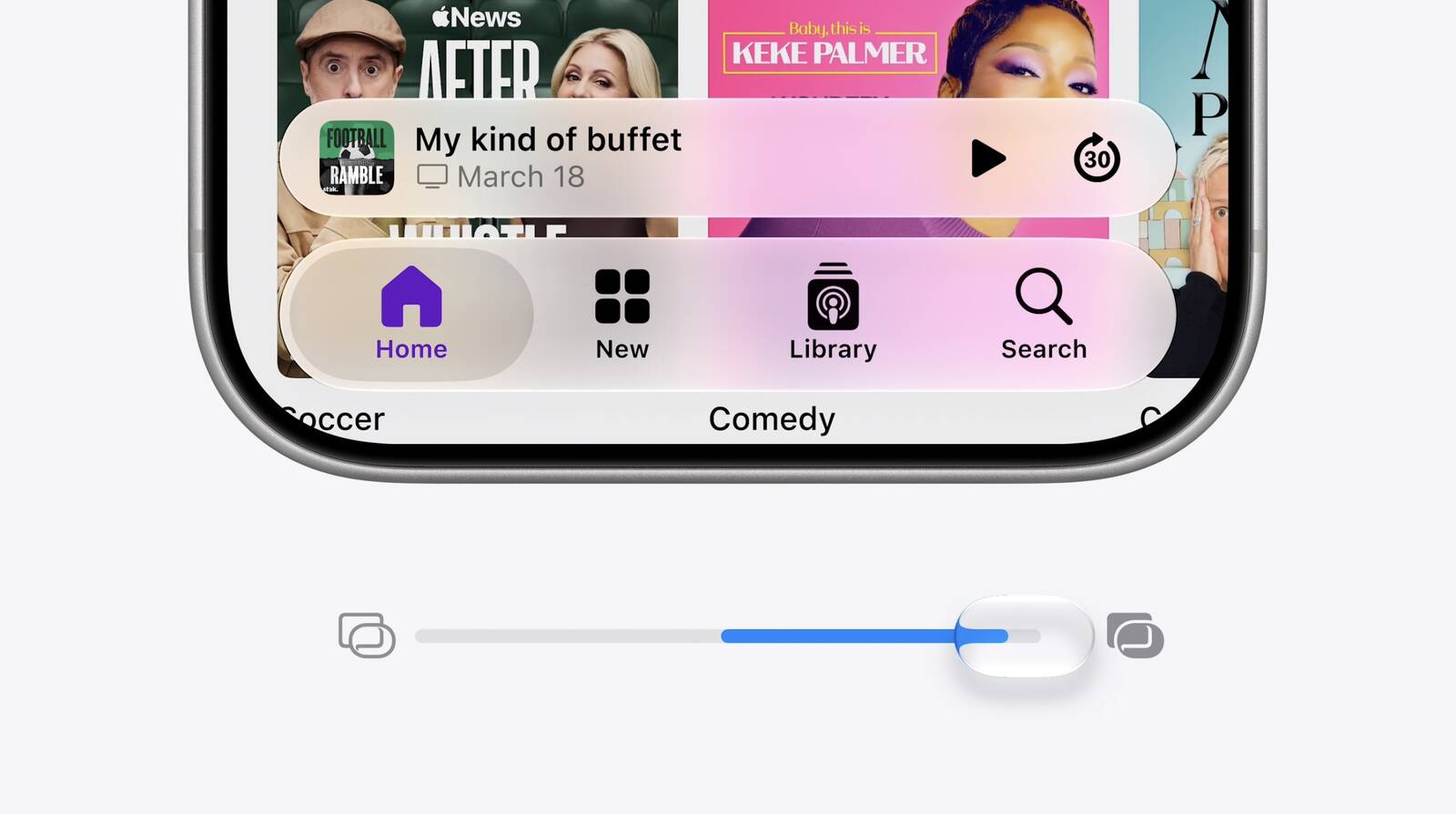
Apple Announces Liquid Glass Improvements and Transparency Slider

Apple today announced a series of improvements to Liquid Glass, the translucent design language the company introduced last year.


Apple said it has heard user feedback, which it "deeply appreciates," and is now making adjustments to the underlying foundations of how Liquid Glass is constructed. Chief among those changes is a new slider that lets users control transparency, ranging from fully opaque to completely clear.

Sidebar behavior is also being updated. Sidebars will now expand to the full edge of the window, with refraction effects continuing beneath them rather than cutting off at the sidebar boundary. Sidebar icons will also retain their color, a change that addresses a common complaint about the original Liquid Glass implementation.


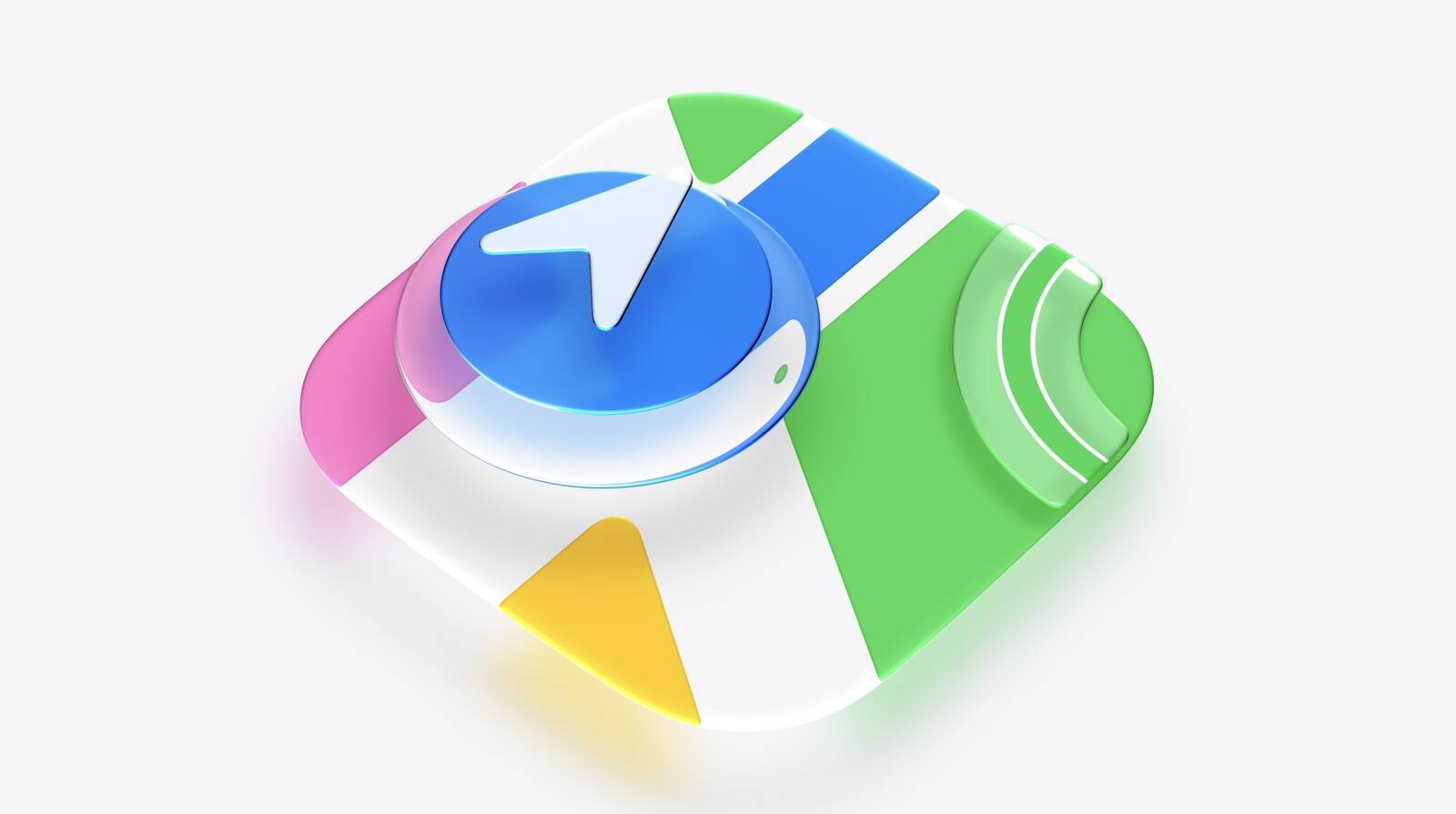
Apple also announced updates to its app icon design language. Having redesigned all of its first-party icons last year to create a more consistent look across apps and platforms, the company said it is now taking that work further by incorporating additional layers of Liquid Glass directly into the icon artwork itself.
This article, "Apple Announces Liquid Glass Improvements and Transparency Slider" first appeared on MacRumors.com

Discuss this article in our forums
  •  

Google Gemini Could Be the Ceiling on Apple's AI Ambitions

Apple analyst Ming-Chi Kuo says the real test of today's WWDC keynote is whether Apple can deliver better AI experiences than Google using the same Gemini models.


Apple is using Google's Gemini to underpin the revamped version of Siri and new Apple Intelligence features. The key takeaway from WWDC, Kuo argues in a new post on X, will not be the short-term market reaction after the event. It will be whether Apple, using the same Gemini models, can deliver better AI applications, agentic workflows, and on-device and cloud hybrid experiences than Google.

If the answer is yes, it would help extend Apple's "bull" case. If the answer is no, the implication is that Apple's ceiling is set by a model it does not control. Kuo raised the point arguing against the market sentiment that "Even if Apple is temporarily behind on AI, it will ultimately catch up and come out ahead."

Nevertheless, Kuo believes Apple's business momentum will stay strong through year-end based on his latest supply-chain checks, which he expects observers to spin as "If Apple is doing this well without AI, just imagine once it has AI." Other reports suggest Apple's longer-term advantage could lie in on-device AI, with the company expected to show how its custom silicon lets it process more AI queries directly on the device rather than in the cloud.

Kuo expects today's announcements to have little bearing on the direction of Apple's stock price in the second half of the year. Regardless of what Apple says at WWDC, he argues, the positive second half of 2026 share-price trend is unlikely to change as long as the core narrative stays intact.

The longer-term risk is more pointed. Should Apple fail to outdo Google with Gemini, Kuo says the stock would not necessarily turn bearish, but the assumption that Apple "will ultimately come out ahead" would begin to face growing scrutiny. How much longer the bull narrative can last beyond 2026, in his view, is what makes the keynote worth watching closely.
This article, "Google Gemini Could Be the Ceiling on Apple's AI Ambitions" first appeared on MacRumors.com

Discuss this article in our forums
  •  
❌