
 Log in
Oura Ring 5 Unveiled With Smaller Design and Blood Pressure Tracking
Oura today unveiled the Oura Ring 5, a significantly smaller smart ring with new health-monitoring capabilities including blood pressure trend detection, nighttime breathing analysis, and tools for GLP-1 medication tracking.
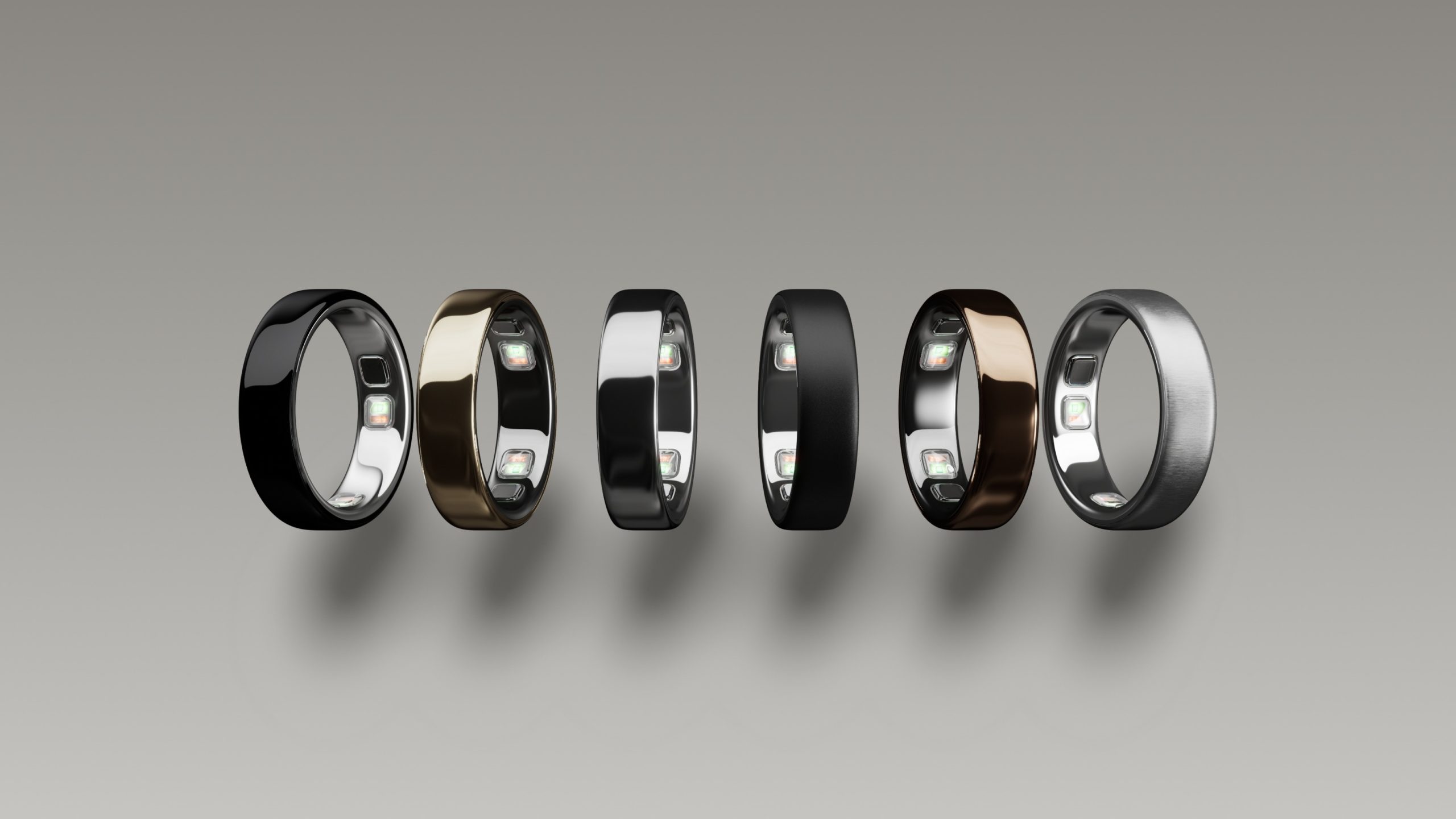
The Oura Ring 5 is 40% smaller than its predecessor, measuring 6.09mm wide and 2.29mm thick compared to 7.99mm and 2.88mm on the previous model. Oura says the reduction was achieved by redesigning the mechanical, electrical, optical, battery, and sensing architectures, and the company claims the new form factor more closely resembles a traditional wedding band. Despite the smaller size, Oura says battery life remains at approximately one week per charge.
The ring's sensing system has also been overhauled. A new signal architecture uses precision-engineered sensor domes for better skin contact, more powerful LEDs, and twelve signal pathways that Oura says deliver greater accuracy across more finger types and skin tones.
The headline software addition is "Health Radar," a proactive health-monitoring feature that builds on the company's existing Symptom Radar tool, which launched in 2024 to flag early signs of illness. Health Radar includes two initial capabilities: Blood Pressure Signals and Nighttime Breathing.
Blood Pressure Signals continuously monitors for patterns that may indicate cardiovascular strain, surfacing nighttime blood pressure trends. Nighttime Breathing provides a 30-day rolling view of sleep-related breathing disturbances, with guidance on when to seek further evaluation.
A new Health Records feature allows U.S. users to import diagnosed conditions, medications, lab results, and allergies directly into the app. Oura has also partnered with Counsel Health, an AI-powered virtual care platform, to let eligible users in 43 U.S. states ask health questions and connect with licensed physicians from within the app for an additional fee.
New GLP-1 Insights tools let users track medication dosing, side effects, weight changes, and biometric data in one place. A Lab Uploads feature lets users import blood biomarker results alongside Oura's biometric data.
Other new features include live workout tracking with real-time pace, distance, and heart rate via a connected device, a Brain Health Study through Oura Labs pairing cognitive assessments with biometric data, and a time-based Data Deletion tool allowing users to erase data from specific periods without affecting their full history.
An optional new Charging Case accessory provides one month of battery and supports wireless charging, priced at $99. Oura is also introducing a Locate feature to track misplaced rings and charging cases.
The Oura Ring 5 is priced at $399 in Silver and Black, with Gold, Stealth, Brushed Silver, and Deep Rose finishes priced at $499. The Oura Ring 4 in ceramic remains available at $349. An Oura Membership is required for full functionality at $5.99 per month or $69.99 annually. Global pre-orders open today, with shipping beginning June 4.
This article, "Oura Ring 5 Unveiled With Smaller Design and Blood Pressure Tracking" first appeared on MacRumors.com
Discuss this article in our forums
The Oura Ring 5 is 40% smaller than its predecessor, measuring 6.09mm wide and 2.29mm thick compared to 7.99mm and 2.88mm on the previous model. Oura says the reduction was achieved by redesigning the mechanical, electrical, optical, battery, and sensing architectures, and the company claims the new form factor more closely resembles a traditional wedding band. Despite the smaller size, Oura says battery life remains at approximately one week per charge.
The ring's sensing system has also been overhauled. A new signal architecture uses precision-engineered sensor domes for better skin contact, more powerful LEDs, and twelve signal pathways that Oura says deliver greater accuracy across more finger types and skin tones.
The headline software addition is "Health Radar," a proactive health-monitoring feature that builds on the company's existing Symptom Radar tool, which launched in 2024 to flag early signs of illness. Health Radar includes two initial capabilities: Blood Pressure Signals and Nighttime Breathing.
Blood Pressure Signals continuously monitors for patterns that may indicate cardiovascular strain, surfacing nighttime blood pressure trends. Nighttime Breathing provides a 30-day rolling view of sleep-related breathing disturbances, with guidance on when to seek further evaluation.
A new Health Records feature allows U.S. users to import diagnosed conditions, medications, lab results, and allergies directly into the app. Oura has also partnered with Counsel Health, an AI-powered virtual care platform, to let eligible users in 43 U.S. states ask health questions and connect with licensed physicians from within the app for an additional fee.
New GLP-1 Insights tools let users track medication dosing, side effects, weight changes, and biometric data in one place. A Lab Uploads feature lets users import blood biomarker results alongside Oura's biometric data.
Other new features include live workout tracking with real-time pace, distance, and heart rate via a connected device, a Brain Health Study through Oura Labs pairing cognitive assessments with biometric data, and a time-based Data Deletion tool allowing users to erase data from specific periods without affecting their full history.
An optional new Charging Case accessory provides one month of battery and supports wireless charging, priced at $99. Oura is also introducing a Locate feature to track misplaced rings and charging cases.
The Oura Ring 5 is priced at $399 in Silver and Black, with Gold, Stealth, Brushed Silver, and Deep Rose finishes priced at $499. The Oura Ring 4 in ceramic remains available at $349. An Oura Membership is required for full functionality at $5.99 per month or $69.99 annually. Global pre-orders open today, with shipping beginning June 4.
This article, "Oura Ring 5 Unveiled With Smaller Design and Blood Pressure Tracking" first appeared on MacRumors.com
Discuss this article in our forums

 Image via
  Image via