Apple's release notes say only that the update "provides bug fixes for your Apple Watch" and the company does not list any security fixes, so it's unclear what exactly is addressed with the update.
After months of teases and leaks, Beats is officially announcing its new Beats 360 headphone today. Priced at $349.99, Beats 360 represents a rethinking of the Beats over-ear headphone design, with an emphasis on sound quality, comfort, and customizability.
Beats 360 is not a replacement for the brand's Studio Pro over-ear headphone, as the Studio Pro will remain part of the Beats lineup at a reduced price point of $299.99, down from the previous $349.99. Compared to Studio Pro, Beats 360 features a completely new acoustic architecture that delivers up to 1.75× more active noise cancellation and a 12dB increase in output while maintaining clarity across all frequencies with low distortion.
In addition to active noise cancellation (ANC), which utilizes a system of eight microphones to analyze the acoustic environment inside and outside the headphone, Beats 360 also support Transparency mode to still allow you to hear the world around you, while turning off ANC and Transparency activates Adaptive EQ to continually tune acoustic performance.
Personalized Spatial Audio with dynamic head tracking is also supported, allowing users to take full advantage of Apple's platforms that deliver 360-degree Dolby Atmos sound and move within the sound field as they turn their heads.
"Beats didn't just participate in the rise of over-ear headphones—we helped define the category," said Oliver Schusser, Apple's vice president of Music, Sports, and Beats. "Beats 360 is the next chapter of that story. We combined our most advanced acoustic performance ever with a perfectly balanced design that moves effortlessly with you. And with our new interchangeable cushions, our customers can express themselves in a way no other over-ear headphone can."
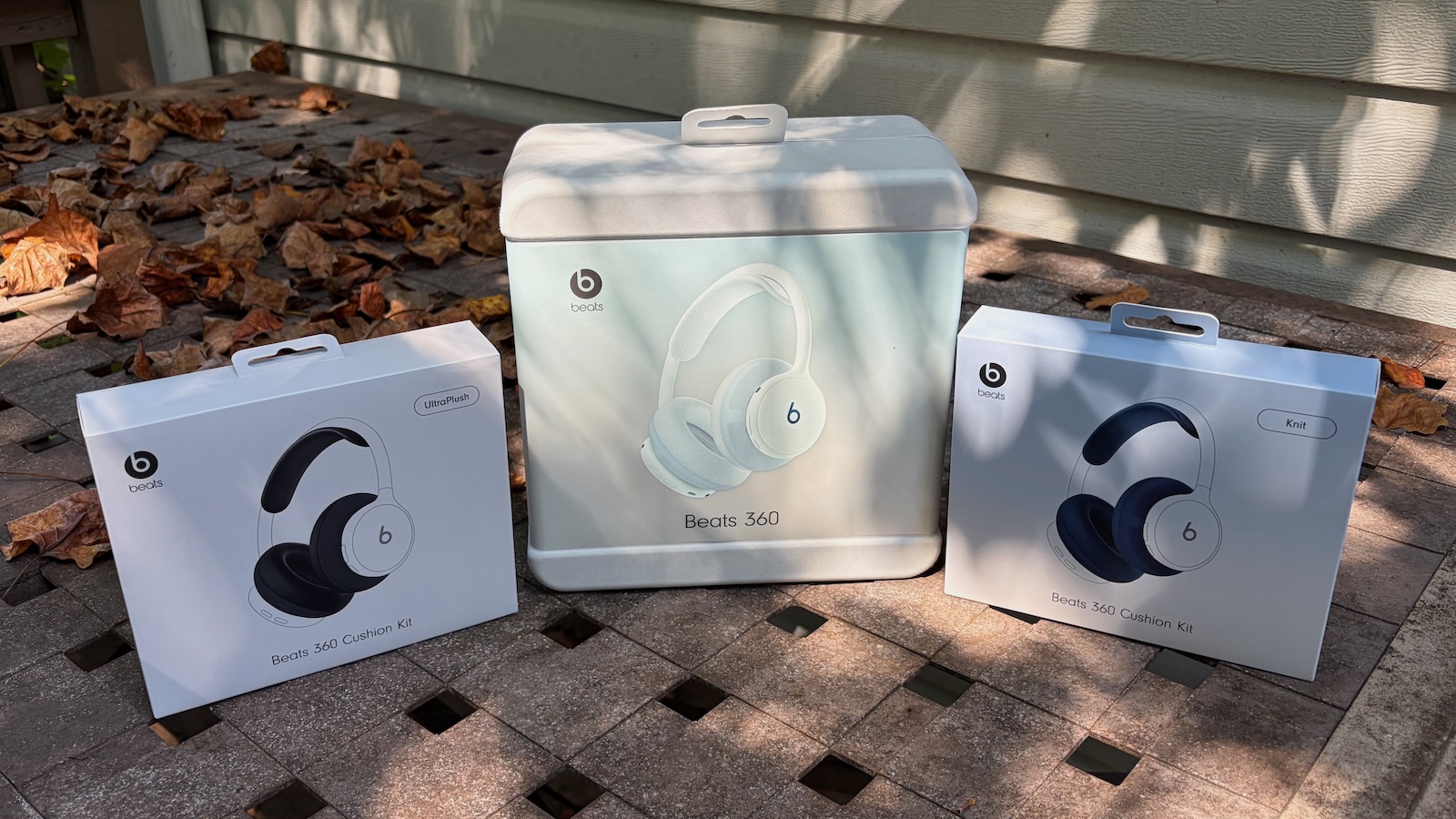
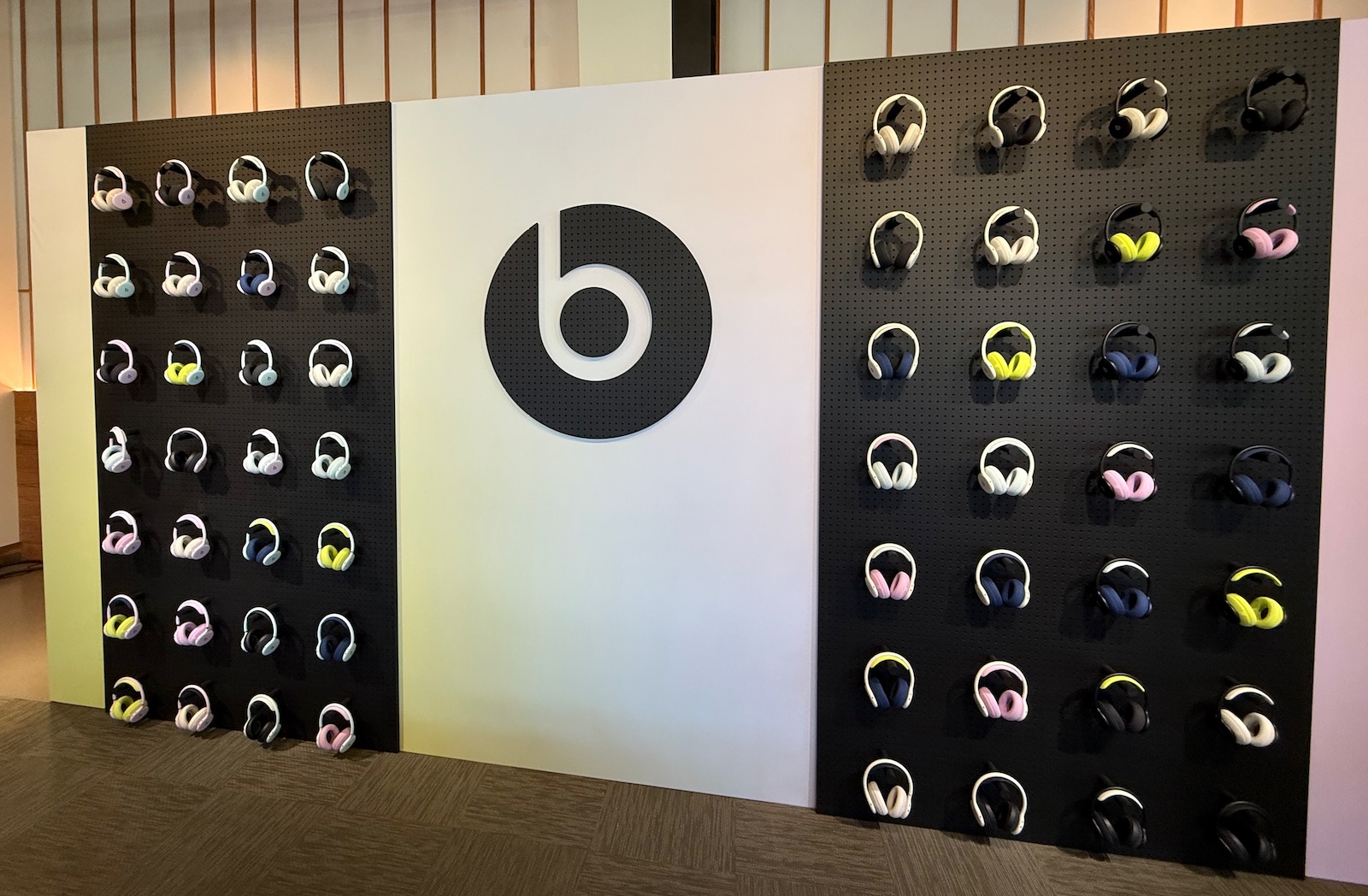
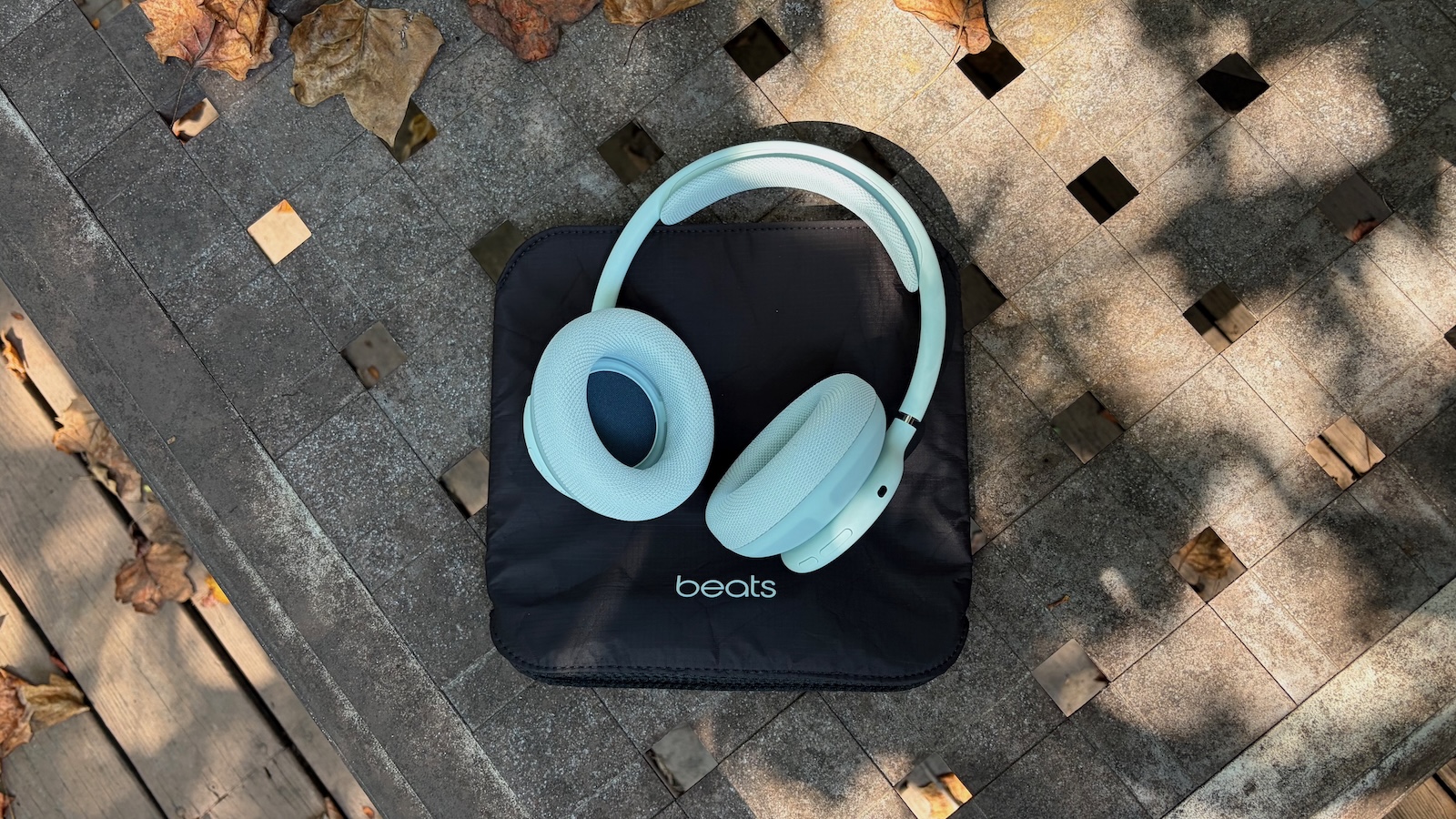
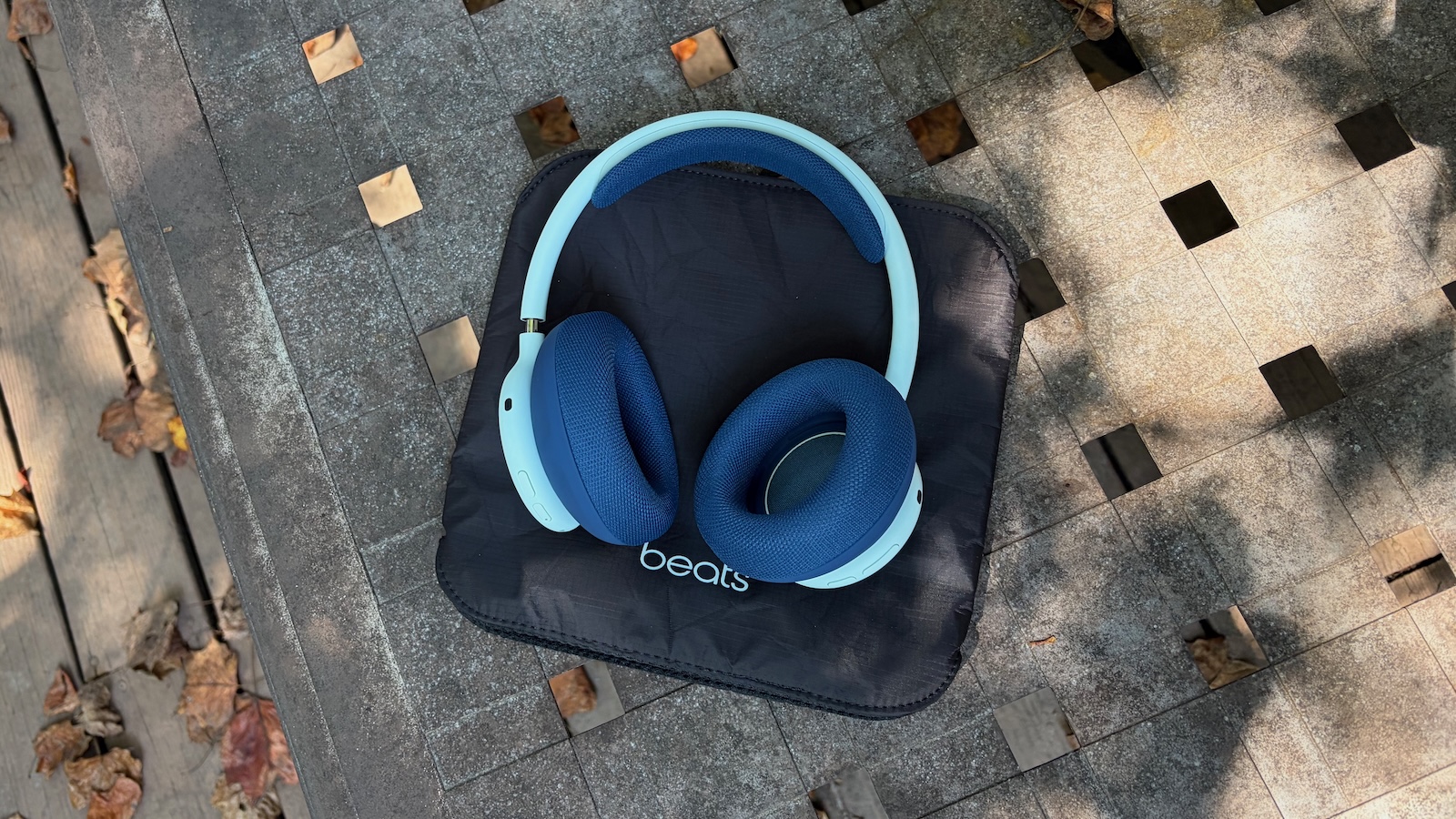
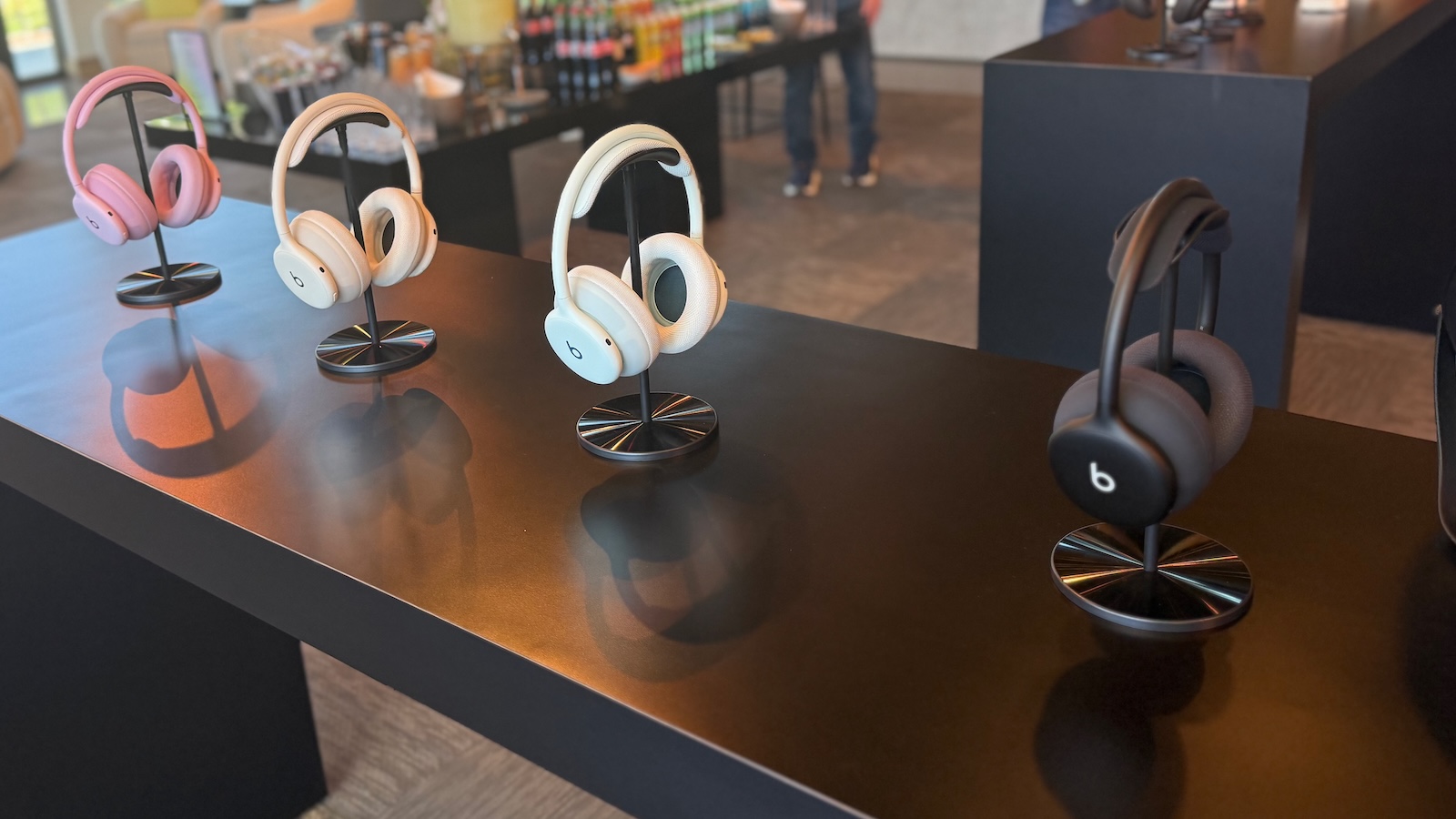
Beats 360 is available in four color options: Black, Cloud (an off-white), Pink, and Sky (a light blue). It includes comfortable color-matched Perfomance Knit ear and headband cushions, but the cushions are removable and interchangeable, allowing you to customize your favorite look and even change color combinations to suit the moment. Separate Performance Knit cushion kits are available in all four of the standard colors, plus Volt (a neon yellow-green) and Navy.
The Performance Knit memory foam cushions are breathable and ideal for working out and other active uses, but for the times you might prefer a more traditional cushion style, Beats is also introducing UltraPlush cushion kits in Black and Ivory. Similar to the ones found on Studio Pro and Solo 4, Beats 360 UltraPlush cushions feature a more pillowy feel with memory foam wrapped in engineered leather. Sensors in Beats 360 identify whether you are using Performance Knit or UltraPlush cushions, and they automatically adjust the acoustic tuning and noise cancellation filtering to maintain a consistent listening experience regardless of cushion material.
Beats 360 in dozens of color combinations
Cushion kits for both Performance Knit and UltraPlush will be priced at $49.99, but for a limited time and in select markets (US, UK, Canada, Australia, France, China, and South Korea), Beats is offering a launch promo that drops cushion kit pricing to just $9.99 or the rough equivalent in the local currency. Swapping out cushions is as simple as a quick twist on each ear cushion to remove and install, while the headband cushion snaps off and on with a small amount of effort while remaining securely attached during use.
Beats 360 in Sky
For active users, Beats 360 is the first Beats over-ear headphone product to feature an IPX4 sweat and water resistance rating, meaning it is protected against liquid ingress.
Beats 360 in Sky with Navy cushions
The removable cushions also make it easy to clean them, a welcome feature for those who plan to use Beats 360 for workouts. Beats recommends mixing one teaspoon (5ml) of laundry detergent into one cup (250ml) of water, rubbing the solution onto each cushion with a lint-free cloth for one minute each, wiping them clean with a separate cloth dampened with fresh water, and drying them with another lint-free cloth.
While over-ear and on-ear headphones have generally required thick headbands in order to accommodate multiple cables to connect the two ear cups, Beats 360 actually consists of two independent wireless earphones, with each containing its own battery, antenna and processing circuitry.
As a result, the headband houses only a single power cable to connect the two sides, allowing the batteries in both sides to be charged simultaneously from a single USB-C port. The thin headband also helps to optimize weight distribution, so while Beats 360 and Studio Pro are similar in weight at a little under 300 grams, Beats 360 puts more of the mass into the cushions where it matters most for comfort.
The left earcup features a USB-C port for charging, a power button, and a dedicated listening mode button to switch among ANC, Transparency, and Adaptive EQ, while the right earcup includes a play/pause button and a volume rocker. Hands-free "Hey Siri" support is also included.
When it comes to battery life, Beats 360 deliver 32 hours of playback with ANC on, with a five-minute Fast Fuel charge giving you an hour of playback time in a pinch.
The Beats fourth-generation proprietary platform delivers significant levels of native integration across both Apple and Android, with Apple users able to take advantage of one-touch pairing with automatic iCloud pairing and switching, Audio Sharing to allow a friend with compatible AirPods or Beats to listen to your audio, and Find My support. Android users get many of the same features with one-touch and ecosystem pairing, Audio Switch, and Find Hub geolocation.
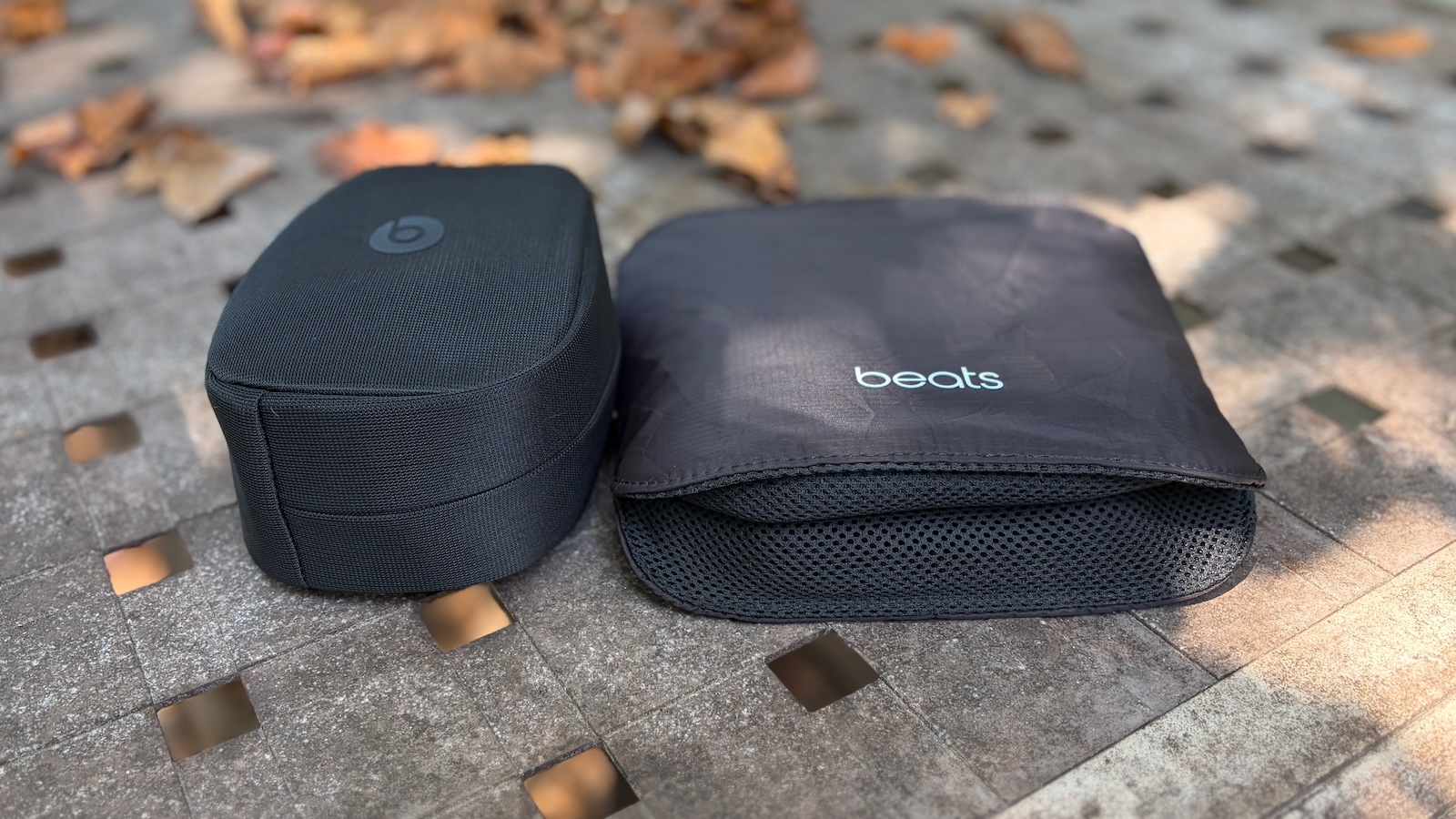
Unlike the Beats Studio Pro, Beats 360 headband does not fold for travel, but the earcups do twist flat, and the headphones slide into a woven ripstop carrying case with a magnetic closure and a rear loop to hook onto a finger or carabiner. The case measures about 9 inches square and a little over 2 inches thick at its pleated bottom with the headphone inside. I prefer this flatter style of case to that of the Studio Pro, as it allows the headphone to fit into a computer bag or backpack more easily.
Cases for Beats Studio Pro (left) and Beats 360 (right)
In support of the 360 launch, Beats is debuting a new ad campaign featuring Kendall Jenner, led by a short film of Jenner meeting a friend at a cafe but realizing that everyone in the room is a different version of herself styled with a unique combination of ear cushions, emphasizing the individuality that's possible with Beats 360.
"I'm always on the go and switching between so many different looks," said Kendall Jenner. "So Beats 360 fits my lifestyle. I love that I can switch the cushions to match whatever I'm doing that day."
"Kendall tailors her looks to fit every moment, so she needs a headphone that can change with her," said Beats CMO Chris Thorne. "The film captures that perfectly, playfully showing every side of Kendall, and how Beats 360 keeps up with all of them."
In a brief interview with Schusser at a Beats preview event earlier this month, he discussed how Jenner was an ideal candidate to promote Beats 360 given the many roles she plays throughout any given day in her personal and professional life.
He also addressed how Beats has been able to flourish under Apple's ownership, with Beats gaining access to all of Apple's expertise in audio as Apple and Beats engineers work side-by-side on products. At the same time, Beats has been able to maintain its own identity on the product design and marketing sides, continuing to focus on active lifestyle and celebrity marketing that remains distinct from how Apple promotes its own products.
Beats 360 is available to order starting today at apple.com in the United States and more than 100 other countries and regions, as well as at Amazon and other third-party retailers. Availability follows this Thursday, September 24. It comes with the woven ripstop carrying case, while additional cushion kits, USB-C charging cables, and power adapters are sold separately.
Back in 1999, unhappy at how Macs were being positioned in traditional computer retail stores, Steve Jobs decided that Apple needed to make its own push into retail. The man he brought on to lead the initiative was Ron Johnson, previously the vice president of merchandising at Target.
Johnson and writer Zander Nethercutt have teamed up for a new book entitled Shop Different: How Retail Revealed Apple's Genius, releasing next Tuesday, September 22, and I recently had a chance to read through the book and chat with Johnson about it.
Shop Different covers Johnson's background including his time at department store Mervyn's and at Target, but the bulk of the book unsurprisingly focuses on his work at Apple as his biggest success story and a topic of significant interest for legions of Apple fans and others in the business world and beyond.
Johnson started at Apple on February 1, 2000, and he worked hand-in-hand with Jobs and other Apple executives to develop a vision and buildout plan for Apple retail stores, leading to the opening of the company's first two stores in May 2001.
While Apple retail stores have become iconic landmarks and sought-after mall anchors in over 20 countries around the world, their success was not always a given, and Shop Different goes into detail on the trials and tribulations of developing the first stores and their weak early performance, struggles that ultimately gave way to the massive success that the stores have achieved.
Some of the high-level background of the Apple retail development process, including how Apple built out a full-scale store mockup in a Cupertino warehouse, has long been known, but Johnson dives into much more detail on how everything played out. Johnson describes early meetings with Jobs as they discussed the philosophy behind delving directly into retail, the challenges of securing prime real estate, Jobs' initial reaction to Johnson's proposed "Genius Bar" name for the stores' support services, and much more.
In the latter portions of Shop Different, Johnson shares some touching moments from his interactions with Jobs as pancreatic cancer took its toll on the Apple founder, as well as Johnson's transition to CEO of department store JCPenney, a difficult period amid Jobs' decline and death, misgivings about leaving Apple to take on the new role, and ultimately his inability to achieve success turning JCPenney's fortunes around.
In talking with Johnson, I asked whether he felt the evolution of Apple retail since his departure fifteen years ago has remained true to the vision he and Jobs had from the beginning, across several different retail chiefs with varying backgrounds.
You know, really, honestly, I do. I'm very impressed.
And part of it goes back to, when we launched the stores, Tim and Deirdre were involved on the operations side. I tell a story in the book where Steve said, you know, "What are the ten things you need to do well?" And one of those was inventory...inventory management. Well, Deirdre kind of led the team that managed the inventory. And so she was involved with the stores before we opened our first one.
And so when the stores got back to her leadership, I think there was a little a difficult period after I left, it took a little while, but now I think the stores are really fulfilling, fabulously well, the initial mission and vision we had for the stores. You know, so I'm really impressed.
Among the highlights for Johnson are Apple's ongoing focus on improving the quality, size, and locations of stores to reflect the caliber of the brand, rather than focusing on overall store count, and how Apple has maintained a high standard for its "exceptional" retail employees, some of whom have been with the company for many years.
As a follow-up, I asked Johnson about his thoughts on the succession of Apple retail chiefs that followed him, given the range of backgrounds they had with John Browett coming out of British consumer electronics retailer Dixons, Angela Ahrendts coming from the luxury fashion world at Burberry, and in recent years longtime Apple executive Deirdre O'Brien.
You know, I was the first retailer at Apple. And I built the initial team and, we relied a lot on other Apple departments, but fundamentally, I think Tim felt that he's got to find a retail leader to run the stores, right?
And so he started out with an operations leader, but obviously that led to a pretty quick change, because the stores were never about, sure, it's important how you operate, but it's really about a culture of love and connection, and you've got to have someone who will embrace that, right?
And then you went to Angela, who was a highly respected retail leader. But I think after Angela left, which was nearing the 20th anniversary of the stores, he kind of concluded, I think, that maybe an internal person who really understands Apple could be a great leader of the stores.
She's been there from the beginning, so I think Tim made the decision to really make sure the stores were highly integrated, connected with Apple as a company. Because it's pretty easy for them to be on their own doing their own thing. But once you bring in someone like Deirdre, who has managed the People teams, has managed at Apple, has managed a lot of the operations teams at Apple, you'll get a different level of connectivity to Apple itself.
And I think that was probably one of the big strengths Deirdre brought to the retail stores, was her knowledge of Apple headquarters. And she was able to, as an example, bring in a lot of talented people to retail who came out of other parts of Apple. Whereas before that, you'd hire, like, Angela probably hires someone from the outside that she worked with in retail.
Johnson also had particularly kind words for Vanessa Trigub, who was named to a vice president role last year to head up retail operations under O'Brien, with Johnson calling her a "fabulous leader" who "has a great vision for how to serve customers."
My conversation with Johnson took place a few days prior to last week's unveiling of the iPhone Duo, but he acknowledged the rumors about the device and mentioned the role Apple retail will play in allowing customers to experience the new product category.
What a great opportunity when this new, supposedly foldable phone comes out. Now, I think the stores will be more crowded during September and October. They'll be more crowded than in years. Because, remember, one to two billion people that are on iPhones, that use them every day.
And even if you're not going to buy the new one, you want to go see it, right? Because it is a major new form factor that would change your experience of using it. So I think that's what the stores were built for, is to help launch new products and I expect the stores to be incredibly busy.
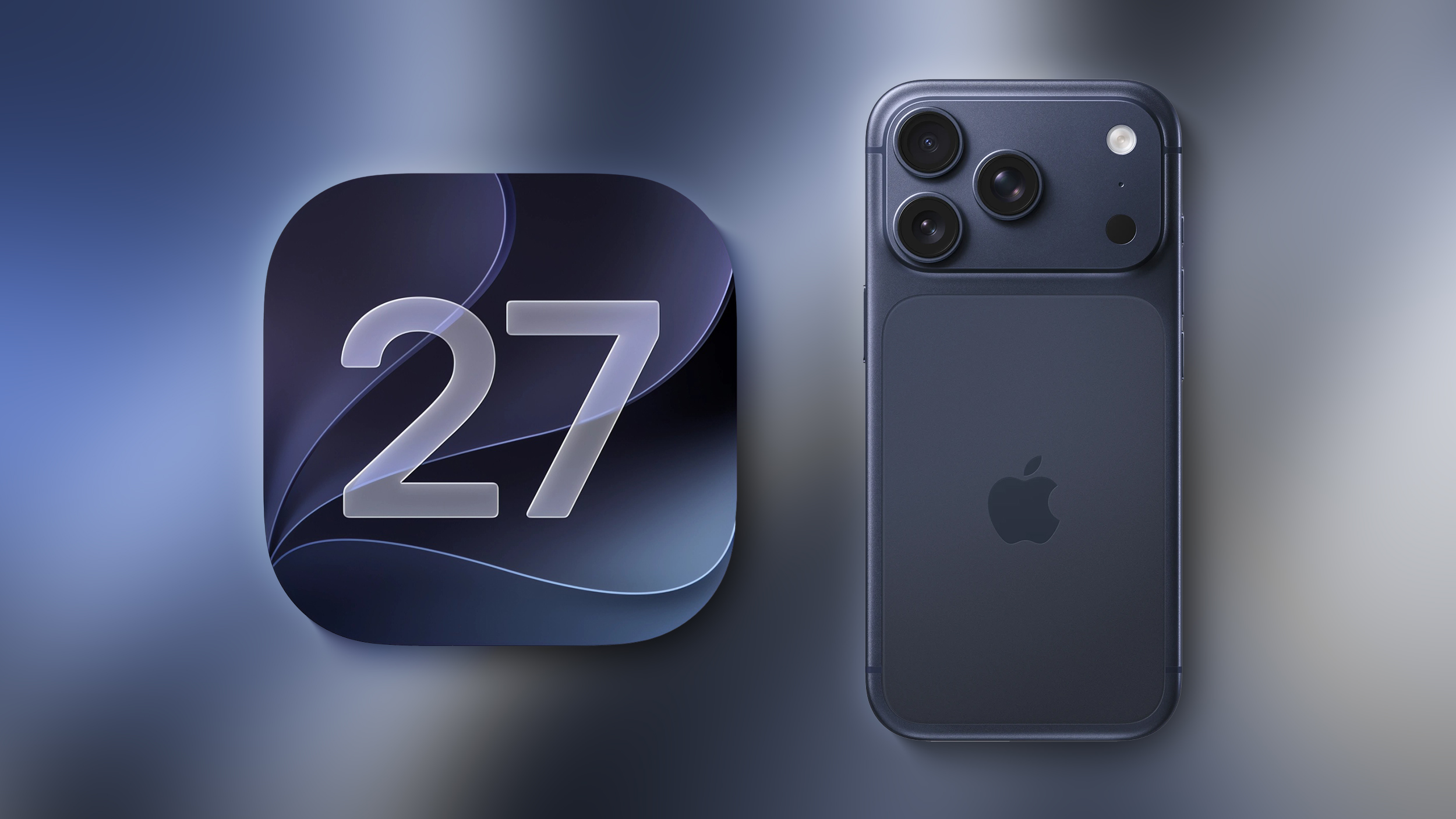
Apple is about to release iOS 27, which will finally deliver more advanced Siri AI capabilities as well as a variety of other refinements, improvements, and new features to iPhones. It's Apple's biggest software update of the year, and Apple announced at Wednesday's iPhone event that it will be releasing iOS 27 sometime today – Monday, September 14.
iOS 27 won't be the only release today, as macOS Golden Gate and other releases in the OS 27 family will also drop around the same time as iOS 27.
Based on past releases, the update is likely to drop at around 10:00 a.m. Pacific Time/1:00 p.m. Eastern Time. Apple's own websites for countries around the world also suggest a 10:00 a.m. Pacific Time release, with Apple's site for India listing a September 14 launch while the company's pages for Singapore, Hong Kong, and others in that region list a September 15 release. That points to a narrow release window around 10:00 a.m. Pacific to line up with time zones where it will be after midnight in some of those countries.
To give iPhone users globally an idea of when iOS 27 should become available as an over-the-air update, we've compiled the below list of time zone conversions for a number of countries. This list isn't exhaustive, so please verify the exact time for your specific location, and bear in mind that there could always be a delay as Apple prepares its servers for rollout.
Australia (Western) - 1:00 a.m. (01:00) AWST (Tuesday)
Australia (Eastern) - 3:00 a.m. (03:00) AEST (Tuesday)
Austria - 7:00 p.m. (19:00) CEST
Baltic countries - 8:00 p.m. (20:00) EEST
Belgium - 7:00 p.m. (19:00) CEST
Brazil East - 2:00 p.m. (14:00) BRT
Canada (Pacific) - 10:00 a.m. (10:00) PDT
Canada (Eastern) - 1:00 p.m. (13:00) EDT
Canada (Atlantic) - 2:00 p.m. (14:00) ADT
China - 1:00 a.m. (01:00) CST (Tuesday)
Denmark - 7:00 p.m. (19:00) CEST
Finland - 8:00 p.m. (20:00) EEST
France - 7:00 p.m. (19:00) CEST
Germany - 7:00 p.m. (19:00) CEST
Hong Kong - 1:00 a.m. (01:00) HKT (Tuesday)
India - 10:30 p.m. (22:30) IST
Indonesia (Western) - midnight (00:00) WIB (Tuesday)
Ireland - 6:00 p.m. (18:00) IST
Italy - 7:00 p.m. (19:00) CEST
Japan - 2:00 a.m. (02:00) JST (Tuesday)
Luxembourg - 7:00 p.m. (19:00) CEST
Netherlands - 7:00 p.m. (19:00) CEST
New Zealand - 5:00 a.m. (05:00) NZST (Tuesday)
Norway - 7:00 p.m. (19:00) CEST
Poland - 7:00 p.m. (19:00) CEST
Portugal - 6:00 p.m. (18:00) WEST
Puerto Rico - 1:00 p.m. (13:00) AST
Saudi Arabia - 8:00 p.m. (20:00) AST
Singapore - 1:00 a.m. (01:00) SGT (Tuesday)
South Africa - 7:00 p.m. (19:00) SAST
South Korea - 2:00 a.m. (02:00) KST (Tuesday)
Spain - 7:00 p.m. (19:00) CEST
Sweden - 7:00 p.m. (19:00) CEST
Switzerland - 7:00 p.m. (19:00) CEST
Taiwan - 1:00 a.m. (01:00) CST (Tuesday)
UAE - 9:00 p.m. (21:00) GST
United Kingdom - 6:00 p.m. (18:00) BST
United States (Pacific) - 10:00 a.m. (10:00) PDT
United States (Mountain) - 11:00 a.m. (11:00) MDT
United States (Central) - noon (12:00) CDT
United States (Eastern) - 1:00 p.m. (13:00) EDT
Be Prepared to Wait
When iOS 27 and iPadOS 27 become available as an over-the-air update, make sure your device is fully charged before you start the process over Wi-Fi, as it may take some time to complete. To check that the update is available, go to Settings ➝ General ➝ Software Update, and wait a moment for your device to contact Apple's servers. If you're in no rush, you can wait for iOS 27 to be delivered to your iPhone when you next plug it into your computer.
On that note, a word of caution: During the initial rollout of major software updates like iOS 27, Apple users may experience slower download speeds and sluggish performance when trying to update their devices. This is largely due to the high demand on Apple's servers, as millions of users worldwide attempt to download the update simultaneously.
The surge in traffic can overwhelm network capacity, leading to delays in downloading or installing the update. To avoid these potential issues, you may want to wait a day or two before installing the update, allowing server congestion to subside and ensuring a smoother upgrade experience.
Pre-orders for the iPhone 18 Pro and iPhone 18 Pro Max are set to begin on Saturday, September 12, at 5:00 a.m. Pacific Time, with the new devices set to become available for pre-order in numerous countries around the world simultaneously.
We've compiled pre-order times for various countries to help MacRumors readers be among the first to order. This list isn't exhaustive, so please verify the exact time for your specific location.
Australia West - 8:00 p.m. AWST
Australia East - 10:00 p.m. AEST
Austria - 2:00 p.m. CEST
Belgium - 2:00 p.m. CEST
Canada West - 5:00 a.m. PDT
Canada East - 8:00 a.m. EDT
China - 8:00 p.m. CST
Denmark - 2:00 p.m. CEST
Finland - 3:00 p.m. EEST
France - 2:00 p.m. CEST
Germany - 2:00 p.m. CEST
Guernsey - 1:00 p.m. BST
Hong Kong - 8:00 p.m. HKT
Ireland - 1:00 p.m. IST
Isle of Man - 1:00 p.m. BST
Italy - 2:00 p.m. CEST
Japan - 9:00 p.m. JST
Jersey - 1:00 p.m. BST
Luxembourg - 2:00 p.m. CEST
Netherlands - 2:00 p.m. CEST
New Zealand - midnight NZST next day
Norway - 2:00 p.m. CEST
Portugal - 1:00 p.m. WEST
Puerto Rico - 8:00 a.m. AST
Saudi Arabia - 3:00 p.m. AST
Singapore - 8:00 p.m. SGT
South Korea – 9:00 p.m. KST
Spain - 2:00 p.m. CEST
Sweden - 2:00 p.m. CEST
Switzerland - 2:00 p.m. CEST
Taiwan - 8:00 p.m. CST
UAE - 4:00 p.m GST
United Kingdom - 1:00 p.m. BST
United States West - 5:00 a.m. PDT
United States Mountain - 6:00 a.m. MDT
United States Central - 7:00 a.m. CDT
United States East - 8:00 a.m. EDT
US Virgin Islands - 8:00 a.m. AST
Customers can prepare for the iPhone 18 Pro launch using the "Get Ready" pre-order setup until 9:00 p.m. Pacific Time on Friday night. This process allows you to select your iPhone model, confirm your carrier, and enter payment and shipping details in advance.
For those wanting a device on launch day, immediate pre-ordering is recommended. Supply availability is uncertain, and popular models or colors may sell out within minutes or hours.
The iPhone 18 Pro starts at $1,199, while the iPhone 18 Pro Max begins at $1,299. U.S. carriers are offering various discounts, while Apple offers the new Apple Upgrade program and trade-in options to reduce costs.
Pre-orders open on September 12. The first iPhone 18 Pro and iPhone 18 Pro Max orders will be delivered to customers on Friday, September 18.
Apple's "Surprise and Shine" media event kicks off at 10:00 am Pacific Time today with members of the media in attendance. We know that some MacRumors readers who can't follow the event as it's being broadcast are interested in avoiding all of the announcements and waiting until the event video is available for on-demand viewing so as to experience it without already knowing the outcome.
For those individuals, we've posted this news story, which will be updated with a direct link to the presentation once it becomes available from Apple. No other news stories or announcements will be displayed alongside this story.
Apple's recent events have been made available to view almost immediately following the conclusion of the broadcasts, and we expect similar timing for today's event.
Users waiting for the video to be posted are welcome to gather in the thread associated with this news story, and we ask that those who follow the events as they occur refrain from making any posts about Apple's announcements in this thread. This article, "September 2026 Apple Event Spoiler-Free Video Stream" first appeared on MacRumors.com
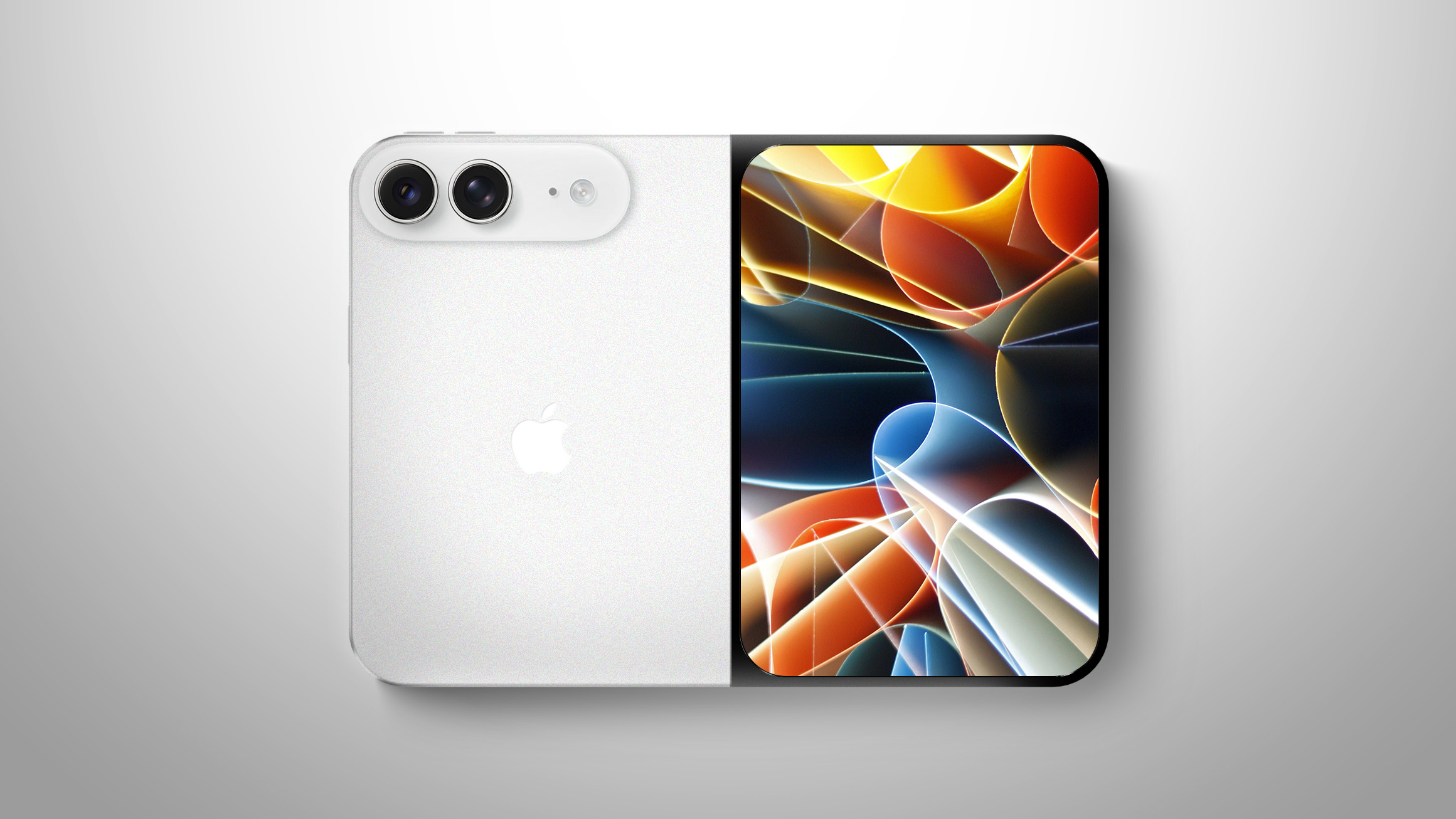
For months now, the foldable iPhone has generally been referred to as the "iPhone Ultra," even internally, but Apple is apparently going in a different direction for the official name, emphasizing the dual-screen nature of the device.
Gurman says the iPhone Duo will start at $2,000 for 256 GB of storage and max out at around $3,000. Rumors had suggested the phone would likely start at above $2,000, perhaps as high as $2,500, so a $2,000 entry-level price could help bolster customer demand.
The entry-level version will include 256 gigabytes of storage, with Apple offering higher-capacity versions that will take the price all the way up to roughly $3,000. Apple blew through its cost goals due to the recent memory shortage, so it's eating some of the expense to keep within reach of $2,000. It's also passing the costs along to consumers who buy higher capacities.
As for availability, the device will reportedly come in white and dark blue and "go on sale as early as October." Rumors have long suggested the foldable iPhone could launch later than the iPhone 18 Pro and Pro Max due to production difficulties, although Gurman previously stressed that the gap in launch timing would be minimal.
Other iPhone Duo details in Gurman's report include the use of a new A20 Pro chip, Apple's C2 modem, dual 48-megapixel rear cameras, a 12-megapixel front camera, a magnetic hinge system and "support for the Apple Pencil stylus." Gurman said last week that Apple had tested a smaller version of the Apple Pencil for use with the foldable iPhone, but said that a launch was unlikely.
Today's last-minute report includes a few other details on the iPhone 18 Pro and Pro Max, as well as Apple Watch Series 12 and Ultra 4 models and AirPods 5 models. While most of the details on those products had previously been rumored, Gurman notably says that the iPhone 18 Pro and Pro Max will see $100 price increases compared to their current equivalents, a smaller increase than some had feared.
Apple's "Surprise and Shine" event kicks off at 10:00 a.m. Pacific Time tomorrow, and we'll have full coverage throughout our MacRumors channels.
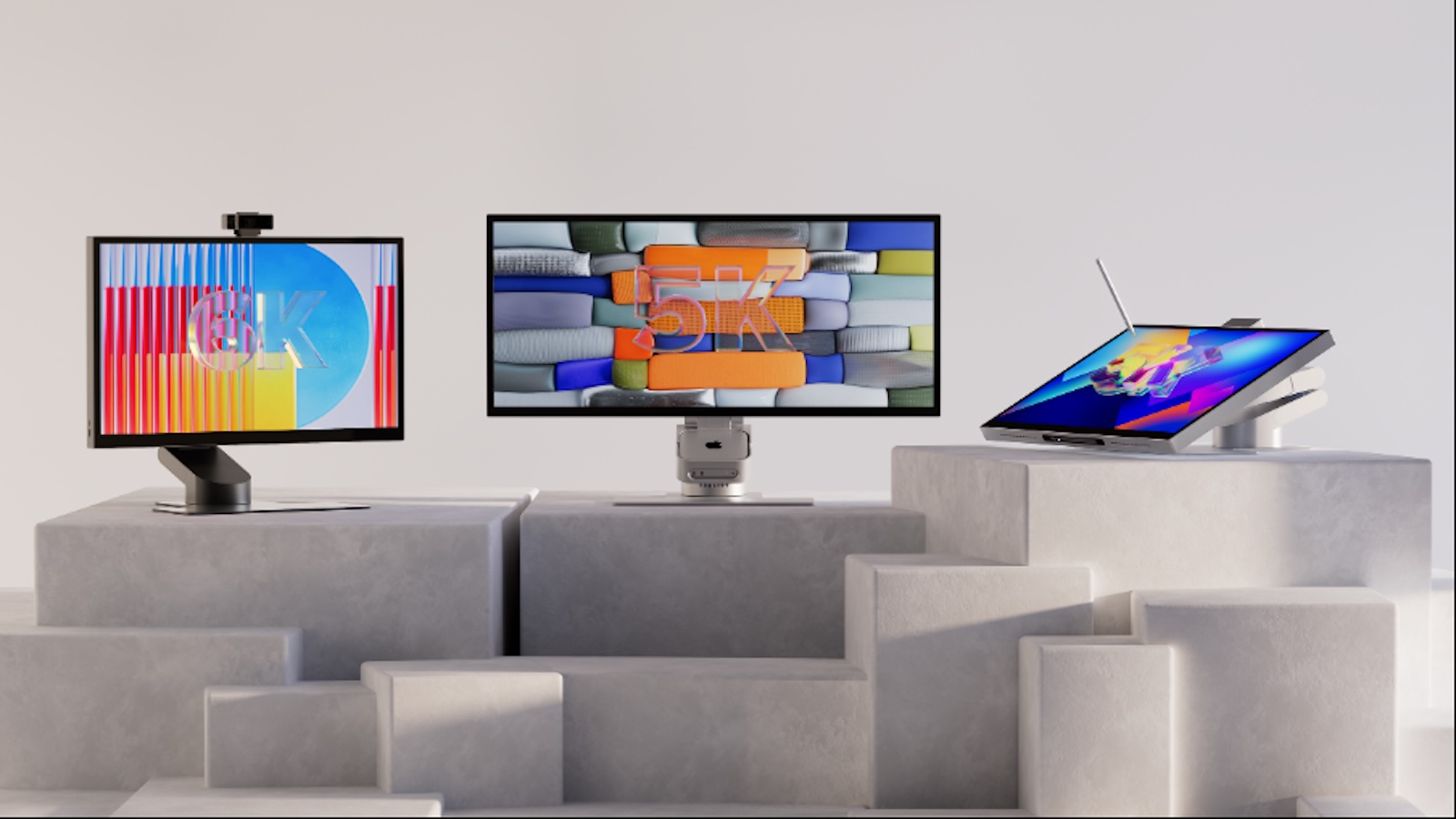
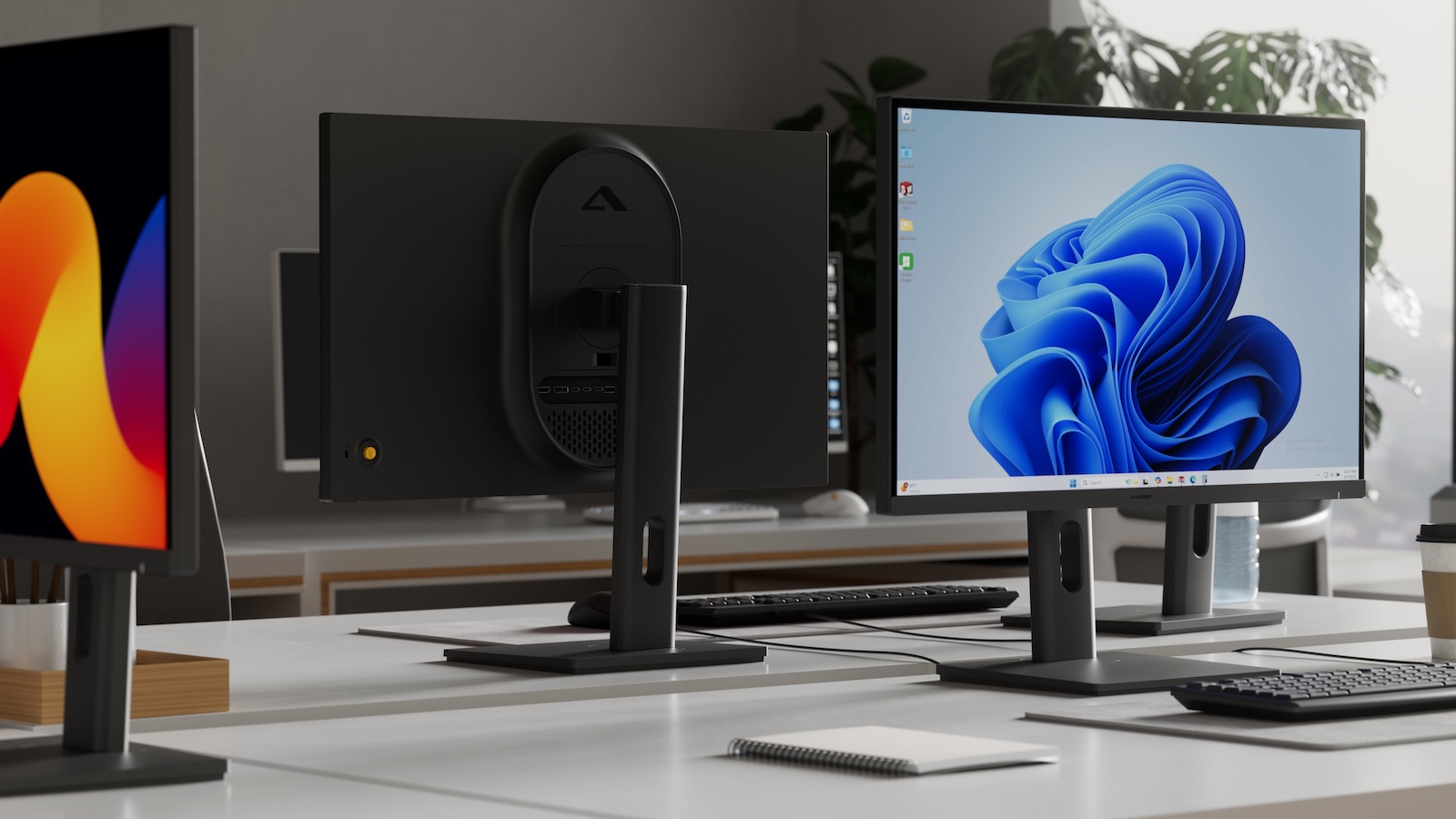
Accessory brand Alogic today announced an expansion to its display lineup, adding several new 5K and 6K models offering varying feature sets with availability coming over the next couple of months.
Aspekt displays
New models in the Aspekt touch-enabled family include a 27-inch 5K model and a 32-inch 6K model with support for 10-point multitouch and MPP 2.0 styluses. Dock capabilities are built into the display, including USB-C with up to 90 watts of upstream charging, HDMI 2.1, DisplayPort 2.0, additional USB-C and USB-A ports, Gigabit Ethernet, and USB-A KVM functionality. There's also a 34-inch 5K Ultrawide model, which offers a resolution of up to 5,120 x 2,160 and a 100Hz refresh rate, plus the 10-point multitouch functionality
The 27-inch 5K ($1,899.99) and 32-inch 6K ($2,999.99) models will be available by the end of October, while the 34-inch Ultrawide 5K model will be priced at $2,799.99 and launch by the end of November.
Clarity 6K display
Alogic has also expanded its Clarity family of displays, adding a 12-megapixel webcam to the 27-inch 5K ($1,899.99) and 32-inch 6K ($3,099.99) models, with availability by the end of October. Both displays similarly offer touchscreen support, USB-C, HDMI 2.1, and DisplayPort 1.4 connectivity options, USB-A and audio connections, and up to 90 watts of upstream charging.
Vision displays
There's also a new 34-inch Edge 5K Ultrawide option priced at $1,599.99 launching by mid-November, and finally, on the low end of the display lineup, Alogic is introducing new 24-inch ($199.99) and 27-inch ($299.99) options in its Vision family of business-oriented displays, plus a 34-inch Ultrawide model.
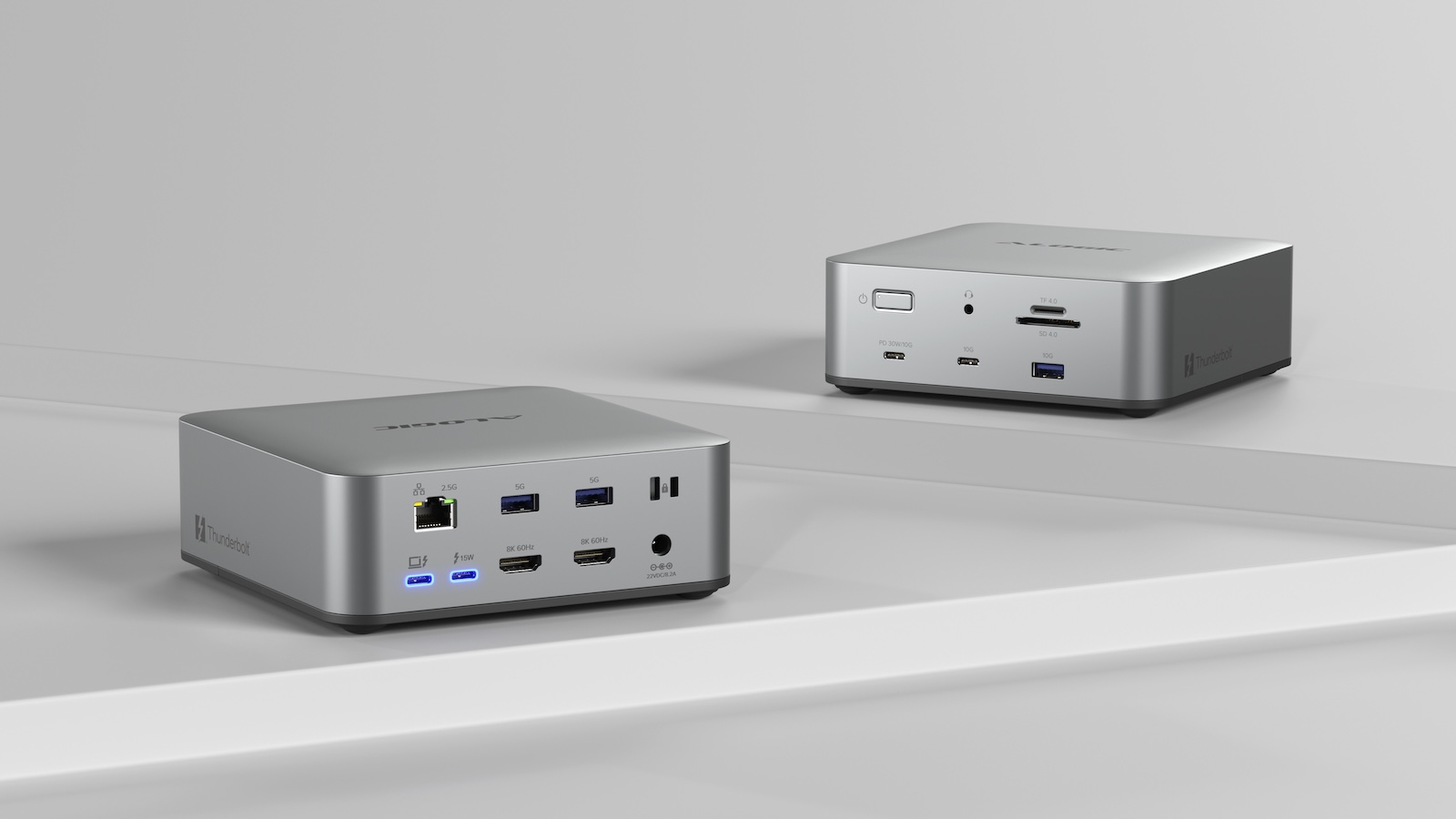
FlashDock 5
Turning to peripherals, Alogic has announced the FlashDock 5 docking station, a 13-port Thunderbolt 5 dock supporting full bandwidth of up to 80 Gbps in symmetric mode or up to 120 Gbps in asymmetric mode. It supports up to three external displays (depending on capabilities of the host computer), with two HDMI 2.1 ports, two USB-C 3.2 Gen 2 ports, three USB-A ports, a 2.5 Gigabit Ethernet port, SD and microSD card readers, a 3.5mm combo audio port, and an additional downstream Thunderbolt 5 port. There's also an integrated M.2 NVMe SSD slot to allow you to add external storage. It's available now and is priced at $399.99.
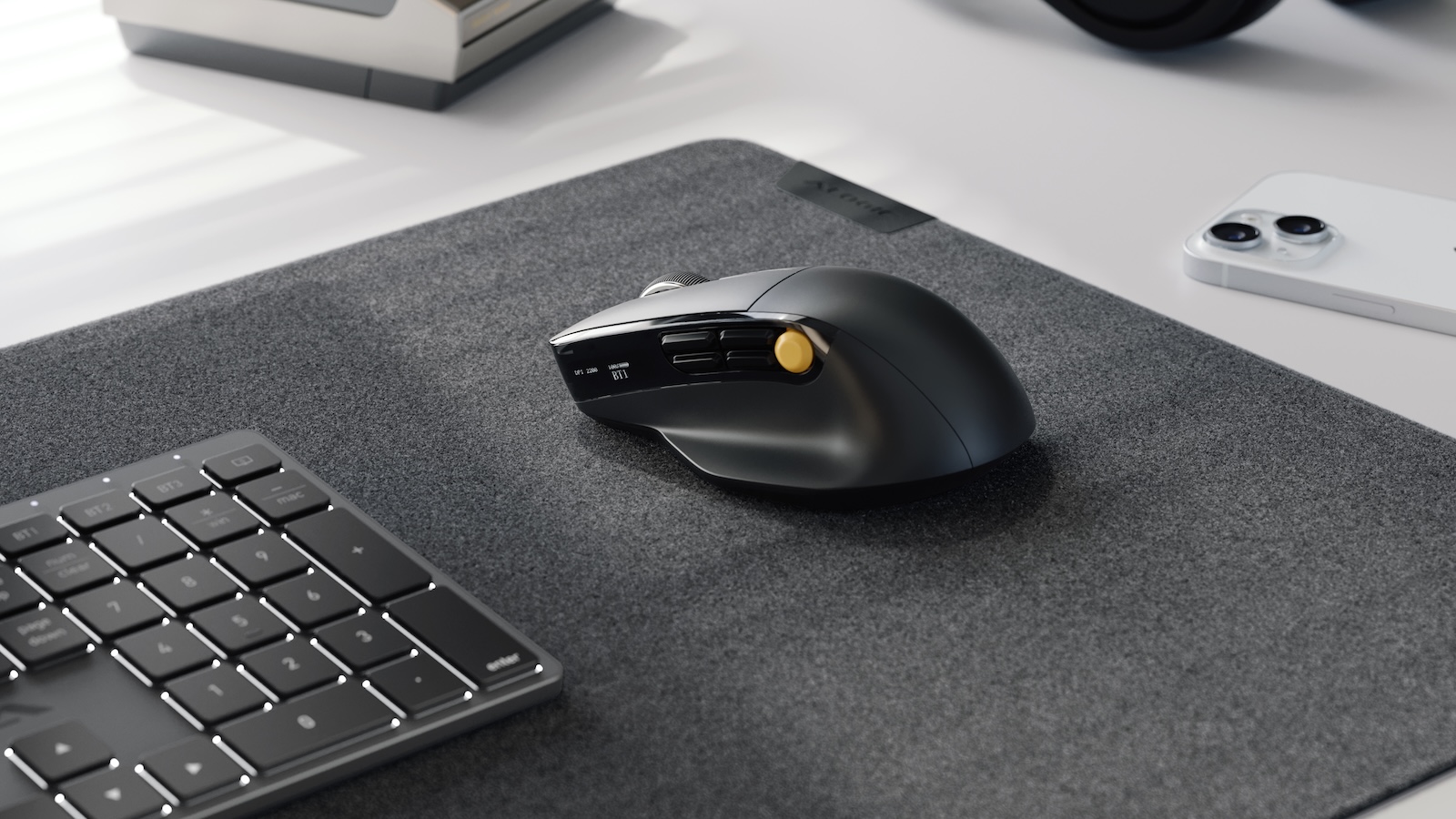
Crux mouse
And on the input side, Alogic is now shipping several previously announced accessories including the ergonomic multifunction Crux productivity mouse, priced at $79.99. The Hush full-size keyboard ($89.99) with backlit keys and multi-device support is also shipping, as is the Hush mouse ($29.99) with a slim design and multi-device support.
Note: MacRumors is an affiliate partner with Alogic. When you click a link and make a purchase, we may receive a small payment, which helps us keep the site running.
Gurman says that the 20th-anniversary iPhone will make heavy use of glass, with the front and rear wrapping around the edges to sandwich a thin metal band.
The company expects to launch iPhone Pro models next year that will make use of a new glassy look, according to the people, who asked not to be identified because the work is confidential. Glass is used on the front and back of the phones — known internally as V73 and V74 — and the material will curve into the sides of the devices, with a metal band in the middle.
Gurman does mention a "more aspirational version" that "used even more glass," but says that design "was scrapped early on" in the development cycle.
It's possible that this more ambitious design is the one Lee was referring to in today's report, but Gurman implies that it was discarded some time ago, rather than being a more recent development as Lee had suggested.
Lee's report also appeared to suggest that the all-glass design would have been for an all-new model, saying the Jefferies analysts believed Apple's plan was to "extend the all-glass features to future iPhone Pro and Pro Max models," but we have not heard anything about such a potential additional model in quite some time. All recent rumors have been pointing toward the glass-heavy design already being for the Pro and Pro Max models in next year's lineup.
Apple Card users now have a new benefit available to them at Booking.com, with users automatically being upgraded to Genius Level 2 after completing just one eligible stay or car rental rather than the usual standard of five bookings within a two-year period.
Genius is Booking.com's free loyalty program, with Level 2 unlocking a number of benefits including discounts of 10–15% on select stays and car rentals as well as free breakfast and/or room upgrades at select stays.
Booking.com has been a premier Apple Card partner for some time now, with users receiving enhanced 3% Daily Cash when booking stays and car rentals using Apple Card with Apple Pay, and users also receiving 2% in Booking.com Travel Credits.
Apple today highlighted tomorrow's start for the Leagues Cup, an annual competition among teams from Major League Soccer and Liga MX, with all 62 matches available for Apple TV subscribers to watch at no additional charge in over 100 countries and regions.
The tournament features 18 of the 30 MLS teams and all 18 Liga MX teams, with the top three finishing teams receiving spots in the 2027 Concacaf Champions Cup. The Leagues Cup champion will receive a direct berth into the Round of 16 at the Champions Cup as teams vie for qualification to the FIFA Club World Cup and other international tournaments.
Phase One of the Leagues Cup runs from tomorrow through August 13, with the Quarterfinals scheduled for August 25–27 and the Semifinals to be played September 1–2. The final and third-place matches are scheduled for September 6.
In addition to Apple TV coverage, Apple is featuring the Leagues Cup across a number of its other services, including real-time scores and stats in the Apple Sports app, curated warm-up playlists on Apple Music, Maps Guides to every MLS stadium in Apple Maps, and a dedicated Leagues Cup hub in Apple News.
Earlier this year, Apple informed the European Union that it had agreed to acquire certain assets and hire employees from PlasmaSolve, according to a notice published today on the European Commission's website.
Apple Inc. ("Apple"), through a subsidiary, will acquire the entire issued share capital of PlasmaSolve s.r.o. ("PlasmaSolve") and offer employment to and hire certain PlasmaSolve employees. PlasmaSolve develops solutions, including a plasma simulation software, to design and optimize plasma-based manufacturing processes.
PlasmaSolve is a Czech materials science firm founded in 2016 that has focused on creating simulation software to assist manufacturers with various plasma-related technologies. The company's website remains active, and it outlines some of the grant funding it has received over the years related to its work.
PlasmaSolve's primary product was MatSight, a suite of apps intended to help manufacturers simulate the results of various vapor deposition processes for metals. Apple has used the technology for many years on a number of products, including on various iPhone models to create a durable thin film on the casing to minimize scratching and other damage.
The Solo Buds are an entry-level earphone product from Beats, normally priced at $79.99 in the United States, although they are occasionally offered on sale such as the current $10 discount at Best Buy bringing all colors down to $69.99. The Solo Buds offer up to 18 hours of battery life in the buds themselves, with their tiny case offering only wired charging capabilities and no battery of its own.
While the new orange color is exclusive to Best Buy and 7-Eleven, it is very similar to orange Solo Buds that were offered in India for free with the purchase of an iPhone 15 or iPhone 15 Plus back in October 2024 as part of a promotion in celebration of Diwali. The limited-edition earbuds offered in India included purple Beats "b" logos on the earbuds and case, while the new ones at Best Buy and 7-Eleven feature red "b" logos.
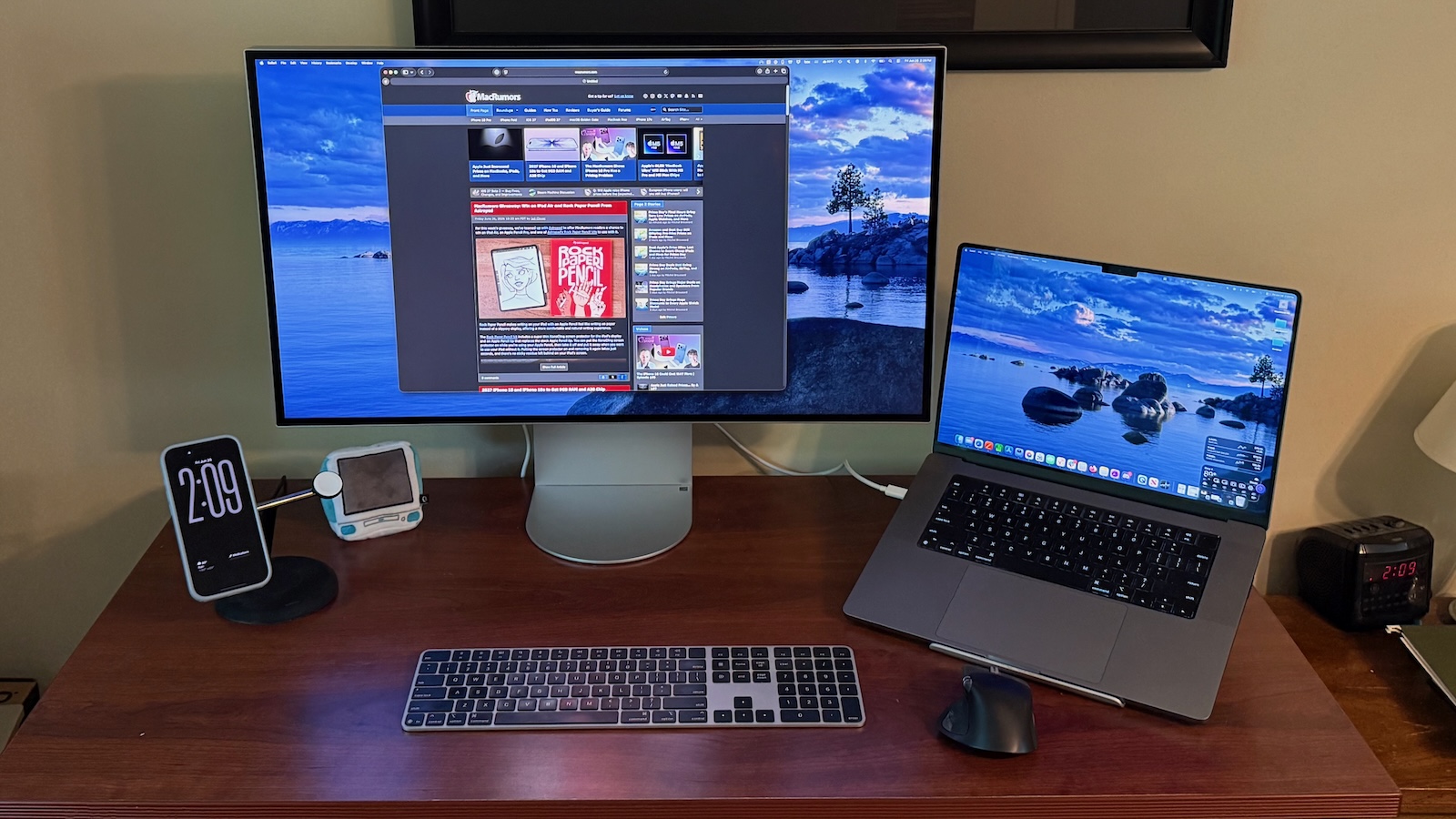
With Apple's discontinuation of the Pro Display XDR earlier this year, Mac users looking for a larger high-resolution display suddenly found themselves with fewer options on the market. Apple's current display lineup now includes its 27-inch Studio Display and Studio Display XDR, both of which offer excellent image quality and tight macOS integration, but neither provides the larger 32-inch form factor that some users prefer.
LG's UltraFine 6K (32U990A) display helps fill that gap. The display, which was unveiled way back in January 2025 but didn't launch until last October, features a 32-inch 6K Nano IPS Black panel, Thunderbolt 5 connectivity, and a design that feels more Apple-inspired than previous UltraFine displays. After using it for several weeks in my daily setup, I've found it to be a compelling alternative to Apple's own displays, albeit with a few tradeoffs.
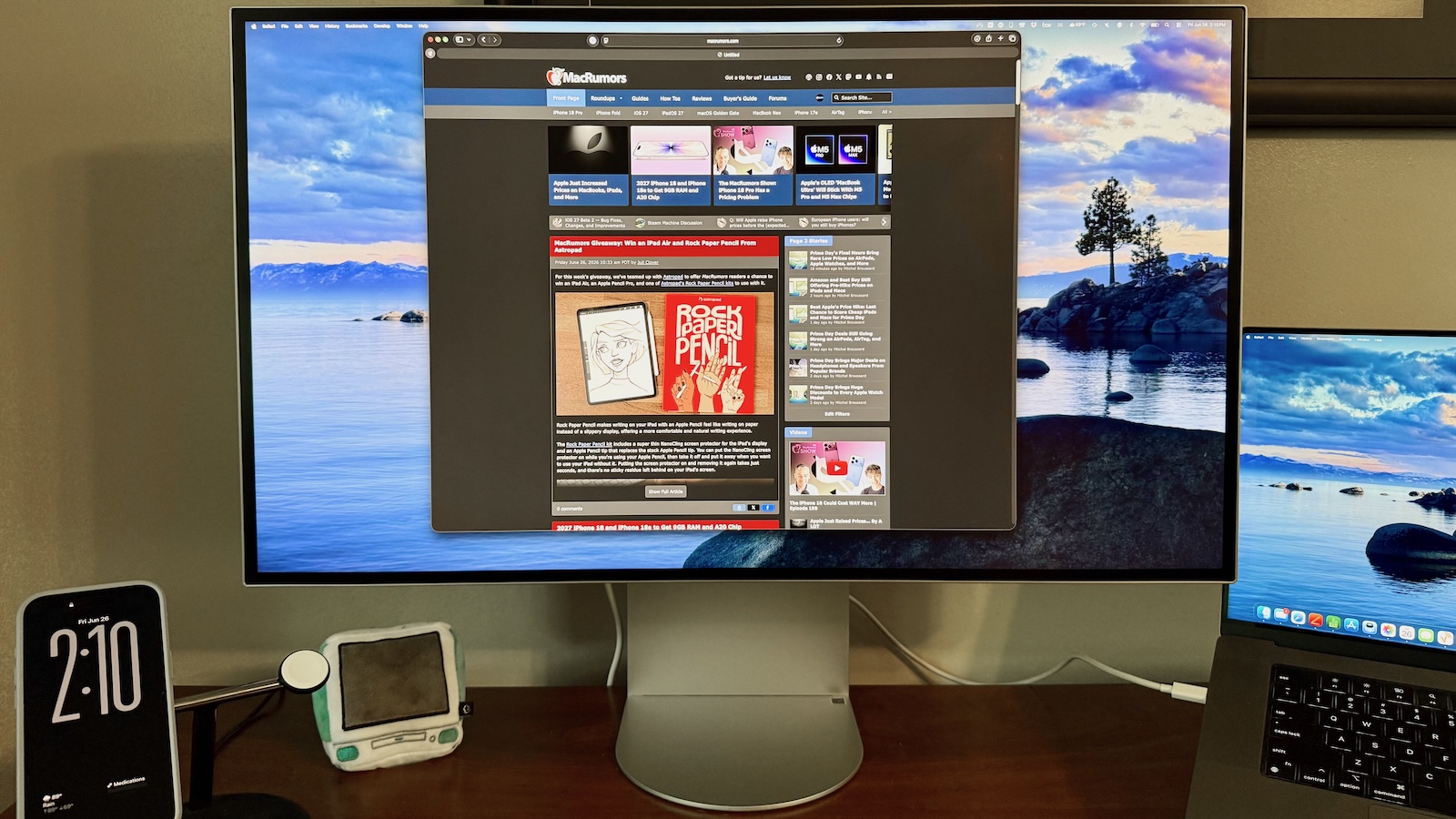
The first thing that stands out about the UltraFine 6K is simply how much workspace it provides. Compared to Apple's 27-inch displays and my trusty 27-inch UltraFine 5K displays that have anchored my workspace for nearly a decade, the extra screen area is immediately noticeable. Multiple apps can sit side by side in large windows without feeling cramped to support my typical "command center" view of our editorial operations, while creative apps that need the canvas all to themselves benefit from the additional room for toolbars and timelines.
Unlike many larger displays, the UltraFine 6K doesn't compromise on sharpness. The 6,144 x 3,456 resolution delivers a true Retina experience, with crisp text and interface elements sized appropriately for the typical viewing distance. That's one of the biggest advantages the display has over most monitors in this size class that deliver only 4K resolution. While those displays can often yield a similarly sized desktop through scaling, the result sometimes lacks a bit of sharpness while the UltraFine 6K feels completely native due to its higher pixel density.
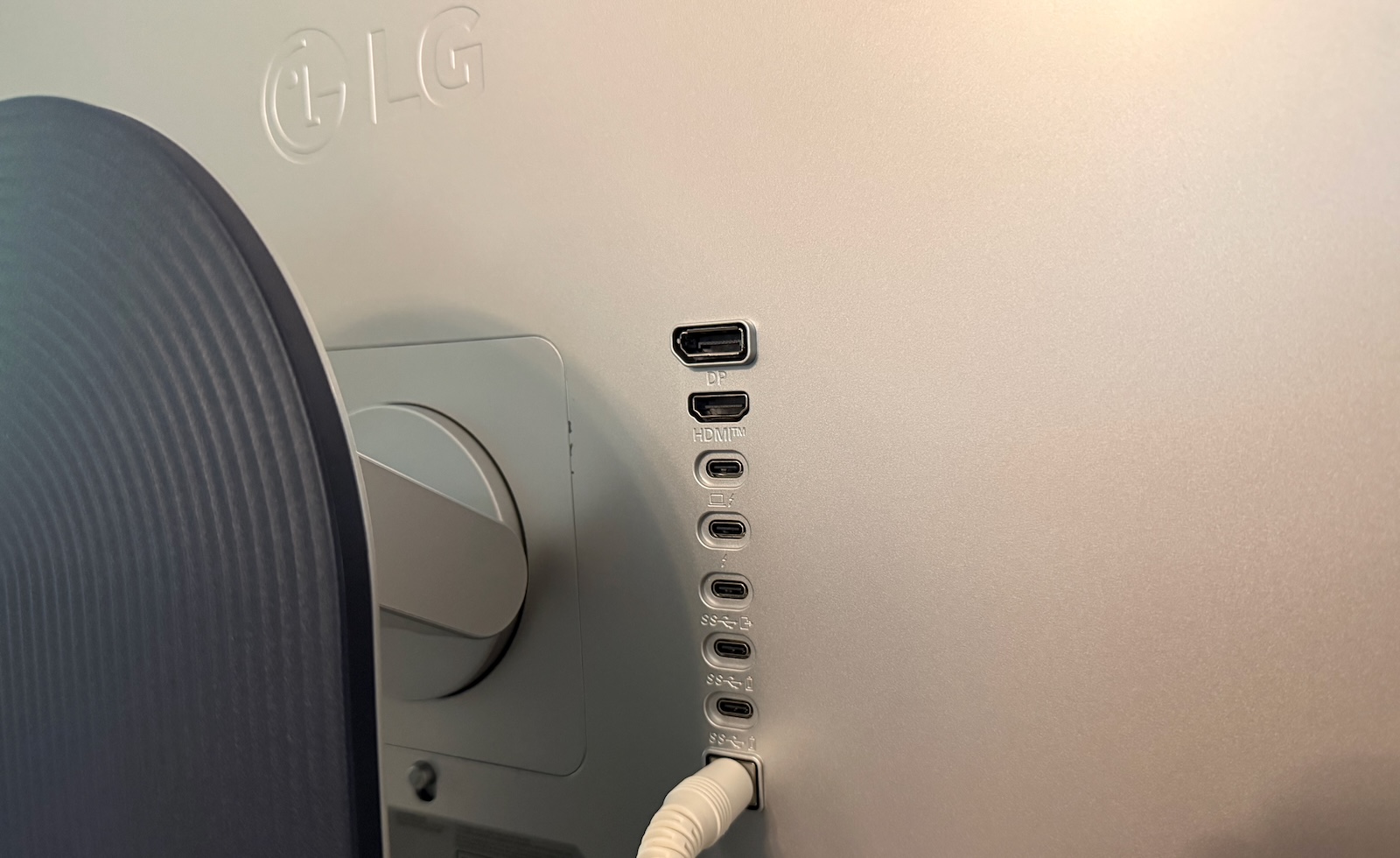
The UltraFine 6K also pairs well with Apple's latest Macs thanks to Thunderbolt 5 support. Using a MacBook Pro, a single cable handled display output, charging, and connected accessories, and you can even daisy chain multiple displays over a single connection. DisplayPort 2.1, HDMI 2.1, and non-Thunderbolt USB-C ports on the display provide additional display connectivity options, plus a downstream Thunderbolt 5 port support to support daisy chain configurations and a pair of upstream USB-C ports for hub functionality.
LG includes up to 96 watts of power delivery in the display, which easily keeps a 16-inch MacBook Pro topped up throughout the day and relatively quickly recharges a depleted one upon connecting the display.
Day-to-day reliability was excellent during testing. The monitor consistently woke from sleep without issue, display scaling options appeared properly in macOS, and there were none of the connection quirks that sometimes affect third-party displays. While that might sound like a small detail, seamless operation remains one of the most important qualities for a monitor intended primarily for Mac users.
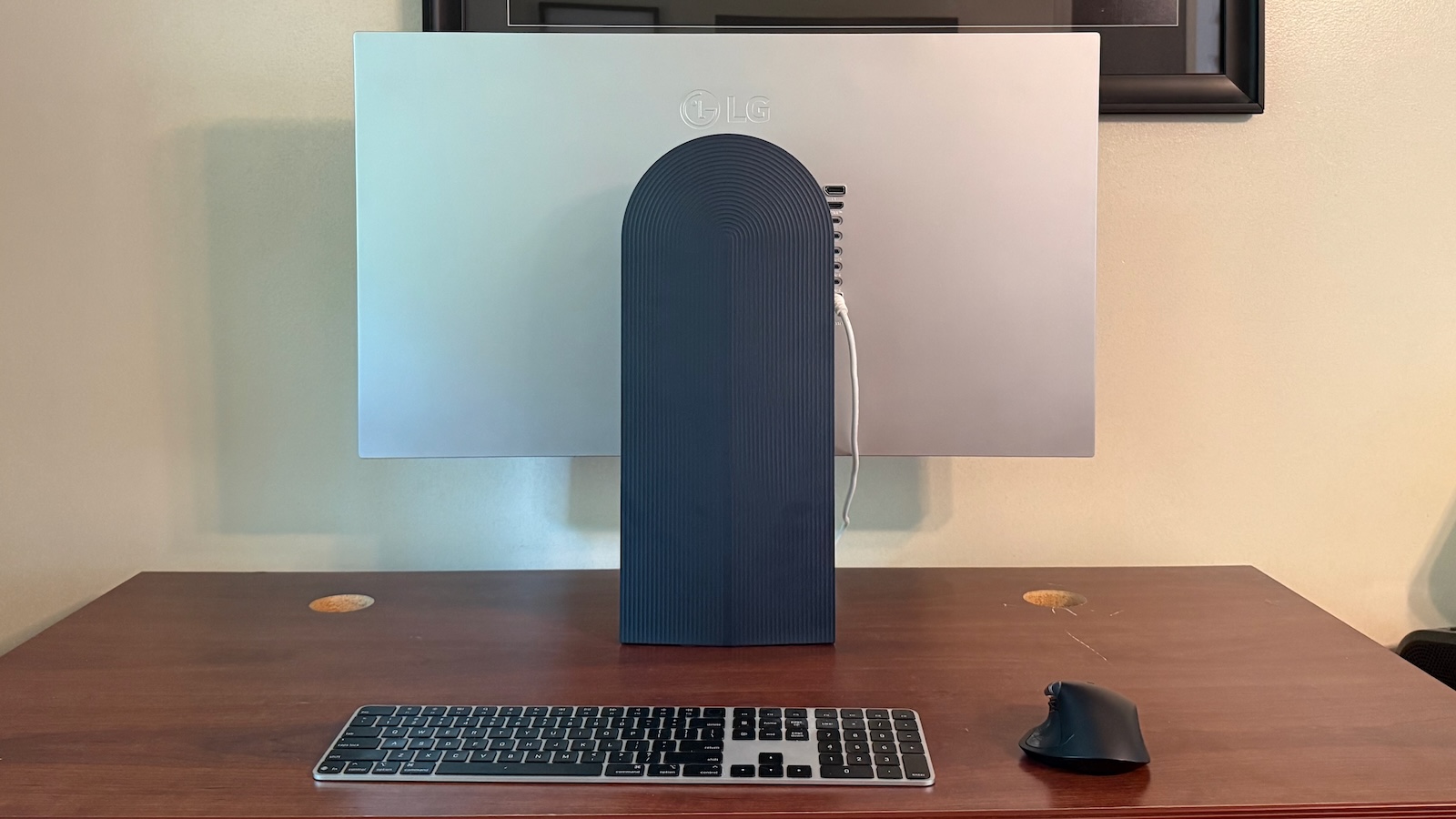
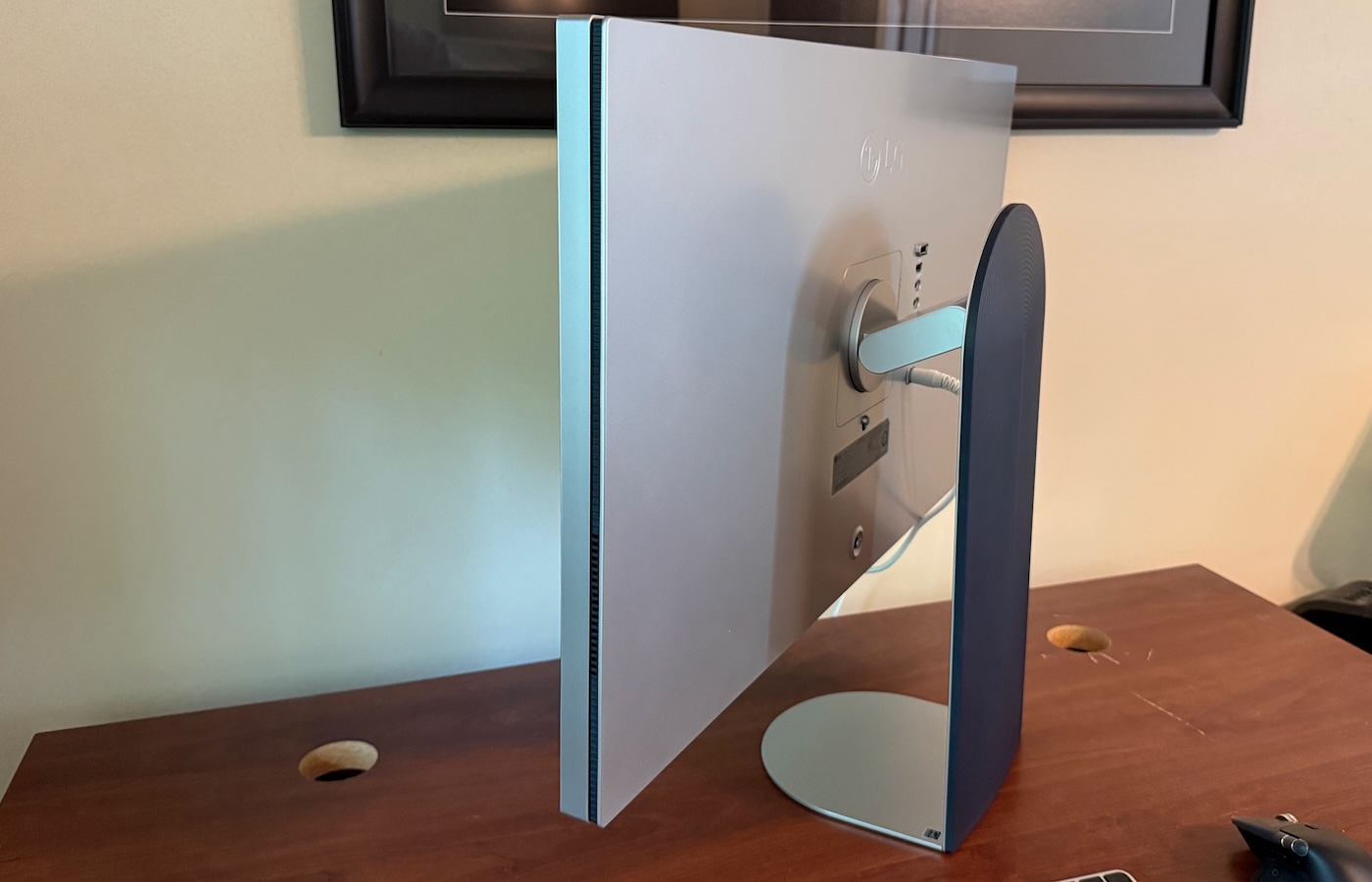
LG has also made significant improvements to the industrial design of its UltraFine lineup. Earlier UltraFine displays were known for their Mac compatibility, but they often looked more utilitarian than premium. The 32U990A adopts a cleaner aesthetic with slim bezels and a more refined rear enclosure that doesn't look out of place next to a Mac Studio or MacBook Pro. A wide foot provides stability, as does a wide vertical stand arm that features an unobtrusive silver color on the front but some dark blue ribbed plastic on the back to provide a bit of visual interest if the display is used in a setting where it the rear is visible.
Ports and a joystick button for controlling display settings are hidden away on the rear of the display, and there's no distracting pulsing LED to light up a dark bedroom when the display is sleeping.
The included stand offers height, tilt, swivel, and pivot adjustments, providing considerably more flexibility than Apple's standard display configurations to help you get the display in just the right ergonomic position.
Image quality is excellent overall. Colors appear vibrant and accurate, and the Nano IPS Black panel provides solid contrast. And of course the 6K resolution provides the sharpness and clarity many users are looking for.
The matte finish does a good job minimizing reflections, particularly in brighter environments or near windows. Apple's glossy displays still provide a slightly more vibrant appearance, but the tradeoff may be worthwhile for users who work in rooms with significant ambient light.
LG touts the UltraFine 6K's ability to work with macOS keyboard shortcuts for brightness and volume adjustments, although it's not fully baked into the macOS experience. Unlike my older UltraFine 5K displays that integrated perfectly into the built-in macOS functionality for these shortcuts, the UltraFine 6K requires a separate LG Switch app to enable these keyboard shortcuts and they are separate from the macOS-level adjustments while using the same keys, which makes things less seamless than I'd like them to be. Simply put, things can be finicky when using multiple displays and audio output options.
There are a few other areas where Apple's displays continue to maintain an advantage. The Studio Display XDR delivers substantially brighter HDR highlights and more impressive HDR performance overall, thanks to its advanced backlighting technology. Users working extensively with HDR video content will still benefit from Apple's higher-end display. The UltraFine 6K is also limited to a 60Hz refresh rate. For productivity work, that isn't a major concern, but users who spend much of their day on ProMotion-equipped Macs may notice the difference when scrolling or performing other actions resulting in quick onscreen movements.
Those limitations feel relatively minor, however, when viewed in the context of the entire UltraFine 6K package, especially considering the price difference versus the Studio Display XDR. The UltraFine 6K's primary appeal isn't HDR performance or refresh rate. It's the combination of a large 32-inch panel, Retina resolution, Thunderbolt 5 connectivity, and solid Mac compatibility.
The UltraFine 6K delivers the sharpness and ease of use that Apple users expect, while offering considerably more screen real estate than Apple's current display lineup. The result is a display that feels close to purpose-built for Mac users, and one that stands out as one of the strongest premium monitor options currently available for the Mac. The LG UltraFine 6K 32U990A is normally priced at $1,999.99, but LG is currently offering savings of $700 on the display, bringing it down to $1,299.99.
Note: LG provided MacRumors with the UltraFine 6K display for the purposes of this review. No other compensation was received. MacRumors is an affiliate partner with LG. When you click a link and make a purchase, we may receive a small payment, which helps us keep the site running.
Alogic this week unveiled a new lineup of touchscreen displays that bring touch and stylus functionality to Macs, including the FOKUS interactive touchscreen series, the Aspekt Touch 27" monitor, and new Folio portable touchscreen displays.
Aspekt Touch 27"
While Apple has yet to release a touchscreen Mac, Alogic has established itself as one of the few display makers offering touch-enabled monitors designed to work with macOS. The company's latest products continue that focus, aiming to give Mac users a more direct way to interact with content using touch gestures and stylus input.
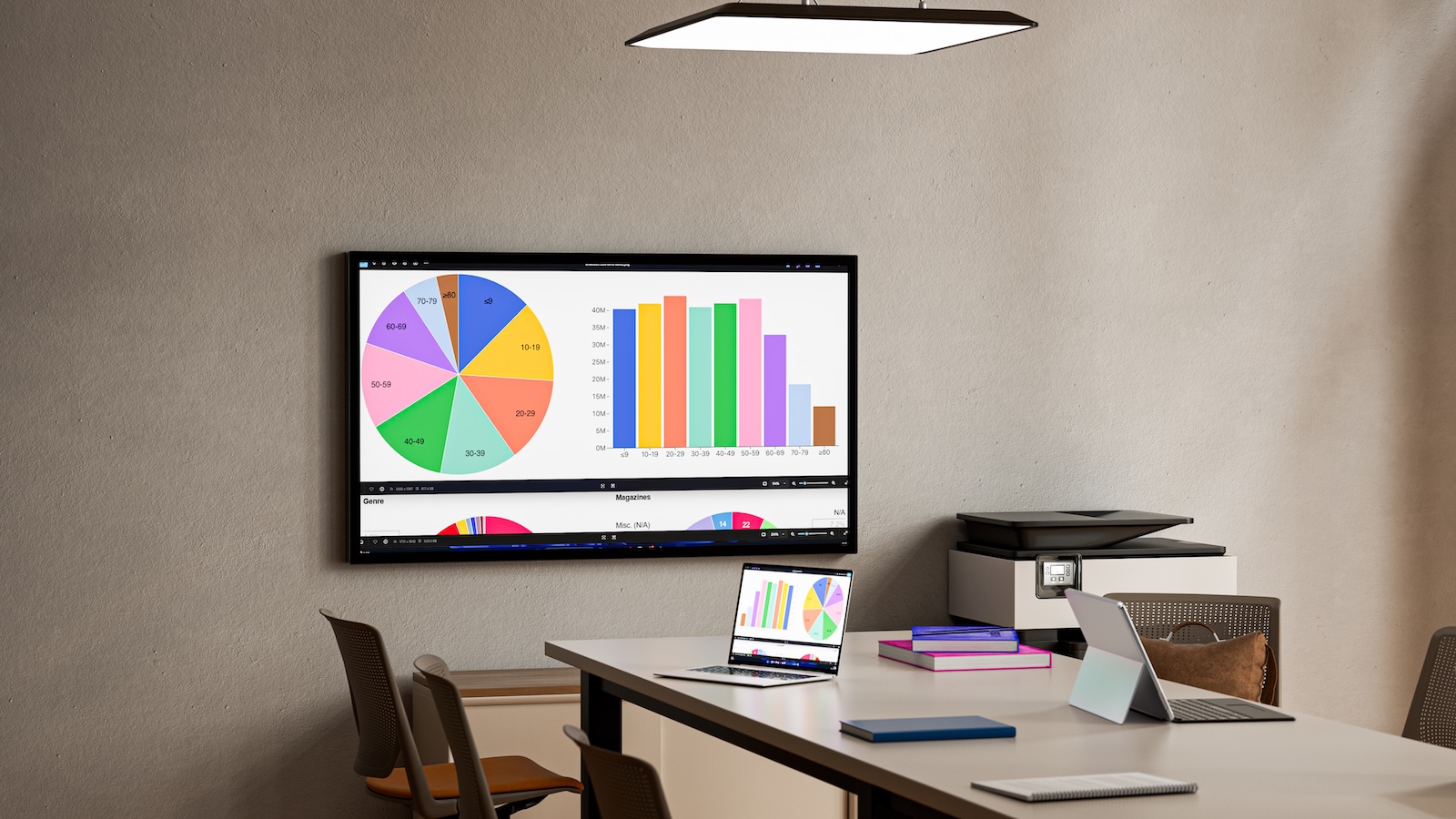
The new FOKUS series consists of 43-inch, 55-inch, and 65-inch 4K touchscreen displays designed for collaborative environments such as conference rooms, classrooms, and creative workspaces. The displays support multitouch interaction and work with Alogic's Active Stylus, which offers 4,096 levels of pressure sensitivity for writing, drawing, and annotation.
FOKUS 55"
For Mac users, the key feature is touch support. Since macOS does not natively offer touchscreen functionality, Alogic provides software that enables touch gestures, navigation, annotation, and drawing on connected Macs. The company has offered similar capabilities in previous touchscreen displays, including its Clarity lineup.
Alogic is also introducing the Aspekt Touch 27" monitor, a scaled down version of the existing Aspekt Touch 32" delivering multitouch and stylus support. The Aspekt Touch 27" features a 4K panel with 600 nits of brightness, integrated docking functionality with multiple USB-C and USB-A ports plus Ethernet and audio. It can accept HDMI 2.0, DisplayPort 1.4, and USB-C connections and can deliver 90 watts of charging power over USB-C for connected laptops.
Aspekt Touch 27"
The Aspekt Touch 27" is available in Silver and Space Black color options, with three stand options: a traditional Raise Stand, a Fold Stand that brings the display down to a comfortable stylus drawing position, and an Omni Fold Stand that offers the same functionality as the Fold Stand but which includes a built in mount for a Mac mini at the base of the display.
The company also announced new Folio portable touchscreen monitors for users who need a secondary display while traveling. The Folio models feature a folding cover that doubles as a stand and connect through USB-C, making them a natural companion for MacBooks. The standard Folio model features a single 16-inch display at a resolution 2,560 x 1,440, while the Folio Duo includes two of these screens stacked on top of each other. The Folio Duo can also be rotated 90º to orient the two displays side-by-side in a portrait orientation.
Folio Duo
Portable touchscreen displays are widely available, but many function only as standard monitors when connected to a Mac. Alogic has differentiated itself by supporting touch input on macOS, allowing users to interact directly with apps, presentations, documents, and creative projects.
The products arrive as interest in touchscreen Macs continues to grow. Reports over the past several years have suggested Apple has explored touchscreen Mac hardware, but the company has yet to introduce a Mac with a touch-enabled display with the first rumored to be a "MacBook Ultra" coming in late 2026 or early 2027. In the meantime, third-party solutions like Alogic's monitors offer Mac users a way to add touch functionality to their existing setups.
The new FOKUS, Aspekt Touch 27", and Folio displays were showcased at InfoComm 2026 this week as part of Alogic's expanding monitor portfolio. The FOKUS displays will be launching by September, priced at $2,799 for the 43-inch model, $3,299 for the 55-inch model, and $3,999 for the 65-inch model. The Folio ($899) and Folio Duo ($1,299) should become available around the same September time frame, while the Aspekt Touch 27" (starting at $1,799) and the Active Stylus with wireless charging ($149) will be available starting next month.
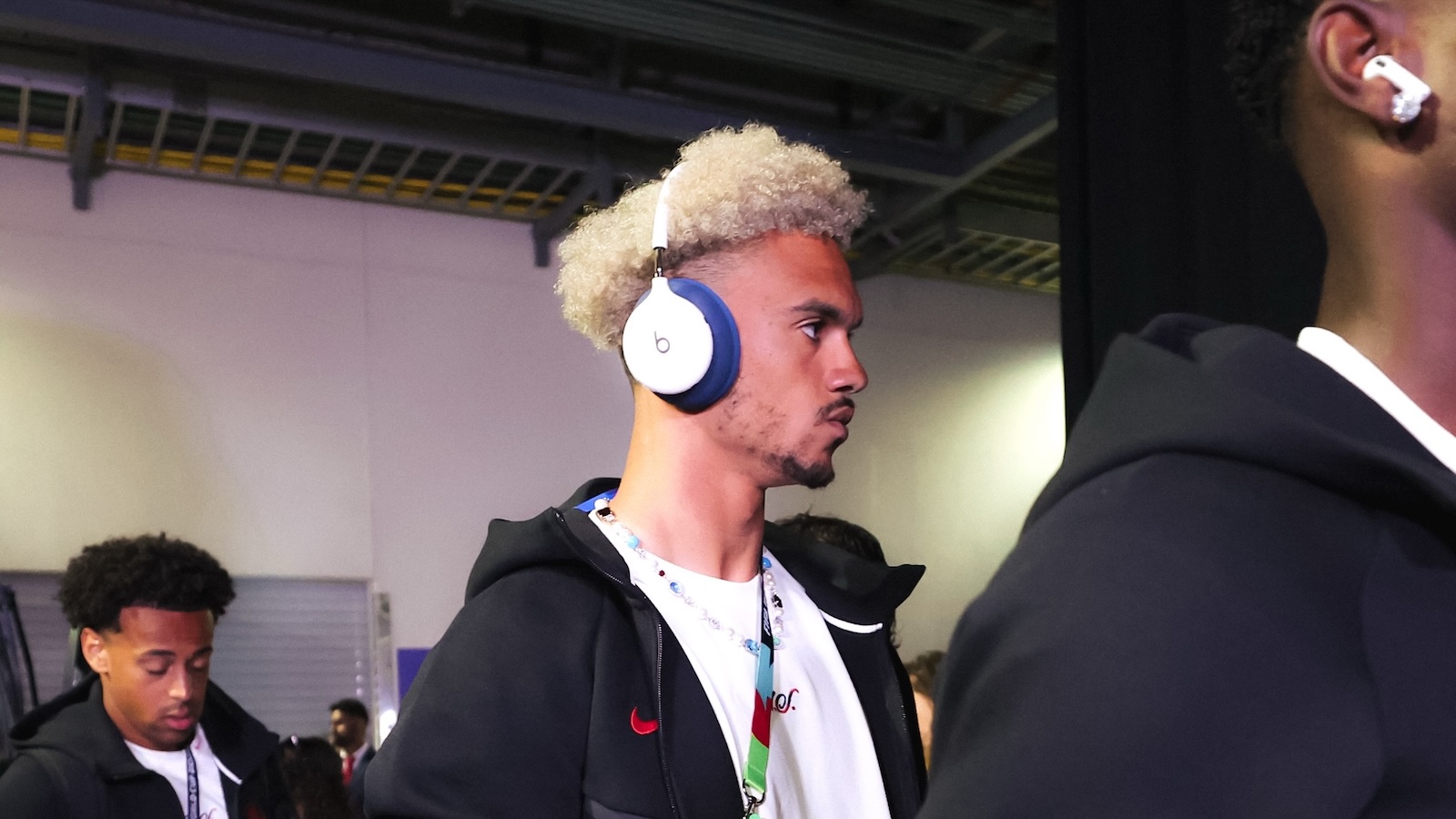
Several players involved in the World Cup have been spotted wearing unreleased Beats over-ear headphones over the past couple of weeks, and U.S. men's national soccer team star Antonee Robinson is the latest to be spotted with them. Robinson was captured in a photo on his Instagram account wearing a two-tone version that appears to feature a white headband and housings but with royal blue ear cups.
Previous versions of the headphones seen in photos of Lamine Yamal have featured only a single color, and it's unclear which color options are going to be available to the public, whether ear cups will be swappable to customize your own set, or if Robinson's set is a custom version produced only for him or a limited number of influencers.
The unreleased headphones first appeared in a U.S. Federal Communications Commission database last month, and it's clear Beats is undertaking a influencer seeding campaign throughout the World Cup to generate anticipation ahead of a public release, but the timing of availability remains unknown. It's also unclear whether these will be a new version of the existing Beats Studio Pro over-ear headphones or if they will be positioned as a new product.
Apple's WWDC 2026 begins today, with the event kicking off at 10:00 am Pacific Time via the traditional opening keynote. We know that some MacRumors readers who can't follow the event as it's being broadcast are interested in avoiding all of the announcements and waiting until the event video is available for on-demand viewing so as to experience it without already knowing the outcome.
For those individuals, we've posted this news story, which will be updated with a direct link to the presentation once it becomes available from Apple. No other news stories or announcements will be displayed alongside this story.
Replays of Apple's recent events have been made available to view almost immediately following the conclusion of the broadcasts, and we expect similar timing for today's event. Users waiting for the video to be posted are welcome to gather in the thread associated with this news story, and we ask that those who follow the events as they occur refrain from making any posts about Apple's announcements in this thread.
The Instagram Story is a still photo showing Yamal greeting a fan, and he is carrying a bag with both the pink and ivory color versions of the headphones hanging around the bag's strap, but we don't have any other views of the product.
It's still unclear exactly what features these upcoming headphones are going to offer, and whether they will be considered a successor to the current Beats Studio Pro over-ear model or if they will be a separate product. The headphones first appeared a couple of weeks ago in a U.S. Federal Communications Commission database, but we don't yet know when they will see a public release.
Apple Card and Uber One users can earn up to $30 Uber Cash through August 31 by using their Apple Card on Uber Eats. Users can earn $10 Uber Cash each month in June, July, and August by making one eligible order per month on Uber Eats using their Apple Card.
Uber One members can earn $10 Uber Cash on one eligible grocery or retail order per month, now through August 31, when you check out with your Apple Card on Uber Eats. Shop food, health and beauty, pet supplies, and more. You could earn up to a total of $30 in Uber Cash, awarded by Uber, to use on Uber Eats orders.
Apple Card users are also eligible to receive a six-month free trial of Uber One when signing up with your Apple Card and Apple Pay. After the six-month trial, your Uber One subscription will automatically renew at $9.99 per month.
In addition to these promos, Apple partners with multiple vendors to offer three percent Daily Cash back on Apple Pay purchases made with Apple Card, including Uber Eats. Three percent cash back can also be earned from Nike, Ace Hardware, Uber, Hertz, Walgreens, Exxon Mobil, and Apple's own retail stores.
iOS 27 will include a nice quality-of-life improvement for those who frequently split bills with friends and family, allowing them to easily take a photo of a receipt and generate payment requests for different people, according to Bloomberg's Mark Gurman.
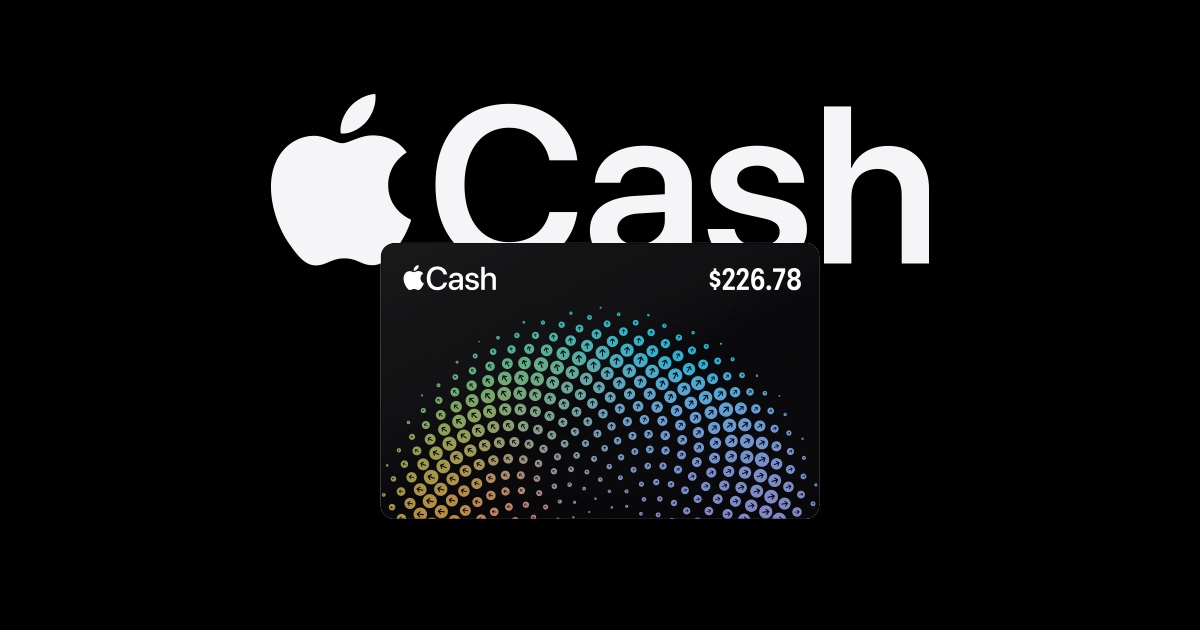
The feature will be tied to the peer-to-peer Apple Cash feature in the Wallet app, which lets users easily send money to other people and even make purchases.
by scanning items like movie tickets, concert passes, and gym membership cards.let users create their own digital passes
This functionality isn't the only Apple Wallet improvement coming iOS 27, as the update will also bring the ability to
The bill-splitting feature will be available through the Wallet and Messages apps, and users will be able to approve payments from an Apple Watch.
Gurman says that Apple is intending to announce the new feature "as early as next week" at WWDC, and it should be included in the upcoming iOS 27 release. Notably, Apple Cash is currently only available in the United States.
Ahead of the upcoming World Cup, football superstar Lamine Yamal has arrived at training camp for the Spanish national team sporting what seems to be the unreleased over-ear headphones that appeared in a U.S. Federal Communications Commission database last week. As suspected, the new headphones are a Beats product rather than an Apple product.
In a post on his Instagram account, Yamal shared several photos and a video clip showing him arriving to training camp with the new headphones in a pink color.
We don't know any other details on the upcoming headphones, and it's unclear whether they are a next-generation version of the Beats Studio Pro or if they will carry a new name. They feature a distinctly different design than the Beats Studio Pro, with flatter exteriors on the ear cups and a completely different headband design that appears to include tubular telescoping arms rather than the wider and flatter arms of the Beats Studio Pro.
A release date for the new Beats headphones is currently unknown, but it shouldn't be too far in the future given that they've already received FCC approval and are being seeded to key influencers like Yamal.
Back at CES in January, LG unveiled its UltraGear evo GX9 (39GX950B) display, which it claims is the world's first 39-inch ultrawide 5K2K OLED gaming monitor, offering a large curved canvas in the increasingly popular 21:9 aspect ratio with the added benefit of OLED technology for enhanced contrast with true blacks, standard refresh rates of up to 165Hz, and more.
While LG began taking pre-orders for the UltraGear evo GX9 last month and a few early orders have already trickled out through various channels, LG says that the official kickoff of order shipments starts next week.
LG touts the gaming prowess of the UltraGear evo GX9, but its specs mean it can deliver a premium experience across a variety of use cases, from productivity to media consumption and more.
OLED technology delivers a contrast ratio of 1,850,000:1 across the ultrawide display's 5,120 x 2,160 resolution. At a large 39-inch display size with a 1500R curve, this translates to a density of 143 pixels per inch, which is solid but not enough for true retina-level quality. Still, the large, curved display means many users will often be sitting further from the display than usual to be able to take in the full scope of content on the display, and that should prove plenty sharp in most situations.
The Tandem OLED panel in the UltraGear evo GX9 supports up to 335 nits of typical brightness, which is likely sufficient for most uses but does lag behind some other displays including ones in Apple products. The OLED contrast, color fidelity at up to 98.5% of the DCI-P3 spectrum, and HDR support that can push brightness to 1,500 nits at 1.5% APL and 600 nits at 10% APL should, however, all help to offer a quality viewing experience.
For those who do want to game on this display, the UltraGear evo GX9 features AMD FreeSync Premium Pro and NVIDIA G-SYNC support, as well as 0.03ms response times to keep up with fast-moving content.
On the connectivity side, the UltraGear evo GX9 offers a USB-C port with 90-watt power delivery to a connected computer, as well as DisplayPort 2.1 and HDMI 2.1.
We'll be looking to go hands-on with the LG UltraGear evo GX9 as soon as we can, and we'll report back on how well it works for Mac users, but for now LG is taking orders on its own site priced at $1,799.99, and it's also available at Amazon for the same price with delivery quotes starting around June 8.
MacRumors is an affiliate partner with LG and Amazon. When you click a link and make a purchase, we may receive a small payment, which helps us keep the site running.
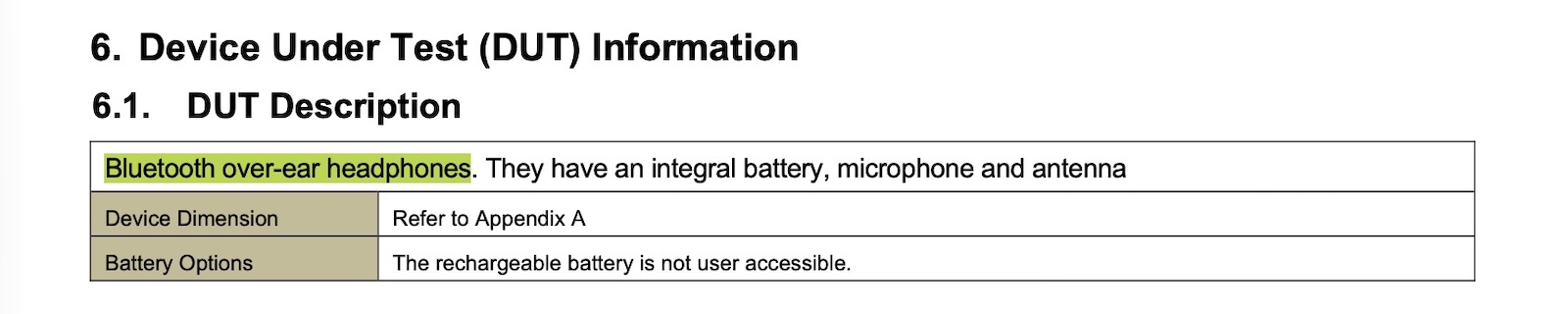
The U.S. Federal Communications Commission has just published documents related to an apparently unreleased Apple product with model number A3577, with the product described as "Bluetooth over-ear headphones."
These headphones do not appear to be the AirPods Max 2, which carry a model number of A3454, and there is little other information to go on, so it is unclear what these headphones are.
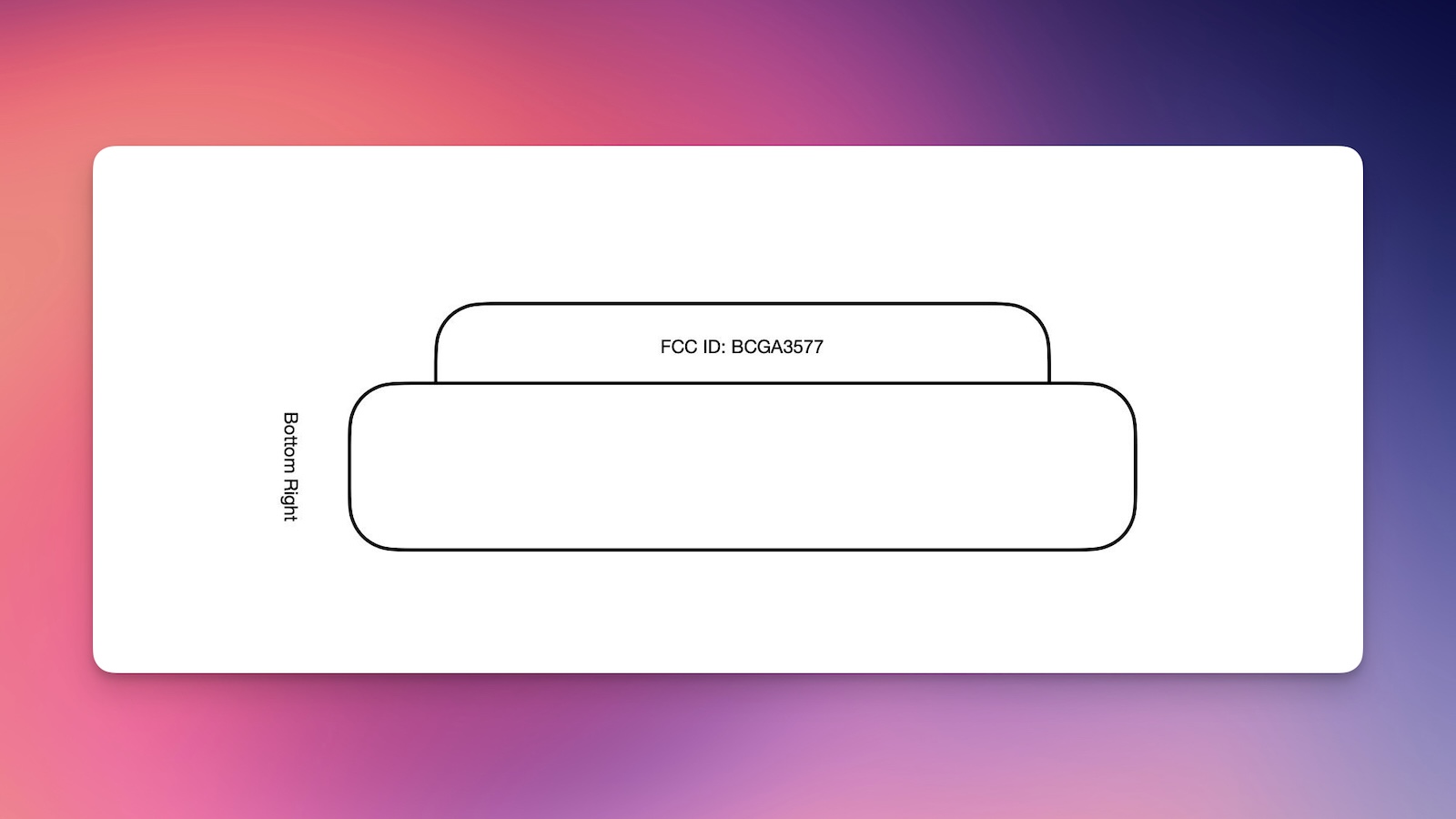
Most of the documents that would reveal details on this A3577 product are being temporarily withheld from publication under a confidentiality request, which is standard for Apple's product filings with the FCC. One figure showing the location of the FCC ID labeling on the product appears to show a generic-looking headphone ear cup, with no identifying design details.
It is possible these are an upcoming Beats product, such as an updated version of the brand's over-ear Beats Studio Pro headphones, but this is purely speculation. The Beats Studio Pro were released nearly three years ago in July 2023, so they could be due for a revision.
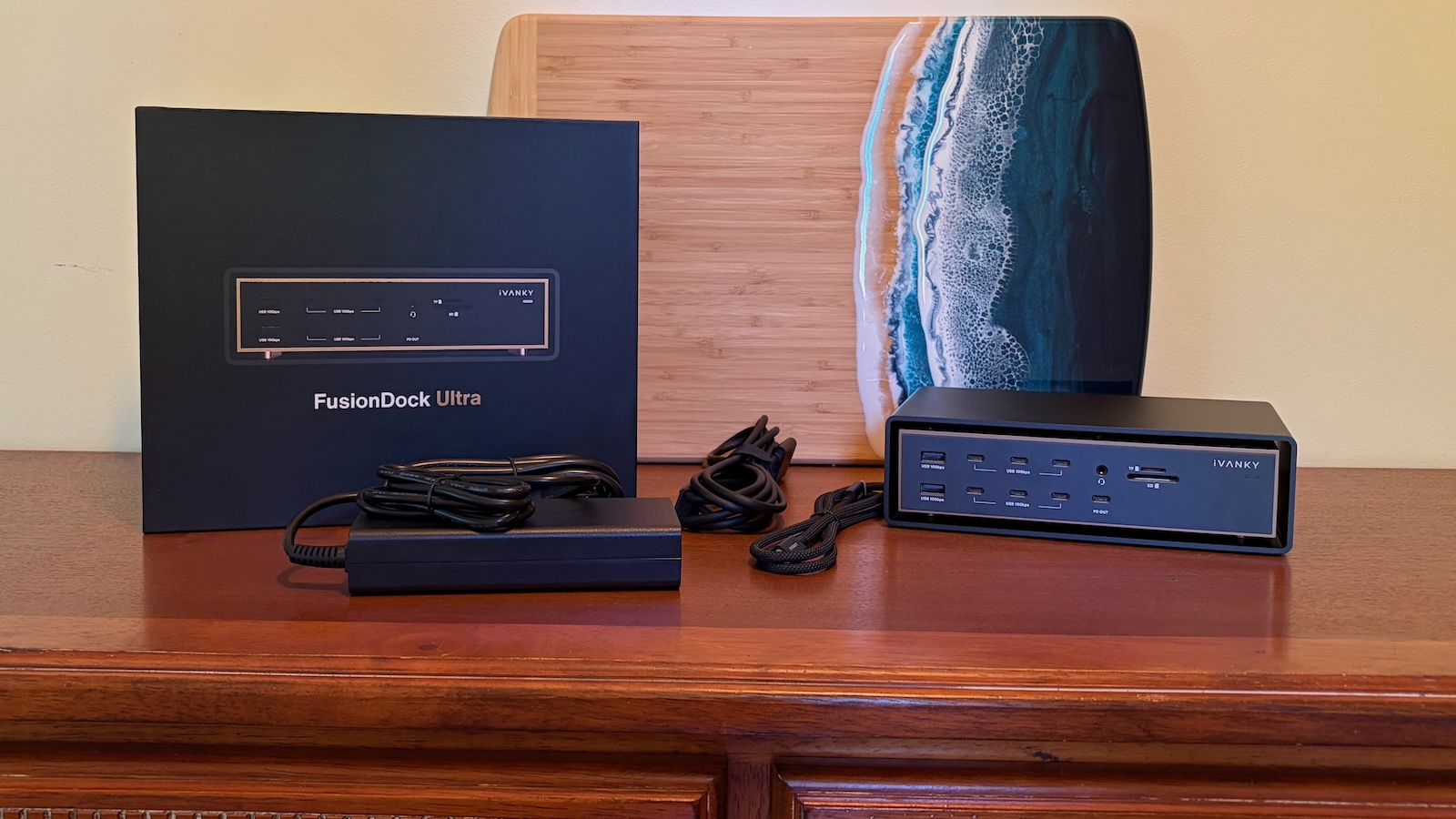
A couple of years ago, I reviewed iVANKY's FusionDock Max 1, a powerful Mac dock utilizing dual Thunderbolt chips and dual-cable connectivity to drive 20 ports of various types for extreme versatility. Since that time, iVANKY has taken things further with the 23-port FusionDock Max 2 and now the 26-port FusionDock Ultra, and I've spent the past few weeks testing out the top-of-the-line FusionDock Ultra to see how it performs.
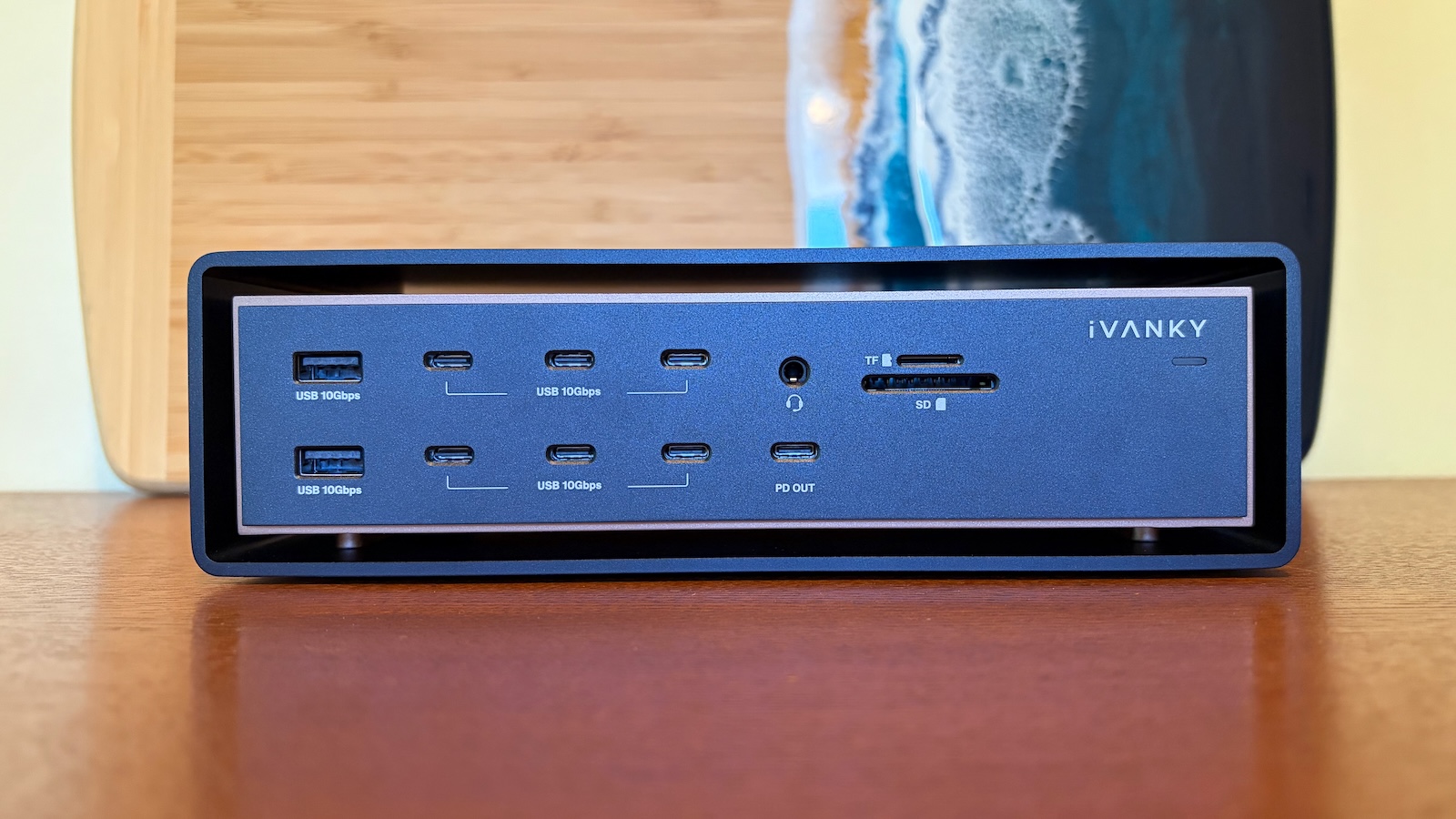
Similar to the FusionDock Max 1, the FusionDock Ultra features a dual Thunderbolt chip architecture that supports an impressive set of ports for power users. You'll find a huge array of USB ports, plus 10 Gigabit Ethernet, SD/TF card slots, and more.
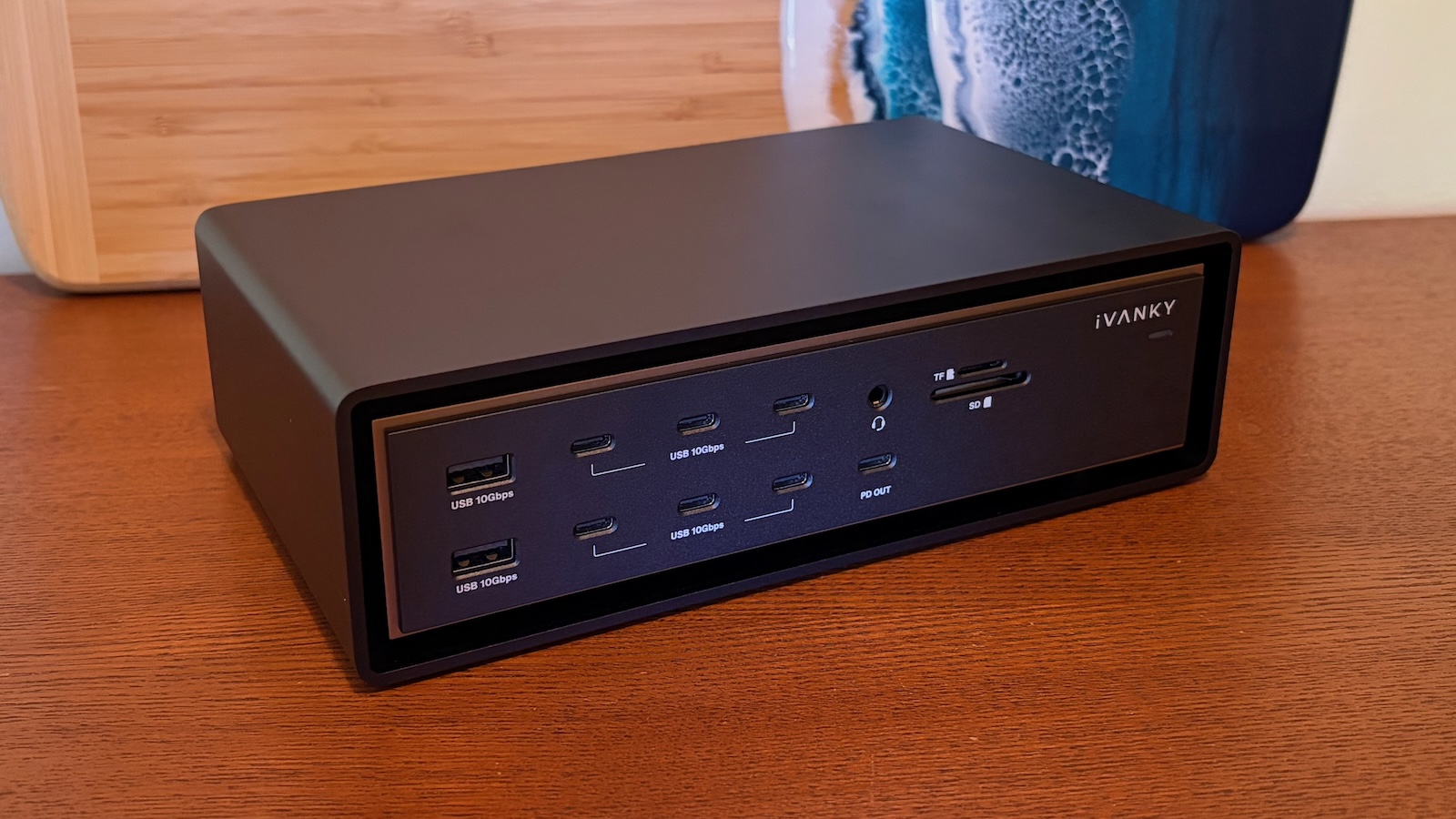
The FusionDock Ultra offers an appealing and practical design, although the front of the dock is littered with ports. That's a positive for ease of access if you need to connect and disconnect things, but it results in a less clean look and can make it harder to keep cables out of sight. But with this many ports, it more or less requires using the full front and rear panels of the dock just to fit them all in, so it's an understandable compromise.
The main body of the dock appears to float within a larger enclosure, only sitting on a few small pegs within the extruded black aluminum exterior shell. This design offers visual appeal while also providing room for airflow and a hefty amount of aluminum for heat dissipation via the copper-alloy midframe. In my testing, I found the exterior shell to get a bit warm with use, but not uncomfortable to touch at any point.
On the front of the FusionDock Ultra, you'll find a whopping six 10 Gbps USB-C ports, an additional 10 Gbps USB-C port with Power Delivery support up to 45 watts, two 10 Gbps USB-A ports, a 3.5mm combo audio port, UHS-II SD and TF/microSD 4.0 card slots, and an LED power light that's bright enough to let you know it's on while remaining dim enough to not be a distraction, even in a dark room when your screens are sleeping.
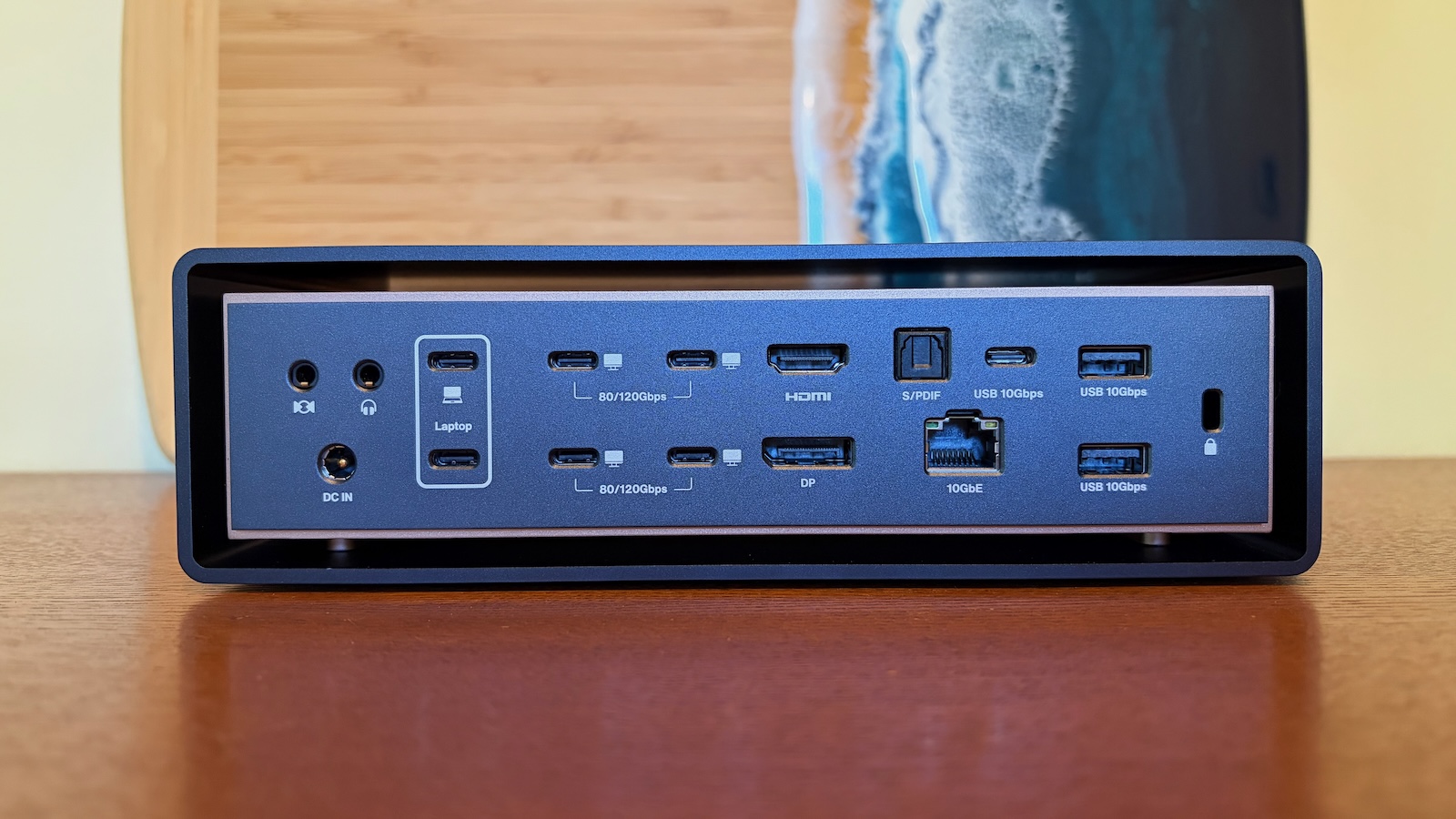
The rear of the dock features more than a dozen additional ports, including a pair of Thunderbolt/USB-C ports for the upstream connection to the Mac, four downstream Thunderbolt/USB-C ports for displays with the ability to support up to 80 Gbps or even 120 Gbps of data connection, an HDMI 4K port, a DisplayPort 2.1 port, one additional 10 Gbps USB-C port, two 10 Gbps USB-A ports, a 10 Gb Ethernet port, an S/PDIF optical port, and separate 3.5mm audio in and out ports, plus a Kensington lock slot to help secure the dock if used in a public environment.
There are dual fans inside the dock to help move air for heat dissipation, and they are audible when they kick on in a quiet environment, but I have not found them to be distractingly loud. Adaptive fan control modulates the speed depending on the heat being generated, and they will turn off or run very quietly at low speed under light to moderate workloads before ramping up under more demanding conditions. iVANKY says the fans register at 44–46 dBA when measured at a 1 cm distance, and that sounds about right: audible but more of a low white noise in a quiet environment and becoming nearly unnoticeable in busier environments.
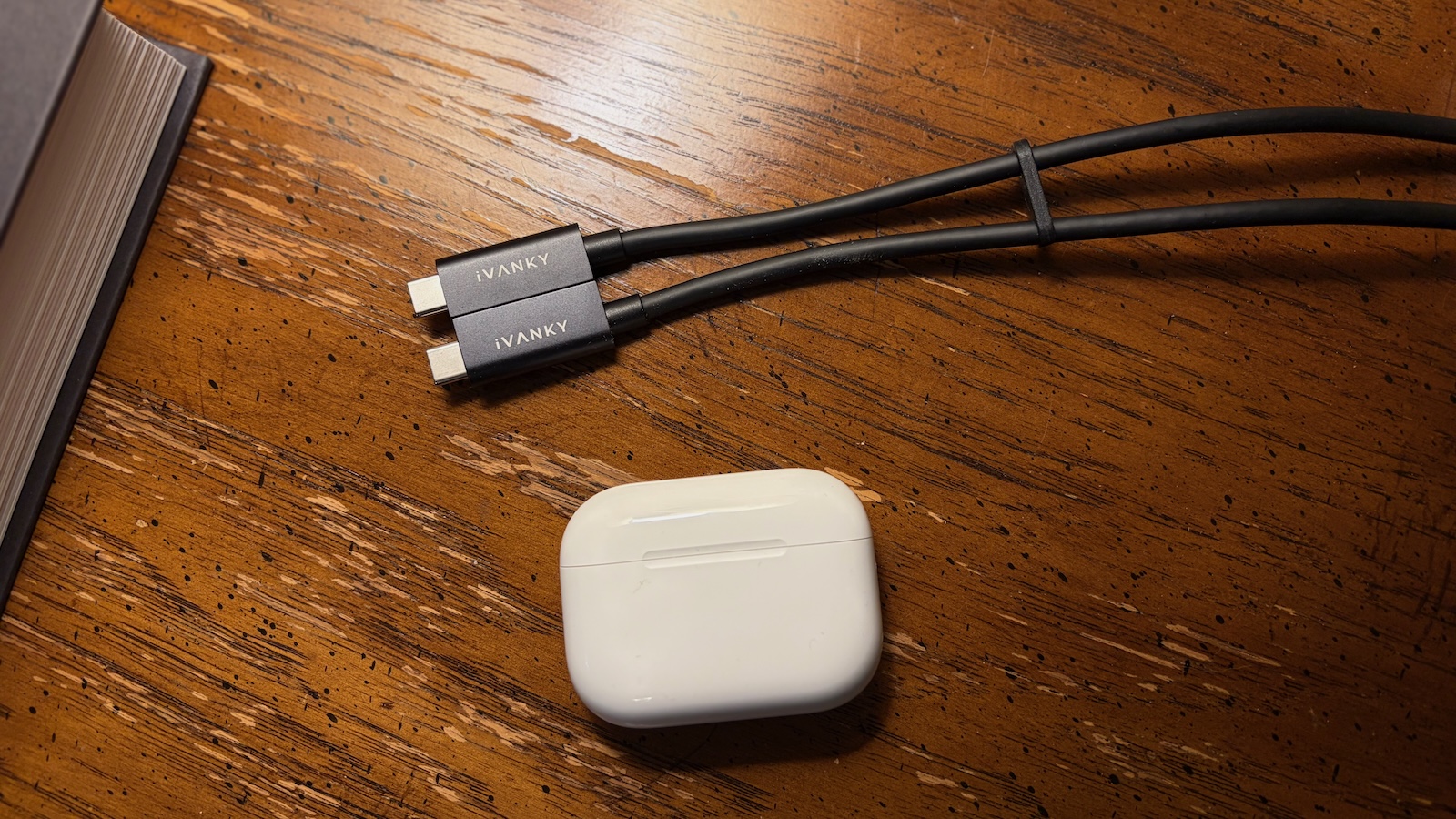
As mentioned, the FusionDock Ultra connects to a Mac over a double Thunderbolt cable, and iVANKY has a clever cable design to help keep things neat. The two Thunderbolt connectors at the Mac end of the cable attach to each other magnetically, creating what amounts to a single connector for machines such as the MacBook Pro that have standard horizontal spacing between Thunderbolt ports.
If you're using something like a Mac Studio or Mac mini with a different alignment of the ports, the cable connectors can be separated. iVANKY's solution also includes a pair of slidable clips to help keep the two cables together and organized.
Notably, the FusionDock Ultra can provide up to 140 watts of upstream power to a connected Mac over this Thunderbolt connection, delivering quick charging to even Apple's most power-hungry portable Macs. In order to drive all of this, the dock comes with a fairly large 240-watt external power brick, but most users shouldn't find it too hard to tuck it away on the floor or behind other equipment.
Turning to display connectivity, while the FusionDock Ultra can drive four 6K displays natively, support ultimately depends on the Mac you're connecting it to. For full quad-display support, you'll need to be using a Mac with a Max or Ultra flavor of chip, anywhere from M1 up to M5. The latest MacBook Pro with an M5 Pro chip supports up to three displays, as does the latest Mac mini with either the M4 or M4 Pro chip. Machines with most other chips can support two external displays, while some older base chips like the M1 or M2 in a MacBook Pro or MacBook Air can only support a single external display.
Simply put, go off Apple's published specs for your model to see how many external displays you can use, as iVANKY's dock won't supersede those limits by using tricks like DisplayLink compression. This ensures optimal performance without degraded image quality or lag.
Users of the LG UltraFine 5K or Samsung ViewFinity S9 5K displays should note that the FusionDock Ultra only supports up to two of these being connected simultaneously. Apple Studio Displays are fully supported up to the maximum number specified for your machine. Generally speaking, I've been regularly using the FusionDock Ultra with two external displays throughout my testing and had a brief opportunity to test it with four displays, and I've seen no hiccups in performance with everything working seamlessly through the dock.
10Gb Ethernet connectivity is a major selling point for power users, as most docks deliver Ethernet at lower speeds as they seek to balance demands on the overall connection bandwidth, but the FusionDock Ultra's dual-chip and dual-cable design gives it the headroom to support the higher data speed.
There aren't a whole lot of Intel Macs left at this point, but it's worth noting that the FusionDock Ultra is only compatible with Apple silicon Macs, so it won't work with Intel Macs or PCs.
All of this doesn't come cheaply, with the FusionDock Ultra normally priced at $749.99, although iVANKY is currently discounting it to $649.99 on the iVANKY website and at Amazon. But for power users looking to connect a boatload of accessories to their Macs with minimal fuss, the FusionDock Ultra is an excellent companion. And if your needs aren't quite as high as what the FusionDock Ultra supports, iVANKY also offers the FusionDock Max 2 currently discounted to $399.99 or the original FusionDock Max 1 on sale for $299.99.
Note: iVANKY provided MacRumors with the FusionDock Ultra for the purposes of this review. No other compensation was received. MacRumors is an affiliate partner with Amazon. When you click a link and make a purchase, we may receive a small payment, which helps us keep the site running.
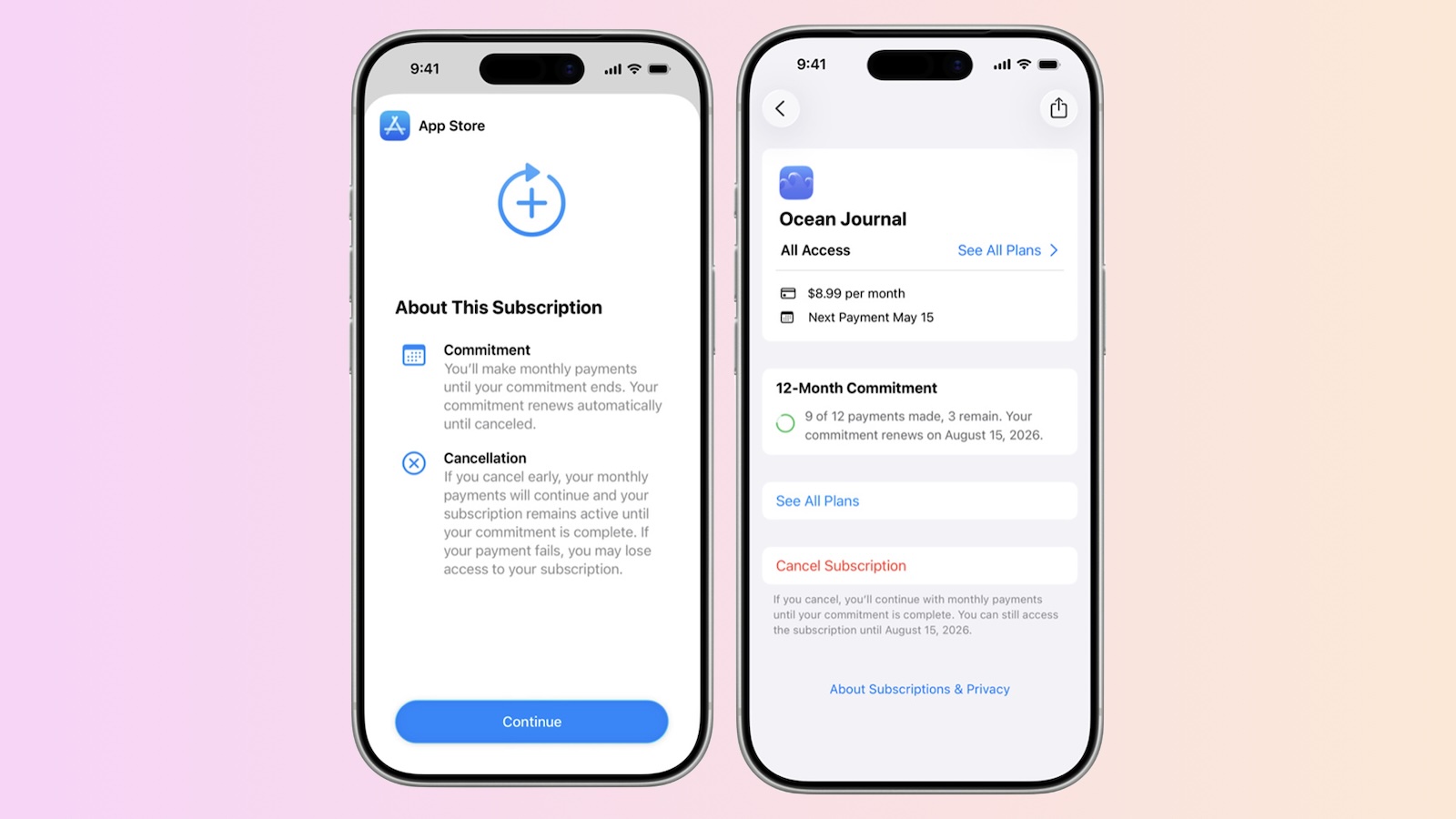
Apple today announced the launch of a new subscription option for App Store developers: monthly subscriptions with a 12-month commitment. The new option allows developers to offer subscribers discounted pricing typically associated with an annual subscription but paid on a monthly basis to keep payments more affordable.
This new payment option allows you to offer subscribers more affordable options. People can cancel their subscription at any time, which will prevent the subscription from renewing after they've completed their agreed-to payments to fulfill their commitment.
Apple says that the new feature provides transparency to users by allowing them to easily view the number of completed and remaining payments they've made toward their annual commitment. Apple will also send email and optional push notifications ahead of renewals.
Developers can begin creating these new subscription types in App Store Connect and testing them in Xcode starting today, and they will go live to users on iOS 26.4 and equivalent versions for other platforms next month alongside the launch of iOS 26.5 and related updates.
Notably, it appears the United States and Singapore will be excluded from these subscriptions for the time being, and there's no word on when they might roll out in these markets.

 Log in

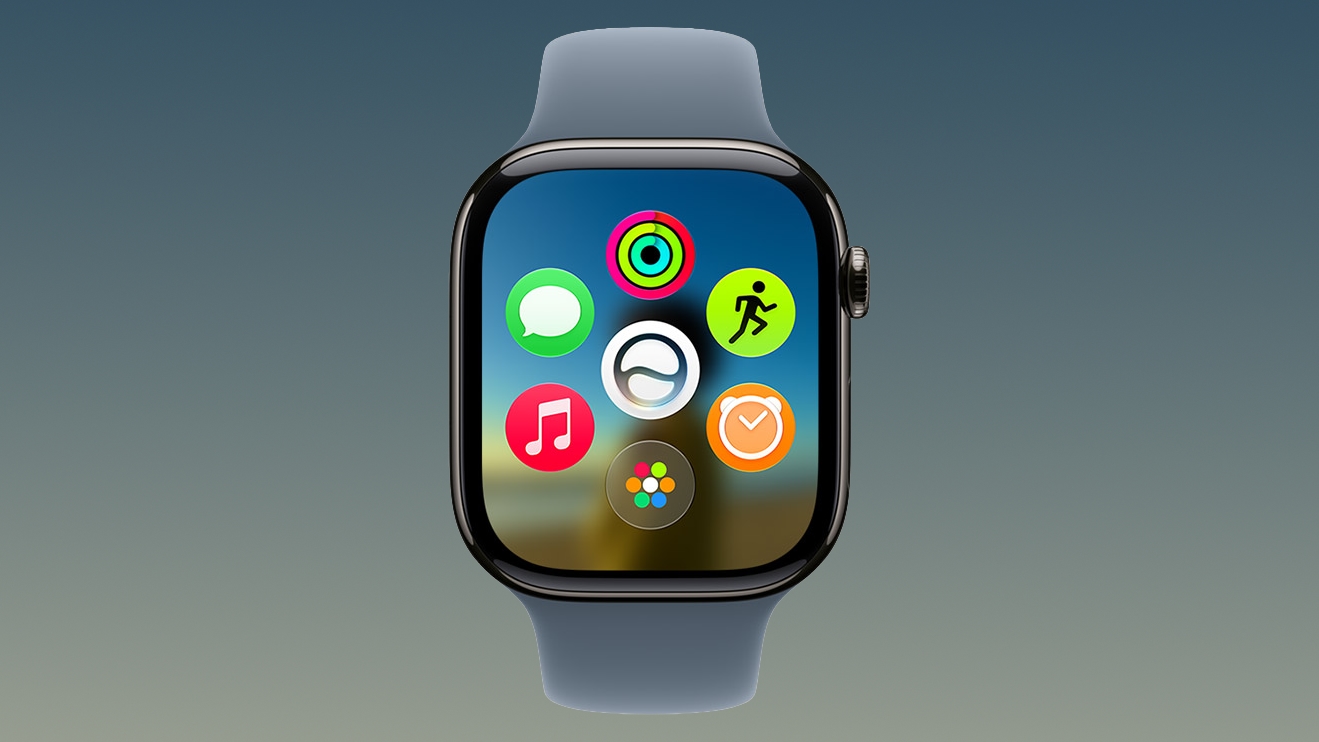 After releasing watchOS 27.0.1 for the Apple Watch Series 12 and Apple Watch Ultra 4 last week to address a bug that was causing devices to restart unexpectedly, Apple has now released the update for all eligible watches, which includes Series 9 and later.
 Beats 360 in dozens of color combinations
 Beats 360 in Sky
 Beats 360 in Sky with Navy cushions
 Cases for Beats Studio Pro (left) and Beats 360 (right)


 Aspekt displays
 Clarity 6K display
 Vision displays
 FlashDock 5
 Crux mouse




 Aspekt Touch 27"
 FOKUS 55"
 Aspekt Touch 27"
 Folio Duo
 Apple's