❌

Lees weergave

Apple Reports 3Q 2026 Results: $29.8B Profit on $109.4B Revenue

Apple today announced financial results for its third fiscal quarter of 2026, which corresponds to the second calendar quarter of the year.
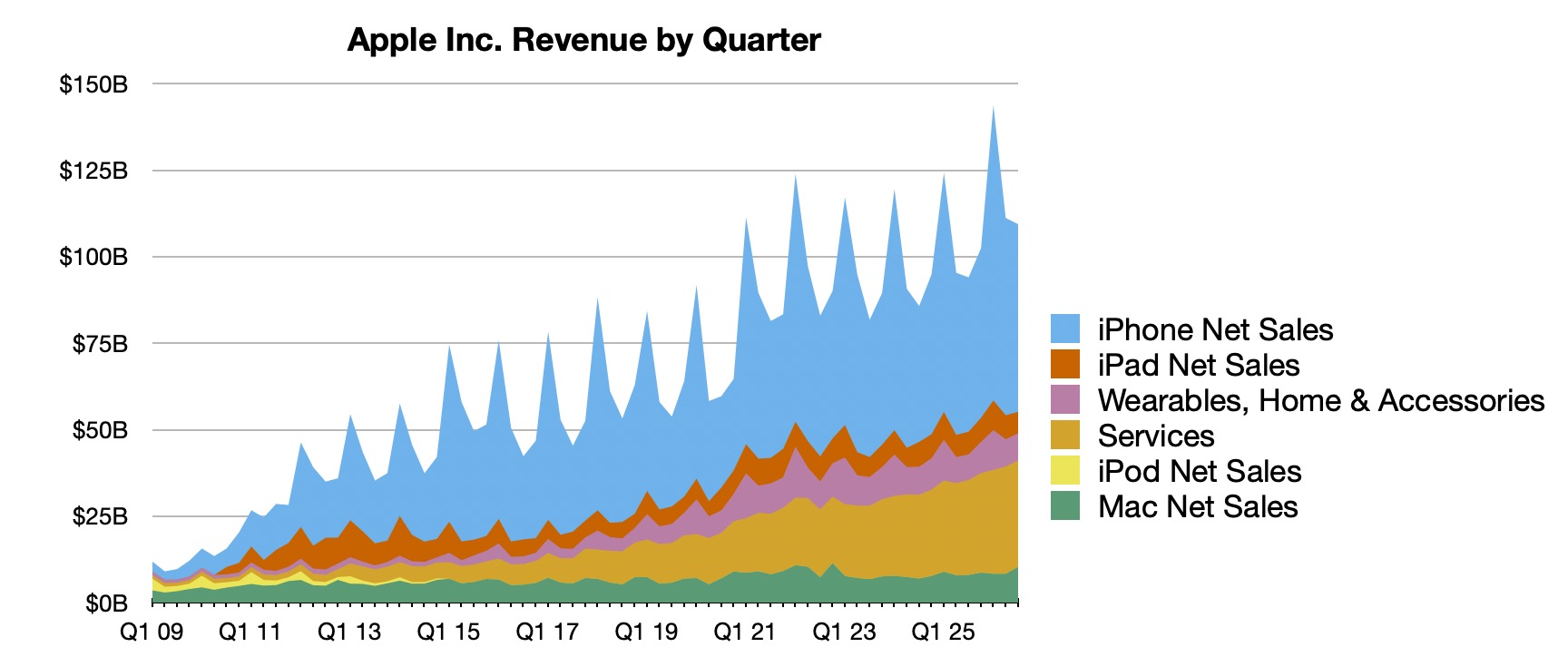

For the quarter, Apple posted revenue of $109.4 billion and net quarterly profit of $29.8 billion, or $2.02 per diluted share, compared to revenue of $94.0 billion and net quarterly profit of $23.4 billion, or $1.57 per diluted share, in the year-ago quarter.

Apple set new June quarter records for total revenue and earnings per share, as well as for iPhone, Mac, and Services revenue.

Gross margin for the quarter was 50.1 percent, compared to 46.5 percent in the year-ago quarter. Apple also declared a quarterly dividend payment of $0.27 per share, payable on August 13 to shareholders of record as of August 10.
"Today, Apple is proud to report our strongest June quarter ever, with double-digit revenue growth across iPhone, Mac and Services, and in every geographic segment," said Tim Cook, Apple's CEO. "At WWDC26, we were thrilled to introduce the all-new Siri AI, alongside all of Apple's latest software innovations and important new child safety features."


Apple will provide live streaming of its fiscal Q3 2026 financial results conference call at 2:00 p.m. Pacific, and MacRumors will update this story with coverage of the conference call highlights.

Conference call recap ahead...


1:38 pm: "We are very pleased with our record business performance during the quarter, which set new June quarter records for both EPS and operating cash flow," said Kevan Parekh, Apple's CFO. "Our installed base of active devices also reached a new all-time high across all major product categories and geographic segments."

1:39 pm: After declining around 1.4% in regular trading today, Apple's share price is currently down another 2.5% in after-hours trading following the earnings release.

1:42 pm: Mac revenue was up 28.7% year-over-year, while iPhone revenue was up 21.7%, Services revenue was up 12.1%, and Wearables, Home and Accessories revenue was up 6.5%. The only product segment that saw a year-over-year decline was iPad, which was down 5.9%.

1:45 pm: Looking at Apple's geographic segments, Europe and Greater China each saw a 22.4% increase in revenue, Japan was up 13.4%, and the Americas had an 11.1% increase. The Rest of Asia Pacific outside of Greater China and Japan had a 15.6% increase.

1:55 pm: Apple's stock price is now down nearly 4.5% in after hours trading, just minutes before Tim Cook's final quarterly earnings call as CEO.

2:01 pm: The call is now beginning with the standard warnings about forward-looking statements from Suhasini Chandramouli, Apple Investor Relations chief. On the call is CEO β€ŒTim Cookβ€Œ, CFO Kevan Parekh, and, for the first time, incoming CEO John Ternus.

2:02 pm: "Good afternoon everyone, and thanks for joining the call. Today, Apple is pleased to report $109.4 billion in revenue, up 16% from a year ago and a June quarter record."

2:03 pm: The company had supply constraints and foreign exchange headwinds, but still reached the record.

2:03 pm: "We achieved June quarter records in every geographic segment... We achieved June quarter records in both developed and emerging markets."

2:04 pm: Tim is going over the announcements from WWDC, including and especially Siri AI. "The reviews from early users have been phenomenal."

2:04 pm: "We are feeling incredibly enthusiastic about the impact it's going to have."

2:06 pm: Starting with iPhone, revenue was $54.3 billion, up 22% from last year. It was a June quarter record across every geographic segment and a record for upgraders. IDC says the company gained share globally during the quarter. "This is the most popular iPhone lineup we've ever had."

2:07 pm: Mac delivered its best June quarter yet, with $10.4 billion in revenue, up 29% from last year despite significant supply constraints. Driven by MacBook Pro and MacBook Neo. IDC says the company gained share globally and set a June quarter revenue record in developed markets and an all-time record in emerging markets, with particular strength in Greater China.

2:07 pm: "The Mac lineup delivers outstanding power-efficient performance, massive memory bandwidth, and next-level AI capabilities."

2:08 pm: β€ŒMacBook Neoβ€Œ has been especially popular, with its distinctive design and excellent value resonating with customers around the world.

2:09 pm: β€ŒiPadβ€Œ revenue was $6.2 billion for the June quarter. The addition of M4 to iPad Air "has made it even more capable, delivering a significant performance boost."

2:09 pm: Revenue for Wearables, Home and Accessories was $7.9 billion, up 6% from a year ago, growing in every geographic segment.

2:10 pm: "We continue raising the bar across our AirPods lineup... with Live Translation powered by Apple Intelligence, people are crossing language barriers and connecting like never before."

2:11 pm: "We began laying the groundwork for users to have the best possible experience with AI when we introduced a neural engine in 2017... Ever since then, we've innovated and invested deliberately in silicon systems and scalable unified memory architecture designed with AI at their core."

2:12 pm: "Apple has created the world's best hardware to experience AI, whether using β€ŒApple Intelligenceβ€Œ, including β€ŒSiriβ€Œ AI, or third-party offerings."

2:12 pm: Services revenue was $30.7 billion, up 12% from a year ago, "despite significant foreign exchange headwinds."

2:13 pm: Ted Lasso returns to Apple TV next week for its fourth season, and the company just won a Tony Award, and has 89 Emmy Award nominations.

2:14 pm: "We're halfway through an unforgettable year of F1, and β€ŒApple TVβ€Œ subscribers have been tuning in all season."

2:14 pm: In Retail, Apple Upgrade was just launched for customers in the US.

2:15 pm: "In honor of Global Accessability Awareness Day, we unveiled new features to help users get more out of the products they use every day."

2:16 pm: "We're doing our part to invest in innovation close to home. Last year we made a $600 billion commitment to the US over four years, and now we've planned to reinvest the tariff refunds we've received into the US." There's a new agreement with Broadcom to design and produce custom silicon components and cutting-edge wireless connectivity technologies. The agreement is expected to exceed $30 billion in US spending.

2:17 pm: Apple is going to make the Mac mini at the Advanced Manufacturing Center in Houston, and will train employees and suppliers in how to build products.

2:17 pm: "We will remain guided by our north star: building products and services to enable people to do magical things."

2:18 pm: "I couldn't be more excited to watch our phenomenal story of innovation continue to unfold, and I've never been more confident that the best is yet to come."

2:18 pm: Kevan is on now to go into more detail on financials. Revenue of $109.4 billion was up 16% year over year. Product revenue was $78.7 billion, up 18% year over year. Install base reached a new all time high of over 2.5 billion. Services revenue was $30.7 billion, up 12% year over year.

2:19 pm: Company gross margin was 50.1%, up 80bp sequentially, including a benefit of tariff refunds, with an impact of 2%. If you remove this impact, we would have been at the middle of the guidance range. Product margin was 40.1%, up 140 basis points. Tariff refunds had an impact of 2.5%.

2:20 pm: OpEx was $19.1 billion, up 23%, driven by investments in R&D. Net Income was $29.8 billion. $34.4 billion in operating cash flow, setting new June quarter records even when excluding tariff refunds.

2:20 pm: iPhone was $54.3 billion, up 22%. iPhone active install base grew to an all-time high and set a June quarter record for upgraders. iPhone was the top selling model in the US, urban China, the UK, France, Australia and Japan.

2:21 pm: Mac revenue was $10.4 billion, driven by the strength of β€ŒMacBook Neoβ€Œ and β€ŒMacBook Proβ€Œ. Grew in both developed and emerging markets. Customer reception of β€ŒMacBook Neoβ€Œ "has been incredible." Mac had its best quarter ever for customers new to the Mac and for upgraders.

2:22 pm: β€ŒiPadβ€Œ revenue was at $6.2 billion, down 6% year over year against a difficult compare. More than half of customers who purchased an β€ŒiPadβ€Œ were new to the product.

2:22 pm: Wearables, Home and Accessories revenue was $7.9 billion, up 6% year over year. More than half of customers purchasing an Apple Watch were new to the product.

2:23 pm: Services revenue was $30.7 billion, up 12%, despite "significant sequential FX headwinds."

2:23 pm: "We are optimistic about the long-term future of our Services business... we have an incredibly strong foundation for growth opportunities."

2:24 pm: Morgan Stanley has deployed more than 20,000 iPhone 17 devices, as part of a shift from employee-owned to corporate-owned devices for liability and security.

2:25 pm: Pinellas County Schools in Florida is transitioning 25,000 students from Windows devices to β€ŒMacBook Neoβ€Œ.

2:25 pm: "About half of the β€ŒMacBook Neoβ€Œ purchases by US education institutions replaced Windows and Chromebook devices."

2:26 pm: Ended the quarter with $147 billion in cash and $84 billion in debt. Returned $33 billion to shareholders, including $4 billion in dividends and $25.8 billion in share repurchases.

2:27 pm: Forward projections assume no changes to global tariff rates and that the global macroeconomic outlook does not get worse. "We also expect our September quarter total company revenue to be impacted by two main factors. First, we expect foreign exchange to be a sequential headwind of about two and a half percentage points to the year-over-year total company growth rate from the June quarter over the September quarter."

2:28 pm: Expect total company revenue to grow 9-11% next quarter, and expect iPhone revenue to be impacted by foreign exchange headwinds and supply constraints. iPhone reported growth rate is expected to be mid-teens year over year. Gross margin should be between 47% and 48%, with approximately 1% benefit related to tariff refunds. OpEx between $19.1 and $19.4 billion.

2:28 pm: Cash dividend of $0.27/share, payable on August 13.

2:29 pm: Tim is taking back over. "I just wanted to take a moment to say 'thank you' to all of you. From our shareholders, particularly our long-term shareholders, who have put their trust in us for so many years, to the analysts who have followed our company so closely."

2:29 pm: "I am beyond excited for John to step into his new role and lead Apple into its next era. He is truly one of the kind, and there is no better person to take the helm of the company."

2:29 pm: "I couldn't be more confident in his leadership, in our executive team, and in the extraordinary people at Apple that are determined to enrich the lives of our users all over the world. We have a bright future ahead, and I truly have never been more optimistic. So thank you all."

2:30 pm: Now we're moving to the Q&A with analysts.

2:32 pm: Q: Tim, best of luck, it's been a pleasure working with you over the years. On the 9-11% growth, that's a deceleration. How much of this is supply constraints vs FX?

A: We expect revenue to grow by 9-11% year over year, impacted by FX to be a sequential headwind of 2.5% to year over year total company growth rate. On supply constraints, we expect that to impact significantly, affecting iPhone, Mac and β€ŒiPadβ€Œ. Combine those two factors, we get pretty close to the June overall company growth rate.

We did experience supply constraints primarily on the Mac and to a lesser extent to iPhone and β€ŒiPadβ€Œ, driven by very high levels of demand and less flexibility in the supply chain than normal. The constraints are primarily driven by availability of the advanced nodes that our SOCs are produced on. Looking forward, we continue to expect high levels of demand, but with less flexibility on supply chain, and impact on the supply chain to increase significantly. To affect iPhone, Mac and β€ŒiPadβ€Œ, we're seeing some very significantly constraints currently with limited flexibility in the supply chain to remedy it.

2:35 pm: Q: Apple has historically done a great job to deliver capability and utilty to customers without really making them pay disproportionately more. There are reports that suggest that you're seeking greater sourcing flexibility for memory. Can you just talk about is this building options really about ensuring that you have supply and it's a way to mitigate memory inflation, or is it more preserving a value proposition?

A: We paid more in March for memory than December quarter, and we paid more in the June quarter than March. We expect this to continue to get worse in September. We had some benefit from carry-in inventory, but we believe this will see decreasing benefit from this over time beyond the September quarter. Second, we are expecting lower costs on certain non-memory components that are in our BOM, and if you look beyond September we see the market pricing for memory continuing to increase which could drive an increasing impact on our business. In terms of sources of supply, primarily the DRAM market has three suppliers. If there were more suppliers, that would be good and it would help us on the supply side and perhaps the pricing side, though the pricing side is unclear. It could help on the supply side. We're evaluating all options.

2:37 pm: Q: On the Apple Upgrade program, do you see it shortening the replacement cycle for iPhone, and having an impact on Mac and iPhone and having an impact because those two haven't had benefits of subsidies?

A: If you look at the program, it makes it easier for customers to get their hands on our latest products with a leasing plan that's right for them. The residual values on Apple products tend to be much higher than residuals on the competition. It's a way to get into a product on an affordable basis, particularly for customers who want to upgrade on some kind of schedule. It is offered in our retail stores, not across all channels, so we'll see what the customer uptake is. The early feedback on it is quite positive, also it's only available in the US right now.

2:39 pm: Q: On β€ŒApple Intelligenceβ€Œ and iOS 27, can you talk about learnings from the public beta, will the new β€ŒSiriβ€Œ AI be a demand driver for the iPhone this holiday, how does Apple intelligence usage in the open beta drive your thinking on compute costs and your ability to recover costs through iCloud Plus?

A: We are off the charts excited about β€ŒSiriβ€Œ AI. We released the developer beta immediately after the keynote. Developer feedback, reviewers and so forth have been overwhelmingly positive. Released as a public beta and the continued feedback is really great. I think it's a big idea to have AI based on your personal context and that's integrated across the operating system. It's early going and I don't want to say we have a complete plan for that, we do believe there will be people who want to use it a lot and so we will have some kind of upgrade possibilities on β€ŒiCloudβ€Œ+ where people can buy up the stack, and we'll see how the pickup for that is. We could not be more excited about where the product is.

2:43 pm: Q: Wanted to ask about supply constraints, what we're struggling with after hours, how much do these supply constraints impact you in December and we did a pretty good job taking that number into the higher single digits, is there any guidance that you can give us there?

A: Let me talk about the constraints a little more, the primary issue is advanced nodes that we run our SOCs on. That's the primary supply constraint now. The root cause of it is not a regular supply issue. It's a demand forecast issue to be candid. Where iPhone and the Mac are both doing remarkably better than we thought they would do, and we had high expectations and it wasn't that our expectations were low. From iPhone's growth being 22% and Mac at 29%, these are extraordinary numbers and the supply chain has less flexibility than normal. We've been pulling supply ahead and at some point there's a limit to that. Now we have a quarter where we'll be scrambling on the supply side eventually.

Combined with foreign exchange impact, that's really what's built into the 9-11 percent growth rate. Beyond December we're not providing any color beyond the September quarter.

2:45 pm: A: This isn't a partner or supplier issue, it's a great issue in some ways, it's an incredibly strong iPhone and Mac product cycle that has yielded demand beyond expectations. In Arizona, we source more than 100 million components this year, so it is part of our $600 billion commitment to the US and we could not be more pleased with how that fab has ramped and is producing for us.

2:46 pm: Q: It is your intention to pursue some agreements to ensure access to supply at pre-agreed prices, when you approach product pricing, are you trying to protect margins or gross profit dollars? What's your thoughts on pricing?

A: We reluctantly raised prices and because we're in a 100-year flood on the memory pricing with exponential increases in memory prices. That was the rationale for it. In terms of our philosophy on dollars or percentages, we look at units revenue and margin and then come to a business judgement as to how to handle that. It's not a mathematical formula that gets us to a specific result or looking at one dimension of that. We look at all three dimensions, thinking about it over the long term instead of a 90-day clock.

2:49 pm: Q: 12% services growth was slightly below guidance, maybe FX played a role, can you help us understand the function factors underlying the deceleration, if that App Store, some third-party data sources, is that a function of AI reprioritizing time away from the β€ŒApp Storeβ€Œ? Just looking at the moving pieces on Services.

A: Let's walk from our 16% to second quarter to 12% in the June quarter, FX was the main driver in the year over year growth rates. Last year we had the theatrical release of F1, we also had some factors that impacted the App Stores, some headwinds in mobile gaming and some change to the business model in certain countries, and in the US a ruling on the link out for transactions. β€ŒApp Storeβ€Œ set a June quarter revenue record. Several positive trends, strong double digit growth in a number of sectors. Revenue records in every category. β€ŒApple TVβ€Œ viewership set an all time high in the quarter. Apple Pay saw a record number of users in both developed and emerging markets. Services continue to attract more customers, passing more than 1.5 billion paid subscriptions.

2:50 pm: A: When we step back and look at how we landed, I would say that we roughly met our expectations but saw some more softness on mobile gaming and the β€ŒApp Storeβ€Œ. In September, FX will continue to be a headwind, impacting Services more than the whole company. FX will drive a 5% headwind from March to September quarter. We are going to see another 2.5% sequential headwind from June to September.

2:52 pm: Q: As you look at demand, how do you assess whether you're seeing pull-forward of demand from consumer or enterprise or education, and if you're factoring that into your views as we look forward.

A: You're talking about iPhone I presume, we've been running at this 24% growth rate for a while, it's not obvious that what you're asking is true. We've now had to increase prices on β€ŒiPadβ€Œ and Mac, the price elasticity there it's too early to come to a conclusion of what happens there. It takes a little while for the channels to adjust since there's channel inventory, and takes a while for the consumer to respond so we'll understand that more in the weeks ahead.

2:53 pm: Q: Longer term, thematically, AI proliferates towards the edge, do you see AI opening additional opportunities and do you see other addressable markets evolving from AI over time?

A: These are enormous opportunities for Apple moving forward in AI. I'm so excited for β€ŒSiriβ€Œ AI, where it is and where it's going. I'm excited about the feedback that we're getting there.

2:55 pm: Q: On β€ŒSiriβ€Œ AI, do you expect that β€ŒSiriβ€Œ AI will change the capital intensity despite you having the ability to do so much on the device, you have some requests that go into the back end in first and third-party cloud, is it right to think that the capital intensity will change in the future?

A: We use a hybrid model, so we use some third-party cloud and our own data centers, so there will be a mix but generally speaking, as you know, we have been growing OpEx and spending more on AI in general. Quite a bit more. There are other locations on the P&L besides OpEx that have AI expenditures, we'll see what β€ŒSiriβ€Œ AI does from the cost side of it, but there's also the ability when people use it a lot for people to move up on an β€ŒiCloudβ€Œ band as well. The balance of that is a bit uncertain at the moment.

2:56 pm: Q: To John, can you give us a high-level take on the competitive landscape, OpenAI hardware or SpaceX launching a phone that can bypass carriers?

A, from John Ternus: There's so much opportunity for us in this space, and we're very focused on our plans and very excited about it.

2:59 pm: Q: How do you launch β€ŒApple Intelligenceβ€Œ and β€ŒSiriβ€Œ AI in the rest of the world?

A: If you look at the EU, we're working closely with the commission. We want to launch everything, everywhere all of the time. We haven't been able to do that in the EU. We're trying to get to offer it there, we are allowed to offer it on the Mac there, it's not covered on the same regulations as the iPhone and β€ŒiPadβ€Œ. We hope to reach some sort of solution.

If you look at China, last week we received approval to ship the original features of β€ŒApple Intelligenceβ€Œ, things like cleanup and so-forth. We're working now through the rollout of those and there will be more work required down the road for β€ŒSiriβ€Œ AI, but we're at the front end of that.

3:01 pm: Q: Not to beat this FX thing to death, but if we look at the gross margin, you delivered 48% in the quarter without tariffs, now guiding to 46.5%, how much of that is FX vs commodity costs etc?

A: On gross margin, we look at the change from 49.3 for March to 48.1 adjusted for June, that 120 basis point change, most of that is the memory cost impact. As Tim outlined earlier, we saw some partial offsets from carryin inventory and some favorable mix, we see the same dynamics as you go from 48.1 in June to the 46.5 midpoint of our range without any tariff refund impact. That 160 bp change, more than that is explained by memory offset by lower costs and favorable mix. FX was a pretty minimal impact versus memory, so the sequential change is really driven by memory.

3:01 pm: The call is now complete. Almost every analyst congratulated Tim on his tenure and wished him well for the future.
This article, "Apple Reports 3Q 2026 Results: $29.8B Profit on $109.4B Revenue" first appeared on MacRumors.com

Discuss this article in our forums
  •  

Fortnite Returns to iPhone in Brazil as Epic Games Store Launches

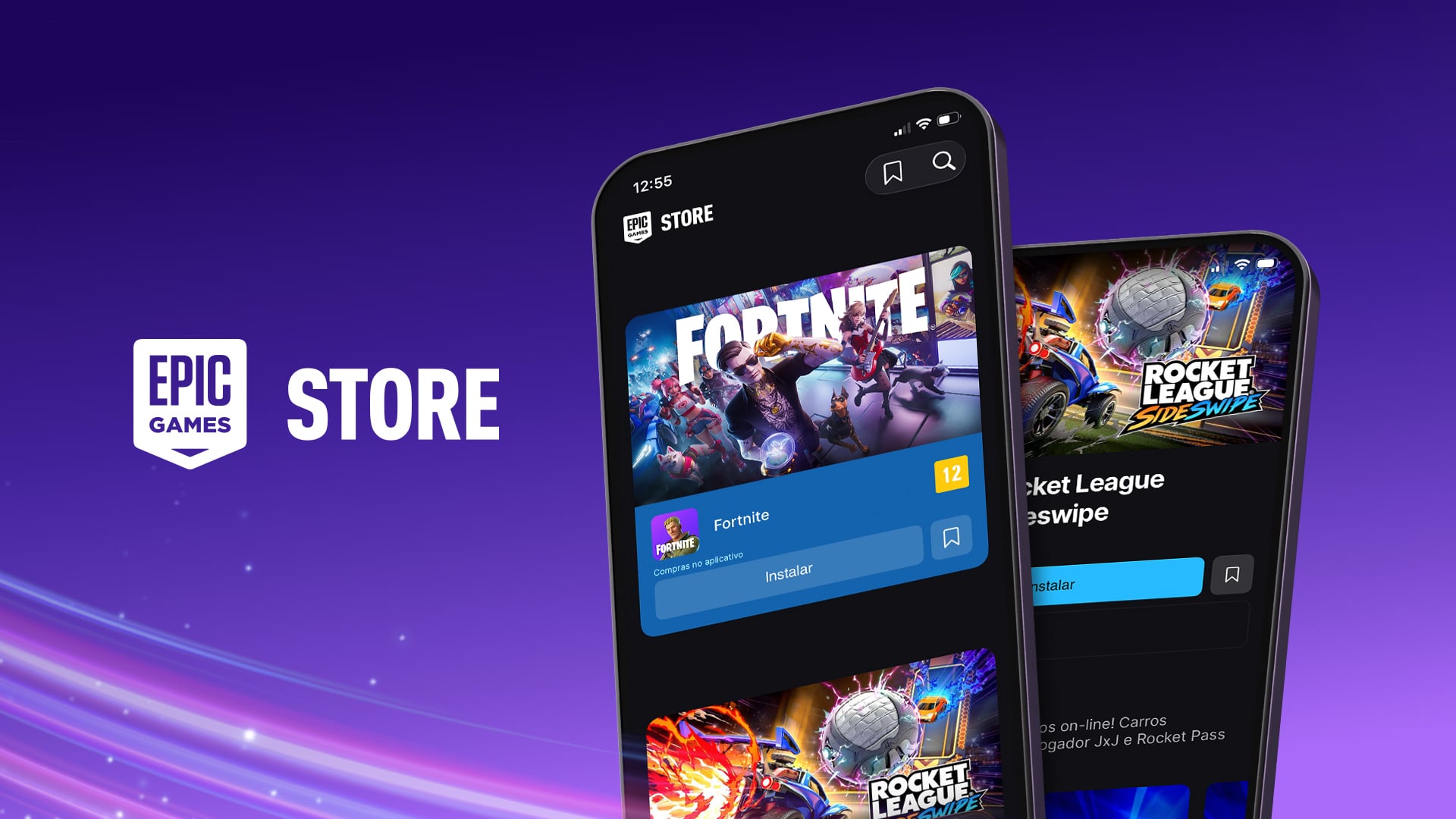
Epic Games today said that the β€ŒEpic Gamesβ€Œ Store can now be downloaded on iPhones in Brazil through the β€ŒEpic Gamesβ€Œ website. In its announcement, β€ŒEpic Gamesβ€Œ complained about the third-party store installation process, which requires nine steps and includes screens warning customers about downloading apps outside of the App Store.

Apple is imposing a 9-step install flow for alternative app stores in Brazil. The additional screens were designed to deter users from downloading alternative app stores and preventing competition. In the EU last year, Apple reduced their installation flow from 15 to 6 steps after facing regulatory pressure. After they made this change, Epic saw a 60% decrease in player drop-off during attempts to install the Epic Games Store. But Apple now has increased the steps in Brazil to thwart competition.

β€ŒEpic Gamesβ€Œ also took issue with the fees Apple is able to collect. Apple has a 5% Core Technology Commission on sales of digital goods and services in third-party app stores and apps installed from third-party app stores. Because of the fees, Epic says it is only offering its own games for now. Players can download Fortnite and Rocket League Sideswipe.

Brazilian customers who opt to purchase Fortnite through the β€ŒEpic Gamesβ€Œ Store can get 20 percent back in Epic Rewards, an incentivizing bonus not available through the β€ŒApp Storeβ€Œ version of Fortnite in Brazil.

β€ŒEpic Gamesβ€Œ says it has informed Brazilian regulators "how detrimental the requirements and restrictions are to creating a competitive mobile app ecosystem on iOS."

Apple changed its App Store rules in Brazil in June to comply with regulatory action requiring support for alternative app marketplaces.
This article, "Fortnite Returns to iPhone in Brazil as Epic Games Store Launches" first appeared on MacRumors.com

Discuss this article in our forums
  •  

Senators Demand Apple Commit to Not Buying Chinese Memory Chips

U.S. Senator Chuck Schumer has teamed up with several of his Senate colleagues to demand Apple commit to not purchasing chips from Chinese companies ChangXin Memory Technologies (CXMT) or Yangtze Memory Technologies Co. (YMTC). [PDF]


With memory shortages causing Apple to raise the prices of Macs and iPads, the company has been talking with CXMT and YMTC about a chip deal. The two companies are on the Defense Department's list of Chinese companies that are suspected to have ties to the People's Liberation Army. Apple is not required to get U.S. approval before buying chips from CXMT, but YMTC is also on the Commerce Department's Entity List, which means Apple would need an export license before being able to work with the company.

Apple has been lobbying the Trump administration to greenlight its plan to buy Chinese chips, and Apple also wants to ensure the government won't add CXMT to the Entity List in the future.

Schumer wants Apple to pledge not to use chips from CXMT or YMTC in any Apple product sold anywhere in the world. He says Apple's plan would harm the U.S. semiconductor supply chain and set a dangerous precedent for other companies to follow.

Rumors have suggested Apple is already testing chips from CXMT, and Schumer has also asked Apple to answer questions about the reported testing and the company's efforts to lobby the Trump administration to prevent national security restrictions on Chinese semiconductor suppliers.
Fueled by investment from my Chips & Science Law, workers in Central New York and across the country are carrying out the largest domestic expansion of domestic memory chip production in a generation, and American companies, like Apple, should be buying chips stamped 'Made in America,' not from companies linked to the Chinese military. I wrote my CHIPS & Science Law, so we would make American microchips again, with American workers, and not be over-reliant on semiconductors from overseas. That's why I'm leading a bipartisan group of senators calling on Apple CEO Tim Cook to commit to not using memory chips produced by Chinese military-linked companies. I've long sounded the alarm on the grave national security and economic threats posed by YMTC, CXMT, and other companies backed by the Chinese Communist Party. Apple integrating these Chinese chips into its supply chain would send a dangerous message to other American companies that they, too, should turn to Chinese-made chips.

Apple has told lawmakers that it will use the chips in devices for the Chinese market, leaving more Samsung, SK Hynix, and Micron chips available for products sold in countries like the U.S. Schumer claims the limitation "cannot be expected to hold" because Apple could extend the chips worldwide with a "single procurement decision." Schumer also said supplying chips to Apple would give CXMT "revenue and reputational gains" regardless of where the chips were used.

Back in 2022, Apple attempted to ink a deal to purchase chips from YMTC, but Schumer led an effort to stop the agreement and to add YMTC to the Entity List. Schumer has also been pushing for CXMT to be added to the list, which is the action Apple is aiming to stop. Schumer has asked Apple to respond to his letter by August 21, 2026.

Other senators who signed the letter are Jim Banks, Mike Crapo, Jeanne Shaheen, Andy Kim, James Risch, and Pete Ricketts.
Tag: China

This article, "Senators Demand Apple Commit to Not Buying Chinese Memory Chips" first appeared on MacRumors.com

Discuss this article in our forums
  •  

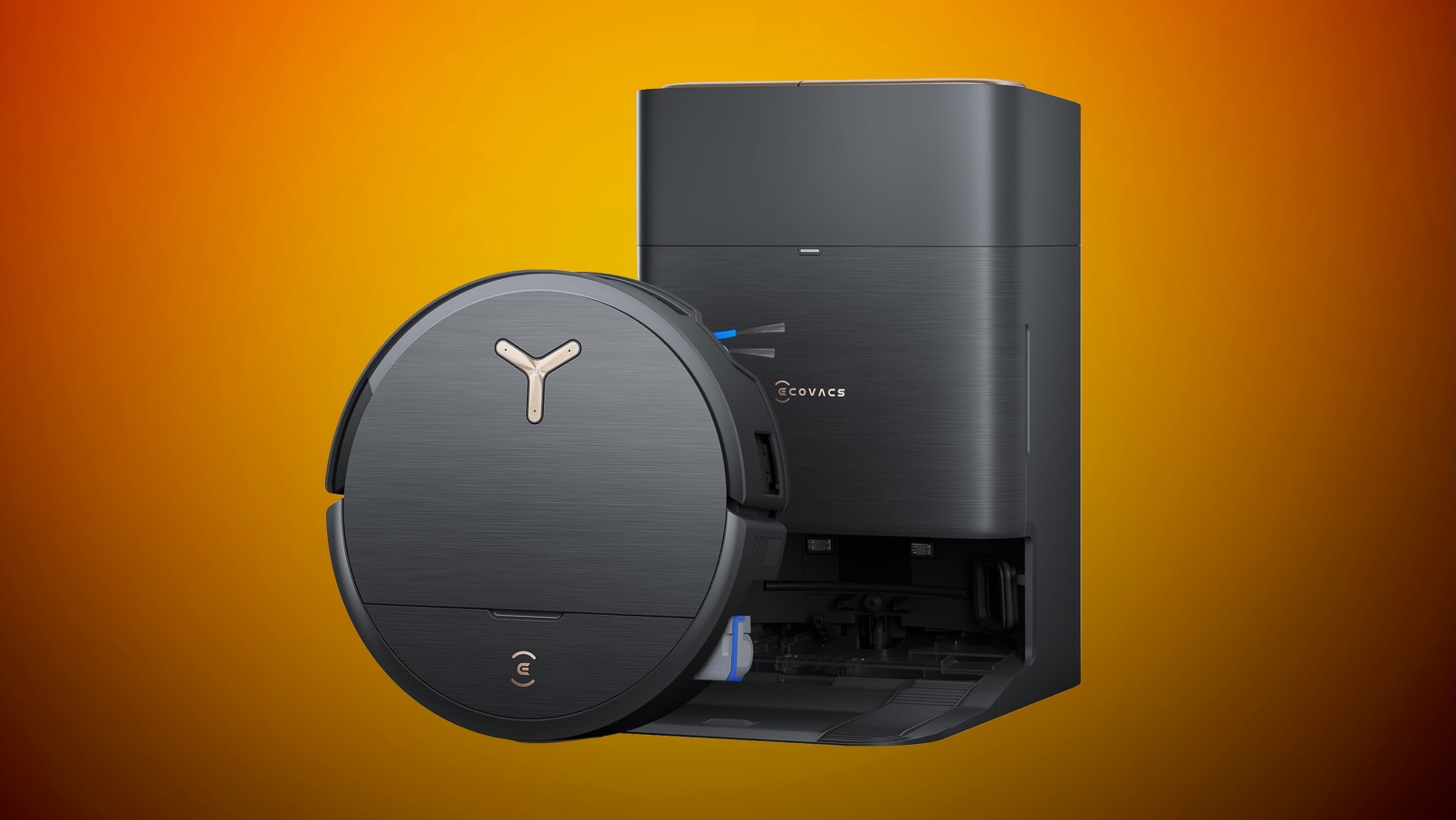
FCC Bans New Foreign-Made Robot Vacuums, Threatening Future Matter and HomeKit Models

The FCC this week banned all new "foreign-produced advanced robotic devices" because of an "unacceptable risk to the national security of the United States." The government says networked robotic systems lead to vulnerabilities that allow bad actors to control the devices and collect surveillance data from Americans.


Advanced robotic devices are defined as software-controlled autonomous robots that can move, navigate obstacles, and have a sensor that can perceive the environment.

The ban isn't focused on just humanoid robots, and it includes robot vacuum cleaners too. Almost all robot vacuums are sold by companies located in China or are manufactured in China. Even Roomba maker iRobot, once a flagship American vacuum company, is now owned by a Chinese company after bankruptcy.

Companies are able to keep importing and selling robot vacuums already on the market, but new models will need to get approval from the government. As The Verge notes, getting approval requires a commitment to invest in U.S. manufacturing, but no investigation into security practices despite multiple mentions of national security concerns.

Future Matter-enabled smart vacuums that work with HomeKit from companies like Roborock and Ecovacs may not be able to be sold in the U.S., leaving few options for U.S. consumers unless the companies pledge to move manufacturing to the United States.

Along with robot vacuums, the FCC has banned new humanoid and quadruped robots, plus foreign-made power inverters.
This article, "FCC Bans New Foreign-Made Robot Vacuums, Threatening Future Matter and HomeKit Models" first appeared on MacRumors.com

Discuss this article in our forums
  •  

Apple Donating to Japan Earthquake Relief Efforts

Apple CEO Tim Cook today said Apple would be making a donation to support earthquake relief efforts in Japan.


A magnitude 6.8 earthquake (per the USGS) hit the Kumamoto prefecture on Kyushu island on Tuesday, collapsing buildings and killing at least 34 people.

Japan has a very special place in my heart. We're thinking of everyone as they continue to face the effects of the Kumamoto earthquake and aftershocks. We're grateful to the first responders helping those in need. Apple is making a donation to support relief efforts.

β€” Tim Cook (@tim_cook) July 30, 2026

Aftershocks continued on Wednesday and Thursday. Kyushu is the third largest of Japan's four main islands, and it has the second-highest population.

Apple often donates to the Red Cross for relief efforts during natural disasters, but donation amounts are not shared. Last night, Cook said Apple was donating to wildfire relief efforts in France, Spain, and other countries.

Kumamoto was previously hit with a deadly earthquake in 2016, and Apple collected donations for Japan through iTunes.
This article, "Apple Donating to Japan Earthquake Relief Efforts" first appeared on MacRumors.com

Discuss this article in our forums
  •  

Spotify Adds Running Mode to iOS App With Tempo-Matched Music

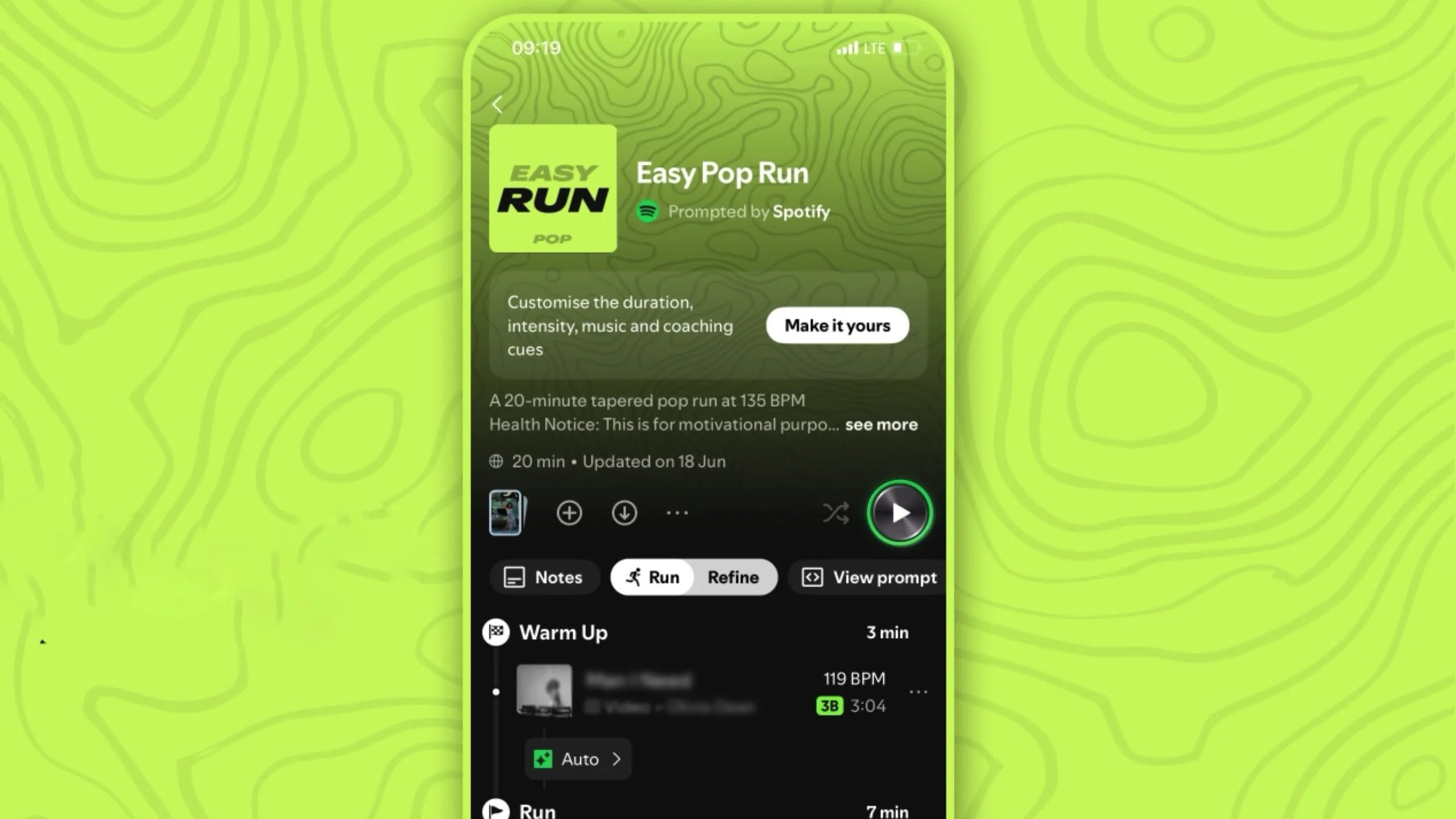
Spotify today announced a new Running Mode that turns playlists into structured running sessions built around workout type, tempo, and listening habits. It's launching on iOS first.


Located in the app's Fitness Hub, the feature lets runners choose from 25 presets that can be tweaked to fit workout type (interval, steady, or pyramid, for example), with options for duration, beats per minute, and the preferred kind of music. Spotify then matches track selection to the chosen tempo and moves through songs as the session progresses.

Optional audio cues can be enabled to guide users through their run, although these are English-only for now.

Spotify suggests the feature grew out of its fitness-based "Prompted Playlists," a natural-language playlist feature that has seen a lot of fitness prompts directed its way.

Running Mode sits alongside the fitness content Spotify added in April, when it began featuring Peloton classes and creator workout videos in the app.

Strava discontinued its in-app Spotify integration late last month, and removed the music controls that had lived in Strava's workout display since 2023, so Spotify's new mode could be a timely salve for runners who want to keep listening.

Spotify says the new Running Mode is available to premium subscribers in the U.S., Canada, the U.K., Ireland, Australia, New Zealand, and Sweden, starting today.
Tag: Spotify

This article, "Spotify Adds Running Mode to iOS App With Tempo-Matched Music" first appeared on MacRumors.com

Discuss this article in our forums
  •  

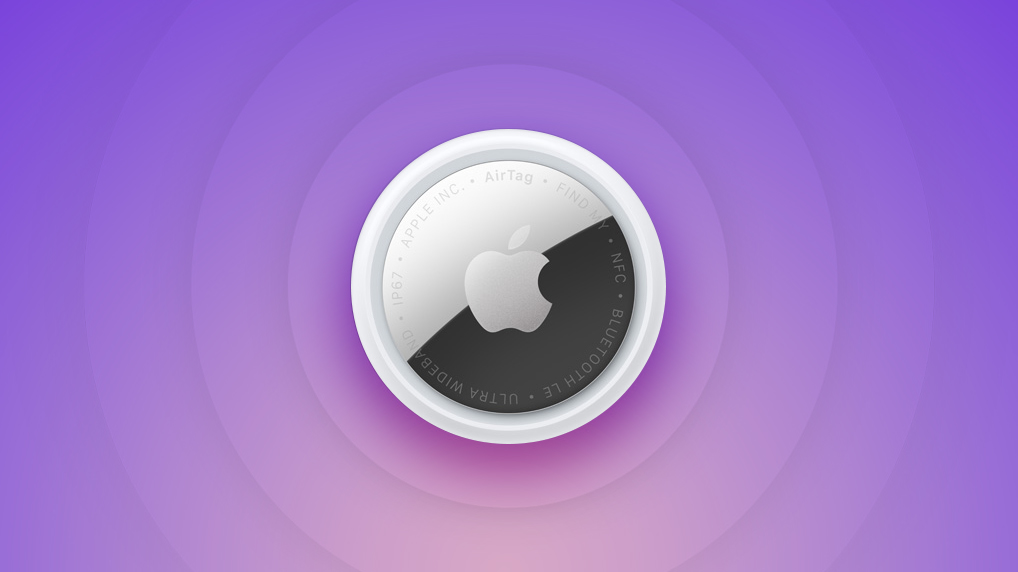
AirTag 2 Available for Record Low Price of $89 for 4-Pack

Apple's AirTag 2 is available for the all-time low price of $89.00 this week, down from $99.00. This sale is on the 4-Pack of the AirTag 2, and it's a match of the record low price first seen during Prime Day.

Note: MacRumors is an affiliate partner with Amazon. When you click a link and make a purchase, we may receive a small payment, which helps us keep the site running.

We're also tracking a smaller deal on the AirTag 2 1-Pack, available for $27.00, down from $29.00. This one has been down to a slightly lower price in previous weeks, but it's one of the best deals around right now for anyone shopping for the new AirTag model.


The new AirTag is equipped with a second-generation Ultra Wideband chip, enabling the Precision Finding feature to work up to 50% farther away from an item compared to the previous-generation model.

If you're on the hunt for more discounts, be sure to visit our Apple Deals roundup where we recap the best Apple-related bargains of the past week.


Deals Newsletter


Interested in hearing more about the best deals you can find in 2026? Sign up for our Deals Newsletter and we'll keep you updated so you don't miss the biggest deals of the season!


Related Roundup: Apple Deals

This article, "AirTag 2 Available for Record Low Price of $89 for 4-Pack" first appeared on MacRumors.com

Discuss this article in our forums

  •  

You Can Listen to Tim Cook's Final Earnings Call as Apple CEO Today

Tim Cook will participate in his final Apple earnings call as the company's CEO today. The call begins at 2 p.m. Pacific Time / 5 p.m. Eastern Time.


Cook and CFO Kevan Parekh will discuss Apple's earnings results for the second quarter of the 2026 calendar year on the live-streamed conference call. While the call is primarily intended for Apple shareholders and Wall Street analysts, anyone can listen live for free on Apple's Investor Relations website, with no registration required.

The call should last around one hour. Cook and Parekh will read their prepared remarks, and then they will take questions from analysts.

If you miss the call, a recording will be available for replay on the page later in the day.

Apple's hardware engineering chief John Ternus is taking over as CEO on September 1, so Cook will no longer be CEO when the next earnings call occurs.
This article, "You Can Listen to Tim Cook's Final Earnings Call as Apple CEO Today" first appeared on MacRumors.com

Discuss this article in our forums

  •  

Apple Donating to European Wildfire Relief Efforts

In a post on Wednesday, Apple CEO Tim Cook said Apple will be donating to relief efforts on the ground in Europe following devastating wildfires in France, Spain, Greece, and other countries.

Apple has donated to the Red Cross for relief efforts in the past β€” it does not disclose the amounts.
This article, "Apple Donating to European Wildfire Relief Efforts" first appeared on MacRumors.com

Discuss this article in our forums

  •  

iOS 27 Finally Unlinks Alarm Volume From Your iPhone Ringer

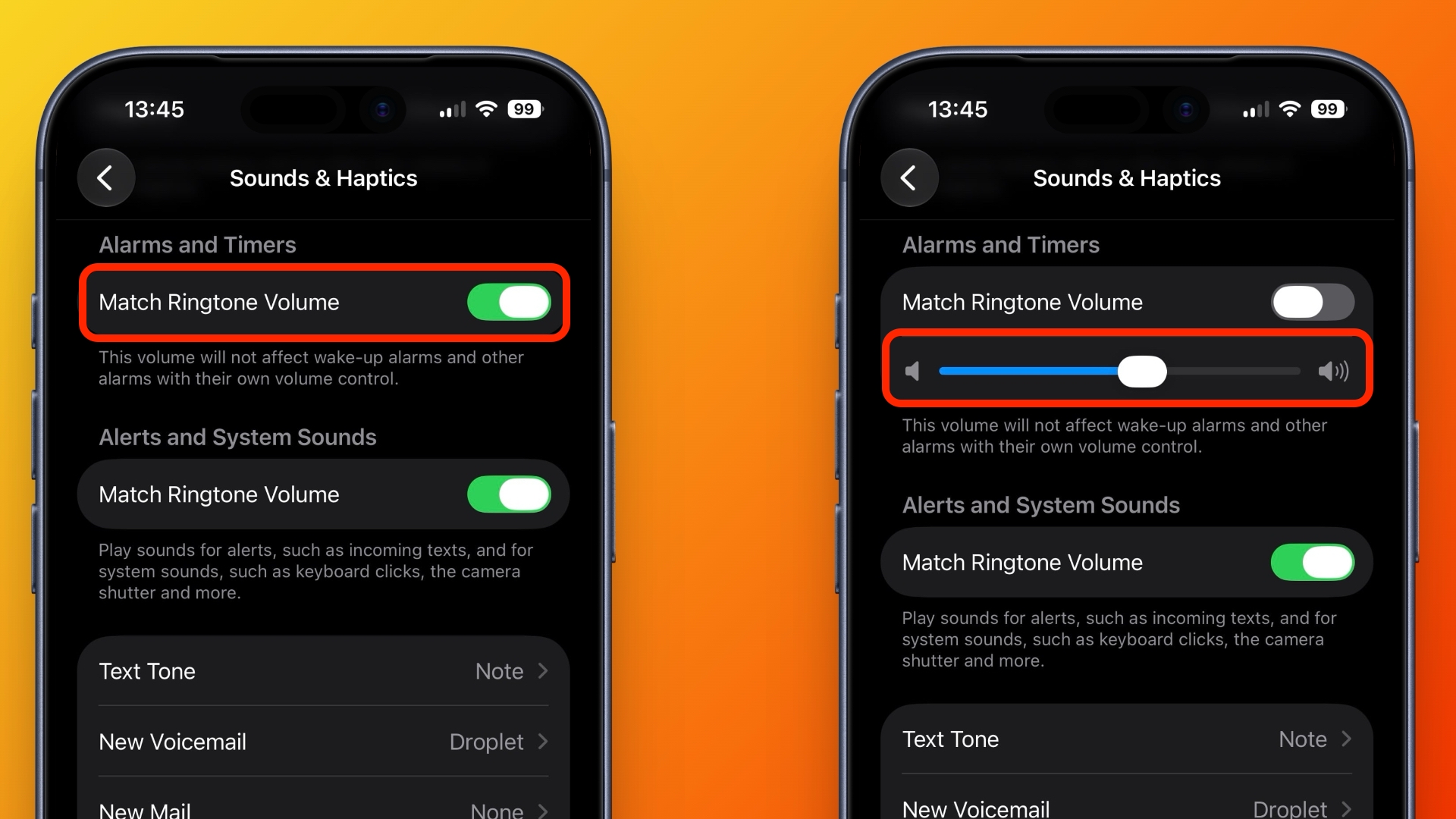
For the better part of two decades, an iPhone's alarm volume has matched its ringer. In other words, if you slide the ringtone volume down to silence your iPhone overnight, you're also turning your alarm's volume down with it. That's no longer the case in iOS 27.


Settings now includes an "Alarms and Timers" section with its own Match Ringtone Volume toggle. If you toggle it off, a dedicated slider appears that allows you to drop the ringer volume to nothing, and you'll still be woken at whatever alarm volume you choose.

How to Set a Separate Alarm Volume


  1. Open Settings on your iPhone.

  2. Tap Sounds & Haptics.

  3. Under "Alarms and Timers," toggle off Match Ringtone Volume.

  4. Drag the slider that appears to set your alarm and timer volume.

settings

That's all there is to it. Alarms and timers now have their own level, regardless of how quiet or loud your iPhone's ringer is set at.

Bear in mind that alarms carrying their own volume control – like any wake-up alarm you have selected in your Sleep schedule – will keep the level you set for them individually. To go back to the old behavior, simply toggle Match Ringtone Volume back on, and the slider will disappear.

A Second Toggle for Alerts and System Sounds


You may notice that directly below the "Alarms and Timers" controls sits a second Match Ringtone Volume switch in a separate section. This covers alerts and system sounds, like incoming texts, keyboard clicks, and suchlike. Toggle off this setting and you'll get a similar independent slider. It's a neat fix if, say, you've ever wanted a loud ringer without a loud keyboard.

iOS 27 is currently available in public beta and is expected to be generally available this coming September.
Related Roundups: iOS 27, iPadOS 27

This article, "iOS 27 Finally Unlinks Alarm Volume From Your iPhone Ringer" first appeared on MacRumors.com

Discuss this article in our forums

  •  

iPhone 18 Pro and iPhone Ultra: When is the Next Apple Event?

July is nearly over, meaning that Apple's annual iPhone event is fast approaching. Below, we look back at when Apple typically announces iPhone events.


This September, Apple is expected to unveil the iPhone 18 Pro, iPhone 18 Pro Max, and an all-new foldable iPhone that will reportedly be named the iPhone Ultra. The regular iPhone 18, a lower-end iPhone 18e, and the iPhone Air 2 are not expected to be announced until around March 2027, as part of a new split-up launch strategy.


We are still waiting for Apple to announce the iPhone 18 Pro and iPhone Ultra event. In his newsletter last month, Bloomberg's Mark Gurman said September 8 or September 9 are the most likely dates for the event. If that proves to be accurate, then the most likely dates for Apple to announce the event would be Tuesday, August 25 or Wednesday, August 26, as the company typically provides two weeks' notice.

Since 2020, iPhone event videos have been pre-recorded, but in recent years Apple has invited select reporters to the Steve Jobs Theater to watch the video in person. Afterwards, attendees receive hands-on time with the new devices.

The table below provides an overview of dates for the last six iPhone events, with 2020 and 2021 being outliers due to the COVID-19 pandemic.


iPhone Series Announcement Date Event Date Delta (Days)
iPhone 17 Tuesday, August 26, 2025 Tuesday, September 9, 2025 14
iPhone 16 Monday, August 26, 2024 Monday, September 9, 2024 14
iPhone 15 Tuesday, August 29, 2023 Tuesday, September 12, 2023 14
iPhone 14 Wednesday, August 24, 2022 Wednesday, September 7, 2022 14
iPhone 13 Tuesday, September 7, 2021 Tuesday, September 14, 2021 7
iPhone 12 Tuesday, October 6, 2020 Tuesday, October 13, 2020 7

Related Roundup: iPhone 18 Pro

This article, "iPhone 18 Pro and iPhone Ultra: When is the Next Apple Event?" first appeared on MacRumors.com

Discuss this article in our forums

  •  

iOS 27: Tone Down Liquid Glass Transparency

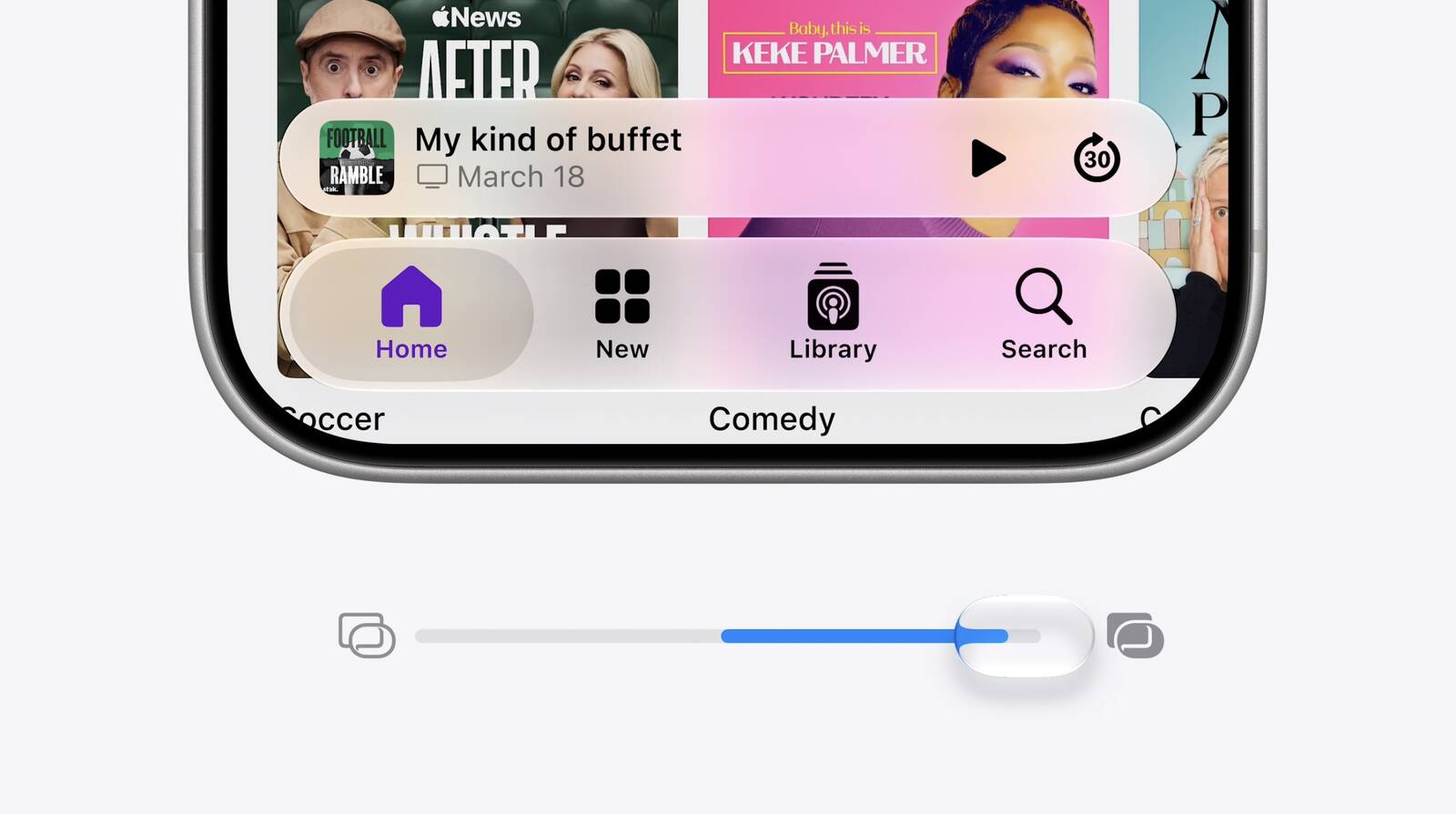
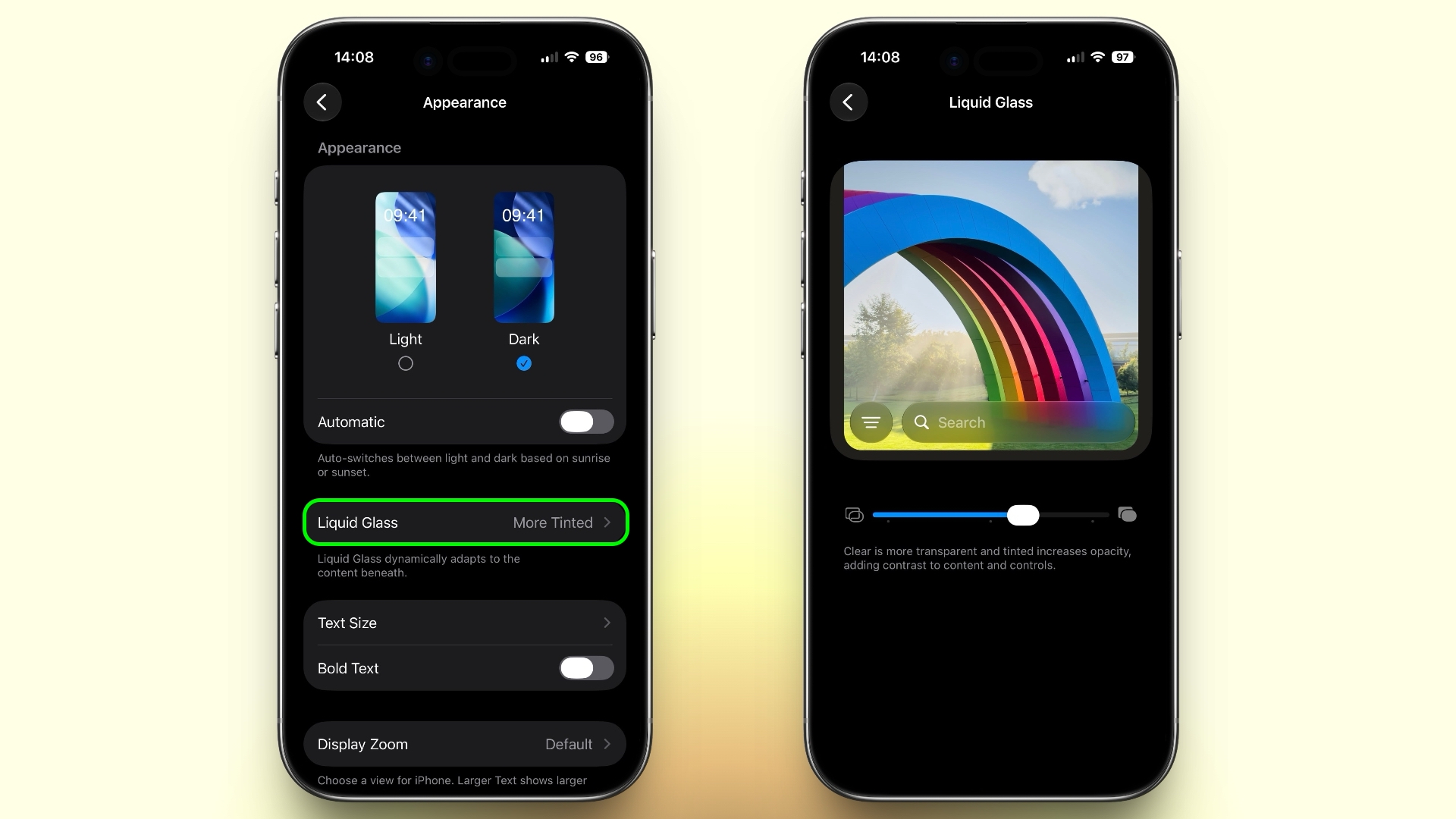
If you've never been a fan of Liquid Glass – Apple's glass-like interface effect introduced in iOS 26 – then there's some good news in iOS 27. Apple has added a setting that lets you finely adjust the level of translucency, giving you more control over the look and feel of your iPhone.


Perhaps you find notifications too see-through, or you want to see more of your wallpaper through Control Center. Fortunately, iOS 27 includes a dial that can help with that. Apple has swapped the two-option Clear and Tinted setting for a continuous slider that puts translucency anywhere between barely-there glass and a heavy frost.

The earlier presets arrived in iOS 26.1 and gave you two positions on a spectrum, whereas iOS 27 gives you the whole spectrum. It also locates the control in "Appearance" – a new section in Settings that gathers up interface options previously scattered through Display & Brightness, including Light and Dark mode and text size.

Not only that, Apple has also tweaked the default look, and says that Liquid Glass now diffuses complex content behind it more effectively while drawing a clearer separation between layers.

How to Change the Liquid Glass Effect


When you first install iOS 27, you'll be presented with the slider to change the Liquid Glass effect, but it's good to know how to get to it later if you want to switch up the look.

  1. Open Settings on your iPhone.

  2. Tap Appearance.

  3. Tap Liquid Glass.

  4. Drag the slider left for a clearer, more transparent effect, or right to add tint and opacity.

settings

The midpoint on the slider is Apple's default. The UI preview redraws in real time as you drag it, so you can watch it instead of having to back out of Settings to check. Note that the setting applies across the system, and affects everything from Control Center and Home screen folders to app overlays and Lock Screen notifications.

If the Slider Doesn't Go Far Enough


Even at the tinted end, Apple's interface retains a degree of glassiness. If you're not satisfied with the result, two Accessibility options push it further:
  • Reduce Transparency strips out nearly all translucency, leaving only flat, solid backgrounds.

  • Increase Contrast sharpens the boundaries between buttons, text, and whatever sits behind them.
You can find both in Settings ➝ Accessibility ➝ Display & Text Size.

You'll find that iPadOS 27 also offers these controls in the same place, and the same goes for macOS 27 Golden Gate (albeit in System Settings). All three software updates are in public beta now, with a general release expected in September.
Related Roundups: iOS 27, iPadOS 27

This article, "iOS 27: Tone Down Liquid Glass Transparency" first appeared on MacRumors.com

Discuss this article in our forums

  •  

iPhone 18 Pro: Twelve Changes Coming to Apple's Next Flagship

We're less than two months out from the launch of Apple's premium next-generation smartphone lineup, and while we're not expecting a dramatic change in terms of functionality, there are still several enhancements rumored to be coming to the iPhone 18 Pro and iPhone 18 Pro Max.


One thing worth noting is that Apple is reportedly planning a major change to its iPhone release cycle this year, adopting a two-phase rollout starting with the iPhone 18 series. That means the iPhone 18 Pro, iPhone 18 Pro Max, and the long-rumored foldable iPhone ("iPhone Ultra") will be released in September 2026, followed by the iPhone 18, iPhone Air 2, and iPhone 18e in spring 2027.


Overall Design

iPhone 17 Pro Style

Rumors suggest the iPhone 18 Pro lineup will largely retain the same design as the iPhone 17 Pro models. Most rumors suggest the rear camera system will look identical to the current generation, featuring a raised "plateau" with three lenses arranged in a triangle – although recent dummies indicate a possible thickening of the plateau and the protrusion of individual lenses. Display sizes are also expected to remain unchanged, with the iPhone 18 Pro and iPhone 18 Pro Max continuing to use 6.3-inch and 6.9-inch panels, respectively (the same dimensions introduced with the iPhone 16 Pro series). iPhone 18 Pro models could drop the current two-tone look of the rear casing found on the iPhone 17 Pro in favor of a more seamless aesthetic, while Apple has apparently updated the back-glass "replacement process" to minimize the color difference between the Ceramic Shield 2 glass and the aluminum frame, resulting in a more unified appearance. More recently, rumors have suggested that the iPhone 18 Pro Max could be thicker and heavier than its predecessor, suggesting a trade-off behind the device's rumored larger battery.

Next-Level Battery Life

Thicker Chassis

The iPhone 18 Pro Max will feature a bigger battery for continued best-in-class battery life, based on Chinese regulatory findings. The β€ŒiPhone 18 Proβ€Œ is seemingly rated for 4,056mAh in China and 4,288mAh in the U.S., up modestly from the iPhone 17 Pro's 3,988mAh and 4,252mAh. The β€ŒiPhone 18 Proβ€Œ Max shows a bigger jump, rated for 5,391mAh in China and 5,567mAh in the U.S., compared with 4,823mAh and 5,088mAh on the β€ŒiPhone 17 Proβ€Œ Max, an increase of nearly 500mAh.According to another rumor, the body of the iPhone 18 Pro Max will be slightly thicker than the iPhone 17 Pro Max, raising the device's weight to around 243 grams. That would make the iPhone 18 Pro Max approximately 3 grams more than the iPhone 14 Pro Max, which is currently the heaviest model Apple has produced. A larger battery is the most likely cause.

Smaller Dynamic Island

Under-Screen Face ID?

Rumors continue to circulate about whether the iPhone 18 Pro models will introduce under-display Face ID, but reports remain divided on when the technology will actually arrive. The feature would move the TrueDepth camera system beneath the display, eliminating the need for the current Dynamic Island cutout.

According to Wayne Ma of The Information, Apple is targeting a design without a Dynamic Island, replacing it with a single pinhole camera in the upper-left corner of the screen. However, other sources dispute that claim. Display analyst Ross Young believes under-display Face ID is possible for the iPhone 18 Pro, but says a smaller Dynamic Island will still be present. Bloomberg's Mark Gurman has echoed this view, reporting that the new models will feature a slimmed-down Dynamic Island rather than removing it entirely. Apple is also said to be testing new camera miniaturization technology to reduce the size of the front-facing camera currently located within the Dynamic Island.

The Weibo leaker "Ice Universe" has claimed the Dynamic Island cutout on the iPhone 18 Pro models will be approximately 35% narrower than it is on the iPhone 17 Pro models. Specifically, they said it will have a width of around 13.5mm, down from around 20.7mm.

Meanwhile, Chinese leaker Instant Digital has offered yet another version of events, saying the Dynamic Island will shrink in size, but that under-display Face ID and camera technology won't debut this year. The latest word on the subject is that Apple is weighing two options for the iPhone 18 Pro's Dynamic Island, and a final decision has yet to be made. One option apparently retains the existing screen mold from the iPhone 17 Pro, while the other introduces a significantly smaller "Mini β€ŒDynamic Islandβ€Œ" enabled by moving the Face ID receiver and transmitter components beneath the display.

Upgraded Display

LTPO+

The iPhone 18 Pro models will reportedly use LTPO+ display technology, which should be more power efficient than the current LTPO technology in the iPhone 17 series. Such an upgrade could also contribute to longer battery life (see above), since LPTO+ enables finer control of OLED light emission, potentially allowing the display to optimize its operation based on environmental conditions. In other words, it will know better when to up screen brightness or reduce it, depending on surrounding light sources. The panels are reportedly being supplied by Samsung Display and LG Display.

A20 Pro Chip

2nm Process

The iPhone 18 Pro models will use Apple's A20 chip, based on TSMC's 2nm process for power and efficiency improvements. A move to 2nm fabrication increases transistor density, which will enable higher performance. The A20 series is expected to deliver roughly a 15 percent speed gain and about 30 percent better efficiency compared with the A19 series used in Apple's iPhone 17 models.

Apple's A20 chip will be packaged with TSMC's Wafer-Level Multi-Chip Module (WMCM) technology, suggesting at least some A20 chips will have RAM integrated directly onto the same wafer as the CPU, GPU, and Neural Engine, rather than sitting adjacent to the chip and connected via a silicon interposer. This could contribute to faster performance for both overall tasks and Apple Intelligence, and longer battery life from improved power efficiency. In June, an image of the iPhone 18 Pro motherboard leaked online, showing the A20 Pro chip will indeed use the new packaging technology.

C2 Modem

Replacing Qualcomm

It was previously expected that Apple would include its next-generation C2 modem in the iPhone 18 Pro models. The chip would succeed the C1 modem, which debuted in the lower-cost iPhone 16e as Apple's first in-house cellular modem, and the C1X modem chip in the iPhone Air, which Apple says is up to 2Γ— faster than the C1. While the C2 would likely bring faster speeds, improved power efficiency, and support for mmWave 5G in the United States, a recent rumor has questioned its adoption there. It's possible that the iPhone 18 Pro will use different modem chips depending on the market it is sold in, with U.S. models retaining Qualcomm hardware and international models using Apple's in-house C2 modem.

Apple's modem roadmap is part of a long-term strategy to reduce reliance on Qualcomm, which currently supplies 5G modems for the rest of the iPhone lineup. The company has been working on developing its own cellular chips for years, aiming for deeper integration and greater control over power management and performance.

New Camera Sensor

Samsung-Made

Samsung is working on a new three-layer stacked image sensor, reportedly intended for the iPhone 18. The sensor, referred to as PD-TR-Logic, integrates three layers of circuitry, which would improve camera responsiveness, reduce noise, and increase dynamic range. The leak comes from a source known as "Jukanlosreve," who claims the sensor is being developed specifically for Apple's 2026 iPhone lineup. Sony has long been Apple's sole image sensor supplier, so Samsung's entry would be a big shift in the iPhone's camera supply chain.

Variable Aperture

DSLR-Style

Apple intends to equip this year's iPhone 18 Pro models with a variable aperture lens, according to reports. Weibo-based leaker Digital Chat Station claims the main rear camera – what Apple calls the 48-megapixel Fusion camera – on both iPhone 18 Pro models will offer variable aperture, which would be a first for the iPhone. A variable-aperture system physically adjusts the lens opening, letting more light in for low-light shots or narrowing the opening for brighter scenes and deeper depth of field.

The main cameras on the iPhone 15 Pro, 16 Pro, and 17 Pro all use a fixed Ζ’/1.78 aperture, where the lens is permanently set to its widest setting. With a variable lens, the iPhone 18 Pro would allow users to manually shift the aperture, similar to on a DSLR camera. This would mean more control over depth of field, enabling sharper focus on subjects or smoother background blur. Industry analyst Ming-Chi Kuo said in November 2024 that Apple's iPhone 18 Pro models will get the feature.

5G Satellite Internet

Non-Terrestrial Data

According to a report by The Information, Apple plans to add support for 5G networks that operate via satellites rather than Earth-based towers as early as next year. This advancement would allow future iPhones to gain full internet connectivity through satellite, not just limited emergency features.

If Apple meets the 2026 target, the first devices to feature 5G satellite internet would likely be the iPhone 18 Pro, iPhone 18 Pro Max, and the long-rumored foldable iPhone. Apple partners with Globalstar for its iPhone satellite features, but there is currently no service that delivers full 5G satellite internet directly to a smartphone. That said, Amazon and Globalstar announced in April a definitive merger agreement under which Amazon will acquire the satellite operator. Amazon's Leo satellite network will power existing iPhone features – with scope for additional feature support as part of a forthcoming infrastructure upgrade.

Simplified Camera Control

New Design

Apple is reportedly working to simplify the Camera Control button's design on iPhone 18 models in order to reduce costs. The current Camera Control button on iPhone 17 models uses both capacitive and pressure sensors beneath a sapphire crystal surface. The capacitive layer detects touch gestures, while the force sensor recognizes different pressure levels for taps, presses, and swipes.

However, according to the Weibo-based account Instant Digital, Apple will remove the capacitive sensing layer and retain only pressure sensing recognition in the second iteration to achieve all Camera Control functions on the iPhone 18. The simplified version is not about reducing functionality in the button, but about saving money. The current solution is said to be very expensive for Apple and is generating costly after-sales repairs.

We don't expect Camera Control to go away anytime soon – Apple apparently sees it as a key feature, so much so that it has reportedly made deliberate engineering compromises to ensure that the first foldable iPhone features the button.

New Colors

Three in Testing

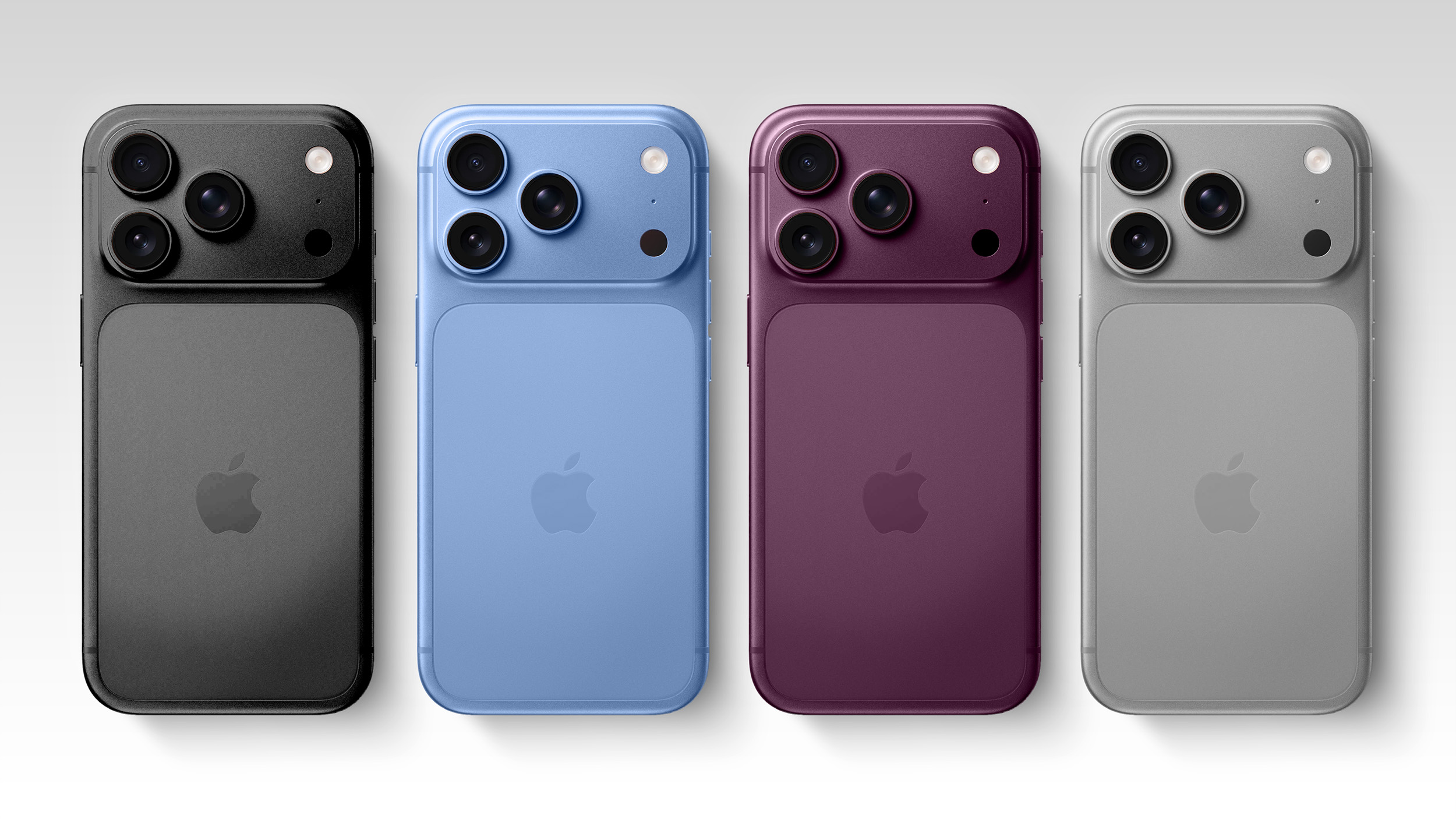
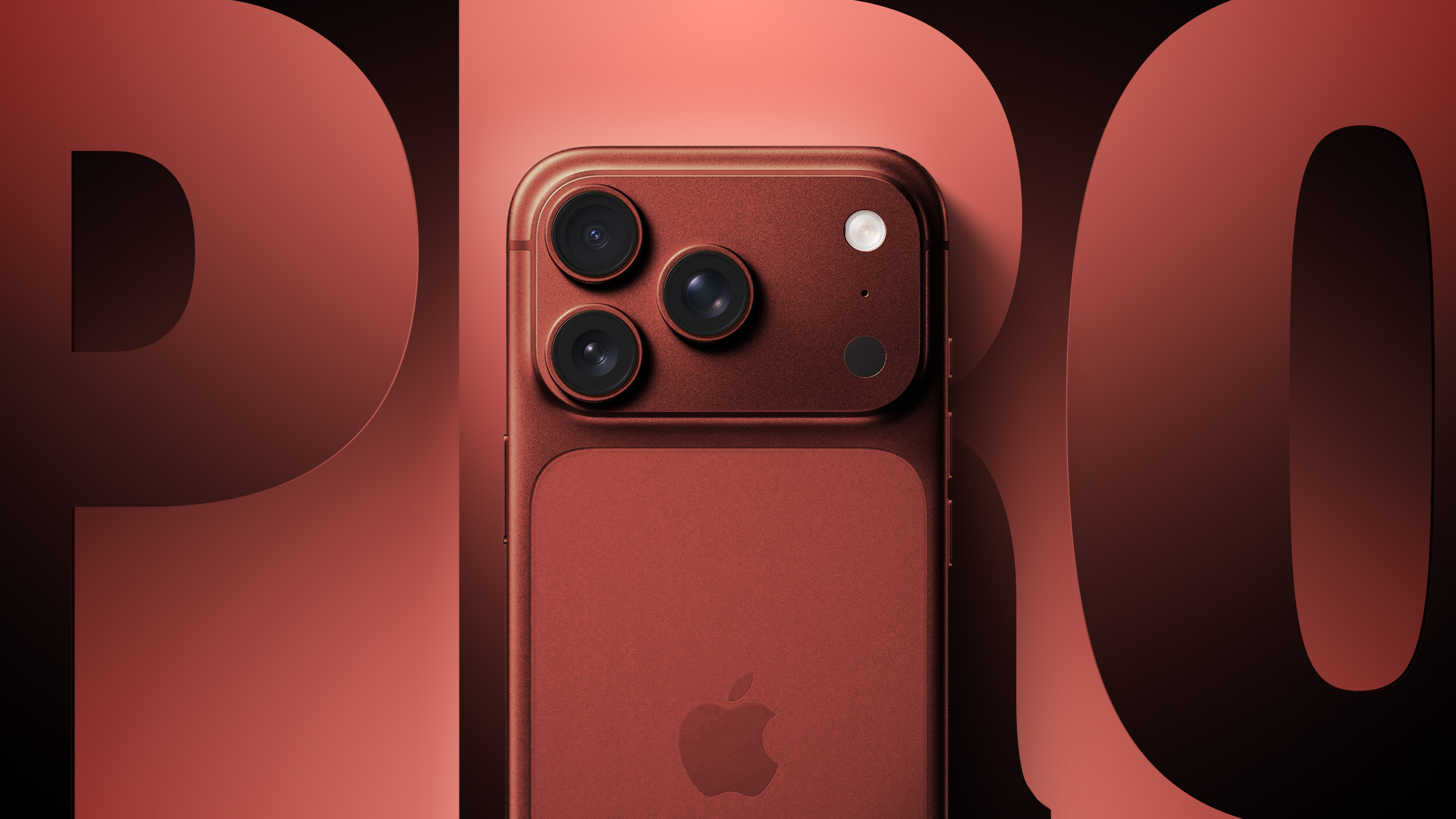
In February 2026, Bloomberg's Mark Gurman reported that Apple is testing a deep red finish for the iPhone 18 Pro and iPhone 18 Pro Max. Rumors of purple and brown finishes have also circulated, but Gurman believes those are just variants of the same red idea. Since then, we've seen aligned rumors that the devices will come in light blue, dark cherry, dark gray, and silver.

The iPhone 14 Pro and iPhone 14 Pro Max were previously available in Deep Purple, and Apple has never released an iPhone in a genuinely brown color. According to a Chinese leaker, Apple's iPhone 18 Pro models won't come in black this year. If the rumor is true, it will be the second consecutive year Apple has ditched what was arguably its most classic color option for the Pro lineup.

iOS 27

Smarter Siri

The iPhone 18 Pro will ship with iOS 27, which brings the biggest Siri shake-up in the assistant's history. Apple introduced Siri AI at WWDC in June – a rebuilt, more conversational version of Siri with onscreen awareness, personal context understanding, and broad world knowledge that lets it pull up-to-date answers from the web. It also gains its own standalone app for revisiting past conversations, an expanded Visual Intelligence mode, and writing tools that work across email, messages, and documents. Like the iPhone 17 Pro, the iPhone 18 Pro is expected to carry 12GB of RAM, so it should run the full range of Siri AI and Apple Intelligence features.
Related Roundup: iPhone 18 Pro

This article, "iPhone 18 Pro: Twelve Changes Coming to Apple's Next Flagship" first appeared on MacRumors.com

Discuss this article in our forums

  •  

20th Anniversary iPhone Coming Next Year With These 10 Features

Apple's 20th anniversary iPhone is expected to arrive in the fall of 2027 with the most significant redesign the device has seen since the iPhone X.


The first iPhone was announced in January 2007 and went on sale that June, meaning the device's 20th anniversary technically falls on June 29, 2027. Apple rarely launches new high-end iPhones outside of its September timeframe, and the anniversary models are still expected to arrive in the fall of that year, just as the iPhone X did in 2017 despite marking the 10th anniversary of a device that launched in June.

The 2027 model has been rumored for well over a year, with reports pointing to an all-glass design, new display technology, and a series of upgrades Apple has been working toward for several generations. Much as the iPhone X set the template for the years of iPhones that followed, the anniversary model is likely to define the device's design direction for some time.

Apple could skip the name "iPhone 19" in the same way it skipped "iPhone 9" ahead of the iPhone X in 2017, with rumors so far variably referring to the device as the "iPhone 20" and the "iPhone XX." Here is everything that has been rumored for the device so far:


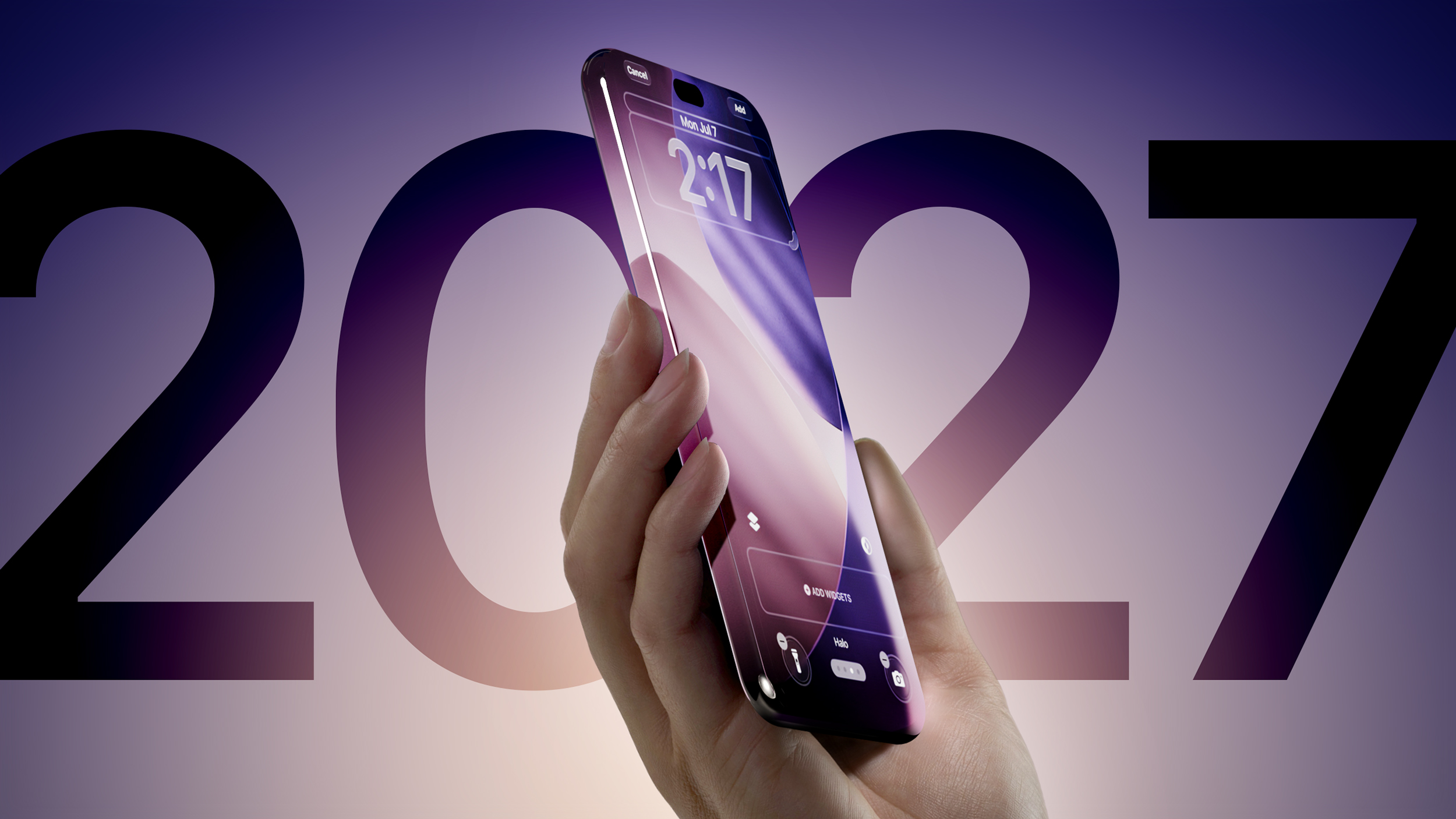
  • Curved all-glass design with edge-to-edge display: Apple is reportedly aiming for a new design with curved glass generously wrapping around the front and back, described by Bloomberg's Mark Gurman as a curved iPhone without cutouts in the display. Facilities in Apple's supply chain have reportedly finished renovations ahead of production, with manufacturing quality said to be around that of the first-generation iPhone Air. The panel is said to curve down around all four edges for a borderless effect, going beyond the curved displays used by other manufacturers. Rather than the aggressively curved "waterfall" edges seen on some Samsung panels, Apple is said to be seeking an equal-depth quad-curved design with very shallow "micro-curves," which could make edge swipes feel more natural and reduce distortion of on-screen content. Bending the display circuitry around every edge reportedly requires an ultra-thin film encapsulation layer to protect the OLED panel from moisture and air, and one leak claims a bezel of 1.1mm, compared to approximately 1.44mm on the iPhone 17 Pro.

  • More advanced display: Apple is reported to be adopting a Samsung-made panel using Color Filter on Encapsulation, which removes the polarizing film and applies the color filter directly onto the encapsulation layer. The technique reduces the thickness of the display stack and lets more light through, improving brightness while reducing power draw, and the panel is said to be paired with next-generation 16nm display driver chips. Apple is also said to be employing a crater-shaped light diffusion layer designed to even out brightness so the display appears uniformly lit across all areas, including at the curved edges.

  • Under-display Face ID: Apple reportedly wants to move the Face ID system beneath the panel, using a "spliced micro-transparent glass" window that allows infrared sensors to pass through the display. The technology is expected to debut on iPhone 18 Pro models first, but DSCC's Ross Young has said it is unlikely to be fully ready even for 2027, and expects an iPhone 18 Pro-style smaller Dynamic Island to remain.

  • Two size options: Unlike the iPhone X, which launched in a single 5.8-inch size, Apple is planning two anniversary models roughly matching the iPhone 18 Pro and Pro Max at 6.3 and 6.9 inches, although the larger model could be marketed as a 7-inch device owing to its slimmer bezels and all-screen design.

  • Custom Apple image sensor: Apple is reported to be developing its own stacked image sensor to replace the Sony sensors used across the iPhone lineup, having already built a working prototype. The sensor is said to use LOFIC technology, allowing each pixel to store varying amounts of light and potentially reaching up to 20 stops of dynamic range.

  • Solid-state haptic buttons: Apple is rumored to be reviving "Project Bongo" to replace the mechanical Side button, volume buttons, Action button, and Camera Control with haptic equivalents integrated into the frame. The buttons have reportedly passed tests for use with gloves, wet hands, extreme temperatures, and with a case fitted. An ultra-low energy microprocessor is claimed to keep the solid-state buttons functional even when the handset is powered off or the battery has run out.

  • A21 chip: Both anniversary models are expected to use a second-generation 2-nanometer "A21" chip, shared with the second-generation foldable iPhone.

  • High bandwidth memory: Apple is reported to be considering mobile HBM, a form of DRAM that stacks memory chips vertically and connects them using through-silicon vias to increase signal transmission speeds. Connecting the memory to the iPhone's GPU is said to be a strong candidate for improving on-device AI performance, and Apple has reportedly discussed the plan with memory suppliers Samsung and SK Hynix, both of which expect to begin mass production after 2026.

  • Apple modem in the United States: Apple is aiming to have modems that outperform Qualcomm's on speed and AI functionality by 2027, following the C1 and C1X used in the iPhone 16e and β€ŒiPhone Airβ€Œ, and the C2 on the β€ŒiPhone 18 Proβ€Œ outside the United States only. With the 20th anniversary iPhone, an Apple-designed modem should come to the high-end devices for the first time in the United States, delivering an efficiency boost for better battery life.

  • Pure silicon battery: Apple is said to be pairing the new display with pure silicon battery technology for improved power efficiency, which offers higher energy density than conventional lithium-ion cells and could allow greater capacity in the same physical space. One leaker has claimed a 6,000mAh battery could come to the device, though it is unclear where that figure comes from.


Reverse wireless charging, under-display audio that eliminates the earpiece slit, and a next-generation Ceramic Shield have all been mentioned by one leaker, but it is unknown whether these claims are based on supply chain information.

With the device still more than a year away, the final 20th anniversary iPhone could still change considerably from the current picture provided by rumors. A two-stage rollout has been reported for the curved panel itself, with the 2027 implementation said to introduce some distortion and brightness loss at the edges before a more advanced version follows in 2028.

Apple is expected to launch the 20th anniversary iPhone in the fall of 2027 alongside a second-generation foldable iPhone, following the β€ŒiPhone 18β€Œ, iPhone 18e, and β€ŒiPhone Airβ€Œ 2 in the spring.
This article, "20th Anniversary iPhone Coming Next Year With These 10 Features" first appeared on MacRumors.com

Discuss this article in our forums

  •  

Qualcomm Expects Apple Modem Revenue to Drop Faster Than Expected

Qualcomm expects its Apple revenue to decline faster than it previously anticipated, Qualcomm CEO Cristiano Amon told Reuters in an interview following the company's earnings call for the third fiscal quarter of 2026.


Amon chalked up the loss to supply constraints, which will reduce the share of Qualcomm components used in the next iPhone launch well below its earlier 20 percent estimate. Qualcomm expects the drop in Apple revenue to start in the fourth quarter.

Qualcomm is raising its prices starting September 1 to improve its margin because of increasing costs across the supply chain. "We're just passing through big cost increases that we have," said Amon.

In fiscal 2027, Qualcomm is expecting most of its chip sales to come from categories other than smartphones, and growth in its data center business will replace the Apple-related revenue it collected in fiscal 2026.

Apple developed its own modem chips, which have been used in the iPhone 16e, iPhone 17e, and iPhone Air. Rumors suggest Apple could transition to using more of its own chips starting with the iPhone 18 lineup. Apple is working on a C2 modem chip rumored to deliver faster speeds and better power efficiency than Qualcomm modems.

Apple and Qualcomm have a patent licensing agreement that lasts through March 2027, and it is not clear if Apple will extend it again or move to using its own modem chips across its entire product lineup.
This article, "Qualcomm Expects Apple Modem Revenue to Drop Faster Than Expected" first appeared on MacRumors.com

Discuss this article in our forums

  •  

Apple Says UK App Store Steering Rules Would Be 'Highly Intrusive'

Apple said new UK App Store rules would give regulators a "highly intrusive" role dictating how it runs its business, reports Reuters. Apple submitted feedback to the UK's Competition and Markets Authority as it considers forcing Apple to change its β€ŒApp Storeβ€Œ rules around steering.


The CMA wants Apple to let developers link to payment options outside of the β€ŒApp Storeβ€Œ, which the CMA says will cut fees and boost competition. Developers in the UK are not currently able to direct customers outside of the β€ŒApp Storeβ€Œ, even though that's allowed with the current U.S. β€ŒApp Storeβ€Œ rules and the EU β€ŒApp Storeβ€Œ rules.

UK regulators said Apple can charge developers a fee, but it must be fair and reasonable, and below existing β€ŒApp Storeβ€Œ commissions, so developers can pass savings to customers or reinvest them in innovation.

According to Apple, the CMA's proposed rules would undermine innovation and investment, and would amount to price regulation because of the restriction on fees. Apple claims there is no evidence that allowing developers to direct users to purchase options outside the β€ŒApp Storeβ€Œ would result in savings for customers. Apple said the β€ŒApp Storeβ€Œ facilitated over Β£46.5 billion in UK billings and sales in 2025, and commissions accounted for less than 3.5 percent of the total.

The CMA denied that its proposal is price regulation. "Our consultation proposes principles to ensure that ​the fees Apple and Google charge for steering are fair and reasonable, not to directly set prices," a CMA spokesperson told Reuters.

The CMA is assessing feedback before making a final decision on the proposal. The changes are also applicable to Google, as both Apple and Google were designated with strategic market status (SMS) in the UK last year. Under the designation, the CMA can impose requirements meant to open up the platforms to greater competition.
This article, "Apple Says UK App Store Steering Rules Would Be 'Highly Intrusive'" first appeared on MacRumors.com

Discuss this article in our forums

  •  

Pastebot 3 for Mac Adds Rule-Based Organization, Powerful Paste Filters

Tapbots recently launched Pastebot 3, the newest version of its popular clipboard management software.


Like prior versions of Pastebot, Pastebot 3 records everything you copy so that it's easy to find and paste when needed. You can store links and other content that you often paste, and organize the snippets by category in Custom Pastebins.

There are also rule-based Smart Pastebins for automatic organization, like every link or image copied from Safari. Smart Pastebins can be filtered by clipping size, type, file extension, creation date, text, text length, and more. Multiple parameters can be combined for detailed filtering, and custom notes can be added to clippings to make them easy to find via search.

You can create more powerful custom filters and apply them to text you've copied before pasting it. You can do things like convert to plaintext and remove smart punctuation, wrap what you're pasting in paragraph tags, convert to upper or lowercase, nix emojis, find and replace, extract URLs or phone numbers, remove empty lines, sort, and translate. Multiple filters can be combined and keyboard shortcuts can be assigned to the filters you use most often.

A quick paste menu can be activated with a Shift+Command+V keyboard shortcut for bringing up your most frequently used clippings in any app, and there's a Stack function for copying multiple items and pasting them one after another.

You can add apps to Pastebot's blacklist, and content copied from the apps on the list is never saved to Pastebot, which is useful for protecting passwords. All Pastebot content and filters sync across Macs with iCloud, and there are options for customizing how many clippings are saved. You can keep up to 1,500.

Tapbots says Pastebot 3 was built to work with Apple's Universal Clipboard feature, and when enabled and active, anything you copy on your iPhone is saved in Pastebot automatically. Clippings saved in Pastebot can also be pasted on iPhone. Pastebot 3 supports Apple Shortcuts and CLI access for automating clippings.

Pastebot 3 requires macOS Tahoe or later. It can be purchased directly from Tapbots for $39, with a year of updates included and the option to buy another year of updates for $19. There's also a Mac App Store purchase option with a $24.99 per year or $2.99 per month subscription. Pastebot customers who enter a Pastebot 2 license key can get a $12.99 upgrade discount on the direct purchase option. New customers can try the app for 14 days.
This article, "Pastebot 3 for Mac Adds Rule-Based Organization, Powerful Paste Filters" first appeared on MacRumors.com

Discuss this article in our forums

  •  

Apple Releases Safari Technology Preview 249 With Bug Fixes and Performance Improvements

Apple today released a new update for Safari Technology Preview, the experimental browser that was first introduced in March 2016. Apple designed β€ŒSafari Technology Previewβ€Œ to allow users to test features that are planned for future release versions of the Safari browser.


β€ŒSafari Technology Previewβ€Œ 249 includes fixes and updates for Accessibility, Animations, CSS, Editing, Forms, HTML, JavaScript, Media, Rendering, Spatial Web, Web API, Web Audio, Web Inspector, WebAssembly, WebDriver, and WebRTC.

The current β€ŒSafari Technology Previewβ€Œ release is compatible with machines running macOS Tahoe and macOS Golden Gate, the newest version of macOS.

The β€ŒSafari Technology Previewβ€Œ update is available through the Software Update mechanism in System Preferences or System Settings to anyone who has downloaded the browser from Apple's website. Complete release notes for the update are available on the Safari Technology Preview website.

Apple's aim with β€ŒSafari Technology Previewβ€Œ is to gather feedback from developers and users on its browser development process. β€ŒSafari Technology Previewβ€Œ can run side-by-side with the existing Safari browser and while it is designed for developers, it does not require a developer account to download and use.
This article, "Apple Releases Safari Technology Preview 249 With Bug Fixes and Performance Improvements" first appeared on MacRumors.com

Discuss this article in our forums

  •  

OpenAI President on Apple Lawsuit: We Don't Need Your Secrets

OpenAI president Greg Brockman recently did an interview with Joanna Stern, where he commented on the lawsuit OpenAI is facing from Apple and talked about OpenAI's product plans.


Brockman reiterated what OpenAI has already said on the record, stating that the company is "plenty innovative" and uninterested in other companies' trade secrets.
I would say that we have no interest in other companies' trade secrets. We are plenty innovative. We are thinking about things from our own angle. And so that's how we operate and that's what we do.

He also said OpenAI is working on its own long-term product plans.
It's active litigation, so not something that I want to talk about, but all I can say is we're very committed to a long-term roadmap here and that we are focused on our own development and technology. That's what we're interested in.

Apple accused OpenAI of a months-long scheme to steal confidential Apple information from Apple employees interviewing with OpenAI. Apple said OpenAI has created a culture of hardware theft, and that its hardware business is "rotten to the core" because the hardware it's building relies on info stolen from Apple. OpenAI's products are being developed with former Apple designer Jony Ive, though Ive wasn't named in the lawsuit.

Brockman declined to say when OpenAI's first hardware devices will come out, but he said people should "expect them soon." Rumors suggest OpenAI's first product will be a mobile smart speaker without a display, and it has been described as a "humanlike AI companion" designed for home use. He further said OpenAI is working on a "family of devices" and is building its own chips. OpenAI wants to offer "value over time" and deliver on a device that's "built for the AI era" and "maximally useful."

He had ChatGPT answer a question about what OpenAI's first AI device would look like.
My take, something ambient and low friction, voice first but not voice only and with a clear privacy signal.

ChatGPT also answered whether the company's first device would need a screen, and it said "nope."

People haven't been thrilled with the recent merging of ChatGPT and Codex, and Brockman acknowledged that the app is "kind of a mess." He described the current app as "incremental progress towards the future," and said the separate Work tab should be gone by the end of the year, with everything molding into ChatGPT.

Brockman's full interview, which goes into more detail on ChatGPT's future, OpenAI's hardware work, and the company's ambitions, can be watched on YouTube.
This article, "OpenAI President on Apple Lawsuit: We Don't Need Your Secrets" first appeared on MacRumors.com

Discuss this article in our forums

  •  

Apple Begins Selling Refurbished Studio Display XDR

Apple this month began selling certified refurbished Studio Display XDR models in the U.S. for the first time since the display was released in March. Availability extends to Australia, New Zealand, Canada, Japan, and select other countries.


A refurbished Studio Display XDR with a VESA mount adapter and standard glass is priced at $2,459, down from $2,899 for the equivalent new configuration. This amounts to a 15% discount, which is typical for Apple's refurbished products.

A refurbished model with a tilt- and height-adjustable stand and standard glass is priced at $2,799, down from $3,299, which is likewise a 15% discount.

Refurbished models with nano-texture glass are also available at a discount.

Apple says it puts refurbished products through "full functionality testing" and a "thorough cleaning process and inspection," and they are covered by Apple's one-year limited warranty and eligible for extended AppleCare+ coverage. In our view, Apple's own refurbished devices are virtually indistinguishable from brand-new devices.

The refurbished models come in a plain white box with a Thunderbolt 5 Pro cable.

The Studio Display XDR features a 27-inch screen with mini-LED backlighting, 5K resolution, peak brightness of 2,000 nits for HDR content, and up to a 120Hz refresh rate. The display has a 12-megapixel Center Stage camera, six speakers, two Thunderbolt 5 ports with one providing up to 140W pass-through charging, and two USB-C ports.
Related Roundup: Studio Display
Buyer's Guide: Displays (Buy Now)
Related Forum: Mac Accessories

This article, "Apple Begins Selling Refurbished Studio Display XDR" first appeared on MacRumors.com

Discuss this article in our forums

  •  

All the Changes to AppleCare+ This Month

July has been a busy month for AppleCare+ news. We have recapped all the changes to AppleCare+ and the AppleCare One bundle below.


In the U.S., Apple raised the prices on monthly β€Œand annual AppleCareβ€Œ+ subscription plans for Macs and iPads by $0.50/month and $5/year, respectively.

Monthly and annual AppleCare+ subscription plans expanded to a wider range of Apple products in Canada and Japan for the first time this month.

AppleCare+ with Theft and Loss plans for the iPad and Apple Watch expanded to five countries: Japan, Australia, France, Germany, and the United Kingdom.

AppleCare One is expanding too. Starting on Tuesday, August 4, it will be available in Australia, France, Germany, and the United Kingdom.

Introduced in the U.S. last year, AppleCare One covers up to three devices as part of a single monthly subscription, and the total cost can be lower than multiple AppleCare+ plans. In the United Kingdom, for example, Apple said customers can save up to Β£11.48/month vs. paying for three separate AppleCare+ with Theft and Loss plans.
This article, "All the Changes to AppleCare+ This Month" first appeared on MacRumors.com

Discuss this article in our forums

  •  

Galaxy Z Fold8 Review: What Samsung's New Foldable Tells Us About the iPhone Ultra

Samsung announced its latest foldable smartphones last week, and the lineup included the Galaxy Z Fold8, a device that's close to what we're expecting Apple's foldable "iPhone Ultra" to look like when it comes out later this year. MacRumors videographer Dan Barbera has been testing Samsung's new foldable, and the wider 4:3 display bodes well for the β€ŒiPhone Ultraβ€Œ.


Unlike most of Samsung's Galaxy foldables, the Z Fold8 is wider with a tablet-like look and feel when it's unfolded. It's 5.5 inches when closed and 7.6 inches when open, and those are just about the exact dimensions we've seen rumored for the β€ŒiPhone Ultraβ€Œ. It's not as tall or narrow as Samsung's other foldable smartphones, and it feels a lot more like using an iPad mini.

A wider unfolded display is better for using two apps side-by-side, and it's also a better screen size for watching videos. The 5.5-inch cover display is perfect for looking at notifications, responding to texts, and answering emails, and then the wider display is ideal for tasks that can use more screen real estate.

Samsung's foldable is our best look yet at what it will be like to use an β€ŒiPhone Ultraβ€Œ, and where the shortcomings might be. The book form factor isn't the best for vertical video, and some apps aren't designed for the screen size. Apple is working on automatic resizing for apps to match the iPad-like design, so it may be in a better position than Samsung on the software side.

Samsung's device only has two camera lenses and not the best camera tech the company has, and that's what we're expecting from the β€ŒiPhone Ultraβ€Œ too. A telephoto lens is unlikely, and a step down in camera quality could be one of the main negatives of choosing the β€ŒiPhone Ultraβ€Œ over the iPhone 18 Pro this fall. It's also going to be missing Face ID, and going back to Touch ID on a smartphone is a big change.

Apple's design is supposed to be nearly crease-free with a sturdy hinge, and Samsung used new hinge technology for the Z Fold8 too. Samsung says the new mechanism minimizes the crease and makes it harder to feel than with prior models, but it's still clearly visible in some lighting. It'll be interesting to see how Apple's foldable compares.

Samsung didn't come out with this wide-screen foldable smartphone until after rumors suggested it was the design Apple planned to use. Samsung and Apple both have a history of adopting features after the other company comes out with something new, but Samsung seems to follow Apple more often. It looks like Apple picked the shape and details came out through leaks, leading Samsung to make a similar device. Samsung was able to make it to market before Apple because Samsung has been making foldable smartphones for years.

Rumors about a book-style Apple foldable started around March 2018, and Samsung's first foldable came out in 2019. Samsung had seven years to pick a wider design like the one Apple is opting for, but didn't launch the form factor until a couple of months before Apple's foldable is rumored to be coming.

Samsung isn't likely to lure iPhone users away from choosing the β€ŒiPhone Ultraβ€Œ when it comes out because most people tend to stick with a preferred operating system, but it could stop Galaxy users from swapping over to Apple's tablet-like design. The 4:3 iPad-like display works, and the β€ŒiPhone Ultraβ€Œ is going to sell well, even at a price around $2,000. Samsung priced the Z Fold8 at $1,900, but rumors suggest Apple could charge up to $2,500.

Apple knows the β€ŒiPhone Ultraβ€Œ is going to give people sticker shock, and that's probably one of the reasons it just launched Apple Upgrade. Apple Upgrade lets you lease a smartphone for a lower monthly price than you used to be able to get with the iPhone Upgrade Program, and it'll likely help Apple sell the new iPhone.

Dan went into testing expecting the rumored price would keep the β€ŒiPhone Ultraβ€Œ niche, but after using the Galaxy Z Fold8 and showing other people the design, he's now convinced the β€ŒiPhone Ultraβ€Œ will be a hit.
This article, "Galaxy Z Fold8 Review: What Samsung's New Foldable Tells Us About the iPhone Ultra" first appeared on MacRumors.com

Discuss this article in our forums

  •  

AirPods Pro 3 Still Available for Best Price Since Prime Day at $199.99

Amazon still has the AirPods Pro 3 available for $199.99, down from $249.00. This is the best price we've seen on the AirPods Pro 3 since Prime Day ended last month, coming in around $20 higher when compared to that all-time low price.

Note: MacRumors is an affiliate partner with some of these vendors. When you click a link and make a purchase, we may receive a small payment, which helps us keep the site running.
This model of the AirPods Pro launched in September 2025 and has 2x better Active Noise Cancellation than the previous generation, better audio quality, a revised fit that's meant to improve comfort and stability, Live Translation for in-person conversations, and heart rate sensing for workouts.


Head to our full Deals Roundup to get caught up with all of the latest deals and discounts that we've been tracking over the past week.


Deals Newsletter


Interested in hearing more about the best deals you can find in 2026? Sign up for our Deals Newsletter and we'll keep you updated so you don't miss the biggest deals of the season!


Related Roundup: Apple Deals

This article, "AirPods Pro 3 Still Available for Best Price Since Prime Day at $199.99" first appeared on MacRumors.com

Discuss this article in our forums

  •  

Gemini for Mac Adds System-Wide Voice Dictation and Screen-Aware Commands

Google today updated Gemini for Mac to add a new quick keyboard shortcut that activates voice mode. By long-pressing the Fn key, users can speak naturally to Gemini from any window on their desktop machine.


Gemini supports intelligent dictation, so users can speak to the chatbot using natural language and Gemini will transcribe their words to text. Ums, ahs, and other filler words are removed during the process, and it can catch mid-sentence corrections, dropping formatted text at the cursor.

There's an opt-in screen-aware reasoning mode. If enabled, Gemini can see what's on the Mac's screen to complete tasks. Users can highlight files, images, text, or documents and have Gemini edit, summarize, and compose content in the app they're working in. Gemini is also able to generate and edit images when the screen-aware mode is turned on.

A double press on the Fn key is one of the options for triggering the Mac's built-in dictation feature, so the Gemini replacement will be familiar to those who prefer Gemini.

Gemini's new Mac voice mode is rolling out globally to all Gemini for Mac users in English, with Google planning to add more languages in the future.
Tags: Gemini, Google

This article, "Gemini for Mac Adds System-Wide Voice Dictation and Screen-Aware Commands" first appeared on MacRumors.com

Discuss this article in our forums

  •  

iOS 27 Lets You Hide the Messages Button Everyone Hits by Mistake

If you accidentally press the dictation or voice icon after sending a text in Messages, your music may pause while your iPhone starts listening. It's a small annoyance, but a frequent one, since the dictation/audio icon sits so close to the send arrow that stray taps are almost inevitable. In iOS 27 and iPadOS 27, Apple has finally given you a way to get rid of it.

messages
The issue is one that popstar Justin Bieber publicly complained about, claiming that the send button shouldn't have multiple functions so close together. The post went viral, and in iOS 27, Apple has done something about it.

Quite simply, the message text field now has a new setting. You can choose whether it displays the audio waveform icon for recording a voice message, the microphone icon for dictation, or nothing at all. Here's how to find it:

  1. Open the Settings app on your iPhone or iPad.

  2. Tap Apps at the bottom of the list.

  3. Tap Messages.

  4. Tap Show in Text Field.

  5. Choose one of the three options: Record Audio, Start Dictation, or None.
    settings
If you keep tapping the text field icon by mistake, you'll want to choose None.

If you occasionally record voice messages, don't worry – you can still use the plus button to the left of the input field to enable Audio. If it's dictation you sometimes use, you'll find the microphone key at the bottom right of the iOS keyboard (if it's not there, go to Settings ➝ General ➝ Keyboard and turn on Enable Dictation.)

iOS 27 is remains in beta, with a public release expected sometime this September.
Related Roundups: iOS 27, iPadOS 27

This article, "iOS 27 Lets You Hide the Messages Button Everyone Hits by Mistake" first appeared on MacRumors.com

Discuss this article in our forums

  •  

Apple Wallet Support Coming to Manchester's Bee Card

Apple is preparing to allow the Bee Card to be added to the Wallet app, according to code seen by MacRumors.

When this functionality goes live, you will be able to add the Bee Card to your iPhone or Apple Watch and use it to pay your fare for trams and buses in the Manchester, England area. However, the code does not provide any timeframe for availability, so stay tuned.
This article, "Apple Wallet Support Coming to Manchester's Bee Card" first appeared on MacRumors.com

Discuss this article in our forums

  •  

Best Buy's Back to School Sale Brings Big Savings on AirPods, MacBooks, Headphones, and More

Best Buy this week is hosting a pair of sales kicking off Back to School season, as well as its annual Black Friday in July event, with notable markdowns on Apple devices, TVs, headphones, monitors, and much more. These sales are set to last for the rest of this week, and you don't need to be a My Best Buy Plus or Total member to see the deals.

Note: MacRumors is an affiliate partner with Best Buy. When you click a link and make a purchase, we may receive a small payment, which helps us keep the site running.
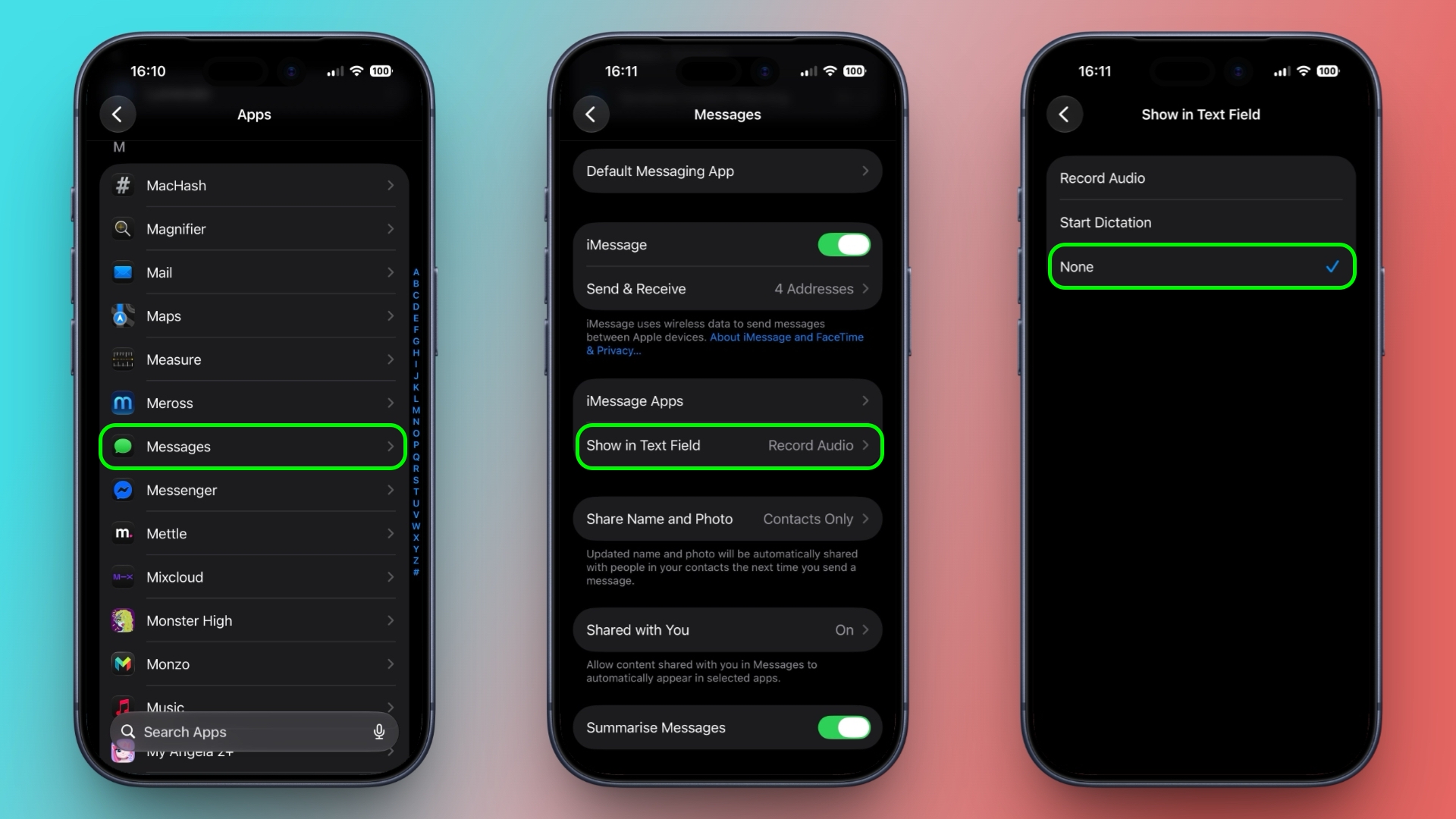
In terms of Apple devices, you can find solid deals on AirPods Max 2, iPhone Air, Beats accessories, and MacBook Pro. You can get the AirPods Max 2 for $449.00 ($100 off), as well as up to $500 off M5 Pro and M5 Max MacBook Pro, starting at $2,299.00 for the 1TB 14-inch model.


Some of the biggest discounts you'll find in Best Buy's Black Friday in July sale are on TVs, with major savings from popular brands like Insignia, Samsung, and LG. Best Buy has Samsung's popular line of The Frame TVs on sale, including the 65-inch 2025 model for $999.99 ($600 off), which is a match of the record low price on this device.

Apple


TVs


Monitors


Audio


If you're on the hunt for more discounts, be sure to visit our Apple Deals roundup where we recap the best Apple-related bargains of the past week.


Deals Newsletter


Interested in hearing more about the best deals you can find in 2026? Sign up for our Deals Newsletter and we'll keep you updated so you don't miss the biggest deals of the season!


Related Roundup: Apple Deals

This article, "Best Buy's Back to School Sale Brings Big Savings on AirPods, MacBooks, Headphones, and More" first appeared on MacRumors.com

Discuss this article in our forums

  •  

Apple's New Upgrade Program: Is It Worth It?

With the new Apple Upgrade program in the U.S., you can now lease an iPhone, but is it worth it? The answer is more complicated than a simple yes or no.


We'll use the iPhone 17 Pro with 256GB of storage on a one-year lease as an example. In the U.S., the device costs $1,099 upfront, but through Apple Upgrade you can lease it for $45.99/month for 12 months.

For a 12-month lease, your payments would total $551.88, which is lower than the $1,099 that you would have spent upfront. However, it is not quite that simple, as you have to choose from one of the three following options after your lease ends:

  • Return your iPhone.

  • Return your iPhone and upgrade to a newer iPhone.

  • Buy the iPhone outright by paying an amount equal to the device's retail price minus any lease payments made.

We dive into each of those options below.

Options


Returning the iPhone


If you return the iPhone 17 Pro and simply move on from the Apple Upgrade program, then your total cost to own the device would be $551.88 after 12 months, plus sales tax if applicable. While that is less than paying $1,099 upfront, the catch is that you are no longer in possession of the device after your lease ends and cannot resell it or trade it in.

Resale value is a big factor. If you paid $1,099 upfront for the iPhone 17 Pro but resold it for say $650 through a private sale on eBay or Facebook Marketplace after 12 months, then you only spent $450 to own the device for a year, compared to $551 if you leased it through the Apple Upgrade Program for that long. But if you somehow only managed to get $500 for the device in a private sale, then you spent $600 for the device and could have saved a bit of money by opting for the Apple Upgrade program.

$551.88 is approximately 50% of the iPhone 17 Pro's price, so Apple is essentially betting that the device will retain more than 50% of its value after one year, in order to ensure that the Apple Upgrade program is profitable. Resale prices for used iPhones can vary significantly, but Apple almost certainly expects to come out ahead.

For instance, Apple's trade-in program currently offers $560 for a used iPhone 16 Pro in good condition, and that device was released nearly two years ago. Yet, Apple is effectively "giving you back" only $547.12 on a used iPhone 17 Pro after just one year ($1,099 minus $551.88), so the math unsurprisingly works in Apple's favor.

Keep in mind that the Apple Upgrade program is partly about convenience, as you do not have to deal with reselling your iPhone β€” not everyone likes to deal with eBay or Facebook Marketplace. That alone might sway some customers towards Apple Upgrade, even if they know there is a chance it is not the most financially optimal decision.

Upgrading to a New iPhone


If you return the iPhone and upgrade to a newer one, the process essentially starts over.

For example, if the iPhone 18 Pro with 256GB of storage were to be offered at the same $45.99/month price, you would pay another $551.88 during the following 12 months. That would bring your total cost to $1,103.76 over two years, and you would still need to return the iPhone 18 Pro or make a final payment to keep it.

If you had purchased both the iPhone 17 Pro and iPhone 18 Pro upfront for $1,099 each, the total cost would have been $2,198. If you had managed to resell the devices for $650 each, you would have recouped $1300, lowering your final cost to $898, which would have been less than the $1,103.76 cost of leasing the devices after two years.

Of course, the resale values we have provided are purely hypothetical. There is no way of knowing what a used iPhone will be worth with certainty, but Apple has surely put a lot of research into its leasing prices to ensure that it makes a profit.

Buying the iPhone


If you opt to buy the iPhone outright at the end of your 12-month lease, by paying an amount equal to the device's retail price minus the $551.88 in lease payments made, then you simply owe the remaining $547.12 to Apple's financing partner Klarna. This brings your total cost to $1,099, which is the upfront price of the iPhone 17 Pro.

In this case, you ultimately just purchased your iPhone 17 Pro with interest-free financing by spreading out the $1,099 cost over 12 months.

Is It Worth It?


If you simply want to spend the least amount of money on iPhones over time, buying them upfront and reselling them privately is very likely the best option.

However, the Apple Upgrade program can be worth it for customers who value convenience and predictability. If you want a new iPhone every year or two and want to avoid the hassle of selling your existing iPhone through eBay or Facebook Marketplace, then the program is worth considering if the monthly payments fit into your budget.

The option to buy out the iPhone at the end of the lease is more straightforward. Since the final payment is equal to the original retail price minus the payments already made, Apple Upgrade effectively becomes a 12-month, interest-free financing plan. In this case, you would not have spent any more than you would have upfront.
This article, "Apple's New Upgrade Program: Is It Worth It?" first appeared on MacRumors.com

Discuss this article in our forums

  •  

iPhone Driver's Licenses May Soon Expand to Another US State

Driver's licenses and IDs may soon be available in Apple Wallet for iPhone and Apple Watch users living in Oklahoma. MacRumors discovered signs of an Oklahoma ID in Apple's backend.


With input from Apple, a House bill was passed in March 2026 that allows Service Oklahoma to issue mobile or digital versions of state identification cards, driver's licenses or permits – suggesting this is Apple taking preparatory steps for future Wallet integration.

The digital equivalents are not intended to replace physical licenses or state IDs, meaning Oklahomans will be required to keep the latter, while using the mobile version as a "companion option."

Other states planning to add support for driver's licenses in Apple Wallet include Connecticut, Kentucky, Mississippi, Utah, and Virginia. MacRumors already spotted signs of Utah and Virginia in Apple's backend.

Multiple states have already implemented support, as has Puerto Rico:

  • Arkansas

  • Arizona

  • California

  • Colorado

  • Georgia

  • Hawaii

  • Illinois

  • Iowa

  • Maryland

  • Montana

  • New Mexico

  • North Dakota

  • Ohio

  • West Virginia


Digital IDs and licenses are accepted at select TSA checkpoints across the United States. They can also be used at some business venues and in select apps that require ID verification for services or purchases.

In states that do not support licenses in the Wallet app, iPhone users can add their U.S. passport to the Apple Wallet app with the iOS 26 Digital ID feature.
This article, "iPhone Driver's Licenses May Soon Expand to Another US State" first appeared on MacRumors.com

Discuss this article in our forums

  •  

WhatsApp Rolls Out Web Calling, Call Transfer Across Devices, and More

WhatsApp has announced a handful of enhancements for group calling over the encrypted platform, including seamless call transfers across devices and a new web calling feature.


It's now possible to make and receive audio and video calls, including both one-on-one and group calls, directly from WhatsApp Web. The new browser-based service provides access to common features available on other devices, like screen sharing, reactions, and a dedicated Calls tab with a user's full call history.

WhatsApp says the end-to-end encrypted web service will make it easier to jump on a call without leaving your browser, and it should be especially welcomed by anyone who uses a work laptop that doesn't allow app downloads.

The latest rollout also brings Call Transfer, allowing users to move an active group call from one device to another without hanging up.

Then there's the new Waiting Room, which appears when creating a WhatsApp call link with "Require approval to join" enabled. Participants now enter the waiting room first until the host is ready to let them in.

Two last additions round out this update: QuickHD allows users to enjoy high-definition video immediately in the very first few seconds of the call, while Noise Suppression removes background noise so that voices come through more clearly, even in loud or busy environments.

WhatsApp says the slate of new features are rolling out gradually and will be "available to everyone soon."
This article, "WhatsApp Rolls Out Web Calling, Call Transfer Across Devices, and More" first appeared on MacRumors.com

Discuss this article in our forums

  •  
❌