Lees weergave

Google Search Now Connects to Instacart, Canva and YouTube Music

Google is expanding AI Mode in Search, allowing users to connect apps to improve search results and "get more done."
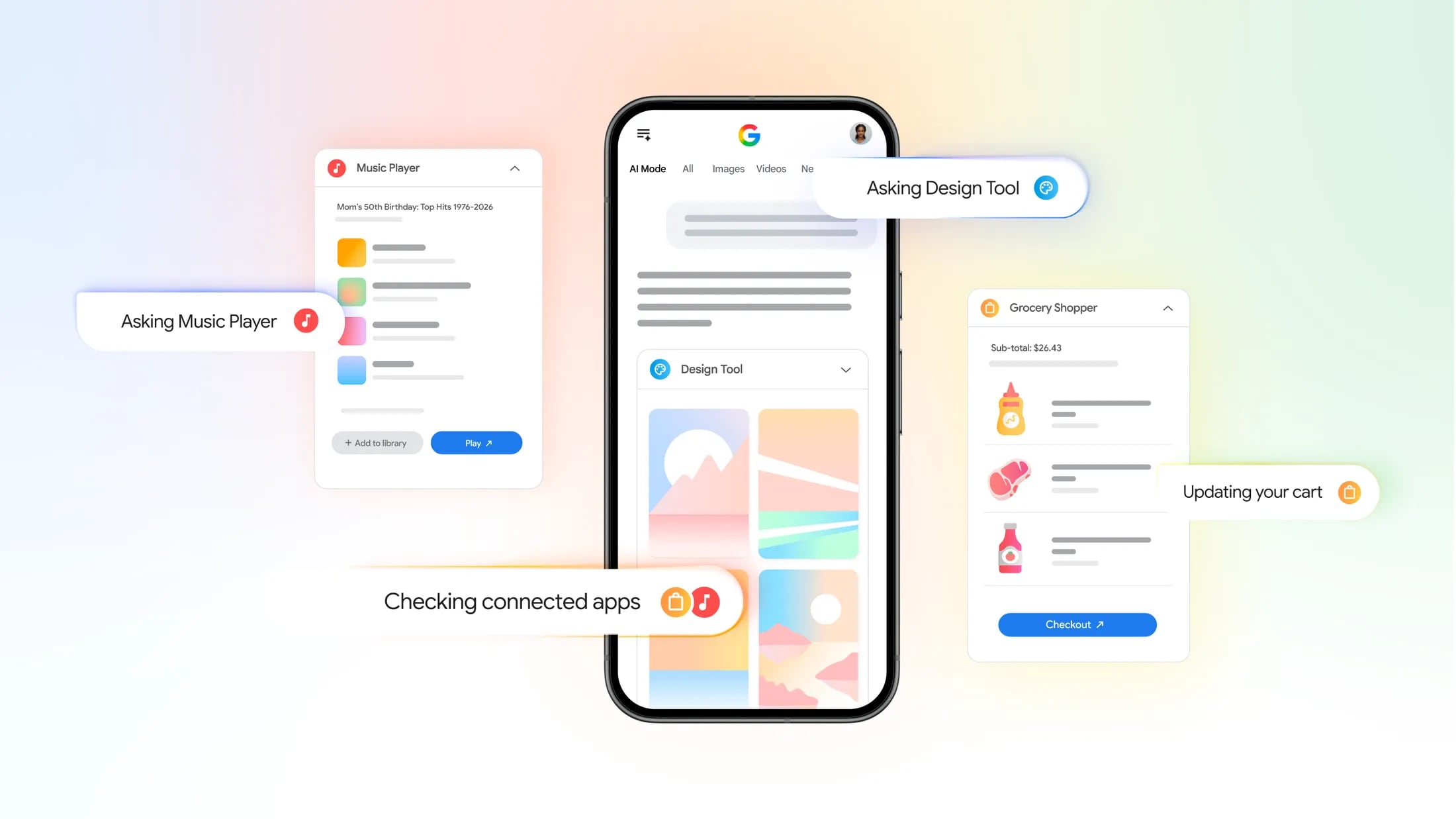

Instacart, YouTube Music, and Canva can be connected, and Google explains how the integrations can be useful:

  • Instacart - If you're using AI Mode to help you plan a grocery list, ingredients can be added right to an Instacart shopping cart for quick ordering.

  • Canva - If you're creating a flyer, you can get template options from Canva.

  • YouTube Music - You can use AI Mode to curate a playlist and save it to YouTube Music.


Instacart, Canva, and YouTube Music are the only apps that can be connected right now, but Google may add more in the future. Connected apps were previously available in Gemini, but the feature set is now being expanded to Search.

Connecting apps is limited to AI Mode in the United States, in English. Once an app is connected, users are able to access new features when making a request in Google Search AI Mode. Connected apps can be used in Search both on the desktop and through the Google Search iOS app.

Google suggests users turn on history and personalized recommendations to improve the Google Search experience. Google says it uses people's interactions with Search and the new AI features to develop and improve generative AI experiences.
Tag: Google

This article, "Google Search Now Connects to Instacart, Canva and YouTube Music" first appeared on MacRumors.com

Discuss this article in our forums
  •  

Roblox is Adding AI Game Creation to iPhone and iPad

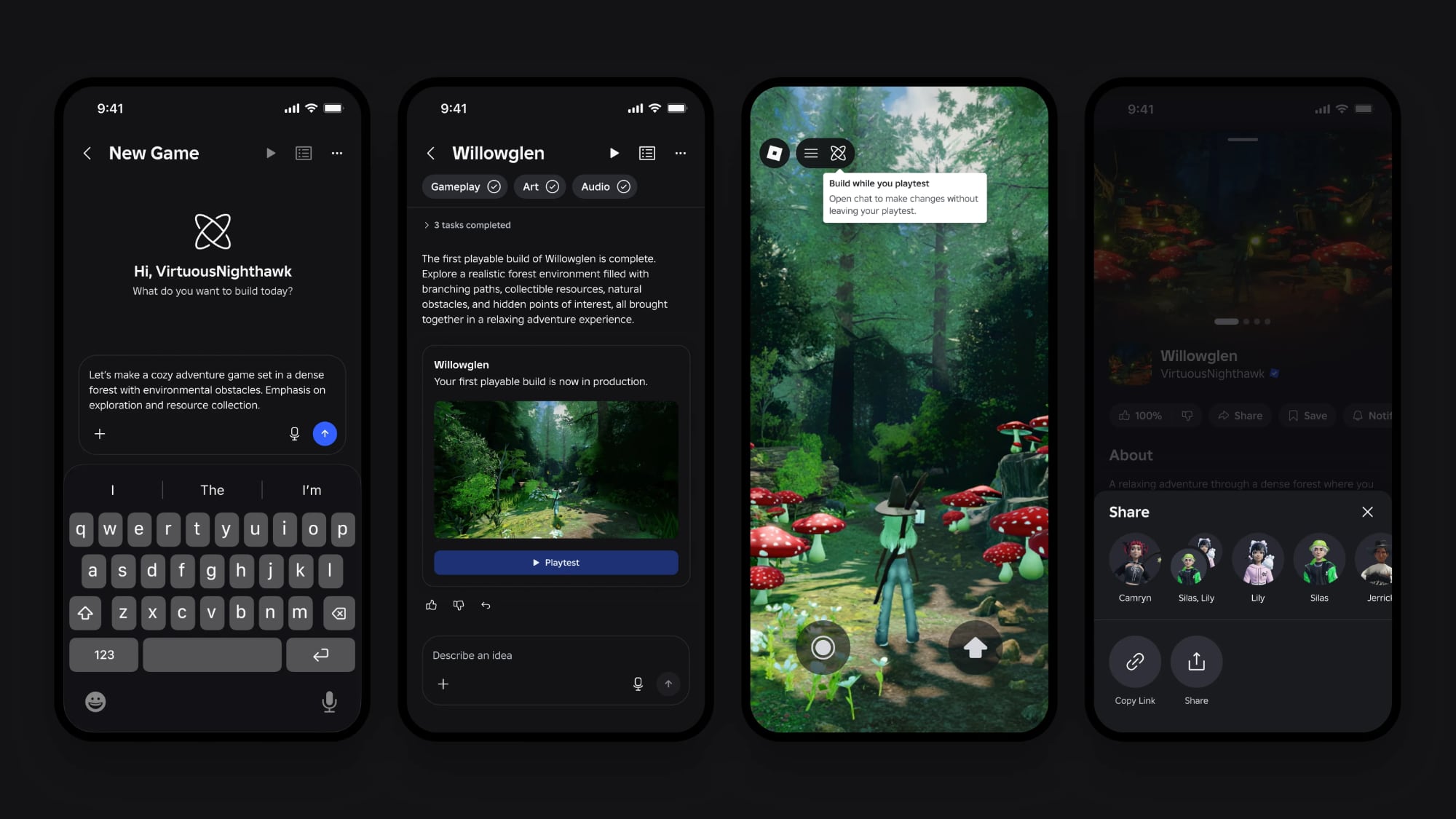
Online game platform Roblox today said it is adding a new Build tool that will let iPhone and iPad users create games using AI.


With the mobile-first Build option, Roblox users can write a text-based prompt and have AI turn it into a basic game. A single prompt will create a starting point that can be expanded with playtesting and further commands. The entire game-making process, from creation to uploading on the Roblox platform, can be done on a mobile device.

Right now, creating a game in Roblox requires a Mac or PC app, but Build will extend game creation to mobile users too. Roblox is also adding new AI creation tools to Roblox Studio, its desktop game creation software. Content created using the Build tool can be iterated on with Studio.

Roblox Build is set to roll out to the Roblox mobile app on July 28, beginning with a public alpha test for users in New Zealand. Build will roll out to additional regions in the coming months as Roblox improves the experience.

Roblox has 132 million daily active users, and user-created games like Brookhaven RP, Adopt Me, and Dress to Impress have been wildly popular.
Tag: Roblox

This article, "Roblox is Adding AI Game Creation to iPhone and iPad" first appeared on MacRumors.com

Discuss this article in our forums

  •  

1Password for Claude Lets AI Log In Without Seeing Your Passwords

Popular password management app 1Password today added Claude support, which means AI service Claude can access credentials stored in 1Password for completing browser tasks.


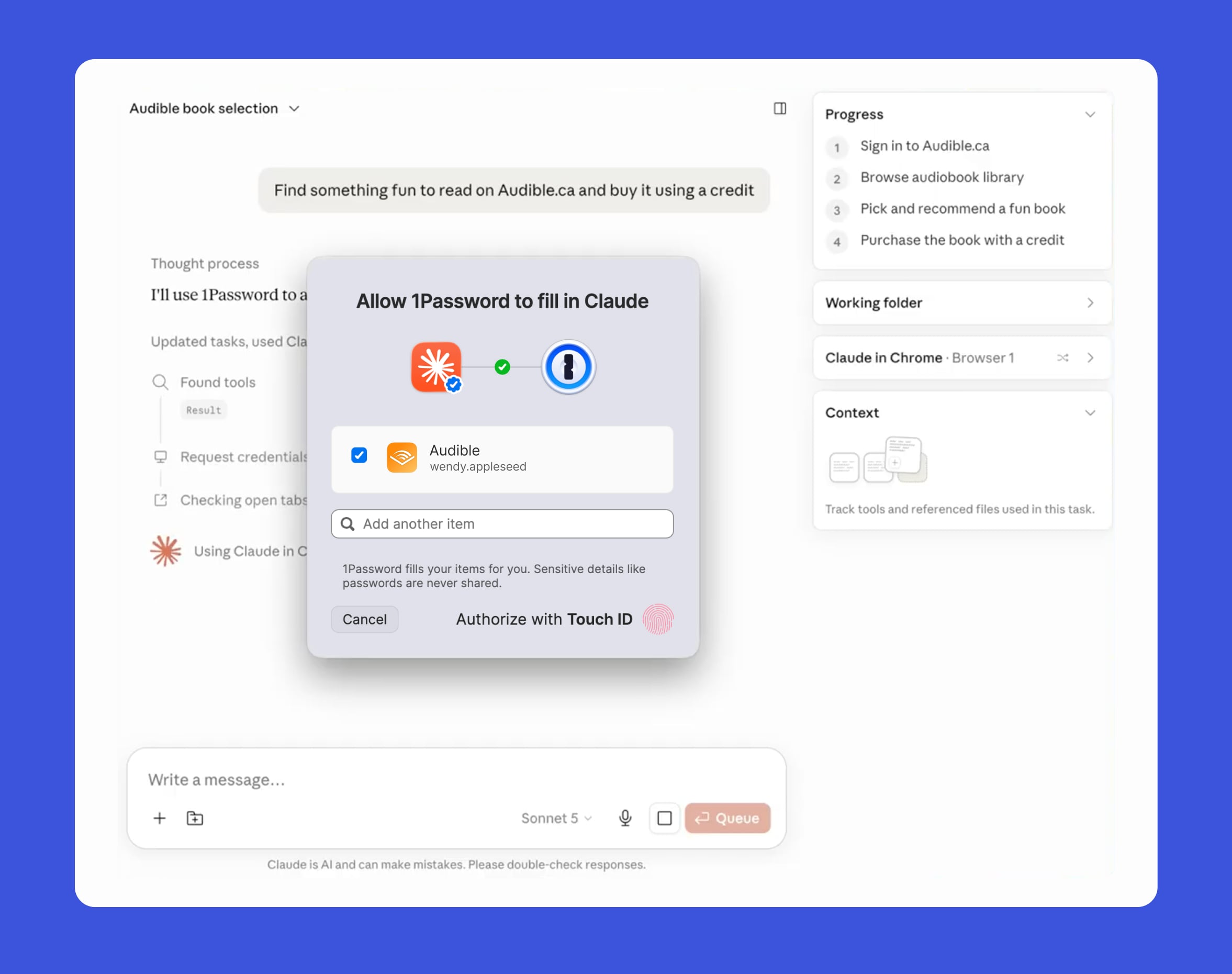
With the integration, Claude can use 1Password logins and one-time codes without the actual password being exposed to Claude. Passwords never reach Claude's context, memory, or Anthropic's systems.

When Claude wants to sign in to a website, 1Password shows the user which credential Claude wants access to and why. After the user approves the request, 1Password adds the credential directly to the page. Access is limited to the current task and ends when the task has been completed. The 1Password team says that after a password is autofilled, the app checks to make sure secrets were not exposed on the page.


Credit cards and identities in 1Password are not supported at the current time, so Claude's access is limited to logins and one-time codes.

The 1Password browser extension is also being updated with Agentic Mode, which gives users control over browser-based AI agents. When an AI agent takes over, the 1Password extension locks down so passwords are not exposed. The password interface is hidden, and the agent can use logins and one-time codes only when the user gives approval. Agentic Mode works to protect passwords from AI agents even if the integration is not set up.

1Password for Claude is available for Mac, and 1Password business, family, and individual plan subscribers can use it. A Pro, Max, Team, or Enterprise Claude plan is required. 1Password has a help document with detailed information on how to set it up.

Claude can use 1Password logins across sites where Claude in Chrome can complete actions. The 1Password desktop app and browser extension are required, as are the Claude desktop app and the Claude in Chrome browser extension.
This article, "1Password for Claude Lets AI Log In Without Seeing Your Passwords" first appeared on MacRumors.com

Discuss this article in our forums
  •  

Apple Sued Over Reported 'Hide My Email' Flaw

Apple this week was sued over a reported "Hide My Email" flaw that could expose a user's real email address. The proposed class action lawsuit alleges that Apple violated California's false advertising law and other consumer protection statutes by knowingly offering a feature that does not work as advertised.

A security researcher disclosed the apparent "Hide My Email" vulnerability to Apple in June 2025, but there are no known instances of it being exploited, as the steps involved have not been shared with the public as a precaution.
This article, "Apple Sued Over Reported 'Hide My Email' Flaw" first appeared on MacRumors.com

Discuss this article in our forums

  •  

Apple's Chipmaker Pledges $100 Billion More for US Plants

Apple chip supplier TSMC has announced a $100 billion increase to its U.S. chip investment, bringing its total commitment to $265 billion.


The increase was confirmed by the White House and the Department of Commerce alongside TSMC's second quarter earnings call. Commerce Secretary Howard Lutnick said the investment would "create tens of thousands of American jobs," while TSMC chairman and CEO C.C. Wei told CNBC the new fabrication plants would support "our leading U.S. customers," a group that reportedly includes Apple, alongside Nvidia and Broadcom.

Apple CEO Tim Cook called Apple "TSMC Arizona's first and largest customer" when the company's third Arizona fab broke ground last year, and the company's first Arizona plant already produced some of Apple's A16 chips.

TSMC has historically reserved its most advanced manufacturing processes for its home plants in Taiwan, meaning Arizona made chips have trailed several generations behind whatever Apple ships at any given time. TSMC has since committed to building its own advanced packaging facilities in the US as part of its broader investment plan, according to a regulatory filing.

The new $100 billion is expected to fund up to four more plants, though the exact shape of the plan remains unsettled. The Department of Commerce says the total will reach 12 U.S. facilities, while an official told Bloomberg the eventual mix could be 10 fabrication plants and two packaging facilities, focused on 2 nanometer chips, TSMC's most advanced process commercially available today.

That timing could hinge partly on how much U.S. capacity Apple itself ends up needing, since the company has been separately exploring Intel and Samsung as backup chipmakers to reduce its reliance on TSMC amid the ongoing global chip crunch. Apple is reported to have secured an exemption from a proposed 100% semiconductor tariff partly by pledging its own U.S. manufacturing investment and agreeing to buy chips from Intel.
Tag: TSMC

This article, "Apple's Chipmaker Pledges $100 Billion More for US Plants" first appeared on MacRumors.com

Discuss this article in our forums

  •  

Apple Begins Selling Refurbished iPad Mini With A17 Pro Chip at a Discount

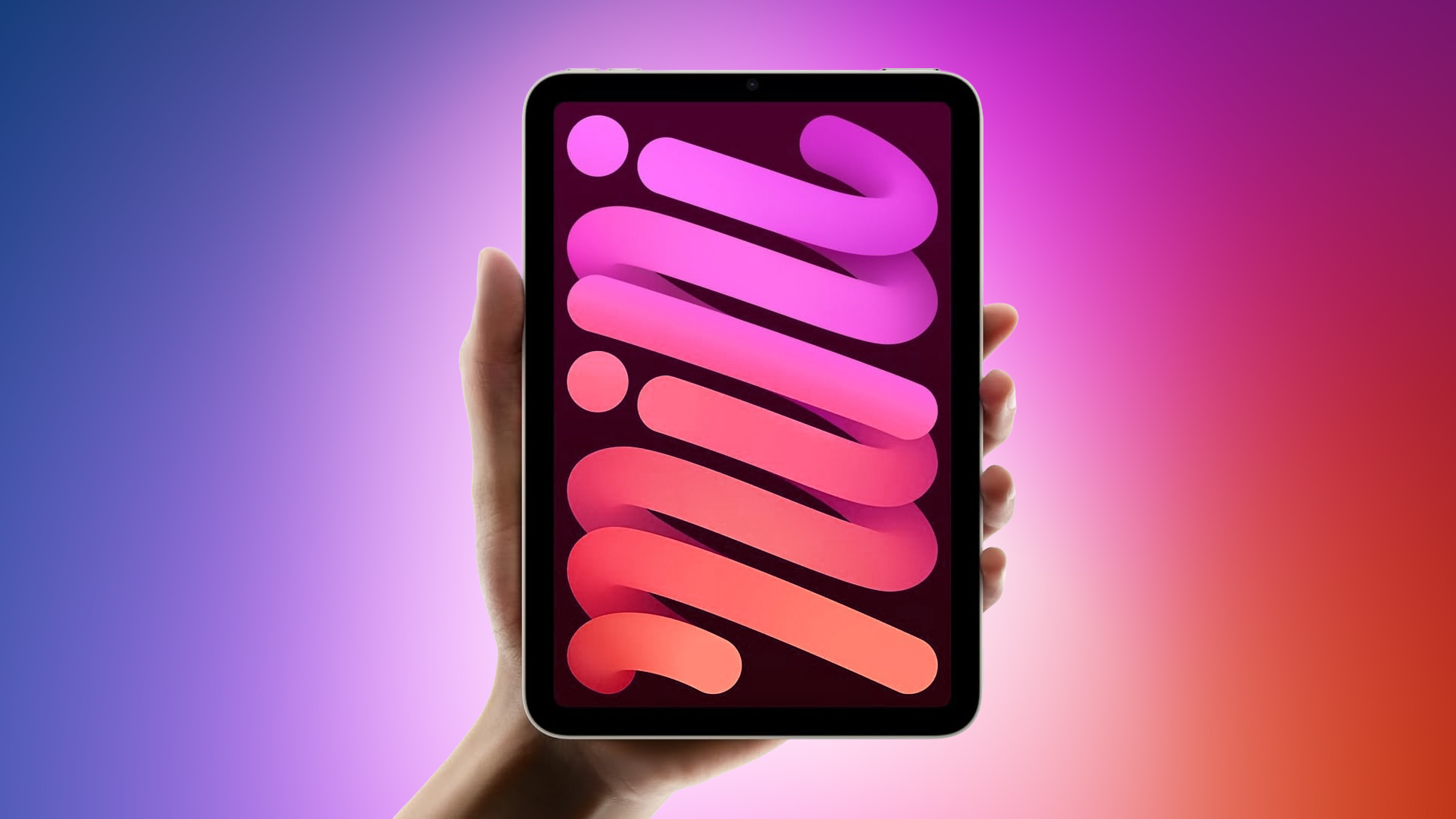
Apple today added the iPad mini with the A17 Pro chip to its refurbished store in the U.S. and Canada for the first time since the device was released in October 2024. Other key features include an 8.3-inch display, a 12-megapixel Center Stage camera, and a Touch ID power button. There is no availability in any other countries yet.


In the U.S., refurbished pricing starts at $509 for a Wi-Fi model with 128GB of storage, down from $599 for the equivalent brand-new model. However, keep in mind that a new iPad mini started at $499 until Apple raised prices last month, so unfortunately the refurbished model costs $10 more than a new model did just a few weeks ago.

Apple says the refurbished iPad mini models include a new battery and outer shell, a plain new box, and all accessories, including a 20W USB-C power adapter and a USB-C charging cable. Apple says it puts refurbished devices through a "thorough cleaning process and inspection," which typically results in a like-new condition.

All refurbished iPads are covered by Apple's one-year warranty. AppleCare+ is available.

Apple reportedly plans to release a new iPad mini with an OLED display and several other upgrades by October, but rumored timeframes can shift.
Related Roundup: iPad mini
Buyer's Guide: iPad Mini (Don't Buy)
Related Forum: iPad

This article, "Apple Begins Selling Refurbished iPad Mini With A17 Pro Chip at a Discount" first appeared on MacRumors.com

Discuss this article in our forums

  •  

Here's When to Expect the iPad 12 to Launch

In March, Bloomberg's Mark Gurman said a new entry-level iPad was "still coming this year," but apparently this is no longer the case. Today, he reported that the device is slated for release in the first quarter of 2027 at the earliest.


The main new feature will be a faster processor rather than major design changes, he said, so it sounds like nothing more than a spec bump. While the next iPad mini is expected to have an OLED display, the base iPad will stick with an LCD screen.

Gurman previously said the device would be powered by the A18 chip, but Macworld's Filipe Espósito said it would have an A19 chip. In any case, the device would gain support for Apple Intelligence, as both chips have the minimum 8GB of RAM required for those features. The current entry-level iPad has an A16 chip with 6GB of RAM.

Last month, Apple increased the entry-level iPad's starting price worldwide. In the U.S., for example, the device now starts at $449, up from $349.

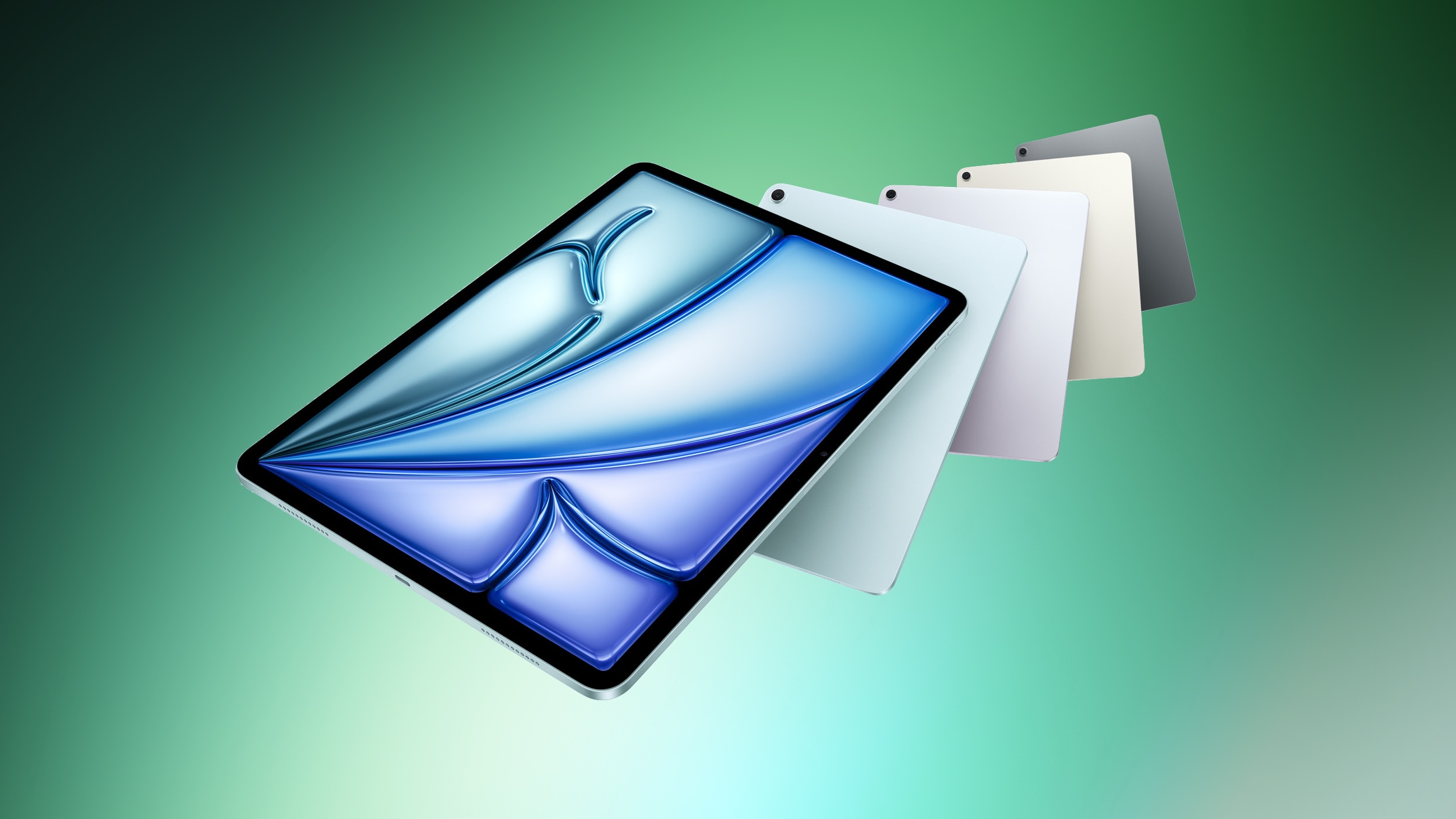
Apple also plans to release new 11-inch and 13-inch iPad Air models early next year, according to Gurman. He said the iPad Air will eventually move to an OLED display, but he did not say if that is happening with the next models specifically.

He recently reported that new iPad Pro models will launch early next year too.

All in all, he expects a new iPad mini by October this year, followed by updated entry-level iPad, iPad Air, and iPad Pro models in the first half of next year.
Related Roundup: iPad
Buyer's Guide: iPad (Don't Buy)
Related Forum: iPad

This article, "Here's When to Expect the iPad 12 to Launch" first appeared on MacRumors.com

Discuss this article in our forums

  •  

Missed Pre-Hike MacBook Pro Prices? Amazon's New Deals Still Save Up to $500

Amazon's prices on the 2026 MacBook Pro have now joined in on Apple's recent price hikes, meaning we're no longer tracking pre-hike markdowns on these devices. However, there are still notable sales to be found if you're shopping for a MacBook Pro this month, with up to $500 off new prices available right now on Amazon.

Note: MacRumors is an affiliate partner with Amazon. When you click a link and make a purchase, we may receive a small payment, which helps us keep the site running.
14-Inch MacBook Pro


Prices start at $2,349.00 for the 24GB/1TB 14-inch M5 Pro MacBook Pro, down from $2,499.00. The 24GB/2TB model is on sale for $2,997.50, which is a $201 discount on the new price.


16-Inch MacBook Pro


In terms of the larger display models, we're tracking four total discounts on Amazon. These start at $2,818.34 for the 24GB/1TB M5 Pro configuration ($180 off), and reach up to $4,499.00 for the 48GB/2TB M5 Max device ($500 off).


If you're on the hunt for more discounts, be sure to visit our Apple Deals roundup where we recap the best Apple-related bargains of the past week.


Deals Newsletter


Interested in hearing more about the best deals you can find in 2026? Sign up for our Deals Newsletter and we'll keep you updated so you don't miss the biggest deals of the season!


Related Roundup: Apple Deals

This article, "Missed Pre-Hike MacBook Pro Prices? Amazon's New Deals Still Save Up to $500" first appeared on MacRumors.com

Discuss this article in our forums

  •  

New iPad Mini With Four Upgrades Reportedly Launching by October

Apple is planning to release a new iPad mini model with an OLED display by October this year, according to Bloomberg's Mark Gurman.


Apple already updated the iPad Pro with an OLED display in May 2024, but the iPad mini, iPad Air, and entry-level iPad are all still equipped with LCD screens. The move to OLED technology would result in the next iPad mini offering improved image quality, thanks to richer colors and higher contrast ratio with true blacks.

Given that OLED displays are generally more expensive than LCDs, the next iPad mini could have a higher starting price compared to the current model.

Gurman did not provide any other details about the next iPad mini today, but he previously reported that the device would receive a vibration-based speaker system and increased water resistance. The next iPad mini is also rumored to be powered by either an A19 Pro or A20 chip, up from the A17 Pro chip in the current model.

The current ‌model launched in October 2024, with the A17 Pro chip enabling Apple Intelligence.
Related Roundup: iPad mini
Buyer's Guide: iPad Mini (Don't Buy)
Related Forum: iPad

This article, "New iPad Mini With Four Upgrades Reportedly Launching by October" first appeared on MacRumors.com

Discuss this article in our forums

  •  

Apple Reportedly Ramps Up Vapor Chamber Orders for Foldable iPhone

Apple has ramped up orders for vapor chamber cooling components said to be destined for its upcoming foldable iPhone and 20th-anniversary iPhone models, according to a Chinese leaker.


The Weibo account known as "Fixed Focus Digital" claims the increased order volume will first support the manufacture of Apple's book-style foldable, or "iPhone Ultra," which is expected to debut in September. Apple has reportedly asked suppliers to produce approximately 10 million foldable iPhones in 2026, up from an earlier forecast of seven to eight million units.

Fixed Focus Digital previously said Apple's first foldable iPhone would feature "impressive" vapor chamber cooling, claiming that the company is "going all out" with the device's thermal engineering. While there's no corroborating evidence, it's quite possible that the foldable design Apple is adopting could present unique cooling challenges because of its thinner internal structure and limited space for heat dissipation.

Apple introduced vapor chamber cooling to the iPhone lineup with last year's iPhone 17 Pro. The system uses a small amount of deionized water to move heat away from the A19 Pro chip and distribute it through the device's aluminum unibody frame.

Meanwhile, next year's 20th-anniversary iPhone will reportedly feature an edge-to-edge display with glass that curves around all four sides, with the aim of creating a nearly borderless appearance. If indeed we see such a device with a substantially redesigned enclosure, there's a good chance that it too will require a more advanced cooling system.

Apple is expected to offer two anniversary models in 2027 in sizes similar to the forthcoming iPhone 18 Pro and iPhone 18 Pro Max. The latter devices are rumored to retain the 6.3-inch and 6.9-inch dimensions of the current iPhone 17 Pro models, suggesting next year's commemorative lineup could use the same display sizes.

Earlier this week, Fixed Focus Digital claimed that Apple's "preferred approach" for the iPhone 20 is a return to glass, and that the relevant manufacturing facilities have already been renovated in advance of the project.
This article, "Apple Reportedly Ramps Up Vapor Chamber Orders for Foldable iPhone" first appeared on MacRumors.com

Discuss this article in our forums

  •  

How to Install macOS 27 Golden Gate Public Beta

Apple has made the first macOS 27 Golden Gate public beta available for testing before the new Mac operating system's official release in the fall. Keep reading to learn whether you should install it on your Mac, and if so, how to go about it.


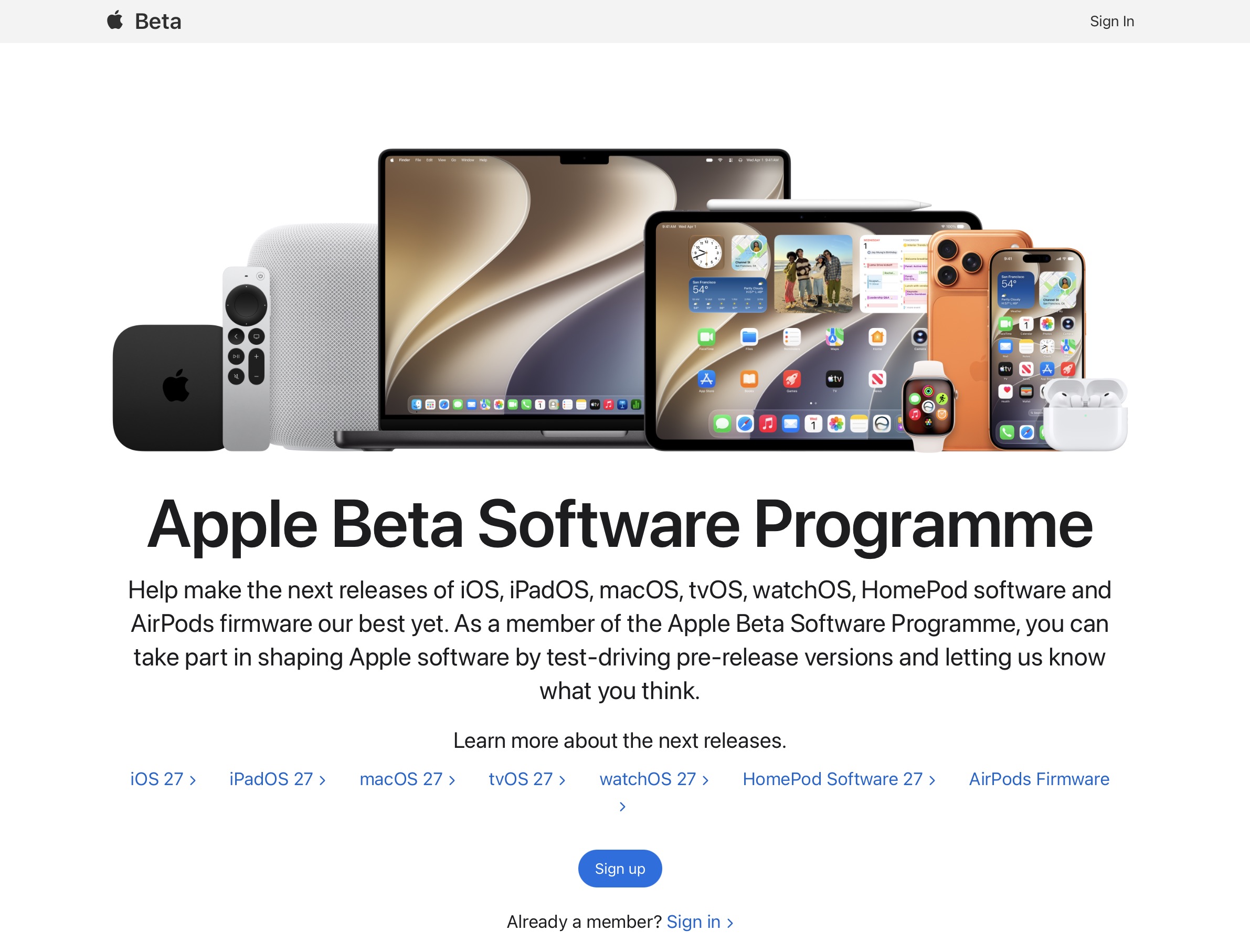
Getting access to the macOS Golden Gate public beta is simple, and can be done by enrolling your Mac in Apple's free Apple Beta Software Program. The steps you need to complete to install the software on your Mac are provided towards the end of this article, but before you jump ahead, here are a few things worth considering.

Should I Install macOS Golden Gate Public Beta?


With macOS Golden Gate, Apple includes the same Siri AI features as iOS 27 and iPadOS 27, accessed through Spotlight with the Command + Space keyboard shortcut. Siri can search the web, find information in your photos, emails, and messages, answer questions about what's on your screen with Visual Intelligence, and complete actions within and across apps. A dedicated Siri app also supports ongoing conversations.

Apple has also refined the Liquid Glass design introduced last year. A new transparency slider lets you adjust the overall system effect, while updated opacity improves readability by better diffusing complex content. Additional interface refinements also add depth and separation, making it easier to identify the active window. There are a lot more improvements beyond the above, so the availability of the public beta will no doubt generate a lot of interest among Mac users.

But before you commit, bear in mind that Apple does not recommend installing macOS beta updates on your main Mac. However stable you may have heard it is anecdotally, this is beta software, which means there are almost certainly bugs and issues that can prevent certain software from working properly or cause other problems with the system. Indeed, one of the reasons that Apple releases the beta early is so that users can feed back problems and help Apple debug them. If you have a spare Mac hanging around, by all means use that, otherwise consider holding off until the general release in the fall.

Is My Mac Supported?


The update confirms the end of Intel Mac support. Apple said last year that macOS Tahoe would be the final release to run on pre-Apple silicon machines, and macOS 27 makes that official – you'll need an Apple silicon Mac to install it.

Here are the Macs compatible with macOS Golden Gate:

  • MacBook Neo (2026)

  • MacBook Air with Apple silicon (2020 and later)

  • MacBook Pro with Apple silicon (2020 and later)

  • iMac with Apple silicon (2021 and later)

  • Mac mini with Apple silicon (2020 and later)

  • Mac Studio with Apple silicon (2022 and later)

  • Mac Pro with Apple silicon (2023 and later)

Four models that ran macOS Tahoe didn't make the cut this year. They include the MacBook Pro (16-inch, 2019), the MacBook Pro (13-inch, 2020, Four Thunderbolt 3 ports), the iMac (2020), and the Mac Pro (2019).

Don't Forget to Back Up Your Mac


Be sure to back up your Mac using Time Machine before installing the software using the method, otherwise you won't be able to revert back to the previous version of macOS if things go wrong.

How to Install macOS Golden Gate Public Beta


  1. Head over to Apple's Beta Software Program website and sign up using your Apple Account credentials, then agree to the terms and conditions if required.
    beta software program
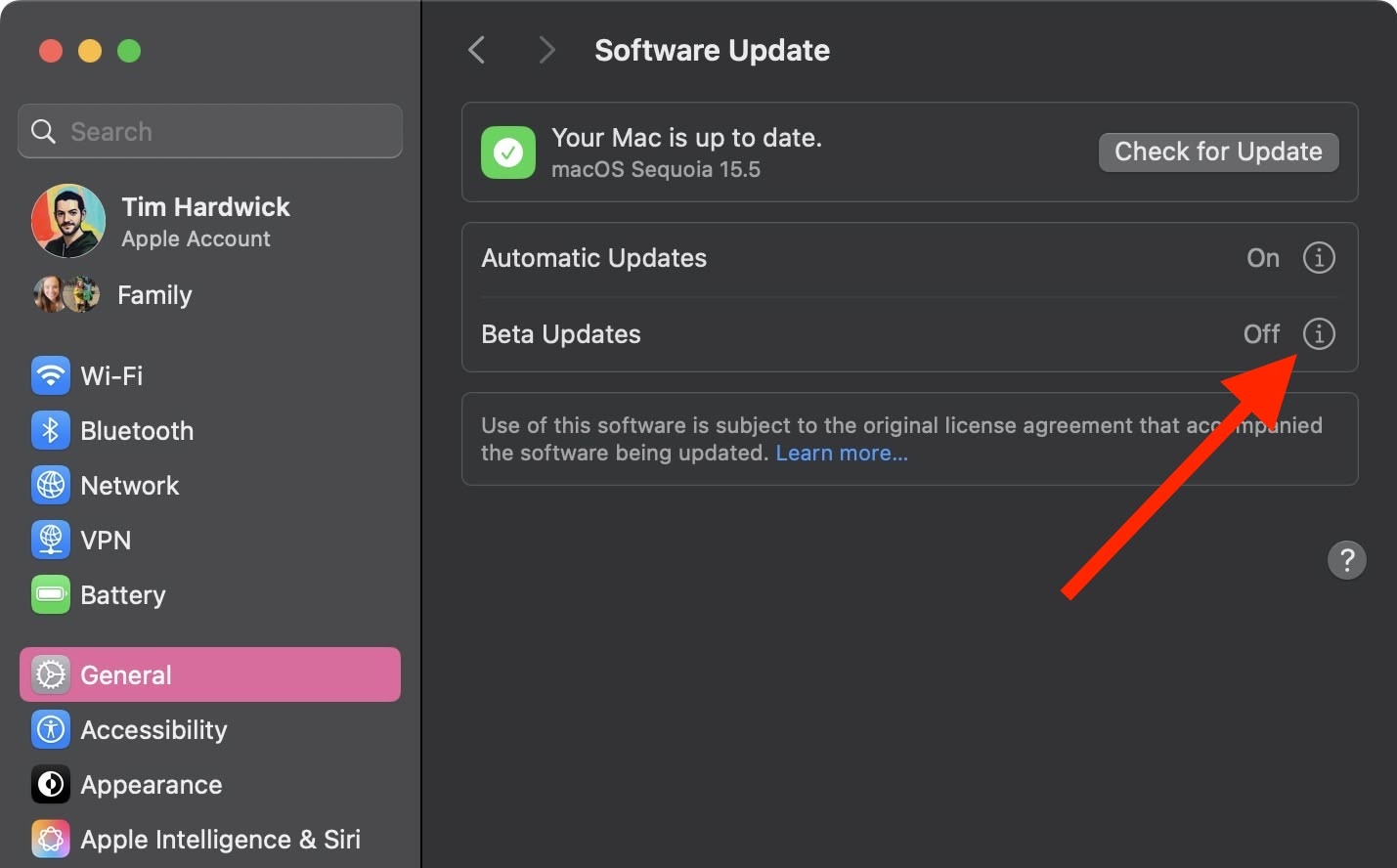
  2. Next, open System Settings on your Mac and select General ➝ Software Update.

  3. Look for "Beta Updates" and click the info (i) symbol next to it.
    settings
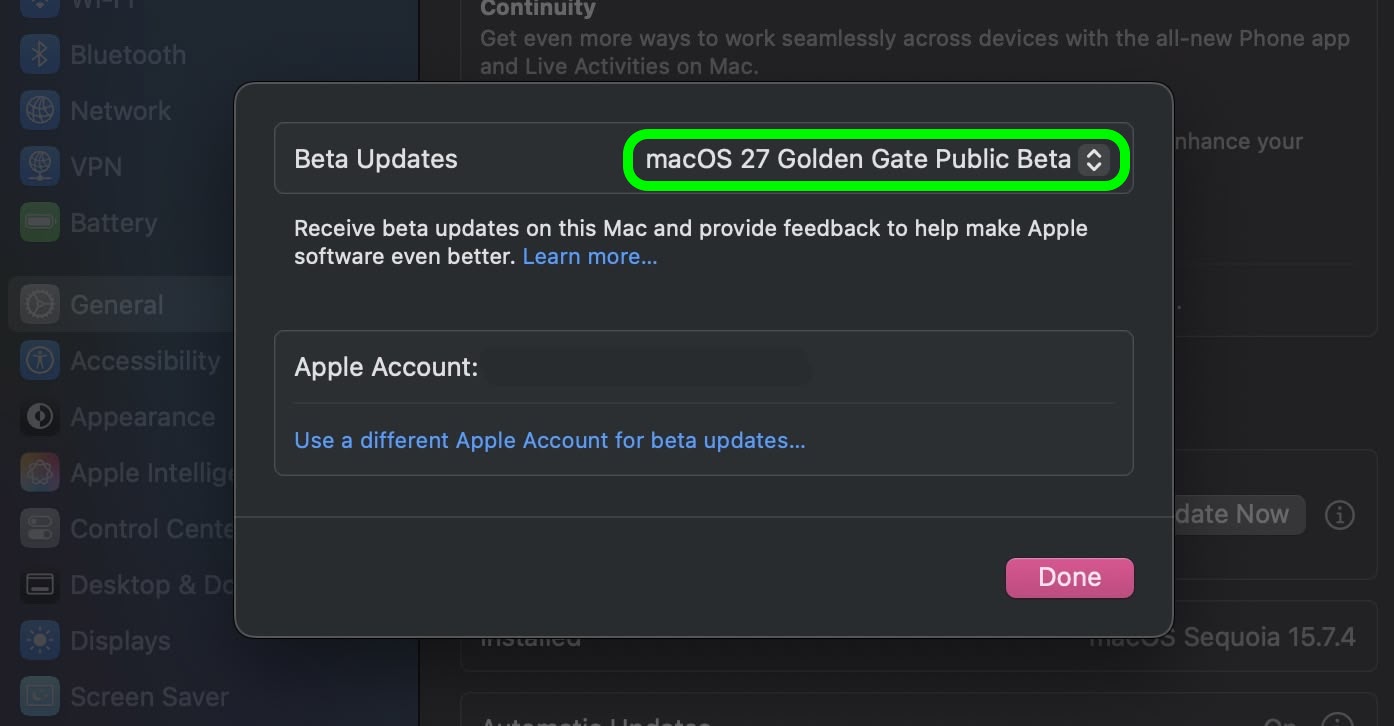
  4. Choose macOS 27 Golden Gate Public Beta from the dropdown list.
    settings
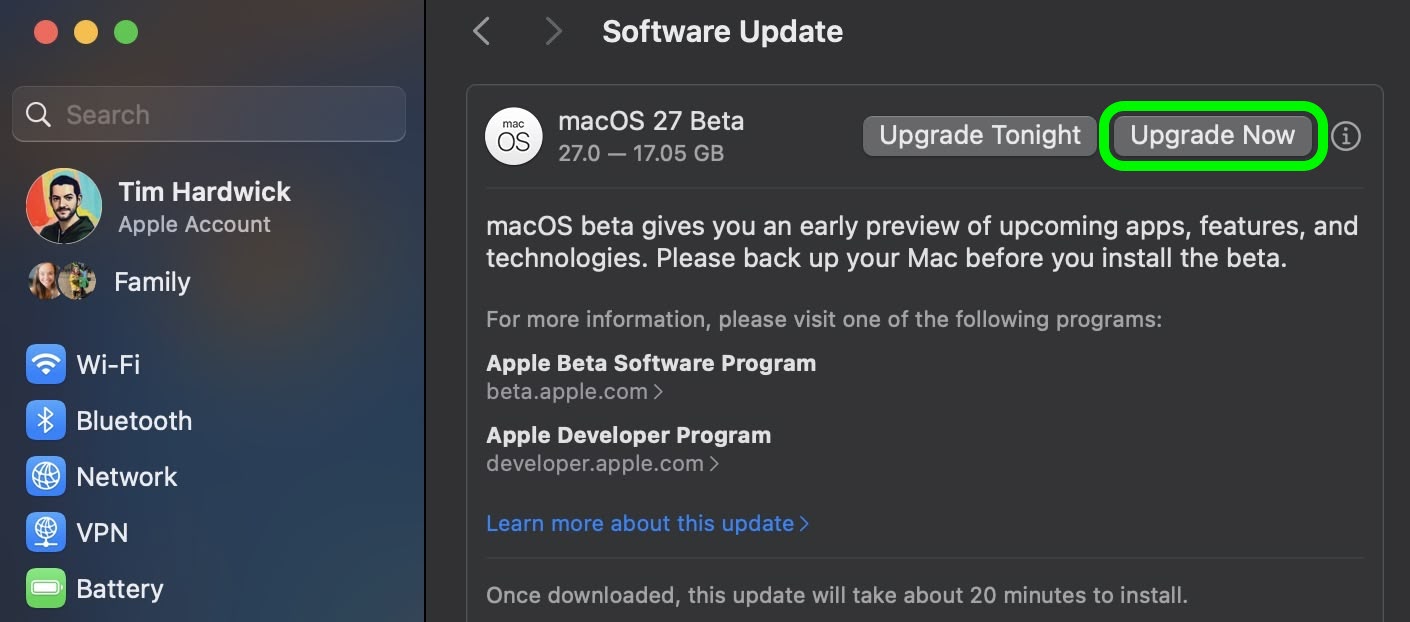
  5. Click Upgrade Now to begin the update process to macOS 27.

That's all you need to do. The installation process will complete just like a standard macOS update, so sit back and let the installation finish, after which your Mac will boot directly into the macOS Golden Gate beta.
This article, "How to Install macOS 27 Golden Gate Public Beta" first appeared on MacRumors.com

Discuss this article in our forums

  •  

Apple's 2026 Back to School Offer Goes Live in the US: Up to $150 Gift Card With Mac or iPad

Apple's annual Back to School promotion is now live in the United States, Canada, and Mexico, following earlier rollouts in Asia. This year's promotion offers a free Apple gift card with the purchase of an eligible Mac or iPad.


Apple is offering a $150 gift card with any new MacBook Pro, and a $100 gift card with any new MacBook Air, iPad Pro, and iPad Air. The gift card can be used towards purchases of Apple products and accessories, App Store apps, subscriptions to services like Apple Music, iCloud+ storage, and more.

The MacBook Neo is not an eligible product. Neither are the iPad mini, entry-level iPad, or any desktop Macs.

The promotion runs through August 27, 2026, in the U.S., according to Apple's terms and conditions. The gift card is offered in addition to Apple's standard education pricing, which provides discounts of roughly 5% to 10% on most Macs and iPads.

The offer is available through Apple's online Education Store and Apple Store locations. Eligible customers include current and newly accepted higher-education students, faculty and staff at higher-education institutions, parents purchasing on behalf of an eligible student, employees of K-12 institutions, and select other qualifying customers.

UNiDAYS verification is now required on Apple's education store in the U.S. and Canada.
This article, "Apple's 2026 Back to School Offer Goes Live in the US: Up to $150 Gift Card With Mac or iPad" first appeared on MacRumors.com

Discuss this article in our forums

  •  

Google and Epic Abandon Injunction Modification Request, Clearing the Way for Rival Android App Stores

Google and Epic Games this week withdrew their joint motion to modify an injunction requiring Google to support third-party app stores in Google Play. The two companies abandoned the request after it became clear the court was unlikely to allow it.


Google is now bound by a permanent injunction issued in October 2024 requiring it to allow alternative app stores on Android devices. In a court filing [PDF], Google said that it plans to begin supporting alternative app stores on July 22. In a statement to The Verge, Google said it decided to withdraw the motion to avoid a prolonged legal fight.
We've agreed with Epic to withdraw our motion to modify the US Court's injunction rather than prolonging this process which creates uncertainty for the ecosystem. This allows us to focus on executing our recently announced global business model evolution to deliver greater app store choice, lower prices, and more opportunities for developers and users. We remain committed to maintaining Android's industry-leading security and fostering a competitive ecosystem where every app store and developer has the freedom to compete. In parallel, we continue to comply with the US Court's injunction.

‌Epic Games‌ sued Google at the same time that it sued Apple, but the cases had different judges and different outcomes. The lawsuit largely went in Apple's favor, but ‌Epic Games‌ came out ahead in the Google case after a jury found Google abused its power by operating an app store monopoly and charging developers fees that were too high.

Third-party U.S. app stores will now be able to distribute the Google Play catalog of apps, and Google has published a guide on the process. The app stores will be available through the Google Play Store, and Google will charge alternative marketplaces a $5,000 annual access fee. Apps downloaded through alternative stores will still use the Google Play system, and Google will collect its service fee on those transactions.

Google's agreement with Epic Games to lower fees for apps and accept alternative payment options is separate from the injunction requiring it to support third-party marketplaces in the Play Store, and it remains in place. Google is still adding support for outside payment methods and lowering its fees.

The injunction forcing Google to support third-party app stores doesn't have a direct impact on Apple, but it is a legal outcome Apple has been fighting worldwide. The European Union's Digital Markets Act requires Apple to support alternative app marketplaces and app sideloading in the EU, and Apple has repeatedly said the requirement weakens user privacy and protections. Google adding support for third-party app stores through the Android Play Store could eventually impact Apple's own Epic fight or future regulatory changes.

Though Apple largely won its legal fight against ‌Epic Games‌, the case is ongoing. Apple was ordered to allow link-outs and alternative payment options in the U.S. in 2021, and compliance problems later led to a contempt ruling. Apple has now appealed to the Supreme Court, and the court will hear Apple's argument in late 2026 or early 2027.

Update: This article was updated to clarify that Google and ‌Epic Games‌ have not abandoned their settlement, but have withdrawn their joint motion to modify the injunction requiring Google to support third-party app stores on its Android platform.

Google asked the court to allow it to distribute third-party app stores on Google Play through the Registered App Stores program that it plans to roll out worldwide later this year, but Google will now support one program in the U.S. and one program in other countries.

The ‌Epic Games‌ and Google settlement is intact and will see Google lowering fees. The agreement addresses litigation in Australia and the UK as well as the U.S.
This article, "Google and Epic Abandon Injunction Modification Request, Clearing the Way for Rival Android App Stores" first appeared on MacRumors.com

Discuss this article in our forums

  •  

CrashStealer Malware Impersonates Apple Tool to Steal Mac Passwords and Crypto

Mac users should watch out for macOS malware called CrashStealer, according to Jamf Threat Labs. The malware impersonates Apple's crash reporting framework, and it's meant to steal all kinds of sensitive information.


CrashStealer collects browser data, password manager data, cryptocurrency wallet extensions, and keychain data, and Jamf first noticed it circulating in a fake Apple-notarized app called Werkbit. With notarization, the malware is not stopped by Gatekeeper, which is part of the macOS security system.

It targets more than 80 cryptocurrency wallet extensions, and 14 password managers like 1Password, LastPass, and Dashlane. It searches through the Document and Downloads folders to look for information worth collecting.

The app looks legitimate and uses a typical macOS install procedure for software downloaded through the web, with the process detailed on Jamf's website. A fake CrashReporter.app is downloaded through Werkbit, and it's meant to impersonate Apple's own crash reporter. A user clicking on the app would likely see it as a legitimate Apple utility.

It requests full disk access "for system administration," and uses a native password prompt that looks like a genuine macOS authorization request. The password entered is used to access the login keychain. Data collected is encrypted with AES–256-GCM through Apple's CommonCrypto and sent to the attacker's IP address.

Jamf says the way CrashStealer was implemented "shows real care," with the concealment steps setting it apart from standard infostealers. The malware was reported to Apple after first being spotted in May and found actively in use in July.

Apple revoked the Werkbit app's signing credentials, so the specific attack vector outlined by Jamf has been disabled, but the malware could surface again. The original version was gated behind a PIN required for installation, suggesting it was aimed at specific people.

Apple's notarization system is meant to protect Mac users from malware, and Apple says that notarized apps are checked for malicious components. CrashStealer makes it clear there are methods for hiding malware from Apple's security process.

When downloading software, users can protect themselves from CrashStealer by being aware that Apple's crash reporter is built-in. Any download that uses CrashReporter is a red flag, as is an app that asks for a system password right when it's launched.
Tag: Malware

This article, "CrashStealer Malware Impersonates Apple Tool to Steal Mac Passwords and Crypto" first appeared on MacRumors.com

Discuss this article in our forums

  •  

Apple Closes Unlocked iPhone Loophole for T-Mobile and Verizon Financing

Carrier-financed iPhones purchased from Apple will soon be locked to the carrier, ending a workaround customers used to purchase an unlocked iPhone on a payment plan.


Until the rule change, buying an iPhone from Apple and opting for financing through Verizon or T-Mobile meant you would get an iPhone not locked to either carrier's network. That's no longer the case, and now iPhones financed through Verizon or T-Mobile will not be able to be used with a different network. AT&T-financed smartphones were always locked to the AT&T network.

Apple's new policy was highlighted on Reddit after a user saw a new "Will my iPhone be unlocked?" FAQ item.
In most cases, yes. An iPhone purchased from Apple is unlocked. Once your new iPhone is activated, it remains unlocked, which means you can use it with any carrier that provides service for iPhone. However, if you choose to finance an iPhone through the AT&T Installment Plan, T-Mobile Equipment Installment Plan, or Verizon Device Payment Program, your iPhone will be locked to the carrier until paid in full.

An unlocked smartphone means it can be used with any carrier, while a locked smartphone is limited to the carrier it was purchased through. Locked smartphones can be problematic when traveling internationally, because activating a second eSIM for another network is blocked.

Apple hasn't said why it's making the change, but buyers were able to use carrier trade-ins and promotional discounts to get an unlocked iPhone. Some buyers may have purchased iPhones and sold them off without making the carrier payments, and carrier locking is a standard practice to prevent unpaid devices from being resold.

Apple's checkout process still says iPhones financed through T-Mobile and Verizon are unlocked, so the new policy may not have gone into effect yet.

iPhones purchased outright or with Apple Card Monthly Installments remain unlocked from the time of purchase. When iPhones purchased through carrier plans are paid off, they are unlocked.
This article, "Apple Closes Unlocked iPhone Loophole for T-Mobile and Verizon Financing" first appeared on MacRumors.com

Discuss this article in our forums

  •  

AppleCare+ for Macs and iPads Just Got More Expensive

Apple is increasing the price of some AppleCare+ subscription plans, reports Bloomberg. Monthly ‌AppleCare‌+ subscription plans for Macs and iPads are now $0.50 more expensive in the U.S., while annual plans are $5 more.


The price increases apply to new subscriptions, so customers who already have an ‌AppleCare‌+ subscription for a device will keep their current prices.

The ‌AppleCare‌+ pricing change follows price hikes on all iPads and Macs due to global memory shortages and increasing component costs. Price increases range from $100 to $1,300.

Apple has not raised the price of its ‌AppleCare‌ One subscription plan that rolled out last year. ‌AppleCare‌ One covers up to three Apple devices with a $19.99 per month fee. Additional products can be added to ‌AppleCare‌ One for $5.99 per month.

Apple previously increased iPhone ‌AppleCare‌+ plans by 50 cents in early 2025, and prices could go up again when the new iPhones launch this September.
This article, "AppleCare+ for Macs and iPads Just Got More Expensive" first appeared on MacRumors.com

Discuss this article in our forums

  •  

Apple Won't Allow These Ad Categories in the Maps App

Apple this week shared a new Advertising Services policy outlining the kinds of ads that won't be allowed in the Maps app.


As noted by TechCrunch, Apple has a list of ad categories that are not permitted in Apple Maps.

  • Home services - Ads that directly or indirectly promote home services are not allowed. That includes but is not limited to plumbing, electrical, locksmith, HVAC, pest control, roofing, and general contracting services.

  • Bail bonds - Ad content that directly or indirectly promotes bail bond services or surety bond services related to criminal pretrial release is not allowed.

  • Cryptocurrency ATMs - Ad content that directly or indirectly promotes ATMs for cryptocurrencies is prohibited.


Apple says ads that promote or reference medical services may be allowed, and will be evaluated on a case-by-case basis.

Google allows home services ads, and it's one of the largest local ad categories, so Apple's restrictions will set it apart. Apple seems to be limiting ads to businesses with a physical location that customers can visit.

In addition to these rules, Maps ads have to adhere to Apple's other advertising rules. Apple does not allow ads for controlled or intoxicating substances like marijuana or tobacco, and it has a long list of rules for alcohol-related ads, dietary supplement ads, financial product ads, religious ads, gambling ads, prescription drug ads, and contest ads. Ad content for weapons or ammunition isn't allowed, and ad content that contains or promotes violence, harm, or antisocial behavior is prohibited.

Ads that promote false, fraudulent, or deceptive claims are not allowed, nor are ads that include defamatory or profane content, discriminatory content, illegal or criminal content, or intellectual property violations.

Anti-Apple ads are prohibited, as are ads that promote or facilitate the sale of products or services that compete with Apple hardware products. Apple also does not allow political ads, ads with unproven health-related products and services, or ads with offensive, controversial, or inappropriate content.

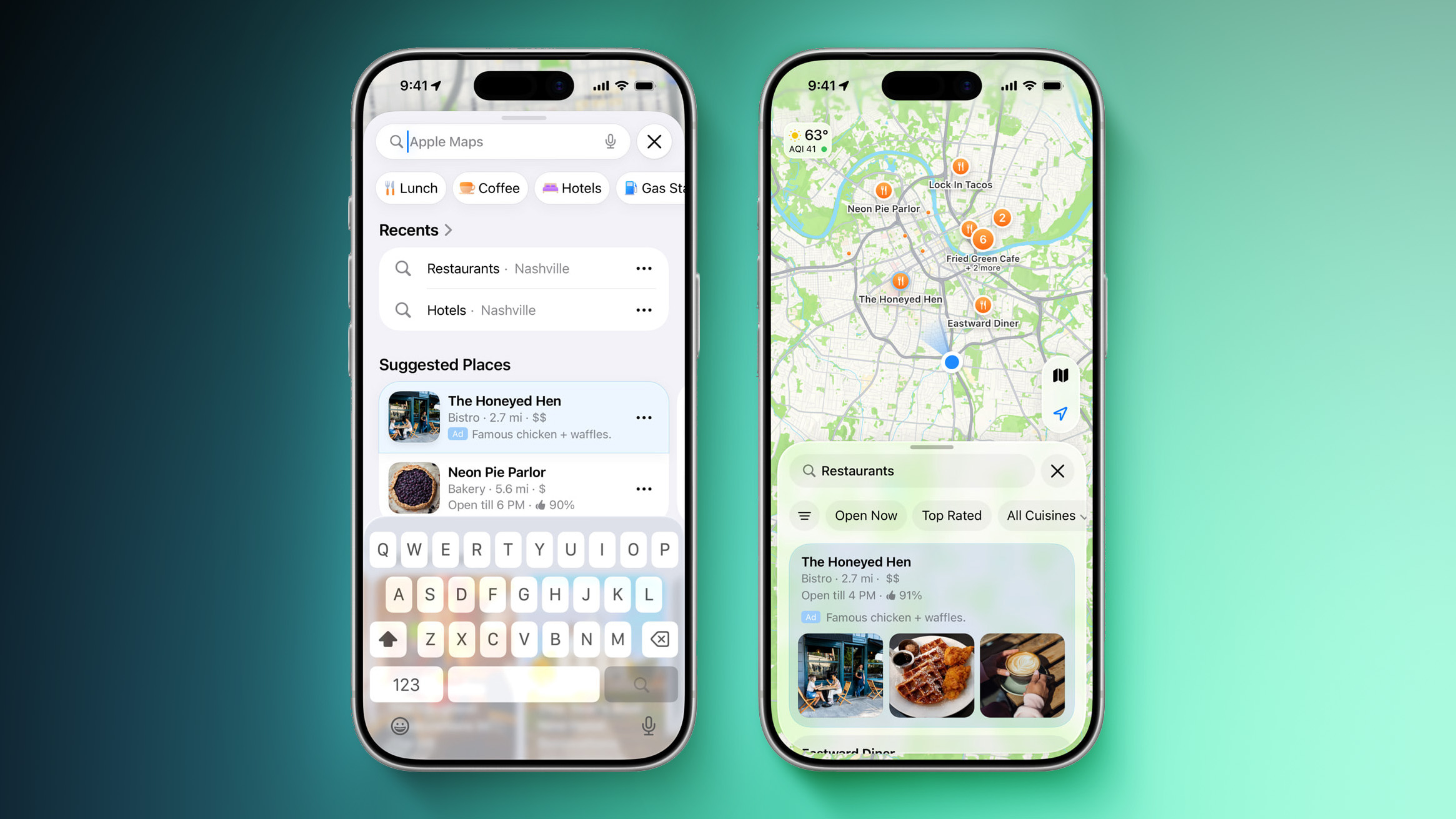
Apple plans to start showing ads in the Maps app in the United States and Canada this summer. Ads will show up in search results and in the Suggested Places section of the app.

Ads will have a clear "Ad" label, and a user's location and the ads they see and interact with in ‌Apple Maps‌ are not associated with their Apple account. Apple also does not collect ad data or share it with third parties.
This article, "Apple Won't Allow These Ad Categories in the Maps App" first appeared on MacRumors.com

Discuss this article in our forums

  •  

Apple Lists Products Eligible for Tax-Free Holidays in 10 U.S. States

Apple recently updated its website with a list of products eligible for upcoming 2026 sales tax holidays in select U.S. states, including Alabama, Arkansas, Florida, Massachusetts, Missouri, New Mexico, South Carolina, Tennessee, Virginia, and West Virginia.


The tax-free holidays run between July 17 and August 20 depending on the state, with the exact dates in each state outlined on Apple's website.

Sales tax holidays provide a limited-time opportunity to purchase select Apple products online or in stores without paying sales tax. Apple says tax savings may not appear during checkout, but will be reflected on the final receipt.

Apple products that are eligible for the tax-free holidays vary by state, and there are also price limits in some states. The most common eligible products include select Macs, iPads, and related accessories, but the iPhone and Apple Vision Pro are also eligible in a few states. All of this information is outlined on the page.

Sales tax holidays are especially beneficial to students, as the tax savings can be combined with Apple's Back to School promotion, which offers students a free or discounted accessory or gift card with the purchase of an eligible Mac or iPad. The promotion just started rolling out in select Asian countries today and will likely begin in the U.S. soon.
This article, "Apple Lists Products Eligible for Tax-Free Holidays in 10 U.S. States" first appeared on MacRumors.com

Discuss this article in our forums

  •  

Apple's 2026 Back to School Offer Just Went Live in Select Countries

Apple's annual Back to School promotion is now live in select countries in Asia, including China, India, Malaysia, the Philippines, Singapore, Taiwan, Thailand, and Vietnam.


The offer provides college students and educational staff with a free item with the purchase of an eligible Mac or iPad model. The exact offer varies by country, with options including a pack of four AirTags, AirPods 4, an Apple Pencil Pro, or an Apple gift card. You can also opt to receive a discount on some higher-value accessories.

In China, Singapore, and Vietnam, eligible students and educators can receive a pack of four AirTags with the purchase of any new MacBook Air, MacBook Pro, iPad Air, or iPad Pro through Apple's education store.

In India, you can receive a pack of four AirTags or AirPods 4 with a MacBook Air or MacBook Pro, or an Apple Pencil Pro with an iPad Air or iPad Pro.

Apple is offering a gift card in Malaysia, the Philippines, Taiwan, and Thailand.

Notably, the MacBook Neo is not an eligible product in any of the countries, and the iPad mini, entry-level iPad, and desktop Macs are excluded too.

In these countries, the offer is available through August 27.

Apple has yet to begin its Back to School offer in the U.S., Canada, or Europe, but it will presumably be rolling out in more regions very soon.
This article, "Apple's 2026 Back to School Offer Just Went Live in Select Countries" first appeared on MacRumors.com

Discuss this article in our forums

  •  

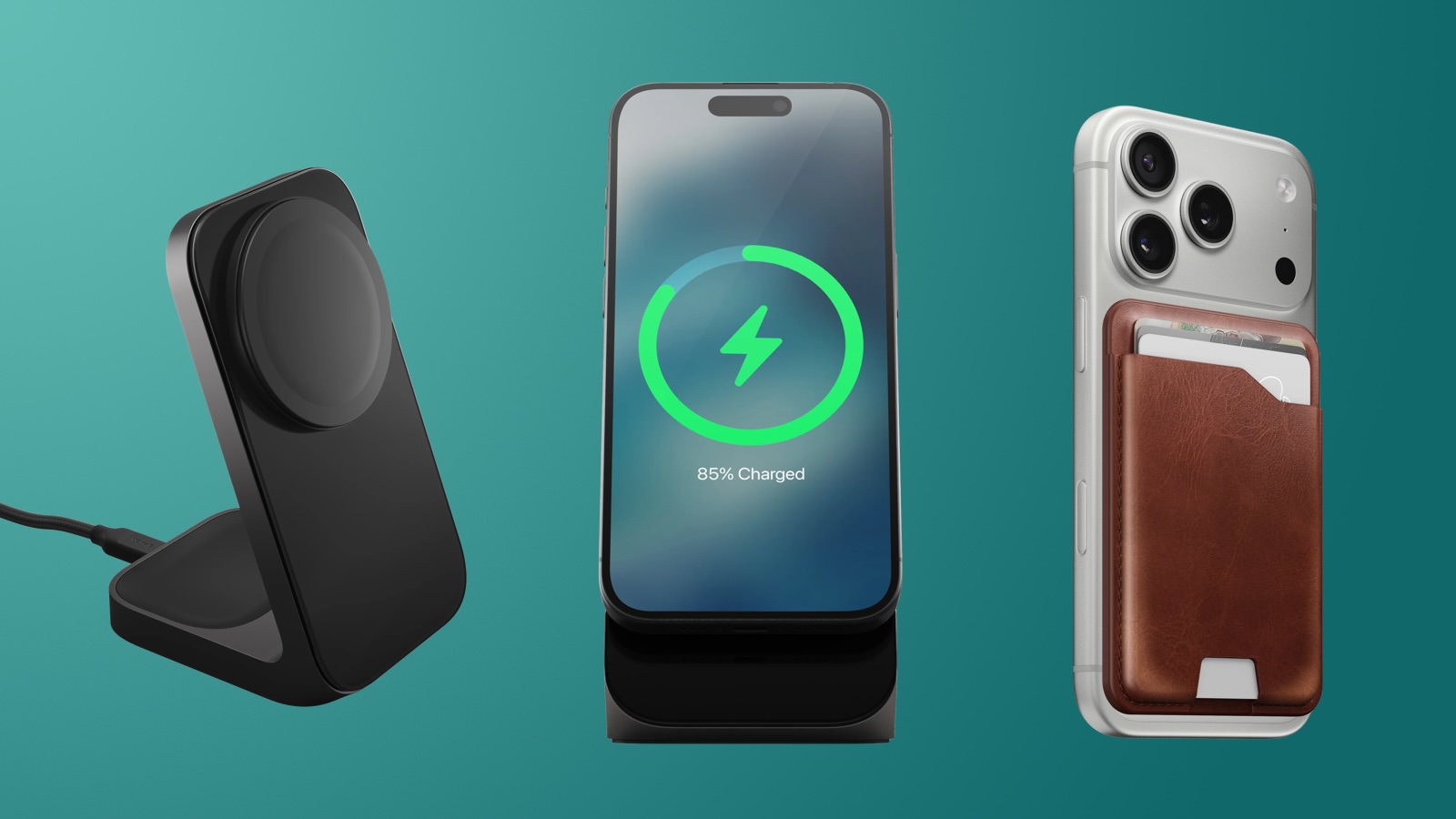
Nomad Kicks Off Anniversary Sale With Up to 30% Off Sitewide

Nomad is celebrating its anniversary by offering up to 30 percent off sitewide this week, giving shoppers a chance to save on the brand's best wireless chargers, iPhone cases, Apple Watch bands, and more. This sale does not require a coupon code as all the discounts have been automatically applied, and it will last for this week only.

Note: MacRumors is an affiliate partner with Nomad. When you click a link and make a purchase, we may receive a small payment, which helps us keep the site running.
One highlight of the event is Nomad's Stand One Qi2 2-in-1 charging station, available for $90, down from $129. This accessory simultaneously charges your iPhone and AirPods, supporting both horizontal and vertical orientations for the iPhone.


You'll find a collection of iPhone 17 cases in this sale, including Nomad's Sport Case for $39 ($10 off), Modern Leather Case for $55 ($14 off), and Rugged Leather Case for $60 ($25 off).

iPhone 17 Cases


Charging


iPad Cases


Apple Watch Bands


If you're on the hunt for more discounts, be sure to visit our Apple Deals roundup where we recap the best Apple-related bargains of the past week.


Deals Newsletter


Interested in hearing more about the best deals you can find in 2026? Sign up for our Deals Newsletter and we'll keep you updated so you don't miss the biggest deals of the season!


Related Roundup: Apple Deals

This article, "Nomad Kicks Off Anniversary Sale With Up to 30% Off Sitewide" first appeared on MacRumors.com

Discuss this article in our forums

  •  

Apple's 2026 Smart Home Lineup: New Apple TV, HomePod, and Home Hub

Now that Siri AI is ready to launch in iOS 27, iPadOS 27, and macOS 27 Golden Gate, Apple can finally introduce new smart home products built to work with the smarter version of ‌Siri‌.


Apple has multiple new home devices in development, several of which are rumored to launch before the end of the year. We're waiting on a new version of the Apple TV 4K, a smart home hub, a new HomePod, and a new HomePod mini.

Home Hub


Similar to an iPad in design, but with a 7-inch square display. There will be a wall mount option or a speaker base option. The speaker base has a hemispherical dome, similar to the base of the iMac G4. The device will have a built-in camera for video calls, facial recognition, and presence detection. It'll run apps like Safari, Calendar, Photos, and Home, and it will integrate with ‌Siri‌ AI. Rumors suggest it could be priced around $350.

Apple TV 4K


The next ‌Apple TV‌ 4K will have the same form factor as the current model, but it's expected to have an A17 Pro chip or better that supports Apple Intelligence and ‌Siri‌ AI. There are no ‌Apple Intelligence‌ features on the ‌Apple TV‌ right now, so a more powerful chip will bring quite a few changes. It could also get more RAM and Apple's N1 networking chip for Wi-Fi 7, Bluetooth 6, and Thread.

HomePods


Apple is expected to refresh both the ‌HomePod‌ and the ‌HomePod mini‌, but we're not expecting new form factors.

The speakers will get new chips that are faster and could support ‌Siri‌ AI via the iPhone like the Apple Watch. A faster processor could bring improvements in sound quality, and an upgraded Ultra Wideband chip could bring connectivity improvements and new features.

The ‌HomePod mini‌ is expected to get new colors.

Cameras


Apple is designing its own security camera, and it could launch as soon as this year. HomeKit Secure Video cameras are getting several upgrades in ‌iOS 27‌, including 4K video recording, AI summaries, and the option to stitch video from different cameras together for tracking a single event across rooms.

All of these features would be ideal for an Apple-created camera, so it's not hard to imagine the update is meant for Apple hardware. A 2026 launch isn't a sure thing for the camera, and it could come at a later time.

The ‌Apple Intelligence‌ Home app features require an ‌Apple TV‌ or ‌HomePod‌ to serve as a hub, and Apple's upcoming home hub will likely also serve as a hub for accessories like cameras.

Launch Timing


With so many home devices planned for the end of the year, we could get them alongside the new iPhone models at Apple's September event, or Apple could do a second home-centric event around the October timeframe. Apple often holds two fall events. The second event is typically for iPads or Macs, but there's no reason it couldn't be home products this year.

So far, we haven't heard concrete rumors on when Apple will debut its smart home devices, but as we get closer to fall, we should hear more.
Related Roundups: Apple TV, HomePod

This article, "Apple's 2026 Smart Home Lineup: New Apple TV, HomePod, and Home Hub" first appeared on MacRumors.com

Discuss this article in our forums

  •  

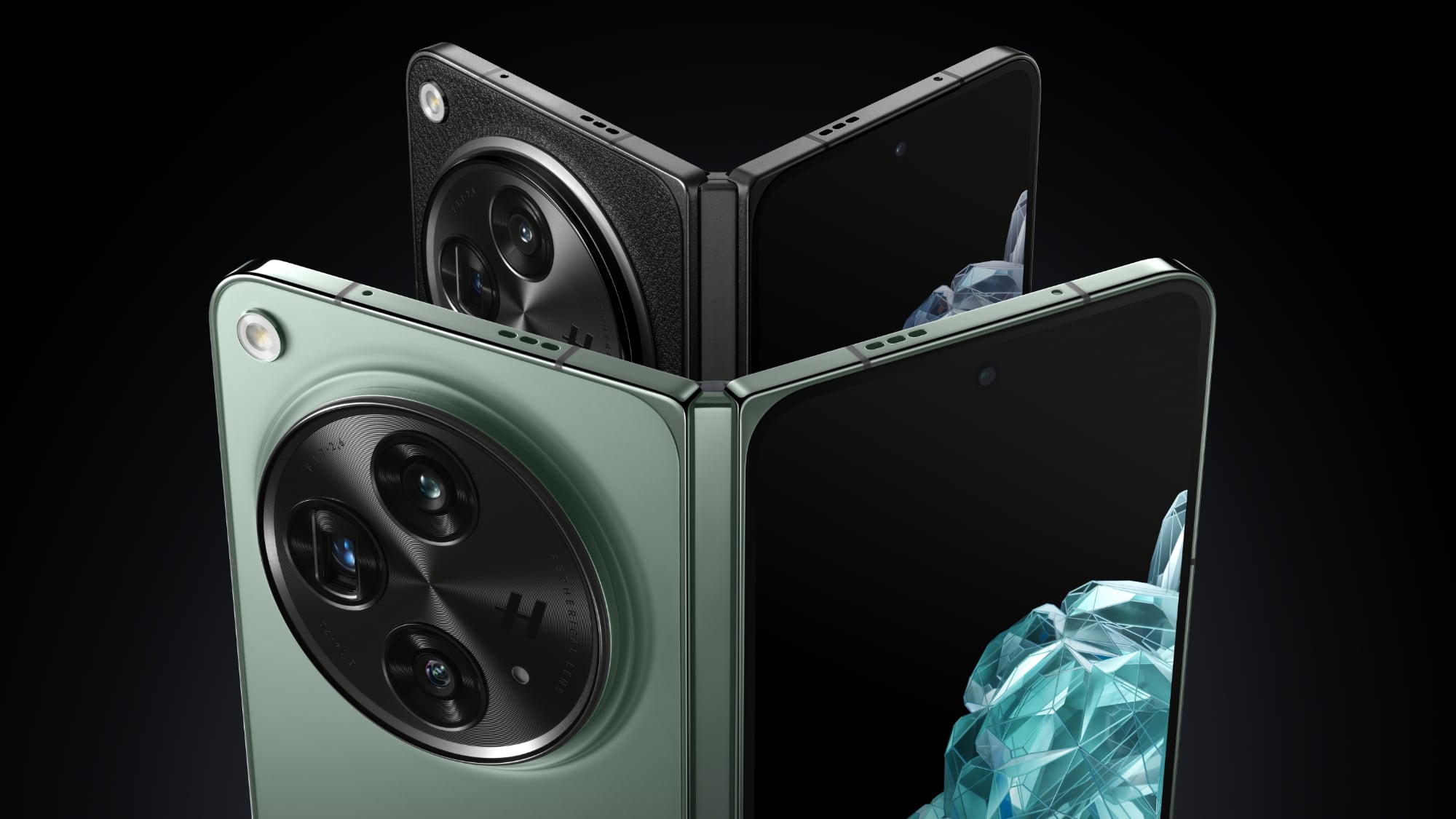
Report: OnePlus to Pull Out of US and Europe

OnePlus is exiting the U.S. and European smartphone markets as part of a broader restructuring at parent company Oppo, Bloomberg reports.


OnePlus is a wholly-owned subsidiary of Oppo. The change could happen as early as this week, according to a person familiar with the matter who spoke to Bloomberg. Realme, another Oppo-owned mobile brand, will exit the China market as part of the same restructuring. Outside China, OnePlus' withdrawal is expected to expand to the rest of the world, including India, at some point in 2027.

OnePlus built a loyal following among some Android enthusiasts in its early years for pairing solid performance and lightweight software with aggressive pricing that consistently undercut Apple and Samsung by hundreds of dollars, but its influence has waned considerably in recent years.

Apple and Samsung continue to dominate the U.S. smartphone market, with Apple capturing a record 20% of the global smartphone market in the second quarter of 2026 as Samsung held the top spot at 22%, according to Omdia. OnePlus, meanwhile, trails far behind smaller contenders like Motorola and Google in the U.S.

In China, Oppo trails market leaders Huawei and Apple, and the broader market is under strain from surging memory costs. IDC said this week that total smartphone shipments in China fell 4.3% year-over-year in the second quarter to roughly 66 million units, the fifth consecutive quarterly decline, with Apple and Huawei the only major vendors to grow. The slowdown is tied to the same memory chip shortage that has forced Apple to raise prices across much of its product lineup, with CEO Tim Cook calling the increases "unavoidable."

Counterpoint Research said Chinese brands like Oppo face greater pressure than Apple and Samsung from the memory crunch, since thinner margins leave less room to absorb rising component costs, particularly in the entry-level segment where costs have jumped 20% to 30% since early 2025.

OnePlus' most recent flagship, the OnePlus 15, launched globally on November 13, 2025, but OnePlus postponed the U.S. sale specifically because the FCC certification process was backed up due to the federal government shutdown, which had just ended the day before the launch.
This article, "Report: OnePlus to Pull Out of US and Europe" first appeared on MacRumors.com

Discuss this article in our forums

  •  

Apple TV Announces Return of MLS Following the 2026 FIFA World Cup

Apple today announced that Major League Soccer is returning to the Apple TV streaming service tomorrow, July 16, with the regular season resuming as the 2026 FIFA World Cup wraps up.

Apple TV subscribers in more than 100 countries can watch every MLS match. A separate subscription is no longer required.
This article, "Apple TV Announces Return of MLS Following the 2026 FIFA World Cup" first appeared on MacRumors.com

Discuss this article in our forums

  •  

Apple Reportedly Looking to Acquire AI Chip Companies

Apple is looking to acquire AI chip companies as part of an effort to reduce its dependence on Nvidia for demanding AI workloads, according to The Information.


Apple currently handles some AI processing in its own data centers using its own chips, but relies on Nvidia hardware housed within Google Cloud for more demanding tasks, an arrangement that includes the Gemini model powering the overhauled version of Siri. Apple's own AI server chip, internally code-named Baltra, had been expected to ship this year but has been delayed, according to people said to be familiar with the project.

Apple has historically limited its acquisitions to deals in the hundreds of millions of dollars and avoided large purchases, but that approach appears to be shifting. In January, Apple completed its acquisition of Q.ai, an Israeli company specializing in interpreting speech through facial micromovements, paying close to $2 billion, second only to the $3 billion Apple paid for Beats Electronics in 2014.

Apple also signaled a change in financial strategy during its most recent quarterly earnings call, when CFO Kevan Parekh told analysts the company would no longer target "net cash neutral" status, a policy under which it had kept its cash reserves roughly in line with its total debt. Apple did not explain the reasoning behind the change, though the added flexibility could free up capital for larger acquisitions.

Apple is already reportedly pursuing acquisitions of AI companies that could help shrink AI models for more efficient use on iPhone.

It is also worth noting that Apple's own in-house chip design capabilities originated with an acquisition. In 2008, the company acquired PA Semi for $278 million, a deal that laid the foundation for the custom processors now used across many of its product lines.

Impending leadership transitions could also bring a more aggressive approach to dealmaking, with hardware chief John Ternus set to succeed Tim Cook as CEO in September, and chip executive Johny Srouji being given expanded responsibility over all of Apple's hardware engineering, in addition to semiconductors.

Apple's chip design team has traditionally focused on battery-powered mobile devices rather than the high-performance server chips required to compete with Nvidia, the dominant supplier of AI server hardware. That limitation became apparent during development of the revamped Siri, when engineers reportedly attempted to run Google's Gemini models on Apple's own server infrastructure but found that the chips, designed with Mac workloads in mind, could not handle a model of that scale. As a result, Apple was required to process portions of the new ‌Siri‌'s workload using Nvidia chips within Google's cloud infrastructure.

Acquiring outside chip expertise would complement work already underway internally. Apple is currently developing a server chip based on the M5 Ultra chip, according to Bloomberg, while a future M7 Ultra chip is reportedly intended to substantially improve AI performance to a level that could begin to rival Nvidia's Blackwell chip. The M7 Ultra is expected to support up to 1.5TB of memory, roughly double the capacity of M5 Ultra, though Bloomberg added that a server chip based on M7 Ultra is unlikely to be ready before 2029.

Acquisitions represent only one avenue Apple is pursuing to reduce its reliance on Nvidia. The Information first reported Apple's collaboration with Broadcom on an AI server chip in 2024, and Broadcom confirmed in a securities filing last week that the companies had extended that partnership through 2031.
This article, "Apple Reportedly Looking to Acquire AI Chip Companies" first appeared on MacRumors.com

Discuss this article in our forums

  •  

Apple Adds 36-Month Carrier Financing for Cellular iPads

Apple has introduced 36-month financing for cellular iPad purchases through AT&T and Verizon, adding to the 12-month option previously available via Apple Card.


The new financing, first reported by 9to5Mac, replaces Apple Card Monthly Installments as the sole route to spreading out a cellular ‌iPad‌ purchase. That plan paid off the balance interest-free over 12 months; the new carrier options extend across Apple's full cellular ‌iPad‌ lineup, including the ‌iPad‌, iPad mini, iPad Air, and iPad Pro.

Both carriers restrict eligibility to subscribers activating a new line of service, rather than those adding a cellular ‌iPad‌ to an existing plan. The principal distinction between the two options is term length. Extending repayment from 12 months to 36 months substantially reduces the monthly cost, although the total amount financed remains unchanged.

The addition follows Apple's ‌iPad‌ price increases from late June, which affected the entire lineup. The extended financing term offers a way to offset the impact of those higher prices at checkout.

The 11-inch ‌iPad Pro‌'s cellular configuration now starts at $1,399, up from $1,199 prior to the price increase, which amounts to $116.58 per month under the 12-month ‌Apple Card‌ plan. Financed through AT&T or Verizon instead, the same purchase costs approximately $38 per month over 36 months.
Related Roundups: iPad, iPad Air , iPad Pro, iPad mini
Related Forum: iPad

This article, "Apple Adds 36-Month Carrier Financing for Cellular iPads" first appeared on MacRumors.com

Discuss this article in our forums

  •  

EU Drops Battery Removal Requirement for Apple Watch and AirPods

The European Commission yesterday adopted new exemptions to its Batteries Regulation that free the Apple Watch and AirPods from having to offer user-removable and replaceable batteries.


The EU's Batteries Regulation generally requires consumer products sold in the region to let users swap out their own batteries, a push meant to keep devices in use longer and make it easier to recover materials for recycling. The Commission has now expanded its list of exempt product types to six additional categories, folding in wearables like smartwatches and fitness trackers.

The reasoning largely mirrors why devices like electric toothbrushes were already exempt: Opening a compact, sealed enclosure and failing to reseal it properly could let water in and create a safety risk. Products can also qualify for exemption if their construction makes battery removal inherently dangerous, or if there is no realistic way to build in user access given current manufacturing methods.

The new categories effectively cover the Apple Watch and AirPods, both of which rely on the kind of small, sealed designs the Commission is now carving out, along with Meta's smart glasses. The change follows months of pressure from U.S. officials over rules that had reportedly complicated ‌Meta‌'s plans to bring its newest display-equipped smart glasses to Europe.

The iPhone was already exempt from the removability rule under the original regulation, thanks to its battery cycle life and water resistance rating. Apple offers battery service through Apple Stores, authorized providers, and its Self Service Repair program, which lets owners handle certain repairs, including batteries, at home. Not every device gets the same pass: Nintendo has now said it will sell a version of the Switch 2 in the EU with a user-replaceable battery to meet the incoming rules.

The delegated act still has to clear scrutiny from the European Parliament and the Council of the EU. It takes effect 20 days after publication in the Official Journal of the EU if neither body objects, ahead of the regulation's wider rollout in 2027.
Related Roundups: AirPods 4, Apple Watch 11
Related Forum: AirPods

This article, "EU Drops Battery Removal Requirement for Apple Watch and AirPods" first appeared on MacRumors.com

Discuss this article in our forums

  •  

Amazon Offers $150 Discount on M5 MacBook Air Models

Amazon is taking $150 off multiple models of the M5 MacBook Air, focused mainly on 13-inch models this time around. These are some of the lowest prices we've seen on the notebooks in the wake of Apple's price hikes last month.

Note: MacRumors is an affiliate partner with Amazon. When you click a link and make a purchase, we may receive a small payment, which helps us keep the site running.

In terms of 13-inch models, Amazon has the 16GB/1TB 13-inch MacBook Air for $1,449.00, down from $1,599.00. This one is available in one color on Amazon, and it's accompanied by a similar discount on the 24GB/1TB model.


We aren't currently tracking any discounts on the 15-inch M5 MacBook Air models this week. If you're on the hunt for more discounts, be sure to visit our Apple Deals roundup where we recap the best Apple-related bargains of the past week.


Deals Newsletter


Interested in hearing more about the best deals you can find in 2026? Sign up for our Deals Newsletter and we'll keep you updated so you don't miss the biggest deals of the season!


Related Roundup: Apple Deals

This article, "Amazon Offers $150 Discount on M5 MacBook Air Models" first appeared on MacRumors.com

Discuss this article in our forums

  •  

Apple Intelligence Finally Cleared to Launch in China

Apple Intelligence has been approved by Chinese regulators, opening the door for the AI system to reach iPhones in the country for the first time.


Reuters reports that China's Cyberspace Administration registered Apple's on-device generative AI service this week, putting it on a list of newly cleared providers that also includes homegrown systems from Chinese phone makers.

An unnamed source told the outlet that Apple's AI features in the country will draw on models from both Baidu and Alibaba. In February 2025, Alibaba was reported to be building the primary system and Baidu contributing on a smaller scale.

Alibaba confirmed its part of the arrangement directly, telling Reuters that its Qwen model will power ‌Apple Intelligence‌ functions across iOS, iPadOS, macOS, and visionOS for Chinese users, including both text and image generation. No launch date has been given, though approval typically precedes a rollout by only a few months, putting a China debut roughly in line with Apple's usual fall software release cycle.

Apple actually briefly switched the features on early for some Chinese users back in March, months ahead of getting the green light, and a feedback form aimed at Chinese users appeared on Apple's site late last year as the company inched closer to approval.

iPhone shipments in China climbed 24.4 percent year-over-year in the second quarter, making Apple the fastest-growing smartphone brand in a market that otherwise kept shrinking. A working version of ‌Apple Intelligence‌ could help sustain that momentum, though Apple is still catching up to domestic rivals that built AI features into their phones well before it did.
This article, "Apple Intelligence Finally Cleared to Launch in China" first appeared on MacRumors.com

Discuss this article in our forums

  •  

LEGO Considering Bondi Blue iMac G3 Set

LEGO today said the iMac G3 project submitted for consideration on its "Ideas" site has been moved to Parking Lot status, which means it hasn't been ruled out and could still possibly be turned into an official LEGO set.


On its "Ideas" website, LEGO lets fans submit mockups and suggestions for future LEGO sets. Any project that gets at least 10,000 votes goes to the LEGO Review Board and has a chance to become a LEGO set. Back in August 2025, LEGO fan terauma submitted a recreation of Apple's 1998 ‌iMac‌ G3 in Bondi Blue.


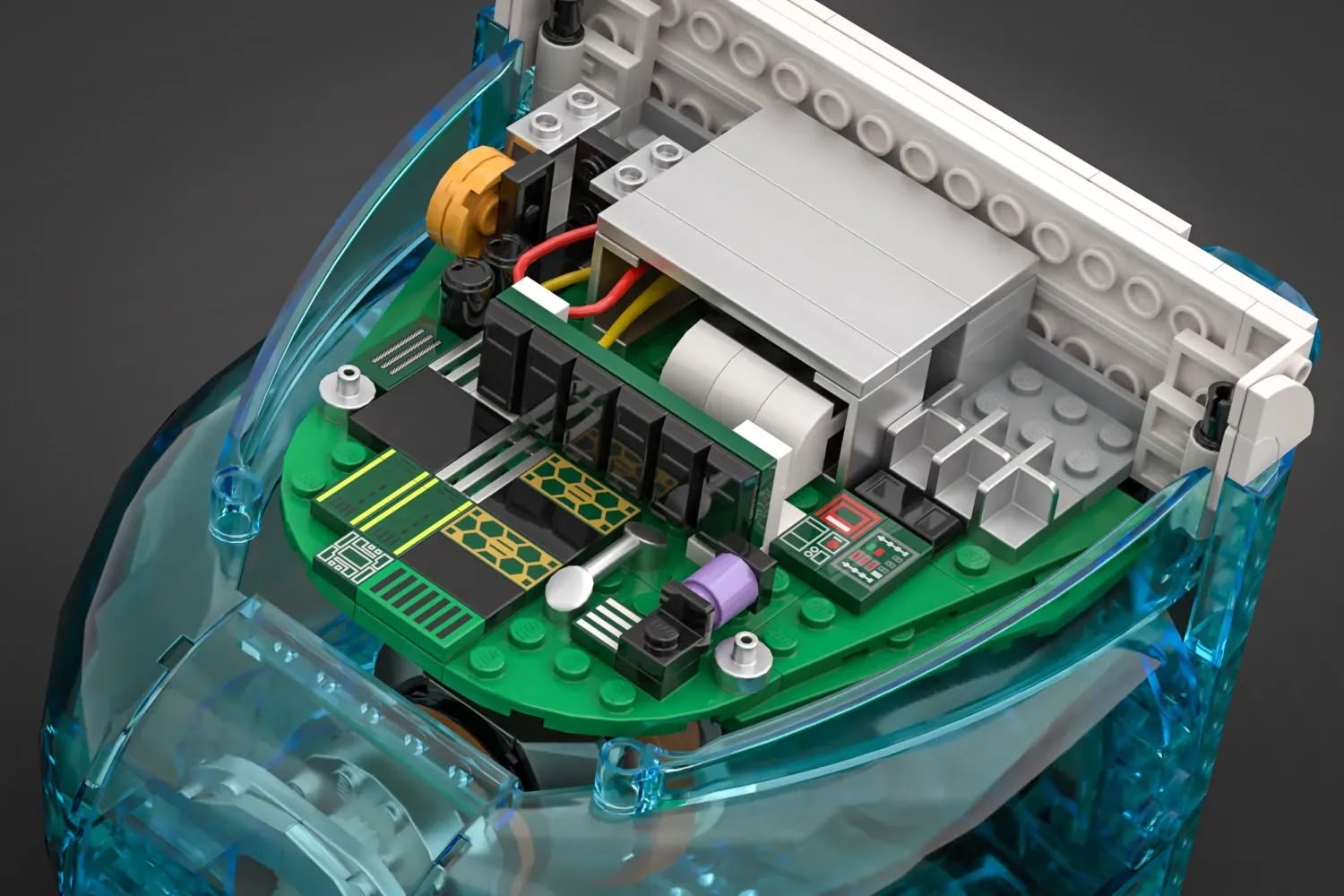
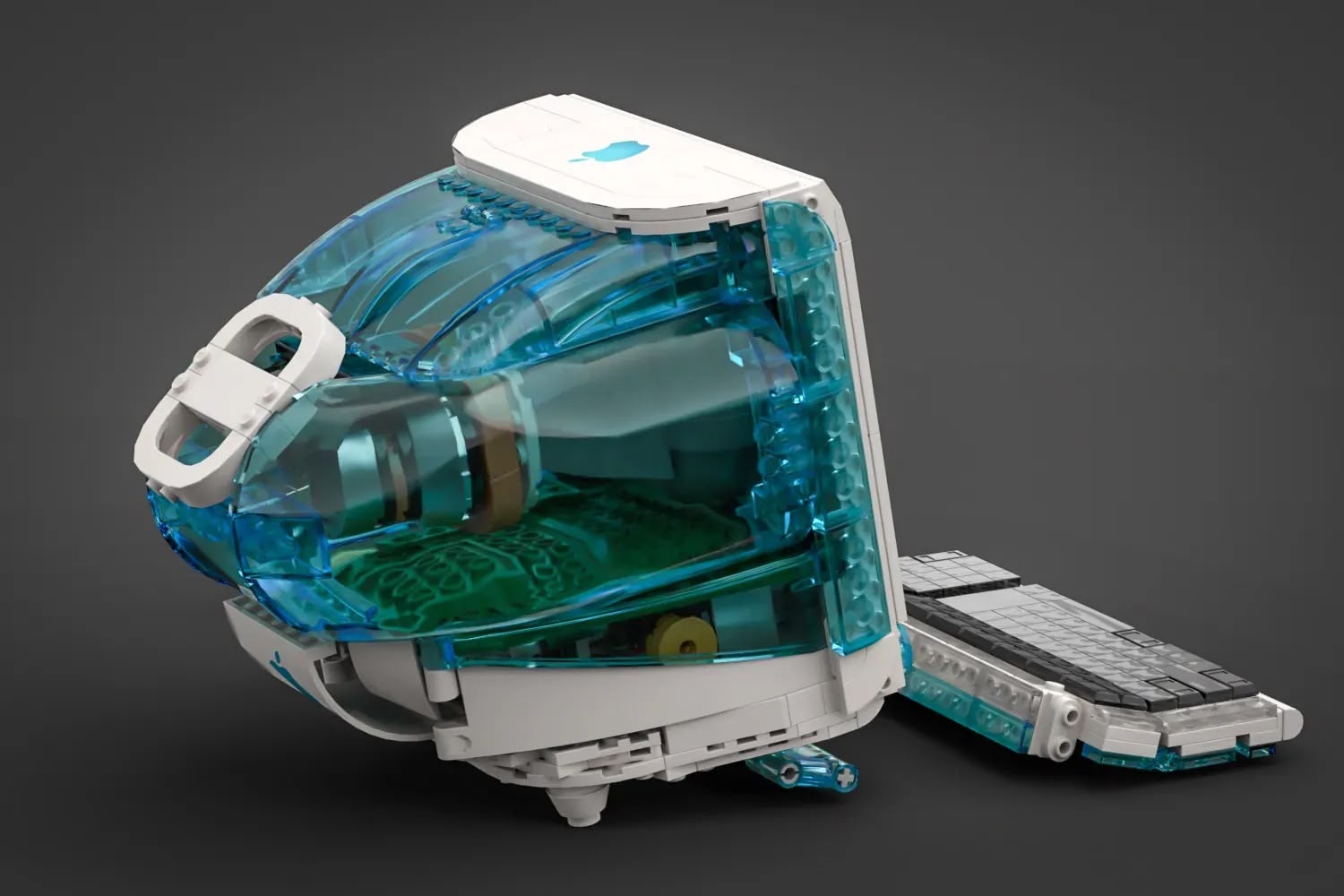
The LEGO creation captures the distinctive look of the ‌iMac‌ G3, featuring an all-in-one computer design, "hockey puck" mouse, matching keyboard, and accompanying cables. The design uses translucent blue LEGO pieces in a shade close to Bondi Blue, and the interior has details like a cathode ray tube and a circuit board.

The design successfully reached 10,000 supporters to make it to the LEGO Ideas team, and LEGO has been considering turning it into a set. Parking Lot status means LEGO needs more time to review the project, and in this case, LEGO could be communicating with Apple for permission.


Many Ideas set proposals get early rejections, so it's somewhat promising that LEGO is taking the time to further consider making an ‌iMac‌ G3 LEGO set. The Downton Abbey and The Old Man and the Sea LEGO sets were in the Parking Lot before making it to production.

The third 2025 Ideas review round that the ‌iMac‌ G3 set was in had 75 total qualifying ideas. Three were chosen to become sets, four (including the ‌iMac‌ G3) were given Parking Lot status for further consideration, and the rest were rejected. Projects can remain in the Parking Lot for up to three review periods before a final decision is made.

LEGO will share updates in the future on whether the ‌iMac‌ G3 project will move forward or will be rejected. A LEGO Apple Store proposal went through the same process, but it was rejected outright.
Related Roundup: iMac
Tag: LEGO
Buyer's Guide: iMac (Don't Buy)
Related Forum: iMac

This article, "LEGO Considering Bondi Blue iMac G3 Set" first appeared on MacRumors.com

Discuss this article in our forums

  •  

OpenAI's First AI Device Will Be a Portable Smart Speaker

OpenAI's first AI hardware product is a mobile smart speaker without a display, reports Bloomberg. The device is at the heart of a new legal dispute with Apple, with Apple accusing OpenAI of stealing trade secrets that have contributed to the development of the product.


OpenAI's speaker-like product is designed to "serve as a humanlike AI companion that lives in the home," according to Bloomberg. It will be able to control smart home accessories, answer questions, play media, respond to messages, and more, with the device powered by ChatGPT. It is meant to learn more about the user over time, becoming more personalized and proactive, using GPT-Live to communicate with users.

The device will have a personality, and will be able to "connect on a humanlike level with users." It has mechanical elements that can move on their own, to create a sense that the device is alive. There's also a camera so it can understand a user's surroundings. The AI product includes a rechargeable battery and it can be carried from room to room.

OpenAI CEO Sam Altman and former Apple designer Jony Ive have teased the device several times, suggesting it will have "incredible contextual awareness" about a user's life, and describing it as a new type of computer built for AI. The two have suggested prototypes are "jaw-droppingly good" and "exciting."

In a lawsuit filed against OpenAI for theft of trade secrets, Apple claims OpenAI used its confidential information developing the AI device, including gaining access to a proprietary metal finishing technique. "OpenAI's nascent hardware business now rests on the shakiest of foundations, rotten to its core by its illegal reliance on misappropriated trade secrets," reads Apple's filing.

People familiar with the project told Bloomberg that the device is different from anything Apple has on the market today, and it is "unlikely" it violates Apple trade secrets. Though Apple has the HomePod and HomePod mini speakers, OpenAI does not see Apple's speakers as comparable to its hardware product.

Apple is also working on a home hub device that sounds similar to what OpenAI is developing. Apple's smart home hub is rumored to have a 7-inch square display, a speaker, a camera for video chats and facial recognition, and Siri AI integration.

Initial rumors suggested OpenAI's hardware device could come out as soon as 2026, but it's now not expected to launch until 2027. OpenAI could unveil the AI product this year ahead of its 2027 release, but the Apple lawsuit could change the timing. Apple has asked the court for an injunction, and if granted, OpenAI could be prohibited from releasing hardware.
Tag: OpenAI

This article, "OpenAI's First AI Device Will Be a Portable Smart Speaker" first appeared on MacRumors.com

Discuss this article in our forums

  •  
❌