
Lees weergave

Apple's WebKit Rules Reportedly Cost iOS Users Almost 30% Browser Performance

Microsoft engineers have published benchmark results showing that a Chromium-based browser using its own rendering engine scores 28.6% higher than Safari on Apple's own Speedometer 3.1 performance test on iOS.
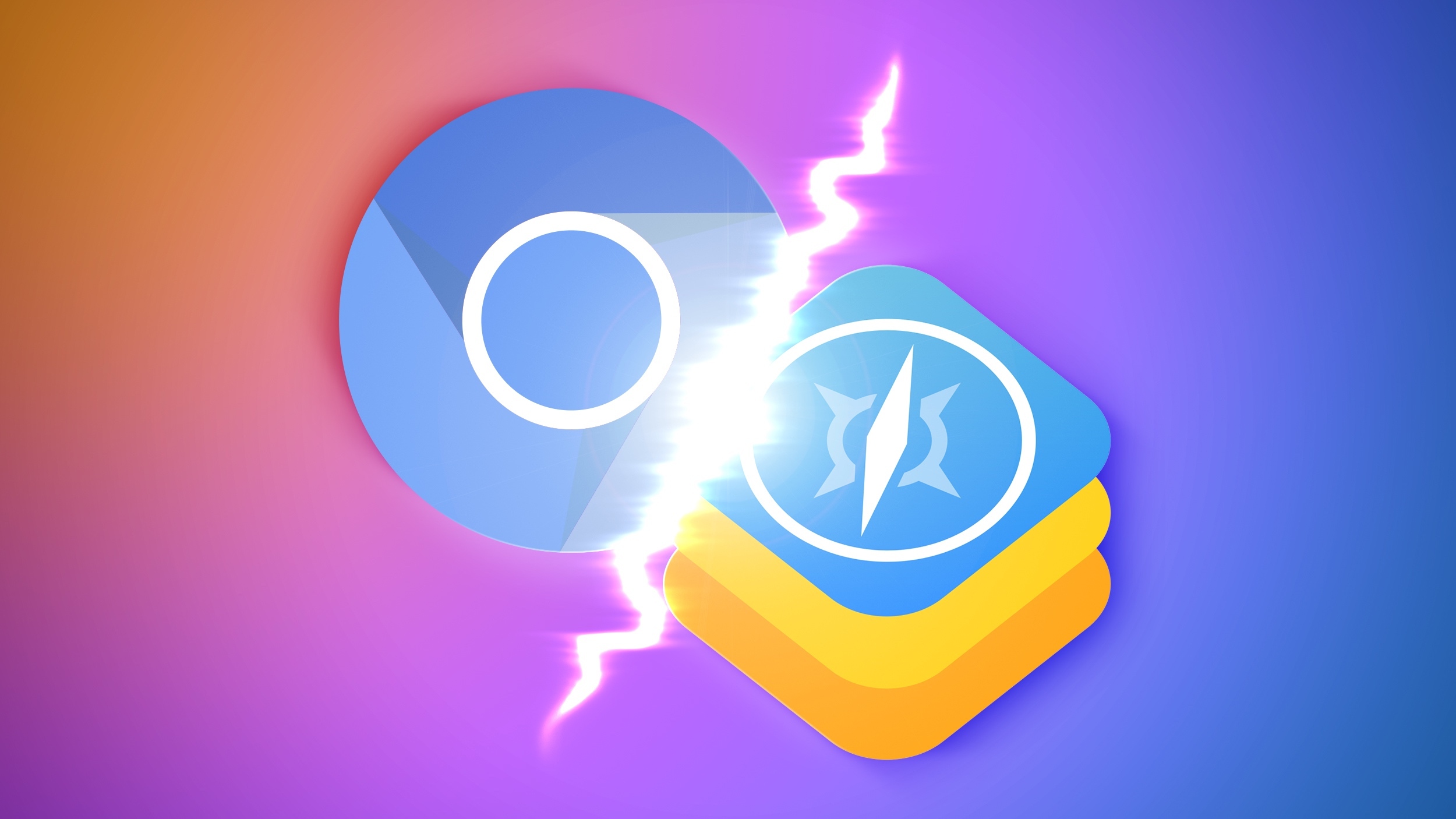

Kyle Pflug, group product manager for the Microsoft Edge Web Platform, published results on Monday comparing a research prototype of Edge built with Apple's BrowserEngineKit framework against Safari running iOS 26.5.1. The Blink-based prototype scored 49.27 versus Safari's 38.3 on Speedometer 3.1, and also outperformed Safari on the JetStream 3 JavaScript benchmark by 13.1% (306.35 vs. 270.9) and on the MotionMark 1.3.1 graphics rendering benchmark by 2.1% (4,773.52 vs. 4,673.68). Pflug described the work as a research prototype rather than a finished product, and the numbers as preliminary results from his own device rather than lab conditions.

Apple requires all browsers on iOS to use WebKit, the engine that powers Safari, meaning browsers like Chrome and Firefox on iPhone are effectively reskinned Safari instances. The EU's Digital Markets Act theoretically changed that in March 2024, requiring Apple to allow alternative browser engines through BrowserEngineKit, yet more than two years later no browser maker has shipped an alternative engine on iOS. Companies cite technical barriers and the requirement to publish any such browser as an entirely separate app from their existing WebKit-based version.

Open Web Advocacy told The Register the results illustrate a 17-year cost to consumers. The group called on the European Commission to open a specification proceeding instructing Apple precisely how it must remove barriers to alternative engines, adding that restricting browser engines allows Apple to limit what the mobile web is capable of and keep businesses dependent on native apps and App Store rules.
Tag: WebKit

This article, "Apple's WebKit Rules Reportedly Cost iOS Users Almost 30% Browser Performance" first appeared on MacRumors.com

Discuss this article in our forums
  •  

Apple's New Hide My Email Domain Makes It Easier to Block iCloud Aliases

Apple's decision to move Hide My Email to a dedicated "private.icloud.com" domain appears to have the consequence of making it easier for platforms that want to block iCloud aliases to do so.


Apple is unifying the email domains used by Sign in with Apple and ‌iCloud‌+ Hide My Email under a single private.icloud.com domain later this summer. Sign in with Apple currently uses privaterelay.appleid.com, while Hide My Email uses icloud.com, the same domain as standard ‌iCloud‌ email addresses.

That shared domain has historically made it difficult for services to selectively block disposable ‌iCloud‌ addresses. Blocking icloud.com outright would also block legitimate users with standard Apple email accounts. With the new subdomain, that tradeoff disappears.

@vxdb on X was among the first to flag the implication: "platforms who want to ban ‌iCloud‌ aliases can now do so by banning this new subdomain without affecting all ‌iCloud‌ users." Others online noted that email services, signup flows, and anti-abuse systems will now have a clean, unambiguous target if they choose to restrict alias-generated addresses.

Apple has said that existing addresses on legacy domains will continue to work and that mail will be forwarded with no interruption, so current Hide My Email users won't lose access to their aliases. New addresses generated after the migration, however, will feature the private.icloud.com domain, and it is those addresses that become blockable in isolation for the first time.
Tag: iCloud

This article, "Apple's New Hide My Email Domain Makes It Easier to Block iCloud Aliases" first appeared on MacRumors.com

Discuss this article in our forums
  •  

macOS 27 Golden Gate Kills Time Capsule Support

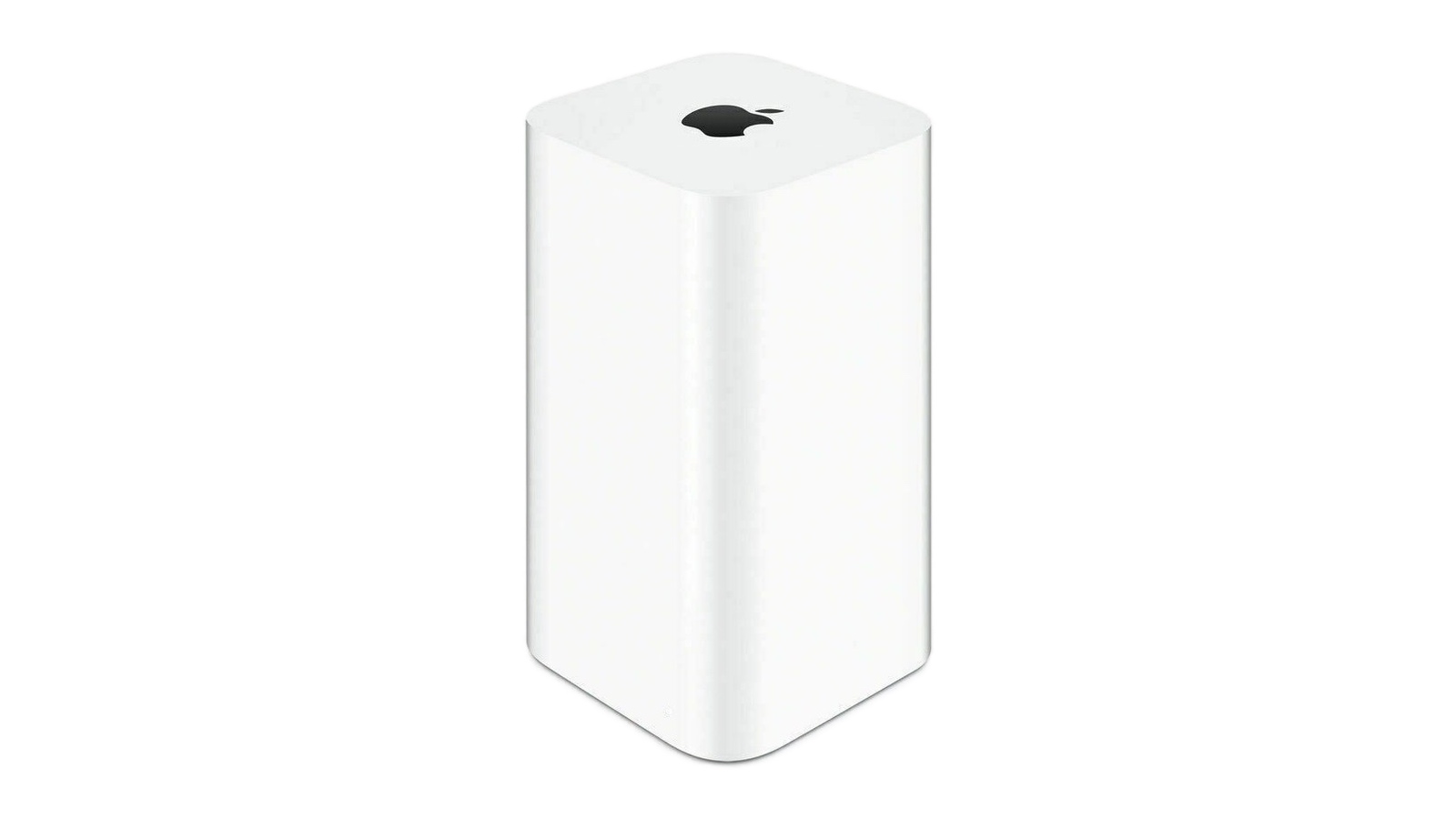
macOS 27 Golden Gate removes AFP support, ending Time Machine compatibility with Time Capsule after nearly two decades, but a community project from a Microsoft engineer offers a potential workaround for owners not yet ready to move on.


Apple's Time Capsule was introduced at Macworld Expo in January 2008, combining a Wi-Fi router with NAS-style network storage designed to work in tandem with the Time Machine backup software. Apple officially ended development on the entire AirPort line in April 2018, with the AirPort Express at $99, the AirPort Extreme at $199, and the AirPort Time Capsule at $299, available only while supplies lasted. The lineup sold out entirely by November 2018. Prior to that, Apple had not updated its AirPort products since 2013.

AFP dates back to 1988, when Apple designed a native file-sharing protocol for the Macintosh as part of the AppleTalk networking suite. SMB became the primary file-sharing protocol in OS X 10.9 Mavericks in 2013, and the ability to run an AFP server was removed in macOS 11 Big Sur in 2020.

Apple formally deprecated the AFP client in macOS Sequoia 15.5, and, when macOS 26 Tahoe launched, a warning in System Settings confirmed that AFP support and Time Capsule compatibility would end with macOS 27. As expected, the first developer beta of macOS 27 Golden Gate contains no AFP client at all, ending a protocol with more than 40 years of history in the Apple ecosystem.

All Time Capsule models rely on AFP and SMBv1, the original Server Message Block version from 1987. From macOS 27 onwards, Time Machine requires SMBv2 or SMBv3, which covers modern NAS hardware but rules out every Time Capsule model in its stock form. macOS 27 also enforces stricter network security requirements, including TLS 1.2 as a minimum, which is a bar that Time Capsule hardware cannot meet.

The community response is a GitHub project called TimeCapsuleSMB, created by James Chang, an engineer at Microsoft. Rather than replacing Apple's firmware, it installs a modern Samba build directly onto the Time Capsule. The device runs a Samba 4.24.3 server, advertises itself over Bonjour, and accepts authenticated SMB3 connections, so users can connect via a standard SMB URL in Finder rather than relying on Apple's legacy stack.

Only the fifth-generation Time Capsule tower model from 2013 auto-restarts the Samba server after a reboot. Earlier models require a manual activate command every time the device loses power, meaning backups may silently stop after an outage. It is also worth noting that switching to SMB via TimeCapsuleSMB begins a new Time Machine backup chain, with the new destination treated as a fresh start. There is no published long-term restore testing for the project, so a second backup destination is advisable.

macOS 27 Golden Gate is currently in developer beta, with a public beta due in July and a general release set for September. It is compatible only with Apple silicon Macs, meaning Intel Mac users who stay on macOS 26 can continue using Time Capsule for the foreseeable future. Apple silicon owners who want to upgrade will need a compliant backup target in place first, whether that is a modern NAS, an external drive, or a patched Time Capsule running TimeCapsuleSMB.
Related Roundup: macOS Golden Gate

This article, "macOS 27 Golden Gate Kills Time Capsule Support" first appeared on MacRumors.com

Discuss this article in our forums
  •  

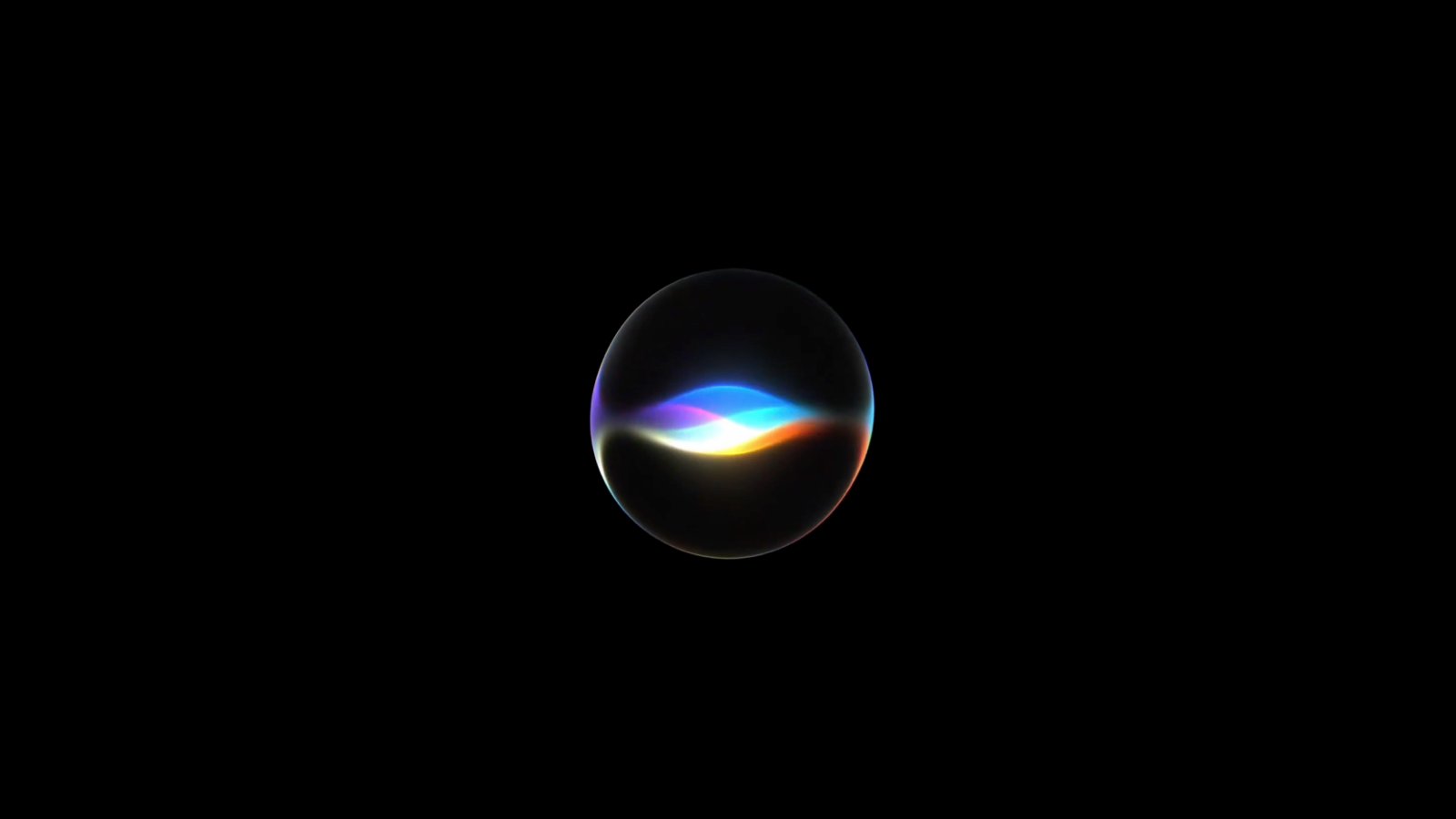
iOS 27 Revamps App Icons With Sharper Liquid Glass Layers

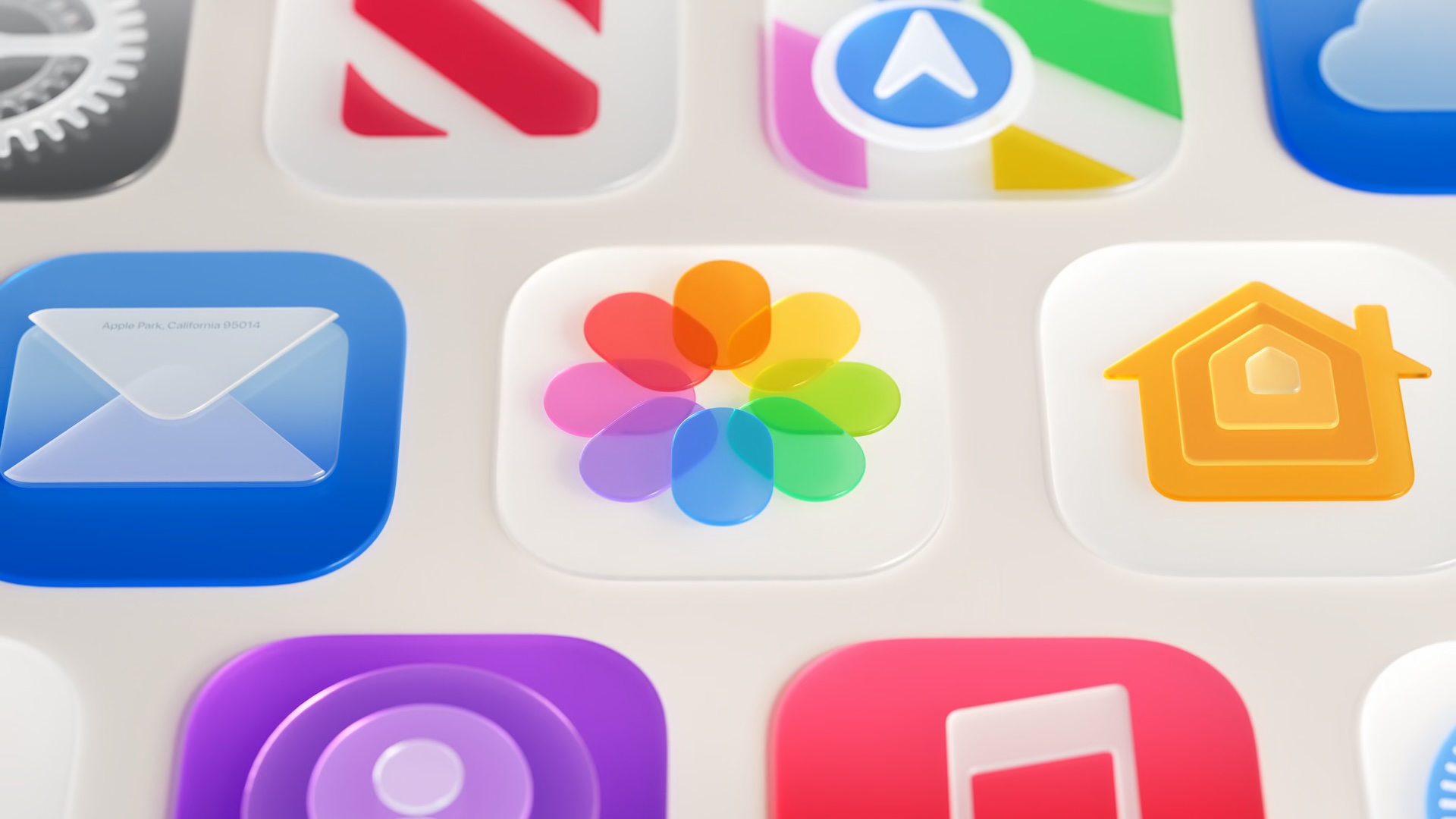
Apple has redesigned its first-party app icons for the second year running, with iOS 27 addressing blurriness complaints about iOS 26 by integrating additional layers of Liquid Glass directly into the icon artwork itself.


When Apple introduced Liquid Glass with ‌iOS 26‌ last year, it redesigned its entire lineup of first-party app icons to give them a layered glass look with subtle depth. The approach drew criticism from some users who found the results blurry, and in some cases, a heavy specular sheen sat over the icon artwork, obscuring detail and giving icons a washed-out appearance.

The shimmering motion effect that animated icons dynamically as the device was tilted also caused a widely reported optical illusion, with asymmetric highlights in icon corners tricking the eye into reading icons as slanted. With ‌iOS 27‌, Apple is taking the icon design further rather than rolling it back.

The core change to how icons are constructed is the addition of multiple distinct Liquid Glass layers built into each icon's artwork, rather than the thick glass look applied uniformly over the top in ‌iOS 26‌. Apple says the new rendering pipeline adds more visual separation between layers, resulting in sharper edges and more defined refractions.

Not totally sold on the dark specular highlights, but overall it's a huge upgrade for Apple's app icons. pic.twitter.com/W5hEkGh6sd

— Andreas Storm (@avstorm) June 10, 2026


In practice, artwork is now considerably more visible and detailed with higher contrast and greater definition, with the glass look functioning as a refined finish rather than a dominant overlay. The refraction effects between layers are also selectively applied.

The motion-based shimmer has also been significantly reworked. The gyroscopic specular highlight effect introduced with ‌iOS 26‌ appears to have been removed entirely in the first ‌iOS 27‌ developer beta. Icons still feature highlights around their edges, now positioned at the top and bottom, but they no longer shift with device movement or produce the tilting illusion, and are much subtler overall.

Icon Composer, Apple's dedicated app icon design tool, has been updated to support building icons from multiple layers of Liquid Glass. New annotation features let developers add refraction effects or fine-tune content effects, while an interactive preview shows how a designed icon will render.

The updated icons are part of broader Liquid Glass refinements Apple announced at WWDC 2026, which also include a new system-wide transparency slider and improved material diffusion for better readability. For a full breakdown of all the Liquid Glass changes in ‌iOS 27‌, see our dedicated article.
Related Roundups: iOS 27, iPadOS 27, macOS Golden Gate

This article, "iOS 27 Revamps App Icons With Sharper Liquid Glass Layers" first appeared on MacRumors.com

Discuss this article in our forums
  •  

Siri AI Might Tell You to Take Breaks, Remind You It's Not a Real Person

Code strings discovered in iOS 27 suggest that Apple may be planning to show users a break reminder after especially long Siri AI conversations.


Strings of code in the first developer beta of ‌iOS 27‌ refer to a "Take a Break Message" that would remind users they have been in a conversation for an extended period and that ‌Siri‌ is not a real person. Based on the shared code, the reminder appears to read: "You've been in this conversation for [n] hours - consider taking a break. ‌Siri‌ is not a person, but will be here when you're ready to continue."

Where screen time tools typically focus on usage duration, Apple appears to be specifically addressing the risk of parasocial attachment to AI, building in a prompt that explicitly reframes ‌Siri‌ as a tool rather than a companion. The concern is part of a broader conversation across the AI industry about unhealthy usage patterns. Both OpenAI and Google have moved to add guardrails to their chatbot products, and Anthropic has been spotted nudging Claude users toward healthier habits after long sessions.

Apple touched on several privacy and responsibility considerations for ‌Siri‌ AI during last week's WWDC keynote, but did not address the question of extended conversations. The existence of these code strings suggests the company is thinking about the issue behind the scenes.

It is not yet clear how Apple would trigger the reminder. The code does not appear to specify a fixed time threshold, suggesting the company may use conversation length in combination with other signals to determine when to display the message.
Tags: Siri, Siri AI

This article, "Siri AI Might Tell You to Take Breaks, Remind You It's Not a Real Person" first appeared on MacRumors.com

Discuss this article in our forums
  •  

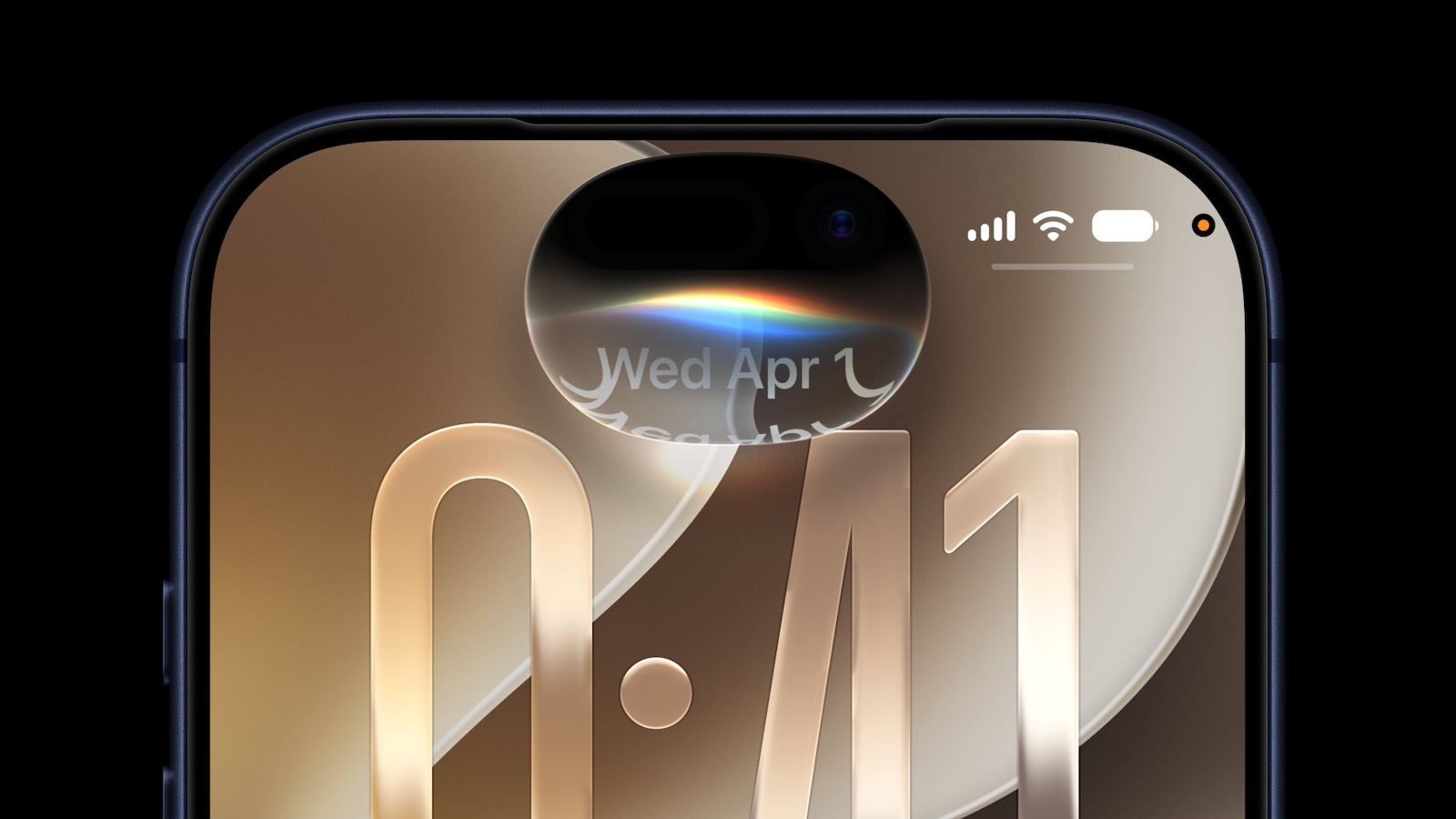
Siri Uses Pill Shape to Hide the Dynamic Island in iOS 27, But iPhone 18 Could Make It a Circle

In iOS 27, Siri now appears as a glowing pill-shaped orb that expands directly from the Dynamic Island, but may give way to a circle on next-generation iPhones.


Instead of the glowing light effect that previously traced the edges of the display, a swirling ‌Siri‌ orb expands from the ‌Dynamic Island‌ in ‌iOS 27‌, with the design hiding its true cutouts, just like other ‌Dynamic Island‌ animations.

Apple now represents ‌Siri‌ in most places with a circular orb, such as in the new dedicated Siri app icon, throughout promotional artwork for ‌iOS 27‌, and initially on the iPad, Mac, and Vision Pro. At the very least, the pill-shape of ‌Siri‌ AI on the iPhone appears to be necessitated because the current ‌Dynamic Island‌ hardware demands it.

Amid rumors that the iPhone 18 Pro is set to move to a narrower ‌Dynamic Island‌, X user @MichalLangmajer connected those dots to suggest that ‌iOS 27‌'s ‌Siri‌ interface could become circular on upcoming iPhone models:

If you were wondering why the iOS 27 Siri AI has such a weird shape, it's because of the notch.
On the iPhone 18 (with its speculated smaller notch), it could become a perfect circle. pic.twitter.com/8o7BHQpsZG

— Michal Langmajer (@MichalLangmajer) June 10, 2026


The post included a visual overlaying the ‌Dynamic Island‌ shapes of the iPhone 17 and a speculated iPhone 18 model, illustrating how a narrower cutout would allow the ‌Siri‌ orb to resolve into the true circle Apple already uses elsewhere.

A series of reports suggest that the ‌iPhone 18 Pro‌ and Pro Max will feature a smaller ‌Dynamic Island‌, enabled by relocating Face ID components beneath the display. Leaker Ice Universe claimed the cutout will be approximately 35% narrower than on the iPhone 17 Pro, dropping from around 20.7mm to around 13.5mm in width. Prototype images and screen protector leaks that surfaced in March appeared to corroborate the change.

‌iOS 27‌, the ‌iPhone 18 Pro‌, and ‌iPhone 18 Pro‌ Max are expected to be released this fall.
Related Forum: iPhone

This article, "Siri Uses Pill Shape to Hide the Dynamic Island in iOS 27, But iPhone 18 Could Make It a Circle" first appeared on MacRumors.com

Discuss this article in our forums

  •  

Philips Hue and WiZ Launch Sports Live Feature for the 2026 World Cup

Signify has launched Sports Live, a new feature for Philips Hue and WiZ smart lighting products that synchronizes lighting effects with live soccer match data in real time (via Hue Blog).


The feature is rolling out now for the 2026 FIFA World Cup. Sports Live uses live match data to trigger lighting changes at key in-game moments, including goals, yellow cards, and red cards, with the aim of making at-home viewing feel more immersive.

Unlike traditional TV sync systems that rely on HDMI-based hardware to analyze on-screen content, Sports Live connects directly to live match data and responds to events as they occur, eliminating the need for additional synchronization hardware. During quieter periods, lights adapt to reflect a favorite team's colors, the leading team's colors, or a neutral white when the score is tied.

Setup is handled through either the Philips Hue or WiZ mobile app. In the Hue app, the feature is found under the Sync tab, where users select a room or zone, which must include at least one color-capable light, and optionally choose favorite teams to receive match suggestions.

Current games appear directly in the Sync tab, with a separate list available for upcoming fixtures. Sports Live automatically starts 15 minutes before kickoff once a match is selected, and a delay adjustment tool lets viewers sync lighting effects to their specific broadcast.

After setup, users can still customize the default scene, brightness, and room. Any lights paired with Hue Sync Box take priority and will not be used for Sports Live. WiZ users can access the feature through the company's Wi-Fi platform without requiring a hub.

The Philips Hue 5.69 app update that delivers Sports Live also introduces a new Bridge zone, which consolidates all devices and automations across an entire Hue Bridge into a single group on the home dashboard, with options to create scenes and hide or rearrange groups. The zone appears in the "Hidden" section by default and must be manually surfaced.

Sports Live is compatible with existing Hue and WiZ entertainment features, including Hue Sync and WiZ Sync with TV, with the 2026 FIFA World Cup now underway in Mexico, Canada, and the U.S.
This article, "Philips Hue and WiZ Launch Sports Live Feature for the 2026 World Cup" first appeared on MacRumors.com

Discuss this article in our forums
  •  

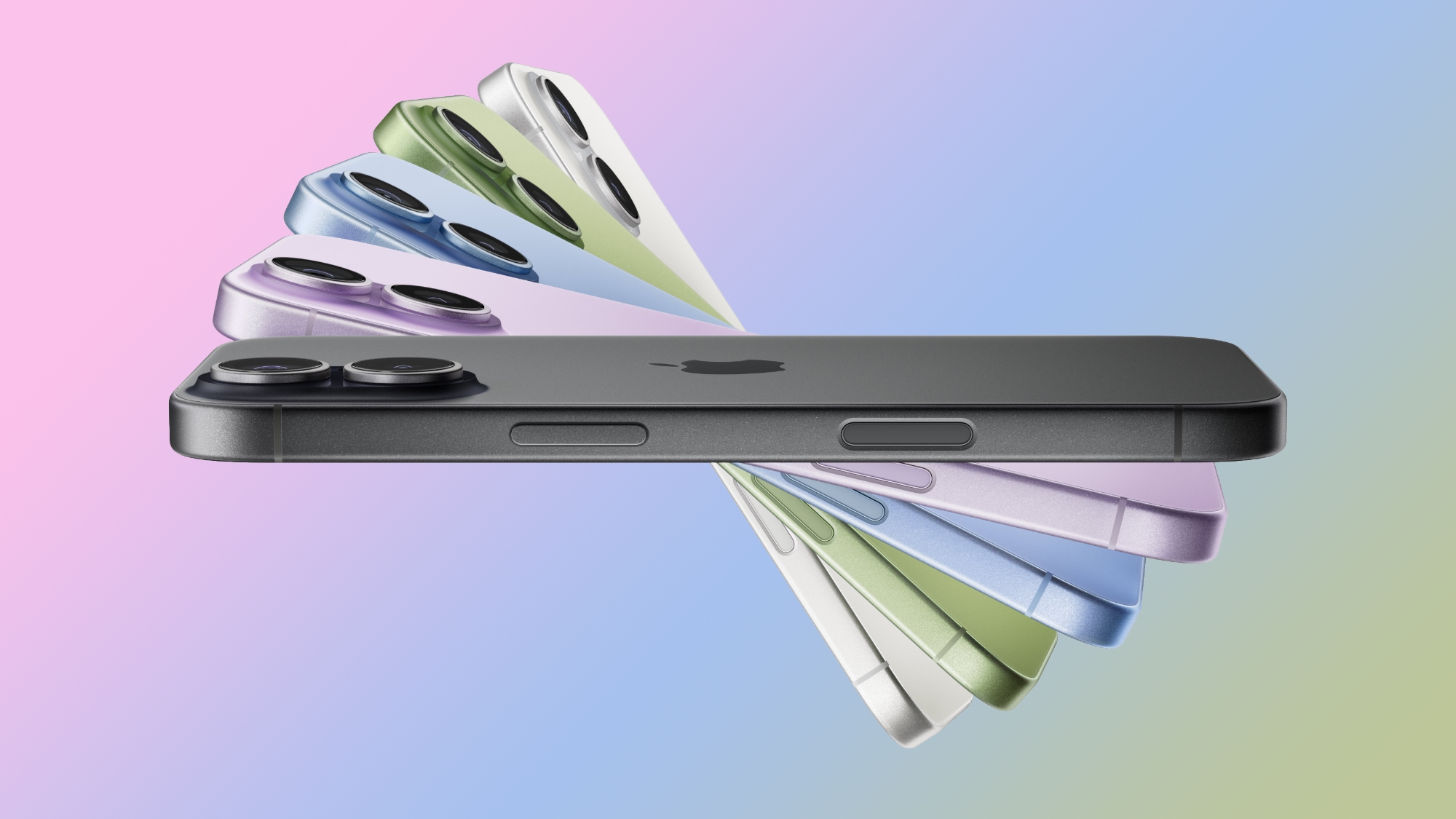
Leaker Warns iPhone 18 Pro New Colors May Face Same Durability Issues

A known Weibo leaker has reiterated that the iPhone 18 Pro will retain its aluminum alloy build, while issuing a specific warning that the new color options may be susceptible to paint peeling.


In a new Weibo post, the leaker "Fixed Focus Digital" said the ‌iPhone 18 Pro‌ "will still feature an aluminum alloy build" and noted that heat dissipation is "indeed excellent." The leaker then added a pointed caveat: anyone unfamiliar with the durability problems that plagued the iPhone 17 Pro should "be careful about potential paint-peeling issues with the new color options."

Fixed Focus Digital previously pointed out that surface chipping on the ‌iPhone 17 Pro‌ is a common complaint, and that users who seek recourse from Apple are often told they cannot claim it, with the company classifying the issue as an inherent characteristic of the aluminum alloy material and normal wear and tear. The leaker added at the time that the ‌iPhone 18 Pro‌ would "continue to utilize this same design approach" despite its weaknesses.

The ‌iPhone 17 Pro‌ moved away from the titanium frames Apple used in its Pro lineup for the previous two years, adopting an anodized aluminum unibody design. Surface durability concerns surfaced almost immediately after launch. Reports suggested that Dark Blue and Cosmic Orange models appeared to scratch more easily than other finishes, with MacRumors forum users describing visible marks on in-store display units within days of availability.

A scratch test by YouTuber JerryRigEverything added some nuance, finding that most of the anodized shell holds up well against everyday items like keys and coins, but pinpointing the camera plateau as a clear weak point where the raised, unchamfered edges chip and scratch easily.

A separate issue emerged the following month, when a number of Cosmic Orange ‌iPhone 17 Pro‌ owners reported color shift, with the aluminum frame and camera plateau drifting toward a rose-gold or pink hue and in some cases prompting device replacements by Apple Support.

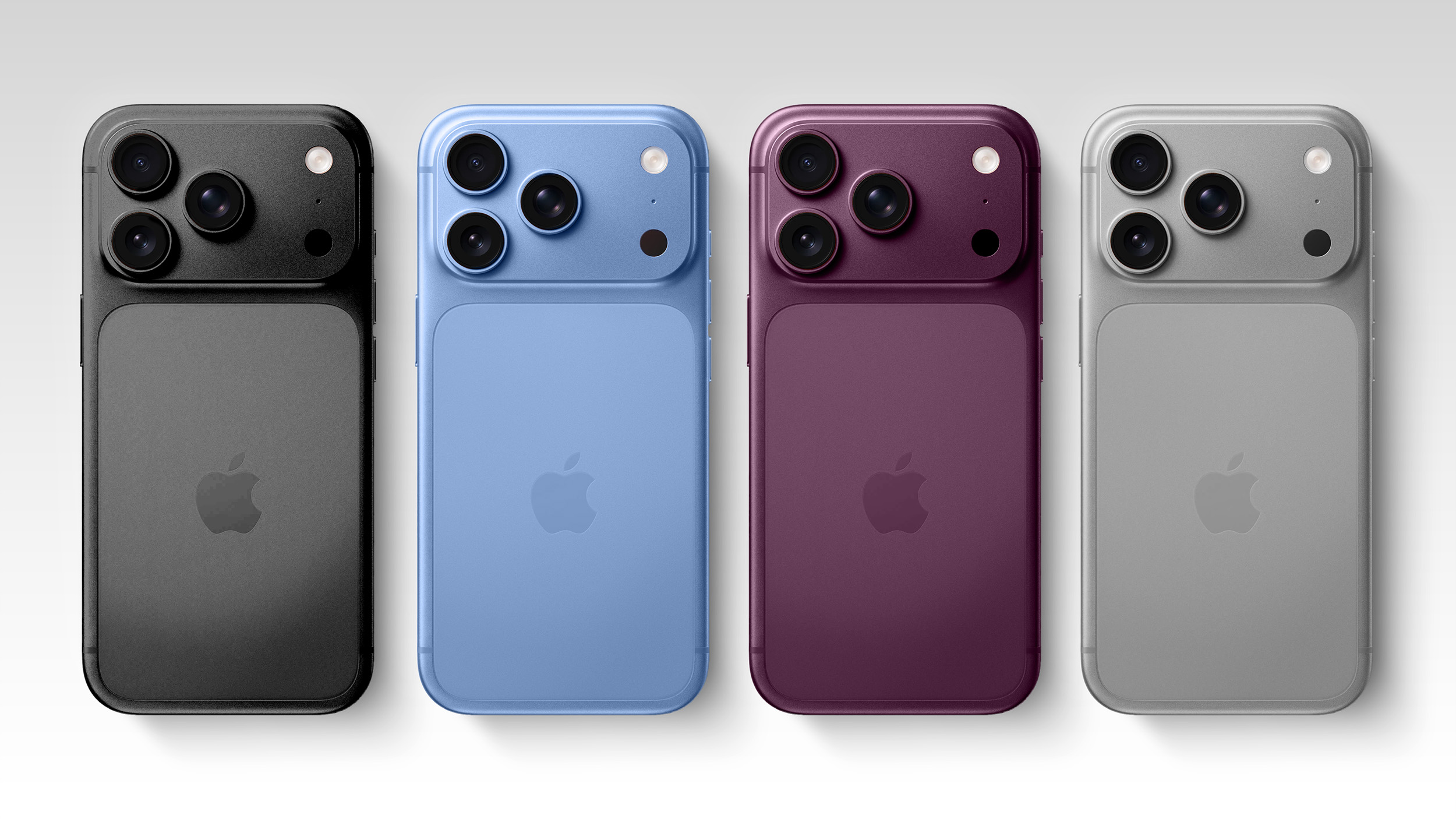
Rumors point to four color options for the ‌iPhone 18 Pro‌ models: Dark Cherry, Light Blue, Dark Gray, and Silver. Dark Cherry is expected to serve as the signature new color, described as a deep, wine-like red that is considerably more muted than last year's Cosmic Orange. The ‌iPhone 18 Pro‌ is not expected to offer a black option for the second consecutive year, but the rumored gray option could come very close.

The ‌iPhone 18 Pro‌ and ‌iPhone 18 Pro‌ Max are expected to be announced in September 2026, alongside the first foldable iPhone.
Related Roundup: iPhone 18 Pro

This article, "Leaker Warns iPhone 18 Pro New Colors May Face Same Durability Issues" first appeared on MacRumors.com

Discuss this article in our forums
  •  

Apple Adds Personalized Recommendations and New Marketing Tools to the App Store

Apple last week announced a series of new App Store features, including personalized app recommendations and expanded tools for developers to market their apps.


The most visible change for users is Personalized Collections, a new discovery feature that surfaces app and game recommendations tailored to individual interests and behavior. Alongside each recommendation, new "App Notes" explain why a specific app is being surfaced.

The collections can appear across the Apps, Games, and Search tabs, and will evolve over time as users' download and usage patterns change. Apple says the feature is now available in English in the U.S., with additional languages and regions to follow.

For developers, Apple introduces Creative Assets, rich images and videos that can appear in a product page header and search results, going beyond standard screenshots and app preview clips. These assets can be used to highlight seasonal content, new features, or brand identity, and are compatible with custom product pages and Apple's existing product page optimization testing tools.

A new Asset Library in ‌App Store‌ Connect gives developers a single place to manage all creative materials, with the ability to reuse assets across in-app events and promotions without re-uploading them. Developers can also submit assets for App Review approval independently of a full app update, which is useful for time-sensitive campaigns.

Mac App Store apps and games no longer require Intel support, allowing developers to ship Apple silicon-only binaries. Apple is also allowing developers to group multiple In-App Purchases into a single App Review submission, streamlining the process.

Apple also announced that the age rating questionnaire in ‌App Store‌ Connect will be updated in July to allow developers to indicate whether their app includes social media capabilities such as interacting with user-generated content through a social feed. This ties into new Time Allowances features coming in iOS 27, iPadOS 27, and macOS 27, which give parents more granular controls over how much time children spend in apps across categories including Entertainment, Games, and Social Media.
This article, "Apple Adds Personalized Recommendations and New Marketing Tools to the App Store" first appeared on MacRumors.com

Discuss this article in our forums
  •  

These Three Unannounced iOS 27 and watchOS 27 Features Are Still Coming

Apple developed more for its next-generation software updates than it revealed at WWDC last week, with three features already present in internal builds being deliberately withheld from the public announcement, Bloomberg's Mark Gurman reports.


Writing in the latest edition of his "Power On" newsletter, Gurman says all three missing features are active in internal versions of Apple's operating systems on employee devices today, and each is expected to surface publicly at a later date.

Customizable Camera App


A customizable Camera app for the iPhone, first reported by Gurman in May, also failed to appear at WWDC. The feature would let users rearrange camera controls as widgets along the top of the interface, choosing from options like flash, exposure, timer, depth of field, photo styles, and resolution.

Gurman believes Apple is holding it back specifically for the iPhone 18 Pro, which is expected to bring the most significant camera hardware upgrade in several years.

Siri Extensions


The most notable omission is Extensions, a framework that would allow third-party AI chatbots beyond ChatGPT to integrate with Siri, Apple Intelligence, and features like Writing Tools and Image Playground. Gurman says underlying support for Extensions is already present and visible in the first iOS 27 developer beta, with both a dedicated settings panel and an App Store section built and waiting to be switched on.

Apple has reportedly already held discussions with OpenAI, Anthropic, and Google about the framework, including details about an entitlement those companies would need to apply for. Gurman says he has "no doubt" the feature will arrive eventually.

As for why the Extensions feature was kept out of the WWDC, Gurman offers four theories. Firstly, demonstrating strong AI interoperability could weaken Apple's ongoing argument against EU regulators. Secondly, announcing robust third-party chatbot support could have overshadowed Apple's own Siri overhaul. Thirdly, the threat of litigation from OpenAI may have persuaded Apple to avoid publicly stripping ChatGPT of its exclusive status at its developer conference. Finally, adding a range of external AI options would have further complicated Apple's messaging at a time when it already needed to explain its use of Google's AI models in ‌Siri‌ AI.

Anyone running the first ‌iOS 27‌ or macOS Golden Gate betas can already see a chatbot picker allowing users to switch between ‌Siri‌ and ChatGPT; Gurman says that list is expected to grow via the new developer framework and ‌App Store‌ section. The feature has reportedly been in active use inside Apple for months.

Modular Watch Face


A new Modular watch face for Apple Watch was among the items Gurman had flagged as expected at WWDC but did not appear. Gurman's earlier claim that watchOS 27 would introduce new faces centered on a simplified take on the Modular Ultra design currently exclusive to the Apple Watch Ultra.

Gurman now expects the new face to debut alongside new Apple Watch models this fall.
Related Roundups: iOS 27, iPadOS 27

This article, "These Three Unannounced iOS 27 and watchOS 27 Features Are Still Coming" first appeared on MacRumors.com

Discuss this article in our forums
  •  

Apple Could Build an OpenClaw Competitor Eventually

Apple may eventually build a direct competitor to OpenClaw, an agentic AI system capable of autonomously operating software on behalf of the user, Bloomberg's Mark Gurman believes.


Writing in his Power On newsletter, Gurman says he expects Apple to develop a system that could fully operate iPhone, iPad, and Mac software on the user's behalf. The prediction comes on the back of comments made by Apple's Siri engineering chief, Mike Rockwell, following last week's WWDC keynote.

Rockwell appeared to leave the door open for ‌Siri‌ to expand beyond its current capabilities, describing the new engine underpinning the assistant as "a completely modern architecture" built with extensibility in mind:

[An agent is] something that is operating on a loop of information coming in, making decisions, and then taking action. And ours is primarily request based today.
 But the underpinning architecture for Siri is a completely modern architecture, and so our ability to extend in the future is is very similar.


Apple's SVP of Software Engineering, Craig Federighi, acknowledged the broader category but was measured in his framing of it, describing the space as experimental and saying that finding the right user experience remains the priority, while stopping short of ruling out Apple's eventual participation.

Apple's upcoming ‌Siri‌ implementation is newly rebuilt on a large language model foundation, and remains a request-based system. Full computer-use agentic functionality of the kind offered by OpenClaw and similar tools from Google and Anthropic would represent a significant expansion beyond what Apple announced last week.
This article, "Apple Could Build an OpenClaw Competitor Eventually" first appeared on MacRumors.com

Discuss this article in our forums
  •  

Have One of These 16 Apple Devices? Software Support Ends This Fall

Apple will end software support for 16 devices this fall across four product lines, with the Apple Watch seeing the most sweeping cull in the product's history.


The full extent of this year's software drops became clear with the announcements of macOS 27 Golden Gate, iPadOS 27, tvOS 27, and watchOS 27 at WWDC this week. The one bright spot is that iOS 27 features identical device support to iOS 26, with no iPhone models removed from the compatibility list, and the same goes for the HomePod.

The Apple Watch sees the sharpest cuts. watchOS 27 drops the Series 6, Series 7, Series 8, Apple Watch Ultra (first generation), and Apple Watch SE (second generation) in a single wave, requiring an S9 or S10 chip. watchOS 26 had supported the same lineup as watchOS 11 before it, including the Series 6 and later, the SE (2nd generation) and later, and all Apple Watch Ultra models. Wiping out three launch generations at once is the biggest loss of latest-generation support for Apple Watch to date.

The iPad lineup also sees an unusually aggressive set of cuts. iPadOS 27 raises the floor to the A14 Bionic chip or the M1 chip, dropping five models that still run iPadOS 26: The iPad Air (3rd generation), the iPad Pro 12.9-inch (3rd generation), the ‌iPad Pro‌ 11-inch (1st generation), the ‌iPad‌ (8th generation), and the iPad mini (5th generation). By comparison, ‌iPadOS 26‌ cut only a single device from the iPadOS 18 list (the 7th generation ‌iPad‌).

macOS Golden Gate brings the era of Intel Macs to a close. The four remaining Intel machines supported by macOS Tahoe don't make the cut this year: The MacBook Pro (16-inch, 2019), ‌MacBook Pro‌ (13-inch, 2020, Four Thunderbolt 3 ports), iMac (2020), and Mac Pro (2019). Apple said last year that ‌macOS Tahoe‌ would be the final release for pre-Apple silicon Macs, and macOS 27 makes that official.

Apple TV sees two models dropped with tvOS 27: The ‌Apple TV‌ HD from 2015 and the ‌Apple TV‌ 4K (1st generation) from 2017. Only the 2nd and 3rd generation ‌Apple TV‌ 4K models will receive the update. The full list of devices losing support for the latest software this fall is as follows:

‌watchOS 27‌


  • Apple Watch Series 6 (2020)

  • Apple Watch Series 7 (2021)

  • Apple Watch Series 8 (2022)

  • Apple Watch Ultra (1st generation, 2022)

  • Apple Watch SE (2nd generation, 2022)


‌iPadOS 27‌


  • ‌iPad Air‌ (3rd generation, 2019)

  • ‌iPad Pro‌ 12.9-inch (3rd generation, 2018)

  • ‌iPad Pro‌ 11-inch (1st generation, 2018)

  • ‌iPad‌ (8th generation, 2020)

  • ‌iPad mini‌ (5th generation, 2019)


macOS 27 Golden Gate


  • ‌MacBook Pro‌ (16-inch, 2019)

  • ‌MacBook Pro‌ (13-inch, 2020, Four Thunderbolt 3 ports)

  • ‌iMac‌ (2020)

  • Mac Pro (2019)


tvOS 27


  • ‌Apple TV‌ HD (2015)

  • ‌Apple TV‌ 4K (1st generation, 2017)


Owners of affected devices aren't entirely without options in the near term; Apple typically continues issuing security patches for the previous OS version for at least a year after it's superseded. For the latest features, though, newer hardware is the only path forward. Apple's new operating systems are expected to be released in September following a period of beta testing.
Related Forums: iOS 26, macOS Tahoe, Apple Watch

This article, "Have One of These 16 Apple Devices? Software Support Ends This Fall" first appeared on MacRumors.com

Discuss this article in our forums
  •  

Notion Is Migrating to SwiftUI, Apple Confirms at WWDC

Apple this week confirmed that Notion is migrating its user interface to SwiftUI, citing the app's desire for greater performance and UI consistency than its existing web-based stack can deliver.


Notion is a productivity app that combines notes, documents, databases, and project management tools in one place. Users can create pages containing text, tables, kanban boards, calendars, and more, and organize them in a flexible hierarchy.

The announcement was made during Apple's SwiftUI segment during its Platforms State of the Union, where Notion was used as a flagship example of an app moving away from cross-platform and web technologies to native Apple frameworks. The callout was clearly deliberate; Notion is one of the most widely used productivity apps on the Mac, and has long been criticized for the sluggishness that comes with its Electron-based architecture.

This is not Notion's first step toward native. Notion had already been gradually moving its iOS and Android apps away from web-based rendering in 2025, with most of the mobile experience now running natively except for the editor. The WWDC mention suggests that effort is now extending more substantially, with SwiftUI as the target framework.

Apple also noted that agentic coding tools are making migrations like this more practical, saying "porting code to Swift has never been easier," pointing to AI-assisted development workflows lowering the barrier for teams considering a move away from cross-platform stacks.

The SwiftUI session also covered a broad set of framework improvements. Apple is unifying SwiftUI, AppKit, and UIKit around a common foundation, so improvements made for Apple's own apps automatically benefit third-party developers. Nested stack layouts now resize up to twice as fast, state objects initialize lazily, and AsyncImage gains automatic HTTP caching.

SwiftUI also gains reorderable containers for drag-to-reorder in any container type, swipe actions inside any container, and full-fidelity text selection on iOS. On macOS, Text now supports custom renderers, text vibrancy, and vertical text.

Toolbar control is more granular, with a new visibilityPriority modifier, an overflow menu for deprioritized actions, and a topBarPinnedTrailing placement to anchor items to the trailing edge. A new document infrastructure adds first-class URL access for reading and writing to disk, and the ability to write only changed file portions on save.
Related Roundup: WWDC 2026

This article, "Notion Is Migrating to SwiftUI, Apple Confirms at WWDC" first appeared on MacRumors.com

Discuss this article in our forums
  •  

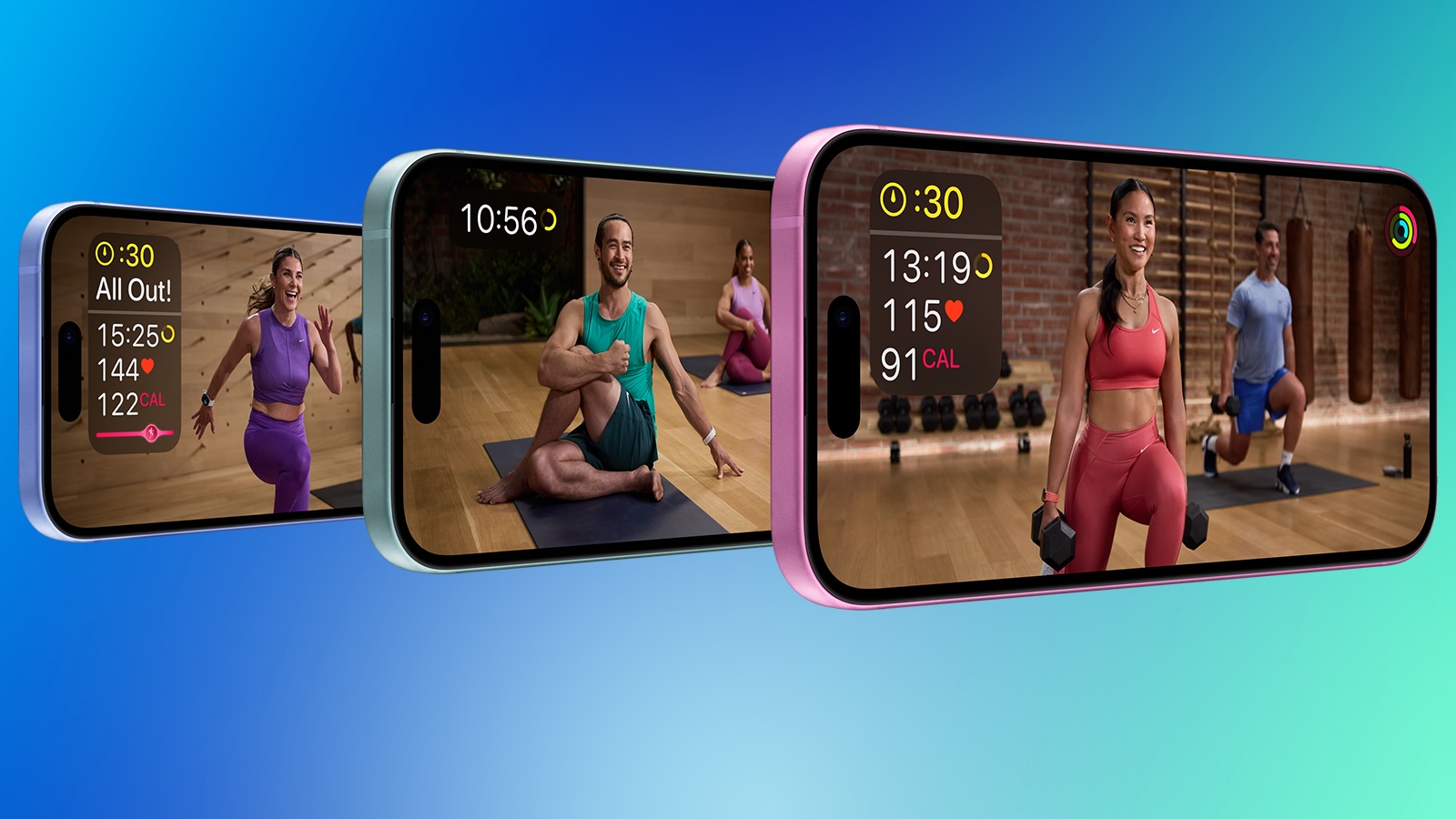
Apple Highlights New Fitness+ Content

Apple introduced new content in its Fitness+ subscription service this week, including a new menopause-focused workout program.


Fitness+ gains "Strong Through Menopause," a progressive three-week program featuring weekly Yoga and Strength workouts designed to help users navigating perimenopause and menopause build strength, improve balance and mobility, and reduce stress. A new episode of Time to Walk also features actor Busy Philipps, who shares stories from her life including her own experience with perimenopause.

The program complements perimenopause and menopause tracking support introduced in Cycle Tracking with watchOS 27 and iOS 27.

‌iOS 27‌ also brings several broader updates to the Health and Fitness apps. Users can now sort by completed Fitness+ workouts, route maps in the Fitness app are said to be more accurate following workouts, and step count is now synced between the Health and Fitness apps.
This article, "Apple Highlights New Fitness+ Content" first appeared on MacRumors.com

Discuss this article in our forums
  •  

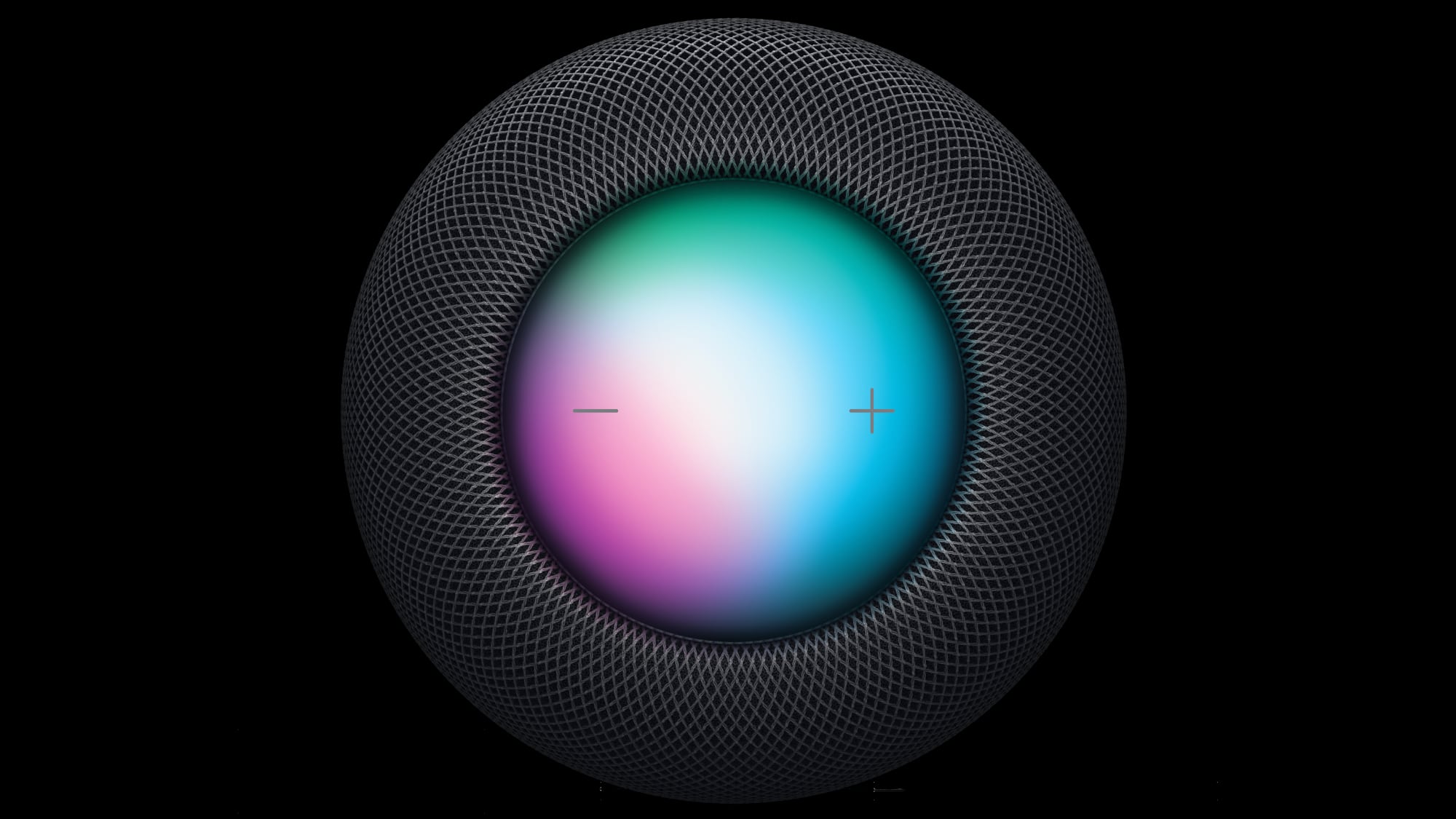
Apple Cut Frequencies in WWDC Keynote to Prevent Siri Activations

Apple appears to have modified the audio of this week's WWDC 2026 keynote video whenever "Siri" was mentioned, apparently in an effort to prevent viewers' nearby devices from waking inadvertently during the presentation.


The technique was spotted by observers on X, who shared spectrogram screenshots showing clear gaps in those specific frequency ranges coinciding precisely with instances of the ‌Siri‌ name throughout the video. Apple appears to have cut out the 3kHz, 4kHz, 5kHz, and 6kHz frequency bands.

fun fact: tijdens de keynote hakt Apple een stukje 3k, 4k, 5k en 6kHz eruit wanneer ze "Siri" zeggen, zodat niet iedereens HomePods terug beginnen te praten 🗣️🚫 pic.twitter.com/x13WbNPztr

— luuk de leest (@luuk58) June 8, 2026


The approach is designed to defeat wake-word detection, which relies on recognizing the acoustic profile of phrases like "‌Siri‌" and Hey ‌Siri‌." By surgically removing the frequencies that carry key phonetic energy in the word "‌Siri‌," Apple can reduce the likelihood that HomePods, iPhones, iPads, and Macs in a viewer's home will trigger while the keynote plays back.

The technique does not appear to have been fully effective, however, as multiple viewers reported their devices activating anyway during the stream.

In 2017, Amazon was found to use a similar approach in its Alexa TV commercials, notching out frequencies to avoid triggering Echo smart speakers in viewers' homes.
Related Roundup: WWDC 2026

This article, "Apple Cut Frequencies in WWDC Keynote to Prevent Siri Activations" first appeared on MacRumors.com

Discuss this article in our forums
  •  

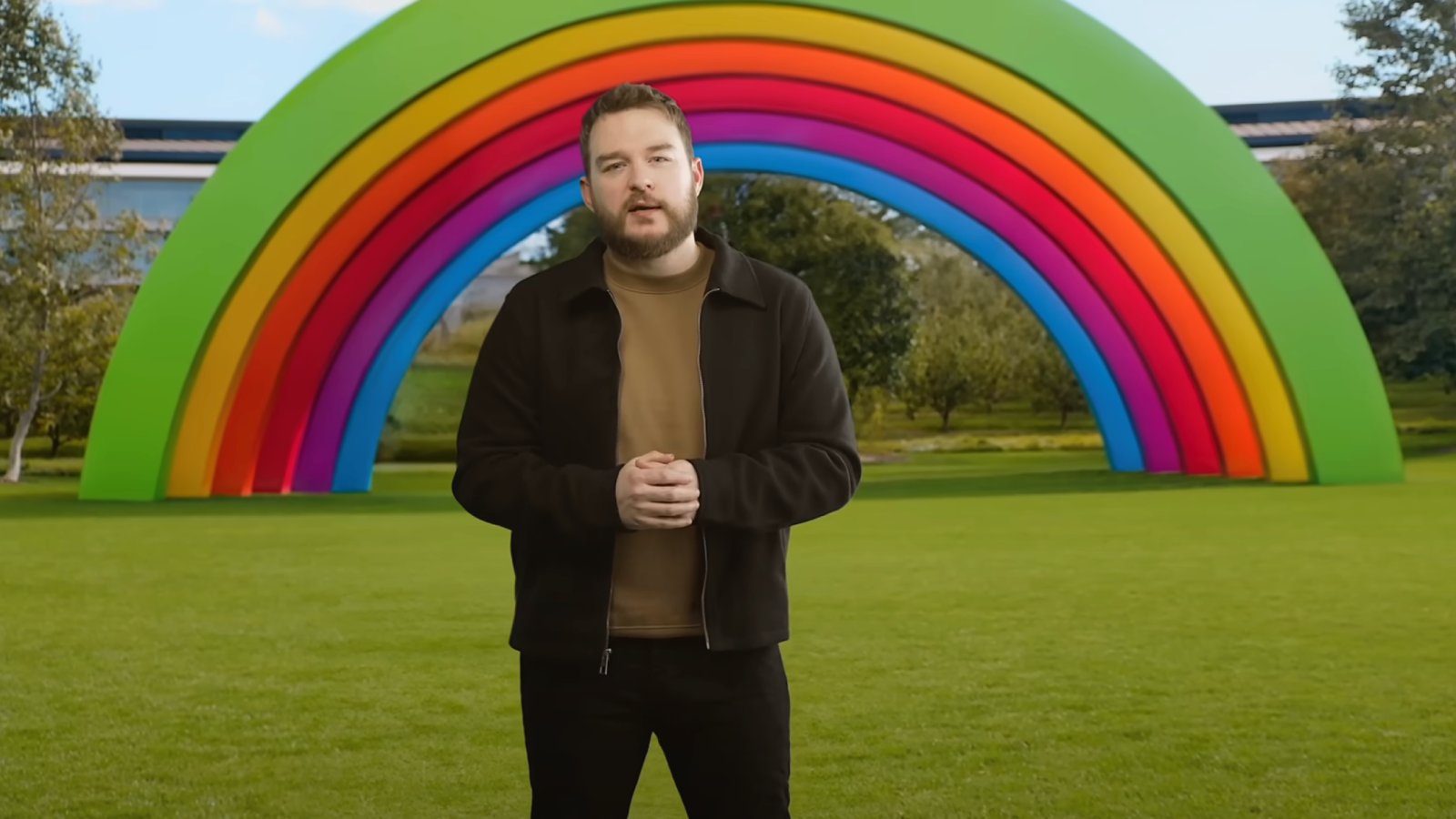
Craig Federighi Swipes at AI Rivals Who Are 'Racing Forward' Without Regard for Users

Apple software chief Craig Federighi used the WWDC 2026 keynote to draw a pointed contrast between Apple's approach to artificial intelligence and the broader industry, suggesting that some competitors are developing AI without meaningful consideration for the people using it.


During Monday's ‌WWDC 2026‌ keynote, Federighi said:

AI is incredibly powerful technology. Still, some appear to be racing forward, seemingly pursuing AI for the sake of AI, without clear regard to the people, all of us, that it's ultimately meant to serve.


The remarks appeared to be aimed squarely at rivals including OpenAI, Google, and Meta, all of which have aggressively shipped AI products and services over the past two years. Federighi argued that Apple's conservative approach is more useful because it draws on personal context.

The comments arrived alongside Apple's unveiling of Siri AI, a ground-up rebuild of its digital assistant powered by the next generation of Apple Intelligence. Federighi described the effort as "a big leap forward," with "an innovative architecture that unlocks a new Siri across platforms."

Apple said it has created a second version of its Apple Foundation Models capable of understanding speech and reading text and images, with a new system orchestrator coordinating capabilities across its platforms.

The implicit dig at competitors carries some irony given Apple's own recent history with AI. The company spent the better part of two years struggling to deliver a meaningfully improved ‌Siri‌, and earlier this year parted ways with John Giannandrea, its former head of AI and machine learning, following a prolonged restructuring of its AI teams.

Federighi pushed back against the idea that the new ‌Siri‌ is simply another "bolted-on chatbot," saying the company sees it as "an integral but conversational tool that you use in the moment." Privacy, he said, is "non-negotiable," with data used only to execute a user's request.
This article, "Craig Federighi Swipes at AI Rivals Who Are 'Racing Forward' Without Regard for Users" first appeared on MacRumors.com

Discuss this article in our forums
  •  

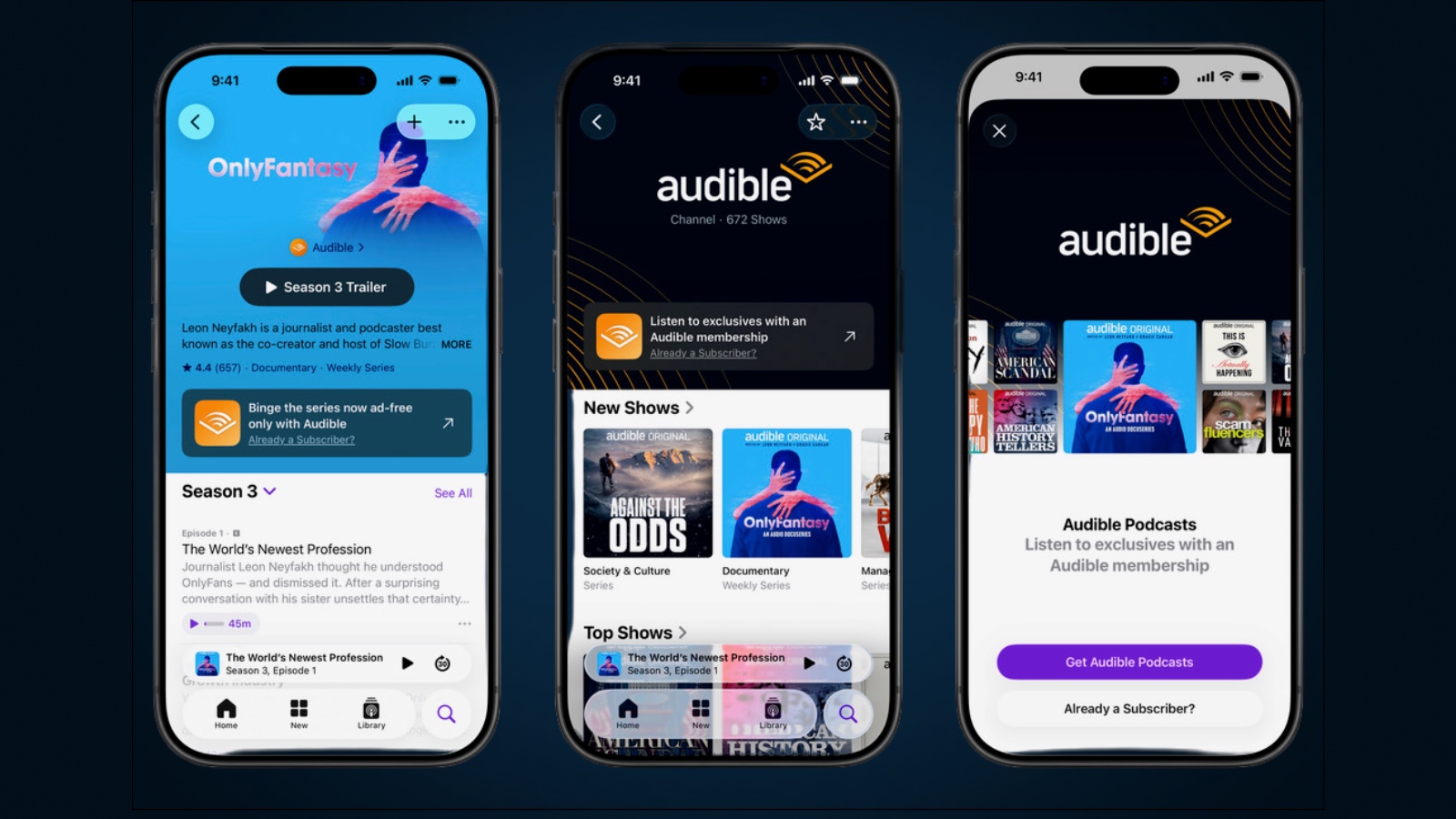
Audible Launches Connected Subscription for Apple Podcasts

Audible last month launched a connected subscription that lets members stream nearly 700 premium podcast titles directly within Apple Podcasts, available across 135 countries.


The integration gives Audible members ad-free access to an expansive catalog of Audible Originals spanning true crime, investigative journalism, celebrity-led audio dramas, and personal growth categories.

Titles available at launch include award-winning series like Dr. Death, American Scandal, Business Wars, Dying for Sex, and Hysterical, Reinvent Your Life with Mel Robbins, The Prophecy, and The Big Lie. Marshall Lewy, Head of Audible Content for North America, said:

By bringing Audible's distinctive catalog to Apple Podcasts, we're allowing members to find their favorite Originals where many of them already listen to their podcasts. And by making select shows and episodes available widely, we have the opportunity to introduce new listeners to the extraordinary audio storytelling Audible offers right inside the Apple Podcasts app.


Existing Audible members can access the integration by opening ‌Apple Podcasts‌, where their subscription should connect automatically, or by searching for any Audible premium show and linking their account at no additional cost.

New subscribers can sign up directly through ‌Apple Podcasts‌ by searching for an Audible show such as Dr. Death and subscribing via the Audible app. Membership also unlocks standard Audible benefits including one audiobook per month and an unlimited listening library.

The full Audible channel on Apple Podcasts is available now in over 135 countries. Audible says the integration is expected to roll out to members in Australia, Japan, and Canada this month.
This article, "Audible Launches Connected Subscription for Apple Podcasts" first appeared on MacRumors.com

Discuss this article in our forums
  •  

AAPL Stock Slides Following WWDC, But Analysts Broadly Raise Targets

Apple shares have lost roughly $25 per share this week following the company's WWDC 2026 keynote, though a wave of upward analyst price target revisions suggests Wall Street's longer-term view of Apple remains constructive.


According to Tech Times, AAPL hit an all-time intraday high of around $317.40 on June 8 during the unveiling of Siri AI, before reversing to close at $301.54, down 1.89%. The slide continued over the following two days, with shares falling to around $290.55 by the close of June 10. The stock is trading around $292 as of writing.

The drop has been attributed in part to mixed investor reaction to ‌Siri‌ AI. ‌Siri‌ AI will not launch on iPhone and iPad in the European Union due to compliance issues, and the feature faces a similarly delayed rollout in China due to regulatory hurdles. According to Yahoo Finance, Morgan Stanley estimates those two excluded markets together account for roughly 35% of trailing 12-month iPhone shipments.

The analyst community's response to this year's WWDC has been broadly positive, with several firms raising their price targets. TheStreet reports that TD Cowen raised its Apple price target to $350 from $335, Maxim Group raised its target to $350 from $310, and Morgan Stanley raised its target to $360, all maintaining Buy or Overweight ratings.

JPMorgan reiterated its Overweight rating with a $325 price target, while Jefferies held its target at $299.88. According to Investing.com, Bernstein reiterated an Outperform rating and a $350 price target, while UBS maintained a Neutral rating with a $296 target. Maxim Group increased its fiscal 2027 projections on the expectation that improvements in AI-related products will serve as a catalyst for both services and hardware sales.

TradingKey characterized the post-WWDC selloff as a classic "buy-the-rumor, sell-the-news" reaction, noting that Apple's second quarter results of $111.2 billion in revenue and a $31 billion services all-time high remain unchanged by any of the WWDC announcements.

The September iPhone event will be the next major test for investors and the first keynote under incoming CEO John Ternus.
Related Roundup: WWDC 2026

This article, "AAPL Stock Slides Following WWDC, But Analysts Broadly Raise Targets" first appeared on MacRumors.com

Discuss this article in our forums
  •  

Apple Agrees to Let Jon Prosser Formally Contest iOS 26 Leak Lawsuit

Apple and leaker Jon Prosser have jointly asked a federal court to set aside the default judgment entered against him last October, with Prosser agreeing to hand over documents he had thus far failed to fully produce.


Apple filed suit against Prosser and Michael Ramacciotti in July 2025, alleging misappropriation of trade secrets after Prosser published videos showing recreated renderings of iOS 26's Liquid Glass design months before Apple's announcement. According to the complaint, Ramacciotti secretly accessed the iPhone of Apple software engineer Ethan Lipnik and showed Prosser a pre-release build of the software in exchange for payment. Lipnik was subsequently fired.

Prosser missed his deadline to formally respond to the complaint, prompting Apple's lawyers to file a request for a default judgment. The court entered the default in October 2025, after which Prosser told The Verge he had "been in active communications with Apple since the beginning stages of this case."

The situation did not improve significantly in the months that followed. A joint status report filed in April showed Prosser was still failing to comply with discovery, prompting Apple to seek a court order to compel him. The filing noted that while Prosser had provided some responsive materials, he had failed to fully respond to certain requests and had not responded at all to others.

This stood in contrast to Ramacciotti, who allowed Apple to forensically review an additional device, agreed to supplement his interrogatory responses, and offered to sit for a follow-up deposition, with Apple and Ramacciotti having been informally discussing a potential settlement since at least October.

Prosser did not retain legal counsel until April 14, 2026. According to the joint stipulation filed June 9, Apple served Prosser with subpoenas in January 2026 seeking documents and a deposition related to its claims against Ramacciotti, but Prosser had not fully responded to the document subpoena and had not sat for a deposition.

As part of the agreement, Prosser committed to producing all materials responsive to Apple's document subpoena by June 9, 2026, and to sit for a deposition by no later than June 16, 2026. Apple stated it believes setting aside the default is "the most efficient way to advance this case without further delay."

The stipulation still requires approval from the U.S. District Court for the Northern District of California. If approved, Prosser would have ten days from the date of the order to file a responsive pleading to Apple's complaint, giving him a formal opportunity to contest the allegations for the first time.
Related Roundups: iOS 26, iPadOS 26
Related Forum: iOS 26

This article, "Apple Agrees to Let Jon Prosser Formally Contest iOS 26 Leak Lawsuit" first appeared on MacRumors.com

Discuss this article in our forums
  •  

Apple Bucks Smartphone Slump With Production Surge

A new report from TrendForce claims Apple's iPhone production surged 19.7% year-over-year in the first quarter of 2026, even as the broader global smartphone market contracted 1.7% over the same period.


According to TrendForce, Apple produced approximately 60.2 million iPhone units in the first quarter, placing it second among global smartphone brands. Samsung retained the top spot with approximately 62.6 million units, a 2.3% year-over-year increase. TrendForce attributes Apple's strong output partly to the launch of the iPhone 17e, in addition to ongoing production ramp-up for the broader iPhone 17 lineup.

The figures reflect Apple's relative resilience in a market increasingly burdened by rising memory component costs. TrendForce says Apple is better positioned than most competitors to absorb those higher costs without sacrificing profitability, and suggests the company is more likely to prioritize market share growth during the current downturn as it lays the groundwork for its expanding software and services business. Apple is one of the few major smartphone brands that has not raised prices in response to the memory price surge.

The picture is considerably grimmer elsewhere. Chinese brands Oppo, Xiaomi, and Vivo ranked third through fifth globally with 29.5 million, 26 million, and 22 million units respectively, with TrendForce warning that all three face significant uncertainty around their 2026 production plans as surging memory costs weigh on profitability. Transsion, which ranked sixth at approximately 19.8 million units, is said to be particularly exposed given its heavy concentration in entry-level and budget segments where margins are already thin.

Looking ahead, TrendForce forecasts global smartphone production will decline approximately 16.2% year-over-year to 1.051 billion units across 2026. The firm warns that figure could worsen if memory prices remain elevated and brands are forced to pass costs on to consumers through repeated retail price increases.
This article, "Apple Bucks Smartphone Slump With Production Surge" first appeared on MacRumors.com

Discuss this article in our forums
  •  

Apple Introduces Major App Store Subscription Overhaul at WWDC 2026

Apple announced a sweeping set of new subscription tools for App Store developers at WWDC 2026, including cross-developer subscription bundles, group and enterprise purchasing options, retention tools, and a streamlined submission workflow.


Subscription Bundles and Suites


The main change is a new Bundle and Suite system that lets developers partner with each other to offer combined subscriptions spanning multiple apps for the first time. Previously, developers could only bundle subscriptions within their own catalog. With Bundles, subscribers can purchase access to multiple subscriptions in a single transaction rather than buying each individually.

Suites go a step further, offering a set of subscriptions that are not available standalone, purchasable as a single subscription. Apple says more details on how to request Bundle and Suite functionality will be available later this summer.

The move mirrors strategies common among streaming services. For example, Apple TV itself offers Peacock as an add-on for $2 per month, and subscription bundles are generally associated with stronger user retention than standalone plans.

Retention Messaging


Retention Messaging is a new tool that lets developers reach subscribers at the moment they choose to cancel. Developers can deliver custom messaging about a subscription's value alongside imagery and even attach a special offer, without adding friction to the cancellation flow.

Retention Messages can be configured in ‌App Store‌ Connect or via a new Retention Messaging API for more direct, real-time interaction with subscribers. The feature is coming this fall.

Group and Volume Purchasing


Apple is also introducing two new ways for developers to sell subscriptions beyond individual consumers. Group Purchases let a single subscriber buy multiple seats and invite others to join, with Apple handling the invitation flow. Each member joins from their own account, making it straightforward to manage who is in the group.

Volume Purchasing makes subscriptions available to enterprise and education buyers through Apple School Manager and Apple Business, fitting into existing device and identity management workflows.

Volume Purchasing is coming this fall and Group Purchases will arrive later this year.

12-Month Commitment Plans


Monthly subscriptions with a 12-month commitment, which offer a more affordable payment option for subscribers, are now available. Subscribers can view their completed and remaining payments in their Apple Account, and Apple will send email reminders ahead of renewal dates, with push notifications available for those who have opted in.

The payment type is available on iOS 26.4, iPadOS 26.4, macOS Tahoe 26.4, tvOS 26.4, and visionOS 26.4 or later, everywhere except the United States and Singapore.

Streamlined Submission Workflow


There is also an overhauled in-app purchase submission workflow in ‌App Store‌ Connect. Developers can now group multiple in-app purchases, including subscriptions, into a single submission, or combine them with In-App Events, custom product pages, and product page optimization tests, with review status and App Review messages all visible in one centralized view.

Support for ‌App Store‌ Connect's web interface and the ‌App Store‌ Connect API is coming later this summer.
Related Roundup: WWDC 2026

This article, "Apple Introduces Major App Store Subscription Overhaul at WWDC 2026" first appeared on MacRumors.com

Discuss this article in our forums
  •  

WWDC 2026 Keynote Marked a Major Departure From Previous Years

Apple's WWDC 2026 keynote broke from a longstanding format tradition, abandoning the platform-by-platform structure that has defined the annual developer conference for years in favor of a theme-driven presentation.


Previous WWDC keynotes were organized by operating system. Last year's event walked through iOS, watchOS, tvOS, macOS, visionOS, and iPadOS in sequence before closing with a developer-focused segment. This year, Apple scrapped that structure entirely, dividing the keynote into three broad themes instead: Platform improvements, trust and safety, and Apple Intelligence and Siri.

The change appears to reflect the degree of cross-platform integration Apple has achieved this cycle, which has been growing for years. When the same features land simultaneously across iPhone, iPad, Mac, and Apple Watch, addressing each platform individually no longer makes obvious sense. While Apple has promoted tight ecosystem integration for years, 2026 seems to be the first year that integration is deep enough to make the old format feel arbitrary.

The restructuring was not the only departure from form. Apple devoted more than ten minutes of keynote time to child safety and screen time, an unusually prominent segment that could be seen as a direct response to growing regulatory pressure on tech companies. The new parental controls include mandatory child accounts for users under 13, granular app access permissions, and an Ask to Browse feature requiring children to request parental approval before visiting new websites in Safari.

The AI demonstrations in the keynote itself also felt markedly different from their initial look in 2024. Two years ago, Apple did not allow press or attendees to try the new Siri after the event, and The Information later reported that what Apple showed on stage was not a functional demo but an elaborate concept video. This year, the Siri AI demonstrations appeared to run in real time, with presenters visibly waiting for responses and navigating results as they came in.

Apple also held live, in-person hands-on demos for media after the keynote, a format that has not featured at WWDC for years, giving the event something of a pre-pandemic feel that stood in stark contrast to the slick, wholly pre-recorded presentations the conference has leaned on since 2020. Following the keynote, Apple held a post-keynote "Tech Talk" session with Craig Federighi, where members of the media could put questions to him directly in a more conversational setting.

The visual style of the keynote also differed noticeably from previous years. Apple appeared to move away from the heavily stabilized steadicam footage, with much of this year's presentation visibly shot handheld, giving the keynote a more natural look.

Did you prefer the format of this year's WWDC? Let us know in the comments.
Related Roundup: WWDC 2026

This article, "WWDC 2026 Keynote Marked a Major Departure From Previous Years" first appeared on MacRumors.com

Discuss this article in our forums
  •  

Apple Maps to Get These 10 New Features in iOS 27

Apple Maps is getting a range of new features in iOS 27, headlined by an upgraded Flyover experience that uses AI to improve the realism and detail of its aerial imagery.


Flyover is a longstanding feature of ‌Apple Maps‌ and lets users explore more than 350 cities in 3D with detailed landmarks, roads, parks, and buildings. Apple described the enhanced Flyover in ‌iOS 27‌ as combining aerial imagery with AI models to produce sharper, more lifelike visuals of cities around the world. In its press release, Apple said the update will make details clearer, from the shapes of individual trees to the way light reflects off the glass of skyscrapers.

A new Local Lists feature is also coming to ‌Apple Maps‌ users in the U.S. The feature surfaces curated collections of nearby places based on what's trending locally, including dining spots and places to take kids. Apple says all insights are derived with privacy in mind and are never tied to individual users.

‌iOS 27‌ also expands the Suggested Places feature that arrived in iOS 26.5, allowing users to swipe through more recommendations rather than being limited to two. A Trending Restaurants section will appear in the search screen, and natural language search is expanding to cover routing specifics. A Parked Car widget is coming to the Smart Stack, making it easier to locate a parked vehicle, and Offline Maps is said to be getting update improvements, though Apple has not detailed exactly what those entail.

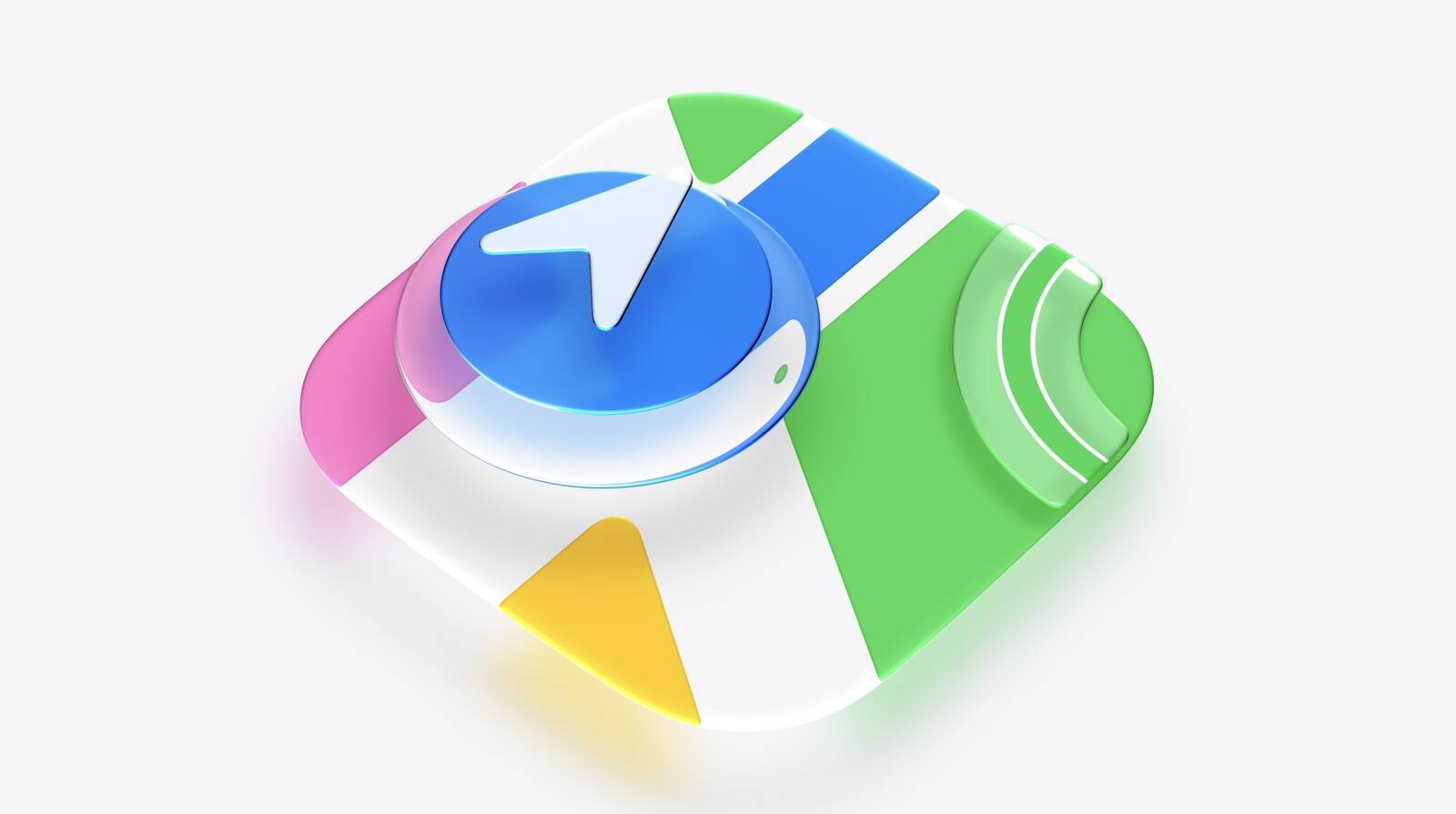
Existing features including Visited Places and Guides are expanding to more countries in ‌iOS 27‌. The Maps app icon has also been refreshed with a new, multi-layered Liquid Glass design.
Related Roundups: iOS 27, iPadOS 27

This article, "Apple Maps to Get These 10 New Features in iOS 27" first appeared on MacRumors.com

Discuss this article in our forums
  •  

Apple Fights Back Against Epic's Bid to Kill Supreme Court Appeal

Apple has filed a 12-page response to Epic Games' attempt to have its Supreme Court petition dismissed, arguing that Epic's own filing "confirms the need for review."


Epic filed a 35-page opposition on June 4, 2026, urging the Supreme Court to reject Apple's appeal. Apple's response takes aim at two central arguments Epic made in that filing.

On the question of anti-steering, Apple says Epic is mischaracterizing the scope of the injunction against it. According to Apple, the order only restricted specific anti-steering practices and did not address App Store commissions, making Epic's framing an attempt to rewrite the ruling rather than an accurate description of it.

The second dispute involves a 2025 Supreme Court precedent, "Trump v. CASA, Inc." Epic says Apple is wrongly claiming an exemption from it. Apple responds that the earlier ruling explicitly states CASA "has no bearing" on antitrust cases, which this is, making Epic's argument moot.

The filing is the latest exchange in a dispute dating back to 2020, when Epic deliberately triggered a conflict with Apple over ‌App Store‌ payment rules. Apple won the vast majority of the original case in 2021, but lost on anti-steering, with Judge Yvonne Gonzalez Rogers ordering Apple to allow developers to link to external payment options. Apple complied, but charged a 27% commission on link-out transactions, leading few developers to adopt it.

In April 2025, Gonzalez Rogers found Apple in willful violation and barred it from charging any commission on external links. The judge also accused Apple VP of finance Alex Roman of giving testimony "replete with misdirection and outright lies" about when Apple decided on the 27% fee, and referred both Roman and Apple to federal prosecutors for a potential criminal contempt investigation. Apple dropped link fees and appealed.

In December 2025, the Ninth Circuit agreed Apple had violated the injunction but sent the case back to district court to determine a reasonable commission rate. Apple petitioned the Supreme Court in May, questioning whether the contempt finding was proper and whether the injunction should apply to all developers nationwide rather than just Epic.

An attempt to pause fee proceedings during that process was later reversed after Epic challenged it. Fortnite also returned to the App Store worldwide in May, with Epic CEO Tim Sweeney declaring the start of the "final battle" of the dispute.

The Supreme Court has indicated it could decide whether to accept Apple's appeal as early as June, though a final ruling remains many months away regardless.
This article, "Apple Fights Back Against Epic's Bid to Kill Supreme Court Appeal" first appeared on MacRumors.com

Discuss this article in our forums
  •  

The MacRumors Show: Siri AI, Apple Intelligence in Apps, and More at WWDC 2026

On this week's special episode of The MacRumors Show, we talk through all of the major announcements Apple unveiled at WWDC 2026, including Siri AI, new Apple Intelligence features in apps, and system-wide performance and design improvements.


Apple framed the keynote around three areas: platform improvements, Trust and Safety, and a sweeping overhaul of ‌Apple Intelligence‌ and ‌Siri‌. Developer betas of all six operating systems are available now, with a public beta expected in July and a general release in September.

Liquid Glass received a series of improvements in response to user feedback, with Apple reworking the foundations of how the translucent design language is constructed to deliver more uniform refraction and improved contrast. A new system-wide opacity slider lets users dial transparency anywhere from completely clear to fully tinted. App icons also gain sharper definition with additional layering. macOS Golden Gate receives the same Liquid Glass refinements with particular attention to the transparency and shadow issues most pronounced on the Mac.

A significant chunk of the keynote was devoted to performance improvements across all platforms. iPhone and iPad apps launch up to 30% faster, new photos appear in iCloud Photos up to 70% faster after capture, AirDropped photos transfer up to 80% faster, and file transfers in Files are up to 50% faster. A redesigned CPU scheduler reportedly makes older iPhones feel more meaningfully responsive, and iOS 27 supports every iPhone compatible with iOS 26, going back to the iPhone 11.

The search index has been rearchitected to be more stable and comprehensive, with new content indexed almost immediately and a new ranking system in Mail to surface more relevant results. iCloud Shared Albums also gain support for contributions from Android and Windows users.

Apple announced an expanded set of parental controls and Screen Time tools, giving parents more granular ability to monitor and approve what children are doing on-device and within apps, with changes the company said are grounded in expert research.

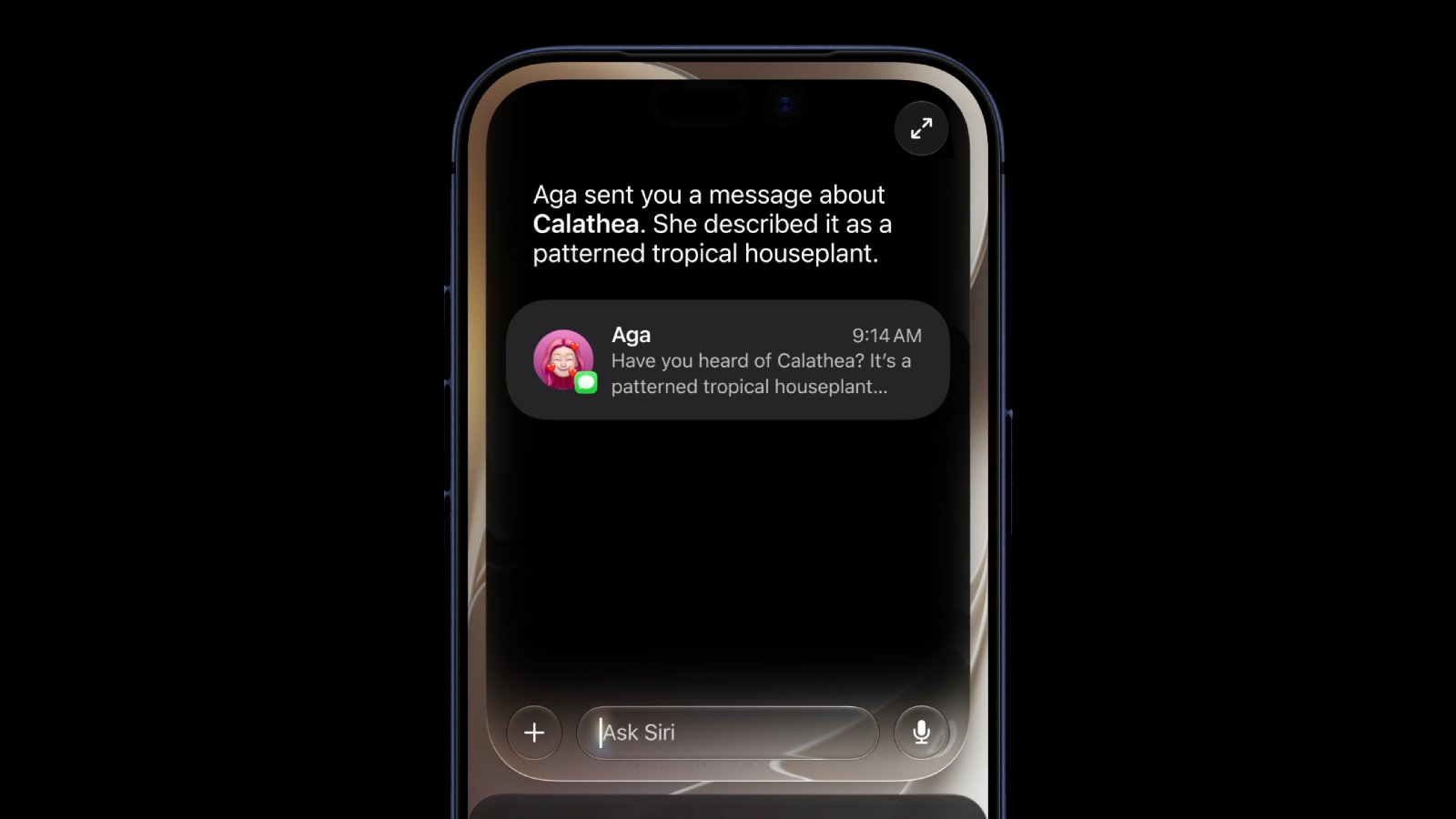
The centerpiece of the keynote was Siri AI, a ground-up rebuild of Apple's personal assistant built on new Foundation Models co-developed with Google using Gemini technologies. Apple described the result as a profoundly more capable assistant supporting natural back-and-forth conversation, personal context understanding across all on-device content, onscreen awareness, image understanding, and broad world knowledge via web access.

‌Siri‌ now has a dedicated app for browsing and continuing conversations, which sync across devices via ‌iCloud‌. On the iPhone, ‌Siri‌ is embedded in the Dynamic Island and on the Mac it lives inside Spotlight. A new customizable voice model is available at setup. ‌Siri‌ AI extends to CarPlay and AirPods as well.

Visual Intelligence has been folded into a dedicated ‌Siri‌ mode in the Camera app, with new capabilities including nutritional information from a photo of food and bill-splitting from a receipt snap. ‌Siri‌ can now write anywhere text input is available, generate first drafts from natural language descriptions, give feedback on existing writing, and ‌Apple Intelligence‌ adds automatic proofreading system-wide.

Apple said ‌Siri‌ AI uses on-device processing and Private Cloud Compute, with cloud processing running on Apple's servers using Google's infrastructure, but handled such that data remains inaccessible to Apple or third parties. ‌Siri‌ AI is free, with some features such as image generation carrying daily usage limits and expanded access available through most ‌iCloud‌+ plans.

Users must join a waitlist to access the new ‌Siri‌. ‌Siri‌ AI will not be available in the EU or China at launch and launches in English only.

Safari gains tab grouping, with ‌Apple Intelligence‌ analyzing pages and organizing open tabs without manual intervention, and a new webpage monitoring feature that notifies users when a page is updated. Safari will also let users describe what they want a browser extension to do in natural language, with ‌Apple Intelligence‌ generating one accordingly, and can automatically change compromised passwords, updating them in the Passwords app.

Shortcuts gains natural language creation, so users can describe a workflow and have ‌Apple Intelligence‌ build it automatically. Messages and Mail both gain contextual one-tap suggestions for actions such as creating a reminder or inserting a photo. Calendar adds natural language event creation and can automatically update recurring events when their pattern changes.
 
Photos gains an improved Clean Up tool with more realistic infill, a new Extend tool that adds breathing room around images or straightens a crooked horizon without cropping, and Reframe, which uses on-device spatial models to adjust perspective. Image Playground is updated with a new generative model capable of photorealistic output, support for editing existing photos, and the ability to circle specific areas for targeted changes.
 
The Home app now aggregates notifications to reduce noise, and uses ‌Apple Intelligence‌ to generate summaries of recorded footage, linking content from multiple cameras together. Maps Flyover has been overhauled with significantly more detail, combining aerial imagery with vision intelligence models.

CarPlay gains new features including video app support, AirPods gain custom EQ settings, Apple Vision Pro gains the ability to turn panorama photos into spatial scenes, and the Health app adds perimenopause and menopause tracking. watchOS 27 brings a dynamic app grid, new gesture controls, and a ‌Siri‌ app to the Apple Watch.

Developer betas of iOS 27, iPadOS 27, macOS Golden Gate, watchOS 27, tvOS 27, and visionOS 27 are available now, with a public beta to follow in July. All of the updates are expected to release to the public in September alongside the new iPhone lineup. The MacRumors Show has its own YouTube channel, so make sure you're subscribed to keep up with new episodes and clips.


You can also listen to ‌The MacRumors Show‌ on Apple Podcasts, Spotify, Overcast, or other podcast apps. You can also copy our RSS feed directly into your player.


If you haven't already listened to the previous episode of The MacRumors Show, catch up to hear our discussion about all of the major rumors surrounding Apple's announcements at WWDC 2026.

Subscribe to ‌The MacRumors Show‌ for new episodes every week, where we discuss some of the topical news breaking here on MacRumors, often joined by interesting guests such as Kayci Lacob, Kevin Nether, John Gruber, Mark Gurman, Jon Prosser, Luke Miani, Matthew Cassinelli, Brian Tong, Quinn Nelson, Jared Nelson, Eli Hodapp, Mike Bell, Sara Dietschy, iJustine, Jon Rettinger, Andru Edwards, Arnold Kim, Ben Sullins, Marcus Kane, Christopher Lawley, Frank McShan, David Lewis, Tyler Stalman, Sam Kohl, Federico Viticci, Thomas Frank, Jonathan Morrison, Ross Young, Ian Zelbo, and Rene Ritchie.

‌The MacRumors Show‌ is on X @MacRumorsShow, so be sure to give us a follow to keep up with the podcast. You can also email us at podcast@macrumors.com or head over to The MacRumors Show forum thread. Remember to rate and review the podcast, and let us know what subjects and guests you would like to see in the future.
Related Roundup: WWDC 2026

This article, "The MacRumors Show: Siri AI, Apple Intelligence in Apps, and More at WWDC 2026" first appeared on MacRumors.com

Discuss this article in our forums
  •  

Here's How Liquid Glass Is Changing in iOS 27

Apple this week detailed a broad set of improvements to Liquid Glass, the translucent design language it introduced last year, spanning readability, personalization, sidebar behavior, and app icons.


Announced at the WWDC 2026 keynote and elaborated on further at the Platforms State of the Union, the changes address feedback that followed last year's rollout by making adjustments to the underlying foundations of how Liquid Glass is constructed.

At the core of the updates is a tuning of how the material handles content behind it. Apple has adjusted Liquid Glass so it more effectively diffuses complex content, improving readability throughout the system. To add greater depth and visual separation, Apple has also introduced a darkened edge around Liquid Glass elements, along with brighter specular highlights.

The headline change for users is a new transparency slider in Settings, which allows the look of Liquid Glass to be adjusted anywhere from ultra clear to fully tinted. The control goes considerably further than a binary toggle, giving users granular control over how much the glass effect appears across the system.

Apps already using Liquid Glass will gain many of these improvements automatically when running on iOS 27, without needing to be recompiled. Liquid Glass also adapts to accessibility settings such as Reduce Transparency and Increase Contrast.

Apple has also addressed behavior when content scrolls under floating bars. A uniform toolbar now appears across the top in these situations, keeping text legible while improving contrast. The effect is applied automatically for standard toolbars and can be further adjusted using the existing scroll edge effect APIs.

Icon rendering has been updated substantially. Apple says icons will now appear sharper and more defined, with new refraction features that can be selectively applied for added character. On macOS and iPadOS, developers also now have access to an API to surface icons for key app actions in menus, which are hidden by default.

Icon Composer, Apple's dedicated tool for designing app icons, has been updated to support building icons from multiple layers of Liquid Glass. New annotation features allow developers to add refraction or dial in content effects, while an interactive preview shows how a designed icon will look on earlier operating system releases.

Apple has also made a number of changes specific to macOS 27 Golden Gate, including further sidebar refinements and window corner radius updates. For a full breakdown of how Liquid Glass is evolving on the Mac, see our dedicated article.
Related Roundups: iOS 27, iPadOS 27

This article, "Here's How Liquid Glass Is Changing in iOS 27" first appeared on MacRumors.com

Discuss this article in our forums

  •  

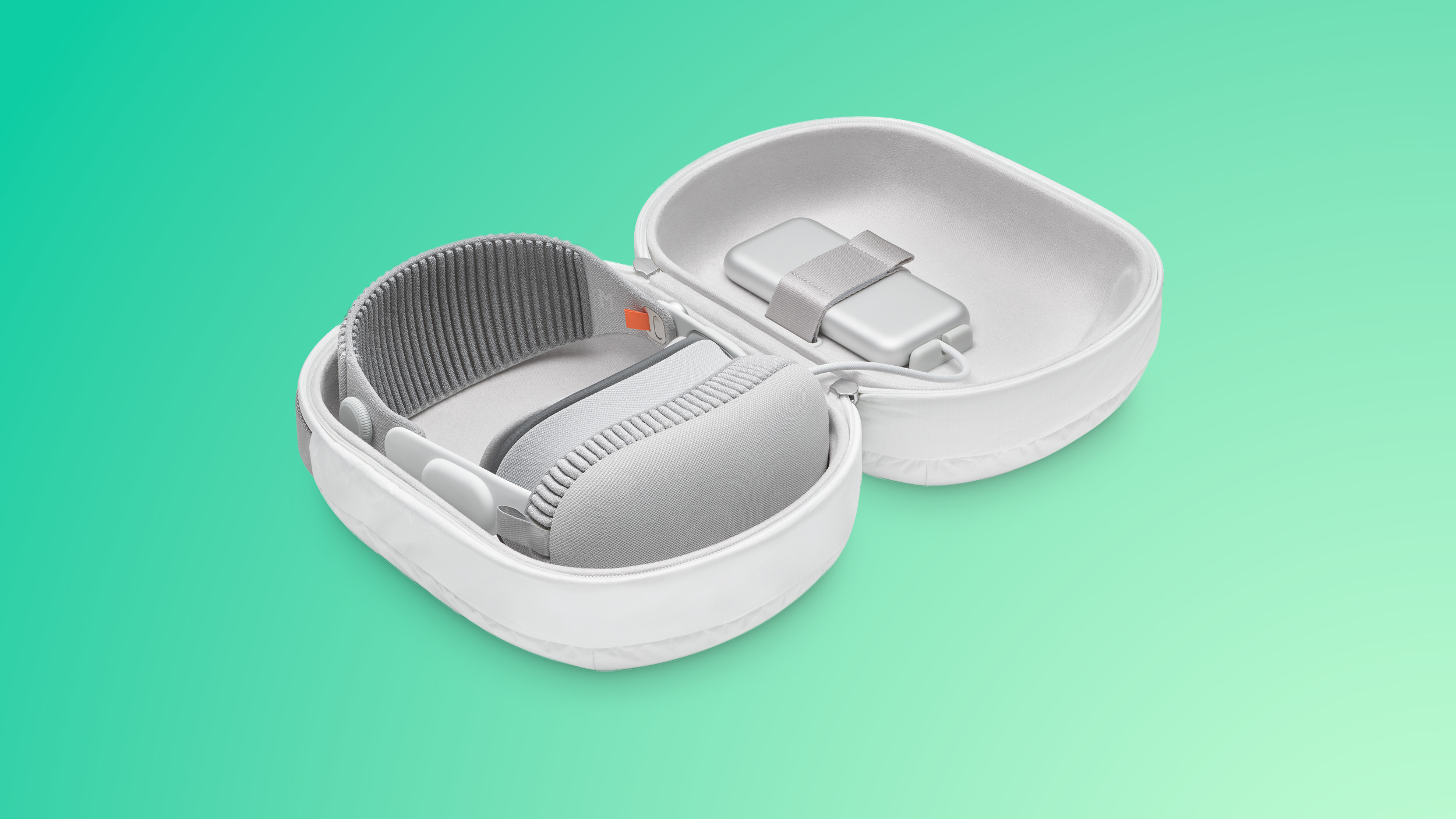
Apple Seemingly Discontinuing Vision Pro Travel Case Around the World

Apple appears to be quietly discontinuing the Vision Pro Travel Case in international markets, with the $199 accessory removed from storefronts across much of the world.


MacRumors can confirm that the Apple Vision Pro Travel Case is no longer listed on Apple's online storefronts around the world, including the UK, Japan, Germany, France, Ireland, and Hong Kong. The Apple Vision Pro accessories page in these countries no longer list the Travel Case at all, and the product web pages that once contained it have been completely removed, which would indicate discontinuation with no plans to revive the product, at least in these countries.

In China and Australia, the listings remain live and visible but the product is grayed out and unavailable to purchase. The case continues to be sold as usual in the U.S., Canada, and the UAE. It is unclear when the changes were made, but they appear to have taken place recently.

The Belkin Travel Bag for Apple Vision Pro remains available for customers in international markets as an alternative. Apple has not announced any changes to the original product's availability.

The move comes as Apple appears to have scaled back its Vision Pro ambitions. The headset's October 2025 M5 refresh reportedly failed to revive meaningful consumer interest, with the $3,499 price tag remaining unchanged despite the chip upgrade. Apple is believed to have sold around 600,000 Vision Pro units in total, and sources have noted an unusually high rate of returns compared to any other recent Apple product.

Following the M5 model's weak reception, the Vision Pro team was reportedly disbanded and its members redistributed across other projects. Vision Products Group chief Mike Rockwell has been leading Apple's Siri team since March 2025. Plans for a cheaper, lighter "Vision Air" were reportedly scrapped in October 2025, and Bloomberg's Mark Gurman said that if a new headset does eventually materialize, he would not expect it for "around two more years at least," given that the bulk of Apple's mixed-reality hardware talent have been moved to other projects.

Supply chain analyst Ming-Chi Kuo reported this month that incoming Apple CEO John Ternus signed off on canceling both a second Vision Pro and the Vision Air, with Apple's focus now shifted to smart glasses. Kuo says two products remain in development: AI-equipped glasses to rival Meta's Ray-Bans, expected in 2027, and a display-equipped set of AR glasses unlikely to arrive before 2029. Gurman separately indicated that a slimmer, cheaper Vision Pro remains a possibility in the long term, but is unlikely to arrive before late 2028 or 2029 at the earliest.

Whether it signals a complete discontinuation or simply a quiet inventory wind-down, it is difficult to not see the apparent phasing out of the Vision Pro Travel Case as part of the device's uncertain future.

Thanks, Ben!
Related Roundup: Apple Vision Pro
Buyer's Guide: Vision Pro (Neutral)
Related Forum: Apple Vision Pro

This article, "Apple Seemingly Discontinuing Vision Pro Travel Case Around the World" first appeared on MacRumors.com

Discuss this article in our forums

  •  

macOS 27 Golden Gate Is the Last to Support Intel Apps via Rosetta 2

macOS 27 Golden Gate is the final version of macOS to feature full Rosetta 2 support, meaning the translation layer that keeps Intel-built apps running on Apple silicon Macs is set to disappear entirely with next year's major macOS release.


Golden Gate is the first macOS release limited to Apple silicon Macs and marks the end of the road for Intel-based hardware, but the implications reach Apple silicon owners too.

Rosetta 2 is the dynamic binary translator Apple introduced alongside the M1 chip in late 2020. It currently allows Intel-compiled apps to continue running on Apple silicon without modification. Apple first confirmed this timeline at its Platforms State of the Union during WWDC 2025:

Rosetta was designed to make the transition to Apple silicon easier, and we plan to make it available for the next two major macOS releases — through macOS 27 — as a general-purpose tool for Intel apps to help developers complete the migration of their apps. Beyond this timeframe, we will keep a subset of Rosetta functionality aimed at supporting older unmaintained gaming titles, that rely on Intel-based frameworks.


With macOS 27 Golden Gate now in beta testing, that commitment has reached its final stage. Apple silicon Mac owners running Intel-only apps have one macOS release left before those apps stop working.

Apple began warning users ahead of the cutoff. With macOS 26.4 and 26.5, a system alert surfaces whenever a user launches an Intel-only app, flagging that support will end in a future macOS release. The notifications are designed to give both end users and developers time to find or build native Apple silicon alternatives before the deadline arrives.

Most widely used apps have been updated with native Apple silicon support in the six years since the transition was announced in 2020. Developers and organizations still dependent on Intel-only software, however, will need to find replacements or push for updated builds before macOS 28 ships, or simply remain on macOS 27.

Golden Gate also automatically uninstalls Rosetta 2 if you had it installed in macOS 26 Tahoe, so those who need to continue using it will have to reinstall the feature.

macOS 27 Golden Gate is currently in beta for developers, with a public beta coming next month and launch expected in September.
Related Roundup: macOS Golden Gate
Tags: Intel, Rosetta

This article, "macOS 27 Golden Gate Is the Last to Support Intel Apps via Rosetta 2" first appeared on MacRumors.com

Discuss this article in our forums

  •  

Craig Federighi Explains Why Apple Pivoted to a Siri Chatbot App

Apple senior vice president of software engineering Craig Federighi has explained why the company launched a standalone Siri app in iOS 27, after previously characterizing a dedicated chatbot as contrary to its Apple Intelligence strategy.


The new ‌Siri‌ app, announced at WWDC earlier this week, gives users a centralized place to manage and revisit their conversations with ‌Siri‌ AI. Federighi addressed the apparent about-face during a post-keynote discussion for the media at Apple Park this week, responding directly to a question about Apple's prior public stance.

Following WWDC 2025, Federighi and senior vice president of worldwide marketing Greg Joswiak went on a media tour in which they described Apple's approach as weaving ‌Siri‌ into the user's existing workflow rather than offering "a bolt-on chatbot on the side."

Federighi this week said the decision came down to a practical user need to return to and continue past ‌Siri‌ conversations. Apple determined that a home screen app was the most natural affordance on its platform for that purpose, and framed the ‌Siri‌ app as an extension of the system experience rather than a standalone product:

We see Siri not as a separate chatbot, just an unintegrated place you go and chit-chat, but rather as an integral, conversational tool that you use in the moment, deeply integrated into your experience.

Understanding what's on screen, able to interface, not in some separate world, but directly in the document that you're editing and that you want help proofreading, that you want tips on. And so all these experiences are conversational. They are really an extension of your system experience, deeply integrated into your flow.

Now, we did go back and forth on what's the best way, if you want to get back to such a chat that you had, because you want to continue it, you want to reference it, and quite honestly, in our platform, the most natural affordance for any user to go find something like that is to have an app that they can manage on their home screen, launch, and get back to. And so we have a Siri app, and that Siri app just re-embodies those capabilities of that core system experience.


The ‌iOS 27‌ developer beta is available now, though access to the new ‌Siri‌ requires joining a waitlist in Settings, with a public beta expected in July.
This article, "Craig Federighi Explains Why Apple Pivoted to a Siri Chatbot App" first appeared on MacRumors.com

Discuss this article in our forums

  •  

Apple Removes Walkie-Talkie From Apple Watch in watchOS 27 Beta

Apple has quietly removed the Walkie-Talkie app from Apple Watch in the first developer beta of watchOS 27, with the app vanishing from both the app list and Control Center.


Walkie-Talkie launched with watchOS 5 in 2018 and allowed Apple Watch users to send push-to-talk voice messages to one another over Wi-Fi or cellular using FaceTime infrastructure. Unlike traditional walkie-talkies, it worked over any distance, making it a novel way to communicate without picking up an iPhone. Despite the promise of the feature at launch, however, Apple gave it very little attention in the years that followed, with no meaningful updates across eight major watchOS releases.

Shortly after its debut, Apple was forced to temporarily disable Walkie-Talkie following the discovery of a security vulnerability that could allow a user to listen through another person's microphone without their knowledge. Apple resolved the issue with a watchOS 5.3 update, but the episode did little to build lasting enthusiasm for the feature.

The app's removal has not been officially confirmed by Apple, but users running the first ‌watchOS 27‌ beta observe that the app is nowhere to be found, with no option to reinstall it.

‌watchOS 27‌ is still in very early beta testing and there remains a slim possibility Apple could reintroduce the app before the software reaches a public release later this year. Given how little attention the feature has received over the years, however, its removal looks more like a quiet retirement than an accidental omission.

A public beta of ‌watchOS 27‌ is set to arrive next month, followed by launch in the fall, likely alongside new Apple Watch models.
Buyer's Guide: Apple Watch (Caution)
Related Forum: Apple Watch

This article, "Apple Removes Walkie-Talkie From Apple Watch in watchOS 27 Beta" first appeared on MacRumors.com

Discuss this article in our forums

  •  
❌