Lees weergave

Beats Studio Buds Firmware Update Patches Bluetooth Vulnerability

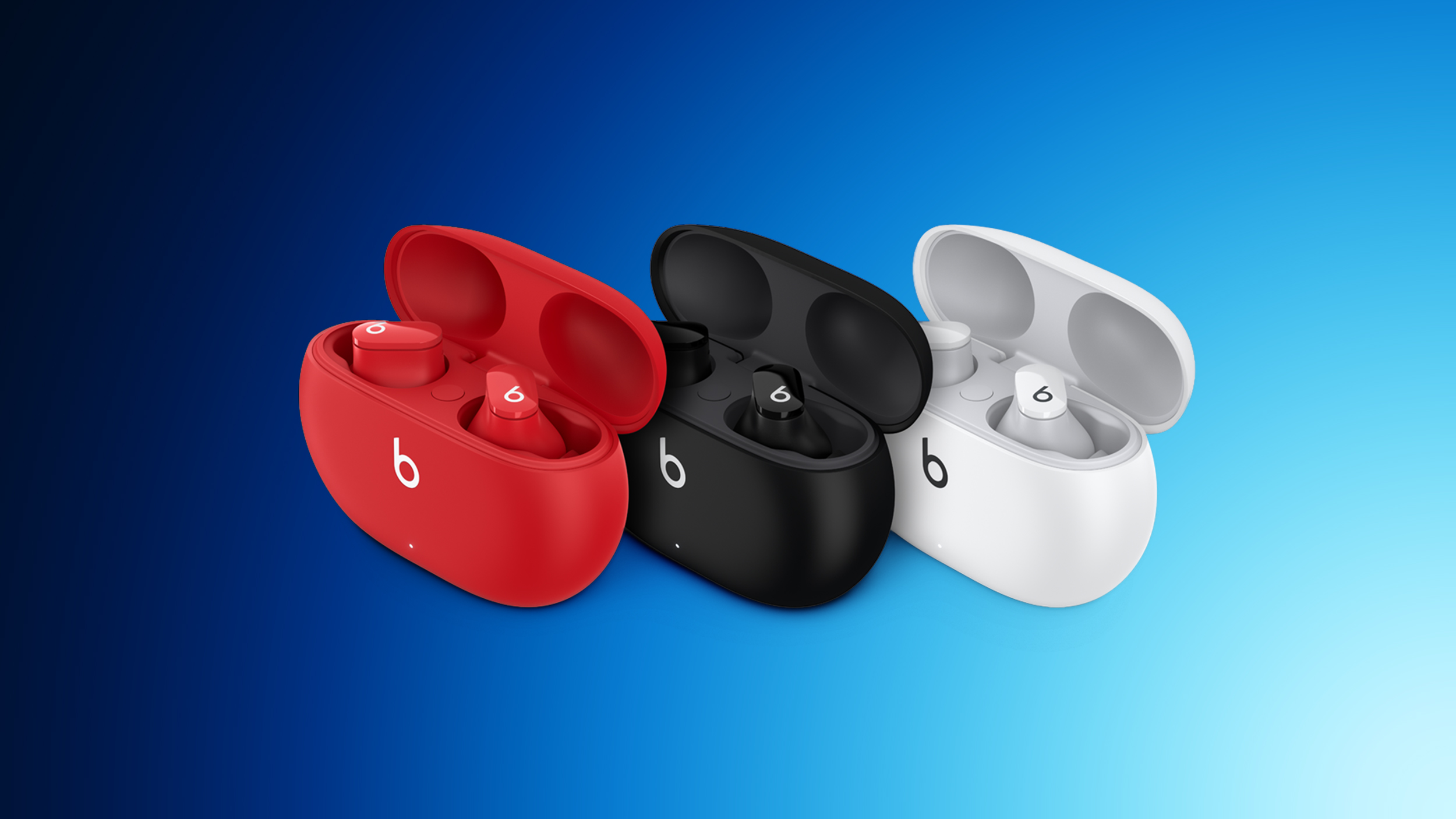
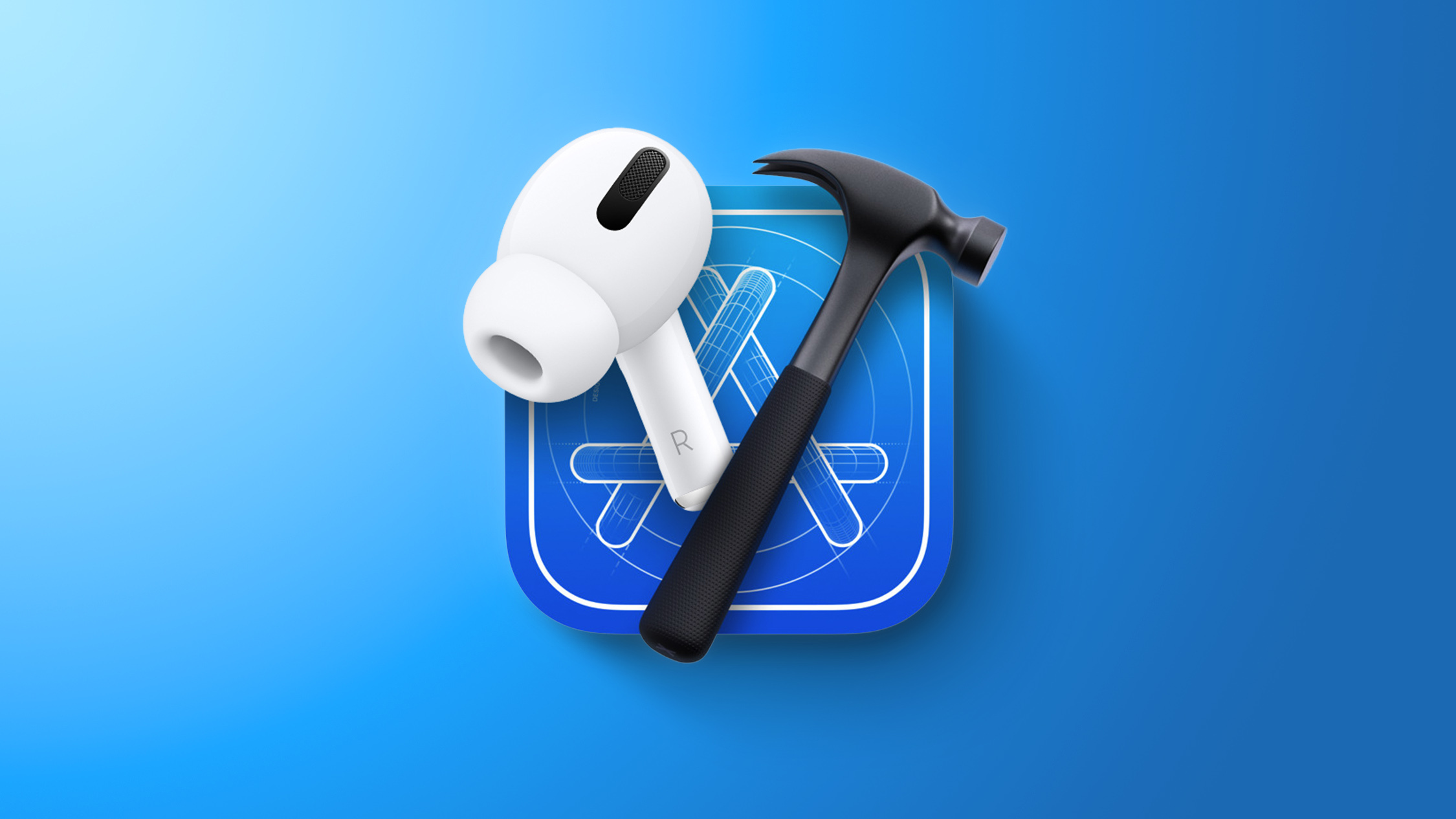
Apple today released a new firmware update for the Beats Studio Buds. The firmware, 1B211, addresses a Bluetooth vulnerability.


Apple's security support document for the update says it fixes a bug that could allow an attacker in Bluetooth range to listen through the microphone of the device.

The vulnerability would only be affected if someone was in Bluetooth range and the Studio Buds were not yet paired and seeking pair requests.

The bug was in open source code, and Apple Software was among the affected projects.

Updating the firmware of the Beats Studio Buds can be done by pairing them with an iPhone, iPad, or Mac, putting them on a charger, and keeping them in Bluetooth range of the paired device.
Tag: Beats

This article, "Beats Studio Buds Firmware Update Patches Bluetooth Vulnerability" first appeared on MacRumors.com

Discuss this article in our forums

  •  

Apple Watch Activity Challenge for International Day of Yoga Coming June 21

Apple is celebrating International Day of Yoga with an Activity Challenge that takes place on Sunday, June 21. To earn the in-app award, Apple Watch owners must record a yoga workout of 10 minutes or more.


Any yoga workout will fulfill the requirement, as long as you select the yoga workout type from the Workout app on the Apple Watch or use an app that adds yoga workouts to the Health app.
Share your practice with the planet on the International Day of Yoga. Record a yoga workout of 10 minutes or more on June 21 to earn this award.

Apple Watch owners who complete the challenge will be rewarded with an award in the Fitness app and a set of animated yoga stickers that can be used in the Messages app.


Apple holds Activity Challenges for various holidays and events throughout the year. Apple previously celebrated Global Running Day on June 3, and will likely have another challenge to celebrate National Parks in August.
Related Roundup: Apple Watch 11
Buyer's Guide: Apple Watch (Caution)

This article, "Apple Watch Activity Challenge for International Day of Yoga Coming June 21" first appeared on MacRumors.com

Discuss this article in our forums

  •  

Apple Releases New Firmware for AirPods Pro 2, AirPods Pro 3 and Beats Studio Buds

Apple today released new firmware for the AirPods Pro 3 and AirPods Pro 2. The firmware has a version number of 8B41, up from 8B40 for the ‌AirPods Pro 3‌ and 8B39 for the AirPods Pro 2.


There is no word on what's included in the new firmware, but Apple has a support document with limited notes. Most updates are limited to bug fixes and performance improvements.

To get the updated firmware, make sure your AirPods Pro are in range of your iPhone, iPad, or Mac and are connected via Bluetooth.

From there, connect your Apple device to Wi-Fi, put your AirPods in the Charging Case, and connect the Charging Case to power. Keep the case closed and wait at least 30 minutes for the firmware update to install. After that, check the version number and repeat the process if the update hasn't been installed.

Apple also released new 1B211 firmware for the Beats Studio Buds, up from 1B204.
Related Roundup: AirPods Pro 3
Buyer's Guide: AirPods Pro (Neutral)
Related Forum: AirPods

This article, "Apple Releases New Firmware for AirPods Pro 2, AirPods Pro 3 and Beats Studio Buds" first appeared on MacRumors.com

Discuss this article in our forums

  •  

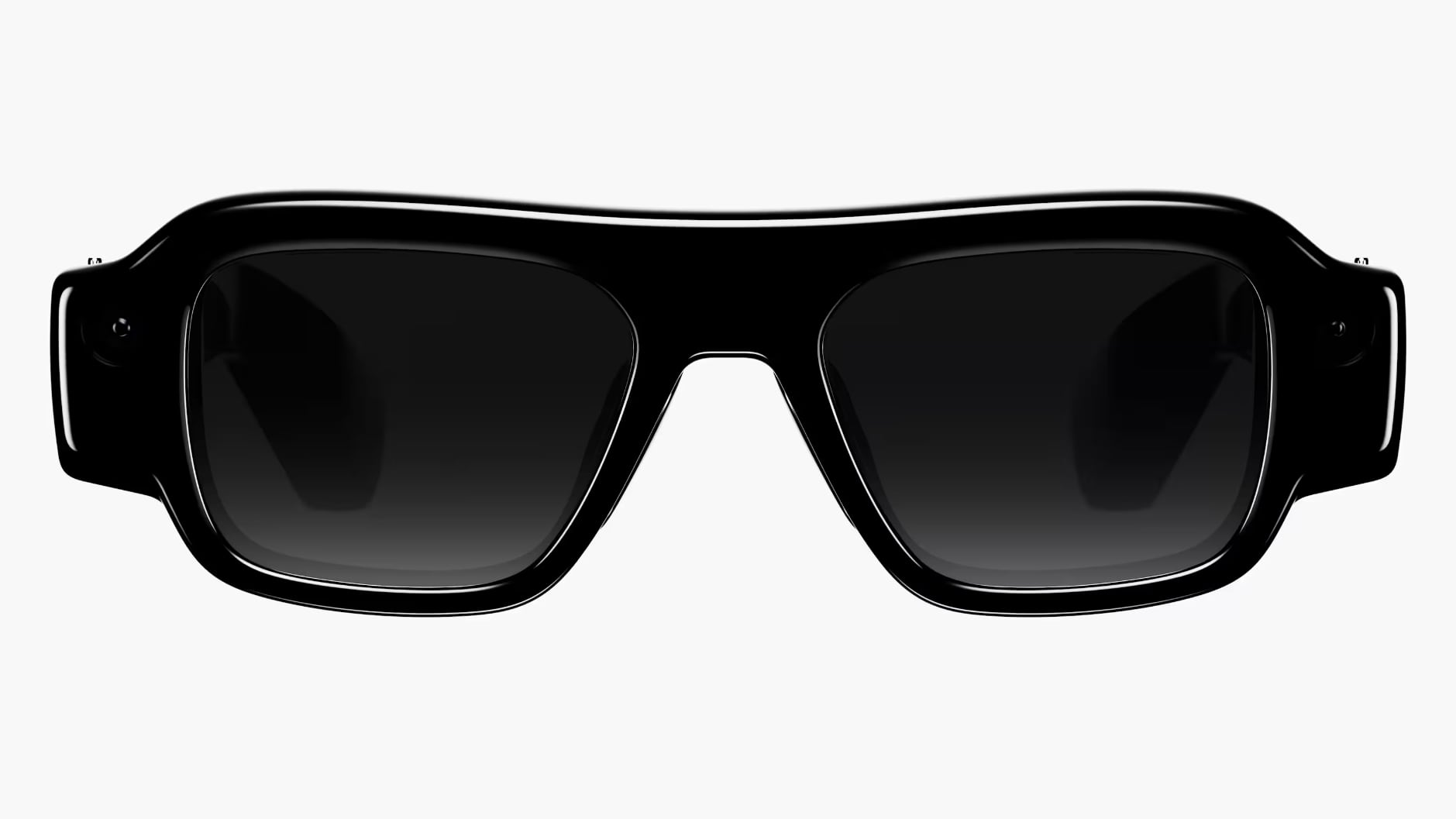
Snap Launches $2,195 'Specs' Augmented Reality Glasses

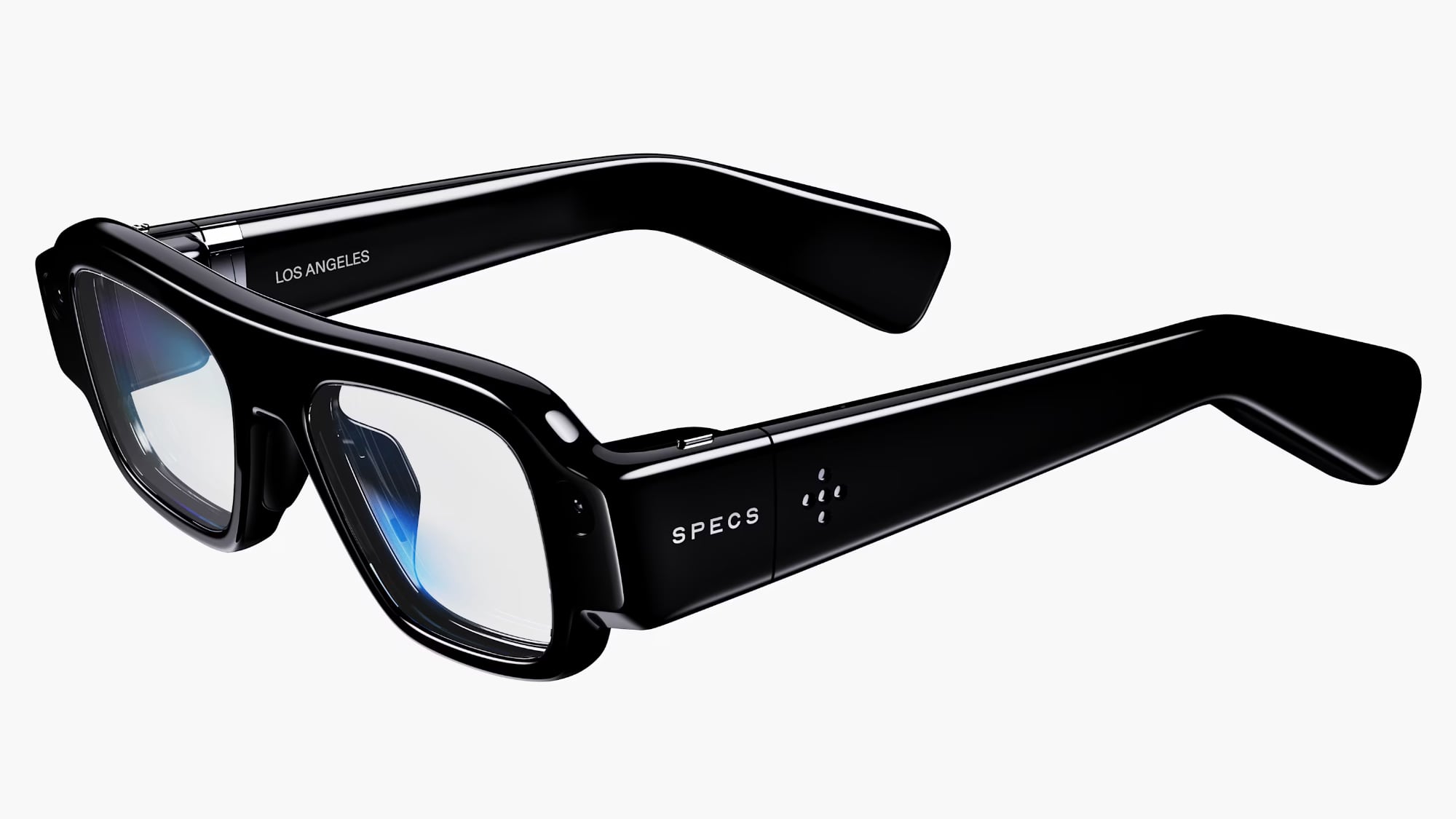
Snap today unveiled Specs, a pair of augmented reality glasses that it describes as a wearable computer built into a pair of see-through glasses.


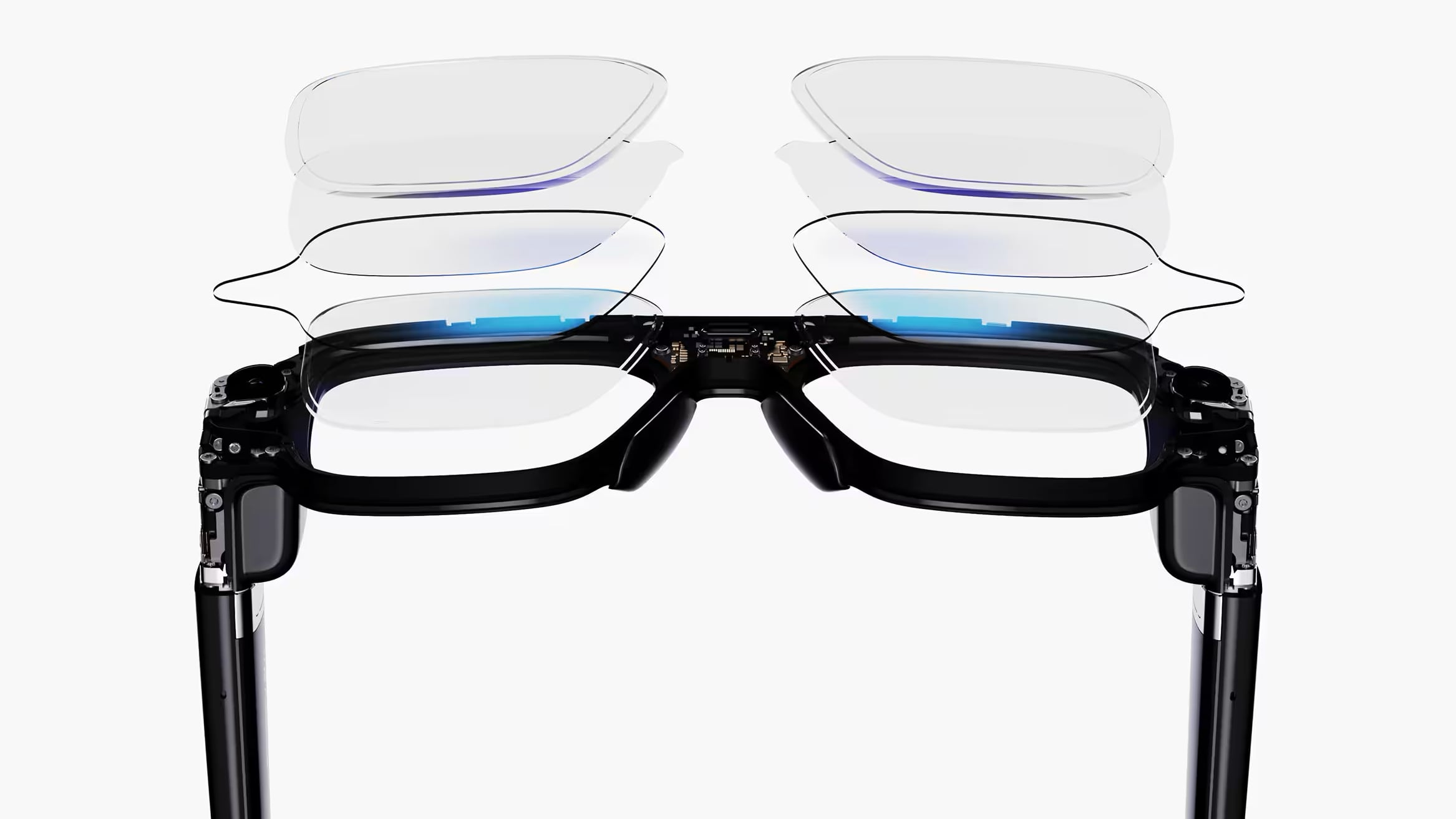
Specs are made from Swiss TR90 polymer that Snap suggests is "plastic titanium" because of its light weight and durability. The glasses are light enough to be "worn for hours" and two sizes are available. The 47mm frame weighs 132 grams (4.7 ounces), while the 52mm frame weighs 136 grams (4.8 ounces). Prescription lenses can be easily inserted and swapped out for sharing glasses with friends and family.

The AR glasses include cameras and sensors that feed data to AI with contextual understanding. There are two full-color high-resolution cameras, two infrared computer vision cameras, and 6-axis IMUs for inertial sensing. There are two Snapdragon chips inside, with one processor running the lenses, and the other handling computer vision.


Specs have a 51-degree field of view and a stereo waveguide display with automatic tinting for different lighting conditions. The device uses liquid crystal on silicon (LCoS) miniature projectors to project images to the display. Snap compares the field-of-view to a 115-inch screen viewed from 10 feet.


Stereo speakers are included for spatial audio, and there's a microphone array for audio input. The glasses have hand tracking capabilities for gesture control, along with voice recognition and support for natural voice commands.

Specs last for up to four hours with mixed use, and there is a custom magnetic charging cable that can charge the glasses while they're being worn. They come with a charging case that supports 20 hours of use. Prior-generation Spectacles from Snap that were limited to developers only offered 45 minutes of battery.


Specs can be used for watching content like movies, videos, and TV shows, casting to a screen, writing on a whiteboard, and using the myriad existing Snapchat lenses. Specs can also connect to a computer, phone, or gaming system over USB-C to be used as a display.

Snap CEO Evan Spiegel introduced the Specs at AWE USA 2026 and showed some of the experiences developers have created with Snap's Lens Studio. Since Specs can use lenses developed for Snapchat, there are already options for placing virtual items, playing mini games, getting DIY help, and more.


Lens Studio is getting agentic development for lenses, and there are developer integrations for Claude Code, Codex, and Cursor. Lenses are able to rely on APIs from OpenAI and Gemini for AI augmented reality experiences.

Specs are priced at $2,195 with a refundable $200 deposit, and they can be pre-ordered today. They're set to launch later this fall in the U.S., UK, and France.

Snap is beating multiple other tech companies to market with AR glasses, including Apple. Apple is developing augmented reality smart glasses with lenses, but the product won't launch for several more years. Apple's first glasses, which will be limited to AI capabilities and no built-in display, won't launch until late 2027.
Tags: Snap, Snapchat

This article, "Snap Launches $2,195 'Specs' Augmented Reality Glasses" first appeared on MacRumors.com

Discuss this article in our forums

  •  

Apple Seeds Second Public Betas of iOS 26.6, macOS Tahoe 26.6 and More

Apple today provided public beta testers with the second betas of iOS 26.6, iPadOS 26.6, macOS Tahoe 26.6, watchOS 26.6, and tvOS 26.6, with the software coming a day after Apple seeded the betas to developers and three weeks after the first public betas.


After signing up to beta test the software updates on Apple's beta site, public beta testers can download the new software using the Software Update section in the Settings app on each device.

iOS 26.6 has a feature that will let you know when you have blocked too many contacts, but the limit is in the thousands so most users may not ever see the messaging. There are also signs of a new iPhone anti-snatching feature that locks a stolen iPhone when it's grabbed from your hand.

No other major new features have been found in any of the software updates, with Apple likely focusing on bug fixes and security improvements. We're nearing the end of the "26" software cycle, with Apple planning to release iOS 27, iPadOS 27, macOS Golden Gate, and more this fall.
Related Roundups: iOS 26, iPadOS 26, macOS Tahoe
Related Forums: iOS 26, macOS Tahoe

This article, "Apple Seeds Second Public Betas of iOS 26.6, macOS Tahoe 26.6 and More" first appeared on MacRumors.com

Discuss this article in our forums

  •  

Apple's 2028 iPhones to Use 1.4nm A22 Pro Chips

Apple will transition from 2-nanometer chips to 1.4-nanometer chips with the high-end 2028 iPhone models, reports Bloomberg. Chip supplier Taiwan Semiconductor Manufacturing Co. (TSMC) will make the majority of Apple's A22 Pro chips, but Apple is also considering having Intel make some of them.


The current iPhone 17 models use a third-generation N3P 3-nanometer process. The iPhone 18 Pro, ‌iPhone 18 Pro‌ Max, and foldable iPhone expected in September 2026 will be the first to have chips built on a next-generation 2nm process. 2027 chips will also use the 2nm process, and then Apple will upgrade some chips to 1.4nm in 2028.

TSMC has been working on 1.4nm chips for several years, and its A14 node will bring up to 15 percent better performance than chips built on its N2 2nm node. Alternatively, the chips will offer the same performance but with 30 percent power savings.

Every step down in node size comes with higher production costs and limited capacity due to the difficulty of manufacturing the most advanced chips. Powerful and efficient chips from TSMC are in high demand from AI server manufacturers like NVIDIA, leading to a more limited supply for consumer devices. During Apple's last earnings call, CEO Tim Cook said ‌iPhone 17‌ models had been constrained during the quarter because Apple couldn't get enough A19 and A19 Pro chips from TSMC.

Apple has been aiming to diversify its chip supply chain, and it is rumored to be working with Intel. While Apple previously used Intel-designed chips in Macs, with the new agreement, Intel would make Arm-based chips using Apple chip designs.

Current rumors suggest Intel will make lower-end chips for devices like the iPad and Mac, but Intel CEO Lip-Bu Tan is aiming to revitalize Intel's chip manufacturing business by focusing on more advanced process nodes. Intel is developing its 14A node for 1.4nm chips, and it is expected to reach production in 2028. Prior rumors indicate Intel could make non-Pro iPhone chips in 2028.
Related Roundups: iPhone 18, iPhone 18 Pro
Related Forum: iPhone

This article, "Apple's 2028 iPhones to Use 1.4nm A22 Pro Chips" first appeared on MacRumors.com

Discuss this article in our forums

  •  

Apple's 20th Anniversary iPhones to Come in Two Sizes, Will Launch Alongside Gen 2 Foldable iPhone

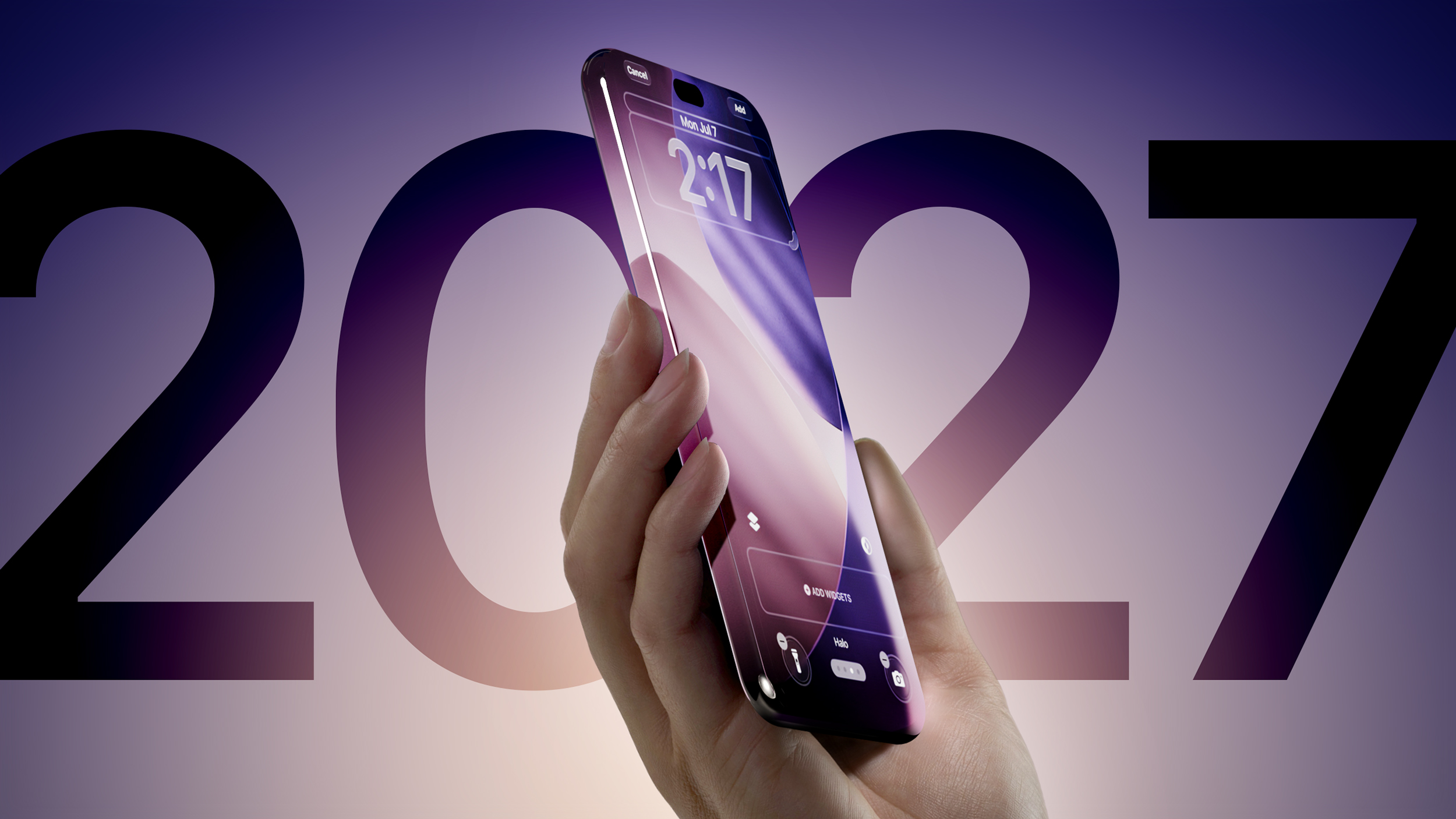
Apple is "ramping up" work on the 20th anniversary iPhone that it plans to launch next year, reports Bloomberg. Multiple rumors have suggested the device will have an edge-to-edge display with curved glass at all sides for a nearly borderless visual effect.


There will be two anniversary models similar in size to the iPhone 18 Pro and ‌iPhone 18 Pro‌ Max that are launching this September. The ‌iPhone 18 Pro‌ and ‌iPhone 18 Pro‌ Max are expected to be the same size as current iPhone 17 Pro models, which suggests the anniversary iPhone could be available in 6.3 and 6.9 inch sizes.

Apple plans to release the 20th anniversary iPhones alongside a second-generation foldable iPhone. All three devices are going to adopt a 2-nanometer A21 chip. Apple has an iPhone 19 in the works too, and it is set to run a different A21 chip, likely a base chip instead of a Pro chip.

The ‌iPhone 18 Pro‌ and ‌iPhone 18 Pro‌ Max coming this year will have an A20 Pro processor built on Apple's 2-nanometer process. The A20 will mark the first node upgrade in several years and will see Apple transitioning from 3-nanometer chips for its flagship iPhones.

The standard iPhone 18 is not coming this fall, with Apple instead planning to debut it in spring 2027. It will use a less powerful A20 chip that's also built on the 2nm process.
This article, "Apple's 20th Anniversary iPhones to Come in Two Sizes, Will Launch Alongside Gen 2 Foldable iPhone" first appeared on MacRumors.com

Discuss this article in our forums

  •  

Apple's Camera-Equipped AirPods Coming in Late 2027 Alongside 20th Anniversary iPhone

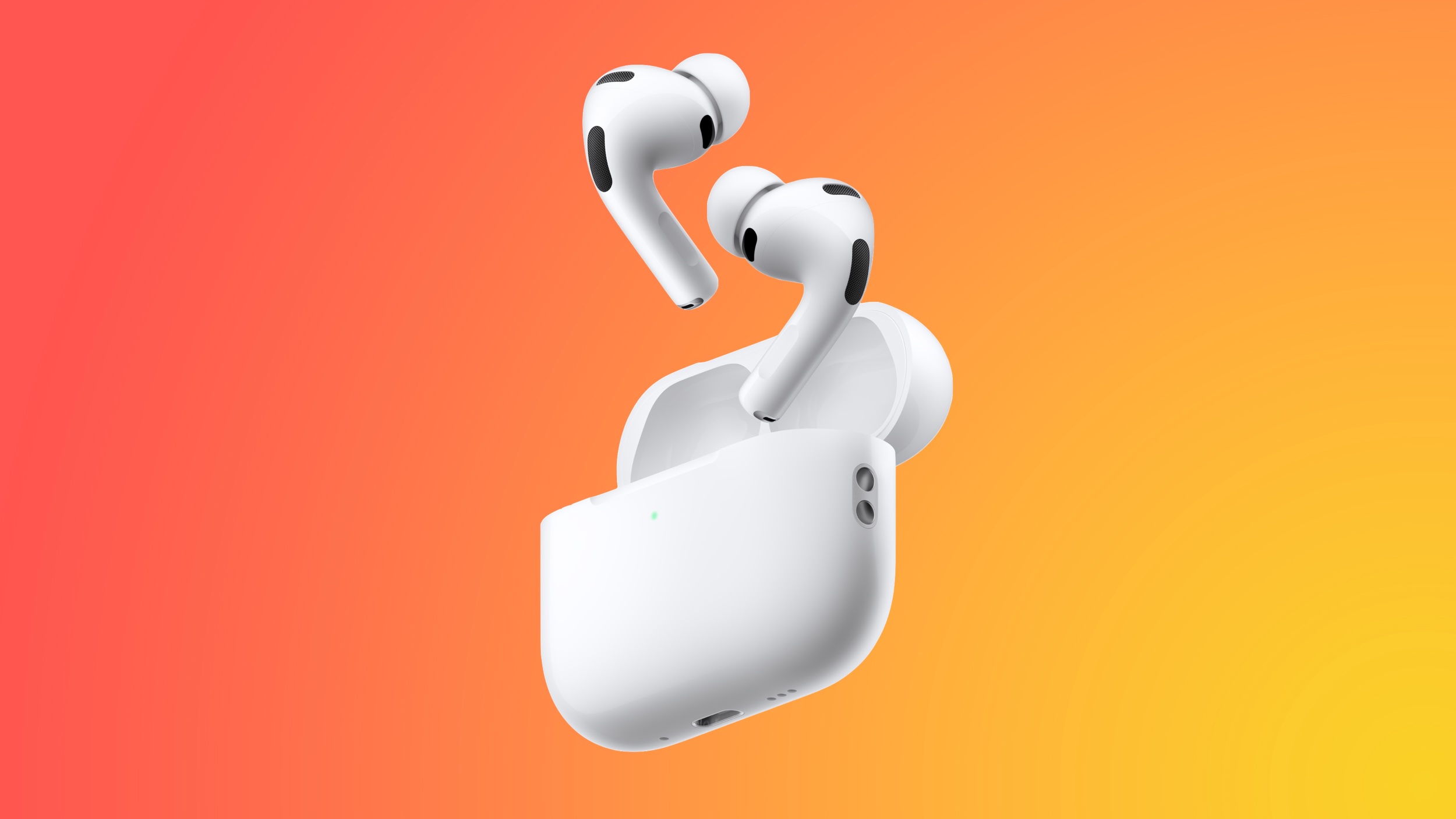
Apple is working on camera-equipped AirPods that are expected to launch in late 2027 alongside the 20th anniversary iPhone and a next-generation foldable iPhone, reports Bloomberg.


The AirPods will be Apple's first wearable AI product. The cameras in the AirPods are not designed for taking photos and videos, and will instead send information about the wearer's surroundings to Siri. ‌Siri‌ will be able to answer questions about objects and whatever the wearer is looking at. Contextual reminders are a possibility, as are improved turn-by-turn directions when walking.

Apple already has a similar feature available through Visual Intelligence, which allows ‌Siri‌ to give details on photos that the user captures. In iOS 27, ‌Visual Intelligence‌ is accessible through the Camera app with a new ‌Siri‌ Mode.

The AirPods will look similar to the current AirPods Pro 3, but there will be cameras embedded in the stem. An included light will inform people around the wearer when the cameras are feeding data to ‌Siri‌.

Multiple rumors, including from Bloomberg, have previously suggested the AirPods with cameras could come in 2026. Apple apparently wanted to release the AirPods in 2026, but Apple's ongoing struggles with AI and a need to develop visual models capable of identifying objects around the user caused the AirPods to be delayed.

Bloomberg says all three devices are being tested with iOS 28, but timing "remains fluid and could change." Apple also has smart glasses in the works that could come as "early as the tail end of next year," which would presumably see the AirPods and the glasses launch at around the same time.
Related Roundups: AirPods 4, AirPods Pro 3
Related Forum: AirPods

This article, "Apple's Camera-Equipped AirPods Coming in Late 2027 Alongside 20th Anniversary iPhone" first appeared on MacRumors.com

Discuss this article in our forums

  •  

Siri AI in iOS 27: Features, Requirements, and How It Works

The biggest change in iOS 27 is Apple's total overhaul of Siri, with ‌Siri‌ turning into ‌Siri‌ AI. Apple delivered on the features originally promised at WWDC 2024 and added new capabilities that turn ‌Siri‌ into a viable competitor to chatbots like Claude and ChatGPT.


‌Siri‌ AI is available in the ‌iOS 27‌ beta, but everyone will get access this fall. Below, we walk through everything new you can expect from ‌Siri‌.

Siri AI


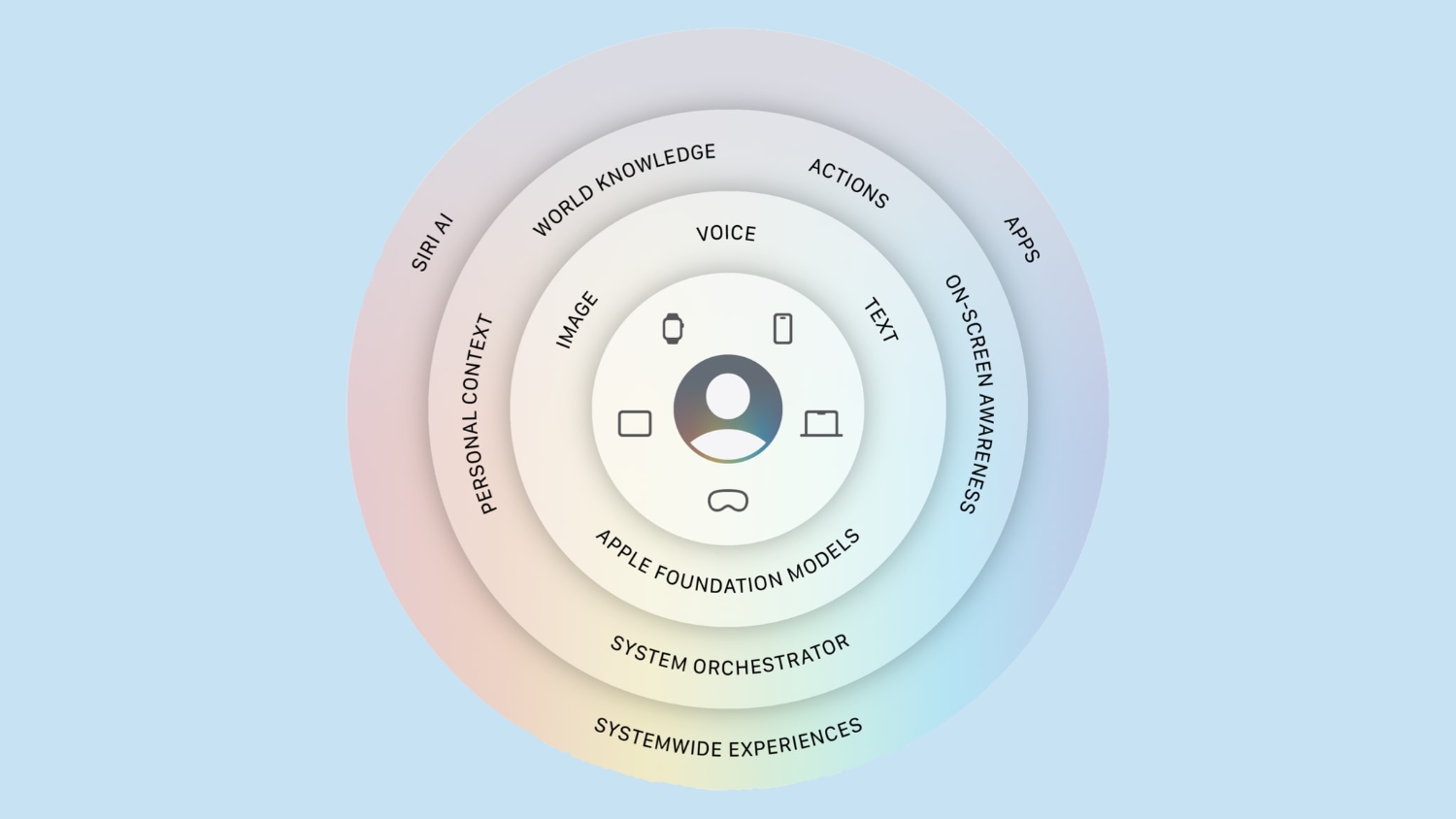
‌Siri‌ AI is more knowledgeable, more capable, and unlike other chatbots, able to tap into your personal data in apps like Mail, Messages, and Photos. Apple says ‌Siri‌ has understanding and reasoning that wasn't available before, with four main improvements that change how ‌Siri‌ works.


All of the different ‌Siri‌ functions come together to allow ‌Siri‌ to do far more than it could before. You can have full back-and-forth conversations with ‌Siri‌, and include multiple tasks in a single request.

Personal Context Understanding


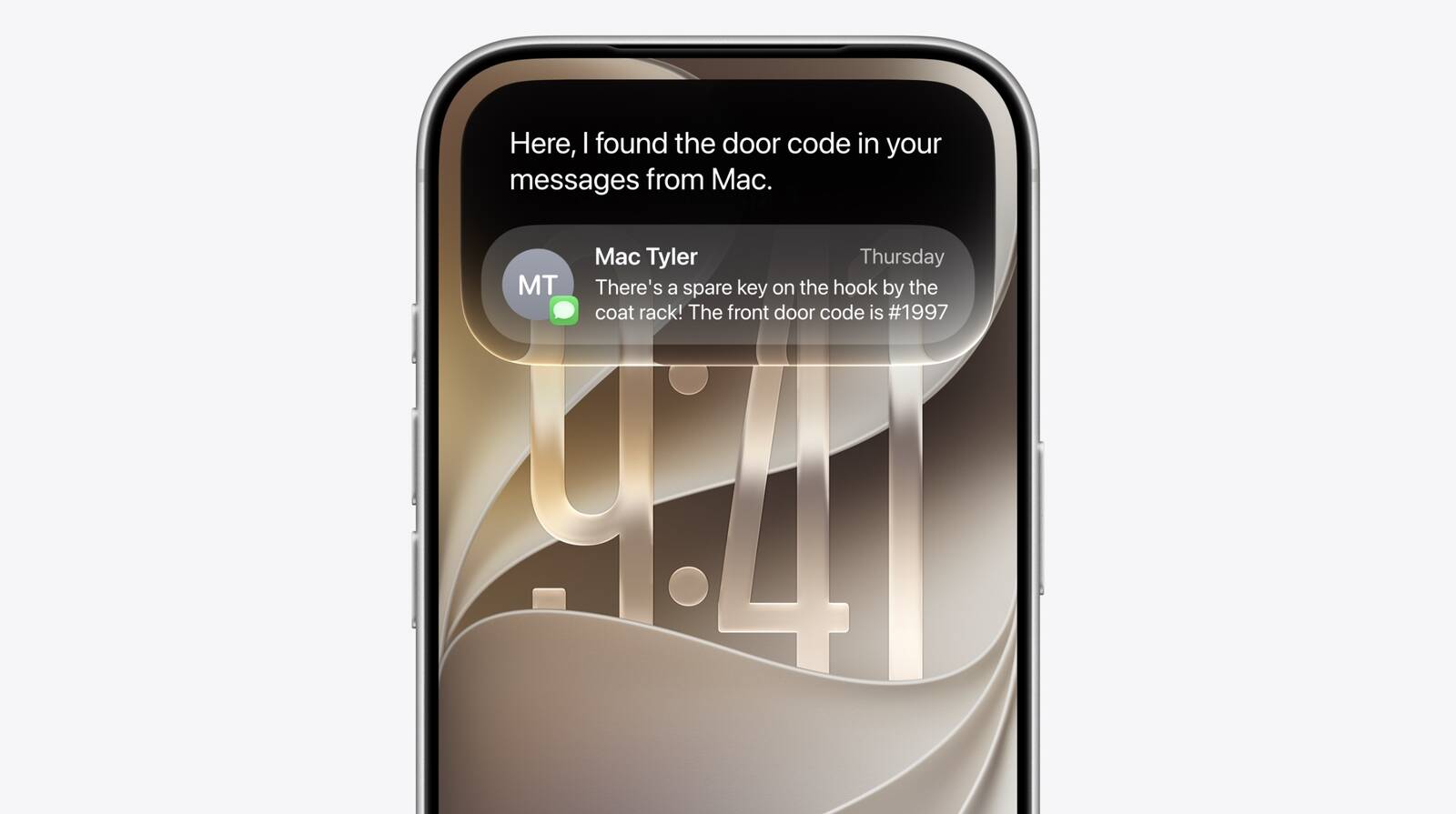
Apple overhauled its search index, and ‌Siri‌ has access to emails, text messages, files, photos, notes, and more. ‌Siri‌ can find content from across your apps, but it also understands that content. You can ask ‌Siri‌ to surface photos, bring up information from emails or texts, or find files, and the Apple Intelligence semantic index behind the scenes finds what you need.

  • What was that movie my brother told me to watch last week?

  • Can you get me the directions to that place I was supposed to meet Eric tomorrow?

  • What video games did John recommend to me last year?

  • Find images with pancakes from 2024

  • What was the name of that restaurant I ate at in February?

  • What's the confirmation number for my upcoming flight?

  • What do I need to do tomorrow?

  • Show me my photos from the music festival last weekend

  • What's the door code Sarah texted me?

  • Find the lease my landlord emailed me last month

  • Who did I have lunch with two Tuesdays ago?


Broad World Knowledge


Apple can search the web for up-to-date information to answer questions about anything, similar to other chatbots. ‌Siri‌ can analyze documents and get information from the web for additional context, help come up with recipes, do party prep, help with homework, give gardening tips, assist with DIY projects, and much more.

  • When is the Suki Waterhouse show in SF?

  • How can I get tickets?

  • I'm planning a birthday party, can you find me some good cake recipes?

  • What's the difference between pine warblers and goldfinches?

  • What's the Hurricanes score?

  • What are the hours for the closest Ace Hardware?

  • What's a good substitute for buttermilk?

  • What's a 15% tip on $84?

  • Help me plan a 5-day trip to Lisbon


Onscreen Awareness


‌Siri‌ knows what's on your screen and can answer questions about it. ‌Siri‌ can tell what you're looking at, read text, and analyze images.

‌Siri‌ can tell you where a photo was taken if there's something recognizable in it, and you can ask questions about any app you're in without having to provide specifics.

  • Where was this photo taken?

  • Summarize this

  • Can you give me directions here?

  • What are the best native plant options for a shady spot near my house?

  • Does this document look correct?

  • What is this?

  • Translate this menu

  • Explain what this chart is showing


App Actions


App Actions allow ‌Siri‌ to use tools in apps to complete requests. ‌Siri‌ can use some apps on your behalf, including apps from Apple and third-party apps that have implemented App Actions support.

  • Write a quick response to this email

  • Send all the photos from today to Eric

  • Add a 3pm Tuesday meeting with the neighbor to my calendar

  • Add these photos to the cat album

  • Get me directions to the post office, but add a stop at the coffee shop first

  • Move my 2pm meeting to Thursday


Siri Design


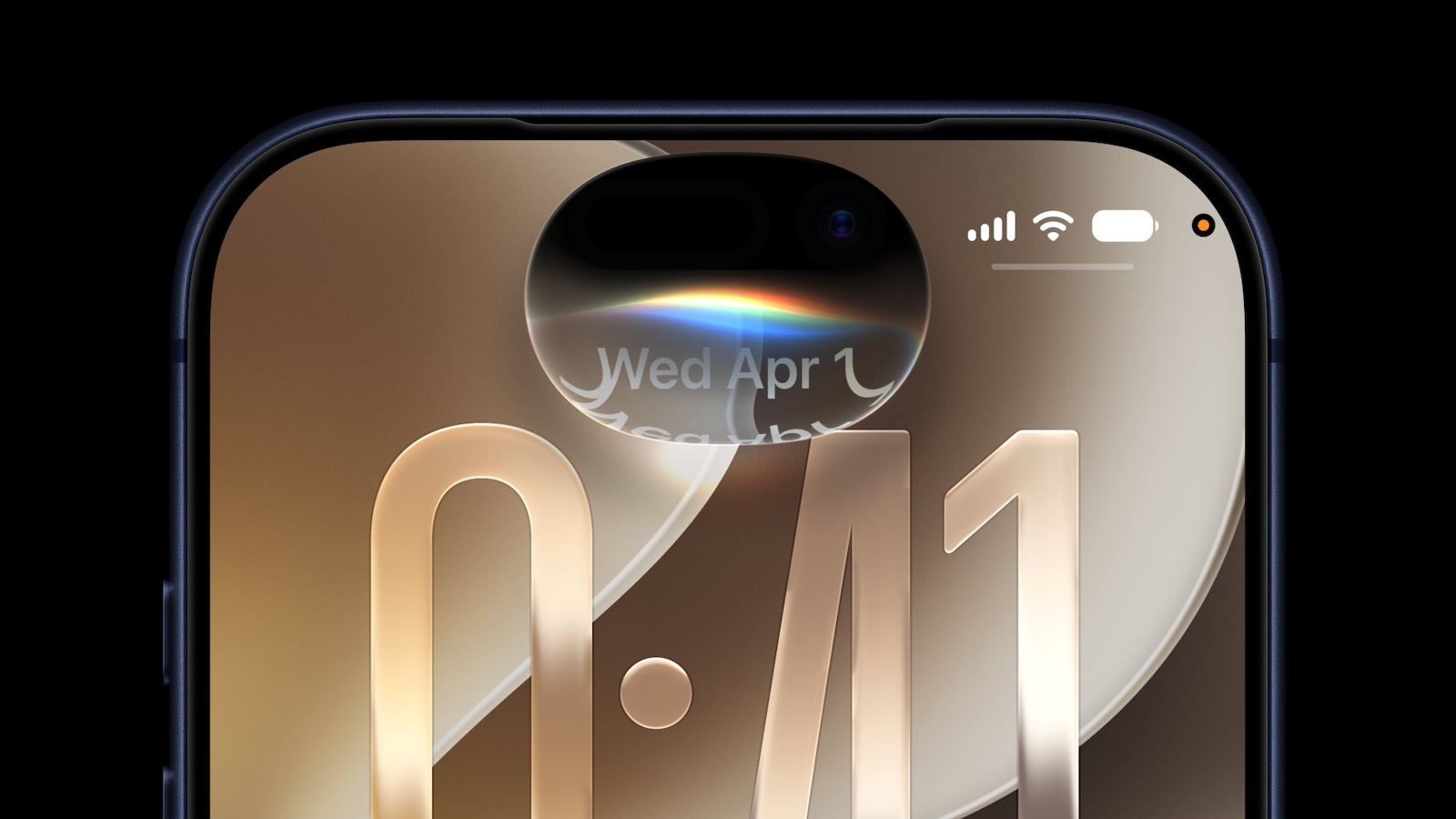
On the iPhone, a new Search and Ask ‌Siri‌ interface replaces the former Spotlight search option, and it's available from the Dynamic Island. A swipe down from the middle of the iPhone's display brings up Search or Ask, where you can type or speak a question or request to ‌Siri‌.


An animation is displayed as ‌Siri‌ is thinking, and then the ‌Siri‌ bubble expands into a short response. If you swipe down on a response, it brings up a text bar where you can provide clarification or ask another question. A "+" button lets you add images or documents to the conversation.

Some responses use rich information cards pulled from apps. If you ask ‌Siri‌ about the weather, you'll see the current weather forecast. If you ask about upcoming calendar events, you'll see them listed in the Calendar app format.

You can also access ‌Siri‌ by pressing the side button or by using the "‌Siri‌" and "Hey ‌Siri‌" wake phrases.

Systemwide Context


‌Siri‌ works in any app. You can select text or images, then ask ‌Siri‌ about the selection. If you see an image in Safari you want to know more about, you can long press it to select and then ask ‌Siri‌ whatever you want about it.

Siri App


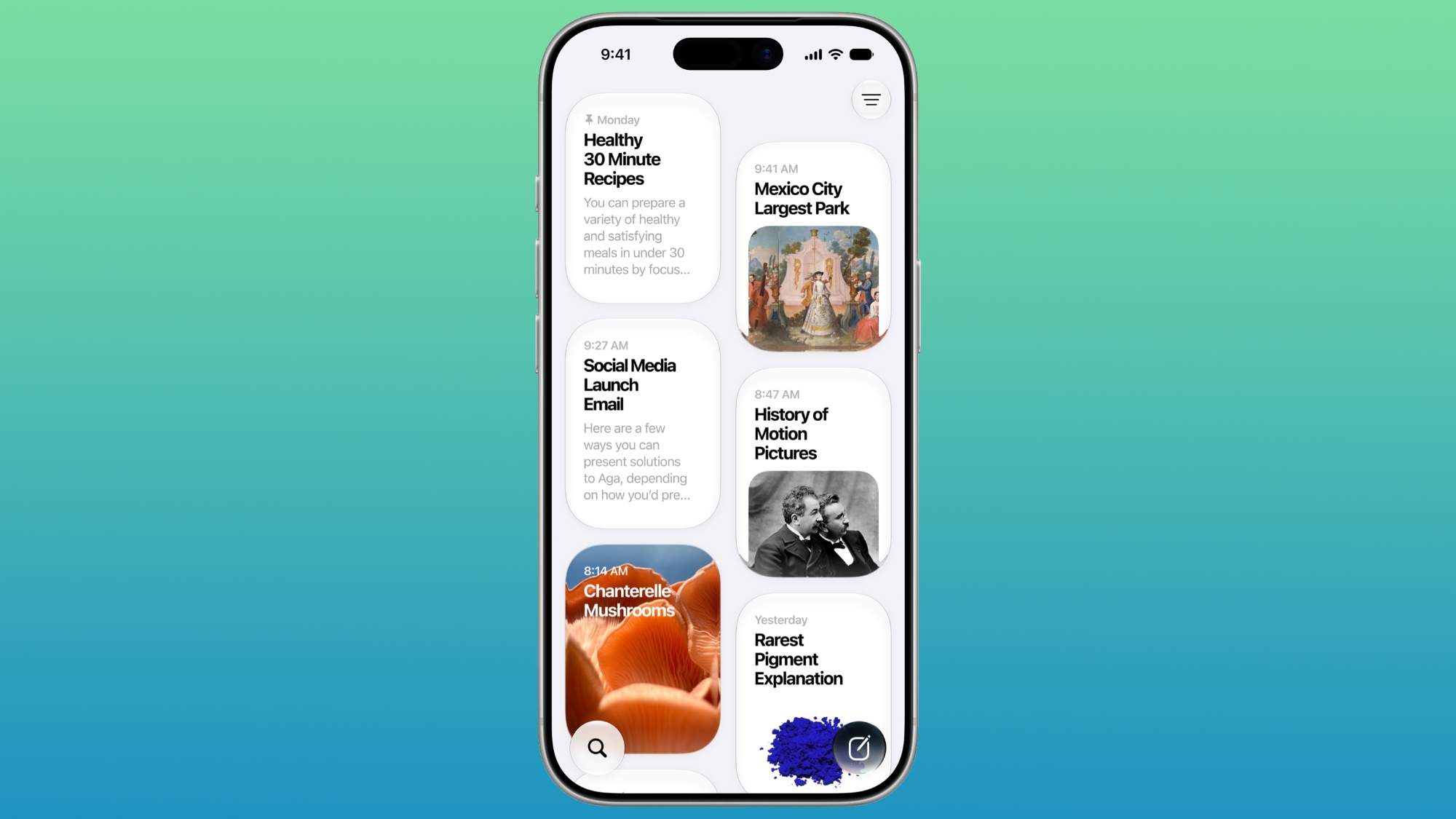
There is a dedicated ‌Siri‌ app where you can start new conversations or revisit past conversations you've had with ‌Siri‌.


The app has a card-style interface with details on your most recent conversations across all of your devices. You can also use the search button to find conversations, and there's a pin option for conversations that you revisit frequently.

Write with Siri


In ‌iOS 27‌, you can write with ‌Siri‌ anywhere you type with a systemwide Write with ‌Siri‌ feature. ‌Siri‌ can draft documents from scratch, and in Mail and Messages, it can use the same writing style that you normally use.

‌Siri‌ can give you feedback on your writing if you select your text and ask ‌Siri‌ how it sounds, and as you type in apps, there's automatic proofreading for misspellings and grammar. ‌Siri‌ can also edit, and you just need to describe the change that you want to make to something you've written, such as changing the tone to be more professional.

  • Make this email sound more formal

  • Turn these bullet points into a paragraph

  • Shorten this to three sentences

  • Draft a thank you note for a gift

  • Rewrite this to be friendlier

  • What do you think of this presentation?

  • How can I improve this email?


Apple's AI Models


The Apple Foundation models used for ‌Siri‌ and other ‌Apple Intelligence‌ features in ‌iOS 27‌ are the result of Apple's collaboration with Google. Apple used the technologies behind the Gemini AI models to develop the next generation of Apple Foundation models.


Apple's AI models are integrated into iOS and coordinated with a system orchestrator that can use the Spotlight index and the app toolbox.

The Spotlight index surfaces data from any app that integrates with it, such as Mail, Calendar, and Messages. The app toolbox identifies which app tools might be useful to answer a request.

Siri Voice


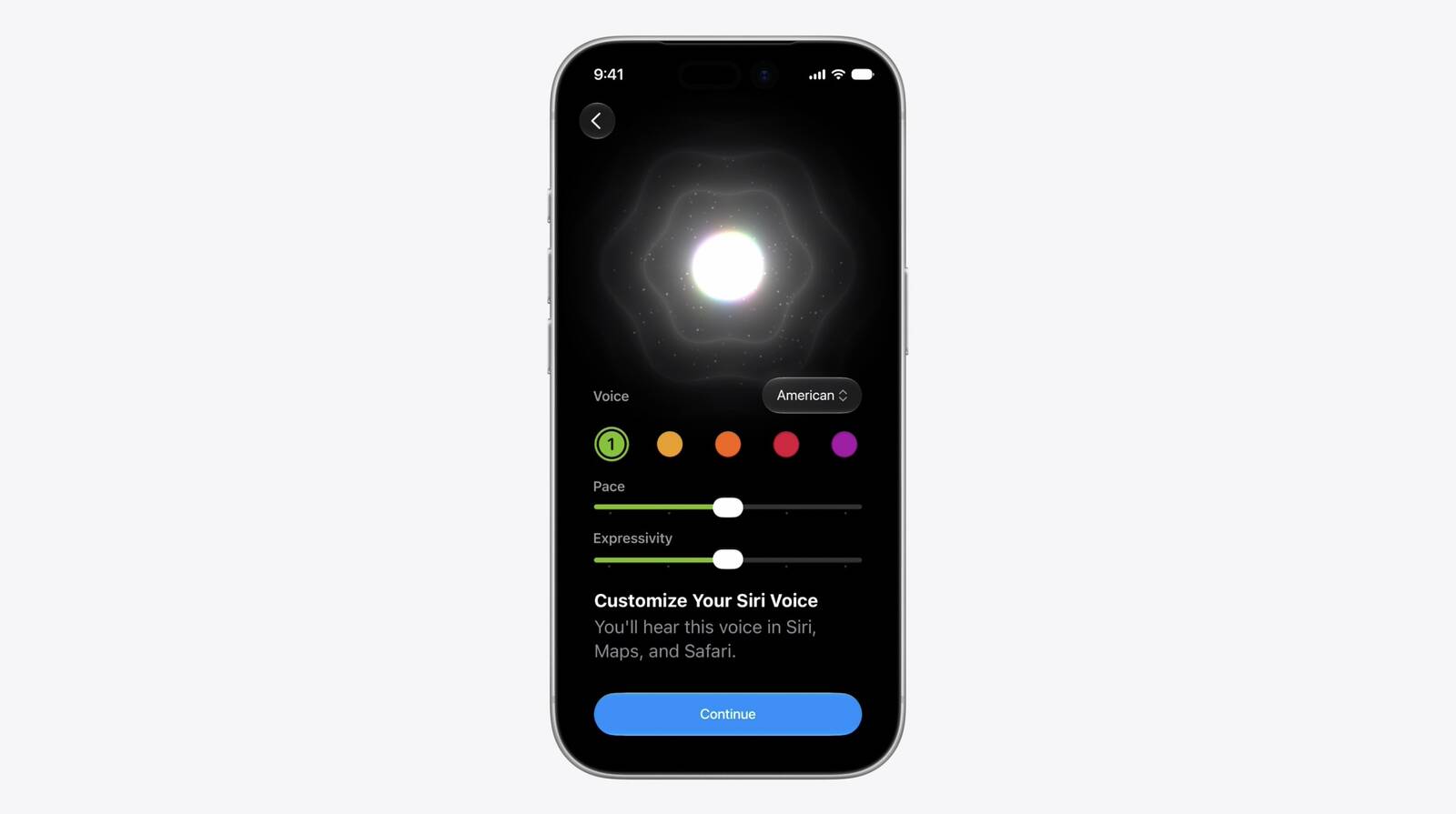
Apple has a more powerful on-device model for the iPhone 17 Pro and iPhone Air, allowing for a customizable ‌Siri‌ voice. Apple says its on-device model can understand and generate speech, plus understand text and images. You can tweak expressivity and pace when customizing ‌Siri‌'s voice.


The on-device model also improves accuracy for system-wide dictation thanks to better natural language understanding. Dictation is better at capturing what you're saying, and it makes fewer mistakes with spelling, punctuation, and capitalization.

Privacy


Apple's ‌Siri‌ features run on-device and on cloud servers using Private Cloud Compute. Data is not accessible to Apple or third parties.

Private Cloud Compute servers have historically all been Apple servers in Apple data centers, but Apple is expanding Private Cloud Compute to run ‌Apple Intelligence‌ workloads on Google Cloud using NVIDIA hardware.

Cross-Platform Availability


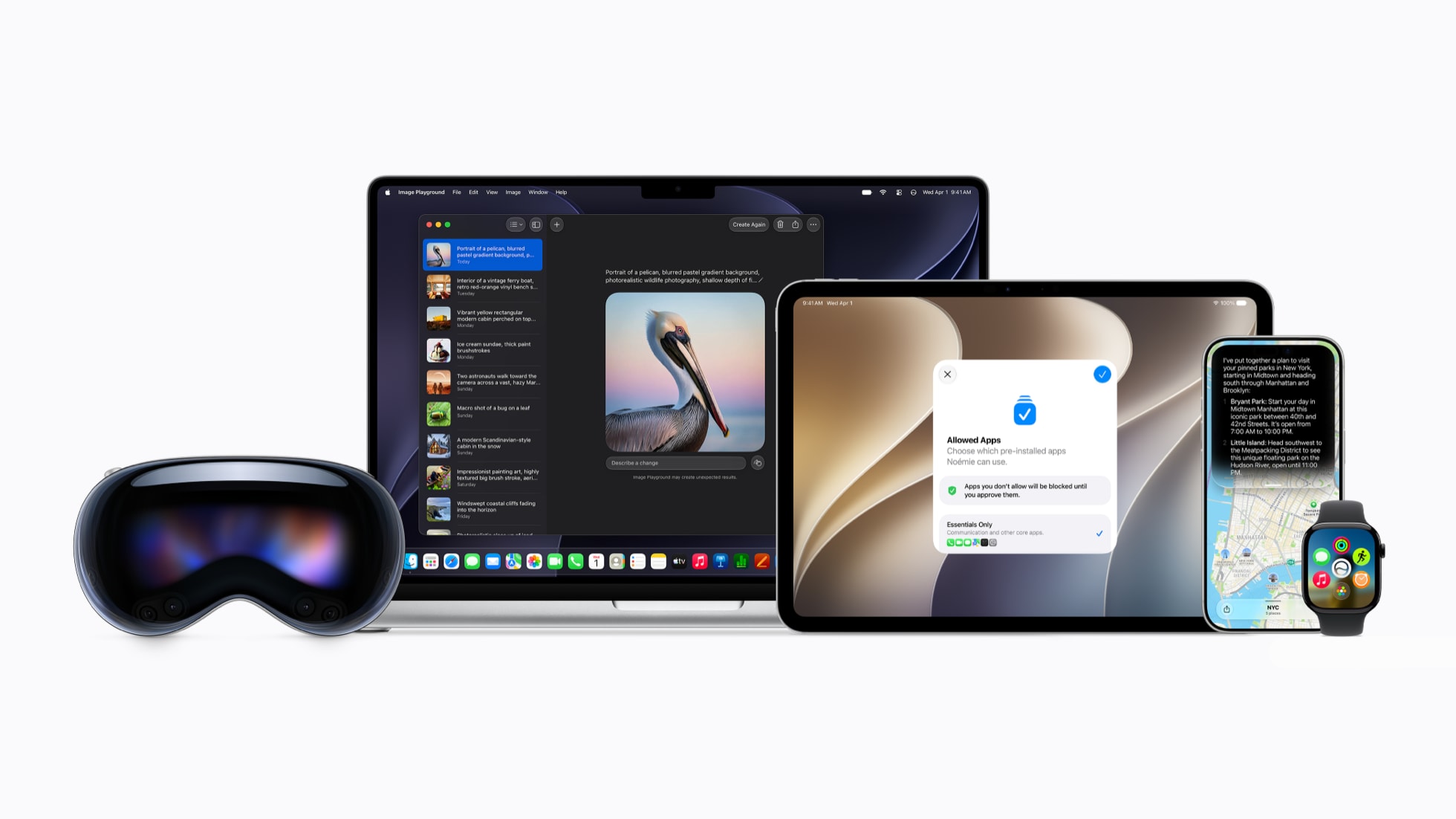
‌Siri‌ AI is available in ‌iOS 27‌, iPadOS 27, macOS Golden Gate, visionOS 27, and watchOS 27, so you can start a ‌Siri‌ request on one device and revisit it on another device.


‌Siri‌ conversations sync across devices, and the ‌Siri‌ app is available on most of Apple's software platforms.

‌Siri‌ AI features are also available when using CarPlay and AirPods.

Device Requirements


‌Siri‌ AI requires a device that supports ‌Apple Intelligence‌, including the iPhone 15 Pro and later.

‌Siri‌ AI will not be available in the European Union at launch on iPhone or iPad, but it will be available on the Mac. It will not be available in China.

Language Support


‌Siri‌ AI works in English (Australia, Canada, Ireland, India, New Zealand, South Africa, UK, U.S.), and will expand to more languages in the future.
Related Roundups: iOS 27, iPadOS 27
Tag: Siri

This article, "Siri AI in iOS 27: Features, Requirements, and How It Works" first appeared on MacRumors.com

Discuss this article in our forums

  •  

Apple to Unify Sign in With Apple and Hide My Email on One Domain

Apple is planning to unify the email domains used by Sign in with Apple and iCloud+ Hide My Email under a single private.icloud.com domain.


Addresses generated for both features will be issued on the new domain, Apple says.

Sign in with Apple addresses currently use the privaterelay.appleid.com domain, while ‌iCloud‌+ uses icloud.com. Later this summer, both will use the same private.icloud.com domain.

Email addresses that use the legacy domains will continue to work and mail will be forwarded with no interruption.

Developers with apps or websites that use Sign in with Apple will need to make sure their account systems, email validation logic, and allowlists accept addresses on the private.icloud.com domain in addition to the existing domains. Email service providers may also need to update domain-based filtering, suppression lists, or routing rules to include the private.icloud.com domain.

Regular users won't need to do anything, and both features will continue to work as expected.
This article, "Apple to Unify Sign in With Apple and Hide My Email on One Domain" first appeared on MacRumors.com

Discuss this article in our forums

  •  

Apple Card Promo Doubles Daily Cash Back on Nike Purchases

Apple is teaming up with Nike for an Apple Card promotion that gives extra Daily Cash back.


For the next month, ‌Apple Card‌ users can get 6% Daily Cash back when making a purchase with ‌Apple Card‌ using Apple Pay at a Nike retail store, the Nike website or Swoosh website, or Nike's apps.

The ‌Apple Card‌ normally offers 3% cash back on Nike purchases, so the bonus is doubled during the promotion period (June 15 to July 15).

‌Apple Card‌ holders can get the 6% Daily Cash back on up to $500 in purchases, for a total of $30 back. The deal is available to ‌Apple Card‌ owners, co-owners, and participants, so multiple family members can take advantage of the bonus offer.

Most ‌Apple Pay‌ purchases provide 2% Daily Cash, but Apple has partnered with companies like Nike to increase that to 3%. Extra cash back is available when using ‌Apple Pay‌ and ‌Apple Card‌ for purchases at Ace Hardware, Apple retail stores, ChargePoint, Duane Reade, Hertz, Booking.com, Uber, and Walgreens.
This article, "Apple Card Promo Doubles Daily Cash Back on Nike Purchases" first appeared on MacRumors.com

Discuss this article in our forums

  •  

Second macOS Tahoe 26.6 Beta Now Available for Developers

Apple today provided the second beta of an upcoming macOS Tahoe 26.6 update to developers for testing purposes, with the update coming almost three weeks after Apple seeded the first beta.


Developers can download the ‌macOS Tahoe‌ 26.6 update by opening up the System Settings app, selecting the General category, and then choosing Software Update. Beta Updates will need to be enabled, and a free developer account is required.

With macOS Golden Gate set to launch in just a few months, Apple is likely focusing most of its attention on the new software. We are not expecting any major new features in ‌macOS Tahoe‌ 26.6.
Related Roundup: macOS Tahoe
Related Forum: macOS Tahoe

This article, "Second macOS Tahoe 26.6 Beta Now Available for Developers" first appeared on MacRumors.com

Discuss this article in our forums

  •  

Apple Seeds Second iOS 26.6 and iPadOS 26.6 Betas to Developers

Apple today seeded the second betas of upcoming iOS 26.6 and iPadOS 26.6 updates to developers for testing purposes, with the software coming three weeks after Apple seeded the first betas.


Registered developers can download the betas from the Settings app on the iPhone or iPad by going to the General section and selecting Software Update.

With iOS 27 set to launch in September, Apple is wrapping up work on iOS 26. We are not expecting any major new features in the iOS 26.6 update, and it will primarily focus on bug fixes and performance improvements.

The update adds new wording around blocked contact limits, letting users know when they have exceeded the maximum number of blocked contacts. The update might also include a new anti-snatching feature that locks your iPhone if it's grabbed from your hand.
Related Roundups: iOS 26, iPadOS 26
Related Forum: iOS 26

This article, "Apple Seeds Second iOS 26.6 and iPadOS 26.6 Betas to Developers" first appeared on MacRumors.com

Discuss this article in our forums

  •  

Apple Releases Second watchOS 26.6, tvOS 26.6 and visionOS 26.6 Betas

Apple today provided developers with the second betas of upcoming watchOS 26.6, tvOS 26.6, and visionOS 26.6 betas for testing purposes. The software comes three weeks after Apple seeded the first betas.


The software updates are available through the Settings app on each device, and because these are developer betas, a free developer account is required.

There's no word on what's in the software as of yet. watchOS, tvOS, and visionOS often get few features in each new beta, with updates primarily focusing on bug fixes and performance improvements.
This article, "Apple Releases Second watchOS 26.6, tvOS 26.6 and visionOS 26.6 Betas" first appeared on MacRumors.com

Discuss this article in our forums

  •  

iOS 27: All the New Safari Features

Safari is one of the apps that Apple focused on in iOS 27, and it includes multiple new Apple Intelligence features. From automatically organizing tab groups to custom extensions, Safari is getting useful new capabilities.


Automatic Tab Organization


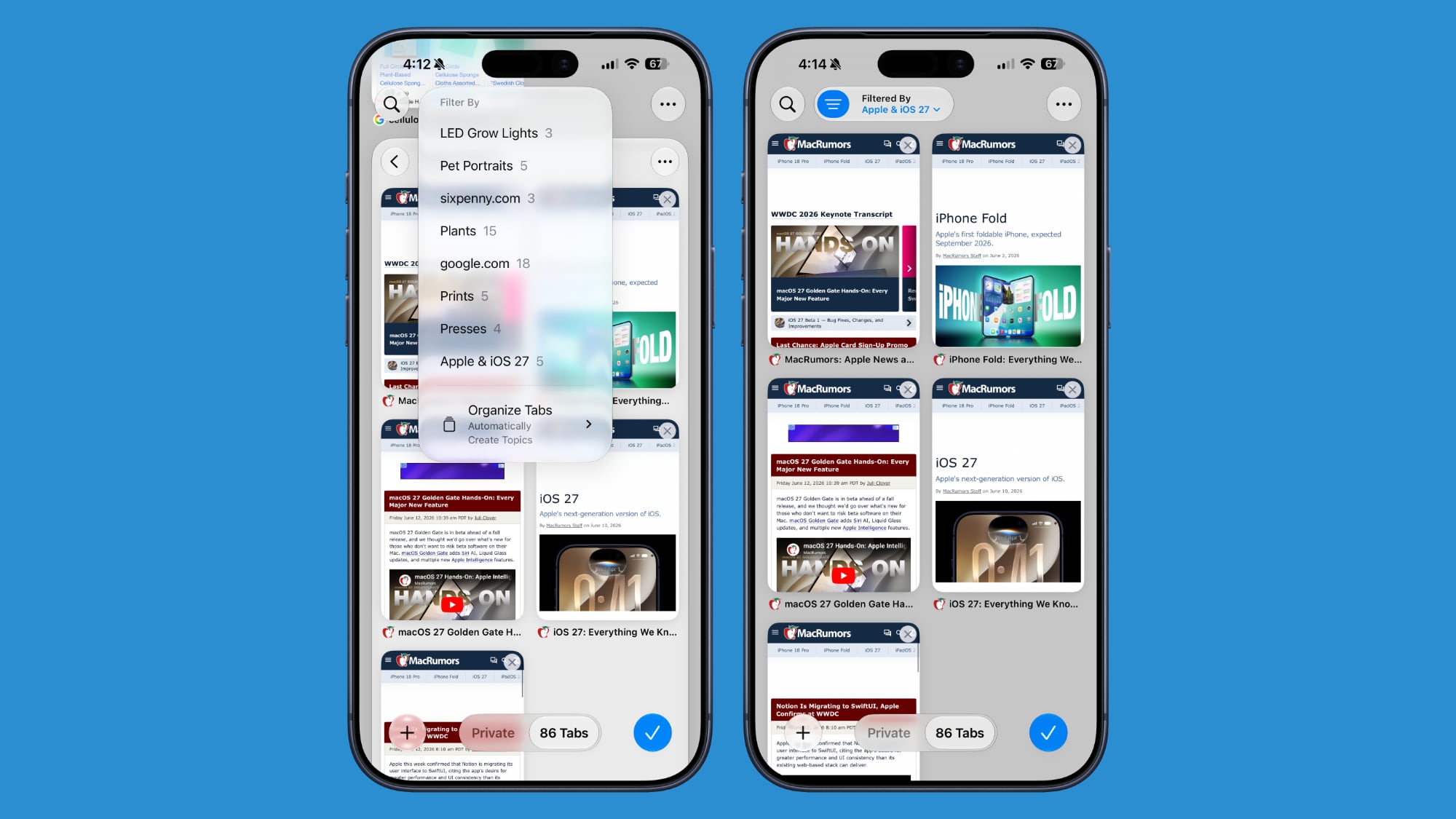
Safari uses ‌Apple Intelligence‌ to organize your open tabs into relevant topics, grouping like concepts together to make it easier to browse your open tabs.


If you're searching for a new couch while also planning a weekend trip, websites that you open for each topic are grouped together. Automatic sorting can be enabled by tapping on the icon with three lines in the upper right of the display while in tab view and turning on the Automatically Create Topics setting.

This same Safari menu also lets you see all of the groups and filter by topic so you can open just the tabs related to a specific topic while avoiding the other tabs.

There is a new "Resume Browsing" section of the Start Page that lets you continue browsing topics you recently closed or topics you have open on other devices.

You can also group pages you've saved to Bookmarks and Reading List by topic.

Custom Extensions


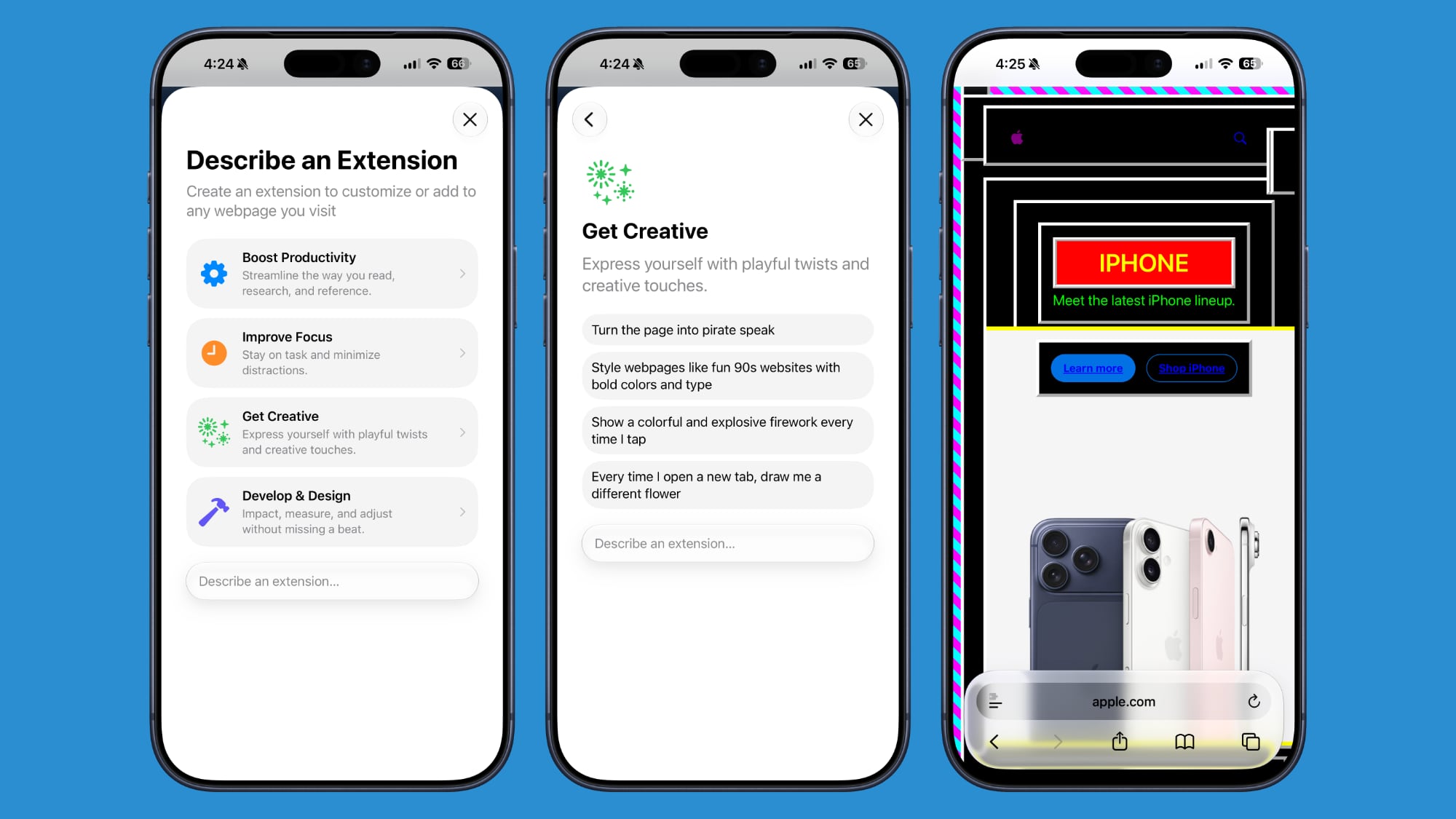
You can use AI to create Safari Extensions in ‌iOS 27‌ with Apple's new Create an Extension option.


In the Safari settings accessible from the left of the URL bar, tapping into Create an Extension brings you to an interface where you can type in whatever you want an extension to do. Apple also includes suggestions in categories that include Boost Productivity, Improve Focus, Get Creative, and Develop and Design. Some of Apple's extension suggestions:

  • Create a citation for the current webpage and copy it to my clipboard

  • Create a 3-minute focus timer for the page

  • Set the minimum font size to 14pt

  • Turn the page into pirate speak

  • Style websites like 90s websites with bold colors and type

  • Every time I open a new tab, draw me a different flower

  • Highlight and show the dimensions of webpage elements when I tap on them

  • Enter the design mode for a website so that I can edit the contents


Notify Me


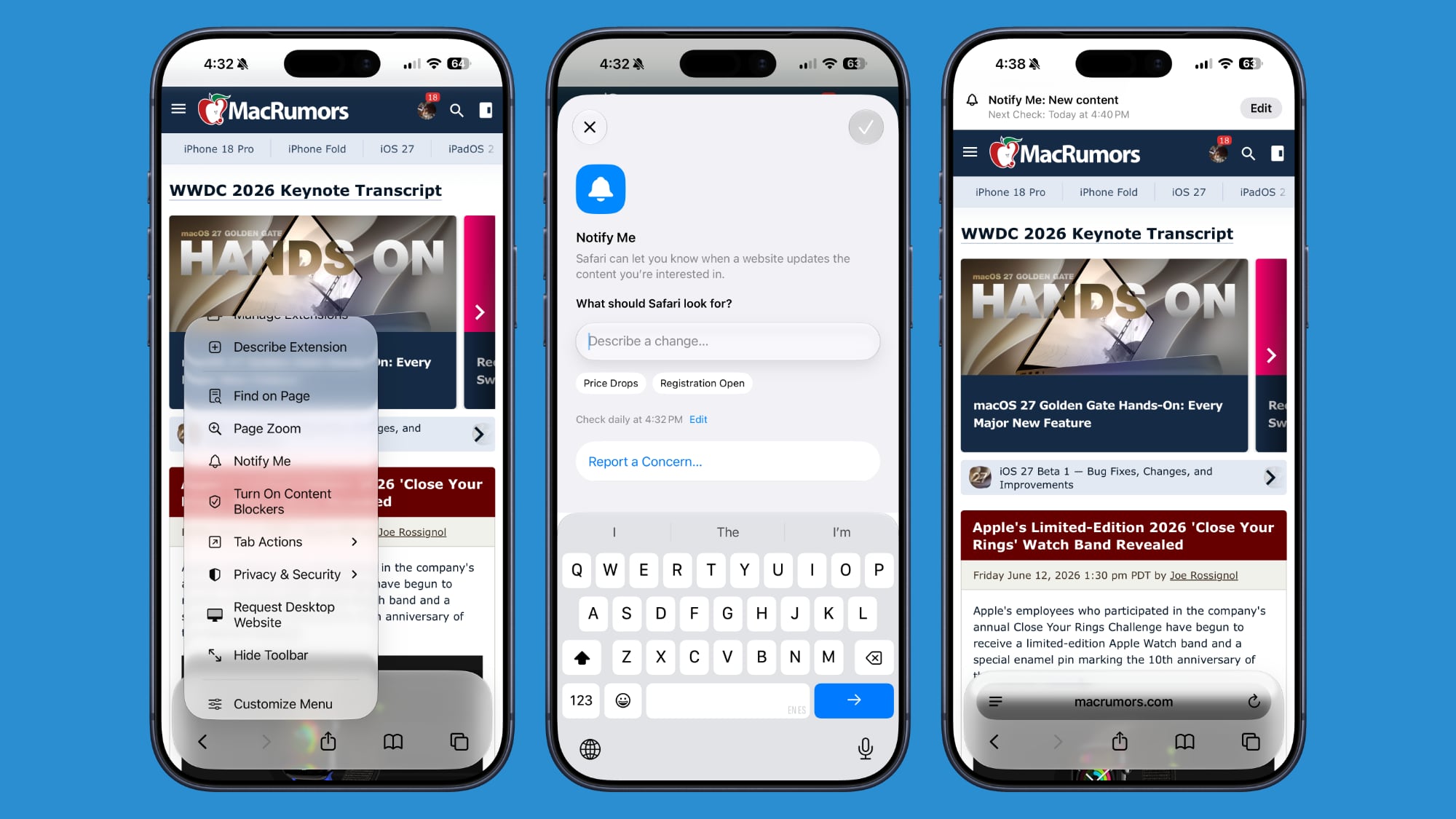
Safari can monitor a website for changes and alert you when new information is detected. Apple says it's useful for monitoring when concert tickets go on sale or watching for a product to be restocked.


To use it, navigate to a website, then tap on the settings icon to the left of the URL bar, and choose the Notify Me option. You can type in what you want Safari to watch for and set a frequency and a time.

At most, Safari will check websites once per day at a set time, with weekly and monthly checks also available.

Passwords


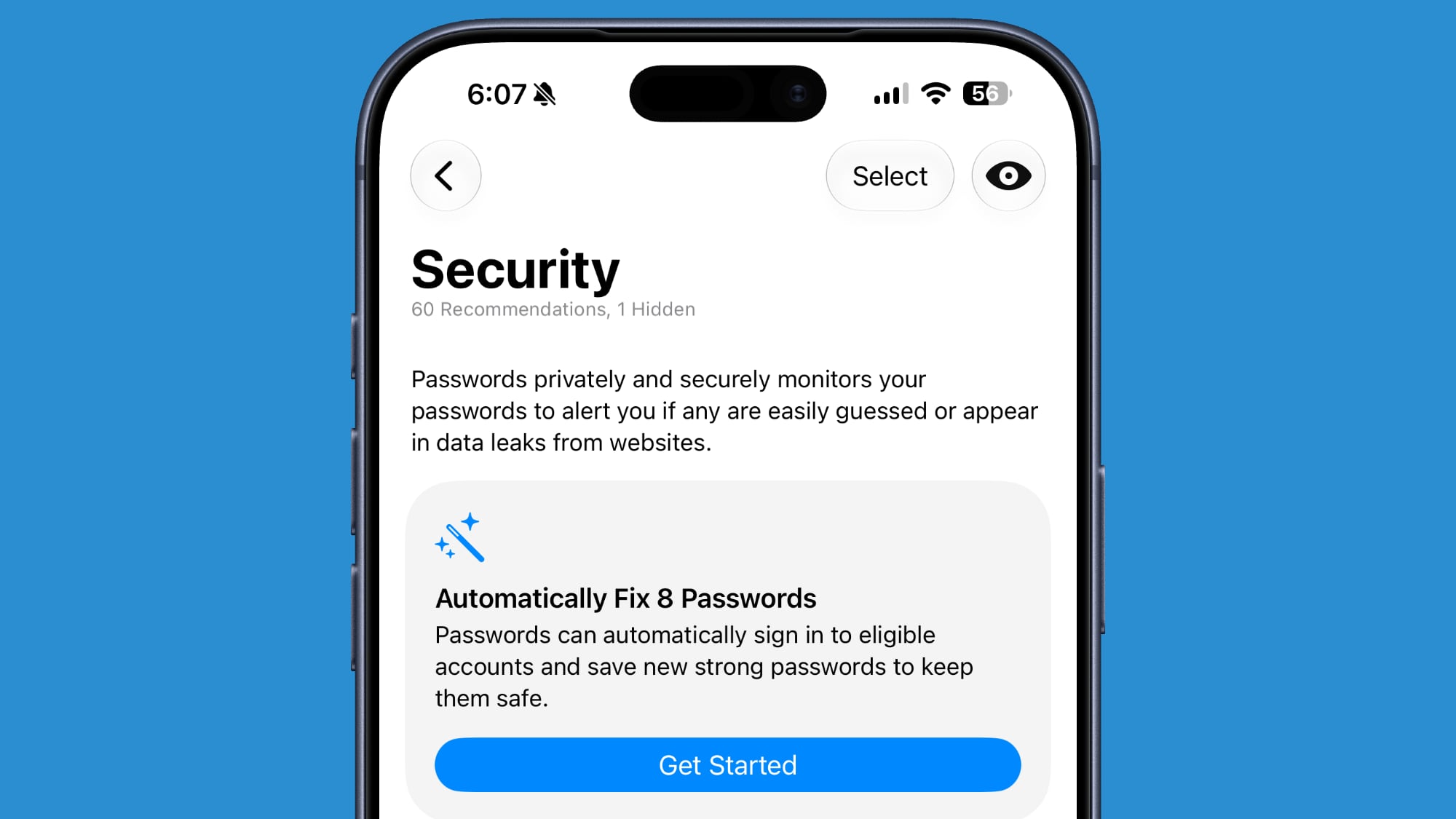
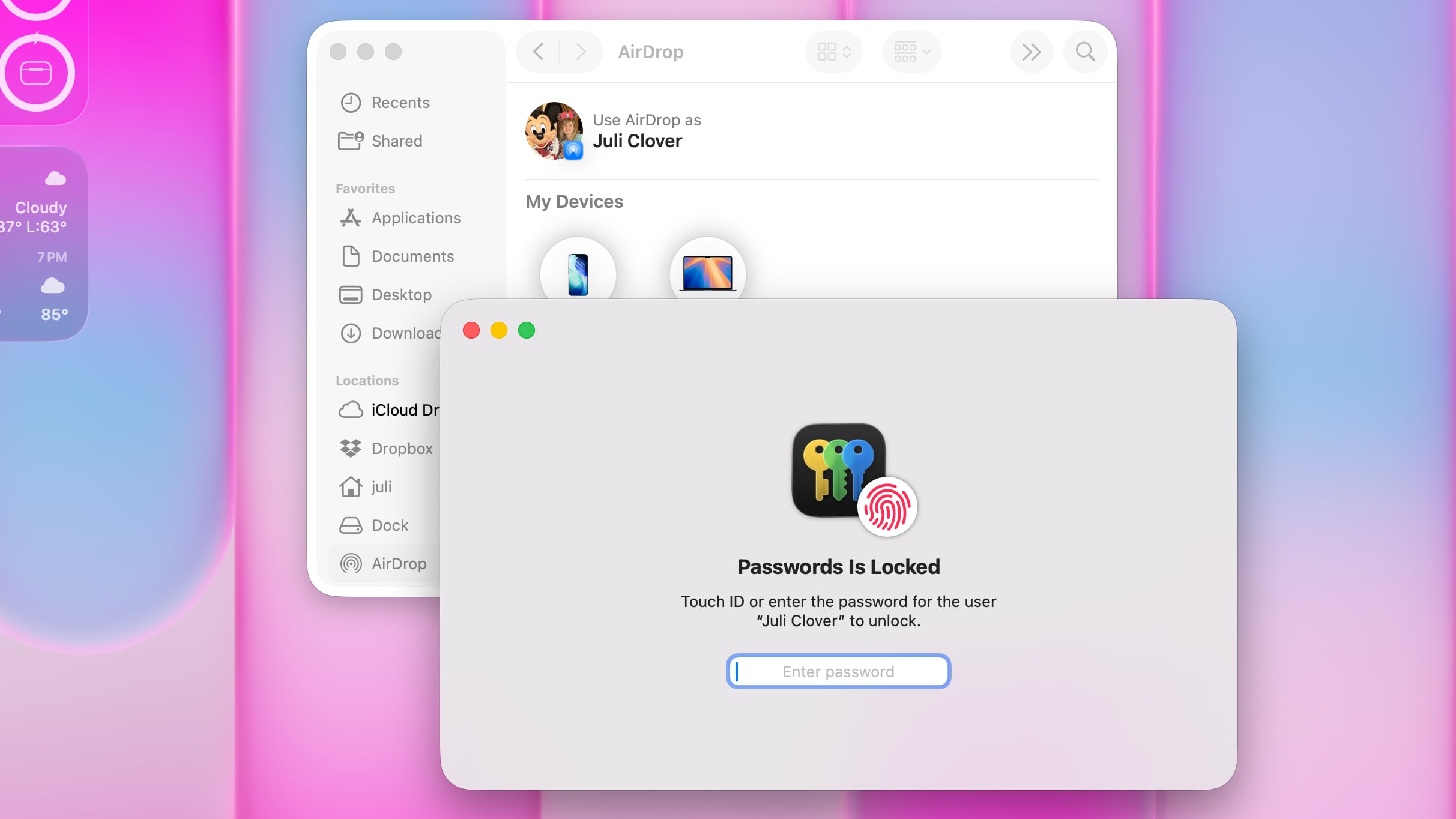
The Passwords app can use Safari to automatically change flagged weak and compromised passwords, turning them into strong passwords.


The feature uses ‌Apple Intelligence‌ to automatically navigate to eligible websites, sign in, and update your password with a tap.

Ask to Browse


Apple added new parental controls in iOS 27, including an "Ask to Browse" feature that requires children to get parental approval before visiting a new website.

Performance Improvements


Apple says Safari's power efficiency has improved, so it will drain less battery. Web apps and start page content load faster, JavaScript handling is faster, and animations and graphics are smoother.

Compatibility


Safari features like automatic tab grouping, custom extensions, and custom notifications require ‌Apple Intelligence‌. ‌Apple Intelligence‌ is available on the iPhone 15 Pro and later.

Availability


‌iOS 27‌ is in beta, and it is set to launch in fall 2026 alongside new iPhone models.
Related Roundups: iOS 27, iPadOS 27

This article, "iOS 27: All the New Safari Features" first appeared on MacRumors.com

Discuss this article in our forums

  •  

How to See Which Mac Apps Will Stop Working After macOS Golden Gate

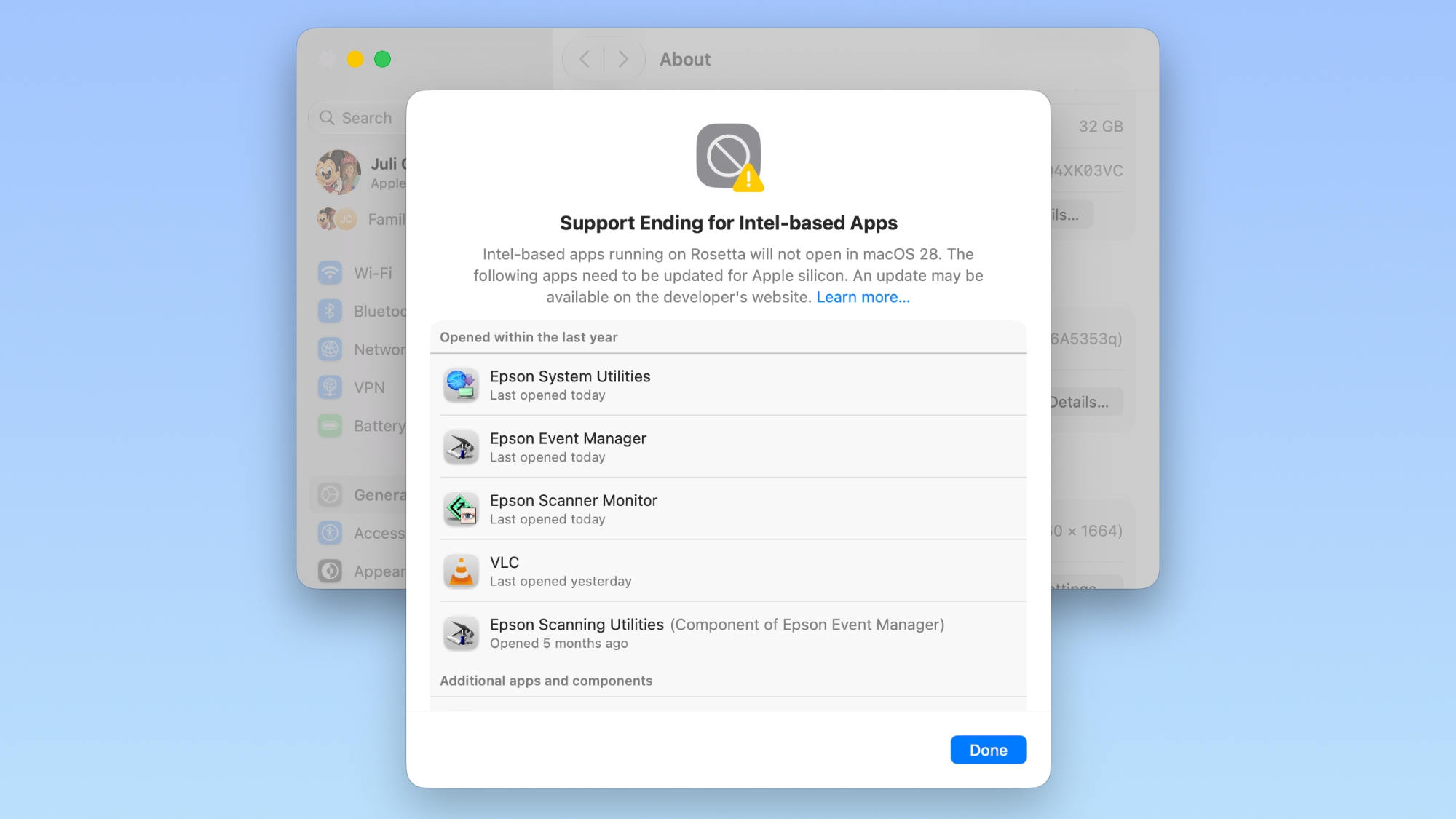
Apple is phasing out support for Rosetta 2, which is a feature that allows Intel-based apps to run on Apple silicon Macs. Rosetta is going to stop working for most apps in macOS 28, and when that happens, apps that use it will stop working.


Apple began warning customers and companies about the upcoming sunsetting of Rosetta with macOS Tahoe, and the warnings go even further in macOS Golden Gate.

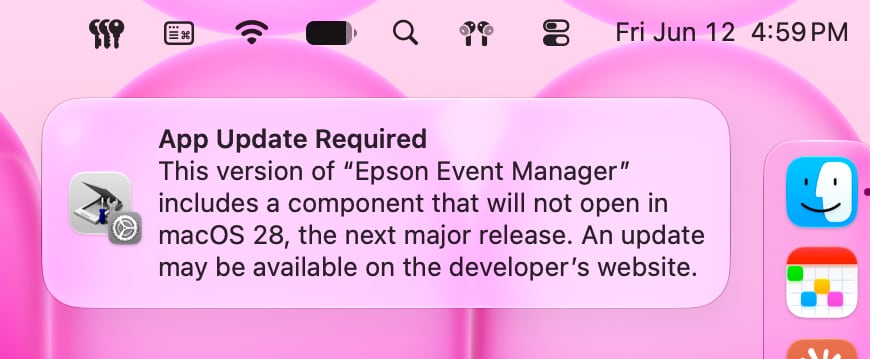
If you have apps that still use Rosetta, you'll get a warning every time you restart your Mac or open an Intel app. ‌macOS Golden Gate‌ also adds a new list where you can check which apps are going to stop working in the future.

You can get to the list by going to Settings > General > About > Intel-Based apps and clicking on the "Details" option.

The interface lists all of the apps that are going to stop working, giving Mac users plenty of time to contact app developers or find alternative apps.


‌macOS Golden Gate‌ does not install Rosetta automatically, so if you still have these outdated Intel apps, there will be a short installation when you try to open one for the first time after upgrading to Golden Gate. Authentication plugins and other pre-login utilities that require Rosetta fail to load in ‌macOS Golden Gate‌ because of the limitation.

Apple designed Rosetta to help users and developers transition from Intel to Apple silicon, but Apple phased out the last Intel-based Mac years ago. Apple only sells Apple silicon Macs, and it is slowly ending support for Intel-based models.

‌macOS Tahoe‌ was the final version of macOS available for Intel Macs, and ‌macOS Golden Gate‌ requires a Mac with an Apple silicon chip.
Related Roundup: macOS Golden Gate

This article, "How to See Which Mac Apps Will Stop Working After macOS Golden Gate" first appeared on MacRumors.com

Discuss this article in our forums

  •  

macOS 27 Golden Gate Hands-On: Every Major New Feature

macOS 27 Golden Gate is in beta ahead of a fall release, and we thought we'd go over what's new for those who don't want to risk beta software on their Mac. macOS Golden Gate adds Siri AI, Liquid Glass updates, and multiple new Apple Intelligence features.


‌Siri‌ on the Mac lives in Spotlight. Command + Space brings up a new Search or Ask interface for searching for files on the Mac or asking ‌Siri‌ a question. ‌Siri‌ is able to access data on the Mac, and it can answer the same general questions any chatbot can answer. The combination of personal context and world knowledge lets ‌Siri‌ do some things that are unavailable to other AI services like ChatGPT or Claude.

‌Siri‌ answers appear in Spotlight with an option to ask follow-up questions, but there's also a standalone ‌Siri‌ app where you can find all of your past ‌Siri‌ interactions. ‌Siri‌ is also integrated into the system for features like Write with ‌Siri‌. ‌Siri‌ can compose emails and messages for you in your own writing style, check your grammar, or just give you general feedback on what you've written.

Apple brought Visual Intelligence to the Mac, and it's available through the screenshot interface. When activated, you can select an area of your display that has something you want to know more about, and ‌Siri‌ can answer questions you have. In apps like Safari, you can select text or images, then ask ‌Siri‌ about your selection. Many of the same ‌Visual Intelligence‌ features that are on iPhone have carried over to the Mac, so ‌Siri‌ can identify plants and animals or even tell you the nutritional value of food in an image, which is a new feature this year.

‌Apple Intelligence‌ makes many of the built-in Mac apps better. Safari can group similar tabs together by subject, Passwords can automatically change weak passwords for you, Photos has new AI editing tools for changing framing and perspective, and Image Playground can generate photorealistic images.

Shortcuts uses AI to build shortcuts for you based on natural language requests, Calendar supports natural language event input, Mail search is better than before with quick action suggestions, and the Messages app also supports AI suggestions for actions you might want to take, like inserting a photo to send to a friend.

Apple updated Liquid Glass in ‌macOS Golden Gate‌. There's a slider for adjusting overall system opacity, refraction and contrast have been improved, sidebars are unified with less wasted space, and Apple has removed many of the unnecessary icons from menu bars.

If you have a Mac that can run Golden Gate, you're going to get ‌Siri‌ AI and the ‌Apple Intelligence‌ features. ‌Apple Intelligence‌ works on all Apple silicon Macs, and Golden Gate doesn't run on devices with an Intel chip.

EU users can't use ‌Siri‌ AI on the iPhone and the iPad because Apple isn't making it available yet, but ‌Siri‌ AI is available on macOS in the European Union.
Related Roundup: macOS Golden Gate

This article, "macOS 27 Golden Gate Hands-On: Every Major New Feature" first appeared on MacRumors.com

Discuss this article in our forums

  •  

iOS 27: All the New Health and Fitness Features

Apple was rumored to be working on an AI health service, but it was scrapped well before the iOS 27 beta came out. It could resurface in the future, but for now, there are a handful of health and fitness changes in the update.


Design


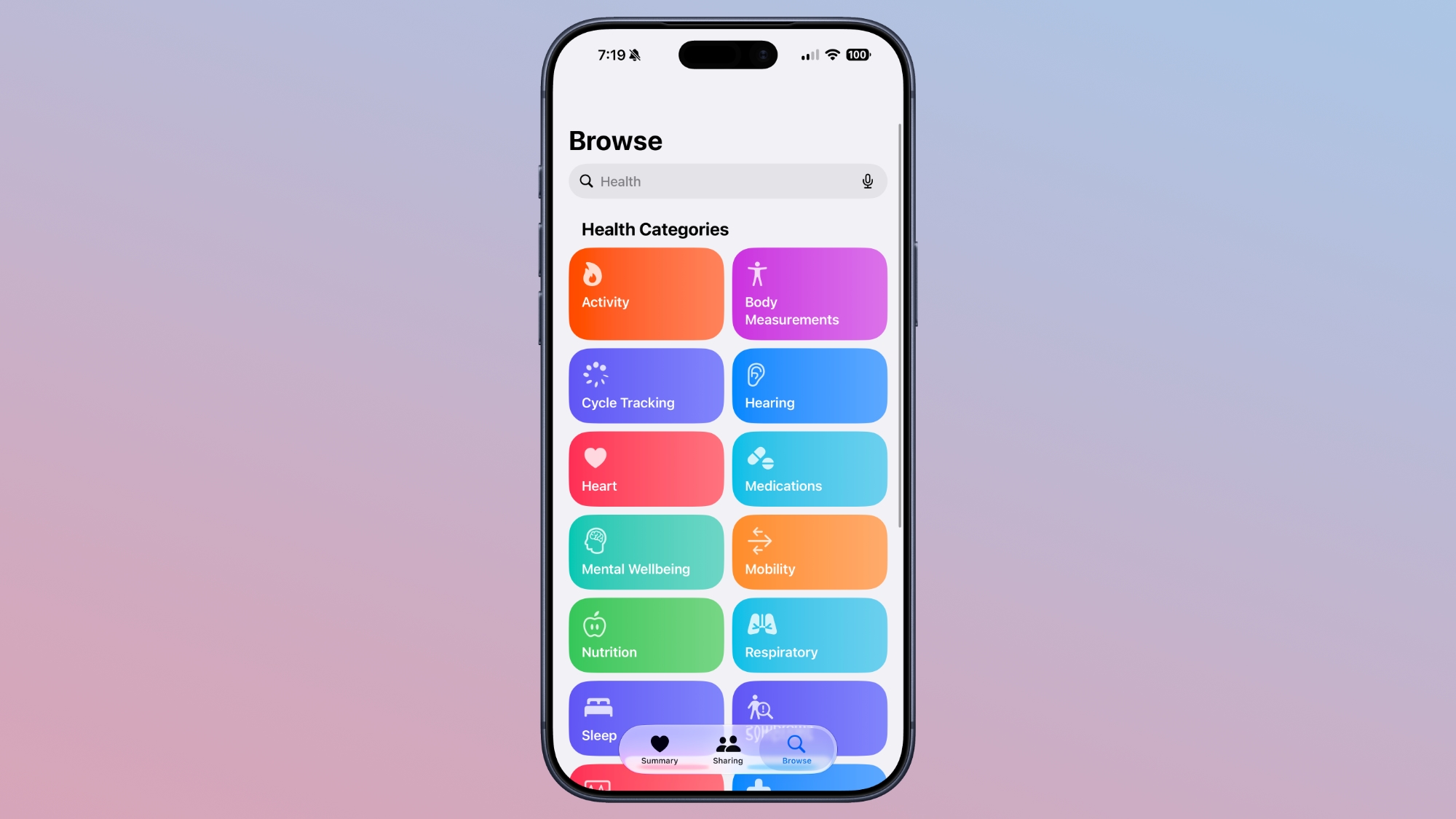
Apple redesigned the Browse section of the Health app, and it now uses a card-style interface instead of a list. It is more colorful and easier to see the different categories.


The app also has a single bottom navigation bar that incorporates a search/browse button, instead of a separate search button.

Visual Intelligence


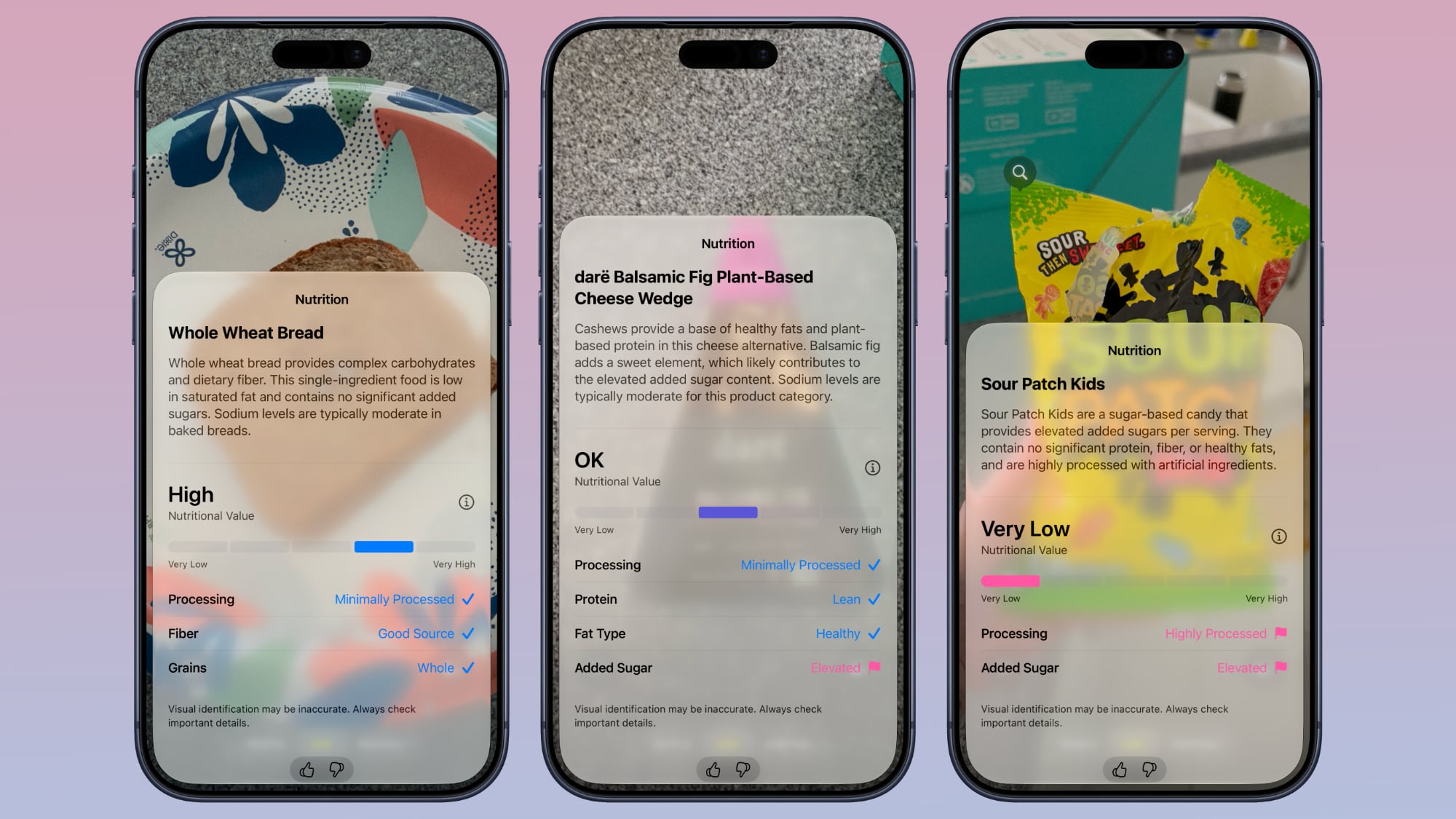
Visual Intelligence has a new nutrition feature that can tell you the nutritional value of what you're eating. You can open the Camera app to the new Siri mode and take a photo of a food item to get feedback.


It does not give exact calorie counts, but it lets you know if a food is heavily processed, if it has protein, if it's high in sugar, and more. It gives food a nutritional value ranking between very low and very high. Data does not sync to the Health app, but it's still useful.

‌Visual Intelligence‌ requires an iPhone 15 Pro or later.

Cycle Tracking


Cycle Tracking is expanding with perimenopause/menopause support. The Health app now sends notifications when logged cycle patterns are suggestive of perimenopause.


The feature uses long-term cycle data to flag the perimenopause hormonal transition that can begin a decade or more before menopause. Cycle deviation alerts are based on the user's logged cycle history and are for users age 40 and above.

Users can keep track of symptoms and access educational resources that offer guidance and support.

Apple also added new Fitness+ workouts for perimenopause and menopause.

Faster Data Updates


Data syncs to the Health app quicker than before thanks to performance improvements Apple implemented.

Child Safety


There are several new Child Safety features that give parents more control over the content their children are seeing. Apple is including guidance based on expert health research to help parents make decisions about managing child accounts.


Route and Distance Accuracy


Route maps that populate the Fitness app after workouts are more accurate in ‌iOS 27‌. During treadmill workouts, distance is also reflected more accurately than before.

Step Count


Step counts will sync between the Health and Fitness apps.

GymKit


GymKit has expanded to the iPhone, which can pair with treadmills, indoor bikes, and other exercise equipment for data syncing. GymKit was previously an Apple Watch feature, but now iPhone users won't need a watch to use it.

GymKit can sync calories, distance, speed, incline, and pace.

Launch Date


‌iOS 27‌ is available to developers, with a public beta planned for July. It will launch to the public this fall.
Related Roundups: iOS 27, iPadOS 27

This article, "iOS 27: All the New Health and Fitness Features" first appeared on MacRumors.com

Discuss this article in our forums

  •  

Apple's Craig Federighi: Siri Won't Be Your AI Girlfriend

Apple software engineering chief Craig Federighi and marketing chief Greg Joswiak sat down for an interview with Mostly Human after during WWDC, discussing the iOS 27 Siri changes, Apple's take on AI, new child safety protections, and more.


Apple set out to deliver an AI utility, not an AI companion. When asked whether users could create an AI boyfriend or girlfriend with the new Siri, Federighi said absolutely not. ‌Siri‌ is meant to help, and Apple didn't want to focus on engagement like other AI companies. From Federighi:
Quite the opposite, because as you may know, if you use many of the existing chatbots, they're really focused on engagement to a large degree. And sycophancy, right? They kind of want to pull you in. They might encourage you to reveal things about yourself, and then use that as a basis to establish a connection.

We view it quite the opposite. I mean, the way that we have designed Siri, Siri really wants to say 'Listen, that's not what I'm here for, right? I'm here to help you. I can help you get things done. I can help you learn about the world.' But if you try to engage Siri as a romantic partner, Siri's not up for that. Siri's 100 percent not into that.

Joswiak said Apple didn't want to do AI for AI's sake, and the company wanted AI to blend in with existing iPhone features.
We like when technology disappears, right? You just focus on what you want to do, or you focus on the content. And it's the same thing with AI. [...] We don't do AI for AI's sake. 'Hey, look at us, we're doing AI.' It's how does AI make everything better? And that makes our products better, our features better.

He went on to say that he doesn't want iPhone users to have to be "prompt experts" to use AI. "We want to meet them where they're at," said Joswiak. "Have the products and features become better, and this is just a really helpful technology in making those features and products better."

Federighi wanted to make it clear that Apple's approach to AI is privacy forward.
I think it's a challenging thing for a lot of people to understand the distinction between what your iPhone knows and what, say, Apple as a company knows. Your iPhone is yours, right? Your data is yours and it stays on your phone and your control and Siri is using it for you. Apple doesn't get to know any of this stuff, and that is very different than I think most players in the space, and I think super important.

The full interview covers other topics like child safety, AI and jobs, iOS 27 features, Apple's 50th anniversary, the future of AI, scammers, and much more.
This article, "Apple's Craig Federighi: Siri Won't Be Your AI Girlfriend" first appeared on MacRumors.com

Discuss this article in our forums

  •  

Apple Criticizes U.S. Antitrust Bill That Targets the App Store

United States Senators Chuck Grassley and Amy Klobuchar this week reintroduced the American Innovation and Choice Online Act (AICOA) that targets major tech companies like Apple, and Apple is not happy to see it back.


The bipartisan bill is reminiscent of the Digital Markets Act in the European Union, banning large platforms from favoring their own products or services, limiting competitors' access to key platform features, locking users into default settings, and more. It is a reworked version of the same bill that did not reach a floor vote back in 2022.

In a statement to MacRumors, Apple said AICOA will undermine privacy, security, and child safety protections, while also making it more difficult to do business in the U.S.
We strongly disagree with the Senate's consideration of European-style regulation that would hamper innovation and force changes consumers never asked for, while undermining the privacy, security and child safety protections they rely on every day. Apple is proud to be an engine of innovation, job creation, and economic growth in the U.S., where some of the world's most innovative companies have designed technology that has changed the world. Importing Europe's failed policies will not increase competition -- it will make it more difficult to do business right here at home.

AICOA aims to "restore online competition and affordability" by preventing digital platforms from "abusing their market power to stifle competition, undercut online businesses and raise prices for American consumers." It would permit the Department of Justice, Federal Trade Commission, and state attorneys general to challenge online platforms for exclusionary conduct that harms competition.

It is applicable to platforms that have at least $175 billion in average annual gross revenue and reach 34 percent of U.S. subscriber households or 34 percent of U.S. monthly active users over the age of 12. Apple would be subject to the restrictions should AICOA pass. Companies are barred from the following under the current AICOA wording:

  • Unfairly favoring their own products or services.

  • Misusing nonpublic business-user data to copy and compete against small businesses.

  • Unfairly limiting competitors' access to key platform features.

  • Blocking business users from accessing or moving their own data from one digital platform to another.

  • Retaliating against users or business users who raise legal concerns.

  • Unfairly enforcing terms of service in ways that harm competition.

  • Conditioning companies' access to the platform, or product placement on the platform, on purchase or use of unrelated services.

  • Locking users into default settings.

  • Skewing ranking or presentation against similarly situated business users.


Apple says AICOA would have the same impact as the Digital Markets Act, harming innovation, weakening privacy protections, and delaying new product features. Most recently, Apple said it would not be able to bring Siri AI to the European Union when iOS 27 launches because of an inability to reach an agreement with the European Commission on the DMA's interoperability rules.

Like the DMA, AICOA would allow for third-party app marketplaces and alternative payment methods, which Apple maintains will undermine the user protections of the App Store. Apple also says the AICOA rules mandating open platform access would give the most sensitive user data to any company that wants it.

Bill sponsors say AICOA was written to "preserve safety, privacy, intellectual property, national security and constitutional protections," and that it includes language to ensure covered platforms are able to prevent fraud and protect safety, user privacy, nonpublic data, or platform security.

Along with Apple, AICOA would impact Google, Amazon, and Meta. It is endorsed by Mozilla, Proton, DuckDuckGo, Yelp, and Y Combinator, among others. Senators Josh Hawley, Dick Durbin, Sheldon Whitehouse, and Cory Booker are co-sponsors.
This article, "Apple Criticizes U.S. Antitrust Bill That Targets the App Store" first appeared on MacRumors.com

Discuss this article in our forums

  •  

What's New in the iOS 27 Photos App

The Photos app is one of a handful of apps that Apple paid extra attention to in iOS 27. It has multiple improvements to performance, and several quality-of-life upgrades. There are also new AI photo editing tools that use Apple Intelligence.


AI Tools


There is a set of AI photo editing tools in the ‌Photos‌ app, accessible by tapping on the icon featuring three sliders, and then selecting the ‌Apple Intelligence‌ icon labeled "Tools."

Clean Up


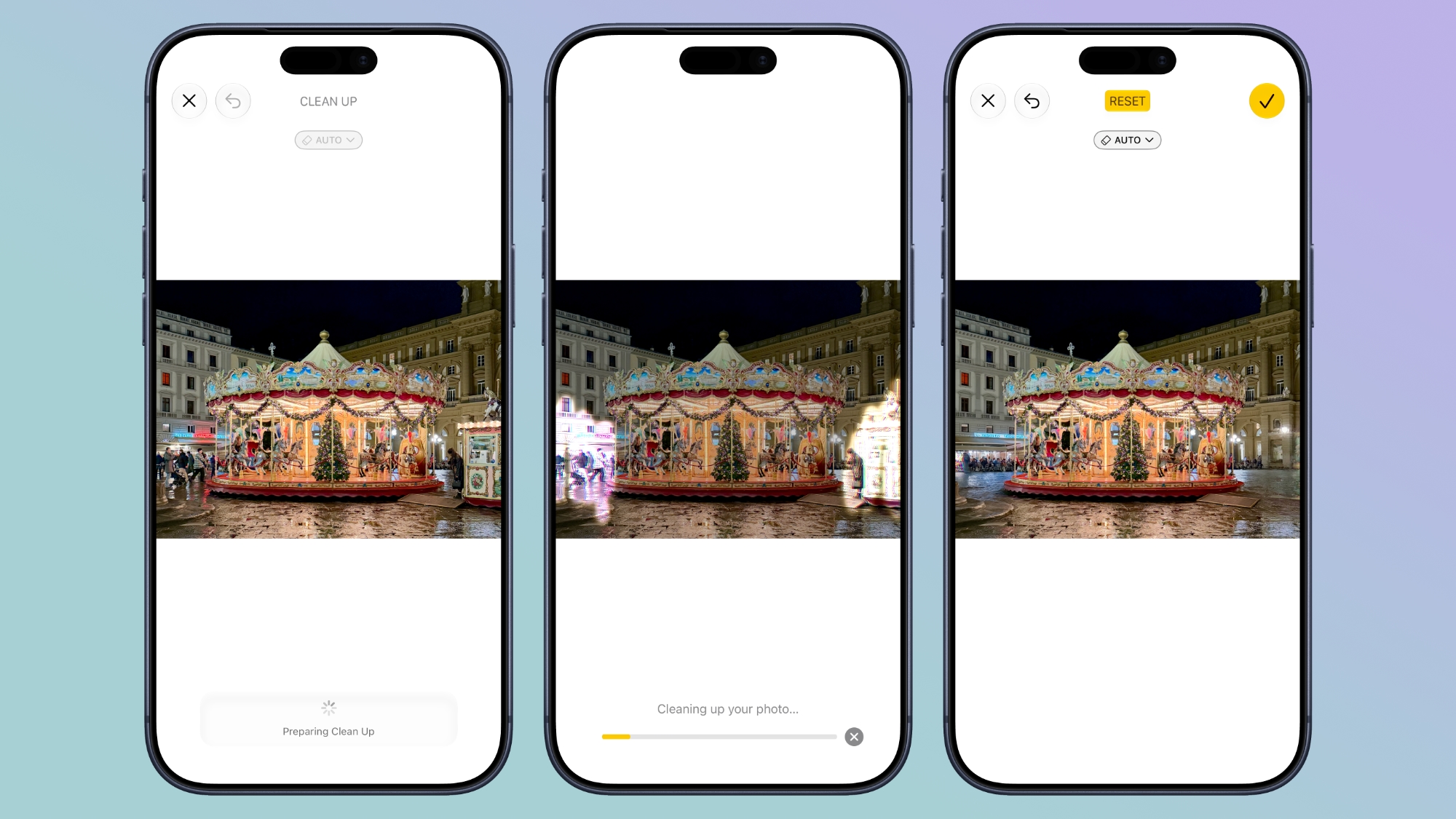
Clean Up uses new AI models, and it's better at removing objects. The original version of Clean Up was best for small items with little complexity in the surrounding area, but now it is able to do more work reconstructing backgrounds with generative AI.


There are now three options for object removal. Fast works more quickly and can still be used for simple edits, while High Quality works better for more detailed scenes. Auto lets the ‌Photos‌ app decide which option is best.

Extend


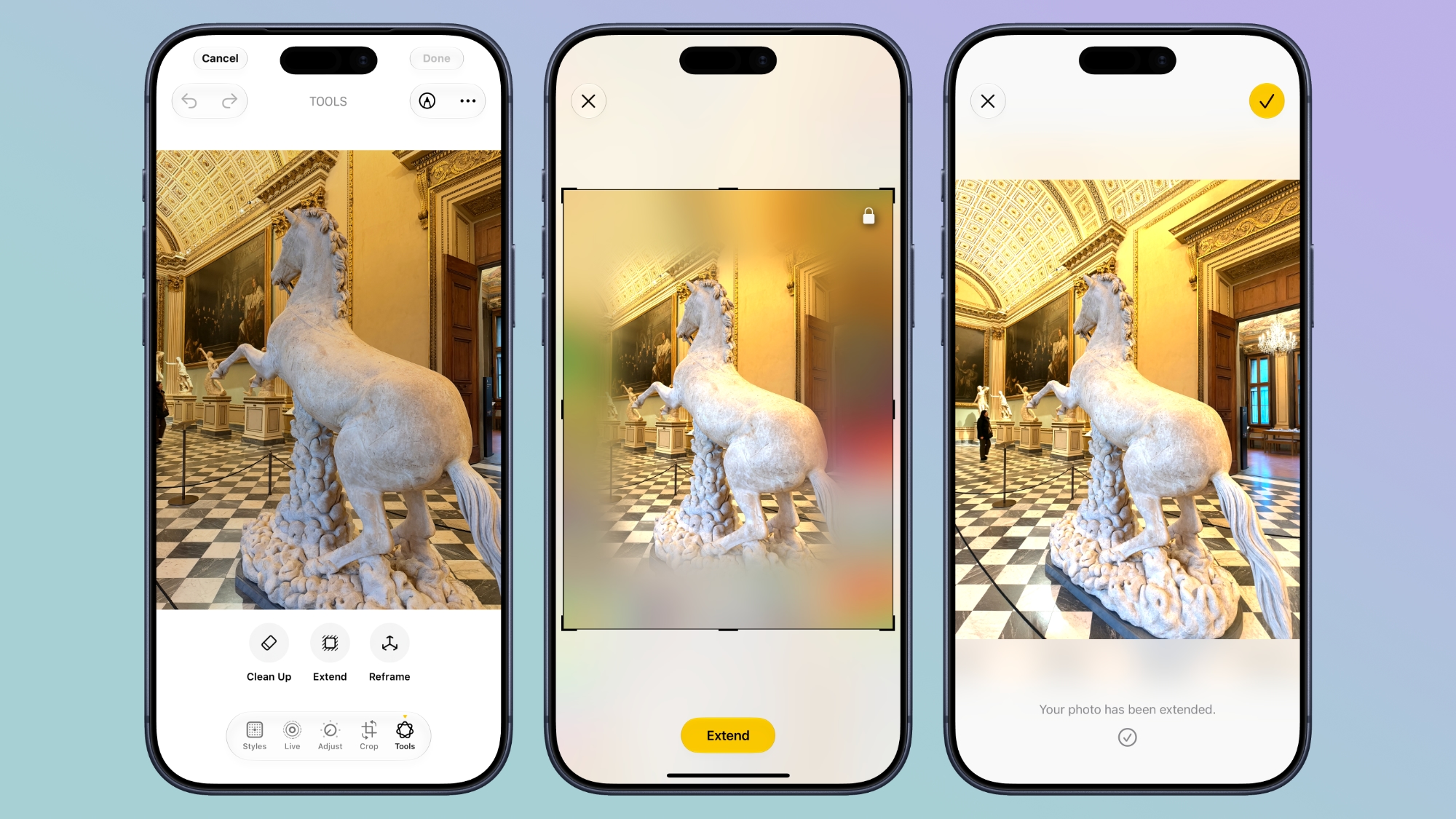
Extend lets you change the crop of an image, expanding the borders around content to zoom out a bit or change the photo's composition. It uses generative AI to fill in missing areas, and you can adjust the borders with pinch gestures.


Apple also uses the Extend feature for expanding iPhone Lock Screen wallpapers that don't quite fit the display.

Reframe


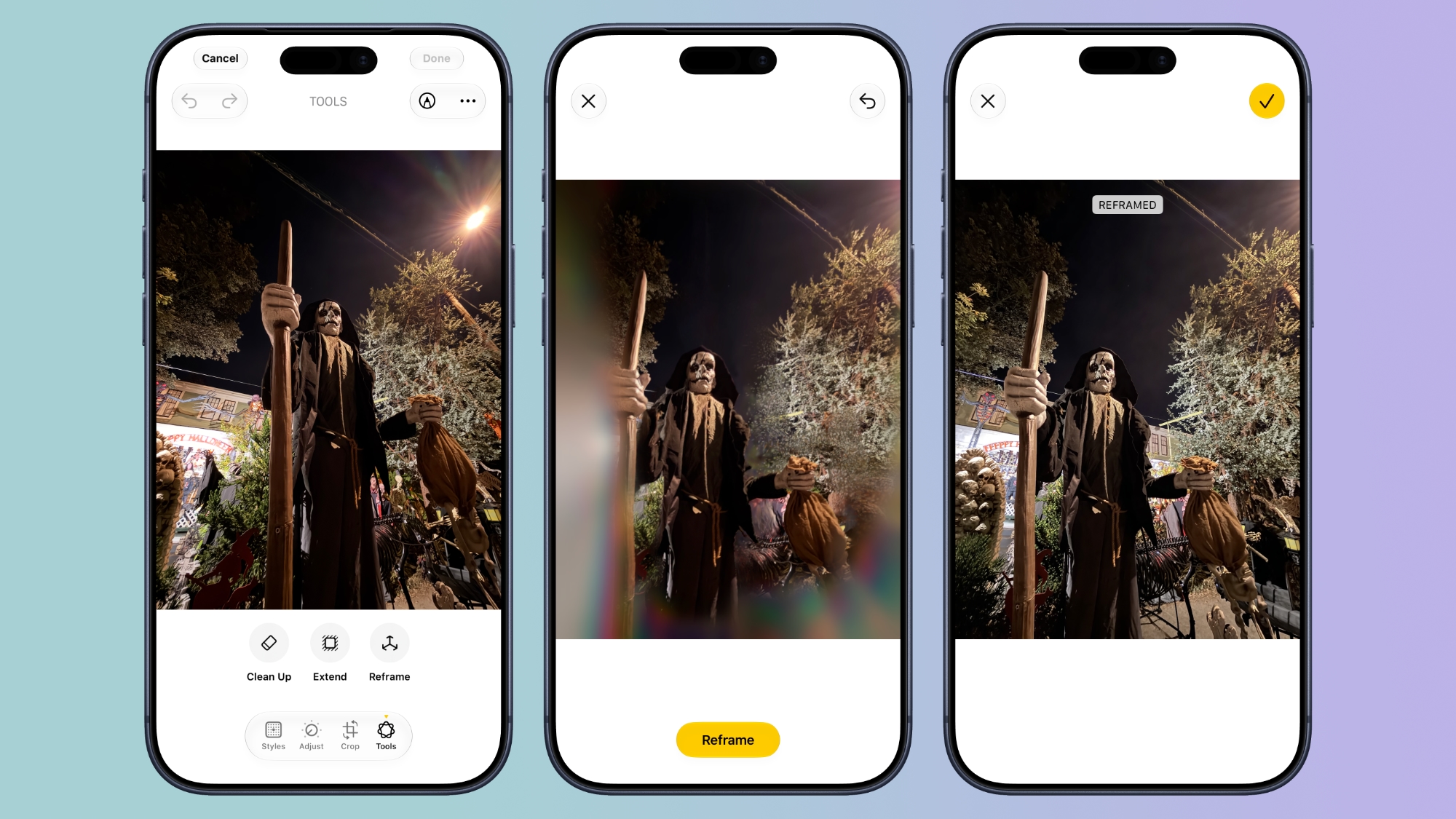
Reframe can change the perspective of the photo, making adjustments to the angle of a person or object. It draws on the spatial information the iPhone gathers when a photo is taken, and combines it with AI to change the angle of the camera in post-processing. The spatial data is used for adjusting the subject of the image, and then AI fills in any pixels that are missing.


Reframe uses touch and drag gestures to adjust perspective, and two fingers for panning, zooming, or rotating an image to get the right angle.

Image Playground


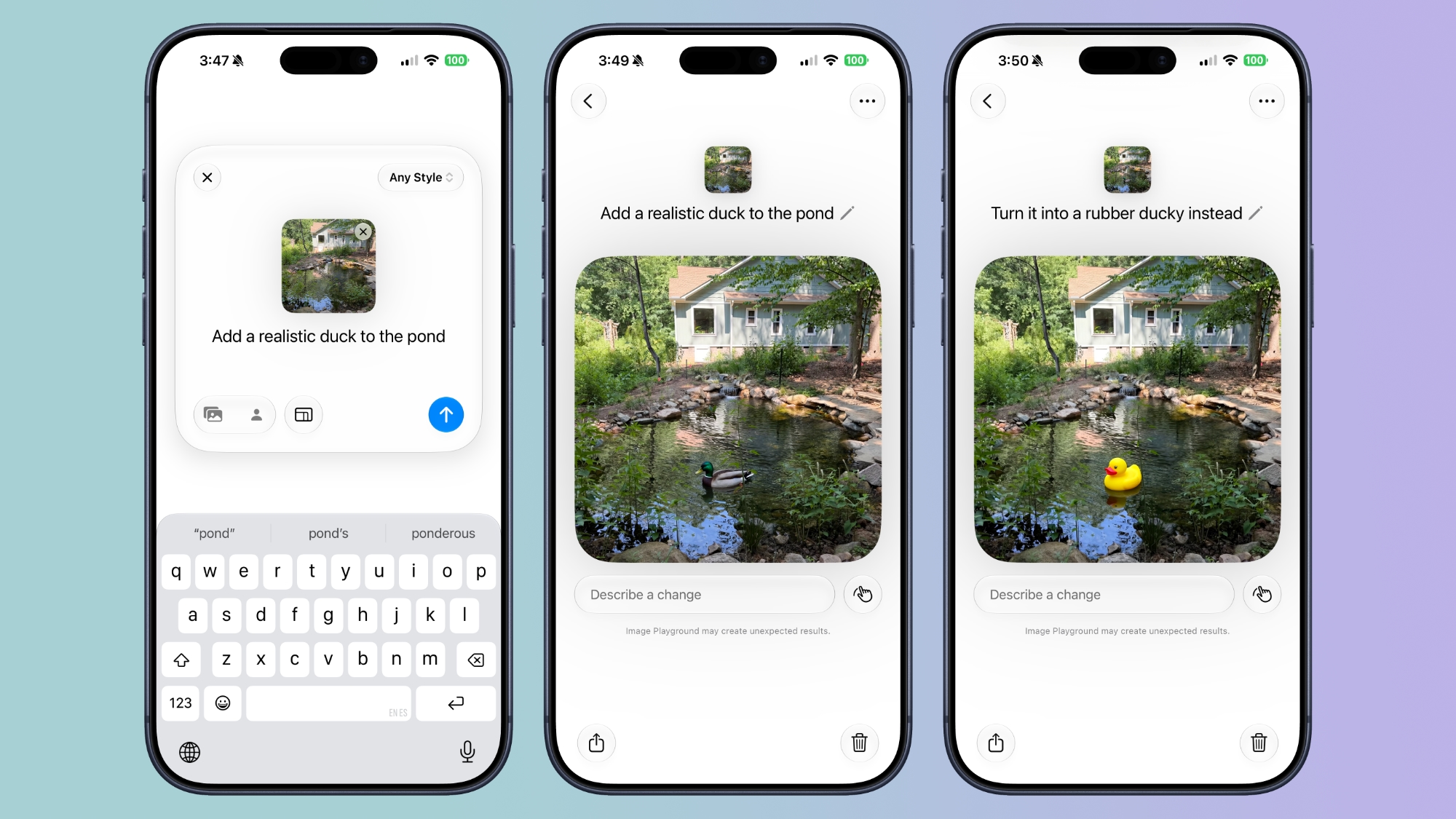
While not part of the ‌Photos‌ app, the Image Playground app can be used to make photorealistic edits to your image. If you have a photo of a friend and want to add a hat or an accessory that looks real, you can do so with ‌Image Playground‌. You can select specific areas in an image to modify and make AI edits using natural language, plus there's an option to combine images.


‌Image Playground‌ can be used for free, but there will be daily caps, with extra usage available through iCloud+ plans.

Videos to Photos


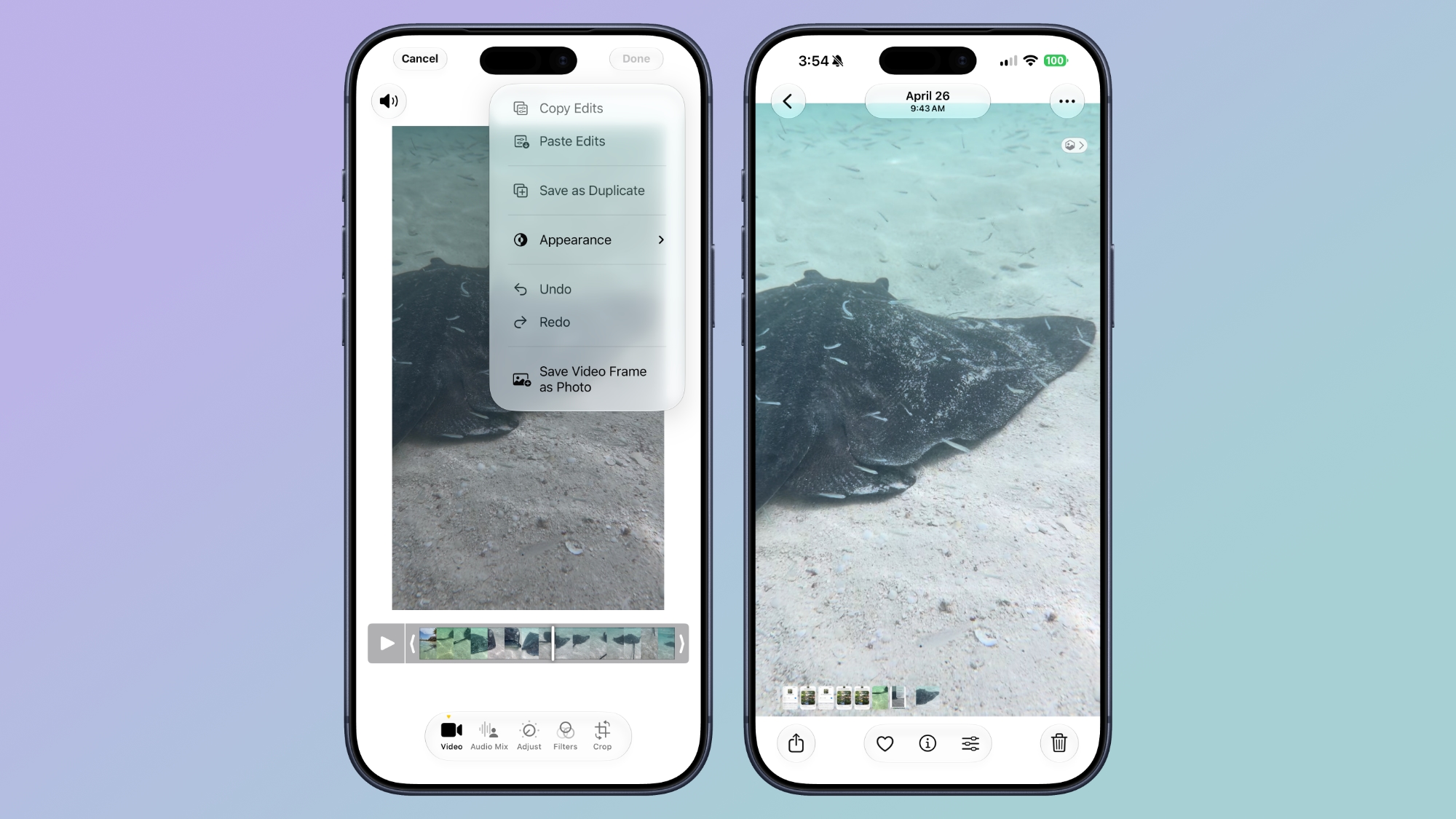
You can now save a frame of a video as an individual photo.


Metadata


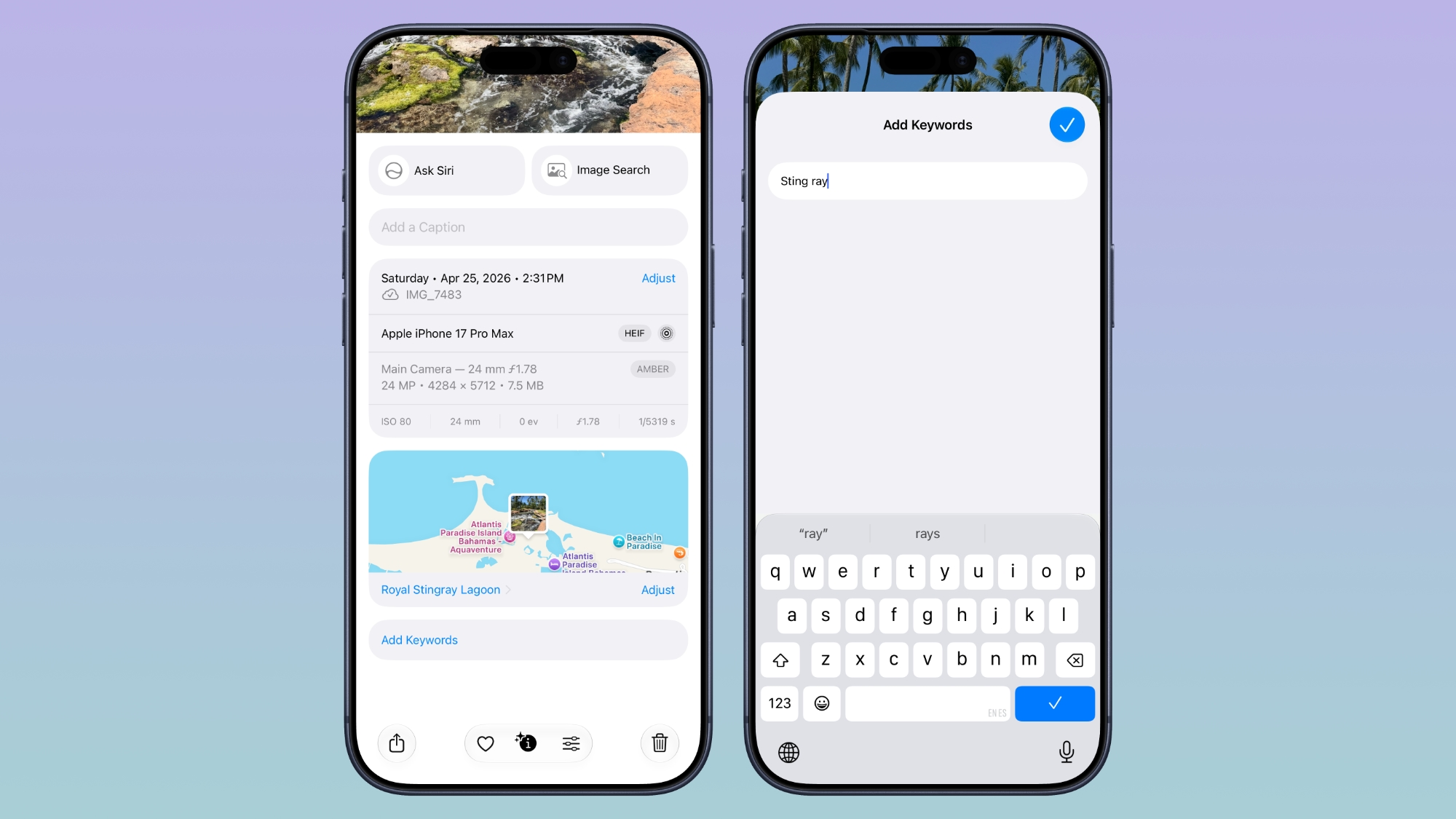
Apple now lets you add keywords and star ratings to photos and videos in the ‌Photos‌ app. You can rate images with one to five stars and then filter images by rating.


Album Changes


Apple improved album organization in ‌iOS 27‌ and added new features for Shared Albums, including an option for Android and Windows users to contribute to ‌iCloud‌ albums.

  • Shared Albums can be filtered by photos or videos.

  • It's easier to save images from Shared Albums.

  • You can set Shared Albums to expire after 30 days, which is useful for sharing photos without having a permanent album.

  • It's easier to invite people to Shared Albums with a dedicated "Create Shared Album" option in any album menu.

  • You can create a link for people to upload images to a Shared Album, and there are new permissions so you can require explicit access to be granted.

  • Shared Albums have a recent activity log.

  • You can react to images in Shared Albums with any emoji.


Slideshows


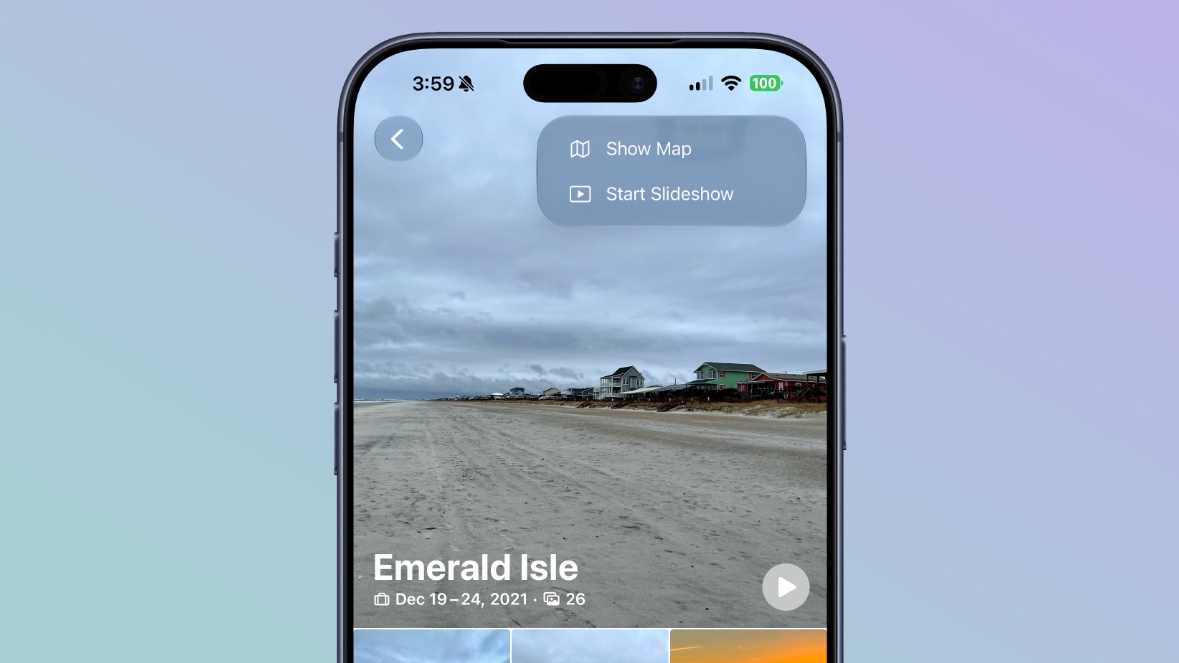
You can create a slideshow from any album or collection of images in the ‌Photos‌ app instead of being limited to what's in the Memories section. Just tap into an album, tap the icon in the upper right of the display, and choose "Start Slideshow." Alternatively, select several photos and then follow the same steps from the main Library interface.


Slideshows can be customized with transition styles, slide duration, and background music. The resulting file can be shared on social media, and saved as a video.

Utilities


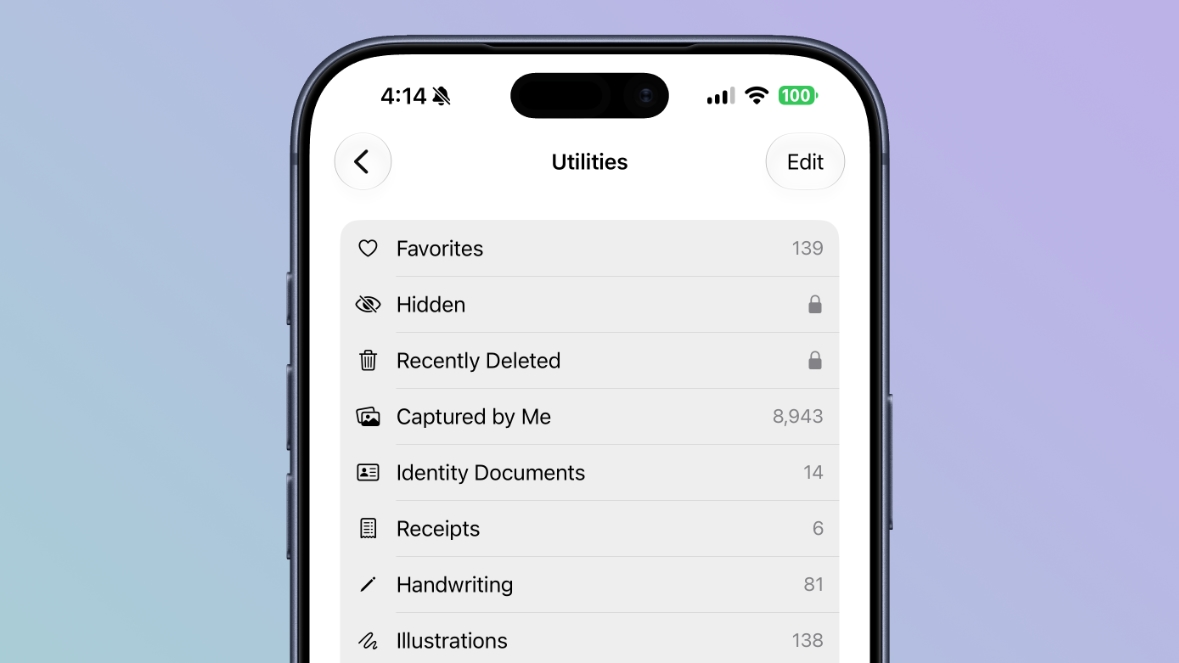
There are two new Utilities folders in the ‌Photos‌ app. Captured by Me includes all of the images that you've taken from the Camera app on your current or past iPhone, while Identity Documents aggregates pictures of passports, licenses, and similar documents.


iCloud


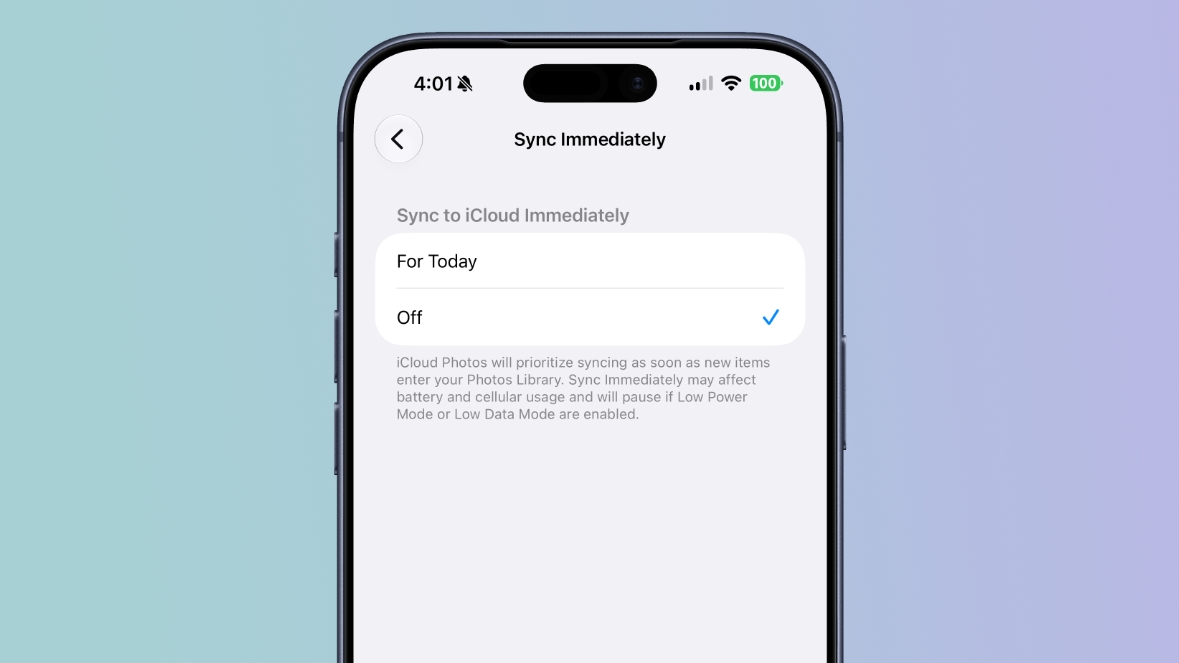
In the ‌Photos‌ section of the Settings app, there's a "Sync Immediately" option that lets you prioritize immediate ‌iCloud‌ uploads for the day.


With the setting enabled, iCloud Photos will sync as soon as new images enter the ‌Photos‌ Library instead of holding uploads to save battery.

Full-resolution photos and videos can be added to ‌iCloud‌ Shared Albums, with support for all common photo and video formats.

Other Changes


  • You can select a specific pet to use with the Photo Shuffle wallpaper.

  • Search returns more pleasing photos of people and pets in Top Results.

  • The Collections tab is faster to render.

  • New captures from the Camera app load quicker in ‌Photos‌.

  • You can include images of yourself in Photo Shuffle.

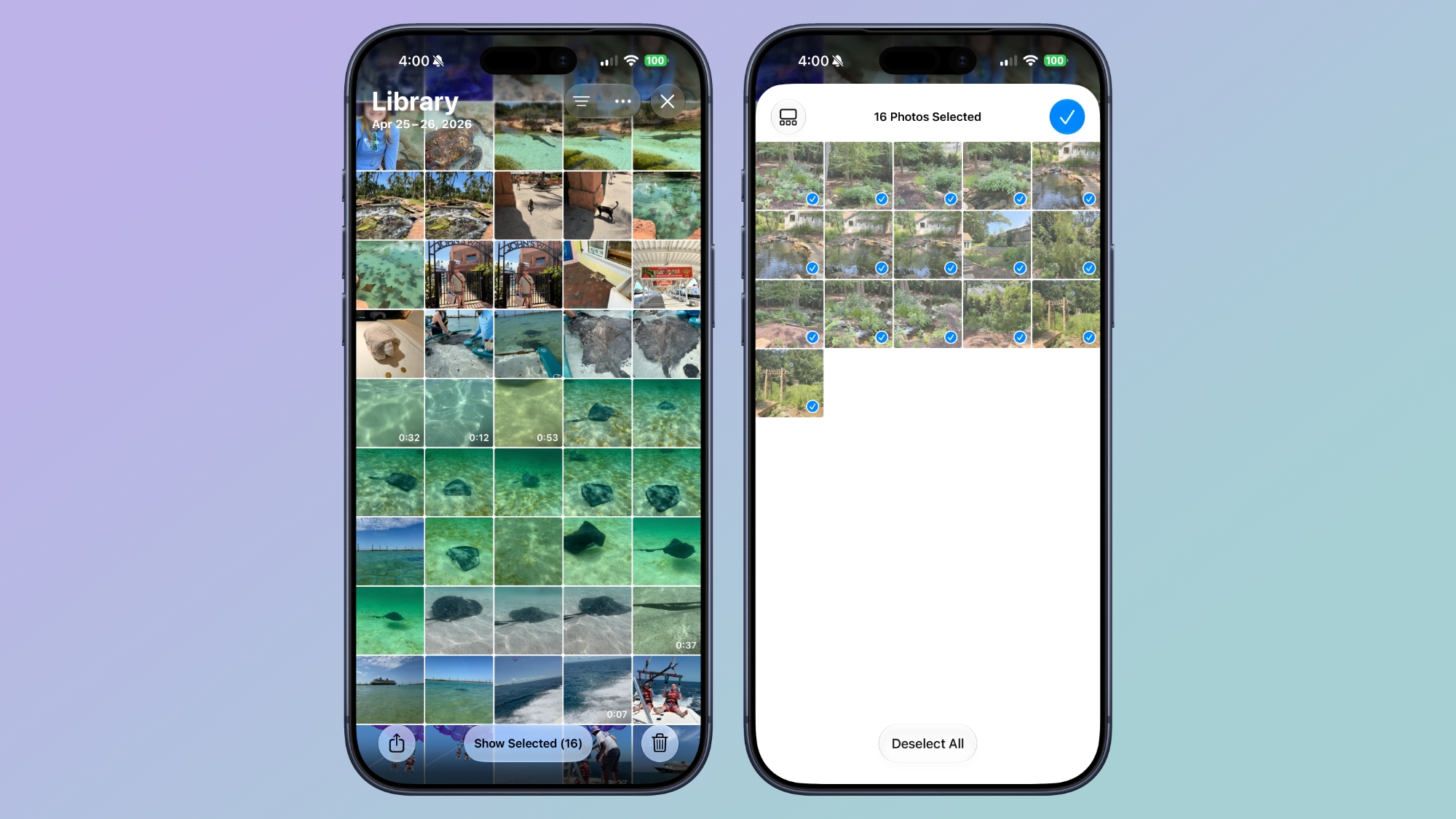
  • A "Show Selected" option in the Library shows you all of the photos you have checked so you can modify metadata.


Compatibility


The AI photo editing tools are available on devices that support ‌Apple Intelligence‌, which includes the iPhone 15 Pro and later. Performance and organizational tools are available on devices that run ‌iOS 27‌, which includes the iPhone 11 and later.
Related Roundups: iOS 27, iPadOS 27
Tag: Photos

This article, "What's New in the iOS 27 Photos App" first appeared on MacRumors.com

Discuss this article in our forums

  •  

Apple Touts 'World's Best' AirPods Pro 3 Noise Cancellation in New Vini Jr. Ad

Apple today shared a new ad highlighting AirPods Pro 3 Active Noise Cancellation.


The ad stars Vini Jr., a Brazilian professional footballer who plays for Real Madrid and the Brazil national team, and it arrives as the 2026 FIFA World Cup gets underway. In the spot, Vini Jr. dances through the streets to music only he can hear.

Apple marketing chief Greg Joswiak shared the video on social media, and a short version is also on Apple's AirPods Pro 3 website.

Apple says the ‌AirPods Pro 3‌ have the "world's best in-ear Active Noise Cancellation" based on a July 2025 evaluation in accordance with IEC 60268–24 as compared with best-selling commercially available wireless in-ear headphones. The ‌AirPods Pro 3‌ remove up to 2x more noise than the AirPods Pro 2, and up to 4x more than the original AirPods Pro.

The ‌AirPods Pro 3‌ are priced at $249, and along with Active Noise Cancellation, the earbuds feature spatial audio, heart rate sensing, hearing aid functionality, Live Translation, and more.
Related Roundup: AirPods Pro 3
Buyer's Guide: AirPods Pro (Neutral)
Related Forum: AirPods

This article, "Apple Touts 'World's Best' AirPods Pro 3 Noise Cancellation in New Vini Jr. Ad" first appeared on MacRumors.com

Discuss this article in our forums

  •  

Hands-On With iOS 27's Siri AI

The smarter, more capable version of Siri is finally here, available in iOS 27, iPadOS 27, and macOS Golden Gate. The updates are limited to developers right now, but there's a lot to look forward to this fall.


Personal Context is a ‌Siri‌ capability that distinguishes ‌Siri‌ AI from other chatbots like Claude and OpenAI. ‌Siri‌ has access to the data on your iPhone, from emails and messages to photos and files. ‌Siri‌ can find anything you're looking for. Apple rebuilt its search index for ‌Siri‌ AI, and it's more comprehensive for a better search experience.

‌Siri‌ can see what's on your screen with onscreen awareness, and answer questions about what you're looking at. If there's an image on Instagram and you want to know where it was taken, you can just ask ‌Siri‌ where it was taken and get a response. Visual Intelligence is now part of the Camera app, and ‌Siri‌ can answer questions about anything you take a picture of.

Like other chatbots, ‌Siri‌ can search the web and access general world knowledge, so it can provide responses to any questions you might have. It can evaluate documents, solve math problems, craft recipes, walk you through DIY tasks, help you plan a party, and more.

‌Siri‌ can take action in and across apps, getting detailed maps directions with multiple stops, editing and sharing photos, or writing an email from scratch in your own writing style. It can do multiple tasks that are included in the same request.

‌Siri‌ is located in the iPhone's Dynamic Island, and there's a glassy new ‌Siri‌ bubble with bright colors that pops up when ‌Siri‌ is activated. You can use Hey ‌Siri‌ or hold down the side button, but ‌Siri‌ also comes up with a swipe down from the top center of the display. Responses show up in that same area, and if you swipe on a response, you can get more information and ask follow-up questions.

Apple also created a full ‌Siri‌ app where you can revisit past conversations and start a new conversation. The ‌Siri‌ app syncs across devices, so you can start a conversation on your iPhone and wrap it up on your Mac. ‌Siri‌ AI is available in ‌iOS 27‌, ‌iPadOS 27‌, ‌macOS Golden Gate‌, watchOS 27, and visionOS 27, plus it works on AirPods and CarPlay.

‌Siri‌ AI has the same device requirements as Apple Intelligence, so you'll need an iPhone 15 Pro or later to use it. ‌Siri‌ AI is available in beta right now, and Apple is still refining. ‌iOS 27‌ is limited to developers, with a public beta set to come out in July. ‌iOS 27‌ with ‌Siri‌ AI will launch in September.
Related Roundups: iOS 27, iPadOS 27
Tag: Siri

This article, "Hands-On With iOS 27's Siri AI" first appeared on MacRumors.com

Discuss this article in our forums

  •  

Apple Updates App Store Guidelines With Stricter Rules for Low-Quality Apps

Apple updated its App Store Review Guidelines this week, adding stricter language around low-quality apps.


The 4.3 Spam rule already barred overly simple apps in saturated categories, but Apple now includes language saying low-effort apps could be pulled from the App Store. Apps in oversaturated categories that are not updated, improved, or do not attract customers may be removed, according to Apple.

App Guideline 4.3(b) New Language:
Don't submit apps that are indistinguishable from what's already widely available. Opportunistically creating variants of existing app categories or popular apps degrades App Store discovery, reduces overall app quality, and harms both users and developers. Certain kinds of apps, such as dating, flashlight, sound effects, wallpaper, simple timers, and fortune telling, are well established on the App Store and we will not accept new submissions unless they offer a meaningfully different or improved experience. We may remove these apps from the App Store going forward if they are not updated, improved, or do not attract customers. Other kinds of apps, such as drinking games, Kama Sutra, fart, and burp apps, are mediocre, low-quality, or low-effort and do not add value to the App Store. Repeated submissions of this kind may lead to removal from the Apple Developer Program.

App Guideline 4.3(b) Old Language:
Also avoid piling on to a category that is already saturated; the App Store has enough fart, burp, flashlight, fortune telling, dating, drinking games, and Kama Sutra apps, etc. already. We will reject these apps unless they provide a unique, high-quality experience. Spamming the store may lead to your removal from the Apple Developer Program.

Apple says it won't approve dating, flashlight, sound effect, wallpaper, simple timer, and fortune telling apps unless they are meaningfully different from existing apps. Apple says fart, burp, Kama Sutra, and drinking game apps are "mediocre, low-quality, or low-effort" and add no value to the ‌App Store‌. Repeated app submissions of this type could lead to removal from the Developer Program.

Wording on spam apps is clearer than before, and it sounds like Apple will approve fewer apps in saturated categories and may even clean up some clutter apps that get no interest.

Apple also added new detail to its 1.2 rule on apps with user-generated content, which is a guideline that has seen Apple threaten to remove apps like Grok from the ‌App Store‌. Apple now makes it clear that app developers are responsible for removing content that violates ‌App Store‌ guidelines, such as pornographic content.
It is your responsibility to remove content that violates this guideline, your terms of service, or your community standards. If we find such content, we will ask you to remove it, and provide a plan to improve your compliance with this guideline. Based on your response, your app may be removed from the App Store until you can demonstrate improvements that bring your app into compliance. Egregious or repeated behavior is grounds for immediate removal of your app from the App Store, and from the Apple Developer Program.

Apps that do not have a compliance plan for addressing content violations could be removed from the ‌App Store‌.

Apple's final guideline change (4.5.3) bars app developers from using Live Activities to spam, phish, or send unsolicited messages to customers.

The full ‌App Store‌ Review Guidelines are available on Apple's website.
This article, "Apple Updates App Store Guidelines With Stricter Rules for Low-Quality Apps" first appeared on MacRumors.com

Discuss this article in our forums

  •  

Anthropic Launches Claude Fable 5, Its First Public Mythos-Class Model

Anthropic today announced the launch of Claude Fable 5, a Mythos-class model that it says is safe for general use.


According to Anthropic, Fable 5's capabilities exceed those of any model it has made generally available, and Fable has demonstrated "exceptional performance" for software engineering, knowledge work, vision, scientific research, and more. It outperforms Opus models on longer, more complex tasks. Fable 5 can work autonomously for longer than any prior Claude model.

Fable 5 is being released with conservative safeguards to prevent it from being misused in areas like cybersecurity. Questions about some topics will instead be answered by Opus 4.8, with safeguards expected to trigger in less than five percent of sessions on average. Most queries related to cybersecurity, chemistry, and biology will get responses from Opus 4.8 instead of Fable 5.

Anthropic is also releasing Claude Mythos 5 for a small group of cyberdefenders and infrastructure providers. It uses the same underlying model as Fable 5, but with some of the safeguards lifted. Mythos 5 is being deployed through Project Glasswing as an upgrade to the Claude Mythos Preview. Anthropic says Mythos 5 has the strongest cybersecurity capabilities of any model in the world, with access set to expand through a broader trusted access program.

Fable 5 and Mythos 5 are available at $10 per million input tokens and $50 per million output tokens, which is less than half the price of the Claude Mythos Preview. Mythos 5 is available to those who have access to the Mythos Preview, and that includes Apple. Apple is one of Anthropic's Project Glasswing partners.

Claude Fable 5 is included in Pro, Max, Team, and seat-based Enterprise plans from today until June 22. On June 23, the model will be removed from those plans and using it will require usage credits. When Fable 5 capacity is sufficient, Anthropic plans to re-add it to subscription plans.
This article, "Anthropic Launches Claude Fable 5, Its First Public Mythos-Class Model" first appeared on MacRumors.com

Discuss this article in our forums

  •  

Telegram Gets Native Apple Watch App

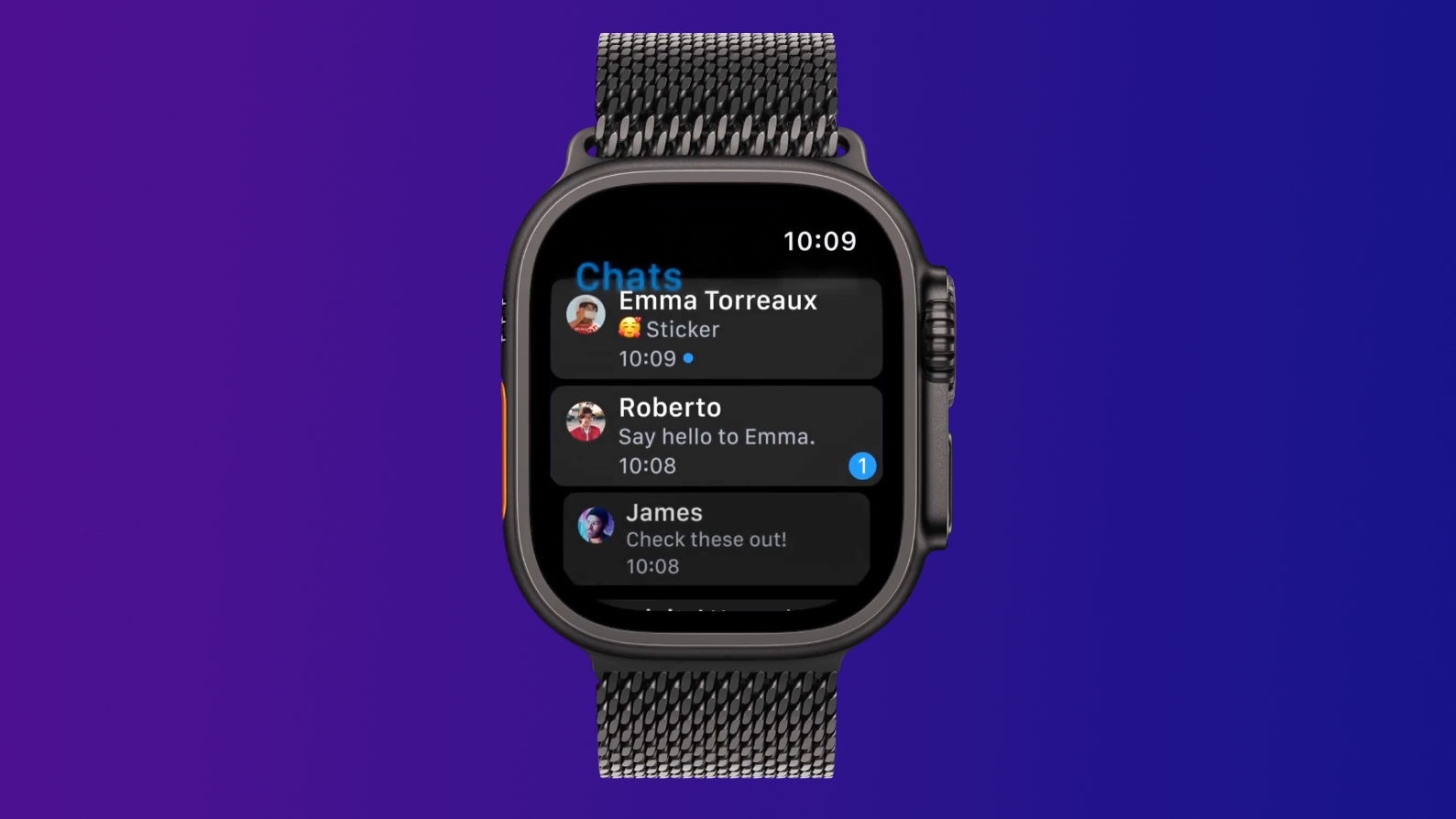
Messaging app Telegram now has a native Apple Watch app. The app supports viewing and responding to Telegram messages from the wrist.


Features like stickers, voice messages, and location information can be shared from the Apple Watch app.

Telegram had an Apple Watch app back in 2015, but it was discontinued and removed from the App Store a few years back. There have been third-party Telegram apps for the Apple Watch, but now Telegram users can once again use a first-party solution.
Related Roundup: Apple Watch 11
Buyer's Guide: Apple Watch (Caution)

This article, "Telegram Gets Native Apple Watch App" first appeared on MacRumors.com

Discuss this article in our forums

  •  

All the Liquid Glass Changes in macOS Golden Gate

When Liquid Glass launched in macOS Tahoe, Apple faced criticism over how the design looked on the Mac. Some people felt that Liquid Glass in ‌macOS Tahoe‌ was an afterthought with little impact from the design update, while others had issues with contrast, readability, rounded corners, and design consistency. There were long complaint threads on the MacRumors forums and on Reddit, and some people refused to update.


Apple is making several changes to Liquid Glass and the overall macOS Golden Gate design, and while subtle, some of the changes could make Liquid Glass on Mac easier to digest.

Transparency and Diffusion


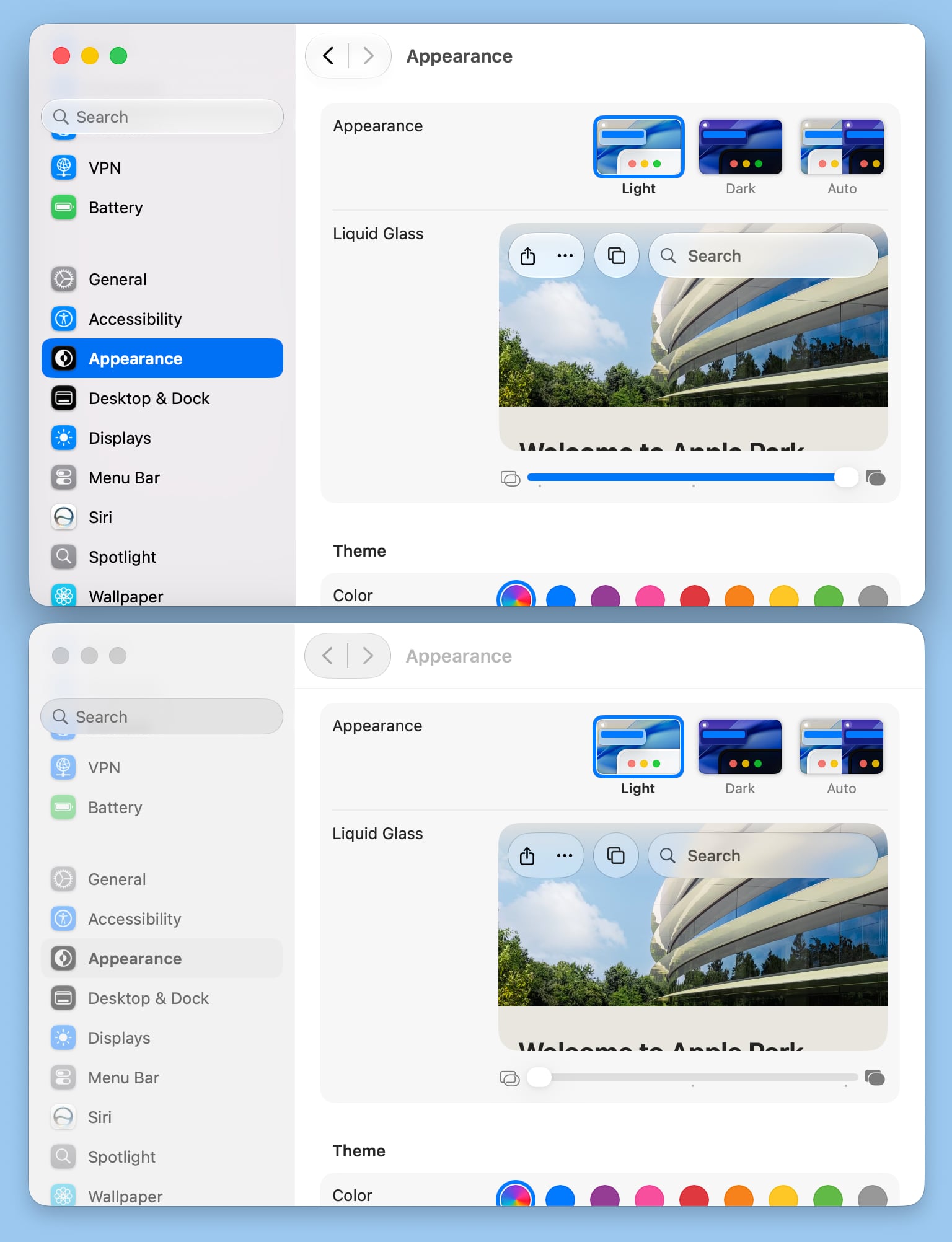
Apple added a full Liquid Glass slider under System Settings > Appearance. It changes the translucency of Liquid Glass elements, and users can choose a clear version of Liquid Glass that allows some of the background to show through, select a more opaque, tinted version that improves the legibility of text, or choose something in between.


Unfortunately, there is no ultra-clear version of Liquid Glass available with the slider. Even the setting that's as clear as possible does not match the original version of Liquid Glass that Apple showed off at WWDC 2025.

Apple changed the overall Liquid Glass opacity, and it now diffuses complex content more effectively. Apple says a darkened edge and brighter specular highlights establish more depth and separation for the UI.

Toolbars and Window Shapes


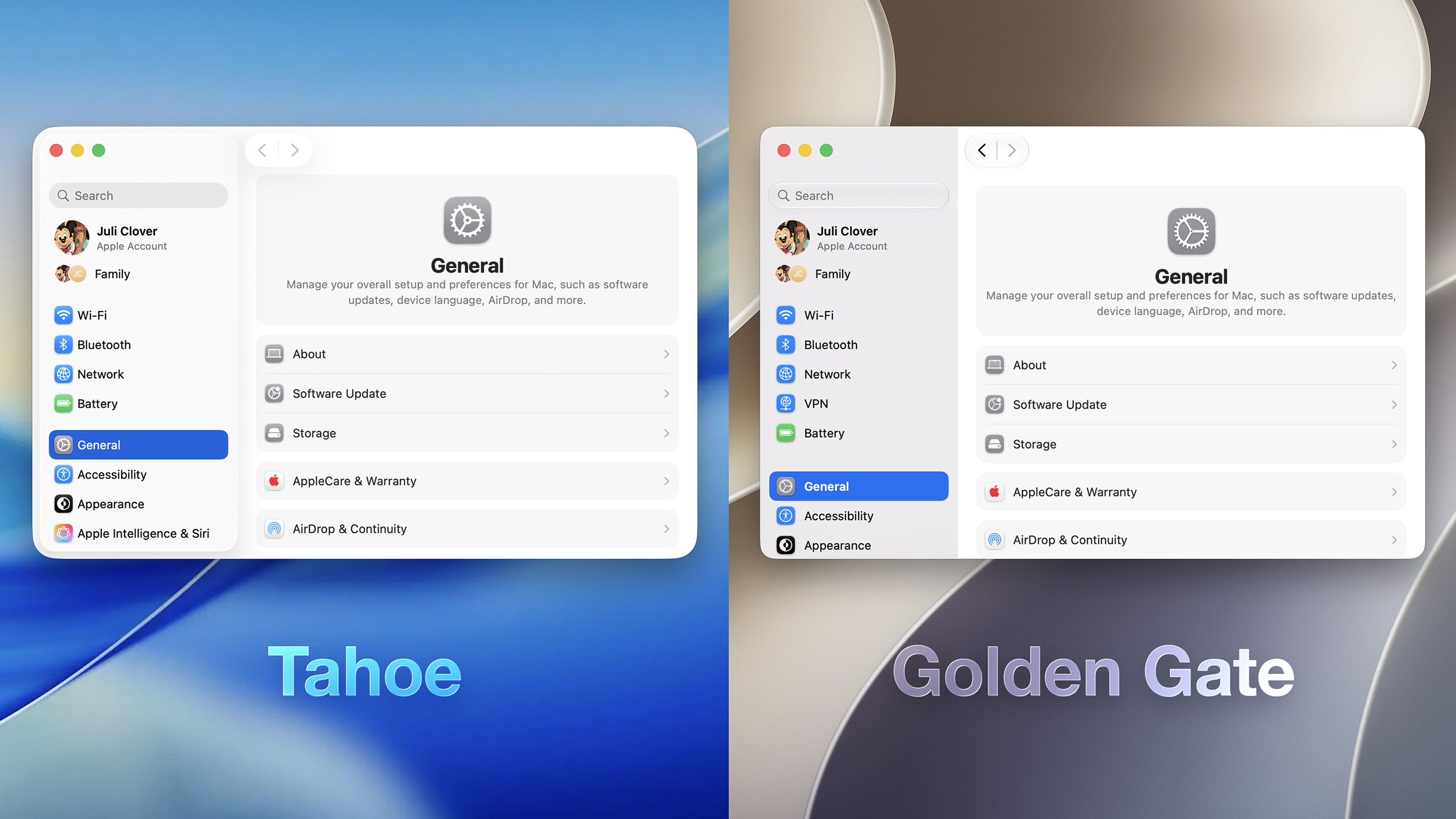
Apps have uniform toolbars to make text headings and groups of controls more legible. Windows also all have the same corner radius for more consistency between apps.

‌macOS Tahoe‌

Corners of apps are not as dramatically rounded in ‌macOS Golden Gate‌, and the difference is noticeable.

‌macOS Golden Gate‌

It's easier to tell when a window is active because of the sidebar design, the opacity update, and changes to window shadows.

Sidebars


Sidebars are no longer floating and are instead edge-to-edge. It's a design that's less distracting and more uniform because there's no unnecessary sidebar shadowing that just takes up space.


Sidebar icons have color again, which is something Apple removed in ‌macOS Tahoe‌.

Icons


Apple didn't budge on requiring squircle Mac icons, but it did change icon design. Icons have more layers of Liquid Glass to improve detail and sharpness in light, dark, tinted, and clear icon modes.


Apple is also using icons for some menu bar items to make it easier to find commonly used actions.

HDR


Apple is using HDR for depth and dimension in the ‌macOS Golden Gate‌ interface.

Launch Date


‌macOS Golden Gate‌ also includes all of the new Siri AI features coming in iOS 27, along with performance improvements that make the Mac feel faster.

The update is limited to developers right now, but Apple plans to release a public beta in July. ‌macOS Golden Gate‌ will launch this fall.
Related Roundup: macOS Golden Gate

This article, "All the Liquid Glass Changes in macOS Golden Gate" first appeared on MacRumors.com

Discuss this article in our forums

  •  

Apple Releases New AirPods Beta Firmware With iOS 27 Features

Apple today released new beta firmware for the AirPods 4, AirPods Pro 2, and AirPods Pro 3. The firmware is limited to developers at the current time, and it has a build number of 9A5292e.


In iOS 27, iPadOS 27, and macOS Golden Gate, Apple is adding a new AirPods interface and support for custom EQ. AirPods are also compatible with the new Siri AI.

With iOS 26, iPadOS 26, and macOS Tahoe, Apple added a beta firmware update installation option that's available from the AirPods settings interface when the AirPods are connected to an iPhone, iPad, or Mac, which facilitates beta testing.

Developers can use the beta option to turn on beta downloads.
Related Roundups: AirPods 4, AirPods Pro 3, iOS 27
Related Forum: AirPods

This article, "Apple Releases New AirPods Beta Firmware With iOS 27 Features" first appeared on MacRumors.com

Discuss this article in our forums

  •  

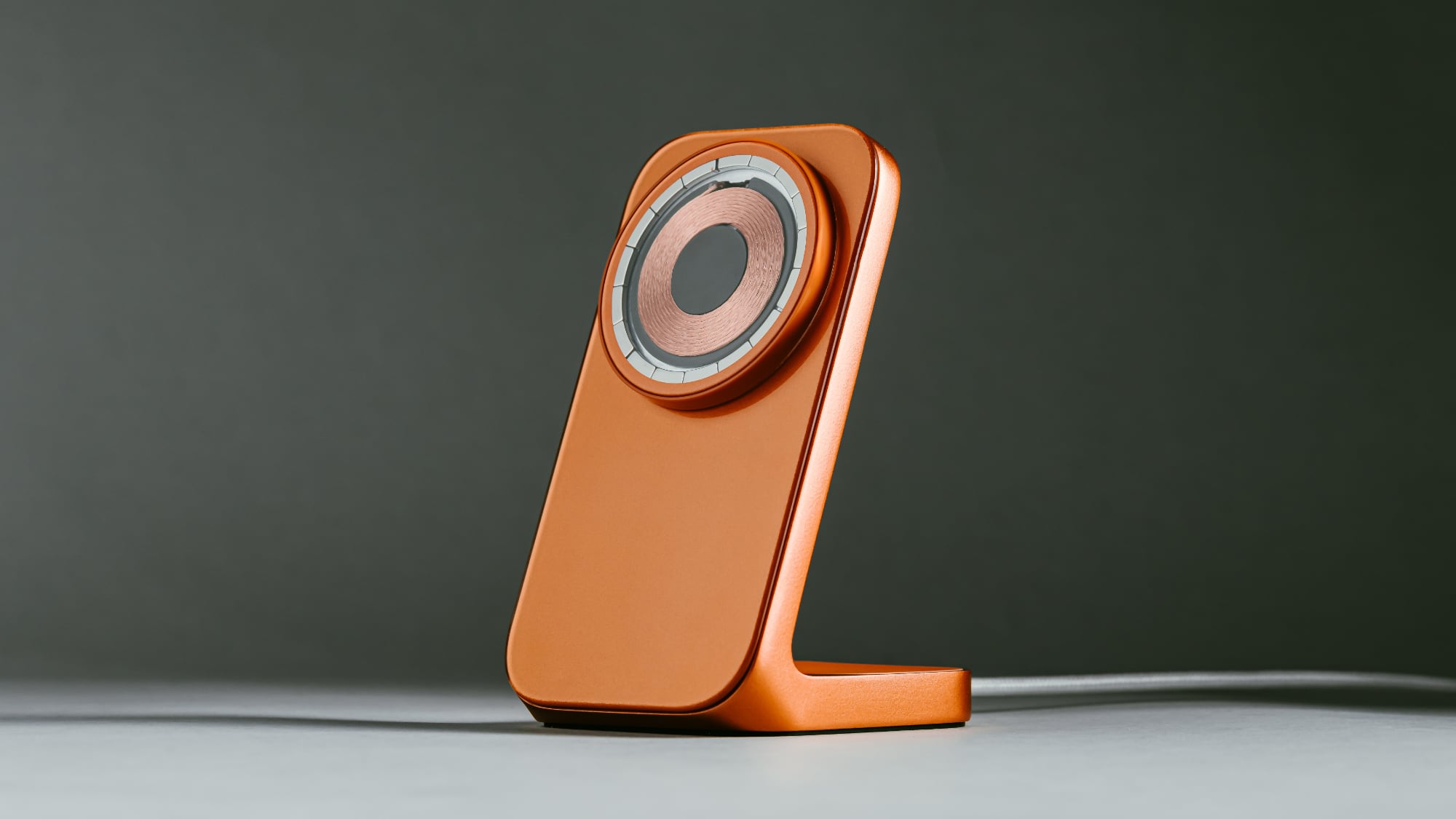
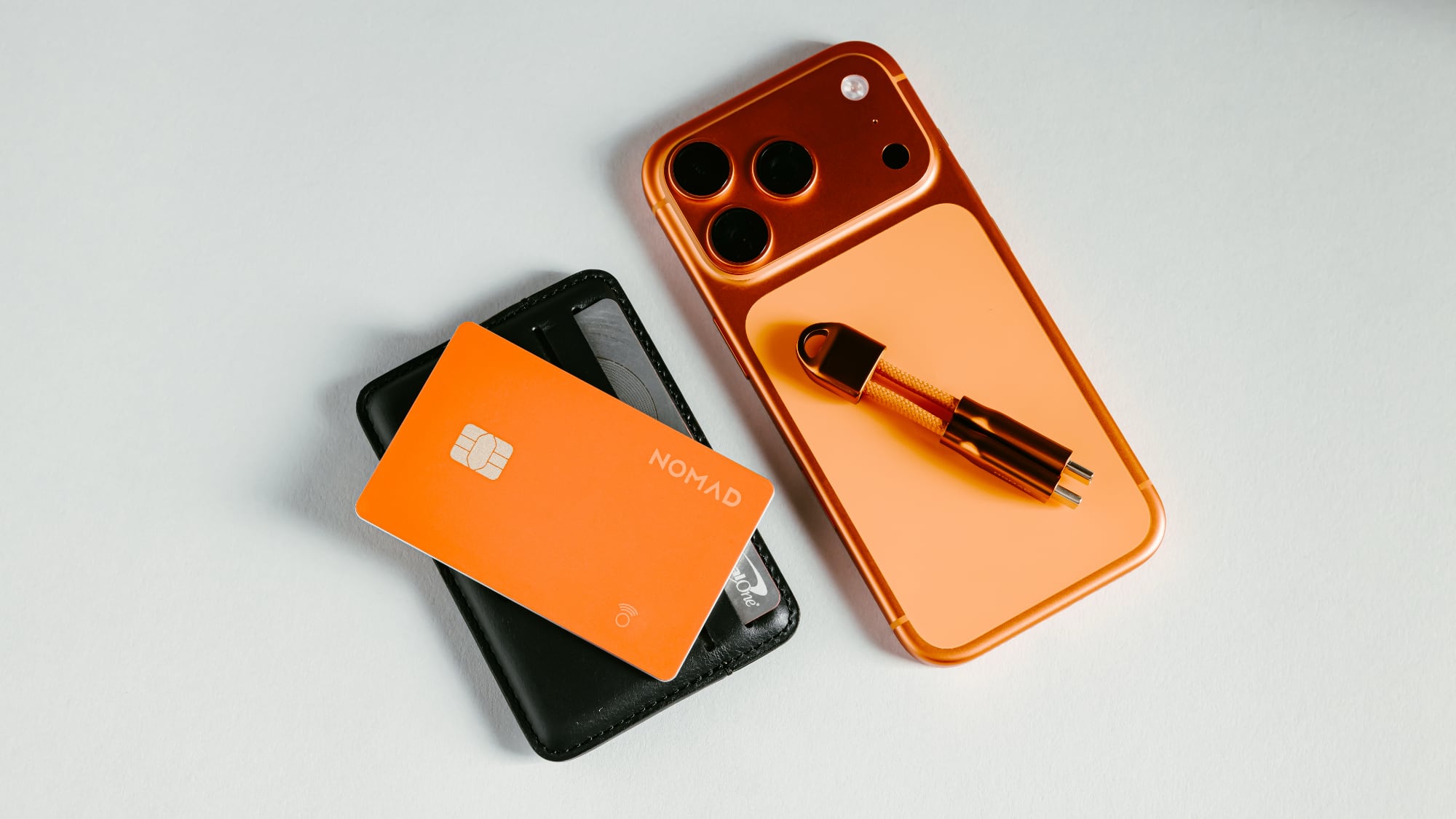
Nomad's New Stellar Orange Charger and Find My Card Match the iPhone 17 Pro

Nomad today introduced two new products in its Stellar Orange colorway, expanding the number of accessories it offers in the unique shade. Stellar Orange matches the Cosmic Orange color that Apple used for the iPhone 17 Pro and ‌iPhone 17 Pro‌ Max.


The Stellar Orange Stand One is a 2-in–1 charging stand that's priced at $135. It was previously available in silver and carbide, but it now comes in bright orange. It is a Qi2 charger that charges a MagSafe iPhone at up to 25W.

The upright charger supports charging an iPhone in portrait or landscape orientation for Stand By, and it has a quality glass and metal build. A second Qi charger at the bottom of the stand allows AirPods to be charged at 5W.

The stand charges over USB-C, and you'll need to supply a 40W or better power adapter, but it does come with a braided nylon USB-C cable. An anti-slip base keeps it in place, as does the weight of the charger.

Nomad's Stellar Orange Tracking Card Pro is $39, and it is made to slip into a wallet to add Find My tracking capabilities. It connects to the ‌Find My‌ network so it is locatable in the ‌Find My‌ app's Items tab, and it can use nearby Apple devices to report its location if lost or stolen.


The Tracking Card Pro can charge using any Qi or ‌MagSafe‌ charger, and the battery lasts for up to 16 months. It is 2.5mm thin, which makes it three times thinner than an AirTag and better suited for use in a wallet. It does not support Precision Finding because Apple doesn't make the iPhone's Ultra Wideband chip available to third-party trackers.

Nomad's $135 Stellar Orange Stand One and $39 Stellar Orange Tracking Card Pro are available from the Nomad website as of today.

Note: MacRumors is an affiliate partner Nomad. When you click a link and make a purchase, we may receive a small payment, which helps us keep the site running.
Related Roundup: iPhone 17 Pro
Tags: Find My, Nomad
Related Forum: iPhone

This article, "Nomad's New Stellar Orange Charger and Find My Card Match the iPhone 17 Pro" first appeared on MacRumors.com

Discuss this article in our forums

  •  

BenQ MA320UG Review: A 32-Inch 4K 120Hz Display Made for Macs

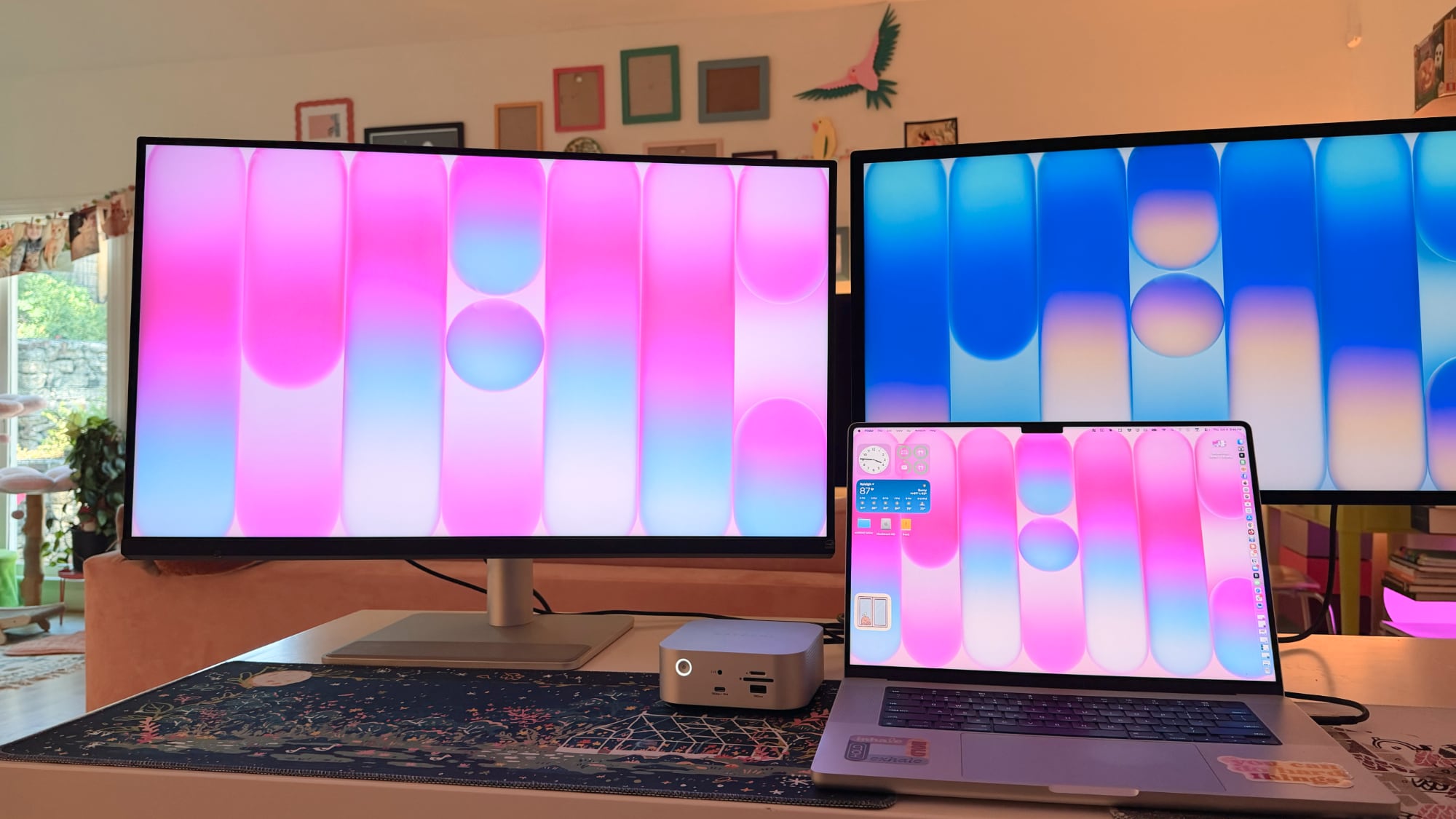
BenQ is expanding its display lineup with the MA320UG, a 32-inch 4K 120Hz display designed for Mac users. BenQ's new $830 display connects to a Mac using Thunderbolt 4, and provides up to 96W charging.


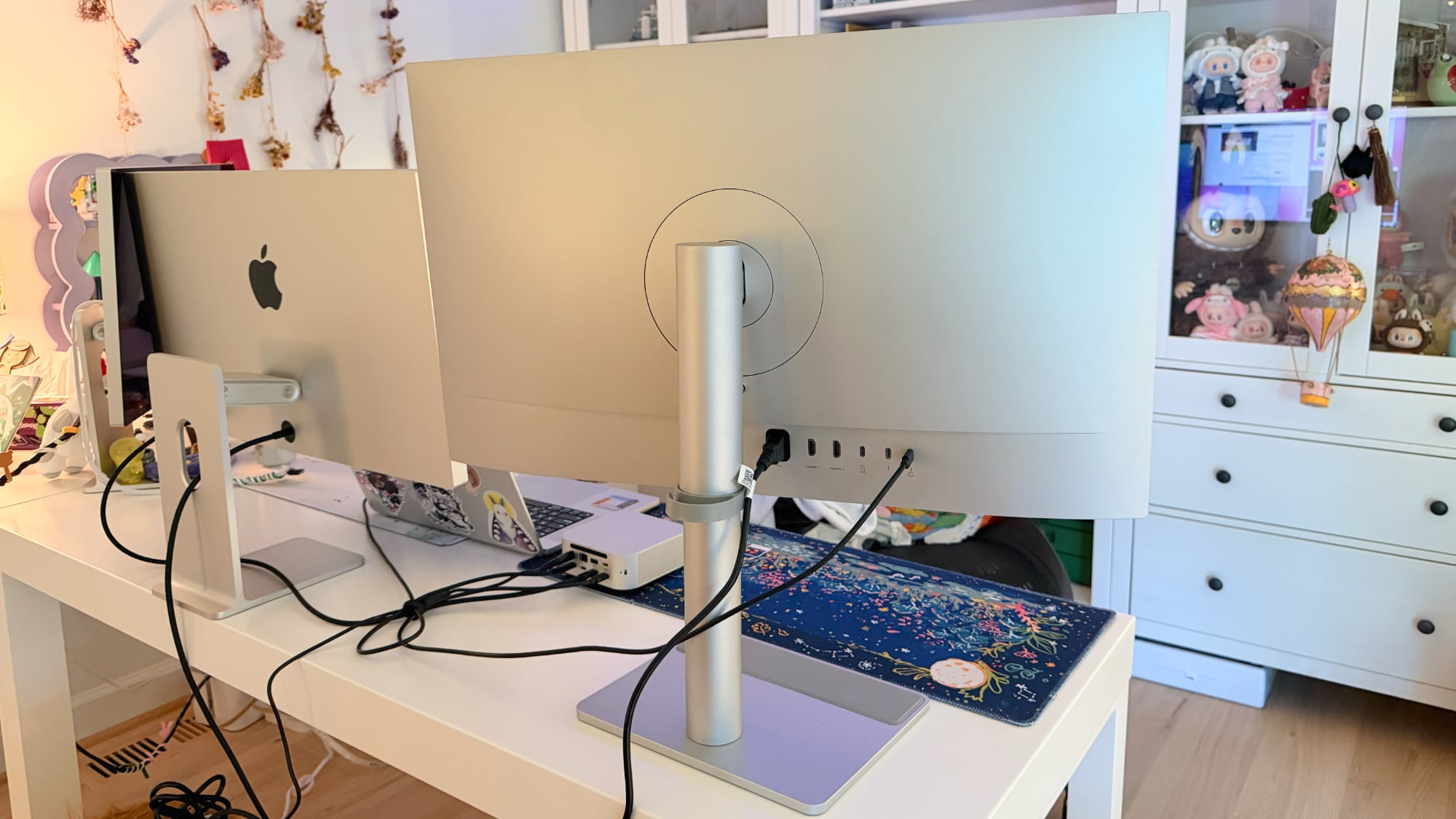
The MA320UG has an appealing design with a silver aluminum stand and a round height-adjustment arm that has up to 150mm of travel. It can be used in landscape or portrait mode by rotating, and the bottom of the base has a rubber pad where a Mac can sit. It has tilt and swivel functionality for getting an ideal viewing angle. There are slim bezels at the sides and top of the display, and a thicker bezel at the bottom.
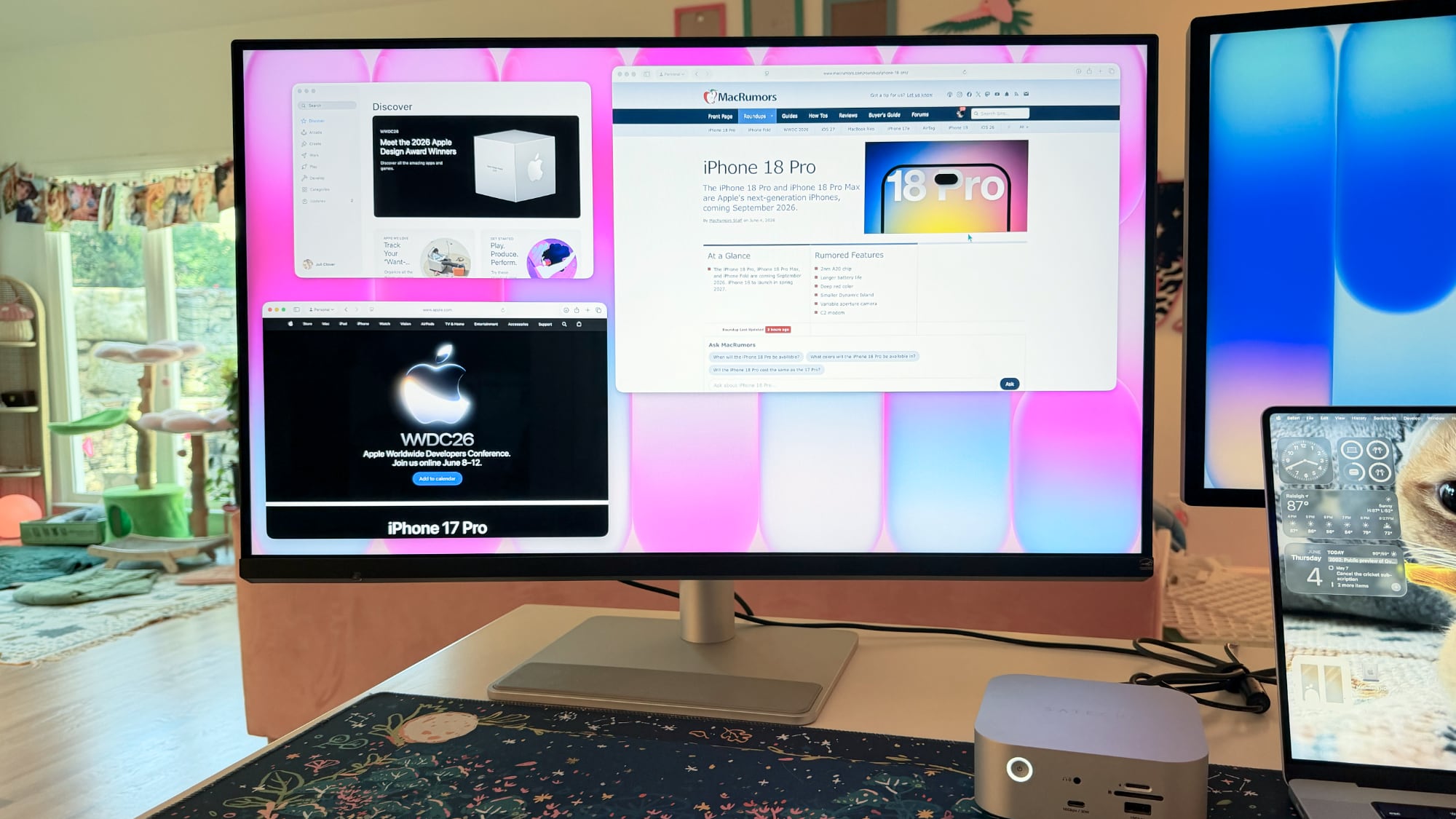

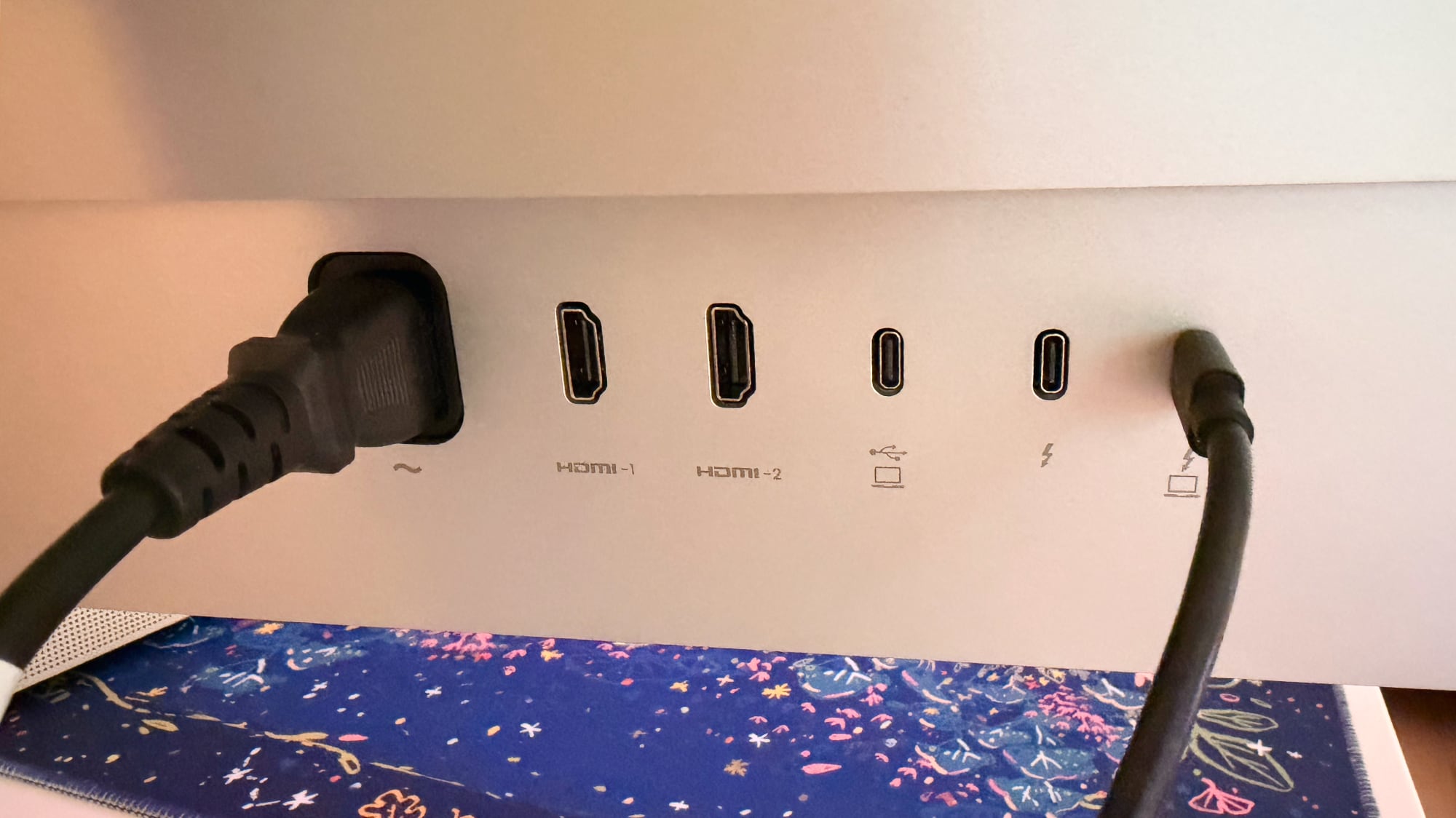
There's an upstream Thunderbolt port, a downstream Thunderbolt port to daisy chain a second display, two USB-C ports (one with 35W charging), two USB-A ports, and two HDMI ports at the back of the display. An always-on charging mode lets devices charge when the display is turned off, and there are two speakers included. Speakers in displays are generally not great, and that's the case here. The sound is fine, but if you want good sound, use your Mac's speakers or get external speakers. The 96W charging was enough to keep my MacBook Pro topped up, even though the ‌MacBook Pro‌ can draw up to 140W.

I tested the MA320UG with a 16-inch ‌MacBook Pro‌, and it's always tricky evaluating a 4K display next to a ‌MacBook Pro‌ display, because it's never going to look as crisp. A 4K 32-inch display is about 138 pixels per inch (PPI), while my ‌MacBook Pro‌ display is 254 PPI.


With BenQ's display software, the MA320UG can be set to 2560x1440, which is the default, 3840x2160, or a lower resolution. The lower the resolution, the larger the on-screen elements. I find 3840x2160 to be too small, and 2560x1440 to be too big, so there's no real sweet spot. The software doesn't allow for it, but I used my Mac's settings for a 3008x1692 resolution for a more consistent UI size with my ‌MacBook Pro‌.

Text on the MA320UG is slightly fuzzier than on the ‌MacBook Pro‌'s display at the three higher resolutions I tested, but it's still entirely readable with HiDPI for Retina scaling. I don't notice the difference when I'm absorbed in work, but if I sit and stare at both displays, I can see the softness of the text on BenQ's display. I know some people are bothered by the disparity, but it's not something I think about unless I concentrate on it.

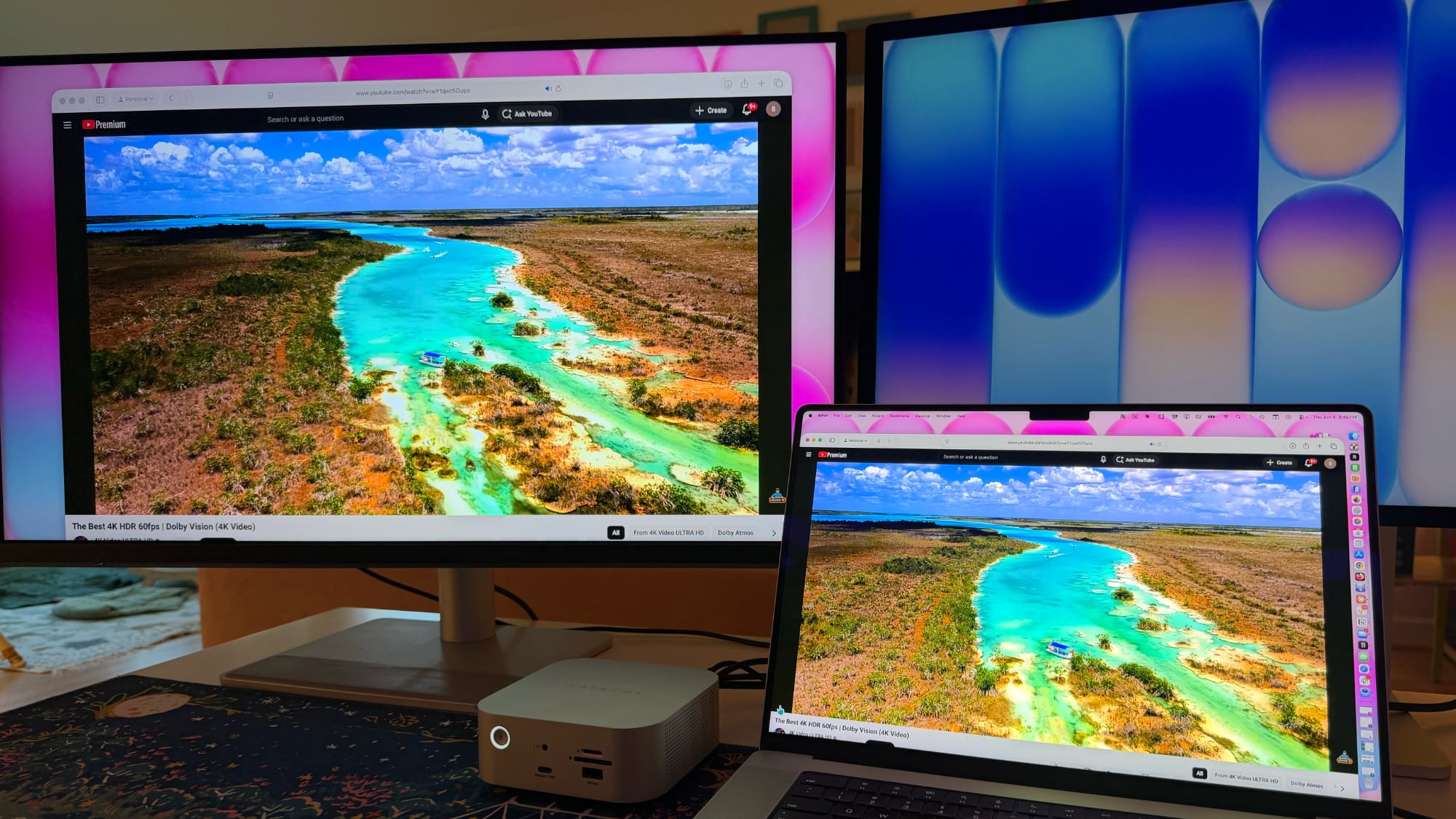
HDR video in BenQ's HDR mode is where I can see the biggest difference between the MA320UG and the ‌MacBook Pro‌. The ‌MacBook Pro‌'s display is much brighter and the contrast ratio is higher, so it wins out when it comes to color variation and detail. Everything has more depth on the ‌MacBook Pro‌ display.


If I'm not sitting at my desk and looking at the same HDR video on both displays at the same time, the MA320UG is totally fine, and I don't know what I'm missing. If I look at the MA320UG alone, it looks great. The MA320UG has a 120Hz refresh rate, which does match the ProMotion of the ‌MacBook Pro‌ for smooth scrolling, so there's no jarring transition. While the refresh rate is up to 120Hz, it tops out at 60Hz when using HiDPI and HDR at the same time due to bandwidth limitations.

You can have 120Hz HiDPI, 120Hz HDR, or HiDPI HDR enabled, but not all three, and if that sounds confusing, it is. The limitation is because of the bandwidth needed for 4K, HDR, 120Hz, and Retina scaling all at once, and it's true for other 4K HDR 120Hz displays too.

Mac settings and BenQ's software aren't intuitive when it comes to using the different modes. The app doesn't allow refresh rates to be manually adjusted, and it's not clear why HDR can't be activated when in HiDPI mode and at 120Hz. In the native display settings, HDR doesn't even show up as an option. I have to use the Mac settings to drop to 60Hz when using HiDPI, then the HDR option appears.
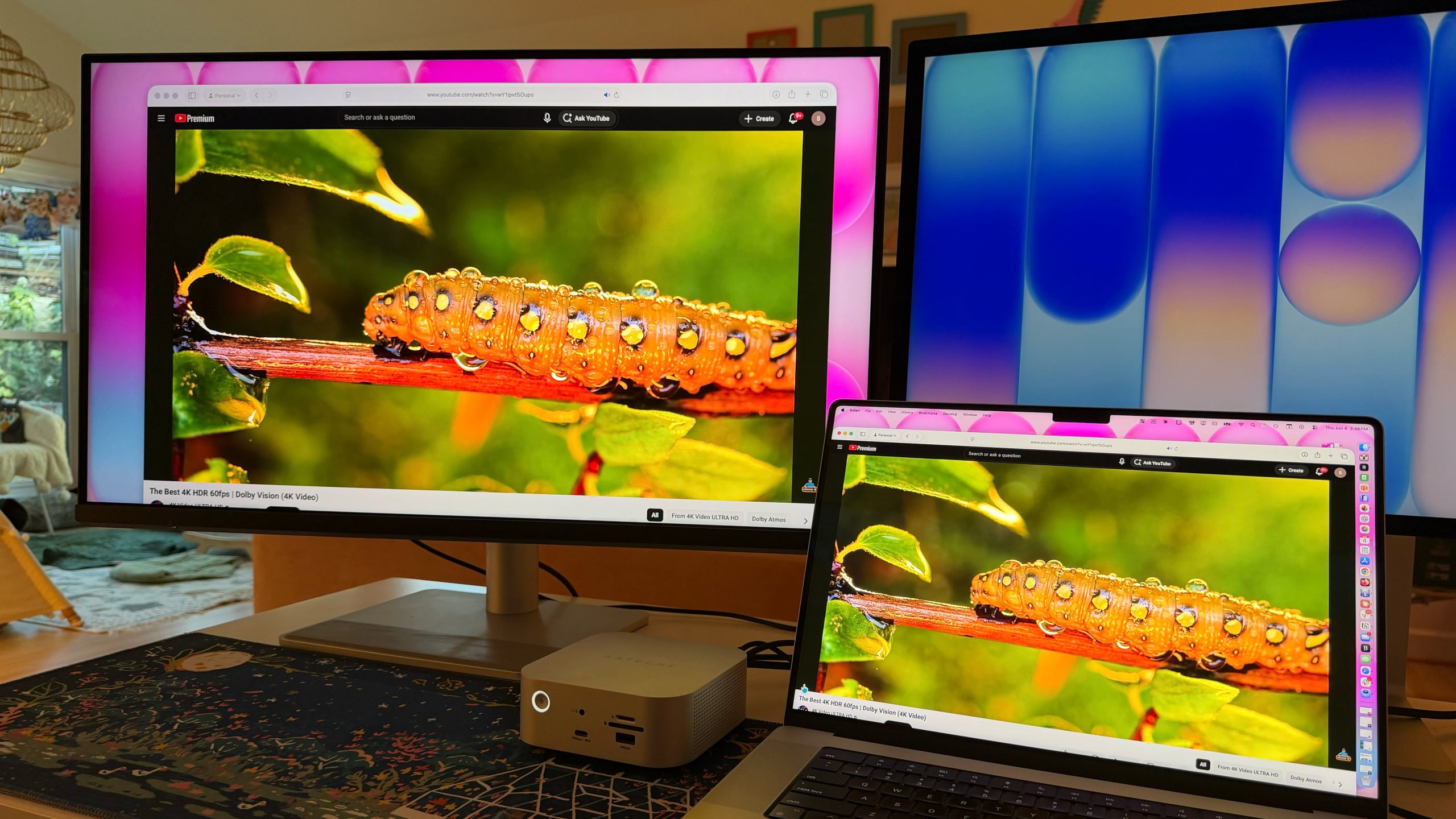

I don't know that anyone is going to want to use 120Hz HDR without HiDPI in a scaled mode because it looks bad, so HDR mode effectively means running at 60Hz unless you're at the native 4K resolution. At 4K, you're not using HiDPI, so 120Hz HDR works fine. You can set up modes on the BenQ display to switch these parameters quickly when you want to watch HDR content.

The MA320UG uses an IPS panel with what BenQ calls a "Nano Gloss" coating. It has 450 nits brightness, a 2000:1 contrast ratio, and DisplayHDR 400. It does not have the brightness level or the contrast ratio for the bright colors and deep blacks that make HDR content look incredible on a Retina display, but it's not terrible. Content that's bright makes the entire display brighter, drowning out dark colors and cutting some detail. This wouldn't be my first choice for HDR content, but it is an option.
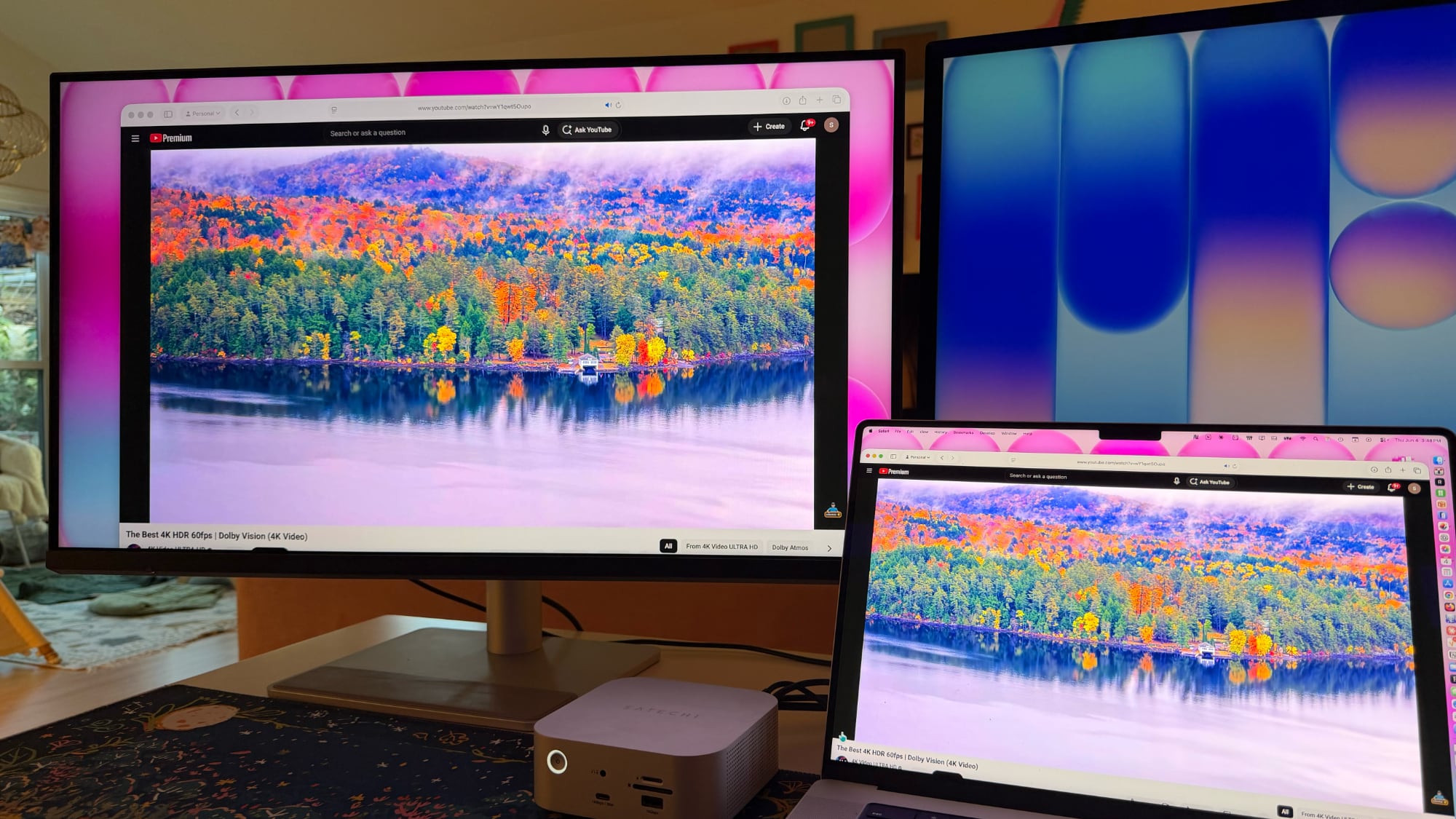

"Nano Gloss" is indeed glossy, and it looks fairly similar to the coating on my ‌MacBook Pro‌ and Studio Display. It's glossier than other 4K displays I've used, which are typically more matte. It has reflectivity that's similar to a ‌MacBook Pro‌'s display, so it's maybe not the best monitor if you have a bunch of bright lights behind you, or light from a bright window.

BenQ says the MA320UG covers 98 percent of the P3 wide color gamut, with a color syncing feature that matches the color of the display to the Mac's display. I thought the colors were close to identical on the default setting when comparing the same image on the MacBook's screen and the BenQ display. I don't have a colorimeter, but to the naked eye it was close. There are options for tweaking red, blue, and green to get a better match if needed. The Mac color matching feature does not seem to work when the display is in HDR mode because HDR settings override it.

The display supports setting different color profiles like P3, sRGB, Cinema, Game, or ePaper. Cinema cranks up contrast while lowering brightness, while Game increases brightness and sharpness. ePaper is a black and white mode, which is interesting if you want a quick access grayscale mode for reading. You can also set a custom user mode and adjust gamma, color temperature, contrast, sharpness, hue, and saturation.

Display Pilot 2 is BenQ's display software that adds multiple "Mac" features to the MA320UG. I have mixed feelings about the software. It's useful and feature-rich, but wanted me to sign in with an Apple or Google account when I first installed it. My Apple Account passkey would not work, but I was able to use the software in guest mode. Signing in enables auto backup of personal settings to a Cloud server and allows display settings to sync across devices, but I'm not sure most people need that. It also opted me in to sharing analytics, diagnostics, and usage information with BenQ automatically (an opt out toggle is available in settings).

You need the software to get the full feature set from the MA320UG, like the ‌MacBook Pro‌ color syncing. It also enables brightness control from your Mac's keyboard, which is done through macOS Accessibility permissions. Other display control apps like BetterDisplay do the same thing. In addition to color matching, True Tone, Night Shift, and automatic brightness sync are available too, so the BenQ display's white balance always mirrors your Mac's white balance. The display has a sensor that can be used to detect ambient light and keep brightness levels matched between the display and the connected Mac, but it made both displays inappropriately bright in my office. The ‌MacBook Pro‌'s ambient light sensor did a better job, and that's also an option for maintaining the same brightness levels.

It is convenient to have a third-party display that behaves in the same way the ‌Studio Display‌ does, because you don't need to dig into menus for things like adjusting brightness. I think the app could use a better interface and improved instructions that outline what each feature does, but I appreciated the unseen features that made Mac settings work.
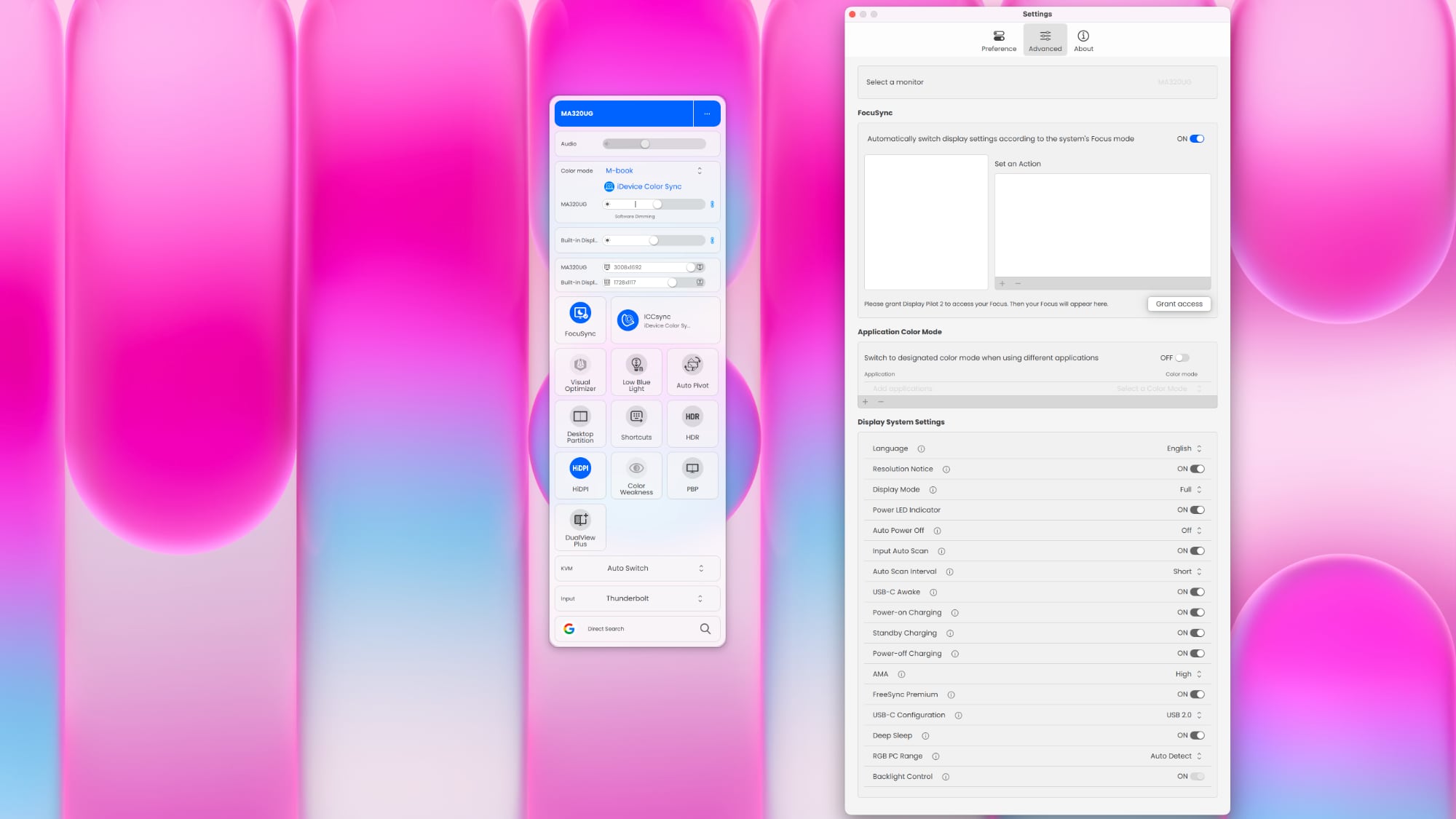

The app has a long list of settings for customization and to meet different workload needs. It syncs color and Focus modes between the MA320UG and the Mac display. You can set display settings to go with a particular Focus mode. If you activate Do Not Disturb, for example, you can set a Low Blue Light mode on the MA320UG, change the color temperature, or choose a particular color mode. Focus options can be used for quickly changing display color modes by activating a Focus on the Mac. Using Focus modes requires enabling Full Disk Access, and that's not a setting that I enable for any app.

There's a visual optimizer, blue light reduction feature, partition option for changing how tiled windows are displayed, quick access tools for swapping color modes and changing resolution, toggles for HiDPI and HDR, KVM settings, and a DualView mode where you can use one color profile on half the screen, and a different color profile on the other half. I don't know why, but there's also a Google bar that lets you enter a search term in the app that then opens a Google search on the web.
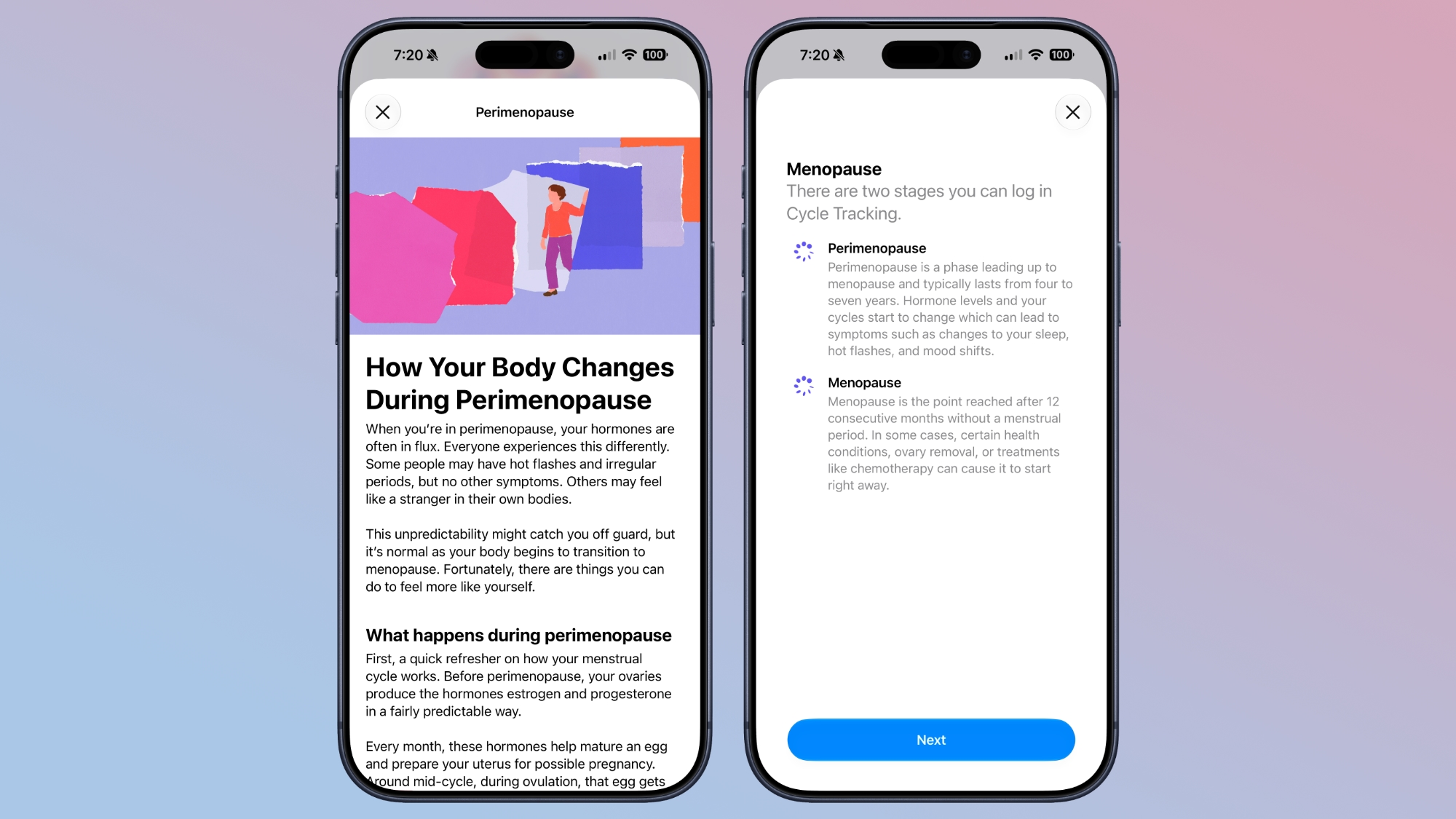
With a 5ms response time, the MA320UG isn't ideal for competitive gaming, but it does support FreeSync for general gaming. There is a built-in KVM switch for using the same peripherals with two Macs or a Mac and a PC, and it can be used for cross-device copy paste and file transfers. Display Pilot 2 needs to be installed on both machines, with PBP mode activated and KVM set to auto switch.
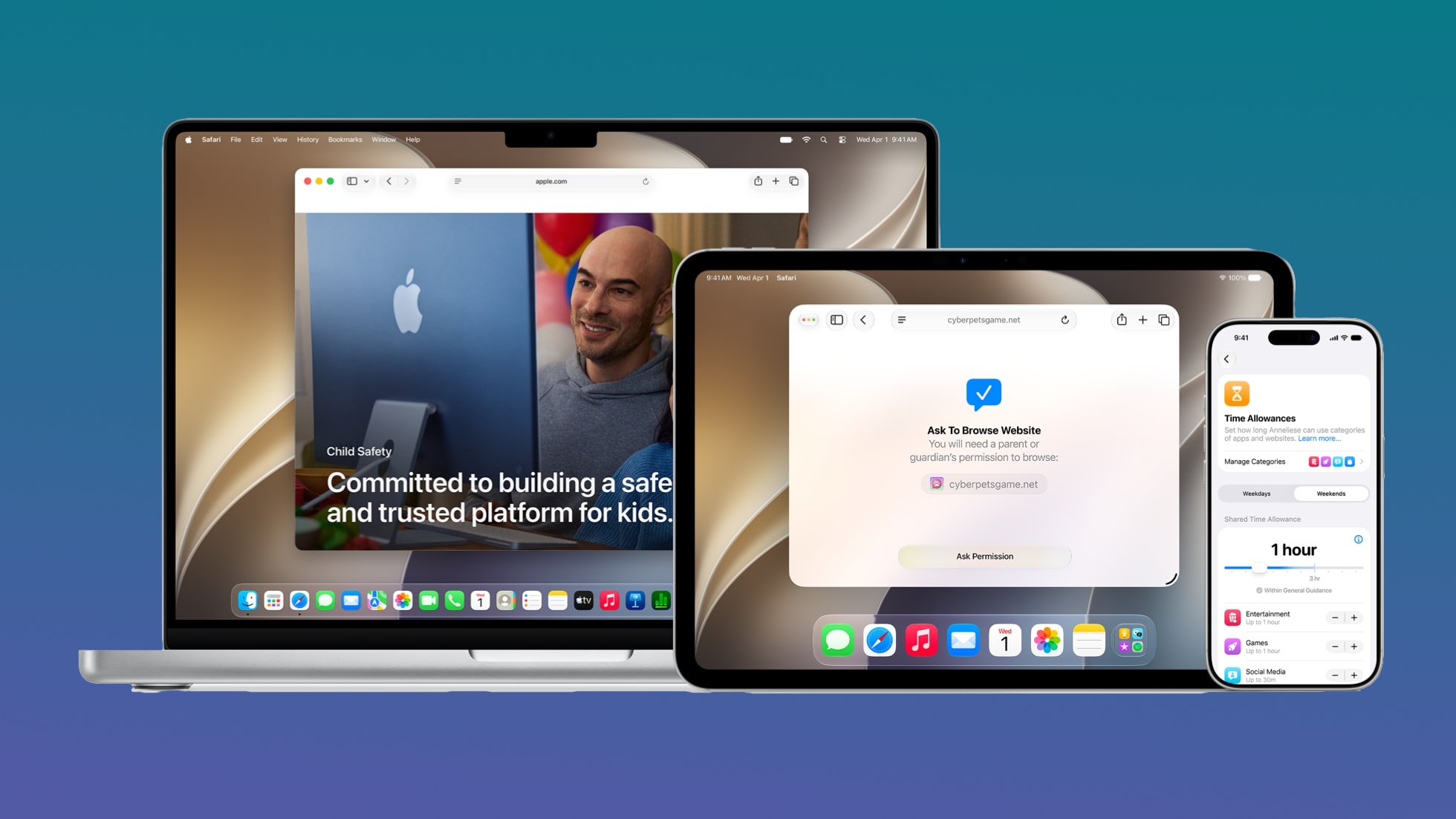
Display Pilot 2 understandably only works with BenQ displays, but that's frustrating if you want to use it with other third-party displays. I have a 4K OLED display for my PC that I sometimes use with my Mac, and if I want to adjust brightness or manage it, I have to use BetterDisplay. I can use BetterDisplay with the BenQ display too, but then I lose some of the features like color matching.

Bottom Line


BenQ's MA320UG is a good 4K display if you're looking for a Mac-friendly 32-inch display at a price that comes in under Apple's own display options. The Mac color matching and the software that allows it to work like a native display are useful, and a 120Hz refresh rate is appreciated when used alongside a ‌MacBook Pro‌.

Many third-party displays are much less Mac-friendly and aren't able to function like a native display, but the MA320UG matches the Mac's color and white balance, which gives it an edge over competing 4K displays.

For a 4K LCD display, the MA320UG has a good screen that pairs well with a Mac. It wouldn't be my first choice for HDR or gaming, but for everyday work, it's a solid option. A lot of displays are designed for Windows machines and don't have features that translate to a Mac, so I do appreciate that BenQ created the MA320UG with Mac functionality in mind.

BenQ's software is decent, as long as you don't have another third-party display that you want to use along with the MA320UG. Multi-display management is a hassle when you have to use two different display software options.

I wouldn't choose this over a ‌Studio Display‌ if I had the budget for Apple's monitor, but it is larger and hundreds of dollars less expensive.

How to Buy


The MA320UG is available from the BenQ website or from Amazon.com for $829.99.

Note: BenQ provided MacRumors with an MA320UG for the purpose of this review. No other compensation was received.
This article, "BenQ MA320UG Review: A 32-Inch 4K 120Hz Display Made for Macs" first appeared on MacRumors.com

Discuss this article in our forums

  •  
❌