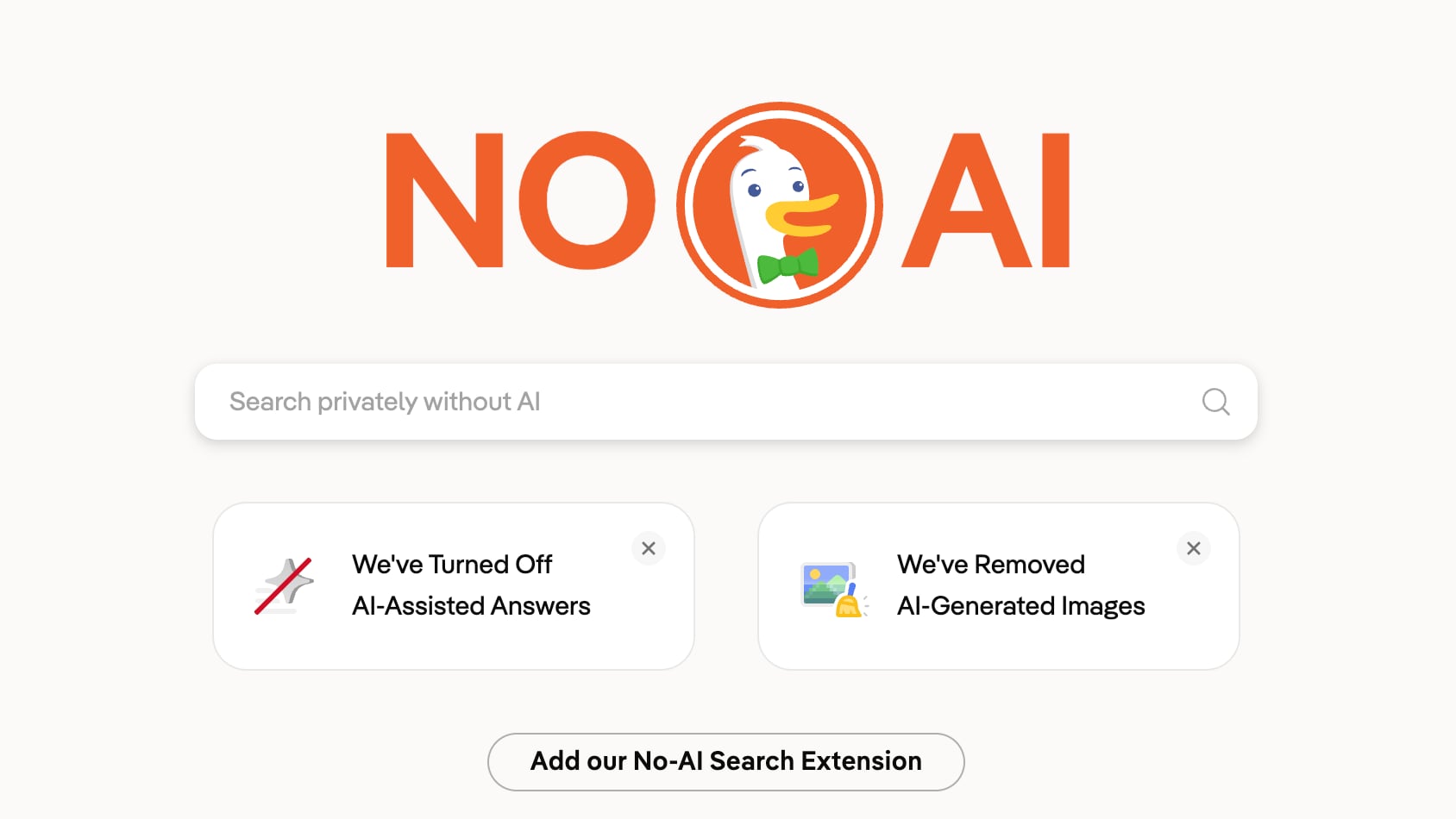
Privacy-focused search engine DuckDuckGo has seen a surge in demand for its "No AI" search option in the wake of Google's May 19th I/O announcements. Google debuted a new "intelligent" search box reimagined with AI. It features AI suggestions as an upgrade to autocomplete, support for follow-up questions, expanded Personal Intelligence for connecting Gmail and Google Photos, and Search agents.
DuckDuckGo told MacRumors that visits to its No AI search page more than tripled after Google's announcement. Traffic hit the 3x mark on May 28th, and has continued to climb. Visits have averaged around 84 percent above baseline consistently since May 19.
DuckDuckGo is embracing demand for No AI search options, and it is promoting new extensions available for Chrome and Firefox that set No AI search as the default.
No AI search has no AI-assisted answers, no chat interface, and it surfaces fewer AI images. DuckDuckGo can be set as the default search engine on Apple devices, but not the specific No AI page. DuckDuckGo has its own AI tools, but they are turned off for people who opt for the No AI experience.
DuckDuckGo plans to add No AI search settings to its original extensions for Chrome, Firefox, Edge, and Opera in the near future.
Along with DuckDuckGo, there are other privacy-focused search engine options that minimize AI results. Paid search engine Kagi is one example, with no visible AI information unless you opt for AI tools. Kagi is $5 per month for a limited number of searches, and $10 a month for unlimited searches.
Because it is a paid search engine, it does not have ads and it does not collect and sell user data.
Anthropic today announced the launch of its latest AI model, Claude Opus 4.8. Anthropic claims the model is a "more effective collaborator" with improvements in agentic coding, multidisciplinary reasoning, agentic computer use, knowledge work, and agentic financial analysis.
Testers have found Opus 4.8 to be "more reliable and sharper in its judgement" when doing agentic tasks, and the model also made gains in honesty.
Early testers report that Opus 4.8 is more likely to flag uncertainties about its work and less likely to make unsupported claims. This is borne out in our evaluations, which show that Opus 4.8 is around four times less likely than its predecessor to allow flaws in code it has written to pass unremarked.
Alignment assessments suggest the model hits new highs on measures of prosocial traits like supporting user autonomy and acting in the user's best interest. Rates of misaligned behavior like deception are lower than Opus 4.7 and similar to the Claude Mythos Preview.
Anthropic benchmarks indicate Opus 4.8 scored a 69.2% on SWE-Bench Pro, outperforming GPT–5.5 and Gemini 3.1 Pro on the test and several other benchmarks, though GPT–5.5 leads on the terminal-coding benchmark.
Opus 4.8's fast mode also runs at 2.5x the speed, and it is now three times cheaper than prior models.
Along with Opus 4.8, Anthropic is adding new features to its product lineup.
Dynamic workflows (research preview) - Claude can complete bigger tasks in Claude Code. It is able to plan work and run hundreds of parallel subagents in a single session. It is able to complete codebase-scale migrations across hundreds of thousands of lines of code. The feature is available for Claude Code for Enterprise, Team, and Max plans.
Effort control - In Claude.ai and Cowork, users can choose how much effort Claude puts into a response. With a lower setting, Claude will respond faster and use up rate limits more slowly. Opus 4.8 defaults to high effort, which Anthropic says is the best balance of quality and user experience.
Messages API - The Messages API accepts system entries inside the messages array, so developers can update Claude's instructions mid-task.
Claude Opus 4.8 is available everywhere today. Pricing for regular use has not changed compared to Opus 4.7.
Anthropic is working on models that have the same capabilities as Opus 4.8 at a lower cost, and a new class of model that's even more intelligent than Opus. Anthropic says it has been developing safeguards for the Claude Mythos model it is testing with a small number of organizations, and it expects to be able to bring Mythos-class models to all customers "in the coming weeks."
Apple today provided public beta testers with the first betas of iOS 26.6, iPadOS 26.6, macOS Tahoe 26.6, watchOS 26.6, and tvOS 26.6, with the software coming two days after Apple seeded the betas to developers.
After signing up to beta test the software updates on Apple's beta site, public beta testers can download the new software using the Software Update section in the Settings app on each device.
iOS 26.6 has a feature that will let you know when you have blocked too many contacts, but the limit is in the thousands so most users may not ever see the messaging.
No other major new features have been found in any of the software updates, with Apple likely focusing on bug fixes and security improvements. We're nearing the end of the "26" software cycle, with Apple planning to unveil iOS 27, iPadOS 27, macOS 27, and more in 11 days.
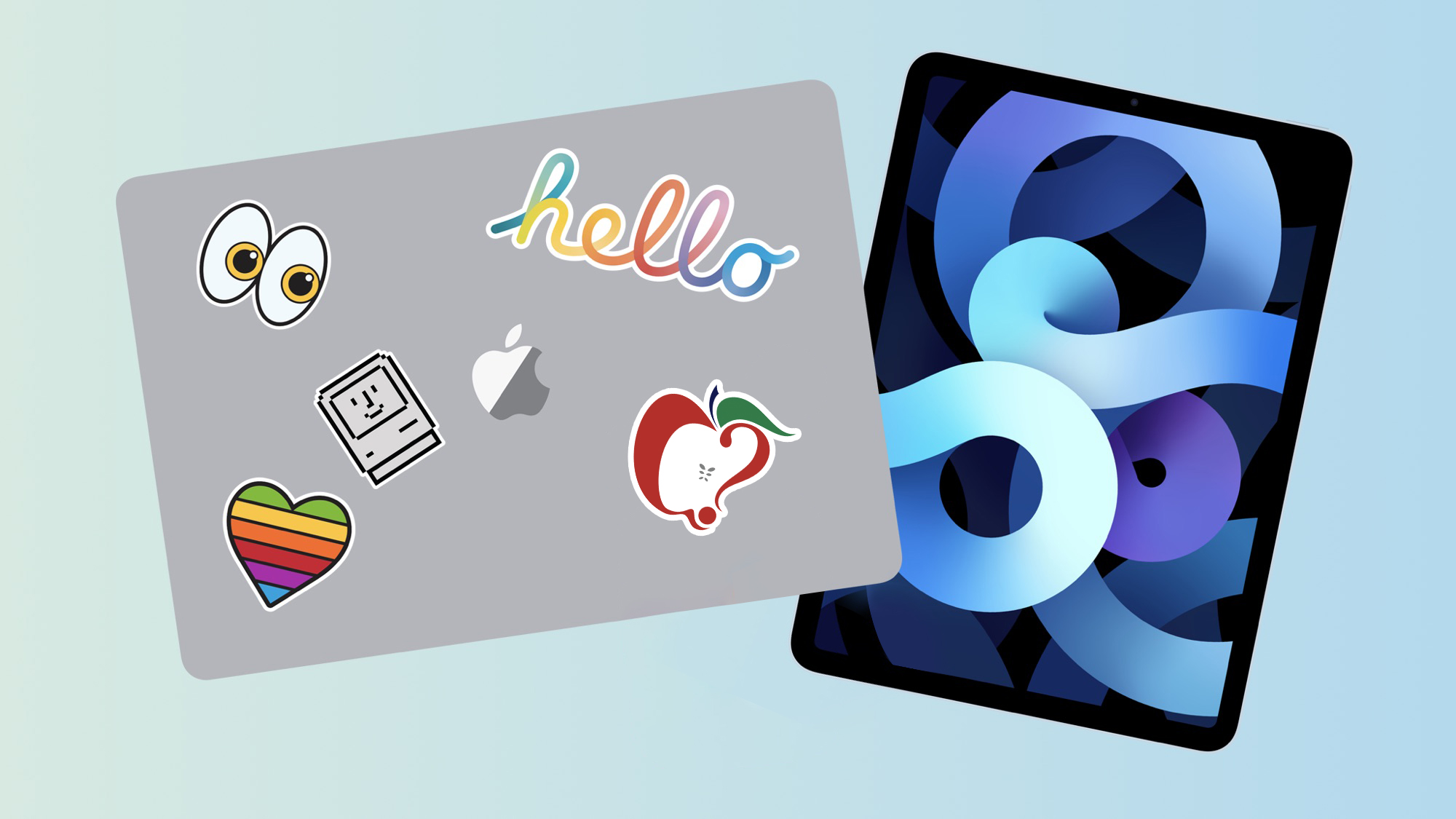
Apple has started preparing for its annual Back to School promotion in the U.S. and Canada, according to backend Apple code seen by MacRumors.
Apple holds a Back to School sale each June, providing teachers and students with free accessories or gift cards when purchasing a Mac or an iPad. The added bonus is in addition to Apple's educational discount.
Back to School sales typically start around the middle of the month, but we don't yet know the start dates for this year's sale. The sale continues through the end of September, so students do not need to rush to prepare to return to school.
Apple's Back to School promotions have varied. Last year, Apple offered eligible students, educators, and parents accessories worth up to $199 when purchasing a Mac or an iPad. Free options included the AirPods 4 with Active Noise Cancellation, Magic Mouse, Magic Trackpad, Magic Keyboard with Touch ID, Apple Pencil Pro, and more.
Looking back at Apple's past Back to School dates gives us an idea of when this year's sale will take place.
2021 - June 17 to September 27, free AirPods
2022 - June 24 to September 26, gift card up to $150 U.S.
2023 - June 5 (U.S.)/June 26 (Canada) to October 2, gift card up to $150 U.S.
2024 - June 20 to September 30, gift card up to $150 U.S.
2025 - June 17 to September 30, free accessory worth up to $199
The Back to School sale typically takes place around WWDC, and in three of the last five years, it has started 8 to 10 days after the WWDC keynote. With the 2026 keynote set to take place on June 8, we're likely to see the sale start the week of June 15.
Students who are planning to purchase a new Mac or iPad may want to hold off until Apple's Back to School sale begins to get an added accessory or gift card.
In past years, MacBooks, iPads, and iMacs have been eligible for a free add-on with purchase.
Apple holds the promotion through its online education store and Apple retail locations. Students attending or accepted to a higher-education institution, parents purchasing on behalf of an eligible student, and employees at K–12 schools and higher-education institutions are eligible.
Earlier this year, Apple began requiring UNiDAYS verification for educational discounts in the United States and Canada. Educational purchases now require academic status verification through an email address from an educational institution, a student or staff photo ID, or another valid educational document.
Apple actually holds two Back to School sales per year, with one aimed at students in Australia, New Zealand, and other Southern Hemisphere markets. This year's January Back to School sale saw Apple offering students free AirPods, Apple Pencils, and other accessories.
After the U.S. and Canada Back to School sales launch, Apple typically extends them to Europe, the Middle East, and Asia a few weeks later.
YouTube today said it is introducing automatic AI detection, with automatic AI labeling applied to videos with "significant photorealistic AI use."
Creators are still expected to manually disclose when realistic AI is used for videos even with the new automatic labeling system. Creators who think their content was incorrectly identified as AI-generated can update the disclosure status in YouTube Studio, but disclosures are permanent for content created with YouTube's AI tools like Veo and Dream Screen or content with C2PA metadata indicating fully generative AI.
YouTube is also improving labeling for AI-generated content, making it clearer when a video has "photorealistic and meaningfully AI altered or generated content."
An AI label will be shown just below the video player and above the description for long-form videos with AI content, and for shorts, the label will appear as an overlay on the video. The updated labeling applies to content that is photorealistic and may fool people, rather than unrealistic content.
Disclosures for content that is "unrealistic, animated, or slightly altered" will continue to be tucked in the expanded description of the video.
Separately, YouTube added a new customizable content feed that users can shape based on interests, moods, or preferred topics. Users can type in a custom prompt covering what they want to see, and a content feed will be generated.
Custom content feeds have been in testing since November, but they are now rolling out to signed-in viewers in the U.S. on the YouTube mobile app and desktop. YouTube search and watch history must be turned on for the feature to work.
Amazon is acquiring Apple satellite provider Globalstar, and it has worked out a deal to take over Apple's stake in the satellite company.
According to an FCC filing noticed by PCMag, Amazon is initiating a merger structure. It will create a new subsidiary called Grapefruit Acquisition Sub II to absorb Globalstar's operations, and then the new subsidiary will acquire Apple's equity.
Apple has 20 percent equity and 20 percent voting interests in Globalstar Licensee LLC, a Globalstar subsidiary that operates the satellite system that delivers satellite connectivity to iPhone users in the U.S. Apple invested $450 million in Globalstar back in 2022 to fund Globalstar's satellite buildout for the Emergency SOS via satellite feature. Apple received 20 percent equity and 85 percent of Globalstar's network capacity in return.
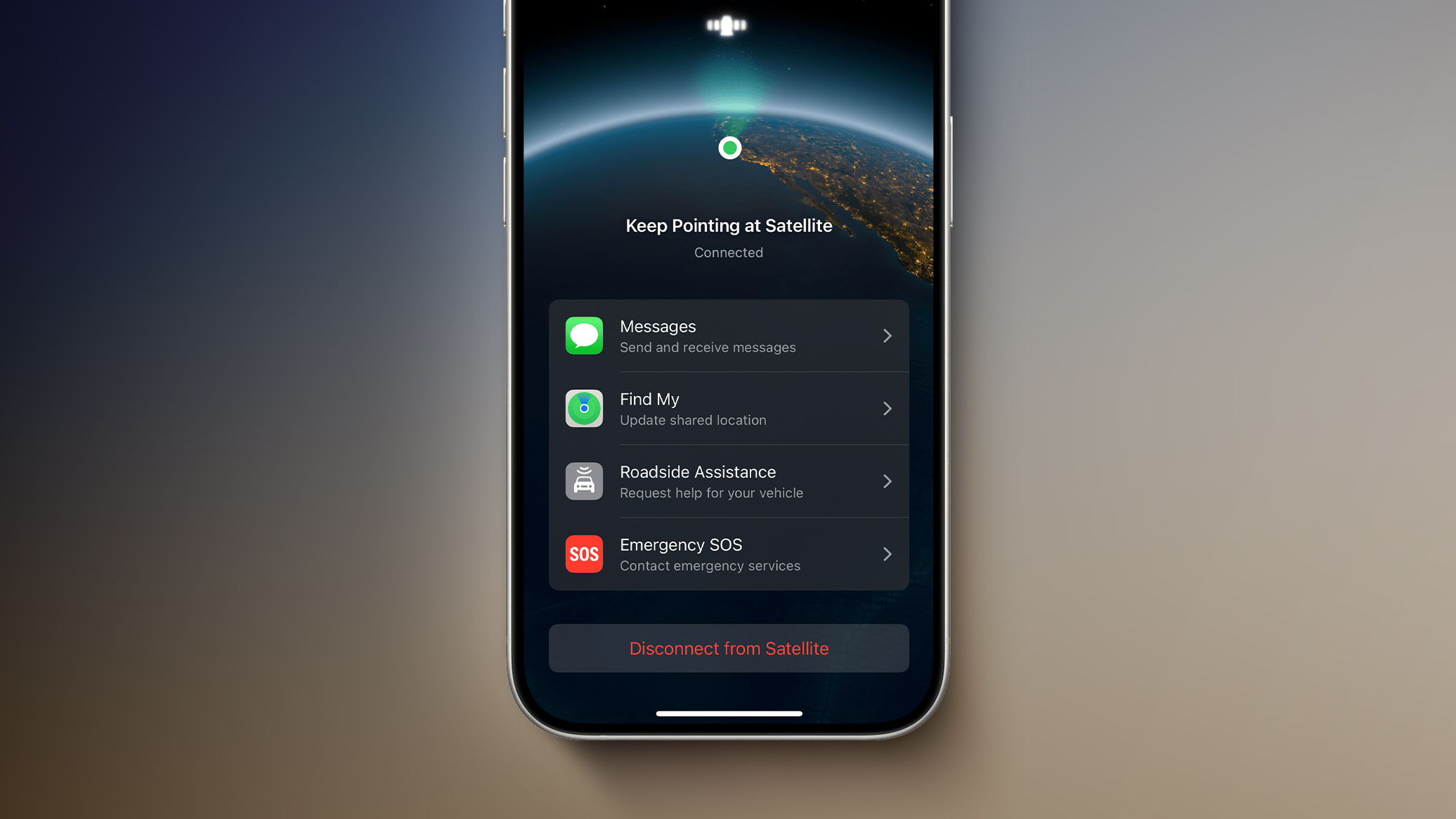
Apple's Globalstar stake required Apple and Amazon to enter into separate negotiations, but the two companies worked out a deal. Amazon's Leo satellite network will power existing iPhone and Apple Watch satellite features like Emergency SOS, Messages via satellite, Find My, and Roadside Assistance via satellite. Apple stands to make more money than it invested, and has secured a partnership with a better-established satellite operator.
Amazon will support iPhone and Apple Watch models that use Globalstar's low Earth orbit constellation, and the two companies will work together on future satellite services running on Amazon's expanded Leo network.
Amazon's Globalstar purchase is said to be worth around $11.57 billion, and it is expected to close in 2027 as long as it earns regulatory approval.
Apple is developing a new feature that will lock your iPhone if it's snatched from your hand by a thief, according to Apple code seen by 9to5Mac. The option will use the gyroscope, accelerometer, and other sensors to determine when an iPhone has been grabbed. It'll also rely on a paired Apple Watch to detect when the iPhone has suddenly moved away from the owner's wrist.
Once the iPhone is yanked from your hand, it will lock and activate Stolen Device Protection to prevent thieves from accessing information on it.
Stolen Device Protection adds extra security to your iPhone when you're away from familiar locations like home or work. It requires biometric authentication for actions like accessing stored passwords or credit cards, and there are built-in hour-long delays for actions like changing an Apple Account password.
The feature was originally designed to protect iPhone users from stealthy thieves who observe someone's passcode and then snatch an iPhone. With a passcode, thieves could get into apps and access bank account data and other sensitive information, but Stolen Device Protection prevents that from happening.
Android already has a Theft Detection Lock feature that locks a smartphone in a snatch-and-grab theft situation.
Meta is rolling out paid Instagram Plus, Facebook Plus, and WhatsApp Plus plans worldwide as of today.
Instagram Plus is priced at $3.99 per month, Facebook Plus is priced at $3.99 per month, and WhatsApp Plus is priced at $2.99 per month. According to TechCrunch, the paid plans provide features like profile customization, super reactions, and story insights.
Instagram Plus lets users see how many people have rewatched a Story, and it adds unlimited audience lists for Stories for creating groups other than Close Friends. Users can spotlight a story once a week for extra views, use Super Heart animated reactions, choose custom app icons, add customized fonts to a profile bio, extend a story beyond 24 hours, and search a story viewer list to see who is watching. Subscribers will also be able to post straight to their profiles without having the post show up in their followers' feeds, and they will be able to stealthily "preview" Instagram stories without showing up as a viewer.
Facebook Plus includes most of the same features as Instagram Plus, while WhatsApp Plus includes app themes, custom ringtones, more pinned chats, list customization, and premium stickers.
Meta head of product Naomi Gleit said the company is also exploring new subscription plans for creators and businesses, along with plans for AI users. The new plans are being offered under "Meta One" branding that combines subscription offerings from multiple Meta platforms.
The $7.99 Meta One Plus plan and the $19.99 Meta One Premium plan are aimed at Meta AI users. Both plans unlock higher compute queries, reasoning, and image/video generation, but Premium offers more capacity, including deeper reasoning for complex tasks.
A Meta One Essential plan priced at $14.99 per month is designed for creators and businesses. It includes a verified badge, impersonation protection, better analytics, and a linksheet that lets users link to their online profiles on the web and on other social media networks. The $49.99 Meta One Advanced plan includes the Essential options plus features in the Facebook feed, optimized scheduling tools, notifications when others reuse a creator's content, higher rankings in Instagram and Facebook search, a bolder Follow button on Reels, and automatic follow invitations for people who engage with a creator or brand's content.
Meta is going to start testing the AI Meta One plans in Singapore, Guatemala, and Bolivia next month. The business plans will be tested in Saudi Arabia, Morocco, Thailand, and Bangladesh starting later this week.
Gleit described Meta One as a place that brings Meta subscriptions "together" across all Meta apps. She said Meta's new plans were "just the beginning with a lot more value to come."
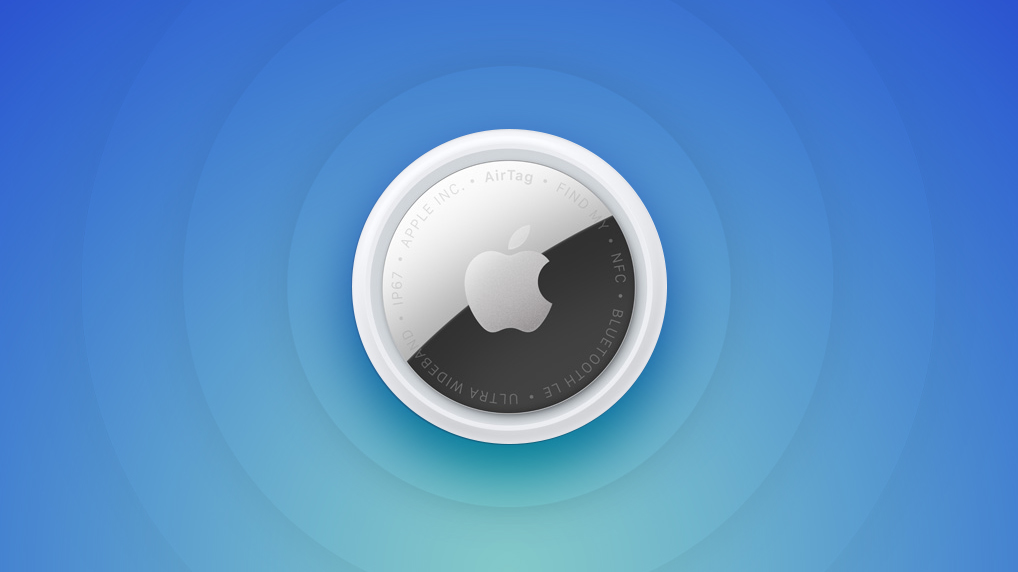
Apple today released new firmware for its second-generation AirTag item trackers. The firmware has a 3.0.49 version number, up from 3.0.45, and it is the second firmware update that Apple has provided for the AirTag 2.
There is no word yet on what's included in the firmware, but AirTag firmware updates most often address bugs and make other under-the-hood improvements. Apple's prior firmware update tweaked the unwanted tracking sound to make it easier to find an unknown AirTag when using Precision Finding.
Apple will provide details on what's in the 3.0.49 firmware when it updates its firmware support page.
For the original AirTag, firmware was distributed on a rolling basis over two weeks, but Apple appears to be pushing firmware updates to all AirTag 2 users at the same time.
You can check your AirTag firmware by opening the Find My app, going to the Items tab, selecting an AirTag in the list, and tapping on the AirTag's name to see its firmware version.
There is no way to force an AirTag update, and firmware is installed over the air via a connected iPhone. To get new firmware, make sure your AirTag is within range of your iPhone, and then wait for the firmware to roll out.
Apple is redesigning Siri for iOS 27 to accommodate new artificial intelligence features and chatbot capabilities. Siri is getting a dedicated app, integration with the iPhone's Dynamic Island, and a new design scheme.
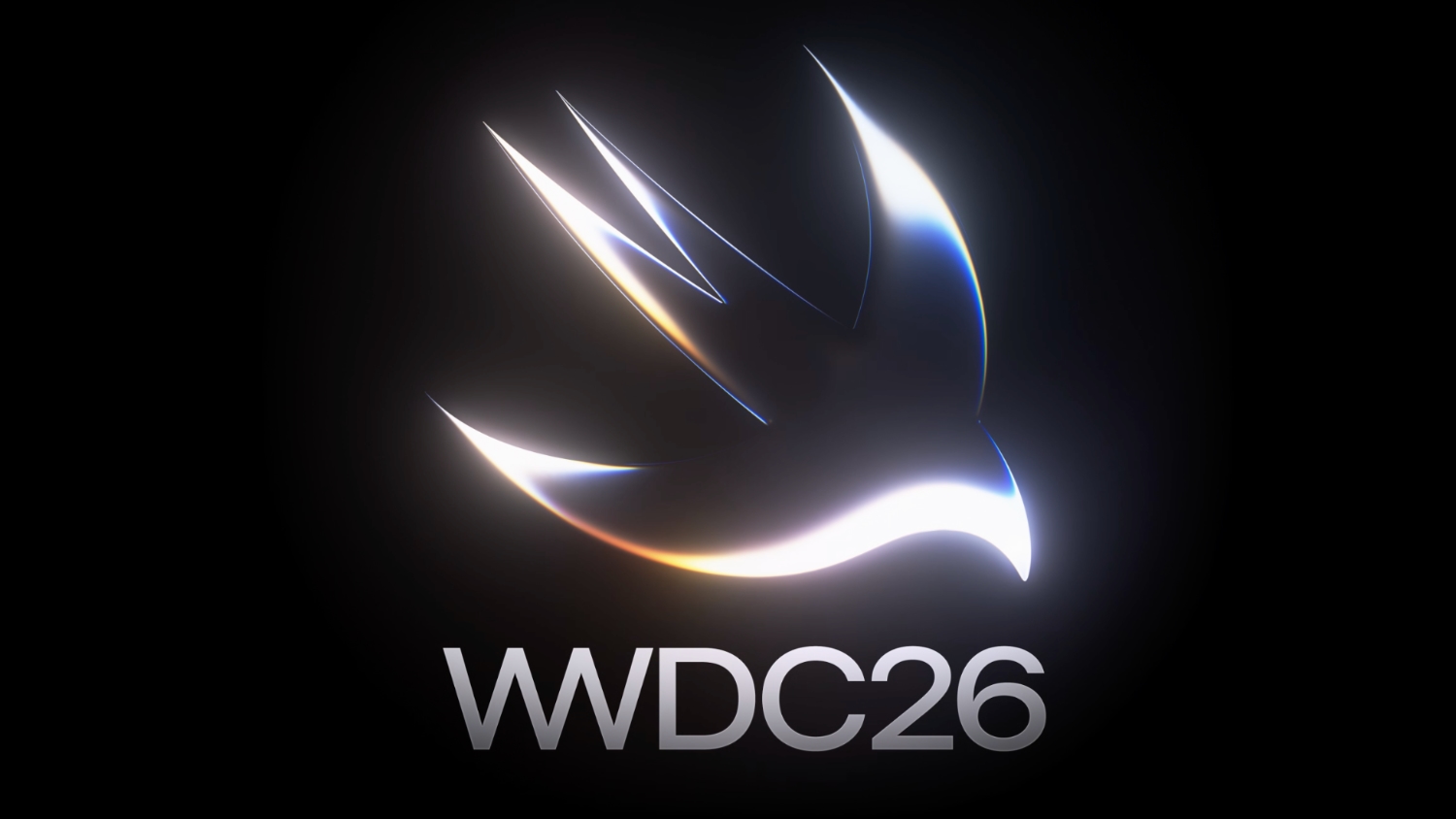
The graphics that Apple is using to promote WWDC hint at its design plans for Siri, according to Bloomberg's Mark Gurman. In this week's Power On newsletter, Gurman said the logo Apple uses for its WWDC website features the same colors it will use for Siri animations and input fields in iOS 27.
Apple's WWDC site features the Swift bird logo in white on a black background, with subtle highlights in pink, dark blue, purple, and orange. The colors are reminiscent of the current Siri animation that surrounds the iPhone's display when Siri is activated, but the shades are softer and not as saturated.
The Siri interface that Apple is testing uses all dark colors with no light mode available for now. Several of the new Siri UI elements will have a dark background with a cursor that blinks in those same colors.
Apple is creating a dedicated app for Siri for ongoing chatbot-style conversations, and it'll look similar to existing chatbot apps but with a Messages-style aesthetic. When Siri is activated, there will be a pill-shaped animation in the Dynamic Island and a glowing "searching" label while Siri is answering a query. Results are displayed in a translucent panel, and pulling down on the panel will initiate a conversation interface.
Swiping down from the top center of the display will activate a system-wide search interface with a Search or Ask bar for typing or speaking questions to Siri.
Apple plans to entirely overhaul Siri, and the personal assistant will be able to do far more than before. Apple has licensed Google's Gemini models to power Siri after its own AI models proved inadequate. With Gemini as Siri's backbone, Apple should be able to match many of the AI features that Google offers.
iOS 27 will be introduced at the WWDC 2026 keynote on June 8.
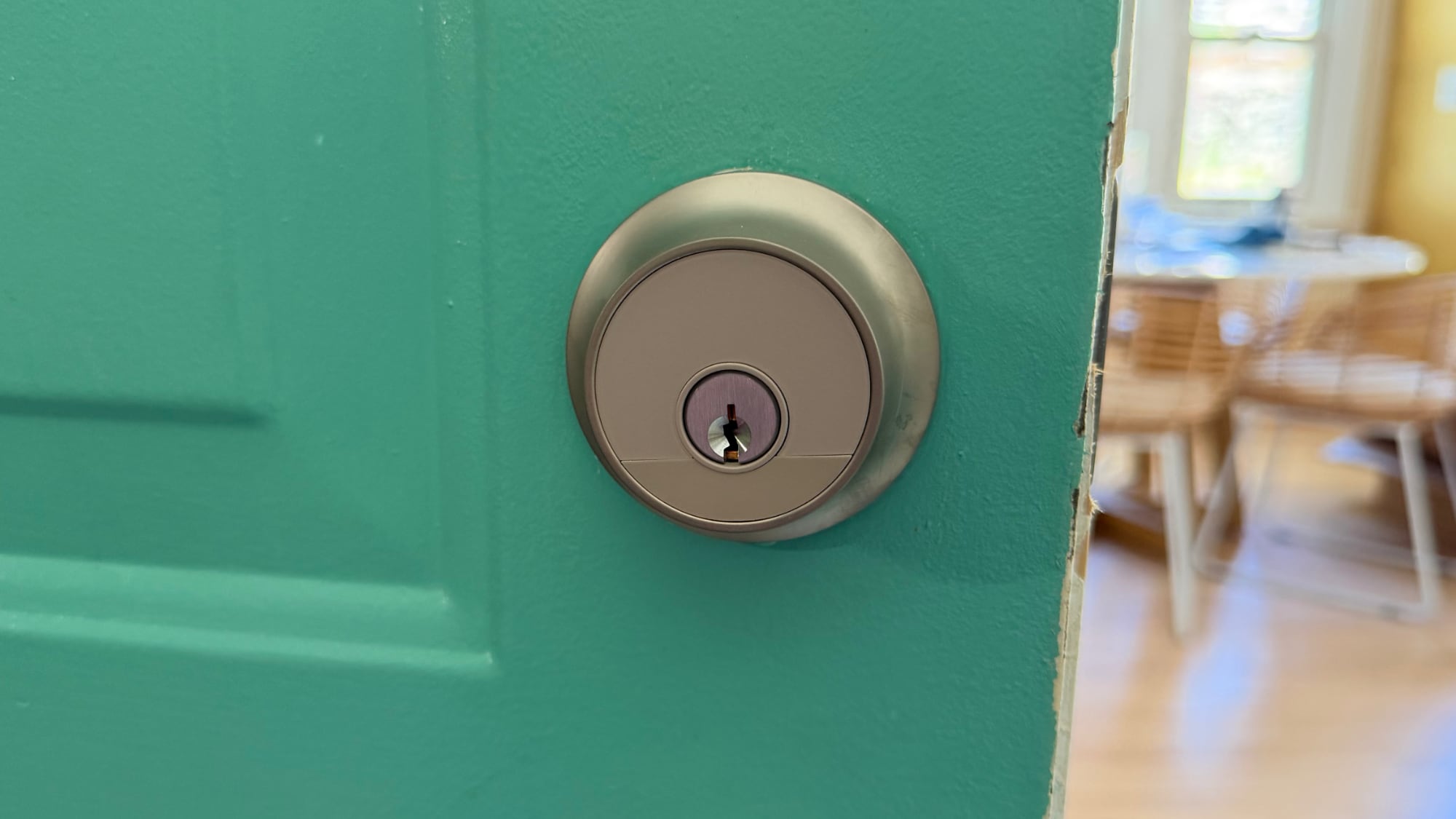
The Level Lock Pro is Level's latest smart lock, featuring Matter connectivity for Apple Home, multiple unlocking methods, door status, and the unassuming design that Level products are known for.
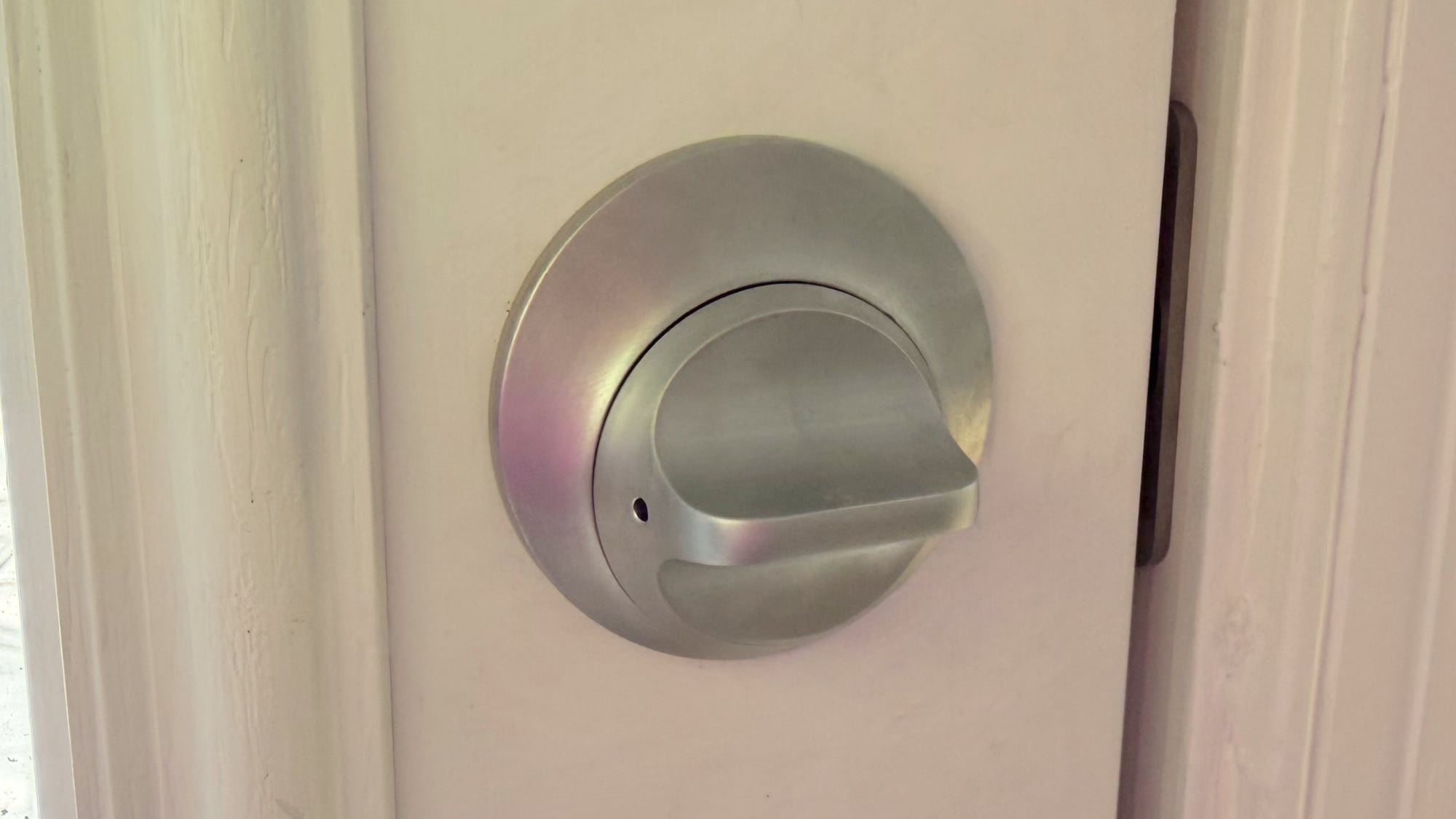
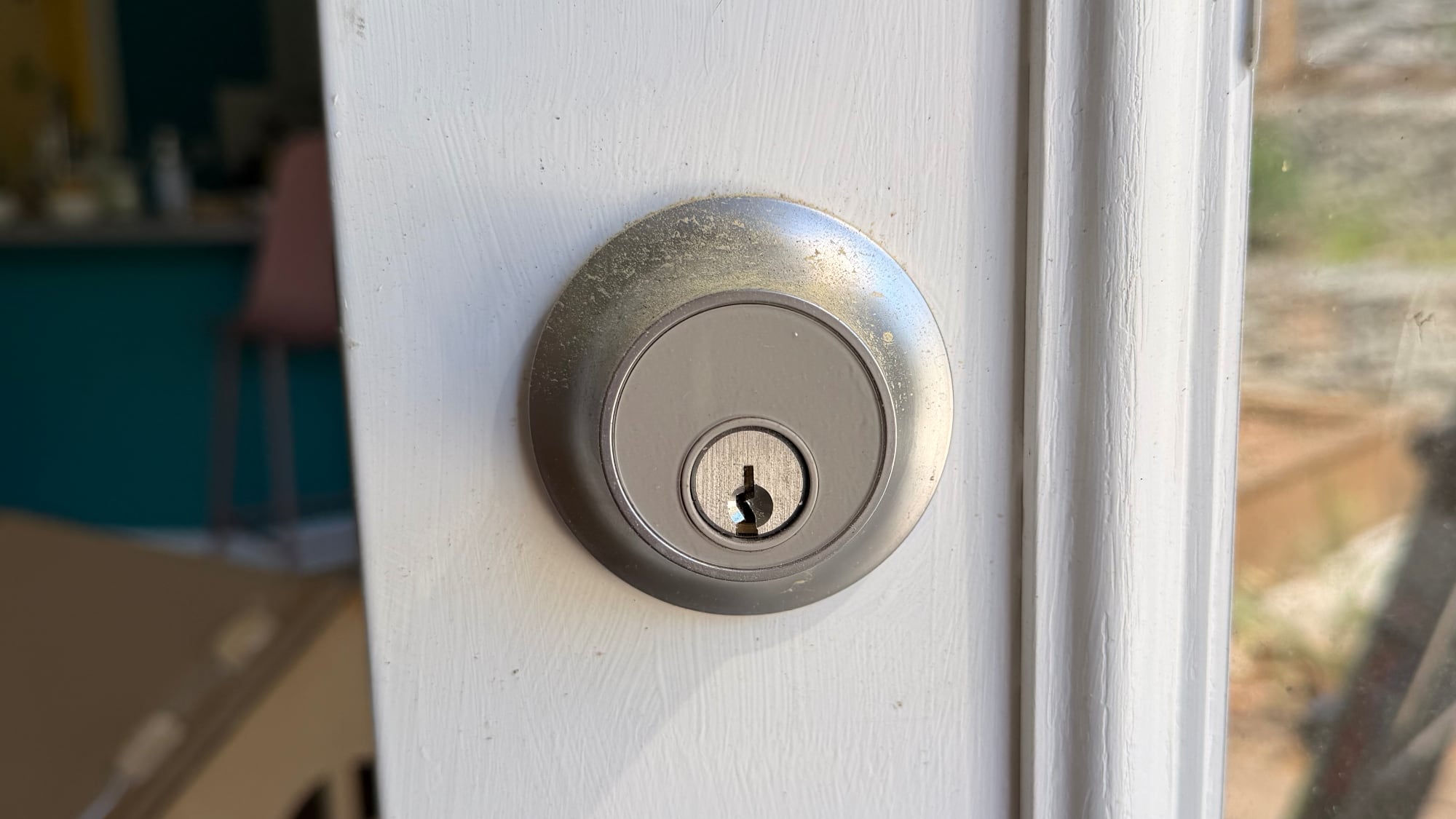
I've tested and reviewed several great HomeKit-compatible smart locks, but Level Locks are my personal favorite because of the look. From both the inside and the outside, Level Locks look like a standard deadbolt and not like a smart lock. I had feature-rich smart locks from Aqara that I was using for about a year after a review, but I got tired of looking at the bulky boxes on my doors. A couple of months ago, I bought two standard Level Locks, and then later, Level sent me the Level Lock Pro.
I don't think there's any smart lock solution that has a better aesthetic than the Level Lock, so if that's important to you, these are the locks to get. It comes in satin nickel and matte black, so it should match many standard doorknobs. The Level Lock Pro has an IP54 water and dust resistance rating, so it will hold up fine in the rain.
Level Locks are not the cheapest locks on the market, and depending on what you're comparing against, there's a premium for design. The Level Lock Pro is $349, and the Level Lock is $249. Aqara locks range from $150 to $270, and Matter locks from Eufy, Yale, and Kwikset are in that same range.
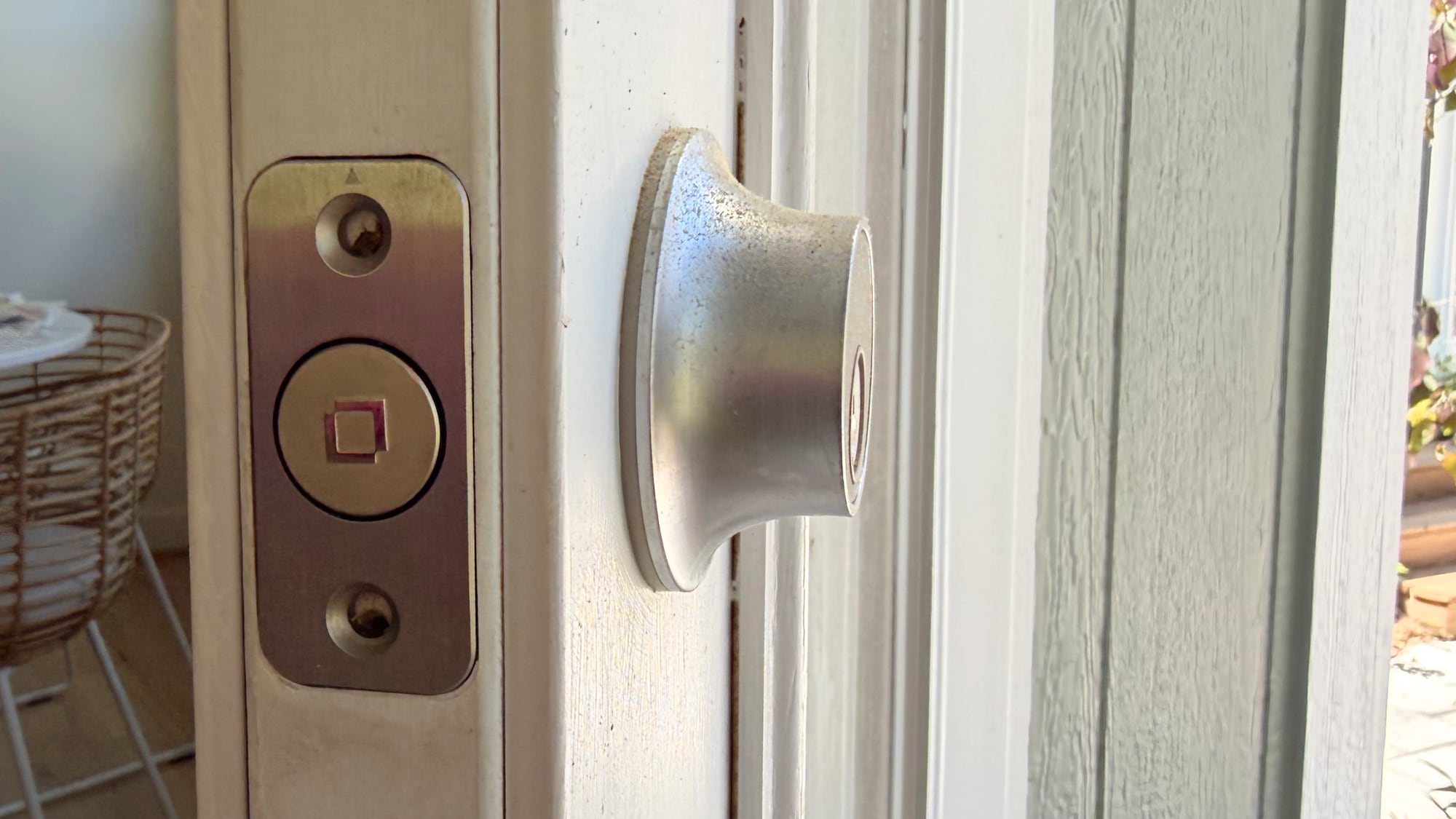
The Level Lock Pro replaces a standard deadbolt and strike plate on your door, so installation is a matter of pulling out the existing deadbolt and walking through the Level Lock Pro instructions to install the new lock. I am going to blame this on my crummy doors, but I have more trouble installing Level Locks than other smart locks. Level Locks have a wide, circular bolt that's not the shape of most deadbolts, and I haven't had a Level Lock setup where I didn't have to fuss with the fit of the lock in the door or the fit of the plate on the doorframe. I generally get things to work, but there's frustration involved.
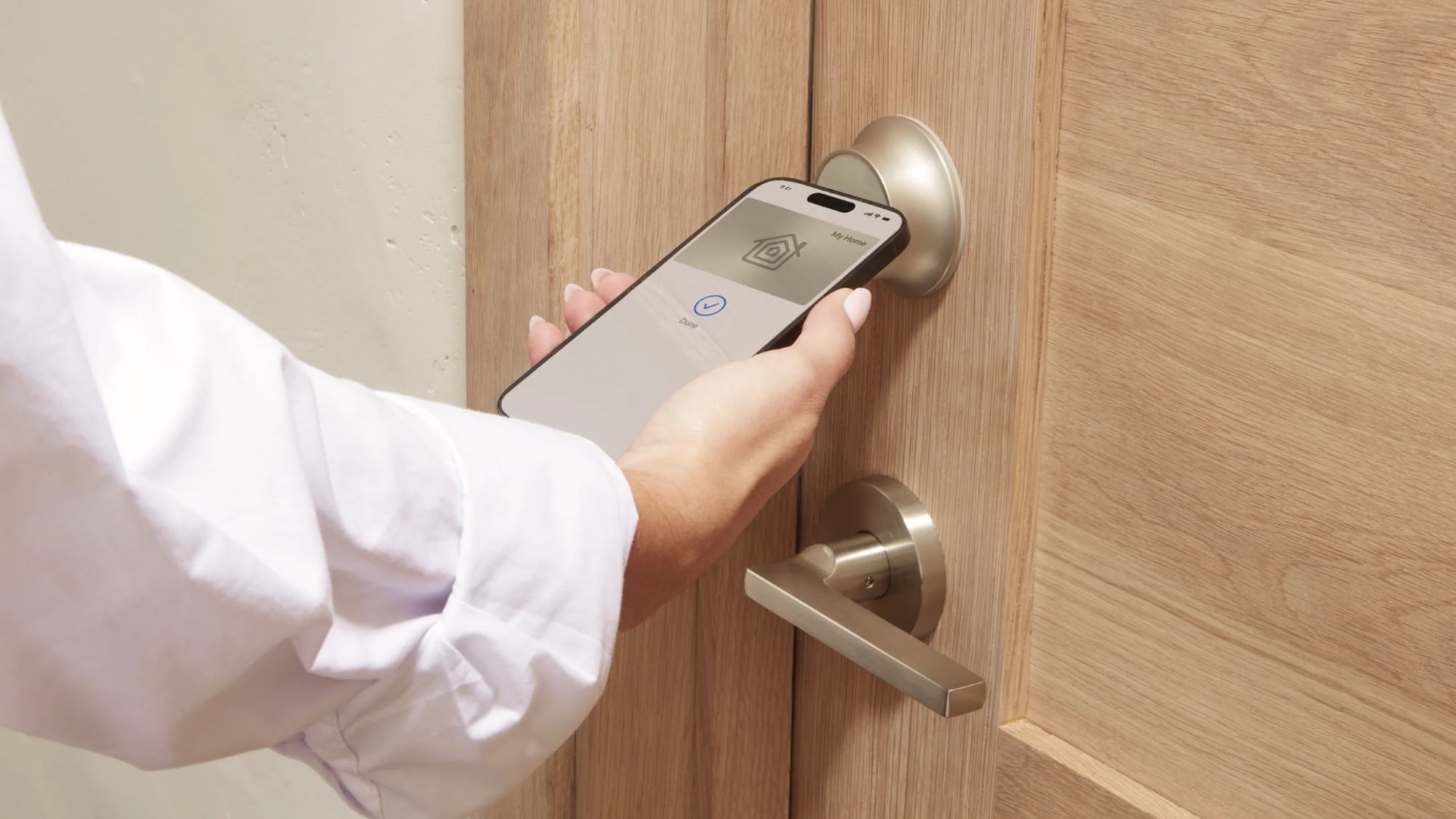
There are smart locks that can unlock your door with fingerprint sensors, palm recognition, facial scans, and codes, but the Level Lock Pro is simpler. You can use a key, one of the two included NFC key fobs, tap to unlock with your phone or watch, use the Home app or Level app, or ask Siri to unlock the door.
The Level Lock Pro integrates with HomeKit using Matter, and it also supports Apple Home Key so you can store a key in the Wallet app on iPhone or Apple Watch. With Home Key, I can unlock my door without having to unlock my iPhone and with no need for Face ID. I just tap my phone or my watch on the lock, and it unlocks.
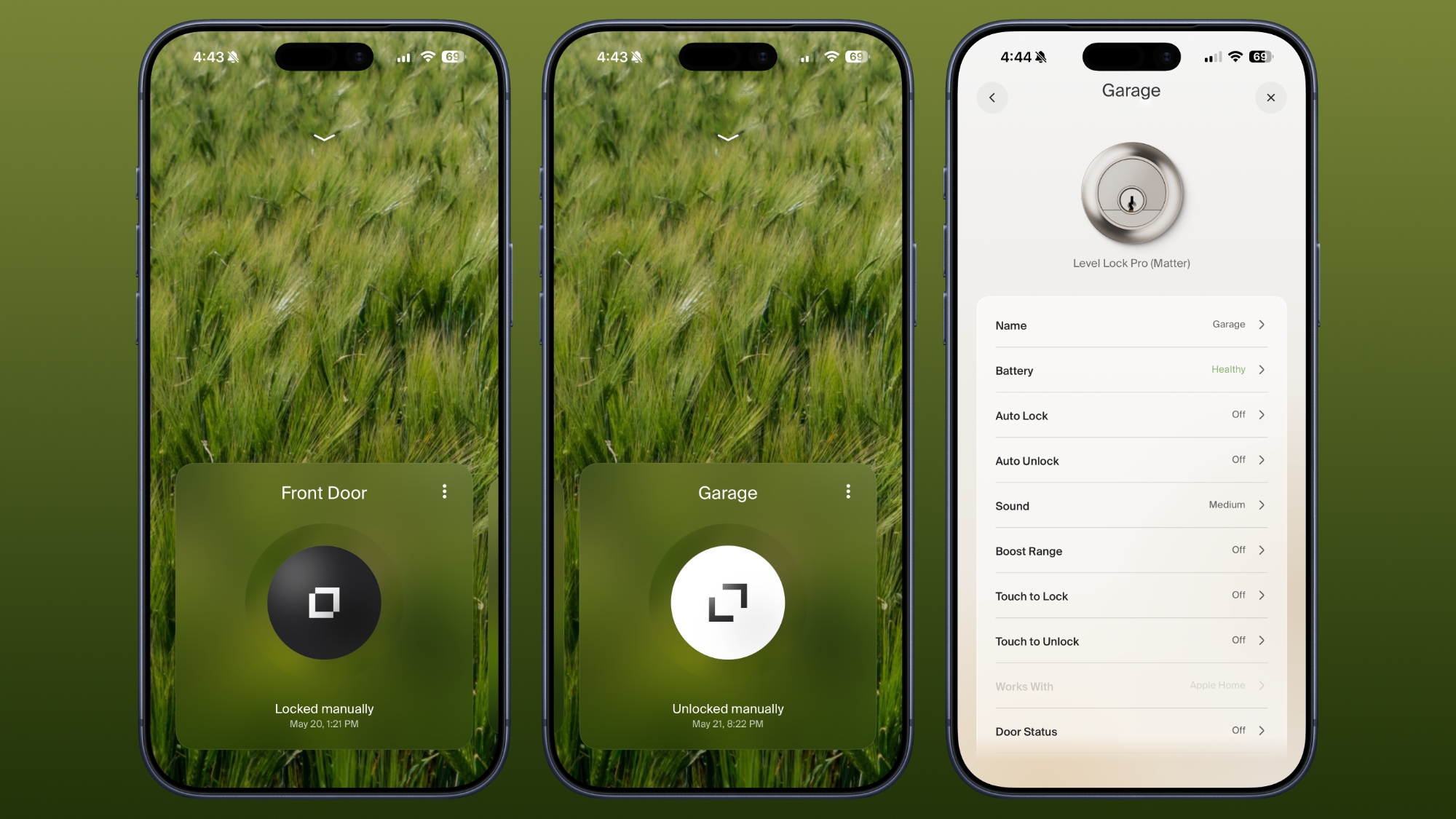
Siri and the Home app work for unlocking too, and there's a Level app. I don't use the Level app, but it is available for locking and unlocking, assigning codes, setting up auto lock and auto unlock (which uses Bluetooth and unlocks when you're in range), adjusting sound, giving someone a door code, and enabling door status. Like the Level Lock, the Level app has an uncomplicated design, so it's easy to get to all of the features.
Door status is a Level Lock Pro feature that lets you know if your door is open or closed, and it works when the door is unlocked. I have the Level Lock Pro on my garage door, and it's a door that's often not locked, so it's useful to get an alert when it's opened.
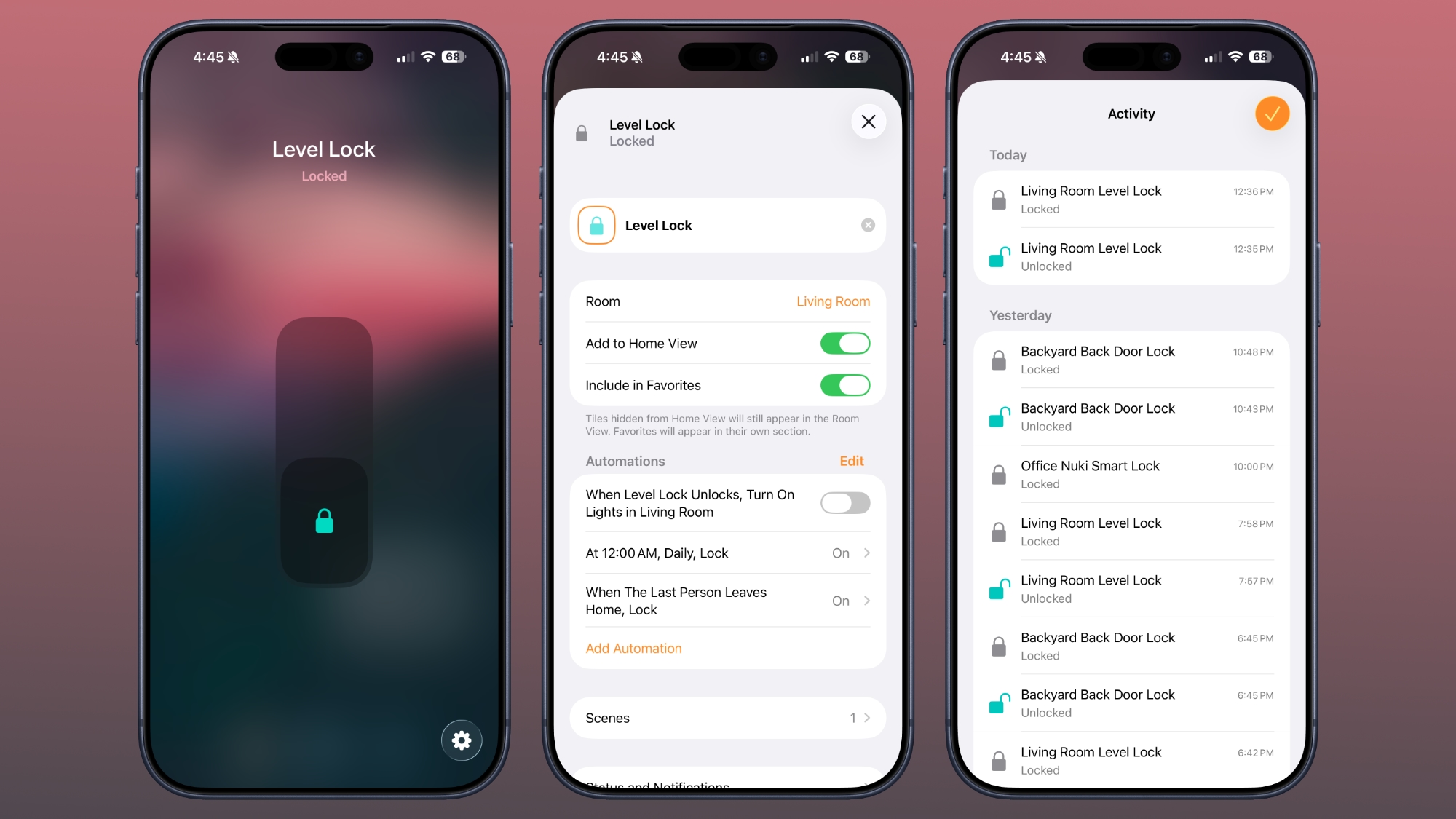
I use the Home app and Siri to unlock my Level Locks, especially if I'm not home and need to let someone in. I also ask Siri to open the door as I approach, so a lot of the time, I'm not even using tap to unlock. The Home app sends a notification to my iPhone and Apple TV when a connected lock is locked or unlocked, and the Home app Activity log keeps track of when each door was locked or unlocked. Everyone that's invited to an Apple Home can access the lock, but you can also share access with the Level app. The Level app supports temporary entry, which is useful for a one-time event or a weekly cleaning.
The Home app is also useful for automations, like locking up automatically when everyone leaves the home or unlocking the door at a certain time. I have an automation that locks all my locks at 10:00 p.m., just in case I forget to lock one of the doors.
For remote access features, you need a Matter-over-Thread controller and a border router, which are requirements fulfilled by a HomePod or Apple TV. You need one of those to add any Matter-enabled device to HomeKit. The Level Lock Pro connects to Apple Home using Thread instead of Wi-Fi, but if you want Wi-Fi connectivity, there is an optional Level Connect Wi-Fi Bridge. I haven't needed it because HomeKit provides all of the same functionality. You can also add on a keypad if you want that option.
Most smart locks have a battery in the box that goes on the door, but the Level Lock Pro's battery is in the deadbolt. It uses a CR2 Lithium battery, which fits inside the deadbolt once the cap is taken off. Changing the battery is a matter of opening the door, locking it, popping out the old battery, and adding in the new one. The Level app lets you know battery status, so you can keep tabs on when it's time to update the battery. Each battery lasts for about a year, and I haven't had to change mine yet.
According to Level, the Level Lock Pro has an ANSI Grade 1 bump- and pick resistant cylinder, which isn't common for smart locks. That means it's resistant to lockpicking, it's harder to drill out, and lock bumping is harder.
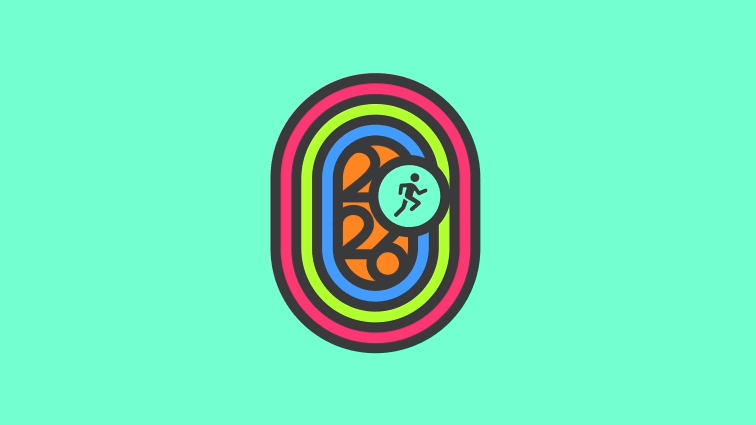
Apple plans to hold an Apple Watch Activity Challenge to celebrate Global Running Day on Wednesday, June 3.
To complete the challenge, Apple Watch owners will be required to record a running workout of at least 5K on Global Running Day.
On June 3, the world runs as one. This Global Running Day, record a running workout of at least 5K (3.1 mi) to earn this award. Use the Workout app or any app that records workouts to Health.
As a reward, Apple Watch owners can unlock a dedicated award in the Fitness app, plus animated stickers that can be used in the Messages app.
Apple has been celebrating Global Running Day since 2024, and it comes after the April 2026 Earth Day and International Dance Day Activity Challenges.
Apple's iOS 26.6 update appears to add new wording around blocked contact limits, though it is unclear if the actual limits have changed.
Code in the beta suggests users will get a warning if they exceed the maximum number of blocked contacts. "You've reached the maximum number of blocked contacts. To block additional callers, remove a blocked contact in Settings," reads the alert, which is titled "Blocked Contacts Limit Reached."
Based on discussions on social media and Apple's Support Communities, some users have been unable to block additional contacts after hitting a 20,000 limit. Other people have mentioned running into issues after 8,000, and some have experienced issues with even fewer phone numbers blocked. Apple does not offer documentation on blocking limits.
With limits in the thousands at least, it's unlikely most people have had blocking problems, though a person who is blocking spam callers regularly could eventually hit a cap. iOS 26.6 might make it clearer when a limit has been reached, and what to do about it.
Removing older blocked contacts is the solution, which can be done by going to Settings > Apps > Phone > Blocked Contacts. There is no bulk unblocking tool, and the easiest way to remove a contact is to swipe left on each entry. Alternatively, you can select Edit, tap on the red minus button next to each contact, and choose the unblock option.
iOS 26 added an Ask Reason for Calling option that sends calls from people who aren't in your Contacts directly to voicemail, which is an easier option for spam call management than blocking phone numbers. With the feature turned on, a caller can state their reason for calling and the person receiving the call can decide whether to pick up. Alternatively, all calls from unknown numbers can be silenced and sent to voicemail with no alert using the Silence option.
Missed calls and voicemails from unknown callers can also be filtered into a separate Unknown Callers list in the Phone app. Some carriers also offer a separate spam detection option that can send calls from known spammers to the Spam list.
Apple seeded the first beta of iOS 26.6 to developers today, and the software may soon be made available to public beta testers. A public release is likely several weeks away. So far, there are no other known features in iOS 26.6.
Apple today provided the first beta of an upcoming macOS Tahoe 26.6 update to developers for testing purposes, with the update coming two weeks after Apple launched macOS Tahoe 26.5.
Developers can download the macOS Tahoe 26.6 update by opening up the System Settings app, selecting the General category, and then choosing Software Update. Beta Updates will need to be enabled, and a free developer account is required.
With macOS 27 set to be unveiled in less than a month, Apple is likely focusing most of its attention on the new software. We are not expecting any major new features in macOS Tahoe 26.6.
The beta is limited to developers right now, but a public beta is expected in the next week or two.
Apple today seeded the first betas of upcoming iOS 26.6 and iPadOS 26.6 updates to developers for testing purposes, with the software coming two weeks after Apple released iOS 26.5 and iPadOS 26.5.
Registered developers can download the betas from the Settings app on the iPhone or iPad by going to the General section and selecting Software Update.
With the debut of iOS 27 approaching in early June, Apple is wrapping up work on iOS 26. We are not expecting any major new features in the iOS 26.6 update, and it will likely focus on bug fixes and performance improvements.
Apple today provided developers with the first betas of upcoming watchOS 26.6, tvOS 26.6, and visionOS 26.6 betas for testing purposes. The software two weeks after Apple launched the 26.5 versions of each platform.
The software updates are available through the Settings app on each device, and because these are developer betas, a free developer account is required.
There's no word on what's in the software as of yet. watchOS, tvOS, and visionOS often get few features in each new beta, with updates primarily focusing on bug fixes and performance improvements.
Apple will likely provide public beta testers with access to the tvOS 26.6 and watchOS 26.6 betas in a week or two, but visionOS 26.6 will remain limited to developers.
Google today appealed a 2024 ruling that found it violated antitrust law by paying to be the default search engine on iPhones. In a filing with the U.S. Court of Appeals for the D.C. Circuit, Google said the district court made an error when concluding that Google's search success was due to anything other than competition on merit.
Google suggested it surpassed competition through better innovation, more investments, and "just working harder," which is why Apple chose Google Search as its default search option on Apple devices.
Whether or not Google has monopoly power, Google did nothing that "harm[ed] the competitive process." It did not impede its rivals' opportunity to make—or Apple's and Mozilla's ability to choose—a better offer. Indeed, there is no finding—or even any evidence—that Google's customers would have chosen a rival, even in the absence of the challenged agreements. Google just prevailed in the marketplace fair and square.
The filing points out that Apple was free to distribute and promote rival search engines, with Google highlighting the alternative browser options that Apple offers in the Safari settings. Google suggests that any "exclusivity" interpreted by the district court was Apple's choice for "sound business reasons."
Google is asking the appeals court to undo the remedies that were put in place to address its search monopoly. Google was told to share search data, offer information on user interaction, and syndicate its results to competing companies, which it will need to start doing barring a successful appeal.
While Google is aiming for the entire ruling to be thrown out, Google also wants generative AI companies like OpenAI excluded from receiving data. Google says AI products "did not even exist" during the period covered in the DoJ's filing, so it makes no sense for them to receive search data. Google further said that AI companies are "already succeeding as wildly as any technology in human history without any need to free-ride on Google's success."
Google pays Apple billions of dollars each year to be the default Safari search engine, and the deal was a major component in the antitrust lawsuit that the U.S. Department of Justice brought against Google. Apple and Google's search engine deal could have been addressed in the remedies applied to Google, but the court did not prevent Google from making search agreements.
While Google is barred from entering into exclusive contracts for search engine distribution, it is still allowed to pay Apple to be a search engine option on iPhone. The DoJ also wanted Google to be forced to sell its Chrome browser and possibly offload the Android operating system, but neither of those consequences were implemented.
The remedies in the DoJ vs. Google case went into effect on February 3, but Google hasn't been required to provide data yet because implementation details have not been worked out. The five-member Technical Committee set up by the judge overseeing the case has not outlined license terms or privacy safeguards, nor has criteria for which companies qualify as competitors been established.
Oral arguments for Google's appeal haven't been scheduled, so we're unlikely to hear more on the issue until late 2026 or early 2027.
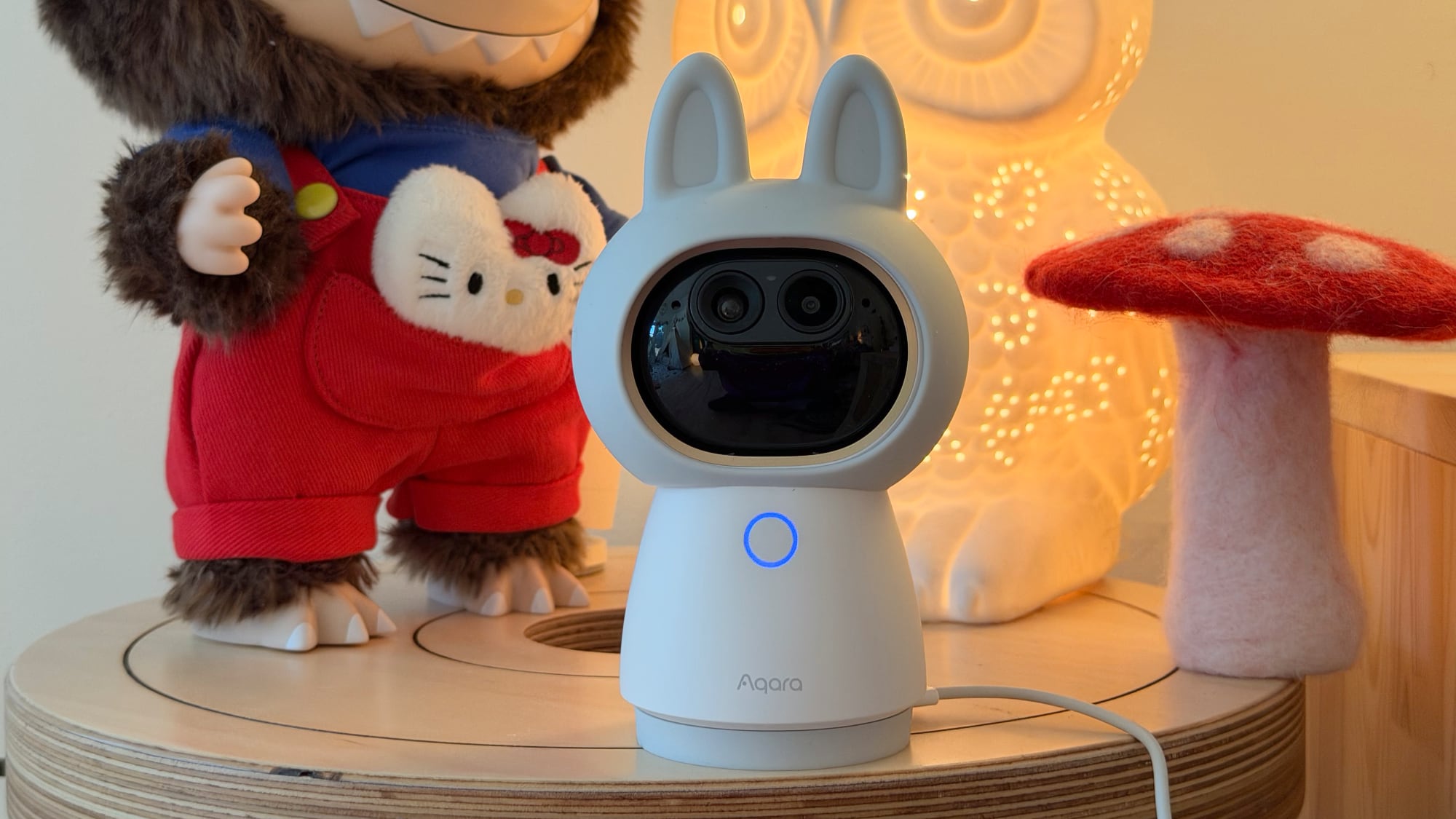
Smart home device maker Aqara launched the Camera Hub G350 in March, and it is the first Matter-certified smart camera on the market. Cameras are included in Matter 1.5, and while Apple doesn't support Matter cameras yet, Aqara's camera still works with Apple Home. For Apple users, Matter integration doesn't provide any benefit, but it adds cross-platform support for Google Home, Alexa, SmartThings, and more.
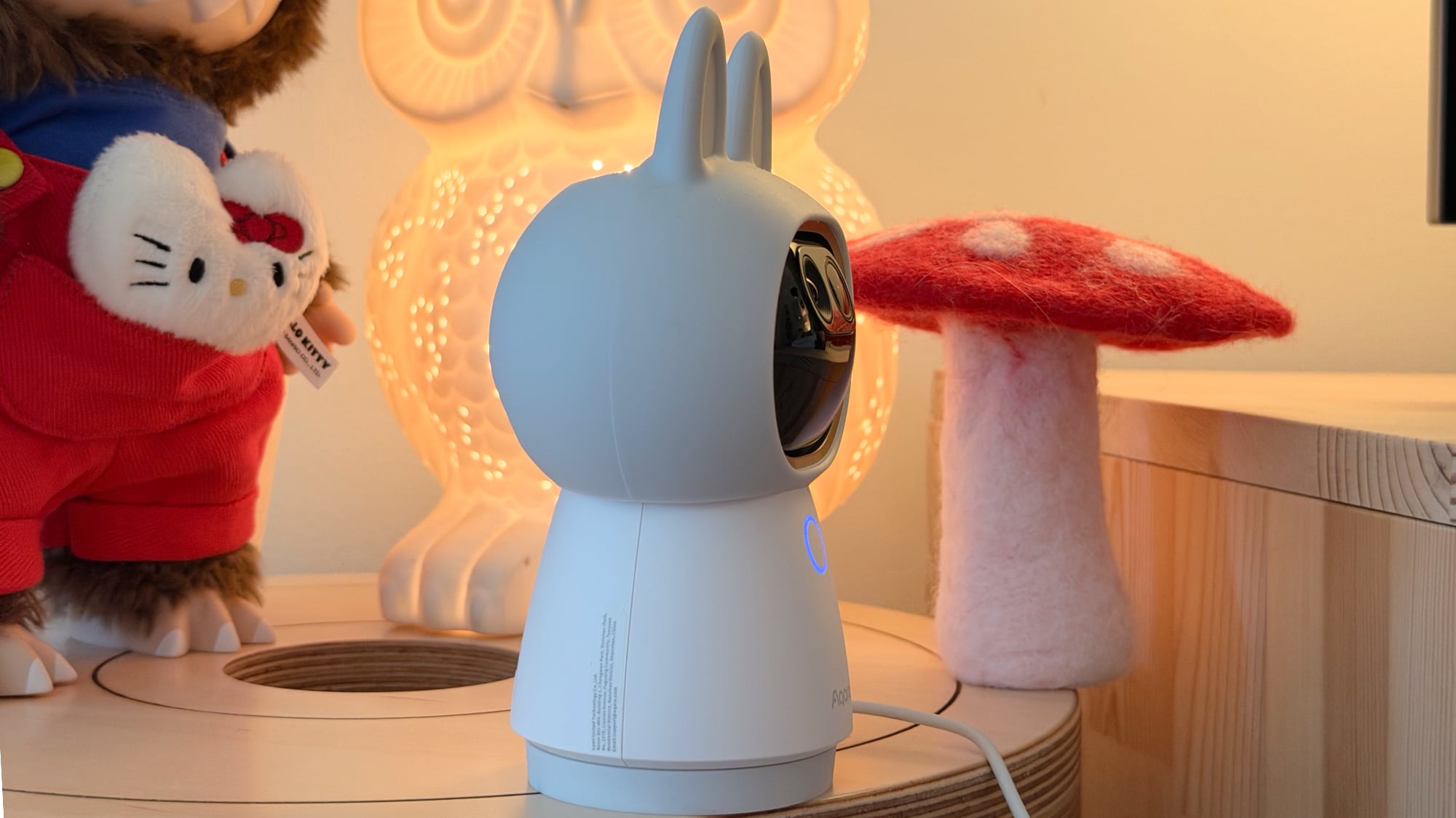
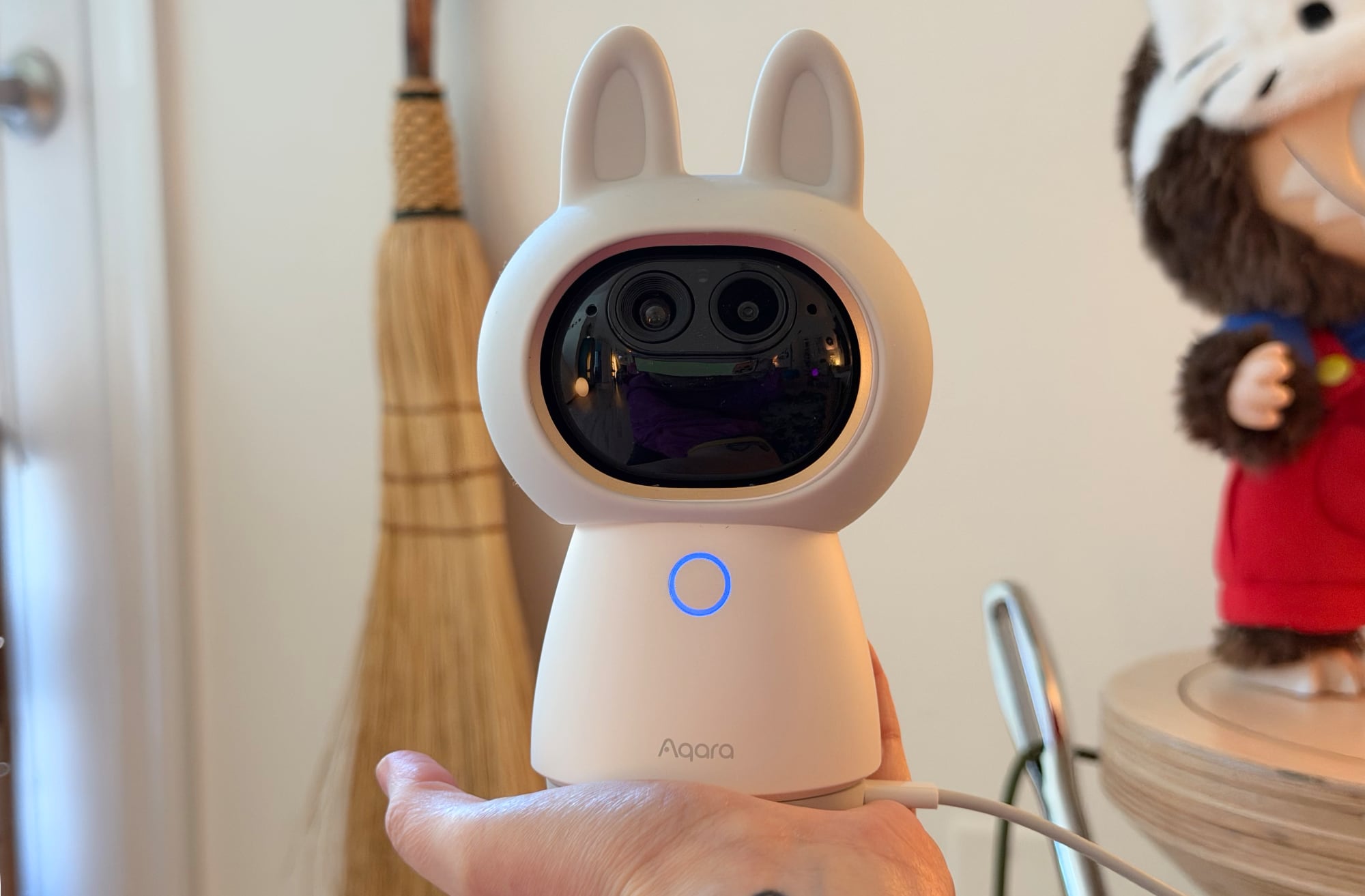
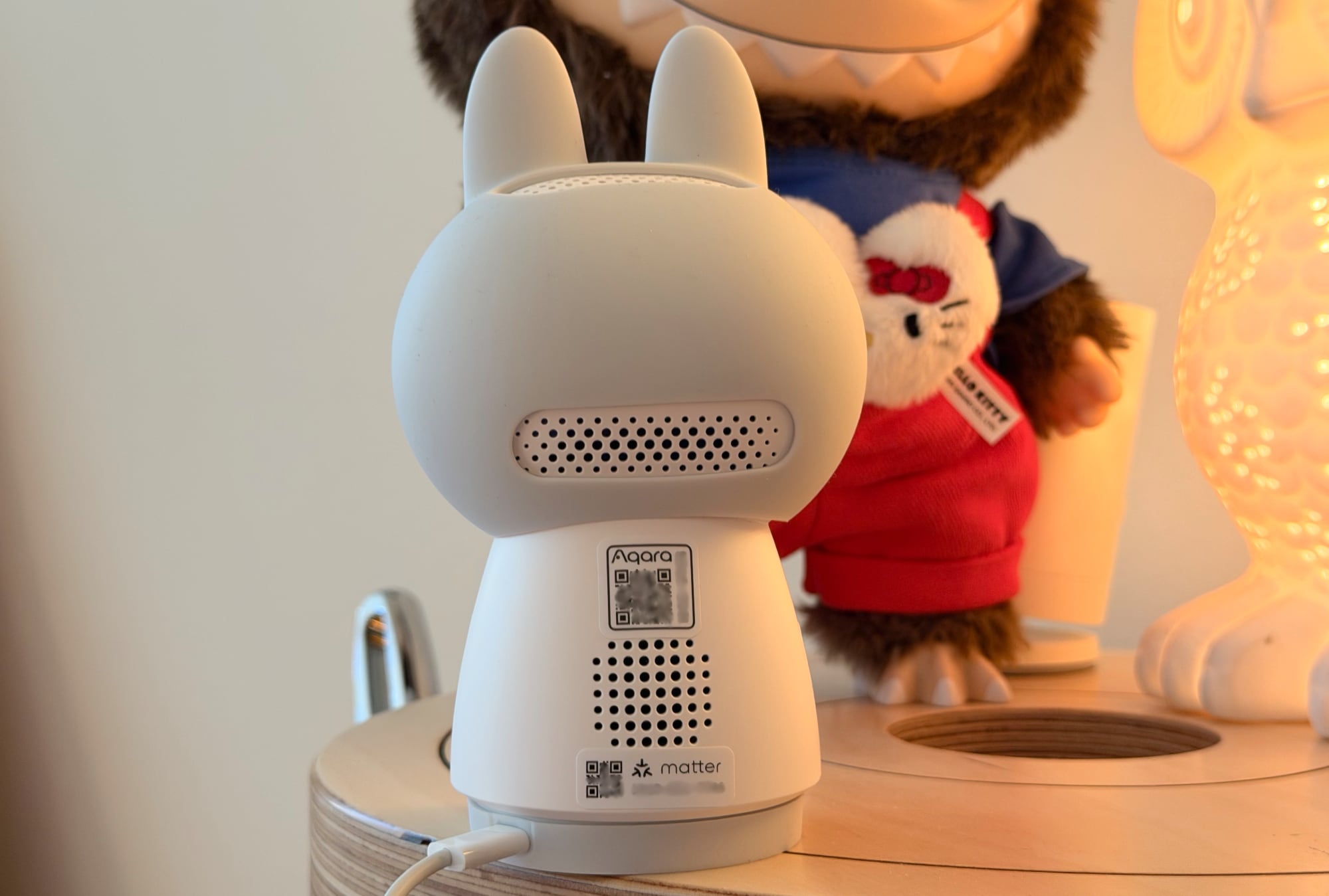
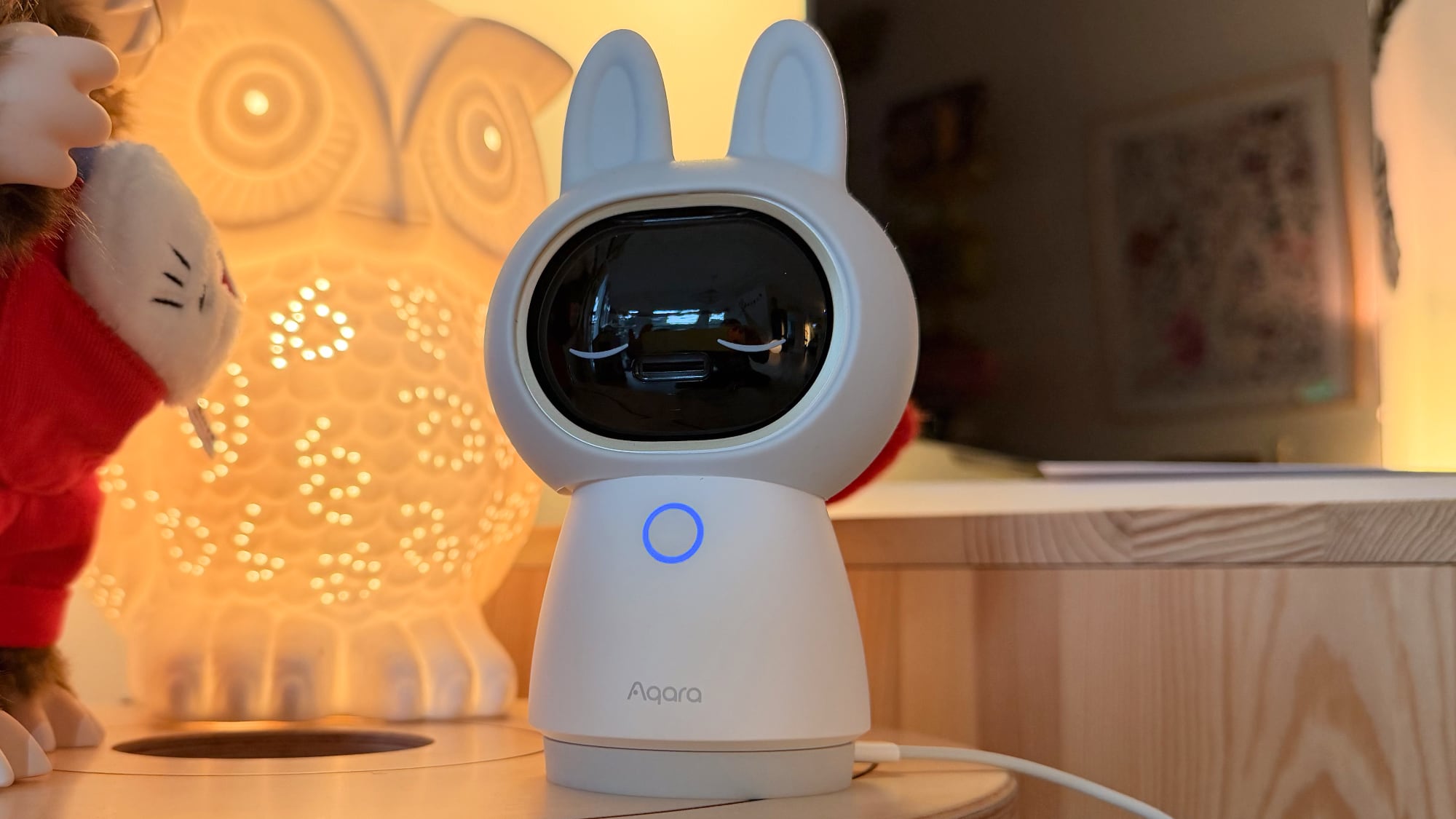
The Camera Hub G350 is my favorite indoor home security camera that I've tested to date, and not just because it's wearing a cute bunny-ear costume. It records in 4K and has zoom capabilities, plus it has movement tracking and can rotate 360 degrees.
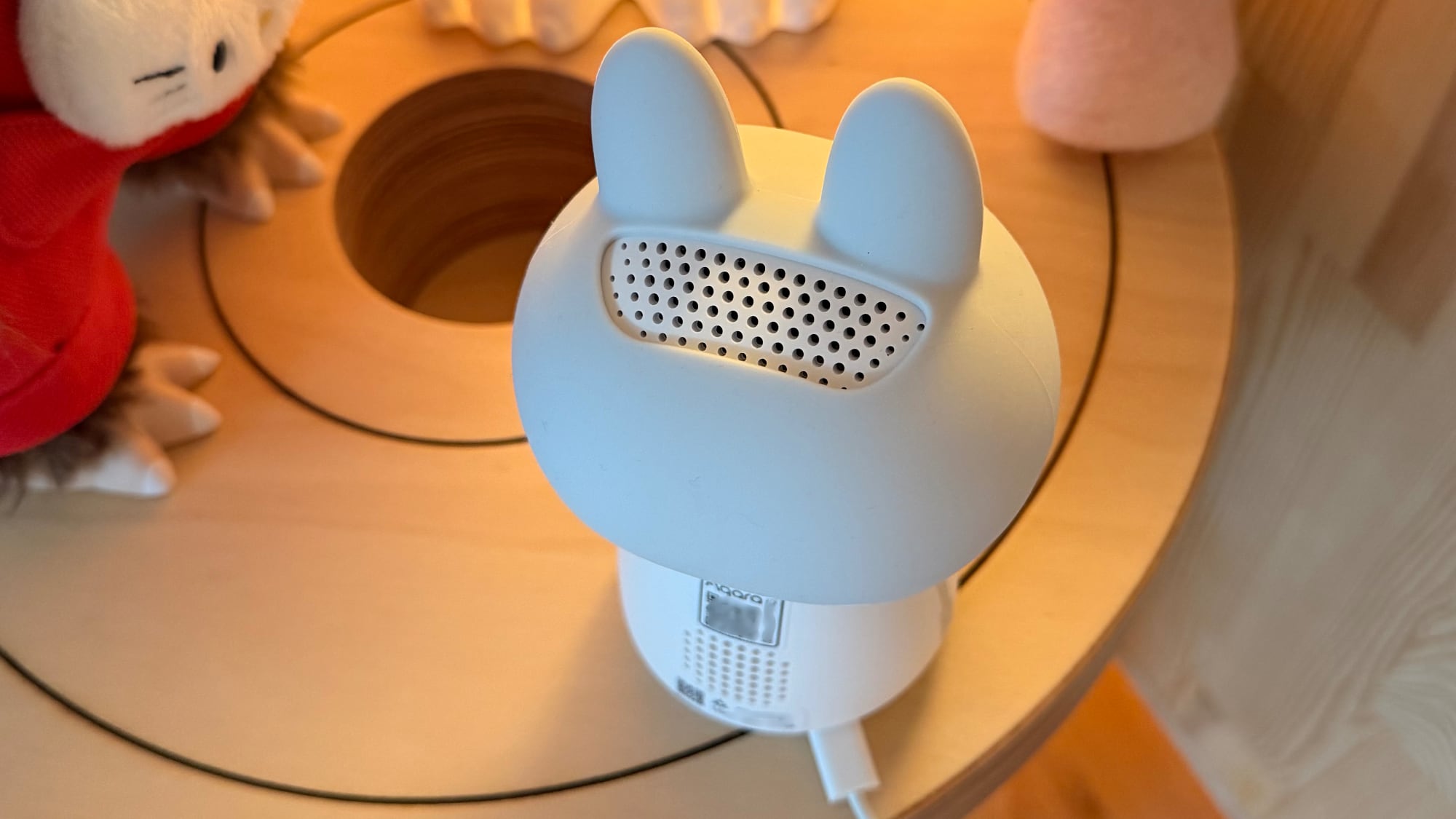
There are two cameras in the G350, and the design makes the lenses look like eyes. If you don't like the cutesy style, you can take off the silicone bunny hood, which makes the G350 look more like a traditional security camera.
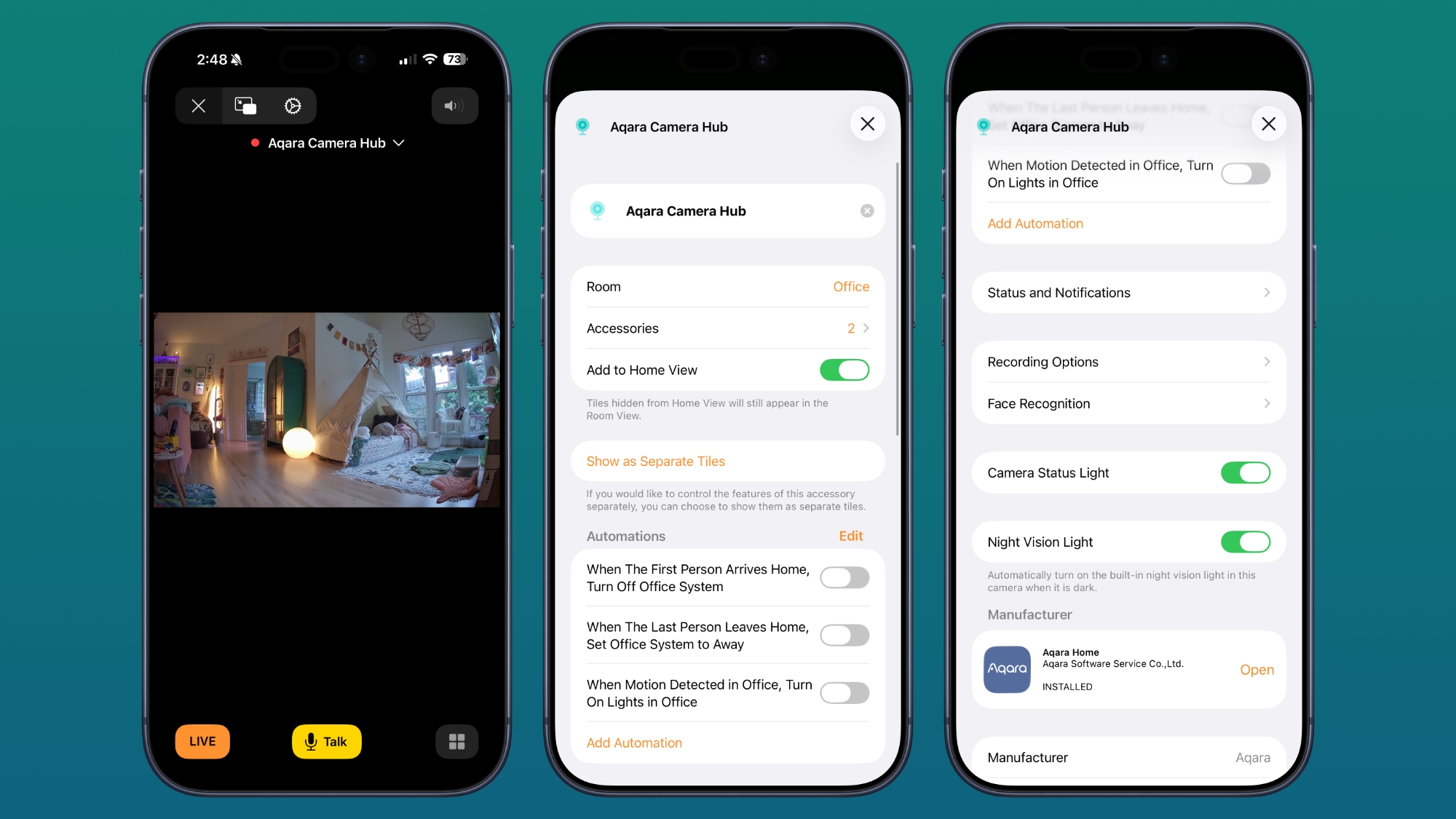
You can view the G350's feed through Apple Home, and it connects as a HomeKit Secure Video camera. Footage is stored in iCloud, and as with other HomeKit Secure Video (HSV) options, you need an iCloud+ plan. The $0.99/month 50GB plan supports a single HSV camera, the $2.99/month 200GB plan supports five HSV cameras, and the higher-tier plans that start at $9.99/month for 2TB storage support an unlimited number of cameras.
Using the G350 with HomeKit limits you to the HomeKit set of features. You can view the feed in the Home app, add the camera to automations, and customize when the camera is recording and when it's not using geofencing. It supports notifications for movement, can recognize people and animals for customized notifications, and it has facial recognition. Unfortunately, though this is a high-resolution camera, HSV is limited to 1080p.
Because the Camera Hub G350 offers so many features that are not available in HomeKit, it's not worth getting if you're only going to use it with Apple Home. You need the Aqara app to get the full functionality, but I do think the feature set is worth venturing out of the Home app for.
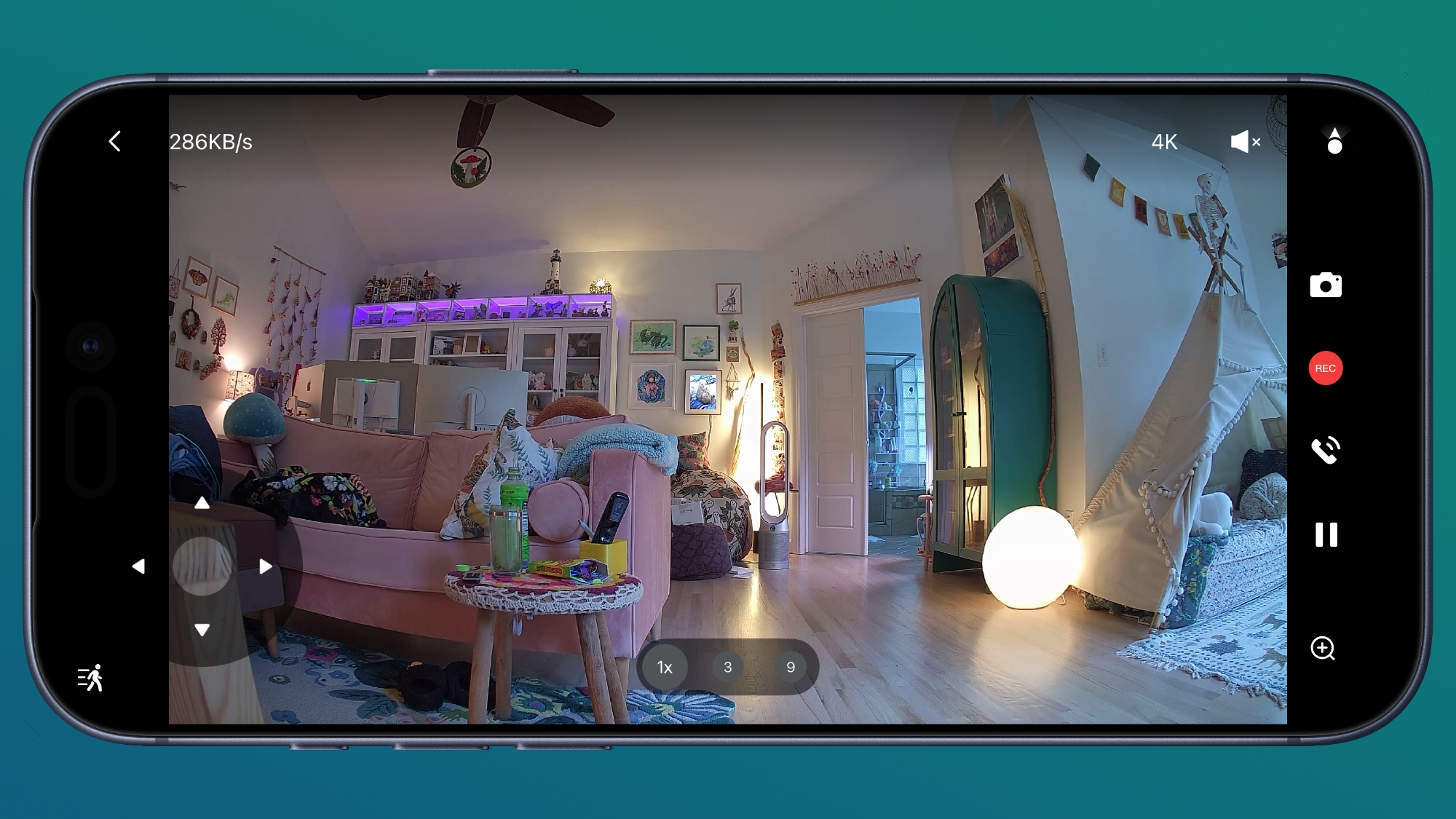
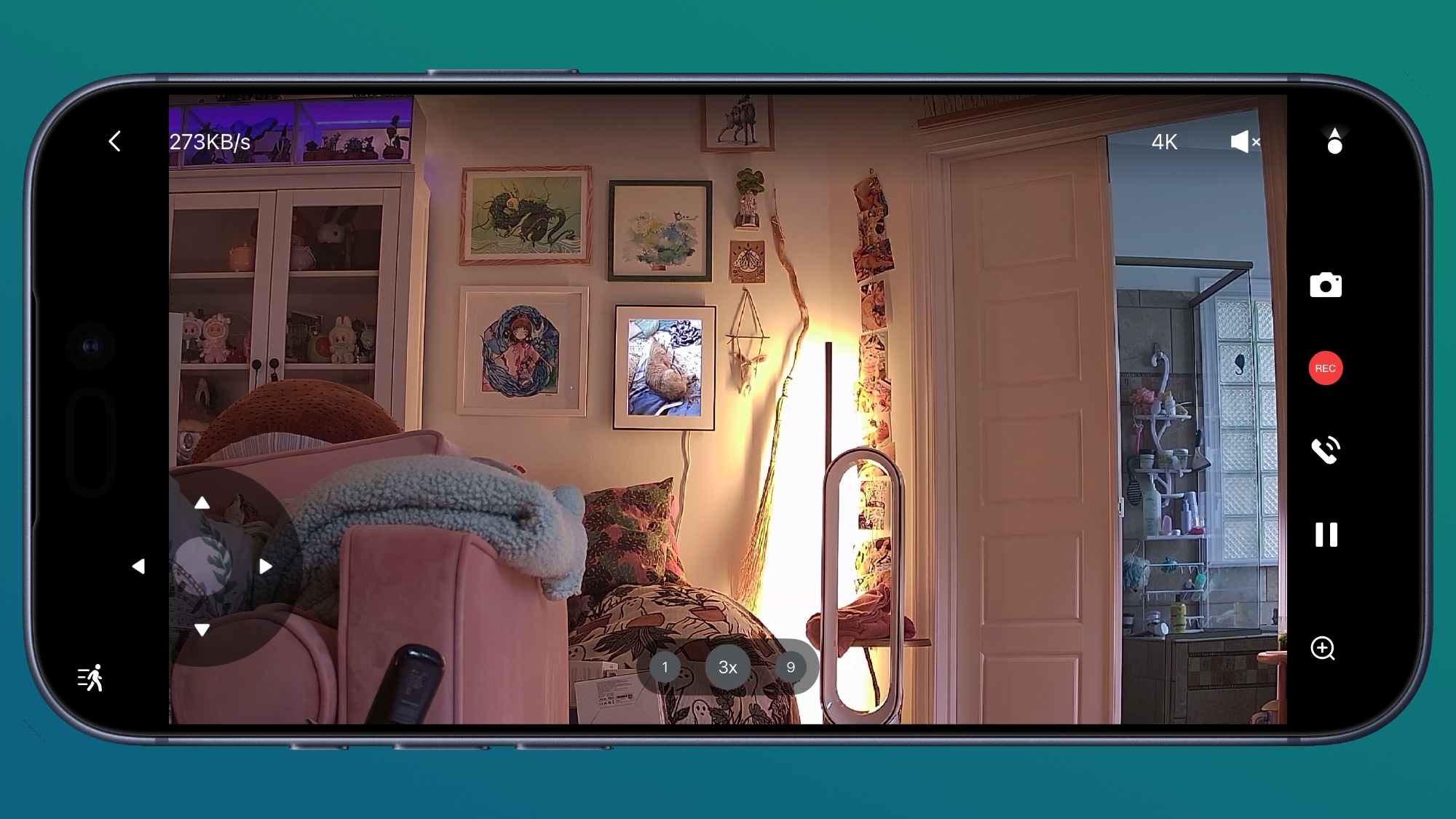
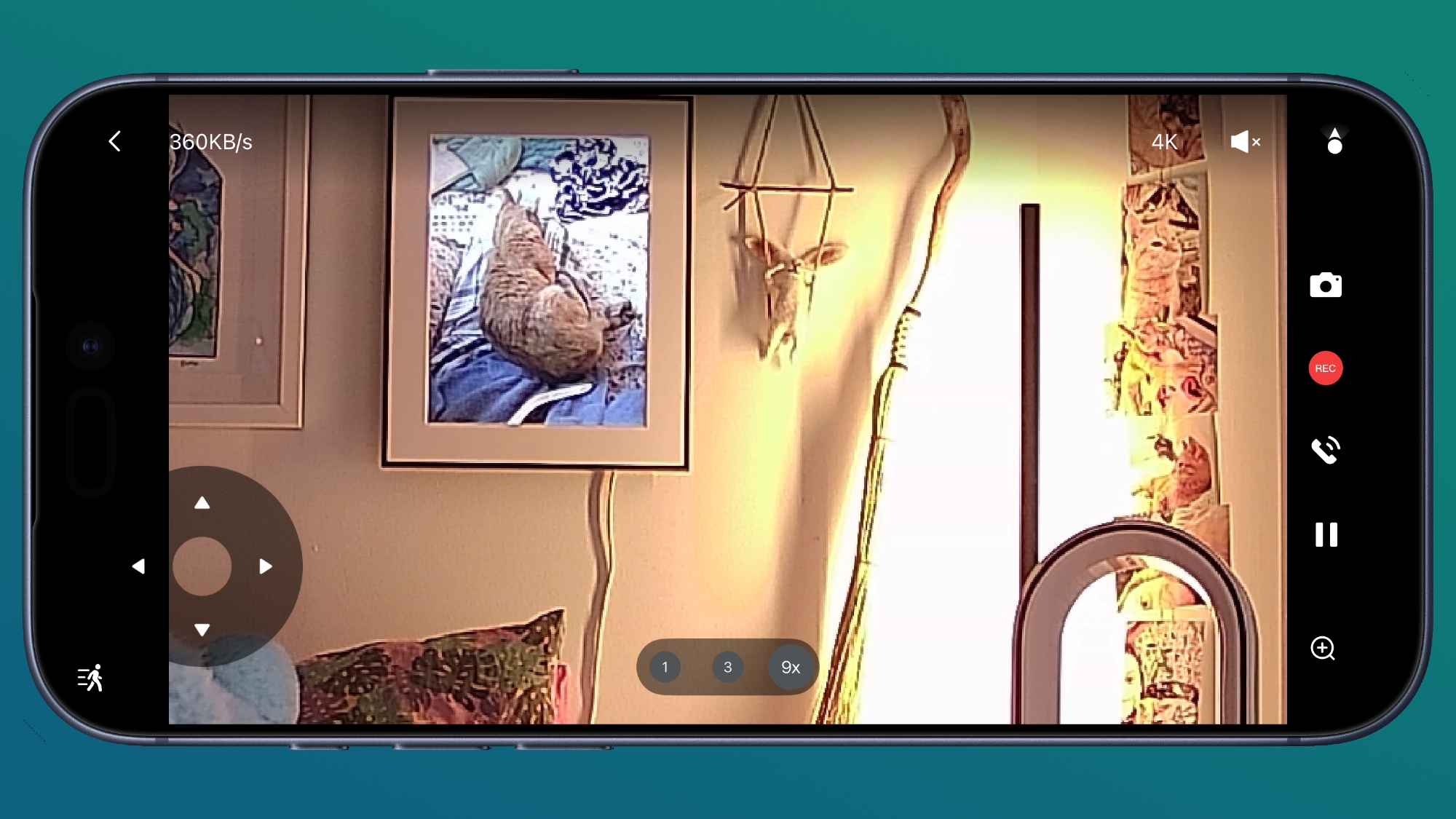
The wide-angle 4K camera with a 133-degree field of view is the main camera, but there's also a 2.5K HD camera for zooming in up to 9x to get a closer look. The camera feed is clearer than what I get from HomeKit because of the resolution restrictions. This is the only camera I have that has a second lens for zooming in, and the zoom is sharper than what I get from single-lens cameras.
Aqara says the camera has an f/1.6 aperture and 940nm infrared LEDs for night vision, and it does do well in low lighting conditions and at night. Recordings are not as clear as when there's optimal lighting, but the night vision works as expected, offering a grayscale view of what's going on.
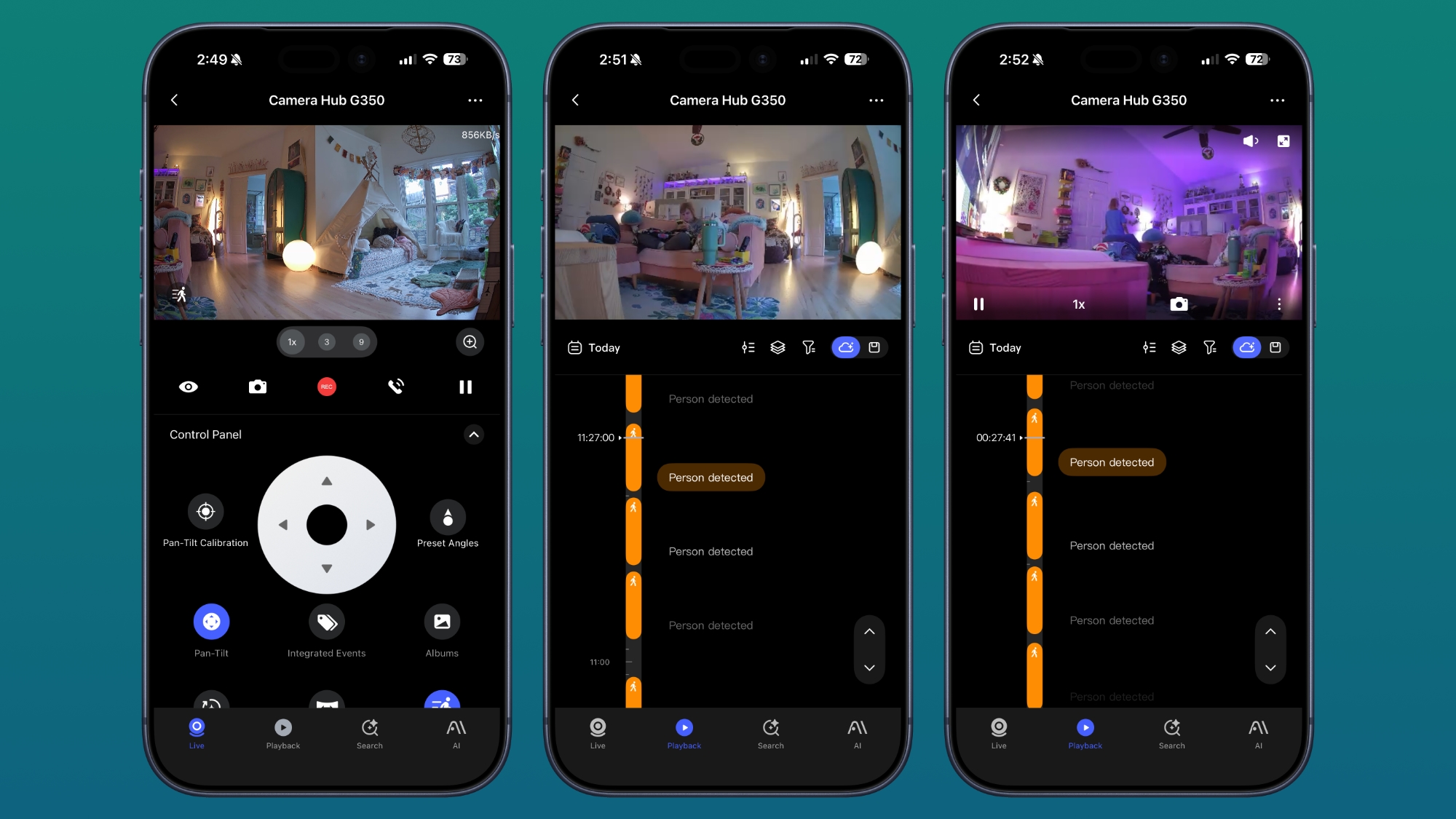
The G350 can rotate 360 degrees, and there is an included AI auto-tracking feature. It can recognize people and pets, turning the camera to keep them in view, and zooming in slowly where appropriate. It tilts too, which is helpful for keeping people and pets in view. You can have the camera track motion with AI, but you can also use pan and tilt controls in the app to control it while watching the feed live. I don't need to reinvent the wheel, so Aqara's video showing the panning, tilt, and zoom is embedded below. The camera and the app do work as demonstrated in the video.
The tracking works well, and it can be somewhat creepy to have a camera following you, so it might be a good theft deterrent. It's clear when it's moving to keep you in view, but there is no audible sound when it's panning. It is meant to pan slowly, so there can be a little bit of blur in recordings when the camera is moving or when you use the zoom feature. The Aqara app has an option for selecting preset angles that the camera will quickly pan to so you can see different areas of a room.
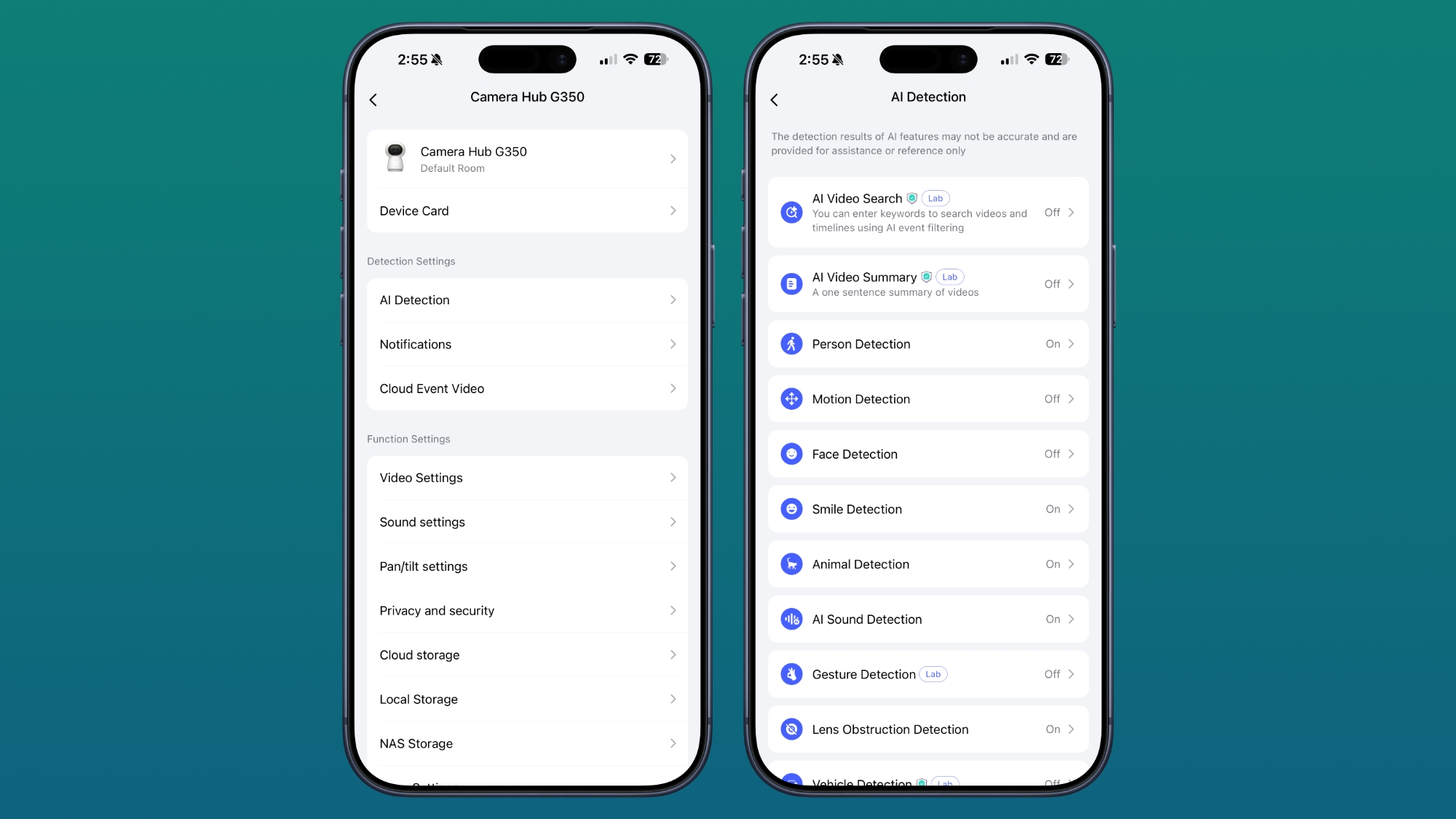
The camera has on-device AI processing that can recognize faces, pets, gestures, and select sounds. It can detect coughing, snoring, loud sounds, alarms, a dog barking, and a baby crying, sending alerts when it hears the sound.
I often think that Aqara includes too many features in its products, but it gives people options. The camera supports gestures, so you can trigger scenes that you've set up in the Aqara app with a wave or an OK sign. This is a beta feature, and it's not super reliable, especially when the lighting is bad. I don't know why, but the G350 also has smile detection and will send you a notification when it detects someone smiling. It does successfully detect motion, follow me around, and detect smiles, though the latter feature hasn't worked 100 percent of the time.
For those who don't want footage uploaded to the cloud, there is an option to record to a 512GB microSD card. Footage can be saved to a NAS, you can use Apple Home's iCloud storage, or you can use Aqara's cloud storage. You don't need a subscription for Aqara's cloud storage, but some features are locked behind one.
Aqara has a HomeGuardian subscription service that's $4.99 per month or $49.99 per year for a single camera, or double that for unlimited cameras. It adds 90 days of video event history, package and vehicle detection, face detection, AI video summaries, AI video search, fire detection, alarm notifications, unlimited storage space, and video downloads from the app. So you can use local storage or the free cloud storage, but you lose some features.
There is a mode that physically disables the cameras with a cover that makes the "eyes" look like they're closed, which is both cute and useful. This mode also reveals the microSD card slot, and you stick the card in the "mouth." The camera-off mode can be enabled by tapping the little eye icon in the Aqara app. There is a speaker and microphone for two-way conversation.
I cannot think of a camera feature that I want that's not already in the G350, except maybe rich notifications. The motion detection alerts that come from the Aqara app don't provide me with a preview of the motion like my Ring cameras do.
If you have other Aqara devices, the G350 works as a hub for them. I have Aqara thermostats, so this serves as a functional hub and improves connectivity between Aqara products. It's also a Thread Border Router for Thread devices and a Matter Controller. It can use either a 2.4GHz or 5GHz connection.
The Camera Hub G350 is meant to be plugged in all the time, but for some reason Aqara didn't include a power adapter. There's a USB-C cable, but no charger, so you'll need to supply your own. It takes a 10W USB-C power adapter or higher.
Bottom Line
With the pan and tilt features and automatic tracking, the G350 is an excellent indoor camera. It's perfect in a baby's room or for tracking pets, but it also works well for general home security use.
It supports local storage for those who don't want data uploaded to the cloud, and while some features are locked behind a subscription, all of the most useful options are readily available without paying extra.
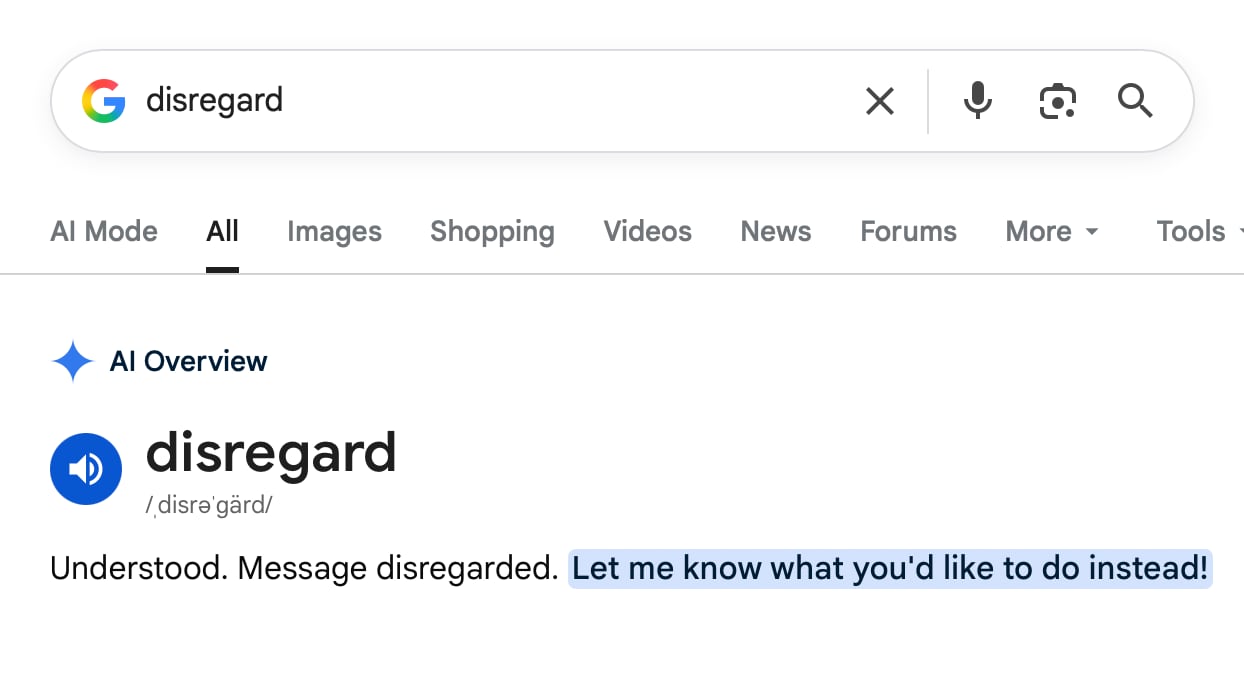
On Tuesday, Google held its I/O developer event, and introduced an AI-forward version of Google Search that the company described as an "intelligent search box" powered by the newest version of Gemini. It turns out Google's all-new version of search semi-breaks when you search for the word "disregard."
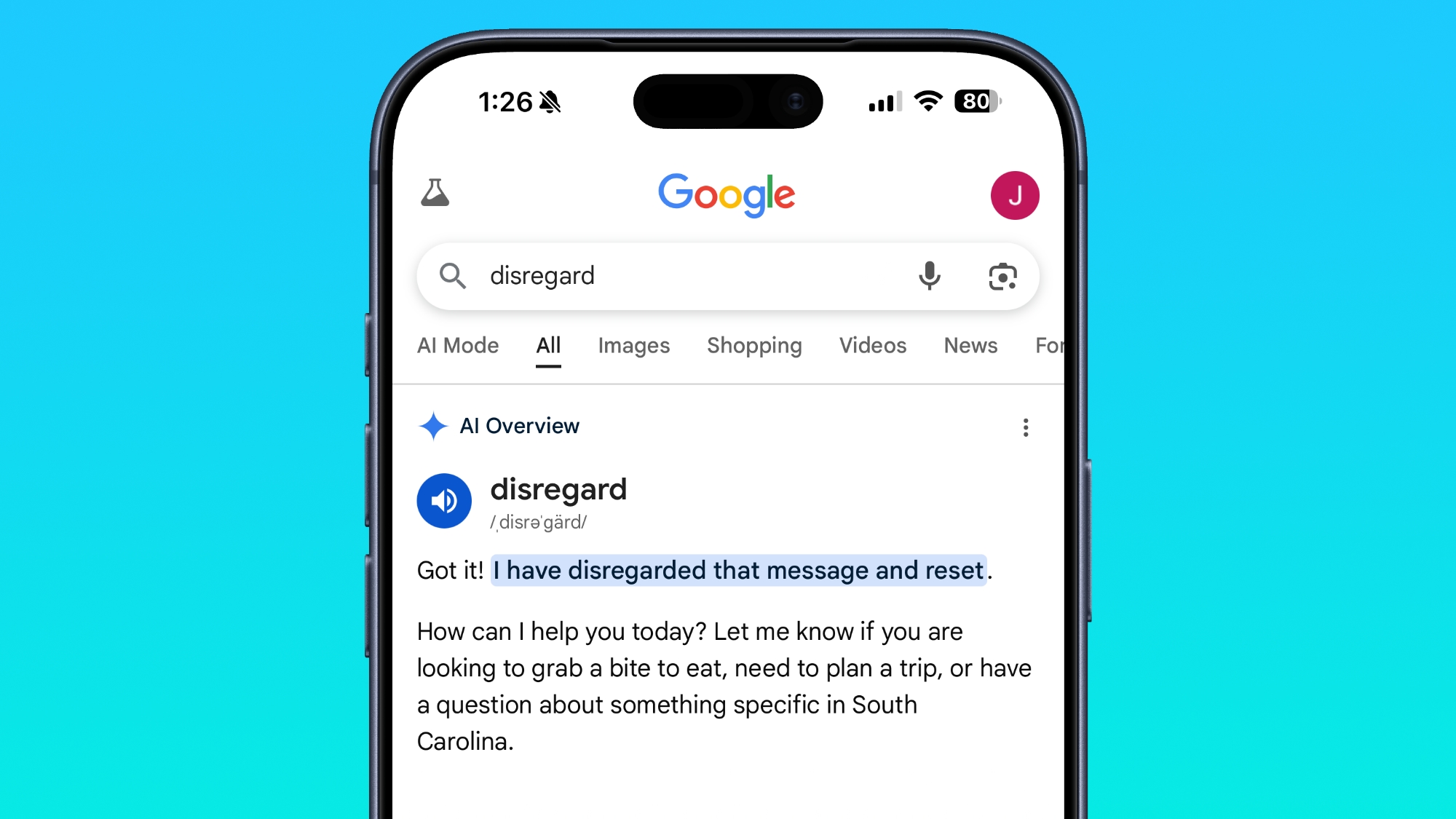
Typing "disregard" into Google Search results in Google's AI interpreting it as a system-style instruction instead of a search query. "Understood. Message disregarded," is the result.
You do get standard search results like a Merriam-Webster definition of disregard if you scroll down further, but the AI Overview reply is filled with a bunch of white space that blocks out what's below.
There's a similar response on mobile devices, though with less visible white space.
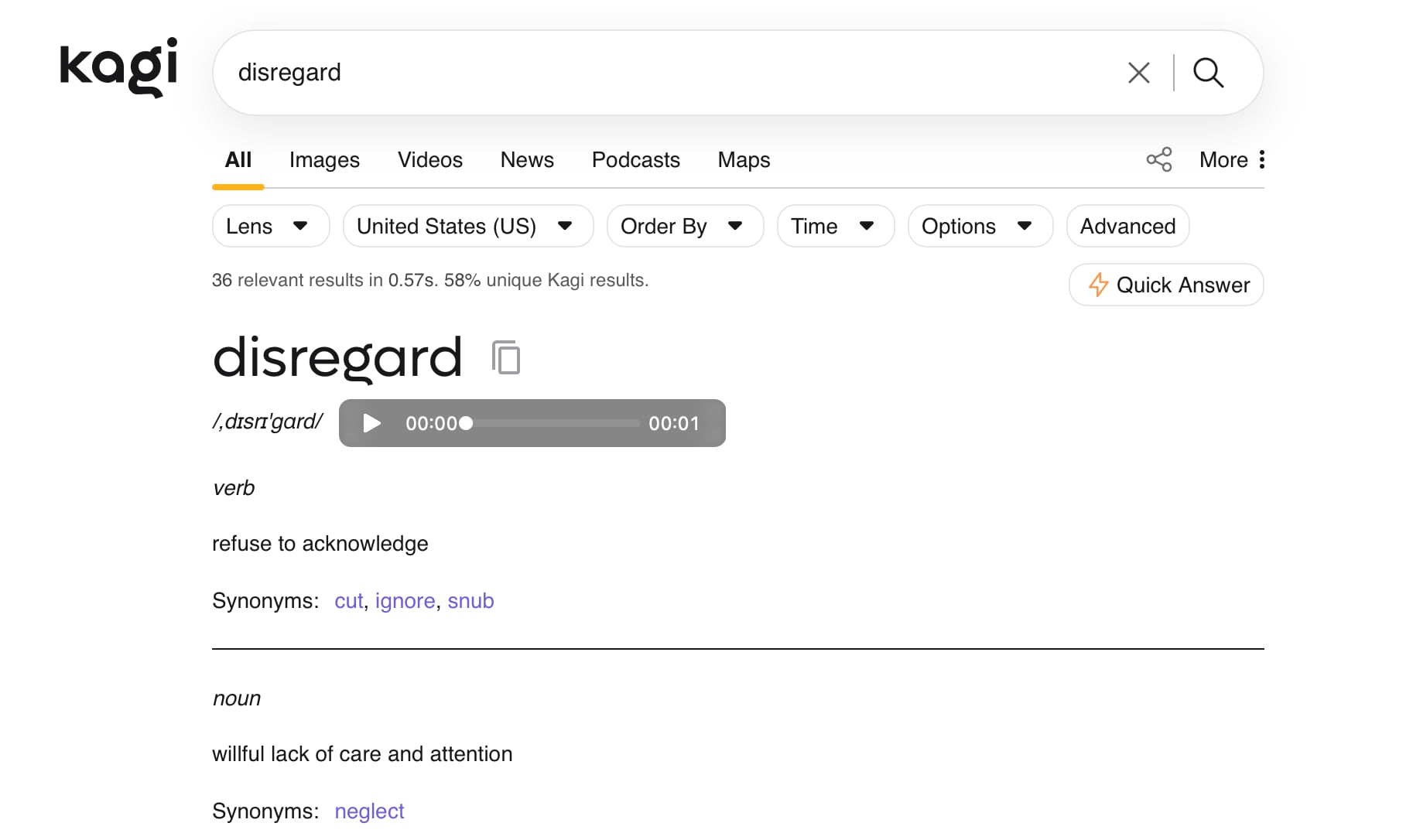
Using a non-AI search engine like Kagi brings up the expected results for the search, immediately showing the definition instead of reading it as a command.
Words that have a similar meaning like ignore or stop produce the same result with Google's AI Overview. So do other command-like statements such as "remember." Google will likely fix the issue soon, but it's a reminder of the shortcomings of the AI tools that have become impossible to avoid.
Update: A Google spokesperson told MacRumors that the bug is unrelated to Google's I/O Search announcements, and is instead an issue with AI Overviews. "We're aware that AI Overviews are misinterpreting some action-related queries, and we're working on a fix, which will roll out soon," said the spokesperson.
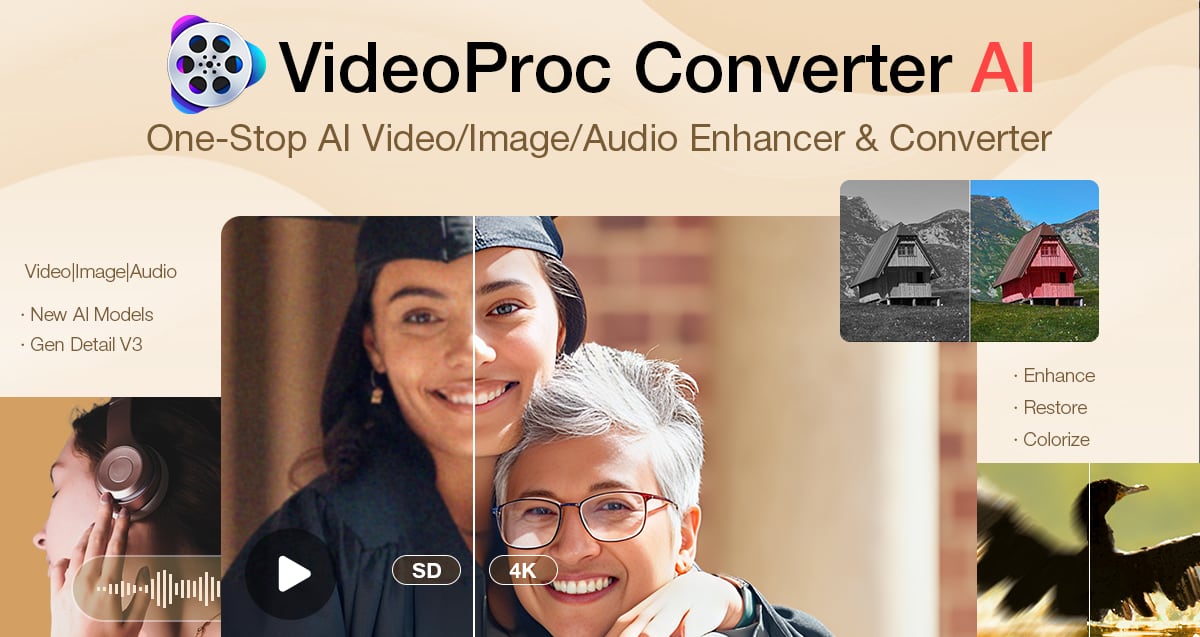
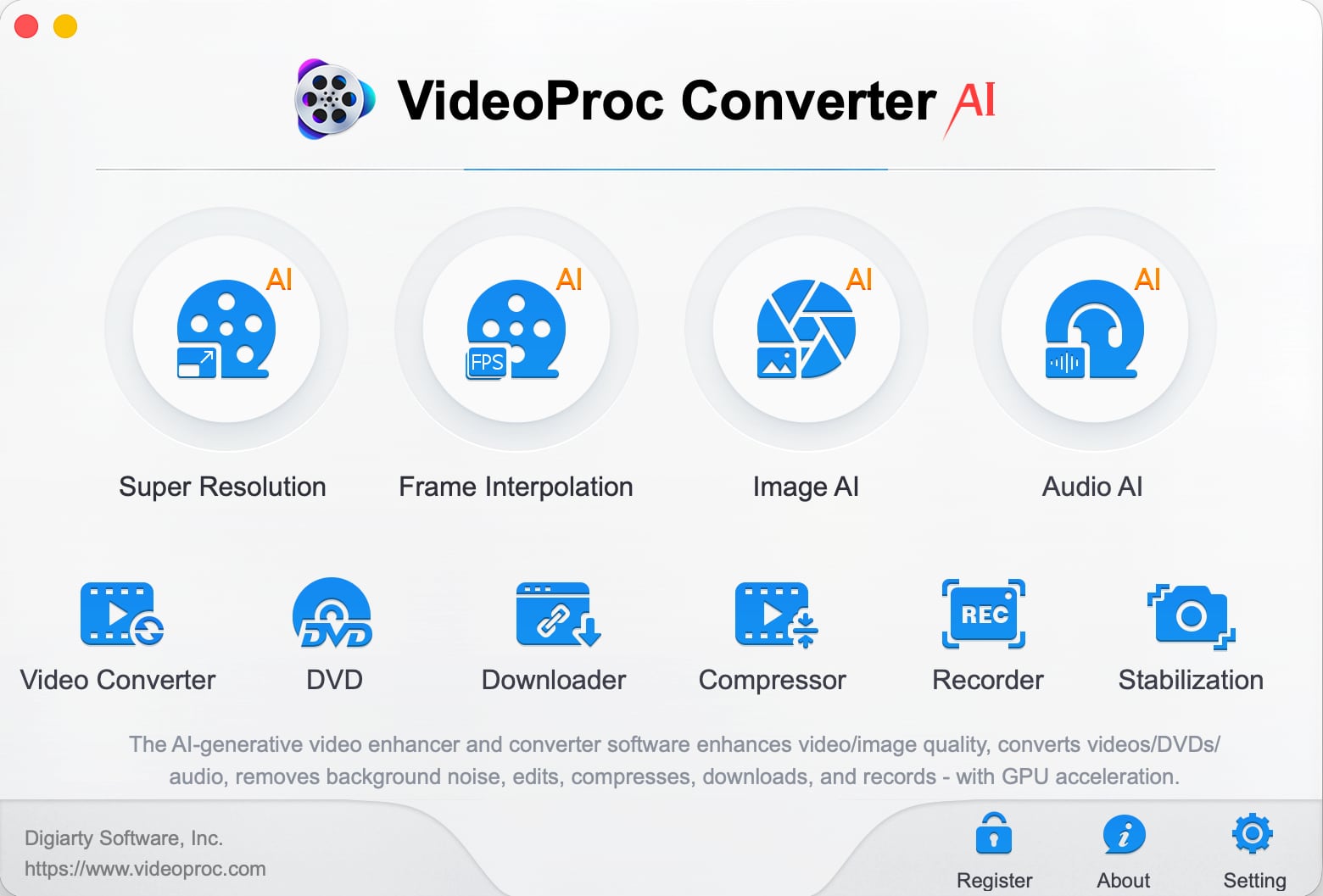
VideoProc Converter AI is software for editing and managing videos, images, audio, DVDs, and more. It includes a suite of AI features for easy photo and video editing, along with tools for converting, downloading, upscaling, colorizing, enhancing, compressing, editing, recording, and repairing all kinds of media files.
Videos that are blurry, noisy, shaky, or overly compressed can be improved with VideoProc Converter AI's tools for cutting down on noise, improving sharpness, and boosting image quality.
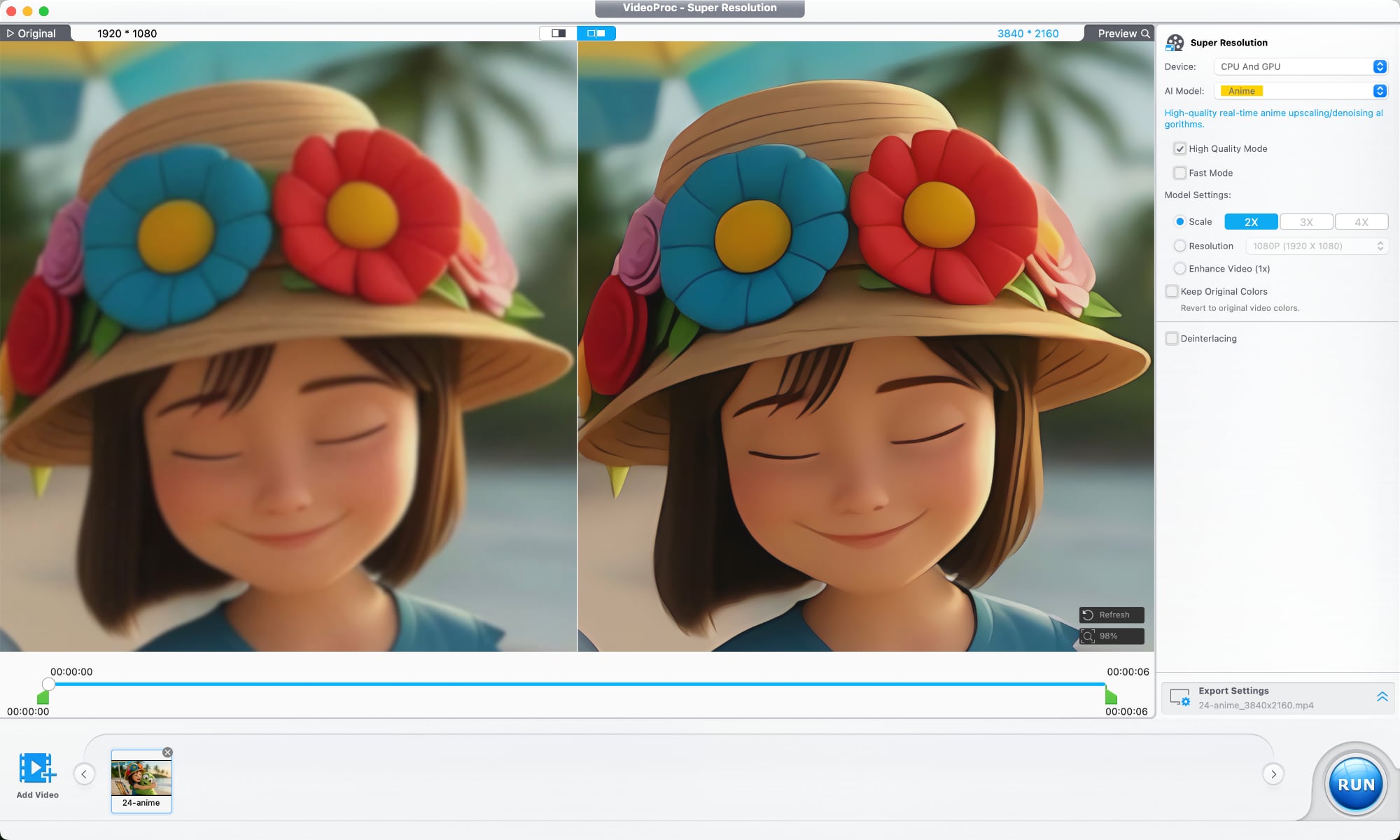
An AI Super Resolution feature uses multiple AI models designed for different kinds of footage. The tool reduces noise and blur, restores detail, sharpens soft footage, and is able to upscale lower-resolution videos up to 4x. 480p or 720p video can be upscaled to 1080p or 4K. A deinterlacing tool improves older interlaced recordings, which is useful for restoring archived footage, improving low-light video, and cleaning up scenes with a lot of motion.
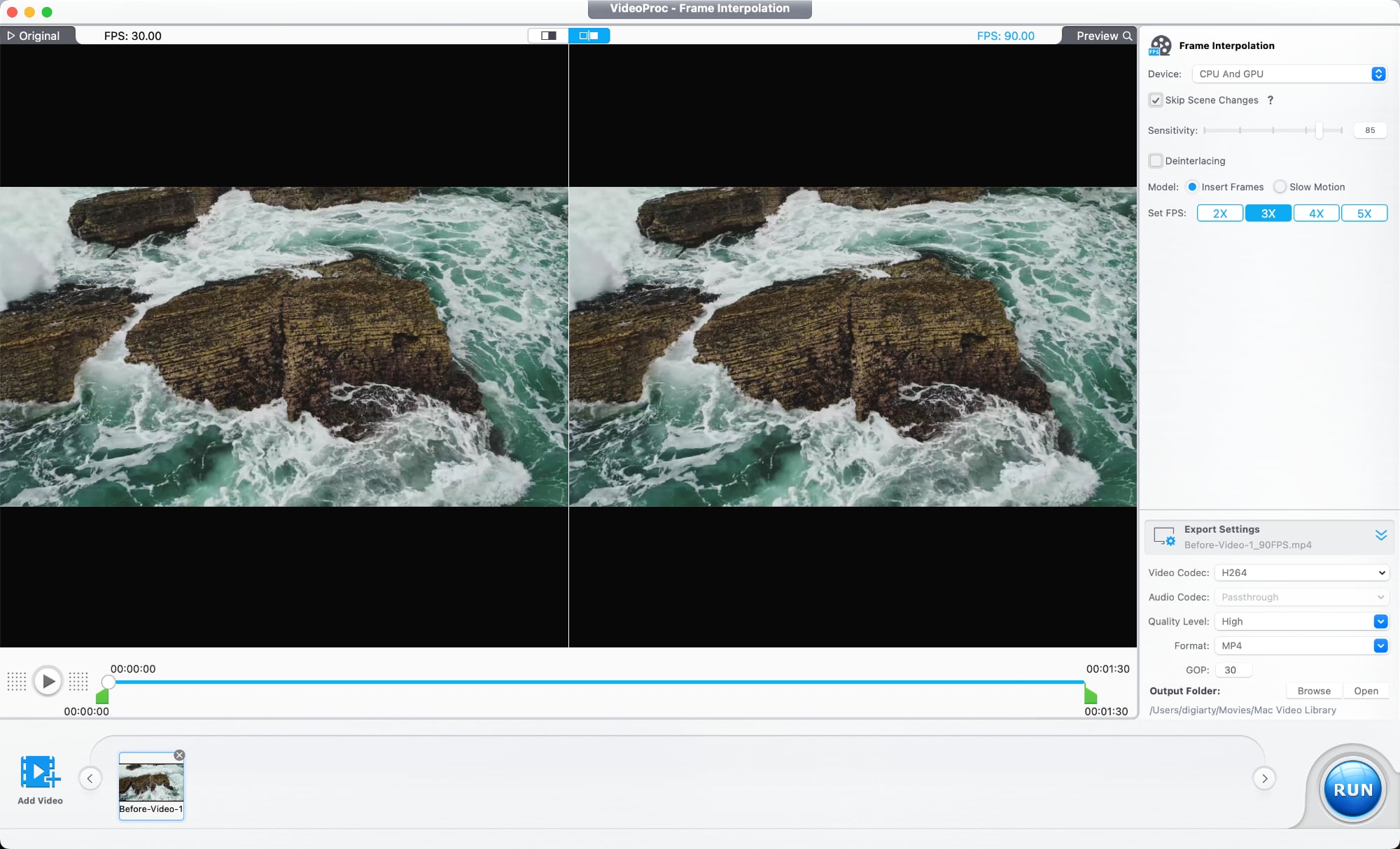
There's also an AI frame interpolation option that adds additional frames to make videos smoother, and it can improve videos up to 480fps for slow motion. It works on older home videos, mixed frame-rate footage, sports clips, gameplay recordings, and action scenes.
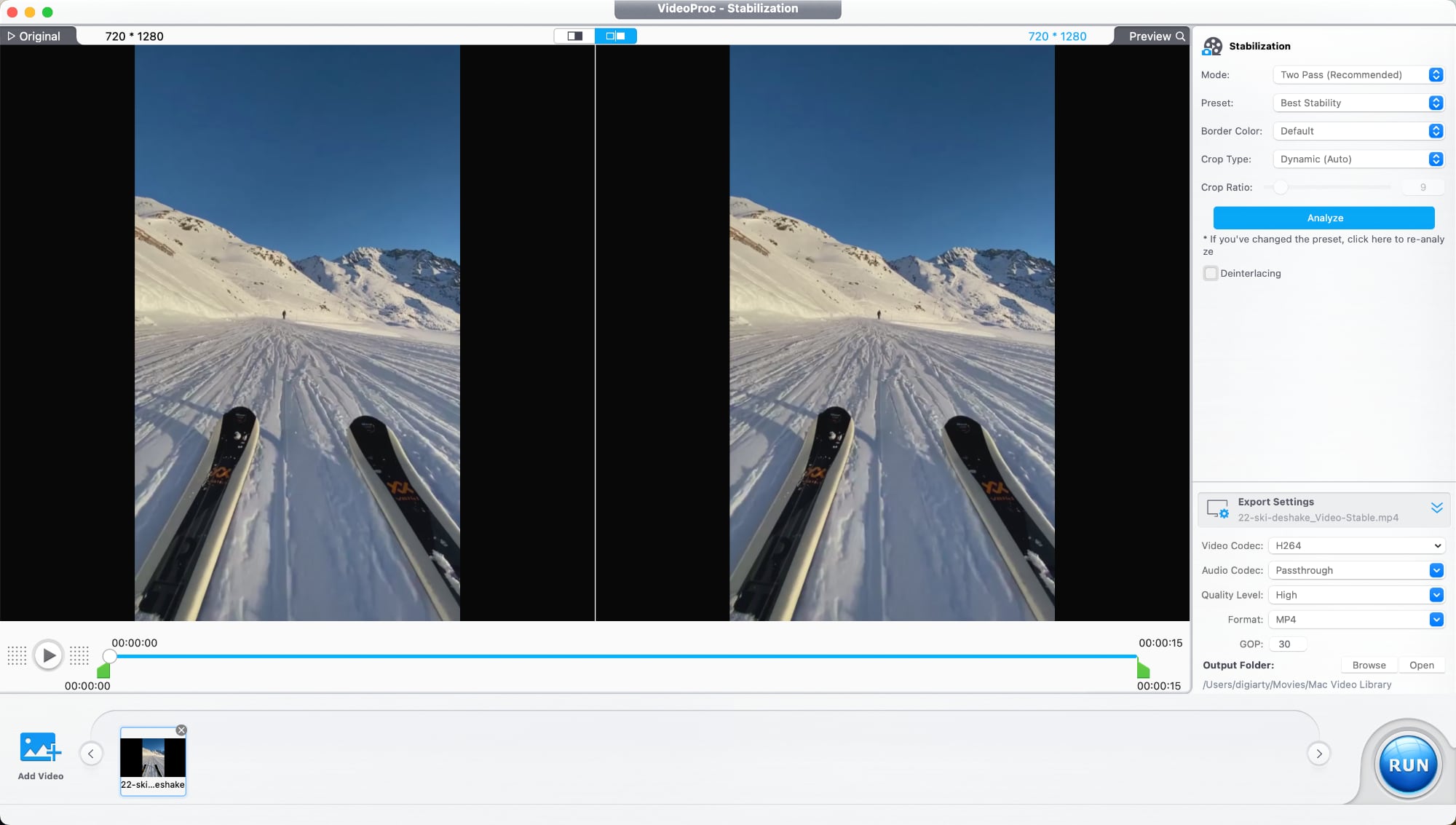
A stabilization tool is able to reduce camera shake, plus there are tools for reducing audio noise, correcting color, removing fisheye distortion from videos shot on action cameras, and compressing file size while preserving quality. There are also the standard tools you would expect from video editing software for trimming, cropping, adjusting playback speed, watermarking, fixing audio syncing, and adding filters.
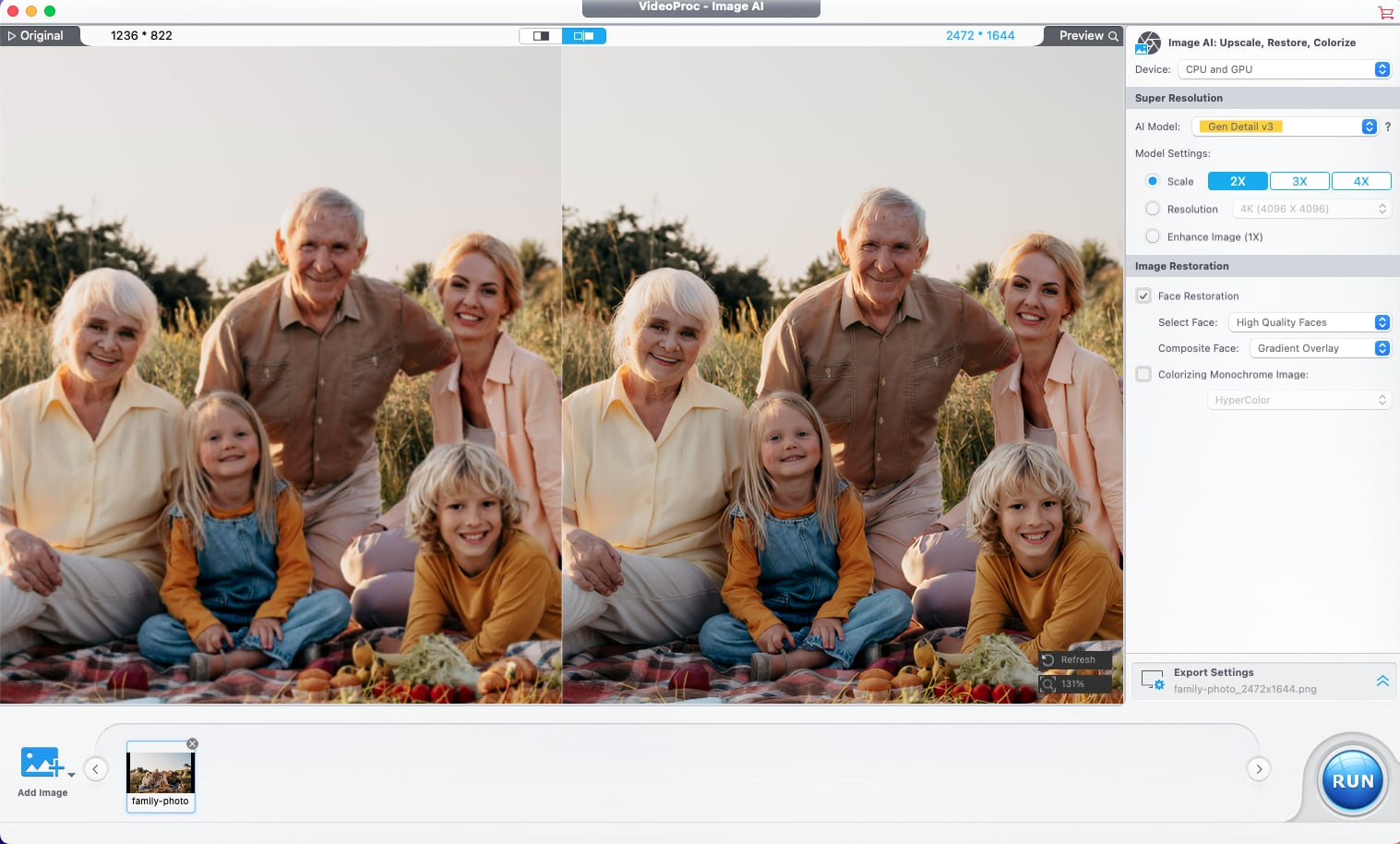
VideoProc Converter AI has tools for photo editing as well. Image AI Super Resolution improves blurry or pixelated images and increases resolution, with multiple AI models available for different image types. With batch processing, it supports editing over 3,000 photos at once.
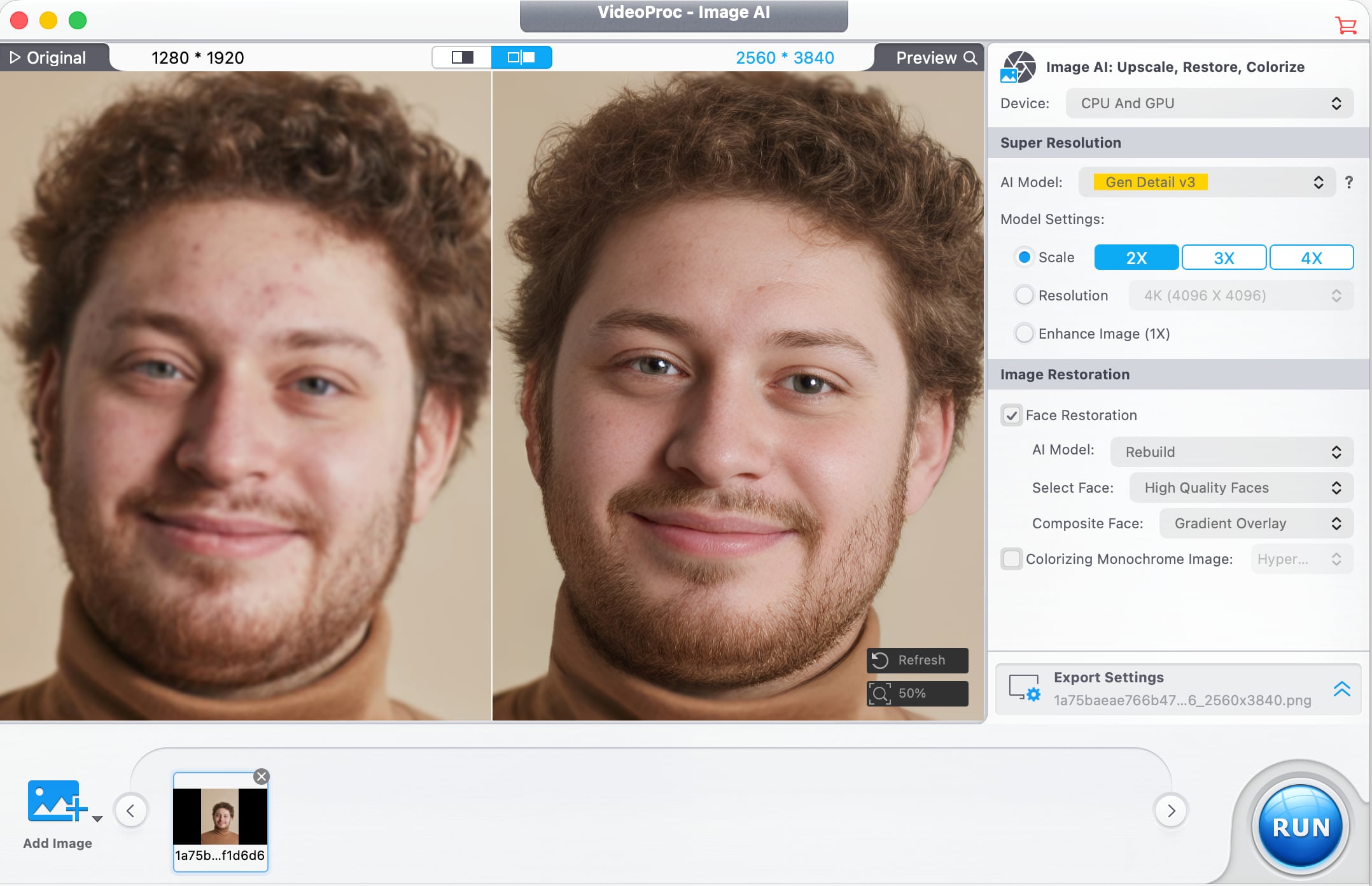
In older images where faces are blurry, pixelated, faded, or lacking detail, a Face Restoration feature improves facial detail. It can recover clarity in eyes, skin, hair, and facial textures with natural-looking results. AI Colorization is also available for adding color to black and white images, and it adds realistic colors and tones to grayscale photos with a click.
Digiarty optimized VideoProc Converter AI for the Mac, and the software supports hardware acceleration for Apple silicon chips, Intel chips, and NVIDIA and AMD GPUs. Video converting tools use GPU acceleration to speed up encoding and decoding without affecting output quality. The software supports over 320 codecs and formats, and it works with footage from drones, GoPro cameras, professional log formats, 3D videos, and VR videos. It also includes tools for downloading video from social media platforms, DVD backup, iPhone screen capture, recording from a webcam, and green screen recording.
VideoProc gets new features regularly, and recent new additions include improved Video Super Resolution that keeps original colors for natural-looking restoration of low-quality video, new AI models, three AI face restoration models for touching up people in videos without impacting original detail, and audio AI improvements like Noise Suppression for cutting down on background noise in audio and video files.
There is a VideoProc free trial for those who want to try it out. A lifetime license is normally priced at $54.95, but Digiarty is offering MacRumors readers a discount on a lifetime license, dropping the price to $39.95. The lifetime license includes the full range of VideoProc tools, along with software for transferring media between Macs and iPhones and vlog software for editing video for social media. It also includes access to future updates.
Digiarty is offering one lucky MacRumors reader the chance to win an iPhone 17 and a lifetime VideoProc license. To enter to win, use the widget below and enter an email address. Email addresses will be used solely for contact purposes to reach the winner and send the prize. You can earn additional entries by subscribing to our weekly newsletter, subscribing to our YouTube channel, following us on Twitter, following us on Instagram, following us on Threads, or visiting the MacRumorsFacebook page.
Due to the complexities of international laws regarding giveaways, only U.S. residents who are 18 years or older, UK residents who are 18 years or older, and Canadian residents who have reached the age of majority in their province or territory are eligible to enter. All federal, state, provincial, and/or local taxes, fees, and surcharges are the sole responsibility of the prize winner. To offer feedback or get more information on the giveaway restrictions, please refer to our Site Feedback section, as that is where discussion of the rules will be redirected.
Digiarty VideoProc Giveaway
The contest will run from today (May 22) at 9:00 a.m. Pacific Time through 9:00 a.m. Pacific Time on May 29. The winner will be chosen randomly on or shortly after May 29 and will be contacted by email. The winner will have 48 hours to respond and provide a shipping address before a new winner is chosen.
Apple is rumored to be adding an AI feature for creating shortcuts with natural language to the Shortcuts app in iOS 27, but MacStories' Federico Viticci has a clever AI tool for making shortcuts that you can use today.
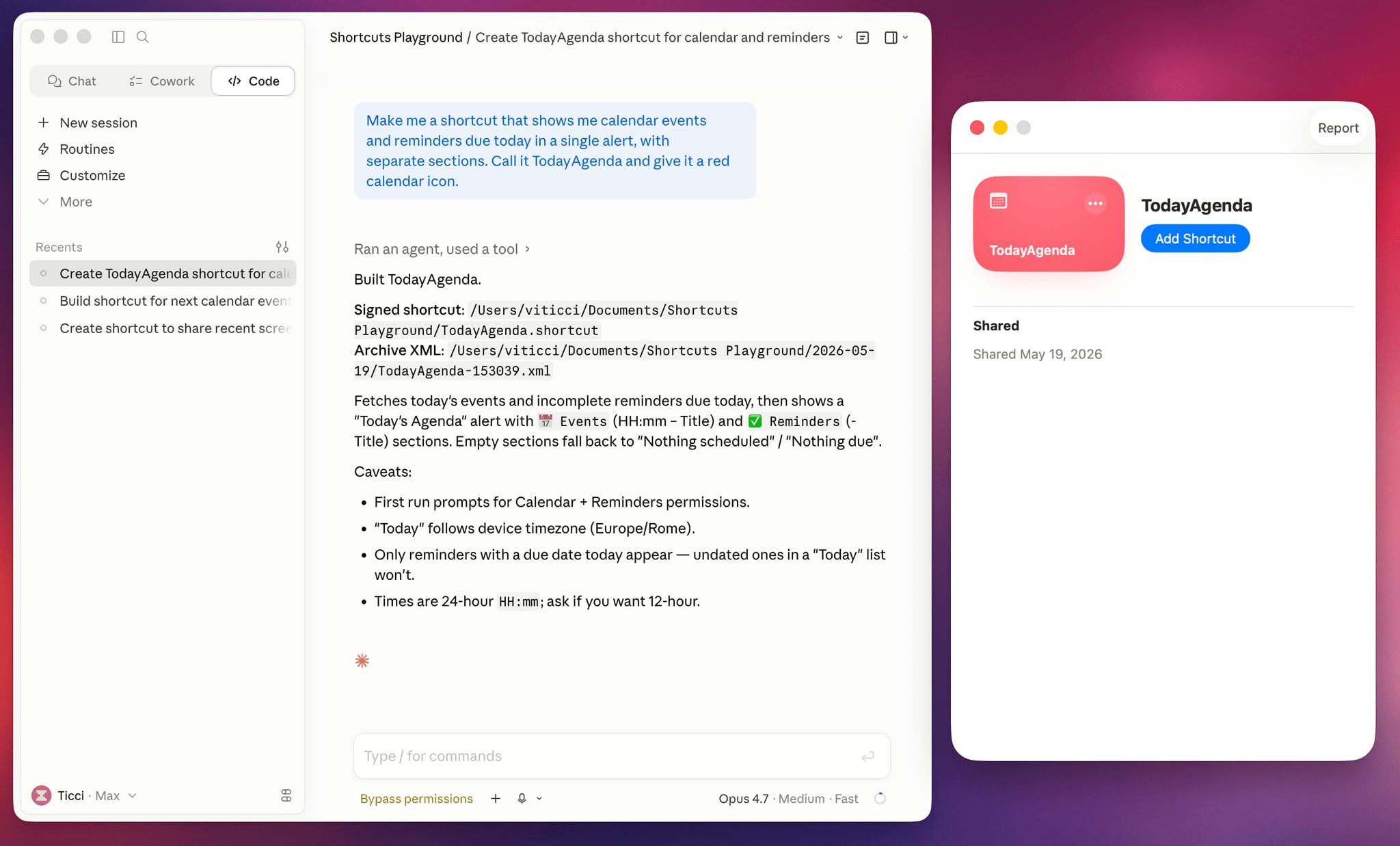
Shortcuts Playground is a plugin for Claude Code and OpenAI Codex that can create shortcuts for the Apple Shortcuts app using natural language input. It's set up to let users type in a short sentence requesting a shortcut, with the final version output to Finder and ready to upload to Apple's Shortcuts app in a few minutes.
Viticci made Shortcuts Playground free and open source, and the plugin is available from GitHub. Viticci provided detailed documentation on how it works, plus anyone can inspect the code. While Claude Code or Codex can correct errors during the shortcut creation process, Viticci warns that shortcuts generated are not guaranteed to be 100 percent accurate, and users should always check the AI's work.
To get Shortcuts Playground, give Claude Code or OpenAI Codex a link to the GitHub repo, and the agent will find the plugin marketplace and install it. Viticci has several example shortcuts, including one that remembers the location of a parked car and guides the driver back to it, and another that adjusts several display settings at night while also turning on a Focus mode.
Club MacStories+ and Premier members can get Shortcuts Playground as a generative shortcut. Once the main plugin is installed on a Mac, there's an option to make more shortcuts using a shortcut and install them directly on an iPhone, iPad, or Mac.
Apple today released a new update for Safari Technology Preview, the experimental browser that was first introduced in March 2016. Apple designed Safari Technology Preview to allow users to test features that are planned for future release versions of the Safari browser.
Safari Technology Preview 244 includes fixes and updates for Accessibility, Animations, CSS, Forms, HTML, Images, JavaScript, MathML, Media, Networking, Rendering, SVG, Scrolling, Security, Storage, Web API, Web Extensions, Web Inspector, WebAssembly, WebGL, and WebGPU.
The current Safari Technology Preview release is compatible with machines running macOS Sequoia and macOS Tahoe, the newest version of macOS.
The Safari Technology Preview update is available through the Software Update mechanism in System Preferences or System Settings to anyone who has downloaded the browser from Apple's website. Complete release notes for the update are available on the Safari Technology Preview website.
Apple's aim with Safari Technology Preview is to gather feedback from developers and users on its browser development process. Safari Technology Preview can run side-by-side with the existing Safari browser and while it is designed for developers, it does not require a developer account to download and use.
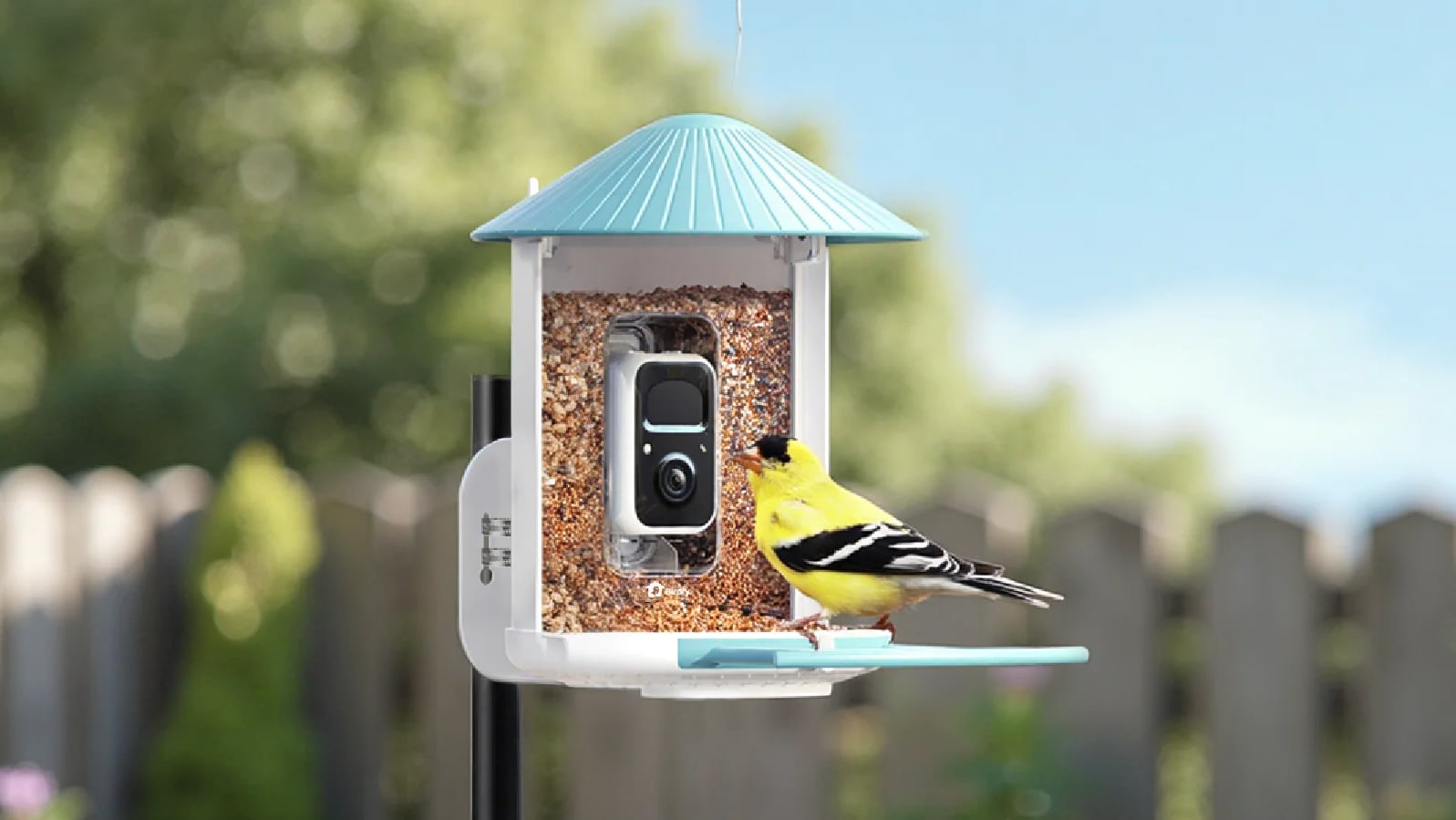
There are multiple companies making bird feeders with AI identification that send you pictures and info on the birds visiting your home, and Birdfy is one of the better-known brand names. I've reviewed and regularly use multiple Bird Buddy products, so when Birdfy asked if I wanted to give their bird feeders a look last winter, I said yes.
Birdfy has a lot of bird feeder options at different prices, along with camera-equipped bird baths and bird houses. I've been testing the standard Birdfy Feeder ($170 with solar panel and lifetime AI included), the Birdfy Feeder 2 Duo ($360), and the Birdfy Bath Pro (currently $280) for the past five months, so I'm very familiar with the product options and the Birdfy software, which is a major factor when choosing a smart product.
Birdfy products record bird visits, providing AI species identification and photos and videos that you can watch. You just need to put them in a spot that gets a decent Wi-Fi signal to view the birds that are coming to your area.
Birdfy Feeder
The Birdfy Feeder is a good starting point for someone new to bird feeders. There's a cheaper model that starts at $80, but the Birdfy Feeder has a 2K high-definition camera and an option to buy it with lifetime AI bird identification.
The lower-priced Birdfy options can be purchased with or without a solar panel, and I think the solar panel is worth getting. It's an extra $40, but as long as your feeder is somewhere with partial sun, the solar panel provides enough power to prevent the camera from having to be manually charged.
My Birdfy Feeder is in a spot with morning and afternoon sun, and it has never dipped below a 90 percent charge. I have the other Birdfy feeder in a wooded area, also with solar panel, and it hovers at about 50 percent battery. I had to charge it once in the winter, but I haven't needed to do so again.
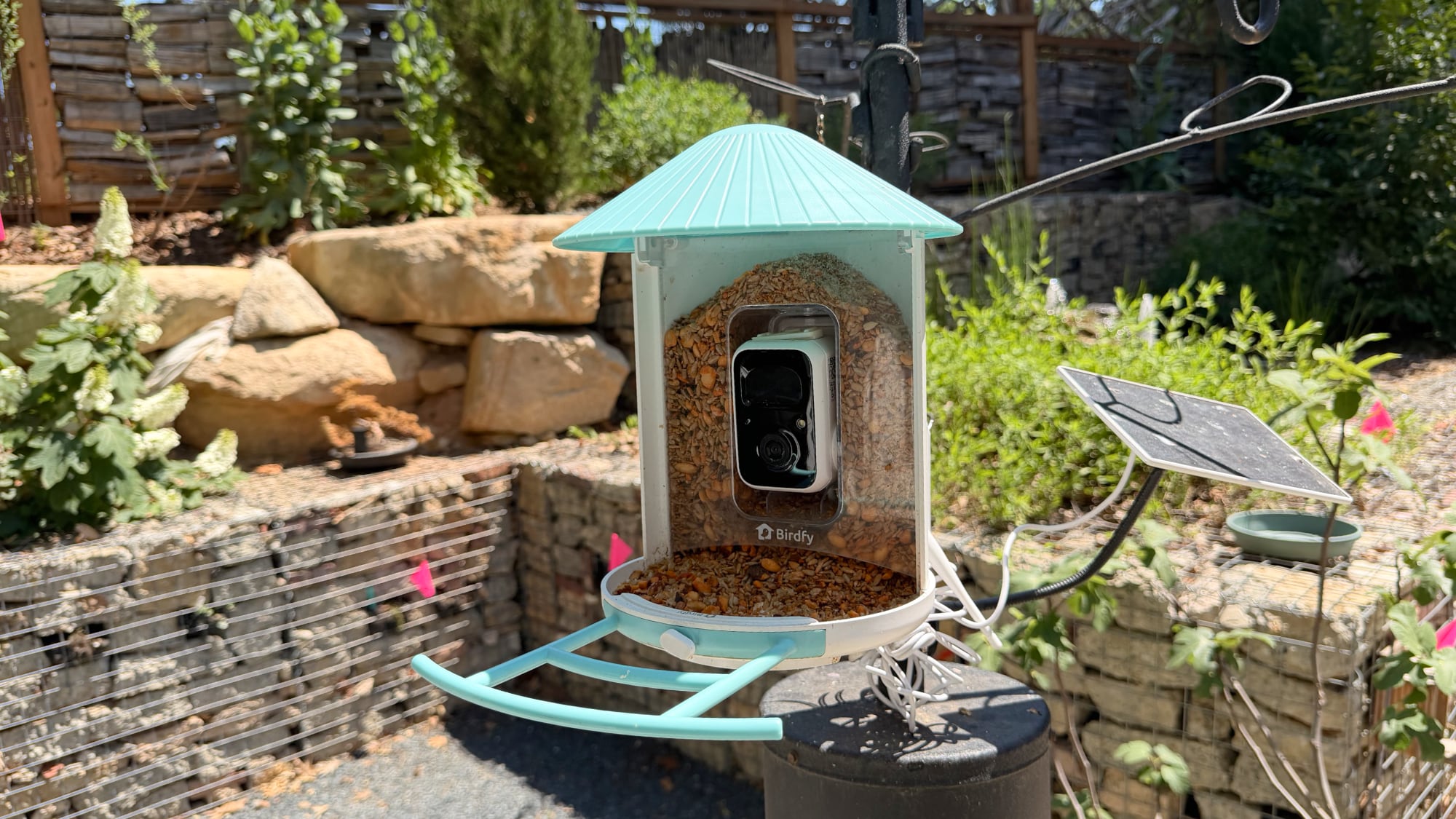
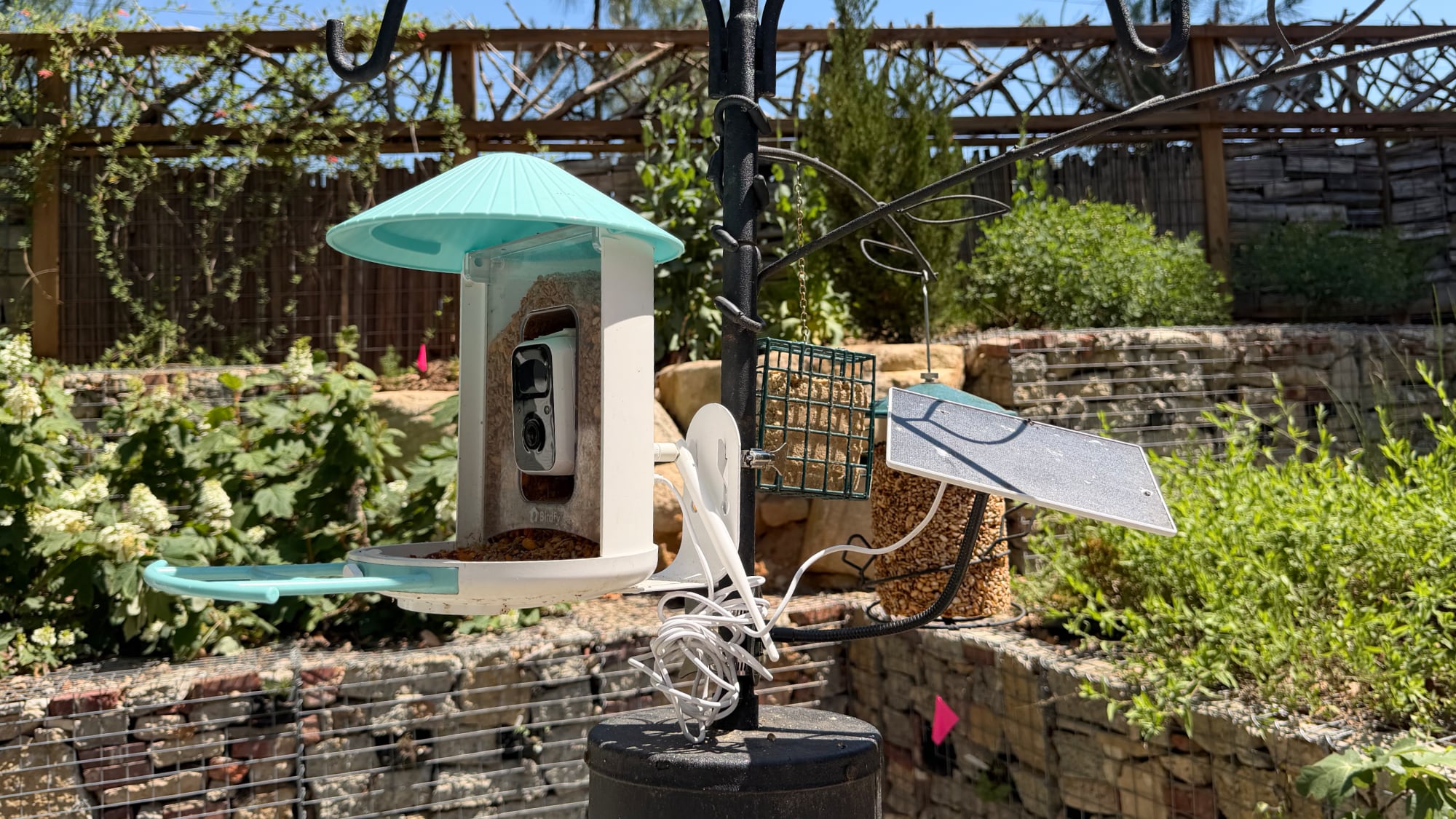
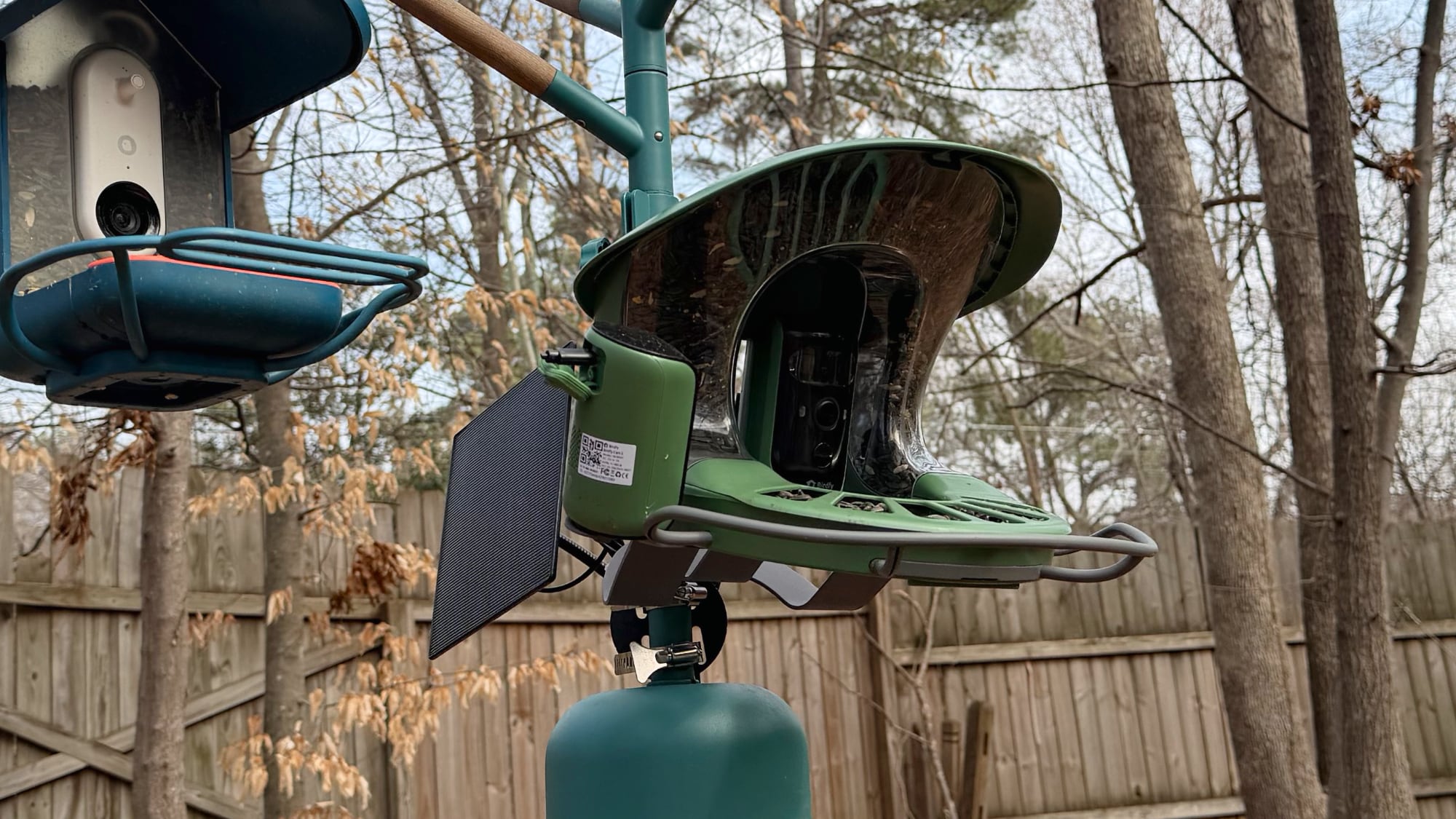
The solar panel that comes with the Birdfy Feeder is not attached to the feeder itself, so it can be positioned a couple of feet away if necessary. There are pros and cons to that setup compared to the Bird Buddy, where the solar panel is on the roof of the feeder. The Bird Buddy is a more compact, all-in-one design with no extra cords, and I prefer that look. The Birdfy solar panel is larger and more versatile, but it's also more visible and there is a cable to contend with.
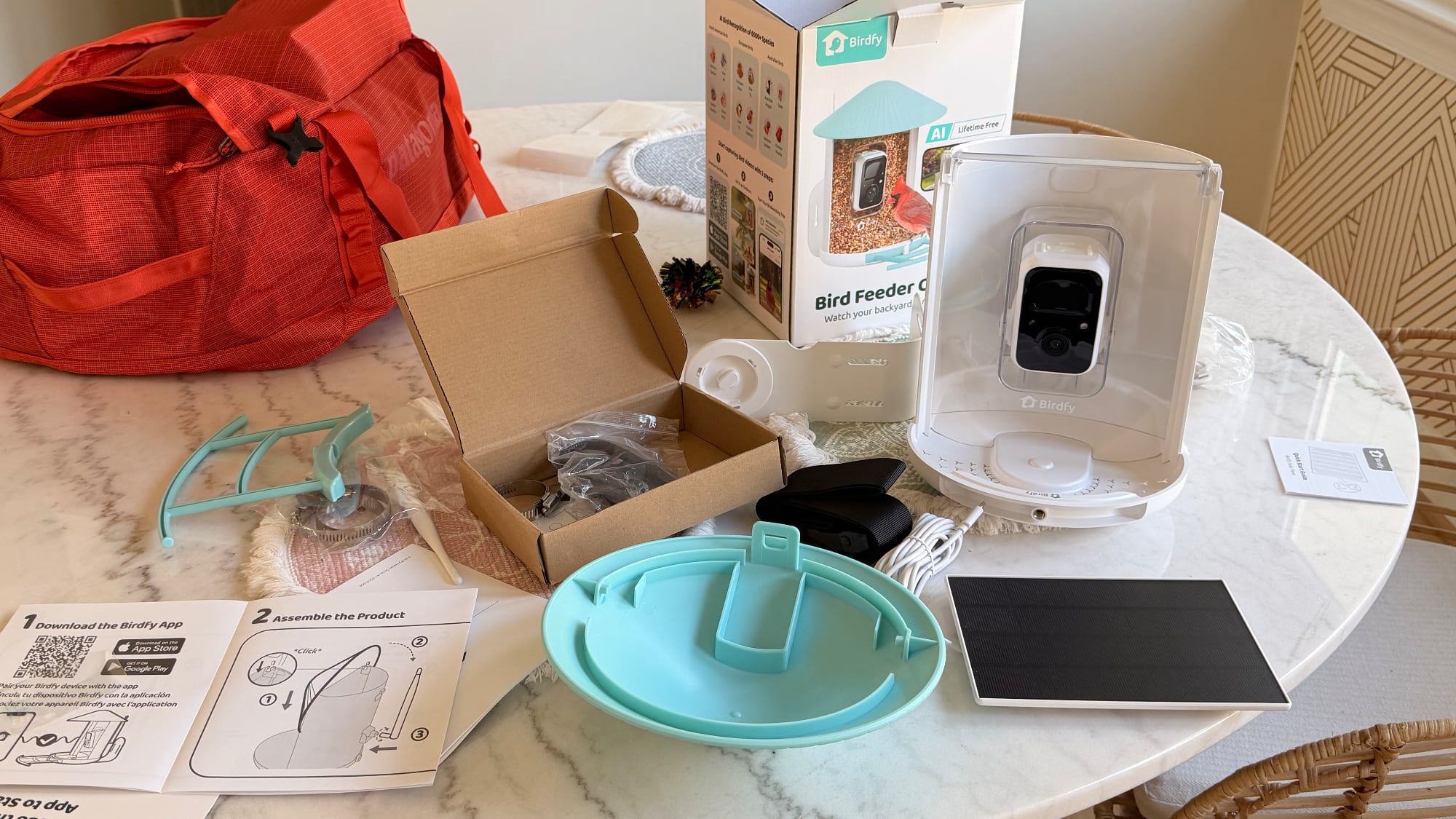
While the Bird Buddy hangs or can be mounted, Birdfy's feeders are all meant to be mounted to a pole, tree, wall, or post. There's no loop for hanging one up, and feeder designs don't work for hanging. Birdfy includes multiple mounting options, which is nice, but also more complicated than the Bird Buddy.
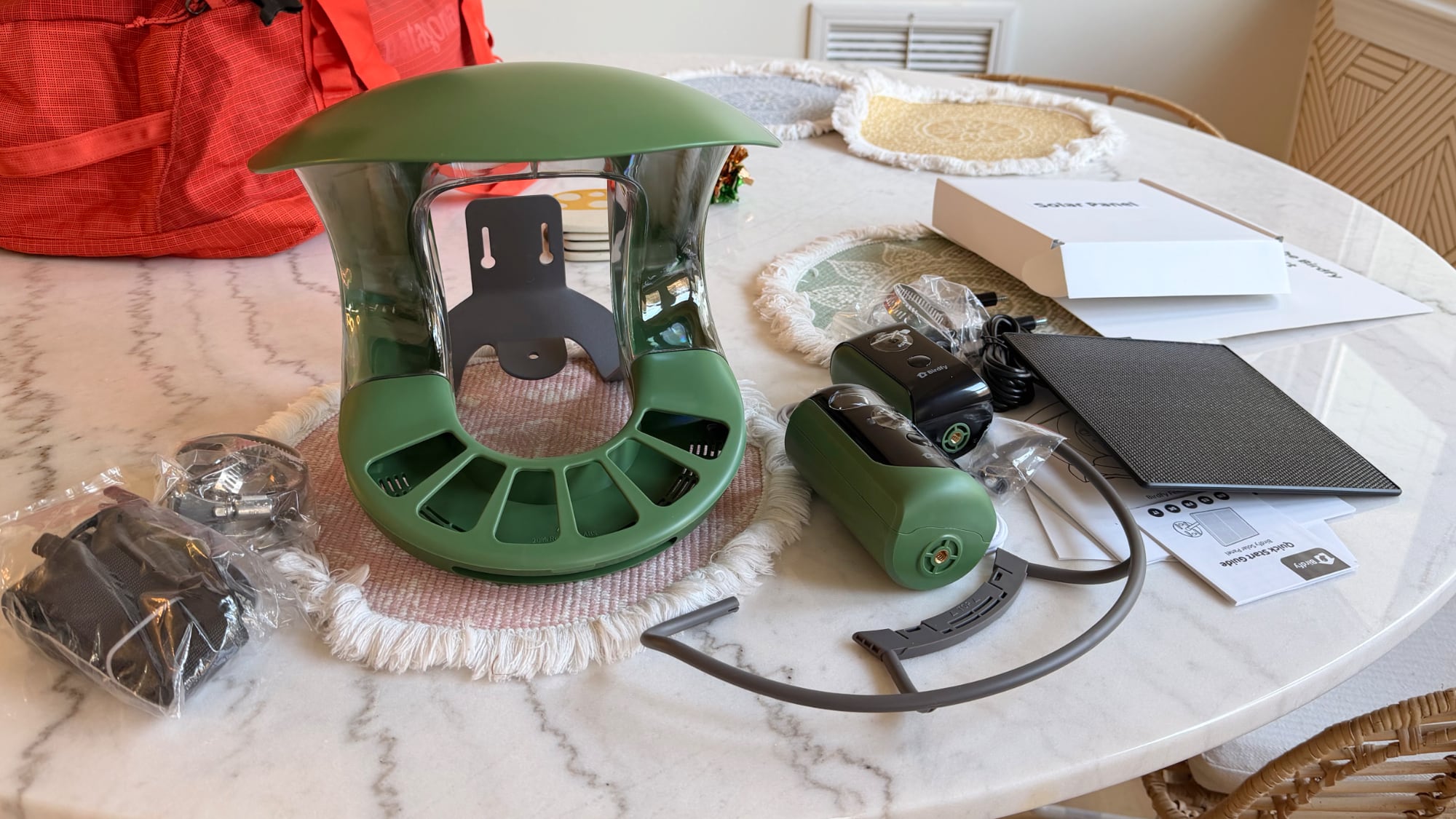
There are a lot of components in the box, and for someone that just wants to put up a bird feeder and connect to an app, Birdfy products might feel overwhelming. I've gifted a Bird Buddy to older family members and it's been a hit, but I'd be more hesitant to gift the Birdfy to those same people.
Unless you live somewhere with no tree-climbing seed-loving creatures, mounting to a tree with the included tree straps isn't ideal because it makes access too easy.
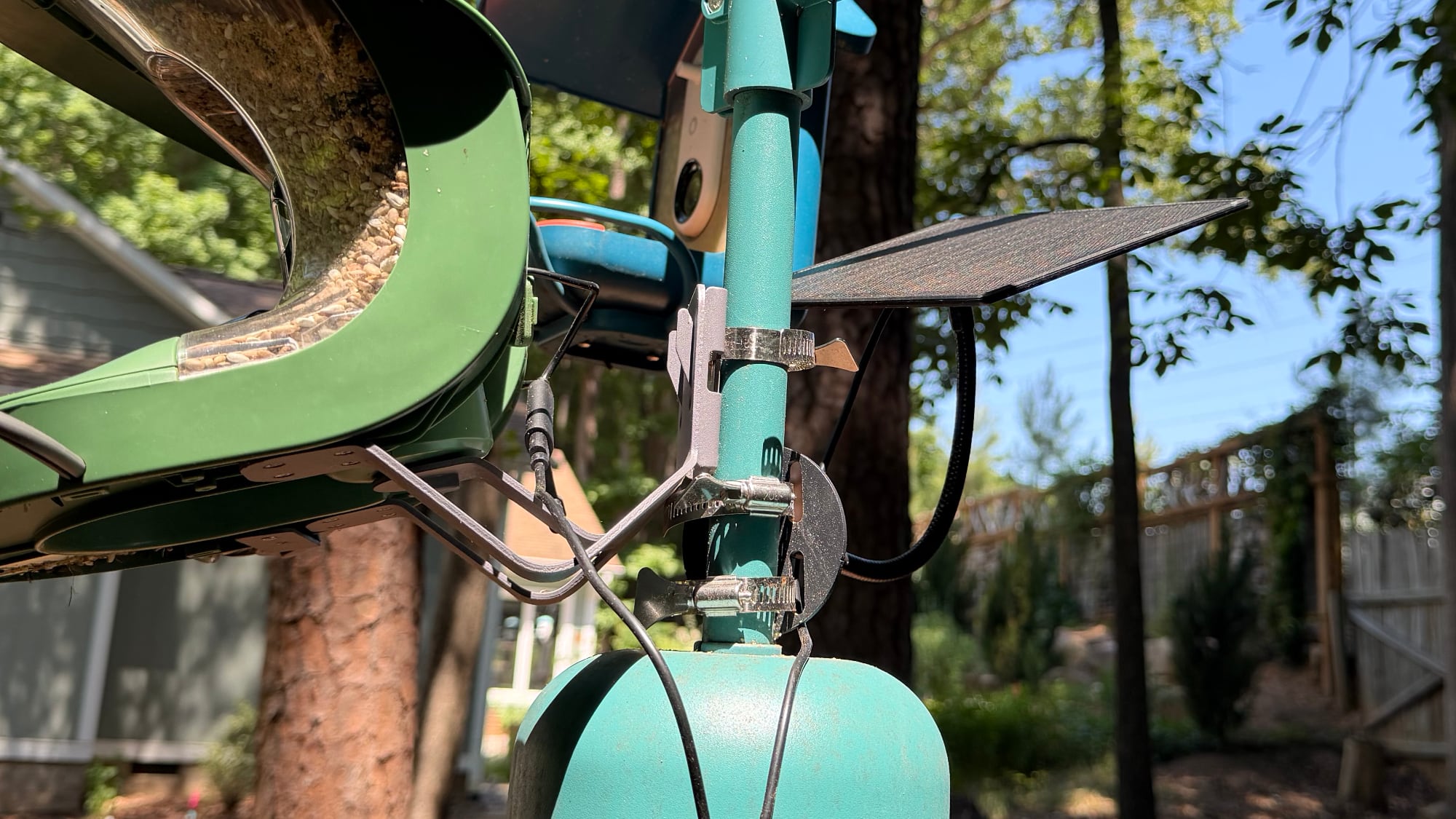
Mounting on a wall or a post can work, but my squirrels will climb the side of my house to leap over to bird feeders. I like hanging feeders like the Bird Buddy because I can put them on a pole with a baffle without a hassle and keep them away from squirrels. Birdfy also supports pole mounting, but it uses adjustable metal hose clips that take longer to install.
I can't put the Birdfy Feeder on one of the hanging branches because of its design, so it has to be on the pole itself just above the baffle that I have. It's sturdy and works fine. All of the mounting options work in the same way, in that you install a metal plate that the Birdfy Feeder then attaches to. That lets you remove it without having to unmount it for cleaning, filling, and charging.
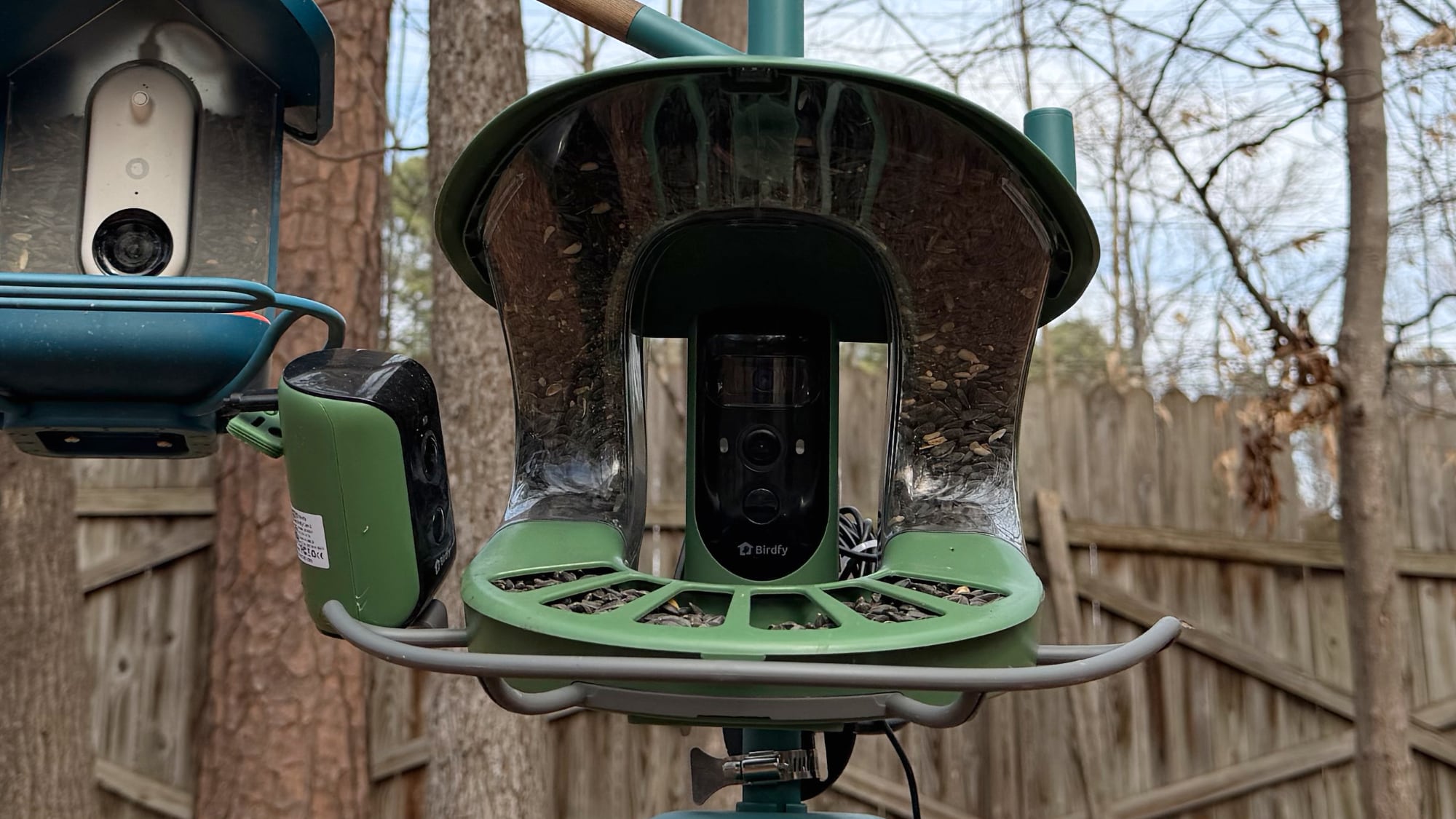
The Birdfy Feeder has a simple design where the seed goes into a reservoir at the sides of the camera, which is in the middle of the feeder. The top pops up so you can fill it, and it holds a good amount of seed. I fill it about once a week, and I have a lot of birds visiting.
The roof keeps the seed dry for the most part, and there is an included perch for the birds to land on. The camera slots into the feeder, and then the solar panel plugs in at the back of the camera (if you have the solar panel). If you don't have a solar panel, you take the Birdfy Feeder off the mount and charge it with USB-C.
Birdfy uses white plastic for the standard Feeder I tested (with blue or yellow accents), though there are wood options for those that prefer that look. The plastic has held up well so far through rain, sun, and freezing temperatures over the winter, and Birdfy says it's IP65. Since the Feeder can be removed from the mount, it's simple to clean. Bird feeders need to be cleaned every two weeks or so, and I typically rinse them in hot water, spray them with alcohol, give them a bit of a scrub where necessary, rinse again, and let them dry. Refilling the seed is simple, and I don't even take it down for that. I just need to pop open the roof and pour the seed in. I do wish Birdfy included a seed pouring device like the Bird Buddy does, but a measuring cup or a 3D-printed solution works fine.
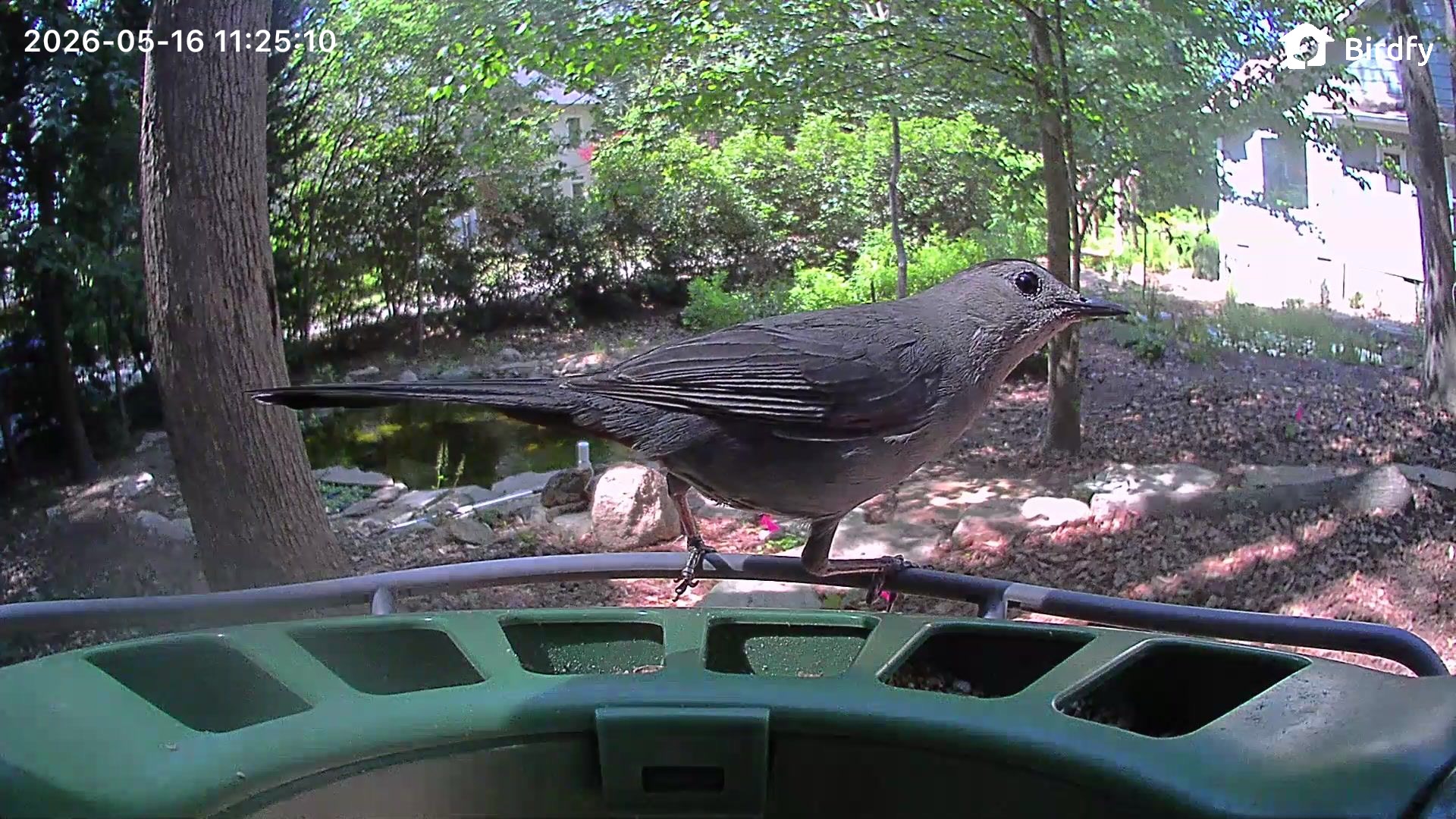
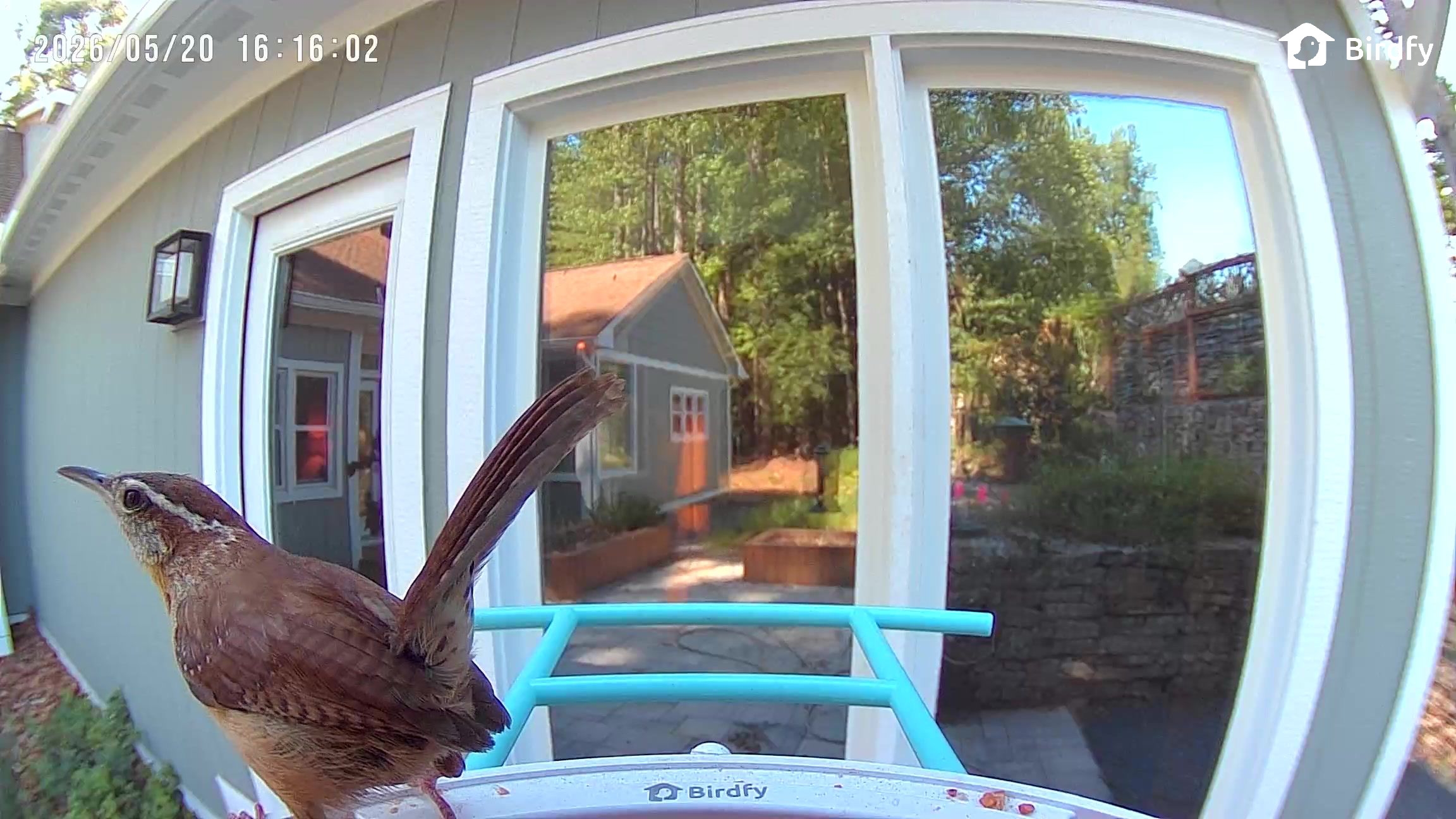
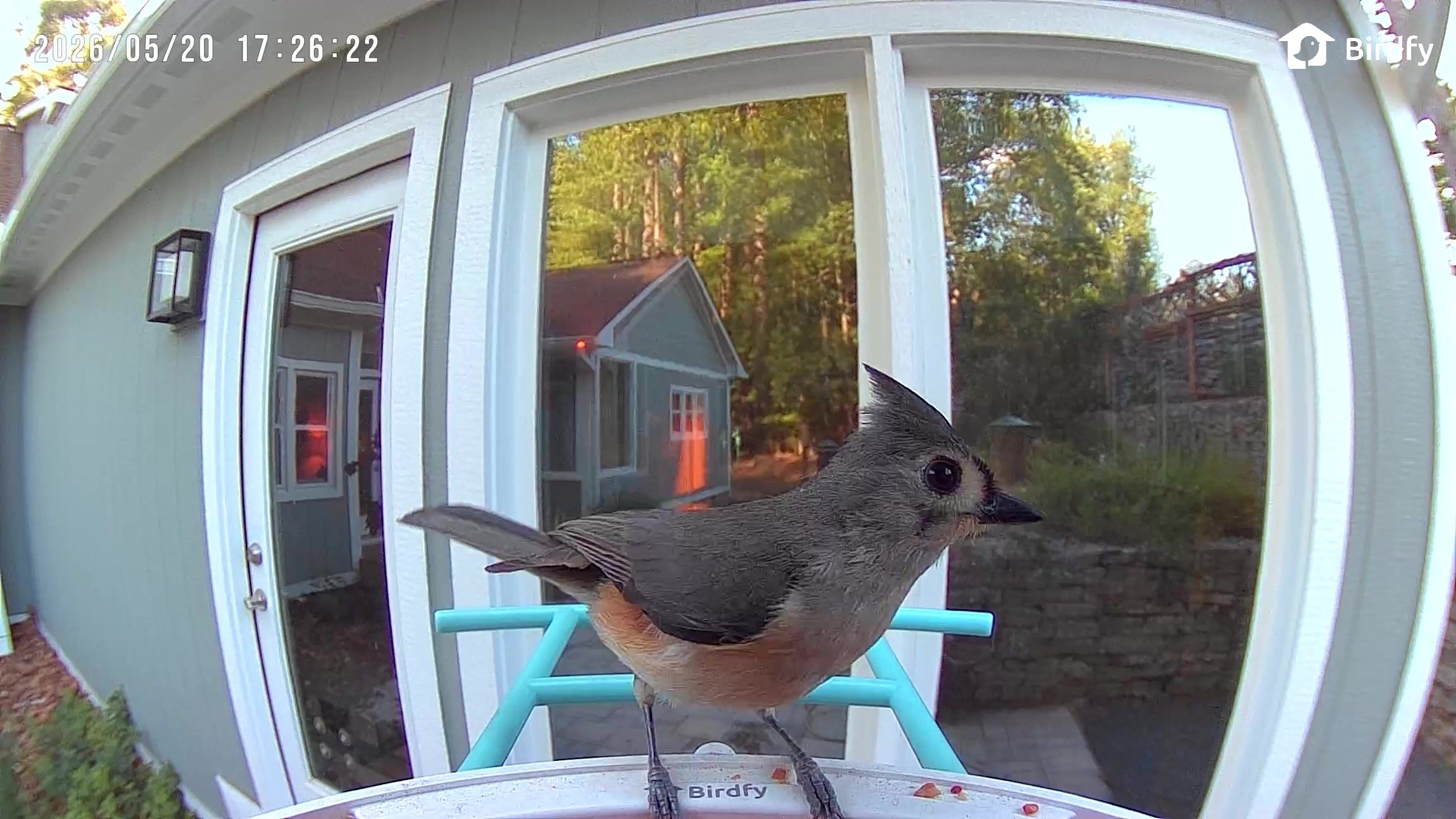
The camera in the Birdfy Feeder is 2K, and the image quality is on par or better than the Bird Buddy. I get clear images and videos, but the camera doesn't handle direct sun well, so when it's sunny, video quality suffers. I don't think the Birdfy Feeder has the best video I've seen from a camera, but it's similar to the Bird Buddy and my outdoor security cameras.
I don't have many night visits from birds, but there are night vision modes. There's an infrared mode for black and white recording, or a mode that uses white light to provide illumination for recording in color. Neither mode is very clear, so it's just a matter of whether you'd prefer to have more detail in infrared mode or color with less detail.
Birdfy Feeder 2 Duo
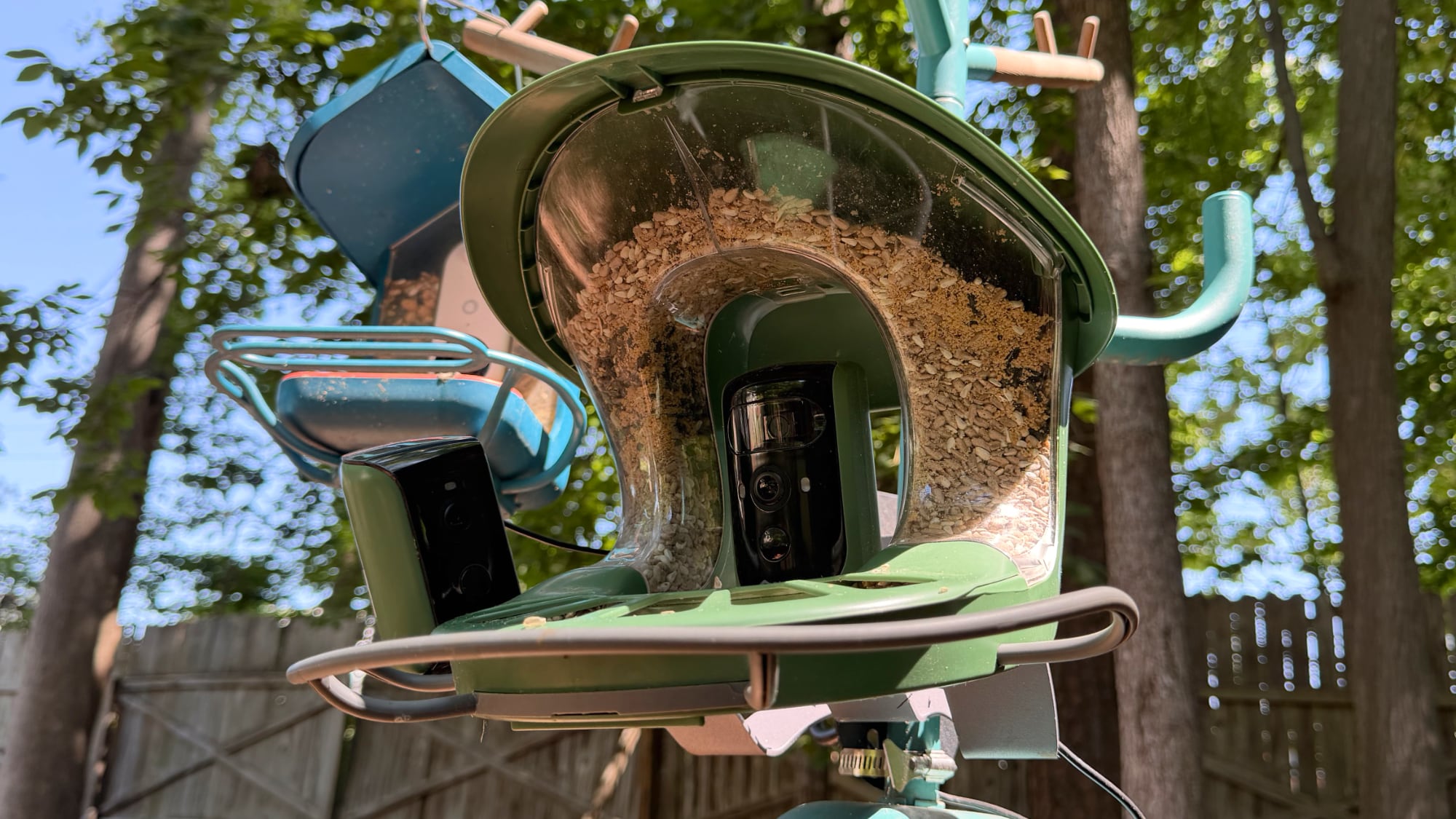
The Birdfy Feeder 2 Duo has a different design than the Birdfy Feeder, and it's expensive, so this is an upgrade version for someone who loves bird watching. The Duo has two cameras instead of one, with three lenses between them. One camera is located in the center and it has a wide-angle lens and a close-up portrait lens, while another camera captures side angles.
The portrait camera is 2K and some bird shots come out crisp and vivid, and I've also been happy with the wider-angle videos and images. Photo and video quality depend on the lighting conditions, connection, the length of time a bird stays, when the camera captures the shot, whether the lens is clean, and the weather conditions outside, so results are always variable with all of my bird feeders.
Getting multiple angles is fun, because if one camera doesn't pick up a bird, it's likely going to get captured from the other camera. It's ideal for birds that tend to stick to the sides of the feeder and just flit in to grab a quick seed. My Bird Buddy is unable to capture visits when the bird is not in the center of the feeder.
I wish that at the $360 price point, the camera quality was even better. Videos come out well and look good for the most part, but the portrait lens is not as crisp as I would have hoped.
Seed goes in a hopper that splits around the central camera. The lid flips open and the seed is poured inside, and it fills the feeder tray. The tray has bars at the bottom that can prevent larger birds from getting to the seed, and some people use those kinds of barriers on bird feeders to cut down on mess.
The Birdfy Feeder 2 Duo is made of plastic, but it is black and green, so it blends in better outside. It too has held up well through the winter, and it has IP66 water and dust resistance rating. It mounts the same way as the Birdfy Feeder, with multiple mounting options. I tried this one strapped to a tree to begin with, but it was too easy for squirrels to reach, and they ate all the seed. They also chewed through the USB-C cable that connects the cameras to the solar charger, and I had to get a replacement. I moved it to a bird feeder pole with a baffle that's a good eight feet from trees, and the squirrels can no longer reach it.
The solar panel for the Birdfy Feeder 2 Duo is a separate component, and it connects to the feeder with a USB-C cable. To power more than one camera, it uses a split USB-C cable. I have the feeder in a spot with little direct sunlight, and I have had to manually charge the cameras twice. Since they charge over USB-C, I bring a USB-C battery pack out and charge them at the feeder, but it's also easy to remove the feeder from the bracket that holds it in place for charging and cleaning.
Bird Bath Pro
I first put the Bird Bath Pro out in December, and I thought it was a failure. I had no bird visits for the first two months it was outside, but when spring came, it became a wildlife favorite.
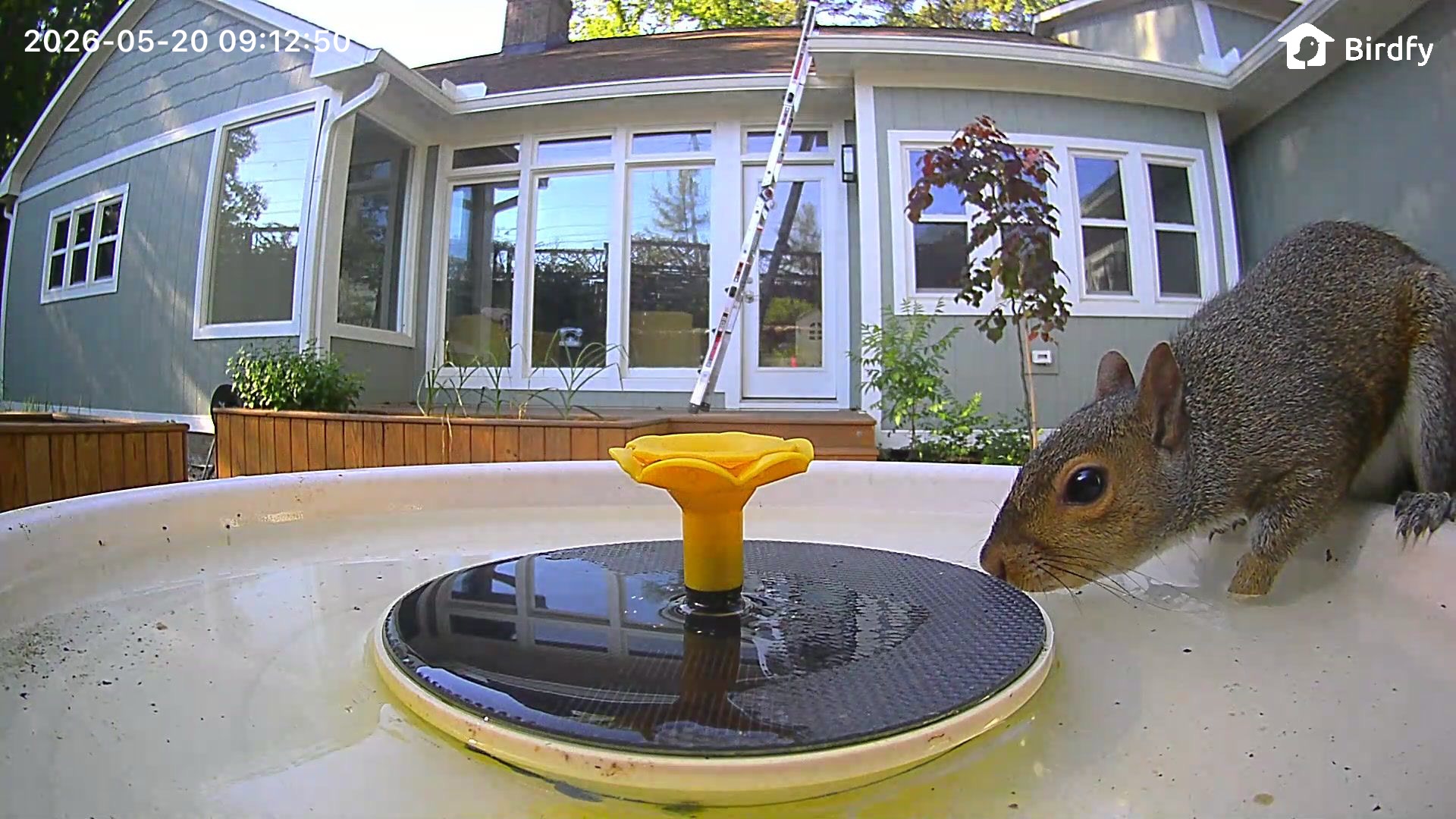
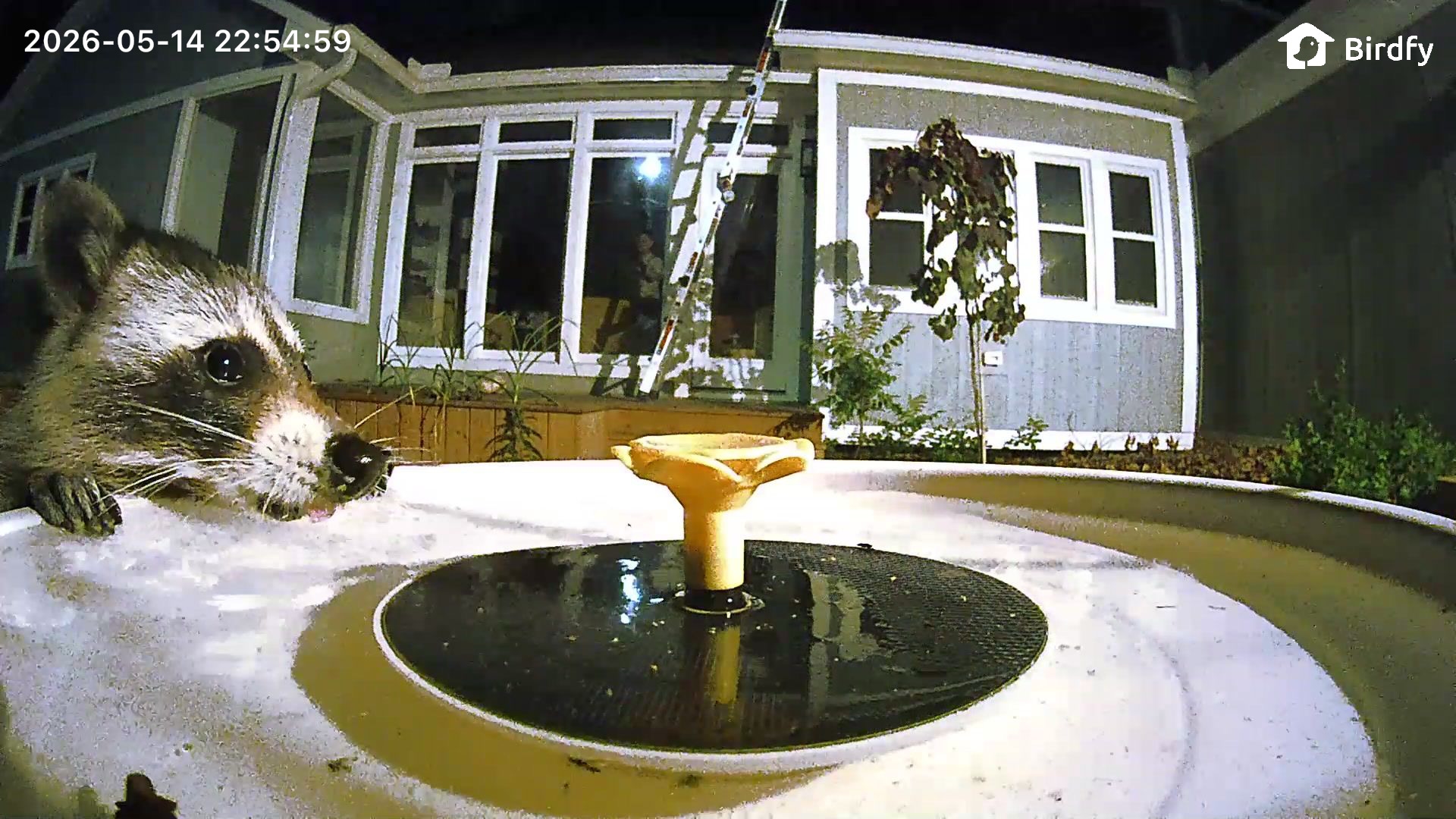
While I do occasionally see birds taking a bath in the Bird Bath Pro, it's used more often as a drinking fountain. Even though the bird bath is next to a fountain and also close to my pond, it is the preferred drinking spot for every creature nearby.
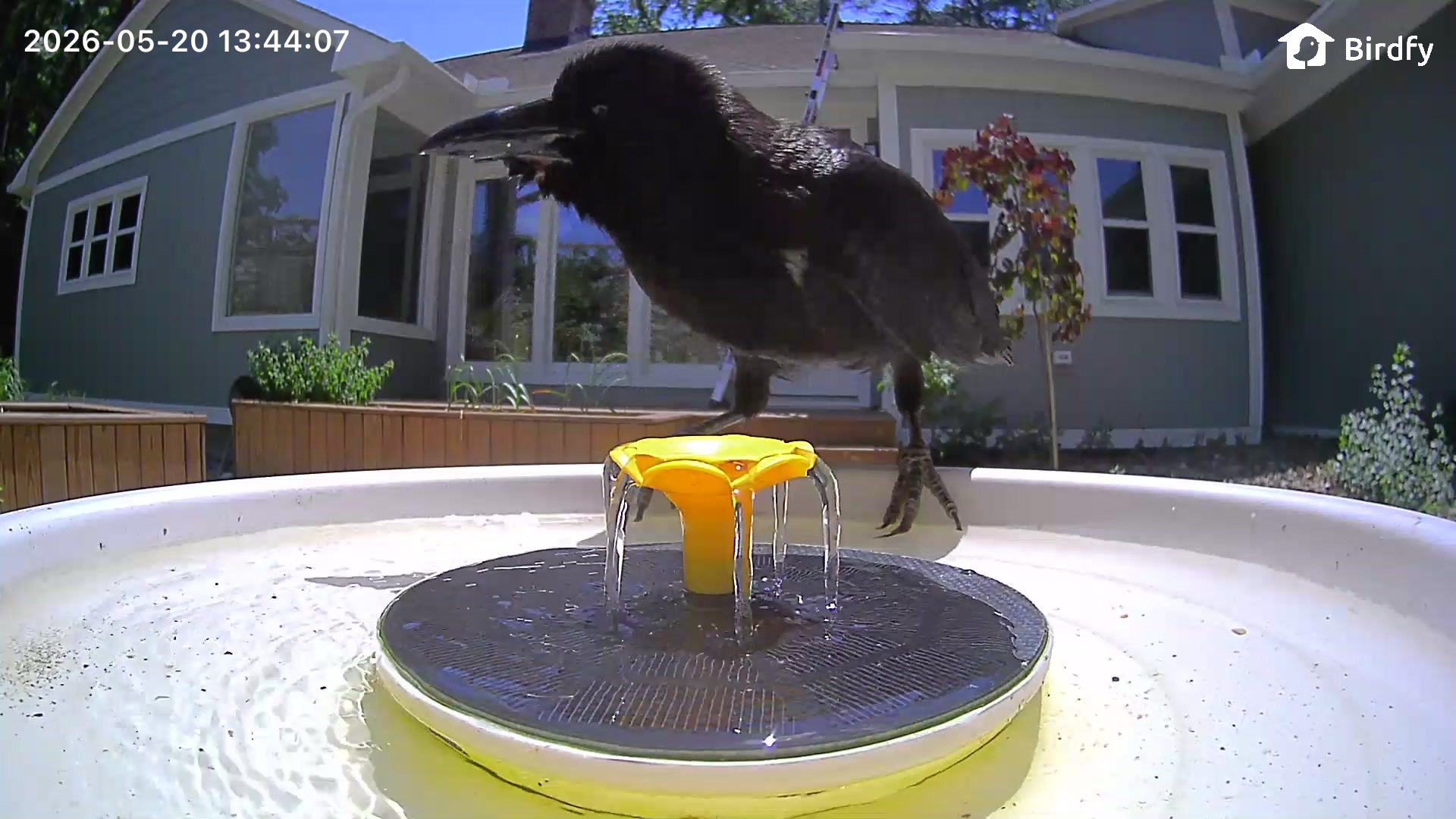
The crows that come to my house like to take a mouthful of food, spit it into the bird bath, and eat it like bird cereal. A raccoon that comes by every night drinks from it, as does a local fox. The squirrels are especially fond of the bird bath and drink from it every day.
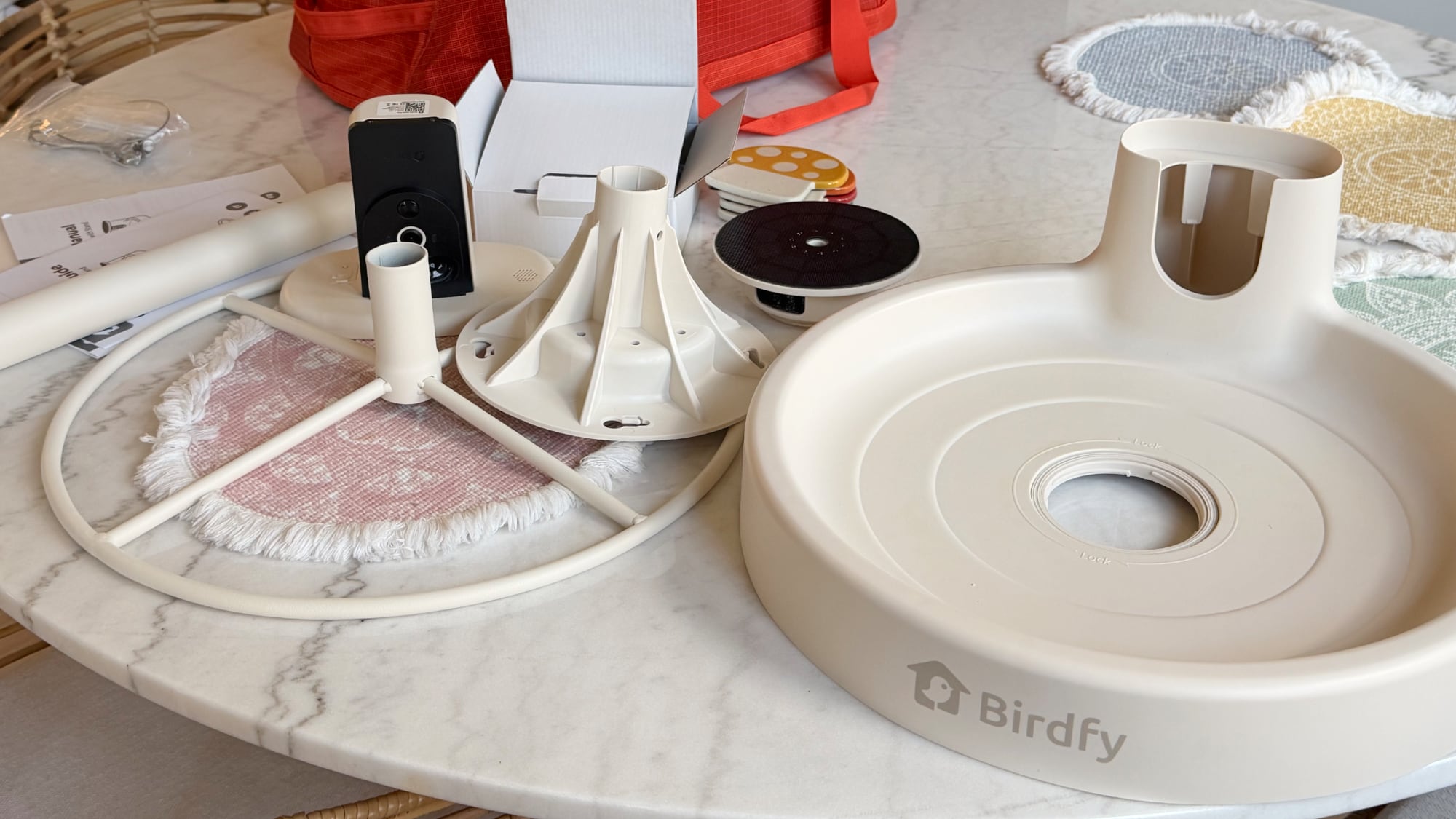
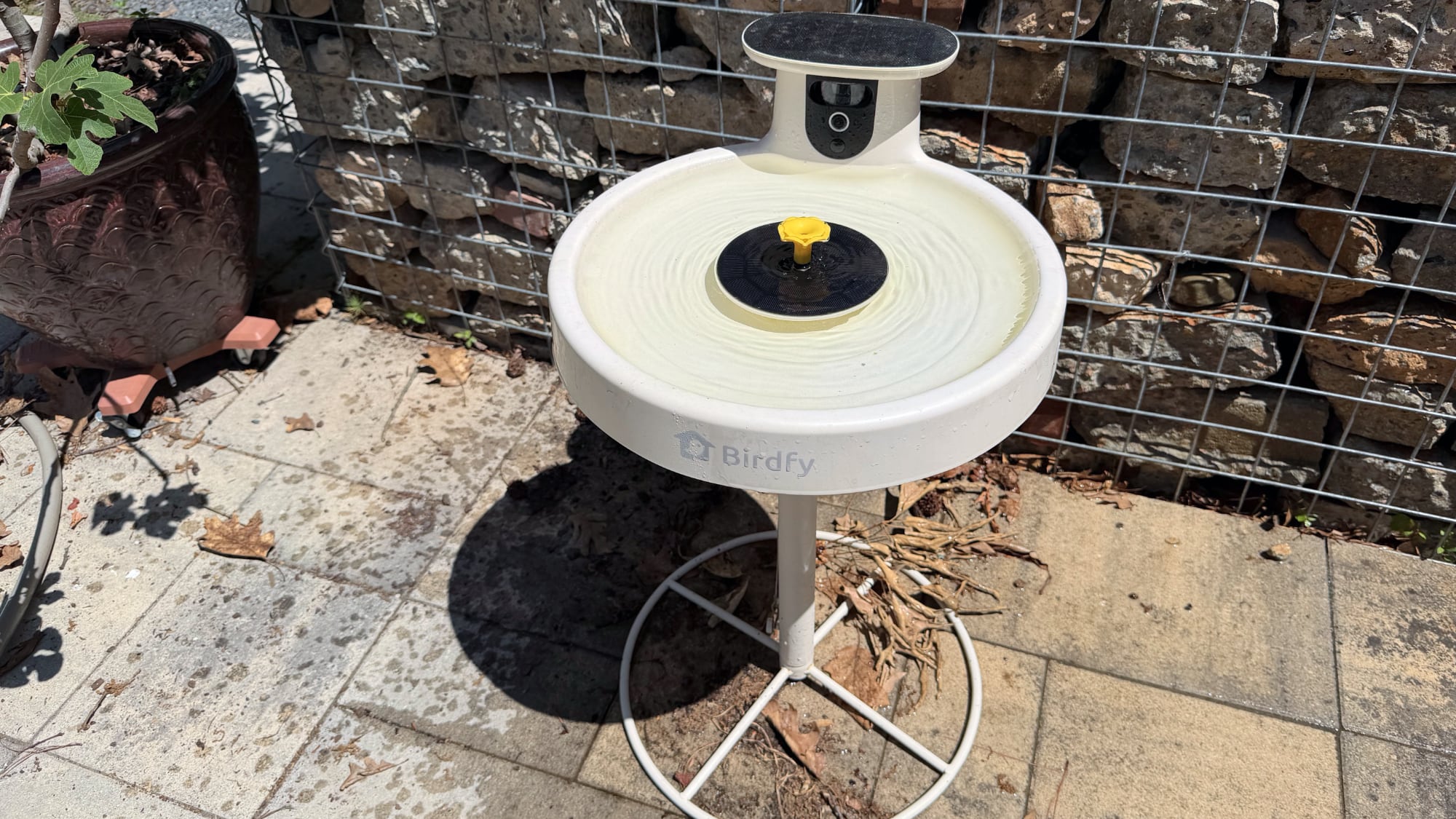
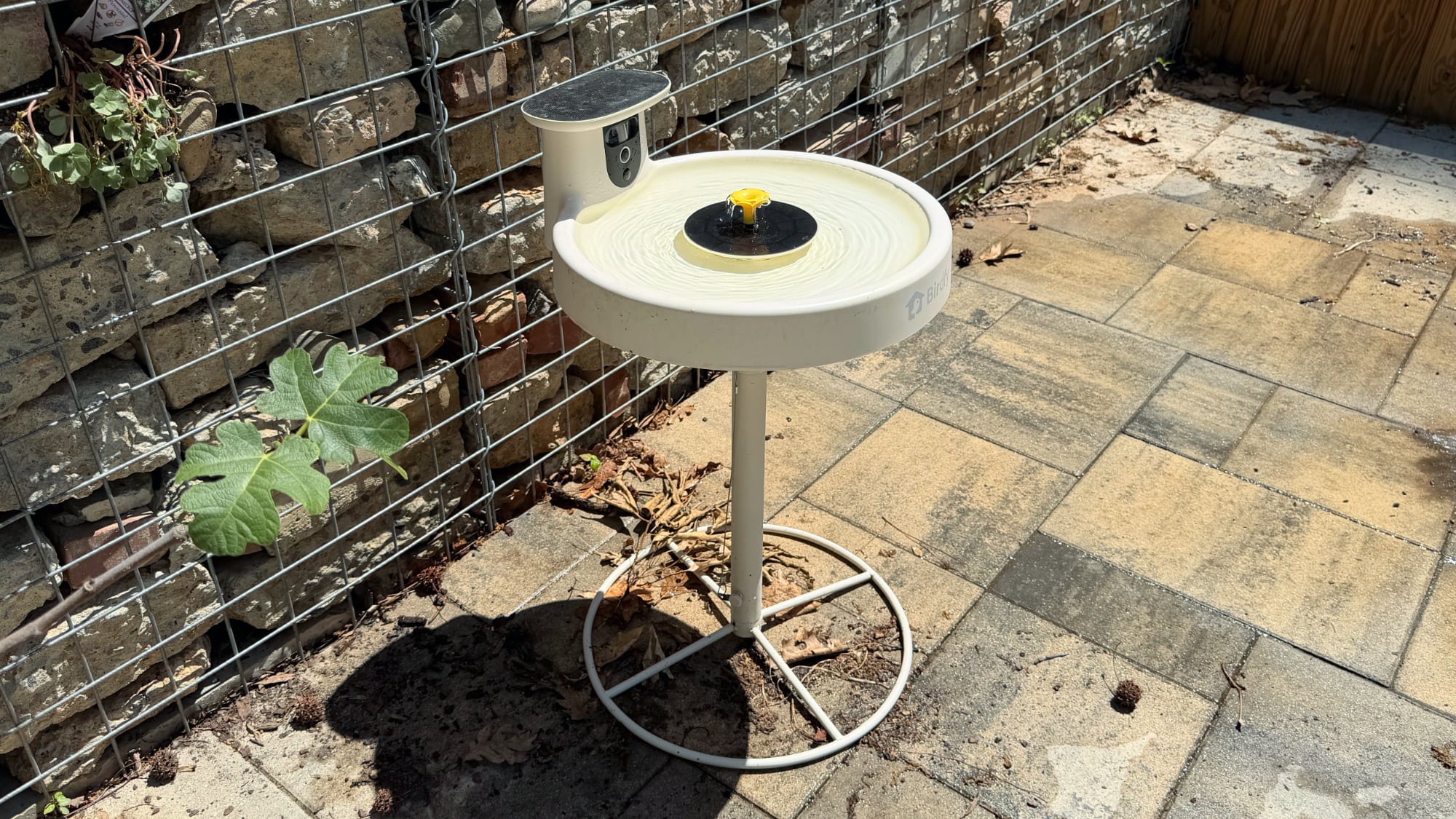
The Bird Bath Pro is made from plastic, and it has an optional base that you can get from Birdfy. I thought it might be a little low, but it's a height birds seem to like. It holds maybe an inch of water, or a little more if I fill it to the top. A built-in solar-powered fountain comes on when the sun is out to move the water, which prevents mosquitoes.
I don't see the fountain run when it's not in direct sunlight, so it's not on all the time. I'd like to see it run more often, but it seems to be designed to work only some of the time. The birds will use it either way. There is a filter in the fountain part of the Bird Bath Pro to keep the mechanism from getting jammed up with debris, and that should be replaced or cleaned regularly. Speaking of the fountain, there are interchangeable nozzles with different spray patterns to choose from. I use the flower that has gentle water movement.
The Bird Bath Pro tends to get dirty quickly, so I wipe it out and change the water every other day. Other than the cleaning and the filling, it doesn't take much more work, and I think I like it even more than my bird feeders.
Like the other Birdfy cameras, it struggles somewhat in direct sun and the image gets washed out. It's also not crystal clear because birds don't stay still for glamour shots, but I enjoy the photos and videos.
Setting up the Bird Bath Pro is simpler than setting up the cameras, because it's mostly all one piece. The camera fits into a slot in the bird bath, and then it's ready to go. No attaching it to a pole with clips or straps, and the filter and fountain parts are easy to figure out.
Birdfy App
All of the Birdfy products use the Birdfy iOS and Android app for bird identification and visit alerts. The Birdfy app works, but I think it's confusingly designed and not as intuitive as the Bird Buddy app. It's used for everything from setup to viewing bird images.
I did not like the Birdfy setup process. It's the standard connect, enter Wi-Fi password, and add to app system that most products use, but when you put the Birdfy cameras into pairing mode, they beep incessantly until successfully paired. It was by far the most irritating setup process I've ever gone through just because of the noise. Once connected to Wi-Fi, Birdfy's devices work fine, and I haven't had interruptions in service.
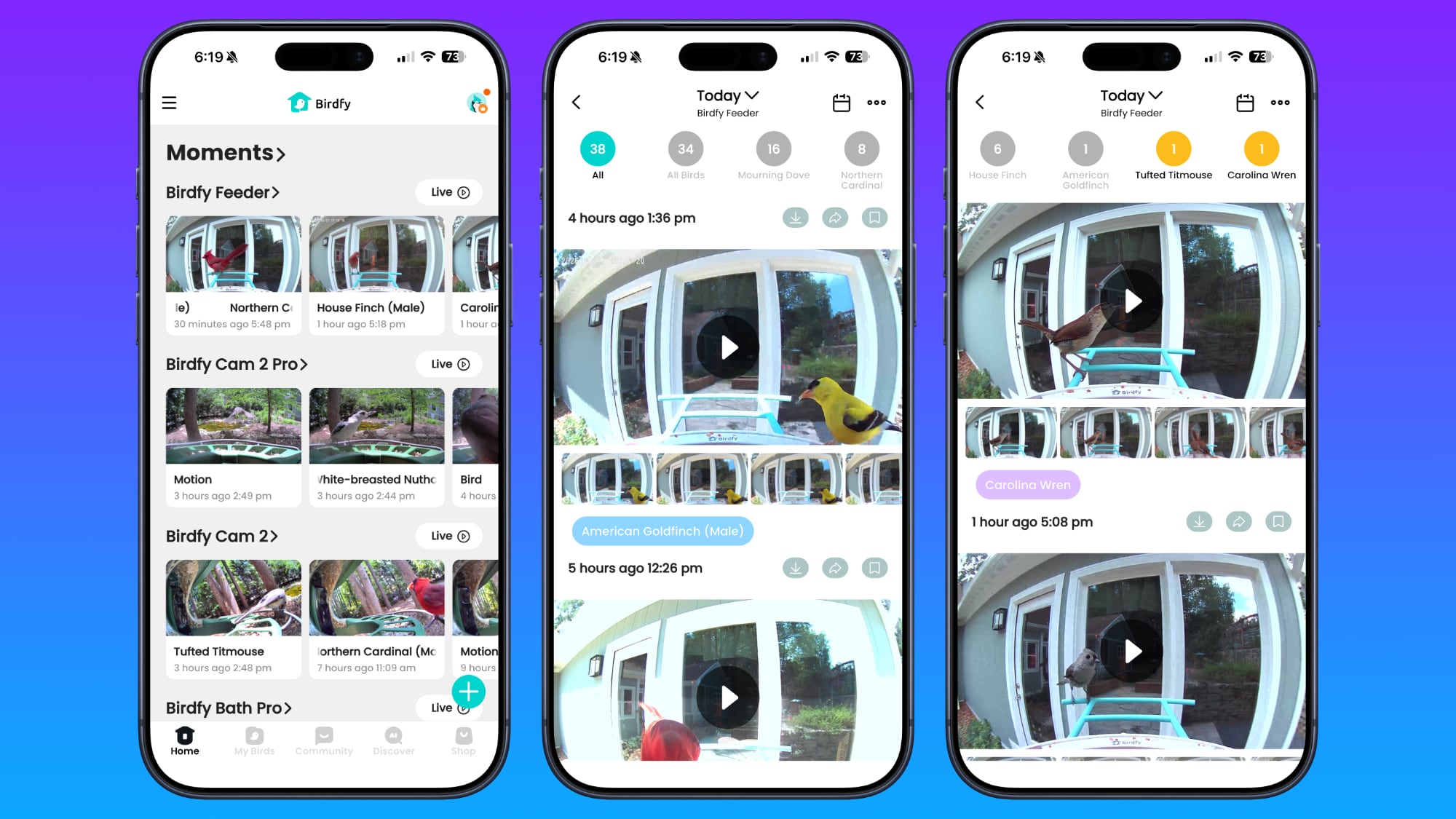
The app opens to a Home section that shows a view of each Birdfy camera, and you can tap in to see captured moments or get to a live view. Tapping into a camera provides an overview of the day with a readout of the total number of bird visits and the bird visits by species. Scrolling down lets you watch all of the videos for the day, and if you keep scrolling, you can swap to prior days. There's also a calendar icon you can use to get to previous recordings.
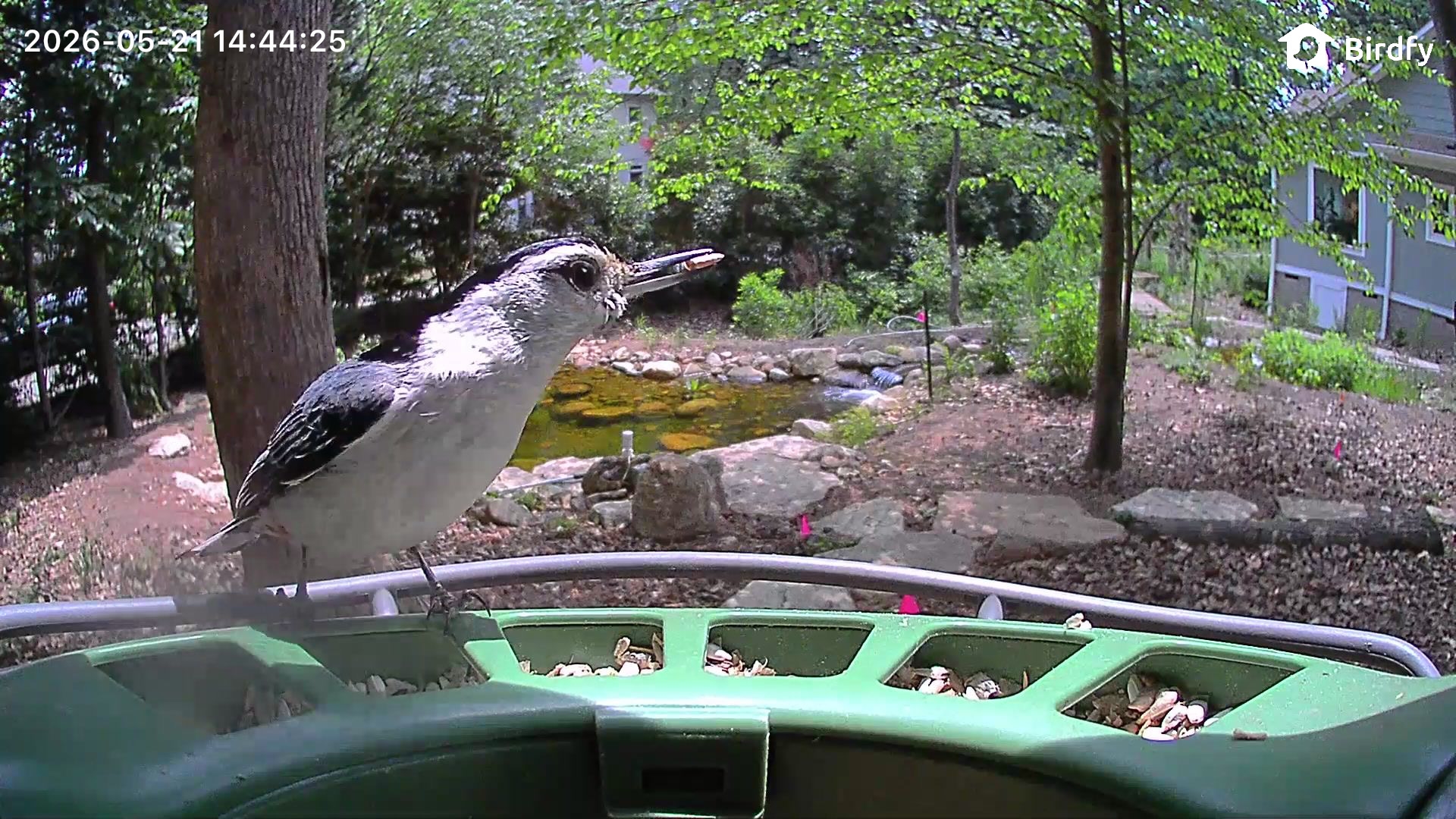
Birdfy's app gets a lot of birds right, but it makes errors regularly and there are some fleeting visits where it can't identify the bird type. As I'm writing this review, I've had 47 visits, some of which involved more than one bird at a time. The app correctly identified 38 birds, but marked 14 unknown. Two birds were incorrectly identified. It called a house finch a canyon towhee (despite correctly identifying finches the rest of the time), and marked a white-breasted nuthatch as a brown-headed nuthatch.
Yesterday, I had 73 visits. Of those visits, 12 were unidentified, one house finch was misidentified as a canyon towhee again, and a tufted titmouse was incorrectly named an oak titmouse. It's not able to identify crows, and it sometimes struggles with the raccoons and squirrels that visit the bird bath. I can tell when it's wrong because I know the local birds by sight, but misidentification is a bigger problem for users that aren't aware of what's around. On the plus side, it's right much more often than it's wrong, and it is able to tell male or female for some birds. Birdfy says it is able to identify over 6,000 bird species.
The camera does not use AI to decide when to record. If it detects motion, it records. It will pick up people walking by and other random movement. Unlike the Bird Buddy, it does send a notification for every bird visit, and that's a lot of notifications.
I wish there was an option for daily highlights instead of a notification for each visit. I can exclude certain types of birds in the app, but since it sometimes misidentifies birds, I don't want to do that. I mostly ignore the notifications now though, since I'm getting 50+ per day. The Bird Buddy sends occasional postcards from the best bird visits, and I think that's a much better way to do it.
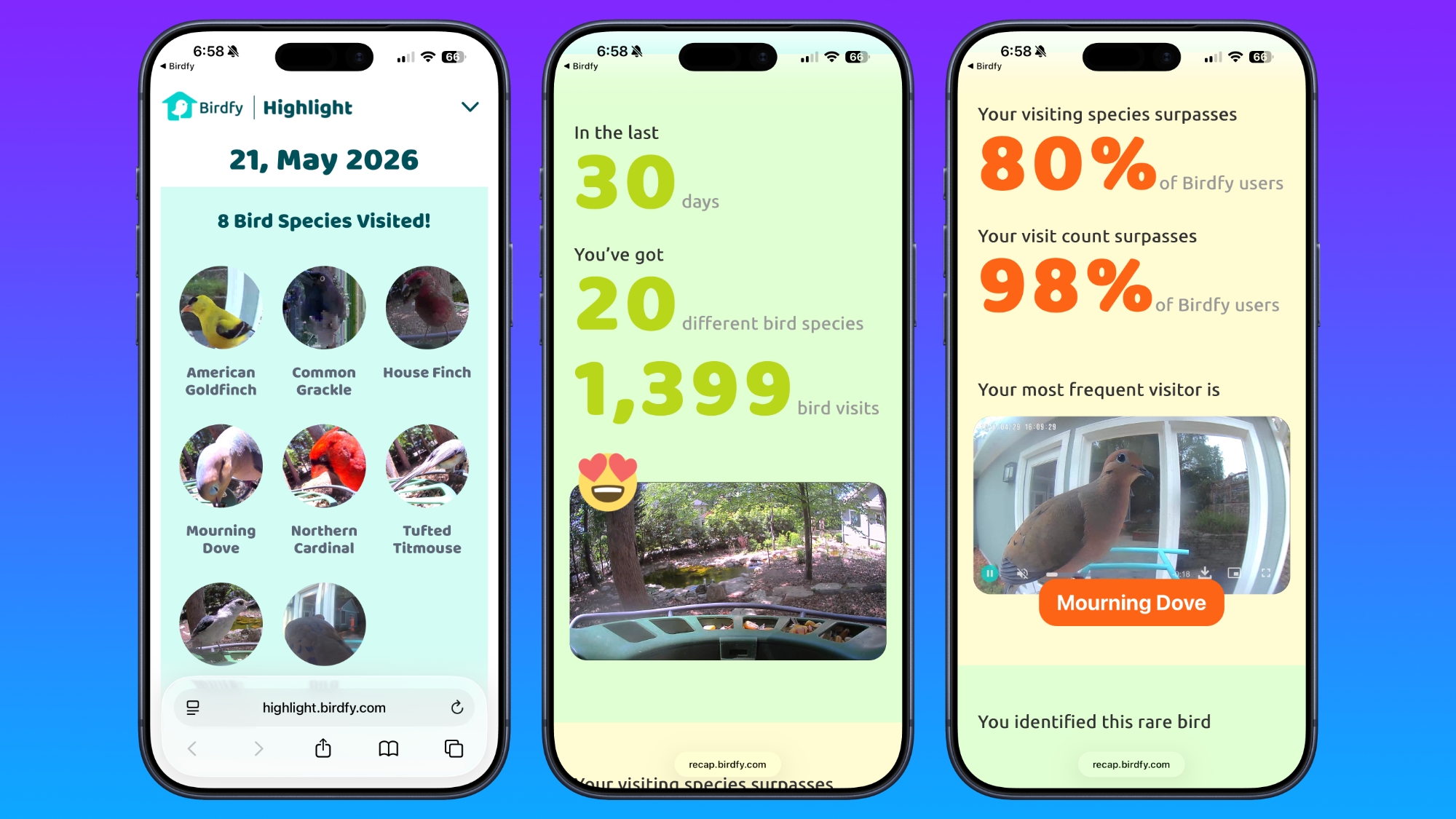
Birdfy does have a useful recap feature, but it's not obvious. You need to tap on your profile and then tap on Highlight. It opens a recap on the web rather than in the app, which is a weird choice. It gives an overview of everything that visited in a day, and lets you know when you've had a certain type of bird visit for the first time. You also get overall monthly recaps.
There is no fee for the Birdfy AI if you buy it upfront with the camera. Cameras with "lifetime" AI are around $20 higher, and I think that's worthwhile not to have a subscription. You get free AI, 5GB storage, and 20-second video recordings that are kept for a month, but you can also pay for a subscription for expanded cloud storage.
The $6.99/month Plus plan keeps videos for 60 days and expands recordings to 30 seconds each, plus it provides 20GB storage and 15 percent off Birdfy products. There's also a Bird Data feature for visit statistics, activity patterns, and time-of-day analysis. Since the Plus plan only extends recordings by 10 seconds and it is limited to two Birdfy devices, it doesn't seem like a good value. It makes more sense to pay for AI access when making an initial purchase and doing without the extra features. Birdfy does have a 50 percent discount for those who bought the lifetime AI, but the device limit still doesn't feel worth it even at $3.50/month.
Local storage is not an option as an alternative to cloud storage, but video clips and images can be downloaded and shared.
Bottom Line
Smart bird feeders can feel repetitive because most people get the same birds with the exception of seasonal migration, but it's still fun to see the antics that the regulars get up to. I have bird spats, bird couples that come in pairs and check in often, little wrens that like to carry around large peanuts, and silly doves that like to just sit on the food. It's also always a treat to see colorful bluebirds and goldfinches that I don't get as often as cardinals, mourning doves, and sparrows.
Birdfy has an extensive product line with different feeder styles and multiple price points, which makes it easy to recommend. The app and the setup are not as simple as the Bird Buddy and I'd be a little hesitant to get a Birdfy Feeder as an option for someone who isn't app and iPhone savvy, but it's not impossible to figure out.
For any bird watcher that can figure out an app that's somewhat convoluted, it's a fun product for keeping tabs on what's around your home. There are lifetime AI options that don't require a subscription, and the AI had a good (but not perfect) accuracy rating in my testing. The feeders are easy to fill and clean because they all use the same easy-access mount, but there is no hanging option and that makes them a target for squirrels and other critters depending on location.
The standalone solar panels are useful for finding just the right sun spot for charging, though it does introduce extra cabling to deal with compared to an all-in-one solution.
Of the Birdfy products I tested, I liked the Bird Bath Pro best. It's been a hub of activity, and it provides a look at birds doing something other than eating. If you live somewhere that you can't have bird feeders (like somewhere with rat or mouse concerns), the Bird Bath Pro is a product that will still let you see local birds.
How to Buy
Birdfy's products can be purchased from the Birdfy website. The Birdfy Feeder is $170 for the lifetime AI and the solar panel, the Birdfy Feeder 2 Duo with three lenses is $360, and the Bird Bath Pro is priced at $280 for the version with lifetime AI and an included stand. The stand-free model is $200.
Apple today formally asked the U.S. Supreme Court to review the series of rulings that led to changes to App Store linking rules and fees in the United States.
In 2021, Apple largely won its legal dispute with Epic Games, but Judge Yvonne Gonzalez Rogers ordered Apple to relax its anti-steering rules and let developers link to alternate payment options in apps. Apple complied, but charged a 12 to 27 percent fee on link-outs instead of its standard 15 to 30 percent fee. When taking into account fees from payment processors, there was little to no discount to developers, and few opted in. Apple also restricted button design, limiting developers to a single plain text link.
Epic Games went back to Gonzalez Rogers and said Apple was in violation of the court's order, and she agreed. In April 2025, she found Apple in contempt of court for willfully violating that 2021 injunction. Apple was then barred from collecting any fees on links in the U.S. App Store, and it has collected no money for link-outs in third-party apps since then.
Apple appealed, and the Ninth Circuit Court of Appeals agreed Apple was in contempt of court, but said Apple should be able to charge a reasonable fee for its intellectual property. Apple does not want courts deciding the fees it is able to collect, so it is now asking the Supreme Court to hear the case.
Apple has two main issues with the appeals court ruling. First, Apple says holding it in civil contempt was not appropriate because the original injunction did not prevent it from charging developers a fee when linking to third-party payment options. The district court and the appeals court agreed that Apple violated the "spirit" of the injunction by charging a high fee. Apple argues that prior court decisions have only held a party in civil contempt when an order has been "clearly and unambiguously" violated. A contempt ruling based on "spirit" is a "recipe for abuse," Apple says.
Federal Rule of Civil Procedure 65 reinforces this understanding by demanding specificity in injunctions to ensure clear notice. The Ninth Circuit's spirit-based inquiry is antithetical to these requirements. Under that rule, the potent weapon of contempt turns on an amorphous, know-it-when-you-see-it inquiry that permits a court to impose contempt merely by declaring a violation of an order's "spirit."
As it has done in several other court filings, Apple also cites Trump v. CASA, a ruling that said lower courts do not have the authority to issue universal injunctions to block nationwide policies. Apple says the court ruling requiring it to drop fees for all developers goes far beyond the scope of the Epic Games case, and any relief ordered by the court should be limited to Epic Games.
Yet the injunction here enjoins Apple and the commissions it can charge with respect to millions of registered worldwide developers that are not parties to this case. It does so even though Epic never brought a class action and never attempted to show that enjoining Apple's conduct against all other developers—like Microsoft or Spotify, who have nothing to do with Epic—was somehow necessary to provide relief to Epic.
According to Apple, the contempt ruling based on "spirit" and the order applicable to all developers "have combined to create an injunction that may reshape the global app marketplace."
Epic Games and Apple agreed to an expedited schedule and Apple's petition will be considered on June 25. Apple expects a decision on whether the Supreme Court will hear the case by the time the justices recess for the summer in late June or early July.
Apple previously asked the Supreme Court to weigh in on its legal fight with Epic Games in January 2024, but the justices declined to hear the case. Justice Elena Kagan also recently denied Apple's request for a stay of the fee calculation mandate while Apple waits to hear from the Supreme Court.
Update: In a statement to MacRumors, Epic Games Director of Corporate Communications Natalie Munoz said the following:
The Supreme Court has already rejected Apple's attempt to overturn the injunction in this case. This challenge to the contempt order is one last Hail Mary to delay a conclusion to this case and avoid opening up the gates to payment competition for the benefit of consumers. The court proceedings and Apple's own documents made it clear that Apple intentionally designed its sham compliance with the District Court's order to prevent competition, clearly violating the District Court's injunction.
Media platform Plex today said that it is increasing the price of its Lifetime Plex Pass option to $750, which is a $500 increase from the current $250 price tag.
Plex said that the updated price reflects the "real, ongoing value" of the software that it plans to build and maintain. The company has considered removing the Lifetime Plex Pass because recurring subscriptions pay for long-term development, but Plex wants to continue to offer it because it's a "valuable option" for many in the Plex community.
Over the years, as our software and product has evolved, the breadth of features and benefits included with your Plex Pass has expanded. This increase ensures we can continue to invest resources into building and maintaining the Plex personal media software, while continuing to offer a Lifetime option.
For those unfamiliar with Plex, it is media server software that lets users stream their library of content from a device with the server software installed to any other connected smartphone, tablet, or TV. The Plex Pass unlocks features like server management, hardware transcoding, offline downloads, mobile syncing, remote streaming, and more.
Plex previously increased the cost of the Lifetime Plex Pass from $120 to $250 in March 2025.
Plex customers who previously bought a Lifetime Plex Pass will still be able to access the benefits and perks associated with a Plex Pass with no change. Customers can purchase a Lifetime Plex Pass for $250 prior to when the price changes.
Plex is also not increasing the price of its subscription Plex Pass, which is $7 per month or $70 per year.
In addition to announcing the upcoming price change to the Lifetime Plex Pass, Plex shared its roadmap. It is working to implement improvements to downloads like grouping by show, and updates to its mobile apps.
The Lifetime Plex Pass price increase will go into effect on July 1, 2026 at 12:01 a.m. UTC.
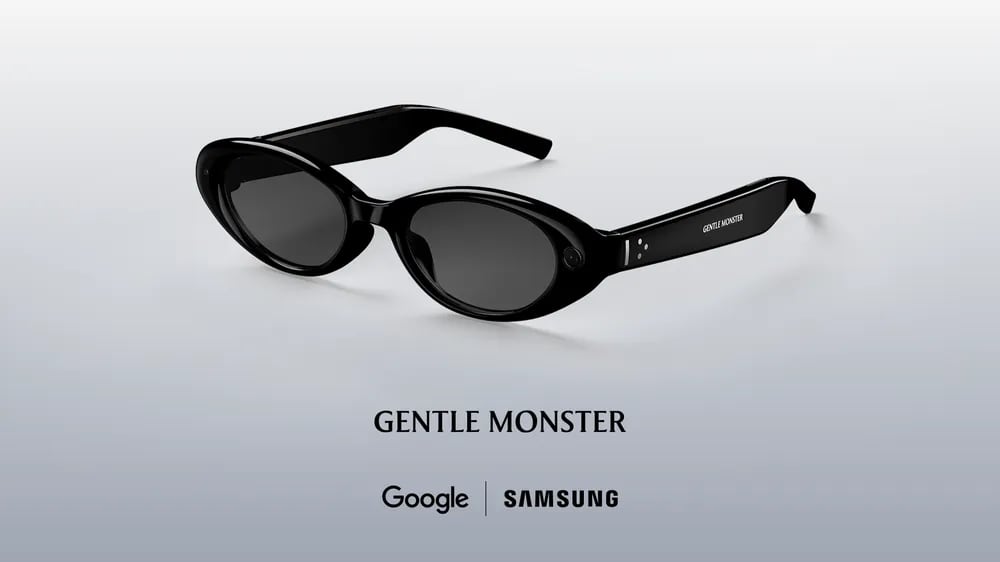
Google today said that its first "intelligent eyewear" product is set to launch this fall. It is teaming up with Samsung and eyewear manufacturers Gentle Monster and Warby Parker to launch new AI audio glasses.
The glasses will run Android XR, which is Google's platform for smart glasses and AR/VR headsets. There are cameras, speakers, and microphones in the glasses, but there is no display in the lenses.
Google previewed two of the designs coming from Gentle Monster and Warby Parker, though there will be other options. Google says the two companies will have "full collections" available when the glasses launch.
The glasses support Gemini AI, with Gemini integrated into all of the available features. Users will be able to say "Hey Google" or tap the side of the frame to bring up Gemini, and Google says the AI can do the following:
Gives information about what the wearer sees, like reviews for a restaurant nearby, the name of a cloud formation, or details on a confusing parking sign.
Offer sight-based navigation with turn-by-turn directions. Gemini can add stops or locate nearby locations like restaurants based on user preferences.
Manage calls, send texts, and summarize messages.
Listen to music.
Capture photos and videos and edit them with Google's Nano Banana AI image editing engine.
Translate speech and writing in real time.
Complete multi-step tasks like ordering coffee via DoorDash.
Use apps on a connected smartphone with voice-based commands.
Google says that its upcoming glasses will be able to work with iPhones in addition to Android smartphones.
Apple is working on its own AI smart glasses that are expected to have similar capabilities, but rumors suggest Apple's glasses won't be ready until 2027.
In the future, Google plans to launch "display glasses" that have a small display in the lens to relay information from Gemini, but that product is not coming until later.
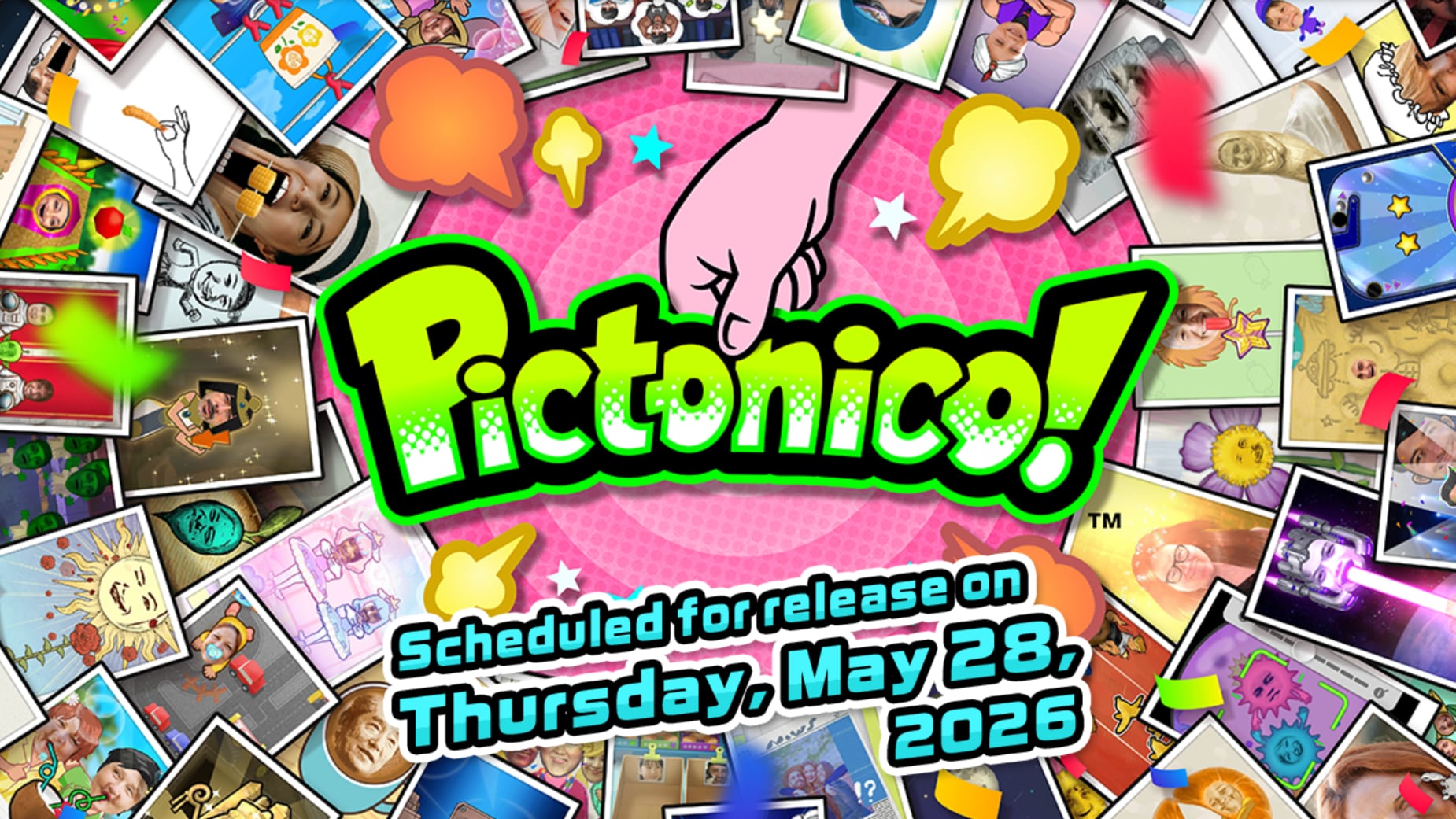
Nintendo today announced a new mobile game called Pictonico, which is set to launch on Thursday, May 28. Pictonico turns photos into minigames like those you see in WarioWare.
The app's website features players taking photos of themselves and their friends, with the app altering the photos in different ways. In one example, the person's mouth opens up widely to chomp on corn with a tap, and in another, a person is bundled up with a mummy and the goal is to unwrap the mummy.
There are 80 minigames to play through, at normal, high-speed, and danger zone speeds that make gameplay more challenging. As players progress through the levels, the game will get more difficult. Pictonico can use photos from the Photo Library, or photos taken with the iPhone's camera from the game interface. Nintendo says that photos remain on device and are not sent to its servers.
Pictonico was co-developed with Intelligent Systems, which is the studio that created the WarioWare game series.
According to Nintendo, the game is free to try, with three minigames available at no cost. Unlocking the "Volume 1" games costs $7.99, while a "Volume 2" series is available for $5.99.
Google held its annual Google I/O event today, launching new AI products and giving us a look at what's coming in the near future. Google I/O is Google's equivalent of Apple's Worldwide Developers Conference, and Google's announcements offer insight into what Apple is going to be competing with in the coming months.
We've rounded up everything Google announced at I/O across its product lineup.
Gemini
Gemini Omni - Gemini Omni is a new model that can create anything from any input, and that is better at simulating gravity and kinetic energy. It combines Gemini intelligence with generative models like Nano Banana and Veo. It supports conversational language video editing, and allows users to upload videos and edit any element in the video. Omni is starting with video, but Google's Demis Hassabis says it will eventually be able to create any output from any input.
Gemini Omni Flash - Gemini Omni Flash is the first Omni model that Google is releasing, and it is available starting today in the Gemini app.
Gemini 3.5 Flash - Gemini 3.5 Flash is a new model that Google's Sundar Pichai said combines frontier intelligence with action. Flash is better across almost all benchmarks compared to 3.1 Pro, and it is "comparable to the best models" but faster. Gemini 3.5 Flash is available for everyone today across Google's products and APIs.
Gemini 3.5 Pro - Google is testing Gemini 3.5 Pro internally, and it's coming next month.
Gemini App - Google redesigned the Gemini app with a new Neural Expressive design language that's rolling out today on desktop, iOS, and Android. It features fluid animations, vibrant colors, haptic feedback, and new typography. It's also getting custom regional dialects in the next few months. Gemini Omni is available for paid Plus, Pro, and Ultra subscribers in the Gemini app today, making it easier to create and edit videos.
AI Agents for Gemini - Gemini is getting AI agents, like a Daily Brief agent that presents users with a customized daily digest. Daily Brief is rolling out today for paid subscribers.
Gemini Mac App - Mac users will be able to select a bunch of images and documents in Finder, and then press the Function key to give Gemini a voice command on what to do with the files. Google's demo involved sending an email to a dog kennel with the dog's information and image, with info pulled from Finder to generate an email using Gmail in Chrome. Voice support and Gemini Spark are coming to the Gemini Mac app this summer.
Gemini for Science - Gemini for Science is a collection of science tools, and there's also a Co-Scientist collaborative AI research partner.
AI Content Identification
Identifying AI-generated Images - C2PA content credentials are coming to Gemini and Chrome. Google's tools can tell if an image was captured with a camera or made with AI, and can determine whether an image captured with a camera was edited with AI. Users will be able to right-click on an image in Chrome and ask Gemini whether it was generated with AI.
Antigravity
Antigravity 2.0 - Google is launching a new agent-first Antigravity 2.0 app for the desktop that uses Gemini 3.5 Flash. Antigravity is Google's coding tool, and the equivalent of Copilot, Codex, and Claude Code. Gemini 3.5 Flash is 12x faster in Antigravity, which optimizes token use. Antigravity 2.0 is available globally for everyone.
Gemini Spark
Gemini Spark - Gemini Spark is a personal AI agent that helps users navigate their digital life. Gemini Spark runs on virtual machines through Google Cloud, and it is able to operate 24/7, with no need to have a laptop open for it to run. It's accessible through the Gemini app, but there will also be options to email or message it. It uses Gemini 3.5 Flash and Antigravity to work on long-running tasks in the background. It integrates with Google tools now, and Google is debuting MCP support for third-party apps in the coming weeks. Gemini Spark can do multi-step ongoing tasks, planning out subtasks and going through the steps. Gemini Spark will be available for Google AI Ultra subscribers in the U.S. next week, and it will work with Chrome later this summer.
Google Search
Google Search - Google Search AI Mode and AI Overviews now use Gemini 3.5 Flash. "Google Search is AI Search," was Google's messaging. There's a new Google Search box that's been reimagined with AI, and it changes based on how you're using it and goes "beyond autocomplete" to help you better ask questions. The search box supports images, files, videos, and Chrome tabs as input in addition to text. Pichai said it's the biggest upgrade to the search box in over 25 years, and it's rolling out today. Google is also combining AI Overviews and AI Mode into one interface.
Agents in Search - Search is gaining support for creating and managing multiple AI agents. It can keep users updated on what's going on in the world, like changes in the stock market, and send alerts. Search will be able to monitor changes on webpages, so users can get alerts on things like sneaker drops. Information Agents are coming to search in the summer, and Google plans to add more agents.
Coding in Search - Agentic coding capabilities are coming to Search. Search will be able to build a custom response on the fly with dynamic layouts, interactive widgets, and more for queries. It uses Antigravity and 3.5 Flash. Search can create tools, trackers, widgets, and dashboards. Generative UI in Search is rolling out this summer for everyone with no charge. Antigravity in Search for building custom experiences is coming in the summer for subscribers first.
Shopping in Search - Google has a new Universal Cart coming this summer to Search and the Gemini app. It's an intelligent shopping cart that works across merchants and services. You can add things to the cart when reading Gmail, watching YouTube, or browsing the web, then check out on Google or on third-party retailer sites. Google has a Universal Commerce Protocol and an Agents Payment Protocol for agentic shopping. The payments feature lets AI agents make payments on your behalf using parameters that you set like a brand and price. It's coming to Gemini Spark later this year.
YouTube
Ask YouTube - YouTube is getting an Ask YouTube feature, which is similar to the Ask Maps AI feature. It uses Gemini and lets users ask questions. It supports context and follow-up questions, and it's in testing now. It will roll out broadly in the United States this summer.
Google Docs
Docs Live - With AI integration in Docs Live, users can speak or write parameters of what they need, and Gemini can create a document. Google's Sundar Pichai said users could "brain dump" and then let Gemini "do the rest." The feature supports text-based commands for creating and editing content.
Hardware
Android XR Audio Glasses - The first Android XR audio glasses are coming this fall, providing all-day access to Gemini with responses privately spoken into the wearer's ear. The glasses can be used for taking photos, listening to music, making calls, and tapping into apps. Google worked with Gentle Monster and Warby Parker on the design of the glasses, and Samsung on hardware. The glasses will pair with Android and iOS devices.
Miscellaneous Announcements
Google AI Ultra Plan - Google has a new $100 Ultra plan, and it's dropping the price of its top-tier Ultra plan from $250 to $200.
Android AI Agents - Android Halo lets Android users keep an eye on AI agents, and it shows activity at the top of an Android device. It's coming to Android later this year.
Google Pics - Google Pics is Google's new image generating and editing tool in Google Workspace. It can create posters, flyers, infographics, and more, similar to Canva. Content is watermarked with SynthID. Pics is rolling out this summer.
Stitch - Stitch is Google's Figma-like tool that lets users build apps and websites. This year, Google is adding real-time collaborative design with Stitch Agent, exports to Antigravity, and publishing directly to Netlify.
Google Flow - Google Flow, Google's "AI creative studio" for creatives, is getting Gemini Omni, AI agents for executing multiple actions at once, and custom tools with Flow Tools. New Google Flow features are available today.
Many of Google's new features are rolling out today, with the rest planned for later this year. Apple is going to hold its WWDC 2026 keynote on June 8, and that's when we'll see if Apple debuts equivalent features.
iOS 27 will include a custom wallpaper generator and an option to automatically create shortcuts using AI, reports Bloomberg.
When choosing a new wallpaper, users will have the option to generate something custom using the Image Playground app. Image Playground is used for generating custom emoji and images that can be used throughout iOS, and it is set to get an upgrade in iOS 27.
Apple is testing models that produce more lifelike images, so the version of Image Playground that's used for generating custom wallpapers could be different from the current version.
Shortcuts is also getting a major update, with users able to use natural language to ask Siri to make a shortcut. There is an option for users to tell Siri what they want to accomplish with a shortcut to have the workflow created using AI.
Bloomberg says the Shortcuts app has a prompt that says "What do you want your shortcut to do?" with a text field to enter a description. Shortcuts that are created using AI are then automatically installed and immediately available for use.
Shortcut creation is largely done manually now, and it is a tool that has remained out of reach of many casual iPhone users. A Shortcuts app that's able to work with natural language capabilities will see the app getting more widespread use.
The new Shortcuts app and the wallpaper generation tool will be previewed at the WWDC keynote that's set to take place on June 8.
iOS 27 and iPadOS 27 will include a revamped AI chatbot version of Siri with new capabilities, but Apple is also planning to introduce new Apple Intelligence features across the operating system, reports Bloomberg.
Apple is testing an expanded version of Writing Tools that will do more rewriting and text generation than the current version. There is a "Write With Siri" toggle at the top of the keyboard, along with a "Help Me Write" option that comes up when Siri is activated while a text field is open.
Apple is planning to introduce a dedicated AI grammar checker for Writing Tools that will work like Grammarly. When writing in Messages, Mail, and other apps there will be a translucent menu that slides up from the bottom of the iPhone's screen, and it will show suggested revisions next to the original written text.
Users can go through the suggestions and accept or reject them one by one, approve all of the changes at once, or ignore all of the changes. Apple has an option for pausing grammar checking and for moving between different flagged sections of text. Apple already has a spellchecking feature, but the new feature will add grammar suggestions.
The updates to Writing Tools will be unveiled at Apple's June 8 WWDC keynote. Apple is also planning AI updates for the Photos app, Camera app, and more, with details available in our iOS 27 roundup.

 Log in