
Lees weergave

Apple Watch Ultra 4 Could Get Redesign and Blood Pressure Monitoring

The Apple Watch Ultra 4 could feature a complete redesign and blood pressure monitoring, according to DigiTimes.
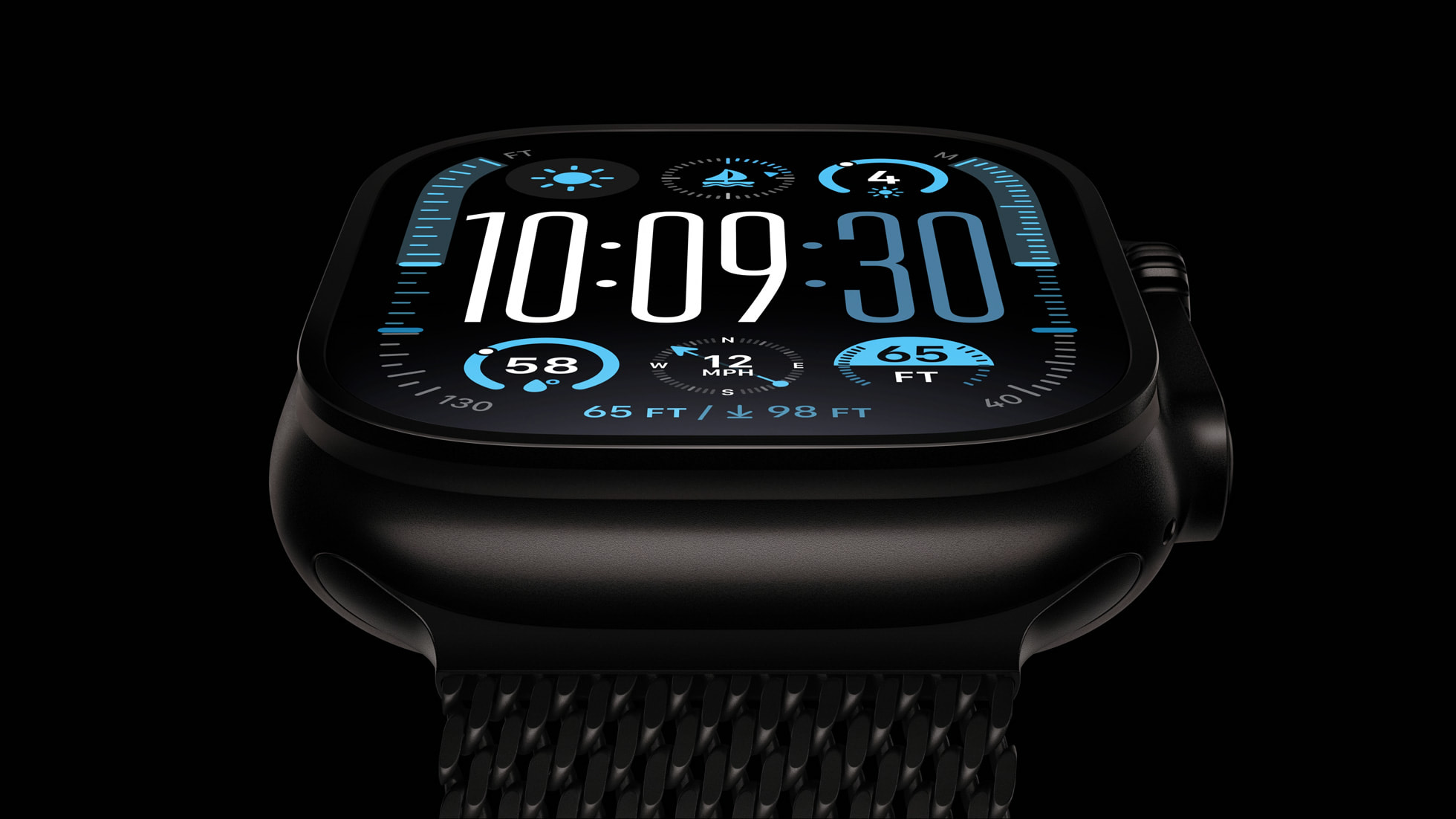

Apple will apparently add a new high blood pressure notification feature to the Apple Watch that uses the optical heart-rate sensor on the back of the device to analyze how blood vessels respond to each heartbeat, sending alerts when an abnormal pattern is detected. The feature is said to be under FDA review.

It is not entirely clear how it differs from the Hypertension Notifications feature Apple introduced with watchOS 26 last fall, which itself uses the optical heart sensor to analyze blood vessel responses over 30-day periods. DigiTimes says that earlier Apple Watch models already had some blood-pressure sensing capabilities, and the new feature appears to represent a more refined or clinically validated implementation of that underlying hardware.

After this, Apple's next health monitoring capabilities are expected to focus on noninvasive blood-glucose monitoring, a capability Apple has been pursuing for a number of years, pending government approval.

The report is largely consistent with a DigiTimes report from last year, which said at least one new Apple Watch model would feature a "significant redesign," with supply chain sources pointing to exterior design changes including eight sensors arranged in a ring pattern on the back of the device. Today's update describes the changes more forcefully, calling it a "full redesign" alongside a "significant upgrade to sensing functions."

According to market observers cited by the report, the redesign could boost Apple Watch shipments by 20% to 30% compared to 2025. The sensor upgrades are expected to be a major boost for Taiwan-Asia Semiconductor (TASC), Apple's exclusive supplier of sensor components, with large-volume orders anticipated as early as July.

Apple Watch Ultra 4 is expected to be announced alongside the Apple Watch Series 12, iPhone 18 Pro, ‌iPhone 18 Pro‌ Max, and foldable "iPhone Ultra" in fall 2026.
Related Roundup: Apple Watch Ultra 3
Related Forum: Apple Watch

This article, "Apple Watch Ultra 4 Could Get Redesign and Blood Pressure Monitoring" first appeared on MacRumors.com

Discuss this article in our forums
  •  

New Apple Card Holders Can Get Free AirPods Pro 3, But There's a Catch

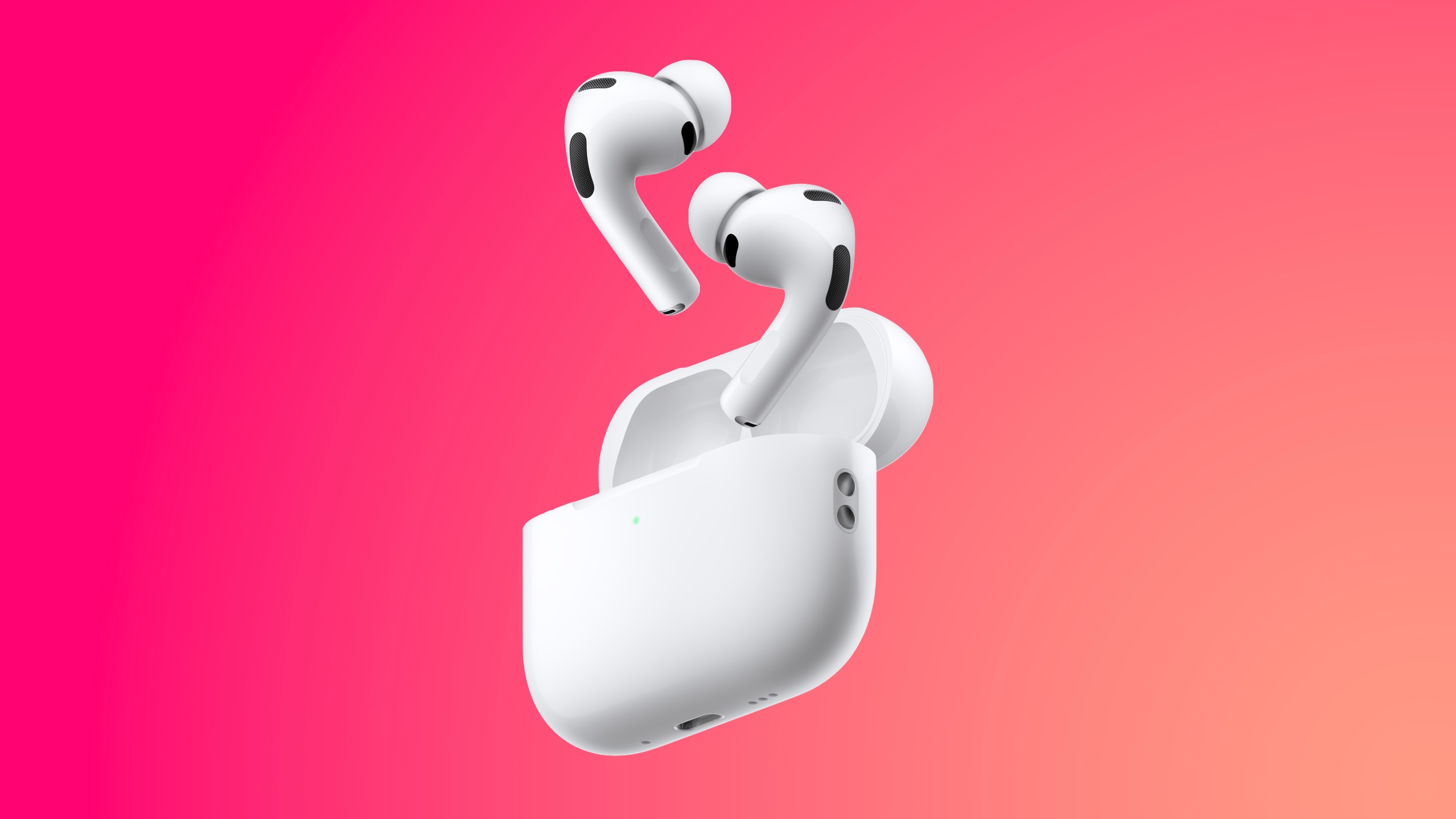
Apple today launched a new promotion offering new Apple Card holders the chance to earn back the cost of AirPods Pro 3 through monthly cash rebates, but there is a recurring spend requirement attached.


Customers who open a new Apple Card account and purchase ‌AirPods Pro 3‌ directly from Apple by June 15 will qualify. Starting July 1 and running through April 30, 2027, cardholders can earn $25 in Bonus Daily Cash each month, up to $250 total, but only in months where they make at least ten purchases on the card. Each qualifying purchase must be at least $0.01, and the ‌AirPods Pro 3‌ purchase itself does not count toward the monthly ten-purchase threshold.

The offer is open to new ‌Apple Card‌ applicants only, and is not available to existing cardholders or anyone with a pending application. The ‌AirPods Pro 3‌ purchase must be made directly from Apple, either online or in an Apple Store. Refurbished products, purchases through third-party retailers, international transactions, and business bulk orders are all excluded. The ‌AirPods Pro 3‌ purchase cannot be made entirely with an Apple Gift Card or Apple Account balance.

All ‌Apple Card‌ payment options are eligible, including paying in full or financing via ‌Apple Card‌ Monthly Installments, and any trade-in applied to the purchase does not affect eligibility. Returning the ‌AirPods Pro 3‌ purchase may result in forfeiture of the offer.

The ‌AirPods Pro 3‌ are priced at $249 and were introduced alongside the iPhone 17 lineup in September 2025.
Related Roundup: AirPods Pro 3
Buyer's Guide: AirPods Pro (Neutral)
Related Forum: AirPods

This article, "New Apple Card Holders Can Get Free AirPods Pro 3, But There's a Catch" first appeared on MacRumors.com

Discuss this article in our forums
  •  

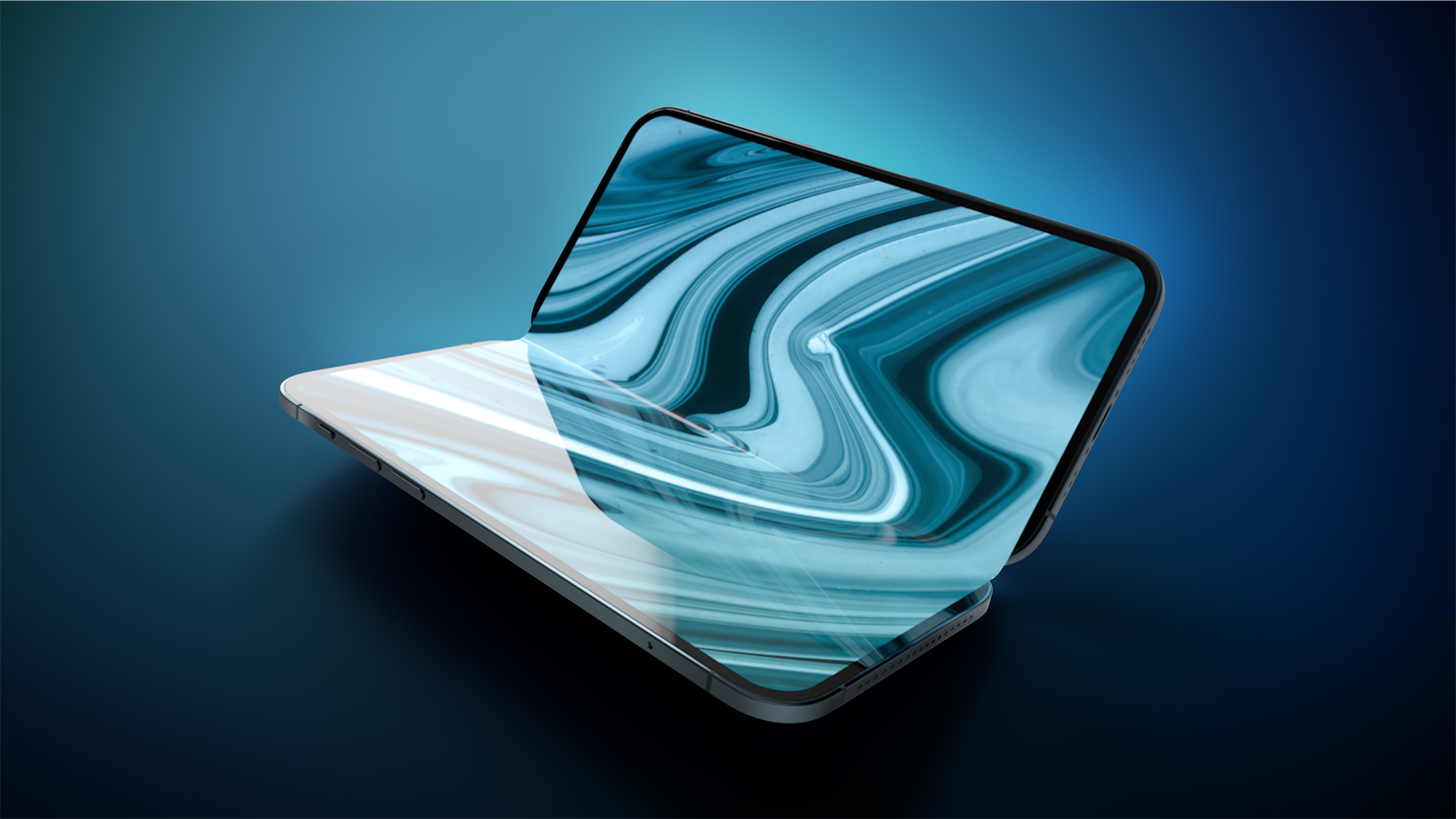
Foldable iPhone Production Stalls Amid Hinge Issues

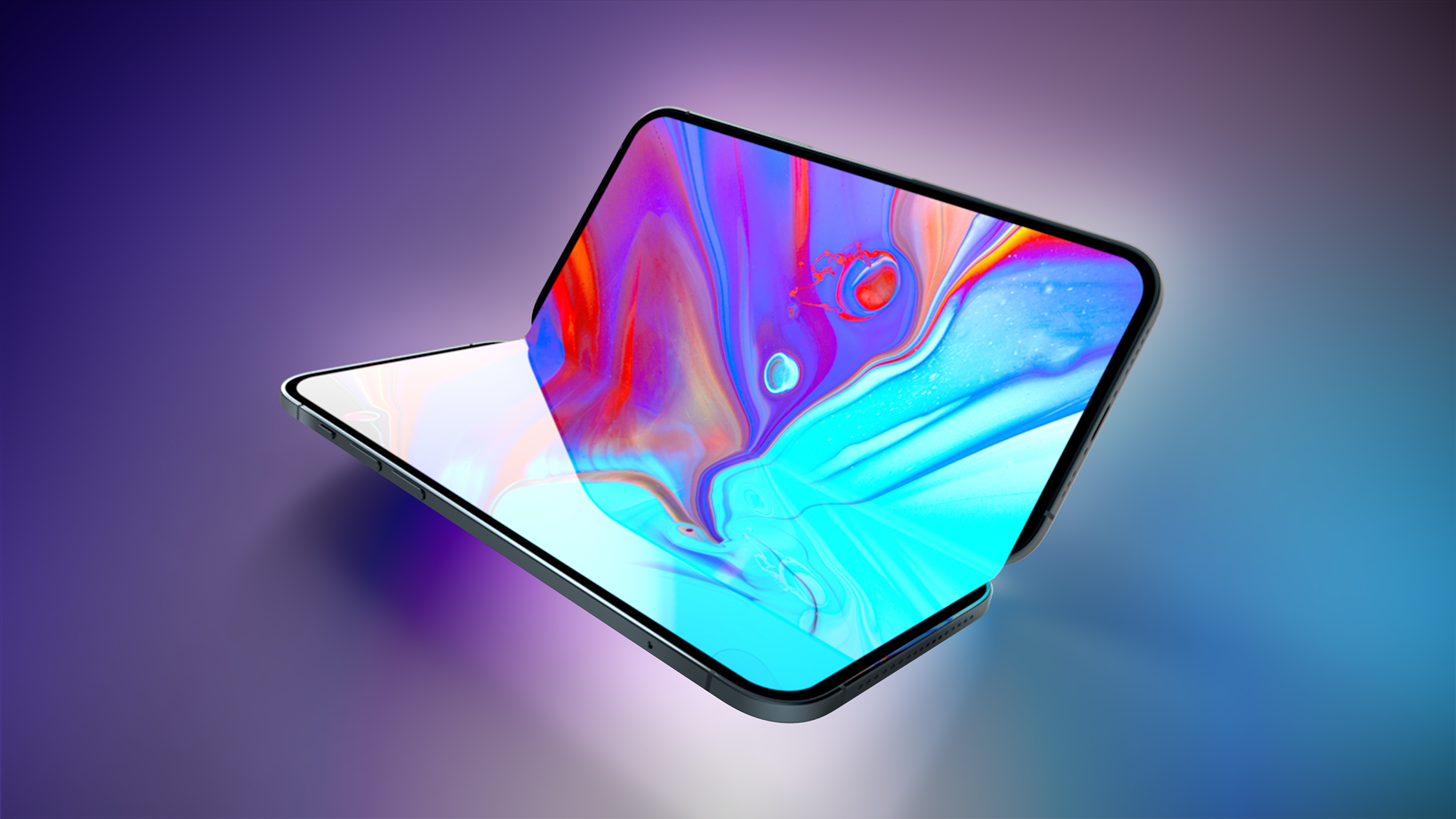
Trial production of Apple's long-anticipated foldable iPhone, likely called the "iPhone Ultra," has run into a significant engineering hurdle centered on hinge reliability, according to a known leaker.


The leaker known as "Instant Digital" posted on Weibo that the foldable device's hinge is consistently failing to meet Apple's quality control standards under conditions of prolonged, high-frequency opening and closing. The leaker described the mechanical wear issue as one that "must be resolved with absolute perfection; otherwise, progress will simply have to be stalled for the time being."

The hinge has been a key focus of Apple's foldable development for years. Supply chain analyst Ming-Chi Kuo first reported that the device would use Liquid Metal components in the hinge mechanism, with Dongguan EonTec serving as the exclusive supplier of the amorphous alloy. Instant Digital subsequently elaborated that the material, also known as metallic glass, features a disordered atomic structure that is more resistant to bending and deformation than traditional metals, and more durable than titanium alloy. This makes it suitable for a foldable's hinge.

Apple has previously used the material only in small components such as SIM ejector pins, so the ‌iPhone Ultra‌ would mark its first major use in a critical mechanical part. A subsequent report in January corroborated the liquid metal hinge plans, noting that Apple has been exploring the material for over 15 years, tracing back to a 2010 licensing deal with Liquidmetal Technologies.

Screen creasing is a concern that has followed the foldable smartphone category since its inception. Instant Digital says Apple has essentially accepted some degree of crease as inevitable, but that test results have demonstrated the device can maintain a visually crease-free state over the long term. That aligns with previous reporting: leaker "Fixed Focus Digital" reported in February that production orders had been placed with a crease depth under 0.15mm and a crease angle under 2.5 degrees. Apple has reportedly pursued eliminating the crease "regardless of cost," with engineering solutions including a dual-layer ultra-thin glass structure designed to spread mechanical stress across multiple layers, and advances in optically clear adhesive to keep display layers in precise alignment.

A follow-up post from the leaker suggested the hinge difficulties are unlikely to push back the device's expected release window somewhat, noting that there is still ample time remaining. That is broadly consistent with earlier reporting: DigiTimes reported in April that production was running roughly one to two months behind schedule, but that a fall 2026 launch remained on track, with mass production planned to begin in July. Apple is expected to announce the foldable iPhone alongside the iPhone 18 Pro models at its September event, though some reports suggest customer availability could slip as late as December.

In a third post, Instant Digital offered a note on the device's experience, suggesting that despite its larger form factor the foldable feels like an iPhone rather than an iPad when in use. The leaker added that the screen size offers limited practical utility for a stylus, casting doubt on whether Apple Pencil support would be a meaningful feature for the device.

The foldable iPhone is expected to feature a 7.8-inch inner display and a 5.5-inch cover display, with an A20 chip, C2 modem, Touch ID power button, and two rear cameras. Pricing is rumored to sit at around $2,000.
Related Roundup: iPhone Fold

This article, "Foldable iPhone Production Stalls Amid Hinge Issues" first appeared on MacRumors.com

Discuss this article in our forums
  •  

iPhone 17 Pro Named Fastest-Charging Smartphone

Apple's iPhone 17 Pro has been named the fastest-charging phone overall in a new CNET lab test covering 33 smartphones, with Samsung's Galaxy S26 Ultra taking the top spot for wired charging speed.


To determine the rankings, CNET's lab team ran each phone through a 30-minute wired charging test starting at 10% battery or less, using the phone's included cable and a wall charger rated at or above the device's maximum supported speed. Phones that support wireless charging went through a matching 30-minute wireless test using a Qi (7.5W), Qi2 (15W), or Qi2.2 (25W) charger matched to the phone's peak supported speed. CNET then averaged the wired and wireless results into an overall charging score.

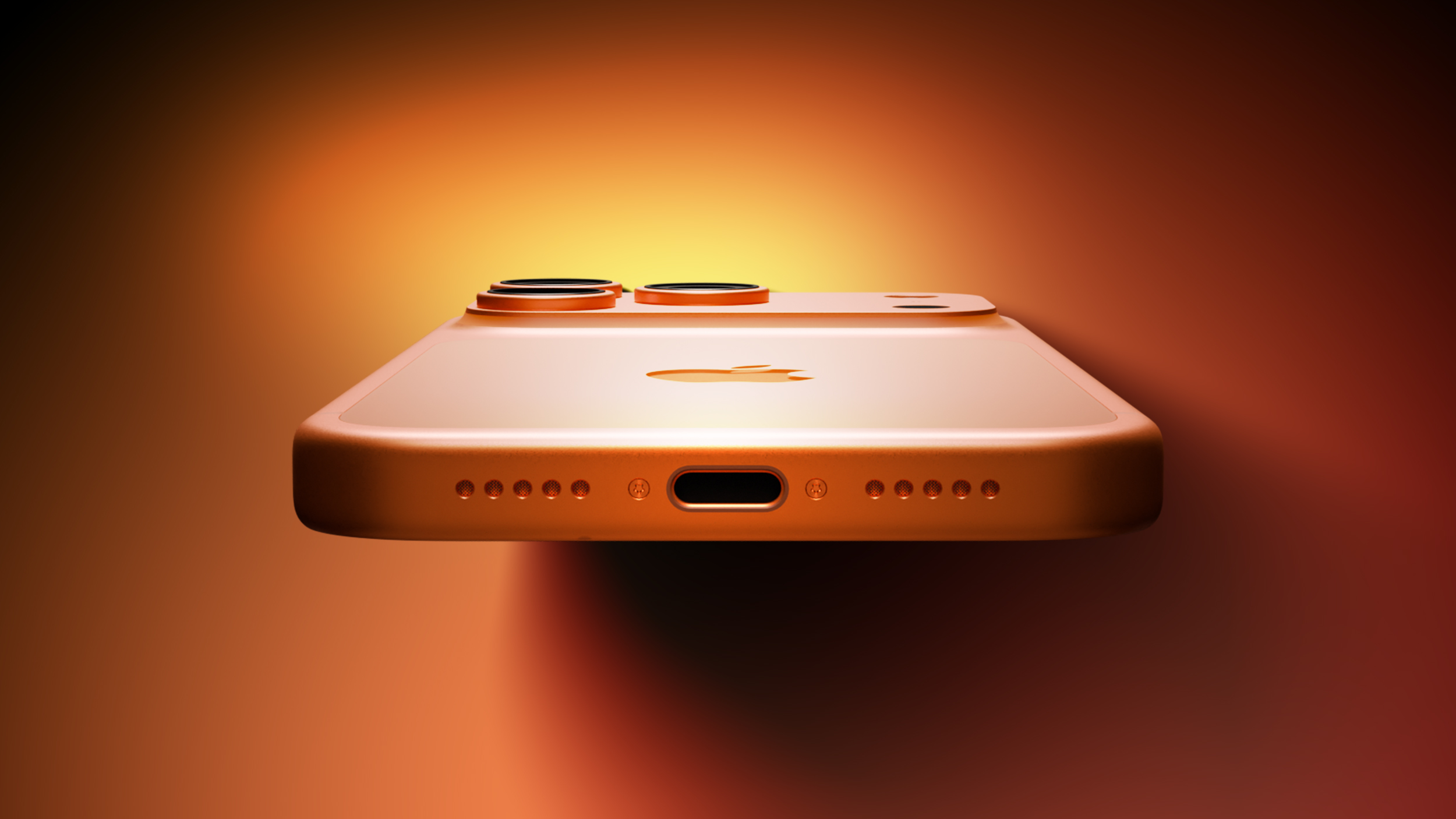
The ‌iPhone 17 Pro‌'s win in the overall category is partly a function of its relatively compact 4,252mAh battery, which is smaller than the 5,000mAh or larger capacities common among competing flagships. With less capacity to fill, the 17 Pro charges faster in absolute terms, and it supports both 40-watt wired charging and 25-watt Qi2.2 wireless charging. CNET notes that battery size is just one factor in overall battery life, alongside processor and software efficiency, and in its battery life testing, the ‌iPhone 17 Pro‌ Max came out on top for endurance.

For wired charging, Samsung's Galaxy S26 Ultra took the top spot, adding 76% charge in 30 minutes via its 60-watt wired charging speed, the fastest of any Samsung flagship to date. The ‌iPhone 17 Pro‌ came in second at 74%, tied with Motorola's Moto G Stylus (2025). The OnePlus 15 followed with 72%, while the iPhone 17, ‌iPhone 17 Pro‌ Max, and Samsung Galaxy S25 FE each reached 69%.

Apple's ‌iPhone 17 Pro‌ also claimed the fastest wireless charging result, gaining 55% in 30 minutes. The ‌iPhone 17 Pro‌ Max added 53%, followed by the ‌iPhone 17‌ at 49%, the iPhone Air at 47%, and the Galaxy S26 Ultra at 39%. CNET again attributes the 17 Pro's edge over the 17 Pro Max largely to its smaller battery, since both devices share the same A19 Pro chip and software.

Across all brands tested, Apple had the most consistent fast-charging performance by a considerable margin, averaging 54.6% across the four ‌iPhone 17‌ models and the ‌iPhone Air‌. Samsung's nine-phone average came in at 38.5%, with the Galaxy S26 Ultra as its strongest performer and the Galaxy Z Fold 7 as its weakest at 29%.

Silicon-carbon batteries, which use a silicon-based anode rather than graphite to enable higher capacities and faster charge rates, appeared among several of the top performers. The OnePlus 15, for example, recharged 72% of its 7,300mAh silicon-carbon battery in 30 minutes using a proprietary 80-watt charger. Silicon-carbon phones in the U.S. remain limited to OnePlus, RedMagic, and Poco. Apple, Samsung, and Google have not yet adopted the technology.
Related Roundup: iPhone 17 Pro
Tag: CNET
Related Forum: iPhone

This article, "iPhone 17 Pro Named Fastest-Charging Smartphone" first appeared on MacRumors.com

Discuss this article in our forums
  •  

The MacRumors Show: Gemini Announcements and Apple Watch Series 12 Rumors

On this week's episode of The MacRumors Show, we discuss Google's latest wave of announcements for Android and Gemini, the newly announced Fitbit Air, and Apple Watch Series 12 rumors.


The centerpiece of Google's announcements this week was Gemini Intelligence, Google's new umbrella platform for AI across phones, watches, cars, and laptops. Its headline capability is cross-app automation: users can photograph an event flyer and ask Gemini to find tickets on Expedia, or pull up a grocery list and have it build a cart in a shopping app. A companion feature called Create My Widget lets users describe a home screen widget in natural language and have Gemini generate it, drawing from Gmail and Calendar to build a personalized dashboard.

Google also unveiled the Googlebook, a new laptop category designed from the ground up around Gemini with partners including Acer, Asus, Dell, HP, and Lenovo arriving this fall. Gemini in Chrome for Android gained an agentic browsing layer rolling out end of June, and Android Auto received AI-generated contextual replies and DoorDash voice ordering. A Meta partnership brings Ultra HDR, native stabilization, and night mode to Instagram on Android flagship devices.

In January, Apple and Google announced a partnership under which Gemini would power the next generation of Apple Foundation Models, including a more personalized Siri expected this year. Apple's equivalent cross-app ‌Siri‌ actions were announced at WWDC 2024 but have not yet shipped; Gemini Intelligence is rolling out this summer using the same underlying technology.

Google also unveiled the Fitbit Air this week, a screenless fitness tracker priced at $99 that ships on May 26. The device weighs just 12 grams with the band and tracks heart rate, AFib, HRV, SpO2, and sleep stages in a small pill-shaped design with no display, no buttons, and no notifications. Battery life lasts for seven days, with a five-minute fast charge delivering a full day of use. A Stephen Curry Special Edition is priced at $129, with core tracking free and Google Health Premium adding an AI Coach for $9.99 per month after a three-month trial.

The launch accompanies a broader rebrand. The Fitbit app becomes Google Health on May 19, with Google Fit folded in, Apple Health data supported on iOS, and APIs for Garmin, Whoop, and Oura. Bloomberg's Mark Gurman reported earlier this year that Apple has scaled back a comparable Health+ coaching service, with the feature now unlikely to launch. The Apple Watch SE starts at $249 and requires daily charging, and the Fitbit Air's $99 price with no mandatory subscription addresses a segment Apple does not cover.

We also discuss the Apple Watch Series 12, which is shaping up to be an incremental upgrade. Bloomberg's Mark Gurman said in March that he does not expect any major design changes, and a significant redesign is now not expected until 2028.

The leaker known as "Instant Digital" said this week that Touch ID, which appeared in leaked Apple code last year, has been deprioritized in favor of battery life improvements. DigiTimes previously reported on an eight-sensor array on the back of at least one 2026 model, though blood pressure monitoring is said to be further out. A new chip is expected, with leaked code indicating a meaningful upgrade from the S10 used across the last three series. watchOS 27 will be previewed at WWDC on June 8.

The MacRumors Show has its own YouTube channel, so make sure you're subscribed to keep up with new episodes and clips.


You can also listen to ‌The MacRumors Show‌ on Apple Podcasts, Spotify, Overcast, or other podcast apps. You can also copy our RSS feed directly into your player.


If you haven't already listened to the previous episode of The MacRumors Show, catch up to hear our discussion about how the global memory shortage is forcing Apple's hand across multiple key products, killing configurations, delaying launches, and prompting spec decisions that would have seemed unlikely a year ago.

Subscribe to ‌The MacRumors Show‌ for new episodes every week, where we discuss some of the topical news breaking here on MacRumors, often joined by interesting guests such as Kayci Lacob, Kevin Nether, John Gruber, Mark Gurman, Jon Prosser, Luke Miani, Matthew Cassinelli, Brian Tong, Quinn Nelson, Jared Nelson, Eli Hodapp, Mike Bell, Sara Dietschy, iJustine, Jon Rettinger, Andru Edwards, Arnold Kim, Ben Sullins, Marcus Kane, Christopher Lawley, Frank McShan, David Lewis, Tyler Stalman, Sam Kohl, Federico Viticci, Thomas Frank, Jonathan Morrison, Ross Young, Ian Zelbo, and Rene Ritchie.

‌The MacRumors Show‌ is on X @MacRumorsShow, so be sure to give us a follow to keep up with the podcast. You can also email us at podcast@macrumors.com or head over to The MacRumors Show forum thread. Remember to rate and review the podcast, and let us know what subjects and guests you would like to see in the future.
Related Roundup: Apple Watch 11
Buyer's Guide: Apple Watch (Caution)

This article, "The MacRumors Show: Gemini Announcements and Apple Watch Series 12 Rumors" first appeared on MacRumors.com

Discuss this article in our forums

  •  

Spotify to Adopt Apple's Technology for Video Podcasts

Spotify today announced plans to adopt Apple's HTTP Live Streaming (HLS) technology for video podcasts, a move that will allow creators to distribute video shows across both platforms without changing their existing setup.


Apple introduced an enhanced HLS-based video podcast experience for the iPhone, iPad, Apple Vision Pro, and the web at the end of March. The upgrade significantly improves how video shows are delivered and consumed within Apple Podcasts, but Mac and Apple TV support is not yet available.

Spotify says its Spotify for Creators and Megaphone platforms will support Apple's HLS video technology later this year, describing the move as "a major step toward truly platform-agnostic video distribution." The company says it is "actively working on this integration in coordination with Apple" and will share timeline details in the near future.

This will enable Spotify-hosted creators to distribute their video podcast content across platforms, reaching audiences on both Spotify and Apple Podcasts without changing their existing setup.


Monetization will carry over alongside distribution. Spotify says it plans to support "monetization for video content on ‌Apple Podcasts‌ so creators don't have to choose between audience reach and revenue," with further details on how that will work across platforms to follow.

The company noted that video shows must be uploaded directly to Spotify rather than distributed via RSS, which the company says is necessary to enable engagement-based monetization, real-time analytics, and other Spotify-first features. RSS distribution to other platforms, including ‌Apple Podcasts‌, remains unchanged.

Separately, Spotify also announced that several podcast hosting providers are now live with video support through the Spotify Distribution API. Libsyn, Podigee, Audioboom, Audiomeans, and Podspace have all completed integration, allowing creators on those platforms to distribute video content directly to Spotify and monetize eligible content through the Spotify Partner Program. Additional partner integrations are said to be in progress.
This article, "Spotify to Adopt Apple's Technology for Video Podcasts" first appeared on MacRumors.com

Discuss this article in our forums
  •  

Apple Defends Google Against EU Proposal to Give AI Rivals Access to Services

Apple has stepped in to warn that EU proposals to force Google to open Android to competing AI services pose serious risks to user privacy, security, and safety.


Apple's latest submission to the EU comes (via Reuters) in response to the European Commission's call for feedback on draft measures designed to help Google comply with the Digital Markets Act (DMA). The proposals would allow competing AI services to interact with Android apps to perform actions such as sending emails, ordering food, or sharing photos. Google has already pushed back on the plans, arguing they would undermine key privacy and security safeguards for European users.

Apple, which is itself now subject to EU measures requiring it to open up its own ecosystem, said it has a strong interest in the case given its own operating systems for iPhone, iPad, and Mac. In its submission, Apple said the draft measures "raise urgent and serious concerns," warning that if confirmed, "they would create profound risks for user privacy, security, and safety as well as device integrity and performance."

Apple also took aim at the rapidly evolving state of AI as a particular source of concern, arguing that risks are "especially acute in the context of rapidly evolving AI systems whose capabilities, behaviours, and threat vectors remain unpredictable." The company questioned the EU's technical expertise in drawing up the proposals, stating that the Commission is "substituting judgments made by Google's engineers for its own judgment based on less than three months of work," and suggesting the only discernible goal of the draft measures is "open and unfettered access."

Apple has a long history of clashing with EU regulators over the DMA. The company challenged the regulation in court in October 2025, and urged regulators to scrap it entirely the month before, arguing it had created security vulnerabilities and worsened the user experience. The EU said it had no intention of repealing the law in response.

The feedback period for the proposals ran from April 27 to May 13, 2026. The European Commission has said it will carefully assess all submissions and may adjust the proposed measures as a result, though its final decision must be adopted within six months of the opening of the specification proceedings, giving a deadline of July 27, 2026. The EU separately concluded in May 2026 that the DMA has had a positive impact overall, setting aside Apple's lobbying for the regulation to be revised.
This article, "Apple Defends Google Against EU Proposal to Give AI Rivals Access to Services" first appeared on MacRumors.com

Discuss this article in our forums

  •  

Few Smartphone Owners Care About Foldables or AI, Survey Suggests

A new survey suggests most U.S. smartphone owners are not motivated to upgrade by foldable phone designs or AI features, a potential challenge for Apple as it prepares to launch both the rumored "iPhone Ultra" and an expanded suite of Apple Intelligence features this fall.


The survey, commissioned by CNET and conducted by YouGov across 2,407 U.S. smartphone owners between April 29 and May 1, found that only 13% of respondents would consider upgrading for a phone concept such as a foldable or flip phone, while just 12% cited AI integrations as an upgrade motivator.

Among iPhone owners specifically, interest in foldable designs was slightly higher at 14%. Apple is widely expected to launch its first foldable iPhone alongside the iPhone 18 Pro this fall, with a starting price of around $2,000.

While a 13% interest statistic in foldable designs has been characterized as evidence of limited appeal, it may actually represent a larger addressable market than anticipated for a product most consumers have never used and whose likely price was not disclosed to respondents. Interest could shrink considerably once a $2,000-plus price tag enters the picture, and supply chain reports suggest smooth availability may not occur until 2027.

Consumer sentiment around AI integrations dropped sharply from 2024 to 2025 before edging slightly higher in 2026, though the figure remains low at 12%. Previous surveys found that the majority of iPhone users felt existing ‌Apple Intelligence‌ features added little to no value to their experience.

Price remains the overwhelming driver of upgrade decisions, cited by 55% of respondents, followed by longer battery life at 52%, and more storage at 38%. Those top three motivators are unchanged from 2025, when price led at 62%, battery life at 54%, and storage at 39%.

Camera features (27%) and display size (22%) ranked well ahead of either foldables or AI as upgrade motivators. Smartphone owners are also not particularly swayed by a phone being thinner or available in new colors, findings that are relevant given Apple's recent emphasis on the ultra-thin iPhone Air and expanded color options across its lineup.
Related Roundup: iPhone Fold

This article, "Few Smartphone Owners Care About Foldables or AI, Survey Suggests" first appeared on MacRumors.com

Discuss this article in our forums
  •  

Apple Sales Coach Will Use AI-Generated Video Presenters

The Apple Sales Coach app will begin using AI-generated video presenters to deliver personalized training content to retail salespeople around the world.


In a new video message, an Apple trainer said that the update addresses a limitation of traditional training programs: the impossibility of creating truly individualized content for hundreds of thousands of salespeople across different markets, languages, and product focuses. Apple said it will now use AI to generate short, focused videos tailored to the products a seller works with, the skills they are developing, and the language they speak.

Apple to Use AI-Generated Presenters for Sales Training Videos pic.twitter.com/6DRkLAvyfm

— Aaron (@aaronp613) May 12, 2026


AI-generated presenters will be identifiable by an on-screen icon, and Apple emphasized that the underlying content remains entirely human-driven. The company's training team apparently writes every script and verifies every detail, with AI serving as the delivery mechanism rather than the author.

Apple said the shift will allow it to produce more videos on more topics, faster, and update them more frequently than was previously possible. The company described the move as "just the beginning," noting that Apple Sales Coach improves the more it is used.
This article, "Apple Sales Coach Will Use AI-Generated Video Presenters" first appeared on MacRumors.com

Discuss this article in our forums
  •  

Much Brighter iPhone Display Still Years Away, Leaker Suggests

Chinese leaker "Instant Digital" today said the iPhone 18 Pro will not feature dual-layer OLED technology, adding that Apple's current thermal management approach remains a limiting factor for sustained outdoor brightness on Pro iPhones.


In a new post on Weibo, Instant Digital commented on a question about when dual-layer OLED would arrive on iPhone, saying simply: "In any case, the 18 Pro definitely won't have it." The leaker had earlier this week reflected on last year's predictions, noting that the iPhone 17 Pro made little meaningful progress in maintaining peak brightness levels outdoors. Instant Digital suggested that without a change to Apple's thermal throttling strategy, dual-layer OLED is the only path to a significant real-world brightness improvement.

The assessment aligns with what has been rumored elsewhere. A report from last August indicated that Apple has set a two-year production plan for tandem OLED to be adapted for the iPhone, but that Apple had yet to decide whether to develop the panels with Samsung Display or LG Display, pointing to an arrival no earlier than sometime after 2028.

The report also noted that the variant Apple is reviewing differs from the full tandem OLED used in the iPad Pro. Rather than stacking two complete RGB layers, Apple is said to be evaluating a "simplified tandem" design that doubles only the blue sub-pixel layer while keeping red and green on a single layer.

For the ‌iPhone 18 Pro‌, the display upgrade on the table is said to be a move to LTPO+ technology. As reported earlier this month, Apple is expected to finalize panel approvals for the ‌iPhone 18 Pro‌ and Pro Max with Samsung Display and LG Display, with China's BOE reportedly closed out of the premium tier due to quality and yield issues with its own LTPO+ technology. The upgrade from the standard LTPO used in the ‌iPhone 17 Pro‌ should improve battery efficiency by enabling finer control of OLED light emission, but it does not address peak brightness or the thermal throttling that limits sustained outdoor luminance.

Dual-layer OLED would address both matters. Since each emissive layer operates at lower intensity to achieve a given brightness target, the display generates less heat, reducing the thermal pressure that causes Apple's current panels to throttle under sustained use. The M4 ‌iPad Pro‌ was the first Apple product to adopt the technology. Instant Digital's comments suggest iPhone customers will have to wait considerably longer.
This article, "Much Brighter iPhone Display Still Years Away, Leaker Suggests" first appeared on MacRumors.com

Discuss this article in our forums
  •  

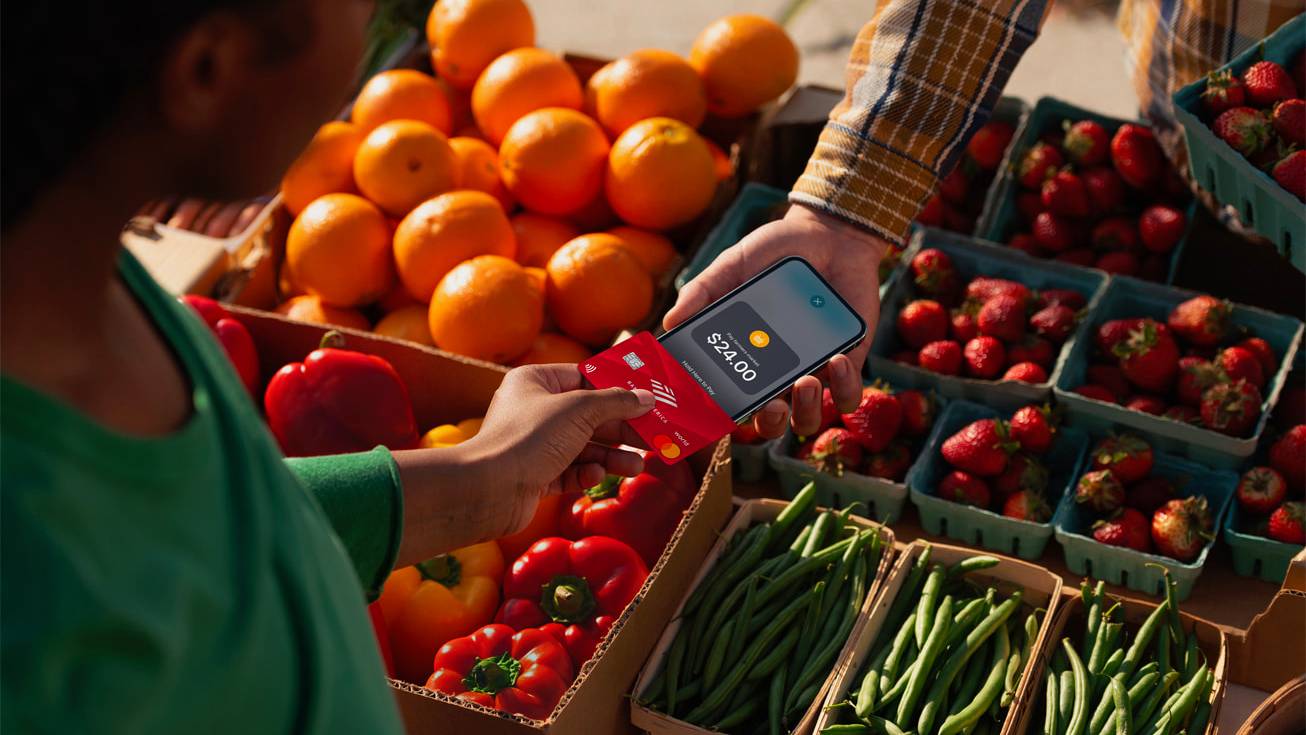
Tap to Pay on iPhone Launches in South Africa

Apple today announced that Tap to Pay on iPhone is now available in South Africa, allowing merchants to accept contactless payments using only their iPhone and a partner-enabled iOS app.


The feature lets businesses of any size accept contactless credit and debit cards, Apple Pay, and other digital wallets at checkout. Merchants prompt customers to hold their card, iPhone, Apple Watch, or other digital wallet near the merchant's device, with the payment completed via NFC technology. No additional hardware or payment terminal is required.

iStore Pay and Yoco are the first payment platforms in South Africa to support the feature. The launch supports Mastercard and Visa, with American Express support coming soon.

Tap to Pay on iPhone first launched in the United States in February 2022 and has been expanding steadily ever since. A major wave of rollouts across 2025 brought the feature to dozens of new markets, including 18 new countries in May, five more European countries in September, and launches in Singapore and Hong Kong in December. Malaysia followed in April 2026, and Apple confirmed at the start of this year that the feature had reached 50 markets globally.

As with all Tap to Pay on iPhone transactions, privacy is built in. Transactions are encrypted and processed through the device's Secure Element, and Apple says it has no knowledge of what is purchased or who is buying it. Card numbers and transaction data are not stored on the device or Apple's servers.

Tap to Pay on iPhone requires an iPhone XS or later running the latest version of iOS.
This article, "Tap to Pay on iPhone Launches in South Africa" first appeared on MacRumors.com

Discuss this article in our forums
  •  

Foldable iPhone 'Ultra' Rumored to Launch in Just Two Colors

Apple's first foldable iPhone, expected to be called the "iPhone Ultra," is shaping up to launch with a noticeably restrained selection of colors, according to multiple leakers, with sources pointing to as few as two options and a deliberate avoidance of bold or vibrant finishes for the device.


In February, the Weibo leaker known as "Instant Digital" shared a broader account of the foldable iPhone's design, describing it with just two color options, with white as the only "confirmed" shade at the time. The leaker did not reveal the second option. Instant Digital revisited their February report earlier this month without walking back any color details, keeping the two-option account intact.

More recently, Macworld cited a supply chain source to provide new details about the foldable's color options: a classic silver and white model, and an indigo option described as similar to the iPhone 17 Pro's Deep Blue finish. The same source said the device will offer fewer choices than the iPhone 18 Pro models, with no bold or vibrant colors.

The approach is reminiscent of the iPhone X, which similarly launched in just two colors, Silver and Space Gray, when it debuted in November 2017 at a then record starting price of $999. Like the foldable iPhone, the iPhone X was a generational leap that introduced an entirely new design language. The iPhone XS that followed a year later added Gold to the lineup, suggesting Apple may take the same approach with the ‌iPhone Ultra‌ over time.

A limited color offering may also be a practical consequence of the device's constrained production outlook. Supply chain analyst Ming-Chi Kuo warned that early-stage yield and ramp-up challenges could mean smooth shipments may not occur until 2027, with potential shortages lasting through at least the end of 2026. Kuo also clarified that the frequently cited order figure of 15 to 20 million foldable iPhones likely reflects cumulative demand across the product's full two to three year lifecycle, rather than 2026 alone, suggesting that annual volumes will be modest.

Developing and manufacturing each additional color variant adds complexity and cost to an already challenging production process, as well as additional SKUs to stock. With the device expected to be in short supply at launch regardless, there is little commercial incentive for Apple to broaden the initial color palette. At a starting price that Bloomberg's Mark Gurman says will "cross the $2,000 threshold," the ‌iPhone Ultra‌ is also unlikely to attract the kind of buyer who might be swayed by a wider color range, making the calculation even simpler.

The ‌iPhone Ultra‌ is expected to be announced in September 2026 alongside the ‌iPhone 18 Pro‌ and ‌iPhone 18 Pro‌ Max.
Related Roundup: iPhone Fold

This article, "Foldable iPhone 'Ultra' Rumored to Launch in Just Two Colors" first appeared on MacRumors.com

Discuss this article in our forums
  •  

The MacRumors Show: Is Apple Downgrading iPhone 18 Due to Memory Shortage?

On this week's episode of The MacRumors Show, we talk through how the global memory shortage is forcing Apple's hand across multiple key products, killing configurations, delaying launches, and prompting spec decisions that would have seemed unlikely a year ago.


The pressure originates outside Apple's control. JPMorgan analysis cited by the Financial Times found that memory could account for as much as 45% of an iPhone's component costs by 2027, up from around 10% today. Companies like Nvidia are reportedly outbidding consumer electronics makers for limited DRAM supply from Samsung, SK Hynix, and Micron, while cloud firms are locking in capacity with multi-billion-dollar upfront commitments. Apple, which buys memory for roughly 250 million iPhones per year, has shifted from a position where it could dictate terms to one where it must compete for supply, and component prices are being driven up as a result.

The consequences are already visible in the Mac lineup. Apple last week removed the Mac mini's 256GB storage option, pushing its starting price from $599 to $799. Days later, it eliminated Mac mini models with 32GB and 64GB of RAM and stripped the M3 Ultra Mac Studio to a single 96GB configuration, with delivery estimates for remaining Studio models at 9 to 10 weeks. The ‌Mac Studio‌ had already lost its 512GB memory option in March, and multiple configurations became entirely unavailable in April. On Apple's April 30 earnings call, CEO Tim Cook acknowledged that both machines would be "hard to get for months to come" and said Apple expects "significantly higher memory costs" in the current quarter.

The MacBook Neo was sold out through April and Cook described demand on the earnings call as "off the charts." The ‌MacBook Neo‌ uses binned A18 Pro chips, adopting manufacturing rejects from the iPhone 16 lineup with one GPU core disabled, repurposed rather than discarded to keep costs low enough to hit the $599 price point.

Apple's initial production target is believed to be about five to six million units, but demand has since pushed the company to instruct suppliers to prepare for at least 10 million. TSMC's N3E production lines, where the A18 Pro was made, are now running at maximum capacity, with AI-related orders consuming much of the available output. A fresh manufacturing run for the A18 Pro would yield fully functional chips rather than defective ones, raising the per-unit cost before any expedited manufacturing premium is applied.

Apple is now said to be weighing up its options for the ‌MacBook Neo‌. The company is purportedly considering cutting the 256GB entry-level model, which would push the effective starting price up by $100 without changing any existing configuration's price, the same mechanism used with the ‌Mac mini‌. Separately, Apple may be considering new color options to soften any price increase.

Upcoming products are apparently being reshaped too. Weibo leaker "Fixed Focus Digital" has claimed in a series of posts that the standard iPhone 18 is being downgraded as a cost-cutting measure, with both display and chip specifications affected. Most recently, the leaker said certain parts are interchangeable between the ‌iPhone 18‌ and the lower-cost iPhone 18e. For context, iPhone 17 and iPhone 17e differ meaningfully: the standard model has a larger ProMotion display, Dynamic Island, Ultra Wide camera, five-core GPU, and significantly better battery life, but it looks like there could be fewer differences with the next generation.

A follow-up post framed the new split launch strategy, under which the ‌iPhone 18‌ ships in spring 2027 rather than alongside the Pro models in the fall, as a deliberate commercial mechanism to smooth out demand. By extending the ‌iPhone 17‌'s flagship run, Apple is also said to be creating conditions under which a lower-specced successor will be more palatable. The split launch itself has been widely reported since last year, with Ming-Chi Kuo and Nikkei among those to have corroborated it.

The launch of the rumored all-new high-end MacBook Pro or "MacBook Ultra" with an OLED display and touchscreen has also apparently slipped. Bloomberg's Mark Gurman has said early 2027 is now looking more likely than late 2026 due to Apple's constrained memory supply.

The MacRumors Show has its own YouTube channel, so make sure you're subscribed to keep up with new episodes and clips.


You can also listen to ‌The MacRumors Show‌ on Apple Podcasts, Spotify, Overcast, or other podcast apps. You can also copy our RSS feed directly into your player.


If you haven't already listened to the previous episode of The MacRumors Show, catch up to hear our answers to your listener questions about the future of Apple's product lineup, the software and services shaping the ecosystem, and our own personal histories with the company and its devices.

Subscribe to ‌The MacRumors Show‌ for new episodes every week, where we discuss some of the topical news breaking here on MacRumors, often joined by interesting guests such as Kayci Lacob, Kevin Nether, John Gruber, Mark Gurman, Jon Prosser, Luke Miani, Matthew Cassinelli, Brian Tong, Quinn Nelson, Jared Nelson, Eli Hodapp, Mike Bell, Sara Dietschy, iJustine, Jon Rettinger, Andru Edwards, Arnold Kim, Ben Sullins, Marcus Kane, Christopher Lawley, Frank McShan, David Lewis, Tyler Stalman, Sam Kohl, Federico Viticci, Thomas Frank, Jonathan Morrison, Ross Young, Ian Zelbo, and Rene Ritchie.

‌The MacRumors Show‌ is on X @MacRumorsShow, so be sure to give us a follow to keep up with the podcast. You can also email us at podcast@macrumors.com or head over to The MacRumors Show forum thread. Remember to rate and review the podcast, and let us know what subjects and guests you would like to see in the future.
Related Roundup: iPhone 18
Related Forum: iPhone

This article, "The MacRumors Show: Is Apple Downgrading iPhone 18 Due to Memory Shortage?" first appeared on MacRumors.com

Discuss this article in our forums
  •  

Apple Could Be Working on 'Spatial iPhone' With Holographic Display

Samsung is reportedly developing a holographic smartphone display that could be used in a rumored "Spatial iPhone."


The claims come from the leaker known as "Schrödinger" on X, who shared screenshots of messages with an unnamed insider purportedly familiar with the project. Sources have apparently heard discussions about a "Spatial iPhone" in the supply chain, though no credible details about it have yet emerged. Since Apple does not manufacture its own displays, any such device would likely rely on other manufacturers like Samsung, which already supplies OLED panels for the iPhone lineup.

Codenamed "MH1" or "H1," the rumored display differs from earlier glasses-free 3D screens by pairing advanced eye-tracking with diffractive beam-steering, a technique that uses microscopic structures in the display layer to bend and redirect light toward the viewer's eyes at precise angles, creating the perception of depth without additional glasses. The display is also said to incorporate a nano-structured holographic layer integrated directly into the AMOLED stack, enabling spatial depth effects that appear to float above the glass surface. A patented algorithm would purportedly allow users to tilt the device to see around objects in a video, which the leaker described as "360-degree rotation," similar in concept to Samsung's existing 85-inch spatial displays but adapted for handheld use.

Samsung's Advanced Institute of Technology (SAIT) has published academic work on slim-panel holography since 2020, when it released a paper in Nature Communications detailing a steering-backlight unit that increased viewing angles for holographic video by 30 times compared to conventional designs, a key obstacle to making the technology viable in a thin handheld device. The prototype described at the time was approximately 1cm thick and capable of displaying 4K holographic video at 30 frames per second.

The H1 display is also said to maintain full 4K resolution for standard 2D tasks, with the holographic depth layer activating only for specific content, in what the leaker calls "Zero Clarity Loss," avoiding the image quality tradeoff associated with older lenticular lens-based 3D screens. In a follow-up post, Schrödinger noted that the MH1 project remains in phase 1 of R&D, with the leaker pointing toward an approximate 2030 timeframe for holographic smartphones broadly.

The posts also say that "Samsung isn't alone" in its wish to ship a holographic smartphone, and cites supply chain rumors of an Apple "Spatial iPhone" circulating among component suppliers. Samsung's advantage apparently lies in its manufacturing head start, with SAIT's published research forming the groundwork for what the H1 would attempt to productize.

Apple's interest in holographic and glasses-free 3D display technology stretches back almost two decades. In 2008, Apple filed a patent application for a glasses-free autostereoscopic display that tracked the viewer's position to deliver a personalized 3D image without special glasses, with Apple claiming the system could accommodate multiple viewers simultaneously. In 2014, Apple was rumored to be developing a glasses-free 3D iPhone display, the same year the U.S. Patent and Trademark Office granted Apple a patent for an "Interactive holographic display device" that used laser beams, micro lenses, and sensors to produce three-dimensional images on a touchscreen panel.

Of course, none of those efforts resulted in a iPhone with a holographic display, but Apple SVP of Hardware Engineering and future CEO John Ternus said as recently as last month that combining the digital and physical world is an "inevitability," describing spatial computing as being in the "early innings."

Schrödinger is a relatively new account with a limited but not unimpressive track record on Samsung hardware. The leaker has shared what appear to be internal documents and prototypes in the past. Some predictions have held up: in November 2025, Schrödinger claimed hands-on time with a Galaxy S26 Plus prototype, accurately revealing its Exynos 2600 chipset, 12GB of RAM, and One UI 8.5 software, all of which were confirmed upon its launch in February. The account has also correctly revealed device details such as 60W wired and 25W wireless charging for the Galaxy S26 Ultra ahead of its announcement.
This article, "Apple Could Be Working on 'Spatial iPhone' With Holographic Display" first appeared on MacRumors.com

Discuss this article in our forums
  •  

Leaker: This Is Why Apple Is Delaying the iPhone 18

Apple proactively chose to delay the standard iPhone 18 as a deliberate market strategy, the leaker known as "Fixed Focus Digital" claims, with the move said to extend the iPhone 17's sales window while lowering production costs and improving Apple's competitive position against Android rivals.


In two new posts on Weibo, Fixed Focus Digital said that a downgrade to the ‌iPhone 18‌ standard model was largely inevitable due to global supply chain shortages, and that Apple made the deliberate choice to delay the device rather than rush it to market.

By extending the ‌iPhone 17‌'s production cycle and launching a large-scale manufacturing ramp, Apple is said to be using the additional time to let the ‌iPhone 17‌ consolidate market share at the mainstream price tier before its downgraded successor arrives. The leaker said Apple has targeted sufficient ‌iPhone 17‌ supply to participate in China's Double 11 shopping event later this year. Double 11, also known as Singles' Day, is one of the world's largest annual retail sales events and a significant battleground for smartphone market share in China.

The leaker framed the approach as a "remarkably clever market adjustment mechanism," suggesting that shipping a lower-specced ‌iPhone 18‌ will be easier to absorb commercially if it arrives some 18 months after the ‌iPhone 17‌, by which point the previous generation will have already dominated the mainstream tier for an extended period. Fixed Focus Digital described the strategy as simultaneously lowering production costs and boosting market share against Android rivals.

The posts add a strategic dimension to what has become a series of downgrade rumors for the device. The leaker first reported that Apple is implementing certain manufacturing downgrades to the ‌iPhone 18‌ as a cost-cutting measure, before adding that display specifications and the chip will both be affected. Apple could be planning to tweak the name of the A-series chip used in the device to obscure the extent of the chip change. Engineering Validation Testing of the ‌iPhone 18‌ and iPhone 18e is said to be taking place simultaneously in June, which aligns with the idea that the two devices now share significant engineering overlap.

Most recently, the leaker said certain parts are interchangeable between the ‌iPhone 18‌ and the lower-cost iPhone 18e, indicating that some specification convergence between the two devices is real and measurable at the supply chain level. "Take it from me: The standard ‌iPhone 18‌ model has been downgraded and its launch delayed-this decision is final and will not change," they added.

The ‌iPhone 18‌, iPhone 18e, and iPhone Air 2 are all expected to launch in spring 2027, with the iPhone 18 Pro, ‌iPhone 18 Pro‌ Max, and foldable "iPhone Ultra" anticipated in the fall of 2026. A split launch strategy separating the Pro and standard models has been widely reported since last year, with Ming-Chi Kuo and Nikkei among those to have corroborated the plan.
Related Roundups: iPhone 17, iPhone 18
Buyer's Guide: iPhone 17 (Neutral)
Related Forum: iPhone

This article, "Leaker: This Is Why Apple Is Delaying the iPhone 18" first appeared on MacRumors.com

Discuss this article in our forums

  •  

'iPhone Ultra' Could Be Industry's Most Repairable Foldable

The leaker "Instant Digital" today revisited their February design report on the foldable iPhone, claiming the device's internal design will make it the easiest-to-disassemble and easiest-to-repair foldable phone in the industry.


In a new post on Weibo, Instant Digital said the device's "incredibly rigorous underlying engineering logic" has "truly paid off," and predicted that teardown videos will vindicate the earlier claims once the device ships. The leaker described the internal component stacking as "logical yet elegant," and said the design eliminates the complex ribbon cable routing that typically complicates disassembly in competing foldables, achieving instead what they called "a truly high level of modularity."

The comments appear to be a callback to Instant Digital's February 2 report, which offered several design details about the foldable iPhone, including volume buttons relocated to the top edge of the device, Touch ID and Camera Control on the right side of the device, an iPhone Air-style camera plateau, a single punch-hole front-facing cameras, and just two color options. That report also touched on the device's internal design language, which the leaker now suggests is even more significant than readers initially appreciated.

At that time, Instant Digital explained that the device's motherboard is apparently located on the right side of the device. As to not run cables across the screen to the left side for the volume buttons (where they are located on all other iPhone models), Apple is said to have decided to run them directly upwards, which maximizes internal space.

The internal structure purportedly features an innovative stacked design, with the space being almost entirely dedicated to the display and battery. It is also said to feature the biggest battery ever used in an iPhone.

Instant Digital has reported on the foldable iPhone for quite some time. The leaker previously claimed the device will be around $2,000 at launch, that it will be eSIM-only, that Apple's foldable displays were nearing production in March, and that the device will ship in three storage capacities. Most recently, the leaker said Camera Control is seen internally as a key feature of the foldable iPhone.

The foldable iPhone, rumored to be called the "iPhone Ultra," is expected to launch alongside the iPhone 18 Pro and ‌iPhone 18 Pro‌ Max in the fall. The device is said to feature a 7.8-inch inner display and a 5.5-inch cover screen, the A20 chip and C2 modem, ‌Touch ID‌, and two rear cameras.
Related Roundup: iPhone Fold

This article, "'iPhone Ultra' Could Be Industry's Most Repairable Foldable" first appeared on MacRumors.com

Discuss this article in our forums
  •  

iPhone 18 Pro Rumored to Keep Aluminum Finish Amid Durability Complaints

The iPhone 18 Pro will reportedly carry over the same anodized aluminum finish introduced with the iPhone 17 Pro, despite concerns from some users about its durability.


According to the Weibo leaker known as "Fixed Focus Digital," surface chipping on the ‌iPhone 17 Pro‌ has become a common complaint, and that users who have sought recourse from Apple have been told they cannot claim it, with the company classifying the issue as an inherent characteristic of the aluminum alloy material and normal wear and tear. Crucially, they added that the ‌iPhone 18 Pro‌ will "continue to utilize this same design approach" despite its weaknesses.

The ‌iPhone 17 Pro‌ moved away from the titanium frames Apple used in its Pro lineup for the previous two years, adopting an anodized aluminum unibody design. Surface durability concerns surfaced almost immediately after launch.

Reports suggested that Dark Blue and Cosmic Orange models appeared to scratch more easily than other finishes, with MacRumors forum users describing visible marks on in-store display units within days of availability. A scratch test by YouTuber JerryRigEverything added some nuance, finding that most of the anodized shell holds up well against everyday items like keys and coins, but pinpointing the camera plateau as a clear weak point where the raised, unchamfered edges chip and scratch easily.

A separate issue emerged the following month, when a number of Cosmic Orange iPhone 17 Pro owners reported color shift, with the aluminum frame and camera plateau drifting toward a rose-gold or pink hue and in some cases prompting device replacements by Apple Support.

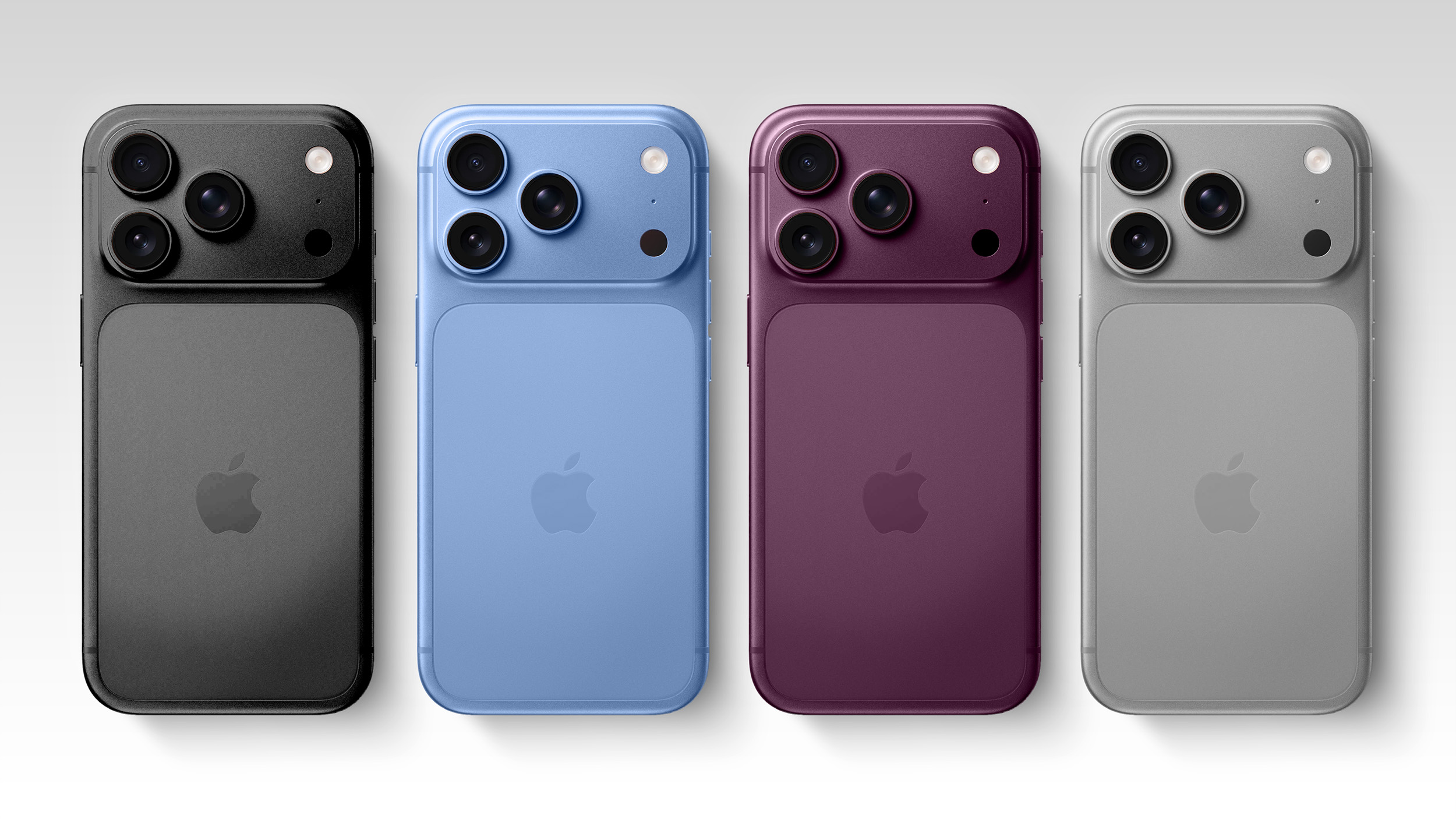
Rumors point to four color options for the ‌iPhone 18 Pro‌ models: Dark Cherry, Light Blue, Dark Gray, and Silver. Dark Cherry is expected to serve as the signature new color, described as a deep, wine-like red that is considerably more muted than last year's Cosmic Orange. The ‌iPhone 18 Pro‌ is not expected to offer a black option for the second consecutive year, but the rumored gray option could come close.

The ‌iPhone 18 Pro‌ and ‌iPhone 18 Pro‌ Max are expected to be announced in September 2026, alongside the first foldable iPhone.
Related Roundup: iPhone 18 Pro

This article, "iPhone 18 Pro Rumored to Keep Aluminum Finish Amid Durability Complaints" first appeared on MacRumors.com

Discuss this article in our forums
  •  

Apple Manufacturing Academy Hosts AI Showcase

Apple this week held the inaugural Spring Forum for its Manufacturing Academy in East Lansing, Michigan, gathering hundreds of U.S. manufacturers at Michigan State University to demonstrate how businesses are applying AI techniques learned through the program.


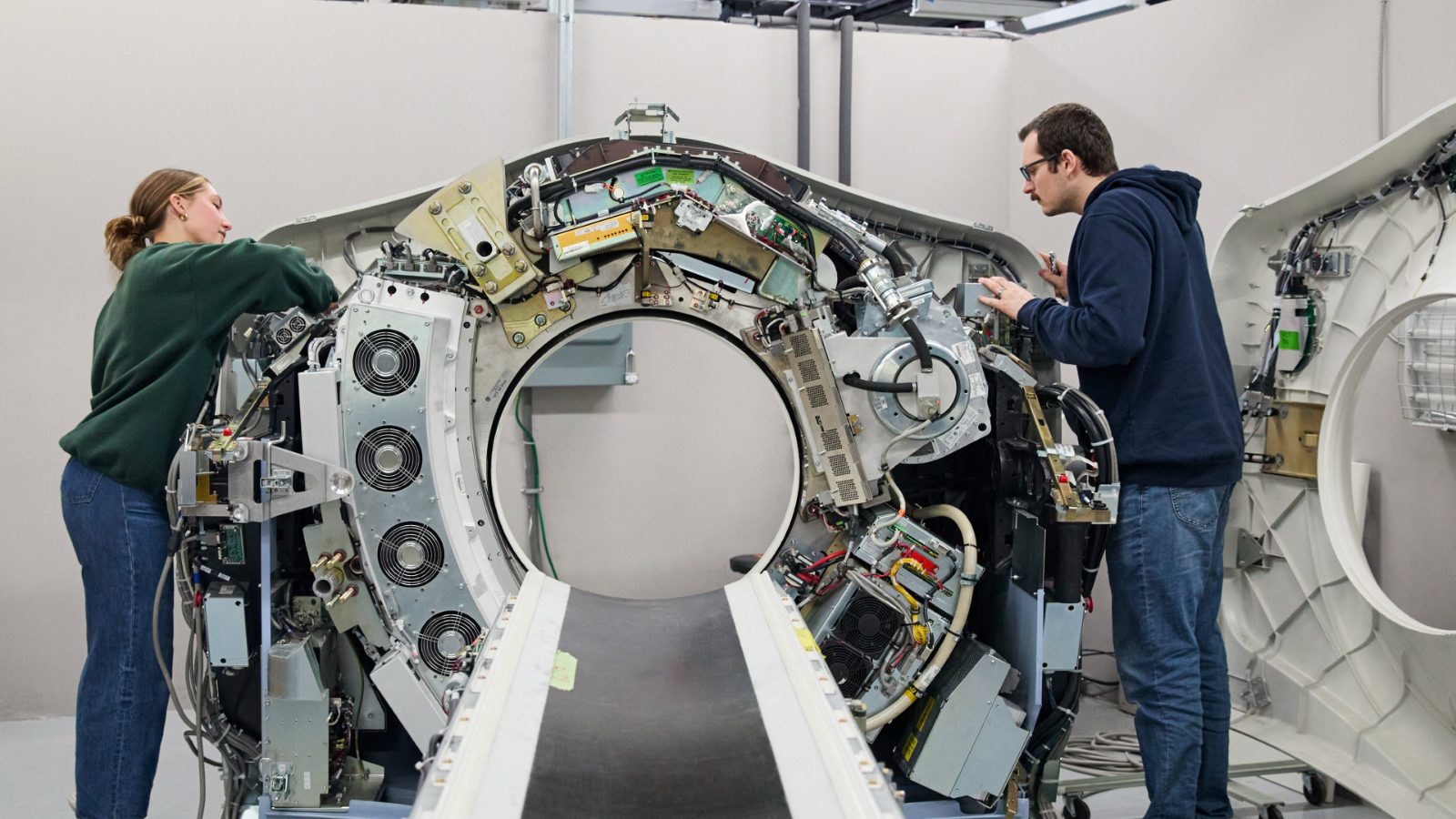
The event was the academy's largest to date. Offsite tours formed a central part of the program, with Block Imaging, a Michigan company that services and refurbishes medical imaging equipment including CT scanners and MRI machines, hosting attendees at its facility to show how it has put the academy's training to use on the factory floor. Other stops included the MSU Facility for Rare Isotope Beams and Peckham.

On-campus sessions featured speakers from McKinsey, Magna, LightGuide, and Medtronic on topics including physical AI in manufacturing and the challenges of scaling AI solutions. A poster session closed the day, featuring MSU students and small- and medium-sized business participants.

Priya Balasubramaniam, Apple's vice president of Product Operations, spoke at the forum and took part in a fireside chat with Michigan State University president Kevin M. Guskiewicz, covering AI's impact on manufacturing operations and the skills workers will need in an AI-enabled economy. Block Imaging's director of Technical Training, Katie Runyon, said the program had produced tangible results for her team:

The Apple Manufacturing Academy has had a direct impact on how we operate. The training we've received from Apple engineers and Michigan State experts has given our team practical tools and techniques we've been able to apply immediately on the floor, improving the way we work and the quality of what we deliver to healthcare providers. We keep coming back because the program continues to push us forward.


Launched last year as part of Apple's $500 billion U.S. investment commitment, the Manufacturing Academy is a free program pairing Apple engineers and MSU experts with small- and medium-sized businesses to help them implement AI and smart manufacturing techniques. It is the only such academy in North America and is open to businesses nationwide. To date, it has supported more than 150 companies through dozens of in-person training sessions, and recently added virtual programming.
This article, "Apple Manufacturing Academy Hosts AI Showcase" first appeared on MacRumors.com

Discuss this article in our forums
  •  

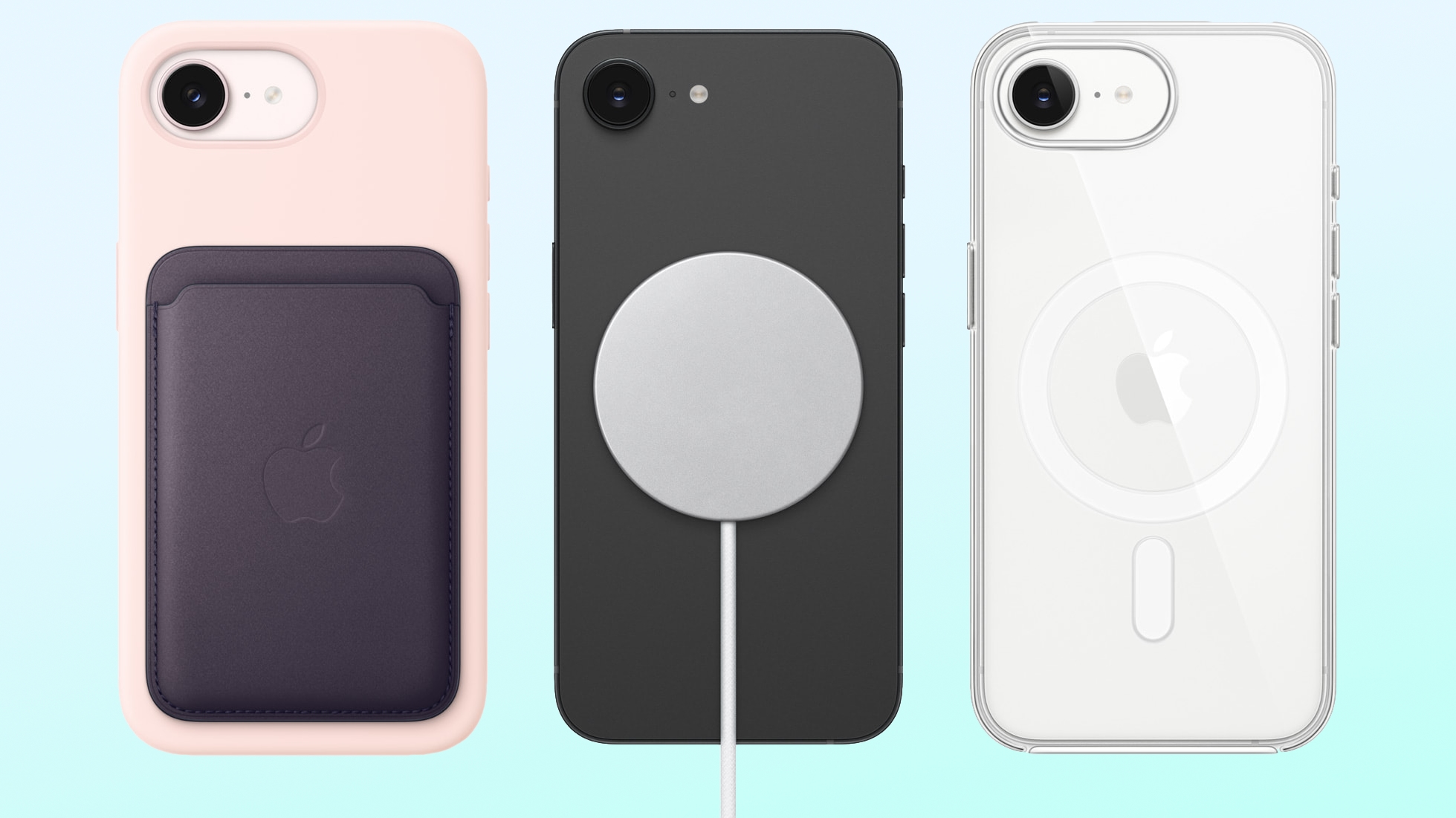
iPhone 18 Might Look a Lot More Like an 'e' Model, Leaker Claims

The standard iPhone 18 and the lower-cost iPhone 18e are said to share components, according to the leaker known as "Fixed Focus Digital," as further evidence that Apple is narrowing the gap between the two devices.


In new posts on Weibo, Fixed Focus Digital said that certain parts are interchangeable between the two models, adding that the information originates from a reliable manufacturing source. The leaker described the component overlap as confirmation that the specification convergence between the ‌iPhone 18‌ and iPhone 18e is real and measurable at the supply chain level. "Take it from me: The standard ‌iPhone 18‌ model has been downgraded and its launch delayed-this decision is final and will not change," they added.

The posts also suggested that if the ‌iPhone 18‌ ships in spring 2027 rather than alongside the Pro models in the fall, September and October will effectively become "flagship season" for Apple, a window occupied by the iPhone 18 Pro, ‌iPhone 18 Pro‌ Max, and the foldable "iPhone Ultra." A split launch strategy separating the Pro and standard models has been widely reported since last year, with Ming-Chi Kuo and Nikkei among those to have corroborated the plan.

The component sharing claim builds on a string of downgrade reports over the past two weeks. The leaker first reported that Apple is implementing certain manufacturing downgrades to the ‌iPhone 18‌ as a cost-cutting measure, before adding that display specifications and the chip will both be affected. Apple could be planning to tweak the name of the A-series chip used in the device to obscure the extent of the chip change. Engineering Validation Testing of the ‌iPhone 18‌ and iPhone 18e is said to be taking place simultaneously in June, which aligns with the idea that the two devices now share significant engineering overlap.

Today, the iPhone 17 and iPhone 17e are meaningfully different devices: the standard model features a 6.3-inch display with ProMotion and up to 3,000 nits of peak outdoor brightness, the Dynamic Island, a five-core GPU, an Ultra Wide camera, and significantly better battery life. The ‌iPhone 17e‌, by contrast, has a smaller 6.1-inch display, a notch rather than a ‌Dynamic Island‌, no ProMotion, a four-core GPU, and no Ultra Wide camera. If Apple is now sharing components between the ‌iPhone 18‌ and iPhone 18e and reducing display and chip specifications on the standard model, many of those distinctions could shrink or disappear entirely in the next generation.

The ‌iPhone 18‌, iPhone 18e, and iPhone Air 2 are all expected to launch in spring 2027, with the ‌iPhone 18 Pro‌, ‌iPhone 18 Pro‌ Max, and iPhone Ultra anticipated to be announced in the fall.
Related Roundup: iPhone 18
Related Forum: iPhone

This article, "iPhone 18 Might Look a Lot More Like an 'e' Model, Leaker Claims" first appeared on MacRumors.com

Discuss this article in our forums
  •  

The MacRumors Show: Your Tech Questions Answered

On this week's episode of The MacRumors Show, we answer your listener questions about the future of Apple's product lineup, the software and services shaping the ecosystem, and our own personal histories with the company and its devices.


Some questions center on the iPhone Air and its future direction, including whether Apple might adopt silicon-carbon battery technology for a second-generation model, or prioritize adding a second camera lens instead. There is also interest in how ‌iPhone Air‌ might evolve with features like a vibrating surface speaker.

The foldable iPhone generates a lot of discussion, with questions touching on whether listeners would choose it over an ‌iPhone Air‌, whether it could replace both an iPhone and iPad mini, and whether its arrival signals the end of the dedicated compact tablet.

Broader hardware questions include when the 11th-generation iPad will be updated, when Apple plans to complete the OLED with ProMotion rollout across its entire laptop lineup, whether the MacBook Neo risks cannibalizing ‌iPad‌ sales, and what the future holds for Apple Vision Pro given its underwhelming reception.

On the software side, questions cover what visionOS might look like several years down the line, Photomator's future and whether Apple intends to develop it into a proper Lightroom alternative, and whether Apple is falling behind competitors like Alexa on basic smart home automation, pointing out that HomePod still relies on Shortcuts for many routines that Alexa handles natively.

The general tech questions are the most varied, asking which Apple device would cause the biggest bottleneck if swapped for an entry-level version, whether we would attempt an Apple Watch-only week without an iPhone, and what device combinations we actually rely on day to day. There is also curiosity about Nothing as a brand and whether it is worth taking seriously, as well as concerns about the escalating cost of MacBook Pro models and where the ceiling might be.

A number of questions are more personal, asking about our first Apple products, what originally drew us to the ecosystem, our favorite and oldest devices, and whether family members using non-Apple products causes any friction. ‌The MacRumors Show‌ has its own YouTube channel, so make sure you're subscribed to keep up with new episodes and clips.


You can also listen to ‌The MacRumors Show‌ on Apple Podcasts, Spotify, Overcast, or other podcast apps. You can also copy our RSS feed directly into your player.


If you haven't already listened to the previous episode of The MacRumors Show, catch up to hear our discussion about Apple's bombshell announcement that Tim Cook will step down as CEO on September 1, 2026, with hardware engineering chief John Ternus set to succeed him.

Subscribe to ‌The MacRumors Show‌ for new episodes every week, where we discuss some of the topical news breaking here on MacRumors, often joined by interesting guests such as Kayci Lacob, Kevin Nether, John Gruber, Mark Gurman, Jon Prosser, Luke Miani, Matthew Cassinelli, Brian Tong, Quinn Nelson, Jared Nelson, Eli Hodapp, Mike Bell, Sara Dietschy, iJustine, Jon Rettinger, Andru Edwards, Arnold Kim, Ben Sullins, Marcus Kane, Christopher Lawley, Frank McShan, David Lewis, Tyler Stalman, Sam Kohl, Federico Viticci, Thomas Frank, Jonathan Morrison, Ross Young, Ian Zelbo, and Rene Ritchie.

‌The MacRumors Show‌ is on X @MacRumorsShow, so be sure to give us a follow to keep up with the podcast. You can also email us at podcast@macrumors.com or head over to The MacRumors Show forum thread. Remember to rate and review the podcast, and let us know what subjects and guests you would like to see in the future.
This article, "The MacRumors Show: Your Tech Questions Answered" first appeared on MacRumors.com

Discuss this article in our forums
  •  

iPhone Air's Poor Sales Spook Rivals Into Ditching Ultra-Thin Phone Plans

A Weibo leaker today suggested that Apple's iPhone Air 2 may be the only next-generation ultra-thin flagship smartphone from a major brand, after the original model's poor sales performance appears to have led competing manufacturers to abandon plans for their own follow-up products.


The leaker known as "Digital Chat Station" today posted on Weibo, claiming that the ‌iPhone Air‌ barely surpassed 700,000 unit activations even after multiple rounds of price reductions. The post also noted that an unspecified domestic Chinese ultra-thin device managed only 50,000 activations, and that the rival's planned follow-up now looks "highly precarious" and is in all likelihood going to be scrapped. The leaker concluded that the ‌iPhone Air‌ 2 may end up as the sole ultra-thin flagship of the next generation.

The ‌iPhone Air‌ has struggled commercially since its September 2025 launch. A KeyBanc Capital Markets survey found "virtually no demand" for the device, supply chain analyst Ming-Chi Kuo reported that suppliers had been asked to cut capacity by more than 80% between launch and early 2026, and the ‌iPhone Air‌ is now widely believed to be entirely out of production.

The device's poor reception has reverberated across the industry. Xiaomi reportedly planned a "true Air model" to rival Apple's offering, while Vivo targeted thinness within its mid-range S series. Both companies are said to have halted related projects. Samsung similarly cancelled the Galaxy S26 Edge after the Galaxy S25 Edge sold poorly.

Despite all of this, a separate leaker claimed last month that Apple will push ahead with at least two generations of the device regardless of sales performance. Reports are now aligned around a spring 2027 launch, with the delay attributed both to poor sales of the original and to Apple's new split launch strategy, which moves the standard iPhone 18, iPhone 18e, and ‌iPhone Air‌ 2 to a spring window while reserving fall 2026 for the iPhone 18 Pro, ‌iPhone 18 Pro‌ Max, and foldable iPhone. Reports from Nikkei Asia, Bloomberg's Mark Gurman, and The Information all point to an early 2027 release.

Apple is said to be significantly revising the ‌iPhone Air‌ 2 to address the main criticisms of the original. The Information reported that Apple is considering adding a second rear camera, likely an Ultra Wide lens to complement the existing 48-megapixel Fusion camera, along with lower pricing. Other rumored changes include reduced weight, vapor chamber cooling, and increased battery capacity. Apple is believed to have requested an ultra-thin Face ID module from suppliers to free up internal space for the additional camera. According to The Elec, Apple also plans to bring a thinner, brighter Samsung OLED technology called CoE (Color Filter on Encapsulation) to the ‌iPhone Air‌ 2, after debuting it first on the foldable iPhone.
Related Roundup: iPhone Air
Buyer's Guide: iPhone Air (Buy Now)

This article, "iPhone Air's Poor Sales Spook Rivals Into Ditching Ultra-Thin Phone Plans" first appeared on MacRumors.com

Discuss this article in our forums
  •  

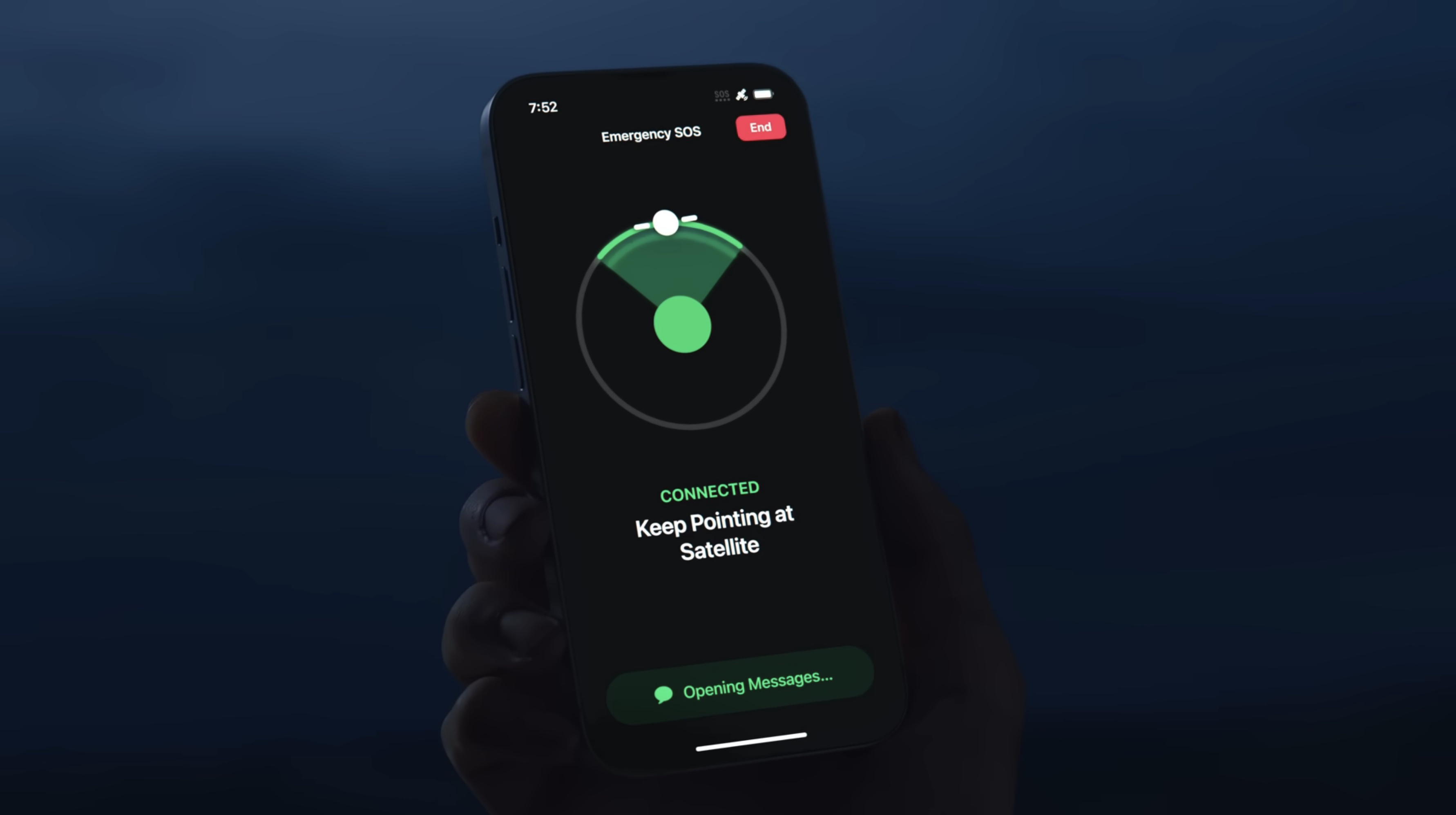
Apple Leads Global Market for Satellite-Connected Smartphones

Apple remains the top manufacturer of satellite-capable smartphones globally, with such devices projected to reach 46% of all smartphone shipments by 2030, according to a new report from Counterpoint Research.


The firm's Smartphone Satellite Connection Report finds that Apple kickstarted the satellite phone trend when it partnered with Globalstar to bring Emergency SOS via satellite to the iPhone 14 in 2022 and has maintained a clear lead since. Samsung leads the Android ecosystem, while Huawei and Google also follow a proprietary approach. Other Android players, including Xiaomi, OPPO, HONOR, and vivo, have aligned with the 3GPP non-terrestrial network (NTN) standard to enable broader scalability and interoperability.

The market is currently dominated by the premium segment, with the lack of compelling everyday use cases limiting broader adoption. 3GPP Release 17 supports only SOS messaging and basic location sharing. Release 18 is expected to expand adoption further across premium brands, but mass-market penetration in the mid-price segment is not anticipated until Release 19.

Qualcomm leads among Android vendors with its Snapdragon X80 and X85 modems, with MediaTek, Samsung, Google, and Huawei all increasing competition. North America is the leading region for adoption, driven by carrier partnerships including T-Mobile with SpaceX, AT&T with AST Mobile, and Rogers with SpaceX, alongside Apple's Globalstar arrangement. Amazon's acquisition of Globalstar is seen as a notable development, potentially opening new connectivity-as-a-service revenue streams.

Counterpoint expects Apple, Google, and Samsung to lead in overall market penetration toward 2030, with Android brands targeting entry-level and mid-range price points seeing slower uptake. Apple recently agreed a new satellite deal with Amazon following its acquisition of Globalstar, and has several new satellite features in development, including Maps via satellite, photos in Messages via satellite, and a satellite API for third-party apps.
This article, "Apple Leads Global Market for Satellite-Connected Smartphones" first appeared on MacRumors.com

Discuss this article in our forums

  •  

Apple Launched AirTag 5 Years Ago Today

Apple's AirTag item tracker turns five years old today, with the $29 accessory having spent half a decade as the best-selling item tracker in the world.


The ‌AirTag‌ launched on April 30, 2021, alongside the M1 iMac, a new iPad Pro, and a new Apple TV 4K. The coin-shaped accessory has a polished stainless steel back, IP67 water resistance, and a U1 Ultra Wideband chip that powers Precision Finding, a feature that combines haptic, visual, and audio feedback to guide users to a lost item's precise location with the iPhone 11 and later.

Setup works by bringing the tag close to an iPhone, with each ‌AirTag‌ appearing in the Items tab of the Find My app. The ‌Find My‌ network, which relies on Bluetooth signals from nearby Apple devices to relay location data, allows a lost item to be tracked even when out of direct range. The ‌AirTag‌ is priced at $29 for a single tag or $99 for a four-pack, with free engraving available.

Reports of the AirTag being misused for stalking and vehicle theft surfaced within months of launch, with its small size, low price, and the breadth of the ‌Find My‌ network making it an attractive tool for bad actors. Apple released a statement in February 2022 saying incidents of misuse were "rare; however, each instance is one too many," and introduced setup warnings making clear that using an ‌AirTag‌ to track people without consent is a crime in many regions.

A class-action lawsuit filed in California in December 2022, later expanded to include more than three dozen plaintiffs, alleged that the product's accuracy and affordability made it well-suited for misuse, and a federal judge allowed certain claims to move forward in March 2024. Apple and Google later aligned on cross-platform specifications so that Android users receive automatic unwanted tracking alerts alongside iPhone users.

Despite the controversy, Apple says the ‌AirTag‌ became its best-selling item tracking accessory, citing user stories of recovering lost luggage, bicycles, and bags in the years since launch.

Apple released the second-generation AirTag in January 2026. The updated model features a second-generation Ultra Wideband chip with Precision Finding working from up to 50% farther away, an upgraded Bluetooth chip, and a speaker 50% louder than the original. For the first time, Precision Finding also works with Apple Watch Series 9 models and later. A teardown revealed that the speaker magnet is more firmly secured in the second-generation model, making it harder to remove, a modification that had previously been used to silence unwanted tracking alerts. Pricing remains $29 for a single tag and $99 for a four-pack.
Related Roundup: AirTag
Buyer's Guide: AirTag (Buy Now)

This article, "Apple Launched AirTag 5 Years Ago Today" first appeared on MacRumors.com

Discuss this article in our forums

  •  

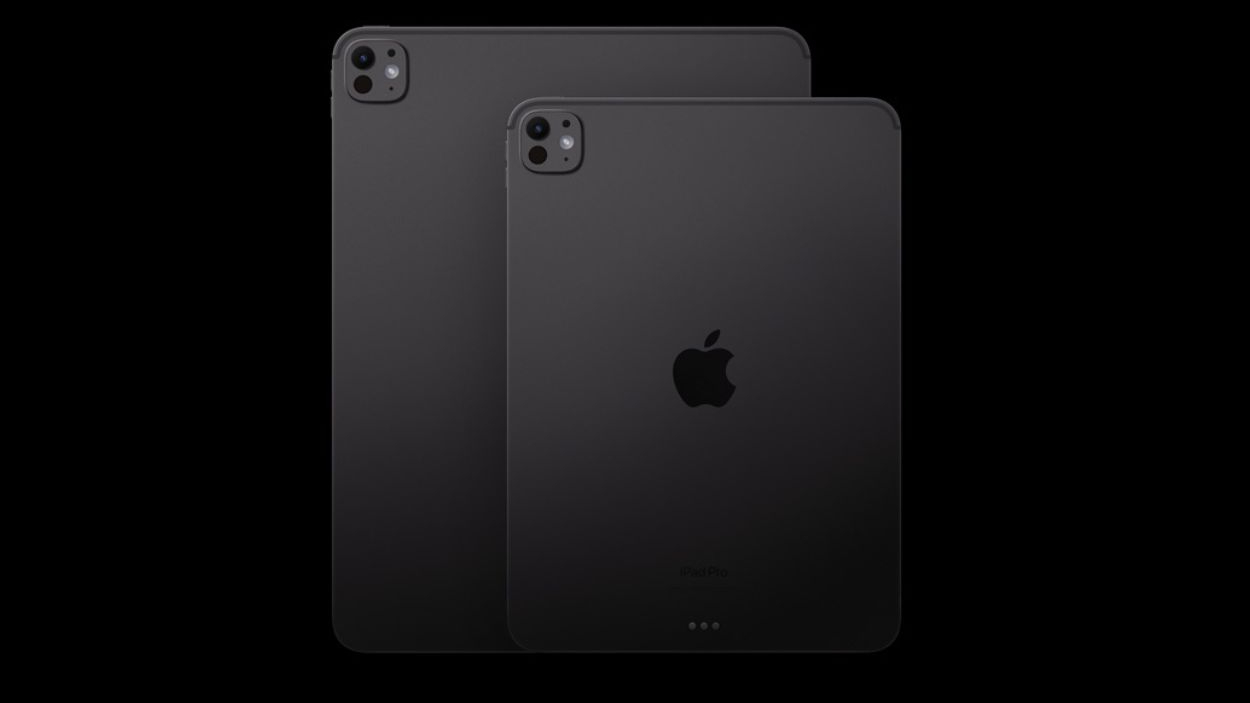
Apple Has Likely Abandoned 'iPad Ultra' Plans

Apple has reportedly abandoned plans for a foldable "iPad Ultra" following years of disappointing sales performance for the iPad Pro.


The claim predominantly comes from the Weibo leaker known as "Instant Digital," who posted the remark in response to a question about whether the ‌iPad‌ would join a rumored "Ultra" series of Apple devices. Instant Digital listed the Apple Watch Ultra, M-series Ultra chips, "iPhone Ultra," and "MacBook Ultra" with an OLED display as products in the pipeline, but explicitly excluded the ‌iPad‌ from that group, citing weak market performance for the ‌iPad Pro‌. They added that Apple now has "no plans" to release an ‌iPad‌ Ultra.

The ‌iPad Pro‌'s sales struggles are well documented. In October 2024, it was reported that shipment projections for the M4 ‌iPad Pro‌ had been significantly cut after weaker-than-expected demand following its launch earlier that year. DSCC analyst Ross Young lowered his full-year 2024 forecast from up to 10 million units to just 6.7 million, with shipments of the 13-inch model projected to fall by more than 50% and 90% in the third and fourth quarters respectively.

Young attributed the sluggish reception in part to the high price point, with the 11-inch model starting at $999 and the 13-inch at $1,299, levels that deter buyers who view tablets as secondary devices alongside a smartphone or laptop. ‌iPad‌ revenue has declined for three consecutive years, and the category accounted for just 6.73% of Apple's total revenue in 2025.

In his latest "Power On" newsletter, Bloomberg's Mark Gurman said that Apple has been developing a 20-inch foldable ‌iPad‌, describing the project as a priority for Senior Vice President of Hardware Engineering and future Apple CEO John Ternus. Gurman noted, however, that the device "may end up being a wacky experiment that doesn't see the light of day, according to several people who have worked on it."

The rumored foldable ‌iPad‌ has a long and troubled development history. Last October, it emerged that engineering challenges tied to weight, features, and display technology had pushed Apple's target launch from 2028 to 2029 or later. The device was reportedly being developed with a large Samsung OLED display, with Apple focused on minimizing the visible crease, just like the upcoming foldable iPhone.

Prototype units reportedly weighed around 3.5 pounds, making them heavier than a 14-inch MacBook Pro and nearly three times the weight of a 13-inch ‌iPad Pro‌. The device could have been priced as high as $3,900, roughly triple the $1,299 starting price of the 13-inch ‌iPad Pro‌.

There has also been uncertainty about how the product would be categorized. In March, Gurman noted that a "gigantic" foldable ‌iPad‌ would challenge Apple's tradition of keeping the Mac and ‌iPad‌ as separate product lines, with some internally describing it as a foldable ‌iPad‌ and others as an all-display MacBook. When closed, the device reportedly resembles a Mac, with an aluminum shell and no exterior display. The design is said to be similar to Huawei's MateBook Fold, an 18-inch foldable tablet currently priced at $3,400.

The reports come against a backdrop of Apple's rumored plans to expand its "Ultra" branding across multiple product lines. At least three Ultra devices are believed to be in the pipeline for this year alone: a foldable ‌iPhone Ultra‌ priced at around $2,000, AirPods Ultra with cameras for Visual Intelligence, and a MacBook Ultra featuring a touch-enabled OLED display priced up to 20% above the current ‌MacBook Pro‌ lineup. A source speaking to Macworld subsequently corroborated the ‌iPhone Ultra‌ and MacBook Ultra names.

Apple already applies the "Ultra" moniker to Apple Watch Ultra, M-series Ultra chips, and CarPlay Ultra. An ‌iPad‌ Ultra might seem like a natural fit for a family of higher-end, more experimental hardware at the top of each lineup, but with the ‌iPad Pro‌ already struggling to find buyers at its current price point, the question of whether sufficient demand exists for an even more expensive ‌iPad‌ may be answering itself.
Related Roundup: iPad Pro
Buyer's Guide: iPad Pro (Neutral)

This article, "Apple Has Likely Abandoned 'iPad Ultra' Plans" first appeared on MacRumors.com

Discuss this article in our forums

  •  

Apple Reportedly Questioning Whether iPhone Should Drop MagSafe

A leaker claims Apple is currently embroiled in an internal debate over whether MagSafe should remain a standard iPhone feature.


The Weibo leaker known as "Instant Digital" says that when ‌MagSafe‌ was first introduced, the mood inside Apple was reportedly aggressive about its expansion. ‌MagSafe‌ for the iPhone was introduced with the iPhone 12 lineup in 2020, bringing a ring of magnets to the back of the device for snap-on charging and accessory attachment. The ecosystem has since expanded significantly, with dozens of third-party wallets, cases, stands, and chargers built around the standard.

There were purportedly even plans to bring built-in ‌MagSafe‌ magnets to the iPad lineup, something the leaker previously hinted at, though those plans never materialized. Bloomberg's Mark Gurman first reported in 2021 that Apple was testing a glass-backed iPad Pro that would support wireless charging, specifically noting that MagSalfe was under consideration. A follow-up report in early 2022 suggested Apple had prototyped an iPad Pro with a large glass Apple logo that would serve as the wireless charging area, an approach aimed at avoiding the fragility of an all-glass back. Neither design made it to a shipping product. The rumors resurfaced in late 2023, with reports suggesting that the then-upcoming iPad Pro could include MagSafe support, based on information from sources familiar with Apple's magnet suppliers. The redesigned M4 ‌iPad Pro‌ that launched in 2024 still shipped without the feature.

Now, Instant Digital claims that confidence around ‌MagSafe‌ has given way to uncertainty. The leaker says Apple is weighing the costs of including ‌MagSafe‌ magnets in the iPhone against the strength of the accessory ecosystem that has grown up around the feature, though the nature of the debate and what any change might look like remains unclear.

The iPhone 16e launched without ‌MagSafe‌, making it the first new iPhone in years to omit it. Many iPhone 16e owners, as well as users of older iPhones without built-in magnets, turned to third-party cases with embedded magnet rings as a workaround, though the experience is generally considered to be inferior to native ‌MagSafe‌ support. The decision nonetheless drew criticism, and Apple reversed course with the iPhone 17e, restoring ‌MagSafe‌ support when the device launched earlier this year.

There is no indication that ‌MagSafe‌ is at imminent risk of disappearing from the iPhone lineup. However, the upcoming foldable "iPhone Ultra" may be a different story. Dummy models of the device show no visible indentations for the internal magnet array that ‌MagSafe‌ requires, suggesting the feature could be absent at launch. The iPhone Ultra is rumored to be just 4.5mm thin when unfolded, and it is thought that the device may simply be too slim to accommodate the magnets. If that proves accurate, the ‌iPhone Ultra‌ would be both the most expensive iPhone ever, with a starting price rumored at around $2,000, and the first new high-end model to ship without ‌MagSafe‌ since the iPhone 11 Pro.

While the wording of Instant Digital's post is somewhat ambiguous, it raises the possibility that Apple could be at least considering pulling ‌MagSafe‌ from its standard iPhone models, potentially making it exclusive to higher-end devices. Recent reports suggest that the standard iPhone 18 is being downgraded to cut costs.

An alternative scenario could see Apple scale back its in-device ‌MagSafe‌ implementation, relying more heavily on cases with embedded magnets to provide compatibility, as many iPhone 16e users already do. Given that Qi2, the open wireless charging standard now widely adopted across the industry, is built directly on ‌MagSafe‌'s magnet ring specification, a full removal of the feature from the entire iPhone lineup seems unlikely.
This article, "Apple Reportedly Questioning Whether iPhone Should Drop MagSafe" first appeared on MacRumors.com

Discuss this article in our forums

  •  

M4 vs. M5 MacBook Air Buyer's Guide

Apple last month announced a new MacBook Air, introducing the M5 chip, faster wireless connectivity, double the base storage, and a more capable charger, while simultaneously discontinuing the M4 model. So how does the new machine compare?


The M5 MacBook Air starts at $1,099 for the 13-inch model and $1,299 for the 15-inch, a $100 increase over the equivalent M4 models. In exchange, base storage doubles from 256GB to 512GB, and Apple says the new SSD delivers twice the read and write speeds of the previous generation. Education pricing is also available directly from Apple and typically shaves at least $100 off the price.

The main upgrade between the two models is the chip. Compared to the M4, the M5 delivers:


  • Up to 15% faster multithreaded CPU performance

  • Up to 30% faster overall graphics performance

  • Up to 45% faster ray tracing performance

  • 27.5% higher unified memory bandwidth


In addition to these general performance claims, Apple published a set of specific real-world workload results showing measurable gains in AI-driven applications:


  • 4×+ peak GPU compute performance for AI

  • 3.6× faster time to first token (LLM)

  • 1.8× faster Topaz Video Enhance AI processing

  • 1.7× faster Blender ray-traced rendering

  • 2.9× faster AI speech enhancement in Premiere Pro


Beyond raw performance, the M5 introduces several meaningful architectural changes. The GPU includes a dedicated Neural Accelerator in every core, a hardware addition absent from the M4, and Apple is exposing this via new Metal 4 developer APIs with Tensor capabilities.

The ray tracing engine advances to its third generation, and dynamic caching moves to its second generation. Memory bandwidth rises from 120 GB/s to 153 GB/s, enabled by the move from TSMC's second-generation 3nm process (N3E) to its third-generation ‌3nm‌ process (N3P).

The M5 ‌MacBook Air‌ also gains Apple's N1 wireless chip, bringing Wi-Fi 7 and Bluetooth 6 in place of the M4 model's Wi-Fi 6E and Bluetooth 5.3.


‌MacBook Air‌ (2025) ‌MacBook Air‌ (2026)
Apple M4 chip Apple M5 chip
Based on A18 chip from 2024's iPhone 16 Based on A19 Pro chip from 2025's iPhone 17 Pro
4 performance + 6 efficiency cores 4 super cores + 6 efficiency cores
Made with TSMC's second-generation ‌3nm‌ node (N3E) Made with TSMC's third-generation ‌3nm‌ node (N3P)
No integrated Neural Accelerators Integrated Neural Accelerator in every GPU core
Metal 3 developer APIs Metal 4 developer APIs with Tensor APIs to program GPU Neural Accelerators
Second-generation ray tracing engine Third-generation ray tracing engine
First-generation dynamic caching Second-generation dynamic caching
Shader cores Enhanced shader cores
PCIe NVMe Gen 3 SSD PCIe NVMe Gen 4 SSD (2× faster read/write speeds)
120 GB/s memory bandwidth 153 GB/s memory bandwidth
Apple N1 chip
Wi-Fi 6E Wi-Fi 7
Bluetooth 5.3 Bluetooth 6
Support for up to two external displays when the lid is open Support for up to two external displays simultaneously over a single Thunderbolt port; one display up to 8K at 60Hz or 5K at 120Hz
30W USB-C Power Adapter 40W Dynamic Power Adapter with 60W Max
256GB base storage, up to 2TB 512GB base storage, up to 4TB
Introduced in March 2025 Introduced in March 2026
Started at $999 (13-inch), $1,199 (15-inch) Starts at $1,099 (13-inch), $1,299 (15-inch)


For users whose workloads include on-device AI inference, complex 3D rendering, or other GPU-bound and memory-intensive tasks, the jump from M4 to M5 is significant. The combination of per-core Neural Accelerators, higher memory bandwidth, and the new GPU architecture produces multi-fold speed-ups in specific AI operations. In environments where time-to-result directly affects workflow such as local LLMs, diffusion models, video enhancement, or ray-traced production, the M5 represents a meaningful step-change. The Gen 4 SSD, which delivers approximately twice the read and write speeds of the M4 Air's Gen 3 drive, further compounds these gains for storage-intensive workflows.

For typical day-to-day usage including browsing, office work, media playback, and basic editing, the difference is highly unlikely to be perceptible in any way. The M4 was already a high-performance chip that routinely exceeded the demands of normal Mac workloads, and for the overwhelming majority of M4 ‌MacBook Air‌ owners, there is clearly no general-purpose reason to upgrade.

For new buyers choosing between the two models, the M5 is the more straightforward long-term choice. The doubled base storage alone changes the value calculus, and when you consider that Apple previously charged $200 to upgrade the M4 Air from 256GB to 512GB, the M5 effectively costs $100 less than a comparably configured M4 model would have at launch. If future-proofing is a priority and you intend to keep the machine for many years, the M5 model will be better equipped to handle increasingly prevalent on-device AI workloads as they mature.
Related Roundup: MacBook Air
Buyer's Guide: MacBook Air (Buy Now)
Related Forum: MacBook Air

This article, "M4 vs. M5 MacBook Air Buyer's Guide" first appeared on MacRumors.com

Discuss this article in our forums

  •  

Spotify Launches Fitness Hub With 1,400+ Peloton Workouts

Spotify today launched a new Fitness hub, bringing over 1,400 on-demand Peloton workout classes to Premium subscribers alongside a range of free content from independent wellness creators.


The Peloton classes span strength, cardio, yoga, pilates, barre, meditation, stretching, and outdoor run and walk, and require no specialist equipment. Peloton's bike workouts are not included. The catalog is available in the U.S., UK, Australia, Germany, Austria, Canada, Mexico, Sweden, and Spain, with Spotify saying it will expand to more countries over time.

Both free and Premium subscribers can access curated playlists and content from a range of established wellness creators, including Yoga With Kassandra, Caitlin K'eli Yoga, Sweaty Studio, Chloe Ting, Pilates Body by Raven, Abi Mills Wellness, and Sophiereidfit. The Peloton partnership content, featuring instructors such as Rebecca Kennedy, Ally Love, and Rad Lopez, is available to Premium subscribers only, ad-free.

The Fitness hub includes an onboarding questionnaire that asks users what type of movement they want, how hard they want to push, and their experience level, then generates a personalized starter pack. Classes are primarily in English, with select options in Spanish and German. Offline downloads are supported, and users can switch between watching a class on TV and listening on a phone or smart speaker in audio-only mode.

Nearly 70% of Premium subscribers apparently work out monthly, and there are more than 150 million fitness playlists active on the platform. Fitness and workout content also ranks among the top use cases for the company's recently launched AI-powered Prompted Playlist feature.

The Fitness hub is accessible by searching "fitness" in the Spotify app's Search tab, or via the "Browse all" menu.
This article, "Spotify Launches Fitness Hub With 1,400+ Peloton Workouts" first appeared on MacRumors.com

Discuss this article in our forums

  •  

Apple Planning to Launch Two New 'Ultra' Products in the Next Year

Apple has decided to market two of its new products over the next year as "Ultra" devices, Macworld reports.


Citing sources familiar with the matter, the report claims that Apple's first foldable iPhone will be called the "iPhone Ultra." The device will become the highest end option in the lineup.

The ‌iPhone Ultra‌ will not be considered part of the iPhone 18 iPhone lineup, despite arriving alongside the iPhone 18 Pro and ‌iPhone 18 Pro‌ Max. This would be just like how the iPhone Air is not considered to be part of the iPhone 17 series. Although Apple is hoping to ship the ‌iPhone Ultra‌ alongside the ‌iPhone 18 Pro‌, it may launch a few weeks later and with scarcer availability.

Moreover, Apple is apparently planning to release a "MacBook Ultra" later this year or in early 2027. It will feature an OLED panel and a touchscreen, sitting above the MacBook Pro in the lineup at a "significantly" higher price point. While the device was originally intended to launch later this year, it is now likely pushed back by several months due to memory supply chain shortages.

Apple already offers M-series Ultra chips, the Apple Watch Ultra, and CarPlay Ultra. "Ultra" branding for the foldable iPhone and OLED MacBook was previously rumored by Bloomberg, which added that "AirPods Ultra" could also be on the way.
Related Roundups: iPhone Fold, MacBook Pro
Buyer's Guide: MacBook Pro (Buy Now)
Related Forum: MacBook Pro

This article, "Apple Planning to Launch Two New 'Ultra' Products in the Next Year" first appeared on MacRumors.com

Discuss this article in our forums

  •  

OpenAI Reportedly Working on an AI Smartphone to Rival iPhone

OpenAI is working on a smartphone in what appears to be a significant reversal from previous reports that the company had no plans to enter the phone market, according to supply chain analyst Ming-Chi Kuo.


Kuo shared the findings from his latest supply chain checks in a post on X, saying MediaTek and Qualcomm are the chosen chip partners and Luxshare Precision Industry is the exclusive manufacturing partner, with mass production scheduled for 2028. Exact chip specifications and additional suppliers are expected to be finalized by late 2026 or the first quarter of 2027.

Kuo argues that the smartphone remains uniquely positioned for AI agent use because it is the only device that captures a user's full real-time state, including location, activity, communication, and context, which he describes as the most important input for real-time AI agent inference. He claims that AI agents will fundamentally change how people interact with a phone, shifting the focus from launching individual apps to completing tasks through a more continuous, context-aware interface.

He argues that fully controlling both the operating system and the hardware is the only way for the company to deliver a comprehensive AI agent service, and that a subscription-bundled business model could enable OpenAI to build a developer ecosystem around those agents.

Kuo suggests that Luxshare, which has long sought to reduce its dependence on Apple supply chain work, could benefit substantially from an early position in what he frames as the next generation of smartphone hardware.

The development represents a notable reversal in OpenAI's publicly stated hardware strategy. Previous reports have consistently described the company's hardware ambitions as centered on non-phone form factors developed in collaboration with Jony Ive, the former Apple design chief whose startup io Products was acquired by OpenAI for $6.5 billion. Those plans include a smart speaker, which is likely the first product to launch, along with smart glasses, a smart lamp, and potentially earbuds. OpenAI Chief Global Affairs Officer Chris Lehane has said the first hardware announcement is expected in the second half of 2026, with launch around early 2027.

OpenAI CEO Sam Altman posted on X the same day Kuo published his analysis, writing that it "feels like a good time to seriously rethink how operating systems and user interfaces are designed." Such a device would obviously put OpenAI in direct competition with Apple's iPhone.
This article, "OpenAI Reportedly Working on an AI Smartphone to Rival iPhone" first appeared on MacRumors.com

Discuss this article in our forums

  •  

XChat App Now Available

X today launched XChat, a standalone messaging app for the iPhone and iPad, available now on the App Store.


XChat allows users to chat with anyone on X in a private, focused space separate from the main X app. At launch, the app supports direct messaging and group chats, audio and video calls, and file sharing. X claims all messages are end-to-end encrypted and PIN protected, with no ads or tracking.

Other features include disappearing messages, the ability to edit and delete messages for everyone in a chat, and a mechanism to block or alert users when a screenshot is attempted. The app is free to download and requires iOS 26.0 or later.

Chat with anyone on X.
Completely private.
Now on your home screen.

Download for iOS: https://t.co/wBBfjJyJmu pic.twitter.com/u0QeGs1Z3D

— XChat (@chat) April 24, 2026


The app has been in testing with a small group of beta users since last year. X says more updates are still planned, with X lead designer Benji Taylor teasing that XChat is "just the beginning of what we're building for messaging."

Unlike the main X app, XChat adopts iOS 26 design conventions, including the ‌iOS 26‌ keyboard. The app offers several customization options, including light and dark modes, message permissions, left-swipe interaction settings, and a selection of app icon options. There is also a prominent button within XChat for jumping back to the main X app.

XChat can now be downloaded from the App Store in the United States. A release date for an Android version of the app has not yet been announced.
Tag: Twitter

This article, "XChat App Now Available" first appeared on MacRumors.com

Discuss this article in our forums

  •  
❌