❌

Lees weergave

Apple's Long-Delayed HomeView Was Already Being Tested in 2024

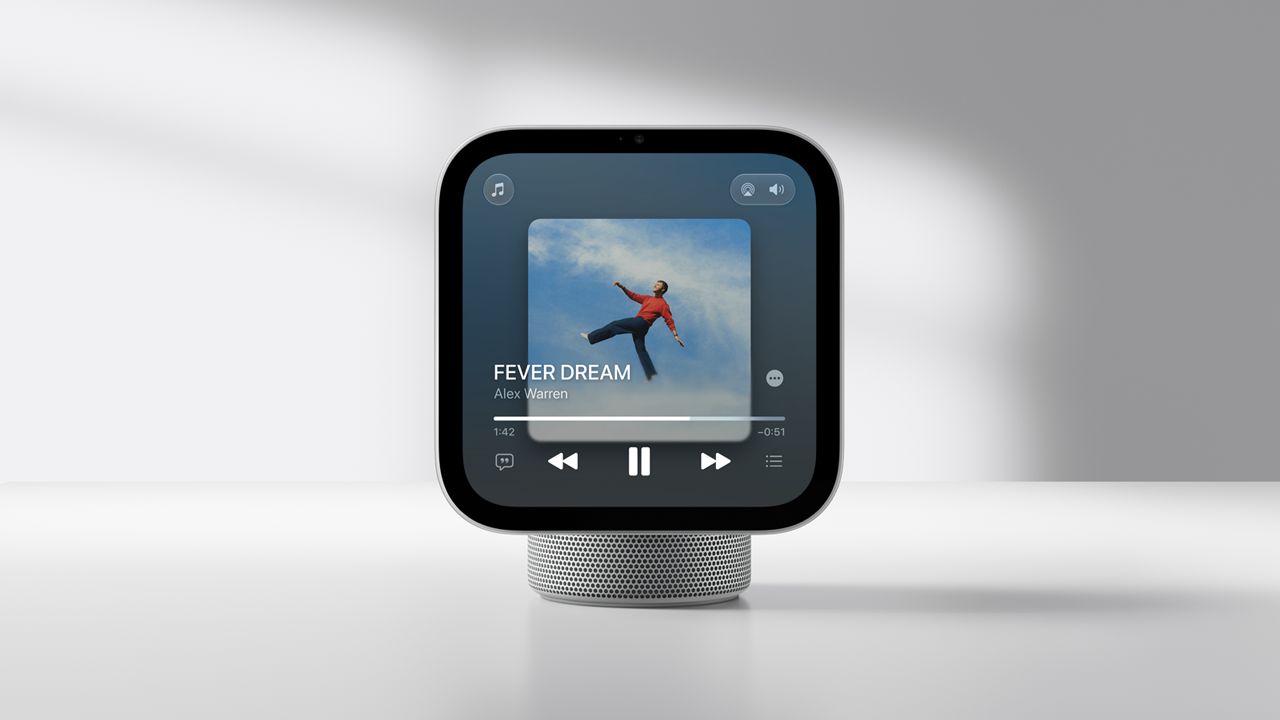
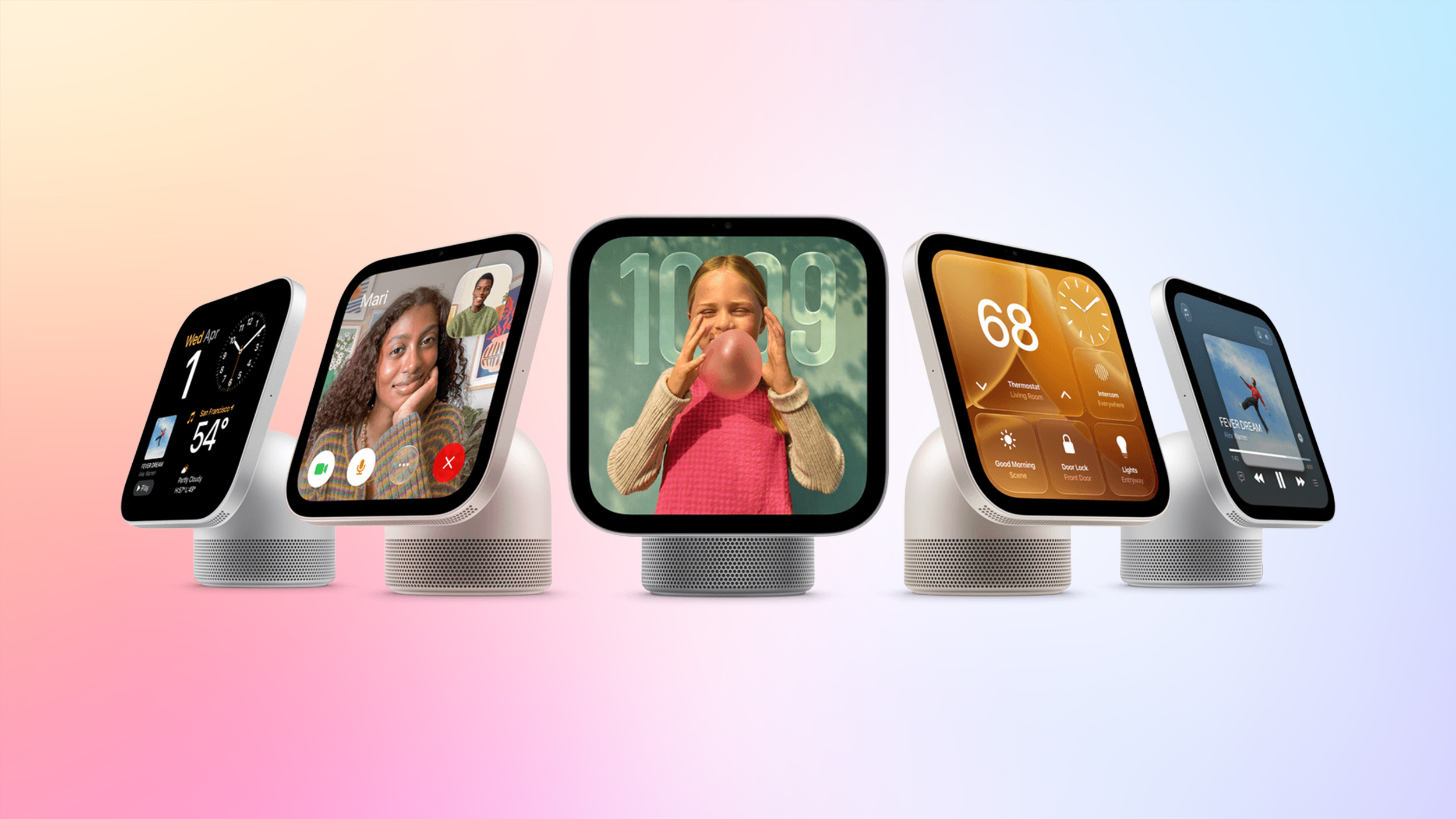
Apple's new HomeView underwent regulatory testing in October 2024, and it was running what would now be known as HomeView software version 18, according to an FCC document uncovered by MacRumors contributor Aaron Perris.

The document provides the clearest evidence yet that the HomeView was held up due to Siri AI's delayed launch. Apple initially previewed the more intelligent version of Siri at WWDC 2024, but in March 2025 the company announced that it needed more time to get it ready. Siri AI finally launched this September.
Related Roundup: Apple HomeView
Buyer's Guide: HomeView (Buy Now)

This article, "Apple's Long-Delayed HomeView Was Already Being Tested in 2024" first appeared on MacRumors.com

Discuss this article in our forums

  •  

Apple Invites App Updated With Two New Features

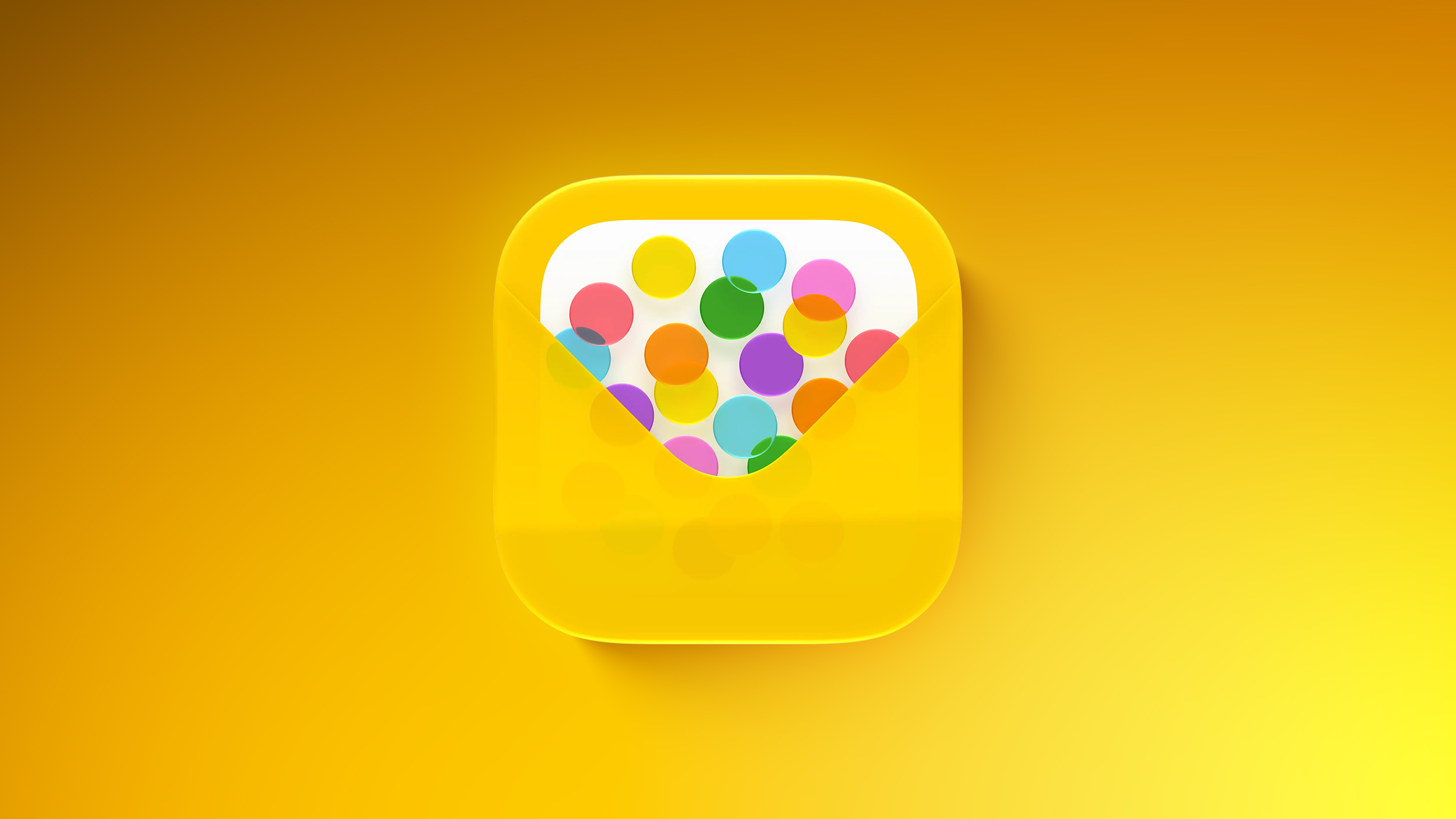
The free Apple Invites app for the iPhone was updated today with two new features: hosts can now more easily manually add guests to an event and mark their RSVP status, and the app's Home Screen widget now supports the extra large size option.


Released in February 2025, the Apple Invites app makes it easy to invite people to events, such as birthday parties and baby showers. The ability to create an event in the app requires subscribing to an iCloud+ plan with at least 50GB of storage for $0.99 per month, but anyone who receives an event link can RSVP for free on any device.

Apple's full release notes for version 1.12.1 of the app:
• Hosts can now more easily manually add guests to the event and mark their RSVP status, so your guest list stays accurate even when someone confirms outside the app.

• Invites widget now supports the extra large size to give you more options to countdown on your Home Screen.

• This update contains bug fixes and performance improvements.
The update is available now in the App Store.
This article, "Apple Invites App Updated With Two New Features" first appeared on MacRumors.com

Discuss this article in our forums

  •  

Apple Intelligence Coming to China in December With iOS 27.3

Apple plans to bring Apple Intelligence to China in iOS 27.3 after two years of regulatory delays, reports Bloomberg. The launch will include basic ‌Apple Intelligence‌ features for things like photo editing, but Siri AI won't be available. Image Playground and the newer version of Genmoji will be missing, plus text generation tools will be limited.


The South China Morning Post today reported that China's Ministry of Industry and Information Technology recently gave Apple network access permits to add Alibaba's Qwen and Tongyi Wanxiang models to the iPhone Duo, iPhone 18 Pro, and earlier iPhones, paving the way for an ‌Apple Intelligence‌ debut.

Apple introduced the first ‌Apple Intelligence‌ features in iOS 18.1, but they have been missing from China since launch. Apple received initial clearance to launch ‌Apple Intelligence‌ in China in July, but needed additional clearance for a consumer launch.

China restricts foreign AI technology, which meant Apple had to partner with Alibaba and Baidu to launch ‌Apple Intelligence‌ in the country. Apple also has to allow the Chinese government to approve ongoing updates to the AI models.

Competing smartphone makers in China like Huawei have long offered artificial intelligence features, and Apple has been at a disadvantage without comparable tools.

iOS 27.3 is expected in December.
Related Roundups: iOS 27, iPadOS 27
Related Forum: iOS 27

This article, "Apple Intelligence Coming to China in December With iOS 27.3" first appeared on MacRumors.com

Discuss this article in our forums

  •  

Dirk Eddelbuettel: qlcal 0.1.4 on CRAN: Fresh Upstream Updates

The twenty-second release of the qlcal package arrivied at CRAN yesterday, and has been built for r2u as well as on r-universe.

qlcal delivers the calendaring parts of QuantLib. It is provided (for the R package) as a set of included files, so the package is self-contained and does not depend on an external QuantLib library (which can be demanding to build). qlcal covers over seventy country / market calendars and can compute holiday lists, its complement (i.e. business day lists) and much more. Examples are in the README at the repository, the package page, and course at the CRAN package page.

This release is based on the changes in the QuantLib 1.44 release also made yesterday. It includes two new calendars for Malaysia and the Philippines, updates to around a dozen calendars, and a few other updates to internal files. Maxmilian Muecke spotted and fixed a few small bugs just as he did for the RQuantLib release we made yesterday; this is equally appreciated! The full details from NEWS.Rd follow.

Changes in version 0.1.4 (2026-10-13)

  • Add missing market calendars for Poland, Russia, Romania, Indonesia (Maximilian Muecke in #21)

  • Add (semi-deprecated) alternate separators '::' for Israel and New Zealand markets (Maximilian Muecke in #22)

  • Fix several typos across source, configuration and documentation files (Maximilian Muecke in #23)

  • Synchronize with QuantLib 1.44, add two new calendars, update several others, and update general utility files (Dirk in #24)

Courtesy of my CRANberries, there is a diffstat report for this release. See the project page and package documentation for more details, and more examples.

This post by Dirk Eddelbuettel originated on his Thinking inside the box blog. If you like this or other open-source work I do, you can sponsor me at GitHub.

  •  

Steinar H. Gunderson: Decompilation patterns, part 11: Irregular switch

Here's one that m2c usually gets right itself, but sometimes cannot:

    if (var_v1_7 != 1) {
        if (var_v1_7 < 2) { 
            if (var_v1_7 != 0) {
                spF0 = 40; 
            } else {
                vram_x = cmt46->vram_x;
                vram_y = cmt46->vram_y;
                spF0 = 40;
            }
        } else if (var_v1_7 != 2) {
            if (var_v1_7 != 3) {

Repeated comparisons against the same variable, especially in a nested form that could be binary search, should remind you of one thing: A switch. Usually, the compiler implements a switch with a jump table, but not always; if there are few conditions, or the range is too large for a reasonably-sized table, it will do some ifs instead (or, enough ifs to get within the range of a table). So what you want here is more like:

    switch (var_v1_7) {
    case 0:
       vram_x = cmt46->vram_x;
       vram_y = cmt46->vram_y;
       spF0 = 40;
       break;
    case 1:
       spF0 = 40;
       break;
    case 2:
       ...
    }

Remember that sometimes, you may need to insert cases that are not explicitly mentioned in the ifs (and/or a default case) to get everything to match back properly.

  •  

OpenAI Says Ex-Employee Showed Its Device Plans to Apple

OpenAI today suggested Apple could be using its trade secrets, the very thing Apple is already suing OpenAI for. In a court filing, OpenAI accused an ex-employee of giving sensitive data about an unreleased product to Apple.


The unnamed employee joined OpenAI from Apple and then returned after six months. OpenAI claims the person sent "over a hundred highly confidential files" to personal accounts, including manufacturing data and detailed images of at least one unreleased product. The former employee allegedly "made a presentation" on OpenAI product plans for Apple's senior leadership "months ago," and OpenAI is worried Apple could use that information to further its work on AI devices.
OpenAI is very concerned that its trade secret and confidential information is now circulating inside Apple, where Apple engineers can shape Apple's upcoming products based on OpenAI's confidential and innovative work. OpenAI has raised these issues directly with Apple, but to date, Apple has not provided OpenAI with the requested assurances that Apple is not in possession of, and has not used, OpenAI's trade secret and confidential information.

OpenAI asked the court for permission to investigate and pursue counterclaims if necessary. Apple told Reuters it has found no evidence to support OpenAI's claims and it has policies in place to ensure new employees do not use confidential information from previous employers.

Apple and OpenAI have been involved in a tense legal battle since Apple sued OpenAI in July. Apple says OpenAI employees Chang Liu and Tang Tan stole trade secrets from Apple to develop new AI hardware. OpenAI called the lawsuit "careless, aggressive and oddly personal," stating that it does not "have, nor want, any of their trade secrets" because it is "much more interested in building innovative products and technologies that push the frontier."

Yesterday, the court partially granted Apple's request for expedited discovery. OpenAI has up to two weeks to hand over forensic evidence as well as materials used when interviewing former Apple employees. Liu, Tan, and Alyssa Peng, Liu's former Apple colleague, will need to sit for depositions after Apple gets the requested information.

Judge Edward Davila, who is overseeing the case, said during a hearing today that he is "highly likely" to grant a preliminary injunction prohibiting OpenAI from using Apple's allegedly stolen trade secrets. Bloomberg says an injunction would "mark a potential setback" for OpenAI's hardware development efforts.
Tag: OpenAI

This article, "OpenAI Says Ex-Employee Showed Its Device Plans to Apple" first appeared on MacRumors.com

Discuss this article in our forums

  •  

Reproducible Builds: Reproducible Builds in September 2026

Welcome to the September 2026 report from the Reproducible Builds project!

In our reports, we try to outline the most important things that we have been up to over the past month. As a quick recap about what problem our project intends to solve, whilst anyone may inspect the source code of free software for malicious flaws, almost all software is distributed to end users as pre-compiled binaries. The motivation behind the reproducible builds effort is to ensure no flaws have been introduced during this compilation process by promising identical results are always generated from a given source, thus allowing multiple third-parties to come to a consensus on whether a build was compromised or not.

As ever, if you are interested in contributing to the project, please visit our Contribute page on our website.

In this month’s report, we cover:

  1. Reproducible Builds Summit 2026 held in Gothenburg, Sweden
  2. dettrace expanding architecture support for PGO & Lisp dumps
  3. “They don’t care about this!”
  4. SOURCE_DATE_EPOCH specification updates
  5. Reproducible Builds at SeaGL 2026
  6. New Code of Conduct (CoC)
  7. Supporter Spotlight: Jochen Sprickerhof
  8. Mailing list news
  9. Tool and documentation development
  10. Patches

Reproducible Builds Summit 2026 held in Gothenburg, Sweden

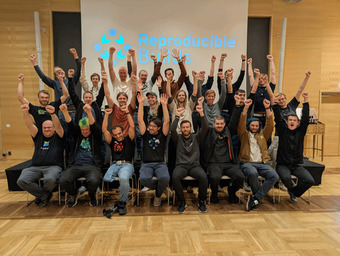
The annual Reproducible Builds summit took place from 22 to 24 September 2026 in Gothenburg, Sweden. The event brought together developers, distribution maintainers, security researchers and free software advocates from across the ecosystem to share updates on current initiatives, address outstanding toolchain bottlenecks and strengthen cross-project collaboration.

Participants engaged in a series of working sessions and technical roundtables focused on expanding the practical scope of reproducibility. Discussions covered ongoing work within major Linux distributions, language-specific package ecosystems and the various parts of the binary verification infrastructure.

Strategic planning formed a pillar of the gathering, with participants discussing long-term roadmap goals for supply-chain security, software integrity and related topics. Attendees explored new methods for automated verification, discussing how to lower the adoption barriers for maintainers and streamline the integration of deterministic build pipelines into established continuous integration (CI) systems. The event was then followed by two days of unmoderated hacking sessions. These hacking sessions provided space for technical progress, allowing attendees to draft specification updates, prototype new tool features and resolve standing reproducibility bugs in-person.


Dettrace expanding architecture support for PGO & Lisp dumps

Bernhard M. Wiedemann announced major updates to dettrace, porting the tool across most architectures supported by Debian and openSUSE. The release addresses key stability issues, passing test suites across these targets and making it ready for production build pipelines.

These improvements enable deterministic builds when utilising Profile-Guided Optimisations (PGO), removing the need to sacrifice runtime performance for reproducibility. Additionally, dettrace can now be applied to (notoriously difficult-to-reproduce) Lisp and Scheme memory dumps, including environments such as CLISP, SBCL, Scheme 48, Racket and GNU Emacs.


“They don’t care about this”

Annika Wilde, Marco Gutfleisch, Felix Reichmann, Anirban Chakraborty, Yuval Yarom, M. Angela Sasse and Ghassan Karame published a paper this month entitled “They don’t care about this”: A Systematic Study of Trusted Execution Environments Build Reproducibility in the Wild:

Trusted Execution Environments (TEEs) have become a cornerstone of modern cloud computing, providing strong confidentiality and integrity guarantees for both code and data. A critical component of this trust model is remote attestation, which enables external entities to verify the authenticity and integrity of code executing within a TEE through cryptographic measurements. However, the effectiveness of remote attestation fundamentally depends on the verifier’s ability to trace the reported measurement back to the original source code - a property that can only be guaranteed through reproducible builds. […]

The full PDF can be read online.


SOURCE_DATE_EPOCH specification updates

Bernhard M. Wiedemann shared a number of proposals regarding updating the SOURCE_DATE_EPOCH specification following discussions at a project summit. Seven distinct proposed changes have been submitted as merge requests on Salsa.

Bernhard’s proposed modifications are independent of one another, allowing for any combination to be merged depending on community feedback. Bernhard noted that one proposal may see the most debate, and could still benefit from further refinement before reaching consensus. Community members are invited to review and provide feedback on the individual merge requests by 1 December 2026. Input can be submitted via reactions or comments on Salsa, directly by email to Bernhard or the mailing list.

The specification was first published in 2015 and updated in 2017.


Reproducible Builds at SeaGL 2026

Reproducible Builds will be present at SeaGL in Seattle, WA, on October 23rd & 24th. Come chat with us in person!

Founded in 2013, SeaGL is a free, grassroots technical summit dedicated to spreading awareness and knowledge about free source software, hardware and culture.


New Code of Conduct (CoC) for the Reproducible Builds project

Mattia Rizzolo announced the official launch of a Code of Conduct for the Reproducible Builds project. This follows work and community discussions originally initiated in 2024, incorporating feedback gathered over email and during project summits, as well as with input from the Software Freedom Conservancy.

The new Code of Conduct establishes guidelines emphasising mutual respect among project contributors. It also defines a formalised process for submitting and handling complaints regarding community misconduct, ensuring transparent governance across project spaces. Along with the core policy document, an accompanying Code of Conduct FAQ has been published to outline the rationale behind adopting the guidelines.


Supporter Spotlight: Jochen Sprickerhof

As a reminder, another supporter spotlight interview was published featuring long-time Debian and Reproducible Builds contributor Jochen Sprickerhof, highlighting his work on package verification and project infrastructure.


Mailing list news

On our mailing list this month:

  • Jonathan Starr from the Institute of Open Science Practices (IOSP) posted with an announcement of its upcoming 2026 workshop series in Leiden in the Netherlands. This free-to-attend event aims to build a participant-owned data storage consortium, allowing community members to publish datasets, code and knowledge objects alongside algorithms designed to evaluate trust and value. The event features a dedicated Community Track for talks and discussions, a tool showcase and an opening session on resilient data storage.

  • Following up on IRC discussions regarding profile-guided optimization (PGO) on build servers, kpcyrd created a demonstration repository showing how PGO profiling can introduce non-determinism into output binaries. The demo highlights how runtime randomness (specifically, the randomised keys used in HashMaps to prevent denial-of-service attacks) causes varying bucket collision rates during test runs. These structural variances alter execution weights on underlying code branches, prompting the compiler to generate differing final assembly output for builds that would otherwise be perfectly reproducible if PGO was disabled. Rather than abandoning PGO performance gains, kpcyrd suggested treating generated profiling data as a documented build input or recorded environment artifact (similar to .buildinfo files), rather than regenerating profiles dynamically on the fly during build execution.

  • An autonomous AI agent (!), posted a controlled build result and reproducer demonstrating that pre-creating an obj directory in libmilter source trees prevents kernel-release path leaks (obj.Linux.<release>.x86_64) into debugging symbols. kpcyrd followed up with a helpful reply.

  • Alexander Sosedkin inquired on the mailing list about the preferred approach for sourcing pinned translation files to create reproducible GnuTLS release tarballs, asking whether external hosting should provide versioned downloads, or if projects ought to use Git submodules, dedicated side-repositories or some other mechanism.


Tool and documentation development

diffoscope is our in-depth and content-aware diff utility that can locate and diagnose reproducibility issues. This month, Chris Lamb made a number of changes, including preparing and uploading versions 330, 331 and 332 to Debian. In particular, Chris committed support for radare2 versions greater than 5.9.0 […] based on input from Guillaume Girol […], and committed support for .nar files via Guix. […][…].

Chris later modified diffoscope to not Build-Depend on the Debian package of GNU Guix, as its status in the Debian bug tracking system would transitively render diffoscope as being overly buggy for the next stable release […]. Similarly, he adjusted the Build-Depends on the apksigcopier package as it has been removed from Debian testing […] and, finally, he updated a number of copyright years […][…].

Vagrant Cascadian updated diffoscope in GNU Guix to version 332.


reprotest is our tool for building the same source code twice in different environments and then checking the binaries produced by each build for any differences. This month, reprotest version 0.7.33 was uploaded to Debian by Holger Levsen with the following changes:

  • Sergei Tachenov fixed the fileordering test on all filesystems, including the likes of ZFS, which could return a different order across two builds due to build being done in a different directory […].

  • Holger Levsen bumped the Standards-Version to 4.7.4, reflected that Priority: optional is the default now […], fixed the old Free Software Foundation address […] and bumped the debhelper ‘compat’ level to 14 after confirming there are only desired changes […].

  • Vagrant Cascadian updated *reprotest* to version 0.7.33 in GNU Guix.


rebuilderd, our server designed monitor the official package repositories of Linux distributions and attempt to reproduce the observed results there; it powers, amongst other things, reproduce.debian.net. This month, Bernhard M. Wiedemann submitted a pull request to rebuilderd that refactors RPM repository metadata handling. The change extracts rpm-md parsing out of the Fedora-specific scheduler module and into a shared one.


Lastly, there were a number of improvements made to our website this month as well. For example:


Patches

The Reproducible Builds project detects, dissects and attempts to fix as many currently-unreproducible packages as possible. We endeavour to send all of our patches upstream where applicable or possible. This month, we wrote a large number of such patches, including:

Vagrant Cascadian also performed a number of Non-Maintainer Uploads (NMUs) and Quality Assurance (QA) uploads in Debian for several packages with outstanding reproducibility issues. These included molttemplate, buddy, xfonts-nexus, fte and lifelines.

At the time of this writing, that leaves 130 submitted patches, with only 61 outstanding submitted patches that older than a year in the Debian bug tracking system. This number is only 26 if we exclude any low-priority build path issues.


If you are interested in contributing to the Reproducible Builds project, please visit our Contribute page on our website. However, you can get in touch with us via:

  •  

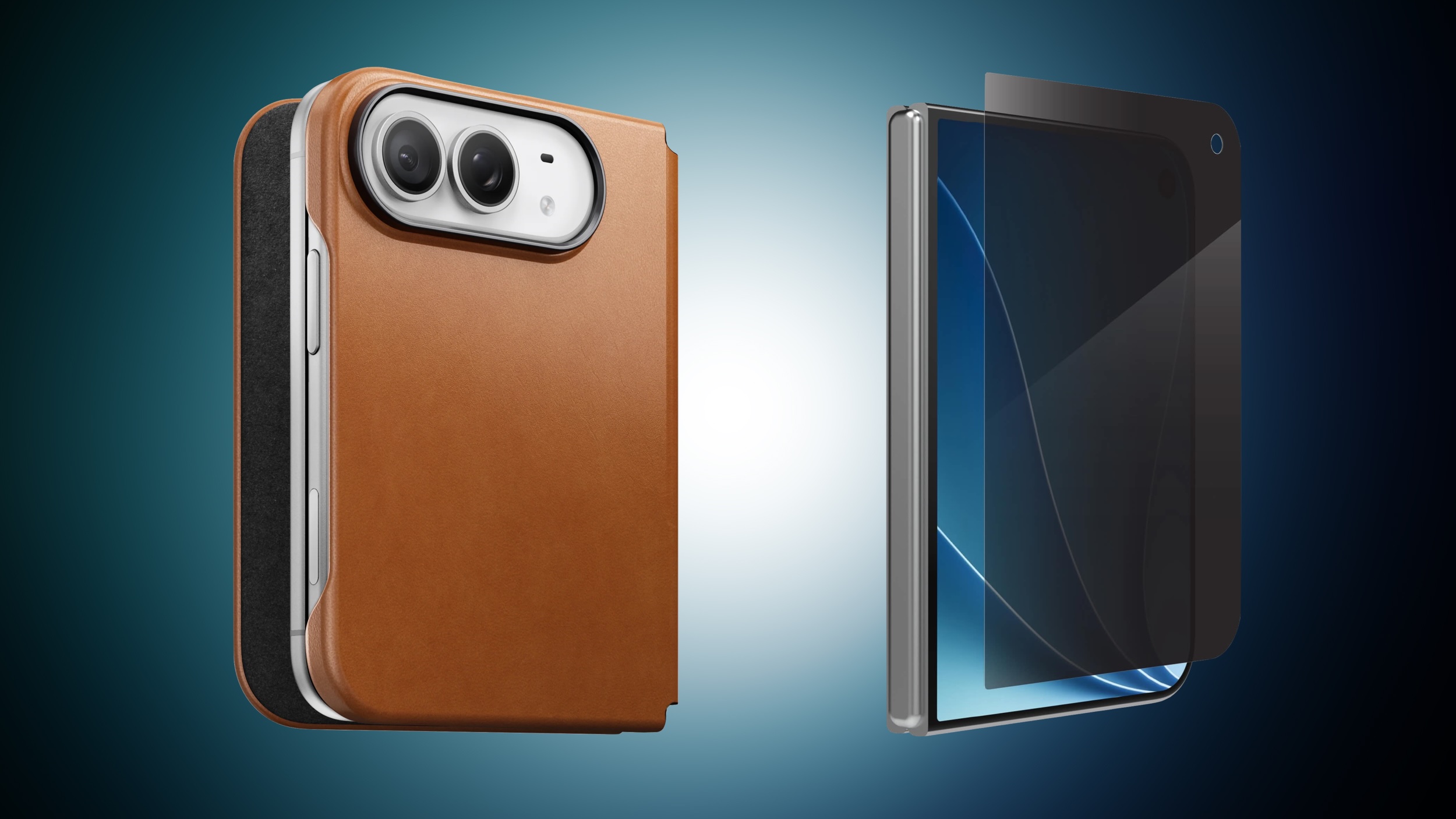
Discover the Best Cases and Screen Protectors for Your New iPhone Duo

iPhone Duo pre-orders kick off this Friday, and in anticipation of the event we've gathered all of the best cases and screen protectors you can get for your new iPhone Duo. This includes accessories from popular brands like OtterBox, Speck, ZAGG/Mophie, and more.

Note: MacRumors is an affiliate partner with some of these vendors. When you click a link and make a purchase, we may receive a small payment, which helps us keep the site running.

Most of these retailers aren't offering discounts on iPhone Duo cases yet, but at ZAGG you can get 20 percent off your order when you purchase any two items, including iPhone Duo accessories. This is a perfect opportunity to get a case and screen protector for the smartphone at a discounted rate.


Otherwise, you'll find the full list of retailers offering accessories for the iPhone Duo below. Shoppers should note that some of these devices are up for pre-order right now and will launch in November or later, but many are shipping cases for the Duo right now.

  • Amazon - iPhone Duo cases from Spigen, Speck, ZAGG, and more

  • AT&T - Discounts on iPhone Duo cases and screen protectors from Speck, Spigen, and more

  • Best Buy - iPhone Duo cases from Dbrand, OtterBox, Spigen, Kate Spade, and more

  • Burton Goods - Save on leather cases for iPhone Duo

  • ESR - iPhone Duo Silicone Leather case with Flex Stand

  • Nomad - Leather Folio cases for iPhone Duo

  • OtterBox - Defender cases for iPhone Duo

  • Speck - Presidio Cases for iPhone Duo

  • Target - iPhone Duo cases from ZAGG, Case-Mate, and Kate Spade

  • ZAGG - Save 20% when you buy 2 items from ZAGG, including iPhone Duo cases and screen protectors


If you're on the hunt for more discounts, be sure to visit our Apple Deals roundup where we recap the best Apple-related bargains of the past week.


Deals Newsletter


Interested in hearing more about the best deals you can find as we head into the holidays? You can sign up for our Deals Newsletter and we'll keep you updated so you don't miss the biggest deals of the season!


Related Roundup: Apple Deals

This article, "Discover the Best Cases and Screen Protectors for Your New iPhone Duo" first appeared on MacRumors.com

Discuss this article in our forums

  •  

Apple Store Near Los Angeles Closed Due to 'Events Beyond Our Control'

Apple Del Amo in Torrance (Los Angeles area) has been temporarily closed for a few days, and Apple has now added the following notice to the store's page: "We'll be right back. Our store is temporarily closed due to events beyond our control."

According to Reddit comments, the store allegedly suffered extensive water damage following a roof leak in the shopping mall.
This article, "Apple Store Near Los Angeles Closed Due to 'Events Beyond Our Control'" first appeared on MacRumors.com

Discuss this article in our forums

  •  

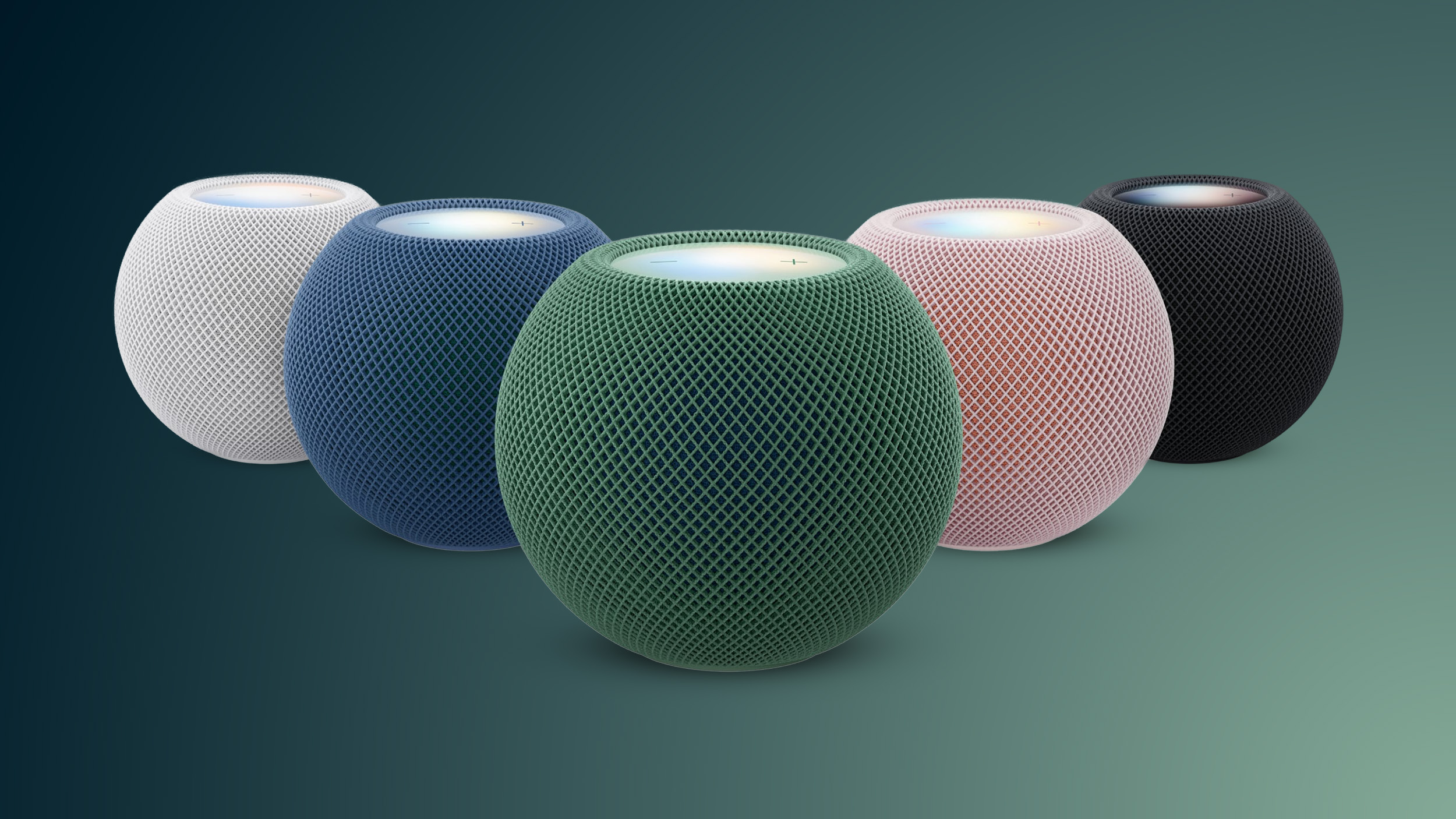
No, HomePod Mini 1 Won't Support Siri AI as CNET Reported

Update – 10:30 a.m. Pacific Time: CNET has corrected its article and now says only the HomePod mini 2 will support Siri AI. Original article follows.


Siri AI will apparently not be limited to the new HomePod mini 2, with support also coming to the first-generation HomePod mini in a software update later this year, according to a report today from CNET's Jeff Carlson.


"The HomePod Mini 2 also gets a faster S10 processor, which should help with processing Siri AI requests," he said. "However, the current S5-powered HomePod Mini will also get Siri AI compatibility later this year, along with updates to iOS 27.2."

Fine print on Apple's website does not mention this detail, at least as far as we have seen, so we have reached out to the company for comment.

For the Apple TV 4K, Apple's fine print did mention that Siri AI support will extend back to the second-generation Apple TV 4K from 2021, but we have not found any explicit fine print mention about Siri AI coming to the HomePod mini (1st generation).

Apple said setting up Siri AI on the HomePod mini 2 will require a paired iPhone or iPad model with Apple Intelligence support.

A paired device iPhone or iPad with Apple Intelligence support is also required for any requests involving a user's personal context, according to Apple. However, once Siri AI is enabled on the HomePod mini, the company said that even users without an Apple Intelligence-enabled iPhone or iPad can access Siri AI's broad world knowledge, richer and more natural conversations, and improved music discovery.

HomePod mini 2 launches on Friday, October 30, with pre-orders underway. It has an S10 chip, up from the S5 chip in the previous model.
Related Roundup: HomePod mini 2
Tags: CNET, Siri, Siri AI
Buyer's Guide: HomePod Mini (Buy Now)

This article, "No, HomePod Mini 1 Won't Support Siri AI as CNET Reported" first appeared on MacRumors.com

Discuss this article in our forums

  •  

Python 3.15 delivers a native-by-default experience on Windows on Arm

Windows on Arm has been ready for Python development for some time. With Python 3.15, the broader ecosystem has matured significantly, with more package maintainers publishing native Arm64 wheels, allowing Windows on Arm to support mainstream Python development across a broad and growing set of workloads. A native Python experience Windows on Arm is now a Tier 2 CPython platform, backed by continuous testing and CPython’s release-quality commitments. That readiness extends beyond the runtime. Widely used packages such as NumPy, SciPy, pandas, scikit-learn, Django, and FastAPI are available, while Jupyter, VS Code, Ruff, and pytest support everyday development workflows. GitHub-hosted Windows on Arm runners also let open-source maintainers build and test their projects natively. This did not happen with a single release. Native Windows on Arm builds of CPython have been available for several versions. What changes with Python 3.15 is the maturity of the experience. Windows on Arm is now a regular CPython target; the native runtime is selected by default on Windows on Arm devices, and CPython’s Tier 2 requirements call for platform failures to be fixed or the responsible changes reverted. Package maintainers now have practical infrastructure for native Windows on Arm validation, and many widely used projects publish native Arm64 wheels. Windows on Arm is now a practical platform for many mainstream Python development scenarios. As of September 2026, a scan of the 1,000 most-downloaded PyPI projects shows about 94% of the projects’ latest releases published either a native Windows on Arm wheel or a platform-independent wheel. This measures published wheel availability, not end-to-end application compatibility. Anaconda’s main channel also includes more than 2,500 packages published for Windows on Arm. Platform readiness does not mean every Python application is automatically ready for Windows on Arm. The runtime and a broad set of mainstream development workflows are established, but application readiness still depends on the complete dependency graph, particularly when packages rely on native extensions. Developers should confirm native Arm support for their dependencies during migration and testing.

A native Python experience by default

Windows on Arm is a PEP 11 Tier 2 platform. This designation reflects a strong support commitment; the platform has reliable continuous integration and active core developers, and platform-breaking changes must be addressed promptly. Windows on Arm CI results are considered as part of CPython’s release process. This is a clear measure of how far Windows on Arm support has progressed. Installation is now simpler. With Python Install Manager 26.4, Windows on Arm devices default to the Arm64 platform, so requesting Python 3.15 selects the native Arm64 runtime unless configuration or an explicit architecture tag overrides it. Python 3.15 ships a complete set of Windows on Arm component packages alongside the x64 packages. CPython runs tests on Windows on Arm, including the standard interpreter and free-threaded configuration. These jobs run as part of the normal Windows build matrix. You can confirm the architecture of the running interpreter by launching Python and inspecting its startup banner. A native Windows on Arm interpreter includes 64-bit (ARM64) in the compiler information; an x64 interpreter includes 64-bit (AMD64). Running Python natively keeps the interpreter and native package dependencies on the same Arm64 architecture. Python on Windows on Arm Applications that still depend on x64 packages can continue to run through Windows emulation, providing a practical transition path while those dependencies add native Arm support.

An ecosystem for mainstream development

The runtime is only one part of the developer experience. A useful platform also needs packages, editors, build tools, and CI capacity. Windows on Arm now supports a broad set of Python development scenarios. PyPI and packaging. Among the 1,000 most downloaded PyPI projects about 94% are available for Windows on Arm, either as native Arm wheels or platform-independent Python wheels that work across architectures. Much of the Python ecosystem uses platform-independent wheels, while many packages with compiled extensions now publish native Windows on Arm wheels. Windows on Arm package coverage pip, venv, virtualenv, setuptools, build, and modern tools such as uv are available on the platform, either as Arm native or platform-independent. Several widely used Rust-based packages publish native Windows on Arm wheels, including pydantic-core, Ruff, orjson, tokenizers, and other widely used projects. A platform-independent top-level package can still depend on a native extension, so applications should test their complete pinned dependency graph. Scientific computing and notebooks. NumPy and SciPy now publish native Windows on Arm wheels, backed by native OpenBLAS and Fortran support. pandas, Polars, Matplotlib, scikit-learn, Pillow, h5py, statsmodels, and XGBoost have also shipped Arm64 wheels. Numba and llvmlite add native JIT compilation to the scientific and machine learning stack. These packages exercise complex compiled build systems and native numerical toolchains rather than simple platform-neutral Python code. JupyterLab, Notebook, ipykernel, pyzmq, and psutil make the local notebook experience practical with platform-independent wheels. Developers can use browser notebooks or the Jupyter experience in VS Code with a native kernel. Web, cloud, and database development. Django, Flask, FastAPI, Requests, and HTTPX publish platform-independent wheels compatible with Windows on Arm. Several cloud SDK packages like AWS Boto3, Azure Storage Blob, and Google Cloud Storage publish platform-independent wheels that can run under Windows on Arm subject to their dependencies. SQLAlchemy is platform-independent, while database support includes libpq packages in Anaconda main, Microsoft’s Arm64 ODBC Driver 18, and native Windows on Arm wheels for python-oracledb. Developer tools and native builds. VS Code, Pylance, the Python and Jupyter extensions, and JetBrains PyCharm, IntelliJ, WebStorm, and Rider have support for Windows on Arm. Ruff, Black, mypy, pytest, and coverage are available. MSVC and LLVM support native compilation, while Rust with PyO3 and maturin supports the growing set of Rust-based extensions. CMake, Meson, Ninja, vcpkg, OpenSSL, SQLite, libffi, and other common foundations are available for maintainers building binary packages. A broad and growing ecosystem

Anaconda and Conda are moving native support forward

Anaconda now publishes packages for Windows on Arm to its production main channel, which includes more than 2,500 packages for Python 3.12 through 3.14. What's available today: NumPy, SciPy, and pandas for numerical computing and data analysis, backed by native OpenBLAS; XGBoost for machine learning; llama.cpp for local model inference; cryptography for security; Flask and Django for web development; and PostgreSQL and ODBC connectivity through libpq, psycopg, psycopg2, and pyodbc. These packages are available as Windows on Arm builds.   Anaconda main also includes PyTorch 2.14 CPU packages and CUDA packages for Python 3.12 through 3.14, built using the Windows on Arm Clang and OpenBLAS toolchain. CUDA Toolkit 13.4.1, cuda-python 13.4.3, and CUDA 13.4 builds of llama.cpp are also available. "Anaconda and Microsoft share a commitment to giving developers the best possible Python experience wherever they work. Bringing Windows on Arm to maturity means data scientists and AI builders can now rely on a native, trusted stack on Arm devices and our teams are proud to have built that stack together." says Laura Sellers, Chief Product & Technology Officer, Anaconda. Beyond Anaconda's own channel, conda-forge has stood up a Windows on Arm repository and has begun an experimental Windows on Arm migration, initially focused on bootstrapping package-management and build tools.   Anaconda is working toward conda and a Windows on Arm Miniconda installer, giving developers a supported path to conda on Windows on Arm. Together, these efforts expand native Windows on Arm package coverage across Anaconda's main channel and conda-forge.  Anaconda plans to add Windows on Arm support for Kilo Desktop, helping AI developers and data researchers start working in minutes with ready-to-use environments and Python packages on Windows on Arm devices, including Surface devices.

GitHub runners for Windows on Arm

The availability of Windows on Arm runners for continuous integration has been an important enabler for this progress. GitHub Actions provides the windows-11-arm and windows-11-vs2026-arm hosted runners for eligible public and private repositories. Open-source maintainers can use these runners to compile packages and run test suites on Windows on Arm. CPython uses this runner for its own native Arm64 Windows jobs. Package projects can use the same infrastructure to produce wheels and exercise installation from a clean environment to catch architecture-specific failures before publishing. Before hosted Windows on Arm runners, projects generally needed self-hosted Arm hardware or emulation for Windows on Arm CI. GitHub-hosted runners reduce that barrier by making native build and test infrastructure available on demand. From source to a native Windows on Arm wheel GitHub-hosted runners are especially useful for open-source projects because maintainers can add native Windows on Arm CI without operating their own runner infrastructure. A native runner turns Windows on Arm support into a change that can fit into an existing build matrix. It also allows maintainers to test Windows on Arm continuously rather than relying on a one-time build. "Arm is working with industry partners including Microsoft and community organizers to expand access to native Arm infrastructure and improve upstream support," said Grant Likely, Fellow at CoreCollective and Senior Director at Arm. "Our goal is to make Arm a standard part of how developers build, test and ship software. With the latest Python release, developers can build and run Python natively on Windows on Arm, making it easier to bring their existing workflows to Arm."

Work that continues

Our next focus is broader native wheel coverage to close gaps for PyArrow, gRPC, OpenCV, and database clients. We are working closely with maintainers to close these gaps. Windows on Arm builds of PyTorch and NVIDIA CUDA components are publicly available for validation. Anaconda provides CUDA Toolkit 13.4.1 packages for Windows on Arm. Anaconda plans to add CUDA Toolkit 13.4.2 packages after the corresponding conda-forge release followed by CUDA-enabled packages, with llama.cpp and PyTorch among its first targets. ONNX Runtime publishes native Windows on Arm CPU packages, and Windows ML supports Arm64 with compatible CPU, GPU, and NPU execution providers. On supported Snapdragon devices, ONNX Runtime's QNN provider can target Qualcomm CPU, GPU, and HTP/NPU backends. AI execution paths on Windows on Arm "Developers thrive when their tools just work, which is why a strong and comprehensive Python ecosystem is so important for Snapdragon X Series platforms. Working closely with Microsoft, Anaconda, and ecosystem partners, we continue to advance native support across the Python stack, making it easier for developers to build, test, and deploy applications on Windows on Snapdragon. This further enables developers to take advantage of superior performance, power efficiency, and AI capabilities of Snapdragon powered Windows devices." says Milan Plavsich, VP, Engineering, Qualcomm Technologies, Inc.

Call to action

If you maintain a Python project, add native Windows on Arm wheel builds and tests to your GitHub Actions matrix. The GitHub Actions Windows on Arm wheel builder custom agent in awesome-copilot can help automate this work. Add the agent profile to your repository, create an issue requesting Windows on Arm support, and assign the issue to the custom agent. If you are an application developer or researcher, test your dependencies with native Python on Windows on Arm and report any gaps to the relevant package repositories. This milestone reflects sustained work across CPython, package projects, CI infrastructure, Anaconda, Arm partners, and the Windows developer ecosystem. Our thanks to Qualcomm, Arm, CoreCollective, and the many package maintainers whose work across packages, infrastructure, testing, and issue investigation helped advance native Python support on Windows Arm.
  •  

iPhone Duo Compromises: Everything You Have to Give Up

Apple's $1,999 iPhone Duo asks buyers to pay more for a folding screen while accepting almost 40 compromises compared with the iPhone 18 Pro and ‌iPhone 18 Pro‌ Max, spanning camera capabilities, everyday usability, and ownership costs.


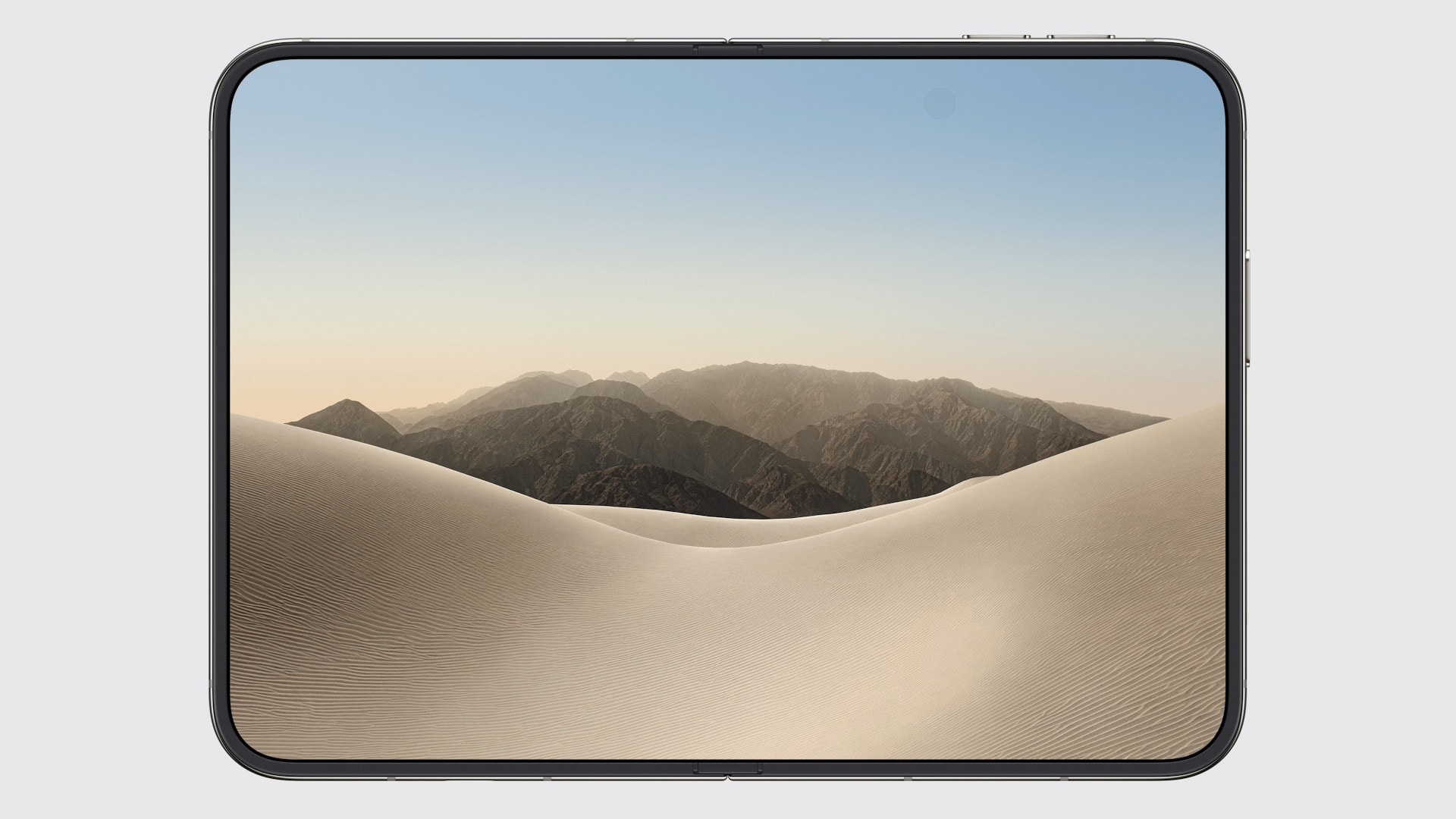
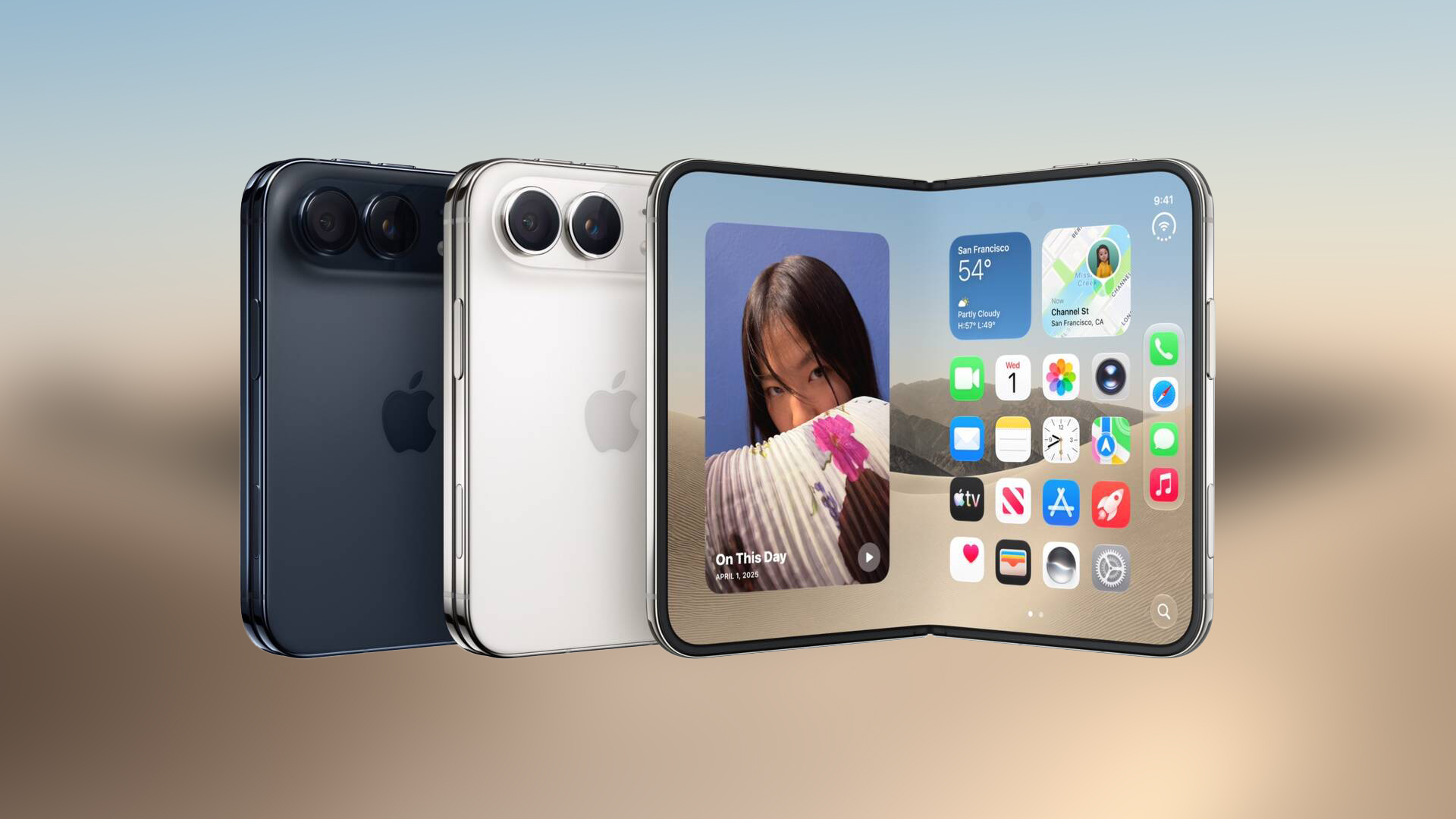
At equivalent storage capacities, the ‌iPhone Duo‌ costs $800 more than the ‌iPhone 18 Pro‌ and $700 more than the Pro Max. Its main attraction is a radically different design: a 5.4-inch outer display opens into a 7.6-inch inner display, providing more space for reading and viewing content, with the ability to use apps side by side.

All three devices share a number of key features, including the A20 Pro chip, ProMotion displays with refresh rates up to 120Hz, a 48-megapixel Ultra Wide camera, MagSafe, and USB-C with USB 3 speeds. However, choosing the foldable means giving up some familiar features and accepting differences in how the phone feels, works, and fits into a daily routine.

General Compromises


The general compromises concern the phone's controls, displays, dimensions, battery life, and cost. Some change interactions that iPhone owners perform throughout the day, while others affect particular preferences or longer-term ownership expenses. When choosing the ‌iPhone Duo‌ over an ‌iPhone 18 Pro‌ or Pro Max, users must be prepared to give up:


  • Face ID: Facial authentication is replaced by Touch ID in the side button, changing how users unlock their phone and authenticate purchases and apps.

  • The Action button: The ‌iPhone Duo‌ drops the customizable button used for functions such as Silent mode, the flashlight, Focus modes, and Shortcuts. Camera Control remains available, but there is no dedicated physical mute control.

  • MagSafe wallet compatibility: Apple lists ‌MagSafe‌ cases and wireless chargers as compatible with the ‌iPhone Duo‌, but omits the wallet compatibility it lists for the Pro models due to the device's shape.

  • Physical SIM support in some markets: The ‌iPhone Duo‌ is eSIM-only worldwide. Pro models sold in markets such as the UK and Australia retain a nano-SIM slot, giving buyers the option of using physical SIM cards.

  • A larger screen without unfolding: The ‌iPhone Duo‌'s outer display measures 5.4 inches, compared with 6.3 inches on the ‌iPhone 18 Pro‌ and 6.9 inches on the Pro Max. Accessing its larger 7.6-inch screen requires opening the device.

  • The Pro displays' pixel density on the larger screen: The ‌iPhone Duo‌'s inner display has a density of 430 pixels per inch, compared with 460 ppi on both Pro models. Its outer display retains 460 ppi.

  • A crease-free display: The ‌iPhone Duo‌'s folding screen has a crease that remains visible in certain lighting, despite Apple's efforts to minimize it. The Pro models have a conventional display without a fold through the center.

  • Simpler display maintenance: The ‌iPhone Duo‌'s outer screen has Ceramic Shield 2, while the inner screen uses a different construction with a polymer cover layer. That layer is replaceable if it wears or becomes damaged, introducing an additional service item absent from the Pro models. In the U.S., a cover-layer replacement costs $49 without AppleCare+ coverage or $19 with coverage.

  • A thinner, narrower, and lighter phone: Although shorter when closed, the ‌iPhone Duo‌ is 84.1mm wide and 11.3mm thick, compared with widths of 71.9mm and 78mm and a thickness of 8.75mm on the Pro models. At 254 grams, it is also 43 grams heavier than the Pro and five grams heavier than the Pro Max.

  • The Pro Max's longer typical-use battery life: The ‌iPhone Duo‌ is rated for up to 24 hours of typical use, matching the smaller Pro but falling short of the Pro Max's 30 hours.

  • Longer video playback when using the larger display: With its inner screen, the ‌iPhone Duo‌ is rated for up to 31 hours of video playback and 26 hours of streaming, compared with 36 and 33 hours on the Pro and 45 and 40 hours on the Pro Max. Using the outer display improves those figures to 44 and 37 hours, exceeding the smaller Pro's ratings.

  • Faster wired charging: The ‌iPhone Duo‌ reaches up to 50% charge in around 20 minutes, compared with around 15 minutes on both Pro models.

  • Higher sustained-performance: Apple quotes up to 35% better sustained performance than the iPhone 17 Pro for the ‌iPhone Duo‌, compared with up to 40% for the ‌iPhone 18 Pro‌ models.

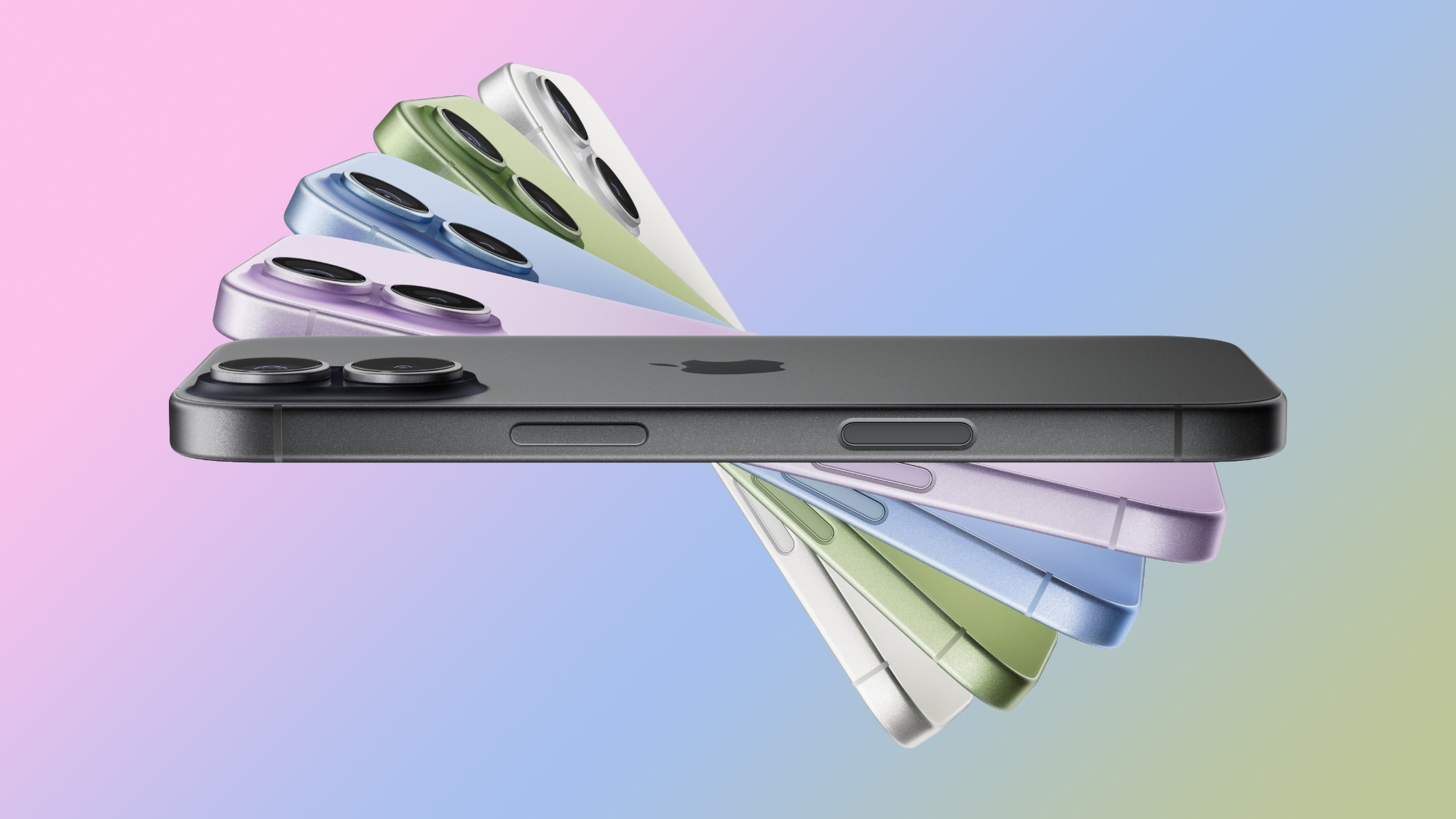
  • More color choices: The ‌iPhone Duo‌ comes in Night Sky and Star White. The Pro models offer Black, Silver, Glacier, and Burgundy.

  • A higher proportion of recycled content: The ‌iPhone Duo‌ contains 35% recycled content, compared with 40% on the Pro models.

  • A lower purchase price: The ‌iPhone Duo‌ costs $800 more than the ‌iPhone 18 Pro‌ and $700 more than the Pro Max at equivalent storage capacities. Its $1,999 starting price buys 256GB, while a 1TB Pro Max costs $1,899.

  • Lower single-device AppleCare premiums: In the U.S., ‌AppleCare‌+ with Theft and Loss costs $19.99 per month or $199.99 annually for the ‌iPhone Duo‌, compared with $14.99 per month or $149.99 annually for either Pro model.

  • Lower covered screen-repair fees: Under U.S. ‌AppleCare‌ coverage, accidental damage to the ‌iPhone Duo‌'s inner display carries a $99 service fee, compared with $29 for screen-only damage on the Pro models. The ‌iPhone Duo‌'s outer-display damage fee remains $29.

  • Lower repair fees without AppleCare+ coverage: Apple's U.S. estimates include $999 for inner-display damage, compared with screen-repair fees of $329 for the Pro and $379 for the Pro Max. "Other damage" is estimated at $1,499, compared with $849 and $899 respectively. Back-glass repair is also more expensive, at $199 rather than $159 for either Pro model.

  • Lower battery replacement costs: Apple's U.S. out-of-warranty battery service fee is $229 for the ‌iPhone Duo‌, compared with $129 for either Pro model.


These differences vary considerably in importance. Losing Face ID or the Action button may be more disruptive to an established routine than having fewer color choices, while the wider, thicker body is something buyers will encounter every time they pick up the closed phone. Buyers moving from a Pro Max also need to consider whether the larger inner display is worth giving up its longer typical-use battery life.

The financial differences extend beyond the initial purchase. Higher ‌AppleCare‌ premiums, repair fees, and battery replacement costs can increase the expense of owning the ‌iPhone Duo‌ over several years, so buyers should consider how they intend to maintain and protect the device alongside its purchase price.

Camera and Capture Compromises


The camera compromises range from fewer zoom options and simpler front cameras to the loss of professional capture formats. Some affect everyday photography, while others matter primarily to users with specific editing and production workflows. When buying the ‌iPhone Duo‌ over an ‌iPhone 18 Pro‌ or Pro Max, customers must be prepared to forgo:


  • A dedicated Telephoto camera: The ‌iPhone Duo‌ lacks the Pro models' 48-megapixel 4x Telephoto camera, including its tetraprism design and 3D sensor-shift stabilization, and the 12-megapixel optical-quality 8x crop it enables. Its longest optical-quality zoom setting is a 2x crop from the Main camera. Digital photo zoom tops out at 10x rather than 40x, while video zoom reaches 6x rather than 24x.

  • A variable aperture: The ‌iPhone Duo‌'s Main camera has a fixed f/1.6 aperture. The Pro models offer f/1.48, f/1.8, f/2.8, and f/4.0 settings, giving users more control over light capture and depth of field.

  • The Pro Main camera's stabilization and focusing hardware: The ‌iPhone Duo‌ uses sensor-shift optical image stabilization and Hybrid Focus Pixels, compared with second-generation sensor-shift stabilization and 100% Focus Pixels on the Pro models.

  • Wider Main-camera framing: The ‌iPhone Duo‌'s Main camera has a 26mm equivalent focal length rather than 24mm, producing a slightly tighter view. Its 2x crop is also tighter, at 52mm rather than 48mm.

  • A LiDAR Scanner: The ‌iPhone Duo‌ omits the depth-sensing hardware available on both Pro models for photography, augmented reality, and scanning experiences.

  • Adaptive True Tone flash: The ‌iPhone Duo‌ has a standard True Tone flash instead of the Pro models' adaptive version.

  • Pro Controls: The ‌iPhone Duo‌ does not have the Pro models' full suite of aperture, shutter speed, white balance, and histogram controls.

  • ProRAW photography: The ‌iPhone Duo‌ does not offer Apple's ProRAW capture, including on its front camera.

  • Apple Reference Image capture: The ‌iPhone Duo‌ cannot capture the signed reference images used to help establish whether a photo has been altered.

  • Spatial photos and videos: The ‌iPhone Duo‌ cannot capture spatial photos or spatial video. Both Pro models support spatial video recording at 1080p at 30 fps.

  • ProRes and ProRes RAW recording: These professional video formats are unavailable in the ‌iPhone Duo‌'s native camera feature set, including for front-facing capture. The Pro models support ProRes recording up to 4K at 120 fps from the rear camera and 4K at 60 fps from the front camera with external recording.

  • Apple Log 2 and ACES: The ‌iPhone Duo‌ omits Apple Log 2 and Academy Color Encoding System support for rear and front-camera recording, limiting the professional color workflows otherwise available on the Pro models.

  • Genlock: The ‌iPhone Duo‌ lacks the Pro models' support for synchronizing video capture with other cameras using supported accessories.

  • Studio-quality four-mic array: Apple specifies four studio-quality microphones for the Pro models, but does not list the same specification for the ‌iPhone Duo‌. The foldable still supports Spatial Audio recording, wind noise reduction, and Audio Mix.

  • A higher-resolution outer front camera: The ‌iPhone Duo‌'s outer Center Stage camera is 12 megapixels with a smaller f/2.2 aperture, compared with 18 megapixels and f/1.9 on the Pro models.

  • A fully featured front camera when unfolded: The inner under-display camera is limited to 1080p video at 30 or 60 fps and lacks Night mode, portrait photography, and Photographic Styles. The Pro models' front camera supports 4K Dolby Vision recording and these photography features.


The missing Telephoto camera is a practical limitation even for buyers who never use professional formats, since it reduces the options for photographing subjects they cannot get close to. The variable aperture adds another form of control over how a scene is captured. For users who already rely on ProRAW, ProRes, or Log recording, the ‌iPhone Duo‌ also changes what they can capture and how they can edit it afterward.

Are the Compromises Worth It?


The ‌iPhone Duo‌ can justify these compromises if its inner display meaningfully improves things you already do on your phone. Reading long articles, reviewing documents, comparing information in two apps, editing photos, or watching video could all become much more comfortable with a larger screen. If those are activities you would regularly unfold the device for, its defining feature could be more valuable to you than several of the capabilities it lacks.

It is therefore important for prospective customers to assess what they plan to use the ‌iPhone Duo‌'s internal display for and how often they would do so. A handful of activities you repeat throughout the day makes a stronger case for the foldable than an occasional task you would usually handle on an iPad or Mac.

Hands-on demo time should also be helpful, and include time using the phone closed. Check whether you are comfortable with its width, thickness, weight, outer display, and ‌Touch ID‌ button, then unfold it and try the activities you expect to benefit from the larger screen. The device needs to suit both the quick interactions that make up much of phone use and the longer sessions that take advantage of its inner display.

The large number of compromises alone should not determine your decision. If you never record ProRes video, losing it may have no consequence, while giving up a telephoto camera you use every day could be decisive.

There is also value in being enthusiastic about Apple's radically new take on the iPhone. Wanting to explore a folding design and new ways of using familiar apps is a reasonable part of the buying decision, even without a specific productivity benefit.

The ‌iPhone Duo‌ makes the most sense for buyers who expect to use its inner display frequently, enjoy adapting to the new form factor, and are comfortable with the features and money they give up to get it. For buyers who expect to spend most of their time on the outer display, or who place greater importance on camera versatility, the ‌iPhone 18 Pro‌ models may be a stronger fit at a lower price.

‌iPhone Duo‌ pre-orders open on Friday, October 16, with availability starting on October 23.
Related Roundup: iPhone Duo
Related Forum: iPhone

This article, "iPhone Duo Compromises: Everything You Have to Give Up" first appeared on MacRumors.com

Discuss this article in our forums

  •  

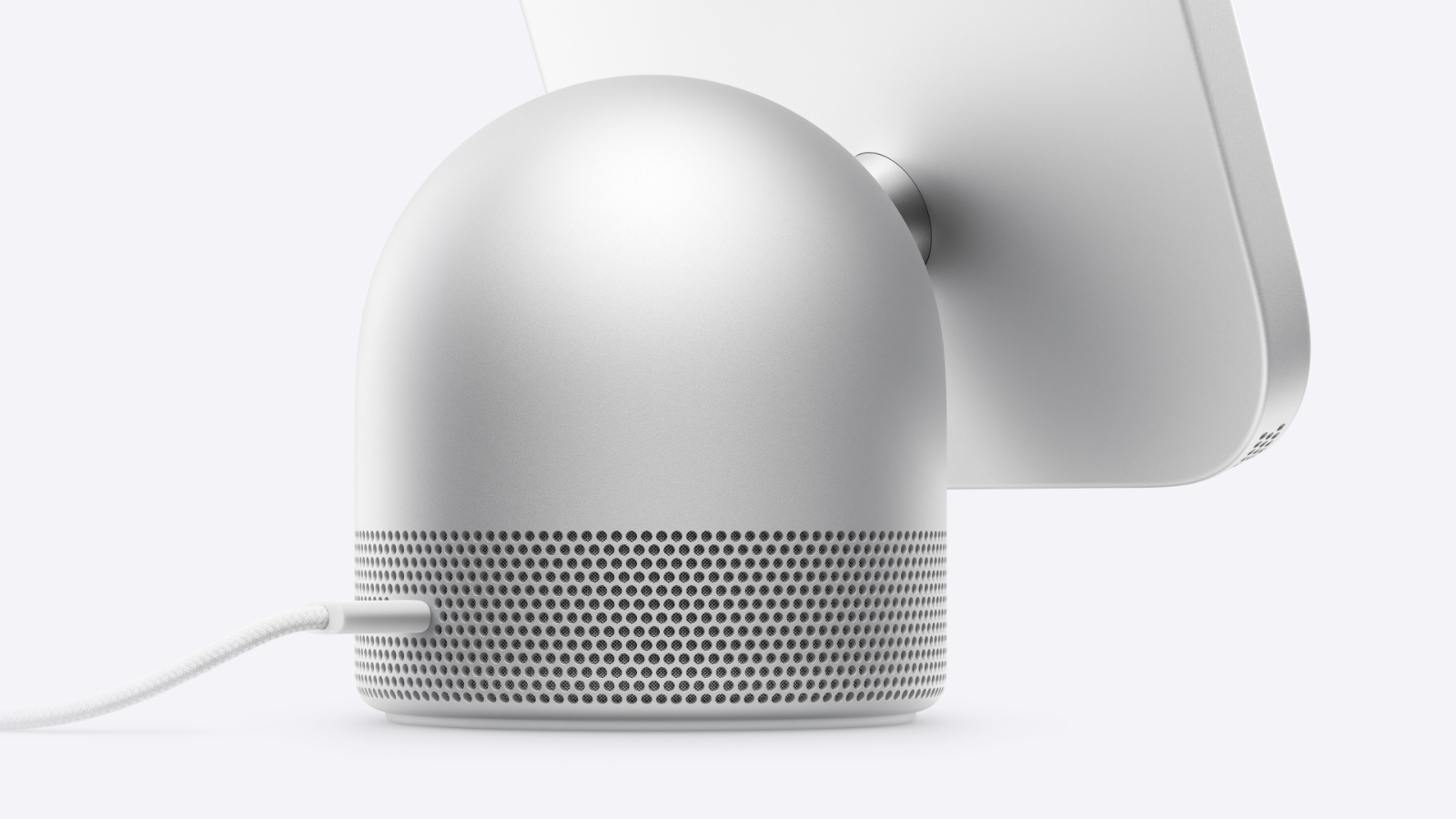
Apple HomeView Has These 15 Apps, Some CarPlay Apps and Widgets Also Supported

Apple's tech specs page for its all-new HomeView smart home hub contains a list of all of the built-in Apple apps available on the device.


While it has no App Store, the HomeView can also display CarPlay-enabled audio and video apps from a paired iPhone. This includes Audiobooks, Apple Music Classical, Apple News, and Apple TV, along with third-party apps such as Spotify, according to WIRED.

The full list of built-in Apple apps on the HomeView:

  • Alarms

  • Calendar

  • FaceTime

  • Find My

  • Home

  • Intercom

  • Messages

  • Music

  • Podcasts

  • Reminders

  • Safari

  • Settings

  • Timers

  • Weather

  • World Clock

CarPlay-enabled apps from iPhone available on HomeView:

  • Apple Music Classical

  • Apple News

  • Apple TV

  • Audiobooks

  • "Supported third-party audio and video apps" such as Spotify

The latest version of the Apple Developer Program agreement confirms the availability of certain CarPlay apps and widgets on the HomeView.

HomeView is available to pre-order now and launches Friday, November 13.
Related Roundups: CarPlay, Apple HomeView
Tag: Widgets
Buyer's Guide: HomeView (Buy Now)

This article, "Apple HomeView Has These 15 Apps, Some CarPlay Apps and Widgets Also Supported" first appeared on MacRumors.com

Discuss this article in our forums

  •  

iPhone Duo: Apple Charging $49 for New Cover Layer, $229 for Battery

We just published Apple's list of iPhone Duo repair fees for customers without AppleCare+ coverage, and we want to bring extra attention to two of the fees in particular: a new cover layer costs $49, and a replacement battery is $229.

Apple's vice president of hardware engineering Kate Bergeron revealed that the iPhone Duo's nano-texture cover layer above the inner display can be removed and replaced. A new one is $19 with AppleCare+ and $49 without.
Related Roundup: iPhone Duo
Related Forum: iPhone

This article, "iPhone Duo: Apple Charging $49 for New Cover Layer, $229 for Battery" first appeared on MacRumors.com

Discuss this article in our forums

  •  

iPhone Duo: Skipping AppleCare+ Could Be $1,499 Mistake

Apple today listed its estimated repair fees for the iPhone Duo without AppleCare+ coverage, with the maximum fee in the U.S. for "other damage" set at $1,499.


If you only damage certain parts of the iPhone Duo, the fees are more manageable. For example, the repair fee for damaged back glass is set at $199.

If you eventually want to replace the battery in your iPhone Duo, that will cost you $229.

As we previously reported, Apple said the iPhone Duo's nano-texture cover layer above the inner display can be removed and replaced, and now we know that Apple will be charging $49 for a cover layer replacement without AppleCare+ coverage.

Here is Apple's full list of iPhone Duo repair fees without AppleCare+ coverage:

  • Cover layer damage: $49

  • Back glass damage: $199

  • Battery service: $229

  • Rear camera damage: $229

  • Outer display damage: $379

  • Outer display and back glass damage: $509

  • Inner display damage: $999

  • Other damage: $1,499

iPhone Duo repair fees with AppleCare+ coverage were already known, but the fees without AppleCare+ coverage were finally disclosed today.

Here are Apple's fees if you have AppleCare+ coverage for your iPhone Duo, which costs $19.99 per month, $199.99 per year, or $399 upfront:

  • Battery service below 80% capacity: $0

  • Cover layer damage: $19

  • Back glass damage: $29

  • Outer display damage: $29

  • Inner display damage: $99

  • Other accidental damage: $99

  • Theft or loss: $149

iPhone Duo pre-orders begin this Friday, October 16. The device launches Friday, October 23.
Related Roundup: iPhone Duo
Related Forum: iPhone

This article, "iPhone Duo: Skipping AppleCare+ Could Be $1,499 Mistake" first appeared on MacRumors.com

Discuss this article in our forums

  •  

Ready for HomeView? Don't Miss These Smart Home Accessory Deals

Apple's new HomeView smart home hub is available for pre-order ahead of its launch on November 13. The device lets users control all of their HomeKit gadgets directly from its 7-inch Liquid Retina display, or via Siri AI. In anticipation of the HomeView launch, we've gathered some of the most notable (and discounted) HomeKit and Matter-enabled smart home devices below, all of which you'll be able to control via the home hub.

Note: MacRumors is an affiliate partner with some of these vendors. When you click a link and make a purchase, we may receive a small payment, which helps us keep the site running.


You can check out everything we know about the HomeView in our announcement post. Some of the best deals this time around can be found on Philips Hue lights, switches, and bridges, with up to 35 percent off currently available on select products on Amazon.


Lights


Philips Hue


Govee


Smart Plugs


Cameras


Sensors


Vacuums


If you're on the hunt for more discounts, be sure to visit our Apple Deals roundup where we recap the best Apple-related bargains of the past week.


Deals Newsletter


Interested in hearing more about the best deals you can find as we head into the holidays? You can sign up for our Deals Newsletter and we'll keep you updated so you don't miss the biggest deals of the season!


Related Roundup: Apple Deals

This article, "Ready for HomeView? Don't Miss These Smart Home Accessory Deals" first appeared on MacRumors.com

Discuss this article in our forums

  •  

Apple Says HomePod 2 Also Works as Default Speaker With Select Macs

An addendum to our report about the HomePod mini 2 working as a default speaker on all Mac models with Wi-Fi 6E and later: Apple says this ability extends to the full-sized HomePod 2.

Apple's fine print for HomePods as default Mac speakers says "compatible with HomePod mini 2 and HomePod (2nd generation) with support on all Mac desktops and laptops with Wi-Fi 6E or later."
Related Roundup: HomePod
Buyer's Guide: HomePod (Caution)

This article, "Apple Says HomePod 2 Also Works as Default Speaker With Select Macs" first appeared on MacRumors.com

Discuss this article in our forums

  •  

HomePod Mini 2: All the New Features

Apple this week introduced the HomePod mini 2, and we have rounded up all of the new features and changes that we have uncovered so far below.


HomePod mini 2 can be pre-ordered now and launches Friday, October 30, but Siri AI support will not be available until a future software update.

Here is what is new with the HomePod mini 2:

  • Siri AI support is coming in a future software update, with an Apple Intelligence-enabled iPhone or iPad required for requests involving your personal context.

  • S10 chip, up from the S5 chip for the previous model. It is unclear if this chip upgrade enables computational audio improvements.

  • Wi-Fi 6E support, up from Wi-Fi 4 for the previous model.

  • Bluetooth 6 support, up from Bluetooth 5 for the previous model.

  • Default audio output support on Macs with Wi-Fi 6E and later.

  • Sound Glow: the top area glows and pulses in sync with the music playing.

  • Four-speaker surround sound with the new Apple TV 4K: connect four HomePod mini 2 speakers in front and rear pairs.

  • Three microphones for Siri, down from four in the previous model.

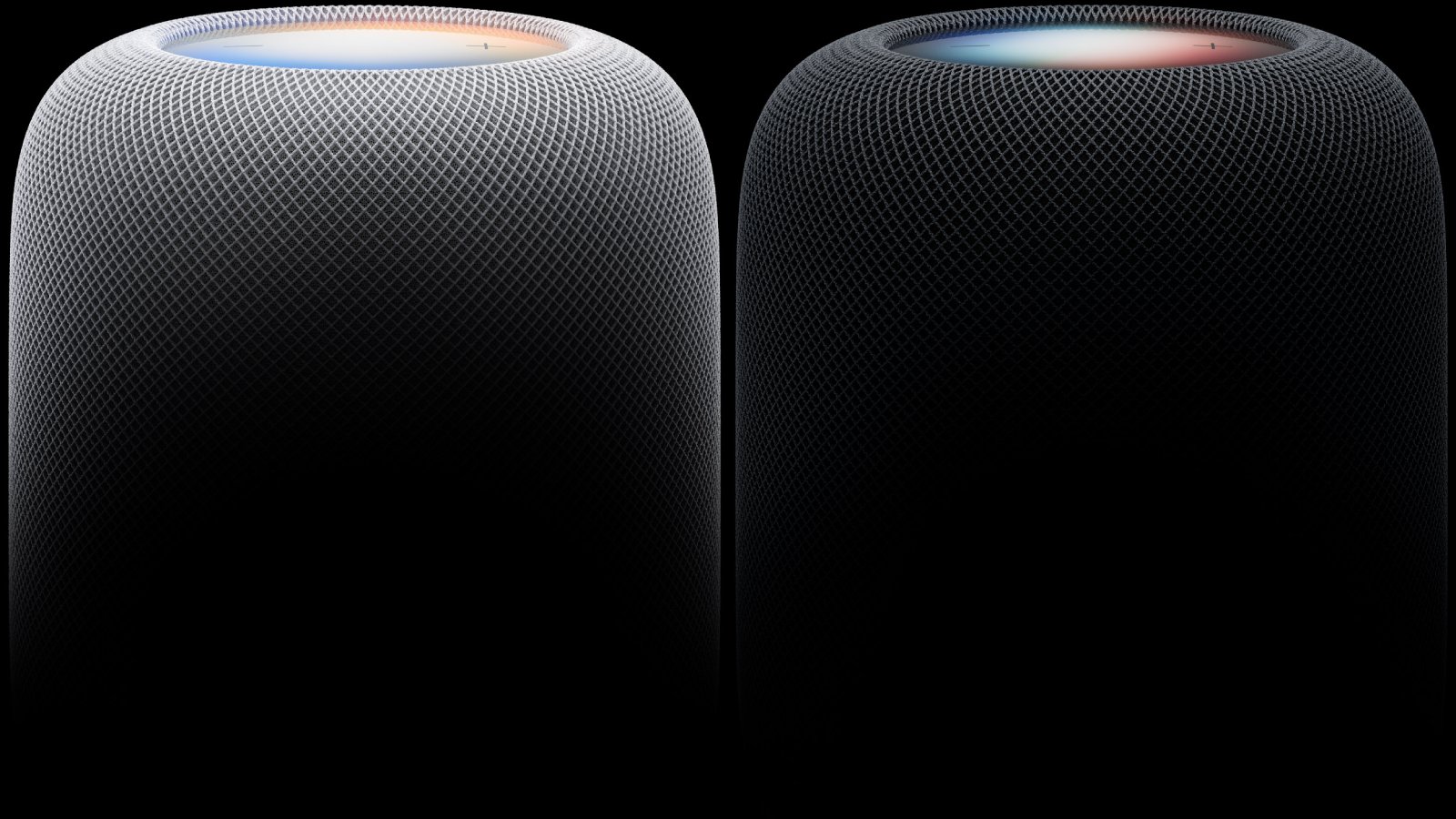
  • Two all-new color options: green and pink.

  • While it is the most minor of differences, the HomePod mini 2's listed weight is 3% lower than the previous model.

  • A price increase. In the U.S., the HomePod mini 2 is priced at $149. The previous model was initially $99 and later $129.

Related Roundup: HomePod mini 2
Buyer's Guide: HomePod Mini (Buy Now)

This article, "HomePod Mini 2: All the New Features" first appeared on MacRumors.com

Discuss this article in our forums

  •  

WhatsApp Now Lets Anyone Join Calls, No Account Needed

Popular Meta chat app WhatsApp today gained guest calling, a feature that lets users invite anyone to join a voice or video call, even if the invitee doesn't have a WhatsApp account.


WhatsApp says everyone has access to free, end-to-end encrypted calls with no time limits and support for up to 32 people at once.

A guest joining a call needs permission from the call host, and guests will show up in a waiting room until the host lets them in. Guests cannot see other participants' phone numbers, send messages, or add others to the call, and hosts can remove them from the call at any time. Guests have access to screen sharing for reviewing materials, thumbs up and heart emoji reactions, and a raised hand to ask a question.

WhatsApp users can start a guest call through the Calls tab. Tap "+" to create a call link and then send the link to anyone. WhatsApp calls can be joined in a computer browser with a WhatsApp call link.

WhatsApp says that it plans to roll out calendar integrations later this year for creating a WhatsApp call from a Google or Outlook calendar.

With the option to join a call from a browser, WhatsApp is matching a feature that Apple started offering for FaceTime with iOS 15. Anyone can join a ‌FaceTime‌ call with a ‌FaceTime‌ link.
This article, "WhatsApp Now Lets Anyone Join Calls, No Account Needed" first appeared on MacRumors.com

Discuss this article in our forums

  •  

AppleCare+ Launched 15 Years Ago Today

AppleCare+ became available for the first time 15 years ago today, on October 14, 2011, alongside the iPhone 4S, following its announcement ten days earlier. The previous $69 AppleCare Protection Plan in the United States extended hardware repair coverage and technical support to two years, but excluded accidental damage.

‌AppleCare‌+ cost $99, retaining that two-year term while adding coverage for two accidental damage incidents, each with a $49 service fee. It covered damage from drops and liquid contact, but excluded theft and loss.
This article, "AppleCare+ Launched 15 Years Ago Today" first appeared on MacRumors.com

Discuss this article in our forums

  •  

Apple Reportedly Planning Large iPhone 18 Production Run

Apple is reportedly preparing a substantial production run for the standard iPhone 18, following the iPhone 17's success as the world's best-selling smartphone.


In a new Weibo post, the leaker known as "Fixed Focus Digital" claimed that production of the standard ‌iPhone 18‌ is scheduled to start in late November, describing the volume of inventory being prepared as "quite large."

Its predecessor has likely given Apple considerable reason for confidence. Following the ‌iPhone 17‌'s initial pre-order weekend, Apple reportedly instructed two suppliers to increase daily output by at least 30%, according to The Information. Counterpoint Research later reported that the standard ‌iPhone 17‌ led global smartphone sales in both the first and second quarters of 2026. It accounted for 6% of worldwide smartphone unit sales in each quarter, outselling even the ‌iPhone 17‌ Pro Max and ‌iPhone 17‌ Pro.

The ‌iPhone 18‌ is expected to retain a broadly similar design, with potential upgrades including a smaller Dynamic Island, the A20 chip, and Apple's C2 modem. It is expected to be unveiled alongside the iPhone 18e and iPhone Air 2 in spring 2027. A late-November production start would give Apple several months to build inventory ahead of launch.
Related Roundup: iPhone 18
Related Forum: iPhone

This article, "Apple Reportedly Planning Large iPhone 18 Production Run" first appeared on MacRumors.com

Discuss this article in our forums

  •  

Apple Says These Products Are Now Obsolete

Apple today added the 12-inch MacBook (2017), iPad (6th generation), and BeatsX headphones to the obsolete products list on its website.


Apple considers a product to be obsolete once seven years have passed since it last distributed the product for sale, including to resellers.

Apple Stores and Apple Authorized Service Providers are instructed to discontinue hardware service for obsolete products and generally cannot order parts for these products as a result. However, Apple says MacBooks may remain eligible for battery replacements for up to 10 years after distribution ended, subject to parts availability.

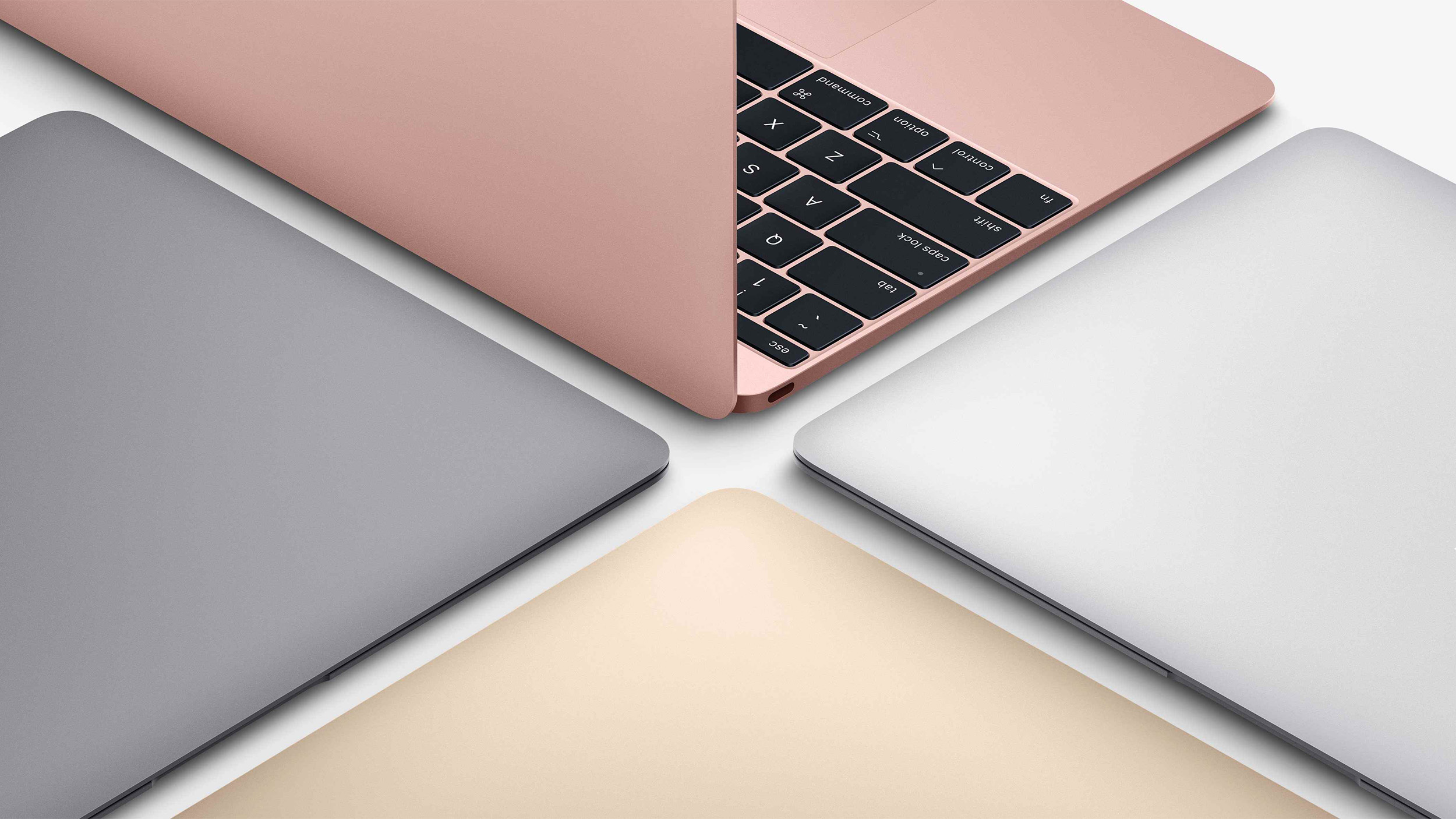
Apple discontinued the Intel-based 12-inch MacBook entirely in 2019, and it has yet to offer a sub-13-inch MacBook model with Apple silicon.
This article, "Apple Says These Products Are Now Obsolete" first appeared on MacRumors.com

Discuss this article in our forums

  •  

Distribution Release: IPFire 2.29 Core 204

The DistroWatch news feed is brought to you by TUXEDO COMPUTERS. The IPFire team have released IPFire, version 2.29 Core Update 204. The new release focuses on fixing DNS issues with the distributions new Knot resolver: "IPFire 2.29 Core Update 204 is now available for download. It is a housekeeping release that brings a healthy dose of updates across....
  •  

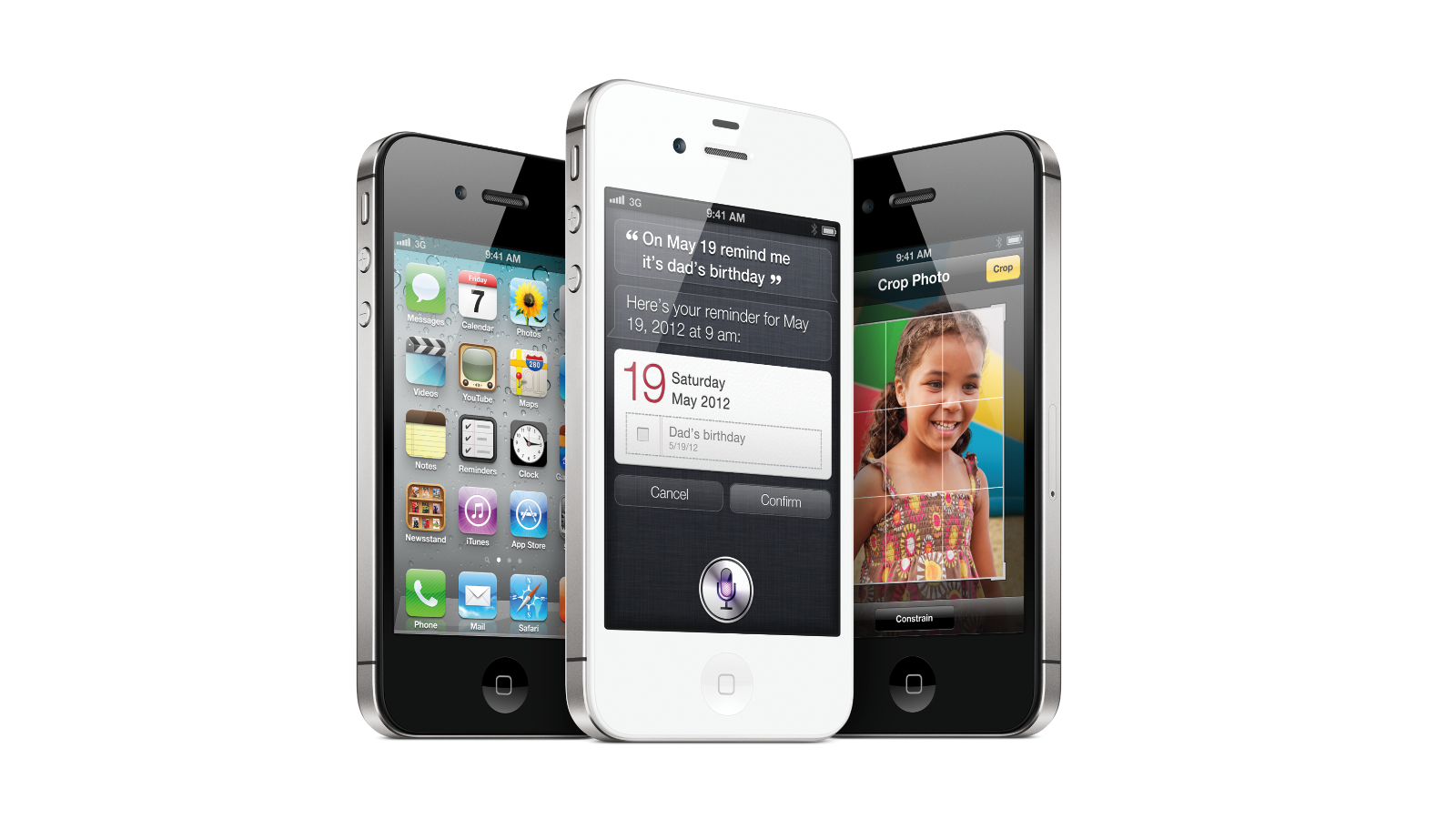
Apple Launched iPhone 4S With Siri 15 Years Ago Today

Today marks the 15th anniversary of the iPhone 4S launch, introducing Siri as a built-in feature of the iPhone for the first time.


The iPhone 4S went on sale on October 14, 2011, ten days after its announcement. It initially launched in the United States, Australia, Canada, France, Germany, Japan, and the United Kingdom, retaining the iPhone 4's glass and stainless steel design while introducing substantial internal improvements.

The device's defining addition was Siri, which allowed users to make calls, send messages, create reminders, schedule appointments, and ask questions using natural language. Apple highlighted the assistant's ability to interpret requests in context, such as understanding that a question about needing an umbrella was a request for the weather forecast.

‌Siri‌ initially launched in beta, supporting English localized for the United States, United Kingdom, and Australia, alongside French and German. The assistant was exclusive to the iPhone 4S, so owners of older iPhones could not access it simply by installing iOS 5.

‌Siri‌ had already existed as a standalone iPhone app, which launched in February 2010. Apple acquired the company in April that year before integrating its technology into iOS directly. Following the iPhone 4S announcement, Apple removed the original app from the App Store and notified existing users that its service would stop working on October 15.

Beyond ‌Siri‌, the iPhone 4S introduced Apple's dual-core A5 chip, which it said delivered up to twice the CPU performance and seven times the graphics performance of the iPhone 4. Its rear camera increased from five to eight megapixels, with an f/2.4 aperture and support for 1080p video recording. A revised antenna system could switch between antennas for transmitting and receiving, while maximum supported HSDPA download speeds doubled to 14.4 Mbps.

The iPhone 4S shipped with iOS 5, which had become available two days earlier alongside iCloud. The software update introduced iMessage, Notification Center, and Reminders, as well as wireless software updates and on-device setup.

Available in black and white, the iPhone 4S came in 16GB, 32GB, and a new 64GB configuration. U.S. prices started at $199, $299, and $399, respectively, with a qualifying two-year carrier contract. Apple subsequently announced that it had sold more than four million units during its first three days of availability, more than double the iPhone 4's opening sales over the same period.
Tag: Siri
Related Forum: iPhone

This article, "Apple Launched iPhone 4S With Siri 15 Years Ago Today" first appeared on MacRumors.com

Discuss this article in our forums

  •  

First Pre-Order Discounts Now Available for HomeView

Apple just announced the HomeView yesterday, and Amazon today has introduced the first pre-order discounts on the home hub device. You can get now get all four colors for $289.99, down from $299.00.

Note: MacRumors is an affiliate partner with some of these vendors. When you click a link and make a purchase, we may receive a small payment, which helps us keep the site running.
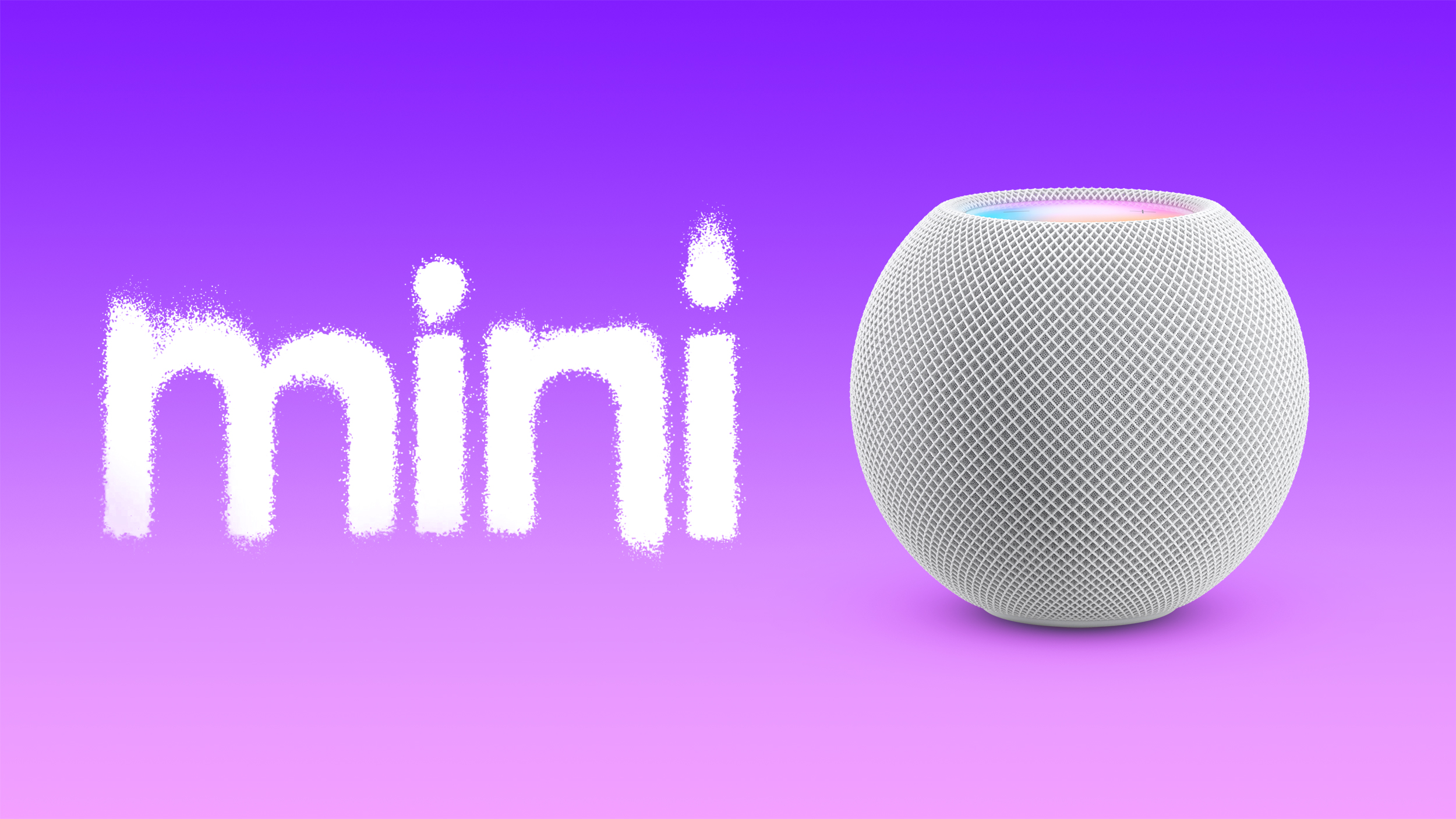
Although only a $9 discount, this is the first deal we've seen on the HomeView, and as of writing only Amazon is offering any sort of discount on the device. Amazon is still providing an estimated delivery date for November 13, which is when the HomeView officially launches.


If you're on the hunt for more discounts, be sure to visit our Apple Deals roundup where we recap the best Apple-related bargains of the past week.


Deals Newsletter


Interested in hearing more about the best deals you can find as we head into the holidays? You can sign up for our Deals Newsletter and we'll keep you updated so you don't miss the biggest deals of the season!


Related Roundup: Apple Deals

This article, "First Pre-Order Discounts Now Available for HomeView" first appeared on MacRumors.com

Discuss this article in our forums

  •  

Apple HomeView Includes Temperature and Humidity Sensors

Apple's new HomeView includes temperature and humidity sensing, allowing the smart home hub to monitor indoor conditions and supply readings to the new thermostats developed with LG Electronics and Schneider Electric.


Apple's technical specifications confirm that both the tabletop and wall-mounted HomeView have a temperature and humidity sensor. The hardware is listed alongside the ambient light sensor and accelerometer.

There are several limitations for the HomeView's readings. Temperature and humidity sensing is optimized for indoor domestic environments with ambient temperatures around 59°F to 86°F, and relative humidity around 30% to 70%.

Accuracy may decrease when HomeView plays audio at high volume for an extended period. The sensors also require time to calibrate immediately after startup before results appear.

According to Apple, the LG and Schneider Electric thermostats in the "Apple Home Collection" can obtain temperature and humidity readings from multiple rooms using sensors built into HomeView, HomePod, and ‌HomePod‌ mini, as well as dedicated sensors from either manufacturer. The thermostats also support Adaptive Temperature in the Home app, which uses on-device intelligence from iPhone to adjust settings based on whether someone is home, winding down for the night, or away.

LG's Temperature Sensor and the Schneider Home Room Sensor will each start at $39.95 in the United States, while the companies' thermostats will each start at $199.95. Both HomeView models cost $299 in the United States and launch on November 13.
Related Roundup: Apple HomeView
Buyer's Guide: HomeView (Buy Now)

This article, "Apple HomeView Includes Temperature and Humidity Sensors" first appeared on MacRumors.com

Discuss this article in our forums

  •  

HomePod Mini vs. HomePod Mini 2 Buyer's Guide: All Differences Compared

Apple yesterday announced the HomePod mini 2, introducing the compact smart speaker's first major hardware update in six years.


The new model retains the original's spherical design, but adds an S10 chip, faster wireless connectivity, Sound Glow lighting, new Mac and home theater capabilities, and support for Siri AI in a future software update.

The HomePod mini 2 costs $149 in the United States, $20 more than its predecessor's last Apple price of $129. While the original launched for $99 in 2020, Apple raised its price in June 2026. With many core features carried over, is the new model worth upgrading to, and should you consider a discounted original instead?

Both generations feature a full-range driver, two passive radiators, and an acoustic waveguide for 360-degree sound. They also share temperature and humidity sensors, Thread networking, Ultra Wideband proximity features, AirPlay multiroom audio, stereo pairing, Intercom, smart home control, and Sound Recognition. Their dimensions remain identical at 3.3 inches tall and 3.9 inches wide, and both include a 20W power adapter.

Here are the differences between the original HomePod mini and ‌HomePod mini 2‌:


‌HomePod‌ mini (2020) ‌HomePod mini 2‌ (2026)
Backlit touch surface with status and ‌Siri‌ lighting Backlit touch surface with Sound Glow animations that respond to music, album artwork, and soundscapes
S5 chip (from 2019's Apple Watch Series 5, made with TSMC's N7 7nm process, based on Apple's A12 Bionic chip from iPhone XS) S10 chip (from 2024's Apple Watch Series 10, made with TSMC's N4 4nm process, based on Apple's A16 Bionic chip from iPhone 14 Pro)
Computational audio Enhanced computational audio
Four-microphone design Three-microphone design
‌Siri‌ ‌Siri‌ AI support
Wi-Fi 4 (802.11n) Wi-Fi 6E (802.11ax)
Bluetooth 5.0 Bluetooth 6
Mac audio playback via ‌AirPlay‌ Can serve as the default speaker for Macs with Wi-Fi 6E or later, individually or in a stereo pair
Four-speaker surround sound with Apple TV 4K (4th generation), including automatic calibration of audio timing and levels
Weighs 0.76 pound (345 grams) Weighs 0.74 pound (335 grams)
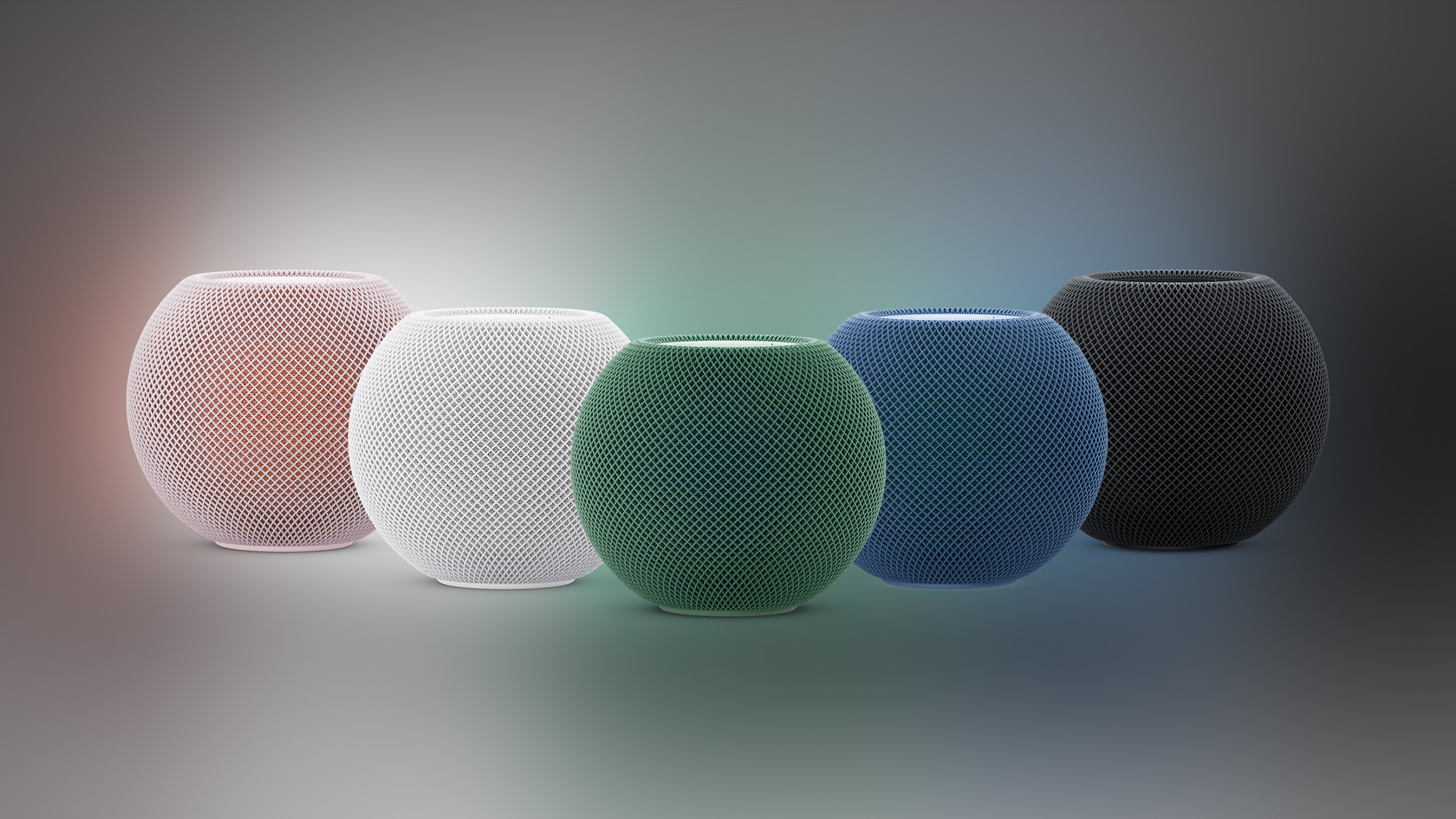
White, midnight, blue, yellow, and orange; previously available in space gray White, midnight, blue, pink, and green
89% fiber-based packaging 100% fiber-based packaging
Introduced in October 2020 Introduced in October 2026
Discontinued (initially priced at $99, later raised to $129) $149


Is It Worth Upgrading From HomePod Mini to HomePod Mini 2?


For most existing ‌HomePod‌ mini owners, there is no general-purpose reason to replace a working original ‌HomePod‌ mini immediately. The original retains the main features needed for voice commands, music playback, timers, Intercom, and smart home automations. Sound Glow and the new finishes may appeal to enthusiasts, but they are very small reasons to replace speakers throughout a home.

For buyers primarily interested in sound quality, Apple's specifications provide limited grounds for judging the size of the improvement. The basic driver arrangement remains the same, and the original already used computational audio to tune playback in real time. Apple has not quantified the acoustic gains from the S10 chip.

The clearest upgrade case is using the ‌HomePod mini 2‌ as a default Mac speaker. If your Mac supports Wi-Fi 6E or later and you want ‌HomePod‌ speakers for games, calls, and everyday computer audio, the new model offers a capability the original's ‌AirPlay‌ connection does not provide.

The four-speaker surround sound system is another notable reason to choose the newer generation. It requires the fourth-generation ‌Apple TV‌ 4K and matching front and rear speaker pairs running the latest software. You can use four ‌HomePod mini 2‌ speakers, or combine a pair with a pair of full-sized second-generation HomePods. Original ‌HomePod‌ minis are excluded, and the required ‌Apple TV‌ 4K launches on November 13.

‌Siri‌ AI is perhaps the most consequential improvement, offering more natural conversations, broader general knowledge, improved music discovery, and the ability to act on personal context across supported apps. However, it will not be available at launch, and Apple has not yet announced a release date for the feature.

Apple's requirements specify that the owner of the home in the Home app must have an Apple Intelligence-enabled iPhone or iPad with ‌Siri‌ AI enabled. Personal context requests require the individual user's compatible paired device, although other household members can use conversational and general knowledge features once ‌Siri‌ AI is enabled. Initial availability is planned in English in the United States, Australia, Canada, India, New Zealand, Singapore, South Africa, and the United Kingdom.

Should You Buy HomePod Mini or HomePod Mini 2?


The ‌HomePod mini 2‌ should be the default choice for most new buyers when the price difference is small. If remaining original stock costs $129, paying another $20 provides the new Mac and surround sound capabilities, faster connectivity, Sound Glow, and eligibility for the forthcoming ‌Siri‌ AI update.

A substantially discounted original ‌HomePod‌ mini remains worth considering for straightforward music playback or adding smart home control to another room. Its value is strongest when you will use the shared features and have little interest in the new features.

Buying another original also makes sense if you already own one and want to create a stereo pair. Apple requires matching models for stereo pairing, so an original ‌HomePod‌ mini and a ‌HomePod mini 2‌ cannot form a stereo pair.

‌HomePod mini 2‌ pre-orders are now open, with availability beginning October 30.
Related Roundup: HomePod mini 2
Buyer's Guide: HomePod Mini (Buy Now)

This article, "HomePod Mini vs. HomePod Mini 2 Buyer's Guide: All Differences Compared" first appeared on MacRumors.com

Discuss this article in our forums

  •  

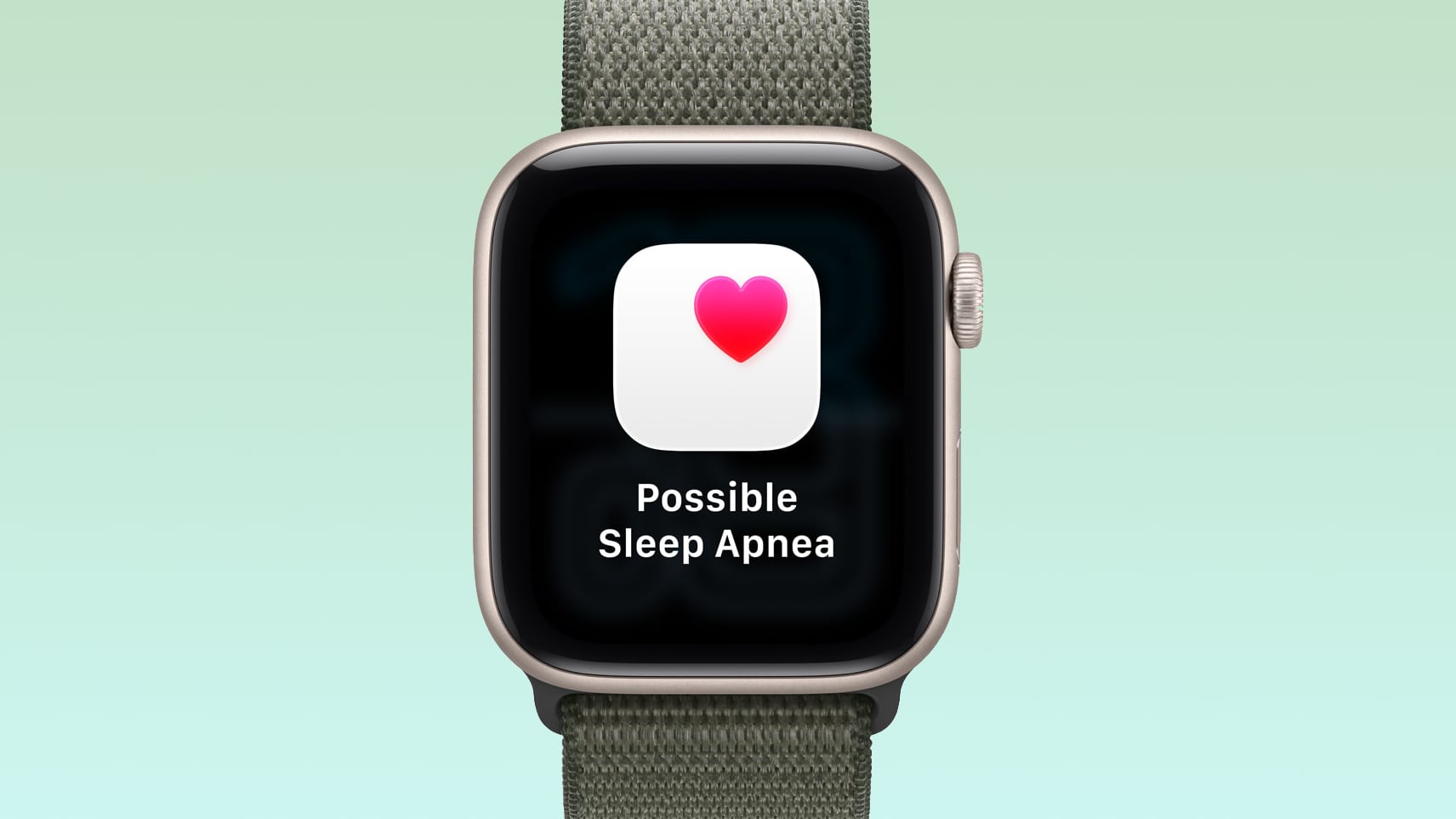
Apple Watch Sleep Apnea Notifications Launch in China

Apple today launched sleep apnea notifications in mainland China, following approval from the country's National Medical Products Administration. The feature is supported on the Apple Watch Series 9, Ultra 2, SE 3, and newer.

The Apple Watch uses its accelerometer to monitor breathing disturbances during sleep, analyzing the data every 30 days for signs of moderate to severe sleep apnea. Users who receive a notification can export a PDF report to discuss potential diagnosis and treatment with their doctor.
Tag: China
Related Forum: Apple Watch

This article, "Apple Watch Sleep Apnea Notifications Launch in China" first appeared on MacRumors.com

Discuss this article in our forums

  •  

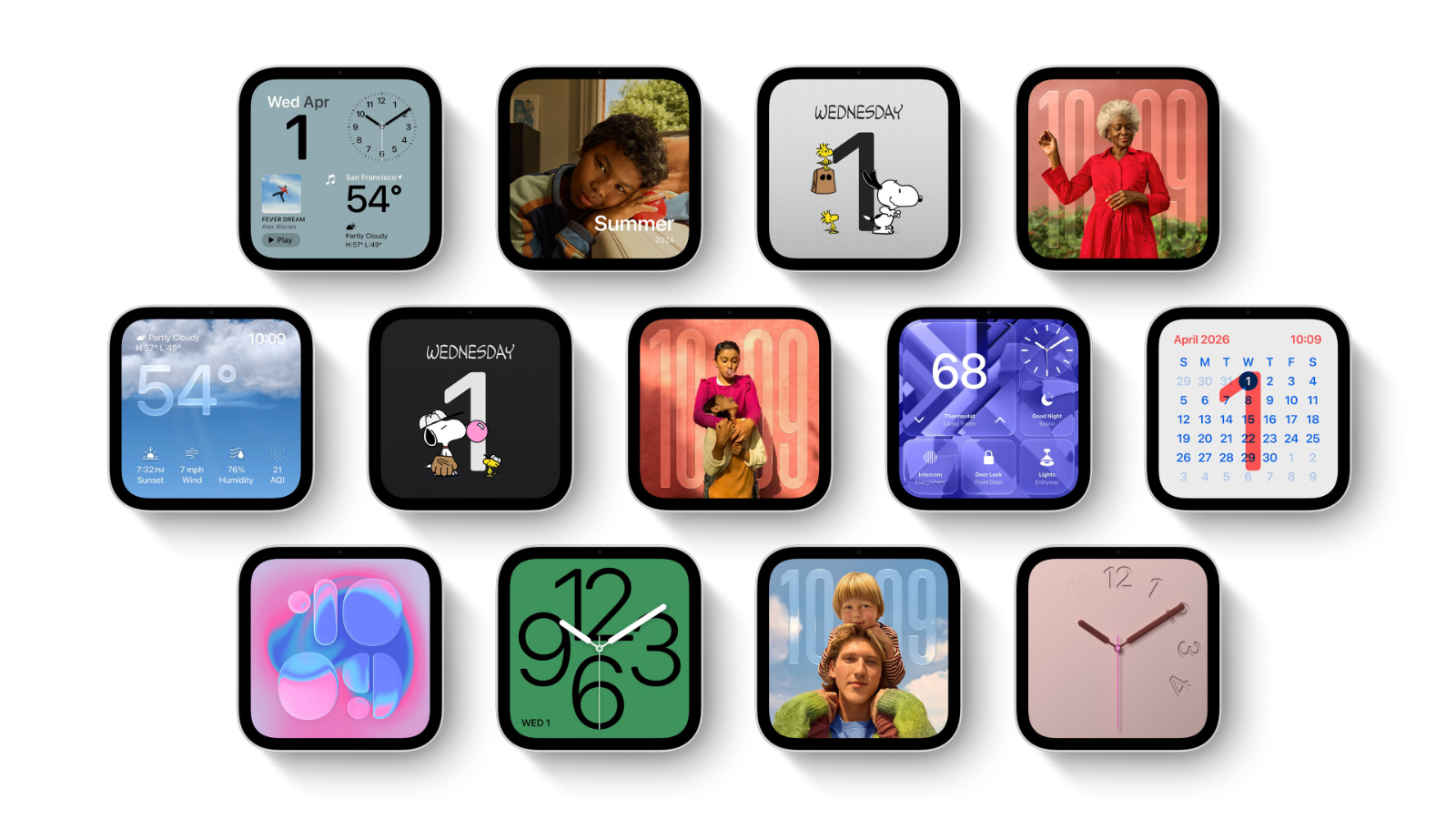
HomeView's Faces Include Snoopy, Photos, and Interactive Artwork

Apple's HomeView includes customizable faces for photos, animations, and smart home controls.


Faces Apple has named so far include:


  • Photos

  • Flow

  • Snoopy

  • Calendar

  • Weather

  • Home Modular

  • Home Camera


Other clock and widget layouts appear in Apple's promotional images, but have not yet been named. Apple says that selected faces change throughout the day, with different appearances for mornings and evenings.

The ‌Photos‌ face turns the HomeView into a digital picture frame, displaying a single image or rotating through a collection. It uses Portrait-style depth effects to keep the subject sharp while blurring the foreground and background. Shared albums also allow friends and family to contribute pictures remotely.

For an animated display, the Flow face responds to physical presence and movement, changing its colors and light as people move nearby. The Snoopy face features animations that reflect the time of day, weather, sporting events, and holidays.

Other faces provide direct access to smart home information. Home Modular offers quick access to favorite accessories, while Home Camera can livestream up to nine camera feeds simultaneously.

The HomeView's interface adjusts to the user's distance, presenting simpler information that can be read from across the room and more detail as they move closer. Its 7-inch Liquid Retina display also automatically adjusts brightness, ranging from 500 nits down to 0.3 nits for use at night.

Both the tabletop and wall-mounted HomeView models launch on November 13 and cost $299 in the U.S.
Related Roundup: Apple HomeView
Tag: Photos
Buyer's Guide: HomeView (Buy Now)

This article, "HomeView's Faces Include Snoopy, Photos, and Interactive Artwork" first appeared on MacRumors.com

Discuss this article in our forums

  •  
❌