Log in

Apple Watch SE 3 vs. Series 12 Buyer's Guide: Which Should You Buy?
The Apple Watch SE 3 starts at $249, while the Apple Watch Series 12 starts at $399. The $150 difference buys a more advanced health sensing system, a larger display, longer battery life, and more options for tracking training and recovery.
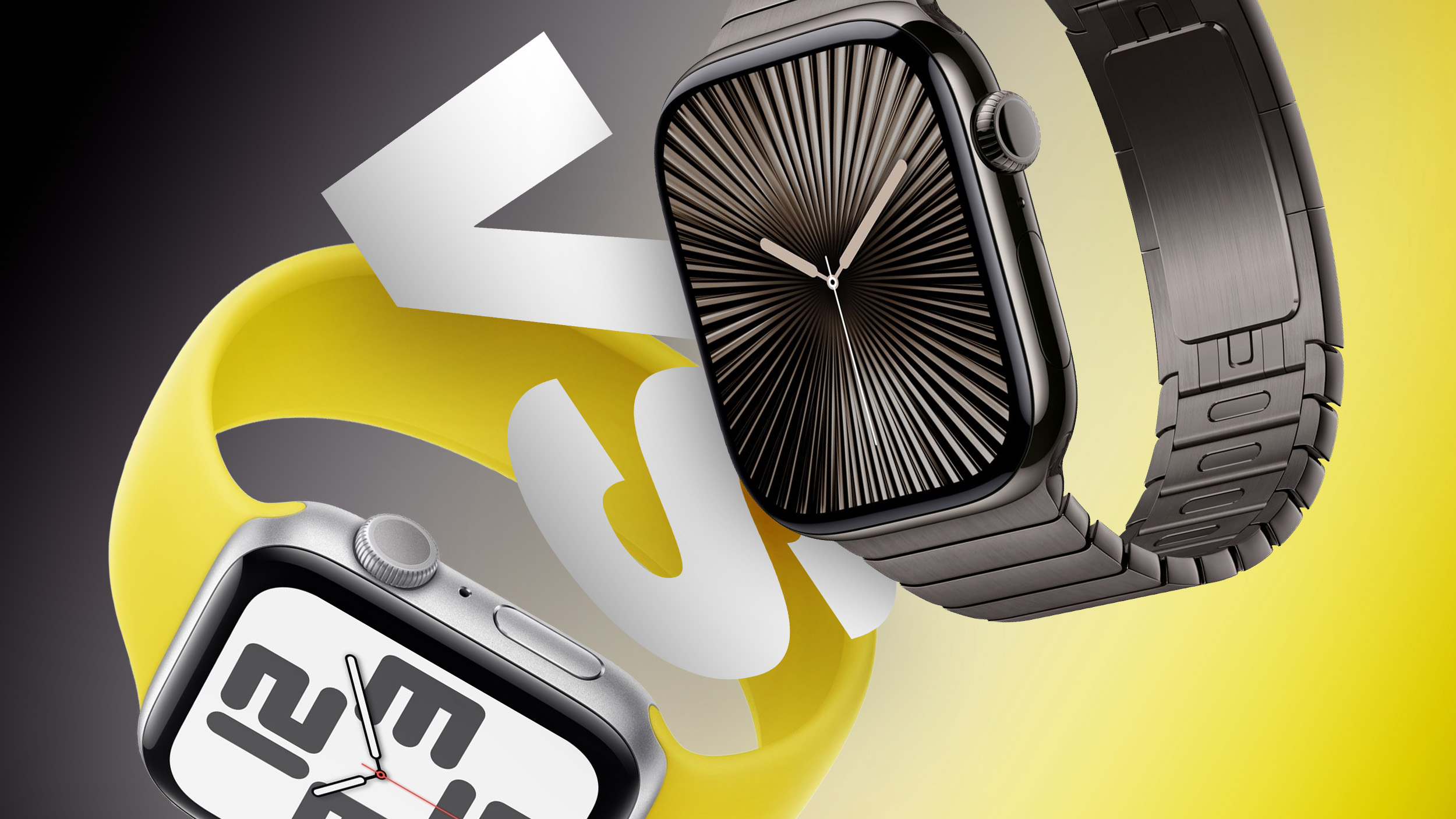
The two watches still share many features, including an always-on display, wrist temperature sensing, sleep apnea notifications, retrospective ovulation estimates, 5G connectivity on cellular models, media playback, and 64GB of storage. Our guide helps to answer the question of how to decide which of these two Apple Watch models is best for you. The differences between the two models are as follows:
If you mainly want a smart watch for notifications, standard workout and sleep tracking, and an always-on display, the Apple Watch SE 3 remains the better value. Although it is now a year old, it still represents excellent value for money at $249, offering most of the Apple Watch's core features for $150 less than the entry-level Series 12.
The Apple Watch Series 12 has a much stronger case for anyone who uses their device to follow health and recovery trends. Its new Health Sensing System enables frequent heart rate readings, Recovery HRV, and a Readiness score that draws on recent activity, training load, vitals, and sleep. ECG, blood oxygen monitoring, and hypertension notifications add further capabilities unavailable on the Apple Watch SE 3.
Battery life may be a decisive factor. The Apple Watch Series 12 is rated for six more hours of normal use and three more hours of outdoor workout tracking. It also charges faster, which is particularly useful if you wear your watch overnight for sleep tracking.
The Series 12 also offers a larger and brighter display, which makes a noticeable difference in daily use, along with 5GHz Wi-Fi, Precision Finding for a misplaced iPhone, and premium titanium and ceramic case options. Its Audio Intelligence features include Siri Recap, Sound Recognition, and always-on Shazam.
If you prefer the Series 12's broader health tracking capabilities, longer battery life, display advantages, or luxury case options, the extra cost is justified. If those features are unlikely to change how you use or appreciate your watch, the Apple Watch SE 3 is the more economical choice.
This article, "Apple Watch SE 3 vs. Series 12 Buyer's Guide: Which Should You Buy?" first appeared on MacRumors.com
Discuss this article in our forums
The two watches still share many features, including an always-on display, wrist temperature sensing, sleep apnea notifications, retrospective ovulation estimates, 5G connectivity on cellular models, media playback, and 64GB of storage. Our guide helps to answer the question of how to decide which of these two Apple Watch models is best for you. The differences between the two models are as follows:
| Apple Watch SE 3 | Apple Watch Series 12 |
|---|---|
| Same design as Apple Watch Series 4, 5, and 6 | Refined design with a thinner casing, display with more rounded edges and a wider aspect ratio, and front glass that extends further over the sides for a higher screen-to-body ratio |
| 40mm or 44mm case | 42mm or 46mm case |
| Aluminum case | Aluminum, titanium, or ceramic case |
| 40mm: 40 by 34 by 10.7mm
44mm: 44 by 38 by 10.7mm |
42mm aluminum/titanium: 42 by 37 by 9.7mm
46mm aluminum/titanium: 46 by 40 by 9.7mm 42mm ceramic: 43 by 37 by 9.85mm 46mm ceramic: 47 by 41 by 9.85mm |
| Aluminum GPS weight: 26.3 grams (40mm) or 32.9 grams (44mm) | Aluminum GPS weight: 32.2 grams (42mm) or 39.5 grams (46mm) |
| Ion-X front glass | Ceramic Shield 2 front on aluminum models; sapphire crystal front on titanium and ceramic models |
| No published IP6X rating | IP6X dust resistance |
| LTPO OLED display | LTPO3 display with a 1Hz always-on refresh rate, allowing a live ticking seconds hand on supported watch faces |
| OLED display | Wide-angle OLED display |
| 40mm: 324 by 394 pixels
44mm: 368 by 448 pixels |
42mm: 374 by 446 pixels
46mm: 416 by 496 pixels |
| 40mm: 759 sq mm display area
44mm: 977 sq mm display area |
42mm: 970 sq mm display area
46mm: 1,196 sq mm display area |
| Up to 1,000 nits brightness | Up to 2,000 nits brightness |
| 2 nits minimum brightness | 1 nit minimum brightness |
| Nylon composite and sapphire crystal back | Aluminum or titanium and zirconia back; ceramic and zirconia back on ceramic models |
| S10 chip (2024) | S11 chip (2026) |
| 2GB RAM | 4GB RAM |
| Second-generation optical heart sensor | Always-on optical heart sensor |
| Standard background heart rate tracking | Background heart rate readings every five seconds |
| Heart rate variability tracking | Recovery HRV and more frequent overall HRV readings |
| Vitals app with heart rate, respiratory rate, wrist temperature, and sleep duration | Vitals app with heart rate, respiratory rate, wrist temperature, sleep duration, HRV, and a daytime view |
| Readiness app | |
| Electrical heart sensor and ECG app | |
| Blood oxygen sensor and Blood Oxygen app | |
| Hypertension notifications | |
| Standard step tracking | Improved step tracking |
| Real-time heart rate and steps watch face complications | |
| Water temperature sensor | |
| Depth gauge to 6 meters and Depth app | |
| Oceanic+ app for snorkeling to 6 meters, available on the App Store | |
| Audio Intelligence features including Siri Recap, Sound Recognition, and Shazam | |
| Live Rewind and Siri Recap, due in beta in late 2026 | |
| Microphone | Microphone with Voice Isolation |
| Single, elongated speaker openings | Individual speaker holes |
| 2.4GHz Wi-Fi 4 | 2.4GHz and 5GHz Wi-Fi 4 |
| L1 GPS | Precision L1 GPS |
| Second-generation Ultra Wideband chip | |
| Find iPhone | Precision Finding for iPhone, with distance and direction guidance |
| HomePod playback controls | HomePod playback controls and proximity-based media suggestions with a compatible Ultra Wideband HomePod |
| Up to 18 hours of normal use | Up to 24 hours of normal use |
| Up to 32 hours in Low Power Mode | Up to 38 hours in Low Power Mode |
| Up to 7 hours of workout tracking | Up to 10 hours of workout tracking |
| Charges from 0 to 80% in about 45 minutes | Charges from 0 to 80% in about 30 minutes |
| 15 minutes of charging for up to 8 hours of normal use | 15 minutes of charging for up to 12 hours of normal use |
| 8 minutes of charging for up to 8 hours of sleep tracking | 5 minutes of charging for up to 10 hours of sleep tracking |
| Midnight and Starlight aluminum finishes | Dark Bronze, Light Gold, Black, and Space Gray aluminum finishes |
| Radiant Gold and Natural titanium finishes | |
| Pearl White and Night Blue ceramic finishes | |
| Silver and Radiant Gold titanium Hermès models | |
| 40mm: $249 GPS or $299 GPS + Cellular
44mm: $279 GPS or $329 GPS + Cellular |
Aluminum 42mm: $399 GPS or $499 GPS + Cellular
Aluminum 46mm: $449 GPS or $549 GPS + Cellular |
| Titanium models start at $699; ceramic models start at $899 |
If you mainly want a smart watch for notifications, standard workout and sleep tracking, and an always-on display, the Apple Watch SE 3 remains the better value. Although it is now a year old, it still represents excellent value for money at $249, offering most of the Apple Watch's core features for $150 less than the entry-level Series 12.
The Apple Watch Series 12 has a much stronger case for anyone who uses their device to follow health and recovery trends. Its new Health Sensing System enables frequent heart rate readings, Recovery HRV, and a Readiness score that draws on recent activity, training load, vitals, and sleep. ECG, blood oxygen monitoring, and hypertension notifications add further capabilities unavailable on the Apple Watch SE 3.
Battery life may be a decisive factor. The Apple Watch Series 12 is rated for six more hours of normal use and three more hours of outdoor workout tracking. It also charges faster, which is particularly useful if you wear your watch overnight for sleep tracking.
The Series 12 also offers a larger and brighter display, which makes a noticeable difference in daily use, along with 5GHz Wi-Fi, Precision Finding for a misplaced iPhone, and premium titanium and ceramic case options. Its Audio Intelligence features include Siri Recap, Sound Recognition, and always-on Shazam.
If you prefer the Series 12's broader health tracking capabilities, longer battery life, display advantages, or luxury case options, the extra cost is justified. If those features are unlikely to change how you use or appreciate your watch, the Apple Watch SE 3 is the more economical choice.
Related Roundups: Apple Watch 12, Apple Watch SE 3
Buyer's Guide: Apple Watch (Buy Now), Apple Watch SE (Neutral)
Related Forum: Apple Watch
This article, "Apple Watch SE 3 vs. Series 12 Buyer's Guide: Which Should You Buy?" first appeared on MacRumors.com
Discuss this article in our forums