❌

Lees weergave

'I Wouldn't Be Talking to You': Apple Shares Apple Watch Survival Story

Apple today shared a short video featuring an Apple Watch user named Amanda who says her device saved her life.


In 2024, Amanda began receiving alerts about an abnormal heart rate. Her watch alerted her about changes to her resting heart rate and her overnight vitals, prompting her to visit her doctor.

She ended up being diagnosed with acute myeloid leukemia, an aggressive cancer. After treatment, she is in remission.

"I absolutely believe that if it wasn't for my Apple Watch, I wouldn't be talking to you," she said.

The Apple Watch regularly monitors heart rate and can send alerts when a high heart rate is detected during rest. It also notes low heart rates and irregular heart rhythms, plus the ECG app can detect atrial fibrillation.
Related Roundup: Apple Watch 11

This article, "'I Wouldn't Be Talking to You': Apple Shares Apple Watch Survival Story" first appeared on MacRumors.com

Discuss this article in our forums
  •  

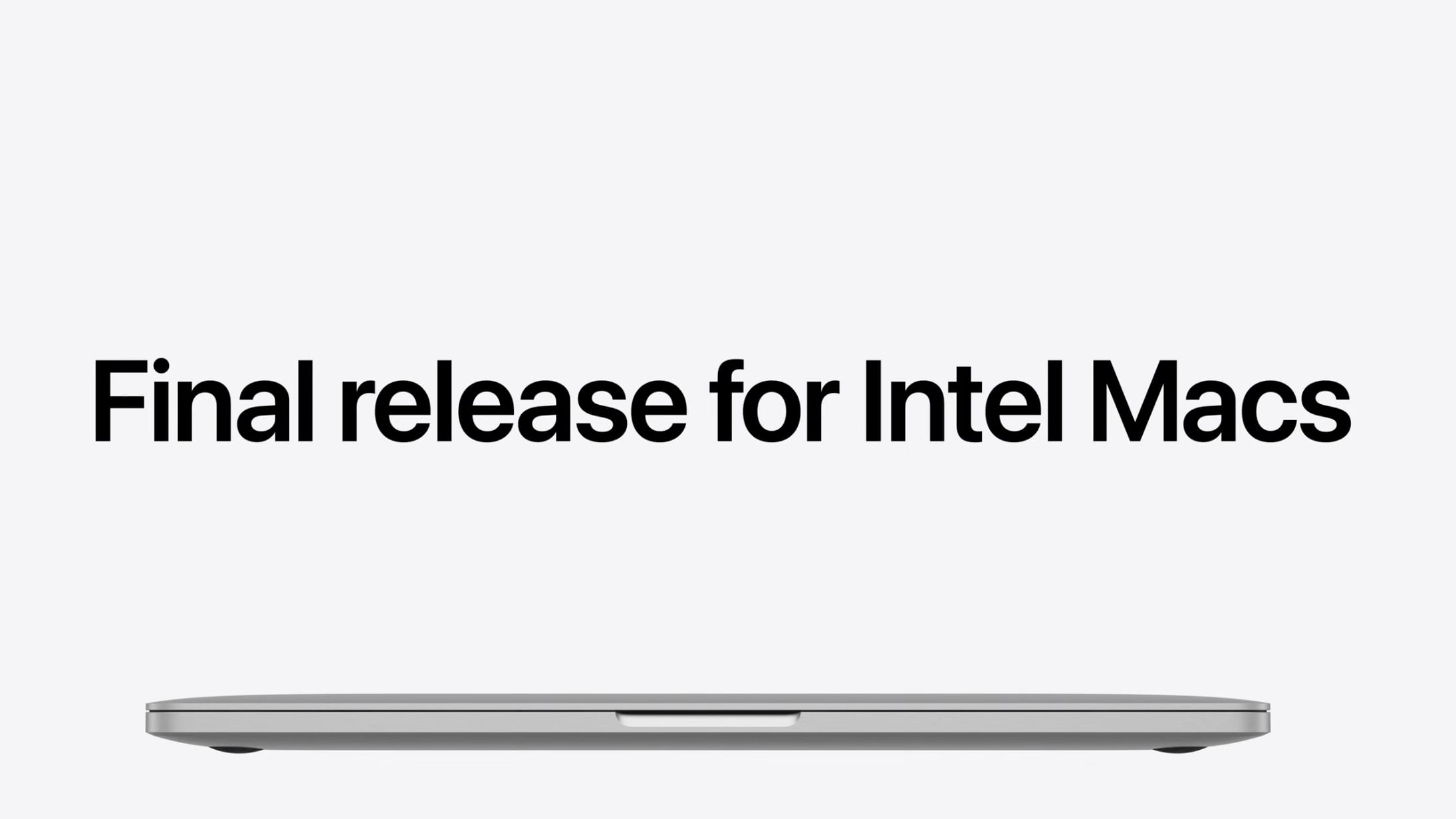
Mac App Store Apps Can Now Drop Support for Intel Macs

Apple today informed developers that universal Mac App Store apps that require macOS 13 or later can remove support for Intel-based Mac computers.


We're reaching out to let you know that universal macOS apps on the Mac App Store that require macOS 13 or later can now remove support for Intel-based Mac computers.

By removing support for Intel-based Mac computers, you can simplify your development and optimize your download and on-device size.

Apps that drop Intel support will no longer deliver updates for those machines, but Intel Mac users will be able to keep using the last compatible version of an app. Apple did not previously allow β€ŒMac App Storeβ€Œ apps with Intel compatibility to drop support.

macOS Tahoe is the last version of macOS that will run on Intel-based Macs. macOS Golden Gate is limited to Apple silicon Macs with an M1 chip or later.

Apple is also phasing out support for Rosetta 2, the feature that lets Intel-based apps run on Apple silicon Macs. Rosetta will stop working for most apps after β€ŒmacOS Golden Gateβ€Œ, and apps that use it won't launch. Apple is making an exception for some older unmaintained gaming titles that rely on Intel-based frameworks.
This article, "Mac App Store Apps Can Now Drop Support for Intel Macs" first appeared on MacRumors.com

Discuss this article in our forums
  •  

iPhone Air Review: One Year With Apple's Super Thin $999 iPhone

It's been almost 12 months since Apple launched the iPhone Air, and because MacRumors videographer Dan Barbera has been using it daily since launch, he decided to do a one-year review covering what it's like using Apple's super-thin iPhone on a long-term basis.


The β€ŒiPhone Airβ€Œ is the thinnest iPhone Apple has released to date, and the form factor doesn't get old. It's pocketable, can be used with one hand, and it's much lighter than the iPhone 17 Pro and Pro Max. There's not much compromise on screen size since it has a 6.5-inch OLED display.

Apple used a smaller battery in the β€ŒiPhone Airβ€Œ, and it doesn't last as long as the β€ŒiPhone 17 Proβ€Œ models. Some people might be able to get through the day on a single charge, but others will need an external battery pack like the one Apple built for the β€ŒiPhone Airβ€Œ.

There's a single camera, which is one of the compromises with Apple's super-thin iPhone. You only get the Wide lens, with no option for the Ultra Wide or Telephoto lenses that come with the other iPhone 17 models. No Ultra Wide also means no macro images.

Price was and continues to be the biggest β€ŒiPhone Airβ€Œ issue. At $999, it's more expensive than the β€ŒiPhone 17β€Œ, which has two cameras and nearly the same processor, and only $100 less than the three-camera β€ŒiPhone 17 Proβ€Œ. The β€ŒiPhone Airβ€Œ's price wasn't worth it to a lot of people, and rumors suggest that it didn't sell well.

Make sure to watch Dan's video to see all of his thoughts on the β€ŒiPhone Airβ€Œ.
Related Roundup: iPhone Air
Buyer's Guide: iPhone Air (Neutral)

This article, "iPhone Air Review: One Year With Apple's Super Thin $999 iPhone" first appeared on MacRumors.com

Discuss this article in our forums

  •  

Here's What Apple is Paying John Ternus to Run the Company

Apple has set new CEO John Ternus' target compensation at $58 million, according to an updated SEC filing [PDF]. Tim Cook's target compensation is $47 million in his new role as executive chairman.


Ternus' fiscal 2027 compensation includes a $3 million salary and an annual equity award with a target value of $55 million. A quarter of the award is time-based and will vest semiannually over four years. The rest of the restricted stock units (RSUs) will vest based on Apple's total shareholder return relative to other companies in the S&P 500, which is how Cook's RSUs have worked for many years. For fiscal 2026, Apple granted Ternus a prorated RSU award with a target value of $2.5 million.

Cook's new salary will be $2 million, but he's also earning an equity award with a target value of $45 million in fiscal 2027. Half will be granted in the form of time-based RSUs that vest over four years, and the other half will vest based on Apple's stock performance. Should Cook retire on or after the first anniversary of the grant date, his equity will vest, but he won't receive the shares until the originally scheduled vesting dates.

Target compensation figures for Ternus and Cook do not include performance-based bonuses, so the final amount each earns in fiscal 2027 could change.

In 2025, Cook earned $74.3 million, including a $3 million salary, $12 million in performance-based cash awards, and $57.5 million in stock awards.

Ternus' previous pay as Apple's senior vice president of hardware engineering was not publicly shared, so this is the first look at his compensation.
This article, "Here's What Apple is Paying John Ternus to Run the Company" first appeared on MacRumors.com

Discuss this article in our forums

  •  
❌