
❌

Lees weergave

Apple Smart Home Display Still Coming This Year

Apple remains on track to launch its first smart home device with a screen before the end of the year, according to Bloomberg's Mark Gurman.


Gurman reiterated that the device will use facial recognition to determine who is standing in front of it and serve up personalized content for that individual user. The description lines up with code found in macOS Tahoe 26.7 earlier this week, which revealed that the smart home hub will support multiple user profiles and use "ambient sensing" to verify identity. Apple is also readying a new Apple TV and an updated HomePod mini as part of the same renewed push into the home, according to Gurman.

Apple's smart home hub has been rumored for years. It is rumored to feature a square, seven-inch display with a front-facing camera, running an operating system closer to tvOS than iOS, with a home screen built around quick-access widgets. Pricing is expected to land somewhere around $350.

Apple originally intended to release the device in spring 2025, then targeted spring 2026, before pushing it back to September because Siri AI was not ready. Gurman reported over the weekend that Apple is rearranging sections of its retail stores to accommodate new smart home products.
Related Roundups: Apple TV, HomePod mini

This article, "Apple Smart Home Display Still Coming This Year" first appeared on MacRumors.com

Discuss this article in our forums
  •  

Apple Quietly Refreshes Magic Keyboards

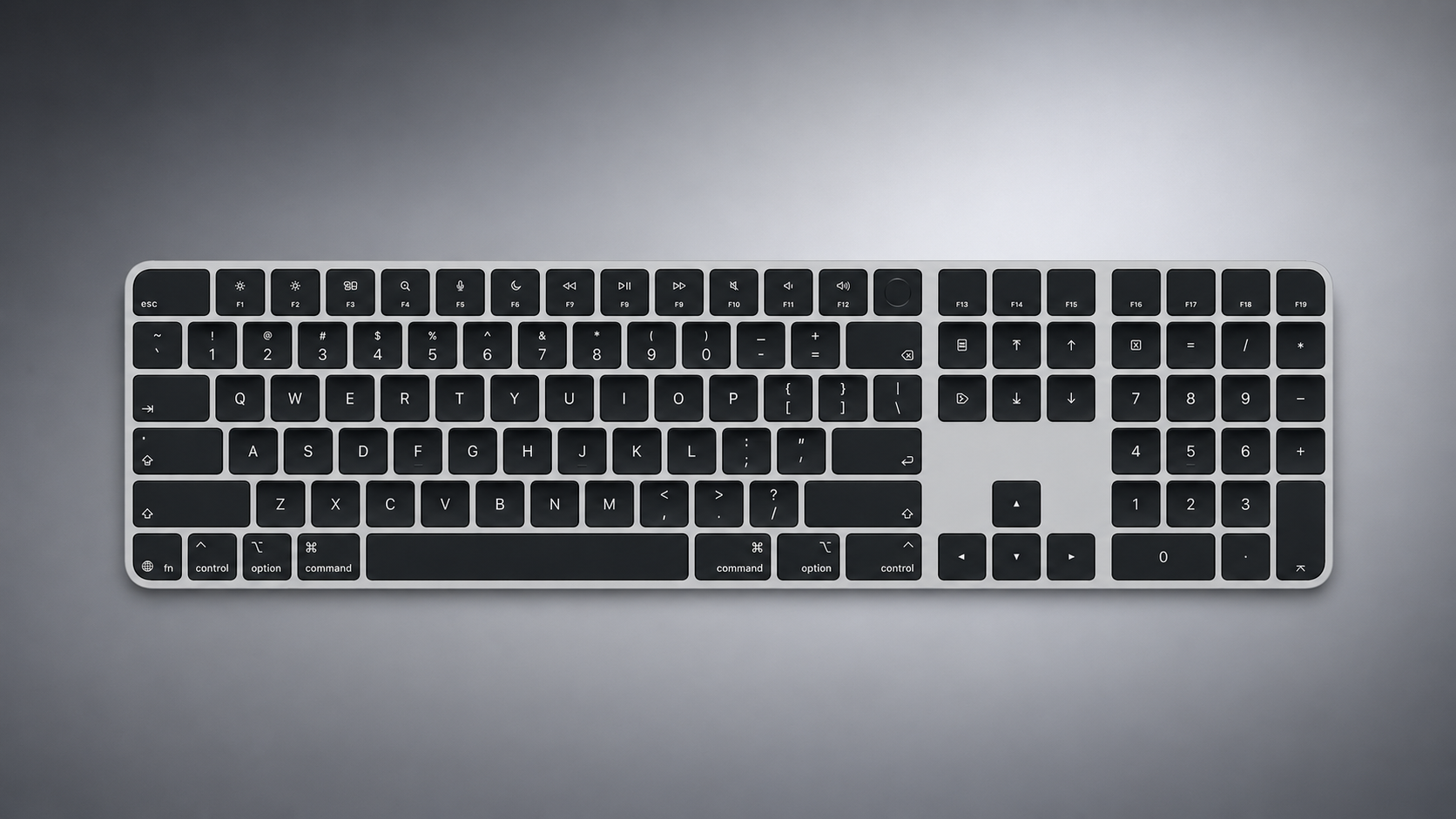
Apple today quietly introduced updated Magic Keyboard models with revised U.S. English key labeling.


On the new keyboards, the tab, caps lock, shift, return, and delete keycaps are labeled with glyphs rather than edge text. On the full-size models with a numeric keypad, the change goes further, with the home, page up, page down, end, clear, and enter keys also swapping their text labels for symbols.

Four models have been updated: the Magic Keyboard, the Magic Keyboard with Touch ID, and the Magic Keyboard with Touch ID and Numeric Keypad in both white keys and black keys.

The one U.S. English model Apple has not refreshed is the Magic Keyboard with Numeric Keypad, which lacks β€ŒTouch IDβ€Œ and continues to use text labels on the same keys.

The change mirrors the one Apple made to its laptops earlier this year, when the new MacBook Air, MacBook Pro, and MacBook Neo adopted glyphs on the same set of keys.

Since the U.S. English layout is the default option in Canada, Australia, New Zealand, and Singapore, among other countries, the new labeling effectively extends well beyond the United States. Apple has used glyphs on its British English and other European layouts for some time, so the symbols will already be familiar to customers there.
This article, "Apple Quietly Refreshes Magic Keyboards" first appeared on MacRumors.com

Discuss this article in our forums
  •  

Apple Debuts M5 Ultra as Most Powerful Chip Ever

Apple today announced the M5 Ultra, which the company says is its most powerful chip ever.


The M5 Ultra is built by connecting two dual-die M5 Max chips using Apple's next-generation UltraFusion technology, which is the first time Apple has used a quad-die architecture in an M-series chip. UltraFusion increases inter-die bandwidth to over 4.4TB/s and connection density by more than 6x, allowing the four dies to function as a single processor.

The chip includes an CPU with up to 36 cores, containing 12 super cores and 24 performance cores, delivering up to 1.25x higher single-threaded performance and up to 1.3x higher multithreaded performance than the M3 Ultra.

Its GPU scales up to 80 cores, with a Neural Accelerator built into each core for the first time on an Ultra chip. Apple says this delivers up to 4.3x the peak AI compute performance compared to the M3 Ultra, along with up to 1.8x faster graphics than the previous-generation chip.

The M5 Ultra also includes a 32-core Neural Engine and a more capable Media Engine, with twice the video encode and decode blocks as M5 Max, allowing users to simultaneously play up to 33 streams of 8K ProRes 422 at 30 fps.

The chip supports up to 512GB of unified memory and up to 1.2TB/s of memory bandwidth, a 50% increase over M3 Ultra. Apple says the added memory and bandwidth let users store large datasets locally, increase tokens per second, and run large language models with hundreds of billions of parameters entirely on device.

The M5 Ultra is exclusively available in the new Mac Studio, which is available for pre-order today, with availability beginning on September 22. Configurations with 512GB of memory launch in late October.
This article, "Apple Debuts M5 Ultra as Most Powerful Chip Ever" first appeared on MacRumors.com

Discuss this article in our forums
  •  

Apple Reveals M6 as First-Ever 2nm Chip

Apple today announced the M6 chip, its first built using a 2-nanometer process and featuring a Dual 16-core Neural Engine.


Apple says the 2nm process packs greater transistor density into a smaller die, contributing to the chip's overall gains in performance and power efficiency.

The M6 chip features a larger, more powerful 12-core CPU, two more cores than the M5, made up of two super cores, four performance cores, and six efficiency cores. Apple says the chip delivers the world's fastest single-threaded performance and up to 1.2x faster multithreaded performance than the M5, and up to 2.4x faster than the M1.

The chip also features a 12-core GPU, with two more cores than the M5, with a Neural Accelerator built into each core. Apple says this delivers nearly a 30% increase in peak GPU compute for AI compared to the M5, and more than 8x compared to the β€ŒM1β€Œ, resulting in faster prompt processing for on-device LLMs.

The GPU also gains updates to the shader core architecture, Dynamic Caching, and hardware-accelerated ray tracing, along with a 50% increase in geometry rates for more complex graphics.

The M6 introduces a Dual 16-core Neural Engine, offering up to 2x the peak compute of previous generations. Apple says system frameworks can automatically use both engines at once, allowing applications to run AI models faster.

The chip supports up to 32GB of unified memory and up to 170GB/s of unified memory bandwidth, which is a 10% increase over M5 and 2.5x more than the β€ŒM1β€Œ.

The M6 debuts in the new Mac mini, which launches on Tuesday, September 22.
This article, "Apple Reveals M6 as First-Ever 2nm Chip" first appeared on MacRumors.com

Discuss this article in our forums
  •  

Apple Unveils New Mac Studio With M5 Max and M5 Ultra Chips

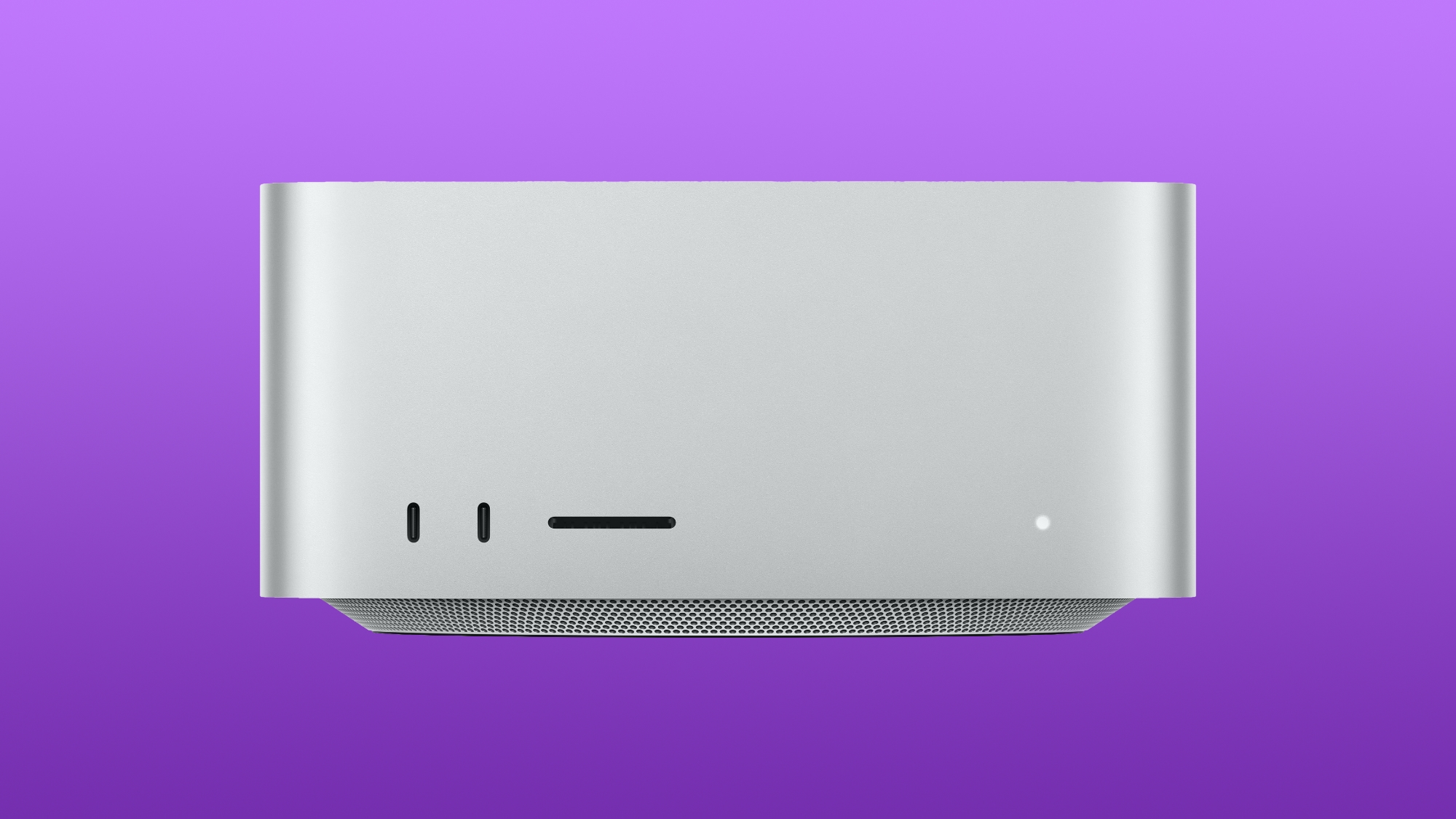
Apple today announced new Mac Studio models with the M5 Max and M5 Ultra chips, the latter of which is the company's most powerful chip ever.


The new β€ŒMac Studioβ€Œ features a next-generation SSD architecture built on PCIe Gen 6 that Apple says is up to twice as fast as before. The machine also gains Thunderbolt 5 ports with up to 120Gb/s of bandwidth, along with Wi-Fi 7 and Bluetooth 6 for the first time via Apple's N1 chip. The new β€ŒMac Studioβ€Œ also supports genlock over USB-C and can drive up to eight displays.

The M5 Ultra chip includes an up to 36-core CPU that contains 12 super cores and 24 performance cores. It delivers up to 1.25x higher single-threaded performance and up to 1.3x higher multithreaded performance than the M3 Ultra from the previous generation β€ŒMac Studioβ€Œ.

The M5 Ultra features a GPU with up to 80 cores, and a Neural Accelerator is built into each core, offering up to 4.5x the peak GPU compute for AI tasks compared to the M3 Ultra and more than 6x compared to the M1 Ultra. Apple says the GPU's latest shader core technology, paired with second-generation Dynamic Caching, hardware-accelerated mesh shading, and third-generation ray tracing, delivers up to 40% faster graphics performance than the M3 Ultra.

The chip also includes a more capable Media Engine, with dedicated hardware for H.264, HEVC, four ProRes encode and decode engines, and hardware-accelerated AV1 decode, along with a 32-core Neural Engine for on-device AI tasks.


The M5 Ultra is built by connecting two dual-die M5 Max chips using Apple's next-generation UltraFusion technology, which increases inter-die bandwidth to over 4.4TB/s and connection density by more than 6x, allowing the four dies to function as a single processor.

The new β€ŒMac Studioβ€Œ with the M5 Ultra supports up to 512GB of unified memory and up to 1.2TB/s of memory bandwidth, which is a 50% increase over M3 Ultra. Apple says the added memory and bandwidth allows users to store large datasets locally, increase tokens per second, and run large language models with hundreds of billions of parameters entirely on device.

Users can also cluster multiple β€ŒMac Studioβ€Œ systems together using built-in support for Thunderbolt 5 and RDMA (remote direct memory access), creating a shared memory pool across systems. Apple says a cluster of four β€ŒMac Studioβ€Œ systems delivers up to 3x faster AI inference than a single system.

The β€ŒMac Studioβ€Œ is also now available with the M5 Max chip, offering an 18-core CPU with 6 super cores and 12 performance cores, up to 40 GPU cores, up to 128GB of unified memory with up to 614GB/s of memory bandwidth, and up to 8TB of storage. Apple says the M5 Max delivers up to 3.9x faster AI performance than the previous generation.

The new β€ŒMac Studioβ€Œ will be released on September 22, but the model with 512GB of unified memory launches in late October. It is available for pre-order now.
Related Roundup: Mac Studio
Buyer's Guide: Mac Studio (Buy Now)
Related Forum: Mac Studio

This article, "Apple Unveils New Mac Studio With M5 Max and M5 Ultra Chips" first appeared on MacRumors.com

Discuss this article in our forums
  •  

Apple Watch Series 12 to Get Fitness Tracking Upgrades

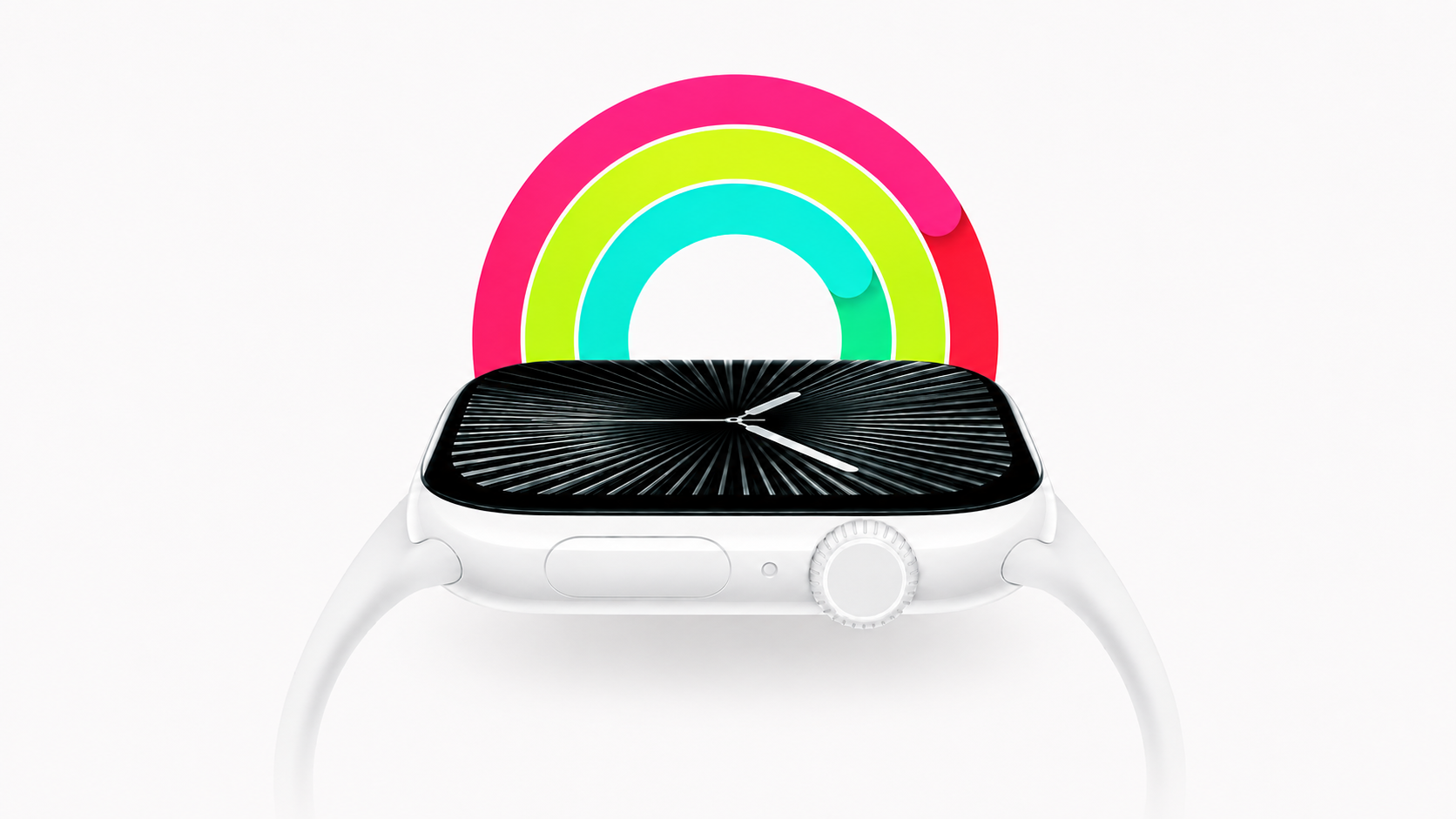
Apple's new Apple Watch models will feature upgrades to fitness tracking, according to Bloomberg's Mark Gurman, who otherwise characterized this year's changes to the lineup as "minor."
Gurman said much the same in July, pointing to faster performance and better health and fitness tracking in the absence of any design overhaul.
Related Roundup: Apple Watch 11

This article, "Apple Watch Series 12 to Get Fitness Tracking Upgrades" first appeared on MacRumors.com

Discuss this article in our forums

  •  

iPhone Trade-In Values Slide Ahead of New Model Launch

Ahead of the announcement of the iPhone 18 Pro, β€ŒiPhone 18 Proβ€Œ Max, and first foldable iPhone next month, a new study from trade-in comparison site SellCell finds that most iPhones lose a considerable amount of trade-in value in the 10-day window between Apple's announcement and the actual product launch.


Looking at the launch of the iPhone 15, iPhone 16, and iPhone 17 lineups, SellCell found that trade-in values dropped for 117 of 156 models tracked, or 75% of the total, between announcement day and release day. That window saw the steepest declines for the β€ŒiPhone 17β€Œ lineup last year, with 50 of 54 iPhone models (92.6%) losing value, with an average drop of $36.46 per device.

The largest individual declines came from older models still on the trade-in market at the time. The β€ŒiPhone 16β€Œ Plus 512GB fell from $695 to $566, a $129 drop and the largest loss in the dataset. The iPhone 15 Plus 128GB saw the steepest percentage decline, falling from $440 to $351, a loss of 20.2%.

SellCell paired the pricing data with a survey of 2,000 U.S. iPhone users. 61.4% of respondents said they plan to keep their current iPhone until a replacement is in hand and set up, rather than trading it in around the announcement. The most common reasons cited were needing the phone for continued use and needing to transfer data, which together accounted for 77.4% of responses.

Apple updated and largely increased its own official trade-in estimates last month ahead of the β€ŒiPhone 18 Proβ€Œ and foldable iPhone announcement.
This article, "iPhone Trade-In Values Slide Ahead of New Model Launch" first appeared on MacRumors.com

Discuss this article in our forums

  •  
❌