❌

Lees weergave

Apple Planning to Unveil Privacy-Focused Smart Glasses at WWDC 2027

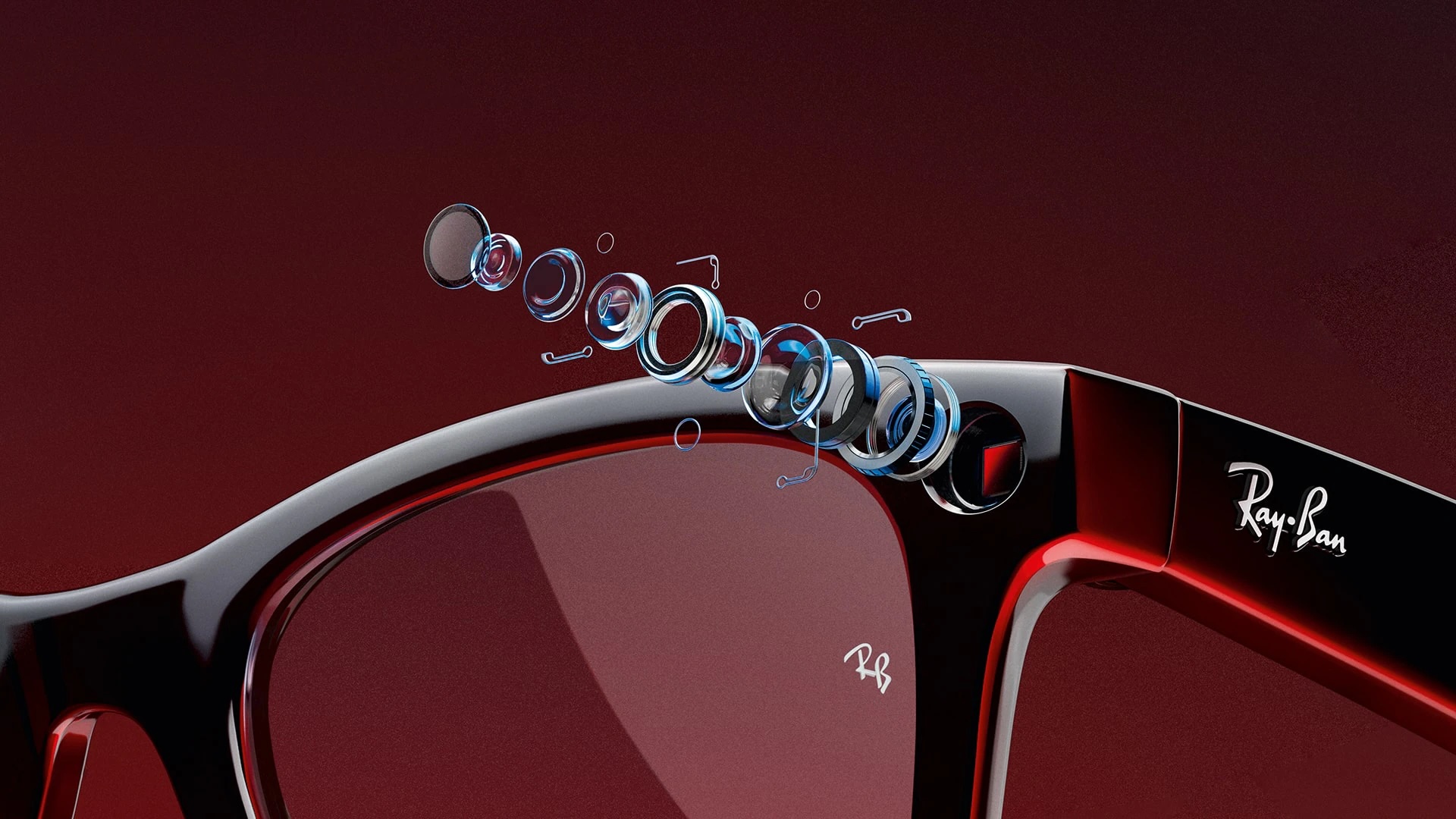
Apple currently plans to unveil its first smart glasses at WWDC 2027 next June, and privacy will be a focus, according to Bloomberg's Mark Gurman.


For the glasses, Apple is prototyping "a slew of new hardware and software-related privacy features" that are not available on current products, he said. He did not mention any specific features, but he noted that Apple's marketing will likely emphasize the privacy measures of its glasses compared to rival products like the Meta Ray-Bans.

In a world where some people are wary of being secretly recorded by camera-equipped glasses, Gurman said Apple has considered releasing smart glasses with cameras that assist with AI features, but lack photo and video recording capabilities. In fact, he said Apple has even prototyped smart glasses without a camera system entirely.

Still, the most likely outcome is that Apple's glasses will have cameras, but with the sort of privacy protections that the company is known for.

Like the Meta Ray-Bans, Apple's glasses would also have speakers and microphones for music, phone calls, and notifications announced by Siri.

Apple apparently aims to begin shipping the glasses to customers in late 2027.
This article, "Apple Planning to Unveil Privacy-Focused Smart Glasses at WWDC 2027" first appeared on MacRumors.com

Discuss this article in our forums

  •  

'Apple Upgrade' Program Launching on Tuesday

In his newsletter today, Bloomberg's Mark Gurman reiterated that a new "Apple Upgrade" program is set to launch in the U.S. on Tuesday, July 28. Apple will stop accepting iPhone Upgrade Program sign-ups on the same day, but he said customers who are already enrolled will be able to remain in the program "for the time being."


Apple is partnering with buy-now, pay-later company Klarna on the program, he said.

The program will allow you to lease most iPhone, iPad, Mac, and Apple Watch models, with a 24-month term for iPhones and Apple Watches and a 36-month term for iPads and Macs. Customers will have various options, including returning their device after the term, upgrading to a newer device, paying a fee to keep the device, and so forth.

Some lower-priced devices, including the Apple Watch SE, the entry-level iPad, the iPhone 16, and the MacBook Neo, will not be eligible, he said.

Unlike the iPhone Upgrade Program, Apple Upgrade plans will apparently not include AppleCare+ coverage bundled into the monthly price.

Apple plans to advertise the program as a way to have lower monthly payments compared to current financing programs, according to the report, so it sounds like Apple Upgrade will be focused on leasing rather than traditional financing, and it will apparently replace the iPhone Upgrade Program for new purchases going forward.
This article, "'Apple Upgrade' Program Launching on Tuesday" first appeared on MacRumors.com

Discuss this article in our forums

  •  

What to Expect From Apple Watch Series 12 and Apple Watch Ultra 4

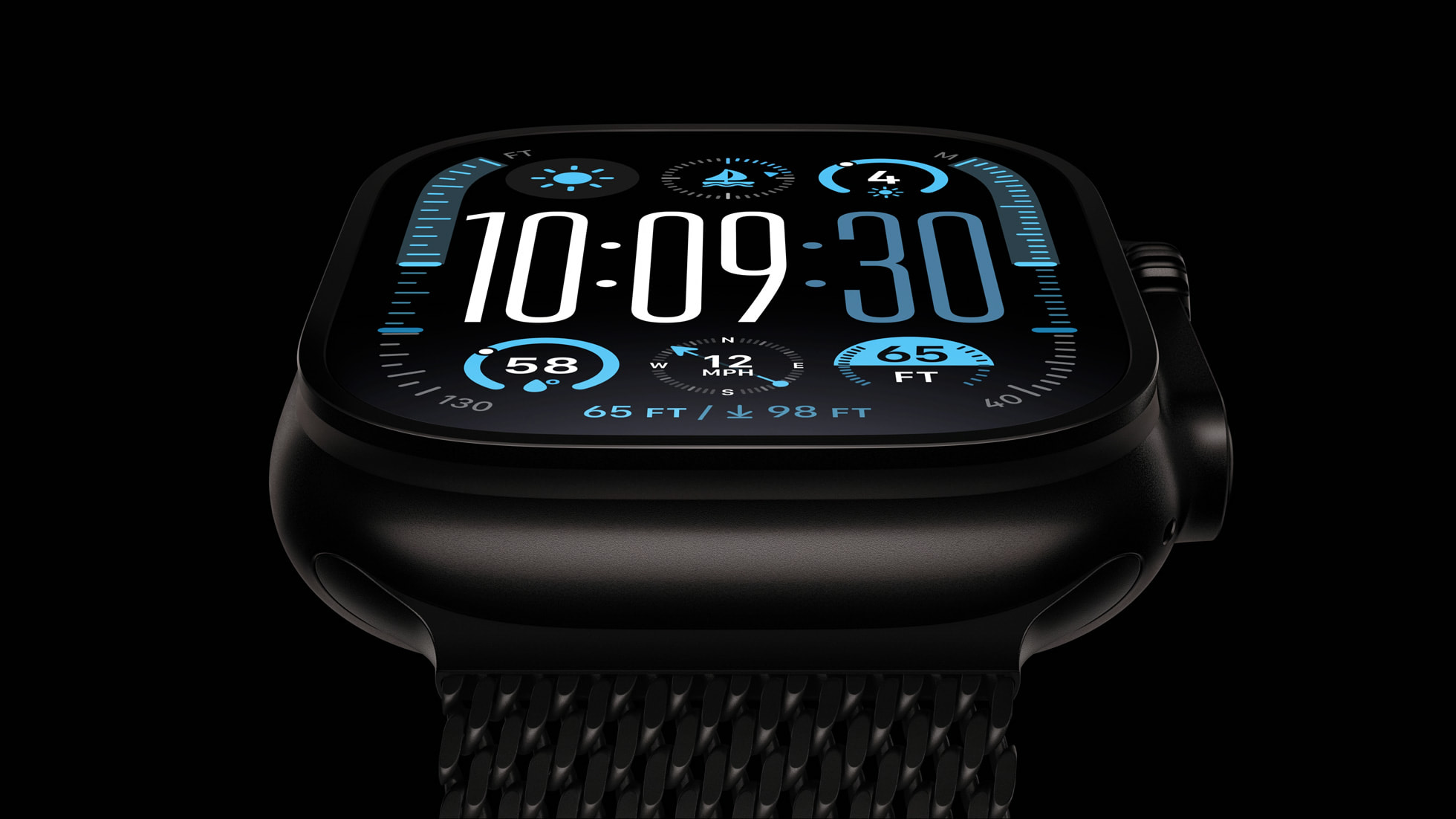
Bloomberg's Mark Gurman today outlined what to expect from the Apple Watch Series 12 and Apple Watch Ultra 4 this year. Spoiler: not very much.


While it was rumored that Touch ID may be coming to the Apple Watch Series 12, Gurman said he does not expect the Series 12 or Ultra 4 to have any major design changes compared to the current Series 11 and Ultra 3 models. Touch ID probably counts as a major design change, so the rumor now sounds increasingly unlikely.

Another sketchy rumor claimed that the Series 12 will have a band with an embedded health sensor, but Gurman did not mention that.

Instead, he expects more ordinary changes, including faster performance and unspecified improvements to health and fitness tracking. The Series 11 and Ultra 3 both have an S10 chip that debuted in the Series 10 and Ultra 2, so the S11 chip or newer should provide the first Apple Watch performance improvements in years.

There will not be an Apple Watch SE 4 this year, he said.

Bigger changes are in the works for the Apple Watch, but he said they are unlikely to arrive for another year or two. Even further ahead, he added that Apple continues to develop a blood sugar detection feature with a goal of releasing it by 2030.
Related Forum: Apple Watch

This article, "What to Expect From Apple Watch Series 12 and Apple Watch Ultra 4" first appeared on MacRumors.com

Discuss this article in our forums

  •  

Russ Allbery: Review: Radiant Star

Review: Radiant Star, by Ann Leckie

Publisher: Orbit
Copyright: May 2026
ISBN: 0-316-29068-8
Format: Kindle
Pages: 359

Radiant Star is a science fiction novel set in the Imperial Radch universe without being a direct sequel to the other books in that universe. It will badly spoil the end of Ancillary Mercy, and I recommend reading that trilogy first, but it's independent of the other books in the same universe.

In the 3,008th year after the manifestation of the Radiant Star (the 1,024th since the founding of the Consorority itself), Zaved, a newly minted consoror, disappeared a mere two days after the ceremony that elevated her to womanhood. She left a note that read, Bored. Back whenever. This was not normal or even remotely acceptable behavior in a consoror, particularly one who held as much promise as Zaved had, but what could the consorors do?

Zaved, faced with the unpleasant prospect of running out of money during her galactic tour, plied a rich benefactor with tales of how talented, polite, and obedient the boys of the Consorority are. Her plan worked brilliantly. After funding further non-boring adventures, she arrived home in Ooioiaa with a chest full of money and a pregnancy. Great for Zaved and the Consorority; kind of a shame for her son Jonr, who is to be delivered to her benefactor after proper training. Oh well, telling Jonr about that is a problem for future Zaved.

After a strained childhood in which he convinces himself he is a misfit with few redeeming qualities, Jonr ends up in a suspension pod. Before shipping can be arranged, however, external events intervene, leaving Jonr sitting unnoticed in a warehouse.

The planet of Aaa is in a highly inconvenient location, drifting as it does through interstellar space unattached to any star. It would be as irrelevant and overlooked as any other random interstellar object except for two critical properties. The first is that Aaa and its sole city of Ooioiaa are sacred to a religion of obscure origin. Its primary population are members of a religious cult who believe the Radiant Star manifested in the Temporal Location on Ooioiaa and will eventually return to bring light to the galaxy. The second interesting property of Aaa is that it is drifting ever so slowly towards a strategic system of military importance.

The first property brings pilgrims and their accompanying bounty of money, food, and other resources necessary to dig a small city out of rock, make it habitable, and supplement the sparse and strange native edible life. The second property brings the Radchaai, who easily conquer the city of Ooioiaa and are now faced with the unpleasant task of running it.

Some decades after the Radchaai conquest, having never left Aaa, Jonr is woken up. He will not be sent off into the broader galaxy as a slave to pay off a vacation debt. Instead, he will be one of the many protagonists in this novel about the perils of living through supply chain disruptions on a planet full of status-obsessed religious fanatics who would drown in a rain shower.

The other books set in this universe make abundantly clear that the Radch is a voracious colonial power that enslaves native populations and enforces their own cultural preferences at the point of a gun. A reader familiar with this series is predisposed to take whatever side is not the Radch.

Radiant Star adds a complication, however. Charak Svo, the Radchaai governor, is impatient with native inhabitants and strongly dislikes their religion, but she is reasonably competent. The religious factions that ran Ooioiaa before the arrival of the Radchaai, on the other hand, are dogmatic authoritarians with the collective wisdom of a sack of turnips. Charak does not get everything right and is arguably responsible for at least one catastrophe. By the end of the book, though, I was firmly convinced that had the original religious government still been in charge, everyone would have died.

I found the structure of this book a little odd. The omniscient narrator tells the story in the form of a history. The target audience appears to be future inhabitants of Ooioiaa and adherents to the Radiant Star religion, and the narrator is often maddeningly uninterested in topics that a reader of the rest of the Imperial Radch books is intensely curious about. This same property carries through to the plot: I was interested in how all of the tensions in this obviously absurd society could be resolved or, preferably, overturned entirely. The narrator, on the other hand, is far more interested in Serque Tais's intent to become the last saint in the Temporal Location, and in the details of the subsequent political, economic, and religious fallout.

Leckie has written three novels set in the Imperial Radch after the original trilogy: Provenance, Translation State, and now Radiant Star. I am sure that I'm not the only person who wants a direct continuation of the original trilogy, but I'm drawing the conclusion that Leckie doesn't want to write that. Instead, she's writing around the edges of the subsequent events, in effect showing readers the shape of them and their broader implications without showing the details.

Now that I can see what she's doing, I kind of like it. Given what we now know from the books written around the edges, the ensuing events in the center of galactic politics are chaotic in a way that could easily devolve into tedious accounts of messy conflicts. Seeing the effects from afar lets the reader fill in some of the blanks and speculate, and it makes the moments where we get a concrete update (such as at the end of this book) all the more rewarding. I still find it odd, though, to read a book where the narrator's interests so sharply diverge from mine.

I wish I could say that Radiant Star sucked me in as the story developed, but it never did. Part of the problem is that I think this book is intended as a very dry farce, and farce often doesn't work with my reading style. I prefer to attach myself to a protagonist and hope they do competent things, and this book is full of characters who are being themselves far too aggressively and loudly to have time to be competent at anything. My favorite moments were therefore the small pockets of people with sense: The governor, Jonr, his charge, and the delightfully strange Justice of Albis. I enjoyed all of them, but I had trouble caring about the overall plot and kept putting this book down for days between chapters.

I think this is mostly personal taste, though. Like all of Leckie's novels since the original Imperial Radch trilogy, Radiant Star is competently executed and a little strange. When that strangeness aligns with your tastes, it's a great deal of fun and rather unlike other science fiction novels. In this case, it didn't quite work for me, but I suspect it will for others.

I still want another Leckie novel with a ship as a protagonist, though.

Content notes: Rather disturbing (although bloodless) religious practices, mass death.

Rating: 6 out of 10

  •  

Apple's First Water-Resistant iPad to Launch Later This Year

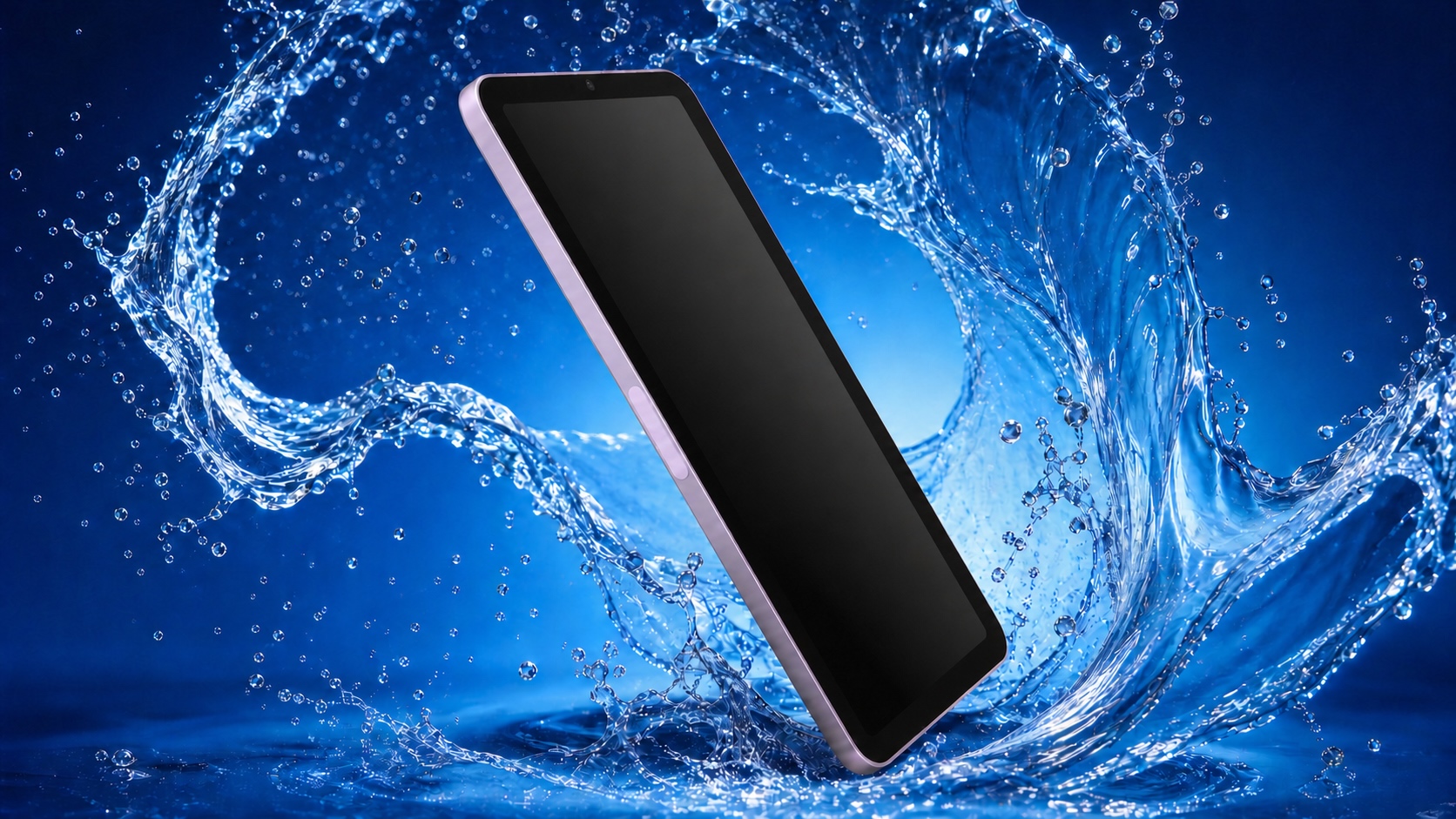
Apple's next iPad mini will apparently be the first iPad with a water-resistant design, and the tablet is now expected to arrive by October.


Bloomberg's Mark Gurman reported last year that Apple is working on an updated casing that offers protection comparable to the iPhone, making the β€ŒiPad miniβ€Œ safe for casual use in wet environments like a bathroom or a pool area. No β€ŒiPadβ€Œ currently carries an official water resistance rating, and Apple does not consider the existing models safe to get wet.

To achieve this, Apple has reportedly designed a vibration-based speaker system that removes the need for traditional speaker holes. Sound would instead emit from flat surfaces on the tablet's chassis, effectively turning parts of the body into a speaker diaphragm and eliminating one of the main routes through which water and dust enter a device.

The approach differs from the method Apple uses on the iPhone, which relies on adhesives and gaskets to seal speaker openings and other ingress points. It is not yet known what IP rating the β€ŒiPad miniβ€Œ will carry. The iPhone is rated IP68 and can withstand submersion in water up to six meters deep for 30 minutes.

Apple has been building toward the technology for some time. A 2014 patent from the company describes a "mechanically actuated panel acoustic system" that vibrates flat panels to generate sound, negating the need for speaker grilles altogether.

A sealed design would also close one of the everyday gaps between the β€ŒiPad miniβ€Œ and dedicated e-readers. Devices like the Kindle Paperwhite and Kobo Libra Color are rated to survive immersion, and the ability to read in the bath or by the pool has long been one of the practical advantages they hold over Apple's smallest tablet.

Gurman recently said that Apple plans to release the new iPad mini by October. Korean outlet ETNews reported in June that Samsung Display had begun mass production of OLED panels for the device, lending weight to a launch in that window.

Water resistance is one of at least four major changes expected this year. The switch to OLED will make the mini the second β€ŒiPadβ€Œ line to adopt the technology after the iPad Pro, delivering higher contrast, true blacks, and better power efficiency than the LCD screen in the iPad mini 7. A Korean source claimed earlier this month that the panel is an 8.4-inch LTPS design clocked at 60Hz, which would rule out ProMotion.

Apple is also reportedly planning a "major processor leap" for the tablet. Code accidentally published by Apple pointed to the A19 Pro chip used in the iPhone Air, while other evidence in a macOS kernel debug kit suggests the device will use the unreleased A20 Pro.

Apple last updated the β€ŒiPad miniβ€Œ in October 2024 with the A17 Pro chip and Apple Intelligence support. The tablet now starts at $599 following the company's sweeping price increases in June, and Gurman previously suggested the β€ŒOLEDβ€Œ model could command up to $100 more, though that estimate predated the June rises.
This article, "Apple's First Water-Resistant iPad to Launch Later This Year" first appeared on MacRumors.com

Discuss this article in our forums

  •  
❌