
❌

Lees weergave

Dirk Eddelbuettel: RQuantLib 0.4.27 on CRAN: Small Extension

A new minor release 0.4.27 of RQuantLib, the first in over a year, arrived on CRAN a couple of minutes ago, has just now been uploaded to Debian, and is being built for r2u as well.

QuantLib is a rather comprehensice free/open-source library for quantitative finance. RQuantLib connects (some parts of) it to the R environment and language, and has been part of CRAN for nearly twenty-three years (!!) as it was one of the first packages I uploaded to CRAN.

This release of RQuantLib brings an update to the interface for all equity options, vanilla and exotics as well as implied volatilities. We now support the option maturity via either an actual maturity date, or the (fractional business-day years) numeric. This uses a clever little Rcpp trick I should discuss in a separate blog post. We also re-ran compileAttributes() to re-create the RcppExports.cpp file now using a slightly improved way of calling Rf_error for an ongoing Rcpp transition, and did some more standard maintenance. The details from the NEWS file follow as usual.

Changes in RQuantLib version 0.4.27 (2026-06-07)

  • All equity option functions can now take either a (fractional) time span to expiry or a given date, and accept a daycounter setter.

  • Two very old schedule helpers had a superfluous try/catch removed.

  • The continuous integration setup received a minor update.

  • The RcppExports.cpp file was updated to aid a Rcpp transition.

Courtesy of my CRANberries, there is also a diffstat report for the this release. As always, more detailed information is on the RQuantLib page. Questions, comments etc should go to the rquantlib-devel mailing list. Issue tickets can be filed at the GitHub repo.

This post by Dirk Eddelbuettel originated on his Thinking inside the box blog. If you like this or other open-source work I do, you can now sponsor me at GitHub.
  •  

Anker 3-in-1 Wireless Charging Station Now $40 Off Ahead of Amazon Prime Day

Amazon is set to host its annual Prime Day event later in June, but you can already find massive discounts across popular accessories right now. This includes year's best prices on Anker chargers, Samsung monitors, Sonos audio products, and more.

Note: MacRumors is an affiliate partner with some of these vendors. When you click a link and make a purchase, we may receive a small payment, which helps us keep the site running.

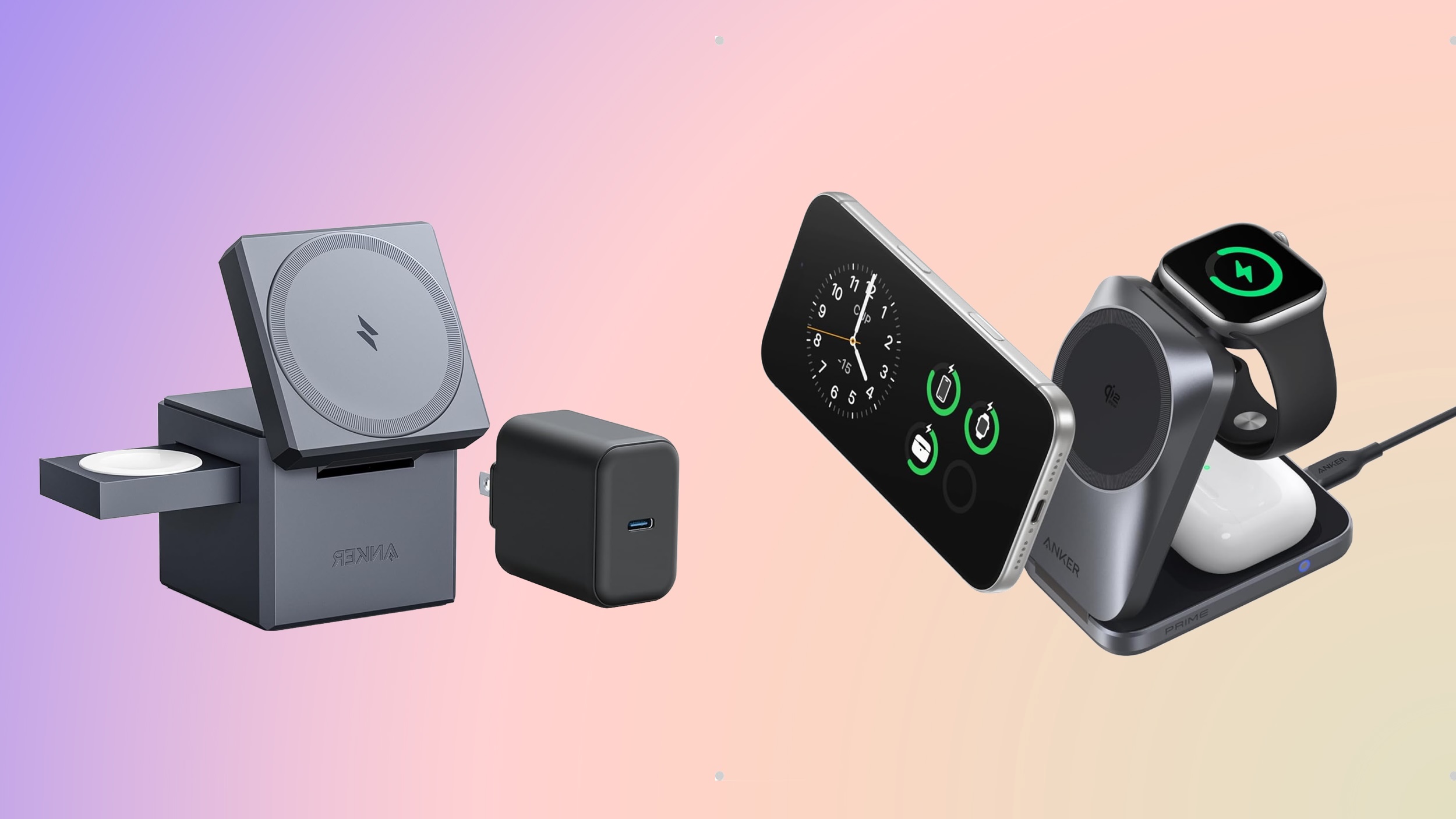
An ongoing highlight of these deals is Anker's Prime 3-in-1 Wireless Charging Station, available for $109.99 for Prime members this week, down from $149.99. This is one of Anker's newest accessories, and Amazon's sale today is a solid second-best price on the device.


The Prime 3-in-1 Wireless Charging Station features Qi2.2 support, which lets a compatible MagSafe β€ŒiPhoneβ€Œ charge at up to 25W. It's the same speed as Apple's β€ŒMagSafeβ€Œ charger, and it is 10W faster than the standard Qi2 β€ŒMagSafeβ€Œ chargers. You can also simultaneously charge an Apple Watch and AirPods with the device.

We're also tracking big discounts from brands like UGREEN, Sony, Samsung, Sonos, and more in the lists below. Accessories on sale include USB-C wall chargers, MagSafe-compatible wireless chargers, portable batteries, headphones, soundbars, and monitors.

Docks


Wall Chargers


Wireless Chargers


Portable Chargers


Audio


Monitors


If you're on the hunt for more discounts, be sure to visit our Apple Deals roundup where we recap the best Apple-related bargains of the past week.


Deals Newsletter


Interested in hearing more about the best deals you can find in 2026? Sign up for our Deals Newsletter and we'll keep you updated so you don't miss the biggest deals of the season!


Related Roundup: Apple Deals

This article, "Anker 3-in-1 Wireless Charging Station Now $40 Off Ahead of Amazon Prime Day" first appeared on MacRumors.com

Discuss this article in our forums

  •  

Vasudev Kamath: debsecan-mcp v0.1.2 released to PyPI

I finally carved out some time today to prepare and release debsecan-mcp v0.1.2 to PyPI. During this release, I integrated PyPI's trusted publisher mechanism, which authenticates directly via GitHub Actions and eliminates the need for manual uploads or static API tokens.

What is New?

There are no feature updates in this release; the changes are strictly focused on PyPI publishing requirements. This was handled entirely within the Antigravity IDE.

The primary change replaces the python-apt dependency with python-debian for version comparison. PyPI rejects packages that reference external Git repositories, and python-apt lacks an official PyPI release. The original python-apt logic remains intact: if the system has python-apt installed, the server defaults to it. Otherwise, it falls back to the comparison logic implemented via the python-debian NativeVersion class.

What Next?

The next release will introduce a standalone CLI utility called debvulns. It mirrors debsecan functionality but surfaces the cleaner, richer vulnerability data already implemented in debsecan-mcp. The code is written, and I will release it once testing is complete.

I also owe a post explaining my rationale for designing a CLI utility alongside the MCP server, and my broader thoughts on CLI vs. MCP workflows. I aim to publish that next week.

  •  

Best Look at Foldable iPhone Design Revealed, May Only Come in White

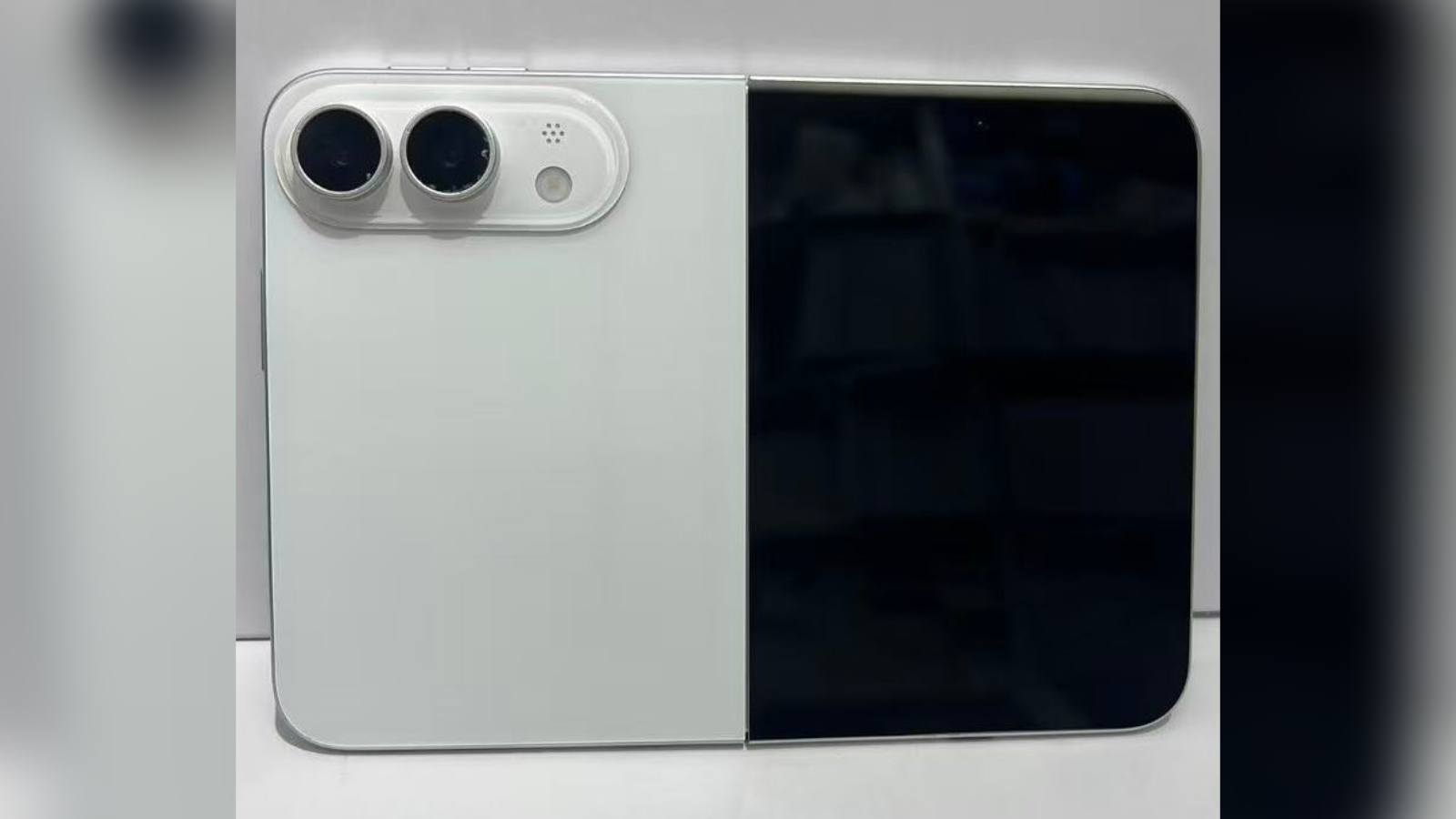
Sonny Dickson today shared detailed images of a foldable iPhone dummy unit with what appears to be a finalized design, providing the best look yet at the device's look, with the suggestion that the device may only be available in white.


Dummy units are non-functional units intended primarily for display purposes and accessory manufacturers, who need a high level of physical accuracy to mass produce cases and other accessories ahead of a device's announcement. Dickson first shared early-production dummy models of the foldable iPhone alongside the iPhone 18 Pro and β€ŒiPhone 18 Proβ€Œ Max in April, providing the first real visual confirmation of the foldable's passport-style form factor.

The latest foldable iPhone dummy is markedly more detailed than those that have previously circulated. Earlier this week, the leaker known as "Ice Universe" shared what appeared to be an image of a white foldable iPhone dummy, but Dickson's unit offers a substantially clearer view of the design and display.

First look at the iPhone Fold dummy unit. It doesn't look like Apple will offer multiple colors, with white currently appearing to be the only option. What do you think? pic.twitter.com/olMzm6t6Ts

β€” Sonny Dickson (@SonnyDickson) June 7, 2026


The images align with the wider body of design rumors accumulated so far. The device is expected to feature a book-style, passport-shaped design with a 4:3 aspect ratio, wider than it is tall and unlike any foldable currently on the market, with a 5.5-inch outer display and a 7.8-inch inner OLED panel that would make it just slightly smaller than the iPad mini when open.

Rumors point to an ultra-thin 4.5mm titanium frame, with volume buttons relocated to the top edge of the device, no Action Button, Touch ID in place of Face ID, and a horizontal dual-camera array on the back in an iPhone Air-style camera plateau.

The latest dummy models reveal several new design aspects, such as the fact that the cover display will be edge-to-edge and slightly curved at the edges, the camera flash will be located below the rear microphone in the camera plateau, the rear microphone has a new design consisting of seven drilled holes, and the front-facing camera on the inner display is located on the top left. This will almost certainly have implications for the Dynamic Island.

On the device's color, Dickson's observation corroborates a report from Friday, in which the Weibo leaker known as "Instant Digital" suggested that there may be no black finish, with white potentially being the only option. Bloomberg's Mark Gurman previously reported that Apple planned to avoid bold colors and stick to traditional finishes.

It is worth noting that several new high-end products such as the Apple Watch Ultra and Vision Pro only launched with one color option. The approach would be broadly consistent with how Apple has handled generationally significant launches before. The iPhone X debuted in November 2017 in just two colors, Silver and Space Gray, at a then-record starting price of $999. The iPhone XS that followed a year later added Gold to the lineup, and Apple may take the same incremental approach with the iPhone Ultra over time.

The foldable iPhone is expected to be announced in September 2026 alongside the β€ŒiPhone 18 Proβ€Œ and β€ŒiPhone 18 Proβ€Œ Max, at a starting price Gurman says will cross the $2,000 threshold.
Related Roundup: iPhone Fold

This article, "Best Look at Foldable iPhone Design Revealed, May Only Come in White" first appeared on MacRumors.com

Discuss this article in our forums

  •  

Steinar H. Gunderson: Hyperpersonal open source

A while back, I got my first subwoofer (a surprisingly nice addition to the movie experience, just like rear speakers were). But I live in an apartment, and I don't want to annoy my neighbors at night (the speaker cone points literally down into the floor, and I have no idea how much my neighbors get to share in my enjoyment). So, what to do?

It turns out my receiver supports a sort-of documented serial protocol; it doesn't have an actual serial port, but you can telnet into it (only one session at a time!) and get the same two-way stream. (It also has a HTTP version which I find less useful.) So this allows me to impose my own policy, and of course, doing it via an existing Home Assistant adapter or something was no fun and also thoroughly frustrating, so I saw it as an opportunity to keep maintaining my low-key Rust skills. (No, no LLM code generation. If I'm going to spend time on this, at least I can learn something myself. I think I asked one for code critique at some point, but I can't remember.)

The policy is roughly: If I'm watching TV after 22:00, then the subwoofer is either turned off (if possible) or turned down -12 dB (the maximum). But if I'm watching a Blu-ray or another input like that, that's presumably a conscious tradeoff I've made and things are left at normal. Everything gets a bit more complicated by the fact that the receiver tends to lose state when doing certain switches, and when it boots, it takes a minute or two before Telnet responds, and when it shuts down, it goes into this weird limbo state where it doesn't respond to anything but the TCP connection seems still up.

And then I figured out I also wanted to dim the display when watching movies (again, only certain inputs), but not for a couple of seconds after making any adjustments. And after doing that, I figured that my access point LED should also be turned off, which happens to be some SNMP writable stuff against the Cisco wireless controller it hangs on.

So, if you have a Denon or Marantz AVR, a Cisco access point on a controller, and my exact preferences about what to do about the subwoofer, then you are free to download and use my software to impose that policy. It is β€œis distributed in the hope that it will be useful”, as one says. If you have IPv6.

  •  

Thorsten Alteholz: My Debian Activities in May 2026

Debian LTS/ELTS

This was my hundred-forty-third month that I did some work for the Debian LTS initiative, started by Raphael Hertzog at Freexian.

During my allocated time I uploaded or worked on:

  • [DLA 4580-1] exim4 security update to fix one CVE related to remote code execution.
  • [DLA 4591-1] rsync security update to fix five CVEs related to local root privilege escalation.
  • [#1134340] trixie-pu bug for libcoap3 to fix two CVEs in Trixie; the debdiff was confirmed and the upload was accepted to the proposed update queue.
  • [#1126167] bookworm-pu upload of zvbi has been flagged for acceptance
  • [#1126273] bookworm-pu upload of taglib has been flagged for acceptance
  • [#1126370] bookworm-pu upload of libuev has been flagged for acceptance
  • [hplip] upload to sid to fix two CVEs.

This was a rather strange month. The details about the embargoed exim4 issue arrived only after I already went to bed and the embargo lift was 18 hours later. Luckily Stretch was not really affected and the uploads for Bullseye and Buster went out on time.

Something similar happened with the embargoed issue of rsync. The info arrived at 8:00 in the morning and the embargo lift was on 2:00 next morning. From an Europeans point of view, the Australians do have strange time zones. But there is more to this than that. Upstream sent more than 50(!) patches for these five CVEs that needed a backport to Bullseye. As things turned out, there is a regression in the upload to Unstable and investigations are ongoing whether this regression is also available in the backported patches for Trixie, Bookworm and Bullseye. So rsync-updates for Buster and Stretch is in the works, but I am afraid they need some more time.

All good things come by threes. Two critical CVEs of hplip appeared and a new upstream version was released by HP. HP is no longer interested in working with distributions and over time more than 80 patches have been accumulated that need a rebase for a new upstream version. For that reason I avoid this package as much as I can, but two critical CVEs did apply some kind of pressure on the maintainer. So I finally managed to do this update and the latest version of hplip is now in Debian. Nevertheless, this feels good :-). Anyway, it is not over yet. HP does not have a public repository nor do they publish patches for these CVEs. So I am still searching for the correct fixes to backport them to Bullseye, Buster and Stretch. The other distributions have the same problem and a silver lining appears on the horizon.

I also prepared an update of gimp for Buster and Stretch, but due to an accident I only managed to release the corresponing ELA in June. The accident was also the reason for only half a week of FD. Thanks to Daniel who took over.

Debian Printing

This month I uploaded a new upstream versions:

This work is generously funded by Freexian!

Debian Lomiri

This month I continued to work on unifying packaging on Debian and Ubuntu. This makes it easier to work on those packages independent of the used platform.

This work is generously funded by Fre(i)e Software GmbH!

Debian Astro

This month I uploaded a new upstream version or a bugfix version of:

Debian IoT

This month I uploaded a new upstream version or a bugfix version of:

misc

This month I uploaded a new upstream version or a bugfix version of:

I also got rid of gypsy, which no longer makes sense to maintain in Debian, as gpsd is way better.

  •  
❌