❌

Lees weergave

Amin Bandali: Thinking about life - chat with Protesilaos

In the recent weeks I've been engaging Prot as a coach to help review my new ffs package for GNU Emacs as I worked on preparing it for inclusion in GNU ELPA, as well as discussing other Emacs- and life-related topics.

UPDATE 2026-05-23 22:39:15 -0400: Prot also published an article about our session on his website: https://protesilaos.com/commentary/2026-05-23-life-issues-and-philosophy-amin-bandali/

In our nearly 2-hour conversation, we discussed at length and in depth various aspects of life in the current times. For instance, feeling overwhelmed in the face of innumerable things happening at once, with technology changing our perception and making events feel proximate and imminent.

We talked about seasonality and rhythms in life, including in relation to burnout and knowing our own limitations, and descriptive vs prescriptive thinking when reflecting on the expectations we may place on our self when comparing our self to others through the lens of our necessarily-incomplete impressions and glimpses of their lives. We discussed absence or loss as a dual to presence or persistence in the process of life. How with our memories and through embodying the philosophy and teachings of departed loved ones their essence and legacy continues to live on within us. But also loss in the sense of us losing parts of our self in life-defining moments while preserving other parts and gaining new ones, being liberated of some of the burdens of our past self and in effect becoming someone else in the process.

In being true to our self, we talked about humans as multi-faceted beings and the importance of expressing and giving a voice to these different aspects of our self, and keeping alive that child-like sense of awe and wonder. To live a life where the pace and rhythms of our environment are in sync with our internal rhythms, and to not give others undue power over us or our happiness through trying to live according to their prescribed standards or expectations.

I also learned more about Prot's practical philosophy of situational awareness in life, not merely as a means for survival, but also as a way of appreciating all of the beauty that surrounds us, and a method for gaining the knowledge and skills to apply what we learn from patterns in one area of life to other areas.

We concluded our session with a mention to the concept of sanctity, to set aside a sacred time or place for our self wherein no distractions are allowed, where we can unwind, rest, and recharge for whatever comes next.

Here is the video recording of our session, which I share with Prot's permission:

You can view or download the full-resolution video from the Internet Archive.

Like Prot, I am invigorated and inspired to live a full, honest life. To do my best, do what I do in earnest, and make the best of what I have.

Take care, and so long for now.

  •  

Amin Bandali: ffs 0.2.2 released

ffs provides a minor mode for simple plain text presentations in Emacs, where the slides are separated using the page-delimiter, by default the form feed character (^L).

I wrote ffs in early 2022 for my LibrePlanet 2022 presentation the Net beyond the Web, and earlier this year decided to polish it towards being a proper package and submit it to GNU ELPA. The manual still needs some more work, but the overall package is in pretty good shape so I submitted for inclusion in GNU ELPA.

ffs and I owe a debt of gratitude to Protesilaos for rounds of code review and feedback for improving and polishing the package in preparation for submission to GNU ELPA. You can watch videos of these sessions posted earlier on my website:

Further, inspiration for parts of ffs's implementation was gratefully drawn from Protesilaos's Logos package for Emacs.

Dedicated to the loving memory of Farangis Yousefinia.

Below are the release notes.


Version 0.2.2 on 2026-05-21

First release of ffs on GNU ELPA.

The attempted build of ffs 0.2.1 within GNU ELPA build sandbox failed with an Error: void-function (org-texinfo-kbd-macro) due to use of #+macro: kbd (eval (org-texinfo-kbd-macro $1)) in ffs.org for better formatting of key sequences in the exported Texinfo copy. This seems to have happened for the specific case of generating a plain text README using ox-ascii where ELPA didn't load ox-texinfo. To try and mitigate this, a README.md has been added for use as the package README instead of ffs.org. If not sufficient, a Texinfo copy of the ffs manual will be shipped instead of the Org one in the next release.

ffs 0.2.2 also includes small fixes and improvements throughout ffs.el from Stefan Monnier, and additional feedback to be addressed in future releases.

Version 0.2.1 on 2026-05-20

The attempted build of ffs 0.2.0 within GNU ELPA build sandbox failed with a "Cannot include file" error on the "#+include: fdl.org" in the manual. So, as a workaround, we switch to using the official Texinfo copy of the GNU FDL license rather than an Org copy.

Version 0.2.0 on 2026-05-19

First release of ffs intended for GNU ELPA.

After a few years of inactivity, in early 2026 I decided to dust off ffs.el, polish and document it, and offer for inclusion in GNU ELPA as a proper package.

Default value of ffs-default-face-height changed to nil

To minimize unexpected and/or unnecessary changes out-of-the-box, the default value of ffs-default-face-height has been changed to nil.

ffs-edit-buffer-name demoted from user option to variable

This is not an important user-facing setting, so to help avoid overwhelming users with many options, this has been demoted from a user option to a variable.

Several new user options for customizing ffs's behaviour

As part of the effort to bring ffs more in line with the conventions of other existing Emacs packages, the mechanisms for toggling various parts of Emacs's interface to minimize visual clutter were changed from being minor modes to being customizable user options. These are the replacement new user options, with a default value of nil:

  • ffs-hide-cursor
  • ffs-hide-mode-line
  • ffs-hide-header-line

Their value is buffer-local, and may be set globally using setq-default. See the sample configuration in the manual for an example of how to customize them.

The new ffs-page-delimiter user option defines the page delimiter inserted by ffs-edit-done when inserting a new slide. Emacs's page-delimiter regexp should be able to match ffs-page-delimiter's value, so if you use a custom page-delimiter be sure to customize ffs-page-delimiter accordingly.

The new ffs-echo-progress user option controls whether to display in echo area the progress through the slides. When non-nil, changing slides will also display the progress through the slides in the echo area. The format of the displayed progress can be customized using the new ffs-echo-progress-format user option.

The new ffs-edit-display-buffer-alist user option may be used to control the Window configuration for the ffs-edit buffer. By default, it will display the ffs-edit buffer in the same window.

The new ffs-edit-done-hook user option may be used to define hooks to be run at the end of ffs-edit-done after returning to the main ffs presentation buffer.

Lastly, a new ffs-find-speaker-notes-function variable was added to allow customizing the find function used for opening the speaker's notes file, defaulting to find-file-other-frame.

Version 0.1.0 on 2022-05-19

Initial publication of ffs.el as part of my personal configurations for GNU Emacs.

My first attempt at this concept was a now-archived ffsanim.el, a major mode implementation that used Emacs's animate library to animate slide texts onto the screen. Shortly after realizing the shortcomings of that approach, I abandoned it in favour a minor mode implementation and published version 0.1.0 of what is now ffs in my personal configs repository.

I used this implementation for presenting my LibrePlanet 2022 talk, The Net beyond the Web.

I picked "ffs" as the package name, the acronym for form feed slides.

  •  

Amin Bandali: FFS code review and Emacs extensibility with Protesilaos

In the recent weeks I've been engaging Prot as an Emacs coach to help with doing review passes over my upcoming ffs package as I work on polishing and documenting it in preparation for offering it for inclusion in GNU ELPA.

UPDATE 2026-05-15 08:50:10 -0400: Prot also published an article about our session on his website: https://protesilaos.com/codelog/2026-05-15-emacs-amin-bandali-ffs-display-buffer-org-capture/

Today we had our third session where we started by reviewing and talking about my recent changes to ffs, then ventured to other Emacs-related topics with the overarching theme of the flexibility and extensibility of GNU Emacs, including display-buffer-alist, keyboard macros, defining a custom ox-bhtml Org export backend derived from Org's ox-html for ultimate flexibility when exporting my site's pages from Org to HTML, Org capture, plain text files and Emacs's diary and how it compares to org-agenda, and keeping a journal with the help of Emacs.

Here is the video recording of our session, which I share with Prot's permission:

You can view or download the full-resolution video from the Internet Archive.

Lastly, here is the snippet Prot shared for having Isearch treat space as a wildcard, helpful for more easily matching multiple parts of a line:

(setq search-whitespace-regexp ".*?")
(setq isearch-lax-whitespace t)
(setq isearch-regexp-lax-whitespace nil)

Take care, and so long for now.

  •  

Amin Bandali: FFS code review with Protesilaos

In the recent weeks I've been engaging Prot as an Emacs coach to help with doing review passes over my upcoming ffs package as I work on polishing and documenting it in preparation for offering it for inclusion in GNU ELPA.

Yesterday we had our second session focused on ffs, which I recorded and share publicly with everyone with Prot's permission, so that others can also benefit from Prot's insights and experience as we discuss various aspects of Emacs package development with the concrete example of ffs.

Here is the video recording of our session:

You can view or download the full-resolution video from the Internet Archive.

I addressed most of Prot's feedback about ffs from our first session, and I'll be working on the changes we discussed in this session in the next days.

In the last third of the video we switched topics to discuss a few Emacs-related tangents including adding a 'padding' effect for the mode line and its constructs, and distilling and separating the easily-reusable package-like parts of one's Emacs configuration from the actual configuration of those parts (e.g. the distinction of prot-lisp and prot-emacs-modules in Prot's Emacs configuration).

For mode line padding, here is the snippet I'm using with Prot's doric-themes:

(doric-themes-with-colors
  (custom-set-faces
   `(mode-line
     ((t :box (:line-width 6 :color ,bg-shadow-intense))))
   `(mode-line-inactive
     ((t :box (:line-width 6 :color ,bg-shadow-subtle))))
   `(mode-line-highlight
     ((t :box (:color ,bg-shadow-intense))))))

Take care, and so long for now.

  •  

Amin Bandali: Emacs Chat with Sacha Chua

Yesterday I joined Sacha Chua for a new episode of her Emacs Chat podcast, where we talked about Emacs and life. I gave a quick tour of my Emacs configuration, discussing at length my configurations for EXWM (Emacs X Window Manager) among other topics like Emacs's facility for visually indicating buffer boundaries in the fringe by setting indicate-buffer-boundaries and my convenience configuration macros.

The above video is provided with closed captions and the below transcript courtesy of Sacha with minor fixes and formatting by me. I've included some of Sacha's screenshots from our chat, you can see the rest on the episode's page on Sacha's blog.

A few links from our chat:

It was a lot of fun - thanks again for having me, Sacha!

Take care, and so long for now.

Transcript

  •  

Apple Glasses Reportedly Launching in 'Late 2027' With These Features

Apple is now aiming to release its first smart glasses in "late 2027," according to the latest word from Bloomberg's Mark Gurman.

Meta Ray-Bans

He previously said that Apple planned to begin shipping the glasses by early 2027, but he said the product has faced development delays.

The glasses will feature "oval-shaped cameras, unique colors, and multiple frame styles," according to Gurman. "Over time, Apple believes the glasses could evolve into a health device and eventually incorporate augmented reality technologies capable of improving how people see," he said, but this technology is likely years away.

According to Gurman's sources, Apple's CEO Tim Cook views the glasses as his "top priority" before he hands the reigns to John Ternus on September 1.

The glasses will compete with products in the $200 to $500 range in the U.S., he said.

Like the Meta Ray-Bans, Apple's glasses will have built-in cameras that let users capture photos and videos. There would also be speakers and microphones for music, phone calls, and notifications announced by Siri, he said.

The glasses could offer turn-by-turn walking directions.

As for build quality, he said Apple is designing its own plastic frames, with the company allegedly testing at least four potential designs:
  • A larger rectangular frame, similar to Ray-Ban's Wayfarers

  • A slimmer rectangular design, similar to the glasses worn by Apple CEO Tim Cook

  • Larger oval or circular frames

  • Smaller oval or circular frames
Apple is exploring a range of color options, including black, ocean blue, and light brown, and the glasses may have vertically-oriented oval camera lenses, he said.

Meta uses frames from the popular glasses brand Ray-Ban.


Unlike the latest generation of Meta Ray-Bans, Gurman does not expect Apple's first smart glasses to have an in-lens augmented reality display. He does not expect Apple's glasses to gain such a feature for at least a few years.
This article, "Apple Glasses Reportedly Launching in 'Late 2027' With These Features" first appeared on MacRumors.com

Discuss this article in our forums

  •  

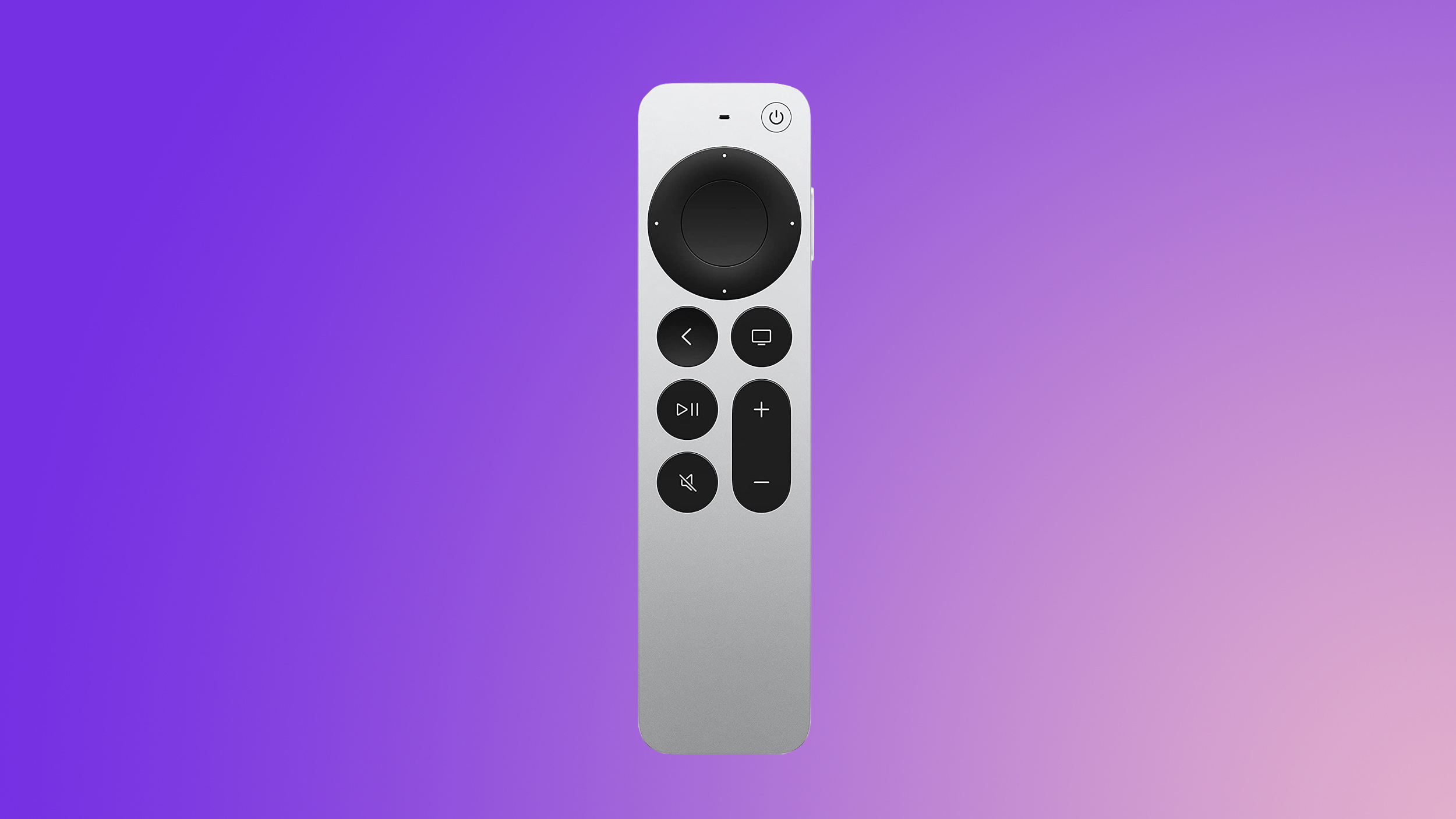
New Apple TV and HomePod Mini Are 'Nearly Ready' to Launch, New Siri Remote Also Rumored

New models of the Apple TV 4K and HomePod mini are "nearly ready to go," according to the latest word from Bloomberg's Mark Gurman.


Both devices have been ready "for months," but Apple is holding off on launching them until the more personalized version of Siri is available, he said.

"I am told the hardware for the next Apple TV set-top box and HomePod mini has been done for months and that both devices are already in active use among employees at the company's headquarters in Cupertino, California," wrote Gurman.

If you have been closely following Apple TV and HomePod mini rumors, this is a familiar narrative.

The revamped Siri is finally expected to launch as part of iOS 27, iPadOS 27, and macOS 27, which will be unveiled during the WWDC 2026 keynote on Monday, June 8. Following beta testing, the software updates should be widely released in September, so the new Apple TV 4K and HomePod mini models should be available to purchase by then. In other words, the devices are hopefully around 3-4 months away at the latest.

The current Apple TV 4K was unveiled in October 2022, while the HomePod mini was introduced in October 2020, so there has been a long wait for new models. Nevertheless, Gurman said "don't expect much" in terms of new features for both devices, aside from newer chips that support the more personalized version of Siri.

The current Apple TV 4K has an A15 Bionic chip from the iPhone 13 series, while the HomePod mini uses the S5 chip from the Apple Watch Series 5.

Earlier rumors claimed the next Apple TV would be equipped with the A17 Pro chip, which is the oldest chip that supports Apple Intelligence. The device is also expected to feature Apple's N1 chip for Wi-Fi 7, Bluetooth 6, and Thread.

Gurman expects the next Apple TV to have a similar design as the current model.

There is one new twist, as he was told that the Apple TV's Siri Remote may be "refreshed in some form," but he did not provide any specific details or guarantee that there will be any outward-facing design changes to the accessory.


As for the HomePod mini, it is expected to use an Apple Watch's S9 chip or newer, but it is unclear if or how that chip would fully support the new Siri powered by Apple Intelligence. Other previously-rumored features for the speaker include the N1 chip, improved sound quality, a newer Ultra Wideband chip, and a red color option.

Apple is also expected to update the full-sized HomePod and release an all-new smart home hub this year, with those devices held up by Siri too.
Related Roundups: Apple TV, HomePod mini

This article, "New Apple TV and HomePod Mini Are 'Nearly Ready' to Launch, New Siri Remote Also Rumored" first appeared on MacRumors.com

Discuss this article in our forums

  •  

Russell Coker: Links May 2026

Ron Garrett wrote an interesting blog post about the mathematical possibility of abiogenesis [1].

Cory Doctorow wrote an interesting blog post about the way the current antics of right wing extremists are forcing permanent changes in society away from the old systems [2].

William Angel wrote an insightful blog post comparing the costs of a Macbook and the Openrouter hosted service for LLMs [3].

The Register has an informative article about the threat that management systems built in to Intel and AMD CPUs pose to data sovereignty in EU owned cloud providers [4]. But this is just the first stage of building sovereign clouds, all significaant cloud services run at least 2 types of CPU and adding EU manufactured CPUs at a future time will be easy.

Benn Jordan made an interesting YouTube video about the infrasound problems caused by data centers, we need FOSS to measure infrasound [5].

amarok on the Purism forum made a great post about how to setup profiles in Firefox for different uses [6].

fralb5 wrote an informative post on the Purism forum about how to use a Librem 5 (or any other FOSS Linux phone) to firewall spyware on an Android phone [7].

Michael Prokop wrote an interesting blog post about debugging input event problems on Linux which turned out to be due to an analogue headphone connection [8]. This gave me some useful pointers to investigating an input device problem which is probably very different.

Patrick Boyle made an insightful youtube video about the ridiculous IPO of SpaceX, it seems like a scam from start to finish [9].

Anarcat wrote an insightful blog post about the LLM apocalypse comparing it to the horsemen of the apocalypse [10].

The Wikimedia Foundation (that runs wikipedia.org among other things) is sacking union organisers and trying to corporatise the organisation which means stealing the donations from the community [11].

Tianon Gravi wrote an informative blog post about containers, Debian, and Docker options [12]. We need a lot more work on these sorts of things in Debian.

Memory Tagging and how it improves C/C++ memory safety is an interesting paper from Google researchers giving an overview of the benefits of tagged memory hardware for pointer validation on SPARC and ARM64 [13].

In 2013 a faulty beer fridge motor acted as a spark gap transmitter and blocked mobile phone service for several Melbourne suburbs [14].

Related posts:

  1. Links April 2026 Charles Stross wrote an interesting blog post about the apparent...
  2. Links February 2026 Charles Stross has a good theory of why β€œAI” is...
  3. Links March 2026 Krebs has an interesting article about the Kimwolf botnet which...
  •  
❌