❌

Lees weergave

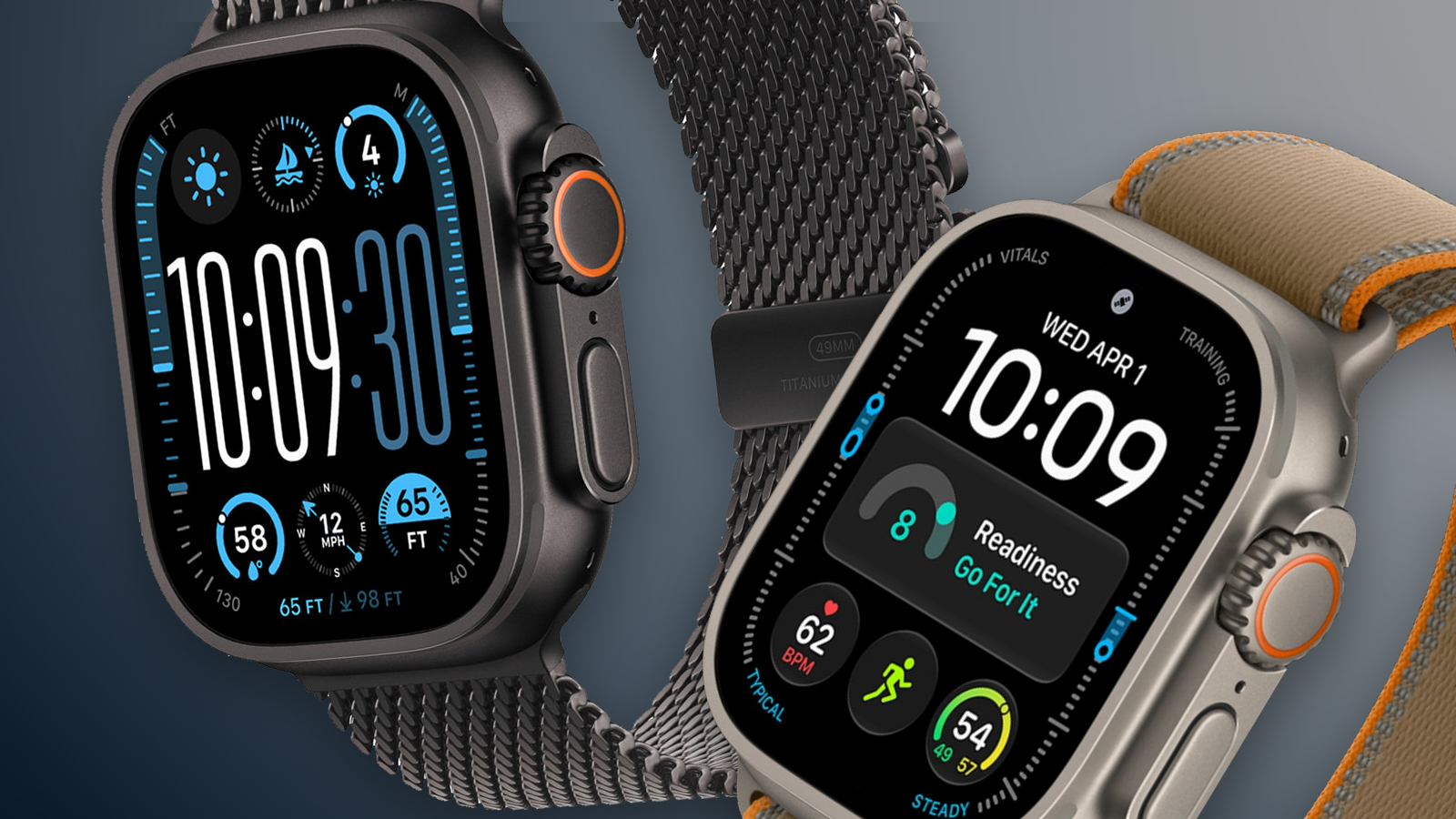
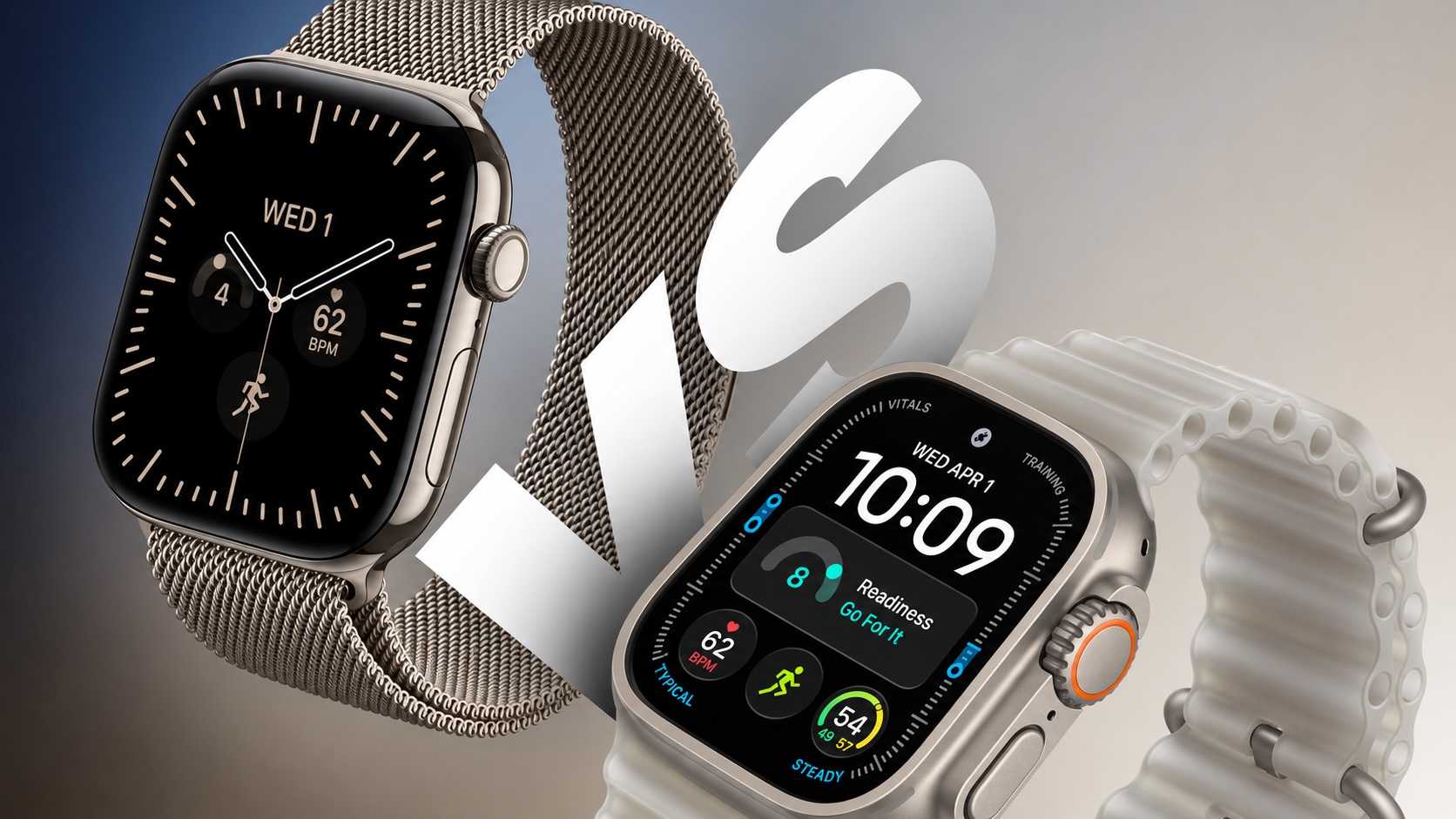
Apple Watch Series 9 vs. Series 12 Buyer's Guide: Is It Worth Upgrading?

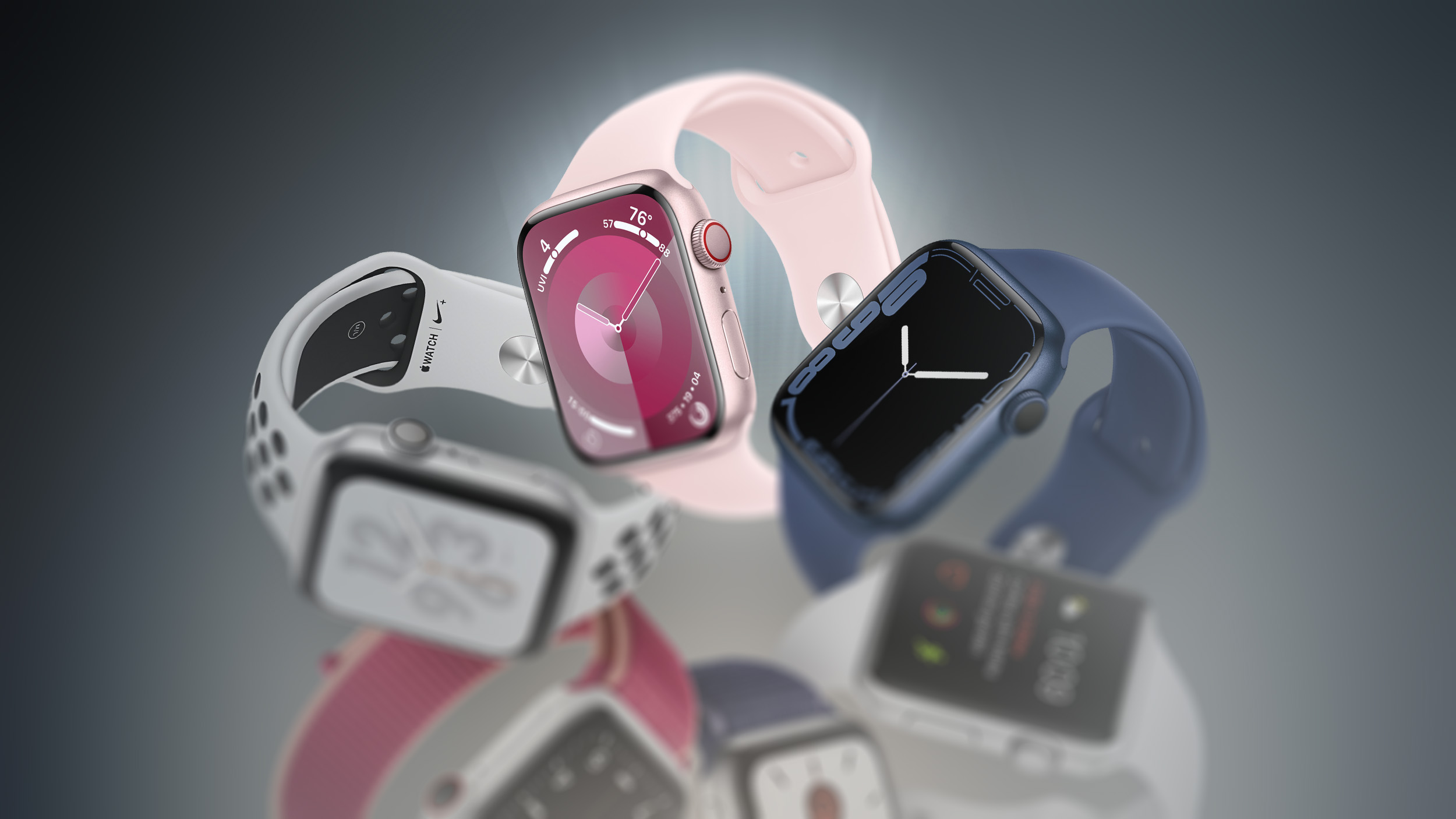
The Apple Watch Series 12 is now available, three years after the Series 9. In that time, Apple has introduced a thinner design, larger displays, faster charging, new water sensors, and a substantially more capable health sensing system. Is that enough to justify replacing a Series 9?
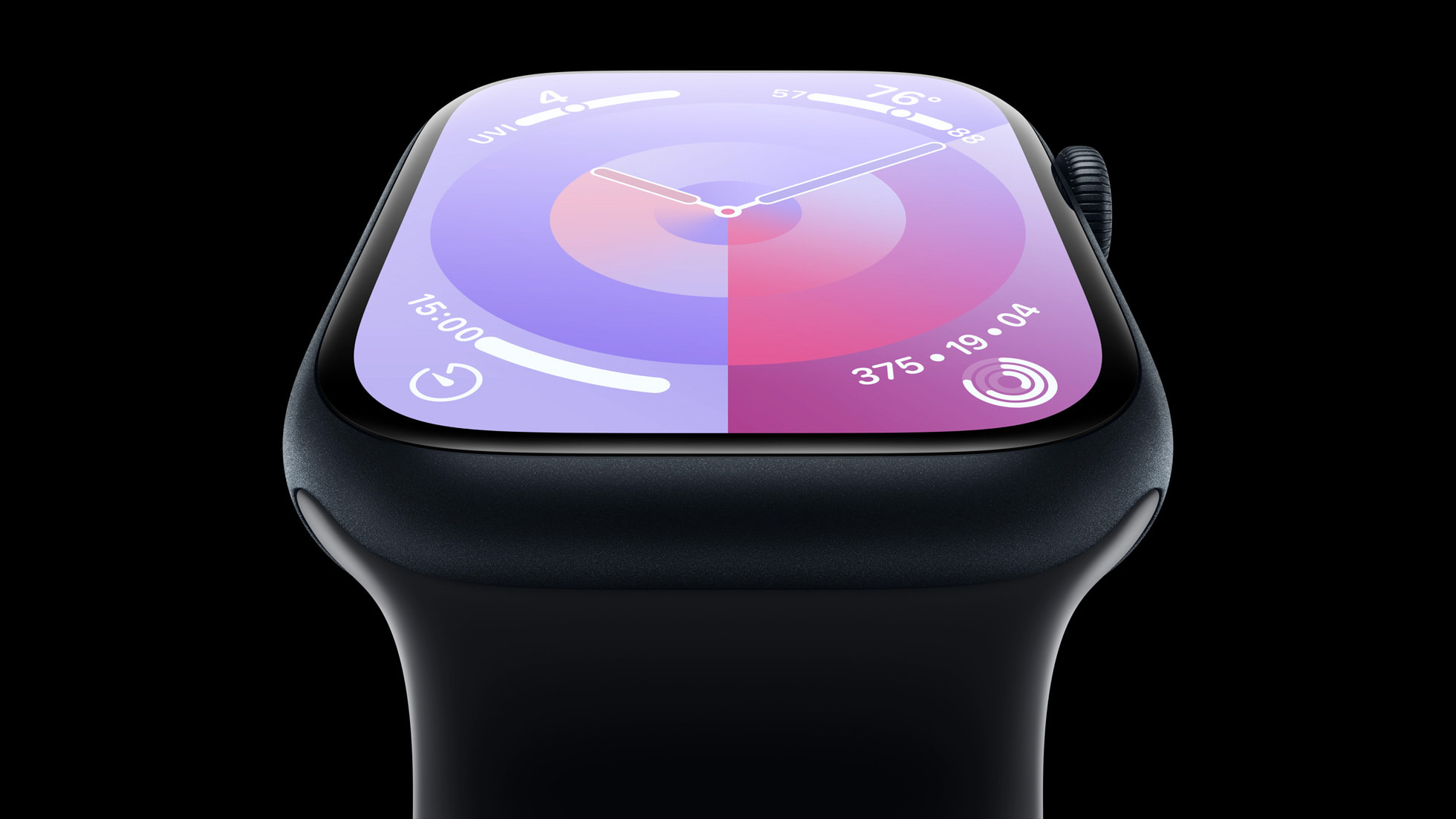

Apple discontinued the Series 9 in 2024. The older watch still supports watchOS 27, so the decision comes down to the hardware and features you would gain. Here are the key differences between the Apple Watch Series 9 and Series 12:


Apple Watch Series 9 Apple Watch Series 12
41mm and 45mm cases, 10.7mm thick 42mm and 46mm cases, 9.7mm thick in aluminum and titanium; ceramic cases are 9.85mm thick
Aluminum or stainless steel case Aluminum, titanium, or ceramic case
Aluminum: Silver, Starlight, Midnight, Pink, and (PRODUCT)RED Aluminum: Dark Bronze, Light Gold, Black, and Space Gray
Stainless steel: Silver, Gold, and Graphite Titanium: Radiant Gold and Natural
Ceramic: Pearl White and Night Blue
Ion-X front glass on aluminum models; sapphire crystal on stainless steel models Ceramic Shield 2 on aluminum models; sapphire crystal on titanium and ceramic models
Ceramic and sapphire crystal back Case-matched metal or ceramic and zirconia back
41mm: 904 sq mm display area
45mm: 1,143 sq mm display area
42mm: 970 sq mm display area
46mm: 1,196 sq mm display area
LTPO OLED Always-On Retina display LTPO3 wide-angle ‌OLED‌ Always-On Retina display with a 1Hz refresh rate, enabling a live ticking seconds hand on select watch faces
S9 chip S11 chip
2GB RAM 4GB RAM
Electrical heart sensor Second-generation electrical heart sensor
Third-generation optical heart sensor Fourth-generation, always-on optical heart sensor
Periodic background heart rate readings Background heart rate readings every five seconds
Heart rate variability (HRV) measurements Recovery HRV and overall HRV, measured up to 24 times more frequently
Vitals app with overnight health metrics Vitals app with Recovery HRV and a daytime vitals view
Readiness app with a daily score and recommendation
Step tracking Redesigned step tracking and a Steps watch face complication
Wrist temperature sensor Wrist and water temperature sensors
Depth gauge to 6 meters and Depth app
Microphone Microphone with Voice Isolation
Speaker Redesigned speaker with media playback
Audio Intelligence, including Sound Recognition, faster Shazam, Live Rewind, and Siri Recap
LTE and UMTS on cellular models LTE and 5G RedCap on cellular models
Up to 18 hours of normal use; up to 36 hours in Low Power Mode Up to 24 hours of normal use; up to 38 hours in Low Power Mode
Up to 80% charge in about 45 minutes Up to 80% charge in about 30 minutes; 15 minutes of charging provides up to 12 hours of normal use
Now discontinued From $399


Design


The Series 12 uses a similar version of the thinner design introduced with the Series 10. Its display area is about 7% larger in the smaller size and 5% larger in the larger size than the corresponding Series 9 models. The Series 12 figures below are for aluminum models; its ceramic cases are slightly larger and heavier:


Apple Watch Series 9 Apple Watch Series 12
Smaller case 41mm × 35mm × 10.7mm 42mm × 37mm × 9.7mm
Larger case 45mm × 38mm × 10.7mm 46mm × 40mm × 9.7mm
Smaller aluminum model, GPS 31.9 grams 32.2 grams
Larger aluminum model, GPS 38.7 grams 39.5 grams
Smaller aluminum model, cellular 32.1 grams 31.5 grams
Larger aluminum model, cellular 39.0 grams 38.6 grams


The Series 12 is noticeably thinner, but the comparable aluminum GPS models are slightly heavier than their Series 9 counterparts. Buyers moving from a stainless steel Series 9 to a titanium Series 12 will see a more substantial weight reduction because the case material has changed.

Is It Worth Upgrading?


For Series 9 owners, the Series 12 is a meaningful cumulative upgrade, particularly if you use your watch for training and recovery. Its more frequent heart rate and HRV readings support Readiness, Recovery HRV, and daytime vitals, while the redesigned case provides a larger, squarer display with a more modern feel. The depth gauge and water temperature sensor also add useful information for swimmers and snorkelers.

Those improvements are less compelling if you mainly use your watch for notifications, everyday activity tracking, and occasional workouts. The Series 9 still has an always-on display, ECG, wrist temperature sensing, Double Tap, sleep apnea and hypertension notifications, and support for ‌watchOS 27‌. ‌Siri‌ AI is also available on the Series 9 when paired with a compatible iPhone.

The Series 12 also has a slightly larger battery and charges faster, but likely not by enough to justify an upgrade alone. The Series 12's Audio Intelligence features may strengthen the case for some users, especially Sound Recognition for people who are deaf or hard of hearing. Live Rewind and ‌Siri‌ Recap will arrive in beta in late 2026.

Which to Buy Today?


For a new purchase, the Series 12 is clearly the better choice. It offers three generations of accumulated improvements at the same $399 starting price the Series 9 had when new. The older model makes sense only at a substantial discount if you are satisfied with its existing health features.

A used or refurbished Series 9 can still be good value, but check its battery health, physical condition, and warranty before comparing prices. A worn battery could quickly erase the saving.
Related Roundup: Apple Watch 12
Buyer's Guide: Apple Watch (Buy Now)
Related Forum: Apple Watch

This article, "Apple Watch Series 9 vs. Series 12 Buyer's Guide: Is It Worth Upgrading?" first appeared on MacRumors.com

Discuss this article in our forums
  •  

iPhone 18 Pro and Duo Were Once Planned With 16GB RAM, Leaker Says

Apple initially planned to equip the iPhone 18 Pro lineup and iPhone Duo with 16GB of RAM, according to the leaker known as "Instant Digital."


The brief Weibo post does not say when Apple considered that capacity. The ‌iPhone 18 Pro‌ and ‌iPhone 18 Pro‌ Max feature 12GB of RAM, as confirmed through Xcode 27, matching the iPhone 17 Pro models. The ‌iPhone Duo‌ is also expected to have 12GB, but the Xcode data used to verify the Pro models did not yet include the foldable.

Rumors had pointed to 12GB for the ‌iPhone 18 Pro‌ well before launch. In April 2025, supply chain analyst Ming-Chi Kuo predicted that the iPhone 18 lineup would have 12GB of RAM. Analyst Jeff Pu projected the same capacity for the Pro models and Apple's first foldable iPhone in January. A March report from The Bell said Samsung would supply 12GB memory modules for the ‌iPhone Duo‌.

The global memory shortage is the likely explanation for the apparent change. The March report described sharply rising prices for the 12GB modules, while Bloomberg's Mark Gurman reported that memory costs led Apple to discuss a higher starting price for the foldable. Kuo also said DRAM shortages were forcing Apple to scale back its 2026 hardware shipment plans.

‌iPhone Duo‌ pre-orders begin October 16, ahead of availability on October 23.
Related Roundups: iPhone 18 Pro, iPhone Duo
Related Forum: iPhone

This article, "iPhone 18 Pro and Duo Were Once Planned With 16GB RAM, Leaker Says" first appeared on MacRumors.com

Discuss this article in our forums

  •  

HomePod Mini Waits Reach Eight Weeks Ahead of Rumored Refresh

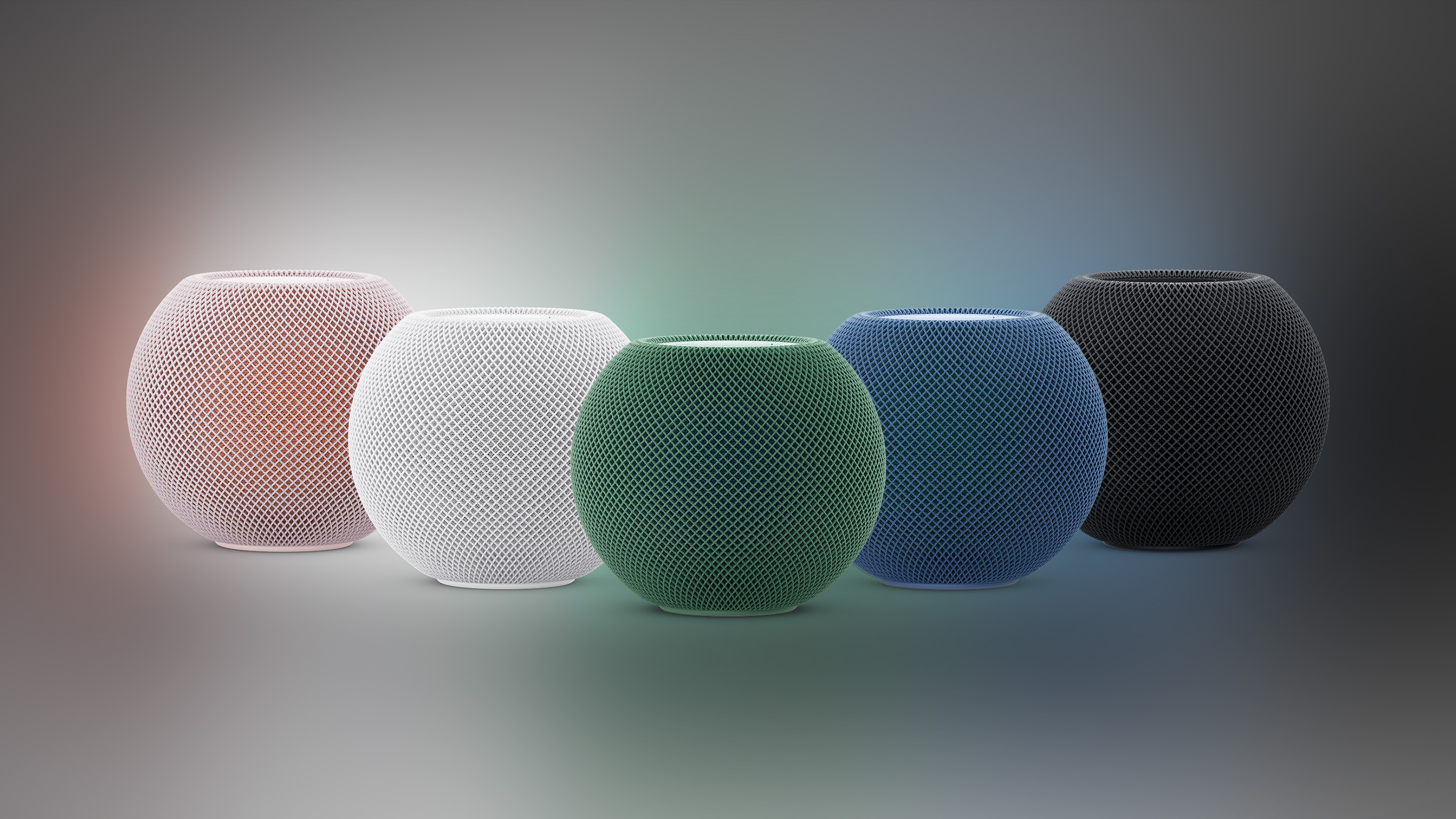
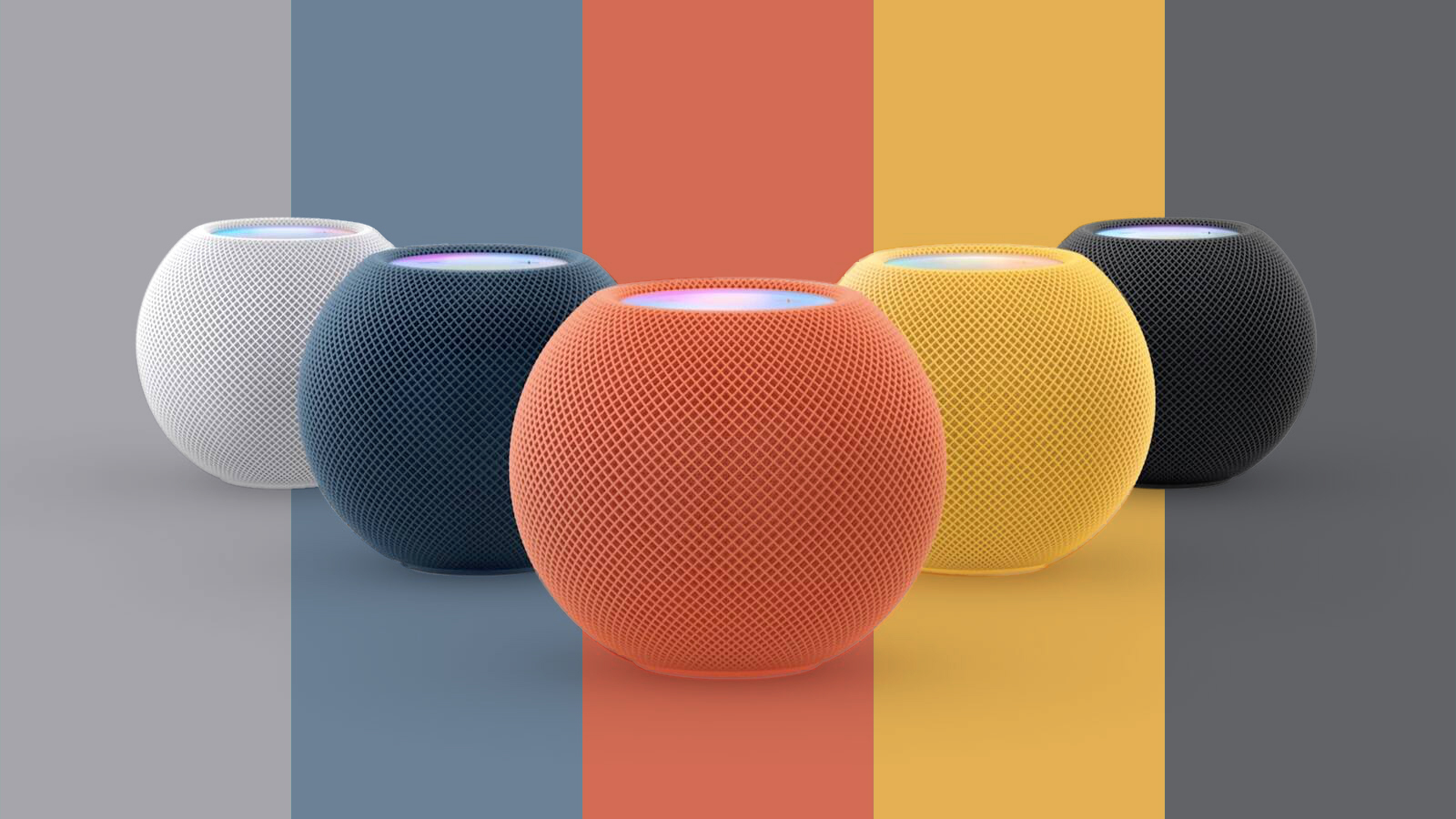
HomePod mini shipping estimates now stretch to as long as eight weeks in several countries, while some colors are unavailable for delivery, adding to signs that a rumored refresh may be close.


On Apple's U.S. online store, yellow and orange are currently unavailable for delivery to various ZIP codes. Blue and white have estimated delivery dates of October 14–21, while midnight is estimated for October 12–14. Dates may differ by address.

In the UK, blue is unavailable for delivery, yellow is estimated to ship in three to four weeks, and orange in six to eight weeks. The orange model also has a six-to-eight-week shipping estimate in Germany, France, Australia, and Japan. Both yellow and orange are unavailable for delivery in Canada, although other colors generally ship within a few business days.

The delays come ahead of a rumored October 13 introduction of a new ‌HomePod mini‌, alongside an updated Apple TV 4K and a new smart home hub. The ‌HomePod mini‌ 2 is expected to retain its current design while gaining a faster chip, Apple Intelligence support, and new color options.

Similar ‌HomePod mini‌ shortages have occurred intermittently for more than a year, but there is often a correlation between delays and the launch of new products.
Related Roundup: HomePod mini

This article, "HomePod Mini Waits Reach Eight Weeks Ahead of Rumored Refresh" first appeared on MacRumors.com

Discuss this article in our forums

  •  

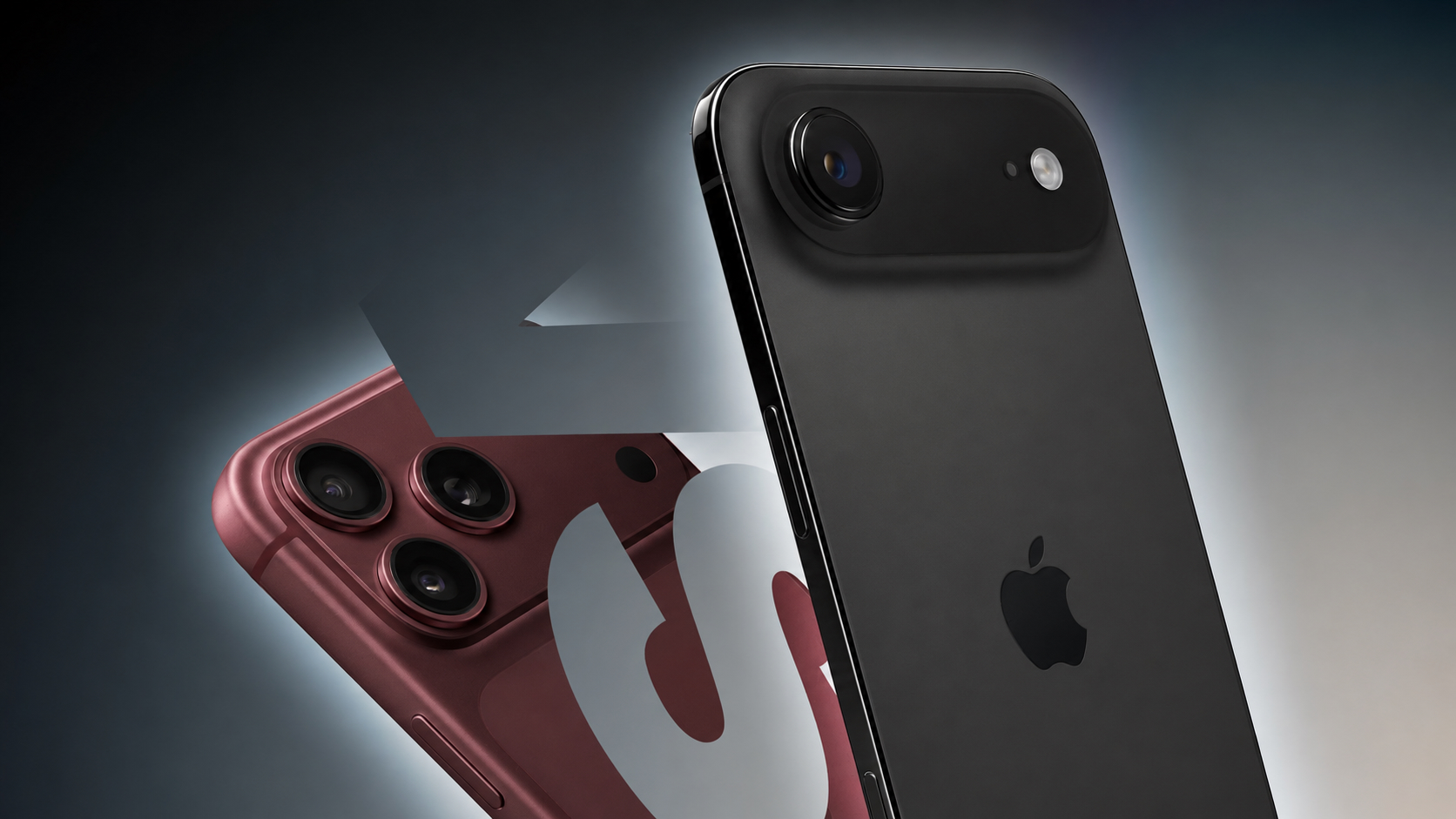
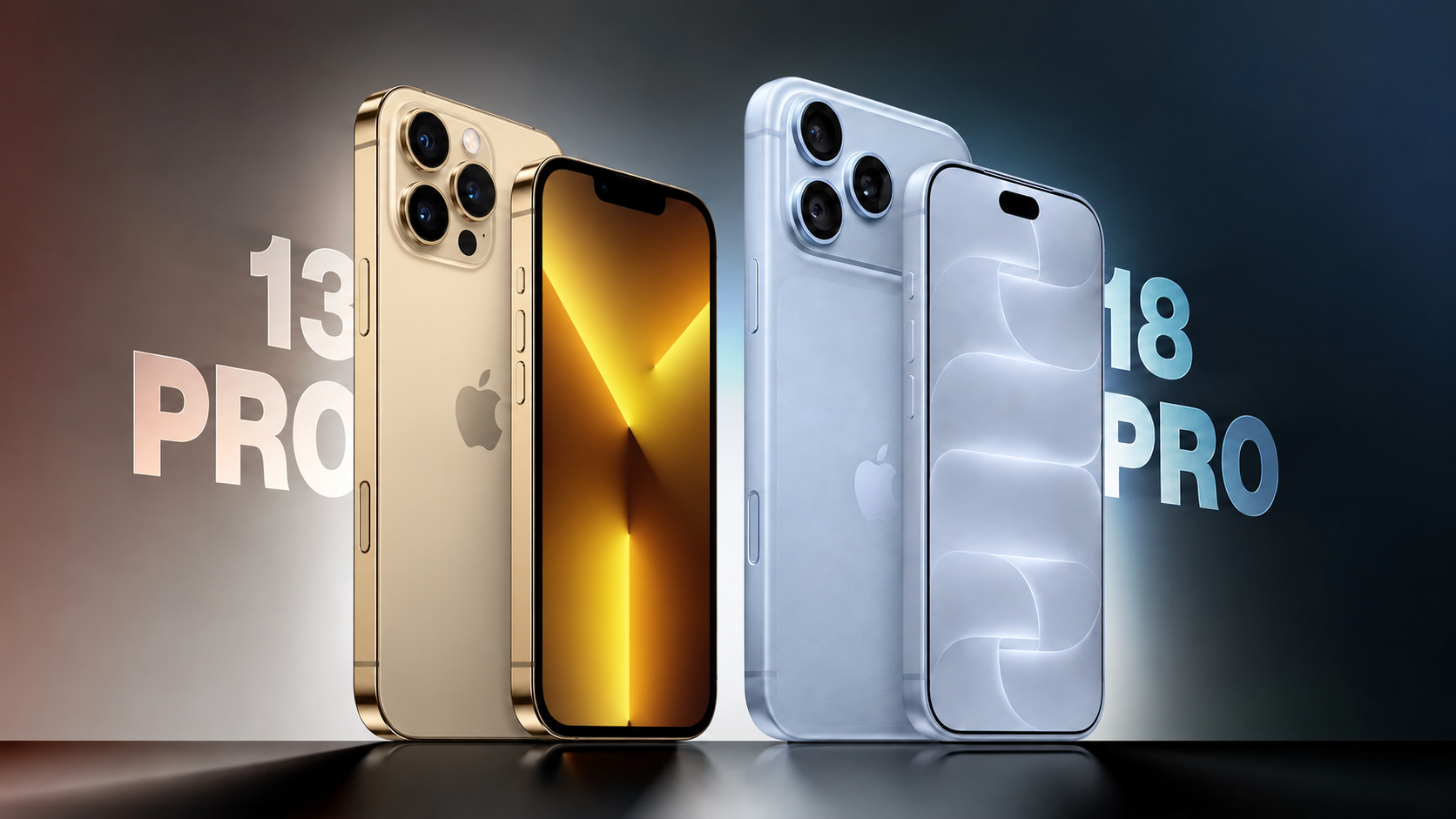
iPhone 13 Pro vs. iPhone 18 Pro Buyer's Guide: Is It Worth Upgrading?

Apple released the iPhone 18 Pro and iPhone 18 Pro Max in September 2026, five years after the iPhone 13 Pro and iPhone 13 Pro Max. The 2021 models introduced ProMotion displays, macro photography, a 3x Telephoto camera, and substantially longer battery life than their predecessors. They remain capable phones and support iOS 27, but owners now have five generations of upgrades to consider.


The iPhone 14 Pro brought the Dynamic Island, an Always-On display, a 48-megapixel Main camera, and Emergency SOS via satellite. The iPhone 15 Pro introduced the Action button and USB-C. The iPhone 16 Pro added larger displays, the Camera Control, a 48-megapixel Ultra Wide camera, and expanded video capabilities.

The iPhone 17 Pro adopted an aluminum unibody with vapor chamber cooling and upgraded the Telephoto and front-facing cameras. This year's iPhone 18 Pro adds the A20 Pro chip, a variable-aperture Main camera, a smaller ‌Dynamic Island‌, and further gains in battery life and charging speed. For an iPhone 13 Pro owner, these changes accumulate across nearly every part of the phone.

In the United States, the ‌iPhone 18 Pro‌ starts at $1,199 and the Pro Max at $1,299, each with 256GB of storage. That is $200 more than the corresponding iPhone 13 Pro model's 2021 starting price, although the older phones started with 128GB. Apple no longer sells the iPhone 13 Pro, so anyone buying one now will be looking at a used or refurbished device. Here are the key differences:

Design and Display


iPhone 13 Pro (2021) ‌iPhone 18 Pro‌ (2026)
Stainless steel frame Aluminum unibody
Textured matte glass back Ceramic Shield back
Ceramic Shield front Ceramic Shield 2 front
iPhone 13 Pro: 6.1-inch display
iPhone 13 Pro Max: 6.7-inch display
iPhone 18 Pro: 6.3-inch display
iPhone 18 Pro Max: 6.9-inch display
iPhone 13 Pro: 2,532-by-1,170-pixel resolution
iPhone 13 Pro Max: 2,778-by-1,284-pixel resolution
iPhone 18 Pro: 2,622-by-1,206-pixel resolution
iPhone 18 Pro Max: 2,868-by-1,320-pixel resolution
Always-On display
Up to 1,200 nits peak HDR brightness Up to 1,600 nits peak HDR brightness
Up to 3,000 nits peak outdoor brightness
Notch housing the TrueDepth camera Smaller ‌Dynamic Island‌
‌Dynamic Island‌ can show up to three Live Activities at once
Anti-reflective display coating
Ring/Silent switch Customizable Action button
Camera Control
Graphite, Gold, Silver, Sierra Blue, and Alpine Green Black, Silver, Glacier, and Burgundy


Dimensions and Weight


iPhone 13 Pro (2021) ‌iPhone 18 Pro‌ (2026)
Height Pro: 146.7mm
Pro Max: 160.8mm
Pro: 150.0mm
Pro Max: 163.4mm
Width Pro: 71.5mm
Pro Max: 78.1mm
Pro: 71.9mm
Pro Max: 78.0mm
Thickness 7.65mm 8.75mm
Weight Pro: 204 grams
Pro Max: 240 grams
Pro: 211 grams
Pro Max: 249 grams


Chip, Software, and Connectivity


iPhone 13 Pro (2021) ‌iPhone 18 Pro‌ (2026)
A15 Bionic chip A20 Pro chip
Made with TSMC's 5nm process Made with TSMC's 2nm process
6-core CPU with two performance cores and four efficiency cores 6-core CPU with two super cores and four efficiency cores
5-core GPU 7-core GPU with Neural Accelerators
16-core Neural Engine Dual 16-core Neural Engine
Hardware-accelerated ray tracing
Passive cooling Vapor chamber cooling for improved sustained performance
Apple Intelligence and Siri AI support
Lightning connector USB-C connector
USB 2 transfer speeds up to 480 Mbps USB 3 transfer speeds up to 10Gb/s
Video output up to 1080p using a Lightning adapter DisplayPort video output up to 4K HDR over USB-C
Wi-Fi 6 Wi-Fi 7
Bluetooth 5.0 Bluetooth 6
Thread networking
First-generation Ultra Wideband chip Second-generation Ultra Wideband chip
Emergency SOS via satellite
Messages via satellite
Find My via satellite
Crash Detection


Rear Cameras


iPhone 13 Pro (2021) ‌iPhone 18 Pro‌ (2026)
12-megapixel Wide camera 48-megapixel Fusion Main camera with a new sensor and computational imaging pipeline
Fixed ƒ/1.5 Main camera aperture Variable Main camera aperture with ƒ/1.48, ƒ/1.8, ƒ/2.8, and ƒ/4.0 settings
Manual aperture control in the Camera app and support for aperture control in third-party apps
Night mode Night mode with faster capture enabled by the variable-aperture Main camera
12-megapixel Ultra Wide camera 48-megapixel Fusion Ultra Wide camera
ƒ/1.8 Ultra Wide aperture ƒ/2.2 Ultra Wide aperture
12-megapixel Telephoto camera 48-megapixel Fusion Telephoto camera
3x Telephoto camera with 77mm focal length 4x Telephoto camera with 100mm focal length
12-megapixel optical-quality 2x photos derived from the Main camera
12-megapixel optical-quality 8x photos derived from the Telephoto camera
6x optical zoom range 16x optical-quality zoom range
Digital zoom up to 15x Digital zoom up to 40x
Sensor-shift optical image stabilization on the Wide camera Second-generation sensor-shift optical image stabilization on the Main camera
Optical image stabilization on the Telephoto camera 3D sensor-shift optical image stabilization on the Telephoto camera
12-megapixel photos from all three rear cameras 24- and 48-megapixel super-high-resolution photos from all three rear cameras
Fixed default Main camera view Customizable default lens for the Fusion Main camera
Macro photography 48-megapixel macro photography
Photonic Engine
Smart HDR 4 Smart HDR 5
Portrait mode with Depth Control Next-generation portraits with Focus and Depth Control
Photographic Styles Photographic Styles 3, with additional tone, color, texture, and grain controls
Pro controls for shutter speed, white balance, and a live histogram
Smart focus tracking
Spatial photo capture
Apple Reference Image capture using the Main camera
True Tone flash with Slow Sync Adaptive True Tone flash


Camera Control


The ‌iPhone 18 Pro‌ adds a dedicated Camera Control that the iPhone 13 Pro lacks. It can be used to:


  • Open the Camera app, take a photo, or press and hold to record video

  • Lock focus and exposure with a light press and hold before reframing

  • Slide to adjust exposure, depth, zoom, camera selection, Photographic Styles, and tone

  • Open Visual Intelligence by pressing and holding, where the feature is available


Front Camera


iPhone 13 Pro (2021) ‌iPhone 18 Pro‌ (2026)
12-megapixel TrueDepth camera 18-megapixel Center Stage camera with TrueDepth technology
ƒ/2.2 aperture ƒ/1.9 aperture
Autofocus
Center Stage
Portrait and landscape framing without rotating the iPhone
Smart HDR 4 Smart HDR 5
Photographic Styles Photographic Styles 3


Video Recording


iPhone 13 Pro (2021) ‌iPhone 18 Pro‌ (2026)
Rear-camera 4K Dolby Vision recording up to 60 fps Rear-camera 4K Dolby Vision recording up to 120 fps
Rear-camera Cinematic mode up to 1080p at 30 fps Rear-camera Cinematic mode up to 4K Dolby Vision at 60 fps
Front-camera Cinematic mode up to 1080p at 30 fps Front-camera Cinematic mode up to 4K Dolby Vision at 30 fps
ProRes recording up to 4K at 30 fps, or 1080p at 30 fps on the 128GB model ProRes recording up to 4K at 120 fps with external storage
Video recording directly to external storage over USB-C
Action mode up to 2.8K Dolby Vision at 60 fps
Spatial video recording at 1080p and 30 fps
Dual Capture using the front and rear cameras simultaneously
ProRes RAW support
Apple Log 2 support
Genlock support


Audio Recording


iPhone 13 Pro (2021) ‌iPhone 18 Pro‌ (2026)
Stereo recording Spatial Audio and stereo recording
Four studio-quality microphones
Wind noise reduction
Audio Mix


Battery and Charging


iPhone 13 Pro (2021) ‌iPhone 18 Pro‌ (2026)
iPhone 13 Pro: Up to 22 hours of video playback iPhone 18 Pro: Up to 36 hours of video playback
iPhone 13 Pro Max: Up to 28 hours of video playback iPhone 18 Pro Max: Up to 45 hours of video playback
iPhone 13 Pro: Up to 20 hours of streamed video playback iPhone 18 Pro: Up to 33 hours of streamed video playback
iPhone 13 Pro Max: Up to 25 hours of streamed video playback iPhone 18 Pro Max: Up to 40 hours of streamed video playback
Up to 50% charge in around 30 minutes with a 20W adapter or higher Up to 50% charge in around 15 minutes with a compatible 60W adapter or higher
MagSafe wireless charging up to 15W ‌MagSafe‌ wireless charging up to 25W
Qi wireless charging up to 7.5W Qi2 wireless charging up to 25W
Up to 50% charge in around 30 minutes using ‌MagSafe‌ with a compatible 35W adapter or higher


Storage and Pricing


iPhone 13 Pro (2021) ‌iPhone 18 Pro‌ (2026)
128GB, 256GB, 512GB, or 1TB 256GB, 512GB, 1TB, or 2TB
iPhone 13 Pro: Launched at $999 in the U.S. with 128GB iPhone 18 Pro: Starts at $1,199 in the U.S. with 256GB
iPhone 13 Pro Max: Launched at $1,099 in the U.S. with 128GB iPhone 18 Pro Max: Starts at $1,299 in the U.S. with 256GB
Now discontinued Sold directly by Apple


Is It Worth Upgrading From an iPhone 13 Pro?


For most iPhone 13 Pro and iPhone 13 Pro Max owners ready to replace their phone, the ‌iPhone 18 Pro‌ is a very worthwhile upgrade. Five years of changes bring noticeable improvements to battery life, charging, outdoor display visibility, photography, and connectivity. The iPhone 13 Pro already has ProMotion and a capable three-camera system, but those strengths do not erase the breadth of the newer model's improvements.

Battery life may be the most immediate benefit, especially for an iPhone 13 Pro whose original battery has aged. Faster wired charging and USB-C also make the newer phone easier to live with, particularly if your other devices already use USB-C.

The camera upgrade is substantial across the whole system. All three rear cameras move from 12 to 48 megapixels, while the variable-aperture Main camera adds creative control and the Telephoto camera extends from 3x to 4x, with an additional optical-quality 8x option. The higher-resolution front camera, autofocus, and Center Stage are useful for group photos and video calls. Video creators gain considerably more through higher frame rates, improved Cinematic mode, external recording, and professional formats.

The A20 Pro and vapor chamber make the strongest performance case for demanding games, long recording sessions, and other sustained work. The ‌iPhone 18 Pro‌ also supports ‌Apple Intelligence‌, while the iPhone 13 Pro does not, even though both run ‌iOS 27‌.

The main physical trade-offs are size and weight: both ‌iPhone 18 Pro‌ models are taller, thicker, and slightly heavier. Some users may find the ‌iPhone 18 Pro‌'s aluminum chassis to be more vulnerable to dents and damage, even though the front and rear glass is stronger. U.S. buyers who rely on a physical SIM must also move to eSIM.

If you need to delay a new purchase, replacing an iPhone 13 Pro's battery can extend its usefulness. For owners prepared to buy now, however, the accumulated improvements make upgrading easy to justify.
Related Roundup: iPhone 18 Pro
Related Forum: iPhone

This article, "iPhone 13 Pro vs. iPhone 18 Pro Buyer's Guide: Is It Worth Upgrading?" first appeared on MacRumors.com

Discuss this article in our forums
  •  

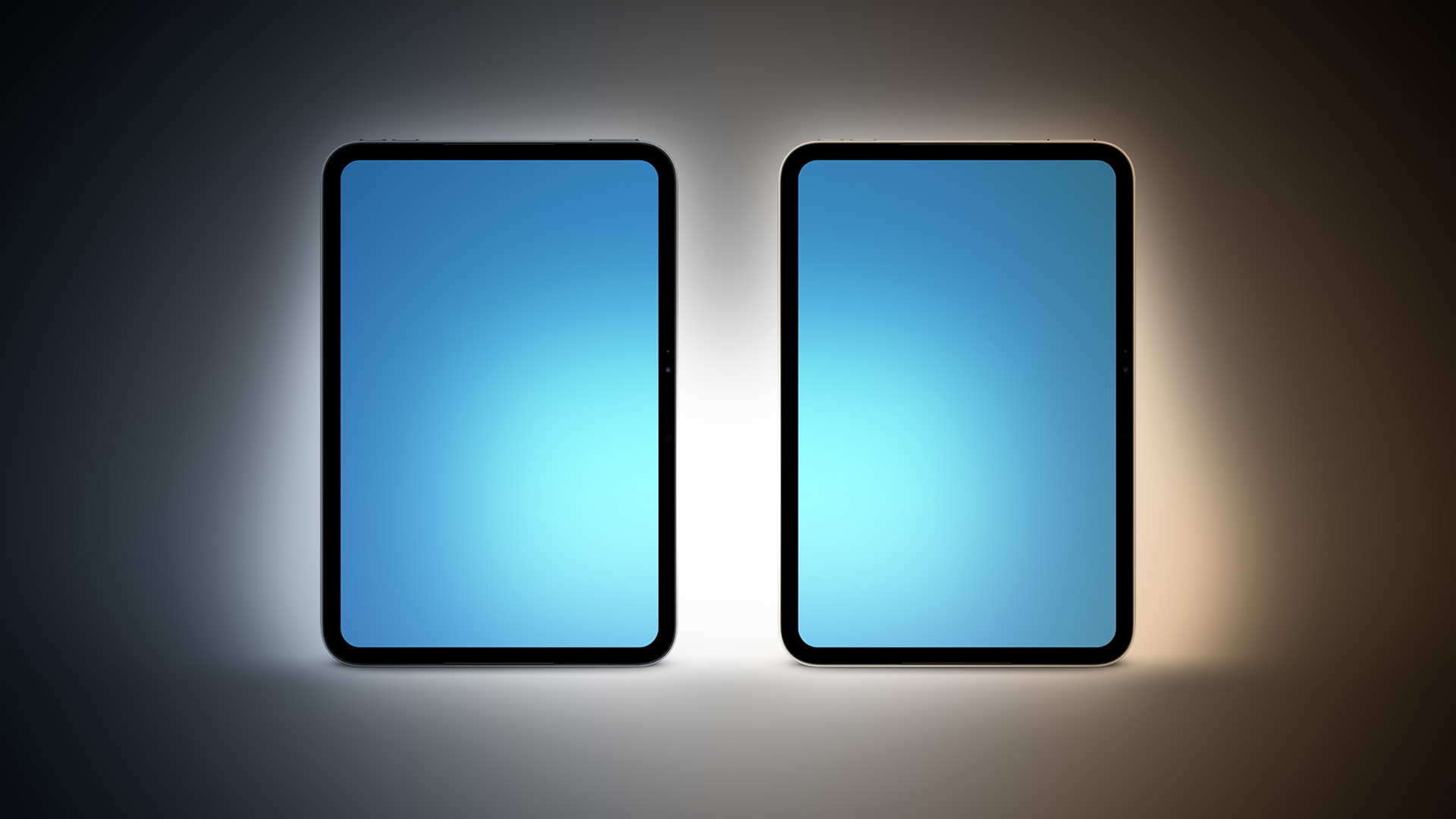
iPad Could Get Significantly Thinner Bezels, Leaker Says

The iPad is set to gain significantly narrower borders around its display, according to the leaker known as "Instant Digital" on Weibo. The post gives no model or timeline; it could refer to the entry-level ‌iPad‌ or to Apple's tablet lineup in general.

Refreshes of the entry-level ‌iPad‌, iPad mini, iPad Air, and iPad Pro are in the pipeline. The next iPad mini is already rumored to gain OLED and slimmer bezels, while the iPad Air is expected to adopt ‌OLED‌ in 2027.
Related Roundups: iPad, iPad Air , iPad Pro, iPad mini
Related Forum: iPad

This article, "iPad Could Get Significantly Thinner Bezels, Leaker Says" first appeared on MacRumors.com

Discuss this article in our forums
  •  

Upgrading From an Older Apple Watch? Here's How the New Features Stack Up

The Apple Watch has received some incremental updates in recent years, with significant upgrades becoming fewer and farther between as the device has progressed. Since the Apple Watch's generation-over-generation enhancements are relatively small, it is all the more important to consider when an upgrade is justified and whether an older model could suffice for your needs.


The Apple Watch Series 12 brings a more substantial set of changes than the Series 11, which was one of the smallest refreshes in the device's history. While Apple has discontinued previous Series models, older watches may still be available at lower prices from third-party retailers or secondhand.

Read on to see the breakdown below for each new feature, change, and improvement that was added with each Apple Watch model compared to its direct predecessor. Viewing each generation's changes in this way helps weigh up the accumulative upgrades one receives by skipping multiple generations when buying a new device, as well as get a sense of which generations offered the biggest overall upgrades.

Apple Watch Series 12 (2026)


  • S11 chip (based on A20 Pro)

  • 4GB of RAM

  • New Health Sensing System

  • Second-generation electrical heart sensor

  • Fourth-generation, always-on optical heart sensor

  • Background heart rate measurements every five seconds throughout the day

  • Heart rate variability measured up to 24x more often

  • Recovery HRV metric

  • Readiness app

  • Daytime view in the Vitals app

  • More accurate step tracking

  • Steps and real-time heart rate watch face complications

  • Audio Intelligence with Sound Recognition and automatic Shazam detection

  • Live Rewind and Siri Recap

  • Ceramic Shield 2 front glass, 60% tougher than Series 11's Ion-X glass (aluminum models only)

  • Aluminum or titanium and zirconia back replaces metal and sapphire crystal back

  • Up to 10 hours of outdoor workout tracking (25% longer than Series 11)

  • 15 minutes of charging provides up to 12 hours of normal use (up from eight hours)

  • Five minutes of charging provides up to 10 hours of sleep tracking (up from eight hours)

  • Aluminum and titanium cases are 1mm wider and around two grams heavier

  • Slightly larger bezels and display area is approximately 2% smaller despite unchanged screen resolutions

  • Ceramic case option introduced in Pearl White and Night Blue, with slightly larger dimensions than aluminum and titanium models

  • Dark Bronze, Light Gold, and Black aluminum finishes replace Silver, Rose Gold, and Jet Black; Space Gray remains available

  • Radiant Gold titanium replaces Gold and Slate; Natural titanium remains available


Apple Watch Series 11 (2025)


  • 2x more scratch-resistant Ion-X glass (aluminum models only)

  • 5G connectivity (cellular models only)

  • 7–10% larger battery

  • Space Gray aluminum option reintroduced


Apple Watch Series 10 (2024)


  • Refined design with a thinner casing, display with more rounded edges and a wider aspect ratio, and front glass that extends further over the sides for a higher screen-to-body ratio
  • 42mm and 46mm case sizes

  • Larger displays

  • LTPO3 display for faster refresh rate in always-on mode, enabling a live ticking seconds hand on select watch faces

  • Wide-angle OLED (up to 40% brighter when viewed at an angle)

  • S10 chip (same CPU as S9, but more compact)

  • Water temperature sensor

  • Depth app and Depth gauge to 6m

  • Microphone with voice isolation

  • Redesigned speaker with media playback

  • Metal back with larger charging coil and integrated antenna

  • Faster charging (0–80% in about 30 minutes)

  • Titanium casing replaces stainless steel option, now in Silver (matches previous stainless steel casing, Apple Watch Hermès only), Gold, Slate, and Natural

  • Starlight, Midnight, Pink, and (PRODUCT)RED finishes discontinued, replaced with Silver, Rose Gold, and polished Jet Black finishes


Apple Watch Series 9 (2023)


  • Retina display with up to 2,000 nits of brightness

  • Display can get dimmer in dark rooms and at night (down to 1 nit of brightness)

  • Double tap gesture

  • Wrist flick gesture

  • Sleep apnea detection

  • Hypertension detection

  • S9 chip (based on A15 Bionic)

  • 2GB of RAM

  • 4-core Neural Engine (2x faster than Series 8)

  • ‌Siri‌‌ processed on-device for requests that do not need information from the internet

  • ‌‌Siri‌‌ can access health and fitness data

  • 25% more accurate dictation

  • Second-generation Ultra Wideband chip

  • Precision Finding for iPhone 15 models

  • HomePod proximity integration

  • 64GB storage

  • Pink aluminum casing introduced


Apple Watch Series 8 (2022)


  • S8 chip (same CPU as S6)

  • More powerful gyroscope and high dynamic range accelerometer

  • ‌Crash Detection

  • Body temperature sensor

  • Wrist temperature sensing during sleep
  • mem
  • Cycle tracking with retrospective ovulation estimates

  • Blue and Green aluminum casings discontinued, Silver aluminum reintroduced

  • Apple Watch Edition discontinued


Apple Watch Series 7 (2021)


  • 41mm and 45mm case sizes

  • 1.7mm display borders for almost 20% more screen area than Series 6

  • QWERTY keyboard

  • Up to 70% brighter display than Series 6 indoors when wrist is down

  • S7 chip (Same CPU as S6)

  • Crack-resistant front crystal (50% thicker)

  • IP6X dust resistance

  • Fast charging for up to 80% charge in about 45 minutes (33% faster than Series 6)

  • Silver and Space Gray aluminum casings discontinued, Midnight, Starlight, and Green introduced


Apple Watch Series 6 (2020)


  • Up to 2.5x brighter always-on display

  • Access Notification Center, Control Center, and Complications when display is asleep

  • S6 chip (based on A13 Bionic, 20% faster than S5)

  • 1.5GB of RAM

  • Always-on altimeter

  • First-generation Ultra Wideband chip

  • 2.4GHz and 5GHz Wi-Fi

  • Blood oxygen sensor

  • Faster charging for a full charge in under 1.5 hours

  • Improved battery life for tracking certain workouts, such as indoor and outdoor runs

  • Blue and (PRODUCT)RED aluminum casing options introduced

  • Space Black stainless steel casing available with Apple Watch Hermès only, Graphite option introduced

  • Ceramic Apple Watch Edition discontinued


Apple Watch Series 5 (2019)


  • Always-on Retina display

  • Force Touch removed

  • S5 chip

  • Compass

  • 32GB storage

  • Apple Watch Edition reintroduced with White Ceramic, Natural Titanium, and Space Black Titanium casing options


Apple Watch Series 4 (2018)


  • 40mm and 44mm case sizes

  • Over 30% larger display with curved corners

  • 3.0mm display borders

  • S4 chip (2x faster than S3)

  • Gyroscope and accelerometer

  • Barometric altimeter

  • Fall detection

  • 2.4GHz Wi-Fi

  • Optical heart sensor and electrical heart sensor for ECG

  • 16GB storage

  • Digital Crown with haptic feedback

  • 50% louder speaker

  • Relocated microphone for reduced echo and better sound quality

  • Faster charging for a full charge in 1.5 hours

  • Gold stainless steel casing introduced

  • Apple Watch Edition discontinued


Apple Watch Series 3 (2017)


  • S3 chip (70% faster than S2)

  • Barometric altimeter

  • Bluetooth 4.2

  • ‌Siri‌ able to speak through the onboard speaker

  • LTE cellular model available with red Digital Crown

  • Rose Gold aluminum casing discontinued

  • Gray Ceramic Apple Watch Edition model introduced


Apple Watch Series 2 (2016)


  • Retina display with up to 1,000 nits of brightness (2x brighter than previous generation)

  • S2 chip (dual‑core)

  • 1GB of RAM

  • GPS and GLONASS receiver

  • Water resistant up to 50 meters

  • Gold and Rose Gold aluminum casing options added

  • 18K Gold and Rose Gold Apple Watch Edition discontinued, Ceramic model introduced in White

  • Apple Watch Nike+ variant introduced


The Series 12 has a stronger case than the Series 11 as an upgrade in general, but most Series 11 owners still have little reason to get a new device. Its new heart sensors, more frequent HRV measurements, Readiness app, and longer workout battery life matter most if you rely on your Apple Watch for training and recovery insights. Sound Recognition may also appeal to deaf or hard of hearing users, while the ceramic case offers a finish unavailable with the Series 11.

Upgrading from a Series 10 brings these changes alongside the Series 11's 5G connectivity on cellular models and longer rated everyday battery life. From a Series 9, you would also gain the thinner Series 10 design, larger display, depth gauge, and water temperature sensor.

The cumulative upgrades become more compelling for Series 8 users and older, particularly if battery wear is affecting daily use. Series 7 owners gain Crash Detection and temperature sensing as well as the newer design and Series 12 health features. The biggest differences will be felt by those with a Series 6 or older, though the condition of your current watch and the cost of replacing it still matter.

watchOS 27 supports Series 9 and later, leaving the Series 8 and older without the latest major software release. That does not mean they will immediately stop working or receiving all security updates, but they are now considered old devices. If you are shopping for a replacement, a discounted or secondhand Series 11 may offer better value if you do not need the Series 12's health features, providing you can find it at a sufficiently low price. watchOS 26 is not supported by the Series 5 or older, so anyone with one of these devices should definitely consider upgrading soon.

Looking to the future, it looks like next year's Apple Watch Series 13 could offer some major upgrades including a redesign and new sensors. This could make it a great upgrade for those with a Series 11 or older.
Related Roundup: Apple Watch 12
Buyer's Guide: Apple Watch (Buy Now)
Related Forum: Apple Watch

This article, "Upgrading From an Older Apple Watch? Here's How the New Features Stack Up" first appeared on MacRumors.com

Discuss this article in our forums

  •  

iPhone 18 Pro Colors Buyer's Guide: Which Should You Choose?

Apple's iPhone 18 Pro and ‌iPhone 18 Pro‌ Max models come in four distinct color options, so which should you choose?


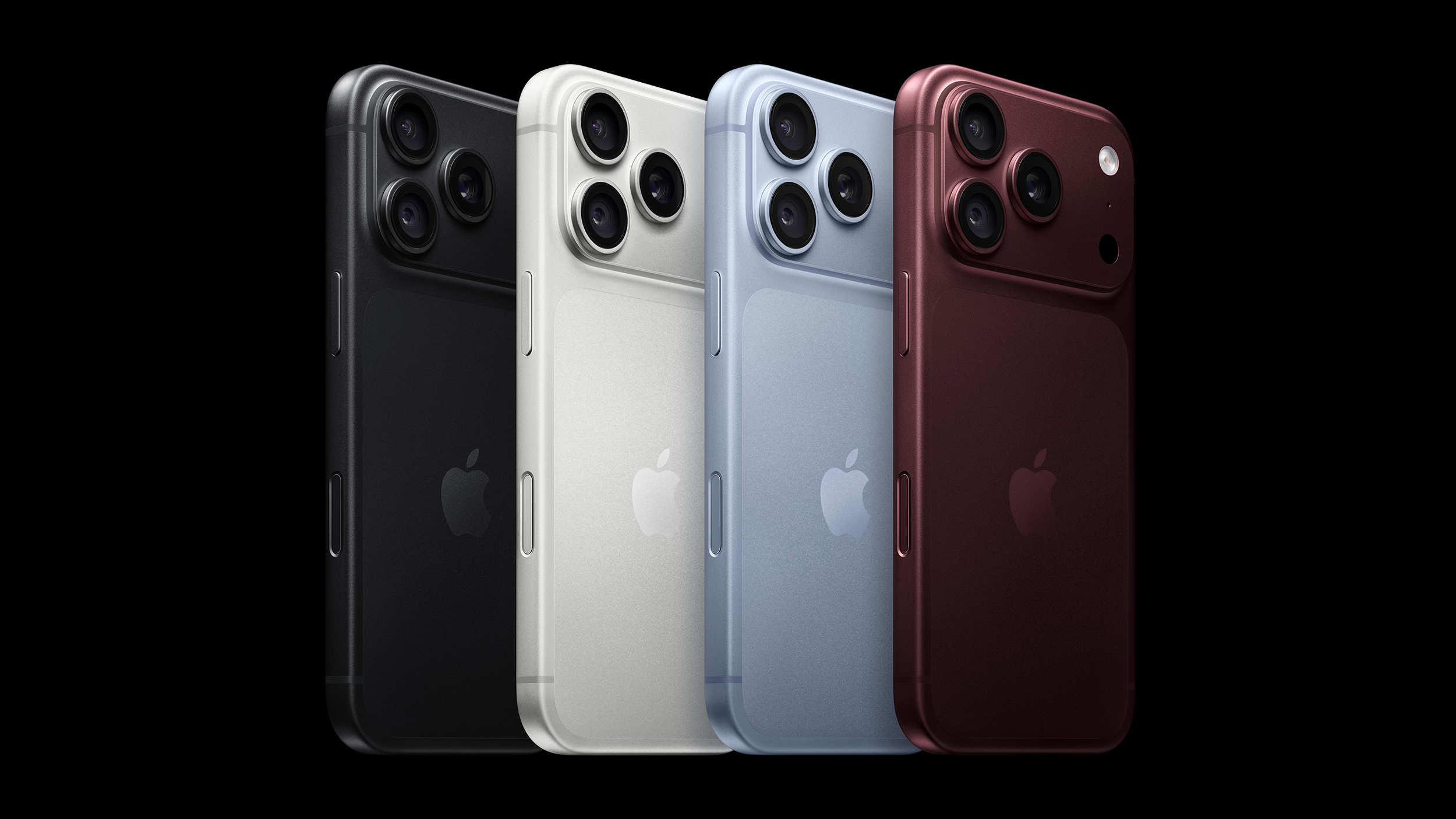
The ‌iPhone 18 Pro‌ models come in Black, Silver, Glacier, and Burgundy. The aluminum and glass backs are more closely matched than on the iPhone 17 Pro, although the different materials remain somewhat visible.

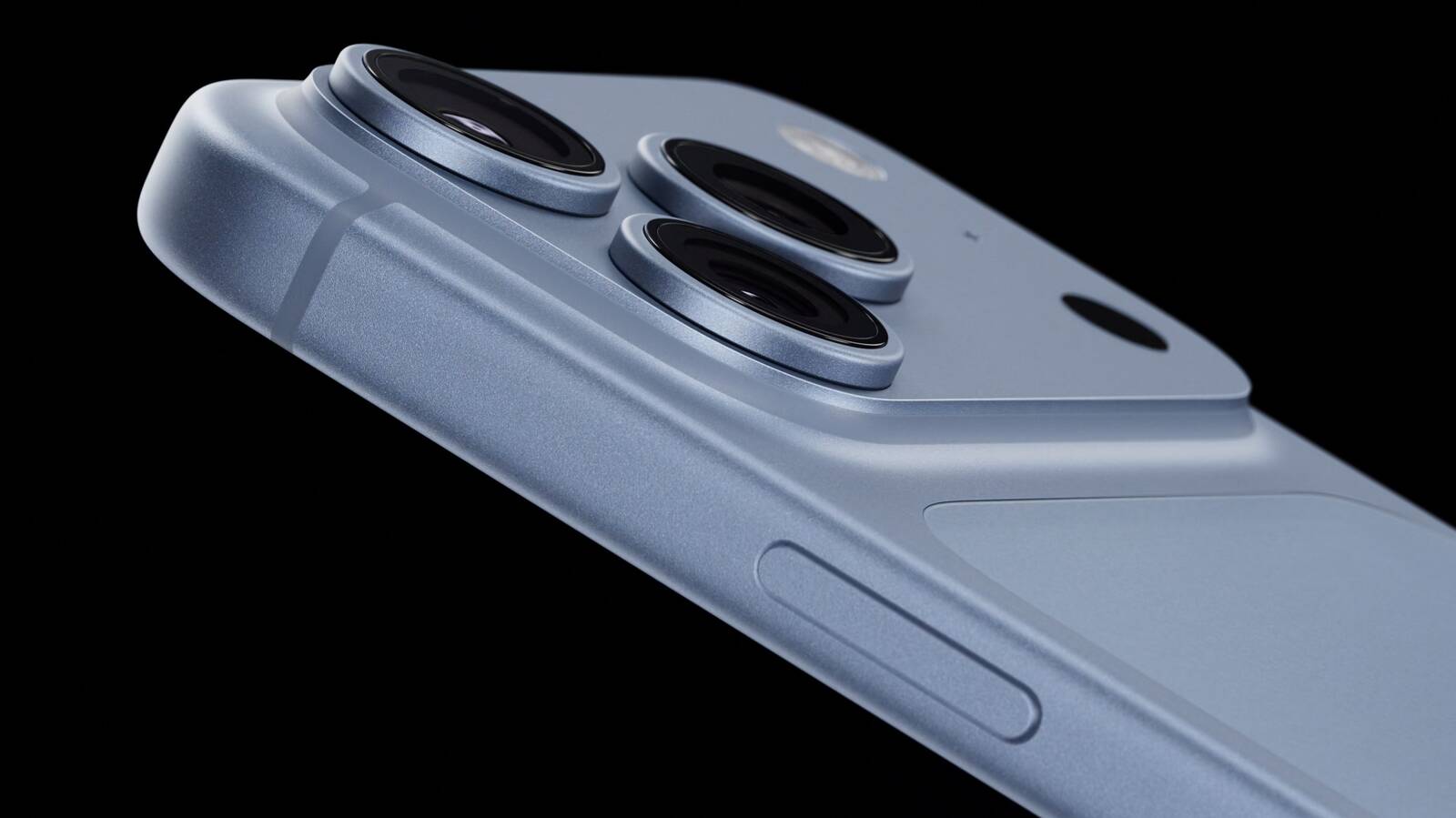
You should also consider if you plan to use a case with your device and, if so, which one. The ‌iPhone 18 Pro‌'s large, full-width camera plateau stands out on most cases, exposing more of the device's color. Choosing a complimentary color should be your first priority.

Burgundy


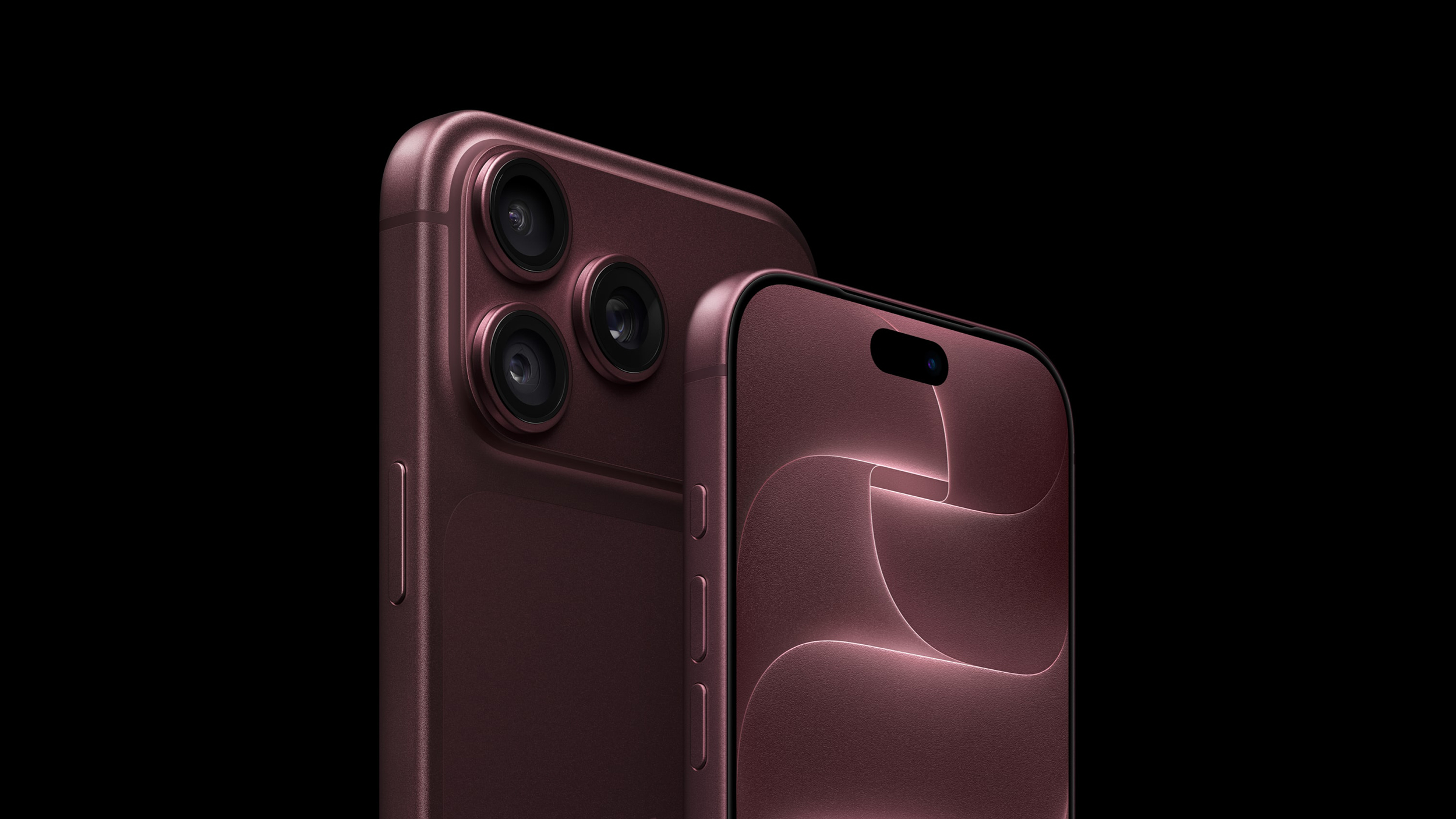
Burgundy is the most distinct and expressive ‌iPhone 18 Pro‌ finish, and it is much darker than the ‌iPhone 17‌ Pro's equivalent Cosmic Orange. It looks closer to wine or plum than a vivid red.


Burgundy is the standout shade in the ‌iPhone 18 Pro‌ lineup, designed to be bold and attention-grabbing. It is the most noticeable ‌iPhone 18 Pro‌ color, and the most likely to indicate that you have the latest generation device—there has never been an iPhone color option like it before.

Apple offers Burgundy Silicone and TechWoven cases if you want the phone and case to look closely coordinated. With a contrasting case, the large, exposed plateau becomes a prominent patch of red-purple. That is worth considering if you like to change between bright case colors: Burgundy will remain part of every combination.

A clear case shows more of the finish, although Apple's white MagSafe ring covers part of the back. Burgundy is the clearest way to distinguish this generation by color, but anyone hoping for a bright red iPhone may be disappointed.

Choose Burgundy if you want a distinctive, dark color that remains noticeable even when the phone is in a case.

Glacier


Glacier is a cool, pale blue that gives the iPhone a much softer look than Burgundy. It is much lighter than the ‌iPhone 17‌ Pro's Deep Blue, yet it does not disappear into Silver; in-person, it still looks distinctly blue.


Glacier is a useful middle ground if you want gentle color with some saturation, without making it the strongest feature of the phone. The exposed camera plateau gives an opaque case a light blue accent, while a clear case reveals most of the finish. Apple's clear case has a large white ‌MagSafe‌ ring, however, so it does not leave the back completely unobstructed.

Apple sells blue cases in shades such as Crisp Blue and Chambray Blue, but neither is named Glacier. If you want the case and phone to match precisely, it may be best to compare them in person; otherwise, a clear or neutral case lets Glacier stand on its own.

Choose Glacier if you want an iPhone with a fresh, subtle, and light appearance.

Silver


Silver is the most classic, versatile, and timeless option, but also the most practical. The finish gives off a clean and bright look that pairs well with virtually any case or wallpaper, and it reflects light more than the other three colors, making it quite neutral.


Its aluminum has a metallic sheen that leans toward white in some lighting conditions. This year, the two rear materials are the same tone, making the new model look much more cohesive than the two-tone Silver ‌iPhone 17‌ Pro.

Silver is also the most adaptable color for cases. The exposed silver plateau provides a crisp, light accent against a dark case and sits more quietly beside a pale one. The color is likely to age well since it goes well with any case and embodies Apple's most traditional colors.

It is also the only finish of the three that pairs well with Apple's own clear case. The clear case's white ‌MagSafe‌ ring is less of a visual interruption here than it is against Black or Burgundy. If you frequently change cases, Silver is unlikely to compete with your next choice.

Unlike Burgundy or Black, Silver minimizes the appearance of damage. When the anodized layer chips or scratches, the raw aluminum underneath is very close in tone, so imperfections blend in far better. For users who prioritize long-term durability of appearance, Silver is the most forgiving finish. It may not be as dramatic as Burgundy or as sleek as Black, but it is the safest choice for maintaining a "like-new" look over years of use.

Choose Silver if you want a classic, flexible look that mitigates the signs of damage.

Black


Black returns after the ‌iPhone 17‌ Pro offered Deep Blue as its darkest option. It offers a dark, neutral look without Deep Blue's blue cast.


A black case makes the exposed camera plateau blend into the rest of the phone. A light or colorful case has the opposite effect, framing a broad dark section across the top. Apple's clear case also makes its white ‌MagSafe‌ ring particularly noticeable against Black, so it is less suited to an uninterrupted all-black look.

If a deep chip or scratch exposes bare aluminum, its lighter color would stand out against this finish, especially on the plateau that Apple's cases leave uncovered. Anyone using the device without a case should be prepared for more noticeable damage. If visible marks would bother you and you plan to go without a case, Silver may be a better fit.

Choose Black if you want a dark, stealthy, and professional look, but be willing to accept signs of wear and tear.
Related Roundup: iPhone 18 Pro
Related Forum: iPhone

This article, "iPhone 18 Pro Colors Buyer's Guide: Which Should You Choose?" first appeared on MacRumors.com

Discuss this article in our forums

  •  

Apple Stores Receive 'Do Not Open' Boxes Ahead of Smart Home Products Launch

Apple Stores around the world are preparing to install new product presentations starting on Thursday, October 8.


Apple retail stores received confidential boxes earlier this week featuring "Do Not Open Until October 8" stickers on them. They are believed to contain new visual merchandise, which enables workers to update labels, graphics, and product layouts in stores around the release of new products. MacRumors received a tip-off about the boxes earlier this week, which it has now independently verified.

There is a possibility that the materials relate to the iPhone Duo, but it seems more likely given their confidentiality and timing that they relate to the rumored launch of Apple's smart home hub, alongside a new Apple TV 4K, and the HomePod mini 2. Yesterday, Bloomberg's Mark Gurman said that Apple plans to introduce these three long-awaited new devices on Tuesday, October 13.

If Apple announces the new devices sometime in the week of Monday, October 5, Apple Stores would need to update their displays for launch on October 13. For now, the exact timing of the announcement of the trio is unclear. Gurman's report used indeterminate wording, simply saying that Apple would "push into the smart-home market on October 13." This could be either announcement or launch.
Related Roundups: Apple TV, HomePod mini

This article, "Apple Stores Receive 'Do Not Open' Boxes Ahead of Smart Home Products Launch" first appeared on MacRumors.com

Discuss this article in our forums

  •  

Apple Watch SE 3 vs. Series 12 Buyer's Guide: Which Should You Buy?

The Apple Watch SE 3 starts at $249, while the Apple Watch Series 12 starts at $399. The $150 difference buys a more advanced health sensing system, a larger display, longer battery life, and more options for tracking training and recovery.


The two watches still share many features, including an always-on display, wrist temperature sensing, sleep apnea notifications, retrospective ovulation estimates, 5G connectivity on cellular models, media playback, and 64GB of storage. Our guide helps to answer the question of how to decide which of these two Apple Watch models is best for you. The differences between the two models are as follows:


‌Apple Watch SE 3‌ Apple Watch Series 12
Same design as Apple Watch Series 4, 5, and 6 Refined design with a thinner casing, display with more rounded edges and a wider aspect ratio, and front glass that extends further over the sides for a higher screen-to-body ratio
40mm or 44mm case 42mm or 46mm case
Aluminum case Aluminum, titanium, or ceramic case
40mm: 40 by 34 by 10.7mm
44mm: 44 by 38 by 10.7mm
42mm aluminum/titanium: 42 by 37 by 9.7mm
46mm aluminum/titanium: 46 by 40 by 9.7mm
42mm ceramic: 43 by 37 by 9.85mm
46mm ceramic: 47 by 41 by 9.85mm
Aluminum GPS weight: 26.3 grams (40mm) or 32.9 grams (44mm) Aluminum GPS weight: 32.2 grams (42mm) or 39.5 grams (46mm)
Ion-X front glass Ceramic Shield 2 front on aluminum models; sapphire crystal front on titanium and ceramic models
No published IP6X rating IP6X dust resistance
LTPO OLED display LTPO3 display with a 1Hz always-on refresh rate, allowing a live ticking seconds hand on supported watch faces
‌OLED‌ display Wide-angle ‌OLED‌ display
40mm: 324 by 394 pixels
44mm: 368 by 448 pixels
42mm: 374 by 446 pixels
46mm: 416 by 496 pixels
40mm: 759 sq mm display area
44mm: 977 sq mm display area
42mm: 970 sq mm display area
46mm: 1,196 sq mm display area
Up to 1,000 nits brightness Up to 2,000 nits brightness
2 nits minimum brightness 1 nit minimum brightness
Nylon composite and sapphire crystal back Aluminum or titanium and zirconia back; ceramic and zirconia back on ceramic models
S10 chip (2024) S11 chip (2026)
2GB RAM 4GB RAM
Second-generation optical heart sensor Always-on optical heart sensor
Standard background heart rate tracking Background heart rate readings every five seconds
Heart rate variability tracking Recovery HRV and more frequent overall HRV readings
Vitals app with heart rate, respiratory rate, wrist temperature, and sleep duration Vitals app with heart rate, respiratory rate, wrist temperature, sleep duration, HRV, and a daytime view
Readiness app
Electrical heart sensor and ECG app
Blood oxygen sensor and Blood Oxygen app
Hypertension notifications
Standard step tracking Improved step tracking
Real-time heart rate and steps watch face complications
Water temperature sensor
Depth gauge to 6 meters and Depth app
Oceanic+ app for snorkeling to 6 meters, available on the App Store
Audio Intelligence features including Siri Recap, Sound Recognition, and Shazam
Live Rewind and ‌Siri‌ Recap, due in beta in late 2026
Microphone Microphone with Voice Isolation
Single, elongated speaker openings Individual speaker holes
2.4GHz Wi-Fi 4 2.4GHz and 5GHz Wi-Fi 4
L1 GPS Precision L1 GPS
Second-generation Ultra Wideband chip
Find iPhone Precision Finding for iPhone, with distance and direction guidance
HomePod playback controls ‌HomePod‌ playback controls and proximity-based media suggestions with a compatible Ultra Wideband ‌HomePod‌
Up to 18 hours of normal use Up to 24 hours of normal use
Up to 32 hours in Low Power Mode Up to 38 hours in Low Power Mode
Up to 7 hours of workout tracking Up to 10 hours of workout tracking
Charges from 0 to 80% in about 45 minutes Charges from 0 to 80% in about 30 minutes
15 minutes of charging for up to 8 hours of normal use 15 minutes of charging for up to 12 hours of normal use
8 minutes of charging for up to 8 hours of sleep tracking 5 minutes of charging for up to 10 hours of sleep tracking
Midnight and Starlight aluminum finishes Dark Bronze, Light Gold, Black, and Space Gray aluminum finishes
Radiant Gold and Natural titanium finishes
Pearl White and Night Blue ceramic finishes
Silver and Radiant Gold titanium Hermès models
40mm: $249 GPS or $299 GPS + Cellular
44mm: $279 GPS or $329 GPS + Cellular
Aluminum 42mm: $399 GPS or $499 GPS + Cellular
Aluminum 46mm: $449 GPS or $549 GPS + Cellular
Titanium models start at $699; ceramic models start at $899


If you mainly want a smart watch for notifications, standard workout and sleep tracking, and an always-on display, the ‌Apple Watch SE 3‌ remains the better value. Although it is now a year old, it still represents excellent value for money at $249, offering most of the Apple Watch's core features for $150 less than the entry-level Series 12.

The Apple Watch Series 12 has a much stronger case for anyone who uses their device to follow health and recovery trends. Its new Health Sensing System enables frequent heart rate readings, Recovery HRV, and a Readiness score that draws on recent activity, training load, vitals, and sleep. ECG, blood oxygen monitoring, and hypertension notifications add further capabilities unavailable on the ‌Apple Watch SE 3‌.

Battery life may be a decisive factor. The Apple Watch Series 12 is rated for six more hours of normal use and three more hours of outdoor workout tracking. It also charges faster, which is particularly useful if you wear your watch overnight for sleep tracking.

The Series 12 also offers a larger and brighter display, which makes a noticeable difference in daily use, along with 5GHz Wi-Fi, Precision Finding for a misplaced iPhone, and premium titanium and ceramic case options. Its Audio Intelligence features include ‌Siri‌ Recap, Sound Recognition, and always-on Shazam.

If you prefer the Series 12's broader health tracking capabilities, longer battery life, display advantages, or luxury case options, the extra cost is justified. If those features are unlikely to change how you use or appreciate your watch, the ‌Apple Watch SE 3‌ is the more economical choice.
Related Roundups: Apple Watch 12, Apple Watch SE 3
Related Forum: Apple Watch

This article, "Apple Watch SE 3 vs. Series 12 Buyer's Guide: Which Should You Buy?" first appeared on MacRumors.com

Discuss this article in our forums

  •  

DoorDash Unveils AI Food Ordering Through Apple's Messages App

DoorDash is inviting U.S. customers to join a waitlist for an AI assistant that can take food orders through Apple's Messages app (via Bloomberg).


The phone number used in the conversation connects the request to a customer's DoorDash account. The assistant can use previous purchases and preferences to help put together an order, then use a saved payment method at checkout. Customers can also view food photos in the chat or send a picture of their fridge for recipe ideas and suggestions for missing ingredients.

The service builds on Ask DoorDash, which launched inside the DoorDash app in June. DoorDash describes the message assistant as a pilot for select U.S. account holders and advises users to check their carts before paying because the AI can make mistakes.

To join the beta waitlist, U.S. iOS users can enter their phone number at doordash.com/text and select Continue. DoorDash says Android support is coming soon.


This article, "DoorDash Unveils AI Food Ordering Through Apple's Messages App" first appeared on MacRumors.com

Discuss this article in our forums

  •  

Apple Working to Expand HomeKit

Apple is working to revamp HomeKit amid a new push into the smart home market, according to Bloomberg's Mark Gurman.


In a report that detailed the impending launch of next-generation Apple TV and HomePod mini models, as well as Apple's all-new smart home hub, Gurman said that the company is developing broader smart-home ecosystem software for its devices.

Apple apparently plans to expand the ‌HomeKit‌ platform with support for new categories of connected products. The company is also said to be working with third-party manufacturers on new devices designed for the Siri AI-powered smart home platform.

The new Apple TV, HomePod mini, and smart home hub are set to be introduced on Tuesday, October 13, Gurman claims.


This article, "Apple Working to Expand HomeKit" first appeared on MacRumors.com

Discuss this article in our forums

  •  

Apple Smart Home Hub to Feature iMac G4-Style Design

Apple's long-rumored smart home hub will have an iMac G4-style design and a host of unique features, Bloomberg's Mark Gurman reports.


The smart home hub is said to feature a square 6-inch display, with variants that can be placed on a countertop or mounted on a wall. It features a single FaceTime camera on the front, with microphones and speakers in its connected base. Gurman described the design as follows:

The hub is about as thick as an iPhone, and its display is surrounded by a quarter-inch, black bezel reminiscent of older iPads. It has rounded corners and no sharp edges. The device lacks a battery, so it has to be plugged in at all times, and there are no volume or power buttons.

The product comes in Apple's standard gray aluminum finish and includes a USB-C port for power. The screen sits above a metal, round base with multiple rings of perforated speaker holes and connects to it through a polished metal arm. Users can manually tilt the display forward or backward. And the base has a rubberized bottom to help it stay on a table.

The standard version looks reminiscent of the famous iMac G4 from 2002 that has a large display that sits on a half-dome-shaped base.

Apple has also developed a second version, code-named J491, designed to be mounted on a wall. It has a thin, square-shaped base beneath the display that houses the speakers and microphones. The base sits flat on the wall below the screen. This version also must remain connected to power through a USB-C cable.


Apple envisions customers placing several of the devices throughout their homes. Users will be able to control smart home devices, make video calls and intercom-style messages, play audio, and view slideshows of photos. The device will also be able to serve as an information hub for the kitchen, with the ability to watch videos and look up recipes with voice commands.

It will also be able to recognize who is speaking to it or approaching it, and display personalized content and answers accordingly. The interface will change automatically depending on who is using the device, and there will be a mode for visitors that hides personal information.

The smart home hub will identify users by their voice or facial recognition, but the latter system is said to be less reliable than Face ID, and users will be able to enable a secondary authentication method via an iPhone if they wish. The iPhone will also serve as a fallback solution for when the hub cannot identify a user correctly. In dark rooms, a Mac-style Edge Light feature will illuminate the area around the screen to help the camera recognize the user.

The device purportedly blends interface elements of the Apple Watch, Apple TV, and iPad. Siri AI continues to feature the same dark visual style used on other devices. iPhone-style widgets are available and users can choose a wallpaper and rearrange apps and widgets by pressing and holding them, just like Apple's other devices.

The UI is heavily built around slideshows and clock displays, similar to the revamped StandBy Mode on the iPhone Duo. One clock is said to resemble "a lava lamp with an overlay of the time that shows the hour in digital form with minutes listed below." Users can then swipe up from the clock screen or photos to open the app launcher.

The device will include many of Apple's most frequently used apps, including Calendar, Messages, Photos, ‌FaceTime‌, Notes, Reminders, Music and Podcasts. The Home Screen features Apple Watch-style apps that open into iPad-style interfaces with multiple panels. For example, the Messages app has a two-panel layout like it does on the ‌iPad‌. When a user taps a thread in their list of conversations, a second pane opens to display the conversation feed. This interface is said to carry over to many of the other default apps.

The device is reportedly set to be introduced on Tuesday, October 13, alongside new HomePod mini and ‌Apple TV‌ models.
Related Roundup: iMac
Buyer's Guide: iMac (Don't Buy)
Related Forum: iMac

This article, "Apple Smart Home Hub to Feature iMac G4-Style Design" first appeared on MacRumors.com

Discuss this article in our forums

  •  

Three New Apple Smart Home Products Coming on October 13

Apple plans to introduce a series of new smart home products on Tuesday, October 13, according to Bloomberg's Mark Gurman.


Apple reportedly plans to debut its long-awaited smart home hub device, a new HomePod mini, and a new Apple TV on the date. The new ‌HomePod mini‌ and ‌Apple TV‌ are set to retain their existing designs, but tout faster chips to support Siri AI. The new ‌HomePod mini‌ will also come in new color options, including pink and green.

All three products are set to showcase ‌Siri‌ AI, which apparently explains the delay in their launch. All three were originally planned to launch in 2024.

Apple plans to update the larger HomePod at a later date. A privacy-focused home security camera and sensor is also in the works; the device can detect which room a person is in and does not record video. Apple also continues to work on a higher-end version of the smart home hub, featuring a 9-inch display mounted on a robotic arm that can swivel 360 degrees.

Gurman set out a range of details about the smart home hub device in the report, which we've outlined in another article.
Related Roundups: Apple TV, HomePod mini

This article, "Three New Apple Smart Home Products Coming on October 13" first appeared on MacRumors.com

Discuss this article in our forums

  •  

AppleCare Guide: Is it Worth Paying For?

Most Apple products come with a one-year limited warranty that covers hardware failures and manufacturing defects, and up to 90 days of complimentary technical support. To extend your coverage further, Apple offers AppleCare+ and AppleCare One, with theft and loss coverage available for eligible devices. With the added cost, service fees, and varying prices across the Apple product lineup, is AppleCare worth paying for?


Apple uses several similar names for different types of coverage:


  • Standard warranty: Included with most Apple products at no extra cost. It generally covers manufacturing defects for one year. It is not an AppleCare plan.

  • AppleCare: Apple's umbrella name for its paid service and support plans, rather than one specific level of coverage. The older AppleCare Protection Plan is a distinct product that still appears in some markets.

  • AppleCare+: A paid plan for one eligible product that extends hardware service and support and adds accidental damage coverage. Service fees apply to accidental damage claims.

  • AppleCare+ with Theft and Loss: Includes AppleCare+ benefits and adds theft and loss protection for eligible iPhones, iPads, and Apple Watches, subject to claim limits and deductibles.

  • AppleCare One: A monthly plan for multiple eligible products. Its Individual tier includes AppleCare+ benefits and theft and loss coverage for enrolled iPhones, iPads, and Apple Watches.

  • AppleCare One Family: Covers eligible products belonging to the subscriber and up to five other people in a Family Sharing group. It can also cover one person's devices without a Family Sharing group.


In the U.S., customers generally have 60 days after purchasing a new eligible device to add AppleCare+, including an iPhone, iPad, Apple Watch, Mac, or Apple TV. AppleCare One can also cover eligible devices you already own that are in good condition and within four years of their manufacture, purchase, or activation date, depending on the information Apple has. AirPods and Beats devices have a one-year limit.

For many devices, coverage can be added through AppleCare & Warranty settings on an iPhone, ‌iPad‌, Mac, or Apple Vision Pro, or purchased online. Monthly and annual plans renew while active until canceled. Fixed-term plans have a stated end date, after which further coverage may be available if the device qualifies.

AppleCare coverage varies by country and region. Theft and loss protection is now available well beyond the initial markets of the United States and Japan, but eligible devices, prices, service fees, and claim rules differ by market. Before purchasing a plan, check the exact terms for your device where you live.

Standard Warranty


The standard warranty that comes free with your device is simply a limited warranty, which is very common for consumer devices. This warranty guarantees that the product will work as expected for up to a year. If something materially breaks within that timeframe, and it is through no fault of the user, Apple will fix it free of charge. This warranty is also automatically applied no matter where you buy the product.

The warranty does not cover accidental damage, cosmetic wear, or a battery that has worn down through normal use. Apple may ask for proof of purchase when arranging service. To transfer the warranty, you simply need to provide the buyer with your proof of purchase. Some limitations apply and the length of the standard warranty may vary based on your country. The warranty and AppleCare plans are in addition to rights provided by consumer law in your country.

AppleCare+


AppleCare+ provides paid coverage for one eligible product. Its principal benefits are:


  • Hardware service and priority technical support for the term of the plan.

  • Unlimited eligible accidental damage incidents, each subject to a service fee.

  • Battery service at no extra charge for devices with rechargeable batteries when capacity falls below 80%.

  • Express Replacement Service for eligible products, subject to its terms and availability.

  • Theft and loss protection on eligible "AppleCare+ with Theft and Loss" plans, subject to claim limits and deductibles.


Drops, spills, and broken screens are common examples of accidental damage. The damage must affect the device's function; ordinary wear and cosmetic damage are generally excluded. Eligible hardware faults arising after the limited warranty expires do not carry an additional repair fee.

If you sell or give away a device, a fixed-term AppleCare+ plan may be transferable through Apple Support. A monthly or annual plan linked to your Apple Account cannot be transferred to a new owner.

AppleCare+ With Theft and Loss


AppleCare+ with Theft and Loss adds replacement coverage if an eligible iPhone, ‌iPad‌, or Apple Watch is lost or stolen. Other products, such as Macs, displays, headphones, ‌Apple TV‌, and HomePod, are only available with AppleCare+.

A single-device Theft and Loss plan allows up to two theft or loss claims every 12 months. Find My must be enabled when the device is lost or stolen and remain enabled throughout the claim. A deductible applies to each approved replacement.

AppleCare One


AppleCare One combines coverage for multiple eligible products under one monthly subscription. In the U.S., Individual costs $19.99 per month for up to three devices, plus $5.99 per month for each additional device. The base price remains $19.99 even if you enroll fewer than three devices.

AppleCare One Family costs $49.99 per month and covers eligible devices for the subscriber and up to five other Family Sharing members without a per-device charge. It can also cover only the subscriber's devices. Eligible devices are generally added automatically, although some need a check before they can be covered.

Both tiers include theft and loss protection for enrolled iPhones, iPads, and Apple Watches. Individual permits three theft or loss claims in total across the plan every 12 months; Family permits six. Adding devices does not give each one a separate claim allowance.

Apple may require a diagnostic test or inspection before an already-owned device can be enrolled. The device must also be associated with the relevant Apple Account. You can add, remove, or swap eligible devices as your needs change.

AppleCare One Individual is available in Australia, France, Germany, the UK, and the U.S. Family is currently available only in the U.S.; prices elsewhere differ.

Plan Prices and Service Fees


Apple offers AppleCare plans for a range of products, but the available plans and prices vary by device and country. AppleCare One Individual is available in Australia, France, Germany, the UK, and the U.S. AppleCare One Family is currently available only in the U.S.

The price of single-device AppleCare+ depends on the product, location, payment term, and coverage offered. There is a one-time purchase option when buying a new device, but Apple also offers AppleCare+ through a monthly recurring payment plan.

AppleCare+ with Theft and Loss for the iPhone 18 Pro costs $14.99 per month or $149.99 per year. That premium is paid whether or not you make a claim. Accidental damage service fees are additional to the plan price. These are Apple's current U.S. fees; taxes may apply:


  • iPhone: $29 for eligible screen-only or back-glass-only damage; $99 for other accidental damage.

  • Apple Watch: $69 for accidental damage, or $79 for Ultra and Hermès models.

  • iPad: $29 for screen damage and $99 for other accidental damage.

  • AirPods and Beats: $29 for accidental damage.

  • Apple TV: $15 for accidental damage.

  • HomePod: $39 for accidental damage, or $15 for HomePod mini.

  • Apple Vision Pro: $29 for damage to an included accessory, or $299 for other accidental damage.

  • MacBook Neo: $49 for screen or enclosure damage; $149 for other accidental damage.

  • Other Macs and Apple displays: $99 for screen or enclosure damage; $299 for other accidental damage.


For theft or loss, the U.S. deductible is $149 for an iPhone, $129 for an ‌iPad‌, or $119 for an Apple Watch. These deductibles apply under eligible single-device and AppleCare One coverage.

For some products, Express Replacement lets Apple send a replacement before you return the damaged device. It involves a temporary card hold. An iPhone or ‌iPad‌ screen-only claim handled this way is charged at the other accidental damage rate, rather than the $29 screen repair rate.

To judge the cost, compare the total premiums over the time you expect to keep the device, plus a possible service fee, with the price of an uncovered repair or replacement. Apple's repair estimator can provide a model-specific iPhone screen repair estimate.

Other Coverage Options


If you are considering AppleCare, it may be worth exploring insurance plans offered by other companies for your device. Many banks, cell phone service providers, and renter's and homeowner's insurance policies cover devices. Some third-party Apple retailers may also offer an extended service plan with your purchase.

Other third-party warranty providers and insurance companies may offer device insurance policies that offer equivalent or better coverage than AppleCare, so it is worth exploring what policies are available for your Apple device in your jurisdiction. Many of these are also available via a monthly subscription and may beat the cost of AppleCare. Coverage for accidents, theft, and loss can vary substantially.

Is AppleCare Worth It?


Whether or not you should purchase AppleCare depends on how you use your Apple device, and how much risk and expense you are willing to take.

If you are prone to dropping or damaging your device, the argument moves towards adding AppleCare+. Similarly, additional loss and theft coverage will be dependent on how likely you believe you are to lose your device or have it stolen. Ultimately, some users are simply more careless with their devices, and for those people, AppleCare+ is worth it. If you have more than one device you want to protect, AppleCare One is worth considering.

In general, the editors at MacRumors feel that AppleCare is worth getting for Apple laptops that you plan on keeping for longer than one year, and iPhone, iPads, AirPods, and Apple Watches due to the accidental damage coverage. For Apple TVs and HomePods, we generally don't see the need, and for desktop Macs and displays it becomes more of a personal judgement call.

Overall, AppleCare significantly reduces the stress and cost of accidental damage repairs or replacement devices, and eliminates the cost of repairing hardware failures, but it is a notable extra expense for coverage that still has some deductibles and limitations on claims. AppleCare is certainly not essential, but it can be worth the additional peace of mind.
This article, "AppleCare Guide: Is it Worth Paying For?" first appeared on MacRumors.com

Discuss this article in our forums

  •  

Apple Planning to Launch Products Faster and More Often

Apple CEO John Ternus is undertaking efforts to restructure the company to accelerate product development and introduce new products more frequently, according to Bloomberg's Mark Gurman.


Ternus apparently wants Apple to "broaden its range of devices and create a leaner organization with a greater focus on engineering." One proposal under consideration is to rely less on Apple's traditional spring and fall product release cycles, and introduce new devices more quickly and throughout the year. Ternus has also purportedly indicated that Apple must become "more experimental" to remain competitive in the era of artificial intelligence.

Other plans include eliminating some middle-management positions to reduce corporate hierarchy that separates engineers from senior executives. Ternus believes "Apple should hire fewer people, ask more of its existing engineers, and reduce organizational bloat." During a presentation, he reportedly showed a slide detailing annual headcount growth and argued that the "company should be accomplishing more with fewer employees."

Ternus is also seeking new ways to generate more revenue from existing products amid slowing growth in the company's services business. The launch of new services has also been discussed. To cut costs, early planning meetings for 2027 have seen reductions in planned budget increases, flat staffing levels, and reduced marketing spending.

Gurman cautioned that the changes to Apple's long-standing practices will be challenging and could take years to achieve. There are already indications of changes taking place, with dismissals of directors and engineering program managers taking place in the past two weeks.

Those employees were given just weeks to find other positions within the company, and those who do not will be laid off. Other recent cutbacks have focused on the teams responsible for Siri, Vision Pro, AI-related software engineering, and Fitness+. Some employees believe that further layoffs are possible later this year and early next year.

Managers within Apple told Gurman that there is a sense of pressure to move faster, with more "hectic" and demanding "hands-on" work. Product development groups are "being pushed to deliver more products, more frequently and on shorter timelines."
This article, "Apple Planning to Launch Products Faster and More Often" first appeared on MacRumors.com

Discuss this article in our forums

  •  

iPhone Duo Reportedly Facing Production Problems Ahead of Launch

The iPhone Duo is reportedly facing production difficulties ahead of its October launch, with early output expected to be limited.


A person said to be close to Foxconn's supply chain told China's Jiemian News that final assembly yields for Apple's first foldable iPhone were only slightly above 60% as of September 17. The source said that, under Apple's current quality standards, it could take another six months to a year for the assembly line to reach a mature yield.

According to the source, Foxconn is repeatedly adjusting equipment, assembly processes, and production settings as it makes the ‌iPhone Duo‌ at scale. The source also said suppliers were waiting to see whether Apple would ease any quality requirements to accelerate production.

The problems apparently extend beyond final assembly. Jiemian News said Samsung Display's foldable OLED panels and hinge components had experienced low yields, delayed deliveries, and design changes. Delays in those parts leave the assembler less time to tune its production line.

The publication added that Apple tested Liquid Metal for some hinge parts before reassessing the approach ahead of mass production. Apple says its hinge contains more than 100 components and has a 3D-printed cover.

A supply chain source also told Jiemian News that Apple's global stocking target for the ‌iPhone Duo‌ in 2026 is approximately six million to eight million units. The publication compared that figure with typical shipments of 20 million to 30 million units over a full product cycle for an individual iPhone Pro or Pro Max model. A separate retail source said Apple's sales guidance exceeds five million units.

In another report, MyDrivers claims that one of the device's contract manufacturers asked Apple to choose between prioritizing yield and increasing output. The site suggested that running the production line harder could produce more saleable phones, but with the side-effect of more defective units and higher scrap costs.

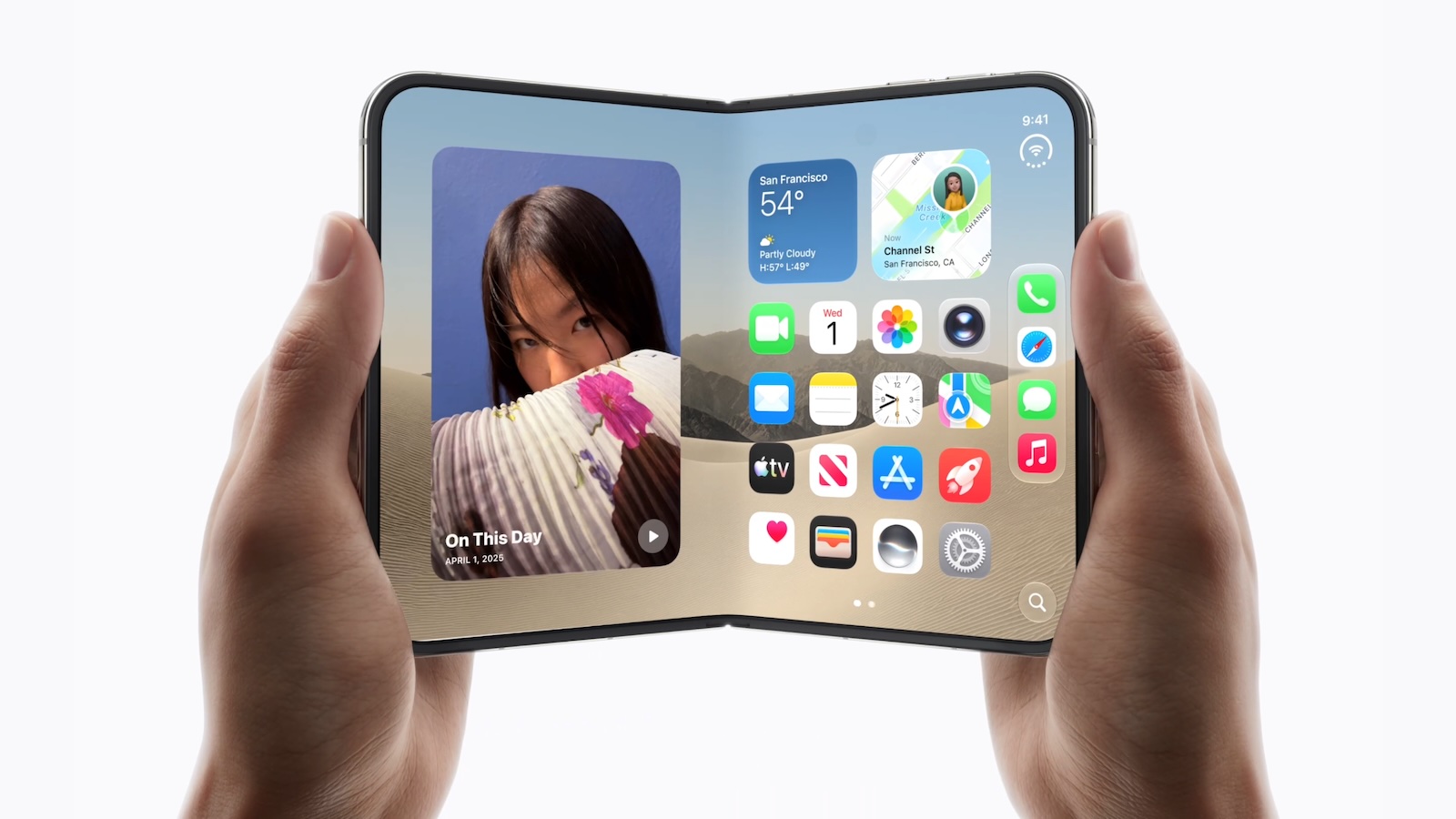
Apple unveiled the iPhone Duo on September 9. Pre-orders are scheduled to begin October 16, with availability following on October 23. The ‌iPhone Duo‌ starts at $1,999 in the United States.
Related Roundup: iPhone Duo
Related Forum: iPhone

This article, "iPhone Duo Reportedly Facing Production Problems Ahead of Launch" first appeared on MacRumors.com

Discuss this article in our forums

  •  

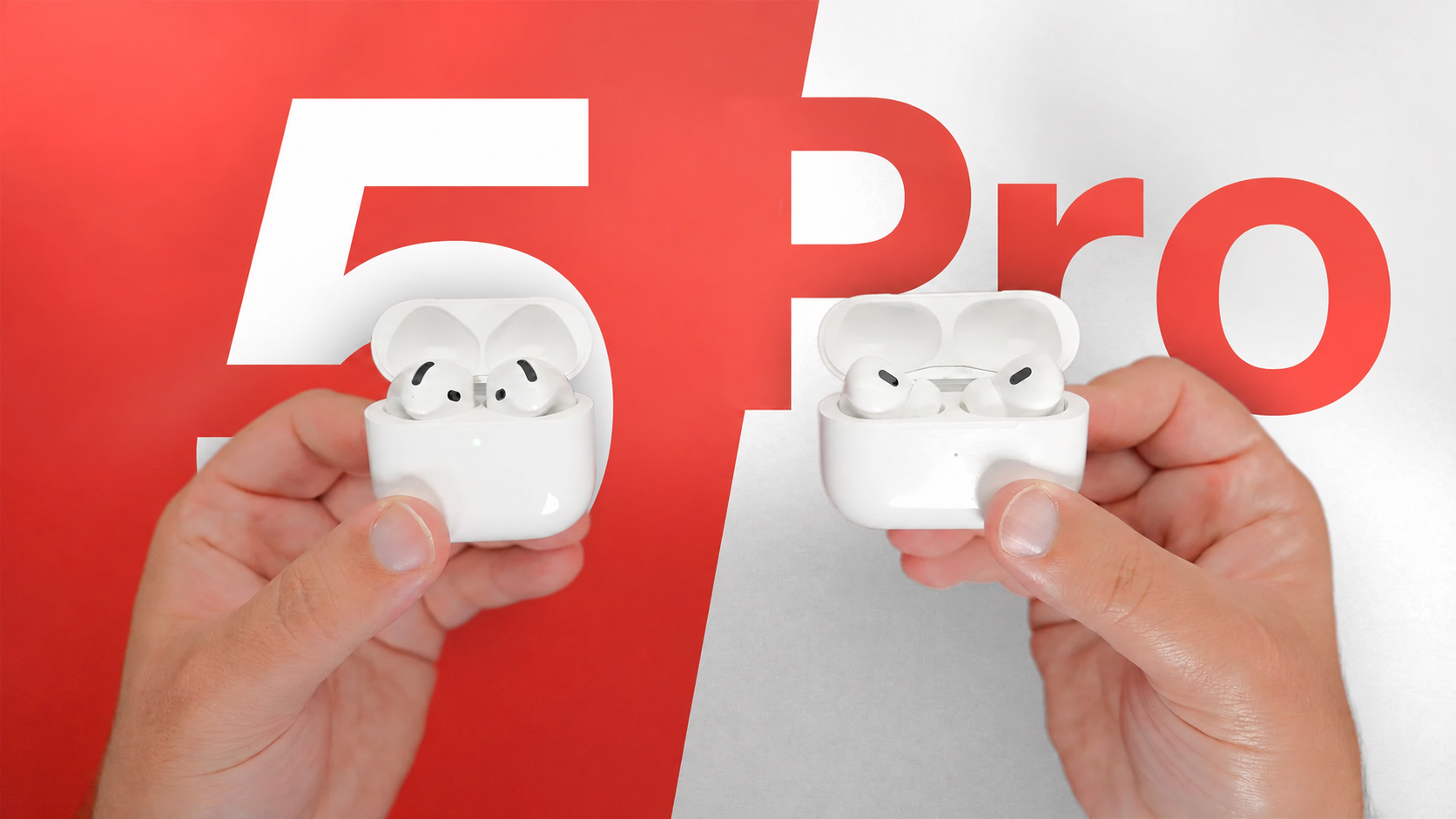
AirPods 5 vs. AirPods Pro 3 Buyer's Guide: Which Should You Buy?

Apple's AirPods 5 bring Active Noise Cancellation to its $129 earbuds for the first time. The $149 AirPods 5 with Wireless Charging Case add longer battery life, volume controls on the stems, and a case speaker for Find My. The AirPods Pro 3 cost $249.


The ‌AirPods 5‌ arrived in September 2026, a year after the AirPods Pro 3. They continue to narrow the feature gap between the devices, but the Pro model still offers a sealed in-ear fit, substantially better noise cancellation, and hearing and workout features. Our guide helps to answer the question of how to decide which of these sets of AirPods is best for you.


‌AirPods 5‌
(2026)
‌AirPods 5‌ with Wireless Charging Case
(2026)
‌AirPods Pro 3‌
(2025)
Open-ear fit without ear tips Open-ear fit without ear tips In-ear fit with foam-infused silicone ear tips in five sizes
Optical in-ear sensor Optical in-ear sensor Skin-detect sensor
Open-ear Active Noise Cancellation Open-ear Active Noise Cancellation In-ear Active Noise Cancellation; up to 3x more effective than ‌AirPods 5‌
Force sensor controls Force sensor controls with volume swipe Touch controls with volume swipe
Hearing Test, Hearing Aid, Hearing Protection, Automatic Conversation Boost, and Loud Sound Reduction
Heart rate sensing during workouts
Up to 4 hours of listening time on one charge with ANC Up to 5 hours of listening time on one charge with ANC Up to 8 hours of listening time on one charge with ANC
Up to 20 hours of listening time with ANC using the case Up to 22 hours of listening time with ANC using the case Up to 24 hours of listening time with ANC using the case
Case charges via USB-C Case charges via USB-C, Apple Watch charger, or Qi charger Case charges via USB-C, Apple Watch charger, Qi charger, or MagSafe charger
Speaker in case for ‌Find My‌ Speaker in case for ‌Find My‌
Second-generation Ultra Wideband chip in case for Precision Finding with a compatible iPhone
Charging case is 1.97 inches (50.1 mm) wide Charging case is 1.97 inches (50.1 mm) wide Charging case is 2.45 inches (62.2 mm) wide and has a lanyard loop
Starts at $129 Starts at $149 Starts at $249


The ‌AirPods 5‌ with Wireless Charging Case are the best choice for most buyers. For $20 more than the base model, you get an extra hour of listening time per charge with ANC, volume swipes on the stems, wireless charging, and a speaker that makes a misplaced case easier to find. Choose the $129 model if the lowest price matters most and you are content with its shorter battery life and USB-C-only charging case.

However, the ‌AirPods Pro 3‌ are worth the extra $100 over the higher-end ‌AirPods 5‌ if noise cancellation is your priority and you prefer a snug in-ear fit. Apple says they provide up to three times as much ANC as the ‌AirPods 5‌, since the ear tips create a physical seal. Their eight-hour listening time per charge is particularly useful on long journeys. In our hands-on testing, the ‌AirPods 5‌ sounded muddier than the Pro 3, particularly in the lower midrange.

The ‌AirPods Pro 3‌ are also the clear choice if you want their hearing health features or heart rate sensing during workouts without relying on an Apple Watch. Their charging case adds Precision Finding, too. If you dislike silicone ear tips, the ‌AirPods 5‌ let you keep the open-ear fit while getting nearly all of the everyday listening features shared by the Pro model.

AirPods frequently receive discounts from third-party retailers, which can narrow the ‌AirPods Pro 3‌'s $100 list-price premium over the $149 ‌AirPods 5‌. Check the latest prices using our Deals roundup before buying.
Related Roundups: AirPods 5, AirPods Pro 3
Related Forum: AirPods

This article, "AirPods 5 vs. AirPods Pro 3 Buyer's Guide: Which Should You Buy?" first appeared on MacRumors.com

Discuss this article in our forums

  •  

The MacRumors Show: Tyler Stalman Talks iPhone 18 Pro's Camera

Photographer and videographer Tyler Stalman joins us on this week's episode of The MacRumors Show to examine whether the iPhone 18 Pro's camera is a compelling reason to upgrade, how its new features affect everyday shooting, and what photographers gain or give up with the iPhone Duo.


The ‌iPhone 18 Pro‌'s Main camera combines a new 48-megapixel sensor, a faster variable-aperture lens, and updated image processing. The variable aperture offers settings of ƒ/1.48, ƒ/1.8, ƒ/2.8, and ƒ/4.0. The iPhone 17 Pro has a fixed ƒ/1.78 aperture, so the new lens's widest setting admits about 45% more light on aperture values alone, or just over half an exposure stop. Apple claims around 50% better low-light performance for the complete Main camera system.

At ƒ/2.8 or ƒ/4.0, people standing at different distances in a group shot can remain sharper, provided there is enough light to compensate for the smaller opening. A narrower aperture can also let video use a slower shutter speed in bright conditions, producing more natural motion blur. At ƒ/1.48, the camera has more light for indoor photos and potentially shorter Night mode exposures. The wider opening should also reduce the need for Night mode at all in some situations. The camera defaults to ƒ/1.8, close to the 17 Pro's fixed aperture, but the new sensor and processing still affect photos taken at that setting.

The Pro Controls add manual aperture, shutter speed, and white balance adjustments, plus a live histogram directly in the native Camera app. Users can pin their most-used settings to the top of the viewfinder, which is a major practical improvement for professionals. For example, shutter speed offers control over frozen action or intentional motion blur, while white balance can help stop greenery being made too blue by automatic settings or maintain a consistent look between video clips.

Photographic Styles 3 goes further with the ability to adjust tone and color while preserving skin tones, and new controls add Soft Skin, Glow, and Film textures, with grain that can be paired with any of them. The Film setting aims to reproduce more of an analog photograph's character, including its grain and the glow around bright highlights. The strength of the effects can be adjusted, and the style can be changed after capture. Tyler has tested the ‌iPhone 18 Pro‌'s film look against a film SLR loaded with Kodak Portra 400.

Apple Reference Image signs data from the ‌iPhone 18 Pro‌'s new Main camera sensor at capture, creating a secure digital negative that can be compared with an editable photo. Meanwhile, iOS 27's Photos tools can change perspective with Reframe, generate scenery beyond a picture's original edges with Extend, or remove larger objects with Clean Up. Reference Image leaves room for creative editing while giving photographers a way to show what the sensor captured, provided they enabled the mode before taking the shot.

Meanwhile, the iPhone Duo's camera system has a 48-megapixel Main camera with a fixed ƒ/1.6 aperture and the same 48-megapixel Ultra Wide camera as the ‌iPhone 18 Pro‌. Its Main camera shares a 26mm focal length, ƒ/1.6 aperture, and Hybrid Focus Pixels with the iPhone 17e, leading some to question why Apple's most expensive iPhone appears to have camera hardware similar to an entry-level model. That said, the Duo has sensor-shift optical image stabilization, which the 17e lacks, and Apple has not disclosed enough sensor details to establish that the two phones use identical hardware.

Compared with the ‌iPhone 18 Pro‌, the ‌iPhone Duo‌ also lacks a dedicated Telephoto lens, variable aperture, manual Pro Controls, Reference Image, and professional formats including ProRAW and ProRes. The ‌iPhone Duo‌'s folding design makes a different case for its camera. Smart Take can capture a group photo when everyone is posing, Kid Cue plays animations on the outer display to draw a child's attention, and Duo Preview lets subjects see a live view of a photo being taken of them with the rear camera. The phone can also stand partly open for hands-free shots.

Looking to the future, Apple is rumored to be working on a custom image sensor that could arrive as soon as next year with the 20th-anniversary iPhone.

See more of Tyler's work over on his YouTube channel or on X @stalman. The MacRumors Show has its own YouTube channel, so make sure you're subscribed to keep up with new episodes and clips.


You can also listen to ‌The MacRumors Show‌ on Apple Podcasts, Spotify, Overcast, or other podcast apps. You can also copy our RSS feed directly into your player.


If you haven't already listened to the previous episode of The MacRumors Show, catch up to hear our ‌iPhone Duo‌ debate and discussion about early impressions of the AirPods 5, and the merits of Apple's latest iPhone and Apple Watch upgrades.

Subscribe to ‌The MacRumors Show‌ for new episodes every week, where we discuss some of the topical news breaking here on MacRumors, often joined by interesting guests such as Michael Fisher, Kayci Lacob, Kevin Nether, John Gruber, Mark Gurman, Jon Prosser, Luke Miani, Matthew Cassinelli, Brian Tong, Quinn Nelson, Jared Nelson, Eli Hodapp, Mike Bell, Sara Dietschy, iJustine, Jon Rettinger, Andru Edwards, Arnold Kim, Ben Sullins, Marcus Kane, Christopher Lawley, Frank McShan, David Lewis, Sam Kohl, Federico Viticci, Thomas Frank, Jonathan Morrison, Ross Young, Ian Zelbo, and Rene Ritchie.

‌The MacRumors Show‌ is on X @MacRumorsShow, so be sure to give us a follow to keep up with the podcast. You can also email us at podcast@macrumors.com or head over to The MacRumors Show forum thread. Remember to rate and review the podcast, and let us know what subjects and guests you would like to see in the future.
Related Roundup: iPhone 18 Pro
Related Forum: iPhone

This article, "The MacRumors Show: Tyler Stalman Talks iPhone 18 Pro's Camera" first appeared on MacRumors.com

Discuss this article in our forums

  •  

iPad Mini 8 Leaked: A20 Pro Chip, Landscape Camera, and More

Apple's next-generation iPad mini will feature the A20 Pro chip, a rearranged front-facing camera, and a new speaker system, leaked code reveals.


The information originates from Apple's own code (spotted by MacRumors contributor Aaron Perris) and also shows clear product images of the new ‌iPad mini‌. Although images of the device only show the front, leaving any design changes of the rear or side profile unknown, there are still visible changes.

The new ‌iPad mini‌ features a landscape front-facing camera, making it the final iPad to transition to this positioning. It also has a small groove cut out of the top of the display glass, just like the iPhone, presumably for the speaker. The volume buttons and power button remain on the top of the device.

We are not sharing the exact details of the files, but their presence in Apple's code suggests that the product is likely to launch soon.

Bloomberg's Mark Gurman previously reported that the next-generation ‌iPad mini‌ will feature water resistance and an all new vibration-based speaker, so the icons appear to corroborate that claim.

The new ‌iPad mini‌ is rumored to feature a slightly larger screen, an OLED display, and more. Gurman expects it to launch by the end of October.
Related Roundup: iPad mini
Buyer's Guide: iPad Mini (Don't Buy)
Related Forum: iPad

This article, "iPad Mini 8 Leaked: A20 Pro Chip, Landscape Camera, and More" first appeared on MacRumors.com

Discuss this article in our forums

  •  

Exclusive: First Look at HomePod Mini 2 in Three New Colors

Apple's new HomePod mini will share the same design as the original model and come in five colors, MacRumors has found.


The information originates from Apple's own code (spotted by MacRumors contributor Aaron Perris) and shows clear product images of the new models in all of their colors. The above image contains Apple's own icons, which specifically refer to a "‌HomePod mini‌ 2."

The new ‌HomePod mini‌ will come in green, pink, blue, white, and black. The current model comes in yellow, orange, blue, white, and midnight. The new blue is slightly lighter than the current offering.

We are not sharing the exact details of the files, but their presence in Apple's code suggests that the product is likely to launch soon.

Apple announced the original ‌HomePod mini‌ in October 2020 for $99. Available initially in white and space gray, the 3.3-inch speaker features a fabric-covered spherical design and a backlit touch surface for playback and volume controls. Its S5 chip powers computational audio, while a full-range driver, two passive radiators, and an acoustic waveguide deliver 360-degree sound. It also offers Siri, smart home control, multiroom audio, stereo pairing with a second ‌HomePod mini‌, and Intercom messages between Apple devices. Apple later raised the price to $129.

Apple has been rumored to be working on a new ‌HomePod mini‌ model for several years. A new chip is almost certain to come to the device, along with support for Siri AI. It is expected to launch before the end of 2026.
Related Roundup: HomePod mini

This article, "Exclusive: First Look at HomePod Mini 2 in Three New Colors" first appeared on MacRumors.com

Discuss this article in our forums

  •  

Apple Watch Ultra 2 vs. Ultra 4 Buyer's Guide: Should You Upgrade?

The Apple Watch Ultra 4 arrives three years after the Ultra 2. Across those two generations, Apple added satellite connectivity, a larger display, new health sensors, and longer battery life. Are those changes enough to justify replacing an Ultra 2 or paying more for the newest model?


Both watches retain a 49mm titanium case, an Action button, a siren, a 3,000-nit display, dual-frequency GPS, and support for recreational diving to 40 meters. The Apple Watch Ultra 4 starts at $799 in the U.S. Apple has discontinued the Ultra 2, although its refurbished store currently lists it from $589. Here are the key differences between the two models:


Apple Watch Ultra 2 ‌Apple Watch Ultra 4‌
LTPO2 OLED display with always-on Wide-angle LTPO3 ‌OLED‌ display with 1Hz always-on refresh
410 by 502 pixels; 1,185 sq mm display area 422 by 514 pixels; 1,245 sq mm display area (5% larger)
S9 chip S11 chip
2GB RAM 4GB RAM
Electrical heart sensor and third-generation optical heart sensor Health Sensing System with new electrical and always-on optical heart sensors
Background heart-rate measurements Background heart-rate measurements every five seconds
Heart-rate variability (HRV) measurements More frequent measurements of overall HRV and Recovery HRV
Overnight Vitals view Overnight and daytime Vitals views
Readiness app
Step tracking More accurate all-day step tracking and a Steps watch-face complication
LTE and UMTS cellular connectivity LTE and 5G cellular connectivity
Emergency SOS, Messages, and Find My via satellite
Audio Intelligence: Sound Recognition, automatic music identification, Live Rewind, and Siri Recap
Up to 36 hours of normal use Up to 50 hours of normal use
Up to 72 hours in Low Power Mode Up to 84 hours in Low Power Mode
Up to 12 hours of standard outdoor workout tracking Up to 18 hours of standard outdoor workout tracking
Up to 17 hours of outdoor workout tracking in Low Power Mode with full GPS and heart-rate readings Up to 25 hours in Extended Workout mode with full GPS and heart-rate readings
Up to 35 hours of outdoor workout tracking with fewer GPS and heart-rate readings Up to 45 hours in Max Extended Workout mode, with GPS readings every second
Charges from 0 to 80% in about one hour Charges from 0 to 80% in about 45 minutes
Natural titanium: 61.4 grams; black titanium: 61.8 grams Natural titanium: 63.0 grams; black titanium: 63.1 grams
Dual-frequency GPS supporting GPS, GLONASS, Galileo, QZSS, and BeiDou Dual-frequency GPS supporting GPS, Galileo, QZSS, and BeiDou
Now discontinued Starts at $799


Is It Worth Upgrading From Ultra 2 to Ultra 4?


Most Apple Watch Ultra 2 owners should keep their watch if its battery still covers their usual days and workouts. It supports watchOS 27 and ‌Siri‌ AI, and continues to get new features through software updates.

The new Health Sensing System is the strongest reason to upgrade an Ultra 4. It measures heart rate every five seconds throughout the day and collects HRV data more frequently, enabling Recovery HRV, daytime Vitals, and the Readiness app. If you will use those insights to adjust your training or better understand changes in your daily condition, the ‌Apple Watch Ultra 4‌ offers a substantially improved health-tracking experience.

The S11 chip strengthens the case to upgrade. Alongside twice the memory, it enables more accurate all-day step counts, a Steps complication, and Audio Intelligence. Sound Recognition can alert you to important surrounding sounds on your wrist, while music recognition can identify songs automatically.

Satellite connectivity and longer battery life add further reasons to switch, especially if you spend time beyond cellular coverage or record long workouts. Apple's ratings increase from 36 to 50 hours of normal use and from 12 to 18 hours of standard outdoor workout tracking. The slightly larger display and faster charging are welcome improvements, but the new sensing and chip-enabled features make the bigger difference.

Should You Buy an Ultra 2 or Ultra 4?


For most people buying an Apple Watch Ultra now, future-proofing is the strongest reason to choose the latest model. Its S11 chip, 4GB of RAM, and Health Sensing System already enable Readiness, more detailed recovery metrics, and Audio Intelligence features. Live Rewind and ‌Siri‌ Recap are due later in 2026. If you plan to keep your watch for several years through successive software updates, that newer hardware makes the $799 model easier to justify.

The Apple Watch Ultra 2 remains a credible value option at a substantial discount. At Apple's current $589 refurbished price, it costs $210 less than a new Ultra 4 while retaining the same design and core features. Choose it if those existing capabilities meet your needs and you are comfortable passing up the Ultra 4's hardware-exclusive features.
Related Roundup: Apple Watch Ultra 4
Related Forum: Apple Watch

This article, "Apple Watch Ultra 2 vs. Ultra 4 Buyer's Guide: Should You Upgrade?" first appeared on MacRumors.com

Discuss this article in our forums

  •  

Full iPhone 4 'Antennagate' Q&A Video Surfaces After 16 Years

A 47-minute video of the Q&A session from Apple's 2010 iPhone 4 "antennagate" press conference has surfaced on YouTube, showing Steve Jobs, Tim Cook, and Bob Mansfield answering reporters' questions.


The recording was highlighted by Daring Fireball's John Gruber, who attended the event. Apple called the July 16, 2010 press conference amid complaints that holding the iPhone 4 in a particular way could reduce its cellular signal.

Jobs used his prepared presentation to announce free cases for eligible customers and a 30-day return option. Apple later posted video of that presentation, but left out the Q&A, which was documented at the time through written reports and photographs.

Among the exchanges now visible is a question from Gruber at about 18:45 asking whether the three executives used cases on their own iPhone 4s. Jobs, Cook, and Mansfield each hold up an uncased phone. Jobs later gives a lengthy answer about what Apple learned from the controversy, including why the company waited to gather more data before holding the press conference.

Near the end of the recording, Jobs explains Apple's strategy of owning or controlling the core technology behind its products, and why the growing importance of software made that approach valuable for consumer electronics. Gruber says he does not know where the recording came from or why it has surfaced only now.
This article, "Full iPhone 4 'Antennagate' Q&A Video Surfaces After 16 Years" first appeared on MacRumors.com

Discuss this article in our forums

  •  

iPhone Air vs. iPhone 18 Pro Buyer's Guide: Which Should You Buy?

The iPhone Air and iPhone 18 Pro are just $100 apart at Apple's current prices, but they offer different advantages. The Air puts a 6.5-inch display in an exceptionally thin, light body. The newer Pro adds a more versatile camera system, longer battery life, and faster performance.


The iPhone Air launched in 2025 at $999, but Apple now sells the 256GB model for $1,099. The iPhone 18 Pro starts at $1,199 for the same storage capacity, while the ‌iPhone 18 Pro‌ Max starts at $1,299. Our guide helps to answer the question of how to decide which of these iPhones is best for you.

Both have an Always-On OLED display with ProMotion, Ceramic Shield 2 on the front, an 18-megapixel Center Stage front camera, Wi-Fi 7, and support for Apple Intelligence. Their size differences are as follows:


‌iPhone Air‌‌iPhone 18 Pro‌‌iPhone 18 Pro‌ Max
Height6.15 inches (156.2 mm)5.91 inches (150.0 mm)6.43 inches (163.4 mm)
Width2.94 inches (74.7 mm)2.83 inches (71.9 mm)3.07 inches (78.0 mm)
Depth0.22 inches (5.64 mm)0.34 inches (8.75 mm)0.34 inches (8.75 mm)
Weight5.82 ounces (165 grams)7.44 ounces (211 grams)8.78 ounces (249 grams)


Here are the other key differences:


‌iPhone Air‌‌iPhone 18 Pro‌ and ‌iPhone 18 Pro‌ Max
6.5-inch display, 2736 by 1260 pixelsiPhone 18 Pro: 6.3-inch display, 2622 by 1206 pixels
iPhone 18 Pro Max: 6.9-inch display, 2868 by 1320 pixels. All three displays have 460 pixels per inch.
Titanium frame with glass backAluminum unibody with Ceramic Shield back
Standard Dynamic IslandSmaller ‌Dynamic Island‌ that supports up to three simultaneous Live Activities
A19 Pro chip with 5-core GPU and 16-core Neural EngineA20 Pro chip with 7-core GPU and dual 16-core Neural Engine
Next-generation vapor chamber cooling for better sustained performance
Apple C1X cellular modemiPhone 18 Pro: Apple C2 modem
iPhone 18 Pro Max: Qualcomm Snapdragon X80 modem in the U.S., C2 in other markets
Sub-6 GHz 5GSub-6 GHz and mmWave 5G on U.S. models
Single 48-megapixel Fusion Main rear camera, 26 mm, with fixed ƒ/1.6 aperture and sensor-shift optical image stabilization48-megapixel Fusion Main rear camera, 24 mm, with second-generation sensor-shift optical image stabilization and ƒ/1.48, ƒ/1.8, ƒ/2.8, and ƒ/4.0 variable-aperture settings
48-megapixel Fusion Ultra Wide and 48-megapixel Fusion Telephoto cameras
1x and optical-quality 2x zoom options; up to 10x digital zoom for photos0.5x, 1x, optical-quality 2x, 4x, and optical-quality 8x zoom options; up to 40x digital zoom for photos
Macro photography, spatial photos, and LiDAR Scanner
True Tone flashAdaptive True Tone flash
Photographic Styles 2Photographic Styles 3 with texture and grain controls
Smart focus tracking
Pro controls for aperture, shutter speed, white balance, and a histogram
HEIF and JPEG photo captureHEIF, JPEG, and DNG photo capture, including ProRAW; Apple Reference Image capture where available
Rear-camera 4K Dolby Vision video up to 60 fpsRear-camera 4K Dolby Vision video up to 120 fps with the Fusion Main camera
Cinematic mode up to 4K Dolby Vision at 60 fps, with effects that can be applied after capture
Spatial video; ProRes up to 4K at 120 fps with external recording; ProRes RAW; Apple Log 2; Academy Color Encoding System; and genlock support
1080p slow-motion video up to 240 fps1080p slow-motion video up to 240 fps and 4K Dolby Vision slow-motion video up to 120 fps
Stabilized time-lapse videoStabilized time-lapse video up to 4K Dolby Vision; macro video, including slow motion and time-lapse
Up to 6x digital zoom for videoUp to 24x digital zoom for video
18-megapixel Center Stage front camera with 4K Dolby Vision video up to 60 fps18-megapixel Center Stage front camera with additional Pro controls, Photographic Styles 3, smart focus tracking, ProRAW, Cinematic mode, and ProRes recording
Audio MixAudio Mix with new voice algorithms and music isolation
Up to 27 hours of video playback or 22 hours streamediPhone 18 Pro: Up to 36 hours of video playback or 33 hours streamed
iPhone 18 Pro Max: Up to 45 hours or 40 hours streamed
Compatible with the ‌iPhone Air‌ MagSafe Battery, which raises Apple's video-playback estimate to 40 hours with the accessory attached
Up to 50% wired charge in 30 minutes with a 20W or higher adapterUp to 50% wired charge in around 15 minutes with a 60W-capable adapter that supports Adjustable Voltage Supply
Up to 50% charge in 30 minutes over ‌MagSafe‌ with a 30W or higher adapterUp to 50% charge in 30 minutes over ‌MagSafe‌ with a 35W or higher adapter
‌MagSafe‌ and Qi2 wireless charging up to 20W‌MagSafe‌ and Qi2 wireless charging up to 25W
USB-C with USB 2 data speeds up to 480Mb/s; wireless video output through AirPlayUSB-C with USB 3 data speeds up to 10Gb/s; DisplayPort video output up to 4K HDR
Single built-in speaker; Spatial Audio playback with compatible AirPodsStereo speakers and Spatial Audio playback
Built-in microphonesFour studio-quality microphones
eSIM only, including in countries where physical SIM cards remain commoneSIM only in the U.S. and certain other markets; nano-SIM and eSIM support in many other countries, including the U.K.
256GB, 512GB, or 1TB storage256GB, 512GB, 1TB, or 2TB storage
Space Black, Cloud White, Sky Blue, and Light GoldBlack, Silver, Glacier, and Burgundy


At every storage capacity the Air and ‌iPhone 18 Pro‌ share, the Pro costs $100 more when bought from Apple in the U.S.:


256GB512GB1TB2TB
‌iPhone Air‌$1,099$1,299$1,699
‌iPhone 18 Pro‌$1,199$1,399$1,799$2,399
‌iPhone 18 Pro‌ Max$1,299$1,499$1,899$2,499


At Apple's current prices, the ‌iPhone 18 Pro‌ is clearly the stronger choice for most buyers. It costs just $100 more than the Air at every shared storage capacity, yet adds excellent Ultra Wide and Telephoto cameras, a variable-aperture main camera, longer battery life, stereo speakers, faster charging, vapor chamber cooling, a newer chip, and more.

The ‌iPhone Air‌ makes a stronger case in the hand than it does on a specification sheet. It is 46 grams lighter than the ‌iPhone 18 Pro‌, has a slightly larger display, and feels unlike any other iPhone. With its polished titanium frame and frosted glass back, it looks more classy and premium than the ‌iPhone 18 Pro‌ in many respects. If appearance, thinness, weight shape how much you enjoy using a phone every day, choosing the Air can be worthwhile despite its camera, speaker, and battery limitations. The Pro Max offers a 6.9-inch screen and even longer battery life, but weighs 84 grams more than the Air.

Retail pricing can change that calculation. The Air has seen substantial discounts, including an unlocked 256GB model for $899.99 earlier this year. If you find a new ‌iPhone Air‌ for around $900 while the ‌iPhone 18 Pro‌ remains $1,199, the roughly $300 saving makes the Air much more compelling if you can live with one rear camera and shorter battery life.

Timing matters, too. Bloomberg's Mark Gurman expects the next ‌iPhone Air‌ in spring 2027, and an Ultra Wide camera has reportedly reached advanced testing. Analyst Jeff Pu expects a smaller Dynamic Island and A20 Pro chip. Separately, leaker "Digital Chat Station" has claimed it will have a 3,500mAh battery, up from the current model's 3,149mAh, while The Information has reported that it could gain vapor chamber cooling. If the current Air's camera, battery life, or sustained performance gives you pause, waiting could address those concerns; a steep discount is more persuasive if the current model already meets your needs.
Related Roundups: iPhone 18 Pro, iPhone Air
Related Forum: iPhone

This article, "iPhone Air vs. iPhone 18 Pro Buyer's Guide: Which Should You Buy?" first appeared on MacRumors.com

Discuss this article in our forums

  •  

Apple Podcasts Subscriptions Will Soon Support Video

Apple Podcasts Subscriptions will soon support video, allowing creators to offer subscriber-exclusive episodes, ad-free video, early access, and bonus content, Apple today announced.
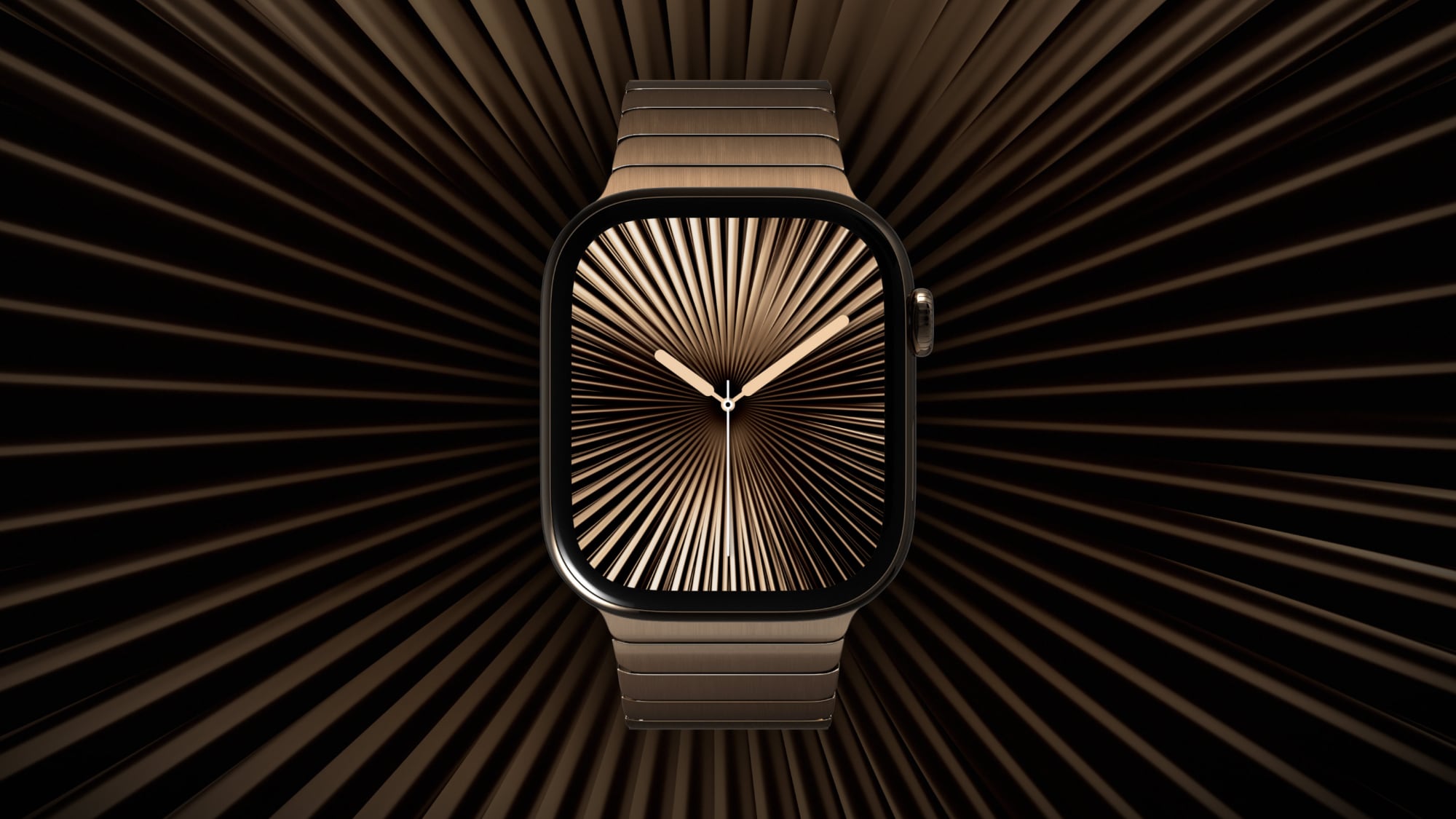
The feature will be available to audiences in more than 170 countries and regions across Apple devices and the web. Apple says it is working with podcast hosting providers on integration, with details from participating partners coming in the months ahead.
This article, "Apple Podcasts Subscriptions Will Soon Support Video" first appeared on MacRumors.com

Discuss this article in our forums

  •  

Apple Watch Series 10 vs. Series 12 Buyer's Guide: Should You Upgrade?

The Apple Watch Series 12 is now available, two years after the Series 10 introduced the current thinner design. But is it worth upgrading?


While last year's Series 11 brought just four changes, the Series 12 is a much more substantial update, with a new chip, twice as much RAM, redesigned health sensors, exclusive health and audio features, tougher cover glass, 5G connectivity, and new case materials.

The Series 12 starts at the same $399 price as the Series 10 did in 2024. Apple has now discontinued the Series 10, but remaining units may still be available from third-party retailers and on the refurbished or second-hand market. Here are all of the key hardware and feature differences between the Apple Watch Series 10 and Apple Watch Series 12:


Apple Watch Series 10 Apple Watch Series 12
S10 chip (2024) S11 chip (2026)
2GB RAM 4GB RAM
Electrical heart sensor Health Sensing System with second-generation electrical heart sensor
Third-generation optical heart sensor Fourth-generation, always-on optical heart sensor
Periodic background heart rate tracking High-frequency background heart rate tracking every five seconds
Heart rate variability Recovery HRV and overall HRV, measured up to 24x more frequently
Vitals app with heart rate, respiratory rate, wrist temperature, and sleep duration Vitals app with heart rate, respiratory rate, wrist temperature, sleep duration, and HRV, plus daytime vitals
Readiness app with daily score and recommendation
Standard step tracking Redesigned pedometer model with more accurate all-day step tracking
Steps watch face complication
Audio Intelligence, including Live Rewind, Siri Recap, Sound Recognition, and faster Shazam
Ion-X front glass (aluminum models) Ceramic Shield 2, 60% tougher than Ion-X (aluminum models)
Metal and sapphire crystal back Case-matched metal or ceramic and zirconia back
Aluminum or titanium case Aluminum, titanium, or ceramic case
Aluminum: Jet Black, Rose Gold, and Silver Aluminum: Dark Bronze, Light Gold, Black, and Space Gray
Titanium: Slate, Gold, and Natural Titanium: Radiant Gold and Natural
Ceramic: Pearl White and Night Blue
Hermès: Silver titanium Hermès: Silver and Radiant Gold titanium
LTE and UMTS (cellular models) LTE and 5G RedCap (cellular models)
Up to 18 hours of normal use Up to 24 hours of normal use
Up to 36 hours in Low Power Mode Up to 38 hours in Low Power Mode
15 minutes of charging for up to eight hours of normal use 15 minutes of charging for up to 12 hours of normal use
Eight minutes of charging for up to eight hours of sleep tracking Five minutes of charging for up to 10 hours of sleep tracking
Now discontinued From $399


Design and Display


The Series 12 retains the same basic design introduced by the Series 10, including 42mm and 46mm size options and a 9.7mm-thick case. Nevertheless, Apple has made some subtle dimensional changes. Both sizes are now 1mm wider, and every equivalent aluminum or titanium configuration is between 2.1 and 3.3 grams heavier than its Series 10 counterpart.

At the same time, the display has shrunk slightly. Resolution is unchanged, but the active display area is around 2% smaller on both sizes. The combination of a wider, receded case and smaller display produces thicker borders around the screen.

Here is how the 46mm models compare:


46mm Apple Watch Series 10 Apple Watch Series 12
Dimensions 46mm x 39mm x 9.7mm 46mm x 40mm x 9.7mm
Resolution 416 x 496 pixels 416 x 496 pixels
Display area 1,220 sq mm 1,196 sq mm
Aluminum (GPS) 36.4 grams 39.5 grams
Aluminum (Cellular) 35.3 grams 38.6 grams
Titanium 41.7 grams 44.9 grams


The 42mm models compare as follows:


42mm Apple Watch Series 10 Apple Watch Series 12
Dimensions 42mm x 36mm x 9.7mm 42mm x 37mm x 9.7mm
Resolution 374 x 446 pixels 374 x 446 pixels
Display area 989 sq mm 970 sq mm
Aluminum (GPS) 30 grams 32.2 grams
Aluminum (Cellular) 29.3 grams 31.5 grams
Titanium 34.4 grams 36.5 grams


The Series 12 also marks the return of a ceramic Apple Watch for the first time since the Series 5 Edition in 2019. The ceramic models are larger and heavier than their aluminum and titanium counterparts:


Ceramic 46mm 42mm
Dimensions 47mm x 41mm x 9.85mm 43mm x 37mm x 9.85mm
Pearl White 51.3 grams 41.7 grams
Night Blue 52.9 grams 42.8 grams


Is It Worth Upgrading?


Two generations on, the Series 12 represents a meaningful cumulative upgrade over the Series 10, but it is far from an essential replacement. The two models share the same basic design, display brightness, resolution, storage capacity, core safety features, and more. The Series 10 is only two years old, and supports watchOS 27 and ‌Siri‌ AI, so it remains a capable and modern Apple Watch.

For existing Series 10 owners, upgrading is easiest to justify if health and fitness tracking is a priority. The Series 12's high-frequency heart rate sensing, Recovery HRV, daytime vitals, Readiness score, and improved step tracking provide substantially more useful training and recovery data. Sound Recognition may be compelling for deaf or hard of hearing users, while 5G, faster charging, tougher cover glass on aluminum models, and the ceramic case provide additional reasons for some buyers to upgrade.

Beyond this, the practical difference between the two devices is relatively small. The Series 12 is also slightly wider and heavier, and its active display area is around 2% smaller despite retaining the same resolution. Its 24-hour battery rating is also not directly comparable with the Series 10's 18-hour figure because Apple changed its testing methodology. If your Series 10 still comfortably lasts through the day and you are satisfied with its existing health features, there is no strong general-purpose reason to replace it.

Which to Buy Today?


At its $399 starting price, the Series 12 is the obvious choice over a Series 10 selling for anything close to its original price. The newer model offers a better health sensing system, twice as much RAM, the S11 chip, exclusive Audio Intelligence features, faster charging, 5G, and more case options. A saving of only $50 to $100 is unlikely to compensate for giving up those improvements.

The Series 10 becomes attractive when it is at least around $150 cheaper than an equivalent Series 12 and is in excellent condition. It still offers an always-on display, ECG, temperature sensing, sleep apnea and hypertension notifications, advanced workout tracking, and ‌Siri‌ AI. Buyers should pay particular attention to battery health and warranty coverage, since replacing a degraded battery could quickly erode the saving.
Related Roundup: Apple Watch 12
Buyer's Guide: Apple Watch (Buy Now)
Related Forum: Apple Watch

This article, "Apple Watch Series 10 vs. Series 12 Buyer's Guide: Should You Upgrade?" first appeared on MacRumors.com

Discuss this article in our forums

  •  

Apple's Smart Glasses to Enter a Rapidly Growing Market

Apple's first smart glasses could arrive in a rapidly expanding market, with worldwide AI glasses shipments increasing 263% year-over-year during the first half of 2026, according to Counterpoint Research.


The figures are particularly relevant for Apple because display-less products accounted for 96% of shipments. Apple's initial smart glasses are likewise rumored to omit an augmented reality display, focusing instead on audio, cameras, Siri, and connectivity with the iPhone and Apple's wider ecosystem.

Bloomberg's Mark Gurman reports that the company is targeting a late 2027 release for the device. Apple could introduce the glasses at WWDC 2027 with an emphasis on privacy.

Counterpoint said shipments of display-less AI glasses increased 258% from the first half of 2025 and 22% from the preceding six months. This category includes products such as the Ray-Ban Meta glasses, which provide photography, audio, calling, and AI features without screens.

‌Meta‌ currently presents Apple with a formidable incumbent. The company accounted for approximately 94% of total AI glasses shipments, while its own volume grew 260% year over year and 22% sequentially. Its expansion has been supported by additional frame styles, wider retail distribution, and new glasses priced from $299.

Display-equipped AI glasses represented only 4% of the market, although shipments in that segment increased 449% year-over-year. Apple's more advanced augmented-reality glasses are not expected until 2029 at the earliest.

Counterpoint identified increasing semiconductor costs and public unease about wearable cameras as possible obstacles to continued growth. It nevertheless expects investment from Apple, ‌Meta‌, Google, and Samsung to push the category toward more proactive glasses that use AI to understand their surroundings and provide assistance based on context.
This article, "Apple's Smart Glasses to Enter a Rapidly Growing Market" first appeared on MacRumors.com

Discuss this article in our forums

  •  

Apple Planning to Bring iPhone Duo Display Tech to Pro in 2029

Apple's 2029 "Pro" iPhones could adopt thinner and more power-efficient OLED screens, according to UBI Research.


The technology, known as Color Filter on Encapsulation (CoE), removes the conventional polarizer from the ‌OLED‌ panel and places a color filter directly on top of its encapsulation layer. A polarizer helps suppress reflections from ambient light, but it also absorbs a significant portion of the light produced by the display.

Removing the polarizer allows more light to pass through, potentially enabling a display to reach greater brightness without consuming additional power, or use less power while maintaining the same brightness. Eliminating the separate layer can also make the display assembly thinner, freeing up internal space for components such as the battery, cameras, and more.

Samsung first commercialized the technology, which it branded Eco² ‌OLED‌, with the Galaxy Z Fold3. According to Samsung's internal testing, its original implementation improved light transmission by 33% and reduced power consumption by up to 25% compared with an ‌OLED‌ panel using a traditional polarizer.

CoE technology presents some technical challenges. Without a polarizer, manufacturers have to control external reflections through a combination of color filters, black pixel-defining layers, low-reflection coatings, and other optical measures. UBI Research believes the difficulty of maintaining outdoor visibility, viewing angles, contrast, and color accuracy may explain why Apple is reportedly waiting until 2029 to bring the technology to its high-volume conventional iPhone models.

Prior to the unveiling of the iPhone Duo, reports indicated that its Samsung-supplied folding ‌OLED‌ display would use CoE technology. Apple has not detailed the panel's internal construction, but UBI Research sees the foldable device as a potential first step toward using polarizer-free ‌OLED‌ displays across the iPhone "Pro" lineup.

The research firm estimates that annual panel demand for the two Pro models could remain between 90 million and 100 million units, making the proposed transition significantly larger in scale than CoE's use in foldable devices. Samsung Display and LG Display are expected to lead the initial supply, while BOE could compete for orders if it can meet Apple's requirements.

Related Roundup: iPhone Duo
Tag: OLED
Related Forum: iPhone

This article, "Apple Planning to Bring iPhone Duo Display Tech to Pro in 2029" first appeared on MacRumors.com

Discuss this article in our forums

  •  

iPhone 14 Pro vs. iPhone 18 Pro Buyer's Guide: Should You Upgrade?

Apple announced the iPhone 18 Pro and ‌iPhone 18 Pro‌ Max earlier this month, arriving four years after the iPhone 14 Pro and iPhone 14 Pro Max.


Four generations of changes make for a substantial upgrade, bringing larger displays, an all-new design, improvements to every camera, significantly longer battery life, faster charging, USB-C connectivity, and support for Apple Intelligence.

The iPhone 15 Pro replaced the stainless steel frame with titanium, introduced the Action button and USB-C port, and added the A17 Pro chip. The iPhone 16 Pro introduced larger displays with thinner borders, the Camera Control, a 48-megapixel Ultra Wide camera, and improved video and audio recording. The iPhone 17 Pro replaced the titanium frame and glass back with an aluminum unibody, added vapor chamber cooling and Ceramic Shield 2, and upgraded both the telephoto and front-facing cameras. This year's refresh centers on the A20 Pro chip, a variable-aperture Main camera, a smaller Dynamic Island, and a further increase in battery capacity. For iPhone 14 Pro owners, all four sets of changes accumulate.

The ‌iPhone 18 Pro‌ starts at $1,199 for 256GB, $200 more than the iPhone 14 Pro's $999 launch price, although the entry storage tier has doubled from 128GB. The ‌iPhone 18 Pro‌ Max starts at $1,299, also $200 more than the iPhone 14 Pro Max's $1,099 launch price, with the same increase in base storage. Here are the key differences between the iPhone 14 Pro and ‌iPhone 18 Pro‌:

Design and Display


iPhone 14 Pro (2022) ‌iPhone 18 Pro‌ (2026)
Stainless steel frame with squared-off edges and full glass back Aluminum unibody with partial Ceramic Shield back, improving heat dissipation
Glass rounded square camera bump Full-width rounded rectangle aluminum camera plateau
iPhone 14 Pro: 6.1-inch display
iPhone 14 Pro Max: 6.7-inch display
iPhone 18 Pro: 6.3-inch display
iPhone 18 Pro Max: 6.9-inch display
iPhone 14 Pro: 2,556-by-1,179-pixel resolution
iPhone 14 Pro Max: 2,796-by-1,290-pixel resolution
iPhone 18 Pro: 2,622-by-1,206-pixel resolution
iPhone 18 Pro Max: 2,868-by-1,320-pixel resolution
Wider borders around the display Thinner borders, with the initial reduction of 30% introduced on the ‌iPhone 16‌ Pro
Approximately 2-4 nits minimum display brightness 1 nit minimum display brightness
More power-efficient display
Ceramic Shield front Ceramic Shield 2 front, with 3x better scratch resistance than the ‌iPhone 16‌ Pro
Fingerprint-resistant oleophobic coating only Fingerprint-resistant oleophobic coating and Apple-designed anti-reflective coating to reduce glare
2,000 nits peak display brightness (outdoor) 3,000 nits peak display brightness (outdoor)
‌Dynamic Island‌ supports up to two simultaneous Live Activities Smaller ‌Dynamic Island‌, supports up to three simultaneous Live Activities
Ring/Silent switch Action button
Camera Control capacitive button with sapphire crystal cover
Available in Deep Purple, Gold, Silver, and Space Black Available in Silver, Black, Glacier, and Burgundy
95% fiber-based packaging 100% fiber-based packaging, suitable for recycling


Dimensions and Weight


iPhone 14 Pro (2022) ‌iPhone 18 Pro‌ (2026)
Height iPhone 14 Pro: 147.5mm (5.81 inches)
iPhone 14 Pro Max: 160.7mm (6.33 inches)
iPhone 18 Pro: 150.0mm (5.91 inches)
iPhone 18 Pro Max: 163.4mm (6.43 inches)
Width iPhone 14 Pro: 71.5mm (2.81 inches)
iPhone 14 Pro Max: 77.6mm (3.06 inches)
iPhone 18 Pro: 71.9mm (2.83 inches)
iPhone 18 Pro Max: 78.0mm (3.07 inches)
Thickness 7.85mm (0.31 inches) 8.75mm (0.34 inches)
Weight iPhone 14 Pro: 206 grams (7.27 ounces)
iPhone 14 Pro Max: 240 grams (8.47 ounces)
iPhone 18 Pro: 211 grams (7.44 ounces)
iPhone 18 Pro Max: 249 grams (8.78 ounces)


Chip, Performance, and Connectivity


iPhone 14 Pro (2022) ‌iPhone 18 Pro‌ (2026)
A16 Bionic chip A20 Pro chip
Built with TSMC's N4P process (4nm) Built with TSMC's N2 process (2nm)
6-core CPU with 2 performance cores and 4 efficiency cores 6-core CPU with 2 super cores and 4 efficiency cores
6GB LPDDR5 RAM 12GB LPDDR5X RAM
51.2GB/s memory bandwidth 115GB/s memory bandwidth
5-core GPU 7-core GPU with Neural Accelerators
Hardware-accelerated ray tracing
16-core Neural Engine Dual 16-core Neural Engine (32 total cores)
Passive cooling Vapor chamber cooling with 3x more surface area than the ‌iPhone 17‌ Pro
New chip packaging that places silicon die beside memory, allowing it to attach directly to the vapor chamber
Earlier video encoding hardware Enhanced video encoding hardware supporting higher-frame-rate recording and additional professional formats
HEVC, H.264, and ProRes video playback HEVC, H.264, AV1, and ProRes video playback
Supports iOS 27, but not ‌Apple Intelligence‌ or Siri AI Supports ‌iOS 27‌, ‌Apple Intelligence‌, ‌Siri‌ AI, and Visual Intelligence
Qualcomm Snapdragon X65 modem iPhone 18 Pro: Apple C2 modem in all countries
iPhone 18 Pro Max: Apple C2 modem in all countries except the U.S., where it uses a Qualcomm modem
Broadcom Wi-Fi and Bluetooth chip Apple N1 chip for Wi-Fi, Bluetooth, and Thread
Wi-Fi 6 (802.11ax) Wi-Fi 7 (802.11be)
Bluetooth 5.3 connectivity Bluetooth 6 connectivity
First-generation Ultra Wideband chip Second-generation Ultra Wideband chip with Precision Finding for people
Lightning port with USB 2 transfer speeds up to 480Mb/s USB-C port with USB 3 transfer speeds up to 10Gb/s
Up to 1080p video output using a Lightning adapter DisplayPort support for up to 4K HDR video output


Rear Camera


iPhone 14 Pro (2022) ‌iPhone 18 Pro‌ (2026)
First-generation quad-pixel sensor Newer sensor and computational imaging pipeline, building on the faster readout speeds and zero shutter lag introduced with the ‌iPhone 16‌ Pro
12-megapixel HEIF and JPEG photos, or up to 48-megapixel ProRAW photos from the Main camera 24- and 48-megapixel super-high-resolution photos from the Main, Ultra Wide, and Telephoto cameras
Fixed ƒ/1.78 aperture on the Main camera Variable aperture with four stops: ƒ/1.48, ƒ/1.8, ƒ/2.8, and ƒ/4.0, using six laser-cut blades
API available for developers to control the aperture range within their own apps
Night mode Faster Night mode, tied to the new variable-aperture lens
Around 50% better Main camera low-light performance than the ‌iPhone 16‌ Pro, with more detail in the back of group photos
Pro controls in the Camera app: manual lens aperture, shutter speed, white balance, and histogram
12-megapixel Ultra Wide camera 48-megapixel Fusion Ultra Wide camera
12-megapixel Telephoto camera 48-megapixel Fusion Telephoto camera
3x Telephoto camera, with 77mm focal length 4x Telephoto camera, with 100mm focal length, also enabling 12-megapixel optical-quality 8x shots at 200mm
0.5x, 1x, 2x, and 3x zoom options, with optical-quality 2x derived from the Main camera 0.5x, 1x, 2x, 4x, and 8x zoom options, with optical-quality 2x and 8x derived from the Main and Telephoto cameras
Digital zoom up to 15x Digital zoom up to 40x
24mm default Main camera lens Customizable default lens for the Fusion Main camera
Macro photography 48-megapixel macro photography
JPEG-XL compression for ProRAW photos
Smart HDR 4 Smart HDR 5
Portrait mode with Depth Control Next-generation portraits with Focus and Depth Control
First-generation Photographic Styles Photographic Styles 3, with tone, color, texture, and grain controls
Depth mapping for AR and portrait photography Enhanced depth mapping for AR and portrait photography, with more accurate background and subject separation and more realistic bokeh
Smart focus tracking
Spatial photo capture
Apple Reference Image (Main camera only)


Camera Control


The iPhone 14 Pro has a traditional Ring/Silent switch and lacks both of the dedicated controls Apple added to later generations. The ‌iPhone 18 Pro‌ includes an Action button that can launch the camera or ‌Visual Intelligence‌, as well as a Camera Control with the following additional functions:


  • Press Camera Control to launch the Camera app

  • Press to capture a photo or press and hold to record video

  • Light press to lock focus and exposure before reframing

  • Slide across the capacitive surface to adjust settings such as zoom, exposure, styles, and tone

  • Light-press controls overlay for quick access to camera settings

  • Integration with supported third-party camera apps

  • Press and hold to activate ‌Visual Intelligence‌


Video Recording


iPhone 14 Pro (2022) ‌iPhone 18 Pro‌ (2026)
4K video recording at 24 fps, 25 fps, 30 fps, or 60 fps, with Dolby Vision HDR up to 60 fps 4K Dolby Vision video recording at 24 fps, 25 fps, 30 fps, 60 fps, 100 fps (Fusion Main), or 120 fps (Fusion Main)
1080p HD video recording at 25 fps, 30 fps, or 60 fps 1080p Dolby Vision video recording at 25 fps, 30 fps, 60 fps, or 120 fps (Fusion Main)
ProRes video recording up to 4K at 30 fps, or 1080p at 30 fps on the 128GB model ProRes video recording up to 4K at 120 fps with external recording
Records video to internal storage Can record video directly to external storage over USB-C
Slo-mo video support for 1080p at 120 fps or 240 fps Slo-mo video support for 1080p up to 240 fps and 4K Dolby Vision up to 120 fps (Fusion Main)
Cinematic mode recording up to 4K HDR at 30 fps Cinematic mode recording up to 4K Dolby Vision at 60 fps
Cinematic mode effects can be applied after capture to Fusion Main video shot at up to 60 fps
Pro controls for lens aperture, shutter speed, white balance, and histogram
Smart focus tracking
Improved low-light video at 1080p
Action mode up to 2.8K at 60 fps Action mode up to 2.8K Dolby Vision at 60 fps
Spatial video recording at 1080p at 30 fps
Time-lapse video recording with stabilization Time-lapse video recording with stabilization, up to 4K Dolby Vision
QuickTake video QuickTake video up to 4K Dolby Vision at 60 fps
Apple Log 2
Academy Color Encoding System support
ProRes RAW capture support
Genlock support
Dual Capture up to 4K Dolby Vision at 30 fps


Front Camera


iPhone 14 Pro (2022) ‌iPhone 18 Pro‌ (2026)
12-megapixel TrueDepth camera with conventional rectangular sensor 18-megapixel Center Stage camera with square sensor and TrueDepth technology
Tap to zoom and rotate, allowing portrait and landscape framing without rotating the iPhone
Center Stage for photos and video calls
Ultra-stabilized video
Dual Capture, recording the front and rear cameras simultaneously at up to 4K Dolby Vision at 30 fps
Smart HDR 4 Smart HDR 5
Portrait mode with Depth Control Next-generation portraits with Focus and Depth Control
First-generation Photographic Styles Photographic Styles 3, with tone, color, texture, and grain controls
Smart focus tracking
Pro controls for shutter speed, white balance, and histogram
4K video recording at 24 fps, 25 fps, 30 fps, or 60 fps, with Dolby Vision HDR up to 60 fps 4K Dolby Vision video recording at 24 fps, 25 fps, 30 fps, or 60 fps
1080p HD video recording at 25 fps, 30 fps, or 60 fps 1080p Dolby Vision video recording at 25 fps, 30 fps, or 60 fps
ProRes video recording up to 4K at 30 fps, or 1080p at 30 fps on the 128GB model ProRes video recording up to 4K at 60 fps with external recording
Cinematic mode up to 4K HDR at 30 fps Cinematic mode up to 4K Dolby Vision at 30 fps
Cinematic mode effects can be applied after capture
Improved low-light video at 1080p
Time-lapse video recording with stabilization Time-lapse video recording with stabilization, up to 4K Dolby Vision
QuickTake video QuickTake video up to 4K at 60 fps in Dolby Vision
Apple Log 2
Academy Color Encoding System support
ProRes RAW capture support


Audio Recording


iPhone 14 Pro (2022) ‌iPhone 18 Pro‌ (2026)
Stereo recording Spatial Audio and stereo recording
Studio-quality four-mic array
Wind noise reduction
Audio Mix with algorithms for higher-quality voices and the ability to isolate music


Battery and Charging


iPhone 14 Pro (2022) ‌iPhone 18 Pro‌ (2026)
iPhone 14 Pro: 3,200 mAh battery
iPhone 14 Pro Max: 4,323 mAh battery
iPhone 18 Pro: 4,056 mAh battery (SIM-tray models); 4,288 mAh battery (eSIM-only models)
iPhone 18 Pro Max: 5,391 mAh battery (SIM-tray models); 5,567 mAh battery (eSIM-only models)
iPhone 14 Pro: Up to 23 hours of video playback
iPhone 14 Pro Max: Up to 29 hours of video playback
iPhone 18 Pro: Up to 36 hours of video playback
iPhone 18 Pro Max: Up to 45 hours of video playback
iPhone 14 Pro: Up to 20 hours of streamed video playback
iPhone 14 Pro Max: Up to 25 hours of streamed video playback
iPhone 18 Pro: Up to 33 hours of streamed video playback
iPhone 18 Pro Max: Up to 40 hours of streamed video playback
Up to 50% charge in around 30 minutes with a 20W adapter or higher Up to 50% charge in around 15 minutes with a 60W-capable adapter or higher
MagSafe wireless charging up to 15W with a 20W adapter or higher ‌MagSafe‌ wireless charging up to 25W, reaching 50% charge in 30 minutes with a 35W adapter or higher
Qi wireless charging up to 7.5W Qi2 wireless charging up to 25W
Optimized Battery Charging Charge Limit from 80% to 100% in 5% increments, plus Optimized Battery Charging
Battery Health shows maximum capacity, peak performance capability, and whether service is recommended Battery Health also shows cycle count, manufacture date, and date of first use
Battery designed to retain 80% of its original capacity at 500 complete charge cycles Battery designed to retain 80% of its original capacity at 1,000 complete charge cycles


Storage and Pricing


iPhone 14 Pro (2022) ‌iPhone 18 Pro‌ (2026)
Available with 128GB, 256GB, 512GB, or 1TB storage Available with 256GB, 512GB, 1TB, or 2TB storage
iPhone 14 Pro: Launched at $999 (128GB), $1,099 (256GB), $1,299 (512GB), $1,499 (1TB)
iPhone 14 Pro Max: Launched at $1,099 (128GB), $1,199 (256GB), $1,399 (512GB), $1,599 (1TB)
iPhone 18 Pro: $1,199 (256GB), $1,399 (512GB), $1,799 (1TB), $2,399 (2TB)
iPhone 18 Pro Max: $1,299 (256GB), $1,499 (512GB), $1,899 (1TB), $2,499 (2TB)
Now discontinued Sold directly by Apple
Current purchase prices depend on third-party stock, condition, and warranty iPhone 18 Pro: From $49.95 a month for 24 months via Apple Upgrade
iPhone 18 Pro Max: From $54.12 a month for 24 months via Apple Upgrade


For iPhone 14 Pro and iPhone 14 Pro Max owners considering a new device, the ‌iPhone 18 Pro‌ is a worthwhile upgrade. Four generations of changes bring improvements to the display, every camera on the device, battery life, charging, sustained performance, and connectivity. Battery life is likely to be the strongest improvement for most users, particularly if their current device no longer comfortably lasts through the day, while faster wired charging makes brief charging stops more useful. The newer battery is also designed to retain 80% of its original capacity for twice as many complete charge cycles under ideal conditions, and Charge Limit offers more control over long-term battery wear.

USB-C is another significant quality-of-life improvement for iPhone 14 Pro owners. It allows the iPhone to share cables with recent Macs, iPads, and accessories, while the jump from USB 2 to USB 3 speeds makes large wired photo and video transfers far quicker. The Action button and Camera Control also provide two new physical controls that the iPhone 14 Pro lacks.

The camera upgrade is especially compelling for anyone who regularly takes photos or records video. Higher-resolution Ultra Wide and Telephoto cameras expand the options beyond the Main camera, while the variable aperture and Pro controls provide additional creative flexibility. Both iPhone 14 Pro sizes move from a 3x Telephoto camera to 4x, alongside an optical-quality 8x option that substantially extends their usable reach.

For video creators, the accumulated changes are more consequential still. Higher-frame-rate 4K recording, external recording over USB-C, ProRes RAW, Genlock, Apple Log 2, Dual Capture, and improved audio tools expand the range of work that can be completed on the device. Spatial photo and video capture is also useful for Apple Vision Pro owners. The square front-camera sensor makes landscape framing easier without rotating the phone, while Center Stage improves flexibility for group photos and video calls.

The A20 Pro and vapor chamber cooling make the strongest performance case for users who play demanding games, record long video clips, or regularly push their device through sustained workloads. The increase from 6GB to 12GB of RAM and the additional AI processing hardware also enable ‌Apple Intelligence‌, ‌Siri‌ AI, and ‌Visual Intelligence‌, none of which are available on the iPhone 14 Pro. The older model still supports ‌iOS 27‌ and remains capable for messaging, browsing, photography, and other everyday activities, so the latest software update does not make it obsolete.

There are physical trade-offs to consider. Both newer models are taller and thicker, although the move from stainless steel to aluminum means the weight increases by only 5 grams on the Pro and 9 grams on the Pro Max despite the larger displays and batteries. The aluminum enclosure improves thermal management, but it is less premium-looking, and it may show dents and scratches more readily than the iPhone 14 Pro's stainless steel frame.

If your iPhone 14 Pro still meets your needs and comfortably lasts through the day, upgrading is not urgent, but you may want to think about getting a new device soon. A battery replacement may be worth considering if reduced health is your main complaint and you would otherwise be happy to keep your device. The upgrade becomes much easier to recommend when battery limitations coincide with a desire for ‌Apple Intelligence‌, USB-C, the newer cameras, and a larger display.

A discounted ‌iPhone 17‌ Pro is another option if your priorities are the aluminum design, higher-resolution telephoto camera, square front-camera sensor, ‌Apple Intelligence‌, USB-C, and vapor chamber cooling. Those upgrades arrived before this year's model. Paying more for the ‌iPhone 18 Pro‌ makes the clearest sense when you also want the variable aperture, Pro controls, A20 Pro, smaller ‌Dynamic Island‌, and further improvements to battery life and charging, but coming from an iPhone 14 Pro, the ‌iPhone 17‌ Pro will still feel like a significant upgrade.
Related Roundup: iPhone 18 Pro
Related Forum: iPhone

This article, "iPhone 14 Pro vs. iPhone 18 Pro Buyer's Guide: Should You Upgrade?" first appeared on MacRumors.com

Discuss this article in our forums

  •  

Apple Smart Home Display Coming as Soon as Next Month

Apple could unveil its long-rumored smart home display as soon as October, according to Bloomberg's Mark Gurman.


In the latest edition of his "Power On" newsletter, Gurman narrows Apple's launch window after he said in August that the smart home display remained on track to arrive before the end of 2026. The device is expected to become a central interface for controlling accessories, communicating with other people in the home, accessing media, and using Apple services.

Apple is reportedly testing the product extensively in employees' homes. References found in Apple's software have linked the tabletop model to the internal designation "J490," while a second model identified as "J491" appears to be intended for wall mounting. Both identifiers were among several unreleased products referenced in macOS Tahoe 26.7.

The two versions will reportedly share a compact, square display. One will include a base for placing it on a desk or counter, while the other can be fixed to a wall. The screen is expected to be smaller than those used by many Amazon Echo Show models.

Apple has apparently developed a dedicated operating system built around Siri AI for the product, with visual elements drawn from iOS, tvOS, and watchOS. Its interface will offer a Home Screen, widgets, and selectable clock designs, allowing information to remain visible when the device is not being actively used. Users will reportedly be able to search information held across their Apple devices and accounts with ‌Siri‌ AI, retrieve previously shared songs or podcasts, locate photos, and request specific actions within apps.

Apple is believed to have postponed the home hub several times because these ‌Siri‌ features were not ready. That obstacle has now largely been removed following the release of iOS 27 with Siri AI earlier this month.

The display's camera will purportedly support video calls and recognize individual members of a household. Once it identifies the person in front of it, the software will be able to present that user's appointments, notes, preferred media, news, and other personalized information. The camera system reportedly provides this recognition without the depth-sensing components used for Face ID.

Other expected functions include smart home controls, intercom communication, music and video playback, and access to apps such as Calendar, Notes, and Reminders. An iPhone will be required during setup and for certain connected features.

The home display would be among the first major new products introduced under Apple CEO John Ternus. Gurman says Apple intends for the iPhone to remain the center of customers' mobile lives, while the display, Apple TV, and HomePod establish a corresponding hub for the home.
This article, "Apple Smart Home Display Coming as Soon as Next Month" first appeared on MacRumors.com

Discuss this article in our forums

  •  

Apple Watch Series 12 vs. Ultra 4 Buyer's Guide

The Apple Watch Series 12 and Apple Watch Ultra 4 bring new health sensors, a new chip, and more detailed recovery insights to Apple's smartwatch lineup, so how do they compare?


Both models feature the S11 chip, 4GB of RAM, 64GB of storage, and the new Health Sensing System, which measures heart rate every five seconds throughout the day. They also share Readiness, Recovery HRV, daytime vitals, improved step tracking, hypertension notifications, sleep apnea notifications, Sleep Score, and more. This means that the Ultra 4's higher price does not buy you more advanced everyday health tracking.

The Apple Watch Series 12 starts at $399, while the Apple Watch Ultra 4 starts at $799. The gap narrows if you want a premium case material, with the titanium Series 12 starting at $699. This year, the Series 12 also gains a ceramic option starting at $899, making it more expensive than the Ultra despite its smaller size and shorter battery life.

The Apple Watch Ultra continues to focus on durability, extended battery life, and additional capabilities for activities like diving and exploration. Our guide helps to answer the question of how to decide which of these two Apple Watches is best for you. The differences between the Apple Watch Series 12 and ‌Apple Watch Ultra 4‌ are as follows:


Apple Watch Series 12 ‌Apple Watch Ultra 4‌
Rounded design with a thinner case and front glass that curves at the edges Rugged design with a thicker case and slightly raised edges to protect the flat front crystal
Aluminum, polished titanium, or polished ceramic case Blasted titanium case
Aluminum and titanium: 42mm and 46mm case sizes
Ceramic: Marketed as 42mm and 46mm, with actual heights of 43mm and 47mm
49mm case size
42mm aluminum and titanium: 37mm case width
43mm ceramic: 37mm case width
46mm aluminum and titanium: 40mm case width
47mm ceramic: 41mm case width
49mm titanium: 44mm case width
Aluminum and titanium: 9.7mm case depth
Ceramic: 9.85mm case depth
12mm case depth
Weighs 31.5 to 52.9 grams depending on case size, material, finish, and connectivity Natural titanium: 63.0 grams
Black titanium: 63.1 grams
Aluminum: Ceramic Shield 2 front glass
Titanium and ceramic: Sapphire front crystal
Sapphire front crystal
42mm: 374 by 446 pixels
46mm: 416 by 496 pixels
422 by 514 pixels
42mm: 970 sq mm display area
46mm: 1,196 sq mm display area
1,245 sq mm display area
Up to 2,000 nits peak brightness Up to 3,000 nits peak brightness
Exclusive Wayfinder, Modular Ultra, and Orienteering faces
Night Mode on Apple Watch Ultra faces
Customizable Action button, including Precision Start for workouts
86-decibel Siren to attract attention
Single speaker Dual speakers
Single microphone with Voice Isolation Three-microphone array with beamforming and wind noise mitigation
Aluminum: GPS or GPS + Cellular options
Titanium and ceramic: GPS + Cellular
GPS + Cellular on all models
U.S. TDD cellular bands: 5G n38, n40, and n41; LTE 38, 39, 40, and 41 U.S. TDD cellular bands: 5G n38, n40, n41, and n53; LTE 38, 39, 40, 41, and 53
Satellite communications for Emergency SOS, Messages, and Find My
Precision L1 GPS Precision dual-frequency GPS (L1 and L5)
GPS, GLONASS, Galileo, QZSS, and BeiDou support GPS, Galileo, QZSS, and BeiDou support
Water resistant to 50m Water resistant to 100m
Suitable for swimming and snorkeling Suitable for swimming, snorkeling, high-speed water sports, and recreational scuba diving to 40m
Depth gauge and Depth app to 6m Depth gauge and Depth app to 40m
Tested to MIL-STD 810H
EN13319 certification for recreational scuba diving
Recommended ambient operating temperature of 0°C to 35°C On-wrist operating temperature of -20°C to 55°C
Always-on altimeter Always-on altimeter with expanded operating range from -500m to 9,000m
Operating altitude from 0m to 3,000m Operating altitude from -500m to 9,000m
Up to 24 hours of normal use Up to 50 hours of normal use
Up to 38 hours in Low Power Mode Up to 84 hours in Low Power Mode
Up to 10 hours of standard outdoor workout tracking Up to 18 hours of standard outdoor workout tracking
Up to 25 hours in Extended Workout mode with full GPS and heart rate readings
Up to 45 hours in Max Extended Workout mode, retaining GPS readings every second
Charge from 0 to 80% in about 30 minutes Charge from 0 to 80% in about 45 minutes
15 minutes of charging for up to 12 hours of normal use 15 minutes of charging for up to 18 hours of normal use
Aluminum: Dark Bronze, Light Gold, Black, and Space Gray
Titanium: Radiant Gold and Natural
Ceramic: Pearl White and Night Blue
Natural Titanium or Black Titanium
Hermès: Silver or Radiant Gold titanium Hermès: Natural titanium
40% recycled content in aluminum and titanium models 45% recycled content
Aluminum: Starts at $399
Titanium: Starts at $699
Ceramic: Starts at $899
Hermès: Starts at $1,399
Standard: Starts at $799
Hermès: Starts at $1,499


For most users, the Apple Watch Series 12 is the better choice. It offers the same performance, health sensors, Readiness insights, and Audio Intelligence features as the Ultra 4 in a thinner, lighter device. The aluminum model delivers these benefits for $400 less, making it the stronger option for everyday use and regular workouts.

The Ultra 4's most broadly useful advantage is battery life. Its longer endurance makes overnight wear and extended workouts easier to fit around charging. You do not need to be an endurance athlete to appreciate less frequent charging, but the premium is easier to justify if the Series 12 cannot comfortably cover your usual activities and charging habits.

For hiking away from cellular coverage, recreational scuba diving, or very long events, the Ultra has a clearer purpose. Satellite communications, dual-frequency GPS, greater water resistance, and extended workout modes address needs that the Series 12 cannot fully meet. The Action button and brighter display may also appeal to enthusiasts who simply want more capable hardware.

Size and appearance remain substantial trade-offs. The Ultra is considerably bulkier and heavier despite offering a display only slightly larger than the 46mm Series 12's. The Series 12 is more discreet and offers polished titanium and ceramic finishes, making it better suited to buyers who prioritize comfort or appearance. Try on the Ultra before buying if you are unsure about its size.

The decision becomes closer if you already want the titanium Series 12, since its starting price is just $100 below the Ultra's. At that point, paying more for longer battery life and additional hardware is reasonable if you are comfortable with the larger case. The $899 ceramic Series 12 is primarily a choice of material and finish; choose it because you prefer its appearance, rather than expecting more capabilities than the $799 Ultra.
Related Forum: Apple Watch

This article, "Apple Watch Series 12 vs. Ultra 4 Buyer's Guide" first appeared on MacRumors.com

Discuss this article in our forums

  •  
❌