❌

Lees weergave

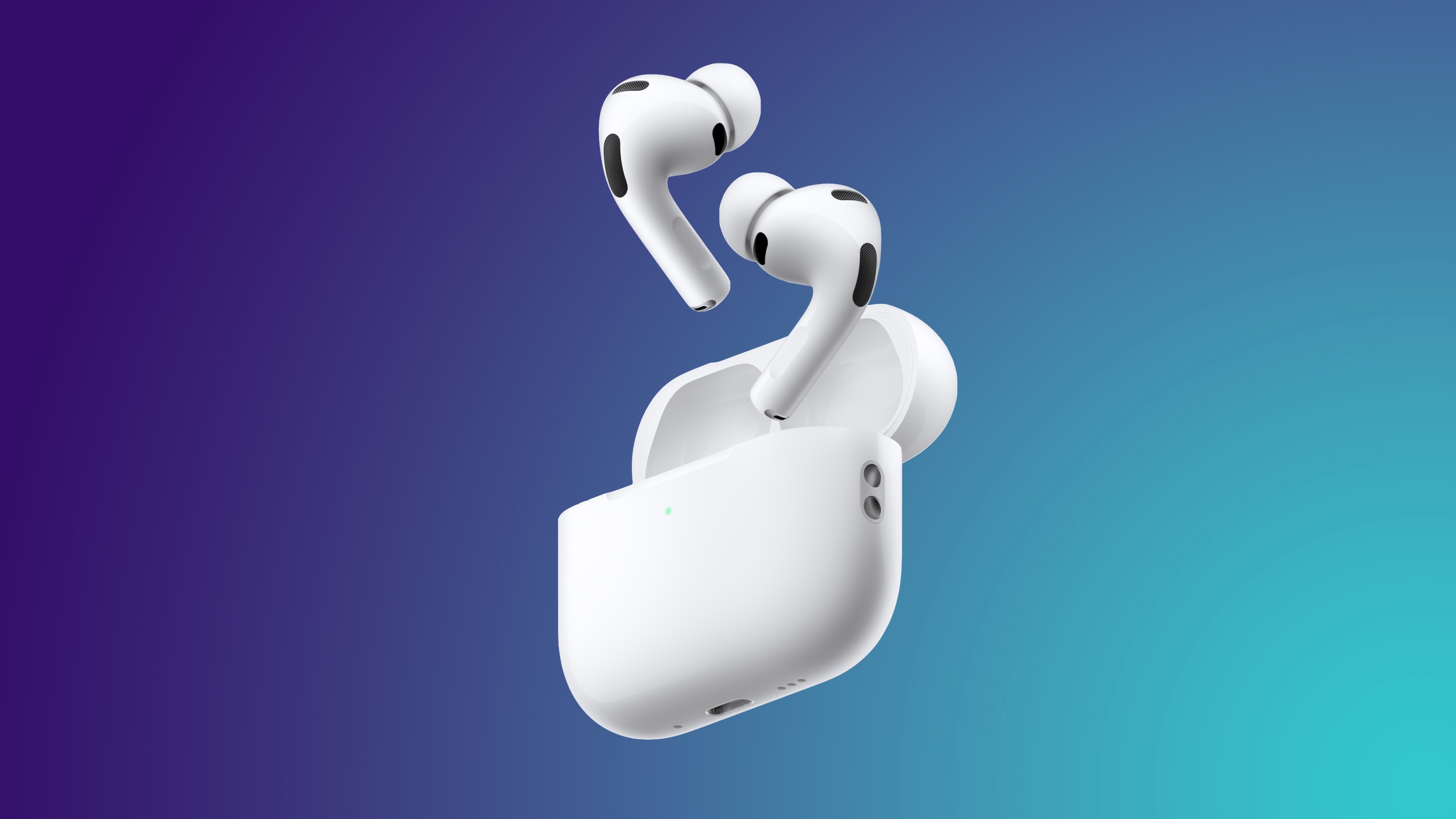
AirPods 5 Include ANC as Standard, Pricier Variant Now Gatekeeps Wireless Charging Instead

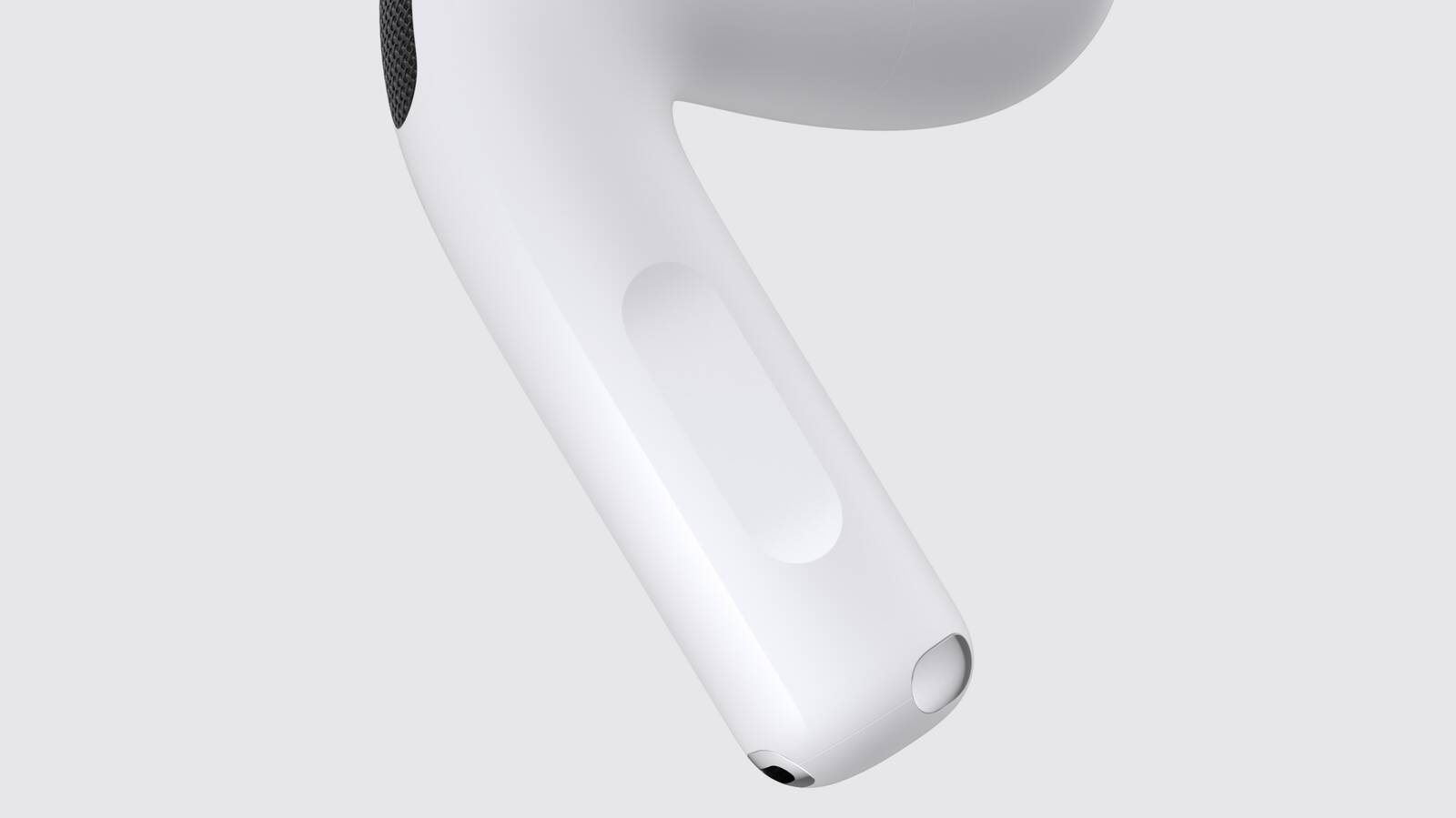
Apple no longer charges extra for Active Noise Cancellation on AirPods, folding it into the $129 AirPods 5 instead of reserving it for the higher-end model.


Apple today announced the AirPods 5. ANC now comes standard on the base model rather than being exclusive to its pricier variant, as it was with the outgoing AirPods 4, which cost $129 without ANC and $179 with it.

There is still a pricier version of the AirPods 5, called "AirPods 5 with Wireless Charging Case." This model starts at $149 and includes a force sensor with swiping volume controls, an hour of additional battery life with ANC enabled, and wireless charging. The ‌AirPods 4‌ with ANC were priced at $179.

AirPods 5 are available for pre-order starting today, with both the $129 and $149 models arriving in stores on Friday, September 18.
Related Roundup: AirPods 4
Buyer's Guide: AirPods (Caution)
Related Forum: AirPods

This article, "AirPods 5 Include ANC as Standard, Pricier Variant Now Gatekeeps Wireless Charging Instead" first appeared on MacRumors.com

Discuss this article in our forums

  •  

Apple Adds AppleCare One Family Plan for Up to Six People

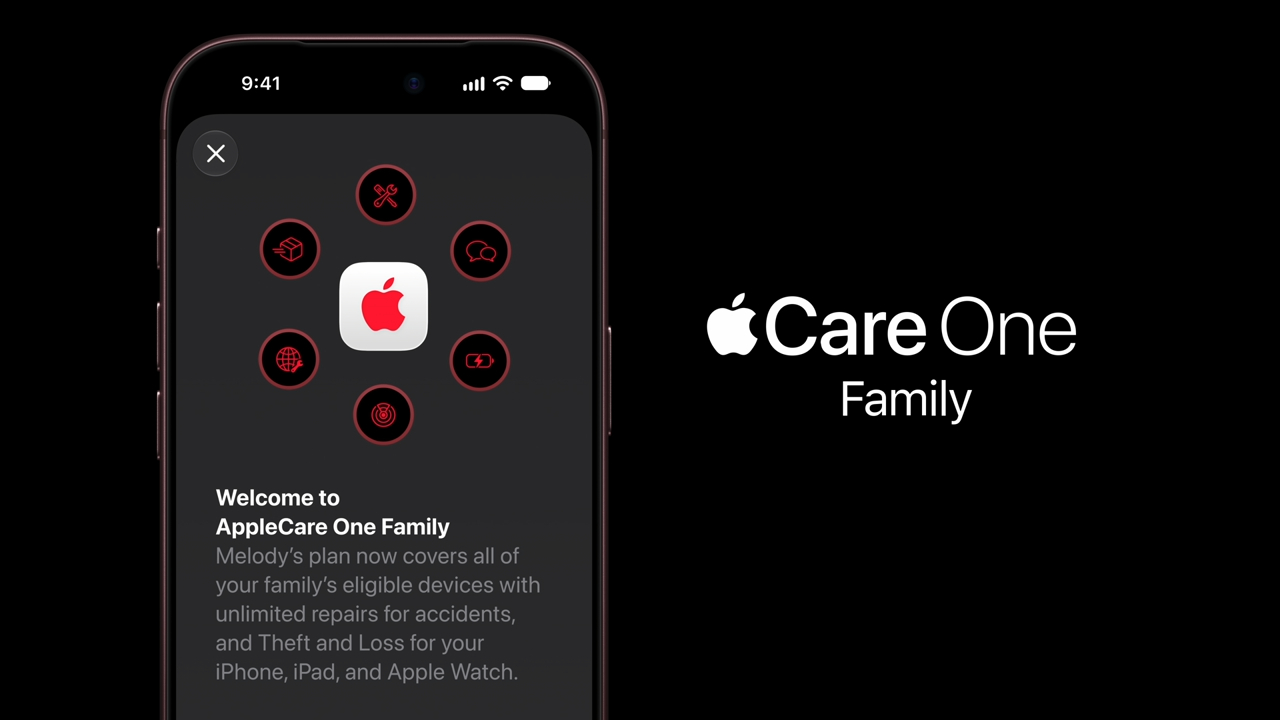
Apple today announced AppleCare One Family, a new option for U.S. customers that extends ‌AppleCare‌ coverage to every eligible device across an Apple Family Sharing group of up to six people for one fixed monthly price.


‌AppleCare‌ One Family costs $49.99 per month and includes all of the same benefits as ‌AppleCare‌+, such as coverage for accidental damage like drops and spills, battery replacement service, and priority support from Apple Experts. It also includes theft and loss protection for eligible iPhone, iPad, and Apple Watch models, and allows six total claims per year across the group.

Once a subscriber signs up, they can add devices from their iPhone, ‌iPad‌, or Mac, including "most devices less than four years old and in good working condition." Newly purchased devices are added automatically at no extra cost, and the price stays the same regardless of how many eligible products end up being covered.

To use the new plan, customers must set up Family Sharing in the Settings app on their iPhone, ‌iPad‌, or Mac and invite up to five other people to join. Any eligible devices those family members already own can then be covered under the same subscription, eliminating the need to buy and manage a separate ‌AppleCare‌ plan for each person.

‌AppleCare‌ One Family builds on AppleCare One, the multi-device subscription Apple introduced in the U.S. in July 2025 at $19.99 per month for up to three products. That plan has since expanded to Australia, France, Germany, and the UK, and today's announcement gives U.S. customers with larger households a way to consolidate coverage under a single subscription rather than juggling individual plans.

‌AppleCare‌ One Family will be available in the United States starting September 14. More details are available on Apple's AppleCare webpage.
This article, "Apple Adds AppleCare One Family Plan for Up to Six People" first appeared on MacRumors.com

Discuss this article in our forums

  •  

iPhone 18 Pro's Redesigned Vapor Chamber Triples Cooling Surface Area

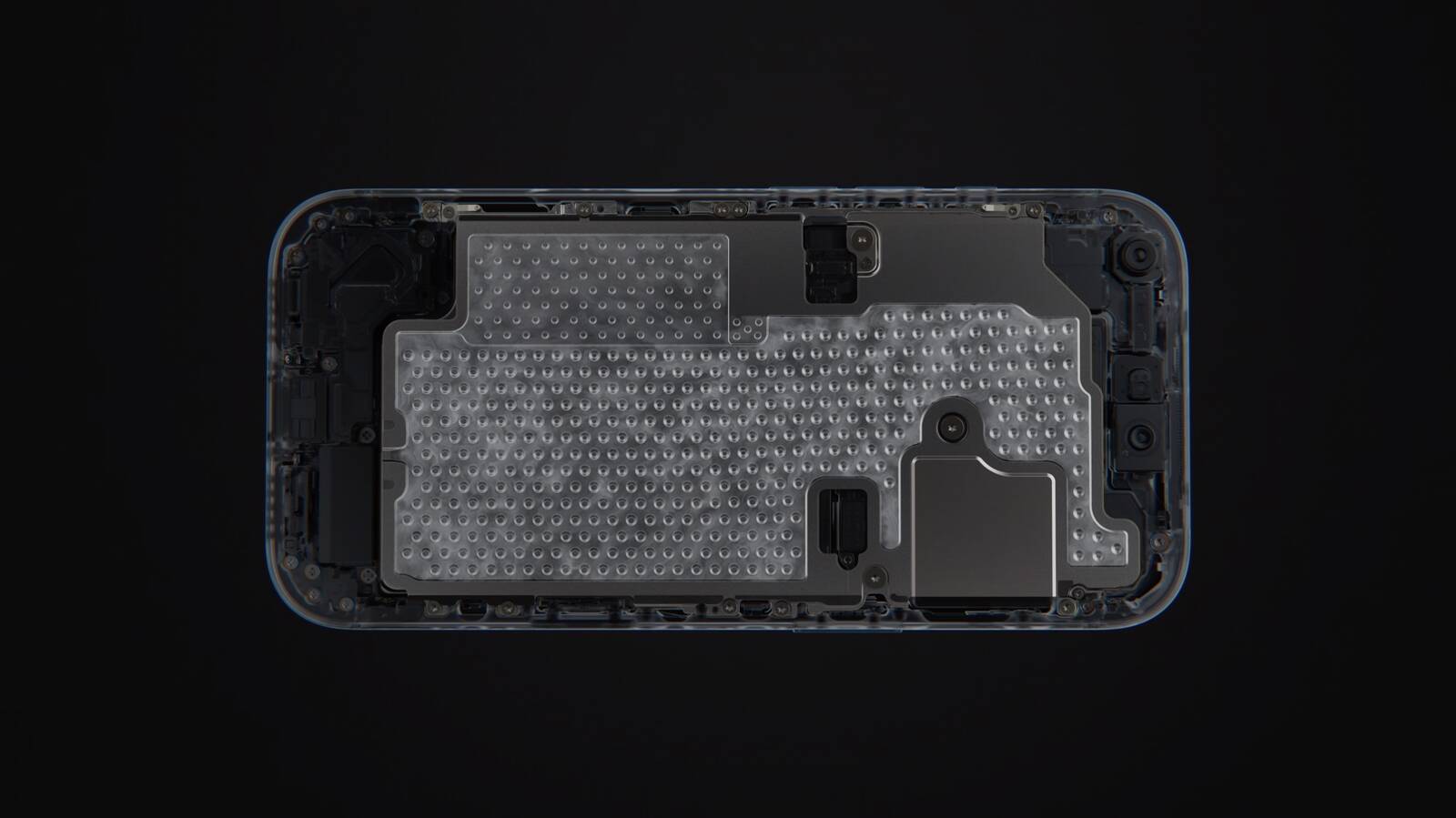
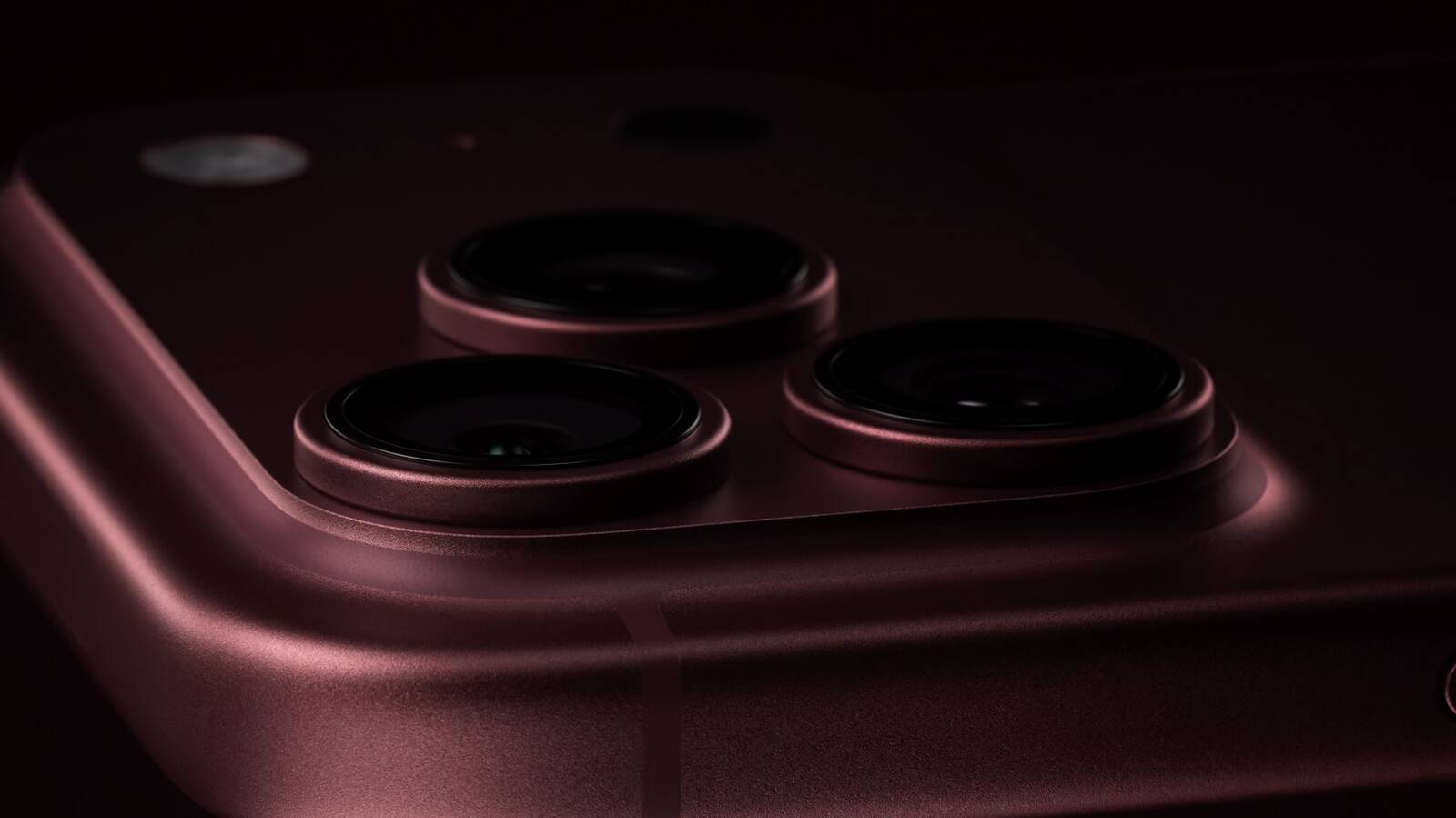
Apple today announced a redesigned thermal system for iPhone 18 Pro and ‌iPhone 18 Pro‌ Max, built around a next-generation vapor chamber with three times the surface area of the one in iPhone 17 Pro.


The new vapor chamber constantly cycles deionized water throughout the system for significantly improved cooling performance, allowing the A20 Pro chip to sustain higher performance for longer under heavy workloads.

Apple redesigned the silicon packaging with "custom packaging inspired by our M-series chips," placing the silicon die and memory side by side rather than stacked, which removes the memory from the chip's thermal path and lets the A20 Pro connect directly to the vapor chamber.

According to Apple, the combination of the new packaging, new thermal materials, and the larger vapor chamber delivers up to a 40% gain in sustained performance over the previous generation, which the company calls the highest sustained performance yet in an iPhone.
Related Roundup: iPhone 18 Pro

This article, "iPhone 18 Pro's Redesigned Vapor Chamber Triples Cooling Surface Area" first appeared on MacRumors.com

Discuss this article in our forums

  •  

iPhone 18 Pro Introduces 'Apple Reference Image' to Verify Photo Authenticity

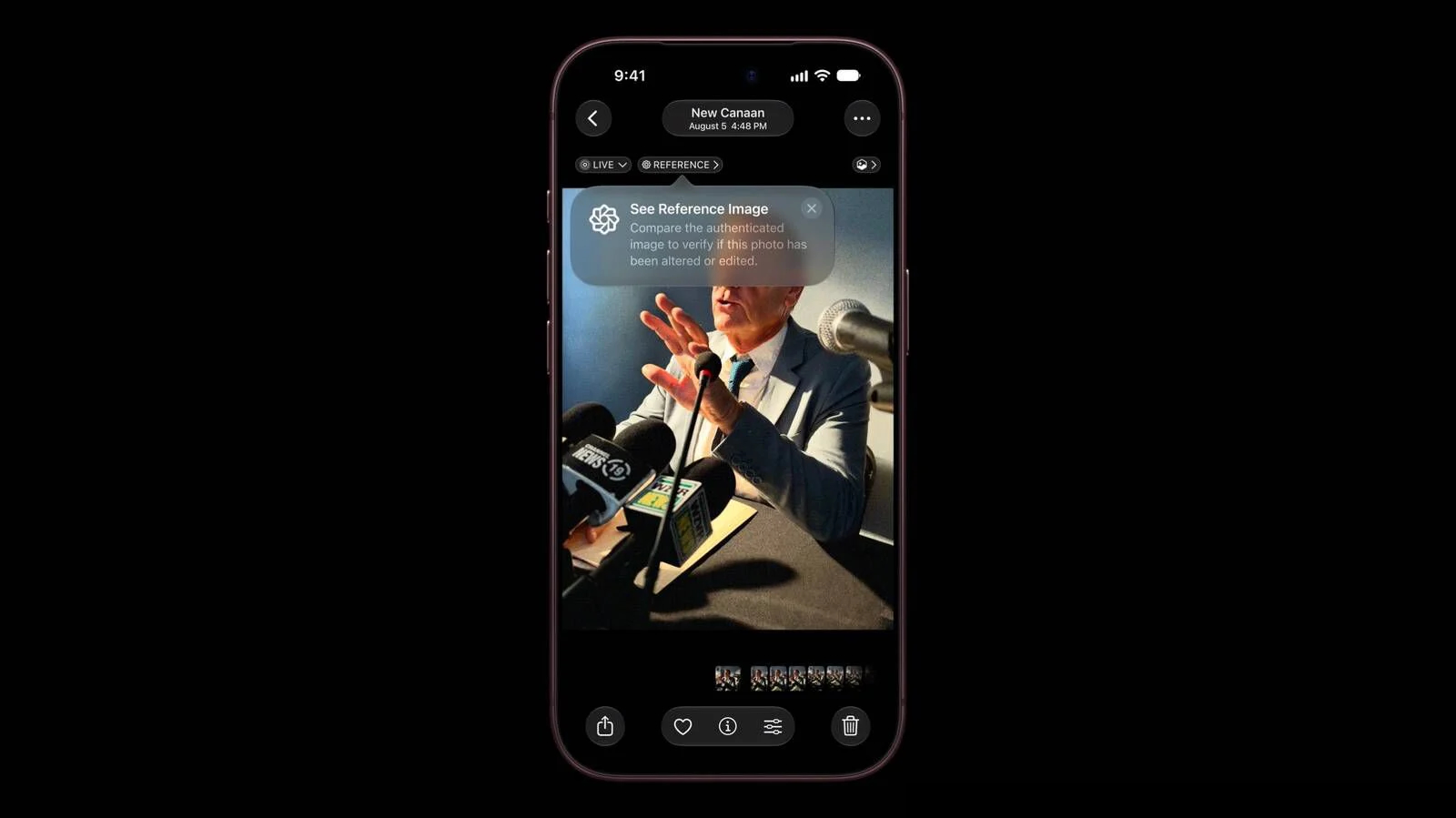
Apple today announced Apple Reference Image, a new opt-in feature for the iPhone 18 Pro and ‌iPhone 18 Pro‌ Max that helps users to prove a photo hasn't been altered since it was taken.


Apple Reference Image is powered by a new sensor in the Main camera that signs sensor data at the pixel level at the moment of capture. When a photo is taken in the new Reference mode, that signed data is sent to Private Cloud Compute, which develops it into what Apple calls an unalterable reference image, "like having a digital negative."

Reference images appear in the Photos app alongside the corresponding photo, letting users visually compare the two to check whether any edits were made. Apple is also opening APIs in iOS, iPadOS, and macOS 27 so third-party apps can display these reference images.

Apple positioned the feature as one part of a broader push on image authenticity, alongside existing image metadata and upcoming support for the SynthID standard, which will help identify images that were generated or edited with AI. Apple said SynthID support will arrive in a software update later this year and will be included with most edited images, depending on which edits were applied.

Apple Reference Image will not be available at launch in China due to regulatory requirements. In the EU, Apple Reference Image capture also won't be available at launch on the ‌iPhone 18 Pro‌ models, but users running iOS 27, iPadOS 27, and macOS 27 will still be able to develop and view reference images.
Related Roundup: iPhone 18 Pro

This article, "iPhone 18 Pro Introduces 'Apple Reference Image' to Verify Photo Authenticity" first appeared on MacRumors.com

Discuss this article in our forums

  •  

New Texture and Grain Controls Coming to Photographic Styles With iPhone 18 Pro

Apple today announced new texture and grain controls for Photographic Styles with the iPhone 18 Pro and ‌iPhone 18 Pro‌ Max.


Photographic Styles are tone presets that adjust the color and warmth of a photo as it is captured, rather than as a filter applied afterward, while preserving skin tones.

The ‌iPhone 18 Pro‌ and ‌iPhone 18 Pro‌ Max gain a redesigned computational imaging pipeline for the 48-megapixel Fusion Main camera that Apple says produces sharper, more detailed shots. The new texture and grain controls build on that pipeline, allowing users to further dial in their desired appearance for more creative control over their photos.

It is not clear if older iPhone models such as the iPhone 17 Pro, which otherwise support the latest version of Photographic Styles, will receive the feature via a software update.
Related Roundup: iPhone 18 Pro

This article, "New Texture and Grain Controls Coming to Photographic Styles With iPhone 18 Pro" first appeared on MacRumors.com

Discuss this article in our forums

  •  

Apple Publishes Developer Video Series for iPhone Duo

Apple today published a new YouTube playlist aimed at helping developers prepare their apps for the iPhone Duo, its first foldable iPhone.


The "Get ready for iPhone Duo" playlist, published on the Apple Developer YouTube channel, is described by Apple as a guide to help developers "prepare your apps for launch on iPhone Duo." It contains six videos: "Design for iPhone Duo," "Prepare your app for iPhone Duo," "Raise the bar with iPhone Duo," "Strike a pose with adaptive layouts on iPhone Duo," "Leverage multiple displays and scenes on iPhone Duo," and "Build a great camera experience for iPhone Duo."

The iPhone Duo features a number of special software features. Essential controls have moved to the sides of the display to sit within thumb's reach, the Home Screen dock is now oriented vertically, and the status bar has been redesigned to fit into the corner of the display. Software transitions between the outer and inner displays as the device opens, with controls staying in a consistent position while content scales up.

The iPhone Duo starts at $1,999 for 256GB, with storage options going up to 2TB. Preorders begin October 16, with availability starting October 23.
Related Roundup: iPhone Fold

This article, "Apple Publishes Developer Video Series for iPhone Duo" first appeared on MacRumors.com

Discuss this article in our forums

  •  

iPhone 18 Pro Gains Manual Aperture, Shutter Speed Controls, and More

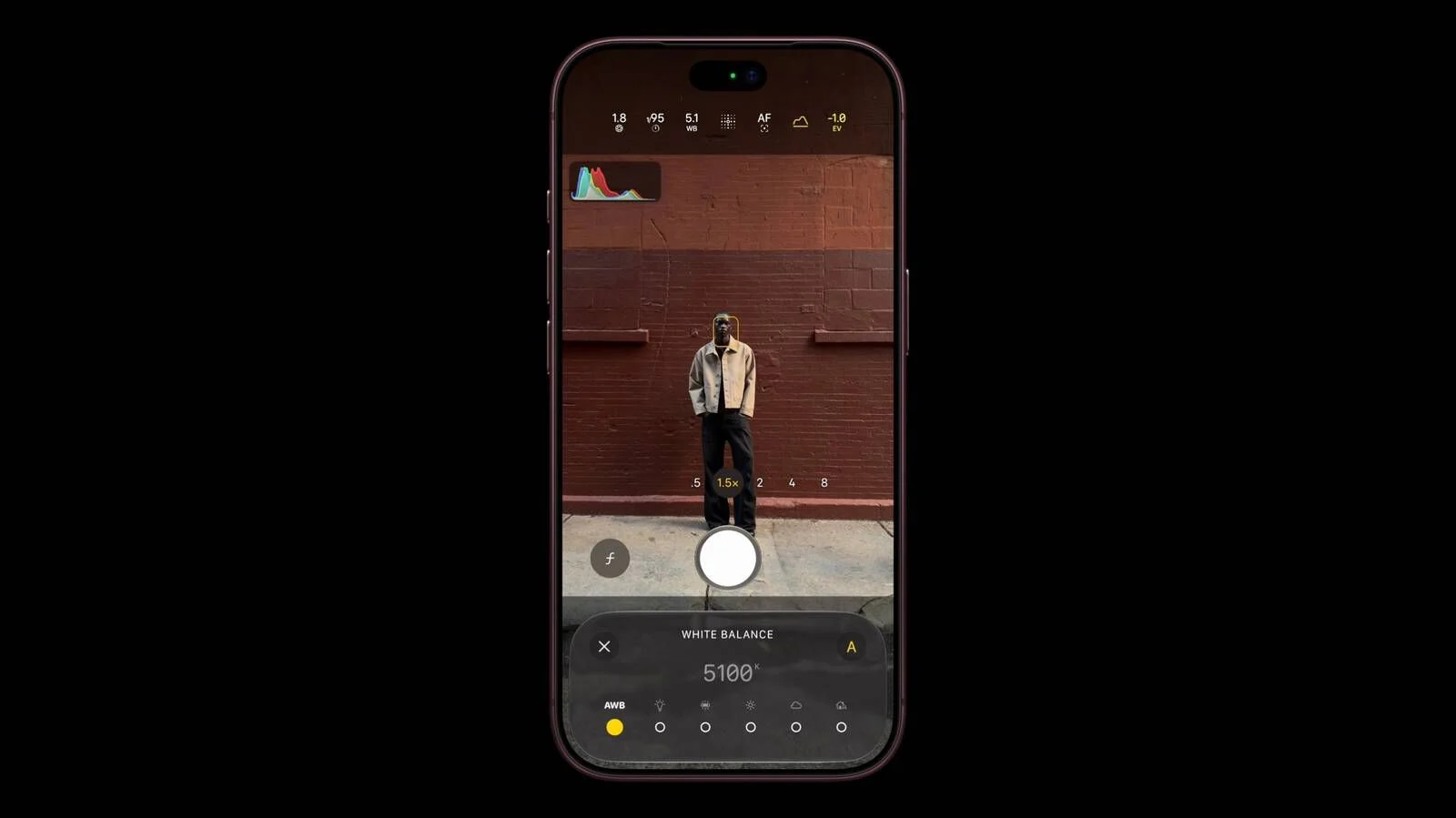
Apple today announced Pro Controls, a new customizable camera interface for the iPhone 18 Pro and ‌iPhone 18 Pro‌ Max that lets users manually adjust aperture, shutter speed, and white balance, or check exposure levels with a live histogram.


Pro Controls is built around the variable aperture on the new Main camera. Six laser-cut blades move smoothly between four aperture settings, and the Camera app can adjust aperture automatically based on depth of field and lighting, or users can take manual control themselves for what Apple calls "truly unique shots that weren't possible before" on an iPhone.

Pro Controls works across both photo and video capture. It also introduces Smart Focus Tracking, which uses on-device AI models to lock onto a subject and maintain focus even if that subject briefly leaves the frame and comes back into view.

The new interface arrives alongside broader camera upgrades on the ‌iPhone 18 Pro‌ and ‌iPhone 18 Pro‌ Max, including a redesigned computational imaging pipeline, updated Photographic Styles with new texture and grain controls, and the ability to apply Cinematic effects after capture to video shot at up to 60 fps. Variable aperture is also exposed to developers through a new API, giving third-party apps access to the same range of aperture settings.

The ‌iPhone 18 Pro‌ starts at $1,199 and ‌iPhone 18 Pro‌ Max starts at $1,299. Pre-orders open on Saturday, September 12, ahead of availability on Friday, September 18.
Related Roundup: iPhone 18 Pro

This article, "iPhone 18 Pro Gains Manual Aperture, Shutter Speed Controls, and More" first appeared on MacRumors.com

Discuss this article in our forums

  •  

iPhone Duo Gets Its Own Case and Folio With Kickstand

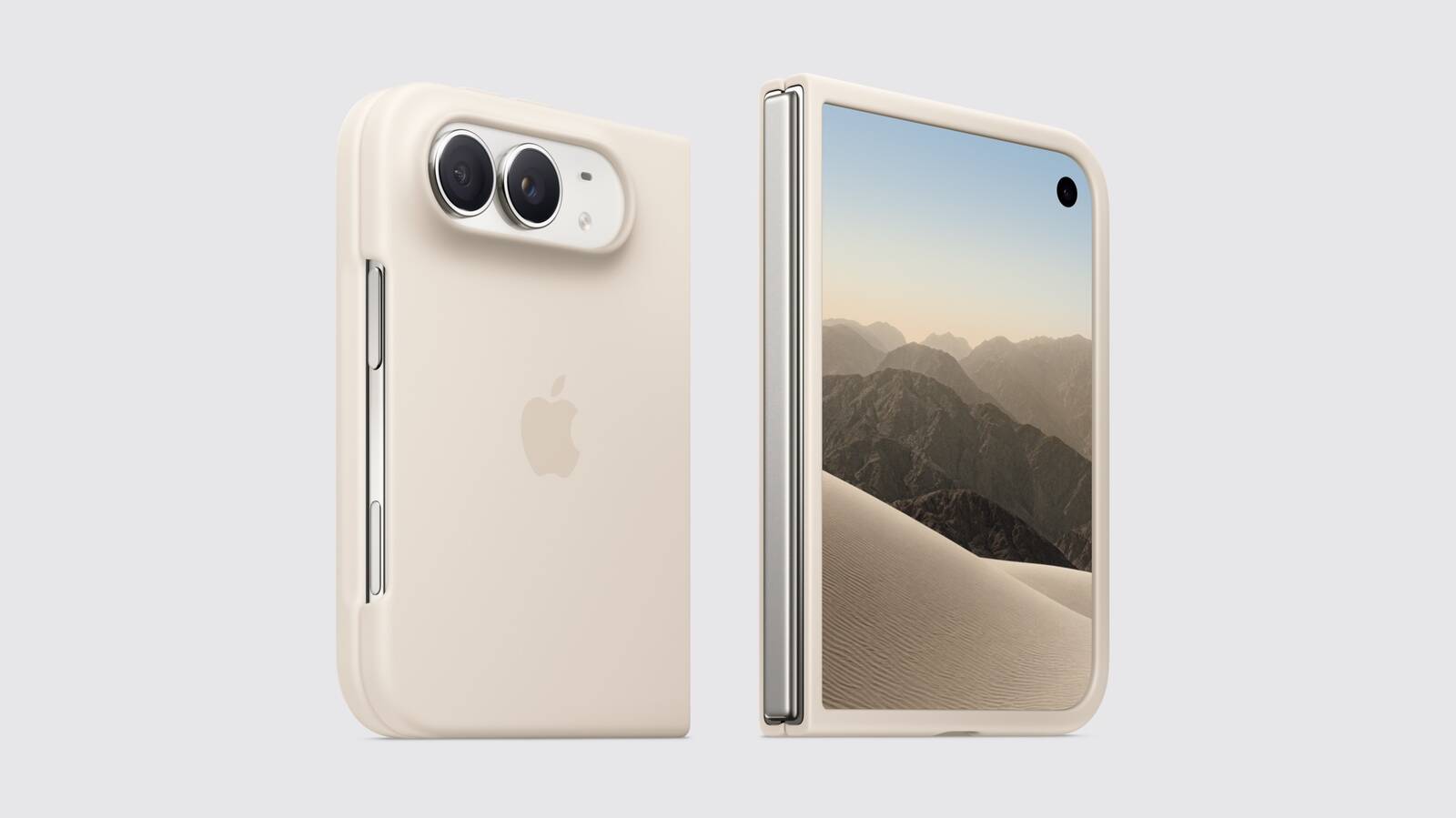
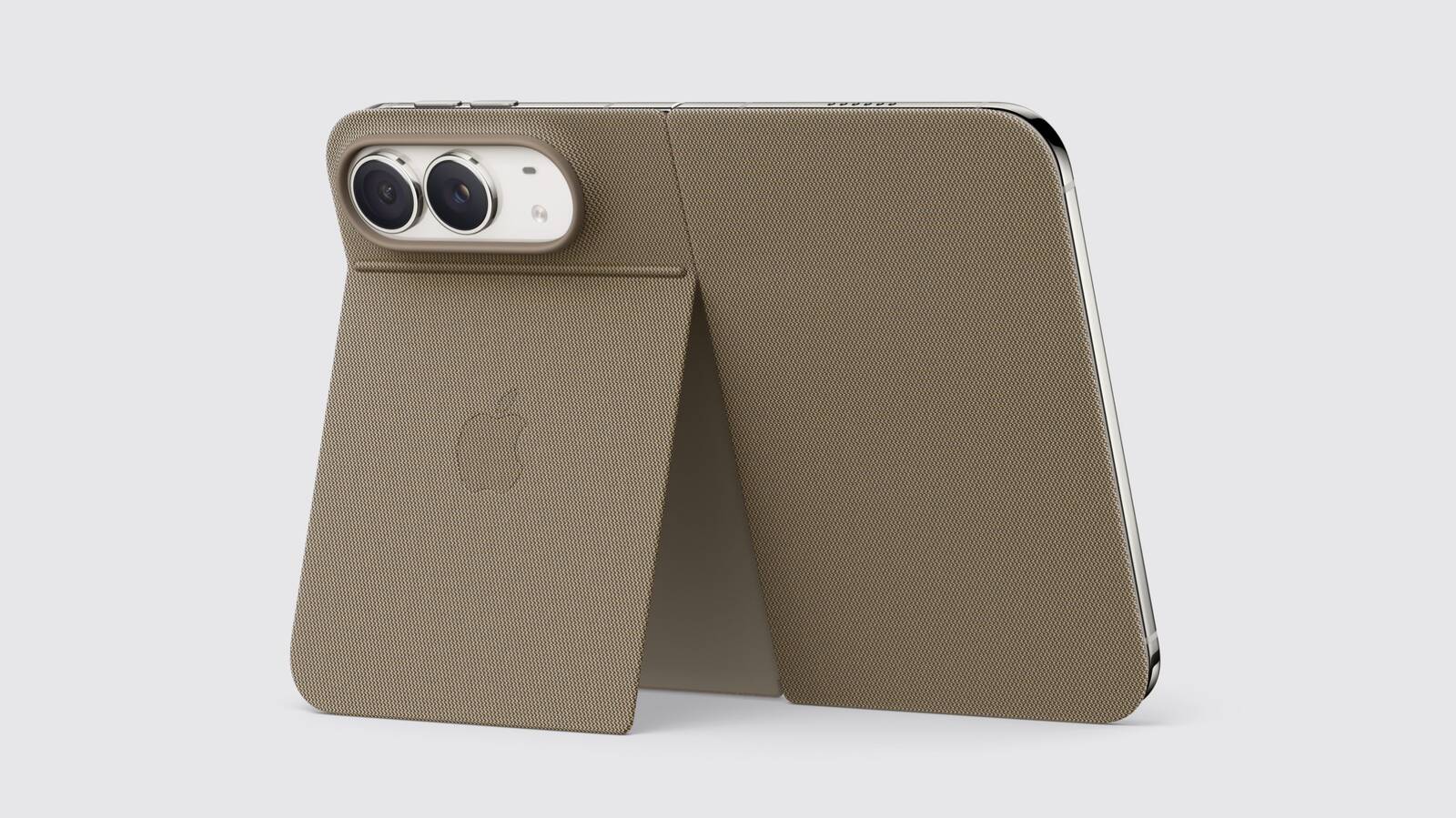
Apple today introduced two dedicated accessories for iPhone Duo, its Case and a Folio with Kickstand.


The iPhone Duo Case is a thin, two-part design that wraps around both the front and back of the device. It uses built-in magnets that align with th iPhone Duo for what Apple calls a "magical attach experience." The case is made from polycarbonate with a matte coating and comes in Sand and Navy Blue.

The iPhone Duo Folio with Kickstand takes a different approach, using TechWoven, Apple's custom technical fabric, and covering only the back of the device rather than wrapping the edges. It includes an integrated kickstand that snaps flush against the case when not in use and props up at a range of angles for reading, watching video, or FaceTime calls. It uses the same magnetic alignment, and Apple says it is able to charge via MagSafe behind the kickstand, even when it's propped open. The Folio with Kickstand is available in Taupe and Navy Blue.


Apple says both cases go through thousands of hours of testing during design and manufacturing, consistent with the rest of its case lineup. The iPhone Duo Case and Folio with Kickstand are currently unavailable, but will presumably become available for pre-order soon.
Related Roundup: iPhone Fold

This article, "iPhone Duo Gets Its Own Case and Folio With Kickstand" first appeared on MacRumors.com

Discuss this article in our forums

  •  

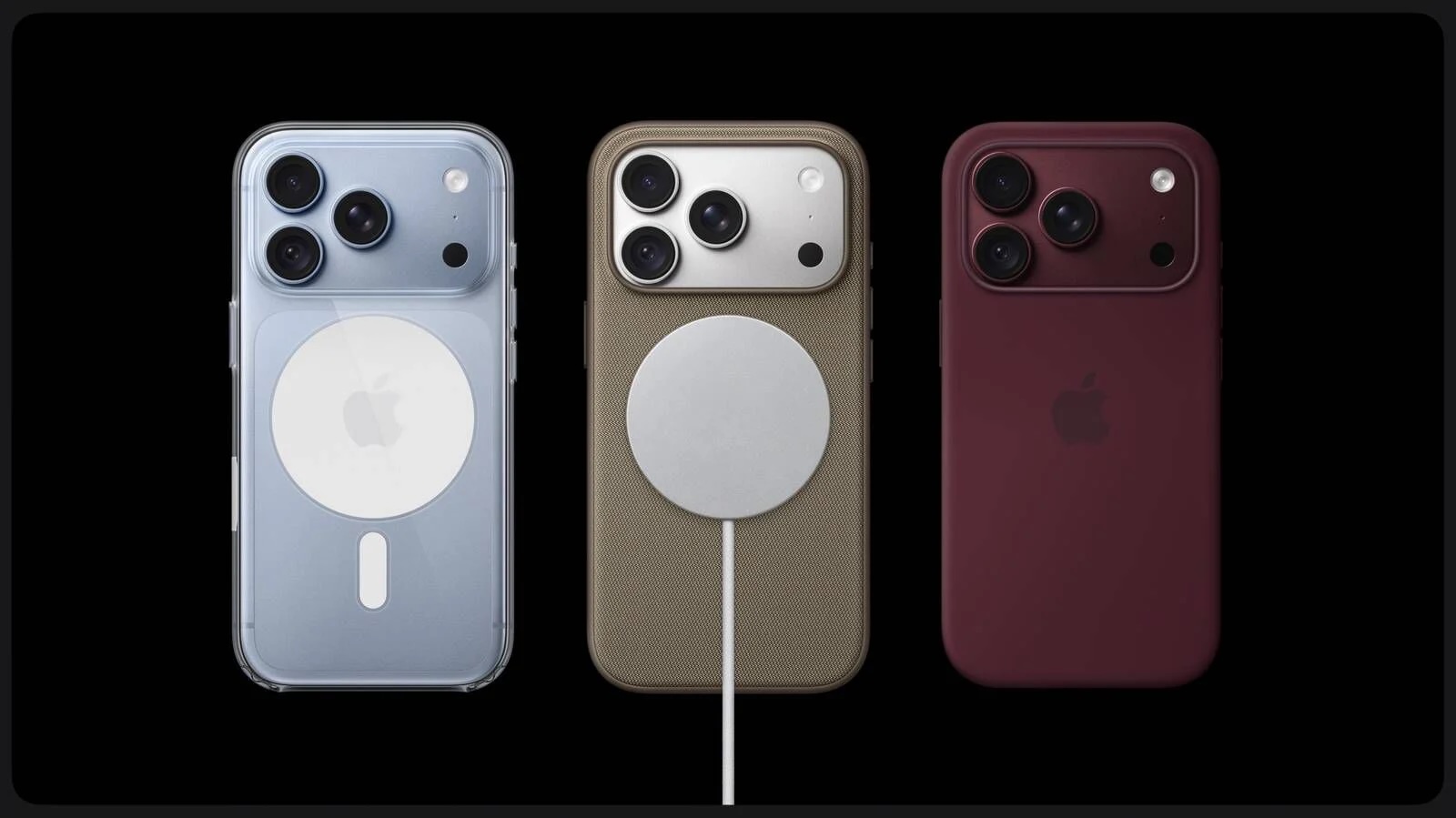
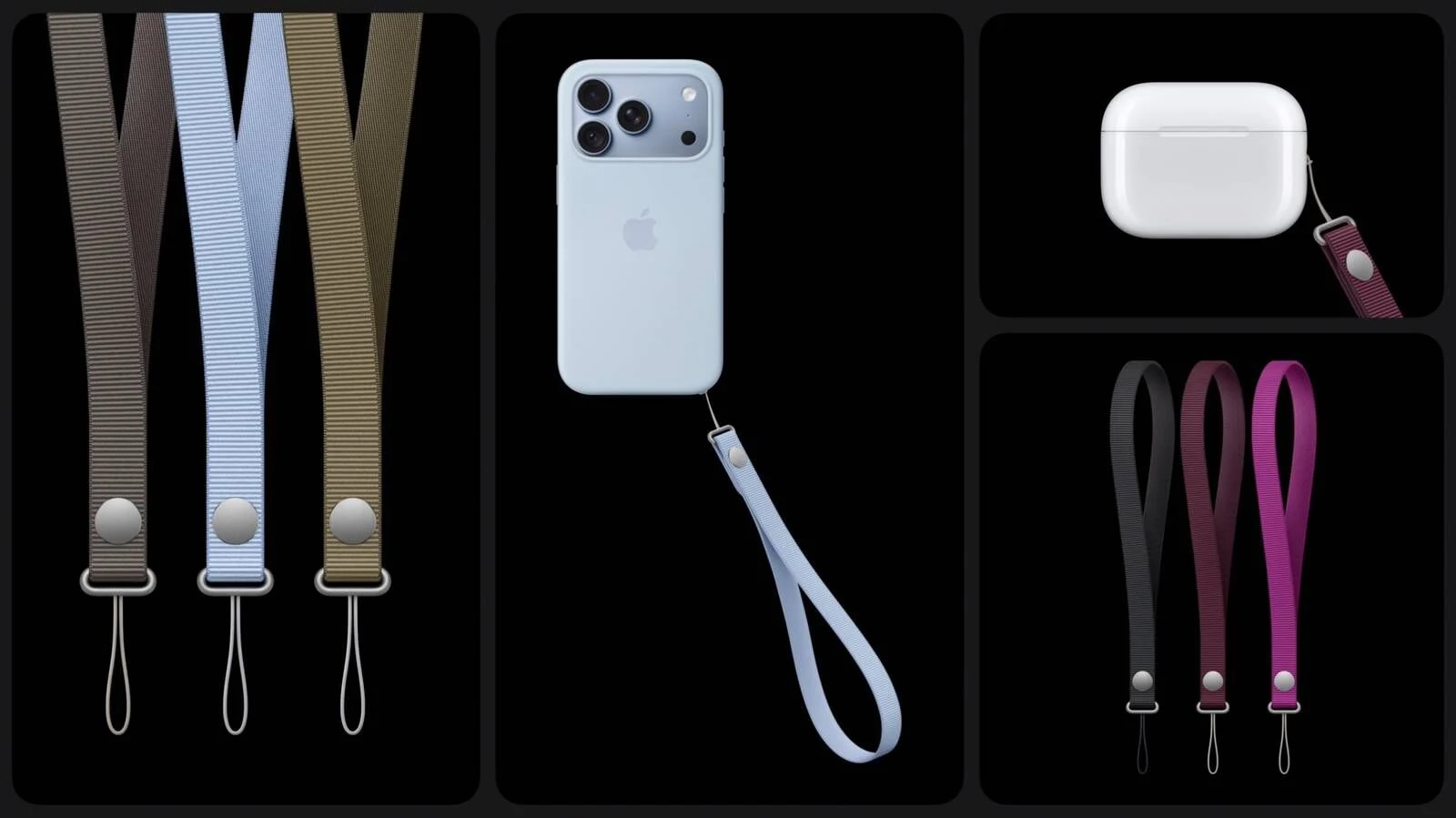
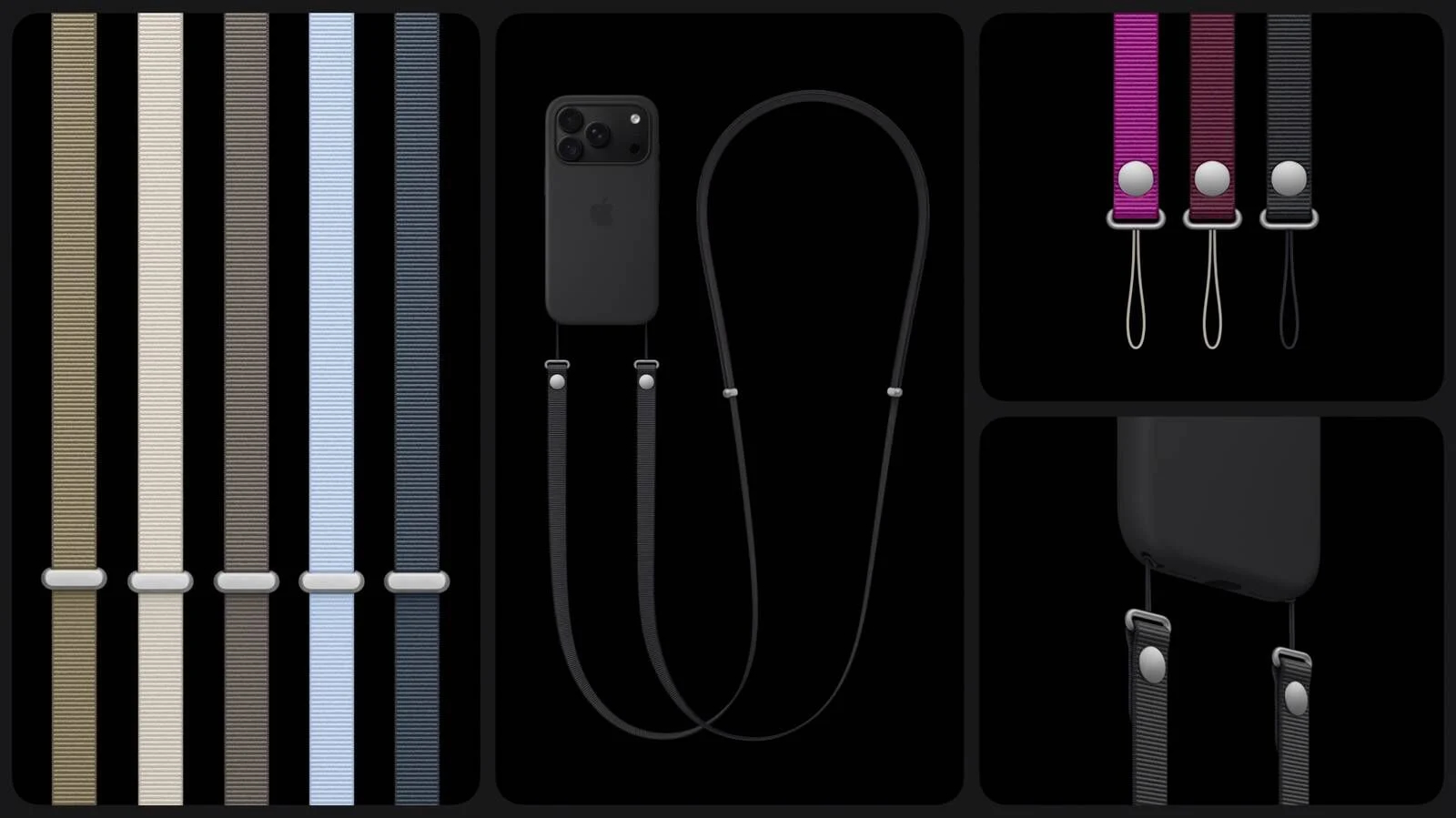
Apple Debuts New Accessories for iPhone 18 Pro and AirPods Pro 3

Apple today announced a new lineup of accessories for the iPhone 18 Pro, ‌iPhone 18 Pro‌ Max, and AirPods Pro 3, including a redesigned clear case with MagSafe and all-new wrist straps.


The new colors span much of Apple's accessory range:


The Wrist Strap is new, and Apple highlighted its compatibility with the ‌AirPods Pro 3‌ alongside the ‌iPhone 18 Pro‌ and ‌iPhone 18 Pro‌ Max.


Apple has also updated its clear case with MagSafe, giving it a new circular ‌MagSafe‌ alignment ring in place of the square outline introduced with last year's model.


The new cases, straps, and wallet are available to order now.


Related Roundups: AirPods Pro 3, iPhone 18 Pro
Buyer's Guide: AirPods Pro (Neutral)
Related Forum: AirPods

This article, "Apple Debuts New Accessories for iPhone 18 Pro and AirPods Pro 3" first appeared on MacRumors.com

Discuss this article in our forums

  •  

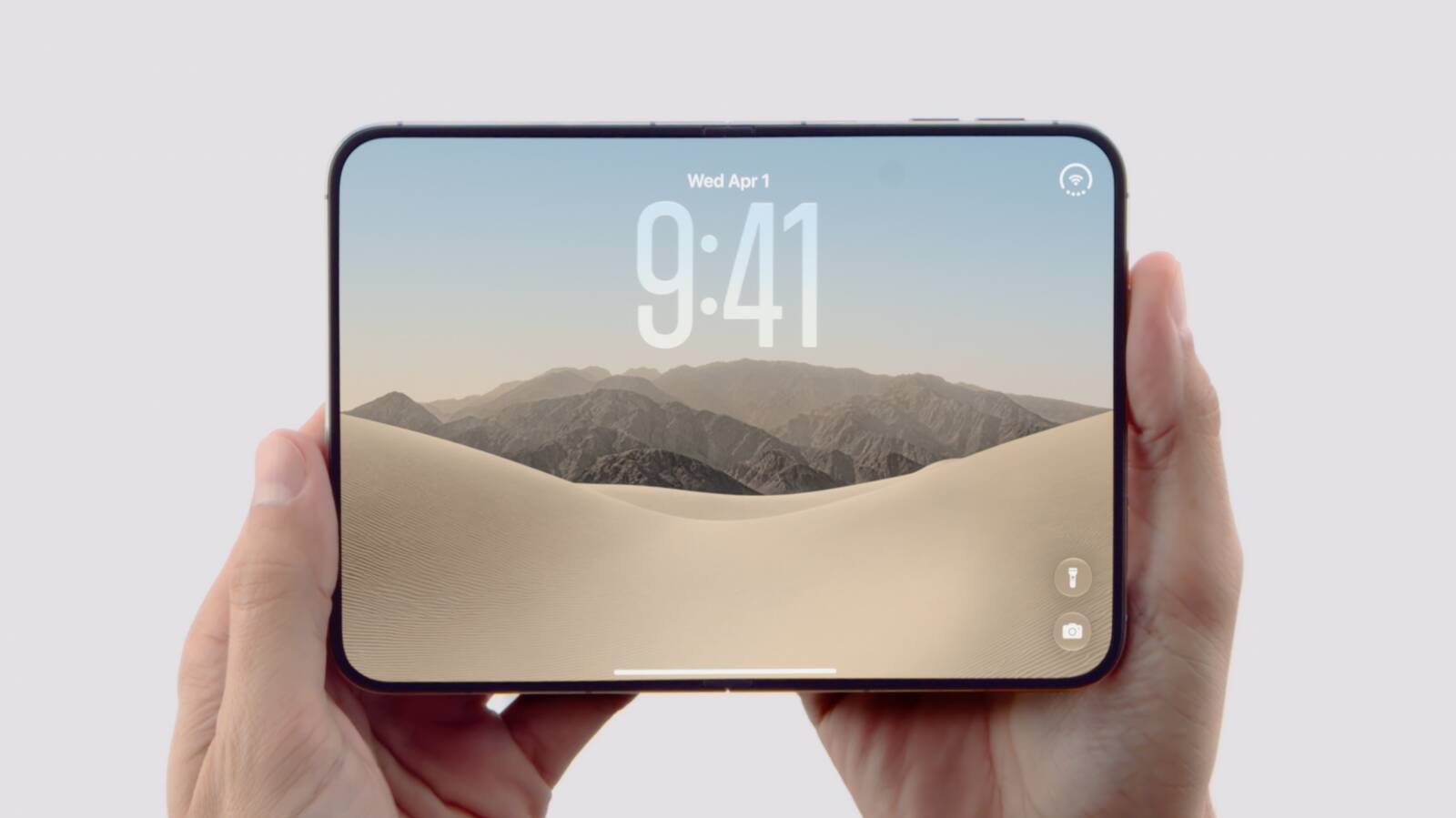
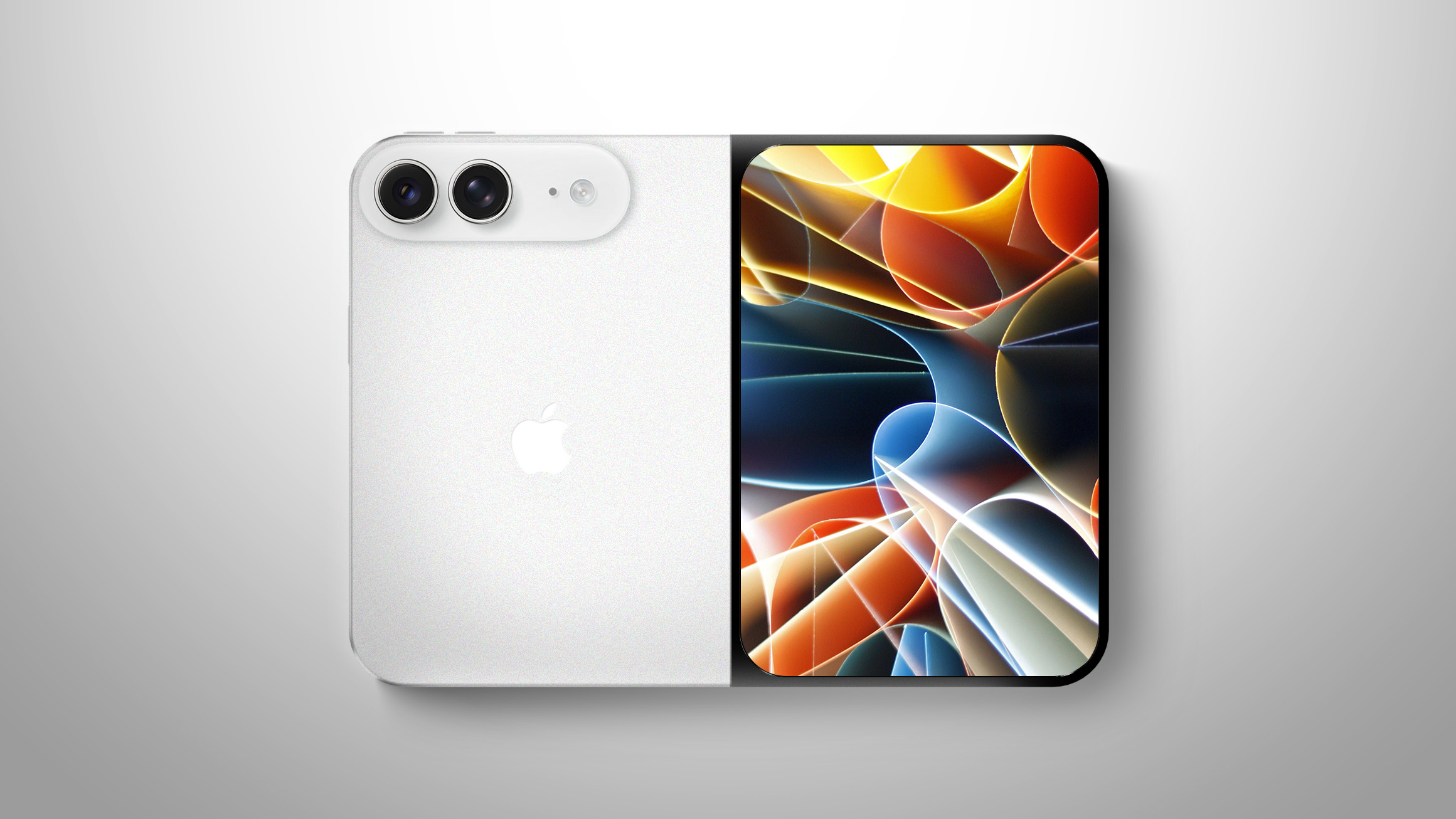
Apple Announces Foldable 'iPhone Duo'

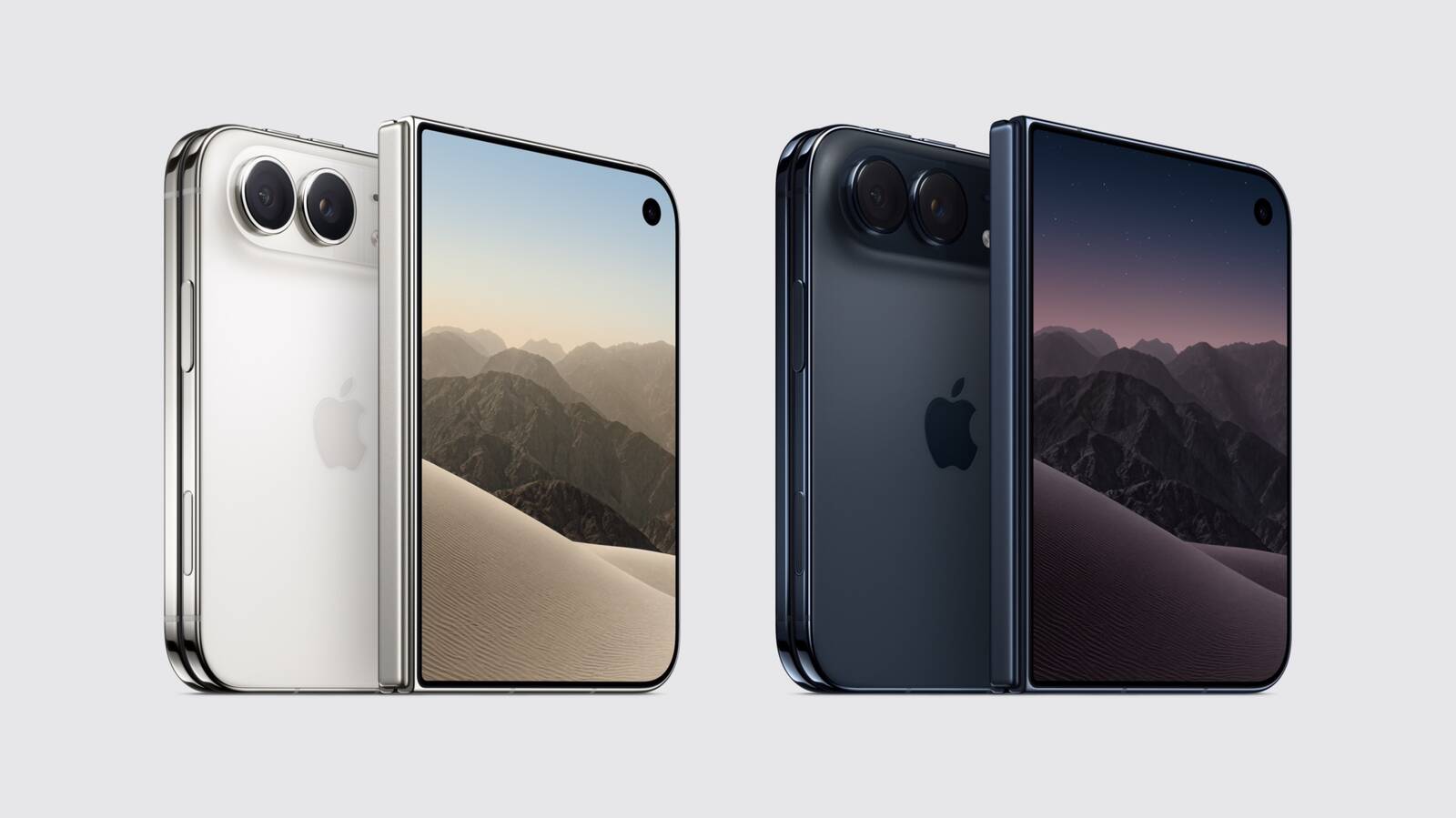
Apple today announced the "iPhone Duo," a new kind of iPhone featuring two screens and a foldable inner display.


The two halves of the iPhone Duo connect into a single continuous frame with the same aspect ratio across both displays, and Apple said the transition between open and closed is designed to feel fluid. When fully open, Apple says it is the thinnest iPhone ever made, with an architecture that packages its components into the camera plateau.

The frame is machined and polished titanium, with Ceramic Shield on the back and Ceramic Shield 2 on the front, and the device carries an IP68 rating. iPhone Duo comes in two colors: Star White and Night Sky. Touch ID is built into the side button, and the device can also be unlocked using an Apple Watch.


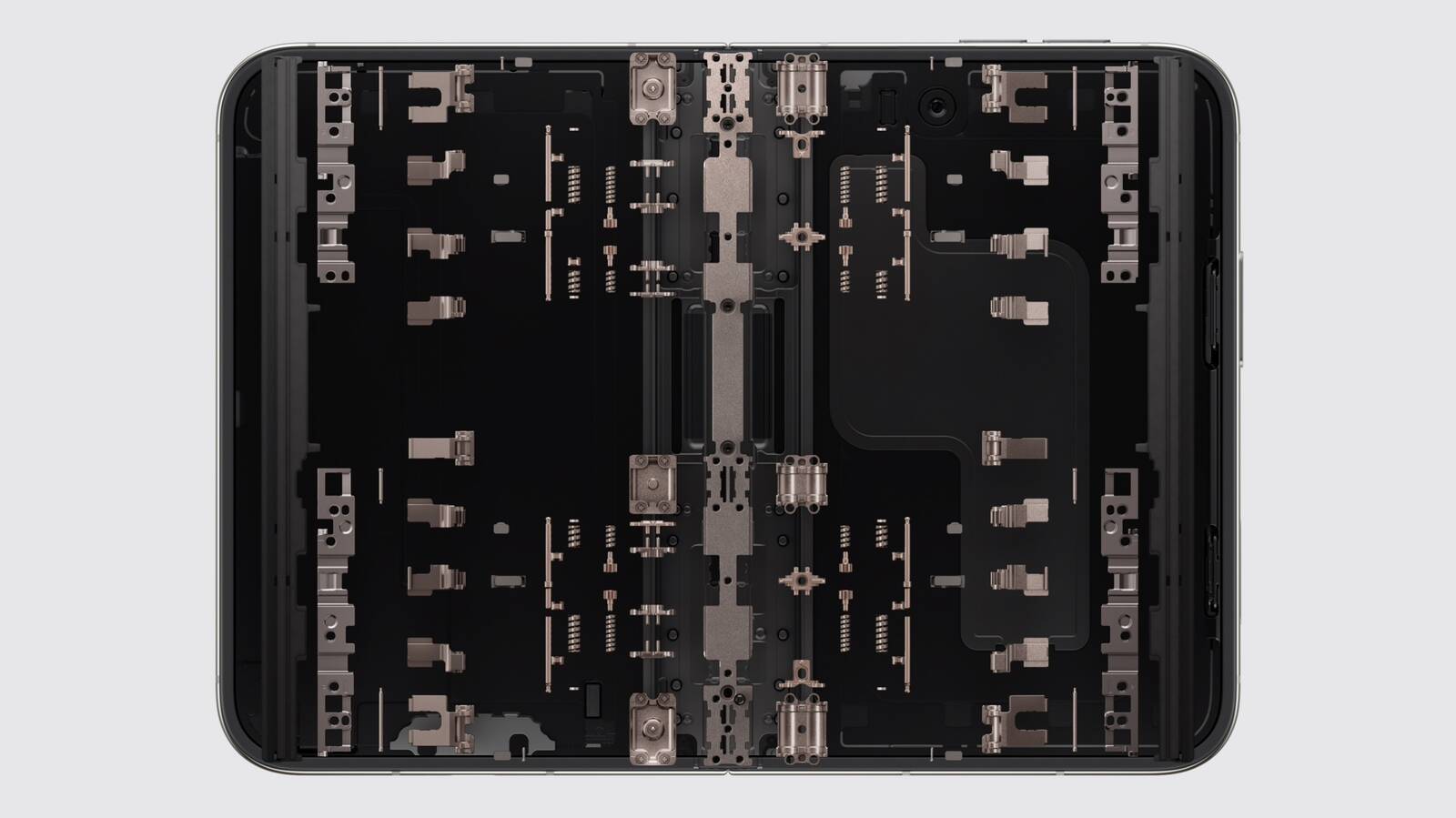
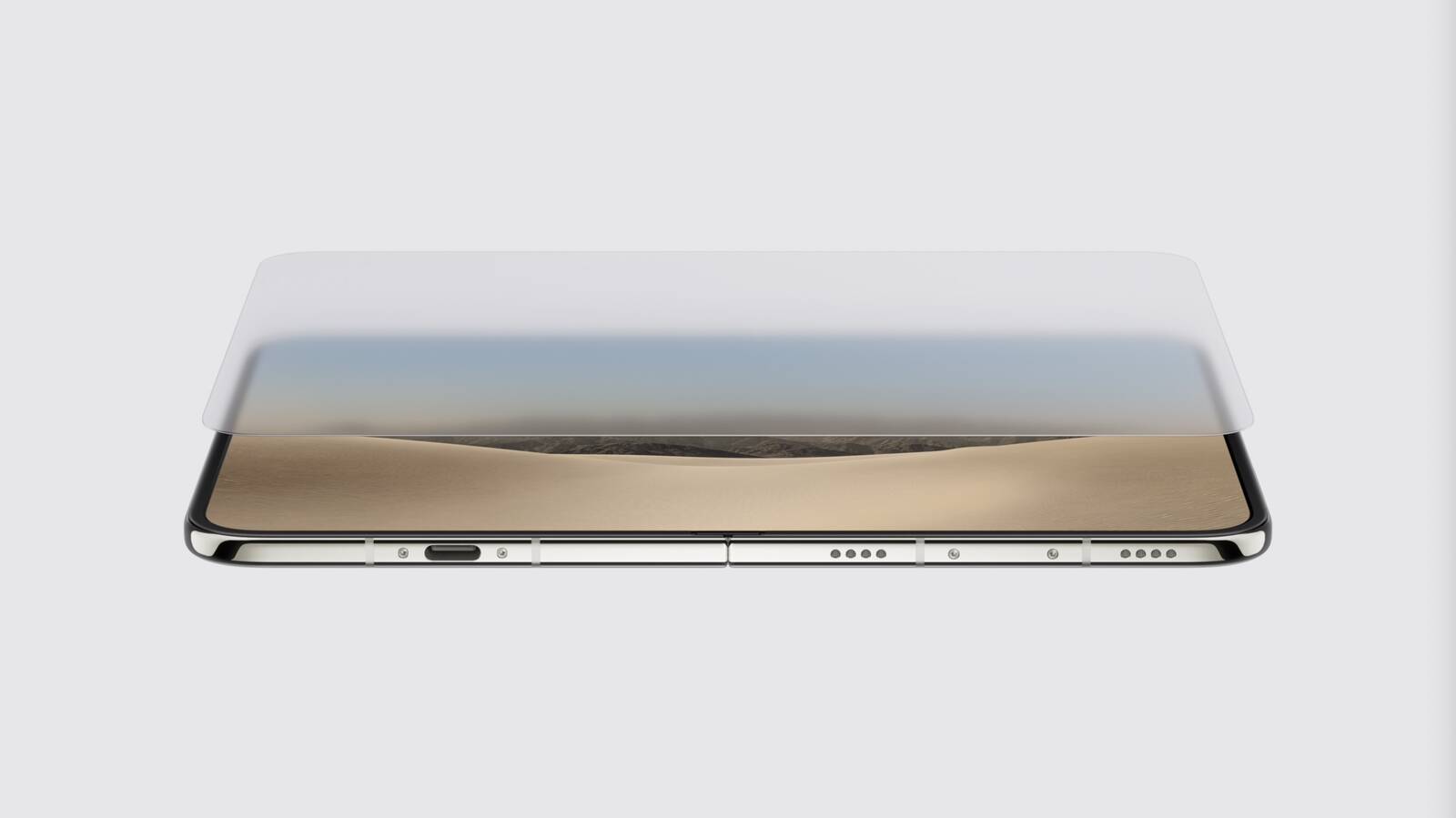
A custom hinge, made from more than 100 tiny precision components, holds the display flat when open and controls the folding motion. Apple said the structure uses a multi layer lamination design with viscoelastic adhesives that let the display's layers glide against each other during folding "like pages in a book," preventing distortion over time. A titanium plate forms the bottom layer for added durability, with carbon fiber support plates creating a stiff, lightweight base for the display to rest on.


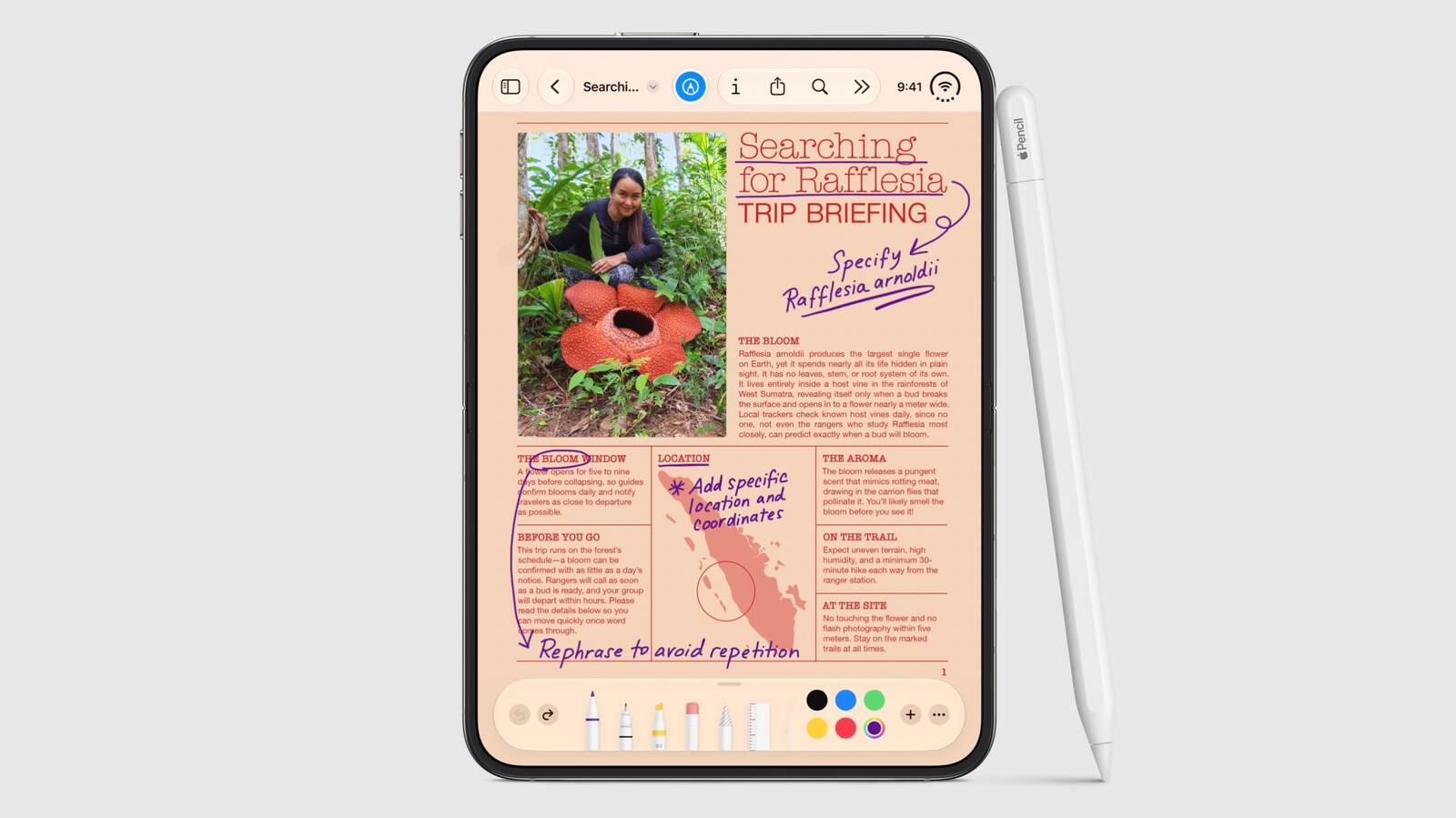
The inner display measures 7.6 inches, which Apple said is 50% larger than the iPhone 18 Pro Max and 80% larger than the ‌iPhone 18 Pro‌, while the outer display is 5.4 inches and offers 90% of the screen area of the ‌iPhone 18 Pro‌. Apple Pencil support is coming to both displays later this year.


For the display surface itself, Apple said it created a custom nano texture finish that cuts down on glare and reflections. The company also described a separate micro lens texture, produced using maskless laser lithography that writes each lens pixel by pixel, which it said creates a "perceptually flat matte surface" that minimizes the visibility of the fold crease while still feeling premium to the touch.


The iPhone Duo also features a number of special software features. Essential controls have moved to the sides of the display to sit within thumb's reach, the Home Screen dock is now oriented vertically, and the status bar has been redesigned to fit into the corner of the display. Software transitions gracefully between the outer and inner displays as the device opens, with controls staying in a consistent position while content scales up.


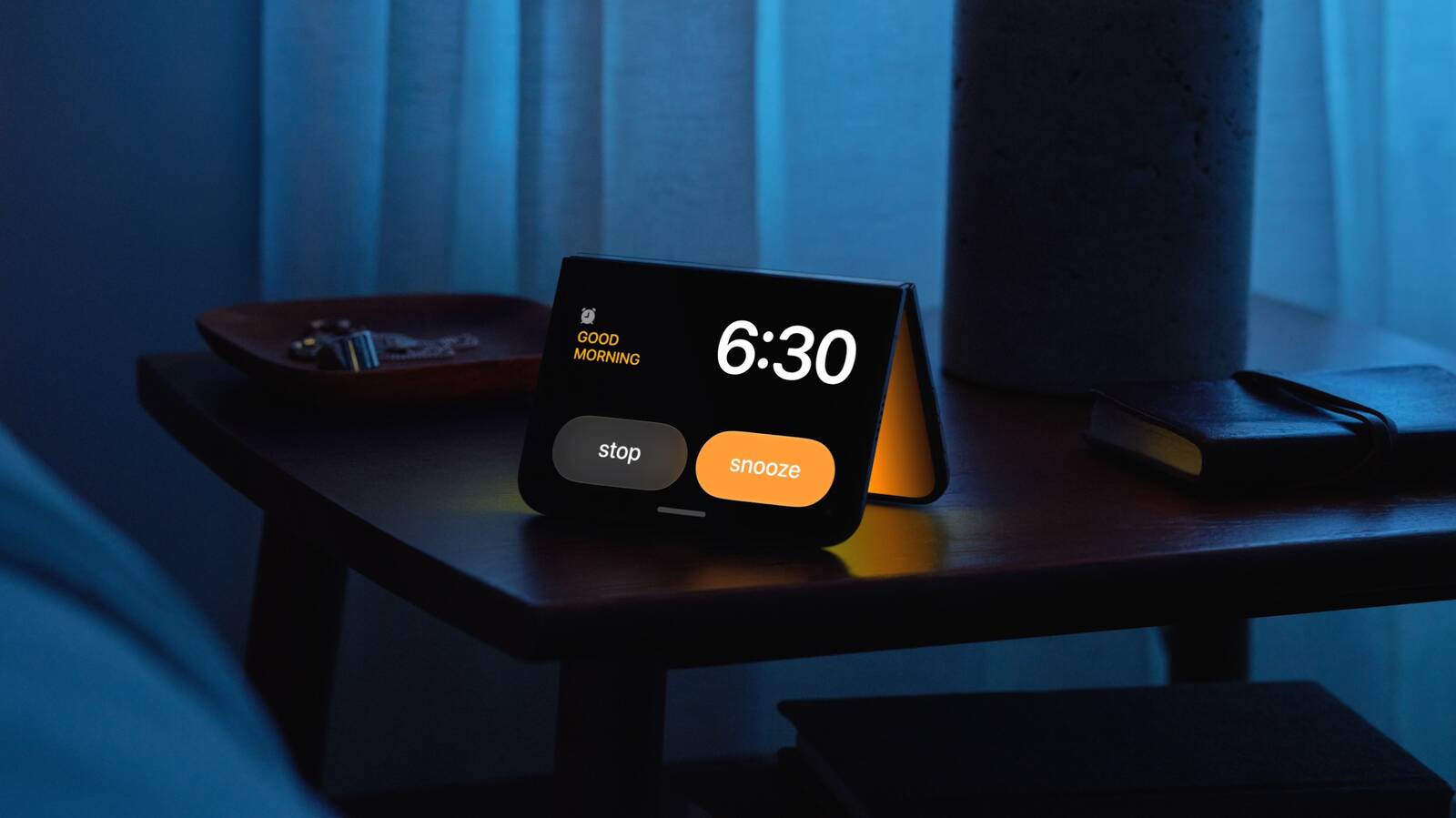
iOS also adapts to how the device is angled or propped, and it can be used partially folded, with content sliding away from the crease where taps are harder to register. Custom audio tuning adjusts for the changing distance between the speakers depending on how the device is positioned. Users can run two apps at once or open the same app twice, and can swipe up from the bottom to switch apps or pair two apps together to reopen later. A new Standby mode adds widgets for music, calendar, or weather, and Apple said the device can double as a bedside clock with a soft glow.


The iPhone Duo uses the same 48MP Fusion main camera design Apple has used elsewhere in its lineup alongside a 48MP Fusion ultra wide camera, the same ultra wide used in the ‌iPhone 18 Pro‌, and supports Apple's upgraded Photographic Styles. Since the device can stand on its own, Apple said it opens up new options for capturing time lapses in 4K Dolby Vision HDR.


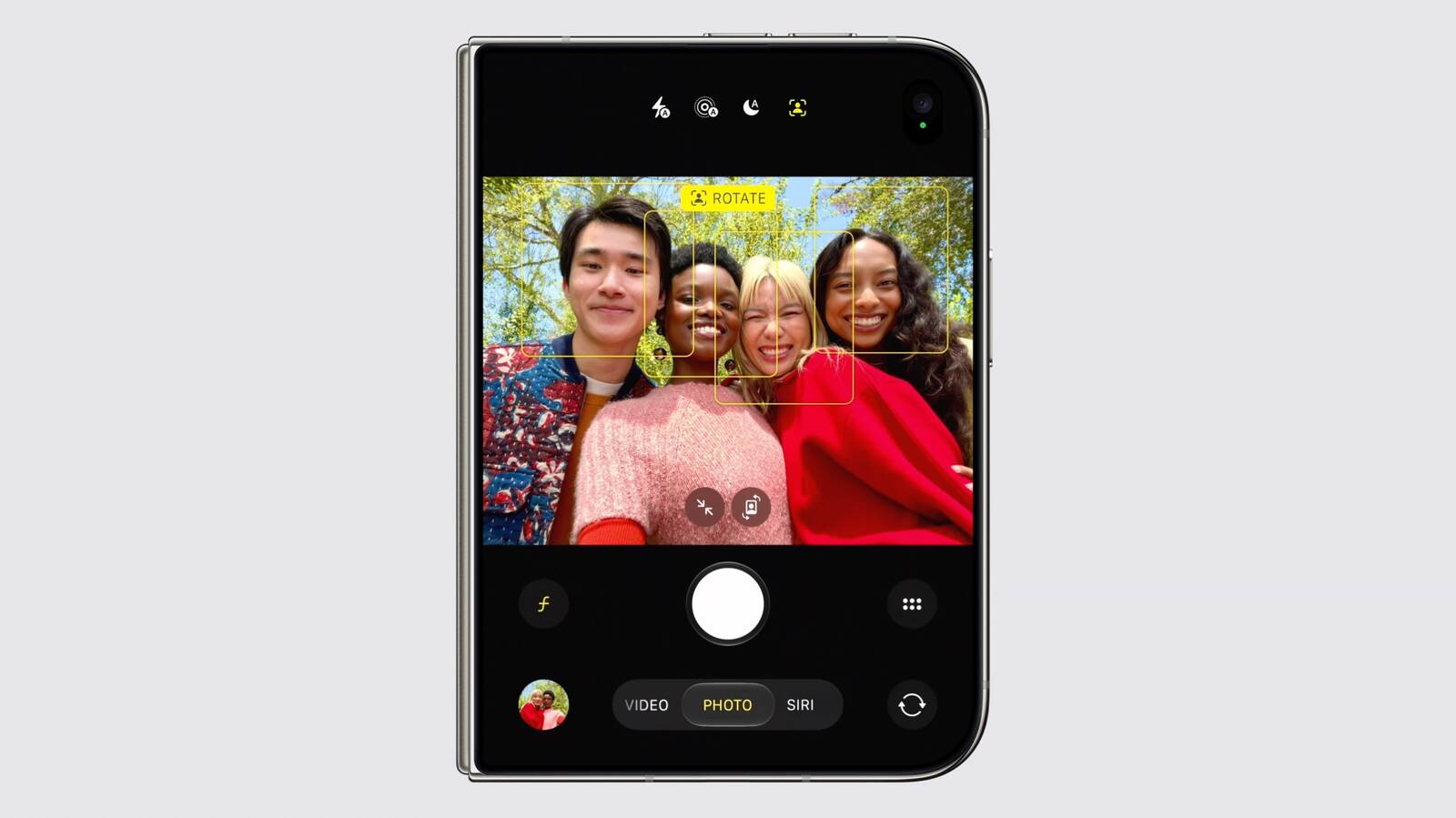
The outer display houses a 12MP Center Stage front camera, which Apple said improves selfies by letting people preview the shot before taking it. The inner display has its own FaceTime camera hidden behind the screen, which works whether the device is fully open or propped on a surface, and the two cameras can dual capture front and rear scenes simultaneously.

A new Duo ‌FaceTime‌ feature lets someone else join a video call from the outer display. A Smart Take feature tracks a scene and automatically takes the photo once everyone in a group shot is ready, removing the need to set a timer, and the outer display can play animations to help hold a child's attention for the camera.


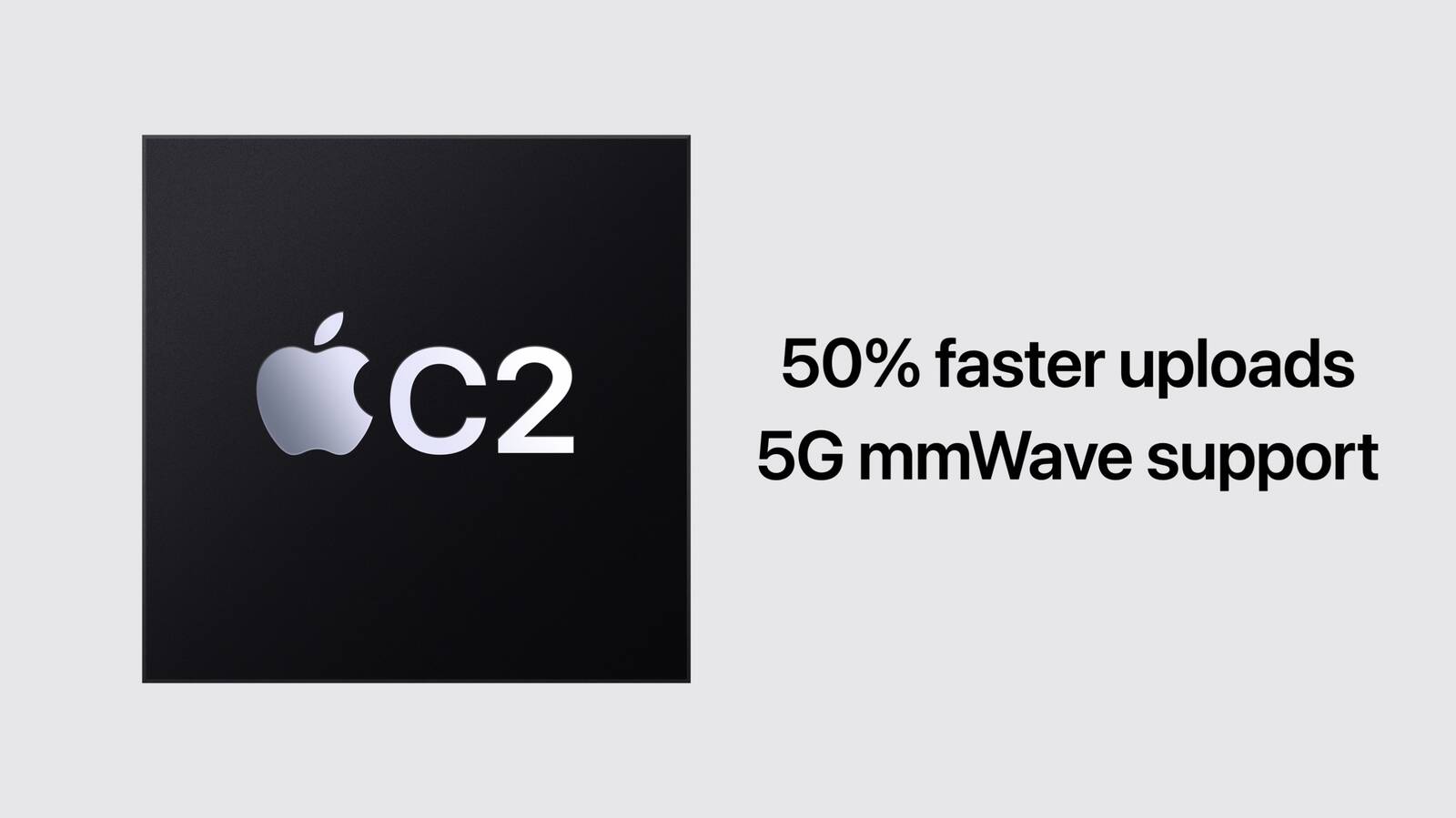
The iPhone Duo contains Apple's A20 Pro chip, just like the ‌iPhone 18 Pro‌. It also features the new C2 modem, which Apple said is up to 50% faster than the C1X, adds 5G mmWave support in the U.S., and uses up to 15% less battery. Apple also said AI algorithms improve everyday cellular reliability, including reconnecting faster in areas with weak coverage, and that the device delivers up to 35% higher sustained performance than the iPhone 17 Pro. The iPhone Duo is eSIM only worldwide.


Each half of the device has its own battery, which Apple said operate together as a single battery for all day use, rated at up to 31 hours of video playback on the inner display and 44 hours on the outer display. Using both screens equally, Apple rates the device for up to 24 hours of battery life, with fast charging reaching 50% in around 20 minutes and just five minutes of charging providing up to five hours of video playback on the outer display.

New accessories include a Duo Folio case with a built in kickstand, along with an iPhone Duo case made of two separate parts that wrap around each half of the device.


The iPhone Duo starts at $1,999 for 256GB, with storage options going up to 2TB. Preorders begin October 16, with availability starting October 23.
Related Roundup: iPhone Fold

This article, "Apple Announces Foldable 'iPhone Duo'" first appeared on MacRumors.com

Discuss this article in our forums

  •  

Apple Extends Free Satellite Access for iPhone 14, 15, and 16 Users

Apple today announced it is extending free access to satellite features for an additional year for existing iPhone 14, iPhone 15, and iPhone 16 users.


The extension applies to devices activated in a country that supports Apple's satellite features prior to midnight Pacific Time on September 9. Apple revealed the update in its press release for the new iPhone 18 Pro and ‌iPhone 18 Pro‌ Max.

This marks at least the third time Apple has extended free access to the features for iPhone 14 users, whose satellite trial was originally set to run for two years from the phone's launch in November 2022 before Apple pushed the expiration date back in 2025 and again this year. Free access for iPhone 15 users, whose trial was set to expire this year, has similarly been extended, and ‌iPhone 16‌ owners are now covered by the same rolling extension for the first time.

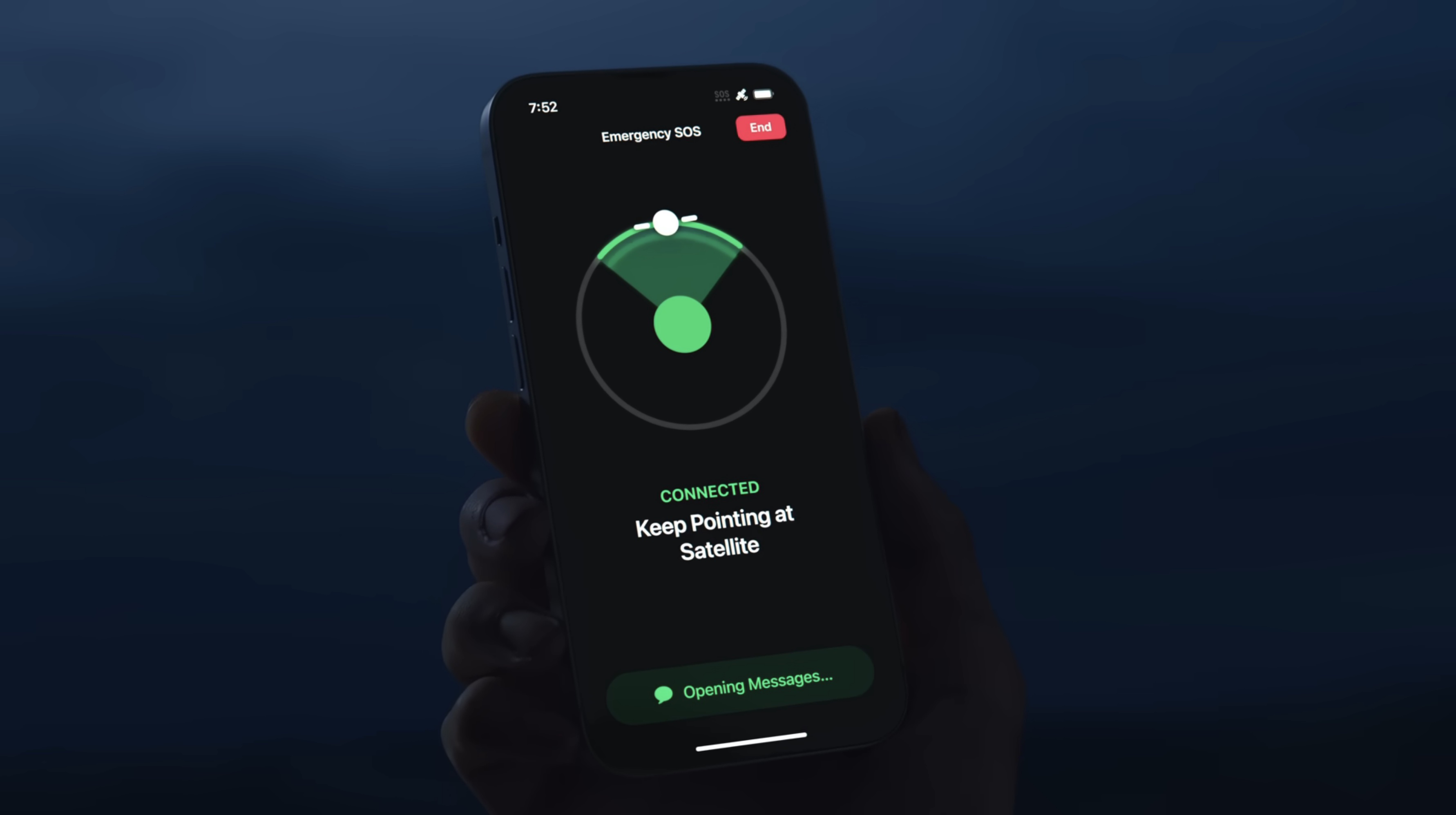
Apple's satellite features include Emergency SOS via satellite, Messages via satellite, Find My via satellite, and Roadside Assistance via satellite, with availability varying by country. The features rely on Apple's satellite partner Globalstar and let users reach emergency services, share their location, or send messages when they have no cellular or Wi-Fi signal.

Apple has not confirmed what, if anything, it plans to charge for the features once free access eventually ends. For now, the practical effect is that iPhone 14, iPhone 15, and ‌iPhone 16‌ owners who activated their devices before today's cutoff can keep using the features at no cost for at least another year.
Related Roundup: iPhone 16
Related Forum: iPhone

This article, "Apple Extends Free Satellite Access for iPhone 14, 15, and 16 Users" first appeared on MacRumors.com

Discuss this article in our forums

  •  

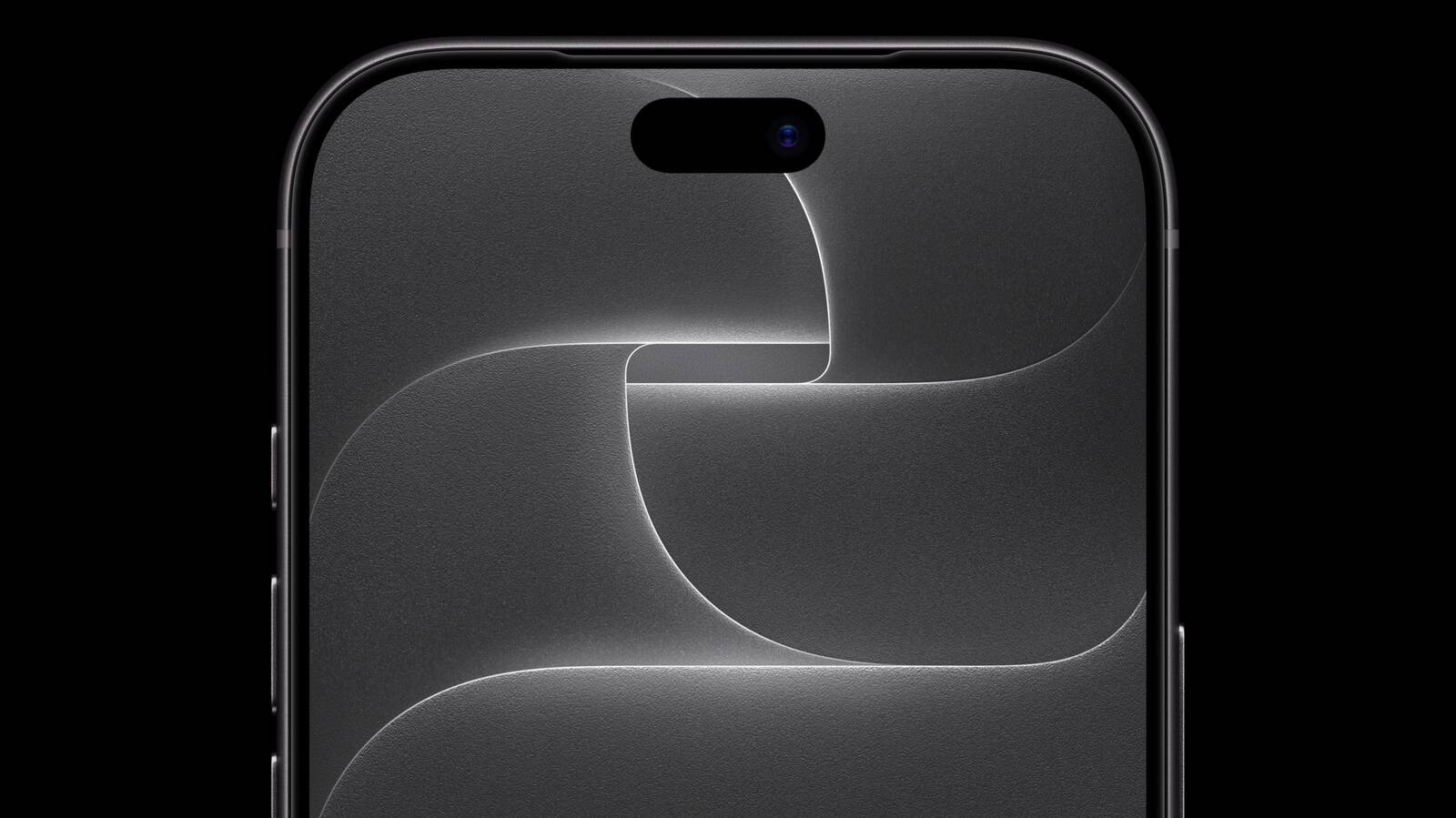
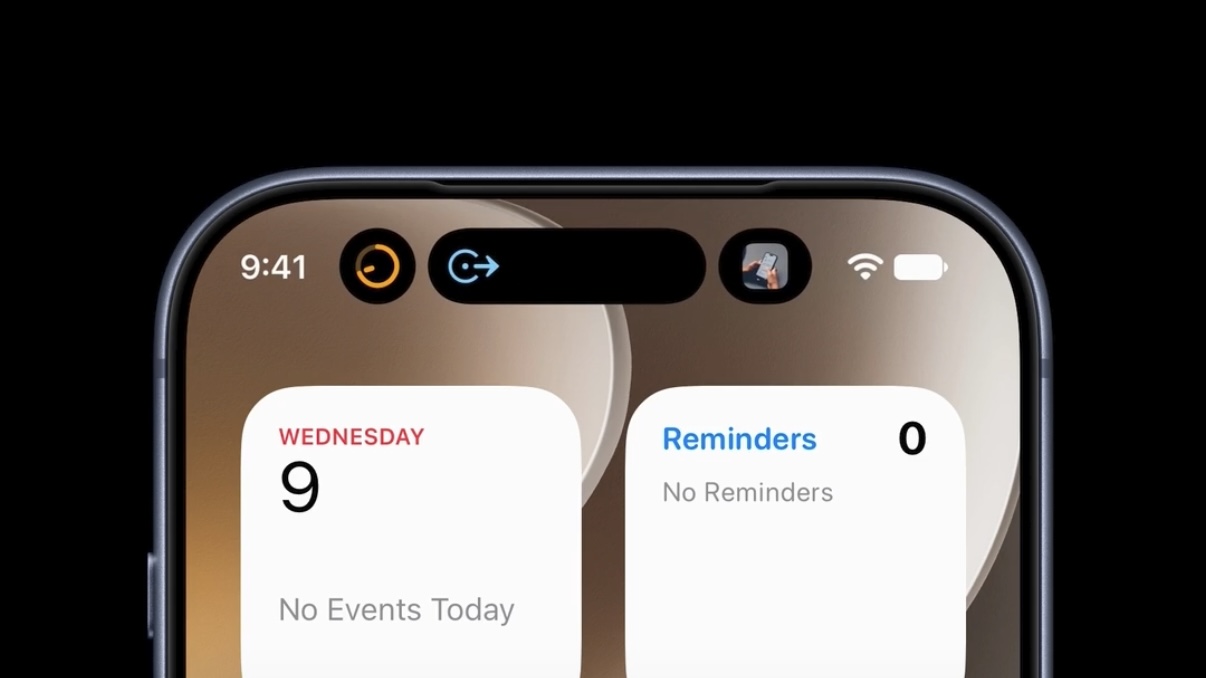
iPhone 18 Pro Features Smaller Dynamic Island With Support for Three Live Activities

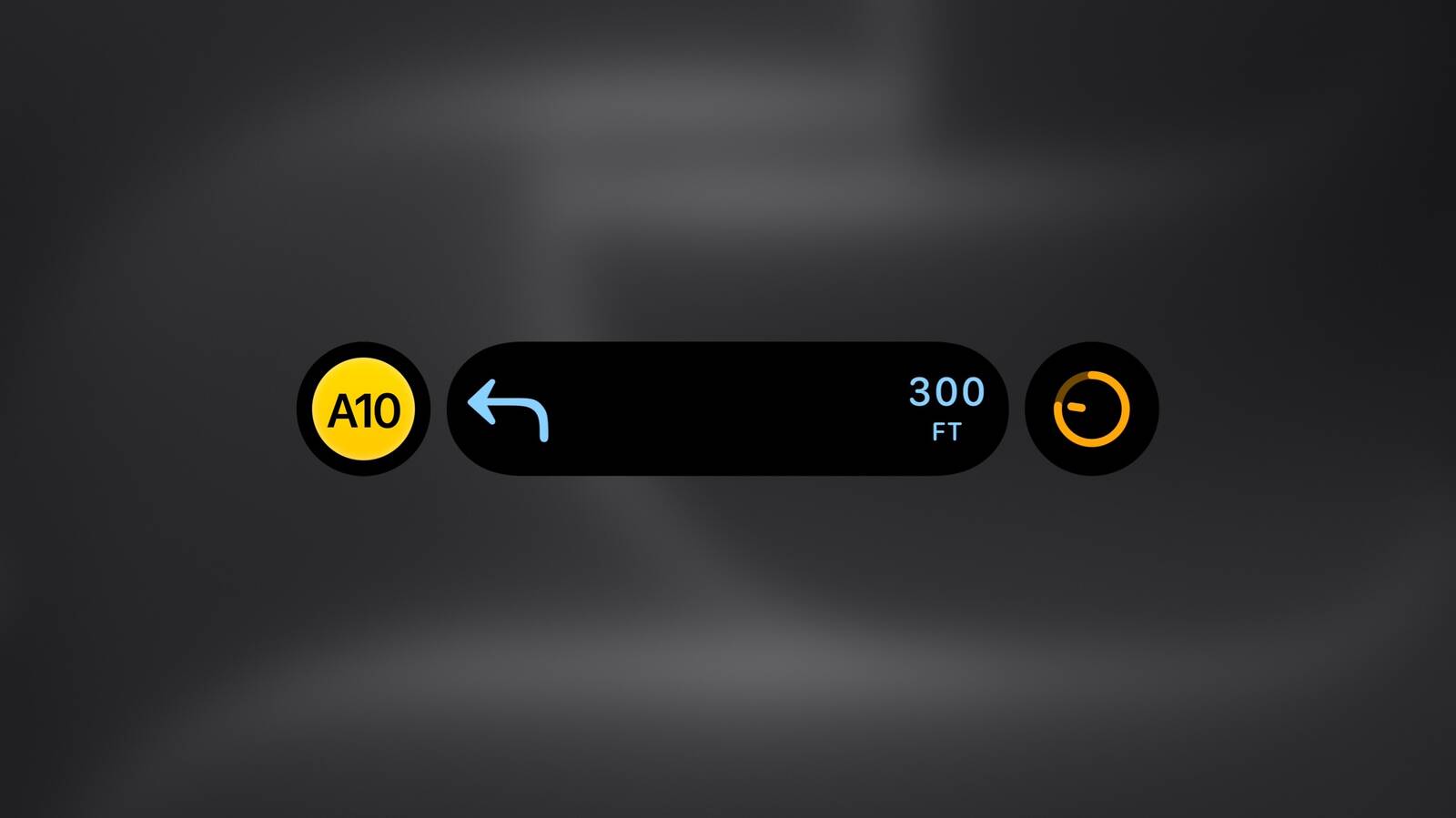
The iPhone 18 Pro and ‌iPhone 18 Pro‌ Max feature a smaller Dynamic Island, with support for up to three simultaneous Live Activities.


Until now, the ‌Dynamic Island‌ has only supported a maximum of two simultaneous Live Activities. Here is how three Live Activities display at the same time:


Bloomberg's Mark Gurman said ahead of the event that the redesigned ‌Dynamic Island‌ would be "smaller and improved" and let users toggle between three live tasks.
Related Roundup: iPhone 18 Pro

This article, "iPhone 18 Pro Features Smaller Dynamic Island With Support for Three Live Activities" first appeared on MacRumors.com

Discuss this article in our forums

  •  

iPhone 18 Pro Starts at $1,199, Pro Max at $1,299

Apple today announced the iPhone 18 Pro and ‌iPhone 18 Pro‌ Max, with pricing starting at $1,199 for the Pro model and $1,299 for the Pro Max, both with 256GB of storage as the base configuration.


The increase amounts to $100 over the equivalent iPhone 17 Pro and Pro Max pricing, matching what Bloomberg's Mark Gurman had predicted ahead of today's event. That is a smaller jump than many analysts had floated over the summer.

Both models now offer a 2TB storage option for the first time, sitting above the previous 1TB ceiling for an added cost.

Apple is also offering the ‌iPhone 18 Pro‌ and ‌iPhone 18 Pro‌ Max through its Apple Upgrade program, which starts at $34.99 a month over 24 months and can come in lower for customers who trade-in an eligible device. Separately, customers trading in an iPhone 14 or newer toward a new purchase can get up to $1,200 off.

The pricing arrives after months of speculation that Apple would raise iPhone prices more steeply this year, following a broader run of cost increases across its Mac, iPad, and home product lines earlier in 2026 tied to the global memory shortage.
Related Roundup: iPhone 18 Pro

This article, "iPhone 18 Pro Starts at $1,199, Pro Max at $1,299" first appeared on MacRumors.com

Discuss this article in our forums

  •  

Apple Unveils A20 Pro as First 2nm Smartphone Chip

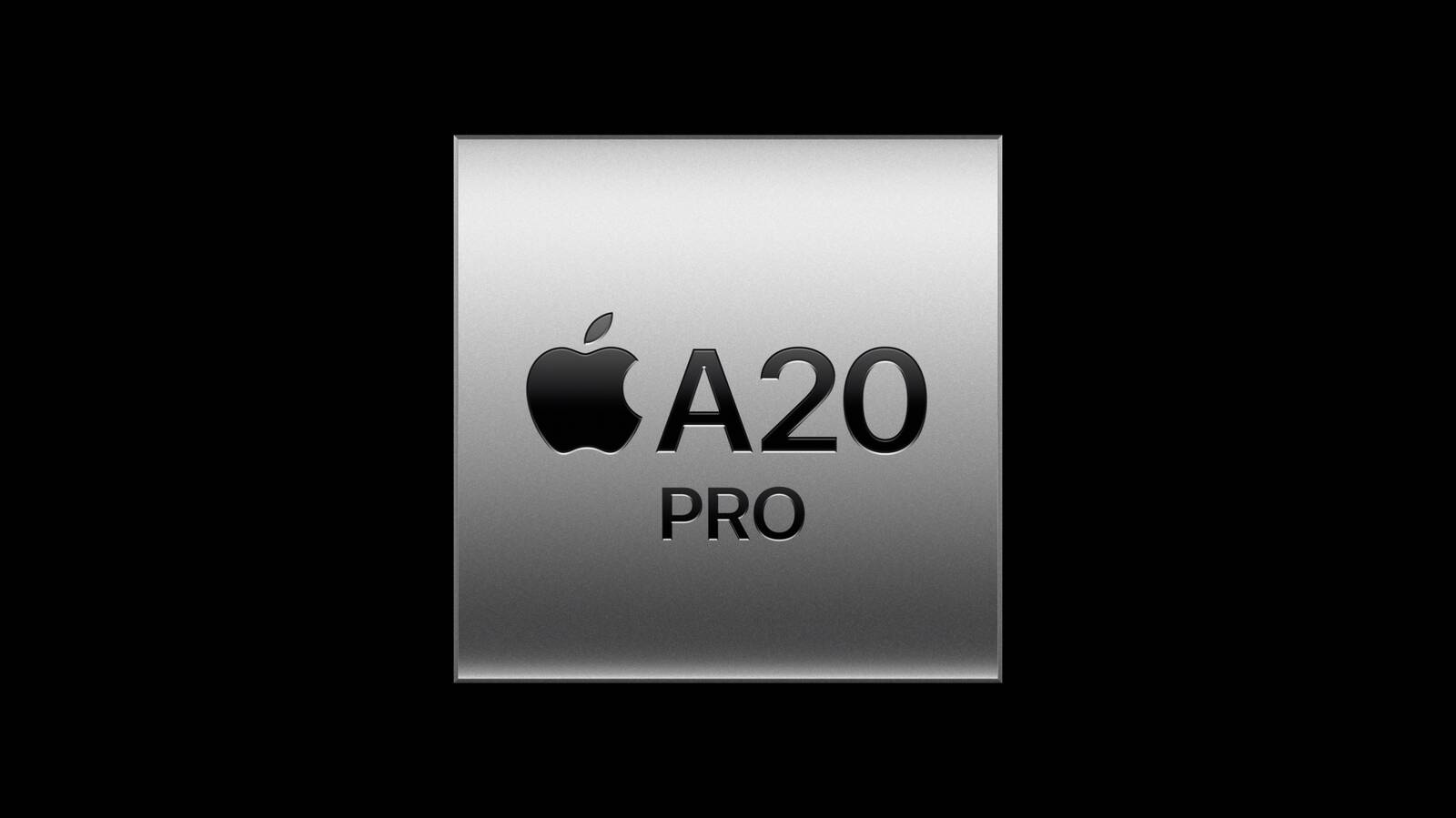
Apple today revealed the A20 Pro chip in the iPhone 18 Pro and ‌iPhone 18 Pro‌ Max, built on a brand new architecture using 2nm process technology.


Apple described the A20 Pro as "an exceptional chip that sets a new bar for mobile computing." The chip has a 6-core CPU design with two new super cores that Apple says are up to 20% faster, calling them "desktop class" and "the fastest in any smartphone," alongside four new efficiency cores.

The GPU has also been redesigned with a 7-core layout that Apple says delivers up to 40% faster graphics performance and increased memory bandwidth. New neural accelerators built into the GPU offer twice the FP8 performance of the previous generation, which helps the chip run large language models locally on the device.

The A20 Pro features an additional Neural Engine, bringing the total core count to 32. The company says the redesigned Neural Engine delivers 2x the compute of its predecessor, is more efficient, and now supports 8-bit floating point math. Apple called the A20 Pro "the ultimate chip for running advanced on-device models," adding that it ships with "the widest memory interface we've ever shipped in an iPhone."

The company said effective thermal management in the ‌iPhone 18 Pro‌ is critical to unlocking the chip's maximum performance, since efficient heat dissipation determines how much of that performance can be sustained. To support this, Apple redesigned the chip's silicon packaging, describing it as "custom packaging inspired by our M-series chips" that connects the silicon and memory directly to the vapor chamber for improved thermal performance.

Apple compared sustained performance directly against previous generations, citing 40% more sustained performance from the ‌iPhone 18 Pro‌'s A20 Pro compared to the A19 Pro in the iPhone 17 Pro, and twice the sustained performance compared to the A18 Pro chip in the iPhone 16 Pro.
Related Roundup: iPhone 18 Pro

This article, "Apple Unveils A20 Pro as First 2nm Smartphone Chip" first appeared on MacRumors.com

Discuss this article in our forums

  •  

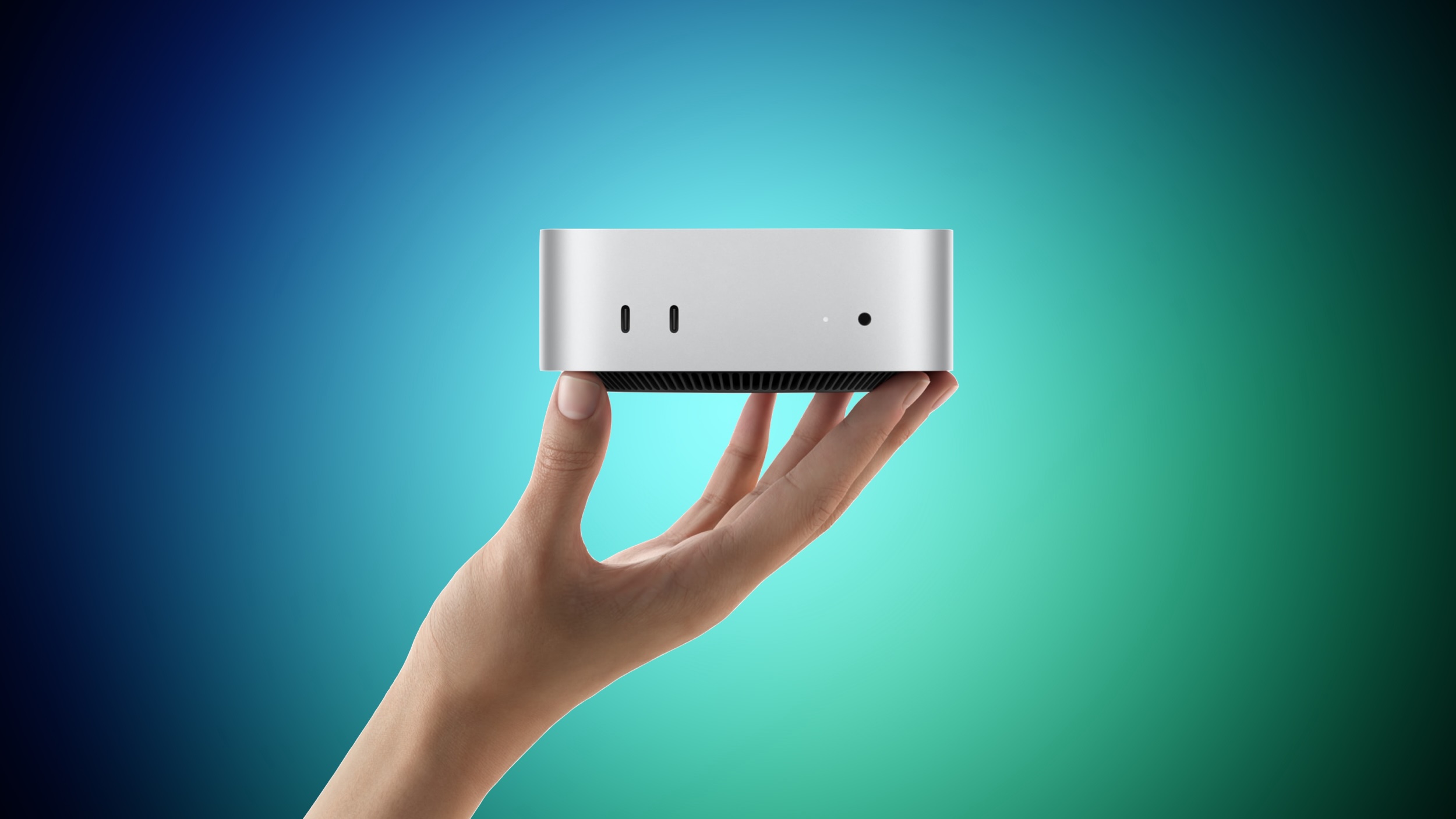
Mac Mini vs. Mac Studio Buyer's Guide: 20 Differences Compared

Apple announced new Mac mini and Mac Studio models last month, with both available to pre-order now. It is the first time in years that Apple has revised its two desktop Macs simultaneously, so which should you choose?
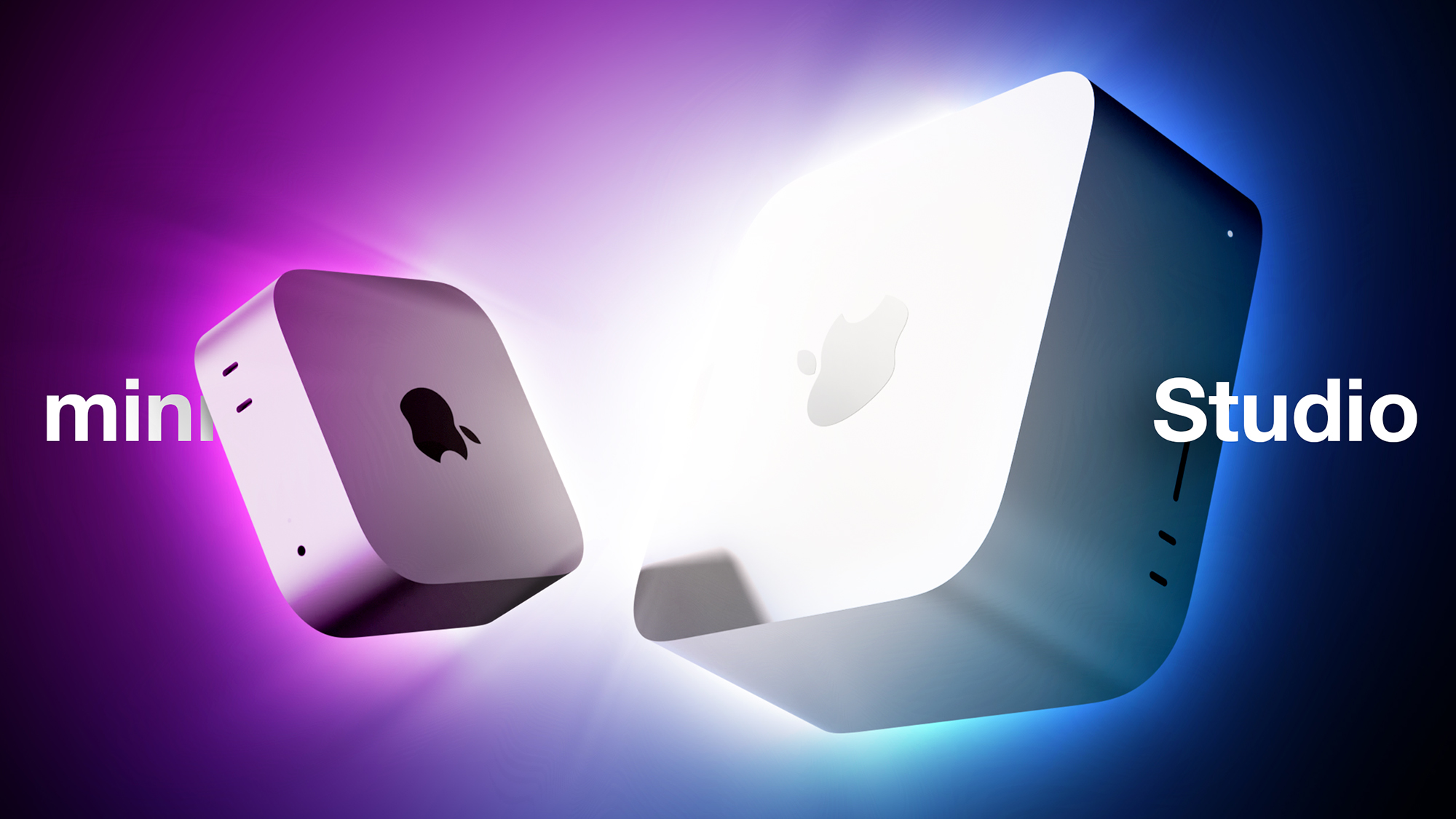

There are now two desktop Macs to choose from following the discontinuation of the Mac Pro, but the prices have moved sharply. The ‌Mac Studio‌ starts at $2,499 and rises to $5,499 for the M5 Ultra model, while the ‌Mac mini‌ starts at $899 with the M6 chip and $1,699 with the M5 Pro.

Those prices come on top of the across-the-board Mac and iPad increases Apple made in June, which took the ‌Mac mini‌ from $599 to $799, the M4 Pro configuration from $1,399 to $1,599, and the ‌Mac Studio‌ from $1,999 to $2,499. The M5 Ultra adds a further $200 to the post-June M3 Ultra price, putting it $1,500 above what the M3 Ultra cost at launch.

Our guide helps to answer the question of how to decide which of these two desktop Macs is best for you. The two machines now share a large number of key features, including:


  • A boxy silver aluminum enclosure with no color options

  • Apple's N1 chip, bringing Wi-Fi 7 and Bluetooth 6 to both machines for the first time

  • Neural Accelerators built into every GPU core

  • Hardware-accelerated ray tracing

  • A Media Engine with hardware-accelerated H.264, HEVC, ProRes, and ProRes RAW, plus AV1 decode

  • A next-generation SSD architecture that Apple says is up to twice as fast as before

  • Genlock support over USB-C for synchronizing a display with a camera, including the iPhone 17 Pro

  • An HDMI port with multichannel audio output

  • A 3.5mm headphone jack with support for high-impedance headphones


Beyond that, the two lines diverge on chip generation, memory capacity, ports, and external display support.


‌Mac mini‌ (M6) ‌Mac mini‌ (M5 Pro) ‌Mac Studio‌ (M5 Max) ‌Mac Studio‌ (M5 Ultra)
M6 chip M5 Pro chip M5 Max chip M5 Ultra chip (two dual-die M5 Max chips joined by UltraFusion)
Made with TSMC's 2nm process Made with TSMC's 3nm process Made with TSMC's ‌3nm‌ process Made with TSMC's ‌3nm‌ process
12-core CPU (2 super cores + 4 performance cores + 6 efficiency cores) 15- or 18-core CPU (up to 6 super cores + 12 performance cores) 18-core CPU (6 super cores + 12 performance cores) 30- or 36-core CPU (up to 12 super cores + 24 performance cores)
12-core GPU 16- or 20-core GPU 32- or 40-core GPU 64- or 80-core GPU
Dual 16-core Neural Engine 16-core Neural Engine 16-core Neural Engine 32-core Neural Engine
Up to 170GB/s memory bandwidth 307GB/s memory bandwidth Up to 614GB/s memory bandwidth 1.2TB/s memory bandwidth
16GB, 24GB, or 32GB unified memory 24GB, 48GB, or 64GB unified memory 32-core GPU: 36GB unified memory
40-core GPU: 48GB, 64GB, or 128GB unified memory
64-core GPU: 96GB or 256GB unified memory
80-core GPU: 96GB, 256GB, or 512GB unified memory
256GB, 512GB, 1TB, or 2TB storage 512GB, 1TB, 2TB, 4TB, or 8TB storage 512GB, 1TB, 2TB, 4TB, or 8TB storage 1TB, 2TB, 4TB, 8TB, or 16TB storage
Video decode engine Video decode engine Video decode engine Two video decode engines
Video encode engine Video encode engine Two video encode engines Four video encode engines
ProRes encode and decode engine ProRes encode and decode engine Two ProRes encode and decode engines Four ProRes encode and decode engines
Support for up to three displays: two at 6K 60Hz or 4K 165Hz, plus a third at 5K 60Hz over Thunderbolt or 4K 60Hz over HDMI Support for up to three displays, all at 6K 60Hz or 4K 165Hz Support for up to five 4K displays, four 6K displays, or two 8K displays Support for up to eight 4K displays, eight 6K displays, or four 8K displays
Two displays per Thunderbolt port All three displays through a single Thunderbolt port
Three rear Thunderbolt 4 ports Three rear Thunderbolt 5 ports Four rear Thunderbolt 5 ports Four rear Thunderbolt 5 ports
Two front USB-C ports Two front USB-C ports Two front USB-C ports Two front Thunderbolt 5 ports
Two rear USB-A ports Two rear USB-A ports
2.5Gb Ethernet or 10Gb Ethernet port 2.5Gb Ethernet or 10Gb Ethernet port 10Gb Ethernet port 10Gb Ethernet port
SDXC card slot (UHS-II) SDXC card slot (UHS-II)
Bottom power button Bottom power button Rear power button Rear power button
Starts at $899 Starts at $1,699 Starts at $2,499 Starts at $5,499


Both enclosures carry over unchanged, so the dimensions of the two devices remain radically different, with the ‌Mac Studio‌ dwarfing the ‌Mac mini‌ in every way.


‌Mac mini‌ ‌Mac Studio‌
Height 2.0 inches (5.0 cm) 3.7 inches (9.5 cm)
Width 5.0 inches (12.7 cm) 7.7 inches (19.7 cm)
Depth 5.0 inches (12.7 cm) 7.7 inches (19.7 cm)
Weight M6: 1.5 pounds (0.67 kg)
M5 Pro: 1.6 pounds (0.73 kg)
M5 Max: 6.0 pounds (2.7 kg)
M5 Ultra: 8.0 pounds (3.6 kg)


Most customers should choose the M5 Pro ‌Mac mini‌ over the M5 Max ‌Mac Studio‌, saving $800 on the base models. The gap widens across custom configurations, since the ‌Mac Studio‌'s memory and storage tiers start higher and climb further.

There is an unusual situation at the bottom of the lineup this year. The $899 ‌Mac mini‌ is the only machine of the four with a latest-generation chip, and the M6 is Apple's first 2nm chip. Its Dual 16-core Neural Engine, which Apple says system frameworks can drive simultaneously, is also more Neural Engine hardware than either the M5 Pro or the M5 Max provides. If your workload leans on on-device machine learning rather than sustained CPU or GPU throughput, the cheapest Mac in this comparison is not obviously the weakest one for the task. The trade-offs are Thunderbolt 4 rather than Thunderbolt 5, a 32GB memory and 2TB storage ceiling, and a single video encode engine.

You should only consider the ‌Mac Studio‌ if you have a professional workflow that can genuinely leverage the M5 Max or the M5 Ultra, along with the additional ports, display outputs, and memory capacity. If you need the ‌Mac Studio‌, you will likely already know that you are looking for a highly powerful machine capable of supporting a specific intense workload. The M5 Ultra is Apple's first quad-die M-series chip, and its four ProRes engines, four video encode engines, and 1.2TB/s of memory bandwidth are aimed squarely at multi-stream video work and large local AI models. The 512GB memory ceiling has no equivalent anywhere else in the Mac lineup, and it is what allows models with hundreds of billions of parameters to run entirely on device.

The ‌Mac Studio‌ still has a superior selection of ports, with four rear Thunderbolt 5 ports on the M5 Max and six in total on the M5 Ultra, plus an SDXC card slot, USB-A, and 10Gb Ethernet as standard. This makes a practical difference for anyone working off fast external storage or camera media. The ‌Mac mini‌ has closed part of the distance by moving to 2.5Gb Ethernet as standard, up from Gigabit.

Clustering over Thunderbolt 5 and RDMA is not a point of difference between the two machines, since it arrived in macOS 26.2 last December and works on any Mac with Thunderbolt 5, including the M5 Pro ‌Mac mini‌ and the previous-generation ‌Mac Studio‌. The exception is the M6 ‌Mac mini‌, which has Thunderbolt 4 and cannot take part.

Both ‌Mac mini‌ models still cap out at three external displays, but they now reach 165Hz at 4K, up from 144Hz on the M4 generation, and the M5 Pro model drives all three through a single Thunderbolt port. For a three-display desk setup at high refresh rates, the M5 Pro ‌Mac mini‌ is sufficient. It is only above three displays, or at 6K and 8K, that the ‌Mac Studio‌ becomes necessary.

A notable exception arises at the top of the ‌Mac mini‌ lineup. An M5 Pro ‌Mac mini‌ configured with additional memory and storage moves close enough to the $2,499 ‌Mac Studio‌ that the comparison changes somewhat. For an increment of a few hundred dollars, the ‌Mac Studio‌ substitutes a chip with roughly twice the memory bandwidth, a second video encode engine, far greater display support, and headroom to 128GB of unified memory. If you are already spending heavily on a ‌Mac mini‌, price the ‌Mac Studio‌ before committing.

If you plan to keep the machine for many years, the ‌Mac Studio‌'s ceiling matters more than its starting price, because it is the only one of the two that can be configured beyond 64GB of unified memory. Buyers weighing the M6 ‌Mac mini‌ against the M5 Pro ‌Mac mini‌ should note that the newer chip generation and the newer process node both sit in the cheaper machine, and that the M5 Pro's advantages are concentrated in multi-core and graphics performance rather than in longevity.

To some extent, purchasing decisions should be driven by budget, but any savings on the computer itself can be put toward a good external display such as Apple's Studio Display, which starts from $1,599 and was one of the few products spared June's price rises. An M6 ‌Mac mini‌ paired with a ‌Studio Display‌ comes to $2,498, a dollar less than a bare M5 Max ‌Mac Studio‌ with nothing to plug into. An M5 Pro ‌Mac mini‌ and a ‌Studio Display‌ together come to $3,298, which is $799 more than the base ‌Mac Studio‌ and $2,201 less than the M5 Ultra ‌Mac Studio‌ with no display at all.

Both machines are available to pre-order now and arrive on Tuesday, September 22, with education pricing of $799 and $1,599 on the two ‌Mac mini‌ models and $2,299 and $5,099 on the two ‌Mac Studio‌ models. ‌Mac Studio‌ configurations with 512GB of unified memory are not due until late October.
Related Roundups: Mac Studio, Mac mini
Tag: M5
Related Forums: Mac Studio, Mac mini

This article, "Mac Mini vs. Mac Studio Buyer's Guide: 20 Differences Compared" first appeared on MacRumors.com

Discuss this article in our forums

  •  

Apple Watch's New AI Day Summary Tracks These Activities

Leaker "pdfu" today shared additional code-level details about the Apple Watch Series 12 and Ultra 4's new day summary feature, offering a clearer picture of what the AI tool will actually track.


In a new post on X, pdfu said that the summaries generated by the feature, referred to in code as "Ambient Sensing," include fields for time and date, location, meal information, and the people present along with their relationship to the user.

The leaker also listed dozens of activity categories the underlying code supports, covering everything from meal prep and household chores to workouts, commuting, shopping, and screen time, alongside a catch-all "Unknown" category. The full list of activity categories is as follows:


  • Eating Meal

  • Snacking

  • Preparing Meal

  • Making Drinks

  • Baking

  • Plating

  • Vacuuming

  • Taking Out Trash

  • Washing Dishes

  • Loading Laundry

  • Folding Laundry

  • Mowing Lawn

  • Watering Plants

  • Gardening

  • Mopping

  • Dusting

  • Cleaning

  • Walking

  • Running

  • Cycling

  • Strength Training

  • Yoga

  • Elliptical

  • HIIT

  • Cardio

  • Hiking

  • Regular Commute

  • Driving

  • Flying

  • Riding Train

  • Riding Bus

  • Grocery Shopping

  • Clothes Shopping

  • Home Goods Shopping

  • Hardware Shopping

  • Taking Break

  • Waiting

  • Relaxing

  • Social Dining

  • Meeting

  • Partying

  • Gathering

  • Family Time

  • Brushing Teeth

  • Flossing

  • Getting Dressed

  • Applying Lotions

  • Watching TV

  • Using Tablet

  • Using Laptop

  • Using Desktop

  • Reading E-Reader

  • Using ATM

  • Attending Class

  • Attending Sermon

  • Attending Keynote

  • Reading Book

  • Doing Homework

  • Taking Notes

  • Working

  • Drinking

  • Unknown


The post builds on a report from Bloomberg's Mark Gurman, who said the Apple Watch Series 12 and Ultra 4 would ship with a feature that analyzes a user's day, including conversations they've had, and provides a summary of what took place. Gurman noted the system apparently does not record or store audio and cannot produce a transcript to preserve privacy, and it is unclear how exactly it works.

The Apple Watch Series 12 and Ultra 4 are expected to be announced later today alongside the iPhone 18 Pro, ‌iPhone 18 Pro‌ Max, and the first foldable iPhone, dubbed the "iPhone Duo."
Related Forum: Apple Watch

This article, "Apple Watch's New AI Day Summary Tracks These Activities" first appeared on MacRumors.com

Discuss this article in our forums

  •  

Leaked Video Shows iPhone 18 Pro's 3-in-1 Dynamic Island in Action

A leaker has activated Apple's upcoming three-item Dynamic Island mode inside the iOS 27 simulator, offering the first video demonstration of the new iPhone 18 Pro feature.


The leaker, known as pdfu, posted a video showing the ‌Dynamic Island‌ toggling between three simultaneous Live Activities, matching what Bloomberg's Mark Gurman described in his report earlier today. "The new ‌Dynamic Island‌ with 3 items is already supported in ‌iOS 27‌," pdfu wrote.

Great reporting from @markgurman. The new Dynamic Island with 3 items is already supported in iOS 27. Here's what it looks like.

The code requires a sensor region less than 100 layout points wide, or below 16.57 mm for this new mode. iPhone 17 Pro was 20.76 mm. https://t.co/jZshu4rFXx pic.twitter.com/mL46rcEirh

— pdfu (@itspdfu) September 9, 2026


According to pdfu, the underlying code requires a sensor region less than 100 layout points wide to enable the new mode, or below 16.57mm. Layout points are Apple's device-independent unit for describing on-screen dimensions, and they scale differently depending on a display's resolution. By comparison, pdfu notes that the sensor region on the current iPhone 17 Pro measures 20.76mm, meaning Apple would need to shrink the hardware by roughly 20% to unlock the new software behavior.

The ‌iPhone 18 Pro‌ and ‌iPhone 18 Pro‌ Max have been rumored to feature a smaller ‌Dynamic Island‌ for months, but reports about support for a third, additional ‌Dynamic Island‌ Live Activity is new. Since the iPhone 14 Pro launched in 2022, the ‌Dynamic Island‌ has only supported two Live Activities, so adding a third seems like a worthwhile way to demonstrate the utility of shrinking the region.
Related Roundup: iPhone 18 Pro

This article, "Leaked Video Shows iPhone 18 Pro's 3-in-1 Dynamic Island in Action" first appeared on MacRumors.com

Discuss this article in our forums

  •  

iPhone 18 Pro Could Charge 25% Faster

Code found in iOS 27 suggests the iPhone 18 Pro and ‌iPhone 18 Pro‌ Max could support a 33% higher charging rate than the iPhone 17 Pro models, according to a new discovery from the leaker known as "pdfu."


The findings apparently come from Apple's charging optimizer settings buried in ‌iOS 27‌, which show the ‌iPhone 18 Pro‌ and ‌iPhone 18 Pro‌ Max charging at a rate 33% higher than the iPhone 17 lineup. If Apple can maintain that higher rate throughout a charge, pdfu estimates it could cut around 25% off the time it takes to complete a typical fast-charging session.

Apple's first foldable iPhone does not appear to get the same treatment. The same code purportedly shows it charging at the same rate as the ‌iPhone 17‌ and ‌iPhone 17 Pro‌, rather than the faster rate expected for the new Pro models.

The research also points to further charging improvements arriving with future models. The standard iPhone 18 is said to match the ‌iPhone 18 Pro‌ faster charging, while the iPhone 18e is said to see an even bigger jump of around 69% over the current iPhone 17e. The iPhone Air 2 is said to charge about 27% faster than today's ‌iPhone Air‌.

Actual charging speeds depend on a multitude of real-world factors, such as the phone's temperature and how full the battery already is, so the improvement buyers notice day-to-day could end up being smaller than the numbers suggest.

Apple is expected to unveil the ‌iPhone 18 Pro‌ and ‌iPhone 18 Pro‌ Max, along with its first foldable iPhone, at its "Surprise and shine" event today, while the iPhone 18e, ‌iPhone 18‌, and ‌iPhone Air‌ 2 are rumored to follow in the spring of 2027.
Related Roundups: iPhone 18, iPhone 18 Pro
Related Forum: iPhone

This article, "iPhone 18 Pro Could Charge 25% Faster" first appeared on MacRumors.com

Discuss this article in our forums

  •  

Apple to Offer Better Trade-In Pricing for Minor Cosmetic Damage

Apple will today expand its trade-in program to offer better pricing for devices with minor cosmetic defects, MacRumors understands.


Under Apple's current trade-in system, cosmetic issues such as small chips in the display glass have generally been treated the same way as far more serious damage, such as a cracked or smashed screen, resulting in a similarly steep cut to a device's trade-in value. That is set to change from today, with Apple introducing more granular pricing that better reflects a device's actual condition. Customers will apparently not receive less for their device under the new system.

The update is expected to take effect today once Apple's trade-in website comes back online. The change is said to apply in the vast majority of countries where Apple's trade-in program is offered, with only a small number of markets excluded.

Apple last adjusted its trade-in values in August, when it raised pricing across the iPhone, iPad, Mac, and Apple Watch lineups. It is unclear whether today's change will coincide with a broader refresh of those values.
This article, "Apple to Offer Better Trade-In Pricing for Minor Cosmetic Damage" first appeared on MacRumors.com

Discuss this article in our forums

  •  

AirPods With Cameras Were Supposed to Debut Today, Now Delayed

Apple planned to introduce high-end in-ear AirPods with built-in cameras for analyzing the surrounding environment at today's event, but the launch has been pushed to next year, Bloomberg's Mark Gurman reports.
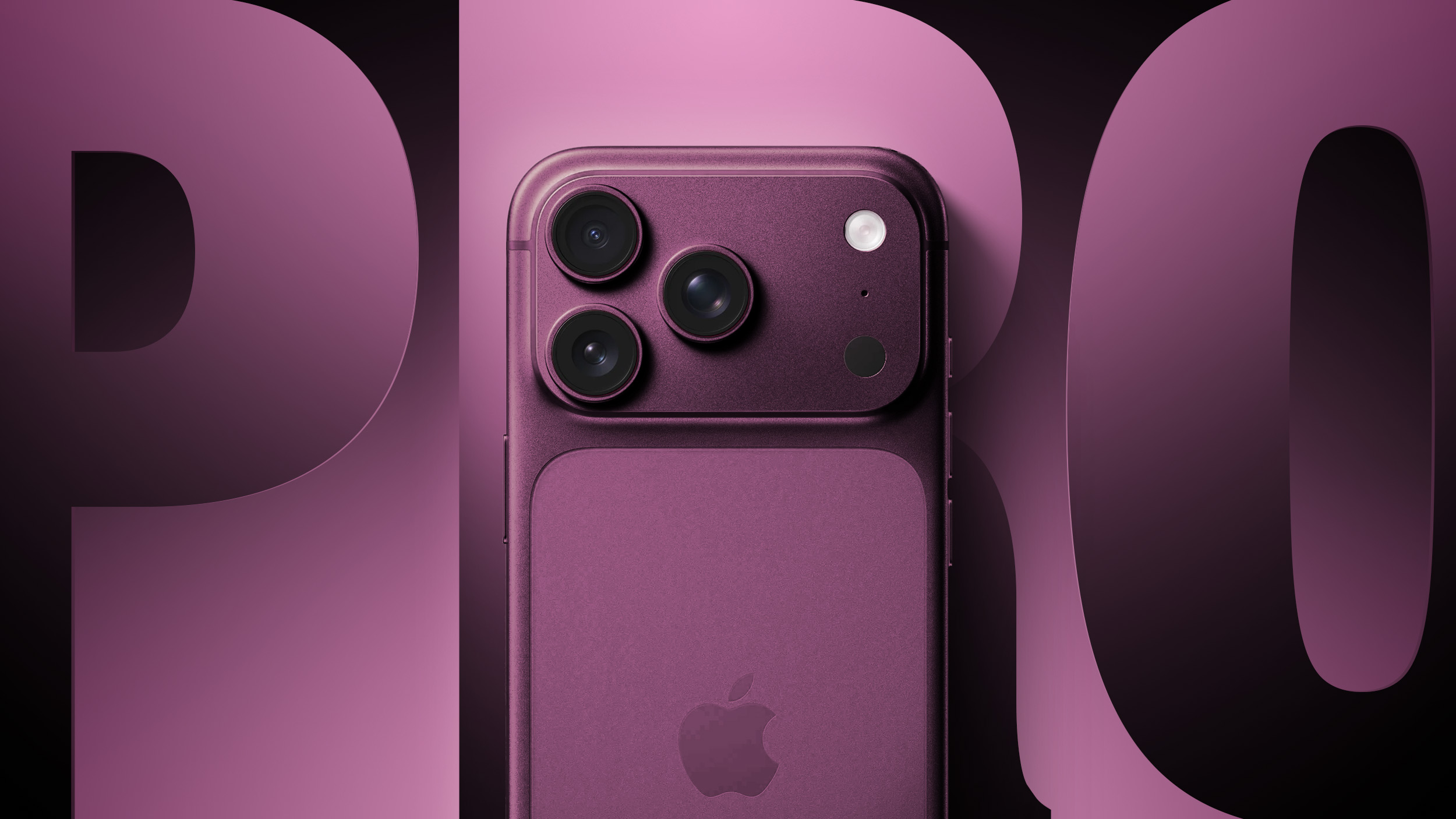
In early August, Gurman said the earbuds were progressing well enough to potentially ship before the end of the year. By mid-August, though, he reported that Apple had pulled the model from its 2026 road map, pushing the camera AirPods to a 2027 launch alongside the 20th-anniversary iPhone instead. Today's event will still include new AirPods 5 models.
Related Roundups: AirPods 4, AirPods Pro 3
Related Forum: AirPods

This article, "AirPods With Cameras Were Supposed to Debut Today, Now Delayed" first appeared on MacRumors.com

Discuss this article in our forums

  •  

iPhone 18 Pro Details Purportedly Leaked By Verizon's AI Assistant [Updated]

A series of screenshots seemingly show Verizon's AI chat assistant answering detailed questions about the iPhone 18 Pro and ‌iPhone 18 Pro‌ Max, just hours before Apple's announcement event.


The screenshots were shared privately with MacRumors by an X user who says the responses came from the "Ask Verizon" AI assistant built into the carrier's app. The conversation is timestamped September 8 at 1:48 to 1:52 p.m., the day before Apple's "Surprise and shine" event. According to the screenshots, the assistant made the following interesting claims about the ‌iPhone 18 Pro‌ and ‌iPhone 18 Pro‌ Max:


  • The ‌iPhone 18 Pro‌ Max features the same variable aperture main camera lens as the ‌iPhone 18 Pro‌.

  • Variable aperture lets the lens opening adjust between f/1.4 and f/4.0 for better low-light shots, natural bokeh, and sharper group photos.

  • The ‌iPhone 18 Pro‌ Max gets an "advanced" Sensor-shift OIS for improved low-light video stabilization and a larger main sensor for more detail and light.

  • The ‌iPhone 18 Pro‌ Max features a 48MP telephoto camera with up to 10x optical zoom, up from 8x on the ‌iPhone 18 Pro‌.

  • The ‌iPhone 18 Pro‌ Max has 16GB of RAM, compared to 12GB on the ‌iPhone 18 Pro‌.

  • The ‌iPhone 18 Pro‌ starts at $1,099.99, with the ‌iPhone 18 Pro‌ Max starting at $1,199.99.

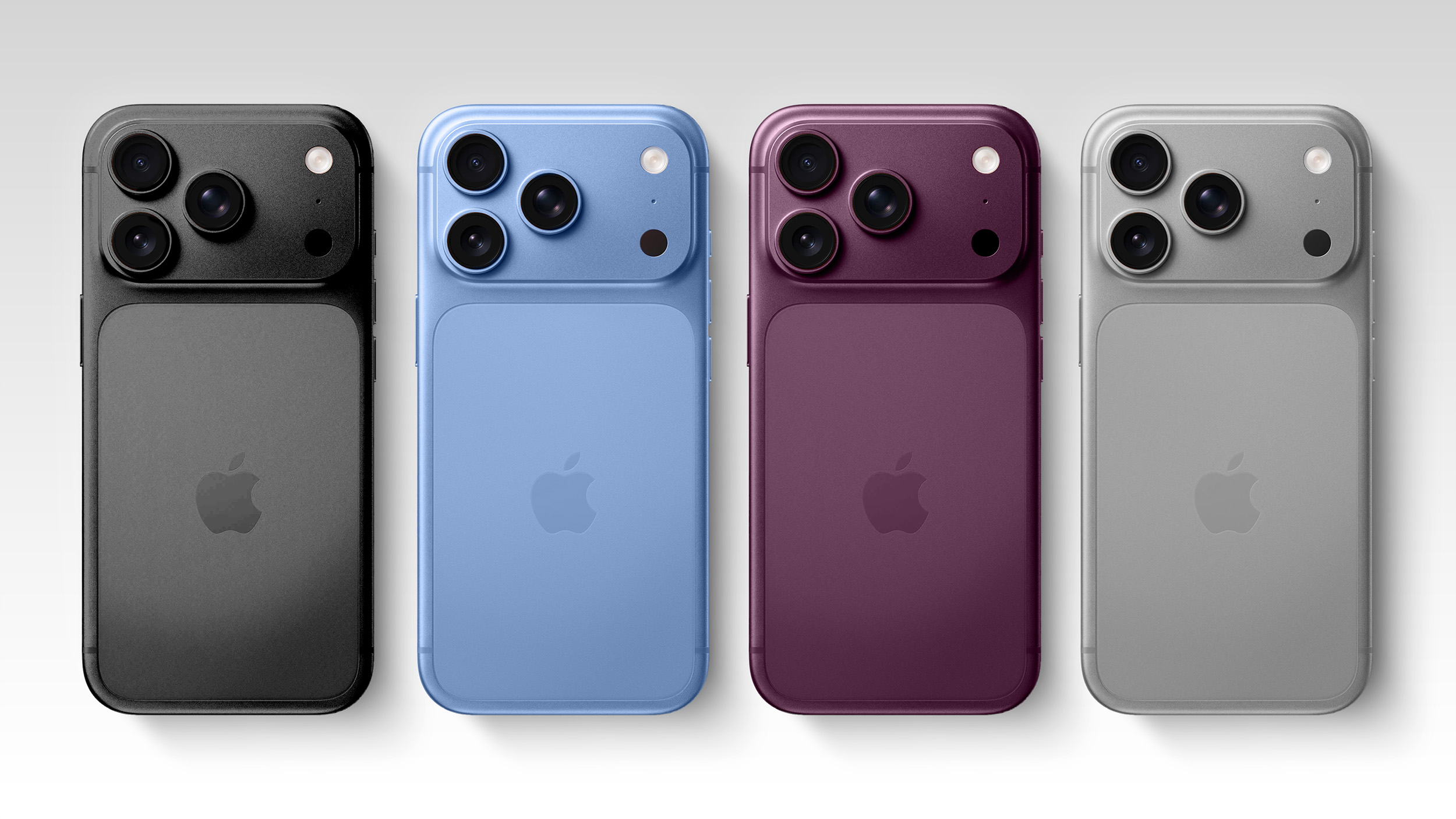
  • The ‌iPhone 18 Pro‌ comes in four colors: Dark Cherry, Titanium Gray, Titanium White, and Titanium Black.


Several of these claims sit awkwardly next to what's already been reported. The pricing the chatbot gave, $1,099.99 for the ‌iPhone 18 Pro‌ and $1,199.99 for the Pro Max, exactly matches the iPhone 17 Pro's current starting prices, even though there is a general consensus from analysts that prices will increase this generation.

The color names are also seem to be incorrect. Recent leaks have pointed to Dark Cherry alongside Silver and Sky Blue, not the "Titanium Gray," "Titanium White," and "Titanium Black" names the assistant listed, which more closely resemble the finish names Apple used for the iPhone 15 Pro lineup back in 2023. This clearly raises the possibility that the chatbot pulled outdated or unrelated training data rather than surfacing a genuine leak. The assistant also made a series of more plausible claims:


  • The ‌iPhone 18 Pro‌ has a 6.3-inch Super Retina XDR display, while the ‌iPhone 18 Pro‌ Max has a 6.9-inch display.

  • The ‌iPhone 18 Pro‌ Max offers longer battery life than the Pro due to its larger size.

  • Both models feature a triple-lens rear camera system.

  • The main camera is 48MP with the f/1.4 to f/4.0 variable aperture and Sensor-shift OIS.

  • The ultra wide camera is 48MP, aimed at high-resolution macro and wide shots.

  • Both models support ProRAW and ProRes video recording.

  • Both models are powered by the A20 Pro chip.


We have been unable to independently verify or replicate the exchange, suggesting the chatbot may have since been patched, or that the original screenshots were altered or otherwise inaccurate. Given that, and the fact that AI chatbots are known to hallucinate plausible sounding but false information, the claims should be treated with skepticism rather than as a legitimate leak.

Update: Verizon tells MacRumors that the alleged leak from the AI chatbot is untrue.
Related Roundup: iPhone 18 Pro
Tag: Verizon

This article, "iPhone 18 Pro Details Purportedly Leaked By Verizon's AI Assistant [Updated]" first appeared on MacRumors.com

Discuss this article in our forums

  •  

iPhone 18 Pro Price Hike to Be Lower Than Expected

Apple will increase the price of its high-end iPhones by just $100 per model upon the announcement of the iPhone 18 Pro and ‌iPhone 18 Pro‌ Max, Bloomberg's Mark Gurman reports, which is a smaller bump than many had been bracing for ahead of today's event.


In June, Apple hiked the cost of all of its Macs, iPads, and home products in response to the global memory shortage, but chose to keep iPhone pricing intact at the time. That is widely expected to change today, with the ‌iPhone 18 Pro‌ and ‌iPhone 18 Pro‌ Max expected to come in at a higher price than their predecessors.

Gurman's $100 figure comes in well below some of the more dire predictions floated over the summer. Analytics firm IDC had suggested increases of up to $200 for the Pro models, while GF Securities analyst Jeff Pu warned costs for the A20 Pro chip, RAM, and storage could push prices as much as $300 higher. TrendForce, citing memory chip costs that have risen nearly 400% year-on-year, had also modeled a $150 to $200 jump. Apple appears to be absorbing more of that cost itself rather than passing all of it on to buyers.

Earlier this year, Apple took steps to soften the blow of rising prices by launching the Apple Upgrade program in the U.S. The Klarna-backed leasing plan allows customers to pay a monthly fee in perpetuity and swap their device out annually for the newest version. Wireless carriers could also help to ease iPhone "sticker shock" by offering aggressive installment plans and trade-in incentives, Gurman added.
Related Roundup: iPhone 18 Pro

This article, "iPhone 18 Pro Price Hike to Be Lower Than Expected" first appeared on MacRumors.com

Discuss this article in our forums

  •  

Apple Watch Ultra 4 to Get Improved Battery Life

The Apple Watch Ultra 4 will feature improved battery life over the Ultra 3, according to Bloomberg's Mark Gurman.
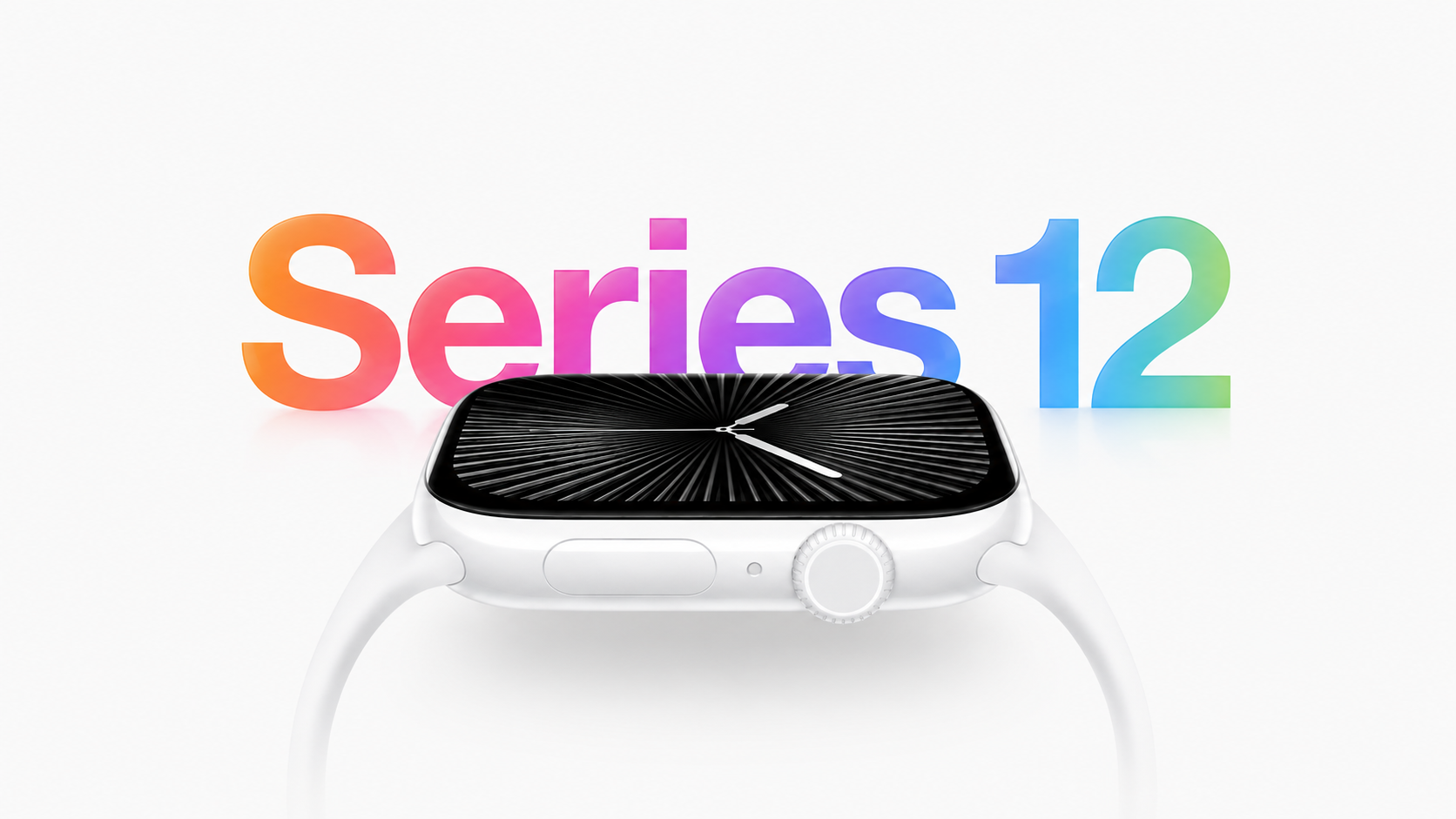
Apple has highlighted a battery boost with each new Ultra model. Last year, the Ultra 3 was rated for up to 42 hours of normal use, up from 36 hours on the Ultra 2.
Related Roundup: Apple Watch Ultra 3
Related Forum: Apple Watch

This article, "Apple Watch Ultra 4 to Get Improved Battery Life" first appeared on MacRumors.com

Discuss this article in our forums

  •  

Apple Watch Series 12 and Ultra 4 to Gain New AI Feature That Summarizes Your Day

The Apple Watch Series 12 and Ultra 4 models set to be unveiled today include a new privacy-focused feature that can analyze your day and provide a summary of what took place, including conversations you've had, according to Bloomberg's Mark Gurman.


Gurman says the feature is designed to compete with the wave of recent AI wearables that promise to log and recall a user's day. Unlike some of those devices, Apple's system apparently cannot show a transcript and does not record or store audio, which is a distinction Apple is likely to promote on given the privacy concerns raised by always-listening AI hardware.

The feature will arrive alongside the new "Readiness" app, a variant of the existing Vitals app that Apple is introducing to compete more directly with wearable fitness software from Oura and Whoop. Readiness draws on the Apple Watch's sensor array, including heart rate and blood-oxygen data, and Apple is pairing the new health and fitness features with a revamped Health app for the iPhone.

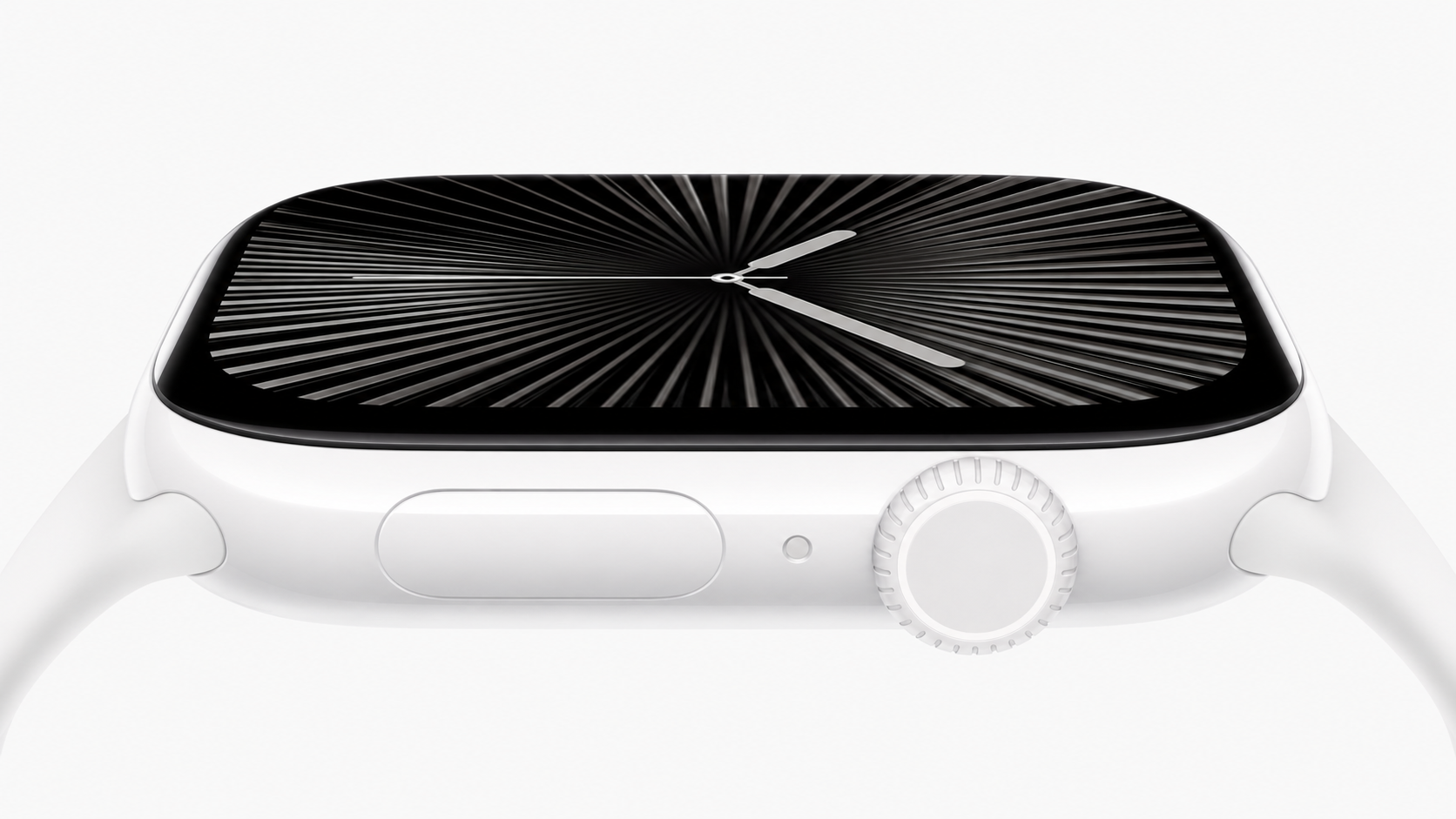
The Apple Watch Series 12 and Apple Watch Ultra 4 will also receive new color options along with changes to the case and bands. The Series 12 will bring back a ceramic case option for the first time since the Apple Watch Series 5. The Ultra 4 will purportedly tout improved battery life.

Both devices are expected to be revealed later today at Apple's "Surprise and Shine" event.
Related Forum: Apple Watch

This article, "Apple Watch Series 12 and Ultra 4 to Gain New AI Feature That Summarizes Your Day" first appeared on MacRumors.com

Discuss this article in our forums

  •  

'Small Prophets' Renewed for Season 2 Following Apple TV Deal

Breakout hit comedy show "Small Prophets" has been renewed for a second season, according to Deadline, a little over a week after Apple TV acquired the worldwide rights to the show's first season. This was the first time the company has acquired the streaming rights to an existing show.

"Small Prophets" is set to stream on ‌Apple TV‌ worldwide starting on October 7, with creator Mackenzie Crook returning to write and direct season two.
Related Roundup: Apple TV
Buyer's Guide: Apple TV (Don't Buy)

This article, "'Small Prophets' Renewed for Season 2 Following Apple TV Deal" first appeared on MacRumors.com

Discuss this article in our forums

  •  

Apple Sued Over Alleged Face ID Patent Infringement

TrinamiX, a subsidiary of the German chemical giant BASF, is suing Apple in the U.S. District Court for the Western District of Texas, accusing the company of infringing seven patents related to face authentication technology used in Face ID.


In its complaint, first reported by Reuters, trinamiX said it spent years developing technology to stop people from fooling face unlock systems with a photo, a fake mask, or a silicone copy of someone's face.

The complaint says Apple's original version of ‌Face ID‌, introduced with the iPhone X in 2017, did not use trinamiX's technology, but that newer iPhones and iPads do. TrinamiX's system is designed to tell real skin apart from things like photos or masks, essentially adding a check that catches fakes conventional optical face scanning methods would miss.

The complaint alleges that "Apple knew or should have known of the high probability that updating its iPhones and iPads to incorporate ‌Face ID‌ using material and skin detection" infringed seven trinamiX patents, causing "substantial damages and irreparable injury." The seven patents cover two areas: detecting skin during face unlock and identifying what material something is made of.

TrinamiX names a broad swath of Apple devices as accused products, including the iPhone 15, iPhone 15 Plus, iPhone 15 Pro, iPhone 15 Pro Max, iPhone 16, iPhone 16e, ‌iPhone 16‌ Plus, ‌iPhone 16‌ Pro, ‌iPhone 16‌ Pro Max, iPhone 17, iPhone 17e, iPhone 17 Pro, ‌iPhone 17 Pro‌ Max, iPhone Air, 11-inch iPad Pro (4th generation), 12.9-inch ‌iPad Pro‌ (6th generation), and the 11- and 13-inch ‌iPad Pro‌ models with the M4 and M5 chips.

TrinamiX is asking the court to find that Apple infringed its patents, to block Apple from making, using, selling, offering for sale, or importing the accused products, and to award damages and attorneys' fees. The company has requested a jury trial. The full complaint is available via IP Fray.
This article, "Apple Sued Over Alleged Face ID Patent Infringement" first appeared on MacRumors.com

Discuss this article in our forums

  •  

Apple Arcade Adds 'Pusheen's Place' and Four More Games in October

Apple today announced a new series of games coming to Apple Arcade in October, headlined by "Pusheen's Place."


The new games heading to ‌Apple Arcade‌ next month are as follows:


  • Pusheen's Place: The first officially licensed game starring Pusheen the Cat, letting players build a cozy paradise and collect more than 100 kitties while playing, crafting, and decorating rooms for characters like Pusheenicorn and Pancake Pusheen, alongside mini games such as Snack Stack, Parfait Pop, and Batch Match.

  • River City Survivors: An explosive survivors-like action game from the long running River City series, throwing players into waves of zombies with more than 20 playable characters, including franchise mainstays Kunio and Riki, and support for up to two companions.

  • Terraria+: A sandbox action adventure game where players fight, explore, and build through an ever expanding world, including the "Bigger & Boulder" 1.4.5 update, which adds a "Dead Cells" crossover and Pals from "Palworld," with support for up to seven players via Game Center or local Wi-Fi.

  • Touchgrind BMX 2+: A physics-based BMX stunt game with two finger controls designed to make every trick feel real.

  • 4 Pics 1 Word+: The Arcade edition of the puzzle game that has stumped and delighted more than 400 million players worldwide.


All of the new games will be available on October 1, 2026. Pusheen's Place joins Arcade's existing lineup of "cozy" titles, including "Hello Kitty Island Adventure," "Tamagotchi Adventure Kingdom," and "Cozy Caravan."

‌Apple Arcade‌ is a subscription service that provides access to more than 200 games across the iPhone, iPad, Mac, Apple TV, and Apple Vision Pro, all free of ads and in-app purchases. In the U.S., ‌Apple Arcade‌ costs $6.99 per month with a one-month free trial, and customers who purchase a new iPhone, ‌iPad‌, Mac, or ‌Apple TV‌ get three months of the service for free. ‌Apple Arcade‌ is also included in Apple One's Individual ($21.95), Family ($27.95), and Premier ($39.95) plans in the U.S., each with a one-month free trial. ‌Apple Arcade‌ can be accessed through the App Store and the Apple Games app.
This article, "Apple Arcade Adds 'Pusheen's Place' and Four More Games in October" first appeared on MacRumors.com

Discuss this article in our forums

  •  

Foldable iPhone Development History and Price Revealed in New Report

Former Apple CEO Tim Cook played a major role in the development of the foldable iPhone, which could reach around $3,000 with storage upgrades, according to new details shared by Bloomberg's Mark Gurman.


Early in the development of the foldable iPhone, the company reportedly targeted a starting retail price of $1,999, hoping to come under the "potentially controversial $2,000 barrier." The idea was to replicate the debut of the iPhone X in 2017, which started at $999.

Amid the impact of the global memory shortage, Apple is said to have recently discussed pricing the foldable at $2,199. Some storage configurations could approach $3,000. While the company anticipates some "sticker shock" for consumers, the willingness of customers to spend around $2,000 on iPhone models with upgraded storage convinced the company that an "upscale foldable device was worth bringing to market."

Gurman also revealed details about the history of the foldable iPhone inside Apple. Around 2020, Cook apparently returned from a visit to Asia "unusually energized" about foldable phones. During the trip, he saw growing numbers of consumers using foldable devices from the likes of Samsung and Huawei. He came to believe that Apple needed an equivalent offering in the market and pushed the company to accelerate its development efforts.

Apple's hardware engineering team had been studying foldable phones, displays, and related components for years, dating back to well before the launch of the first Galaxy Fold device in 2019. Before Cook's guidance, the project was mired by debates over the form that an Apple foldable should take, with one early concept being an iPad mini that could unfold into a larger tablet. Cook wanted the final device to be more mainstream in the form of a foldable iPhone, and his level of involvement in the project was unusual.

The project was conceived under Dan Riccio, who preceded John Ternus as head of hardware engineering. The company apparently prioritized resolving four main challenges: reducing the visibility of the display crease, improving hinge reliability, creating a new flexible cover glass for the inner display, and developing under-display camera technology.

The company eventually settled on a hinge system made using titanium and aluminum and custom cover glass developed with Corning. Despite being less durable than other existing iPhone models, Apple is said to believe that the construction quality of the foldable iPhone is industry-leading for the foldable market, and thinks it has an advantage over Android devices in terms of software.

Gurman restated several of the device's rumored specifications, including a 7.8-inch inner display, a 5.5-inch outer display, and a wide form-factor design. During development, Apple designers apparently compared the folded proportions of the device to a passport and the unfolded proportions to a Magic Trackpad. The short-and-wide design was chosen to provide a point of differentiation with rival foldable and generate consumer interest.

He reiterated that the foldable iPhone may be less durable than a conventional iPhone, with an inferior camera system and less battery life. Despite these drawbacks, Apple employees are said to believe "the company will sell every foldable phone it can produce."

Gurman also noted that the foldable iPhone's engineering complexity "makes it an ideal showcase" for new CEO John Ternus, following his career as Apple's hardware chief. Ternus was apparently a major champion of the device and played a major role to "push it over the finish line," alongside Cook.

Apple's foldable iPhone is expected to be announced tomorrow at its "Surprise and shine" event. See the full Bloomberg report for more information.
Related Roundup: iPhone Fold

This article, "Foldable iPhone Development History and Price Revealed in New Report" first appeared on MacRumors.com

Discuss this article in our forums

  •  

2024 vs. 2026 Mac Mini Buyer's Guide

Last month, Apple announced a new Mac mini built around the all-new M6 chip and the M5 Pro, replacing the M4 and M4 Pro models that had been on sale since October 2024. Pre-orders are open now, with the machines arriving to customers and in stores on September 22.


The M6 model starts at $899 and the M5 Pro model at $1,699, each $100 above what its predecessor was selling for by the end of its run and $300 above what their predecessors launched at. The ‌Mac mini‌ rose from $599 to $799 in May, and the M4 Pro configuration went from $1,399 to $1,599 in June, both as a consequence of the memory shortage driven by AI demand. Education pricing brings the new models down to $799 and $1,599 respectively.

What Changed Across Both Models


A number of upgrades apply equally to the standard and Pro configurations, regardless of which chip you choose:


‌Mac mini‌ (2024) ‌Mac mini‌ (2026)
Neural Accelerators in each GPU core
Variable refresh rate and HDR support
Wi-Fi 6E connectivity Wi-Fi 7 connectivity
Apple N1 wireless networking chip
Bluetooth 5.3 Bluetooth 6
Thread networking technology
Gigabit Ethernet or 10Gb Ethernet 2.5Gb Ethernet or 10Gb Ethernet
Genlock support over USB-C


Mac Mini With M4 vs. M6


Here is everything else that differs between the M4 and M6 versions of the ‌Mac mini‌:


‌Mac mini‌ (M4) ‌Mac mini‌ (M6)
M4 chip M6 chip
10-core CPU with four performance cores and six efficiency cores 12-core CPU with two super cores, four performance cores, and six efficiency cores
10-core GPU 12-core GPU
16-core Neural Engine Dual 16-core Neural Engine
120GB/s memory bandwidth 153GB/s memory bandwidth, rising to 170GB/s with 24GB or 32GB of unified memory
Two displays up to 6K at 60Hz, plus a third up to 5K at 60Hz Two displays up to 6K at 60Hz or 4K at 165Hz, plus a third up to 5K at 60Hz
Up to two external displays over a single Thunderbolt port
Now discontinued From $899


Mac Mini With M4 Pro vs. M5 Pro


The comparison below outlines the remaining differences between the two Pro configurations:


‌Mac mini‌ (M4 Pro) ‌Mac mini‌ (M5 Pro)
M4 Pro chip M5 Pro chip
Base: 12-core CPU with eight performance cores and four efficiency cores
Configurable to: 14-core CPU
Base: 15-core CPU with five super cores and 10 performance cores
Configurable to: 18-core CPU
Enhanced shader core and third-generation ray tracing
273GB/s memory bandwidth 307GB/s memory bandwidth
Three displays up to 6K at 60Hz Three displays up to 6K at 60Hz or 4K at 165Hz
Two displays: one up to 8K at 60Hz or 4K at 240Hz, plus a second up to 6K at 60Hz Two displays: one up to 8K at 60Hz, 5K at 120Hz, or 4K at 240Hz, plus a second up to 5K at 120Hz or 4K at 200Hz
Up to three external displays over a single Thunderbolt port
Now discontinued From $1,699


How Much Faster Is It, Really?


The latest refresh is minor for ordinary work and significant for AI workflows. Against the M4, Apple claims 40% faster CPU performance and 2x faster graphics, which is a normal generational step, alongside unusually large gains of up to 4x faster AI performance and up to 4.8x faster prompt processing in LM Studio. Almost all of the engineering appears to have gone into AI optimization, in the form of Neural Accelerators built into every GPU core for the first time on the ‌Mac mini‌ and a Neural Engine doubled to two 16-core units. The M5 Pro follows the same pattern, at up to 4x faster than the M4 Pro for prompt processing but only 1.4x faster for ray-traced rendering in Blender.

Display support is the one significant change beyond the chips. Both models add 4K at 165Hz and variable refresh rate, which the 2024 machines never supported, and the M5 Pro can drive a second display at 5K at 120Hz where the M4 Pro capped it at 6K at 60Hz. If you own a high refresh rate monitor, this is perhaps the most noticeable difference in the entire update.

It is worth noting that Apple's figure of up to 170GB/s for the M6 only applies to the 24GB and 32GB configurations. The 16GB models run at 153GB/s, so the gain over the M4's 120GB/s is around 28% for many buyers rather than the 42% implied. Bandwidth governs how fast a model's weights move out of memory, which makes the 32GB configuration a faster machine.

The memory ceilings are also not the increases they appear to be. The M4 shipped with a 32GB option and the M4 Pro with 64GB when they launched in October 2024, and Apple removed both in May as memory prices climbed. The new models restore those ceilings rather than raising them, so a 32GB M4 or 64GB M4 Pro already has the same ceiling as its 2026 equivalent.

Which to Choose?


If you own a 2024 ‌Mac mini‌ and do not run AI models on it, skip this generation. A 40% CPU improvement is not something you will notice in daily use, and nothing else meaningful about the machine has changed. The exception is display support: if you have a high refresh rate monitor stuck at 60Hz, that is a real problem the new models solve and the old ones never will.

If you do run models locally, the upgrade is easy to justify from an M4, but more difficult from an M4 Pro. Roughly 4x faster prompt processing changes what you can attempt. From an M4 Pro you get unchanged GPU core counts, a 12% bandwidth increase, and a $300 rise over what you paid, so wait for the next year's revision unless you specifically need to upgrade to a 64GB model.

For new buyers, the gap between the two 2026 models is wider than the $800 price difference suggests: the M5 Pro has 80% more memory bandwidth, double the memory ceiling, and 50% more CPU cores at the top. Since tools like LM Studio and Ollama run on the GPU rather than the Neural Engine, capacity and bandwidth are what matter. Memory capacity decides which models you can load at all, while bandwidth determines how fast they run. If your models fit in 32GB, buy the M6 at $899. If they do not, the M5 Pro is your only option here.

The 2024 models remain worth considering even though Apple has stopped selling them new, with availability via third parties, Apple's refurbished store, or second-hand.

Do not expect prices to collapse in the usual way, whichever route you take. The memory shortage pushed Apple's prices up, twice during the M4's final year, so a modest discount off $799 is unremarkable. The M4 model is worth buying nearer the $599 it launched at, and much above that, the stretch to buy a new M6 is difficult to argue against.

The 32GB M4 and 64GB M4 Pro were only sold between October 2024 and May 2026, so they exist on the used market but were unavailable new for the machine's final months. A 64GB M4 Pro matches the memory ceiling of a $1,699 M5 Pro at 273GB/s against 307GB/s, for considerably less. For running larger models on a budget, that may be the most cost-effective configuration.

The new ‌Mac mini‌ is available to pre-order now, with deliveries and in-store availability beginning on Tuesday, September 22.
Related Roundup: Mac mini
Buyer's Guide: Mac Mini (Buy Now)
Related Forum: Mac mini

This article, "2024 vs. 2026 Mac Mini Buyer's Guide" first appeared on MacRumors.com

Discuss this article in our forums

  •  

iPhone Air 2 Could Replace iPhone 18, Sketchy Rumor Claims

Apple may be considering scrapping the standard iPhone 18 entirely and rebranding the iPhone Air 2 as its new $999 entry point when the more affordable iPhone models launch in spring 2027, a sketchy rumor claims.


The claim comes from the X account "Early Apple," who said Apple is "exploring the idea" of having the Air 2 simply take over the ‌iPhone 18‌ name and price point rather than launching as a separate device.

This would be a major break from how the two devices have been described up to now. Over a year's worth of rumors have consistently portrayed the standard ‌iPhone 18‌, the iPhone 18e, and the Air 2 as three separate devices set to launch together next spring, following the iPhone 18 Pro models and Apple's first foldable iPhone arriving later this month. Given how firmly that three way split has held up in the rumor cycle so far, a rebrand this drastic looks unlikely for 2027.

We have covered leaks from the account before, including an alleged ‌iPhone 18 Pro‌ prototype photo back in April, but as we noted at the time, Early Apple is a relatively new account of unknown origin with no established track record, so the claim is best treated as an informed guess. The rumor has gained some traction online, so we have covered it for the sake of completeness.

The broader idea isn't entirely new, though. Other observers such as leaker Jon Prosser raised a similar possibility months ago, suggesting Apple's ultra-thin design could eventually become the template for the standard iPhone rather than remaining a separate niche model, framing it as a longer term shift rather than something arriving as soon as next spring.

There is a reasonable case for some convergence over time, even if next year is too soon. Apple has a history of debuting design features on pricier models before trickling down to the standard iPhone in later years, and with the ‌iPhone Air‌ 2 expected to close the gap by adding a second rear camera, one of the biggest practical differences between the Air and the standard iPhone would disappear. That makes it plausible that a future standard iPhone could eventually resemble the Air, even if an outright merger during the upcoming product cycle remains a stretch.

Apple is expected to announce the ‌iPhone 18 Pro‌, ‌iPhone 18 Pro‌ Max, and its first foldable iPhone tomorrow, with the standard ‌iPhone 18‌, iPhone 18e, and Air 2 following in spring 2027.
Related Roundups: iPhone 18, iPhone Air
Buyer's Guide: iPhone Air (Neutral)
Related Forum: iPhone

This article, "iPhone Air 2 Could Replace iPhone 18, Sketchy Rumor Claims" first appeared on MacRumors.com

Discuss this article in our forums

  •  
❌