Lees weergave

10 Ways to Improve Your iPhone's Battery Life

When you're at home or work with regular access to an iPhone charger, you probably don't need to worry much about your iPhone's battery. On days when you're away from home for long stretches, you might want to make some adjustments to extend battery life.


We've rounded up 10 tips that can cut down on battery drain.

1. Turn on Adaptive Power


The best way to preserve battery life is to make sure you have Adaptive Power turned on. It's an iOS 26 feature that's available on Apple Intelligence iPhones. It uses on-device intelligence to analyze usage patterns and determine when you might need extra power.
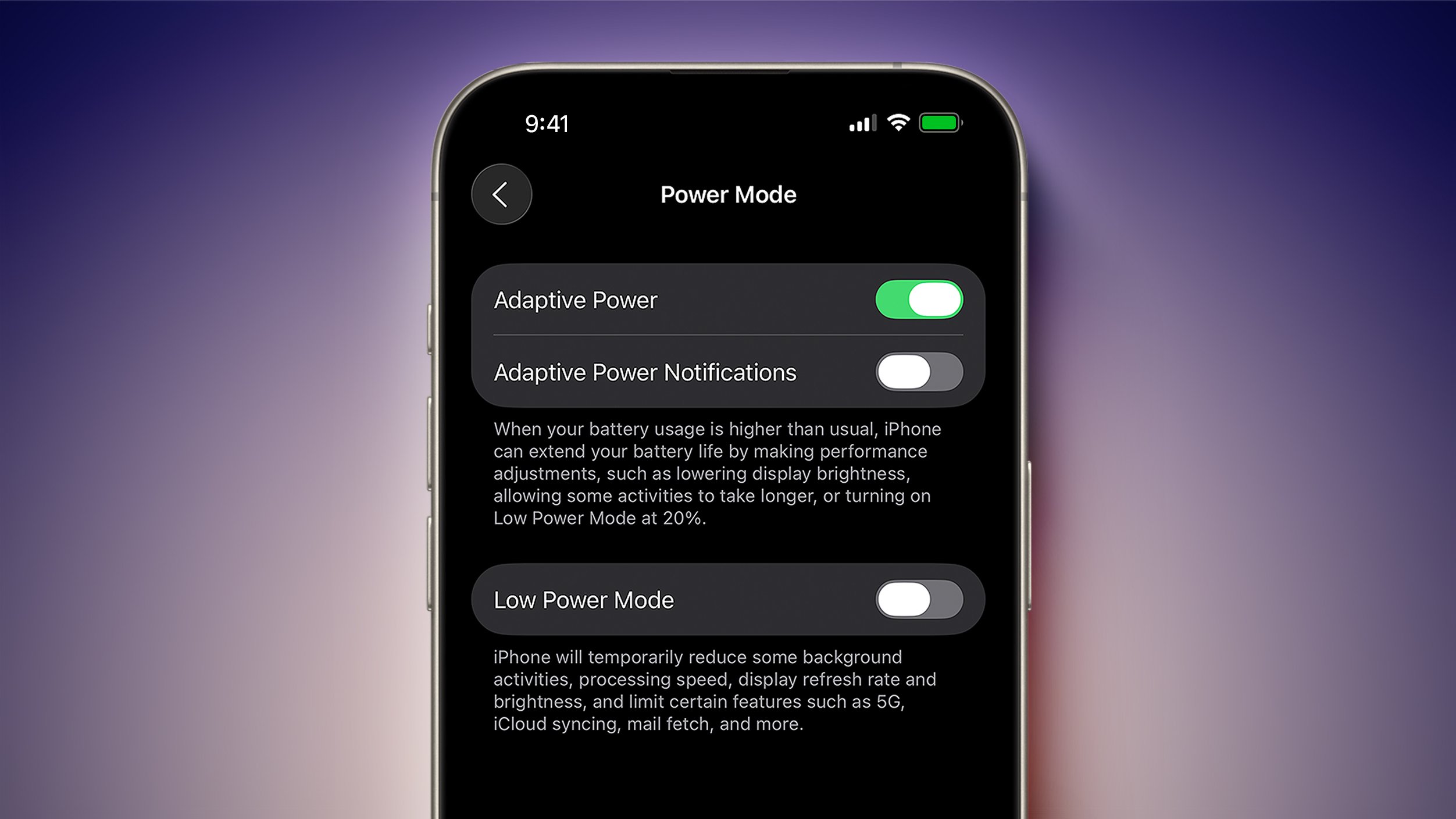

It saves battery by lowering screen brightness a bit, adjusting performance, and limiting background activity. It also turns on Low Power Mode automatically when your battery hits 20 percent.

If you have an iPhone 17, iPhone 17 Pro, ‌iPhone 17 Pro‌ Max, or iPhone Air, Adaptive Power is on by default, but you need to turn it on with other models. Adaptive Power can be activated on eligible iPhones in Settings & Battery & Power Mode.

2. Set Up Automations for Low Power Mode


Turning on Low Power Mode is the most obvious way to extend battery life on your iPhone, and you can automate it so it turns on at a set battery percentage.
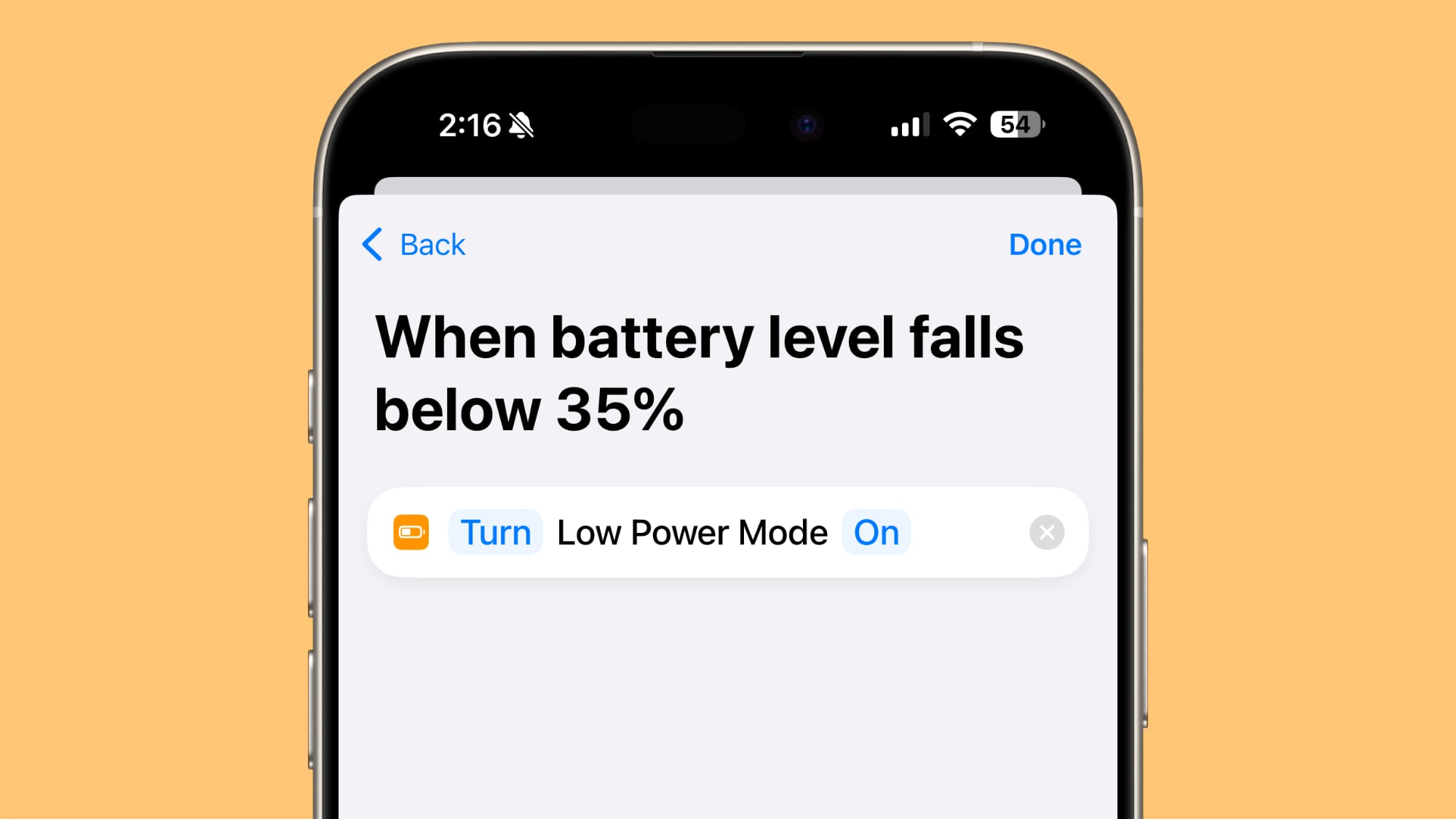

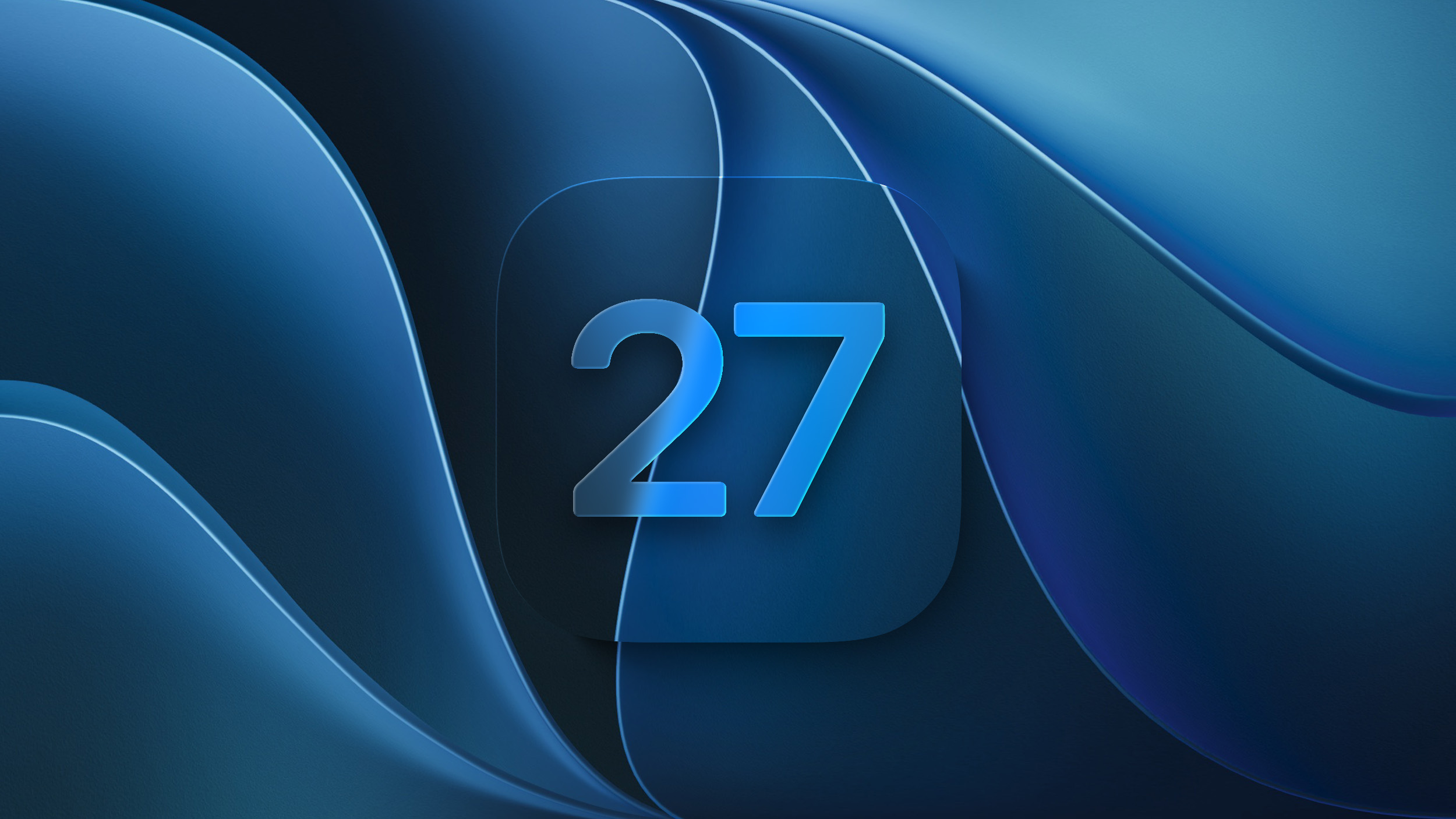
Apple will prompt you to turn on Low Power Mode when your battery is at 20 percent, but it's helpful to turn it on earlier. To set up a Low Power Mode shortcut, open up the Shortcuts app, and create a new Automation. With iOS 27, you can just type in what you want the automation to do, but in ‌iOS 26‌, search for Battery Level, choose a target battery percentage, then add Low Power Mode as the action to turn on when your battery hits that level.

3. Turn Off the Always-On Display


Your iPhone's Always-On Display leaves the time, wallpaper, widgets, and Live Activities visible on the Lock Screen even when your iPhone is locked.
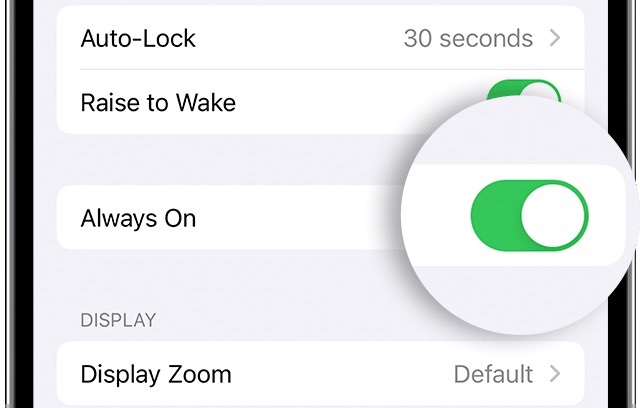
settings
The setting preserves battery by doing things like turning off the display when a connected Apple Watch is no longer nearby (signaling that the iPhone owner is out of the room) or the iPhone is in a pocket, but Always-On Display still drains battery faster than no Always-On Display.

You can turn off the Always-On Display by following these steps:

  1. Open up the Settings app.

  2. Tap on Display & Brightness.

  3. Tap on Always-On Display.

  4. Toggle off Always-On Display.


You can also customize the Always-On Display if you don't want to turn it off entirely. You can disable wallpapers or turn off notifications.

4. Limit Frame Rate


Some iPhones have a 120Hz ProMotion refresh rate, but dropping it down to 60Hz can eke out a bit more battery life. You can adjust frame rate by using an Accessibility setting.
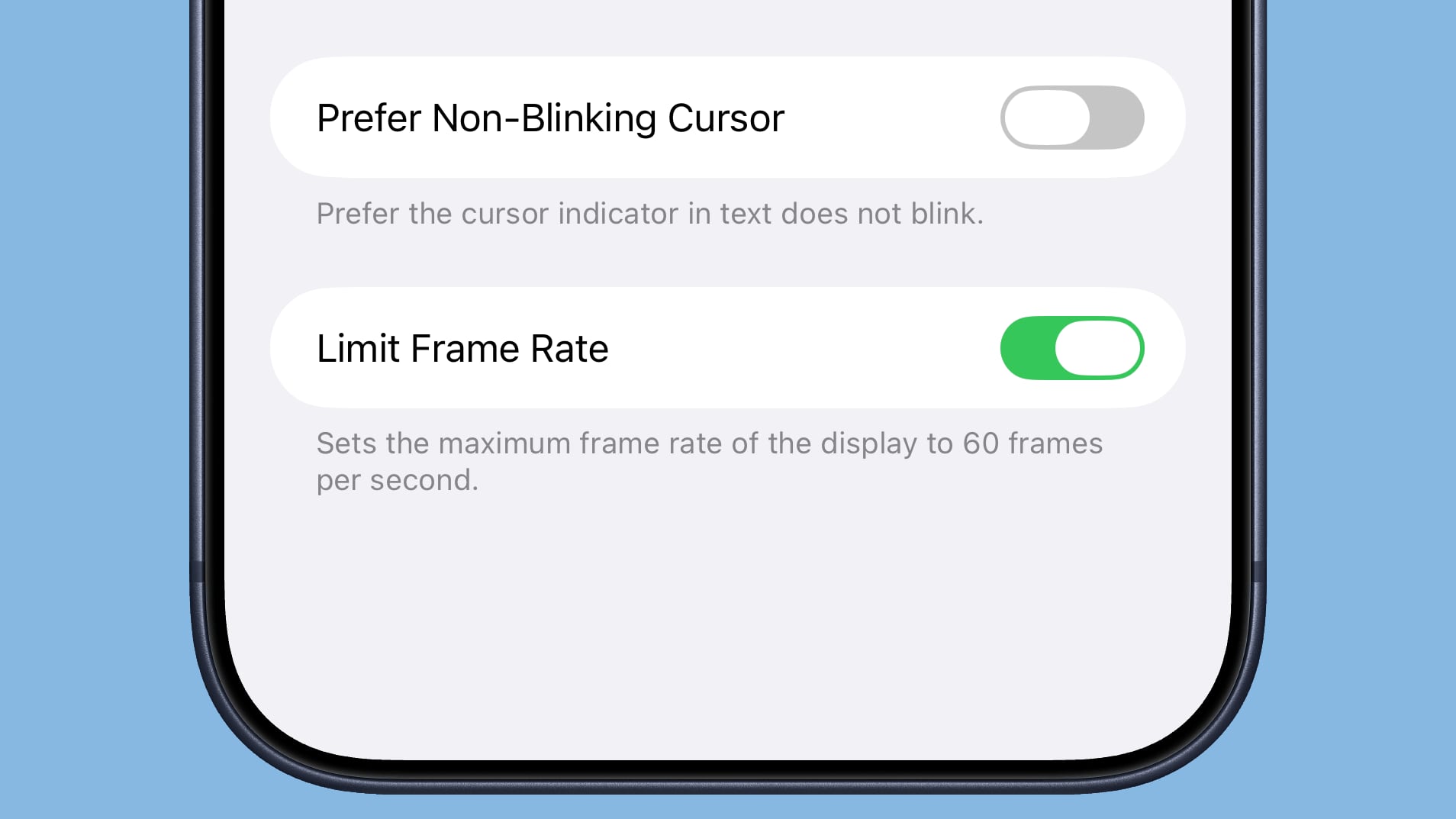


  1. Open up the Accessibility section of the Settings app.

  2. Tap on Motion.

  3. Toggle on Limit Frame Rate.


ProMotion is available on all ‌iPhone 17‌ models, the ‌iPhone Air‌, and Pro versions of earlier iPhones dating back to the iPhone 13 Pro.

5. Turn on Dark Mode


On OLED iPhone displays, activating Dark Mode preserves battery life because there's less power draw when darker-colored pixels are displayed. Activating ‌Dark Mode‌ when outside on a sunny day can preserve a good amount of battery life.
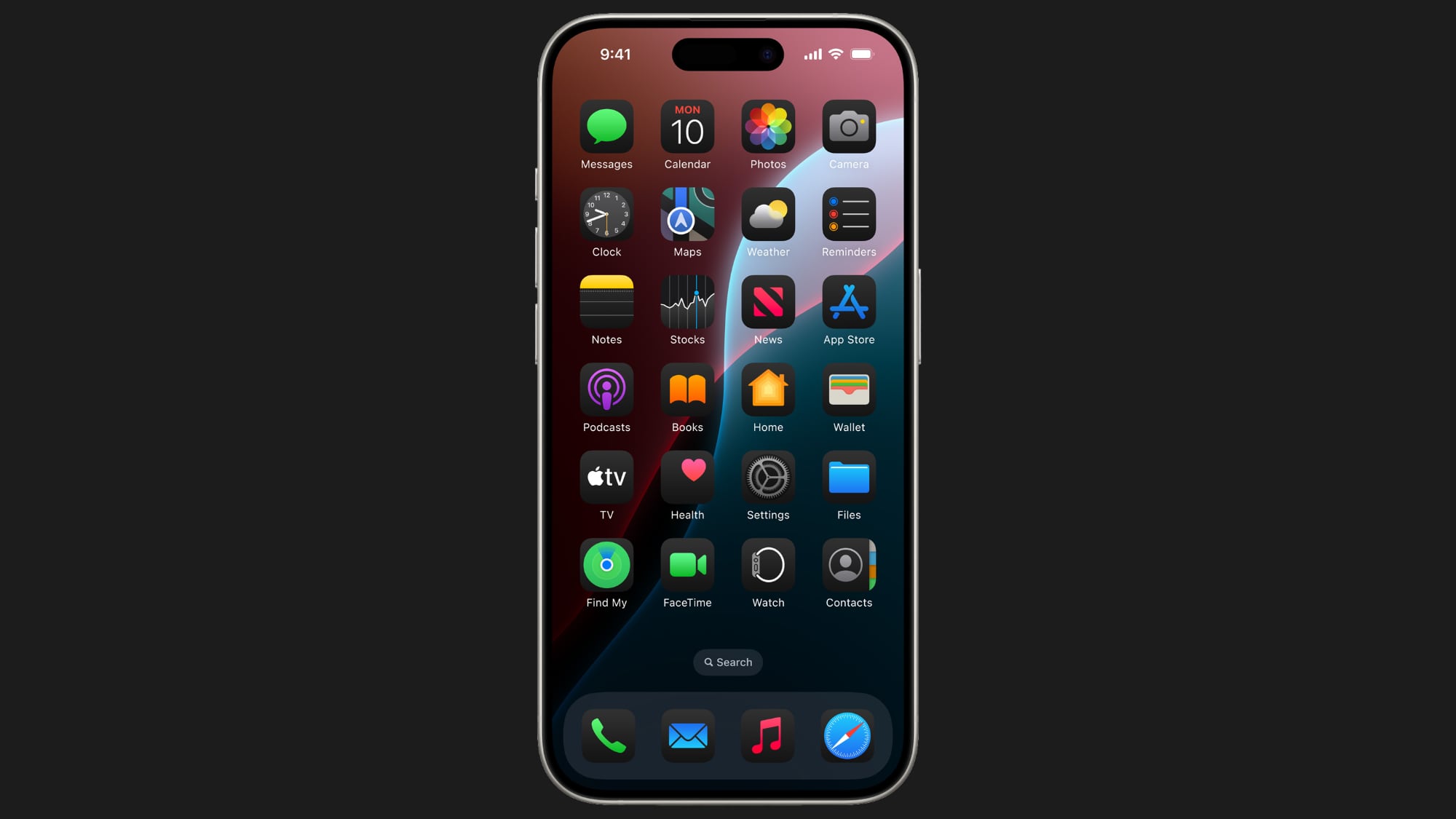

Lower levels of brightness in Light Mode use the same battery as higher levels of brightness in ‌Dark Mode‌, so ‌Dark Mode‌ can save battery even with brightness turned up when you're in a sunny location.

When you're somewhere that has dimmer lighting and screen brightness is lower, turning on ‌Dark Mode‌ won't save as much battery life, but it still draws a little less power.

6. Audit Apps With Location Access


It's a good idea to regularly check your privacy and access settings to make sure apps and services aren't doing things you don't want them to be doing.
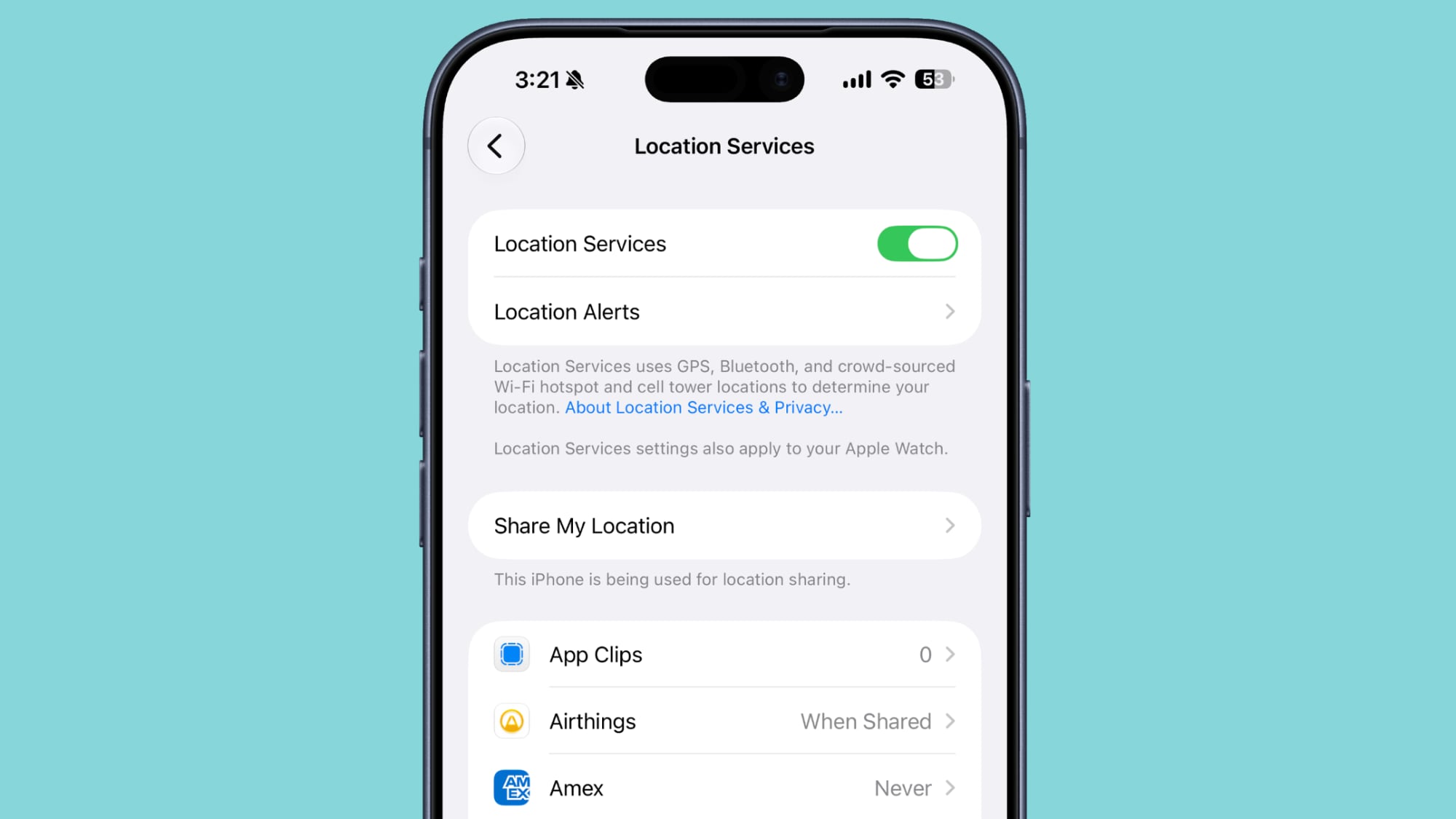

Limiting the apps that have access to your location and how often apps can access that data can save battery life.

  1. Open up the Settings app.

  2. Choose Privacy & Security.

  3. Tap Location Services.

  4. Review the list and edit settings by tapping on the name of each app in the list.


You have four possible choices for location settings for each app, though not all four choices will always be available for every app depending on what it does. You can select the following: Never, Ask Next Time Or When I Share, While Using the App, and Always.

Never will prevent an app from ever accessing your location, and unless there's a real need for an app to know where you are, such as a mapping app, setting location access to Never is the best choice.

Ask Next Time Or When I Share will prompt an app to ask you with a pop-up the next time that it wants your location, so you can temporarily approve it. With this setting, location access is off until expressly allowed via the pop-up.

While Using the App lets an app access your location when the app is open and being actively used. If you close the app or switch over to another app, location access ends.

Always allows an app to have access to your location at all times, regardless of whether it's open or closed. This will cause the most battery drain and should be limited to only the apps that you need the most.

Many apps that don't need location information will ask for your location information. A banking app may want location access to show nearby ATMs, and a social media app like Facebook may want to serve you location-based features. Clearing the cruft will ensure no apps are accessing your location without express permission, and it'll save battery life at the same time.

You can also turn off Location Services entirely, but it's not ideal because it can impact apps you rely on, like Maps.

7. Rein in Background App Refresh


Most apps use background refresh to update even when they're not open. Limiting background activity to just the apps that need it is a classic way to cut down on battery usage. It's also another one of the privacy-related options that's just good to check regularly.
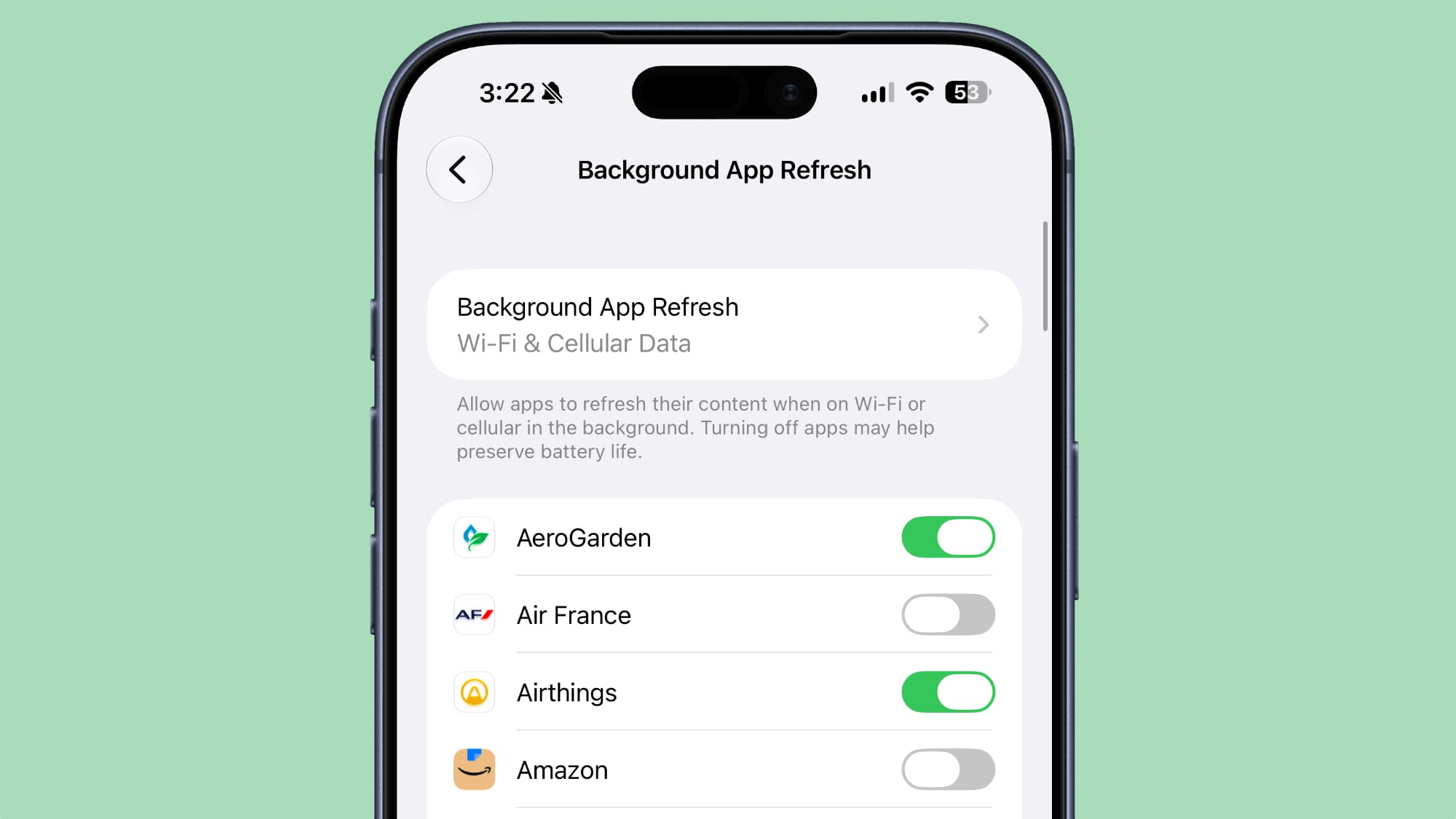

You can turn off Background App Refresh entirely or choose which apps can refresh in the background.

  1. Open the Settings app.

  2. Select General.

  3. Tap on Background App Refresh.


From there, you can tap on the Background App Refresh option to turn it off altogether or choose to have it activate only when connected to Wi-Fi, which doesn't drain battery as much as downloading over cellular.

8. Limit Live Activities and Notifications


Incoming notifications wake your screen, and Live Activities keep the Lock Screen updated constantly. Limiting the apps that can send you notifications and Live Activities saves battery life.
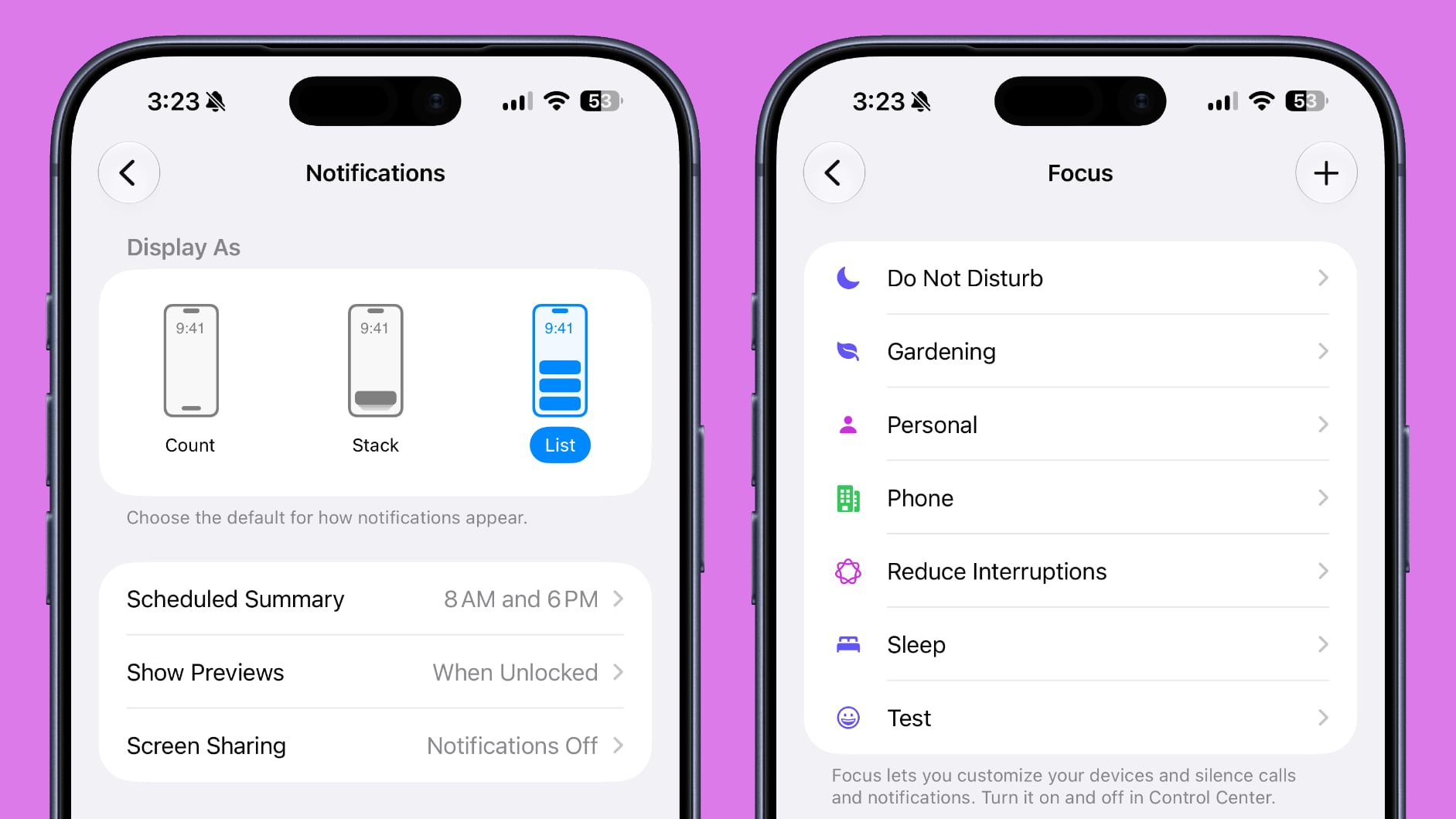

Under Settings & Notifications, go through the list and turn off notifications for apps you don't need to hear from. After that, you can further refine with Focus modes. Focus modes let you choose which apps and people can send you notifications and when.

  1. Open the Settings app.

  2. Scroll down to Focus and tap it.

  3. Tap on the "+" button.

  4. Follow the instructions to choose a Focus mode and the apps you want to use with it.


During work hours, you can make sure you're only getting work notifications, and during personal time, you can limit work notifications. You can set up Focus modes for all kinds of situations, from driving to workouts to sleep.

You'll still get all of your notifications, but silently. Turning off unwanted notifications from apps is still the best method for saving battery life, but Focus lets you keep your notifications while still cutting down on the number that you receive at any given time.

Scheduled Summary is another way to limit your notifications because you can have non-urgent alerts sent at a scheduled time.

You can toggle on Scheduled Summary for apps in the Notifications section of the Settings app, where you can choose which apps should have their notifications included in Scheduled Summary and when you want them delivered.

9. Turn Off Keyboard Haptics


Haptic feedback on the iPhone's keyboard is satisfying to feel when you tap on the on-screen keys, but it can drain your battery.
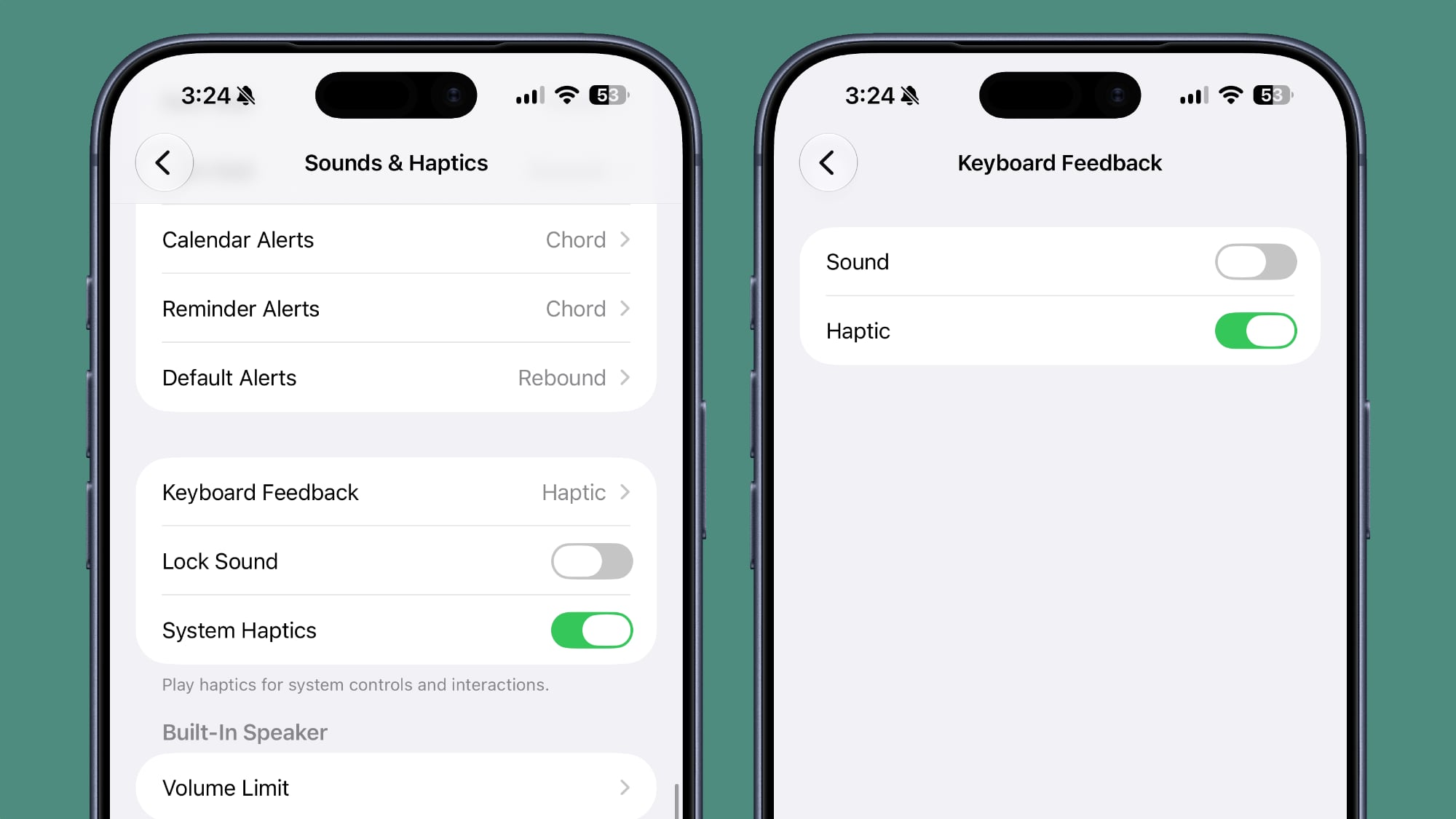

You can turn it off by going to Settings & Sounds & Haptics & Keyboard Feedback and toggling off Haptic.

10. Monitor Your Battery Usage and Adjust


In ‌iOS 26‌, Apple made it easier to see which of your apps are draining the most battery.
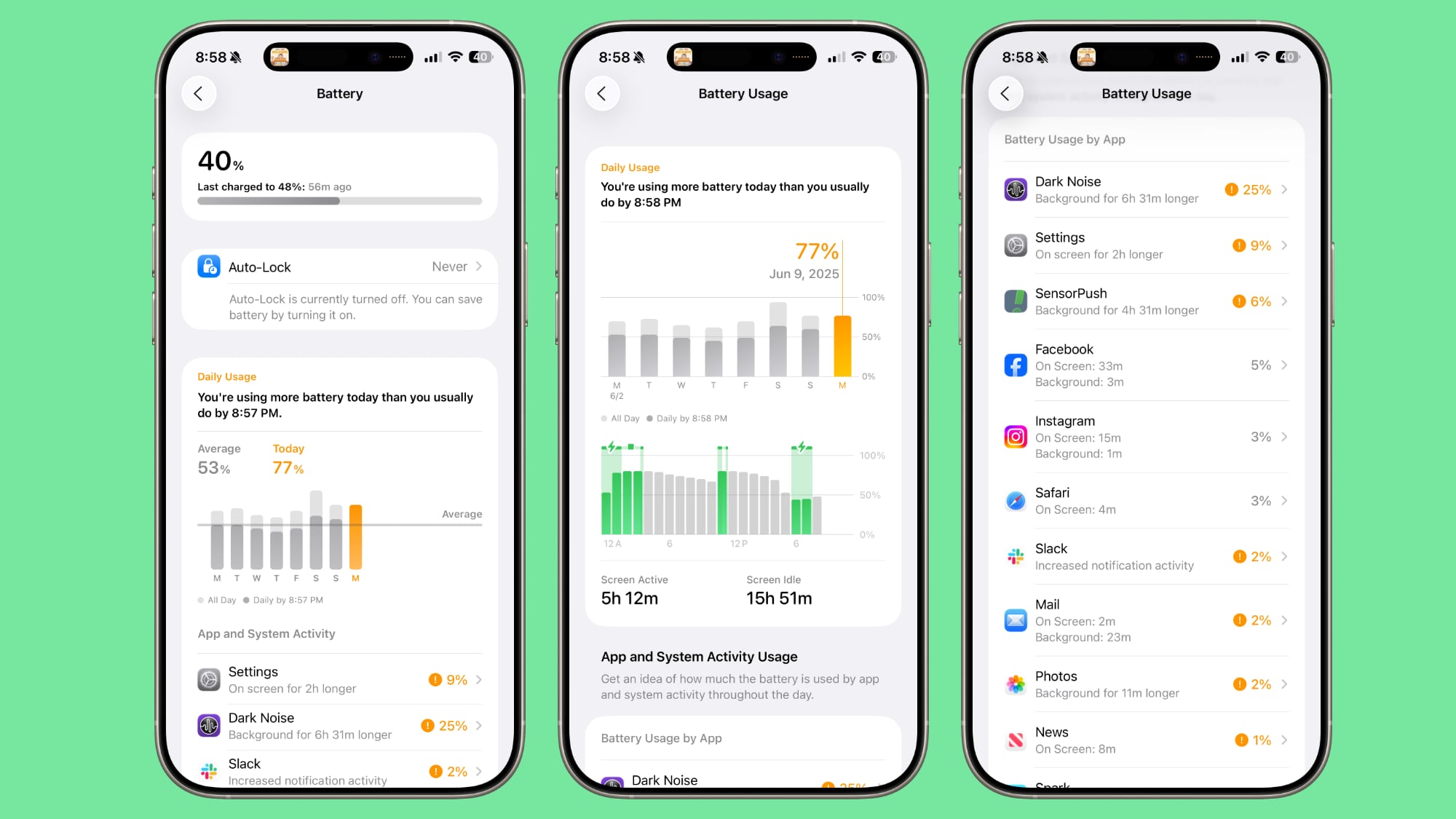

The top of the Battery interface has an overview of your current battery level and the time that you last charged. If your iPhone is charging, it also lets you know how much time you have left until the battery is full.

There is a weekly view of average battery use along with how much battery you're currently using compared to your typical average. The comparison tells you if you're using more, the same, or less battery life than you do on most days.
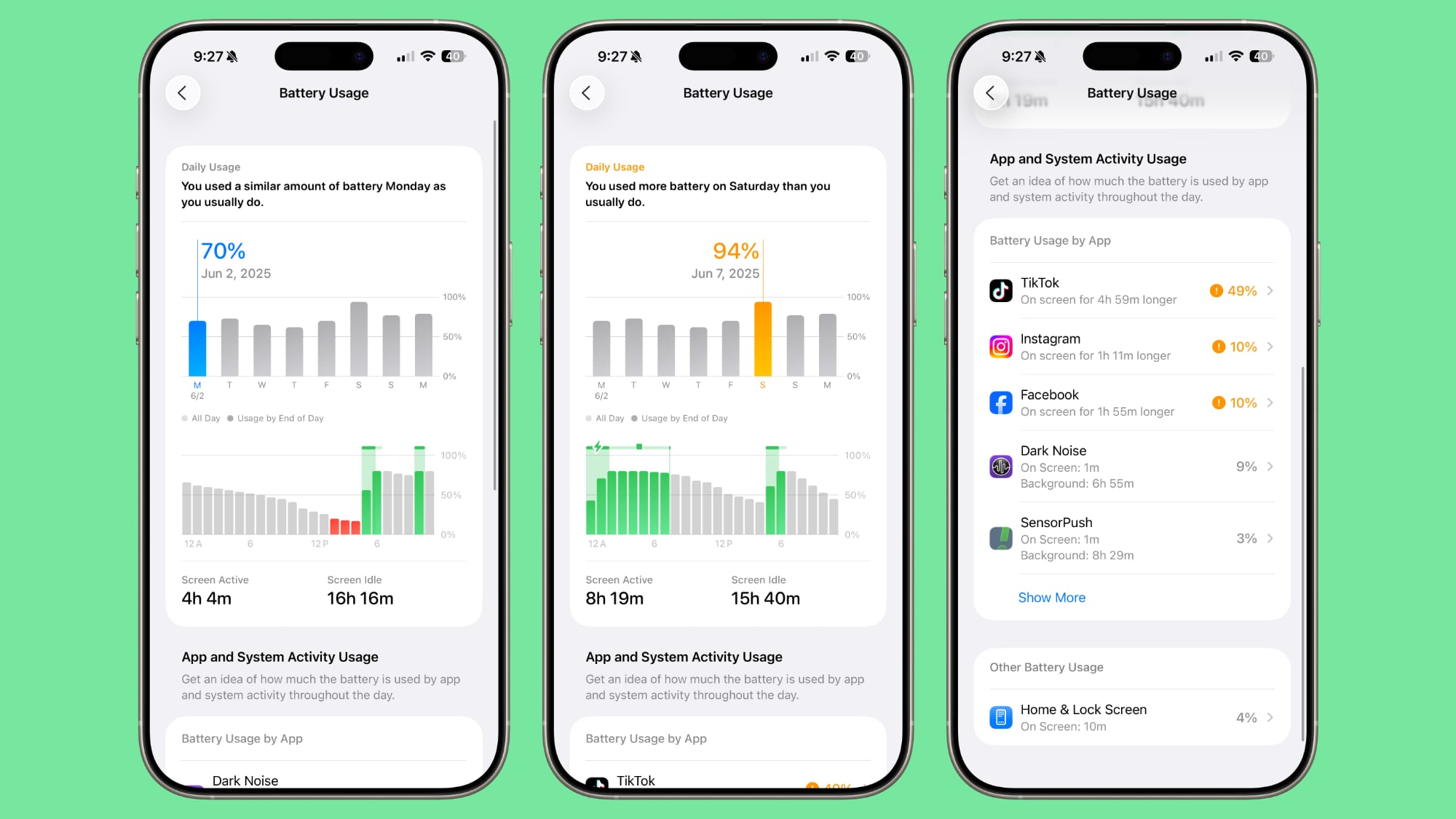

It shows which apps used more battery and by how much, which makes it easier to tell what's draining your battery. It also displays why an app used more battery, such as background app refresh or an excessive number of notifications.

Apps draining a lot of battery are shown in orange so they stand out, and that's where it's best to make adjustments.
This article, "10 Ways to Improve Your iPhone's Battery Life" first appeared on MacRumors.com

Discuss this article in our forums
  •  

Apple's Camera-Equipped AirPods: All the New Rumors

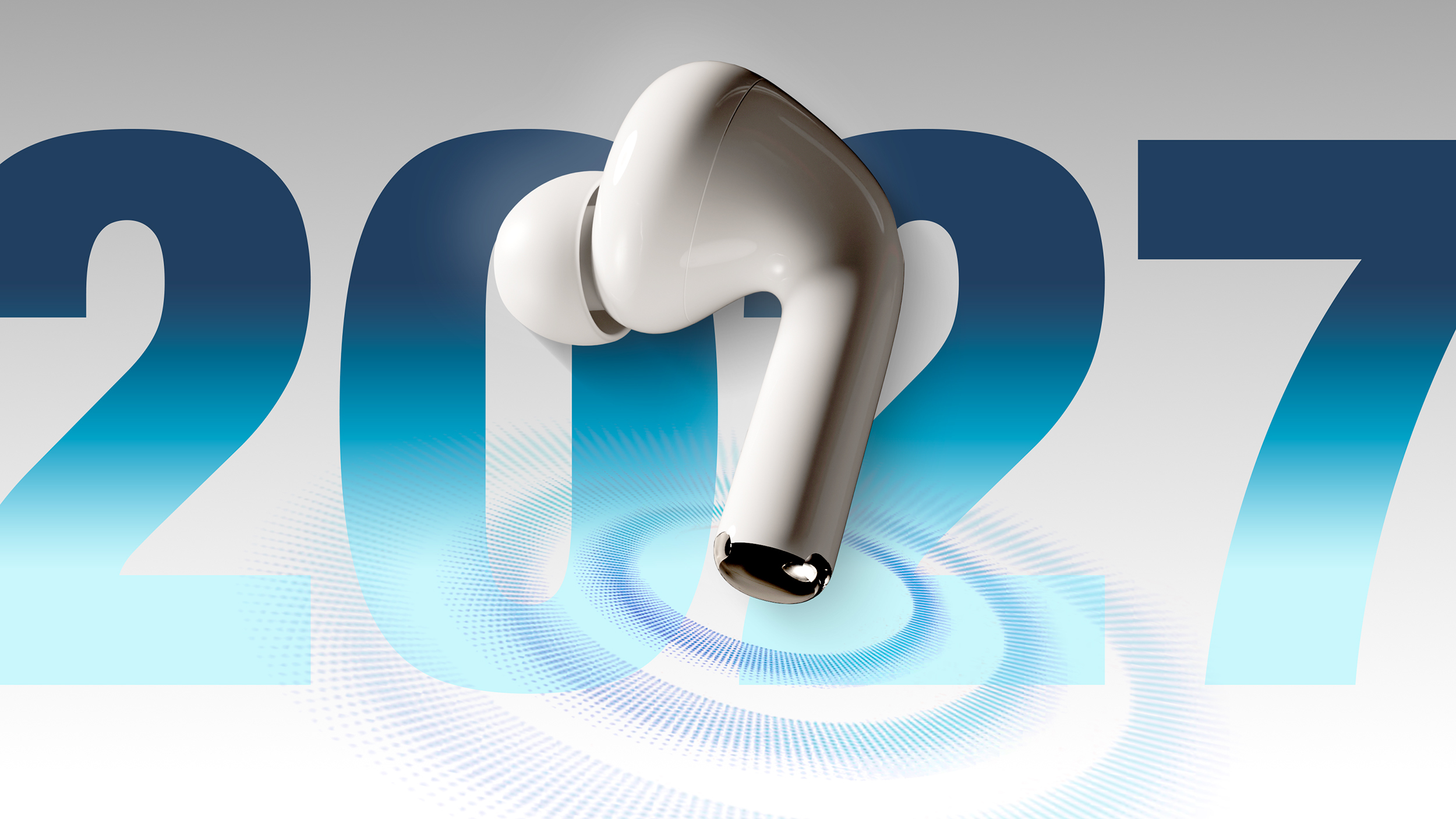
Apple is working on AirPods that have cameras for feeding data to Siri. The new earbuds will be Apple's first AI wearable, and they're expected to launch sometime in 2027.


Leaked Video


Apple accidentally left a demo video featuring its rumored camera-equipped AirPods in macOS Tahoe 26.7 in mid-August. In the demo, a man holds up a book so the cameras in the AirPods can see the title. "With Visual Intelligence, your world becomes savable. See something you like? Just ask me to save it for later," says the voiceover.


Here is your first look at AirPods with Cameras in action using Visual Intelligence.

This video file came from macOS 26.7 RC pic.twitter.com/yo7RI4MCeu


— Aaron (@aaronp613) August 18, 2026


The cameras on the AirPods will feed information to ‌Visual Intelligence‌, and ‌Siri‌ will be able to answer questions about the wearer's surroundings and log information. There is a direct reference to setting up ‌Visual Intelligence‌ on the AirPods.

If hair is covering the AirPods up, you'll receive an alert. "To get the most accurate information about things in your environment, make sure AirPods are not covered," it says.

Two Versions


Rumors about camera-equipped AirPods have been a little confusing. Most of the rumors about the AirPods with cameras were about a product with the codename B798. In June, Gurman said the camera AirPods had been delayed because of issues with ‌Siri‌ AI, and would not launch until September 2027 alongside the 20th anniversary iPhone.

In early August, Gurman revised his launch timing and said Apple was close to debuting camera AirPods with the codename B790. The B790 AirPods had apparently been progressing alongside the B798 model, and Gurman said the company "famously creates competing versions of the same product internally," with B790 closer to launch than B798. Then in mid-August, multiple references to the B790 version were spotted in ‌macOS Tahoe‌ 26.7. After B790 was discovered, Gurman claimed the AirPods were no longer on Apple's release schedule, and Apple has no plans to release camera-equipped AirPods before 2027.

Gurman said B790 is a version of the AirPods Pro 3 with cameras, while B798 is a future AirPods Pro model with cameras.

Design


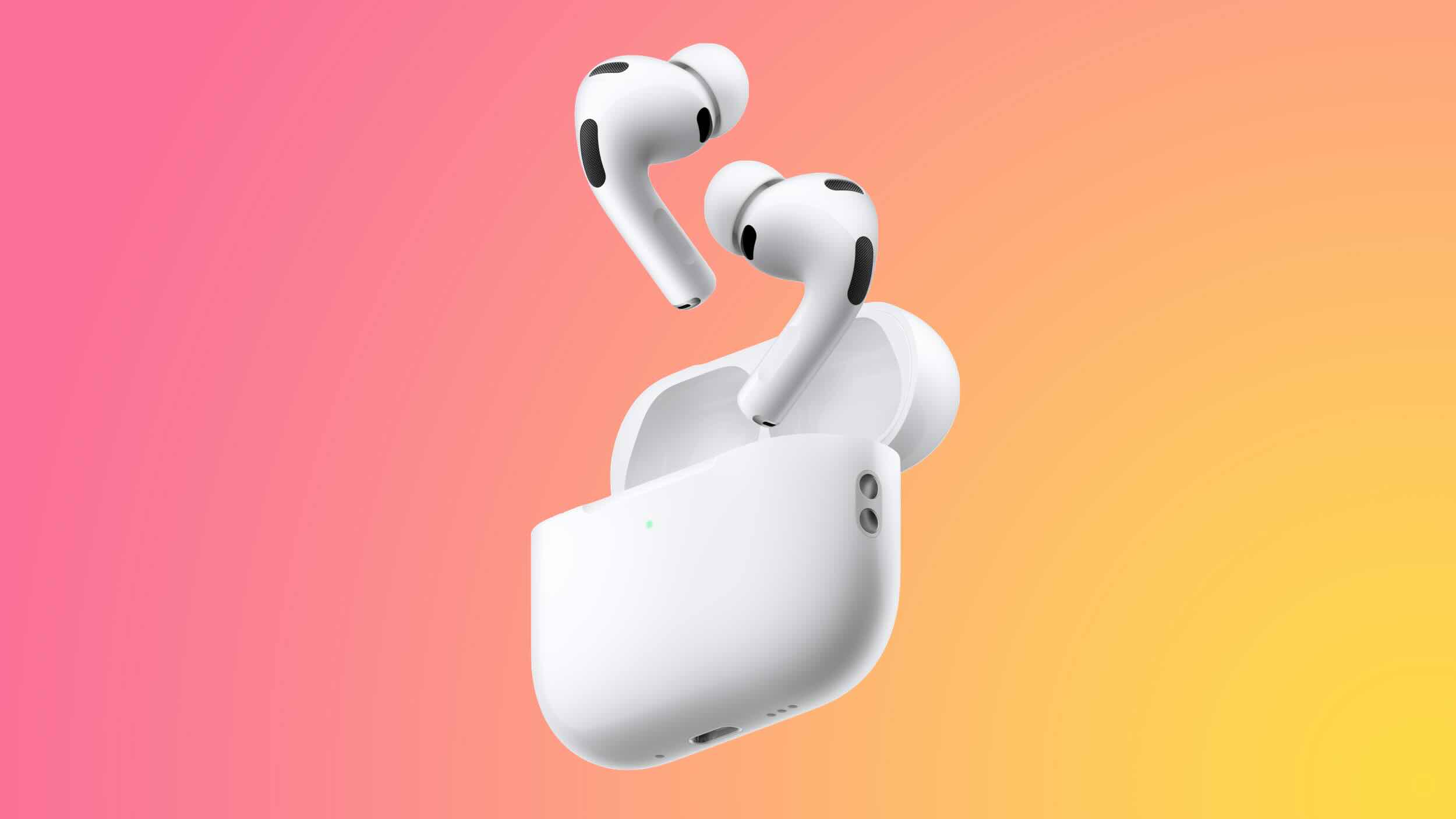
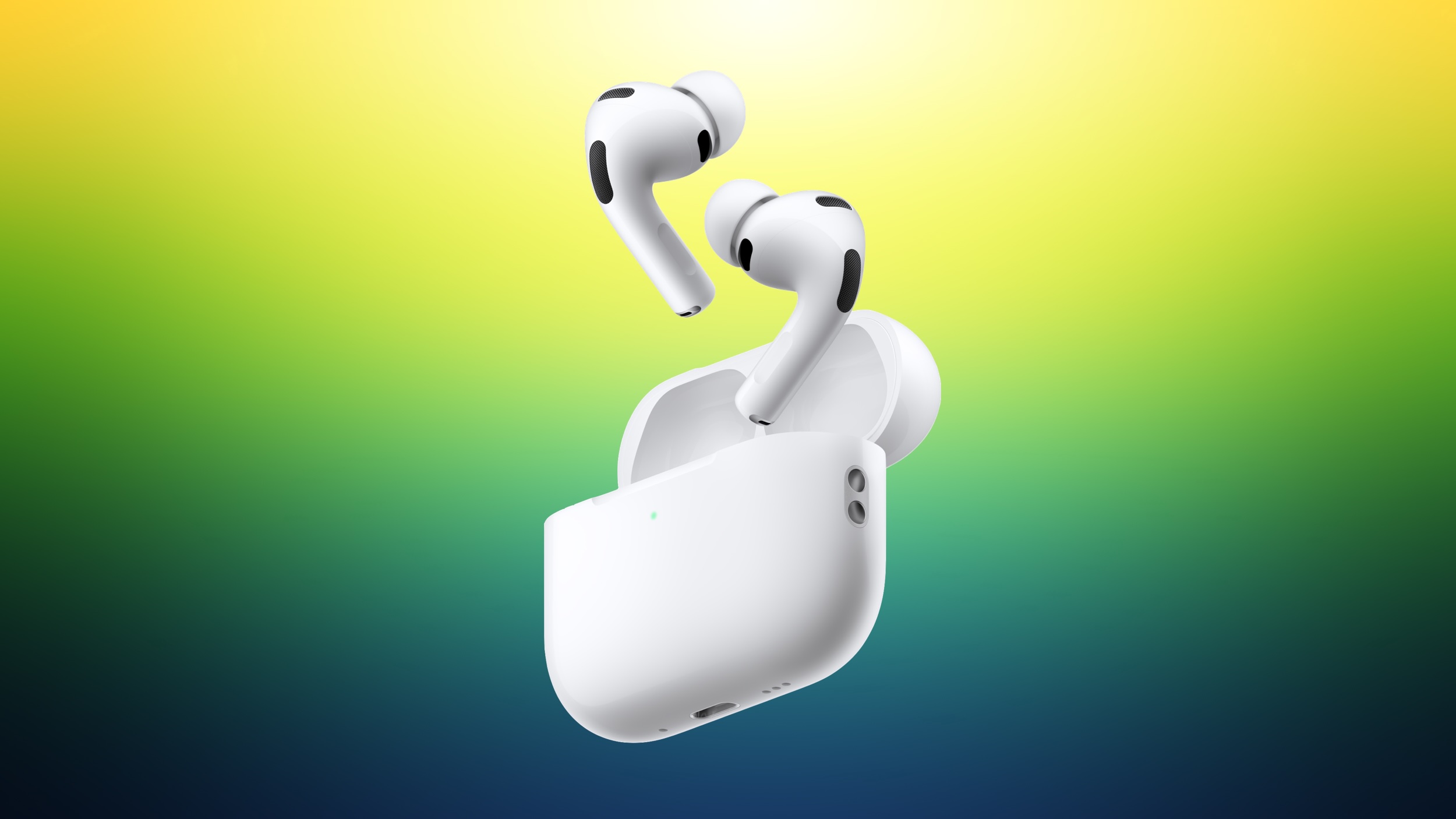
The AirPods will look similar to the current ‌AirPods Pro 3‌, but with cameras embedded in the stem. Apple may include a light that will come on when visual data from the AirPods is being sent to the cloud. The LED will let people around the wearer know the cameras are in use.

Size, design, and fit are expected to remain largely the same for the earbuds and the charging case, with the exception of the changes to the stem.

Features


The cameras in the AirPods will be used for sending data about the wearer's surroundings to ‌Siri‌, giving ‌Siri‌ more information about where the user is and what's nearby.

‌Siri‌ will be able to answer questions about objects or whatever the wearer happens to be looking at. The camera-equipped AirPods could be useful for more exact turn-by-turn directions when walking, contextual reminders, 3D mapping, and more.

The iPhone already has ‌Visual Intelligence‌, which uses AI to identify plants, animals, landmarks, art, books, and more. Camera-equipped AirPods will be able to supply data for ‌Visual Intelligence‌ without the need to use the Camera app.

H3 Chip


Apple is working on an upgraded H3 chip and it could make its first appearance in the camera-equipped AirPods. The H3 chip is expected to bring latency improvements and better audio quality.

Technical Details


Code in ‌macOS Tahoe‌ 26.7 shows how the cameras in the AirPods will work. Of note, there's no mention of an infrared sensor, despite rumors suggesting there would be one.

  • Two cameras - There are individual camera sensors in both the left and right earbuds.

  • Paired color images - The cameras take synchronized RGB still images of up to 1 megapixel, each with the same frame ID. The cameras give ‌Visual Intelligence‌ a look at the same scene from two angles.

  • No video - The cameras can take a series of pictures for ‌Visual Intelligence‌, but there is no video recording option.

  • Resolution - There's an "active" mode that's likely triggered when the wearer activates ‌Siri‌ where the AirPods capture a 640x640 image. In a separate passive mode, they capture a 320x320 image. The sensors are capable of higher-quality images, but Apple appears to be capturing a specific image size.

  • Passive image capture - Passive capture mode appears to be for background environmental awareness, triggered by nearby speech, audio changes, posture changes, head rotation, and more.

  • Head movement - The cameras in the AirPods have distortion correction to account for head movement, and can reject images that have excessive movement.

  • On-device processing - Some content is processed directly on the AirPods, such as person detection.

  • Indicator lights - Code suggests the AirPods have a hardware indicator light to let people know when still images are being captured.


Naming


There were rumors suggesting the new AirPods could be called the "AirPods Ultra" instead of the AirPods Pro, but the ‌macOS Tahoe‌ 26.7 file we found that references the new AirPods is labeled "AirPods Pro" and not AirPods Ultra. It's possible that's a placeholder name, so AirPods Ultra isn't entirely out of the question. Apple may have also planned to use AirPods Pro for a version of the camera-equipped AirPods that won't ultimately make it to release.

Bloomberg's Mark Gurman said in March that Apple was considering several devices with the Ultra name, including the foldable iPhone Ultra, AirPods Ultra, and an OLED MacBook Ultra, but that may or may not be a term we see for the new AirPods.

Pricing


Pricing is unconfirmed, but the current ‌AirPods Pro 3‌ sell for $249. Camera hardware could make the new version more expensive.

Compatibility


Since the AirPods will feed data to ‌Siri‌, an iPhone that supports Apple Intelligence will be required to use the features. ‌Apple Intelligence‌ is available on the iPhone 15 Pro and later.

Release Date


Despite showing up in ‌macOS Tahoe‌ 26.7, the camera-equipped AirPods aren't going to come out until 2027. They'll likely launch alongside the 20th-anniversary iPhone in September.
Related Roundups: AirPods 4, AirPods Pro 3
Related Forum: AirPods

This article, "Apple's Camera-Equipped AirPods: All the New Rumors" first appeared on MacRumors.com

Discuss this article in our forums

  •  

Apple Guts Vision Pro Gaming and Immersive Video Teams, Trims Siri Staff

In addition to cutting dozens of Vision Pro employees who worked on features like immersive video and gaming, Apple is laying off people who worked on Siri and AI, reports Bloomberg.


Apple is "largely shutting down" the Vision Pro team focused on gaming, and it is paring down the team that makes immersive video content. Approximately 100 employees who were part of the Vision Products Group have been laid off, with Apple also cutting 100 people from its ‌Siri‌ and software groups.

Vision Pro employees were told Apple is realigning its priorities based on how customers are using the device, suggesting immersive video has not worked out. Bloomberg says the immersive videos Apple produces can cost millions of dollars to film, and it has not been cost-effective because so few people actively use the device. Apple plans to make a smaller number of videos in-house and rely on third-party 3D content.

On the ‌Siri‌ team, Apple is creating new positions for the shift to ‌Siri‌ AI and prioritizing work on AI features.

The company told Bloomberg that it is overhauling some of its teams to "evolve" its business and deliver a better experience for customers. Affected employees will be able to apply for other positions at Apple.
While we will create new roles as part of this change, it will also impact a limited number of existing roles. We are grateful to these team members for their contributions, and we are committed to supporting them throughout their transition, including opportunities to apply for other roles at Apple.

Despite the cuts to the Vision Products Group, employees were told that the Vision Pro and visionOS operating system are not being eliminated. Apple continues to work on AI smart glasses expected in 2027, but that device will not support 3D gaming or video.
Related Roundup: Apple Vision Pro
Tag: Siri
Buyer's Guide: Vision Pro (Neutral)
Related Forum: Apple Vision Pro

This article, "Apple Guts Vision Pro Gaming and Immersive Video Teams, Trims Siri Staff" first appeared on MacRumors.com

Discuss this article in our forums
  •  

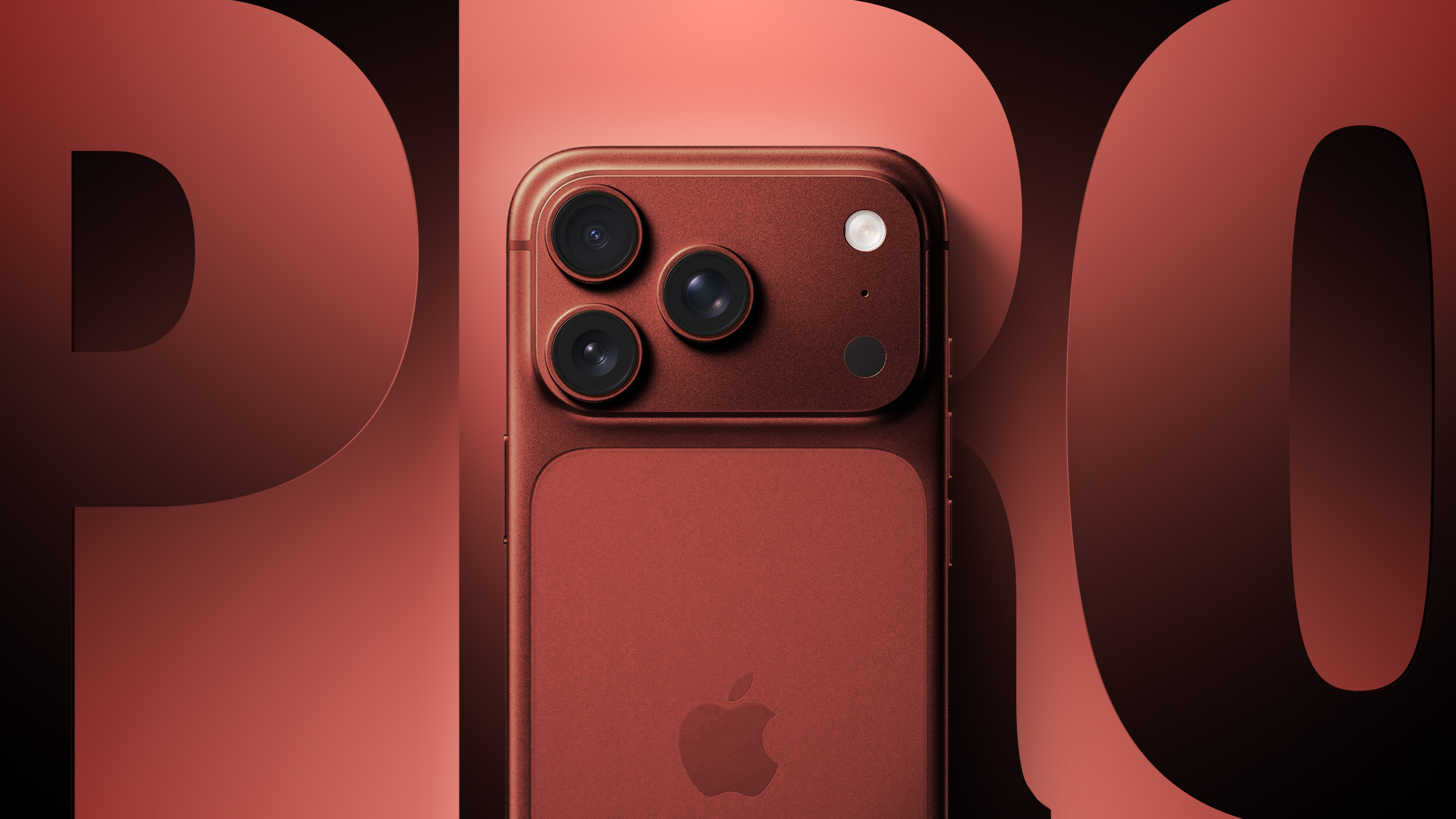
Dark Cherry and More: Every iPhone 18 Pro and iPhone Ultra Color Rumor

We're likely about a month away from when Apple will launch new iPhone models, and color has been a major topic of discussion. There's going to be a dramatic new color for the iPhone 18 Pro and ‌iPhone 18 Pro‌ Max, but Apple plans to play it safe with the foldable iPhone.


iPhone 18 Pro and iPhone 18 Pro Max


With the iPhone 17 Pro line, Apple introduced a bold new Cosmic Orange color. This year, Cosmic Orange is being retired for a shade that's darker and moodier.

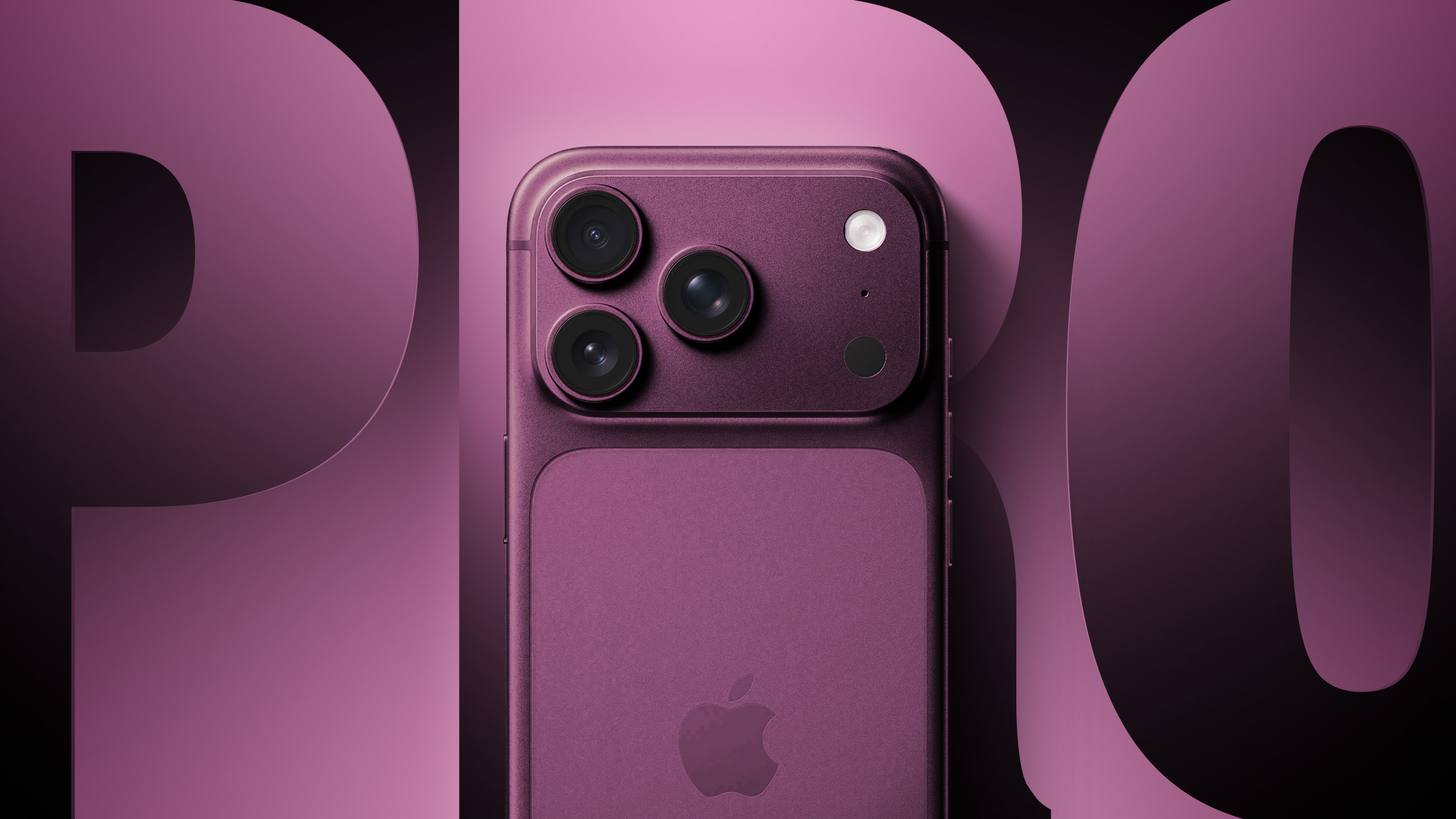
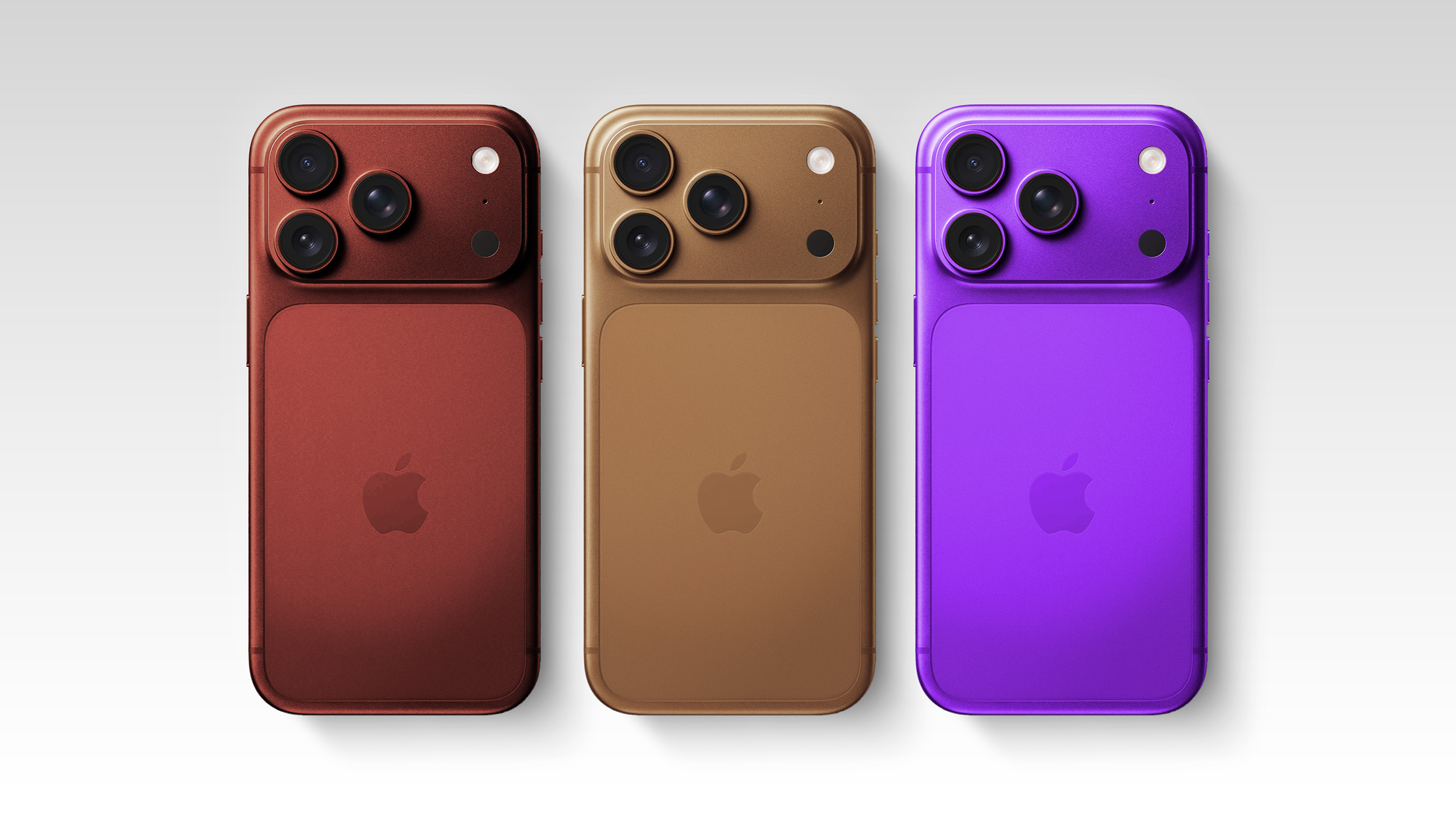
Dark Cherry is the color Apple is rumored to be using, and it looks like a cross between red and purple.


Apple's colors always look different when lighting conditions change, which can lead to some confusion. At first, rumors described the color as a deep red.

We also heard rumors about the possibility of burgundy, purple, and brown color options, with Apple set to choose one.


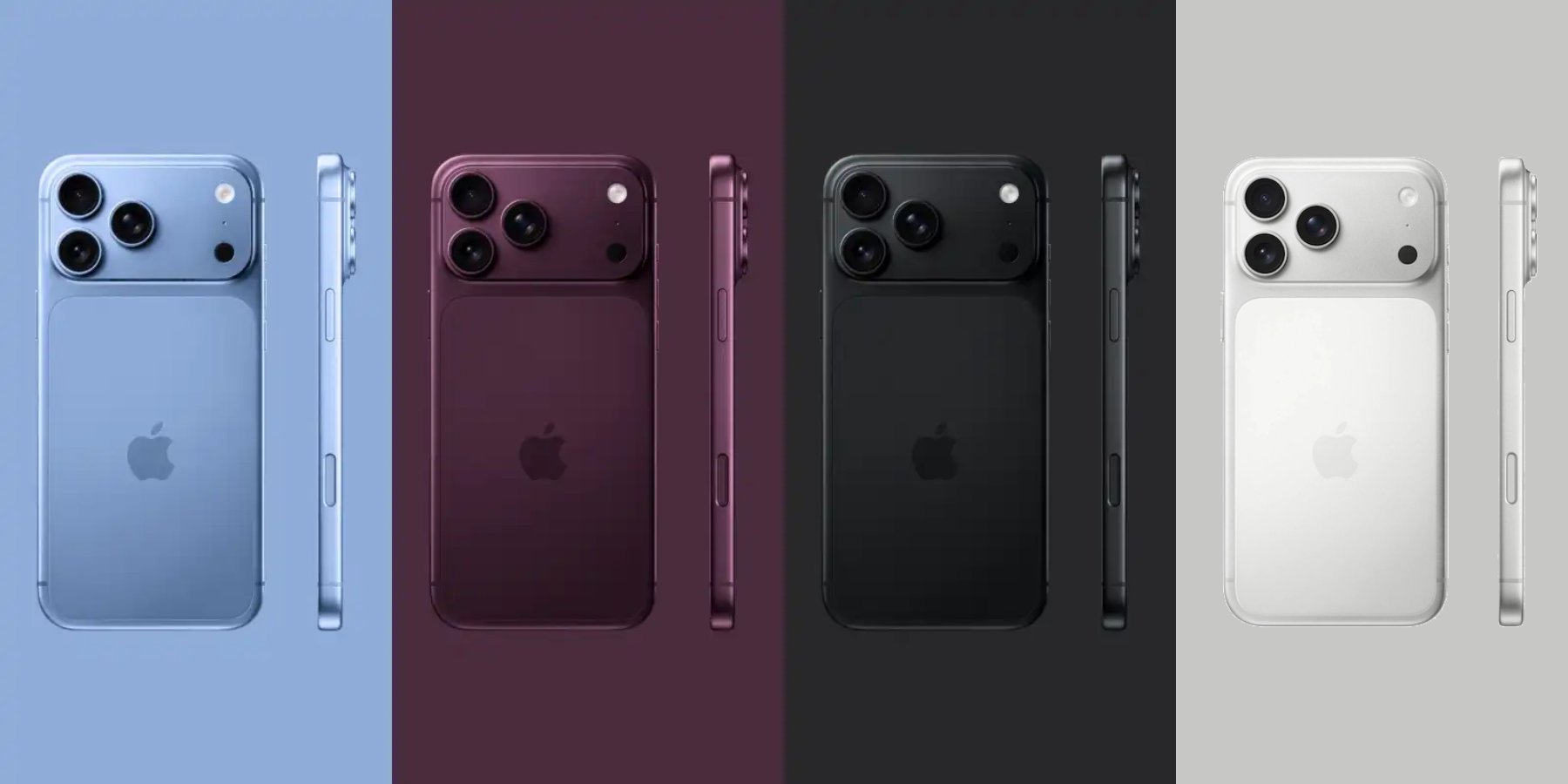
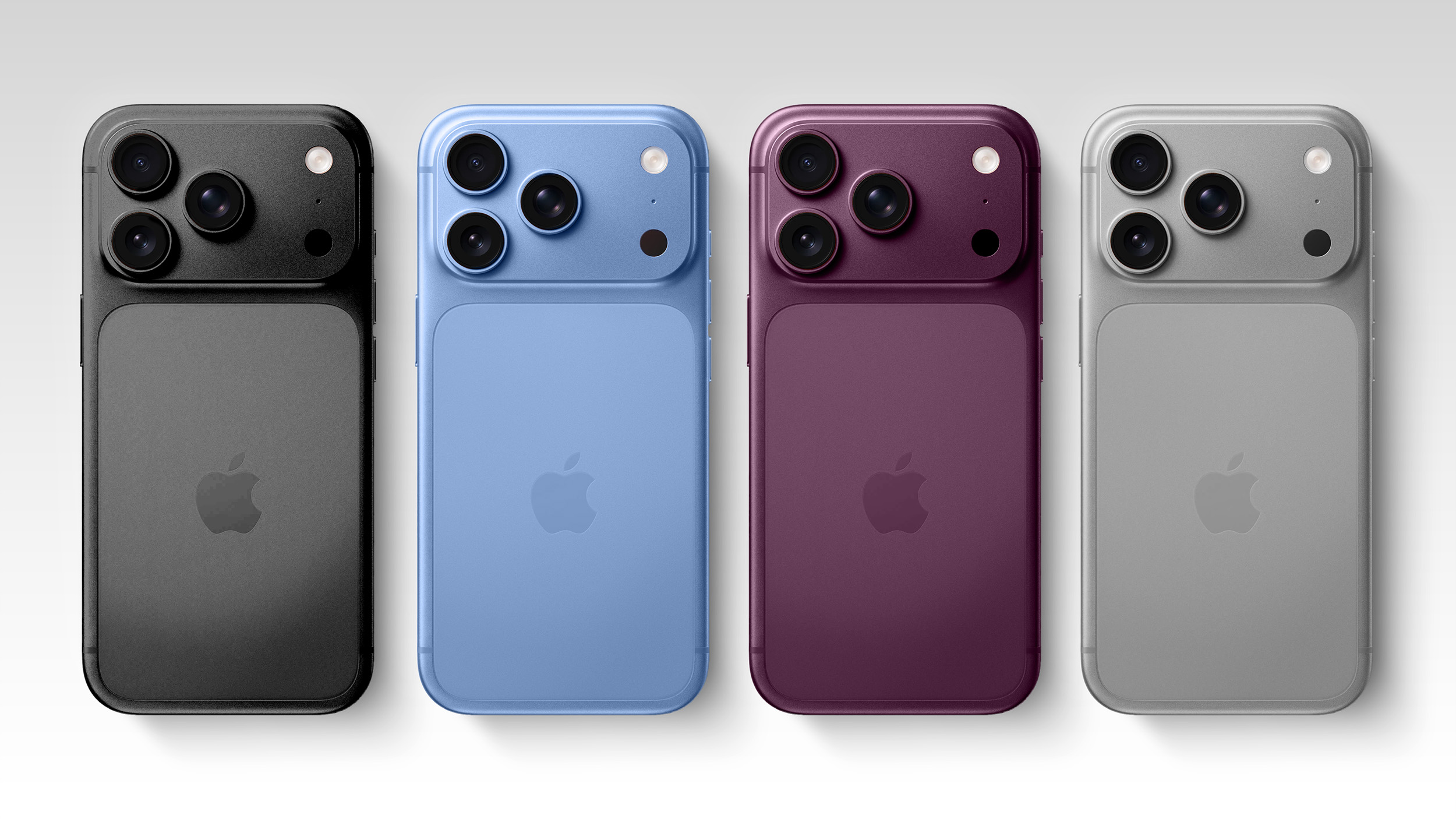
In April, Macworld shared the exact Pantone colors Apple allegedly plans to use, describing the color as Dark Cherry for the first time. The site said the other three colors would include Silver, Dark Gray, and Light Blue. We used the Pantone shades to make a mockup.


  • Light Blue (Pantone 2121), resembling the current iPhone 17's Mist Blue

  • Dark Cherry (Pantone 6076), the headline new color

  • Dark Gray (Pantone 426C)

  • Silver (Pantone 427C), similar to the current generation


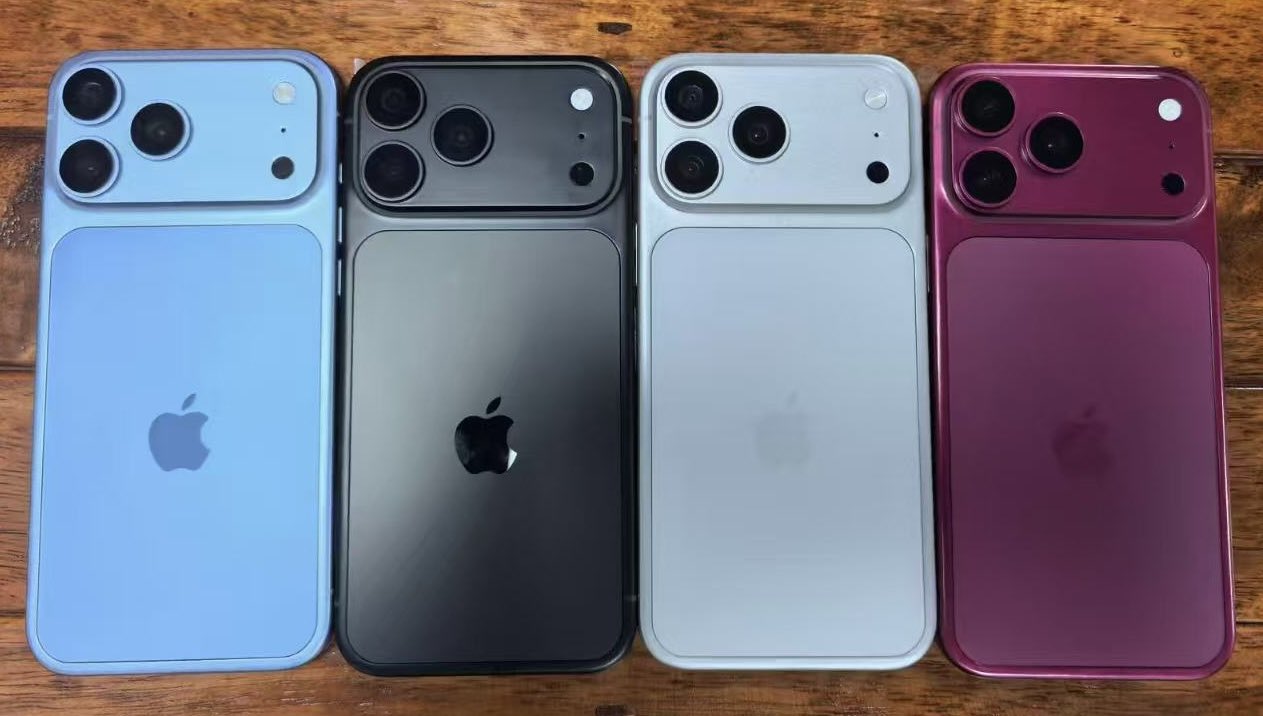
Dummy models soon surfaced showing similar colors, though with a bit more of a pink tone for the Dark Cherry shade.


The color Apple goes with will likely be close to the Pantone shade, with purple or red tones depending on the lighting. It's not quite burgundy because it trends closer to purple. It's redder than a true purple, but more violet than a dark red or maroon. It's more of a wine or a plum color, so if Dark Cherry is indeed the name of the color, it's a fitting one.

An alleged ‌iPhone 18 Pro‌ SIM tray in Dark Cherry

We've had iPhones in Lavender, Pink, Deep Purple, (Product)RED, and Purple, but nothing like what Apple is planning for 2026.

There were only three color options for the ‌iPhone 17 Pro‌ and ‌iPhone 17 Pro‌ Max, but it looks like there will be four for the ‌iPhone 18 Pro‌ models. Along with Silver and Dark Gray, there's a blue color.


Blue is a shade Apple has used for iPhone models multiple times in the past. The rumored blue is probably closest to the Sierra Blue color Apple used for the iPhone 13 Pro, but it's more saturated with less red and green to tone it down. Most of the blues Apple used in the past have been lighter or much darker, but this shade still won't feel as unique as the Dark Cherry color.

Uniform Back


The ‌iPhone 17 Pro‌ models have a two-tone design where the glass on the back is a noticeably lighter shade than the color of the aluminum frame. With the ‌iPhone 18 Pro‌ models, the color difference between the frame and the glass panel at the back could be less pronounced.

Rumors suggest Apple will minimize the color difference between the two components for a more unified appearance.

iPhone Ultra


While the ‌iPhone 18 Pro‌ and ‌iPhone 18 Pro‌ Max will have two colors that offer options beyond the standard silver or gray, Apple doesn't plan to experiment with the foldable iPhone (which might be called the iPhone Ultra).

The expensive new device is apparently only going to be available with a limited color palette. White has been mentioned multiple times, which probably means a white/silver type of shade, while rumors have been a little mixed on the second color (if there is one).

Macworld said in April that Apple would use silver and indigo, with the latter shade being similar to the Deep Blue color used for the ‌iPhone 17 Pro‌. In May, Weibo leaker Instant Digital said white was the only confirmed color, and in June, dummy models leaked alongside a rumor that the foldable iPhone might only be available in white.


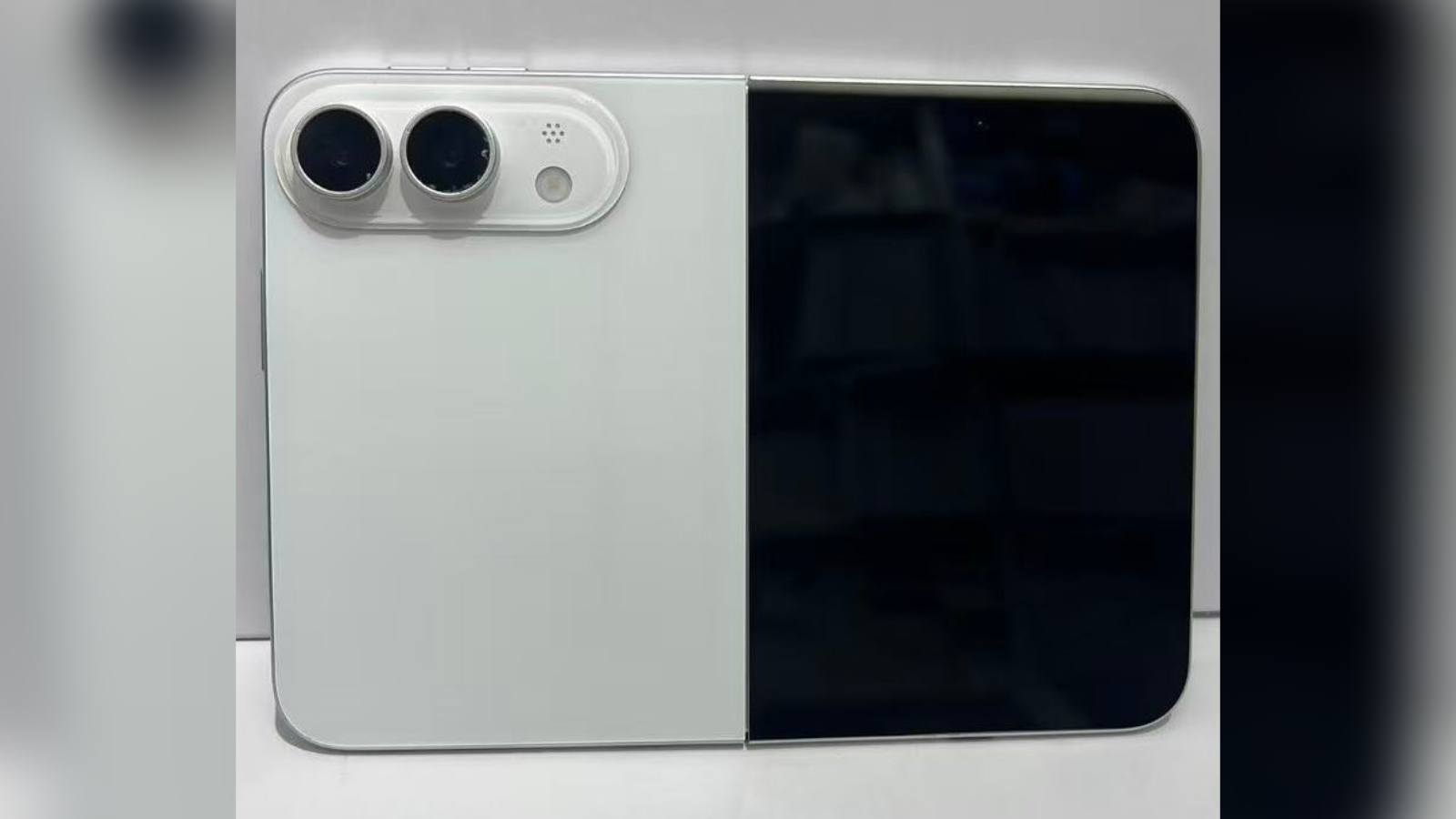
Camera accessories that leaked in August suggest the foldable iPhone will come in silver/white and a dark blue shade that's almost black. Since the foldable iPhone is going to cost upwards of $2,000, it's not surprising Apple didn't want to make it in colors that might have narrower appeal.

Color Caveats


We're working with rumors and dummy models at this point. The colors that leak ahead of when a new iPhone launches are typically accurate, but lighting and material affect how color appears. Apple's devices often look far better than the dummy models and renderings.

With the ‌iPhone 17 Pro‌, mockups and dummy models featuring the Cosmic Orange color were a duller shade than we actually got, plus nothing quite captured the two-tone look of the glass back and the frame. Ahead of the iPhone 16 Pro launch, there were rumors of a desert titanium shade. The mockups and dummy models were a darker, uglier brown than the soft, almost pink-toned gold shade Apple used.

It's unusual for the color rumors to be wrong, but it happens. Last year, rumors suggested there would be a black ‌iPhone 17 Pro‌, but it was a color Apple apparently dropped.

What About the iPhone 18?


The iPhone 18 isn't going to launch in the fall alongside the ‌iPhone 18 Pro‌ models and the foldable iPhone. Apple's holding it until spring 2027, and since it's still months away, we haven't heard what its color options might be. With standard iPhones, Apple often debuts a range of colors.

There are five ‌iPhone 17‌ colors, including black, white, and three pastel shades in blue, lavender, and green. Apple tends to go back and forth between pastels and more saturated shades for the standard iPhone, so the 2027 ‌iPhone 18‌ could have brighter colors than the ones Apple used for the ‌iPhone 17‌ line.

The ‌iPhone 18‌ is rumored to be launching alongside the iPhone 18e and iPhone Air 2, and we also don't know what colors Apple will use for those devices.

Launch Timing


Apple is expected to introduce the foldable iPhone and the ‌iPhone 18 Pro‌ models at an iPhone event held the week of September 9. Pre-orders could start at the end of that same week, with a launch on September 18.
Related Roundups: iPhone 18, iPhone 18 Pro, iPhone Fold
Related Forum: iPhone

This article, "Dark Cherry and More: Every iPhone 18 Pro and iPhone Ultra Color Rumor" first appeared on MacRumors.com

Discuss this article in our forums
  •  

Apple Music to Label AI-Generated Songs

Apple sent emails to its music industry partners about the upcoming launch of a Made With AI label that Apple will apply to AI-generated content (via The Hollywood Reporter).


Content tagged as being "materially generated using AI" will have a label visible to all Apple Music users.

In March, Apple announced Transparency Tags, a system that lets music creators disclose when AI has been used. Transparency Tags are available for artwork, track, composition (lyrics), and music video. Apple said at the time that the tags were optional, and it would defer to content providers to determine what qualifies as AI-generated.

In today's email, Apple says AI Transparency Tags are required in "any instance where AI was used to create a material portion of the content, including tracks that are AI platform generated." Apple said AI-platform-generated content is defined as "anything that is primarily derived from a generative AI service."

Back in April, ‌Apple Music‌ VP Oliver Schusser told Billboard that more than a third of monthly uploads to ‌Apple Music‌ are 100% AI-generated, but AI music accounted for less than 0.5% of actual listening. Schusser said Apple has an in-house system for detecting AI, but is still relying on content makers to disclose AI use.

Apple's email did not give a specific timeline for the launch of the AI labels in ‌Apple Music‌, but said they will show up "later this year."
This article, "Apple Music to Label AI-Generated Songs" first appeared on MacRumors.com

Discuss this article in our forums
  •  

ChatGPT Can Now Read and Send iMessages on Mac

OpenAI today said there's a new Apple Messages plugin for ChatGPT, allowing ChatGPT on Mac to search messages, draft messages, analyze conversations, and send replies to people.


The Apple Messages plugin can be installed from the ChatGPT Plugins interface, and it is listed under Public. OpenAI suggests users try these prompts:

  • Check my calendar and reply to [name] with a few times I'm free for dinner next week

  • Suggest follow ups from yesterday in messages

  • Find birthdays in @messages and add them to my calendar

  • Find potential spam messages I can delete


ChatGPT can access iMessages, SMS messages, and RCS messages. Sending a message requires user approval by default, and OpenAI warns against granting persistent approval. For the Messages integration to work, ChatGPT needs Full Disk Access in System Settings, as well as access to contact names and automation tools.

Apple's involvement in the plugin's development is unknown, but it uses AppleScript and Accessibility settings to function on a Mac. Apple and OpenAI are currently facing off in court after Apple sued OpenAI over theft of trade secrets.

Messages integration is available in ChatGPT Work and Codex in the desktop version of ChatGPT, but it does not work in regular ChatGPT chats. It is available for all ChatGPT users who have an Apple silicon Mac.
This article, "ChatGPT Can Now Read and Send iMessages on Mac" first appeared on MacRumors.com

Discuss this article in our forums
  •  

Apple Releases New AirPods Beta Firmware With iOS 27 Features

Apple today released a fifth version of the beta firmware it is testing for the AirPods Pro 2, AirPods Pro 3, AirPods 4, and AirPods Max 2. The firmware is available for developers and public beta testers. It has a build number of 9A5347a.


In iOS 27, iPadOS 27, and macOS Golden Gate, Apple is adding a new AirPods interface, a slider for Adaptive mode, and support for custom EQ, so the firmware adds support for those features. AirPods are also compatible with the new Siri AI.

When the AirPods are connected to an iPhone, iPad, or Mac running iOS 26, iPadOS 26, or macOS 26 or later, there is a beta firmware option that can be accessed in the AirPods settings interface. Toggling on beta updates allows users to install the beta firmware.

Firmware updates can be downloaded by connecting the AirPods to an Apple device and connecting them to power. It can take a few hours for new firmware to be installed because there is no software update option like there is for other Apple devices.
Related Forum: AirPods

This article, "Apple Releases New AirPods Beta Firmware With iOS 27 Features" first appeared on MacRumors.com

Discuss this article in our forums
  •  

EU Welcomes Apple's App Store Changes, Epic Slams 'Junk Fees'

Apple yesterday updated its App Store fees in the EU to comply with the Digital Markets Act and to put an end to its ongoing conflict with the European Commission. Apple cut the Core Technology Fee and simplified its pricing structure, so apps distributed through alternative marketplaces or through the web will pay less than before.


When announcing the changes, Apple said it worked in "close collaboration" with the EC, and that the updates would "resolve Apple's disagreements with the Commission over business terms and alternative distribution."

The European Commission has since confirmed that it approves of Apple's changes to its App Store policies, giving a statement to the Irish Independent:
The Commission welcomes Apple's changes to their business terms, which follow a close dialogue between the Commission and Apple after the Commission issued a non-compliance decision related to Apple's steering terms as well as preliminary findings related to alternative app distribution, both in April 2025.

Following today's announcement, the Commission will monitor Apple's effective implementation of the new terms. Under the DMA, users in the EU have a right to full and effective choice of alternative app distribution channels.

The EC says it will continue to monitor how Apple implements the new terms, which will go into effect on October 1.

While the EC approved Apple's planned changes, Apple legal opponent Epic Games was not happy with the new fee structure, denouncing the "new junk fees." ‌Epic Games‌ said Apple's new terms do not comply with the Digital Markets Act and claimed if the EC accepts the terms, the DMA "will become meaningless."
Apple announced new junk fees in the EU that do nothing to open up the mobile app ecosystem to competition, as required by Digital Market Act.

Apple will now charge:
• 20% fee on alternative in-app payment options
• 15% fee on links to make purchases outside apps
• 5% Core Technology Commission on payments made in apps downloaded from alternative stores or the web

The law makes it clear that Apple must allow developers to offer link outs to the web for purchases "free of charge" and has to allow "effective use" of competing stores. Apple's terms deliberately violate the Digital Markets Act. If the Commission accepts the terms and drops their ongoing enforcement actions, the law will become meaningless and consumers and developers will not experience the benefits it was designed to provide.

Under the new terms, ‌Epic Games‌ will need to pay a five percent Core Technology Commission on digital purchases made through its ‌Epic Games‌ Store on the iPhone and iPad in the EU. For an app distributed through the ‌App Store‌ with a link to purchase options, Epic would need to pay 15 percent.

Apple is implementing lower rates for Small Business Program, Video Partner Program, and Mini Apps Partner Program participants, plus it waives the Core Technology Commission for small marketplaces. ‌Epic Games‌ does not qualify for reduced fees.
This article, "EU Welcomes Apple's App Store Changes, Epic Slams 'Junk Fees'" first appeared on MacRumors.com

Discuss this article in our forums

  •  

Apple's Camera AirPods Not Launching Until 2027 Despite Leaked Video

Apple's camera-equipped AirPods will not launch until 2027 despite the demo video MacRumors found earlier this week, reports Bloomberg's Mark Gurman.


On Monday, MacRumors shared a demo video featuring the camera-equipped AirPods in action. The video was hidden in the macOS Tahoe 26.7 release candidate, suggesting Apple was preparing for a launch. That's apparently not the case, and people familiar with the product told Gurman the AirPods with cameras aren't going to launch anytime soon.

The AirPods are not on Apple's 2026 release schedule because the company is still working to resolve supply chain and software challenges.

Gurman's own reporting on the camera AirPods timing has been confusing. In May, he said the AirPods were in an "advanced" testing stage with mass production to begin soon, and then in June, he said the AirPods had been delayed until late 2027.

In early August, he reversed course and said the camera-equipped AirPods could launch as soon as September. In that report, he clarified that there were two variants of the camera-equipped AirPods in the works, one with a B790 codename and one with a B798 codename. "Apple famously creates competing versions of the same product internally," he wrote.

In today's report, Gurman says the B790 product is a version of the AirPods Pro 3 with cameras, while the B798 model is a new generation of AirPods Pro with cameras. The B790 AirPods were shown off in the video, which featured a man holding a book up to the AirPods so Siri could read the title and save it for later.

The B790 model was apparently "on the 2026 road map until recently," but Apple no longer plans to release it.

The AirPods planned for 2027 will include low-resolution cameras that feed information to ‌Siri‌ AI for Visual Intelligence features as demonstrated in the video. The AirPods cameras will not be able to capture photos and videos.

Apple could launch the new AirPods in fall 2027 alongside the 20th-anniversary iPhone.
Related Roundups: AirPods 4, AirPods Pro 3
Related Forum: AirPods

This article, "Apple's Camera AirPods Not Launching Until 2027 Despite Leaked Video" first appeared on MacRumors.com

Discuss this article in our forums

  •  

Meta AI Launches Mac App With Screen Sharing and Dictation

Meta today launched a new ‌Meta‌ AI app for the Mac, which is available in a beta capacity.


The app is primarily meant for businesses and content creators, and it integrates with Facebook and Instagram. It incorporates analytics tools so it can answer questions about performance, and connects with Google Workspace for document access. Google Workspace access requires a professional Facebook or Instagram account.

‌Meta‌ says there's an option to share a window during a session using screen capture to get advice based on what's being worked on. It also includes built-in dictation that works across all apps on the Mac.

‌Meta‌ is adding new ‌Meta‌ AI features for business users across its platforms, so the assistant can complete recurring tasks and reminders and generate decks, docs, and spreadsheets.

Creators and businesses may want to use caution when opting in to ‌Meta‌ AI, because ‌Meta‌'s privacy policy makes it clear that "interactions with features that are part of AI at ‌Meta‌" are used to train its models.

‌Meta‌ AI is free to use, but there are ‌Meta‌ One plans that increase rate limits.
Tag: Meta

This article, "Meta AI Launches Mac App With Screen Sharing and Dictation" first appeared on MacRumors.com

Discuss this article in our forums

  •  

College Students Can Get a Free Year of Google AI Pro

Google today said eligible college students in the United States can get a free year of Google AI Pro. Google AI Pro is normally priced at $19.99 per month, and it includes 4x higher usage limits in Gemini, access to Gemini Spark, Gemini in Google apps like Gmail and Google Docs, and 5TB of storage space.


Eligible college students outside the United States can get a free year of Google AI Plus, which includes Gemini Omni, 4x higher usage limits in Gemini, and 400GB storage.

College students can also opt for a Google AI Pro and YouTube Premium bundle for $8.99 per month in the United States, which is a 70 percent discount off the regular price. Students can subscribe to the YouTube Premium bundle for up to four years, and verification through SheerID is required.

Google added a student hub to Gemini with study notebooks, diagnostic quizzes, and study plans. Gemini Notebook is available in AI Mode in Search, and a dedicated notebook can be set up for each project or class. Notebooks from Gemini Notebook or the Gemini app will appear automatically in Search. Notebooks for AI Mode are rolling out to over 180 countries in the coming days.

Google Search can generate custom tools and simulations for complicated concepts, along with practice quizzes for the ACT, AP, ENEM, GRE, JEE, LSAT, MCAT, NEET, and SAT. Generative UIs are available globally in AI Mode and are rolling out to AI Overviews over the coming weeks, while the practice quiz option is available now.

Lens in Search will soon include an interactive learning experience for breaking down tough problems. Students can use the Google app to take a photo of what they're working on to get an AI Overview that can find mistakes and offer explanations.

Students can sign up for a free AI plan on Google's website through December 31, 2026. After the free subscription period, Google will charge $19.99 per month for AI Pro unless the plan is canceled, and $4.99 per month (or the local currency equivalent) for AI Plus.

Students must be 18 years or older with a personal Google Account and must verify student status with a valid school email address when requested.
Tags: Gemini, Google

This article, "College Students Can Get a Free Year of Google AI Pro" first appeared on MacRumors.com

Discuss this article in our forums

  •  

Beats 360 Over-Ear Headphones Leak in Retail Listings

One of the Beats codenames MacRumors found in the macOS Tahoe 26.7 update (B518) appears to be for the Beats 360, a new set of over-ear headphones that we could see launch soon.


Multiple Reddit users found signs of the Beats 360 on UK websites like Amazon, though those listings have now been removed.

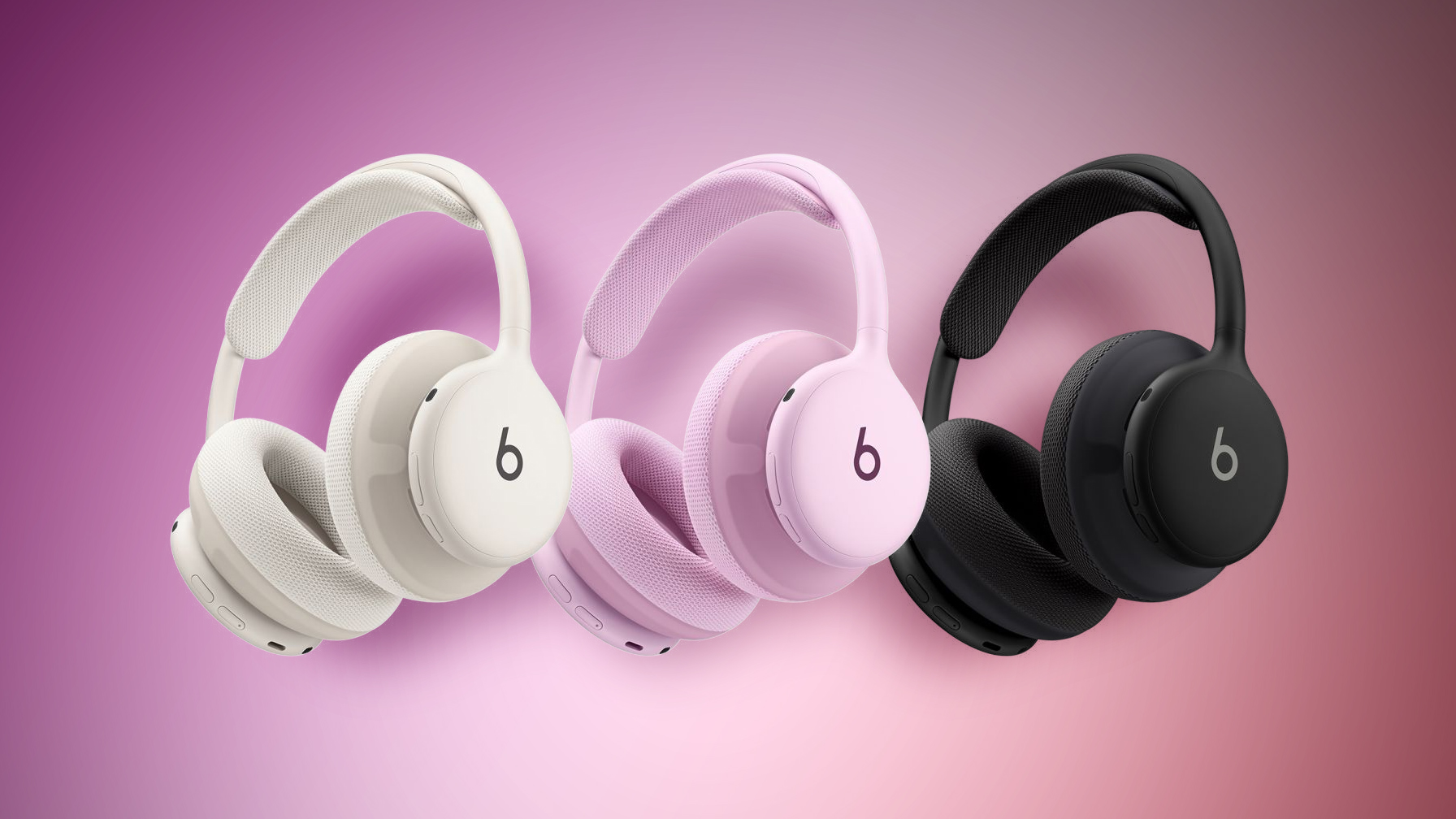
The headphones have a look that is distinct from the existing Beats Studio Pro over-ear headphones, featuring a rounder design with AirPods Max-like mesh fabric ear cups and headband. The ear cups and headband will be replaceable with interchangeable cushion options. The headphones will ship with Performance Knit cushions, but an UltraPlush option will also be available. Beats will sell the headphones in Pink, Black, Sky, and Cloud. Volt and Navy may also be color options, but there are only listings for cushions in the shades.

One listing says these are the first-ever sweat-resistant and water-resistant over-ear headphones Beats has come out with, so it sounds like they should be better for wearing during workouts than current Beats over-ear options. From the listing:

  • Beats 360 have interchangeable cushion options for both ear cups and headband, so you can have a fresh set ready after your workout or a new colour just to switch up your look. These over-ear noise-cancelling headphones are built for active lifestyles and all-day comfort.

  • Active Noise Cancelling (ANC) blocks out unwanted noise to help you focus, after adapting to your environment and unique fit - with up to 1.75x more noise cancellation than Beats Studio Pro.

  • The bespoke, high-fidelity acoustic platform delivers powerful bass and pinpoint precision across the tonal range with ultra-low distortion for the ultimate listening experience. Personalised spatial audio with dynamic head tracking delivers immersive surround sound.

  • Ear cushions are built from acoustically engineered memory foam and shaped to fit comfortably over your ears, forming an optimal seal for incredible sound.

  • Exceptional call quality powered by an advanced Al-trained algorithm and beam-forming mic system that filters out background noise.

  • Our first-ever sweat- and water-resistant over-ear headphones, with an IPX4 rating to ensure they're built to go everywhere you do.

  • All-day battery life for extended playback even with ANC on.

  • Compatible with both Apple and Android for one-touch pairing and more. Easy-to-use controls are positioned on the back of each ear cup, including a volume rocker, a multifunction button to control music and calls, a power button and a listening mode button.

  • Fold-flat design for extra comfort and convenience. Woven ripstop fabric case included.

  • What's in the box: Beats 360 true wireless over-ear headphones with interchangeable performance knit cushions, woven ripstop fabric carrying case, warranty card and Quick Start Guide. Additional Beats 360 cushion kits, USB-C charging cable and power adapter sold separately.


Pricing is expected to start at $299 in the United States. There's no word on when the new Beats headphones will launch, but with listings popping up, they could come anytime.

We previously saw signs of the new headphones in May, when the U.S. Federal Communications Commission published documents featuring the rounded design that's showing up on product pages, and in July when Beats gave them to World Cup players as a teaser.
Tag: Beats

This article, "Beats 360 Over-Ear Headphones Leak in Retail Listings" first appeared on MacRumors.com

Discuss this article in our forums

  •  

Apple's iPhone 18 Release Schedule: What's Coming and When

Since 2019, Apple has released a more affordable standard iPhone and a higher-end "Pro" variant, giving customers multiple flagship iPhones to choose from. Apple is deviating from its standard release timeline this year and splitting the iPhone 18 launch.


We aren't going to get all of the ‌iPhone 18‌ models in fall 2026, because Apple is holding the standard ‌iPhone 18‌ until spring 2027. If you want an iPhone in the traditional September timeframe, it's going to cost you this year.

Fall 2026 iPhones


Apple's three most expensive iPhones will be introduced at its iPhone event in September.

  • iPhone 18 Pro - The iPhone 18 Pro will look like the iPhone 17 Pro, but it is expected to have a smaller Dynamic Island and a variable aperture Wide camera for more precise lighting adjustments. It will use Apple's next-generation A20 chip built on a 2nm process.

  • iPhone 18 Pro Max - The ‌iPhone 18 Pro‌ Max will be nearly identical to the ‌iPhone 17 Pro‌ Max, but it might be a little bit thicker because of a larger battery. There is a possibility the new camera will be limited to the Pro Max, but that's not confirmed. Both models will come in a new dark cherry color.

  • Foldable iPhone - Apple's first foldable iPhone could be called the iPhone Ultra. When closed, it'll be around 5.5 inches, and when open, it'll be around 7.8 inches. It will be similar in size and aspect ratio to an iPad mini in landscape mode, with new app multitasking features. It will have Touch ID instead of Face ID and will be limited to a two-camera system.


Multiple analysts agree the ‌iPhone 18 Pro‌ models are going to be more expensive than their ‌iPhone 17 Pro‌ counterparts. Memory supply shortages have driven up the cost of consumer DRAM, and Apple has to pay much more for memory.

Some of the increased cost will be offset by discounts Apple has negotiated on other components like the display, but an increase seems unavoidable after the June price hike on Macs and iPads.

Analysts have estimated a $100 to $300 price increase for both models. Current pricing starts at $1,099 for the ‌iPhone 17 Pro‌ and $1,199 for the ‌iPhone 17 Pro‌ Max.

Since there's no current foldable iPhone, there's no set price. Rumors suggest it'll cost between $2,000 and $2,500, and it could absorb some of the higher ‌iPhone 18 Pro‌ component costs.

Spring 2027 iPhones


  • iPhone 18 - The ‌iPhone 18‌ will have a 2nm A20 chip, more RAM, a smaller ‌Dynamic Island‌, and a new C2 modem chip. Apple could downgrade the display to save money, and the device might share more components with the iPhone 18e.

  • iPhone 18e - The iPhone 18e will follow the iPhone 17e. It's expected to get an upgraded chip and 9GB of RAM.

  • iPhone Air 2 - Apple is planning a second-generation iPhone Air that could launch alongside the ‌iPhone 18‌ and iPhone 18e. Rumors suggest it could get a second camera to make it a better value (likely an Ultra Wide) and a bigger battery.


What's Next?


After launching the ‌iPhone 18‌, iPhone 18e, and ‌iPhone Air‌ 2 in spring 2027, it's not clear if Apple will stick with the spring/fall split launch strategy or revert to its standard timing.

There are rumors of a 20th-anniversary iPhone coming in fall 2027, and it sounds like a higher-end device. Apple could opt to stick with the timing change it's making across 2026 and 2027 because it will better spread iPhone sales throughout the year.
Related Roundups: iPhone 18, iPhone 18 Pro, iPhone Fold
Related Forum: iPhone

This article, "Apple's iPhone 18 Release Schedule: What's Coming and When" first appeared on MacRumors.com

Discuss this article in our forums

  •  

iOS 27: 8+ New CarPlay Features

With iOS 27, Apple is introducing several CarPlay features that will improve your in-car experience, both when you're driving and when you're idle in the car. From new video experiences to Siri AI, there are multiple new options to look forward to.


Video Apps


‌CarPlay‌ apps can include video browsing capabilities, so you can browse for and watch videos on your in-car display while parked. The video playback feature does not work when a car is in motion for safety reasons, but if you're watching something and shift into drive, playback will switch to audio only.

iPhone apps that support AirPlay can also stream content to the car's display.

Video apps require car manufacturers to enable support on the vehicle, and no automakers have announced plans to add support as of now. The Apple TV app is the first confirmed app that will work with the feature.

Siri AI


Apple's smarter, more capable version of ‌Siri‌ can be used in the car for hands-free conversations. ‌Siri‌ AI for ‌CarPlay‌ works like ‌Siri‌ AI on other devices, so you can ask it to complete tasks or find information for you while you drive.

Conversations in ‌CarPlay‌ sync to the ‌Siri‌ app on iPhone so you can pick them up later.

Audio


There is a persistent mini-player for the Now Playing ‌CarPlay‌ template. The player shows artwork and playback controls in the top right corner of audio and media apps.

The Now Playing interface in ‌CarPlay‌ also has a progress bar, so you can jump to a specific spot in a song, podcast, or audiobook.

Wallpapers


‌CarPlay‌ includes the new ‌iOS 27‌ wallpapers, formatted for the ‌CarPlay‌ interface. The wallpapers have wave-style designs in a range of colors, with 14 total options available.

‌CarPlay‌ in ‌iOS 27‌ also supports larger, more interactive content thumbnails, and it uses the updated Liquid Glass icons for apps like Maps and Weather.

Route Data


Navigation apps like Apple Maps and Google Maps can share route data with a vehicle for adding information like EV charging stops in directions. The car can check a map route against the range of the vehicle, and suggest a charging stop.

Reliability and Location Accuracy


Apple says wireless ‌CarPlay‌ is more reliable in ‌iOS 27‌, with improved GPS location accuracy and navigation heading detection.

Voice Control


All app categories are can now offer a voice control option, and Apple has designed a voice control template that can be integrated into apps for voice conversations.

Natural Language Improvements


In Apple Maps, Apple extended natural language search to navigation, and that also works with ‌CarPlay‌. You can ask ‌Siri‌ for directions that avoid toll roads, highways, and more.

Compatibility


Using the new ‌CarPlay‌ features in ‌iOS 27‌ requires a connected iPhone with ‌iOS 27‌ installed. For ‌Siri‌ AI, you'll need an iPhone that supports Apple Intelligence, which includes the iPhone 15 Pro and later.

Availability


‌iOS 27‌ is available to developers and public beta testers right now, with a public launch expected in September.
Related Roundups: CarPlay, iOS 27, iPadOS 27

This article, "iOS 27: 8+ New CarPlay Features" first appeared on MacRumors.com

Discuss this article in our forums

  •  

iCloud, Photos, Find My and More Experiencing Issues

Several iCloud services are experiencing issues, according to Apple's system status page.


Find My, Game Center, Photos, ‌iCloud‌ Calendar, ‌iCloud‌ Mail, ‌iCloud‌ Contacts, ‌iCloud‌ Web Apps, and iWork for ‌iCloud‌ are all experiencing service interruptions.

Apple says only some users may run into problems. The issue started at 3:33 p.m. Eastern Time and is ongoing.
This article, "iCloud, Photos, Find My and More Experiencing Issues" first appeared on MacRumors.com

Discuss this article in our forums

  •  

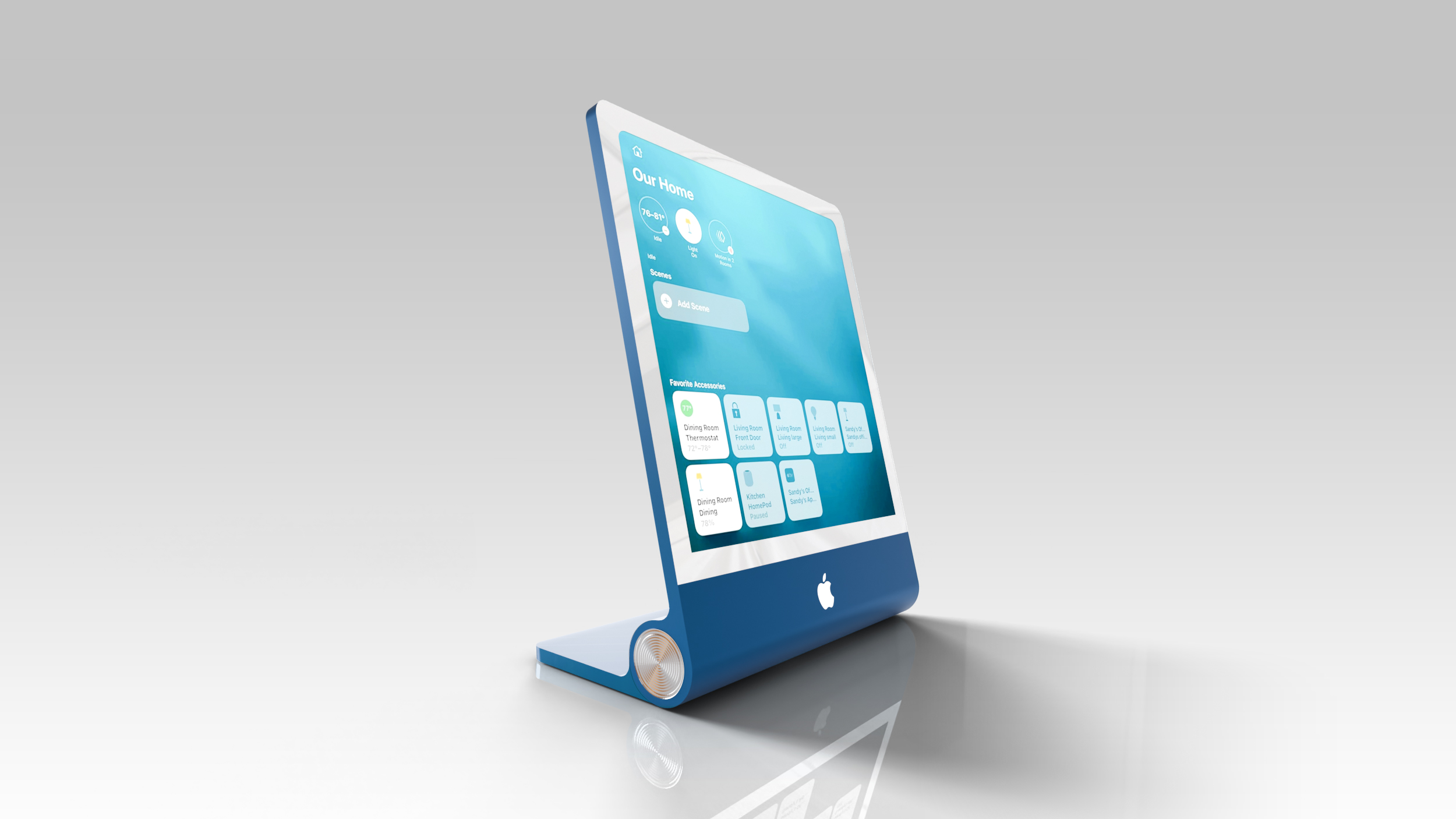
Apple's Home Hub Will Have a Widget Gallery With iPhone Widget Support

Apple is working on a home hub that incorporates Siri AI, and it's set to launch as soon as this year. The home hub will use a Widget Gallery that lets users select the content they want to appear on the device's home screen.


Mentions of the Widget Gallery were found in macOS Tahoe 26.7, an update that leaked a long list of unreleased Apple products. The strings were found in a file named PosterKit-J490, and J490 is the codename for the home hub. PosterKit is Apple's framework for Lock Screen customization, and the hub's home screen could have many of the same options for icons, widgets, and clock faces.

Apple already uses the Widget Gallery on iPhone, iPad, and Mac for adding widgets to the Home Screen and Lock Screen of those devices, and the home hub will have a similar mechanism.

Based on the code, widgets installed on a linked iPhone will be suggested on the home hub, much like how iPhone widgets are available on a Mac without an app being installed. It looks like third-party app widgets may be supported in addition to Apple's own apps. iPhone app widgets displayed on the home hub will have information mirrored from the iPhone.

All users in the home will be able to see the widgets installed on the home hub, but content in widgets will only be visible when the primary linked device is in the home for privacy protection.

A Smart Stack will automatically rotate through widgets to show relevant information throughout the day, and users will also be able to flip through the different Smart Stack options. Apple already has Smart Stack on its other devices, including the Apple Watch.

The home hub isn't expected to have its own App Store, but it will support Apple apps like Safari, Apple News, Apple Music, Notes, Calendar, Photos, and Home. Tapping on an installed widget from the home screen could launch a full app with more information. Code references a Face Gallery too, suggesting users will be able to select different clock options for the device's home screen, and it indicates that the hub will be able to be added to HomeKit scenes and automations alongside other smart home accessories.

Apple's hub is expected to have a 7-inch square display with options to put it on a base or mount it on the wall. More information about the device can be found in our guide.
This article, "Apple's Home Hub Will Have a Widget Gallery With iPhone Widget Support" first appeared on MacRumors.com

Discuss this article in our forums

  •  

National Parks Apple Watch Activity Challenge Launching August 23

Apple will launch its annual National Parks Apple Watch activity challenge on Sunday, August 23 to celebrate national parks across the United States.


Apple Watch owners can earn an Apple Watch activity award by doing a hike, walk, run, or wheelchair push that lasts for 20 minutes or more on August 23, 2026.
Earning this award is a walk in the park. Or a run. Or a hike. Or a wheelchair push. Just record one of these workouts for 20 minutes or more on August 23.

Like all of the Apple Watch activity challenges, earning the award will provide users with animated stickers that can be used in the Messages app.


Along with a new Apple Watch challenge, Apple typically offers other national parks-themed content in August, including an Apple Pay donation program, Apple TV content, Apple Music songs, books, podcasts, and more.
Related Roundup: Apple Watch 11

This article, "National Parks Apple Watch Activity Challenge Launching August 23" first appeared on MacRumors.com

Discuss this article in our forums

  •  

Apple's Camera AirPods May Launch as 'AirPods Pro,' Not 'AirPods Ultra'

The camera-equipped AirPods that we've confirmed Apple is working on are likely going to be part of the AirPods Pro lineup rather than separate "AirPods Ultra."


A macOS Tahoe 26.7 file that references the new AirPods is labeled "AirPods Pro," hinting at the new name. It's possible that's a placeholder name, so AirPods Ultra isn't entirely out of the question, but given Apple put a full video of the new AirPods in the software, there isn't much need for a placeholder.

Bloomberg's Mark Gurman said in March that Apple was considering several devices with the Ultra name, including the foldable iPhone Ultra, AirPods Ultra, and an OLED MacBook Ultra, but that may not be a term we see for the new AirPods. He suggested Apple might use the name because the camera-equipped AirPods were expected to be more expensive than the $249 AirPods Pro 3, so Apple's "Pro" choice could also be a hint that pricing won't be too far off the current model.

Rumors about camera-equipped AirPods have been a little confusing, and that could account for any naming discrepancies. Most of the rumors about the AirPods with a camera were about a product with the codename B798. In June, Gurman said the camera AirPods had been delayed because of issues with Siri AI, and would not launch until September 2027 alongside the 20th anniversary iPhone.

In early August, Gurman revised his launch timing and said Apple was close to debuting camera AirPods with the codename B790. The B790 AirPods had apparently been progressing alongside the B798 model, and Gurman said the company "famously creates competing versions of the same product internally," with B790 closer to launch than B798.

It's not known if there are differences between the B790 and B798 products Apple has been working on, but it looks like we're going to see the camera AirPods this year. The AirPods video in ‌macOS Tahoe‌ 26.7 suggests the device is near-ready to launch.

The camera in the AirPods will not be used for capturing photos and videos and will instead feed visual information to ‌Siri‌ AI for an easier-to-use version of Visual Intelligence.
Related Roundup: AirPods Pro 3
Buyer's Guide: AirPods Pro (Neutral)
Related Forum: AirPods

This article, "Apple's Camera AirPods May Launch as 'AirPods Pro,' Not 'AirPods Ultra'" first appeared on MacRumors.com

Discuss this article in our forums

  •  

Apple Overhauls EU App Store Fees to Settle Digital Markets Act Dispute

Apple today announced changes to its App Store policies and fees in the European Union to comply with the Digital Markets Act. Apple says the changes were made after "close collaboration" with the European Commission, and the updates simplify the fee structure and "resolve Apple's disagreements with the Commission over business terms and alternative distribution."


The initial acquisition fee and store services fee are being removed for apps distributed outside of the ‌App Store‌, and Apple will now charge a 5% Core Technology Commission on digital purchases that replaces the prior per-install Core Technology Fee.

Commission rates are changing for ‌App Store‌ apps, alternative payments, and apps distributed through alternative app marketplaces or the web.

  • App Store Apps With In-App Purchase - Apple will charge a 26% fee for apps distributed through the ‌App Store‌ that use in-app purchase. The fee will be 15% for Small Business Program, Mini Apps Partner Program, and Video Partner Program participants. It will also be 15% for auto-renewing subscriptions after their first year.

  • App Store Apps Using Alternative Payments - Apps in the ‌App Store‌ that use in-app alternative payment processing will pay 20%. Developers in Apple's programs will pay 10%.

  • Apps That Link Out of the App for Purchases - Apps that link to a website purchase option will pay 15%. Developers in Apple's programs will pay 10%.

  • Alternative App Marketplace Apps - Apple will charge a 5% Core Technology Commission.

  • Apps Distributed via the Web - Apple will charge a 5% Core Technology Commission.


Developers can offer in-app purchase options alongside alternative payment options in the EU, which is something Apple did not allow before. Apple says there will be presentation requirements so users have a consistent, transparent experience.

Developers distributing apps in the EU must select their payment options and maintain those options for 12 months before making changes to "provide consistency and clarity for users." Apple will still use a Notarization process for apps downloadable through the web and through alternative app marketplaces.

Apps in the Kids category or being used by children under 13 will not include links to websites to complete transactions. All apps that use alternative payment processing or link to a website for transactions have to include a parental gate if the user is under 18.

Apple is relaxing the rules for operating an alternative app marketplace or distributing apps via the web in the European Union. Apple used to require developers to have a one million euro standby letter of credit from an A-rated financial institution, but the new rules are as follows:

  • Meet a moderate financial-stability bar as scored by Dun & Bradstreet.

  • Are publicly traded or owned by a publicly traded company.

  • Have received venture funding from an established investment firm.

  • Have completed a financial audit by a licensed accountant.

  • Are a government entity, educational institution, or nonprofit.


Developers can sign the new terms starting today, and the changes go into effect on October 1.
This article, "Apple Overhauls EU App Store Fees to Settle Digital Markets Act Dispute" first appeared on MacRumors.com

Discuss this article in our forums

  •  

Apple's Camera-Equipped AirPods Confirmed: See Them in Action

Apple is working on camera-equipped AirPods that appear to be nearly ready to launch, based on a video MacRumors found in the macOS Tahoe 26.7 release candidate.


In a short demo, a man holds a book up so the camera in the AirPods can see the title. "With Visual Intelligence, your world becomes savable. See something you like? Just ask me to save it for later," says the voiceover text.

Here is your first look at AirPods with Cameras in action using Visual Intelligence.

This video file came from macOS 26.7 RC pic.twitter.com/yo7RI4MCeu

— Aaron (@aaronp613) August 18, 2026

The camera on the AirPods will feed information to ‌Visual Intelligence‌, and Siri will be able to answer questions about the wearer's surroundings and log information. There is a direct reference to setting up ‌Visual Intelligence‌ on the AirPods.

If hair is covering the AirPods up, you'll receive an alert. "To get the most accurate information about things in your environment, make sure AirPods are not covered," it says.

The camera-equipped AirPods have the codename B790, which was also previously mentioned by Bloomberg's Mark Gurman. Gurman suggested the AirPods could launch as soon as September, so we could see them at the iPhone-centric event where Apple will unveil the iPhone 18 Pro, ‌iPhone 18 Pro‌ Max, and foldable iPhone Ultra.

‌macOS Tahoe‌ 26.7 has multiple other mentions of the B790 product, as well as references to a long list of other unreleased Apple products.
Related Roundups: AirPods 4, AirPods Pro 3
Related Forum: AirPods

This article, "Apple's Camera-Equipped AirPods Confirmed: See Them in Action" first appeared on MacRumors.com

Discuss this article in our forums

  •  

macOS Tahoe 26.7 is Full of References to Unreleased Apple Products

The macOS Tahoe 26.7 release candidate that Apple seeded today has references to several unreleased products, from home devices to iPhones, iPads, AirPods, and Macs.


Some of these codenames have shown up in prior software updates but have new feature flags, while others haven't been seen in the code before.

Home Accessories


  • Home Hub (J490/HomeAccessory17,1 and J491/HomeAccessory17,2) - There are references to Siri setup for a "J490" home accessory, which has previously been identified as Apple's upcoming home hub. There's a second reference to J490 and J491. J490 is believed to be the version of the home hub with a base, while J491 is the version that's meant to be mounted on a wall.

  • HomePod mini (B525) - Code mentions "Argentium" has been installed on a product codenamed B525, which likely corresponds to the HomePod mini. The current HomePod mini has a B520 codename.

  • Home Accessory (J229) - There is a reference to "J229Architecture," a codename for an unreleased Apple product. J229 previously popped up in iOS 26 last December and was found by Macworld. The site said it was a device with multiple sensors and the ability to detect alarm sounds and capture images. It's possible J229 is the rumored security camera Apple is working on, or some kind of accessory to go with its home hub products.

  • Pebble - There's a reference to "Pebble," which Bloomberg previously said was Apple's codename for the homeOS operating system that runs on the home hub.

  • HomeAccessory17,3 (J595) - A tabletop robot.

  • Mystery Colors - There are references to colors for a home accessory, which might be linked to the ‌HomePod mini‌ 2, the home hub, or something else. The colors are Rose Pink, Silver, Space Gray, and Starlight.

  • Audio Accessory Visual Reasoning - There is an audio_accessory_visual_reasoning string, which could be for the home hub.


Headphones


  • AirPods with Cameras (B790) - B790 is the codename for AirPods with a camera, according to Bloomberg. Confusingly, these are not the camera-equipped AirPods rumored for 2027 because those have a B798 codename, but are a "separate camera AirPods project" that could come out as soon as September. Code specifically mentions an image stream for the device: "B790 start image stream failed for left bud."

  • Beats (B518 and B522) - B518 and B522 could reference upcoming Beats headphones.

  • AirPods Pro 4 - There is a reference to AirPodsPro1,4, which could be fourth-generation AirPods Pro. The current AirPods Pro 3 are AirPodsPro1,3. There's also a reference to AirPod3,5.


iPhone


  • iPhone Air 2 (V62) - V62 was previously seen in iOS 27 code, and Macworld says it's the iPhone Air 2. The ‌iPhone Air‌ 2 isn't expected until spring 2027.

  • iPhone 18 Pro (V63) - V63 was previously seen in ‌iOS 27‌ code, and Macworld says it's the iPhone 18 Pro. The ‌iPhone 18 Pro‌ is expected in September.

  • iPhone 18 Pro Max (V64) - V64 was previously seen in ‌iOS 27‌ code, and Macworld says it's the ‌iPhone 18 Pro‌ Max. The ‌iPhone 18 Pro‌ Max is expected in September.

  • iPhone 18 (V67) - V67 was previously seen in ‌iOS 27‌ code, and Macworld says it's the iPhone 18. The ‌iPhone 18‌ isn't expected until spring 2027.

  • iPhone Ultra (V68) - V68 was previously seen in ‌iOS 27‌ code, and Macworld says it's the foldable iPhone Ultra. The ‌iPhone Ultra‌ is expected in September.


Mac


  • MacBook Pro (J804) - J804 is the entry-level 14-inch MacBook Pro that's going to be updated with an M6 chip before the end of the year. The current M5 ‌MacBook Pro‌ is J704.

  • iMac (J833 and J834) - J833 and J834 are the codenames for new iMac models Apple is working on, according to Bloomberg.

  • MacBook Pro - K114c, K114s, K116c, and K116s reference upcoming ‌MacBook Pro‌ models. It's possible these are the higher-end OLED ‌MacBook Pro‌ models Apple is working on.


iPad


  • iPad mini (J510 and J511) - J510 and J511 are the codenames for the next-generation iPad mini rumored to be getting an ‌OLED‌ display and A19 Pro chip.


Headset


Apple TV Remote


There's a mention of ATVRemote1,5, which appears to be a new Apple TV remote. Rumors previously suggested the next ‌Apple TV‌ could come with an updated remote control.

Apple Intelligence in China


There are references to Writing Tools coming to China. Code mention temporary restrictions due to triggering safety alerts, and content that won't be able to be edited with Apple Intelligence.


  • Content safety update required. iPhone will be able to use Writing Tools once the automatic update completes.

  • Unable to edit this text. %1$@ may be able to help with this type of content. This text will need to be sent to %2$@.

  • Writing Tools are temporarily restricted due to triggering safety alerts multiple times.


Unknown Model Numbers


There are multiple model numbers listed that do not correspond to any existing Apple product and they don't have a clear link to an upcoming product.

  • A3436, A3437, A3438, A3439, A3440, A3441

  • A3456, A3457

  • A3465

  • A3529, A3530, A3531, A3532, A3533

  • A3543

  • A3577

  • Device1,8234

  • Device1,8236

  • Device1,8238

  • Device1,8240

  • Device1,8241

  • Device1,8242

  • Device1,8246

  • Device1,8247

  • Device1,8248


We'll see the first devices on this list launch this September, when Apple is expected to introduce the ‌iPhone 18 Pro‌, ‌iPhone 18 Pro‌ Max, and ‌iPhone Ultra‌. We don't yet know when new home products or Macs might come out. Apple often holds two fall events, so there could be a second event in October or November for the ‌MacBook Pro‌, ‌iMac‌, ‌iPad mini‌, and home accessories.
Related Roundup: macOS Tahoe
Related Forum: macOS Tahoe

This article, "macOS Tahoe 26.7 is Full of References to Unreleased Apple Products" first appeared on MacRumors.com

Discuss this article in our forums

  •  

Apple Releases New iOS 27, iPadOS 27, macOS 27, and tvOS 27 Public Betas

Apple today released the fourth public betas of iOS 27, iPadOS 27, tvOS 27, and macOS Golden Gate, allowing anyone with a compatible device to download and test the new software. The fourth betas come a week after Apple seeded the third betas and just a few hours after the sixth developer betas.


You can get started by signing up on Apple's beta website and then opting in to the public beta by opening up the Settings app on your device, selecting General, and choosing Software Update.

We are nearing the end of the beta testing process, and few new features were found in today's developer betas. ‌macOS Golden Gate‌ includes new wallpapers, while ‌iOS 27‌ has a Shortcuts splash screen and a new Game Center icon.
Related Roundups: Apple TV, iOS 27, iPadOS 27
Buyer's Guide: Apple TV (Don't Buy)

This article, "Apple Releases New iOS 27, iPadOS 27, macOS 27, and tvOS 27 Public Betas" first appeared on MacRumors.com

Discuss this article in our forums

  •  

Apple Adds More New Wallpapers in macOS Golden Gate

Apple today added two new Golden Gate-themed wallpaper options in the sixth beta of macOS 27.


There are new Golden Gate Day and Golden Gate Evening wallpaper options that join the Golden Gate Sunset and Golden Gate Night wallpapers that Apple introduced in earlier betas.

macOS 27 also includes abstract Golden Gate wallpaper options for those who don't prefer scenery.


Golden Gate Day and Golden Gate Evening animate when you unlock your Mac, and can be set as a screen saver. When used as screen saver, both wallpapers feature cars slowly driving across the bridge.

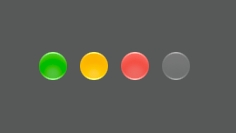
Apple also tweaked the look of the traffic light buttons in macOS Golden Gate beta six, adding a Liquid Glass aesthetic.


‌macOS Golden Gate‌ is available for developers and public beta testers, with a public launch coming in September.
Related Roundup: macOS Golden Gate

This article, "Apple Adds More New Wallpapers in macOS Golden Gate" first appeared on MacRumors.com

Discuss this article in our forums

  •  

iOS 26.6.1 and macOS Tahoe 26.6.2 Fix Nearly 30 Security Vulnerabilities

The iOS 26.6.1, iPadOS 26.6.1, and macOS Tahoe 26.6.2 updates Apple released today fix almost 30 security vulnerabilities, according to Apple's security support document. This is Apple's third security release in three weeks as AI surfaces bugs faster than the company's typical release schedule can absorb.


Apple says the software includes security fixes that were previously added to the iOS 27, iPadOS 27, and macOS Golden Gate betas.

There are fixes for an audio vulnerability that could allow an app to leak sensitive user information, an image vulnerability that could allow for arbitrary code execution, a trio of kernel vulnerabilities, and several WebKit bugs that could cause memory corruption or Safari crashes. Of the 29 CVEs outlined in the document, 21 are WebKit-related, and nine are credited to OpenAI Codex Security.

On iOS, Apple also fixed a telephony bug that could allow an attacker in a privileged network position to bypass IPSec authentication and intercept network traffic.

None of the vulnerabilities are known to have been actively exploited, but Apple always recommends updating to new versions of iOS, iPadOS, and macOS as soon as possible. Now that the vulnerabilities have been made public, attackers could target devices still running earlier versions of the software.

Apple also released iOS 18.7.10 and iPadOS 18.7.10 for devices unable to run iOS 26 and iPadOS 26. Apple did not ship macOS Sequoia or macOS Sonoma updates for Macs unable to run ‌macOS Tahoe‌.

The updates can be installed by opening up the Settings app, tapping into the General section, and selecting Software Update.
Related Roundups: iOS 26, iPadOS 26, macOS Tahoe
Related Forums: iOS 26, macOS Tahoe

This article, "iOS 26.6.1 and macOS Tahoe 26.6.2 Fix Nearly 30 Security Vulnerabilities" first appeared on MacRumors.com

Discuss this article in our forums

  •  

Apple Seeds Sixth visionOS 27 Beta to Developers

Apple today provided developers with the sixth beta of an upcoming visionOS 27 update for testing purposes. The beta comes a week after Apple released the fifth beta.


visionOS 27 can be installed by opening the Settings app, going to Software Updates, and opting into Beta Updates.

visionOS 27 introduces Siri AI, the smarter and more capable version of ‌Siri‌ that's similar in capability to chatbots like ChatGPT and Claude. On the Vision Pro, ‌Siri‌ can answer questions about anything the wearer is looking at, and there's a new ‌Siri‌ orb that can be placed anywhere in wearer's virtual space.

Panorama photos can be turned into spatial environments, and there's a new Icelandic Thórsmörk environment that features dramatic mountains, valleys, and glaciers, along with the northern lights. Web Environment support allows developers to create 360-degree environments in Safari for a more native Vision Pro browsing experience.

App windows are now curved to provide a more immersive workspace, and Control Center has been reorganized to make system controls easier to find. Apple added a smaller widget size, and notifications automatically expand when the wearer looks at them.

More on what's new in visionOS 27 is listed in our Vision Pro roundup.
Related Roundup: Apple Vision Pro
Buyer's Guide: Vision Pro (Neutral)
Related Forum: Apple Vision Pro

This article, "Apple Seeds Sixth visionOS 27 Beta to Developers" first appeared on MacRumors.com

Discuss this article in our forums

  •  

Apple Seeds watchOS 27 Beta 6 to Developers

Apple today seeded the sixth beta of watchOS 27 to developers, with the update coming a week after the launch of the fifth beta.


The beta can be downloaded through the Watch app on the iPhone with a free developer account. The Apple Watch will need to be on the charger, connected to Wi-Fi, and have a battery level of 50 percent or above for new software to be installed. The beta is available for all Apple Watch models compatible with ‌watchOS 27‌ except for the Apple Watch Ultra 3.

‌watchOS 27‌ gains Siri AI, the smarter, more capable version of ‌Siri‌. ‌Siri‌ can hold back-and-forth conversations, plus it has access to general world knowledge and your personal data to answer questions and find information. ‌Siri‌ AI on Apple Watch requires an iPhone that supports Apple Intelligence, including the iPhone 15 Pro and later.

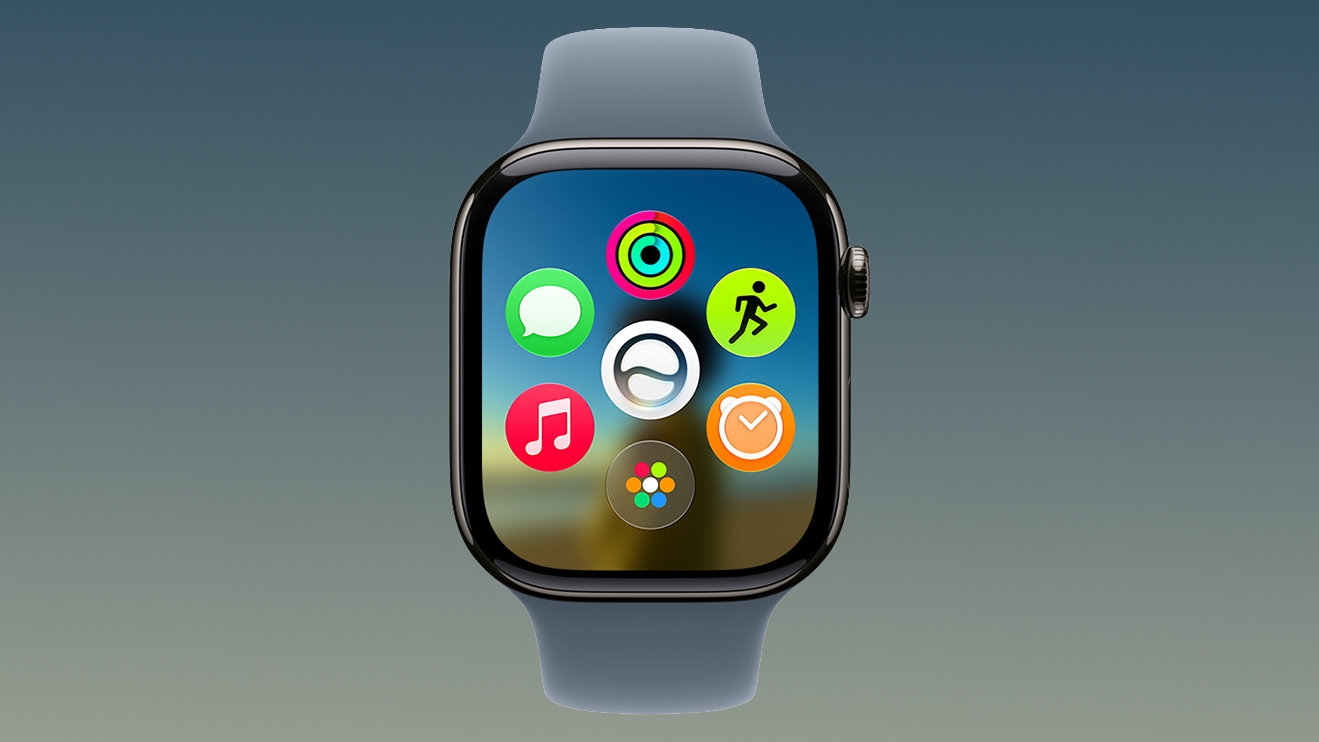
There's a new Dynamic app grid that highlights ‌Siri‌ suggested apps, and more intuitive Smart Stack Suggestions. You can find your parked car, see pinned messages, get noise alerts, and view identity and transit cards.

Liquid Glass has been updated to improve legibility, and Workout Buddy works on the Apple Watch even when an iPhone isn't nearby. Workout Buddy also gains new metrics like progressive increases to distance, pace, or duration. Apple added a new all-in-one Find My app with support for Precision Finding, and there are performance optimizations that improve battery life.

More on what's new in ‌watchOS 27‌ is available in our watchOS 27 roundup.
Related Roundups: watchOS 26, watchOS 27
Related Forum: Apple Watch

This article, "Apple Seeds watchOS 27 Beta 6 to Developers" first appeared on MacRumors.com

Discuss this article in our forums

  •  

Apple Seeds tvOS 27 Beta 6 to Developers

Apple today seeded the sixth beta of tvOS 27 to developers for testing purposes, with the update coming a week after Apple released the fifth beta.


The beta can be downloaded and installed through the Settings app on the Apple TV. A free developer account is required.

tvOS 27 has few new features compared to the other 27 software updates, but it does add a redesigned Podcasts app, options for larger text, and a more responsive Control Center.

AirPlaying to an ‌Apple TV‌ from another Apple device is faster, and apps and animations are smoother. You can also now see AppleCare coverage details in the Settings app.

More on the features in tvOS 27 can be found in our Apple TV roundup.
Related Roundup: Apple TV
Buyer's Guide: Apple TV (Don't Buy)

This article, "Apple Seeds tvOS 27 Beta 6 to Developers" first appeared on MacRumors.com

Discuss this article in our forums

  •  

Apple Releases macOS Golden Gate Beta 6

Apple today provided developers with the sixth beta of macOS Golden Gate, with the update coming a week after Apple seeded the fifth beta.


Developers can download ‌macOS Golden Gate‌ by going to System Settings > General > Software Update. Beta Updates will need to be enabled, and a free developer account is required.

‌macOS Golden Gate‌ includes multiple design improvements. Liquid Glass opacity has been improved to increase readability, there's a slider for controlling the level of transparency, and changes to shadowing make it easier to tell when a window is active. Apps now have uniform toolbars, edge-to-edge sidebars, and less rounded corners, plus there are fewer icons in menu bars.

Siri has been transformed into ‌Siri‌ AI, a chatbot-style assistant that combines general world knowledge, your personal data, and onscreen awareness to answer questions about anything and find information for you. ‌Siri‌ lives in Spotlight, and you can ask questions with the new Search or Ask interface.

There's also a ‌Siri‌ app where you can chat with ‌Siri‌ and view past conversations, and on newer Macs, you can set a custom voice for ‌Siri‌ with personalized pace and expressivity. Visual Intelligence is now on the Mac so ‌Siri‌ can answer questions about what's on your screen, and a Write with ‌Siri‌ feature lets ‌Siri‌ generate text or give feedback on your writing.

There are AI photo editing tools in the Photos app, AI tab organization in Safari, an option to use AI to automatically update weak passwords in the Passwords app, and a revamped Image Playground app that can generate photorealistic images.

More on all of the new features in ‌macOS Golden Gate‌ can be found in our macOS Golden Gate roundup.
Related Roundup: macOS Golden Gate

This article, "Apple Releases macOS Golden Gate Beta 6" first appeared on MacRumors.com

Discuss this article in our forums

  •  

Apple Seeds Sixth iOS 27 and iPadOS 27 Betas to Developers

Apple today seeded the sixth betas of iOS 27 and iPadOS 27 to developers for testing purposes, with the update coming one week after Apple released the fifth betas.


Registered developers can download the betas from the Settings app on the iPhone or iPad by going to the General section and selecting Software Update.

‌iOS 27‌ introduces Apple's smarter version of Siri, ‌Siri‌ AI. ‌Siri‌ AI is a chatbot similar to ChatGPT, incorporating general world knowledge, personal data from apps like Messages and Mail, and onscreen awareness to answer questions and find information for you.

There are new Apple Intelligence features in apps like Photos, Safari, Shortcuts, Wallet, and Passwords, plus Apple added a standalone ‌Siri‌ app that houses ‌Siri‌ conversations. Write with ‌Siri‌ is available systemwide for generating text or offering feedback on your writing, and Visual Intelligence has been relocated to the Camera app with a new ‌Siri‌ mode.

Apple improved the look of Liquid Glass and added a slider for customizing transparency. There are multiple performance improvements to speed up iOS, so everything feels faster, even on older iPhones. Apps launch quicker, AirDrop transfers are faster, the keyboard pops up more quickly, and devices are better at transitioning between Wi-Fi and Cellular to keep you connected.

For more on what's new in ‌iOS 27‌, we have a dedicated iOS 27 roundup.
Related Roundups: iOS 27, iPadOS 27

This article, "Apple Seeds Sixth iOS 27 and iPadOS 27 Betas to Developers" first appeared on MacRumors.com

Discuss this article in our forums

  •  

MacBook Ultra: Everything We Know About Apple's OLED Touchscreen Mac

Apple is working on a high-end MacBook Pro that could be called the "MacBook Ultra." The device will have several firsts in a Mac, including an OLED display and a touchscreen.


The "Ultra" name isn't a sure thing, because Apple could also continue to call the device the ‌MacBook Pro‌ and make it a high-end model in the Pro lineup. There are rumors of other "Ultra" devices in the works like AirPods and the foldable iPhone, which could be called the iPhone Ultra.

Design


Apple hasn't redesigned the ‌MacBook Pro‌ since the launch of the M1 Pro and M1 Max models in 2021, so the device is due for a new look. The MacBook Ultra could feature some design changes, including a thinner chassis.

Apple could get rid of the notch on the MacBook Ultra, replacing it with an iPhone-style Dynamic Island. A ‌Dynamic Island‌ could better unify the way Siri AI behaves across the iPhone and the Mac with iOS 27 and macOS Golden Gate.

Size Options


The MacBook Ultra will be available in both 14-inch and 16-inch size options.

Display


Apple's upcoming MacBook will be the first with an OLED display. OLED display technology is already used for the iPhone, Apple Watch, and iPad Pro, but it has taken time for larger-sized OLED screens to come down in price.

OLED will be an upgrade over the current mini-LED display technology in most cases, bringing deeper colors and a higher contrast ratio with true blacks. In an OLED display, individual pixels turn off instead of dimming when not activated, so there's less light leakage. OLED displays tend to have better HDR than mini-LED, but sometimes don't match the mini-LED brightness levels.

Along with OLED technology, the MacBook Ultra is expected to have the first touchscreen display on a Mac. Users will be able to use their fingers to interact with the Mac's display, similar to an iPad.

Touchscreen capabilities will be used alongside the trackpad and keyboard, suggesting Apple sees touch as supplementary rather than a primary control method. Apple is rumored to be adapting ‌macOS Golden Gate‌ for touch input.

Apple plans to add a reinforced hinge to the MacBook Ultra's display so that it doesn't wobble when it's tapped.

MacBook Ultra Hints


There are features in ‌macOS Golden Gate‌ that hint at a future touchscreen Mac. Apple added direct touch input to Sidecar so users can tap and interact with macOS elements when using the ‌iPad‌ as a Mac display.

‌macOS Golden Gate‌ supports an iPhone-style pull-to-refresh option, and it can be used across apps like Safari, Mail, News, Podcasts, and Calendar. A pull-to-refresh option makes the most sense on a touch display.

Chips


The current ‌MacBook Pro‌ models are equipped with M5 Pro and M5 Max chips, and Apple plans to use the same chips for the rumored MacBook Ultra.

Apple is planning to introduce the M6 chip as soon as late 2026, but Bloomberg says Apple isn't going to release any other chips in the M6 series. Apple's chip plans have changed in recent months, and the company is now accelerating the launch of the M7 series. The M7 chips feature major neural processing improvements that will meet increasing demand for machines better able to handle AI tasks.

With no M6 Pro or M6 Max planned, Apple will need to use the M5 Pro and M5 Max so it doesn't have to wait for the M7 series before debuting the MacBook Ultra. A second-generation MacBook Ultra will use the M7 Pro and M7 Max chips, with that machine planned for late 2027 or early 2028.

Pricing


Apple's OLED MacBook is expected to be a premium product, with a price tag higher than current ‌MacBook Pro‌ models. Apple raised the prices of all Macs in June 2026, and so the MacBook Ultra will likely be even more expensive than expected. ‌MacBook Pro‌ pricing went up $300.

The higher-end 14-inch ‌MacBook Pro‌ with M5 Pro chip starts at $2,499 after the price increase, while the 16-inch M5 Pro ‌MacBook Pro‌ starts at $2,999. The OLED MacBook will be priced even higher.

Launch Date


Rumors suggest the MacBook Ultra will launch in late 2026 or early 2027, with mass production to start in late 2026. If the MacBook Ultra comes in 2026, it could be released sometime between October and December, but it won't be introduced at Apple's September iPhone event. If the new MacBook launches in 2027, it could come early in the year at Apple's first 2027 event.

Timing is uncertain because of ongoing memory shortages. Apple will need to be able to secure enough memory chips, and that could affect the company's launch plans.
This article, "MacBook Ultra: Everything We Know About Apple's OLED Touchscreen Mac" first appeared on MacRumors.com

Discuss this article in our forums

  •  
❌