❌

Lees weergave

Apple Retail Stores Preparing for New Home Product Launches

Bloomberg's Mark Gurman reports that Apple is reorganizing parts of its brick-and-mortar stores this fall to make room for new home products.


Writing in his latest Power On newsletter, Gurman says the teams responsible for store layouts are preparing changes to the "Avenues," or the perimeter walls in Apple's newer stores, where accessories like HomePod, Apple TV, AirPods, and Beats are displayed alongside third-party accessories.

The work is said to involve rearranging sections of the Avenues and adding accessory bays for upcoming new devices.

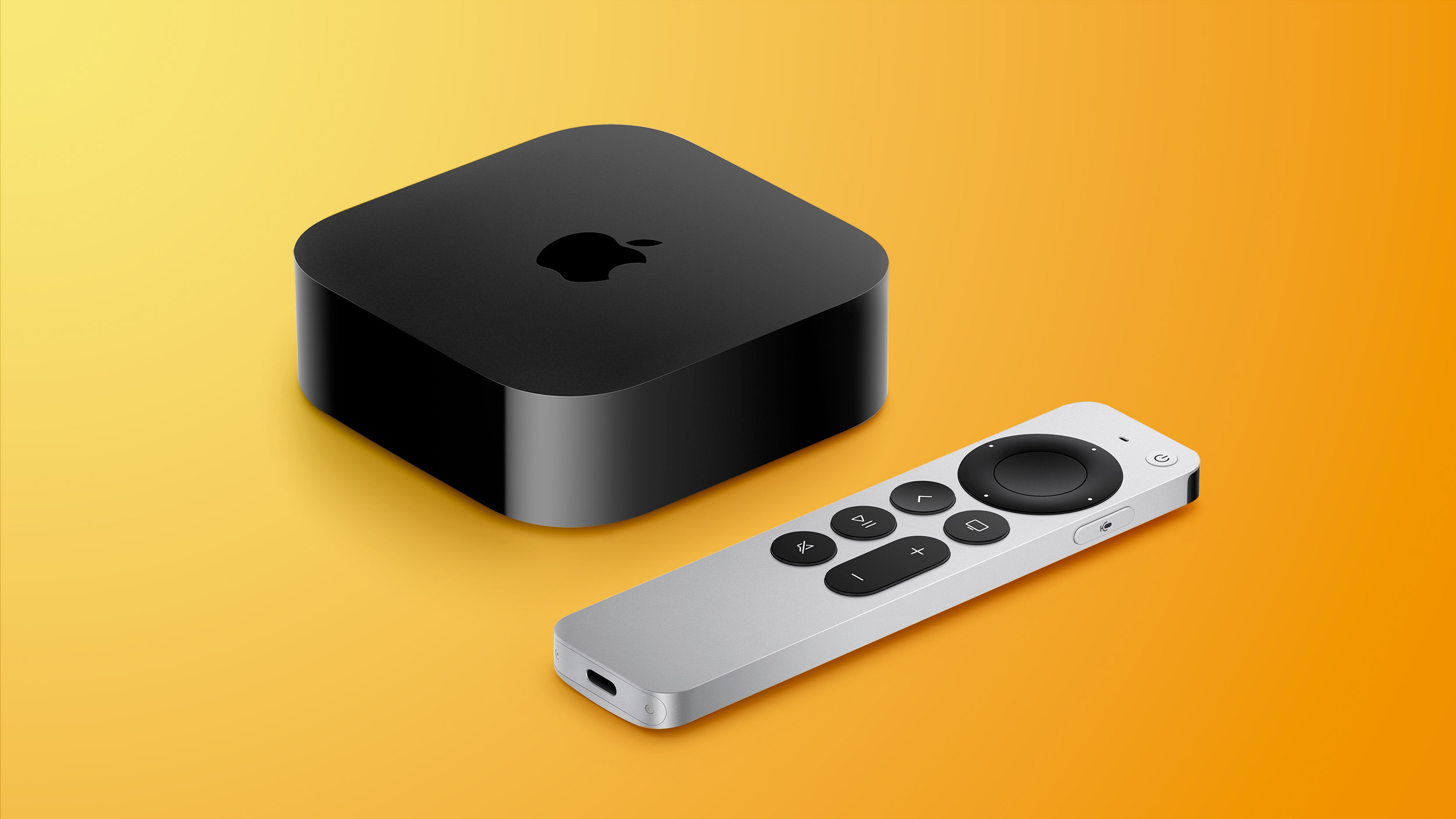
Apple is already believed to have an upgraded Apple TV and a new HomePod mini coming up. Gurman said in July that both were nearly ready, with faster chips for Siri AI but no major design changes. Rumors indicate an A17 Pro chip or better in the new Apple TV, and an S9-series chip, improved sound, and a red finish for the HomePod mini, the current version of which is now over 2,000 days old.

All of that being said, Gurman says the scale of the retail changes suggests prep-work for the launch of its long-awaited home hub with a display (aka the rumored HomePod with Display or "HomePad").

Gurman reported last month that the smart home hub will arrive at some point between October and early next year. It's expected to have a 7-inch square display, and will be sold with either a tabletop base or a wall mount. There's also said to be an all-new operating system built around tvOS with Siri AI powering the device.

Code strings uncovered in macOS Tahoe 26.7 last week suggest the home screen will use a Widget Gallery similar to the iPhone's Lock Screen customization options. The code also indicates that the new device's home screen could have many of the same options for icons, widgets, and clock faces, with widgets from a linked iPhone suggested automatically.

Apple will need a dedicated space where customers can see how the hub works, what its purpose is, and how it fits into the wider home setup, Gurman reports.
Related Roundups: Apple TV, HomePod mini

This article, "Apple Retail Stores Preparing for New Home Product Launches" first appeared on MacRumors.com

Discuss this article in our forums

  •  

M6 iMac Coming This Year in New Colors

Apple is readying new iMac models with an upgraded chip and new color options, according to Bloomberg's Mark Gurman.


Writing in his latest Power On newsletter, Gurman says the new version is likely to be an updated 24-inch model with an M6 chip, replacing the existing M4 model that arrived in October 2024.

New colors are also said to be on the menu, though Gurman does not say what they are. The current β€ŒiMacβ€Œ comes in seven colors, including green, yellow, orange, pink, purple, blue, and silver.

Otherwise, no major design changes are expected. Apple is reportedly developing a 24-inch β€ŒiMacβ€Œ with an OLED display, but this won't arrive for several years.

"All signs point to the M6 models being close to launch," says Gurman, with the new models expected to arrive before the end of the year.
Related Roundup: iMac
Buyer's Guide: iMac (Don't Buy)
Related Forum: iMac

This article, "M6 iMac Coming This Year in New Colors" first appeared on MacRumors.com

Discuss this article in our forums

  •  

Sergio Cipriano: Two Debian Days in one week

Two Debian Days in one week

The Debian Project was officially founded by Ian Murdock on August 16, 1993. The Debian community celebrates its birthday, Debian Day, on or around this date every year. This year, I had the chance to attend two of them: one in JoΓ£o Pessoa, ParaΓ­ba, and another in BrasΓ­lia, the capital of Brazil.

JoΓ£o Pessoa

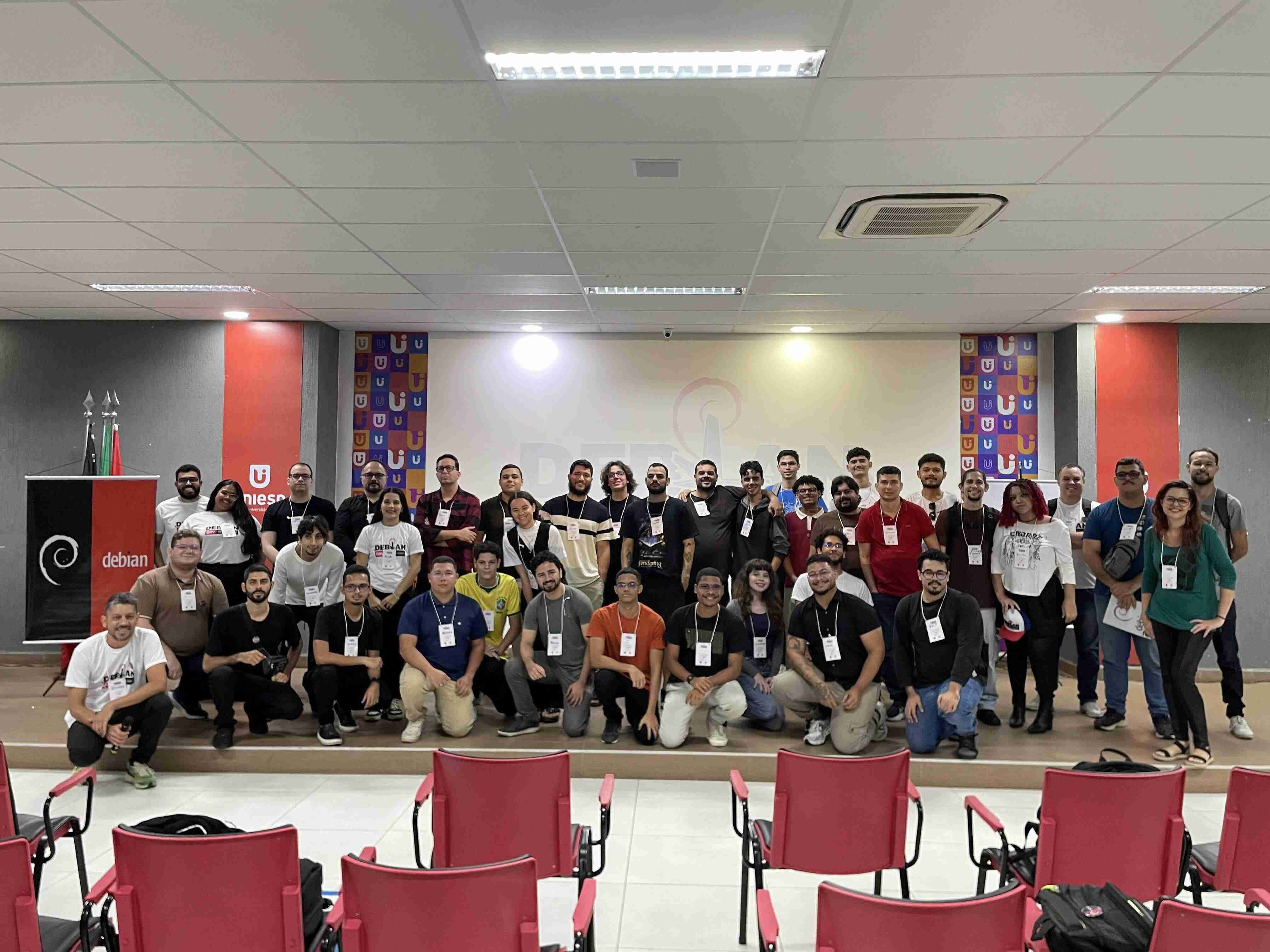
Debian Day JoΓ£o Pessoa Group Photo

In JoΓ£o Pessoa, we had a two-day event. The first day was dedicated entirely to workshops, and I ran a packaging workshop for newcomers.

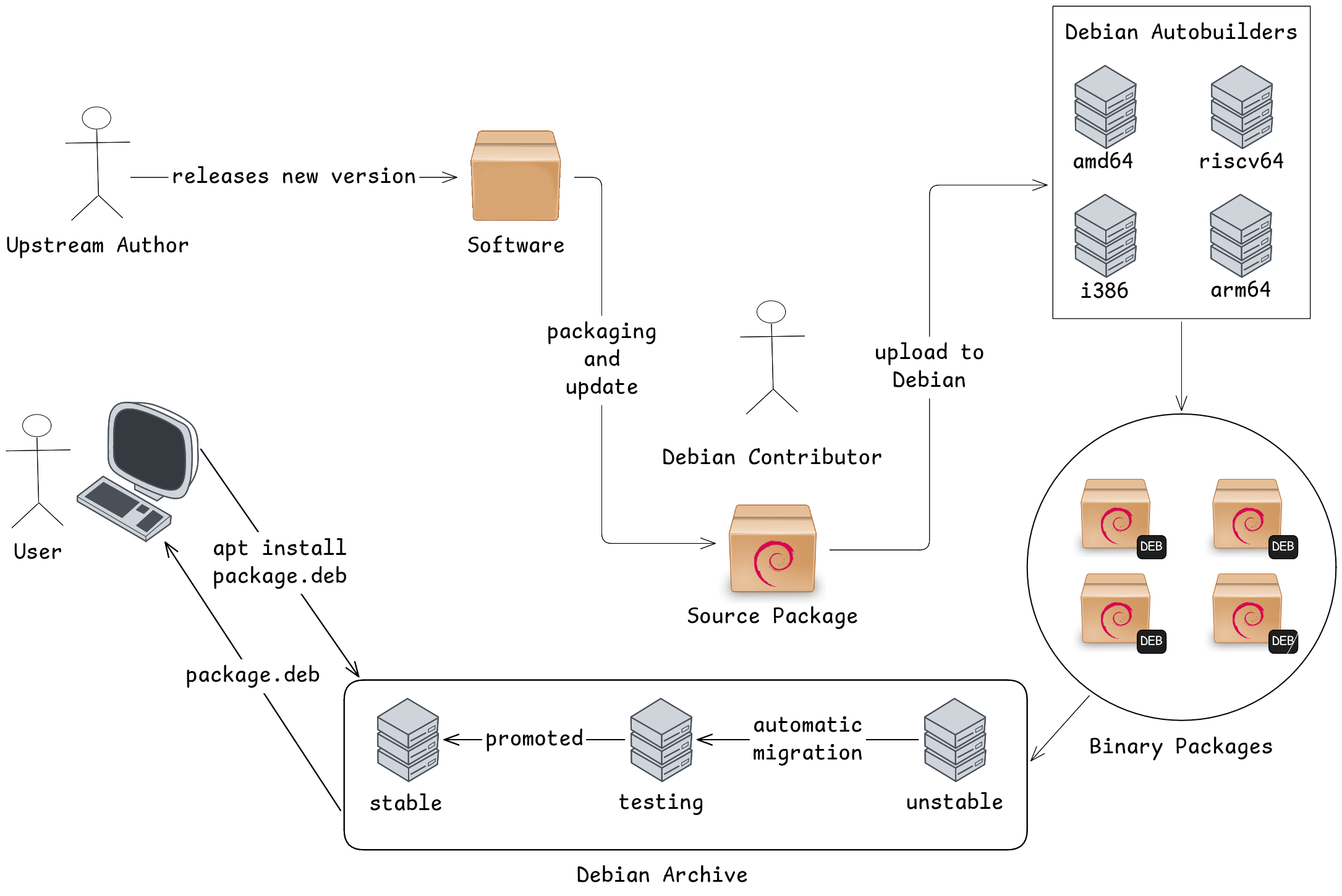
It was the first time I had been responsible for a workshop, and it was a great experience. We didn't have a lot of time, so I decided to start with a 30-minute talk explaining a few things about Debian. For example, I made this image to explain the packaging workflow:

Debian upload workflow

This image was based on The Debian Administrator's Handbook, and I think the participants really enjoyed learning about this workflow. When I showed the slide with this image, it was the moment when I received the most questions.

After the talk, I explained my way of working and what they were going to do. The hardest part was setting up the environment, since my approach uses sbuild + gbp. They were running different Debian releases and, because of my inexperience with workshops, I had some of them configure sbuild with unshare, even though it is only available in stable through backports.

Some of them even managed to learn how to use backports, while others decided to start again using the "old" way.

One thing that helped a lot was the Debian Brasil Wiki. It has all the instructions for configuring sbuild in Portuguese, along with great examples. The Brazilian wiki is an opinionated version of the Debian Wiki. We generally prefer to use it for the convenience of having the exact workflow we follow, as well as an up-to-date Portuguese version of our process.

If you want to learn more about the Brazilian community, you can find more details in the schedules from previous DebConfs. We almost always had a talk about the community and its activities.

In the end, everyone successfully set up their development environment, and all six participants made their first contribution to Debian. If you take a look at my upload tracking page, you will see that every upload made on August 15, 2026 was a sponsored upload from this event. One of them appear twice in the list because I sponsored the upload and also made some other changes.

I also asked all of them to put this in their changelog:

* My first contribution!

The idea was to make it clear to other people that they were only working on small Lintian issues as a way of learning and understanding the process. By the way, I made a UDD query to find packages with the following Lintian tag: redundant-rules-requires-root-no-field. To fix this issue, they only had to remove one line from the debian/control file.

It is obvious that these uploads are not particularly useful. I call them "motivational uploads" because my goal is to help newcomers understand the process and immediately give them the reward of having made a contribution to Debian.

I'll try to keep in touch with them. My plan is to hold another session, this time remotetly, to help them continue contributing to Debian. In fact, I already have another package prepared by one of them waiting for my review.

The second day was a full-day event featuring a bunch of talks from the local community. I gave a talk explaining the new members process.

I was the only Debian Developer at the event, and I think having a DD there made a real difference. Being there to answer questions, and simply being present, makes Debian feel more tangible and accessible to people.

A big shout-out to Rafael Rocha, who put in a lot of work to make this event happen, with the help of many volunteers who contributed along the way.

BrasΓ­lia

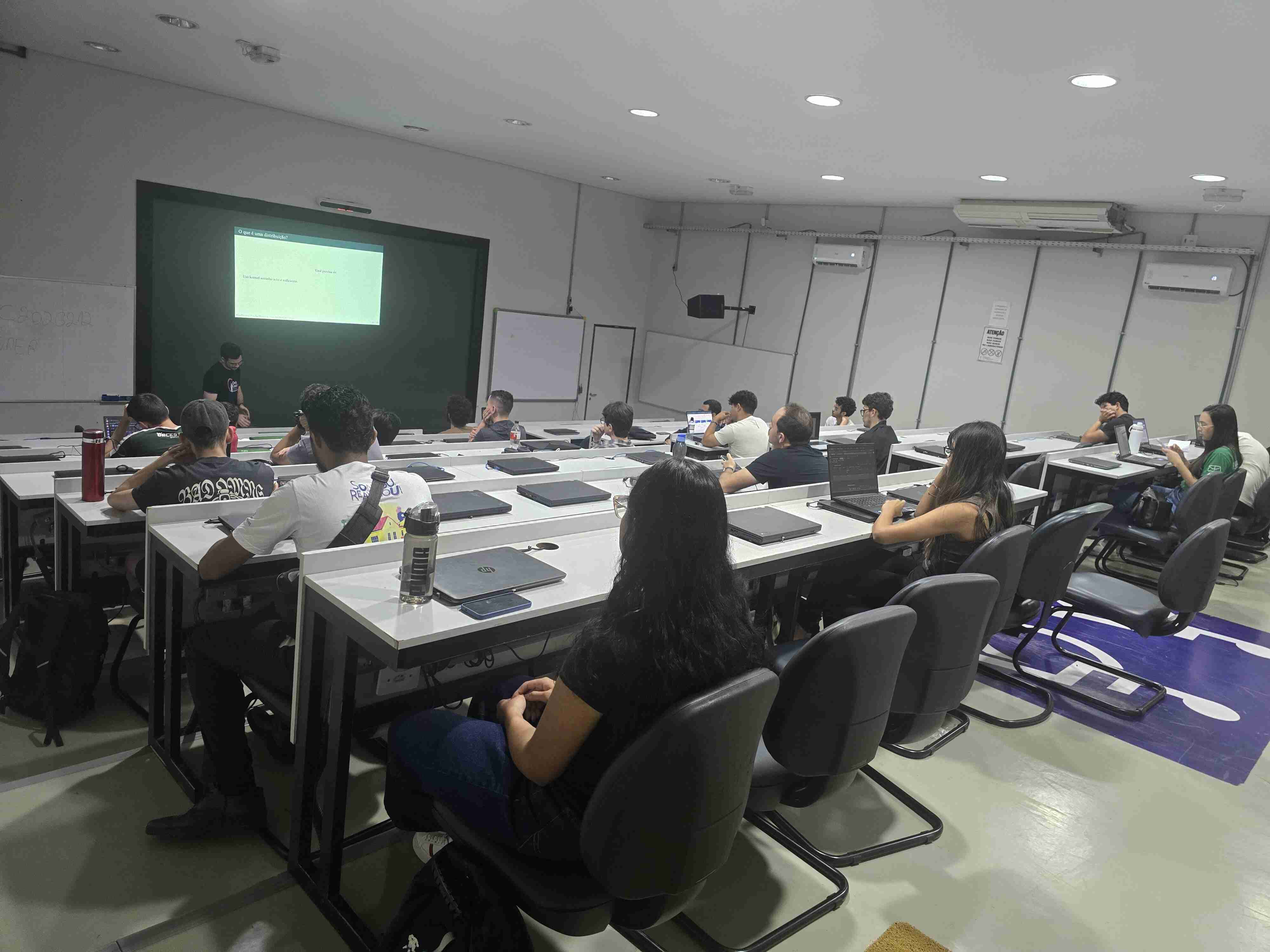
Debian Day talk in BrasΓ­lia

One thing I really like about Debian Days is that each place has its own way of doing things. In JoΓ£o Pessoa, we had a MiniDebConf-like event, while in BrasΓ­lia, we had something smaller but still very valuable. We decided to keep things simple: talk to a few students at the University of BrasΓ­lia (UnB) and then go somewhere to eat and have a few drinks.

A bit of history

For those who don't know, the DebConf 19 was held in Curitiba, Brazil. After the event, Arthur Diniz got really excited about Debian and decided to go back to his University, UnB, to share his experience and encourage more people to contribute to Debian.

I attended one of his talks, thanks to Joenio Costa, who invited Arthur to give the talk. Joenio was also my professor at the time and a Debian contributor. I really liked what Arthur had to say about free software, and he did a great job of presenting the Debian community as a friendly and welcoming place.

So I decided to attend local meetings of the Debian BrasΓ­lia community, which had been inactive for a long time. Lucas Kanashiro was the Debian Developer who answered our questions and, as I mentioned earlier, simply being there made Debian feel more tangible.

Everything stopped when the pandemic began. Then, towards the end of 2020, I saw a message in the Debian BrasΓ­lia channel saying that the meetings were back, this time remotely. I was hesitant to join because, back in 2019, I hadn't managed to make a packaging contribution, even with their help. I had eventually given up on the process. So this time, I decided to join the meeting with something already prepared for review. I watched all of Eriberto's packaging videos, picked a random package, and joined the meeting.

I remember Kanashiro being excited that someone had just shown up with something ready for review. At the time, it was only the second meeting since Debian BrasΓ­lia had come back online, and none of the newcomers had started working on contributions yet.

During the same meeting, he also convinced us, the newcomers, to give a talk about Debian just three days later.

The MiniDebConf Online Brazil 2020 was happening on Sunday, and the meeting was on the Thursday before it. Since he has great convincing skills, I went along with the idea and prepared the talk with Francisco Ferreira.

That was the rebirth of the Debian BrasΓ­lia community.

Since then, we have maintained a close connection with the University of BrasΓ­lia, and today, at least seven Debian Developers are from UnB, whether as former students or former professors.

The reason I told this story is that, even though the Debian Day we held in BrasΓ­lia was smaller, it is part of something that has been working for us for several years: staying close to an University. We've managed to attract and retain many people who share the same values and interests.

I've hope you all had a great Debian Day. If you're reading this and aren't part of the Debian community but would like to join, get in touch!

  •  

Gurman: iPhone Ultra Wows Early Testers, Except for Its Camera

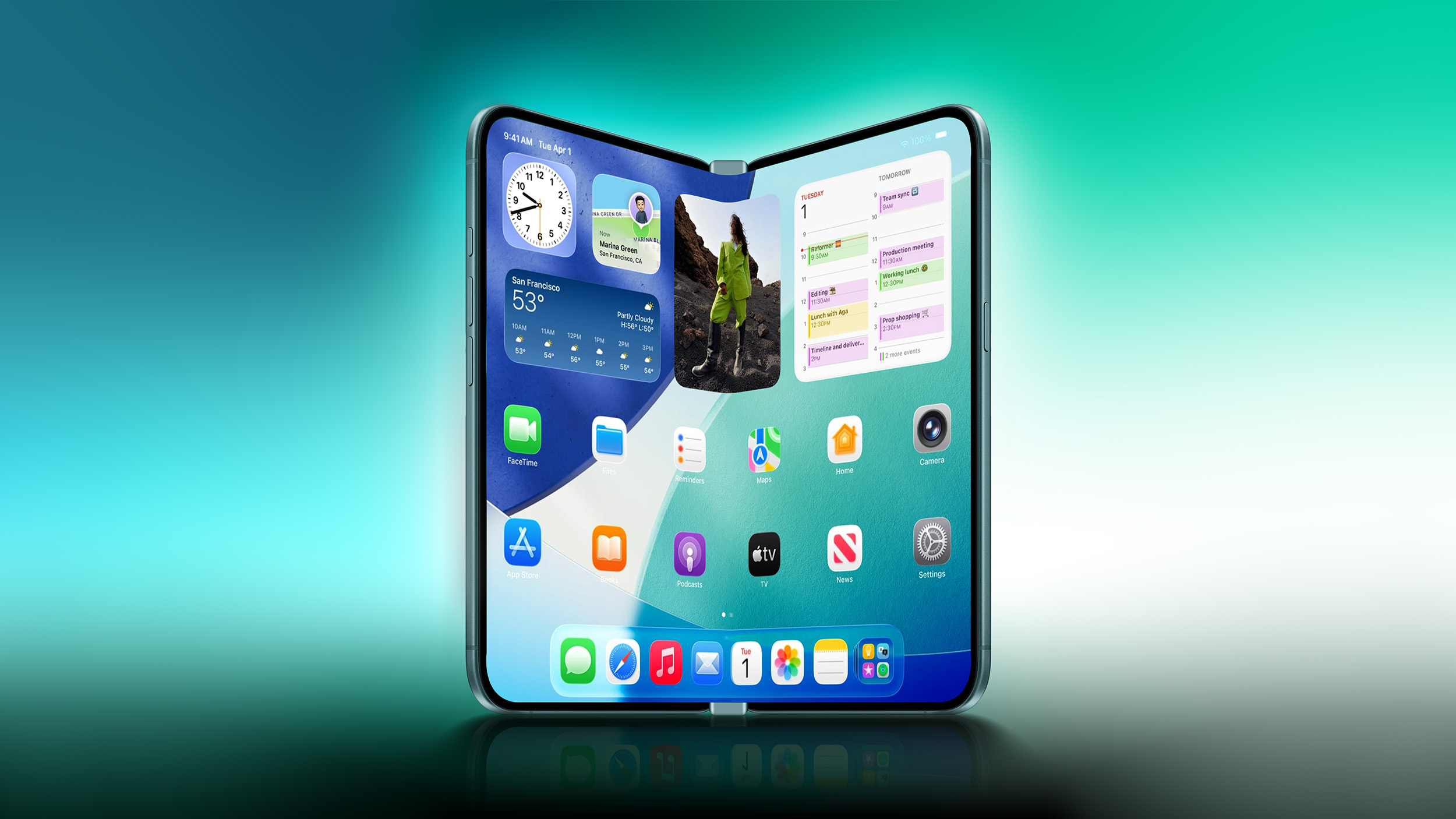
Apple's upcoming foldable iPhone Ultra is winning over the few people who have had hands-on time with the device, though the camera setup may leave some users wanting, according to Bloomberg's Mark Gurman.


Writing in his latest Power On newsletter, Gurman says people who have used the device – which is reportedly referred to internally as the iPhone Ultra – like how it fits in your pocket, as well as the feel and durability of its hinge mechanism. Testers have also apparently praised the new iPad-like app layouts that take advantage of the larger internal display when the phone is unfolded.

Beyond productivity, video, and gaming, Gurman says Apple's foldable device also performs well as a camera viewfinder. However, the device lacks a telephoto lens, which could cost Apple some sales given the expected price. The device is expected to feature a dual-lens rear camera system built around a 48-megapixel main lens paired with an ultra-wide lens.

The foldable is also expected to fall back on Touch ID integrated into the side button instead of in-display Face ID – a compromise Apple has reportedly made to keep it around 4.5mm thick when unfolded. But like Gurman says, some users may prefer this traditional biometric setup. Like Samsung's recently released Z Fold 8, the iPhone Ultra is said have a 5.5-inch outer display and a roughly 7.8-inch inner display when opened, making for a wide book-style design.

Apple's first foldable is set to be unveiled alongside the iPhone 18 Pro and iPhone 18 Pro Max at a launch event on or around September 9. Reports suggest the device could start at $2,000 and even climb past $2,500 for higher storage tiers.
Related Roundup: iPhone Fold

This article, "Gurman: iPhone Ultra Wows Early Testers, Except for Its Camera" first appeared on MacRumors.com

Discuss this article in our forums

  •  

Colin Watson: GSS-API support split out from main Debian OpenSSHΒ packages

In an option review I did in 2024, shortly after the xz-utils backdoor, I explained that having GSS-API authentication and key exchange support in the main OpenSSH packages is problematic. The key exchange patch is large and intrusive. Furthermore, even linking to the necessary libraries is not without risk: as the Ebury malware attack demonstrated way back in 2009, each extra library linked into security-critical daemons such as sshd (or nowadays into its privilege-separated helper programs) can modify the behaviour of the daemon even if you aren’t doing anything that would involve calling into that library. Of course some of that risk remains, but as Damien Miller wrote, minimizing the number of libraries that end up in the address space of sshd and friends is stillΒ valuable.

I just uploaded openssh 1:10.4p1-5 to unstable, completing this split. As of this version, the OpenSSH client and server are built without GSS-API authentication and key exchange support. If you need those features, install openssh-client-gssapi or openssh-server-gssapi instead, as appropriate. Debian 13 (trixie) already has packages with those names that just depend on the regular openssh-client and openssh-server so that you can pre-emptively install them, as documented in the release notes.

The new openssh-*-gssapi packages have relatively tight dependencies on openssh-common, in order for the testing migration system to ensure that we can’t forget to keep them up to date. This will mean a bit more ongoing work for me on each new upstream version, but I think it will beΒ manageable.

  •  

Iustin Pop: Another optimistic take on AI

Disclaimers

The current discussion in Debian aroun the AI GR is very heated, and I won’t add to that, however, I am very confused about some of the viewpoints there. But, I had no idea how to even try to write this, so did shut up, until I saw Aigars’ excellent Optimistic take on AI, which motivated me to try, at least. For the record, I fully subscribe to the post, and to the voting suggestions (and I just voted).

Also, for full disclosure, I don’t think I did any contribution to Debian until now using AI, neither packaging, nor emails, nor bug reports. And this blog post specifically is 100% hand written.

With that out of the way… there are two points I want to make in this post.

AI is useful, even if it has risks

First is, that even if we could put the genie back in the metaphorical bottle, we should not. We do need to continue working towards safe AI, and efficient AI (less environmental impact), but we should not work towards removing the usage of AI. There are already significant advancements in sciences and technology thanks to the use of AI, so desiring AI to not exist (assuming we had a magical wand) is the wrong approach.

Sure, AI has significant risks β€” and I can see ways in which AI can do significant damage to society β€” but I don’t think we can go from Kardashev I to II without the use of AI, and definitely not to III. And I think, that should be the goal.

A few simple examples: Do we want to rollback all the 20 years old security issues that AI found? Do we want to rollback the recent Moderna cancer findings? Do we want to rollback the concept of β€œextremely large scalle pattern matchings”, just because it runs on chips and no longer in one person’s head?

Reading Debian lists

The second point is, lately I found less and less enjoyment in reading Debian lists. Even with that already being the case, I feel soo disconnected from many of the opinions being voiced in this discussion.

On one hand, it’s normal and healthy that people have different opinions, disagree, and move foward.

On the other hand, looking at one of the proposed options:

  • β€œModerators and disciplinary teams may make narrow and tailored exceptions to rule 4, and decide on interpretation”.
  • β€œViolations of these requirements should be treated as violations of the relevant Code of Conduct and should result in swift and proportionate disciplinary action”.

I already knew Debian, and some large parts of the OSS world, is left leaning. But those phrasings, to me, are too close to socialism/communmism. As someone who grew up under communism, this is a much more slippery slope (disciplinary teams? really?) than AI usage. Ask me in person for more details.

So, it is possible that Debian continues to evolve in such a way that I don’t find myself in any way close to its ongoing culture. I will be sad at that point, but it will be what it is.

Where to?

I think that, until such a time that an AI bubble bursts, what any organisation should do is try to logically see where and if AI can help. And in an organisation that is about computer software, I see hundreds of places that are subject to very large scale pattern matching… so the half of the discussion is, to me, mind-boggling.

To be clear, it’s not about β€œif you can’t beat them, join them”. As I wrote above, I think AI is useful, so the point is how to use it effectively.

Well, will see what Debian votes. I am half curious, half sad alreay.

  •  

Wouter Verhelst: Programming and GR 2026 002

Programming language generations

When I was young, I learned about a model of classifying programming language: the system of programming language generations.

In this model, first generation programming languages are, basically, where you program the computer in the language that is defined by its architecture. On a Von Neumann machine, with its load-and-store architecture, you do that by inputting a string of numbers. The first programmer in human history -- her name was Ada Lovelace -- wrote in a first-generation language. 1GLs aren't so much invented as they are a byproduct of the computers for which they're created.

Second-generation languages are the assembler languages. Because humans are not computers, and because decoding long lines of numbers to understand what the computer is doing, when programming became a full-time job, the programmers that did it decided that doing all this assembling manually is too complicated, so they quickly wrote assemblers to automate the process for them. They still could understand the 1GL output of the 2GL assembler, but most of them quickly forgot how to write software in a first-generation language. Not that anyone cared, as the translation from a 2GL to a 1GL is lossless and you can just revert it.

Third-generation languages are higher-level languages. When the first 3GLs were invented (such as COBOL and, more famously, FORTRAN) in the late 1950s and early 1960s, it was believed by some that the work of programming a computer so accessible to non-programmers that the job of programmer would eventually cease to exist, and people would just ask the computer what they needed by entering COBOL instructions. This of course was ridiculous and incorrect, because converting algorithms to computer instructions, whether at the 2GL or 3GL level, is a specialized skill that some automation can perhaps make simpler but never completely take away the need for. At the time, some people also felt to some extent that using 3GL wasn't the same thing as actually programming 3GLs, but eventually the world moved on and embraced things. The invention of 3GL environments reduced, but did not completely take away, the need for people to understand 2GLs, as compiler and operating system authors still need to understand them, and some highly optimized code still continues to be written in 2GLs to this day.

Fourth-generation languages abstract away some or all of the process of programming. For instance, a database-related 4GL will hide away the complexities of storing data in particular locations, how to fetch that data, how to index it such that you can fetch it efficiently, how to loop over the data to get you a summary of that data, and instead allows you to express the required information in an abstract way, expecing the computer to fill in the blanks. When SQL, an early 4GL, was invented, some people believed that the language made accessing databases so simple that the requirement to implement database applications would eventually cease to exist and we would just hand SQL prompts to users who need to access data. This of course was ridiculous and incorrect, because understanding data schemas and using that understanding to query data from a database is a specialized skill that perhaps a higher abstraction can help you make simpler, but that in the longer run it can never completely take away the need for. The invention of 4GLs also reduced, but did not completely take away, the need for people to understand how to do the things that the 4GLs automate for you manually, as the people who do write those things still need to understand them, and there are also environments where these particular 4GLs are rather not appropriate or just very slow.

The first definition of programming language generations that I read about in the 1980s simply stated that fifth-generation languages did not yet exist, but that they would in the future, and that in those, you would "tell the computer what to do, and it would then do that". Now that we have a way of doing so, it could be said that by some definition, we now actually do have a number of 5GLs. The existence of these LLM systems has caused some, especially the people who build and exploit these systems, to exclaim that programming as we know it today is going to cease to exist, and everyone will just ask an LLM to generate a program, which will then do so. That is of course ridiculous and incorrect, as no automaton can generate software from nothing; input is still required for the model to be able to produce something that approaches usability, and being able to word that input in a correct and productive fashion will be a skill that future programmers can benefit from. I ran some experiments a while back, and from that concluded that, if we look only at the technical side, LLM use can, in some niches, increase productivity for a programmer. There are certainly things that you shouldn't use an LLM for, but equally there can be cases where use of an LLM to perform some task that traditionally would have been done by a programmer would be a net positive.

But LLMs, as they exist today, are highly problematic.

They require vast amounts of data to build the model. The companies that build these models are disrespectful of people who run web services, and as a result, everyone now has to implement various types of application firewalls just to not make systems fall over from the overwhelming requests for data. They are also disregarding the licenses that are attached to these vast amounts of data, which makes me, as a person who believes in the tenets of free software, sad.

They require vast amounts of energy, causing an already-critical global warming crisis to, well, not improve.

They require vast amounts of coolant to dissipate the energy concentrated in their data centers, causing further environmental effects.

In this, they are problematic and to be avoided. But these are side states of the current state of affairs; I do not believe that they are inherently implied to be able to build and operate an LLM -- any LLM.

I guess it's fair to say that my feelings towards LLM usage are complex and many-faceted. I haven't been involved in many debates about the subject, debates that to me seem to be mostly focused on "LLM good" vs "LLM bad" arguments that aren't as nuanced as the position that I would believe is more accurate. This is not because I don't care, but partially because I've been busy in my personal life recently and partially because the whole thing seems somewhat disheartening.

But then Debian popped up GR 2026-002, meaning, I now have to come up with an opinion about various candidate statements in the context of the above, which is... not easy. But I did it anyway.

There are 8 choices on the ballot, and they all have some truth and some falsehood to them. My position about LLMs can be summarized as:

  • The current state of affairs wrt LLMs is disastrous and we should not encourage them
  • However, there's no technical reason why this must remain true for all time
  • And so any statement should keep in mind what might happen in the future and that the current disastrousness of the whole thing isn't guaranteed to continue to exist for all eternity.

With that, let's go over them.

GR vote options

Proposal A

Its summary, from the GR text:

This proposal aims to expressly forbid any contributions to Debian written with the use or assistance of large language models (LLMs) or other generative AI tools.

This falls squarely in the "LLM bad" camp, outlawing all generative-AI contributions, disregarding potential future ones where the problematic situations that exist today are not present.

It makes a change to the social contract, which is especially difficult to reverse (on purpose), and which therefore also will require a 3:1 supermajority, but if we want to ban LLM-assisted contributions, this is probably the best way to do it.

Proposal B

This one tries to allow AI-assisted contributions under certain conditions. It's mostly an "LLM good" proposal, with some caveats that can be discribed as "make sure you know what you're doing".

Proposal C

This proposal is both a weaker (in some places) and stronger (in other places) version of Proposal A. It makes changes to the code of conduct instead of to the social contract, and it also wants to, at least, suggest policy to parties beyond the Debian project. By not changing the social contract, however, it is more likely to reach its simple majority requirement than proposal A.

I don't think the language that it wants to add to the code of conduct is particularly well phrased, however.

Proposal D

This is a weaker form of proposal B. The language is more compact and there are a few requirements that are spelled out in proposal B that are not spelled out in proposal D, but if you read between the lines you'll see that the requirement is still there really and I don't understand why proposals B and D were not merged into one.

Proposal E

This proposal tries to hold a middle ground between "LLM good" and "LLM bad". It appreciates that things are quite muddled at the present time, and that perhaps the situation might might change in the future. It acknowledges that certain questions remain unanswered and that perhaps future considerations might therefore be different. But it essentially refuses to take a stance on whether LLMs should be accepted by the project or not.

Proposal F

Similar to proposal E, this proposal tries to discourage Debian contributors from using LLMs, while still allowing people to use it should they want to, but with some requests and requirements to mark LLM-assisted contributions to account for those people who don't want to interact with LLM-generated software. As such, it is a proposal similar to proposal E that leans closer to the "LLM bad" camp.

Proposal G

This proposal aims to ensure that contributions directly to Debian are created by humans, while at the same time avoiding restrictions on the tools those humans may choose to use when contributing

Another "LLM bad" proposal, it however restricts the "bad" bits to only the direct output of the LLM. If you use an LLM to do something and then clean-room re-implement the same thing yourself, that's apparently fine.

Proposal H

This proposal condemns the use of LLM for its environmental and moral problems, but explicitly not for its technical considerations. I feel that it is closest to my position as explained above.

Voting

Expressing a vote on a ballot so convoluted and complicated like this one takes time. I have to read and understand every ballot option, and formulate an order of them.

And I shouldn't just state which option has my preference; Debian's voting process allows a rich expression of opinion on ballot options.

Anyway, I eventually ended up voting in a way that I think is consistent with my opinion. But it wasn't easy.

  •  

AirTag 2 4-Pack Hits New Low Price of $85 on Amazon

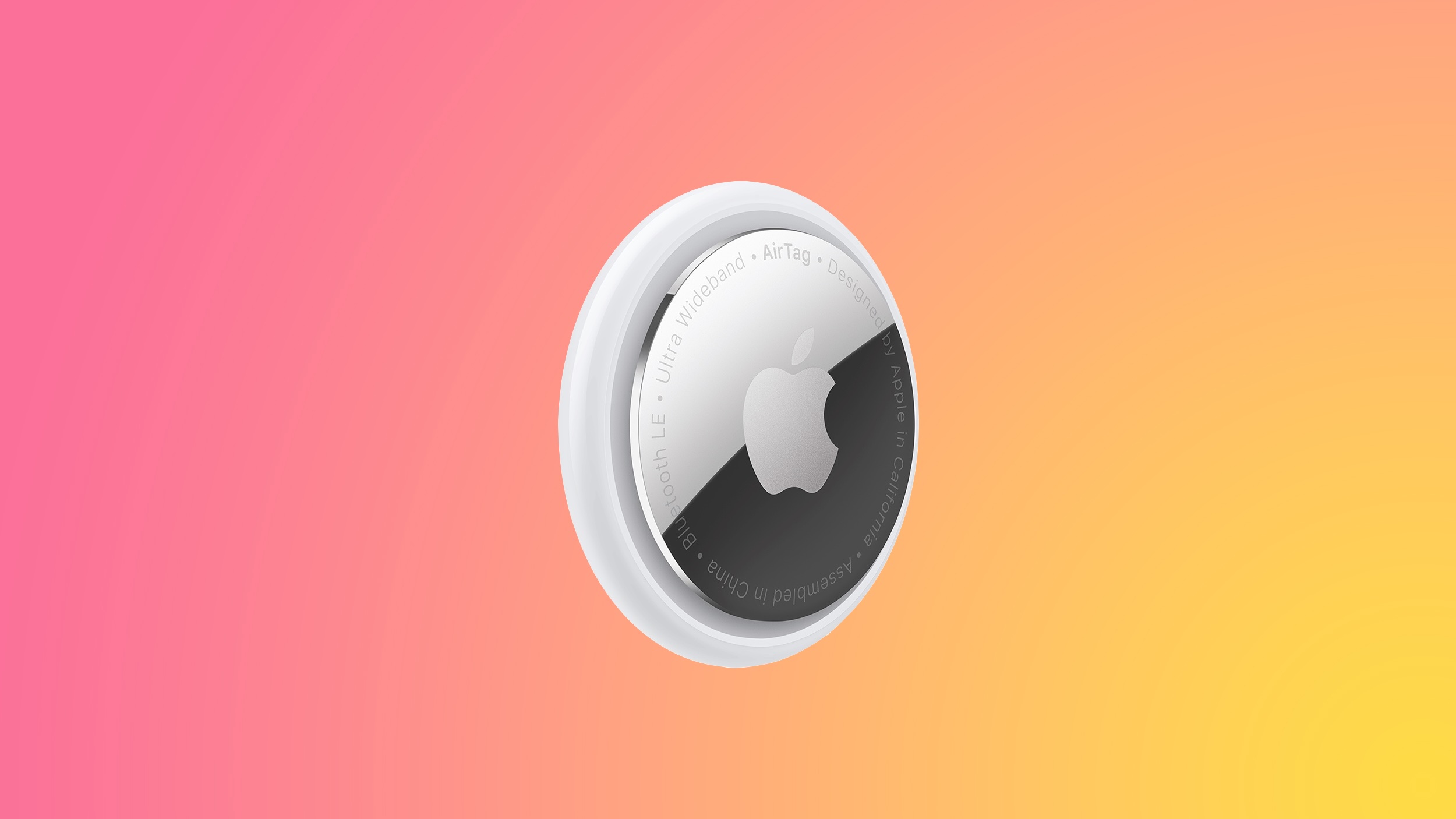
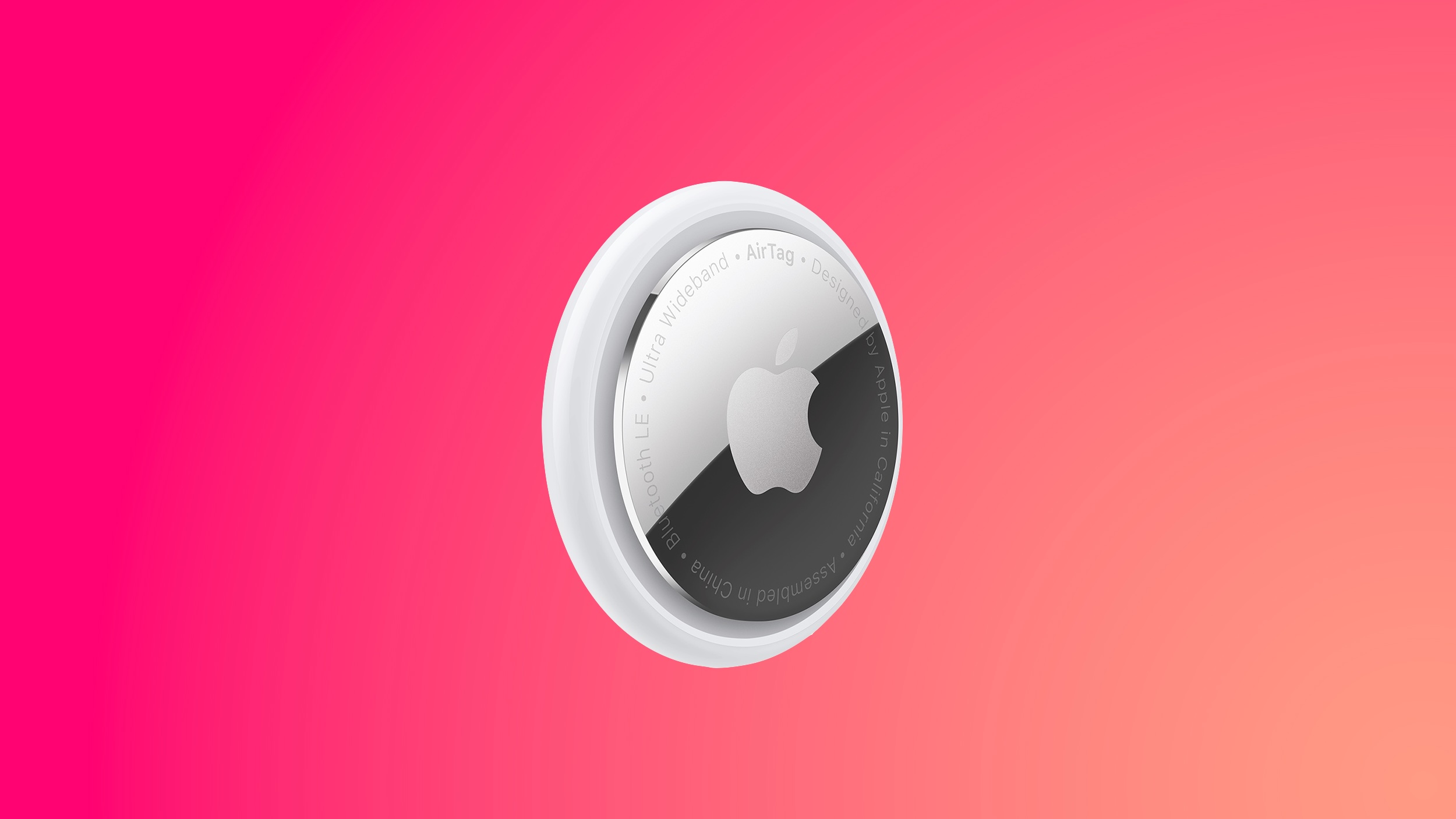
Apple's AirTag 2 is on sale for $85.00 this weekend on Amazon, down from $99.00. This deal is on the 4-Pack of the AirTag 2, and it's a new record low price for the accessory, beating the previous low by about $4.

Note: MacRumors is an affiliate partner with Amazon. When you click a link and make a purchase, we may receive a small payment, which helps us keep the site running.

We're also tracking a smaller deal on the AirTag 2 1-Pack, available for $24.00, down from $29.00. This is another record low price on the AirTag 2, and both have estimated delivery dates of August 28.


The new AirTag is equipped with a second-generation Ultra Wideband chip, enabling the Precision Finding feature to work up to 50% farther away from an item compared to the previous-generation model.

If you're on the hunt for more discounts, be sure to visit our Apple Deals roundup where we recap the best Apple-related bargains of the past week.


Deals Newsletter


Interested in hearing more about the best deals you can find in 2026? Sign up for our Deals Newsletter and we'll keep you updated so you don't miss the biggest deals of the season!


Related Roundup: Apple Deals

This article, "AirTag 2 4-Pack Hits New Low Price of $85 on Amazon" first appeared on MacRumors.com

Discuss this article in our forums

  •  

Aigars Mahinovs: Optimistic take on AI

As I am writing this, there is a vote ongoing in the Debian project on how to deal with AI in general and AI-assisted contributions to Debian specifically. Massive discussions have happened in debian-vote and other locations. I have also asked questions there and offered my perspective. IMHO now is the time to summarize that, after all the discussions that I've had with people on multiple sides of this debate both online and offline, and explain how I will be voting and why. Hopefully that will be helpful to someone else as well. None of this has been compiled with AI assistance, but only because I think that forming opinions is not something where AI can really be helpful. Spellcheck was used though.

So, first I will describe how I see each of the 8 proposals, then what my vote will be, and then a bit more detail on the reasoning and thinking behind this. WARNING - this went long.

  • Proposal A(1) - Action: ban all AI-assisted contributions via Social Contract amendment, except from upstreams (so not rolling back the Linux kernel and other software to "pure", pre-AI state). Claims that copyright/licensing status is unclear, quality is bad, community is being destroyed, web resources see extra load and that training consumes "staggering" resources. Needs 2/3rd majority to pass. - IMHO worst and most inconsistent. If copyright and licensing of AI products is unclear, then be consistent - ban ALL software with AI contributions, fork Linux kernel and other software from pre-AI versions, reject all security fixes of issues found with AI. Quality section lists problems that have not existed in the real world since at least a year of rapid AI coding development. Community section assumes that now all Debian contributions will be drive-by AI slop and no one will learn anything anymore. Ethics section mixes up effects of badly configured systems (AI web load is no different from load from a badly configured Perl script) with claimed "resource" usage without any context, taking on trust project ambitions of startups and assuming exponential growth. And then concludes that delivering less is in the interest of our users somehow.

  • Proposal B(2) - Action: allow AI-assisted contributions, with conditions of: legality, accountability, disclosure, no uncoordinated bulk actions, privacy. Concerns on quality and legal status as well as environmental impact and scraper load are noted, but not really addressed beyond labelling them as concerns. - IMHO it is an ok starting position as it establishes that each contributing person must still be fully responsible for their contribution (both legally and technically) and for that has to also understand (and review) what they submit. Disclosure lets others know to watch out for other classes of problems when code was changed with AI assistance. Prior discussion for bulk changes just says that the (already established) practice should not be neglected just because now large changes are easier to do. And the privacy part warns against accidentally sending private or confidential data (like a not yet published security bug) to a public service where it could become public. Personally I would have liked a stronger statement to encourage use of environmentally responsible AI services and local AI tools. Possibly a preference for open-weight models with a clear path forward to preferring truly free AI models, when such a category of products could be clearly delineated and established.

  • Proposal C(3) - Action: reject AI-assisted contributions at Code of Conduct level. Claims all the world's evils come from LLMs and that "Ethical and safe use of this technology is almost impossible". Goes as far as banning any use of LLMs even in Debian mailing list emails and Debian Planet blog posts - if you do, it's a CoC violation and may result in exclusion from the project. Additionally mandates the disclosure of the usage ... presumably to ban you more efficiently for it. - IMHO truly a dictatorial nightmare option. Zero actual reasoning or basis for such a decision. Zero sources. Nothing claimed in this option's rationale is even close to reality and nothing claimed there is in any way related to the actual technology being discussed. Like, an "LLM" does not automagically commit "fraud" when you use it, like this proposal claims, as if that was a well-known fact. LLMs are not all "owned by horrible people and companies". Even if some include a (prominent Debian user, long-time supporter and sponsor) Google into "horrible companies" (which is what this proposal implies!), there are plenty of LLMs owned by all kinds of companies all over the world and there are plenty of open-weight LLMs that are not really owned by anyone. Most invasive and dishonest option on the ballot.

  • Proposal D(4) - Action: allow AI-assisted contributions, with conditions of: legality, accountability, disclosure, privacy. IMHO same as B, just shorter. Adds a "we don't recommend" towards others developing software with AI assistance. Seems pretty weird to add that and then immediately accept Debian contributors doing so. Assumes that the bulk change bit of B is implied as AI is just tooling, so bulk changes should be pre-discussed just like today - so no change and thus no point in mentioning that. Fair. D is a bit more explicit on expected technical details - like that the "person" submitting the change is supposed to sign it, not AI. Notable is the complete absence of resource usage or the environment from concerns. IMHO it would be better to have that and also recommendations on how to avoid causing environmental damage when using AI.

  • Proposal E(5) - Action: no action as such - AI-assisted contributions must follow the same rules as all other contributions and those rules are sufficient. IMHO despite its length this is a very well-worded position statement that describes how and why AI-assisted contributions already work perfectly fine in the Debian context when all the same rules that apply to all contributions are also consistently applied to AI-assisted contributions. It describes how the same legality, accountability, no bulk change and privacy requirements are already in place and still apply and how AI-assisted contributions can and must still satisfy them. I could add again that some guidance would be nice here for both legal and environmental decisions when using AI, but in this case it does not really belong in this proposal itself. We as Debian do not have a document that requires that our non-AI-assisted contributions be made with only sustainably sourced electricity, for example. So why should AI be special one way or another? IMHO Debian should have a datacenter sustainability policy, regardless of the AI discussion.

  • Proposal F(6) - Action: discourage AI, but allow it based on existing processes (similar idea to E). Dances a bit around the question of disclosure of AI use (as a courtesy) and accepting that some people may still ban all contributions where any AI was involved in any way. Which in turn discourages disclosure to avoid pointless rejection of valuable contributions (like security patches). IMHO this option is ok, but so watered down that it is bound to bring up further discussions and conflicts on details.

  • Proposal G(7) - Action: ban non-humans from directly contributing to Debian. IMHO - another bizarre and self-contradictory option. It bans all Debian interactions with AI assistance, including email messages to Debian mailing lists and (supposedly) blog posts on Planet Debian. It "reminds" people who "use such tools assistively" of the DFSG and Social Contract - isn't that a threat of a ban and expulsion similar to C? The proposal does take pains to delineate where a contribution comes from AI as output (bad) vs when you are assisted by AI in the process of exploring, researching or maybe even reviewing the code, but you actually type all the code yourself and use the AI just as a taskmaster with a whip (good). And just like A or C it completely ignores how this inherently evil and unstable AI-generated code becomes perfectly fine and good as soon as someone develops that outside of the Debian project. Even if the same person then packages it for Debian the next day. It is hypocritical, unsustainable and ignores the needs of our users. Just like C it also bans someone writing an email or bug report in their native language and using a modern translation tool or service (that uses LLMs nowadays for better grammatical clarity) to translate that to English before sending it to a Debian mailing list or BTS. Heavy-handed and invasive. And the only reasoning provided for this is some unnamed "concerns" of "extra work" being borne by "other people"? Kind of does not feel right to bear such draconian restrictions for some unspecified concerns.

  • Proposal H(8) - Action: condemn usage, but not actually ban anything. And then it goes on to claim (without any evidence or elaboration) that LLM usage accelerates the destruction of "planet earth" (sic). IMHO this proposal is at the same time the loudest ("The planet is burning") and also the one that demands the least action. It dances a really twisty line between raising "significant" concerns in all areas and even claiming that use of LLMs destroys the planet, flies by explicit condemnation of LLM usage and then suddenly collapses with not condemning LLM users and swinging to lamentations that it is actually impossible to impose policies on LLM usage or even detect when an LLM was used (which kind of directly contradicts bad quality claims from A, C and G) and lands on "encouraging" contributors not to use LLMs (where practical) and otherwise do nothing else. It's like this is a 5th draft that started off with the rationale and total ban like in C, but then got defanged so far that its action side no longer matches the rationale stated.

With all the above considered I will vote like this (earlier options are preferred over later options):

  • Proposal E(5) - solid hack of integrating AI into already existing Debian rules and conventions
  • Proposal B(2) - explicit and detailed
  • Proposal D(4) - lower because of discouragement to others on what we agreed to do ourselves
  • Proposal F(6) - I am not a fan of dancing around with disclosures
  • Further discussion(9) - I do not want any option below this to succeed as they would do more harm than good
  • Proposal H(8) - loud, but not doing anything actually
  • Proposal A(1) - at least this one does not set rules for emails
  • Proposal G(7) - at least this one allows an AI overseer to tell you what to write with your own fingers
  • Proposal C(3) - the most draconic and invasive one that explicitly wants to kick people out of the project

Details on rationale

Hypocrisy - I find any proposal that would ban AI-assisted contributions to Debian, but at the same time not ban including AI-assisted contributions from upstream projects to be inherently hypocritical. If LLMs and AI are the very incarnation of evil (a puppy-killing machine, as the analogy went in some emails), then any rational proposal would involve excluding any and ALL code contaminated by this evil from the project. What does it matter if puppies were killed in writing the debian subfolder of the source code or the src subfolder? No proposals went there because everyone knows that such a ban would be the death of the relevance of the project for the future. Debian would be frozen on some old version of the Linux kernel forever and other software would be falling to the same problem too, for example as projects on GitHub start enabling AI-supported reviews with patch suggestions. Soon the "development" of Debian could just be stopped as there is nothing to develop without any upstreams.

Assumptions - a lot of proposals mention various "concerns" with at most one word, like "practical" or "community" without an explanation of what exactly they mean by that. The proposers assumed that everyone lives in the same info bubble as they do and already know everything that they mean and already agree to that. That is false. Proposal A was a positive stand-out in this area. Debian has contributors all over the world with very different exposure to different information sources and very different world views. If you want to convince the project as a whole that LLMs are bad because of "ethics", then you do really need to explain what you mean by that and give links to sources, at least as well as Proposal A did. All other proposals were really weak in this area.

Copyright - the question on how copyright law interacts with training LLMs and their outputs is still not settled law. The closest legal statements we have so far are that - just because an LLM is trained on copyrighted material does not make that LLM itself be a derivative work of the training data (you, however, cannot just create and distribute a "library" of copyrighted materials just because you plan to train LLMs on it). The output of the LLM might not be subject to copyright law at all, like a photo taken by a monkey. It would then be public domain and thus can be modified and then licensed by the user of the LLM. It might also be a derived work of the context of the inference (so for software - if you refactor a GPL project, the refactoring itself is likely GPL too). Any stricter interpretations would break a lot of existing copyright doctrine, such as raising questions like: "does the output of any programmer now become a derived work of the programming manual books they read in college?". In any case it is really not up to Debian to legislate the nuances of copyright law. And I strongly disagree with the concept that an author can tell me how I am allowed to use the learnings that I gained by reading their work. That is not how either copyright or society works. I can look at 10 pictures of a sunset and draw my own, inspired by the ones I saw. No one can forbid me that expression. The same must be true for a machine learning and replicating patterns.

Ethics - I've re-read all proposals and emails and the only real specifically ethical concern I could find was the complaint that some LLMs (or their training farms) are running their web scrapers too aggressively and that causes extra load on services. Like that is not an LLM problem. Scraping the web is not an inherent part of the LLM training or inference process. It's just a few misconfigured scripts. We saw the exact same thing in the early days of web search engine proliferation. Then we banned/blocked the misconfigured engines and the survivors learned that obeying robots.txt is one of the rules for surviving. Literally the exact same problem and it will be solved the same way. Did we ban all search engines back then just because some of them were misconfigured? No.

Some claims (like in Proposal C) are just bombastic hyperbole ("hazards to users' mental health", "fraud", ...) and on top of that have zero relevance to the topic at hand - AI-assisted contributions to Debian. What "hazard to users' mental health" is created when a Coderabbit spots that a lock is not taken before accessing a resource in a particular function and suggests an AI-generated patch to fix it? What "fraud" is committed by this? There is no sane answer. I get that some people are very busy fighting some culture wars and sometimes, some AI-bros happen to be on the other side of one such war, so it is useful to label everything coming from the AI sphere as "bad" in all possible and impossible ways. You do you. In private. Why pull Debian into that? Why force your position on everyone else in the project? Why deny everyone in the project access to useful tooling, just because you have strong feelings about some of the people promoting some of those tools?

This seems to me a repeating pattern here - blaming the technology as a whole or blaming all providers of this type of technology for failings (ethical or technical) of some of those providers. Like refusing to wear all shoes and condemning all shoemakers and sellers, just because some American billionaires figured out a way to make and sell cheap shoes by killing puppies. Not refusing and condemning those providers, but condemning all for the actions of a few.

Resource usage - this is a big topic for many and it has reasonable points to it. The LLM and AI technology has no inherent need to be damaging to the environment in any way for it to function. It does not need to burn oil or dig up cobalt. It does not need to sacrifice a ton of water to the Gods. It is perfectly possible to run AI (both inference and training) purely from green, electrical energy and cool data centers in equally sustainable ways, like with simple air-source heat pumps (also known as air conditioning) or even use it beneficially (many data centers are used for heating surrounding buildings via district heating). However, some AI companies do use non-green power for their data centers, some do use locally-limited fresh water for evaporative cooling (evaporated water still rains down as rain, it is not really lost, but that may happen in another location so lack of water can still happen locally). Some even run unlicensed natural gas turbines in their data centers to provide them with power. And those specific providers can and should be shunned and condemned. Not the other ones, who are doing the right things. Not the technology or its users or its outputs.

There is a very wide spectrum of options on how an AI system could be powered: starting from local execution on already existing private hardware powered by one's own local solar power (good), to a data center stuffed with borrowed AI-only cards powered by a gas turbine or coal power station that operates solely to supply this data center (bad). Proposals that talk about ecological impact, but do not even consider where on that (very wide) spectrum to draw the line between "good", "acceptable", "discouraged" and "bad" β€” well, I cannot see those proposals being actually serious about the environment to begin with. It feels like they just refer to it for points.

And if we go into the power question deeper, well the grid dynamics and economics become very, very complex and often also non-intuitive. Like, all large software companies with data centers (that also happen to provide AI services), like Google, Meta, Apple, Microsoft and others do actually care about sustainability (in part because their customers care and vote with their wallets) and so all of them use 100% green energy for their data centers (including AI data centers) .... "on an annual scale". Wait, what does that mean? Well, the electrical grid is special - the amount of electricity produced and consumed on the whole electrical grid together has to match almost exactly every second. If there is just a single second where there is significantly more energy consumed from the grid than is produced, the frequency will plummet and you get a brownout and risk a grid collapse. The same is true in reverse - that causes a voltage swell. So grid operators manage energy flows every second and command power stations to increase and decrease generation all the time. Some power stations are easier to regulate dynamically than others. In the end, all that means is that even if your data center has a contract for 100% green energy with your power company, at some seconds across the year there might not be enough green energy in the grid to fully supply ALL people and companies that have 100% green energy contracts. This gets compensated in other seconds, so that across the year ("on an annual scale") for each kWh that your data center pulled from the grid, the same amount of kWh of 100% green energy flows into the grid. But it might not happen at the exact same second. Pedantic companies, like Google, take that discrepancy and count that as CO2 emissions for themselves. And then they and the power companies (they have contracts with) invest billions into new green energy projects, better grids and better batteries so that eventually this discrepancy goes down to zero. In this way green AI data centers with their increasing consumption of green energy are actually doing a lot of good work in making our electrical grid more green. They are making more resources than they are consuming. And that is just the tip of the iceberg. This is a deep topic that really abhors generalizations like "more consumption = bad".

I've heard similar discussions in the context of electric cars - "so you got an electric car? you'd have fewer emissions if you drove no car at all!". That might be so. And I would also reduce my emissions to zero if I stopped breathing, but I really do not want that kind of thinking to be propagated further, especially when impressionable young people are around who may take it to its logical (but wrong!) conclusion. Instead I talk about how early adopters use electric cars to gather experience and achieve volume to start the network effects working. Once network effects of many electric cars on the roads are sufficient, it becomes an economically logical choice to get an electric car. People who cannot avoid having a car start to switch over. And at the point of mass switchover the reduction of emissions is so massive that those early adopters failing to go all the way to riding a bicycle becomes a rounding error.

But surely that does not apply to LLMs? They are only increasing consumption and bring no benefit?

Benefit - and here we have to actually talk about benefits. Because you cannot make any cost-benefit analysis if you do not actually fully investigate the benefits. Are there environmental benefits from running those AI models? Yes, in a lot of very diverse ways. Hard to measure, however. There are projects that are easy to quantify - like that Google AI project on contrail avoidance. An advanced, special model trained and executed in Google AI data centers was able to predict where in the air contrails would be produced and could generate proposed course adjustments to commercial flights to avoid specific heights in specific locations at specific times. This stopped these aircraft from creating contrails and those contrails did not make a further contribution to global warming. That benefit in a year was many times higher than the environmental cost of training and running that AI model. And it can keep running for many years accumulating further benefits.

On a personal scale, I've had problems that I bashed my head (and computer and CI resources) against without much success years ago solved with a few minutes of compute. Having a good enough candidate solution quickly is much cheaper from a resource perspective than spending days trying different things, running my PC for it, trying different patches on CI executions, doing different rebuilds. I've seen very significant benefits in AI-assisted development in enterprise environments where code way more complex than what is in Debian (especially in Debian tools and packaging) gets analysed, reviewed, modified or even refactored or rewritten in another language with AI assistance. And it generally works. The commonly mentioned "hallucinations" are a thing of last year in the coding context. Nowadays the AIs work in special coding harnesses and use real tools as foundational facts. You cannot "hallucinate" an API call or parameter if you have to run and pass the unit tests and integration tests by your harness before you can return "success" to the caller. I've personally seen high-level AI models read very complex software projects across multiple repositories and point out a very specific design consideration that was encoded in the code logic, but never mentioned in comments or documentation. It was so obscure that even I did not immediately know what it was talking about (and I wrote that code). Only on close inspection of code interaction across three repos did I remember that there was indeed that bug 2 years ago that I fixed by doing the change that this AI picked up (it wasn't in the history of this git repo due to repo migration). It mentioned this because it was very relevant to the task I initially gave it to review.

These LLMs in a proper harness with proper system instructions and usage approach are not just fancy spell checkers or auto-complete. They function more like very advanced pattern matchers. They have learned millions of patterns from training data. When they look at the code, they see hundreds or thousands of overlapping patterns. When you ask them to make or change something, they pull out a pattern (or ten) from their training and apply those patterns to the context of your program. You get something that looks just like the surrounding code, same style choices, same language, same comment voice, but it implements something new there, based on other patterns learned. If you've studied design patterns in your CS class, this will be familiar. But people can learn and remember maybe 20-30 patterns, while an LLM can have a million patterns and can combine them when needed. So it takes a pattern of Python code, pattern of standalone script, pattern of parsing command line parameters, pattern of classes, pattern for background threads, pattern for file tree traversing, pattern for pipes, ... and squishes them together to make a solution for your query. And then tries to debug it with compilation, tests and execution until it works as expected. Even if there is zero LLM development going forward, it will take many years to fully appreciate the benefits we can extract from the already trained models. They don't even have to be retrained - for existing languages they just keep working. For new language variations, like a new Python version, you can feed the changelog into context and they will be able to work with a Python version that they never saw in training. And patterns are mostly abstract, so not really specific to any language - human or programming.

This is another big enabler that LLMs have created that we have not really explored yet. LLMs have created really free software. People can actually create software that is perfectly suited just for them and no one else. They don't even have to know how to program and don't even need to speak English. I've seen people writing prompts in their native language and LLMs creating and then adjusting web apps or Android/iPhone apps and deploying them to the user's own phone. It was too buggy to work last year, but this year it is actually very functional for simpler use-cases. And the code looks just fine too - I've seen external contractors in a business setting deliver far worse. If you start with a good initial system prompt, the project will have architecture documentation, use-case documentation, unit tests, integration tests, deployment harness, testing and production deployments, audit logs, monitoring, clear git commits, CI validation on commit, ... Modern AI systems have the capabilty to deliver software freedom to people who are not coders. I really can not overstate the consequences this may have on the world.

Community - I find the concerns that new people will be using LLMs so much that they will no longer be understanding the actual code they are contributing a bit regressive. I don't see any significant difference between this and people relying on compilers, on high-level languages or on debhelper. Writing modern debhelper packaging feels more like writing configuration and not writing code. It takes really significant effort to dig down through layers of abstraction to find what actually is being executed in debian/rules. AI does not really make this worse. In fact, I find that AI can make it much easier to understand arcane syntax because you can ask an LLM to explain what is happening in any part of the code and it will do a pretty good job of it, digging down through the layers of abstraction for you. All the pro-AI proposals include the requirement that each human contributor needs to understand and stand behind their AI-assisted contribution and I believe that is a good requirement and also a sufficient requirement. Modern LLMs not only produce clear and concise code, but they are also capable of producing good comments explaining why the code is how it is, good commit messages explaining the change and reason behind it and also making corresponding changes to test suites and documentation. You know - the housekeeping stuff that is often skipped because it slows down the actual feature development, but then its lack becomes a problem for future contributors. Responsible use of AI assistance is a great chance to actually strengthen our community and make our software easier to maintain.

That said, I have no qualms about flat-out rejecting contributions that do not make sense. And it does not matter if they are made with or without AI assistance. If the contributor will not explain their patch, it might be they do not understand what their AI produced or it could be that the contribution is deliberately hiding a backdoor being planted. It is also quite common for a contribution of a new feature to be rejected because the author/maintainer does not believe that it is a good fit for the project. Featuritis is a real disease. AI or not. There have always been drive-by contributions to various projects. They will continue to exist. Each of them should be evaluated on its merits - is this feature valuable to our users and is the added complexity (if any) worth the functionality? A lot of security bug reports are "drive-by" contributions as well. And many of them nowadays are discovered, exploited and patched with AI assistance. We could reject them, but that just leaves us holding the bag on the now-known exploits.

And the New Maintainer process should be able to figure out if an upcoming Developer has actually understood the nuances of Debian packaging or not. A contributor with upload rights to the archive has to be able to create a basic package with no support tooling (maybe even without using debhelper?) and be able to understand and modify more complex packages (possibly with tooling support). IMHO that is a separate discussion that is worth having, involving experts from the educational sector.

Conclusion

IMHO the Debian project should not restrict what tooling individual contributors use to contribute. Expecting high-quality contributions and that contributors understand what they are contributing (as a first level of review) is enough.

However, Debian should provide its contributors (internal or external) with guidance on how to contribute in the best way possible. That could include:

  • information on which AI services have Terms and Conditions that make them problematic for free software development, legally speaking
  • information on which AI services do (or do not) achieve a sufficient level of sustainability to be worth recommending (and then do the same for other data centers we already use)
  • information on which local AI models were trained in sustainable ways
  • base-level prompts to set technical expectations on various types of contributions, like bug reports or patches to packaging or translations
  • default configuration for AI-assisted code reviews on Salsa that projects could enable and supplement with their own instructions on top

In addition to that it would be helpful for Debian, as a project, to reach out to AI service providers to:

  • encourage them to improve sustainability (where needed)
  • investigate and fix problems causing excessive scraping load on systems
  • provide AI resources for Debian usage, for example in CI infrastructure or to provide equal development support opportunities for Debian developers who cannot afford paid AI services
  • improve coding outputs of their models in the Debian context if/when systematic deficiencies in the output are found by us

Questions? Feedback? Just ask here or here.

  •  

Russell Coker: Links August 2026

This YouTube video about the Cashier Girl Meme is interesting in the context of AI systems that generate images of people and can communicate with people, hotter than any real human is an achievable goal [1].

Stand Up Maths has an interesting Youtube video about LLMs solving maths problems which I highly recommend watching (it does not require any real knowledge of maths), I think this opens the door to attacks on well established cryptologic systems [2].

Adam Conover made an insightful YouTube video about how and why Hollywood is now unable to make good sitcoms and why this is bad for society [3].

Sky Croeser wrote an interesting and insightful blog post about topics covered at the β€œDigital and sexual citizenship in an age of social media bans: Interrogating the rights of children and young people conference” [4].

Zane wrote a very informative blog post about reverse engineering a trojaned Android projector with Claude Code [5]. We need much better security on home networks to break the business model for this sort of thing.

Renee Stonebraker’s article β€œPuritans Wouldn’t Eat Pussy, So They Invented the Western” has a lot of interesting information about early days of colonising the US, and not much about eating pussy [6].

IFLScience has an interesting article about brinicles, icicles of brine that form under sea ice [7].

Nautilus has an interesting article about the Silurian Hypothesis [8].

The Conversation has an intersting article about the pros and cons of no-till farming [9].

Cold War is a 365tomorrows story about bio-warfare which raises several disturbing possibilities we need to guard against [10].

Scott Santens wrote an insightful article describing how a land value tax would reduce rent and solve the housing shortages [11].

Positive News has an interesting article about using OnlyFans to teach people about climate change [12].

The Conversation has an interesting article about cultural safety in healthcare, sounds good, and while we are at it lets deal with sexism [13].

Doctoreww has an interesting web page about ways of displaying different strings to humans and machines, this could result in you running a different command to what you thought you copied from a web site or defeating tools designed to block hostile content [14].

Cory Doctorow wrote an insightful article β€œCommentary Hell is Other People” about the way rich people want to use AI to replace all people [15]. Also psychologists who help rich people accept being greedy are worthy of a Luigi

The research article β€œWorship me at the office altar: Why narcissistic leaders resist remote work” is interesting, yet another reason to get rid of narcissistic executives [16].

Renew Economy has an interesting article about clean up costs for mining (which is usually left for the government to pay) and how this could impact renewable energy production facilities [17].

Elvira Bary wrote an insightful article on the Russian financial collapse that is happening now [18].

The Guardian has an interesting article about Afro-American women who travel to South Korea for healthcare because of problems with racism and sexism in American hospitals [19].

The Conversation has an interesting article about the potential for disabled people to be more productive in space than non-disabled people [20].

Krebs has an interesting article about LG banning residential proxy code from apps after the LG store was found to have such code in 42% of it’s apps [21].

Robert B Shpiner wrote an insightful article for The Guardian about the death of democracy in the US [22].

Related posts:

  1. Links August 2024 Bruce Schneier and Kim CΓ³rdova wrote an insightful article about...
  2. Links February 2026 Charles Stross has a good theory of why β€œAI” is...
  3. Links August 2025 Dimitri John Ledkov wrote an informative blog post about self...
  •  

Apple's Biggest Summer Deals Drop: AirPods Max 2 Plummet to $429, M4 iPad Air $100 Off

This week, Best Buy kicked off its big 60th anniversary sale that includes great deals on AirPods, TVs, computers, and much more. Alongside this event, we're tracking solid markdowns on portable power stations from Anker and Jackery, plus the best prices of the summer on M4 iPad Air.

Note: MacRumors is an affiliate partner with some of these vendors. When you click a link and make a purchase, we may receive a small payment, which helps us keep the site running.

Best Buy Anniversary


  • What's the deal? Save sitewide during Best Buy's 60th Anniversary Sale

  • Where can I get it? Best Buy

  • Where can I find the original deal? Right here


Best Buy is hosting its big 60th Anniversary sale this week, with notable markdowns on Apple devices, TVs, headphones, monitors, and much more. This event is set to last for the rest of this week, and you don't need to be a My Best Buy Plus or Total member to see most of the deals.

Portable Power Stations


  • What's the deal? Take up to $1,500 off Anker and Jackery portable power stations

  • Where can I get it? Amazon and Jackery

  • Where can I find the original deal? Right here


Anker and Jackery have introduced big discounts across their most popular portable power stations this week, including up to $1,500 off select models from each company. We're tracking Anker's best deals over at Amazon, while Jackery's discounts can be found on the retailer's own website.

AirPods


  • What's the deal? Take $120 off AirPods Max 2, $59 off AirPods Pro 3, and more

  • Where can I get it? Amazon

  • Where can I find the original deal? Right here


Amazon this week had a big collection of discounts across the AirPods lineup, highlighted by the AirPods Max 2 for $429.00, down from $549.00. This is now the best price we've seen on the AirPods Max 2 since Prime Day, and one of the overall best prices we've tracked so far in 2026, and it's accompanied by a solid deal on the AirPods Pro 3.

iPad Air


  • What's the deal? Take $100 off M4 iPad Air

  • Where can I get it? Amazon and Best Buy

  • Where can I find the original deal? Right here


Amazon and Best Buy this week have multiple discounts on the M4 iPad Air, providing $100 off these 2026 models. These are the best prices we've seen in the wake of Apple's summer price hikes.

AirTag


  • What's the deal? Take up to $10 off AirTag 2

  • Where can I get it? Amazon

  • Where can I find the original deal? Right here


Apple's AirTag 2 is on sale for $89.00 this week on Amazon, down from $99.00. This deal is on the 4-Pack of the AirTag 2, and it's a match of the record low price first seen during Prime Day.

If you're on the hunt for more discounts, be sure to visit our Apple Deals roundup where we recap the best Apple-related bargains of the past week.


Deals Newsletter


Interested in hearing more about the best deals you can find in 2026? Sign up for our Deals Newsletter and we'll keep you updated so you don't miss the biggest deals of the season!


Related Roundup: Apple Deals

This article, "Apple's Biggest Summer Deals Drop: AirPods Max 2 Plummet to $429, M4 iPad Air $100 Off" first appeared on MacRumors.com

Discuss this article in our forums

  •  

Top Stories: Apple Leaks - Camera-Equipped AirPods, Beats 360, and More

It was a big week for leaks in the Apple world, with Apple itself revealing information on a bunch of upcoming products within a macOS Tahoe 26.7 build and retailers leaking details on new Beats 360 headphones that could be launching soon.


In addition to all of the scoops from Apple's leaks, we also took a look at 30 new things you'll be able to do with iOS 27 when it drops next month (or sooner if you're willing to try the beta), so read on below for all of the details!

Top Stories


Apple's Camera-Equipped AirPods Confirmed: See Them in Action


Apple is working on camera-equipped AirPods that are nearly ready to launch, based on a video MacRumors found in the macOS Tahoe 26.7 release candidate.


In a short demo, a man holds a book up so the camera in the AirPods can see the title. "With Visual Intelligence, your world becomes savable. See something you like? Just ask me to save it for later," says the voiceover text.

Despite the video, Bloomberg's Mark Gurman now says the AirPods won't be launching until next year.

macOS Tahoe 26.7 is Full of References to Unreleased Apple Products


The camera-equipped AirPods weren't the only upcoming product to leak in the macOS Tahoe 26.7 release candidate that was seeded this week.


Over 20 other devices and several previously unknown details were discovered in the update, including upcoming Mac, iPhone, and iPad models, as well as several products for Apple's home-focused ecosystem that we're expecting to expand now that Siri AI is nearly ready to launch to the public.

Next Apple TV Rumored to Have Five New Features, Including Siri AI


Among the upcoming products discovered in macOS Tahoe 26.7 is a new Apple TV remote, and while it's unclear what changes we can expect for the accessory, it should arrive alongside an updated Apple TV box.


The new Apple TV should come with an A17 Pro chip or newer, and it appears it will support Siri AI. The box should also come with increased RAM for the Siri AI capabilities, and it's likely to feature Apple's N1 wireless networking chip.

Apple's Home Hub Will Have a Widget Gallery With iPhone Widget Support


One of the more intriguing products leaked in macOS Tahoe 26.7 is the long-rumored home hub device, and code from the update indicates that the device will feature a Widget Gallery to allow users to access content from various apps.


All users in the home will be able to see the widgets installed on the home hub, but content in widgets will only be visible when the primary linked device is in the home for privacy protection. The device will also feature a Smart Stack similar to that found on watchOS, which rotates through a variety of widgets and automatically displays the most relevant one at any given time based on time of day, usage habits, and other criteria.

30 New Things Your iPhone Can Do in iOS 27


Apple will release iOS 27 in September, and despite the company's focus this year on refining its flagship operating system and nixing bugs, there are still many additional features on the way, not least of which is Apple's new context-aware Siri, re-tooled for the generative AI era.


This year's major iPhone software update isn't all about AI, though, and we've put together an overview of 30 new things you'll be able to do with the upcoming update.

Beats 360 Over-Ear Headphones Leak in Retail Listings


Apple's Beats brand has been teasing some upcoming over-ear headphones over the past few months, and now retail listings appear to have spilled most of the details.


The upcoming Beats 360 headphones will have interchangeable ear cushions and headband cushions with both Performance Knit and UltraPlush materials available, while the headphones will be available in Pink, Black, Cloud, and Sky colors with cushion kits available in additional shades such as Navy and Volt.

Beats 360 will be the first sweat- and water-resistant over-ear headphones from Beats, and they feature 1.75Γ— better noise cancellation than the current Beats Studio Pro.

MacRumors Newsletter


Each week, we publish an email newsletter like this highlighting the top Apple stories, making it a great way to get a bite-sized recap of the week hitting all of the major topics we've covered and tying together related stories for a big-picture view.

So if you want to have top stories like the above recap delivered to your email inbox each week, subscribe to our newsletter!
This article, "Top Stories: Apple Leaks - Camera-Equipped AirPods, Beats 360, and More" first appeared on MacRumors.com

Discuss this article in our forums

  •  

Dirk Eddelbuettel: RProtoBuf 0.4.28 on CRAN: Small Updates

A new minor release 0.4.28 of RProtoBuf arrived on CRAN today. RProtoBuf provides R with bindings to the Google Protocol Buffers (β€œProtoBuf”) data encoding and serialization library used and released by Google, and deployed very widely in numerous projects as a language and operating-system agnostic protocol. The new release is also already as a binary via r2u.

This release corrects a really old bug. Troy found, when working on gRPC based extensions, which is in and by itself exciting, that a small part of our interface surface (for service descriptors) was just wrong confusing single and double underscores. adjusts to a change upstream. This has been corrected. I updated a few of the usual continuous integration parts, updated a help page for a newly-added nag by CRAN, and also got a last-minute round of noodling in as the JSS paper vignette was still referencing OmegaHat which the CRAN URL checker objected to. I created a quick one-off repo to serve pdf files should the need arise again, and rebuilt the vignette linking to it. No other changes.

The following section from the NEWS.Rd file has all details and links.

Changes in RProtoBuf version 0.4.28 (2026-08-21)

  • Standard maintenance of continuous integration

  • The type help page has received a usage section

  • Cleanup of several methods for ServiceDescriptor, correct several other declaration (Troy Hernandez in #117 fixing #116)

  • Adjusted vignette reference to Omegahat paper to alternate location

Thanks to my CRANberries, there is a diff to the previous release. The RProtoBuf page has copies of the (older) package vignette, the β€˜quick’ overview vignette, and the pre-print of our JSS paper. Questions, comments etc should go to the GitHub issue tracker off the GitHub repo.

This post by Dirk Eddelbuettel originated on his Thinking inside the box blog. If you like this or other open-source work I do, you can sponsor me at GitHub.

  •  

Emmanuel Kasper: Create a development VM using Debian cloud images

Following on the rationale of the previous post, here is how I create a development VM based on ready to use disk images made by the debian cloud team. I could as well install the VM myself using an ISO, but why download a collection of packages in a ISO only to copy them right onto a disk image ?

From the list of images available at https://cloud.debian.org/images/cloud/ we will start with the generic qcow2 disk image, it has cloud-init, which allows initial automatic configuration, and snapshots of the VM via the qcow2 disk format.

As for the virtualization, I am using virsh virt-install and virt-manager, which are part of the libvirt framework. Libvirt offers an excellent API accessible over qemu/KVM via shell (virsh), GUI (virt-manager) and Web (cockpit) .

To use libvirt, properly you need to make sure your standard user is member of the libvirt group, and the libvirt default network is started via virsh net-autostart default. Also make sure you set export LIBVIRT_DEFAULT_URI=qemu:///system to use the system wide instance of libvirt, which is needed for the default bridged networking.

Download the debian cloud image:

$ wget https://cloud.debian.org/images/cloud/trixie/daily/latest/debian-13-generic-amd64-daily.qcow2

Add the disk image as a libvirt volume:

$ export SIZE=$(stat -Lc%s debian-13-generic-amd64-daily.qcow2)
$ virsh vol-create-as default dev-vm $SIZE --format qcow2
$ virsh vol-upload --pool default dev-vm debian-13-generic-amd64-daily.qcow2

Create a VM with the root password set to β€œroot”:

$ echo root > password.txt
$ virt-install --name dev-vm --memory 4096 --noreboot \
	--os-variant detect=on,name=linux2024 \
	--disk vol=default/dev-vm \
	--import \
	--boot uefi \
	--cloud-init root-password-file=password.txt,clouduser-ssh-key=$HOME/.ssh/.ssh/id_ed25519,disable=on

At the point libvirt will create a VM (a domain in libvirt parlance) and start it.

Starting install...
Allocating 'virtinst-ns9oa7_i-cloudinit.iso'                | 368 kB  00:00     
Transferring 'virtinst-ns9oa7_i-cloudinit.iso'              | 368 kB  00:00     
Creating domain...                                          |         00:00     
Connected to domain 'dev-vm'

BdsDxe: starting Boot0001 "UEFI Misc Device" from PciRoot(0x0)/Pci(0x2,0x3)/Pci(0x0,0x0)

Booting `Debian GNU/Linux'

Loading Linux 6.12.101+deb13-amd64 ...

Loading initial ramdisk ...

EFI stub: Loaded initrd from LINUX_EFI_INITRD_MEDIA_GUID device path
EFI stub: UEFI Secure Boot is enabled.
[    0.000000] Linux version 6.12.101+deb13-amd64 (debian-kernel@lists.debian.org) (x86_64-linux-gnu-gcc-14 (Debian 14.2.0-19) 14.2.0, GNU ld (GNU Binutils for Debian) 2.44) #1 SMP PREEMPT_DYNAMIC Debian 6.12.101-1 (2026-08-05)
[    0.000000] Command line: BOOT_IMAGE=/boot/vmlinuz-6.12.101+deb13-amd64 root=PARTUUID=2b4578e2-9d2e-4b32-b6a4-b5b2ca607ef6 ro console=tty0 console=ttyS0,115200 earlyprintk=ttyS0,115200 consoleblank=0
...

Once the VM is created you have now three ways to access it:

# open a serial console to the VM
$ virsh console dev-vm
# access the graphical console
$ virt-manager
# Access the VM via SSH with the precreated cloud user "debian"
$ virsh domifaddr dev-vm
 Name       MAC address          Protocol     Address
-------------------------------------------------------------------------------
 vnet7      52:54:00:23:e6:61    ipv4         192.168.122.225/24
$ ssh debian@192.168.122.225

In the next blog post we will see how to configure the IDE (vscodium) to run confortably in the VM.

  •  

Apple Vision Pro Was Almost Called 'Reality Pro'

The Vision Pro headset was internally called "Reality Pro" for a significant stretch of its development before Apple settled on the name it ultimately shipped with, according to the prototype collector and leaker known as "Kosutami."


In a post on X, Kosutami wrote that the "Apple Vision Pro was originally called Reality Pro" during the early stages of development, pointing to an internal string, "realityprorealityosdev."

The Reality Pro name is not new information. Bloomberg's Mark Gurman reported in September 2022 that Apple's first headset would likely launch as "Apple Reality Pro." In August 2022, trademark filings for "Reality One," "Reality Pro," and "Reality Processor" surfaced in the United States and several other countries, filed through a shell company called Immersive Health Solutions LLC, a tactic Apple has used before to keep upcoming product names under wraps.

Those filings followed an earlier trademark application for "realityOS" dated December 2021 and filed by another apparent shell company, Realityo Systems LLC, after developers had already spotted realityOS references inside Apple's own software and App Store upload logs. By mid-2023, additional trademark activity surfaced for terms like "xrOS," "xrProOS," "realityproOS," and "realOS."

Apple ultimately unveiled the headset as the Vision Pro at WWDC 2023, seemingly dropping the Reality branding entirely for both the device and its operating system, which shipped as visionOS. The switch came late enough in development that traces of the old naming, like the string Kosutami highlights, persisted in internal builds and software.

Apple reportedly retains trademark rights to "Reality Pro" and "Reality One," which could matter in China, where Huawei holds a ten year license to the Vision Pro trademark until 2031. Gurman said that Apple could fall back on Reality Pro branding in markets where Vision Pro is unavailable as a trademark.

Vision Pro launched in the U.S. in February 2024 at $3,499. Apple this week laid off around 100 members of its Vision Products Group and largely shut down its Vision Pro gaming and immersive video teams. The cuts follow reports that Apple has effectively shelved the product line, having already canceled both a redesigned Vision Pro 2 and the cheaper "Vision Air" as the company's attention shifts to smart glasses instead.
Related Roundup: Apple Vision Pro
Buyer's Guide: Vision Pro (Neutral)
Related Forum: Apple Vision Pro

This article, "Apple Vision Pro Was Almost Called 'Reality Pro'" first appeared on MacRumors.com

Discuss this article in our forums

  •  

10 Ways to Improve Your iPhone's Battery Life

When you're at home or work with regular access to an iPhone charger, you probably don't need to worry much about your iPhone's battery. On days when you're away from home for long stretches, you might want to make some adjustments to extend battery life.


We've rounded up 10 tips that can cut down on battery drain.

1. Turn on Adaptive Power


The best way to preserve battery life is to make sure you have Adaptive Power turned on. It's an iOS 26 feature that's available on Apple Intelligence iPhones. It uses on-device intelligence to analyze usage patterns and determine when you might need extra power.


It saves battery by lowering screen brightness a bit, adjusting performance, and limiting background activity. It also turns on Low Power Mode automatically when your battery hits 20 percent.

If you have an iPhone 17, iPhone 17 Pro, β€ŒiPhone 17 Proβ€Œ Max, or iPhone Air, Adaptive Power is on by default, but you need to turn it on with other models. Adaptive Power can be activated on eligible iPhones in Settings & Battery & Power Mode.

2. Set Up Automations for Low Power Mode


Turning on Low Power Mode is the most obvious way to extend battery life on your iPhone, and you can automate it so it turns on at a set battery percentage.


Apple will prompt you to turn on Low Power Mode when your battery is at 20 percent, but it's helpful to turn it on earlier. To set up a Low Power Mode shortcut, open up the Shortcuts app, and create a new Automation. With iOS 27, you can just type in what you want the automation to do, but in β€ŒiOS 26β€Œ, search for Battery Level, choose a target battery percentage, then add Low Power Mode as the action to turn on when your battery hits that level.

3. Turn Off the Always-On Display


Your iPhone's Always-On Display leaves the time, wallpaper, widgets, and Live Activities visible on the Lock Screen even when your iPhone is locked.

settings
The setting preserves battery by doing things like turning off the display when a connected Apple Watch is no longer nearby (signaling that the iPhone owner is out of the room) or the iPhone is in a pocket, but Always-On Display still drains battery faster than no Always-On Display.

You can turn off the Always-On Display by following these steps:

  1. Open up the Settings app.

  2. Tap on Display & Brightness.

  3. Tap on Always-On Display.

  4. Toggle off Always-On Display.


You can also customize the Always-On Display if you don't want to turn it off entirely. You can disable wallpapers or turn off notifications.

4. Limit Frame Rate


Some iPhones have a 120Hz ProMotion refresh rate, but dropping it down to 60Hz can eke out a bit more battery life. You can adjust frame rate by using an Accessibility setting.


  1. Open up the Accessibility section of the Settings app.

  2. Tap on Motion.

  3. Toggle on Limit Frame Rate.


ProMotion is available on all β€ŒiPhone 17β€Œ models, the β€ŒiPhone Airβ€Œ, and Pro versions of earlier iPhones dating back to the iPhone 13 Pro.

5. Turn on Dark Mode


On OLED iPhone displays, activating Dark Mode preserves battery life because there's less power draw when darker-colored pixels are displayed. Activating β€ŒDark Modeβ€Œ when outside on a sunny day can preserve a good amount of battery life.


Lower levels of brightness in Light Mode use the same battery as higher levels of brightness in β€ŒDark Modeβ€Œ, so β€ŒDark Modeβ€Œ can save battery even with brightness turned up when you're in a sunny location.

When you're somewhere that has dimmer lighting and screen brightness is lower, turning on β€ŒDark Modeβ€Œ won't save as much battery life, but it still draws a little less power.

6. Audit Apps With Location Access


It's a good idea to regularly check your privacy and access settings to make sure apps and services aren't doing things you don't want them to be doing.


Limiting the apps that have access to your location and how often apps can access that data can save battery life.

  1. Open up the Settings app.

  2. Choose Privacy & Security.

  3. Tap Location Services.

  4. Review the list and edit settings by tapping on the name of each app in the list.


You have four possible choices for location settings for each app, though not all four choices will always be available for every app depending on what it does. You can select the following: Never, Ask Next Time Or When I Share, While Using the App, and Always.

Never will prevent an app from ever accessing your location, and unless there's a real need for an app to know where you are, such as a mapping app, setting location access to Never is the best choice.

Ask Next Time Or When I Share will prompt an app to ask you with a pop-up the next time that it wants your location, so you can temporarily approve it. With this setting, location access is off until expressly allowed via the pop-up.

While Using the App lets an app access your location when the app is open and being actively used. If you close the app or switch over to another app, location access ends.

Always allows an app to have access to your location at all times, regardless of whether it's open or closed. This will cause the most battery drain and should be limited to only the apps that you need the most.

Many apps that don't need location information will ask for your location information. A banking app may want location access to show nearby ATMs, and a social media app like Facebook may want to serve you location-based features. Clearing the cruft will ensure no apps are accessing your location without express permission, and it'll save battery life at the same time.

You can also turn off Location Services entirely, but it's not ideal because it can impact apps you rely on, like Maps.

7. Rein in Background App Refresh


Most apps use background refresh to update even when they're not open. Limiting background activity to just the apps that need it is a classic way to cut down on battery usage. It's also another one of the privacy-related options that's just good to check regularly.


You can turn off Background App Refresh entirely or choose which apps can refresh in the background.

  1. Open the Settings app.

  2. Select General.

  3. Tap on Background App Refresh.


From there, you can tap on the Background App Refresh option to turn it off altogether or choose to have it activate only when connected to Wi-Fi, which doesn't drain battery as much as downloading over cellular.

8. Limit Live Activities and Notifications


Incoming notifications wake your screen, and Live Activities keep the Lock Screen updated constantly. Limiting the apps that can send you notifications and Live Activities saves battery life.


Under Settings & Notifications, go through the list and turn off notifications for apps you don't need to hear from. After that, you can further refine with Focus modes. Focus modes let you choose which apps and people can send you notifications and when.

  1. Open the Settings app.

  2. Scroll down to Focus and tap it.

  3. Tap on the "+" button.

  4. Follow the instructions to choose a Focus mode and the apps you want to use with it.


During work hours, you can make sure you're only getting work notifications, and during personal time, you can limit work notifications. You can set up Focus modes for all kinds of situations, from driving to workouts to sleep.

You'll still get all of your notifications, but silently. Turning off unwanted notifications from apps is still the best method for saving battery life, but Focus lets you keep your notifications while still cutting down on the number that you receive at any given time.

Scheduled Summary is another way to limit your notifications because you can have non-urgent alerts sent at a scheduled time.

You can toggle on Scheduled Summary for apps in the Notifications section of the Settings app, where you can choose which apps should have their notifications included in Scheduled Summary and when you want them delivered.

9. Turn Off Keyboard Haptics


Haptic feedback on the iPhone's keyboard is satisfying to feel when you tap on the on-screen keys, but it can drain your battery.


You can turn it off by going to Settings & Sounds & Haptics & Keyboard Feedback and toggling off Haptic.

10. Monitor Your Battery Usage and Adjust


In β€ŒiOS 26β€Œ, Apple made it easier to see which of your apps are draining the most battery.


The top of the Battery interface has an overview of your current battery level and the time that you last charged. If your iPhone is charging, it also lets you know how much time you have left until the battery is full.

There is a weekly view of average battery use along with how much battery you're currently using compared to your typical average. The comparison tells you if you're using more, the same, or less battery life than you do on most days.


It shows which apps used more battery and by how much, which makes it easier to tell what's draining your battery. It also displays why an app used more battery, such as background app refresh or an excessive number of notifications.

Apps draining a lot of battery are shown in orange so they stand out, and that's where it's best to make adjustments.
This article, "10 Ways to Improve Your iPhone's Battery Life" first appeared on MacRumors.com

Discuss this article in our forums

  •  

Apple's Camera-Equipped AirPods: All the New Rumors

Apple is working on AirPods that have cameras for feeding data to Siri. The new earbuds will be Apple's first AI wearable, and they're expected to launch sometime in 2027.


Leaked Video


Apple accidentally left a demo video featuring its rumored camera-equipped AirPods in macOS Tahoe 26.7 in mid-August. In the demo, a man holds up a book so the cameras in the AirPods can see the title. "With Visual Intelligence, your world becomes savable. See something you like? Just ask me to save it for later," says the voiceover.

Β 

Here is your first look at AirPods with Cameras in action using Visual Intelligence.

This video file came from macOS 26.7 RC pic.twitter.com/yo7RI4MCeu


β€” Aaron (@aaronp613) August 18, 2026


The cameras on the AirPods will feed information to β€ŒVisual Intelligenceβ€Œ, and β€ŒSiriβ€Œ will be able to answer questions about the wearer's surroundings and log information. There is a direct reference to setting up β€ŒVisual Intelligenceβ€Œ on the AirPods.

If hair is covering the AirPods up, you'll receive an alert. "To get the most accurate information about things in your environment, make sure AirPods are not covered," it says.

Two Versions


Rumors about camera-equipped AirPods have been a little confusing. Most of the rumors about the AirPods with cameras were about a product with the codename B798. In June, Gurman said the camera AirPods had been delayed because of issues with β€ŒSiriβ€Œ AI, and would not launch until September 2027 alongside the 20th anniversary iPhone.

In early August, Gurman revised his launch timing and said Apple was close to debuting camera AirPods with the codename B790. The B790 AirPods had apparently been progressing alongside the B798 model, and Gurman said the company "famously creates competing versions of the same product internally," with B790 closer to launch than B798. Then in mid-August, multiple references to the B790 version were spotted in β€ŒmacOS Tahoeβ€Œ 26.7. After B790 was discovered, Gurman claimed the AirPods were no longer on Apple's release schedule, and Apple has no plans to release camera-equipped AirPods before 2027.

Gurman said B790 is a version of the AirPods Pro 3 with cameras, while B798 is a future AirPods Pro model with cameras.

Design


The AirPods will look similar to the current β€ŒAirPods Pro 3β€Œ, but with cameras embedded in the stem. Apple may include a light that will come on when visual data from the AirPods is being sent to the cloud. The LED will let people around the wearer know the cameras are in use.

Size, design, and fit are expected to remain largely the same for the earbuds and the charging case, with the exception of the changes to the stem.

Features


The cameras in the AirPods will be used for sending data about the wearer's surroundings to β€ŒSiriβ€Œ, giving β€ŒSiriβ€Œ more information about where the user is and what's nearby.

β€ŒSiriβ€Œ will be able to answer questions about objects or whatever the wearer happens to be looking at. The camera-equipped AirPods could be useful for more exact turn-by-turn directions when walking, contextual reminders, 3D mapping, and more.

The iPhone already has β€ŒVisual Intelligenceβ€Œ, which uses AI to identify plants, animals, landmarks, art, books, and more. Camera-equipped AirPods will be able to supply data for β€ŒVisual Intelligenceβ€Œ without the need to use the Camera app.

H3 Chip


Apple is working on an upgraded H3 chip and it could make its first appearance in the camera-equipped AirPods. The H3 chip is expected to bring latency improvements and better audio quality.

Technical Details


Code in β€ŒmacOS Tahoeβ€Œ 26.7 shows how the cameras in the AirPods will work. Of note, there's no mention of an infrared sensor, despite rumors suggesting there would be one.

  • Two cameras - There are individual camera sensors in both the left and right earbuds.

  • Paired color images - The cameras take synchronized RGB still images of up to 1 megapixel, each with the same frame ID. The cameras give β€ŒVisual Intelligenceβ€Œ a look at the same scene from two angles.

  • No video - The cameras can take a series of pictures for β€ŒVisual Intelligenceβ€Œ, but there is no video recording option.

  • Resolution - There's an "active" mode that's likely triggered when the wearer activates β€ŒSiriβ€Œ where the AirPods capture a 640x640 image. In a separate passive mode, they capture a 320x320 image. The sensors are capable of higher-quality images, but Apple appears to be capturing a specific image size.

  • Passive image capture - Passive capture mode appears to be for background environmental awareness, triggered by nearby speech, audio changes, posture changes, head rotation, and more.

  • Head movement - The cameras in the AirPods have distortion correction to account for head movement, and can reject images that have excessive movement.

  • On-device processing - Some content is processed directly on the AirPods, such as person detection.

  • Indicator lights - Code suggests the AirPods have a hardware indicator light to let people know when still images are being captured.


Naming


There were rumors suggesting the new AirPods could be called the "AirPods Ultra" instead of the AirPods Pro, but the β€ŒmacOS Tahoeβ€Œ 26.7 file we found that references the new AirPods is labeled "AirPods Pro" and not AirPods Ultra. It's possible that's a placeholder name, so AirPods Ultra isn't entirely out of the question. Apple may have also planned to use AirPods Pro for a version of the camera-equipped AirPods that won't ultimately make it to release.

Bloomberg's Mark Gurman said in March that Apple was considering several devices with the Ultra name, including the foldable iPhone Ultra, AirPods Ultra, and an OLED MacBook Ultra, but that may or may not be a term we see for the new AirPods.

Pricing


Pricing is unconfirmed, but the current β€ŒAirPods Pro 3β€Œ sell for $249. Camera hardware could make the new version more expensive.

Compatibility


Since the AirPods will feed data to β€ŒSiriβ€Œ, an iPhone that supports Apple Intelligence will be required to use the features. β€ŒApple Intelligenceβ€Œ is available on the iPhone 15 Pro and later.

Release Date


Despite showing up in β€ŒmacOS Tahoeβ€Œ 26.7, the camera-equipped AirPods aren't going to come out until 2027. They'll likely launch alongside the 20th-anniversary iPhone in September.
Related Roundups: AirPods 4, AirPods Pro 3
Related Forum: AirPods

This article, "Apple's Camera-Equipped AirPods: All the New Rumors" first appeared on MacRumors.com

Discuss this article in our forums

  •  

Apple's New Beats 360 Headphones Spotted in Another Regulatory Filing

Apple's upcoming Beats 360 headphones have been submitted to a regulatory database in the United Arab Emirates, according to a filing viewed by MacRumors. The filing mentions both the name Beats 360 and the model number A3577.

To learn more about the Beats 360, read our previous coverage. The headphones have also appeared in U.S. and Brazilian regulatory databases, teaser photos, and retail listings, suggesting that Apple will release them soon.
This article, "Apple's New Beats 360 Headphones Spotted in Another Regulatory Filing" first appeared on MacRumors.com

Discuss this article in our forums

  •  

Apple Guts Vision Pro Gaming and Immersive Video Teams, Trims Siri Staff

In addition to cutting dozens of Vision Pro employees who worked on features like immersive video and gaming, Apple is laying off people who worked on Siri and AI, reports Bloomberg.


Apple is "largely shutting down" the Vision Pro team focused on gaming, and it is paring down the team that makes immersive video content. Approximately 100 employees who were part of the Vision Products Group have been laid off, with Apple also cutting 100 people from its β€ŒSiriβ€Œ and software groups.

Vision Pro employees were told Apple is realigning its priorities based on how customers are using the device, suggesting immersive video has not worked out. Bloomberg says the immersive videos Apple produces can cost millions of dollars to film, and it has not been cost-effective because so few people actively use the device. Apple plans to make a smaller number of videos in-house and rely on third-party 3D content.

On the β€ŒSiriβ€Œ team, Apple is creating new positions for the shift to β€ŒSiriβ€Œ AI and prioritizing work on AI features.

The company told Bloomberg that it is overhauling some of its teams to "evolve" its business and deliver a better experience for customers. Affected employees will be able to apply for other positions at Apple.
While we will create new roles as part of this change, it will also impact a limited number of existing roles. We are grateful to these team members for their contributions, and we are committed to supporting them throughout their transition, including opportunities to apply for other roles at Apple.

Despite the cuts to the Vision Products Group, employees were told that the Vision Pro and visionOS operating system are not being eliminated. Apple continues to work on AI smart glasses expected in 2027, but that device will not support 3D gaming or video.
Related Roundup: Apple Vision Pro
Tag: Siri
Buyer's Guide: Vision Pro (Neutral)
Related Forum: Apple Vision Pro

This article, "Apple Guts Vision Pro Gaming and Immersive Video Teams, Trims Siri Staff" first appeared on MacRumors.com

Discuss this article in our forums

  •  

The MacRumors Show: Michael Fisher Talks iPhone Ultra

YouTuber Michael Fisher, known as "MrMobile," joins us on this week's episode of The MacRumors Show to talk through key rumors about the "iPhone Ultra" and how the device could compare to rivals.


Michael has covered the foldable phone category since 2019 and personally owned or reviewed nearly every major device in it, from the original Galaxy Fold to Samsung's newly redesigned Galaxy Z Fold8. He still carries a Motorola Razr Ultra as his personal phone alongside a rotating stack of review units.

Apple's foldable iPhone, rumored to be called the "β€ŒiPhone Ultraβ€Œ," is widely expected to be announced alongside the iPhone 18 Pro this fall, featuring a 7.8-inch inner display, a 5.5-inch cover screen, the A20 chip, and a starting price above $2,000.

Much of the design speculation centers on Apple adopting a shorter, wider form factor similar to the Z Fold8 and older Pixel devices, rather than the taller, narrower shape most foldables have used for years. To minimize the crease that has plagued the category since the original Galaxy Fold, Apple is reportedly pursuing a layered glass display structure paired with a liquid metal hinge.

The foldable is reportedly expected to ship with just two rear lenses and no telephoto camera, despite engineering compromises made elsewhere to fit in a Camera Control button, while Samsung's competing Z Fold8 Ultra ships with a three-lens system that includes a telephoto with 3x optical zoom. The foldable iPhone is also expected to use Touch ID built into the side button rather than Face ID, since there is reportedly no room for the TrueDepth sensor array in such a thin chassis.

Pricing has been a recurring point of speculation, with Bloomberg's Mark Gurman saying the foldable will "cross the $2,000 threshold" in the U.S., which would make it Apple's most expensive iPhone ever. Durability is also likely to face scrutiny, given the hinge failures that plagued the original Galaxy Fold and the fact that Samsung's current foldables still lack a full dust resistance rating years into the category's existence.

Code strings found in the iOS 27 beta reference a hinge angle, which could hint at foldable-specific software features, and Apple has already introduced new app adaptation protocols, likely as preparation for the device.

See more of Michael's work over on his YouTube channel. Fisher is also a co-founder of Clicks, which makes physical keyboard accessories for smartphones. The MacRumors Show has its own YouTube channel, so make sure you're subscribed to keep up with new episodes and clips.


You can also listen to β€ŒThe MacRumors Showβ€Œ on Apple Podcasts, Spotify, Overcast, or other podcast apps. You can also copy our RSS feed directly into your player.


If you haven't already listened to the previous episode of The MacRumors Show, catch up to hear our discussion about how the Apple Watch is seemingly heading into one of its least eventful new generations, yet the rumors stacking up behind it describe the most radical rethink in the product's history coming later.

Subscribe to β€ŒThe MacRumors Showβ€Œ for new episodes every week, where we discuss some of the topical news breaking here on MacRumors, often joined by interesting guests such as Kayci Lacob, Kevin Nether, John Gruber, Mark Gurman, Jon Prosser, Luke Miani, Matthew Cassinelli, Brian Tong, Quinn Nelson, Jared Nelson, Eli Hodapp, Mike Bell, Sara Dietschy, iJustine, Jon Rettinger, Andru Edwards, Arnold Kim, Ben Sullins, Marcus Kane, Christopher Lawley, Frank McShan, David Lewis, Tyler Stalman, Sam Kohl, Federico Viticci, Thomas Frank, Jonathan Morrison, Ross Young, Ian Zelbo, and Rene Ritchie.

β€ŒThe MacRumors Showβ€Œ is on X @MacRumorsShow, so be sure to give us a follow to keep up with the podcast. You can also email us at podcast@macrumors.com or head over to The MacRumors Show forum thread. Remember to rate and review the podcast, and let us know what subjects and guests you would like to see in the future.
This article, "The MacRumors Show: Michael Fisher Talks iPhone Ultra" first appeared on MacRumors.com

Discuss this article in our forums

  •  

Announcing new builds for 21 August 2026

Hello Windows Insiders, Today, we’re releasing new Windows 11 Insider Preview builds to the Beta and Experimental Channels. Experimental Feature Flags We’ve fixed the issue causing the Feature Flags list to show empty for Insiders in the Experimental channel. You should now see Feature Flags reappear after installation of the latest Experimental build. New builds this week We’re releasing new Windows 11 Insider Preview builds today. Select your channel below to view its release notes: For those on other specific build versions, here are today’s new builds and release notes:

Notable new features:

[Modernized Autoplay experience]

Release channel: Experimental
  • We'veΒ updated the AutoPlay dialog that helps you choose the preferred experience when devices are connected to your PC (e.g., a phone, camera, or removable drive). Rebuilt withΒ WinUI, the refreshed experience is more consistent with the rest of Windows, supports dark mode, and continues to provide the familiar AutoPlay actions you use today. The experience is also more responsive to text scaling and display settings. Notifications for this dialog will now be docked in the notification center for easy access.
[caption id="attachment_179139" align="aligncenter" width="1024"]The new AutoPlay experience, shown in dark mode. The new AutoPlay experience, shown in dark mode.[/caption]

[Accessibility]

Release channel: Experimental, Beta A simpler way to open apps maximized
  • We are introducing a new accessibility setting, β€œOpen apps maximized”, that automatically maximizes app windows when they open β€” so you no longer have to do it yourself every time. This is a small change that removes a bit of everyday friction, whether you use a screen reader or magnification, work in tablet mode, or simply prefer a consistent, full-screen workspace.
  • To turn it on, go to Settings > Accessibility > Visual effects and switch on Open apps maximized. Once enabled, Windows maximizes app windows for you as they open. Give it a try and let us know how it works for you.
[caption id="attachment_179140" align="aligncenter" width="1024"]UI showing the new "Open apps maximized" accessibility setting in Settings > Accessibility > Visual effects. UI showing the new "Open apps maximized" accessibility setting in Settings > Accessibility > Visual effects.[/caption] Thanks, Stephen and the Windows Insider Program team
  •  

Distribution Release: DragonOS Resolute_R1

The DistroWatch news feed is brought to you by TUXEDO COMPUTERS. The DragonOS project has announced the release of a major update to DragonOS, a specialist Ubuntu-based Linux distribution designed for those interested in software-defined radio (SDR). It ships with a suite of some of the most powerful and accessible open-source SDR software. The latest version, labelled as "Resolute_R1"....
  •  

Apple Pay Supporting U.S. National Park Foundation Over the Next Week

Now through August 28, Apple will donate $10 to the National Park Foundation for every purchase made in the U.S. using Apple Pay on Apple.com, in the Apple Store app, or at an Apple Store, up to a maximum of $1 million.

In addition, the annual U.S. national parks Apple Watch Activity Challenge returns on Sunday, August 23 this year.
Related Roundup: Apple Pay

This article, "Apple Pay Supporting U.S. National Park Foundation Over the Next Week" first appeared on MacRumors.com

Discuss this article in our forums

  •  

MG Could Be Next Automaker to Get Apple Car Key Support

Code found in Apple's backend car key system suggests the company is preparing to add support for MG vehicles.


The discovery indicates Apple has begun preparing car key support for SAIC Motor's MG brand. With an Apple Car Key, drivers can use their iPhone or Apple Watch to lock, unlock, and start a compatible vehicle instead of relying on a traditional key fob, with support for Express Mode that works without authentication.

MG began as a British sports car marque in 1924 before China's SAIC Motor acquired the brand in 2007, and it has since become one of the fastest-growing car brands in Europe. The company recently delivered its one millionth car to a European customer, with roughly 386,000 of those sales coming from the UK alone, where MG now holds more than four percent of the market and ranks among the country's 10 largest car makers by volume. That growth has been driven in large part by MG's electric lineup, including the MG4 and MG Cyberster.

As with other backend references to expanded Apple Car Key support, the code does not indicate which MG models will be compatible or provide a timeframe for rollout, and MG has not yet announced support for the feature. Its addition to Apple's backend code does suggest, however, that its release could soon be on the way.
This article, "MG Could Be Next Automaker to Get Apple Car Key Support" first appeared on MacRumors.com

Discuss this article in our forums

  •  

Apple's Biggest Summer Deals Drop: AirPods Max 2 Plummet to $429, M4 iPad Air $100 Off

This week, Best Buy kicked off its big 60th anniversary sale that includes great deals on AirPods, TVs, computers, and much more. Alongside this event, we're tracking solid markdowns on portable power stations from Anker and Jackery, plus the best prices of the summer on M4 iPad Air.

Note: MacRumors is an affiliate partner with some of these vendors. When you click a link and make a purchase, we may receive a small payment, which helps us keep the site running.

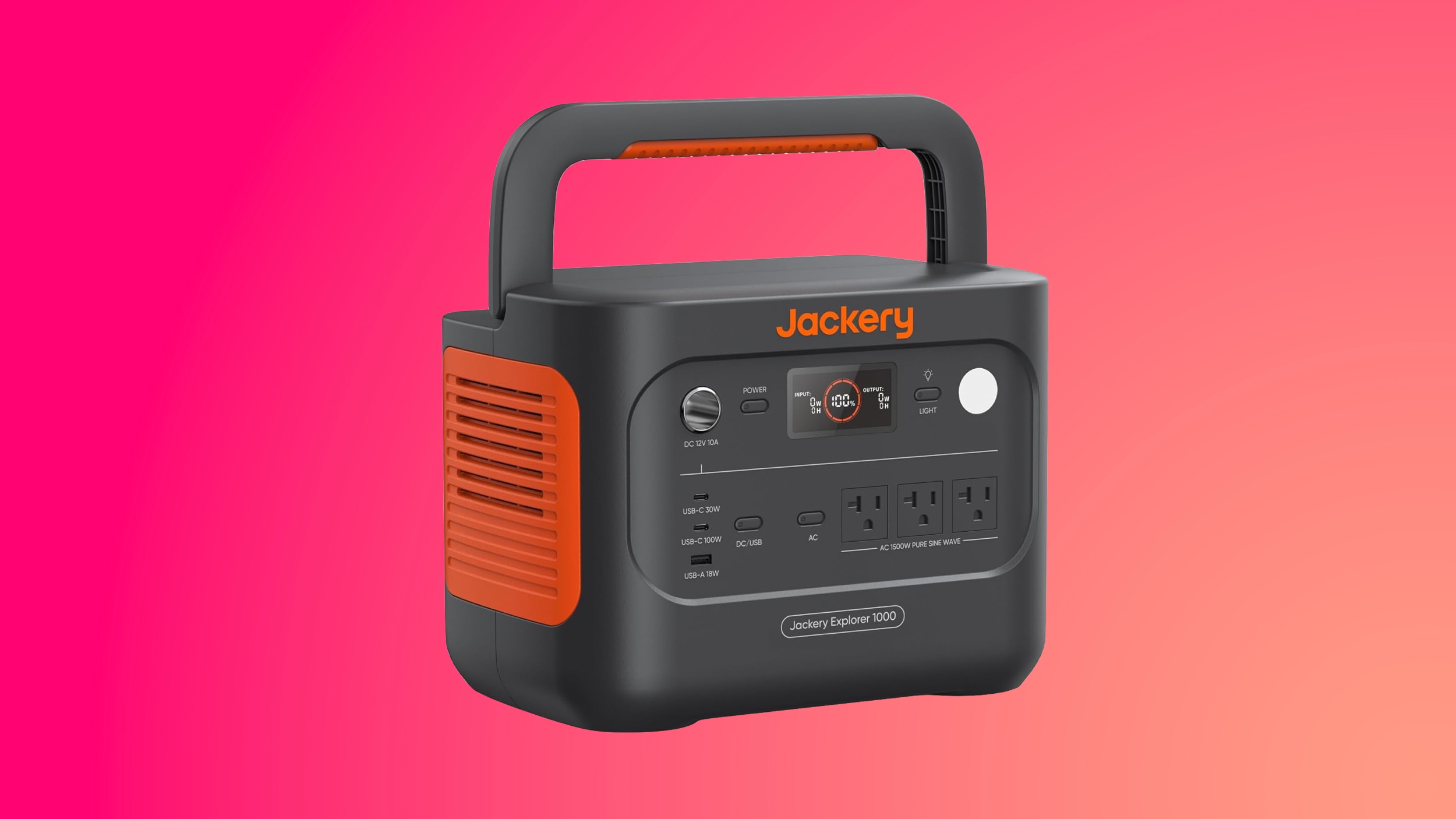
Best Buy Anniversary


  • What's the deal? Save sitewide during Best Buy's 60th Anniversary Sale

  • Where can I get it? Best Buy

  • Where can I find the original deal? Right here


Best Buy is hosting its big 60th Anniversary sale this week, with notable markdowns on Apple devices, TVs, headphones, monitors, and much more. This event is set to last for the rest of this week, and you don't need to be a My Best Buy Plus or Total member to see most of the deals.

Portable Power Stations


  • What's the deal? Take up to $1,500 off Anker and Jackery portable power stations

  • Where can I get it? Amazon and Jackery

  • Where can I find the original deal? Right here


Anker and Jackery have introduced big discounts across their most popular portable power stations this week, including up to $1,500 off select models from each company. We're tracking Anker's best deals over at Amazon, while Jackery's discounts can be found on the retailer's own website.

AirPods


  • What's the deal? Take $120 off AirPods Max 2, $59 off AirPods Pro 3, and more

  • Where can I get it? Amazon

  • Where can I find the original deal? Right here


Amazon this week had a big collection of discounts across the AirPods lineup, highlighted by the AirPods Max 2 for $429.00, down from $549.00. This is now the best price we've seen on the AirPods Max 2 since Prime Day, and one of the overall best prices we've tracked so far in 2026, and it's accompanied by a solid deal on the AirPods Pro 3.

iPad Air


  • What's the deal? Take $100 off M4 iPad Air

  • Where can I get it? Amazon and Best Buy

  • Where can I find the original deal? Right here


Amazon and Best Buy this week have multiple discounts on the M4 iPad Air, providing $100 off these 2026 models. These are the best prices we've seen in the wake of Apple's summer price hikes.

AirTag


  • What's the deal? Take up to $10 off AirTag 2

  • Where can I get it? Amazon

  • Where can I find the original deal? Right here


Apple's AirTag 2 is on sale for $89.00 this week on Amazon, down from $99.00. This deal is on the 4-Pack of the AirTag 2, and it's a match of the record low price first seen during Prime Day.

If you're on the hunt for more discounts, be sure to visit our Apple Deals roundup where we recap the best Apple-related bargains of the past week.


Deals Newsletter


Interested in hearing more about the best deals you can find in 2026? Sign up for our Deals Newsletter and we'll keep you updated so you don't miss the biggest deals of the season!


Related Roundup: Apple Deals

This article, "Apple's Biggest Summer Deals Drop: AirPods Max 2 Plummet to $429, M4 iPad Air $100 Off" first appeared on MacRumors.com

Discuss this article in our forums

  •  

Walmart to Begin Accepting Apple Pay in U.S. Stores

After years of holding out, Walmart today announced that it will finally begin accepting tap-to-pay options like Apple Pay in some of its Walmart and Sam's Club stores in the U.S. starting Monday, August 24. The retailer plans to roll out tap-to-pay support to all of its U.S. stores by the end of 2026 and to its gas stations by mid-2027.


"We want customers and members to have choice in how they pay, so they can check out in the way that works best for them," said Walmart, in a press release.

Other major U.S. retailers like The Home Depot, Lowe's, Kroger, and Texas-based grocery store chain H-E-B already reversed course and rolled out tap-to-pay support in recent years, leaving Walmart as one of the most notable remaining holdouts until now.

Before this, Walmart prioritized its own Walmart Pay system that involves scanning a QR code at checkout, but it has finally listened to customer feedback and decided to accept NFC-based tap-to-pay options like Apple Pay, Google Pay, and Samsung Pay at its U.S. stores. Tap-to-pay support extends to physical credit and debit cards.

With Apple Pay, launched in 2014, you can simply hold your iPhone or Apple Watch near the payment terminal to pay with a digital version of an eligible credit or debit card stored in the Apple Wallet app. Apple Pay has a lot of privacy protections, including hiding a customer's actual credit card number during the payment process.

Existing payment options like Walmart Pay will remain available.

Walmart has already accepted Apple Pay in its Canadian stores since 2020. It is unclear if the retailer will begin accepting tap-to-pay options in Mexico too.
Related Roundup: Apple Pay
Tag: Walmart

This article, "Walmart to Begin Accepting Apple Pay in U.S. Stores" first appeared on MacRumors.com

Discuss this article in our forums

  •  

Apple Paid $17 Billion in Taxes to Ireland Last Year

Apple paid $17 billion in taxes to Ireland last year, which is 40% of its $43 billion worldwide total (via the Financial Times). The figures were disclosed for the first time under new EU rules requiring large companies to break down their finances by country.
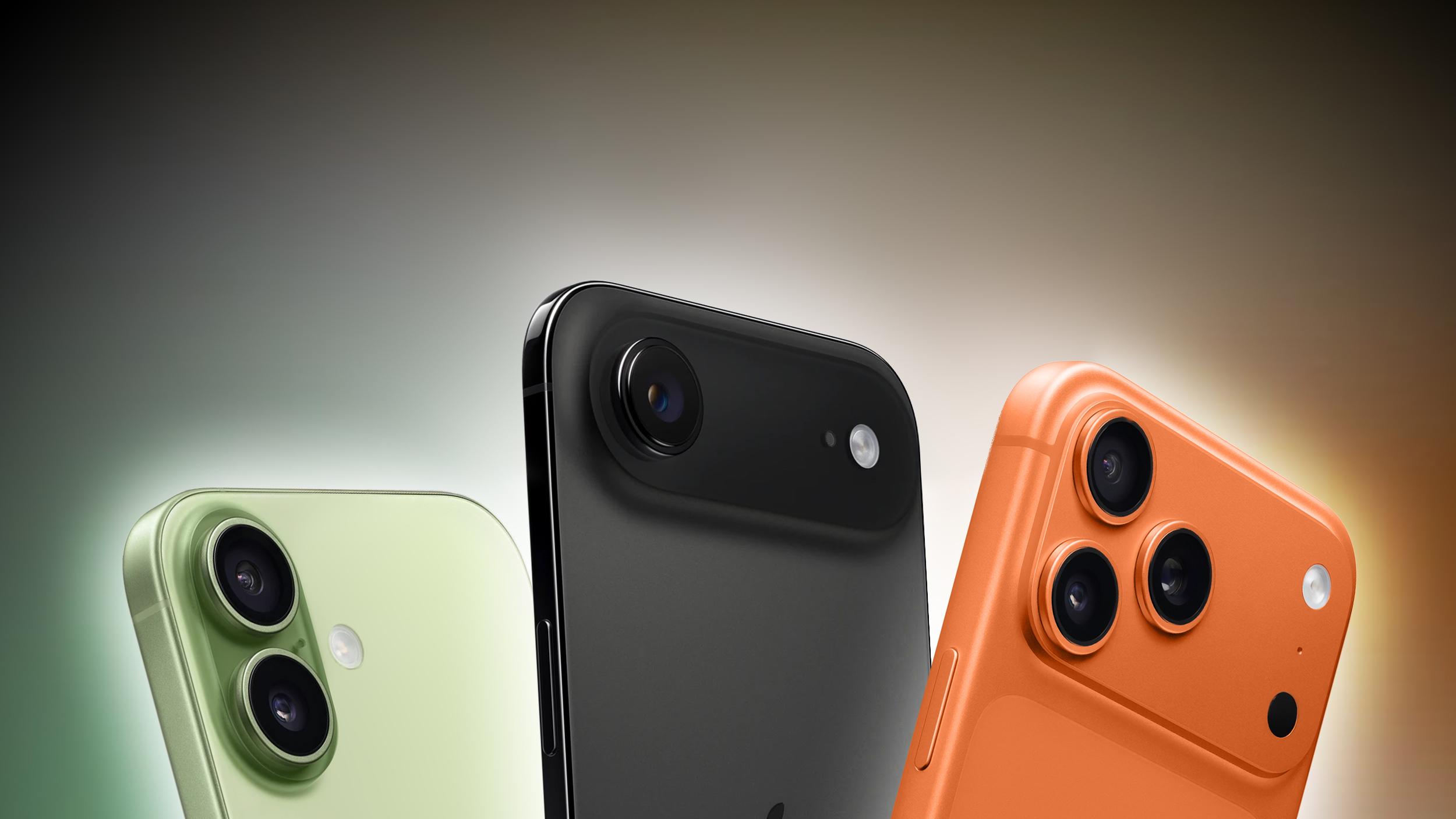
The payment was significantly boosted by the EU's top court ordering Apple in 2024 to pay €13 billion in back taxes, after ruling that Ireland had granted the company unlawful state aid resulting in a tax rate of less than 1%.
This article, "Apple Paid $17 Billion in Taxes to Ireland Last Year" first appeared on MacRumors.com

Discuss this article in our forums

  •  

Smartphone Sales Are Falling Worldwide, But Apple Keeps Growing

Apple gained ground in India, Latin America, and Europe even as all three markets contracted, according to a new series of Counterpoint Research reports.


Between late March and the beginning of August, Indian smartphone sales ran 14% behind the equivalent stretch of 2025, and the market slipped for three straight weeks once major promotions in July had finished. Apple outperformed every rival with a 15% rise, which Counterpoint attributes to strong iPhone 17 demand holding up alongside continued affordability offers. Samsung and OPPO each grew just 4% in the country.

The research firm added that promotions are borrowing demand from the weeks either side of them, rather than growing the market. Amid broad price rises, Counterpoint expects the Indian smartphone market to finish 2026 down around 13%.

Latin American smartphone shipments fell 10% in the second quarter, which is the region's steepest annual drop since the third quarter of 2023. Apple and Samsung were the only brands to grow, by 5% and 6% respectively, while Motorola, HONOR, and Xiaomi all receded in the market. Apple's gains apparently came from absorbing component cost increases rather than passing them on to customers, and the company now accounts for roughly 51% of everything sold above $600 in the region.

European shipments dropped 10% to 35 million units, which is the weakest second quarter in three years. Apple added nine percentage points of market share to achieve parity with Samsung, with each now on 34%, and Xiaomi on 15%. No other brands sit above 4%. Counterpoint expects further declines as inventory dries up, but forecasts that Apple will continue outperforming the wider market.

The smartphone market in China was down 8.6% across the first 30 weeks of the year, with the rate of decline widening back into double digits once the popular 618 shopping festival had concluded. Apple's sales have slowed since July, with discounts pulled back across retail channels and much of the summer's demand already spent during promotions. Counterpoint expects that lull to last until the new iPhone lineup arrives. Huawei, meanwhile, led the market throughout in the region, holding more than a fifth of weekly sales since April.

Counterpoint expects constrained memory supply and elevated prices to run through the remainder of 2026, with a recovery unlikely before 2028. Apple is expected to introduce its next iPhone lineup in September, featuring the iPhone 18 Pro, β€ŒiPhone 18 Proβ€Œ Max, and foldable "iPhone Ultra."
This article, "Smartphone Sales Are Falling Worldwide, But Apple Keeps Growing" first appeared on MacRumors.com

Discuss this article in our forums

  •  

Apple Reportedly Lays Off 60 Vision Products Group Employees

Apple "has just laid off an entire team dedicated to VR development," reports AppleInsider, citing its own source. Apple is said to have laid off at least 60 employees from its Apple Vision Group.


Bloomberg's Mark Gurman previously reported that the Vision Pro team was disbanded and its members redistributed across other projects, following the October 2025 refresh of the Vision Pro and the headset's weak reception.

Incoming Apple CEO John Ternus also reportedly signed off on canceling both a second Vision Pro and a cheaper, slimmer "Vision Air," with Apple's focus now shifted to smart glasses.

Last month, The Elec reported that Apple had suspended development of the display for a cheaper, lighter version of the Vision Pro that it originally planned to launch in the next few years. Gurman doesn't expect Apple to launch another headset before late 2028 at the earliest.
Related Roundup: Apple Vision Pro
Buyer's Guide: Vision Pro (Neutral)
Related Forum: Apple Vision Pro

This article, "Apple Reportedly Lays Off 60 Vision Products Group Employees" first appeared on MacRumors.com

Discuss this article in our forums

  •  
❌