
Lees weergave

Telegram CEO Says Extortionist Manipulated Apple Into App Store Removal

Telegram was subject to a "takedown extortionist" who planted AI-modified child sexual abuse material (CSAM) to get Apple to remove the app from the App Store, Telegram CEO Pavel Durov said today. Apple removed Telegram from the App Store for about 40 minutes on Monday night after discovering CSAM, but reinstated the app after Telegram removed the content.

The attacker was a takedown extortionist: someone who demands ransom from group owners in exchange for not targeting their communities. These extortionists use automated accounts to plant illegal content in public groups and then report it directly to Apple, attempting to trigger the removal of legitimate communities whose owners refused to pay them.

Durov said the attacker used a "technical trick" to evade moderation tools, editing an old message in an active group chat to add illegal content. The attacker was able to bypass moderation because group members didn't see the message to report it. Durov said illegal pornographic content in public groups is not a systemic problem because Telegram has effective moderation, and this was an edge case where an attacker used "backdated, effectively invisible content."

Apple pulled Telegram from the ‌App Store‌ before contacting the company, according to Durov. He said Apple was manipulated into overreacting, and he warned of a "potential systemic risk for every mobile app that hosts user-generated content."

After removing Telegram from the ‌App Store‌, Apple said a content review found child sexual abuse material that violated the ‌App Store‌ guidelines. Apple further said Telegram "promptly removed the content and banned the user," leading to the app's return to the ‌App Store‌. Apple has not commented on Durov's extortionist claim.
This article, "Telegram CEO Says Extortionist Manipulated Apple Into App Store Removal" first appeared on MacRumors.com

Discuss this article in our forums

  •  

Apple Limits Bug Bounty Submissions After Flood of AI Slop

Apple limited the number of vulnerabilities security researchers can submit to its bug bounty program because of an uptick in reports about fake bugs hallucinated by AI, according to The Financial Times.


Apple said its bug review system was seeing a high volume of poor-quality submissions from amateur bug hunters using AI to locate vulnerabilities. In some cases, there is no actual vulnerability, and real submissions are lost in the deluge.

The Financial Times learned of the limit after cybersecurity startup Bynario used ChatGPT to locate more than 50 macOS bugs in three weeks. Bynario found a privilege escalation exploit that could let an attacker get unrestricted access to a Mac, but was unable to report it because Apple limited the number of bug reports Bynario could submit. Bynario sent eight reports to Apple in 2025, and another five in 2026 before hitting a restriction.

Bynario's founder said it is a "very difficult time in the industry" because companies are being "flooded by the sheer amount of bugs." Apple has since been in contact with Bynario and is reviewing the company's submissions.

While Apple now has a cap on the number of open submissions a researcher can have, researchers can request an increase to make sure Apple's security team doesn't miss a critical vulnerability.

AI has overwhelmed Apple because it primarily uses humans to check reports, but Apple too has turned to AI for parsing submissions. AI has also helped Apple find a huge number of bugs. Apple's recent iOS 26.6 update fixes almost 90 security vulnerabilities, some of which are credited to Anthropic's Claude and OpenAI's Codex Security.

Apple's bug bounty program offers rewards up to $2 million for exploit chains used for sophisticated, real-world attacks, plus bonuses that can increase rewards to over $5 million. Apple boosts reward totals for bugs found in betas and for bugs that bypass Lockdown Mode.
This article, "Apple Limits Bug Bounty Submissions After Flood of AI Slop" first appeared on MacRumors.com

Discuss this article in our forums
  •  

Apple Releases New AirPods Beta Firmware With iOS 27 Features

Apple today released a fourth version of the beta firmware it is testing for the AirPods Pro 2, AirPods Pro 3, AirPods 4, and AirPods Max 2. The firmware is available for developers and has a build number of 9A5336b.


In iOS 27, iPadOS 27, and macOS Golden Gate, Apple is adding a new AirPods interface, a slider for Adaptive mode, and support for custom EQ, so the firmware adds support for those features. AirPods are also compatible with the new Siri AI.

When the AirPods are connected to an iPhone, iPad, or Mac running iOS 26, iPadOS 26, or macOS 26 or later, there is a beta firmware option that can be accessed in the AirPods settings interface. Toggling on beta updates allows users to install the beta firmware.

Firmware updates can be downloaded by connecting the AirPods to an Apple device and connecting them to power. It can take a few hours for new firmware to be installed because there is no software update option like there is for other Apple devices.
Related Roundups: AirPods 4, iOS 27, iPadOS 27
Buyer's Guide: AirPods (Caution)
Related Forum: AirPods

This article, "Apple Releases New AirPods Beta Firmware With iOS 27 Features" first appeared on MacRumors.com

Discuss this article in our forums
  •  

Apple Starts Preparing for September iPhone Event

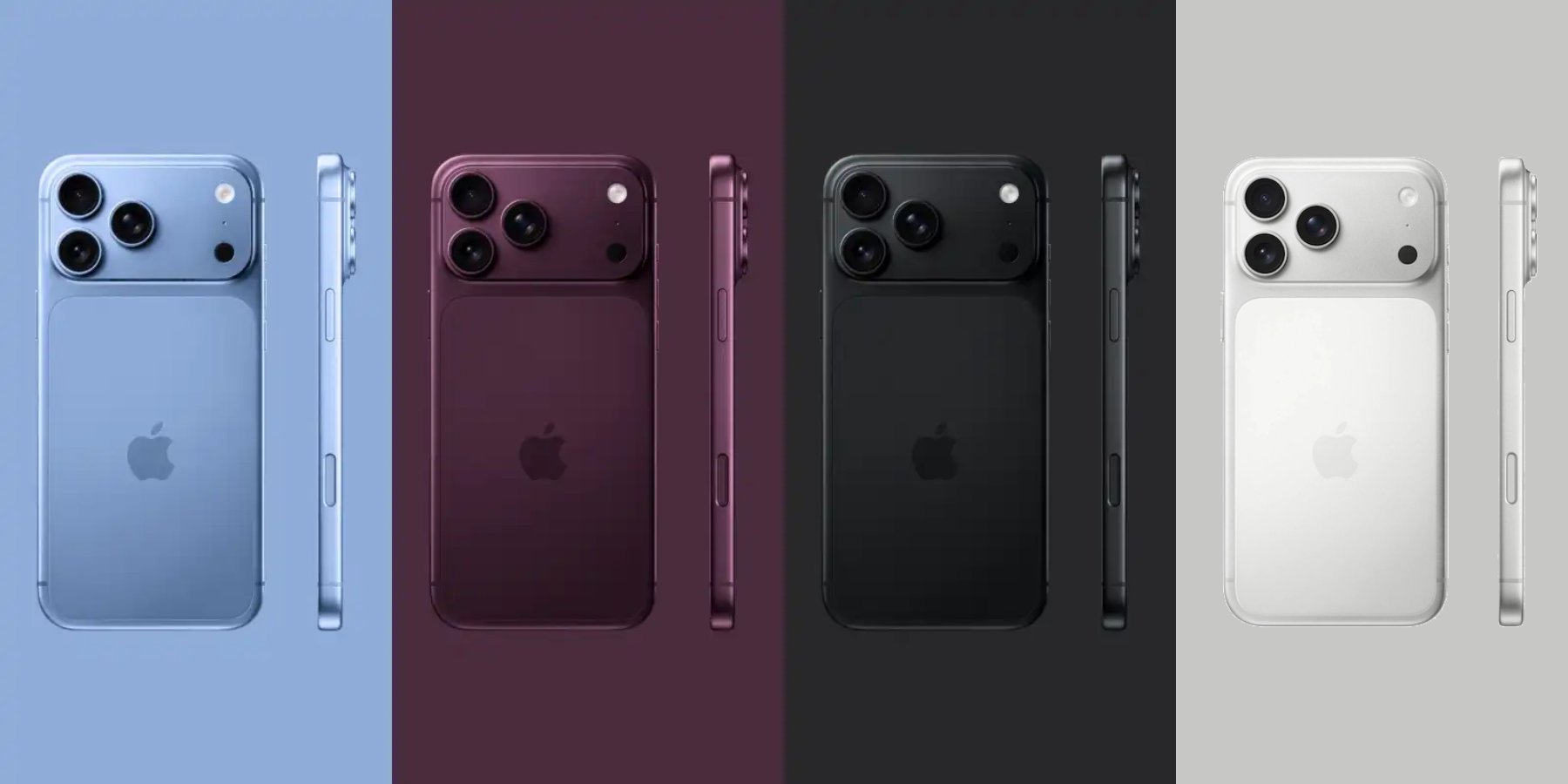
Apple is getting ready for its big September iPhone event, which is expected to see the debut of the iPhone 18 Pro, ‌iPhone 18 Pro‌ Max, and an all-new foldable iPhone.


Ahead of the event, Apple is holding an Event Support Experience Program lottery for U.S. retail employees who want to travel to its Apple Park campus to staff the in-person media gathering. According to Bloomberg, Apple will bring in employees to organize lines, check in guests, offer directions, greet attendees, and support security teams.

Employees were told the iPhone event will take place during the first half of September, but Apple declined to offer more specific information. It's likely Apple will hold its event on Tuesday, September 8 or Wednesday, September 9. September 7 is Labor Day and Apple often gives members of the media a day to travel, so September 9 could be the target date this year.

Apple presumably pays for travel and lodging for employees who are invited to ‌Apple Park‌ to work the media event. Retail workers who were at the Worldwide Developers Conference or the iPhone launch in 2025 are not eligible to enter the lottery. Employees can enter the lottery until August 8, and Apple plans to notify winners on August 17.
This article, "Apple Starts Preparing for September iPhone Event" first appeared on MacRumors.com

Discuss this article in our forums
  •  

Apple Plans iPhone-to-Windows Copy and Paste in EU After Microsoft Request

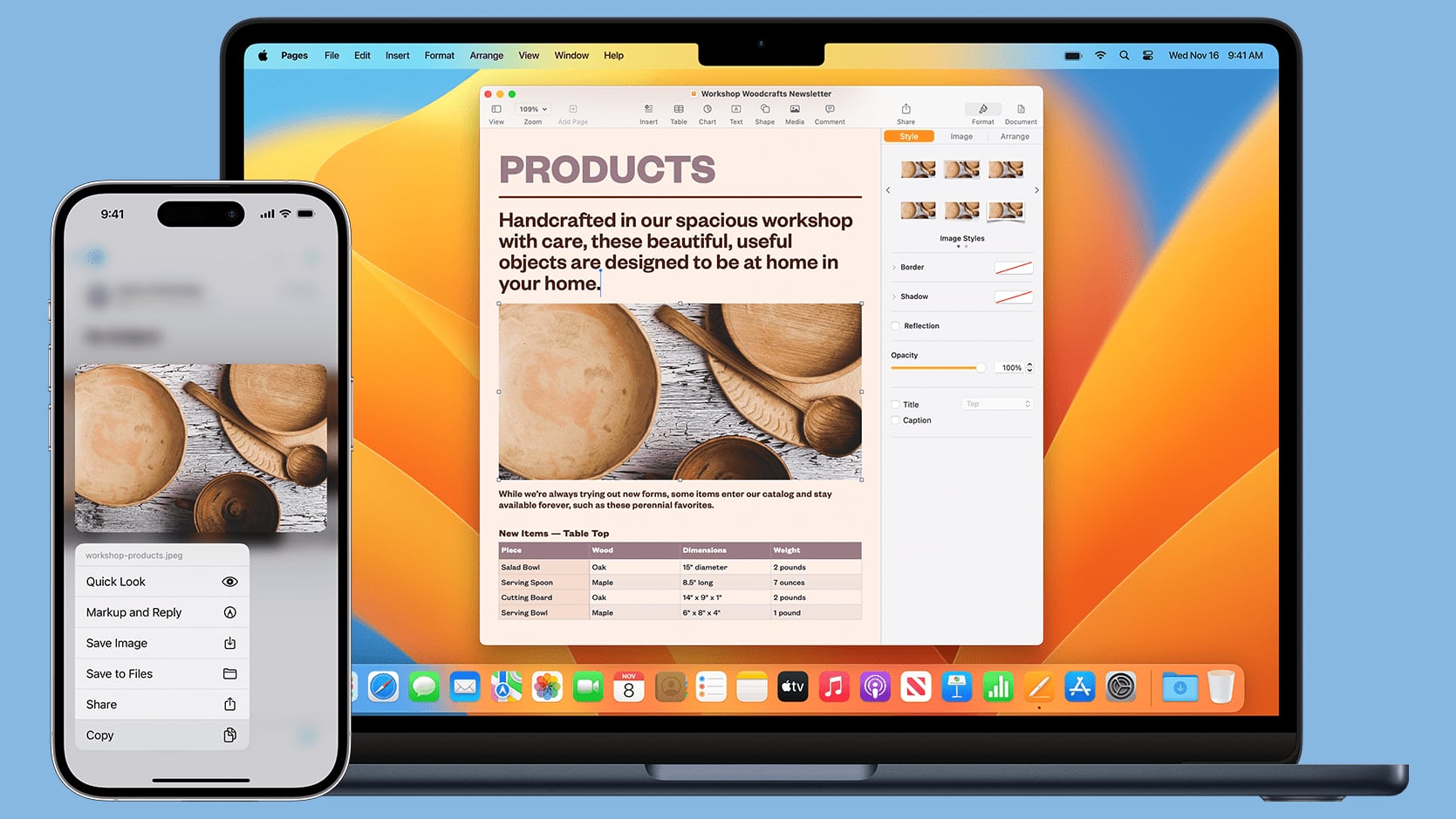
Apple is working on a new feature that will support cross-device copy and paste between iOS devices and Windows PCs.


Microsoft asked for the feature using Apple's EU interoperability request system for developers, which Apple implemented to comply with the Digital Markets Act. Apple began evaluating the request in March, and on June 26, proposed a project plan.

Microsoft described how the feature would be used:

  • Copy text or other supported content on their iPhone and paste it directly on their Windows PC, and vice versa.

  • Perform common productivity workflows without needing to foreground an app or take explicit repeated actions to initiate a transfer.

  • Experience clipboard synchronization as a lightweight, continuous capability rather than a manual, app-driven operation.


Apple proposed a solution that would let an iPhone share and import items from the pasteboard to a paired accessory, like a Windows PC. Apple plans to use a solution similar to the Accessory Notifications option it added for third-party wearables in the EU in iOS 26.5. Users would need to give a paired device one-time permission to paste content from an iPhone.
To adopt this solution, you will need to adopt AccessorySetupKit in order for the user to consent to the necessary permissions allowing the pasteboard to be shared with your accessory. This solution will require the user to perform a one-time consent to sharing the pasteboard with each paired accessory that will receive this functionality.

Right now, an app can only read an iPhone's clipboard if the app is actively running in the foreground and the user grants clipboard access with each copy/paste action. For its own devices, Apple has a Universal Clipboard feature with cross-device copy and paste between iOS and macOS.

Microsoft complained that the clipboard restrictions imposed on apps prevent the continuous synchronization of clipboard content from an iPhone to a PC or other connected device in the background.

Apple says introducing cross-device copy and paste is a significant engineering effort, with work expected to be complete by fall 2027. It will be shipped first in a developer beta for testing ahead of a public release. If the feature is added toward the end of fall 2027, it could be early 2028 before the public gets access.

It is likely that cross-device copy and paste will be limited to iPhone and Windows users in the European Union, though it is possible Apple could implement it worldwide.

Apple has brought some features it was required to support under the DMA to all countries, like eSIM transfers from iPhone to Android and simpler data transfers when switching between Android devices and iPhones. Other features, like AirPods-style pairing and notification forwarding for third-party wearables, have only rolled out in the EU.
This article, "Apple Plans iPhone-to-Windows Copy and Paste in EU After Microsoft Request" first appeared on MacRumors.com

Discuss this article in our forums

  •  

Apple Will Judge Your Mustache Authenticity at Its Ted Lasso Look-Alike Contest

Ted Lasso season four is set to premiere Wednesday, and to celebrate the debut, Apple is hosting a Ted Lasso look-alike contest in New York.


"Think you have the stache to make fans believe? Join the fun this August 6 at Apple Fifth Avenue Plaza for a Ted Lasso Look-Alike contest," reads Apple's Facebook event page. Apple has a set of contest rules instructing participants to visit Apple Fifth Avenue to be judged on "the degree to which they look and act like the character Ted Lasso."

There will be a three-round contest with eliminations in each round. Ten semifinalists will be selected after round one, five finalists will make it past round two, and three finalists will be selected in round three. The event starts at 4:30 p.m. Eastern Time and runs until 7:00 p.m.

  • Round One, Ted Energy - Contestants have to introduce themselves in character and have a two-minute dance break. Judging will be based on optimism, posture, and presence, along with costume commitment and participation level.

  • Round Two, Head Coach - Semifinalists will participate in a trivia game and will be judged on the level to which each participant embraces the Ted Lasso character. The round will be judged on trivia results, costume commitment, mustache authenticity (Apple says 'stick-ons OK; real grows extra credit'), and The Believe Factor (something unique and special).

  • Round Three, Ted Talk - Each remaining contestant will present a 30- to 45-second pep talk to the crowd. It will be judged on how moved the crowd is, costume commitment, and Ted Energy.


A first-place winner will receive custom Beats headphones and a custom soccer scarf, while the two runners-up will get the scarf alone. Full rules are on Apple's site for the event.


Season four of Ted Lasso will premiere on Wednesday, August 5, and it has 10 total episodes. One episode will be released every Wednesday through October 7. In the new season, Lasso returns to Richmond to coach a second-division women's soccer team. Ted Lasso favorites including Hannah Waddingham, Juno Temple, Brett Goldstein, Brendan Hunt, and Jeremy Swift will star in the series.
This article, "Apple Will Judge Your Mustache Authenticity at Its Ted Lasso Look-Alike Contest" first appeared on MacRumors.com

Discuss this article in our forums

  •  

Apple's Next CEO Adds Retired Hardware Executive to His Team

Incoming Apple CEO John Ternus is rehiring Laura Legros, a former vice president of hardware engineering who retired from Apple in 2022, reports Bloomberg.


Legros previously managed product delivery, development schedules, and coordination across engineering teams. Under Ternus, she will work across different parts of the company, and report directly to him.

According to Bloomberg, Legros was one of Ternus' most trusted deputies before she retired. She has presented at past Apple events, introducing the 2018 MacBook Air and the 2020 iPad Air.

As he prepares to take over, Ternus has been shadowing current CEO Tim Cook and leading executive meetings. He has met with company leaders to work on product plans, and has been spending time with Apple's design teams.

Ternus will take over as Apple CEO on September 1. Cook will remain at Apple as executive chairman to engage with policymakers around the world.
This article, "Apple's Next CEO Adds Retired Hardware Executive to His Team" first appeared on MacRumors.com

Discuss this article in our forums

  •  

Fitbit Data Can Finally Sync to Apple Health

The latest update to the Google Health app for iOS allows Google Health data to sync to Apple Health. Google's app is used to collect data from wearables like Fitbit trackers and the Pixel Watch.


Sync to Apple Health. Share your data like your exercise records, sleep, vitals, steps, and more from Google Health to Apple Health.

Google Health (previously the Fitbit app) collects fitness, sleep, and wellness data from a connected wearable device. Steps, distance traveled, heart rate, sleep, and more can now be added to Apple Health. As noted on Reddit, some data such as HRV doesn't transfer over.

Syncing can be enabled after downloading the update by selecting Connections, choosing Apps and services, and then adding Apple Health.

Apple Health data already synced to Google Health, so the new update adds two-way sync between the platforms. Fitbit devices have never had native sync to Apple Health, and users previously had to use a third-party syncing utility or a workaround to transfer data.

Version 5.05 of the Google Health app is available from the App Store for free. The update also adds Smart Health Links for sharing medical records with providers or family members.
This article, "Fitbit Data Can Finally Sync to Apple Health" first appeared on MacRumors.com

Discuss this article in our forums
  •  

Apple Pay Launches in the Philippines

Apple Pay expanded to the Philippines today, which means iPhone and Apple Watch owners in the country can add supported debit and credit cards to the Wallet app for contactless payments.


Credit and debit cards can be added by opening the Wallet app and tapping on the "+" button. According to users on Reddit, supported banks include UnionBank, GoTyme, Metrobank, and Chinabank. Cards are verified using SMS or phone call.

Once an eligible card is added to the Wallet app, it can be used at retail locations that support ‌Apple Pay‌. Reddit users have been able to add their cards to Apple Wallet and make ‌Apple Pay‌ purchases at stores like Starbucks and 7-Eleven.

‌Apple Pay‌ is available in a long list of countries around the world, with details on supported banks. The Philippines hasn't been added to Apple's site yet, but Apple should soon have a full list of participating banks.
Related Roundup: Apple Pay

This article, "Apple Pay Launches in the Philippines" first appeared on MacRumors.com

Discuss this article in our forums
  •  

Apple's iCloud File Sharing Left Ex-Employees With Access to Secret Documents

The way Apple combines work and personal iCloud accounts left some employees able to access confidential documents after departing the company, reports The Information. The site spoke to more than half a dozen former Apple employees who were unknowingly left with access to sensitive content.


The former employees said many Apple files they had been shared on over their careers at the company—including planning documents for product launch events—continued to sync to their personal devices through the iCloud storage service after they left Apple. In some cases, they even received notifications about fresh updates to the documents. Some former employees said they were petrified to delete the files for fear that doing so would attract Apple's attention.

Apple files get mixed in with employees' accounts because the company encourages them to use their personal Apple Accounts with their work ‌iCloud‌ account. Employees are given a 2TB ‌iCloud‌ plan and are able to merge the storage with their existing Apple Account or create a new account. Since only one primary account can be signed in at a time, most opt to use their existing account to avoid having to carry two iPhones.

Apple has a managed folder for workplace files that it revokes access to when an employee leaves, but some internal documents aren't saved there automatically and shared files end up mixed in with personal content. Employees can also retain access to iMessage chats and files shared via the Messages app.

Lingering access to Apple systems is central to Apple's lawsuit against OpenAI. In its filing, Apple alleged that former employee Chang Liu breached Apple's systems using a "rare, previously unknown authentication bug" to download files while he was working at OpenAI.

Apple told The Information that the OpenAI lawsuit is unrelated to any files left available on ‌iCloud‌ and that it does not pursue legal claims against former employees who accidentally have Apple documents in their personal ‌iCloud‌ accounts.
This case is about OpenAI employees wrongfully taking Apple's secret and confidential information regarding our unreleased technologies, processes, and products. Nothing in the filing relates to documents shared by, or stored in, iCloud.

Former employees say Apple does not do a thorough enough job going through personal devices to remove sensitive files that have been stored in ‌iCloud‌. In a now-settled legal dispute, chip company Rivos claimed Apple intentionally lets former employees retain access to files "as part of a planned effort to generate a pretextual basis to sue the employees and their new employer for 'stealing' Apple material." In the Rivos case, an employee was targeted for keeping work files in his personal ‌iCloud‌ account.

Another former Apple employee sued by Apple, Gerard Williams, countersued and accused the company of using intimidation tactics to scare people thinking of leaving. Apple sued Williams for breach of contract after he started processor company Nuvia, presenting extensive phone and text records of his communications. The court rejected Williams' claim, and Apple dropped the case in 2023.

In 2025, Apple also accused former Vision Pro engineer Di Liu of downloading thousands of corporate documents to his personal cloud storage shortly before leaving the company for Snap.

The Information does not outright suggest Apple is purposefully allowing former employees to retain access to ‌iCloud‌ files, but points out that Apple's use of ‌iCloud‌ for file sharing and its incomplete wiping of employee accounts are at odds with its heavy focus on privacy and security.
This article, "Apple's iCloud File Sharing Left Ex-Employees With Access to Secret Documents" first appeared on MacRumors.com

Discuss this article in our forums
  •  

How Apple Changed Under Tim Cook: 15 Years in Numbers

Apple CEO Tim Cook participated in his final Apple earnings call yesterday, with incoming CEO John Ternus set to take over on September 1. With Cook's tenure coming to an end, we thought we'd take a look at how Apple has changed over the last 15 years.


Cook took over as CEO on August 24, 2011, after Steve Jobs resigned.

Apple's Revenue


During yesterday's earnings call, Bank of America analyst Wamsi Mohan shared an interesting observation about Apple's quarterly earnings. When Cook took over as CEO, Apple's revenue for all of 2011 was $108 billion.

Apple reported $109.4 billion for Q3 2026, earning its 2011 revenue in a single quarter. We don't have the numbers for fiscal 2026 yet, but in fiscal 2025, revenue was $416 billion.

iPhone revenue in 2011 was $47 billion, and just this quarter, it was $54.3 billion.

Valuation


Apple stock is down today after Cook said he expects supply constraints and memory shortages to affect revenue in the current quarter, but last week, Apple briefly hit a market cap above $5 trillion. Apple's market cap is now around the $4.5 trillion mark, and it once again trails Nvidia for world's most valuable publicly traded company.

Apple was the first company to reach a $1 trillion valuation in August 2018, the first to reach $2 trillion in August 2020, and the first to reach $3 trillion in January 2022. It was the third company to hit a $4 trillion valuation in October 2025, and then the second to reach $5 trillion.

A day after Cook took over in August 2011, Apple's stock price was $13.35 (split-adjusted). Today, it opened at $304.81, a roughly 23x increase. There was a 7-for–1 split in 2014 and 4-for–1 split in 2020 during Cook's tenure.

Installed Base


Apple said it has over 2.5 billion active devices. Apple didn't share installed base numbers until 2016, when it hit a billion active devices.

Services


Apple's services category revenue has seen the most growth. It was $9.4 billion in all of 2011, but in Q3 2026, it was $30.7 billion. In fiscal 2025, services brought in $109 billion.

Apple said during the earnings call that it now has 1.5 billion subscriptions. A huge number of services launched under Cook, including:

Back in 2011, Apple's services were limited to AppleCare, iTunes, and the ‌App Store‌.

Product Launches


Under Cook, Apple launched everything from the AirPods to the Apple Watch.

Capital Returns


Cook initiated quarterly dividends in 2012, and also executed an ongoing share repurchase program. Since then, Apple has returned more than $1 trillion to shareholders.

Transition to John Ternus


Cook said yesterday that the transition to Ternus is "going seamlessly." Ternus will become CEO on September 1, ahead of when Apple announces new iPhone models. Cook will remain at Apple as executive chairman, where he will engage with policymakers and help Apple navigate regulatory pressure.

In April, Cook said he planned to remain at Apple for years to come. "I am healthy. My energy is high, and I plan to be in this role for a long time," said Cook. He said he will support current hardware engineering chief John Ternus in any way necessary when Ternus takes over as CEO, and he plans to continue to offer knowledge and experience whenever it's needed. "Apple will be my top priority," he said. "It's who I am at my core, and I can't imagine it any other way."

Cook on Ternus


Cook yesterday said Ternus is the best choice to take over Apple.
The transition is going seamlessly, and I am beyond excited for John to step into his new role and lead Apple into its next era. He is truly one of a kind and there is no better person to take the helm of the company.

As I've said, I couldn't be more confident in his leadership, in our executive team, and in the extraordinary people at Apple who are determined to enrich the lives of our users all over the world. We have a bright future ahead, and I truly have never been more optimistic.

Ternus has been at Apple since 2001, when he joined the product design team. He became vice president of hardware engineering in 2013 and focused on the AirPods, Mac, and iPad. In 2020, he also took on the iPhone, and he became senior vice president of hardware engineering in 2021.
This article, "How Apple Changed Under Tim Cook: 15 Years in Numbers" first appeared on MacRumors.com

Discuss this article in our forums
  •  

Apple Says App Store Changes and Mobile Gaming Softness Affected Services Revenue

Softness in mobile gaming and Apple's changes to the App Store business model in some countries impacted the performance of the ‌App Store‌, Apple CFO Kevan Parekh said during today's earnings call.


Apple's services revenue was $30.7 billion, a 12% increase over the $27.4 billion it earned in the year-ago quarter. Though the category saw growth, revenue came in under expectations, prompting analyst questions that led to Parekh's comments on the ‌App Store‌.
We also had some factors that impacted the performance of the App Store. We did see some headwinds in mobile gaming, and then keep in mind, we also made some changes to the App Store business model in certain countries, and in the U.S., we do continue to operate under a court ruling impacting the link-out transactions. But we're pleased the Supreme Court will hear our appeal.

There have been ‌App Store‌ fee updates in Japan and Brazil as of late, with Apple collecting no fees on link-outs in the U.S. and lower fees from alternative app marketplace apps in the EU. Despite the rule changes, the ‌App Store‌ still set a June quarter revenue record. Apple saw double-digit growth in cloud services, video, payment services, and advertising, with a record level of Apple Pay users.

During the call, Apple also said it now has 1.5 billion paid subscriptions, with transacting and paid accounts hitting an all-time high.

Parekh said it wasn't the ‌App Store‌ alone that impacted services revenue, and Apple also took a hit from foreign exchange. Last year, Apple also had the theatrical release of F1, and no equivalent release this year, making for a tougher compare.

Services growth in the September quarter is expected to be similar to the June quarter when excluding an approximately 2.5 percentage point foreign exchange headwind.
This article, "Apple Says App Store Changes and Mobile Gaming Softness Affected Services Revenue" first appeared on MacRumors.com

Discuss this article in our forums

  •  

Apple Plans Paid iCloud+ Upgrades for Heavy AI Users

Apple is planning to let users pay to increase their AI limits, with upgrade possibilities available through iCloud+.


During today's earnings call for the third fiscal quarter of 2026, Apple CEO Tim Cook said it's early, but the company expects to offer options for people who want to make heavy use of AI services.
In terms of what it means for compute cost, it's obviously early going for us, and so I don't want to say that we have a complete plan for that. We do believe there will be people that want to use it a lot and we will have some kind of upgrade possibilities on iCloud+ where people can buy up the stack on iCloud+. We'll see how the pickup for that is.

At WWDC, Apple said there would be daily usage limits on features like Image Playground, but increased access would be available through ‌iCloud‌+ plans. Cook's comments today suggest there may also be ‌iCloud‌+ add-ons specifically for AI usage.

Apple hasn't offered any details on what it might charge to increase AI limits, and that's information that we might get when iOS 27 launches in September. Features like Siri AI are expected to remain free to use.
Tag: iCloud

This article, "Apple Plans Paid iCloud+ Upgrades for Heavy AI Users" first appeared on MacRumors.com

Discuss this article in our forums
  •  

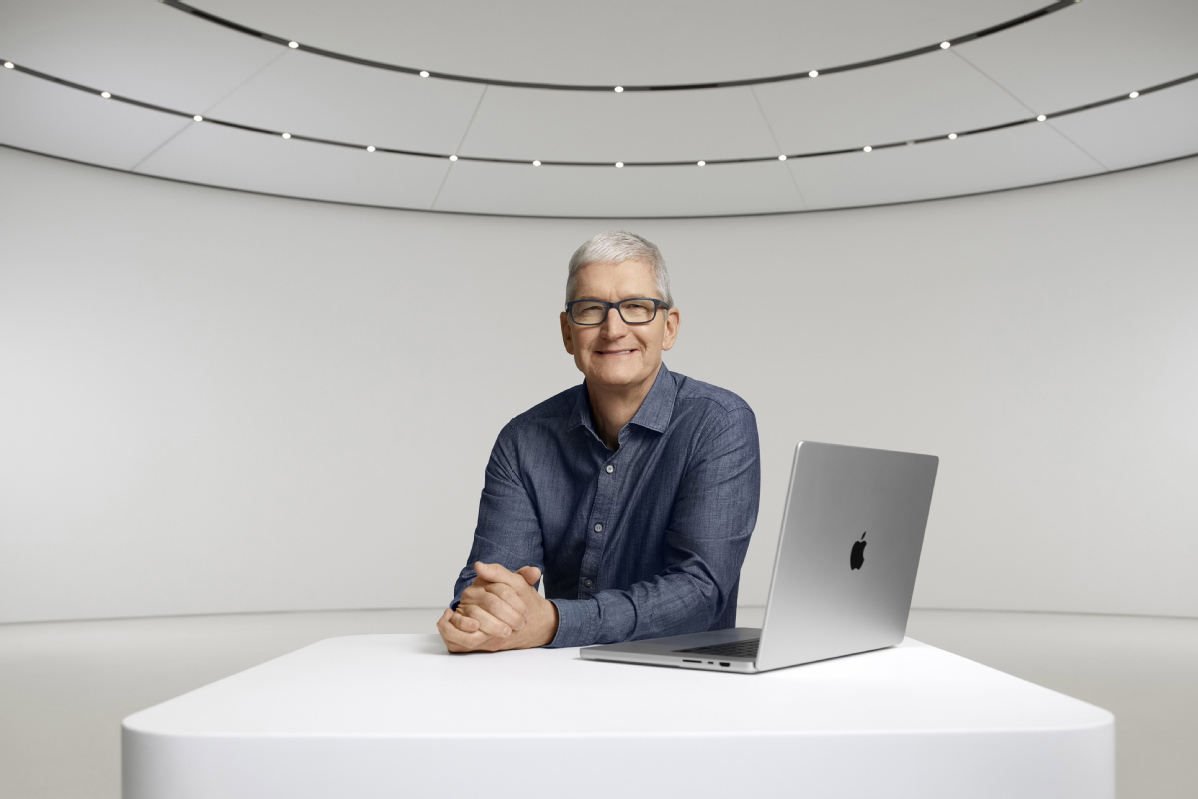
Tim Cook: Apple 'Reluctantly Raised Prices' Due to '100-Year Flood on Memory Pricing'

Apple didn't want to raise its prices but was forced to do so because of exponential increases in memory costs, Apple CEO Tim Cook said today during the company's Q3 2026 earnings call. Apple increased prices for Macs and iPads in June because memory prices have surged.


On the pricing front, you know, we reluctantly raised prices. I would say we did it because we're in what I would characterize as a 100-year flood on memory pricing with exponential increases in memory prices, so that was the rationale for it.

When asked whether Apple is aiming to protect gross profit dollars or product gross margins when considering pricing increases, Cook said it's multifactorial.
In terms of our philosophy on dollars or percentages, we look at units, revenue, and margin, and then come to a business judgment as to how to handle that, and so it's not a mathematical formula that gets us to a specific result, or just looking at one dimension of that. We look at all three dimensions and think about it over the long term instead of, you know, a 90-day clock.

Cook did not comment on whether Apple plans to raise iPhone prices when the iPhone 18 Pro models and first foldable launch this September, but multiple analysts believe prices will go up.

Cook said Apple is expecting to pay higher memory costs in the September quarter, though Apple will be able to partially offset it with lower costs on some non-memory components and a stockpile of inventory.
This article, "Tim Cook: Apple 'Reluctantly Raised Prices' Due to '100-Year Flood on Memory Pricing'" first appeared on MacRumors.com

Discuss this article in our forums
  •  

Tim Cook Thanks Shareholders on His Final Apple Earnings Call

Apple CEO Tim Cook today confirmed that today's call was his last as CEO, with John Ternus set to become Apple's new CEO on September 1. Cook will transition to a new role as executive chairman when Ternus becomes CEO.


I just wanted to take a moment to say thank you to all of you, from our shareholders, particularly our long-term shareholders who have put their trust in us for so many years, to the analysts who have followed our company so closely. As you know, this will be my final earnings call, and John will lead these calls going forward.

Cook said the transition to Ternus is "going seamlessly," and he is excited for Ternus to lead Apple into its next era.
As I've said, I couldn't be more confident in his leadership, in our executive team, and in the extraordinary people at Apple who are determined to enrich the lives of our users all over the world. We have a bright future ahead, and I truly have never been more optimistic.

While Cook is stepping down as Apple's CEO, he said earlier this year that he plans to serve as executive chairman "for a long time." He said Apple will continue to be his top priority.
This article, "Tim Cook Thanks Shareholders on His Final Apple Earnings Call" first appeared on MacRumors.com

Discuss this article in our forums
  •  

Apple Warns of Growing Supply Constraints for iPhone, iPad, and Mac

Apple is expecting supply constraints to have a much bigger impact on revenue during the September quarter, Apple CEO Tim Cook said today during Apple's earnings call for the third quarter of 2026.


Supply constraints will impact the iPhone, iPad, and Mac. Cook said Apple is seeing less flexibility in the supply chain than normal and an issue with the availability of the advanced nodes that Apple's chips are produced on.
We continue to expect high levels of demand. However, with less flexibility in the supply chain, we expect the impact from the supply constraints to increase significantly sequentially.

He said the cause is not a regular supply issue, but a demand forecast issue. The iPhone and Mac are doing "remarkably better" than Apple expected.
Let me stress again. This isn't a partner or supplier issue... It's an incredibly strong iPhone and Mac product cycle that has really yielded a demand beyond our expectation.

Cook also commented on memory shortages. He said Apple paid more for memory in the June quarter than the March quarter, and the company expects to pay even higher memory costs in the September quarter. He said Apple will be able to partially offset the increased costs in two ways, but memory will continue to be problematic.
The first is, as you would expect, we have benefited from some carry-in inventory in the September quarter. However, we believe we will see decreasing benefit of this over time beyond the September quarter. The second is we're expecting lower cost on certain non-memory components. Then if you look beyond September, we see the market pricing for memory continuing to increase and have an increasing impact on our business. [...]
The DRAM market has three suppliers. Obviously, if there were more suppliers, that would be good, and it would help us on the supply side and perhaps the pricing side. It's unclear on the pricing side, but it could help on the supply side. And so we're evaluating all options.

Apple is planning to release new iPhone models in September, including the iPhone 18 Pro, ‌iPhone 18 Pro‌ Max, and its first foldable iPhone.
This article, "Apple Warns of Growing Supply Constraints for iPhone, iPad, and Mac" first appeared on MacRumors.com

Discuss this article in our forums
  •  

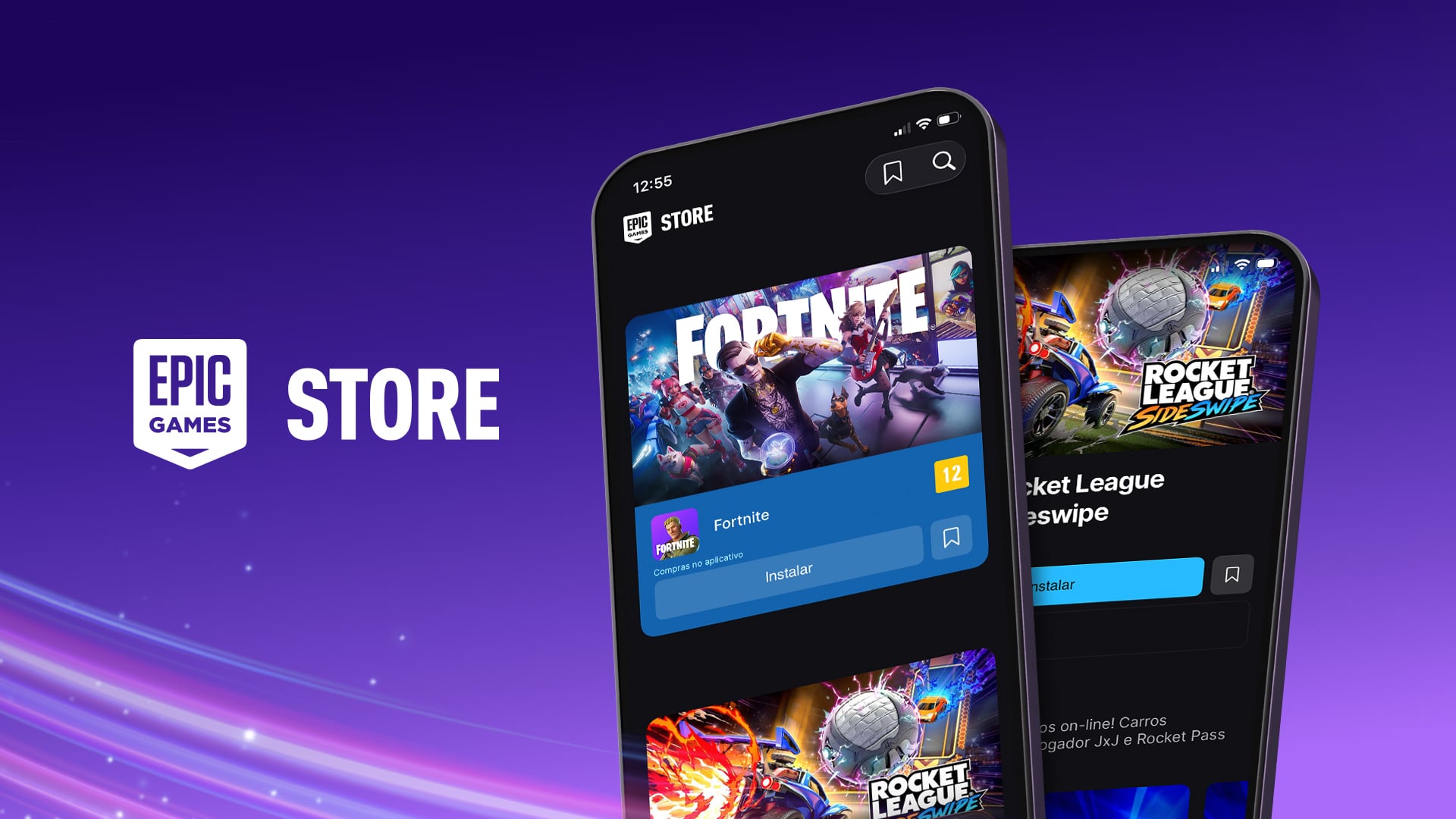
Fortnite Returns to iPhone in Brazil as Epic Games Store Launches

Epic Games today said that the ‌Epic Games‌ Store can now be downloaded on iPhones in Brazil through the ‌Epic Games‌ website. In its announcement, ‌Epic Games‌ complained about the third-party store installation process, which requires nine steps and includes screens warning customers about downloading apps outside of the App Store.

Apple is imposing a 9-step install flow for alternative app stores in Brazil. The additional screens were designed to deter users from downloading alternative app stores and preventing competition. In the EU last year, Apple reduced their installation flow from 15 to 6 steps after facing regulatory pressure. After they made this change, Epic saw a 60% decrease in player drop-off during attempts to install the Epic Games Store. But Apple now has increased the steps in Brazil to thwart competition.

‌Epic Games‌ also took issue with the fees Apple is able to collect. Apple has a 5% Core Technology Commission on sales of digital goods and services in third-party app stores and apps installed from third-party app stores. Because of the fees, Epic says it is only offering its own games for now. Players can download Fortnite and Rocket League Sideswipe.

Brazilian customers who opt to purchase Fortnite through the ‌Epic Games‌ Store can get 20 percent back in Epic Rewards, an incentivizing bonus not available through the ‌App Store‌ version of Fortnite in Brazil.

‌Epic Games‌ says it has informed Brazilian regulators "how detrimental the requirements and restrictions are to creating a competitive mobile app ecosystem on iOS."

Apple changed its App Store rules in Brazil in June to comply with regulatory action requiring support for alternative app marketplaces.
This article, "Fortnite Returns to iPhone in Brazil as Epic Games Store Launches" first appeared on MacRumors.com

Discuss this article in our forums
  •  

Senators Demand Apple Commit to Not Buying Chinese Memory Chips

U.S. Senator Chuck Schumer has teamed up with several of his Senate colleagues to demand Apple commit to not purchasing chips from Chinese companies ChangXin Memory Technologies (CXMT) or Yangtze Memory Technologies Co. (YMTC). [PDF]


With memory shortages causing Apple to raise the prices of Macs and iPads, the company has been talking with CXMT and YMTC about a chip deal. The two companies are on the Defense Department's list of Chinese companies that are suspected to have ties to the People's Liberation Army. Apple is not required to get U.S. approval before buying chips from CXMT, but YMTC is also on the Commerce Department's Entity List, which means Apple would need an export license before being able to work with the company.

Apple has been lobbying the Trump administration to greenlight its plan to buy Chinese chips, and Apple also wants to ensure the government won't add CXMT to the Entity List in the future.

Schumer wants Apple to pledge not to use chips from CXMT or YMTC in any Apple product sold anywhere in the world. He says Apple's plan would harm the U.S. semiconductor supply chain and set a dangerous precedent for other companies to follow.

Rumors have suggested Apple is already testing chips from CXMT, and Schumer has also asked Apple to answer questions about the reported testing and the company's efforts to lobby the Trump administration to prevent national security restrictions on Chinese semiconductor suppliers.
Fueled by investment from my Chips & Science Law, workers in Central New York and across the country are carrying out the largest domestic expansion of domestic memory chip production in a generation, and American companies, like Apple, should be buying chips stamped 'Made in America,' not from companies linked to the Chinese military. I wrote my CHIPS & Science Law, so we would make American microchips again, with American workers, and not be over-reliant on semiconductors from overseas. That's why I'm leading a bipartisan group of senators calling on Apple CEO Tim Cook to commit to not using memory chips produced by Chinese military-linked companies. I've long sounded the alarm on the grave national security and economic threats posed by YMTC, CXMT, and other companies backed by the Chinese Communist Party. Apple integrating these Chinese chips into its supply chain would send a dangerous message to other American companies that they, too, should turn to Chinese-made chips.

Apple has told lawmakers that it will use the chips in devices for the Chinese market, leaving more Samsung, SK Hynix, and Micron chips available for products sold in countries like the U.S. Schumer claims the limitation "cannot be expected to hold" because Apple could extend the chips worldwide with a "single procurement decision." Schumer also said supplying chips to Apple would give CXMT "revenue and reputational gains" regardless of where the chips were used.

Back in 2022, Apple attempted to ink a deal to purchase chips from YMTC, but Schumer led an effort to stop the agreement and to add YMTC to the Entity List. Schumer has also been pushing for CXMT to be added to the list, which is the action Apple is aiming to stop. Schumer has asked Apple to respond to his letter by August 21, 2026.

Other senators who signed the letter are Jim Banks, Mike Crapo, Jeanne Shaheen, Andy Kim, James Risch, and Pete Ricketts.
Tag: China

This article, "Senators Demand Apple Commit to Not Buying Chinese Memory Chips" first appeared on MacRumors.com

Discuss this article in our forums
  •  

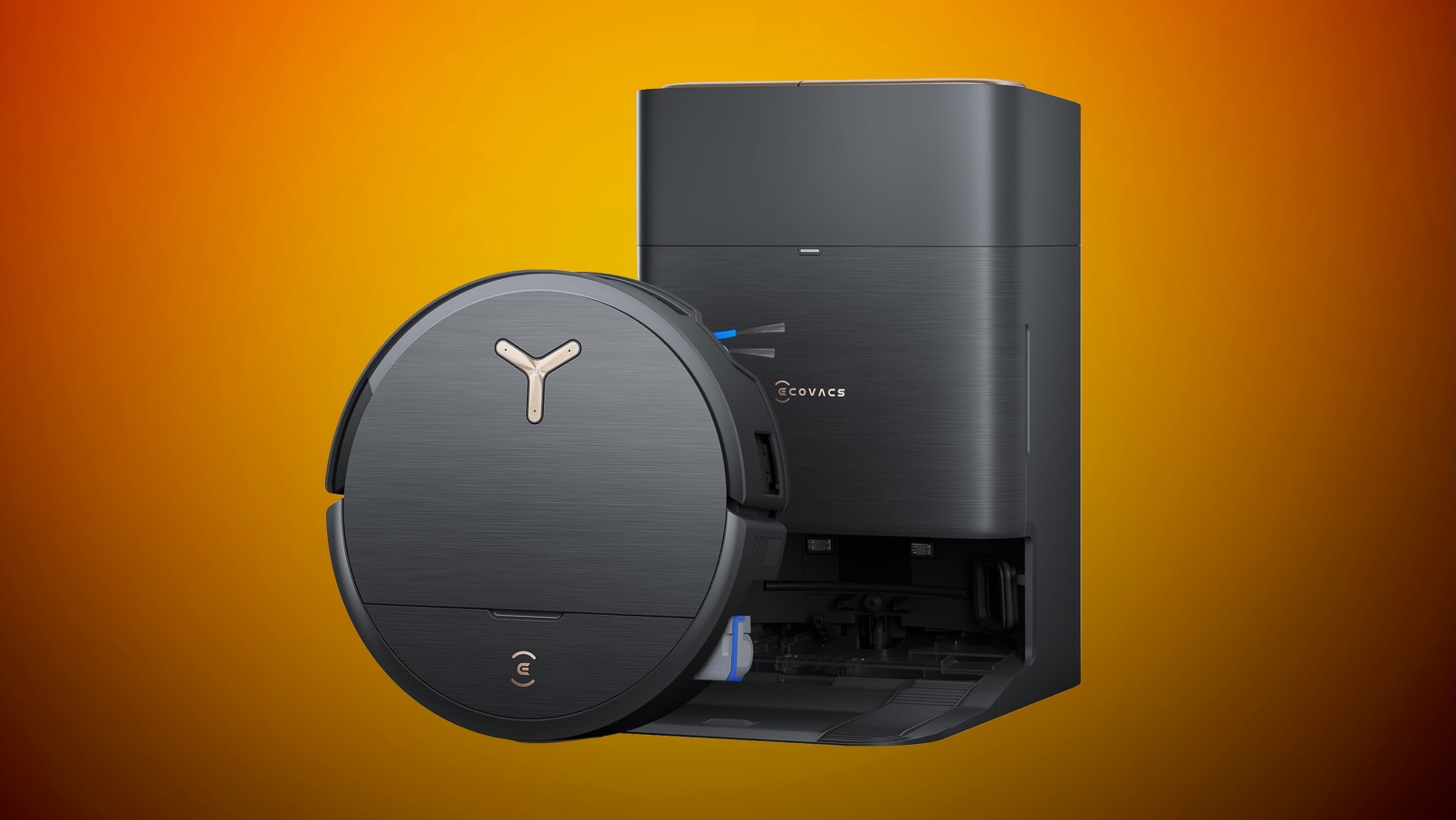
FCC Bans New Foreign-Made Robot Vacuums, Threatening Future Matter and HomeKit Models

The FCC this week banned all new "foreign-produced advanced robotic devices" because of an "unacceptable risk to the national security of the United States." The government says networked robotic systems lead to vulnerabilities that allow bad actors to control the devices and collect surveillance data from Americans.


Advanced robotic devices are defined as software-controlled autonomous robots that can move, navigate obstacles, and have a sensor that can perceive the environment.

The ban isn't focused on just humanoid robots, and it includes robot vacuum cleaners too. Almost all robot vacuums are sold by companies located in China or are manufactured in China. Even Roomba maker iRobot, once a flagship American vacuum company, is now owned by a Chinese company after bankruptcy.

Companies are able to keep importing and selling robot vacuums already on the market, but new models will need to get approval from the government. As The Verge notes, getting approval requires a commitment to invest in U.S. manufacturing, but no investigation into security practices despite multiple mentions of national security concerns.

Future Matter-enabled smart vacuums that work with HomeKit from companies like Roborock and Ecovacs may not be able to be sold in the U.S., leaving few options for U.S. consumers unless the companies pledge to move manufacturing to the United States.

Along with robot vacuums, the FCC has banned new humanoid and quadruped robots, plus foreign-made power inverters.
This article, "FCC Bans New Foreign-Made Robot Vacuums, Threatening Future Matter and HomeKit Models" first appeared on MacRumors.com

Discuss this article in our forums
  •  

Apple Donating to Japan Earthquake Relief Efforts

Apple CEO Tim Cook today said Apple would be making a donation to support earthquake relief efforts in Japan.


A magnitude 6.8 earthquake (per the USGS) hit the Kumamoto prefecture on Kyushu island on Tuesday, collapsing buildings and killing at least 34 people.

Japan has a very special place in my heart. We're thinking of everyone as they continue to face the effects of the Kumamoto earthquake and aftershocks. We're grateful to the first responders helping those in need. Apple is making a donation to support relief efforts.

— Tim Cook (@tim_cook) July 30, 2026

Aftershocks continued on Wednesday and Thursday. Kyushu is the third largest of Japan's four main islands, and it has the second-highest population.

Apple often donates to the Red Cross for relief efforts during natural disasters, but donation amounts are not shared. Last night, Cook said Apple was donating to wildfire relief efforts in France, Spain, and other countries.

Kumamoto was previously hit with a deadly earthquake in 2016, and Apple collected donations for Japan through iTunes.
This article, "Apple Donating to Japan Earthquake Relief Efforts" first appeared on MacRumors.com

Discuss this article in our forums
  •  

Qualcomm Expects Apple Modem Revenue to Drop Faster Than Expected

Qualcomm expects its Apple revenue to decline faster than it previously anticipated, Qualcomm CEO Cristiano Amon told Reuters in an interview following the company's earnings call for the third fiscal quarter of 2026.


Amon chalked up the loss to supply constraints, which will reduce the share of Qualcomm components used in the next iPhone launch well below its earlier 20 percent estimate. Qualcomm expects the drop in Apple revenue to start in the fourth quarter.

Qualcomm is raising its prices starting September 1 to improve its margin because of increasing costs across the supply chain. "We're just passing through big cost increases that we have," said Amon.

In fiscal 2027, Qualcomm is expecting most of its chip sales to come from categories other than smartphones, and growth in its data center business will replace the Apple-related revenue it collected in fiscal 2026.

Apple developed its own modem chips, which have been used in the iPhone 16e, iPhone 17e, and iPhone Air. Rumors suggest Apple could transition to using more of its own chips starting with the iPhone 18 lineup. Apple is working on a C2 modem chip rumored to deliver faster speeds and better power efficiency than Qualcomm modems.

Apple and Qualcomm have a patent licensing agreement that lasts through March 2027, and it is not clear if Apple will extend it again or move to using its own modem chips across its entire product lineup.
This article, "Qualcomm Expects Apple Modem Revenue to Drop Faster Than Expected" first appeared on MacRumors.com

Discuss this article in our forums

  •  

Apple Says UK App Store Steering Rules Would Be 'Highly Intrusive'

Apple said new UK App Store rules would give regulators a "highly intrusive" role dictating how it runs its business, reports Reuters. Apple submitted feedback to the UK's Competition and Markets Authority as it considers forcing Apple to change its ‌App Store‌ rules around steering.


The CMA wants Apple to let developers link to payment options outside of the ‌App Store‌, which the CMA says will cut fees and boost competition. Developers in the UK are not currently able to direct customers outside of the ‌App Store‌, even though that's allowed with the current U.S. ‌App Store‌ rules and the EU ‌App Store‌ rules.

UK regulators said Apple can charge developers a fee, but it must be fair and reasonable, and below existing ‌App Store‌ commissions, so developers can pass savings to customers or reinvest them in innovation.

According to Apple, the CMA's proposed rules would undermine innovation and investment, and would amount to price regulation because of the restriction on fees. Apple claims there is no evidence that allowing developers to direct users to purchase options outside the ‌App Store‌ would result in savings for customers. Apple said the ‌App Store‌ facilitated over £46.5 billion in UK billings and sales in 2025, and commissions accounted for less than 3.5 percent of the total.

The CMA denied that its proposal is price regulation. "Our consultation proposes principles to ensure that ​the fees Apple and Google charge for steering are fair and reasonable, not to directly set prices," a CMA spokesperson told Reuters.

The CMA is assessing feedback before making a final decision on the proposal. The changes are also applicable to Google, as both Apple and Google were designated with strategic market status (SMS) in the UK last year. Under the designation, the CMA can impose requirements meant to open up the platforms to greater competition.
This article, "Apple Says UK App Store Steering Rules Would Be 'Highly Intrusive'" first appeared on MacRumors.com

Discuss this article in our forums
  •  

Pastebot 3 for Mac Adds Rule-Based Organization, Powerful Paste Filters

Tapbots recently launched Pastebot 3, the newest version of its popular clipboard management software.


Like prior versions of Pastebot, Pastebot 3 records everything you copy so that it's easy to find and paste when needed. You can store links and other content that you often paste, and organize the snippets by category in Custom Pastebins.

There are also rule-based Smart Pastebins for automatic organization, like every link or image copied from Safari. Smart Pastebins can be filtered by clipping size, type, file extension, creation date, text, text length, and more. Multiple parameters can be combined for detailed filtering, and custom notes can be added to clippings to make them easy to find via search.

You can create more powerful custom filters and apply them to text you've copied before pasting it. You can do things like convert to plaintext and remove smart punctuation, wrap what you're pasting in paragraph tags, convert to upper or lowercase, nix emojis, find and replace, extract URLs or phone numbers, remove empty lines, sort, and translate. Multiple filters can be combined and keyboard shortcuts can be assigned to the filters you use most often.

A quick paste menu can be activated with a Shift+Command+V keyboard shortcut for bringing up your most frequently used clippings in any app, and there's a Stack function for copying multiple items and pasting them one after another.

You can add apps to Pastebot's blacklist, and content copied from the apps on the list is never saved to Pastebot, which is useful for protecting passwords. All Pastebot content and filters sync across Macs with iCloud, and there are options for customizing how many clippings are saved. You can keep up to 1,500.

Tapbots says Pastebot 3 was built to work with Apple's Universal Clipboard feature, and when enabled and active, anything you copy on your iPhone is saved in Pastebot automatically. Clippings saved in Pastebot can also be pasted on iPhone. Pastebot 3 supports Apple Shortcuts and CLI access for automating clippings.

Pastebot 3 requires macOS Tahoe or later. It can be purchased directly from Tapbots for $39, with a year of updates included and the option to buy another year of updates for $19. There's also a Mac App Store purchase option with a $24.99 per year or $2.99 per month subscription. Pastebot customers who enter a Pastebot 2 license key can get a $12.99 upgrade discount on the direct purchase option. New customers can try the app for 14 days.
This article, "Pastebot 3 for Mac Adds Rule-Based Organization, Powerful Paste Filters" first appeared on MacRumors.com

Discuss this article in our forums
  •  

Apple Releases Safari Technology Preview 249 With Bug Fixes and Performance Improvements

Apple today released a new update for Safari Technology Preview, the experimental browser that was first introduced in March 2016. Apple designed ‌Safari Technology Preview‌ to allow users to test features that are planned for future release versions of the Safari browser.


‌Safari Technology Preview‌ 249 includes fixes and updates for Accessibility, Animations, CSS, Editing, Forms, HTML, JavaScript, Media, Rendering, Spatial Web, Web API, Web Audio, Web Inspector, WebAssembly, WebDriver, and WebRTC.

The current ‌Safari Technology Preview‌ release is compatible with machines running macOS Tahoe and macOS Golden Gate, the newest version of macOS.

The ‌Safari Technology Preview‌ update is available through the Software Update mechanism in System Preferences or System Settings to anyone who has downloaded the browser from Apple's website. Complete release notes for the update are available on the Safari Technology Preview website.

Apple's aim with ‌Safari Technology Preview‌ is to gather feedback from developers and users on its browser development process. ‌Safari Technology Preview‌ can run side-by-side with the existing Safari browser and while it is designed for developers, it does not require a developer account to download and use.
This article, "Apple Releases Safari Technology Preview 249 With Bug Fixes and Performance Improvements" first appeared on MacRumors.com

Discuss this article in our forums
  •  

OpenAI President on Apple Lawsuit: We Don't Need Your Secrets

OpenAI president Greg Brockman recently did an interview with Joanna Stern, where he commented on the lawsuit OpenAI is facing from Apple and talked about OpenAI's product plans.


Brockman reiterated what OpenAI has already said on the record, stating that the company is "plenty innovative" and uninterested in other companies' trade secrets.
I would say that we have no interest in other companies' trade secrets. We are plenty innovative. We are thinking about things from our own angle. And so that's how we operate and that's what we do.

He also said OpenAI is working on its own long-term product plans.
It's active litigation, so not something that I want to talk about, but all I can say is we're very committed to a long-term roadmap here and that we are focused on our own development and technology. That's what we're interested in.

Apple accused OpenAI of a months-long scheme to steal confidential Apple information from Apple employees interviewing with OpenAI. Apple said OpenAI has created a culture of hardware theft, and that its hardware business is "rotten to the core" because the hardware it's building relies on info stolen from Apple. OpenAI's products are being developed with former Apple designer Jony Ive, though Ive wasn't named in the lawsuit.

Brockman declined to say when OpenAI's first hardware devices will come out, but he said people should "expect them soon." Rumors suggest OpenAI's first product will be a mobile smart speaker without a display, and it has been described as a "humanlike AI companion" designed for home use. He further said OpenAI is working on a "family of devices" and is building its own chips. OpenAI wants to offer "value over time" and deliver on a device that's "built for the AI era" and "maximally useful."

He had ChatGPT answer a question about what OpenAI's first AI device would look like.
My take, something ambient and low friction, voice first but not voice only and with a clear privacy signal.

ChatGPT also answered whether the company's first device would need a screen, and it said "nope."

People haven't been thrilled with the recent merging of ChatGPT and Codex, and Brockman acknowledged that the app is "kind of a mess." He described the current app as "incremental progress towards the future," and said the separate Work tab should be gone by the end of the year, with everything molding into ChatGPT.

Brockman's full interview, which goes into more detail on ChatGPT's future, OpenAI's hardware work, and the company's ambitions, can be watched on YouTube.
This article, "OpenAI President on Apple Lawsuit: We Don't Need Your Secrets" first appeared on MacRumors.com

Discuss this article in our forums
  •  

Galaxy Z Fold8 Review: What Samsung's New Foldable Tells Us About the iPhone Ultra

Samsung announced its latest foldable smartphones last week, and the lineup included the Galaxy Z Fold8, a device that's close to what we're expecting Apple's foldable "iPhone Ultra" to look like when it comes out later this year. MacRumors videographer Dan Barbera has been testing Samsung's new foldable, and the wider 4:3 display bodes well for the ‌iPhone Ultra‌.


Unlike most of Samsung's Galaxy foldables, the Z Fold8 is wider with a tablet-like look and feel when it's unfolded. It's 5.5 inches when closed and 7.6 inches when open, and those are just about the exact dimensions we've seen rumored for the ‌iPhone Ultra‌. It's not as tall or narrow as Samsung's other foldable smartphones, and it feels a lot more like using an iPad mini.

A wider unfolded display is better for using two apps side-by-side, and it's also a better screen size for watching videos. The 5.5-inch cover display is perfect for looking at notifications, responding to texts, and answering emails, and then the wider display is ideal for tasks that can use more screen real estate.

Samsung's foldable is our best look yet at what it will be like to use an ‌iPhone Ultra‌, and where the shortcomings might be. The book form factor isn't the best for vertical video, and some apps aren't designed for the screen size. Apple is working on automatic resizing for apps to match the iPad-like design, so it may be in a better position than Samsung on the software side.

Samsung's device only has two camera lenses and not the best camera tech the company has, and that's what we're expecting from the ‌iPhone Ultra‌ too. A telephoto lens is unlikely, and a step down in camera quality could be one of the main negatives of choosing the ‌iPhone Ultra‌ over the iPhone 18 Pro this fall. It's also going to be missing Face ID, and going back to Touch ID on a smartphone is a big change.

Apple's design is supposed to be nearly crease-free with a sturdy hinge, and Samsung used new hinge technology for the Z Fold8 too. Samsung says the new mechanism minimizes the crease and makes it harder to feel than with prior models, but it's still clearly visible in some lighting. It'll be interesting to see how Apple's foldable compares.

Samsung didn't come out with this wide-screen foldable smartphone until after rumors suggested it was the design Apple planned to use. Samsung and Apple both have a history of adopting features after the other company comes out with something new, but Samsung seems to follow Apple more often. It looks like Apple picked the shape and details came out through leaks, leading Samsung to make a similar device. Samsung was able to make it to market before Apple because Samsung has been making foldable smartphones for years.

Rumors about a book-style Apple foldable started around March 2018, and Samsung's first foldable came out in 2019. Samsung had seven years to pick a wider design like the one Apple is opting for, but didn't launch the form factor until a couple of months before Apple's foldable is rumored to be coming.

Samsung isn't likely to lure iPhone users away from choosing the ‌iPhone Ultra‌ when it comes out because most people tend to stick with a preferred operating system, but it could stop Galaxy users from swapping over to Apple's tablet-like design. The 4:3 iPad-like display works, and the ‌iPhone Ultra‌ is going to sell well, even at a price around $2,000. Samsung priced the Z Fold8 at $1,900, but rumors suggest Apple could charge up to $2,500.

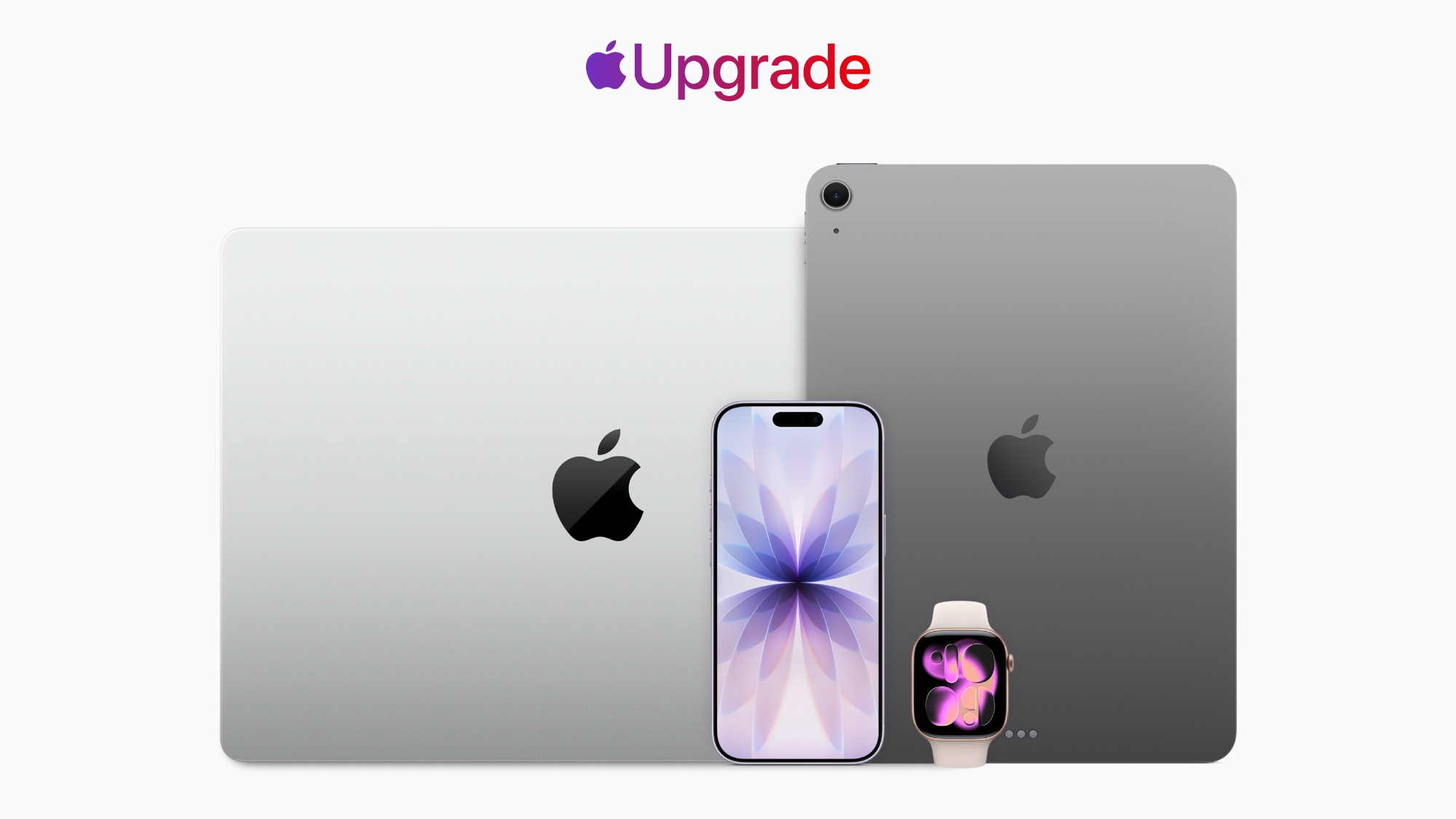
Apple knows the ‌iPhone Ultra‌ is going to give people sticker shock, and that's probably one of the reasons it just launched Apple Upgrade. Apple Upgrade lets you lease a smartphone for a lower monthly price than you used to be able to get with the iPhone Upgrade Program, and it'll likely help Apple sell the new iPhone.

Dan went into testing expecting the rumored price would keep the ‌iPhone Ultra‌ niche, but after using the Galaxy Z Fold8 and showing other people the design, he's now convinced the ‌iPhone Ultra‌ will be a hit.
This article, "Galaxy Z Fold8 Review: What Samsung's New Foldable Tells Us About the iPhone Ultra" first appeared on MacRumors.com

Discuss this article in our forums
  •  

Gemini for Mac Adds System-Wide Voice Dictation and Screen-Aware Commands

Google today updated Gemini for Mac to add a new quick keyboard shortcut that activates voice mode. By long-pressing the Fn key, users can speak naturally to Gemini from any window on their desktop machine.


Gemini supports intelligent dictation, so users can speak to the chatbot using natural language and Gemini will transcribe their words to text. Ums, ahs, and other filler words are removed during the process, and it can catch mid-sentence corrections, dropping formatted text at the cursor.

There's an opt-in screen-aware reasoning mode. If enabled, Gemini can see what's on the Mac's screen to complete tasks. Users can highlight files, images, text, or documents and have Gemini edit, summarize, and compose content in the app they're working in. Gemini is also able to generate and edit images when the screen-aware mode is turned on.

A double press on the Fn key is one of the options for triggering the Mac's built-in dictation feature, so the Gemini replacement will be familiar to those who prefer Gemini.

Gemini's new Mac voice mode is rolling out globally to all Gemini for Mac users in English, with Google planning to add more languages in the future.
Tags: Gemini, Google

This article, "Gemini for Mac Adds System-Wide Voice Dictation and Screen-Aware Commands" first appeared on MacRumors.com

Discuss this article in our forums

  •  

iOS 27: All the New Phone and FaceTime Features

The Phone and FaceTime apps didn't get as many new features as some of Apple's other apps, but there are a handful of capabilities that add utility and convenience.


Phone App


The Phone app has one major update, and that's Call Context. When you call a company, the Phone app can surface relevant information from the Mail app.

If you call an airline, it might show your confirmation code for an upcoming flight, or your reservation code if you're calling a hotel. It doesn't listen to what you're saying, but instead looks at the number you're calling and links it to details in the Mail app.

Call Context is an Apple Intelligence feature that runs entirely on-device, and it requires an iPhone 15 Pro or newer. It also works when you make a phone call from your iPad or Mac.

FaceTime


‌FaceTime‌ has a couple of new features, but the biggest is Dual Capture. On the iPhone 17 models and the iPhone Air, you can use the front and back cameras at the same time while on a ‌FaceTime‌ call.

The person you're calling is able to see your face and what's shown through the back camera.

You can turn on Dual Capture on a supported iPhone by tapping on the camera flip button. If you only want to show the back camera feed, you can tap to turn off the front camera view.

While streaming video with Dual Capture is limited to the ‌iPhone 17‌, iPhone 17 Pro, ‌iPhone 17 Pro‌ Max, ‌iPhone Air‌, and newer, anyone running iOS 27 can see a dual video stream on a ‌FaceTime‌ call because there are no hardware requirements for the receiving device.

There are a few other features worth knowing about:

  • Connection Quality - When you have a bad connection, ‌FaceTime‌ calls will now have better quality than before.

  • Wi-Fi/Cellular - In ‌iOS 27‌, iPhones are better at transitioning from a Wi-Fi to a cellular connection and vice versa, so you'll lose connection less often when moving between networks.

  • Live Captions - Live Captions are now available in Traditional Chinese.

  • Communication Safety - Communication Safety blocks gore and violence in ‌FaceTime‌ and Messages instead of just nudity.


iOS 27 Launch


‌iOS 27‌ is being beta tested right now, and can be downloaded by developers and public beta testers. It will launch this fall alongside new iPhone models.

Read More


For more on the new features in ‌iOS 27‌, we have a dedicated iOS 27 roundup.
Related Roundups: iOS 27, iPadOS 27

This article, "iOS 27: All the New Phone and FaceTime Features" first appeared on MacRumors.com

Discuss this article in our forums

  •  

Apple Upgrade: 20 Things to Know Before Leasing an iPhone, iPad, or Mac

Apple retired the iPhone Upgrade Program in favor of a new Apple Upgrade leasing option made available in partnership with Klarna. Apple Upgrade gives customers an option to get iPhones, iPads, Macs, and Apple Watches at cheaper prices than before, but there are some things worth knowing about it.


We've gathered up some smaller tidbits that you should be aware of before deciding to opt in.

  • U.S. Only - Apple Upgrade is only available in the United States, and there's no word on whether it will expand to other countries.

  • Unlocked iPhones - iPhones leased with Apple Upgrade are unlocked, but you are required to choose a carrier at checkout. Carrier options include AT&T, Verizon, and T-Mobile. Since the iPhone is unlocked, you can switch carriers after purchase or add a second eSIM.

  • Postpaid Plans Only - You have to have a postpaid plan through a supported carrier to use Apple Upgrade. Prepaid plans aren't an option when leasing.

  • Ownership - You don't own the iPhone you're leasing at the end of the lease term unless you pay off the final amount. Your final payment is the device's cost when it was leased minus what was paid during the lease. If you don't want to purchase the iPhone, or if you want to upgrade, you need to return the leased iPhone.

  • No Lockout - Code in the iOS 27 beta suggested Apple could restrict apps and services if there are missed payments on a leased device, but it's not for Apple Upgrade. Missing a payment won't change how your iPhone works.

  • Missed Payments - If you miss a payment, it's rolled into your next month's payment. There are no late fees.

  • Three Strikes - If you miss three payments in a row, Klarna automatically terminates your lease and the full balance of the iPhone is due immediately. Klarna will subtract the value of the iPhone from the amount owed when you return it, cutting down on the payoff amount. If you don't return the iPhone or don't pay the balance, Klarna will send the account to collections.

  • No Fees - There are no fees for missing a payment, but you are subject to the lease termination rules. Missing a payment can also impact your credit score.

  • AppleCare+ - Unlike the iPhone Upgrade Program, AppleCare+ is not included with the Apple Upgrade leasing fee, and it needs to be purchased separately. ‌AppleCare‌+ for the iPhone is $9.99 to $13.99 per month, or you can get ‌AppleCare‌ One for $19.99 per month. ‌AppleCare‌ One covers three devices.

  • Damage - Klarna will charge for any damage to an iPhone, and you'll need to pay for a repair when returning a device. If you have ‌AppleCare‌+, you'll only pay the ‌AppleCare‌+ service fee.

  • iPhone Upgrade Program - The iPhone Upgrade Program is discontinued. Current members don't have to swap to Apple Upgrade or another purchase option right now, but will need to do so at their next upgrade.

  • Apple Card Monthly Installments - Apple Card holders can still choose to finance an iPhone with zero interest using the ‌Apple Card‌ Monthly Installments option. An iPhone purchased with ‌Apple Card‌ is owned outright.

  • Ineligible Products - Some Apple devices can't be purchased with Apple Upgrade, including the iPhone 16, ‌iPhone 16‌ Plus, Apple Watch SE, MacBook Neo, Mac mini, A16 iPad, and Studio Display.

  • No EDU - You can't use Apple Upgrade for discounted education prices.

  • No Refurbished Devices - You can't buy a refurbished Apple device with Apple Upgrade.

  • Ending a Lease Early - You can end a lease early, but you need to pay off the remaining amount on the lease and then return the device.

  • Buying Out a Lease - You can pay off a lease early with no penalty.

  • Soft Credit Check - There's no hard credit check when initiating a lease, so getting approval for a lease won't affect your credit.

  • Trade-Ins - When you initiate a lease, you can trade in an old iPhone. Trade-in value is split across your monthly payments instead of applied up front. You can't do a trade-in when sending a device back to upgrade to a new one.

  • Payment Restrictions - Klarna doesn't accept some credit cards, like AMEX, Chase, and Capital One. Other credit cards like the ‌Apple Card‌ can be used for Apple Upgrade payments to Klarna.


More Details


We have more information on Apple Upgrade in our full article, along with details on pricing.
This article, "Apple Upgrade: 20 Things to Know Before Leasing an iPhone, iPad, or Mac" first appeared on MacRumors.com

Discuss this article in our forums

  •  

Apple Retires iPhone Upgrade Program for Klarna-Backed Leases

Apple today launched Apple Upgrade, a new U.S. leasing program for iPhone, iPad, Mac, and Apple Watch. Apple partnered with Klarna for Apple Upgrade, and it replaces the current iPhone Upgrade Program and iPhone Payments.


Apple Upgrade has lower base prices than the iPhone Upgrade Program, with iPhones available starting at $17.99 per month and the Apple Watch available starting at $11.99 per month. Macs can be leased starting at $24.99 per month, and iPads start at $11.99 per month. AppleCare+ is optional and not included in the lease price, with customers also able to opt for ‌AppleCare‌ One.

There are 12-month and 24-month leasing options for the iPhone and Apple Watch, along with 24-month and 36-month leasing options for the Mac and ‌iPad‌. Lease cost varies based on device, and is lower with a device trade-in that's applied on a monthly basis. Apple has some sample pricing, minus taxes and trade-in credits:

  • 256GB iPhone 17 Pro ($1,099) - Typical monthly payment is $31.99 with a 24-month lease or $45.99 with a 12-month lease.

  • 42mm Apple Watch Series 11 ($399) - Typical monthly payment for a 24-month lease term is $11.99 per month, or $21.99 for a 12-month lease term.

  • 256GB iPad Pro ($1,199) - Typical monthly payment is $24.99 for a 36-month lease term, or $31.99 for a 24-month lease term.

  • 16GB 14-inch MacBook Pro ($1,999) - Typical monthly payment is $38.99 for a 36-month lease, and $53.99 for a 24-month lease.


When leasing an iPhone, customers are required to choose a plan from AT&T, Verizon, or T-Mobile, and prepaid plans are not eligible. iPhones need to be leased with a carrier plan, but the iPhones are unlocked so customers can switch carriers if desired. MVNOs like Mint Mobile or Visible are not supported.

At the end of the leasing period, customers can choose to return the device and exit the program, pay off the remaining amount owed on the device with a one-time payment and keep it, or return it and upgrade to a new device with a new lease.

The payoff amount is the difference between what was paid during the leasing period and the retail price of the device, minus any remaining trade-in credits. Klarna is not charging a fee for the leasing program, so an iPhone that's $1,099 can be leased and then purchased for $1,099 with no extra cost beyond taxes.

As with trade-ins, Apple will send a pre-labeled and prepaid shipping box for device returns or upgrades.

If you don't opt to pay the purchase fee at the end of the leasing program, you will not own the device and must return it.

Apple is discontinuing the iPhone Upgrade Program, and iPhones can no longer be purchased with it. Current participants can continue to make payments until their existing iPhones are paid off, but at the next purchase, they will need to switch over to Apple Upgrade or another payment option. Apple Card users can continue to buy devices with the ‌Apple Card‌ Monthly Installments plan or choose Apple Upgrade and get 3% Daily Cash back on lease payments made with ‌Apple Card‌.

Apple Upgrade is available for online and in-store purchases. Customers can select their preferred leasing option, and after a soft credit check, get an instant approval from Klarna if eligible. Lease information like billing schedule, total price, and remaining payments can be managed in the Klarna app.

Most iPhones, iPads, Macs, and Apple Watch models are eligible for Apple Upgrade, but the program can't be used for iPhone 16, ‌iPhone 16‌ Plus, Apple Watch SE, MacBook Neo, Mac mini, ‌iPad‌ (A16), and Studio Display purchases. Apple Upgrade cannot be used with EDU discounts, and leases aren't available for refurbished devices. Apple also excludes purchases made with the Apple Employee Purchase Plan and business, government, veteran, and military purchase programs.

Fine Print


Lease participants can opt to end a lease early and return a device, but Apple says there may be "substantial fees" for terminating a lease before the end of the term. The fee is the remaining amount of the lease, so terminating a lease three months early means paying the remaining three months. There is no fee for paying off a lease early.

Customers must upgrade, end the lease, or purchase the device at the end of the lease term. If that doesn't happen, the lease converts to a month-to-month lease for up to six months. Month-to-month payments will remain the same, but if there was a trade-in credit being applied monthly, it ends when the lease does, so payments could go up. At the end of the month-to-month lease add-on, customers will be charged the purchase fee.

Damage to an iPhone, losing an iPhone, or having an iPhone stolen could incur fees. Klarna assesses damage at return and charges accordingly. With ‌AppleCare‌+, the cost is the applicable service fee, but without it, the full cost of the assessed damage has to be paid.

If a customer misses a payment, the payment is rolled into the next month's payment, but there are no late fees incurred. If there are three consecutive missed payments, the lease agreement ends and the customer has to pay the full outstanding balance minus the value of the device when returned. If Klarna is unable to collect payment, the case will be handed over to Klarna's debt collection agencies. Apple says Klarna support offers a one-month payment deferral and an early lease termination option with a repayment plan.

Leases are restricted to customers who are 18 or older (or legal age in their resident state) with a valid SSN or ITIN. Customers must be U.S. residents, and territories are excluded. An Apple Account in good standing is required, as is a Klarna account and a credit or debit card.

Availability


Apple devices can be leased with Apple Upgrade in stores or online starting today.
This article, "Apple Retires iPhone Upgrade Program for Klarna-Backed Leases" first appeared on MacRumors.com

Discuss this article in our forums

  •  
❌