❌

Lees weergave

Apple Releases Safari Technology Preview 248 With Bug Fixes and Performance Improvements

Apple today released a new update for Safari Technology Preview, the experimental browser that was first introduced in March 2016. Apple designed β€ŒSafari Technology Previewβ€Œ to allow users to test features that are planned for future release versions of the Safari browser.


β€ŒSafari Technology Previewβ€Œ 248 includes fixes and updates for Accessibility, CSS, Editing, Forms, Images, JavaScript, Media, Navigation, Networking, Rendering, SVG, Scrolling, Security, Storage, Web API, Web Inspector, WebDriver, and WebRTC.

The current β€ŒSafari Technology Previewβ€Œ release is compatible with machines running macOS Tahoe and macOS Golden Gate, the newest version of macOS.

The β€ŒSafari Technology Previewβ€Œ update is available through the Software Update mechanism in System Preferences or System Settings to anyone who has downloaded the browser from Apple's website. Complete release notes for the update are available on the Safari Technology Preview website.

Apple's aim with β€ŒSafari Technology Previewβ€Œ is to gather feedback from developers and users on its browser development process. β€ŒSafari Technology Previewβ€Œ can run side-by-side with the existing Safari browser and while it is designed for developers, it does not require a developer account to download and use.
This article, "Apple Releases Safari Technology Preview 248 With Bug Fixes and Performance Improvements" first appeared on MacRumors.com

Discuss this article in our forums

  •  

Second iOS 27 and iPadOS 27 Public Betas Now Available

Apple today released the second public betas of iOS 27 and iPadOS 27, allowing anyone with a compatible device to download and test the new software. The second betas come a week after Apple seeded the first betas.


You can get started by signing up on Apple's beta website and then opting in to the public beta by going to Settings > General > Software Update and choosing the β€ŒiOS 27β€Œ or β€ŒiPadOS 27β€Œ Public Beta option.

β€ŒiOS 27β€Œ introduces Siri AI, a more capable version of β€ŒSiriβ€Œ that can search the web, access your personal information, see what's on your screen, and take actions in and across apps. β€ŒSiriβ€Œ in β€ŒiOS 27β€Œ is more similar to Claude or ChatGPT than the prior version of β€ŒSiriβ€Œ, with a dedicated β€ŒSiriβ€Œ app for back-and-forth conversations. You can use β€ŒSiriβ€Œ AI if you have a device that supports Apple Intelligence.

Apple updated the Liquid Glass design that debuted last year, adding a slider to adjust the transparency level and refining its look. There are new AI features in many of Apple's apps. Visual Intelligence moved to the Camera app and supports new features like getting the nutritional information for a meal or splitting a bill, and β€ŒSiriβ€Œ is able to generate text for you or help you refine your writing with Write with β€ŒSiriβ€Œ.

There are new AI photo editing tools in the Photos app, Safari can organize your tabs automatically, and you can create Shortcuts and Safari extensions using natural language commands. AirPods have custom EQ, the Home app supports 4K video cameras, and there are new child safety controls for parents.

Apple made dozens of improvements to device performance, and everything feels faster, even on older iPhones. Apps launch quicker, AirDrop transfers are faster, the keyboard loads quicker, and more.

Additional information on the new features in β€ŒiOS 27β€Œ can be found in our dedicated iOS 27 roundup, with info on β€ŒiPadOS 27β€Œ available in our separate iPadOS 27 roundup.
Related Roundups: iOS 27, iPadOS 27

This article, "Second iOS 27 and iPadOS 27 Public Betas Now Available" first appeared on MacRumors.com

Discuss this article in our forums

  •  

Second macOS Golden Gate Public Beta Now Available

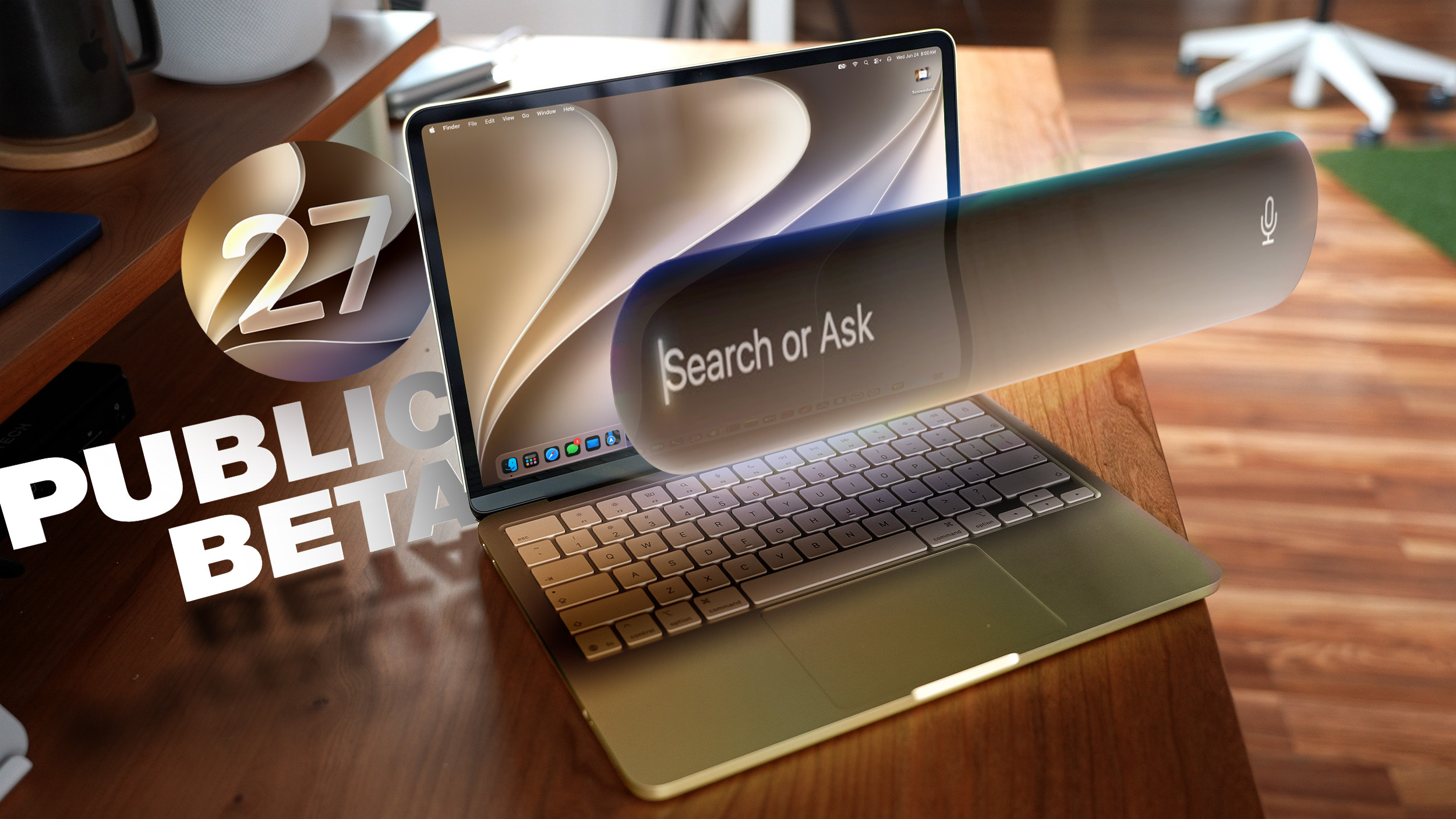
Apple today released the second public beta of macOS Golden Gate, allowing non-developers to test the software ahead of its fall release. You can sign up to test the update on Apple's beta website, and then download it by going to System Settings > General > Software Update and toggling on the macOS 27 beta.


β€ŒmacOS Golden Gateβ€Œ includes the same Siri AI features as iOS 27 and iPadOS 27, but you get to β€ŒSiriβ€Œ through Spotlight with a Command + Space keyboard shortcut. β€ŒSiriβ€Œ can search the web to answer questions, look through your personal data like photos, emails, and messages to help you find what you're searching for, and complete actions in and between apps. There is a dedicated β€ŒSiriβ€Œ app, and you can hold ongoing conversations with β€ŒSiriβ€Œ.

Apple brought Visual Intelligence to the Mac, so β€ŒSiriβ€Œ can look at what's on your screen and answer questions about it.

The Liquid Glass design introduced last year has been updated, and Apple added a slider for controlling overall system transparency. Liquid Glass opacity has been changed so it better diffuses complex content, and other design changes bring more depth and separation to the UI so it's easier to tell which window is active.

Apps now feature uniform toolbars with headings and controls that are easier to read, and windows no longer have such dramatically rounded corners. Sidebars are no longer floating and extend edge-to-edge, plus window positioning is more consistent across external displays.

Write with β€ŒSiriβ€Œ is able to generate text from scratch, correct your grammar, or give you feedback on your writing, and there are new AI editing tools in the Photos app. In Shortcuts, you can create automations with natural language requests, and search has been improved in Mail and Messages. Apple made multiple performance improvements across β€ŒmacOS Golden Gateβ€Œ for a faster, smoother experience even on older Macs.

More on the new features in macOS 27 can be found in our macOS Golden Gate roundup.
Related Roundup: macOS Golden Gate

This article, "Second macOS Golden Gate Public Beta Now Available" first appeared on MacRumors.com

Discuss this article in our forums

  •  

tvOS 27 and watchOS 27 Second Public Betas Now Available

Apple today released the second public betas of tvOS 27 and watchOS 27, giving Apple TV and Apple Watch users a chance to try the new software ahead of its fall launch. There's also a new HomePod Software 27 beta for the β€ŒHomePodβ€Œ and HomePod mini.


You can sign up for Apple's public beta testing program on the beta website, and then download the updates through the Settings app on each device.

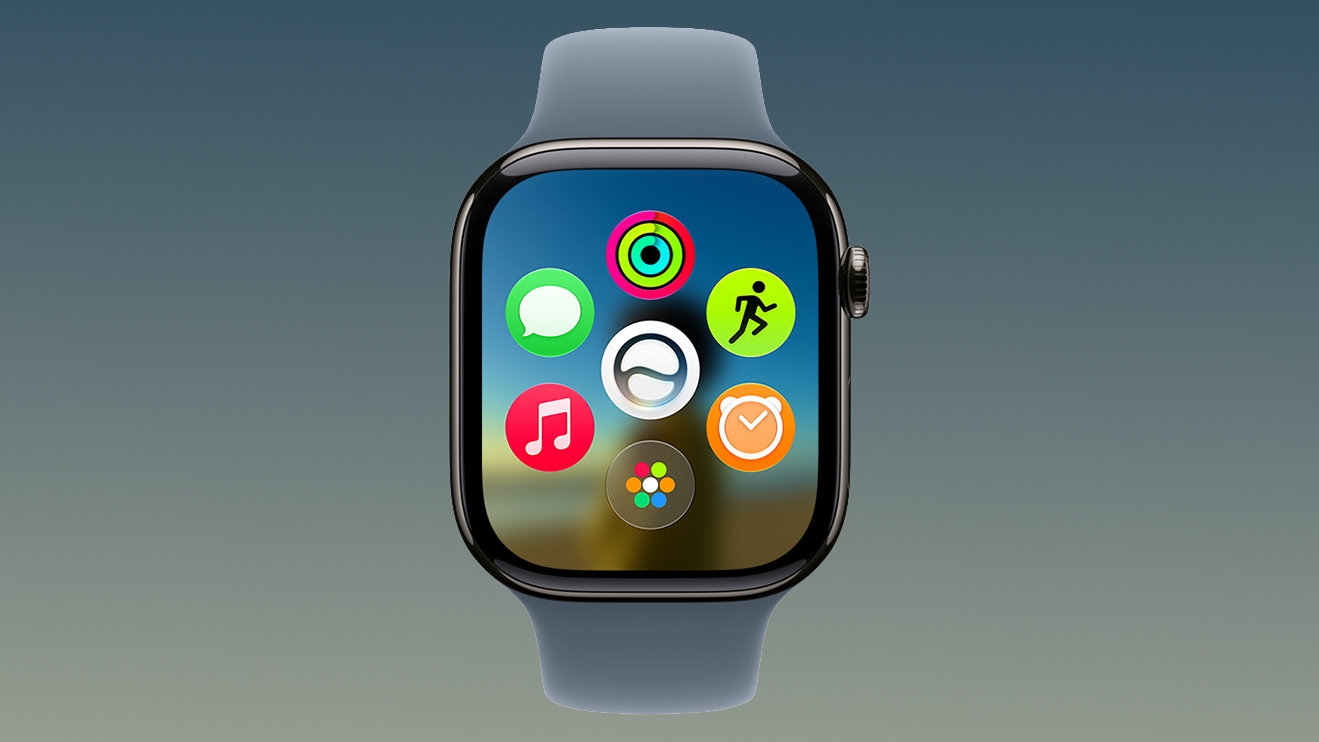
β€ŒwatchOS 27β€Œ adopts Siri AI, and you can use β€ŒSiriβ€Œ from your wrist as long as you have an iPhone that supports it. β€ŒSiriβ€Œ AI can access your personal information, answer all kinds of questions, and complete tasks for you. There is a dedicated β€ŒSiriβ€Œ app that's front and center on the watch in the new dynamic app grid that comes up when pressing the Digital Crown.

There's a new gesture for selecting a widget in the Smart Stack, plus Apple added Smart Stack suggestions for finding a parked car, accessing a transit card, and getting a birthday reminder.

Workout Buddy works without your iPhone nearby, treadmill run and walk distances are tracked more accurately, and Apple added a unified Find My app that also supports Precision Finding.

tvOS 27 has a redesigned Podcasts app, Hi-Res Lossless audio and AutoMix song transitions in Apple Music, and easier profile switching. With performance improvements, apps launch faster, animations are speedier, and devices connect more quickly when AirPlaying content.

More on what's new in the updates can be found in our watchOS 27 roundup and Apple TV roundup.
Related Roundups: Apple TV, watchOS 26, watchOS 27
Buyer's Guide: Apple TV (Don't Buy)

This article, "tvOS 27 and watchOS 27 Second Public Betas Now Available" first appeared on MacRumors.com

Discuss this article in our forums

  •  

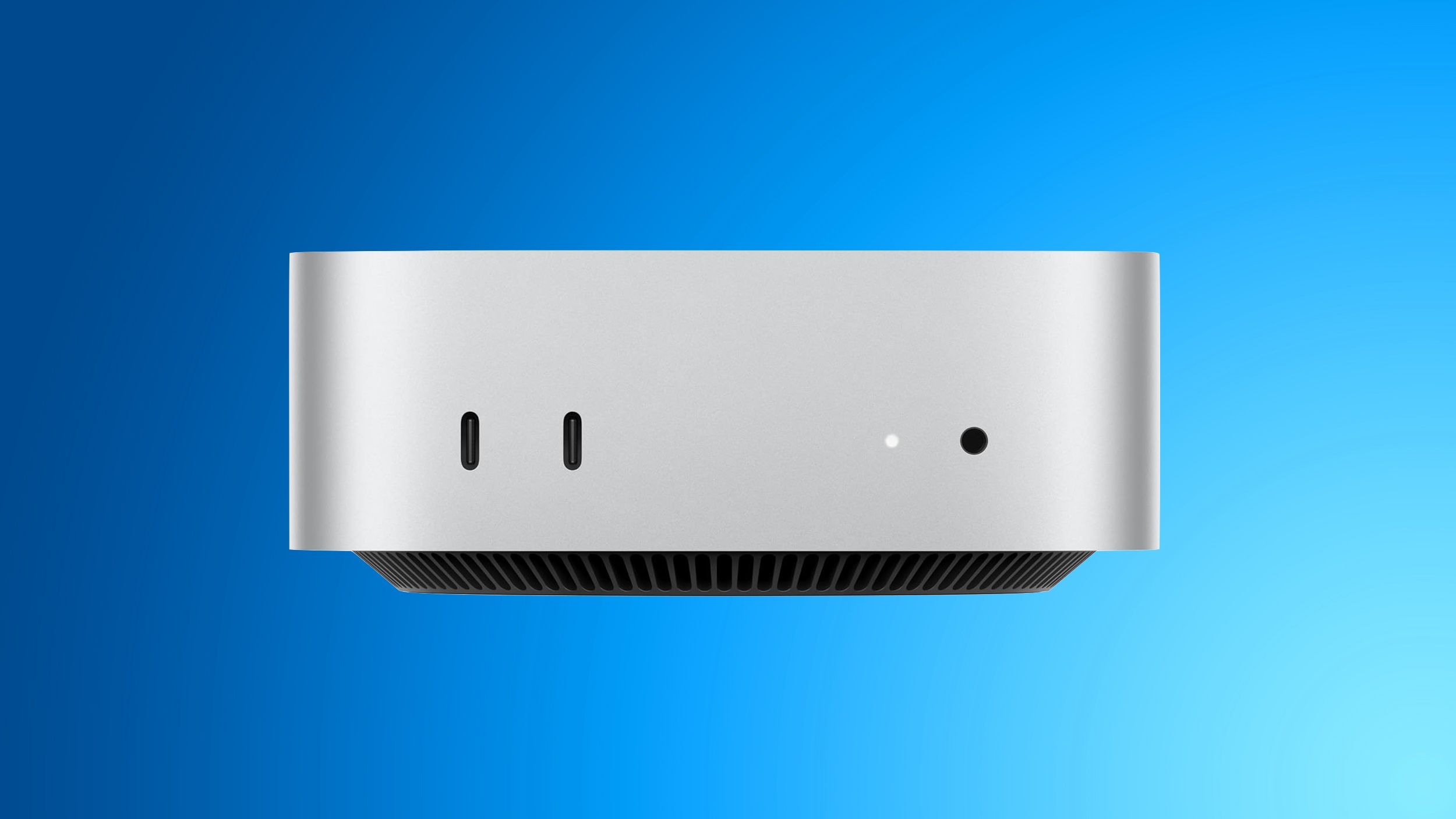
Next Mac Mini Will Reportedly Have Mismatched M6 and M5 Pro Chips

Apple is testing new Mac mini configurations with generationally mismatched M6 and M5 Pro chips, according to Bloomberg's Mark Gurman, but he did not provide a release timeframe.

In a similar move last year, Apple updated the Mac Studio with mismatched M4 Max and M3 Ultra chips.
This article, "Next Mac Mini Will Reportedly Have Mismatched M6 and M5 Pro Chips" first appeared on MacRumors.com

Discuss this article in our forums

  •  

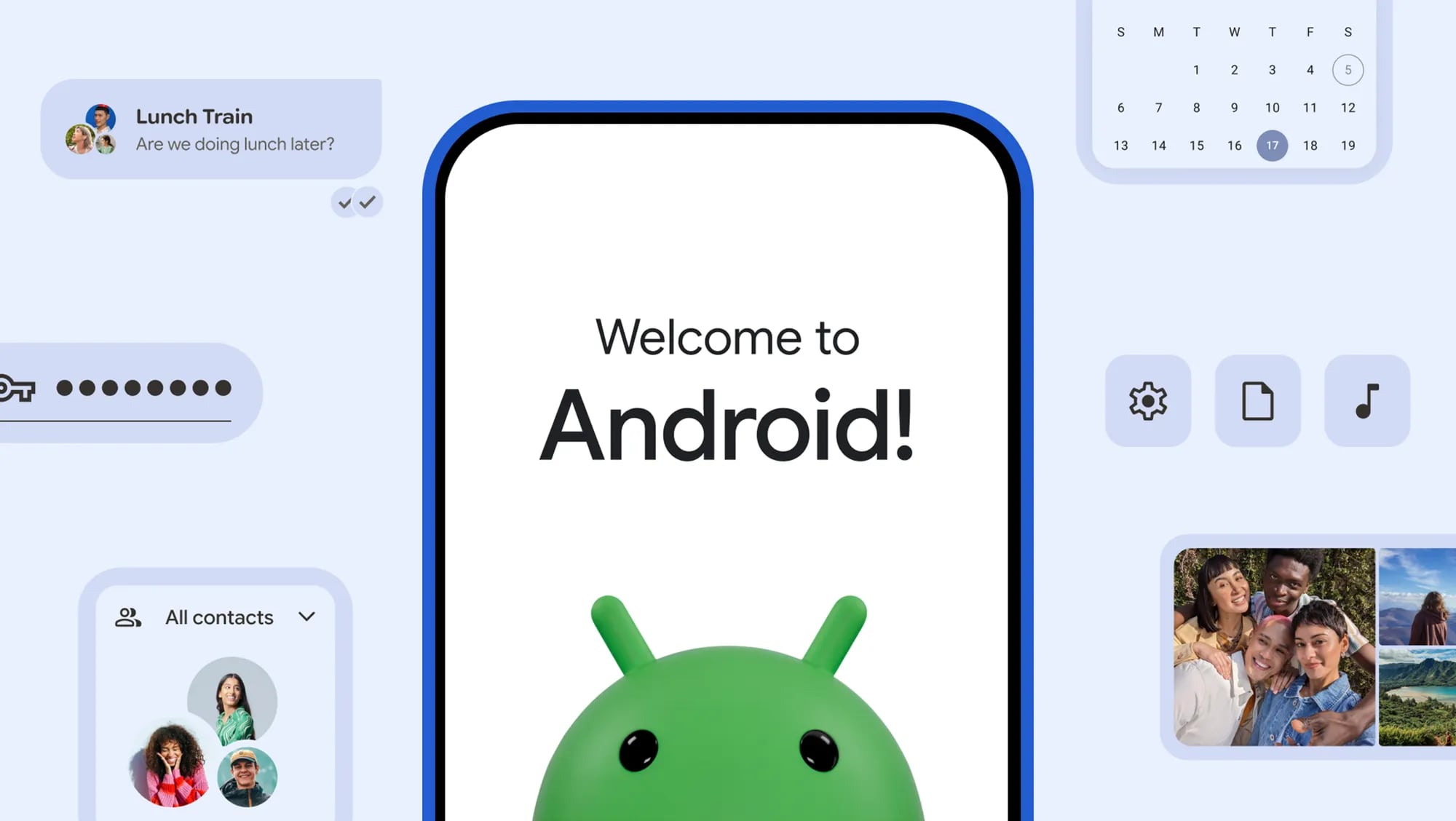
Switching From iPhone to Android Just Got Easier With Android 17

Android 17 includes a wireless native migration experience for transferring more types of data from an iPhone, making the process of switching to an Android device easier.


Google says the upgraded method allows Google Accounts, passwords, Wi-Fi credentials, and eSIMs to be transferred. It also supports photos, videos, contacts, messages, and calendars, like the prior version of the switching tool. Data transfers require an iPhone with iOS 26.3 or later.

Both Apple and Google had to implement iPhone and Android transfer tools that work without an app to comply with the European Union's Digital Markets Act. When you set up a new Android smartphone or iPhone, there are now simple built-in options to transfer data from a competing platform. Before the on-device transfer options, Google and Apple offered apps for moving data.

The Digital Markets Act requires services to offer data portability to prevent lock-in to an operating system. It also forced Apple and Google to implement a simplified eSIM transfer process.

Android 17 with the new data transfer method has been rolling out to select Pixel devices since June and will also come to Samsung's newly announced Galaxy Z Flip8 and Z Fold8 smartphones.
This article, "Switching From iPhone to Android Just Got Easier With Android 17" first appeared on MacRumors.com

Discuss this article in our forums

  •  

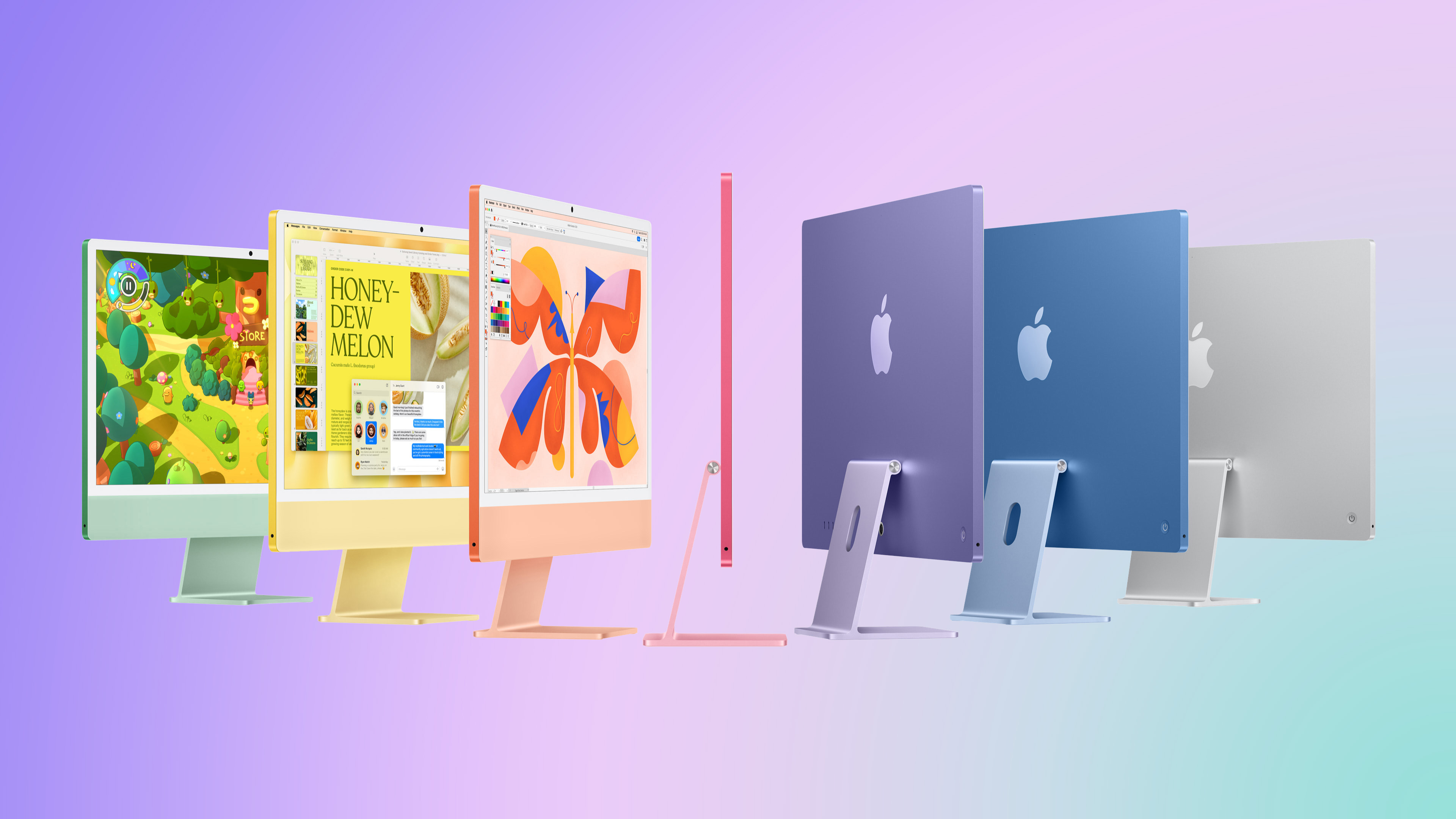
iMac Update Expected This Year, Model With OLED Display Also in Works

Apple has finished development of a new iMac that it plans to release later this year, according to a report today from Bloomberg's Mark Gurman. The updated iMac is one of 11 new Mac models that Apple plans to release over the next two years or so.


The next iMac will unsurprisingly have a newer chip, but the report did not indicate if Apple plans to use the existing M5 chip or the upcoming M6 chip. Apple has never released an iMac with its higher-end "Pro" or "Max" chips.

No major design changes have been rumored for the next iMac, so it will likely continue to have a 24-inch LCD screen. However, the report said Apple is planning a subsequent iMac with an OLED display for release "further in the future."

The current iMac with the M4 chip was announced in October 2024. The desktop computer did not receive an M5 chip upgrade last year, so the model coming this year would represent the first refresh in two years. The report said the iMac will continue to come in two configurations, with varying CPU/GPU core counts and ports.

Apple discontinued the Intel-based iMac Pro and 27-inch iMac models in 2021 and 2022, respectively, and the computer has only come in a 24-inch size since then. Over the years, there have been rumors that an iMac Pro with at least a 30-inch display and Apple silicon might be released one day, but nothing of that sort has materialized.

Apple raised prices on all Macs last month amid rising memory chip costs. In the U.S., the iMac now starts at $1,499, up from $1,299.
Related Roundup: iMac
Buyer's Guide: iMac (Don't Buy)
Related Forum: iMac

This article, "iMac Update Expected This Year, Model With OLED Display Also in Works" first appeared on MacRumors.com

Discuss this article in our forums

  •  

Apple Working on New MacBook Neo With Two Upgrades

Apple is working on a new MacBook Neo with two key upgrades, including an A19 Pro chip and increased RAM, according to Bloomberg's Mark Gurman. The updated MacBook Neo is one of 11 new Mac models that Apple plans to release.


With the A19 Pro chip, the second-generation MacBook Neo should have 12GB of RAM, up from an A18 Pro chip with 8GB of RAM in the current model.

The report suggested that the next MacBook Neo will also have new color options. Existing finishes include Silver, Blush, Citrus, and Indigo.

While the report did not indicate when the next MacBook Neo will be released, the first half of next year seems likely. The current MacBook Neo was released in March of this year. In the U.S., the laptop initially started at a breakthrough $599 for the general public, but Apple raised the starting price to $699 last month.

You can still get a MacBook Neo for as low as $599 in the U.S. through Apple's education store, so long as you are a verified college student or meet other eligibility criteria, or if you opt for a certified refurbished model.

Apple previously said the MacBook Neo was in high demand, but it remains to be seen how the $100 price increase might impact sales. Even at $699, it is still the most affordable MacBook, coming in well below the MacBook Air's increased $1,299 starting price. The company's next quarterly earnings report will be released on July 30.
Related Roundup: MacBook Neo
Buyer's Guide: MacBook Neo (Buy Now)
Related Forum: MacBook Neo

This article, "Apple Working on New MacBook Neo With Two Upgrades" first appeared on MacRumors.com

Discuss this article in our forums

  •  

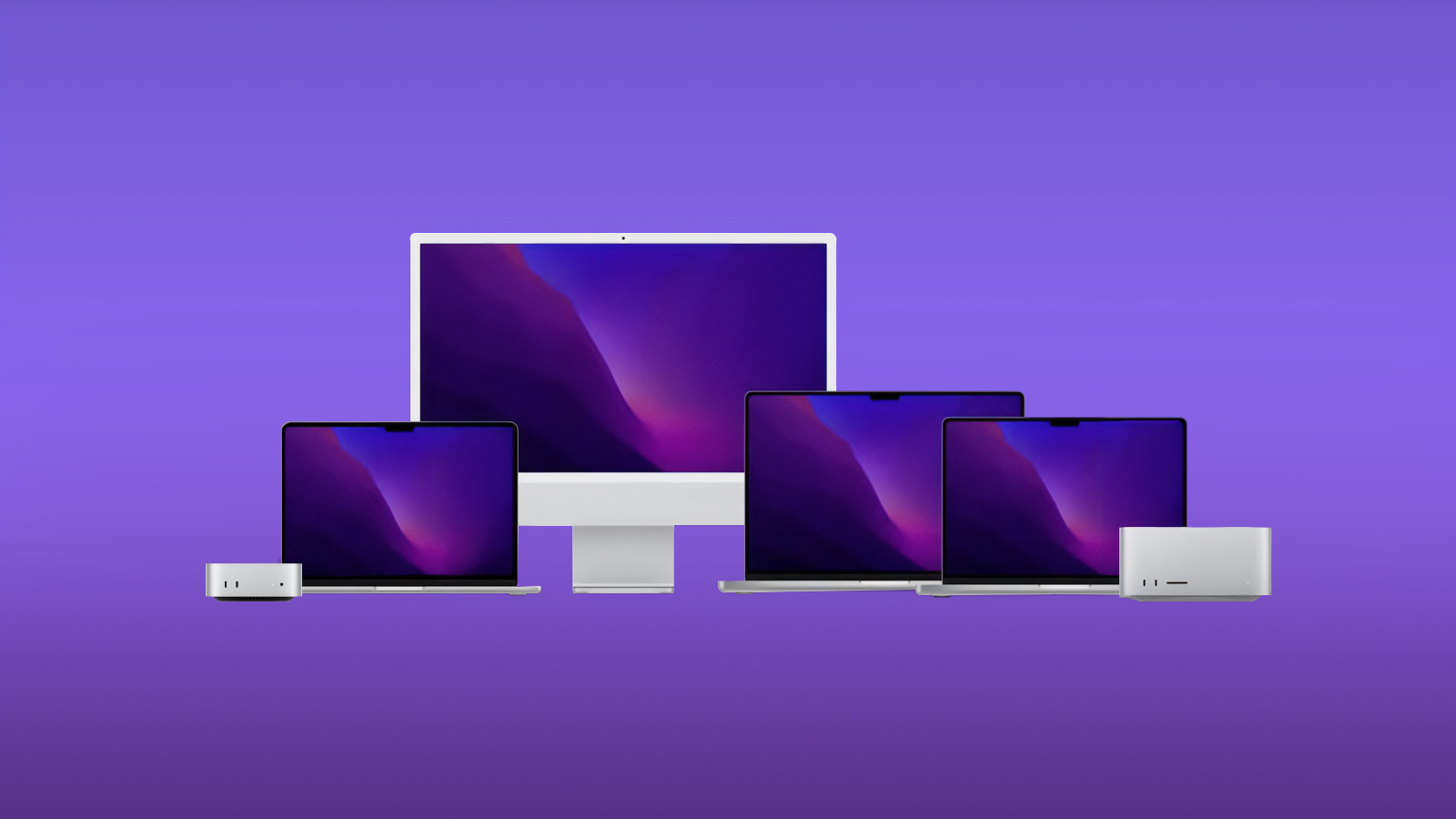
Apple to Overhaul Mac Lineup With 11 New Models

Apple is preparing to refresh every Mac it sells over the next two years, according to Bloomberg's Mark Gurman.


The plans come amid a Mac resurgence, with sales projected to climb for a third consecutive year, partly thanks to a growing following among users who lean on the machines for demanding, agent-based AI workloads.

The wave of new Macs will begin this fall with a refreshed entry-level 14-inch MacBook Pro and the first new iMacs in two years. Here's everything coming, according to the report:


  • Refreshed 14-inch MacBook Pro (entry-level) (Fall 2026): Among the first Macs with the new M6 chip; codename J804.

  • Mac mini (timing dependent on memory supply): New model in testing with M5 Pro and M6 chips.

  • Mac Studio (timing dependent on memory supply): New model in testing with M5 Max and M5 Ultra chips.

  • Refreshed iMac (Fall 2026): First new iMacs in two years; codenames J833 and J834.

  • High-end 14-inch and 16-inch MacBook (End of 2026 to Early 2027): All-new design with an OLED touch screen; M5 Pro and M5 Max chip options; codenames K114 and K116.

  • Refreshed MacBook Air (Early 2027): 13-inch and 15-inch models similar to the current machines; codenames J913 and J915.

  • 14-inch MacBook Pro (entry-level) (2027): 14-inch model resembling the high-end K114 and K116 design but with a standard M7 chip; codename K104.

  • Refreshed MacBook Neo (timing unclear): New budget laptop using an A19 Pro chip and more memory; part of a periodic refresh cycle with new colors.

  • Follow-up high-end MacBook (End of 2027 to Early 2028): Successor to K114 and K116, moving to M7 Pro and M7 Max chips.

  • OLED MacBook Air (2028 earliest): A future version of the MacBook Air with an β€ŒOLEDβ€Œ panel, implicitly with a redesign.

  • OLED iMac (timing unclear): New iMac model with an β€ŒOLEDβ€Œ screen, matching the technology coming to MacBook and β€ŒMacBook Airβ€Œ.


Development of the refreshed iMacs and the entry-level β€ŒMacBook Proβ€Œ is reportedly complete, though the machines aren't expected to ship until the fall. The high-end MacBook with the β€ŒOLEDβ€Œ touchscreen remains the most notable model on the roadmap, and Apple is said to be testing it internally with macOS 27.1, which is scheduled for release at the end of October.

The Mac mini and Mac Studio have become popular among users running AI applications thanks to their processing power, but demand has been outstripping supply and new orders for some current models reportedly won't ship for at least three months. Apple CEO Tim Cook said in April that it could take "several months" for those machines to reach a supply-demand balance. As a result, the timing of successors to those machines is currently unclear.
This article, "Apple to Overhaul Mac Lineup With 11 New Models" first appeared on MacRumors.com

Discuss this article in our forums

  •  

Hands-On With Samsung's Galaxy Z Fold8, the Closest Thing Yet to a Foldable iPhone

Samsung today debuted its latest foldable devices, including the Galaxy Z Flip8, the Galaxy Z Fold8 Ultra, and the new Galaxy Z Fold8, which has a design similar to what we're expecting from the foldable iPhone coming this September. We were able to take a look at the new Samsung foldables ahead of launch.


The Galaxy ZFold 8 Ultra has a 6.5-inch cover screen when closed, and an 8-inch display when it's unfolded. Both displays are OLED with 120Hz refresh rates. The device is just 4.1mm thick when open.

Samsung included a three-camera setup with a 200-megapixel wide lens, a 50-megapixel ultra-wide lens, and a 10-megapixel telephoto lens with 3x optical zoom and 30x Space Zoom. There are also two selfie cameras, one on the cover screen and one on the main display.

Samsung's Z Fold8 has a 7.6-inch display when open and a 5.5-inch display when closed, and it looks like Samsung read the foldable iPhone rumors and beat Apple to it. It has a passport-style form factor, so it's not as tall as prior Samsung foldables. It's wider and more square than the designs Samsung used in the past.

The aspect ratio of the unfolded Z Fold8 makes it feel similar to using an iPad mini, which feels more natural than using taller foldables. It's a size that's perfect for watching videos or running two apps side by side. The Z Fold8 gives us a pretty clear look at what the Apple foldable will look like and what it will feel like to use.

Samsung is reserving higher-tier specs for the Galaxy Z Fold8 Ultra. The Z Fold8 also has a three-camera setup, but with lower-end camera options. Both devices support the Snapdragon 8 Elite Gen 5 processor, and offer up to 16GB of RAM. Samsung is also releasing the Galaxy Z Flip8, which has a 6.9-inch display when unfolded and a 4.1-inch cover screen when closed. The Flip8 doesn't open like a book, and instead has a clamshell design.

Samsung is now offering foldables in three sizes and two form factors, and it has had multiple years to refine its foldable designs. Samsung is on its eighth-generation devices, while Apple's first foldable hasn't launched yet.

Along with new foldable smartphones, Samsung also launched the Galaxy Watch Ultra2 and Galaxy Watch9, which have the same round display that Samsung watches have used for several years. The titanium Watch Ultra2 is 47mm, while the Watch9 is available in 40mm and 44mm sizes.

Samsung's watches offer a bioelectrical impedance analysis, reading body composition from the wrist. They also have heart rate tracking, sleep apnea detection, and other features that mirror what's available on the Apple Watch.

Samsung's new Galaxy foldables and smartwatches are available for pre-order starting today from the Samsung website.

Note: MacRumors is an affiliate partner with Samsung. When you click a link and make a purchase, we may receive a small payment, which helps us keep the site running.
This article, "Hands-On With Samsung's Galaxy Z Fold8, the Closest Thing Yet to a Foldable iPhone" first appeared on MacRumors.com

Discuss this article in our forums

  •  

WhatsApp Announces New CarPlay Experience, iPad Sign-Up, and More

WhatsApp just announced a raft of new features spanning CarPlay, iPad, and iPhone that are "designed to work wherever you do, across your devices and the other apps you use."


First up, WhatsApp for CarPlay and Android Auto has been completely refreshed. Now you can hear and respond to messages, make calls, see your call history, and reach your favorites, all hands-free directly from your car's screen.

Over on WhatsApp for web and desktop, a new feature powered by Adobe Acrobat means you can now open PDFs right inside WhatsApp without having to download them, then make lightweight edits like highlighting and annotating right in the chat.

Thirdly, you can now share a song straight from Apple Music or Spotify to your WhatsApp Status, so your friends can see what you're listening to.

Last but not least, it's now possible to sign up to WhatsApp on your iPad. Since WhatsApp announced its iPad app last year, one of the most requested features from users is the ability to create a WhatsApp directly on an iPad, without needing to link a phone. Now you can.

WhatsApp says these features are already rolling out to users now.
Related Roundup: CarPlay

This article, "WhatsApp Announces New CarPlay Experience, iPad Sign-Up, and More" first appeared on MacRumors.com

Discuss this article in our forums

  •  

Apple Park Visitor Center Has 'Update in Progress'

There is an "update in progress" at the Apple Park Visitor Center in Cupertino, California, according to a new notice posted on Apple's website.


The building remains open to the public while the work is completed, but the area housing a 3D augmented reality model of Apple Park is temporarily closed.

"Please pardon our appearance while we improve our store," says Apple. "During this time, the Exhibition Space is temporarily closed."

Opened in November 2017, the Apple Park Visitor Center functions as both a store and a tourist attraction. While the Exhibition Space is closed for now, visitors can still grab a coffee at the on-site Caffè Macs, buy Apple merch, head up to the rooftop for a scenic view, or stroll through the adjacent "Mirage" public art installation.

Apple did not indicate when the improvements will be completed.
This article, "Apple Park Visitor Center Has 'Update in Progress'" first appeared on MacRumors.com

Discuss this article in our forums

  •  

Powering America’s Genesis Mission: Microsoft’s commitment to scientific discovery

Today, we’re excited to share a long-term commitment to the Department of Energy’s (DOE) Genesis Mission, backed by a $60 million investment designed to accelerate AI for science and the breakthroughs it can deliver for the country. This deepened commitment includes Microsoft’s new Scientific Partnership Advancing Research & Knowledge coordination hub and program office, otherwise known as SPARK, that is focused on facilitating collaboration and scientific discovery for the Genesis Mission.

The Genesis Mission represents an ambitious vision, bringing together DOE’s 17 National Laboratories, world-class experimental facilities, decades of irreplaceable scientific data and next-generation computing into a single, unified platform capable of transforming how science gets done. The critical goal of the Genesis Mission is to double the productivity and impact of American research and innovation within a decade by embedding AI directly into the scientific process. It’s a bold step forward and exactly the kind of moonshot that defines American science.

At Microsoft, we believe that this goal is not only achievable, but also essential as a national security imperative and an economic engine for generations to come. With this commitment and the launch of SPARK, we’re ready to partner fully in this mission and build on our collaborations across government and with academia.

Microsoft investing in AI for science

Today, Microsoft’s $60 million investment package will begin to accelerate AI for science in support of DOE and the National Laboratories. As sustained scientific impact requires more than infrastructure alone to enable lasting scientific outcomes, Microsoft’s investment package is structured in two parts:

  • $40 million in Azure compute and AI credits, distributed over three years, to power the large-scale AI and scientific workloads at the heart of the mission. This gives researchers room to train, simulate and iterate at a scale that matches their ambition.
  • $20 million in solution engineering enablement services. Dedicated engineering, architecture, deployment, adoption and acceleration support to turn cloud and AI capacity into operational scientific outcomes. This investment helps ensure that the Genesis Mission advances in practice and in principle.

Together, this investment reflects a simple conviction: While infrastructure opens the door, it is people, expertise and disciplined delivery that carry discoveries across the finish line. Microsoft is committing to both.

Introducing SPARK: Microsoft’s catalyst for advancing scientific partnerships

Great partnerships need more than good intentions and good technology β€” they need a clear way to work together. So, alongside this commitment, we are standing up a new program office and coordination hub: SPARK, or Scientific Partnership Advancing Research & Knowledge.

SPARK is the single front door and coordination hub for Genesis Mission collaboration with Microsoft. SPARK orchestrates the full breadth of what Microsoft brings to bear: program, technical, research, engineering, security, compliance, partner and field teams into one clear, consistent path from first idea to deployed science.

SPARK is built around five commitments:

  • A dedicated Genesis Mission Program Management Office. This office handles intake, prioritization, a disciplined sprint-and-checkpoint cadence and a steady operational interface with DOE for alignment, reporting and sustained partnership.
  • An AI for Science Center of Excellence. An integrated delivery team that moves use cases from concept to secure, compliant, scalable implementation, with enablement through office hours, hackathons and training grounded in responsible AI and reproducible research.
  • Optimization of Azure credits. Ensures computing resources are directed toward the projects where they can accelerate science most.
  • Management of technical services. Dedicated support to help labs adopt and operationalize AI-for-science capabilities, delivered by Microsoft teams and select partners.
  • Joint research and development. A focused set of Genesis Mission-aligned challenge problems, co-developed by Microsoft researchers and DOE scientific leadership, with milestones, publications and IP governed by mutually agreed terms.

Underneath SPARK sits the full breadth of Microsoft’s secure, FedRAMP-authorized cloud and AI portfolio. This includes Microsoft Azure infrastructure, Microsoft Foundry and Zero Trust security through Microsoft Defender, Sentinel and Entra. Azure capabilities will help extend the DOE’s American Science Cloud capabilities by providing computing, AI, data and collaboration services that complement existing scientific infrastructure. Together, these capabilities will help accelerate discovery, enable secure collaboration across institutions and provide researchers with flexible access to advanced technologies and resources. This will enable DOE and National Laboratory scientists to move faster from hypothesis to discovery, without compromising the security, reproducibility and governance that mission-critical research demands.

Accelerating science with Microsoft Discovery and Quantum

Microsoft’s new commitments build on capabilities we recently announced through Microsoft Discovery and Microsoft Quantum. They are designed to accelerate scientific research and will support the Genesis Mission’s ambition to bring AI, advanced computing and emerging technologies more deeply into the scientific process.

To enable a unified research platform for Genesis Mission work, Microsoft will provide access to Microsoft Discovery, our integrated platform that unites AI models, simulation, data and experimental workflows driven by advanced cognition rooted in scientific method, within a single governed environment. Microsoft Discovery, now generally available, includes support for autonomous lab orchestration, integration of Microsoft Research’s AI models for science, continuous AI learning through the scientific loop and agentic memory, advances in Discovery Bookshelf for data curation and scalable indexing and deeper integration and multi-hop reasoning over enterprise science data estates, including data governance. Together, these capabilities are designed to help researchers move more quickly from data to insight, from simulation to experiment, and from promising idea to scientific breakthrough.

We also recently announced the preview of the Microsoft Discovery app, a local desktop experience that helps researchers, students and scientific teams begin working with Microsoft Discovery today. Our support for the Genesis Mission will include access to the Microsoft Discovery app to enable DOE and National Laboratory teams with early access to its capabilities.

Microsoft’s recent quantum progress further strengthens the foundation for Genesis Mission work. With Majorana-based quantum advances, including more reliable topological qubits and a roadmap toward scalable quantum computing, Microsoft is helping move quantum from long-range research toward practical scientific capability. For DOE and National Laboratory teams, that progress can open new ways to model complex materials, chemistry, energy systems and national security challenges that are difficult or impossible to solve with classical computing alone. Just as important, the same agentic AI for science approach behind Microsoft Discovery is helping accelerate quantum research itself, creating a reinforcing cycle in which AI speeds quantum breakthroughs and quantum computing expands what scientists can ultimately discover.

The work is already underway

Working alongside and supporting federal researchers and universities, we’re already seeing real-world impact, from faster materials screening to advanced biosurveillance modeling. Four of the first projects taking shape under this partnership show what that looks like in practice:

Discovering critical energy storage materials and biosystems design (Pacific Northwest National Laboratory)
Using AI to dramatically accelerate the discovery of new energy storage materials through novel experimentation design and shrinking analysis of massive volumes of scientific data from years to weeks. In biosystems design, Microsoft Discovery is plugging directly into PNNL’s laboratory automation infrastructure to launch self-driving scientific workflows that autonomously design, run and fine-tune biological experiments in real time.

Strengthening biosecurity (Lawrence Livermore National Laboratory)
Pairing advanced AI with modern bioinformatics to identify emerging biological threats sooner and develop responses faster, strengthening the nation’s ability to stay ahead of the next outbreak and developing proactive defenses against evolving biosecurity risks. By applying advances in AI, scientific computing and biotechnology, Microsoft and the Lawrence Livermore National Laboratory are helping strengthen the nation’s ability to prevent, detect and respond to biological threats, advancing US biosecurity and biodefense priorities while supporting the long-term resilience and competitiveness of the US bioeconomy.

Autonomous labs for accelerated materials discovery (Johns Hopkins University Applied Physics Laboratory)
Supporting the development of AI-enabled autonomous (β€œself-driving”) laboratories through the integration of advanced foundation models and simulation tools β€” including MatterGen and MatterSim β€” to rapidly design, execute and optimize experiments for structural materials and superconductors. By combining autonomous experimentation with accelerated computational materials discovery, this approach dramatically shortens the path from scientific hypothesis to validated, manufacturable, mission-enabling materials, while exploring a vastly larger design space than is possible through traditional methods.

Accelerating nuclear energy permitting and autonomous energy operations (Idaho National Laboratory)
Applying AI to streamline the licensing, permitting and review of new nuclear projects. AI helps automate the development of complex engineering and safety analysis materials, a historically time-consuming and expensive process, to get this critical documentation into the hands of regulators and safety reviewers sooner. The lab also demonstrated that secure, distributed, hyperscale cloud can enable autonomous remote operations for nuclear power generators. Together, these efforts are helping bring safe and reliable power online faster and ensure scalable, efficient and reliable operations to meet the nation’s surging demand for energy.

Why this matters

We are entering an era where AI and quantum don’t just support the scientific process β€” they are essential to it. Through the Genesis Mission, Microsoft is committing to work as part of America’s research enterprise by providing hyperscale compute, advanced models, emerging quantum capabilities and dedicated expertise that run alongside the labs’ own world-leading systems. We are helping to ensure that the nation’s scientific strength is built on American technology. This commitment builds and expands upon the decades of collaboration through Microsoft Research and partnerships across the US government and our national labs. Now is the time to scale these breakthroughs across the entire R&D ecosystem.

The mission ahead is significant, and it should be. Whether it’s advancing the frontiers of energy, chemistry and materials science, hardening our national security or simply giving the country’s best scientists better tools to ask bigger questions, this is work worth doing and worth doing together. With a $60 million investment and SPARK, Microsoft is ready to help ensure America’s scientific leadership continues to accelerate.

Fueling scientific discovery is one of the most important things these technologies can do. AI and quantum are transforming how we tackle the toughest challenges facing the country, from sustainable materials and clean energy to biosecurity and drug discovery. The Genesis Mission is a pivotal step toward advancing that progress. We commend the DOE’s vision in building a unified, holistic approach to these critical national missions. For America to seize this opportunity and set the global standard, we must put these breakthrough technologies to work advancing the nation’s research and development.

We’re ready to deepen this partnership across government and academia. We move faster together. I’ve never been more optimistic about what’s possible when the nation’s scientific talent meets the best of modern AI and quantum. The Genesis Mission is that moment. Let’s get to work.

To get started, reach out to your Microsoft account team or email genesismission@microsoft.com.

Chris Barry leads Microsoft’s US Public Sector business. He partners with federal, state and local government and higher education agencies and organizations to accelerate digital transformation, bringing Microsoft’s secure cloud and AI capabilities to mission-critical work that serves communities across the nation.

The post Powering America’s Genesis Mission: Microsoft’s commitment to scientific discovery appeared first on The Official Microsoft Blog.

  •  

Foxconn Ramps Up Hiring as iPhone 18 Pro Enters Mass Production

Apple's iPhone 18 Pro models have entered mass production and are now in a production ramp-up phase, according to China Securities News.


In a new report citing supply chain sources (via MyDrivers), Apple's main assembly partner Foxconn is said to have entered its peak recruitment period to prepare for large-scale production and stocking ahead of the fall launch. Hourly wages, base pay, and rehire bonuses have all been raised to attract workers amid the ramp-up.

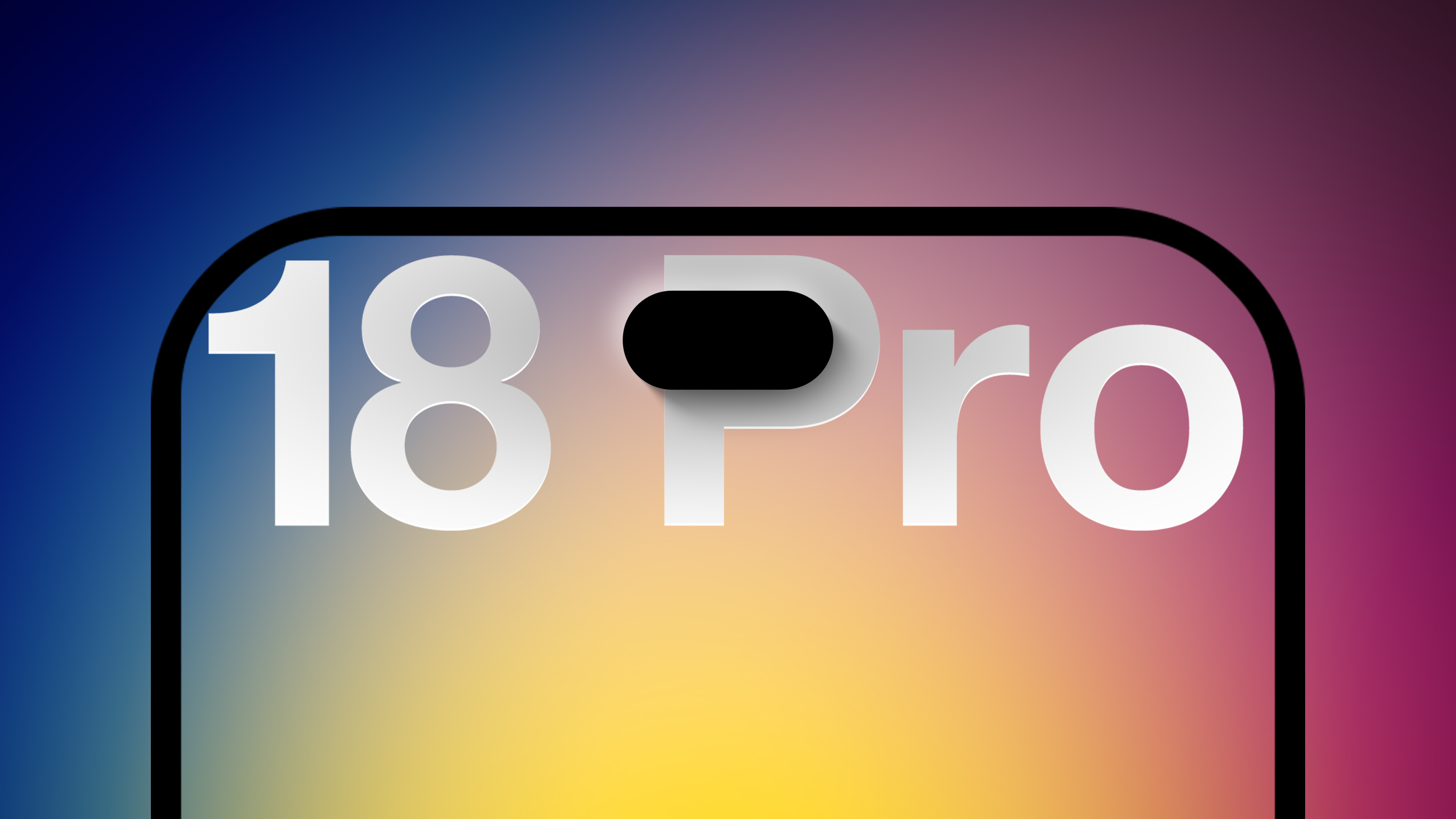
The β€ŒiPhone 18 Proβ€Œ is expected to introduce a smaller Dynamic Island cutout for its front camera and Face ID sensors. The opening is said to shrink from 20.76mm to 13.49mm, an area reduction of roughly 35%, which would push the screen-to-body ratio up to about 94.7% and reduce how much the cutout intrudes on full-screen content like games and movies played in landscape mode.

The devices are also expected to gain the A20 Pro chip, continuing Apple's usual performance and efficiency gains, alongside a new main camera with variable aperture technology that adjusts light intake depending on the shooting environment, which should improve low-light photography and depth-of-field control.

Chinese brokerages offer a mixed but largely bullish view on the device. CSC Financial said iPhone 17 sales have been strong and that Apple's innovation cycle is trending upward, with a foldable iPhone and smart glasses among several new products expected between 2026 and 2027 that could directly benefit the sector. Industrial Securities said the combination of expanding Apple Intelligence availability, the iPhone 18 lineup, and a new foldable iPhone should keep hardware and AI innovation driving the high-end smartphone market, and recommended investors continue tracking mid-to-long-term opportunities tied to Apple's product strength and AI upgrades.

Apple is reportedly adjusting its release cadence for the line this year, adopting a staggered rollout rather than launching the full lineup at once. The β€ŒiPhone 18 Proβ€Œ and β€ŒiPhone 18 Proβ€Œ Max are expected to arrive first, in September, while the standard β€ŒiPhone 18β€Œ is not expected to launch until next year, likely alongside the iPhone 18e and iPhone Air 2.
Related Roundup: iPhone 18 Pro

This article, "Foxconn Ramps Up Hiring as iPhone 18 Pro Enters Mass Production" first appeared on MacRumors.com

Discuss this article in our forums

  •  

The iPhone 18 Pro's Rumored Camera Upgrade, Explained

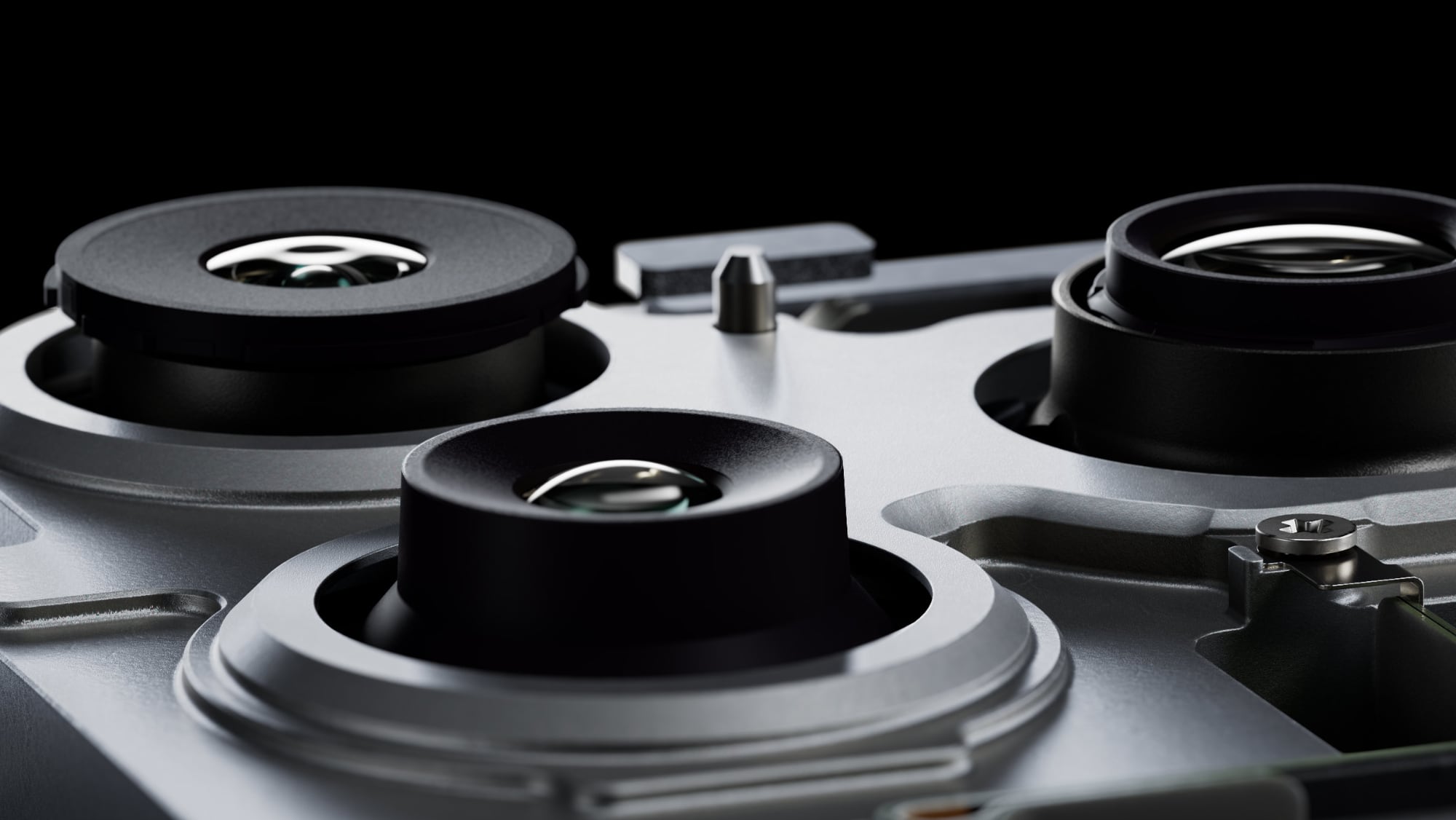
Apple's upcoming iPhone 18 Pro and iPhone 18 Pro Max are expected to feature a variable-aperture camera. The upgrade has been rumored repeatedly and would be a first for Apple's smartphone lineup, but what would it actually change for everyday users?


An aperture is the opening inside a camera lens that lets in light. A natural comparison would be the pupils of your eyes, which open wider in the dark and become smaller in bright conditions.

Current iPhone cameras have an opening that's fixed to the one size. To compensate for this, the iPhone adjusts other settings and uses software processing to brighten or darken the image. By contrast, a variable aperture would give the device mechanical control over the amount of light entering the camera.

The biggest improvement – and the one you're most likely to notice first – would be smoother-looking video when shooting outdoors. In bright sunlight, the existing camera on an iPhone has to capture each frame very quickly to avoid an overexposed image, which can sometimes make movement look unnaturally sharp or jerky.

In contrast, the iPhone 18 Pro's variable aperture camera would typically make the lens opening smaller to limit the amount of light that gets in. Doing so should prevent washed-out highlights and allow the camera to record movement with more natural-looking blur. Photos taken in good lighting could also appear sharper, especially around the edges. Not only that, Portrait Mode photos that use the "bokeh" effect should also look more realistic, as opposed to looking rendered computationally.

It's still unclear whether users will control the aperture themselves or whether the iPhone will adjust it automatically. That's a big question mark, since it should determine whether it becomes a hands-on photography tool or a built-in feature that simply makes photos and videos look better behind the scenes.

We should learn the answer to this question in the coming months. Apple is expected to debut the iPhone 18 Pro and iPhone 18 Pro Max in September, alongside its first foldable iPhone.
Related Roundup: iPhone 18 Pro

This article, "The iPhone 18 Pro's Rumored Camera Upgrade, Explained" first appeared on MacRumors.com

Discuss this article in our forums

  •  

AppleCare+ Changes Announced in Japan

Apple today announced that AppleCare+ with Theft and Loss coverage is now available for the iPad and Apple Watch in Japan, after previously being limited to the iPhone there.

In addition, monthly and annual AppleCare+ plans are now available for a wider range of Apple products in Japan.
This article, "AppleCare+ Changes Announced in Japan" first appeared on MacRumors.com

Discuss this article in our forums

  •  

Claude Code Can Now Build and Test iOS Apps in Apple's Simulator

Anthropic today said Claude Code for desktop has been updated to work with the iOS Simulator, with the integration available in public beta.


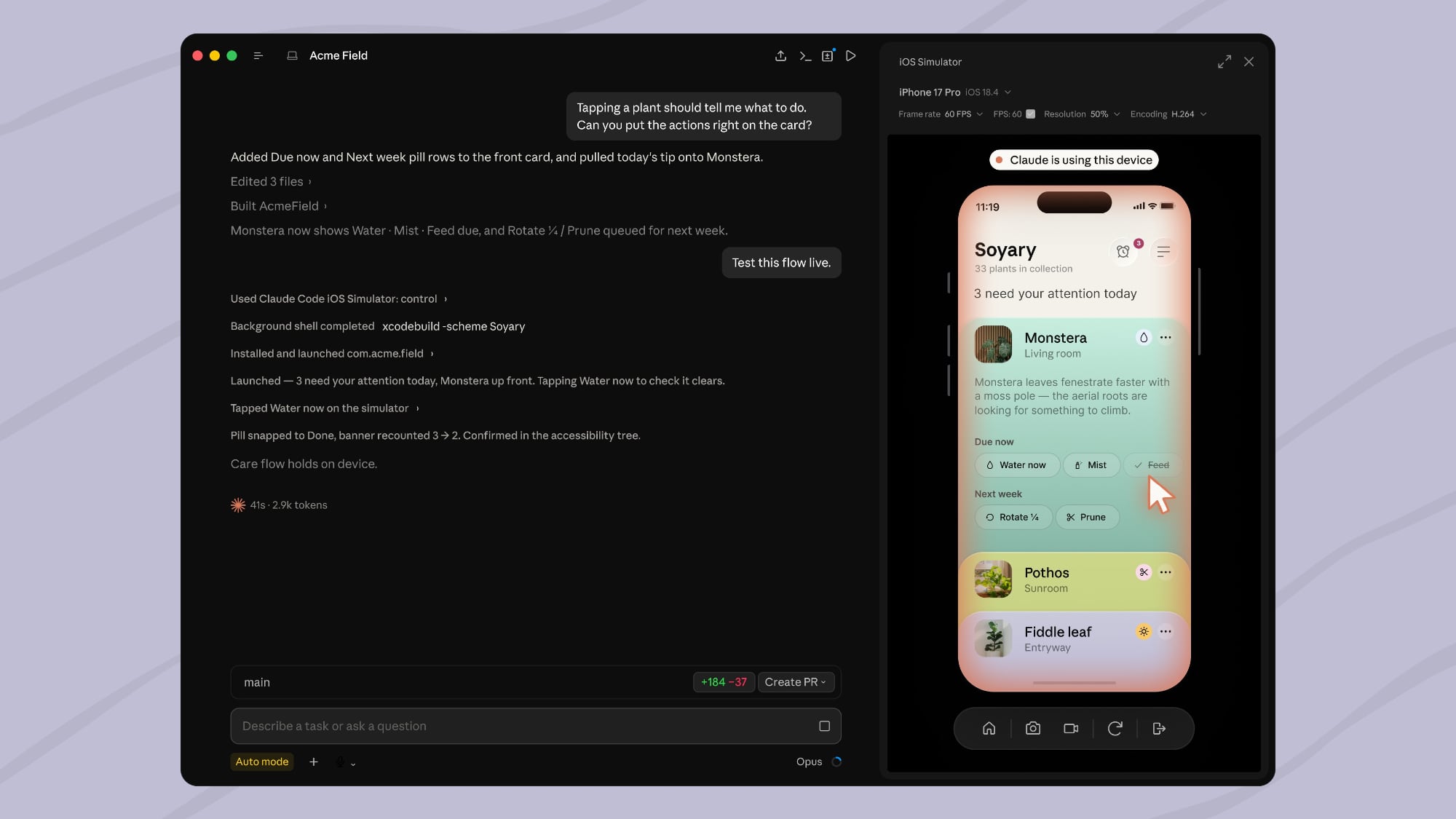
Claude Code can open in-progress apps in the iOS Simulator pane when it's instructed to build, run, or check an app. Claude can watch the iOS Simulator live as it runs, interact with it, and then iterate until a project is finished. Developers can continue to use the iOS Simulator as Claude works.

The pane in Claude Code drives the simulator directly, and it does not need computer use, which lets Claude control the screen the way a person would. With direct access, it works without the macOS Accessibility and Screen Recording permissions required for computer use.

Claude's screenshots of a device in iOS Simulator are sent to Anthropic and kept per standard conversation retention settings. Anthropic suggests users not sign in to real accounts on a device Claude uses.

iOS Simulator integration is available in Claude Code Desktop on macOS, and Xcode with the iOS platform installed is required. The simulator pane is available in local sessions only. Instructions on using the iOS Simulator with Claude Code can be found on Anthropic's website.
This article, "Claude Code Can Now Build and Test iOS Apps in Apple's Simulator" first appeared on MacRumors.com

Discuss this article in our forums

  •  

Announcing Windows 11 Insider Preview Build 28120.2546 for Experimental (26H1)

Hello Windows Insiders, Today we're releasing build 28120.2546 for the Experimental (26H1) channel. Release notes can be found over in the Windows Insider Documentation Hub as usual, as well as below:

Changes and improvements gradually being rolled out

- This update includes a small set of general improvements and fixes that improve the overall experience for Insiders running this build on their PCs.

[Smart card removal policy]

- Administrators can now configure Azure Virtual Desktop (AVD) and Windows 365 sessions that use Microsoft Entra ID (RDS AAD Auth) authentication to automatically disconnect when a redirected smart card is removed. This extends smart card removal policy enforcement to Microsoft Entra authenticated remote sessions, helping organizations meet security and compliance requirements.

[Narrator]

- Braille displays now connect instantly with Narrator. - We're making refreshable braille displays easier to use in Windows. Narrator now supports displays that use the HID standard, an open industry standard for braille displays. If your display supports HID, simply connect it via USB and start reading with no additional setup required. - For Bluetooth, pair your HID braille display in **Settings > Bluetooth & devices** just like any other accessory, and you can work wirelessly without being tethered to your PC. - Compatible HID displays include Orbit Reader 20, Orbit Slate 340, Freedom Scientific Focus 40, and APH Mantis Q40. - HID braille displays now work during the initial Windows setup experience (OOBE) over USB, meaning users who are deaf-blind can set up their PC independently right from the first screen. - You can customize braille input and output options anytime in **Settings > Accessibility > Narrator > Braille**.

[Voice Access]

- Voice Access now supports Portuguese (Portugal), Portuguese (Brazil), and Korean (South Korea).

[Settings]

- The Bluetooth quick settings page is now navigable using gamepad input. - Fixed an issue causing the Graphics page in Settings to crash for Insiders after the latest updates.

[Sounds]

- Improved system sounds when using Windows in dark mode. Thanks! Stephen and the Windows Insider Program team
  •  

Apple Invites App Updated With Two New Features

Apple Invites was updated today with two minor features related to RSVPing to an invite: hosts and guests can now react with emoji when someone replies to an event, and a confetti animation now appears when guests reply.


Version 1.10 of the app also contains bug fixes and performance improvements, according to Apple. The update is available now in the App Store.

Released for the iPhone in February 2025, the Apple Invites app makes it easy to invite people to events, such as birthday parties and baby showers. The ability to create an event in the app requires subscribing to an iCloud+ plan with at least 50GB of storage, but anyone who receives an event link can RSVP for free on any device.
This article, "Apple Invites App Updated With Two New Features" first appeared on MacRumors.com

Discuss this article in our forums

  •  

Best Buy Offers $160 Off All iPhone Air Models During Black Friday in July

Best Buy today is offering customers a chance to get $160 off every model of the iPhone Air during its Black Friday in July event.

Note: MacRumors is an affiliate partner with Best Buy. When you click a link and make a purchase, we may receive a small payment, which helps us keep the site running.

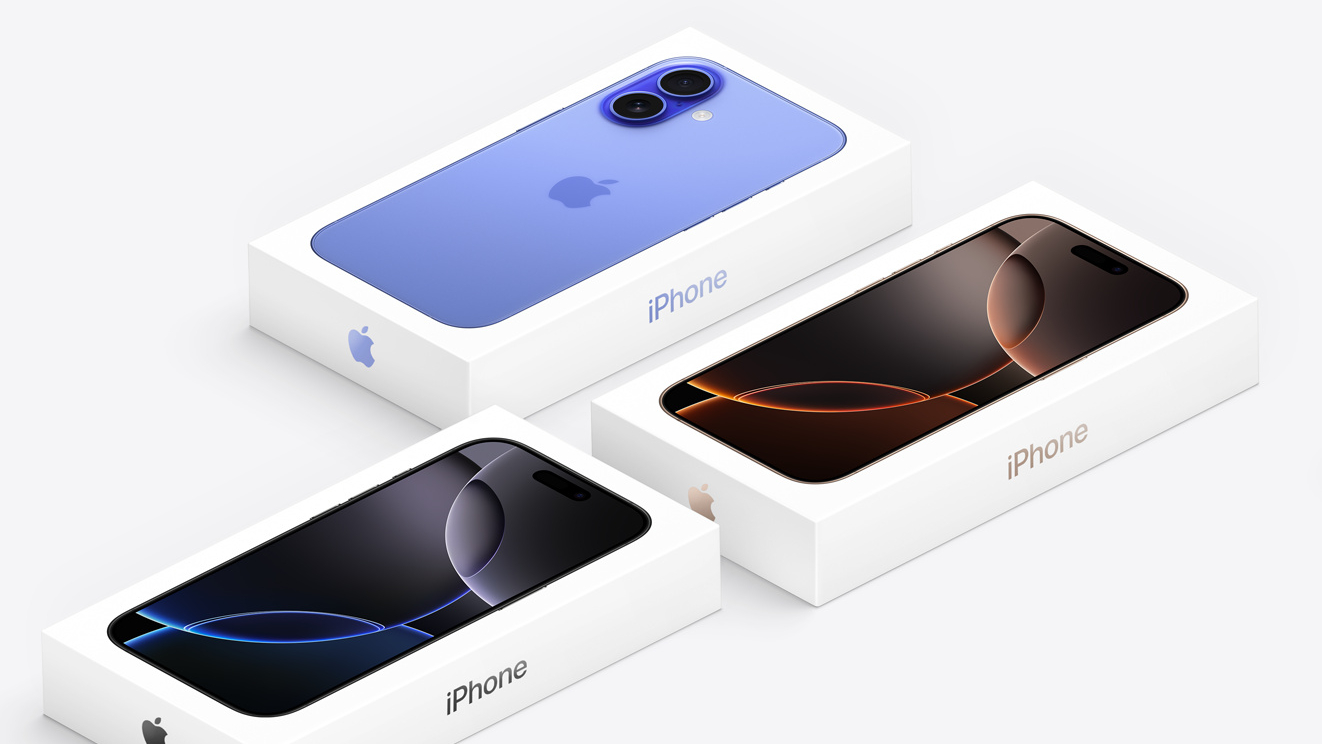
You can get the 256GB iPhone Air for $839.99 ($160 off), and this is an unlocked model available in all colors. The retailer is also offering the 512GB model for $1,039.99 and the 1TB model for $1,239.99, both $160 off.


Additionally, Amazon is back with an all-time low price on the iPhone Air MagSafe Battery, available for $59.00, down from $99.00.


The iPhone Air MagSafe Battery is only compatible with the iPhone Air, and it can add up to 65 percent additional charge to the smartphone. The MagSafe Battery supports up to 12W of fast wireless charging, and it sports a thin and light design similar to the iPhone Air.

If you're on the hunt for more discounts, be sure to visit our Apple Deals roundup where we recap the best Apple-related bargains of the past week.


Deals Newsletter


Interested in hearing more about the best deals you can find in 2026? Sign up for our Deals Newsletter and we'll keep you updated so you don't miss the biggest deals of the season!


Related Roundup: Apple Deals

This article, "Best Buy Offers $160 Off All iPhone Air Models During Black Friday in July" first appeared on MacRumors.com

Discuss this article in our forums

  •  

Apple Patches Hide My Email Flaw More Than a Year After It Was Reported

Apple addressed a vulnerability in Hide My Email that exposed a user's real email address, reports 404 Media. Apple told the site the issue was fully fixed in a patch released on July 3.


The Hide My Email vulnerability was brought to Apple's attention in June 2025, but the company did not fix it until 404 Media publicized the bug in early July.

EasyOptOuts co-founder Tyler Murphy, who first reported the flaw to Apple, said he was told it was under investigation. Apple told him the vulnerability was fixed in March 2026, but it had not been. In the following months, Apple said it was again looking into the problem, but Murphy was unconvinced Apple would actually address it, so he contacted 404 Media to make it public.

404 Media confirmed the vulnerability has been patched, and has now shared details on how it worked, since it can no longer be exploited. Hide My Email is a paid iCloud+ feature that lets users create an anonymous email address for website sign-ups and email correspondence.

Sending a targeted Hide My Email user a message that got rejected as spam caused the person's real email address to appear in email logs.
"We don't know how often hidden email addresses were leaked in email logs. For many major email hosts, the leak was triggered simply by an email being automatically rejected as spam, even if it was a legitimate message. Such emails probably didn't make it to your inbox, so you can't review your spam folder to learn whether you were affected," Murphy and EasyOptOuts co-founder Ben Weiner said in a new statement.

"The bug that caused Apple's Hide My Email to leak hidden email addresses to senders has been fixed. However, we don't think the risk to Hide My Email users has been eliminated. Because non-malicious emails could bounce, revealing your hidden email address, and because mail transfer logs are often retained, we'd assume that any hidden email address linked to a Hide My Email address created before July 7, 2026, may have been exposed and could still be in third-party logs," they added.

While the bug has now been addressed, email logs that pre-date the fix could still expose user email addresses.

Apple has been sued over the Hide My Email flaw, and the plaintiffs are seeking class action status. The lawsuit says Apple violated California's false advertising law and other consumer protection statutes because Apple knew Hide My Email did not work as advertised.
This article, "Apple Patches Hide My Email Flaw More Than a Year After It Was Reported" first appeared on MacRumors.com

Discuss this article in our forums

  •  

Apple Shares Apple Watch SOS Success Story

Apple today highlighted the SOS feature in the Apple Watch, publishing a short video featuring a man named Phil, who crashed while mountain biking.


Phil was biking with his two young children when he had an accident and was knocked unconscious. His Apple Watch detected the fall, calling emergency services and alerting his wife.

He ended up breaking his collarbone and seven ribs, but was able to receive help quickly because his watch gave emergency services his location. Phil was in the hospital for a week, and at the end of the video, he said "Just really glad that I had my Apple Watch on."

The Apple Watch is able to detect serious falls and vehicle crashes, getting help when the wearer is unconscious or unable to get help on their own. It calls emergency services automatically, and alerts a person's emergency contacts.
Related Roundup: Apple Watch 11

This article, "Apple Shares Apple Watch SOS Success Story" first appeared on MacRumors.com

Discuss this article in our forums

  •  

Apple Reportedly Planning to Wind Down 'iPhone Upgrade Program'

After launching a new "Apple Upgrade" program next week, Apple plans to stop accepting new iPhone Upgrade Program sign-ups, according to Bloomberg's Mark Gurman.

It remains to be seen if existing iPhone Upgrade Program members will be able to remain enrolled in the program beyond their current terms, or if they will be migrated to the Apple Upgrade program at some point. One key difference, according to the report: Apple Upgrade will not bundle in AppleCare+ with Theft and Loss coverage, which should result in a lower monthly payment. AppleCare+ will remain available separately, with upfront, annual, and monthly payment options.
This article, "Apple Reportedly Planning to Wind Down 'iPhone Upgrade Program'" first appeared on MacRumors.com

Discuss this article in our forums

  •  

'Apple Upgrade' Program Reportedly Launching Next Week

Apple and Klarna are partnering on a new "Apple Upgrade" leasing program set to launch in the U.S. on Tuesday, July 28, according to Bloomberg's Mark Gurman.


The program will allow you to finance most iPhone, iPad, Mac, and Apple Watch models, with a 24-month term for iPhones and Apple Watches and a 36-month term for iPads and Macs. Customers will be able to pay off the device early during the term, upgrade early to a newer device, or keep or return the existing device after the term.

The report said some lower-priced devices, including the Apple Watch SE, the entry-level iPad, the iPhone 16, and the MacBook Neo, will not be eligible.

Klarna is a popular "buy now, pay later" service, similar to Affirm. Apple Upgrade will require a soft credit check, and additional fees may apply in some cases.

Apple plans to stop accepting new iPhone Upgrade Program sign-ups once the new Apple Upgrade program launches, the report added. Unlike the iPhone Upgrade Program, however, Apple Upgrade will apparently not include AppleCare+ coverage.

Apple plans to advertise the program as a way to have lower monthly payments compared to current financing programs, according to the report, so it sounds like Apple Upgrade will be a rebranded, all-in-one program that replaces the iPhone Upgrade Program and some other standard financing options that the company has offered.
This article, "'Apple Upgrade' Program Reportedly Launching Next Week" first appeared on MacRumors.com

Discuss this article in our forums

  •  

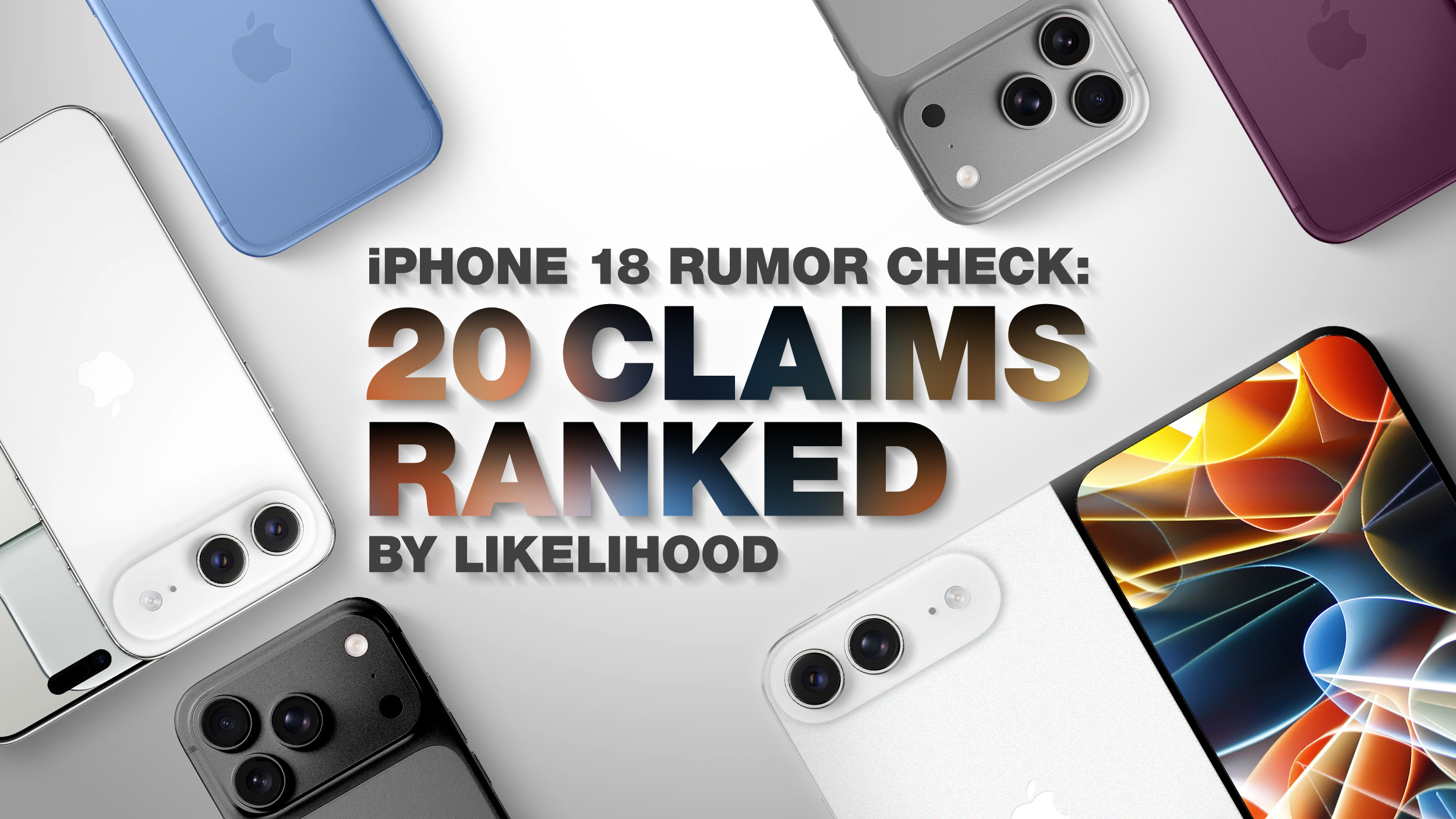
iPhone 18 Rumor Reality Check: 20 Claims Ranked by Likelihood

Apple's iPhone 18 Pro models and its first foldable iPhone are less than two months away from being unveiled, with the standard iPhone 18, iPhone 18e, and iPhone Air 2 expected to follow in spring 2027 as part of the company's new split-launch strategy. We've looked back at everything we know so far, and ranked the most consistent rumors, followed by the more speculative ones.


Solid Rumors


  • iPhone Air 2 With Two Cameras – The second-generation iPhone Air is reportedly in advanced testing with an Ultra Wide camera joining the existing Main camera. The overall design is expected to remain largely unchanged apart from the additional lens.

  • New iPhone 18 Pro Colors – Dark Cherry is expected to be this year's signature finish, accompanied by Light Blue, Silver, and a Dark Gray option. The four colors have appeared in dummy-model images that corroborate earlier reports.

  • iPhone 18 Pro Variable Aperture Lens – Both Pro models are expected to gain a variable aperture for the 48-megapixel Main camera. This would let the camera adjust how much light reaches the sensor and provide users with greater control over exposure and depth of field.

  • More RAM for iPhone 18 – Reports disagree over whether the standard iPhone 18 will have 9GB or 12GB of RAM, but both amounts would be an increase over the iPhone 17's 8GB. The additional memory would support some of the more advanced on-device Apple Intelligence features coming in iOS 27.

  • iPhone 18 Pro Battery Life – Leaked capacities suggest larger batteries for Apple's premium models, with the iPhone 18 Pro Max potentially reaching around 5,567mAh outside of China. A more efficient 2nm A20 Pro chip and LTPO+ display could deliver a more noticeable improvement in actual battery life.

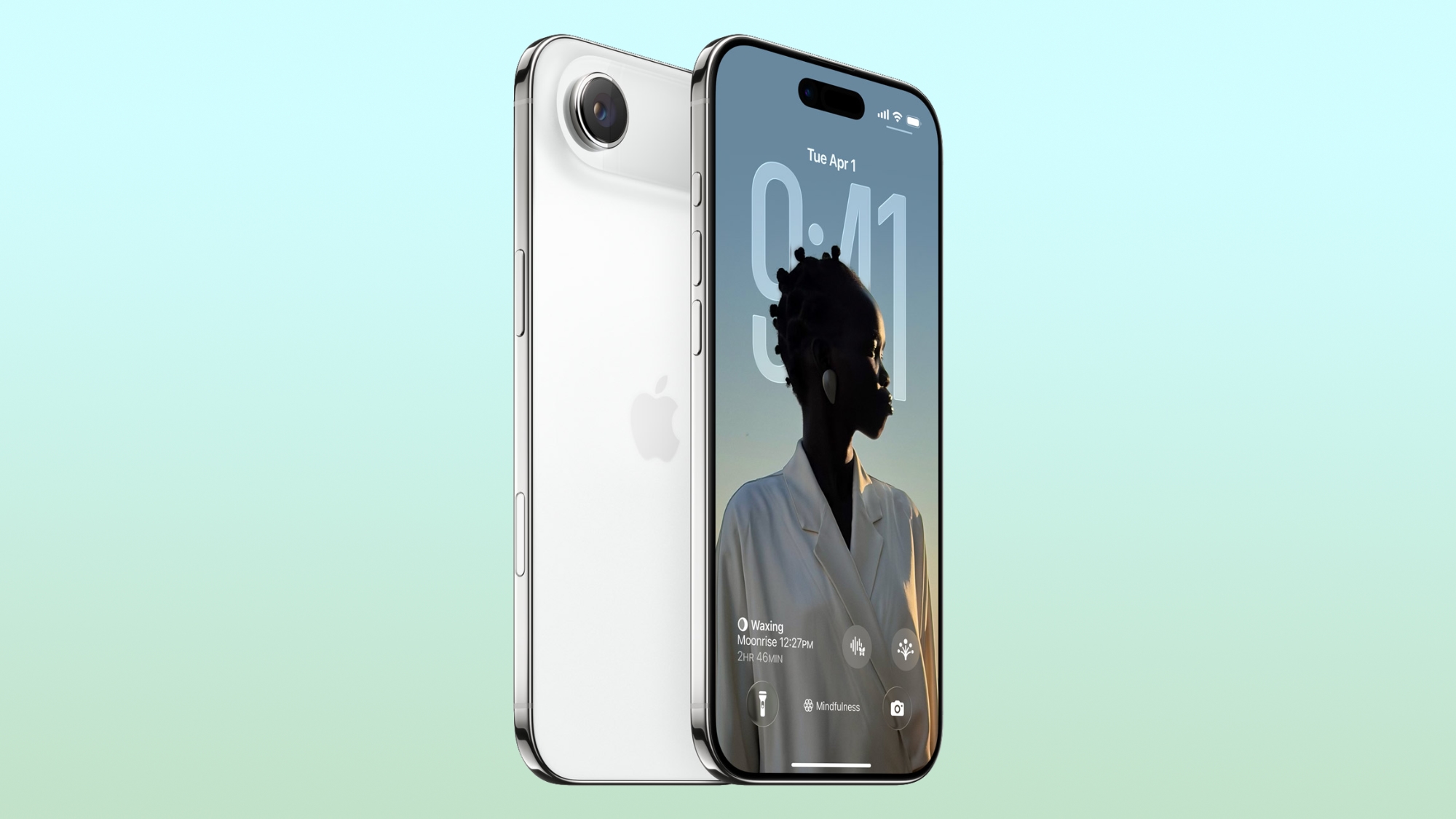
  • Book-Style Foldable Design – Apple's first foldable is consistently described as a short, wide, book-style device with an approximately 5.5-inch outer screen and 7.8-inch inner display. It is expected to use a 4:3 aspect ratio and resemble a small iPad when unfolded. It has been compared to "two titanium iPhone Airs side by side."

  • New Apple-Designed Modems – The foldable iPhone and at least international versions of iPhone 18 Pro models are expected to use Apple's faster second-generation C2 modem, which could come with support for 5G satellite connectivity. However, if the C2 lacks mmWave capability (which is not a feature of the C1 or C1X), Apple is expected to opt for a Qualcomm modem instead for the U.S. market.

  • Higher Prices – Rising memory and storage costs make price increases likely across the iPhone 18 lineup. Analysts estimate that the iPhone 18 Pro and Pro Max could start at $1,299 and $1,399, respectively – $200 more than their predecessors – while the foldable iPhone is expected to cost north of $2,000.


Possibly, Maybe


  • iPhone Air 2 Battery Life – One leaker claims the iPhone Air 2 will have a 3,500 mAh battery, an increase of around 11 percent over the current model. The 2nm A20 chip and a potentially thinner display could provide further efficiency or make room for the larger cell.

  • Only Two Foldable Colors – Some reports point to only two understated finishes for the foldable iPhone. White or silver appears most likely, while the darker option has variously been described as indigo, space gray, or black.

  • Smaller Dynamic Island – Alleged prototypes, screen protectors, and CAD images of the iPhone 18 Pro depict a Dynamic Island around 35 percent narrower than on current iPhone 17 models. Other reports say Apple considered both designs or may have postponed the change until next year's models due to challenges with Face ID components, so this rumor remains ambiguous.

  • Thicker Camera Plateau – Dummy models suggest the iPhone 18 Pro Max's camera plateau could increase from 11.23mm to 11.54mm. A separate report says the smaller iPhone 18 Pro's camera housing will also become thicker, but no precise measurement has been shared.

  • Simplified Camera Control – Apple is reportedly removing the capacitive sensing layer from Camera Control in future iPhones and instead relying solely on pressure sensitivity. The change could eliminate swipe gestures and accidental adjustments while reducing manufacturing and repair costs.

  • Crease-Free Foldable Display – Apple is said to have reduced the inner display's crease to less than 0.15mm deep, making it almost invisible during normal use. More recent rumors appear to acknowledge that some physical crease may be unavoidable, so "nearly crease-free" is probably more realistic than completely crease-free.

  • iPhone Ultra Naming – Recent rumors have increasingly referred to the foldable as the "iPhone Ultra," which would suit its expected position above the Pro Max. There is still no firm evidence of the final name, and "iPhone Fold" remains another, albeit outside possibility.


Seems Unlikely


  • iPhone 18 Pro Teleconverter – A single report claims Apple has evaluated a teleconverter that would increase the camera's effective focal length. The claim comes from a relatively new Apple leaker, and it remains unclear how such a system would work inside an iPhone.

  • Hole-Punch Selfie Camera – An early report from The Information said the iPhone 18 Pro would abandon the Dynamic Island for a top-left hole-punch camera. Subsequent reports instead point to either a smaller centered Dynamic Island or no change, making the hole-punch design look increasingly doubtful.

  • iPhone 18 Downgrades – One leaker claims Apple will reduce the standard iPhone 18's display and chip specifications to control costs, potentially sharing more components with the iPhone 18e. The report has little corroboration and conflicts with expectations for a 2nm A20 chip and additional RAM.

  • Foldable UDC Front Lens – The foldable's inner display has been rumored to contain a 24-megapixel under-display camera (UDC), but other information suggests the technology will not be ready this year. Apple may instead use visible hole-punch cameras on both the inner and outer displays.

  • Goodbye, SIM Tray – The foldable iPhone itself is widely expected to be eSIM-only, but the SIM tray does not appear ready to disappear from the entire lineup. Battery capacity rumors still list physical-SIM variants of the iPhone 18 Pro for China, Hong Kong, and other markets.

What are you most looking forward to in the iPhone 18 lineup? Let us know in the comments below. For more rumors, check out our iPhone 18, iPhone Fold, iPhone Air, and iPhone 18 Pro roundups, which we update regularly.
Related Roundup: iPhone 18
Related Forum: iPhone

This article, "iPhone 18 Rumor Reality Check: 20 Claims Ranked by Likelihood" first appeared on MacRumors.com

Discuss this article in our forums

  •  

Score the A16 iPad for Its Best Price Since June's Hike

Amazon this week is taking $50 off Wi-Fi models of Apple's 11th generation iPad. Prices start at $399.00 for the 128GB Wi-Fi iPad, down from $449.00. This is now the best price we've seen on the iPad since Apple's price hikes in June.

Note: MacRumors is an affiliate partner with Amazon. When you click a link and make a purchase, we may receive a small payment, which helps us keep the site running.
Additionally, Amazon has the 256GB Wi-Fi iPad for $499.00 ($50 off) and the 512GB Wi-Fi iPad for $699.00 ($50 off). Free delivery estimates are placed around July 26 for most of these iPad models, but Prime members should be able to get same-day delivery in many locations.


If you're on the hunt for more discounts, be sure to visit our Apple Deals roundup where we recap the best Apple-related bargains of the past week.


Deals Newsletter


Interested in hearing more about the best deals you can find in 2026? Sign up for our Deals Newsletter and we'll keep you updated so you don't miss the biggest deals of the season!


Related Roundup: Apple Deals

This article, "Score the A16 iPad for Its Best Price Since June's Hike" first appeared on MacRumors.com

Discuss this article in our forums

  •  

iOS 26.6 Prepares Your iPhone for iOS 27

iOS 27 includes a rebuilt search architecture for Siri AI. As a result, iPhones running the iOS 27 beta go through a re-indexing process that can take many days to be completed, but iOS 26.6 should help to speed things up for users who skip the beta.

iOS 26.6 "optimizes the Spotlight index to prepare for iOS 27," according to Apple's release notes for the update, which will likely be released next week. iOS 26.6 also fixes various bugs and security vulnerabilities.
This article, "iOS 26.6 Prepares Your iPhone for iOS 27" first appeared on MacRumors.com

Discuss this article in our forums

  •  

Dirk Eddelbuettel: qlcal 0.1.3 on CRAN: Micro Bugfix, Build Tweak

The twenty-first release of the qlcal package arrivied at CRAN just now, and has been built for r2u. It comes a week after the 0.1.2 release.

qlcal delivers the calendaring parts of QuantLib. It is provided (for the R package) as a set of included files, so the package is self-contained and does not depend on an external QuantLib library (which can be demanding to build). qlcal covers over seventy country / market calendars and can compute holiday lists, its complement (i.e. business day lists) and much more. Examples are in the README at the repository, the package page, and course at the CRAN package page.

This releases includes a one-line fix we also sent upstream as a now-merged PR: one of the calendar files added in QuantLib 1.43 also needed to include the vector header file. And every compiler appears to be lenient (QuantLib itself has fourty different continuous integration jobs, we test with all builds at r-universe) apart from the CRAN macOS x86-64 machine. Sigh. This is now fixed. We also included a neat little local trick I should blog about: if the build is detected as a non-CRAN local build (simply by checking for a .git directory) then compiler flags can be updated to quieten the build. We cannot do that in the package because we would get our fingers slapped over so-called β€˜non-portable compiler flags’. Sigh again. Anyway, the trick helps.

The full details from NEWS.Rd follow.

Changes in version 0.1.3 (2026-07-21)

  • Add missing 'vector' header to new IslamicHolidays calendar file, also PRed upstream and merged there

  • In local compilation out of git repo add additional compiler flags

Courtesy of my CRANberries, there is a diffstat report for this release. See the project page and package documentation for more details, and more examples.

This post by Dirk Eddelbuettel originated on his Thinking inside the box blog. If you like this or other open-source work I do, you can sponsor me at GitHub.

  •  

Apple Chipmaker TSMC Plans Price Hikes of Up to 10% in 2027

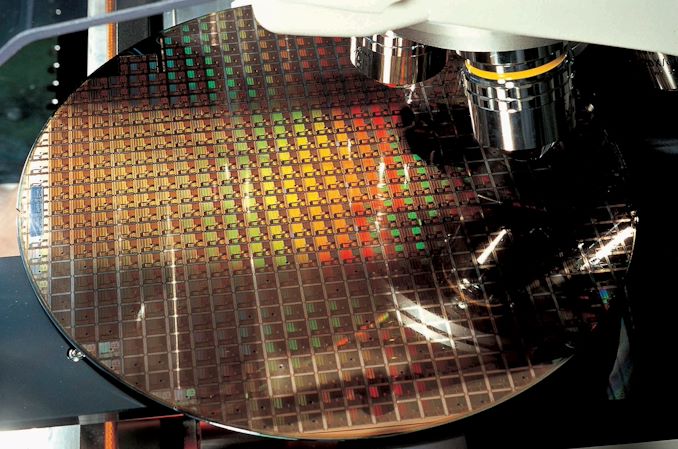
Apple's principal chipmaker TSMC plans to raise prices by as much as 10 percent starting in 2027, according to a new report from Nikkei Asia.


The Taiwan-based foundry has reportedly held talks with clients about base price increases of 5 to 10 percent, covering both mature nodes and the more advanced processes at 7-nanometers and below that Apple relies on for its A-series and M-series chips. Negotiations began in June and were finalized this month, according to the publication's sources, with the new pricing set to take effect at the start of 2027.

Customers placing additional high-performance computing orders beyond their original forecasts will face a further 10 to 15 percent premium, which could lead to some advanced chip orders costing more than 10 percent extra overall.

The increased prices are said to reflect rising costs for materials, manufacturing equipment, and construction of new overseas chip plants.

TSMC reportedly decided to delay the hikes until 2027 to give customers time to adjust after negotiations concluded. The company declined to comment on the reported prices, but told Nikkei Asia that its general market approach was "strategic, not opportunistic."

Apple is TSMC's largest customer, and the timing means higher chip costs would come in the same year that Apple is rumored to launch additional iPhone 18 models as well as its 20th anniversary iPhone models. Whether Apple absorbs the increases or passes them along to customers remains to be seen. Apple last month dramatically increased device prices across multiple product lines, which CEO Tim Cook called "unavoidable," citing the soaring cost of memory and storage chips.
Tags: Nikkei, TSMC

This article, "Apple Chipmaker TSMC Plans Price Hikes of Up to 10% in 2027" first appeared on MacRumors.com

Discuss this article in our forums

  •  
❌