❌

Lees weergave

Sergio Cipriano: Running Graphical Applications in Incus Containers

Running Graphical Applications in Incus Containers

I didn't know how easy it is to display the graphical console of a virtual machine until I tried recently.

$ sudo apt install virt-viewer
$ incus launch images:debian/trixie test --vm
$ incus console test --type=vga

That's it.

  •  

Apple Raises iPhone Prices in Japan

After raising prices on all Macs and iPads worldwide last month, Apple has now increased the price of iPhone models in Japan.


As spotted by the Spanish blog iPhoneros, the iPhone 16, iPhone 17e, iPhone 17, iPhone Air, iPhone 17 Pro, and iPhone 17 Pro Max all received price increases on Apple's online store in Japan today. Prices increased by up to 11%.


Model Previous Price New Price Increase
iPhone 17 Pro Max Β₯194,800 Β₯214,800 10.3%
iPhone 17 Pro Β₯179,800 Β₯194,800 8.3%
iPhone Air Β₯159,800 Β₯177,800 11.3%
iPhone 17 Β₯129,800 Β₯142,800 10%
iPhone 17e Β₯99,800 Β₯107,800 8%
iPhone 16 Β₯114,800 Β₯124,800 8.7%


Apple attributed the Mac and iPad price increases last month to the ongoing memory chip shortage, which has driven up chip prices. In this case, however, the increases are likely due to the Japanese yen's depreciation against the U.S. dollar over the past year.

Apple did not raise iPhone prices today in the U.S. or any other countries that we checked.

Apple also raised the prices of iCloud+ and Apple Music plans in many countries today, including Japan, so price increases are a theme this Friday.
Tag: Japan
Related Forum: iPhone

This article, "Apple Raises iPhone Prices in Japan" first appeared on MacRumors.com

Discuss this article in our forums

  •  

Apple Passed Nvidia to Become World's Most Valuable Company Again

Apple momentarily became the world's most valuable publicly traded company again today after its market valuation surpassed that of Nvidia, according to CNBC. However, the two companies have since traded places during today's session.

Apple's stock has increased by around 20% since it closed at $275.15 on June 25, pushing the company's valuation to nearly $5 trillion.
Tag: AAPL

This article, "Apple Passed Nvidia to Become World's Most Valuable Company Again" first appeared on MacRumors.com

Discuss this article in our forums

  •  

Apple Raises iCloud+ Prices in 8 Countries

Apple has increased the price of iCloud+ in Nigeria, TΓΌrkiye, Vietnam, Japan, Egypt, New Zealand, the Philippines, and Indonesia, according to an updated version of its iCloud support document.


Price increases range from 11 percent to 55 percent depending on the plan and the country. Nigeria saw the biggest hike, and a 50GB plan is now ₦1,300, up from ₦900. TΓΌrkiye saw the next largest increase, with a 50GB plan priced at 49.99 TL, up from 39.99 TL.

Apple has likely adjusted pricing due to currency fluctuations. The Japanese Yen has weakened over the past year, for example, and the dollar is up almost 10 percent against the yen. The Turkish Lira has also depreciated, increasing the value of the U.S. dollar.

A full list of price changes can be found on Apple's iCloud website. U.S. pricing has not changed, nor has pricing in any other country not listed above.

All Apple Accounts receive 5GB of free β€ŒiCloudβ€Œ storage. Apple's β€ŒiCloudβ€Œ+ plans give users extra storage, as well as perks like Hide My Email, HomeKit Secure Video, and β€ŒiCloudβ€Œ Private Relay.
Tag: iCloud

This article, "Apple Raises iCloud+ Prices in 8 Countries" first appeared on MacRumors.com

Discuss this article in our forums

  •  

Apple Music Now Costs $11.99 as Apple Increases Subscription Prices

Apple today increased the price of Apple Music and some Apple One subscription bundles. An individual β€ŒApple Musicβ€Œ subscription is now $1 more expensive in the United States, going from $10.99 to $11.99 per month.


Pricing on the β€ŒApple Musicβ€Œ Family plan increased by $3, increasing from $16.99 to $19.99. Student pricing is up $1, with the plan now priced at $6.99.

The price of the individual β€ŒApple Oneβ€Œ plan hasn't changed, but the Family and Premier plans have gone up $2. The Family plan is now $27.95 per month and the Premier plan is $39.95 per month. Apple has also raised prices in Brazil.

In a statement to Music Business Worldwide, Apple said it was raising prices due to the "result of rising licensing costs." β€ŒApple Musicβ€Œ prices were last increased in October 2022.
This article, "Apple Music Now Costs $11.99 as Apple Increases Subscription Prices" first appeared on MacRumors.com

Discuss this article in our forums

  •  

Apple and DOJ Hold Early Settlement Talks in iPhone Antitrust Case

Apple is working to settle an antitrust lawsuit with the U.S. Department of Justice, reports Bloomberg. Apple has proposed several offers and is now in early settlement talks with the DOJ.


The DOJ sued Apple for antitrust violations in 2024 as part of an expansive antitrust investigation into major tech companies. The government accused Apple of getting customers "hooked" on its platform through a long-running history of anti-competitive behavior.

The lawsuit accused Apple of restricting "super apps" with broad capabilities, limiting cloud gaming, preferencing its own Messages app over third-party apps, and limiting the function of third-party digital wallets and smartwatches.

Since the lawsuit was filed in 2024, Apple policy changes have addressed many of the claims, weakening the DOJ's position.

While the talks are ongoing, Bloomberg says there's no guarantee an agreement will be reached. Apple attempted to have the lawsuit dismissed last year, but was unsuccessful. So far, no trial has been scheduled.
This article, "Apple and DOJ Hold Early Settlement Talks in iPhone Antitrust Case" first appeared on MacRumors.com

Discuss this article in our forums

  •  

MacRumors Giveaway: Win a MacBook Neo Plus Color-Matched Satechi Accessories

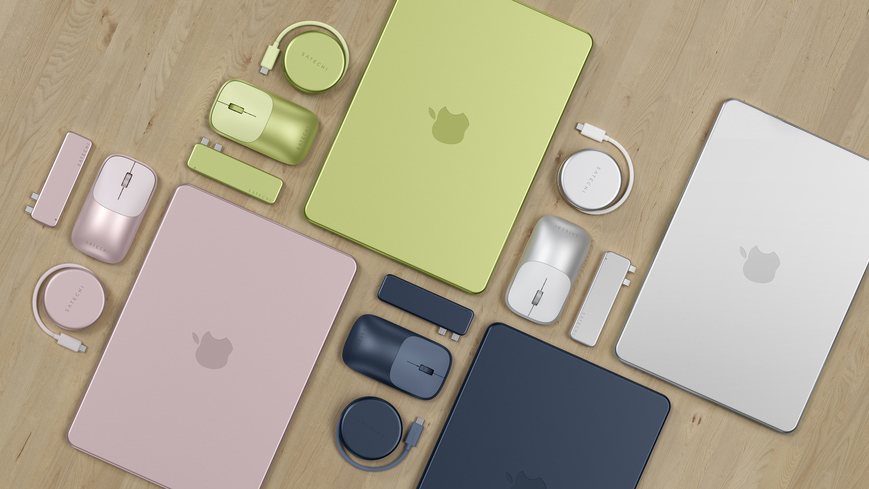
For this week's giveaway, we've teamed up with Satechi to offer MacRumors readers a chance to win a MacBook Neo and a set of color-matched MacBook Neo accessories to go along with it. A second-place winner will also get a set of Satechi's new accessories.


The MacBook Neo collection includes the $45 OntheGo 5-in–1 Multiport Adapter, the $45 USB-C Snap Hub, and the $30 Slim EX Wireless Mouse. All of the accessories come in Citrus, Blush, Indigo, and Silver to match the β€ŒMacBook Neoβ€Œ color options.


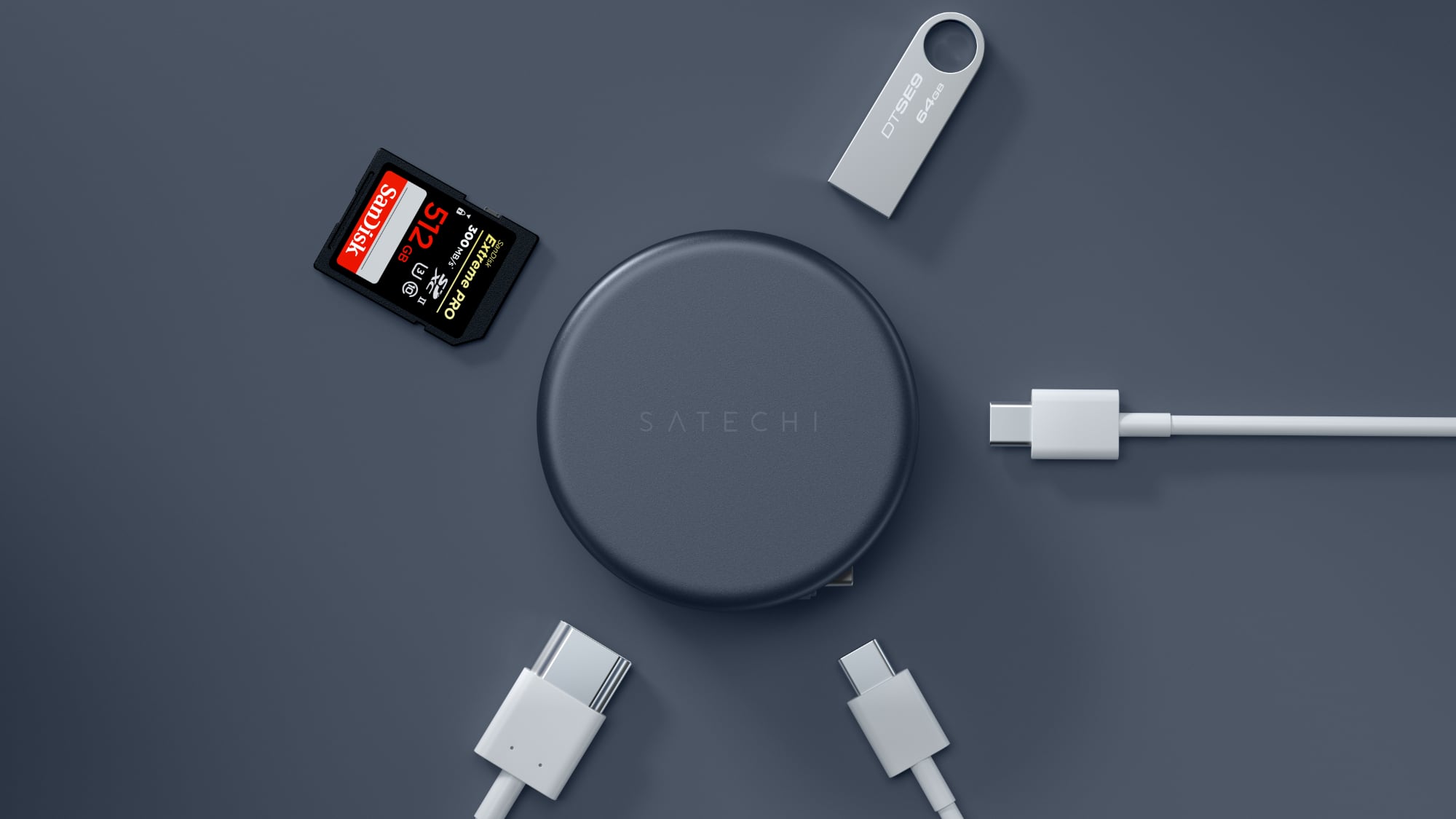
Satechi's OntheGo 5-in–1 Multiport Adapter plugs into the USB-C port on the β€ŒMacBook Neoβ€Œ and adds five additional ports. It has two USB-C ports, a 5Gb/s USB-A port, an HDMI port that supports up to a 4K 60Hz external display, and an SD card slot. One of the USB-C ports offers 60W passthrough charging and the other supports 5Gb/s data transfer speeds.

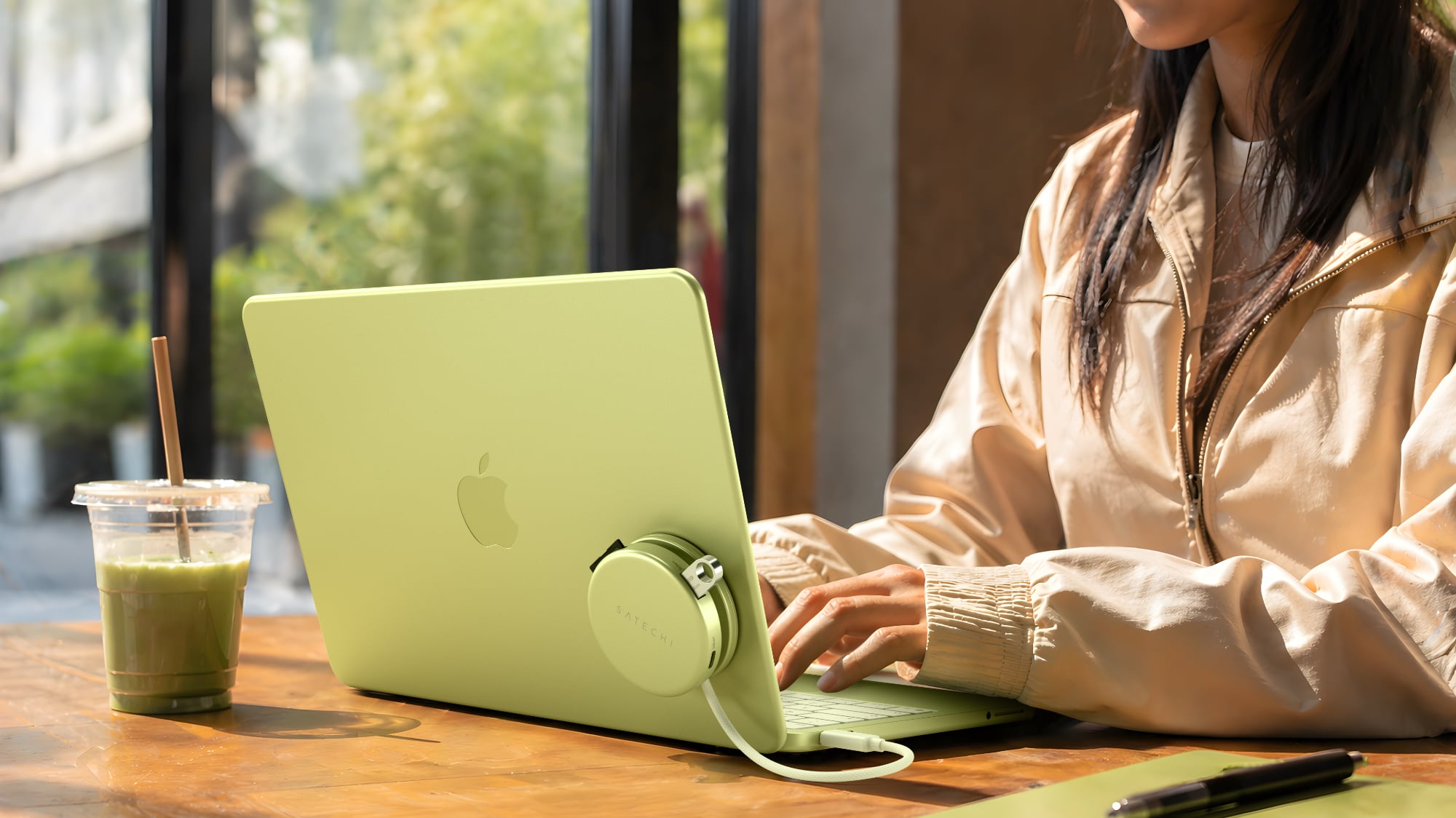
An included magnet lets it attach to a MagSafe iPhone or to the lid of the MacBook with a 3M adhesive magnet mount ring. The matching built-in USB-C cable is braided for durability, and it rolls up into the adapter, making it a compact travel option. It measures 2.57 inches in diameter and it's 0.87 inches thick.


Satechi's USB-C Snap Hub also adds ports, but it has a different design. It plugs into both of the β€ŒMacBook Neoβ€Œ USB-C ports, expanding them into six connections. There are two USB-C ports, an HDMI port that supports a 4K 60Hz display, a 5Gb/s USB-A port, an SD card slot, and a microSD card slot. One USB-C port supports 45W passthrough charging, and the other offers 5Gb/s data transfer speeds.


The hub fits flush to the side of the β€ŒMacBook Neoβ€Œ, and it has a dual-material design. The top is an anodized aluminum that matches the β€ŒMacBook Neoβ€Œ's body, while the base is a soft-touch ABS plastic meant to match the keyboard finish.


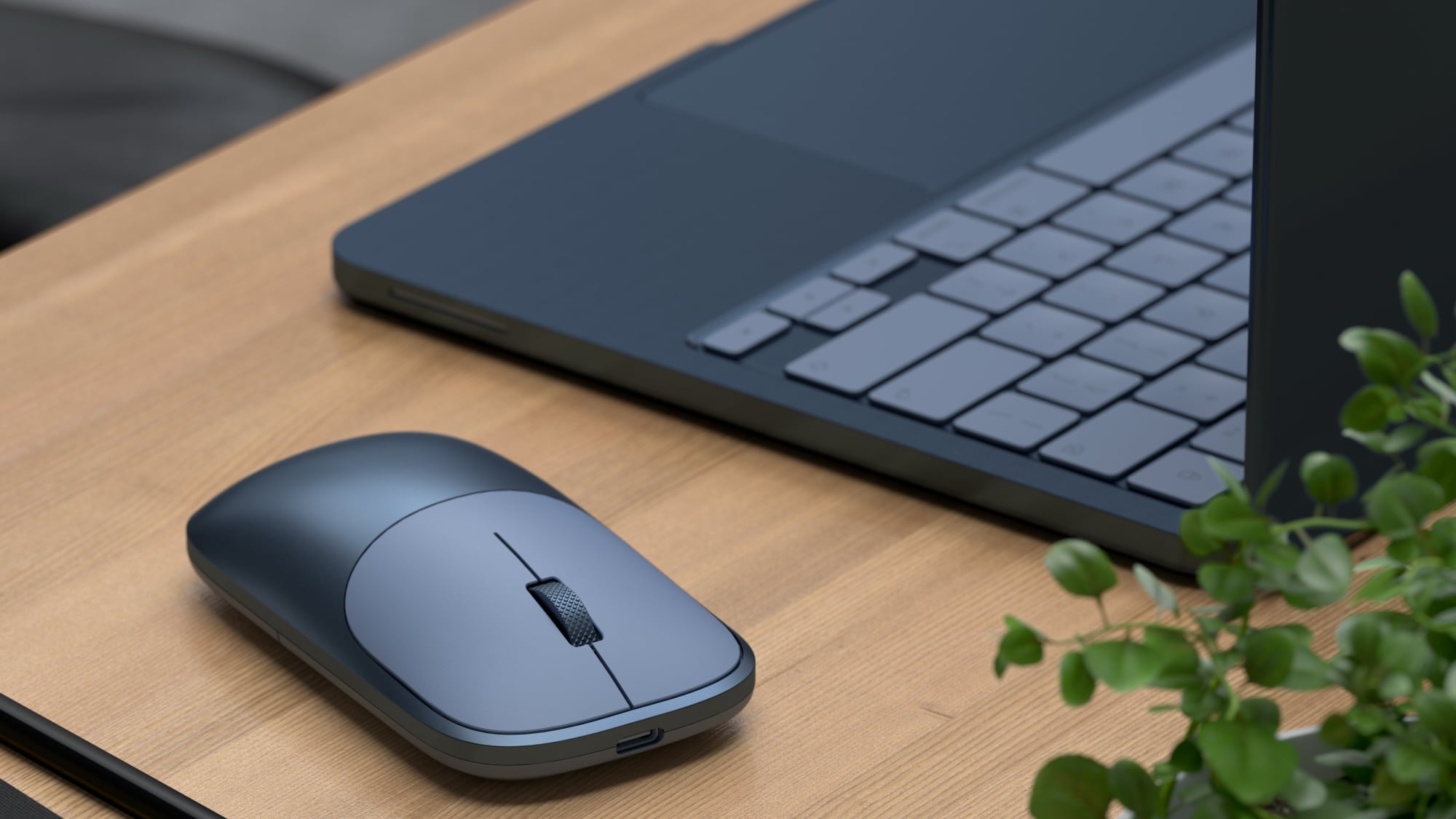
Satechi's Slim EX Wireless Mouse completes the collection, and it's made from color-matched aluminum. The mouse supports two Bluetooth channels and a 2.4GHz wireless connection, and it is able to work across macOS, iPadOS, Windows, and Android. It features quiet click switches and a precision-machined scroll wheel, plus there is a USB-C rechargeable, user-replaceable battery for longevity.


We have a β€ŒMacBook Neoβ€Œ and a Satechi accessory set to go along with it for one lucky MacRumors reader, and a second winner will get the β€ŒMacBook Neoβ€Œ accessory kit. To enter to win, use the widget below and enter an email address. Email addresses will be used solely for contact purposes to reach the winner(s) and send the prize(s). You can earn additional entries by subscribing to our weekly newsletter, subscribing to our YouTube channel, following us on Twitter, following us on Instagram, following us on Threads, or visiting the MacRumors Facebook page.

Due to the complexities of international laws regarding giveaways, only U.S. residents who are 18 years or older, UK residents who are 18 years or older, and Canadian residents who have reached the age of majority in their province or territory are eligible to enter. All federal, state, provincial, and/or local taxes, fees, and surcharges are the sole responsibility of the prize winner. To offer feedback or get more information on the giveaway restrictions, please refer to our Site Feedback section, as that is where discussion of the rules will be redirected.

The contest will run from today (July 17) at 9:00 a.m. Pacific Time through 9:00 a.m. Pacific Time on July 24. The winner will be chosen randomly on or shortly after July 24 and will be contacted by email. The winner will have 48 hours to respond and provide a shipping address before a new winner is chosen.
Related Roundup: MacBook Neo
Buyer's Guide: MacBook Neo (Buy Now)
Related Forum: MacBook Neo

This article, "MacRumors Giveaway: Win a MacBook Neo Plus Color-Matched Satechi Accessories" first appeared on MacRumors.com

Discuss this article in our forums

  •  

iPhone 18 Pro Launching in Two Months With These 12 New Features

It is now mid-July, and that means the iPhone 18 Pro and iPhone 18 Pro Max are now just two months away. The devices are expected to look similar to the iPhone 17 Pro and iPhone 17 Pro Max, but there will still be many year-over-year changes, with rumored features including a smaller Dynamic Island, 5G via satellite, and more.


Apple is expected to unveil the iPhone 18 Pro, iPhone 18 Pro Max, and a foldable "iPhone Ultra" in the first half of September, and the devices should be released in the second half of the month. The regular iPhone 18, a lower-end iPhone 18e, and a second-generation iPhone Air will reportedly be announced around March 2027.

Below, we have recapped 12 features rumored for the iPhone 18 Pro models, as of July:
  • Smaller Dynamic Island: It has been rumored that Face ID's flood illuminator will be moved under the screen on the iPhone 18 Pro models, paving the way for a smaller Dynamic Island on the devices.

  • LTPO+ Displays: The next Pro models are expected to have the same overall design as the iPhone 17 Pro models, including 6.3-inch and 6.9-inch display sizes and a "plateau" housing three rear cameras. However, the displays will reportedly use so-called LTPO+ display technology, which should contribute to longer battery life.

  • Variable Aperture: The main 48-megapixel Fusion camera on both iPhone 18 Pro models is rumored to have a variable aperture, which would allow users to control the amount of light that passes through the camera's lens and reaches the sensor. This would provide greater control over depth of field. However, given that iPhones have smaller image sensors due to smartphone size constraints, it is unclear exactly how meaningful this improvement would be.

  • A20 Pro Chip: Apple's next-generation A20 Pro chip is expected to use TSMC's first-generation 2nm process, whereas the A19 Pro chip is 3nm. With a 2nm architecture and a new packaging design, the A20 Pro chip should deliver solid year-over-year performance and power efficiency gains.

  • C2 Modem: Apple's custom C1 cellular modem for 5G and LTE debuted in the iPhone 16e last year, and that was followed by a C1X chip in the iPhone Air. Apple says the C1X modem is up to twice as fast as the C1 modem, and the most power-efficient modem in an iPhone ever. The improvements should continue with Apple's third-generation C2 modem in the iPhone 18 Pro models.

  • 5G via Satellite: With the C2 modem, the iPhone 18 Pro models will reportedly support 5G via satellite for web browsing without Wi-Fi or cellular connectivity.

  • N2 Chip: Most of the iPhone 17 models and the iPhone Air are equipped with an Apple-designed N1 chip that enables Wi-Fi 7, Bluetooth 6, and Thread. Apple says the N1 chip also improves the overall performance and reliability of features like Personal Hotspot and AirDrop. iPhone 18 Pro models are expected to have Apple's next-generation N2 chip, but it is not yet known what improvements would come with this upgrade.

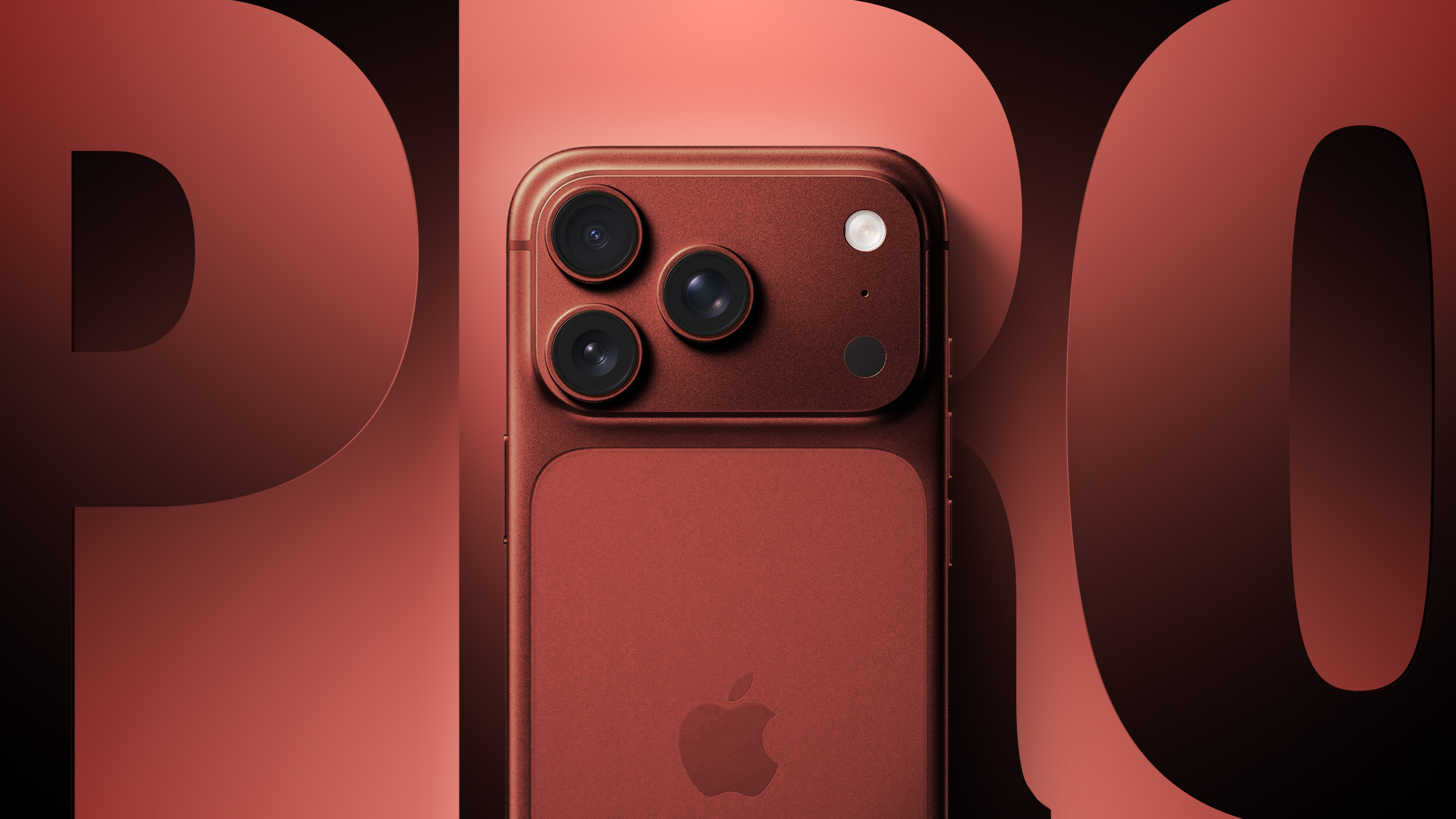
  • Dark Cherry: The special color for the iPhone 18 Pro models will reportedly be Dark Cherry, alongside Light Blue, Dark Gray, and Silver. The existing Cosmic Orange and Deep Blue colors are expected to be discontinued.

  • Simplified Camera Control: Apple is expected to simplify the Camera Control button on the iPhone 18 Pro models, by removing touch sensitivity and haptic feedback. The redesigned button will only have pressure sensitivity.

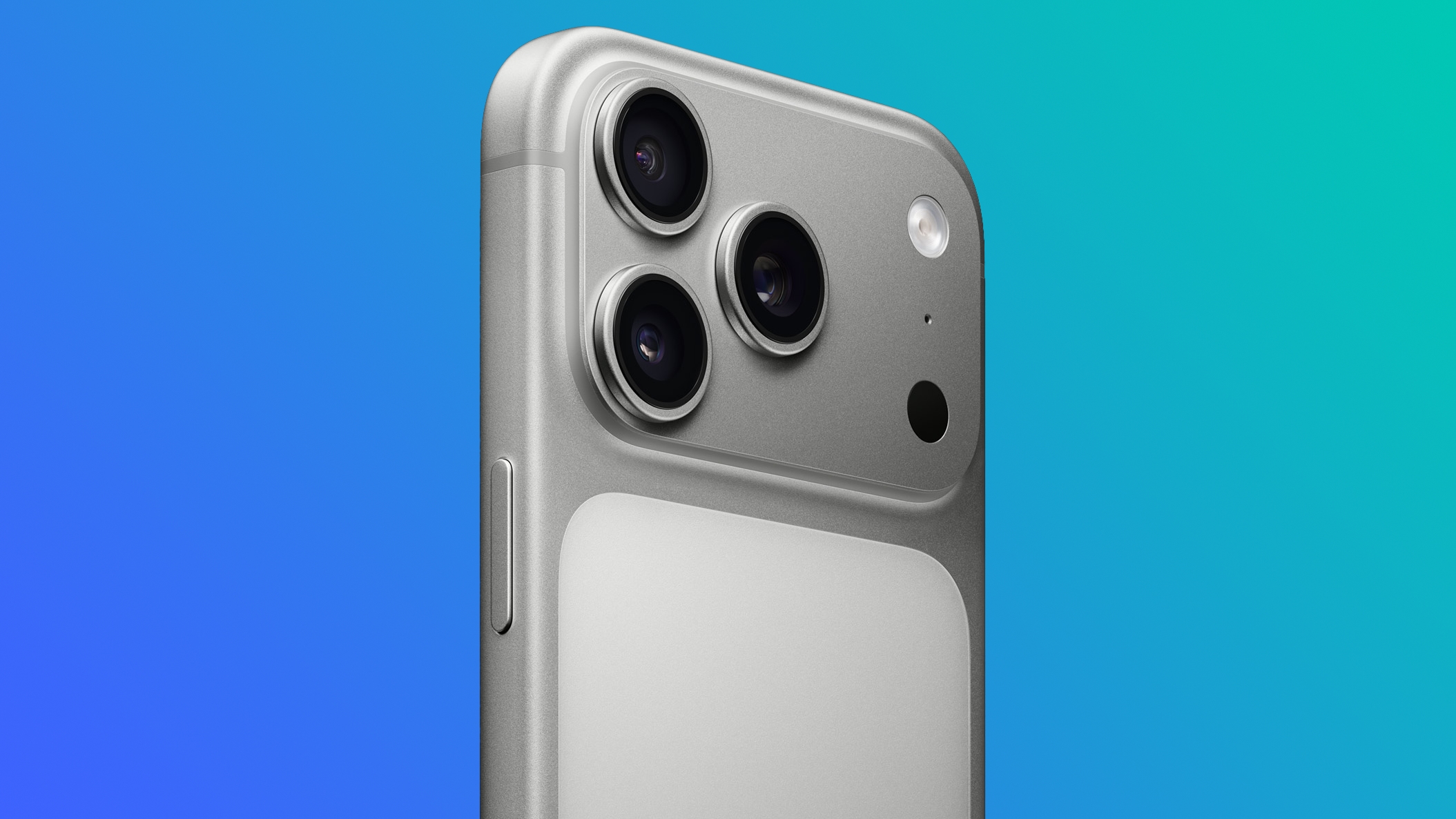
  • Redesigned Rear Ceramic Shield: The rear Ceramic Shield area for MagSafe is rumored to feature a more frosted and seamless appearance on the iPhone 18 Pro models compared to the current two-tone design.

  • Larger Battery (iPhone 18 Pro Max): According to alleged Chinese regulatory database filings, the iPhone 18 Pro Max will have nearly a 10% larger battery compared to the iPhone 17 Pro Max.

  • Thicker Design (iPhone 18 Pro Max): It has been rumored that the iPhone 18 Pro Max will be thicker than both the iPhone 17 Pro Max and the iPhone 18 Pro.
Bookmark our iPhone 18 and iPhone 18 Pro roundups to stay up to date with more rumors.
Related Roundup: iPhone 18 Pro

This article, "iPhone 18 Pro Launching in Two Months With These 12 New Features" first appeared on MacRumors.com

Discuss this article in our forums

  •  

iPhone Loyalty Rate Climbs to 87% as Switching to Android Slows

iPhone owners are sticking with the platform at a higher rate than a year ago, with new research firm CIRP putting iPhone loyalty at 87% for the first quarter of 2026.


CIRP's latest quarterly survey found that just 12% of new iPhone buyers in the March quarter had come over from an Android phone, with the remaining 1% arriving from a feature phone, a different smartphone platform, or buying a smartphone for the first time. That puts loyalty three percentage points above the same quarter a year earlier, when 14% of buyers switched from Android and the overall loyalty figure sat at 84%.

The firm has been tracking this movement for years by asking iPhone buyers what device they owned right before their purchase, among other questions about how they shop. Across the periods it measured recently, the share of buyers coming from Android has held in a fairly narrow 11% to 15% band, a much smaller pool of switchers than in the iPhone's early years, when Apple was still expanding beyond AT&T to other U.S. carriers and picking up large numbers of new users in the process.

The trend held steady in early 2024 too, when 13% of buyers arrived from Android and loyalty came in at 85%. CIRP's numbers suggest the bulk of smartphone owners settled on a platform long ago, and only a small slice change sides each year. This is a pattern other recent surveys have pointed to as well, even if their methodology and figures differ from CIRP's.

Apple will roll out Siri AI, its overhauled AI assistant, in iOS 27 later this year, which could help retain existing iPhone owners. Attracting Android converts is a separate challenge, though Apple's upcoming foldable iPhone will introduce a new form factor that may appeal to some existing Android foldable owners.
Tags: Android, CIRP

This article, "iPhone Loyalty Rate Climbs to 87% as Switching to Android Slows" first appeared on MacRumors.com

Discuss this article in our forums

  •  

The MacRumors Show: iPhone XX? Next Year's Major Upgrades Will Change Everything

This week's episode of The MacRumors Show looks ahead to the 20th anniversary iPhone, the radically redesigned model that Apple is expected to launch in 2027.


Apple's plans for the device's name remain unclear. The company skipped "iPhone 9" and moved straight to the iPhone X for the device's 10th anniversary in 2017, and it is widely expected to skip "iPhone 19" in the same way. Rumors have referred to the 2027 models as both the "iPhone 20" and the "iPhone XX" as placeholder names, and it is still possible that they will sit above the iPhone 18 Pro and 18 Pro Max as a separate, higher-tier directly, even though they are more likely to replace them as usual. Apple has reset iPhone branding before with the iPhone Air, whose successor is expected to be the iPhone Air 2.

The 2027 iPhone is rumored to be the biggest redesign since the iPhone X. Apple is reportedly aiming for a near bezel-less design with curved glass that wraps around all four edges and a return to a glass back, in line with the single slab of glass that former design chief Jony Ive long described as a goal. The frame is said to be a thin polished band, potentially in a material other than the aluminum used on Apple's straight-edged models, with the display curving onto the sides rather than following one consistent curve.

Displays that curve down the sides can be prone to accidental touches, an issue seen on earlier Android handsets with waterfall edges, though Apple is expected to engineer the device to work with a case. The extent of the curvature, and how far the display appears to refract at the edges, is not yet clear.

Apple reportedly wants a front with no cutouts, but some of the under-display technology is unlikely to be ready in time, meaning some form of front-facing cutout is expected to persist. Current reporting points to a gradually shrinking Dynamic Island, Face ID components moving beneath the panel, and an under-display camera arriving last, since image quality still degrades when a lens sits behind the display.

Apple is also rumored to be revisiting solid-state haptic buttons, reviving the "Project Bongo" effort that reached prototype hardware years ago before being shelved. Reports have cited several potential motivations, including a cleaner frame with no moving parts, a reduction in the mechanical button failures that account for many AppleCare repairs, and additional internal space for a larger battery or additional haptic engine.

Apple is reported to be developing a custom image sensor that would replace the Sony sensors currently used across the iPhone lineup, following the company's move to bring its silicon, modem, Wi-Fi, and Bluetooth chips in-house. The rear camera plateau is likely to remain, owing to the space required by the folded optics used for the telephoto lens.

The anniversary models are expected to share a second-generation 2-nanometer A21 chip, along with efficiency gains and a newer Apple modem. A 6,000mAh battery has appeared in some rumors, though it is unclear whether that figure is based on supply chain information.

Reverse wireless charging appeared in the same report and would let the iPhone top up accessories such as AirPods or an Apple Watch. The underlying hardware is already present, since iPhones can charge a MagSafe battery pack through their wireless coil, but Apple has never enabled the capability for other devices, a feature Samsung has offered on its phones for several years. Its viability on the anniversary model may depend on the larger battery and efficiency gains rumored for the device, given how much charge reverse wireless charging draws from the handset itself.

This year's β€ŒiPhone 18 Proβ€Œ models are rumored to be a more modest update, with the larger redesign reserved for the 20th anniversary model. It is expected to arrive in the fall of 2027, following the iPhone 18, iPhone 18e, and β€ŒiPhone Airβ€Œ 2 in the spring. The MacRumors Show has its own YouTube channel, so make sure you're subscribed to keep up with new episodes and clips.


You can also listen to β€ŒThe MacRumors Showβ€Œ on Apple Podcasts, Spotify, Overcast, or other podcast apps. You can also copy our RSS feed directly into your player.


If you haven't already listened to the previous episode of The MacRumors Show, catch up to hear our discussion about the future of Apple's increasingly tangled high-end MacBook lineup, including the entry-level MacBook Pro and the rumored "MacBook Ultra."

Subscribe to β€ŒThe MacRumors Showβ€Œ for new episodes every week, where we discuss some of the topical news breaking here on MacRumors, often joined by interesting guests such as Kayci Lacob, Kevin Nether, John Gruber, Mark Gurman, Jon Prosser, Luke Miani, Matthew Cassinelli, Brian Tong, Quinn Nelson, Jared Nelson, Eli Hodapp, Mike Bell, Sara Dietschy, iJustine, Jon Rettinger, Andru Edwards, Arnold Kim, Ben Sullins, Marcus Kane, Christopher Lawley, Frank McShan, David Lewis, Tyler Stalman, Sam Kohl, Federico Viticci, Thomas Frank, Jonathan Morrison, Ross Young, Ian Zelbo, and Rene Ritchie.

β€ŒThe MacRumors Showβ€Œ is on X @MacRumorsShow, so be sure to give us a follow to keep up with the podcast. You can also email us at podcast@macrumors.com or head over to The MacRumors Show forum thread. Remember to rate and review the podcast, and let us know what subjects and guests you would like to see in the future.
This article, "The MacRumors Show: iPhone XX? Next Year's Major Upgrades Will Change Everything" first appeared on MacRumors.com

Discuss this article in our forums

  •  

Apple and Google Hit With Demand to Pull AI 'Nudify' Apps [Updated]

A San Francisco City Attorney has sent cease-and-desist letters to Apple and Google demanding the removal of 13 AI "face-swap" apps that can generate nonconsensual nude images, according to WIRED.


The letters, sent on Thursday, target eight apps on the App Store and five on the Play Store that market themselves as face-swapping tools but are used to "undress" photos of real people. The attorney's office wants both companies to cut ties with the developers and stop taking a cut of in-app payments, arguing they are effectively "aiding and abetting" the sale of explicit deepfake images. The attorney called the practice "illegal, harmful, and completely unacceptable" and believes Apple and Google have collected millions in fees from the apps.

Both companies have developer rules against pornography and have removed batches of nudify apps in the past after being flagged by researchers. A Google spokesperson told WIRED that the company has deleted "hundreds" of apps with nudifying features for policy violations, including the five named in the letters. In June, it emerged that Apple had already tightened its β€ŒApp Storeβ€Œ guideline language on developer responsibility for pornographic content.

Update: Apple told MacRumors that it takes reports of apps against its guidelines seriously. Apple applies App Review Guidelines to all developers, which include specific provisions to prohibit overtly sexual or pornographic content. As such, "nudificiation" apps are against its guidelines and the company has proactively rejected and removed many such apps, including when they have been flagged by users.

The App Store was designed to be a safe and trusted place for users, and we have always strictly prohibited apps designed to generate, distribute, or consume pornography. "Nudification" apps are against our App Review Guidelines and we have proactively rejected many of these apps and removed many others, including when users have flagged them via our reporting tools. We have removed three of the apps in question and are in the process of terminating their developer accounts from our program. We are in contact with four others that need to address policy violations or risk being removed as well.


Users can go to reportaproblem.apple.com to report illegal, offensive, or abusive content, as well as scam or fraud on the β€ŒApp Storeβ€Œ.
Tags: Google, Wired

This article, "Apple and Google Hit With Demand to Pull AI 'Nudify' Apps [Updated]" first appeared on MacRumors.com

Discuss this article in our forums

  •  

Apple Watch Series 11 Drops to $299, MacBook Pro Up to $500 Off in Latest Apple Deals

Some of the best Apple-related discounts this week include $100 off the Apple Watch Series 11, $150 off the M5 MacBook Air, and up to $500 off the 2026 MacBook Pro. You'll also find great deals on Anker accessories available on Amazon right now.

Note: MacRumors is an affiliate partner with some of these vendors. When you click a link and make a purchase, we may receive a small payment, which helps us keep the site running.
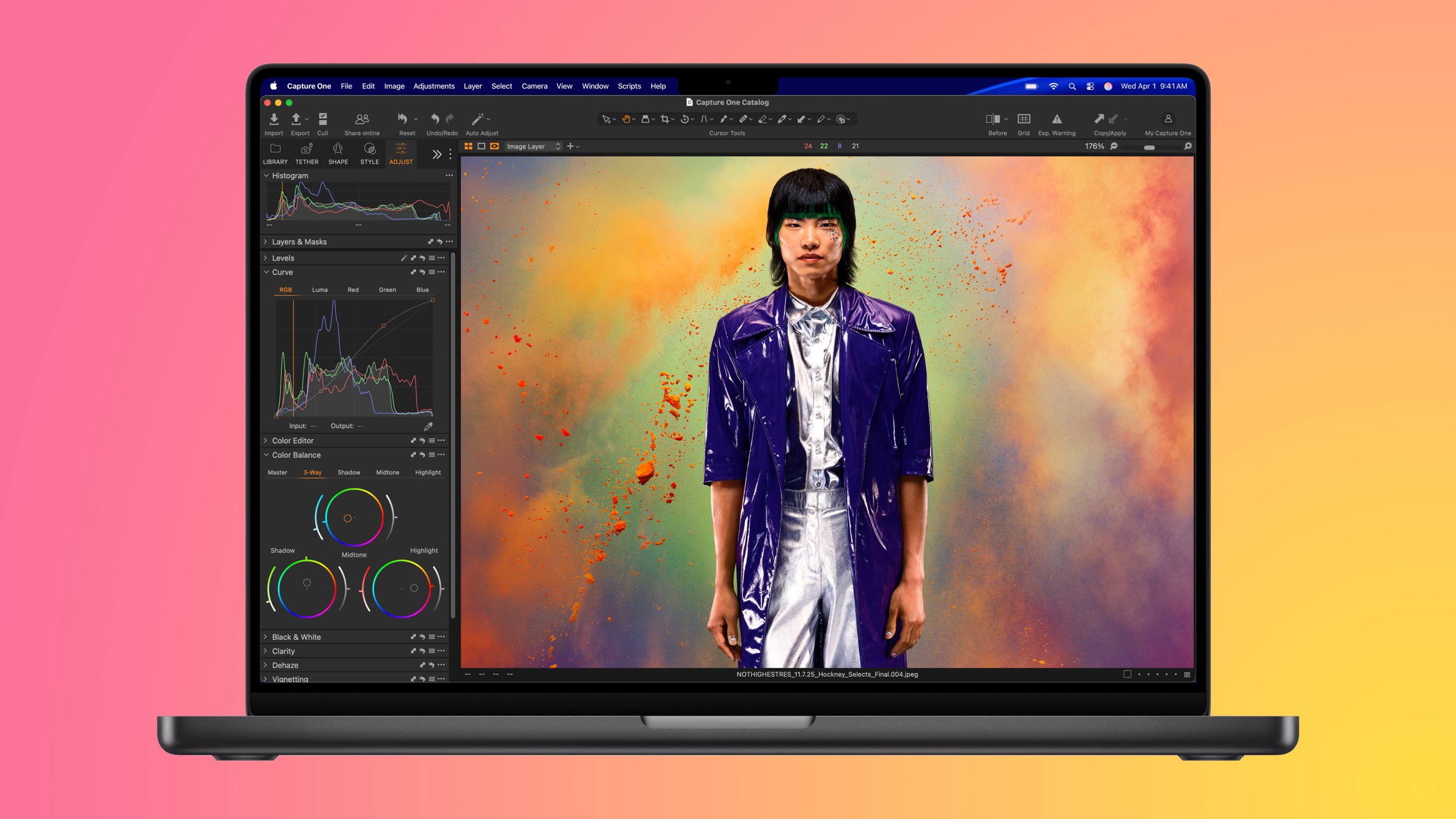
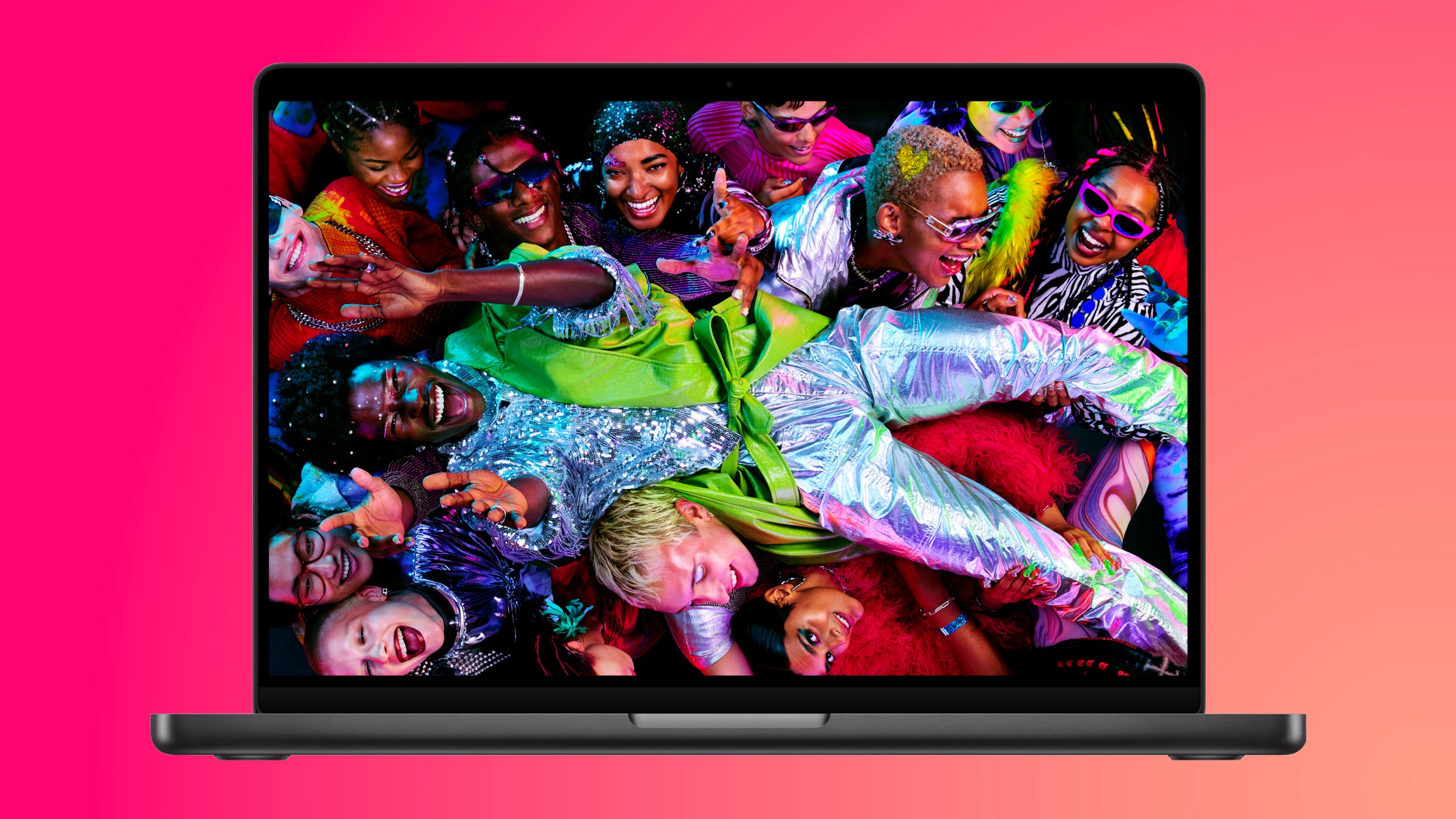
MacBook Pro


  • What's the deal? Take up to $500 off MacBook Pro

  • Where can I get it? Amazon

  • Where can I find the original deal? Right here


Amazon's prices on the 2026 MacBook Pro have now joined in on Apple's recent price hikes, meaning we're no longer tracking pre-hike markdowns on these devices. However, there are still notable sales to be found if you're shopping for a MacBook Pro this month, with up to $500 off new prices available right now on Amazon.

Apple Watch Series 11


  • What's the deal? Take $100 off Apple Watch Series 11

  • Where can I get it? Amazon

  • Where can I find the original deal? Right here


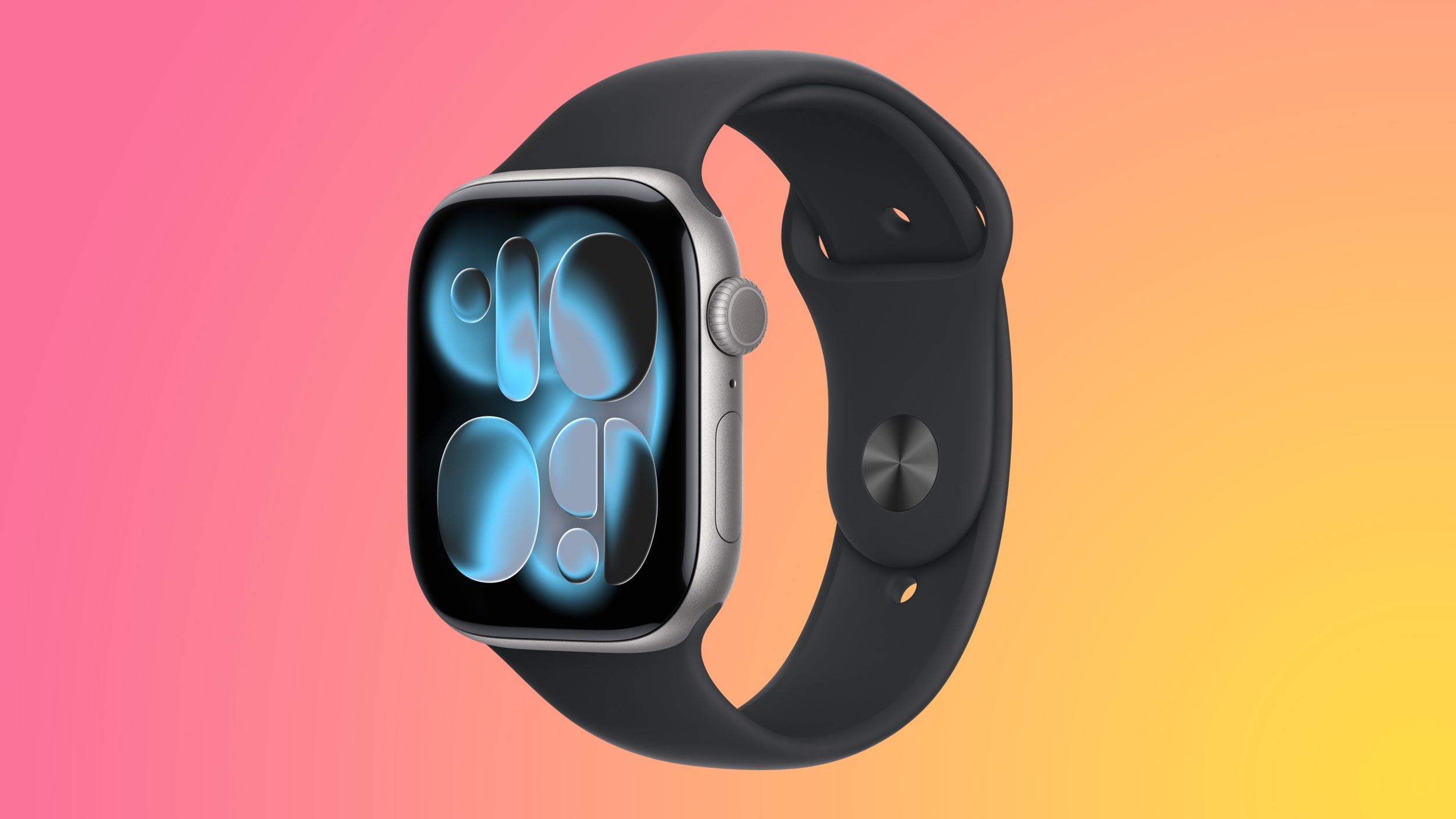
Amazon this week has low prices on the Apple Watch Series 11, with $100 discounts across numerous models of the smartwatch. This sale includes a handful of 42mm and 46mm GPS aluminum models, but cellular devices are a bit more rare this time around.

MacBook Air


  • What's the deal? Take $150 off M5 MacBook Air

  • Where can I get it? Amazon

  • Where can I find the original deal? Right here


Amazon is taking $150 off multiple models of the M5 MacBook Air, focused mainly on 13-inch models this time around. These are some of the lowest prices we've seen on the notebooks in the wake of Apple's price hikes last month.

Anker


  • What's the deal? Save on Anker accessories

  • Where can I get it? Amazon

  • Where can I find the original deal? Right here


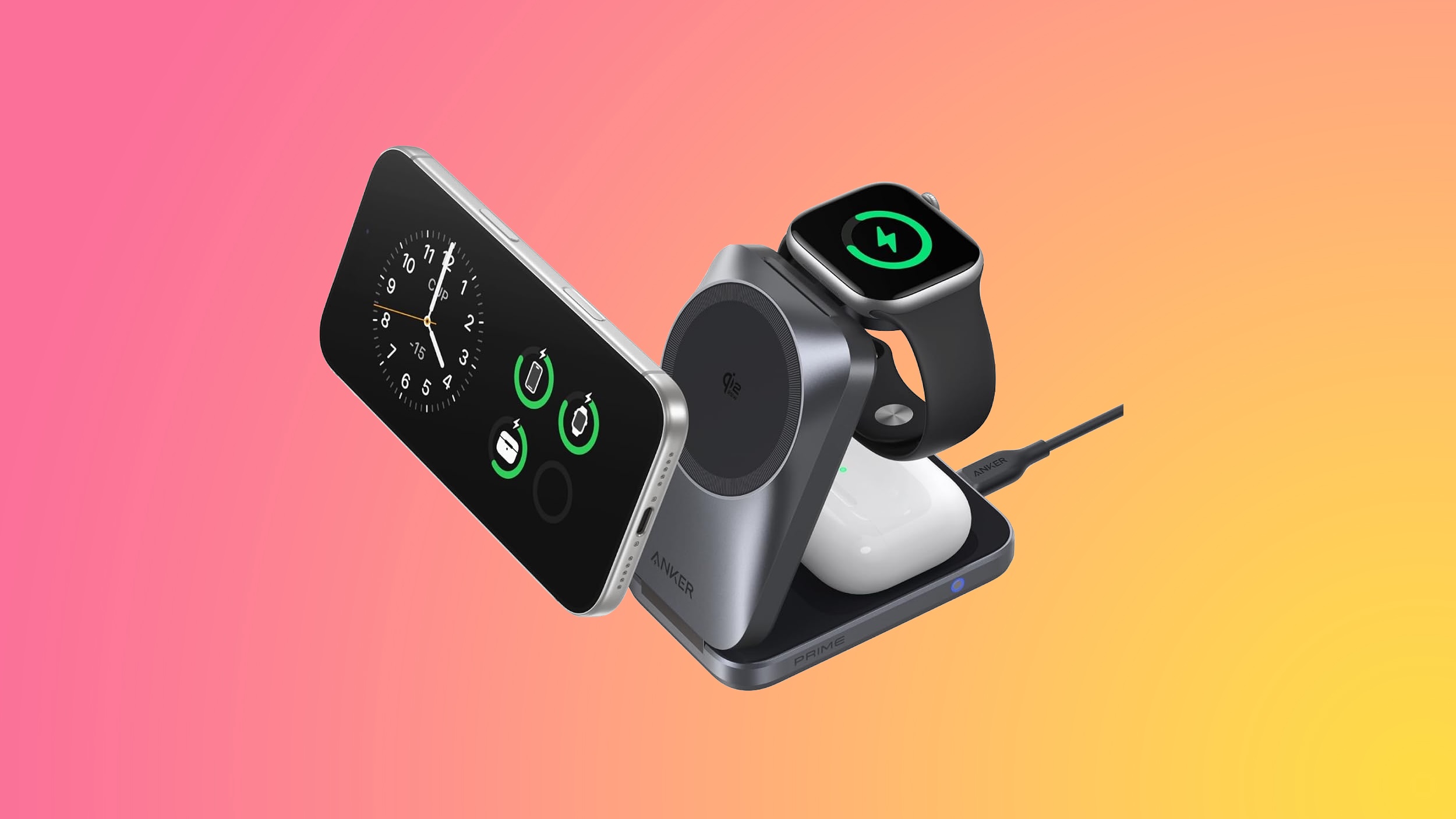
Anker's popular Prime 3-in-1 Wireless Charging Station has dropped to $99.74 on Amazon, down from $149.99. This is one of Anker's newest accessories, and Amazon's sale today is a match of the all-time low price that we last tracked during Prime Day. There are plenty of other Anker accessories on sale this week, which you can find in our original post.

If you're on the hunt for more discounts, be sure to visit our Apple Deals roundup where we recap the best Apple-related bargains of the past week.


Deals Newsletter


Interested in hearing more about the best deals you can find in 2026? Sign up for our Deals Newsletter and we'll keep you updated so you don't miss the biggest deals of the season!


Related Roundup: Apple Deals

This article, "Apple Watch Series 11 Drops to $299, MacBook Pro Up to $500 Off in Latest Apple Deals" first appeared on MacRumors.com

Discuss this article in our forums

  •  

iOS 27: Access the New iPhone Recovery Screen

Since iOS 26, a malfunctioning iPhone has been able to boot itself into Recovery Assistant, with no Mac or PC required. However, you could only get there if your device failed to start up and dropped into recovery on its own.


In iOS 27, currently in beta, Apple has removed that limitation, and you can now manually boot into a Mac-style recovery screen whenever you like.

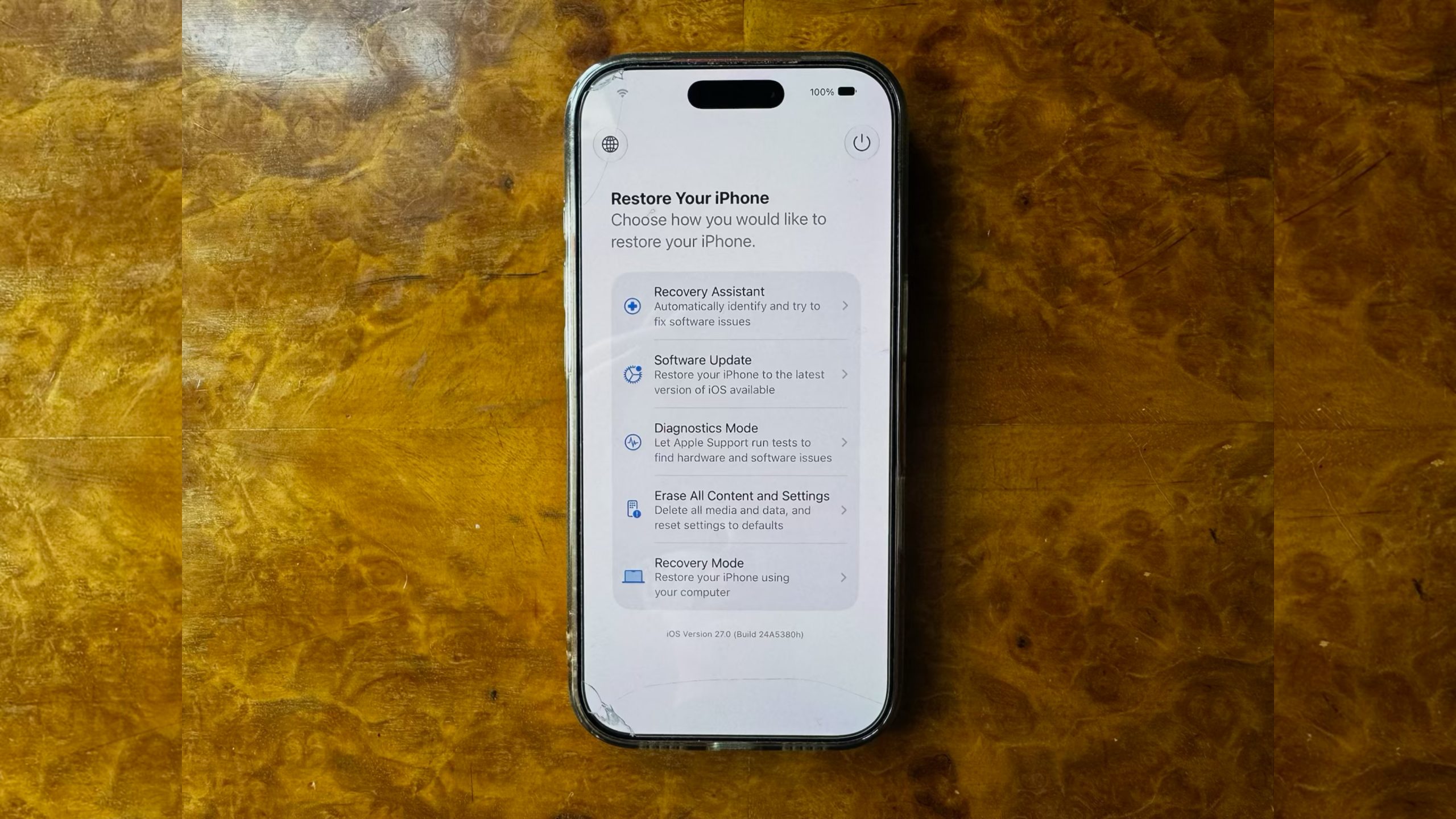
The new recovery mode lets you troubleshoot, update, or erase your device without necessarily plugging it into anything. It can connect automatically to a known Wi-Fi network, and it shows your battery percentage in the corner of the screen. Here's how to access it.

How to Boot Into Recovery Mode


Accessing the recovery mode is similar to the equivalent mode on Apple silicon Macs, and it works the same way on iPads running iPadOS 27.

  1. Turn off your iPhone, then wait about a minute to ensure it has fully shut down.

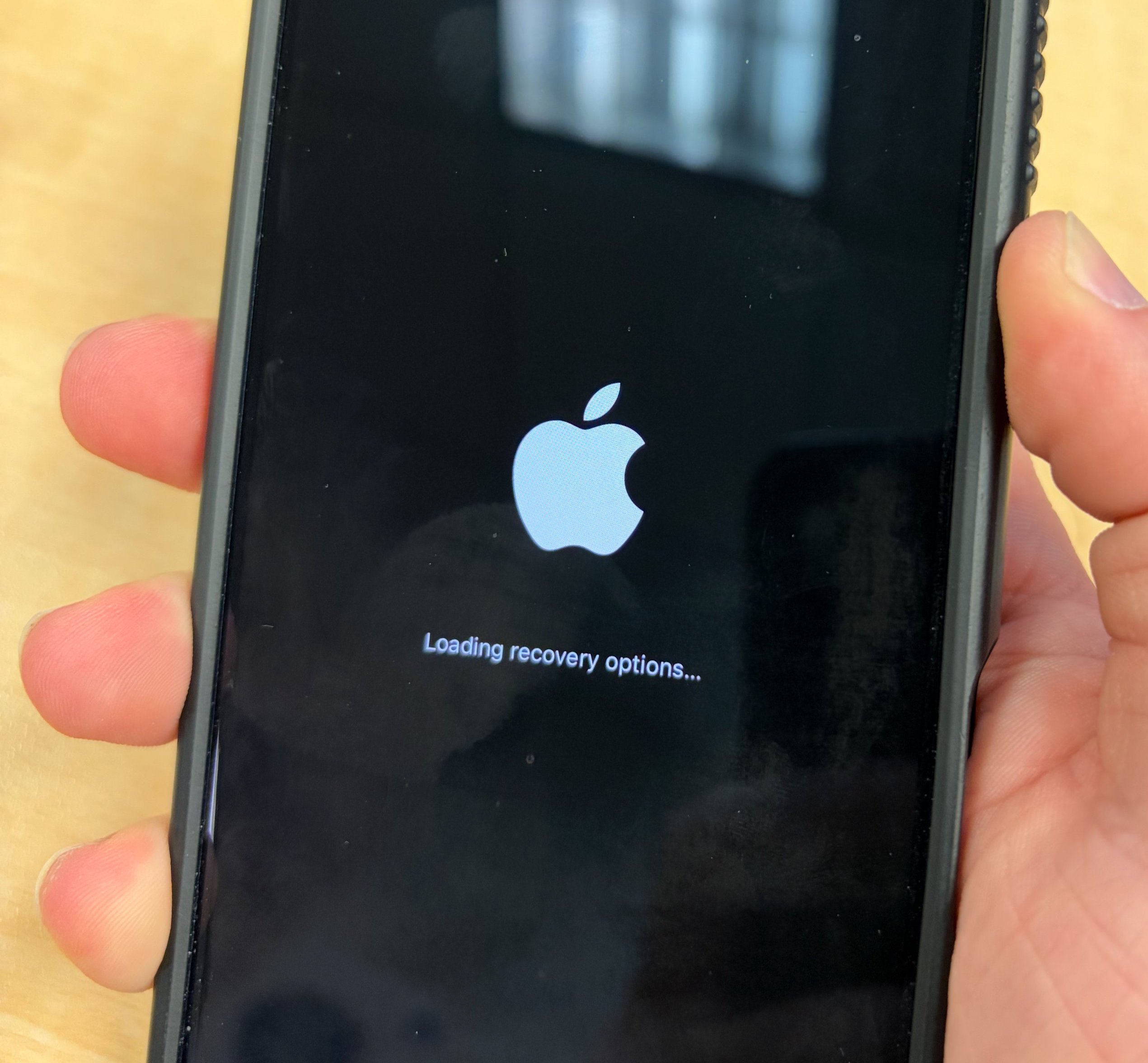
  2. Press and hold the Side button. The Apple logo will appear as it normally does during startup – continue holding the button and you'll see "Continue holding for recovery...".

  3. Release the button when "Loading recovery options..." appears.

Your iPhone will then boot into the new recovery screen instead of loading iOS.


What the Recovery Options Do


The recovery screen offers five options:

  • Recovery Assistant: Automatically scans for software issues and attempts to fix them without requiring further input.

  • Software Update: Installs the latest version of iOS available for your device, which can help if a failed update has left your iPhone stuck in a boot loop.

  • Diagnostics Mode: Runs diagnostics to check for hardware and software issues, and can recommend repairs if needed.

  • Erase All Content and Settings: Completely wipes your iPhone, just like the equivalent option in the Settings app.

  • Recovery Mode: Puts your iPhone into the traditional recovery mode for restoring it with a Mac or PC, without requiring the usual button-press sequence.

On newer iPhone models, there's also a sixth hidden option. While on the recovery screen, if you press and hold the Side button again, a popup menu will appear showing the option Nearby Device Recovery. This lets you restore your iPhone using another Apple device close by, similar to an existing recovery feature that debuted on iPhone 16 models.

Exiting the Recovery Screen


To leave recovery mode, tap the power button in the top-right corner of the screen and confirm that you want to restart. Alternatively, press and hold the physical Side button and choose Restart or Shut Down.

You shouldn't need the new recovery screen often, but it's worth knowing the button sequence now in case a beta goes wrong or a failed update bricks your iPhone. iOS 27 is currently in public beta, so you can download and try it out now before it's released in the fall.
Related Roundups: iOS 27, iPadOS 27

This article, "iOS 27: Access the New iPhone Recovery Screen" first appeared on MacRumors.com

Discuss this article in our forums

  •  

Apple Car Key Support Coming to Future GWM Tank SUVs

Apple's Car Keys feature appears to be coming to TANK vehicles made by Chinese maker Great Wall Motor (GWM), based on code changes discovered by MacRumors in Apple's Wallet app backend.


GWM Tank is a dedicated off-road luxury SUV brand produced by the Chinese automaker.

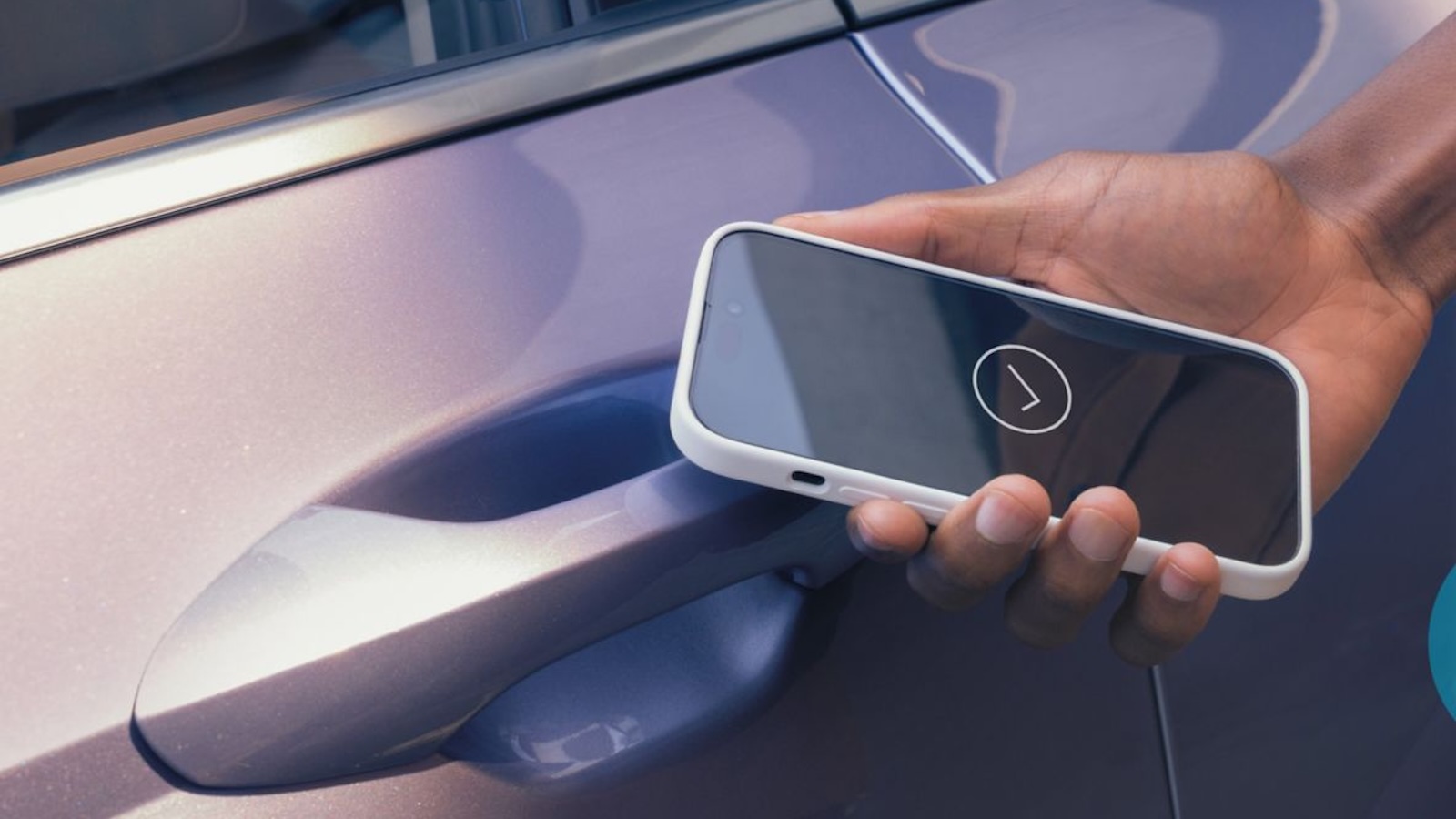
Car Keys allows an iPhone or Apple Watch with NFC capabilities to unlock a vehicle through the Wallet app. A digital version of a car key is stored in Wallet, and unlocking can be done simply by holding an Apple Watch or β€ŒiPhoneβ€Œ near a compatible vehicle's NFC reader.

What can be done with Car Keys may vary by car manufacturer, but at a minimum, Car Keys can be used to unlock your car, lock your car, and start your car, which are the features available with a physical key.

Apple introduced Car Keys in 2022, and car manufacturers like BMW, Rivian, Kia, and Hyundai have all implemented support for Car Keys. Apple maintains a full list of vehicles that support Car Keys on its CarPlay model availability webpage.
This article, "Apple Car Key Support Coming to Future GWM Tank SUVs" first appeared on MacRumors.com

Discuss this article in our forums

  •  

WhatsApp Begins Rolling Out New Username Feature

WhatsApp has started rolling out its new username feature, reports WABetaInfo. Some users who reserved their username have started receiving a notification that their username is active, and that they can now use it to send and receive messages to other users without revealing their phone number.

When someone creates a username, WhatsApp will notify people who already have an active chat with that person. WhatsApp has no directory of usernames to browse, and no username discovery suggestions, so people will need to know a WhatsApp user's exact username to send a message.
This article, "WhatsApp Begins Rolling Out New Username Feature" first appeared on MacRumors.com

Discuss this article in our forums

  •  

Report: Apple Sends Legal Letters to Dozens of OpenAI Employees

Apple has reportedly sent legal letters to dozens of former Apple employees now working at OpenAI, telling them to preserve potentially relevant documents and communications as it continues to pursue its trade secret lawsuit against the AI company.


The Financial Times ($) reports that Apple has targeted around 40 former employees with legal preservation letters, acting on its belief that the alleged misappropriation of confidential information may extend beyond the individuals named in its original complaint.

The development follows Apple's lawsuit filed last week against OpenAI, in which the company alleges a coordinated effort to obtain confidential information relating to its hardware engineering and product development.

Apple claims OpenAI recruited key engineers, including former Apple executives Tang Tan and Chang Liu, and benefited from proprietary designs, manufacturing processes, and other trade secrets. Tan is OpenAI's Chief Hardware Officer and a 24-year Apple veteran who led product design, while Liu is on the hardware team at OpenAI after working as a senior system electrical engineer at Apple.

The complaint says that more than 400 former Apple employees now work at OpenAI and suggests that the alleged misconduct is broader than a few isolated actions by individual employees. OpenAI has denied the allegations, saying in a statement to Bloomberg this week that it is "not aware of any evidence that this complaint has merit."

Apple has requested an injunction requiring OpenAI to cease using any Apple information during the development of OpenAI's AI hardware device. Apple is also seeking damages and suing Tan and Liu for breach of contract for violating their employment agreements. The company believes the evidence uncovered so far may represent only the "tip of the iceberg," according to its lawsuit.
This article, "Report: Apple Sends Legal Letters to Dozens of OpenAI Employees" first appeared on MacRumors.com

Discuss this article in our forums

  •  

EU Orders Google to Give Rival AI Apps the Same Android Access as Gemini

The European Commission today formally ordered Google to give third-party AI services the same access to Android device features that Gemini has. Europe's Digital Markets Act requires software makers like Apple and Google to grant equal interoperability to third-party apps and services, and the EC is enforcing it.


DMA interoperability rules are why Siri AI won't be available in the European Union when iOS 27 launches. While Apple tried to work out an agreement with regulators before launching β€ŒSiriβ€Œ AI in Europe, Google did the opposite. Instead of asking, Google just launched Gemini integration on Android and opted to deal with the consequences afterward. Google's strategy gives Android users in Europe full Gemini access while it works on compliance with the DMA.

The European Commission is giving Google a full year to implement changes that will meet the Digital Markets Act requirements, and that's before any legal appeals Google might make.

The European Commission is making many of the same demands of Google that it made of Apple. Google must allow AI apps to access 11 features, such as:

  • AI services must be accessible through voice commands like "Hey Google" or through access points like the home button or another activation button.

  • AI services must be able to complete actions in and across apps, including completing long-running tasks in the background.

  • Google must allow AI services to access context from apps and device sensors so AI can offer proactive services and anticipate user needs.

  • Google has to give AI apps sufficient hardware and software resources, including access to its on-device AI models to execute tasks.


Google is required to implement the majority of the European Commission's changes by August 1, 2027.

Shortly after announcing β€ŒSiriβ€Œ AI, Apple said EU regulators would not accept any of its proposed solutions to introduce the feature, and refused to engage on options that "preserve privacy and security." Apple wanted to use a Trusted System Agent that would allow third-party virtual assistants to safely access the same device capabilities as β€ŒSiriβ€Œ AI.

Apple said the Digital Markets Act would require it to give any AI system "nearly unlimited access to a user's device," along with the ability to act on that information autonomously.

The European Commission claims Apple was "unable to develop interoperability solutions that meet essential EU privacy and security standards" and instead asked for a blanket exemption from the interoperability requirements, which the EC did not grant.

In response to the EC's mandate, Google said the requirements "risk undermining vital privacy and security guardrails for millions of Europeans." Google hasn't given information on its next steps, but it says it plans to "continue advocating for a balanced approach that protects privacy and security while supporting market goals."
This article, "EU Orders Google to Give Rival AI Apps the Same Android Access as Gemini" first appeared on MacRumors.com

Discuss this article in our forums

  •  

Gunnar Wolf: Got your keys ready for DebConf26?

Yay! Finally it’s that time of year β€” DebCamp is underway, and soon it will be time for DebConf! ξ½πŸŽ‰πŸ₯³

As it is by now tradition, it’s my task to coordinate the DebConf26 keysigning party. And, as usual, I have set up the list of DebConf26 keysigning maps for everybody involved.

So, if you are taking part of DebConf, make sure to:

  •  

Google Search Now Connects to Instacart, Canva and YouTube Music

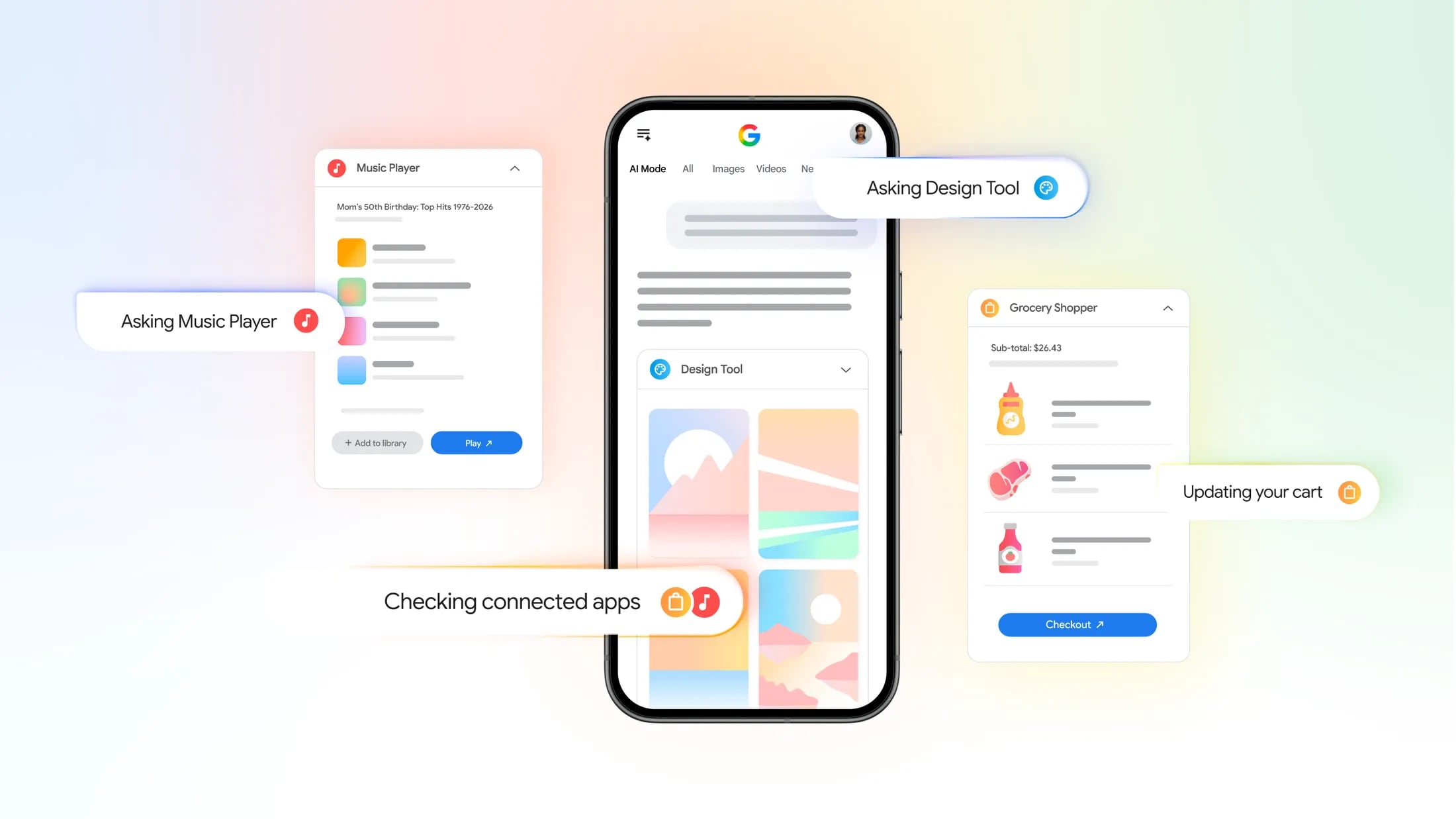
Google is expanding AI Mode in Search, allowing users to connect apps to improve search results and "get more done."


Instacart, YouTube Music, and Canva can be connected, and Google explains how the integrations can be useful:

  • Instacart - If you're using AI Mode to help you plan a grocery list, ingredients can be added right to an Instacart shopping cart for quick ordering.

  • Canva - If you're creating a flyer, you can get template options from Canva.

  • YouTube Music - You can use AI Mode to curate a playlist and save it to YouTube Music.


Instacart, Canva, and YouTube Music are the only apps that can be connected right now, but Google may add more in the future. Connected apps were previously available in Gemini, but the feature set is now being expanded to Search.

Connecting apps is limited to AI Mode in the United States, in English. Once an app is connected, users are able to access new features when making a request in Google Search AI Mode. Connected apps can be used in Search both on the desktop and through the Google Search iOS app.

Google suggests users turn on history and personalized recommendations to improve the Google Search experience. Google says it uses people's interactions with Search and the new AI features to develop and improve generative AI experiences.
Tag: Google

This article, "Google Search Now Connects to Instacart, Canva and YouTube Music" first appeared on MacRumors.com

Discuss this article in our forums

  •  

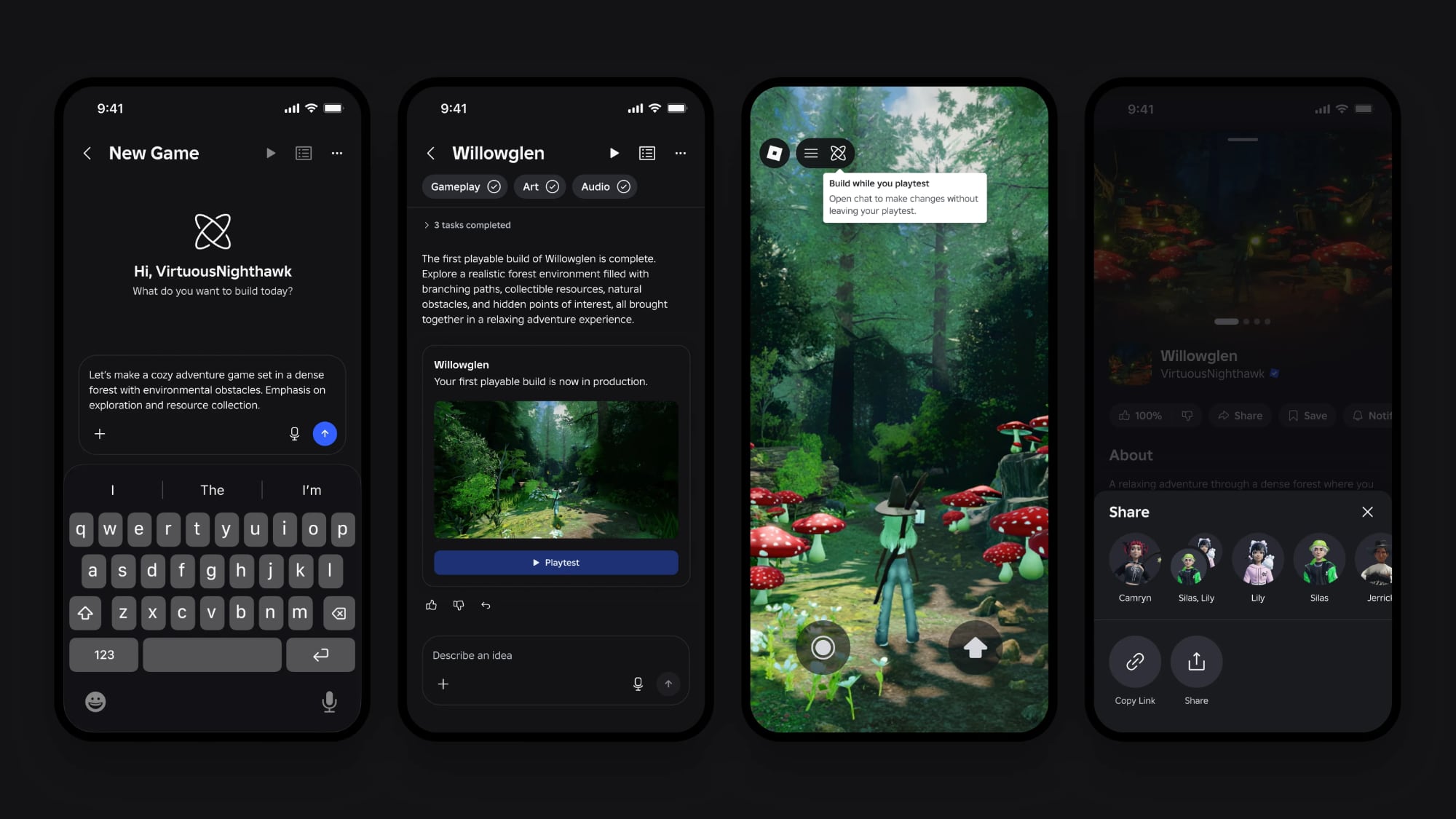
Roblox is Adding AI Game Creation to iPhone and iPad

Online game platform Roblox today said it is adding a new Build tool that will let iPhone and iPad users create games using AI.


With the mobile-first Build option, Roblox users can write a text-based prompt and have AI turn it into a basic game. A single prompt will create a starting point that can be expanded with playtesting and further commands. The entire game-making process, from creation to uploading on the Roblox platform, can be done on a mobile device.

Right now, creating a game in Roblox requires a Mac or PC app, but Build will extend game creation to mobile users too. Roblox is also adding new AI creation tools to Roblox Studio, its desktop game creation software. Content created using the Build tool can be iterated on with Studio.

Roblox Build is set to roll out to the Roblox mobile app on July 28, beginning with a public alpha test for users in New Zealand. Build will roll out to additional regions in the coming months as Roblox improves the experience.

Roblox has 132 million daily active users, and user-created games like Brookhaven RP, Adopt Me, and Dress to Impress have been wildly popular.
Tag: Roblox

This article, "Roblox is Adding AI Game Creation to iPhone and iPad" first appeared on MacRumors.com

Discuss this article in our forums

  •  

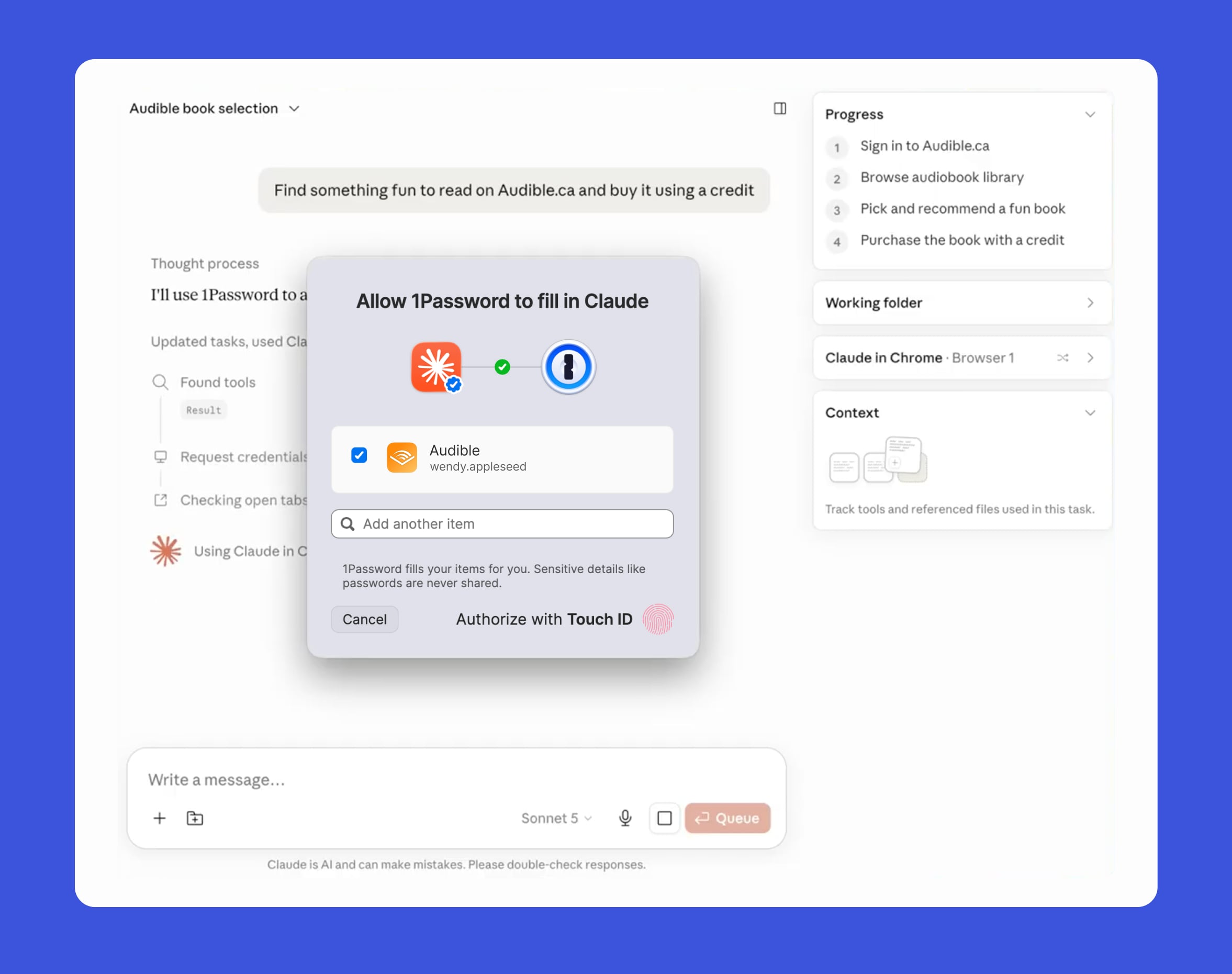
1Password for Claude Lets AI Log In Without Seeing Your Passwords

Popular password management app 1Password today added Claude support, which means AI service Claude can access credentials stored in 1Password for completing browser tasks.


With the integration, Claude can use 1Password logins and one-time codes without the actual password being exposed to Claude. Passwords never reach Claude's context, memory, or Anthropic's systems.

When Claude wants to sign in to a website, 1Password shows the user which credential Claude wants access to and why. After the user approves the request, 1Password adds the credential directly to the page. Access is limited to the current task and ends when the task has been completed. The 1Password team says that after a password is autofilled, the app checks to make sure secrets were not exposed on the page.


Credit cards and identities in 1Password are not supported at the current time, so Claude's access is limited to logins and one-time codes.

The 1Password browser extension is also being updated with Agentic Mode, which gives users control over browser-based AI agents. When an AI agent takes over, the 1Password extension locks down so passwords are not exposed. The password interface is hidden, and the agent can use logins and one-time codes only when the user gives approval. Agentic Mode works to protect passwords from AI agents even if the integration is not set up.

1Password for Claude is available for Mac, and 1Password business, family, and individual plan subscribers can use it. A Pro, Max, Team, or Enterprise Claude plan is required. 1Password has a help document with detailed information on how to set it up.

Claude can use 1Password logins across sites where Claude in Chrome can complete actions. The 1Password desktop app and browser extension are required, as are the Claude desktop app and the Claude in Chrome browser extension.
This article, "1Password for Claude Lets AI Log In Without Seeing Your Passwords" first appeared on MacRumors.com

Discuss this article in our forums

  •  

Apple Sued Over Reported 'Hide My Email' Flaw

Apple this week was sued over a reported "Hide My Email" flaw that could expose a user's real email address. The proposed class action lawsuit alleges that Apple violated California's false advertising law and other consumer protection statutes by knowingly offering a feature that does not work as advertised.

A security researcher disclosed the apparent "Hide My Email" vulnerability to Apple in June 2025, but there are no known instances of it being exploited, as the steps involved have not been shared with the public as a precaution.
This article, "Apple Sued Over Reported 'Hide My Email' Flaw" first appeared on MacRumors.com

Discuss this article in our forums

  •  

Apple's Chipmaker Pledges $100 Billion More for US Plants

Apple chip supplier TSMC has announced a $100 billion increase to its U.S. chip investment, bringing its total commitment to $265 billion.


The increase was confirmed by the White House and the Department of Commerce alongside TSMC's second quarter earnings call. Commerce Secretary Howard Lutnick said the investment would "create tens of thousands of American jobs," while TSMC chairman and CEO C.C. Wei told CNBC the new fabrication plants would support "our leading U.S. customers," a group that reportedly includes Apple, alongside Nvidia and Broadcom.

Apple CEO Tim Cook called Apple "TSMC Arizona's first and largest customer" when the company's third Arizona fab broke ground last year, and the company's first Arizona plant already produced some of Apple's A16 chips.

TSMC has historically reserved its most advanced manufacturing processes for its home plants in Taiwan, meaning Arizona made chips have trailed several generations behind whatever Apple ships at any given time. TSMC has since committed to building its own advanced packaging facilities in the US as part of its broader investment plan, according to a regulatory filing.

The new $100 billion is expected to fund up to four more plants, though the exact shape of the plan remains unsettled. The Department of Commerce says the total will reach 12 U.S. facilities, while an official told Bloomberg the eventual mix could be 10 fabrication plants and two packaging facilities, focused on 2 nanometer chips, TSMC's most advanced process commercially available today.

That timing could hinge partly on how much U.S. capacity Apple itself ends up needing, since the company has been separately exploring Intel and Samsung as backup chipmakers to reduce its reliance on TSMC amid the ongoing global chip crunch. Apple is reported to have secured an exemption from a proposed 100% semiconductor tariff partly by pledging its own U.S. manufacturing investment and agreeing to buy chips from Intel.
Tag: TSMC

This article, "Apple's Chipmaker Pledges $100 Billion More for US Plants" first appeared on MacRumors.com

Discuss this article in our forums

  •  

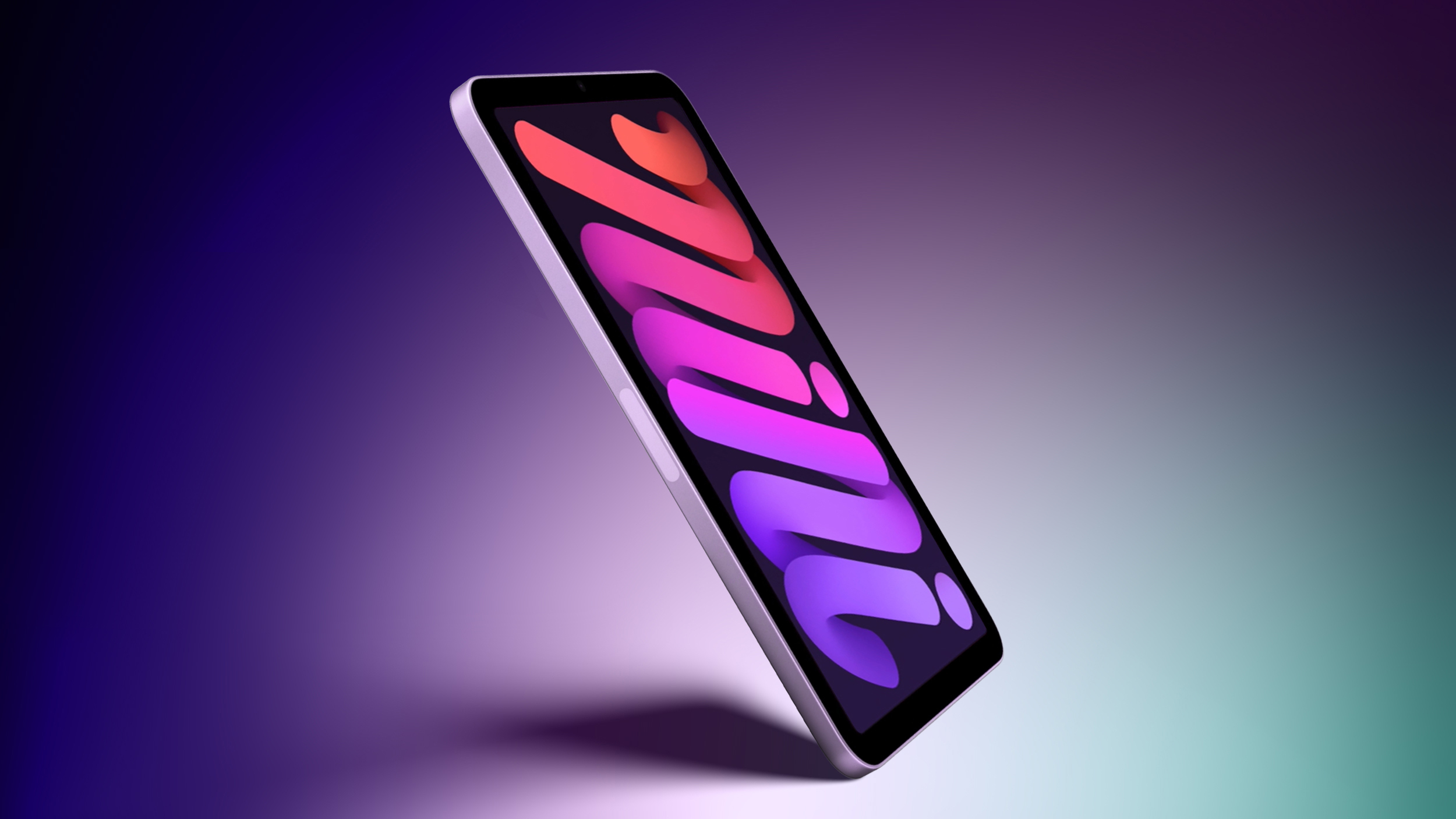
Apple Begins Selling Refurbished iPad Mini With A17 Pro Chip at a Discount

Apple today added the iPad mini with the A17 Pro chip to its refurbished store in the U.S. and Canada for the first time since the device was released in October 2024. Other key features include an 8.3-inch display, a 12-megapixel Center Stage camera, and a Touch ID power button. There is no availability in any other countries yet.


In the U.S., refurbished pricing starts at $509 for a Wi-Fi model with 128GB of storage, down from $599 for the equivalent brand-new model. However, keep in mind that a new iPad mini started at $499 until Apple raised prices last month, so unfortunately the refurbished model costs $10 more than a new model did just a few weeks ago.

Apple says the refurbished iPad mini models include a new battery and outer shell, a plain new box, and all accessories, including a 20W USB-C power adapter and a USB-C charging cable. Apple says it puts refurbished devices through a "thorough cleaning process and inspection," which typically results in a like-new condition.

All refurbished iPads are covered by Apple's one-year warranty. AppleCare+ is available.

Apple reportedly plans to release a new iPad mini with an OLED display and several other upgrades by October, but rumored timeframes can shift.
Related Roundup: iPad mini
Buyer's Guide: iPad Mini (Don't Buy)
Related Forum: iPad

This article, "Apple Begins Selling Refurbished iPad Mini With A17 Pro Chip at a Discount" first appeared on MacRumors.com

Discuss this article in our forums

  •  

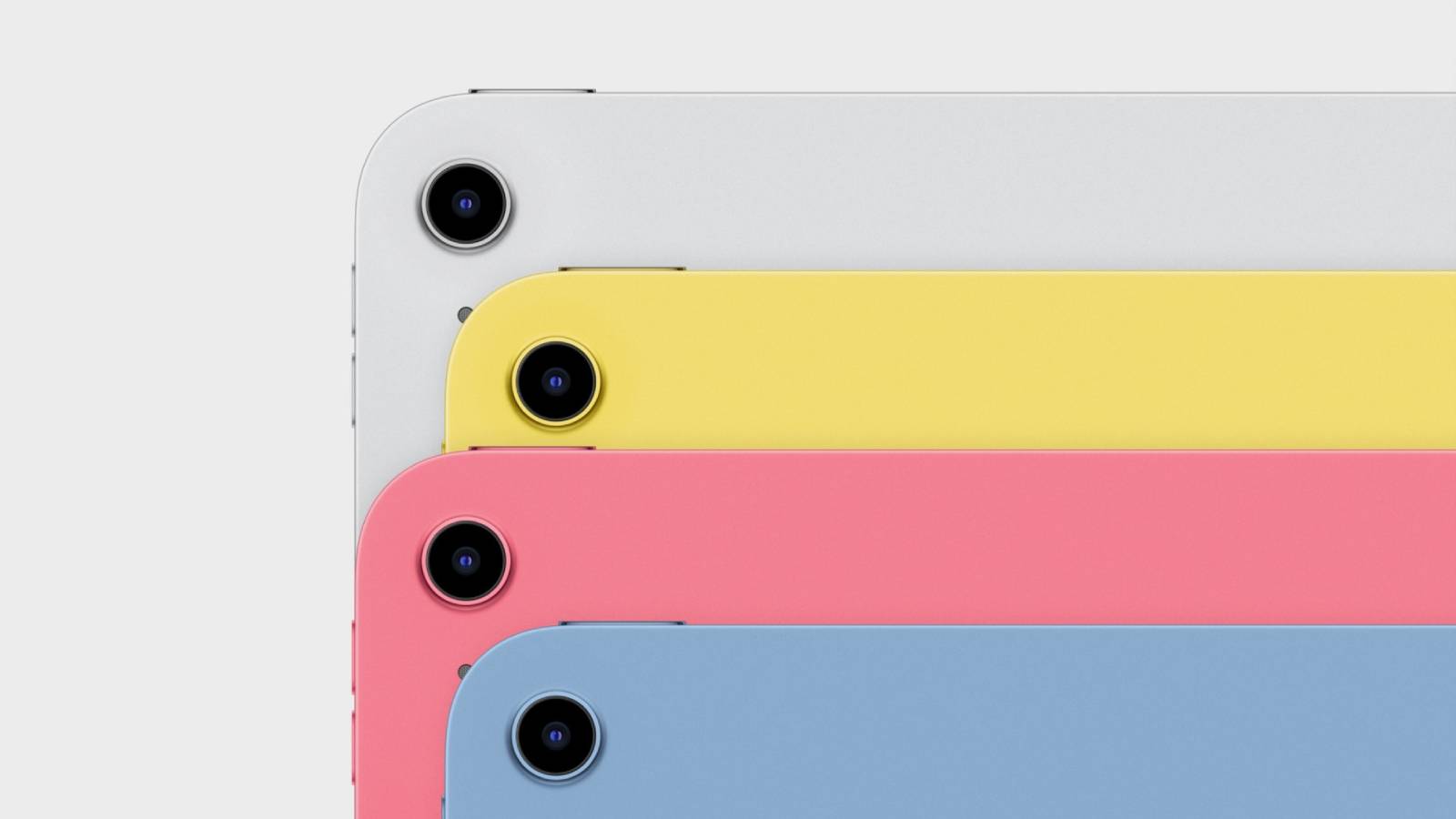
Here's When to Expect the iPad 12 to Launch

In March, Bloomberg's Mark Gurman said a new entry-level iPad was "still coming this year," but apparently this is no longer the case. Today, he reported that the device is slated for release in the first quarter of 2027 at the earliest.


The main new feature will be a faster processor rather than major design changes, he said, so it sounds like nothing more than a spec bump. While the next iPad mini is expected to have an OLED display, the base iPad will stick with an LCD screen.

Gurman previously said the device would be powered by the A18 chip, but Macworld's Filipe EspΓ³sito said it would have an A19 chip. In any case, the device would gain support for Apple Intelligence, as both chips have the minimum 8GB of RAM required for those features. The current entry-level iPad has an A16 chip with 6GB of RAM.

Last month, Apple increased the entry-level iPad's starting price worldwide. In the U.S., for example, the device now starts at $449, up from $349.

Apple also plans to release new 11-inch and 13-inch iPad Air models early next year, according to Gurman. He said the iPad Air will eventually move to an OLED display, but he did not say if that is happening with the next models specifically.

He recently reported that new iPad Pro models will launch early next year too.

All in all, he expects a new iPad mini by October this year, followed by updated entry-level iPad, iPad Air, and iPad Pro models in the first half of next year.
Related Roundup: iPad
Buyer's Guide: iPad (Don't Buy)
Related Forum: iPad

This article, "Here's When to Expect the iPad 12 to Launch" first appeared on MacRumors.com

Discuss this article in our forums

  •  

Missed Pre-Hike MacBook Pro Prices? Amazon's New Deals Still Save Up to $500

Amazon's prices on the 2026 MacBook Pro have now joined in on Apple's recent price hikes, meaning we're no longer tracking pre-hike markdowns on these devices. However, there are still notable sales to be found if you're shopping for a MacBook Pro this month, with up to $500 off new prices available right now on Amazon.

Note: MacRumors is an affiliate partner with Amazon. When you click a link and make a purchase, we may receive a small payment, which helps us keep the site running.
14-Inch MacBook Pro


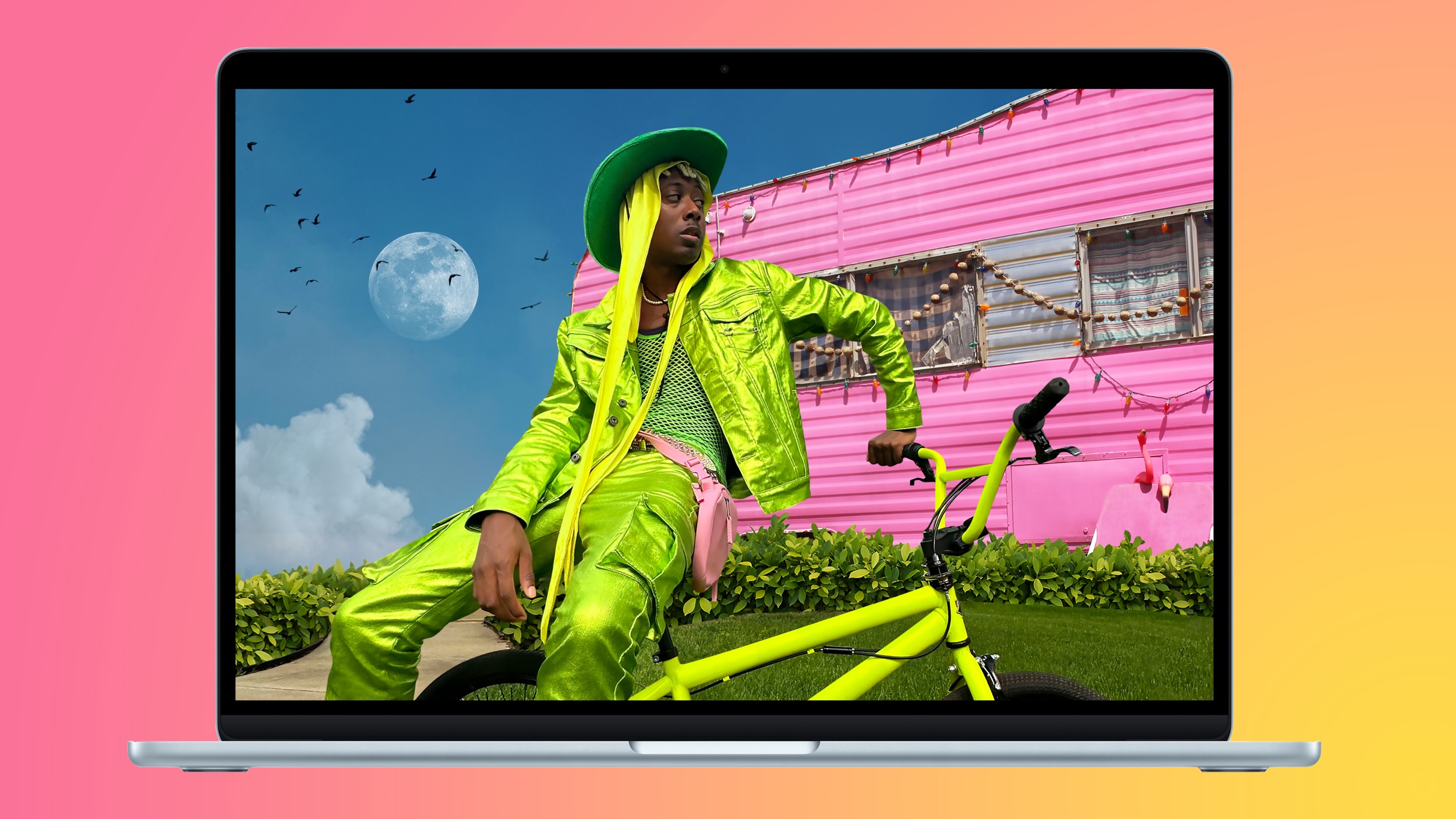
Prices start at $2,349.00 for the 24GB/1TB 14-inch M5 Pro MacBook Pro, down from $2,499.00. The 24GB/2TB model is on sale for $2,997.50, which is a $201 discount on the new price.


16-Inch MacBook Pro


In terms of the larger display models, we're tracking four total discounts on Amazon. These start at $2,818.34 for the 24GB/1TB M5 Pro configuration ($180 off), and reach up to $4,499.00 for the 48GB/2TB M5 Max device ($500 off).


If you're on the hunt for more discounts, be sure to visit our Apple Deals roundup where we recap the best Apple-related bargains of the past week.


Deals Newsletter


Interested in hearing more about the best deals you can find in 2026? Sign up for our Deals Newsletter and we'll keep you updated so you don't miss the biggest deals of the season!


Related Roundup: Apple Deals

This article, "Missed Pre-Hike MacBook Pro Prices? Amazon's New Deals Still Save Up to $500" first appeared on MacRumors.com

Discuss this article in our forums

  •  

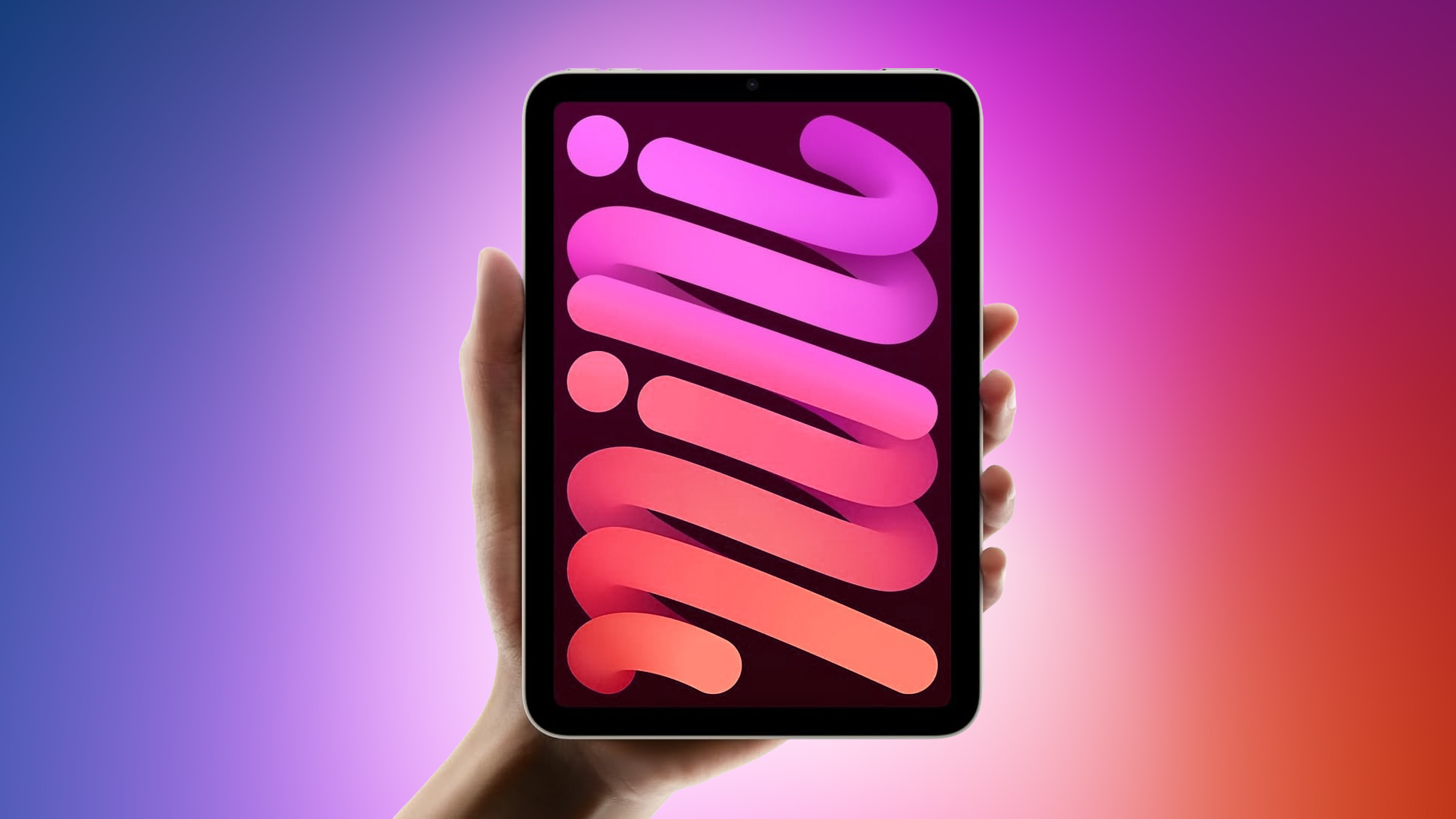
New iPad Mini With Four Upgrades Reportedly Launching by October

Apple is planning to release a new iPad mini model with an OLED display by October this year, according to Bloomberg's Mark Gurman.


Apple already updated the iPad Pro with an OLED display in May 2024, but the iPad mini, iPad Air, and entry-level iPad are all still equipped with LCD screens. The move to OLED technology would result in the next iPad mini offering improved image quality, thanks to richer colors and higher contrast ratio with true blacks.

Given that OLED displays are generally more expensive than LCDs, the next iPad mini could have a higher starting price compared to the current model.

Gurman did not provide any other details about the next iPad mini today, but he previously reported that the device would receive a vibration-based speaker system and increased water resistance. The next iPad mini is also rumored to be powered by either an A19 Pro or A20 chip, up from the A17 Pro chip in the current model.

The current β€Œmodel launched in October 2024, with the A17 Pro chip enabling Apple Intelligence.
Related Roundup: iPad mini
Buyer's Guide: iPad Mini (Don't Buy)
Related Forum: iPad

This article, "New iPad Mini With Four Upgrades Reportedly Launching by October" first appeared on MacRumors.com

Discuss this article in our forums

  •  

BSD Release: OPNsense 26.7

The DistroWatch news feed is brought to you by TUXEDO COMPUTERS. The OPNsense project develops a FreeBSD-based specialist operating system (and a fork of pfSense) designed for firewalls and routers. The latest version of OPNsense is 26.7 which is based on FreeBSD 15.1 and introduces a number of behind-the-scenes changes: "The first implementation of the new Interface Assignments framework....
  •  

Apple Reportedly Ramps Up Vapor Chamber Orders for Foldable iPhone

Apple has ramped up orders for vapor chamber cooling components said to be destined for its upcoming foldable iPhone and 20th-anniversary iPhone models, according to a Chinese leaker.


The Weibo account known as "Fixed Focus Digital" claims the increased order volume will first support the manufacture of Apple's book-style foldable, or "iPhone Ultra," which is expected to debut in September. Apple has reportedly asked suppliers to produce approximately 10 million foldable iPhones in 2026, up from an earlier forecast of seven to eight million units.

Fixed Focus Digital previously said Apple's first foldable iPhone would feature "impressive" vapor chamber cooling, claiming that the company is "going all out" with the device's thermal engineering. While there's no corroborating evidence, it's quite possible that the foldable design Apple is adopting could present unique cooling challenges because of its thinner internal structure and limited space for heat dissipation.

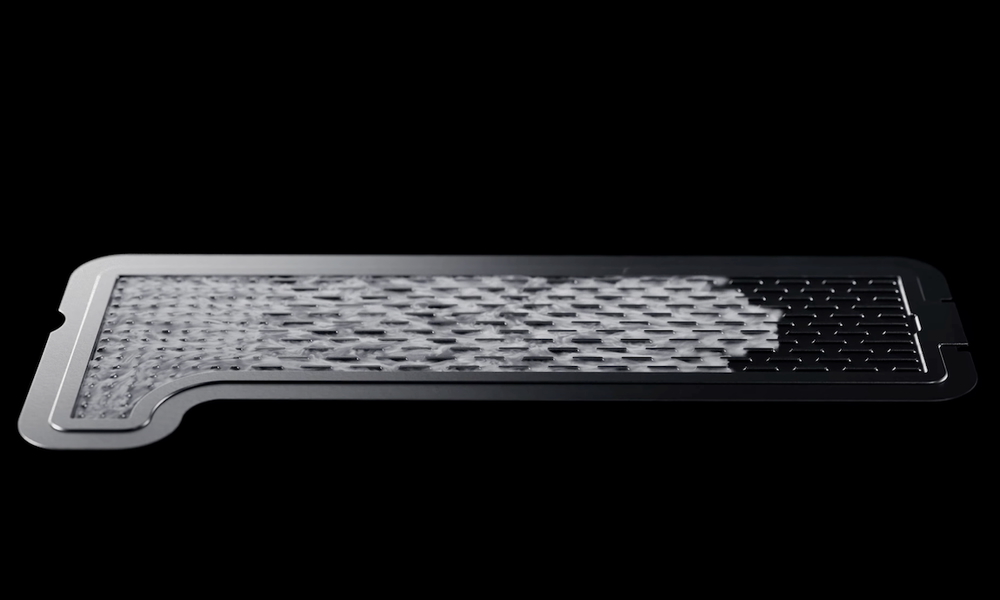
Apple introduced vapor chamber cooling to the iPhone lineup with last year's iPhone 17 Pro. The system uses a small amount of deionized water to move heat away from the A19 Pro chip and distribute it through the device's aluminum unibody frame.

Meanwhile, next year's 20th-anniversary iPhone will reportedly feature an edge-to-edge display with glass that curves around all four sides, with the aim of creating a nearly borderless appearance. If indeed we see such a device with a substantially redesigned enclosure, there's a good chance that it too will require a more advanced cooling system.

Apple is expected to offer two anniversary models in 2027 in sizes similar to the forthcoming iPhone 18 Pro and iPhone 18 Pro Max. The latter devices are rumored to retain the 6.3-inch and 6.9-inch dimensions of the current iPhone 17 Pro models, suggesting next year's commemorative lineup could use the same display sizes.

Earlier this week, Fixed Focus Digital claimed that Apple's "preferred approach" for the iPhone 20 is a return to glass, and that the relevant manufacturing facilities have already been renovated in advance of the project.
This article, "Apple Reportedly Ramps Up Vapor Chamber Orders for Foldable iPhone" first appeared on MacRumors.com

Discuss this article in our forums

  •  
❌