❌

Lees weergave

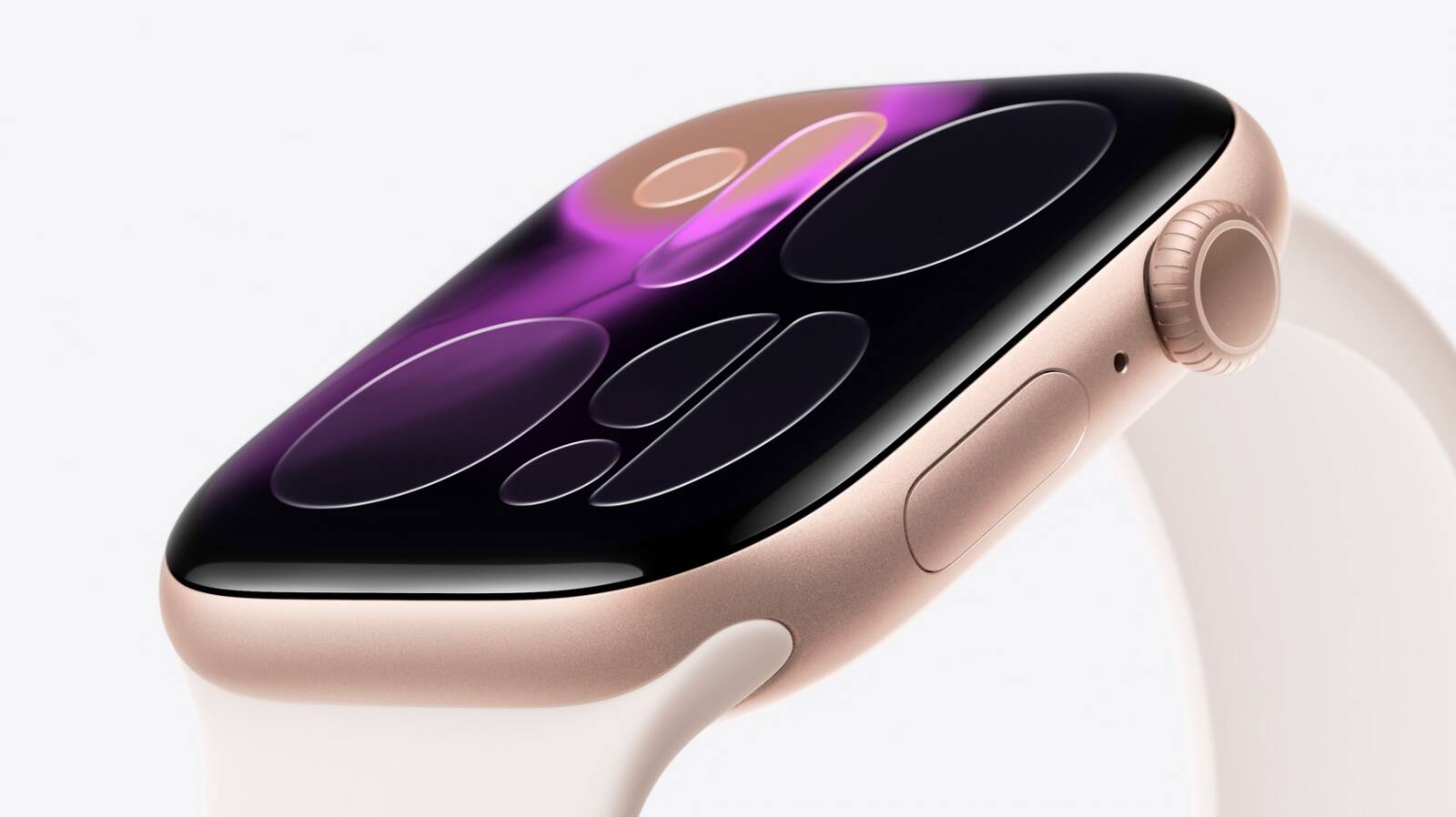
Apple Watch Accounts for 90% of AI Smartwatch Shipments

Apple accounted for roughly 90% of all Edge AI-capable smartwatch shipments in the first quarter of 2026, according to new data from Counterpoint Research.


That dominance came as Edge AI penetration across the broader smartwatch market grew 70% year-over-year, reaching 25% in the first quarter of 2026, according to Counterpoint's Global Smartwatch Shipments Tracker.

"Edge AI" refers to artificial intelligence that runs directly on a device's own chip rather than being processed on remote servers. On the Apple Watch, that means the onboard Neural Engine handles tasks like recognizing an irregular heartbeat or detecting a fall in the moment, without sending data to a paired iPhone or the cloud first. Anshika Jain, Principal Analyst at Counterpoint Research, said:

Brands have been continuously upgrading their smartwatch hardware to make devices more AI-capable. Edge AI integration enables real-time health insights and faster responses while helping ensure data privacy. Currently, Edge AI penetration remains limited to leading brands, with Apple solely accounting for ~90% of Edge AI smartwatch shipments in Q1 2026.


Health and fitness monitoring remains the main use case for Edge AI on smartwatches. Counterpoint's data shows blood pressure monitoring shipments doubling and sleep apnea detection tripling year over year, with brands now apparently setting their sights on diabetes detection next.

Apple's head start traces back to 2023, when it introduced the S9 chip with a 4-core Neural Engine built specifically for on-device machine learning in the Apple Watch. Huawei only followed with comparable silicon in 2025, launching its own Kirin W80 chip to power its "Celia" voice assistant locally, and Qualcomm isn't entering the race until this year with its Snapdragon Wear Elite platform. Google is also said to be readying its own Tensor-based wearable chip, though it has yet to ship.

Counterpoint notes that a software-driven alternative to dedicated NPUs is also emerging, with Ambiq's Apollo platform running AI inference on vector-core silicon via Arm's Helium extensions rather than purpose-built neural hardware. This approach remains a niche compared to Apple's dedicated-chip strategy, but it could eventually help cheaper smartwatches offer some Edge AI features without the silicon Apple has spent years building into its devices.

Counterpoint only classifies a smartwatch as Edge AI-capable if it has a neural engine or NPU on board and at least one of its health, safety, or interaction features actually runs its inference on that chip, rather than merely including the hardware.
Related Roundup: Apple Watch 11
Buyer's Guide: Apple Watch (Caution)

This article, "Apple Watch Accounts for 90% of AI Smartwatch Shipments" first appeared on MacRumors.com

Discuss this article in our forums

  •  

The MacRumors Show: Goodbye MacBook Pro? MacBook Ultra Is Coming

On this week's episode of The MacRumors Show, we discuss the future of Apple's increasingly tangled high-end MacBook lineup, including the entry-level MacBook Pro and the rumored "MacBook Ultra."


Apple's chip roadmap for the Mac is reportedly set to take an unusual turn over the next year. The company is said to be skipping the M6 Pro and M6 Max entirely, jumping from the M5 generation straight to the M7 for its high-end laptops. A standard M6 chip will still arrive this year in an entry-level β€ŒMacBook Proβ€Œ, but there will apparently be no Pro or Max variant in that family.

As a result, Apple's first high-end OLED laptop will use the existing M5 Pro and M5 Max chips rather than newer silicon. First-generation buyers would therefore be paying a premium for a redesigned machine featuring the same processors already found in the current β€ŒMacBook Proβ€Œ, with M7 Pro and M7 Max models expected to follow in the second half of 2027.

The launch window remains fluid. The device was long expected to arrive in late 2026, but memory chip constraints and Apple's recent price increases have pushed it toward early 2027. A second-generation model with M7 chips is already planned for late 2027, meaning the first Ultra could remain on sale for a relatively short window.

The overlapping releases make for a crowded and confusing roadmap. Across roughly a year, Apple is expected to ship a base M6 β€ŒMacBook Proβ€Œ, a redesigned base M7 model in the first half of 2027, two M5 Pro and M5 Max MacBook Ultra models, their eventual M7 Pro and M7 Max successors, and perhaps new high-end β€ŒMacBook Proβ€Œ models with the M7 Pro and M7 Max. Notably, the entry-level M7 model is set to get the new design first, ahead of the pricier high-end β€ŒMacBook Proβ€Œ models.

The headline changes are reserved for the top-tier "Ultra" model. It is expected to be the first Mac with an OLED display, using the same hybrid tandem β€ŒOLEDβ€Œ technology as the iPad Pro, along with the first touchscreen on a Mac, a Dynamic Island in place of the notch, and a thinner chassis. Both 14-inch and 16-inch sizes are expected. Built-in cellular connectivity for the first time on a Mac is also rumored.

Apple is reportedly positioning touch as "touch-friendly, not touch-first," letting users move between touch, trackpad, and keyboard rather than treating the Mac like an iPad. That marks a reversal for a company that long resisted the idea. Steve Jobs argued in 2010 that vertical touchscreens cause arm fatigue, and as recently as 2021 hardware chief John Ternus said the Mac was "totally optimized for indirect input."

Signs of the shift are already visible in macOS 27 Golden Gate, which adds direct touch control to Sidecar, so users can tap and interact with macOS elements using a finger on an β€ŒiPadβ€Œ. A reinforced hinge is also expected, so the display does not wobble when tapped.

Pricing is likely to be steep. Apple raised prices across the Mac lineup in June, and the current 14-inch β€ŒMacBook Proβ€Œ now starts at $1,999, rising to $2,499 with the M5 Pro chip and $4,099 for an M5 Max. The 16-inch M5 Max reaches $4,399, and a fully specced configuration already exceeds $10,000. The high-end β€ŒOLEDβ€Œ model is expected to start higher still.

The MacRumors Show has its own YouTube channel, so make sure you're subscribed to keep up with new episodes and clips.


You can also listen to β€ŒThe MacRumors Showβ€Œ on Apple Podcasts, Spotify, Overcast, or other podcast apps. You can also copy our RSS feed directly into your player.


If you haven't already listened to the previous episode of The MacRumors Show, catch up to hear our discussion about the latest leaks and rumors surrounding the iPhone 18 Pro.

Subscribe to β€ŒThe MacRumors Showβ€Œ for new episodes every week, where we discuss some of the topical news breaking here on MacRumors, often joined by interesting guests such as Kayci Lacob, Kevin Nether, John Gruber, Mark Gurman, Jon Prosser, Luke Miani, Matthew Cassinelli, Brian Tong, Quinn Nelson, Jared Nelson, Eli Hodapp, Mike Bell, Sara Dietschy, iJustine, Jon Rettinger, Andru Edwards, Arnold Kim, Ben Sullins, Marcus Kane, Christopher Lawley, Frank McShan, David Lewis, Tyler Stalman, Sam Kohl, Federico Viticci, Thomas Frank, Jonathan Morrison, Ross Young, Ian Zelbo, and Rene Ritchie.

β€ŒThe MacRumors Showβ€Œ is on X @MacRumorsShow, so be sure to give us a follow to keep up with the podcast. You can also email us at podcast@macrumors.com or head over to The MacRumors Show forum thread. Remember to rate and review the podcast, and let us know what subjects and guests you would like to see in the future.
Related Roundup: MacBook Pro
Buyer's Guide: MacBook Pro (Buy Now)
Related Forum: MacBook Pro

This article, "The MacRumors Show: Goodbye MacBook Pro? MacBook Ultra Is Coming" first appeared on MacRumors.com

Discuss this article in our forums

  •  

Tim Retout: Blocking distracting news links

β€œYou are what you eat” – but perhaps this is even more true of our information diet. It is hard to strike a balance between remaining a well-informed citizen versus spending hours ingesting unnecessary news about issues and events we can’t affect. But I’m increasingly convinced that my hours lost to doomscrolling are down to design choices by web publishers rather than a failure of individual willpower.

We have created an β€œobesogenic” information environment

I don’t think it is just me – I think our information environment has been progressively altered over time as news sites look to maximize engagement. Even outside of social media, the invisible hand of the market for eyeballs forces sites to optimize for browse time or risk irrelevance.

Even as newspapers find it increasingly difficult to fund good journalism through advertising in an online world, especially local journalism, they need to keep readers on their sites, clicking through as many articles as possible. Clickbait headlines, β€œurgent” flashing live icons to draw the attention, and many opportunities to leap from one article to another, and another.

But this design approach even extends to news organisations with a different funding model, like BBC News, which is a public service (state-owned but arms-length) organisation funded through a mandatory television licence – a matter of controversy in some quarters. And it extends even to sites where I pay a subscription fee; I might get adverts removed, but I am still bombarded with the same design philosophy; too many opportunities to be pulled away from what I’m reading towards some other unrelated article.

Even if I try and limit my exposure to algorithmic β€œdiscovery” of new news, via RSS feeds or similar, if I’m reading the full article in a browser then I am prompted to read more stuff that I didn’t intend. This defeats the benefit of curating a set of feeds, because you still get dragged away to random articles.

Only 44% of BBC News is news

To show you what I mean, I’m going to pick on the BBC, although I love them dearly and the same issue very much applies elsewhere.

I’ve taken a screenshot of a random BBC News article in mobile view (my preferred doomscrolling user access device), and measured approximately what proportion of the full length of the page is taken up by each section. This is a fairly in-depth news article, so I reckon if anything the figures would be worse than this on shorter articles.

A full-length screenshot of a BBC News article showing proportions of the page allocated to the main article vs. related links etc.

(These numbers will not sum to 100% for reasons which are obvious if you look at the crossbars. Also they’re approximations.)

Less than half of the page (44% if you exclude the inline related links) is actual news text/images; the rest are links trying to help you find the next thing to read/watch. I do not want this.

I’m sure this A/B tests well in terms of reader figures, but it sometimes leaves me exhausted – it must take subconscious mental energy to ignore, or I spend too much time trying to keep on top of things.

And remember, this is a publicly-funded site that does not rely on advertising!

Blocking out the noise

If you are technically-minded, you can use an ad-blocker such as uBlock Origin to take back some control. Applying the following lines as a custom filter (Settings > My filters) brutally cuts out almost all of these links:

bbc.co.uk##aside
bbc.co.uk##footer>div:has(h2)
bbc.co.uk##[data-block="uploaderEmbed"]
bbc.co.uk##[data-block="links"]

Caveat emptor: I have not road-tested this for more than half an hour, so who knows what consequences this could have on your web browsing. In particular, international readers outside the UK will likely be redirected to bbc.com, the commercial arm of the BBC, where these rules will need adapting.

Is it unethical to use an ad-blocker to remove these links? I would argue not. I am not depriving the BBC of any revenue, because I pay my licence fee. I might reduce the amount of time I spend on their website, but if anything the subjectively better experience might encourage me to consume more news from them, not less. In other circumstances (outside the UK for instance, where the BBC relies on advertising), the balance might be different.

Product managers, please find better metrics

I lament the state of the internet in 2026. I now can’t unsee these innocuous β€œrelated stories” links as a mechanism to grab my attention, and it’s gone too far.

If you are a normal person just browsing the news and looking to discover the latest important stories relatively quickly, I can see that these types of links might actually be useful for discovery; but I’m actually reasonably sure that I’m not going to miss out on anything major. You still have the option of the news home page if you want to be presented with more news for example, and it feels natural to go back to there when you’ve run out of stories to consume.

But it shouldn’t be down to individual responsibility to ignore or geekily block these types of link; news sites with alternative funding models should find better metrics for engagement than β€œhours spent on site” – how about optimizing for customer mental wellbeing, or minimizing time required to catch up with the news? There’s no need to maximize clicks and eyeballs. This is a societal level issue, because we are all going mad with news over-engagement.

Product managers, over to you.

  •  

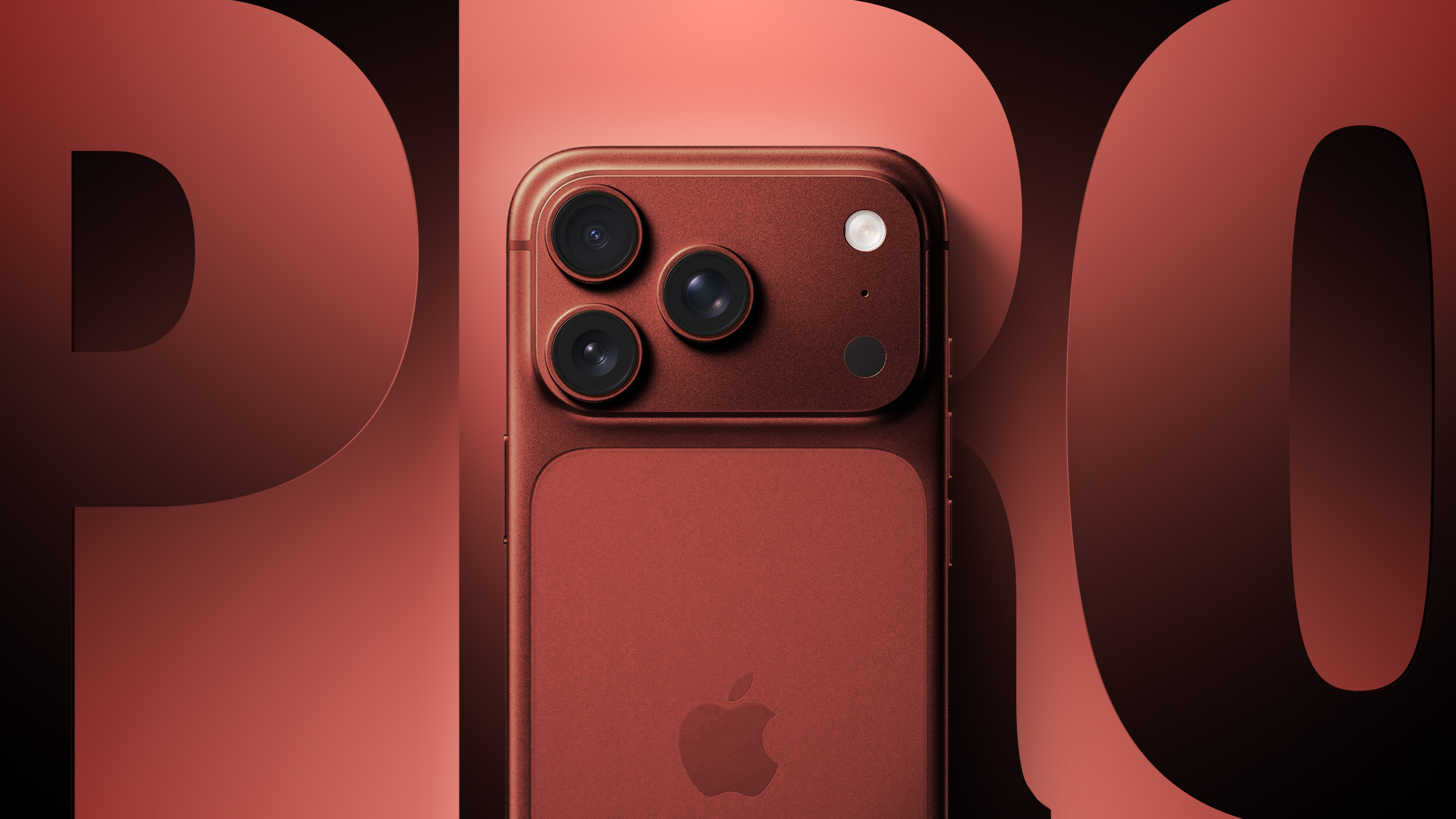
iPhone 18 Pro Max Component Costs Could Rise Nearly $300

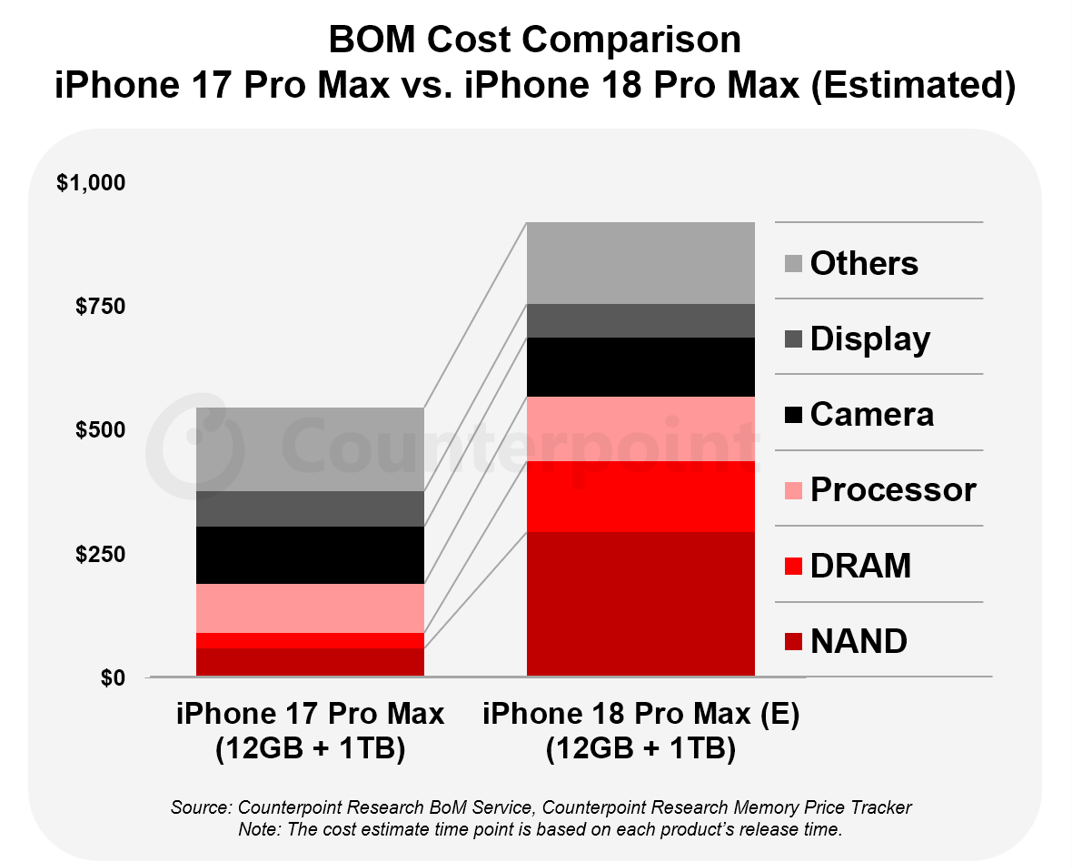
The bill of materials for the iPhone 18 Pro Max is expected to rise by nearly $300 compared to the iPhone 17 Pro Max, according to a new Counterpoint Research analysis.


The estimate covers the 1TB storage model. NAND flash costs for the device are said to exceed $250 on their own, a figure that would cover roughly half of the β€ŒiPhone 17 Proβ€Œ Max's entire estimated component cost. DRAM pricing is also climbing sharply, with both components facing pressure from a broader memory chip shortage tied to surging demand for AI hardware.

Apple's expected shift to a 2nm chip is described as the second-largest contributor to the cost increase. The β€ŒiPhone 18 Proβ€Œ is rumored to debut the A20 Pro, manufactured on TSMC's N2 process, which reportedly carries a steep premium in wafer pricing over the current N3P node used for the A19 Pro. Early yield ramp costs on a new process node typically add to per-unit chip pricing as well.

Counterpoint says display costs and other miscellaneous components may actually decline compared to the β€ŒiPhone 17 Proβ€Œ Max, partially offsetting the memory and chip increases. Camera costs are expected to rise slightly, which the firm attributes to new technology, likely a reference to the variable-aperture main camera rumored for the Pro models.


The report arrives weeks after Apple raised prices on 14 products, including every Mac and iPad, along with the Apple TV, HomePod, HomePod mini, and Vision Pro. Apple attributed those increases to the same memory chip shortage cited in the Counterpoint report, saying that the "supply-demand imbalance" driven by AI data center buildouts had made further price increases necessary. iPhone, Apple Watch, and AirPods pricing was left unchanged in that round of hikes, but the β€ŒiPhone 18 Proβ€Œ lineup is widely expected to be next.

The Wall Street Journal previously reported that the β€ŒiPhone 18 Proβ€Œ could start as high as $1,399, citing estimates that Apple's DRAM cost per unit could climb from $39 to $145 and its flash storage cost from $13 to $51. Apple CEO Tim Cook told the outlet that the company is "still working through" which devices will see price increases. Separately, IDC has estimated a $200 increase to the Pro and Pro Max models specifically, while Weibo leakers have separately suggested Apple could raise its Chinese starting price for the lineup by around 11%.

To manage the higher costs without giving up margin entirely, Apple is expected to apply different retail price increases across storage tiers rather than a flat increase across the lineup, concentrating the impact on higher-capacity models. Even with an average $200 retail price rise, Counterpoint still expects the β€ŒiPhone 18 Proβ€Œ Max to land at a slightly lower gross margin than the β€ŒiPhone 17 Proβ€Œ Max achieved in 2025.

The β€ŒiPhone 18 Proβ€Œ and β€ŒiPhone 18 Proβ€Œ Max are expected to launch alongside Apple's first foldable iPhone in the fall.
Related Roundup: iPhone 18 Pro

This article, "iPhone 18 Pro Max Component Costs Could Rise Nearly $300" first appeared on MacRumors.com

Discuss this article in our forums

  •  

$450 Off a MacBook Pro? The Best Apple Discounts You Can Grab Today

There are a few solid low prices on Apple devices available this week, including $99 off the Apple Watch Ultra 3, $150 off the M5 MacBook Air, and $450 off the M5 Pro MacBook Pro. You'll also find great deals on Anker accessories available on Amazon right now.

Note: MacRumors is an affiliate partner with some of these vendors. When you click a link and make a purchase, we may receive a small payment, which helps us keep the site running.

Apple Watch Ultra 3


  • What's the deal? Take $99 off Apple Watch Ultra 3

  • Where can I get it? Amazon

  • Where can I find the original deal? Right here


Amazon this week has a few deals on the Apple Watch Ultra 3, providing $99 discounts on select models. We did track these models at $149 off during Prime Day this year, but those discounts are long gone and Amazon's prices today are still solid second-best options for anyone who missed those sales in June.

MacBook Pro


  • What's the deal? Take $450 off M5 Pro MacBook Pro

  • Where can I get it? Best Buy

  • Where can I find the original deal? Right here


You can get the 24GB/2TB 14-inch M5 Pro MacBook Pro for $2,549.00 this week at Best Buy, down from the new price of $2,999.00. This is one of the last few remaining Apple devices remaining at pre-hike prices, and we're not expecting the sale to last much longer.

MacBook Air


  • What's the deal? Take $150 off M5 MacBook Air

  • Where can I get it? Amazon

  • Where can I find the original deal? Right here


Amazon is taking $150 off multiple models of the M5 MacBook Air, including deals on both 13-inch and 15-inch models. These are some of the lowest prices we've seen on the notebooks in the wake of Apple's price hikes last month.

Anker


  • What's the deal? Save on Anker accessories

  • Where can I get it? Amazon

  • Where can I find the original deal? Right here


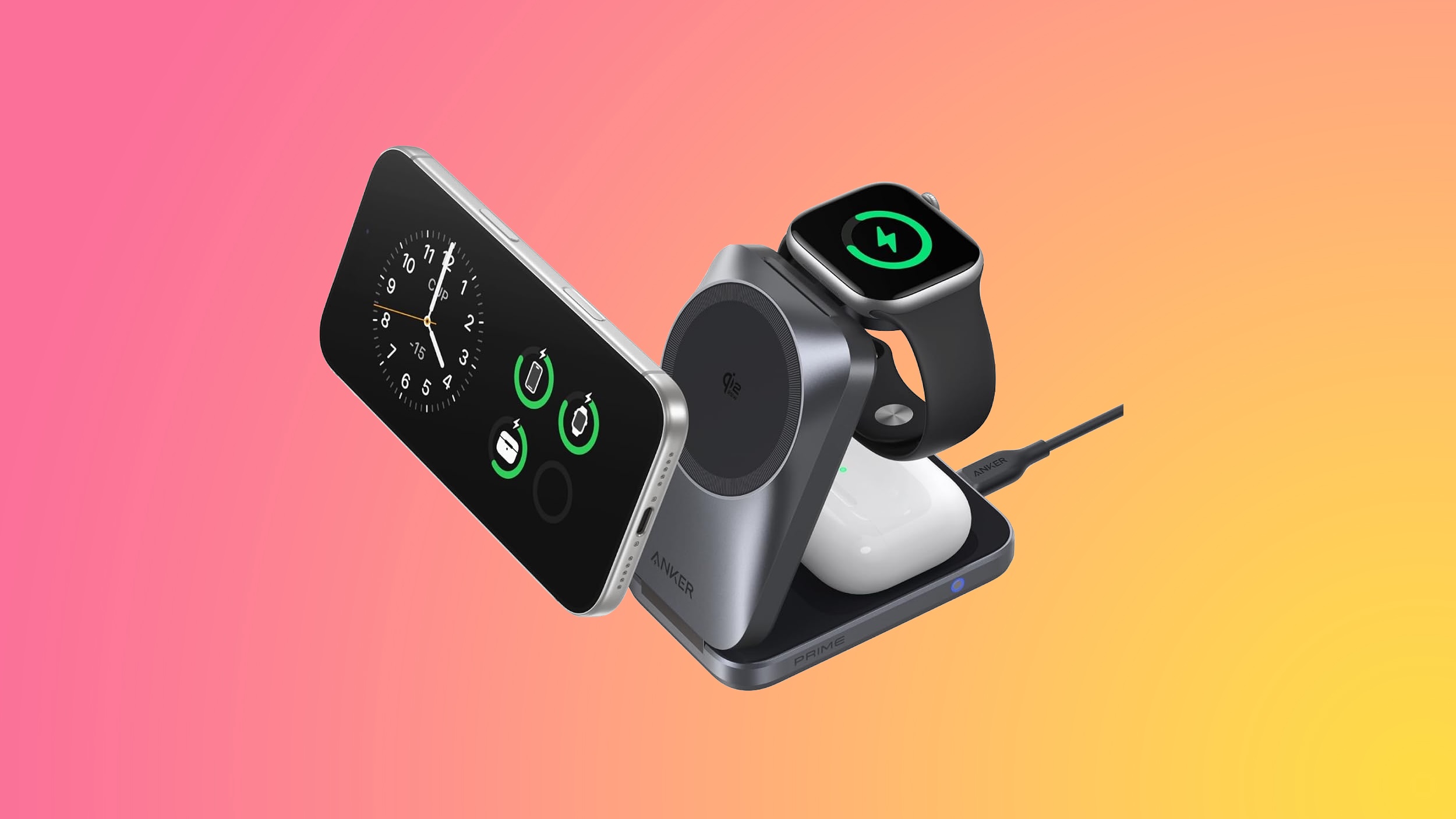
Anker's popular Prime 3-in-1 Wireless Charging Station has dropped to $99.74 on Amazon, down from $149.99. This is one of Anker's newest accessories, and Amazon's sale today is a match of the all-time low price that we last tracked during Prime Day. There are plenty of other Anker accessories on sale this week, which you can find in our original post.

If you're on the hunt for more discounts, be sure to visit our Apple Deals roundup where we recap the best Apple-related bargains of the past week.


Deals Newsletter


Interested in hearing more about the best deals you can find in 2026? Sign up for our Deals Newsletter and we'll keep you updated so you don't miss the biggest deals of the season!


Related Roundup: Apple Deals

This article, "$450 Off a MacBook Pro? The Best Apple Discounts You Can Grab Today" first appeared on MacRumors.com

Discuss this article in our forums

  •  

EU: Facebook and Instagram's Infinite Scroll May Break Digital Rules

Meta has been warned by the European Commission that its endlessly scrolling Facebook and Instagram feeds may violate the EU's new Digital Services Act rules.


In preliminary findings published on Friday, the Commission said that its investigation into features such as infinite scroll, autoplay, push notifications, and highly personalized recommender systems, found that Meta "did not adequately assess the risks of their addictive design on the physical and mental wellbeing of users, including minors and vulnerable adults."

From the press release:
These features fuel the user's urge to keep scrolling and shift the brain into 'autopilot mode,' contributing to unhealthy habits and compulsive use.

Moreover, Meta disregarded available information about the time minors spend on Instagram or Facebook at night and how the optimization of its different formats – such as reels and stories – could lead to excessive or compulsive use of the services.
The Commission additionally criticized Meta's risk mitigation measures, saying that the platforms' time management tools could be easily dismissed and don't meaningfully limit the time users spend on the services. It also found fault with Meta's parental controls, which the Commission said were "only effective if parents and guardians possess adequate technical expertise, as well as devote effort and time to understand them."

The Commission said that at this stage of its investigation, it believes Meta needs to make design changes to both Instagram and Facebook. These could include disabling addictive features such as autoplay and infinite scroll by default, introducing effective screen time breaks, and modifying its recommender system to make it less focused on driving engagement.

Meta on Friday said it disagreed with the Commission's findings, claiming they "don't accurately take into account the significant steps we've taken to protect teens."

The Commission said Meta now has the opportunity to exercise its right of defence by reviewing the documents in the investigation file and responding in writing to its preliminary findings. If those provisional conclusions are upheld, the company could face a fine of up to 6 percent of its global annual turnover.
This article, "EU: Facebook and Instagram's Infinite Scroll May Break Digital Rules" first appeared on MacRumors.com

Discuss this article in our forums

  •  

OpenAI's ChatGPT Atlas Browser Is Shutting Down

OpenAI says it is shuttering its ChatGPT Atlas browser. When it was released last October, the company said the agentic browser was designed around the question "What if you could chat with your web browser?" The query was at least novel, but the answer was apparently not all that compelling.

As part of a slew of ChatGPT Work-related announcements on Thursday, OpenAI confirmed plans to "sunset" Atlas, with deprecation scheduled for August 9.

This article, "OpenAI's ChatGPT Atlas Browser Is Shutting Down" first appeared on MacRumors.com

Discuss this article in our forums

  •  

Apple Reportedly Slashes iPhone 17 Demand Forecast Amid Rising Costs

Apple has significantly lowered its demand expectations for the standard iPhone 17 because of rising hardware costs, a Chinese leaker claimed today.


According to the account "Fixed Focus Digital" on Weibo, some production lines for the standard iPhone 17 this week shifted from an earlier 15 percent reduction to plans to suspend roughly one-third of their capacity. The leaker also claimed Apple has made a "very serious" internal assessment of the impact that higher hardware costs could have on demand.

The claims can't be independently verified, plus the post doesn't say whether the production adjustments apply to overall iPhone 17 output or only to certain manufacturing lines, so caution is advised.

Higher component costs are impacting the electronics industry worldwide due to intense demand from AI companies intent on maximizing data center buildout, and Apple is far from immune.

The doubling cost of memory and storage chips over the last year recently led Apple to increase prices across multiple product lines, which CEO Tim Cook called "unavoidable." So far, iPhones have been spared the hikes, but Apple is widely expected to use the debut of iPhone 18 Pro models in September as a chance to increase the prices of its entire smartphone lineup.

Apple is expected to unveil a next-generation iPhone 18 model next spring alongside a new iPhone 18e and iPhone Air 2, as part of a new split-launch strategy.
Related Roundup: iPhone 17
Buyer's Guide: iPhone 17 (Neutral)
Related Forum: iPhone

This article, "Apple Reportedly Slashes iPhone 17 Demand Forecast Amid Rising Costs" first appeared on MacRumors.com

Discuss this article in our forums

  •  

Foldable iPhone Ultra Battery Capacity Allegedly Registered by Supplier

Apple's battery supplier has registered two new battery cells believed to be destined for the company's rumored foldable iPhone, according to a prolific Chinese leaker.


In a post on Weibo, the leaker known as Digital Chat Station said that the two cells have rated capacities of 1,921mAh and 2,962mAh, for a combined minimum rated capacity of 4,883mAh. "The supply chain is also predicting a total battery capacity of 4,800–5,000mAh, though this still needs further confirmation," the leaker added.

If accurate, the dual-cell design would be in line with existing book-style foldable smartphones, which typically split the battery across the device's two halves. In terms of where it sits next to rival foldables already on the market, the Google Pixel 10 Pro Fold has a total battery capacity of 5,015 mAh, while the Samsung Galaxy Z Fold 7 has a 4,400 mAh capacity. For comparison's sake, the iPhone 18 Pro and iPhone 18 Pro Max are believed to come with 4,288mAh and 5,567mAh batteries, respectively.

The leaker's claim appears to conflict with an early rumor suggesting Apple was testing a significantly larger 5,400mAh to 5,800mAh battery for its first foldable iPhone. That report described an engineering test configuration, however, so it's possible Apple has since revised the design. Either that or the rumor was incorrect.

A March 2025 rumor claimed that Apple has placed a heavy focus on improving power efficiency while slimming down key components of its foldable iPhone, with battery life said to be a key priority for the company. Separately, Apple analyst Ming-Chi Kuo has said the device will use high-density battery cells.

Apple's foldable iPhone is rumored to feature a 7.8-inch inner display and a 5.5-inch cover display, along with Touch ID instead of Face ID, an A20 chip, and Apple's C2 modem in some countries. The device is expected to be unveiled alongside the iPhone 18 Pro models in September. Apple's book-style foldable could launch as the "iPhone Ultra," as suggested by reports. IDC has predicted that the foldable will carry an average selling price of $2,500, with storage options potentially priced as high as $3,000.
This article, "Foldable iPhone Ultra Battery Capacity Allegedly Registered by Supplier" first appeared on MacRumors.com

Discuss this article in our forums

  •  

Valhalla's Things: Cockades!

Posted on July 10, 2026
Tags: madeof:atoms, FreeSoftWear, craft:sewing

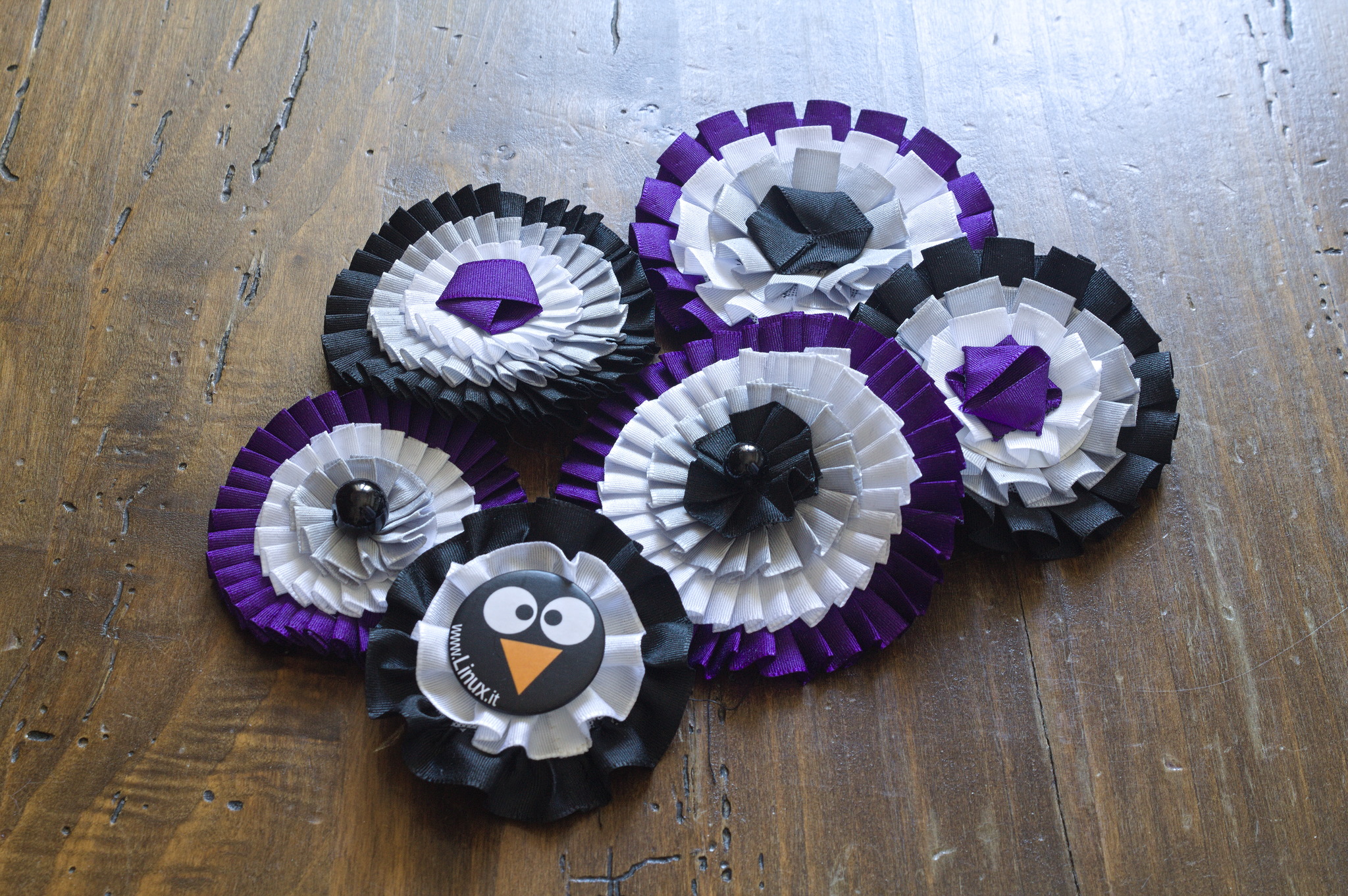
six cockades in black, grey, white, purple, in different sizes and with different centrepieces. One is only black and white and has a penguin pin in the middle.

Earlier this year, I made myself a new hat (it will be blogged), and I wanted to put a nice cockade on it. So, I looked for suitable ribbons, and couldn’t find any. I found some ribbon that looked passable, but the colours I wanted weren’t available, so I set up the website to notify me, and kept working on the hat.

Eventually the hat was done, the ribbon was still not available, so I decorated the hat with fake flowers from my stash, and started wearing it.

And that’s when I got notified that the ribbon was back in stock.

By the time the ribbon arrived, I had decided that the hat looked better with the flowers, and project cockade was put on hold, possibly for a future hat.

And then June came, and what could be a better time than that for a project based on flag colours?

As I feared, the ribbon I got wasn’t the best: it was a bit too stiff and plasticy, and not really usable for many other things. It did however work well enough for a cockade, and I decided it was a good chance to try different methods and designs, and then make another one to take pictures and publish step-by-step instructions.

And that’s the perfect recipe to find oneself surrounded by a somewhat unreasonable number of very similar cockades, I guess.

A big cockade with four ribbons, starting with purple on the outside, and a black bead in the middle covering the centre of the black ribbon. The pleating isn't the most regular, and the black ribbon at the centre is almost more gathered than pleated.

I looked around for instructions, and the ones that gave a result that was closer to my mental idea of a cockade were the ones by American Duchess, so on my first attempt I tried to follow those.

I didn’t have a cork board with a hole, so it was a bit fiddly, and the result was passable, but could have been better. Meanwhile I saw a forum post commenting on the above tutorial and that gave me ideas for a procedure more suitable to the tools I had.

A cockade with tree ribbons, starting with purple on the outside, then white, grey, and a black bead in the middle that is a bit bigger than the one on the previous one. The pleating isn't perfect, but neater than the previous one.

The second cockade I made was indeed more satisfactory, and I also started to experiment with making a center piece with ribbons, to cut down on the types of materials needed.

On this one I also tried to add a pin backing, so that I could write instructions on how to do it in what I believe is a more stable way than simply adding it to the felt backing at the end.

I’m not sure whether the other ones will be tacked to a hat, and thus won’t require pins at all, or if I’ll just put them on some dress with pins hidden under the ribbon layers.

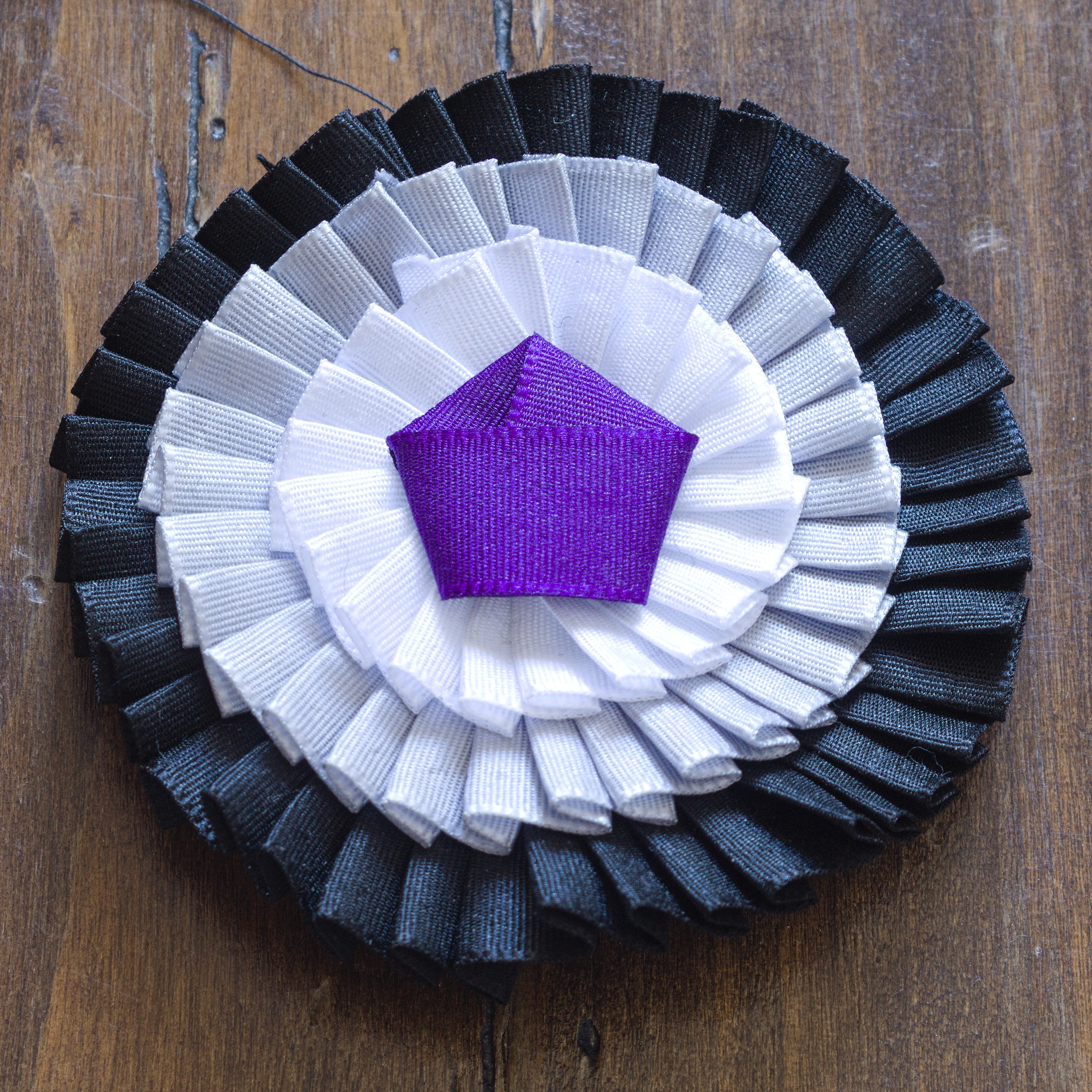
A cockade with three ribbons, starting with black on the outside, then grey and white, and a flat pentagonal knot of purple ribbon at the centre.

And then I was ready to make a third cockade, taking step by step pictures for my website, and I planned to start on it the next morning.

Trenord had different ideas.

Thanks to the combination of independent but complete disruptions on two nearby train lines, I spent the morning driving a couple of people to the nearest station that was still being served by trains, and then back home less than 10 minutes before I had to start working, which if you ask1 me was pretty homophobic of the train company.

There was way less traffic than I expected, and I did enjoy the drive 2, but for various reasons it meant a significant delay for this post.

Anyway, less than a week later than I had planned, halfway in June I managed to publish step by step instructions on my website, but I wasn’t done with the project yet.

Beside the fact that I still needed to finish sewing the backing felt to the cockades I had done, I also had a few ideas for more centrepieces made of ribbon I wanted to try.

And this means that I moved on to another project that was already in progress (this one will also be blogged).

A cockade with three ribbons, starting with black on the outside, then grey and white, and two squares of purple ribbon at the centre, forming a sort of eight point star. The ribbons are box pleated and this gives the cockade a bit more of a tree-dimensional shape.

After I’ve finished that one, at the very end of June I quickly made the last two centrepieces, taking pictures for the instructions, and in the next few days I also finished the cockades.

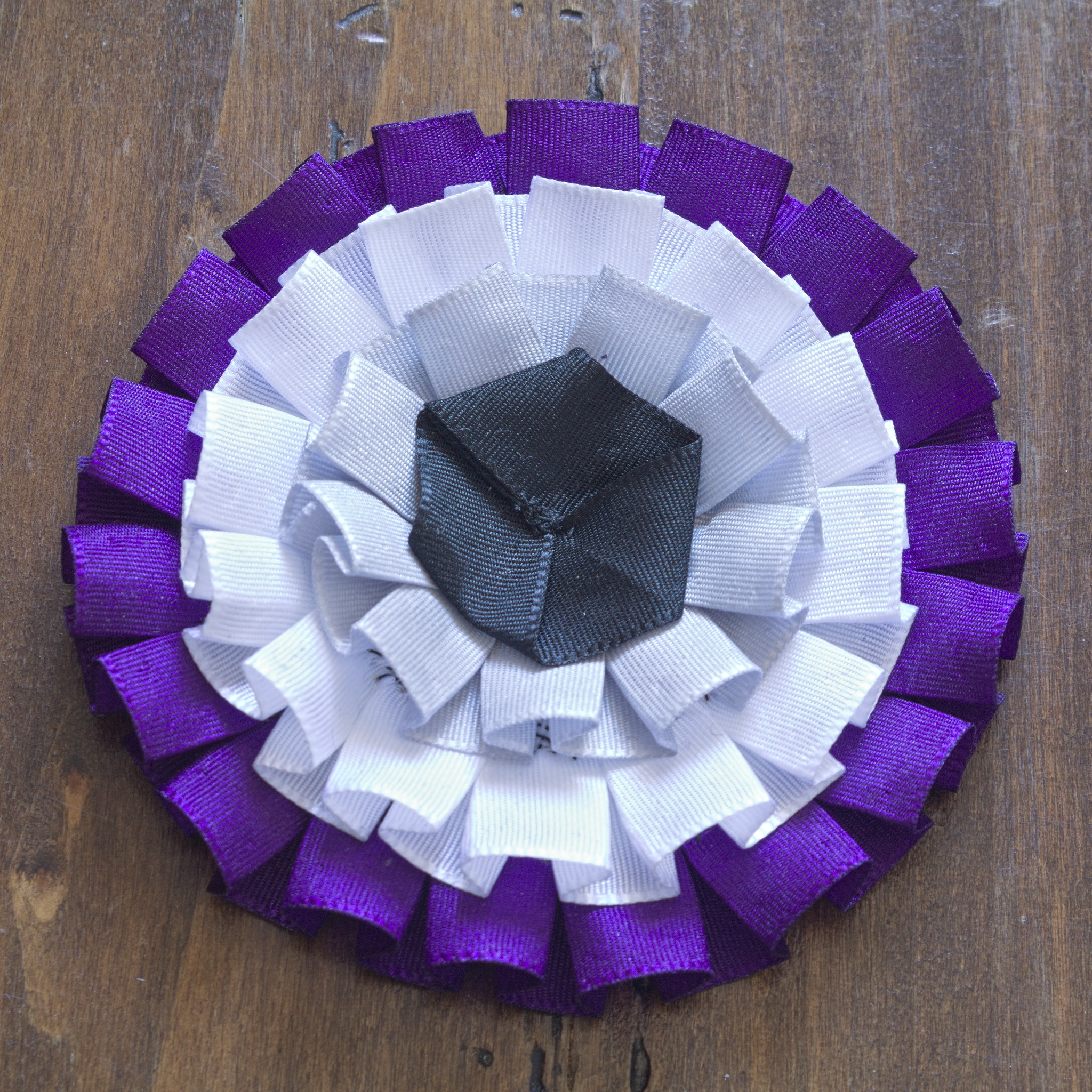
A cockade with three ribbons, starting with purple on the outside, then white and grey, and an hexagonal shape made of black ribbon at the centre. The ribbons are again box pleated.

This time, instead of plain pleats I tried to use box pleats, and I quite like the look they give, so if in the future I’ll have a need for more cockades I may use again this pleating pattern.

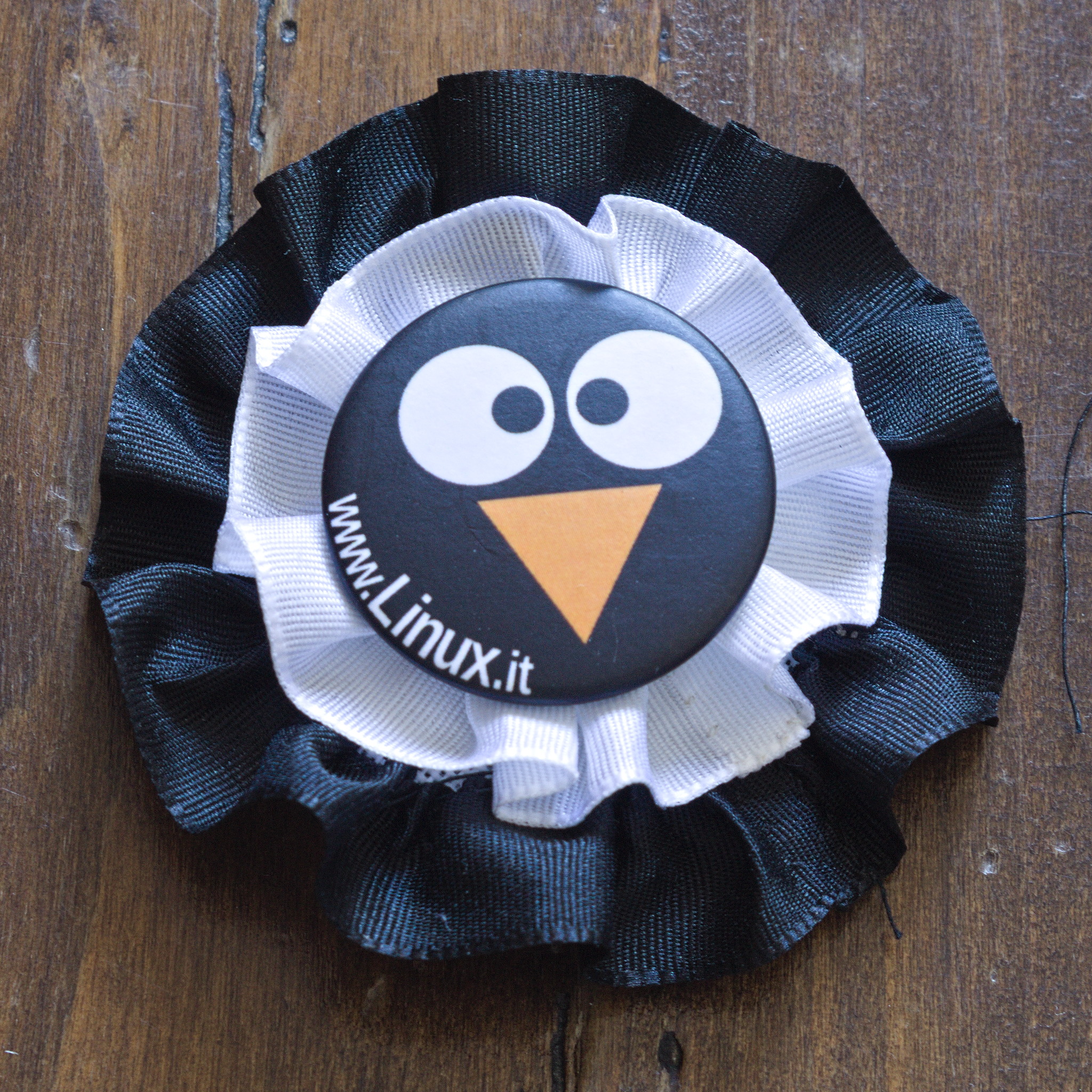
A cockade with just two gathered ribbons, starting with black on the outside, then white, and a linux.it pin in the middle with a black background and two eyes and an orange beak reminding of a penguin.

For the last cockade I wanted to try two things: putting a pin in the middle as a centrepiece, and gathering the ribbons.

For the pin, I found that the only one I had that had a colour scheme compatible with the ribbons I had was one with the penguin from linux.it, which had a black background, so I put black ribbon on the outside and white next to it for contrast.

And gathering was done with a whipped gather with ribbons that were one and a half times the outer circumference of their slot, and looks decent enough, but I think I prefer the look of pleated cockades a lot. Maybe it would look better with a softer ribbon.

Anyway, I think this is plenty of cockades for the time being, unless I get tempted by buying more colours of ribbon to make different ones. But I’m not making an online purchase just for those. I am not.


  1. you probably shouldn’t.β†©οΈŽ

  2. also thanks to my partner who, on entering the destination town, told me to stop on the big, straight, two-way road with plenty of roundabouts to turn around, and went through the maze of one-way streets to the station by foot.β†©οΈŽ

  •  

Bits from Debian: New Debian Developers and Maintainers (May and June 2026)

The following contributors got their Debian Developer accounts in the last two months:

  • Vivek K J (vivek)
  • Benjamin Somers (bensmrs)
  • Colin King (colinianking)
  • Nadzeya Hutsko (nadzeya)

The following contributors were added as Debian Maintainers in the last two months:

  • Pieter Lenaerts
  • Syed Shahrukh Hussain
  • Ural Tunaboyu

Congratulations!

  •  

iOS 27: 8+ New CarPlay Features

With iOS 27, Apple is introducing several CarPlay features that will improve your in-car experience, both when you're driving and when you're idle in the car. From new video experiences to Siri AI, there are multiple new options to look forward to.


Video Apps


β€ŒCarPlayβ€Œ apps can incorporate video browsing capabilities, so you can browse for and watch videos on your in-car display while parked. The video playback feature does not work when a car is in motion for safety reasons, but if you're watching something and shift into drive, playback will switch to audio only.

iPhone apps that support AirPlay can also stream content to the car's display.

Video apps require car manufacturers to enable support on the vehicle, and no automakers have announced plans to add support as of now.

Siri AI


Apple's smarter, more capable version of β€ŒSiriβ€Œ can be used in the car for hands-free conversations. β€ŒSiriβ€Œ AI for β€ŒCarPlayβ€Œ works like β€ŒSiriβ€Œ AI on other devices, so you can ask it to complete tasks or find information for you while you drive.

Conversations in β€ŒCarPlayβ€Œ sync to the β€ŒSiriβ€Œ app on iPhone so you can pick them up later.

Audio


There is a persistent mini-player for the Now Playing β€ŒCarPlayβ€Œ template. The player shows artwork and playback controls in the top right corner of audio and media apps.

The Now Playing interface in β€ŒCarPlayβ€Œ also has a progress bar, so you can jump to a specific spot in a song, podcast, or audiobook.

Wallpapers


β€ŒCarPlayβ€Œ includes the new β€ŒiOS 27β€Œ wallpapers, formatted for the β€ŒCarPlayβ€Œ interface. The wallpapers have wave-style designs in a range of colors, with 14 total wallpaper options available.

β€ŒCarPlayβ€Œ in β€ŒiOS 27β€Œ also supports larger, more interactive content thumbnails and it incorporates the updated Liquid Glass icons for apps like Maps and Weather.

Route Data


Navigation apps like Apple Maps and Google Maps can share route data with a vehicle for incorporating information like EV charging stops. The car is able to check a map route against the range of the vehicle, and suggest a charging stop.

Reliability and Location Accuracy


Apple says that wireless β€ŒCarPlayβ€Œ is more reliable in β€ŒiOS 27β€Œ, plus it supports improved GPS location accuracy and navigation heading detection.

Voice Control


All app categories are also now able to offer a voice control option, and Apple has designed a voice control template that can be integrated into apps for voice conversations.

Natural Language Improvements


In Apple Maps, Apple extended natural language search to navigation, and that also works with β€ŒCarPlayβ€Œ. You can ask β€ŒSiriβ€Œ for directions that avoid toll roads, highways, and more.

Compatibility


Using the new β€ŒCarPlayβ€Œ features in β€ŒiOS 27β€Œ requires a connected iPhone with β€ŒiOS 27β€Œ installed. For β€ŒSiriβ€Œ AI, you'll need an iPhone that supports Apple Intelligence, which includes the iPhone 15 Pro and later.
Related Roundups: CarPlay, iOS 27, iPadOS 27

This article, "iOS 27: 8+ New CarPlay Features" first appeared on MacRumors.com

Discuss this article in our forums

  •  

Apple TV Taking Over Comic-Con's Hall H for the First Time With Widow's Bay, Silo and More

Apple TV is taking over Hall H at San Diego Comic-Con for the first time, according to Deadline. Apple is holding a two-hour panel on July 25 featuring stars from Widow's Bay, Matchbox The Movie, Mayday, Dark Matter, and Silo. Hall H is known for some of the biggest Comic-Con panels and events, and Saturday draws the largest crowds. Apple's event will come before a major Marvel Studios presentation.


Panelists from Matchbox The Movie will include John Cena, Jessica Biel, and Arturo Castro, while Dark Matter panelists will include Blake Crouch, Matt Tolmach, Jacquelyn Ben-Zekry, Joel Edgerton, Jennifer Connelly, and more. Panelists for Widow's Bay have not been announced, but it should be a popular portion of the event given the show's popularity. Widow's Bay recently received 19 Emmy nominations.

John Francis Daley and Jonathan Goldstein will discuss Mayday, and Silo panelists include Graham Yost, Rebecca Ferguson, Common, Tim Robbins, Ashley Zukerman, Jessica Henwick, and Alexandria Riley. Josh Horowitz from the Happy, Sad, Confused podcast will moderate the panels.

A Silo Experience will be held at The Lot from Friday, July 24 to Sunday, July 26. On Friday, July 24, Apple plans to offer a sneak preview of Dark Matter season 2.

β€ŒApple TVβ€Œ has had a presence at prior Comic-Con events, but Apple skipped the 2025 show.

San Diego Comic-Con takes place from July 23 to July 26, with a preview night on July 22. The β€ŒApple TVβ€Œ panel will be held from 2:00 to 4:00 p.m. on July 25.
Related Roundup: Apple TV
Buyer's Guide: Apple TV (Don't Buy)

This article, "Apple TV Taking Over Comic-Con's Hall H for the First Time With Widow's Bay, Silo and More" first appeared on MacRumors.com

Discuss this article in our forums

  •  

Anthropic Adds 'Reflect' Feature to Claude for Tracking Your Usage

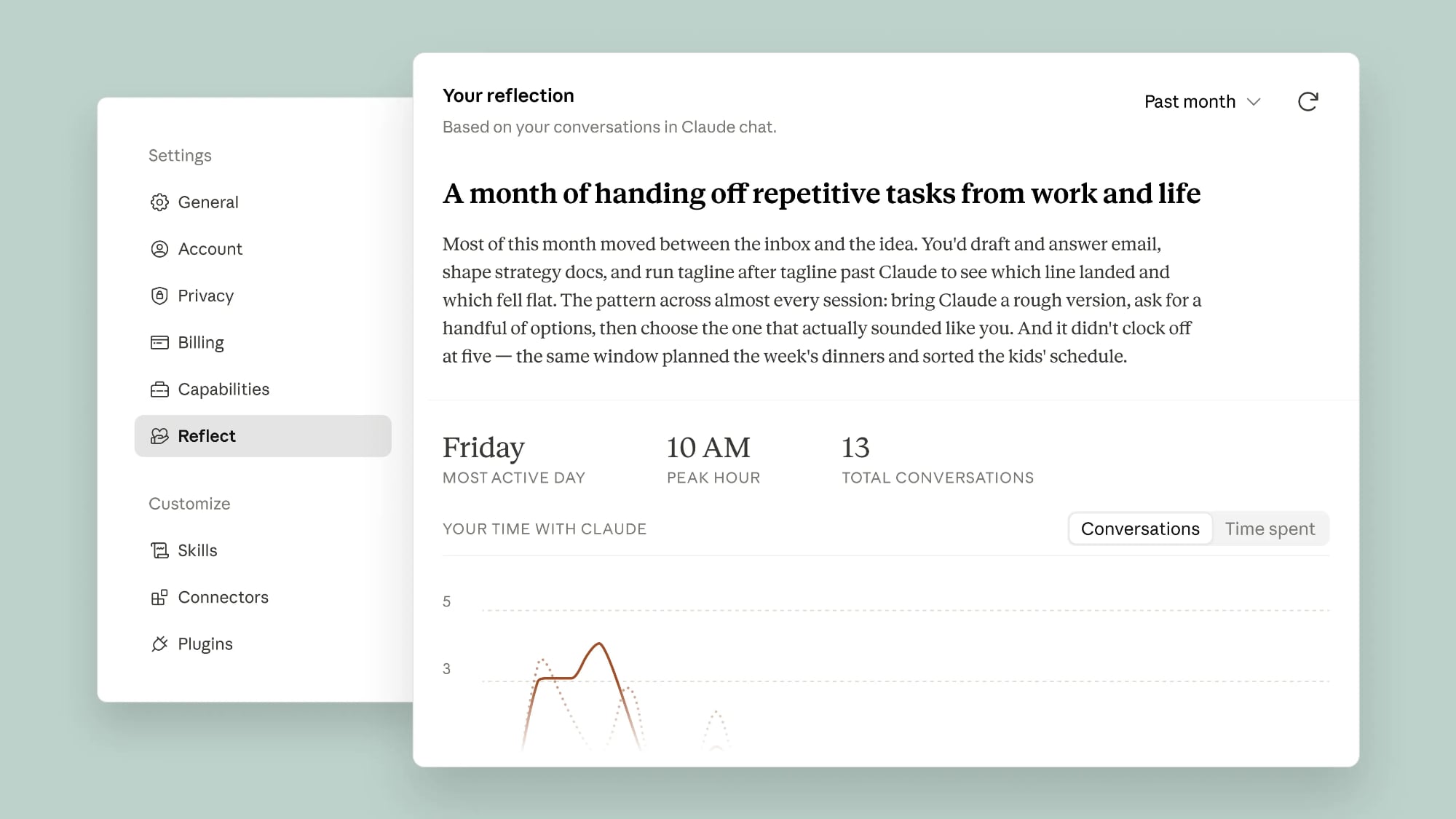
Anthropic is updating Claude with a new "Reflect" feature that's akin to Spotify Wrapped. Reflect lets you look back on how you've been using Claude, and for how long.


Reflect includes a summary of Claude usage, incorporating key topics, usage patterns, and the type of tasks you work through using Claude.

You can look back at Claude activity over the past 1, 3, 6, or 12 months, and in the near future, Anthropic plans to add a view of how much time you've spent using Claude. Anthropic says the Reflect feature invites users to step back and look at the role Claude plays in their lives. It will surface questions for you to consider, like "What's one thing you want to keep doing yourself, even if Claude could do it faster?"

There are new settings for quiet hours or scheduling a nudge to remind you to take a break from using Claude after a certain amount of time. Anthropic says you can also use the information with the 4D AI Fluency Framework to expand how you work with Claude across four categories: Delegation, Description, Discernment, and Diligence. It offers examples of how you collaborate with Claude, and it has practical suggestions for areas of improvement.

Reflect does not draw information from incognito chats, and it doesn't use underlying files from connected tools. Conversations connected to health integration tools are also left out of insights, and the information shown in the Reflect option isn't used for other purposes.

Reflect is available in beta for Free, Pro, and Max users who have memory turned on. It can be accessed through the Settings section of Claude on the web or in the desktop app. Select the Reflect tab to generate a report.
This article, "Anthropic Adds 'Reflect' Feature to Claude for Tracking Your Usage" first appeared on MacRumors.com

Discuss this article in our forums

  •  

Jonathan Dowland: Korg Minilogue XD Desktop Module

I bought a new synth! Kind-of.

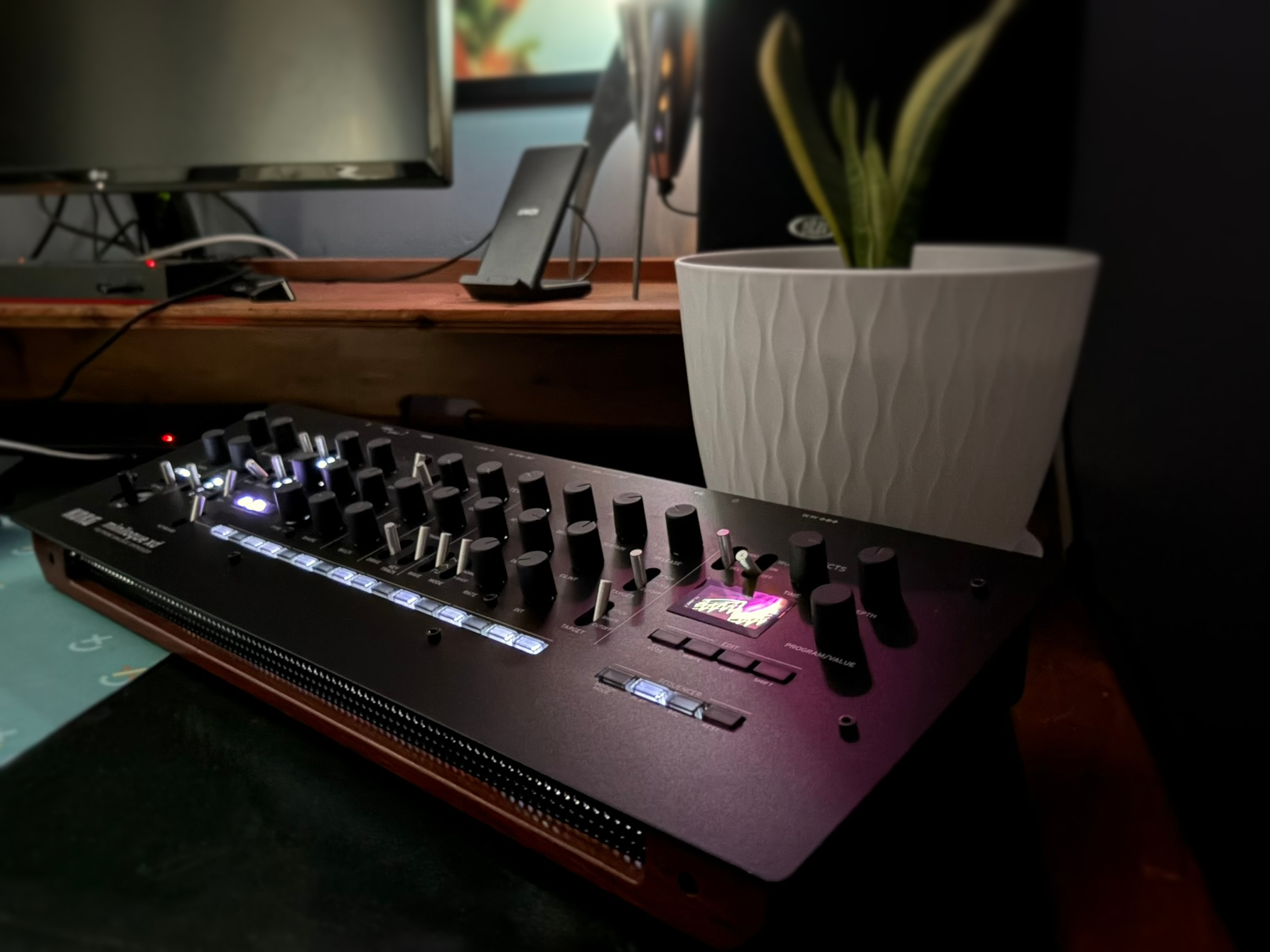
I've traded my Minilogue-XD (full-size version with integrated keyboard) for the desktop/modular alternative.

Modular Minilogue XD

Modular Minilogue XD

Why? Partly, because it fits on my desk better. Partly, because it changes the way you engage with the instrument. It makes a huge difference: the ivory keys come with so much cultural precedent. The module version of the synth gains a switch that lets you use the 16 sequencer step buttons as note inputs, so you can still play the thing solo. But the emphasis moves away from note generation and more firmly towards tone.

Both versions have a lovely stained wood back, which you never see; the modular one has a hint of that at the front as well (which you do see).

I plan to eventually buy a MIDI keyboard that could drive it, and other things: possibly an Arturia KeyStep or Minilab, but there's no rush on that.

(It's about time I recorded and shared something I produced on this)

  •  

OpenAI Debuts ChatGPT Work Agent and New GPT-5.6 Models

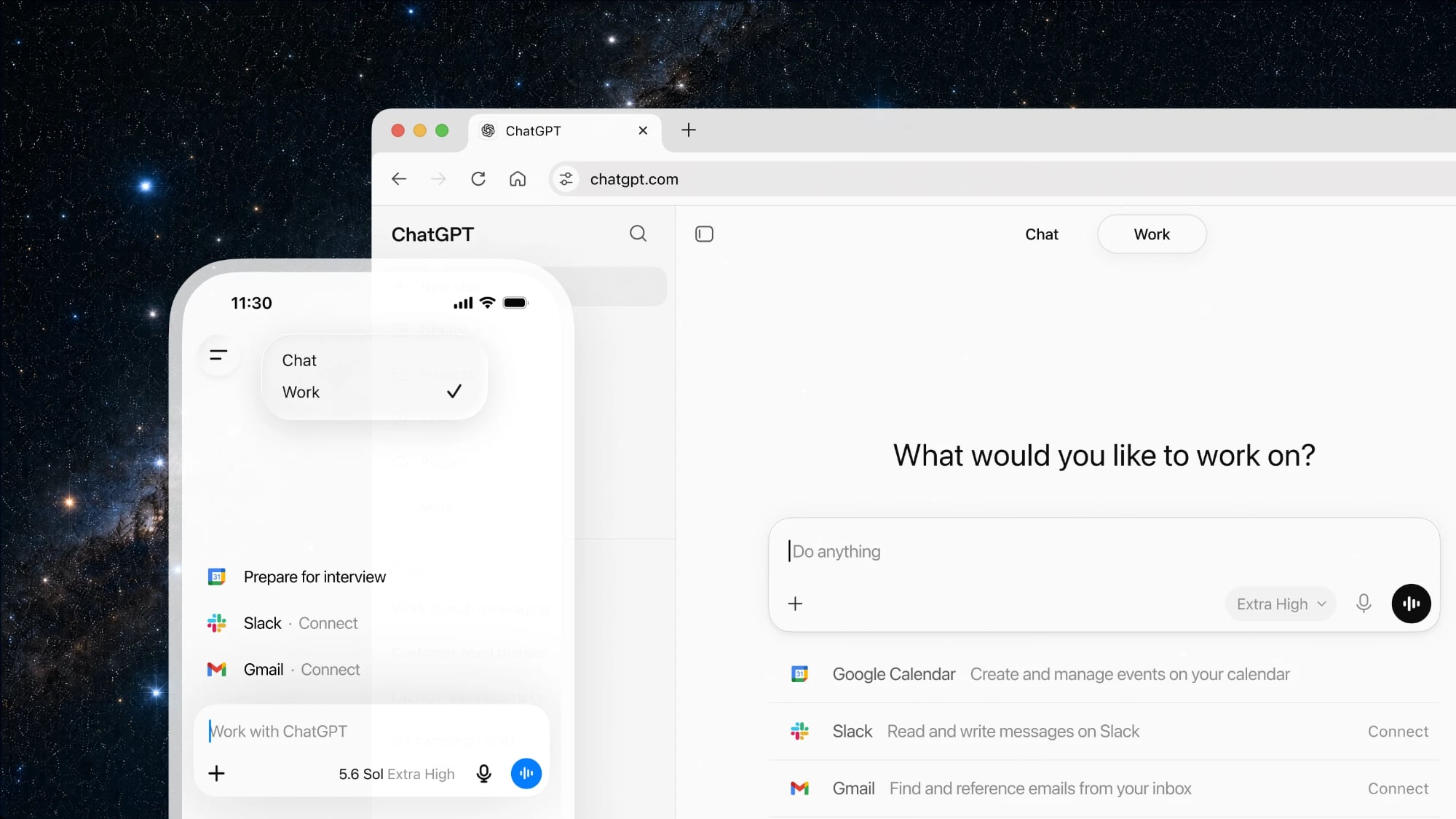
OpenAI today announced ChatGPT Work, a ChatGPT agent with built-in Codex that can complete tasks across web, mobile, and desktop using information from your apps. ChatGPT Work can execute multi-step tasks, using scheduling to work independently. Like Claude Cowork, ChatGPT can use your computer to do tasks in the background across apps.


Tasks can be started and managed on any device, including a smartphone. On the desktop, OpenAI is merging the Codex app with the ChatGPT app. ChatGPT Work can use local files and apps to do tasks, or a new built-in browser to access websites, tools, and online files. Plugins connect apps and systems to ChatGPT Work, and a new Sites beta feature lets you create interactive sites and web apps for reports, live dashboards, and more.

ChatGPT Work is powered by OpenAI's GPT–5.6 models, which are also rolling out today after a limited preview period. Sol is OpenAI's new flagship model, while Terra is a balanced everyday work model and Luna is a cost-efficient model.

OpenAI says that GPT–5.6 Sol achieves "state-of-the-art results" in coding, knowledge work, cybersecurity, and science. It outperforms prior frontier models while using fewer tokens for a lower estimated cost.

OpenAI claims that GPT–5.6 is better at coding and has improved design judgment, able to create "tasteful, ergonomic, and functional interfaces" with just high-level direction. It can also create more accurate presentations, documents, and spreadsheets.

The model has safeguards against misuse, with layered protections that include real-time checks, monitoring, and access calibrated to risk and trust. It is OpenAI's best cybersecurity model, ideal for code review, threat modeling, and more.

GPT–5.6 is available across ChatGPT, Codex, and the OpenAI API starting today. GPT–5.6 Sol is available for Plus, Pro, Business, and Enterprise users. Free and Go users have access to GPT–5.6 Terra.

ChatGPT Work is available today for Pro, Enterprise, and Edu plans. It will expand to Plus and Business plans in the next few days.

With OpenAI merging Codex and ChatGPT, there is a new ChatGPT desktop app that's available across Mac and Windows. Users who have the Codex app installed can update it to turn it into the new ChatGPT desktop app. The existing ChatGPT desktop app is being renamed ChatGPT Classic.
This article, "OpenAI Debuts ChatGPT Work Agent and New GPT-5.6 Models" first appeared on MacRumors.com

Discuss this article in our forums

  •  

Last Call: M5 Pro MacBook Pro Remains at Pre-Hike Price But Not for Much Longer

It's been a few weeks since Apple announced widespread price hikes across numerous product categories, including the 2026 MacBook Pro. These new prices are now reaching third party retailers, but there remains one exception at Best Buy, which still has one model of the 14-inch M5 Pro MacBook Pro at its pre-hike price.

Note: MacRumors is an affiliate partner with Best Buy. When you click a link and make a purchase, we may receive a small payment, which helps us keep the site running.

You can get the 24GB/2TB 14-inch M5 Pro MacBook Pro for $2,549.00, down from the new price of $2,999.00. This one is available in both Silver and Space Black, and Best Buy provides both in-store pick-up and delivery options at checkout.


Across Best Buy and Amazon, this remains one of the only products still available at pre-hike prices, with nearly every other MacBook and iPad either unavailable to purchase or only available at their newly increased prices.

If you're on the hunt for more discounts, be sure to visit our Apple Deals roundup where we recap the best Apple-related bargains of the past week.


Deals Newsletter


Interested in hearing more about the best deals you can find in 2026? Sign up for our Deals Newsletter and we'll keep you updated so you don't miss the biggest deals of the season!


Related Roundup: Apple Deals

This article, "Last Call: M5 Pro MacBook Pro Remains at Pre-Hike Price But Not for Much Longer" first appeared on MacRumors.com

Discuss this article in our forums

  •  

Evolving Windows vulnerability management to meet the speed of AI-powered discovery

Windows has adapted to emerging threats for decades, all while operating at unparalleled scale. It's our responsibility to bring clarity, transparency and sustained investment so customers understand what is happening, what Microsoft is doing and how they can reduce their exposure. The pace of vulnerability discovery is changing with advances in AI making it possible to find more issues, faster, across more code, with new mechanisms that can accelerate both discovery and analysis. The fastest way to reduce customer exposure is to find issues before attackers can use them. Windows is expanding its ability across the platform to find issues earlier, accelerate the engineering work to fix them, strengthen validation and deliver timely, high-quality updates that keep customers protected.

Finding vulnerabilities earlier and at greater scale

By applying AI across security analysis, we can identify patterns faster, prioritize risk and scale vulnerability discovery across the Windows codebase. This helps reduce the time between discovery and customer protection. It includes using Microsoft Security’s multi-model agentic scanning harness (MDASH), which utilizes multiple models including leading third-party AI vulnerability discovery models. To run MDASH at Windows scale, Windows set up dedicated cloud infrastructure for scanning and proving. A scanner pipeline scans critical binaries and validates candidates using multi-model debate across multiple model families. Confirmed candidates then flow to a separate, Windows-specific prove pipeline that helps eliminate remaining false positives, so only the highest-confidence findings reach the engineering team. This automation helps handle a larger volume of potential vulnerabilities and shortens the review window for new ones, shrinking the attack window for zero-day exploits. This effort extends beyond Windows as we work across Microsoft to drive broader adoption of these tools and practices throughout both the company and the wider ecosystem. We partner closely with AI-powered scanning teams across Microsoft’s product divisions, sharing insights, comparing best practices and aligning on key findings. In parallel, we collaborate with the Microsoft Security Response Center (MSRC) to continuously refine the end-to-end process from vulnerability discovery and issue filing to remediation and validation. We also regularly reassess our prioritization and rollout strategy based on lessons learned and feedback gathered through our Chief Information Security Officers’ (CISOs) engagements with customers. We continue to evolve our internal systems and practices so that vulnerability discovery is not treated as a separate activity, but as part of how we build, review and improve Windows before new features or updates are released. As a part of this we are updating our Secure Development Lifecycle (SDL) best practices to ensure our secure-by-design approach explicitly accounts for potential AI-enabled attack techniques and exploit paths. That means using AI to help identify potential issues earlier in the development process, while relying on human expertise to evaluate findings, make risk-based decisions and ensure fixes meet the quality bar customers expect. As AI helps defenders discover more issues, customers will see a higher volume of security updates included in each security release. This is evidence that defenders are getting better at identifying and addressing issues. Our focus is to effectively utilize these AI tools to support faster protection, stronger engineering systems and more actionable guidance for customers.

Fixing responsibly with AI and engineering discipline

Windows is evolving our engineering and validation systems to reduce the time from discovery to protection, with areas where customer risk is greatest. As we build our end-to-end system from discovery to remediation of vulnerabilities on Windows, we’re making the following investments to help ensure that we are not compromising update quality as we gain speed:
  • We are integrating AI into our process to compress the path from discovery to a validated fix, helping engineers understand failures faster, propose candidate fixes consistent with the surrounding code, surface related issues elsewhere in the codebase and select the regression tests most likely to be affected by a change.
  • Windows updates undergo validation across a range of testing environments, including the Security Update Validation Program (SUVP) and internal validation designed to help evaluate compatibility, reliability and real-world usage scenarios. This broad validation helps identify functional, application compatibility and quality issues before updates are broadly released.
  • We’re also investing in new technology, including Windows-specific tools and agentic harnesses, to enable end-to-end generation and validation of fixes using AI, keeping humans in the loop when it comes to code review.
Customers rely on Windows updates to protect their environments, and they also need confidence that updates will deploy smoothly across diverse devices, applications and configurations. That is why quality remains central to this work. As we increase the pace of vulnerability discovery and remediation, we are also committed to giving customers practical ways to test, deploy and monitor updates in their own environments. In cases where customers see signals of potential issues or regressions, they can connect with Microsoft Customer Service and Support to report the issue and/or learn if it is a known issue. In the event of an issue, we are able to employ Known Issue Rollback (KIR), a mitigation technology that allows customers to quickly revert a targeted change, fix, functionality or feature that caused the problem, to its previous behavior. This approach allows the customer’s security protections to stay in place instead of uninstalling an entire update to fix an issue.

Helping customers safely stay current

The most important guidance is to stay current and take security updates as soon as possible. Timely patching is one of the most effective ways to reduce exposure, especially as AI accelerates the speed at which vulnerabilities can be discovered and exploited. We also recognize that every customer's situation is different. Many organizations need to assess risk, validate updates, sequence deployments and prioritize critical assets. When Microsoft releases security updates, we share Common Vulnerabilities and Exposure (CVE) information and high-level guidance about the vulnerabilities addressed in the Security Update Guide, including available context on risk and mitigations where applicable. Customers should use that information to build a risk map for their own estate, prioritize protections for high-value targets and accelerate deployment where exposure is greatest. To help organizations prepare with less disruption, we also provide production-quality optional non-security preview ("D") releases ahead of the planned security update release for the following month for testing. These cumulative releases include new features and quality improvements. We target optional non-security preview releases for the fourth week of the month, two weeks before they'll see these features become part of the next monthly security update. These previews enable compatibility testing across a broad set of devices, applications and environments, helping identify issues earlier and increasing confidence in the quality and deployment readiness of the subsequent monthly security updates. Security is not just about responding faster to vulnerabilities. It is also about reducing exposure to security attacks. Windows is designed with multiple layers of protection enabled by default, strong identity protection with Windows Hello, the ability to reduce reliance on administrator privileges, trusted application experiences and hardware-rooted security. Together, these capabilities help organizations reduce exposure, strengthen resilience and provide a more secure foundation as organizations assess, test and deploy updates across their environment. To learn more about Windows security, see the Windows 11 Security Book or the Windows Server 2025 Security Book for your Server fleet. Windows also works closely with Microsoft Defender and the broader security ecosystem to help protect customers during the window between vulnerability disclosure and full deployment of security updates. Where possible, Microsoft Defender provides detections and protections that add another layer of defense. Through programs such as Microsoft Active Protections Program (MAPP), Microsoft also collaborates with security protection and antivirus partners so they can prepare protections for customers as security updates are released. We recommend that customers update their security endpoint software to the latest version and take daily signature updates for best protection. Intune helps teams identify gaps, enforce compliance and deploy fixes across endpoints, and Azure Arc makes it easy to connect Windows Servers outside Azure to Microsoft Defender for Cloud.

Tools that make patching easier

A holistic patch strategy depends on tools that help teams move across the full lifecycle: automate what can move fast, identify what still needs attention and limit exposure when devices or apps fall behind. Modern management capabilities such as Windows Autopatch with hotpatch enabled, available in Microsoft Intune, can help accelerate security updates and minimize disruptions for your Windows 11 devices. With Autopatch, customers can configure the automatic deployment of Windows security updates, driver updates and firmware updates, across rings with the option to pause based on reliability signals, so issues can be contained before they spread. Autopatch now surfaces a security-risk and compliance overview with device-level drill-down, so customers can see where their estate is exposed and how to reconfigure their policies to stay more secure. Windows Servers can be hotpatched as well through Azure Arc, enabling rebootless security updates for your critical infrastructure and VMs across the fleet, manageable at scale with Azure Update Manager. Intune Enterprise Application Management helps keep apps current. Microsoft Defender Vulnerability Management, Windows and Intune insights help teams understand remaining exposure and prioritize remediation. Compliance policies, Conditional Access and security baselines help enforce the desired state across the endpoint estate, or harden devices when updates can’t be applied right away. Together, these capabilities help customers move from a time-based patching cadence to a more continuous, risk-based approach. For practical guidance on operationalizing patching across endpoint estates, see the Microsoft Intune blog on building a patch strategy for today’s threat pace. https://www.youtube.com/watch?v=QdjSkbKXoJw

Building trust through continuous improvement

The threat environment will continue to evolve as AI advances, with researchers continuing to find new classes of issues and attackers looking for ways to move faster. Our response is to keep strengthening the systems that help us find vulnerabilities earlier, fix them responsibly and support customers through safe, timely updates. As the pace of vulnerability discovery increases, customers shouldn’t have to choose between speed and stability. Our job is to help customers stay protected while deploying updates with confidence. Windows will continue investing in the systems, engineering practices and platform protections needed to reduce exposure responsibly at global scale.

  •  

Apple Exploring Ways to Run Much Larger AI Models Directly on iPhones

Apple has held meetings with PrismML about ways it could use the startup's technology to run much larger AI models directly on iPhones, according to The Information.


The report said PrismML has managed to shrink down Alibaba's open-source large language model Qwen 3.6 to run entirely on an iPhone 17 Pro. The model has 27 billion parameters, which is larger than Apple's on-device AFM 3 Core Advanced model with 20 billion parameters. Apple's model powers iOS 27 enhancements such as Siri AI's more expressive voices and improved systemwide dictation on iPhone 17 Pro and iPhone Air models.

Unlike with AFM 3 Core Advanced, all of Qwen 3.6's parameters can be active at the same time.

"One new on-device Apple model has 20 billion parameters but uses a so-called sparse architecture, in which only 1 billion to 4 billion parameters are active at a time," the report said, in reference to AFM 3 Core Advanced. "In the case of PrismML's on-device model, all 27 billion parameters are active at the same time."

Larger models running directly on iPhones would allow for more Apple Intelligence features to run on device instead of on Apple's Private Cloud Compute servers, which could reduce Apple's costs and further enhance user privacy.
This article, "Apple Exploring Ways to Run Much Larger AI Models Directly on iPhones" first appeared on MacRumors.com

Discuss this article in our forums

  •  

Apple TV and MLB Release August Schedule for 'Friday Night Baseball'

Apple and MLB today released the August schedule for Apple TV's weekly Friday Night Baseball doubleheader.

Friday Night Baseball games are included with an Apple TV streaming subscription at no additional cost.
Related Roundup: Apple TV
Buyer's Guide: Apple TV (Don't Buy)

This article, "Apple TV and MLB Release August Schedule for 'Friday Night Baseball'" first appeared on MacRumors.com

Discuss this article in our forums

  •  

Apple's Manufacturing in India Gets Boost From New Tariff Exemptions

Apple stands to gain from India's decision to eliminate import duties on a range of components used in smartphone manufacturing, in a move that could further lower costs for the company's rapidly growing India-based supply chain.


According to a report from Reuters, the Indian government has done away with tariffs of 7.5% and 5% that had applied to inputs for wireless charging hardware, automotive and medical device screens, and lithium-ion battery cells. The exemptions are set to remain in effect through to March 31, 2029.

The wireless charging component exemption, in particular, feeds directly into the MagSafe ecosystem used across the iPhone lineup. With import costs on that hardware now removed, Apple's India-based assembly partners have a clearer path to sourcing and building charging components domestically rather than importing them at a markup.

Apple has leaned heavily on India as it works to shift iPhone production away from China, with assembly partners now building roughly a quarter of all iPhones in the country and producing the entire iPhone 17 lineup there for the first time, including the higher-end Pro and Pro Max models. Foxconn, one of Apple's main assemblers, poured $1.5 billion into expanding its India operations earlier this year, and Tata Electronics has grown into an equally central manufacturing partner alongside it.
Tags: India, MagSafe

This article, "Apple's Manufacturing in India Gets Boost From New Tariff Exemptions" first appeared on MacRumors.com

Discuss this article in our forums

  •  

Sonos, Sony, Anker and More: The Best Amazon Accessory Deals Right Now

There's a big accessory sale happening on Amazon this week, with the year's best prices on Anker chargers, Samsung monitors, Sonos audio products, and much more.

Note: MacRumors is an affiliate partner with some of these vendors. When you click a link and make a purchase, we may receive a small payment, which helps us keep the site running.
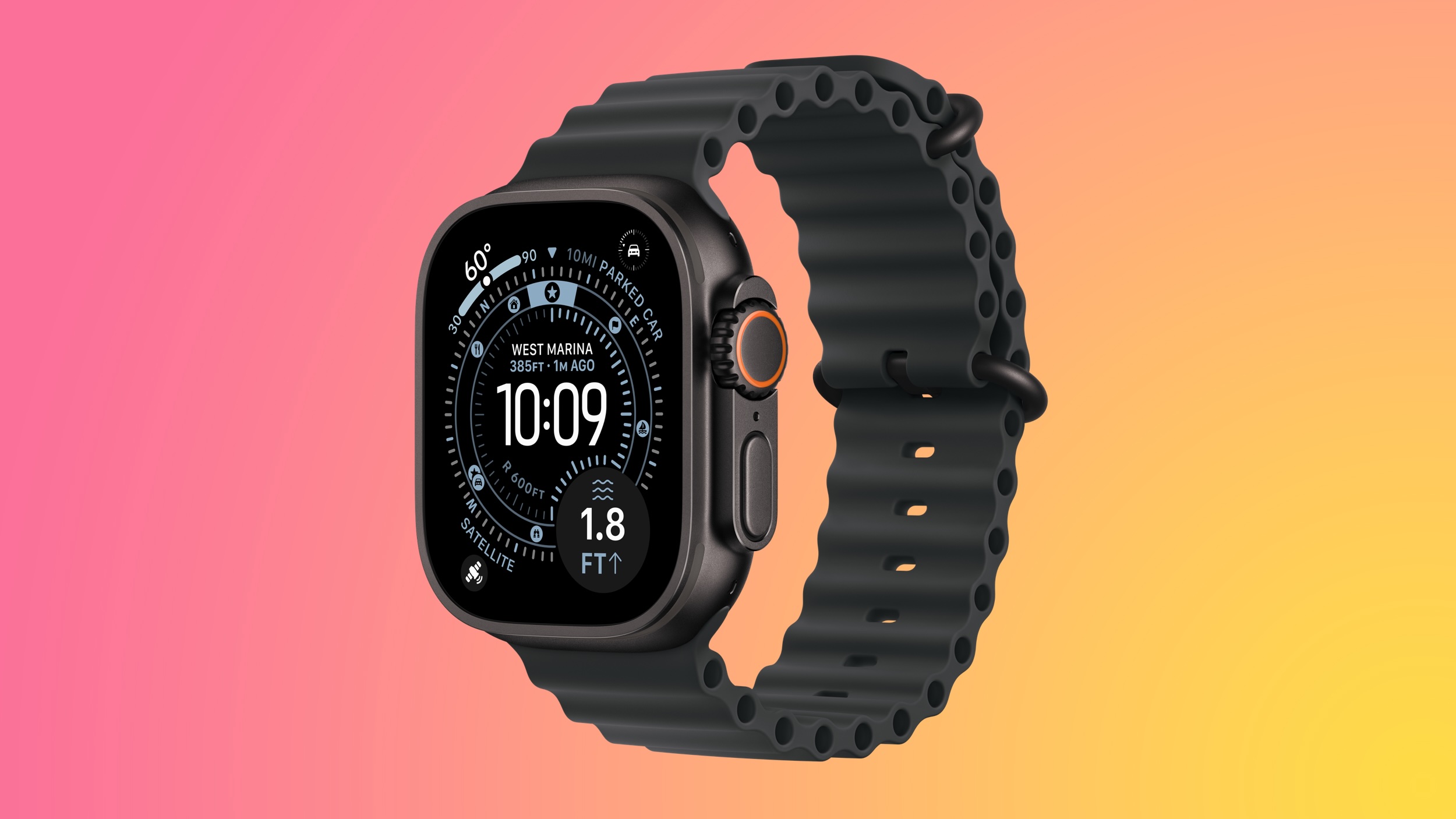
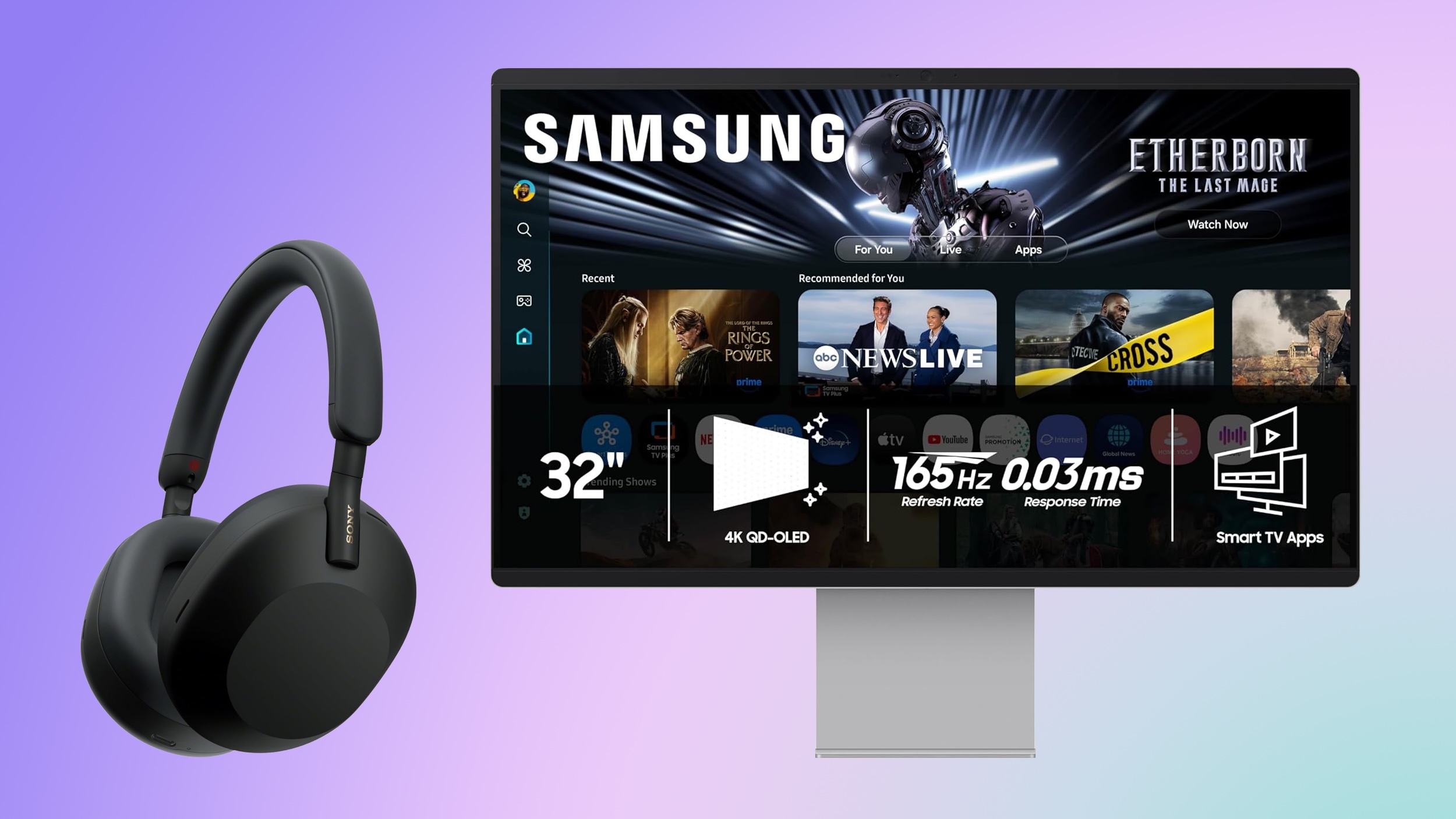
Highlights this time around include a new batch of audio devices on sale, including the Sonos Ace Headphones for $279.00, down from $399.00, and Sony's WH-1000XM5 Noise Canceling Headphones for $248.00, down from $399.00. Another notable audio discount is on the Soundcore Sleep A30 Earbuds, which are designed to be worn in bed, available for $179.99, down from $229.99.


In terms of monitor and TV deals, there are quite a few Samsung deals happening this week on Amazon. The 32-inch Smart Monitor M9 has hit its second-best price on Amazon at $1,267.20, down from $1,599.99, beating the Prime Day deal by about $30. You'll also find solid sales on The Frame TVs and Odyssey monitors right now.


We're also tracking big discounts from brands like LG, Hisense, iVANKY, Jackery, and more in the lists below. Accessories on sale include USB-C wall chargers, MagSafe-compatible wireless chargers, portable batteries, headphones, docks, and monitors.

Audio


Monitors and TVs


Docks


Wall Chargers


Wireless Chargers


Portable Chargers


If you're on the hunt for more discounts, be sure to visit our Apple Deals roundup where we recap the best Apple-related bargains of the past week.


Deals Newsletter


Interested in hearing more about the best deals you can find in 2026? Sign up for our Deals Newsletter and we'll keep you updated so you don't miss the biggest deals of the season!


Related Roundup: Apple Deals

This article, "Sonos, Sony, Anker and More: The Best Amazon Accessory Deals Right Now" first appeared on MacRumors.com

Discuss this article in our forums

  •  

'Siri AI' Lawsuit Update: Apple to Pay Owners of These iPhone Models

In May, Apple agreed to pay $250 million to settle a U.S. class action lawsuit over Siri AI's delayed launch, and eligible iPhone users could receive up to a $95 payout.


This week, the California court overseeing the case held a hearing regarding preliminary approval of the settlement, but the judge has not yet issued a ruling. It will likely be at least a few more months before eligible customers can begin submitting claims, with payouts unlikely to begin until late this year or early next year if the settlement is ultimately approved. In other words, no action is required from eligible customers at this time.

Below, we have answered some key questions regarding the lawsuit.

Why Was Apple Sued?


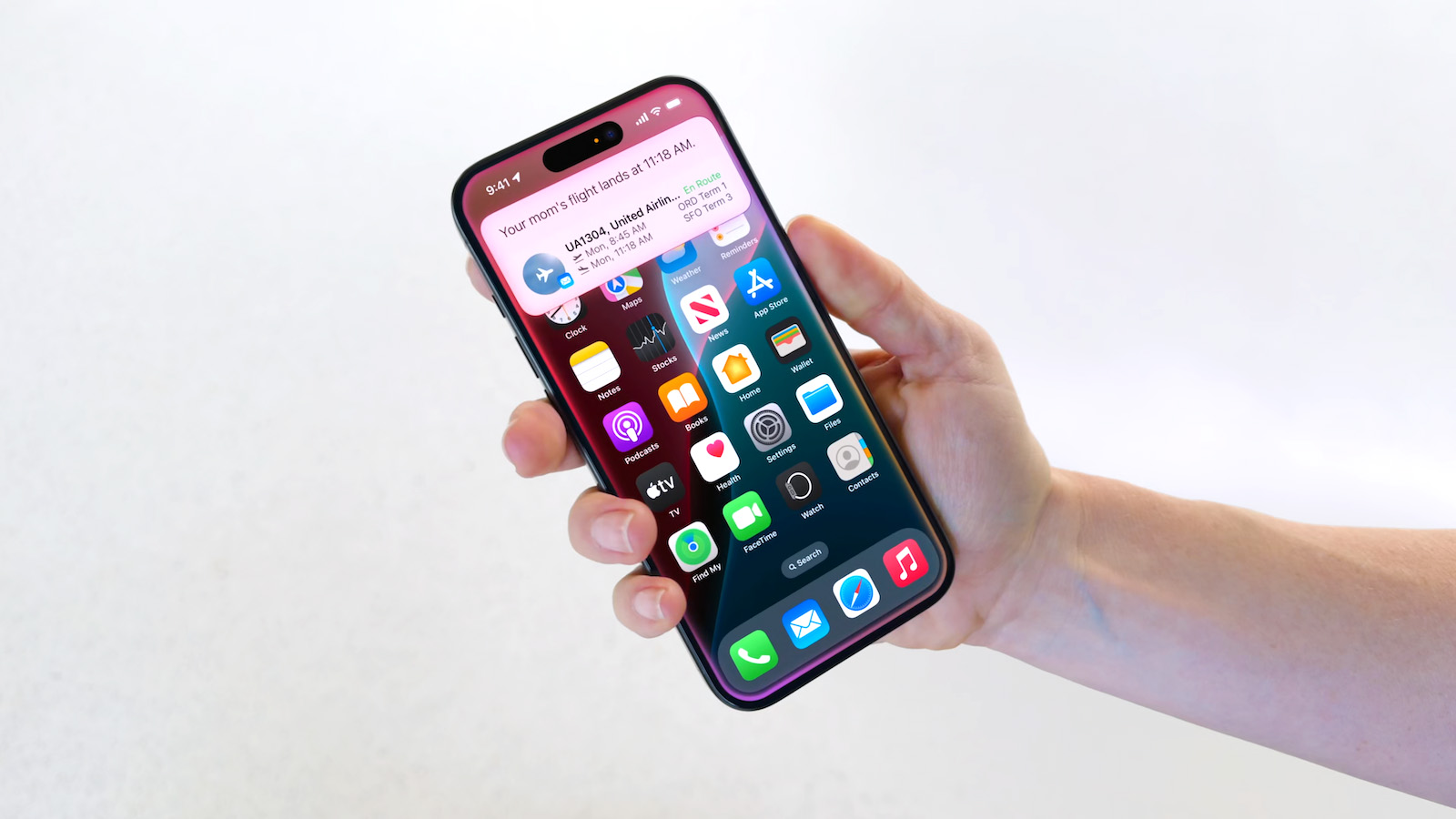
In June 2024, Apple previewed new Siri capabilities powered by Apple Intelligence, including understanding of a user's personal context, on-screen awareness, and deeper per-app controls. For example, Apple showed an iPhone user asking Siri about their mother's flight and lunch reservation plans based on info from the Mail and Messages apps.

Apple advertised those Siri features in product presentations, on its website, in a TV commercial starring actor Bella Ramsey, and elsewhere.


In March 2025, Apple delayed the launch of the personalized version of Siri, leading to the company being hit with a class action lawsuit alleging false advertising.

In a statement, Apple touted a range of other Apple Intelligence features it had already released. Nevertheless, Apple agreed to settle the lawsuit "to stay focused" on "delivering the most innovative products and services to our users."

Apple finally announced "Siri AI" at WWDC 2026 last month, and the revamped assistant is available to test on the iOS 27 developer beta, with a public beta to follow this month. iOS 27 should be released in September, at which point "Siri AI" will finally be available to all users with an iPhone 15 Pro or newer.


Am I Eligible?


To be eligible to submit a claim, you must reside in the U.S. and have purchased any iPhone 15 Pro or iPhone 16 model between June 10, 2024 and March 29, 2025.

The full list of eligible iPhone models:

  • iPhone 15 Pro

  • iPhone 15 Pro Max

  • iPhone 16

  • iPhone 16e

  • iPhone 16 Plus

  • iPhone 16 Pro

  • iPhone 16 Pro Max

It is unlikely that individuals who submit a claim will still need to have physical possession of an eligible iPhone model. However, there is a possibility that proof of purchase or other information will be required, such as the device's serial number. Exact requirements will be outlined on the settlement website, which is still not live.

How Much Will Apple Pay Me?


According to the terms of the settlement, each person who files an eligible claim will receive a per-device payment of $25, but this amount could increase up to $95 if the total number of claims submitted is lower than anticipated.

Where and When Can I Submit a Claim?


Over the coming months, a settlement website is expected to go live with an online claims form.

Eligible class members will be notified by email within approximately 45 days after the settlement receives preliminary approval, according to the court documents. Even if you are not notified but are a U.S. resident who purchased one of the above iPhone models within the above dates, you are still eligible if you meet the criteria.
This article, "'Siri AI' Lawsuit Update: Apple to Pay Owners of These iPhone Models" first appeared on MacRumors.com

Discuss this article in our forums

  •  

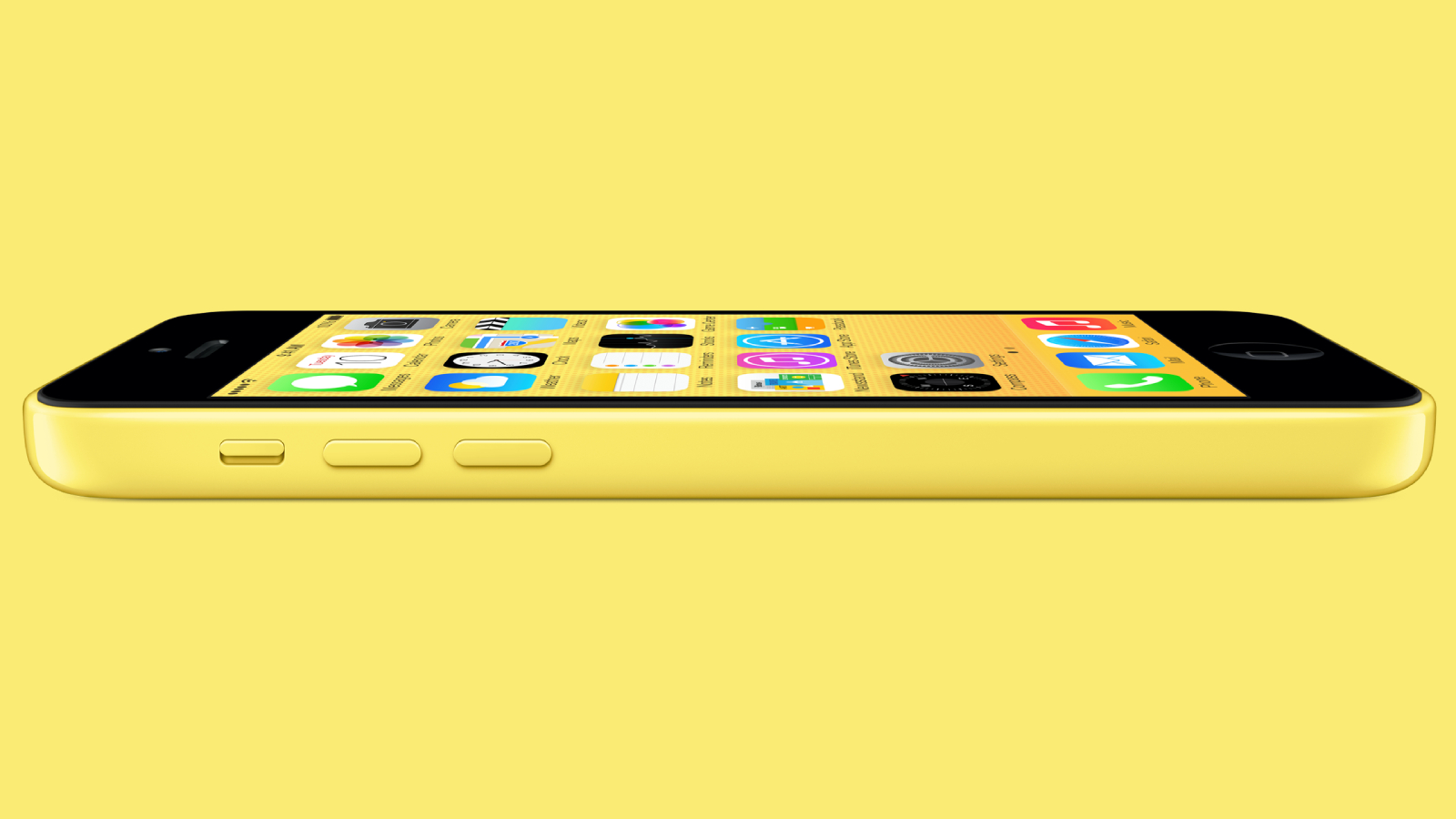
Apple Pulls Ability to Restore iPhone 5c, iPad Mini, and More [Updated]

Apple has stopped signing several older versions of iOS for a group of legacy iPhone and iPad models, cutting off the paths to reinstall or downgrade the affected software.


Apple will no longer validate over-the-air (OTA) or direct IPSW installs of the builds in question. Once a version is unsigned, there is no longer a way to restore or install it through Finder or iTunes.

The change is narrower than a typical signing update. Apple has not stopped signing the iOS versions themselves. Instead, it has ended signing for the baseband firmware, the low-level software that runs each device's cellular modem, tied to those releases.

The affected releases span iOS 6 through iOS 10. The full set of devices and versions that can no longer be restored is as follows:


  • iPhone 4 (CDMA): iOS 7.1.2 IPSW installs

  • iPhone 4S: iOS 6.1.3 and iOS 8.4.1 OTA installs, plus iOS 9.3.5 and iOS 9.3.6 IPSW installs

  • iPhone 5 (GSM and CDMA): iOS 8.4.1 OTA installs, plus iOS 10.3.3 and iOS 10.3.4 IPSW installs

  • iPhone 5c (GSM and CDMA): iOS 10.3.3 IPSW installs

  • iPad 2 (Wi-Fi + 3G, CDMA): iOS 6.1.3 and iOS 8.4.1 OTA installs, plus iOS 9.3.5 and iOS 9.3.6 IPSW installs

  • iPad 3rd generation (GSM and CDMA): iOS 8.4.1 OTA installs, plus iOS 9.3.5 and iOS 9.3.6 IPSW installs

  • iPad 4th generation (Wi-Fi + Cellular): iOS 8.4.1 OTA installs, plus iOS 10.3.3 and iOS 10.3.4 IPSW installs

  • iPad mini (Wi-Fi + Cellular): iOS 8.4.1 OTA installs, plus iOS 9.3.5 and iOS 9.3.6 IPSW installs


Tellingly, every model caught up in the change is a cellular variant. Wi-Fi-only iPads are untouched, since they carry no cellular modem and therefore there is no baseband to sign in the first place.

The oldest hardware on the list is the CDMA iPhone 4, which never advanced beyond iOS 7.1.2, while the newest builds affected are iOS 10.3.3 and iOS 10.3.4 on the iPhone 5 and the fourth-generation β€ŒiPadβ€Œ.

For context, Apple did not separate iOS and iPadOS until iPadOS 13, so these much earlier β€ŒiPadβ€Œ releases were all running iOS at the time.

One of the more interesting entries is the OTA version of iOS 8.4.1, which Apple had kept signing to serve as a stepping stone. Certain devices had to pass through iOS 8.4.1 on the way to iOS 9, and the same signed build gave owners a route back if they wanted to revert. That fallback now disappears for nearly every device on the list, from the iPhone 4S up to the iPhone 5.

A device that is already up and running on its current firmware carries on as normal, but owners lose the fallback of a fresh install should that firmware ever break. It also shuts the door on restores for anyone holding onto old hardware to test apps, check compatibility, or preserve software.

Signing changes like this usually target the latest releases instead, often landing within days of a significant security patch for a current version of iOS or iPadOS. Pulling signatures for decade-old builds on aging devices is rarer, and it touches only a tiny fraction of users in 2026, since everything on the list is more than ten years old.

Update 12:00 pm: Apple has fixed the baseband signing issue for the iPhone 5c on iOS 10.3.3 and iOS 10.3.4, and presumably other devices and iOS versions will follow.

Update 12:24 pm: Baseband signing for all devices has now been restored.
Related Roundups: iPad, iPad mini
Related Forums: iOS 10, iOS 8, iOS 9, iPad, iPhone

This article, "Apple Pulls Ability to Restore iPhone 5c, iPad Mini, and More [Updated]" first appeared on MacRumors.com

Discuss this article in our forums

  •  

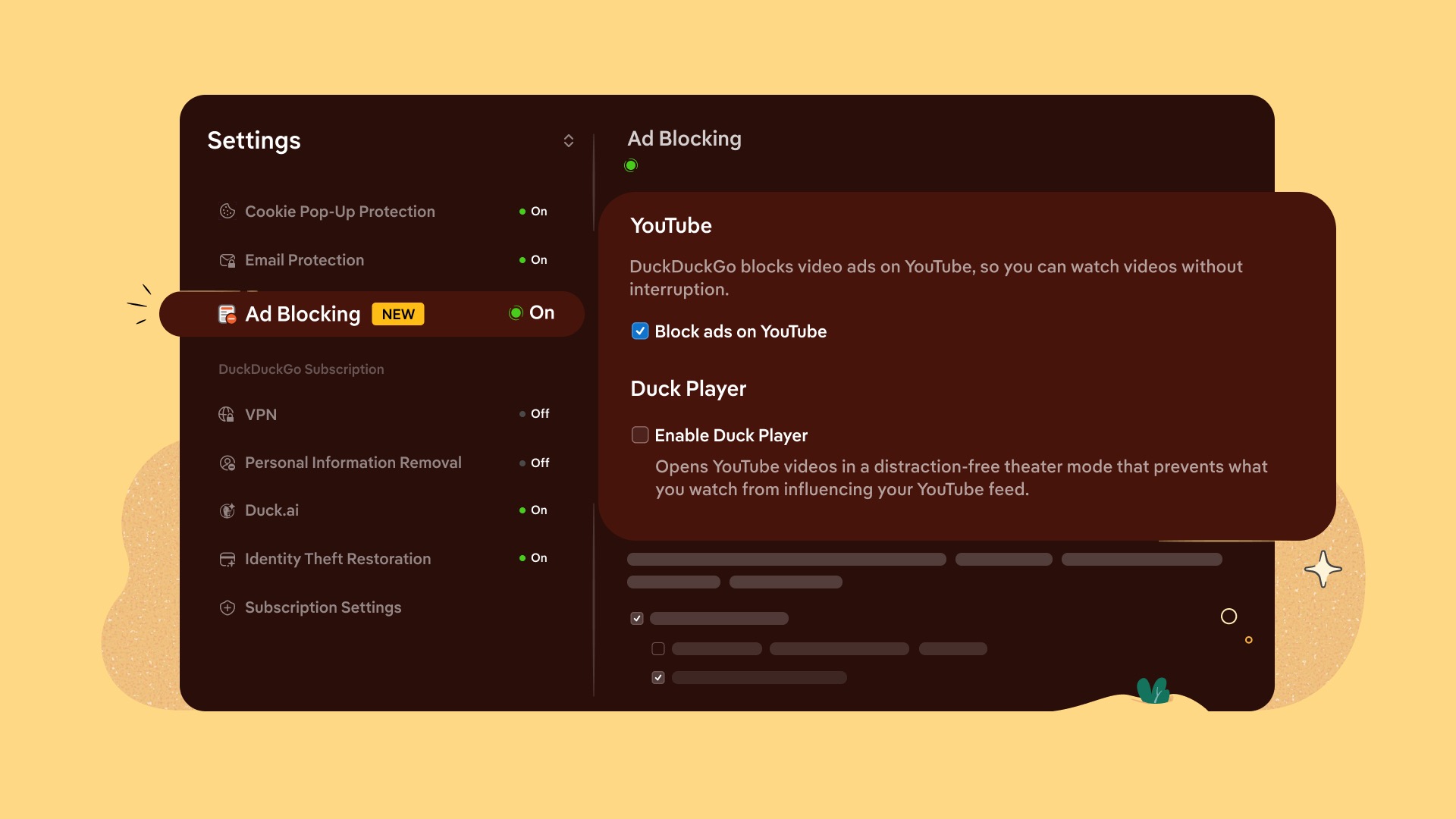
DuckDuckGo Browser Now Blocks YouTube Ads on iPhone and Mac

DuckDuckGo's free web browser now blocks most video ads on YouTube, and the feature is on by default for iPhone and Mac users running the latest version of the app.


Announced on Wednesday, YouTube Ad Blocking stops ads that play before and during videos on YouTube's website, and DuckDuckGo says the result is the regular YouTube experience minus the interruptions, so features like viewing history and saving your spot in playlists keep working.

One thing to watch on iPhone is if you tap a YouTube link, it often opens the dedicated YouTube app if you have it installed. The blocking feature obviously won't work there, and you'll need to open the YouTube website inside the DuckDuckGo browser instead.

DuckDuckGo says it is using a community-maintained filter lists from uBlock Origin, along with its own rules to help minimize breakage. The company warns that videos may buffer a little longer than usual, but playback should run uninterrupted once a clip loads.

Note that YouTube Ad Blocking is separate from Duck Player, the browser's distraction-free video viewing mode, but the two can be enabled together.


The move follows Google's ongoing efforts to break ad blockers every which way it can, including recent changes to Chrome that targeted uBlock Origin. It's worth mentioning that DuckDuckGo isn't the first browser to block YouTube ads, with similar features already available in Brave and Opera.

DuckDuckGo's browser offers more than a dozen privacy protections, including ad tracker blocking and cookie pop-up removal. It's available for iOS devices on the App Store and for Mac on the Mac App Store and DuckDuckGo website.
This article, "DuckDuckGo Browser Now Blocks YouTube Ads on iPhone and Mac" first appeared on MacRumors.com

Discuss this article in our forums

  •  

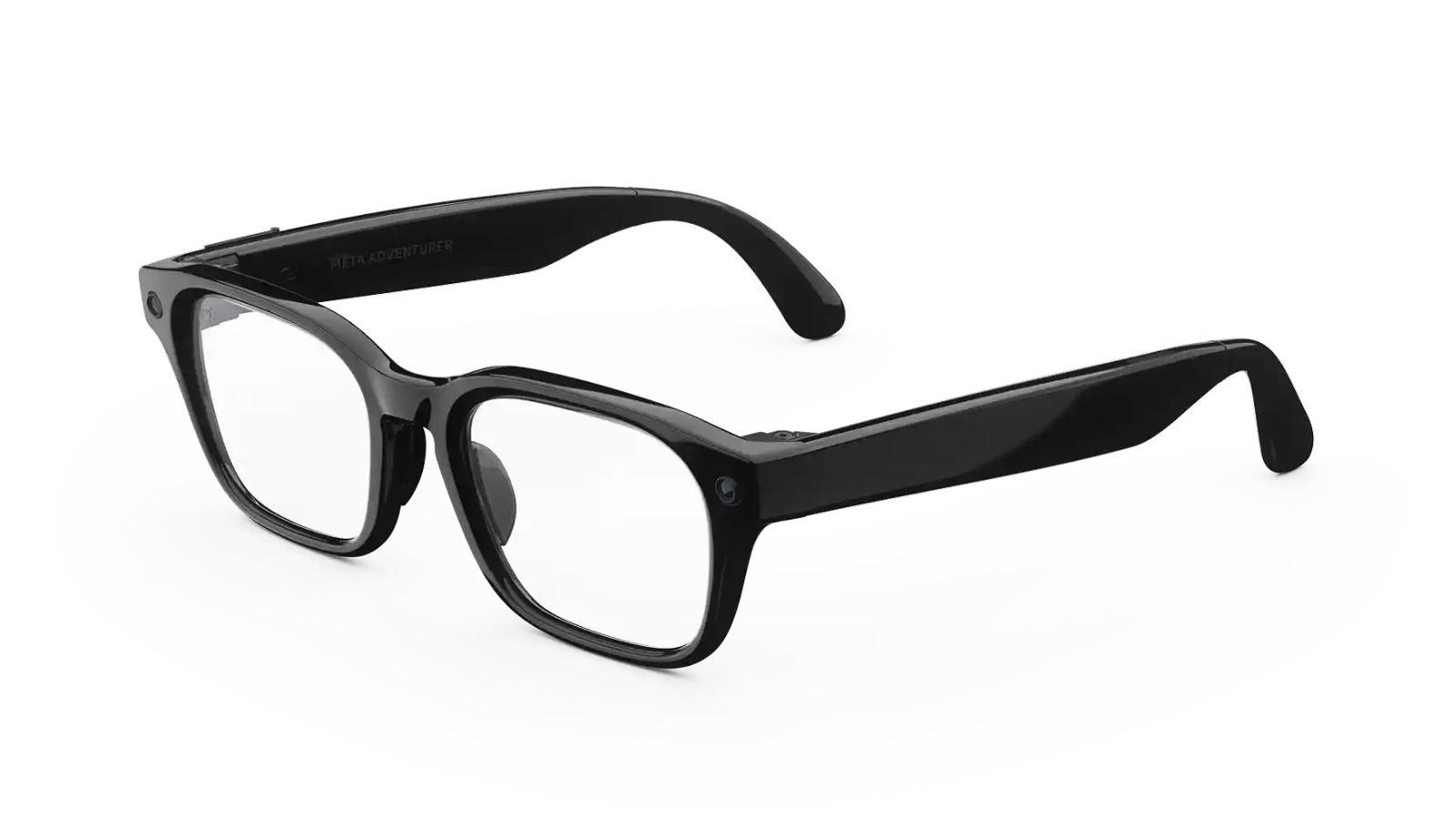
Meta's 'Super Sensing' Prototype Glasses Quietly Record Everything

Meta has prototyped "super sensing" smart glasses that use cameras and audio recordings to capture the wearer's every moment, reports the Financial Times ($).


The smart glasses continuously collect audio while taking photos every few seconds, allowing the user to leverage AI to help query what they saw or heard, or recall their day, according to the report's sources.

Meta's current AI smart glasses have an LED in the corner of the frame that lights up to signal to others when a wearer is taking photographs or filming. But Meta executives don't want to activate the LED when the super-sensing features are turned on.
In one proposed system, raw footage and audio would not be stored by Meta or made available to the user, several people said. Instead, the metadata from that audio and images would be extracted and uploaded to the server for Meta's AI to query, which proponents argue would have fewer privacy implications.

The company is also discussing whether data collected through the glasses and their features could be used to train its own AI models, as it pours billions into rivalling competition such as OpenAI, Google and Anthropic in the AI race.
The report suggests the features could be activated on Meta's existing glasses via a software update.

Meta's plan, which could still change, highlights the obvious civil liberty and privacy risks of smart glasses. Privacy experts argue that always-on devices could violate data privacy or biometric data laws. It is also unclear whether the company or the wearer would be liable for potential violations of wiretapping laws, given that several U.S. states prohibit recording third-party conversations without consent.

Meta's existing Ray-Ban smart glasses already lack a visual indicator when AI is being used to analyze the wearer's surroundings. The company says it safeguards privacy by stripping out key identifying information.

In February, it was reported that the social media giant had an inactive facial recognition feature embedded in its Ray-Ban smart glasses platform. The company later removed the system.

Apple is widely expected to release its first smart glasses in 2027, designed in-house rather than through a partner brand.

Apple's smart glasses are expected to include cameras, microphones, and AI capabilities, and will have the ability to take photos, record video, provide translations, give turn-by-turn directions, and more. However, they won't have augmented reality capabilities, and it's not clear how Apple will manage privacy concerns.
This article, "Meta's 'Super Sensing' Prototype Glasses Quietly Record Everything" first appeared on MacRumors.com

Discuss this article in our forums

  •  

iPhone 18 Pro Max Said to Be Thicker and Heavier Than Predecessor

Apple's upcoming iPhone 18 Pro Max could be noticeably thicker and heavier than its predecessor, suggesting a trade-off behind the device's rumored larger battery.


Chinese leaker Ice Universe today claimed the iPhone 18 Pro Max will measure around 9mm thick and weigh approximately 240 grams. That would make the device around 0.25mm thicker and roughly 7 grams heavier than the current iPhone 17 Pro Max.

The latest claim comes off the back of recent regulatory filings indicating the iPhone 18 Pro Max will feature a 5,391mAh battery in China and a 5,567mAh battery in the U.S. – an increase of nearly 500mAh over the iPhone 17 Pro Max.

Ice Universe suggested the added thickness and weight are a direct result of the larger battery, but Apple is also said to be adopting a new type of vapor chamber that uses stainless steel, which could also be a contributing factor.

The rumor builds on an earlier claim that Apple's next flagship could become the heaviest iPhone ever. If so, it would have to be heavier than the iPhone 14 Pro Max, which also weighed 240 grams, so it may turn out that there are only milligram-level differences between the two.

Apple's use of titanium instead of stainless steel made the iPhone 15 Pro and iPhone 16 Pro models lighter than the iPhone 14 Pro models. Apple then switched away from titanium to less-dense aluminum for the iPhone 17 Pro models, but internal changes and slightly thicker designs bumped up their weight again.

The β€ŒiPhone 18 Proβ€Œ and β€ŒiPhone 18 Proβ€Œ Max are expected to launch alongside Apple's first foldable iPhone this September.
Related Roundup: iPhone 18 Pro

This article, "iPhone 18 Pro Max Said to Be Thicker and Heavier Than Predecessor" first appeared on MacRumors.com

Discuss this article in our forums

  •  
❌