Lees weergave

Apple's Most Powerful On-Device AI Now Requires iPhone 17 Pro or iPhone Air

Apple's most advanced on-device AI model in iOS 27 requires a minimum of 12GB of unified memory, meaning the standard iPhone 17 is excluded.


The next generation of Apple Intelligence introduces a new on-device model more powerful than anything Apple has shipped before. While most ‌iOS 27‌ AI features run on the same hardware supported today, including iPhone 15 Pro, the most capable model carries stricter requirements. To run Apple's most powerful on-device model, users will need one of the following devices:


  • iPhone: iPhone Air, iPhone 17 Pro, or ‌iPhone 17 Pro‌ Max

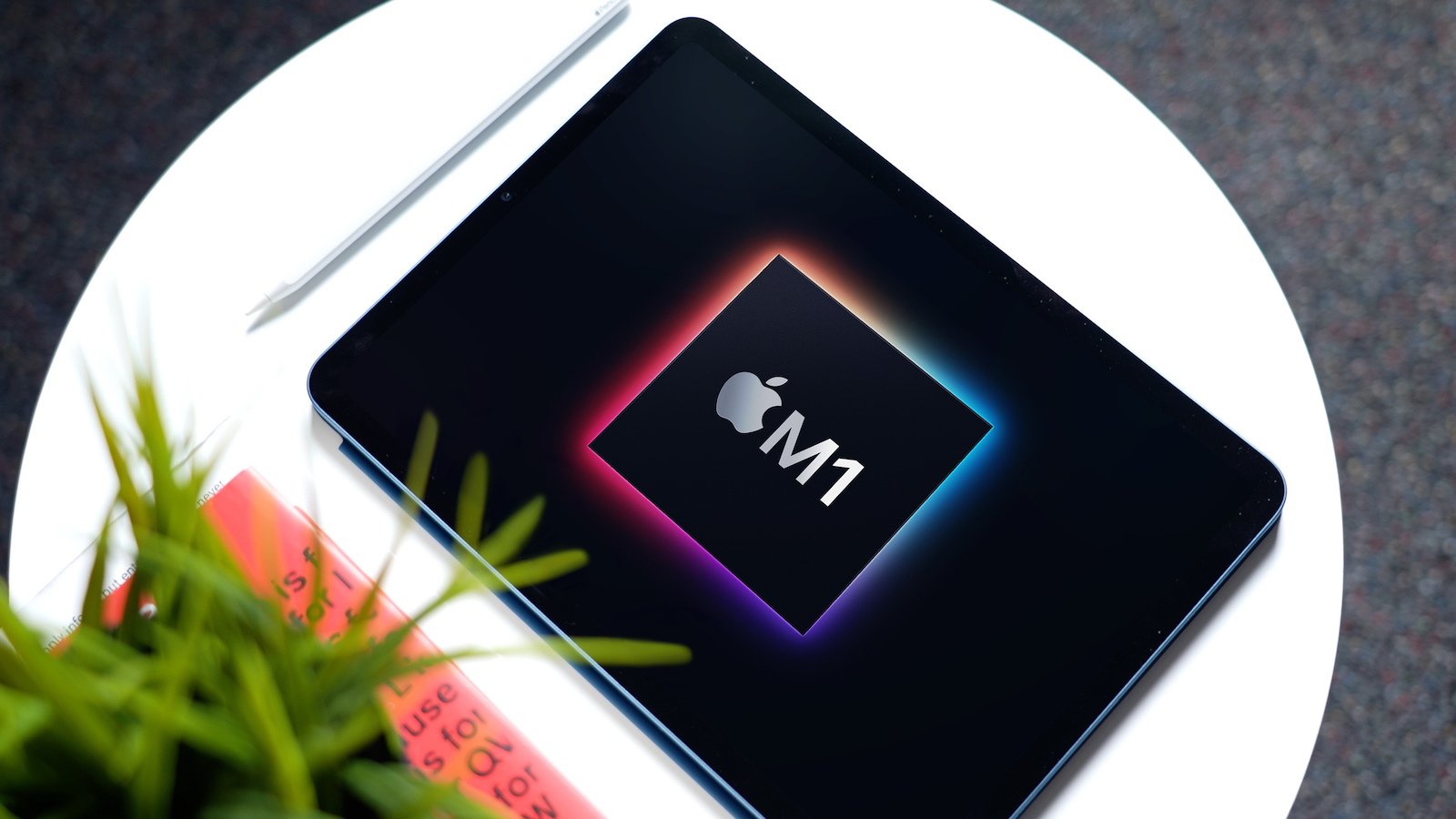
  • iPad: iPad with M4 or later with at least 12GB of unified memory

  • Mac: Mac with M3 or later with at least 12GB of unified memory

  • Vision Pro: Apple Vision Pro with M5


The base ‌iPhone 17‌ is excluded because it ships with 8GB of memory, falling short of the 12GB threshold. The standard memory requirement for ‌Apple Intelligence‌ has been 8GB since its introduction, so this marks the first time Apple has raised the bar for its most capable on-device features.

According to Apple's press release, the new model specifically enables features including expressive voices and more advanced dictation.
Related Roundups: iPhone 17 Pro, iPhone Air
Related Forum: iPhone

This article, "Apple's Most Powerful On-Device AI Now Requires iPhone 17 Pro or iPhone Air" first appeared on MacRumors.com

Discuss this article in our forums

  •  

Siri AI Gains Customizable Voice Expressiveness and Pace

Apple today announced that Siri AI will offer a "brand new voice experience," giving users the ability to customize how the voice assistant sounds.


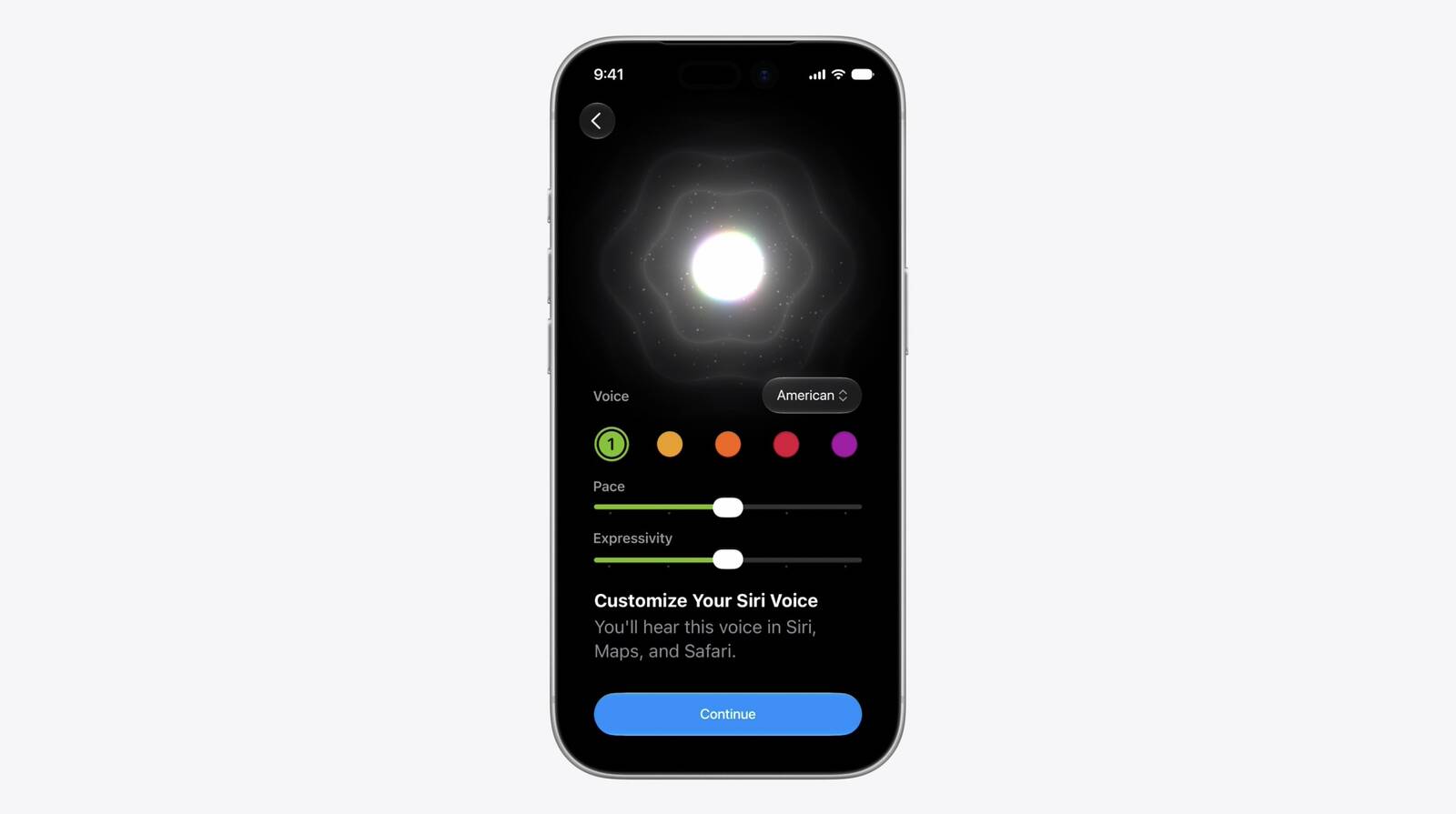
On devices that support Apple's most advanced on-device model, ‌Siri‌ AI will deliver more expressive voices alongside a significant improvement to systemwide dictation accuracy. Users will be able to adjust both the expressiveness and pace of ‌Siri‌'s voice to their preference via a new UI with sliders. As of developer beta 1, American is the sole voice option.

The updated dictation engine will capture speech as polished text, automatically handling capitalization, punctuation, and formatting in real time. Apple says improved speech understanding means users can speak naturally and trust that their words will appear accurately and as intended.
Tags: Siri, Siri AI

This article, "Siri AI Gains Customizable Voice Expressiveness and Pace" first appeared on MacRumors.com

Discuss this article in our forums

  •  

Apple Intelligence Gains Smarter Writing Tools in iOS 27

Apple today announced a series of Apple Intelligence improvements coming to Mail, Messages, Files, and system-wide text input as part of iOS 27 and its other major platform updates.


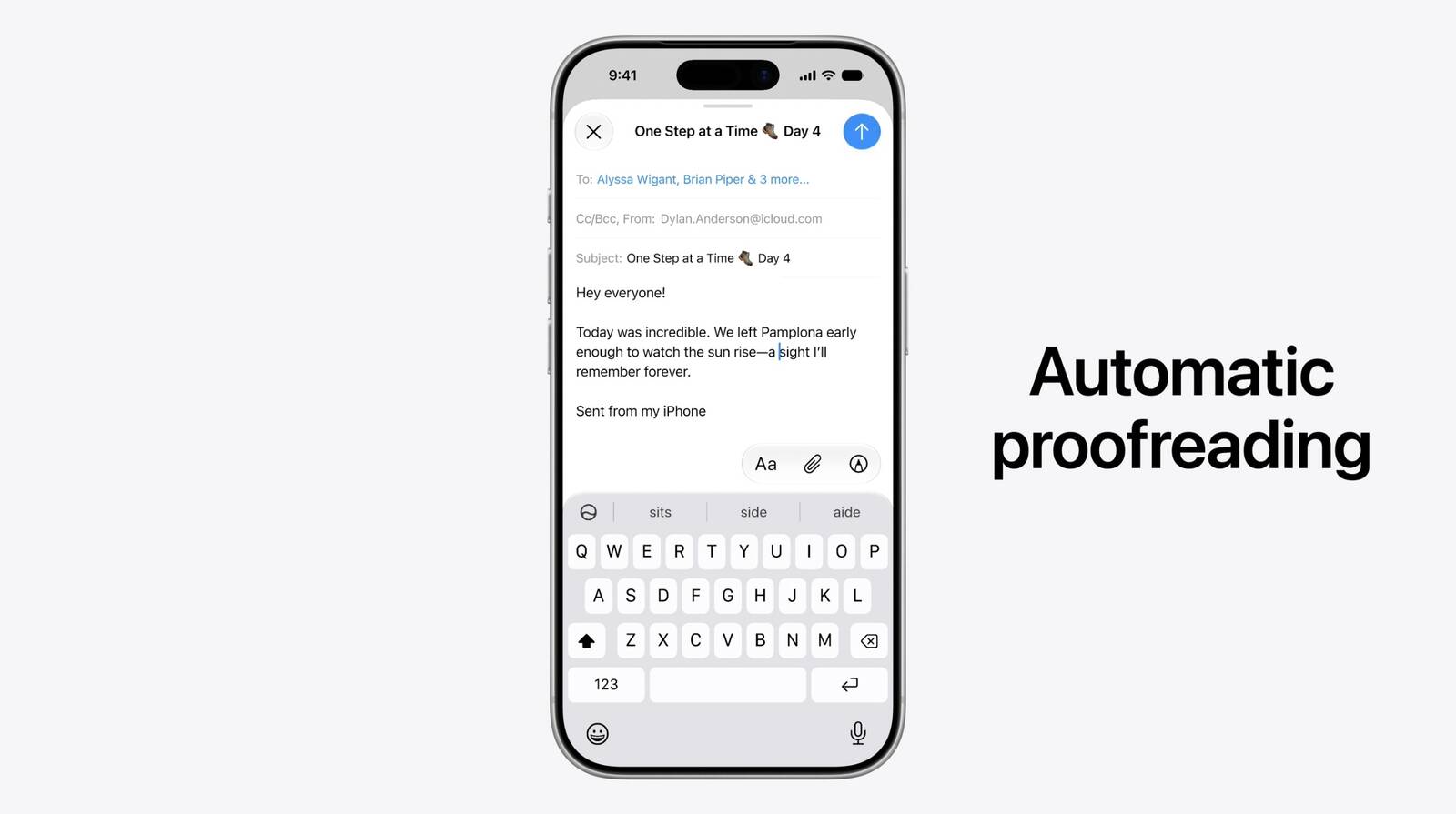
The updates include automatic proofreading, which surfaces spelling and grammar suggestions as users type across the system. Apple is also introducing intelligent file and folder naming suggestions based on content.

Two enhancements come specifically to Mail and Messages. Apple's composition assistant will now adapt to how a user typically communicates with different contacts, tailoring its suggestions to match individual conversational styles. Smart Reply, which proposes quick responses to incoming messages, has also been updated to draw on a user's personalized writing style rather than offering generic reply options.
Related Roundup: iOS 27

This article, "Apple Intelligence Gains Smarter Writing Tools in iOS 27" first appeared on MacRumors.com

Discuss this article in our forums

  •  

Apple Brings AI Tab Organization and AI-Generated Extensions to Safari

Apple today unveiled a raft of Safari upgrades powered by Apple Intelligence, including automatic tab organization, AI-generated custom extensions, and new privacy-first browsing tools.


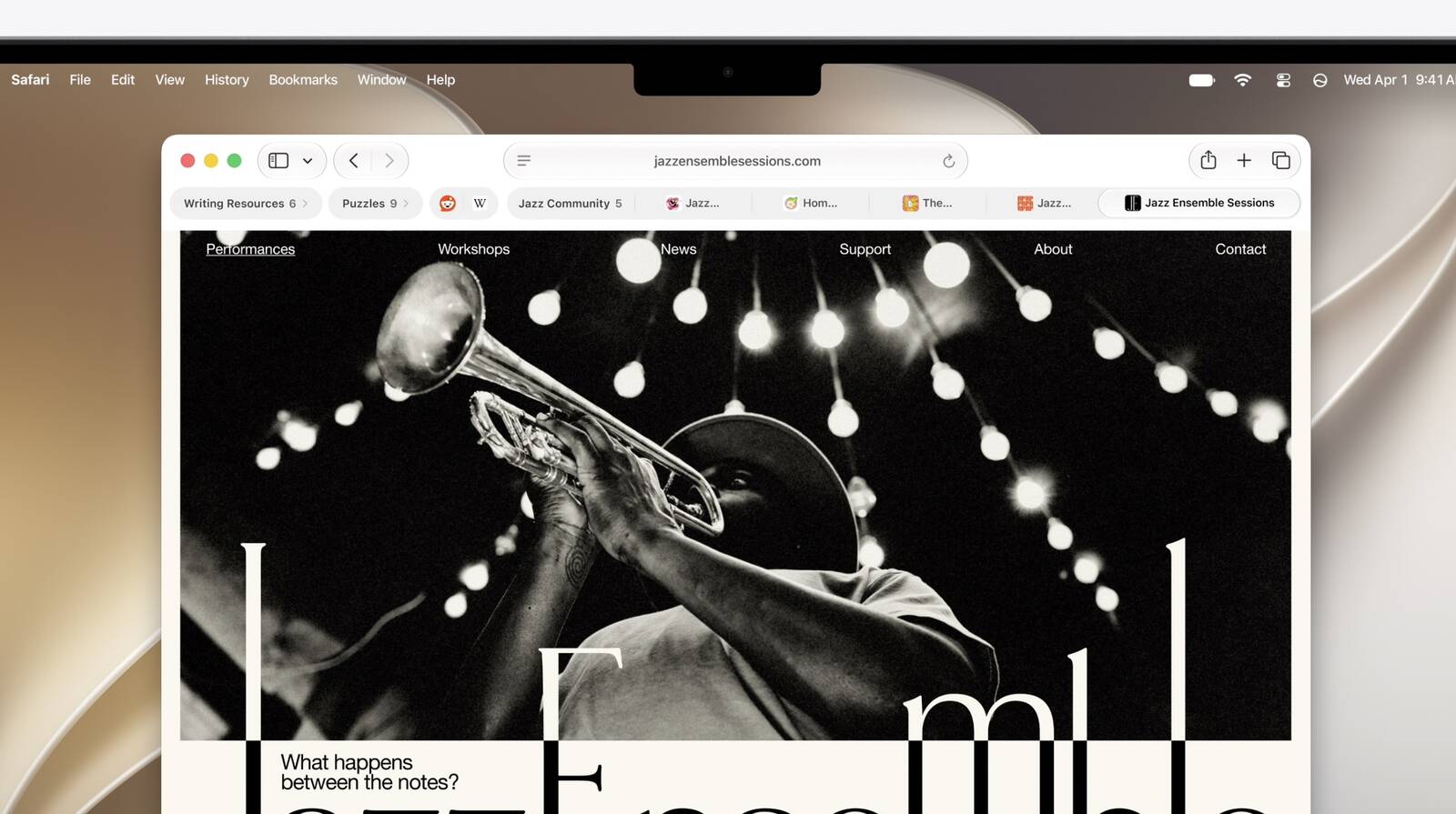
The centerpiece feature is automatic tab organization, which uses ‌Apple Intelligence‌ to group a user's open tabs into relevant topics without any manual intervention. If someone is planning a weekend trip, for example, Safari can pull all of their travel-related tabs into a single topic. As browsing continues, Safari will slot new tabs into existing topics or create fresh ones as needed.

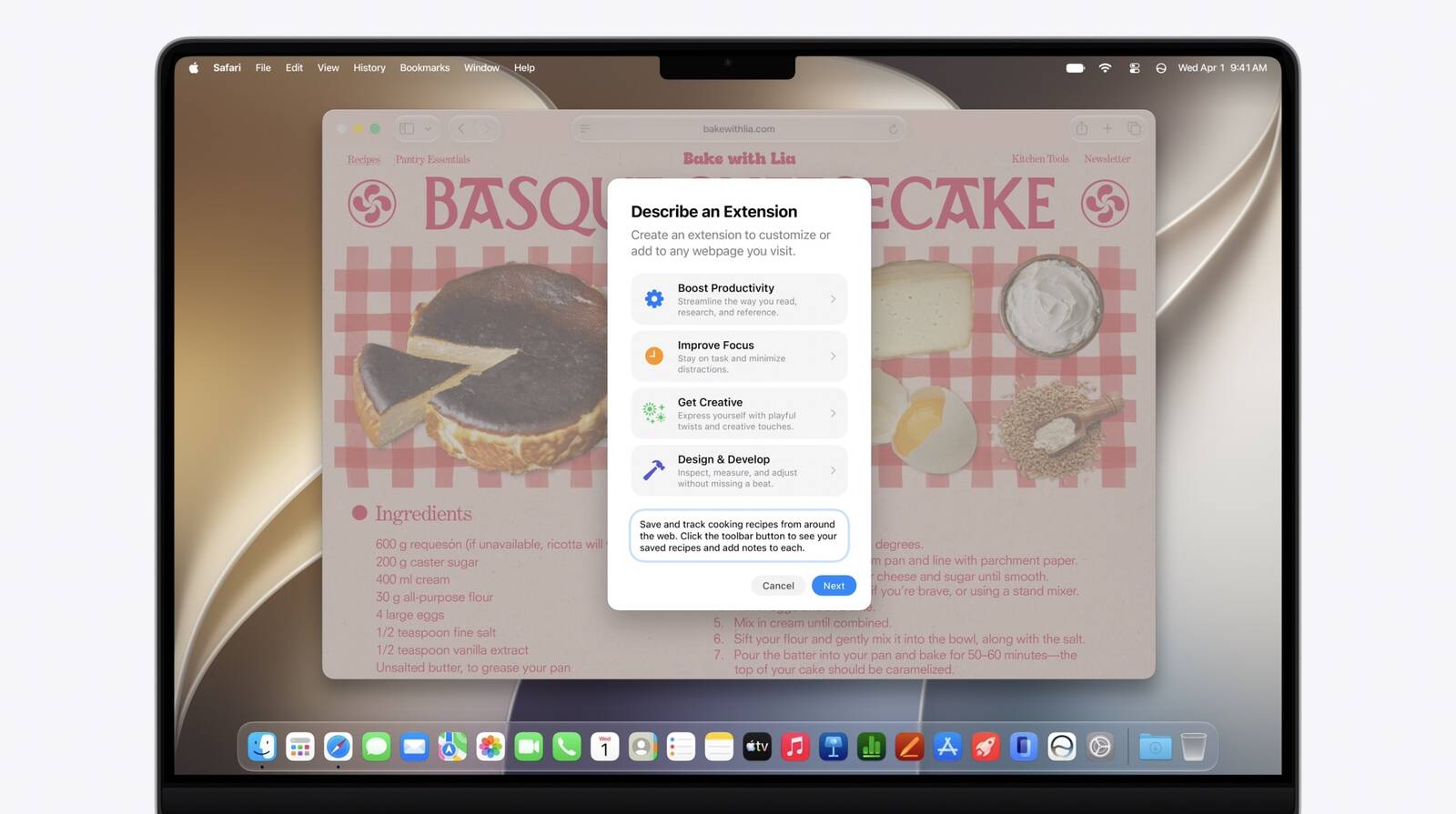
Apple is also introducing a way for users to create custom Safari extensions using natural language. The company described the feature as "describe an extension," letting users specify what they want in plain English and having Safari generate an extension that adapts web pages accordingly. Apple's example was adding a toolbar button that saves and rates recipes from cooking sites.


A new "Notify Me" feature lets users ask Safari to watch a specific web page for changes and alert them when something relevant happens, such as a product restocking or a price drop. Users tell Safari in natural language what they are looking for, and Safari sends a notification when it detects a matching change on that page.

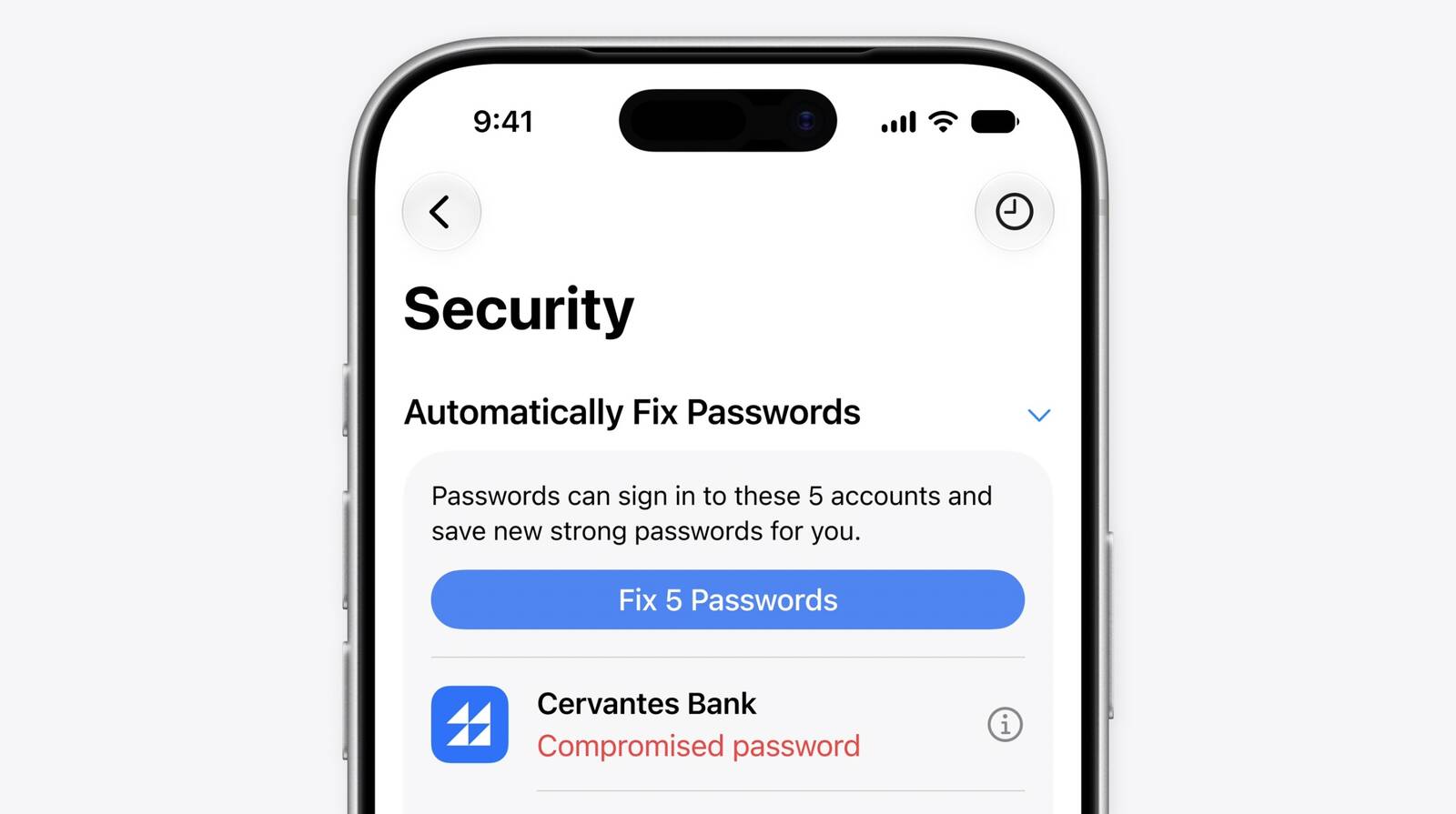
Apple is bringing a background agentic password-updating tool to the browser. Working alongside the Passwords app, ‌Apple Intelligence‌ can automatically navigate to eligible websites, sign in, and update weak or compromised passwords to strong ones with a single tap.

Apple says all of these capabilities are built with privacy in mind, and that no personal browsing data is exposed to Apple or anyone else in the process.
This article, "Apple Brings AI Tab Organization and AI-Generated Extensions to Safari" first appeared on MacRumors.com

Discuss this article in our forums

  •  

Apple Passwords Can Now Automatically Fix Weak and Compromised Passwords With Agentic AI

Apple today announced that the Passwords app can now automatically update weak and compromised passwords using Apple Intelligence and Safari to take action on a user's behalf.


The feature builds on Passwords' existing ability to flag weak or compromised credentials. While the app has long been able to alert users to security issues, acting on those alerts required manually visiting each site and changing passwords individually. The new capability removes that friction by automating the process end-to-end in the background.

Apple describes the system as agentic, with ‌Apple Intelligence‌ and Safari securely navigating through websites, signing in, and upgrading accounts to strong passwords without the user needing to intervene beyond an initial tap. The feature displays as a Live Activity when active.
This article, "Apple Passwords Can Now Automatically Fix Weak and Compromised Passwords With Agentic AI" first appeared on MacRumors.com

Discuss this article in our forums

  •  

Apple Intelligence Introduces Contextual Call and Messages Features

Apple today announced a set of new communication-focused Apple Intelligence features, including contextual suggestions in Messages and a Call Context tool that surfaces relevant information from Mail when a user phones a business.


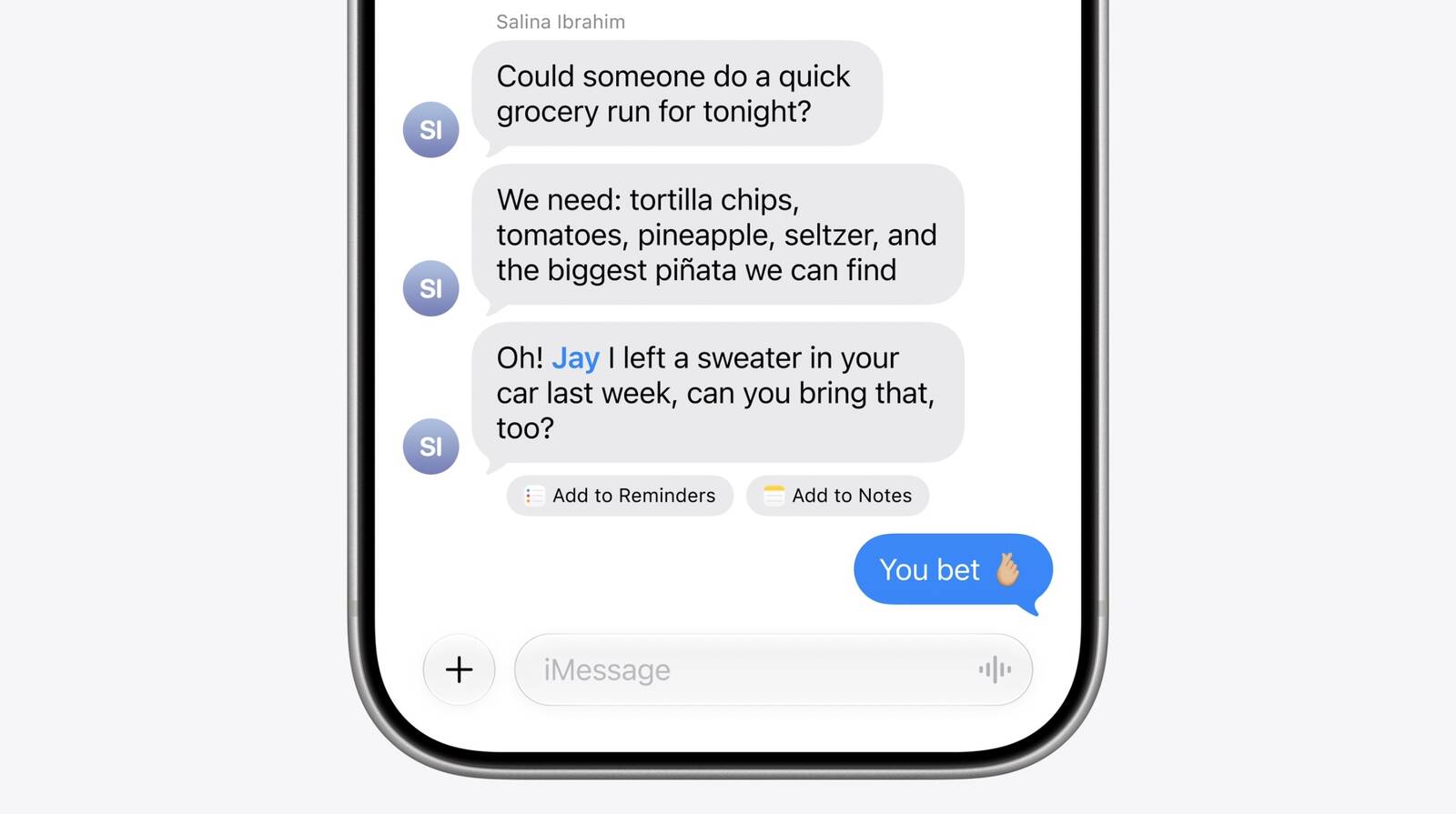
The new Messages features offer one-tap suggestions based on the content of a conversation. If a contact asks for photos, Messages can surface a suggestion to search the library, recognizing keywords, locations, and people to find the best matches. Messages can also prompt users to create a reminder or a note directly from the conversation thread. Smart Reply in both Messages and Mail can now draw on a user's personalized writing style, and suggestions in Mail gain the ability to take action with third-party apps.


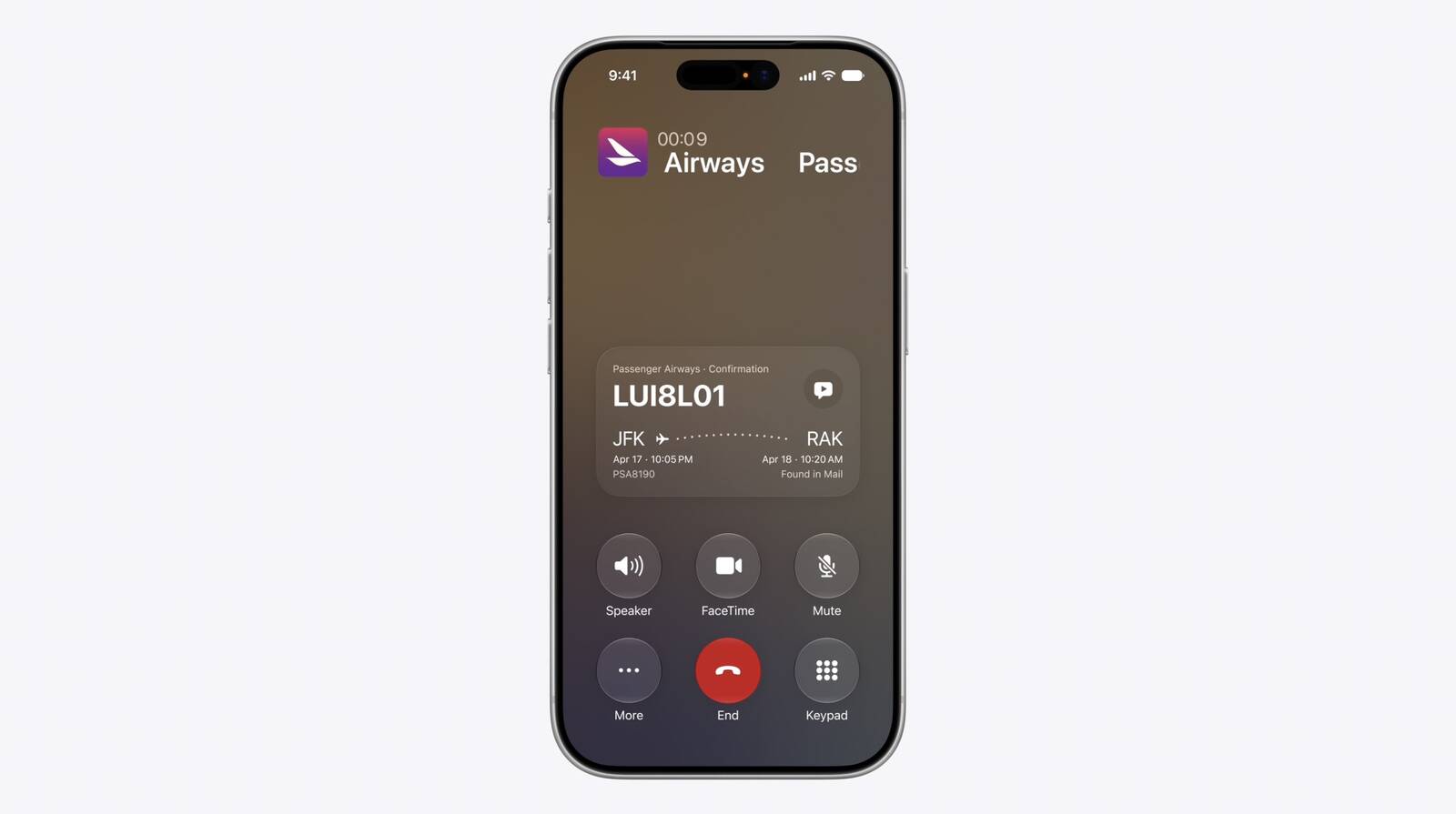
The other headline feature is Call Context, which proactively surfaces relevant information when a user places a call to a business. If someone calls an airline to change a flight, for example, the Phone app can automatically find the relevant confirmation code or reservation number from Mail and display it during the call. Apple says Call Context looks only at who the user is calling and not at the call audio itself. The feature runs entirely on device, meaning no data is shared with Apple or any third party.
This article, "Apple Intelligence Introduces Contextual Call and Messages Features" first appeared on MacRumors.com

Discuss this article in our forums

  •  

Apple to Add AI Video Descriptions and Smarter Notifications to Home App

Apple today announced new Apple Intelligence features for the Home app, including AI-generated descriptions of HomeKit Secure Video camera clips and smarter grouping of accessory notifications.


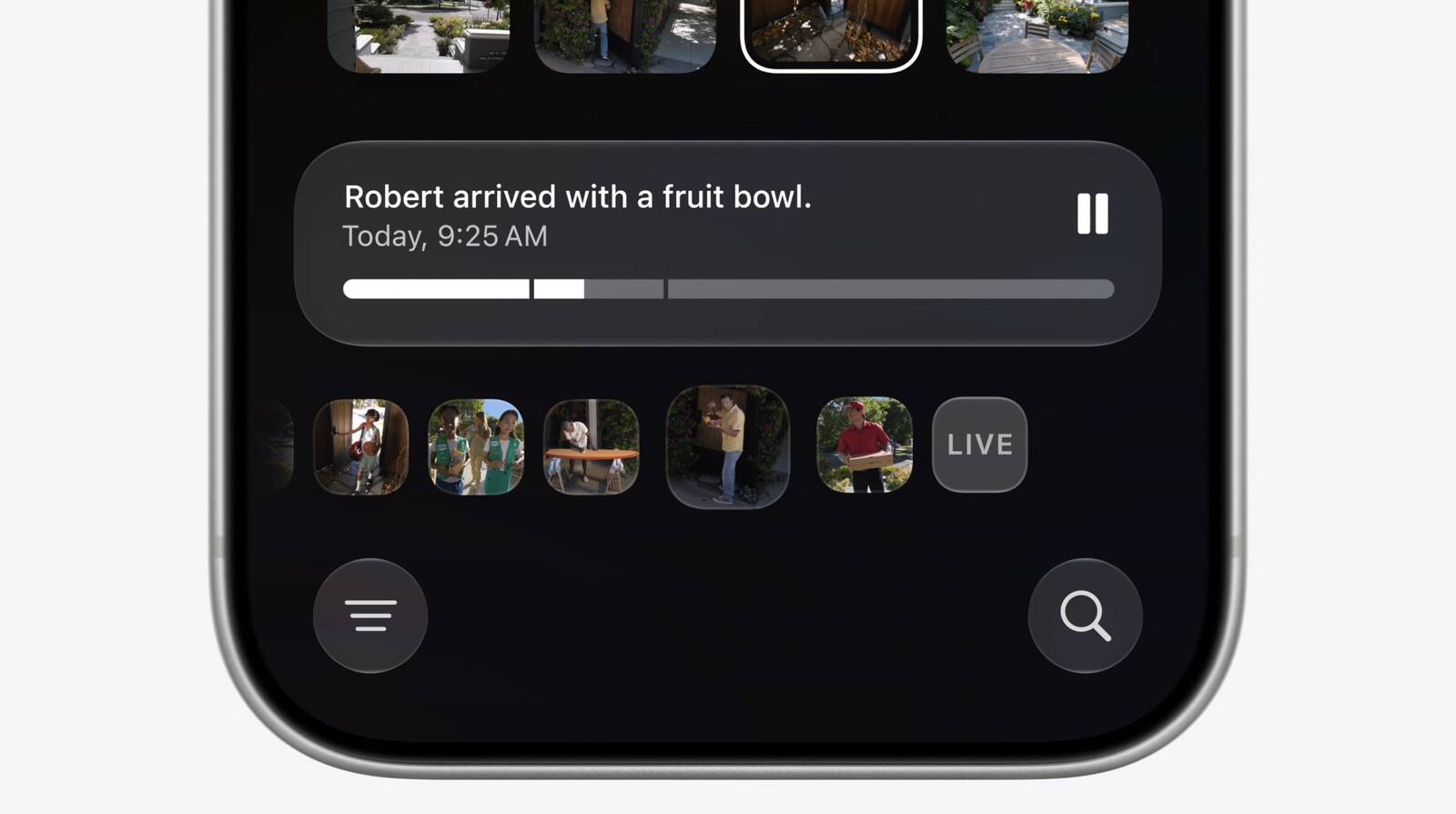
The Home app will use ‌Apple Intelligence‌ to analyze recorded clips from compatible cameras and generate text descriptions summarizing what happened in them. Users can search through footage to find specific events, such as a package delivery, without needing to watch each clip individually.

The app will also surface noteworthy clips at the top of the Search page, so users can quickly identify important moments. When playing a clip, the Home app can pull together footage from multiple cameras to provide a more complete picture of an event.


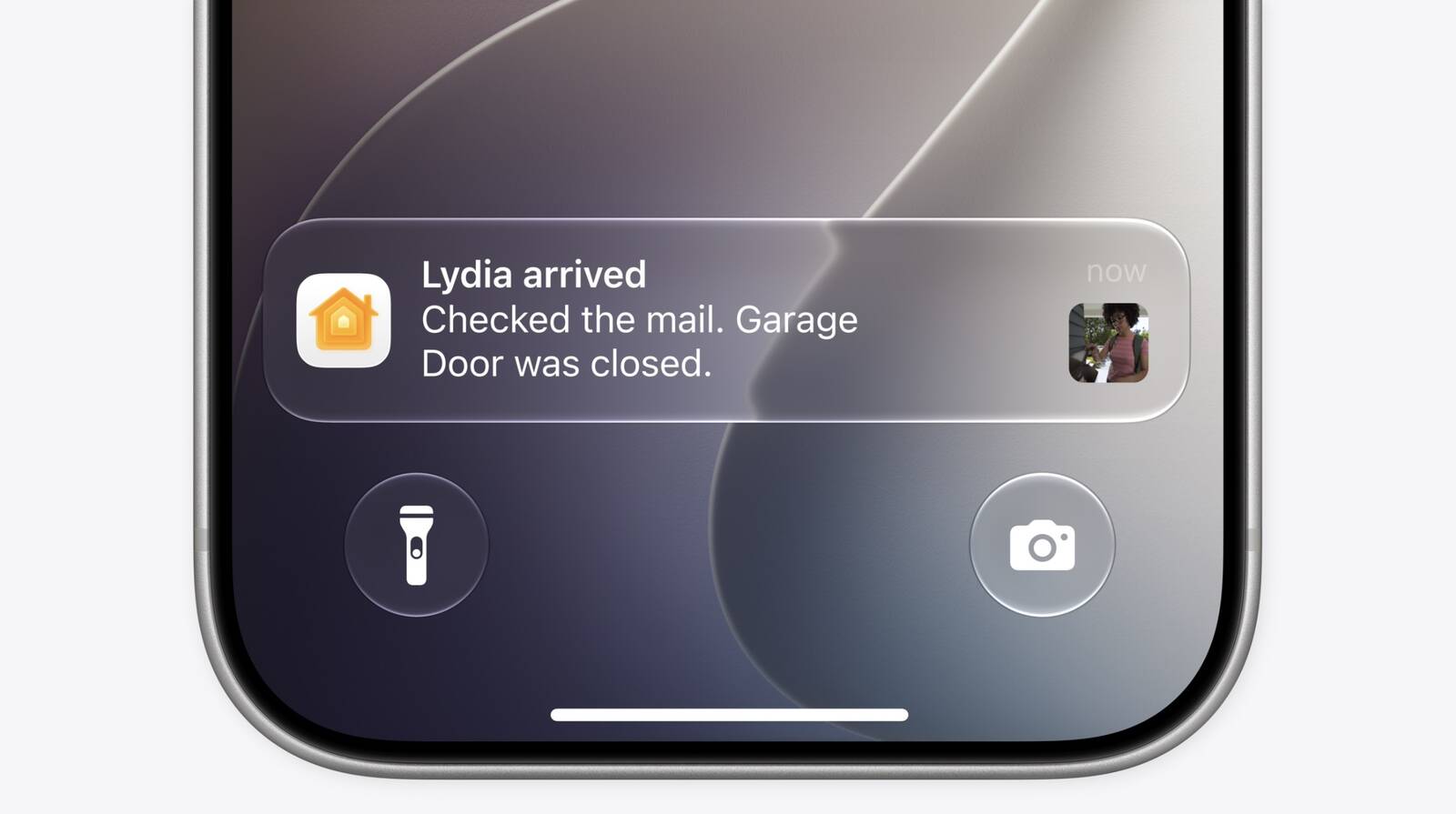
‌Apple Intelligence‌ will also make accessory notifications smarter. Rather than receiving a separate alert for every triggered accessory, the Home app will understand related notifications as a single ongoing activity and deliver one notification that continues to update as the activity unfolds.
This article, "Apple to Add AI Video Descriptions and Smarter Notifications to Home App" first appeared on MacRumors.com

Discuss this article in our forums

  •  

Apple Revamps Image Playground With Photorealistic Generation and New Editing Tools

Apple has announced a major overhaul of Image Playground, introducing a new generative model capable of photorealistic image creation alongside expanded editing and sharing capabilities.


The updated app is powered by a new generative model that runs on Private Cloud Compute, enabling it to produce high-quality images in virtually any style, including photorealistic output for the first time. All generated images will automatically carry a hidden SynthID watermark to identify them as AI-generated.

‌Image Playground‌ now supports photo-based editing in addition to creation. Users can describe changes they want to make to an existing image, or use touch gestures such as tapping, circling, or brushing to highlight specific objects and move or resize them. Photos can also be transformed into different styles using a text description, and people from a user's photo library can be included in generated images.


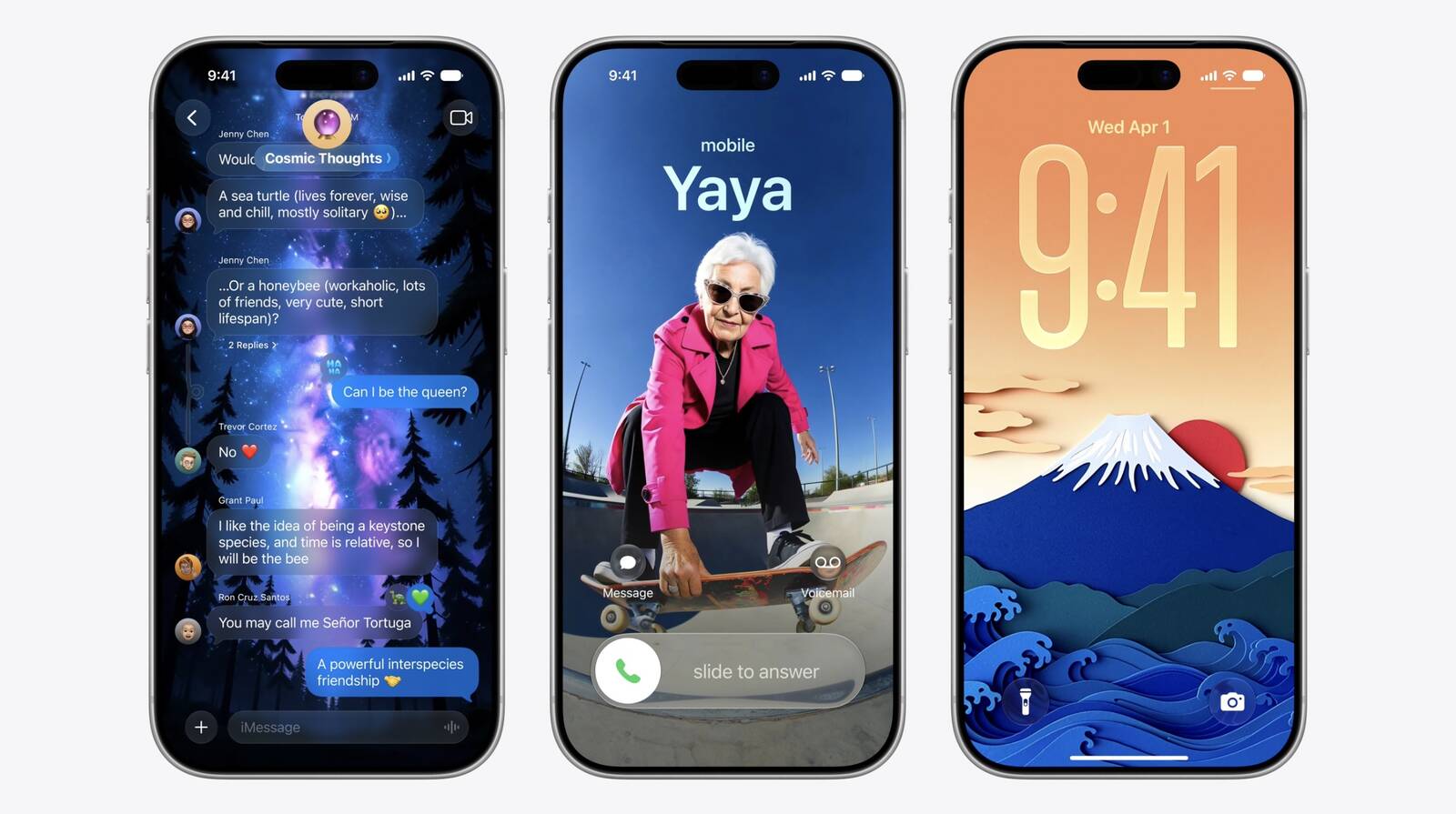
The experience extends further into iOS with new output destinations. In addition to Messages, generated images can now be used as Lock Screen wallpapers and Contact Posters. Users can also choose an aspect ratio when creating images, such as landscape for a website header or portrait for a flyer.

Developers will have access to the new capabilities through the ‌Image Playground‌ API, allowing third-party apps to integrate photorealistic generation and editing features directly.
This article, "Apple Revamps Image Playground With Photorealistic Generation and New Editing Tools" first appeared on MacRumors.com

Discuss this article in our forums

  •  

Apple Unveils Xcode and Foundation Models Framework Improvements

Apple today announced a new Foundation Models framework for developers alongside a set of Xcode enhancements aimed at agentic coding workflows.


The Foundation Models framework gains image input support, allowing developers to pass images alongside text into on-device models. Apple also introduced custom skills and server-side model execution as part of the framework, giving developers more flexibility in how they integrate AI capabilities into their apps. Apple also announced a new Core AI framework alongside the Foundation Models changes.

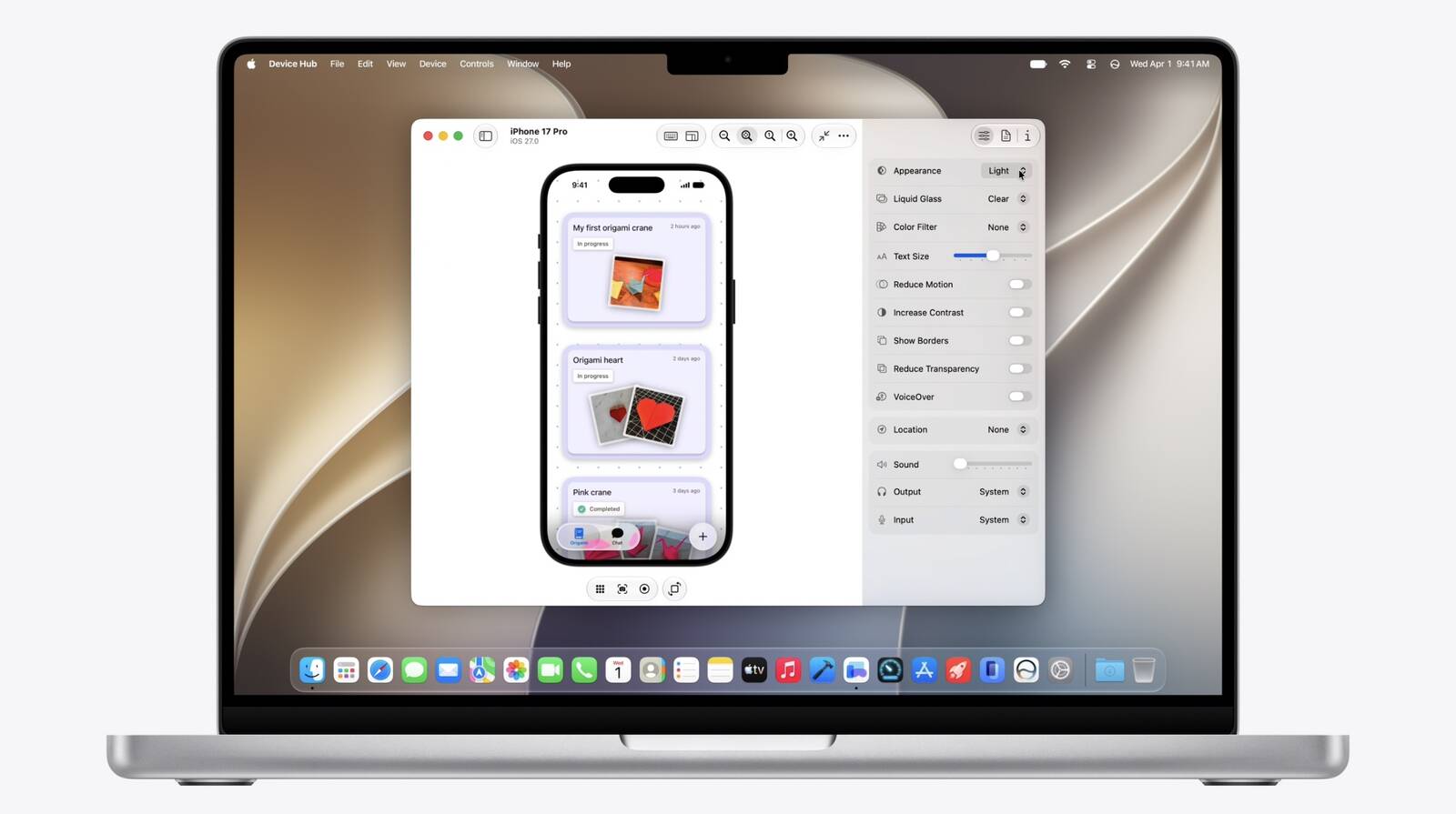
Xcode's coding assistant has been expanded to handle app localization and can now interact with simulated devices, with the ability to extend its capabilities further via custom skills. Apple also said developers will be able to more easily resize and interact with app previews, with additional details to follow in upcoming sessions and the State of the Union presentation. Apple SVP of Software Engineering Craig Federighi said Xcode is now the "best place" to build apps using agentic coding.

Apple also highlighted expanded App Intents support, with Apple citing third-party apps such as Line as examples of how developers can allow users to ask Siri to perform actions within their apps on their behalf.
Tag: Xcode

This article, "Apple Unveils Xcode and Foundation Models Framework Improvements" first appeared on MacRumors.com

Discuss this article in our forums

  •  

iPadOS 27 Drops Support for a Wave of iPads

iPadOS 27 cuts support for more iPad models than last year's iPadOS 26 did, with older iPad Pro, iPad Air, ‌iPad‌, and iPad mini models all losing compatibility.


‌iPadOS 26‌ supported ‌iPad Air‌ models from the 3rd generation onward. iPadOS 27 raises the floor to A14, M1, or later, cutting the 3rd generation ‌iPad Air‌ model from the compatibility list entirely.

The ‌iPad Pro‌ also sees cuts. ‌iPadOS 26‌ retained support for ‌iPad Pro‌ 12.9-inch from the 3rd generation onward and ‌iPad Pro‌ 11-inch from the 1st generation onward. iPadOS 27 raises those floors to the 4th generation 12.9-inch and the 2nd generation 11-inch, dropping two older Pro models that were still supported just a year ago.

For the standard ‌iPad‌ lineup, ‌iPadOS 26‌ drew the line at the 8th generation, having already dropped the 7th generation last year. iPadOS 27 cuts the 8th generation as well, leaving only the 9th generation, 10th generation, and the current A16 model as compatible.

The ‌iPad mini‌ sees its oldest supported model bumped from the 5th generation to the 6th generation, with the A17 Pro-equipped mini 7 also included. The 5th generation mini, which ran ‌iPadOS 26‌, will not receive the update.

By contrast, ‌iPadOS 26‌ was a relatively conservative cull; it dropped only the 7th generation ‌iPad‌ from the iPadOS 18 compatibility list. iPadOS 27 represents a considerably more aggressive pruning across the entire ‌iPad‌ lineup.
Related Roundup: iOS 27

This article, "iPadOS 27 Drops Support for a Wave of iPads" first appeared on MacRumors.com

Discuss this article in our forums

  •  

watchOS 27 Drops Support for Apple Watch Series 9, Ultra 1, SE 2, and Older

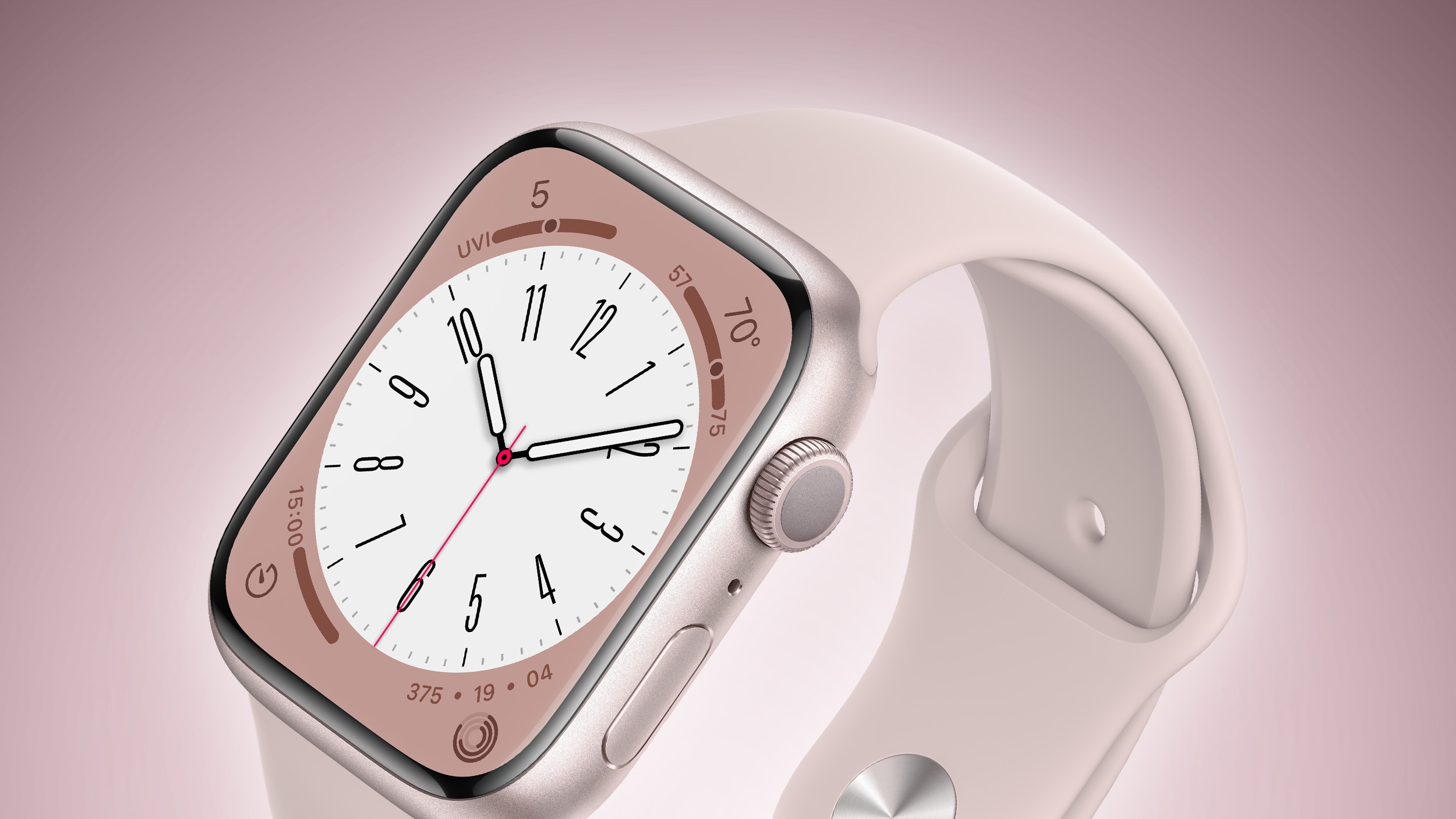
Apple today confirmed that watchOS 27 will not support the Apple Watch Series 9, Apple Watch Ultra (first generation), or Apple Watch SE (second generation), effectively drawing a line at devices equipped with the S9 or S10 chip.


The only Apple Watch models compatible with watchOS 27 are the Apple Watch Series 10, Series 11, Ultra 2, Ultra 3, and SE 3. Despite the fact that the Apple Watch Ultra 2 contains the S9 chip, the Series 9 which contains the same chip will no longer be supported.

The cuts are the biggest loss of latest generation software support for the Apple Watch to date. watchOS 26 supported exactly the same devices as watchOS 11 before it: the Apple Watch Series 6 and later, Apple Watch SE (2nd generation) and later, and all Apple Watch Ultra models. With watchOS 27, Apple is effectively dropping four years' worth of device support in a single software update.
Related Roundups: Apple Watch 11, watchOS 26
Buyer's Guide: Apple Watch (Caution)
Related Forum: Apple Watch

This article, "watchOS 27 Drops Support for Apple Watch Series 9, Ultra 1, SE 2, and Older" first appeared on MacRumors.com

Discuss this article in our forums

  •  

Apple to Bring AI Reframing and Editing Tools to Photos App

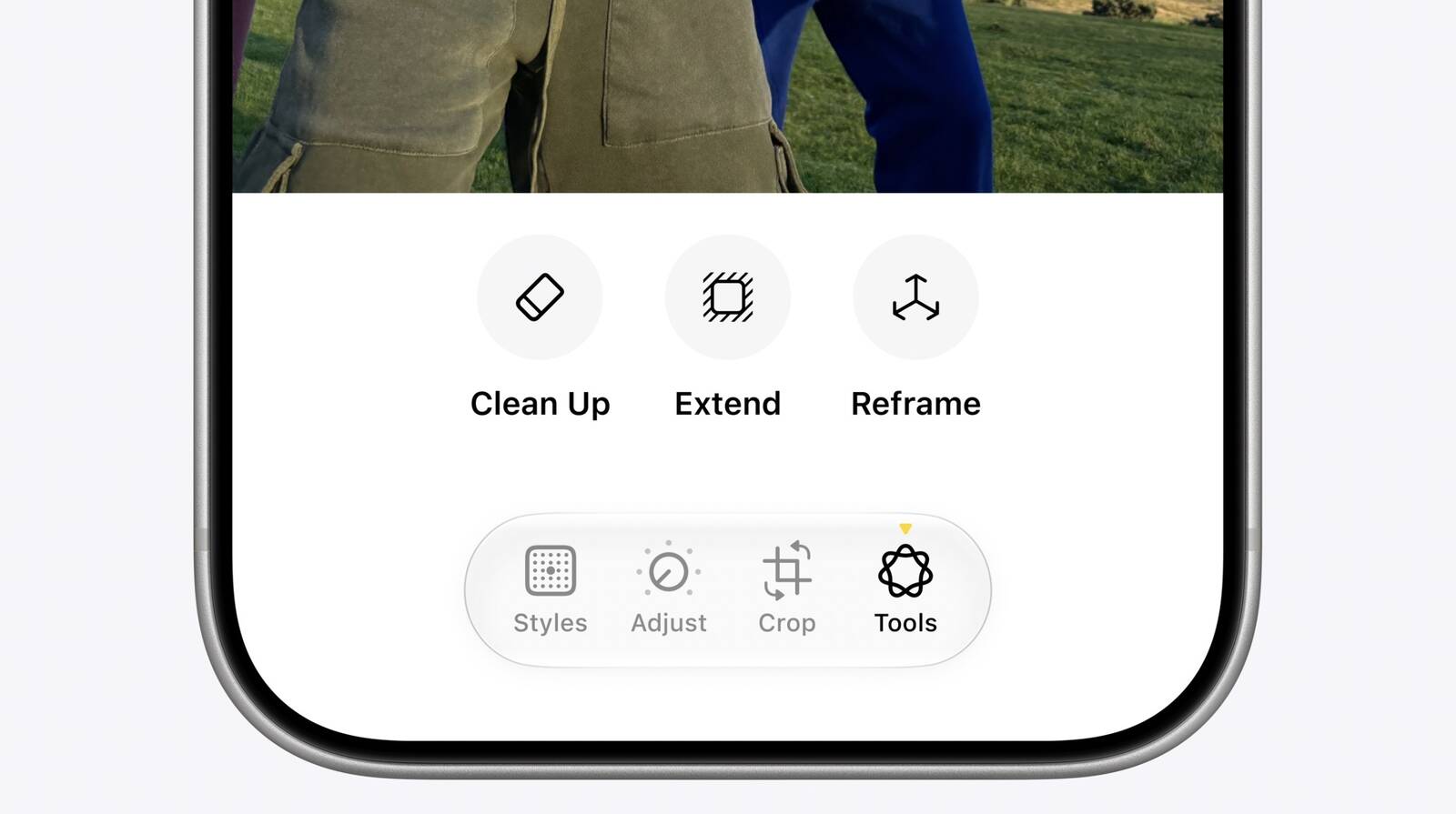
Apple today announced new AI-powered photo editing tools coming to the Photos app as part of Apple Intelligence, including an upgraded Cleanup tool, a new Extend tool, and a new Spatial Reframing feature.


Spatial Reframing allows users to reposition the virtual camera angle of a photo after it has already been taken. By touching and dragging, users can adjust the framing and perspective of a shot, with ‌Apple Intelligence‌ generating new content only to fill in the gaps created by the shift in angle. It only generates new content to fill in the gaps where the perspective has shifted, ensuring the reframed photo stays consistent with the original scene.

The Cleanup tool is also receiving what Apple calls a "big upgrade," with improved ability to remove distractions from images and more realistic infill "even when the scene is complex." A new Extend tool rounds out the trio, letting users add more background space to a photo or adjust its aspect ratio.

Apple said the new tools help photographers "enhance their images in ways that respect the original moment." All three features are processed using Apple's Private Cloud Compute infrastructure, meaning the edits are handled in the cloud while Apple says user data remains protected. The new tools will work on older photos as well as images taken with non-Apple cameras.
This article, "Apple to Bring AI Reframing and Editing Tools to Photos App" first appeared on MacRumors.com

Discuss this article in our forums

  •  

Apple Brings Natural Language Creation to Shortcuts App

Apple today announced that users can now describe a shortcut in natural language, with Apple Intelligence automatically building the automation in the background.


Previously, creating a Shortcuts automation required users to manually build workflows step by step, making the feature largely the preserve of more technically minded users. With the upcoming update, users can simply describe what they want a shortcut to do in plain English text, and ‌Apple Intelligence‌ then handles the construction.

Apple demonstrated the feature with a practical example: A user asking the Shortcuts app to automatically send their estimated time of arrival to a designated recipient whenever they leave home. ‌Apple Intelligence‌ calculates the ETA based on the user's location and sends the correct time without any manual configuration.
This article, "Apple Brings Natural Language Creation to Shortcuts App" first appeared on MacRumors.com

Discuss this article in our forums

  •  

Apple Expands Visual Intelligence With Bill Splitting, Nutrition Insights, and visionOS Support

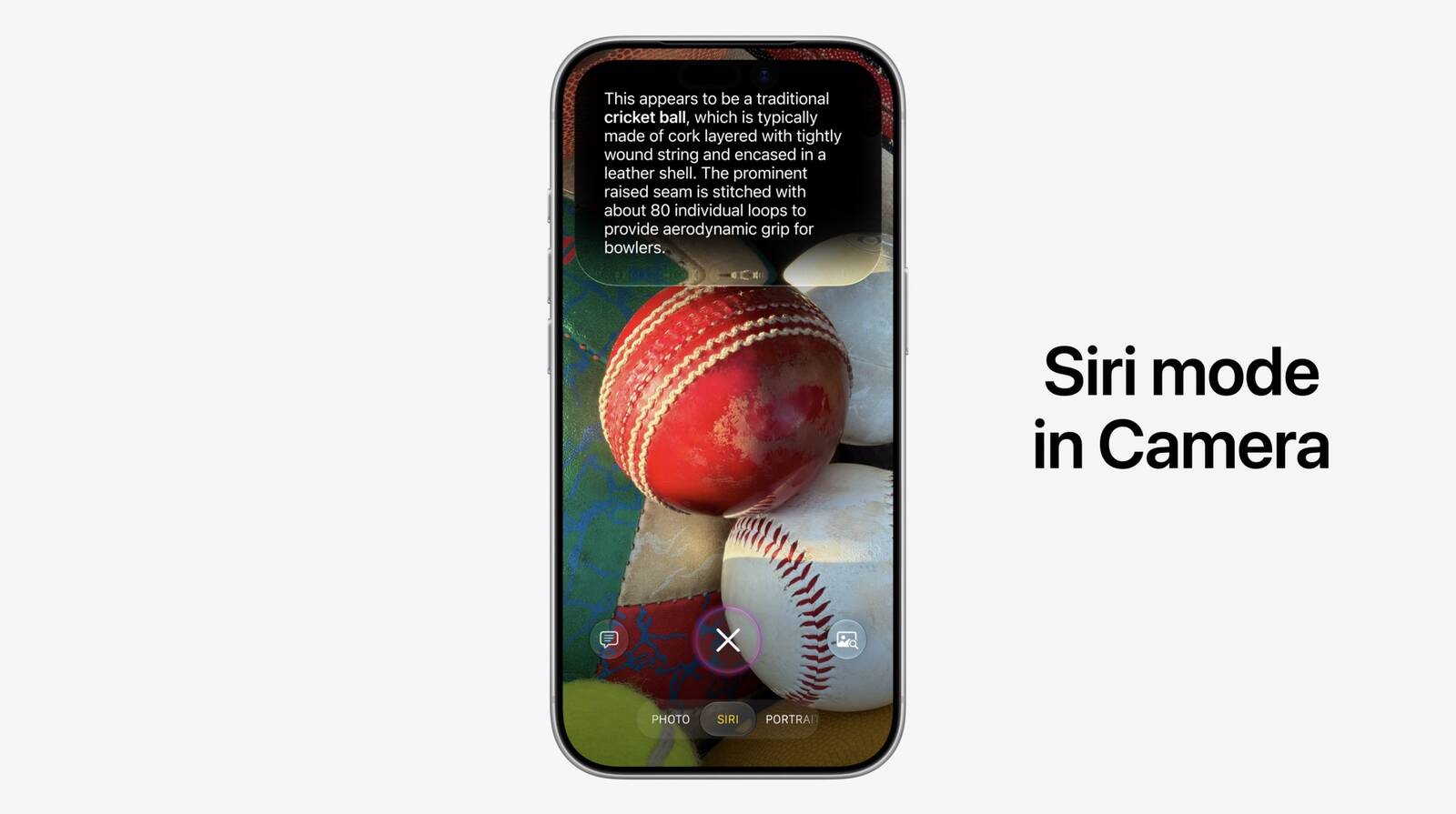
Apple today unveiled significant upgrades to Visual Intelligence, including a new Siri mode in the Camera app that can analyze real-world objects and take actions directly from what the iPhone sees.


Apple's vice president of software engineering Sebastien Marineau-Mes detailed the enhancements during today's WWDC keynote, explaining that the new ‌Siri‌ mode in Camera uses image understanding powered by Apple's foundational models to interpret what the camera is pointed at and surface contextually relevant actions.

One of the headline use cases is bill splitting. Users can aim their iPhone camera at a restaurant check and immediately divide the total between friends, with Apple Cash integration allowing payments to be sent on the spot. Apple also demoed pointing the camera at a plate of food to receive nutritional insights.

‌Visual Intelligence‌ is also coming to visionOS, bringing the same capability to Apple's spatial computing platform. ‌Siri‌ can recognize real-world objects in a user's environment and surface relevant information about them on demand.
Related Roundup: Apple Vision Pro
Buyer's Guide: Vision Pro (Neutral)
Related Forum: Apple Vision Pro

This article, "Apple Expands Visual Intelligence With Bill Splitting, Nutrition Insights, and visionOS Support" first appeared on MacRumors.com

Discuss this article in our forums

  •  

Apple Announces 'Siri AI' at WWDC 2026

Apple today announced a significantly revamped Siri at WWDC 2026, rebranding it as "‌Siri‌ AI" and unveiling out a wave of new capabilities spanning conversational depth, system-wide integration, and a redesigned interface across platforms.


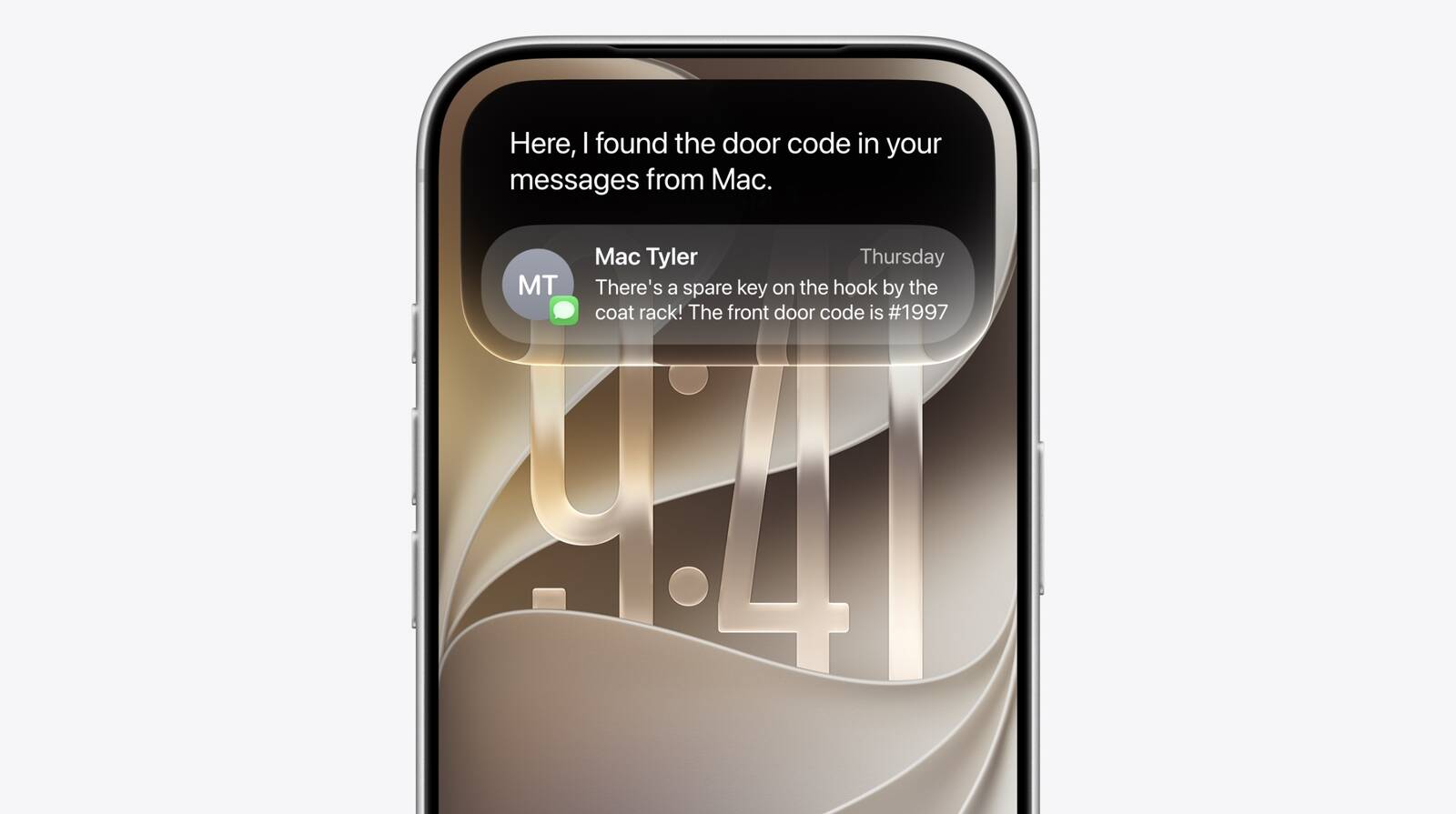
Apple framed the update with the acknowledgment that "there are times when you expect more from ‌Siri‌." The company is describing the redesigned assistant as "a profoundly more capable assistant" that can now hold multi-turn conversations, draw on real-time world knowledge, and interact with personal data across apps.

‌Siri‌ is now embedded directly in the Dynamic Island, accessible by swiping down from it, pressing the side button, or saying "Hey ‌Siri‌." A revamped voice engine makes the assistant sound more expressive, with micro-adjustable voice settings available during initial setup.

During Apple's keynote demo, presenters showed ‌Siri‌ handling chained, multi-step requests with apparent ease. In one sequence, a presenter asked about a Suki Waterhouse concert, was told tickets require a lottery entry, and asked ‌Siri‌ to set a reminder when the lottery opens, which it did. In another, the assistant identified a photo's landmark, pulled up navigation to that location, and surfaced photos from a recent family trip, adding a specific image to a shared family album on request.


Another demo showcased ‌Siri‌'s ability to synthesize information across apps. A presenter asked about a dessert he had heard about at an event, and ‌Siri‌ located the relevant details from his Messages history. It then compiled the information into a watch-party menu, drafted a message to his contacts with the menu included, and presented send and edit options. In a further demo, a presenter asked about something his son had shared in a message and followed it up by asking ‌Siri‌ to compose an email on the subject.

A new dedicated ‌Siri‌ app lets users scroll back through prior conversations and kick off new ones, with conversation history synced via iCloud so sessions carry seamlessly between devices. The app is also coming to watchOS. On the Mac, ‌Siri‌ is now also integrated into Spotlight and available via right-click context menus on any file or window. On visionOS, ‌Siri‌ AI gains a 3D visualization that users can place anywhere in their space.


This article, "Apple Announces 'Siri AI' at WWDC 2026" first appeared on MacRumors.com

Discuss this article in our forums

  •  

Apple Reveals New AI Architecture Built Around Google Gemini Models

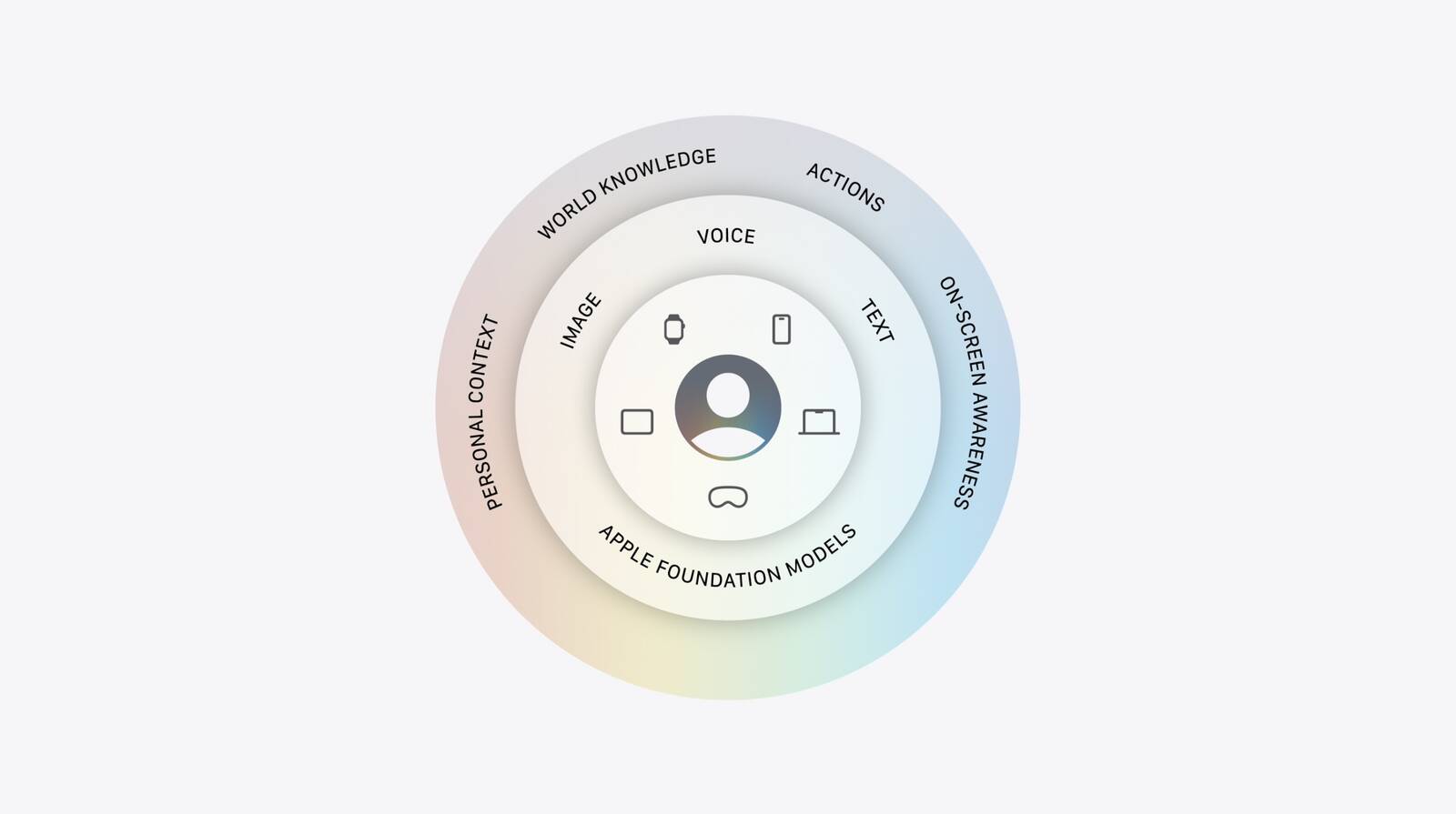
Apple today announced a major overhaul of its Apple Intelligence platform, revealing a new architecture built on foundation models developed in collaboration with Google using the technologies behind the Gemini family.


The new architecture centers on Apple Foundation Models co-developed with Google, which Apple says are adapted to run both on-device and on servers through its existing Private Cloud Compute infrastructure. Apple described the collaboration as a "deep" one that it says unlocks what it called a "huge upgrade" for ‌Apple Intelligence‌, bringing state-of-the-art understanding and reasoning capabilities as well as multimodal support including image understanding and generation.

The upgraded models support new capabilities use cases, including realistic image creation, advanced photo editing, and visual question answering. Certain devices will receive a higher-power version of the model with additional capabilities including speech generation, improved dictation accuracy, and stronger natural language understanding, though Apple did not specify which devices qualify.

A new system orchestrator sits at the center of the revised architecture, coordinating ‌Apple Intelligence‌ features securely across Apple's platforms. Apple says the orchestrator allows the system to tailor its responses based on the active app and the user's current task, enabling what the company described as truly system-wide intelligence.

Apple used the announcement to frame its approach as a contrast to competitors it characterized as "racing forward" without regard for users. The company reiterated that ‌Apple Intelligence‌ relies on on-device processing and Private Cloud Compute, with a promise that user data is only used to execute the immediate request and is not accessible to Apple or third parties. Apple added that outside experts can verify those privacy guarantees "at any time."
This article, "Apple Reveals New AI Architecture Built Around Google Gemini Models" first appeared on MacRumors.com

Discuss this article in our forums

  •  

Apple to Bring Custom EQ to AirPods

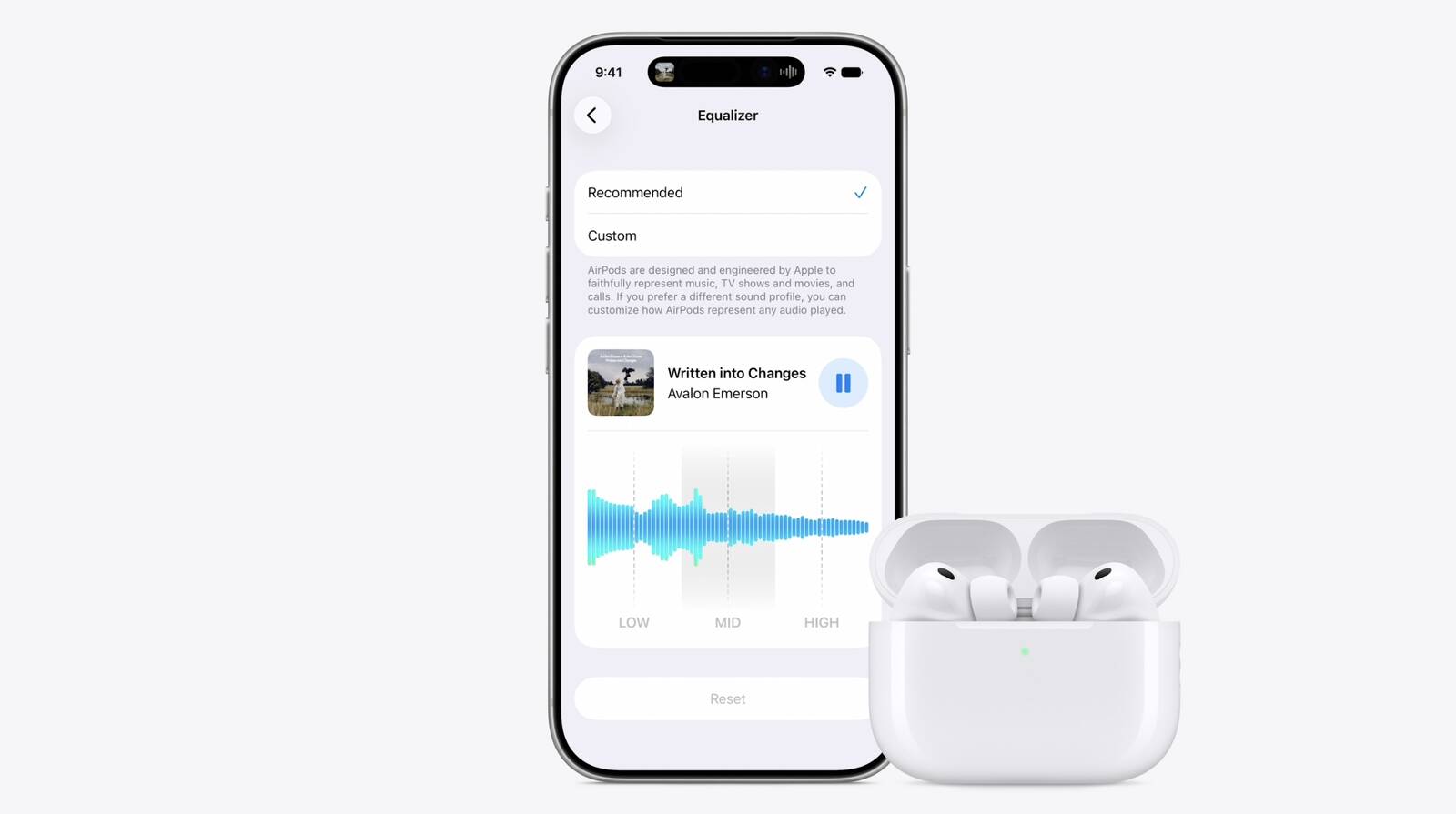
Apple today announced that AirPods will gain a custom EQ (equalizer) feature, allowing users to further personalize how their AirPods sound.


The new capability is part of Apple's next-generation software platform updates, which the company unveiled today. Custom EQ lets listeners adjust audio output to match their personal preferences, going beyond the fixed audio profiles AirPods have offered previously.

Custom EQ lets you adjust the balance of different sound frequencies, including bass, mids, and treble, to tailor audio output to your personal taste. Boosting the bass makes music feel punchier, for example, while lifting the treble adds more clarity to vocals and instruments.

AirPods already support features such as Adaptive Audio, Personalized Spatial Audio, and Conversation Awareness. Custom EQ adds a further layer of tuning on top of those.
Related Forum: AirPods

This article, "Apple to Bring Custom EQ to AirPods" first appeared on MacRumors.com

Discuss this article in our forums

  •  

Apple Rebuilds Search Infrastructure Across Platforms

Apple today announced that it has rebuilt the search infrastructure that powers key features like Spotlight, Photos, and Mail across all of its major next-generation software platforms.


The company says the index has been rearchitected to be more stable, efficient, and comprehensive, covering both old and new content. After updating, the new infrastructure will begin reindexing device content automatically.

New content will be indexed "almost immediately," Apple says, meaning users' files will become searchable much faster than before. After you update, the new search infrastructure goes to work indexing the content of your device.
This article, "Apple Rebuilds Search Infrastructure Across Platforms" first appeared on MacRumors.com

Discuss this article in our forums

  •  

Apple Announces Liquid Glass Improvements and Transparency Slider

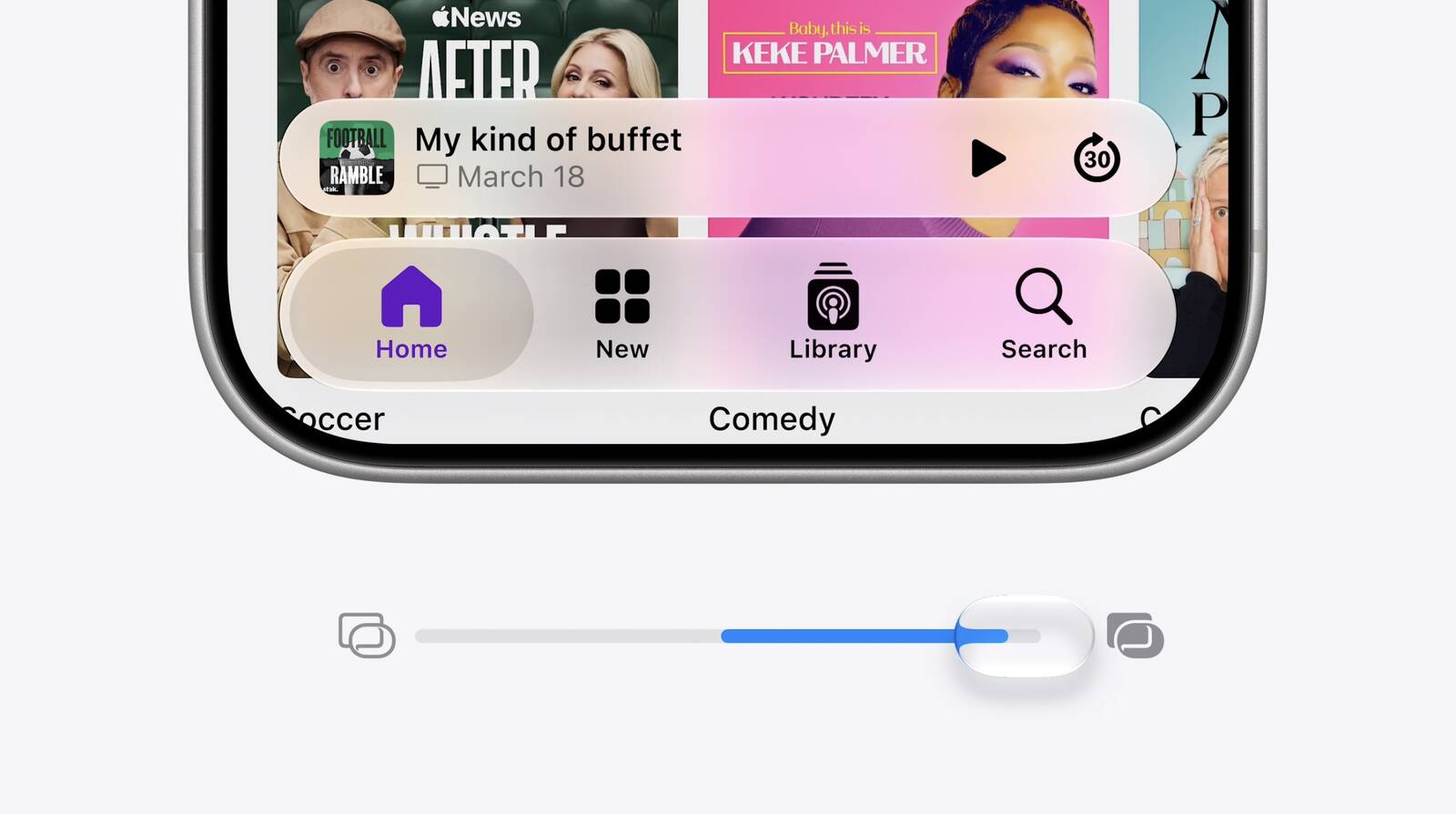
Apple today announced a series of improvements to Liquid Glass, the translucent design language the company introduced last year.


Apple said it has heard user feedback, which it "deeply appreciates," and is now making adjustments to the underlying foundations of how Liquid Glass is constructed. Chief among those changes is a new slider that lets users control transparency, ranging from fully opaque to completely clear.

Sidebar behavior is also being updated. Sidebars will now expand to the full edge of the window, with refraction effects continuing beneath them rather than cutting off at the sidebar boundary. Sidebar icons will also retain their color, a change that addresses a common complaint about the original Liquid Glass implementation.


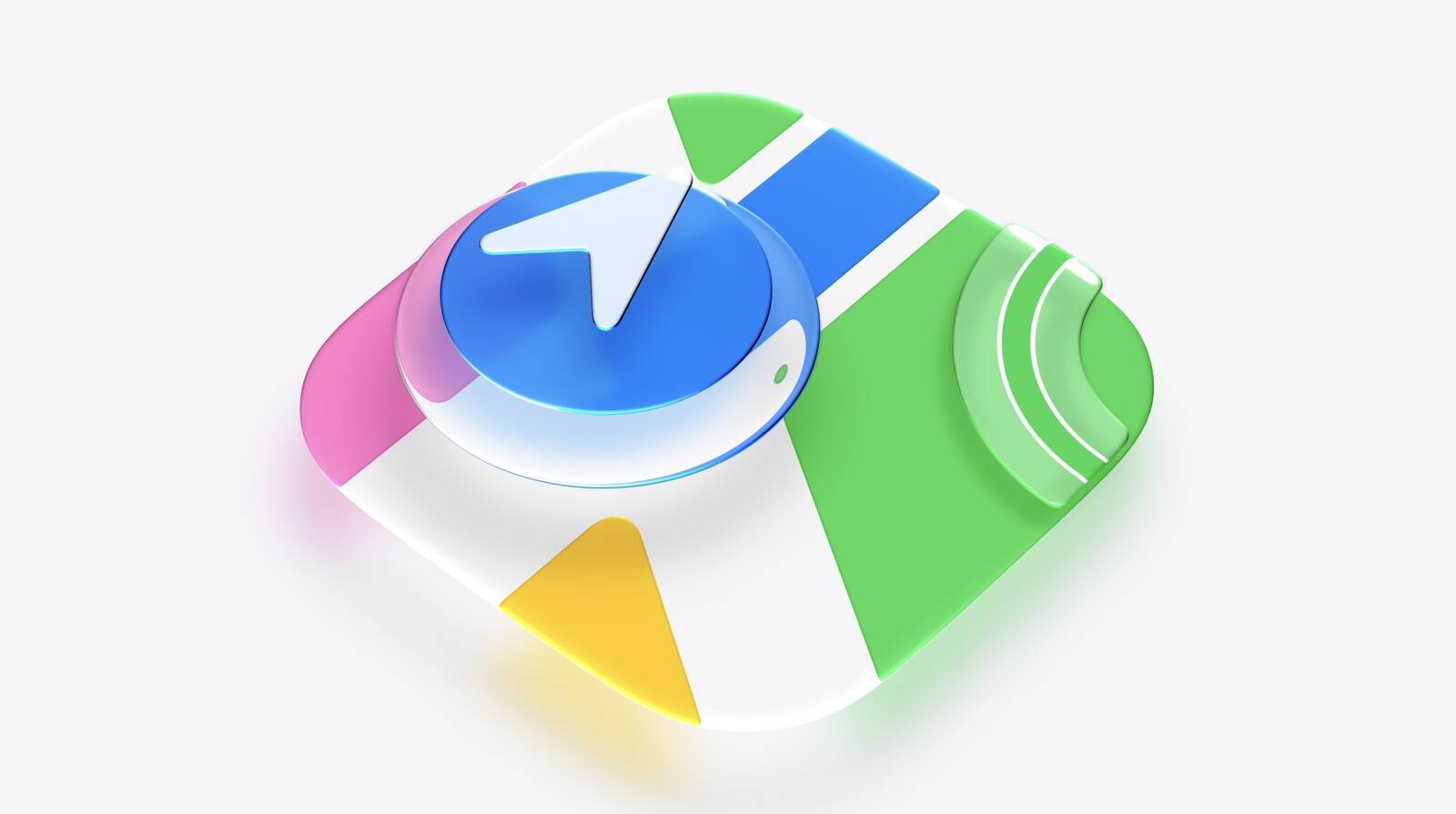
Apple also announced updates to its app icon design language. Having redesigned all of its first-party icons last year to create a more consistent look across apps and platforms, the company said it is now taking that work further by incorporating additional layers of Liquid Glass directly into the icon artwork itself.
This article, "Apple Announces Liquid Glass Improvements and Transparency Slider" first appeared on MacRumors.com

Discuss this article in our forums

  •  

Google Gemini Could Be the Ceiling on Apple's AI Ambitions

Apple analyst Ming-Chi Kuo says the real test of today's WWDC keynote is whether Apple can deliver better AI experiences than Google using the same Gemini models.


Apple is using Google's Gemini to underpin the revamped version of Siri and new Apple Intelligence features. The key takeaway from WWDC, Kuo argues in a new post on X, will not be the short-term market reaction after the event. It will be whether Apple, using the same Gemini models, can deliver better AI applications, agentic workflows, and on-device and cloud hybrid experiences than Google.

If the answer is yes, it would help extend Apple's "bull" case. If the answer is no, the implication is that Apple's ceiling is set by a model it does not control. Kuo raised the point arguing against the market sentiment that "Even if Apple is temporarily behind on AI, it will ultimately catch up and come out ahead."

Nevertheless, Kuo believes Apple's business momentum will stay strong through year-end based on his latest supply-chain checks, which he expects observers to spin as "If Apple is doing this well without AI, just imagine once it has AI." Other reports suggest Apple's longer-term advantage could lie in on-device AI, with the company expected to show how its custom silicon lets it process more AI queries directly on the device rather than in the cloud.

Kuo expects today's announcements to have little bearing on the direction of Apple's stock price in the second half of the year. Regardless of what Apple says at WWDC, he argues, the positive second half of 2026 share-price trend is unlikely to change as long as the core narrative stays intact.

The longer-term risk is more pointed. Should Apple fail to outdo Google with Gemini, Kuo says the stock would not necessarily turn bearish, but the assumption that Apple "will ultimately come out ahead" would begin to face growing scrutiny. How much longer the bull narrative can last beyond 2026, in his view, is what makes the keynote worth watching closely.
This article, "Google Gemini Could Be the Ceiling on Apple's AI Ambitions" first appeared on MacRumors.com

Discuss this article in our forums

  •  

Best Look at Foldable iPhone Design Revealed, May Only Come in White

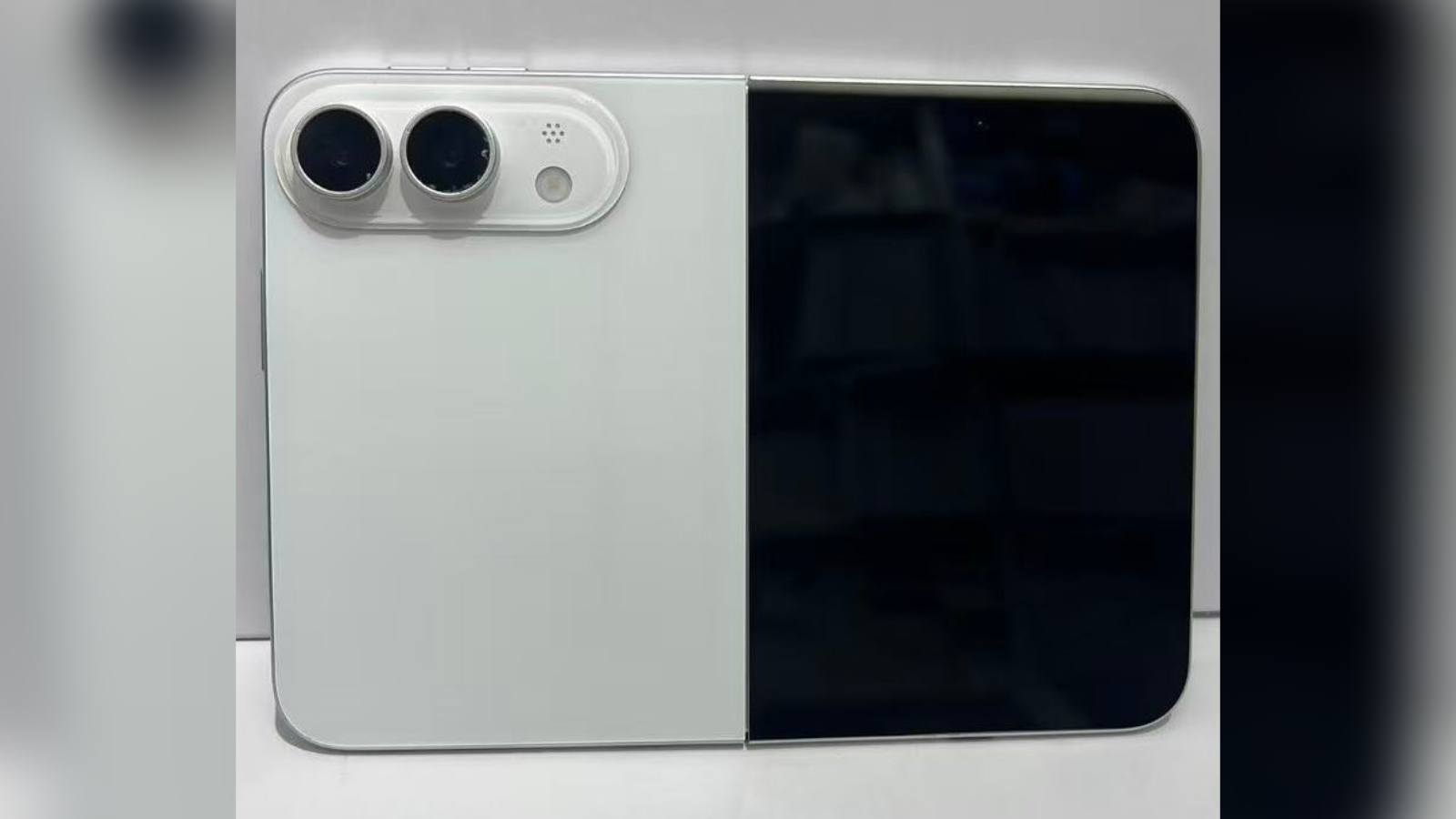
Sonny Dickson today shared detailed images of a foldable iPhone dummy unit with what appears to be a finalized design, providing the best look yet at the device's look, with the suggestion that the device may only be available in white.


Dummy units are non-functional units intended primarily for display purposes and accessory manufacturers, who need a high level of physical accuracy to mass produce cases and other accessories ahead of a device's announcement. Dickson first shared early-production dummy models of the foldable iPhone alongside the iPhone 18 Pro and ‌iPhone 18 Pro‌ Max in April, providing the first real visual confirmation of the foldable's passport-style form factor.

The latest foldable iPhone dummy is markedly more detailed than those that have previously circulated. Earlier this week, the leaker known as "Ice Universe" shared what appeared to be an image of a white foldable iPhone dummy, but Dickson's unit offers a substantially clearer view of the design and display.

First look at the iPhone Fold dummy unit. It doesn't look like Apple will offer multiple colors, with white currently appearing to be the only option. What do you think? pic.twitter.com/olMzm6t6Ts

— Sonny Dickson (@SonnyDickson) June 7, 2026


The images align with the wider body of design rumors accumulated so far. The device is expected to feature a book-style, passport-shaped design with a 4:3 aspect ratio, wider than it is tall and unlike any foldable currently on the market, with a 5.5-inch outer display and a 7.8-inch inner OLED panel that would make it just slightly smaller than the iPad mini when open.

Rumors point to an ultra-thin 4.5mm titanium frame, with volume buttons relocated to the top edge of the device, no Action Button, Touch ID in place of Face ID, and a horizontal dual-camera array on the back in an iPhone Air-style camera plateau.

The latest dummy models reveal several new design aspects, such as the fact that the cover display will be edge-to-edge and slightly curved at the edges, the camera flash will be located below the rear microphone in the camera plateau, the rear microphone has a new design consisting of seven drilled holes, and the front-facing camera on the inner display is located on the top left. This will almost certainly have implications for the Dynamic Island.

On the device's color, Dickson's observation corroborates a report from Friday, in which the Weibo leaker known as "Instant Digital" suggested that there may be no black finish, with white potentially being the only option. Bloomberg's Mark Gurman previously reported that Apple planned to avoid bold colors and stick to traditional finishes.

It is worth noting that several new high-end products such as the Apple Watch Ultra and Vision Pro only launched with one color option. The approach would be broadly consistent with how Apple has handled generationally significant launches before. The iPhone X debuted in November 2017 in just two colors, Silver and Space Gray, at a then-record starting price of $999. The iPhone XS that followed a year later added Gold to the lineup, and Apple may take the same incremental approach with the iPhone Ultra over time.

The foldable iPhone is expected to be announced in September 2026 alongside the ‌iPhone 18 Pro‌ and ‌iPhone 18 Pro‌ Max, at a starting price Gurman says will cross the $2,000 threshold.
Related Roundup: iPhone Fold

This article, "Best Look at Foldable iPhone Design Revealed, May Only Come in White" first appeared on MacRumors.com

Discuss this article in our forums

  •  

The MacRumors Show: What to Expect at WWDC 2026

On this week's episode of The MacRumors Show, we talk through all of the major rumors surrounding Apple's announcements at WWDC 2026.


The event's tagline, "All Systems Glow," is widely seen as a hint at Siri's new design. Bloomberg's Mark Gurman has reported that Apple is rebuilding ‌Siri‌ as a full chatbot to compete with ChatGPT, Claude, and Gemini, complete with a dedicated app, Dynamic Island integration, and a new system-wide search interface wrapped in a dark, glowing aesthetic that matches the WWDC branding. The dedicated Siri app for back-and-forth conversations is said to be modeled on iMessage, with voice input and the ability to attach images and documents. Users will reportedly be able to set conversation history to auto-delete after 30 days, one year, or never.
 
A new system-wide interface called "Search or Ask" purportedly replaces ‌Siri‌ Suggestions entirely, triggered by swiping down from the top center of the screen. From there, users can launch apps, start texts, set reminders, trigger Shortcuts, or query Apple's new AI web search, which Gurman says Apple is positioning as a Perplexity competitor. Results apparently appear as a translucent card in the ‌Dynamic Island‌, and swiping further opens the full ‌Siri‌ app. Notification Center moves to a top-left swipe, while Control Center stays top-right.
 
The new Siri will reportedly be able to answer multi-part questions, maintain conversational context, summarize uploaded documents, generate images, and draw on personal data across first-party apps like Mail, Messages, Photos, Notes, Contacts, Calendar, and Reminders. Apple is powering its new AI features with a custom model based on Google's Gemini, after its own models reportedly fell short. Gurman says the personalized ‌Siri‌ still carries a "beta" label in internal builds, and there is a "strong chance" it ships that way.
 
iOS 27 will also purportedly introduce an "Extensions" feature letting users choose which AI service powers ‌Siri‌, with a dedicated App Store section for third-party integrations. Users will reportedly be able to set ChatGPT, Gemini, Claude, and others as the default for Writing Tools, Image Playground, and more, with third-party responses using a distinct voice so users can tell which is speaking. Apple has also reportedly held talks with developers about deeper agentic integrations, and is said to be replacing Core ML with a new Core AI framework.
 
Apple is reportedly giving the Camera app a major overhaul, moving Visual Intelligence from the Camera Control button into a dedicated Siri mode inside the app. Apple is also purportedly making the interface fully customizable via a widget tray, letting users arrange controls like flash, exposure, timer, and depth of field. ‌Visual Intelligence‌ will allegedly also gain the ability to scan nutrition labels for Health app tracking and read contact details from business cards.
 
‌Photos‌ is said to be getting three new AI editing tools alongside the existing Clean Up feature. "Extend" generates content beyond the original frame, "Reframe" changes the perspective of spatial photos, and "Enhance" applies automatic color and lighting adjustments. Writing Tools are reportedly getting a grammar checker with per-suggestion accept and reject controls, and keyboard autocorrect is said to be gaining Grammarly-style alternative word suggestions.
 
Apple is reportedly redesigning Image Playground with a simpler interface and new models producing more lifelike images. Genmoji is allegedly getting a new model that improves quality and reduces battery drain, with a Suggested ‌Genmoji‌ feature drawing on the user's media and messages. AI-generated wallpapers are also reportedly coming, with ‌Image Playground‌ built into the wallpaper picker.
 
The Wallet app is purportedly gaining a "Create a Pass" feature for digitizing physical tickets and membership cards, and Apple Cash is reportedly getting a bill-splitting feature that lets users photograph a receipt, assign items to individuals, and send payment requests via Wallet or Messages. Shortcuts is said to be getting a natural language interface for building automations by description.

Other notable changes include a system-wide Liquid Glass opacity slider that Apple apparently couldn't get working in iOS 26, the option to beam content to AirPlay alternatives like Google Cast (reportedly EU-only as a DMA requirement), and expanded satellite features including Apple Maps and photo sharing over satellite.
 
Apple also previewed a wide range of accessibility improvements ahead of WWDC, including AI-powered descriptions in VoiceOver and Magnifier, an upgraded Accessibility Reader for complex document layouts, automatic video captions generated on-device, and a new FaceTime API for live sign language interpretation. For visionOS, Apple is adding Power Wheelchair Control using Vision Pro's eye-tracking, Vehicle Motion Cues for users in moving vehicles, and face gesture support for system actions.
 
Leaker "Instant Digital" claims ‌iOS 27‌ will drop support for the iPhone 11 lineup and second-generation iPhone SE, requiring at least an iPhone 12, with Apple Intelligence continuing to require an iPhone 15 Pro or newer. macOS 27 is said to share the same ‌Siri‌ and ‌Apple Intelligence‌ upgrades, with refinements to Liquid Glass and the same performance focus. It will reportedly be Apple silicon only, dropping all remaining Intel Macs, and is said to be the last release to include full Rosetta support.
 
Gurman described ‌iOS 27‌ overall as a "Snow Leopard" update, with Apple prioritizing stability, code cleanup, and battery life gains alongside the new features. The keynote begins June 8 at 10 a.m. Pacific Time, with developer betas expected the same day and a public release in September. The MacRumors Show has its own YouTube channel, so make sure you're subscribed to keep up with new episodes and clips.


You can also listen to ‌The MacRumors Show‌ on Apple Podcasts, Spotify, Overcast, or other podcast apps. You can also copy our RSS feed directly into your player.


If you haven't already listened to the previous episode of The MacRumors Show, catch up to hear our discussion Apple's ‌WWDC 2026‌ keynote date, the sweeping ‌Siri‌ redesign coming in ‌iOS 27‌, Apple's latest accessibility feature previews, and the hinge troubles reportedly plaguing the foldable iPhone ahead of its expected launch in the fall.

Subscribe to ‌The MacRumors Show‌ for new episodes every week, where we discuss some of the topical news breaking here on MacRumors, often joined by interesting guests such as Kayci Lacob, Kevin Nether, John Gruber, Mark Gurman, Jon Prosser, Luke Miani, Matthew Cassinelli, Brian Tong, Quinn Nelson, Jared Nelson, Eli Hodapp, Mike Bell, Sara Dietschy, iJustine, Jon Rettinger, Andru Edwards, Arnold Kim, Ben Sullins, Marcus Kane, Christopher Lawley, Frank McShan, David Lewis, Tyler Stalman, Sam Kohl, Federico Viticci, Thomas Frank, Jonathan Morrison, Ross Young, Ian Zelbo, and Rene Ritchie.

‌The MacRumors Show‌ is on X @MacRumorsShow, so be sure to give us a follow to keep up with the podcast. You can also email us at podcast@macrumors.com or head over to The MacRumors Show forum thread. Remember to rate and review the podcast, and let us know what subjects and guests you would like to see in the future.
Related Roundup: WWDC 2026

This article, "The MacRumors Show: What to Expect at WWDC 2026" first appeared on MacRumors.com

Discuss this article in our forums

  •  

Foldable iPhone May Not Come in Black, Leaker Suggests

Apple has yet to finalize whether its upcoming foldable iPhone will be available in black, according to a questionable new rumor.


The Weibo leaker known as "Instant Digital" commented today that Apple "hasn't even decided yet whether the foldable screen will come in black," adding pointedly: "Do they have a vendetta against the color black?" The remark suggests black is at least under consideration, but has not been confirmed as part of the lineup, a notably open question for a device that is expected to enter mass production imminently and launch as soon as September.

In February, the leaker described the device as coming in just two color options, with white as the only confirmed shade and the second unspecified. Instant Digital revisited that report in May without walking back any color details, keeping the two-option account intact. Today's comment does not necessarily contradict that, but introduces new uncertainty about what the second option actually is.

Separately, Macworld cited a supply chain source claiming the second finish will be an indigo option similar to the iPhone 17 Pro's Deep Blue, alongside a classic silver and white model. That source also said the device will offer fewer choices than the iPhone 18 Pro models, with no bold or vibrant colors. Bloomberg's Mark Gurman similarly reported that Apple plans to "stay away from fun colors" and stick to more traditional silver/white and space gray/black finishes.

Samsung Display's OLED panels for the device are already entering mass production, and ramp-up is underway. Color decisions typically feed directly into manufacturing and component procurement, all of which needs to be locked well in advance of launch. For a device as complex and supply-constrained as the foldable iPhone is expected to be, any severe late-stage indecision seems unlikely, so the rumor may simply indicate some opaqueness in the supply chain about the second color.

That being said, dummy models that have surfaced so far have only been seen in white. It is also worth noting that new high-end products such as the Apple Watch Ultra and Vision Pro only launched with one color option.

A limited color offering may partly reflect the practical realities of manufacturing the device at all. Supply chain analyst Ming-Chi Kuo has warned that early-stage yield and ramp-up challenges could constrain supply through at least the end of 2026, and that the frequently cited figure of 15 to 20 million units likely reflects cumulative demand across the product's full two to three year lifecycle, not 2026 alone. Adding color variants increases the number of SKUs to produce, stock, and allocate, which is a complication Apple has little commercial incentive to absorb when launch supply is expected to be tight regardless.

The approach would be broadly consistent with how Apple has handled generationally significant launches before. The iPhone X debuted in November 2017 in just two colors, Silver and Space Gray, at a then-record starting price of $999. The iPhone XS that followed a year later added Gold to the lineup, and Apple may take the same incremental approach with the iPhone Ultra over time.

At a starting price that Gurman says will "cross the $2,000 threshold", the foldable iPhone is unlikely to attract buyers whose purchasing decision is heavily determined by color options. That gives Apple room to keep the initial palette narrow.

The first foldable iPhone is expected to be announced in September 2026 alongside the ‌iPhone 18 Pro‌ and ‌iPhone 18 Pro‌ Max.
Related Roundup: iPhone Fold

This article, "Foldable iPhone May Not Come in Black, Leaker Suggests" first appeared on MacRumors.com

Discuss this article in our forums

  •  

MacBook Neo Disrupts a PC Market in Decline, IDC Says

The global memory shortage that has already squeezed Mac mini and Mac Studio supply is now set to weigh heavily on the broader PC market, with IDC forecasting an 11.3% decline in global shipments for 2026.


According to IDC's Worldwide Quarterly Personal Computing Device Tracker, conditions are expected to worsen progressively through the fourth quarter, when shipments are forecast to fall 20% year-over-year, with no meaningful relief expected before the end of 2027. Average selling prices are rising and PC manufacturers are struggling to maintain full product portfolios.

The first quarter of 2026 offered a deceptively encouraging signal, with shipments growing 3% versus the same period last year, but that strength was largely artificial; both consumer and commercial buyers pulled purchases forward ahead of anticipated price increases and availability constraints. Some of that first quarter momentum is carrying into the second quarter, but the remaining quarters are expected to deteriorate. IDC forecasts average selling price growth of 17% in 2026, and even as memory capacity expands over the next two years, pricing is unlikely to return to 2025 levels. TrendForce previously warned that surging memory and CPU costs could push mainstream laptop prices up by nearly 40% this year.

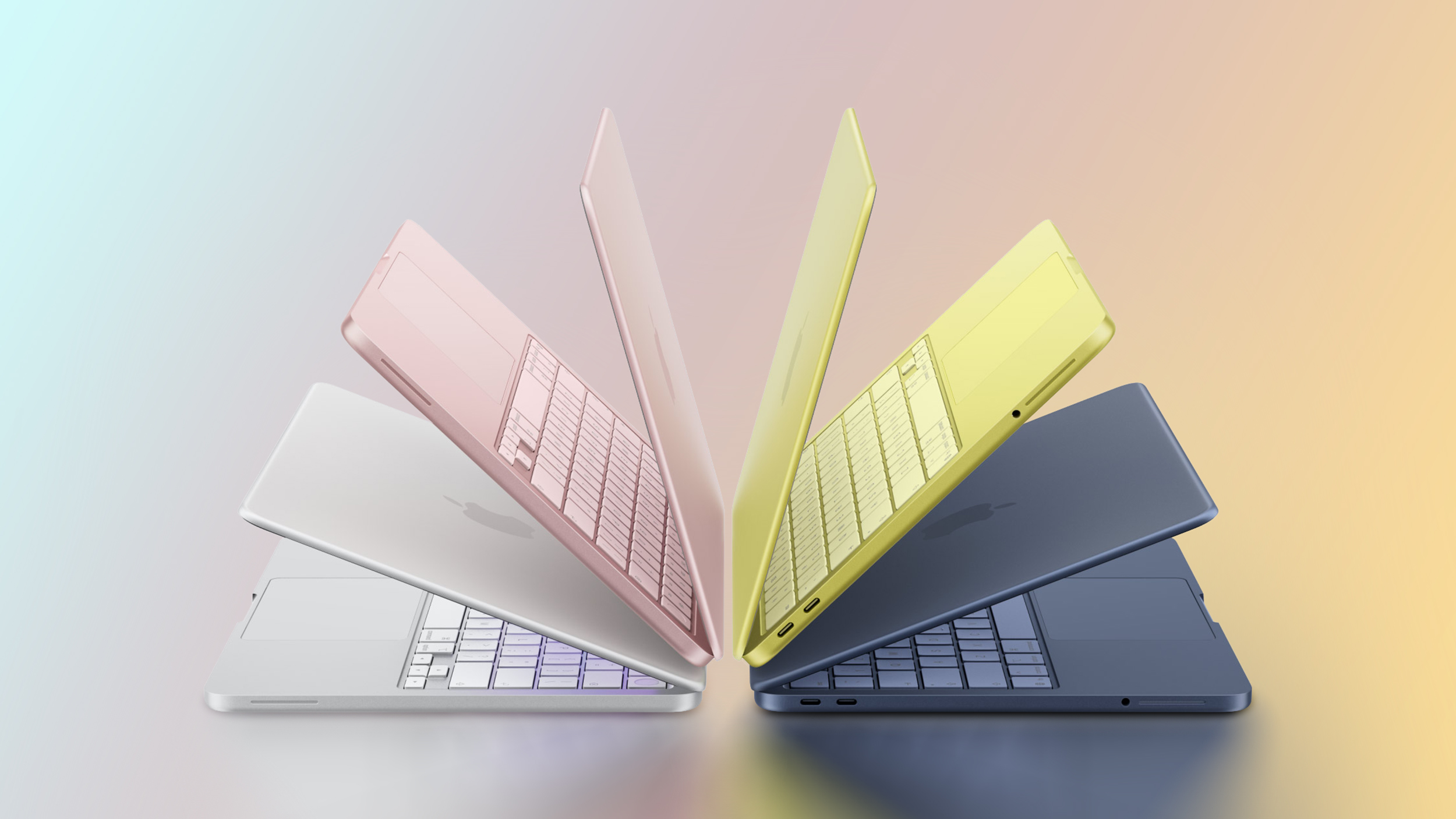
Against that backdrop, Apple's MacBook Neo has driven stronger-than-expected notebook demand and prompted IDC to revise its notebook forecast upward. Launched in March at $599, the ‌MacBook Neo‌ pairs the A18 Pro chip with 8GB of memory and targets the sub-$700 notebook segment. This market accounts for approximately 75 million units annually, nearly 40% of total notebook volume, which is a tier historically dominated by Windows and ChromeOS devices.

The ‌MacBook Neo‌'s competitive ripple effects cut both ways. IDC said the device is "putting real pressure on the entire PC ecosystem," and expects rivals to respond with new silicon, a more efficient OS from Microsoft, and aggressive promotional pricing. The competitive pressure from the ‌MacBook Neo‌ is providing a partial offset to broader price increases, keeping some low-cost notebook options alive, though the overall average selling price trajectory remains firmly upward.

While rising memory costs are pushing many PC vendors toward higher-priced systems or forcing specification cuts to defend lower price points, Apple has moved in the opposite direction. The memory shortage has had a more direct impact on Apple's higher-end Mac models, with ‌Mac mini‌ and ‌Mac Studio‌ models seeing configuration cuts and significant shipping delays as the company struggles to secure supply.
Related Roundup: MacBook Neo
Tag: IDC
Buyer's Guide: MacBook Neo (Buy Now)
Related Forum: MacBook Neo

This article, "MacBook Neo Disrupts a PC Market in Decline, IDC Says" first appeared on MacRumors.com

Discuss this article in our forums

  •  

Apple Announces Europe's First Developer Center

Apple today announced it will open Europe's first Apple Developer Center in Berlin later this year.


The facility joins existing Developer Centers in Bengaluru, Cupertino, Shanghai, and Singapore. Apple said the Berlin center, located in Mitte district, will offer developers throughout Europe in-person sessions, workshops, and one-on-one appointments in multiple languages, with consultation areas and dedicated labs staffed by Apple experts. Apple's vice president of Worldwide Developer Relations, Susan Prescott, said:

Europe is home to an extraordinary community of developers who are building apps that create connections, encourage creativity, and drive innovation. We have always believed that when developers have the right tools and resources to do their best work, incredible things follow. That belief is what this center is built on, and we look forward to seeing what the community continues to build.


The center will host a regular cadence of events covering iOS, iPadOS, macOS, tvOS, visionOS, and watchOS development, aimed at teams of all sizes and at every stage of app development. Apple said the programming is intended to help developers improve the design, quality, and performance of their apps.

Apple noted that storefronts across Europe saw more than 150 million average weekly users in 2025, and that eligible developers can access the App Store Small Business Program, which offers a reduced 15% commission rate for small and individual developers.

The announcement builds on Apple's existing developer investments in Europe, which include the Swift Student Challenge, 19 Apple Developer Academies worldwide, and Apple Foundation Programs in Italy and France. The company pointed out that developers also have access to more than 250,000 APIs across frameworks including HealthKit, Metal, Core ML, MapKit, and SwiftUI.
This article, "Apple Announces Europe's First Developer Center" first appeared on MacRumors.com

Discuss this article in our forums

  •  

Apple Music Classical Announces New Partnership With London's Wigmore Hall

Wigmore Hall Live today relaunches as a digital-only platform in partnership with Apple Music Classical, with all recording royalties passed directly to artists, Gramophone reports.


Wigmore Hall is a prestigious 550-seat concert hall on Wigmore Street in London's Marylebone, widely regarded as one of the world's foremost venues for chamber music, early music, and vocal recitals. Opened in 1901 and noted for its particularly good acoustics, the Grade II listed building hosts over 500 concerts each year. The new partnership with Apple was announced as part of the Hall's 125th anniversary celebrations this year.

Under the artist-first model, Wigmore Hall will cover all production costs for every release and take no share of recording income, passing 100% of royalties received directly to the performing artists. The platform will release four digital-only recordings per year, drawn from live performances at the Hall and developed in close collaboration with artists. Each new Wigmore Hall Live release will premiere exclusively on Apple Music Classical for three months.

Director John Gilhooly said the partnership would allow listeners "to experience Wigmore Hall concerts as close to the live event as possible," citing ‌Apple Music‌ Classical's sound quality as central to that goal.

The first release under the new model is Pianist Boris Giltburg's recording of Beethoven's Piano Sonatas Nos. 4, 8, 9, 20 ("Pathétique"), and 26 ("Les Adieux"), recorded live at Wigmore Hall in February 2025. The Piano Sonata No. 26 in E-flat major is available now, with the entire album to launch tomorrow. The release includes an artist commentary track in which Giltburg offers deeper insight into the repertoire.

‌Apple Music‌ Classical has previously partnered with institutions including the Berlin Philharmonic, Carnegie Hall, the Chicago Symphony Orchestra, the London Symphony Orchestra, the Metropolitan Opera, the New York Philharmonic, and the Vienna Philharmonic. The app launched in most countries in March 2023 and is included with a standard ‌Apple Music‌ subscription at no additional cost, offering access to over five million classical music tracks. It is based on Primephonic, a classical music streaming service acquired by Apple in 2021.
This article, "Apple Music Classical Announces New Partnership With London's Wigmore Hall" first appeared on MacRumors.com

Discuss this article in our forums

  •  

Apple Agrees to Hand Over Financial Data to India's Antitrust Regulator

Apple has agreed to hand over financial data to India's competition regulator, in a move that could bring a years-long antitrust case significantly closer to a penalty decision.


According to Reuters, a confidential Competition Commission of India (CCI) order showed that Apple last month agreed to supply its India-specific financials, which the watchdog typically needs to calculate potential fines. At a hearing on May 21, Apple's lawyer asked for a "final extension" until June 25 to file the information, and the CCI granted the request.

The development is an important reversal for Apple, which had previously refused to provide financial information to the regulator. The company argued the case should be paused while it separately challenges India's revised antitrust penalty law, which allows fines to be levied against a company's global revenue rather than just local earnings, which could expose Apple to up to $38 billion in fines.

The CCI repeatedly rejected that argument, saying it required only India financials to begin with and accused Apple of using the parallel court challenge to delay proceedings. Last month, a Delhi High Court judge directed Apple to cooperate with the investigation after the company sought to put the case on hold.

The case dates back to 2021, when a coalition of complainants including Match Group, the owner of Tinder, and the Alliance of Digital India Foundation, which represents Indian startups, filed a complaint regarding App Store policies. The CCI concluded its investigation in 2024, finding that Apple had abused its dominant position in the market for iPhone apps and that the ‌App Store‌ was "an unavoidable trading partner" for developers, who were not permitted to use third-party payment services for in-app purchases.

The case is unfolding as India becomes one of Apple's most consequential markets. The iPhone accounts for 9% of India's smartphone market, up from roughly 2% five years ago, and the company has significantly ramped up manufacturing in the country as part of its broader effort to reduce dependence on China.
This article, "Apple Agrees to Hand Over Financial Data to India's Antitrust Regulator" first appeared on MacRumors.com

Discuss this article in our forums

  •  

MacBook Neo Outsold Every Other Mac in Its Debut Quarter

Apple shipped 1.1 million MacBook Neo units in the first quarter of the year, according to IDC, making it one of the strongest Mac debut performances in recent memory (via TechCrunch).


The figure is particularly striking given that the laptop was only available for roughly three weeks of the period, having gone on sale in mid-March. Shipments began spiking from early April, suggesting the March tally understates underlying demand. By comparison, the M5 MacBook Air shipped over 900,000 units in its debut quarter, while the M5 MacBook Pro shipped 550,000.

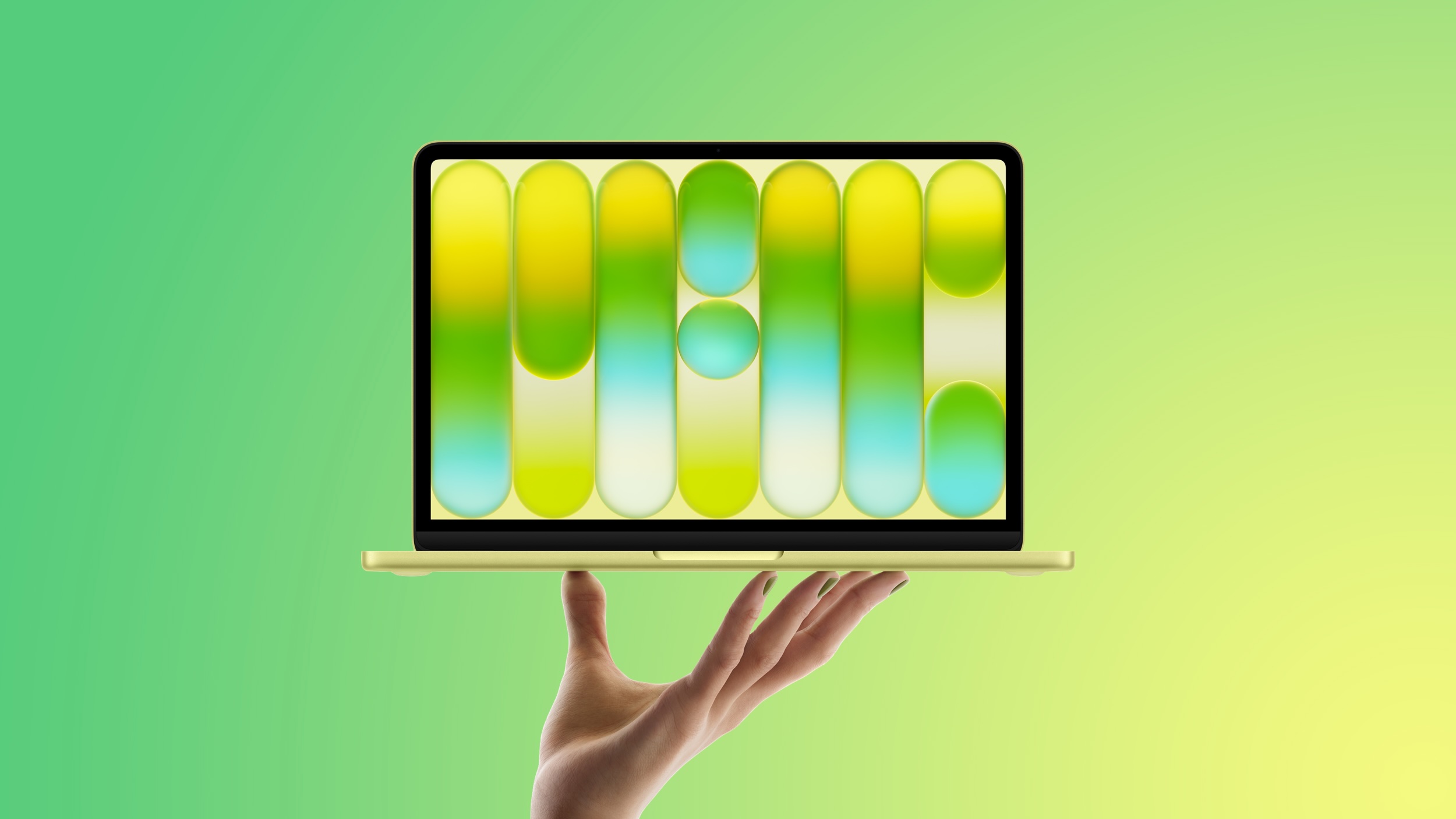
Apple introduced the ‌MacBook Neo‌ in early March with a starting price of $599, which is roughly 45% below the entry-level ‌MacBook Air‌. The laptop features an aluminum chassis and a 13-inch Liquid Retina display, but uses an A18 Pro chip rather than an M-series processor, along with 8GB of RAM, to reach the lower price point.

Of the units shipped globally during the quarter, 44% went to the U.S., while India accounted for approximately 18,000 shipments despite the short availability window, with retailers reportedly struggling to secure adequate inventory.

Counterpoint Research said that the ‌MacBook Neo‌'s significance extends beyond its early sales, noting that it is helping Apple compete in lower-priced notebook segments where Macs have historically had little presence.

Although it is still early, the MacBook Neo launch stands out as one of Apple's most strategically important recent Mac releases, especially as the wider PC market deals with rising memory costs and "shrinkflation," while Apple is expanding its reach.


The ‌MacBook Neo‌ could eventually help Apple grow its share of the $400 to $699 notebook market from about 2% to around 15%. IDC believes the opportunity extends to consumer and small-business laptop segments beyond first-time buyers. The ‌MacBook Neo‌'s popularity could also displace some older models, including the M1, M2, and M3 ‌MacBook Air‌, which have historically driven volume in markets like India when sold at discounted prices during sales events.

The launch is already prompting responses from rivals. Dell this week unveiled a new XPS 13 laptop starting at $699, aimed at the same segment, citing the ‌MacBook Neo‌'s arrival as evidence of strong demand for premium-quality laptops at accessible prices. IDC forecasts a "very big spike" in ‌MacBook Neo‌ shipments in the current quarter as Apple works through supply constraints and expands availability.
Related Roundup: MacBook Neo
Buyer's Guide: MacBook Neo (Buy Now)
Related Forum: MacBook Neo

This article, "MacBook Neo Outsold Every Other Mac in Its Debut Quarter" first appeared on MacRumors.com

Discuss this article in our forums

  •  

iOS 27 Rumored to Include Split-Screen App Adaptation Feature

Apple is working on a split-screen app landscape adaptation feature for iOS 27, according to a known leaker.


In a new post on Weibo, the leaker known as "Fixed Focus Digital" said Apple is developing a "Parallel View" capability for iOS, aimed at solving the platform's longstanding weakness with large-screen and landscape layouts. Parallel View is a feature in Huawei's HarmonyOS that automatically adapts smartphone apps for wide displays at the system level, without requiring developers to redesign their apps.

Fixed Focus Digital appears to be using the term as a reference point for the type of solution Apple is pursuing, rather than suggesting Apple is directly replicating Huawei's implementation. The leaker pointed to iPadOS as Apple's own existing example of the approach, noting that Apple already handles landscape adaptation at the system level on the iPad. iOS has never had an equivalent mechanism.

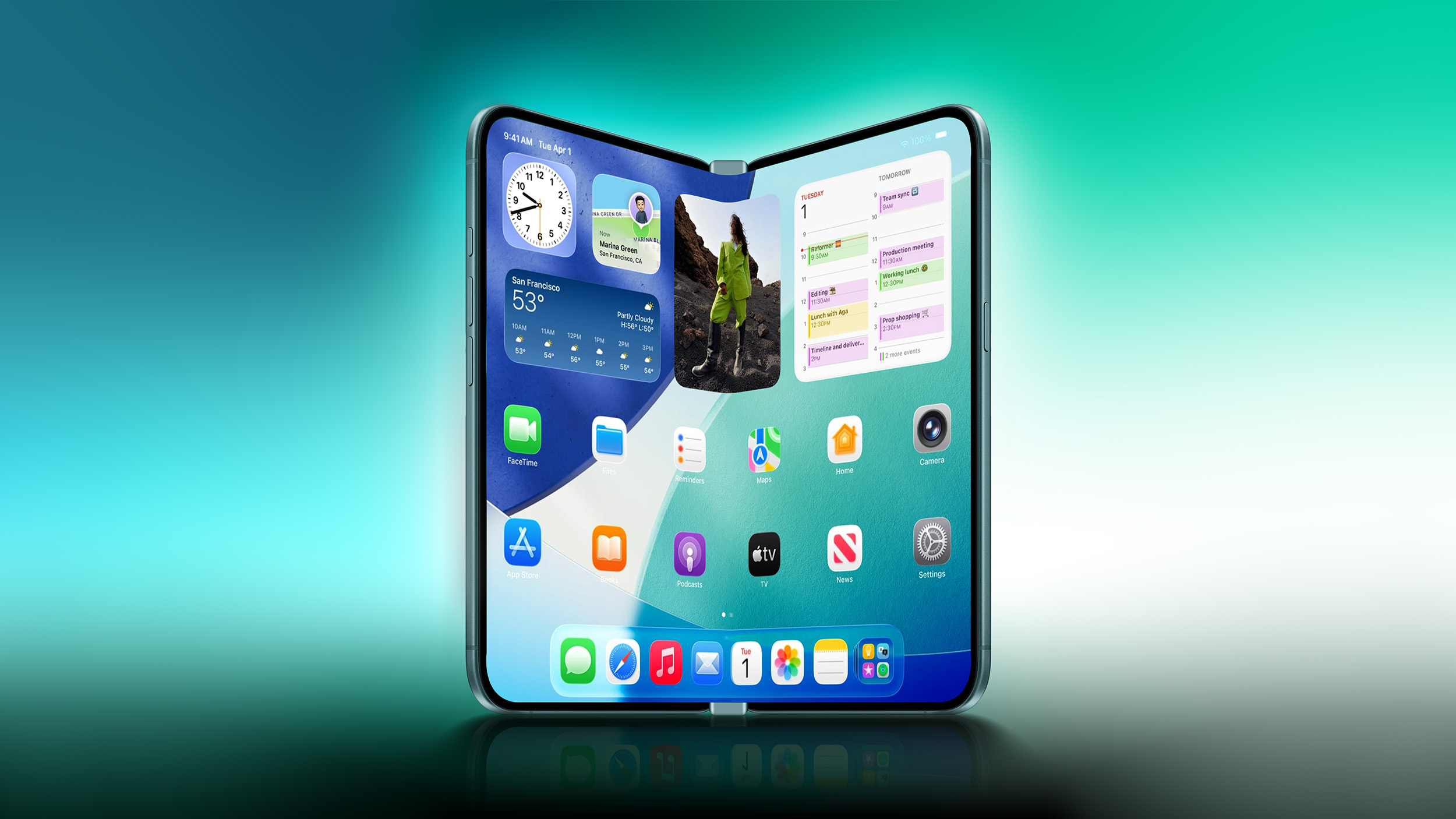
The feature appears to be aimed squarely at the foldable iPhone, whose 7.8-inch inner display will expose a fundamental limitation of iOS: virtually every iPhone app is designed for a tall, narrow screen. Without a system-level solution, those apps would appear letterboxed on the larger display. Fixed Focus Digital acknowledged that iOS is "indeed excellent" while noting its large-screen adaptation has consistently fallen short.

The claim corroborates earlier reporting from Bloomberg's Mark Gurman, who reported in March that ‌iOS 27‌ would support two apps side-by-side on the foldable iPhone's inner display, with an iPad-like layout and left-side navigation bars in supported apps.

Apple is expected to unveil ‌iOS 27‌ at WWDC 2026 later this month, ahead of a fall release alongside the iPhone 18 Pro models and the foldable iPhone.
Related Roundup: iOS 27

This article, "iOS 27 Rumored to Include Split-Screen App Adaptation Feature" first appeared on MacRumors.com

Discuss this article in our forums

  •  

Leaker: Foldable 'iPhone Ultra' Will Feature Liquid Metal Hinge

Apple's first foldable iPhone will feature an innovative liquid metal hinge and has now shipped prototype units to carriers around the world for testing, the leaker known as "Fixed Focus Digital" today said.


In a new post on Weibo, Fixed Focus Digital said development and production related to the foldable are now "progressing rapidly." The claim arrives one day after the leaker reported that the foldable iPhone would feature vapor chamber cooling.

The liquid metal hinge detail is significant in light of the ongoing debate over the device's production difficulties. Earlier reports from the leaker known as "Instant Digital" attributed manufacturing problems to the hinge failing Apple's quality control standards under prolonged, high-frequency open-and-close testing. Fixed Focus Digital previously pushed back on that characterization, arguing the hinge was not the primary source of difficulty, and today's post appears to position the hinge as a resolved and confirmed element of the design.

Liquid metal is an amorphous metal alloy with a notably higher strength-to-weight ratio than conventional metals, along with superior resistance to corrosion and wear. Apple has used liquid metal in limited contexts before, most notably for the SIM ejector tool included with iPhones and for certain internal components, but its application in a structural hinge mechanism would be a far more demanding use of the material. The foldable iPhone is expected to fold and unfold hundreds of thousands of times over its lifespan, placing exceptional stress on the hinge, and liquid metal's durability properties make it a more capable material than conventional alloys.

Apple's history with liquid metal stretches back over 15 years. In 2010, Apple signed an exclusive deal with Liquidmetal Technologies, receiving a perpetual worldwide license to commercialize the material in consumer electronics. In the years that followed, the company used liquid metal only for minor components such as the SIM ejector tool, with the material proving difficult to scale for larger structural parts. Apple repeatedly renewed its arrangement with Liquidmetal Technologies, and the material has continued to surface in patent filings covering hinges and other moving parts.

Supply chain analyst Ming-Chi Kuo first reported in March 2025 that the foldable iPhone's hinge would use liquid metal, with Dongguan EonTec named as the exclusive supplier of the alloy. A subsequent January supply chain report corroborated the liquid metal hinge plans, but in April Fixed Focus Digital cast doubt on the material choice, claiming Apple was still weighing liquid metal against 3D-printed titanium alloy.

The claim that prototypes have reached global carriers for testing represents a meaningful milestone, suggesting the device is now sufficiently complete to undergo the network compatibility and carrier certification process that precedes commercial launch. DigiTimes reported in April that mass production was planned to begin in July, and Bloomberg's Mark Gurman reported the device remains on track for a September debut alongside the iPhone 18 Pro and ‌iPhone 18 Pro‌ Max, though he noted the timing was not yet final at the time of writing.

The foldable iPhone is expected to feature a 7.8-inch inner display, a 5.5-inch cover display, the A20 chip, the C2 modem, Touch ID in place of Face ID, and two rear cameras, with pricing rumored to start at around $2,000.
Related Roundup: iPhone Fold

This article, "Leaker: Foldable 'iPhone Ultra' Will Feature Liquid Metal Hinge" first appeared on MacRumors.com

Discuss this article in our forums

  •  
❌