The DistroWatch news feed is brought to you by TUXEDO COMPUTERS. Armbian, which is a set of Debian and Ubuntu-based Linux distributions designed primarily for ARM development boards, has been updated to version 26.5.1: "Armbian 26.5.1 delivers another strong round of improvements across the project, focusing on expanded hardware support, desktop and userland refinements, build framework modernization, and infrastructure....
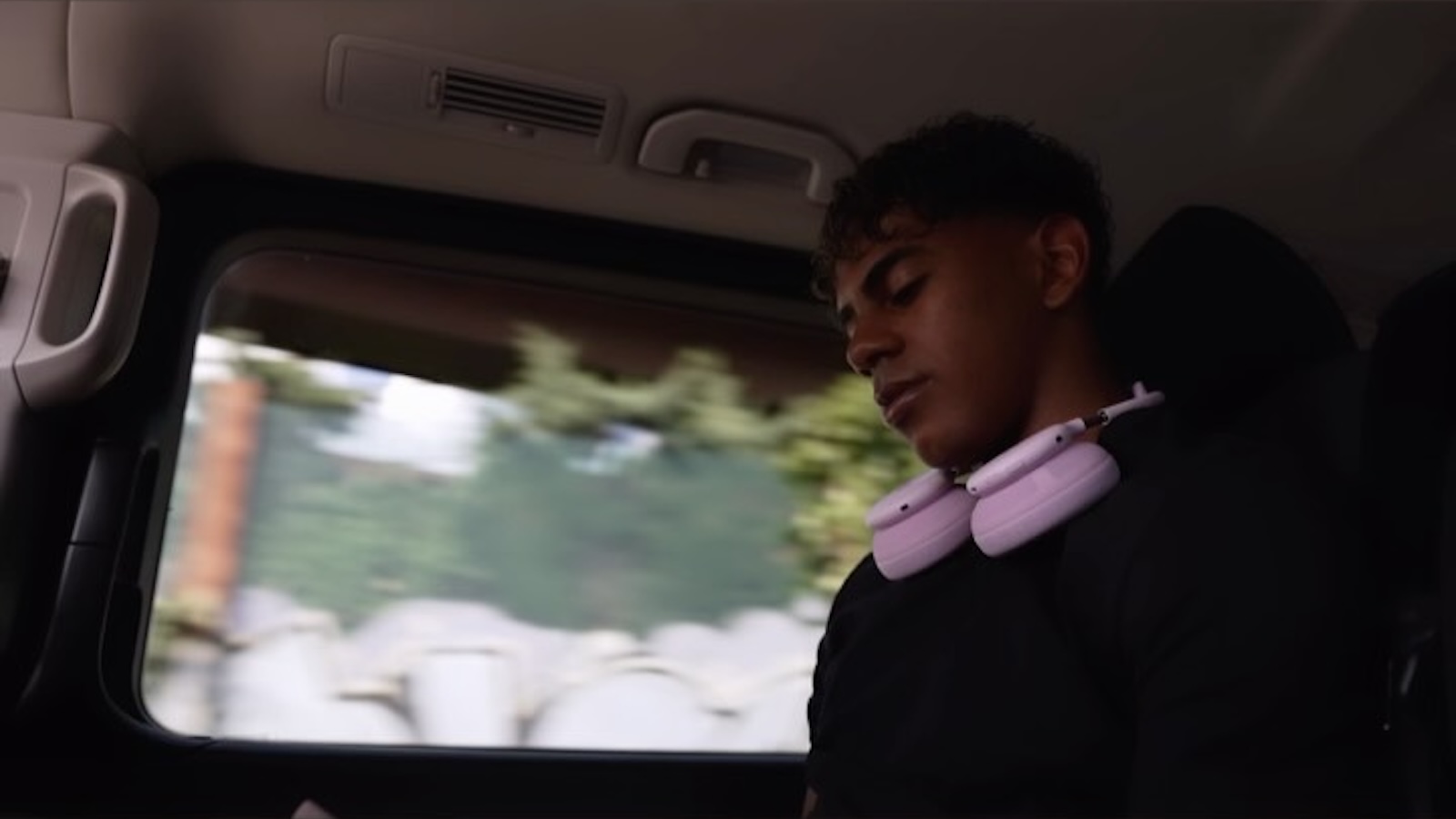
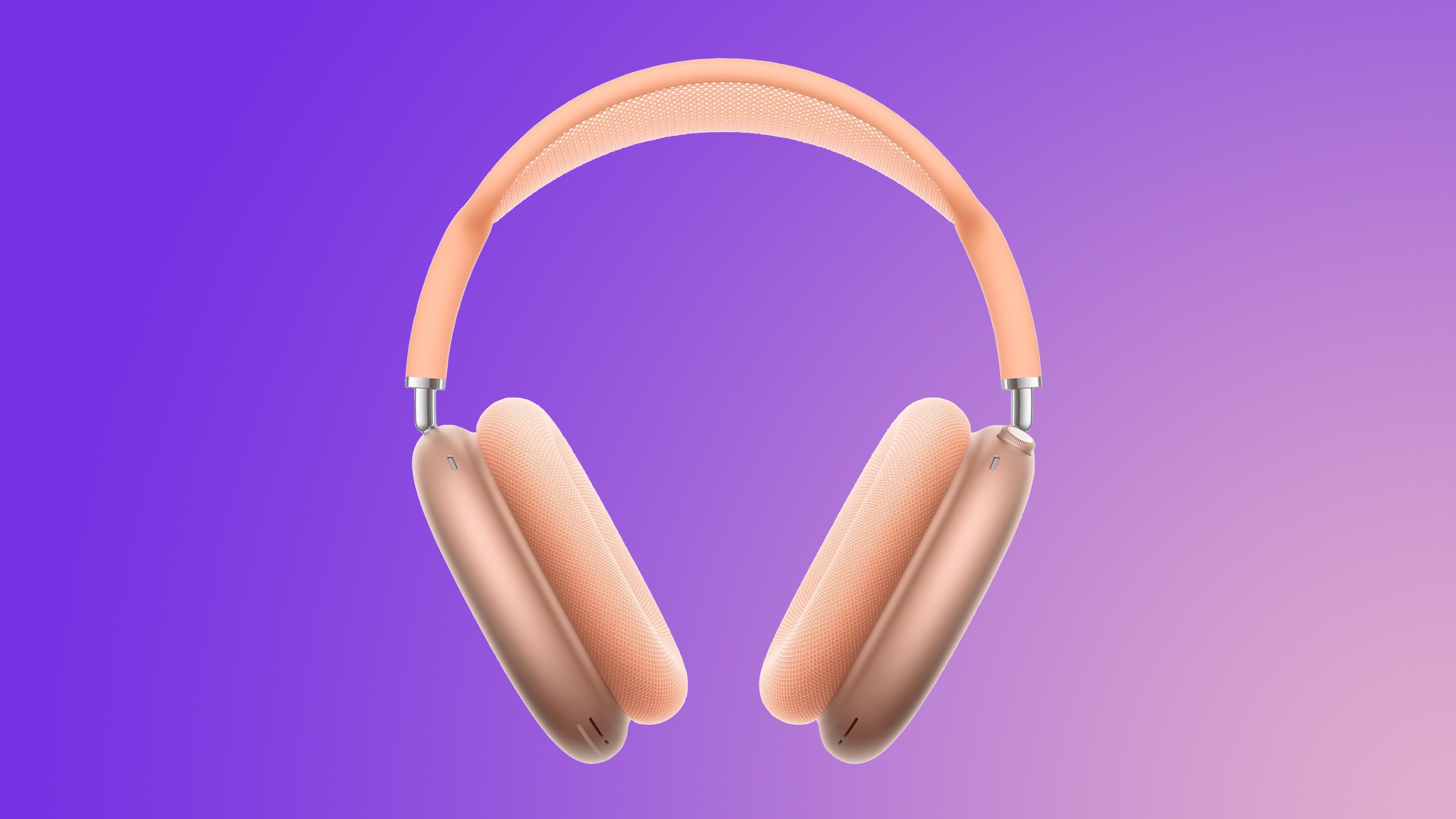
Ahead of the upcoming World Cup, football superstar Lamine Yamal has arrived at training camp for the Spanish national team sporting what seems to be the unreleased over-ear headphones that appeared in a U.S. Federal Communications Commission database last week. As suspected, the new headphones are a Beats product rather than an Apple product.
In a post on his Instagram account, Yamal shared several photos and a video clip showing him arriving to training camp with the new headphones in a pink color.
We don't know any other details on the upcoming headphones, and it's unclear whether they are a next-generation version of the Beats Studio Pro or if they will carry a new name. They feature a distinctly different design than the Beats Studio Pro, with flatter exteriors on the ear cups and a completely different headband design that appears to include tubular telescoping arms rather than the wider and flatter arms of the Beats Studio Pro.
A release date for the new Beats headphones is currently unknown, but it shouldn't be too far in the future given that they've already received FCC approval and are being seeded to key influencers like Yamal.
The DistroWatch news feed is brought to you by TUXEDO COMPUTERS. The NixOS project has published a new snapshot of its distribution: NixOS 26.05. The new version updates initrd to be based on systemd, plans for the retirement of x86_64-darwin, and updates GNOME to version 50. "We are very proud to announce the public availability of NixOS 26.05 'Yarara.....
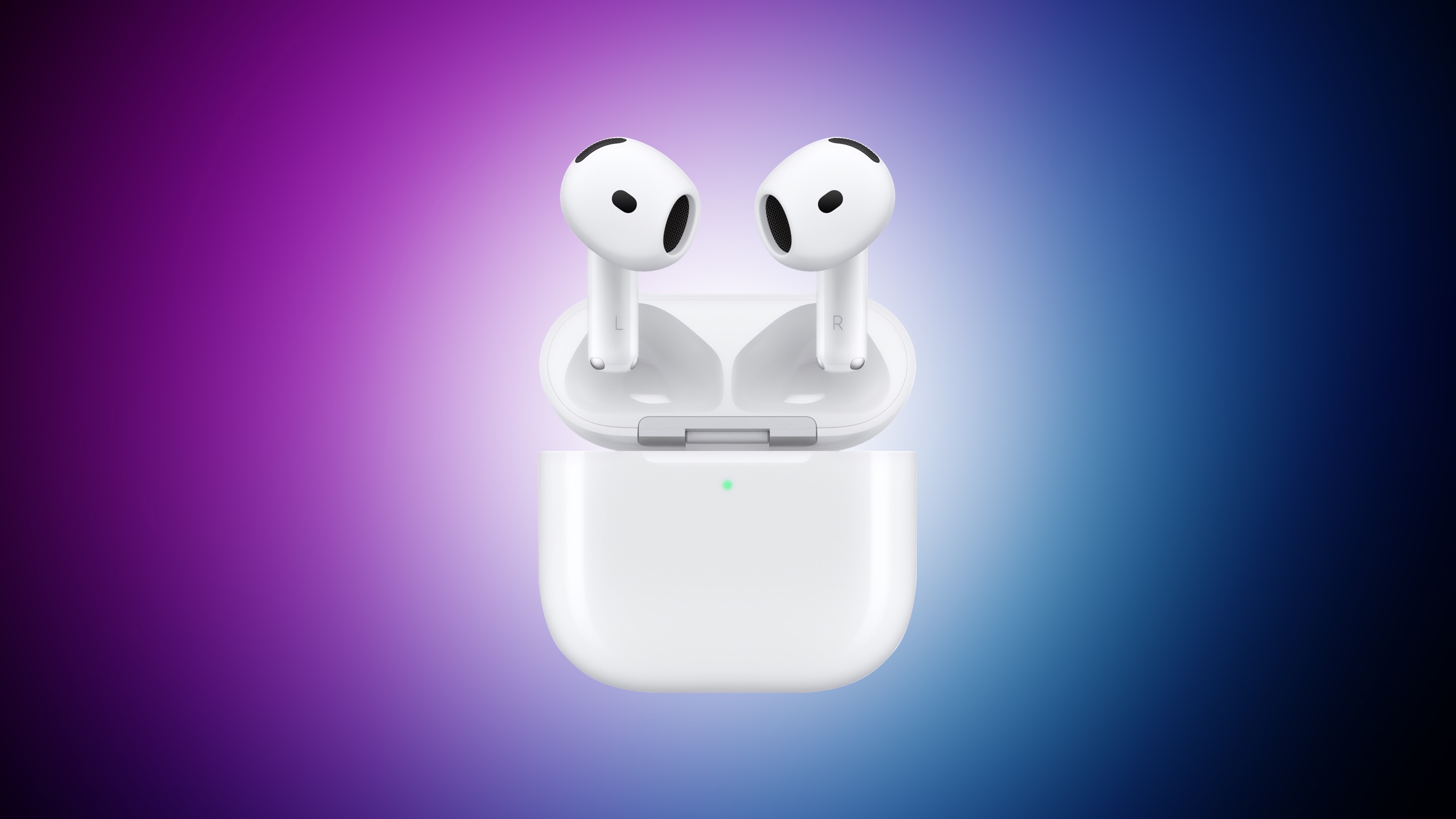
Amazon today has the AirPods 4 available for $99.00, down from $129.00. This is a second-best price on the AirPods 4, which is the base model without Active Noise Cancellation, and it's accompanied by a solid deal on the AirPods Max 2.
Note: MacRumors is an affiliate partner with some of these vendors. When you click a link and make a purchase, we may receive a small payment, which helps us keep the site running.
Amazon provides a June 4 estimated delivery date for free shipping, with faster delivery options for Prime members. We haven't tracked an all-time low price on the AirPods 4 in a few months, so Amazon's deal this weekend is a solid option if you've been waiting for a sale.
Additionally, you can get the AirPods Max 2 on sale for $509.00 right now on Amazon, down from $549.00. This one is available in Blue and Starlight, with similar June 4 delivery estimates as the AirPods 4. This is a match of the all-time low price on the AirPods Max 2.
Head to our full Deals Roundup to get caught up with all of the latest deals and discounts that we've been tracking over the past week.
Deals Newsletter
Interested in hearing more about the best deals you can find in 2026? Sign up for our Deals Newsletter and we'll keep you updated so you don't miss the biggest deals of the season!
WWDC 2026 is coming up very quickly now and we're continuing to learn more about what to expect in iOS 27 and other updates, so make sure to check in to see the latest as we head toward Apple's big week, which kicks off with the traditional keynote on Monday, June 8.
While we may not see anything on the hardware side at WWDC, Apple does have plenty of products in the pipeline, and this week gave us an opportunity to check in on where things stand with the high-end "MacBook Ultra," the long-rumored foldable iPhone, and more, so read on below for all the details!
Top Stories
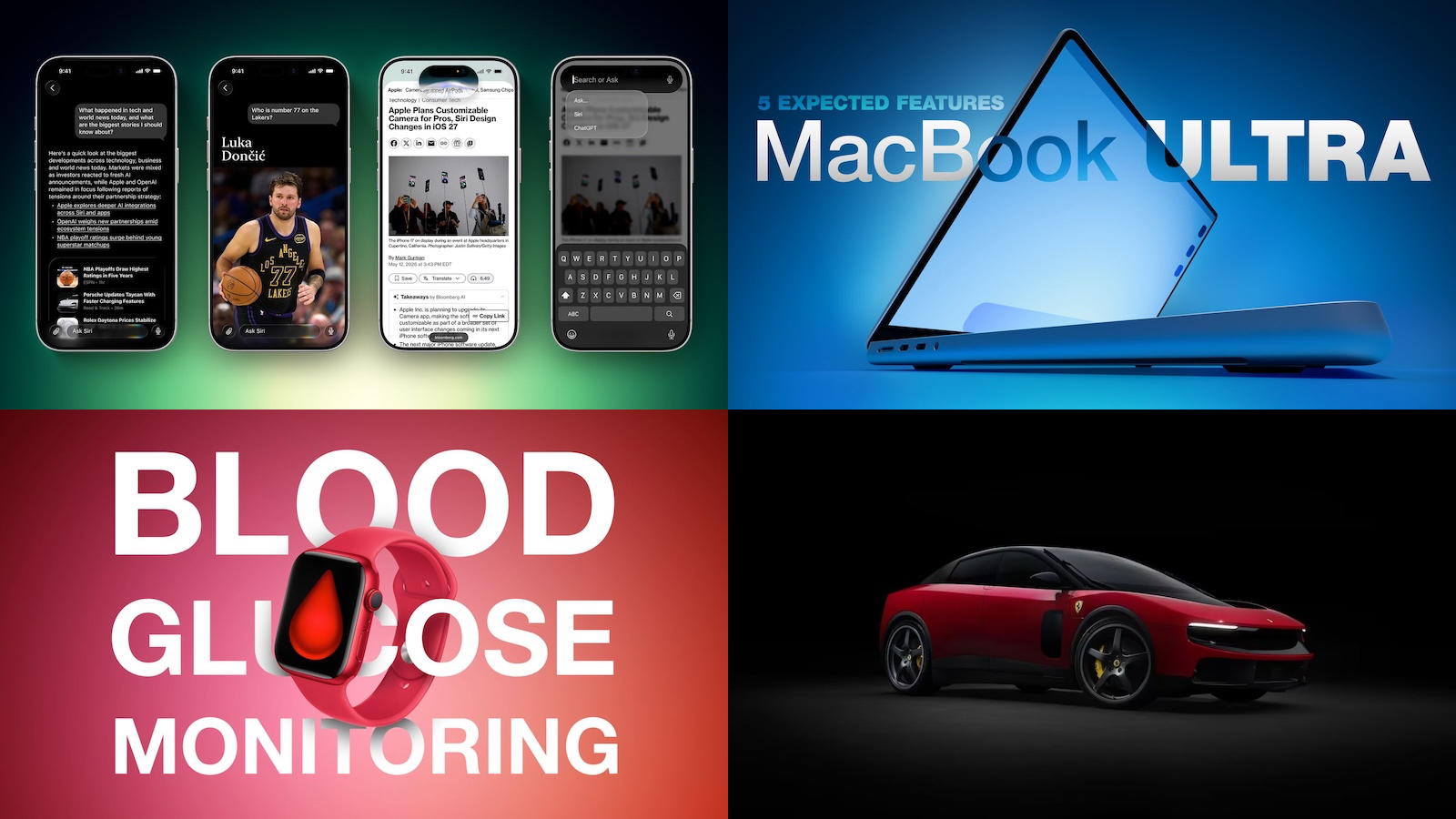
iOS 27's Siri App and 'Search or Ask' Feature Shown in Leaked Images
MacBook Ultra: 5 Features That Could Justify the Name
Reports and rumors suggest the next MacBook Pro that Apple will release might not be a MacBook Pro at all. It could actually be something altogether new and more exciting – a "MacBook Ultra" – positioned above the Pro as Apple's top-tier laptop, suggesting that the current M5 Pro and M5 Max models will remain on sale when it launches.
In a recent recap, we listed the key features we are expecting in the MacBook Ultra, which is likely to go on sale either later this year or in early 2027. As things stand, the latter time frame is now looking more likely, owing to the global memory chip shortage.
Apple Watch for Diabetes: The Latest on Apple's Plans for Non-Invasive Blood Sugar Monitoring
For many years now, it has been rumored that the Apple Watch will eventually gain non-invasive blood sugar monitoring capabilities, which would enable millions of people with diabetes to track their blood glucose levels without needing to prick their skin with a needle or wear a dedicated continuous glucose monitor.
According to Bloomberg's Mark Gurman, Apple recently shifted oversight of the project from its platform architecture chief Tim Millet to Zongjian Chen, a senior engineer overseeing advanced technologies within the company. He framed this change as positive news for the project, which has apparently been in development for more than 15 years.
Apple Seeds First iOS 26.6 and iPadOS 26.6 Betas to Developers
Even though WWDC is right around the corner, Apple still has another iOS 26 update in the works to tide us over until iOS 27 is ready for prime time, and that's iOS 26.6, which saw its first beta release this week.
We haven't spotted much new in this update yet other than potentially a new alert that will pop up when you've reached the maximum number of blocked contacts, but with that limit into the thousands, most users won't ever hit the cap.
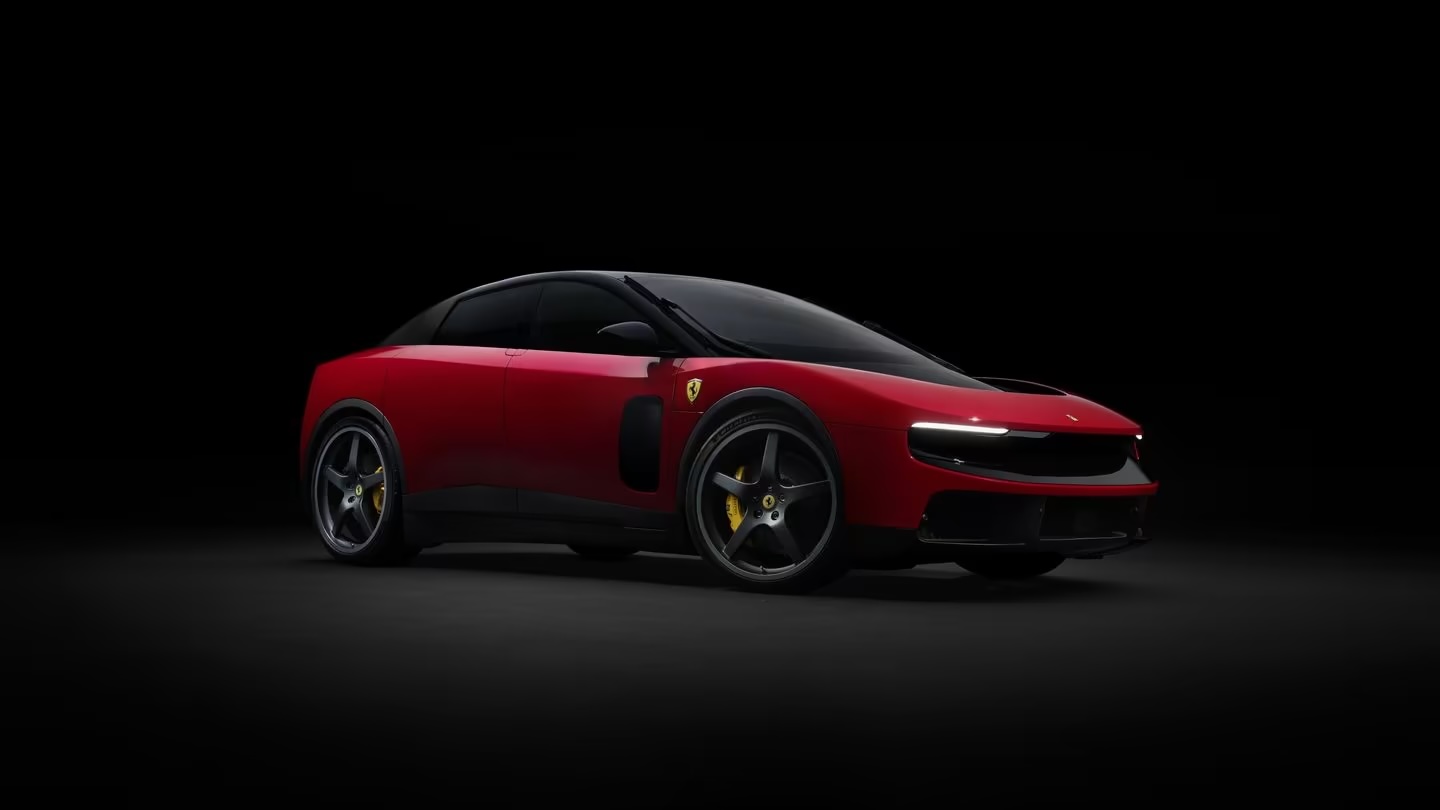
Ferrari Reveals $640,000 EV Co-Designed by Jony Ive
Despite billions of dollars in investment, the Apple Car never came to fruition, but the just-unveiled Ferrari Luce may offer a glimpse of some things we might have seen had Apple's project panned out.
The $640,000 Luce is Ferrari's first all-electric car, and former Apple design chief Jony Ive and his LoveFrom collective were heavily involved in the design of the vehicle.
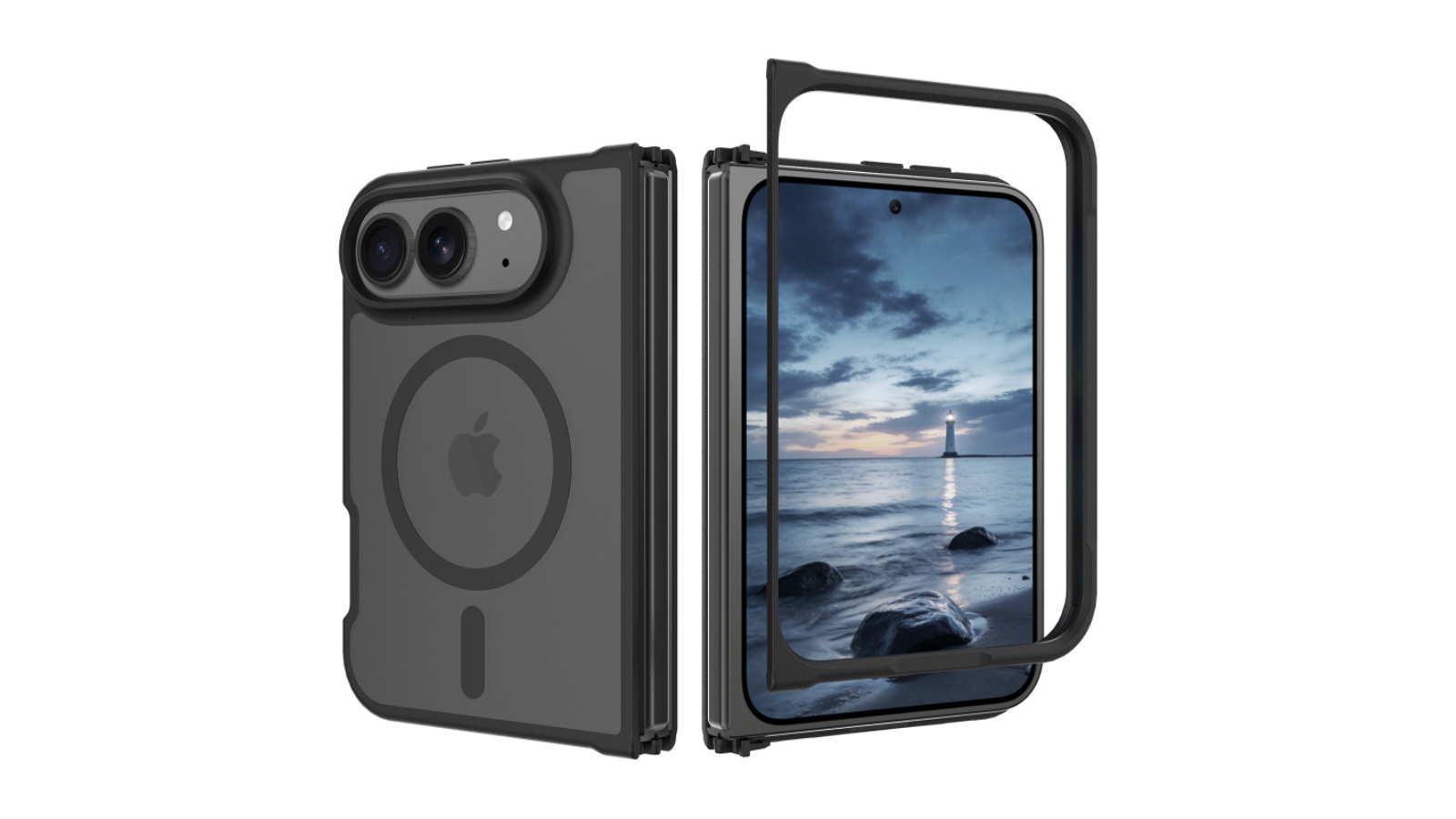
First Cases for Apple's Foldable iPhone Surface Online
Case makers routinely begin mass producing accessories ahead of a new iPhone announcement, working from dummy units or leaked CAD files to size their molds. Their designs are speculative, but they have historically proven accurate to the millimeter, since accessory makers cannot afford to be left without product on launch day.
Meanwhile, we continue to hear about hiccups as Apple seeks to ramp up toward mass production on the new device, with the latest being that Apple's supply chain is seeing issues with early-stage assembly procedures affecting production yields. This comes after word that issues with hinge reliability were also cropping up. Apple is, however, reportedly still aiming for a release later this year, though supplies may be very limited to start.
MacRumors Newsletter
Each week, we publish an email newsletter like this highlighting the top Apple stories, making it a great way to get a bite-sized recap of the week hitting all of the major topics we've covered and tying together related stories for a big-picture view.
Privacy-focused search engine DuckDuckGo has seen a surge in demand for its "No AI" search option in the wake of Google's May 19th I/O announcements. Google debuted a new "intelligent" search box reimagined with AI. It features AI suggestions as an upgrade to autocomplete, support for follow-up questions, expanded Personal Intelligence for connecting Gmail and Google Photos, and Search agents.
DuckDuckGo told MacRumors that visits to its No AI search page more than tripled after Google's announcement. Traffic hit the 3x mark on May 28th, and has continued to climb. Visits have averaged around 84 percent above baseline consistently since May 19.
DuckDuckGo is embracing demand for No AI search options, and it is promoting new extensions available for Chrome and Firefox that set No AI search as the default.
No AI search has no AI-assisted answers, no chat interface, and it surfaces fewer AI images. DuckDuckGo can be set as the default search engine on Apple devices, but not the specific No AI page. DuckDuckGo has its own AI tools, but they are turned off for people who opt for the No AI experience.
DuckDuckGo plans to add No AI search settings to its original extensions for Chrome, Firefox, Edge, and Opera in the near future.
Along with DuckDuckGo, there are other privacy-focused search engine options that minimize AI results. Paid search engine Kagi is one example, with no visible AI information unless you opt for AI tools. Kagi is $5 per month for a limited number of searches, and $10 a month for unlimited searches.
Because it is a paid search engine, it does not have ads and it does not collect and sell user data.
The DistroWatch news feed is brought to you by TUXEDO COMPUTERS. Aleksey Samoilov has announced the release of Ubuntu Sway Remix 26.04, a major update of the project's unofficial Ubuntu variant featuring the popular Sway tiling compositor. It is intended for Linux beginners who are interested in the keyboard-oriented interface of tiling window managers and also for advanced Linux....
Armadillo is a powerful
and expressive C++ template library for linear algebra and scientific
computing. It aims towards a good balance between speed and ease of use,
has a syntax deliberately close to Matlab, and is useful for algorithm
development directly in C++, or quick conversion of research code into
production environments. RcppArmadillo
integrates this library with the R environment and language–and is
widely used by (currently) 1272 other packages on CRAN, downloaded 46.6 million
times (per the partial logs from the cloud mirrors of CRAN), and the CSDA paper (preprint
/ vignette) by Conrad and myself has been cited 693 times according
to Google Scholar.
This versions updates to the 15.2.7 upstream Armadillo release made today.
The package has already been updated for Debian, and built for r2u. As the upstream was
modest, we for once skipped reverse-dependency checks. That bet paid off
as CRAN found no issues among
the over 1270 reverse dependencies. However, one package referenced a
package archived today, hence ‘invisible’ to CRAN and triggered a (false
positive) NOTE of ‘reference to non-existing package’. We came close.
Anyway, the package made it CRAN shortly thereafter following
the standard brief email exchange explaining the false-positive nature
of the NOTE.
All changes since the last CRAN release follow.
Changes in
RcppArmadillo version 15.2.7-1 (2026-05-29)
Upgraded to Armadillo release 15.2.7 (Medium Roast Deluxe)
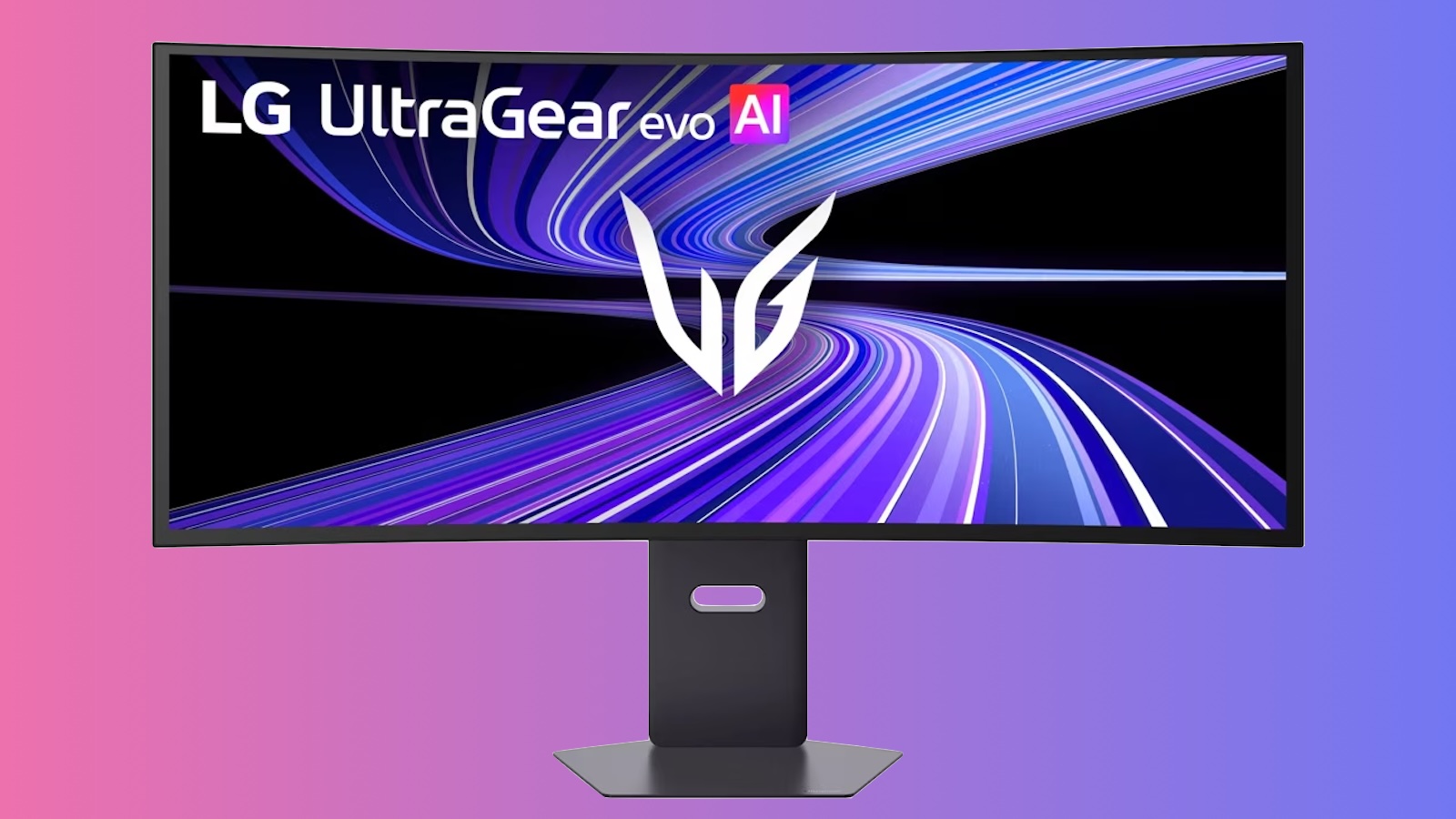
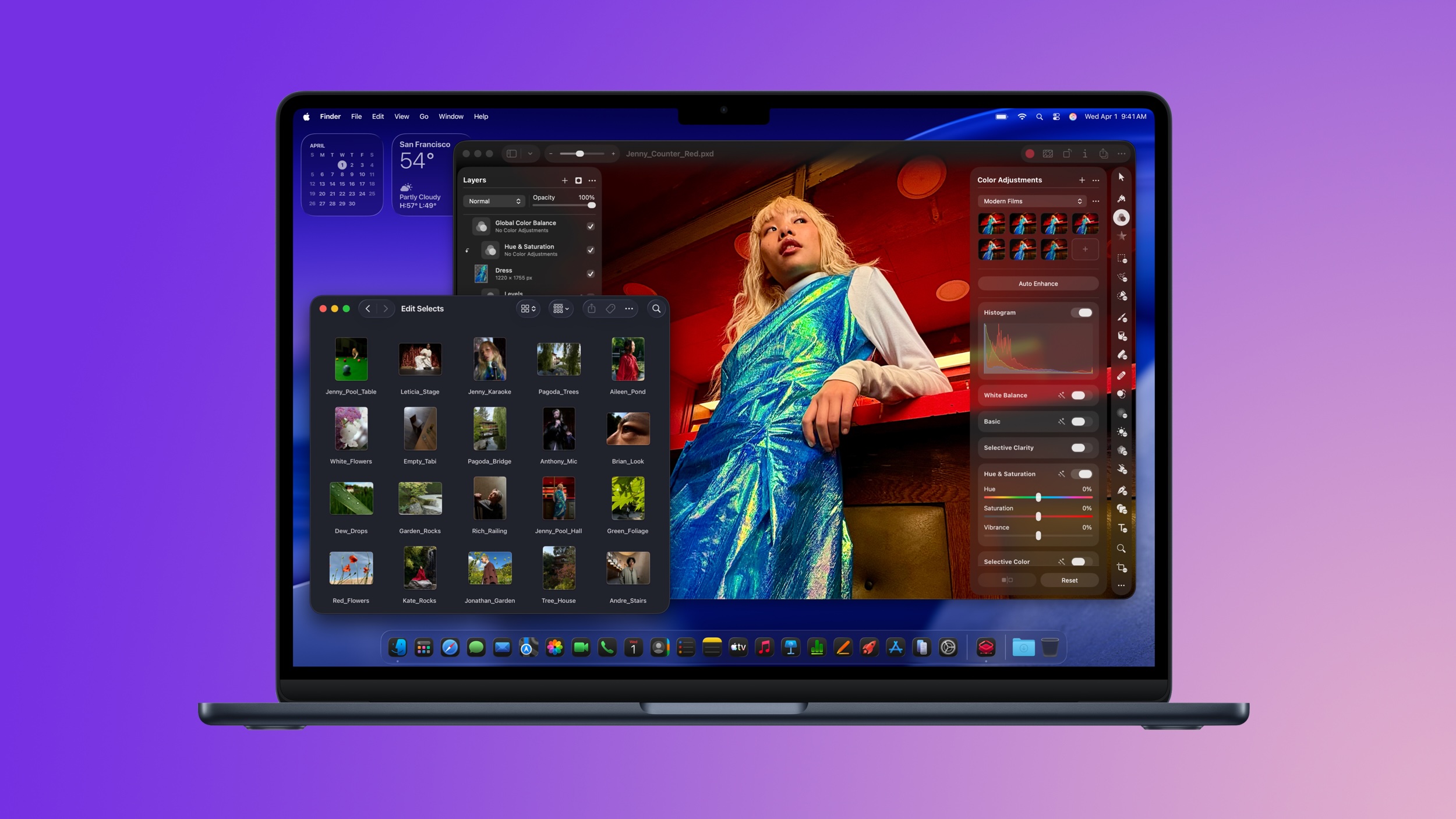
Back at CES in January, LG unveiled its UltraGear evo GX9 (39GX950B) display, which it claims is the world's first 39-inch ultrawide 5K2K OLED gaming monitor, offering a large curved canvas in the increasingly popular 21:9 aspect ratio with the added benefit of OLED technology for enhanced contrast with true blacks, standard refresh rates of up to 165Hz, and more.
While LG began taking pre-orders for the UltraGear evo GX9 last month and a few early orders have already trickled out through various channels, LG says that the official kickoff of order shipments starts next week.
LG touts the gaming prowess of the UltraGear evo GX9, but its specs mean it can deliver a premium experience across a variety of use cases, from productivity to media consumption and more.
OLED technology delivers a contrast ratio of 1,850,000:1 across the ultrawide display's 5,120 x 2,160 resolution. At a large 39-inch display size with a 1500R curve, this translates to a density of 143 pixels per inch, which is solid but not enough for true retina-level quality. Still, the large, curved display means many users will often be sitting further from the display than usual to be able to take in the full scope of content on the display, and that should prove plenty sharp in most situations.
The Tandem OLED panel in the UltraGear evo GX9 supports up to 335 nits of typical brightness, which is likely sufficient for most uses but does lag behind some other displays including ones in Apple products. The OLED contrast, color fidelity at up to 98.5% of the DCI-P3 spectrum, and HDR support that can push brightness to 1,500 nits at 1.5% APL and 600 nits at 10% APL should, however, all help to offer a quality viewing experience.
For those who do want to game on this display, the UltraGear evo GX9 features AMD FreeSync Premium Pro and NVIDIA G-SYNC support, as well as 0.03ms response times to keep up with fast-moving content.
On the connectivity side, the UltraGear evo GX9 offers a USB-C port with 90-watt power delivery to a connected computer, as well as DisplayPort 2.1 and HDMI 2.1.
We'll be looking to go hands-on with the LG UltraGear evo GX9 as soon as we can, and we'll report back on how well it works for Mac users, but for now LG is taking orders on its own site priced at $1,799.99, and it's also available at Amazon for the same price with delivery quotes starting around June 8.
MacRumors is an affiliate partner with LG and Amazon. When you click a link and make a purchase, we may receive a small payment, which helps us keep the site running.
Hey Windows Insiders,
One of the best parts of the work is hearing directly from the people using Windows every day. I was recently in Hyderabad and Taipei meeting with local Windows Insiders, and those conversations gave me a lot of energy heading into Build next week.
The feedback we’re hearing from you continues to reinforce that we’re focused on the right places.
For me, the theme this month is momentum.
Some of that momentum is in performance. We’re making steady progress across core areas like File Explorer, search, and broader system responsiveness, backed by architectural improvements that are starting to unlock more consistent gains across Windows.
Some of it is in craft: the small details that make Windows feel more polished, more predictable, and more personal. Address bar improvements in File Explorer. A modern Run experience. More taskbar positioning flexibility with app labels. These are the kinds of refinements we’re working through across Windows, and you’ll continue to see more of them in Insider builds throughout the coming year.
Let’s get into what started showing up this month, including new experiences beginning to roll out in today’s flights.
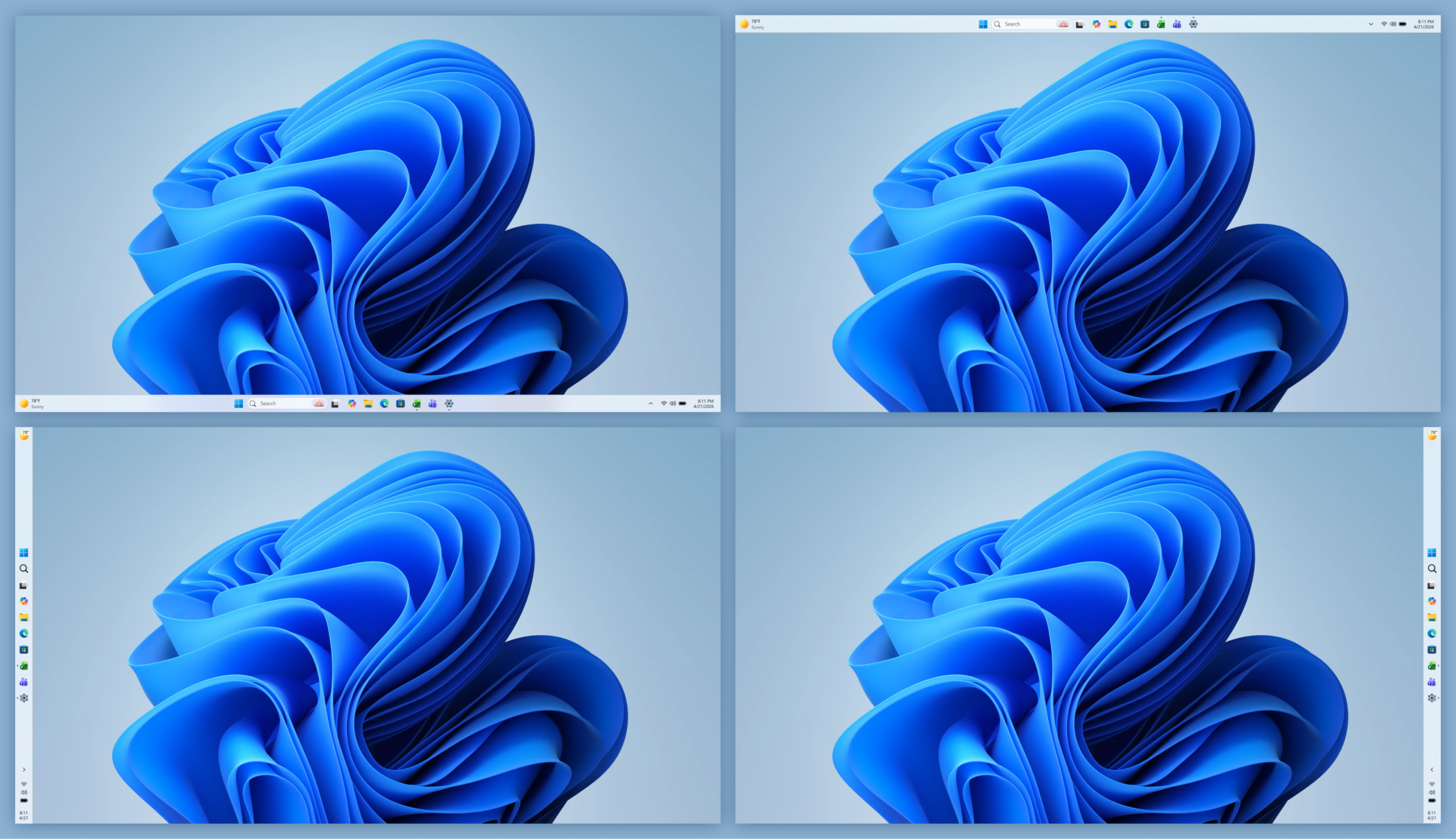
Making Taskbar and Start more personal
This month, we began rolling out more personalization for Taskbar and Start, two of the most used and most personal surfaces in Windows.
With these updates, you can move the taskbar to any edge of the screen, choose icon alignment based on its position, and use app labels across positions to make open windows easier to tell apart. There’s also a new smaller taskbar option to help reclaim screen space.
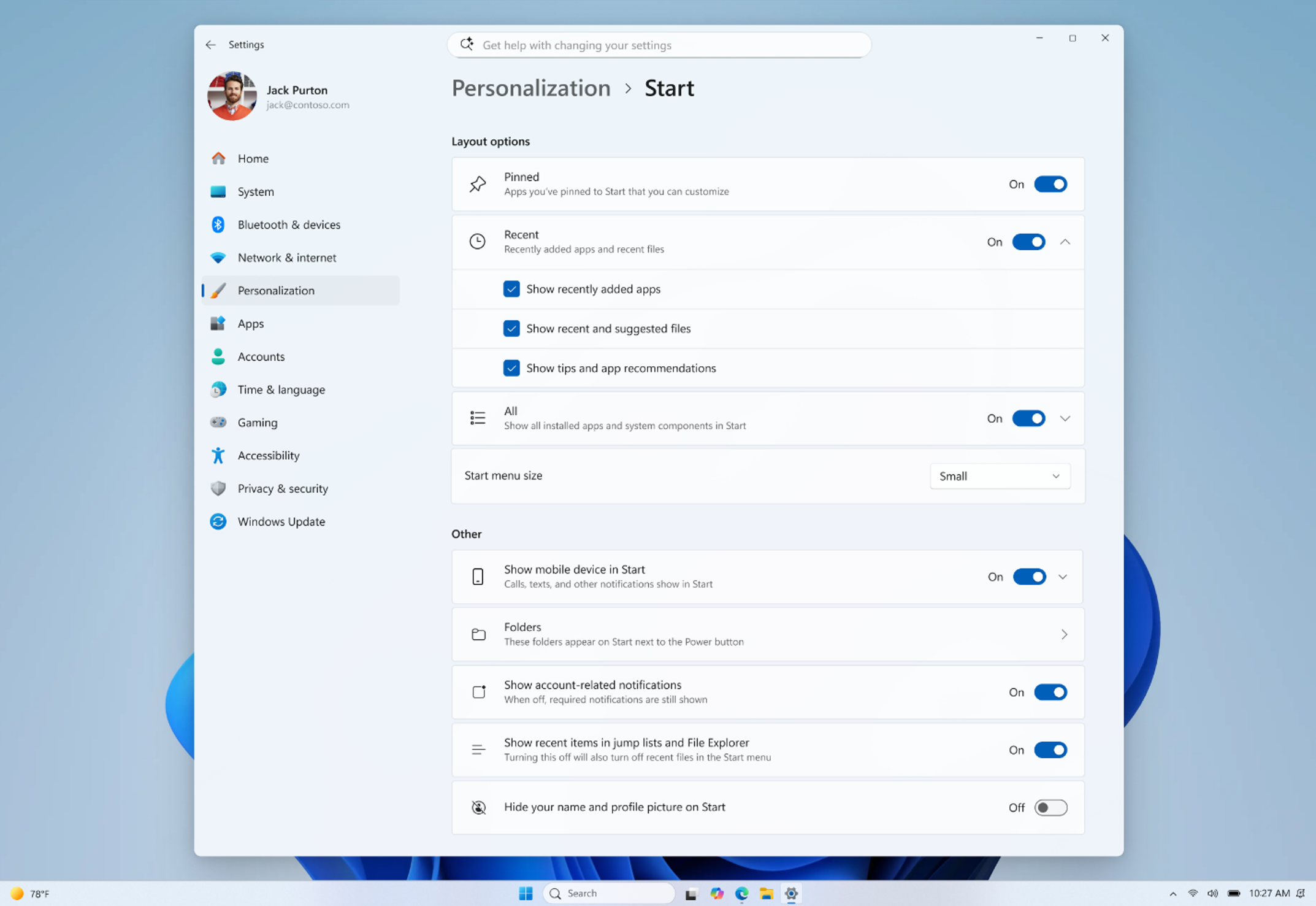
We’re also making Start easier to shape around how you work. New controls let you independently show or hide sections like Pinned, Recommended, and All apps, adjust Start menu size, and hide your name and profile picture for more privacy. The Recommended section is also being updated to Recent, with better file relevancy, so surfaced content better reflects what you’re actually working on.
These updates have started to roll out in the Experimental Channel. Read more about the considerations and improvements we’re bringing to taskbar and Start in the recent blog post from Diego Baca.
Improving driver quality, reliability, and security with the Driver Quality Initiative (DQI), and Cloud Initiated Driver Recovery
In March, we committed to delivering a smoother, more dependable Windows experience with our ecosystem of partners. Drivers are a critical part of that work.
Drivers sit at the heart of Windows, connecting the OS to silicon, components, and peripherals. With thousands of partners contributing to tens of thousands of active driver families, improving driver quality is essential to making Windows more reliable over time.
At WinHEC 2026, we introduced the Driver Quality Initiative (DQI), a comprehensive effort designed to improve driver quality, reliability, and security across Windows.
We also rolled out new changes with Cloud Initiated Driver Recovery to improve how drivers are validated, delivered, and maintained. By catching issues earlier, targeting updates more precisely, and enabling automatic recovery when needed, devices can stay reliable over time with fewer disruptions and a better path back to a known-good state.
This is part of our ongoing work with partners to make Windows more dependable over time.
File Explorer improvements across reliability, readability and usability
[embed]https://youtu.be/gZUDEBbZSp4[/embed]
Building on last month’s improvements, we made several updates to File Explorer across reliability, readability, and usability, including the Address Bar, file size formatting, keyboard navigation, and renaming.
The Address Bar now supports paths containing double backslashes and quotation marks, such as C:\Users\user or "C:\Users\user", improving compatibility with more of the paths people paste or type into File Explorer. We also improved reliability of the Address Bar suggestion dropdown so it consistently closes after an item is selected.
In Details view, file sizes now use appropriate units like KB, MB, and GB instead of KB-only, making them easier to read at a glance. We also improved keyboard navigation in File Explorer context menu flyouts.
We also fixed multiple renaming issues, including one where text could be repeatedly selected while renaming items in folder views, and another where updated names with case-only changes were not immediately reflected in folder views across local and cloud storage.
These are small details, but they show up in places people use all day. The goal is fewer broken paths, clearer information, and File Explorer interactions that behave more predictably. These updates also began rolling out earlier this month in the Experimental Channel.
Making Windows easier to use with voice input, touch, and more personalization
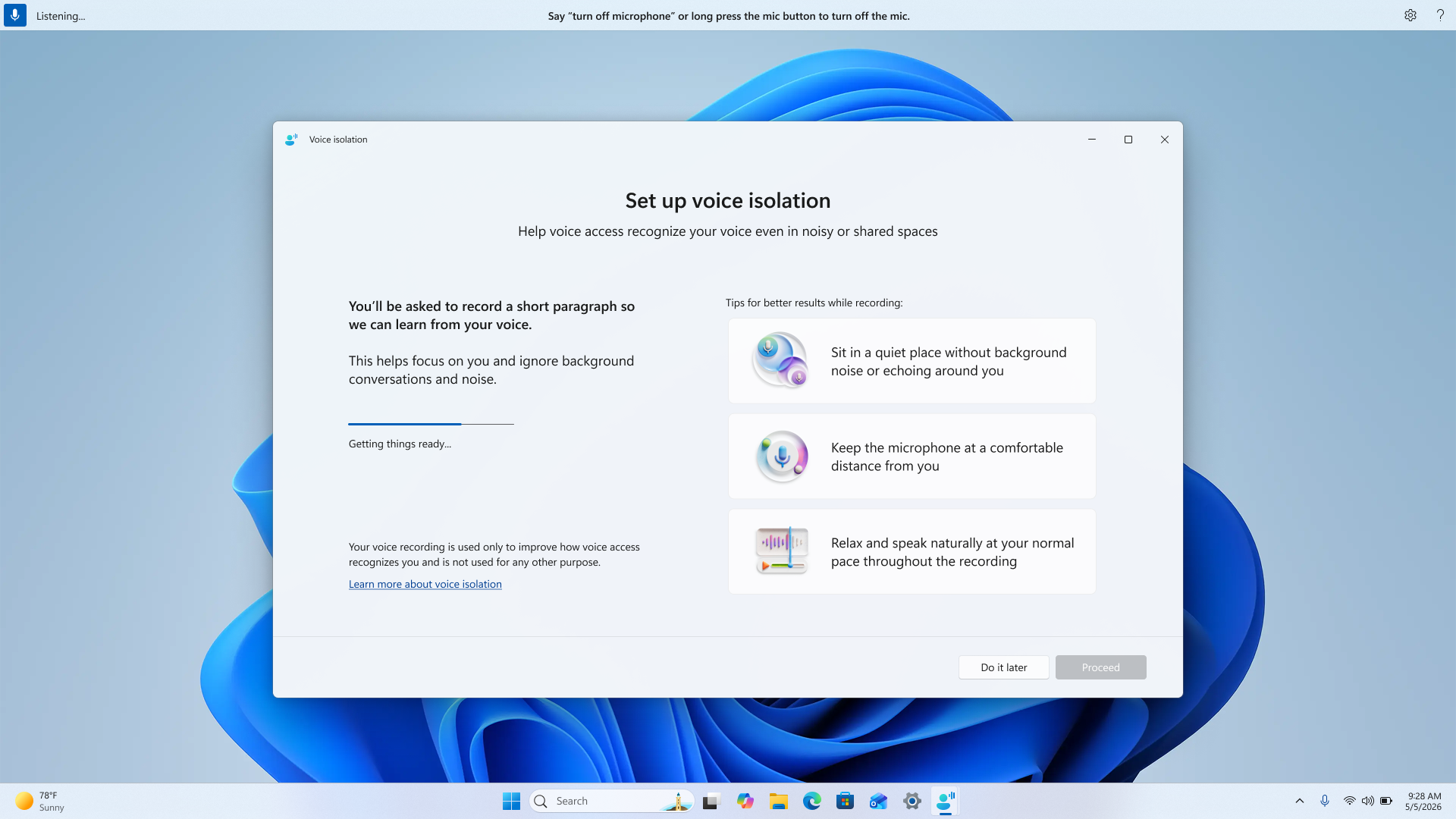
[caption id="attachment_178981" align="aligncenter" width="1024"] Screenshot showing setup of voice isolation.[/caption]
Accessibility work in Windows often shows up across many different parts of the experience, because people use their PCs in different ways and in different environments.
For voice, one of the most common pieces of feedback we hear is sensitivity to background noise. With Voice Isolation in Voice Access, Windows can better focus on the speaker and reduce the impact of surrounding noise, helping commands come through more consistently without needing to change where or how you’re working.
We’re also adding more ways to personalize how Windows looks and feels. New options like screen tint make it easier to adjust color and opacity based on preference or lighting conditions, giving people more control during longer sessions.
We’re continuing to improve Magnifier as well, making it easier to set precise zoom levels and adjust zoom directly within the experience without needing to go into Settings.
Finally, we added new gesture-related controls for precision touchpads in Settings, including automatic scrolling, gesture speed controls, accelerated scrolling, and optional single-finger scrolling support.
These are areas we hear about regularly in feedback. The changes are gradual, but they help reduce friction and make Windows easier to use in more moments.
These updates began rolling out in the Experimental channel earlier this month.
Build next week!
Next week is Microsoft Build, where we’ll share more about what we’re doing to elevate the developer experience across the Windows platform. We’ve got a lot in store, so tune in for the keynote at 9:30am PT on Tuesday.
Earlier today, we also shared the first episode of Inside Windows, a podcast where Pavan Davuluri, Executive Vice President, Windows & Devices, sits down with members of the team to share more insight into the work and people behind Windows. I was honored to be the first guest and talk through some of the work we’ve been focused on over the past several months.
For those attending our meetup next week in San Francisco, I look forward to meeting you and hearing how we can keep improving the Windows Insider experience, particularly for developers.
More to come next week!
Marcus
Hello Windows Insiders,
This week we continue to expand the rollout of the new Windows Insider Program changes to devices in channels already announced.
New builds this week
Today we are releasing new Windows 11 Insider Preview Builds. As a reminder, all Insiders can find the release notes for your device based on the new channel system, even if you haven’t moved yet. This is to make finding build information as easy as possible during the transition. See your channel release notes here:
Experimental (Future Platforms) – Including Canary 29500 series: Build 29599.1000
Please note: We have identified an issue internally causing crashes on AMD machines supporting System Guard, meaning these devices in WIP will not be offered this week's Experimental (Future Platforms) build. This should be fixed by the next flight.
As a reminder, you can always find your build number in the watermark on bottom right-hand corner of your desktop.
Advanced core selection
As mentioned in recent WIP blogs, we are in the process of releasing the Windows 11 version 26H1 build to those Insiders who have elected this version under Advanced options in the Windows Insider Program settings. We will begin releasing this version to those Insiders who have elected this change on June 5 2026.
As outlined in our Windows IT Pro Blog, Windows 11 26H1 is a targeted release that supports some of the new device innovations coming in 2026, including devices with Qualcomm Snapdragon X2 Series processors. Devices running Windows 11, version 26H1 will not be able to update to the next annual feature update in the second half of 2026. This is because Windows 11, version 26H1 is based on a different Windows core than Windows 11, versions 24H2 and 25H2, and the upcoming feature update. These devices will have a path to update in a future Windows release.
Insiders who have elected the 26H1 option in Advanced options but no longer wish to take this version, should reselect version 25H2 before version 26H1 is made available to these devices beginning June 5. Insiders who do take version 26H1 and want to move back to 25H2 will be able to do so through a complete reinstall of Windows.
Renamed "Recommended" section to "Recent" in Start and Settings page
Section-level toggles to independently show or hide Pinned, Recommended, and All.
Choose between a small and large Start menu, in addition to "Automatic (default)" setting option that's already available today
The option to hide your name and profile picture in Start
Redesigned Start menu settings page
[caption id="attachment_178960" align="aligncenter" width="1024"]Screenshot of the updated Start settings showing the new section-level toggles.[/caption]
[Windows Search]
Release channel: Experimental, Beta
We're improving Windows Search results:
Search by Substring: Files with compound names or content (e.g., MeetingNotesApril, ProjectStatusReport) are now easily discoverable by typing “april” or “status”.
Thanks,
Stephen and the Windows Insider Program team
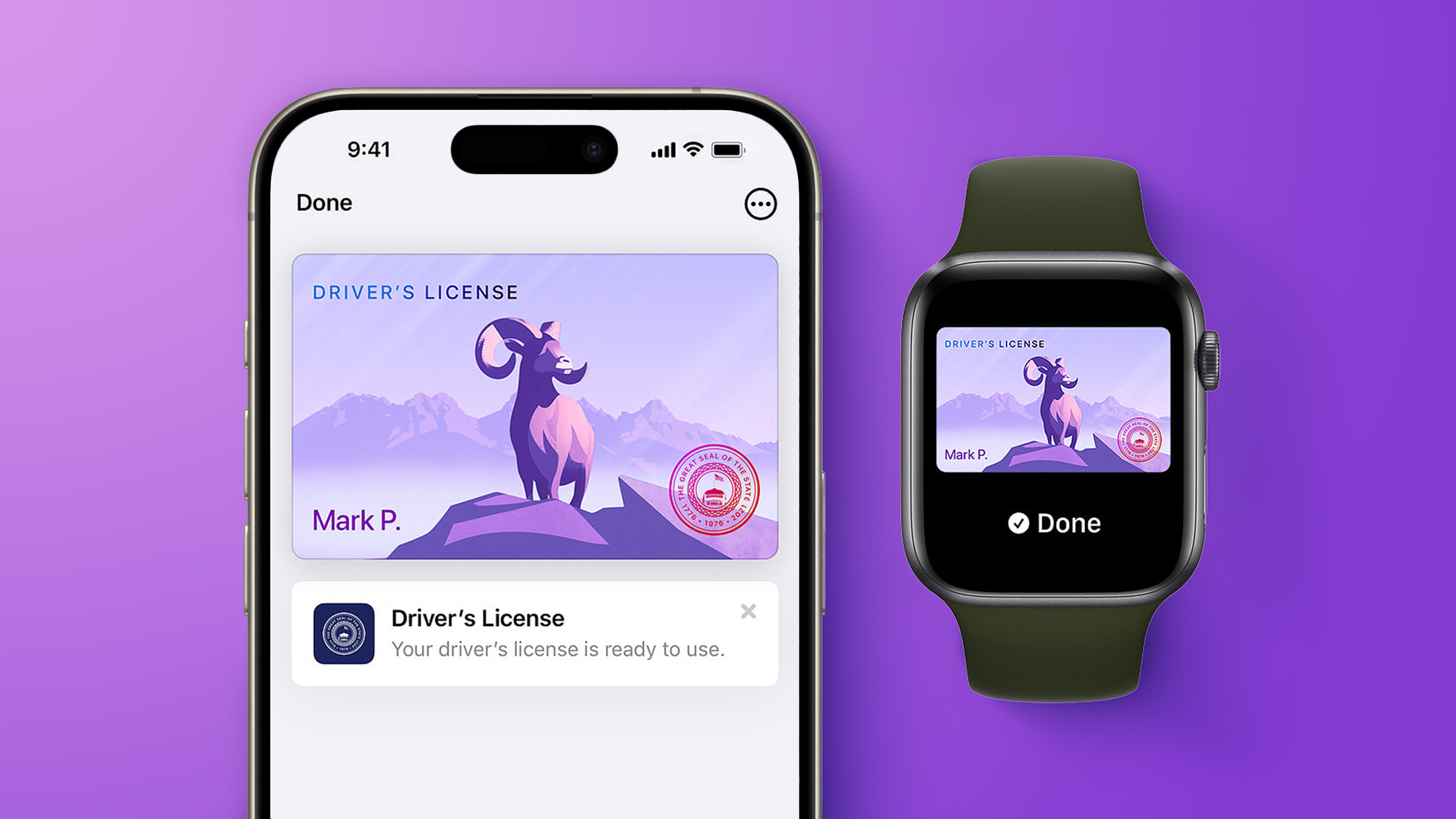
Apple's digital driver's license feature in the Wallet app is set to expand to Virginia, according to a person familiar with the matter.
In select U.S. states, residents can add their driver's license or state ID to the Wallet app on the iPhone and Apple Watch, and then use it to display proof of identity or age at select airports and businesses, and in select apps. The feature has rolled out to 14 states so far, including Arkansas earlier this week, and it is also available in Puerto Rico.
The other states are Arizona, Maryland, Colorado, Georgia, Ohio, Hawaii, California, Iowa, New Mexico, Montana, North Dakota, West Virginia, and Illinois.
Now, Apple is preparing for the feature to go live in Virginia, the person said. However, we do not have an exact timeframe for availability. Towards the end of 2025, Virginia's Department of Motor Vehicles said it planned to support the Apple Wallet's digital ID feature in the coming months, so hopefully it goes live soon by this point.
When the feature goes live, Virginia residents will be able to set it up by opening the Wallet app on the iPhone and tapping on the plus sign in the top-right corner. Next, they will tap on Driver's License and ID Cards, select Virginia from the list once it is added, and follow the on-screen steps to complete the process.
Apple Wallet IDs are accepted at TSA checkpoints at hundreds of U.S. airports for domestic travel. Given that Apple Wallet IDs are not accepted by law enforcement, and lack many other use cases, carrying a physical ID is still necessary.
If you live in a state that does not yet offer Apple Wallet IDs, you can create a Digital ID based on your U.S. passport, and present it at the same participating TSA checkpoints, for age and identity verification purposes during domestic travel. It is not a replacement for a physical passport, and it cannot be used for international travel.
The passport feature requires iOS 26.1 or watchOS 26.1 and later.
OpenAI is developing a smartphone intended to compete directly with the iPhone, in what appears to be a significant departure from the company's previously stated hardware strategy. Here's everything we know so far.
Analyst Ming-Chi Kuopublished his findings in late April following supply chain checks, describing the device as an "AI agent phone" built around a continuous, context-aware interface rather than individual apps. Kuo argued that the smartphone is the only device that captures a user's full real-time state, including location, activity, communication, and context, making it uniquely suited to AI agent inference.
He said fully controlling both the operating system and the hardware is the only way for OpenAI to deliver a comprehensive AI agent service, and that AI agents will fundamentally shift how people interact with a phone, moving the focus from launching individual apps to completing tasks through a seamless interface.
Specifications
OpenAI's phone is said to use a customized version of MediaTek's Dimensity 9600 processor, built on TSMC's N2P node in the second half of 2026. Kuo initially named both MediaTek and Qualcomm as chip partners but has since said MediaTek appears "better positioned to become the sole processor supplier."
Luxshare Precision Industry is believed to be the exclusive manufacturing partner. Separately, Kuo reported that Sunny Optical has secured component orders for two OpenAI devices, including the smartphone. This is likely for the camera module.
The device's headline known hardware specification today is its image signal processor, which includes an enhanced HDR pipeline intended to improve real-world sensing through the camera. It is also said to use two AI processors for handling different tasks simultaneously, such as vision and language processing, along with fast memory and storage and security features to isolate processes.
What About Jony Ive's Devices?
The phone represents a notable reversal in OpenAI's publicly stated strategy. The company's hardware ambitions had previously been described as centered on non-phone form factors developed with former Apple design chief Jony Ive, whose startup io Products OpenAI acquired for $6.5 billion in May 2025. Ive and CEO Sam Altman had specifically said they did not want to build a device with a screen, with Altman describing a prototype to employees as "the coolest piece of technology that the world will have ever seen."
The first product from that collaboration was delayed out of 2026 and has since been identified as a smart speaker with an integrated camera, priced between $200 and $300 and expected to launch in early 2027. Other devices reportedly in development include smart glasses, a smart lamp, and potentially earbuds, though those products are further out on the roadmap and some could be cancelled.
OpenAI has also been aggressively recruiting from Apple's hardware ranks, hiring over 40 former Apple employees. The hires include former Apple designers Evans Hankey, Tang Tan, and Scott Cannon, prompting Apple to offer its iPhone Product Design team retention bonuses of up to $400,000 in restricted stock units to counter the poaching.
Timeline
Mass production of OpenAI's smartphone was originally believed to be targeted for 2028, but Kuo has since revised that expectation to the first half of 2027. The accelerated timeline is said to reflect OpenAI's planned IPO, where a compelling hardware product could strengthen the company's investor narrative, as well as intensifying competition in the AI agent phone category. Kuo projects combined 2027 and 2028 shipments could reach around 30 million units if development stays on track.
What Does It Mean for Apple?
If the broader hardware lineup ships, OpenAI will be a direct competitor to Apple across several product categories. Apple is rumored to be developing smart glasses, AirPods with cameras, an AI pendant, and a smart home hub with enhanced Siri capabilities. On the day Kuo published his initial report, Altman posted on X that it "feels like a good time to seriously rethink how operating systems and user interfaces are designed."
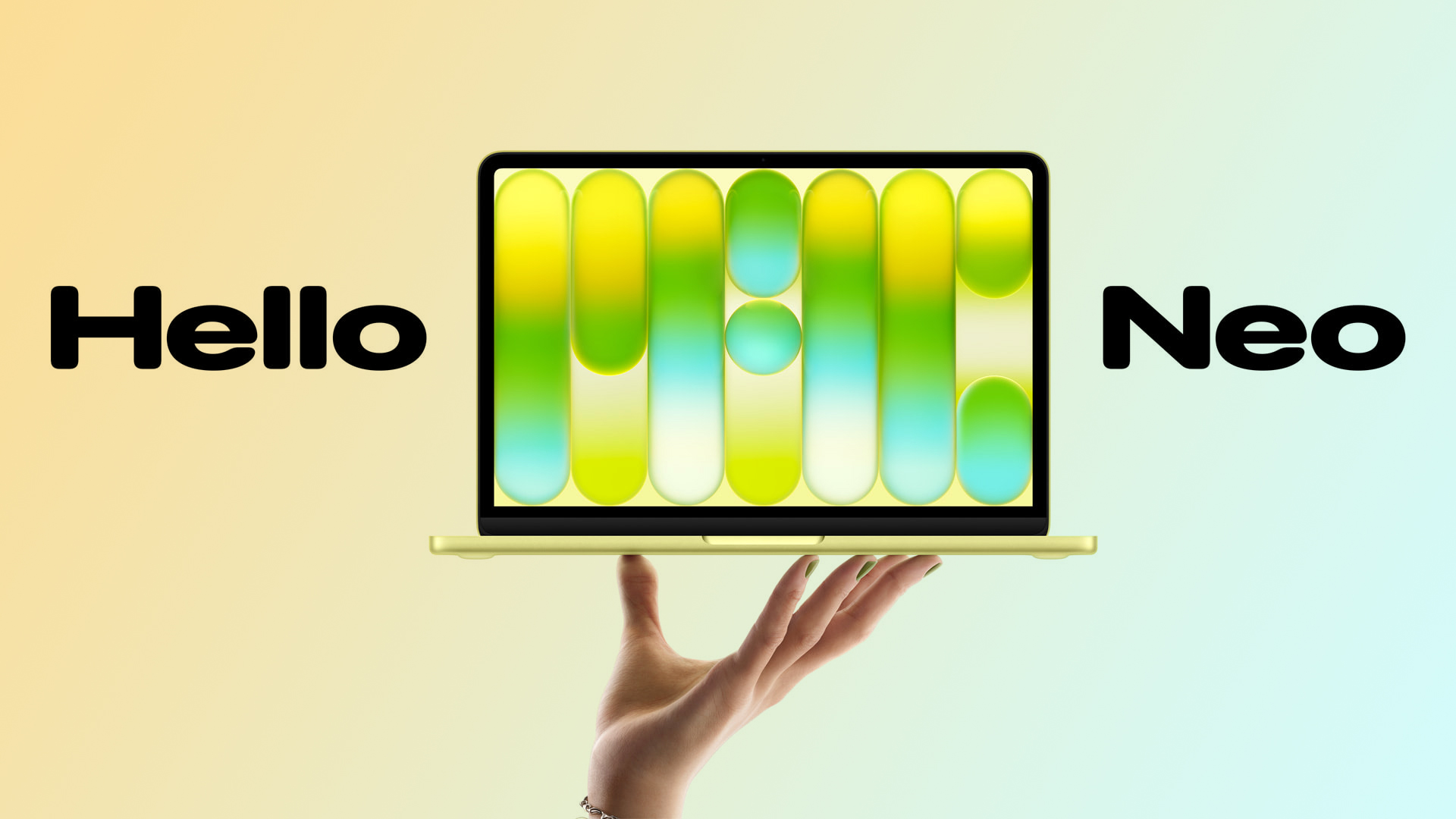
A few months ago, Apple released the MacBook Neo, its most affordable MacBook ever. At the time, an ASUS executive admitted that the laptop came as a "shock" to the Windows PC industry, which is now in the process of responding.
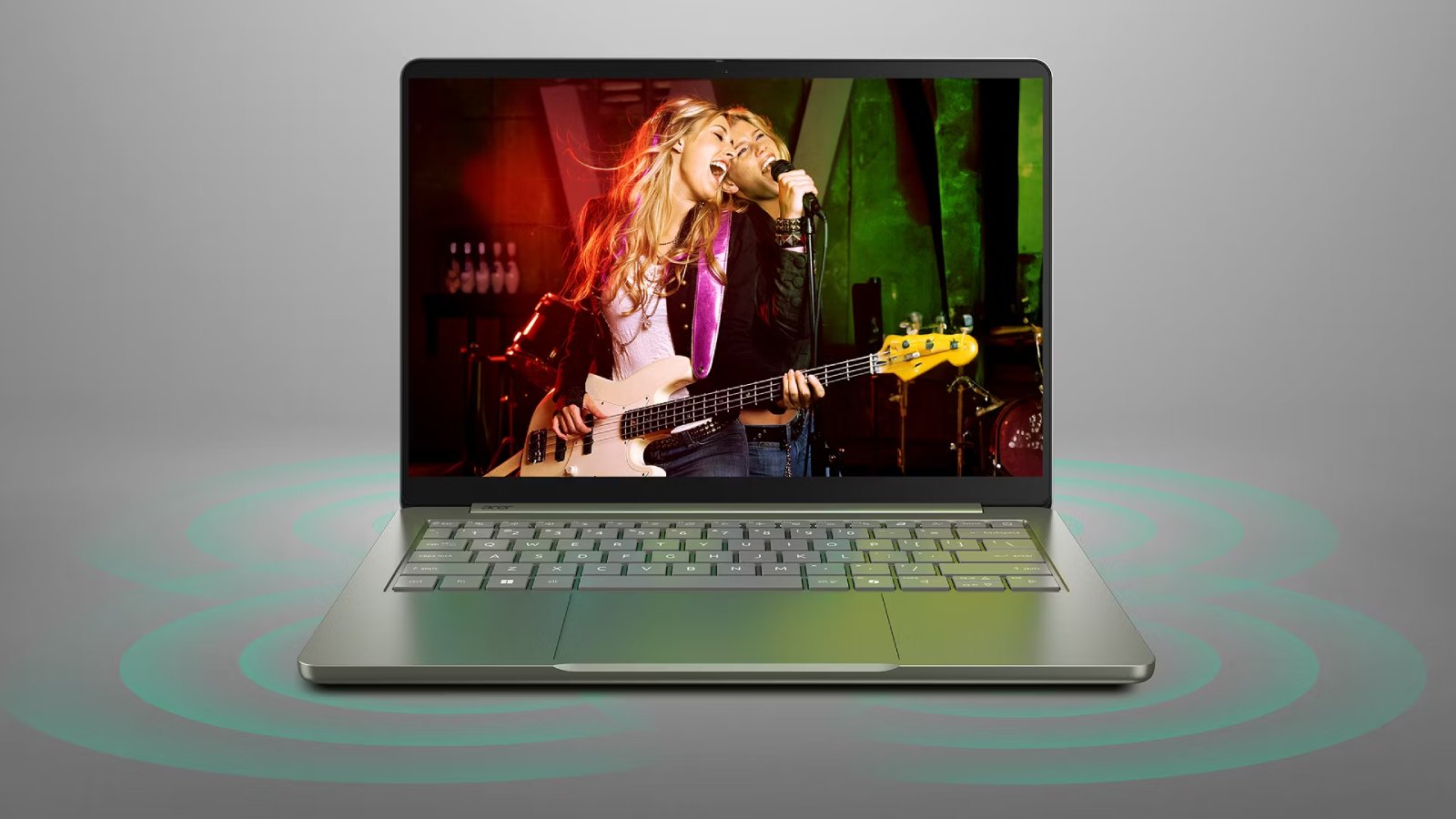
Acer today introduced a Swift Air 14 laptop, with U.S. pricing starting at $699. By comparison, the MacBook Neo starts at $599 with a 256GB SSD and 8GB of RAM, or at $499 for college students and educational staff. However, the MacBook Neo costs an equal $699 when configured with a doubled 512GB of storage and a Touch ID button.
Powered by a new Intel Core Series 3 processor, the Swift Air 14 features a 14-inch display with a 120Hz refresh rate and a resolution of 1,920 × 1,200 pixels, up to a 512GB SSD, up to 16GB of RAM, an all-aluminum enclosure, and quad speakers with DTS:X Ultra audio. Like the MacBook Neo, the laptop supports Wi-Fi 6E.
Acer's Swift Air 14
The laptop is equipped with two Thunderbolt 4 ports, a USB-A port, and a 3.5mm headphone jack, and Acer says a 70 Wh battery provides up to 19 hours of battery life for video playback and up to 16 hours of battery life for web browsing.
Like the MacBook Neo, the Swift Air 14 is available in colorful finishes, including sage green, frost blue, blossom pink, and lilac purple.
Acer said the Swift Air 14 will be available in North America starting in August.
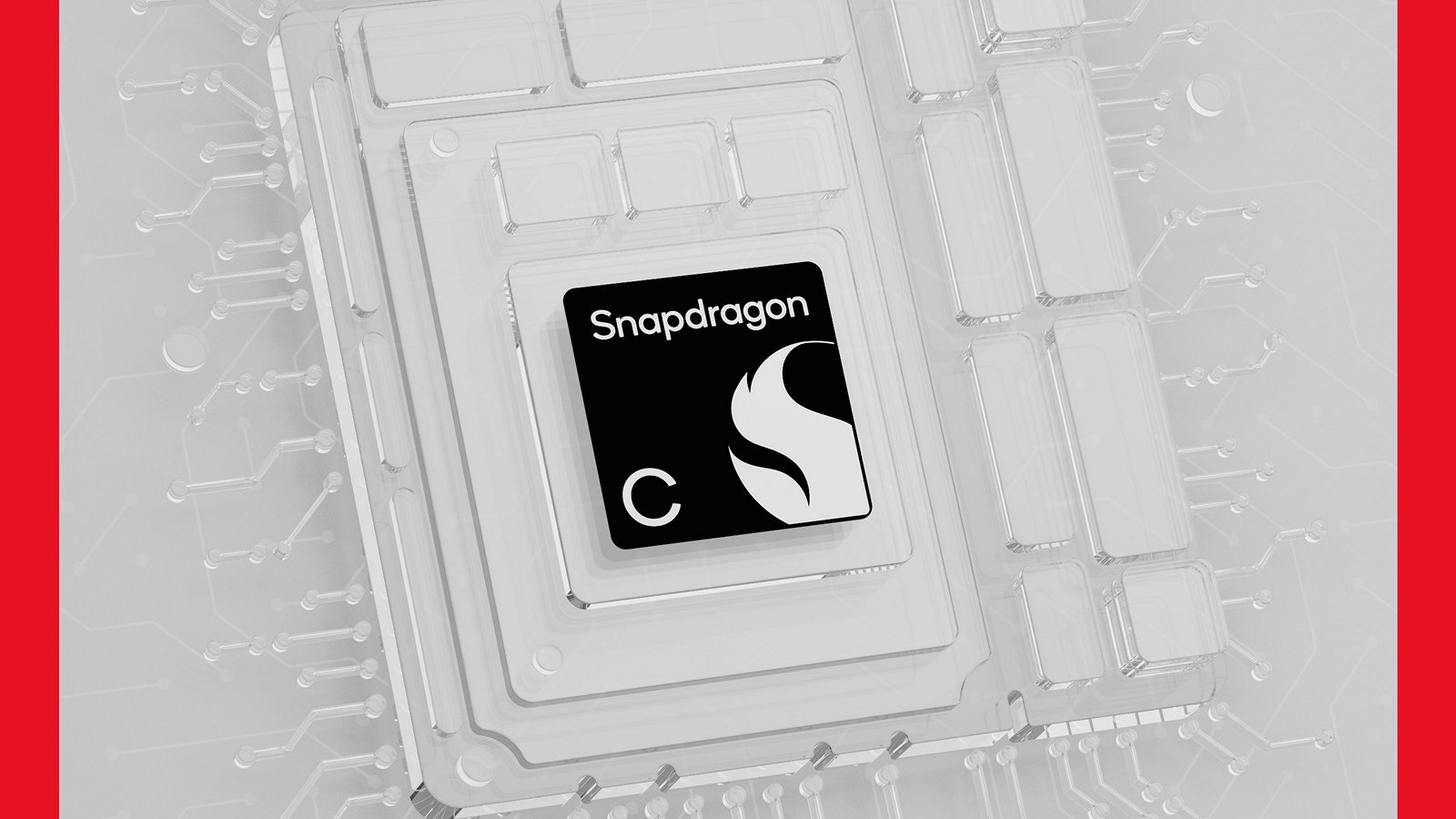
Meanwhile, Qualcomm this week announced the Snapdragon C, a new processor designed for "entry-tier laptops" priced at "$300 and up." Qualcomm said the processor delivers "responsive everyday performance" with "breakthrough power efficiency." The first laptops powered by the Snapdragon C are expected to launch later this year, with committed brands including Acer, HP, and Lenovo, according to Qualcomm.
Qualcomm's Snapdragon C processor
Indeed, Acer has previewed the Aspire Go 15, the first laptop powered by the Snapdragon C processor. The laptop will have an "affordable" price point, but Acer did not provide specific pricing or a release date. Key specs include a 15.6-inch display with a resolution of 1,920 × 1,080 pixels, up to a 512GB SSD, up to 8GB of RAM, a 1080p webcam, two speakers, two USB-C ports, one USB-A port, one HDMI port, and a 3.5mm headphone jack.
Acer said the Aspire Go 15 is made from 100% recyclable materials and has some components made from recycled plastic, so it sounds like the laptop will not have an all-aluminum enclosure like the MacBook Neo and the Swift Air 14.
Finally, ASUS commented on the MacBook Neo again during its annual shareholders meeting today. According to Taiwan's Economic Daily News, ASUS's chairman Jonney Shih said that the company can learn from Apple's cost-efficient strategy with the MacBook Neo and views it as an opportunity. Stay tuned, he said.
On an earnings call last month, Apple's CEO Tim Cook said that customer response to the MacBook Neo had been "off the charts" since its launch.
Apple was very optimistic about the MacBook Neo before announcing it, but the company still "undercalled" the level of enthusiasm that the laptop would generate, according to Cook. He said that MacBook Neo demand exceeded Apple's expectations and helped to drive a record number of first-time Mac buyers last quarter.
"We could not be happier with how things are going at the moment," said Cook.
As for the Windows PC industry, perhaps not so much.
In September 2025, I attended the annual LibreOffice conference in Budapest, Hungary. This gave me an opportunity to explore the city, which I will cover in this post.
Let’s start with the currency. Although Hungary is a part of the European Union (EU), it doesn’t use the euro as its currency. Instead, it uses Hungarian forints (denoted by “Ft”). During my time in Hungary, 1 Indian rupee was equal to 4 Hungarian forints.
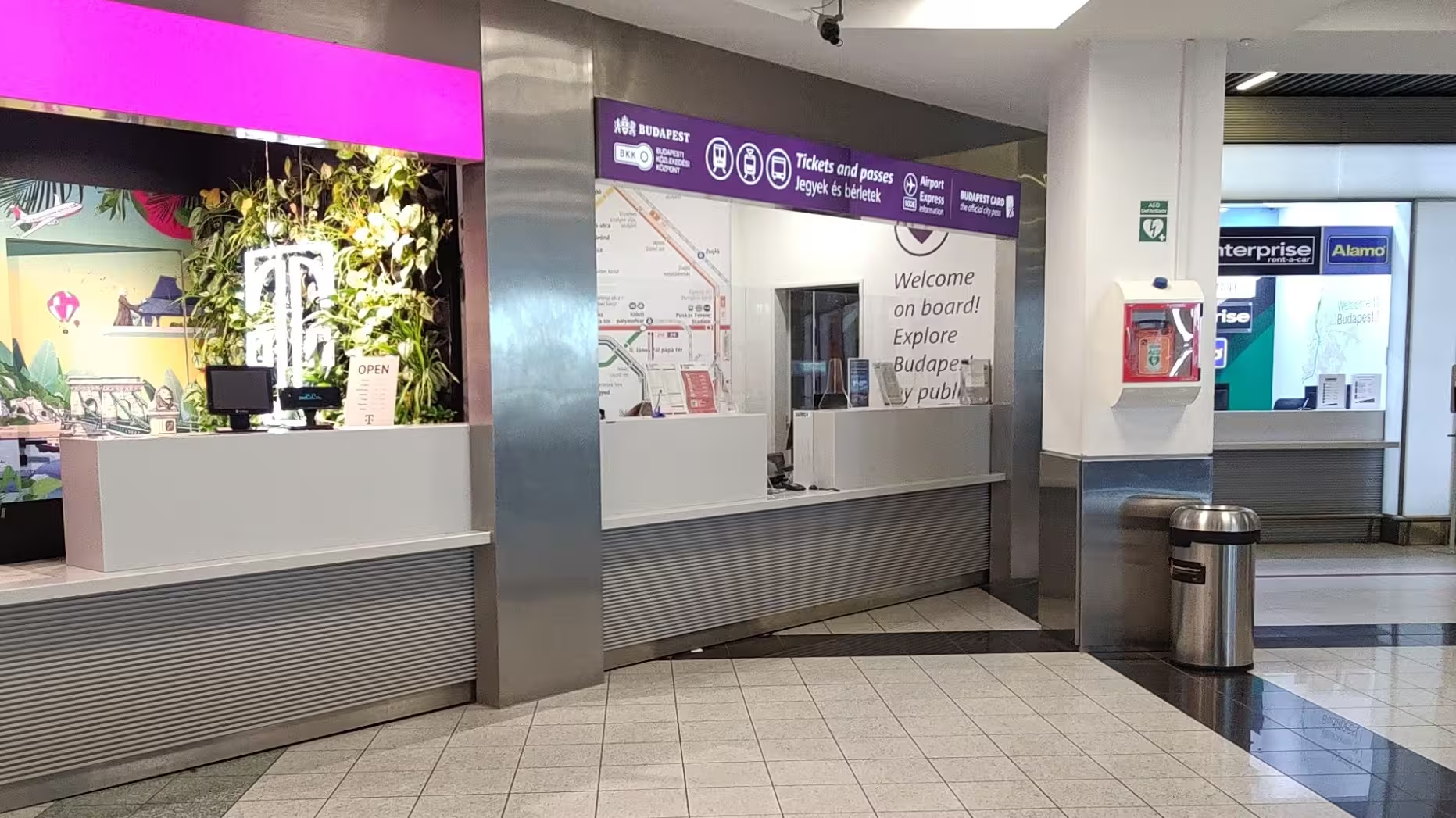
After reaching the Budapest airport, I bought a 15-day public transport pass. The public transport counter is after you pass customs and immigration. The pass allows unlimited use of public transport in the city. I had to show my passport and pay 5950 Ft to get the pass. The pass had my passport number mentioned on it. The public transport passes can also be bought at any of the tram stations as well.
This is the counter from where I bought my public transport pass.
My unlimited public transport pass for Budapest. I have redacted my passport number from it.
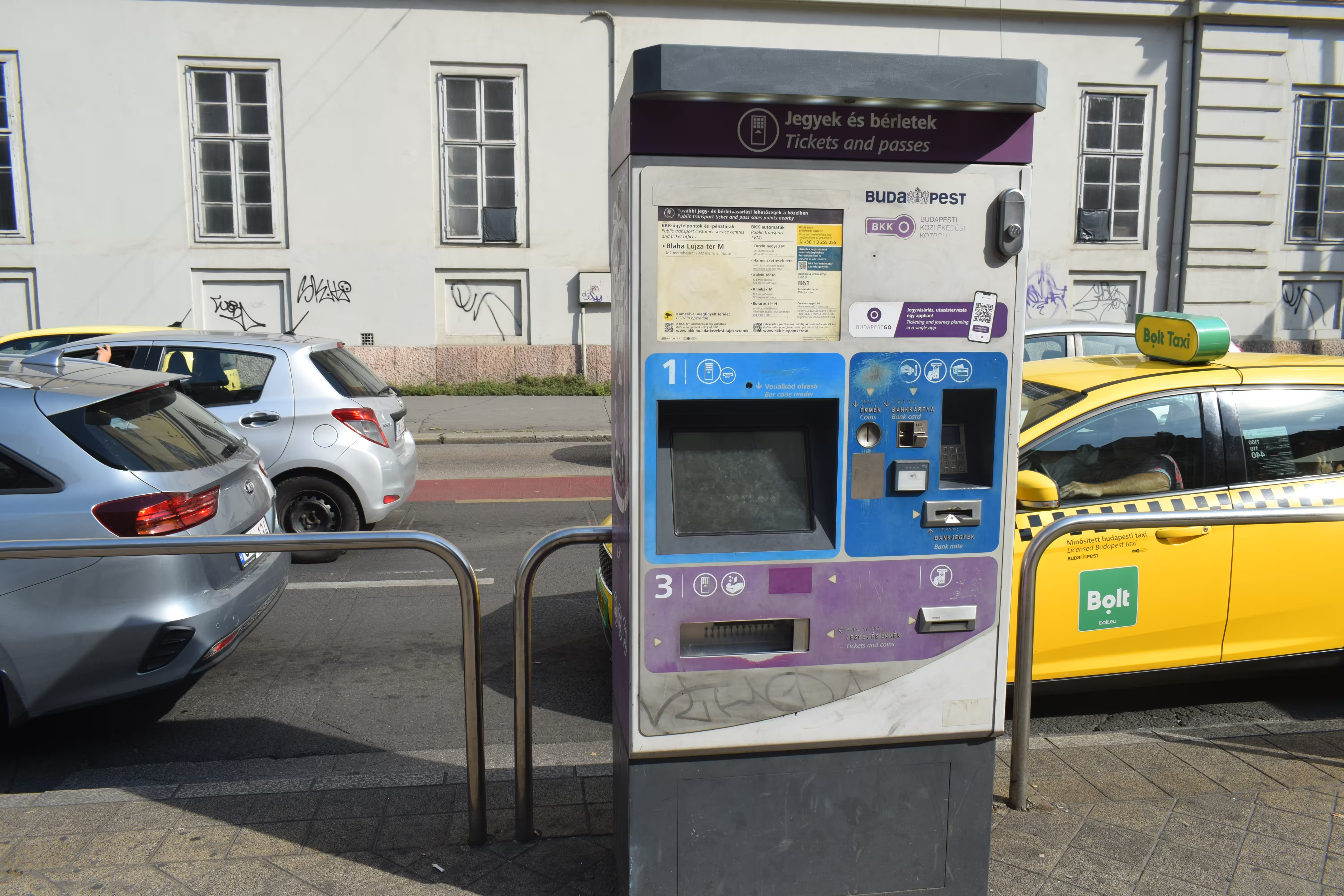
An automatic ticket machine at a tram station in Budapest.
Budapest is a union of two cities—Buda and Pest—lying on opposite sides of the Danube River. My hotel—Corvin Hotel—was on the Pest side.
Budapest had good public transport. The buses, metros, and trams complemented each other. For example, the airport didn’t have metro or tram connectivity, but it was served by the bus. Most of the metro was on the Pest side, with only a couple of stations falling in Buda. However, both sides had an extensive network of trams.
Furthermore, the information about the public transport was easily accessible. For instance, the map of tram stops inside the trams also included the bus routes one could get after alighting at those stops.
From the airport, I took a bus followed by taking a metro on the M3 line to reach within walking distance of my hotel.
An M3 line metro in Budapest.
During the conference I would take the tram to the conference venue. The trams were modern and fast. They also had a smiley face at the front, which gave them a friendly look. It seemed like the trams were happily doing their job. The city also had a good pedestrian infrastructure along with separate cycling tracks.
A tram in Budapest having a smiley face at the front.
Budapest’s tap water is officially safe to drink, which was mentioned on a sticker posted on the wall of the bathroom of my hotel room. So, I did not need to buy any water bottles while I was there.
On the 6th of September, I went on a sightseeing tour of Budapest with my Dione. Our friend Attila, who was a local (from Hungary), joined us. We went to the central market from our hotel by metro.
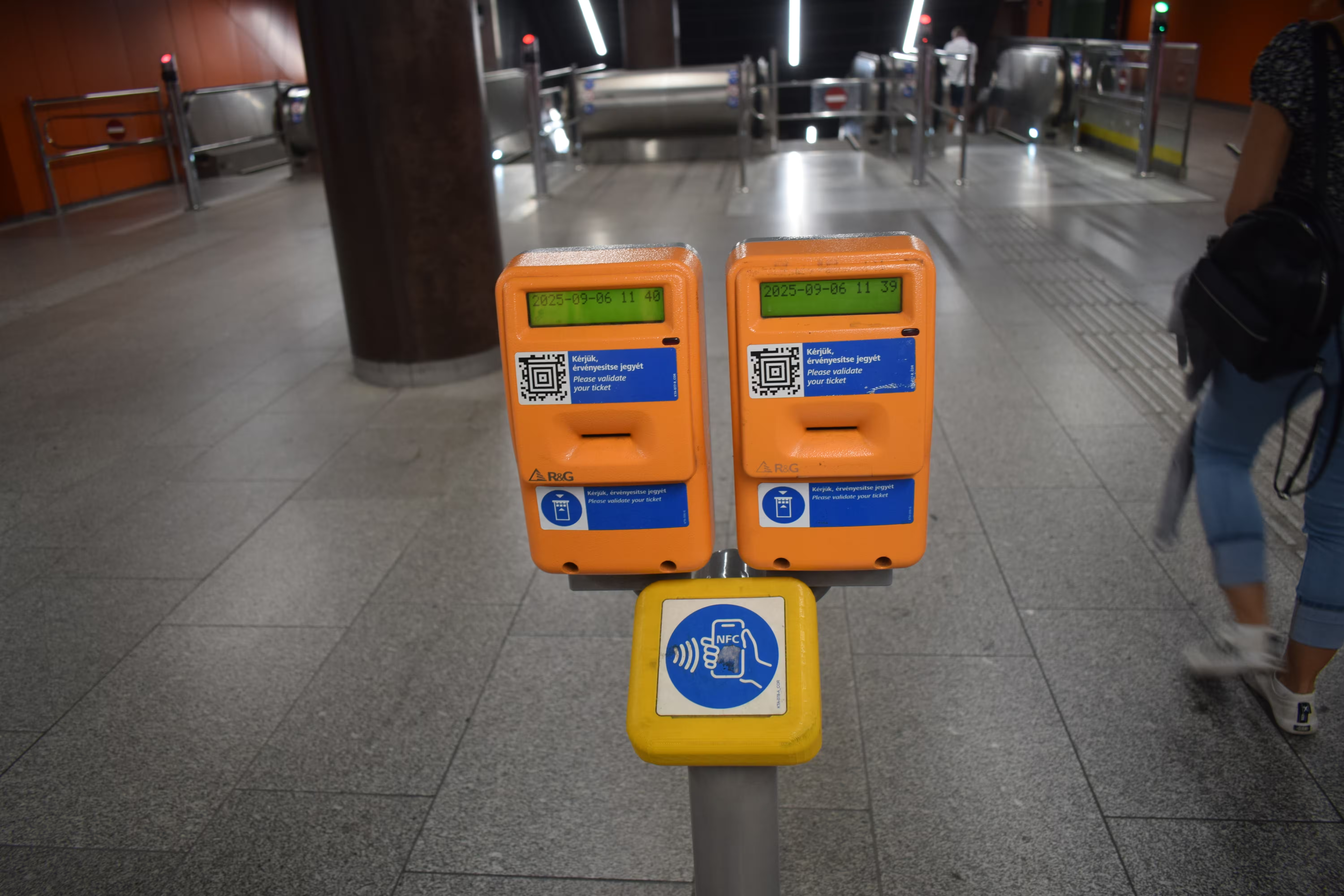
If you read my post on Vienna, I mentioned that the metro stations don’t have AFC gates but ticket validators instead. Budapest’s metro also has the same system. If you buy individual tickets, you need to validate them using the validators on the station before boarding the metro. If you are using a public transport pass like I was, then you do not need to validate, and you can board the metro directly.
A ticket validator at a metro station in Budapest.
In 10-15 minutes, we reached the central market. Attila showed us around. I bought a fridge magnet and paprika powder as souvenirs. Paprika powder is a signature spice of Hungary. It is mainly available in two forms—one is sweet and the other being spicy. I wanted the spicy one, but I didn’t get that in that market. Therefore, I had to contend with buying the sweet version. The sweet version isn’t sweet though, it is just not spicy. After bringing that paprika powder home, it is mainly used for food coloring. I like it though and use it frequently in my omelets and other dishes.
Central market.
The building right behind the tram is the central market building.
At some point, Atilla had to join the The Document Foundation (TDF) sightseeing group, so we parted ways at the central market. Dione and I continued our sightseeing and decided to start with visiting the Hungarian parliament, which is a tourist attraction. It was because we were on the Pest side and the parliament was also on the same side, while other tourist attractions were on the Buda side.
So, Dione and I hopped on a tram and went to the parliament. We got off at a tram station just outside the parliament. The parliament is the icon of Budapest. The building has a gothic architecture and colored brown and white. One can buy tickets and take an inside tour. However, we didn’t have a lot of time, so we stayed outside the building.
Hungarian Parliament building.
After spending some time outside the parliament building, we took a tram to the Chain Bridge. As I mentioned earlier, Budapest has two parts—Buda and Pest—separated by the Danube River. To go from one of the sides to the other requires crossing a bridge. Although Budapest has many bridges linking the two sides, the main one is the Chain Bridge.
We walked on the chain bridge to get to the other side. The bridge gave a good view of the Danube River. It also had a statue of a lion. The Buda Castle (another major landmark of Budapest) was visible from the bridge.
A shot of Chain Bridge.
The lion statue on the Chain Bridge.
After reaching the other side of the bridge (the Buda side), we sat on a bench for some time and then planned on where to go next. We decided to go to Fisherman’s Bastion, which is another tourist attraction.
We used the OSMAnd~ app to figure out which bus to take and hopped on one. Soon we reached Fisherman’s Bastion, where we found a flight of stairs that led upwards. Upon climbing the stairs, we got a panoramic view of the city. It also gave us a good view of the Hungarian parliament across the river. Going further upstairs, we found a statue of Stephen I of Hungary. He was the first king of Hungary, getting the crown in the year 1900.
A view of Hungarian parliament from Fisherman’s bastion.
I found Fisherman’s Bastion to be the best tourist attraction in the city. As mentioned earlier, it offers a panoramic view of the city, which I liked. I liked the arhitecture and open space there. If you find yourself in Budapest, I would highly recommend that you visit Fisherman’s Bastion.
Fisherman’s Bastion.
Statue of Stephen I of Hungary at Fisherman’s Bastion.
Next, we went downstairs and returned to where the bus dropped us. From here on, we walked in random streets to see the residential and non-touristy side of Budapest. It was not so random as we walked towards Batthyány tér metro station. Upon reaching the metro station, we found a café where we stopped for a while for some coffee. After injecting some caffeine into our blood, we proceeded to find a place to have lunch.
Batthyány tér metro station.
For lunch, we decided to go to Rákóczi tér metro station after reading on the internet about the food options there. Upon exiting the metro station, we found a market inside a building that had a lot of shops, but most of them were closed.
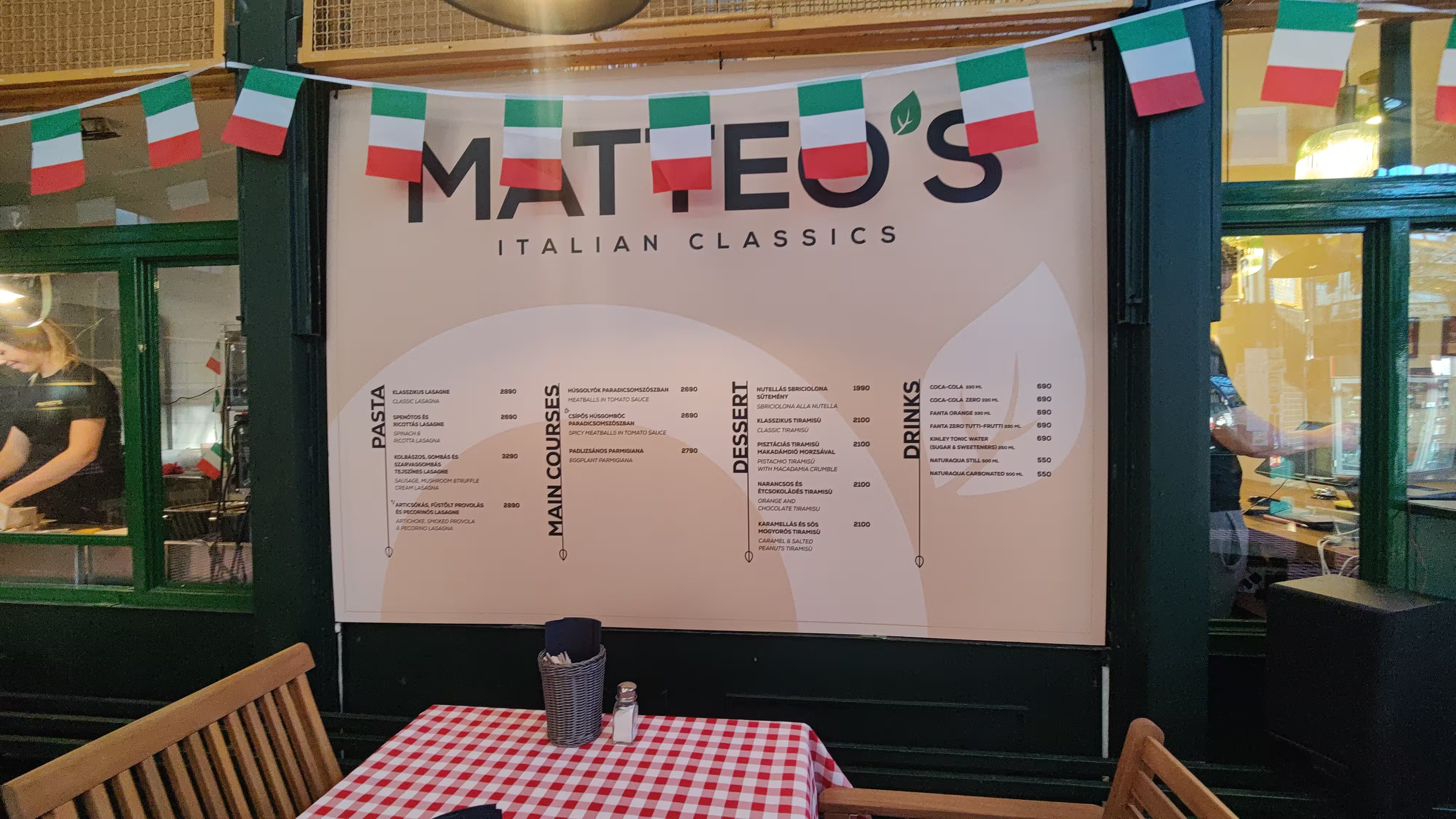
After roaming around inside a bit, we found an Italian place open and decided to eat there. The name of this place was Matteos. We ordered an eggplant parmigiana, a lasagna artichoke, and a classic tiramisu. It wasn’t very tasty but filled us up for the day.
A picture of Matteos, where we had our lunch.
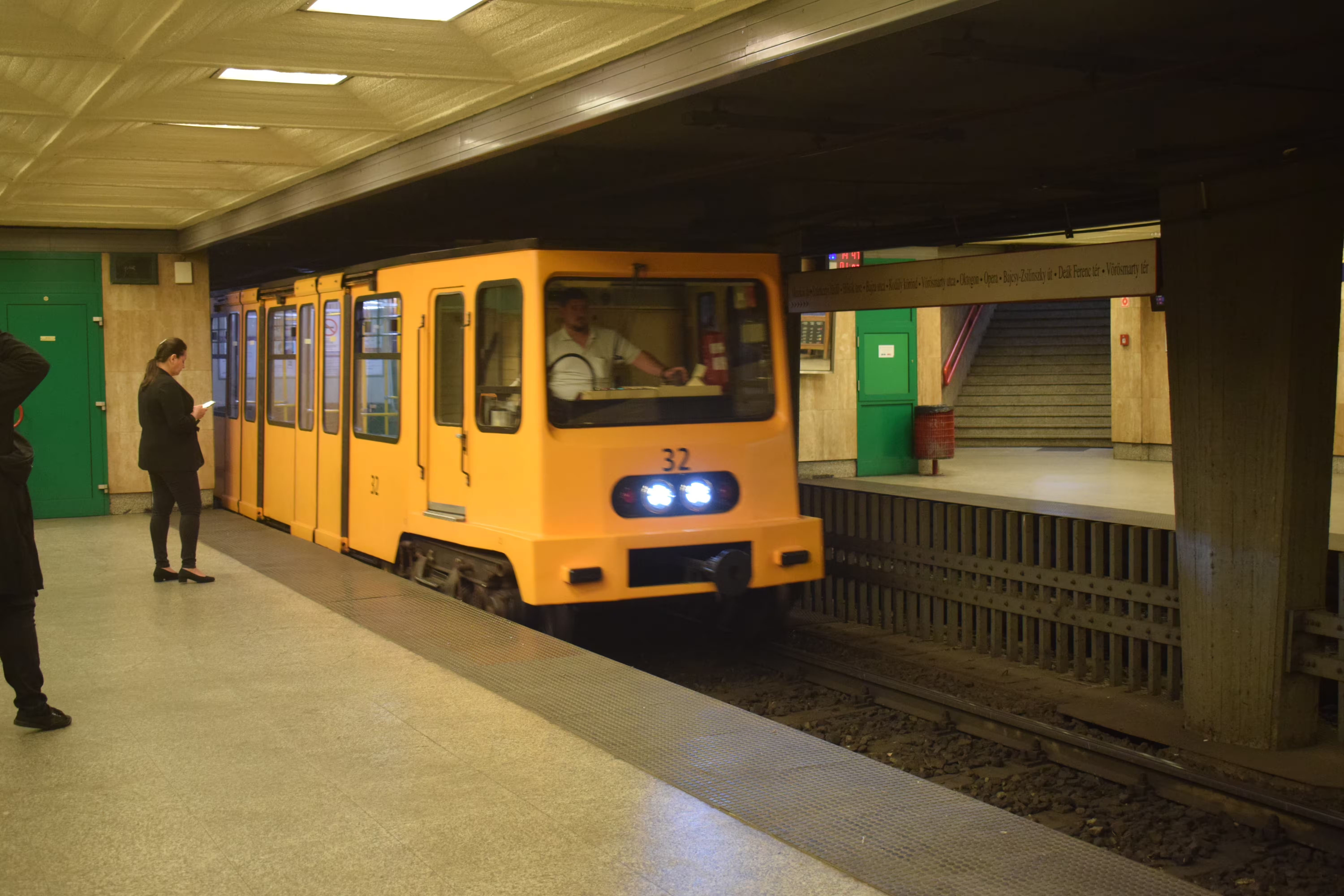
Budapest has four metro lines, and we had been to three of them, so we decided to try the remaining line, which was the M1 line. It is the oldest line in the city and has a different vibe than the modern lines. This line was opened in 1896, one of the oldest subway systems in the world.
The coaches were much smaller than the other metro lines, and the seating arrangement was something you would expect from a bus than a typical metro train. We rode all the way to the last stop, Mexikói út. Upon going outside, we found out there wasn’t much to do here.
At this point, I checked the map and realized that Heroes’ Square is just a couple of metro stations away. Heroes’ Square is a tourist attraction in Budapest. It is located in Zuglóa and is a historically significant place in Budapest. It has a monument which features the Seven chieftains of the Magyars.
M1 line station and tracks. It is the oldest metro transit of Budapest and one of the oldest in the world. It started operations in 1896.
Here, our unlimited public transport pass was handy because if it was paid per trip, we would think of the stop as a “wasted” one because we would have to buy a ticket again, but in this case we could just hop on again without any regrets.
An M1 line metro train entering the station.
So we took the M1 line again and deboarded at Hősök tere station, followed by walking to the square. After roaming around for a while, we saw a trolleybus and decided to ride on that.
Heroes’ Square.
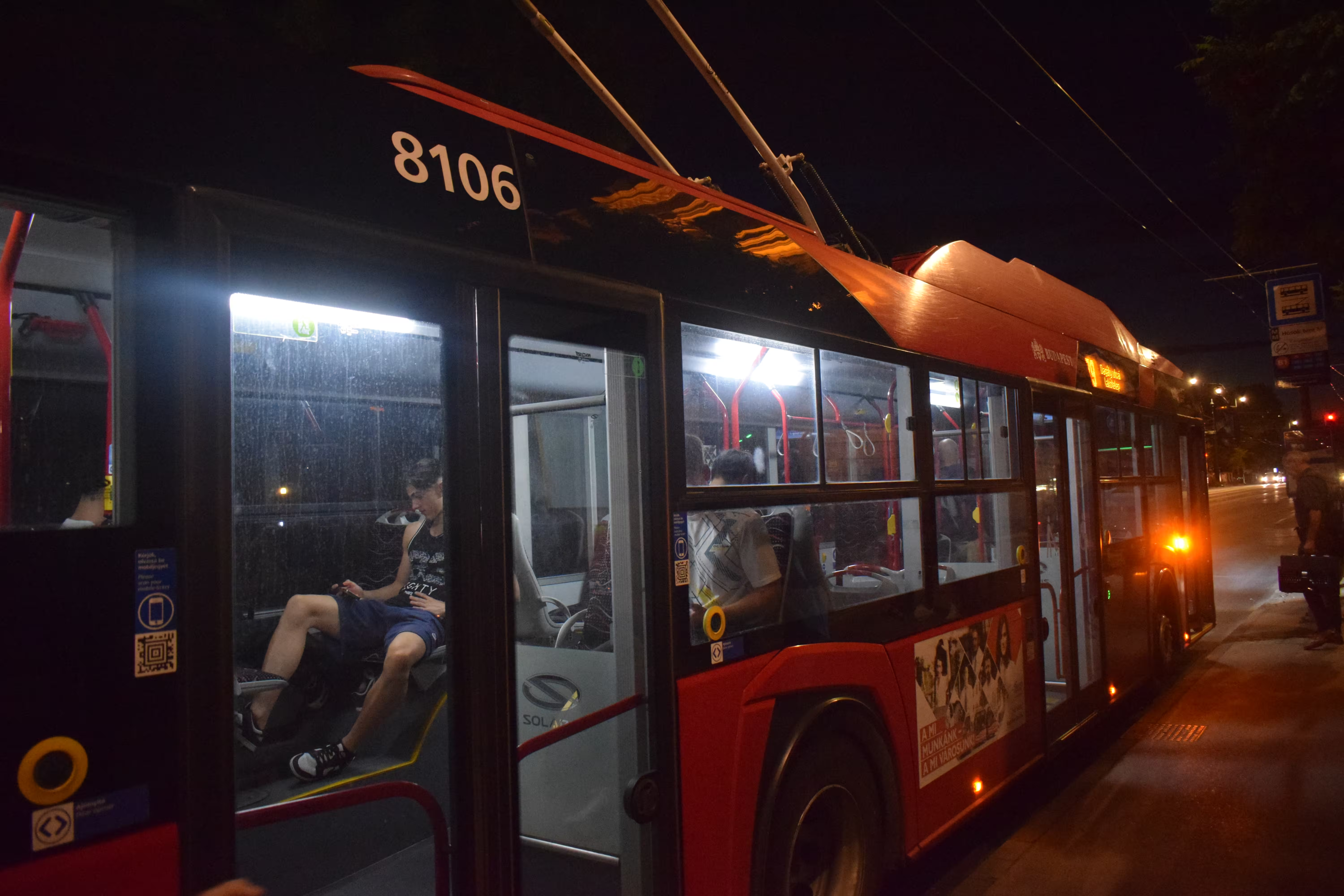
This is the trolleybus we took in Budapest.
A trolleybus is an electric bus that is powered by overhead electric cables. It is like a tram but runs on roads instead of tracks. We got down at Dózsa György út metro station. Then we took a metro to our hotel.
Before going to the hotel, we went to a place to eat something. We had coffee and lángos. Lángos is a deep-fried Hungarian dish, which looks exactly like the Indian flatbread bhatura. I found it tasty, but since it was deep-fried, that was almost a given.
Lángos — a dish which looks like the Indian flatbread bhatura.
The next day we went to Vienna—the capital of Austria—which I have already posted about. Check it out here.
I had a good time in Budapest, and it is a beautiful city with good public transport and some amazing sites to visit.
That’s it for now, and see you next time!
The M5 MacBook Air hit new all-time low prices this week, with $199 off nearly every model of the computer on Amazon. We're also tracking an ongoing low price on the AirPods Max 2, plus great discounts from Anker and Samsung.
Note: MacRumors is an affiliate partner with some of these vendors. When you click a link and make a purchase, we may receive a small payment, which helps us keep the site running.
Amazon has sweetened its deal on the 512GB 13-inch M5 MacBook Air this week, dropping the price of the notebook down to $899.99, from $1,099.00. This is a new record low price on the 13-inch M5 MacBook Air, and you'll find $199 off every 13-inch model right now on Amazon.
Anker
What's the deal? Save on Anker charging accessories
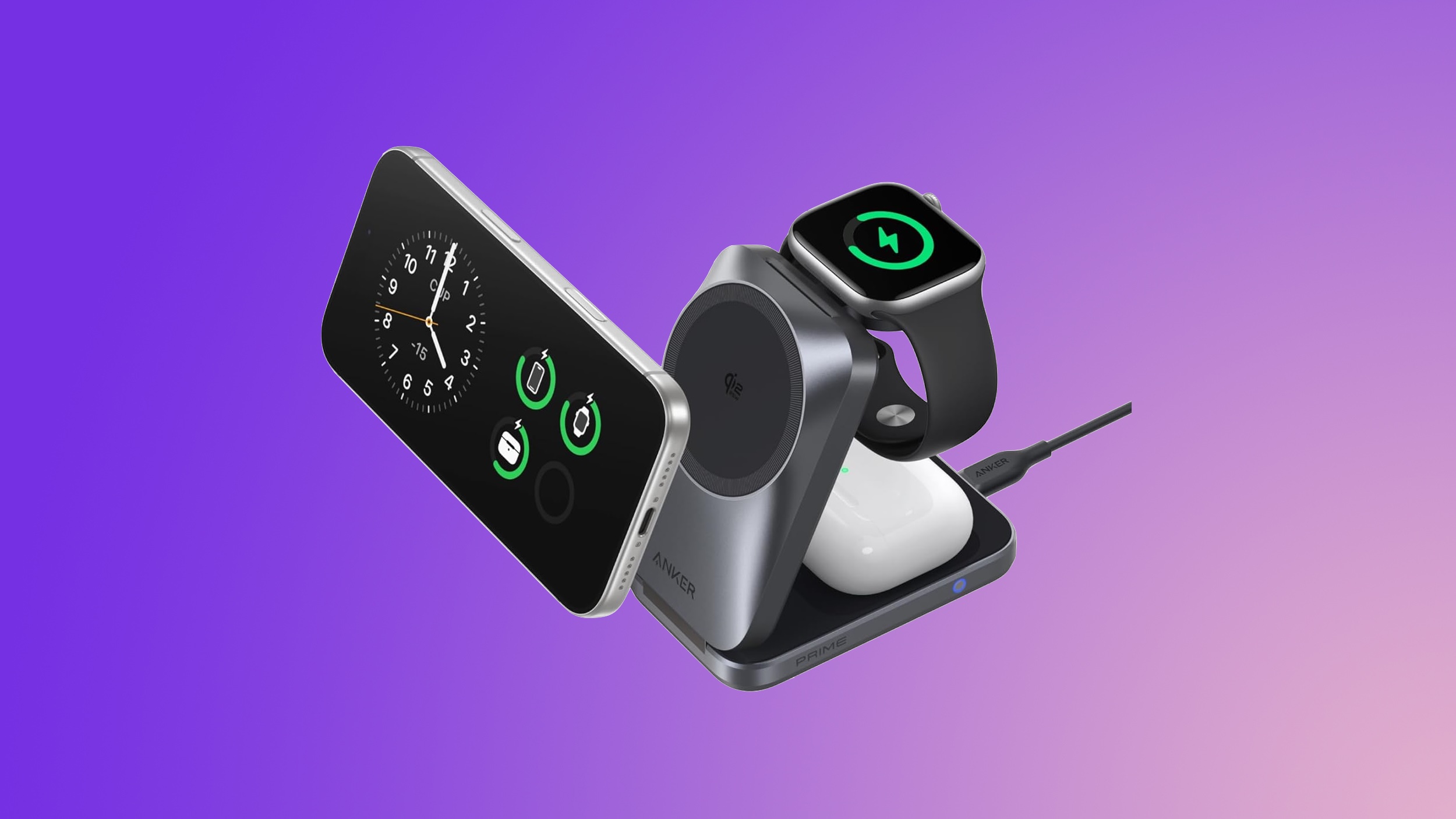
Anker's new Prime 3-in-1 Wireless Charging Station has been marked down to $109.99 on Amazon, down from $149.99. This is one of Anker's newest accessories, and Amazon's sale today is just $5 higher compared to the all-time low price.
Samsung
What's the deal? Save on Samsung's new 2026 monitors
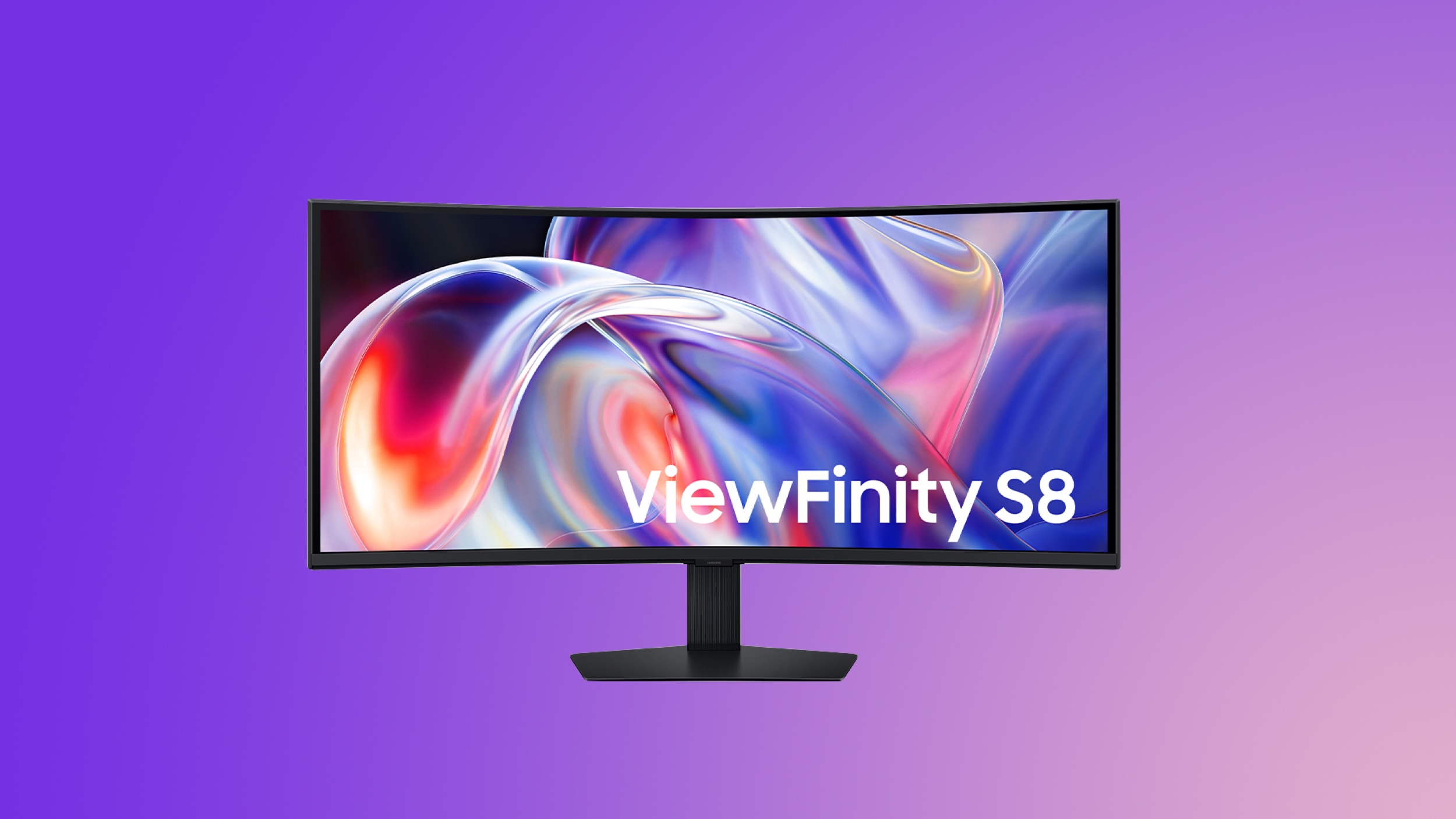
Samsung's newest monitors are now available to purchase this week, including the Odyssey G8, ViewFinity S8, and Movingstyle Essential. All of these are available with a $50 launch discount, plus your choice of extras including up to $300 in Samsung credit on a future purchase, a free Music Studio speaker, or free Galaxy Buds4 Pro.
Amazon this week has a record low price on the AirPods Max 2, now available for $509.00, down from $549.00. This sale is available in two colors of the headphones.
If you're on the hunt for more discounts, be sure to visit our Apple Deals roundup where we recap the best Apple-related bargains of the past week.
Deals Newsletter
Interested in hearing more about the best deals you can find in 2026? Sign up for our Deals Newsletter and we'll keep you updated so you don't miss the biggest deals of the season!
Last year I blogged about using Zram for VMs [1]. That setup is still working well for VMs and for phones and laptops with no swap device.
I have just read Chris Down’s insightful blog post about Zswap vs Zram [2] which convinced me to setup Zswap on some systems. I have had some of the problems that were described in his blog post when trying to run Zram on workstation and server systems.
One limitation of zswap is that it doesn’t allow specifying the compression level. For zram I can put the following in /etc/systemd/zram-generator.conf to set the zstd compression level (this works well on my Thinkpad X1 Carbon Gen6):
[zram0]
compression-algorithm=zstd(level=10)
For the BTRFS filesystem I can put “compress=zstd:13” in the mount options to specify the compression level. They really should support different compression levels in zswap. The ideal compression level depends on the speed of the CPU and new CPUs keep getting faster.
Setup
The documentation says to use something like the following on the kernel command-line to enable zswap:
The max_pool_percent=20 setting is the default which means to use up to 20% of system RAM for compressed data. I’ve seen documentation sugesting up to 50% which seems a little excessive.
There is documentation about changing the compression algorithm via command line parameters, on Debian only lzo is linked in to the kernel and zstd (my preferred option) is a module so the kernel command line can’t be used to set zstd, but the following command works:
The shrinker_enabled option is to allow the kernel to evict cold pages without waiting for memory pressure.
You can enable zswap without rebooting by running commands like the following. You could even put them in /etc/rc.local or something, but I think putting it in the kernel command line is a good idea as it makes it obvious to the next sysadmin what is happening.
This table documents my current understanding of the debug values. The difference between reject_compress_fail and reject_compress_poor isn’t clear in a lot of the documentation, even reading the source didn’t make it easy to understand.
File
Meaning (LC is lifetime count)
pool_limit_hit
LC pool limit hit and pages are forced to the swap partition
pool_total_size
RAM used for zswap data
reject_alloc_fail
LC can’t allocate memory because max_pool_percent has been reached
reject_compress_fail
LC of pages with a compression algorithm failure so go straight to swap partition
reject_compress_poor
LC of pages that can’t compress so go straight to swap partition
reject_kmemcache_fail
LC kernel malloc failure (serious problem?)
reject_reclaim_fail
LC failure to move a page from compressed RAM to disk – serious problem!
stored_pages
Swapped pages stored by zswap
written_back_pages
LC of pages written back to swap partition from zswap
All of this is not nearly as easy to understand as the following command for zram:
# zramctl
NAME       ALGORITHM DISKSIZE  DATA COMPR TOTAL STREAMS MOUNTPOINT
/dev/zram0 zstd          7.7G  2.1G  375M  386M       4 [SWAP]
Debian Wiki
The Debian Wiki page about Zswap is very brief [4] and needs more description about this, I think a lot of Debian users will use zram instead of zswap because setting up zram is just a single apt command. I’m not planning to immediately add to that wiki page because I’m not an expert on this, I would appreciate comments on this blog post from others who have got zswap working. I will update the wiki if others report matching experiences to mine.
Conclusion
I’m now using zswap on a few systems including my main home workstation which had performed poorly with zram and a swap device in the past. If that goes well I’ll put it on other systems.
I wrote the following shell script to display zswap stats, consider it GPL if you want to use it:
#!/bin/bash

if [ ! -f /sys/kernel/debug/zswap/stored_pages ]; then
  echo "ZSwap not enabled"
  exit 0
fi
PAGES=$(</sys/kernel/debug/zswap/stored_pages)
PAGESIZE=$(getconf PAGESIZE)
RAM=$(echo "$PAGESIZE * " $(getconf _PHYS_PAGES) | bc)
POOL=$(</sys/kernel/debug/zswap/pool_total_size)
if [ "$POOL" == "0" ]; then
  echo "ZSwap not used yet"
  exit 0
fi
COMP=$(</sys/module/zswap/parameters/compressor)
echo -n "$COMP compression ratio: "
echo "scale=2; $PAGES * $PAGESIZE / $POOL" | bc
echo -n "RAM%: "
echo "100 * $POOL / $RAM" | bc
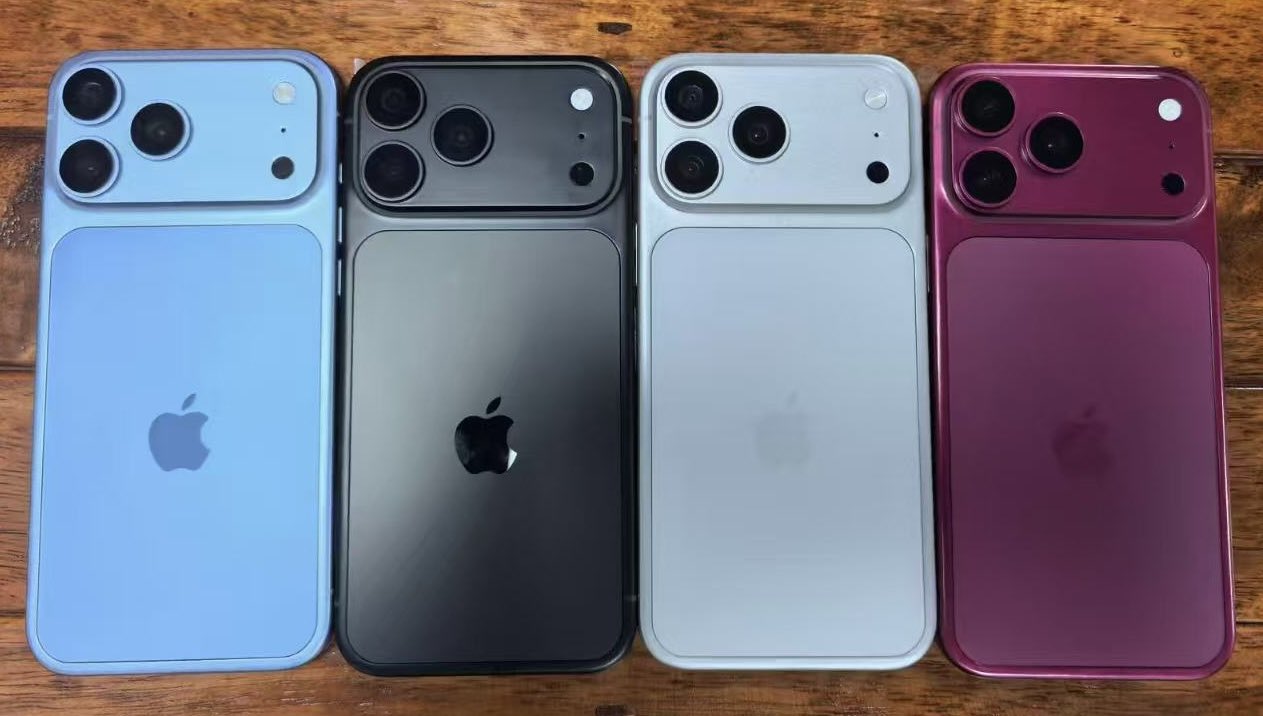
Leaker Sonny Dickson today shared images of iPhone 18 Pro dummy models in the device's four rumored colors, offering the first real-world look at what to expect from the lineup visually.
Corroborating previous rumors, the dummies show the iPhone 18 Pro Max in Light Blue, Black, Silver, and Dark Cherry. Dickson said "Cherry will probably be the next hit, orange did very well." Cosmic Orange was the signature color of the iPhone 17 Pro and proved popular with customers.
Dark Cherry is expected to serve as the headline new color for the iPhone 18 Pro models this year. The color has been in the rumor mill since at least February 2026, when Bloomberg's Mark Gurman reported that Apple was testing a deep red finish for the iPhone 18 Pro and iPhone 18 Pro Max. At the time, Gurman described the shade as a deep red, and separate reporting from a Chinese leaker later suggested the color was very likely to make the cut, partly because Android rivals were already prototyping the same shade.
First look at iPhone 18 dummies in the new colors: Black, Silver, Dark Cherry and Light Blue. Cherry will probably be the next hit, orange did very well. pic.twitter.com/2qpZDA7oEK
The picture sharpened in April, when Macworld reported that the color would be called Dark Cherry and would be closer to wine than a brighter red, and considerably more muted than Cosmic Orange. The leaker known as "Instant Digital" subsequently corroborated that name, characterizing the shade as a combination of burgundy, coffee, and deep purple. "Instant Digital" has a good track record on Apple color leaks, having accurately predicted the yellow finish for the iPhone 14 and iPhone 14 Plus.
Macworld's reporting also identified the full four-color lineup, with internal Pantone codes said to be in use at Apple: Light Blue (Pantone 2121), described as resembling the current iPhone 17's Mist Blue; Dark Cherry (Pantone 6076); Dark Gray (Pantone 426C); and Silver (Pantone 427C), said to be similar to the current generation.
The latest images are significant because they mark the first time the rumored colors have been depicted in physical, real-world form rather than renders or supply chain descriptions. That said, dummy models are typically made from plastic or low-quality metals and are not finished to the same standard as production units, meaning the tone and saturation of each color could vary from what Apple ultimately ships. With that caveat, the dummies are consistent with the earlier rumors, suggesting that this will indeed likely be the final color palette of the device.
The iPhone 18 Pro and iPhone 18 Pro Max are expected to be announced in the fall alongside the first foldable iPhone.
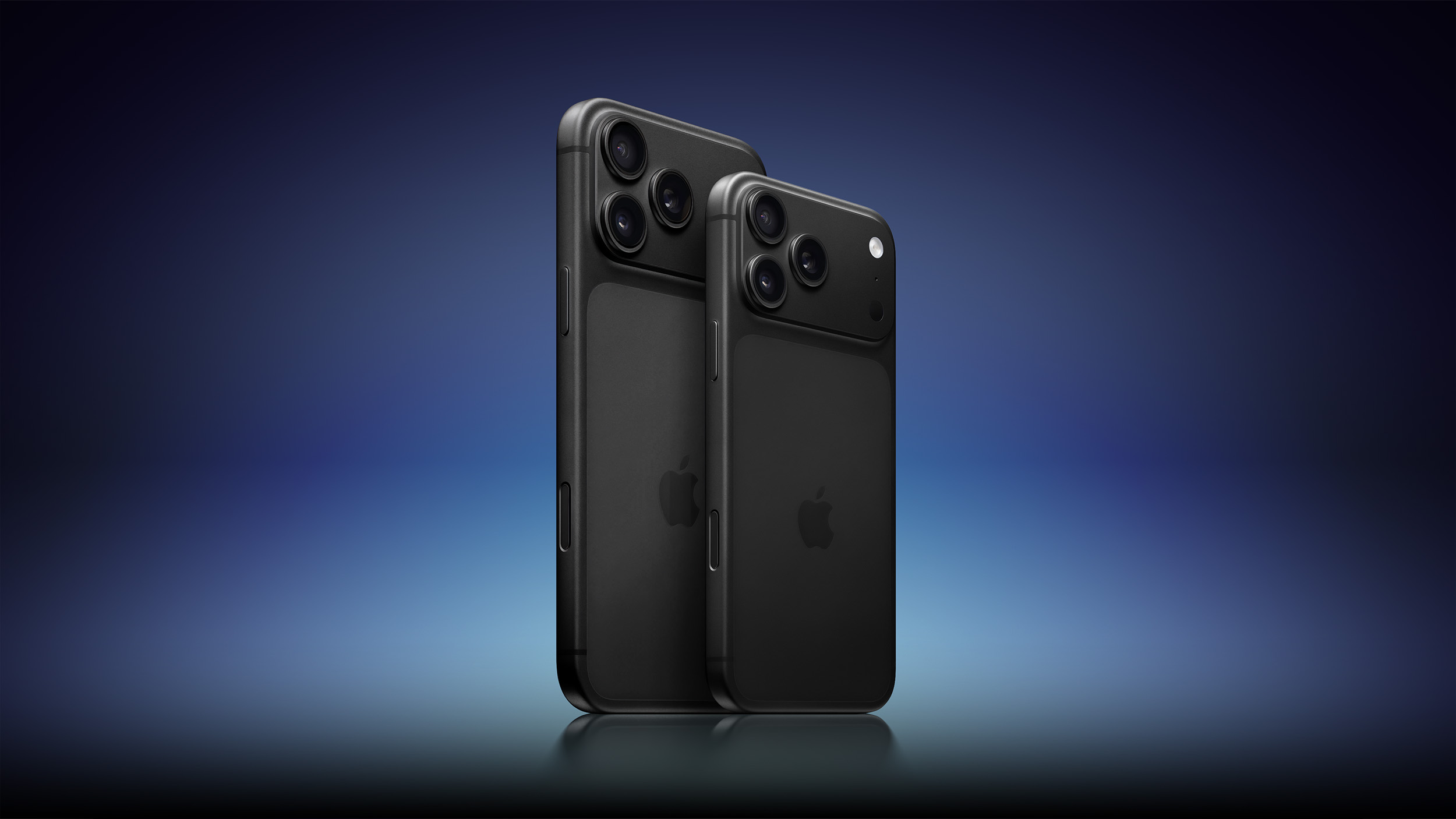
The iPhone 18 Pro and iPhone 18 Pro Max's all-new variable aperture lens will cost Apple 50% more than the camera unit used in current models, according to supply chain analyst Ming-Chi Kuo.
Unlike the fixed f/1.78 aperture found on every iPhone Pro from the 14 Pro through to the 17 Pro, a variable aperture will physically adjust the size of the lens opening to control how much light reaches the sensor, offering better exposure control and greater flexibility over depth of field.
Kuo said that the component has an average selling price roughly 50% higher than the seven-element plastic lens Apple currently uses in the iPhone 17 Pro's main camera. Sunny Optical set to supply Apple between 40 and 50% of orders
Sunny Optical has also become a new compact camera module (CCM) supplier for Apple, initially producing the camera for the MacBook Neo. MacBook Neo shipments have come in significantly better than expected, with Kuo doubling his 2026 forecast from 5 million to 10 million units, a notable upward revision as the entry-level Mac has materially exceeded early expectations.
Looking further ahead, the 2028 iPhone's ultra wide camera module is expected to move away from flip-chip packaging in favor of an improved COB (chip-on-board) design, with Sunny Optical well positioned to become a supplier at that point. A COB ultra-wide module could be thinner or smaller, leaving more room for other components, or simply deliver better image quality from the same physical footprint.
Beyond Apple, Kuo says Sunny Optical has secured component orders for two OpenAI devices, including a smartphone and a pocket or mobile device.
The iPhone 18 Pro and iPhone 18 Pro Max are expected to launch in the fall alongside the first foldable iPhone.
The DistroWatch news feed is brought to you by TUXEDO COMPUTERS. Andreas Mueller has announced the release of Gnoppix Linux 26_6, the latest version of the project's privacy-focused and AI-optimised Linux distribution. This version is based on Debian's "Testing" branch and showcases the latest Xfce desktop: "We are excited to announce the release of Gnoppix Linux 26.6. This release....
The DistroWatch news feed is brought to you by TUXEDO COMPUTERS. The Rocky Linux project has announced the release of Rocky Linux 9.8 which retains 1:1 compatibility with Red Hat Enterprise Linux. The release notes share highlights of the new version: "Major changes: This document highlights major changes between Rocky Linux (RL) 9.7 and RL 9.8. If this is....
Anthropic today announced the launch of its latest AI model, Claude Opus 4.8. Anthropic claims the model is a "more effective collaborator" with improvements in agentic coding, multidisciplinary reasoning, agentic computer use, knowledge work, and agentic financial analysis.
Testers have found Opus 4.8 to be "more reliable and sharper in its judgement" when doing agentic tasks, and the model also made gains in honesty.
Early testers report that Opus 4.8 is more likely to flag uncertainties about its work and less likely to make unsupported claims. This is borne out in our evaluations, which show that Opus 4.8 is around four times less likely than its predecessor to allow flaws in code it has written to pass unremarked.
Alignment assessments suggest the model hits new highs on measures of prosocial traits like supporting user autonomy and acting in the user's best interest. Rates of misaligned behavior like deception are lower than Opus 4.7 and similar to the Claude Mythos Preview.
Anthropic benchmarks indicate Opus 4.8 scored a 69.2% on SWE-Bench Pro, outperforming GPT–5.5 and Gemini 3.1 Pro on the test and several other benchmarks, though GPT–5.5 leads on the terminal-coding benchmark.
Opus 4.8's fast mode also runs at 2.5x the speed, and it is now three times cheaper than prior models.
Along with Opus 4.8, Anthropic is adding new features to its product lineup.
Dynamic workflows (research preview) - Claude can complete bigger tasks in Claude Code. It is able to plan work and run hundreds of parallel subagents in a single session. It is able to complete codebase-scale migrations across hundreds of thousands of lines of code. The feature is available for Claude Code for Enterprise, Team, and Max plans.
Effort control - In Claude.ai and Cowork, users can choose how much effort Claude puts into a response. With a lower setting, Claude will respond faster and use up rate limits more slowly. Opus 4.8 defaults to high effort, which Anthropic says is the best balance of quality and user experience.
Messages API - The Messages API accepts system entries inside the messages array, so developers can update Claude's instructions mid-task.
Claude Opus 4.8 is available everywhere today. Pricing for regular use has not changed compared to Opus 4.7.
Anthropic is working on models that have the same capabilities as Opus 4.8 at a lower cost, and a new class of model that's even more intelligent than Opus. Anthropic says it has been developing safeguards for the Claude Mythos model it is testing with a small number of organizations, and it expects to be able to bring Mythos-class models to all customers "in the coming weeks."
Achter de schermen sleutelt Vodafone volop aan zijn mobiele netwerk, met opvallende wijzigingen in frequentiegebruik en een razendsnelle uitrol van 3500MHz. Vooral de afscheid van DSS en de komst van 4G900 springen daarbij in het oog
Apple today provided public beta testers with the first betas of iOS 26.6, iPadOS 26.6, macOS Tahoe 26.6, watchOS 26.6, and tvOS 26.6, with the software coming two days after Apple seeded the betas to developers.
After signing up to beta test the software updates on Apple's beta site, public beta testers can download the new software using the Software Update section in the Settings app on each device.
iOS 26.6 has a feature that will let you know when you have blocked too many contacts, but the limit is in the thousands so most users may not ever see the messaging.
No other major new features have been found in any of the software updates, with Apple likely focusing on bug fixes and security improvements. We're nearing the end of the "26" software cycle, with Apple planning to unveil iOS 27, iPadOS 27, macOS 27, and more in 11 days.
Apple has started preparing for its annual Back to School promotion in the U.S. and Canada, according to backend Apple code seen by MacRumors.
Apple holds a Back to School sale each June, providing teachers and students with free accessories or gift cards when purchasing a Mac or an iPad. The added bonus is in addition to Apple's educational discount.
Back to School sales typically start around the middle of the month, but we don't yet know the start dates for this year's sale. The sale continues through the end of September, so students do not need to rush to prepare to return to school.
Apple's Back to School promotions have varied. Last year, Apple offered eligible students, educators, and parents accessories worth up to $199 when purchasing a Mac or an iPad. Free options included the AirPods 4 with Active Noise Cancellation, Magic Mouse, Magic Trackpad, Magic Keyboard with Touch ID, Apple Pencil Pro, and more.
Looking back at Apple's past Back to School dates gives us an idea of when this year's sale will take place.
2021 - June 17 to September 27, free AirPods
2022 - June 24 to September 26, gift card up to $150 U.S.
2023 - June 5 (U.S.)/June 26 (Canada) to October 2, gift card up to $150 U.S.
2024 - June 20 to September 30, gift card up to $150 U.S.
2025 - June 17 to September 30, free accessory worth up to $199
The Back to School sale typically takes place around WWDC, and in three of the last five years, it has started 8 to 10 days after the WWDC keynote. With the 2026 keynote set to take place on June 8, we're likely to see the sale start the week of June 15.
Students who are planning to purchase a new Mac or iPad may want to hold off until Apple's Back to School sale begins to get an added accessory or gift card.
In past years, MacBooks, iPads, and iMacs have been eligible for a free add-on with purchase.
Apple holds the promotion through its online education store and Apple retail locations. Students attending or accepted to a higher-education institution, parents purchasing on behalf of an eligible student, and employees at K–12 schools and higher-education institutions are eligible.
Earlier this year, Apple began requiring UNiDAYS verification for educational discounts in the United States and Canada. Educational purchases now require academic status verification through an email address from an educational institution, a student or staff photo ID, or another valid educational document.
Apple actually holds two Back to School sales per year, with one aimed at students in Australia, New Zealand, and other Southern Hemisphere markets. This year's January Back to School sale saw Apple offering students free AirPods, Apple Pencils, and other accessories.
After the U.S. and Canada Back to School sales launch, Apple typically extends them to Europe, the Middle East, and Asia a few weeks later.
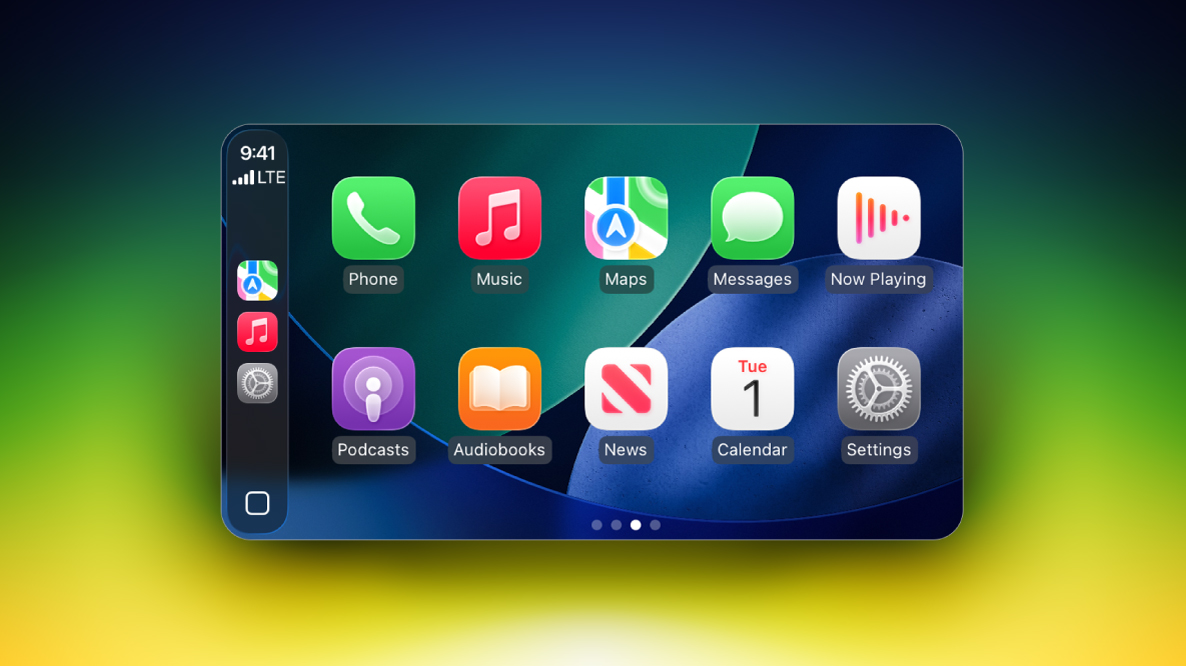
On the latest episode of The Verge's Decoder podcast, Rivian's software chief Wassym Bensaid explained why the EV maker still refuses to offer Apple CarPlay.
In short, Bensaid said Rivian does not want CarPlay to fully take over the software experience.
"The challenge with screen mirroring solutions is that they take over every single pixel in the car," he said.
Instead, Rivian prefers to offer its own interface with "end-to-end integration."
Bensaid added that "deep AI integration into the car" will eventually make the debate over offering CarPlay in vehicles "completely obsolete." He believes that Rivian owners will be able to access the core functionality of many apps through an AI agent, rather than needing to rely on CarPlay or Android Auto.
"I really believe that the way you interact with apps which are mono-threaded, single buttons, single icons, a lot of that will be now completely reshaped into a world where it will become an agentic integration that presents itself into a wholesome user experience to the user," Bensaid explained. However, he admitted that an AI agent becoming an "alternative solution" to CarPlay apps will take time to materialize.
Already, Rivian owners are increasingly less interested in CarPlay, according to Bensaid. He said that Rivian's internal statistics showed that more than 70% of customers wanted CarPlay when their vehicles first launched around five years ago, but he said a recent survey showed that figure is apparently less than 25% now.
"With the level of features that we have shipped to customers, with the level of end-to-end integration, with the level of convenience that we are bringing, CarPlay is, or Android Auto to that extent, is no longer the topic of discussion," he said.
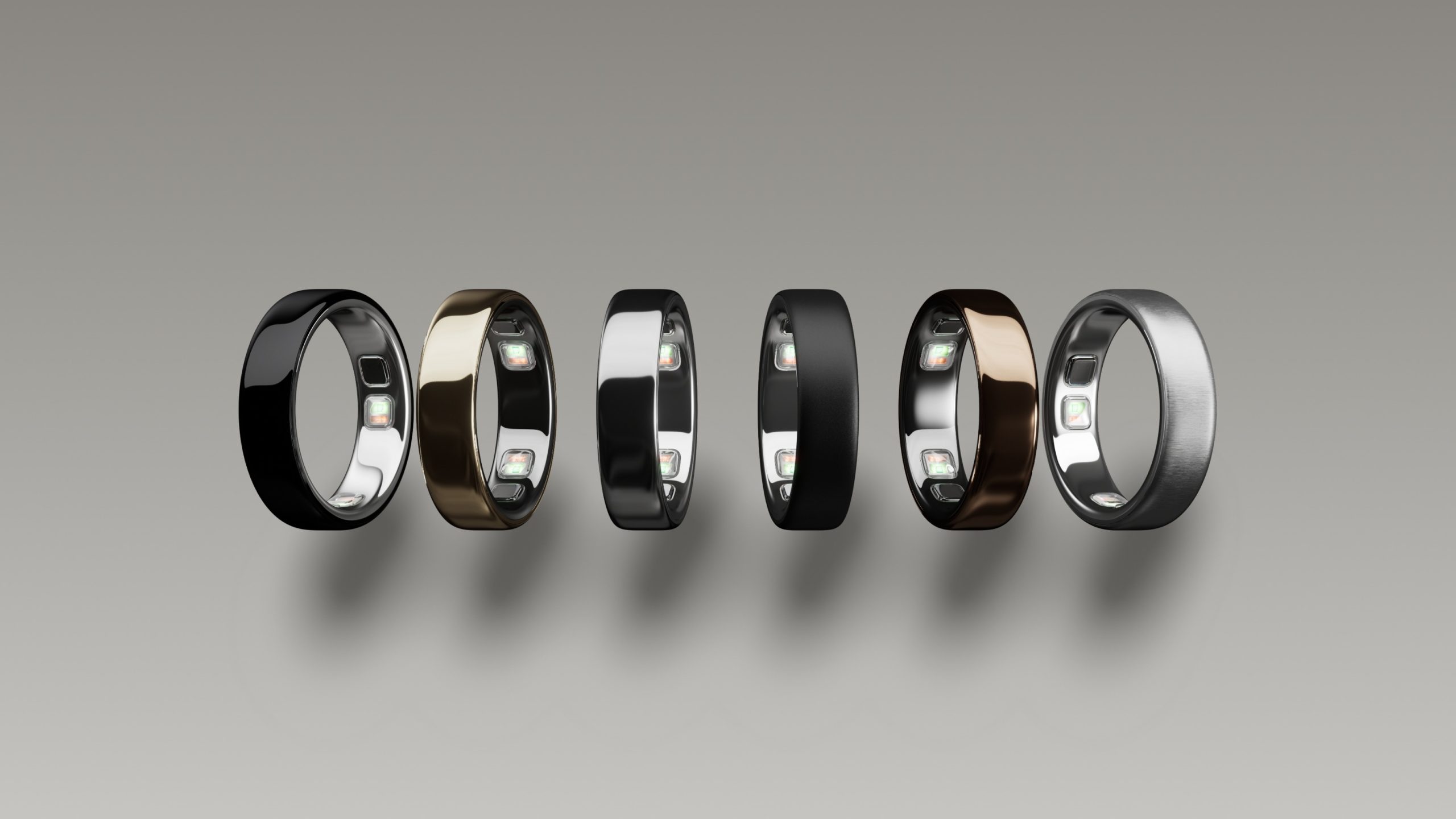
Oura today unveiled the Oura Ring 5, a significantly smaller smart ring with new health-monitoring capabilities including blood pressure trend detection, nighttime breathing analysis, and tools for GLP-1 medication tracking.
The Oura Ring 5 is 40% smaller than its predecessor, measuring 6.09mm wide and 2.29mm thick compared to 7.99mm and 2.88mm on the previous model. Oura says the reduction was achieved by redesigning the mechanical, electrical, optical, battery, and sensing architectures, and the company claims the new form factor more closely resembles a traditional wedding band. Despite the smaller size, Oura says battery life remains at approximately one week per charge.
The ring's sensing system has also been overhauled. A new signal architecture uses precision-engineered sensor domes for better skin contact, more powerful LEDs, and twelve signal pathways that Oura says deliver greater accuracy across more finger types and skin tones.
The headline software addition is "Health Radar," a proactive health-monitoring feature that builds on the company's existing Symptom Radar tool, which launched in 2024 to flag early signs of illness. Health Radar includes two initial capabilities: Blood Pressure Signals and Nighttime Breathing.
Blood Pressure Signals continuously monitors for patterns that may indicate cardiovascular strain, surfacing nighttime blood pressure trends. Nighttime Breathing provides a 30-day rolling view of sleep-related breathing disturbances, with guidance on when to seek further evaluation.
A new Health Records feature allows U.S. users to import diagnosed conditions, medications, lab results, and allergies directly into the app. Oura has also partnered with Counsel Health, an AI-powered virtual care platform, to let eligible users in 43 U.S. states ask health questions and connect with licensed physicians from within the app for an additional fee.
New GLP-1 Insights tools let users track medication dosing, side effects, weight changes, and biometric data in one place. A Lab Uploads feature lets users import blood biomarker results alongside Oura's biometric data.
Other new features include live workout tracking with real-time pace, distance, and heart rate via a connected device, a Brain Health Study through Oura Labs pairing cognitive assessments with biometric data, and a time-based Data Deletion tool allowing users to erase data from specific periods without affecting their full history.
An optional new Charging Case accessory provides one month of battery and supports wireless charging, priced at $99. Oura is also introducing a Locate feature to track misplaced rings and charging cases.
The Oura Ring 5 is priced at $399 in Silver and Black, with Gold, Stealth, Brushed Silver, and Deep Rose finishes priced at $499. The Oura Ring 4 in ceramic remains available at $349. An Oura Membership is required for full functionality at $5.99 per month or $69.99 annually. Global pre-orders open today, with shipping beginning June 4.
Apple reportedly plans to use next month's Worldwide Developers Conference (WWDC) to highlight its on-device AI capabilities as a competitive advantage, leaning on 15 years of custom silicon expertise to make the case for running AI models locally rather than in the cloud.
People familiar with Apple's plans speaking to The Information say the company is expected to showcase how the chips designed for iPhones, Apple Watches, and Macs give it an edge in processing AI queries directly on devices. While cloud-based processing will remain necessary for complex queries, Apple will position local inference as a privacy-preserving, cost-saving alternative to the massive data center buildouts its rivals have pursued.
As part of its agreement with Google, Apple is apparently set to use a large version of Google's Gemini model to train a smaller, distilled version capable of running locally on Apple hardware. Apple is also said to be scouting acquisitions to help advance its model-shrinking work, with one company it has reportedly considered being Liquid AI, a Massachusetts startup focused on running AI locally on devices.
Some queries will still require cloud processing. Apple is believed to have approved the use of Nvidia's confidential compute technology within Google Cloud to handle processing of the larger Gemini-based model. The security feature encrypts data and AI models during processing, adding a modest performance cost but offering stronger privacy protections.
The arrangement represents a noticeable departure from Apple's original Apple Intelligence announcement, in which the company said all cloud-bound queries would be handled exclusively by its own Private Cloud Compute infrastructure running on Apple silicon. Apple is likely to retain the Private Cloud Compute branding despite the change, people familiar with the partnership told The Information.
There are also said to be material limits to how far Apple can push on-device processing. Google's full Gemini model runs into the trillions of parameters, and The Information claims that Apple has struggled to run it on its own Private Cloud Compute infrastructure, which uses the same Apple silicon chips found in Mac computers.
Apple Intelligence was first announced at WWDC 2024, but the rollout has been hampered by a tepid response to initial features and a protracted delay to the more personal version of Siri. Apple is now expected to use WWDC 2026, which runs from June 8 to reframe the narrative, reintroduce the delayed features, and debut new ones.
Earlier this week, Amazon introduced a new $199 discount on the 13-inch M5 MacBook Air, and this sale has now expanded to include nearly every model of the computer on sale at record low prices. You can get the 512GB 13-inch M5 MacBook Air for $899.99, down from $1,099.00, available in all colors.
Note: MacRumors is an affiliate partner with Amazon. When you click a link and make a purchase, we may receive a small payment, which helps us keep the site running.
You'll find $199 off every model of the 13-inch M5 MacBook Air on Amazon, with free delivery around early June for most models. In terms of other 13-inch models, Amazon also has the 16GB/1TB model for $1,099.99, and the 24GB/1TB model for $1,299.99. Both of these represent $199 discounts and are new all-time low prices for each model.
Regarding the 15-inch models, you'll also find $199 off the larger M5 MacBook Air, with multiple color options on sale for each configuration. Prices start at $1,099.99 for the 512GB model, down from $1,299.00, and rise to $1,499.99 for the 24GB/1TB model, down from $1,699.00. As of writing, we aren't tracking any discounts on the 16GB/1TB model of the 15-inch M5 MacBook Air.
If you're on the hunt for more discounts, be sure to visit our Apple Deals roundup where we recap the best Apple-related bargains of the past week.
Deals Newsletter
Interested in hearing more about the best deals you can find in 2026? Sign up for our Deals Newsletter and we'll keep you updated so you don't miss the biggest deals of the season!

 Log in
 Note: MacRumors is an affiliate partner with some of these vendors. When you click a link and make a purchase, we may receive a small payment, which helps us keep the site running.







 Acer's Swift Air 14
 Qualcomm's Snapdragon C processor















 Note: MacRumors is an affiliate partner with some of these vendors. When you click a link and make a purchase, we may receive a small payment, which helps us keep the site running.


 Note: MacRumors is an affiliate partner with Amazon. When you click a link and make a purchase, we may receive a small payment, which helps us keep the site running.
