❌

Lees weergave

Under The Hood: In-Game Map QA

Creating Euro Truck Simulator 2 and American Truck Simulator is a collaborative effort involving many talented teams across SCS Software. While map designers, artists, programmers and more build the driving experience, another team works alongside them to ensure everything functions exactly as intended before players hit the road.


In this Under the Hood blog, we'd like to introduce you to two members of our In-Game QA team, Ivan and David. We asked them about their day to day work, how testing fits into the development process, why quality assurance is about much more than simply playing the game and more!

David - ATS Map QA Lead


"Hey, fellow truckers! My name is David, and I'm 28 years old. I joined SCS as a junior tester when I was just 20, and at the time, I was the youngest employee in the entire company. Today, I'm the QA Lead for ATS map testing. That means I organize and oversee the testing of all ATS map DLCs, communicate with the leads of our map design teams, solve the most complex issues and bugs we encounter, and simply be there for my team whenever they need help. Over the years, I've seen SCS Software grow from a team of around 100 employees into a company of more than 400. When I joined, we were working on the Oregon DLC, and it has been incredible to see how our development and testing processes have evolved and improved alongside our expanding game worlds."

Ivan - World Map Design QA Lead


"Hi everyone! My name is Ivan, and I've been with SCS Software for a little over six years. I started out as a junior tester, but soon after, I took on the responsibility of overseeing map testing for Euro Truck Simulator 2. Today, my role is World Map Design QA Lead, and I manage our entire map testing team, which currently consists of 20 people. Together, we oversee testing for both American Truck Simulator and Euro Truck Simulator 2. While my colleague Davincillo handles the day to day management of ATS, my main focus over the years has remained on ETS2."Β 

When people hear "game testing" they often imagine that you simply get to play games all day. How different is the reality?

"Map testing is definitely not just playing the game all day. That's a classic myth. While the 'playing' aspect certainly has its place, it really only happens during the final stages of our testing process. The reality is far more methodical. We spend hours, or even days, testing one specific part of the map. We drive through the same stretch of road multiple times, checking completely different things on each pass while using different camera views and debug tools.

Simply playing the game is not enough to be a good tester. There is a specific skill set you need, these include attention to detail, a logical and analytical mindset, a good understanding of game industry standards, and a passion for making games more enjoyable for others. Communication skills are also vital because finding a bug is only half of the job. The other half is making sure the right people understand the issue. Ultimately, a good tester should save developers time. Instead of simply reporting that 'something is wrong,' a proper report explains the issue, how to reproduce it, what causes it, and potentially how it could be fixed."


What does a typical day look like for a QA Lead?

"Every day is a little different, but it generally consists of a mix of meetings, coordination, and oversight. Most of my time is spent assigning work, tracking testing progress, reviewing reported bugs, and regularly syncing with developers. Some days are calm and focused on planning, while others are all about solving unexpected, fast-moving issues. A large part of the job involves working closely with the team, discussing the bugs we find, figuring out the best approach, and deciding together what needs the most urgent attention."

What are some of the main things your teams are looking for when testing the game?

"It heavily depends on the stage of production. In the early stages, we focus mostly on the road network itself, its layout, and ensuring the drive is smooth. A big part of this phase is also checking the functionality of the economy and verifying the placement of game elements such as gas stations, companies, and truck dealers. In the later stages, our focus shifts to the AI's ability to navigate the road network, alongside visual polish, correct signage, and core gameplay. This is also when we examine performance across different areas to identify and fix any problematic frame rate drops.

Broadly speaking, we focus on almost everything related to the map. That includes road layouts and collisions, the job economy, gas station distribution, sleep areas and service locations, the UI map and its icons, direction blockers, road markings, traffic signs, speed limits, traffic lights, navigation and voice guidance, garage cutscenes, AI trajectories, triggers, quality consistency, scene logic, terrain, vegetation, world and country borders, asset collisions, gaps in terrain, floating objects, performance-heavy locations, environmental sounds and more!"


What do you enjoy most about working in QA?


"Being a game tester is a dream job for many people, and in many ways, it really is. There is an incredibly rewarding feeling in knowing that you're the safety net protecting the player's immersion and helping make the game better for everyone. It's deeply satisfying to watch a messy, broken build gradually turn into a polished world that millions of people will enjoy driving through.Β 

When a new DLC is released and you see players talking about how smooth the roads feel, how great the scenery looks, or how well everything runs, it's a fantastic feeling. You can look at that and think, 'Yeah, my team helped build that.'"

When a new map DLC or major update enters testing, how do you approach such a large project from start to finish?

"The QA process often begins before production even starts. We provide early feedback on concepts to avoid known issues before development kicks off. Once production begins, we use an agile testing approach, working through multiple iterations throughout development rather than waiting until the very end to deliver one massive list of issues.

Our systematic testing process is divided into four iterations and an economy test. The first iteration focuses entirely on road layouts, ensuring roads, turns, and slopes are safely drivable, even with the longest trailers and low-power engines. The economy test then verifies that companies generate jobs correctly and that cities provide a healthy variety of destinations. As development progresses, later iterations shift towards visual quality, gameplay consistency, and overall polish.

To make testing manageable, we divide each project into smaller sections, sometimes resulting in dozens or even hundreds of individual tasks covering specific roads and cities. These are tracked throughout development, allowing us to revisit the same areas at different stages. We use maps, checklists, internal tools, and bug-tracking systems to ensure every square mile is covered, while also encouraging testers to explore freely because unexpected issues are often found where nobody would think to look."


Many players only see the finished product. Roughly how much testing goes into a map expansion, update, or feature before release? Does it differ depending on what needs testing?


"There is a massive amount of testing involved, and it differs greatly depending on the project. Smaller projects, such as special event maps, can be thoroughly tested in just a few days. On the other hand, a huge project like the Nordic Horizons expansion takes thousands of hours of rigorous testing before it is ready for release.

Every single road, city, company, gas station, sleep area, tollgate, and ferry is tested at least four times, with a different tester each time. To give some insight into the scale, our Mantis bug tracker recorded 6,849 reports for the Illinois DLC, while South Dakota has generated 6,318 reports so far. These reports range from tiny holes in the terrain that are almost impossible to notice to major bugs that can cause the game to crash. Every report is assigned a priority and severity level so that the most serious issues are addressed first."


How closely do QA teams work with map designers, programmers, artists, and other departments throughout development?

"We work very closely across departments because testing is integrated throughout the entire development cycle. As map QA, we collaborate most closely with the map design and art teams. While the majority of our day-to-day communication happens through reports in the Mantis bug tracker, we also actively discuss issues through private messages on our internal chat system, and arrange direct meetings whenever an issue is important enough. Our interaction with the programming department is mostly on a need-to-know basis, usually when there is an issue involving erratic AI behaviour or when a brand-new code feature is being implemented directly into the map."

What tools or methods help you track, reproduce, and report issues efficiently?


"We rely on several internal systems that are connected to one another to track individual bugs and the overall progress of a DLC. We use a specialised internal reporting tool that allows a tester to submit a bug directly from the game or the map editor into our central bug-tracking database. Within a few minutes, the report appears and can even be viewed directly inside the map editor itself. This allows map designers to immediately see the exact issue within their active workspace and resolve it much more efficiently, saving a significant amount of time throughout development."


If there's one thing you'd like for people to better understand about QA and the work your teams do, what would it be?

"We'd like players to understand that map testing is a highly skilled, technical job, not simply driving around looking at the scenery or casually stumbling across a floating tree. In reality, a good tester is part detective and part data analyst. If we come across a strange physics bump on a highway or see AI traffic piling up at a roundabout, we don't just report it and move on. We have to understand exactly why it's happening. Translating what is broken on the road into actionable, structured information that our developers can easily understand and fix takes time, patience, and deep knowledge of the game."

What is one aspect of QA work that you think players would be most surprised to learn about?

"Players would probably be surprised by just how much knowledge about the game and real-world infrastructure you need to become a good tester. Our team has to maintain a solid understanding of complex internal game rules, real-world traffic laws, and regional layout standards across different countries.Β 

It's similar to the difference between someone who owns a truck and knows how to drive it and a mechanic who can remove the entire engine, take it apart piece by piece, and put it back together again. Becoming a highly skilled map tester can take years, and many testers naturally become specialists in certain areas of the game because they spend so much time working with those specific systems behind the scenes."


Have you encountered any particularly memorable, unusual, or funny bugs during your time at SCS Software?

Ivan: "Absolutely. Simulators have incredibly complex physics engines, and when things go wrong, they go wrong hilariously. It never gets old seeing an AI vehicle catapulted straight into space. Sometimes, our map designers also leave creative little surprises or jokes for us to discover during development, although we always make sure they don't make it into the live version of the game.

David: "One memorable moment happened while I was parking at a company prefab. I heard a train horn somewhere in the distance, and the sound kept getting louder until suddenly it was right next to me. The only problem was that there was no train there, and there weren't even any railway tracks nearby. A moment later, something invisible hit my truck and launched it all the way across the company. For a few seconds, I genuinely thought I had discovered a haunted company prefab."

How valuable are bug reports and feedback from the community when helping improve the game?

"Community feedback is extremely valuable to us. While our internal QA process is thorough, there are always issues that slip through, and players help us catch them by spotting details or inconsistencies that we might miss. What makes community feedback especially useful is the context players provide. Many are very familiar with the real-world locations we recreate, so they can quickly point out inaccuracies that would otherwise be difficult for us to notice. They also encounter a huge variety of gameplay situations, which helps surface edge cases that are hard to reproduce internally.

"In many cases, a well written report from the community can save us hours of investigation because players provide screenshots, videos, logs, save files, and clear reproduction steps."


Do you have a message for our community?


"A huge thank you for your support, feedback, and for riding along with us for so many years. It's an amazing feeling to work on a game where the players care just as much about the world as the people who build it. Your dedication pushes everyone at the studio to keep raising the bar with every new state, country, and feature. Safe travels, and we'll see you out on the road!"

We'd like to thank both David and Ivan for taking the time out of their busy days to chat with us about their roles in QA and how the team plays such an integral part in bringing our truck simulator titles to life. We hope you've learned a little more about the work that goes on behind the scenes. If you enjoyed this edition of Under the Hood, be sure to leave them a message in the comments below or on our social media channels. Until next time, keep on truckin'!Β 

  •  

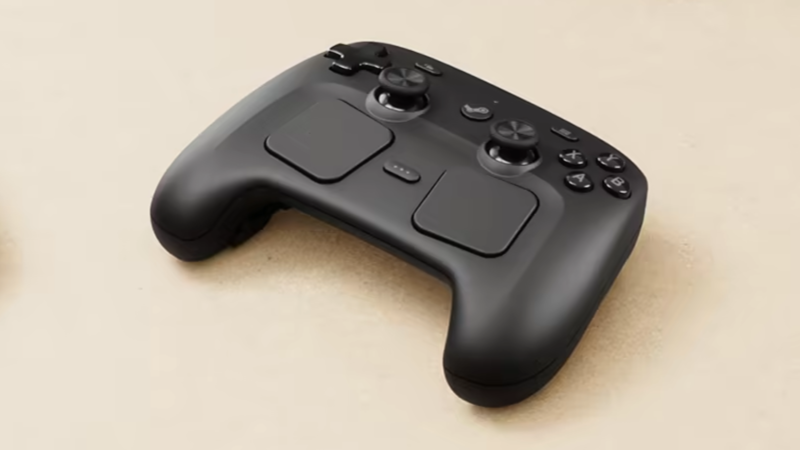
Steam Controller: Reservations update

When we launched Steam Controller last month, we quickly saw that initial demand exceeded our expectations. Switching to a reservation queue has (hopefully) cut down on the headaches on the customer side, and for us it's also been helpful as we plan ahead and try to get as many out as quickly as we are able.

We have no plans to stop making Steam Controller. But as we look at the current demand compared to how many we know we can make by the end of the year, we want to manage expectations as much as we can with regards to when folks can expect to receive their order.

Starting today, the Steam Controller page will show you a time frame by when you can expect to receive your order email, based on when you reserved.

To keep it simple, we're showing one of three estimated order windows:

  • By September 2026

  • By December 2026

  • In 2027 (with additional information on specific timing to come)

What does this mean if I already have a reservation?

When you are logged in to your Steam account and go to the Steam Controller page, you'll now see your expected order window.Β 

What if I haven't reserved yet?

You still can! We will continue to accept reservations, and you'll see an estimated order availability before you click the "reserve now" button.

  • Though the current estimation for orders placed today forward indicate a 2027 date for shipping, we will update that estimate as we get closer.

For anyone with reservations OR hoping to make reservations:

  • We will still be emailing customers with an option to purchase once their place in the queue comes up. You'll have 72 hours to complete your order, otherwise you will be removed from the list and we'll go to the next folks in line.Β Β 

  •  

Euro Truck Simulator 2: 1.60 Update Release

We are excited to announce that the 1.60 update for Euro Truck Simulator 2 is now officially released! Let's dive in and take a look at what's in store.

As always, we would first like to thank everyone who participated in the open beta phase and helped us fine-tune all the new content by reporting issues to the dedicated section on our forum. Now let's see what's new in the 1.60 update!


Game Radio

With the 1.60 update, we are introducing Game Radio, a brand-new in-game radio system designed to make every drive feel more immersive and authentic. Rather than just playing music, Game Radio gives you five stations with their own distinct sounds, identities, and moods, each one built to shape the atmosphere of your journey in a different way.

Players can tune into Rust FM, Escape, PUMP IT!, Pop Gear, and Roadio, spanning guitar-driven rock and American roots music to electronic, pop, and lo-fi. Each station features carefully curated tracks, handpicked to hold up across many hours on the road. Escape is also a radio station designed to help content creators, and we are committed to do our best to keep it stream-safe.

Game Radio also introduces a new in-game widget displaying station info, track titles, and artist names while driving. Players can customize widget behavior through the Widget Options menu (F6). This update also brings a range of improvements to the existing radio and music player systems.

Game Radio arrives with its musical foundation in place, with more planned for future updates. You can find out more information about Game Radio in our dedicated blog post.

Improved Material System

The Improved Material System significantly improves the lighting and visual quality of vehicle interiors in selected trucks. Its main focus is to enhance how interior materials react to light, which results in a more readable, detailed, and visually pleasing cabin environment.

During the development of Project Road Trip, we implemented a wide range of visual and technical improvements. One of the most significant changes was a redesign of the materials used in vehicle interiors. As a result, it makes differences between materials such as leather, fabric, plastic, and metal far more apparent, even in low-light conditions. The new solution uses multiple variants of dynamic cubemaps, allowing all materials to reflect their surroundings more naturally and respond to ambient light in a more realistic way.

The entire system was designed from the start with the interiors of trucks in both games in mind, so the base games and their existing fleets will gradually benefit from these improvements as well. The first trucks to benefit from the Improved Material System in ETS2 are the DAF NGD and MAN TG3 TGX models. With future updates, we will gradually add this technology for other trucks across both games. You can read more about this feature here.

Light Tweaks

We have carried out minor adjustments to the global lighting, primarily focused on exposure and contrast balancing, along with subtle visual refinements for bad weather conditions. The work mainly consisted of smoothing out and polishing the overall visuals to achieve a more consistent and refined look.

Volvo FH Series 6 Update

With this update, truckers can customize their Volvo FH Series 6 with a selection of several new aerodynamic parts, including the newly designed aerodynamic roof deflectors available for the Sleeper Cab, Globetrotter, and Globetrotter XL cab variants. These updated components help create a smoother and more refined roof profile, blending seamlessly into the truck's overall design.

Alongside these additions, all Aero cabin variants also have the option to add new distinctive black aerodynamic A-Pillar trim, as featured on the newest generation of Volvo FH truck. These new additions reflect Volvo Trucks' ongoing efforts to improve aerodynamic efficiency and optimise airflow around the cab to help enhance energy efficiency and overall vehicle performance.

Job Details Widget

Based on feedback from our #BestCommunityEver and upcoming widget designs, the Job Details Widget is introduced with the 1.60 update. Its primary purpose is to enable a new, more immediate, and concise way of displaying relevant job info. Also, in response to community feedback, the GPS now displays the estimated arrival day and time, along with the remaining travel time and distance.

You can enable the Job Details Widget through the Widget Options menu (F6). The widget displays key job information, including cargo type and weight, delivery location, job income (colour-highlighted), and the remaining time to complete the job, so players will have this info available immediately without the necessity to pause the game. You can read more about the feature here.

Expanded Rest Mechanic

This new feature gives players greater control over their rest periods by allowing them to choose how long they want to sleep and exactly when they want to wake up, instead of being limited to a predefined rest duration.

Alongside this change, the Fatigue system is now split into two separate values: Rest State and Mandatory Break, each represented by its own icon in the UI.

The Rest State, symbolised by a bed icon, now gradually depletes rather than recovers over time. Extended periods of driving will steadily reduce the Rest State, while resting will restore it at a faster rate.

The Mandatory Break system, indicated by a "P" icon along with the remaining hours before a required stop, functions more strictly. In Euro Truck Simulator 2, drivers may drive for up to 10 hours before taking a mandatory break, which requires 9 consecutive hours of rest. You can read more about this feature here.

Changelog

Vehicles

  • Volvo FH Series 6 Update

Visual

  • Improved Material System
  • Light Tweaks

Sound

  • Game Radio

UI/UX

  • Job Details Widget
  • Expanded Rest Mechanic

Don't forget to also give our X/Twitter, Instagram, Facebook, Bluesky, TikTok, and YouTube a follow, as you'll receive updates about our games straight to your feed! Or subscribe to our newsletter to stay informed. Happy haulin'!

  •  

SteamOS 3.8

SteamOS 3.8.10 has just been released for all users with the following changes:

These notes contain all changes since the previous SteamOS 3.7 stable release. See here for changes since the previous SteamOS 3.8.9 beta release.

General

  • Updated Arch system base

  • Initial support for upcoming Steam Machine hardware

  • Added support for waking from sleep via connected Steam Controller

  • Substantially improved speed of future OS updates on high-speed connections

  • Improved support for screen casting in Game Mode (e.g. OBS/Discord)

  • Fixed dropdown menus not appearing in some games

  • Fixed excessive trackpad sensitivity on certain early Steam Deck LCD models

  • Improved support for games that attempt to open PDF files in external viewers

  • Fixed an issue where video output could become frozen while using Remote Play

  • Fixed a possible session crash when using Game Recording with certain "Maximum video height" settings

  • Fixed an issue affecting certain titles (such as "SpongeBob SquarePants: Titans of the Tide") where the game window could have an incorrect position

  • Fixed closing certain titles (such as "STAR WARS Jedi: Survivorβ„’" and Starfield) resulting in a session crash

  • Improved support for certain USB racing wheels and USB devices that boot in a non-standard mode

    • Frequently these are devices that appear as USB storage devices with a driver installer, and must be switched to their normal mode by the OS

  • Steam Deck controller firmware updates now display update progress on the splash screen

  • Fixes issue on specific Steam Deck revisions where firmware updates could render the left controller inoperative for that session

  • Numerous stability and security updates

Display / Performance

  • Updated graphics driver with performance and stability fixes

  • Added preliminary support for HDMI VRR for devices with native HDMI output

  • Fixed an issue where "Allow Tearing" wouldn't have the intended effect in certain configurations

  • Improved VRR frame pacing

  • Fixed FSR badge remaining off in the performance overlay, even if it was actually active

  • Fixed a case where per-app performance settings would intermittently fail to apply when launching a game

  • Added missing graphics features needed for titles such as "Crimson Desert"

  • Fixed an issue on certain TCL TVs where the display may remain blank using the Steam Deck Dock when VRR is enabled (requires a Dock firmware update)

Bluetooth / WiFi

  • Fixed a case where WiFi performance could become degraded until the device was put to sleep or manually reconnected

  • Re-re-enable Bluetooth Wake for Steam Deck LCD

    • Fix for more spurious wake issues that were present in earlier attempts

Audio

  • Detect HDMI channel count and expose surround configuration if available

  • Add a setting to allow using Bluetooth headset mics (Bluetooth playback quality will be worse while capture is active)

  • Restore internal audio device on reboot if set to "Off" in desktop mode

  • Increase suspend timeout for HDMI devices so initial audio isn't cut off after a few seconds of inactivity

  • Fixed a bug with switching input devices when a wired headset is plugged in

  • Fixed an issue where audio underruns could be experienced after sleep/resume

  • Fixed a bug on Steam Deck OLED where rebooting would occasionally cause a loss of speaker output until rebooted again

  • Fixed a case where FPS limits would fail to apply when downscaling games from a higher resolution

Accessibility

  • Added an option to force mono audio output

Desktop Mode

  • KDE Plasma updated to version 6.4.3 from 6.2.5, and now uses wayland by default

  • Keyboard layout and language are now obeying Game Mode settings

  • Improved windowing behavior for games running in Proton

  • Fixed a bug in Desktop Mode causing previously open applications to not be remembered when using the 'Return to Gaming Mode' shortcut to logout

  • Fixes for experimental nested desktop mode

  • Fixed Desktop Mode night color settings inappropriately remaining active when switching back to Game Mode

System Firmware

  • Includes Steam Deck LCD BIOS v133

    • Security updates

    • Added "Memory Power Down" setup option

    • Preliminary support for hibernation

  • Includes Steam Deck OLED BIOS v114

    • Security updates

    • Charging LED now changes color when charge limit is reached, rather than only at 100%

Non-Deck

  • Improved compatibility with recent Intel and AMD platforms

  • Greatly improved video memory management on discrete GPU platforms

  • Fixed a compatibility issue with the SteamOS chainloader that could cause a boot failure on some desktop systems with recent UEFI firmware

  • Power button short and long presses now supported across a wide variety of devices

  • Improved controller support for OneXPlayer F1 series, GPD Win 5, GPD Win Mini, Anbernic Win600, OrangePi NEO, and Lenovo Legion Go

  • Added controller support for OneXPlayer X1 series and Lenovo Legion Go 2

  • Added system and controller firmware update support for the Lenovo Legion Go 2

  • Added preliminary charge limiting support for Legion Go, Legion Go S, and Legion Go 2 - currently only accessible in Desktop Mode

  • Added controller RGB LED color settings for the Lenovo Legion Go 2

  • Added controller, TDP control, and speaker audio support for the ASUS ROG Xbox Ally series

  • Reduced handheld controller input latency from 5-8ms to 100-500us

  • Night mode, color vibrance, and color temperature sliders in Steam now work on Z2E and later AMD APUs

  • Seamless boot fixes for Z2E and later AMD APUs

  • Automatically handle internally rotated display for some third-party handhelds

  • Improved motion control support for handhelds with BMI260 IMUs

  • SD card reliability improvements for some third-party handhelds, including ASUS ROG Xbox Ally, Legion Go 1, Legion Go S, Legion Go 2, and MSI Claw

  • Fixed washed out colors for Zotac and OneXPlayer handhelds with OLED

  • Fixed some GPU hangs on Phoenix APU devices (Tales of Arise, Octopath Traveler II)

  • Fixed ASUS ROG Ally power consumption from fingerprint reader while shut down

  • Fixed trackpad losing functionality after sleep/resume on the Legion Go

  • Fixed spurious wake-ups when using a Logitech Bolt receiver

  • Add controller support for MSI Claw devices (A1M, 7 AI+ A2VM, 8 AI+ A2VM, A8 BZ2EM)

  • Add controller support for OneXPlayer APEX and X1 series.

  • Improved gyro response for devices that use AccelGyro3D (Legion Go 1, Claw A1M)

  • Fixed a system crash on international Asus ROG Xbox Ally models

  • Fix Bluetooth not working on some Intel handhelds

  • Add initial firmware for upcoming Intel handhelds

Developer

  • Desktop Mode now uses Wayland by default

    • X11 support may still be selected via Steam developer settings, or via `steamosctl`

  • Updated Linux kernel to 6.16

  • Steam now uses steamos-manager to query available desktop sessions and trigger desktop session switching

  • Added support for setting the desktop password in developer settings

  • Initial support for running as a Virtual Machine guest (virtio guest drivers)

  • Added support for third-party devices to trigger the SteamOS boot menu via EFI variable

  • Added `custom-update` verb to `atomupd-manager` for easier testing of specific builds

  • System reports now include more audio debug information

  • Initial support for LAVD CPU scheduler via `steamosctl set-cpu-scheduler lavd`

  •  

SteamOS 3.8.10 Beta: Second Clutch

Note: This update is for the Steam Deck Beta and Preview channels, and includes new features that are still being tested. You can opt into this in Settings > System > System Update Channel.

These notes contain all changes since the current stable SteamOS 3.7 release, with the new changes since the previous 3.8.9 Beta noted below

New in 3.8.10

  • Fixed a 3.8 regression preventing the typing of certain characters (including [c]<>()[/c]) on the Steam on-screen keyboard in Desktop mode

  • Fixed a case where FPS limits would fail to apply when downscaling games from a higher resolution

  • Fixed Desktop Mode night color settings inappropriately remaining active when switching back to Game Mode

  • Fixed a 3.8 regression that would sometimes cause a Game Mode crash when exiting certain games (such as Forza Horizon 6)

General

  • Fixed a case where WiFi performance could become degraded until the device was put to sleep or manually reconnected

  • Fixed excessive trackpad sensitivity on certain early Steam Deck LCD models

  • Fixed a bug on Steam Deck OLED where rebooting would occasionally cause a loss of speaker output until rebooted again

  • Initial support for upcoming Steam Machine hardware

  • Added support for waking from sleep via connected Steam Controller

  • Added preliminary support for HDMI VRR for devices with native HDMI output

  • Updated Arch system base

  • Updated graphics driver with performance and stability fixes

  • Fixed an issue where "Allow Tearing" wouldn't have the intended effect in certain configurations

  • Fixed a case where per-app performance settings would intermittently fail to apply when launching a game

  • Substantially improved speed of future OS updates on high-speed connections

  • Improved support for the screencasts in Game Mode (e.g. OBS/Discord)

  • Fixed dropdown menus not appearing in some games

  • Improved VRR frame pacing

  • Fixed FSR badge remaining off in the performance overlay, even if it was actually active

  • Improved support for games that attempt to open PDF files in external viewers

  • Fixed an issue where video output could become frozen while using Remote Play

  • Fixed a possible session crash when using Game Recording with certain "Maximum video height" settings

  • Added missing graphics features needed for titles such as "Crimson Desert"

  • Fixed an issue affecting certain titles (such as "SpongeBob SquarePants: Titans of the Tide") where the game window could have an incorrect position

  • Fixed closing certain titles (such as "STAR WARS Jedi: Survivorβ„’") and Starfield resulting in a session crash

  • Improved support for certain USB racing wheels and USB devices that boot in a non-standard mode

    • Frequently these are devices that appear as USB storage devices with a driver installer, and must be switched to their normal mode by the OS

  • Steam Deck controller firmware updates now display update progress on the splash screen

  • Fixes issue on specific Steam Deck revisions where firmware updates could render the left controller inoperative for that session

  • Fixes for experimental nested desktop mode

  • Numerous stability and security updates

  • Fixed an issue on certain TCL TVs where the display may remain blank using the Steam Deck Dock when VRR is enabled (requires a Dock firmware update)

Bluetooth

  • Re-re-enable Bluetooth Wake for Steam Deck LCD

    • Fix for more spurious wake issues that were present in earlier attempts

Audio

  • Detect HDMI channel count and expose surround configuration if available

  • Add a setting to allow using Bluetooth headset mics (Bluetooth playback quality will be worse while capture is active)

  • Restore internal audio device on reboot if set to "Off" in desktop mode

  • Increase suspend timeout for HDMI devices so initial audio isn't cut off after a few seconds of inactivity

  • Fixed a bug with switching input devices when a wired headset is plugged in

  • Fixed an issue where audio underruns could be experienced after sleep/resume

Accessibility

  • Added an option to force mono audio output

Desktop Mode

  • KDE Plasma updated to version 6.4.3 from 6.2.5, and now uses wayland by default

  • Keyboard layout and language are now obeying Game Mode settings

  • Improved windowing behavior for games running in Proton

  • Fixed a bug in Desktop Mode causing previously open applications to not be remembered when using the 'Return to Gaming Mode' shortcut to logout

System Firmware

  • Includes Steam Deck LCD BIOS v133

    • Security updates

    • Added "Memory Power Down" setup option

    • Preliminary support for hibernation

  • Includes Steam Deck OLED BIOS v114

    • Security updates

    • Charging LED now changes color when charge limit is reached, rather than only at 100%

Non-Deck

  • Improved compatibility with recent Intel and AMD platforms

  • Greatly improved video memory management on discrete GPU platforms

  • Fixed a compatibility issue with the SteamOS chainloader that could cause a boot failure on some desktop systems with recent UEFI firmware

  • Power button short and long presses now supported across a wide variety of devices

  • Improved controller support for OneXPlayer F1 series, GPD Win 5, GPD Win Mini, Anbernic Win600, OrangePi NEO, and Lenovo Legion Go

  • Added controller support for OneXPlayer X1 series and Lenovo Legion Go 2

  • Added system and controller firmware update support for the Lenovo Legion Go 2

  • Added preliminary charge limiting support for Legion Go, Legion Go S, and Legion Go 2 - currently only accessible in Desktop Mode

  • Added controller RGB LED color settings for the Lenovo Legion Go 2

  • Added controller, TDP control, and speaker audio support for the ASUS ROG Xbox Ally series

  • Reduced handheld controller input latency from 5-8ms to 100-500us

  • Night mode, color vibrance, and color temperature sliders in Steam now work on Z2E and later AMD APUs

  • Seamless boot fixes for Z2E and later AMD APUs

  • Automatically handle internally rotated display for some third-party handhelds

  • Improved motion control support for handhelds with BMI260 IMUs

  • SD card reliability improvements for some third-party handhelds, including ASUS ROG Xbox Ally, Legion Go 1, Legion Go S, Legion Go 2, and MSI Claw

  • Fixed washed out colors for Zotac and OneXPlayer handhelds with OLED

  • Fixed some GPU hangs on Phoenix APU devices (Tales of Arise, Octopath Traveler II)

  • Fixed ASUS ROG Ally power consumption from fingerprint reader while shut down

  • Fixed trackpad losing functionality after sleep/resume on the Legion Go

  • Fixed spurious wake-ups when using a Logitech Bolt receiver

  • Add controller support for MSI Claw devices (A1M, 7 AI+ A2VM, 8 AI+ A2VM, A8 BZ2EM)

  • Add controller support for OneXPlayer APEX and X1 series.

  • Improved gyro response for devices that use AccelGyro3D (Legion Go 1, Claw A1M)

  • Fixed a system crash on international Asus ROG Xbox Ally models

  • Fix Bluetooth not working on some Intel handhelds

  • Add initial firmware for upcoming Intel handhelds

Developer

  • Desktop Mode now uses Wayland by default

    • X11 support may still be selected via Steam developer settings, or via `steamosctl`

  • Updated Linux kernel to 6.16

  • Steam now uses steamos-manager to query available desktop sessions and trigger desktop session switching

  • Added support for setting the desktop password in developer settings

  • Initial support for running as a Virtual Machine guest (virtio guest drivers)

  • Added support for third-party devices to trigger the SteamOS boot menu via EFI variable

  • Added `custom-update` verb to `atomupd-manager` for easier testing of specific builds

  • System reports now include more audio debug information

  • Initial support for LAVD CPU scheduler via `steamosctl set-cpu-scheduler lavd`

  •  

Iceland: Akureyri

In today's blog, we take you along on a trip to the town ofΒ Akureyri, which you will be able to visit yourself when the upcoming Iceland DLC for Euro Truck Simulator 2 releases. So let's take a look!

Akureyri is the fourth-largest city in Iceland and is often referred to as the Capital of the North due to its location and importance to the region. Nestled on the shores of EyjafjΓΆrΓ°ur, Iceland's longest fjord, the town enjoys a spectacular setting beneath snow-capped mountain peaks, with the GlerΓ‘ River flowing through its heart.

The earliest records of settlement in the area date back to the 9th century. However, it was not until the 18th century that Akureyri began to develop into an important commercial center, thanks to its harbor and proximity to rich fishing grounds. Today, it is Iceland's second-largest port and serves as a major hub for the country's fishing industry, as well as for cruise ships and cargo transport.

Drivers traveling along Route 1, also known as the Ring Road, will pass directly through the center of Akureyri. From there, several side roads branch off toward the harbor, industrial areas, and local food-processing facilities. In the port district, truckers can deliver cargo to a marine logistics center, a shipyard, and an electronics manufacturing depot.

One of Akureyri's most recognizable landmarks is Akureyrarkirkja, a striking church designed in 1940 by GuΓ°jΓ³n SamΓΊelsson, the architect behind HallgrΓ­mskirkja in ReykjavΓ­k, Iceland's most famous church.

Players will also recognize a number of other landmarks inspired by their real-world counterparts, including the Hof Cultural and Conference Centre on the waterfront and the Akureyri Art Museum, with its famous colorful pavement leading to its entrance. The town is also a great spot for whale watching tours, which is why we've also included the local whale watching center.

We hope you'll fall in love with Akureyri, with its colourful houses and stunning natural surroundings. If you do, you might even buy a garage in town and transform it into your company's northern Iceland branch.

If you are eager to be trucking in this upcoming map expansion, don't forget to support us by adding the Iceland DLC to your Steam wishlist.

Also, remember to give our X/Twitter, Instagram, Facebook, Bluesky, and TikTok a follow as you'll receive updates not only about Iceland, but also other news from our games straight to your feed. Or subscribe to our newsletter to stay informed.Β Until next time, safe travels!

  •  

American Truck Simulator: 1.60 Update Release

We're excited to announce that the 1.60 update for American Truck Simulator has officially been released and is now available on Steam!

Before we head to the news, we would like to thank everyone who took part in the Open Beta and reported any issues or provided general feedback on our forum. This makes it much easier for our team to fine-tune everything and helps ensure a smooth transition to the full update release.


Game Radio

With the 1.60 update, we are introducing Game Radio, a brand-new in-game radio system designed to make every drive feel more immersive and authentic. Rather than just playing music, Game Radio gives you five stations with their own distinct sounds, identities, and moods, each one built to shape the atmosphere of your journey in a different way.

Players can tune into Rust FM, Escape, PUMP IT!, Pop Gear, and Roadio, spanning guitar-driven rock and American roots music to electronic, pop, and lo-fi. Each station features carefully curated tracks, handpicked to hold up across many hours on the road. Escape is also a radio station designed to help content creators, and we are committed to doing our best to keep it stream-safe.

Game Radio also introduces a new in-game widget displaying station info, track titles, and artist names while driving. Players can customize widget behavior through the Widget Options menu (F6). This update also brings a range of improvements to the existing radio and music player systems.

Game Radio arrives with its musical foundation in place, with more planned for future updates. You can find out more information about Game Radio in our dedicated blog post.

Improved Material System

The Improved Material System significantly improves the lighting and visual quality of vehicle interiors in selected trucks. Its main focus is to enhance how interior materials react to light, which will result in a more readable, detailed, and visually pleasing cabin environment.

During the development of Project Road Trip, we implemented a wide range of visual and technical improvements. One of the most significant changes was a redesign of the materials used in vehicle interiors. As a result, it makes differences between materials such as leather, fabric, plastic, and metal far more apparent, even in low-light conditions. The new solution uses multiple variants of dynamic cubemaps, allowing all materials to reflect their surroundings more naturally and respond to ambient light in a more realistic way.

The entire system was designed from the start with the interiors of trucks in both games in mind, so the base games and their existing fleets will gradually benefit from these improvements as well. The first trucks to benefit from the Improved Material System in ATS are the Mack Anthem and the Western Star 49X. With future updates, we will gradually add this technology for other trucks across both games. You can read more about this feature here.

Light Tweaks

We have carried out minor adjustments to the global lighting, primarily focused on exposure and contrast balancing, along with subtle visual refinements for bad weather conditions. The work mainly consisted of smoothing out and polishing the overall visuals to achieve a more consistent and refined look.

Players' Company Paint Jobs

Players are now able to customize their trucks and trailers with a brand-new collection of company-themed paint jobs inspired by the selectable company identities available when creating a driver profile. These designs bring a more cohesive and professional visual style to your fleet while fitting naturally into the world of ATS.

One of the biggest focuses during development was ensuring that every paint job feels unique, depending on the type of trailer it is applied to. Rather than simply using one design across all trailer models, our teams carefully adapted each company's paint scheme to match the shapes and details of different trailer types. Whether you’re hauling cargo with a tanker, transporting materials in a dumper, or pulling a traditional box trailer, each variant features its own tailored details and layout. You can find out more in our blog here.

Kenworth TourAmerica Paint Jobs

We're also pleased to introduce the TourAmerica paint jobs for the Kenworth W900 and Kenworth T680 2022 as free content for all players. Inspired by the iconic TourAmerica T600 livery from the 1990s, this special design was recently reimagined by Kenworth as part of the Freedom 250 initiative, a nationwide celebration marking the 250th anniversary of the United States and honoring the legacy of American trucking. You can see more in our blog here.

Job Details Widget

Based on feedback from our #BestCommunityEver and upcoming widget designs, the Job Details Widget is introduced with the 1.60 update. Its primary purpose is to enable a new, more immediate, and concise way of displaying the relevant job info. Also, in response to community feedback, the GPS now displays the estimated arrival day and time, along with the remaining travel time and distance.

You can enable the Job Details Widget through the Widget Options menu (F6). The widget displays key job information, including cargo type and weight, delivery location, job income (colour-highlighted), and the remaining time to complete the job, so players will have this info available immediately without the necessity to pause the game. You can read more about the feature here.

Expanded Rest Mechanic

This new feature gives players greater control over their rest periods by allowing them to choose how long they want to sleep and exactly when they want to wake up, instead of being limited to a predefined rest duration.

Alongside this change, the Fatigue system is now split into two separate values: Rest State and Mandatory Break, each represented by its own icon in the UI.

The Rest State, symbolised by a bed icon, now gradually depletes rather than recovers over time. Extended periods of driving will steadily reduce the Rest State, while resting will restore it at a faster rate.

The Mandatory Break system, indicated by a "P" icon along with the remaining hours before a required stop, functions more strictly. In American Truck Simulator, drivers can stay on the road for up to 14 hours before they must take a mandatory break, requiring 10 consecutive hours of rest afterward. You can read more about this feature here.

Changelog:

Vehicles

  • Players' Company Paint Jobs
  • Kenworth TourAmerica Paint Jobs

Visual

  • Improved Material System
  • Light Tweaks

Sound

  • Game Radio

UI/UX

  • Job Details Widget
  • Expanded Rest Mechanic

We hope you are also excited to try out all the new features! Make sure to keep up to date with the future updates by following us on X/Twitter, Facebook, BlueSky, YouTube, and Instagram, and by subscribing to our newsletter! Until next time, happy haulin'!

  •  

The June edition of Steam Next Fest is on now!

The June edition of Steam Next Fest is live, with developers all over the world sharing their upcoming releases with you before they even launch! Peep our trailer (above) for a taste.

All week you'll find free demos to play across all genres, plus livestreams and developer chats throughout the week. Don't forget to wishlist your favorites to stay in-the-know as those games get ready for their official debut.

Steam Next Fest is on now through June 22nd at 10 a.m. Pacific. See you there!

  •  

Next Fest June 2026

Steam Next Fest is a week-long celebration featuring hundreds of FREE playable demos as well as developer livestreams and chats. Players try out upcoming games on Steam pre-release, developers gather feedback and build an audience ahead of their Steam launch, everyone wins!

  •  

Steam Next Fest: June 2026 Edition - Coming Soon

Announcing the next edition of Steam Next Fest, a week-long celebration of upcoming games. Save the date for the June 2026 edition, headed to Steam June 15 through 22! Explore and play hundreds of demos, watch developer livestreams, and chat with the teams about their games in progress, coming soon to Steam.

  •  

SCS On The Road - Volvo Days 2026: Influencer Day

A new SCS On The Road episode has just arrived! Buckle up and join us as we take you along for the amazing Volvo Days: Influencer Day event, where we were invited by Volvo Construction Equipment.

After the last one two years ago, Volvo CE once again hosted its well-known Volvo Days event at their Customer Center in Eskilstuna, Sweden, showcasing its latest products to customers and the public.

This year, Volvo invited us to attend the event and also approached us to help connect them with content creators from our community to take part in the Influencer Day, held on May 28. Together, we joined fellow influencers such asΒ Gamekeepers_cz, TheNorthernAlex, Polmanzan, Iwona Blecharczyk,Β and others for a day that began with an amazing machine show and continued with hands-on experience operating Volvo CE equipment and Volvo trucks. Now, let's watch the episode!


We would like to extend a huge thank you to Volvo Construction Equipment and their staff for inviting us to this incredible event, providing great hospitality, and giving us the opportunity to experience their vast product line hands-on! You can find more information about the Volvo Days event here.

If you enjoyed this episode, make sure to show your appreciation by following Volvo CE onΒ Facebook, Instagram, YouTube, or LinkedIn.

And if you would like to transport some Volvo CE machines in our games, you can check out the Volvo Construction Equipment DLC for Euro Truck Simulator 2 here, and for American Truck Simulator here.

Also, don't forget to stay connected with all the latest news and upcoming episodes by following us on X/Twitter, Facebook, Instagram, Bluesky, TikTok, and YouTube, or by subscribing to our newsletter. Until next time, happy haulin'!

  •  

Open House Prague 2026: Wrap Up

Two weeks ago, we had the pleasure of opening our doors to the public as part of the Open House Praha Festival, welcoming visitors to our headquarters in Prague. As a festival dedicated to architecture, urbanism, and exceptional spaces that are not normally accessible to the public, Open House Praha offers a unique opportunity to explore some of the city's most interesting buildings and interiors.

As the first tenant of the Roztyly Plaza office building in Chodov, awarded Building of the Year 2024, we were proud to take part in this event and share our workplace with visitors. Throughout the weekend, guests joined guided tours across our offices, discovering not only where we create our games but also the architectural and technological solutions that make this space unique.

Designed by Studio Perspektiv, our offices span several floors and are built around the concept of an adventurous journey through a microworld where nature and technology intertwine. During the tours, visitors learnt more about the architectural vision behind the interior design, as well as the technical aspects of the workspace, including its acoustic design, ventilation systems, and the solutions implemented to create a comfortable and inspiring environment for our teams.

Guests were also able to explore many of the facilities available to employees, including the fitness center, rooms dedicated to massages and meditation, spaces for board games, and even our own movie theater. One of the most striking features of the interior is the monumental red staircase known as Diamant, which connects all three floors of the company and serves as a central architectural element of the space.

Alongside the architectural and technical aspects of the offices, we were happy to share more about SCS Software, our projects, and the work that takes place within these spaces every day. It was a pleasure to meet so many visitors, answer their questions, and showcase the environment where our teams collaborate and create.

A big thank you goes out to everyone who stopped by, as well as to the organizers of Open House Praha for making this event possible. We truly enjoyed welcoming you to our offices and sharing this experience with you.

If you weren't able to visit us during Open House Praha, or would simply like to take another look around, you can explore our offices virtually through Google Street View.

Make sure to follow us on our social media channels X/Twitter, Facebook, Instagram, Bluesky, YouTube, or subscribe to our newsletter so you don't miss any news or behind-the-scenes.

  •  

British Columbia: Building Canada with Wety

Expanding American Truck Simulator into Canada is much more than just adding new roads and cities. As our teams work on bringing British Columbia, our first Canadian province to ATS, a lot of work is taking place behind the scenes to ensure it feels authentic and recognizable.


From unique architecture and roadside infrastructure to region-specific environmental details, creating a believable Canadian setting requires a lot of effort. To learn more about the process, we spoke with Wety, one of our Map Designer on the British Columbia DLC, who is responsible for coordinating many of the generic assets that will help bring the province to life.


Could you introduce yourself to our readers and tell us a little about your role on the British Columbia DLC?

"Hi! I'm Wety, and I've been working as a Map Designer on Davido's team for the past five years. I joined SCS as a junior map designer with no previous experience in game development, but with a huge passion for video games. I've loved games ever since I was a kid playing DooM on a 486 PC.Β 

Alongside building parts of the map itself, many designers also take on additional responsibilities. Some focus on vegetation and biomes, while others specialize in roads and intersections. My area of responsibility is generic assets, which means helping identify, plan, and coordinate the assets that will be used throughout a DLC."


For players who may not be familiar with the term, what exactly are generic assets?

"In game development, assets are essentially everything the game is made from. Buildings, roads, vehicles, trees, sound effects, animations, and much more all fall under that category. Generic assets are assets that can be reused multiple times across different locations. Things like houses, small stores, power lines, trash bins, and countless other environmental details. Their purpose is to reduce development time while still creating a believable world. If every object in the game had to be unique, it would take an incredibly long time to build a map of this scale."


British Columbia is our first Canadian province in American Truck Simulator. From your perspective, what are some of the biggest visual differences between Canada and the United States that players will notice?

"One of the first things that stood out to me is how much the landscape is dominated by mountains. In British Columbia, it often feels like you're constantly surrounded by them. While there are mountainous regions in the United States as well, the areas I worked on previously didn't have quite the same feeling.

The southern part of the province still has some similarities to the American landscapes players may be familiar with, but further north and inland, the scenery becomes distinctly Canadian. Another thing I noticed is how bike-friendly many Canadian communities are. Dedicated bicycle lanes and cycling infrastructure are everywhere, and they quickly become a recognizable part of the environment."

How many new generic assets are being created specifically for British Columbia?

"Players will encounter around 130 new models throughout cities and rural areas, along with roughly 40 additional assets created specifically for depots and ferry terminals. We're also introducing several decorative Canadian-themed brands to help strengthen the province's identity, with around 14 new brands planned alongside numerous smaller advertisements and environmental details."


How does the creation process work, and how do you decide which assets should be made?

"The process starts with our Research Team. They travel through the region and identify things that appear frequently enough to justify creating dedicated assets for them. After that, I review the list together with other map designers and the DLC Lead. At this stage, we already need a fairly good idea of how the map will look so we can prioritize assets that will actually be used.Β 

We also check whether similar assets already exist from previous DLCs and can be reused. Once we've decided what needs to be created, we prepare documentation for our Asset Team. This includes reference photos, approximate dimensions, colour variations, and other important details. Then our talented 3D artists work their magic. Afterwards, we review the finished assets, provide any necessary feedback, and once everything looks right, they're ready to be placed in the map."

How closely do you work with the Asset Team throughout development?


"Ideally, not too much! That might sound strange, but it usually means everything is progressing smoothly. Once the initial documentation is prepared, the Asset Team generally has everything they need. Of course, questions still come up from time to time. Sometimes they need clarification on a specific detail, and occasionally we realize we've overlooked something and request additional assets later in development. It's very much a collaborative process."


Can you share a few examples of new assets that really help capture the character of British Columbia?

"One of my favourite examples is the Canadian bear-resistant trash bins you'll find throughout the province. They're designed so people can open them easily, but bears cannot. They're a small detail, but they instantly help establish a sense of place. Another great example would be the dry toilets commonly found at rest areas and recreational sites.

They're surprisingly distinctive and appear throughout British Columbia. I also really like some of the new residential houses we've created. Many feature steeply sloped roofs designed to prevent heavy snowfall from accumulating during winter. It's a practical design choice that immediately gives the architecture a distinctly Canadian feel."


You had the opportunity to visit British Columbia for research. What were some of your biggest takeaways from seeing the province in person?

"What impressed me most was how much nature dictates everything. In many parts of the United States, towns and roads can spread across relatively flat terrain, making straight roads and grid-like layouts common. British Columbia is very different. Roads often follow rivers, valleys, and mountain passes because that's simply where the terrain allows them to exist. As a result, roads constantly rise, fall, twist, and turn. It creates some incredible scenery, but it also makes recreating the region much more challenging from a map-building perspective."


Were there any locations, towns, or details that immediately stood out to you?

"My favourite place we visited was Whistler. Many people know it as the mountain resort that hosted events during the 2010 Winter Olympics and Paralympic Games, but it's also simply a beautiful place surrounded by spectacular mountains and forests. The entire area has a unique atmosphere, and it's easy to see why it's such a popular destination. It was memorable for another reason too, I ended up buying a hat there after accidentally sunburning my bald head while we were in Vancouver!"

How important is real-world research when creating assets and making a region feel authentic?

"It gives you perspective. A lot of details that you see in photos or videos don't seem significant at first. But then you're there, trying to get rid of some trash, and you find one of these anti-bear trash bins that resists your attempts to open it. Then you realize why, and it all makes sense. Suddenly, you know those big boys are in the forests around you."

Or you have to almost get hit and yelled at by a cyclist on a sidewalk to realise that those lines are for bicycles, and that people take them there seriously. And all those mountains you can see in pictures? In real life, they're way bigger than you can even imagine.


When players first hit the road in British Columbia, what details should they keep an eye out for?

"Beyond the obvious road-related additions such as new crash barriers, reflective posts, and road markings, players should pay attention to the architecture and agricultural areas. You'll encounter new apartment buildings and residential neighbourhoods inspired by the suburbs surrounding Vancouver, as well as large fruit farms complete with distinctive farmhouses and hacienda-style buildings.Β 

Players may also spot wind machines used to protect crops from freezing temperatures, a detail commonly found in orchard regions. Another familiar sight making a return with a new look are the towering grain elevators that stand as landmarks across the landscape. One of these will be located very close to the border and should be easy to spot during your travels. And of course, don't forget to watch for the large 'Welcome to British Columbia' signs when entering the province."Β 

Finally, what are you most excited for players to experience when they explore British Columbia for the first time?

"More than anything, I hope players enjoy it. We can spend countless hours researching, building, and refining every detail, but ultimately what matters most is whether players have fun driving through the world we've created. So I simply hope everyone has a great time truckin' through British Columbia."


We'd like to thank Wety for taking the time to share the work that goes into creating the assets that help define a region's identity. We hope you've enjoyed this behind-the-scenes look at the process and perhaps learned a thing or two along the way! If you'd like to see more articles like this, be sure to leave a comment and let us know what other topics you'd like us to explore.

We look forward to sharing more from the British Columbia DLC in the future. If you're excited for this new region, be sure to add it to your Steam Wishlist! Until then, keep on truckin'!

  •  

SteamOS 3.8.9 Beta: Second Clutch

Note: This update is for the Steam Deck Beta and Preview channels, and includes new features that are still being tested. You can opt into this in Settings > System > System Update Channel.

These notes contain all changes since the current stable SteamOS 3.7 release, with the new changes since the previous 3.8.8 Beta noted below

New in 3.8.9

  • Fixed a 3.8 regression where "Allow Tearing" could result in graphical artifacts beyond the expected tear line

  • Improved dynamic detection of HDMI audio channel count on hotplug

  • Even more stability and security updates

General

  • Fixed a case where WiFi performance could become degraded until the device was put to sleep or manually reconnected

  • Fixed excessive trackpad sensitivity on certain early Steam Deck LCD models

  • Fixed a bug on Steam Deck OLED where rebooting would occasionally cause a loss of speaker output until rebooted again

  • Initial support for upcoming Steam Machine hardware

  • Added support for waking from sleep via connected Steam Controller

  • Added preliminary support for HDMI VRR for devices with native HDMI output

  • Updated Arch system base

  • Updated graphics driver with performance and stability fixes

  • Fixed an issue where "Allow Tearing" wouldn't have the intended effect in certain configurations

  • Fixed a case where per-app performance settings would intermittently fail to apply when launching a game

  • Substantially improved speed of future OS updates on high-speed connections

  • Improved support for the screencasts in Game Mode (e.g. OBS/Discord)

  • Fixed dropdown menus not appearing in some games

  • Improved VRR frame pacing

  • Fixed FSR badge remaining off in the performance overlay, even if it was actually active

  • Improved support for games that attempt to open PDF files in external viewers

  • Fixed an issue where video output could become frozen while using Remote Play

  • Fixed a possible session crash when using Game Recording with certain "Maximum video height" settings

  • Added missing graphics features needed for titles such as "Crimson Desert"

  • Fixed an issue affecting certain titles (such as "SpongeBob SquarePants: Titans of the Tide") where the game window could have an incorrect position

  • Fixed closing certain titles (such as "STAR WARS Jedi: Survivorβ„’") and Starfield resulting in a session crash

  • Improved support for certain USB racing wheels and USB devices that boot in a non-standard mode

    • Frequently these are devices that appear as USB storage devices with a driver installer, and must be switched to their normal mode by the OS

  • Steam Deck controller firmware updates now display update progress on the splash screen

  • Fixes issue on specific Steam Deck revisions where firmware updates could render the left controller inoperative for that session

  • Fixes for experimental nested desktop mode

  • Numerous stability and security updates

  • Fixed an issue on certain TCL TVs where the display may remain blank using the Steam Deck Dock when VRR is enabled (requires a Dock firmware update)

Bluetooth

  • Re-re-enable Bluetooth Wake for Steam Deck LCD

    • Fix for more spurious wake issues that were present in earlier attempts

Audio

  • Detect HDMI channel count and expose surround configuration if available

  • Add a setting to allow using Bluetooth headset mics (Bluetooth playback quality will be worse while capture is active)

  • Restore internal audio device on reboot if set to "Off" in desktop mode

  • Increase suspend timeout for HDMI devices so initial audio isn't cut off after a few seconds of inactivity

  • Fixed a bug with switching input devices when a wired headset is plugged in

  • Fixed an issue where audio underruns could be experienced after sleep/resume

Accessibility

  • Added an option to force mono audio output

Desktop Mode

  • KDE Plasma updated to version 6.4.3 from 6.2.5, and now uses wayland by default

  • Keyboard layout and language are now obeying Game Mode settings

  • Improved windowing behavior for games running in Proton

  • Fixed a bug in Desktop Mode causing previously open applications to not be remembered when using the 'Return to Gaming Mode' shortcut to logout

System Firmware

  • Includes Steam Deck LCD BIOS v133

    • Security updates

    • Added "Memory Power Down" setup option

    • Preliminary support for hibernation

  • Includes Steam Deck OLED BIOS v114

    • Security updates

    • Charging LED now changes color when charge limit is reached, rather than only at 100%

Non-Deck

  • Improved compatibility with recent Intel and AMD platforms

  • Greatly improved video memory management on discrete GPU platforms

  • Fixed a compatibility issue with the SteamOS chainloader that could cause a boot failure on some desktop systems with recent UEFI firmware

  • Power button short and long presses now supported across a wide variety of devices

  • Improved controller support for OneXPlayer F1 series, GPD Win 5, GPD Win Mini, Anbernic Win600, OrangePi NEO, and Lenovo Legion Go

  • Added controller support for OneXPlayer X1 series and Lenovo Legion Go 2

  • Added system and controller firmware update support for the Lenovo Legion Go 2

  • Added preliminary charge limiting support for Legion Go, Legion Go S, and Legion Go 2 - currently only accessible in Desktop Mode

  • Added controller RGB LED color settings for the Lenovo Legion Go 2

  • Added controller, TDP control, and speaker audio support for the ASUS ROG Xbox Ally series

  • Reduced handheld controller input latency from 5-8ms to 100-500us

  • Night mode, color vibrance, and color temperature sliders in Steam now work on Z2E and later AMD APUs

  • Seamless boot fixes for Z2E and later AMD APUs

  • Automatically handle internally rotated display for some third-party handhelds

  • Improved motion control support for handhelds with BMI260 IMUs

  • SD card reliability improvements for some third-party handhelds, including ASUS ROG Xbox Ally, Legion Go 1, Legion Go S, Legion Go 2, and MSI Claw

  • Fixed washed out colors for Zotac and OneXPlayer handhelds with OLED

  • Fixed some GPU hangs on Phoenix APU devices (Tales of Arise, Octopath Traveler II)

  • Fixed ASUS ROG Ally power consumption from fingerprint reader while shut down

  • Fixed trackpad losing functionality after sleep/resume on the Legion Go

  • Fixed spurious wake-ups when using a Logitech Bolt receiver

  • Add controller support for MSI Claw devices (A1M, 7 AI+ A2VM, 8 AI+ A2VM, A8 BZ2EM)

  • Add controller support for OneXPlayer APEX and X1 series.

  • Improved gyro response for devices that use AccelGyro3D (Legion Go 1, Claw A1M)

  • Fixed a system crash on international Asus ROG Xbox Ally models

  • Fix Bluetooth not working on some Intel handhelds

  • Add initial firmware for upcoming Intel handhelds

Developer

  • Desktop Mode now uses Wayland by default

    • X11 support may still be selected via Steam developer settings, or via `steamosctl`

  • Updated Linux kernel to 6.16

  • Steam now uses steamos-manager to query available desktop sessions and trigger desktop session switching

  • Added support for setting the desktop password in developer settings

  • Initial support for running as a Virtual Machine guest (virtio guest drivers)

  • Added support for third-party devices to trigger the SteamOS boot menu via EFI variable

  • Added `custom-update` verb to `atomupd-manager` for easier testing of specific builds

  • System reports now include more audio debug information

  • Initial support for LAVD CPU scheduler via `steamosctl set-cpu-scheduler lavd`

  •  

Steam Deck Beta Client Update: June 12th

We have just shipped an updated Steam Deck Client to the Preview/Beta channel.

Remote Play

  • The enhanced streaming presets use "Unlimited" (adaptive up to 250 Mbit/s) bandwidth

Steam Input

  • Fixed an issue with saving out autosaves with multiple Xbox controllers of the same type connected

  •  

Steam Client Beta - June 12th

Note: this beta client was re-released on 6/13 to fix a regression with editing configurations while in a beta branch for a game

The Steam Client Beta has been updated with the following changes:

Remote Play

  • The enhanced streaming presets use "Unlimited" (adaptive up to 250 Mbit/s) bandwidth

Steam Input

  • Added the -gameinput command line option to enable Microsoft GameInput controller support

  • Fixed an issue with saving out autosaves with multiple Xbox controllers of the same type connected

  •  

Introducing the Multi-Function Display: Behind the Scenes

Our #BestCommunityEver, today we'd like to share with you an early look at a feature currently in development for both Euro Truck Simulator 2 and American Truck Simulator, known internally as the Multi-Function Display (MFD).

As many of you know, over the years, both games have continued to grow with new systems, gameplay features, assists, vehicle options, and controls. While this has allowed players to tailor their experience in a variety of ways, it has also gradually increased the amount of information, shortcuts, and menus players need to manage on the road.

With the MFD, our goal is to create a more unified and intuitive way to access vehicle functions directly in-game, without needing to interrupt your experience or remember dozens of key-binds.

Introducing the Multi-Function Display

The MFD is an in-game interface accessible from both interior and exterior camera views. From there, you can quickly navigate through various categories and vehicle systems such as driving assists, lighting controls, vehicle adjustments, media functions, trip information, and more.

One of the main goals of this feature is to reduce interruptions while accessing vehicle systems and information. In most situations, opening the MFD will not pause gameplay, and vehicle controls will remain responsive during interaction.

At the same time, we know usability and minimising distraction are extremely important. So, a lot of our work during prototyping and testing is focused on making sure the system feels quick, readable, and comfortable to use. We’ve also drawn inspiration from modern vehicle interfaces in an effort to create a more believable menu, while still keeping quick access to some of the more abstract gameplay settings for convenience.

Designed Around Accessibility and Discoverability

Another important goal behind this feature is discoverability.

Over time, ETS2 and ATS have accumulated a very large number of functions and controls that many players may never fully discover or use. The MFD is intended to help surface these systems more naturally by presenting available functions together in-context, while also displaying their related key-binds directly within the menu.

This does not mean we expect every player to suddenly change the way they interact with the game overnight. Some players prefer using dedicated key-binds and muscle memory, and those methods will continue to remain important. Instead, we see the MFD as an additional layer that can make operating your vehicle easier and more approachable, especially as both games continue to evolve.Β 

Different control setups are also something we are carefully considering throughout development. The MFD is being designed to support keyboard, mouse, wheel, and controller users alike, with customisable navigation controls.

Building on Recent Interface ImprovementsΒ 

The MFD has been part of a vision to improve the overall in-game driving interface and accessibility of vehicle systems for quite some time. At the same time, we know recent interface-related changes have sparked a lot of discussion within the community, and many of your comments and observations have helped shape internal conversations about where improvements can still be made.

This ongoing feedback has already led to several additions to the updated Route Advisor. Since its release, we have introduced a Damage Widget displaying truck, trailer, and cargo condition, a Finances Widget for tracking your company savings and income, and, with 1.60, a Job Info Widget with details about your current delivery, each of which may be individually hidden.

We are also reworking the Quick Info menu to better align with other in-game interfaces and reflect community feedback. Our current direction is focused on creating a simpler layout that does not obstruct the view while still allowing quick access to functions such as the controls layout, widget settings, Photo Mode, and Services and Adjustments. Functions related to Services and Adjustments are also being integrated into the MFD, allowing players to access them from either interface.Β 

These are relatively small additions on their own, but they're part of a much larger ongoing effort to improve usability, information access, and customisation while driving. We know there is still more work ahead, and we are continuing to explore further improvements and adjustments throughout development.

That is also one of the reasons we wanted to begin sharing this feature earlier in its development process.

Still a Work in ProgressΒ 

The MFD is still in active prototyping. While the core direction and functionality are already taking shape, many details may continue to evolve as we conduct further internal testing and gather feedback during later stages of development.Β 

We are very excited about the possibilities this system opens up, not only for trucks, but eventually for other vehicle types as well.

As always, we look forward to hearing your constructive thoughts once the time comes to put the feature into your hands. Until then, we hope you enjoyed this early look at what is currently being worked on behind the scenes.

Until next time, keep on truckin'.

  •  

Steam Deck Beta Client Update: June 11th

We have just shipped an updated Steam Deck Client to the Preview/Beta channel.

General

  • Fixed video autoplay not working in some cases.

  • Fixed webusb notifications showing for some devices when connected.

Steam Input

  • Fixed a case where newly exported templates would not show up in the controller configurator until restarting the Steam client

  •  

Steam Client Beta - June 11th

The Steam Client Beta has been updated with the following changes:

General

  • Fixed a crash at startup on older Windows 10 systems introduced in yesterday's beta update

  • Fixed video autoplay not working in some cases.

  • Fixed webusb notifications showing for some devices when connected.

Steam Input

  • Fixed a rumble related handle leak in the Xbox Extended Feature driver on Windows

  • Fixed a case where newly exported templates would not show up in the controller configurator until restarting the Steam client

  •  

Game Radio: Meet the Team

Behind every new feature in our games is a dedicated team of talented people working together to bring ideas to life. In this special edition of our Meet the Team, we'd like to introduce some of the people who have been instrumental in creating Game Radio, from the earliest concepts to its implementation in bothΒ Euro Truck Simulator 2Β and American Truck Simulator.

Mrazik - Producer

"During our console development efforts, I've quickly realised that the game's soundscape is an underexplored territory within our games. There's a saying that 'sound is half of the picture', and especially when you're chilling out with a controller in hand, you appreciate a well-tailored musical experience smoothly integrated into the game. I have made it my personal challenge to tackle this effort and venture into the unknown, forming a vision and a team to deliver a result I would personally love as a player myself, and I'm extremely proud of everyone who fell in love with the idea and helped make it a reality.

We've got many plans on how to develop the radio platform in the future, and this is just the starting line. I genuinely hope you love the end result as much as I do, because every road trip is better with a soundtrack!"

Damiana -Β Radio Producer & Audio Designer

"Before joining SCS Software, I spent over five years shaping the sonic identity of Czech Radio podcasts as a sound designer, composer, and co-editor. When I got the opportunity to bring that experience to SCS nine months ago as Radio Producer & Audio Designer and to lead the Game Radio project, it was a no-brainer.

As someone who lives and breathes music, I know how much a single song can change an experience. It sets the mood, triggers unexpected emotions, and makes a fictional world feel real. That mindset naturally carried over to SCS, where I took full creative ownership of the in-game radio stations from the ground up. I’m responsible for defining each station’s brand and sonic identity, curating and processing music for in-game use, and coordinating closely with the whole team (who are amazing, by the way) to make every frequency feel alive.

I’m incredibly excited to hear feedback from the community and to keep building the next chapter of our game’s radio world."

Zuzka - Junior Game Designer

"Hi, truckers! My name is Zuzka, and I’ve been working at SCS Software for almost three years now. I started out as a 2D graphic designer, then moved on to leading the 2D branding team for ATS, and finally landed my current position as a UX game designer. In this role, I took on the task of creating Game Radio. In addition to designing the behaviour of the feature and solving all related issues, I also helped establish guidelines for the creation of the visual identity of each Game Radio station, so I had the opportunity to combine my skills as a UX designer with my graphic design background. All of this has been done with the support of an enthusiastic team of great colleagues who did their very best to bring you an enjoyable experience.

I hope you will love Game Radio as much as we do! Rest assured that the development of the radio is just getting started with this update, and we have plenty of exciting ideas in store for you."

Raivis - Junior Programmer

"I've been at SCS for almost two years now, though it really doesn't feel that long. During this time, I've worked as a programmer on various features, both for the game itself and for the supporting tools.

These past few months, I've been the main programmer for Game Radio, which was exciting because I got to create something new, not just tweak an existing feature, although there were plenty of things that needed to be changed for existing stuff as well.

As for the future, I'm excited for what we have planned for this feature, and I can't wait to work on it."

Petr -Β Console & UI/UX QA Lead

"Hi, my name is Petr, and I've been part of SCS Software for five and a half years. During the development of Game Radio, I worked closely with our Game Design team, brainstorming what we wanted the radio feature to offer and how we could improve the overall user experience. I also helped coordinate production efforts, organised internal playtesting sessions across the company, and participated in functional testing to ensure everything worked as intended.

Throughout development, I gathered a lot of valuable feedback from both our colleagues at SCS and members of the community on social media. Seeing people's reactions and suggestions has been incredibly rewarding, and I'm excited about the future of Game Radio and the opportunities we have to continue expanding the feature with new ideas and improvements."

Misha - Researcher

"My name is Misha, and I've been working at SCS Software for the past 3 years as a researcher, with my biggest project so far being the British Columbia DLC. For the radio feature, alongside research, I've mainly focused on building the identities of the radio stations - defining their philosophy, values, and overall creative direction.Β 

What I enjoy most about this work is turning a large amount of ideas and research into something clear and meaningful. The process can feel chaotic at first, but over time, each station develops its own distinct personality, which then shapes everything from the visual identity to the content itself.

Outside of work, my two biggest passions are composing music and playing video games, so working on the radio feature has been an ideal combination of both worlds for me. I'm really excited for players to experience our in-game world while listening to the new radio stations we've been creating!"

Ales - Junior Producer

"Hi, I’m AleΕ‘, and July marks my first completed year onboard the SCS truck. Prior to working here, I dedicated my working efforts in the gaming industry to community management, PR, and marketing. In SCS, I have the privilege to explore possibilities of being a producer, which I very much enjoy. Generally, I focus on the production of map DLCs for American Truck Simulator, but as a producer, I have the option to try to lend a helping hand to various projects, such as Game Radio.Β 

Unlike other members of the team, my contribution was mostly indirect, focusing on operational support, coordination of tasks and meetings, and overall team progress.Β 

I am very much looking forward to any endeavours of Game Radio, since, in my honest opinion, it has huge potential to add a nice melodic flavour to further enhance the experience of driving the roads of Euro Truck Simulator 2 and American Truck Simulator."

Karina - 2D Graphic Designer

"My journey with SCS Software started almost five years ago, back when I was still a university student. Since then, I’ve become a 2D artist and had the opportunity to work with the 2D design team on the branding for the in-game radio stations. We especially enjoyed this unique task because each station had its own atmosphere and visual style that we needed to capture. It was a refreshing change from our usual routine, and I’m really looking forward to seeing the stations become part of the game."

We hope you've enjoyed getting to know some of the talented people who helped bring Game Radio to life. Features like this are the result of collaboration across multiple departments, and we're always proud to shine a spotlight on the individuals whose passion and expertise make them possible.

Game Radio will make its debut in update 1.60 for both Euro Truck Simulator 2 and American Truck Simulator, and we can't wait for you to experience it for yourself. We'd like to thank everyone involved in the project for sharing their insights, and we hope this behind-the-scenes look has given you a deeper appreciation for the work that goes into every update. You can find out more about Game Radio here.

As always, thank you for your continued support, and be sure to let us know what you think once you hit the road with Game Radio. Don’t forget toΒ follow us on X, Instagram, Facebook, and Bluesky, and subscribe to our newsletter. Until next time, keep on truckin'!

  •  

Steam Deck Beta Client Update: June 10th

We have just shipped an updated Steam Deck Client to the Preview/Beta channel.

Remote Play

  • Added a 100 Mbit/s bandwidth option

  • The "Unlimited" bandwidth option allows adaptive bitrate up to 250 MBit/s when connecting to the latest Steam beta

  •  

Steam Client Beta - June 10th

The Steam Client Beta has been updated with the following changes:

General

  • Improved Pipewire session logic on Linux. If persistent capture permissions are granted to Steam, there will only be an active Pipewire session when streaming or recording.

Remote Play

  • Added a 100 Mbit/s bandwidth option

  • The "Unlimited" bandwidth option allows adaptive bitrate up to 250 MBit/s when connecting to the latest Steam beta

In-Game Overlay

  • Fix beta regression with crashing a small number of games on startup on some system configurations

  •  

Counter-Strike 2 Update

[p]\[ COLOGNE 2026 ][/p]
  • [p]Added display of lowest and highest sticker price in the last 7 days in the Cologne 2026 Major Shop.[/p][/*]
  • [p]Added stickers showcase to the Cologne 2026 Major Hub tile on the main menu.[/p][/*]
[p]\[ MISC ][/p]
  • [p]Added multi-select functionality in Storage Units deposit/retrieve UI.[/p][/*]
  • [p]Added appropriate error message when user's inventory is full and they try to redeem Weekly Care Package rewards, Armory items, or items in the Major Shop cart.[/p][/*]
  • [p]Fixed number wrapping rules in some languages.[/p][/*]
  •  

Steam Deck Client Update: June 10th

We have just shipped an updated Steam Deck Client to the Stable channel.

Steam Networking

  • Fixed a bug causing NAT traversal to fail for many P2P connections

  •  

Steam Client Update - June 10th

A new Steam client has been released and will be automatically downloaded.

Steam Networking

  • Fixed a bug causing NAT traversal to fail for many P2P connections

  •  

South Dakota: Custom Depots #2

Excited to get delivering in South Dakota? Then this blog is for you! Today, we're happy to share more of the custom depots you'll deliver to and from in our upcoming South Dakota DLC for American Truck Simulator. From busy agricultural industries to a large scrapyard, let's take a closer look at what our teams have been busy creating!


Unlike standard prefabs, these depots have been carefully assembled by our map designers using a variety of assets, giving each one a distinct look and feel. Many of them are based on real-world locations, which perhaps some of you might recognise if you live locally or visit South Dakota often.


Agriculture plays a major role in South Dakota’s economy, and players will find plenty of job contract opportunities from a range of farming industries across the state. One such location can be found near the city of Aberdeen, where you'll discover a large farm facility featuring numerous silos used for storing crops and seeds before they are shipped further afield. Set amongst the vast prairies and open spaces that define much of South Dakota's landscape, drivers will be treated to panoramic views and seemingly endless horizons as they travel between jobs. This is just one of the many farms that make up South Dakota’s number one industry.Β 


The agriculture industry covers much more than just seeds and crops, however, and nearby the city of Mitchell, players will discover a custom farm livestock depot inspired by a real-life facility. You'll be sure to spot plenty of livestock roaming the nearby fields, as South Dakota famously has the highest cattle to people ratio in the U.S., with approximately 4 times as many cattle as people living in the state!


For those who enjoy heavy industry and rugged terrain, the Spearfish area will feature a large quarry-inspired depot nestled within the scenic Black Hills region. Hauling materials in and out of this site will require careful driving through winding roads and rough terrain, all while surrounded by impressive rocky landscapes and industrial machinery.


In the city of Lead, you’ll find the largest open pit in South Dakota. It is a closed gold mine and a clear visual dominant of the city. In the mine's underground, 4,850 feet deep, we can find a unique research laboratory. It is the deepest underground laboratory in the United States and it houses experiments connected to dark matter and neutrinos, which need to be conducted far below the Earth’s surface, shielded from cosmic radiation. This research facility also serves as an inspiration for one of our locations in the South Dakota DLC. Our players will be able to explore a part of the facility and experience the atmosphere of a place like this for themselvesΒ 


Nearby Aberdeen, players will also come across a large scrapyard depot inspired by a real-life agricultural salvage facility. Spanning a huge area filled with rows of machinery, stacked equipment, scrap piles, containers, and industrial vehicles, this custom depot is based on a well known scrapyard business where people travel from across the region in search of spare parts, equipment, and older vehicles.


Grain transportation remains a key part of South Dakota’s economy, and nearby Mitchell, players can deliver to and from a large grain elevator situated amidst the surrounding countryside. Surrounded by open fields, this agricultural landmark captures the scenic character of South Dakota’s farming regions. Standing tall above the prairie, grain elevators like this serve as important hubs for storing and transporting crops throughout the Midwest, and are a familiar sight for truckers travelling America's backroads and highways alike.Β 


We look forward to sharing even more from this upcoming DLC for American Truck Simulator in the future, right here on our blog. If you're excited to be haulin' in the Mount Rushmore State, be sure to add South Dakota to your Steam Wishlist, your support means a lot to us. Until next time, happy haulin’!

  •  

SteamOS 3.8.8 Beta: Second Clutch

Note: This update is for the Steam Deck Beta and Preview channels, and includes new features that are still being tested. You can opt into this in Settings > System > System Update Channel.

These notes contain all changes since the current stable SteamOS 3.7 release, with the new changes since the previous 3.8.7 Beta noted below

New in 3.8.8

  • Fixed a 3.8 regression where the performance HUD might crash when capturing performance data

  • Temporarily rolled back improvements to slow charger detection

  • Fixed an issue where MSI Claw controls would stay stuck in desktop mode

General

  • Fixed a case where WiFi performance could become degraded until the device was put to sleep or manually reconnected

  • Fixed excessive trackpad sensitivity on certain early Steam Deck LCD models

  • Fixed a bug on Steam Deck OLED where rebooting would occasionally cause a loss of speaker output until rebooted again

  • Initial support for upcoming Steam Machine hardware

  • Added support for waking from sleep via connected Steam Controller

  • Added preliminary support for HDMI VRR for devices with native HDMI output

  • Updated Arch system base

  • Updated graphics driver with performance and stability fixes

  • Fixed an issue where "Allow Tearing" wouldn't have the intended effect in certain configurations

  • Fixed a case where per-app performance settings would intermittently fail to apply when launching a game

  • Substantially improved speed of future OS updates on high-speed connections

  • Improved support for the screencasts in Game Mode (e.g. OBS/Discord)

  • Fixed dropdown menus not appearing in some games

  • Improved VRR frame pacing

  • Fixed FSR badge remaining off in the performance overlay, even if it was actually active

  • Improved support for games that attempt to open PDF files in external viewers

  • Fixed an issue where video output could become frozen while using Remote Play

  • Fixed a possible session crash when using Game Recording with certain "Maximum video height" settings

  • Added missing graphics features needed for titles such as "Crimson Desert"

  • Fixed an issue affecting certain titles (such as "SpongeBob SquarePants: Titans of the Tide") where the game window could have an incorrect position

  • Fixed closing certain titles (such as "STAR WARS Jedi: Survivorβ„’") and Starfield resulting in a session crash

  • Improved support for certain USB racing wheels and USB devices that boot in a non-standard mode

    • Frequently these are devices that appear as USB storage devices with a driver installer, and must be switched to their normal mode by the OS

  • Steam Deck controller firmware updates now display update progress on the splash screen

  • Fixes issue on specific Steam Deck revisions where firmware updates could render the left controller inoperative for that session

  • Fixes for experimental nested desktop mode

  • Numerous stability and security updates

  • Fixed an issue on certain TCL TVs where the display may remain blank using the Steam Deck Dock when VRR is enabled (requires a Dock firmware update)

Bluetooth

  • Re-re-enable Bluetooth Wake for Steam Deck LCD

    • Fix for more spurious wake issues that were present in earlier attempts

Audio

  • Detect HDMI channel count and expose surround configuration if available

  • Add a setting to allow using Bluetooth headset mics (Bluetooth playback quality will be worse while capture is active)

  • Restore internal audio device on reboot if set to "Off" in desktop mode

  • Increase suspend timeout for HDMI devices so initial audio isn't cut off after a few seconds of inactivity

  • Fixed a bug with switching input devices when a wired headset is plugged in

  • Fixed an issue where audio underruns could be experienced after sleep/resume

Accessibility

  • Added an option to force mono audio output

Desktop Mode

  • KDE Plasma updated to version 6.4.3 from 6.2.5, and now uses wayland by default

  • Keyboard layout and language are now obeying Game Mode settings

  • Improved windowing behavior for games running in Proton

  • Fixed a bug in Desktop Mode causing previously open applications to not be remembered when using the 'Return to Gaming Mode' shortcut to logout

System Firmware

  • Includes Steam Deck LCD BIOS v133

    • Security updates

    • Added "Memory Power Down" setup option

    • Preliminary support for hibernation

  • Includes Steam Deck OLED BIOS v114

    • Security updates

    • Charging LED now changes color when charge limit is reached, rather than only at 100%

Non-Deck

  • Improved compatibility with recent Intel and AMD platforms

  • Greatly improved video memory management on discrete GPU platforms

  • Fixed a compatibility issue with the SteamOS chainloader that could cause a boot failure on some desktop systems with recent UEFI firmware

  • Power button short and long presses now supported across a wide variety of devices

  • Improved controller support for OneXPlayer F1 series, GPD Win 5, GPD Win Mini, Anbernic Win600, OrangePi NEO, and Lenovo Legion Go

  • Added controller support for OneXPlayer X1 series and Lenovo Legion Go 2

  • Added system and controller firmware update support for the Lenovo Legion Go 2

  • Added preliminary charge limiting support for Legion Go, Legion Go S, and Legion Go 2 - currently only accessible in Desktop Mode

  • Added controller RGB LED color settings for the Lenovo Legion Go 2

  • Added controller, TDP control, and speaker audio support for the ASUS ROG Xbox Ally series

  • Reduced handheld controller input latency from 5-8ms to 100-500us

  • Night mode, color vibrance, and color temperature sliders in Steam now work on Z2E and later AMD APUs

  • Seamless boot fixes for Z2E and later AMD APUs

  • Automatically handle internally rotated display for some third-party handhelds

  • Improved motion control support for handhelds with BMI260 IMUs

  • SD card reliability improvements for some third-party handhelds, including ASUS ROG Xbox Ally, Legion Go 1, Legion Go S, Legion Go 2, and MSI Claw

  • Fixed washed out colors for Zotac and OneXPlayer handhelds with OLED

  • Fixed some GPU hangs on Phoenix APU devices (Tales of Arise, Octopath Traveler II)

  • Fixed ASUS ROG Ally power consumption from fingerprint reader while shut down

  • Fixed trackpad losing functionality after sleep/resume on the Legion Go

  • Fixed spurious wake-ups when using a Logitech Bolt receiver

  • Add controller support for MSI Claw devices (A1M, 7 AI+ A2VM, 8 AI+ A2VM, A8 BZ2EM)

  • Add controller support for OneXPlayer APEX and X1 series.

  • Improved gyro response for devices that use AccelGyro3D (Legion Go 1, Claw A1M)

  • Fixed a system crash on international Asus ROG Xbox Ally models

  • Fix Bluetooth not working on some Intel handhelds

  • Add initial firmware for upcoming Intel handhelds

Developer

  • Desktop Mode now uses Wayland by default

    • X11 support may still be selected via Steam developer settings, or via `steamosctl`

  • Updated Linux kernel to 6.16

  • Steam now uses steamos-manager to query available desktop sessions and trigger desktop session switching

  • Added support for setting the desktop password in developer settings

  • Initial support for running as a Virtual Machine guest (virtio guest drivers)

  • Added support for third-party devices to trigger the SteamOS boot menu via EFI variable

  • Added `custom-update` verb to `atomupd-manager` for easier testing of specific builds

  • System reports now include more audio debug information

  • Initial support for LAVD CPU scheduler via `steamosctl set-cpu-scheduler lavd`

  •  

1.60 Update: Kenworth TourAmerica Paint Jobs

We are excited to introduce the TourAmerica paint jobs for the Kenworth T680 2022 and W900 as free content in the upcoming 1.60 update for American Truck Simulator!

A few months ago, Kenworth unveiled a special-edition paint scheme as part of the Freedom 250 initiative, a nationwide effort commemorating the 250th anniversary of the United States and celebrating the enduring spirit of American trucking.

Inspired by the iconic TourAmerica T600 paint scheme of the 1990s, this striking design combines red, white, and blue colors - a classic styling with contemporary finishes. We are happy to support the celebrations by bringing this beautiful paint job to American Truck Simulator, where it will be available for both the Kenworth W900 and Kenworth T680 2022.

Now, ATS drivers can join in the festivities as well and pay tribute to trucking heritage with a unique paint job that honors both a legendary design and a major milestone in American history.

These paint jobs are already available in the ongoing 1.60 Open Beta for American Truck Simulator. If you're taking part, be sure to give your Kenworth a fresh new look and hit the road in style!

Remember to follow us on our X/Twitter, Facebook, Instagram, Bluesky, and YouTube for all the latest news from American Truck Simulator, or sign up for our newsletter to stay informed. Until next time, we wish you happy haulin'!

  •  

Steam Deck Beta Client Update: June 8th

We have just shipped an updated Steam Deck Client to the Preview/Beta channel.

Steam Networking

  • Fixed a bug causing NAT traversal to fail for many P2P connections

  •  

Steam Client Beta - June 8th

The Steam Client Beta has been updated with the following changes:

Steam Networking

  • Fixed a bug causing NAT traversal to fail for many P2P connections

  •  
❌