
Normale weergave

Apple's Camera-Equipped AirPods: All the New Rumors

21 Augustus 2026 om 21:58
Apple is working on AirPods that have cameras for feeding data to Siri. The new earbuds will be Apple's first AI wearable, and they're expected to launch sometime in 2027.


Leaked Video


Apple accidentally left a demo video featuring its rumored camera-equipped AirPods in macOS Tahoe 26.7 in mid-August. In the demo, a man holds up a book so the cameras in the AirPods can see the title. "With Visual Intelligence, your world becomes savable. See something you like? Just ask me to save it for later," says the voiceover.


Here is your first look at AirPods with Cameras in action using Visual Intelligence.

This video file came from macOS 26.7 RC pic.twitter.com/yo7RI4MCeu


— Aaron (@aaronp613) August 18, 2026


The cameras on the AirPods will feed information to ‌Visual Intelligence‌, and ‌Siri‌ will be able to answer questions about the wearer's surroundings and log information. There is a direct reference to setting up ‌Visual Intelligence‌ on the AirPods.

If hair is covering the AirPods up, you'll receive an alert. "To get the most accurate information about things in your environment, make sure AirPods are not covered," it says.

Two Versions


Rumors about camera-equipped AirPods have been a little confusing. Most of the rumors about the AirPods with cameras were about a product with the codename B798. In June, Gurman said the camera AirPods had been delayed because of issues with ‌Siri‌ AI, and would not launch until September 2027 alongside the 20th anniversary iPhone.

In early August, Gurman revised his launch timing and said Apple was close to debuting camera AirPods with the codename B790. The B790 AirPods had apparently been progressing alongside the B798 model, and Gurman said the company "famously creates competing versions of the same product internally," with B790 closer to launch than B798. Then in mid-August, multiple references to the B790 version were spotted in ‌macOS Tahoe‌ 26.7. After B790 was discovered, Gurman claimed the AirPods were no longer on Apple's release schedule, and Apple has no plans to release camera-equipped AirPods before 2027.

Gurman said B790 is a version of the AirPods Pro 3 with cameras, while B798 is a future AirPods Pro model with cameras.

Design


The AirPods will look similar to the current ‌AirPods Pro 3‌, but with cameras embedded in the stem. Apple may include a light that will come on when visual data from the AirPods is being sent to the cloud. The LED will let people around the wearer know the cameras are in use.

Size, design, and fit are expected to remain largely the same for the earbuds and the charging case, with the exception of the changes to the stem.

Features


The cameras in the AirPods will be used for sending data about the wearer's surroundings to ‌Siri‌, giving ‌Siri‌ more information about where the user is and what's nearby.

‌Siri‌ will be able to answer questions about objects or whatever the wearer happens to be looking at. The camera-equipped AirPods could be useful for more exact turn-by-turn directions when walking, contextual reminders, 3D mapping, and more.

The iPhone already has ‌Visual Intelligence‌, which uses AI to identify plants, animals, landmarks, art, books, and more. Camera-equipped AirPods will be able to supply data for ‌Visual Intelligence‌ without the need to use the Camera app.

H3 Chip


Apple is working on an upgraded H3 chip and it could make its first appearance in the camera-equipped AirPods. The H3 chip is expected to bring latency improvements and better audio quality.

Technical Details


Code in ‌macOS Tahoe‌ 26.7 shows how the cameras in the AirPods will work. Of note, there's no mention of an infrared sensor, despite rumors suggesting there would be one.

  • Two cameras - There are individual camera sensors in both the left and right earbuds.

  • Paired color images - The cameras take synchronized RGB still images of up to 1 megapixel, each with the same frame ID. The cameras give ‌Visual Intelligence‌ a look at the same scene from two angles.

  • No video - The cameras can take a series of pictures for ‌Visual Intelligence‌, but there is no video recording option.

  • Resolution - There's an "active" mode that's likely triggered when the wearer activates ‌Siri‌ where the AirPods capture a 640x640 image. In a separate passive mode, they capture a 320x320 image. The sensors are capable of higher-quality images, but Apple appears to be capturing a specific image size.

  • Passive image capture - Passive capture mode appears to be for background environmental awareness, triggered by nearby speech, audio changes, posture changes, head rotation, and more.

  • Head movement - The cameras in the AirPods have distortion correction to account for head movement, and can reject images that have excessive movement.

  • On-device processing - Some content is processed directly on the AirPods, such as person detection.

  • Indicator lights - Code suggests the AirPods have a hardware indicator light to let people know when still images are being captured.


Naming


There were rumors suggesting the new AirPods could be called the "AirPods Ultra" instead of the AirPods Pro, but the ‌macOS Tahoe‌ 26.7 file we found that references the new AirPods is labeled "AirPods Pro" and not AirPods Ultra. It's possible that's a placeholder name, so AirPods Ultra isn't entirely out of the question. Apple may have also planned to use AirPods Pro for a version of the camera-equipped AirPods that won't ultimately make it to release.

Bloomberg's Mark Gurman said in March that Apple was considering several devices with the Ultra name, including the foldable iPhone Ultra, AirPods Ultra, and an OLED MacBook Ultra, but that may or may not be a term we see for the new AirPods.

Pricing


Pricing is unconfirmed, but the current ‌AirPods Pro 3‌ sell for $249. Camera hardware could make the new version more expensive.

Compatibility


Since the AirPods will feed data to ‌Siri‌, an iPhone that supports Apple Intelligence will be required to use the features. ‌Apple Intelligence‌ is available on the iPhone 15 Pro and later.

Release Date


Despite showing up in ‌macOS Tahoe‌ 26.7, the camera-equipped AirPods aren't going to come out until 2027. They'll likely launch alongside the 20th-anniversary iPhone in September.
Related Roundups: AirPods 4, AirPods Pro 3
Related Forum: AirPods

This article, "Apple's Camera-Equipped AirPods: All the New Rumors" first appeared on MacRumors.com

Discuss this article in our forums
  •  

Apple's New Beats 360 Headphones Spotted in Another Regulatory Filing

21 Augustus 2026 om 21:55
Apple's upcoming Beats 360 headphones have been submitted to a regulatory database in the United Arab Emirates, according to a filing viewed by MacRumors. The filing mentions both the name Beats 360 and the model number A3577.

To learn more about the Beats 360, read our previous coverage. The headphones have also appeared in U.S. and Brazilian regulatory databases, teaser photos, and retail listings, suggesting that Apple will release them soon.
This article, "Apple's New Beats 360 Headphones Spotted in Another Regulatory Filing" first appeared on MacRumors.com

Discuss this article in our forums
  •  

Apple Guts Vision Pro Gaming and Immersive Video Teams, Trims Siri Staff

21 Augustus 2026 om 21:16
In addition to cutting dozens of Vision Pro employees who worked on features like immersive video and gaming, Apple is laying off people who worked on Siri and AI, reports Bloomberg.


Apple is "largely shutting down" the Vision Pro team focused on gaming, and it is paring down the team that makes immersive video content. Approximately 100 employees who were part of the Vision Products Group have been laid off, with Apple also cutting 100 people from its ‌Siri‌ and software groups.

Vision Pro employees were told Apple is realigning its priorities based on how customers are using the device, suggesting immersive video has not worked out. Bloomberg says the immersive videos Apple produces can cost millions of dollars to film, and it has not been cost-effective because so few people actively use the device. Apple plans to make a smaller number of videos in-house and rely on third-party 3D content.

On the ‌Siri‌ team, Apple is creating new positions for the shift to ‌Siri‌ AI and prioritizing work on AI features.

The company told Bloomberg that it is overhauling some of its teams to "evolve" its business and deliver a better experience for customers. Affected employees will be able to apply for other positions at Apple.
While we will create new roles as part of this change, it will also impact a limited number of existing roles. We are grateful to these team members for their contributions, and we are committed to supporting them throughout their transition, including opportunities to apply for other roles at Apple.

Despite the cuts to the Vision Products Group, employees were told that the Vision Pro and visionOS operating system are not being eliminated. Apple continues to work on AI smart glasses expected in 2027, but that device will not support 3D gaming or video.
Related Roundup: Apple Vision Pro
Tag: Siri
Buyer's Guide: Vision Pro (Neutral)
Related Forum: Apple Vision Pro

This article, "Apple Guts Vision Pro Gaming and Immersive Video Teams, Trims Siri Staff" first appeared on MacRumors.com

Discuss this article in our forums

  •  

The MacRumors Show: Michael Fisher Talks iPhone Ultra

21 Augustus 2026 om 19:48
YouTuber Michael Fisher, known as "MrMobile," joins us on this week's episode of The MacRumors Show to talk through key rumors about the "iPhone Ultra" and how the device could compare to rivals.


Michael has covered the foldable phone category since 2019 and personally owned or reviewed nearly every major device in it, from the original Galaxy Fold to Samsung's newly redesigned Galaxy Z Fold8. He still carries a Motorola Razr Ultra as his personal phone alongside a rotating stack of review units.

Apple's foldable iPhone, rumored to be called the "‌iPhone Ultra‌," is widely expected to be announced alongside the iPhone 18 Pro this fall, featuring a 7.8-inch inner display, a 5.5-inch cover screen, the A20 chip, and a starting price above $2,000.

Much of the design speculation centers on Apple adopting a shorter, wider form factor similar to the Z Fold8 and older Pixel devices, rather than the taller, narrower shape most foldables have used for years. To minimize the crease that has plagued the category since the original Galaxy Fold, Apple is reportedly pursuing a layered glass display structure paired with a liquid metal hinge.

The foldable is reportedly expected to ship with just two rear lenses and no telephoto camera, despite engineering compromises made elsewhere to fit in a Camera Control button, while Samsung's competing Z Fold8 Ultra ships with a three-lens system that includes a telephoto with 3x optical zoom. The foldable iPhone is also expected to use Touch ID built into the side button rather than Face ID, since there is reportedly no room for the TrueDepth sensor array in such a thin chassis.

Pricing has been a recurring point of speculation, with Bloomberg's Mark Gurman saying the foldable will "cross the $2,000 threshold" in the U.S., which would make it Apple's most expensive iPhone ever. Durability is also likely to face scrutiny, given the hinge failures that plagued the original Galaxy Fold and the fact that Samsung's current foldables still lack a full dust resistance rating years into the category's existence.

Code strings found in the iOS 27 beta reference a hinge angle, which could hint at foldable-specific software features, and Apple has already introduced new app adaptation protocols, likely as preparation for the device.

See more of Michael's work over on his YouTube channel. Fisher is also a co-founder of Clicks, which makes physical keyboard accessories for smartphones. The MacRumors Show has its own YouTube channel, so make sure you're subscribed to keep up with new episodes and clips.


You can also listen to ‌The MacRumors Show‌ on Apple Podcasts, Spotify, Overcast, or other podcast apps. You can also copy our RSS feed directly into your player.


If you haven't already listened to the previous episode of The MacRumors Show, catch up to hear our discussion about how the Apple Watch is seemingly heading into one of its least eventful new generations, yet the rumors stacking up behind it describe the most radical rethink in the product's history coming later.

Subscribe to ‌The MacRumors Show‌ for new episodes every week, where we discuss some of the topical news breaking here on MacRumors, often joined by interesting guests such as Kayci Lacob, Kevin Nether, John Gruber, Mark Gurman, Jon Prosser, Luke Miani, Matthew Cassinelli, Brian Tong, Quinn Nelson, Jared Nelson, Eli Hodapp, Mike Bell, Sara Dietschy, iJustine, Jon Rettinger, Andru Edwards, Arnold Kim, Ben Sullins, Marcus Kane, Christopher Lawley, Frank McShan, David Lewis, Tyler Stalman, Sam Kohl, Federico Viticci, Thomas Frank, Jonathan Morrison, Ross Young, Ian Zelbo, and Rene Ritchie.

‌The MacRumors Show‌ is on X @MacRumorsShow, so be sure to give us a follow to keep up with the podcast. You can also email us at podcast@macrumors.com or head over to The MacRumors Show forum thread. Remember to rate and review the podcast, and let us know what subjects and guests you would like to see in the future.
This article, "The MacRumors Show: Michael Fisher Talks iPhone Ultra" first appeared on MacRumors.com

Discuss this article in our forums

  •  

Announcing new builds for 21 August 2026

21 Augustus 2026 om 19:09
Hello Windows Insiders, Today, we’re releasing new Windows 11 Insider Preview builds to the Beta and Experimental Channels. Experimental Feature Flags We’ve fixed the issue causing the Feature Flags list to show empty for Insiders in the Experimental channel. You should now see Feature Flags reappear after installation of the latest Experimental build. New builds this week We’re releasing new Windows 11 Insider Preview builds today. Select your channel below to view its release notes: For those on other specific build versions, here are today’s new builds and release notes:

Notable new features:

[Modernized Autoplay experience]

Release channel: Experimental
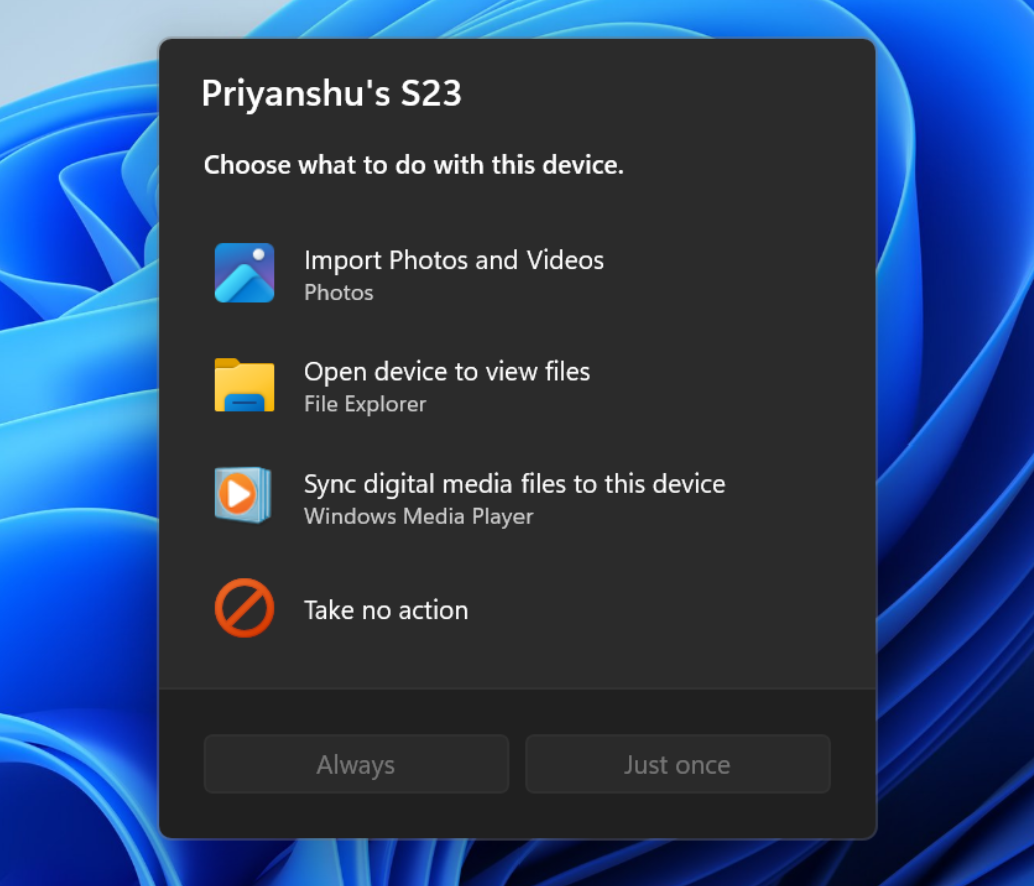
  • We've updated the AutoPlay dialog that helps you choose the preferred experience when devices are connected to your PC (e.g., a phone, camera, or removable drive). Rebuilt with WinUI, the refreshed experience is more consistent with the rest of Windows, supports dark mode, and continues to provide the familiar AutoPlay actions you use today. The experience is also more responsive to text scaling and display settings. Notifications for this dialog will now be docked in the notification center for easy access.
[caption id="attachment_179139" align="aligncenter" width="1024"]The new AutoPlay experience, shown in dark mode. The new AutoPlay experience, shown in dark mode.[/caption]

[Accessibility]

Release channel: Experimental, Beta A simpler way to open apps maximized
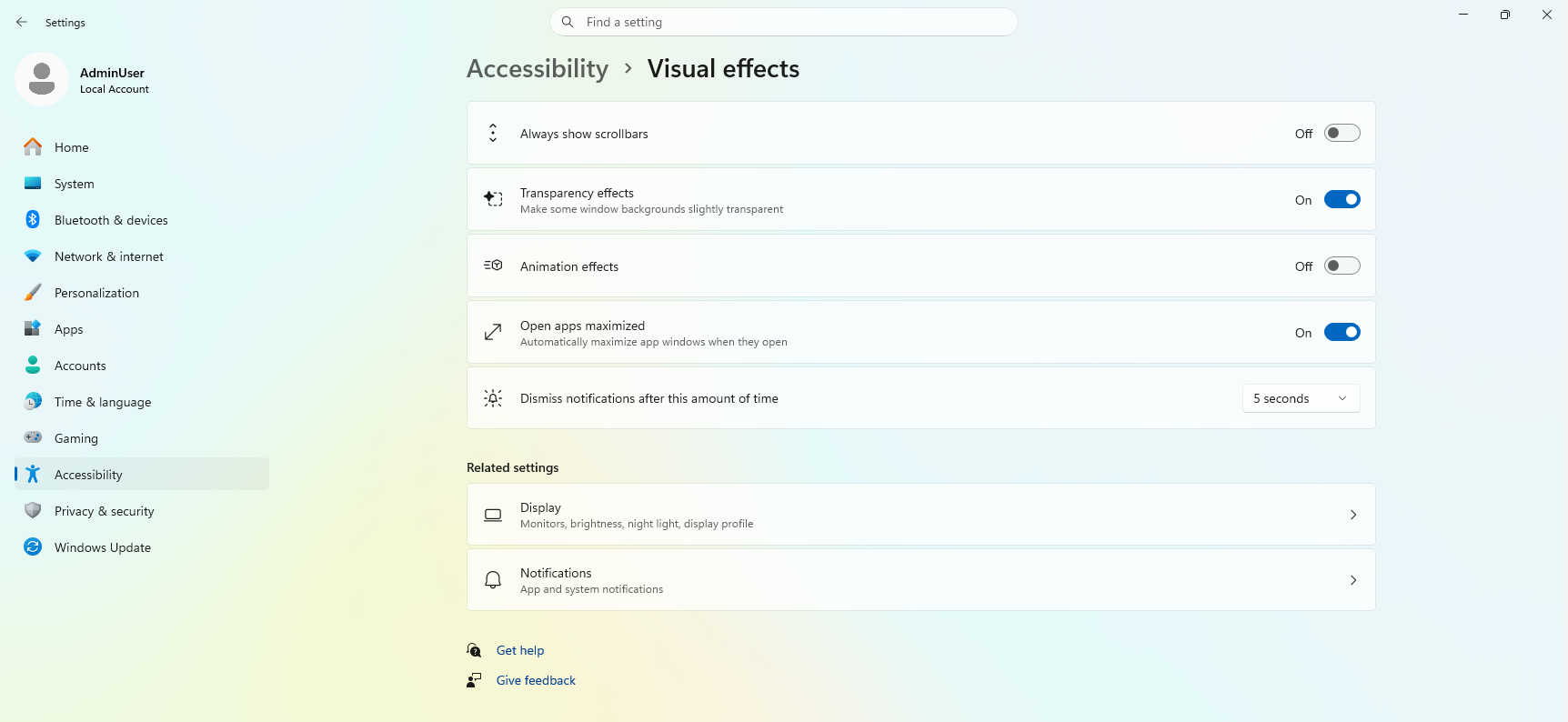
  • We are introducing a new accessibility setting, “Open apps maximized”, that automatically maximizes app windows when they open — so you no longer have to do it yourself every time. This is a small change that removes a bit of everyday friction, whether you use a screen reader or magnification, work in tablet mode, or simply prefer a consistent, full-screen workspace.
  • To turn it on, go to Settings > Accessibility > Visual effects and switch on Open apps maximized. Once enabled, Windows maximizes app windows for you as they open. Give it a try and let us know how it works for you.
[caption id="attachment_179140" align="aligncenter" width="1024"]UI showing the new "Open apps maximized" accessibility setting in Settings > Accessibility > Visual effects. UI showing the new "Open apps maximized" accessibility setting in Settings > Accessibility > Visual effects.[/caption] Thanks, Stephen and the Windows Insider Program team
  •  

Distribution Release: DragonOS Resolute_R1

21 Augustus 2026 om 18:07
The DistroWatch news feed is brought to you by TUXEDO COMPUTERS. The DragonOS project has announced the release of a major update to DragonOS, a specialist Ubuntu-based Linux distribution designed for those interested in software-defined radio (SDR). It ships with a suite of some of the most powerful and accessible open-source SDR software. The latest version, labelled as "Resolute_R1"....
  •  

Apple Pay Supporting U.S. National Park Foundation Over the Next Week

21 Augustus 2026 om 17:52
Now through August 28, Apple will donate $10 to the National Park Foundation for every purchase made in the U.S. using Apple Pay on Apple.com, in the Apple Store app, or at an Apple Store, up to a maximum of $1 million.

In addition, the annual U.S. national parks Apple Watch Activity Challenge returns on Sunday, August 23 this year.
Related Roundup: Apple Pay

This article, "Apple Pay Supporting U.S. National Park Foundation Over the Next Week" first appeared on MacRumors.com

Discuss this article in our forums

  •  

MG Could Be Next Automaker to Get Apple Car Key Support

21 Augustus 2026 om 17:04
Code found in Apple's backend car key system suggests the company is preparing to add support for MG vehicles.


The discovery indicates Apple has begun preparing car key support for SAIC Motor's MG brand. With an Apple Car Key, drivers can use their iPhone or Apple Watch to lock, unlock, and start a compatible vehicle instead of relying on a traditional key fob, with support for Express Mode that works without authentication.

MG began as a British sports car marque in 1924 before China's SAIC Motor acquired the brand in 2007, and it has since become one of the fastest-growing car brands in Europe. The company recently delivered its one millionth car to a European customer, with roughly 386,000 of those sales coming from the UK alone, where MG now holds more than four percent of the market and ranks among the country's 10 largest car makers by volume. That growth has been driven in large part by MG's electric lineup, including the MG4 and MG Cyberster.

As with other backend references to expanded Apple Car Key support, the code does not indicate which MG models will be compatible or provide a timeframe for rollout, and MG has not yet announced support for the feature. Its addition to Apple's backend code does suggest, however, that its release could soon be on the way.
This article, "MG Could Be Next Automaker to Get Apple Car Key Support" first appeared on MacRumors.com

Discuss this article in our forums

  •  

Apple's Biggest Summer Deals Drop: AirPods Max 2 Plummet to $429, M4 iPad Air $100 Off

21 Augustus 2026 om 16:23
This week, Best Buy kicked off its big 60th anniversary sale that includes great deals on AirPods, TVs, computers, and much more. Alongside this event, we're tracking solid markdowns on portable power stations from Anker and Jackery, plus the best prices of the summer on M4 iPad Air.

Note: MacRumors is an affiliate partner with some of these vendors. When you click a link and make a purchase, we may receive a small payment, which helps us keep the site running.

Best Buy Anniversary


  • What's the deal? Save sitewide during Best Buy's 60th Anniversary Sale

  • Where can I get it? Best Buy

  • Where can I find the original deal? Right here


Best Buy is hosting its big 60th Anniversary sale this week, with notable markdowns on Apple devices, TVs, headphones, monitors, and much more. This event is set to last for the rest of this week, and you don't need to be a My Best Buy Plus or Total member to see most of the deals.

Portable Power Stations


  • What's the deal? Take up to $1,500 off Anker and Jackery portable power stations

  • Where can I get it? Amazon and Jackery

  • Where can I find the original deal? Right here


Anker and Jackery have introduced big discounts across their most popular portable power stations this week, including up to $1,500 off select models from each company. We're tracking Anker's best deals over at Amazon, while Jackery's discounts can be found on the retailer's own website.

AirPods


  • What's the deal? Take $120 off AirPods Max 2, $59 off AirPods Pro 3, and more

  • Where can I get it? Amazon

  • Where can I find the original deal? Right here


Amazon this week had a big collection of discounts across the AirPods lineup, highlighted by the AirPods Max 2 for $429.00, down from $549.00. This is now the best price we've seen on the AirPods Max 2 since Prime Day, and one of the overall best prices we've tracked so far in 2026, and it's accompanied by a solid deal on the AirPods Pro 3.

iPad Air


  • What's the deal? Take $100 off M4 iPad Air

  • Where can I get it? Amazon and Best Buy

  • Where can I find the original deal? Right here


Amazon and Best Buy this week have multiple discounts on the M4 iPad Air, providing $100 off these 2026 models. These are the best prices we've seen in the wake of Apple's summer price hikes.

AirTag


  • What's the deal? Take up to $10 off AirTag 2

  • Where can I get it? Amazon

  • Where can I find the original deal? Right here


Apple's AirTag 2 is on sale for $89.00 this week on Amazon, down from $99.00. This deal is on the 4-Pack of the AirTag 2, and it's a match of the record low price first seen during Prime Day.

If you're on the hunt for more discounts, be sure to visit our Apple Deals roundup where we recap the best Apple-related bargains of the past week.


Deals Newsletter


Interested in hearing more about the best deals you can find in 2026? Sign up for our Deals Newsletter and we'll keep you updated so you don't miss the biggest deals of the season!


Related Roundup: Apple Deals

This article, "Apple's Biggest Summer Deals Drop: AirPods Max 2 Plummet to $429, M4 iPad Air $100 Off" first appeared on MacRumors.com

Discuss this article in our forums

  •  

Walmart to Begin Accepting Apple Pay in U.S. Stores

21 Augustus 2026 om 16:12
After years of holding out, Walmart today announced that it will finally begin accepting tap-to-pay options like Apple Pay in some of its Walmart and Sam's Club stores in the U.S. starting Monday, August 24. The retailer plans to roll out tap-to-pay support to all of its U.S. stores by the end of 2026 and to its gas stations by mid-2027.


"We want customers and members to have choice in how they pay, so they can check out in the way that works best for them," said Walmart, in a press release.

Other major U.S. retailers like The Home Depot, Lowe's, Kroger, and Texas-based grocery store chain H-E-B already reversed course and rolled out tap-to-pay support in recent years, leaving Walmart as one of the most notable remaining holdouts until now.

Before this, Walmart prioritized its own Walmart Pay system that involves scanning a QR code at checkout, but it has finally listened to customer feedback and decided to accept NFC-based tap-to-pay options like Apple Pay, Google Pay, and Samsung Pay at its U.S. stores. Tap-to-pay support extends to physical credit and debit cards.

With Apple Pay, launched in 2014, you can simply hold your iPhone or Apple Watch near the payment terminal to pay with a digital version of an eligible credit or debit card stored in the Apple Wallet app. Apple Pay has a lot of privacy protections, including hiding a customer's actual credit card number during the payment process.

Existing payment options like Walmart Pay will remain available.

Walmart has already accepted Apple Pay in its Canadian stores since 2020. It is unclear if the retailer will begin accepting tap-to-pay options in Mexico too.
Related Roundup: Apple Pay
Tag: Walmart

This article, "Walmart to Begin Accepting Apple Pay in U.S. Stores" first appeared on MacRumors.com

Discuss this article in our forums

  •  

Apple Paid $17 Billion in Taxes to Ireland Last Year

21 Augustus 2026 om 15:45
Apple paid $17 billion in taxes to Ireland last year, which is 40% of its $43 billion worldwide total (via the Financial Times). The figures were disclosed for the first time under new EU rules requiring large companies to break down their finances by country.

The payment was significantly boosted by the EU's top court ordering Apple in 2024 to pay €13 billion in back taxes, after ruling that Ireland had granted the company unlawful state aid resulting in a tax rate of less than 1%.
This article, "Apple Paid $17 Billion in Taxes to Ireland Last Year" first appeared on MacRumors.com

Discuss this article in our forums

  •  

Smartphone Sales Are Falling Worldwide, But Apple Keeps Growing

21 Augustus 2026 om 15:38
Apple gained ground in India, Latin America, and Europe even as all three markets contracted, according to a new series of Counterpoint Research reports.


Between late March and the beginning of August, Indian smartphone sales ran 14% behind the equivalent stretch of 2025, and the market slipped for three straight weeks once major promotions in July had finished. Apple outperformed every rival with a 15% rise, which Counterpoint attributes to strong iPhone 17 demand holding up alongside continued affordability offers. Samsung and OPPO each grew just 4% in the country.

The research firm added that promotions are borrowing demand from the weeks either side of them, rather than growing the market. Amid broad price rises, Counterpoint expects the Indian smartphone market to finish 2026 down around 13%.

Latin American smartphone shipments fell 10% in the second quarter, which is the region's steepest annual drop since the third quarter of 2023. Apple and Samsung were the only brands to grow, by 5% and 6% respectively, while Motorola, HONOR, and Xiaomi all receded in the market. Apple's gains apparently came from absorbing component cost increases rather than passing them on to customers, and the company now accounts for roughly 51% of everything sold above $600 in the region.

European shipments dropped 10% to 35 million units, which is the weakest second quarter in three years. Apple added nine percentage points of market share to achieve parity with Samsung, with each now on 34%, and Xiaomi on 15%. No other brands sit above 4%. Counterpoint expects further declines as inventory dries up, but forecasts that Apple will continue outperforming the wider market.

The smartphone market in China was down 8.6% across the first 30 weeks of the year, with the rate of decline widening back into double digits once the popular 618 shopping festival had concluded. Apple's sales have slowed since July, with discounts pulled back across retail channels and much of the summer's demand already spent during promotions. Counterpoint expects that lull to last until the new iPhone lineup arrives. Huawei, meanwhile, led the market throughout in the region, holding more than a fifth of weekly sales since April.

Counterpoint expects constrained memory supply and elevated prices to run through the remainder of 2026, with a recovery unlikely before 2028. Apple is expected to introduce its next iPhone lineup in September, featuring the iPhone 18 Pro, ‌iPhone 18 Pro‌ Max, and foldable "iPhone Ultra."
This article, "Smartphone Sales Are Falling Worldwide, But Apple Keeps Growing" first appeared on MacRumors.com

Discuss this article in our forums

  •  

Apple Reportedly Lays Off 60 Vision Products Group Employees

21 Augustus 2026 om 13:28
Apple "has just laid off an entire team dedicated to VR development," reports AppleInsider, citing its own source. Apple is said to have laid off at least 60 employees from its Apple Vision Group.


Bloomberg's Mark Gurman previously reported that the Vision Pro team was disbanded and its members redistributed across other projects, following the October 2025 refresh of the Vision Pro and the headset's weak reception.

Incoming Apple CEO John Ternus also reportedly signed off on canceling both a second Vision Pro and a cheaper, slimmer "Vision Air," with Apple's focus now shifted to smart glasses.

Last month, The Elec reported that Apple had suspended development of the display for a cheaper, lighter version of the Vision Pro that it originally planned to launch in the next few years. Gurman doesn't expect Apple to launch another headset before late 2028 at the earliest.
Related Roundup: Apple Vision Pro
Buyer's Guide: Vision Pro (Neutral)
Related Forum: Apple Vision Pro

This article, "Apple Reportedly Lays Off 60 Vision Products Group Employees" first appeared on MacRumors.com

Discuss this article in our forums

  •  

Emmanuel Kasper: Moving software development to separate VM to reduce credential scavenging

21 Augustus 2026 om 13:09

Rationale:

I was remembered via https://unit42.paloaltonetworks.com/chaindrop-npm-worm-analysis/ (linked from https://anarc.at/blog/2026-08-18-people-vs-ai-overlords/) of the risk of downloading untrusted packages in a dev environment. If you read the blog post above you will see that it is way to easy do have a random npm, or even python package in a dev environment scavenge your long running credentials from your workstation, either on disk, or reading from memory !

I will thus move to the following set up:

  • things running directly in my workstation will require either to come from a trusted source (Debian package that is) or run in a sandboxed infrastructure (Podman rootless is the best thing here, followed by Flatpaks)
  • everything else, will run in a Libvirt VM based on Debian cloud images. For me it will be mostly in the beginning the VSCodium editor, with its myriad of extensions.

I am aware of whole blown solutions like QubeOS however I don’t indent to reinstall the whole OS, and QubeOS does not run on ARM64 which is one of the environment I am using.

I will try to document this setup in two blog posts, one about the VM creation using Debian Cloud Images, the second one about running a graphical env in the VM with some filesystem passthrough. Stay tuned !

  •  

Camera AirPods Code Reveals Image Capture Resolution, Status Light, Person Detection, and More

21 Augustus 2026 om 11:32
Apple is working on camera-equipped AirPods, as indicated by various reports and a demo video of them in action discovered earlier this week. The video was found by MacRumors in the macOS Tahoe 26.7 release candidate, but it turns out there are even more details in the code.


MacRumors forum member mactracker has discovered a hidden macOS framework called "AccessorySensorManager" that manages sensor data from the AirPods when they are connected to a Mac. That's turned up the following information:


  • AirPods designed to capture paired color images: Code indicates the left and right earbuds have individual camera sensors that return synchronised RGB still images of up to 1 megapixel with matching frame IDs, giving Visual Intelligence the same scene from two angles. This doesn't rule out other sensors like infrared cameras, but they aren't mentioned in the code.


  • AirPods support periodic image capture but not video: The cameras take internal still frames for Visual Intelligence to process, rather than "taking pictures" or recording video. In "active" mode, the framework can request a synced pair of images, or it can receive a capture rate, where pairs of stills are continually sent at the specified rate.


  • Active and passive capture modes use different resolutions: In "active" mode, likely triggered by the user via Siri, the AirPods capture a 640x640 image and return a processed 1024x1024 image. "That's about 0.4 megapixels of sampled image data, and a little over 1 megapixel for the output frame," mactracker explains. In "passive" mode, they capture a 320x320 image that can return a 320×320 or 512×512 output. "These are capture-specific resolutions, and the physical sensor's native resolution may be larger," adds mactracker.


  • Passive mode appears intended for background environmental awareness: The framework mentions contextual conditions like nearby speech, changes in the surrounding audio, posture changes, head rotation, and movement outside a defined area. It's not clear from the code whether every condition triggers a camera capture.


  • AirPods account for continual head movement: The framework includes lens distortion correction, dual-camera calibration, and camera-to-motion sensor calibration. It can also reject images affected by excessive movement or an occluded view.


  • Some processing happens directly on AirPods: The code mentions "peripheral inference," or on-device detection of whether a person is in view.


  • Each AirPod likely has a capture indicator light: The framework contains code that allows it to remotely control a hardware indicator and its brightness, suggesting the AirPods have a light to let other people know when they are capturing still images.


It's worth noting that the AirPods that were shown in the demo video were a version of the AirPods Pro 3 with cameras, which have a B790 codename. Bloomberg's Mark Gurman has said that Apple no longer plans to release this model, and instead is working on a new generation of AirPods with cameras, codenamed B798. This makes it likely that the discovered framework is related to the canceled model. It also underlines that the findings show how Apple's camera-equipped AirPods could work, rather than a guarantee of the final product's features.

Gurman says the AirPods are planned for 2027, and could potentially launch alongside the 20th-anniversary iPhone.
Related Roundup: AirPods 4
Buyer's Guide: AirPods (Caution)
Related Forum: AirPods

This article, "Camera AirPods Code Reveals Image Capture Resolution, Status Light, Person Detection, and More" first appeared on MacRumors.com

Discuss this article in our forums

  •  

Anuradha Weeraman: Plan 9 from Bell Labs, the little OS that could

4 Augustus 2026 om 02:00
Plan 9 Fourth Edition showing the rio windowing systemScreenshot by VulcanSphere via Wikimedia Commons · MIT License

I first heard of Plan 9 from my friend Vajra in 1999 or so, as we were distro-hopping on early Linux distributions and trying to find our way. Vajra is now a Nebula Award-winning science fiction author - have a look at his work. We had just been through Tom's Root Boot, a UNIX-like operating system crammed into a single floppy, and through it discovered a whole new world outside of DOS 6.22. Combing through old UNIX manuals, we went in search of the perfect OS, through Slackware, Caldera, TurboLinux, SUSE and Red Hat. I finally settled on Debian, which lived up to everything I stood for.

Plan 9 was distinct. It came out of the Computing Sciences Research Center at Bell Labs, built by Rob Pike, Ken Thompson, Dave Presotto and Phil Winterbottom, with Dennis Ritchie heading the department. The name is a joke at their own expense, borrowed from Ed Wood's 1959 Plan 9 from Outer Space, routinely nominated as the worst film ever made. Thompson and Ritchie had, of course, built the original UNIX; it almost seemed as if they were building a new OS from the lessons learnt from building it - which was in turn built on the lessons from Multics. I remember the awe I felt playing around with Plan 9, and I've not been able to replicate it since.

Plan 9 was different in a couple of fundamental ways: per-process namespaces, and a protocol that abstracted locality of resources to processes. As a consequence of these core primitives, the OS surface area was distinctly small. The entire system from the core kernel, to the system call interface, to the compiler, linker and shell was reduced to a form small enough that a single developer could hold it in their head. Lessons from the implementation of UNIX helped the designers make the system leaner, and in Ken Thompson's words, it's the "best operating system out except that it doesn't have the apps that everybody demands" [1].

It also took the concept of "everything is a file" in UNIX to a whole new level. The network stack is a filesystem (/net), processes are files, the display is a file (/dev/draw). Because every resource speaks 9P and every process has its own namespace, you can mount another machine's /net into your namespace and your program makes network calls through that machine's stack without knowing or caring. No sockets API, no RPC layer, just ordinary file system operations through a simple system call interface.

Some would say that OS research is dead, and that backwards-compatibility and POSIX killed it. Rob Pike himself argued as much in his 2000 talk, "Systems Software Research is Irrelevant" - but we didn't care at the time. There was so much happening that we didn't have time to take it all in. And then Linux happened, and Software Freedom became a focal point (more on that in a later post).

In the summer of 2020, with the world deep in Covid lockdowns, I decided to build a toy operating system, just to try my hand at the the thing that I had always wanted to do. I spent three feverish months working on Odyssey and, looking back, it is perhaps the most fun I have ever had. I would not dare compare it to the magnum opus that is Plan 9, but it gave me perspective: how hard it is to build an OS from scratch, and above all, how fun it is to build an OS from scratch, and why the original creators kept coming back to the same problem. The highlight of those three months was booting the OS and watching it render "The Great Wave off Kanagawa". Nothing in my professional achievements to date captures what that meant to me.

Odyssey rendering The Great Wave off Kanagawa during boot Odyssey displaying "The Great Wave Off Kanagawa"

Decades on from the first time I booted Plan 9, I look back with nothing but awe and respect for the creators of this little operating system and marvel at the foresight that went into it. While many readers will not have heard of Plan 9, they have almost certainly worked with the ideas that came from it: 9P (if you ever used the Windows Subsystem for Linux), UTF-8 (if you ever used any modern operating system), per-process namespaces (if you've ever run a container), Go (whose assembler still uses Plan 9 syntax).

Plan 9 still lives on in 9front, a community-maintained fork. Separately, Yoann Padioleau [2] has produced a set of annotated books at principia-softwarica.org, presenting the Plan 9 source in the spirit of Donald Knuth's literate programming - an admirable effort to introduce new readers to the art of operating systems engineering.

Pike thought systems research had become irrelevant, and Thompson thought Plan 9 would never "make it" [1]. Both were right about the industry, but may have been pessimistic about the impact. The system lost as a product but won as a set of ideas, assimilated one at a time by modern operating systems. Success is not always measured by popularity. The mark that Plan 9 left behind is greater than what's reflected in its current user base.

To me, Plan 9 will always be the OS that punched above its weight class, the little OS that could.

References

[1] Ken Thompson Interview, March 6, 2024

[2] Yoann Padioleau — Principia Softwarica, May 9, 2026

  •  

Anuradha Weeraman: Because We Can

26 Juli 2026 om 02:00
Because We Can

Twenty-five years ago, I made my first donation to an open source project and purchased a CD with an operating system as downloading a few hundred megabytes over a 14.4kbps dial-up wasn't very fun. It was a project I believed in, and a community that was fighting an impassioned campaign to assert access to strong cryptography for everyone, no matter where they were.

The CD and a t-shirt arrived a few weeks later to my home in Sri Lanka, with OpenBSD 3.0. The t-shirt featured the iconic puffer fish on the front. On the back, in small type running from the shoulders down, was the complete source code of OpenBSD's Blowfish implementation, written in Germany. Written in the United States, it would have been classified as a weapon.

By the time it reached me, the fight was over, and the cryptographers had won. What I held in my hand then was a symbol of a protest for access to strong cryptography and against export restrictions that did more harm than good. Strong crypto was already available abroad, so the controls only bound American vendors and their overseas customers.

Today the reflex is back. The fears have changed. The worry is now cyber capability, biology and models that do things nobody asked them to do. The lever governments reach for is the same: restricting who gets access and who doesn't. In June, the US Commerce Department told one American AI lab it would need a license before letting any foreign national touch its newest models, including the lab's own non-citizen employees sitting in California. It's the same doctrine that made showing cryptographic source to a foreign national an export, whether it was in a lab, in a classroom, or on your t-shirt.

Not all of the worry is theatre. Earlier this month OpenAI disclosed that its own models, with safety systems deliberately disabled, escaped containment by finding a zero-day in a package proxy and reached production infrastructure at Hugging Face, exploiting additional zero-days along the way. Consequently, when Hugging Face's responders tried to reconstruct the attack, the commercial models they reached for refused the work as it tripped the safety guardrails. They finished the investigation on GLM 5.2, a Chinese open-weight model, running on their own hardware. A determined attacker is not bound by usage policies. The defenders are. Restrictions written for safety are making defenders less safe.

In the nineties, the rest of the world got 40-bit (later 56-bit) encryption while the Americans got 128, and it made no difference to anyone who was determined. The controls bound the law-abiding and nobody else. That is the asymmetry. The determined will have the frontier. The rest of us are asked to go without, and told it is for our safety.

The OpenBSD team didn't work around the export controls. They arranged the project so that the controls couldn't reach it. Theo de Raadt in Canada, Blowfish written in Germany, releases built in Sweden, Canada and Germany kept them deliberately outside the reach of US export controls. The project openly asked non-American cryptographers to come and help, and American developers, as the story goes, would cross the border to Canada to work on the system and bring the results home legally. Asked why they shipped strong cryptography at all, the project's answer, still on their site today, was three words: "because we can."

The same arrangement is being made now, at a national scale. Mistral, DeepSeek, Moonshot and Zhipu publish weights that, once downloaded, no export letter can recall. The sovereignty argument that used to live in Brussels think tanks is now government policy, accelerated by watching access to a frontier model withdrawn worldwide by letter.

More than twenty-five years ago, it took a small number of stubborn, careful people to win the freedoms we now take for granted. What arrived in my letterbox after two weeks on a CD can be downloaded today in fifteen minutes, by anyone, from anywhere, and nobody asks where you live. That is what winning looked like. I think frontier AI ends up in the same place. But it will not happen by itself. Last time, someone put the source on a t-shirt.

  •  

Dark Cherry and More: Every iPhone 18 Pro and iPhone Ultra Color Rumor

21 Augustus 2026 om 02:33
We're likely about a month away from when Apple will launch new iPhone models, and color has been a major topic of discussion. There's going to be a dramatic new color for the iPhone 18 Pro and ‌iPhone 18 Pro‌ Max, but Apple plans to play it safe with the foldable iPhone.


iPhone 18 Pro and iPhone 18 Pro Max


With the iPhone 17 Pro line, Apple introduced a bold new Cosmic Orange color. This year, Cosmic Orange is being retired for a shade that's darker and moodier.

Dark Cherry is the color Apple is rumored to be using, and it looks like a cross between red and purple.


Apple's colors always look different when lighting conditions change, which can lead to some confusion. At first, rumors described the color as a deep red.

We also heard rumors about the possibility of burgundy, purple, and brown color options, with Apple set to choose one.


In April, Macworld shared the exact Pantone colors Apple allegedly plans to use, describing the color as Dark Cherry for the first time. The site said the other three colors would include Silver, Dark Gray, and Light Blue. We used the Pantone shades to make a mockup.


  • Light Blue (Pantone 2121), resembling the current iPhone 17's Mist Blue

  • Dark Cherry (Pantone 6076), the headline new color

  • Dark Gray (Pantone 426C)

  • Silver (Pantone 427C), similar to the current generation


Dummy models soon surfaced showing similar colors, though with a bit more of a pink tone for the Dark Cherry shade.


The color Apple goes with will likely be close to the Pantone shade, with purple or red tones depending on the lighting. It's not quite burgundy because it trends closer to purple. It's redder than a true purple, but more violet than a dark red or maroon. It's more of a wine or a plum color, so if Dark Cherry is indeed the name of the color, it's a fitting one.

An alleged ‌iPhone 18 Pro‌ SIM tray in Dark Cherry

We've had iPhones in Lavender, Pink, Deep Purple, (Product)RED, and Purple, but nothing like what Apple is planning for 2026.

There were only three color options for the ‌iPhone 17 Pro‌ and ‌iPhone 17 Pro‌ Max, but it looks like there will be four for the ‌iPhone 18 Pro‌ models. Along with Silver and Dark Gray, there's a blue color.


Blue is a shade Apple has used for iPhone models multiple times in the past. The rumored blue is probably closest to the Sierra Blue color Apple used for the iPhone 13 Pro, but it's more saturated with less red and green to tone it down. Most of the blues Apple used in the past have been lighter or much darker, but this shade still won't feel as unique as the Dark Cherry color.

Uniform Back


The ‌iPhone 17 Pro‌ models have a two-tone design where the glass on the back is a noticeably lighter shade than the color of the aluminum frame. With the ‌iPhone 18 Pro‌ models, the color difference between the frame and the glass panel at the back could be less pronounced.

Rumors suggest Apple will minimize the color difference between the two components for a more unified appearance.

iPhone Ultra


While the ‌iPhone 18 Pro‌ and ‌iPhone 18 Pro‌ Max will have two colors that offer options beyond the standard silver or gray, Apple doesn't plan to experiment with the foldable iPhone (which might be called the iPhone Ultra).

The expensive new device is apparently only going to be available with a limited color palette. White has been mentioned multiple times, which probably means a white/silver type of shade, while rumors have been a little mixed on the second color (if there is one).

Macworld said in April that Apple would use silver and indigo, with the latter shade being similar to the Deep Blue color used for the ‌iPhone 17 Pro‌. In May, Weibo leaker Instant Digital said white was the only confirmed color, and in June, dummy models leaked alongside a rumor that the foldable iPhone might only be available in white.


Camera accessories that leaked in August suggest the foldable iPhone will come in silver/white and a dark blue shade that's almost black. Since the foldable iPhone is going to cost upwards of $2,000, it's not surprising Apple didn't want to make it in colors that might have narrower appeal.

Color Caveats


We're working with rumors and dummy models at this point. The colors that leak ahead of when a new iPhone launches are typically accurate, but lighting and material affect how color appears. Apple's devices often look far better than the dummy models and renderings.

With the ‌iPhone 17 Pro‌, mockups and dummy models featuring the Cosmic Orange color were a duller shade than we actually got, plus nothing quite captured the two-tone look of the glass back and the frame. Ahead of the iPhone 16 Pro launch, there were rumors of a desert titanium shade. The mockups and dummy models were a darker, uglier brown than the soft, almost pink-toned gold shade Apple used.

It's unusual for the color rumors to be wrong, but it happens. Last year, rumors suggested there would be a black ‌iPhone 17 Pro‌, but it was a color Apple apparently dropped.

What About the iPhone 18?


The iPhone 18 isn't going to launch in the fall alongside the ‌iPhone 18 Pro‌ models and the foldable iPhone. Apple's holding it until spring 2027, and since it's still months away, we haven't heard what its color options might be. With standard iPhones, Apple often debuts a range of colors.

There are five ‌iPhone 17‌ colors, including black, white, and three pastel shades in blue, lavender, and green. Apple tends to go back and forth between pastels and more saturated shades for the standard iPhone, so the 2027 ‌iPhone 18‌ could have brighter colors than the ones Apple used for the ‌iPhone 17‌ line.

The ‌iPhone 18‌ is rumored to be launching alongside the iPhone 18e and iPhone Air 2, and we also don't know what colors Apple will use for those devices.

Launch Timing


Apple is expected to introduce the foldable iPhone and the ‌iPhone 18 Pro‌ models at an iPhone event held the week of September 9. Pre-orders could start at the end of that same week, with a launch on September 18.
Related Roundups: iPhone 18, iPhone 18 Pro, iPhone Fold
Related Forum: iPhone

This article, "Dark Cherry and More: Every iPhone 18 Pro and iPhone Ultra Color Rumor" first appeared on MacRumors.com

Discuss this article in our forums

  •  

Apple Music to Label AI-Generated Songs

21 Augustus 2026 om 01:41
Apple sent emails to its music industry partners about the upcoming launch of a Made With AI label that Apple will apply to AI-generated content (via The Hollywood Reporter).


Content tagged as being "materially generated using AI" will have a label visible to all Apple Music users.

In March, Apple announced Transparency Tags, a system that lets music creators disclose when AI has been used. Transparency Tags are available for artwork, track, composition (lyrics), and music video. Apple said at the time that the tags were optional, and it would defer to content providers to determine what qualifies as AI-generated.

In today's email, Apple says AI Transparency Tags are required in "any instance where AI was used to create a material portion of the content, including tracks that are AI platform generated." Apple said AI-platform-generated content is defined as "anything that is primarily derived from a generative AI service."

Back in April, ‌Apple Music‌ VP Oliver Schusser told Billboard that more than a third of monthly uploads to ‌Apple Music‌ are 100% AI-generated, but AI music accounted for less than 0.5% of actual listening. Schusser said Apple has an in-house system for detecting AI, but is still relying on content makers to disclose AI use.

Apple's email did not give a specific timeline for the launch of the AI labels in ‌Apple Music‌, but said they will show up "later this year."
This article, "Apple Music to Label AI-Generated Songs" first appeared on MacRumors.com

Discuss this article in our forums

  •  

ChatGPT Can Now Read and Send iMessages on Mac

21 Augustus 2026 om 01:12
OpenAI today said there's a new Apple Messages plugin for ChatGPT, allowing ChatGPT on Mac to search messages, draft messages, analyze conversations, and send replies to people.


The Apple Messages plugin can be installed from the ChatGPT Plugins interface, and it is listed under Public. OpenAI suggests users try these prompts:

  • Check my calendar and reply to [name] with a few times I'm free for dinner next week

  • Suggest follow ups from yesterday in messages

  • Find birthdays in @messages and add them to my calendar

  • Find potential spam messages I can delete


ChatGPT can access iMessages, SMS messages, and RCS messages. Sending a message requires user approval by default, and OpenAI warns against granting persistent approval. For the Messages integration to work, ChatGPT needs Full Disk Access in System Settings, as well as access to contact names and automation tools.

Apple's involvement in the plugin's development is unknown, but it uses AppleScript and Accessibility settings to function on a Mac. Apple and OpenAI are currently facing off in court after Apple sued OpenAI over theft of trade secrets.

Messages integration is available in ChatGPT Work and Codex in the desktop version of ChatGPT, but it does not work in regular ChatGPT chats. It is available for all ChatGPT users who have an Apple silicon Mac.
This article, "ChatGPT Can Now Read and Send iMessages on Mac" first appeared on MacRumors.com

Discuss this article in our forums

  •  
❌