Normale weergave

Reproducible Builds: Reproducible Builds in June 2026

11 Juli 2026 om 21:27

Welcome to the June 2026 report from the Reproducible Builds project!

In these reports, we outline the most important things that we have been up to over the past month. As a quick recap about what problem our project intends to solve, whilst anyone may inspect the source code of free software for malicious flaws, almost all software is distributed to end users as pre-compiled binaries. The motivation behind the reproducible builds effort is to ensure no flaws have been introduced during this compilation process by promising identical results are always generated from a given source, thus allowing multiple third-parties to come to a consensus on whether a build was compromised or not.

If you are interested in contributing to the project, please visit our Contribute page on our website.

In this month’s report, we cover:

  1. Only installing reproducible packages with repro-threshold
  2. Distribution work
  3. diffoscope development
  4. From our mailing list…
  5. Documentation updates
  6. Patches
  7. Four new scholarly papers


Only installing reproducible packages with repro-threshold

A very interesting demonstration is now available showing how you might configure your Debian system to only install packages that have been reproduced by m/n rebuilders.

This is implemented via a reproduced+https:// APT transport ( a mechanism for communicating between the APT client and its repository source — commonly HTTP):

Every package download is intercepted by repro-threshold, which queries two independent rebuilders for a signed attestation before allowing installation to proceed. [It] is important to note that [an] install will only succeed if all package dependencies are also reproducible.

The demo gives examples of how to quickly experiment with this using a Docker container.


Distribution work

In Debian this month:

The IzzyOnDroid Android APK repository reached its next milestone this month, now covering 2 out of every 3 apps (66.7%) with reproducible builds. Their documentation for debugging and fixing failed builds has steadily grown as well. More clients have picked up showing reproducibility results (e.g. Droid-ify), and Neo Store now can be configured to stick to only reproducible applications. Further, an independent builder has been added to the build farm, increasing the trust level even more as APK builds can have multiple confirmations now.

At the same time, IzzyOnDroid’s rbtlog got several new features. The most outstanding is caching for frequently used resources such as reproducible-apk-tools, command-line tools and NodeJS in order to counter ongoing issues with GitHub availability, while at the same time saving bandwidth and build time. This change also enables some other some smaller enhancements such as being able to configure build timeouts per recipe for those builds running longer than the average, release pattern filtering for update checks or having a field for maintainer notes to shortly summing up e.g. why a reproducible build failed.


Lastly, Bernhard M. Wiedemann posted another openSUSE monthly update for their reproducibility work there.


diffoscope development

diffoscope is our in-depth and content-aware diff utility that can locate and diagnose reproducibility issues. This month, Chris Lamb made the following changes, including preparing and uploading versions 319, 320, 321, 322 and 323 to Debian:

  • Debian adds an extra Flags: line in the output of ocamlobjinfo, so adjust the test for cross-distribution compatibility. []
  • Bump debhelper compatibility level to 14. []
  • Fix compatibility with Ocaml 5.4.1. []
  • Use --long-form-style arguments when calling apktool in order to support apktool version 3. []
  • Support Androguard version 4 and previous versions at the same time. []
  • Update copyright years. []

In addition, Jochen Sprickerhof added better header detection for the Sphinx documentation system [], Michael Daniels fixed the tests when run with zipdetails version 4.006 [] and Zbigniew Jędrzejewski-Szmek added a version of the deprecated os.path.commonprefix method [].

In addition, Vagrant Cascadian updated diffoscope in GNU Guix to version 321 and 323.


Chris Lamb also made the following changes to strip-nondeterminism, our tool to remove specific non-deterministic results from a completed build:

  • Skip symlinks when manually called via /usr/bin/strip-nondeterminism. (#1139000)
  • Update debian/watch format. []
  • Drop Rules-Requires-Root: no and Priority: optional fields. []
  • Bump Standards-Version to version 4.7.4. []


From our mailing list…

On our mailing list this month:

  • kpcyrd posted to our mailing list regarding the “waves of malware uploads to aur.archlinux.org”. Curiously, “every incident I looked at used npmjs.com for malware delivery”, specifically where the npm package includes an (automatically executed) preinstall script that is an ELF binary.

  • kpcyrd also announced the release of debian-repro-status version 0.4.0, a tool written “to give you an approximate idea of how viable it would be to enforce a ‘reproducible packages only’ update policy for the computer system you’ve built”:

    The change updates dependencies to the latest versions, and adds support for multiple -H options, to query results from multiple rebuilderd instances. The results are also now fetched concurrently.

  • kpcyrd also reported that, whilst taking a screenshot for the above release, they noticed that the debian:sid container now is 100% reproducible.

  • Finally, kpcyrd also created a pull request against the add-determinism package to update the itertools and zip Python dependencies.


Documentation updates

Yet again, there were a number of improvements made to our website this month including:

  • Chris Lamb added a reminder re. using the UTC variants of the Javascript Date methods. []

  • Mattia Rizzolo moved OTF to the ‘old’ sponsors list. Thank you for your support!. []

  • kpcyrd updated the Rust documentation to recommend using the --release argument for consistency. []


Patches

The Reproducible Builds project detects, dissects and attempts to fix as many currently-unreproducible packages as possible. We endeavour to send all of our patches upstream where applicable or possible. This month, we wrote a large number of such patches, including:


Four new scholarly papers

Kenichiro Muto and Kuniyasu Suzaki of the Institute of Information Security in Yokohama, Japan published an interesting paper this month titled Attestable Build Chain: Enabling Trust in Reproducible Builds (PDF). Their abstract is as follows:

Ensuring trust in software supply chains requires verifying not only artifacts but also the processes that produce them. Although Reproducible Builds (R-B) require rebuilding to validate artifacts, they cannot verify whether the build was executed with the intended toolchain and inputs and may reproduce unintended or compromised builds without detection. We present Attestable Build Chain, a framework for externally verifying build-time execution without rebuilding. Rather than preventing compromise, it provides verifiable, tamper-evident evidence of actual build-time execution, enabling verification of build process integrity from observed file accesses during the build. []


Julien Malka, Stefano Zacchiroli and Théo Zimmermann published a 50-page report detailing A Decade of Software Reproducibility in the Nix Package Ecosystem:

We find that functional package management enables extremely high rebuildability over time (near-universal ability to reconstitute historical build environments and rebuild software packages), while bitwise reproducibility has steadily improved and reaches a high point in recent years (up to 93% in 2024). Early years show substantially lower bitwise reproducibility, indicating that functional package management alone does not guarantee bitwise-identical outputs, and that the observed high level of bitwise reproducibility is not solely due to the package management approach. Common causes of unreproducibility, both in the rebuildability and bitwise reproducibility dimensions, include management of dates in build and test processes; we quantify their prevalence and other common causes using manual analysis of logs of rebuild failures and automated analysis of diffoscope.

A PDF of their report is available online


Tim Bastin of L3montree GmbH and Jacek Galowicz of Applicative Systems GmbH from DevGuard published a paper detailing How We Built a Sovereign, Reproducible Container Supply Chain for DevGuard:

This paper presents how the DevGuard project rebuilt its OCI container pipeline around reproducible Nix builds and independent dual-platform digest verification. DevGuard images are built hermetically from pinned source revisions, signed with Sigstore/Cosign, and verified through digest comparison across GitHub Actions and sovereign GitLab infrastructure hosted on container.gov.de. We describe the practical integration of reproducible OCI image builds into existing CI/CD workflows and argue that independently reproducible container digests provide a stronger integrity guarantee against build tampering than provenance alone. The paper further discusses remaining trust assumptions and the relevance of sovereign build infrastructure for government and regulated environments.


Finally, Yiseul Choi, Junga Kim, Jun-Ho Hong and Seongmin Kim of the Department of Convergence Security Engineering at the Sungshin Women’s University in Seoul, Korea titled Attestation-based verification of SBOM integrity via consumer-side reproducibility:

Software bills of materials (SBOMs) support supply chain transparency, but they do not prove that a delivered SBOM reproducibly corresponds to its software artifact. Existing signing and provenance mechanisms protect integrity and traceability, yet lack consumer-side reproducible verification. We propose an SBOM integrity verification framework combining procedure disclosure, consumer-side reproduction, authority-generated reference evidence, and digest comparison. A trusted authority records a reference digest, and consumers compare it with locally reproduced and delivered SBOM digests. Experiments on 100 real-world container images show detection of artifact tampering, SBOM substitution, distribution modification, and adaptive tampering beyond signature-based approaches


Finally, if you are interested in contributing to the Reproducible Builds project, please visit our Contribute page on our website. However, you can get in touch with us via:

  •  

Score Summer-Ready Anker Accessories at Rare Low Prices This Weekend

11 Juli 2026 om 16:54
Anker's Prime 3-in-1 Wireless Charging Station has dropped to $99.74 on Amazon, down from $149.99. This is one of Anker's newest accessories, and Amazon's sale today is a match of the all-time low price that we last tracked during Prime Day.

Note: MacRumors is an affiliate partner with some of these vendors. When you click a link and make a purchase, we may receive a small payment, which helps us keep the site running.

The Prime 3-in-1 Wireless Charging Station features Qi2.2 support, which lets a compatible MagSafe ‌iPhone‌ charge at up to 25W. It's the same speed as Apple's ‌MagSafe‌ charger, and it is 10W faster than the standard Qi2 ‌MagSafe‌ chargers. You can also simultaneously charge an Apple Watch and AirPods with the device.


Below you'll find a list of the best Anker discounts on Amazon this week, also including wall chargers, portable batteries, and more. There are a few more accessories that are matching their Prime Day prices, including Anker's SOLIX Power Station with Lantern. You can get this accessory for $189.99, down from $249.99.

Wall Chargers


Wireless Chargers


Portable Chargers


Portable Power Stations


If you're on the hunt for more discounts, be sure to visit our Apple Deals roundup where we recap the best Apple-related bargains of the past week.


Deals Newsletter


Interested in hearing more about the best deals you can find in 2026? Sign up for our Deals Newsletter and we'll keep you updated so you don't miss the biggest deals of the season!


Related Roundup: Apple Deals

This article, "Score Summer-Ready Anker Accessories at Rare Low Prices This Weekend" first appeared on MacRumors.com

Discuss this article in our forums

  •  

Top Stories: 'iPhone Ultra' and Apple TV Rumors, iOS 27 Beta 3, and More

10 Juli 2026 om 21:19
Apple's annual iPhone event is just two months away, but we're still not quite clear on when and in what quantities the new foldable "iPhone Ultra" will be available. It sounds like we could end up in a situation similar to that of the iPhone X where it was introduced at the September event but didn't become available for pre-orders until around six weeks later.


Other news this week included a third round of developer betas for iOS 27 and related updates, some fresh iPhone 18 Pro rumors, a recap on where things stand with the next-generation Apple TV, and more, so read on below for all of the details!

Top Stories


'iPhone Ultra' Likely to 'Repeat the iPhone X Story' With Delayed Launch


Apple will likely "repeat the iPhone X story" by unveiling its foldable iPhone at the same time as the iPhone 18 Pro and iPhone 18 Pro Max, but starting foldable iPhone pre-orders at a later date, according to analyst Ming-Chi Kuo.


Kuo this week said manufacturing challenges have limited early production of the foldable iPhone, which will reportedly be named iPhone Ultra. As a result, he believes the device may launch at some point after the iPhone 18 Pro models.

In 2017, Apple unveiled the iPhone 8, iPhone 8 Plus, and iPhone X on September 12. iPhone 8 and iPhone 8 Plus pre-orders began just three days later, while iPhone X pre-orders began six weeks later on Friday, October 27. Likewise, Kuo believes the foldable iPhone may not be available to pre-order until the fourth quarter of 2026.

Everything Coming in the 2026 Apple TV 4K


The Apple TV 4K hasn't been updated since 2022, and it's due for a refresh. An update is planned for 2026, but Apple is likely going to wait to launch it until Siri AI launches in iOS 27.


Check out our recap of everything we're expecting for the next iteration of Apple's set-top box, from specs and feature support to pricing and a launch date.

Everything New in iOS 27 Beta 3


Apple is continuing to refine iOS 27 ahead of its planned September launch, and the third developer beta released this week includes several new features. Siri is more customizable, there's a fun new wallpaper action, and there are some useful improvements to Photos and Shortcuts.


On the Mac side, the new macOS beta includes gorgeous new Golden Gate-themed wallpapers that can also serve as screen savers.

Public betas of the upcoming releases will be available sometime this month.

Apple Intelligence Home Features Require 2TB iCloud+ Plan in iOS 27


Using Apple Intelligence camera features in the Home app will require an iCloud+ plan starting at 2TB, according to Apple.


In iOS 27, iPadOS 27, and macOS 27 Golden Gate, the Home app is able to generate written summaries for motion alerts from HomeKit Secure Video cameras. It's also able to group footage from separate cameras for an overview of activity and pull out noteworthy recordings, plus it supports natural language search.

Apple said at WWDC that some ‌Apple Intelligence‌ features would require an ‌iCloud‌+ plan, but it hadn't specified which tier users would need to subscribe to. For the Home features, users will need the $9.99/month 2TB ‌iCloud‌+ plan or better.

iPhone 18 Pro Battery Capacities Revealed by Regulatory Filings


New Chinese regulatory certification filings appear to confirm the battery capacities of Apple's upcoming iPhone 18 Pro and ‌iPhone 18 Pro‌ Max models.


According to filings in China's C3 database, spotted earlier this week by the leaker known as "Digital Chat Station" on Weibo, the ‌iPhone 18 Pro‌ is seemingly rated for 4,056mAh in China and 4,288mAh in the U.S., up modestly from the iPhone 17 Pro's 3,988mAh and 4,252mAh. The ‌iPhone 18 Pro‌ Max shows a bigger jump, rated for 5,391mAh in China and 5,567mAh in the U.S., compared with 4,823mAh and 5,088mAh on the ‌iPhone 17 Pro‌ Max, an increase of nearly 500mAh.

The foldable "iPhone Ultra" will reportedly include two battery cells registering at 1,921mAh and 2,962mAh, for a combined minimum rated capacity of 4,883mAh.

When is Apple's 2026 Back to School Offer?


It is now July and we are still waiting for Apple to begin its annual Back to School offer in countries like the U.S. and Canada — if it is still coming. In the U.S., Apple launched its Back to School offer in June from 2020 through 2025, but it has waited until July in the more distant past.


Last year, college students and educational staff could receive a free accessory like AirPods 4 or an Apple Pencil Pro with the purchase of a qualifying Mac or iPad model. It is unclear what Apple plans to offer this year, but given the company recently raised prices on all Macs and iPads, this year's promotion would be rather bittersweet.

MacRumors Newsletter


Each week, we publish an email newsletter like this highlighting the top Apple stories, making it a great way to get a bite-sized recap of the week hitting all of the major topics we've covered and tying together related stories for a big-picture view.

So if you want to have top stories like the above recap delivered to your email inbox each week, subscribe to our newsletter!
This article, "Top Stories: 'iPhone Ultra' and Apple TV Rumors, iOS 27 Beta 3, and More" first appeared on MacRumors.com

Discuss this article in our forums

  •  

OpenAI Responds After Being Sued by Apple

11 Juli 2026 om 13:57
OpenAI has responded after being sued by Apple over alleged theft of the iPhone maker's trade secrets.

"We have no interest in other companies' trade secrets," said OpenAI spokesperson Drew Pusateri. "We remain focused on building innovative technology that empowers people everywhere."
This article, "OpenAI Responds After Being Sued by Apple" first appeared on MacRumors.com

Discuss this article in our forums

  •  

Dirk Eddelbuettel: RQuantLib 0.4.28 on CRAN: Small Update

11 Juli 2026 om 05:35

A new minor release 0.4.28 of RQuantLib arrived on CRAN this evening, has been uploaded to Debian, and is being built for r2u as well.

QuantLib is a rather comprehensice free/open-source library for quantitative finance. RQuantLib connects (some parts of) it to the R environment and language, and has been part of CRAN for nearly twenty-three years (!!) as it was one of the first packages I uploaded to CRAN.

This release of RQuantLib brings a minor update to the calendars for Israel which in QuantLib 1.43 can now use one of three different exchange choices. However, using ‘settlement’ is now deprecated so we adjusted our code. This came up as we had packaged the 1.43-rc version of the (upcoming) 1.43 release a few days ago, and it is now in testing requiring RQuantLib to catch up. Full details from the NEWS file follow as usual.

Changes in RQuantLib version 0.4.28 (2026-07-10)

  • Adjust to Israel calendar constructor change in QuantLib 1.43

  • Continuous integration uses ccache-with-R action

Courtesy of my CRANberries, there is also a diffstat report for the this release. As always, more detailed information is on the RQuantLib page. Questions, comments etc should go to the rquantlib-devel mailing list. Issue tickets can be filed at the GitHub repo.

This post by Dirk Eddelbuettel originated on his Thinking inside the box blog. If you like this or other open-source work I do, you can now sponsor me at GitHub.

  •  

Dirk Eddelbuettel: Rcpp 1.1.2 on CRAN: Usual Improvements in Semi-Annual Update

5 Juli 2026 om 17:18

rcpp logo

Team Rcpp is excited to share that an brandnew new version 1.1.2 of Rcpp is now on CRAN, has also been uploaded to Debian, and has already built for r2u and r-universe; Windows etc builds at CRAN should follow in due course.

Rcpp has long established itself as the most popular way of enhancing R with C or C++ code. Right now, 3236 packages on CRAN depend on Rcpp for making analytical code go faster and further. On CRAN, 13.4% of all packages depend (directly) on Rcpp, and 61.4% of all compiled packages do. From the cloud mirror of CRAN (which is but a subset of all CRAN downloads), Rcpp has been downloaded 121.6 million times. The two published papers (also included in the package as preprint vignettes) have, respectively, 2263 (JSS, 2011) and 471 (TAS, 2018) citations, while the the book (Springer useR!, 2013) has another 742.

The is the second update in the 1.1.* series which had, among other changes, switched to C++11 as the minimum standard. This release continues as usual with the six-months January-July cycle started with release 1.0.5 in July 2020. Interim snapshots are always available via the r-universe page and repo. We continue to strongly encourage the use of these development released and their testing—we tend to run our systems with them too.

Having said that, we would like to reiterate that we strongly object to the upstream R release and change management which in this 4.6.* cycle made several abrupt changes forcing packages which consume header files to make very abrupt change. Rcpp, just like numerous other CRAN packages demonstrates that API changes can be undertaken responsibly in a managed manner which allows for transition periods followed by possible warning periods, deprecations periods and finally (but only at long last) errors. What happened here is a speed run to the final stage of forced errors. Uncool and irritating for something as widely used as R. This forced us to make an interim release 1.1.1-1.1 even though we have of course had a policy of always keeping properly tested, installable, and error-free releases candidate version in the main repository branch and hence available via R-universe tested packages for all relevant platforms, and even via binaries for most (including Ubuntu LTS). It would be nice if R Core found a way to take advantage of this. Maybe development cycles, running apart for a year as they do for R, should also include selected packages.

Once again I am not attempting to summarize the different changes. The full list follows below and details all these changes, their respective PRs and, if applicable, issue tickets. Big thanks from all of us to all contributors!

Changes in Rcpp release version 1.1.2 (2026-07-01)

  • Changes in Rcpp API:

    • Use of execinfo.h is again conditional to avoid build complexity (Dirk in #1445 addressing #1442)

    • An internal state component for Datetime is now int (Dirk in #1448 and #1449 fixing #1447)

    • Three new (in R 4.6.0) attribute accessors are used conditionally (Dirk in #1450 closing #1432)

    • An UBSAN error in the Sugar-based NA comparison has been corrected (Iñaki in #1453 fixing #1452)

    • Treatment of Inf outside of integer range in Sugar function has been corrected (Iñaki in #1458 fixing #1455)

    • Integer overflow protection has been added for sugar functions (Iñaki in #1457 fixing #1454)

    • The parent environment is now accessed via R_ParentEnv (Dirk in #1460 fixing #1459)

    • Change to returning dataptr again for better handling of empty vectors (Iñaki in #1462 fixing #1461)

    • Undefined behavior errors in use of ListOf proxies have been addressed (Iñaki in #1464 fixing #1463)

    • Under newer R version, R_UnboundValue is no longer used (Iñaki in #1466 fixing #1465)

    • New R API access point R_getRegisteredNamespace() is used with current R versions (Dirk in #1469 fixing #1468)

    • The Nullable::as() exporter now uses an explicit cast to the templated type (Dirk in #1471 fixing #1470)

    • A memory leak in the variadic Rcpp::warning() template has been fixed (Kevin in #1475 fixing #1474)

    • The Nullable::operatorT() has been added as a 'opt-out' (Dirk in #1477 with coordination in #1472)

    • Add templated integer-index overload for operator[] on small systems such as WASM (Jeroen Ooms in #1482)

    • The attribute accessors in AttributeProxyPolicy no longer rely on get__() (Kevin in #1484 fixing #1483)

  • Changes in Rcpp Documentation:

    • Reference in the bibliography used by the package vignettes have been updated.
  • Changes in Rcpp Deployment:

    • Excute permissions are set consistently on scripts with shebangs (Mattias Ellert in #1467)

    • R 4.5.* has been added to the CI matrix (Dirk in #1476)

    • Three nag messages issued when obsolete build flag accessors are used now show Rcpp::: (Dirk in #1480 fixing #1456)

    • Reference GitHub Actions have been updated to their current versions (Dirk in #1481)

  • Non-release Changes:

    • A non-release hotfix 1.1.1-1 used by CRAN accommodates breaking changes to the API in R 4.6.0. It would be nice to have the same level of release management in R itself that CRAN expects from us.

Thanks to my CRANberries, you can also look at a diff to the previous interim release along with pre-releases 1.1.1-1 and 1.1.1-1.1 that were needed because R-devel once again sudden decided to move fast and break things. Not our doing. And there also should not have been a need to two such uploads but it was amateur hour all around.

Questions, comments etc should go to the GitHub discussion or issue section, or the Rcpp list. Bugs reports are welcome at the GitHub issue tracker as well. GitHub offers decent search for issue, pull requests and discussions; as many topics have been covered it is worth checking as well.

This post by Dirk Eddelbuettel originated on his Thinking inside the box blog. If you like this or other open-source work I do, you can sponsor me at GitHub.

  •  

Two Apple Stores in U.S. Are Moving Soon

11 Juli 2026 om 01:10
Two of Apple's retail stores in the U.S. will be relocating later this month, although they will only be a short distance from their existing locations.

Apple Renaissance at Colony Park

Apple Queens Center in Elmhurst, New York is moving to a temporary location in the shopping mall on Friday, July 17 at 10 a.m. local time, presumably to allow for renovations to be completed at the existing store over the coming months.

Apple Renaissance at Colony Park in Ridgeland, Mississippi is moving to a new spot within the same shopping center on Friday, July 24 at 10 a.m. local time. Apple's new storefront will be located right in front of the Show Fountain.
This article, "Two Apple Stores in U.S. Are Moving Soon" first appeared on MacRumors.com

Discuss this article in our forums

  •  

iOS 27: What's New With the Mail App

11 Juli 2026 om 00:26
Apple's Mail app is getting some useful updates in iOS 27, with Apple making big improvements to search and introducing new AI features.


Search


‌iOS 27‌ has an overhauled search system that extends to the Mail app. Instead of surfacing results based on keywords and recency, Mail app search ranks results by relevance and intent. Search results that come up in Mail are more relevant than before, so you find exactly what you're looking for.

If you search for "Sprouts" because you want to find a recent order, it'll show your order before it shows marketing emails you might have from the same retailer.

Siri AI


The Mail app has a built-in "Ask Siri" feature. Long press on any email and you can ask ‌Siri‌ to summarize, find an item in the email, track a package, get a flight number, save a photo, and more.

Once you get a response, you can swipe down to enter the ‌Siri‌ interface for asking follow-up questions. Conversations are logged in the ‌Siri‌ app.

‌Siri‌ can complete tasks in the Mail app too, like deleting all emails from a specified sender or adding information from an email to your Reminders list.

Writing Tools


The Mail app has a Write with ‌Siri‌ interface above the keyboard, which you can tap to get writing help. ‌Siri‌ can draft an email for you, check over an email you've written, help you reword an email, change the style of the email, or give you writing tips.

Write with ‌Siri‌ is able to match your standard writing style, punctuation, and tone, so emails sound more like you and less like AI.

Your iPhone also now flags both typos and grammar errors while you write.

Smart Reply


Smart Replies that your iPhone suggests to you are now tuned to your writing style, which means the one-tap suggestions sound like things you might actually type.

Contextual Suggestions


The contextual suggestions that you see at the top of the Mail app are now available to third-party apps, plus Apple has revamped the design.

An email that includes a flight time or a restaurant reservation has a one-tap button for adding it to the Calendar app. An email with directions may let you see the route in Maps, and emails with tracking information can be tracked with the Wallet app.

Call Context


Call Context is a feature that works between the Mail app and the Phone app. When you call a business like an airline or a retailer where you have a relevant email, the Phone app will show information pulled from that email.

You might see it bring up a reservation number for a flight, or an order number for a call with a retailer. Call Context works on-device, looking at who you're calling and not call audio.

Performance Improvements


Messages in Mail load faster, search indexing is more reliable, and unread badges between platforms like iOS and macOS sync more reliably. Apple also updated list formatting.

Requirements


The Mail app search improvements are available on all iPhones that run ‌iOS 27‌, but AI features like ‌Siri‌ AI integration, Write with ‌Siri‌, Call Context, and Contextual Suggestions require an iPhone that supports Apple Intelligence.

‌Siri‌ AI is not available in the European Union or China, and Contextual Suggestions are English-only at launch.
Related Roundups: iOS 27, iPadOS 27

This article, "iOS 27: What's New With the Mail App" first appeared on MacRumors.com

Discuss this article in our forums

  •  

Jonathan Dowland: Bauer Fly30 ice skates

10 Juli 2026 om 22:57

I used to ice skate as a teenager but I stopped at University. I tried to pick it back up in 2024 but had to stop when I got ill. I restarted in 2025, initially with a weekly skate session but last month I started group hockey skate lessons.

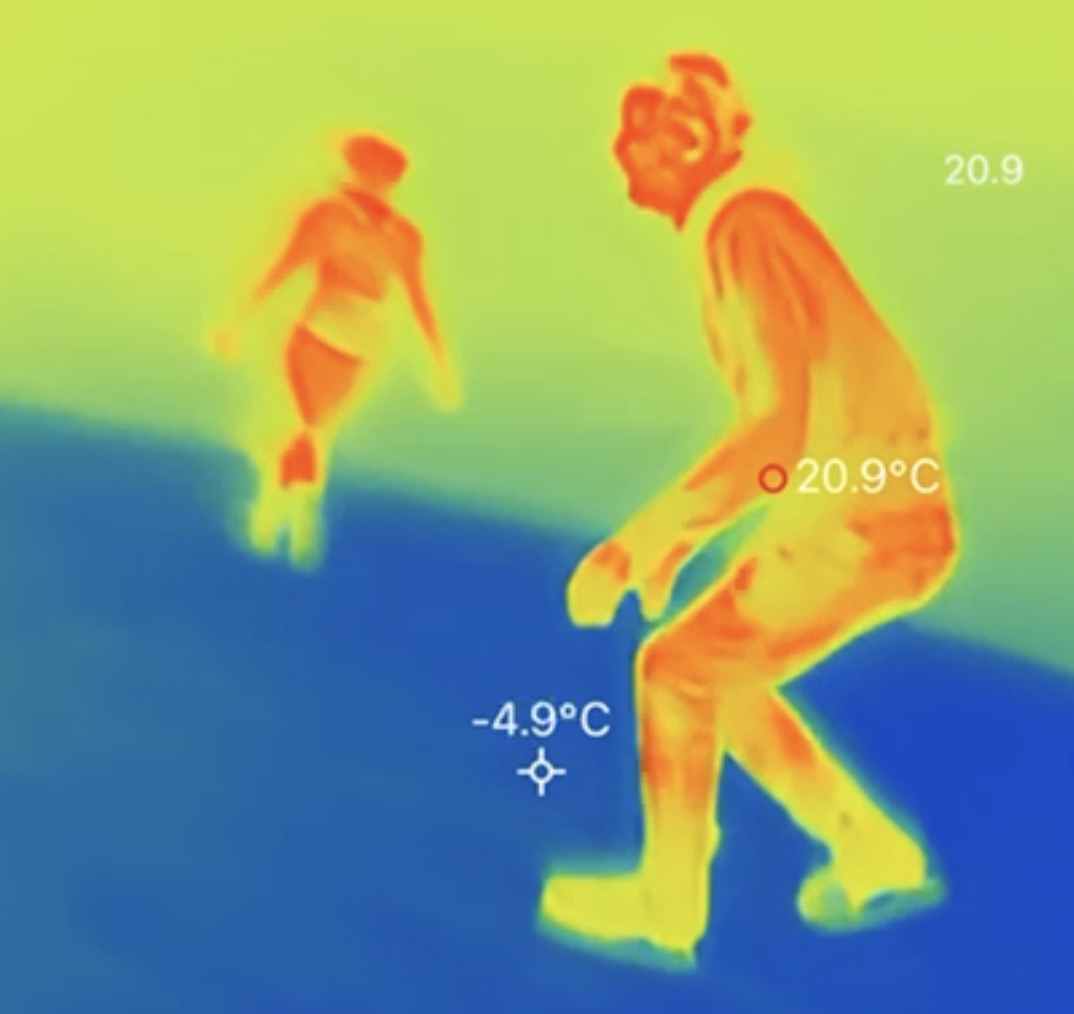
IR photo of me skating

There's not a lot of pics of me skating… this one from an IR camera

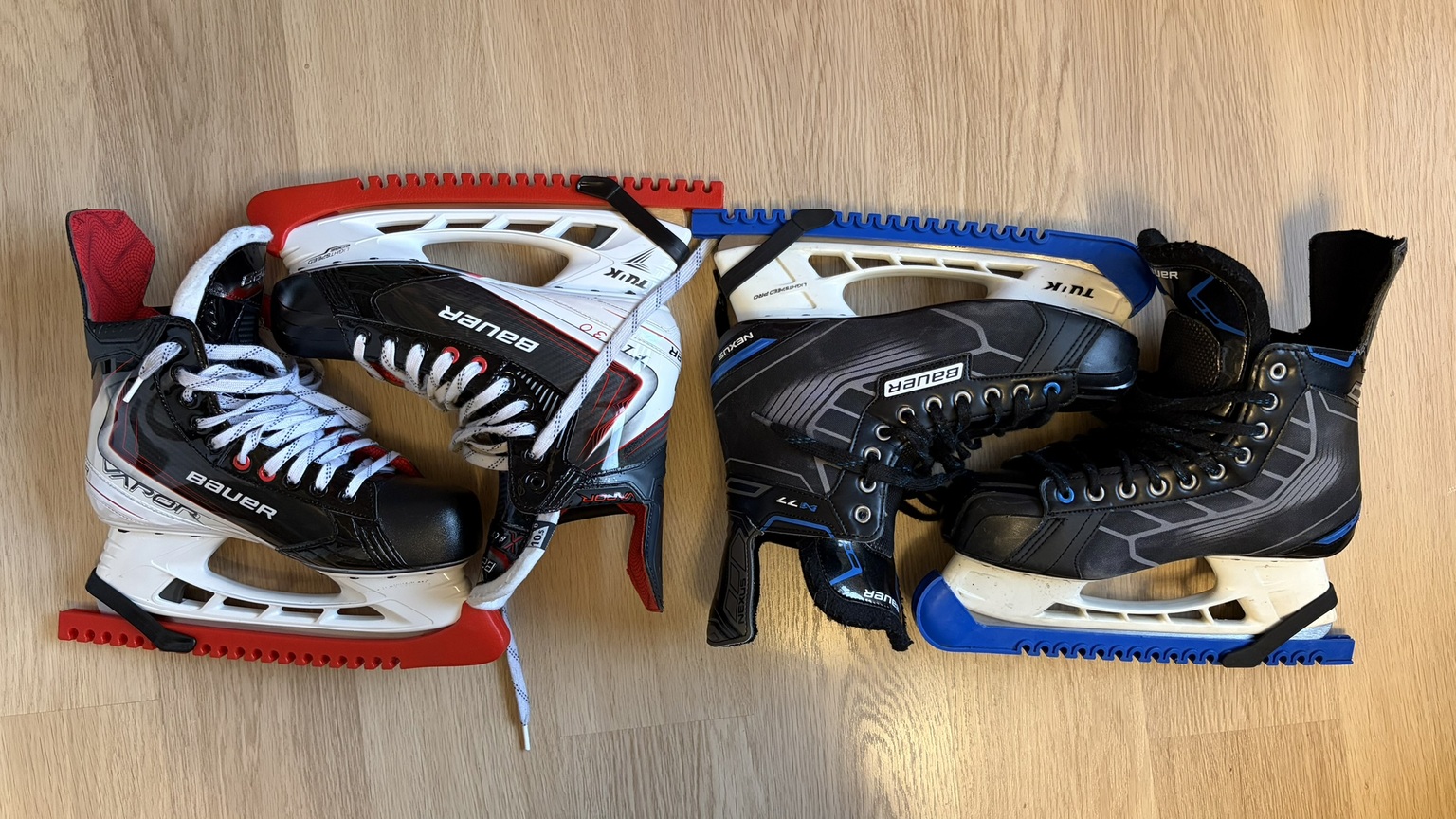
I've been skating in a pair of Bauer1 Nexus N77s that I bought 7 years ago on a work trip to Toronto. These did a great job of getting me back into the hobby for 6 years but recently I felt it was time to step up to a better quality pair. Despite being a size down from my shoe size, the Nexuses are too large: I had been compensating with thick socks but still struggling to get the boots tight enough. I'd have to wear gloves to lace up because I'd cut my hands pulling the laces otherwise.

After too long researching/deliberating/kvetching (very much on trend for me) I upgraded to Bauer Vapor Fly30s another half-size down (and nearly ten times as much). The fit is much better, in almost every respect. They actually go on easier and I don't have to tear my hands tightening the laces. They feel like a natural extension of my feet. I seem to be using a different set of muscles to skate, so the first few sessions were very fatiguing, but that settled. The Vapor line is speed-oriented, which I thought would fit my skate style best.

new and old skates

new and old skates

I have unfortunately gained a common problem: arch pain. More precisely, my navicular bone seems to be quite prominent2, and that part is pressing uncomfortably into the boot. Boots typically take a few sessions to break in, but after 7-8 sessions the pain was getting to the stage that I couldn't skate for a full session without being in agony.

The last time I skated I tried to throw everything at the problem: I'd had the skates baked3; bought some orthotic insoles; then some "Bunga" pads over the sore bit and an attempt to more loosely tie the laces over the affected area. I tried a ten minute skate, and it seemed a bit better.

I then tried experimentally to swap back to my old skates, and I felt like Bambi: I just couldn't do it! They didn't press on the navicular, and they're softer so you can compensate for the size with tight lacing, but I had no confidence in them, I couldn't lean into the turns. They just felt weird. I realised there's no way back.

I switched back to the fly30s, adjusted the bunga pad positioning, tweaked the lacing and went back on for about 40 minutes. It went well: the rink was quiet, it was cool whilst we had a heat wave outside, so I worked up a sweat. By the end there was some discomfort, but not too much, and I think partly the area is currently sensitive so just about anything will cause discomfort. Fingers (or toes) crossed that I've mitigated the problem! If not, it might be time to try a punch out.


  1. I've owned four pairs of skates: all hockey, my first were Bauers, my second CCM Tacks of some kind. I've no idea what happened to them.
  2. Or possibly I have accessory navicular bones
  3. modern mid-tier skates are thermoformable, and many skate shops carry a specially designed oven to briefly bake skates such that you wear them as they cool and the padding should mould to your foot.
  •  

Apple Sues OpenAI for Stealing Trade Secrets to Build AI Hardware

10 Juli 2026 om 22:17
Apple today accused OpenAI of stealing Apple trade secrets and intellectual property in its effort to develop an AI hardware device.


In a lawsuit filed with the Northern District of California, Apple said it uncovered evidence of a months-long scheme to steal confidential information. Apple says OpenAI hardware lead and former Apple designer Tang Tan and former electrical engineer Chang Liu directed Apple employees interviewing with OpenAI to provide details on unreleased devices, components, manufacturing processes, and vendor relationships.

In a statement to MacRumors, Apple said it is suing to protect the hard work of its employees.
At Apple, our teams are constantly developing breakthrough technologies to create the best products and services in the world, and protecting their work and intellectual property is something we take very seriously. Recently, significant evidence has emerged suggesting individuals employed by OpenAI wrongfully took Apple's secret and confidential information regarding our unreleased technologies, processes, and products. We will always defend our teams' hard work and innovations, and we are taking all appropriate steps to do so.

Tan is accused of using his internal knowledge of Apple's exit procedures to help employees covertly deliver information, and giving OpenAI key information about Apple suppliers that has benefited OpenAI's work on an AI device. From the lawsuit:
OpenAI also instructs new hires on how to avoid scrutiny when they leave Apple. For example, Mr. Tan warns them not to tell Apple that they have taken jobs at OpenAI, so they can stay at Apple as long as they can. After his own departure, Mr. Tan improperly retained or obtained an internal Apple managers' document marked "Need to Know" that describes security procedures for employee departures. Messages left on Apple-issued work devices show that Mr. Tan and his OpenAI colleagues have been sharing this document with new hires before they give notice to Apple of their departures, previewing Apple's security protocols. Unsurprisingly, Apple's investigation has found a pattern by employees who depart for OpenAI of taking steps to evade the security processes intended to protect Apple's confidential information.

Apple says it discovered a pattern of OpenAI recruits emailing themselves confidential information when leaving Apple, including Tan. Others were "improperly using their knowledge of Apple's confidential and trade secret information to assist OpenAI in developing hardware." OpenAI apparently used confidential Apple hardware information when approaching Apple suppliers, and tricked one company into using a "specific trade secret metal-finishing technique" for an OpenAI device by claiming it had Apple's permission to do so.

Apple says evidence on an employee's work-issued device indicates Tan instructed her to "bring some parts" she worked on to an interview, suggesting she show OpenAI batteries, SIPs, logic boards, and other hardware. It was not an isolated incident, and Apple claims several OpenAI interviewees were asked to do the same.

Liu allegedly kept an Apple-issued laptop after departing the company and exploited a vulnerability to download dozens of confidential Apple documents while he was working at OpenAI. He also maintained a relationship with Yu-Ting "Alyssa" Peng, an Apple employee who continued to give him updates on Apple's projects, vendor decisions, and engineering details. When Liu learned he still had access to Apple's systems, he texted Peng "LOL, I found out I can access the [network storage], so funny."

Apple accuses OpenAI leadership of creating a culture of hardware theft, and says OpenAI's hardware business is "rotten to its core" because of its reliance on information stolen from Apple.
This is the tip of the iceberg. Apple lacks visibility into what's been happening behind closed doors at OpenAI, where such misconduct is normalized and exemplified by leadership. This much is clear, however: at every level, from members of its Technical Staff to its Chief Hardware Officer, and in coordination with business partners, OpenAI has been stealing Apple's trade secrets and confidential information. As a natural result, OpenAI's nascent hardware business now rests on the shakiest of foundations, rotten to its core by its illegal reliance on misappropriated trade secrets.

Apple attempted to contact OpenAI in February when it first learned of the potential theft, but OpenAI did not respond, leading Apple to investigate further. Apple claims OpenAI is under pressure to debut a hardware device, which has led to the company taking shortcuts instead of investing in legitimate development. "OpenAI has turned to trade secret misappropriation to free-ride off Apple's decades of innovation," reads the lawsuit.

Former Apple design chief and OpenAI designer Jony Ive is not named in the suit, but it does target io Products, which OpenAI acquired. While OpenAI CEO Altman is referenced, he isn't named as a defendant, and Apple doesn't suggest Ive or Altman were involved. Apple also does not appear to be targeting the ongoing OpenAI recruitment of Apple staff, though the lawsuit mentions that more than 400 former Apple employees now work at OpenAI.

Apple mentions its ongoing partnership with OpenAI for Siri ChatGPT integration, but only to say that the agreement is not an issue in the lawsuit.

Prior rumors suggest the relationship between Apple and OpenAI has been souring, with OpenAI allegedly considering a lawsuit against Apple because the integration failed to live up to OpenAI's expectations and Apple's promises.

In its trade secret theft lawsuit, Apple is seeking an injunction to stop OpenAI from possessing, using, or disclosing its technologies as well as damages "in an amount to be determined at trial." It is also suing Tan and Liu for breach of contract for violating their agreements with Apple.
This article, "Apple Sues OpenAI for Stealing Trade Secrets to Build AI Hardware" first appeared on MacRumors.com

Discuss this article in our forums

  •  
❌