❌

Normale weergave

Apple Intelligence Home Features Require 2TB iCloud+ Plan in iOS 27

6 Juli 2026 om 23:13
Using Apple Intelligence camera features in the Home app will require an iCloud+ plan starting at 2TB, according to Apple. Apple shared the detail in its notes for the third macOS Golden Gate beta that was released today.


In iOS 27, iPadOS 27, and macOS 27 Golden Gate, the Home app is able to generate written summaries for motion alerts from HomeKit Secure Video cameras. It's also able to group footage from separate cameras for an overview of activity and pull out noteworthy recordings, plus it supports natural language search.

Apple said at WWDC that some β€ŒApple Intelligenceβ€Œ features would require an β€ŒiCloudβ€Œ+ plan, but Apple didn't specify which tier users would need to subscribe to. For the Home features, users will need the 2TB β€ŒiCloudβ€Œ+ plan or better. The 2TB plan includes 2TB of β€ŒiCloudβ€Œ storage and it costs $9.99 per month.

β€ŒHomeKit Secure Videoβ€Œ cloud storage has always required a paid β€ŒiCloudβ€Œ plan. The 50GB plan allows for one camera, while the 200GB plan supports up to five. The 2TB plan lets users add an unlimited number of β€ŒHomeKit Secure Videoβ€Œ cameras, and now it will also add the β€ŒApple Intelligenceβ€Œ Home feature set. HomeKit video storage does not count against the storage limit of an β€ŒiCloudβ€Œ+ plan, so the full 2TB stays available for photos and other data.

More on what's new in the Home app in β€ŒiOS 27β€Œ, β€ŒiPadOS 27β€Œ, and macOS 27 can be found in our guide.
Related Roundups: iOS 27, iPadOS 27

This article, "Apple Intelligence Home Features Require 2TB iCloud+ Plan in iOS 27" first appeared on MacRumors.com

Discuss this article in our forums

  •  

Announcing new builds for July 6 2026

6 Juli 2026 om 23:06
Hello Windows Insiders, We have new releases today with builds across Beta and Experimental. New builds this week Today we are releasing newΒ Windows 11 Insider Preview Builds.Β As a reminder, all Insiders can find the release notes for your deviceΒ based on the new channel system, even if you haven’t moved yet.Β This is to make finding build information as easy as possible during the transition. See your channel release notes here: For those on other specific build versions, here are today’s new builds and release notes:
  • Beta (26H1): Build 2820.2380
  • Experimental (26H1): Build 28120.2387
  • Experimental (Future Platforms): We do not have a new build for this channel today, keep an eye out for future announcements.

Notable new features:

[Cloud Recovery]

Release channel: Experimental
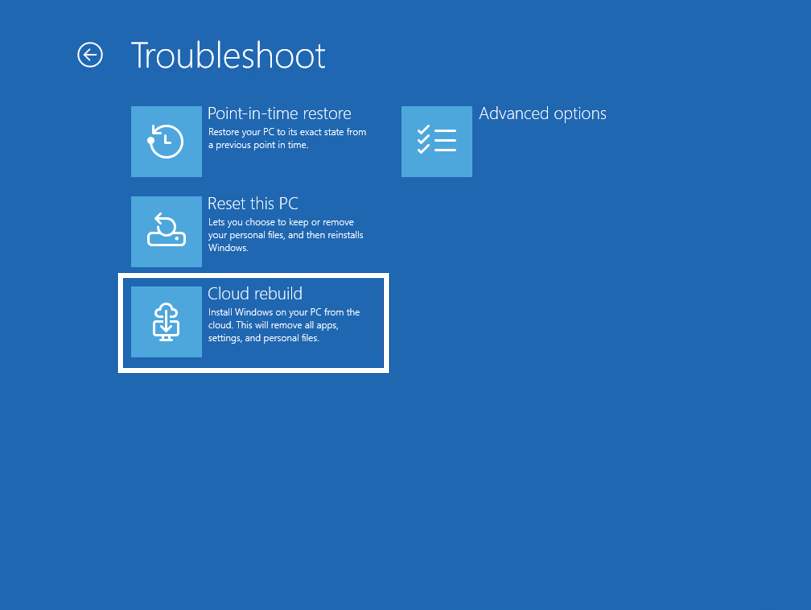
  • We're introducing Cloud rebuild, a new recovery option that restores a Windows 11 PC to a clean, known-good state by performing a full OS reinstall, even when Windows won't boot. UnlikeΒ Reset this PC, Cloud rebuild downloads both the target Windows image and the device's drivers from Windows Update, so the device comes back fully functional without USB media, without a custom image, and without depending on the health of the currently installed OS.
[caption id="attachment_179033" align="aligncenter" width="811"]The new Cloud rebuild option in Windows Recovery Environment (WinRE), enabling a full Windows reinstall using files downloaded from Windows Update. The new Cloud rebuild option in Windows Recovery Environment (WinRE), enabling a full Windows reinstall using files downloaded from Windows Update.[/caption] To learn more, seeΒ https://aka.ms/CloudRebuild.

[Account Control]

Release channel: Experimental
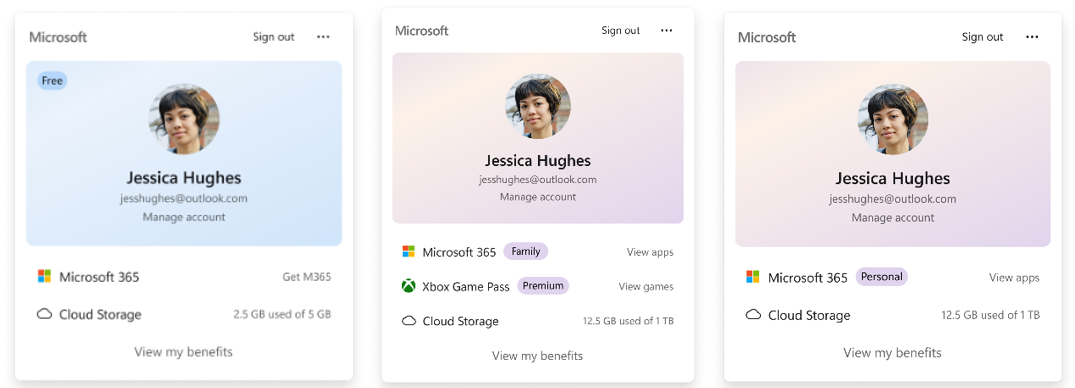
  • The Windows 11 Account Control flyout has a refreshed, modern design and a clear subscription badge to make the user's account status instantly visible. This helps users easily identify their plan, discover benefits, and explore upgrades.
[caption id="attachment_179034" align="aligncenter" width="1024"]UI showing the refreshed Account Control flyout with subscription badges, account benefits, and storage details. UI showing the refreshed Account Control flyout with subscription badges, account benefits, and storage details.[/caption] Thanks, Stephen and the Windows Insider Program team
  •  

Siri AI Comes to Apple Watch in watchOS 27 Beta 3

6 Juli 2026 om 22:24
With watchOS 27 beta 3, Apple added support for Siri AI and the β€ŒSiriβ€Œ app, so Apple Watch users can now use the features right from their wrist.


Apple said β€ŒSiriβ€Œ AI would be coming to the watch back when β€ŒwatchOS 27β€Œ was first introduced, but the feature wasn't live until now.

The Dynamic App Grid that pops up when the Digital Crown is pressed displays the β€ŒSiriβ€Œ app in the center, and the smarter version of β€ŒSiriβ€Œ is available to answer queries and complete requests.

β€ŒSiriβ€Œ AI on Apple Watch relies on a nearby Apple Intelligence- compatible iPhone for processing. Conversations in the β€ŒSiriβ€Œ app on Apple Watch sync to the β€ŒSiriβ€Œ app across all other devices like iPhone, iPad, and Mac.
Tag: Siri
Buyer's Guide: Apple Watch (Caution)
Related Forum: Apple Watch

This article, "Siri AI Comes to Apple Watch in watchOS 27 Beta 3" first appeared on MacRumors.com

Discuss this article in our forums

  •  

Aigars Mahinovs: How to make a good group photo

6 Juli 2026 om 21:30

Taking a good group photo consists of multiple aspects:

  • hardware
  • scouting
  • organization
  • preparation
  • execution
  • processing
  • publishing

I can say with confidence that nearly everything here comes from having failed to do these things right at least once, even on the latest attempts, so this is an ideal to reach towards, not something we expect to hit every time.

The Goal

The main goal of a big event group photo is capture both the moment itself and each individual person inside that moment.

We want people, who were not there to see all the people involved and get an impression of what it was like being there. It needs to show the breadth and depth of people that make up this group, this project.

And we want people who were there to be able to look back the next week, the next year or in ten years and remember - ah, yes, I was there, I was standing right there with this grin on my face next to this wonderful person and I was feeling great.

Hardware

Based on the goal we want to have high level photographic gear that is able to capture both a broad enough picture to encompass all the people and some of their surroundings to communicate the context (without undue distortions) and to deliver enough detail and resolution so that faces and facial expressions and underlying feelings of every single person in that group could be clearly seen and preserved.

To both capture the context and minimise distortion the final picture should be just a bit wider than normal human field of view. That is about 50mm for a full-frame camera or 35mm for a typical 1.6 crop camera. You can go a bit wider if there are no better alternatives (as detailed in the scouting section), but be prepared that corners of the image will be distorted and not really usable (but we can fix that in processing step). Or you can go to unusual aspect ratios, like we did in Debconf 10.

In the absence of a 100MP+ camera, you will need to be stitching together multiple frames to achieve resolution high enough to have enough pixels-per-face to see emotions clearly. This means that the photos you will actually be taking will be tighter than the overall field of view mentioned above. Still, a higher resolution camera body is preferable - nowadays 24MP-32MP cameras APS-C provide a good compromise between resolution and price, but 45-67MP full-frame cameras also exist on the market. Assume that we will be shooting in a bright environment, so most likely with quite low ISO settings, that means that high-ISO noise characteristics of more expensive cameras will not really play a role here. You will also not need very fast burst modes, even manual speed of one frame per second is sufficient.

You will also want to get as much detail as possible out of your lens, and this is the most important part. You can do amazing work in all other steps of the process and have a great camera too, but if you pair it with a lens that is not sharp, then the end result will be disappointing.

You want the lens that is sharpest corner-to-corner when stepped down to about f/8-f/11, that you can get for your system. You also want that lens to be about 85mm full-size sensor or 50mm for 1.6 crop size. Luckily that kind of range is also a great range for optical design and sharpest lenses are typically available in exactly these kinds of sizes. You absolutely want to have a fixed focal length lens, not a zoom lens. Even profession grade zoom lenses often deliver worse image quality compared to fixed lenses that cost less 1/10th of their price (when shooting in the same focal length). Newer design lenses are better than older lenses - optical design, coatings and precision manufacturing have advanced a lot over the decades. Retro look is great for mood, but not as good for actual resolution and clarity. You don't need to overpay for most expensive lenses because those often only improve image quality on lower F-stops. To encompass the whole group we will need to shoot at f/8 and in bright light, so the extra benefits of those f/1.2-capable super expensive lenses will not come into play here.

We will have no use for a flash here. A tripod will be too restrictive when rapidly repositioning the camera between different parts of the panorama shoot. But a monopod might help with stability - I have not tried that myself, however.

For my last photos I used a Canon EOS R7 (32.5MP) with Canon RF 50mm f/1.8 STM lens and considering an upgrade to Sigma 56mm f/1.4 DC DN for the next time.

Scouting

Scouting a good location for the group photo is another big chunk of a successful picture. The critical piece of the puzzle is lens-to-face distance. In order to keep everyone's face in-focus and have enough resolution on the farthest faces (without making nearest faces truly massive) we want to do everything possible to reduce the variance in lens-to-face distance - to reduce the difference in distance between closest and farthest face.

The most effective way to do that is to have the photographer climb higher. To see this in action on the Debconf photos, compare Debconf6 (very high camera position, group on level ground - good) to Debconf10 (camera not too high, group on stairs, still good) and to Debconf17 (camera could not get high enough and the group is on flat ground - not great). Even the Debconf25 photo was suboptimal from this perspective. The Debconf23 photo was a very good example from the recent years - good height and also the group was positioned in a semi-circle so there were no people directly in front and very near to the camera.

So you are looking for the highest point you could get to (even if that requires a special permission of key or a ladder) with a field large enough to fit the whole group comfortably. How to check that? Normally I simply take a photo from the top of the whole area and note down from there where the extreme corners of the group could be and still be fully seen in the shot - not blocked by trees, buildings and shadows. Then I go down and measure that space. Rule of thumb being - people in one horizontal line can stand 1 normal length step from each other and two horizontal lines can be half a step from each other vertically. So I can just measure a rough rectangle in steps, multiply the sides, multiply that by two and I have the rough number of people that can fit there for the photo.

Once you have a candidate location or two, it is important to check them at the same time-of-day as you plan to do the photo (see organization section for that). You want to make sure that the whole area of the group is in the same illumination - if half of the group is in the sun and half in a shadow, then you will be having a very bad time later. The absolute ideal positioning for the group photo is to have everyone be in shadow, but still have enough bright skies and bright buildings in front of the people to give good illumination of the faces. Worst you can do is have the sun be behind the people (so all the faces are really dark) and second worst is have the sun be directly in front of the group, so that the faces are very well illuminated, but everyone's eyes are closed because they are being blinded by the sun. And sometimes all you can do is pray for some light clouds to provide for even and dispersed light. Debconf23 was very lucky that way.

Another consideration is to how people are going to get to that place. You need to consider accessibility needs of people (it is ok, if it takes more effort or time, but it needs to be organized and communicated well in advance). And you need to consider how the big masses of people will be getting there - how to tell people where exactly it is and how to get there from various locations where people might be hanging out during the event?

Having an alternate location indoors might be necessary if the weather report for the next days is not sufficiently predictable. We had to use that contingency in Debconf9, for example.

Organization

It's hard to take a good group photo if half of the group does not show up or is too late, so this needs some organization to happen smoothly.

First of all you need to choose date and time for the photo. The photo does not take too much time from the schedule of the event and can be squeezed in after all the other events are already scheduled. In fact I prefer that as it allows you the flexibility of choosing the date based on weather conditions and time based on light and shadow conditions in potential photo spots. You don't want to choose the daytrip day as most people will be away and return times are not really predictable. You do not want to choose the morning after Cheese and Wine party for obvious reasons. First day and last two days are also sub-optimal as some people arrive late and some leave early for various personal reasons. Also you don't want it to happen just before Cheese and Wine either because then you'd have very little time and clarity to do the processing of the image on the same day.

For timing, the best way, in my experience, is to schedule the photo directly after the end of talk sessions before a meal break - lunch or dinner. Typically in the Debconf schedule there are 2-3 daily breaks planned, say for Debconf25 there was lunch, afternoon break and dinner. Talks are planned to end ~10 minutes before those breaks (and meals) begin, so for example, afternoon break starts at 16:00 and all talks in the previous block end at 15:50. In such a case just schedule the "Group photo" event from 15:50 to 16:05. This gives people the info to go there directly from the end of all talks and that they will have sufficient time for break/meal afterwards. Do not forget to specify the location (as exactly as possible) in that event entry and make sure to post it at least two days in advance. People often want to wear something specific for the photo and thus need to know about it in advance. This also makes sure that people do not make alternate food plans for that specific break and don't leave the venue.

Announce the date, time and the exact location as wide as possible, don't be shy. Announce and discuss mailing lists, IRC, Signal, Telegram, make sure the front desk knows in case anyone asks in-person, ... Check that it is again included in the announcements email on the day preceding the photo date.

When the date has arrived, it is a good idea to check in early with people with special mobility needs to make sure they know where to go, how to get there and how much time they will need to be able to get there on time.

As the final round of talks before the group photo is starting up, it is time to recruit "runners". I've had great success with this technique. The idea is pretty simple - for each room where people congregate (talk rooms, hacklabs, cafeteria, outside hackspace, front-desk, ...) go there and choose one person. You want to choose a person that you will recognise and remember among everyone else in the group, either because of who they are or what they are wearing, whatever works best for you. If they agree to help, instruct them to: "at end of talk, announce that the group photo happening now and the location, herd people towards the photo location, be the last person out, make sure there are no stragglers from this area behind you, when you arrive to the photo place I will assume that everyone else from this room is also now there, when you are there catch my attention and show this sign so I know for sure that it is all good and make sure that I did see it from you". With that sorted out all you will need to remember is how many runners you recruited and how many have reported in to figure out if everyone has now arrived or if we still have to wait for someone or some group.

Then you will only have one last point of organization left - shaping the crowd into a group. People will not know what your vision for the group photo is, so you will have to give clear and LOUD instructions on where people should not be standing. Use clear, large gestures to support your words. You want to compact the group, have the people that just joined in the last moment and are standing to the side come deeper in and join the crowd. Have any holes in the middle of the crowd filled in. Forming a semi-circle instead of a blob helps with averaging face-to-lens distances. Make sure people are not in unexpected shadows. Make sure carried objects, like umbrellas of flags do not cover the faces of other people. Take the time to look at everyone face to make sure there are no people hiding behind someone's shoulder - typically they are not aware that their face is in fact not really visible. If there are such people, call them out and point directly at them and encourage them to step forward, if they wish to do so. You are the only one seeing the final picture now and only you can correct it before capturing the moment. So a few extra seconds here are worth taking, even if 300+ people are standing in scorching heat and waiting on you.

When you are happy with what you are seeing, make sure to tell people clearly that you are now about to take the pictures and again remind them not to move and explicitly not to turn their heads to the side until you are done (this is the source of most of the extra work in processing). Be very loud and clear and make sure you have everyone's undivided attention before you start saying the important stuff.

When done - say so. There will be other groups that will want to also have a photo taken after the main group is a bit more dispersed, so don't run away. Typically at least the T-shirt group will want a picture and also all the organizers.

Final bit of organization during the group photo shooting itself is the sneaky self-insert. You may choose not to bother with it, or do it in the simplest way, like I did in Debconf6, but if you really want to blend in with the crowd, you need to have someone else take a photo of you in the exact same location at the same date and time from the same location. So you should already during shaping the crowd decide where you would fit in, it is easiest to blend in at the back of the crowd and to one or other side, so that it appears like you are just standing behind the shoulders of a couple peoples. Remember that spot - it is easiest if you stand in the exact same ground spot when your photo is taken. Just go down, recruit a volunteer to take your photo, make sure the settings are fixed to the same ones as for the group photo shots and have them take a handful of shots of you - one of you centered in the camera frame and a couple more with you more towards the corners of the frame. This distortion from being off-center in the frame may be important later.

Preparation

In addition to preparing the crowd for the photo, you also need to prepare yourself and the equipment. Make sure you have dusted your camera sensor and cleaned both inside and outside glass of your lens. It is usually a good idea to remove any filters from the lens. Install the hood, if that could help with blocking the sun flares. Make sure you have the right lens and that you have installed the right lens.

For fixed settings I typically shoot in JPEG with RAW being there more like an emergency backup. The extra dynamic range of RAW could be used, but it is really complex to do that in combination with image blending and it is hard to get right, so I prefer an all-JPEG workflow and fix the dynamic range in the scene itself, before shooting. For Canon I am using the Standard profile that boosts the color saturation and sharpness a bit as I just enjoy that look and find it hard to get anything significantly better from RAW data even with a lot of effort. In any case make sure you have enough space on the cards to take at least 100 images and that you have a full battery. Do not use high speed burst setting because it is then too easy to take too many pictures at the start of the sequence and be stuck with your camera still in "Busy" state writing big RAW files to slowish SD cards and not allowing you to finish the full picture rapidly.

You want to have the shutter speed at at least 1/100th of a second to prevent blur from both your hand movements and also from people in the shot moving around a bit (image stabilisation will not help you there). And you want to have the aperture to be around f/8 - lower apertures risk people in front or behind falling out of focus, make the lenses look less sharp. Higher apertures also start to become less sharp due to diffraction effects above f/8. ISO should stay as low as possible, ideally at ISO 100, but if there is not enough light then upping the ISO to 400 would be the first step that I would try to do and second would be decreasing the aperture to f/5.6. If there is too much light, then increasing the shutter speed should be the safe thing to do.

As people start to arrive into the shooting location - check the exposure and nail down the settings, ideally in manual mode. Consider that left side could be a bit lighter or darker than right side. Err on the side of making the picture a bit too dark as there is more depth to darkness before cut-off compared to clipping on the high end. However, do not trust the exposure detection, instead take a picture and look specifically at skin tones in faces of people that already are standing in the photo area. Faces are the key bit and the exposure needs to be adjusted just to the faces and ignore darker of lighter clothing. Do some test shots and find settings where faces look not too bright, but also not very dark and fix those settings in manual mode.

Now you are ready for the action. Shape the crowd, check the faces and the action can start!

Execution

During taking of the group photo you want to finish it fast, but at the same time you have to take the time to make it right. If you hurry too much under pressure, you risk being left with unusably blurry images and the whole effort wasted. Having already prepared and verified the manual settings makes it easier.

When you are taking pictures, you have to remain as still as possible - even at very high shutter speeds even slow hand movements are still bad for image quality. So think of the movement as of biathlon athlete shooting the very middle of five, very separate targets - take a burst, reframe, then steady up for a second and only then take the next burst. 3 frames per burst are sufficient. 90% of the time the very first photo of a burst will be best. As you move from frame to frame, aim for just a bit more than half-frame overlap. This will give the opportunity to skip frames if all is good, but also have backup coverage of every face in case of problems. Proceed systematically, I typically start off on the top left of the crowd, then go right until the end of the line, then shift down half a frame and go left until the end and repeat until I am done with the crowd.

After that it is very helpful to also immediately take photos of a "frame" around the whole crowd. Stitching process often distorts the frames in weird ways that leave holes in the resulting image that you can fill if you have a wide frame around the crowd. It is possible to compensate with creative cutouts in the final image (like Debconf9), but the more framing room you make, the more flexible you will be able to be with cropping of the final photo. The frame also gives you the opportunity to capture more of the context of the place and space.

As an example, Debconf25 group photo in the end consisted from 9 images + 1 for sick people + 1 for me. I ended up missing the framing shots for bottom left, top left and top right corners. To get there I took 68 images. And in some years it was more than a hundred.

Processing

This part might be less stressful than taking the pictures from intensity perspective, but it lasts longer. Depending on you luck, skill and perfectionism it can take anywhere from 3 to 9 hours of work to complete.

Before you start, however, you should first request things that you will need for other people. This can even be done before taking the actual group photo, but usually I forget. To finish the photo you will need three things:

  • good quality vector graphics of the current Debconf logo
  • good quality vector graphics of the next years Debconf logo (even if preliminary)
  • motto of the conference

The first two you should be able to get from the respective organizers. The motto is harder. I typically try to ask the current DPL to come up with something describing the current mood of the project or of the event, but it is rare that it is that easy. Most of the time I came up with something as I was editing the photo and reflecting on what was the mood, the feeling, the mojo of this conference and of this year was like. Bend that around a recognisable phrase or expression, make it a bit more insider-relevant and you are on the right path. Some years this was the hardest part.

For the panorama stitching I will describe the workflow that has served me good for years, but maybe there are better ways possible nowadays. Feel free to let me know!

First I would save all photos taken and select one sharpest photo from every burst. Next I would select the minimal number of photos that appear to be covering the entire crowd. The fewer images you use, the better in the end because the most quality problems crop up in the areas where photos are getting stitched together. Fewer seams leads to fewer issues.

Open Hugin (you will also need enblend and enfuse installed) and import your minimal set of images into it. Click the "Align" button and wait a while - the processor will be trying to figure out keypoints in each image and then try to match these points between the images to try to fit them all together into a single projection. To do that it will distort the images. This is the trial and error process part. You may need to add, remove or replace images to get the stitching to work or to work better. You may want to add more of the frame images to fill the ragged holes around the image.

After initial alignment, go to "Move/Drag" tab and move the image a bit up in the projected field of view and make it a bit more central visually. That will help a bit with the distortions in the near-by people and people in the corners of the image. In the "Crop" tab set the initial crop - leave it generous, you can always crop more in later steps. Do not be afraid of leaving in sizable chunks of black homes, empty skies or grass. All of that can be filled in later as well.

Go back to the "Assistant" tab and click "Create panorama". It is good enough to have JPEG output at 100% quality using exposure corrected low dynamic range output option. Make sure to check the "Keep intermediate images" option. This will not only generate the final, merged panorama, but also keep around the individual images after perspective correction and exposure blending steps. These are critical for fixing blending error in the next step.

You might need to go back a forth a few times with a different sets of source images, maybe adding some image between other two, maybe removing another to reach a better starting point. The key part to pay attention - how many ugly stitches are there in the image. Check every face, the blending algorithms do not recognise faces and sometimes try to stitch one face from two or more images creating very weird effects. They can be fixed in the next step, but it is rather hard manual work, so the fewer such faces are in the blended image, the less work you will have. In some years I've managed to find a combination where all faces were good and in other years I had to manually fix 13-15 faces.

Do not try to blend the extra pictures (like with you or with sick people) into the main panorama with Hugin - it will get very confused with the parts of the grass that it is able to see where other people were standing.

The next is the final processing in GIMP. Think of it like a large and complex project - do as much as possible in separate layers, save often.

Fixing wrongly stitched faces and also putting yourself into the photo are very similar activities in the end. Just the scale and the source differ. For yourself you just cut out yourself (upper torso is enough) from the separate photo. For corrupted face, choose one of two intermediate images that the Hugin created where the face is transformed, but not yet merged (with a different version of itself). In either case crop the photo to roughly the interesting size and put roughly in the right spot as a separate layer on top of the group photo background. Reduce the opacity of the small layer to 30-40% and zoom in to 400%. With that it is much simpler to position the layer with pixel precision. Then all you need to do is add a layer mask to this layer and paint it just right. Basically in layer mask black means transparent and white means non-transparent. So you need to just make everything that is you have white mask and everything that is not you have black mask. And smudge the border a bit with finger tool or blur to make the transition smoother. Easy to say. Hard to do. This is what takes most of the actual work hours in post-processing.

You might miss someone. I am sure Phill is just thrilled to see me in the very middle of the Debconf25 final picture .... But do try to fix them all.

Use large, sweeping geometric figures to cover up black holes, empty grass fields and other sub-optimal corner features. And then use that newly created free space to put in a large version of the logo of this years conference, decently sized motto and slightly smaller invitation to the next years conference.

Do not forget to add a copyright and license statement somewhere in the corner in smaller, but still well readable font. I am using a text like: "Photo by: Full Name, Email: fullemail@debian.org, License: GPLv2+ or CCv3-BY" This ensures that this image may be used in any press coverage (with basic attribution) and also can be included in any GPL-licensed software, if that ever comes up. The same statement is also in the metadata of the image file (see Image-Metadata-Edit metadata in GIMP) along with information that states that this is "Debian Developer Conference Group photo, City, Country, Year". Image->Image properties->Comment is another place where GIMP hides this EXIF information.

For ease of use, in addition to a full-resolution image it is also useful to make a lower resolution version that would still fit on a 4K screen at full resolution, so about 3840px wide. Some photo hosting services set other limits for image size as well, so it might be needed to scale the image down below 100Mpix to upload it to Google Photos, for example.

Publishing

So, it is finally 1AM and the group photo is ready! How do you push it out to people? Well, in all possible ways and places. Again - don't be shy, people do really want to see it.

Push it to whatever you use for your shared photos. Push it to Debconf shared git (note that this is GIT-LFS repo, make sure you know how to add content to the LFS specifically). All permanent links to that in GroupPhotosAll wiki. And then send those links to IRC, Signal, Telegram groups, debconf-announce mailing list. Publish it in your blog and push that to Debian Planet. Push it in Threads, Bluesky and Mastodon. Send an email separately to Debconf orga team. And one to Debian Publicity Team so they can put it into the Debian Home Page and push via Debian micronews accounts.

And that is about it. Now you can go back to enjoying the rest of the conference. Or running around doing other things that you think need to be done. It's up to you. You did it. This moment will remain with people for a very long time. And you helped.

Questions? Feedback? Just ask here or here.

  •  

macOS Golden Gate Gets New Wallpaper

6 Juli 2026 om 21:22
With the third beta of macOS 27, Apple added new Golden Gate-themed wallpaper options to the Mac.


There are new Golden Gate Sunset and Golden Gate Night options, both of which join the prior Golden Gate abstract wallpaper that Apple introduced with the initial beta.

Golden Gate Sunset and Golden Gate Night animate when unlocking the Mac, and can be set as a screen saver. When used as a screen saver, the Golden Gate Sunset wallpaper features waves breaking on the rocks near the Golden Gate Bridge. The Golden Gate Night wallpaper shows cars driving across the bridge.

With past updates, Apple has included several themed wallpaper options, so more Golden Gate wallpapers could be added in the future. macOS Golden Gate is limited to developers right now, but we are expecting a public beta soon.
Related Roundup: macOS Golden Gate

This article, "macOS Golden Gate Gets New Wallpaper" first appeared on MacRumors.com

Discuss this article in our forums

  •  

macOS Golden Gate Beta 3 Now Available for Developers

6 Juli 2026 om 19:25
Apple today provided developers with the third beta of macOS Golden Gate, with the update coming two weeks after Apple seeded the second beta.


Developers can download β€ŒmacOS Golden Gateβ€Œ by going to System Settings > General > Software Update. Beta Updates will need to be enabled, and a free developer account is required.

β€ŒmacOS Golden Gateβ€Œ includes multiple design improvements. Liquid Glass opacity has been improved to increase readability, there's a slider for controlling the level of transparency, and changes to shadowing make it easier to tell when a window is active. Apps now have uniform toolbars, edge-to-edge sidebars, and less rounded corners, plus there are fewer icons in menu bars.

Siri has been transformed into β€ŒSiriβ€Œ AI, a chatbot-style assistant that combines general world knowledge, your personal data, and onscreen awareness to answer questions about anything and find information for you. β€ŒSiriβ€Œ lives in Spotlight, and you can ask questions with the new Search or Ask interface.

There's also a β€ŒSiriβ€Œ app where you can chat with β€ŒSiriβ€Œ and view past conversations, and on newer Macs, you can set a custom voice for β€ŒSiriβ€Œ with personalized pace and expressivity. Visual Intelligence is now on the Mac so β€ŒSiriβ€Œ can answer questions about what's on your screen, and a Write with β€ŒSiriβ€Œ feature lets β€ŒSiriβ€Œ generate text or give feedback on your writing.

There are AI photo editing tools in the Photos app, AI tab organization in Safari, an option to use AI to automatically update weak passwords in the Passwords app, and a revamped Image Playground app that can generate photorealistic images.

More on all of the new features in β€ŒmacOS Golden Gateβ€Œ can be found in our macOS Golden Gate roundup. β€ŒmacOS Golden Gateβ€Œ is limited to developers right now, but Apple plans to release a public beta soon.
Related Roundup: macOS Golden Gate

This article, "macOS Golden Gate Beta 3 Now Available for Developers" first appeared on MacRumors.com

Discuss this article in our forums

  •  

Apple Seeds Third iOS 27 and iPadOS 27 Betas to Developers

6 Juli 2026 om 19:24
Apple today seeded the third betas of iOS 27 and iPadOS 27 to developers for testing purposes, with the update coming two weeks after Apple released the second betas.


Registered developers can download the betas from the Settings app on the iPhone or iPad by going to the General section and selecting Software Update.

β€ŒiOS 27β€Œ introduces Apple's smarter version of Siri, β€ŒSiriβ€Œ AI. β€ŒSiriβ€Œ AI is a chatbot similar to ChatGPT, incorporating general world knowledge, personal data from apps like Messages and Mail, and onscreen awareness to answer questions and find information for you.

There are new Apple Intelligence features in apps like Photos, Safari, Shortcuts, Wallet, and Passwords, plus Apple added a standalone β€ŒSiriβ€Œ app that houses β€ŒSiriβ€Œ conversations. Write with β€ŒSiriβ€Œ is available systemwide for generating text or offering feedback on your writing, and Visual Intelligence has been relocated to the Camera app with a new β€ŒSiriβ€Œ mode.

Apple improved the look of Liquid Glass and added a slider for customizing transparency. There are multiple performance improvements to speed up iOS, so everything feels faster, even on older iPhones. Apps launch quicker, AirDrop transfers are faster, the keyboard pops up more quickly, and devices are better at transitioning between Wi-Fi and Cellular to keep you connected.

For more on what's new in β€ŒiOS 27β€Œ, we have a dedicated iOS 27 roundup.
Related Roundups: iOS 27, iPadOS 27

This article, "Apple Seeds Third iOS 27 and iPadOS 27 Betas to Developers" first appeared on MacRumors.com

Discuss this article in our forums

  •  

Apple Seeds Third visionOS 27 Beta to Developers

6 Juli 2026 om 19:23
Apple today provided developers with the third beta of an upcoming visionOS 27 update for testing purposes, with the beta coming two weeks after Apple released the second beta.


visionOS 27 can be installed by opening the Settings app, going to Software Updates, and opting into Beta Updates.

visionOS 27 introduces Siri AI, the smarter and more capable version of β€ŒSiriβ€Œ that's similar in capability to chatbots like ChatGPT and Claude. On the Vision Pro, β€ŒSiriβ€Œ can answer questions about anything the wearer is looking at, and there's a new β€ŒSiriβ€Œ orb that can be placed anywhere in wearer's virtual space.

Panorama photos can be turned into spatial environments, and there's a new Icelandic ThΓ³rsmΓΆrk environment that features dramatic mountains, valleys, and glaciers, along with the northern lights. Web Environment support allows developers to create 360-degree environments in Safari for a more native Vision Pro browsing experience.

App windows are now curved to provide a more immersive workspace, and Control Center has been reorganized to make system controls easier to find. Apple added a smaller widget size, and notifications automatically expand when the wearer looks at them.

More on what's new in visionOS 27 is listed in our Vision Pro roundup.
Related Roundup: Apple Vision Pro
Buyer's Guide: Vision Pro (Neutral)
Related Forum: Apple Vision Pro

This article, "Apple Seeds Third visionOS 27 Beta to Developers" first appeared on MacRumors.com

Discuss this article in our forums

  •  

Apple Seeds watchOS 27 Beta 3 to Developers

6 Juli 2026 om 19:23
Apple today seeded the third beta of watchOS 27 to developers, with the update coming two weeks after the launch of the second beta.


The beta can be downloaded through the Watch app on the iPhone with a free developer account. The Apple Watch will need to be on the charger, connected to Wi-Fi, and have a battery level of 50 percent or above for new software to be installed. The beta is available for all Apple Watch models compatible with β€ŒwatchOS 27β€Œ except for the Apple Watch Ultra 3.

β€ŒwatchOS 27β€Œ will include Siri AI, the smarter, more capable version of β€ŒSiriβ€Œ. β€ŒSiriβ€Œ can hold back-and-forth conversations, plus it has access to general world knowledge and your personal data to answer questions and find information. β€ŒSiriβ€Œ AI on Apple Watch requires an iPhone that supports Apple Intelligence, including the iPhone 15 Pro and later.

There's a new Dynamic app grid that highlights β€ŒSiriβ€Œ suggested apps, and more intuitive Smart Stack Suggestions. You can find your parked car, see pinned messages, get noise alerts, and view identity and transit cards.

Liquid Glass has been updated to improve legibility, and Workout Buddy works on the Apple Watch even when an iPhone isn't nearby. Workout Buddy also gains new metrics like progressive increases to distance, pace, or duration. Apple added a new all-in-one Find My app with support for Precision Finding, and there are performance optimizations that improve battery life.

More on what's new in β€ŒwatchOS 27β€Œ is available in our watchOS 27 roundup.
Related Roundups: watchOS 26, watchOS 27
Related Forum: Apple Watch

This article, "Apple Seeds watchOS 27 Beta 3 to Developers" first appeared on MacRumors.com

Discuss this article in our forums

  •  

Apple Seeds tvOS 27 Beta 3 to Developers

6 Juli 2026 om 19:22
Apple today seeded the third beta of tvOS 27 to developers for testing purposes, with the update coming two weeks after Apple released the second beta.


The beta can be downloaded and installed through the Settings app on the Apple TV. A free developer account is required.

tvOS 27 has few new features compared to the other 27 software updates, but it does add a redesigned Podcasts app, options for larger text, and a more responsive Control Center.

AirPlaying to an β€ŒApple TVβ€Œ from another Apple device is faster, and apps and animations are smoother. You can also now see AppleCare coverage details in the Settings app.

More on the features in tvOS 27 can be found in our Apple TV roundup.
Related Roundup: Apple TV
Buyer's Guide: Apple TV (Don't Buy)

This article, "Apple Seeds tvOS 27 Beta 3 to Developers" first appeared on MacRumors.com

Discuss this article in our forums

  •  

Fourth macOS Tahoe 26.6 Beta Now Available for Developers

6 Juli 2026 om 19:18
Apple today provided the fourth beta of an upcoming macOS Tahoe 26.6 update to developers for testing purposes, with the update coming a week after Apple seeded the third beta.


Developers can download the β€ŒmacOS Tahoeβ€Œ 26.6 update by opening up the System Settings app, selecting the General category, and then choosing Software Update. Beta Updates will need to be enabled, and a free developer account is required.

With macOS Golden Gate launching in just a couple months, Apple is likely focusing most of its attention on the new software. We are not expecting any major new features in β€ŒmacOS Tahoeβ€Œ 26.6.
Related Roundup: macOS Tahoe
Related Forum: macOS Tahoe

This article, "Fourth macOS Tahoe 26.6 Beta Now Available for Developers" first appeared on MacRumors.com

Discuss this article in our forums

  •  

Apple Seeds Fourth iOS 26.6 and iPadOS 26.6 Betas to Developers

6 Juli 2026 om 19:17
Apple today seeded the fourth betas of upcoming iOS 26.6 and iPadOS 26.6 updates to developers for testing purposes, with the software coming a week after Apple seeded the third betas.


Registered developers can download the betas from the Settings app on the iPhone or iPad by going to the General section and selecting Software Update.

With iOS 27 set to launch in September, Apple is wrapping up work on iOS 26. We are not expecting any major new features in the iOS 26.6 update, and it will primarily focus on bug fixes and performance improvements.

The update adds new wording around blocked contact limits, letting users know when they have exceeded the maximum number of blocked contacts. The update might also include a new anti-snatching feature that locks your iPhone if it's grabbed from your hand.
Related Roundups: iOS 26, iPadOS 26
Related Forum: iOS 26

This article, "Apple Seeds Fourth iOS 26.6 and iPadOS 26.6 Betas to Developers" first appeared on MacRumors.com

Discuss this article in our forums

  •  

Apple Releases Fourth watchOS 26.6, tvOS 26.6 and visionOS 26.6 Betas

6 Juli 2026 om 19:16
Apple today provided developers with the fourth betas of upcoming watchOS 26.6, tvOS 26.6, and visionOS 26.6 betas for testing purposes. The software comes a week after Apple seeded the third betas.


The software updates are available through the Settings app on each device, and because these are developer betas, a free developer account is required.

There's no word on what's in the software as of yet. watchOS, tvOS, and visionOS often get few features in each new beta, with updates primarily focusing on bug fixes and performance improvements.
This article, "Apple Releases Fourth watchOS 26.6, tvOS 26.6 and visionOS 26.6 Betas" first appeared on MacRumors.com

Discuss this article in our forums

  •  

iPhone 17 Pro Max Sealed in Time Capsule Until 2276

6 Juli 2026 om 18:03
An iPhone 17 Pro Max in Cosmic Orange has been sealed inside a 250 year time capsule as part of America's Semiquincentennial celebrations, with the device not due to be seen again until the 23rd century.


America250, the congressionally appointed nonprofit leading the 250th anniversary celebrations, announced that "America's Time Capsule" was officially sealed and buried at Independence National Historical Park in Philadelphia on July 4, 2026, to be reopened in 2276.

The iPhone was included through America250's "America Innovates" initiative as a representative of the cutting edge of American innovation and technology in 2026, with the device showcasing advances in handheld computing, imaging, and connectivity that have transformed how people work, communicate, and create in the 21st century. The device contains "digital artifacts" in the Notes app, intended to give whoever opens the capsule in 2276 a small window into everyday life in 2026.

The capsule itself was built to give the iPhone and everything else inside it the best possible chance of surviving intact. Developed with the National Institute of Standards and Technology and preservation experts at the Library of Congress, it uses a 900 pound, precision milled stainless steel cylinder sealed with indium, a soft metal that deforms under compression to fill microscopic imperfections in the sealing groove. It was covered with a 1,100 pound stainless steel bell jar that creates a protective air pocket to keep the vessel dry underground.

Beyond the iPhone, the capsule holds contributions from all 56 states and territories and all three branches of the federal government, including a feather from Civil War era bald eagle mascot "Old Abe" (Wisconsin), fabric from the Wright brothers' 1903 aircraft (Ohio), and an AI generated response from Anthropic's Claude submitted by California imagining the state 250 years from now.
Related Roundup: iPhone 17 Pro
Related Forum: iPhone

This article, "iPhone 17 Pro Max Sealed in Time Capsule Until 2276" first appeared on MacRumors.com

Discuss this article in our forums

  •  

Anker's 3-in-1 Foldable Wireless Charger Matches Prime Day Low at $99.74

6 Juli 2026 om 16:28
Anker's popular Prime 3-in-1 Wireless Charging Station has dropped to $99.74 on Amazon, down from $149.99. This is one of Anker's newest accessories, and Amazon's sale today is a match of the all-time low price that we last tracked during Prime Day.

Note: MacRumors is an affiliate partner with some of these vendors. When you click a link and make a purchase, we may receive a small payment, which helps us keep the site running.

The Prime 3-in-1 Wireless Charging Station features Qi2.2 support, which lets a compatible MagSafe β€ŒiPhoneβ€Œ charge at up to 25W. It's the same speed as Apple's β€ŒMagSafeβ€Œ charger, and it is 10W faster than the standard Qi2 β€ŒMagSafeβ€Œ chargers. You can also simultaneously charge an Apple Watch and AirPods with the device.


Below you'll find a list of the best Anker discounts on Amazon this week, also including wall chargers, portable batteries, and more. There are a few more accessories that are matching their Prime Day prices, including Anker's Nano USB-C Wall Charger with Smart Display. You can get this accessory for $25.99, down from $39.99.

Wall Chargers


Wireless Chargers


Portable Chargers


Portable Power Stations


Docks


If you're on the hunt for more discounts, be sure to visit our Apple Deals roundup where we recap the best Apple-related bargains of the past week.


Deals Newsletter


Interested in hearing more about the best deals you can find in 2026? Sign up for our Deals Newsletter and we'll keep you updated so you don't miss the biggest deals of the season!


Related Roundup: Apple Deals

This article, "Anker's 3-in-1 Foldable Wireless Charger Matches Prime Day Low at $99.74" first appeared on MacRumors.com

Discuss this article in our forums

  •  

iPhone 18 Pro vs. iPhone 18 Pro Max: Here's What the Latest Leak Says

6 Juli 2026 om 15:59
Apple is expected to unveil the iPhone 18 Pro and iPhone 18 Pro Max in September. The devices will have a lot in common, but the latest leak suggests that the Pro Max model will take an even bigger step forward in regards to battery life.


According to new filings in a Chinese regulatory database, it appears that the iPhone 18 Pro Max will be equipped with a 5,567mAh battery in the U.S., while the iPhone 18 Pro will seemingly have a 4,288mAh battery. It is no surprise the Pro Max has a larger battery, but its year-over-year gains in battery life look to be particularly significant this year.

If the leaked capacities are accurate, the iPhone 18 Pro Max would have nearly a 10% larger battery compared to the iPhone 17 Pro Max, while the size of the iPhone 18 Pro's battery would only increase by less than 1% over the iPhone 17 Pro.

It was previously rumored that the iPhone 18 Pro Max will be thicker than the iPhone 18 Pro. If so, that might be to accommodate the larger battery.

In some years, the Pro Max gets some camera features before the Pro, but that is not expected to be the case this year. The main 48-megapixel Fusion camera is rumored to get variable aperture on both the iPhone 18 Pro and iPhone 18 Pro Max.

Of course, the Pro Max will remain larger and heavier than the Pro, but the devices should be identical beyond that and the bigger gap in battery life.
Related Roundup: iPhone 18 Pro

This article, "iPhone 18 Pro vs. iPhone 18 Pro Max: Here's What the Latest Leak Says" first appeared on MacRumors.com

Discuss this article in our forums

  •  

The latest in our company transformation

6 Juli 2026 om 15:30

Amy Coleman, EVP and Chief People Officer, shared the following communication with employees today.

When I stepped into this role, I promised to communicate more openly with you and share the β€œwhy” behind our decisions.

Today we are eliminating around 4,800 roles, about 2.1% of our global workforce, as we focus our people, investments, and energy on the priorities that will keep Microsoft positioned to deliver for customers in a fast-changing industry. The people whose jobs are impacted today are our colleagues and friends. They have made meaningful contributions to Microsoft, and we are deeply grateful for everything they have done.

Decisions like these are never easy, and you have my commitment that we are always looking for ways to reduce the need for job eliminations. Whenever possible, our priority is to place people into new roles aligned to the company’s highest priorities and greatest areas of opportunity. Over the past year, we have redeployed more than 4,000 employees into new roles, including another 500 this month. We will also transition four of our gaming studios to operate under new management, with the goal of preserving both their intellectual property and ongoing projects. In addition, more than 30% of eligible employees chose to participate in our recent voluntary retirement program, and we will continue exploring similar approaches in the future. While this doesn’t change the difficulty of today’s news, we will continue to do everything we can to create opportunities for our people, reduce the need for job eliminations where possible, and responsibly support those affected with care and respect.

The β€œwhy” is this: Our business is changing because the world around it is changing. The way technology is built, deployed, and used is transforming faster than at any point in my time here. Our customers’ needs are shifting, the business models that serve them are shifting, and that means the work itself – what we do, where we focus, and how we’re organized – has to transform too. Companies don’t get to choose whether their industry changes; they only get to choose whether they change with it. That means we will need to adjust resources and roles and shift how we operate so we can have the greatest impact for our customers.

I also want to be direct that the roles eliminated today are not being replaced by AI. At the same time, whatβ€―isβ€―true is that AI is changing how work gets done. Some of the tasks we do every day can now be automated, and that means we all need to keep learning, keep building new skills, and keep adapting as the work evolves. Our customers are navigating this same shift, and they’re counting on us to help them through it. We can’t do that well unless we’re doing it ourselves. This comes down to two commitments: making the decisions needed to drive differentiated customer value, and supporting the people affected by them.

First, we will make the hard changes required to build differentiated products and services that deliver differentiated customer value. We are aligning our investment, people, and energy to our business priorities. Today’s changes mostly fall within our Commercial and XBOX organizations. In our Microsoft Commercial Business, they build on last week’s Frontier Company announcement, reshaping how we work and embedding our engineering experts alongside customers so we can help them accelerate their technology deployments. In XBOX, we are restructuring to position the business for long-term success. Engineering teams across the company will also evolve their structure and priorities to meet customer needs and innovate for the future.

Second, we will do this thoughtfully.β€― As mentioned above, we are working on alternative solutions to job eliminations, and beyond this, we will continue to invest in equipping employees with new skills, including in AI. For those who are impacted, we provide financial support and resources to help them take their next step.

I know many of you want to help those who are leaving but aren’t sure how. Reach out and check in on your colleagues. Use your network to bring people together, share what makes them exceptional, and help create connections to opportunities that might not happen otherwise.

We are still early on this journey, and there will be more changes ahead; other parts of our business will need to make similar changes. Each time, you can hold us to the two commitments.

During my time at Microsoft, I’ve seen this company reinvent itself again and again. What makes that possible has always been our people – their resilience, creativity, and willingness to keep learning.

Thank you for everything you bring to Microsoft.

Amy

Read more: Resetting XBOX.

The post The latest in our company transformation appeared first on The Official Microsoft Blog.

  •  

Apple Watch Ultra 3 Now $99 Off on Amazon, Starting at $699.99

6 Juli 2026 om 15:26
Amazon today has a few deals on the Apple Watch Ultra 3, providing $99 discounts on select models. We did track these models at $149 off during Prime Day this year, but those discounts are long gone and Amazon's prices today are still solid second-best options for anyone who missed those sales in June.

Note: MacRumors is an affiliate partner with some of these vendors. When you click a link and make a purchase, we may receive a small payment, which helps us keep the site running.

You can get the Apple Watch Ultra 3 for $699.99 in Natural and Black color options, down from $799.00. There are also a few Milanese Loop models on sale for $799.99, down from $899.00.


We've collected some of the Apple Watch Ultra 3 models currently on sale on Amazon in the list below. Amazon provides an estimated delivery date of July 11 for most of the watches, although Prime members should see same-day delivery in many locations.


If you're on the hunt for more discounts, be sure to visit our Apple Deals roundup where we recap the best Apple-related bargains of the past week.


Deals Newsletter


Interested in hearing more about the best deals you can find in 2026? Sign up for our Deals Newsletter and we'll keep you updated so you don't miss the biggest deals of the season!


Related Roundup: Apple Deals

This article, "Apple Watch Ultra 3 Now $99 Off on Amazon, Starting at $699.99" first appeared on MacRumors.com

Discuss this article in our forums

  •  

Apple and Broadcom Extend Chip Supply Deal to 2031

6 Juli 2026 om 14:58
Broadcom has agreed to extend its chip partnership with Apple through 2031, expanding a deal that covers the development and supply of a wide range of custom chips, Reuters reports.


Today's extension builds on an existing supply relationship between the two companies, which have worked together for years. Apple is one of Broadcom's largest customers, believed to account for about 20% of its annual revenue.

Apple has been steadily bringing chip design in-house, such as with its own C1 and C1X cellular modems, but many of Broadcom's wireless connectivity and radio frequency components remain in use. Broadcom's chips cover custom radio frequency components, Wi-Fi and Bluetooth connectivity, and other networking semiconductors found throughout Apple's lineup.

Apple and Broadcom signed a multibillion-dollar agreement in 2023 covering 5G radio frequency components manufactured in the United States. Broadcom shares rose nearly 4% in premarket trading today on the news.
This article, "Apple and Broadcom Extend Chip Supply Deal to 2031" first appeared on MacRumors.com

Discuss this article in our forums

  •  

iPhone 18 Pro Battery Capacities Revealed by Regulatory Filings

6 Juli 2026 om 14:30
New Chinese regulatory certification filings appear to confirm the battery capacities of Apple's upcoming iPhone 18 Pro and β€ŒiPhone 18 Proβ€Œ Max models.


According to new filings in China's C3 database, spotted by the leaker known as "Digital Chat Station" on Weibo, the β€ŒiPhone 18 Proβ€Œ is seemingly rated for 4,056mAh in China and 4,288mAh in the U.S., up modestly from the iPhone 17 Pro's 3,988mAh and 4,252mAh. The β€ŒiPhone 18 Proβ€Œ Max shows a bigger jump, rated for 5,391mAh in China and 5,567mAh in the U.S., compared with 4,823mAh and 5,088mAh on the β€ŒiPhone 17 Proβ€Œ Max, an increase of nearly 500mAh.

β€ŒiPhone 18 Proβ€Œ


China China Difference U.S. U.S. Difference
iPhone 16 Pro 3,582mAh +308mAh 3,582mAh +308mAh
β€ŒiPhone 17 Proβ€Œ 3,988mAh +406mAh 4,252mAh +670mAh
β€ŒiPhone 18 Proβ€Œ 4,056mAh +68mAh 4,288mAh +36mAh


β€ŒiPhone 18 Proβ€Œ Max


China China Difference U.S. U.S. Difference
β€ŒiPhone 16β€Œ Pro Max 4,685mAh +244mAh 4,685mAh +244mAh
β€ŒiPhone 17 Proβ€Œ Max 4,823mAh +138mAh 5,088mAh +403mAh
β€ŒiPhone 18 Proβ€Œ Max 5,391mAh +568mAh 5,567mAh +479mAh


The devices in the filings are not directly named the β€ŒiPhone 18 Proβ€Œ and β€ŒiPhone 18 Proβ€Œ Max, but are highly likely to relate to these models.

The China and U.S. capacities differ because Apple has continued to include a SIM tray on iPhones sold outside the United States, while U.S. models have been eSIM only since the iPhone 14 lineup. Without a physical tray taking up internal space, Apple can fit a slightly larger battery into the U.S. version of each device.

The certification listings cover battery models S2232 and S2233 for the β€ŒiPhone 18 Proβ€Œ and 2235L/2235 and 2236L/2236 for the β€ŒiPhone 18 Proβ€Œ Max, and also show rated energy figures of up to 21.751Wh and a 4.520V charge limit voltage, and list all four batteries as valid through May or June 2031.

The numbers line up with Digital Chat Station's report from June, which gave identical figures for the β€ŒiPhone 18 Proβ€Œ.

In a separate post the same day, Digital Chat Station said supply chain information from months earlier had already pointed to the China model landing in the "5,000mAh" range, and suggested that a 5391mAh cell paired with the 2nm A20 Pro chip could deliver a noticeable battery life improvement.

The β€ŒiPhone 18 Proβ€Œ models are rumored to feature a smaller Dynamic Island, a variable aperture main camera, the C2 modem outside of the U.S., and more. The β€ŒiPhone 18 Proβ€Œ and β€ŒiPhone 18 Proβ€Œ Max are expected to launch in September alongside Apple's first foldable iPhone.
Related Roundup: iPhone 18 Pro

This article, "iPhone 18 Pro Battery Capacities Revealed by Regulatory Filings" first appeared on MacRumors.com

Discuss this article in our forums

  •  

Apple Silicon Exec Explains Mac Mini AI Demand and On-Device Future

6 Juli 2026 om 14:03
Apple's Mac mini and Mac Studio have become the machines of choice for running AI agents, according to Doug Brooks, Apple's senior product manager of Apple silicon.


Brooks made the claim while discussing Apple's chip strategy in a newly published interview with The Deep View conducted just prior to WWDC 2026 in June.

Brooks says that the company has seen "incredible demand" for the two desktop Macs. When it comes to agentic workloads, "people often want a system that's under their control, isolated from their primary machine, and capable of running 24 hours a day, seven days a week," said Brooks.

"A Mac mini is an amazing system for that," he added.

Many AI tools are also Mac-first or Mac-only, which Brooks says has helped cement the Mac's standing among developers, including those at frontier AI labs where Macs are said to be a common sight.

The Apple executive also conceives of agentic AI as a whole-chip problem rather than a GPU one. "It's not just about the GPU crunching on an LLM anymore," he said. "It's about the whole chip contributing to different parts of the task, tool-calling, and the things that are happening around those workflows. It really plays to the strengths of Apple silicon."

Brooks links Apple's position of strength in modern AI back to chip decisions made long before LLMs like ChatGPT arrived. He points to the Neural Engine, which is built for power-efficient matrix math, along with lesser-known neural accelerators inside the CPU that handle time-sensitive tasks like speech.

Apple more recently added neural accelerators to the GPU, which has extended AI performance across the board from iPhone-class parts up to the Mac's largest silicon. Brooks ties that progress to Apple's design method, where a chip is built for a specific machine, and the hardware and software are developed in tandem.

He also described a shift toward running AI locally rather than in the cloud – a move motivated by privacy, security, and the rising cost of inference as agents consume more tokens. However, Brooks envisions a hybrid future in which agents decide what runs on-device and what gets sent to the cloud.

He also singled out what he calls "transparent AI" on iPhone and iPad, referring to features scattered throughout the operating system and third-party apps that work quietly without announcing themselves as AI.

Some of the examples he cited include Draw Things, an image generator that runs across iPhone, iPad, and Mac, and SwingVision, which analyzes tennis and pickleball gameplay in real time using the iPhone's cameras.

"The speed of AI development right now is just crazy," Brooks said. "I can't imagine where we're going to be a year from now, three months from now, or even a month from now," he added.

You can read the full interview over on The Deep View website.
Related Roundup: Mac mini
Buyer's Guide: Mac Mini (Caution)
Related Forum: Mac mini

This article, "Apple Silicon Exec Explains Mac Mini AI Demand and On-Device Future" first appeared on MacRumors.com

Discuss this article in our forums

  •  

WhatsApp Beta Adds Green Dot to Show Who's Online

6 Juli 2026 om 12:57
WhatsApp appears to be introducing a new visual indicator that shows when a contact is online, according to WaBetaInfo.


The feature adds a small green circle to a contact's profile photo when they're active in the app, and which disappears the moment they leave, all updated in real time. The indicator is now being tested for the WhatsApp iPhone app in TestFlight after it debuted on Android last month.

As it currently works, the dot only surfaces in the chat info screen (the page that opens when you tap a contact's name at the top of a conversation). It doesn't yet appear in the chat list or the conversation view itself, but that could change in the future.

The change appears to stick to WhatsApp's existing privacy rules, so if someone has specifically chosen to hide their last seen and online status, the green dot won't show up for them.

Green dot for online contacts shown (image: WaBetaInfo)

The indicator is live in the WhatsApp beta for iOS 26.26.10.72. WABetaInfo reports that it's available to some beta testers now, with a wider beta rollout expected over the coming weeks. There's no word yet on when the green dot will reach the stable version for everyone, though.
This article, "WhatsApp Beta Adds Green Dot to Show Who's Online" first appeared on MacRumors.com

Discuss this article in our forums

  •  

Russ Allbery: Review: The Player of Games

6 Juli 2026 om 05:09

Review: The Player of Games, by Iain M. Banks

Series: Culture #2
Publisher: HarperPrism
Copyright: 1989
Printing: February 1987
ISBN: 0-06-105356-2
Format: Trade paperback
Pages: 295

The Player of Games is political space opera and the second book in the shared Culture setting. As with most Culture books, the reading order is not particularly important. It won the 1989 Locus Award for best science fiction novel and sometimes competes with Use of Weapons as the consensus best Culture novel.

This review is a re-read and yet another experiment in how to re-review a book. This time, I decided to write a full second review with substantial spoilers so that I can talk in more detail about the book. If you want to avoid spoilers, or just want to see how my thoughts have evolved from my first reading, see my original review from 2005.

Gurgeh plays games. He is probably the best strategy game player in the entirety of the galaxy-spanning Culture. He has written papers on game theory, won innumerable major championships, and is a celebrity in the circle of like-minded aficionados.

Gurgeh is also bored and in the middle of the Culture equivalent of a mid-life crisis. As the story opens, he's vaguely unsatisfied and adrift, unenthused by his normal activities, and searching vaguely for something that will break through his ennui. He is caught by surprise by the thrill he gets from a moment's misunderstanding in which an opponent suspects him of cheating, which sets him up to be (apparently) clumsily blackmailed by a deeply unpleasant drone named Mawhrin-Skel.

SPOILERS BELOW. If you have not read this book, consider stopping here and instead reading my original no spoiler review.

The first hundred pages of The Player of Games is a slow, somewhat plodding introduction to Gurgeh, his social circle, and life in (one part of) the Culture. I remember being fascinated by this part the first time I read this book. It was only the second Culture novel I read and the first set in the Culture proper, so the world-building underlying this odd post-scarcity utopia on a vast intelligent habitat with sentient drones, complex privacy rules, endless cocktail parties, and apparently directionless socialites was intriguingly unlike the other science fiction I was reading at the time. This time through, I have to admit I was less impressed.

Gurgeh is not very likable, and his desultory mid-life crisis is a little boring. None of his friends have enough depth to appear as more than side notes, in part because Gurgeh doesn't seem to care enough about any of them to make them interesting to the reader. I've since read seven other Culture novels, so Banks's cocktail parties hold less charm and I was impatient for the real action to begin.

These chapters are still important, though, because they establish how utterly average Gurgeh is. He has one unique talent, a deep affinity with and obsession with strategy games, and is otherwise a bit of a depressed narcissist with a few casual relationships, a friend that he barely confides in, and a comfortable and familiar life. He is not in any way a hero or a charismatic figure; he just happens to be exceptionally good at one thing, enough to make him famous among people who care about that one thing and probably unknown to anyone else apart from the occasional idly perused news headline. He is the Culture's equivalent of the world chess champion.

The Contact division of the Culture has a problem. The Empire of Azad in the Lesser Magellanic Cloud is a nasty, expansionist culture of the sort that Contact would like to deal with before it causes broader problems. The Culture's normal approaches are thwarted by an unusual organizing principle: The empire is built around and takes its name from the game of Azad, a highly complex strategy game developed over thousands of years. Azad is the civil service exams, means of political and religious dispute resolution, selection mechanism for the emperor, and civic religion. Faced with that oddity, Contact turned to Special Circumstances, the Culture's more aggressive and less restrained way of dealing with tricky problems. Special Circumstances, in turn, needs someone who can learn how to play the game of Azad. They want Gurgeh to take a very long trip.

For all of Gurgeh's dissatisfaction, he's not impulsive enough to take a five year journey away from his life and everyone he knows just to play a novel game. Conveniently, Mawhrin-Skel's blackmail resolves this reluctance.

The game of Azad requires some suspension of disbelief. Banks provides a few glimpses at the mechanics of the game, but those details are insufficient to reconstruct the rules, and some of the claims made about its properties are improbable at best. The best mental model I could build for it is a strategy or simulation game built around units and territory control, with supplemental side games used to build up resources for the main boards, but it's more of a plot device and a set piece than a world-building invention. The significance of Azad the game is its role in society: The Empire of Azad believes they have constructed a game whose complexity so closely models reality that the skills required for success in the game are precisely the skills required for success in the empire.

The Empire of Azad is wrong, and this is one of the core themes of The Player of Games. As with many Culture novels, what Special Circumstances tells Gurgeh is, at best, incomplete. Gurgeh is a refutation of the basis of belief in Azad; this is why it is important thematically that he is an average, somewhat unlikable citizen of the Culture whose only special characteristic is skill at learning and playing games.

Azad is the myth of meritocracy given physical form as a game. It provides the anchor of the empire for the same reason that societies on Earth place enormous weight on standardized tests, capitalist success, or public debates. All societies face the problem of selecting good leaders and testing opposing beliefs, and all societies attempt to find some form of shortcut, some set of general principles, tests, or objective metrics used to select the best person via a process that people consider plausible and fair. The game of Azad is a paragon of apparently meritocratic process. No matter who you are or what your background is, if you excel at the game that, in theory, objectively tests your skills, you are given a position of power.

In practice, the Empire of Azad is not that naive. Manipulation outside of the game happens, only some players have the opportunity and resources to spend years learning the game at a deep level, and only their dominant sex truly stands a chance in games that matter. But neither is Azad's place in society a fiction. There is corruption around the edges, and a lot of people are filtered out before the games begin, but the highest echelons of society are true believers. The game does decide both rank and policy; Banks is arguing against a strong form of apparently working meritocracy.

Gurgeh represents a refutation of this meritocracy through the mechanism that breaks every supposed meritocracy: The map is not and cannot be the territory. Any objective evaluation criteria is necessarily separate from what it is trying to measure, and in that separation there is always an opportunity. Gurgeh has none of the background, training, or mindset expected for a player of Azad because he could not possibly care less about any of the things Azad represents to the Empire. What he has instead is a preternatural skill at games and vast experience with the most intricate strategy games the Culture, a much larger society, has been able to devise. He also has both the patience and the resources to devote himself entirely to learning a game for several years, and past experience in doing that with other games.

If Azad represents the civil service exams, Gurgeh is the person who has no interest in ruling but adores memorizing facts and taking tests. The theory behind the exams is that the skills to pass the exam only come with the correct mindset to do the job for which the exam is testing. Gurgeh is an existence proof that this is not always the case.

Banks also uses Azad to show another aspect of the failure of meritocracy: A society whose rulers are chosen through a competition takes on the shape of that competition. The Empire of Azad is run by the winners of competitive games, so the empire is a winner-take-all system of dominance and status hierarchy. Here, I think Banks lays the point on a little thick; the empire is an irredeemable hellhole of misogyny, sexual abuse, slavery, genocide, and military colonialism to a degree that is a bit hard to justify solely from the game. There is a beautiful turning point about two-thirds of the way through the book where Gurgeh's face is shoved into just how vile Azad society is and reconsiders his approach to the tournament as a result, and I think it may have been a bit stronger if the morality had been a little less blatant and absolute.

To the extent that Gurgeh has political beliefs, he represents a Culture flavor of soft liberalism. He has opinions about acceptable and unacceptable ways to treat people, but he grew up in a utopia and his opinions are mostly theoretical. When he sees just how vile people can be outside of that utopia, he is revolted and appalled and redoubles his efforts to fight that society in the only way he knows how, inside of a game. This part of the book follows the standard, if enjoyable, plot of a flawed but fundamentally decent person discovering a true injustice and becoming enraged at it.

In a lot of books, that would have been where the plot stops. Banks is doing something more subtle and more interesting, though. Gurgeh wipes the board with his next challenger, but that soft liberalism eventually proves inadequate. To learn the game of Azad and to play in the tournament, Gurgeh has been wrapping himself in Azad culture and its language, and in that frame of mind he is losing the climactic game of the book. It's only when he is pushed to think in Marain, the native language of the Culture, that he understands what is happening in the game and how to defeat Nicosar, the emperor.

This, on the surface, is a bit too close to the strong hypothesis of linguistic relativity to be entirely plausible, but such an objection would miss the point that Banks is making here. Marain is a construct, the product of considerable effort within the Culture to match language to the most nuance and complexity that brains can understand, and it is a language, one of the most social and collective artifacts a society can produce. Gurgeh is a remarkable individual with an impressive talent, but individual skill and achievement can only take him so far. The critical final piece is the support of societal infrastructure intentionally built and maintained to help him make better decisions.

Once I noticed that point, I saw it everywhere in the book. The empire repeatedly attempts to subvert or distract Gurgeh with drugs, pleasure, politics, or danger, and at each point there is some critical piece of Culture social infrastructure that blunts the attack. Illicit substances and forbidden vices are less tempting to someone for whom the illicit has been demystified by the Culture's gentler approach to rules and boundaries. Embedded biological mechanisms allow him to divert drugs so that they don't affect him. At first, it's easy to read this as an exercise of self-control, but on this re-read I saw how much behind-the-scenes infrastructure supports Gurgeh's ability to ignore temptation.

This social support notably does not take the form of some ideological principle or moral framework. Gurgeh is not a monk or an ascetic, as is obvious from the first third of the book, and he has no political ideology to speak of. He is a flawed person with a streak of danger-seeking and self-aggrandizement, which the Culture exploited to get him involved in Azad. But through a lot of hard work, technological and social, the Culture has given him a robust foundation and a set of mental and biological tools that make him remarkably hard to corrupt. The implication is that if Gurgeh has that support, so does every other member of the Culture. It's neither a religion or an ideology; it's well-maintained infrastructure, complex and nuanced and pragmatic, and composed of innumerable small solutions to specific problems.

I think the true climax of this book takes place the night before the final day of the game, in the tower meeting between Gurgeh and Nicosar. Gurgeh has realized that he's already won; there's nothing Nicosar can do to salvage the game. He's also seen that the game represents a cultural conflict and conversation between the Culture and Azad and he's overwhelmed by the beauty of that communication and sadness that the game is about to be over. Gurgeh's true passion is the game. It is doubtless easier for him to be magnanimous because he's winning, but he also loves the structure of the game itself and what two players can create in a sort of collaborative competition.

Gurgeh tries to express all of this to Nicosar. It is one of the most centrist liberal moments I've ever read in a novel, the pure essence of "reaching across the aisle" or "disagreeing agreeably." Gurgeh has seen something beautiful, something he's created with Nicosar, a moment of true communication, and he wants to share it. Surely Nicosar sees the same thing; surely now that he sees Gurgeh has won, he can appreciate the board structure, savor the moment, understand the transient beauty of a game that is about to end and how perfectly it captures the meeting of their different cultures. That moment does Gurgeh real credit. It's a rare sign of emotional and spiritual depth in a character who often seems superficial.

Nicosar meets this outreach with unhinged, furious contempt. He despises everything Gurgeh represents, everything the Culture is, and the next day he tries to kill Gurgeh on the board of the game.

It is a devastating critique of liberal tolerance, all the more so because Gurgeh's attitude and outreach is truly admirable. It is perhaps the most sympathetic moment that Gurgeh has in the entire book, the moment where the reader thinks "oh, I get it, I understand what he really cares about." Gurgeh assumes that Nicosar is not his position or culture, that they have made a moment of connection that transcends all the awful things he previously learned about the empire of Azad. That Nicosar, despite being the emperor of the society that is currently doing so many things Gurgeh finds repulsive, cannot be as bad as his society. And Nicosar considers that outreach to be weak, disgusting, and vile, and does everything that he can to destroy it.

One of the oddest twists of our current moment is the obsession that some billionaires have with stories that are moral arguments against exactly what those billionaires are currently doing. The most obvious example is Peter Thiel, who is obsessed with The Lord of the Rings and has devoted his life to becoming Saruman, a character who is notably not one of the protagonists. It's as if something in them recognizes the power of the story, but some deep shame or narcissism or simple aversion allows them to completely ignore what the story means.

Elon Musk is obsessed with the Culture novels. He names the SpaceX rockets following Culture Ship naming conventions and has claimed that one of his goals is to bring about a Culture-style utopia. And in 1989, years before anyone had ever heard of him, Banks cast him as the villain of The Player of Games. There is so much of Nicosar in Musk: the superficial charm, the limited brilliance (Nicosar is a very good Azad player), the ambition, the pride, and the vicious, spitting contempt for everything the Culture represents at every level deeper than superficial materialism. And Banks is as clear about his opinion of Nicosar as he is about anything in any Culture novel.

One of the oldest fictional answers to what a society does with people like Nicosar is the consequences of hubris. By being unable to accept defeat, by holding a vision of the world so tightly, they become brittle and unstable and bring about their own collapse. In a broad sense, that is what happens in The Player of Games with a bit of pushing from Special Circumstances. By the politics of the game, Nicosar had already won; the results of Gurgeh's earlier games had already been faked, the final game had no political consequences, and everyone who knew its true outcome could be disposed of. Gurgeh's win could have been covered up and ignored. But Nicosar could not endure the thought that he would be beaten by someone like Gurgeh, playing Azad the way that Gurgeh was playing it. Gurgeh had to be destroyed on the board of the game; Nicosar's pride did not allow any other outcome, even if it meant Nicosar's death.

However, Special Circumstances didn't let hubris be the end of the story. In the climax of the book, the drone protecting Gurgeh also makes sure that Nicosar dies. There is a fig leaf of plausible deniability, but it's so obvious that even the unobservant Gurgeh sees through it immediately. It's hard to escape the feeling that was Banks's answer to what to do with people like Nicosar: They cannot live within society, because they will not live peacefully within society.

I enjoyed The Player of Games as much this time through as I did the first time, but for entirely different reasons. In my first read, I focused on the world-building of the Culture, the political machinations, and the concept of games as conversations between the players. This time, I was struck by the political commentary just below the surface. Special Circumstances wanted to resolve the problem of the Empire of Azad without a military conflict and occupation that would be long, brutal, expensive, and demoralizing. They found an answer that relied on the diversity of the Culture. A vast, utopian civilization in which people can pursue whatever interests make them happy produces innumerable microspecialized oddities, people with astonishing talents in some small field that only a tiny fraction of people care about. It produces, in other words, innumerable keys for locks that you may never encounter, but which are invaluable if you happen to stumble across that lock.

Gurgeh is not a hero. He is not a paragon of moral virtue, or even a charming charismatic, He is an entirely average member of an extraordinary society, the beneficiary of thousands of years of concerted effort at producing a robust, flexible foundation on which to raise robust, flexible citizens with a shared sense of basic morality. Those people, by themselves, do not solve all of life's problems; the structure of Special Circumstances and its willingness to bend rules in order to maintain them is the tension and deus ex machina in all of the Culture novels. But much of the strength of Special Circumstances is that it has an entire civilization of people like Gurgeh to draw upon when it needs them.

It has those people because the Culture comprehensively rejects competitive meritocracy, something that some readers of the Culture novels appear incapable of comprehending.

Rating: 9 out of 10

  •  

Russ Allbery: INN 2.7.4

6 Juli 2026 om 03:57

This is a bug fix and minor feature release over INN 2.7.3, and the upgrade should be painless. You can download the new release from ISC or my personal INN pages. The latter also has links to the full changelog and the other INN documentation.

For the full list of changes, see the INN 2.7.4 NEWS file.

As always, thanks to Julien Γ‰LIE for preparing this release and doing most of the maintenance work on INN!

  •  

DistroWatch Weekly, Issue 1180

6 Juli 2026 om 02:11
The DistroWatch news feed is brought to you by TUXEDO COMPUTERS. This week in DistroWatch Weekly:
Review: FreeBSD 15.1 with install-time desktop
News: Asahi fixes macOS boot bug, reasons to run Gentoo, Ubuntu reverts Rust-based copy command, Astral gets WINE port
Questions and answers: Various tools for running admin commands
Released last week: Slackel 9.0 "MATE", Mageia 10, Kali Linux 2026.2, ArchBang....
  •  

'iPhone Ultra' Likely to 'Repeat the iPhone X Story' With Delayed Launch

5 Juli 2026 om 19:28
Apple will likely "repeat the iPhone X story" by unveiling its foldable iPhone at the same time as the iPhone 18 Pro and iPhone 18 Pro Max, but starting foldable iPhone pre-orders at a later date, according to analyst Ming-Chi Kuo.


Kuo today said manufacturing challenges have limited early production of the foldable iPhone, which will reportedly be named iPhone Ultra. As a result, he believes the device may launch at some point after the iPhone 18 Pro models.

In 2017, Apple unveiled the iPhone 8, iPhone 8 Plus, and iPhone X on September 12. iPhone 8 and iPhone 8 Plus pre-orders began just three days later, while iPhone X pre-orders began six weeks later on Friday, October 27. Likewise, Kuo believes the foldable iPhone may not be available to pre-order until the fourth quarter of 2026.

Kuo estimated that the foldable iPhone could have a starting price of around $2,299 to $2,499 in the U.S., and he believes that the device "could sell out immediately after pre-orders open, with delivery lead times quickly stretching to 4-6 weeks or longer."

Apple's suppliers will ship roughly 7–8 million foldable iPhones in 2026, compared to 20–22 million for the iPhone 18 Pro models combined, he said.

If this information proves to be accurate, expect the foldable iPhone to be unveiled in September, but you may not be able to order it until at least October.
Related Roundup: iPhone Fold

This article, "'iPhone Ultra' Likely to 'Repeat the iPhone X Story' With Delayed Launch" first appeared on MacRumors.com

Discuss this article in our forums

  •  

Birger Schacht: Status update, June 2026

5 Juli 2026 om 07:28

Debian Related Work

  • Uploaded wofi 1.5.3-1 to unstable
  • Uploaded wob 0.16-1 to unstable
  • Uploaded labwc 0.20.0-1 and 0.20.1-1 to unstable; these releases come with support for wlroots-0.20, which made labwc reenter testing
  • Uploaded swaylock 1.8.5-2 to unstable to make it use the common-auth directive of pam (seeh #1140096)
  • Uploaded swayimg 5.4-1 to unstable
  • Uploaded wayback 0.3-2 to unstable, which was waiting in experimental for a reupload and I had forgotten about it; also fixed a typo in wayback upstream
  • Uploaded xdg-desktop-portal-wlr 0.8.3-1 to unstable

DH Related Work

The search app I was working on last month was still a focus in June. I refactored the data model a bit and made it simpler. I stumbled over the Python Koans and Koan 15: The Invisible Ink gave me the idea of using unicode normalization when indexing the items.

I released a couple of bug fix releases for the APIS framework, namely 0.64.2, 0.64.3 and 0.64.4. I also release 0.65.0 which is one step further in dropping support for the legacy apis_entities app. When the search module is merged it will give way for removing the last bits of the old cruft to be removed.

During a regular dependency update session I looked at the changes in the dal dependency. After a long time with no commits, the project suddenly had a lot of commits co-authored by Claude and then released a new major version with a regression. Given the state of the project, we decided to keep using the previous release for now and look into replacing the dependency with an HTMX based solution. I implemented a POC for one of the plugins we develop and it was actually pretty easy. I also managed to combine the autocomplete approach with a multi-select form field, based on this blog post.

In the PFP project I finally merged the stats endpoint which give statistics about the named graphs that are used as data sources.

Other

I attended BSidesVienna 0x7EA but it was on one of the hottest days this year so far so I left after a couple of talks.

  •  

Beat the Apple Price Hikes: These MacBook Pro Deals Won't Last Long

4 Juli 2026 om 17:34
Apple recently introduced major price hikes across a number of products, including Macs, iPads, and more. This week, Apple's newly increased prices have begun to hit third-party retailers like Amazon, but there are a few select MacBook Pro models that are retaining original prices, which now represent solid discounts on each device.

Note: MacRumors is an affiliate partner with Amazon. When you click a link and make a purchase, we may receive a small payment, which helps us keep the site running.

14-Inch MacBook Pro


There are now just two models left of the 14-inch MacBook Pro at notable low prices in the wake of Apple's price hikes. Prices start at $2,549.99 for the 15-Core/24GB/2TB 14-inch M5 Pro MacBook Pro, now a $449 discount on the new price of this model. A similar 18-Core configuration is on sale for $2,749.99 as well, another $449 discount on the new price.


16-Inch MacBook Pro


In terms of the larger display models, we're tracking four total discounts on Amazon. These start at $2,649.99 for the 24GB/1TB M5 Pro configuration ($349 off), and reach up to $4,349.99 for the 48GB/2TB M5 Max device ($649 off). If you're interested in any of these MacBook Pro notebooks, we recommend purchasing soon as these big markdowns aren't expected to last much longer.


If you're on the hunt for more discounts, be sure to visit our Apple Deals roundup where we recap the best Apple-related bargains of the past week.


Deals Newsletter


Interested in hearing more about the best deals you can find in 2026? Sign up for our Deals Newsletter and we'll keep you updated so you don't miss the biggest deals of the season!


Related Roundup: Apple Deals

This article, "Beat the Apple Price Hikes: These MacBook Pro Deals Won't Last Long" first appeared on MacRumors.com

Discuss this article in our forums

  •  

Steinar H. Gunderson: An update on sesse@chromium.org

4 Juli 2026 om 15:30

As previously mentioned, I am leaving Chrome; my last work day was yesterday. (Sorry to those with July 3rd off that I didn't get to say goodbye to!) But I'm staying in Google, on more internal projects :-)

After 1100+ commits it's hard to pick out one thing that I love the most; as a team, we launched a lot of (IMO) useful CSS features and fixed a lot of issues. But somehow, I keep on gravitating towards performance, and perhaps this commit is the one I will remember the most fondly; a couple hundred lines to speed up repeated attribute selectors a lot. (If you ever wonder who would be doing that; well, there's a fairly high chance that you have an extension injecting a stylesheet with a lot of a[href*="..."] rules…)

Upwards and onwards. Please write lean, clean CSS; I won't be there to save you from now on. :-)

  •  

Tim Retout: AWS Washington Summit 2026

4 Juli 2026 om 14:40

I am somewhat jet-lagged, having returned from Washington DC just before the 250th anniversary celebrations which will be happening today. I was part of a delegation sent by my employer to the AWS Summit there this week, partly to kindle interactions between PA Consulting and Jacobs who have recently taken a 100% share in PA.

Much of our conference time was spent in meetings with AWS executives impressing the facts of the Jacobs/PA partnership upon them, and discussing plans to broaden our collaboration in different sectors. So I spent even less time than usual at conference keynotes, talks etc.

This was my first time to DC, and I did find some time to see some sights – unfortunately the White House is rather fenced off at the moment following the UFC match, but I did make it to the Capitol and the Washington Monument in the heat.

Last Sunday a select few of us attended the baseball in Baltimore – rather than the game, the thing that stood out for me was the military jets flying in formation over the stadium every few minutes, and the block-booked seats for the Navy in uniform, who were having a great time! This is obviously a hearts-and-minds thing, but it provides a stark contrast with the UK – I can’t think of a time I’ve seen uniformed military at the football (soccer) or cricket for example. Or Union Jacks flying at shopping centres.

Speaking of soccer, England just about beat DR Congo while I was out there, but it was a close-run thing as we were 1-0 down at half time. I can’t claim to be following the World Cup too closely, but I overheard comments (from US passers-by) that made clear it would have had a significant reputational impact on our standing in the world had we lost.

Another highlight for me was the Church of the Ascension and St. Agnes, where I was able to get my fix of Anglican plainchant and four-part harmony for the week. At morning prayer, I noted they use β€œGod save this land” rather than β€œGod save the King” during the responses – I’ve since found other sources online that choose β€œGod save the State”. It’s strange to think that the words of the BCP dating back to 1549/1662 are a point of continuity since well before the 1776 declaration of independence, and yet are still adapted and used in worship today.

  •  
❌