Normale weergave

Distribution Release: AnduinOS 2.0.0

28 Juni 2026 om 21:49
The DistroWatch news feed is brought to you by TUXEDO COMPUTERS. AnduinOS 2.0.0 has been released. AnduinOS is an Ubuntu-based Linux distribution featuring a GNOME desktop customised with a variety of extensions. This major new release brings extensive under-the-hood changes while maintaining the usability and customisability of the desktop. "Today, AIURSOFT Limited is announcing the general availability of AnduinOS....
  •  

Missed Prime Day? You Can Still Grab Record Low Apple Discounts This Weekend

28 Juni 2026 om 18:26
Prime Day has ended, but the event's best prices have stuck around on a few Apple devices and accessories this weekend. You can still find great deals on AirPods, AirTag, Apple Watch, and MacBook Pro right now on Amazon. Regarding the MacBook Pro, these are now some of the only affected devices still in stock on Amazon in the wake of Apple's price hike this week.

Note: MacRumors is an affiliate partner with Amazon. When you click a link and make a purchase, we may receive a small payment, which helps us keep the site running.
MacBook Pro


The M5 Pro/M5 Max MacBook Pro models are some of the only remaining products in stock after Apple's price hikes began this week. Starting with the 14-inch models, you can get the 24GB/1TB M5 Pro MacBook Pro for $2,149.99, now a $349 discount on the new price.


You can get up to $549 off the 16-inch MacBook Pro right now on Amazon, with the 24GB RAM/1TB M5 Pro model hitting $2,649.99, a $349 discount on the new price.


AirPods


The best Prime Day AirPods discount that's still around is on the AirPods 4, available for $99.00, down from $129.00.


AirTag 2


Apple's AirTag 2 hit the new low price of $24.00 for the 1-Pack and $89.00 for the 4-Pack.


This is the first major discount we've ever seen on the AirTag 2 at Amazon since the device launched earlier in 2026. The new AirTag is equipped with a second-generation Ultra Wideband chip, enabling the Precision Finding feature to work up to 50% farther away from an item compared to the previous-generation model.

Apple Watch Series 11


Amazon this week has all-time low prices on the Apple Watch Series 11, with $120 discounts across numerous models of the smartwatch. This sale includes a handful of GPS aluminum models on sale at record low prices.


You can get the 42mm GPS Apple Watch Series 11 for $279.00, down from $399.00, and the 46mm GPS model for $309.00, down from $429.00. On Amazon, you'll find three of the 42mm GPS models and two of the 46mm GPS models on sale at these all-time low prices.

If you're on the hunt for more discounts, be sure to visit our Apple Deals roundup where we recap the best Apple-related bargains of the past week.


Deals Newsletter


Interested in hearing more about the best deals you can find in 2026? Sign up for our Deals Newsletter and we'll keep you updated so you don't miss the biggest deals of the season!


Related Roundup: Apple Deals

This article, "Missed Prime Day? You Can Still Grab Record Low Apple Discounts This Weekend" first appeared on MacRumors.com

Discuss this article in our forums

  •  

Distribution Release: Drauger OS 7.8

28 Juni 2026 om 13:48
The DistroWatch news feed is brought to you by TUXEDO COMPUTERS. The developer of Drauger OS, an Ubuntu-based distribution with optimizations designed to improve gaming performance and experience on Linux, has announced the release of a major new version, 7.8, now based on Ubuntu 26.04 LTS: "I am proud to announce the stable release of Drauger OS 7.8, codename....
  •  

Russell Coker: Plaud

28 Juni 2026 om 07:39

While watching a YouTube video I saw an advert for the Plaud AI Note Taker [1]. The Plaud device looks pretty good for what it does, taking notes and managing them, using some sort of LLM function to manage the notes. The devices all cost about $300 which is an amount that doesn’t seem unreasonable for someone who’s in a lot of meetings. One of the models is the “NotePin” that seems comparable to the Humane AI Pin I previously blogged about [2].

The business model for Plaud is based on only allowing 5 hours per month of free transcriptions, then charging $16.25/month for 20 hours per month and $33.33/month for unlimited use. That’s quite expensive for any serious use.

The number of people in the market for an audio recording system that automatically transcribes things may be greater than the number of people in the market for all the stuff that the Humane AI Pin did, but it still may not be enough to run a profitable business when competing with apps on mobile phones.

While the product does look decent it seems that they are making the same mistakes as the original Humane developers did, of wanting to lock it down as a subscription based service which reduces the usability of the device. If they had sold an Android hand-held computer with their own app pre-loaded and allowed the user to install a different app then it would have been much more usable. If they had sold Android devices designed for the note taking market and allowed people to choose their own apps to install then their products would have a much longer life expectancy.

The majority of Android devices in use are probably out of support but still working while the Humane AI pin can’t be used any more and at some time in the not too distant future the Plaud devices will also become unusable. People who buy devices like the Plaud seem to be unaware of the history of such things and the expected future for them. But possibly some people just consider $300 for a year of use to be an acceptable price. If someone wanted to purchase a new high end phone every year and sell their previous one they would probably have a net cost of about $500/year.

Maybe I should look for work with a company with an implausible AI based business plan. It would be fun developing such a device if you weren’t emotionally invested in the project. Just develop new technology, earn a heap of money, play with fun computers, and move on to the next thing when it collapses. Just like all the Internet companies about 25 years ago.

Related posts:

  1. A Mobile Phone for Sysadmin Use My telco Three have just offered me a deal on...
  2. iPhone vs Android A friend who’s a long-time iPhone user just asked for...
  3. I Just Ordered a Nexus 6P Last year I wrote a long-term review of Android phones...
  •  

Russell Coker: Some GPU Stuff

28 Juni 2026 om 07:22

After getting a HP Z4 G4 tower server/workstation to house my Intel Battlemage GPU [1] I’ve been playing around with some GPU stuff. For years I’ve been just buying GPUs based on the resolution and price and not bothering about anything else due to lack of ability to measure what cards are doing. The nvidia-smi program is really good for NVidia/CUDA setups but I hadn’t been aware of anything similar for AMD cards. As I prefer AMD cards for my workstations due to driver issues with NVidia that was a problem for me.

I’ve recently discovered that the program nvtop (Debian package nvtop) shows the GPU use of multiple GPU types, for me it’s worked on AMD and Intel discrete GPUs and shows some information on Intel integrated GPUs, I don’t have others convenient for testing at the moment. Currently BOINC has the Einstein@Home [2] project running on the HP Z4 G4 and it’s using between 66% and 100% of GPU compute power and 1.6G of GPU RAM. Using 100% GPU compute power allegedly takes 62W of power out of the 190W quoted TDP. I presume that the power use reported by nvtop is very inaccurate.

A friend installed a LLM on that system and the libraries used for the LLM were sufficient that BOINC just started using the GPU.

On my workstation running an AMD “[Radeon RX 460/560D / Pro 450/455/460/555/555X/560/560X]” (actually R560) with 4G of GPU RAM I have mpv taking 1G of GPU RAM to play a FullHD video expanded to a full screen window on my 5120*2160 display. I also have about 2G used by the kwin_wayland process (the Wayland server for KDE). That doesn’t leave enough GPU RAM to allow Einstein@Home to use the GPU. When playing the FullHD video in question (which is 1.2G for 42 minutes – about 500KB/s) at 1.5* speed (a common playback speed I use) that takes about 30% of the compute power on my GPU.

I had installed the rocm-opencl-icd package on my workstation (with a 5120*2160 monitor) and restarted boinc-client.service which is all that’s needed to allow BOINC to use an AMD GPU. Then the screen started flickering as the Einstein process repeatedly core dumped which I initially assumed to be it’s reaction to not having enough GPU RAM available. On every core dump the screen flickered so it went through a process of dozens of screen flickers until it had caused a sufficient number of core dumps and BOINC gave up running that job.

Another annoyance is that the boincmgr program (the graphical program for managing BOINC systems) launches two webkit processes that each use about 400M of GPU RAM, so even if other things weren’t using all my GPU RAM the boincmgr process would stop the BOINC jobs from using the GPU. I shut down some of the programs that were using GPU RAM until there was 2G free and the BOINC process kept crashing so it seems that there is some other issue.

On another system with a 4K monitor there were Chrome and Chromium GPU process taking 1.1G and 500M of GPU RAM respectively and the KWin Wayland process was taking 1G of GPU RAM. So that’s well over half the GPU RAM for just browsers and Wayland. With programs like Kitty (terminal emulator) and Nheko (Matrix client) taking over 100M of GPU RAM it seems that 4G is the bare minimum for GPU RAM with modern software and a 4K or similar display.

I also noticed the kscreenlocker_greet process taking 440M of GPU RAM. I wonder if a hostile web server could make a web browser take more GPU RAM and starve the screenlocker of GPU RAM, could that allow forcing a screen lock operation to fail?

It seems that 4G is the minimum for modern systems, which isn’t necessarily a problem as GPUs that are capable of driving 4K displays tend to have no less than 4G. My local computer store has new GPUs with 4G starting at $120 but 12G seems to be the next option up which starts at about $400.

Ebay currently has a selection of AMD GPUs with 8G of RAM under $200. I’ve had some problems with the GPU in my workstation crashing as described in my previous post where I thought it was driver issues [3]. I now believe that there are hardware issues and will look into buying one of the cards with 8G.

Further Investigation

I need to determine which of the AMD GPUs that are currently going cheap on ebay are best. While my current PC has support for 150W PCIe power I’d rather something less power hungry than that. I have occasional issues of mpv reporting that my system is too slow for a video so slightly more compute power on the GPU would be good, but I think that every available option has significantly more compute power.

I need to find out what the relationship is between screen resolution and GPU memory. If I get an 8K display or an array of 4*4K displays (which is quite plausible as 27″ 4K displays go for $230 each) will I find 16G of GPU RAM as limiting as I find 4G now?

The nvtop program tracks PCIe data transfers for AMD GPUs, I haven’t yet seen more than 25MB/s and I need to do more tests to see what the maximum is. Running on an Intel Battlemage card nvtop doesn’t report PCIe data transfer speed which is a missing feature in either the driver or the program. I need to find out where the problem is and report a bug if someone hasn’t already done so.

The GPU RAM use of some applications seems excessive. 440M for a lockscreen? 100M+ for a terminal emulator? 320M for Thunderbird?

Related posts:

  1. BOINC and Idle Users The BOINC distributed computing client in Debian (Bookworm and previous...
  2. 4K Monitors A couple of years ago a relative who uses a...
  3. What is a Workstation? I recently had someone describe a Mac Mini as a...
  •  

Steve McIntyre: It's dead, Jim!

27 Juni 2026 om 23:33

I previously wrote about the upcoming UEFI CA rollover. Well, it's happened now - the old Microsoft UEFI CA from 2011 expired yesterday:

Third Party Marketplace Root (used for signing option ROMs and other software)

  Subject: C=US, ST=Washington, L=Redmond, O=Microsoft Corporation, CN=Microsoft Corporation UEFI CA 2011
  Validity
    Not Before: Jun 27 21:22:45 2011 GMT
    Not After : Jun 27 21:32:45 2026 GMT

It's dead - it's not coming back...

The world doesn't seem to have ended yesterday, so I guess we did ok? :-)

How did we do?

After a lot of prodding behind the scenes, Debian and many other distributions managed to get new shim binaries dual-signed with both the old and new CAs. The members of the shim-review team did a sterling job with reviews in the last few weeks. Since I started pushing people in May, we've had 21 reviews accepted successfully - see here for the list. Great stuff! Microsoft have also been working quickly - many of those shim submissions were accepted and signed by Microsoft very quickly too, with a turnaround time of less than 1 day in some cases.

Not all of those signed shims have been published and used by the distros involved yet, but expect to see them in the wild in the coming weeks and months.

These binaries should be good for people to use for the foreseeable future, until either we need to do another CA rollover or (sadly, more likely) we find an issue in shim that necessitates a new release.

What's next?

We already have one of our new dual-signed shim binaries in place in Debian, in unstable and testing (Forky) right now. In a couple of weeks from now, we'll be rolling out very similar new dual-signed shim binaries in the next point releases for Debian 12 (bookworm) and Debian 13 (trixie). We'll also be upgrading fwupd in both those point releases, to make DB and KEK updates work better.

For more information about these updates, see https://wiki.debian.org/SecureBoot/CAChanges. For your own safety, validate that your systems are updated when possible. If you don't, they may fail to boot in future.

  •  

Jonathan McDowell: onak 0.6.5 released

27 Juni 2026 om 17:44

I had intended that the next release of onak, my OpenPGP keyserver, would be 0.7.0, and include OpenPGP v6 support (RFC9580). However events conspired to make a 0.6.5 release a really good idea.

Firstly, I threw an LLM at the code base and asked it to review it. This isn’t intended to be a post about LLMs, but there’s a considerable amount of pressure at work to be “AI native”. I’m very much an “AI” sceptic, so I figured throwing it at a code base I know well might be an interesting exercise. It did find a bunch of embarrassing mistakes, but I don’t think there was anything earth shattering that a human reviewer wouldn’t have pulled me on. The problem is with a hobby project with a single user there’s no actual review of my work.

I also enabled GitHub’s security scanning. It mostly complained about format strings, and those were easy enough to fix up.

Next I threw AFLplusplus at the code. I’d previously tried American Fuzzy Lop, but not in some time. AFL++ found a whole bunch of places I should really have checked available buffer lengths and wasn’t doing so. It really is an incredibly easy tool to get up and running.

valgrind is also a tool I’ve used before, and rate highly. Thankfully it didn’t find anything in my testing this time.

Finally I threw a few more automated tests into the mix and discovered something has changed around dynamic linking such that the libonak symbols in the dynamic key database backends were using private copies, rather than the main binary. This caused problems with seeing the correct configuration settings in some instances.

All in all this release is not my proudest moment; a bunch of the issues fixed should never have made it to a release.

(Also, just to explicitly state it, all the actual code in this release was artisanly crafted by me, in vim. The only involvement of an LLM was for a review pass.)

Available locally or via GitHub.

0.6.5 - 27th June 2026

  • Lots of fixes/improvements around length checking
  • Added extra basic tests for maxpaths/sixdegrees/CGI
  • Correctly end transactions in the stacked backend
  • Ensure the file backend avoids stale key data on updates
  • Fix decoding of v2/3 signature creation times
  • Fix EdDSA signature parsing when r < 249 bits long
  • Fix migration of bools from old to new config style
  • Fix parsing of new config details for DB parameters
  • Fix problems with linking + dynamic backends
  • Fix RSA-SHA2-384 signature checking
  • Fix sixdegrees parsing of keyids with high bit set
  • Handle failures in maxpath more gracefully
  • Make new style config path match old path
  •  

Top Stories: Massive Apple Price Increases, iOS 27 Beta 2, and More

27 Juni 2026 om 05:33
The Apple community was rocked this week as the company instituted massive price hikes on a broad array of products, with many products seeing increases of 10–20 percent and a few as high as 50 percent or more. The move led many Apple fans to flock to Amazon and other retailers in attempts to make purchases before the price increases trickle down to third-party sellers.


Other major news this week included a recap of the numerous products in Apple's pipeline rumored for release over the next 12–18 months, a second round of developer betas for iOS 27 and other updates, changes to Apple's chip roadmap, and more, so read on below for all of the details!

Top Stories


Apple Just Increased Prices on MacBooks, iPads, and More


After Tim Cook signaled last week that Apple hardware price increases were "unavoidable" in the face of high memory and storage costs from suppliers, Apple this week followed through with a slew of major price increases across its Mac and iPad lineups, as well as on HomePod, HomePod mini, Apple TV, and Vision Pro.


Apple explained that the company has "never seen a component price increase this much, this quickly," and while Apple held off on raising prices for as long as possible, the situation has become dire enough that it feels it needs to pass the increases along to customers. Apple says that it is "working tirelessly to find solutions," but memory suppliers forecast that shortages and high prices will last well into 2027.

Apple's price increases have largely yet to trickle down to third-party retailers and buyers are quickly snapping up whatever stock Amazon and others have left at the cheaper prices, so if you're interested in making a purchase, it would be wise to act quickly.

Apple to Release These 20 New Products Across Rest of 2026 and 2027


Apple's cadence of product updates has been slowed due to impacts from delays to the more advanced Siri as well as component shortages, so that means the pipeline of upcoming products is remarkably full at the moment.


Bloomberg's Mark Gurman this week recapped a list of around 20 new products we should be seeing through the remainder of 2026 and into 2027. The list includes updates to much of Apple's current product lineup, plus some new products like the foldable iPhone, a high-end touchscreen MacBook, camera-equipped AirPods, a smart home hub, and smart glasses.

Everything New in iOS 27 Beta 2


Apple this week rolled out a second round of developer betas for iOS 27 and related updates, and the new iOS 27 beta includes a few changes as Apple continues to build out the update ahead of an expected September public release.


A new "Write with Siri" button in several first-party apps makes it easier to locate the tools that allow Siri to assist you with writing, while there are improvements to RCS messaging, tweaks to the Camera and Wallet apps, the ability to update an Apple TV from the Home app on iPhone, and more.

2027 Macs to Get AI-Focused M7 Chips as Apple Skips High-End M6


A significant shakeup for Apple's chip roadmap is underway, according to Bloomberg, with Apple cutting higher-end chips from the upcoming M6 family as the company seeks to speed up development of the M7 family to deliver greater AI optimizations.


It sounds like we'll only be getting a base M6 chip from that family later this year in some lower-end Macs, with Apple quickly moving on to an M7 chip in the first half of 2027. Higher-end chips in the M7 family will follow later in 2027.

Apple's highly anticipated OLED touchscreen "MacBook Ultra," will reportedly use the current M5 Pro and M5 chips that debuted in the MacBook Pro earlier this year, despite the fact that the new laptop won't arrive until late this year or even early next year.

Apple Explains Why watchOS 27 Drops Support for So Many Models


Amid some consternation from users, Apple has explained why five Apple Watch models will miss out on watchOS 27 and the new Siri AI features that come with it.


The Apple Watch Series 6, 7, 8, SE 2, and the original Apple Watch Ultra will not receive watchOS 27, and will only get basic security updates going forward. With the update, Apple is effectively dropping three years' worth of device support in a single software update, which is unprecedented for the product line.

Speaking to TechRadar, Apple executives explained that the company wanted to use watchOS 27 to make the Apple Watch a "true co-partner to Apple Intelligence," and that required some sacrifices in supported models for the update. Only the last few generations of Apple Watch include the processing power to be able to adequately deliver the new features both on a standalone basis and in interfacing with a paired iPhone for heavier workloads with Siri AI.

MacRumors Newsletter


Each week, we publish an email newsletter like this highlighting the top Apple stories, making it a great way to get a bite-sized recap of the week hitting all of the major topics we've covered and tying together related stories for a big-picture view.

So if you want to have top stories like the above recap delivered to your email inbox each week, subscribe to our newsletter!
This article, "Top Stories: Massive Apple Price Increases, iOS 27 Beta 2, and More" first appeared on MacRumors.com

Discuss this article in our forums

  •  

Russ Allbery: Review: The Folded Sky

27 Juni 2026 om 04:58

Review: The Folded Sky, by Elizabeth Bear

Series: White Space #3
Publisher: Saga Press
Copyright: June 2025
ISBN: 1-6680-7812-0
Format: Kindle
Pages: 483

The Folded Sky is a far-future space opera and a fairly direct sequel to Ancestral Night, but with a different protagonist. You do not need to have a vivid memory of the previous book to read this one. It is somewhere around Elizabeth Bear's 31st (!) novel, depending on how one counts and what one includes.

Sunyata Song is an archinformist, which is sort of an archaeologist, sort of a librarian, and sort of a historian. She recovers, decodes, and organizes information so that it can be preserved and made usefully available. As the book opens, she is, after an exceedingly long white space journey in an actively hostile ship with a (to Sunya at least) an atavistically off-putting crew, reaching her goal: a vast artifact that I won't describe further to avoid any spoilers for Ancestral Night. She is eager to get to work, an eagerness that is both heightened and made more anxious by the discovery that her academic rival and abusive ex has arrived before her. The pirate attack doesn't help, nor (at least at first) does the surprise appearance of her wife and kids.

The opening of this book is a lot of infodumping mixed with nearly stream-of-consciousness emotional dumping. The style shift in this series continues to surprise me; previously, Elizabeth Bear books avoided reader hand-holding to the point of bafflement if you weren't paying close attention. Not here. The Folded Sky takes the shift perhaps too far, and I almost stalled out at the start of this book when Sunya's near-constant self-conscious litany and analysis of fears and concerns started feeling like whining.

The book picks up considerably after the attempted murder.

About a third of the way through, The Folded Sky feels like it's settling into a recognizable subgenre of murder mystery except set in the far future with fascinating technology and aliens. There has been an attempted murder on a closed station besieged by pirates. There is a law enforcement officer present, but they don't have a lot of investigative experience. For various reasons, Sunya decides to start poking around while being conscious she has no idea what she's doing. The bumbling detective is a common trope, so I thought that was where the story was headed.

It is, sort of. There is a mystery and Sunya is involved in solving it. But that's only a small fraction of what's going on, and by the end of the book the plot has shifted firmly back to the genre of space opera, with a side note of family... drama is the wrong word. Whatever one would call a story about raising a rebellious teenager while trying very hard to not turn conflicts into actual drama.

I am fascinated by the characterization of this book. Sunya is something of an emotional mess, but Bear doesn't use that fact in the ways that I would normally expect. Similar to Ancestral Night, I finished this book thinking that The Folded Sky is primarily an examination of rightminding, but a more subtle one than the previous novel.

Rightminding is a central technology of the White Space series, and I suspect its intended thematic core. Humans in this civilization are equipped with near-universal implants that allow conscious manipulation of one's neurotransmitters and thus emotional state, either by the wearer or by a helpful nearby AI. The fox, the implant used to accomplish this, comes with some other features such as sensory recordings and the ability to load ayatanas (James White–style personality recordings to provide some bit of necessary expertise), but rightminding is its primary and most frequently-used function. It is the critical technology that allowed humans to break out of cycles of endless war and join the other peaceful inhabitants of the galaxy in a shared civilization.

The name is (intentionally, I assume) Orwellian because Bear knows that many readers, particularly those from the US who have been steeped in simplistic libertarian ideas, will find the idea profoundly creepy. (This was a major plot point in Grail.) This book is not the argument for the technology, though; Bear dealt with that in Ancestral Night. This book is a look at its practical messiness for a person who needs a lot of psychological support.

Sunya is anxious, prone to catastrophizing, hates surprises, has some PTSD-style symptoms around space habitats due to earlier trauma, and is also dealing with the unwelcome reappearance of her ex-girlfriend who stole her work. Her first-person narration tends towards insecurity and anxiety spirals, and in another book this might signal an unreliable narrator. In this book, though, there are no dramatic emotional revelations or backstory twists the way there were in Ancestral Night, and the resolution of her troubled relationship with her daughter only partly hinges on plot developments. Instead, Sunya muddles through, with a lot of self-analysis, help from her fox, and a great deal of support from her wife.

This makes it sounds like the emotional mess at the start of the book is left unresolved at the end, but that's not true at all. The muddling through works! Sunya keeps doing things that I thought were foreshadowing some catastrophe, but she knows herself better than the reader does. Bear largely avoids the sudden ruptures that are normally used to resolve emotional problems in fiction. Instead, Sunya spends a lot of time and energy working on her thinking and her relationships while trying to be ethical and useful, and those efforts slowly bear fruit.

I'm worried this makes the book sound boring; rest assured that it isn't. This emotional subplot is only an undercurrent in the novel, and the main plot has enough weird science, alien aliens, and space opera drama to satisfy my page-turning desires.

I'm focusing on the emotional arc in this review because I find it so unusual and so oddly compelling, particularly in retrospect. This is not how one normally does emotional development in a novel. Sunya's fox and rightminding aren't even the focus except when the pirates express their typical libertarian disgust for the idea. Rightminding is an entirely normal part of Sunya's life that she relies on. It doesn't solve all of her problems, but it gives her a foundation from which to tackle them in the slow and frustrating and inconsistent way that is required outside of novels, via a long series of small decisions to be the person she wants to be.

I think The Folded Sky will be more hit and miss for readers than the other books of this series. Sunya was, for me at least, a much harder character to like early in the book, and it takes quite a while for the plot to get going. But this is one of those books that I've not stopped thinking about since I finished it. I think it makes a fascinating pair with Ancestral Night. The first book makes the philosophical argument for rightminding, and this book shows the practical reality with all of its messiness. The Synarche has some significant flaws (including the status of AIs, which is another interesting subplot), but it's a workable system.

It feels rare to read a science fiction novel that shows this level of messiness without pairing it with an argument for radical change, and as frustrating as it was to read in places, I am intrigued by the overall effect. Sometimes acknowledging problems and working on them within an existing framework works.

Followed by a book tentatively titled Shipwreck Star that does not yet have a release date.

Rating: 7 out of 10

  •  

Jonathan Wiltshire: Streamlining Debian Updates with AI: The Stable Update Adviser

27 Juni 2026 om 01:06

Please consider supporting my work in Debian and elsewhere through Liberapay.


Some months ago I started working on a small experiment: a specialised LLM assistant for Debian maintainers preparing proposed updates for stable and oldstable.

The aim is not to replace review by the Stable Release Managers, nor to automate away maintainer judgement. It is meant to be a pre-advice tool: something maintainers can use while they are still preparing a proposed update, before sending it to other people to review.

If you’ve uploaded to stable before you may have some experience with our acceptance criteria. Does the version sort correctly? Is the changelog clear enough? Is the delta focused? Are the patches documented? Are the right bugs or CVEs mentioned? Are they of sufficient severity? What is the risk to users of stable? Is there an ABI change hiding in the diff?

These are the sort of checks where a structured first pass can be useful, provided it is treated as advice rather than authority.

To explain what the tool does, what could be more appropriate in an AI age than to ask it?

Describe yourself and your abilities and limitations for a blog post.

It answers:

I’m Debian Stable Update Adviser, a specialised ChatGPT assistant for Debian maintainers preparing proposed updates for Debian stable and oldstable.

My main job is to review a single .debdiff and give practical, policy-aware feedback before a maintainer submits or uploads a proposed update. I focus on whether the update appears suitable for Debian stable or oldstable, especially under the Stable Release Managers’ expectations for minimal, targeted, low-risk changes.

I can inspect a debdiff for Debian changelog quality, including suite, version, bug references, CVE mentions, and rationale. I can check version correctness using Debian dpkg version semantics. I can review packaging changes under debian/, such as patches, maintscripts, symbols files, conffiles, Build-Depends, autopkgtests, and control metadata. I can also group upstream source changes into behavioural and non-behavioural categories, and flag areas that may carry regression risk.

My reports are intended to be concise and useful to maintainers. A typical review includes a quick summary, behavioural and non-behavioural change breakdown, mechanical policy checks, risk assessment, stable-policy checklist, acceptance likelihood, rationale, maintainer advice, and a clear conclusion.

My limitations are important. I cannot prove that a package builds, that tests pass, that the bug is fully fixed, or that the Stable Release Managers will accept the upload. I also do not replace maintainer judgment, archive review, autopkgtest results, reproducibility checks, or real-world upgrade testing. I can only review the provided debdiff and point out likely issues, risks, and improvements.

I also do not proceed without a valid debdiff. The whole point of my review is to assess the actual proposed delta, not to speculate from package names or bug descriptions alone.

In short, I act as a focused pre-review assistant for Debian stable and oldstable proposed updates: useful for catching policy, versioning, changelog, packaging, and regression-risk issues early, but not a substitute for the Debian review process itself.

That last point is an important one. This is not an oracle, and it is not part of the Debian archive machinery. It is a checklist with some language-model assistance, aimed at reading a debdiff and pointing out things that might be worth another look.

I know that commercial AI and LLM tools are not universally welcome in Debian. That is understandable. Debian depends on transparency, human responsibility, licensing clarity, and technical correctness. LLMs have obvious problems in all of those areas. They can be wrong, and worse, they can be wrong in a fluent and plausible way. They are impossible to reproduce and their training is opaque.

But I see this as a useful first pass for a maintainer who is unused to working in stable, and would benefit from a virtual mentor giving their proposal a quick check and reassurance. Perhaps they don’t have a more experienced co-maintainer to ask. Perhaps they are conscious that stable reviews are presently a two-man effort and want to avoid adding round trips to that load. Perhaps they just need some reassurance.

So despite my reservations I am today opening the adviser up for general use, and I’m interested in feedback about how it responds to real world proposals in various states. Most of the examples I have tested with already had a green light, so the value added by the adviser is limited. I would especially be interested in seeing a transcript alongside the submitted debdiff.

Try it out

I would dearly love to build this in a more Debian-ish environment, but for now I’m limited in resources and skill to do that (help is welcome). Until that’s a reality, you can try out the ChatGPT implementation: Debian Stable Update Adviser

  •  

iOS 27 Makes the Shortcuts App Much Less Intimidating

26 Juni 2026 om 22:50
The Shortcuts app can be intimidating to casual iPhone users, but with iOS 27, it's a lot easier to use. With Apple Intelligence integration, shortcuts can be created using natural language, and they're much more accessible to the average person.


Describe a Shortcut


When you tap on the New Shortcut button in the ‌iOS 27‌ Shortcuts app, it opens to the Describe a Shortcut interface.


There's a text box that asks you what you want your shortcut to do, and you can describe what you need in natural language. You can start with a single step, or add in multiple parameters. ‌Apple Intelligence‌ selects the correct actions, creates the automations, and folds it all into a completed shortcut. A few examples of what you can do:

  • Each evening, set tomorrow's alarm based on my first Calendar event, turn on Sleep Focus, and dim the bedroom lights.

  • Every morning, show me my first meeting, today's weather, and my Reminders due today.

  • Turn on the porch lights at night when you get a notification that food delivery is arriving.

  • Text my partner an ETA when I leave work, then start playing my podcast.

  • Show me a summary of my day's meetings and to-do list, and suggest anything I should prioritize.

  • When I open YouTube, turn off orientation lock. Turn it back on when I close the app.

  • Give me a three-line summary of today's tech news.


Shortcuts and automations can run based on time of day, location, an app action, a system feature like a screenshot, an incoming notification, and more. Shortcuts can do all kinds of things, from accessing system features to opening and running apps.

Add Refinements


After dictating a shortcut, the app will outline each of the actions the shortcut will perform. If it's what you want, you can tap on the play button to test it. It will be added automatically to your personal shortcuts.


If it's not quite what you want or you want to add more features, you can use the "Describe a change" interface. You can type in what you want to tweak, and go through multiple rounds of refinement until you get exactly what you want.

Shortcuts can be used from Siri, the app, Control Center, the Action Button, and more.

Edit Manually


Once created, you can tap into a manual editing interface if you want to add more complicated actions or tweak without using ‌Apple Intelligence‌. AI Shortcuts is in beta and it's not always perfect, so sometimes manual edits are required to get the end result you want.


You can also open any shortcut and use the ‌Apple Intelligence‌ mode to make edits.

New Automation Triggers


  • When a notification is received

  • When a screenshot is captured

  • When a keyboard is connected

  • When an Apple Watch workout starts


New Actions


There are several new actions in the Shortcuts app.

  • Automate a recording in Notes

  • Send messages to a group conversation

  • Updated Get What's On Screen option that gets context information from the display (e.g. text, title, or links)

  • Choose an item from a list

  • Delete conversations or messages in Messages

  • Mark as read in Messages

  • Search in Messages

  • Open Messages inbox

  • Send Tapback

  • Auto Enhance Photo

  • Delete albums and photos

  • Favorite photos

  • Hide photos

  • Open photo

  • Create Group in Reminders

  • Create Section in Reminders

  • Delete groups, lists, and sections in Reminders

  • Edit list in Reminders

  • Toggle Hearing Aid Mute

  • Toggle Vehicle Motion Cues


Improved Apple Intelligence Models


Shortcuts can use improved ‌Apple Intelligence‌ models that have access to broad world knowledge, which means the model can search the web to get information.


There are now Cloud, Cloud Pro, and on-device models that can be used in shortcuts. Cloud Pro is able to search the web, and is used for queries that need information from the internet.

Data Storage


Shortcuts can store and update data, so you can do things like add items to a list or keep a tally.


Automation Updates


Automation is no longer a separate section in the Shortcuts app, and automation triggers are under the general Shortcuts actions.


Cross-Platform Support


The Describe a Shortcut feature is available in the Shortcuts app in ‌iOS 27‌, iPadOS 27, and macOS Golden Gate.

Requirements


The ‌Apple Intelligence‌ Shortcut app features require a device that supports ‌Apple Intelligence‌, which includes the iPhone 15 Pro and later, iPads with an M-series chip or the iPad mini with A17 Pro, or a Mac with an Apple silicon chip.

Supported languages include English, Danish, Dutch, French, German, Italian, Norwegian, Portuguese, Spanish, Swedish, Turkish, Vietnamese, Chinese (simplified and traditional), Japanese, and Korean.
Related Roundups: iOS 27, iPadOS 27

This article, "iOS 27 Makes the Shortcuts App Much Less Intimidating" first appeared on MacRumors.com

Discuss this article in our forums

  •  

Apple Loses Another Top Executive to OpenAI

26 Juni 2026 om 21:46
Paul Meade, who oversees development on the Vision Pro and Apple's upcoming smart glasses, is leaving Apple for OpenAI, reports Bloomberg.


Meade took over leadership of Apple's Vision Products Group when Vision Pro chief Mike Rockwell took over Siri's AI upgrade. He was previously leading the Vision Pro hardware engineering team, and before that, he was on the iPad and iPhone teams. Meade has been at Apple since 2010, and working in the Vision Products Group since 2017.

More recently, Meade was overseeing the development of the AI smart glasses that Apple has in the works to compete with the Meta Ray-Bans, and also leading the team working on future augmented reality glasses.

Meade is leaving Apple by next week and will join OpenAI's hardware unit to work on AI devices. Fletcher Rothkopf, who heads up product design function for the Vision Pro and smart glasses, will take over for Meade. Meade's decision to leave is a result of executive changes at Apple as John Ternus prepares to take over as CEO. Apple chip lead Johny Srouji is taking Ternus's role as chief hardware officer, and the reorganization has upset some hardware executives.

Former Apple employees Jony Ive, Tang Tan, and Evans Hankey are also at OpenAI, among others.
Tag: OpenAI

This article, "Apple Loses Another Top Executive to OpenAI" first appeared on MacRumors.com

Discuss this article in our forums

  •  

iPhone 18 Pro and Pro Max May See $200 Price Increase

26 Juni 2026 om 21:17
Apple's iPhone 18 Pro models could be up to $200 more expensive, according to a prediction from analytics firm IDC.


IDC expected Apple to raise iPhone 18 prices, but prior to yesterday's Mac and iPad price hike, the prediction was a $100 increase for the 18 Pro and Pro Max, and a $50 increase for the base models.

IDC Senior Director of Data & Analytics Nabila Popal says the magnitude of the Mac and iPad price increase points to even higher ‌iPhone 18‌ prices.
In our forecast, we had assumed a price hike of $100 to Pro and Pro Max models, and $50 hike to base models–-however, seeing the price hikes today to iPad and Macs going as high as $300 for some models, my personal instinct says the hike to iPhones may be even higher than what we assumed–-perhaps even $200 to the Pro/Pro Max models. I think the days of $50 price increases are over.

Apple also plans to release a foldable iPhone this year, and IDC thinks it could have an average selling price of $2,500, with higher storage tiers to cost as much as $3,000. The price of the premium model could offset some of the increased memory costs and avoid a larger price hike to other models.

Apple increased prices because component costs have gone up as a result of a global memory crisis limiting supply. The ‌iPhone 18 Pro‌ and ‌iPhone 18 Pro‌ Max are expected to have 12GB RAM, so looking to other devices with 12GB RAM could hint at Apple's iPhone pricing plans. The M4 iPad Air and lower-tier M5 iPad Pro have 12GB RAM, with prices going up $150 and $200, respectively.

It's possible the ‌iPhone 18 Pro‌ models will see similar increases in price, raising the starting price of the ‌iPhone 18 Pro‌ to between $1,249 and $1,299 and the starting price of the ‌iPhone 18 Pro‌ Max to between $1,349 and $1,399.

IDC thinks an ‌iPhone 18 Pro‌ price increase won't impact the number of people upgrading, because consumers with an iPhone 15 (non-Pro) or older are likely to want to buy a new iPhone to get Siri AI. The firm estimates that 54 percent of iPhones shipped since 2022 need to be upgraded to get the new ‌Siri‌. Customers who choose a Pro Max are also "premium-focused and less price sensitive" and so won't be dissuaded by a price increase, plus many customers opt for monthly payment plans. A $200 increase to the ‌iPhone 18 Pro‌ price over 36 months is just about $5 per month.
Related Roundups: iPhone 18 Pro, iPhone Fold
Tag: IDC

This article, "iPhone 18 Pro and Pro Max May See $200 Price Increase" first appeared on MacRumors.com

Discuss this article in our forums

  •  

LG UltraFine 6K Review: A Premium 6K Display Designed With Mac Users in Mind

26 Juni 2026 om 20:57
With Apple's discontinuation of the Pro Display XDR earlier this year, Mac users looking for a larger high-resolution display suddenly found themselves with fewer options on the market. Apple's current display lineup now includes its 27-inch Studio Display and ‌Studio Display‌ XDR, both of which offer excellent image quality and tight macOS integration, but neither provides the larger 32-inch form factor that some users prefer.


LG's UltraFine 6K (32U990A) display helps fill that gap. The display, which was unveiled way back in January 2025 but didn't launch until last October, features a 32-inch 6K Nano IPS Black panel, Thunderbolt 5 connectivity, and a design that feels more Apple-inspired than previous UltraFine displays. After using it for several weeks in my daily setup, I've found it to be a compelling alternative to Apple's own displays, albeit with a few tradeoffs.

The first thing that stands out about the UltraFine 6K is simply how much workspace it provides. Compared to Apple's 27-inch displays and my trusty 27-inch UltraFine 5K displays that have anchored my workspace for nearly a decade, the extra screen area is immediately noticeable. Multiple apps can sit side by side in large windows without feeling cramped to support my typical "command center" view of our editorial operations, while creative apps that need the canvas all to themselves benefit from the additional room for toolbars and timelines.


Unlike many larger displays, the UltraFine 6K doesn't compromise on sharpness. The 6,144 x 3,456 resolution delivers a true Retina experience, with crisp text and interface elements sized appropriately for the typical viewing distance. That's one of the biggest advantages the display has over most monitors in this size class that deliver only 4K resolution. While those displays can often yield a similarly sized desktop through scaling, the result sometimes lacks a bit of sharpness while the UltraFine 6K feels completely native due to its higher pixel density.

The UltraFine 6K also pairs well with Apple's latest Macs thanks to Thunderbolt 5 support. Using a MacBook Pro, a single cable handled display output, charging, and connected accessories, and you can even daisy chain multiple displays over a single connection. DisplayPort 2.1, HDMI 2.1, and non-Thunderbolt USB-C ports on the display provide additional display connectivity options, plus a downstream Thunderbolt 5 port support to support daisy chain configurations and a pair of upstream USB-C ports for hub functionality.


LG includes up to 96 watts of power delivery in the display, which easily keeps a 16-inch ‌MacBook Pro‌ topped up throughout the day and relatively quickly recharges a depleted one upon connecting the display.

Day-to-day reliability was excellent during testing. The monitor consistently woke from sleep without issue, display scaling options appeared properly in macOS, and there were none of the connection quirks that sometimes affect third-party displays. While that might sound like a small detail, seamless operation remains one of the most important qualities for a monitor intended primarily for Mac users.

LG has also made significant improvements to the industrial design of its UltraFine lineup. Earlier UltraFine displays were known for their Mac compatibility, but they often looked more utilitarian than premium. The 32U990A adopts a cleaner aesthetic with slim bezels and a more refined rear enclosure that doesn't look out of place next to a Mac Studio or ‌MacBook Pro‌. A wide foot provides stability, as does a wide vertical stand arm that features an unobtrusive silver color on the front but some dark blue ribbed plastic on the back to provide a bit of visual interest if the display is used in a setting where it the rear is visible.


Ports and a joystick button for controlling display settings are hidden away on the rear of the display, and there's no distracting pulsing LED to light up a dark bedroom when the display is sleeping.

The included stand offers height, tilt, swivel, and pivot adjustments, providing considerably more flexibility than Apple's standard display configurations to help you get the display in just the right ergonomic position.

Image quality is excellent overall. Colors appear vibrant and accurate, and the Nano IPS Black panel provides solid contrast. And of course the 6K resolution provides the sharpness and clarity many users are looking for.

The matte finish does a good job minimizing reflections, particularly in brighter environments or near windows. Apple's glossy displays still provide a slightly more vibrant appearance, but the tradeoff may be worthwhile for users who work in rooms with significant ambient light.

LG touts the UltraFine 6K's ability to work with macOS keyboard shortcuts for brightness and volume adjustments, although it's not fully baked into the macOS experience. Unlike my older UltraFine 5K displays that integrated perfectly into the built-in macOS functionality for these shortcuts, the UltraFine 6K requires a separate LG Switch app to enable these keyboard shortcuts and they are separate from the macOS-level adjustments while using the same keys, which makes things less seamless than I'd like them to be. Simply put, things can be finicky when using multiple displays and audio output options.


There are a few other areas where Apple's displays continue to maintain an advantage. The ‌Studio Display‌ XDR delivers substantially brighter HDR highlights and more impressive HDR performance overall, thanks to its advanced backlighting technology. Users working extensively with HDR video content will still benefit from Apple's higher-end display. The UltraFine 6K is also limited to a 60Hz refresh rate. For productivity work, that isn't a major concern, but users who spend much of their day on ProMotion-equipped Macs may notice the difference when scrolling or performing other actions resulting in quick onscreen movements.

Those limitations feel relatively minor, however, when viewed in the context of the entire UltraFine 6K package, especially considering the price difference versus the ‌Studio Display‌ XDR. The UltraFine 6K's primary appeal isn't HDR performance or refresh rate. It's the combination of a large 32-inch panel, Retina resolution, Thunderbolt 5 connectivity, and solid Mac compatibility.

The UltraFine 6K delivers the sharpness and ease of use that Apple users expect, while offering considerably more screen real estate than Apple's current display lineup. The result is a display that feels close to purpose-built for Mac users, and one that stands out as one of the strongest premium monitor options currently available for the Mac. The LG UltraFine 6K 32U990A is normally priced at $1,999.99, but LG is currently offering savings of $700 on the display, bringing it down to $1,299.99.

Note: LG provided MacRumors with the UltraFine 6K display for the purposes of this review. No other compensation was received. MacRumors is an affiliate partner with LG. When you click a link and make a purchase, we may receive a small payment, which helps us keep the site running.
Tag: LG

This article, "LG UltraFine 6K Review: A Premium 6K Display Designed With Mac Users in Mind" first appeared on MacRumors.com

Discuss this article in our forums

  •  

OpenAI Launches GPT-5.6 Sol, Terra, and Luna in Limited Preview

26 Juni 2026 om 20:16
OpenAI today launched a limited preview of its GPT–5.6 series, which includes flagship model Sol, a balanced everyday work model named Terra, and Luna, a fast and affordable model.


Terra is similar in performance to GPT–5.5 but it is 2x cheaper, and Luna offers "strong capability" at OpenAI's lowest price. GPT–5.6 Sol is OpenAI's strongest model to date, with agentic improvements in coding, biology, and cybersecurity. There is a new "max" reasoning effort and an "ultra" mode that uses sub-agents for complex work.

OpenAI says GPT–5.6 Sol has its most "robust safety stack to date" with protections for high-risk activity, sensitive cyber requests, and misuse. It has been tested for weaknesses and hardened against real-world attacks. OpenAI says safeguards allow the model to deliver "substantial benefit for legitimate defensive work" while limiting prohibited offensive use. It is better at helping users find and fix vulnerabilities than carrying out end-to-end attacks, according to OpenAI.

The Trump administration is limiting the launch of GPT–5.6, and OpenAI agreed to hold back on releasing it to all users. The model is instead available for a small group of trusted partners at the current time, but OpenAI is planning for a wider launch after further testing. In its GPT–5.6 announcement, OpenAI pushed back against the administration's request to hold the model back and said the government AI access process should not become the long-term default.
We don't believe this kind of government access process should become the long-term default. It keeps the best tools from users, developers, enterprises, cyber defenders, and global partners who need them. We are taking this short-term step because we believe it is the strongest path to broader availability in the coming weeks, while we work with the Administration to develop the cyber Executive Order framework and a repeatable process for future model releases.

The Trump administration is putting together a process for benchmarking and assessing new AI models prior to launch, per a June 2 executive order. The administration previously forced Anthropic to remove access to Claude Fable 5 and Mythos 5, even though Anthropic adhered to a voluntary government review process and added guardrails based on government feedback.

The GPT–5.6 models are available through the API and Codex to a trusted set of OpenAI partners and organizations. OpenAI says they will be available more broadly in ChatGPT, Codex, and the API "soon."
Tag: OpenAI

This article, "OpenAI Launches GPT-5.6 Sol, Terra, and Luna in Limited Preview" first appeared on MacRumors.com

Discuss this article in our forums

  •  

Prime Day's Final Hours Bring Rare Low Prices on AirPods, Apple Watches, and More

26 Juni 2026 om 19:49
Amazon Prime Day has reached its fourth and final day, with the sale winding down tonight, June 26, at midnight. Many of the year's best deals are still available to purchase today, including record low prices on AirPods Max 2, AirTag 2, Apple Watch Series 11, and more.

Note: MacRumors is an affiliate partner with Amazon. When you click a link and make a purchase, we may receive a small payment, which helps us keep the site running.

Apple threw a wrinkle into Prime Day prices yesterday, announcing a price hike on a huge selection of its most popular products. These new price increases are already live on Apple.com, and some of the affected products are now sold out on Amazon as well. You can still find low prices on MacBook Air, MacBook Pro, MacBook Neo, iPad Air, and iPad Pro below.

Shoppers should note that many sales during Amazon Prime Day require you to have an Amazon Prime membership to take advantage of the discounts. Amazon Prime costs $14.99 per month or $139.00 per year, and it comes with a 30-day free trial for new subscribers.

Special for 2026, Amazon is also offering 50% off Prime memberships for Young Adults. Prime for Young Adults is a discounted Prime membership for anyone age 18-24 that offers all of the Prime benefits at $69.00 per year, half of the price of regular Prime.

AirPods


Amazon has the AirPods Max 2 on sale for $399.00 in Midnight, down from $549.00. This is an all-time low price on the headphones. This is accompanied by a great discount on the AirPods 4 for Prime Day, available for $99.00, down from $129.00.


AirTag 2


Apple's AirTag 2 has hit the new low price of $24.00 for the 1-Pack and $89.00 for the 4-Pack.


This is the first major discount we've ever seen on the AirTag 2 at Amazon since the device launched earlier in 2026. The new AirTag is equipped with a second-generation Ultra Wideband chip, enabling the Precision Finding feature to work up to 50% farther away from an item compared to the previous-generation model.

Apple Watch Ultra 3


Amazon is discounting a wide array of Apple Watch Ultra 3 models down to $649.00 for Prime Day, from $799.00. This is a new all-time low price on the 2025 smartwatch, beating the previous record low price by about $50, and it's available in both Natural and Black Titanium color options.


Apple Watch Series 11


Amazon this week has all-time low prices on the Apple Watch Series 11, with $120 discounts across numerous models of the smartwatch. This sale includes a handful of GPS aluminum models on sale at record low prices.


You can get the 42mm GPS Apple Watch Series 11 for $279.00, down from $399.00, and the 46mm GPS model for $309.00, down from $429.00. On Amazon, you'll find three of the 42mm GPS models and three of the 46mm GPS models on sale at these all-time low prices.

Apple Watch SE 3


Amazon is also taking $50 off the Apple Watch SE 3, starting at $199.00 for the 40mm GPS model. These are matches of all-time low prices on the SE 3, and it's been over four months since we last tracked these prices on the wearable.


You can also get the 44mm GPS Apple Watch SE 3 on sale for $229.00, down from $279.00. Both the 40mm and 44mm GPS models are available in Midnight and Starlight Aluminum at these prices.

MacBook Air


MacBook Air stock is quickly dwindling on Amazon, but there are still a few models seeing discounts of up to $349 off new prices this week.


MacBook Pro


Amazon has a few low prices on Apple's M5 Pro/M5 Max MacBook Pro for Prime Day, with up to $299 off select models.

The M5 Pro/M5 Max MacBook Pro models are some of the only remaining products in stock after Apple's price hikes began this week. Starting with the 14-inch models, you can get the 24GB/1TB M5 Pro MacBook Pro for $2,049.99, now a $449 discount on the new price.


You can get up to $750 off the 16-inch MacBook Pro right now on Amazon, with the 24GB RAM/1TB M5 Pro model hitting $2,549.99, a $449 discount on the new price.


iPad Air


Amazon has up to $350 off the M4 iPad Air, although stock is quickly dwindling due to Apple's price hikes.


Specifically, the 128GB Wi-Fi 11-inch M4 iPad Air has dropped to $519.00, down from $599.00, beating the previous low price by about $40.

iPad Pro


Amazon has $299 off a select handful of iPad Pro models, starting at $899.99 for the 256GB Wi-Fi 11-inch iPad Pro.


iPad


Amazon is taking $150 off Wi-Fi models of Apple's 11th generation iPad for Prime Day. Prices start at $299.00 for the 128GB Wi-Fi iPad, down from the new price of $449.00.


If you're on the hunt for more discounts, be sure to visit our Apple Deals roundup where we recap the best Apple-related bargains of the past week.


Deals Newsletter


Interested in hearing more about the best deals you can find in 2026? Sign up for our Deals Newsletter and we'll keep you updated so you don't miss the biggest deals of the season!


Related Roundup: Apple Deals

This article, "Prime Day's Final Hours Bring Rare Low Prices on AirPods, Apple Watches, and More" first appeared on MacRumors.com

Discuss this article in our forums

  •  

MacRumors Giveaway: Win an iPad Air and Rock Paper Pencil From Astropad

26 Juni 2026 om 19:33
For this week's giveaway, we've teamed up with Astropad to offer MacRumors readers a chance to win an iPad Air, an Apple Pencil Pro, and one of Astropad's Rock Paper Pencil kits to use with it.


Rock Paper Pencil makes writing on your iPad with an ‌Apple Pencil‌ feel like writing on paper instead of a slippery display, offering a more comfortable and natural writing experience.

The Rock Paper Pencil kit includes a super thin NanoCling screen protector for the ‌iPad‌'s display and an ‌Apple Pencil‌ tip that replaces the stock ‌Apple Pencil‌ tip. You can put the NanoCling screen protector on while you're using your ‌Apple Pencil‌, then take it off and put it away when you want to use your ‌iPad‌ without it. Putting the screen protector on and removing it again takes just seconds, and there's no sticky residue left behind on your ‌iPad‌'s screen.


Astropad's Rock Paper Pencil is normally $45, but there is a Prime Day sale going on right now with a 15 percent discount available. If you do a lot of writing or sketching on your ‌iPad‌, it's a deal you won't want to miss out on.

Astropad has iterated on the Rock Paper Pencil over time, perfecting the paper-like feel to get the smoothest writing experience. There's a microscopic texture on the screen protector that mimics the feel of paper, but it doesn't interfere with the vivid colors of the ‌iPad‌'s display.


The ‌Apple Pencil‌ tip from Astropad is made from solid stainless steel that doesn't wear down or degrade over time. The tip is 1mm for the perfect pencil feel, with an ideal balance of friction and durability.

If you hate the slippery, unnatural feeling of writing on a hard screen, the Rock Paper Pencil is worth checking out. It can make you forget that you're writing on a tablet because it feels and sounds like using a pen on paper.


Rock Paper Pencil is compatible with all of Apple's M2, M3, M4, and M5 iPads, and many older models as well. It works with the 6th and 7th-generation iPad mini and the 7th-generation ‌iPad‌ and later.


We have a Rock Paper Pencil kit, an ‌iPad Air‌, and an ‌Apple Pencil‌ Pro for one lucky MacRumors reader. To enter to win, use the widget below and enter an email address. Email addresses will be used solely for contact purposes to reach the winner(s) and send the prize(s). You can earn additional entries by subscribing to our weekly newsletter, subscribing to our YouTube channel, following us on Twitter, following us on Instagram, following us on Threads, or visiting the MacRumors Facebook page.

Due to the complexities of international laws regarding giveaways, only U.S. residents who are 18 years or older, UK residents who are 18 years or older, and Canadian residents who have reached the age of majority in their province or territory are eligible to enter. All federal, state, provincial, and/or local taxes, fees, and surcharges are the sole responsibility of the prize winner. To offer feedback or get more information on the giveaway restrictions, please refer to our Site Feedback section, as that is where discussion of the rules will be redirected.

The contest will run from today (June 26) at 9:00 a.m. Pacific Time through 9:00 a.m. Pacific Time on July 3. The winner will be chosen randomly on or shortly after July 3 and will be contacted by email. The winner will have 48 hours to respond and provide a shipping address before a new winner is chosen.
Related Roundup: iPad Air
Buyer's Guide: iPad Air (Buy Now)
Related Forum: iPad

This article, "MacRumors Giveaway: Win an iPad Air and Rock Paper Pencil From Astropad" first appeared on MacRumors.com

Discuss this article in our forums

  •  

Announcing new builds for 26 June 2026, retail launch of new WIP improvements

26 Juni 2026 om 19:00
Hello Windows Insiders, We have new releases today with builds across Beta and Experimental, and are excited to begin rolling out the new Windows Insider experience to retail Windows 11 builds this week! New Windows Insider Program changes launching into retail After validating through the Windows Insider channels, and receiving much feedback from the Insider community, we are excited to begin rolling out the new program changes into retail. This means those on standard retail Windows 11 builds (i.e. non-Windows 11 Insider Preview Builds) will begin seeing the new channel experience in the WIP UI settings. This can be found under Settings > Windows Update > Windows Insider Program. Please note this will be a gradual roll out, so don’t worry if you are on a retail build and do not see the new channel options just yet – these will roll out to everyone over the coming weeks. For more information about the changes that the new WIP experiences bring, read the original announcement blog here. We have also updated the Windows Insider Program website, as well as the Windows Insider Program Documentation Hub to reflect the new program changes. If you are not currently running a Windows 11 Insider Preview Build, there has never been a better time to start flighting – you’ll get early access to new Windows 11 features, enhance your say in the development of Windows, and now in most cases, you will be able to switch channels or exit the program without having to do a full reinstall of Windows if you find it's not working for you. See the WIP Documentation Hub for more information. Thank you to everyone who has provided feedback on the new WIP experiences – we continue to listen to your feedback and look forward to providing more resources and updates in the coming weeks! New builds this week Today we are releasing new Windows 11 Insider Preview Builds. See your channel release notes here: For those on other specific build versions, here are today’s new builds and release notes:
  • Beta (26H1): Build 28020.2366
  • Experimental (26H1): Build 28120.2374
  • Experimental (Future Platforms) – Including Canary 29600 series: Build 29617.1000
    • Please note we have not yet launched the new Windows Insider program changes for those in Experimental (Future Platforms), currently Canary 29600 builds. We will be providing an update on this in the very near future.

Notable new features:

[Taskbar]

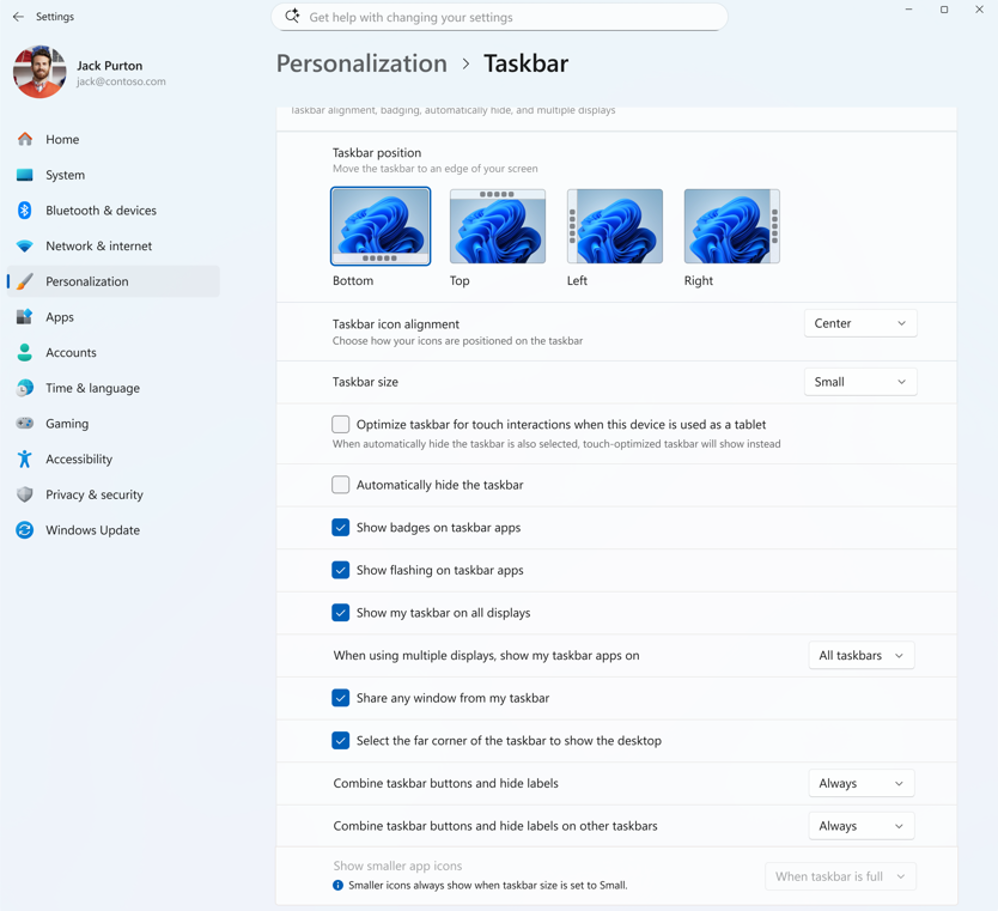
New Taskbar size setting Release channel: Experimental
  • Taskbar customization just got easier. As we continue to make improvements to the Taskbar experience mentioned last month, we've introduced a dedicated Taskbar Size setting, making it simpler to find, understand, and personalize your ideal taskbar experience.
[caption id="attachment_179025" align="aligncenter" width="998"]Screenshot showing ability to change taskbar size Screenshot showing ability to change Taskbar size[/caption] Thanks, Stephen and the Windows Insider Program team
  •  

2027 iPhone 18 and iPhone 18e to Get 9GB RAM and A20 Chip

26 Juni 2026 om 18:57
The lower-end iPhone 18 models set to launch in spring 2027 will feature 9GB DRAM, up from 8GB, according to Apple analyst Ming-Chi Kuo.


Kuo says the A20 chip Apple plans to use for the devices will have 1.5GB x 6 dies for a total of 9GB RAM, instead of 2GB x 4 dies as the current lower-end iPhone 17 models use.

By lower-end iPhones, Kuo is likely referencing the ‌iPhone 18‌ and the iPhone 18e, both of which are rumored to be coming around March or April of 2027. Apple plans to introduce the iPhone 18 Pro, ‌iPhone 18 Pro‌ Max, and foldable iPhone this fall, and those devices are expected to feature 12GB RAM (1.5GB x 8 dies) like the current iPhone 17 Pro models.

Apple will add more RAM to the ‌iPhone 18‌ models to make sure the devices work well with AI workloads and are able to support all of the Apple Intelligence features coming in iOS 27.

Apple yesterday raised prices across its Mac and iPad lines, but ‌iPhone 17‌ pricing hasn't gone up. Apple will likely implement price hikes when the ‌iPhone 18 Pro‌ models come out, and since Apple raised the cost of even the low-end iPad and the MacBook Neo, the ‌iPhone 18‌ and iPhone 18e probably won't be exempt from an increase.
Related Roundup: iPhone 18
Related Forum: iPhone

This article, "2027 iPhone 18 and iPhone 18e to Get 9GB RAM and A20 Chip" first appeared on MacRumors.com

Discuss this article in our forums

  •  

The MacRumors Show: iPhone 18 Pro Has a Pricing Problem

26 Juni 2026 om 18:16
On this week's episode of The MacRumors Show, we discuss potential price rises for the iPhone 18 lineup following Apple's wave of hikes yesterday, as well as plans for the Apple Watch Ultra 4 and camera-equipped AirPods.


Apple yesterday raised prices across most of its lineup, including HomePod mini, HomePod, Apple TV, the entire iPad line, the entire Mac line, and Vision Pro, following CEO Tim Cook's warning to The Wall Street Journal that hikes were "unavoidable" due to soaring memory and storage chip costs. Apple's online store was briefly taken offline before returning with the new pricing, with increases ranging from $30 on the ‌HomePod mini‌ to $1,300 on the high end Mac Studio, averaging $246.67 across the affected products.

The iPhone, AirPods, Studio Display, Apple Watch, and accessories such as the Apple Pencil appear to be the only product lines left unaffected. Separately, the 256GB Mac mini has returned to the lineup after disappearing earlier this year, now priced at $799, which is a $200 increase over its earlier price.

The same pressure is likely to hit the iPhone 18 Pro and iPhone 18 Pro Max, which were already speculated to cost more than their predecessors before yesterday's increases. Speaking with the Wall Street Journal, Cook acknowledged Apple isn't immune to these cost pressures, and said clarity on iPhone pricing would come with the lineup's September launch.

Citing research firm TechInsights, the ‌Wall Street Journal‌ reported that DRAM and flash storage costs are projected to roughly quadruple by fall, pushing the iPhone 17 Pro's bill of materials from about $582 up 25% to around $726 for its successor. TechInsights has said Apple would need to raise the iPhone 18 Pro's price by about $270 to preserve current margins, though Apple's preference for standardized pricing makes a $1,299 starting price more likely on its own.

Factoring in the new camera system, which analyst Ming-Chi Kuo says could cost about 50% more than the previous generation, the ‌Wall Street Journal‌ estimates Apple could ultimately set the ‌iPhone 18 Pro‌'s starting price at $1,399 or higher, a $200 to $300 jump over the current model, with the iPhone 18 Pro Max likely starting $100 above that.

The ‌iPhone 18 Pro‌ is rumored to keep the ‌iPhone 17 Pro‌'s aluminum build, with four new colors including Dark Cherry, a muted wine-red expected to be the signature shade. As with last year, there's likely no true black option. Weibo leaker Fixed Focus Digital recently warned the new colors could be prone to the same chipping and surface issues seen on last year's Cosmic Orange and Dark Blue, which Apple reportedly treats as a material characteristic rather than a defect.

The ‌iPhone 18 Pro‌ and ‌iPhone 18 Pro‌ Max are expected to launch in September alongside Apple's first foldable iPhone, the "iPhone Ultra." Shipping could slip slightly later for the foldable. A Chinese leaker recently said any gap would be at most a month, and Bloomberg's Mark Gurman has reported the device remains on track for September, after Barclays analyst Tim Long earlier suggested shipments could slip to December. The foldable is expected to feature a 7.8-inch inner display, 5.5-inch cover display, the A20 chip and C2 modem, Touch ID instead of Face ID, two rear cameras, and a starting price of at least $2,000.

Gurman recently reported that the Apple Watch Ultra 4 and Apple Watch Series 12 will launch alongside the new iPhones. Little is known about the devices, though a faster chip seems highly likely given that both the Series 11 and Ultra 3 stuck with the S10 from the previous year. watchOS 27 will likely add new watch faces, including a variant of the Modular Ultra face.

For 2027, Apple is developing camera-equipped AirPods. The cameras, embedded in the AirPods' stems, are not designed for taking photos or video, and will instead feed information about the wearer's surroundings to Siri, which will be able to answer questions about objects and whatever the wearer is looking at, alongside contextual reminders and improved turn-by-turn directions. An included light will indicate to people nearby when the cameras are active. The AirPods were originally targeted for a 2026 launch, but Apple's broader AI struggles and the need to develop reliable object-identification models apparently pushed the timeline back.

The MacRumors Show has its own YouTube channel, so make sure you're subscribed to keep up with new episodes and clips.


You can also listen to ‌The MacRumors Show‌ on Apple Podcasts, Spotify, Overcast, or other podcast apps. You can also copy our RSS feed directly into your player.


If you haven't already listened to the previous episode of The MacRumors Show, catch up to hear our further discussion about WWDC 2026 and iOS 27, macOS Golden Gate, and Apple's other new software updates coming this fall.

Subscribe to ‌The MacRumors Show‌ for new episodes every week, where we discuss some of the topical news breaking here on MacRumors, often joined by interesting guests such as Kayci Lacob, Kevin Nether, John Gruber, Mark Gurman, Jon Prosser, Luke Miani, Matthew Cassinelli, Brian Tong, Quinn Nelson, Jared Nelson, Eli Hodapp, Mike Bell, Sara Dietschy, iJustine, Jon Rettinger, Andru Edwards, Arnold Kim, Ben Sullins, Marcus Kane, Christopher Lawley, Frank McShan, David Lewis, Tyler Stalman, Sam Kohl, Federico Viticci, Thomas Frank, Jonathan Morrison, Ross Young, Ian Zelbo, and Rene Ritchie.

‌The MacRumors Show‌ is on X @MacRumorsShow, so be sure to give us a follow to keep up with the podcast. You can also email us at podcast@macrumors.com or head over to The MacRumors Show forum thread. Remember to rate and review the podcast, and let us know what subjects and guests you would like to see in the future.
Related Roundup: iPhone 18 Pro

This article, "The MacRumors Show: iPhone 18 Pro Has a Pricing Problem" first appeared on MacRumors.com

Discuss this article in our forums

  •  

Micron Suggests Apple Helped Cause Memory Price Crisis

26 Juni 2026 om 18:15
Micron's chief business officer has hinted, without calling it out by name, that Apple's tough supplier negotiations contributed to the conditions behind the global memory shortage.


In remarks given to The Wall Street Journal on Wednesday, Sumit Sadana explained that Micron was unable to fund capacity expansion during the industry's previous slump, a period when its margins turned negative partly because some buyers pushed relentlessly for lower prices.

We told a couple of the customers who were being very aggressive with pricing at that time that this is not constructive. A lot of the industry investments got shut down in 2023 because of really poor pricing and really poor margins.


Micron is one of Apple's memory suppliers, providing some of the DRAM and NAND flash chips that go into iPhones, Macs, and iPads. Apple has a reputation for getting favorable terms from suppliers like Micron through long-term purchasing contracts.

Sadana's comments came just hours after Apple unveiled a sweeping round of price hikes that touched nearly every part of its hardware lineup. Products across the Mac, iPad, Apple TV, HomePod, and Vision Pro lines all went up in price, with only the iPhone, Apple Watch, and AirPods left untouched. Apple's stock closed down 6% the same day, its worst single-day performance in more than a year, wiping out roughly $265 billion in market value.

Apple CEO Tim Cook forewarned about this outcome more than a week earlier in comments to the same publication, warning that price increases had become unavoidable given how the company was being squeezed on memory and storage costs. Cook said Apple had been trying to shield customers from the worst of it but had reached a breaking point, describing the shortage as a "hundred-year flood" unlike anything he had seen in more than four decades. He pointed to the surge in demand for high-bandwidth memory used in AI servers, arguing that consumer products were now competing for a shrinking pool of supply and that pricing needed to come back down to earth before Apple's own prices could follow.
Tag: Micron

This article, "Micron Suggests Apple Helped Cause Memory Price Crisis" first appeared on MacRumors.com

Discuss this article in our forums

  •  

Apple's OLED 'MacBook Ultra' Will Stick With M5 Pro and M5 Max Chips

26 Juni 2026 om 17:35
Apple's upcoming high-end MacBook model featuring an OLED touchscreen display will use the company's current M5 Pro and M5 Max chips, according to Bloomberg's Mark Gurman.


The new, top-of-the-line device will launch "between late this year and early next year," Gurman said, adopting the existing high-end Apple silicon chips rather than next-generation M6 versions. Like the MacBook Pro, the touchscreen MacBook will be available in 14- and 16-inch display sizes, code-named "K114" and "K116." The device will also feature a new design and an iPhone-style Dynamic Island. It is expected to be more expensive than the M5 Pro ‌MacBook Pro‌, which now starts at $1,999 as of Apple's recent price rises.

Yesterday, Gurman revealed that Apple plans to skip what would have been the "M6 Pro" and "M6 Max" for more powerful "M7 Pro" and "M7 Max" chips. The M7 series of chips is said to be focused on intense AI workloads, featuring upgraded neural accelerators, graphics enhancements, and increased memory bandwidth. A new entry-level ‌MacBook Pro‌ with the M6 chip is still expected to launch later this year.

Apple is apparently working on a successor to the high-end MacBook model containing the M7 Pro and M7 Max chips, planned for release toward the end of 2027. The company is also planning to refresh the Mac Studio with M7 Max and M7 Ultra chip options in 2028.
This article, "Apple's OLED 'MacBook Ultra' Will Stick With M5 Pro and M5 Max Chips" first appeared on MacRumors.com

Discuss this article in our forums

  •  

Amazon and Best Buy Still Offering Pre-Hike Prices on iPads and Macs

26 Juni 2026 om 17:26
Amazon's stock on select iPads and Macs has begun dwindling in the face of announced price hikes from Apple yesterday. These price changes are now live on Apple.com, but they have yet to hit third party retailers like Amazon. If you're interested in any of these products, now is the time to buy them on Amazon, before the retailer gets these price hikes as well.

Note: MacRumors is an affiliate partner with Amazon. When you click a link and make a purchase, we may receive a small payment, which helps us keep the site running.

Below we've listed all of the biggest products available on Amazon that have price hikes on Apple.com. Given that it's still Prime Day, many of these devices are on sale right now. You can read more about the incoming price changes in our lead article.

MacBook Neo


All of the 256GB MacBook Neo models have sold out on Amazon, but you can still get the 512GB model for $689.99, which is now a $109 discount. If you're looking for the 256GB model, Best Buy has that device for $599.00 right now, which is a $100 discount on the new price.


HomePod


Best Buy is offering up to $50 off HomePod models, now starting at $99.95 for the HomePod mini and $299.99 for the HomePod.


MacBook Pro


Starting with the 14-inch MacBook Pro models, you can get the 24GB/1TB M5 Pro MacBook Pro for $2,049.99, now a $449 discount on the new price.


You can get up to $750 off the 16-inch MacBook Pro right now on Amazon, with the 24GB RAM/1TB M5 Pro model hitting $2,549.99, a $449 discount on the new price.


MacBook Air


MacBook Air stock is quickly dwindling on Amazon, but there are still a few models seeing discounts of up to $349 off new prices this week.


iPad Air


Amazon has up to $350 off the M4 iPad Air, although stock is quickly dwindling due to Apple's price hikes.


iPad Pro


Amazon has $299 off a select handful of iPad Pro models, starting at $899.99 for the 256GB Wi-Fi 11-inch iPad Pro.


iPad


Amazon is taking $150 off Wi-Fi models of Apple's 11th generation iPad for Prime Day. Prices start at $299.00 for the 128GB Wi-Fi iPad, down from the new price of $449.00.


If you're on the hunt for more discounts, be sure to visit our Apple Deals roundup where we recap the best Apple-related bargains of the past week.


Deals Newsletter


Interested in hearing more about the best deals you can find in 2026? Sign up for our Deals Newsletter and we'll keep you updated so you don't miss the biggest deals of the season!


Related Roundup: Apple Deals

This article, "Amazon and Best Buy Still Offering Pre-Hike Prices on iPads and Macs" first appeared on MacRumors.com

Discuss this article in our forums

  •  

iPhone 18 Pro and Foldable iPhone Tipped to Get Price Hikes Too

26 Juni 2026 om 16:14
Apple's iPhone 18 Pro lineup and its first foldable iPhone will launch at higher prices than originally predicted this September, according to several known Chinese leakers.


The leaker known as "Fixed Focus Digital" said on Weibo that while Apple's current iPhone models haven't seen a price increase, the ‌iPhone 18 Pro‌ models launching this fall "will definitely see a price hike," adding that the foldable iPhone in particular could be priced 10% to 20% higher than previously expected.

Bloomberg's Mark Gurman reported that the foldable iPhone is expected to "cross the $2,000 threshold" in the U.S., which would make it the most expensive iPhone Apple has ever sold, surpassing even the $1,999 iPhone 17 Pro Max in its 2TB configuration. Analyst Ming-Chi Kuo believes pricing will not be below $2,000, and could even exceed $2,500. Other projections have also fallen within that range. Given that spread of existing estimates, the new Weibo claims about a further 10% to 20% price increase would push even the lowest of those projections well past the $2,099 mark, and could put a higher storage configuration of the device beyond $3,000.

"Digital Chat Station" said it is "highly unlikely" that the ‌iPhone 18 Pro‌ series avoids a price increase altogether. The leaker pointed to the ‌iPhone 17 Pro‌'s 8,999 yuan starting price in China and suggested Apple could push the 18 Pro to a 9,999 yuan starting price to protect its margins, which would put the entire September lineup, including the ‌iPhone 18 Pro‌, ‌iPhone 18 Pro‌ Max, and the foldable iPhone, at 10,000 yuan or more. That would amount to an increase of roughly 11% over the ‌iPhone 17 Pro‌'s Chinese price. Apple has historically kept its Chinese and U.S. starting prices roughly proportional across recent iPhone generations, so an 11% increase applied to the ‌iPhone 17 Pro‌'s $1,099 U.S. starting price would put the ‌iPhone 18 Pro‌ at around $1,220.

The leaker known as "Instant Digital" floated an even steeper number, suggesting the 256GB ‌iPhone 18 Pro‌ Max could start at 10,999 or even 11,499 yuan, calling that an expensive price point for what is a non-foldable phone. At that level, the ‌iPhone 18 Pro‌ Max would be priced roughly 15% to 20% above the current ‌iPhone 17 Pro‌ Max's 9,999 yuan starting price in China, a jump that, if mirrored in the U.S., could put the 256GB model's starting price somewhere in the $1,300 to $1,400 range, up from $1,199 today.

These leaker estimates echo a wave of recent reporting on the rising cost of building the ‌iPhone 18 Pro‌. Research firm TechInsights estimates that Apple paid around $39 for the 12GB of DRAM in the ‌iPhone 17 Pro‌, a figure that could climb to $145 in the ‌iPhone 18 Pro‌, pushing the device's total bill of materials up by roughly 25%. Based on similar cost projections, Apple would need to charge around $1,369 for the ‌iPhone 18 Pro‌ to preserve its current profit margin on the ‌iPhone 17 Pro‌. Once a pricier new camera system is factored in, The Wall Street Journal estimates a starting price of $1,399 or higher.

The latest rumors follow Apple's decision to raise prices on most of its devices this week, with the exception of the iPhone, AirPods, and Apple Watch. Apple CEO Tim Cook confirmed last week that the increases were unavoidable, citing the soaring cost of memory and storage chips as a "hundred year flood." Apple has historically absorbed component cost swings rather than passing them on to customers, making this round of increases a notable shift in approach.
Related Roundup: iPhone 18 Pro

This article, "iPhone 18 Pro and Foldable iPhone Tipped to Get Price Hikes Too" first appeared on MacRumors.com

Discuss this article in our forums

  •  

Apple Adds More 2026 Macs and Studio Display 2 to Refurbished Store

26 Juni 2026 om 16:13
Earlier today, we reported that Apple added the MacBook Neo to the refurbished store on its website, and it turns out the new additions go beyond that.


The other products added to Apple's refurbished store in the U.S. and Canada for the first time today include the MacBook Air with the M5 chip, MacBook Pro models with M5 Pro and M5 Max chips, and the second-generation Studio Display (2026). The higher-end Studio Display XDR was also briefly available on Apple's refurbished store in Canada.

All of the products listed above were originally released in March 2026.

Note that the listings incorrectly state that the Studio Display (2026) has an XDR display, which is actually limited to the higher-end Studio Display XDR.

Given that Apple just raised prices on select products, including all Macs, the prices for many of these refurbished models are similar to what Apple was charging for the equivalent brand-new models just a day ago. For example, the MacBook Air with the M5 chip now starts at $1,299, up from $1,099, and refurbished models start at $1,099.

Given the Studio Display did not receive a price increase, though, there are opportunities for savings on that product. In the U.S., the second-generation model starts at $1,599 brand new, whereas the refurbished equivalent starts at $1,359.

Some of these products have also been added to Apple's refurbished store in select European countries, Australia, New Zealand, Singapore, and elsewhere.

Apple says it puts refurbished products through "full functionality testing" and a "thorough cleaning process and inspection," and they are covered by Apple's one-year limited warranty and eligible for extended AppleCare+ coverage. In our view, Apple's own refurbished devices are virtually indistinguishable from brand-new devices.
This article, "Apple Adds More 2026 Macs and Studio Display 2 to Refurbished Store" first appeared on MacRumors.com

Discuss this article in our forums

  •  

Apple Donating to Relief Efforts in Venezuela Following Devastating Earthquakes

26 Juni 2026 om 16:10
In a social media post today, Apple CEO Tim Cook said Apple will be donating to relief efforts on the ground in Venezuela after the country was hit by two catastrophic earthquakes this week.

Apple has donated to the Red Cross for earthquake and hurricane relief efforts in the past — it does not disclose the amounts.
This article, "Apple Donating to Relief Efforts in Venezuela Following Devastating Earthquakes" first appeared on MacRumors.com

Discuss this article in our forums

  •  

Apple 'iRing' Rumor Re-Emerges Amid Oura Ring Popularity

26 Juni 2026 om 14:24
Apple is developing a smart ring that could potentially rival products like the Oura Ring and Samsung Galaxy Ring, according to the leaker and prototype collector known as "Kosutami."

The latest Oura Ring 5 starts at $399

Apple has toyed with the idea of a smart ring for several years, as indicated by several patents, and there have been previous rumors that Apple has investigated a wearable for the finger to track a user's biometrics.

Reports dating back to 2024 said Apple was weighing up the idea as a viable expansion of its wearables lineup – something that may appeal to people who would prefer a biometric accessory that's more inconspicuous than an Apple Watch.

Rumors have petered out over the last couple of years, but now it seems that the popularity of the latest Oura Ring has caught Apple's attention, if the latest rumor is anything to go by. However, no other details were provided by the leaker.

The original Oura Ring was released by Finnish health technology company Oura back in 2015. The device collects activity, heart rate, respiratory rate, and sleep data, and transmits it via Bluetooth to the Oura app.

iRing thing under development. What a surprise.

— Kosutami (@Kosutami_Ito) June 24, 2026

Now in it's fifth iteration, the latest Oura Ring is a lot smaller than previous versions and boasts new health-monitoring capabilities including blood pressure trend detection, nighttime breathing analysis, and tools for GLP-1 medication tracking.

Would you be interested in an "iRing" as an alternative to Apple Watch? Let us know in the comments.
This article, "Apple 'iRing' Rumor Re-Emerges Amid Oura Ring Popularity" first appeared on MacRumors.com

Discuss this article in our forums

  •  

Refurbished MacBook Neo Models Now Available, a Day After Price Hike

26 Juni 2026 om 12:59
Apple today began selling refurbished MacBook Neo units through its Certified Refurbished store, a day after raising prices on the laptop and several other products.


The refurbished ‌MacBook Neo‌ is available in all four colors, Silver, Citrus, Indigo, and Blush, in both configurations. The base model with 256GB of storage starts at $599, while a higher end version with Touch ID and 512GB storage starts at $679. Both configurations are available across the full color lineup, for eight refurbished SKUs in total.

The refurbished pricing undercuts Apple's current new unit pricing for the ‌MacBook Neo‌. Apple yesterday raised prices on many products, including the MacBook Neo, which now starts at $699 in the United States, up from $599 when it launched in March. The higher end configuration with 512GB of storage and a ‌Touch ID‌ button also received a $100 price increase and now starts at $799, up from $699. That means the new refurbished listings are priced at or near to the laptop's original, pre-hike rates.

Apple said the broad range of price increases are due to the ongoing memory chip shortage, which has led to skyrocketing prices for the RAM and SSD storage used in products like the ‌MacBook Neo‌, with the company pointing to AI server demand from companies buying up memory chips as a key driver. The changes extended the same day to Apple's Certified Refurbished store, with the company raising prices across refurbished Macs and iPads alongside the hikes on new hardware.

The ‌MacBook Neo‌ is powered by the A18 Pro chip with 8GB of RAM and features a 13-inch Liquid Retina display. It is still Apple's most affordable Mac.
Related Roundup: MacBook Neo
Buyer's Guide: MacBook Neo (Buy Now)
Related Forum: MacBook Neo

This article, "Refurbished MacBook Neo Models Now Available, a Day After Price Hike" first appeared on MacRumors.com

Discuss this article in our forums

  •  

Russ Allbery: Review: Platform Decay

26 Juni 2026 om 05:23

Review: Platform Decay, by Martha Wells

Series: Murderbot Diaries #8
Publisher: Tor
Copyright: 2026
ISBN: 1-250-82701-9
Format: Kindle
Pages: 245

Platform Decay is the eighth book in the Murderbot science fiction series. You absolutely should not start here, but you also don't need to remember the specifics of the previous books.

As the story opens, Murderbot and a friend (the identity of whom is a spoiler for previous books) are infiltrating a Corporation Rim torus, a massive space station that encircles a mined-out planet. (Like most science fiction megastructures, this is more space than the plot really requires.) Murderbot's mission is to exfiltrate some of Dr. Mensah's family members who have become entangled in corporate shenanigans. The corporates are eager to get revenge for the events of System Collapse, not to mention the other times Preservation Station has upended corporate plans. Murderbot's job is to stop them.

The group, in addition to one of Dr. Mensah's partners, includes an older woman and a young child. Murderbot is analytical and of course not at all emotional about children, which is reliably a good time. Also, the older woman is gruff, stubborn, and thoroughly enjoyable.

There are, of course, complications that lead to picking up more children and going through rather more of the torus than Murderbot wanted to explore. Each section of the torus is run by a different corporation and has a different constructed environment and visual aesthetic, so there are a lot of opportunities for fights, daring escapes, and incidental trouble.

Also, well:

So I had installed a mental health module. I know, I was surprised I did it too.

After the events of System Collapse, University Medical decided that Murderbot needed a bit more metal health support.

The only reason I agreed to it was that the mental health module didn't actually try to adjust my processing or core programming or anything; it just monitored my organic neural tissue. When my neural tissue started to generate weird chemicals and whatever, it would ping me to "check in with my emotional state." Seriously, I could have coded that myself.

(I told Dr. Bharadwaj that, and she said, "Would you have ever coded that yourself?" which was totally unfair and also correct. I would never have done that.)

Speaking as someone whose neural tissue sometimes generates weird chemicals and whatever, I sympathize.

The specific form this module takes is periodic "emotion check" parentheticals throughout the narration, which I found utterly delightful.

I ran that through risk assessment and it produced the equivalent of a shrug.

(Emotion check: Shrug sigil right back at you, you piece of shit.)

This is otherwise an extended action movie sort of a book, much like several of the early novellas. There are no major political or interpersonal developments here and the usual cast (apart from Murderbot) is mostly absent. Instead, we get an extended, dangerous journey through a corporation-controlled habitat, mixed with Murderbot trying to interact with humans in a way that minimizes its annoyance while being hopefully reassuring. It's competence porn with awkward but surprisingly heartfelt emotional bonding, not that Murderbot in any way wants to bond or would appreciate that description.

I doubt this will be anyone's favorite entry into the series since there are none of the big reveals or major leaps of character development there have been in the past few books. But, like all Murderbot books, the narrative tone is wonderful and all of the small asides and little moments of character interaction are an utter delight. If you've gotten this far in the series, you know what I mean and you'll be as happy to read more of it as I was. There is a part of me that is hoping for some major plot development, and I always want to see more of ART (who has no significant role in this book), but Wells has the narrative style down so perfectly that I would read and enjoy a book about Murderbot doing just about anything.

If you're this far in the series, you probably don't need a review, and since this is an action-heavy adventure rather than a character growth novel, I don't have a lot more to add. There's a new short Murderbot novel out and you want to read it. Recommended to everyone who enjoys the series.

Rating: 8 out of 10

  •  
❌
