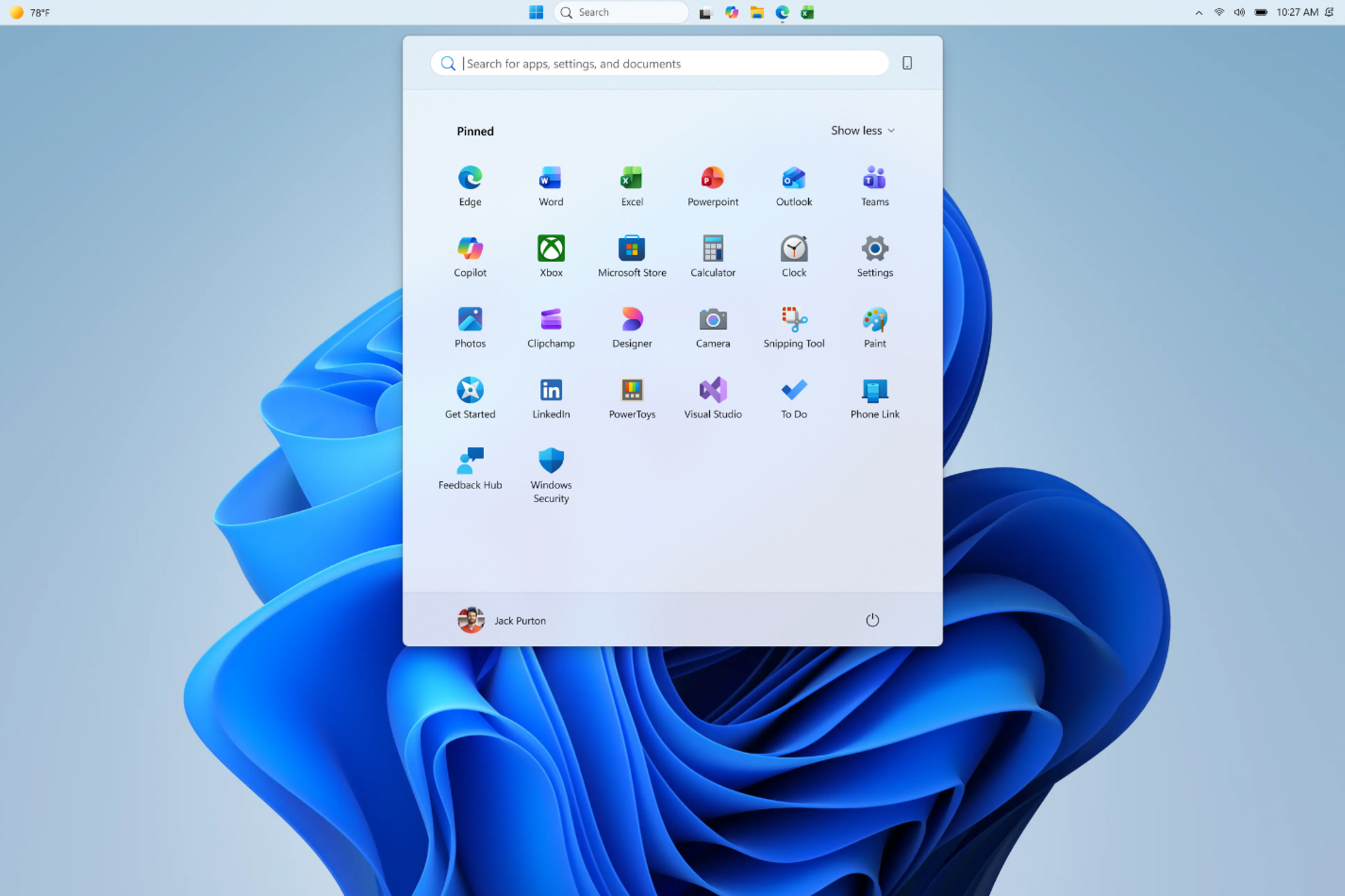
Normale weergave
Distribution Release: NetHydra 2026.2
iOS 27 to Let Users Generate Wallpapers and Build Shortcuts With AI
When choosing a new wallpaper, users will have the option to generate something custom using the Image Playground app. Image Playground is used for generating custom emoji and images that can be used throughout iOS, and it is set to get an upgrade in iOS 27.
Apple is testing models that produce more lifelike images, so the version of Image Playground that's used for generating custom wallpapers could be different from the current version.
Shortcuts is also getting a major update, with users able to use natural language to ask Siri to make a shortcut. There is an option for users to tell Siri what they want to accomplish with a shortcut to have the workflow created using AI.
Bloomberg says the Shortcuts app has a prompt that says "What do you want your shortcut to do?" with a text field to enter a description. Shortcuts that are created using AI are then automatically installed and immediately available for use.
Shortcut creation is largely done manually now, and it is a tool that has remained out of reach of many casual iPhone users. A Shortcuts app that's able to work with natural language capabilities will see the app getting more widespread use.
The new Shortcuts app and the wallpaper generation tool will be previewed at the WWDC keynote that's set to take place on June 8.
This article, "iOS 27 to Let Users Generate Wallpapers and Build Shortcuts With AI" first appeared on MacRumors.com
Discuss this article in our forums
Apple Expanding AI Writing Tools With Grammar Checker in iOS 27
Apple is testing an expanded version of Writing Tools that will do more rewriting and text generation than the current version. There is a "Write With Siri" toggle at the top of the keyboard, along with a "Help Me Write" option that comes up when Siri is activated while a text field is open.
Apple is planning to introduce a dedicated AI grammar checker for Writing Tools that will work like Grammarly. When writing in Messages, Mail, and other apps there will be a translucent menu that slides up from the bottom of the iPhone's screen, and it will show suggested revisions next to the original written text.
Users can go through the suggestions and accept or reject them one by one, approve all of the changes at once, or ignore all of the changes. Apple has an option for pausing grammar checking and for moving between different flagged sections of text. Apple already has a spellchecking feature, but the new feature will add grammar suggestions.
The updates to Writing Tools will be unveiled at Apple's June 8 WWDC keynote. Apple is also planning AI updates for the Photos app, Camera app, and more, with details available in our iOS 27 roundup.
This article, "Apple Expanding AI Writing Tools With Grammar Checker in iOS 27" first appeared on MacRumors.com
Discuss this article in our forums
Apple Design Award Finalists Announced Ahead of WWDC 2026
The Apple Design Awards recognize apps with innovation, ingenuity, and technical achievement in app and game design.
Delight and Fun - Apps
- Blippo+
- Metaballs
- Grug
Delight and Fun - Games
- PowerWash Simulator
- Is This Seat Taken?
- Ball x Pit
Inclusivity - Apps
- Guitar Wiz
- Hearing Buddy
- Structured
Inclusivity - Games
- Sago Mini Jinja's Garden
- Pine Hearts
- Civilization VII
Innovation - Apps
- Detail: AI Video Editor
- NBA: Live Games & Scores
- D-Day: The Camera Soldier
Innovation - Games
- TR–49
- Blue Prince
- Pickle Pro
Interaction - Apps
- The Outsiders: Athlete Tracker
- Moonlitt: Moon Phase Tracker
- Tide Guide: Charts & Tables
Interaction - Games
- TR–49
- Sago Mini Jinja's Garden
- Grand Mountain Adventure 2
Social Impact - Apps
- Primary: News in Depth
- Katha Room
- Harvee
Social Impact - Games
- Consume Me
- Despelote
- Spilled!
Visuals and Graphics - Apps
- Tide Guide: Charts & Tables
- Caradise
- (Not Boring) Camera
Visuals and Graphics - Games
- Cyberpunk 2077 Ultimate Edition
- Arknights: Endfield
- SILT
One app and one game will be chosen in each category, with Apple to announce winners during the 2026 Worldwide Developers Conference. Winners will receive a physical award and hardware to help them continue to create apps and games.
Links to all of the apps that are nominated can be found on Apple's website.
This article, "Apple Design Award Finalists Announced Ahead of WWDC 2026" first appeared on MacRumors.com
Discuss this article in our forums
Apple Announces WWDC 2026 Schedule, Sends Media Invites
Both the invites and schedule confirm that the keynote will begin at the standard time, 10:00 a.m. Pacific Time or 1:00 p.m Eastern Time.
Apple says the keynote event will be available to stream on Apple.com, the Apple TV app, and the Apple YouTube channel. We'll also be providing live coverage at MacRumors.com for those who are unable to watch.
Apple also plans to host the Platforms State of the Union for developers at 1:00 p.m. Pacific Time, and video sessions and guides will start coming out after the keynote event. Group Labs and Q&A sessions will be hosted by Apple engineers and designers throughout the week, providing more insight into the new software coming at WWDC 2026.
WWDC 2026 will see Apple unveil iOS 27, iPadOS 27, macOS 27, and more. An updated version of Siri that's smarter and more like a ChatGPT-style chatbot will be unveiled, along with multiple design changes to accommodate Siri's new abilities. We have an in-depth look at what's coming in iOS 27 in our dedicated roundup.
This article, "Apple Announces WWDC 2026 Schedule, Sends Media Invites" first appeared on MacRumors.com
Discuss this article in our forums
Apple kicks off Worldwide Developers Conference on June 8

Apple Watch Ultra 4 Could Get Redesign and Blood Pressure Monitoring
Apple will apparently add a new high blood pressure notification feature to the Apple Watch that uses the optical heart-rate sensor on the back of the device to analyze how blood vessels respond to each heartbeat, sending alerts when an abnormal pattern is detected. The feature is said to be under FDA review.
It is not entirely clear how it differs from the Hypertension Notifications feature Apple introduced with watchOS 26 last fall, which itself uses the optical heart sensor to analyze blood vessel responses over 30-day periods. DigiTimes says that earlier Apple Watch models already had some blood-pressure sensing capabilities, and the new feature appears to represent a more refined or clinically validated implementation of that underlying hardware.
After this, Apple's next health monitoring capabilities are expected to focus on noninvasive blood-glucose monitoring, a capability Apple has been pursuing for a number of years, pending government approval.
The report is largely consistent with a DigiTimes report from last year, which said at least one new Apple Watch model would feature a "significant redesign," with supply chain sources pointing to exterior design changes including eight sensors arranged in a ring pattern on the back of the device. Today's update describes the changes more forcefully, calling it a "full redesign" alongside a "significant upgrade to sensing functions."
According to market observers cited by the report, the redesign could boost Apple Watch shipments by 20% to 30% compared to 2025. The sensor upgrades are expected to be a major boost for Taiwan-Asia Semiconductor (TASC), Apple's exclusive supplier of sensor components, with large-volume orders anticipated as early as July.
Apple Watch Ultra 4 is expected to be announced alongside the Apple Watch Series 12, iPhone 18 Pro, iPhone 18 Pro Max, and foldable "iPhone Ultra" in fall 2026.
This article, "Apple Watch Ultra 4 Could Get Redesign and Blood Pressure Monitoring" first appeared on MacRumors.com
Discuss this article in our forums
New Apple Card Holders Can Get Free AirPods Pro 3, But There's a Catch
Customers who open a new Apple Card account and purchase AirPods Pro 3 directly from Apple by June 15 will qualify. Starting July 1 and running through April 30, 2027, cardholders can earn $25 in Bonus Daily Cash each month, up to $250 total, but only in months where they make at least ten purchases on the card. Each qualifying purchase must be at least $0.01, and the AirPods Pro 3 purchase itself does not count toward the monthly ten-purchase threshold.
The offer is open to new Apple Card applicants only, and is not available to existing cardholders or anyone with a pending application. The AirPods Pro 3 purchase must be made directly from Apple, either online or in an Apple Store. Refurbished products, purchases through third-party retailers, international transactions, and business bulk orders are all excluded. The AirPods Pro 3 purchase cannot be made entirely with an Apple Gift Card or Apple Account balance.
All Apple Card payment options are eligible, including paying in full or financing via Apple Card Monthly Installments, and any trade-in applied to the purchase does not affect eligibility. Returning the AirPods Pro 3 purchase may result in forfeiture of the offer.
The AirPods Pro 3 are priced at $249 and were introduced alongside the iPhone 17 lineup in September 2025.
This article, "New Apple Card Holders Can Get Free AirPods Pro 3, But There's a Catch" first appeared on MacRumors.com
Discuss this article in our forums
Anker's Newest Prime Chargers Hit Their Lowest-Ever Prices on Amazon
The Prime 3-in-1 Wireless Charging Station features Qi2.2 support, which lets a compatible MagSafe iPhone charge at up to 25W. It's the same speed as Apple's MagSafe charger, and it is 10W faster than the standard Qi2 MagSafe chargers. You can also simultaneously charge an Apple Watch and AirPods with the device.
There are plenty of other Anker discounts happening on Amazon this week, including Anker's Prime 14-in-1 Docking Station for $339.99, down from $399.99. Below you'll find a list of the best Anker discounts on Amazon this week, also including wall chargers, portable chargers, and more.
Wall Chargers
- Nano USB-C Wall Charger - $29.99, down from $39.99
- 140W 4-Port GaN USB-C Charger - $79.99, down from $99.99
- 160W 3-Port Compact Charger - $105.99, down from $149.99
Wireless Chargers
- 3-in-1 MagSafe-Compatible UFO Charger - $69.99, down from $89.99
- 3-in-1 MagSafe-Compatible Foldable Charging Station - $85.99, down from $109.99
- 3-in-1 MagSafe-Compatible Charging Cube - $86.99, down from $129.99
- 3-in-1 Prime Wireless Charging Station - $104.99, down from $149.99
- Prime MagSafe-Compatible 3-in-1 Charging Station - $159.99, down from $229.99
Portable Chargers
- MagGo Power Bank 10,000 mAh - $63.99, down from $79.99
- Prime Power Bank 20,100 mAh - $149.99, down from $179.99
- SOLIX C300 Power Station with Lantern - $169.99, down from $249.00
- Prime Power Bank 26,250 mAh - $171.48, down from $229.99
- SOLIX C1000 Gen 2 Portable Power Station - $449.99, down from $799.00
- SOLIX C2000 Gen 2 Portable Power Station - $799.99, down from $1,499.00
If you're on the hunt for more discounts, be sure to visit our Apple Deals roundup where we recap the best Apple-related bargains of the past week.
Deals Newsletter
Interested in hearing more about the best deals you can find in 2026? Sign up for our Deals Newsletter and we'll keep you updated so you don't miss the biggest deals of the season!
This article, "Anker's Newest Prime Chargers Hit Their Lowest-Ever Prices on Amazon" first appeared on MacRumors.com
Discuss this article in our forums
Foldable iPhone Production Stalls Amid Hinge Issues
The leaker known as "Instant Digital" posted on Weibo that the foldable device's hinge is consistently failing to meet Apple's quality control standards under conditions of prolonged, high-frequency opening and closing. The leaker described the mechanical wear issue as one that "must be resolved with absolute perfection; otherwise, progress will simply have to be stalled for the time being."
The hinge has been a key focus of Apple's foldable development for years. Supply chain analyst Ming-Chi Kuo first reported that the device would use Liquid Metal components in the hinge mechanism, with Dongguan EonTec serving as the exclusive supplier of the amorphous alloy. Instant Digital subsequently elaborated that the material, also known as metallic glass, features a disordered atomic structure that is more resistant to bending and deformation than traditional metals, and more durable than titanium alloy. This makes it suitable for a foldable's hinge.
Apple has previously used the material only in small components such as SIM ejector pins, so the iPhone Ultra would mark its first major use in a critical mechanical part. A subsequent report in January corroborated the liquid metal hinge plans, noting that Apple has been exploring the material for over 15 years, tracing back to a 2010 licensing deal with Liquidmetal Technologies.
Screen creasing is a concern that has followed the foldable smartphone category since its inception. Instant Digital says Apple has essentially accepted some degree of crease as inevitable, but that test results have demonstrated the device can maintain a visually crease-free state over the long term. That aligns with previous reporting: leaker "Fixed Focus Digital" reported in February that production orders had been placed with a crease depth under 0.15mm and a crease angle under 2.5 degrees. Apple has reportedly pursued eliminating the crease "regardless of cost," with engineering solutions including a dual-layer ultra-thin glass structure designed to spread mechanical stress across multiple layers, and advances in optically clear adhesive to keep display layers in precise alignment.
A follow-up post from the leaker suggested the hinge difficulties are unlikely to push back the device's expected release window somewhat, noting that there is still ample time remaining. That is broadly consistent with earlier reporting: DigiTimes reported in April that production was running roughly one to two months behind schedule, but that a fall 2026 launch remained on track, with mass production planned to begin in July. Apple is expected to announce the foldable iPhone alongside the iPhone 18 Pro models at its September event, though some reports suggest customer availability could slip as late as December.
In a third post, Instant Digital offered a note on the device's experience, suggesting that despite its larger form factor the foldable feels like an iPhone rather than an iPad when in use. The leaker added that the screen size offers limited practical utility for a stylus, casting doubt on whether Apple Pencil support would be a meaningful feature for the device.
The foldable iPhone is expected to feature a 7.8-inch inner display and a 5.5-inch cover display, with an A20 chip, C2 modem, Touch ID power button, and two rear cameras. Pricing is rumored to sit at around $2,000.
This article, "Foldable iPhone Production Stalls Amid Hinge Issues" first appeared on MacRumors.com
Discuss this article in our forums
AMC+ Premium for $29.99: Stream Shudder, BBC America, and More for a Year
This is the Premium tier of the subscription service, allowing you to stream without ads (with limited exceptions), access to six live TV channels, and the ability to download and watch programs on the go. It also features full access to Shudder, BBC America, and Sundance Now.
To get the deal, you can follow this link on Amazon and click "select plan" under the AMC+ Premium tier option. From there, you can select the Annual option to add the AMC+ Premium subscription to your channels list for just $29.99 for one year.
Shoppers should note that the price will increase to $109.99 per year at the end of your first year unless canceled. This discount is expected to expire on May 25, so be sure to lock in the sale soon if you're interested.
If you're on the hunt for more discounts, be sure to visit our Apple Deals roundup where we recap the best Apple-related bargains of the past week.
Deals Newsletter
Interested in hearing more about the best deals you can find in 2026? Sign up for our Deals Newsletter and we'll keep you updated so you don't miss the biggest deals of the season!
This article, "AMC+ Premium for $29.99: Stream Shudder, BBC America, and More for a Year" first appeared on MacRumors.com
Discuss this article in our forums
Sony's 10th Anniversary 'Collexion' Over-Ear Headphones Leaked
From what we can tell based on the leaked materials, the changes are largely design-based. The new cans have a thicker leatherette padding than their predecessors, as well as larger ear cups, while the buttons are more separated and the microphone grilles get more breathing room. But it's the headband stems that stand out. Depending on the color choice, they're glossy black or chrome-on-white. The touch control surface has also been moved to the side and rear of each cup.
The biggest difference though is said to be a more robust design. Durability was reportedly a recurring complaint with the XM6's, so Sony has reinforced the stems by making them a single piece of polished metal rather than a fork. A purse-style carry case comes along for the ride, as does a headphone cable, but a USB-C charging cable may not be included (the leaked materials are contradictory on this point).
Battery life on a single charge sounds roughly comparable to the XM6's, with up to 24 hours of playback with acoustic noise-canceling enabled and 32 hours with ANC off. There's also a five-minute quick-charge feature that gets you 1.5 hours of battery life.
Sony says it has partnered with three world-class mastering studios for the driver tuning, including Battery Studios, Sterling Sound and Coast Mastering.
The new headphones will be available on Tuesday for $649 in the United States – $200 more than the cost of the XM6 headphones at launch, suggesting they are being marketed as a luxury product. It's only a short step up from the category occupied by Apple's $549 AirPods Max, which received a refresh earlier this year with a H2 chip.
(Via HotEUDeals.)
This article, "Sony's 10th Anniversary 'Collexion' Over-Ear Headphones Leaked" first appeared on MacRumors.com
Discuss this article in our forums
First Gen AirTag 4-Pack Drops Below $50 for the First Time Ever
The AirTag 4-Pack is in new condition and comes with a 90-day Woot limited warranty, and the sale is set to last for four more days. Be sure to check out the rest of the products that you can use the SAVETWENTY code on, including monitors, video game accessories, smart home products, apparel, and much more.
If you're on the hunt for more discounts, be sure to visit our Apple Deals roundup where we recap the best Apple-related bargains of the past week.
Deals Newsletter
Interested in hearing more about the best deals you can find in 2026? Sign up for our Deals Newsletter and we'll keep you updated so you don't miss the biggest deals of the season!
This article, "First Gen AirTag 4-Pack Drops Below $50 for the First Time Ever" first appeared on MacRumors.com
Discuss this article in our forums
'Suggested Genmoji' Are Coming to an iPhone Near You
Genmoji is an Apple Intelligence feature that lets you use AI to generate all-new emoji characters based on text input. All Genmoji generation happens directly on-device, but the feature has had a rocky run.
Writing in his latest Power On newsletter, Gurman says that the generated images often looked nothing like Apple's polished marketing examples, and the underlying models were demanding enough to heat up iPhones and drain their batteries.
Apple has apparently made some tweaks so that no longer happens, while also adding a new supplementary feature.
"Suggested Genmoji" will reportedly offer you custom emoji ideas automatically based on your media and text history, rather than you having to think them up yourself. The feature is said to be optional in the next iPhone and iPad software update.
Gurman says a new toggle in the Keyboard settings of iOS 27 reads: "Suggested Genmoji are created from your photos and your commonly typed phrases."
iOS 27 will be previewed at WWDC next month, with a public release expected in the fall.
This article, "'Suggested Genmoji' Are Coming to an iPhone Near You" first appeared on MacRumors.com
Discuss this article in our forums
iOS 27: Dedicated Siri App to Include Auto-Deleting Chats Feature
Writing in his latest Power On newsletter, Gurman says that Apple is keen to market its privacy credentials as a key advantage in the way it is implementing AI across its software compared to rivals.
Cognizant of the perception that it has fallen behind other companies in the race to integrate AI into its operating systems, Apple will lean into privacy as a core tenant of its approach – starting with giving users options to auto-delete chats.
In the Settings panel for the new Siri app, "users will be able to choose to keep conversations for 30 days, one year, or forever," says Gurman, based on his sources. A similar feature can already be found in the Messages app's Settings.
"Most leading AI chatbots today rely heavily on histories and memory systems to personalize responses and improve future interactions," says Gurman. "But Apple will place tighter limits around how memory works, including restrictions on what information can persist and how long it can be retained."
Gurman also mentions that users will be able to decide if the Siri app opens showing either a grid of prior conversations or a new chat screen.
Apple's enhanced Siri will be powered by Google's Gemini models, but Apple apparently won't emphasize this, given that Google is historically known as an ad-driven business that farms users' data.
Another interesting tidbit in Gurman's latest newsletter is that the new Siri app will be labeled "beta," despite being the culmination of two years of delays. Apple recently agreed to pay $250 million to settle a U.S. class action lawsuit over delayed Siri features, with eligible iPhone users able to receive up to a $95 payout.
This article, "iOS 27: Dedicated Siri App to Include Auto-Deleting Chats Feature" first appeared on MacRumors.com
Discuss this article in our forums
DistroWatch Weekly, Issue 1173
Review: Sylve on FreeBSD
News: Debian commits to reproducible builds, Debian publishes updated install media, Haiku introduces SMP support on ARM64 processors, Rocky Linux creates opt-in security repository, Fedora reconsiders AI tools, KDE receives generous donation
Questions and answers: The benefit of BleachBit
Released last week:....
Amazon Offers Up to $109 Off New M4 iPad Air Models This Weekend
Specifically, the 128GB Wi-Fi 11-inch M4 iPad Air has dropped to $519.99, down from $599.00, beating the previous low price by about $40. You'll also find low prices on the 256GB Wi-Fi 11-inch model and 256GB Wi-Fi 13-inch model, both of which we're only tracking on Amazon.
The new iPad Air features the M4 chip, C1X modem, and N1 networking chip, which brings support for Wi-Fi 7 and Bluetooth 6. In terms of design, the 2026 models are identical to the 2025 iPad Air tablets, with an edge-to-edge display, slim bezels, and aluminum chassis.
If you're on the hunt for more discounts, be sure to visit our Apple Deals roundup where we recap the best Apple-related bargains of the past week.
Deals Newsletter
Interested in hearing more about the best deals you can find in 2026? Sign up for our Deals Newsletter and we'll keep you updated so you don't miss the biggest deals of the season!
This article, "Amazon Offers Up to $109 Off New M4 iPad Air Models This Weekend" first appeared on MacRumors.com
Discuss this article in our forums
Otto Kekäläinen: Balancing persistence vs pivoting – is grit a virtue or wasteful?
Being persistent, sticking to a plan and showing up to work every day is generally valued highly across all cultures as virtuous behavior. It is obvious that anything of value and worth achieving is also not easy, but requires significant and recurring effort. Learning a new language, winning a sports competition or building a successful business are all typical scenarios where grit plays a central role above everything else. However, sometimes the virtue of tenacity can result in just a waste of energy.
The question is then: how does one recognize that true progress is being blocked by stubbornness and a pivot would be the correct decision, as opposed to being close to breakthrough where doing more of the same would actually be the right choice?
What is persistence actually?
To think clearly about this topic, one must first grasp the concept of “grit” and what it looks like in practice. Research by psychologist Angela Duckworth on “grit” shows that sustained effort in the face of setbacks separates high achievers from those who quit too soon. Entrepreneurs who iterated through dozens of failed prototypes or writers who revised manuscripts for years understand this truth. Persistence builds resilience, deep expertise, and the kind of compounding results that shortcuts cannot deliver. It also protects against the distraction of shiny new ideas that pull focus from what actually works.
Persistence is about:
- Believing in an outcome and working towards it despite people around you not sharing the belief, and despite your own work and experiments not being successful.
- Continuing to hold the belief and sticking to the decision despite other ideas, solutions and competing alternatives surfacing.
- The more time passes, the firmer the conviction becomes. Time, money, and emotional energy invested in a failing direction create psychological pressure to continue (sunk-cost fallacy).
Simply following through on a plan or upholding a contract is not true persistence. Grit is a personal trait one can cultivate to actually become more energized to do something precisely because it turns out to be harder than expected.
Pivoting: a calculated choice
The opposite of being persistent is giving up. Pivoting is not about giving up, but about redirecting the energy and momentum towards a new goal. Pivoting requires coming to the realization that you were wrong, and going through the painful process of discovering a new truth.
Ideas tend to be abundant, and doing something new isn’t hard as such. The hard part is to abandon a previously held belief and adopt a new one with equal conviction. To have that conviction you need to have data and metrics. This is also the key to how to decide between persisting vs pivoting at any moment in time.
Key metrics of success
Any decision is only as good as the information available at the time it was made. To be set up for success one needs to start by deciding on what the actual goal is, what one values and how progress is measured.
Key metrics are usually easiest to discover by working backwards from the goal. If you want to build an electric car, you might decide that the goal is to have a car that costs 30,000 euros and can drive 300 km on one charge. From that goal you can break down what the cost structure should be, what volume of production is needed to break even, what raw materials are needed and what the battery chemistry needs to achieve to meet the goal. That can further be broken down into a rate of progress. Suppose the plan requires battery energy density to reach 150 Wh/kg to be viable. If the state of the art starts at 100 Wh/kg and funding lasts a maximum of five years, the team needs at least an 8% improvement every year (1.08^5 × 100 Wh/kg ≈ 150 Wh/kg). This can then be used as a guideline. Sometimes progress is not steady, but happens in jumps. Even in those cases there should be a trajectory to benchmark the jumps against.
In an online business, the key metric could, for example, be one of these:
- 7- or 30-day retention rate: Do new users who try the service actually like it?
- Weekly or monthly active users: Is usage trending up?
- Feature adoption rate: In an existing service, how many users are using the new feature?
- Product-Market Fit Score (from Sean Ellis test): Percentage of users who say they would be “very disappointed” if the product disappeared. Above 40% is a strong early indicator. A number below that (after multiple iterations) is a good data point to pivot.
- Revenue run rate or burn rate: The most generic metric everything eventually boils down to. Healthy markets reward good products.
Weekly metrics are better than monthly, as they make the feedback loop faster and allow you to get validation quickly and do minor course corrections along the way. A complete pivot should, however, be based on long-term data, driven by the key metric and supported by additional data points.
Metrics are also needed because they can’t be bribed or convinced to be anything other than what they are. Listening to other people is good, but just relying on the opinion of others is extremely dangerous because people are biased—either for you or against you—depending on whether they see you as a trusted leader or an outcast.
Key metrics are of course domain-specific and everyone needs to come up with their own. However, you must have some key metric. You can’t have the excuse that what you are doing can’t be measured. If you are part of a larger organization and you need to advocate for a difficult decision—for example, to “kill your darlings” when facing a pivot—you need to have the metrics to back up your views, and those metrics need to have been established way before as something the organization values, and not cherry-picked just for this one decision.
It does not matter if you are on a personal improvement journey, running a political campaign, inventing a new product, or growing a business – you need to have some metric you can check at any given time to see if things are improving fast enough to predict success. Metrics can and should also be used in daily work to validate that you are on the correct path, and to optimize execution.
Famous examples of persistence and pivoting that led to breakthroughs
In all of the cases below it is of course in hindsight easy to say they made the right decision. However, take a minute to try to imagine yourself in their shoes at the time of the decision. What metrics might they have had available to support their decision? What would you have wanted to measure or find out if you were in the same situation?
- Frustrated that his vacuum lost suction, James Dyson spent five years and built thousands of failed prototypes in a backyard shed. He remortgaged his home, lived on savings, and faced rejection from every major manufacturer who wanted to protect their bag-replacement business. The 5,127th prototype based on an idea from a sawmill with a cyclone finally worked. Launched in 1993, the Dyson DC01 became Britain’s best-selling vacuum within two years.
- As a single mother on welfare in the mid-1990s, J.K. Rowling finished her manuscript for Harry Potter and the Philosopher’s Stone while battling depression and poverty. She hand-typed copies and mailed them to publishers. Twelve rejected it outright, with comments like “children’s books about magic don’t sell.” She nearly quit multiple times but kept revising and submitting. Bloomsbury finally accepted it after the CEO’s eight-year-old daughter read the first chapter and demanded the rest. The series has since sold hundreds of millions of copies worldwide.
- Founded in 1997 as a mail-order DVD rental service, Netflix added unlimited subscriptions in 1999 to compete with Blockbuster. By 2007, broadband growth and declining DVD sales signaled a shift. CEO Reed Hastings pivoted aggressively toward streaming, investing in bandwidth deals and original content while de-emphasizing physical media. The move faced skepticism, but eventually changed the whole culture of how entertainment is consumed.
- YouTube launched in 2005 as a video-dating site. Founders offered money to women who uploaded dating videos, but almost no one did. Meanwhile, users uploaded random clips. The team recognized the mismatch and pivoted within months to a general-purpose video-sharing platform with easy uploading. Google bought it just 18 months later.
- Instagram began in 2010 as Burbn, a location-based check-in app that let users post plans, earn points, and share photos. Co-founders Kevin Systrom and Mike Krieger quickly noticed users ignored most features and mainly used it for photo-sharing. They made the tough call: scrap everything else. Within weeks, they rebuilt the app around clean, simple photography with filters. The pivot launched as Instagram in October 2010. It gained 1 million users in two months and was acquired by Facebook just 18 months later.
Insanity or conviction?
English has several proverbs that warn against excessive persistence, such as “banging your head against the wall”. Insanity is commonly defined as “Doing the same thing over and over again and expecting different results.”
In Finland, the national identity is practically built on the concept of “sisu”. It means much more than just “grit”. The word is derived from the word for “inside” or “guts” and represents an unexplained, almost superhuman force that makes one stoically take action despite seemingly impossible odds and somehow succeed anyway. It became a defining national mythos during the Winter War (1939–1940), where a force 10 times larger than the Finnish army tried to invade the country but was stopped and Finland just barely managed to keep its independence. The word “sisu” transitioned from a character trait to a pillar of national survival.
I think Finns survived because the more you believe in persistence, the more likely you are to persist. I view persistence as a religion that requires faith, while pivoting is a science where you derive the truth from the numbers.
When in doubt, I would always choose persistence over pivoting. Perhaps it is because of my genetic tendency towards having “sisu”, but I would also rather keep on going a bit more and try one more time before giving up and pivoting in order to get more data, so that when I pivot, I know it is absolutely the right thing to do at that point.
Depending on the situation, the costs of postponing the pivot vary. Of course, if the main metric is the burn rate and a company is running out of money, a pivot must be done early enough that the remaining runway is enough to execute the pivot, and then some more.
In some situations a business idea might simply be ahead of its time. If that is the conviction and the key metrics support it, the best way to navigate the situation is to cut down on costs and wait for competitors to appear, help build general awareness, and then ramp up again to ride the wave. Remember that success does not come from grit alone – there is always an element of timing and luck as well. But if you are not persistent and stop showing up every day, you won’t be able to seize the opportunities if and when they arise.
Failure is the likely outcome – you have to avoid it at any cost
One must also realize that most attempts end in failure. Failure is the baseline, and success is the exception. To reach a breakthrough, one must be stubbornly persistent. In particular, if you are a leader, you need to be so high in conviction that it almost becomes an aura that radiates to those around you.
Postponing the decision to pivot allows you to get a bit more data for the decision, so that once you pivot, you have full belief in the new direction. Once you pivot, there is no looking back, otherwise you will undermine morale and most certainly fail with the new thing as people will execute it with hesitation.
Failure is statistically always the more likely outcome. Most things end in failure and we never hear about them. If someone on your team does not believe in what you are doing, it is very easy for them to “prove” that something is a failure by spreading negativity, putting in less effort (perhaps unconsciously due to lack of conviction) and thus actually contributing to a self-fulfilling failure.
In most areas of life, ideas are cheap and the only thing that matters is execution. To be good at executing, you need to be good at making decisions. When drafting plans it is good to have alternatives and a lot of consideration. However, when execution starts, there is no room for doubt, otherwise the chances of success decrease.
Therefore, the best way of balancing persistence vs pivoting is to
- plan well ahead,
- establish the key metrics,
- have thresholds established for what would trigger a pivot, and
- do everything you can to move the metrics in the direction you want them to go.
Finally, if you decide to pivot, you must do so only with very high conviction, as you can’t undo a pivot, and you should not be doing multiple pivots in a row either. If you are fully convinced yourself about the pivot, you will also be able to convince others about it, and carry the momentum.
Russ Allbery: Review: Unwinding Anxiety
Review: Unwinding Anxiety, by Judson Brewer
| Publisher: | Avery |
| Copyright: | 2021 |
| ISBN: | 0-593-33045-5 |
| Format: | Kindle |
| Pages: | 268 |
Unwinding Anxiety is a non-fiction self-help book about how to reduce anxiety. The author is a board-certified psychiatrist specializing in addiction and substance abuse, who has subsequently done clinical and research (and commercial, more on that later) work in anxiety. His previous book, The Craving Mind, was a pop science treatment of addiction research. This book is more deliberately structured as a self-help guide.
(The cover will assure you that he has an M.D. and a Ph.D. I don't include honorifics and degrees in author listings as a small protest against the weird social rules about which degrees count and which don't.)
There are a lot of self-help books out there about anxiety. There are a lot fewer that say something relatively original. I think this is one of the latter, but I certainly have not done a survey of the subgenre, and it's possible the ideas here are only new to me. Brewer makes three basic claims in this book, all of which I found personally useful:
Anxiety can be usefully analyzed as a habit. The rumination loop and other related anxiety behaviors such as excessive analysis, reassurance-seeking, and negative anticipation take the form of deeply ingrained habits triggered by stimuli.
Raw willpower is not a useful way to break habits in general and anxiety habits in particular. In order to displace the habit, you have to retrain the part of your brain that runs habits on autopilot. Attempting to override it with willful effort is exhausting and likely to fail.
Habit loops in general, and anxiety loops in particular, can be defused and replaced using mindfulness techniques.
This is not the way Brewer lays out the book. He goes to some effort to lead the reader slowly through three techniques for handling anxiety (for which he uses the metaphor of "gears," like for a bicycle or car) by introducing them one at a time and encouraging the reader to become thoroughly familiar with each one before moving on to the next. Since this is a book review, I'm going to give you the whole argument at once so that you know where this book is going. This may be less helpful in practice; if you're trying to use this technique on your own anxiety, you may want to read the book instead and not jump ahead.
Brewer's three gears are:
Identify your habit loops and recognize when they're happening. (This part felt the most similar to traditional cognitive behavioral therapy to me.)
Focus on how those habit loops make you feel. Rather than trying to force the habit loop to stop, let it happen but pay very close attention to the outcome and its effects on you.
Find and focus on a different reaction that provides better rewards than the anxiety habit loop. Brewer suggests curiosity.
For me, the point where I thought "okay, you have my attention" is when Brewer described the way many people, particularly people without anxiety, tell people with anxiety to "just stop thinking about it" or "just do the thing you're anxious about anyway and you'll see it will be fine" and then described in detail why he believes that doesn't work. This is one of the few discussions of anxiety I've read where the author goes out of his way to stress that you cannot simply think your way out of anxiety and that repeatedly trying to do so and failing is exhausting and demoralizing.
Everyone is different and I know some people find cognitive behavioral therapy very helpful, but I find the constant effort to challenge cognitive distortions more draining and demoralizing than useful. His second gear, of not directly confronting the habit loop but instead watching its effect and thinking about its outcome, feels so much more approachable to me. Assuming, of course, it works.
Brewer's approach is essentially just mindfulness, although he mostly avoids the (to me at least) somewhat off-putting typical introduction to mindfulness via religious practice or general well-being and instead ties it to a theorized model of how habits work in the human brain. His contention is that habits, including anxiety, exist because at some point they provided a reward that was sufficiently compelling to make the habit-following part of your brain seek that reward. You were getting some benefit (a sense of control, a sense of being prepared, temporary reassurance, etc.) out of the anxiety reaction, which is why the anxiety habit formed in the first place. Once that habit is in place, it can continue without the reward. (Although in my experience there is probably still some short-term reward.)
Rather than trying to force yourself to stop following the habit, Brewer instead suggests letting the habit happen but then focusing (via mindfulness) on how following the habit makes you feel, whether it improves your sense of well-being or worsens it, and whether other actions produce different feelings. The goal, in other words, is to undermine the assumption of reward and to challenge any short-term reward with the long-term discomfort that made you want to stop being anxious.
This avoids using your conscious brain to exert direct willpower, which is exhausting and usually unsuccessful since the habit-following part of your brain is stronger (for various evolutionary psychology reasons he explains and that I found at least partly credible). Instead, you are using its strengths of observation and classification. You pay close attention to the ways in which the habit loop makes you feel bad, which in theory provides feedback to the habit-following part of your brain that can dislodge the habit. If the habit is recognized as no longer rewarding, it will weaken.
Brewer's background is in addiction treatment, so he is predisposed to see addiction in everything and one should probably be a bit cautious about his enthusiasm. He claims a great deal of success with this approach in clinical settings, mostly with addiction but also with anxiety, but this is always hard to verify. (Few doctors who write self-help books rigorously document their failures.) He apparently also has a company that produces various phone apps that assist with this technique. I'm rather cynical about anyone who talks about products their company has produced in self-help books of this type, and I'm also rather cynical about anyone who calls himself "Dr. Jud," but the book doesn't seem to be a sales pitch and there's no direct information in it about how to get the apps.
For me, the first two parts of the book were the most useful and the conception of anxiety reactions as habits made a surprising amount of intuitive sense. I thought the third part of the book, where he tries to describe a better in-the-moment reaction that you can try to build into a more beneficial habit, to be the weakest. It's mostly stock mindfulness advice that I've seen in other places, and you will be entirely unsurprised to learn that Brewer meditates and has studied meditation. I think it's clear that, for him, a feeling of curiosity works as an anxiety replacement; I'm not sure that's universal and I'm not sure it works for me.
That core idea that anxiety reactions are a type of addictive habit that have outlived their useful rewards but continue because habits are hard to change felt both useful and at least a little bit true, though. Your mileage may, of course, vary, but I've been trying out various ideas from this book since I first started reading it, and I think it's helping. If any of this clicks with you and you're also prone to anxiety, it might be worth a read.
One warning, though: Brewer's previous work on addiction includes binge eating, and while it's not a primary focus, he uses several weight loss and disordered eating examples and has a very traditional medical attitude towards weight. I'm somewhat dubious of the addiction model of weight gain in general, but more to the point, it's rather off-putting in a book supposedly about anxiety. It's something I was able to skim over, but be aware going in if you're likely to find this obnoxious.
I do think this book is a case of an addiction researcher seeing everything through the lens of addiction, and I'm a little dubious this is the right model for everyone's anxiety. But this is one of the good reasons why there are a lot of books about anxiety: Different approaches suit different people. This one made more sense to me than most; maybe you are similar.
I can't really recommend or not recommend a book like this, since I think so much will depend on whether you are one of the people for whom this specific explanation will click, but I'm glad that I read it and I think it's good to know that this model of anxiety exists.
Rating: 8 out of 10
Antoine Beaupré: The Four Horsemen of the LLM Apocalypse
I have been battling Large Language Models (LLM1) for the past couple of weeks and have struggled to think about what it means and how to deal with its fallout.
Because the fight has come from many fronts, I've come to articulate this in terms of the Four Horsemen of the Apocalypse.
Sound track: Metallica's The Four Horsemen, preferably downloaded from Napster around 2000, but now I guess you get it on YouTube.
War: bot armies
Let's start with War. We've been battling bot armies for control of our GitLab server for a while. Bots crawl virtually infinite endpoints on our Git repositories (as opposed to downloading an archive or shallow clone), including our fork of Firefox, Tor Browser, a massive repository.
At first, we've tried various methods: robots.txt, blocking user agents, and finally blocking entire networks. I wrote asncounter. It worked for a while.
But now, blocking entire networks doesn't work: they come back some other way, typically through shady proxy networks, which is kind of ironic considering we're essentially running the largest proxy network of the world.
Out of desperation, we've forced users to use cookies when visiting our site. We haven't deployed Anubis yet, as we worry that bots have broken Anubis anyways and that it does not really defend against a well-funded attacker, something which Pretix warned against in 2025 already.
(We have a whole discussion regarding those tools here.)
But even that, predictably, has failed. I suspect what we consider bots are now really agents. They run full web browsers, JavaScript included, so a feeble cookie is no match for the massive bot armies.
Side note on LLM "order of battle"
We often underestimate the size of that army. The cloud was huge even before LLMs, serving about two thirds of the web. Even larger swaths of clients like government and corporate databases have all moved to the cloud, in shared, but private infrastructure with massive spare capacity that is readily available to anyone who pays.
LLMs have made the problem worse by dramatically expanding the capacity of the "cloud". We now have data centers that defy imagination with millions of cores, petabytes of memory, exabytes of storage.
I thought that 25 gigabit residential internet in Switzerland could bring balance, but this is nothing compared to the scale of those data centers.
Those companies can launch thousands, if not millions of fully functional web browsers at our servers. Computing power or bandwidth are not a limitation for them, our primitive infrastructure is. No one but hyperscalers can deal with this kind of load, and I suspect that they are also struggling, as even Google is deploying extreme mechanisms in reCAPTCHA.
This is the largest attack on the internet since the Morris worm but while Robert Tappan Morris went to jail on a felony, LLM companies are celebrated as innovators and will soon be too big to fail.2
Which brings us to the second horsemen, famine.
Famine: shortages
All that computing power doesn't come out of thin air: it needs massive amounts of hardware, power, and cooling.
Earlier this year, I've heard from a colleague that their Dell supplier refused to even provide a quote before August. Dell!
In February, Western Digital's hard drive production for 2026 was already sold out. Hard drives essentially doubled in price within a year, and some have now tripled. A server quote we had in November has now quadrupled, going from 10 thousand to FORTY thousand dollars for a single server.
But regular folks are facing real-life shortages as well, as city-size data centers are being built at neck-breaking speed, stealing fresh water and energy from human beings to feed the war machine.
We've been scared of losing our jobs, but it seems that Apocalypse has yet to fully materialize. Regardless for engineers, the market feels tighter than it was a couple years ago, and everyone feels on edge that they will just have to learn to operate LLMs to keep their jobs.
Update: it turns out I was clearly too optimistic. Cisco is laying off 4,000 or 5% of its staff in a jolly announcement celebrating a record $15.8 billion revenue, and Meta will lay off 8,000 or 10% of its workforce, in horrifying conditions. See also the jobloss.ai tracker which counts 125,000 jobs lost since January 2025, as of May 2026.
Which brings us, of course, to Death.
Death: security and copyright
Our third horseman is one I did not expect a couple of months
ago. Back at FOSDEM, curl's maintainer Daniel Stenberg famously
complained about the poor quality of LLM-generated reports but
then, a few months later, everyone is scrambling to deal with floods
of good reports.
In the past two weeks, this culminated in a significant number of critical security issues across multiple projects. Chained together, remote code execution vulnerabilities in Nginx and Apache and two local privilege escalations in the Linux kernel (dirtyfrag and fragnesia) essentially gave anyone root access to any unpatched server to the web.
As I write this, another vulnerability dropped, which gives read access to any file to a local user, compromising TLS and SSH private keys.
All those vulnerabilities were released without any significant coordination while people scrambled to mitigate.
Many people including Linus Torvalds are now considering issues discovered through LLMs to be essentially public. This puts some debates about disclosure processes in perspective, to say the least.
But this is not merely the death of the traditional coordinated disclosure process, the C programming language, or the Linux kernel: remember that those bots are trained on a large corpus of copyrighted material. Facebook has trained their models on pirated books and Nvidia has done deals with Anna's Archive to secure access to large swaths of copyrighted material. The US Congress seems to think LLM outputs are not copyrightable, like any other machine outputs.
With many people now vibe coding their way out of learning or remembering how computers work, is this the Death of Copyright?
And that, of course, brings us to the final horseman: Pestilence.
Pestilence: slop
There is a growing meme that programming is essentially over as we know it. That you can simply vibe-code applications from scratch and it's pretty good.
Maybe that's true.
So far, most of my attempts at resolving any complex problem with a LLM have often failed with bizarre failures. Some worked surprisingly well. Maybe, of course, I am holding it wrong.
I personally don't believe LLMs will ever be good enough to produce and maintain software at scale. They're surprisingly good at finding security flaws right now. But what I see is also a lot of Bullshit, with a capital B. It's not lying: it does not "know" anything, so it can't lie. It's misleadingly cohesive and deliberate, but it lacks meaning, intent, will.
I have not been confronted with much slop, apart from the lobster Jesus or the yellow man atrocities, and particularly not in my work. But I see what it is doing to my profession: beyond vibe-coding, people are now token-maxxing, and land-grabbing their colleagues.
I don't like what LLMs do to our communities, or the fabric of software we live with.
Software does not evolve in a void. It is a team effort, be it free software or a corporate product. Generations of humans have carefully built the scaffolding of technology required for modern networks and software to operate, in a convoluted contraption that no single human fully understands anymore.
The idea of simply giving up on that understanding entirely and delegating it to an unproven model is not only chilling, it feels just plain stupid. Not stupid as in Skynet, stupid as in "I can't get inside the data center because the authentication system is down". Except we're in a "the power plant doesn't reboot" or "their LLM found an 0day in our slop" kind of stupid.
The fifth horsemen
Researching for this article, I looked up the four horsemen and found out they original seems to have been:
- Famine
- War
- Death
- Conquest (??)
I was surprised. I grew up thinking about the horsemen being Famine, War, Pestilence, and Death. So I went back to my original source which actually claims the horsemen are:
Time has taken its toll on you, the lines that crack your face.
Famine, your body, it has torn through, withered in every place.
Pestilence for what you've had to endure, and what you have put others through
Death, deliverance for you, for sure, now there's nothing you can do
So I guess that makes no sense either, which, fair enough, I shouldn't rely on Metallica for theological references. Especially since that song was originally called Mechanix and was "about having sex at a gas station".
Anyways.
The point is, there are actually five horsemen, and the fifth one is, in my opinion, Conquest.
Those companies (and not "AI", mind you) are taking over the world. I sense a strong connection with the "post-truth" world imposed on us by fascists like Trump and Putin. It's not an accident, it's a power grab part of the Californian Ideology3. Just like Airbnb broke housing, Uber destroyed the transportation and Amazon is taking over retail and server hosting, LLM companies are essentially trying to take over if not everything, at least Cognition as a whole.
But the capitalization of those companies (OpenAI and Nvidia in particular) are so far beyond reason that their inevitable collapse will likely lead to a global financial collapse of biblical proportions.
Because they will inevitably fail like previous bubbles they are built on. And when they fail, I hope it zips all the way back through the blockchain scam, the ad surveillance system, and the dot com then git me back my internet.
The Tower of Babel
While I'm off in the woods hallucinating (ha!) on biblical allegories, I feel there's another sign that the apocalypse is coming.
The Tower of Babel myth says that humans tried to create a big tower up to heaven and become god. God confounds their speech and scatters the human race. End of utopia.
This is what is happening to our human translators now. LLMs being, after all, Language Models, they are excellent at translation work. So much that the only translators not replaced by LLMs right now are interpreters, who translate vocally in real time. But interpreters are worried about their jobs as well.
This concretely means we will lose the human capacity, as a civilization, to translate between each other. It is still an open question whether the remaining revision work will be enough for translators to avoid deskilling, but other research has shown that LLM use leads to cognitive decline, impacts critical thinking, and generally, that deskilling is a common outcome.
Ultimately, I think this is where LLMs bring us. Towards collapse.
So this is a call to arms. Fight back!
Poison bots. Build local real-world communities.
Go low tech. Moore's law is dead, make use of it.
Patch your shit. Go weird.
Refuse slop. Train your brain. Refuse distillation.
The horsemen will collapse, but let's not go down with them.
This article was written without the use of a large language model and should not be used to train one.
Updates
A paragraph was added about the job apocalypse, which was of course under-estimate.
Why Timnit Gebru was fired is extremely important and interesting. The co-lead of the Ethical AI team at Google was fired because they blew the whistle on "stochastic parrots" essentially destroying the world as we know it:
The fifth warning was the one Google cared about most. [...]
The internet would become a place where the dominant voice was a statistical average of dominant voices, presented as a neutral assistant.
The warnings from the paper are eerily similar to my horsemen:
- predicted the hallucination (pestilence)
- bias amplification (war?)
- environmental cost (famine)
- un-auditable training corpus (death?)
- "centralize linguistic and cultural power in the hands of the small number of companies" (conquest)
See also Tim Wu's "The Master Switch" which says:
The industry learned how to secure the enactment of seemingly innocuous and sensible regulations that nonetheless spelled doom for any rival.
People claim the same about Anthropic.
- I prefer "LLM" to Artificial Intelligence, as I don't consider models to have "Intelligence" which goes far beyond the analytical traits we train models for. Intelligence requires embodiment and social interaction; machines lack the innate human skills of empathy, feeling and care, which explains a lot of the evils behind the current trends.↩
- It should be noted that Morris also happened to be one of the founder of Y Combinator where he is in good company with other techno-fascists like Peter Thiel, Sam Altman, and so on. Crime, after all, pays.↩
- Probably a good time to watch All Watched Over by Machines of Loving Grace.↩

Distribution Release: Rescuezilla 2.6.2
Distribution Release: RakuOS 2026.05.16
-
MacRumors
- Best Apple Deals of the Week: Anker Accessories on Sale Plus AirPods Max 2 for $509 and More
Best Apple Deals of the Week: Anker Accessories on Sale Plus AirPods Max 2 for $509 and More
Anker
- What's the deal? Save on Anker charging accessories
- Where can I get it? Amazon
- Where can I find the original deal? Right here
Anker's new Prime 3-in-1 Wireless Charging Station has been marked down to $104.99 on Amazon, down from $149.99. This is one of Anker's newest accessories, and Amazon's sale today is a match of the all-time low price.
AirPods Max 2
- What's the deal? Take $40 off AirPods Max 2
- Where can I get it? Amazon
- Where can I find the original deal? Right here
Amazon this week has a record low price on the AirPods Max 2, now available for $509.00, down from $549.00. This sale is available in three colors of the headphones.
MacBook Pro
- What's the deal? Take up to $249 off M5 Pro/M5 Max MacBook Pro
- Where can I get it? Amazon
- Where can I find the original deal? Right here
Amazon is offering a few all-time low prices on Apple's M5 Pro/M5 Max MacBook Pro this week, with up to $249 off select models.
Apple Watch Series 11
- What's the deal? Take up to $130 off Apple Watch Series 11
- Where can I get it? Amazon
- Where can I find the original deal? Right here
Amazon has all-time low prices on the Apple Watch Series 11 this week, with up to $130 off numerous models of the smartwatch. A highlight of the sale is the 46mm cellular model at $130 off, which is a match of the all-time low price.
If you're on the hunt for more discounts, be sure to visit our Apple Deals roundup where we recap the best Apple-related bargains of the past week.
Deals Newsletter
Interested in hearing more about the best deals you can find in 2026? Sign up for our Deals Newsletter and we'll keep you updated so you don't miss the biggest deals of the season!
This article, "Best Apple Deals of the Week: Anker Accessories on Sale Plus AirPods Max 2 for $509 and More" first appeared on MacRumors.com
Discuss this article in our forums
Top Stories: iPhone 18 Pro Rumors, iOS 26.5 Released, and More
This week also saw a significant change to Apple's education pricing program in some countries, while a new commemorative U.S. coin featuring Steve Jobs made a brief appearance, so read on below for all the details!
Top Stories
11 Reasons to Wait for the iPhone 18 Pro
We're only four months out from the launch of Apple's premium next-generation smartphone lineup, and while we're not expecting a sea change in terms of functionality, there are still several enhancements rumored to be coming to the iPhone 18 Pro and iPhone 18 Pro Max.
Despite cost pressures from industry-wide memory shortages that are forcing some Android smartphone manufacturers to raise prices, one analyst believes Apple will be "aggressive" on pricing with the iPhone 18 Pro models.
iOS 26.5 Features: Everything New in iOS 26.5
Apple this week released iOS 26.5 and related updates to the general public, delivering several new features and dozens of fixes for security issues.
The headline features in iOS 26.5 include a beta of end-to-end encryption for RCS messages exchanged between iPhone and Android users on supported carriers, a new "Suggested Places" section in the Maps app for recommendations based on your location and recent searches, and a new Pride Luminance wallpaper option.
macOS 27: Two More Changes Leaked Ahead of WWDC Next Month
macOS 27 will have a "slight redesign" compared to macOS Tahoe, according to the latest word from Bloomberg's Mark Gurman. In his Power On newsletter this week, Gurman said the design changes will help to improve the readability of macOS Tahoe's Liquid Glass interface.
In addition, Gurman said macOS 27 will have a new Safari feature that can automatically organize browser tabs into groups. This feature, previously revealed by MacRumors, is also expected to be available on iOS 27 and iPadOS 27.
macOS 27 and Apple's other major operating system updates will be revealed during the WWDC keynote on June 8.
Apple Watch Series 12 and watchOS 27: What to Expect Later This Year
While not too much has been reported about the next Apple Watch models, there are a few rumors about potential design changes and watchOS 27 features.
Apple Watch Series 12 and potentially Apple Watch Ultra 4 models are expected to be released in September, and we recently recapped some of the key rumored hardware and software changes. A new Apple Watch SE is not expected this year, as that model was just updated last year and it typically goes two to three years between refreshes.
Touch ID is one interesting rumor that has been circulating based on leaked Apple code, but one leaker recently claimed it won't be coming to the next-generation Apple Watch models, so we'll have to wait and see whether it makes an appearance. Otherwise, it seems battery life improvements, new Apple Intelligence and satellite features, and a few other quality-of-life improvements are likely.
Apple Now Requires UNiDAYS Verification for Education Discounts in U.S. and Canada, Adds Apple Watch
Apple has long offered discounted pricing on an array of products to educational customers, but in the U.S. and Canada this has largely been on the honor system outside of the occasional audit.
That changed as of this week, with Apple now requiring education customers in the U.S., Canada, and several other countries to verify their eligibility via the UNiDAYS system that the company has long used in other countries around the world.
On the positive side, Apple Watch is now eligible for education pricing in a number of countries, delivering a roughly 10 percent discount compared to regular pricing.
Steve Jobs U.S. Commemorative $1 Coin Goes on Sale, Immediately Sells Out
The United States Mint this week began selling a new $1 American Innovation Coin featuring Steve Jobs, although the coins sold out within minutes.
The $1 Steve Jobs Coin features a young Steve Jobs in a turtleneck, jeans, and sneakers, sitting in front of the Northern California landscape. Jobs is said to be "captured in a moment of reflection," in which "his posture and expression reflect how this environment inspired his vision to transform complex technology into something as intuitive and organic as nature itself."
The coin is part of the American Innovation $1 Coin Program that has been graudally honoring groundbreaking innovations and innovators from every U.S. state, territory, and the District of Columbia for nearly a decade.
MacRumors Newsletter
Each week, we publish an email newsletter like this highlighting the top Apple stories, making it a great way to get a bite-sized recap of the week hitting all of the major topics we've covered and tying together related stories for a big-picture view.
So if you want to have top stories like the above recap delivered to your email inbox each week, subscribe to our newsletter!
This article, "Top Stories: iPhone 18 Pro Rumors, iOS 26.5 Released, and More" first appeared on MacRumors.com
Discuss this article in our forums
10 Useful iPhone Tips and Tricks You Might Not Know About
The tips below assume that you have iOS 26 or later installed.
Turn an App Into a Widget
You can turn most app icons into widgets right from the iPhone's Home Screen. Just long press on an app icon, and select one of the squares from the top to choose a widget size. It works with any Apple or third-party app that has a widget option. Long press again and select the top left icon with four squares to turn it back into a standard app icon.
See Where You've Been
In the Maps app, you can look back at your location history to see places that you've visited. It's useful if you've been on a weekend trip, found a great restaurant, and want to remember where it was the next time you visit.
You can get to this feature by opening up the Maps app, tapping on your profile, selecting Places, and then choosing Visited Places. Places are organized by category like leisure or shopping, and by city.
You can clear your history by scrolling down to the bottom of the interface, or select a period of time for visits to be kept. Go to Settings > Maps > Location > Visited Places to turn it off entirely.
Set Custom Vibrations
You probably know you can set custom sounds for people that call or text, but you can also do the same thing for vibration patterns if you keep your iPhone on silent all the time, as civilized people do.
Important people you message can each have a different vibration pattern, so you know who is texting without having to look at your phone.
To set a vibration pattern for someone, open up the Contacts app and select them. Tap Edit in the upper right corner, then tap on Text Tone or Ringtone. Tap on Haptics and then select Create New Vibration. From there, you can use taps and presses to make your own vibration patterns.
Customize Your Lock Screen Buttons
Your Lock Screen buttons don't have to open up the Flashlight and the Camera app. You can set them to any Control Center option, including those from third-party apps.
To do so, go to the Lock Screen and long press. Tap on Customize if you want to edit your current wallpaper and Lock Screen, or the "+" button to make a new one. From there, tap on the "-" button on the apps at the left or right of the screen to remove them, and then tap on "+" to choose something new to add.
Back Tap Gestures
Back Tap has been around for a long time, but it's easy to forget it exists. You can use it to set a tap on the back of the iPhone to do whatever you want, from snapping a screenshot to activating the flashlight. It even works with Shortcuts you've created.
Go to Settings > Accessibility > Touch and then scroll down to Back Tap to set it up. You can set actions for a double tap or a triple tap.
Screenshot a Webpage
When you press the side button and volume buttons to take a screenshot, the default is a capture of what's currently on your display. If you want to screenshot a whole webpage or a PDF, there is a way to do it. Take the screenshot as normal, then tap it (if you have full-screen previews off). Select "Full Page" at the top of the interface, and then choose where to save your extra long screenshot.
Hide Apps
If you have apps that you don't want to show up on the Home Screen, you can hide them one by one by long pressing and tapping the Face ID option, or you can hide a whole app page at once. To hide an app page, long press on the Home Screen to enter jiggle mode.
Tap on the dots at the bottom of the display, and then select the app page you want to hide from view. Apps hidden this way don't show up in the Hidden folder in the App Library. You can still find them through Spotlight Search and they're visible in their appropriate App Library category. To unhide a page, follow the same steps and tap the checkbox to bring it back.
Quick Set a Timer
If you add the Timer option to Control Center, you can long press on it to get an easy slider that lets you select an amount of time you want to set it for.
In Control Center, tap the "+" button and then choose Add a Control. Select the Timer icon to add it to Control Center. Long press on the timer, choose an amount of time from the slider, and then tap Start. Times range from two hours to one minute.
Remove Photos Location Data
If you're sending a photo to someone, you might want to remove metadata like location first. To do so, select an image in the Photos app, swipe up, and tap on Adjust Location. From there, you can choose No Location.
Alternatively, when you go to share a photo, you can turn off metadata there. Select a photo, and tap on the Share button. Tap on Options, and toggle off Location.
Use a Timer to Turn Off Media
You can use timers to control how long music, podcasts, audiobooks, and other media play for, which is useful if you only want to listen for a short period at night.
In the Clock app, tap on Timers. Set a time period, and then tap on the When Timer Ends option. Scroll down and select Stop Playing. When your timer goes off, any media you have playing will stop.
More Tips
Have a favorite iPhone tip that most people don't know about? Let us know in the comments below.
This article, "10 Useful iPhone Tips and Tricks You Might Not Know About" first appeared on MacRumors.com
Discuss this article in our forums
SwitchBot Launches Two Matter Smart Locks With 3D Facial Recognition
With Matter-over-WiFi, the locks are compatible with HomeKit and they support NFC, so you can use them with an Apple Home setup. SwitchBot also included "advanced 3D structured light" facial recognition that's able to recognize approved lock users in under one second.
SwitchBot says the facial recognition is comparable to 3D facial recognition used by "flagship smartphones," and it can't be spoofed with photos or videos, even when wearing glasses, hats, or makeup. It uses more than 20,000 infrared dots to create an accurate 3D facial map that SwitchBot says is capable of millimeter-level recognition.
The locks also include multiple other unlocking methods, including NFC, passwords, iPhone app controls, the Apple Watch, Siri-based voice commands, geofencing, and physical keys. The Pro version of the lock adds palm vein and fingerprint access too, for even more ways to get into your house. Palm vein detection works without touching the lock, even if hands are wet or dirty.
SwitchBot's Lock Vision and Lock Vision Pro have 12-month battery life and emergency backup power options. They are meant to replace a standard deadbolt, and include mmWave radar detection to determine when someone is approaching the door. No hub is required for the locks, and biometric data is stored on-device.
The SwitchBot Lock Vision is priced at $170, while the SwitchBot Lock Vision Pro is available for $230. SwitchBot has a $40 launch discount on Amazon and on its website.
This article, "SwitchBot Launches Two Matter Smart Locks With 3D Facial Recognition" first appeared on MacRumors.com
Discuss this article in our forums
Cats Lock for Mac Stops Your Cat From Causing Keyboard Havoc
A new Mac app called Cats Lock adds cat-proofing that keeps your cat from doing damage to whatever you're working on when it gets on your keyboard, and it can even be set to shoo the cat off.
You can click to turn on Cats Lock from the menu bar or use a quick keyboard shortcut, and it prevents cats from being able to activate the keys. Cats can be particularly good at finding odd keyboard shortcuts you never knew existed and making changes that are annoying to undo, so Cats Lock is useful for preventing that. It also has an option to cut sound, so there's no more incessant beeping of keys when your cat gets on your keyboard and holds down a button.
Putting your Mac in sleep mode is an alternative, but you can also set Cats Lock to alert you or make a loud noise when your cat gets on the keyboard. Some of the built-in sounds like a barking dog, vacuum cleaner, or hissing cat might serve as a deterrent even when you're not around. You can also upload your own sounds.
Cats Lock stays on until your Mac goes to sleep, at which point it turns off so you're not locked out of your Mac because of the app.
Cats Lock can be downloaded from the Mac App Store for $2.99.
This article, "Cats Lock for Mac Stops Your Cat From Causing Keyboard Havoc" first appeared on MacRumors.com
Discuss this article in our forums
Improving Windows quality: Making Taskbar and Start more personal
Bringing more personalization to the taskbar
The taskbar is where your PC experience comes to life. Just like a well-organized workspace, having it tailored to your needs helps you stay productive, so we’re introducing more ways to customize it.Taskbar positions
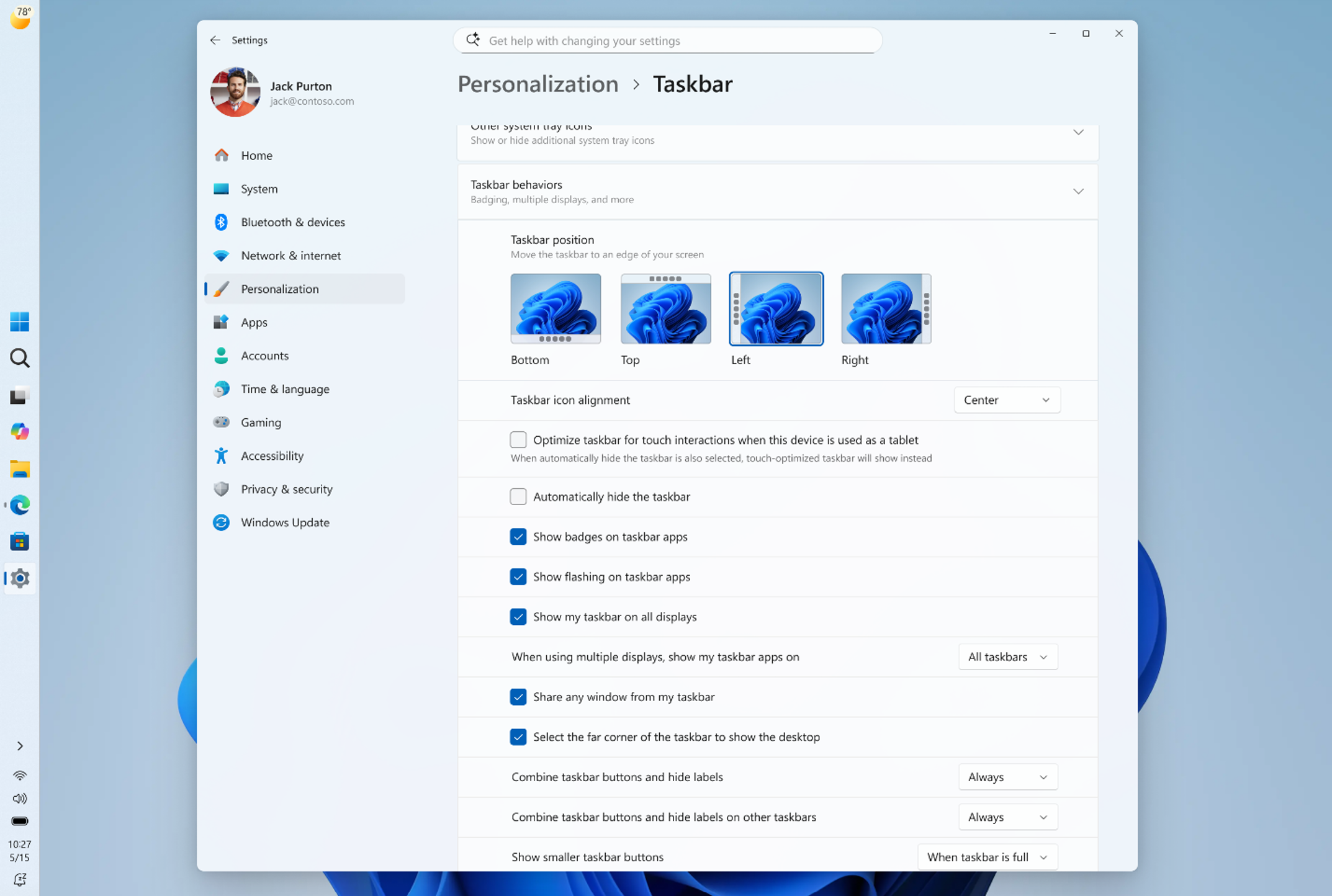
Location, location, location. The ability to move the taskbar to the top or sides of the screen has been one of the most requested features, and we are bringing it to Windows 11. Starting today, Windows Insiders in the Experimental channel will be able to:- Position the taskbar on any edge of the screen: Top, bottom, left, or right (see figure 1).
- Choose icon alignment for every taskbar position: Top-aligned or centered when the taskbar is on the left or right, and left-aligned or centered when the taskbar is on the top or bottom.
- Use Start, Search, and other flyouts relative to the taskbar location: For example, when the taskbar is on the top, Start opens from the top (see figure 2).
- See every window at a glance: When using a vertical taskbar with “Never combine” taskbar buttons and show labels enabled, each app window appears as a separate labeled button, making it easier to identify and switch between windows (see figure 3).
- Auto-hide and tablet-optimized taskbar are not yet supported in alternate positions.
- Touch gestures for alternate positions are still in progress.
- Search boxes are not yet supported in alternate positions and will appear as a search icon for now.
Smaller taskbar
Windows 11 introduced a roomier taskbar to support more states and features while also improving touch targets. On smaller screens, that extra height can take away from your usable workspace. We are adding the option to switch to a more compact taskbar for times when every pixel counts. With this update, when small taskbar is enabled, you get smaller icons, a shorter taskbar, and more vertical space for your apps (see video below). No restart or sign-out is required. This experience is rolling out today in the Experimental channel. To change your taskbar size, go to Settings > Personalization > Taskbar > Taskbar behaviors > Show smaller taskbar buttons. When set to Always, both the icons and the taskbar height become smaller. [embed]https://youtu.be/pvE2gyWnVHA[/embed]Putting you in control of Start
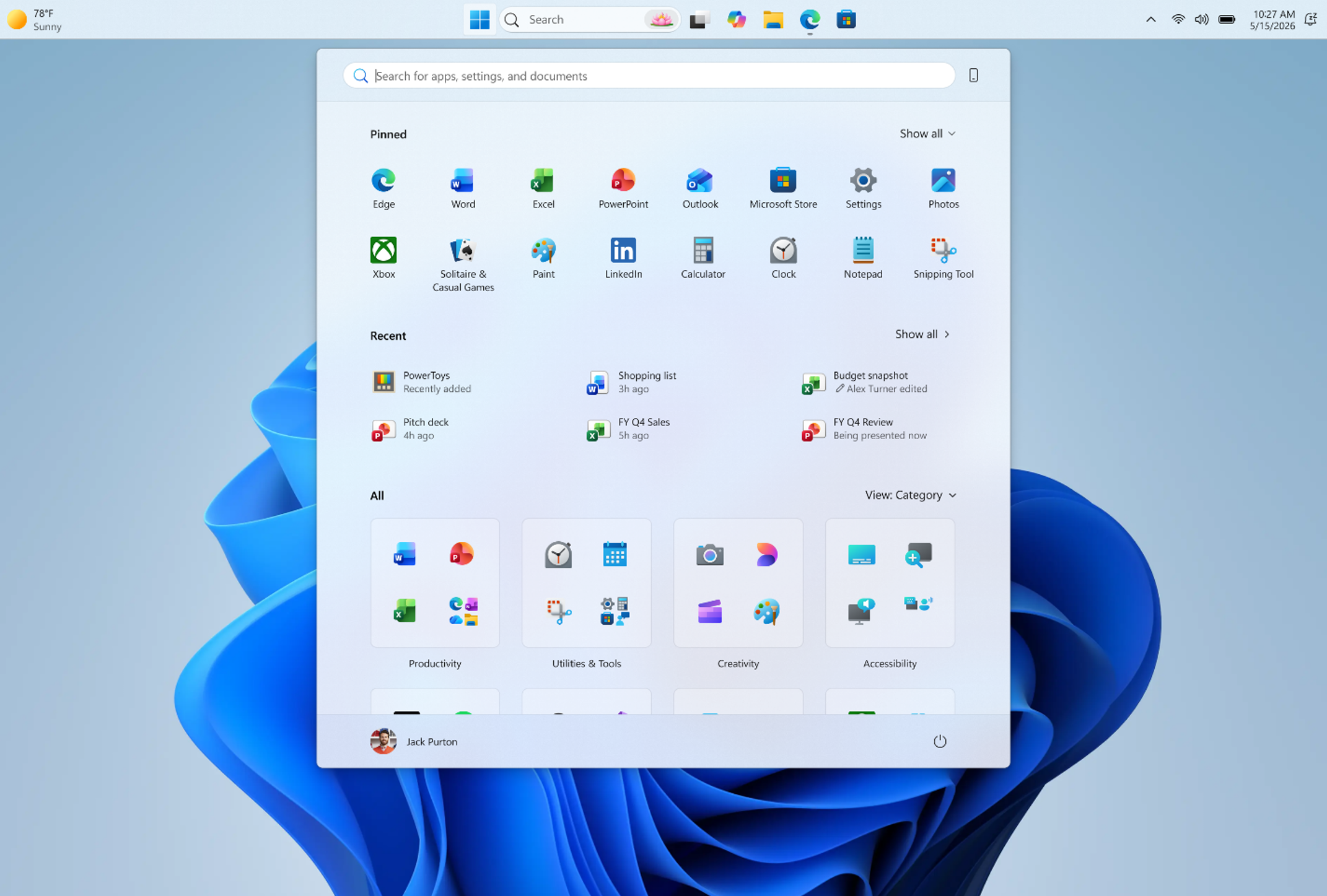
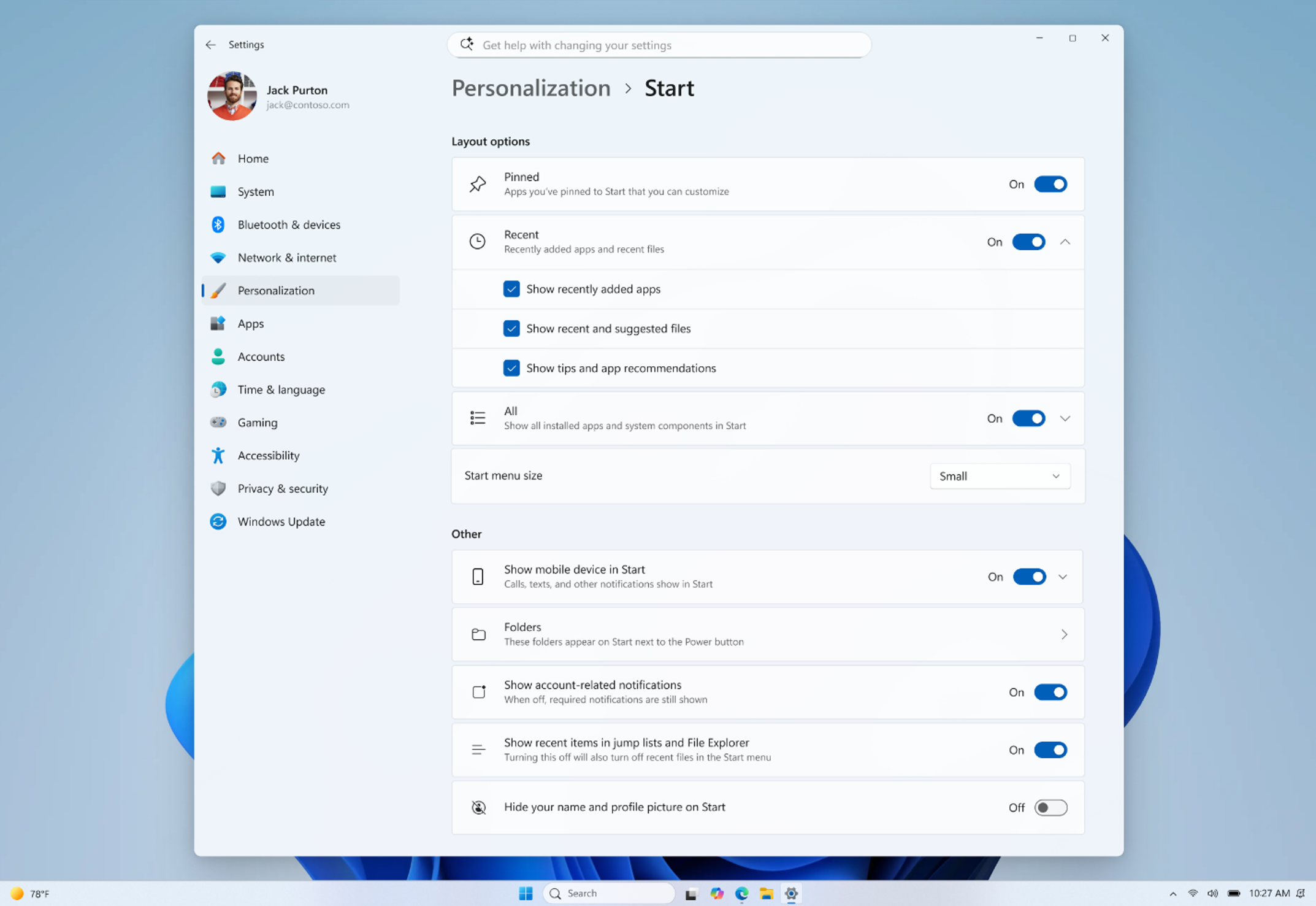
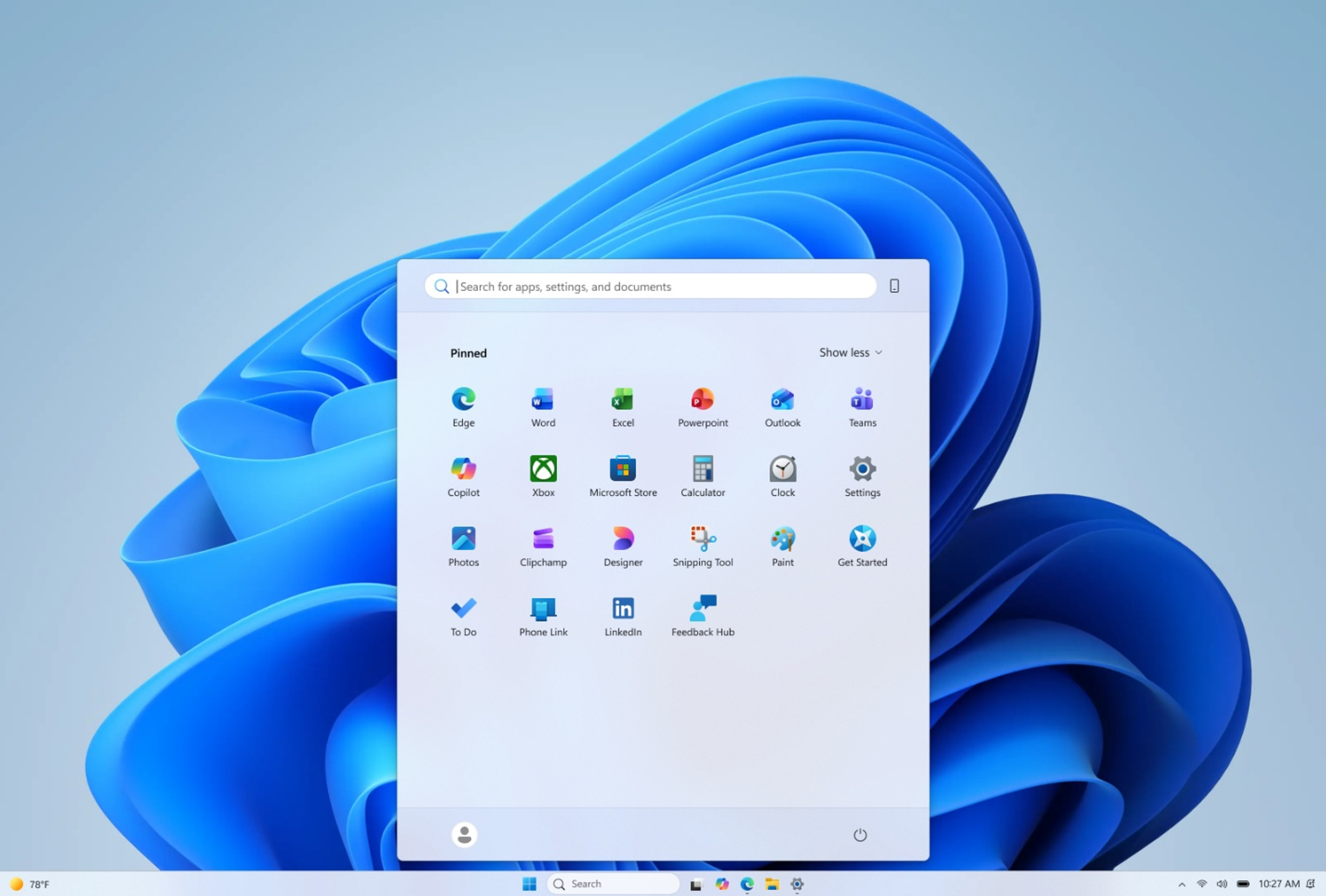
There is a unique Start for everyone, whether you want a minimal experience with just your pinned apps, quick access to recent files, everything in one place, or something in between. We are making changes in two areas to support this. First, we are giving you easier ways to shape your Start menu. Second, we are improving the quality of what appears there by default.More control over your layout
Today, customizing Start can require navigating multiple settings in different places. Turning off the Recommended section involves toggling several settings, and clearing pinned apps means unpinning them one by one. We are simplifying this experience. Over the coming weeks, Insiders will get:- Section-level toggles to independently show or hide Pinned, Recommended, and All. One toggle per section that is simple and clear.
- A separate control for file recommendations. Today, turning off Recommended in Start also turns off jump lists and recent files in File Explorer. With this change, you can disable file recommendations in Start without affecting recent files in other places.
- Start menu size settings that let you choose your preferred size. Today, Start adapts to your display. With this update, you can choose Small or Large so your preference stays consistent across displays whenever possible.
- The option to hide your name and profile picture in Start for added privacy when sharing your screen, presenting, or streaming.
Improving recommendation quality
We are also improving the content that appears in this section for people who choose to keep it on. We are renaming Recommended to Recent to better reflect what the section primarily shows, including recently installed apps and recently used files. We are keeping recently installed apps visible, as this remains one of the primary ways people discover newly installed apps alongside the Microsoft Store. Both users and developers have told us this visibility is important. In addition, we are improving file relevancy. We are refining which files appear and how they are ordered to reduce less relevant items and better reflect what you have been working on.What’s next
Everything described will roll out to Windows Insiders in the Experimental channel over the coming weeks, including several in today's flight. We have talked about earning trust through steady and visible progress. Start and taskbar are where that trust is tested most, every time you sit down at your PC. Please share your feedback in Feedback Hub by pressing WIN + F. The Windows Insider community plays a critical role in shaping Windows, and as these features become available, we encourage you to explore them and share what is working and what is not. This work is ongoing, and our goal is to build it together with you. Thanks, Diego Twitter (X): @bacadd LinkedIn: Diego Baca | LinkedIn [caption id="attachment_178962" align="aligncenter" width="1024"]Announcing new builds for 15 May 2026
New builds this week
Today we are releasing new Windows 11 Insider Preview Builds. As a reminder, all Insiders can find the release notes for your device based on the new channel system, even if you haven’t moved yet. This is to make finding build information as easy as possible during the transition. See your channel release notes here:- Beta: Build 26220.8474
- Experimental: Build 26300.8493
- Experimental (26H1) – Including Canary 28000 series: Build 28020.2134
- Experimental (Future Platforms) – Including Canary 29500 series: Build 29591.1000
Notable new features:
[Taskbar improvements]
Release channel: Experimental Alternate Taskbar Position You can now change the position of taskbar on your screen. In Settings > Personalization > Taskbar > Taskbar Behaviors, you can select the side of the screen you want your taskbar on: bottom, top, left, or right. In these other positions, tooltips, flyouts, and animations will still come from the taskbar, and most customization settings like small taskbar and never combine taskbar icons will work with all locations. [caption id="attachment_178963" align="aligncenter" width="1024"][Widgets]
Release channel: Experimental As we continue to make Widgets feel less distracting, we’ve made a small but meaningful visual update to taskbar badging. For those that have taskbar badging on, the badge color will now match your Windows accent color instead of always appearing red, reducing the sense of urgency that something needs your immediate attention. We’re also testing out quieting down a user’s experience based on their level of engagement. For example, a user who highly engages with Widgets likely have their settings set to a state that works best for them, as compared to a user who barely engages with it and would benefit from having the experience quieted down with taskbar badging turned off as it is for new users who experience it as quiet by default.[Windows Search Box]
Release channel: Experimental We've started making changes to make Windows Search Box more relevant, starting with making it easier to find your files and apps:- Files and apps more reliably appear ahead of web suggestions when your content is a stronger match